The Black Edition gets the larger 30kWh battery from the LEAF range, which gives an official range of 155 miles. However, as with any official economy and range figures, in the real world this figure is likely to be significantly less.
The LEAF Black Edition package is based on the existing Acenta specification, and adds LED headlights, black-painted alloys, black door mirror caps, black roof spoiler, rear privacy glass and 360-degree camera system. And the floor mats get blue stitching. The model is only available in two colours; white or black.
As an additional incentive, the first 200 customers to buy a LEAF Black Edition will receive a free wi-fi hotspot capable of pairing with up to eight devices.
All LEAF models are currently available with a 0% PCP finance offer with no minimum deposit and three years’ free servicing. In conjunction with the finance offer, Nissan is also offering a year’s free insurance (terms and conditions apply).
Aston Martin has launched a performance sub-brand called AMR, which will offer higher-performance versions of its core models.
In a similar vein to Mercedes-Benz’s AMG department, or BMW’s M division, AMR will offer motorsport-inspired upgrades to Aston Martin models – and the company hopes that the new programme will become as lucrative as those of its rivals.
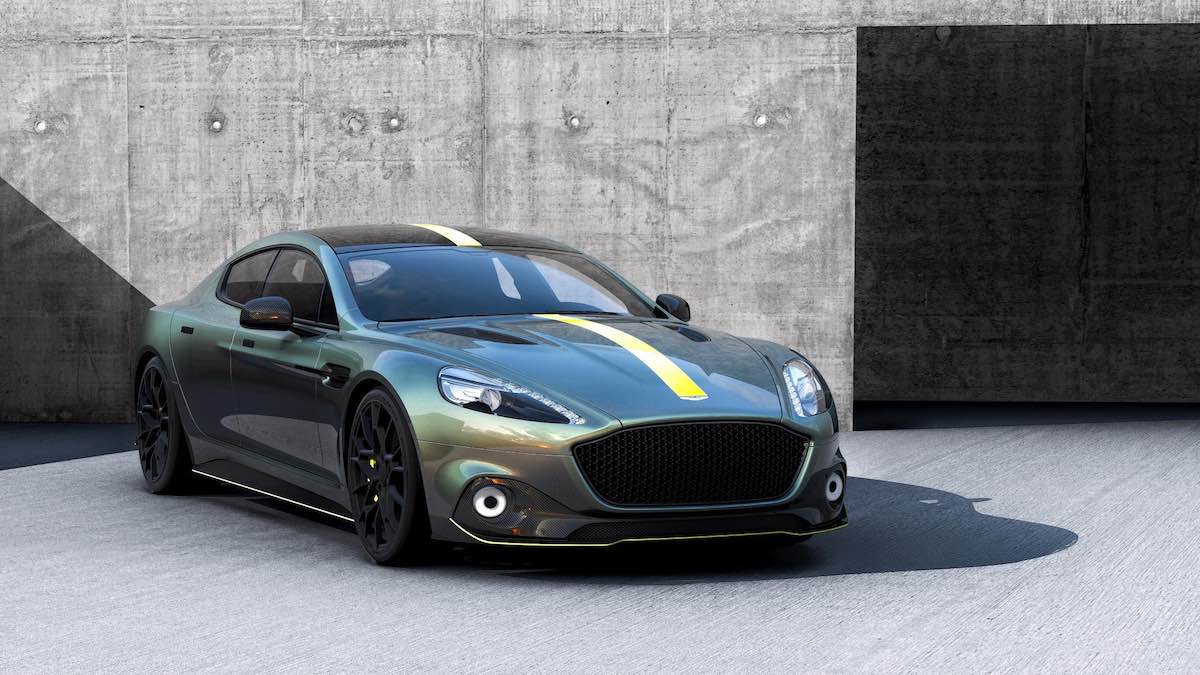
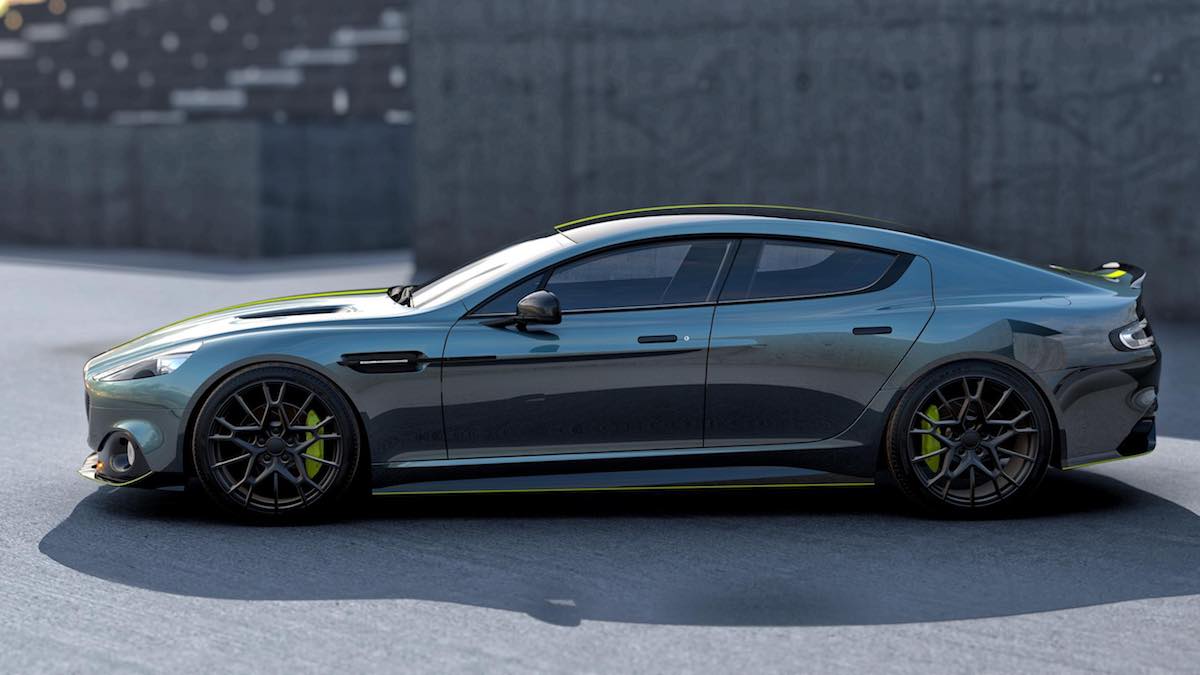
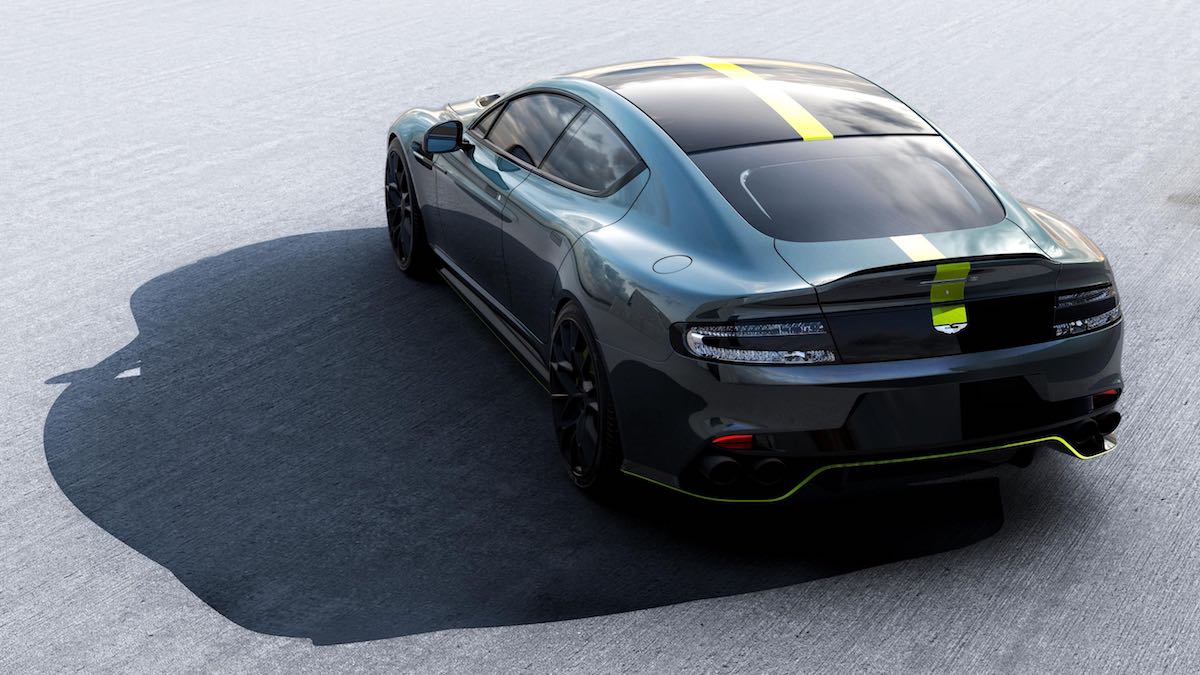
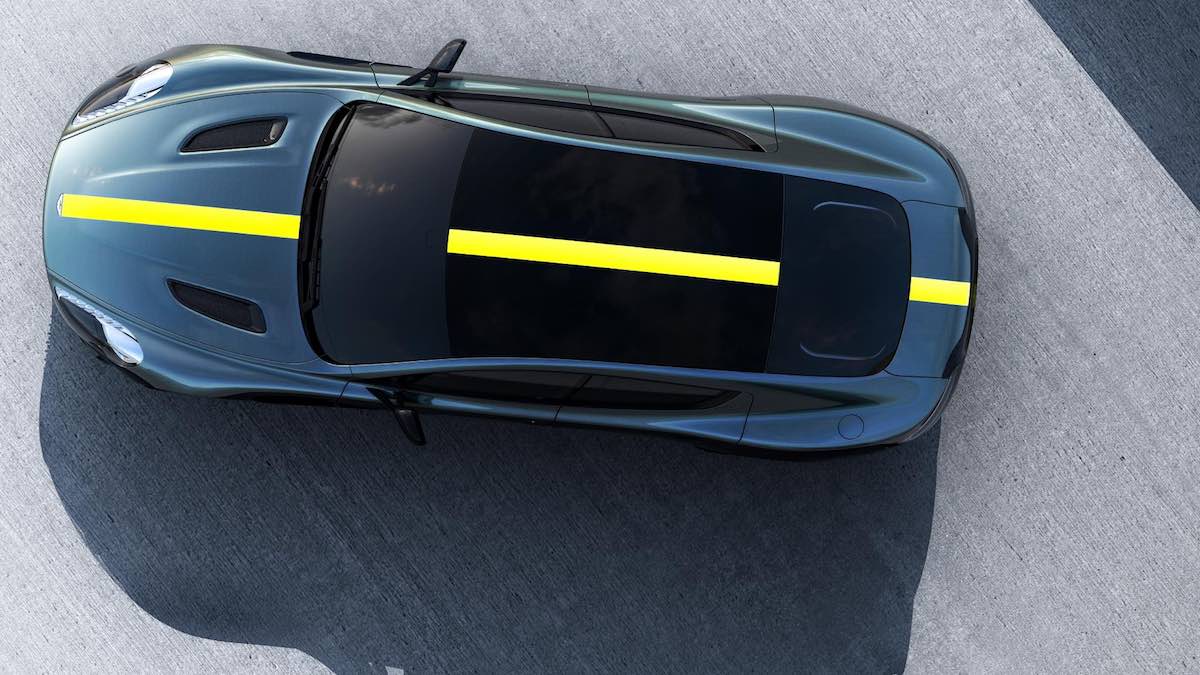
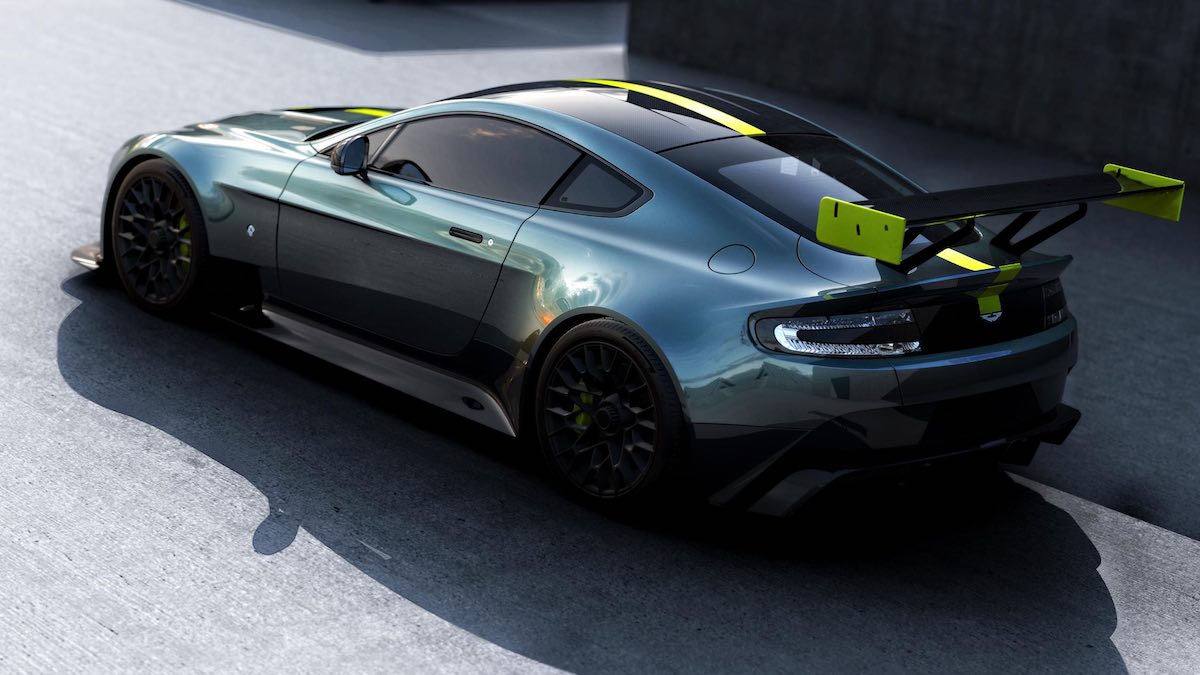
Aston Martin showed off the first two examples of its new performance brand at last week’s Geneva motor show; the Rapide AMR and the Vantage AMR Pro. The vehicles demonstrate the two tiers of upgrades planned, although both are still concepts at this stage.
The first tier AMR models will be developed alongside the regular models, much like an “M-Sport” specification BMW or an “S” specification Audi. The more highly-developed AMR Pro models, however, will be developed separately by Q by Aston Martin Advanced Operations, the company’s in-house personalisation and performance department. Q Branch was responsible for developing the mighty track-only Aston Martin Vulcan, as well as the Vantage GT12 and GT8 models.
Marek Reichman, Aston Martin’s chief creative officer, described the positioning of the new factory speed shop: “AMR enables us to take Aston Martin into a new dimension. One where we can turn-up the sporting DNA present in all of our models and make a true statement.
“An AMR model will have an instantly-recognisable design language. One that accentuates and amplifies, together with the latest GT race car technology for the road. They will be special and rare cars that are credible, thrilling to drive and hugely desirable to own.”
The two concept vehicles displayed in Geneva were the Rapide AMR and the Vantage AMR Pro.
Aston Martin Rapide AMR
The Rapide AMR represents what Aston Martin calls “tier one” of the AMR programme. The AMR line is aimed at a level below the Vantage GT8 and GT12 models, offering race-inspired styling and limited performance updates but stopping short of the more extreme models. The company plans an AMR version of every model in the range.
The Rapide AMR’s 6.0-litre V12 engine gets a 40hp boost over that in the regular Rapide S, up to 600hp and channelling its increased output through a new quadruple exhaust system.
Visually, the Rapide AMR is distinguished by a new front bumper/splitter/grille combo, rear bumper/diffuser and integrated rear decklid spoiler, along with a new set of 21-inch wheels. Carbon fibre is splashed across various trim bits and pieces, and the whole thing is topped off with a “vibrant” lime green stripe. Inside there is a special order of alcantara and carbon fibre, again with bright green accents.
Aston Martin describes the Rapide AMR as “a fabulous fusion of race car attitude with a luxurious crafted twist”. It has committed to a production run of 210 cars, which will presumably see the Rapide through to the end of its life cycle.
Aston Martin Rapide AMR
1 of 5
Aston Martin Vantage AMR Pro
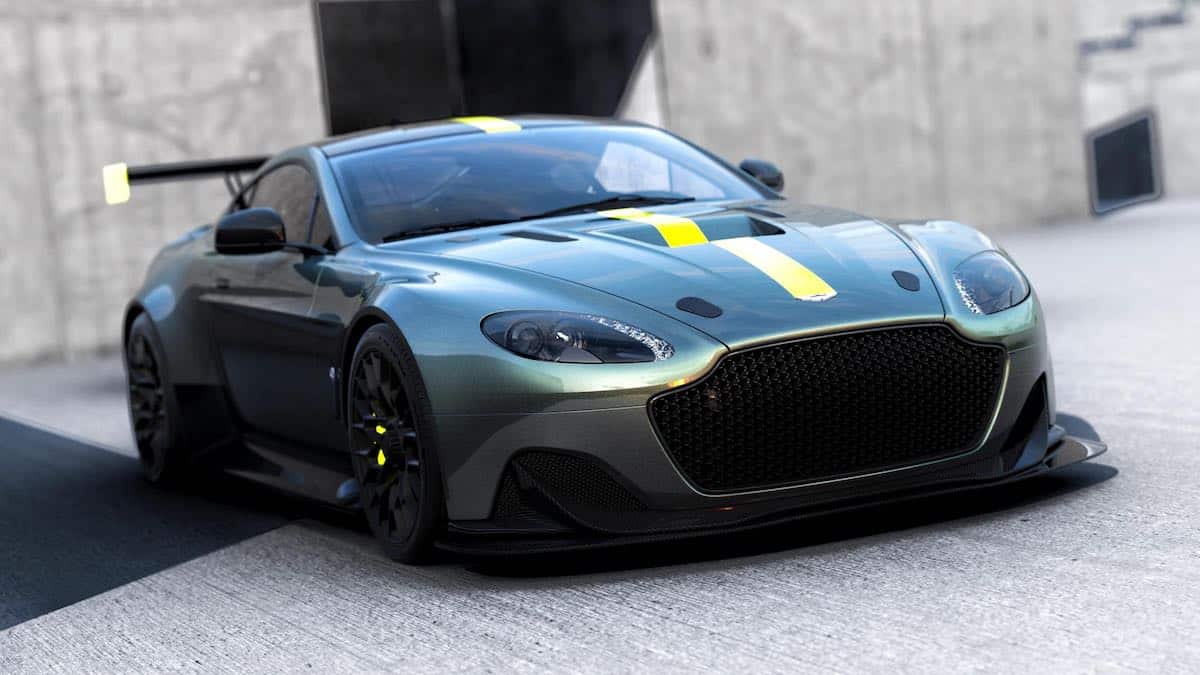
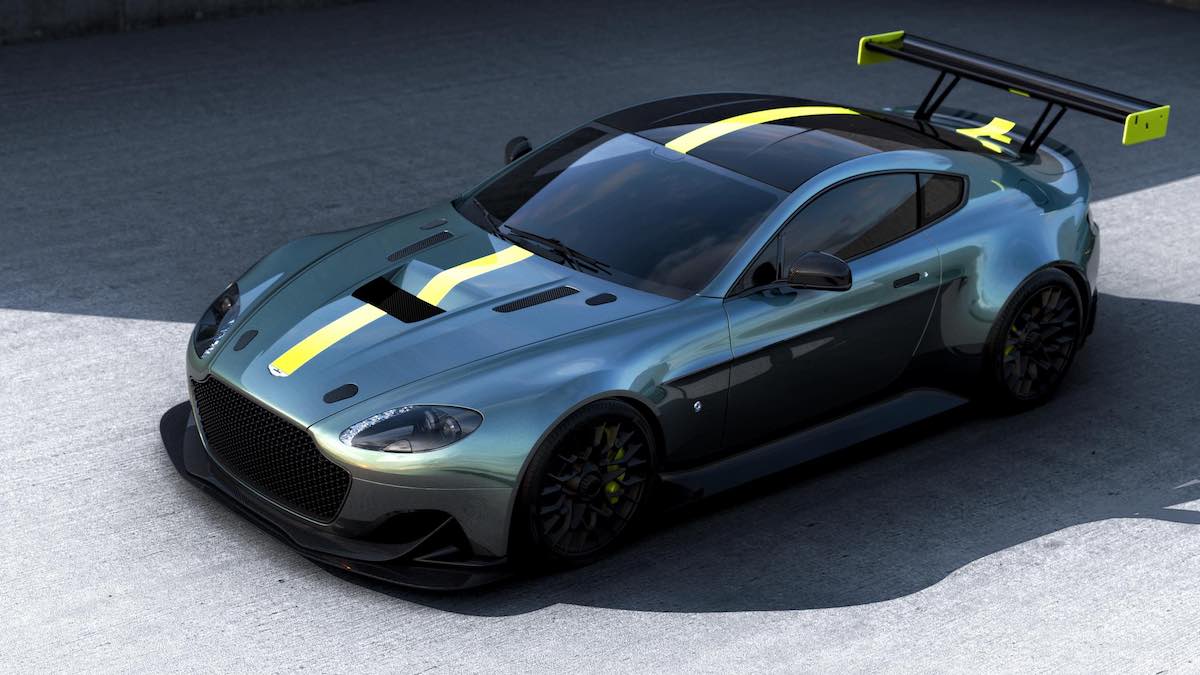
The Vantage AMR Pro is a track-only, more extreme development over the standard production model. Power jumps from 430hp (standard Vantage S) to 507hp in the Vantage AMR Pro, using a development of the engine used by the GT4 racing Vantage.
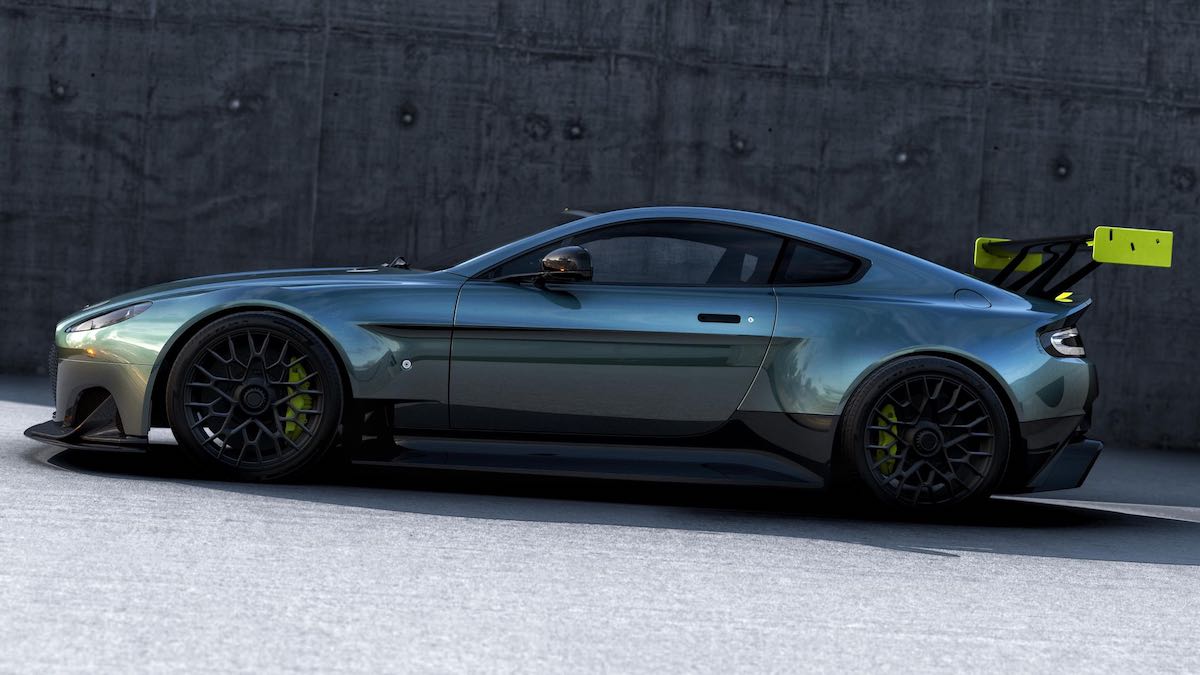
The factory racing programme has also donated a range of components for the Pro-spec Vantage. Adjustable suspension and competition-spec solid mountings for the engine and transmission are part of the package, as are centre-lock 19-inch racing wheels with semi-slick Michelin Pilot Cup 2 tyres.
The bodywork also gets a helping hand from the championship-winning WEC team, with the bonnet and rear wing coming straight from Aston’s Le Mans challenger. This is matched with a new front bumper/splitter/valance/grille assembly, new front wings, side sills and rear bumper/diffuser. And, of course, the lime green go-fast stripe.
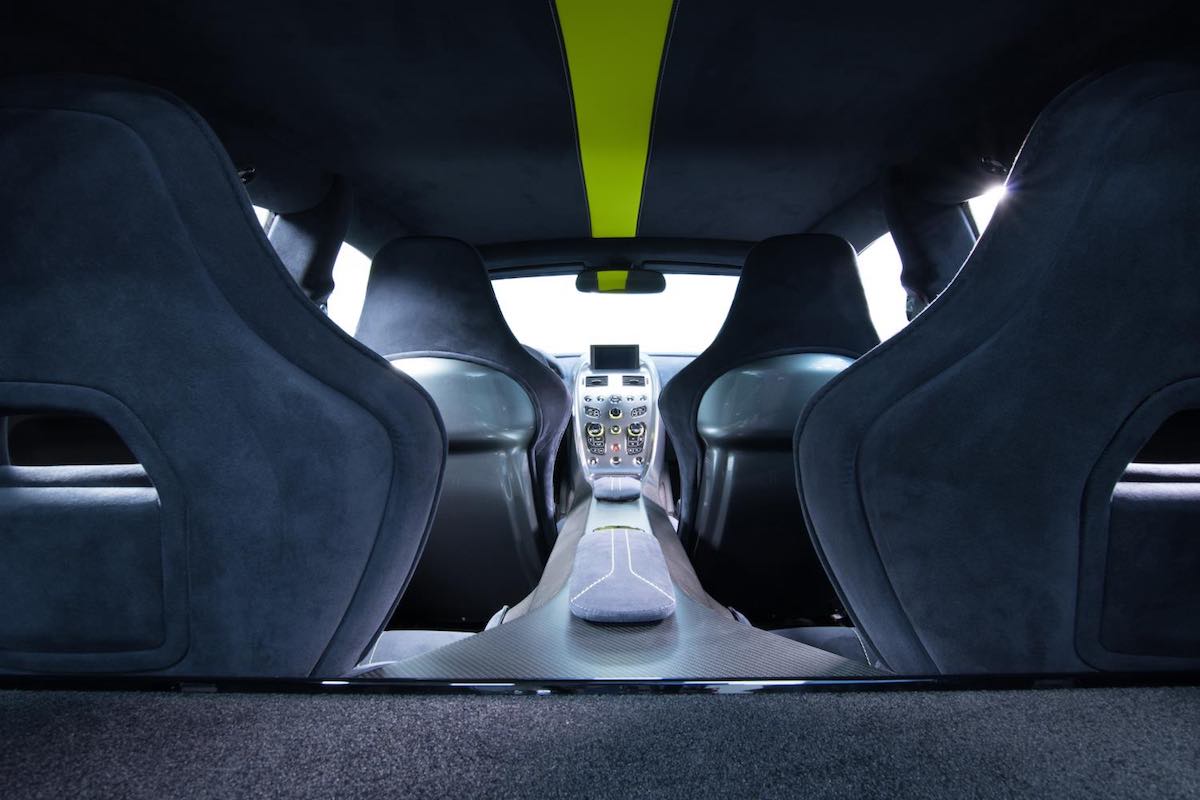
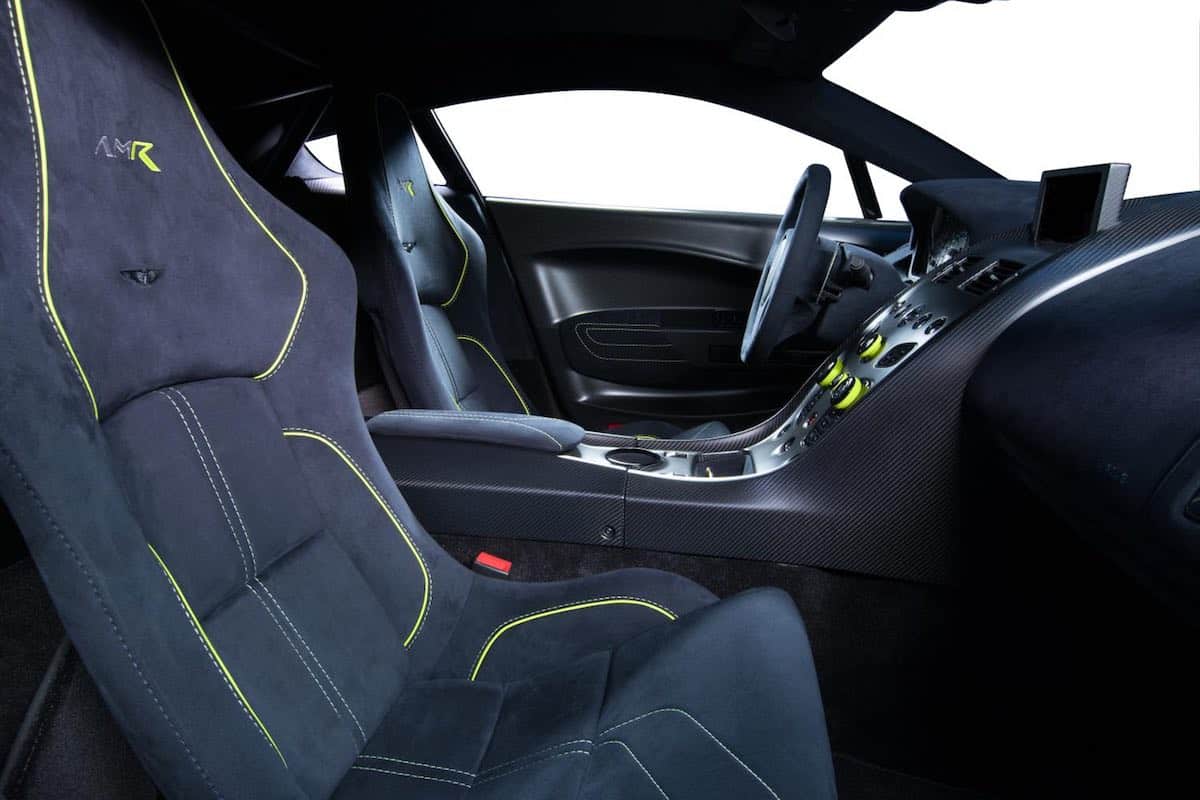
Step inside the Vantage AMR Pro and you will find that Q Branch has installed a bespoke roll cage, as well as lashings of carbon fibre and alcantara (with the obligatory lime green highlights).
Aston Martin has said that it plans to build “no more than seven” of the Vantage AMR Pro models. Pricing was not disclosed, but it’s reasonable to assume that you will pay a handsome sum for the privilege of a Vantage AMR Pro.
The Geneva motor show is always an amazing event, with more new metal than you can possibly get around to seeing unless you spend the show’s whole two-week run poking around every car on every stand.
This year’s event certainly lived up to expectations, with dozens of fantastic new production and concept cars being unveiled and launched. We’ve covered as many as we could in the last week, but there were many more we didn’t have time to include.
So, what were the absolute highlights of a Geneva motor show filled with highlights? Here’s our stab at it, but you may have your own favourites.
New supercars
The Geneva motor show is traditionally the show of choice for supercar manufacturers to launch their latest rocketships into public view, and 2017 was no exception.
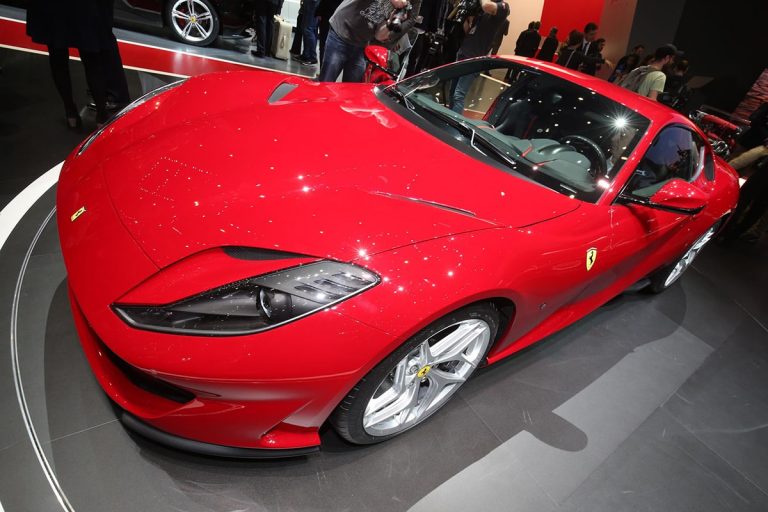
The Ferrari 812 Superfast caused the biggest traffic jam at Palexpo, as almost everyone in the building crammed around to see the covers being pulled off Ferrari’s new flagship. With 800hp on tap, the 812 Superfast has some 60hp more than its already-very-fast predecessor, the F12 Berlinetta. So it will be Superfast by name and nature.
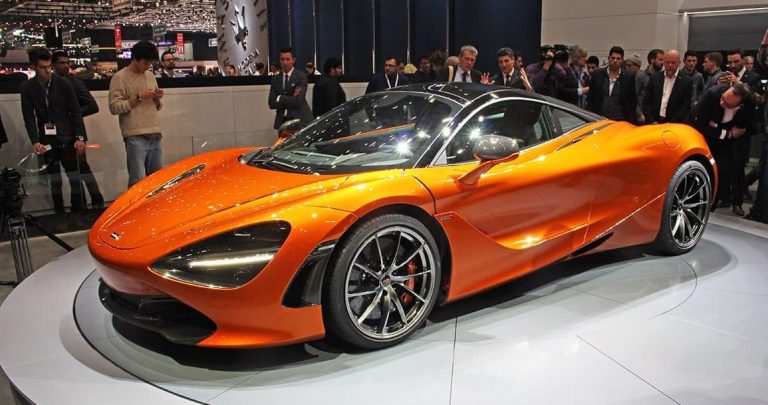
The McLaren 720S is the first of a new generation of McLaren Super Series models, and the vital statistics suggest a massive jump in performance over the 650S it replaces. The panda-eyed McLaren also goes head-to-head with Ferrari’s 488 highly-acclaimed GTB, so we all await the inevitable comparisons which will fill car magazines over the next year.
Ferrari 812 Superfast
McLaren 720S
Aston Martin Valkyrie
Lamborghini Huracan Performante
Lamborghini Aventador S
Aston Martin revealed a name and some more information about its upcoming hypercar, designed and developed with legendary F1 designer Adrian Newey. The Aston Martin Valkyrie will cost about £2 million, and the company claims that it has already sold every vehicle in the strictly limited production run.
Lamborghini showed off its new Huracan Performante, a powered-up and stripped down version of the regular Huracan V10 coupé, along with the new flagship V12 model, the Aventador S.
Pagani had a convertible version of its amazing Huayra supercar on show. Only 100 will be built, so if you’ve already missed out on a Valkyrie then you’d better get in quick.
One of the more unexpected supercar launches was the all-new RUF CTR Yellowbird. Yes, it is definitely all new, despite the fact that it looks just a restomodded 1980s Porsche 911. To celebrate the 30-year anniversary of the original CTR, RUF has built a bespoke carbon monocoque and steel frame, which holds a 700hp 3.6-litre flat-six engine (again, all new and allegedly sharing no parts with a regular Porsche 911 flat-six engine).
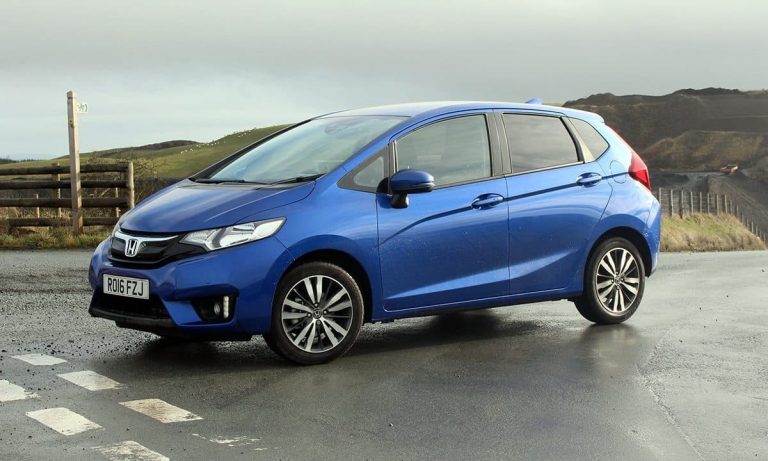
What is it: The current Honda Jazz is the third generation of the brand’s core supermini. Key features: Completely new look, improved interior space, more tech. Our view: The Honda Jazz scores adequately in all areas, and highly for its equipment. In terms of space rivals cannot compare with it. Review type: Full road test.
Is the Honda Jazz a misunderstood car? Despite concerted marketing efforts by its makers – partiularly at the launch of the third-generation version in 2015 – the Jazz has never quite shaken its reputation as a car bought by the more mature motorist.
There is a perfectly good reason for this, however. With age comes experience, the ability to recognise a good value, practical product. Perhaps the Jazz has an elder following because of all the basic things it does rather well.
The 2015 redesign was no mere cosmetic exercise. It involved a complete ground-up renewal, the car built onto Honda’s latest B-segment platform shared with the HR-V crossover. Combined with an exterior length extended by 95mm, the wheelbase by 30mm, the result was much better use of the interior space and the fitting of Honda’s clever Magic Seats system, more on which shortly.
Lighter weight and an updated chassis were other factors suggesting that this Jazz should be a significant improvement.
Exterior and interior design
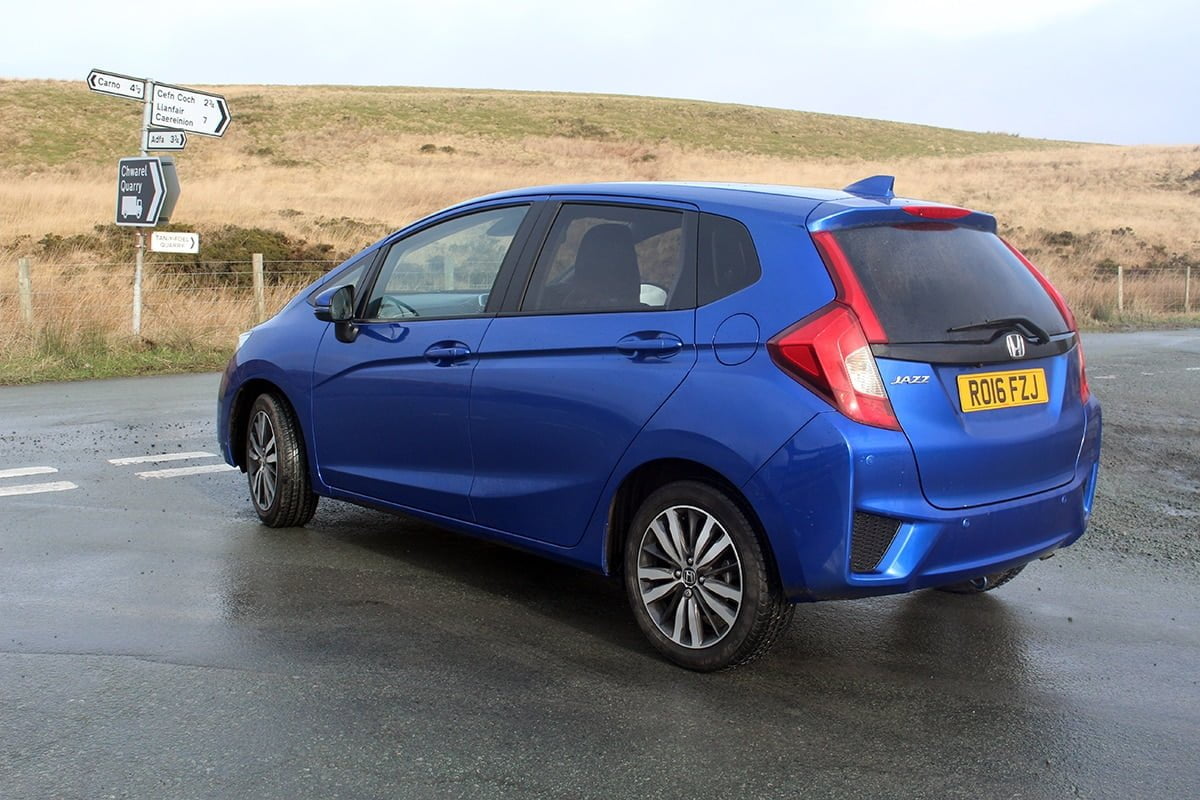
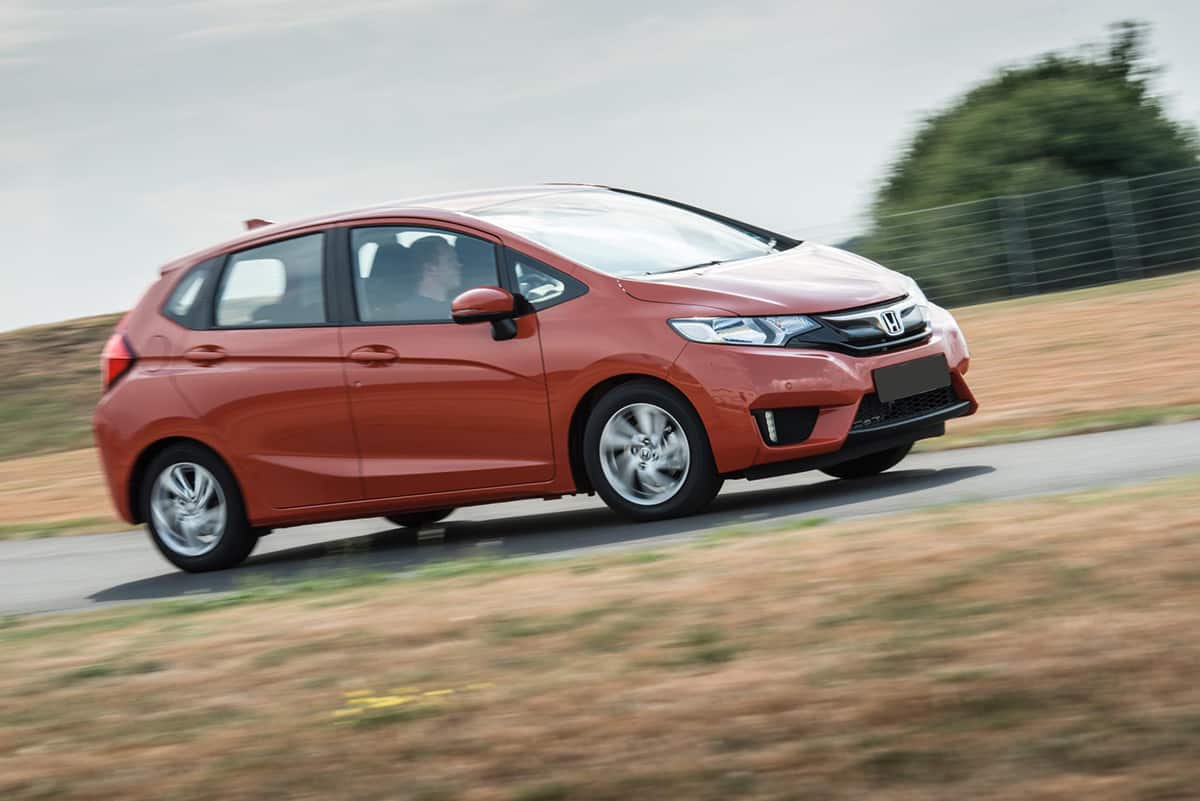
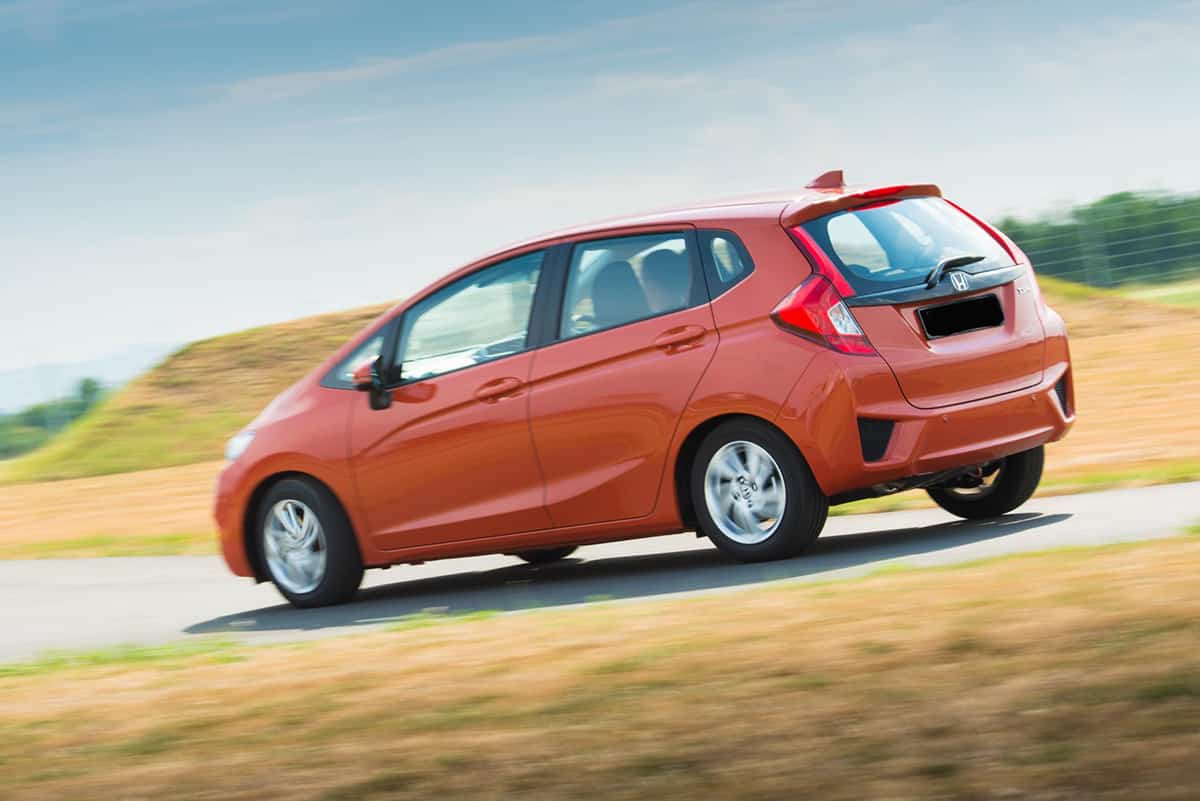
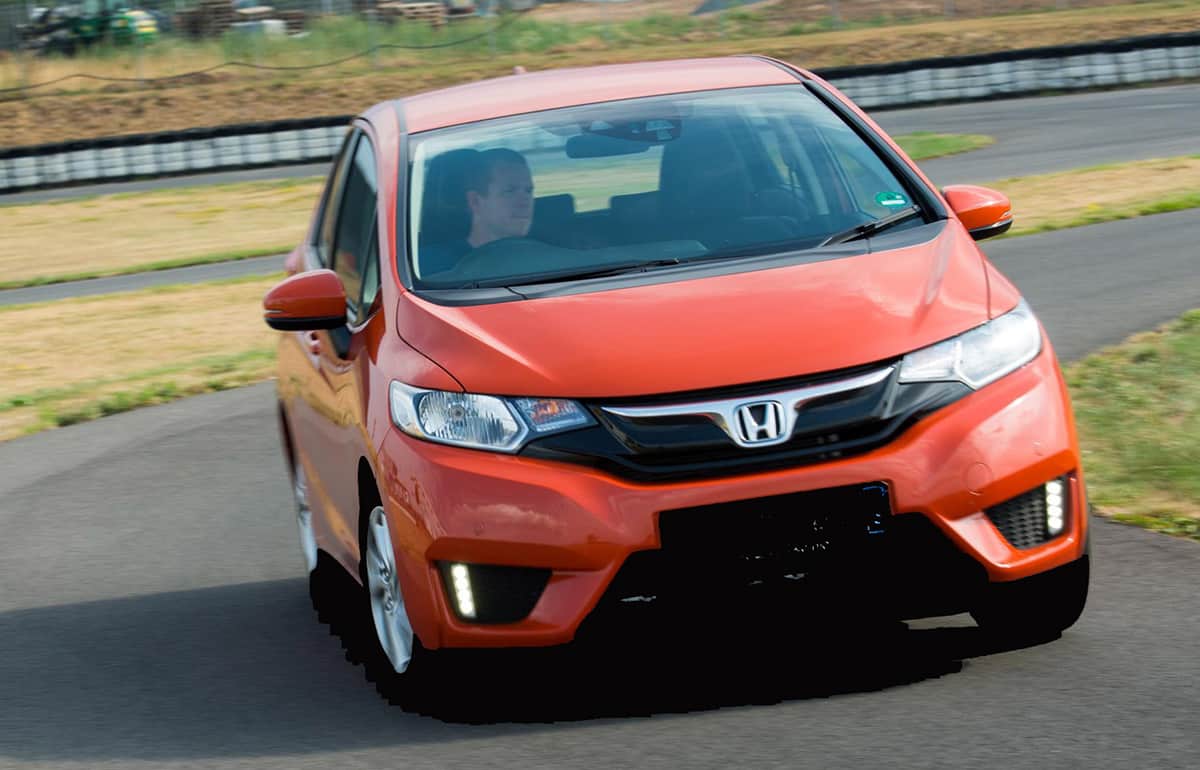
The Honda Jazz has never looked like a typical supermini, its profile suggesting more mini MPV. The 2015 update served to add muscle to the profile with bolder lines, a distinct sliced horizontal line and the addition of the family face with its ‘X’ shape on the front end.
It may be different, but it is not a bad direction to go in. Instead of the friendly curviness of typical superminis, the Jazz presents a more purposeful stance.
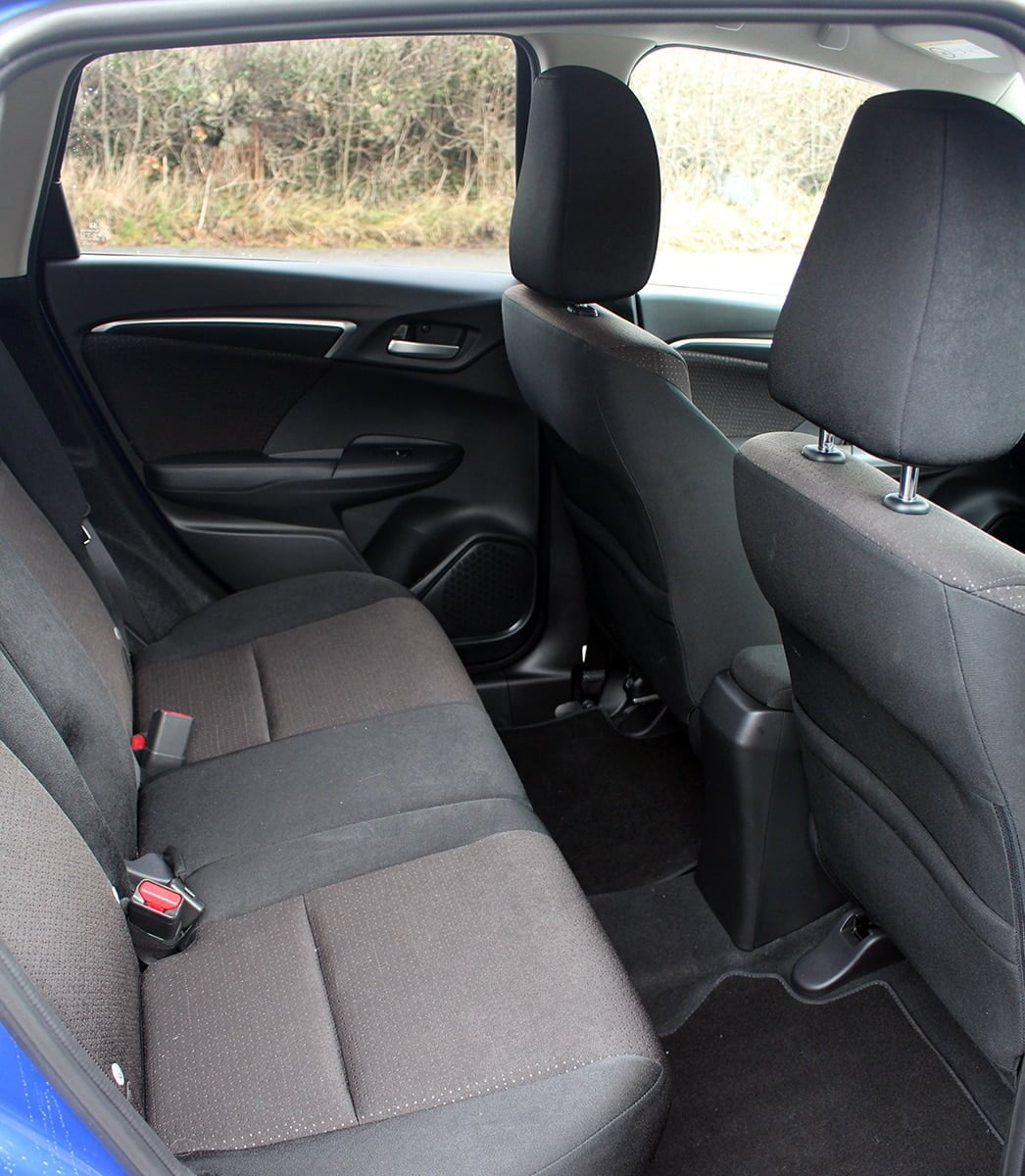
It is inside, however, where the Jazz really scores, and the MPV analogy mostly holds sway. For a supermini there really is a lot of space, particularly in the rear seats – adults will not be compromised in these.
Then there is the boot – almost 400 litres when most rivals struggle to achieve 300. It’s sensible space too, and the Magic Seats can be adjusted through a range of versatile settings to accommodate just about any awkward shape one might desire to carry.
The dash instruments are practical but the touch-sensitive controls – an app-based ‘pinch, swipe and tap‘ system – do not have a distinct action and in general one feels the Jazz is suffering in a time when supermini interiors are making sudden leaps forward. It is already beginning to feel a little dated.
Same with the fit and finish – it’s all put together competently enough, but others have stepped up their game and you feel the Honda needs to as well.
Powertrain
Just one engine is available for the Jazz. It’s a 1.3-litre petrol unit, naturally aspirated where many rivals have gone turbo. So it does not feel that enthusiastic, and to get the best out of it you have to make serious use of the rev range. It is smooth enough, however, and the six-speed manual gearbox fitted to our test car is a pleasure to use with its slick shifts. There is a CVT option, though it is not a great option.
Similarly the 55.4mpg fuel economy and 120g/km emissions levels are reasonable for a petrol-powered car but there are rivals who do better.
On the road
So the Jazz engine needs working hard to get the best out of it, which makes it a little thrashy. But the car scores very well in its chassis. As part of the design package for the latest version Honda engineers focused on redesigning the front suspension, which had come in for criticism in previous incarnations of the car. And they did a very good job.
The Jazz smothers all but the worst bumps, and grips well when cornered enthusiastically. The steering is a little light for such situations, but in the car’s natural environment of the urban streets, the steering is a boon allowing easy manouvering and ensuring living with a Jazz is an easy process.
Equipment
The safety specification is certainly a plus point on the Jazz. On all but the entry-level model the Honda safety technology package, dubbed the Advanced Driver Assist System, is standard. It includes Intelligent Speed Assist, Forward Collision Warning, Lane Departure Warning, the Traffic Sign Recognition system and High-beam Support System, while the City-Brake Active system is standard on even the base model – all electronic aids aiming to make the driver’s job easier.
Our test car is to top EX Navi spec and so comes with quite a selection of equipment. Keyless entry and start, automatic climate control and a six-speaker audio system are standard, as are 16-inch alloy wheels and front fog lamps. The Honda Connect in-car infotainment system is also supplied, with that pinch, swipe and tap format on a seven-inch touchscreen. And Garmin navigation is included too, along with a rear parking camera.
Summary
The Honda Jazz is a perfectly competent supermini that does everything needed of it adequately enough. It’s just that rivals outscore it in individual areas. If you want a supermini with lots of equipment for the money, it scores highly. And if you want a supermini with lots of space, there is no other choice.
Test Date: January 2017 Model Tested: Honda Jazz 1.3 I VTEC EX Navi Price:£16,755. Insurance group: 13E. Engine: Petrol 4-cylinder 1318cc Power (hp):102 @ 6000rpm Torque (Nm):123 @ 5000rpm 0-62mph (sec):11.5 Top speed (mph): 118 Fuel economy (combined, mpg): 55.4 CO2 emissions (g/km): 120 Key rivals: Volkswagen Polo, Toyota Yaris, Ford Fiesta.
With 2.3 million vehicles sold since 2007, the Nissan Qashqai has been one of the most successful crossover vehicles of the last decade. This week, Nissan unveiled the facelifted Qashqai at the Geneva motor show.
The new model features minor modifications to the suspension, damping and steering systems, as well as an updated design both inside and out and improvements to its driver aid systems.
In a first for the mass-market sector, the new Qashqai will also be available with a semi-autonomous driving mode where the driver will be able to completely let go of the steering wheel in certain circumstances.
Inside, Nissan has introduced the Tekna+ grade offering leather-trimmed seats. Other interior updates include a flat-bottomed steering wheel and four-way controller for the dashboard.
The infotainment system offers DAB radio and satellite navigation with a smart user interface. A BOSE seven-speaker sound system is available as an option.
Nissan claims that improved use of absorption materials, including thicker rear glass, has reduced noise in the Qashqai’s cabin.
The front end of the Qashqai has been redesigned and the rear and front lights revised. Adaptive front lighting improves night-time safety. Two new paint finishes are available: Vivid Blue (as seen in Geneva) and Chestnut Bronze. There is a choice of 17, 18 or 19-inch alloy wheels.
Driver aids are improved and extended in the new model, with the major additions being pedestrian recognition for the AEB system and a rear cross traffic alert which reduces the risk of low-speed impacts when reversing. Other available driver aids include blind spot and lane departure warnings.
Nissan will also be introducing a semi-autonomous capability called ProPilot. The system allows the car to drive itself within its lane on a motorway-syle road with no input required from the driver. ProPilot controls the car’s steering, acceleration and braking, and can be used in traffic or at high-speed. Future updates to the system will allow it to change lanes and deal with junctions, but this will not be available at launch.
Paul Willcox, Chairman of Nissan Europe, hopes that the new Qashqai “will continue to define and set new standards in the crossover segment.”
The new Nissan Qashqai goes on sale in the UK in July 2017.
The name is the big news surrounding the Aston Martin Valkyrie. Making its debut at the Geneva show, the hypercar adopts the ‘V’ naming convention of the Aston Martin brand.
The Valkyrie is being developed in conjunction with Formula One designer Adrian Newey, previously responsible for the World Championship-winning cars of Red Bull Racing.
The Geneva display car effectively only shows the visual appearance of the Valkyrie – its chassis is still under development. Aston Martin describes it as a Formula One car for the road and its mid-engined powertrain combines a 6.5-litre V12 Cosworth unit to a KERS energy-recovery system developed straight from those on F1 cars.
The publicly-stated goal when the collaboration with Red Bull Racing was announced was to produce a car which could match a Formula One car around Silverstone.
The production version of the Aston Martin Valkyrie is expected to launch in 2019, and the price is estimated at £2 million each – and every one of the strictly limited production run has already been sold.
Supercar to follow?
Reports at the show suggest that Aston Martin will use the reputation established by the Valkyrie, along with development elements such as the aerodynamic package, to launch a mid-engined supercar.
Likely appearing in 2021, the new model would rival such cars as the McLaren 720S, which has launched at the Geneva event. This would mark a significant shift from the brand’s current model range of a number of variations on a front-engined coupé theme, all sharing the same platform.
Aston Martin is on a significant expansion and regeneration programme at present – the DBX SUV is also expected in 2019, built in a brand-new plant converted from enormous MOD hangers at St Athan in Wales. A revival of the Lagonda badge is also believed to be in the pipeline.
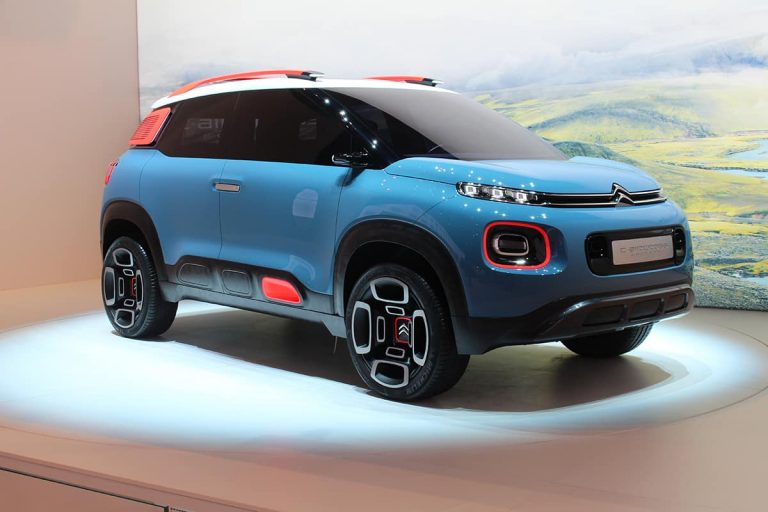
The Citroën C-Aircross Concept debuts at the Geneva motor show as ‘a new vision’ of the French brand’s future SUV line.
Citroën C-Aircross concept teases new C3 Picasso
In fact it is the likely replacement for the current C3 Picasso, and when the production version is unveiled – possibly at the Frankfurt show in September, it will be pitched against the mass-selling Nissan Juke.
The design takes the latest styling language established with the recent C4 Cactus and particularly C3 models and applies it to a SUV format. Notable touches on the concept include rear-hinged back doors which give the cabin a spacious feel when they are opened.
Technology features heavily in the concept – the car includes a colour head-up display that replaces the traditional instrument panel, a single-spoke steering wheel with controls mounted on it, rear facing cameras instead of mirrors and wireless induction charging for smartphones.
The production model, likely on sale early in 2018, is expected to use the same engine range employed in the C3 and C4 Cactus. It will also follow the current crossover trend in not offering an all-wheel-drive option, though PSA’s impressive Grip-Control traction aid will be available.
More crossovers to come for Citroën
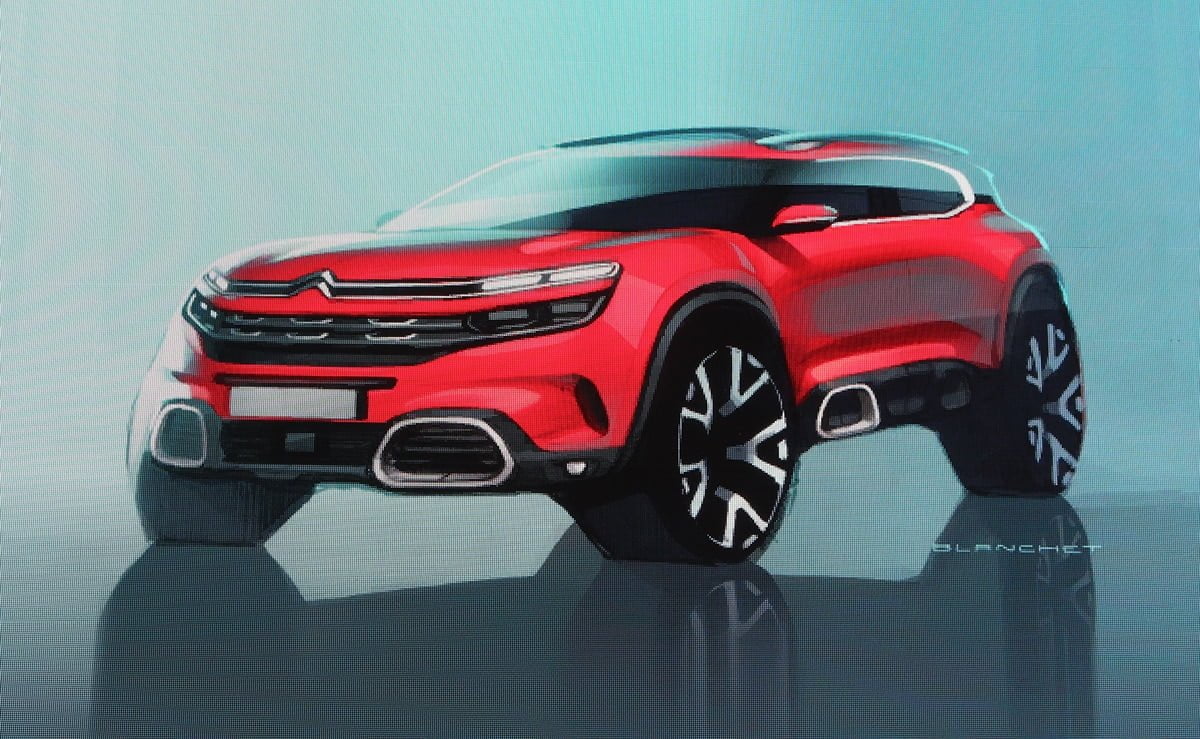
Citroën used the unveiling of the C-Aircross to tease its next concept, the brand’s head Linda Jackson revealing two sketches of the C5 Aircross. This will be unveiled at the Shanghai motor show in April, and evolve into a mid-sized crossover that will adopt the C5 badge when it launches, probably early in 2018.
The latest version of the Subaru XV crossover makes its global debut at Geneva ahead of going on sale in early 2018.
The second-generation XV sits on the brand’s new Global Platform that is also used in the Impreza hatch. The styling is new too, a more muscular look based on Subaru’s latest ‘Dynamic x Solid’ design language. Highlights of the design include a wide and low profile, a hexagonal grille with hawk-eye headlights and matt black cladding on the bumper to emphasise the off-road ability of the XV.
Power comes from Subaru’s 2-litre flat-four 156hp diesel engine, which has been upgraded to improve performance, economy and weight – Subaru says 80 per cent of the parts have been changed. A 2-litre petrol version of the car is also likely to be offered and both will be matched to a seven-speed CVT transmission.
The symmetrical all-wheel-drive fitted to virtually all Subarus is retained, but gains a new electronic aid, dubbed X-Mode. This increases the off-road ability of the XV – integrating control of the engine, transmission and brakes to maintain control when tyres slip and lose traction on a slippery road surface, including when descending hills.
A wide-ranging safety package will include several preventative features, including the EyeSight driver assist technology that includes a pre-collision braking control, adaptive cruise control, and lane keep assist.
Among new technologies, the High Beam Assist function uses a camera to automatically switch from high to low beam as per road conditions, and steering responsive headlights to highlight the road ahead when the car is cornering and improve visibility at night.
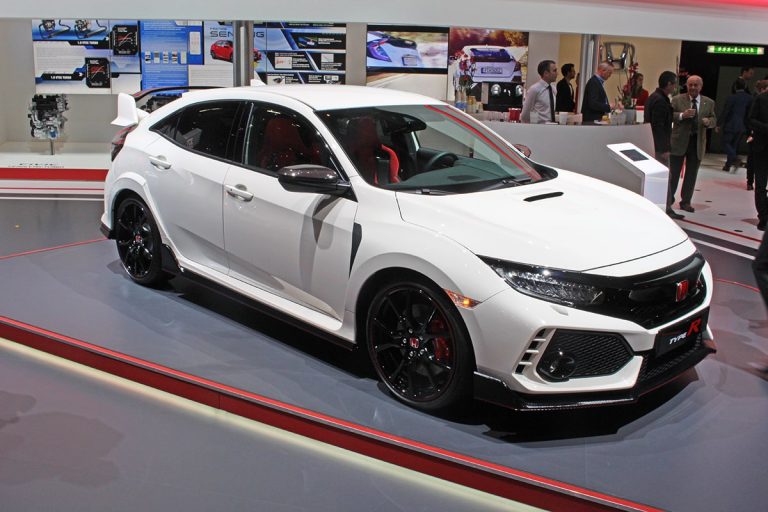
New versions of the Honda Civic Type R seem to come around quickly these days and summer 2017 will see the fifth generation of the model on sale.
Built like its predecessor in the UK, at Honda’s Swindon plant, the new Civic Type R is based on the tenth-generation Civic range that arrives in showrooms at the end of March.
Unlike its predecessor the requirements of the new Type R were taken account of when the mainstream Civic was at the design stage, which is the reason for its rapid reveal, even before the stock car has gone on sale.
While it uses the same 2.0-litre VTEC turbo petrol engine of the outgoing model, the new Civic Type R benefits from improvements to the powertrain. Peak power goes up 10hp to 320hp, while the torque figure remains at the same 400Nm. Honda says that work on the ECU settings has improved drivability and throttle response on the car.
Performance and economy settings for the new car are still to be released, though it is expected to be slightly faster to 62mph than the 5.7 seconds that the current Type R takes.
Criticisms levelled at the current Type R have included a view that it is a bit too extreme for a road car, and Honda appears to have made efforts to address this and produce a more versatile hot hatch. Notably the driving modes available now include a ‘Comfort’ setting alongside the traditional ‘Sport’ and ‘+R’ modes – the latter is specifically designed for use when the car is on a circuit.
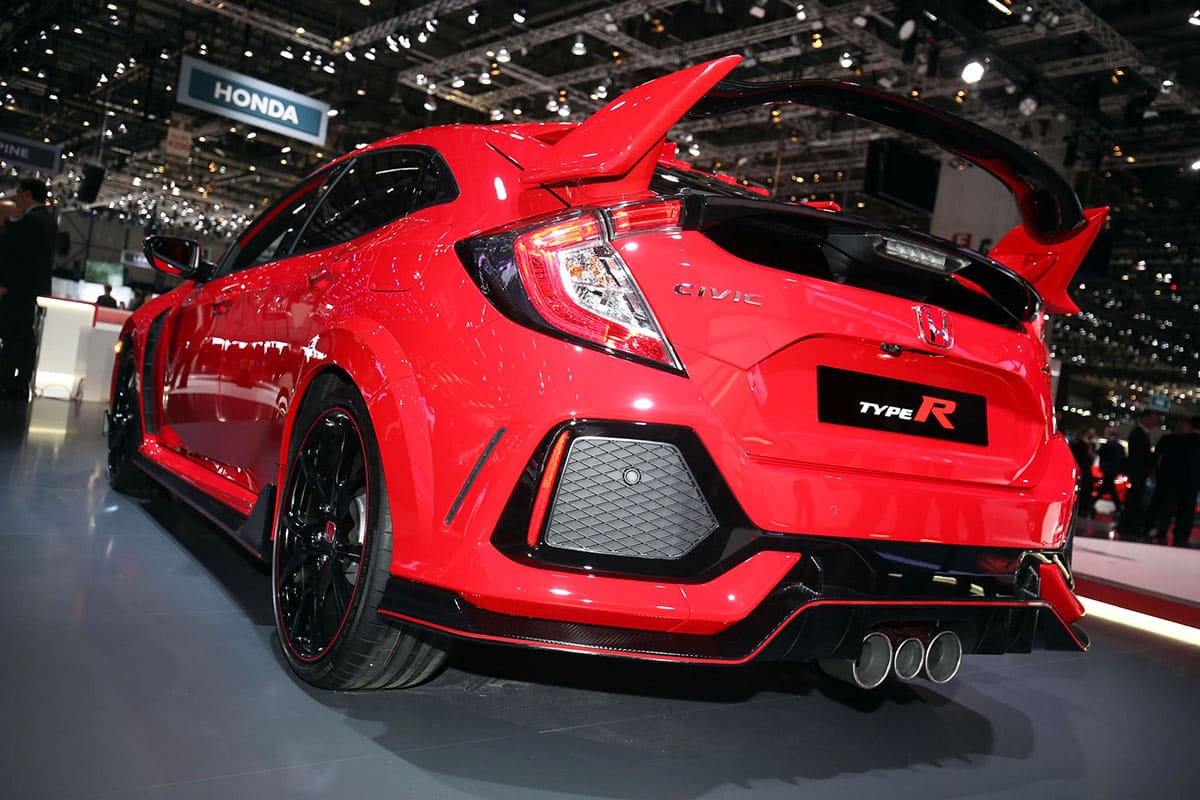
The new Honda Civic Type R has triple exhausts and a big rear wing – just like a Ferrari F40
The new Civic Type R is described as 38 per cent more torsionally rigid than its predecessor. It is larger in length in width and lower in height than the outgoing Type R, with a centre of gravity reduced by 34mm.
Chassis improvements over the mainstream Civic include new geometry on the Macpherson strut front suspension to minimise torque steer and maximise handling response. At the back more rigid arms are fitted to the newly designed independent multi-link system.
The aerodynamics, always a highly visual element of the Type R, are improved with a smoother underbody, front air curtain, a lightweight rear wing and vortex generators at the trailing edge of the roof line.
According to Honda the bold body styling contributes to a class-leading balance between lift and drag, contributing to greater high-speed stability.
Prices for the new model are still to be confirmed – the current Type R costs from £30,000.
Autonomous electric concept points to future vehicle usage
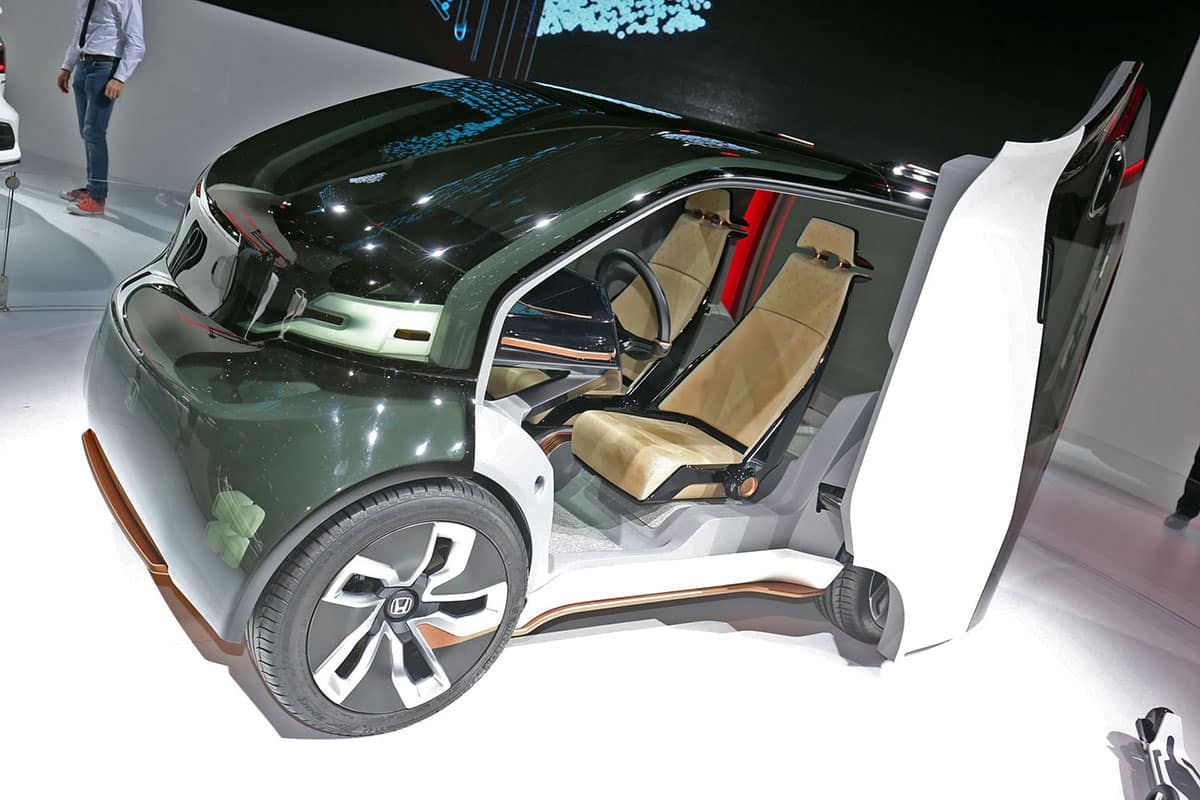
Also debuting on Honda’s Geneva stand is the NeuV, a battery electric concept that learns about its owner and acts accordingly.
According to its creators the NeuV (pronounced new-vee) takes advantage of the fact that most privately-owned cars spend 96 per cent of their time idle.
When not being used by its owner, the car can function as an autonomous ride-share vehicle ferrying customers. And while not in use it can feed energy back to the Grid in times of high demand, earning its owner money in the process.
The NeuV includes an ‘emotion engine’ called HANA (Honda Automated Network Assistant), which learns from the driver by detecting emotions behind their judgments. It can then apply what it has learnt from the driver’s past decisions to make new choices and recommendations.
It’s not as fast as a Civic Type R, but it might be more relevant to your motoring future
Two people and their luggage can be carried by the NeuV, and it also provides storage space and a charging point for a ‘Kick ’n Go’ electric scooter concept to help passengers get to their final destination.
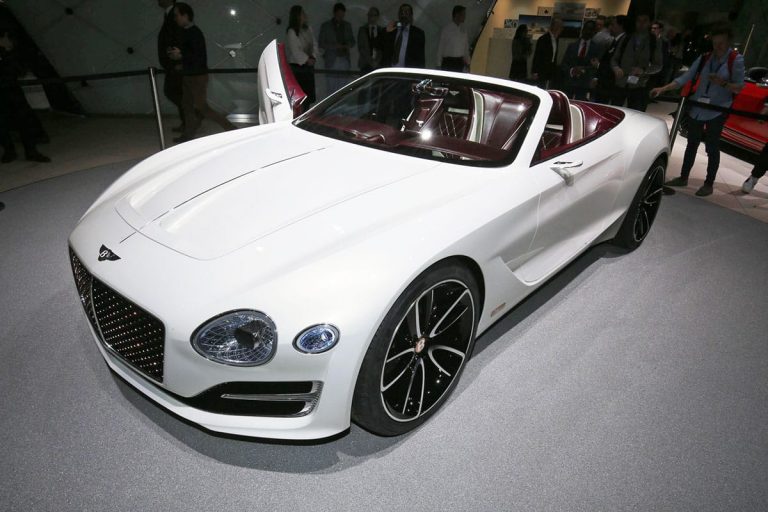
The Bentley EXP 12 Speed 6e and Jaguar I-Pace may both be concepts but demonstrate how all aspects of the automotive industry, including the premium and luxury sectors, are looking increasingly to an electric future.
With the EXP 12 Speed 6e, unveiled at the Geneva show, Bentley aims to demonstrate that an all-electric version of one of its cars will not compromise the quality, refinement and high performance levels that customers of the luxury brand expect.
“The EXP 12 Speed 6e is a concept to show that Bentley is defining electric motoring in the luxury sector, with the appropriate technology, high quality materials and refinement levels you’d expect from a true Bentley,” company chairman and CEO Wolfgang Dürheimer says.
This version of the concept is aimed mainly at gauging reaction to Bentley’s latest exterior and interior design direction, and no mechanical details of the Speed 6e powertrain have been released.
Long range a priority
Bentley is working towards electric technology that will include high-speed inductive charging and give the car a range sufficient for the ‘grand touring’ requirements of the brand’s customers.
“An electric Bentley would, for example, be able to drive between London and Paris or Milan and Monaco on a single charge and the onboard experience will be enhanced for both driver and passenger thanks to the integration of state-of-the-art technology,” Bentley’s launch release states.
Bentley wants to show that electric cars will offer the same level of bespoke craftsmanship.
The brand is planning for an electric future, with plug-in hybrid variants set to be offered across the Bentley model range starting with the Bentayga SUV in 2018.
“This concept enables us to engage with luxury customers and gather feedback on our approach,” Dürheimer says. “Bentley is committed to offering an electric model in its future portfolio and we are interested to receive feedback on this concept.”
The Jaguar i-Pace is on show in almost production-ready form. Photo: Andrew Charman
Pace quickens at Jaguar
The Jaguar I-Pace concept makes its European debut following its reveal at Geneva in January, and a production version will not be far behind.
Jaguar has been taking registrations from customers wanting to be among the first to own a production I-Pace, and according to reports 350 have already signed up.
While the car is closely related to the recently launched F-Pace, development of the I-Pace required the design teams to ‘tear up the rule book’, according to Jaguar design director Ian Callum. The result, he believes, is a no-compromise smart, five-seat sports car and a performance SUV in one.
“The I-Pace Concept is a radical departure for electric vehicles – it represents the next generation of battery electric vehicle design,” Callum says.
“It’s a dramatic, future-facing design – the product of authentic Jaguar DNA matched with beautiful, premium details and British craftsmanship.”
The production I-Pace will be on the roads in 2018 as Jaguar’s first-ever battery-powered electric vehicle. “(It) opens a new chapter in the history of our legendary brand,” Callum says.
Jaguar I-Pace will be on roads in 2018. Photo: Andrew Charman
The Mitsubishi Eclipse Cross debuts at the Geneva Motor Show as the Japanese brand makes a determined effort to crack the ultra-competitive mid-sized SUV market.
Mitsubishi believes that the Eclipse Cross will appeal to style-conscious drivers, focusing on its ‘sharp coupé looks and muscular SUV stance’. Even the name has a sporty connection, last used on a two-door coupe and convertible sold in the US before 2012.
The Eclipse Cross is a compact-looking car, with distinct angles on the nose and a body shoulder line that rises towards the backwards-sloping roof line. The rear screen is particularly sharply angled.
When it goes on sale in the UK early in 2018 the Mitsubishi Eclipse Cross will be offered with two powertrains – the 2.2-litre turbodiesel familiar from other Mitsubishi models and a new 1.5-litre turbo petrol engine.
Both units gain new transmissions – a CVT with eight-speed manual override on the petrol engine and an eight-speed auto with the diesel. It’s not clear yet whether a front-wheel-drive version will be in the range, but the car will certainly be offered with Mitsubishi’s electronically-controlled 4WD. The ‘Super All-Wheel Control’ (S-AWC) vehicle control system will be included, this boasting an Active Yaw Control activated by the brakes.
The Mitsubishi Eclipse Cross will go on sale in the UK in early 2018. Photo: Andrew Charman
With the Eclipse Cross, Mitsubishi will launch a major reworking of its interior design. Horizontal lines dominate the styling with silver framing, while the technology available includes a tablet-style infotainment display and a new Head Up Display.
A Smartphone Link Display Audio system uses a touchscreen to connect to Apple CarPlay, including using the Siri personal assistant built into iPhones. Android Auto devices are also supported including voice control of features such as Google Maps and Google Play.
The car retains the exterior dimensions of its predecessor but a 15mm extension to the wheelbase, combined with cutting the front overhang by 25mm and extending the rear by 10mm. This allows a complete rework of the interior, Kia claiming the 255-litre boot space as best in class.
A reworked dash design includes a ‘floating’ 7-inch touchscreen infotainment system, while in-car technologies and connectivity available will include Android Auto, Apple CarPlay and a wireless smartphone charger.
Kia expects Picanto owners to personalise their car and the new model offers 11 exterior paint colours and a range of interior colour packs for buyers to choose from.
The three-door option of its predecessor has gone but the new Kia Picanto gains a sports-pitched trim level, GT-Line. Cars in this specification will include body kits and a high equipment level, and the arrival of the GT-Line trim coincides with the launch of a new turbo petrol engine in the Picanto – with 100hp it is the most powerful unit yet sold with the car.
The new Kia Picanto offers a choice of 11 exterior paint colours. Photo: Andrew Charman
Other powertrain choices comprise the three cylinder 1.0-litre 67hp and four cylinder 1.2-litre units already offered in the current Picanto.
The Kia Picanto goes on UK sale in May and The Car Expert will review it next month.
A star of the stand is the Kia Stinger fastback coupe, making its European debut after its reveal in Detroit in January.
The Stinger is expected to go on UK sale in early 2018. It will be offered with three engine choices: a 2.0-litre turbo petrol unit of 255hp, a 2.2-litre turbodiesel with 200hp and a 3.3-litre twin-turbo V6 petrol with 370hp. This will complete the 0-62mph sprint in 5.1 seconds – the fastest-accelerating and most powerful car Kia has ever produced.
Meanwhile, Kia has also demonstrated its commitment to plug-in hybrid powertrains with PHEV versions of the Niro hatch and Optima large saloon both unveiled at the Geneva show.
The Stinger is expected to go on sale in the UK in early 2018. Photo: Andrew Charman
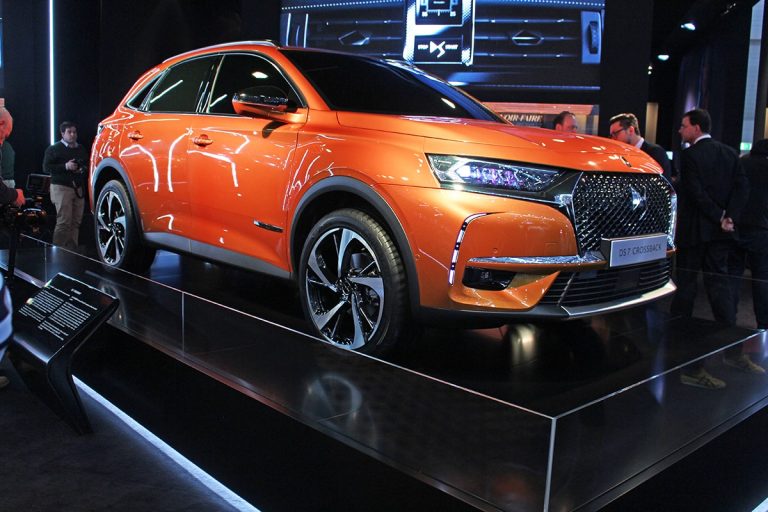
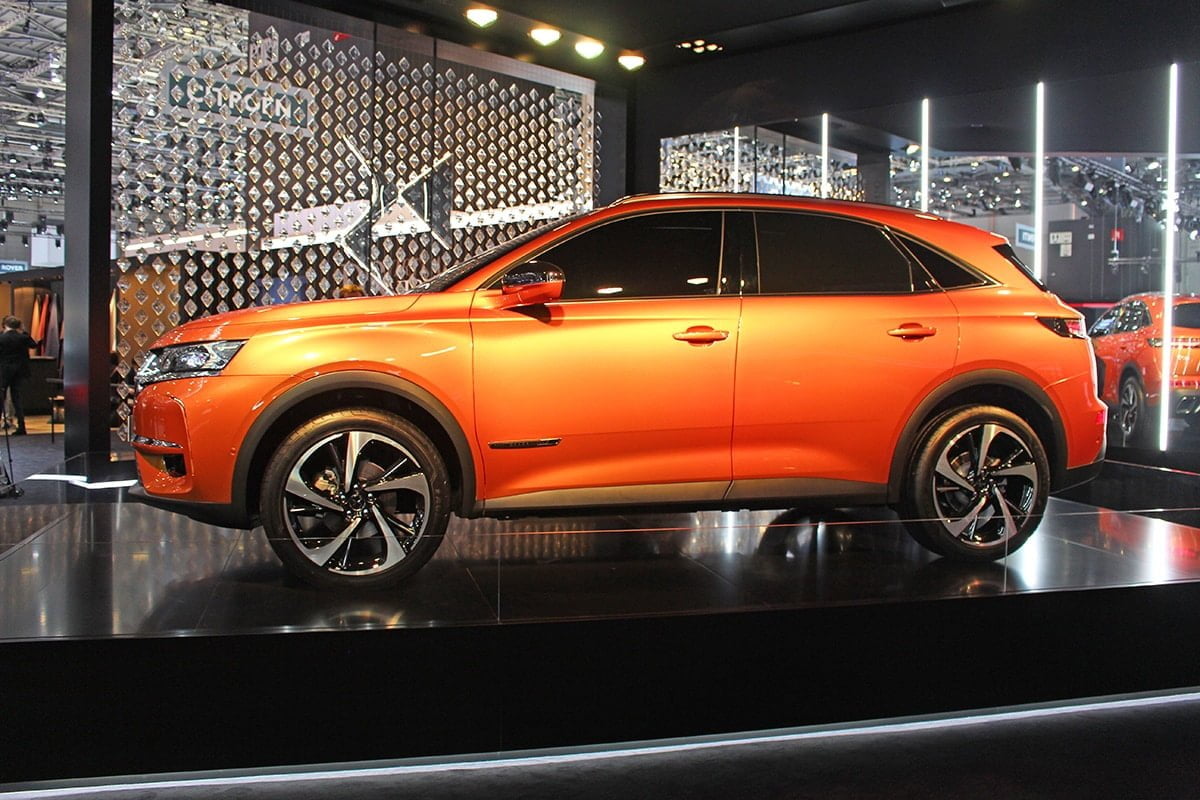
Unveiling the DS 7 Crossback at the Geneva show is a significant moment for PSA Group’s spun-off ‘avant garde’ brand.
When the SUV arrives on UK roads in 2018 it will be the first car designed specifically as a DS – currently the entire range on sale are reworked and rebadged versions of cars offered by parent brand Citroën.
The DS 7 Crossback intends to make a mark in the mushrooming upmarket mid-sized SUV market, and prime rivals will be the Audi Q5 and Jaguar F-Pace.
It is certainly a distinctive car, with the signature DS styling, including the front headlamp ‘wings’ and pencil-thin daytime running lights. Active LED headlamps will be offered on production models, along with a complex tail lamp setup comprising 42 LEDs.
The car is built on the PSA Group modular EMP2 platform. All versions will be front-wheel-drive only apart from the range-topping hybrid, with a choice of six powertrains. Entry-level will be the three-cylinder 1.2-litre petrol unit with 130hp, and there will be 180 and 225hp versions of a 1.6-litre turbo petrol engine.
Diesel options will comprise a new 1.5-litre unit of 130hp and said to produce impressive fuel economy, and a 2-litre with 180hp.
The plug-in hybrid ‘E-Tense’ version, evolved from the E-Tense concept seen at the 2016 Paris show, is the first petrol PHEV model across the entire PSA Group. It will go on sale in 2019, a year after the mainstream range.
A 200hp petrol engine and 109hp electric motor drive the front wheels, and a second 109hp motor powers the rears, creating the only all-wheel-drive option in the DS 7 range. Up to 37 miles will be possible in completely electric mode
And charging will take 4.5 hours in standard mode with a 2.5-hour fast option.
DS is already taking reservations from customers who wish to own the initial ‘Premiere’ versions of the DS7 Crossback – details of the newcomer are on a website launched directly following the unveiling of the car in Geneva.
Premiere models will feature signature styling elements including the distinctive ‘watchstrap’ interior upholstery.
Prices for the DS 7 are yet to be revealed but industry sources suggest they will range from around £30,000 to £40,000, making them a highly competitive option in the premium market.
Once the DS 7 is on sale it will be followed quickly by a raft of new models as DS establishes its own identity. Replacements for the current DS3, 5 and 7 models are expected along with four SUVs.
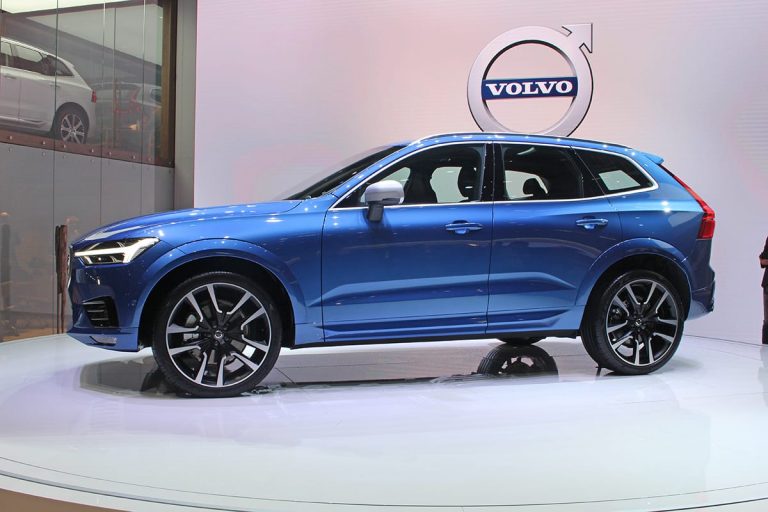
The Volvo XC60, unveiled in Geneva, is the second generation of the brand’s mid-sized SUV and a vital part of the Swedish brand’s mushrooming fortunes.
Volvo has seen major growth since reinventing its range around the ‘Drive-e’ programme – UK registrations were up eight per cent in 2016, and the second-generation XC60 is expected to boost this progress – in nine years on sale the outgoing model has sold almost a million globally and today accounts for 30 per cent of Volvo’s volume.
When it arrives in UK showrooms in September the XC60 is expected to target buyers of the Jaguar F-Pace and Audi Q5 in what is now a very competitive upmarket mid-sized SUV market.
The new Volvo XC60 is built on the Swedish brand’s latest SPA large car platform – this has already been used on the successful range-topping 90 Series models and will also be the basis for the next generation S60 saloon and V60 estate, which are expected in 2018.
The new XC60 measures up longer by 62mm, with a wheelbase extended by 91mm, and wider than the outgoing car, but looks sleeker due to the 14mm shaved from the height.
The XC60 will be offered with the Drive-e powertrains already familiar, particularly in the 90 Series cars. At launch these will comprise the 190hp D4 and 235hp D5 diesel, the petrol unit of 254hp and the T8 Twin Engine petrol hybrid.
Much praised since launching in the XC90, the T8 unit produces 407hp, resulting in a 5.3-second 0-62mph time. Volvo has not yet released any other figures for the XC60, but the hybrid version of car’s larger sister, the XC90, offers CO2 emissions levels of just 49g/km.
Volvo is heavily promoting the safety package available for the XC60, dubbing the new model one of the safest cars ever made.
The City Safety system now includes a Steer Assist feature. This is employed both by a new safety system called Oncoming Lane Mitigation to guard against head-on collisions, and the Blind Spot Indication System to reduce the risk of lane-changing collisions.
Volvo is a major player in developing autonomous driving technology – available as an option on the XC60 is the Pilot Assist system. This takes care of steering, acceleration and braking on well-marked roads at speeds up to 78mph.
Unveiling the XC60 at the Geneva show, Volvo president and CEO Håkan Samuelsson says that the brand has a strong heritage in designing stylish and dynamic SUVs that offer the latest in technology.
“The new XC60 will be no exception – it’s the perfect car for an active lifestyle, and it represents the next step in our transformation plan,” Samuelsson adds.
The Ferrari 812 Superfast, unveiled at the Geneva Motor Show, is the most powerful and fastest front-engined road-going car the iconic Italian brand has ever produced.
Reason for this lies in the new 12-cylinder engine developed for the car, which its creators describe as ‘of unprecedented efficiency and might.’
It is based on the 6.2-litre unit of the previous record-holding F12 Berlinetta, but with its capacity enlarged to 6.5 litres and modifications made to the intake system and combustion rate. The first 350 bar direction injection system used on a spark-ignition engine is fitted, while the variable geometry inlet tracts are evolved from those on the limited-edition F12tdf, and originally developed by Ferrari’s F1 team.
Power goes up 60hp over the F12 Berlinetta, the Superfast pumping out some 800hp at 8500rpm. Torque is 718Nm at 7000rpm, with 80 per cent on tap from only 3500rpm.
Fast but flexible
Ferrari says these figures make the engine a very flexible unit, essential to attract the 812’s very specific customer base; “(They) demand the most powerful and exclusive Ferrari in the range – they want a blisteringly high-performance car, but refuse to compromise on the kind of versatility that will allow them to thoroughly appreciate driving it as a 360-degree experience.”
The engine is combined with a developed version of Ferrari’s F1 dual-clutch transmission – the modifications are to meet the car’s track driving performance targets and cope with a rev counter red line extended to 8,900rpm. Shift times have also been reduced by 30 per cent.
Many Geneva visitors struggled to get a proper look at the Ferrari 812 Superfast, such was the interest. Photo: Andrew Charman
All of this translates to a 0-62mph time of 2.9 seconds, the 812 Superfast taking only another five seconds to double its speed and being capable of 211mph. Combined cycle fuel consumption is 19mpg with CO2 emissions of 340g/km.
Also debuting on the car is Ferrari’s first electric power-steering system, and the ‘Virtual Short Wheelbase 2.0’ that combines the electric assistance to the front steering with rear-wheel steering to make the car more agile in corners. The driver can dial in functions including peak performance and power oversteer.
Brembo brakes originally fitted to the LaFerrari hypercar are used again on the 812 Superfast, which with the performance ABS system cuts braking times from 62mph by almost six per cent when compared to the F12 Berlinetta.
Aero excellence
A major aerodynamics programme sees the Ferrari 812 Superfast significantly more aero-efficient than the F12 Berlinetta, both active aero elements and improvements to the car’s drag values helping to generate 30 per cent more downforce.
Notable elements include a vane on the front bumper to shift air hitting the front of the car out to the flanks, reducing the aero wake and therefore the drag. The underbody diffusers ahead of the front wheels boast mobile elements to cancel out air pressure generated at high speeds.
The car’s styling is said to recall the classic 365 GTB/4 Daytona of 1969, the fastback two-box design including a high but short tail. Creases are distinctive and the wheelarches muscular to add to the car’s presence.
No price has yet been announced for the 812 Superfast.
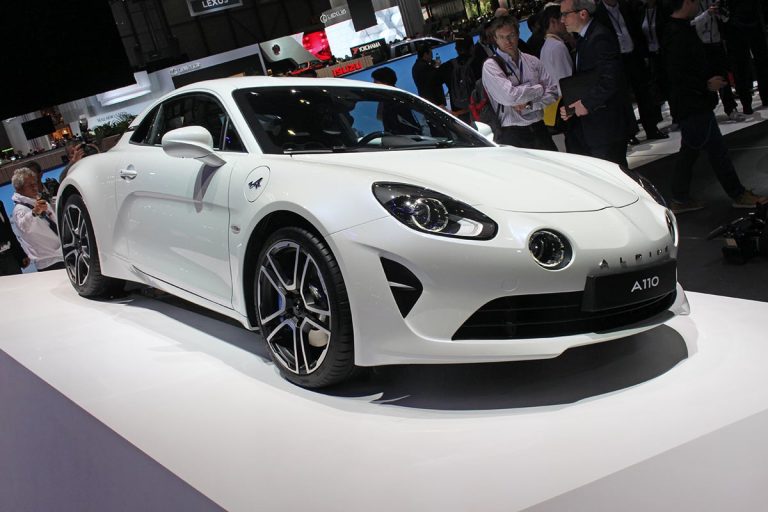
Renault has chosen the shadow of the Alps for its revival of a renowned sports car line – the long-awaited Alpine A110 debuts at the Geneva Motor Show.
The new Alpine is a mid-engined, two-seater sports coupe which its makers say remains true to the spirit of previous Alpine models and particularly the A110 ‘Berlinette’ last made in 1977.
A riveted, bonded and welded aluminium bodyshell helps the Alpine A110 weigh in at just 1080kg – its power-to-weight ratio bettering the Porsche Cayman which is expected to be a prime rival. The Alpine is a compact car, measuring up at 4178mm long, 1798mm wide and only 1252mm high.
Handling-friendly weight distribution of 44/56% front to back concentrates the most mass between the wheels – the engine sits behind the driver and the fuel tank ahead, behind the front axle.
Turbocharged power
Power comes from a Renault Sport developed four-cylinder turbo unit of 1.8 litres. It offers 252hp with 320Nm of torque and is combined with a seven-speed DCT transmission. Alpine says that the A110 will return a 4.5-second 0-62mph time, long with an electronically limited 155mph top speed.
Three driving modes are on offer, changing the parameters of the engine, transmission, steering and Electronic Stability Control, along with the exhaust note to suit Normal, Sport or Track settings. The cockpit display reflects the mode selected.
The Alpine attracted a lot of attention in Geneva. Photo: Andrew Charman
Aerodynamics include a flat floor and a rear bumper diffuser. Air inlets in the front bumper create a curtain along the front wheel wells, improving air flow around the wheels and cutting drag – The A110’s Cd value of 0.32 is claimed to be among the lowest in its sector.
The Alpine A110 is to be built in a bespoke factory in Dieppe, France and first UK deliveries are expected in 2018. The first 1,955 examples, celebrating the year that original Alpine was launched, will be dubbed ‘Premiere Edition’ models with bespoke styling and equipment and each carrying a numbered plaque. Alpine will then launch further specifications when this run is concluded.
UK prices are yet to be revealed – French prices have been announced at €58,500. This equates to around £50,600 but does not take account of local taxation levels.
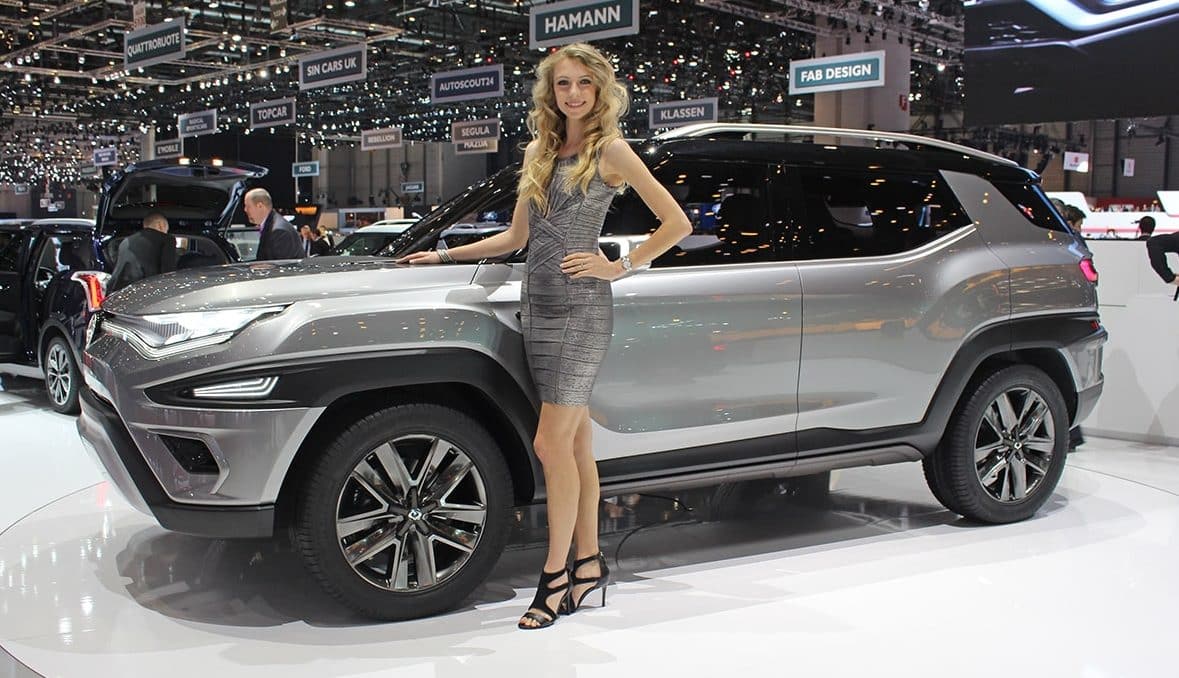
The new SsangYong XAVL concept car has made its debut in Geneva.
The new XAVL – which stands for ‘eXciting Authentic Vehicle Long’ – concept was developed from the XAV concept which SsangYong presented at the Frankfurt motor show in 2015. For the design of the mid-size SUV, SsangYong drew on the second-generation Korando model from the 1990s.
The XAVL concept can accommodate seven passengers with three rows of individual seats. The seats are arranged in a two-three-two layout, with the five seats of the second and third rows able to fold and slide for maximum comfort and practicality.
The XAVL concept has the option to be powered by either a Euro 6d-Temp compliant 1.5-litre petrol or a 1.6-litre diesel engine. The petrol and diesel engines can be combined with either a six-speed manual or six-speed automatic transmission and a two wheel-drive system.
Safety features include an external airbag which provides pedestrians with increased protection, a central airbag between the driver and front seat passenger which enhances the passenger’s safety, as well as a driver’s knee airbag.
The XAVL was developed from SsangYong’s XAV concept which was presented at the Frankfurt motor show in 2015. Photo: Andrew Charman
Additional safety features include Advanced Emergency Braking System, Lane Change Assist, Lane Keeping Assist, High Beam Assistance, Blind Spot Detection and Rear Cross Traffic Alert.
Inside the cabin, a Smart Parking Assist System is available along with a 10.25-inch LCD display. A Wifi hotspot serves the second and third row of seats. Smartphones can be used to control the car’s navigation, heating, ventilation and air conditioning as well as the infotainment system. Additionally, Link to Home IOT (Internet of Things) technology will enable occupants to connect with their home and manage CCTV, security, domestic equipment and temperature control.
Johng-Sik Choi, CEO of SsangYong Motor Company, said: “I am delighted to unveil this concept which signposts the future generation of SsangYong cars.”
New-look Korando
Also on the SsangYong stand at Geneva is the redesigned Korando.
The new Korando features daytime running lights which operate using 11 high-luminescent LED lamps and separate lenses to improve visibility. The redesign includes new 18-inch diamond-cut wheels and an ergonomically designed steering wheel.
The new-look Korando features LED daytime running lights and 18-inch diamond-cut wheels.
The Korando’s safety is enhanced by the addition of front and rear view safety cameras. These allow the driver to monitor blind spots around the vehicle when parking or moving at low speed.
Customers can choose between a seven-inch colour display and TomTom seven-inch navigation, which both support the video camera displays, Bluetooth hands-free and iPod connectivity.
The Korando offers the choice of a 2.2-litre diesel or a 2.0-litre petrol engine which can be combined with either a six-speed manual or a six-speed Aisin automatic transmission. There is also the option of front wheel-drive or on-demand all-wheel drive.
One of the most eagerly awaited unveilings at the 2017 Geneva Motor Show is the McLaren 720S.
Successor to the McLaren 650S, the new model is the first in the brand’s second-generation Super Series, which includes the range-topping cars. It is also the first major element of the bold ‘Track 22’ plan, unveiled in Geneva one year ago and committing McLaren Automotive to 15 new models in six years.
As its name suggests the McLaren 720S offers 720hp from a new four-litre twin-turbo V8 engine. It is built around a brand-new monocoque central structure, dubbed Monocage II. This is formed completely of carbon fibre and is both significantly lighter and stronger than its predecessor.
Twice the aero
The 720S features new, bolder aerodynamics and according to McLaren is twice as aerodynamically efficient as its 650S predecessor. Industry sources suggest the car will hit 124mph from rest in just 7.8 seconds, and complete a standing quarter mile in 10.3 seconds.
The car also features an uprated braking system that will slow the 720S from 124mph to a stop in just 4.6 seconds and 117 metres – this is six metres better than a 650S and comparable to McLaren’s ultimate supercar the P1.
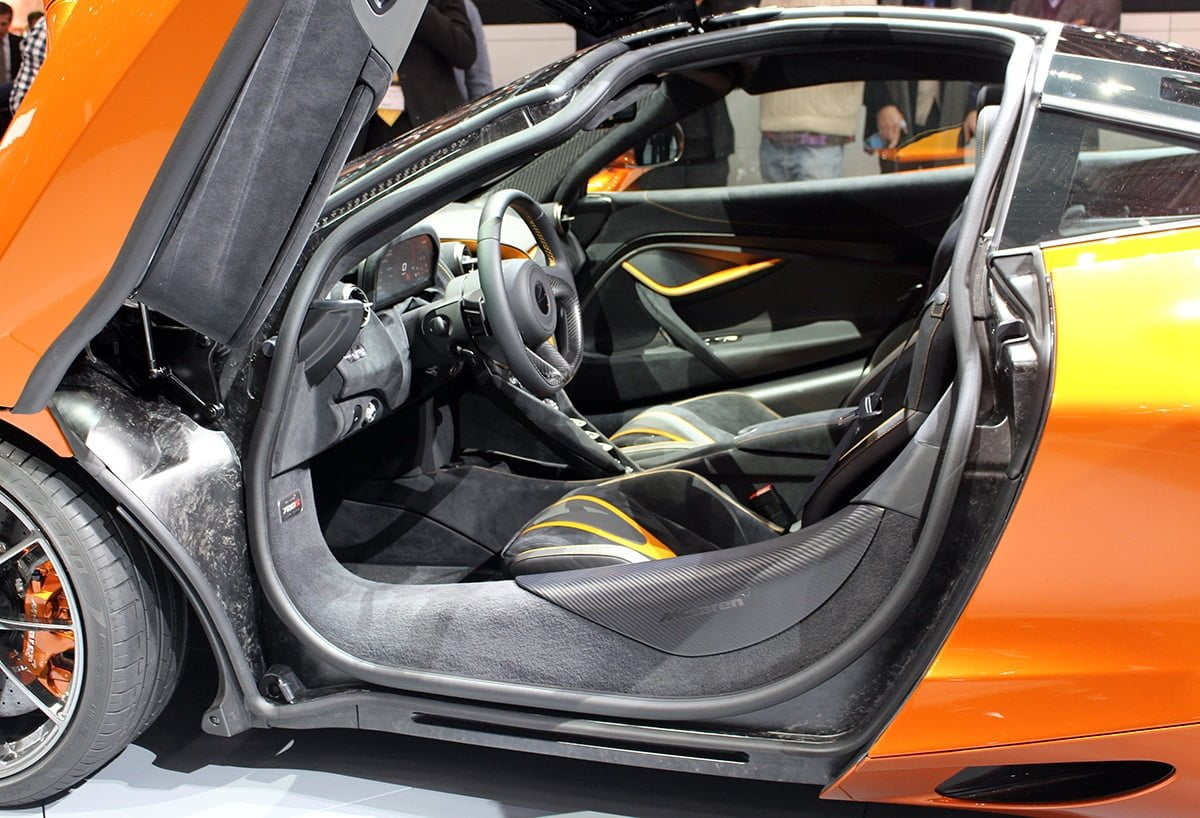
The McLaren 720s’ cockpit features a Folding Driver Display and a Central Infotainment Touchscreen. Photo: Andrew Charman
Chassis technology is being upgraded to match the powertrain with a new adaptive system Proactive Chassis Control II uses multiple sensors – 12 more than on previous Super Series models, including an accelerometer on each wheel hub
New cockpit systems
Technology on the 720S includes a driver information system dubbed “a revolutionary approach” by its creators. Two screens – a Folding Driver Display and a Central Infotainment Touchscreen – are fitted.
In Full Display Mode, when the driver unlocks and slips into the car they are given a comprehensive range of information on an upright TFT screen, the display format changing according to a driver’s choice of Comfort, Sport, or Track driving modes.
The Folding Driver Display includes a Slim Display Mode, that sees the display slide down to show only essential information in a strip. McLaren anticipates this suiting drivers wanting the minimum of distraction, such as when on a track.
The eight-inch central infotainment screen will run multiple applications simultaneously on a vertical touchscreen carousel including controlling the audio, media and navigation.
SEAT has had a good start to 2017 with a 13.6% increase in sales in the first two months of the year. SEAT has recently launched a flurry of new and updated models including the Ateca, the brand’s first SUV, and the redesigned Leon. A new compact crossover, the Arona, is also expected. The new range includes an alternative to the current FR trim, the Xcellence version.
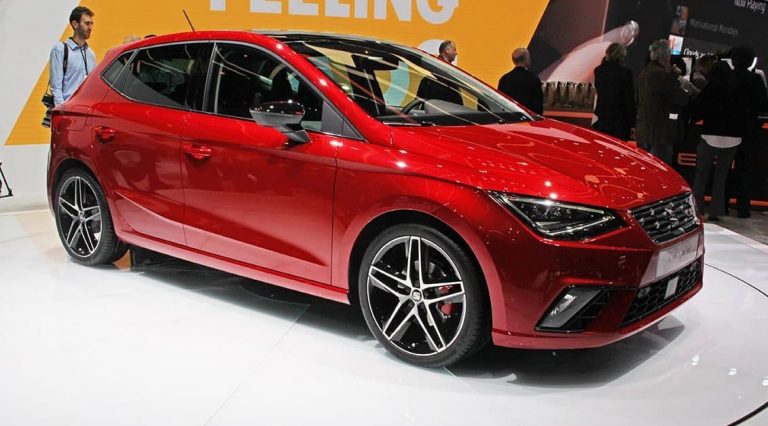
The Ibiza is SEAT’s best-selling model with over 5.4 million units sold worldwide. The fifth-generation Ibiza was developed and initially unveiled in Barcelona.
The new Ibiza features an MQB (Modular Quer Baukasten) A0 platform developed by Volkswagen and specifically designed for smaller cars. Apple CarPlay and Android Auto are available with the new Ibiza along with Mirror Link connectivity via an integrated eight-inch touchscreen. Available driving-assistance systems include adaptive cruise control.
Luca de Meo, president of SEAT, believes: “The new SEAT Ibiza will make a great leap forward for the brand and it is called to set a turning point in the segment.” The new Ibiza will play an important part in the consolidation and growth of the SEAT brand.
Also on the SEAT stand at Geneva is the Leon CUPRA. The Leon CUPRA is the fastest legal street model from SEAT and has a 300hp engine that can produce 380Nm of maximum torque. SEAT claims that it has an acceleration of 0-62mph in 4.9 seconds.
The Ibiza is SEAT’s best-selling model with over 5.4 million units sold worldwide. Photo: Andrew Charman
The Leon CUPRA is available with SEAT’s 4Drive Total Traction system when combined with the family ST model and the double-clutch DSG (direct-shift gearbox).
Alongside the new Ibiza and the Leon CUPRA, SEAT is showing the new SEAT Leon CUPRACER Evo 17. This is the competition version destined to be fielded in the TCR International Series.
The model on show at Geneva has a grey matte exterior, carbon fibre interior details and copper detailing both inside and out.
Two versions of the Leon CUPRACER Evo 17 are available: one with DSG and the other with a sequential manual gearbox. The CUPRACER has the same engine as the street version, but is capable of 350hp and 420Nm of torque.
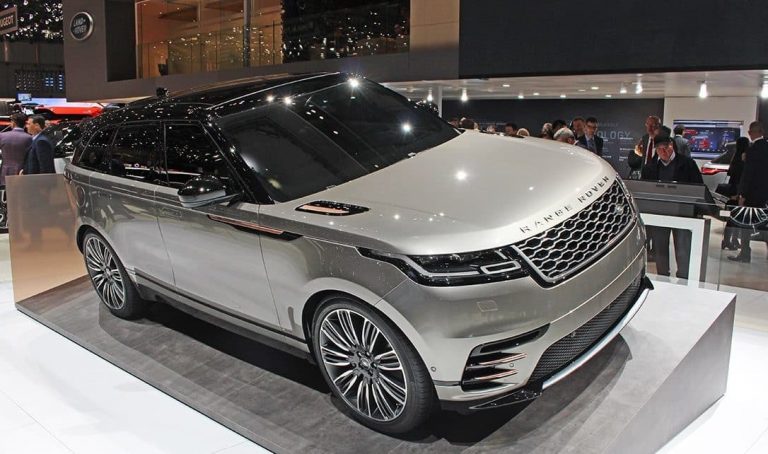
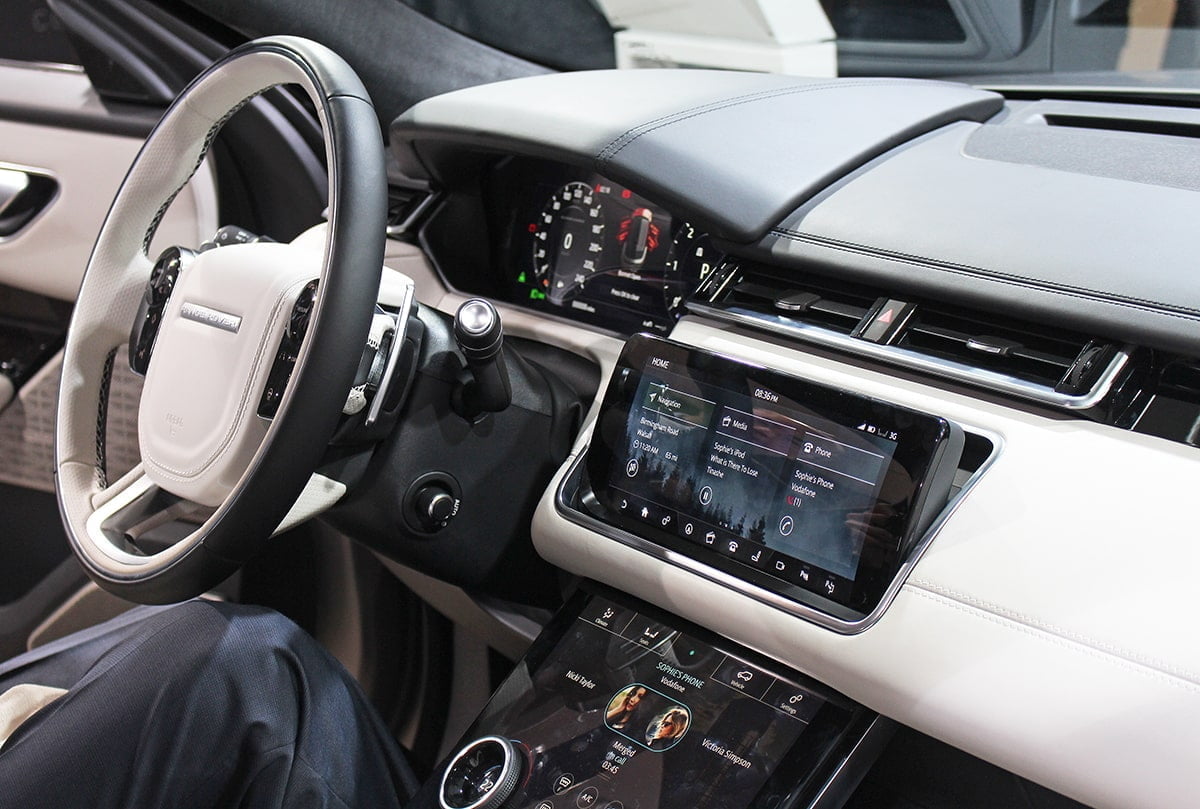
While the UK auto industry headlines focus elsewhere in the Geneva motor show halls, the Range Rover Velar is an important unveiling for the home industry.
The Velar is a truly British car, designed at JaguarLand Rover’s Gaydon studios and to be built in the JLR plant in Solihull, Birmingham. Its Ingenium powertrain range, meanwhile, will come out of the recently-constructed engine plant near Wolverhampton in the West Midlands.
JLR sales have been mushrooming in recent times, Land Rover registrations alone up by close to 20 per cent in 2016, and the Velar is expected to further boost this progress.
Targeting Porsche rival
Sitting between the existing Range Rover Evoque and Sport lines, the Velar will be expected to widen the Land Rover brand’s customer base and attract buyers away from the Macan of rival Porsche.
The car sits on the same platform as the F-Pace SUV that has already proven a major success for sister company Jaguar, and will be offered with a six-strong powertrain range. The name comes from the development of the original Range Rover of 1970 – the title Velare, derived from the Latin velare meaning to veil or cover, was given to the 26 pre-production examples of the Range Rover produced.
The Velar will be expected to widen the Land Rover brand’s customer base. Photo: Andrew Charman
Sales of the newcomer start in July, with the Range Rover Velar priced from £44,830 to £85,450.
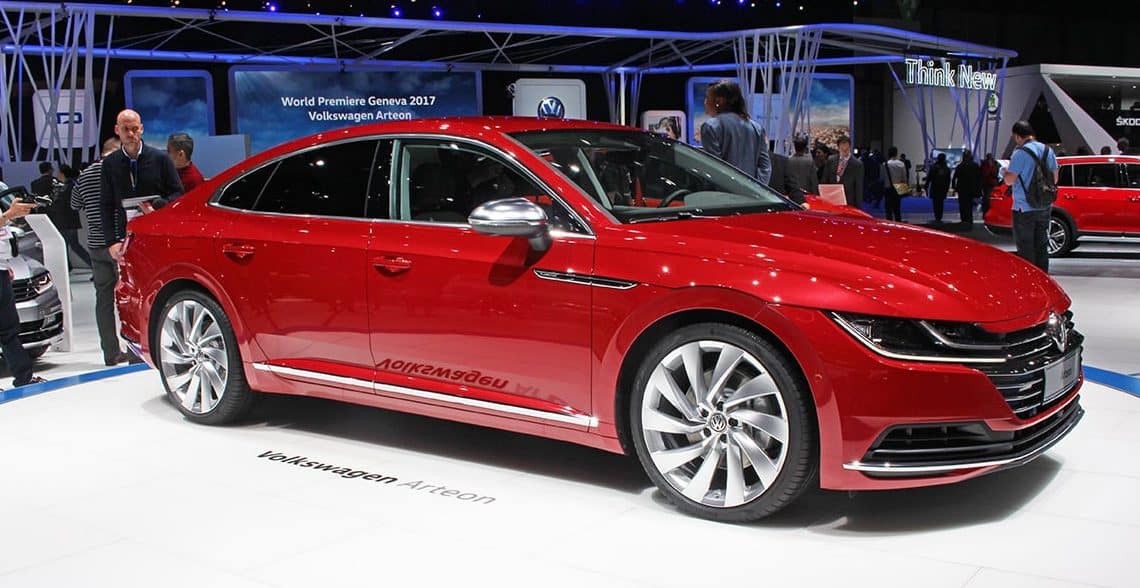
Effectively replacing the previous CC model, the Arteon is designed to sit at the top of the Volkswagen range above the Passat. It is expected to target upmarket rivals such as the BMW 4 Series Gran Coupe when it goes on sale in the Autumn of 2017.
VW states that the Arteon “combines the design elements of a sports car with the elegance and space of a fastback”. The car sits on a very long wheelbase, taking up 2,841mm of the 4,862mm overall length, which, combined with a 1,871mm width and 1,427mm height, promises impressive space in the five-seat cabin.
The Modular Transverse Matrix (MQB) platform on which the Volkswagen Arteon is built adds to this space, the transverse mounting of the engine permitting a more compact front end.
Six-strong engine range
Six engines will be available, all direct injection turbo units. Petrol and diesel options will each be available in 150 and 190hp outputs, with the 150 petrol a new engine to the Volkswagen range and boasting active cylinder management that shuts down a bank to save fuel when the engine is not under load.
The Volkswagen Arteon is set to go on sale in Autumn 2017. Photo: Andrew Charman
The range-topping petrol unit will offer 280hp, its diesel equivalent 240hp, and all six engines will be able to be combined with a dual-clutch DSG gearbox – this is standard on all but the entry-level petrol unit and the most powerful diesel.
Volkswagen is highlighting new styling elements on the Arteon, particularly the front-end. This includes a bonnet stretching forward and over each wing with a grille emphasising the car’s width.
Muscular wings and flared wheel arches house alloy wheels of up to 20 inches in diameter and are prime styling elements of the Arteon.
According to Volkswagen design head Klaus Bischoff, the Arteon is a car for people who want a five-door fastback with an accomplished, elegant design and progressive technology.
Bischoff says: “An avant-garde business-class gran turismo, it speaks to the heart and the head alike.”
The Arteon is designed to sit at the top of the Volkswagen range above the Passat.
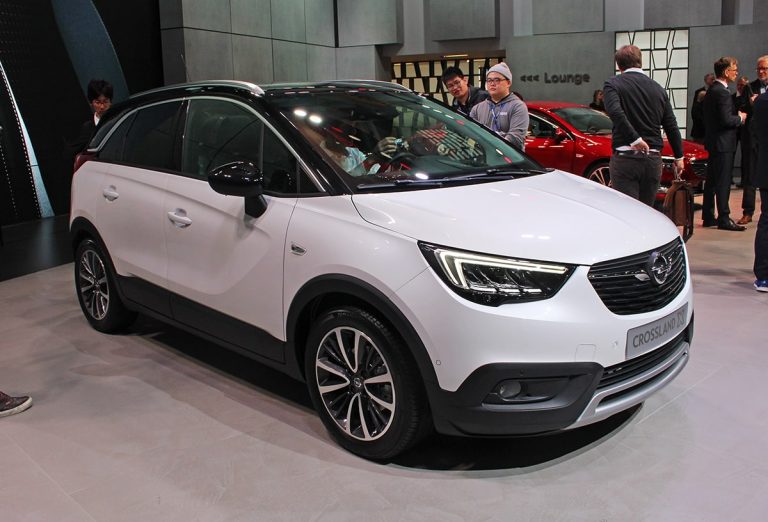
Vauxhall and sister Opel have unveiled the new Crossland X SUV and Insignia large car at the Geneva motor show, hoping that the two new models would earn headlines away from the uncertainty resulting from the sale of the two brands to PSA Group.
But the new cars are not likely to be the reason that the Vauxhall-Opel stand was one of the busiest of the show’s press day, as journalists from around the world clamoured to get more information about the impending takeover by PSA Group, which was only announced on Monday and remained one of the biggest talking points of the whole show.
Ironically the Crossland X and its forthcoming larger sister the Grandland X are built by Vauxhall-Opel’s new owner – both are part of a joint project with PSA.
The Crossland X sits on the same platform as the Peugeot 2008 while the Grandland X is effectively a sister to the Peugeot 3008, named European Car of the Year on the eve of the show.
The Crossland X will replace the current Meriva in the Vauxhall line-up. It is 4.2 metres long, shorter than its currently on-sale Mokka X sister and 16cm under the Astra family hatch.
Two Insignia models debut
Set to become the new Vauxhall range-topper, the Insignia has been unveiled in both Grand Sport hatch and Sports Tourer estate versions.
The Vauxhall Insignia has been unveiled with a Grand Sport hatch and Sports Tourer estate versions. Photo: Andrew Charman
The car is built on a completely new platform that Vauxhall says adds to the interior space while also improving the on-road performance.
Technology will feature heavily – LED matrix lighting, Lane Keep Assist, a Head-up Display and premium seats with front- and rear-seat heating and a heated windscreen are among the features that will b eon offer when the car goes on sale in the summer.
Vauxhall’s latest generation IntelliLink and OnStar systems are also on show in the car with the OnStar assistance service now offering new features including the ability to book hotel rooms and search for suitable parking spots via an OnStar Advisor.
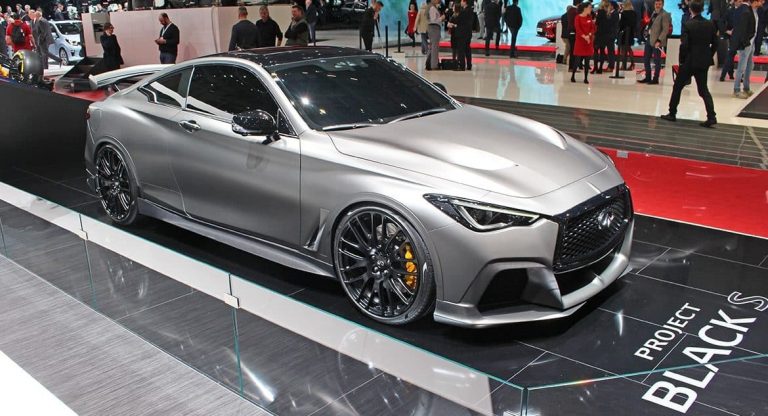
The Infiniti Project Black S is a radical rework of the Q60 coupe said to celebrate the brand’s association with the Renault Formula One team.
However the concept has another, important role – Infiniti management wants to know if high-performance versions of its model range would be popular and reaction to Project Black S will be closely noted – approval from Geneva motor show visitors could lead to a future production model.
The car’s powertrain adds Formula One technology in the form of a KERS – Kinetic Energy Recovery System – to the 3.0-litre twin-turbo V6 engine of the Q60. Developed by Renault F1 engineers the KERS harvests energy, for example, developed under braking, to boost power and torque, pushing the car’s output to 500bhp.
Styling to match the potency is added, based around a matt grey exterior colour with gloss black detailing replacing the chrome of mainstream Infiniti models.
Composite body elements
Carbon fibre is also used extensively, including a large front splitter, rear diffuser, wings and side skirts. Ultra-thin aero ‘blades’ are fixed in the side sills ahead of the rear wheels to channel air around the lower body of the car while a large fixed rear wing – also made of carbon fibre – is mounted at the rear.
The Infiniti Project Black S features a matt grey paint finish with gloss black detailing. Photo: Andrew Charman
Other bespoke touches include larger air intakes at the front to channel cold air into the engine bay and brakes, and vents in the bonnet to allow heat to escape. Forged 21-inch aluminium alloy wheels – larger, wider and lighter than those on the standard Q60 – are fitted under wheel arch extensions.
“The company believes there is potential for a ‘Black S’ grade that offers progressive levels of product enhancement – including higher power and torque from innovative powertrains, new or uprated suspension systems, and unique design elements,” Infiniti says.
“Project Black S suggests what a Black S grade could offer customers, and the concept’s debut in Geneva will help Infiniti gauge potential interest in daring high-performance derivatives of its cars that benefit from genuine motorsport technology.”
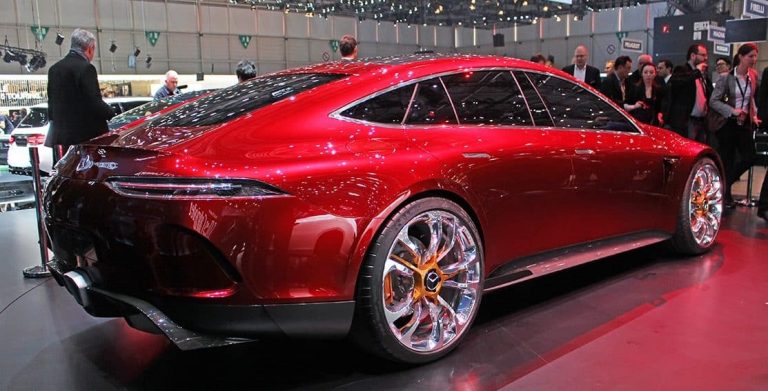
The Mercedes-AMG GT concept previews the German brand’s answer to the Porsche Panamera.
Unveiled at the Geneva motor show, the concept is expected to evolve into a four-door production model that is expected to launch in 2019. It will be a successor to the CLS Shooting Brake.
Other rivals in the new car’s sights will include the BMW 6 Series Gran Coupé and the Audi A7.
600hp engine
The Geneva concept is presented in range-topping form with a 4.0-litre twin-turbo V8 engine producing more than 600bhp. The GT – the name has not been confirmed for a production model – would be manufactured by the Mercedes-Benz performance subsidiary Mercedes-AMG. However it will be based around the Mercedes-Benz modular rear architecture (MRA) platform that is already used on AMG models such as the C 63.
Industry sources suggest two power outputs of the four-litre will be offered in the car, both combined with all-wheel-drive, while there will also be an entry-level 3.0-litre V6 model.
The Mercedes-AMG GT concept is expected to evolve into a four-door production model that will be launched in 2019.
Also on the Mercedes-Benz stand at Geneva is the E-Class Cabriolet, completing the brand’s latest E-class range. The cabriolet is based heavily on the new E-Class Coupe and retains that model’s lightweight part-aluminium construction.
The annual award was decided by a judging panel comprising 58 automotive journalists from across Europe. The Peugeot 3008 scored 319 points, winning by 23 points over the Alfa Romeo Giulia (296 points).
In third place was the Mercedes-Benz E-Class, which was recently awarded UK Car of the Year, on 197 points, followed by the Volvo S90 and V90 (172 points), Citroën C3 (166 points), Toyota C-HR (165 points) and Nissan Micra (135 points).
It is the fifth victory for Peugeot in the European Car of the Year awards, its most recent coming in 2014 for the current Peugeot 308 hatchback. Last year’s winner was the Vauxhall/Opel Astra. The 3008 was also highly commended by Thatcham Research earlier this year for its safety features.
Unlike most Car of the Year awards these days, there are no category or class winners – just one single award. The winner is traditionally announced in Geneva just ahead of the opening of the annual Geneva motor show.
The Peugeot 3008 went on sale in January and The Car Expert tested the car last November – our report is here.