With new diesel car sales plummeting all around the world, car manufacturers are shunning oil-burners as governments everywhere crack down on tailpipe emissions.
In a reflection of this, Honda recently announced that it would be dropping the diesel CR-V from its range, leaving just a petrol version and this – the new CR-V Hybrid.
The manufacturer claims that it should return the same economy as the recently-ditched diesel model while improving low-speed emissions, thanks to the introduction of those electric motors.
We headed out to Seville to see if this latest Honda CR-V Hybrid really can take the place of the well-rounded diesel version.
The biggest changes come under the bonnet – although we’ll get to these shortly – while there have been some other alterations elsewhere. It’s got a wheelbase that is 3cm longer than the older CR-V, and this provides better interior space.
Honda has also included active aerodynamics in the car, which allows a shutter to open or close behind the grille depending on how well the engine is being cooled.
There’s even a warning sound produced by the car when driving in all-electric mode so that hearing-impaired pedestrians can know it’s coming. And, of course, Honda has included a wide variety of its latest safety technology to ensure that those inside and outside the CR-V Hybrid are kept as safe as possible.
How does it look?
(PA)
In a time when manufacturers must create cars to stand out in what is a heavily-saturated market, Honda has done well to make the CR-V look different. It’s a chunky-looking thing and that’s good, with dynamic lines running the length of the car helping to hide its overall bulk. The front headlamp design is particularly noticeable, as is the large chrome grille.
It’s also pleasantly ‘normal’. Save for a few model badges on the flanks, you’d be hard-pressed to tell that this had a cutting-edge powertrain underneath it, and that’ll likely appeal to those who don’t want to shout about the fact they’re driving a hybrid.
What’s the spec like?
Equipment specifications for the CR-V Hybrid mirror those available on the petrol version, so buyers can choose from S, SE, SR and EX versions, as well as the option of either two- or all-wheel drive.
Prices start at £29,105 for the entry-level S model with two-wheel drive, topping out at £37,255 for the all-singing, all-dancing all-wheel-drive EX.
Although all cars get cruise control, traffic sign recognition and Honda’s full suite of safety assistance systems, the firm expects the range-topping EX to be the best seller – it benefits from a heated steering wheel, head-up display and panoramic sunroof over the other still comprehensively kitted-out grades.
The latest generation of Honda’s infotainment system still lingers somewhat behind rivals’ both in terms of ease of use and look, although the standard fit of Apple CarPlay and Android Auto goes some way to alleviate this issue.
What’s it like inside?
(PA)
The cabin of the CR-V Hybrid is tried-and-tested Honda: solid and well built, if a little uninspiring. There are harsher plastics to be found, although the rubberised dash and large, chunky buttons help to give it an overall feeling of robustness.
The door pockets are sizeable enough for a few bottles of water, and there are cubbies dotted throughout the cabin to help keep it clutter-free.
Rear-seat head and legroom levels are excellent, and there are twin USB sockets back there for charging devices too.
Although the boot is somewhat smaller in the hybrid than the regular petrol (497 litres down from 589 litres, because of the battery taking up space), the overall area is wide, square and easy to access, thanks to a low floor and minimal load lip.
What’s under the bonnet?
(PA)
Here’s where things get interesting. You see, the CR-V Hybrid uses a far-from-conventional powertrain setup, but the fundamentals are there.
Underneath the bonnet is a 2.0-litre petrol engine, along with two electric motors and a lithium-ion battery in the boot. Thanks to what Honda is calling ‘intelligent Multi-Mode Drive’, or i-MMD for short, it can seamlessly switch between power options while on the move.
At low speeds, for instance, the battery powers just the electric motors that drive the wheels – the engine is kept out of the equation. You’ve got just over a mile of all-electric propulsion, although when switching to Hybrid mode the engine supplies power to the electric motors, which then drive the wheels – and it can charge the battery back up, too.
Finally, there’s Engine Drive, which comes into play at higher speeds. This allows the engine to directly drive the wheels, bypassing both the battery and the electric motors. There’s no gearbox, just a lock-up clutch that transfers power depending on need.
What’s it like to drive?
On start-up, it’s business as usual. There’s no noise whatsoever, and the CR-V silently whisks away in the manner we’ve come to expect from hybrids.
Gain a little pace, and the engine chimes in seamlessly, grumbling away ever so slightly. The overall refinement is very good (it must be in such quiet cars, as even the tiniest rattles make their presence known, like a swarm of solid-gold bees flying into a desk fan), and it’s helped no end by the added sound insulation material installed throughout the car – as well as Honda’s innovative new active noise-cancellation system.
Under hard acceleration the engine does produce a hefty din, but once you’re up to speed it settles down well. It’s quiet and comfortable, and the ride remains composed.
Honda claims a 0-60mph time of nine seconds and it felt honest to this, as it did to the car’s claimed 51.4mpg – we saw around 48mpg on our route, which mixed motorway driving with short country road bursts.
Summary
Honda believes this hybrid CR-V to be a fair replacement for its popular diesel version and we’d have to agree. During our test route it delivered similar economy figures to the oil-burner, and when you factor in the lower cost of petrol at the pump, it means that potential buyers could see themselves saving a little more when filling up.
It’s also only going to cost around £800 more than the standard petrol version, which makes it excellent value when you consider the amount of technology residing under the bonnet.
All in all, the CR-V Hybrid would be an excellent proposition for those looking to drive down fuel costs without making too many sacrifices in terms of overall driving experience.
Model as tested: Honda CR-V Hybrid
Price: £37,255
Engine: 2.0-litre petrol linked to electric motors
Power: 184 hp
Torque: 315 Nm
Top speed: 112 mph
0-60mph: 9.0 seconds
Fuel consumption (combined): 51.4 mpg
CO2 emissions: 126 g/km
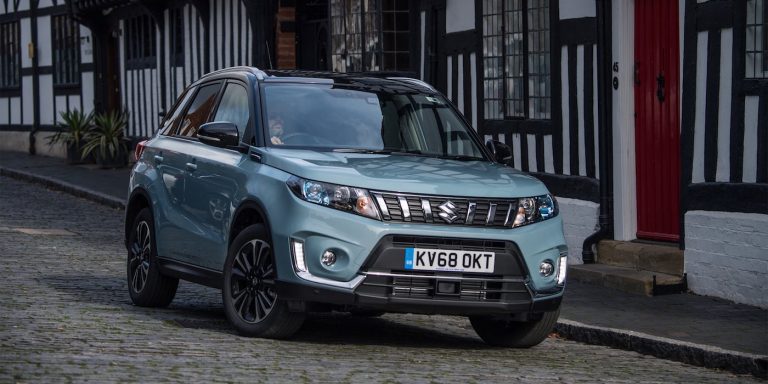
Suzuki has released full pricing and specification details for its facelifted Vitara, which features a subtle design revision, updated engines and a raft of new safety features.
The new Vitara is claimed to be Suzuki’s most advanced car to date. Although the basic shape of the car hasn’t changed, several details have been sharpened and redesigned. The lower part of the front bumper now has L-shaped LED daytime running lights and vertical slats, while the rear lights have been upgraded to LED units with a new light signature.
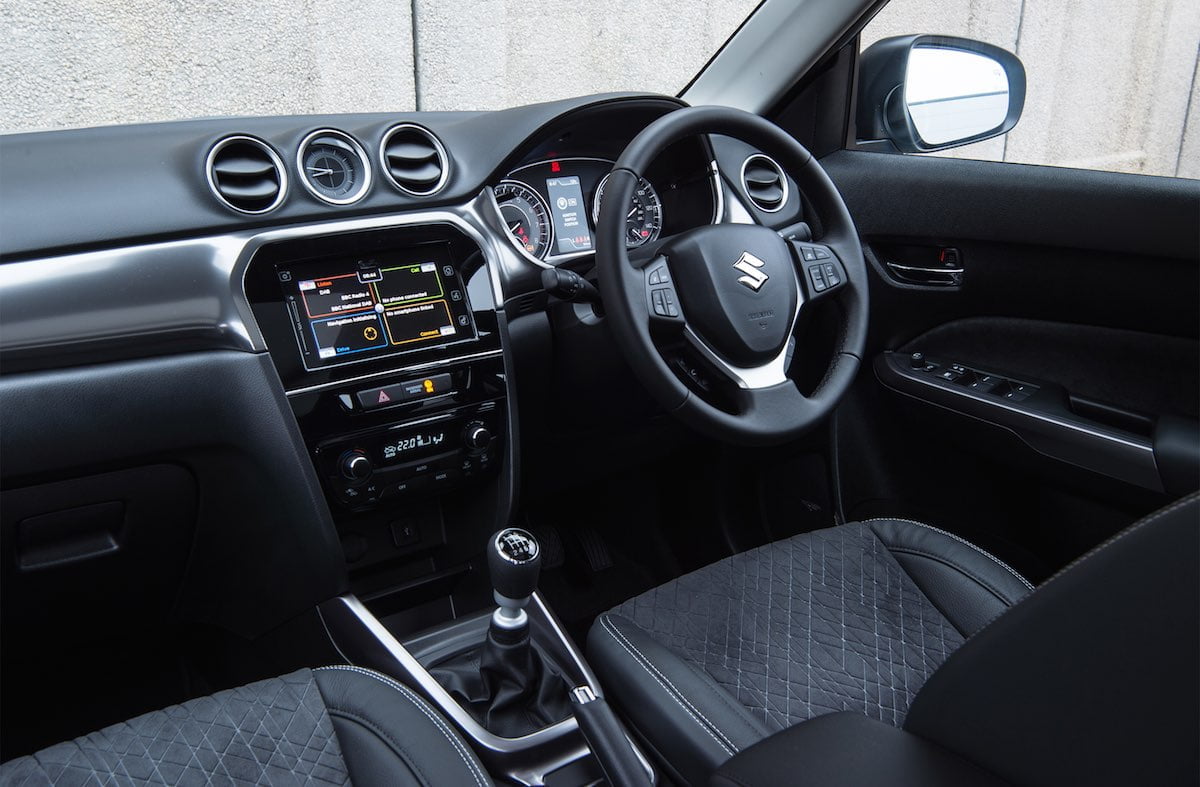
New alloy wheels and paint colours are also available, with contrasting shades for the roof on the options list. Interior changes are limited to new seat fabrics, a softer plastic for the instrument binnacle and a colour digital display between the dials.
(PA)
Equipment levels have been increased. Trim levels available are SZ4, SZ-T and SZ5, and all cars get seven airbags, alloy wheels, cruise control, climate control, four electric windows and a stereo with Bluetooth and USB connectivity.
SZ-T adds larger alloys, rear privacy glass and a touchscreen audio system with navigation and smartphone connectivity, while the top-spec SZ5 nets LED headlights, suede seats, keyless entry, blind-spot monitoring, adaptive cruise control and a panoramic sunroof.
Engines get a boost
On the engine front, the old 1.6-litre unit has been ditched in favour of 1.0-litre or 1.4-litre ‘BoosterJet’ turbocharged petrol engines. They offer 111hp and 140hp respectively, good for 0-60mph in 11.3 seconds and 9.3 seconds.
The 1.0-litre comes with a five-speed manual as standard, while the 1.4-litre gains a sixth ratio. Both can be specified with a six-speed automatic and four-wheel drive.
Pricing kicks off at £16,999 for an entry-level SZ4 1.0-litre model in two-wheel-drive manual form. Opting for SZ-T adds £2,000, while an automatic gearbox costs a further £1,400. The SZ5 trim starts at £22,499 for a 1.4-litre manual model. The range tops out at £25,649 for an SZ5 1.4-litre automatic with AllGrip four-wheel drive.
A new Department for Transport proposal aims to make life safer on the roads for cyclists, including rewards for drivers who pass bike training schemes.
The plan, unveiled by transport minister Jesse Norman, suggests that drivers who complete the national ‘Bikeability’ cycle training system should be offered a cut to the price of their car insurance. The course would, the DfT says, make drivers more aware of cyclists on the roads.
The plan also includes other proposals aimed at keeping cyclists safe. A new ‘cycling and walking champion’ would be appointed, and local councils would be encouraged to spend 15% of their transport budget on ‘active’ travel.
In addition, the proposals suggest enforcing a no parking rule in designated cycle lanes and funding a new portal to submit dashcam and helmet cam footage to police.
It comes on top of changes to the Highway Code, which are expected to give guidance on the ‘Dutch Reach’ technique for opening car doors – which sees drivers use their far hand to open their door and gives them a better view of cyclists, preventing them from being hit – as well as providing clearer guidance on overtaking distances and priority for cyclists and pedestrians at junctions.
Unveiling the plans, Norman said: “Greater road safety – and especially the protection of vulnerable road users such as cyclists, pedestrians and horse riders – is essential. We want to improve air quality, encourage healthy exercise, reduce obesity and boost our high streets and economic productivity.
“That means more support for cycling and walking, and that’s why these new measures are designed to deliver.”
However, not all groups were so thrilled, with some expressing frustration that speed reduction wasn’t given more priority.
Cycling UK chief executive Paul Tuohy said: “Lowering vehicle speeds around people walking, cycling and horse riding doesn’t just reduce the danger to them but also their perception of the danger.
“While the DfT’s proposals for amendments to the Highway Code will help save lives, ignoring the threat and dangers of speeding is disappointing.”
Rewind to 2012 – a year that saw both the London Olympic Games and the introduction of the Toyota GT86. Seems like ages ago, doesn’t it?
There was much to cheer about. At long last, a firm with so much sporting pedigree yet so little in the way of enthusiast’s products had pandered to the petrolhead with a real front-engined, rear-wheel-drive sports car – even if it was designed and developed by Subaru.
The Toyota GT86 and Subaru BRZ twins were immediately hailed by motoring critics around the world, although many cried for a little more oomph from its 200hp Subaru boxer engine.
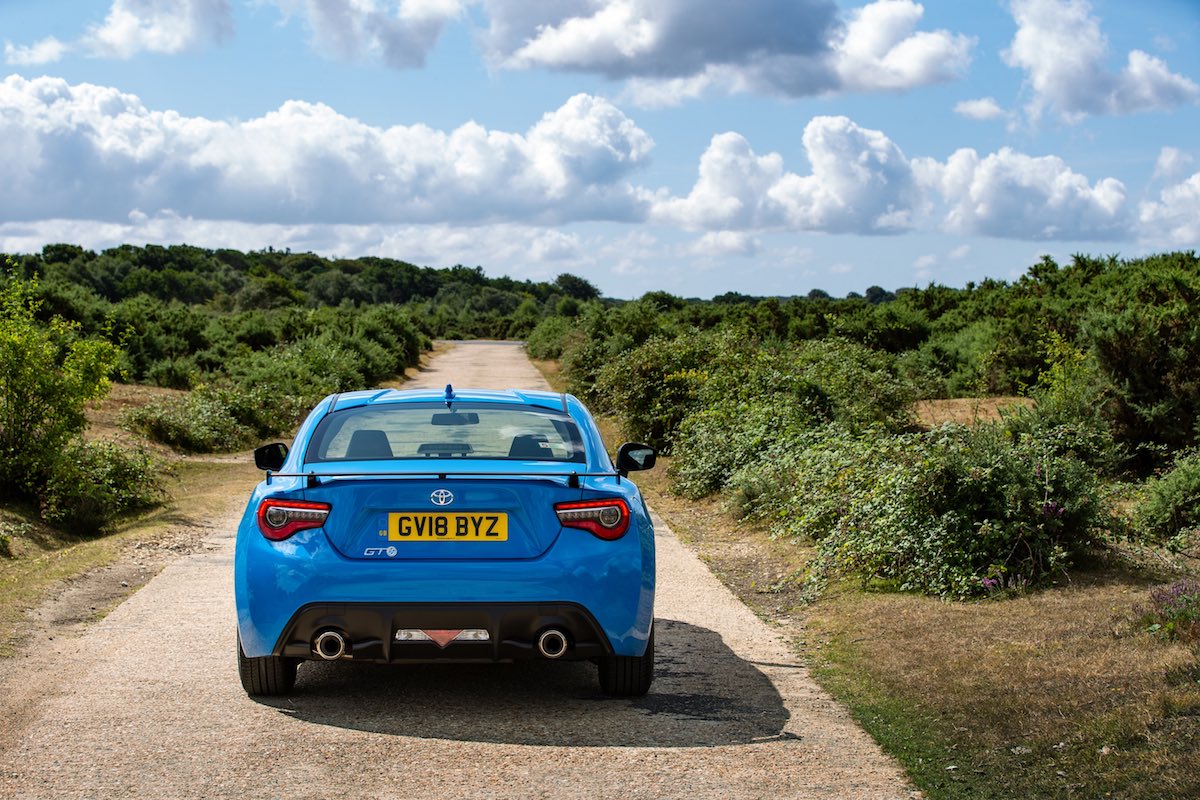
As the calendar ticks over to 2019, the GT86 remains on sale in pretty much the same form – minor 2016 facelift aside — and in typical Japanese fashion, it’s left a trail of special edition models that don’t actually change very much. This is the latest — the GT86 Club Series Blue Edition.
What’s new?
So, for this special-edition GT86, can you expect a more potent engine, overhauled driving dynamics and some stand-out visual differences?
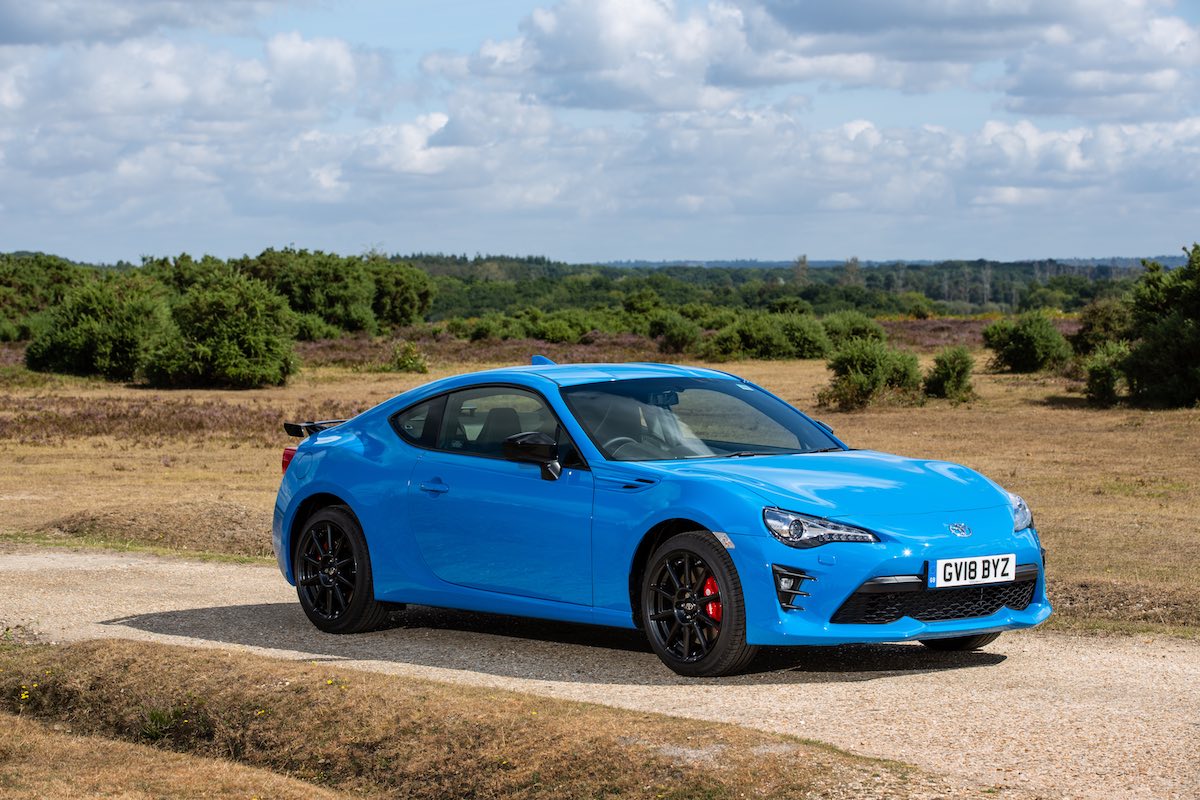
Erm, no. Not really. The GT86 Club Series Blue Edition is available only in the one colour, called Electric Blue. To contrast the blueness, Toyota has gone and painted the wheels, mirrors and both front and rear spoilers in black. That’s about it, really. Oh, and the 17-inch wheels are a different design to the 17-inch wheels on the GT86 Pro.
You can pay an extra £1,460 for the optional Performance Pack, which gives you Sachs dampers and larger Brembo brakes with red callipers.
Otherwise, power from its boxer engine remains the same as before, while there’s little to change the way it drives — but that’s no bad thing.
How does it look?
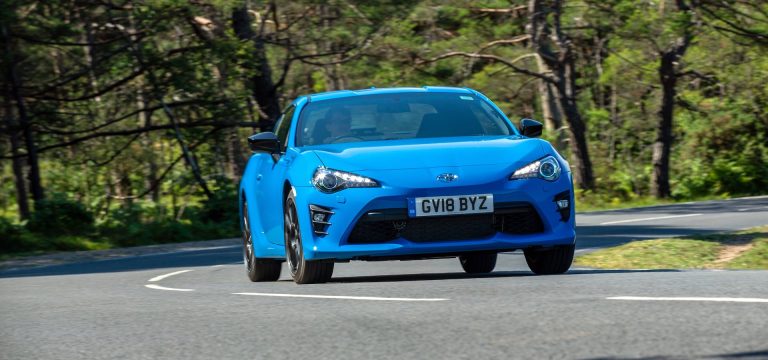
It is very blue. Really, really bright blue. The contrasting black finish on the wings, wheels and mirrors does make the whole thing look rather sharp.
That, combined with the racier looks added by the car’s most-recent facelift, gives it a pretty mean look on the road – we’d even go as far to call it race car-esque – and the GT86 CSBE doesn’t struggle to catch people’s attention wherever you go.
Opt for the Performance pack, and that effect is heightened by red Brembo brake callipers that stand out brightly behind the black wheels.
What’s the spec like?
There’s a fair amount of equipment out of the box for the GT86 Club Series Blue Edition. It’s based on the GT86 Pro and priced at £545 more than that model.
Not coincidentally, choosing metallic paint on a GT86 Pro adds exactly £545 to the price, so in other words, they’re exactly the same. Which is not surprising, since they have basically exactly the same specification.
Standard luxuries include automatic LED daytime running lights, a reversing camera, rain-sensing wipers, cruise control, heated seats and Toyota’s Touch 2 infotainment system displayed on a six-inch display — with DAB and Bluetooth support.
Adding the Performance pack brings the total to £30,440, though. That’s a fair heft over the base GT86’s £27,285 price tag, and throws it into the territory of another, more potent Japanese performance icon — the Honda Civic Type R.
Unless you’re desperate for the blue finish and the fruits brought along by the Performance pack, we’d suggest opting for the standard-spec GT86.
What’s it like inside?
The Toyota GT86, and perhaps more appropriately its Subaru equivalent, have always harked back to golden age of 90s Japanese performance cars in the interior quality — and that’s perhaps the one area it shouldn’t.
The GT86 is a little more plush than the BRZ thanks to leather trimmings around the cabin and on the seats as well as a sprinkling of Alcantara, but it’s far from luxurious. The dials look straight from a Need for Speed game (and the digital display doesn’t quite fit the cluster properly), while controls are reminiscent of the remote for an R/C car.
As for practicality, there’s a fair amount of space — assuming you’re packing for two, as the rear seats would struggle to fit more than a young toddler in a child seat. It does boast a respectable 391 litres of boot space though, monstering the 130 litres on offer in the Mazda MX-5.
What’s under the bonnet?
The familiar 2.0-litre boxer engine remains unchainged in the Blue Edition (PA)
Powering the Toyota GT86 Club Series Blue Edition is the familiar 2.0-litre, four-cylinder ‘boxer’ engine that can be found in both the regular car and its Subaru sibling, and is paired up to a six-speed manual gearbox or a six-speed automatic (for an extra £1,355).
Power and torque remain the same at 200hp and 205Nm, allowing the Japanese machine to cover the 0-60mph dash in 7.6 seconds before reaching a 140mph top speed.
As for efficiency, Toyota claims 32.8mpg on the combined cycle with emissions of 196g/km — although you’ll struggle to achieve that kind of fuel economy if you drive the car with even the most delicate right foot.
Enthusiast may yearn for more power, but we’d argue the GT86 would better benefit from a boost in torque. Once the revs are built up to about 6,000rpm, the boxer howls and delivers a serious punch. But getting to that point can be a lot of work, with a dip in torque around 4,000rpm giving it an asthmatic undertone.
What’s it like to drive?
Toyota hasn’t changed much about the way the GT86 tackles a road, and that’s for the better. The chassis remains as composed as ever, while offering so much feedback that in the driver’s seat, you can almost feel it at work through your backside.
On the ragged edge, it gives enough grip to keep the car on the road but as a result of its economy-focus Michelin Primacy tyres, will bite hard if it’s not treated with respect.
As a result of the GT86’s performance-focused nature, town and motorway driving is somewhat compromised. Steering is heavy, which can make it a pain to park and navigate through tight spaces, while a harsh ride and lots of road noise make it tiring over longer journeys.
Summary
The Toyota GT86 Club Series Performance Blue doesn’t revolutionise the formula, meaning the Japanese sports car remains as fun to drive as ever — although there is a valid claim for more oomph from the engine.
That’s looking ever more unlikely to arrive now though, and with this generation GT86 looking a little long in the tooth at six years old, it remains to be seen if a successor will come – and if that will boast more fruitful performance.
Having said that, any new car would be some way off and the current iteration remains a solid alternative to the usual choice of a hot hatch — just maybe not in this exact specification.
Model: Toyota GT86 Club Series Blue Edition
Price: £30,440
Engine: 2.0-litre flat-four petrol
Power: 200 hp
Torque: 205 Nm
Max speed: 140 mph
0-60mph: 7.6 seconds
Fuel consumption (combined): 32.8 mpg
CO2 emissions: 196 g/km
Changes to MOT emissions testing has seen the number of cars failing more than double since being introduced earlier this year.
In May 2018, emissions testing within the overall MOT test became more stringent — with smoke of any colour coming from the exhaust resulting in an automatic failure. Automatic failure also applies to any car showing evidence of a diesel particulate filter (DPF) that’s been tampered with.
Six months on, and new Driver & Vehicle Standards Agency (DVSA) figures show 744,592 cars have failed the MOT emissions test — a sharp rise from 350,472 for the same 20th May to 19th November period in 2017.
Diesel cars failing in droves
Of those failed cars, 505,721 were petrol powered — up from 292,468 — while diesel saw a meteoric rise from 58,004 to 238,971 failures.
Meanwhile, the rise in vans failing emissions testing increased from 3,585 in the same time frame to 19,468 — a 448% increase.
Commenting on the figures Gareth Llewellyn, DVSA chief executive, said that the agency’s priority is to protect everyone from unsafe vehicles and drivers. “We are committed to making a real difference to those in society whose lives and health are blighted by poor air quality,” he added.
“Since introducing the new tighter MOT emissions test in May, nearly 750,000 vehicles have been taken off the road or fixed,” Llewellyn said.
Overall MOT failure rates remain steady
Despite the large increase in cars failing on grounds of emissions, the failure rate for the MOT test remains steady since the changes were introduced.
34.7% of petrol cars failed between May 20 and November 19, 2018, a slight drop from 35.7% for the same period in 2017, while diesels saw a marginal decrease from 33.8% to 33.2%.
The number of cars stolen in 2017 reached its highest level in six years, according to official figures from the DVLA.
Falling police numbers and the vulnerability of modern electronic security systems are being blamed for the increase in thefts, which saw more than 43,000 vehicles reported stolen to the DVLA in 2017 – 9,000 more than in 2016 and 13,000 more than in 2015.
Speaking to Auto Express, spokesperson for RAC Insurance Simon Williams said this was “a real cause for concern”. He said that while manufacturers put more clever systems on their cars, “it seems criminal groups are continuing to find ways around them”.
Williams added: “We are concerned that the declining number of police officers could be resulting in less investigation of motor crime like this, something that could be solved by forces having greater resources.”
The surge can be blamed in part on ‘keyless’ car crime, with thieves using a car’s security system against itself to gain access. Using handheld scanners, easily purchased on the internet, thieves are able to scan the signal from a car’s entry fob and amplify it, tricking the car into unlocking itself.
The Association of British Insurers said keyless theft was the main cause of the spike in figures. Its spokesperson, Malcolm Tarling, said: “Car criminals don’t stand still. As cars become better protected, criminals see a challenge to break into them.”
Figures out this week from the association also showed an increase in keyless car crime, up 32% in the first nine months compared to the same period in 2018 and costing insurers £271 million.
DVLA data for 2018 shows that 32,827 cars were stolen up to October 26. That points towards a full-year total that will again exceed 40,000 thefts.
The Volkswagen Group is brilliant at making the most of what it has – and the all-new Audi A1 Sportback is a chief example. Using the same chassis and engine architecture as the latest Volkswagen Polo and SEAT Ibiza, it’s a really premium product that bears only a passing resemblance to its siblings – and every resemblance to its bigger brothers within the Audi range.
The previous A1 was a roaring success, thanks to its fashion-led design and trademark solidity, trading blows with the likes of the Mini Cooper. The new car swaps cuteness for sharp angles and motorsport-inspired styling, while hopefully retaining everything that made its predecessor so popular.
What’s new?
The new Audi A1 Sportback rides on the Volkswagen MQB A0 platform – a selection of chassis components that underpin most of the Volkswagen Group’s small car range. That endows the A1 with a choice of engines, from which Audi has chosen just three – all petrol.
The interior’s also been given a styling makeover, and the new platform’s efficient packaging has allowed Audi to increase the amount of space at the same time – plus bags of technology, befitting the brand’s high-tech positioning.
Best of all is the personalisation on offer. The A1 can be had with a wide choice of exterior colours, contrasting colour packs, alloy wheels and interior ambiences – which can be mixed up any way the buyer pleases.
How does it look?
(PA)
The new A1 Sportback is a smart-looking little thing, and it’s blessed with the ability to wear lower-spec trims without looking like a poor relation.
Our ‘Sport’ model had 17-inch alloy wheels as well as a flat paint colour and didn’t suffer for it – mainly thanks to sharp LED running lights front and rear that lend a high-tech look to the car.
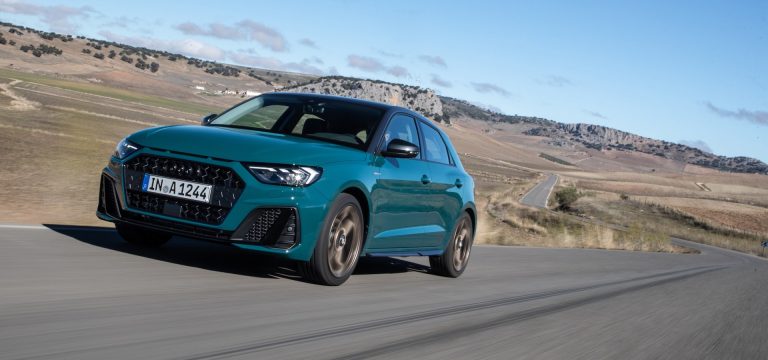
There are divisive elements – there’s a rather wide C-pillar, inspired by the Q2, and the triple slots between the bonnet and the grille lend an aggressive edge to the car. But it’s possible to customise the A1 to within an inch of its life, so you need never see two the same – available for testing were some really eye-catching combinations. Sea-green bodywork with bronze wheels, anybody?
What’s the spec like?
Our mid-range ‘Sport’ model came with all the essentials. The LED head- and tail lights really enhance the exterior look of the car, as did smart 17-inch alloy wheels – sadly, the latter are optional. What you do get as standard are 16-inch alloys, sports seats, rear parking sensors and cruise control, as well as Audi’s MMI plus infotainment system.
Step up to S Line and you’ll gain 17-inch wheels as standard, LED interior lighting, even firmer sports suspension and leather-trimmed upholstery. The options list holds goodies such as heated seats, a connected upgrade for the infotainment system, Audi’s digital Virtual Cockpit and a top-end Bang and Olufsen 3D sound system.
What’s it like inside?
(PA)
(PA)
Of all the cars we expect to disappoint with their interiors, the A1 Sportback wasn’t high up the list. We’ll start with the good. There’s far greater room in here for passengers and luggage, and the A1’s 335-litre boot is on a par with anything else in this segment. The seats are also very comfortable and well adjustable even on more basic models.
There’s great technology on offer, too. The driver has digital dials as standard, upgradeable to a full 12-inch Virtual Cockpit as an option, while the top-spec touchscreen infotainment system is superb. Controls are also simply laid out and easy to follow.
The big disappointment is with the quality of the materials. Sure, areas such as the top of the dashboard are crafted from squidgy soft-touch plastic – but the centre console and especially the doors feel downright cheap.
Given that you spend a lot of time with your elbows resting on the door cards, the hollow feel is less than pleasant and not something we’d expect from Audi – even from the smallest model in the range.
What’s under the bonnet?
There are three petrol engines on offer for the A1 Sportback. The entry-level is a 1.0-litre, three-cylinder unit with 116hp – expected to be a big seller in the UK.
Next up there’s a 1.5-litre four-cylinder with 150hp or a top-spec 2.0-litre with 200hp – lifted from the VW Polo GTI, but not badged as one of Audi’s hot ‘S’ models. The lowlier pair of engines can be had with six-speed manual gearboxes or optional seven-speed dual-clutch autos, while the 2.0-litre is automatic-only.
The 1.0-litre is a really sweet engine, with a welcome slug of torque between 2,000 and 3,000rpm making relaxed progress very easy. It’s very refined at a cruise, with just a hint of three-cylinder thrum at low revs. It pairs well with the six-speed manual, too, which has a reassuring solidity to its action.
The 1.0-litre isn’t especially fast, but then nor is the 1.5-litre – and that’s noisier, thirstier and less pleasant to use. Topping the range is the 2.0-litre, which is powerful and turns the A1 into something of a hot hatchback – but it’s likely to be very pricey to buy.
What’s it like to drive?
(PA)
(PA)
The A1 handles much like its siblings from within the Volkswagen Group – the VW Polo and SEAT Ibiza. That’s definitely not a bad thing – there’s an expensive feel to the way this car rides and handles, with sharp edges taken off all the bumps and a pleasing weight to the steering.
There’s not a lot of excitement to be had, though. The A1 doesn’t handle anywhere near as sweetly as a Mini or a Ford Fiesta, as it doesn’t feel as light on its feet. That’s not really backed up with a cushioned ride, either – all A1s get a sporty suspension setup, which despite taking the edge off poor surfaces does jolt occupants over larger imperfections in the road.
Many will like the neutral way the A1 handles, but keen drivers will be left wanting more. Maybe a potential forthcoming S1 model could remedy that…
Summary
Audi gave us almost everything we expected with the A1 – impeccable driving manners, sharp styling and a range of high-end equipment, plus the personalisation touches that will make it so popular with the crowds of buyers who might otherwise choose a Mini.
Some of the interior quality is disappointing, but otherwise the Audi A1 Sportback is an excellent supermini – albeit for a high price.
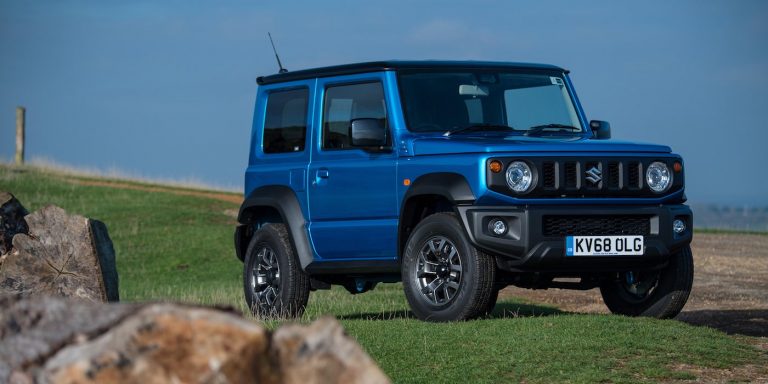
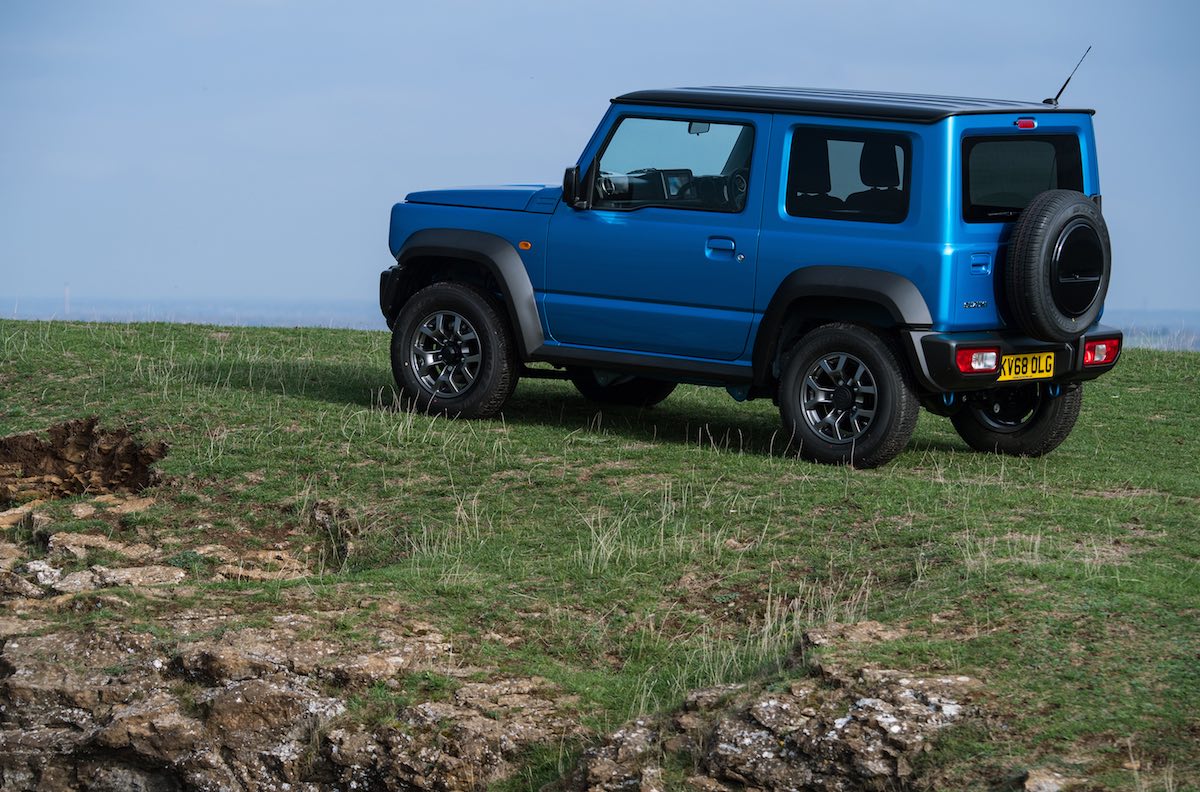
Suzuki has released full UK pricing and specification for its hotly-anticipated new Jimny.
Prices are set to start at £15,499 when the car goes on sale in the UK in January 2019.
Just two specifications will be available to choose from – SZ4 and SZ5 – with the range-topping trim priced from £17,999 with a five-speed manual gearbox, or £18,999 with an automatic.
All models get a decent amount of standard equipment, with air conditioning, Bluetooth connectivity and cruise control included on base-spec SZ4 cars, while SZ5 Jimnys benefit from 15-inch alloy wheels, climate control and a full satellite navigation system.
Though the same length as the previous-generation Jimny, the new car is able to deliver more boot space – up 53 litres to 377 litres. This is accessed by folding the rear seats completely flat.
Of course, the new Jimny still has off-road capability very much at its core. As such, it’s fitted with Suzuki’s ALLGRIP Pro four-wheel drive system, as well as a low range transfer gearbox which can be easily switched between two-wheel-drive, four-wheel-drive low, and four-wheel-drive high.
A new traction control system automatically brakes slipping wheels to redistribute torque to the opposite side wheel in order to gain better purchase on slippery surfaces. It also benefits from an approach angle of 37 degrees and a departure angle of 49 degrees, made possible by the car’s short overhangs.
One thing that you can’t get on any new Suzuki Jimny is a top safety rating from Euro NCAP, with the latest model only scoring three stars in its crash testing assessment.
There’s also just one engine choice available – a 1.5-litre petrol unit that produces 102hp. It can power the Jimny to a top speed of 90mph – though automatic versions achieve a slightly lower speed of 87mph. Suzuki claims it’ll deliver 41.5mpg when fitted with a manual ‘box, or 37.6mpg for the auto. CO2 figures are set at 154g/km and 170g/km respectively.
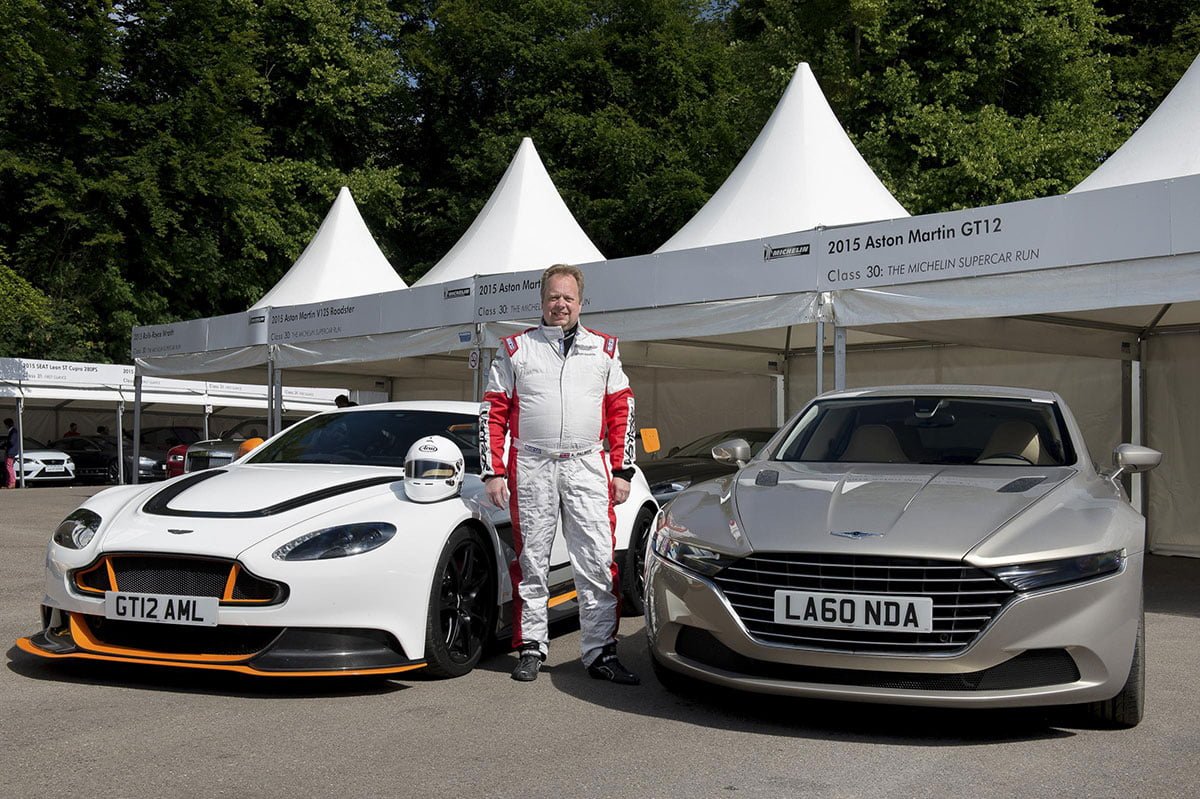
Aston Martin CEO Andy Palmer is a total petrolhead – he likes nothing better than to put on a race suit and compete at quite a high level in his company’s products.
And he’s happy to discuss the merits of other classic British names with fellow petrolheads, as this correspondent discovered while viewing the latest TVR at Goodwood a couple of years ago.
Palmer is a hands-on CEO – especially at the wheel of his product.
Palmer is also, however, a very astute automotive executive, making good use of experience acquired at Austin Rover and then Nissan. He spent 24 years at the latter, many of them in Japan, rising to the position of executive vice president and chief planning officer.
Palmer had always desired to run his own car company, however, and achieved his aim when the Aston Martin CEO post became vacant in 2014. Though he told one media outlet; “when I decided to take this one from Nissan, I was pretty sure people would say I was mad.”
Aston Martin’s long association with James Bond is much valued but today is not something that can be relied on to boost sales.
With good reason – when Palmer took up his post, Aston Martin was a maker known mainly as the preferred brand of James Bond – a cachet of declining relevance – and inside the automotive industry as a perennial loss-maker. Back in the 1980s then chairman Victor Gauntlett was famously asked: “How can you make a small fortune out of Aston Martin?” and replied, “Start with a big one.” Palmer himself pointed out that in its 101 years the brand had faced bankruptcy seven times.
He made this comment when launching his ‘Second Century Plan’ – announced virtually before he had sorted his office furniture, and designed to turn a money pit of a car maker into a profitable, successful brand with cars that buyers wanted.
“First priority was stabilisation – we have not always been known for business stability in our 103-year history,” says Philip Eaglesfield, Aston Martin’s President of UK & South Africa.
“We looked at the foundations of the company, organisation, mix of skills and resources to deliver what we wanted to deliver – there was quite a bit of change, it was complex.”
The 2015 Aston Martin line-up – effectively all based around one car…
Eaglesfield adds there was a realisation that Aston Martin was trying to run its business globally from its Gaydon headquarters in Warwickshire. “In key markets such as China, we needed to build up local knowledge, product expertise, what works in that market.”
As a result, Aston now has five regional offices – Singapore with a branch in Tokyo, Shanghai, California, Frankfurt and of course the UK.
A major issue was the product range. For more than a decade Aston Martin had presented a pretty stable line-up, but also a somewhat samey one. The ‘VH’ family of products was based around the Vantage and DB9, the DBS developed from the DB9 as was the Vanquish, the Rapide…
“We had an excellent platform with some flexibility but for a long period of time we had cars that were related to one another,” says Eaglesfield. “We had to address some of the criticisms of there not being enough differentiation in the brand.”
The DB11 kicked off the Second Century Plan revival.
The first core product of the Second Century Plan was the DB11, unveiled in 2016 with a Volante cabriolet version added earlier this year.
“This is our GT car, our Grand Tourer,” says Eaglesfield. “It’s developed in the spirit of Aston Martin tradition – performance, refinement and comfort. It’s very suited to very long journeys, with the driver arriving relaxed having enjoyed the experience of the drive.”
Both the DB11 and Aston Martin’s ‘proper’ sports car, the Vantage, use the same base engine, derived from a technical partnership with Mercedes-Benz’s AMG performance division – Daimler does own 5% of the British brand these days. Both are, however, tuned by Aston Martin to present different characteristics both to their original units and between the two models.
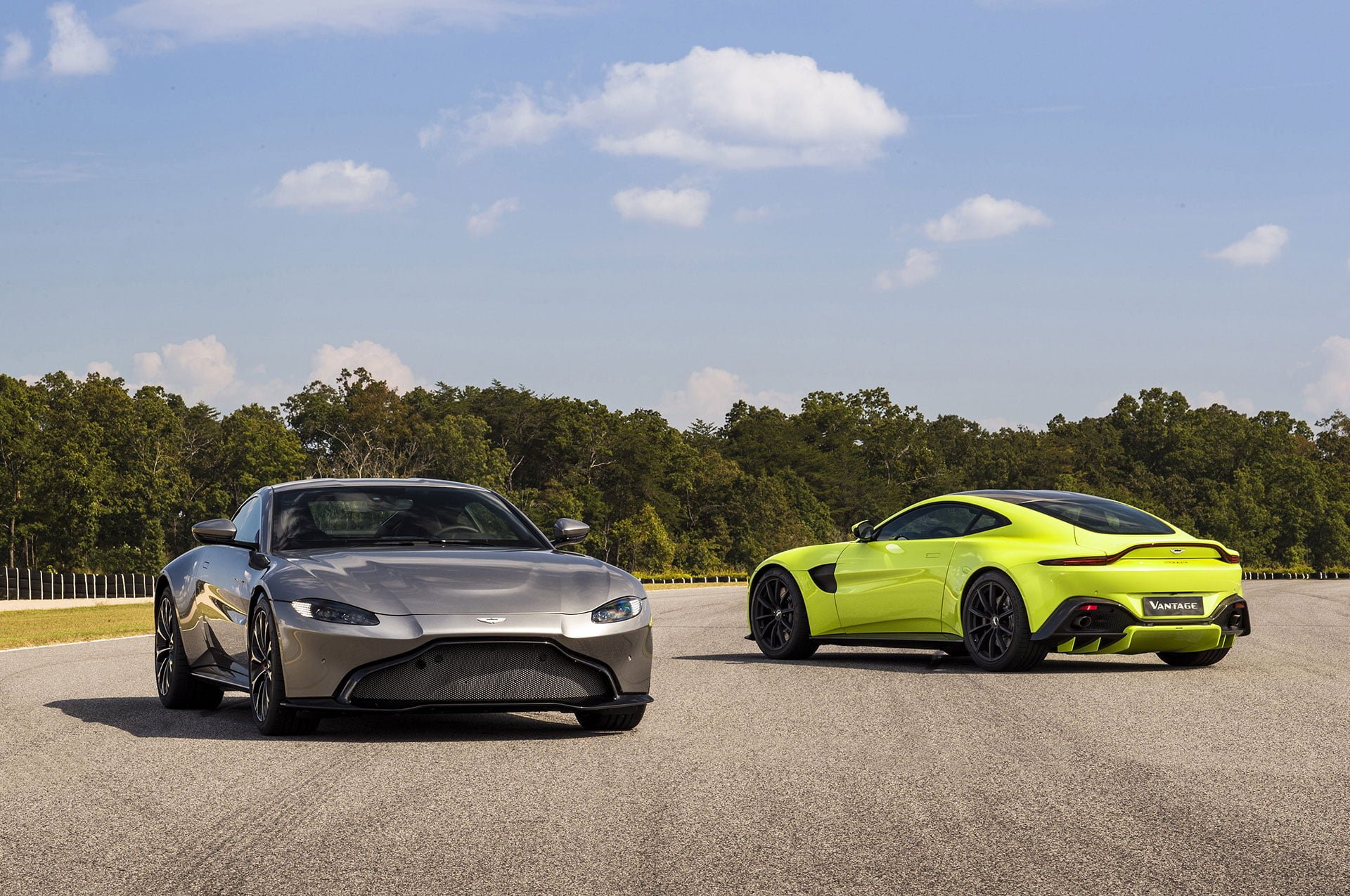
The Vantage remains the entry-level point to Aston Martin and a true sports car.
Starting from just under £121,000 (compared to the almost £145,000 payable for the least-expensive DB11) the all-new Vantage launched in mid-2018. It remains Aston Martin’s entry-level model, but also its pure sports car, the latest version boasting more aggression in performance, character and styling both over the DB11 and the preceding Vantage.
The third line is the DBS Superleggera, a ‘Super GT’ – also revealed this year and the brand’s current flagship model. While based on the same platform as the DB11 and Vantage, its V12 engine pumps out well over 700hp and the car boasts a £225,000 price tag.
Aston Martin is diversifying in other ways, too – for example placing more importance on special edition models, such as those produced through a long-standing relationship with Italian styling house Zagato, and which command much higher prices.
Typical of the Continuation models is one recalling the revered DB4 GT race car.
‘Continuation’ models – remanufacturing classic Aston Martins such as the DB4 GT and hand-building them at Newport Pagnell just like the originals, sell out within days of order books opening. And there are also such mouth-watering future programmes as a forthcoming third hypercar, in the spirit of the £2 million Valkyrie shown at the 2017 Geneva show, and currently known simply as ‘Project 003‘.
Is it working? Well, the brand lost more than £70 million in 2014, having sold just 3,500 cars. Losses in the following two years climbed further, to £163 million in 2016. But last year, as Palmer’s cost-cutting measures and Second Century Plan got into their stride, the decline was arrested and Aston Martin turned in that rare thing in its history, a profit, of £87 million before tax.
In 2018 profits are climbing, boosted by mushrooming sales in such markets as the Americas and the Far East. Aston Martin sold 1,776 cars in just the last three months – an initial target of 7,000 cars in the year is within reach, and within the next 10 years that is expected to double to 14,000.
St Athan – and the cars that will come out of the plant – will transform Aston Martin.
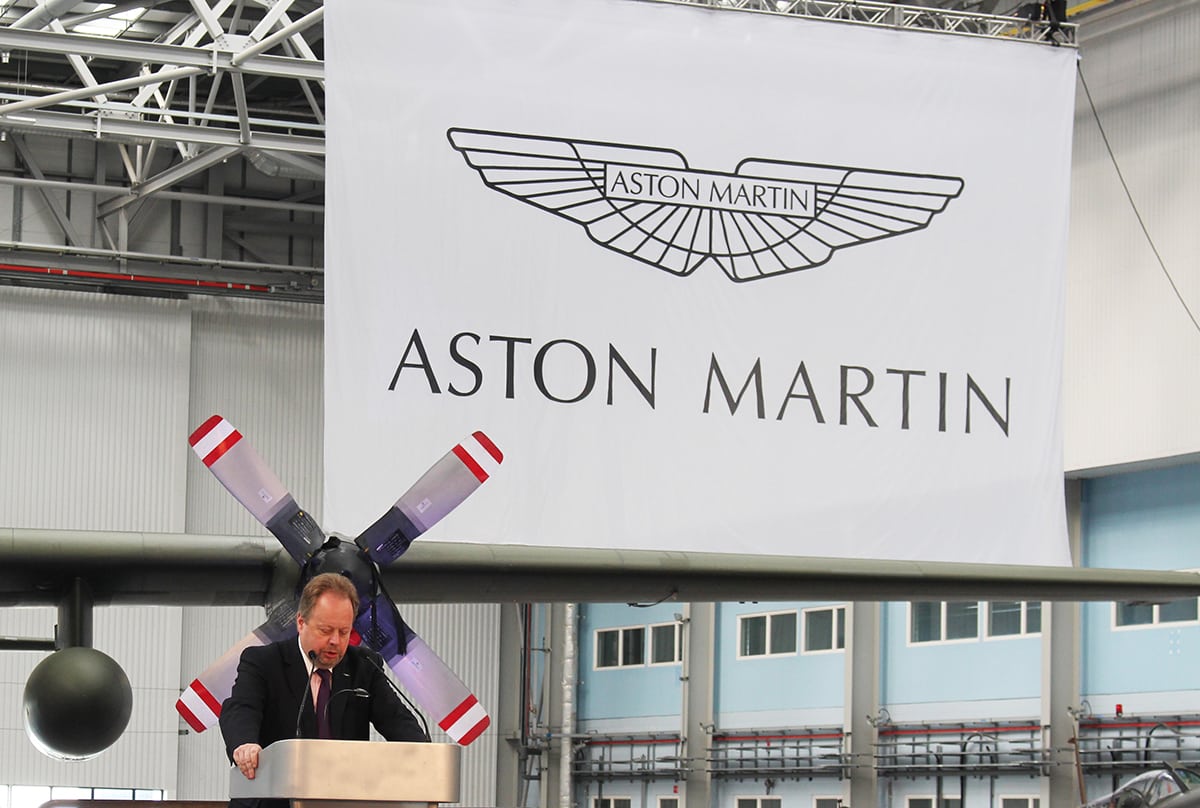
And the biggest change is yet to come. As your correspondent sampled the latest DB11 and Vantage, Aston Martin was publishing pictures of its virtually complete new production facility at St Athan in south Wales.
Created from three massive Ministry of Defence aircraft hangars, the new plant is significantly bigger than Gaydon, where Aston’s sports cars have been built since 2003, and has allowed the adding of such essentials as a proper test track.
St Athan will be the home of Aston Martin’s future electrification programme – an EV version of the DB9-evolved Rapide sports saloon will appear in strictly limited numbers before the end of 2019. And the revival of the Lagonda luxury badge, debuting at last March’s Geneva Motor Show on a head-turning concept, will happen at St Athan.
Principally, however, the Welsh plant will produce the DBX – Aston Martin’s first SUV, due to be unveiled in production form before the end of 2019 and going on sale in the following year.
In a busy week for Aston Martin, shots of camouflaged versions of the DBX undergoing off-road testing are circulating as these words are written. Even with the disguise it’s clear that this will be a very sporty luxury 4×4, as an Aston Martin should be.
Even disguised the sporting nature of the DBX is obvious – this car is expected to become the brand’s biggest seller.
If the experience of such brands as Porsche and Bentley is anything to go by, the DBX will also transform Aston Martin, becoming the brand’s biggest-selling model by some way. Speaking toThe Car Expert when St Athan was unveiled in 2017, Palmer said that production of the DBX would likely be between 4,000 and 5,000 a year – in other words, more than doubling the brand’s entire current production.
Palmer and Aston Martin face challenges – a stock market flotation earlier in November has not produced a universally positive response from financial experts, and the Aston Martin CEO is one of the most outspoken on the potential dangers of getting the wrong Brexit deal.
Yet evidence is growing that this thoroughly British brand will finally consign its money pit reputation, and quotes such as Gauntlett’s, to history, and establish itself as a much-admired manufacturer of desirable, always sporty, but versatile cars. Bond would approve…
What is it?
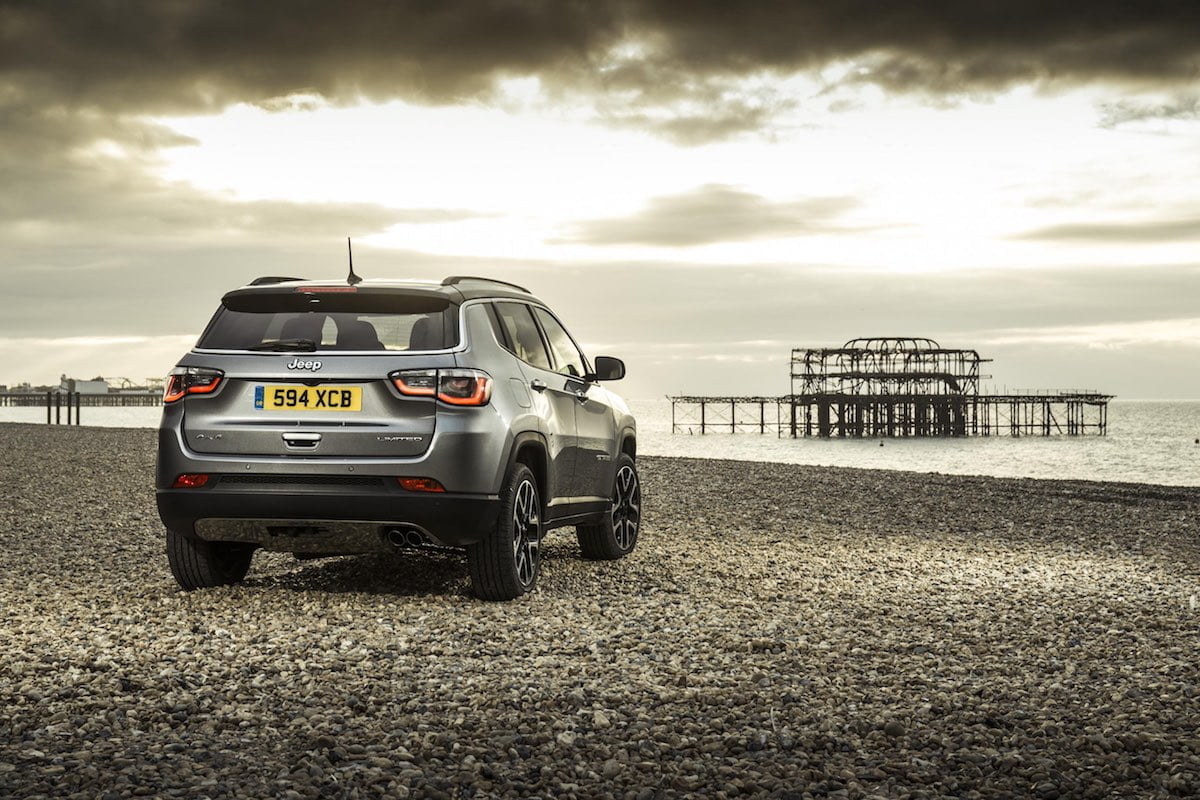
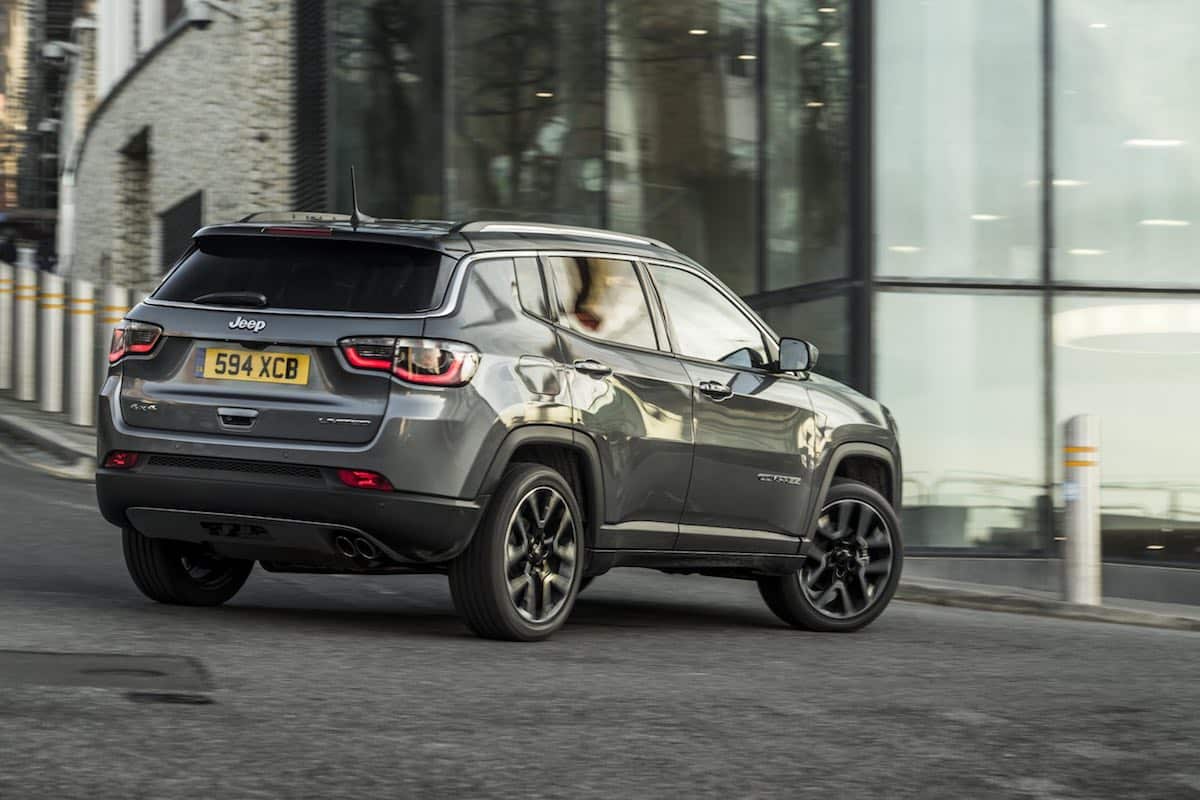
The latest Jeep Compass is an all-new version of the road-friendly, but off-road capable, compact SUV.
Key features
Proper 4×4 system, off-road friendly chassis, good specification.
Our view
Compared to its many hatchback-based rivals in the compact SUV segment, the Jeep Compass does not appear to write any headlines.
Compare its off-road ability and appearance, however, and it stands ahead of most of them, as a proper compact SUV for those who want such a vehicle for more than just looks.
Similar cars
Nissan Qashqai, Ford Kuga, Volkswagen Tiguan
Jeep – the name conjures up immediate images of the archetypal World War 2 all-terrain vehicle, a name that came to be used, wrongly, for anything promising off-road prowess. And the most American of American brands has traded on that name ever since.
Jeep once shared with Land Rover the unofficial title of ‘proper 4×4’ – tough machines you bought if you wanted to spend as much time on the green, loose or wet stuff as the grey tarmac.
These days, however, such prowess does not bring the big rewards in the SUV market. While everyone wants an SUV, they really only need it to look like it can go rock climbing. They do need, however, all the home comforts of their previous road car.
Jeep needs to compete in that market but is unwilling to throw away its heritage. And so we have the Compass – one of the brand’s two most shamelessly road-pitched SUVs, the other being the Renegade.
This is not the first Jeep Compass but its predecessor, launched in 2012 and killed off in 2015, can be quickly forgotten – it rated alongside the Chrysler Sebring as one of the worst cars to come out of the US brand, and its most memorable attribute, for all the wrong reasons, was a two-star (yes, two…) safety rating.
Have no fears, the new Compass cannot be compared to the old one in any way – that car is a bit like the long-dead relative that no-one talks about any more. From a five-star safety rating to its general build, this is a competitive entrant in today’s burgeoning SUV market. It offers most of what its rivals do, plus rather more off-road ability than most of them.
Buying and owning a Jeep Compass
Confused at the Jeep line-up? Well, the Compass is slightly bigger than a Renegade, slightly smaller than a Cherokee. It is also Jeep’s major entry in the now fiercely competitive compact SUV segment. This means its rivals include the model that first made SUVs ‘cool’, the Nissan Qashqai, top quality contenders such as Volkswagen’s Tiguan, and a whole lot of others from just about every brand going.
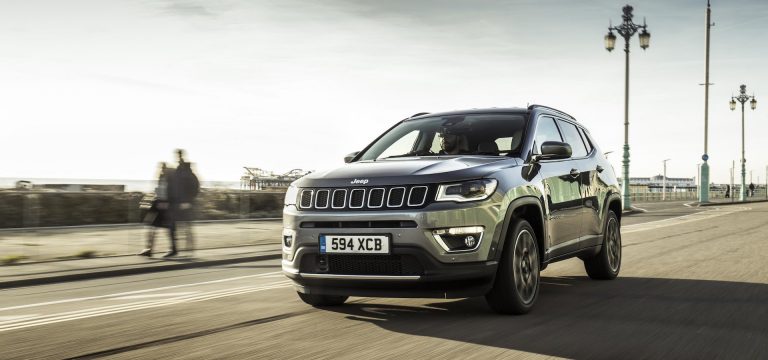
The Jeep scores an early victory in looks, which again are nothing like the visually awful presence of the previous Compass. The styling is modern, particularly with regard to the latest iteration of the trademark seven-bar grille, but unlike most of today’s rivals this car also looks like an off-roader, with bold, squared-off wheelarches and muscled-up panelling.
And you can have just the looks – the Compass is available as a front-wheel-drive only machine, something that once would have been anathema to the Jeep badge.
The full range comprises two petrol and three diesel engines, that fact alone pointing to the expected customers for this car. All these powerplants are familiar from the Fiat Chrysler line-up, and among many mechanical aspects that the Compass shares with the Fiat 500X that we’ve just tested at The Car Expert.
So there are two versions of the 1.4 petrol engine, with 140 or 170hp. The former comes with front-wheel-drive and a six-speed manual gearbox, the latter with all-wheel-drive and a nine-speed auto.
Diesel options centre on the long-lived Multijet unit – in 1.6-litre form with a six-speed manual and 2WD, and two versions of a 2.0-litre with 140 or 170hp, and 4WD.
Trim levels number four – Sport, Longitude, Limited and Trailhawk. The latter is specifically designed for those who want to do some serious off-roading in the Compass, adding such niceties as protective skid plates, bespoke bumpers, raised and off-road-tuned suspension, hill descent control and a ‘Rock’ crawl mode in the transmission.
You don’t need Trailhawk to leave the tarmac behind, however. All versions with a 4×4 transmission, such as the Limited model we are testing, include a ‘Selec-terrain’ system. Using a rotary control just ahead of the gear lever, one can switch between auto, snow, sand and mud modes. It also includes a switch to lock the differential when escaping difficult situations – this is no soft-roader.
Equipment levels are adequate – prices for the Compass start from around £23,000 and entry-level Sport customers will get such niceties as 16-inch alloy wheels, LED tail lights, a leather steering wheel with audio controls, air conditioning and cruise control.
Our Limited-specification test car, top of the ‘normal’ range, includes 18-inch alloy wheels, halogen projector headlamps, silver roof rails, privacy glass, powered and heated seats in leather, rain-sensitive wipers with de-icers and a heated steering wheel.
The Limited’s safety package includes a reversing camera and front and rear sensors, and driver-assistance technologies ranging across blind spot and cross path detection, and parallel and perpendicular parking.
Safety is strong on all Compass variants, however, topped by the standard-fit autonomous emergency braking. When crash tested in 2017 the Jeep earned a top-level five-star Euro NCAP safety rating.
Inside the Jeep Compass
Jeep is pitching itself as a premium brand, and the interior of the Compass has to straddle the twin requirements of appearing of high quality and being able to cope with the odd bit of green-laning and the resultant mud and muck that will find its way inside.
Mostly it succeeds, but we are not that sure whether the gloss-black surround of the infotainment screen atop the centre console really shouts premium like its makers want it to.
Said screen is part of the Uconnect infotainment system, familiar from other FCA products but specified for the first time in a Jeep. There are two versions depending on trim, with either a five- or eight-inch screen.
It’s worth going above entry-level to get the eight-inch variant, as this includes Apple CarPlay and Android Auto smartphone compatibility allowing hands-free calling, navigation and voice texting. And using the navigation app on your phone is preferable to the occasionally frustrating in-built system. Generally, the infotainment system is a little laboured in operation compared to some rivals.
The major feature of the driver’s surroundings are the number of controls – there are lots, including several festooning the rear of the pleasingly chunky steering wheel. This leads to initial irritation trying to get to the screen menu one wants, but it soon becomes second-nature.
Space in the Compass is adequate – good up front with plenty of adjustability in the seats, slightly more cosy in the rear. Not helping with the headroom in our test car was the optional panoramic sunroof, a cool £1,200 extra on one’s bill.
Those who particularly want to go off-road will likely more happily pay the £150 for the full-size spare wheel, which lives under the boot floor. Yes, it cuts available space in the boot from 438 to 368 litres, but is a so much better option than a tyre inflation kit…
Driving the Jeep Compass
Our test car came fitted with the top engine option, the 170hp diesel. This hits 62mph from rest in just under 10 seconds and will go on to 122mph, while returning quoted fuel economy of 49.6mpg and CO2 emissions of 148g/km.
This diesel has been around for a while and sounds like it, with a noticeably audible note that more recent rivals have succeeded in mostly drowning out. However it is a competent accelerator and cruiser, helped by a very efficient auto transmission that only swaps between modes as needed, rather than constantly jumping about as can often be the case with such units.
On the road, the 4WD transmission effectively acts in front-propelling form and leaving it in auto is fine for most situations. One has the comfort of knowing it will bring all four wheels into play if road conditions become more challenging, such as in the ice and mush of winter. The extra modes are really only there for proper off-road stuff.
Where the Compass differs from almost all of its mainstream SUV rivals is in its suspension. There are no multi-links but struts in the rear setup – this means they operate over a wider range which is good, you guessed it, for going off-road.
Surprisingly, however, the car does feel quite stiff at slower speeds, even with the ‘Frequency Selective’ dampers claimed as an exclusive by Jeep, and which are supposed to find that sweet spot between on-road ride quality and off-road ability. They do, but only after a fashion.
Cruising at speed, the Compass is reasonably composed and comfortable, but it only really comes into its own when cornering with the enthusiasm that few owners will want to.
In such situations the dampers firm up, the 4WD system keeps the grip where it should be and the initially woolly steering gains somewhat more feel to produce progress that will leave road-focused rivals struggling to catch up.
Summary
In a compact SUV market that is now saturated with choice, the Jeep Compass sits somewhere in the middle – adequate in most respects. But that only holds true if you consider it by the same criteria as those rivals.
The selling points of the Jeep Compass are that it looks not like a car on mild steroids but a tough SUV that is capable of leaving the blacktop behind. And it backs up this visual impression with actually being able to do it – offering a combination of powertrain, transmission and chassis that provide the go to match the show.
For adventurous motorists, those who like to get out into the countryside at weekends, tow a trailer or a horsebox to events, the Jeep Compass should certainly be on the consideration list.
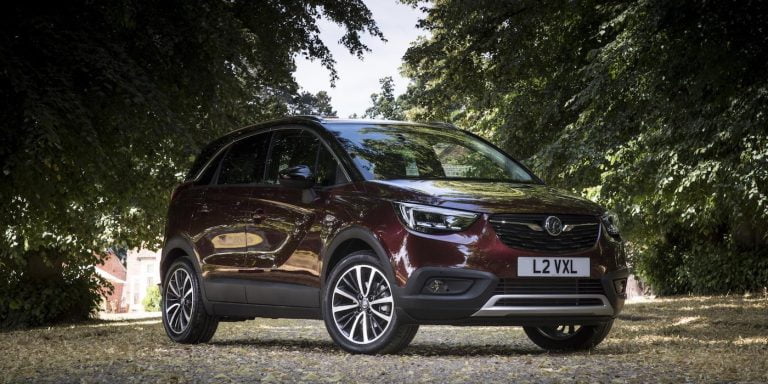
Vauxhall has topped off its Crossland X range with the addition of a new ‘Ultimate’ trim level.
The new crossover features generous standard equipment and unique styling additions, and starts from £22,480.
The Crossland X Ultimate can be specced with a choice of two engines – both 1.2-litre petrol units. The entry-level version is a 110hp unit mated to five-speed manual or automatic gearboxes, while those after a little more shunt can opt for the more powerful 130hp engine paired with a six-speed manual. Both claim to return 57.3 and 55.4mpg respectively.
Ultimate trim can be spotted from the outside thanks to diamond-cut 17-inch alloy wheels, alloy-effect front and rear skid plates and silver roof rails.
For added prestige, customers can also specify a fixed panoramic glass roof. Also standard are full LED headlights.
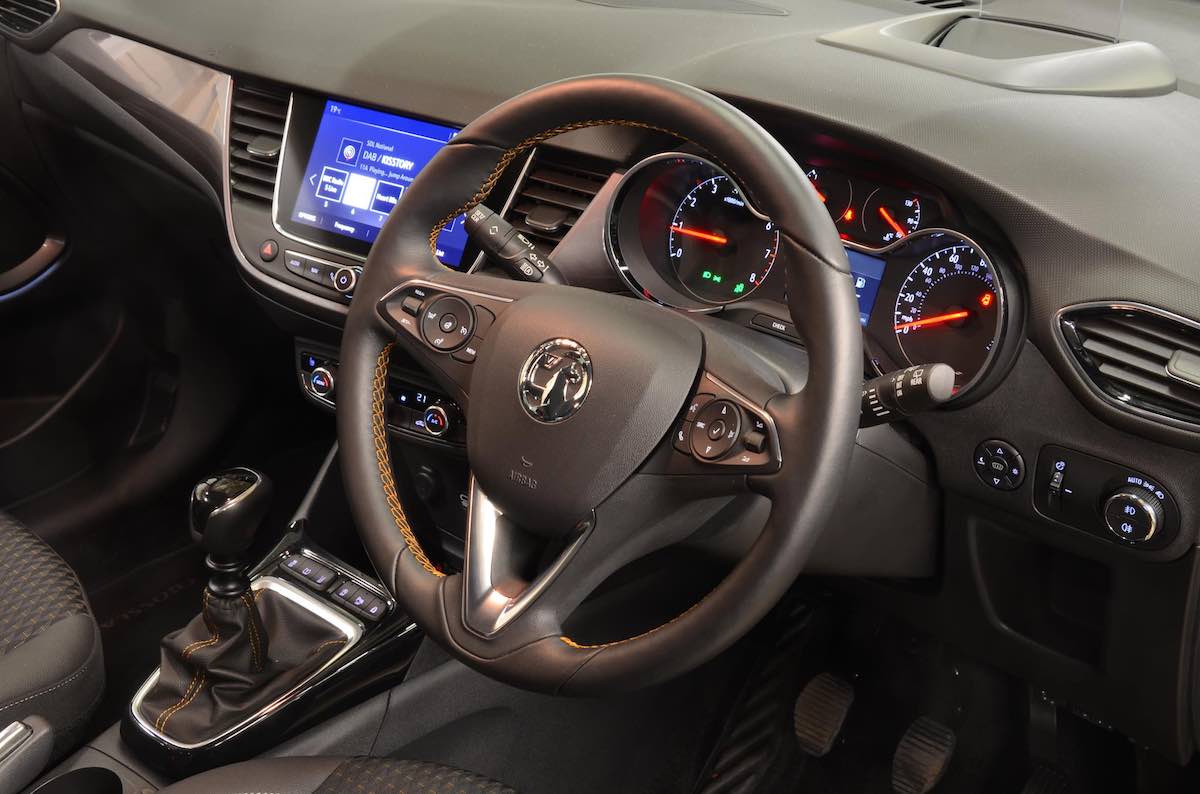
Inside, the Crossland X Ultimate gains Vauxhall’s latest Navi 5.0 IntelliLink infotainment system. It’s an eight-inch touchscreen unit with navigation as well as Apple CarPlay and Android Auto smartphone connectivity.
Leather upholstery is also standard, as are heated front seats and a heated steering wheel.
On the safety front, the Crossland X Ultimate comes with a driver drowsiness system, forward collision alert and autonomous emergency braking.
The new Vauxhall Crossland X Ultimate is available to order now.
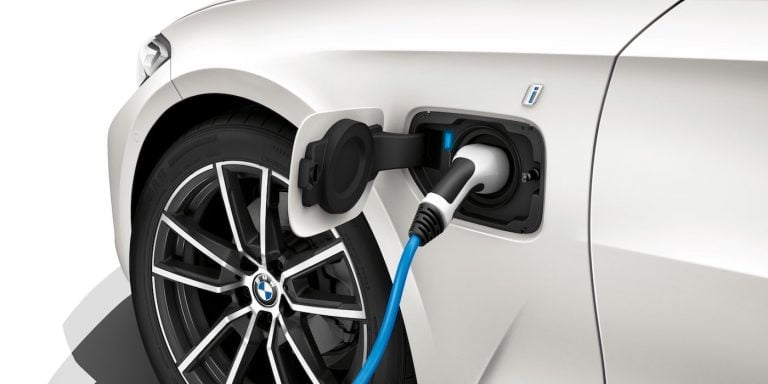
BMW has revealed the latest addition to its new 3 Series range – the 330e plug-in hybrid model.
The 330e mates a 2.0-litre petrol engine to an electric motor and battery pack for improved efficiency and up to 37 miles of pure-electric motoring.
The new 330e is the latest model to be announced in the all-new 3 Series range – the latest evolution of BMW’s enormously popular executive saloon. It uses a 185hp 2.0-litre engine paired with a 68hp electric motor.
The total system output is 252hp – identical to the outgoing model – although an overboost can increase this for short bursts. However, a diet means this model is lighter than its predecessor, which improves fuel economy.
The car’s all-electric range has increased by 50% to 37 miles, while fuel economy is an official 138mpg – under the new, stricter WLTP guidelines. Official CO2 emissions are also an impressively low 38g/km.
The hybrid powertrain offers good performance as well as those headline economy figures. BMW claims the 330e will accelerate from 0-60mph in 5.8 seconds, while the top speed is 143mph. That’s thanks in part to the new ‘XtraBoost’ function, which temporarily boosts the electric motor’s output from 68hp to 113hp for added performance.
The electric motor is supplied by a 12kWh battery pack, which sits below the boot floor. That does have an effect on load volume, which is down by 100 litres to 375 litres – but split folding rear seats are still standard to help accommodate longer loads.
The rest of the interior is business as usual, including the trim levels – which stand as SE, Sport Line and M Sport.
Bespoke hybrid features include updates to the navigation system. When searching for a public charging point, the nav will offer drivers activities to do while the car is charging – from cafes to tourist attractions. There’s also standard interior pre-heating.
The new BMW 330e will go on sale from July 2019. Prices are yet to be confirmed, although expect a slight increase over its predecessor’s circa £35,000 starting price – not least because of the removal of the government’s plug-in car grant for hybrids of this nature.
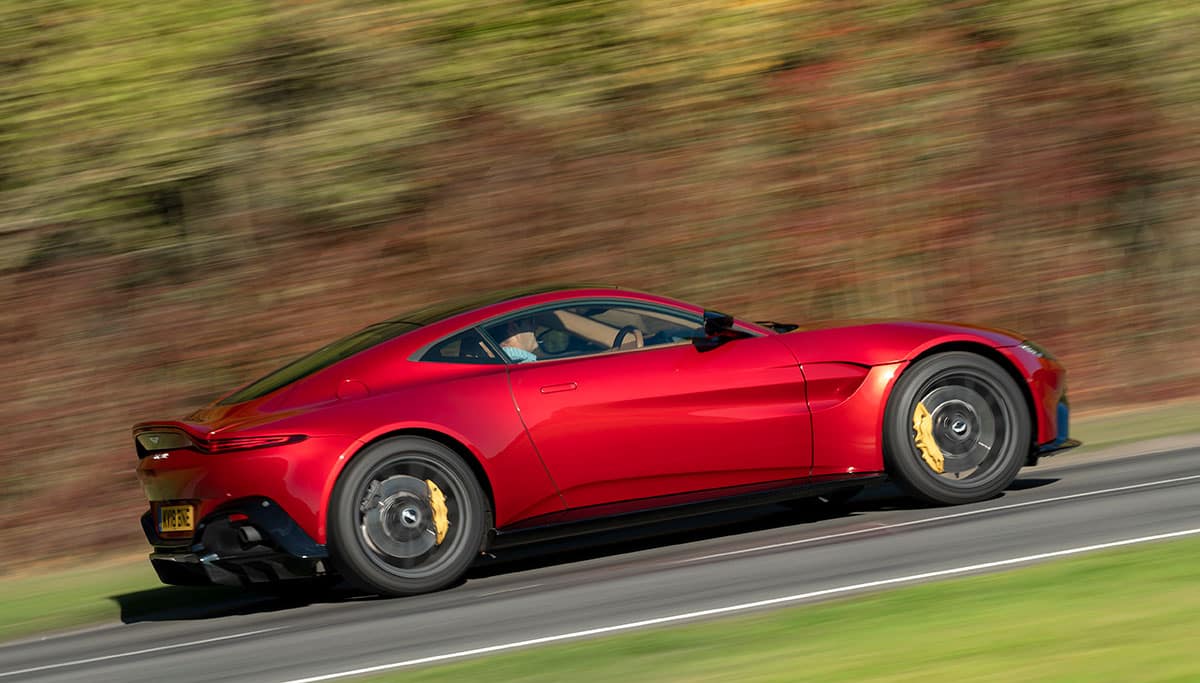
Aston Martin has changed massively in recent times and of the brand’s three main production models, the Vantage is the acknowledged sports car, and also the entry-level to the range – mind you that is a six-figure entry point…
The Vantage name goes back to 1951, but the modern iteration was launched as long ago as 2005, so we were long overdue a new one. And the latest Vantage, arriving with its first buyers in summer 2018, is all-new – in fact, the first completely new car to be designed under the brand’s ‘Second Century Plan’.
The car benefits from all the latest technology Aston Martin can pour into it, together with several of the innovations, such as the multiple but separate chassis and drivetrain modes, launched on the DB11 grand tourer of 2016. And this Vantage is a very different beast to its predecessor.
What’s new?
Basically just about everything – this is a ground-up new design. Yes, it’s still a two-seater sports car, and its structure is still a combination of mostly aluminium and exotic composites. Beyond that, all change…
The Vantage is bigger in all respects than its predecessor – 8cm longer, 8cm wider and with a wheelbase extended by 10cm. And while its mechanicals share much with the DB11, notable differences include a bespoke, more handling-friendly rear suspension – a multi-link setup hung on a rear subframe solidly mounted to the shell.
Then there are the electronic advances – an active differential on the rear axle, and those driving modes. They are activated by two buttons, one of either side of the steering wheel, the left changing the damper settings, the right the powertrain throttle response, gear shift and such like.
There are three modes – most compliant being ‘Sport’ (well this is a sports car). Select ‘Sport+’ and things become a little more exciting, while the final mode is for what its name suggests – ‘Track’.
How does it look?
The old Vantage was a curvy, cuddly sports car – not the new one. A much more aggressive design – sharper angles and more muscular proportions – clearly differentiates this car from its sister DB11, which is what its designers intended.
The looks divide opinions and the front end, with its enormous grille, comes in for the most criticism from some. But this is a nose that announces the Vantage, leaving those you drive up to from behind with no doubt as to what is looming in their rear-view mirror. And it is also very low, almost sniffing the tarmac, adding to the aggression.
Probably the best angle to view the Vantage from is the three-quarter rear, finely sculpted and with the aerodynamic diffuser hugging the bodywork as it emerges from under the car.
What’s the spec like?
Retail prices for an Aston Martin Vantage start at £120,900. But dipping into the desirable options list will soon inflate that cost.
Our test car had almost £40,000 of extras on it, including 20-inch forged gloss black wheels, a host of delicate trim and detailing add-ons such as carbon fibre twill inlays and the Vantage logo stitched into the headrests, and a premium Aston Martin branded audio system.
Options also include such basics as keyless entry, a perimeter camera (a good idea, as despite being the smallest Aston with its long bonnet and low driving position this feels like a big car, especially in the narrow streets of Cotswold towns) and parking and blind spot assistance technology.
You will not worry that much about standard kit when choosing one of these, but it does come with satnav and Apple CarPlay integration through an eight-inch LCD screen, parking sensors and lots of leather applied to the interior. And the standard safety kit includes emergency braking assistance.
What’s it like inside?
Aston Martin interiors have been criticised in the past, particularly during the period of Ford ownership when it appeared the Blue Oval parts bin was raided for fitments. And while the early DB11s attracted some concerns over interior quality, the Vantage ticks all the boxes.
You slip down into a low driving position, as it should be in a sports car, though emphasised by the high dash – short testers like this one will need those parking aids as there is no chance of seeing the end of the bonnet.
However the way the interior cossets, with its excellent quality leather and detailing, immediately gives the impression of sitting in a car that is special. Yes, it feels like a thoroughly British sports car, but also more evocative than its major rival, the Porsche 911.
There are a lot of buttons, both on the steering wheel and the centre console. But they are beautifully laid out, particularly in a symmetrical arrowhead style in the centre. Said buttons include the quartet for the auto transmission – there is no lever. And in the centre is the engine start, an Aston Martin wing behind a glass cover. It’s all rather wonderful.
What’s under the bonnet?
One criticism Aston Martin regularly receives is that its engines are sourced from Mercedes-Benz. Well, Mercedes’ parent Daimler does own 5% of Aston, and the Mercedes-AMG V8 engine is a potent but impressive unit.
This is a twin-turbo 4.0-litre V8, in contrast to the naturally aspirated 4.7-litre unit of the previous Vantage. And it has been significantly retuned for its new application, both in terms of the way it delivers its power and the tone and quality of sound that it makes – an important consideration in the Aston Martin definition book. In a Vantage, you won’t feel like you’re driving a Mercedes…
The important figures are 510hp and 685Nm of torque, good enough to send the Vantage through 62mph from rest in a mere 3.6 seconds and onto a terminal speed of 195mph – if you have a German autobahn or preferably an airport runway or track available.
Your road tax bill will be expensive, as the Vantage puts out 230g/km of CO2, and with combined cycle fuel economy of under 28mpg you will be regularly visiting your local filling station – but such aspects matter little to buyers in this market.
What’s it like to drive?
In a word, enthralling – and even at 30mph. Yes, this is the sports car, and yes its more performance-pitched suspension does let you know all about the quality of the road surface that you appear to be sitting very close to.
But the Vantage is a very well-behaved car. Crawling along in urban traffic it behaves impeccably, that big V8 purring at what feels like little more than tickover.
Once out on the open road and opened up the car’s abilities soon make themselves felt. Even in the default Sport mode, the pickup for swift acceleration is seriously impressive, cars ahead dispatched in swift overtaking moves accompanied by that V8 growl.
Choose Sport+ (in both powertrain and chassis) and the car becomes more urgent in its response, but not outlandishly so, as it does in the Track mode which really should be kept, well for the track.
Changes to the new Vantage included siting the engine far back in its bay, almost under the front bulkhead, and we are told the car boasts an almost perfect 50:50 weight distribution. Combine this with electric power steering (replacing the previous hydraulic unit) and all the various aero aids and the handling is a delight.
The Vantage changes direction precisely and swiftly, and grips way beyond the capabilities of the typical driver or the UK road system, while equally swiftly adding to the grin factor.
With the chassis set to the standard Sport mode the car tackles all the twisty bits with confidence, but this tester found leaving the settings in Sport+ as the best combination of control and aggression. This is a seriously fun car to drive – whether enthusiastically or in relaxed mode.
Summary
In the latest Vantage, Aston Martin has a sports car to be proud of. It performs as such a beast should, behaves itself when the need arises and oozes quality outside and in.
It’s remarkable to think that this is the ‘entry-level’ Aston Martin. With cars such as the Vantage, this is a British brand going places.
Model as tested: Aston Martin Vantage Hyper Red
Price: £120,900 (159,650 with fitted options)
Engine: 4-litre V8 twin turbo petrol
Power: 510 hp
Torque: 685 Nm
Max speed: 195 mph
0-62mph: 3.6 seconds
Fuel economy: 27.4 mpg
CO2 emissions: 230 g/km
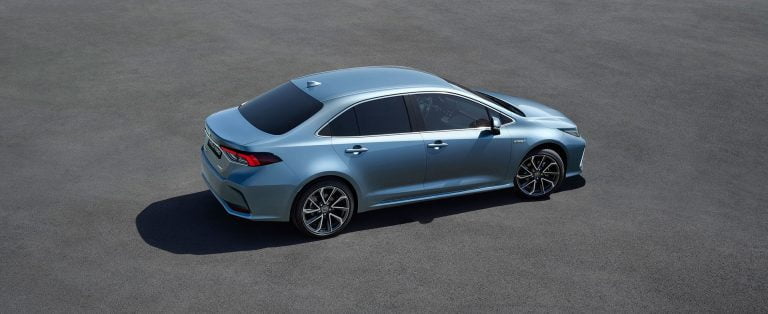
Toyota will bring the Corolla saloon back to the UK in 2019.
The four-door car will go on sale alongside the hatchback and estate variants, unveiled at the Geneva and Paris shows earlier this year, and will replace the Auris – which itself succeeded the previous Corolla in 2006.
Toyota says that the saloon is aimed squarely at ‘young professionals’. It has similar styling to its stablemates but with some design tweaks to distinguish it. Up front, there’s a simpler bumper design, while the rear takes on a bespoke look.
The car is based on the same TNGA GA-C framework as the other Corolla variants, and is equal in length to the recently revealed Touring Sports estate, with a 2.7m wheelbase.
Petrol and hybrid power
Two powertrains will be available globally, although it has yet to be confirmed if both will come to the UK. The 1.6-litre petrol engine develops 130hp through either a six-speed manual gearbox or CVT. Toyota says this can achieve 46.3mpg on the WLTP combined cycle, with CO2 emissions of 131g/km.
There is also a 1.8-litre petrol-electric hybrid unit, developing 120hp and supplied only with a CVT transmission. It can reportedly return 65.7mpg on the WLTP combined cycle while emitting CO2 emissions of 77g/km.
Highlights on the equipment list include adaptive cruise control and a new Lane Tracing Assist that can keep the Corolla dead-centre in its lane. There’s also an eight-inch infotainment system, wireless phone charging and ten-inch head-up display.
The saloon will be built in Turkey, while the hatchback and Touring Sports estate variants are to be produced in the UK at Toyota’s Burnaston plant in Derbyshire. Full pricing and specifications for each model will be released closer to when they go on sale during the first quarter of 2019.
While the Corolla badge has not been seen in the UK since 2005 when it was replaced with the Auris it has been available around the globe, with international market Corollas mechanically-similar to the Auris.
In a motoring world quickly converting to electric power, Smart has been ahead of the game. In fact, it’s the first manufacturer to announce that it would be moving from an all-combustion engine to a vehicle line up consisting of only fully-electric cars.
This, the EQ ForTwo, is the all-electric version of Smart’s familiar two-seater city car. It’s the third generation of the ForTwo, and the second generation of the electric model.
It makes sense – the ForTwo has always been designed as a city car, and electric cars benefit from being used in cities where charging points are more abundant than in less populated areas. But how does the Smart EQ do as a complete package? We’ve lived with it for a week to find out.
What’s new?
If you took the Smart on face value alone, you’d think that very little had changed over the regular, petrol-powered ForTwo. The dinky proportions remain, the minute turning circle is still delightfully present and the bulbous, rounded looks are in keeping with past generations of Smart cars.
But look a little deeper, and you’ll notice the smoothed front grille, and underneath the petrol cap there’s a charging point, rather than space for a fuel nozzle. Though this may appear like a traditionally-powered Smart, the reality is far from that.
How does it look?
(Smart/PA)
(Smart/PA)
The Smart ForTwo ticks all of the styling boxes for a city car; it’s compact without appearing too dinky. This special edition Nightsky model has some premium styling touches such as 16-inch alloy wheels and features fibre-optic running lights too. It’s a – ahem – smart looking thing indeed, and should appeal to those who want a stylish inner-city mode of transport.
Our test car came in cabriolet form too, which is just what you need as winter approaches…
What’s the spec like?
On-road prices for the Smart ForTwo EQ start at £23,335, or £19,835 when the government’s plug-in car grant is deducted, for the entry-level Prime Premium. However, this is the special edition Nightsky model, which bumps the price up to £27,135 (which becomes £23,635 at the check-out).
The Nightsky mode includes a reversing camera (not exactly essential in a car of this size), heated seats and ambient lighting. You also get Smart’s media system, accessed via a seven-inch touchscreen.
In practice, this system didn’t impress; on numerous times is locked completely and wouldn’t allow us to even play a radio station, and even switching the car off and back on again failed to rectify the issue. When it did eventually work, however, it operated well – but it still lacks the ease-of-use that we’d like.
There’s a good variety of kit fitted here as standard, but the niggles surrounding the infotainment are a bit of a letdown.
What’s it like inside?
The cabin of the compact Smart EQ is surprisingly spacious (Smart/PA)
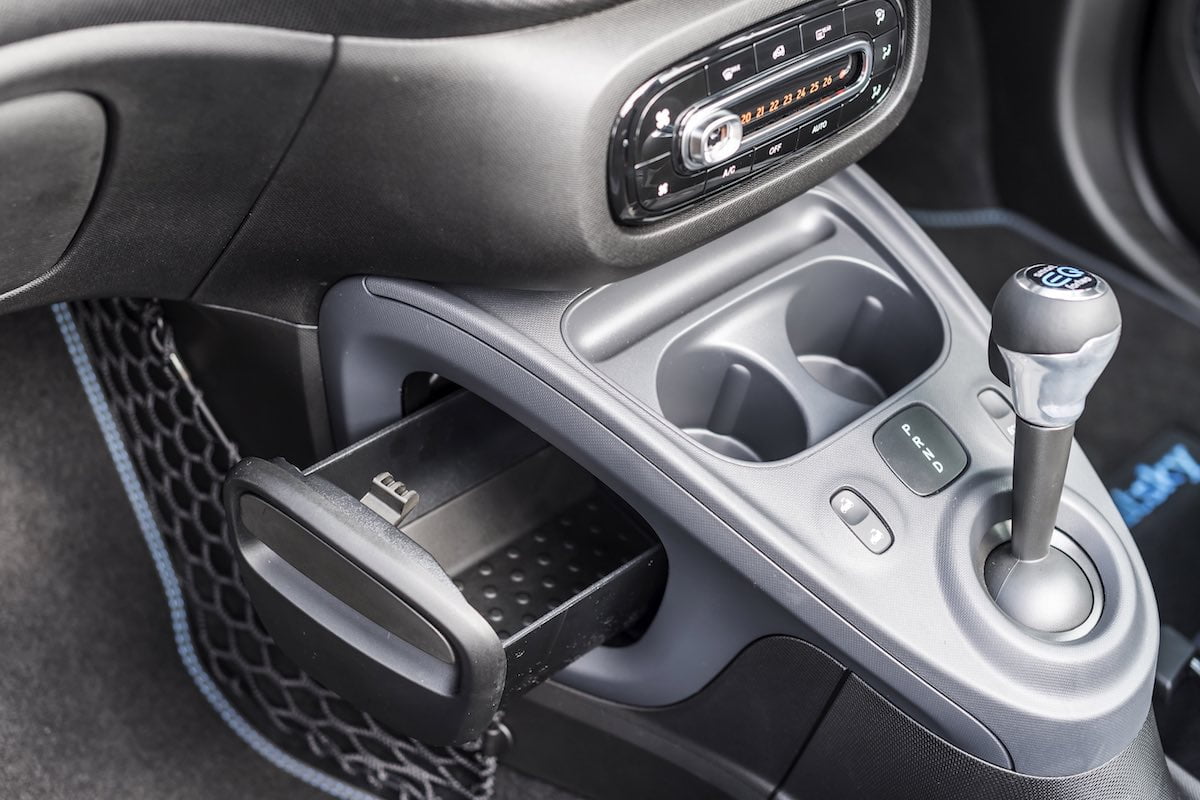
A neat storage area under the switchgear is a useful addition (Smart/PA)
Though rather compact, the Smart’s small exterior dimensions aren’t translated into a cramped cabin. In fact, there’s a lot more space here than you’d expect, with a general airiness to the cabin surprising given the car’s tiny footprint. There’s not a huge amount of storage to be found, though there is a useful drawer underneath the gearstick for hiding away items from prying eyes.
Boot space is not what you’d call cavernous – particularly if you store the variety of charging cables needed to replenish the car’s battery back there – but there’s around 300 litres to play with, which is more than enough for a few shopping bags. Accessing it is only done through quite a narrow opening, which can be a bit of an issue when loading bulkier items.
What’s under the bonnet?
The Smart turns its wheels via a three-phase synchronous motor, linked to a lithium-ion battery. The combination produces 82hp, and a decent 160Nm of torque. The sprint to 60mph may not be quick at 11.6 seconds, but it feels pacier. That’s thanks to the immediate delivery of that torque, which makes it very responsive in the cut and thrust of city traffic.
Top speed may only be 80mph, but in this car’s natural habitat of urban streets, this isn’t really an issue.
When it comes to range, Smart claims 99 miles on a full charge, and it’ll take 40 minutes to charge up from flat via a wallbox, or six hours through a conventional three-pin domestic socket.
Is that range achievable in reality? Not exactly – in fact, the range displayed on the dash plummets like a stone when travelling on the motorway, which is certainly a little disconcerting. But again, that’s not this car’s preferred environment.
What’s it like to drive?
The hallmarks of the Smart driving experiences are still present in the EQ ForTwo, and that’s no bad thing. The nimble handling is ideal for darting in and out of traffic, while the almost incomprehensibly small turning circle is great for general manoeuvrability.
This may be the cabriolet version instead of the coupe (hatchback), but they drive in almost exactly the same way. The coupe’s roof panel isn’t structural anyway, so you’re not losing much by removing it.
Unlike many city cars, The steering actually has some weight to it, and this gives you added confidence at higher speeds.
The instant slug of torque that you get from an electric powertrain is especially useful in a car of this size, and up until the 40mph mark, you’re quicker than the vast majority of cars on the road.
Granted, the Smart EQ begins to become a little breathless beyond that point, while the narrow wheelbase makes larger potholes quite apparent – the whole car has a tendency to be sent off to one side after hitting an imperfection in the road.
Summary
As a prospect for an inner-city driver, the Smart EQ makes plenty of sense. It’s nimble, easy to drive and quick to charge via high-output charging points. However, those looking to travel further afield may find it a little too limited, with a range that can’t quite make longer journeys a real-world possibility.
At speed, the range drops far too quickly to inspire confidence in how far the car can go, and this really does restrict the car’s all-round usability, as well as its appeal to more rural electric car drivers.
Model as tested: Smart EQ ForTwo Cabriolet Nightsky
Price: £27,135 (£23,635 with plug-in car grant)
Engine: Electric motor linked to lithium-ion battery
Power: 82 hp
Torque: 160 Nm
Max speed: 80 mph
0-60mph: 11.6 seconds
Range: 99 miles
CO2 emissions: 0 g/km
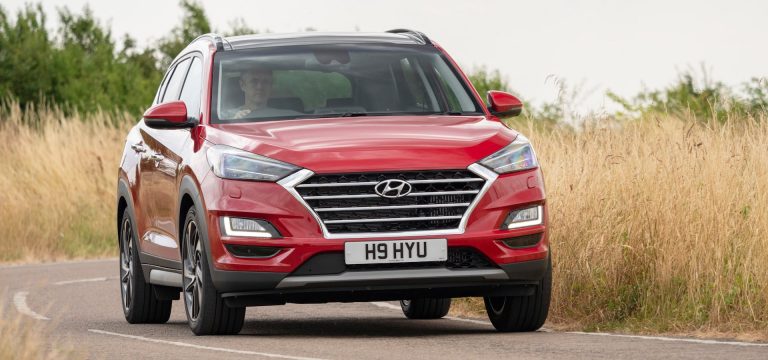
You can’t really be a car manufacturer in 2018 without an SUV in your portfolio, but luckily for Hyundai, it has some form in this area. The Tucson is just the latest product in a line dating back to the early 1990s.
Hyundai SUVs tend to be capable yet forgettable, but the brand’s latest crop of cars have been a little more stylish and emotive. Can the recently facelifted Tucson continue this trend?
What’s new?
While an all-new mild hybrid powertrain is available, we’re not actually driving it here. However, all cars gain a new ‘cascading’ front grille, new headlights and new bumpers, which combine to sharpen up the Tucson’s appearance.
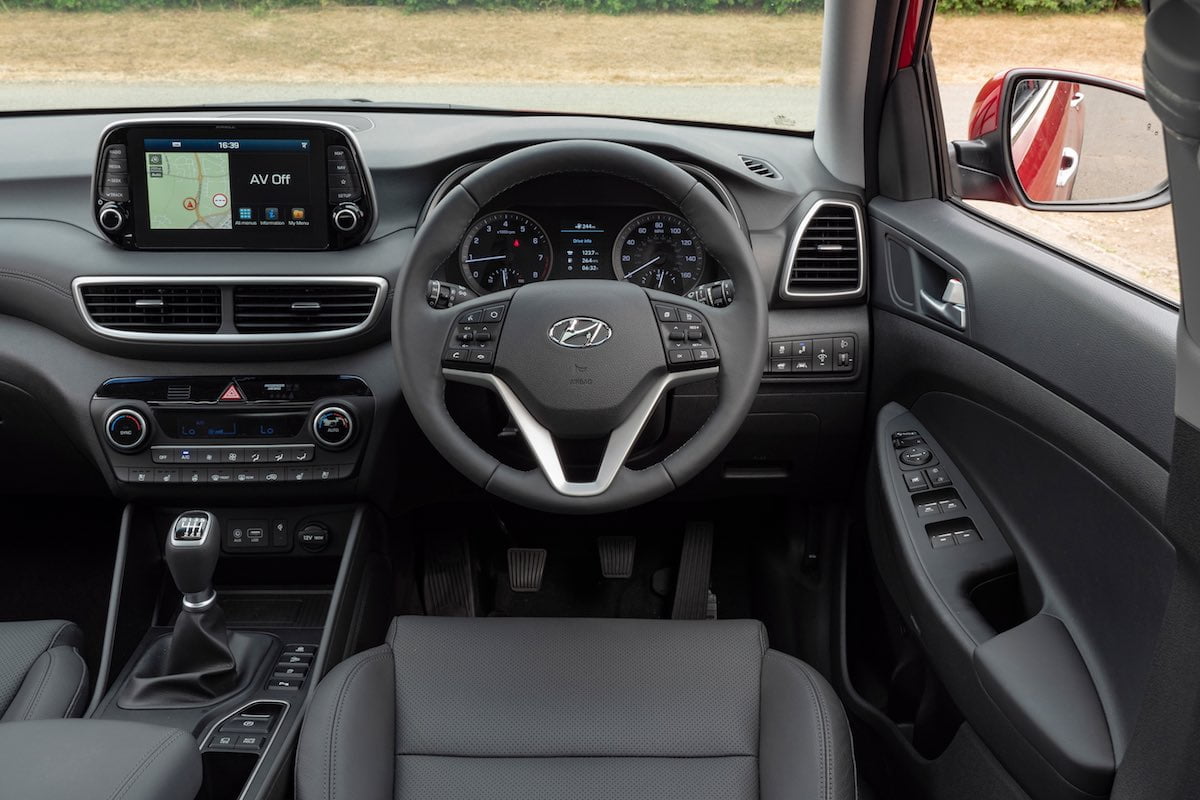
The interior has received a major redesign, too, with a floating infotainment display, a less button-heavy centre stack and revised materials for a plusher feel.
Finally, smart new alloy wheel designs are available, ranging from 17 inches on entry-level models right up to 19 inches.
How does it look?
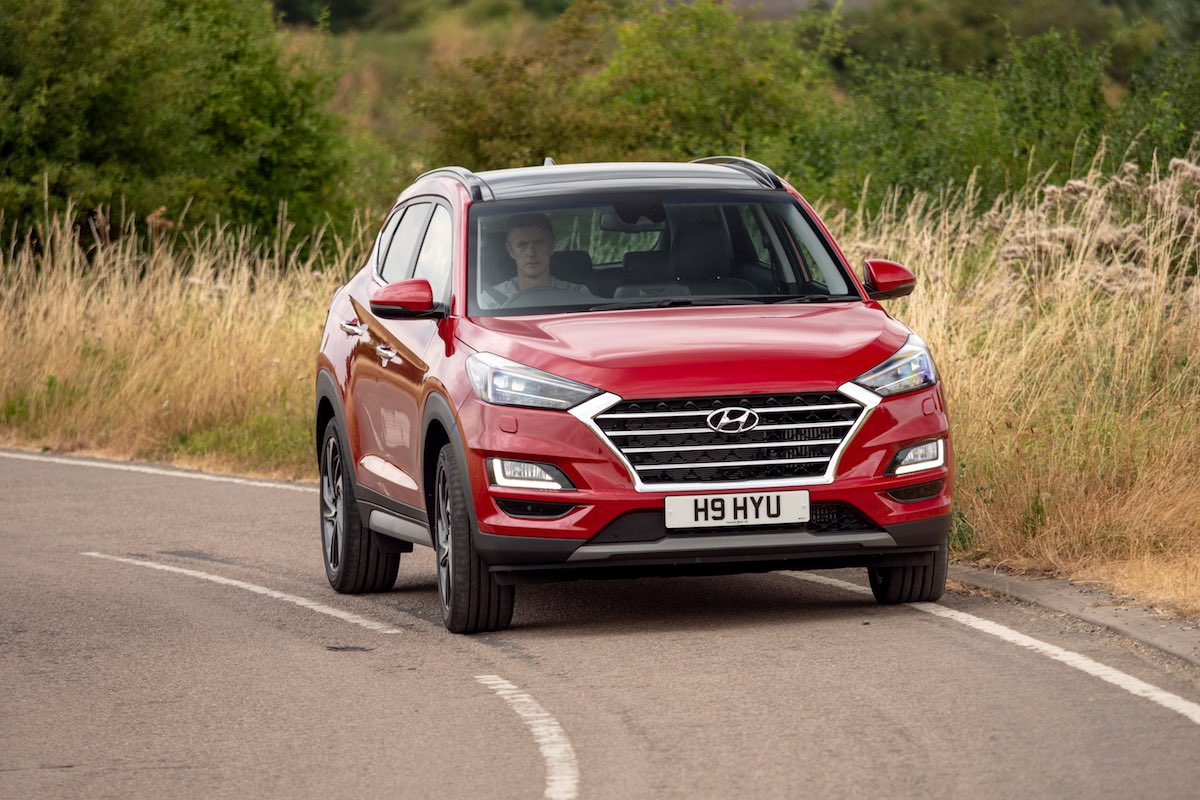
Though the newly facelifted Tucson does look smart, it’s still rather anonymous both inside and out. The bold Hyundai family face gives it a clear connection to the likes of the i30 and all-new Santa Fe, while the alloy wheel designs on higher trim levels are sleek and attractive.
The flat blue paintwork and small 17-inch alloys of our test car don’t look quite so premium, however.
What’s the spec like?
Trim levels start with entry-level SE Nav, which as the name suggests offers satnav alongside LED rear lights, 17-inch alloy wheels, roof rails, dual-zone climate control and cruise control.
Stepping up to Premium adds some glitzy chrome to the grille, brings electric adjustment for both front seats and adds some more safety kit, while Premium SE cars have ventilated front seats, a panoramic roof, powered tailgate and keyless entry.
What’s it like inside?
(PA)
Crossovers intended for family use have to be super-practical, and the Tucson doesn’t disappoint here with a spacious and flexible interior and bags of room. The split-folding rear bench isn’t quite as clever as the VarioFlex seats in a Skoda Karoq, but they fold down easily to increase the boot from an already-impressive 488 litres to a cavernous 1,503 litres.
When you’re using them for passengers, they’re also fairly good. There are two ISOFIX points to prevent your children from sliding all over the back seat, and plenty of leg- and head-room for all occupants.
Material quality is excellent too – a step down in plushness from a Volkswagen Tiguan, but easily on par with the Nissan Qashqai. Everything feels well screwed together, too.
What’s under the bonnet?
A range of revised powertrains is on offer, including a pair of 1.6-litre petrols, two 1.6 diesels and a 2.0-litre diesel – plus that all-new mild-hybrid 2.0-litre diesel. Our car had the entry-level diesel powertrain, however – a 1.6-litre unit producing a modest 115hp.
Given the Tucson’s size, it’s not actually as gutless as it sounds – it gets up to motorway speeds without much drama and cruises effortlessly. There’s not much power in reserve for overtaking, though, and for peace of mind we’d be tempted to step up to the 134bhp version of the same engine.
Economy is decent at around 50mpg on a long run, and it settles down to a refined grumble at a cruise. It’s rather agricultural on start-up, however.
What’s it like to drive?
(PA)
Though some fairly powerful engines are on offer, as well as four-wheel drive, the Tucson is never exciting to drive. Instead, it majors on comfort, which it does very well. Our entry-level model was equipped with 17-inch alloy wheels, giving a generous amount of tyre sidewall to absorb bumps and potholes, while squishy suspension makes mincemeat of poor surfaces.
The payoff is a rather wallowy experience in the corners, and a floating sensation on undulating faster roads which might make kids in the back a little queasy. It’s certainly not the sharp driving experience you’d get from a SEAT Ateca, for instance.
Summary
The Tucson won’t attract keen drivers, but ought to be a hit with families thanks to its super-practical interior and comfortable drive.
However, it’s no longer the bargain Hyundais once were, and so has to be considered alongside some very talented competition. The Skoda Karoq, for example, is bigger and more practical still, while the SEAT Ateca is better to drive.
Not to mention the Tucson’s sister car, the Kia Sportage, which offers the same package with a longer warranty. It should still be on your list to consider, though.
‘Black box’ insurance has helped reduce the number of young drivers killed or seriously injured in road traffic accidents, according to data released by research analysts LexisNexis.
The number has fallen by 35% since 2011 from 18,529 to 11,984, contrasting with a 16% fall for the entire population (203,950 to 170,993).
The difference between younger and older drivers is the former’s use of telematics, with four in five motorists aged between 17 and 19 driving a car fitted with a black box that monitors and records their performance behind the wheel.
In total, there were 975,000 live policies in 2017, reflecting the surge in drivers making use of the technology to bring their premiums down.
The drop in young driver casualties and deaths comes despite a 7% increase in the number of driving licences held across all ages since 2012 to 40.5 million.
UK road casualty statistics were analysed by specialists LexisNexis Risk Solutions and compared with the number of telematics policies currently in use.
Its director, Graham Gordon, said: “Our analysis and interpretation of the publicly-available road casualty statistics factors for key road safety advances such as improved roads, better junction design and new car safety technology.
“But the patent downward trend in the 17-19 age bracket points to an additional factor at play: the increasing availability and adoption of telematics insurance.
“Young drivers remain the riskiest drivers on our roads, but the insurance sector deserves a great deal of credit for developing an insurance product that encourages safer driving and delivers fairer pricing to young drivers based on their road behaviour.”
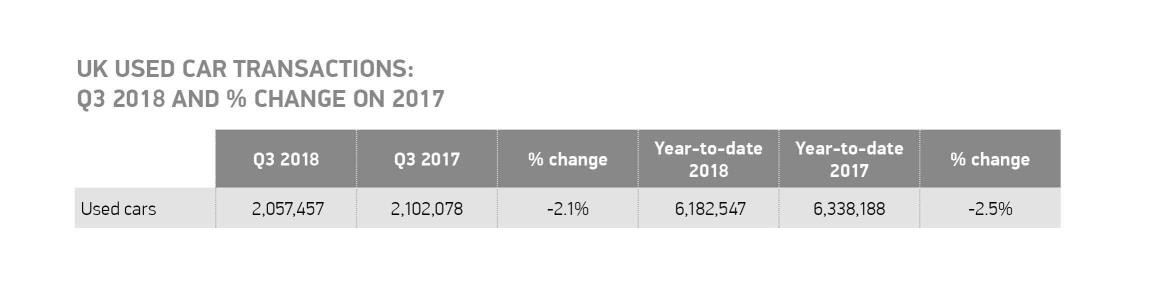
More than two million used cars changed hands between July and September, according to the latest data published by the Society of Motor Manufacturers and Traders (SMMT).
The Q3 result was 2% down on the same period last year, which itself was 2% down on the Q3 result in 2016 (the best year on record), but the overall used car market remains strong.
It’s important to bear in mind that used car transactions consist of everything from a nearly-new dealer demonstrator vehicle to an old clunker bought privately that may not even be running. It also includes registrations being transferred with no money changing hands, such as within a family or similar.
Despite not providing a breakdown of vehicle information, the SMMT claims that sales of hybrids and electric cars were up by nearly 29%. However, this still only makes up less than 1.5% of total numbers. This compares with similar ‘green’ vehicles usually making up about 5-6% of new car registrations.
The token data provided for used car transactions by the SMMT, unless you’re interested in colours
The SMMT does not provide comprehensive and useful data for the numbers of petrol, diesel and alternatively-fuelled (electric, hybrid, natural gas, etc) used cars, as it does for new cars, or maybe a breakdown of market segments (superminis, SUVs, etc), which makes it difficult for anyone to analyse the data properly.
Instead, the industry lobby group regales us all with the exciting news that black remains the most popular colour for used cars – although sales of used orange cars were up by 10%!
Unsurprisingly, given that it has been the most popular new car for the last decade, the Ford Fiesta is also the nation’s top-selling used car.
Sales down but borrowing growing rapidly
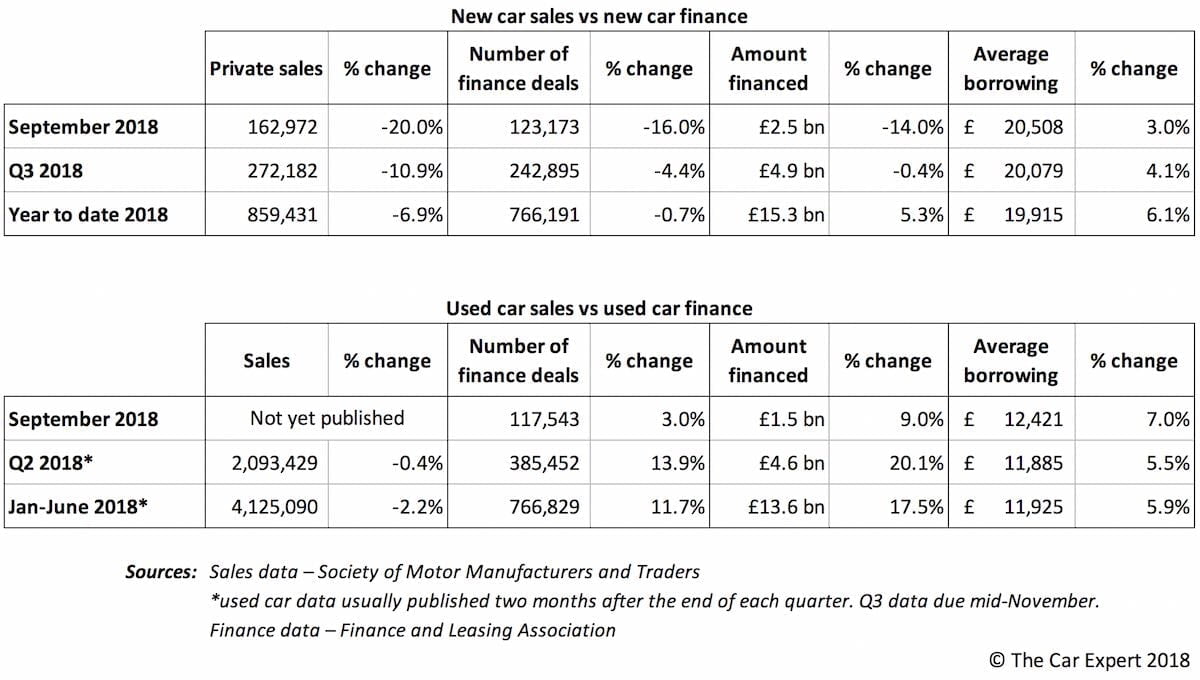
As we reported last week, used car finance is continuing to grow rapidly every month. Despite a 2% fall in used car sales, the number of used car finance deals was up nearly 10% on last year, according to numbers published by the Finance and Leasing Association. The total amount borrowed from dealer-sourced lenders by used car buyers was up by more than 17% to more than £4.5 billion.
That means that the average amount borrowed for a used car has gone up by more than 7%, reaching a new quarterly record of approximately £12,236.
With new car sales down by more than 10% for the quarter, it is highly likely that a lot of the growth in used car finance is coming from people moving from a new car on a PCP (personal contract purchase) into a nearly-new used car on a PCP to try and maintain their monthly payment levels.
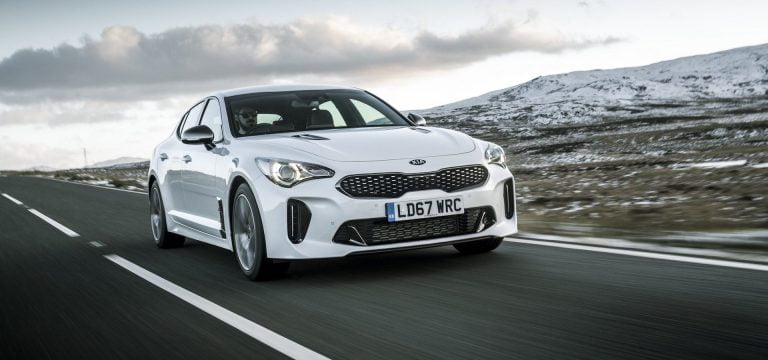
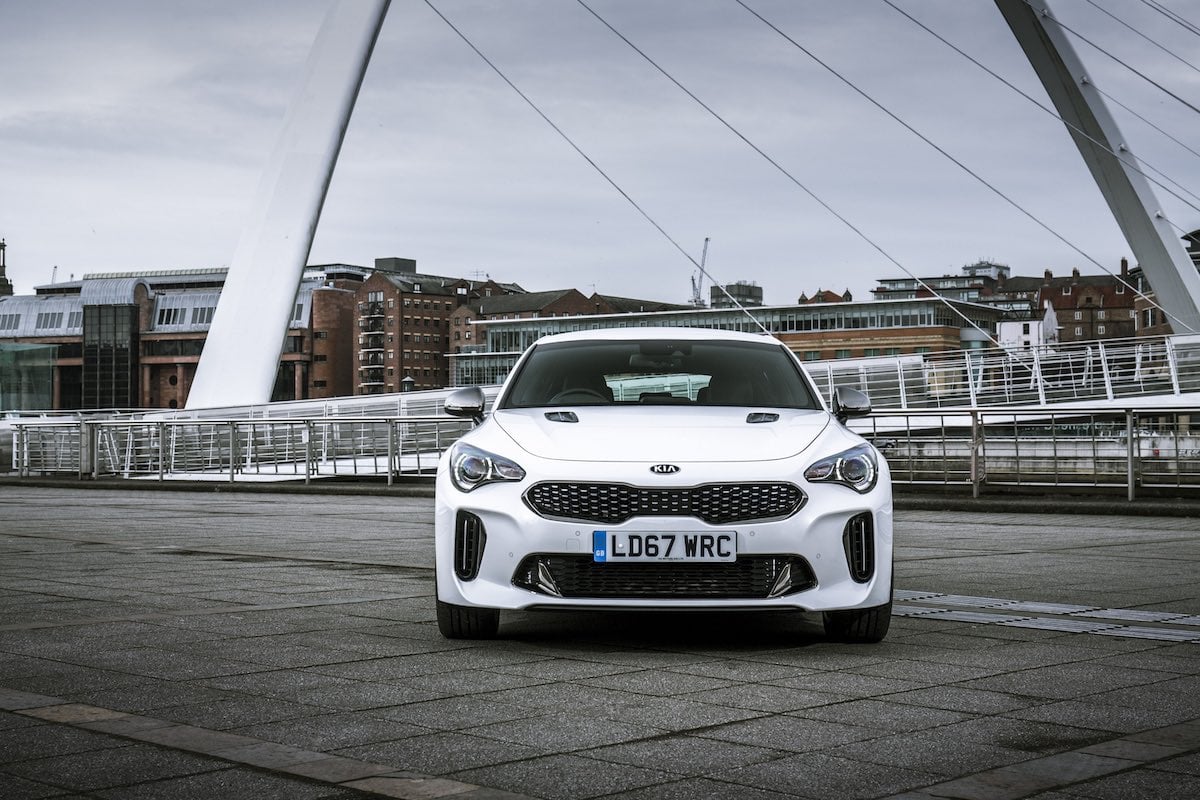
Kia launched the Stinger GT S to much fanfare — becoming the South Korean manufacturer’s first serious effort at delivering a performance car to take on German opposition, doing so in quite some fashion.
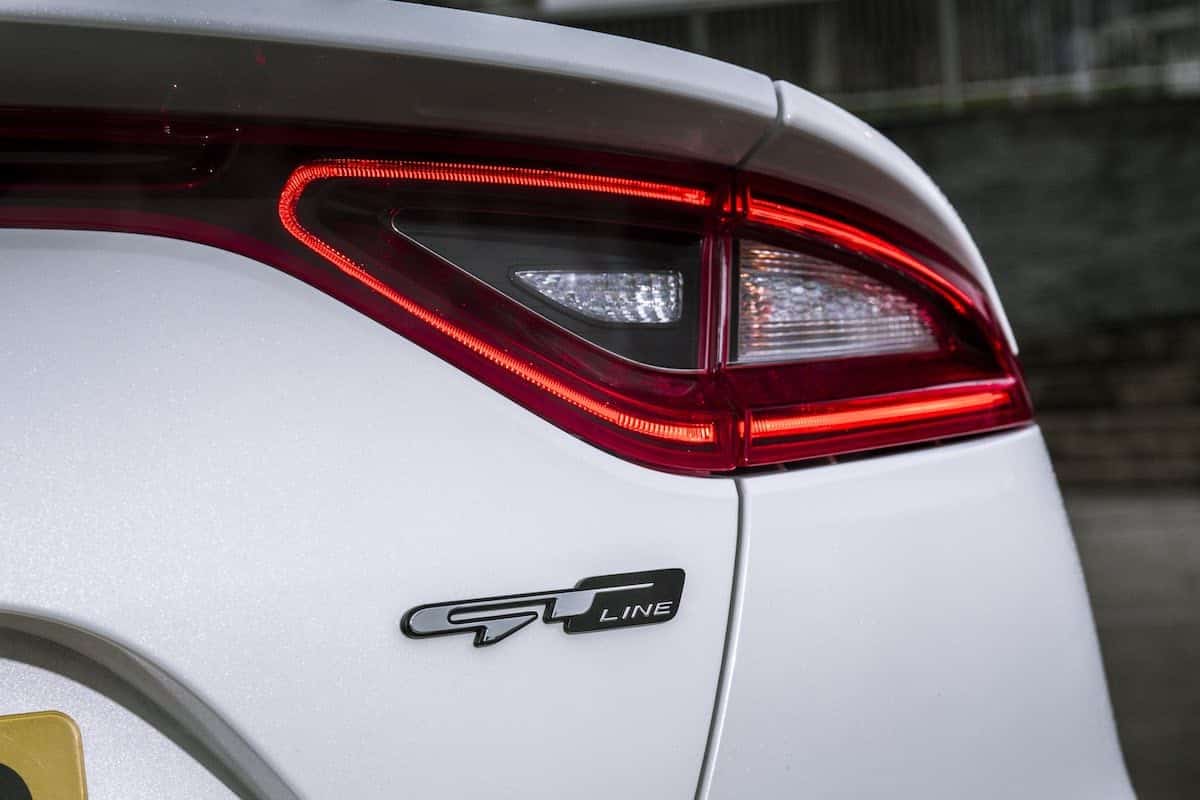
For the Stinger to make business sense to Kia, though, it has to offer more than just the lunacy version. That brings us to this — the Kia Stinger 2.0 GT-Line.
Designed to take on the middle-of-the-range offerings from the likes of BMW, Audi and Mercedes-Benz, it brings the aggressive styling of the GT S with a more frugal and affordable engine. But is it good enough to take on rival volume sellers?
The Stinger GT-Line is where the saloon will really be determined as a commercial success or failure. In an effort for it to be the former, it benefits from sleek looks, a good selection of petrol and diesel engines, plus some serious value on the equipment front.
If you’re familiar with the Kia range, you might be wondering why this has been introduced considering the Optima already exists. Well, it’s meant to be a step up — think of the Optima as more of a Ford Mondeo rival — and take the South Korean brand to more ‘premium’ heights.
How does it look?
(PA)
The Kia Stinger is particularly striking in range-topping GT S form, and fortunately that’s carried out through the rest of the range.
Of course, it comes on smaller alloy wheels and the inclusion of LED lights detracts a little bit from the look – but it remains a looker, and is sure to turn heads.
There is, of course, that ever-present fact it’s still a Kia, which holds a reputation in the UK as something of a budget brand. That’s sure to hurt sales, but it’s unjustified from an objective perspective.
What’s the spec like?
Despite being the entry point to the Stinger range, the GT-Line brings a fair amount of equipment to the fastback. Standard luxuries included 18-inch alloy wheels, heated seats and steering wheel, leather upholstery, and an eight-inch infotainment display with navigation and support for both Android Auto and Apple CarPlay.
There’s also a good amount of safety equipment, with adaptive cruise control, autonomous emergency braking and lane-keep assist all part of the package.
With the lack of badge appeal in this segment though, Kia has had to price aggressively — and with a £32,025 tag, it comes across as a well-valued package on paper.
What’s it like inside?
The Stinger’s interior is well made (PA)
Kia hasn’t slacked off when it comes to cabin quality for the Stinger, even in its lowest form, but it does lack a sense of luxury that rivals bring to the table.
Fit-and-finish is great across the board, and there’s no presence of hard plastics that you may have expected from a brand with its roots at the more affordable end of the motoring spectrum. That said, it feels a bit clinical – and not in the McLaren sense, but more the dentist waiting room-type definition.
What’s under the bonnet?
Powering our test car is the least potent of all the engine found in the Kia Stinger range. The turbocharged 2.0-litre four-cylinder engine sends 247hp and 353Nm of torque to the rear wheels via an eight-speed automatic gearbox.
The result is 0-60mph in 5.8 seconds with a top speed of 149mph possible. As for efficiency, Kia claims the Stinger can achieve 35.8mpg on the combined cycle in this form, with CO2 emissions of 181g/km.
Power delivery in the unit is impressive, with a wide band of torque and good top-end power giving it consistency across the rev range – although it’s slightly let down by a hesitant gearbox.
There’s also a lot of manufactured, and somewhat off-putting, noise coming into the cabin when using Sport mode.
What’s it like to drive?
(PA)
(PA)
(PA)
The recipe for this car sounds good – a rear-wheel-drive fastback with a petrol engine stuffed underneath the bonnet, and Kia has cooked it pretty well. When pressing on, the chassis proves engaging and playful – which can’t be said for some of its rivals.
Positives carry on beyond there, too. On the motorway, it settles to a cruise well and feels refined, with little distraction coming into the cabin. Drop the driving mode into Comfort and the ride becomes pretty supple too.
It’s also quite handy around town, despite being a fairly large car. 360-degree cameras mean tighter spots become a lot easier to navigate, which aid with parking too.
Summary
Even in entry-level form, the Kia Stinger is a car that has all the credentials to take the fight to more premium rivals – but despite its great value, it’s going to remain a hard sell to existing owners from the likes of BMW, Audi and Mercedes.
There’s a tonne of fun to be had behind the wheel, and equipment is in no shortage — plus it’s arguably one of, if not the, best-looking car in its segment.
That said, it just lacks that crucial sense of luxury buyers in this market will look for, and this could be a defining factor in how well it sells overall.
BMW has revealed details of a new M340i xDrive model, which will serve as the range-topping version of the latest 3 Series and will debut at the Los Angeles motor show this month.
Based on the new BMW 3 Series saloon that was unveiled at the Paris motor show last month, the M340i uses a turbocharged straight-six petrol engine developing 375hp and 500Nm of torque. The manufacturer claims that’ll power the M340i from 0-60mph in 4.2 seconds.
BMW also states that the M340i will return 37.6mpg on the combined cycle, with official CO2 emissions of 172g/km.
Drive is sent to all four wheels via an eight-speed automatic transmission. Although the M340i is given all-wheel drive thanks to BMW’s xDrive system, the car has a rear-wheel bias for added cornering ability.
It also benefits from a standard-fit electronically controlled locking differential, which enhances the traction levels.
The interior of the M340i features BMW’s latest in-car technology (BMW/PA)
A full M-Sport brake set-up comes as standard, with 348mm front discs and 354mm rear discs sitting behind 18-inch alloy wheels to provide a good amount of stopping power. Larger 19-inch wheels will be available as an optional extra.
Exterior styling touches have been applied to the M340i to help differentiate it from the rest of the 3 Series, with features such as a mesh-design front kidney grille, rear spoiler and grey metallic exterior mirror caps enhancing the car’s look.
Inside, the M340i gets sport seats, a leather-trimmed steering wheel with gearshift paddles and front door sills with the M340i lettering.
No prices have been announced yet, but BMW has stated that the M340i will make its market launch in Europe next July.
It’s only been on sale a few months, but Mercedes-Benz has already added a pair of new diesel engines to its A-Class hatchback range.
The first, a 2.0-litre added to the A 200 d, puts out 150hp and 320Nm and is capable of returning 67.3mpg on the combined cycle while emitting 110g/km of CO2. Mercedes claims it can hit 60mph in 7.9 seconds before reaching an electronically limited top speed of 137mph.
The second, this time powering the A 220 d, is another 2.0-litre that produces 190hp and 400Nm of torque. As a result of the increased power output, Mercedes claims that the A 220d can reach 60mph in just 6.8 seconds and reach a top speed of 146mph. It can still return 65.7mpg combined, however, while emitting 114g/km of CO2.
Both engines are paired with an eight-speed automatic gearbox.
Mercedes-Benz A 200 d Sport
The lower-powered A 200 d is available in Sport and AMG Line trims, while the more powerful A 220 d is available in AMG Line specification only.
Sport trim cars benefit from a seven-inch cockpit display and seven-inch infotainment screen, along with a reversing camera, 17-inch alloy wheels and a range of driver assistance systems.
Higher-spec AMG Line A-Class models get larger 18-inch alloy wheels as standard, along with a full AMG exterior styling kit and diamond radiator grille.
On-road prices start from £28,805 for the A 200 d Sport, rising to £30,005 for the AMG Line specification. The A 220 d AMG Line is priced at £31,575 on-road. Naturally, Mercedes-Benz offers an extensive array of optional extras to escalate those prices significantly…
Order books are open now, and first deliveries are expected next spring.
Compact SUVs can be dreadfully boring things, can’t they? Accomplished and practical, sure. Some are even good to drive, and many are very efficient. However, unless you start paying the big bucks for premium products, your crossover is likely to be a bit dull.
But French brand Peugeot has been on a bit of a roll with its range, revamping its formerly dour line-up and giving it that extra layer of gloss and glitz. It’s best summed up in the new 508 saloon, but for six months we’ll be living with the crossover alternative – the 3008.
We’ve got the keys to a rather handsome 3008 in GT-Line trim – an eye-catching package that in our case pairs ‘Ultimate Red’ paintwork with plenty of chrome trim and glamorous 18-inch alloy wheels.
Dynamic styling helps the Peugeot 3008 stand out from the crowd (PA)
It’s fitted with Peugeot’s 1.5-litre BlueHDi diesel engine and a six-speed manual gearbox, driving the front wheels only. After all, nobody really buys these cars to go off road – so why pay the fuel economy and cost penalty?
The end result is a genuinely good-looking crossover. I’d love to say it stands out from the crowd, but I live a stone’s throw from a Peugeot dealer and see two identical cars every morning. Regardless, the brand’s upright ‘family face’, the blacked-out ‘floating’ roof and chunky proportions give it decent road presence, while distinctive light signatures front and rear mean it’s recognisable day or night.
Swoopy and stylish, inside and out
The looks are just one thing that Peugeot’s doing very well; the interior’s another. I’ve recently stepped out of a Vauxhall Grandland X – a car that’s virtually identical to the 3008 under the skin. But the two interiors couldn’t be further apart. Where the Vauxhall is staid, straight-edged and sensible, the Peugeot is swooping and stylish.
I love the way Peugeot’s used chunky metal highlights, different material textures and piano-style switches, meaning that while this isn’t the best-equipped car around, it still feels a million dollars on the inside.
The interior has been stylishly finished (PA)
GT-Line brings a decent level of kit, but there are a few notable omissions that I’m missing from my Grandland X. As the weather gets colder, the lack of heated front seats is disappointing (call me a wimp), and the lack of keyless start feels a little antiquated.
I can certainly live without an electric tailgate though, and the basic low-quality reversing camera more than suits my needs. A 360-degree system is optional but I wouldn’t bother, as the 3008 only really lacks visibility out of the rear.
I’m also delighted to find full-LED headlights and Android Auto connectivity so I don’t need to rely on the built-in satnav (Apple CarPlay also included for non-Android users, obviously).
Less essential? Well, the cabin fragrance system seems a bit much…
GT-Line trim also brings with it the latest digital version of Peugeot’s i-Cockpit. This is the latest evolution of Peugeot’s high-dial, small-wheel driving environment, and I must say I’m a fan. The graphics are great, the system’s responsive and I find it all very easy to use.
Petrol or diesel?
As for driving? Well, I mentioned that I’ve just experienced the mechanically-identical Grandland X, but that was a 1.2-litre petrol model. My 3008 is a diesel, and it’s a far better-suited powertrain. It’s punchy and economical, and exactly what the car needs.
It also feels better resolved, with a more natural clutch and gearbox action. Ride and handling? They’re nothing to write home about, but the 3008 is comfortable, safe and stable. And really, what more could you ask for from a family bus?
I’ll be doing plenty of long-distance travel in the 3008 over the next few months – regular trips between my home in Southampton, Cheltenham and Great Yarmouth necessitate 600+ miles of driving over a single weekend. I’m looking forward to seeing how the Peugeot copes…
The convertible market usually takes one of three directions. First there’s the chopped-up hatchback or saloon, then there’s the super-sporty soft-top, and finally there’s the comfortable and glitzy cruiser.
It’s these latter two that BMW needs to blend together in this – the latest Z4. Buyers of cars such as this one won’t tolerate a rough ride or spartan interior, but at the same time BMW has a reputation to maintain, and giving it the title of ‘the ultimate driving machine’ won’t go unchallenged.
So, with a new platform, upgraded interior and divisive new styling, can the latest Z4 take the fight to talented rivals such as the Porsche Boxster and Jaguar F-Type?
In short, nearly everything. The new Z4 shares only a few of its oily bits – a differential and the front firewall – with its predecessor. Everything else is new or inherited from elsewhere in the BMW stable.
The styling and proportions have been given an overhaul, with a new cab-forward silhouette that puts the driver closer to the centre of the action. There’s a choice of three engines initially – two four-cylinders and a straight-six – while the only roof option is a quick-folding electrically operated soft-top.
How does it look?
(PA)
The new Z4’s styling is divisive, to say the least – just check social media and you’ll find plenty of complaints that it’s lost its elegance, it’s too fussy and the grilles are too large.
The cabin has moved forward, and although it still retains the long-bonnet silhouette of the previous Z4, the driver is now positioned more centrally. The high-set headlights flank a new, wider kidney grille inspired by the iconic 507, while the rear deck is raised to give a real ‘wedge’ shape.
The proportions, then, are wonderful – but it’s the cuts and slashes across the flanks and rear that divide opinion. There’s no doubt it’s lost some of the elegance of its predecessor, but it’s gained serious purpose to its stance.
BMW reckons 90% of UK buyers will choose a meaner-looking M Sport model, too.
What’s the spec like?
As standard, there’s a decent level of kit – including an updated iDrive infotainment system, leather upholstery, 18-inch alloy wheels, climate and cruise control plus all-round parking sensors.
Our M40i was rather more plush, though, with M Sport tweaks, 19-inch alloy wheels, aluminium interior trim, electric and heated seats, upgraded brakes, an M differential, adaptive cruise control and upgraded infotainment. However, it’s perhaps not quite as plush as you might hope for its near-£50,000 price tag.
What’s it like inside?
(PA)
(PA)
The new Z4 is far less divisive inside with a typically BMW cabin, including a driver-focused layout and the latest iteration of the firm’s iDrive infotainment system, which really is a great setup – intuitive, clear and speedy.
We can’t say we like BMW’s new digital dials as much, though. Previous BMWs have used twin circular gauges that were some of the best in the business, but the half-octagon of the new cluster simply isn’t as easy to read on the go, and we prefer the simplicity of the Porsche Boxster’s or Jaguar F-Type’s clusters.
The Z4 feels snug but not cramped, although it’s a little dark and claustrophobic when the roof’s up. Storage is decent, with a big glovebox, adequate boot and space behind the seats for smaller bags – however, the cupholders are placed just where your elbow wants to be, which isn’t ideal.
What’s under the bonnet?
Basic Z4s feature a four-cylinder petrol engine in either 20i or 30i guises, packing 200hp and 262hp respectively. We drove the next rung on the ladder, though – the straight-six M40i, which puts out 340hp and is good for a 0-60 time of 4.4 seconds. All Z4s are rear-wheel drive and feature the same eight-speed torque converter automatic gearbox.
It’s a lovely combination – the engine has bags of power without ever feeling frantic or scary, and the gearbox can instantly switch between slurring gears together or rifling through them at high speed.
It also sounds lovely, which is more than you can say of a four-cylinder Porsche Boxster.
What’s it like to drive?
(PA)
(PA)
First, we’ll cover the ‘boulevard cruiser’ side of the Z4. The incredibly stiff body – roof up or down – means that ride comfort can be achieved without compromising handling.
It’s not as soft as something like a Mercedes C-Class Cabriolet, but it’s not trying to be – you still feel the bumps but they’re perfectly damped out, and combined with the excellent seats you’ll be able to cover long stretches in this car with no issue.
Turn up the wick, though, and the Z4 doesn’t become unstuck. We hounded it around the former F1 circuit of Estoril and found it to be genuinely impressive in the bends.
The Z4’s steering is weighty and accurate and the handling is superbly balanced. The 50/50 weight distribution and low centre of gravity keep things flat and true, while the specially-developed Michelin Pilot Super Sport tyres give brilliant agility.
It’s not quite as thrilling on the edge as a Porsche Boxster, though, and if you want muscle car character at this price the Ford Mustang is pretty unbeatable – if less accomplished.
Summary
The BMW Z4 very successfully treads the fine line between grand tourer and sports car – and this M40i model really is great to drive. It’s just a shame that most buyers will opt for a lesser engine, as we’re not sure the four-cylinder 20i will show off the Z4’s characteristics at their best.
Still, provided you like the looks, this is an excellent, comfortable and dynamic roadster which shows that BMW still has serious form in this class.
Car finance debt increased in the third quarter of 2018, despite the number of new finance agreements falling in line with lower new car sales in September.
Latest car finance borrowing data published this week by the Finance and Leasing Association (FLA) shows that just under £4.9 billion was lent to new car buyers in Q3, a mere 0.4% less than the same period in 2017 despite the big new car sales month of September being 14% down on the same month last year.
2017 was a record year for both new and used car borrowing despite falling new car sales, and year-to-date data for 2018 suggests this trend will continue. New car debt stands at £15.3 billion for the first nine months of 2018, which is 5% ahead of the same point last year despite private new car sales being 7% down.
The FLA reports that 91% of private new cars are financed at the dealership, the vast majority of which are PCP agreements. The increased borrowing suggests that car buyers are either paying more per month or (more likely) taking longer PCP contracts, which also helps to explain why new car sales are decreasing yet borrowing is increasing.
Used car sales data for Q3 is expected to be released next week, but was 2% down in the first half of the year. Despite this, the number of finance agreements was up nearly 12% and the total debt was up more than 17%.
Average borrowing is up approximately 6% for both new and used cars year-to-date. By contrast, real average weekly earnings have only increased 0.4% according to the Office for National Statistics.
No Brexit anxiety for car finance borrowers – or lenders
Despite the continuous media coverage of Brexit and the almost daily complaints from across the car industry that the country’s uncertain position in the world is hurting business, it doesn’t look like car buyers are too worried about taking out more and more debt to drive a shiny new (or nearly-new) car.
These latest results are entirely consistent with what we have been reporting for the last 18 months since The Car Expert started publishing our analysis of sales vs finance figures. In fact, I have reduced our coverage from monthly to quarterly updates as there are only so many times you can keep saying “sales are down but debt keeps going up”.
If we fall off a post-Brexit cliff and land somewhere back in the Dark Ages, as various prognosticators keep predicting, presumably all these borrowers will soon be out of jobs and be unable to service their ever-growing debts as the economy collapses around our ears.
With less than six months to go until B-Day, the finance companies (usually owned by the car manufacturers themselves) seem happy to keep on lending more and more money to every customer. There appears to be no indication that they are applying the brakes on the car finance express.
So either they’re not all that worried about the post-Brexit world, or they’re simply accelerating towards the apocalypse…
It’s here – the all-new Mercedes-Benz G-Class. Though it may look almost comically unchanged over the car it replaces, this is a comprehensive replacement and you can count the number of parts carried over from its predecessor on one hand.
Boxy and old-school in appearance it may be, but this latest G is packing some serious tech, as well as some outlandish power in the AMG G63 specification that we’re testing here.
We’ve headed out to see just how this successor to one of the longest-running model lines ever deals with the UK’s roads.
What’s new about the new G-Class?
As we said earlier, despite the car’s almost agriculturally square design, a lot has been changed on this latest G-Class over the older car. The rigid ladder chassis remains but it’s now lighter, while independent double wishbone suspension has been fitted to it in order to make the G a little more well-behaved on the tarmac.
It’s also larger than the old G. It’s grown in length and width. As well as making it even more commanding out on the road, it means there’s more space inside for people and luggage.
This AMG version car also benefits from an uprated braking system to help bring the leviathan to a halt in an effective manner.
How does it look?
The G-Class has retained its classic silhouette (Mercedes/PA)
Big, brash and out-there, the G-Class isn’t one for shrinking violets. It’s a dominating presence, with its wide arches, vast proportions and huge tyres contributing to a vehicle which is difficult to ignore. Certainly, it’s not going to be for all people – but we certainly love the way it looks.
There’s a lot of gangster-like appeal to the way our all blacked-out test car looked, though we’re aware of a particularly good shade of green available for the G-Class too – this is the one we’d go for if it were our choice.
What’s the spec like?
As you’d expect from a car weighing in with a £153,000 price tag, there’s a lot of standard equipment to be found in the G-Class. You get Mercedes’ latest Comand infotainment system which is simple and easy to use, along with a Burmester surround sound system.
Automatic three-zone climate control helps keep things at just the right temperature, while a high-definition 360-degree parking camera aids when trying to position the G. That final touch is a definite plus in a car of this size.
The whole cabin is just far better put together than before, and lives up to the three-pointed star at the front of the car. The seats are supportive, and there’s better room in the back too – though it still can’t offer the same amount of rear-seat space as you’d find in more conventional luxury off-roaders, like the Range Rover.
Continued on next page:Interior, drive experience and our verdict