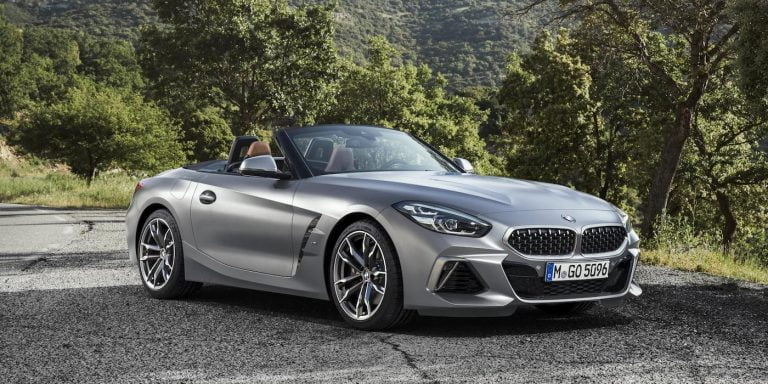
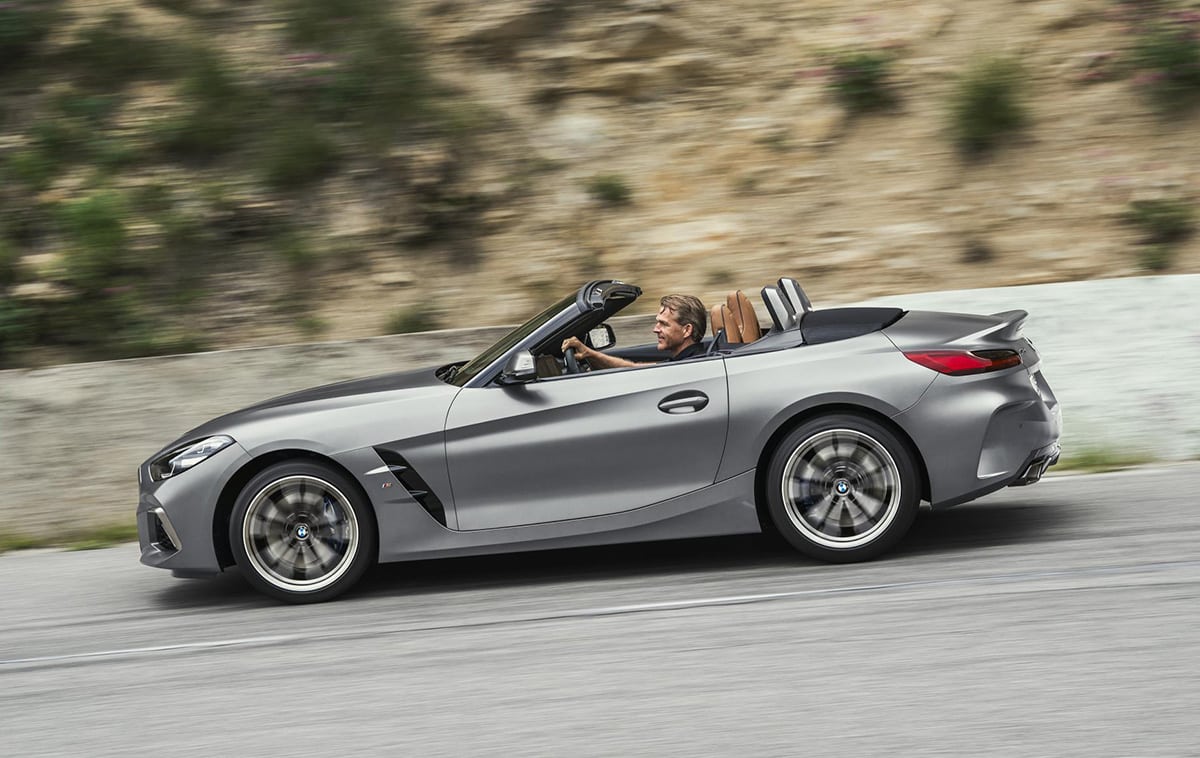
 The 197hp version completes the 0-62mph sprint in 6.6 seconds, the 258 in 5.4 seconds, and both return combined cycle fuel economy of 47.1mpg and CO2 emissions of 138g/km.
Range-topper is the M40i with a straight-six TwinPower turbo engine with 340hp and 500Nm of torque. The M40i passes 62mph from rest in 4.6 seconds, while returning 38.7mpg and CO2 emissions of 165g/km.
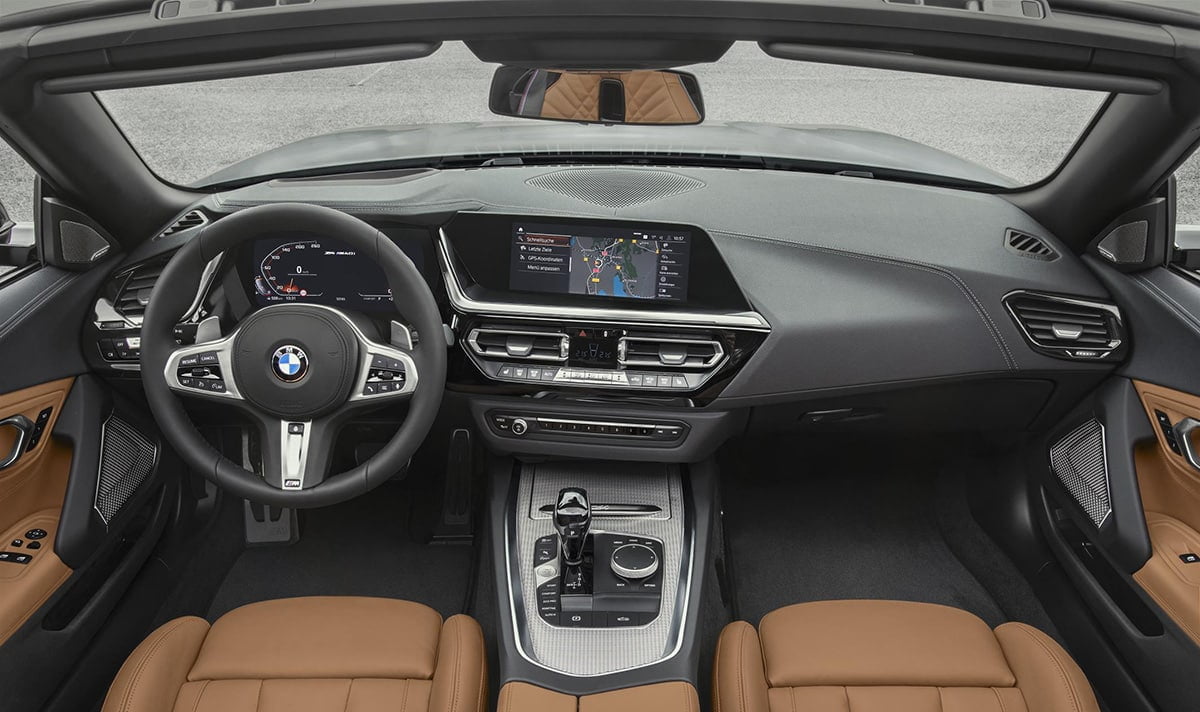
All versions will be matched as standard to an eight-speed auto-manual transmission which BMW states has been revised to offer sportier shifts. A launch control system is included.
Variable sport steering is also fitted as standard on all versions. The M40i also gains electronically controlled dampers, brakes from the M Sport performance division and an electronically controlled M Sport rear differential.
The Z4 chassis has been significantly redesigned with a double-joint spring strut axle at the front and at the back the first five-link axle in a BMW roadster. BMW says that this layout strikes the best compromise between handling ability and ride comfort.
Order books for the BMW Z4 open on 4th October just as the car makes its debut in Paris. Prices will be announced closer to launch – industry sources predict a starting spice of around £36,000, with the first cars on UK roads in early March 2019.
The 197hp version completes the 0-62mph sprint in 6.6 seconds, the 258 in 5.4 seconds, and both return combined cycle fuel economy of 47.1mpg and CO2 emissions of 138g/km.
Range-topper is the M40i with a straight-six TwinPower turbo engine with 340hp and 500Nm of torque. The M40i passes 62mph from rest in 4.6 seconds, while returning 38.7mpg and CO2 emissions of 165g/km.
All versions will be matched as standard to an eight-speed auto-manual transmission which BMW states has been revised to offer sportier shifts. A launch control system is included.
Variable sport steering is also fitted as standard on all versions. The M40i also gains electronically controlled dampers, brakes from the M Sport performance division and an electronically controlled M Sport rear differential.
The Z4 chassis has been significantly redesigned with a double-joint spring strut axle at the front and at the back the first five-link axle in a BMW roadster. BMW says that this layout strikes the best compromise between handling ability and ride comfort.
Order books for the BMW Z4 open on 4th October just as the car makes its debut in Paris. Prices will be announced closer to launch – industry sources predict a starting spice of around £36,000, with the first cars on UK roads in early March 2019.
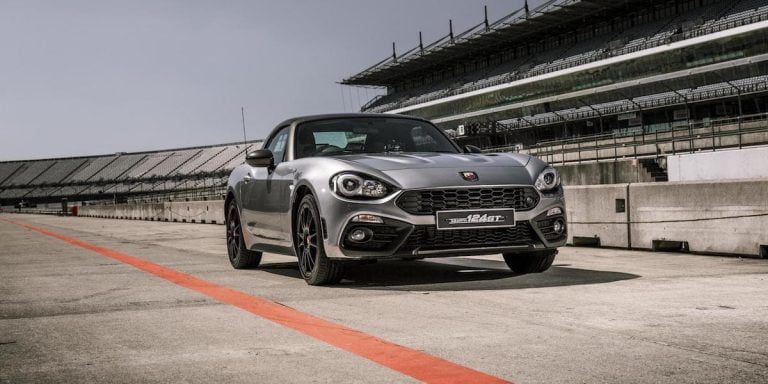
Abarth has revealed prices for its exclusive 124 GT model. The limited-edition roadster, based on the Fiat 124 Spider, will start from £33,625 on the road.
Just 50 examples of the Abarth 124 GT will be sold in the UK, though each one will be highly specified – a good thing considering that high price tag. The biggest change over the standard Abarth 124 Spider is the roof. Where the normal car has a manually-folding soft-top, the GT features a rigid carbon-fibre roof instead.
The roof is still removable, so the 124 GT can be changed from a coupe to a roadster in a few steps – though owners will need to leave the roof at home once it’s off. It weighs just 16kg, and adds rigidity to the chassis when it’s in place. It features a heated rear window and is lined for a bit of added refinement.
The Abarth 124 GT also gains a few styling tweaks, such as OZ alloy wheels, which not only look the part but shave weight. There’s a mechanical limited-slip differential, and a shouty Record Monza exhaust – giving the 1.4-litre turbocharged petrol engine its recognisable Abarth bark.
Inside, buyers benefit from a Bose sound system and distinctive two-tone leather seats.
Performance is virtually identical to the standard car, so 0-60mph is dispatched in well under seven seconds and the top speed is 144mph. There’s a six-speed manual as standard, though buyers can opt for a six-speed automatic if they want.
Three colours are on offer for the Abarth 124 GT, named after Abarth race wins – Portogallo 1974 Grey, San Marino 1972 Black and Turini 1975 White. A black bonnet can also be specified.

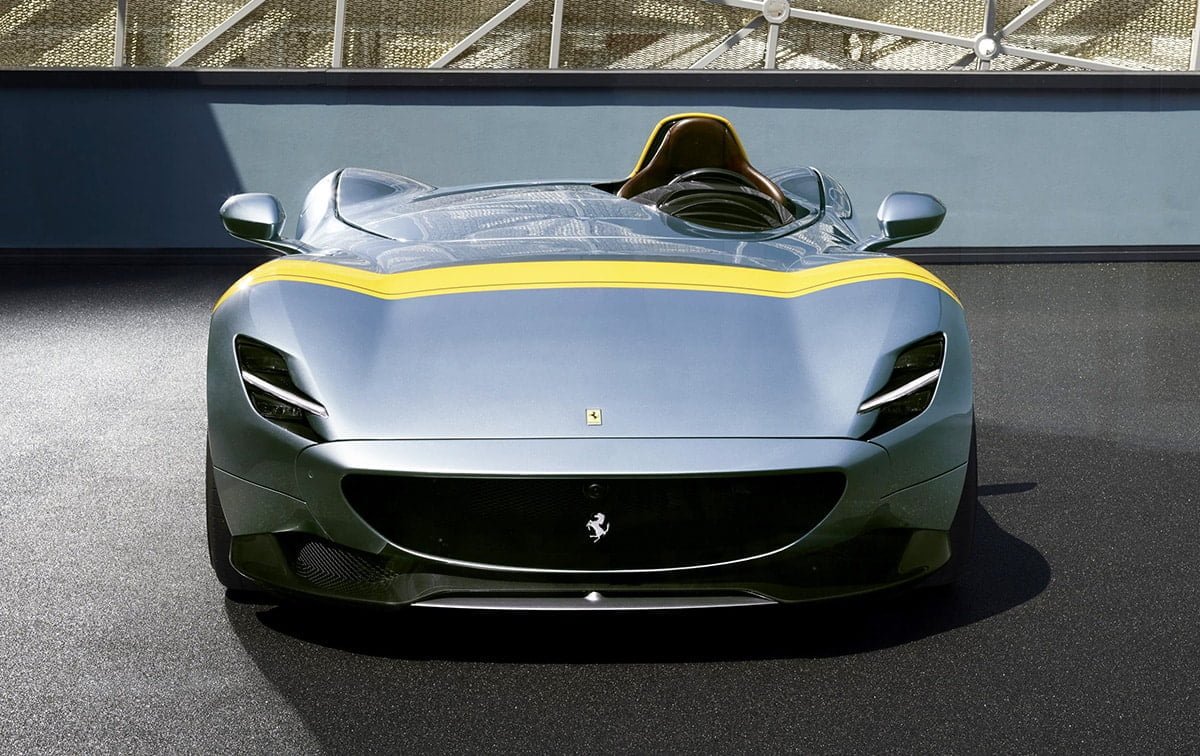
 Yet while the inspiration comes from the 1950s, Ferrari insists the two cars utilise the brand’s most up-to-date engineering techniques. Much of their build is in carbon-fibre while they employ the most powerful engine ever built by Ferrari, resulting in the best power-to-weight ratio of any Barchetta model.
The entire body shell is moulded from carbon-fibre and is shaped like a wing, the designers’ task eased by not having to cope with incorporating traditional open-top car architecture such as a full windscreen or hood.
Instead a ‘virtual windshield’ is built into the fairing ahead of the instrument panel, its main task being to control the airflow into the car’s interior and minimise drag.
The doors open upwards, and the bonnet is front-hinged, a one-piece unit again made from carbon-fibre. In total the dry weight of the SP1 variant is only 1500kg, the SP2 adding 20kg.
Yet while the inspiration comes from the 1950s, Ferrari insists the two cars utilise the brand’s most up-to-date engineering techniques. Much of their build is in carbon-fibre while they employ the most powerful engine ever built by Ferrari, resulting in the best power-to-weight ratio of any Barchetta model.
The entire body shell is moulded from carbon-fibre and is shaped like a wing, the designers’ task eased by not having to cope with incorporating traditional open-top car architecture such as a full windscreen or hood.
Instead a ‘virtual windshield’ is built into the fairing ahead of the instrument panel, its main task being to control the airflow into the car’s interior and minimise drag.
The doors open upwards, and the bonnet is front-hinged, a one-piece unit again made from carbon-fibre. In total the dry weight of the SP1 variant is only 1500kg, the SP2 adding 20kg.
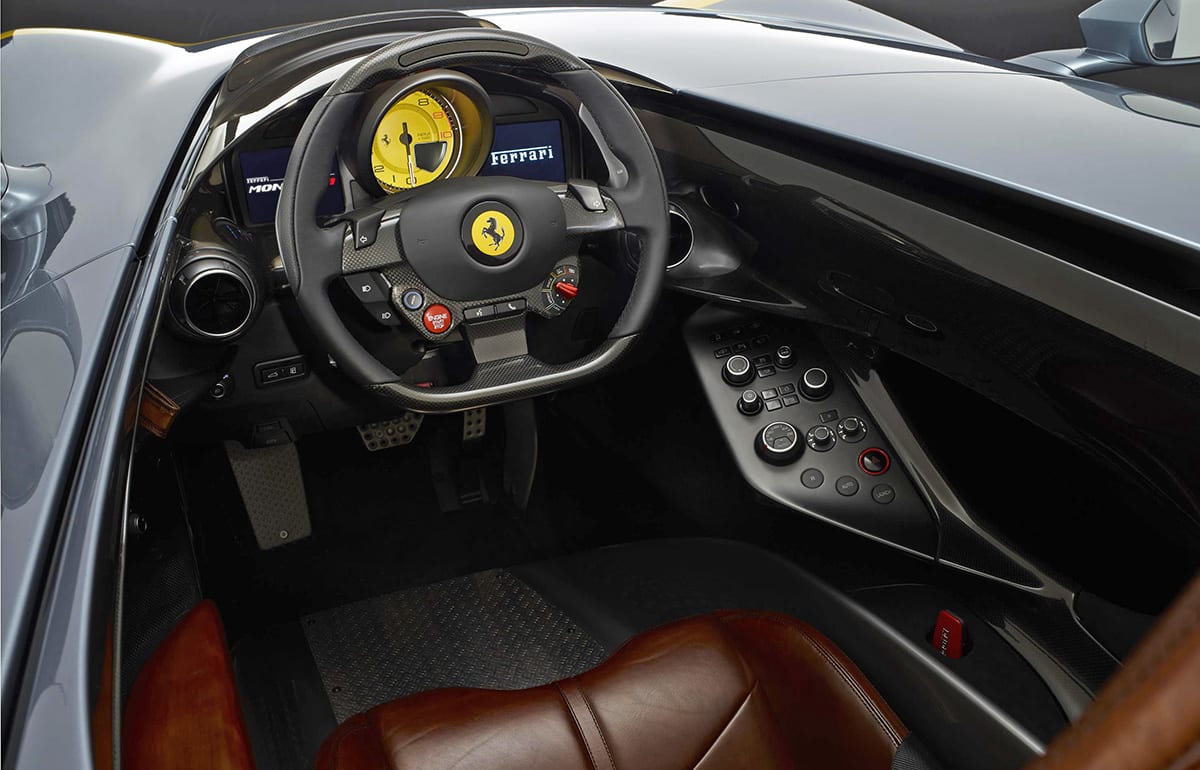 Installing a V12 engine of 810hp and 719Nm of torque results in a 0-62mph time of 2.9 seconds and 124mph in 7.9 seconds. According to Ferrari, the result is a feeling of “blistering speed normally only experienced by Formula 1 drivers, which derives from the concept of a cockpit carved from the car’s very volume that wraps around the driver.”
Production of the SP1 and SP2 will extend to no more than 500 cars in total, with the split between the two models based on customer demand. The price is yet to be revealed but industry sources suggest it will be around the equivalent of £2.3 million.
And those who secure a Monza SP1 or SP2 will even be able to look the part – Ferrari has signed up leading luxury fashion brands Loro Piana and Berluti, to create what are described as “elegant gentlemen-driver-inspired apparel and accessories.”
The driver’s selection includes racing overalls, jersey, helmet, gloves, scarf and driving shoes. Ferrari adds that even these use modern technology to guarantee a comfortable fit and ensure freedom of movement while driving.
Installing a V12 engine of 810hp and 719Nm of torque results in a 0-62mph time of 2.9 seconds and 124mph in 7.9 seconds. According to Ferrari, the result is a feeling of “blistering speed normally only experienced by Formula 1 drivers, which derives from the concept of a cockpit carved from the car’s very volume that wraps around the driver.”
Production of the SP1 and SP2 will extend to no more than 500 cars in total, with the split between the two models based on customer demand. The price is yet to be revealed but industry sources suggest it will be around the equivalent of £2.3 million.
And those who secure a Monza SP1 or SP2 will even be able to look the part – Ferrari has signed up leading luxury fashion brands Loro Piana and Berluti, to create what are described as “elegant gentlemen-driver-inspired apparel and accessories.”
The driver’s selection includes racing overalls, jersey, helmet, gloves, scarf and driving shoes. Ferrari adds that even these use modern technology to guarantee a comfortable fit and ensure freedom of movement while driving.




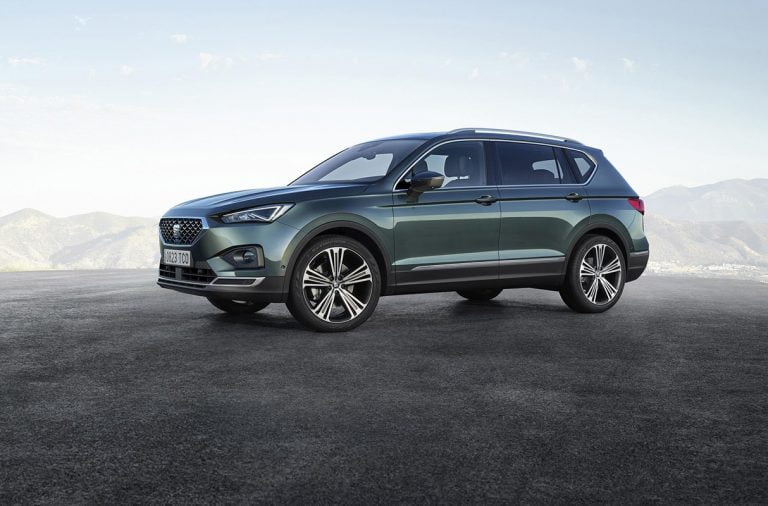
 As the brand’s top model, the Tarraco will come fitted with a suite of driver-assistance systems including autonomous emergency braking and new technologies such as an emergency call feature and rollover protection.
It will be fitted with SEAT’s ten-inch digital cockpit display, and an eight-inch screen on the centre console offering connectivity and infotainment functions. The Tarraco will be the first SEAT to offer control of the infotainment through making gestures in front of the screen.
Order books will open for the Tarraco in December and two petrol and two diesel versions will be available. The 1.5-litre TSI petrol offers 150hp through a six-speed manual gearbox, while the 2.0-litre version produces 190hp through a seven-speed automatic with all-wheel-drive.
The diesels are both 2.0-litre units, with power outputs of 150 and 190hp respectively. The 150 will be offered in front-wheel drive with six-speed manual or seven-speed auto plus all-wheel drive while the higher power unit is specified only with the auto ‘box and all-wheel-drive.
SEAT also states that the Tarraco will at a later date be offered with ‘alternative powertrain technologies’. This is expected to be a plug-in hybrid model with 210hp and a CO2 emissions output of under 50g/km.
As the brand’s top model, the Tarraco will come fitted with a suite of driver-assistance systems including autonomous emergency braking and new technologies such as an emergency call feature and rollover protection.
It will be fitted with SEAT’s ten-inch digital cockpit display, and an eight-inch screen on the centre console offering connectivity and infotainment functions. The Tarraco will be the first SEAT to offer control of the infotainment through making gestures in front of the screen.
Order books will open for the Tarraco in December and two petrol and two diesel versions will be available. The 1.5-litre TSI petrol offers 150hp through a six-speed manual gearbox, while the 2.0-litre version produces 190hp through a seven-speed automatic with all-wheel-drive.
The diesels are both 2.0-litre units, with power outputs of 150 and 190hp respectively. The 150 will be offered in front-wheel drive with six-speed manual or seven-speed auto plus all-wheel drive while the higher power unit is specified only with the auto ‘box and all-wheel-drive.
SEAT also states that the Tarraco will at a later date be offered with ‘alternative powertrain technologies’. This is expected to be a plug-in hybrid model with 210hp and a CO2 emissions output of under 50g/km.


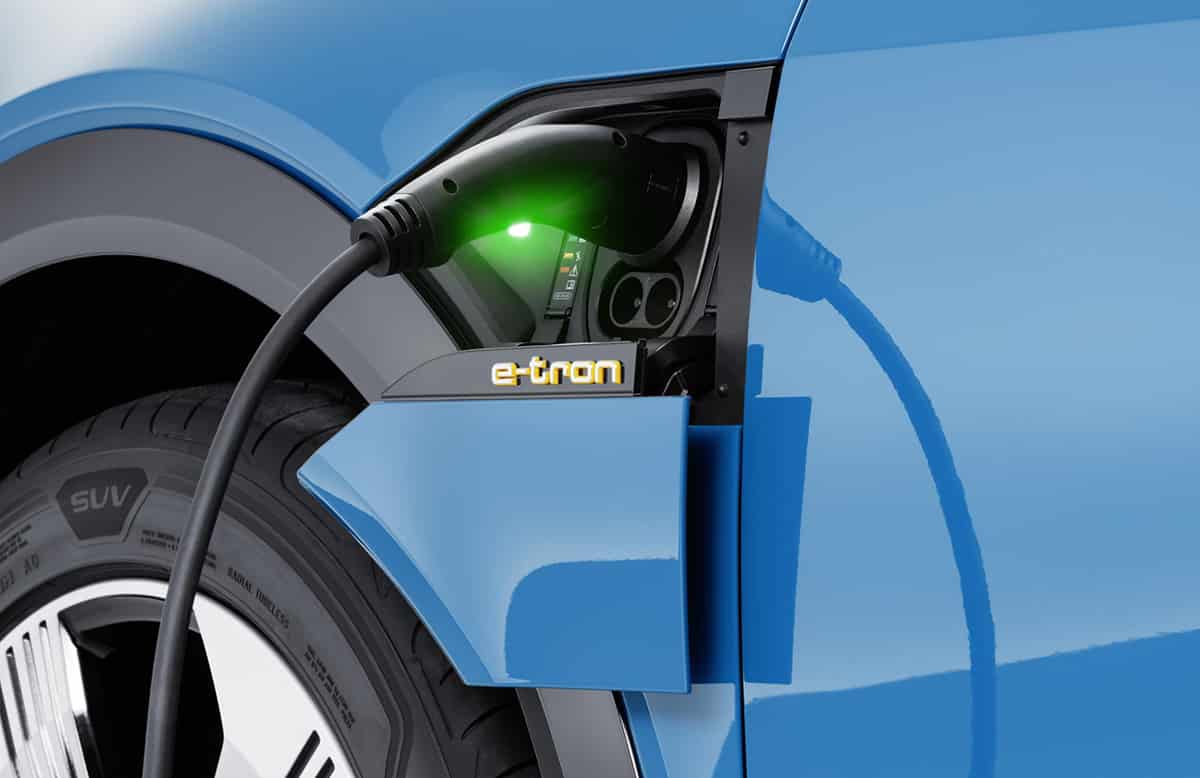 One way of increasing the range will be to specify the optional virtual exterior mirrors. These replace the traditional door mirrors with small rear-facing cameras that display their images on high-contrast displays in the cockpit, improving the car’s aerodynamics in the process by removing the drag-inducing mirror housings.
The battery pack is mounted flat under the floor to keep the car’s centre of gravity low, centrally between the axles helping to produce a perfect 50:50 axle weight distribution.
The driver also has seven driving modes to choose from through Audi’s drive sect system. This acts on the standard-fit air suspension and adaptive dampers, and in some modes can vary the ride height by up to 76mm.
The e-tron is a full-size SUV, measuring 4.9 metres long and with a 2.9-metre wheelbase. Inside it is configured as a five-seater, with a 660-litre boot.
Alongside the e-tron reveal Audi has announced that it will put 12 electric models on sale by 2025 and expects by then that such cars will account for a third of the brand’s sales.
One way of increasing the range will be to specify the optional virtual exterior mirrors. These replace the traditional door mirrors with small rear-facing cameras that display their images on high-contrast displays in the cockpit, improving the car’s aerodynamics in the process by removing the drag-inducing mirror housings.
The battery pack is mounted flat under the floor to keep the car’s centre of gravity low, centrally between the axles helping to produce a perfect 50:50 axle weight distribution.
The driver also has seven driving modes to choose from through Audi’s drive sect system. This acts on the standard-fit air suspension and adaptive dampers, and in some modes can vary the ride height by up to 76mm.
The e-tron is a full-size SUV, measuring 4.9 metres long and with a 2.9-metre wheelbase. Inside it is configured as a five-seater, with a 660-litre boot.
Alongside the e-tron reveal Audi has announced that it will put 12 electric models on sale by 2025 and expects by then that such cars will account for a third of the brand’s sales.
 Electric options will be available ‘in every relevant market segment from the compact to the full-size class’, starting with the e-tron and a Sportback estate version, both on sale in 2019.
Audi intends to unveil an e-tron GT concept car at the Los Angeles Auto Show later this year, the coupé developed in conjunction with Porsche.
In total four new vehicle platforms are being developed for these models – some will use the Volkswagen Group’s new bespoke MEB electric platform, unveiled 24 hours ahead of the e-tron.
Electric options will be available ‘in every relevant market segment from the compact to the full-size class’, starting with the e-tron and a Sportback estate version, both on sale in 2019.
Audi intends to unveil an e-tron GT concept car at the Los Angeles Auto Show later this year, the coupé developed in conjunction with Porsche.
In total four new vehicle platforms are being developed for these models – some will use the Volkswagen Group’s new bespoke MEB electric platform, unveiled 24 hours ahead of the e-tron.


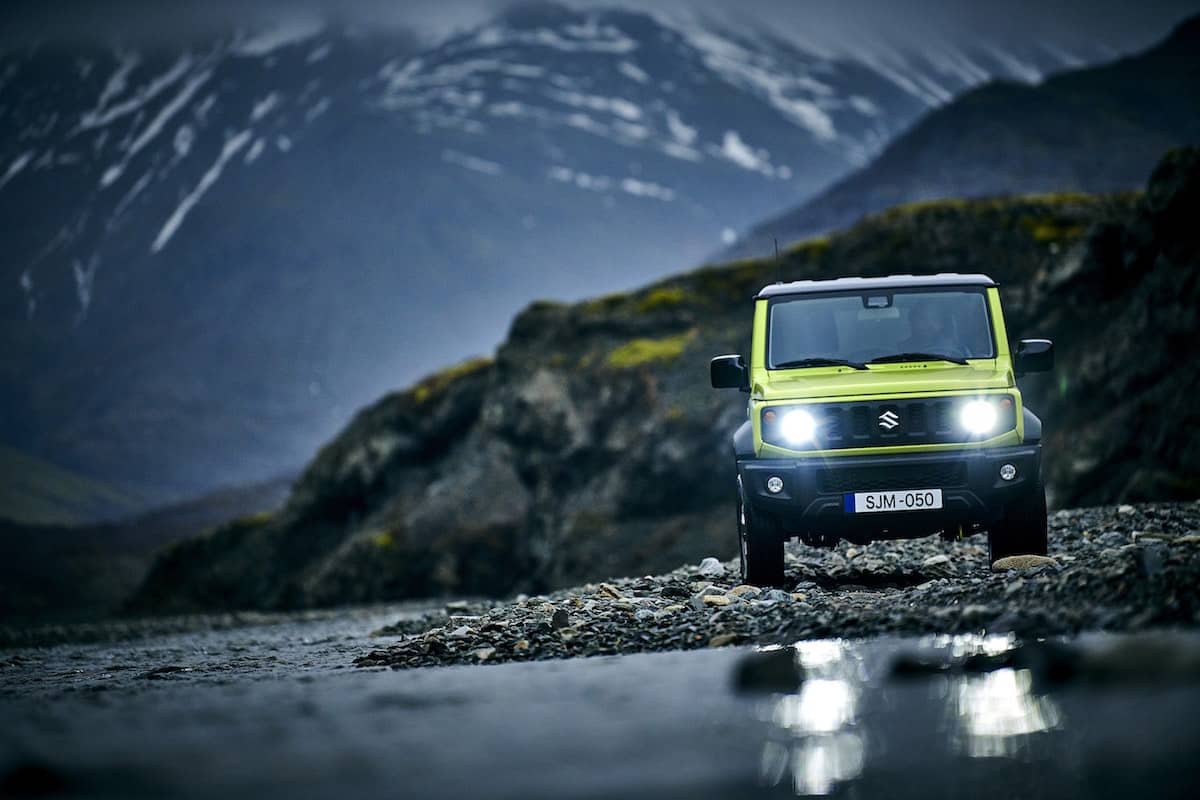
 The Jimny has been designed to be robust and hard-wearing, and as such we can forgive it for the amount of harder plastics used throughout the cabin. Everything feels rock-solid, however; the grab handle in front of the forward passenger, for instance, has been rubberised and feels as though it’s been built for chilly days out in the fields.
It’s a strange extra, therefore, that given that Suzuki impressed upon us that the cabin controls had been designed ‘to be simple to use with gloves’ that a touchscreen audio volume controller had been fitted – something we’d be certain would have been accessed via a rotary dial.
The standard boot space remains pretty woeful, just as it did in the previous car. With all seats in place, there’s little more than a space for the boot door to fit. At least with the rear seats laid flat, there are 377 litres to play with – 53 litres more than its predecessor.
The Jimny has been designed to be robust and hard-wearing, and as such we can forgive it for the amount of harder plastics used throughout the cabin. Everything feels rock-solid, however; the grab handle in front of the forward passenger, for instance, has been rubberised and feels as though it’s been built for chilly days out in the fields.
It’s a strange extra, therefore, that given that Suzuki impressed upon us that the cabin controls had been designed ‘to be simple to use with gloves’ that a touchscreen audio volume controller had been fitted – something we’d be certain would have been accessed via a rotary dial.
The standard boot space remains pretty woeful, just as it did in the previous car. With all seats in place, there’s little more than a space for the boot door to fit. At least with the rear seats laid flat, there are 377 litres to play with – 53 litres more than its predecessor.
 Quite a lot of the issues we had with the old Jimny have been suitably rectified. When on the motorway the Jimny now feels far quieter and relaxing than its predecessor, for instance.
There’s still quite a large amount of wind noise generated by the close to vertical windscreen, but the engine noise is isolated well and it sits at just under 3,000rpm when travelling at 75mph (while travelling on a de-restricted German autobahn, we’ll add). A sixth cog in the gearbox would help the whole affair feel a little more settled, but the Jimny feels more than happy travelling at higher speeds.
Then there’s the way it goes off-road. Thanks to its low weight and impressive approach and departure angles, the Jimny still manages to tackle terrain that would leave other so-called off-roaders floundering in the mud. It’s very impressive indeed.
Quite a lot of the issues we had with the old Jimny have been suitably rectified. When on the motorway the Jimny now feels far quieter and relaxing than its predecessor, for instance.
There’s still quite a large amount of wind noise generated by the close to vertical windscreen, but the engine noise is isolated well and it sits at just under 3,000rpm when travelling at 75mph (while travelling on a de-restricted German autobahn, we’ll add). A sixth cog in the gearbox would help the whole affair feel a little more settled, but the Jimny feels more than happy travelling at higher speeds.
Then there’s the way it goes off-road. Thanks to its low weight and impressive approach and departure angles, the Jimny still manages to tackle terrain that would leave other so-called off-roaders floundering in the mud. It’s very impressive indeed.
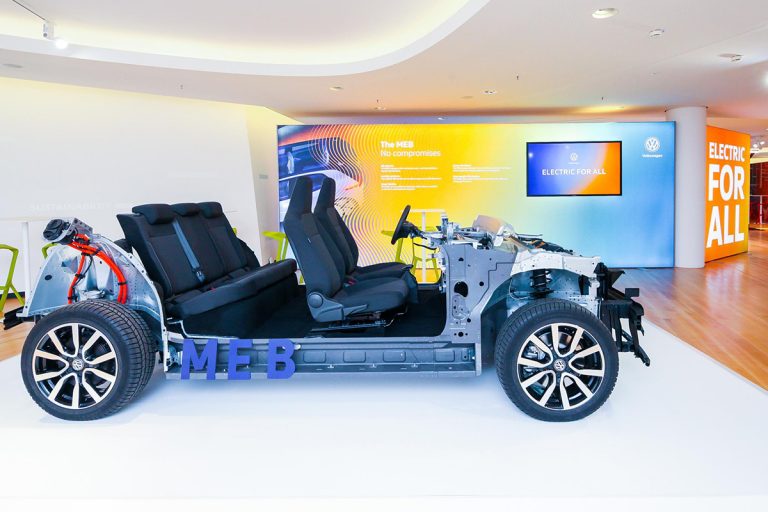
 The flat mounting both aids handling, by lowering the car’s centre of gravity, and increases the space available to design the interior to best suit the car’s occupants.
The first vehicle to use the new platform will be the Volkswagen ID, which goes into production at the end of 2019. By the end of 2022, the four brands should be offering up to 27 MEB-based models worldwide, from small cars to the lifestyle-pitched Bulli, a people-carrier retro styled to recall the iconic Type 2, better known as the VW Camper.
Volkswagen adds that some 10 million EVs will eventually use the first-generation MEB platform.
All ID models will be designed for fast charging. Using a new battery system developed in-house, Volkswagen claims charging to 80% capacity will be possible in 30 minutes. The group has also unveiled what it describes as an affordable home charging system dubbed the ‘Volks-Wallbox.’
Thomas Ulbrich, Volkswagen’s board member in charge of electric development, claims that the MEB will transform electric vehicles from niche products to best sellers.
“We will make electric vehicles popular and get as many people as possible excited about electric cars,” Ulbrich says.
“The MEB is one of the most important projects in the history of Volkswagen – a technological milestone, similar to the transition from the Beetle to the Golf.”
The flat mounting both aids handling, by lowering the car’s centre of gravity, and increases the space available to design the interior to best suit the car’s occupants.
The first vehicle to use the new platform will be the Volkswagen ID, which goes into production at the end of 2019. By the end of 2022, the four brands should be offering up to 27 MEB-based models worldwide, from small cars to the lifestyle-pitched Bulli, a people-carrier retro styled to recall the iconic Type 2, better known as the VW Camper.
Volkswagen adds that some 10 million EVs will eventually use the first-generation MEB platform.
All ID models will be designed for fast charging. Using a new battery system developed in-house, Volkswagen claims charging to 80% capacity will be possible in 30 minutes. The group has also unveiled what it describes as an affordable home charging system dubbed the ‘Volks-Wallbox.’
Thomas Ulbrich, Volkswagen’s board member in charge of electric development, claims that the MEB will transform electric vehicles from niche products to best sellers.
“We will make electric vehicles popular and get as many people as possible excited about electric cars,” Ulbrich says.
“The MEB is one of the most important projects in the history of Volkswagen – a technological milestone, similar to the transition from the Beetle to the Golf.”


 The standard Electronic Stability Control (ESC) system is retuned while Kia’s Vehicle Stability Management (VSM) system is fitted as standard, along with Torque Vectoring by Braking, the electronic aid braking the inside wheels to reduce understeer around corners
Larger front brakes are fitted, the 320mm vented discs being 32mm larger in diameter and 3mm thicker than the standard Ceed’s. They sit inside 18-inch standard-fit alloy wheels to a design specific to the model.
Visual differences to emphasise the car’s performance credentials include a bespoke front bumper with large pair intakes and gloss black trim, more substantial side sills in gloss black and red, a rear bumper with gloss black diffuser and a small roof spoiler.
Inside sports front seats in leather and suede and with red stitching are fitted, along with a D-shaped steering wheel and aluminium pedals. Cars with the double clutch transmission also gain alloy shaft paddles on the steering wheel, while the standard car’s grey cloth roofliner makes way for a black version.
As a top-level model the Ceed GT will be fitted with an extensive equipment specification. Full details, as well as performance figures and prices, will be announced closer to the car’s launch.
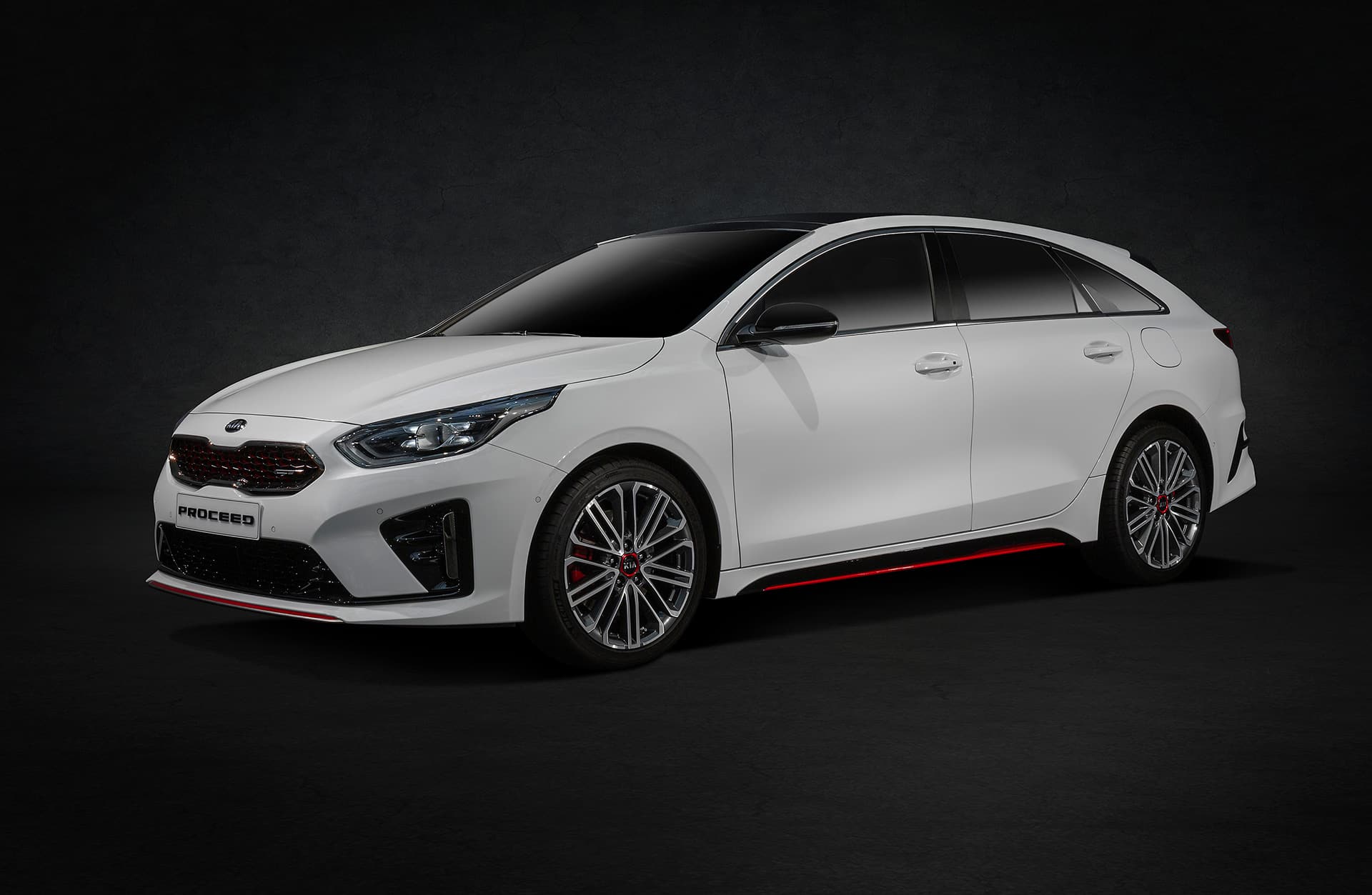
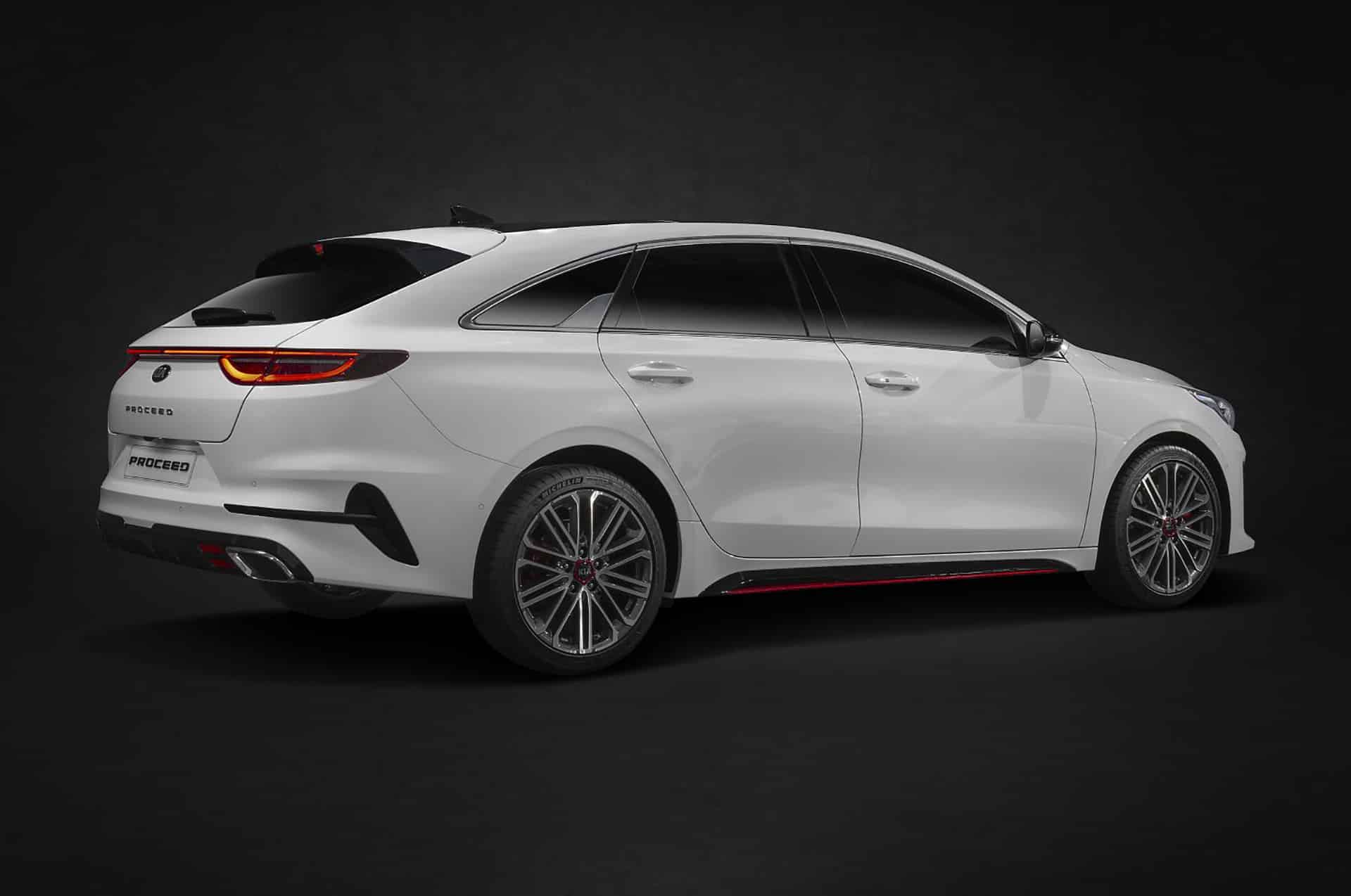
Kia will also unveiled the five-door coupe-styled ‘shooting brake’ version of the Ceed, the ProCeed, at the Paris show.
The standard Electronic Stability Control (ESC) system is retuned while Kia’s Vehicle Stability Management (VSM) system is fitted as standard, along with Torque Vectoring by Braking, the electronic aid braking the inside wheels to reduce understeer around corners
Larger front brakes are fitted, the 320mm vented discs being 32mm larger in diameter and 3mm thicker than the standard Ceed’s. They sit inside 18-inch standard-fit alloy wheels to a design specific to the model.
Visual differences to emphasise the car’s performance credentials include a bespoke front bumper with large pair intakes and gloss black trim, more substantial side sills in gloss black and red, a rear bumper with gloss black diffuser and a small roof spoiler.
Inside sports front seats in leather and suede and with red stitching are fitted, along with a D-shaped steering wheel and aluminium pedals. Cars with the double clutch transmission also gain alloy shaft paddles on the steering wheel, while the standard car’s grey cloth roofliner makes way for a black version.
As a top-level model the Ceed GT will be fitted with an extensive equipment specification. Full details, as well as performance figures and prices, will be announced closer to the car’s launch.
Kia will also unveiled the five-door coupe-styled ‘shooting brake’ version of the Ceed, the ProCeed, at the Paris show.


 The Proceed will be sold in two trim levels, GT-Line and GT, the latter matching the five-door hatch GT that is also debuting at Paris (story here).
GT-Line variants will be offered with either the 1.0-litre 120hp or 1.4-litre 140hp turbocharged direct injection petrol units, or a 1.6-litre diesel with 136hp. Six-speed manual transmissions will be standard but the 1.4 and 1.6 will also be available with Kia’s new seven-speed dual-clutch auto unit.
The ProCeed GT gets the same 1.6-litre T-GDi engine as the five-door GT, with 204hp and 265Nm. Again six-speed manual or seven-speed auto transmission options will be available.
Kia Proceed models will reach UK customers in the first quarter of 2019 – Kia plans to release full specifications and pricing closer to the car’s showroom launch.
The Proceed will be sold in two trim levels, GT-Line and GT, the latter matching the five-door hatch GT that is also debuting at Paris (story here).
GT-Line variants will be offered with either the 1.0-litre 120hp or 1.4-litre 140hp turbocharged direct injection petrol units, or a 1.6-litre diesel with 136hp. Six-speed manual transmissions will be standard but the 1.4 and 1.6 will also be available with Kia’s new seven-speed dual-clutch auto unit.
The ProCeed GT gets the same 1.6-litre T-GDi engine as the five-door GT, with 204hp and 265Nm. Again six-speed manual or seven-speed auto transmission options will be available.
Kia Proceed models will reach UK customers in the first quarter of 2019 – Kia plans to release full specifications and pricing closer to the car’s showroom launch.
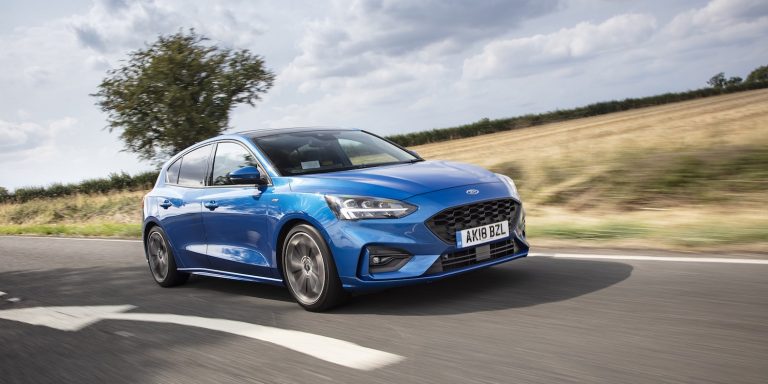

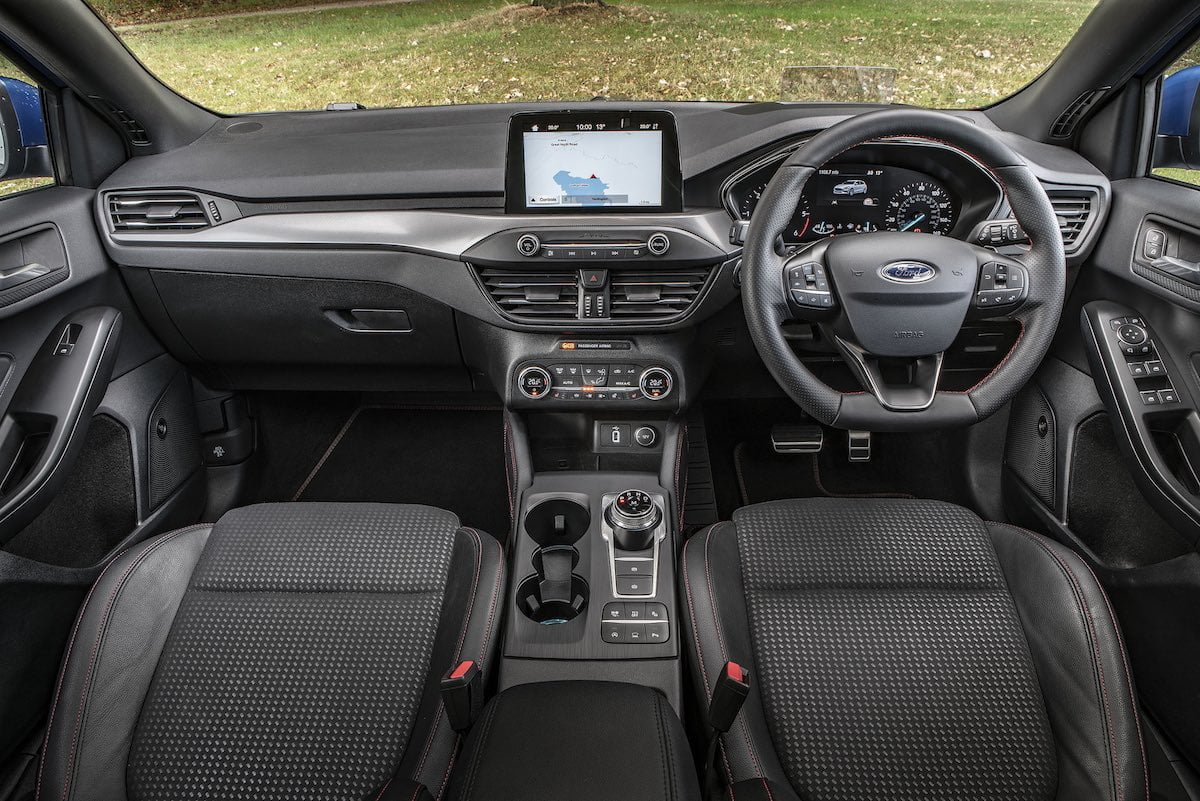

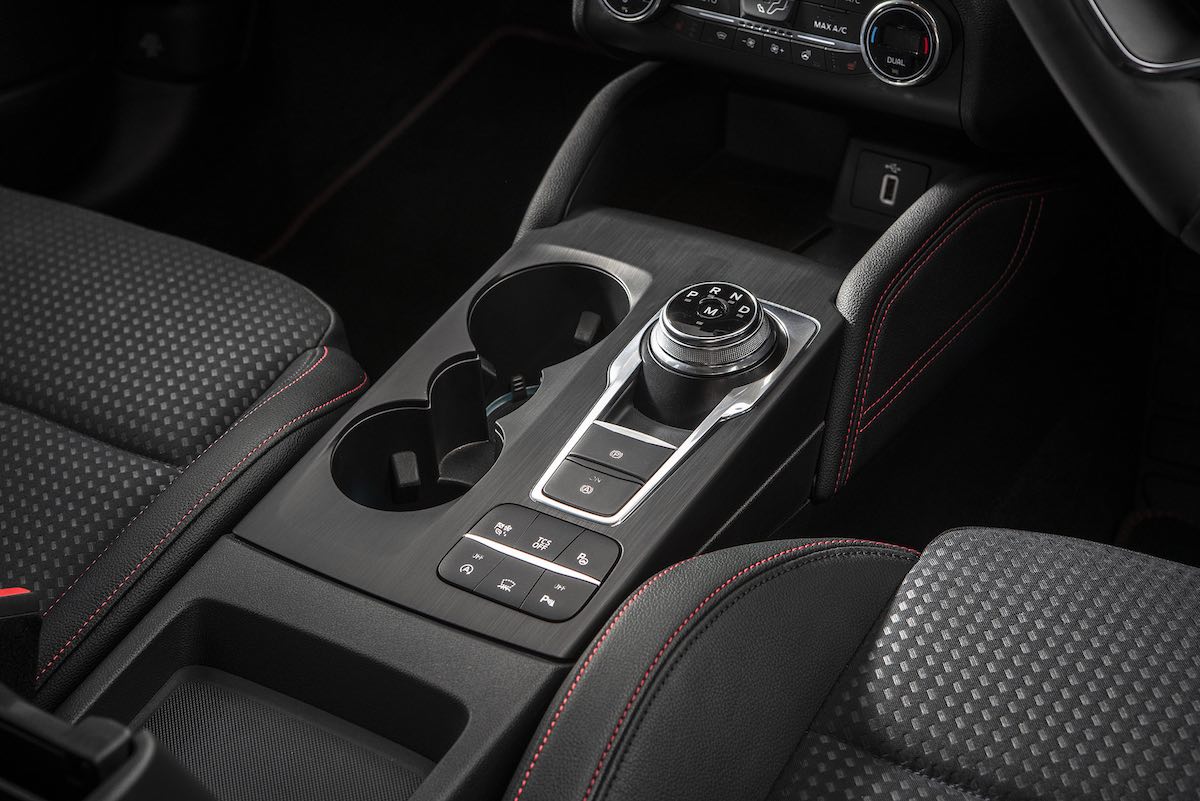


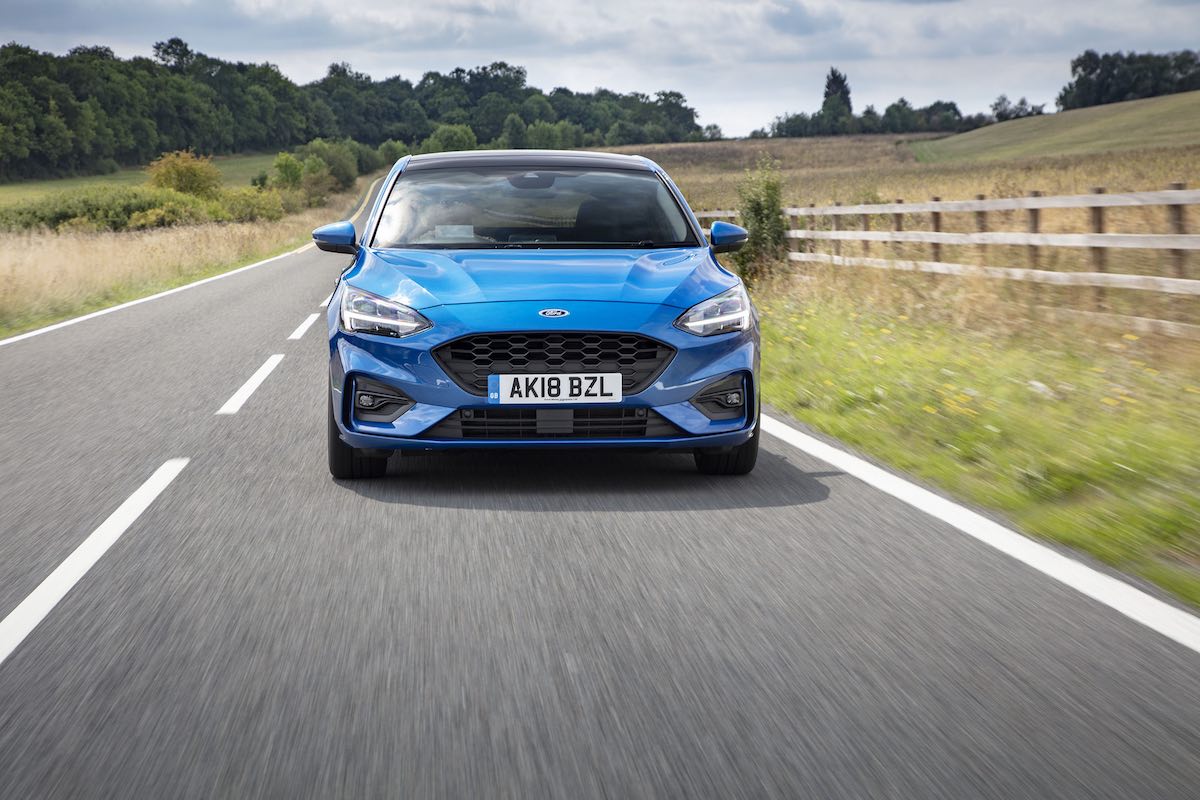
| Make & model | Ford Focus | Vauxhall Astra | Kia Ceed |
| Specification | Titanium X | Elite Nav | 3 |
| Price (on-road) | £22,820 (range starts £17,930) | £22,370 (range starts £18,350) | £21,505 (range starts £18,295) |
| Engine | 1.0-litre petrol | 1.0-litre petrol | 1.4-litre petrol |
| Power | 125 hp | 105 hp | 140 hp |
| Torque | 170 Nm | 170 Nm | 242 Nm |
| 0-62mph | 10.0 sec | 10.5 sec | 8.6 sec |
| Top speed | 124 mph | 124 mph | 130 mph |
| Fuel economy (combined) | 57.6 mpg | 58.9 mpg | 48.7 mpg |
| CO2 emissions | 111 g/km | 110 g/km | 132 g/km |
| Insurance group | 13E | 12E | 18E |
| Euro NCAP rating | 5 stars (2018) | 5 stars (2015) | Not yet tested |
| TCE rating | 8.4 / 10 | 7.8 / 10 | 7.8 / 10 |


 Petrol versions will include the latest 155hp engine mated to an eight-speed auto transmission, as well as 130hp and 100hp units. A 1.5-litre diesel will complete the powertrain line-up.
The DS 3 Crossback is the first car to employ the new CMP (Common Modular Platform), which will eventually be used by the entire next generation of smaller cars across the PSA Group, including the next Peugeot 208 and Vauxhall Corsa.
Exterior styling details include flush-fitting door handles and invisible weather seal rubber between the windows and the body shell, while the interior is dominated by a fully digital driving display.
DS Automobiles had already stated its intention to launch six standalone new models by 2023, and the DS 3 Crossback will join the DS 7 Crossback in showrooms.
DS hopes that the bold styling of the DS 3 Crossback, directly evolved from that of the DS 7 Crossback, will make it stand out in a now-crowded market that has recently seen the arrival of several major new contenders. As well as the Audi, prime rivals include the Volvo XC40, named European Car of the Year for 2018.
Petrol versions will include the latest 155hp engine mated to an eight-speed auto transmission, as well as 130hp and 100hp units. A 1.5-litre diesel will complete the powertrain line-up.
The DS 3 Crossback is the first car to employ the new CMP (Common Modular Platform), which will eventually be used by the entire next generation of smaller cars across the PSA Group, including the next Peugeot 208 and Vauxhall Corsa.
Exterior styling details include flush-fitting door handles and invisible weather seal rubber between the windows and the body shell, while the interior is dominated by a fully digital driving display.
DS Automobiles had already stated its intention to launch six standalone new models by 2023, and the DS 3 Crossback will join the DS 7 Crossback in showrooms.
DS hopes that the bold styling of the DS 3 Crossback, directly evolved from that of the DS 7 Crossback, will make it stand out in a now-crowded market that has recently seen the arrival of several major new contenders. As well as the Audi, prime rivals include the Volvo XC40, named European Car of the Year for 2018.


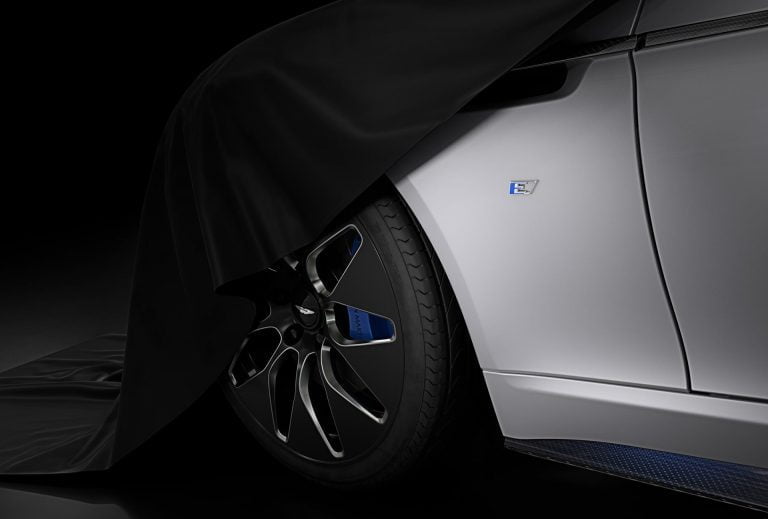



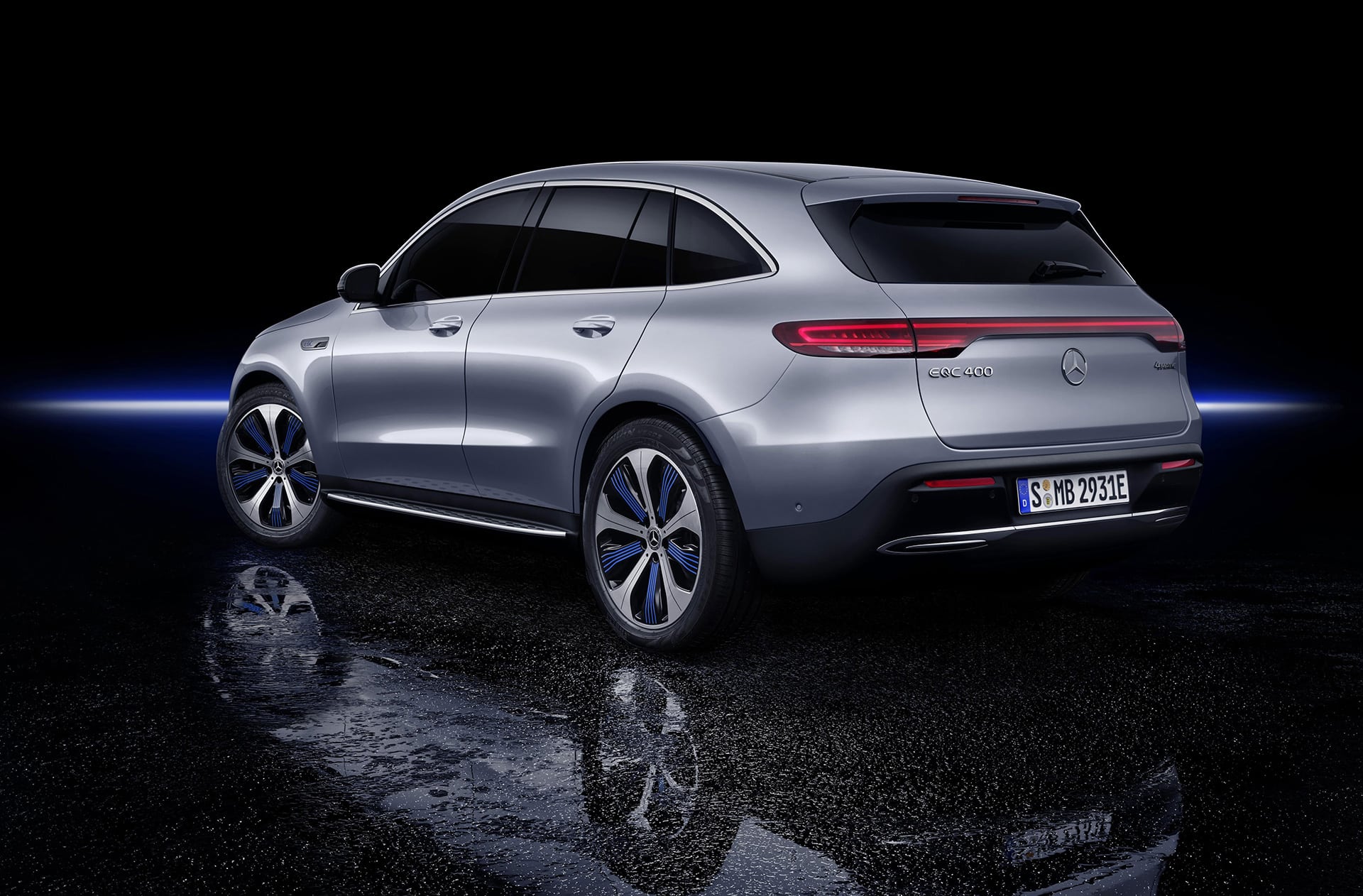
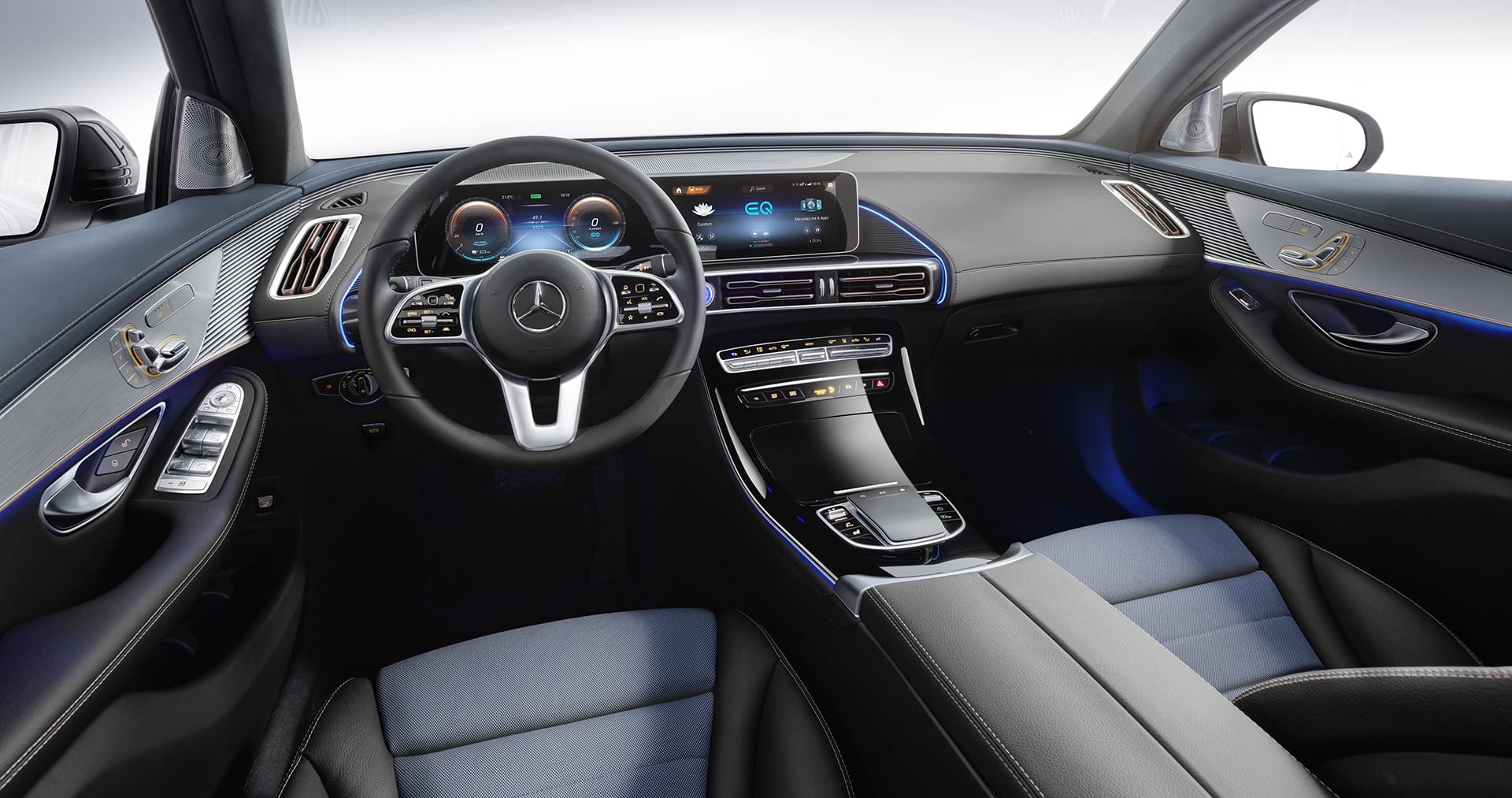 Using a compact electric drivetrain will also free up significant extra practicality in the EQC, taking advantage of the space liberated by removing the conventional engine and transmission. The 500-litre boot space is almost 80 litres more than in the GLC.
Two electric motors are employed in the car, one on each axle to provide an all-wheel-drive powertrain. Total output is 300kW, equivalent to 408hp and with 765Nm of peak torque, sending the EQC from rest to 62mph in 5.1 seconds and onto a 112mph limited top speed.
Mercedes also promises a range of more than 450km, which equates to plus 279 miles with a zero CO2 emissions figure. However, this is on the current NEDC cycle – in ‘real world’ driving the range between charges is likely to be closer to 200 miles.
EQC variants will be equipped as standard with a 7.4kW onboard charger for home charging or at public charging stations. The car will also be able to be charged at stations with outputs of up to 110kW, boosting capacity form 10 to 80 per cent in around 40 minutes.
Using a compact electric drivetrain will also free up significant extra practicality in the EQC, taking advantage of the space liberated by removing the conventional engine and transmission. The 500-litre boot space is almost 80 litres more than in the GLC.
Two electric motors are employed in the car, one on each axle to provide an all-wheel-drive powertrain. Total output is 300kW, equivalent to 408hp and with 765Nm of peak torque, sending the EQC from rest to 62mph in 5.1 seconds and onto a 112mph limited top speed.
Mercedes also promises a range of more than 450km, which equates to plus 279 miles with a zero CO2 emissions figure. However, this is on the current NEDC cycle – in ‘real world’ driving the range between charges is likely to be closer to 200 miles.
EQC variants will be equipped as standard with a 7.4kW onboard charger for home charging or at public charging stations. The car will also be able to be charged at stations with outputs of up to 110kW, boosting capacity form 10 to 80 per cent in around 40 minutes.
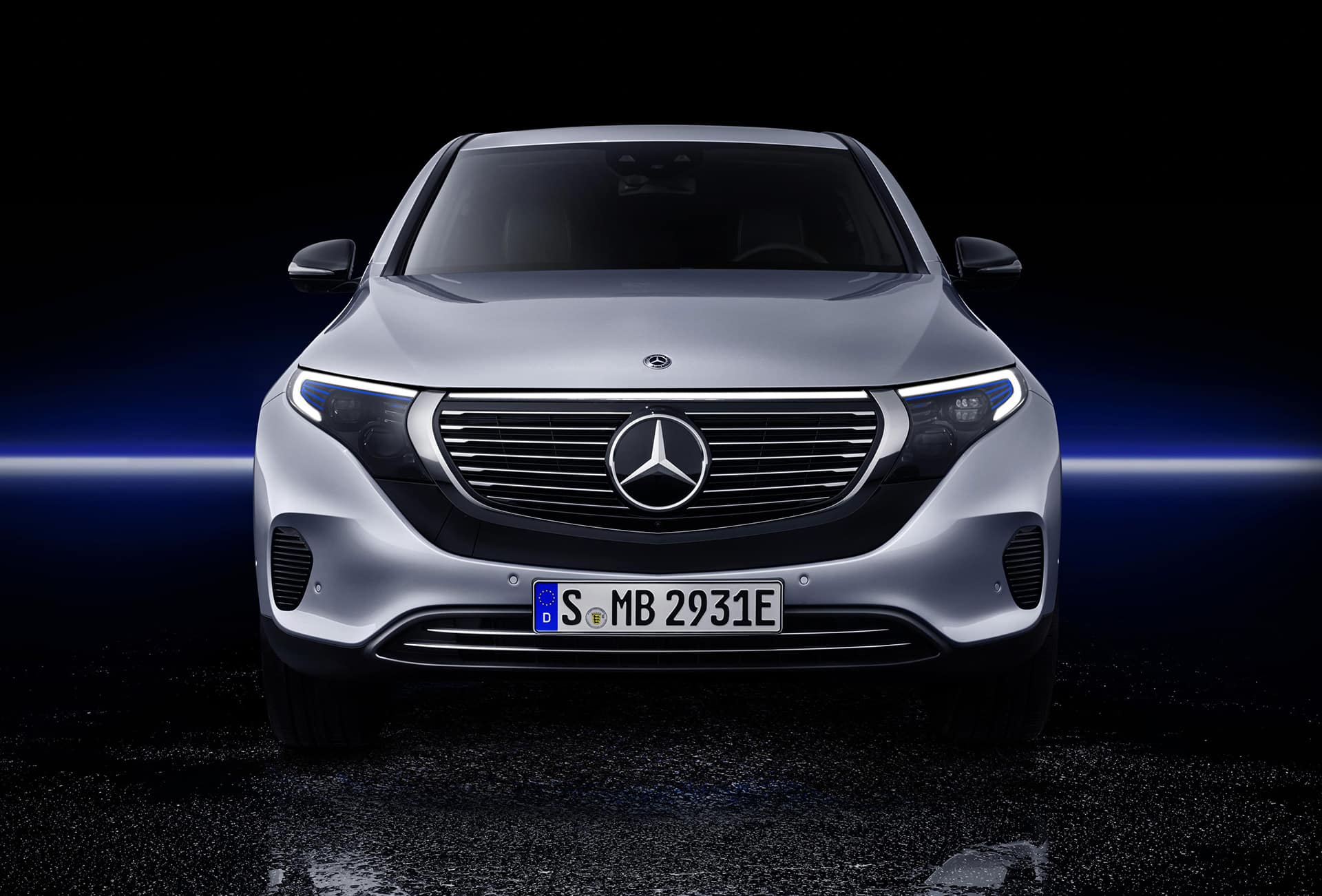
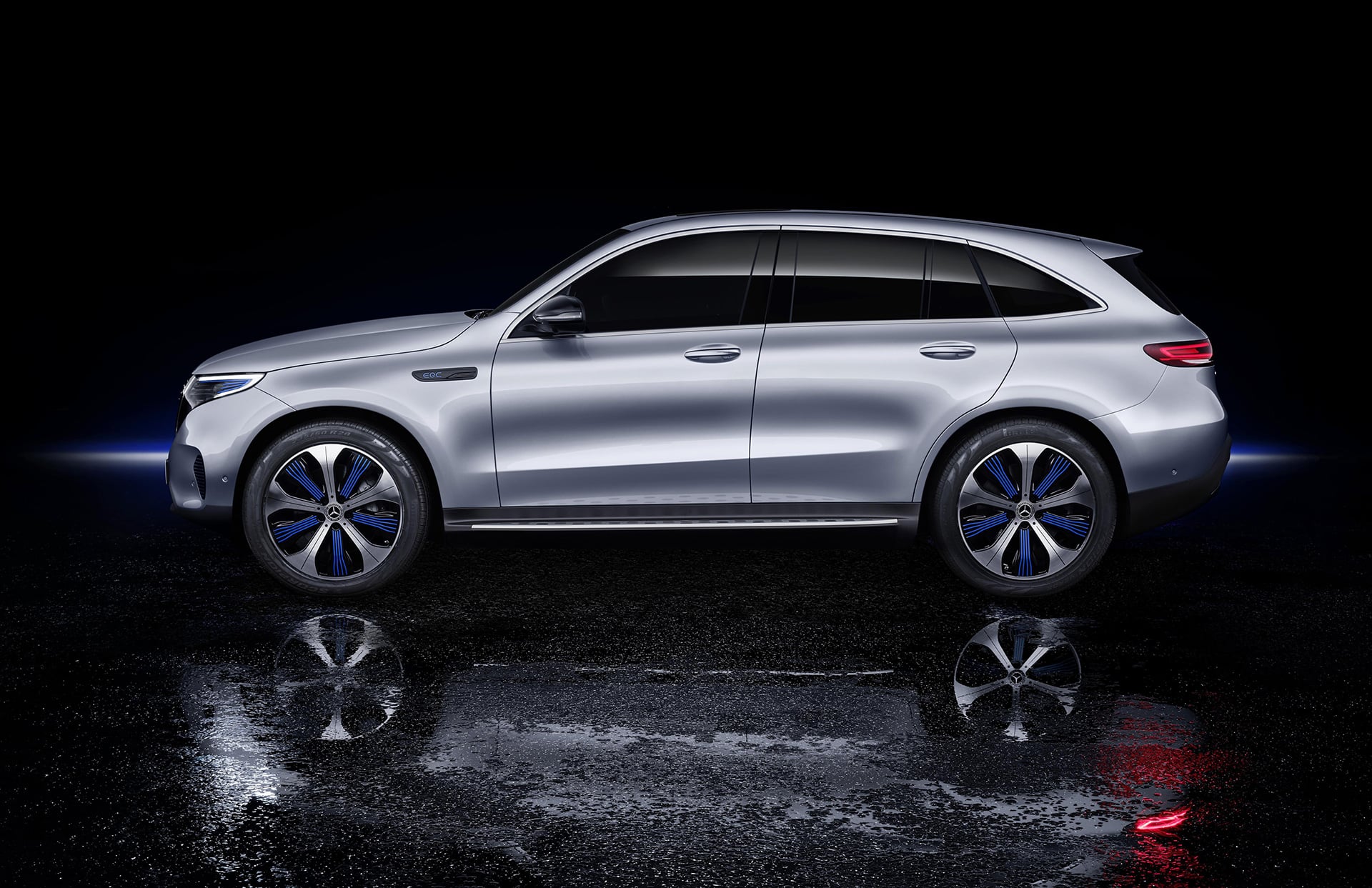
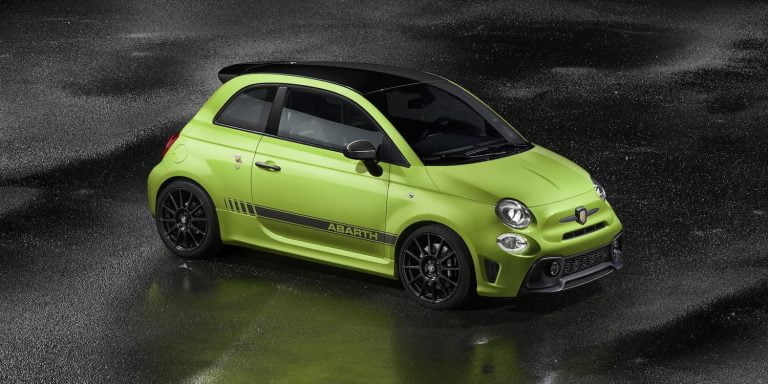
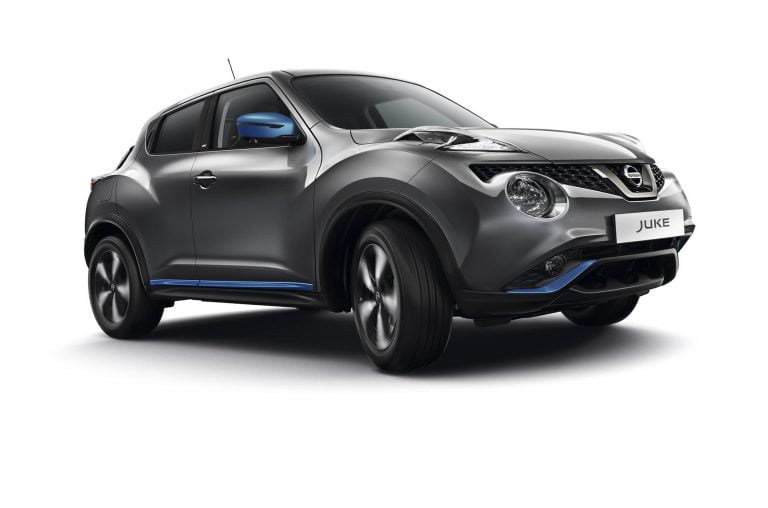
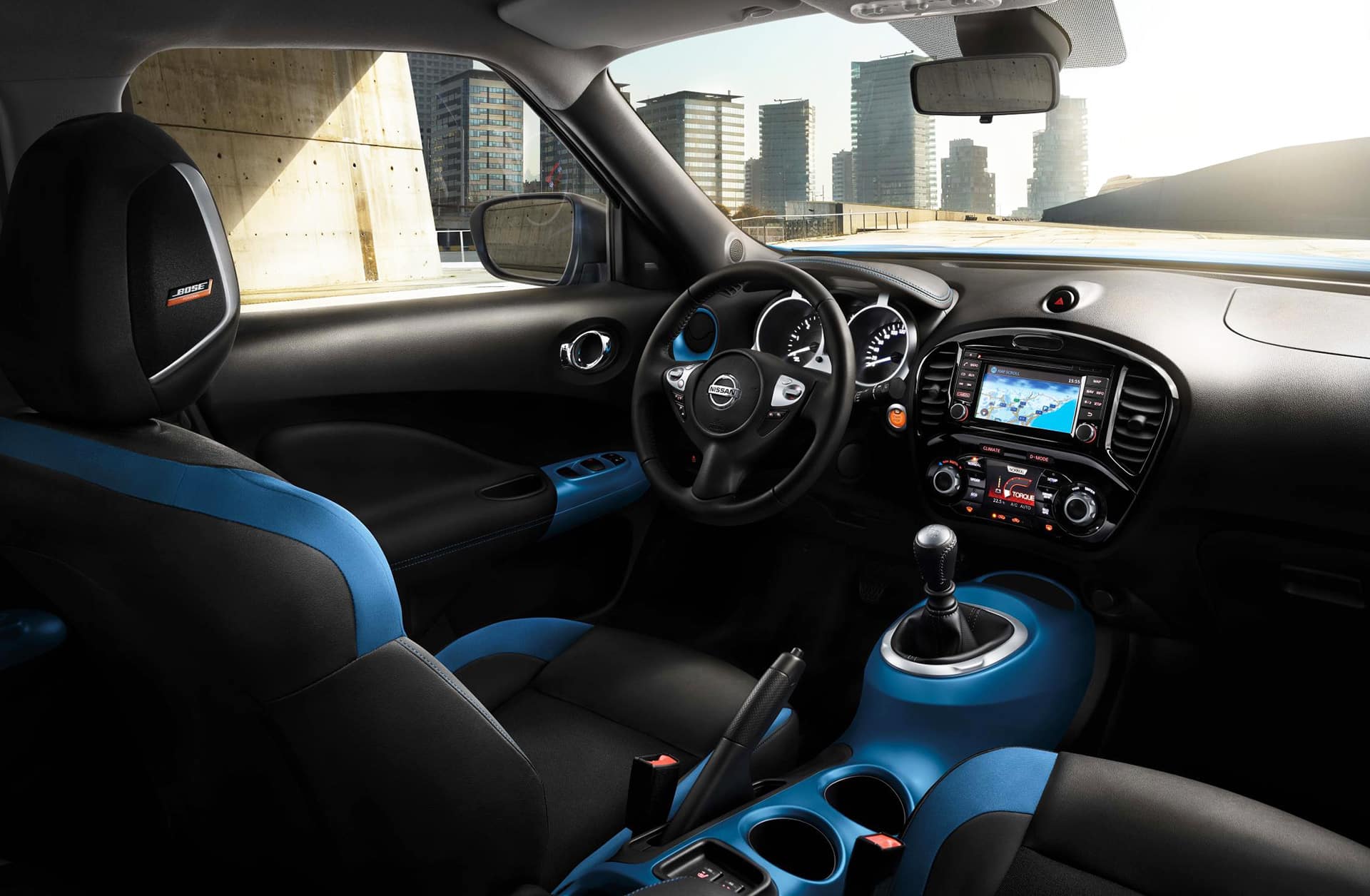
 Within the sales numbers, it looks like a good month for AFVs (basically electric and hybrid cars), whose market share hit an all-time high of 8% in August – an 89% increase on the same month last year. Hopefully this rate of improvement will continue, but it’s more likely to settle back towards the year-long 27% rate of improvement in coming months.
Diesel sales were down again, although an 8% fall on last year is actually the best result in a long time, compared to falls of 20-30% that we have become accustomed to seeing on a monthly basis. However, diesel’s overall market share still fell to a new low of less than 30%.
Within the sales numbers, it looks like a good month for AFVs (basically electric and hybrid cars), whose market share hit an all-time high of 8% in August – an 89% increase on the same month last year. Hopefully this rate of improvement will continue, but it’s more likely to settle back towards the year-long 27% rate of improvement in coming months.
Diesel sales were down again, although an 8% fall on last year is actually the best result in a long time, compared to falls of 20-30% that we have become accustomed to seeing on a monthly basis. However, diesel’s overall market share still fell to a new low of less than 30%.
 Looking beyond the top ten models, it was a strong month for MG, Jaguar, Suzuki, Subaru and Bentley, who all recorded registration numbers vastly greater than last year. On the other side of the ledger, things were not so sunny for Infiniti, DS Automobiles, Nissan, Fiat or Citroën, who all saw significant falls in a growing market.
However, as mentioned, different manufacturers have had varying requirements to clear out old stock, so this may swing significantly again in the coming months.
Looking beyond the top ten models, it was a strong month for MG, Jaguar, Suzuki, Subaru and Bentley, who all recorded registration numbers vastly greater than last year. On the other side of the ledger, things were not so sunny for Infiniti, DS Automobiles, Nissan, Fiat or Citroën, who all saw significant falls in a growing market.
However, as mentioned, different manufacturers have had varying requirements to clear out old stock, so this may swing significantly again in the coming months.

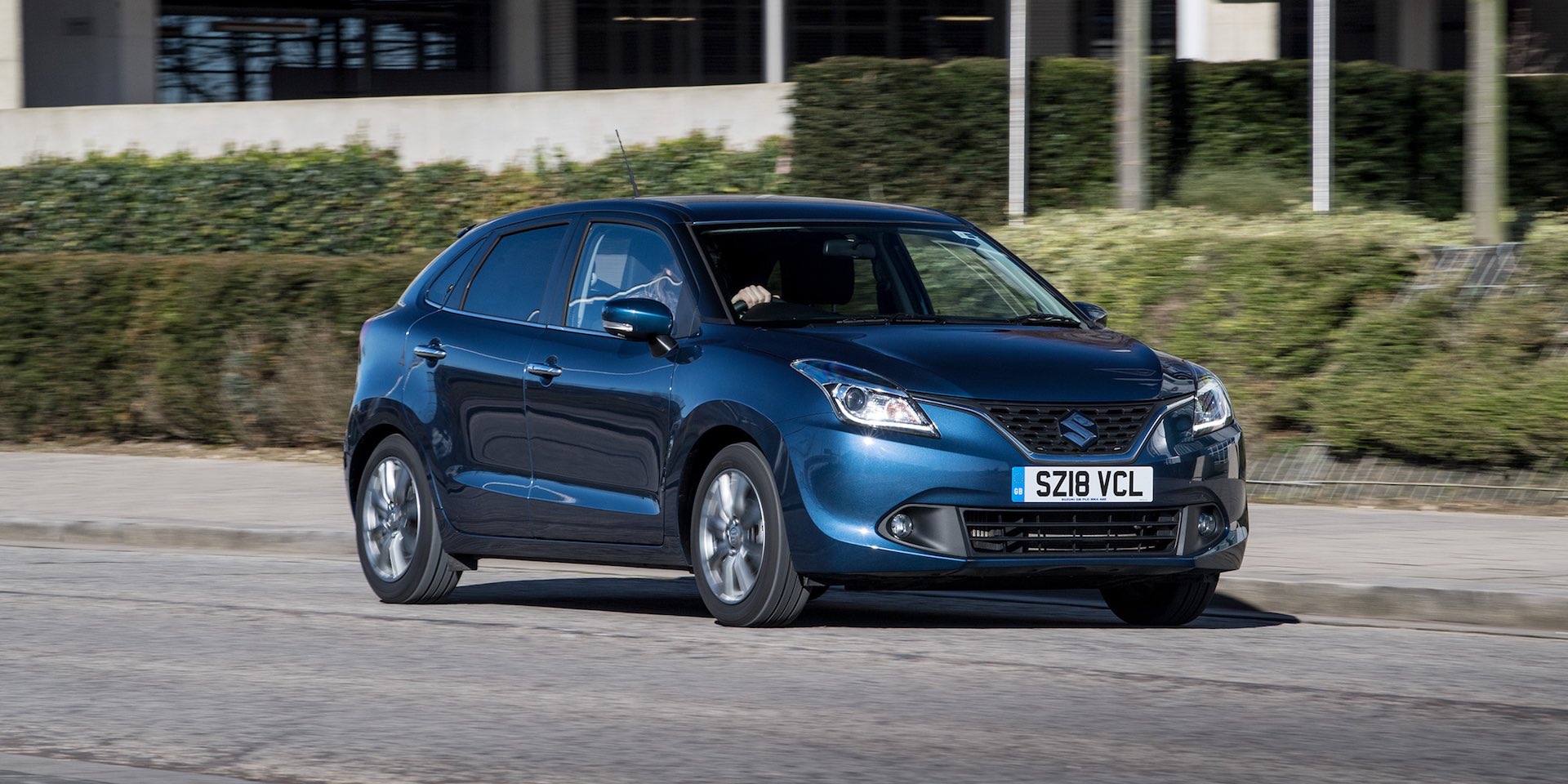


| Make & model | Suzuki Baleno | Ford Fiesta | Skoda Fabia |
| Specification | SZ-T | Zetec | S |
| Price (on-road) | £14,999 | £15,815 | £14,680 |
| Engine | 1.0-litre petrol | 1.0-litre petrol | 1.0-litre petrol |
| Power | 112 hp | 100 hp | 110 hp |
| Torque | 170 Nm | 170 Nm | 200 Nm |
| 0-62mph | 11.4 sec | 10.5 sec | 9.6 sec |
| Top speed | 124 mph | 113 mph | 124 mph |
| Fuel economy (combined) | 62.8 mpg | 60.1 mpg | 64.2 mpg |
| CO2 emissions | 105 g/km | 106 g/km | 103 g/km |
| Insurance group | 16E | 10E | 13E |
| Euro NCAP rating | 3 stars (2016)* | 5 stars (2017) | 5 stars (2014) |
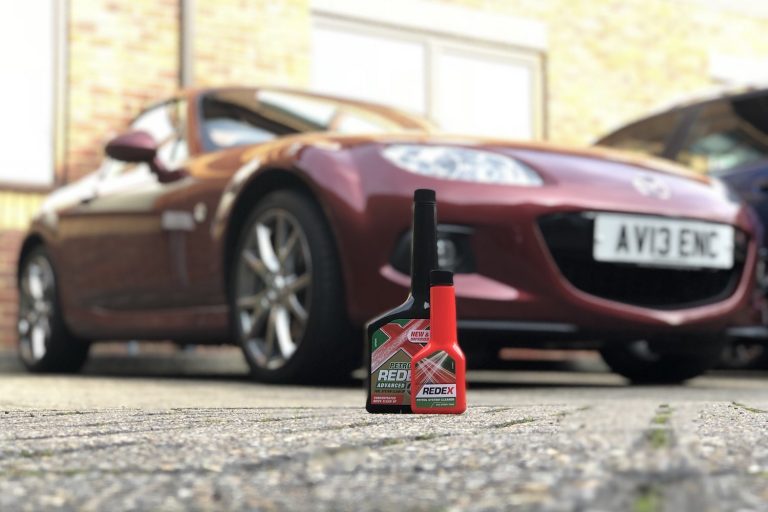
I’ve just finished a three-month trial of Redex fuel system additives in my Mazda MX-5 to see if I could feel any increase in my car’s performance or measure any significant difference in its fuel economy.
Since May, I’ve been recording my fuel economy every time I fill up the tank – manually noting down the litres added and mileage covered, rather than relying on the car’s trip computer – and adding a dose of Redex to the tank.
As I outlined in previous reports, the type of fuel additive that I’ve been using is a fuel system cleaner rather than an octane booster. The goal isn’t to turn regular unleaded into premium unleaded by increasing the car’s octane number, but simply to give all the tiny pipes and injectors a thorough clean so they can do their thing without being clogged up.
Given that your engine creates dozens of explosions every single second, there’s a lot of combustion going on under your bonnet. With any burning of fuel, there will be deposits and debris that forms. Sometimes it’s obvious, like the ash that forms when you burn a log in a fireplace. Other times, like in your car’s engine, these deposits are microscopic, but the principle is the same. Over time, these deposits build up and affect your ability to keep burning the fuel properly.
The purpose of the Redex fuel system cleaners is to remove this build-up of deposits and keep the fuel injection system clean. By doing so, the fuel will burn more cleanly and therefore give you better performance and fuel economy as the engine is working more efficiently.
As I’ve made clear previously, this isn’t a laboratory test in controlled conditions but rather a real-world trial that gives a decent indication of what any driver can expect in everyday life.
My car is a 2013 Mazda MX-5 2.0-litre manual. Unless it’s raining, the roof is always down (and thankfully, we’ve enjoyed a cracking summer) and the vast majority of my driving is a 25-mile round trip to and from the office each day. My car only has about 30,000 miles on the clock with a full Mazda service history, so it’s in pretty good nick.
Below is a table of my last recording before starting with the Redex products, followed by one tank of the heavy-duty Redex Advanced 5-in-1 system cleaner and then six tanks using the regular Redex petrol system cleaner.
| MPG reading | Fuelling notes | Driving | Traffic | |
| 1 | 30.2 | Initial baseline – no Redex products | Commuting | Moderate |
| 2 | 33.9 | Advanced 5-in-1 system cleaner | Mixed motorway and commuting | Varied |
| 3 | 29.6 | 90ml petrol system cleaner | Commuting | Moderate |
| 4 | 27.4 | 90ml petrol system cleaner | Commuting | Heavy |
| 5 | 29.9 | 90ml petrol system cleaner | Commuting | Heavy |
| 6 | 31.5 | 90ml petrol system cleaner | Commuting | Varied |
| 7 | 33.2 | 90ml petrol system cleaner | Mixed motorway and commuting | Light |
| 8 | 32.7 | 90ml petrol system cleaner | Commuting | Light |
The initial baseline figure of 30mpg is pretty indicative of my usual fuel economy result, although usually that’s relying on the car’s trip computer reading rather than direct measurement.
Over about 2,000 miles of mainly commuting in three months, my average fuel consumption using the Redex fuel system cleaners was 31.1mpg. My driving circumstances in that time have been a pretty representative example of my usual activities, so superficially it looks like a 1mpg improvement since using Redex.
In reality, the most obvious conclusion from the fuel economy results is that they largely followed the driving conditions more than anything else. With lighter traffic conditions during August, my fuel economy improved by more than 10% compared to the same journeys in heavier traffic. The best results were, unsurprisingly, achieved at times when my regular commute was combined with longer A-road and motorway driving.

Given that the additives I’ve been using are not performance boosters as such, I wasn’t expecting to feel any noticeable differences to my car’s accelerative qualities. If that was the point, Redex has products like its Petrol Power Booster. Alternatively, I could just fill my tank with premium unleaded fuel, which has a higher octane level than regular unleaded and provides extra power.
The principle with the fuel system cleaner additives is that a clean fuel system will perform more efficiently than a clogged fuel system, much like your heart being able to pump blood more freely through clear arteries than clogged ones. Clogged arteries also mean your heart has to work harder and is at greater risk of heart damage, and your engine is no different. Over time, clogged fuel injectors can potentially lead to expensive engine damage.
There has been no noticeable difference in performance, and I suspect you’d need a laboratory to really show any improvement. In the variable nature of the real world, and in a well-maintained modern car, I couldn’t detect any difference.
I mentioned in my last report that I’d previously noticed a slight cough or misfire from the Mazda on a couple of occasions prior to using the Redex products, but hadn’t noticed anything since using the fuel system cleaners. I can report that the engine has still been running cleanly over the last six weeks, so the stuff appears to be doing its job in that respect.
My fuel economy figures haven’t shown any changes that could really be attributed to the Redex products. The variation of 3-4mpg above or below the average based on driving conditions and traffic outweighs any potential gain from the products. Again, if you were running a laboratory experiment that directly measured fuel consumption and removed all other variables then you may be able to show an improvement, but it’s nothing really noticeable.
So why would you consider using fuel additive products like these ones I’ve been testing?
Firstly, if you have an older or higher-mileage car, you are far more likely to see noticeable improvements in performance and fuel economy compared to a newer, lower-mileage vehicle. Given that fuel deposits and debris build up in your engine over time, it makes sense that you’ll notice a greater improvement in an older engine that has seen a few million more fuel explosions than a newer engine. If I’d been running the same test on an older car I am sure I would have seen some more noticeable results, but unfortunately I don’t have an older car to call upon for such a purpose (and buying an old banger to drive for three months didn’t really appeal!)
Secondly, I felt a definite sense of confidence that I was taking positive steps to keep my engine clean and operating at peak efficiency. Every litre of petrol has to make a long and tortuous journey to get from a fuel refinery into a tanker truck, then out of the truck and into a giant storage tank under a service station, then into a fuel bowser and finally into your car’s petrol tank. There are plenty of opportunities for the fuel to collect debris and impurities anywhere along that journey that can clog up your fuel system, so adding a system cleaner every now and again seems like a worthwhile investment in preventative maintenance to protect my engine against future damage.
After the initial 500mL dose of Redex Advanced 5-in-1 system cleaner, I have been adding a small 90mL bottle of Redex petrol system cleaner every time I have filled up my fuel tank for three months. In my situation, I don’t think I really need to keep using the additives at that rate in my car. I am likely to add a 90mL bottle every month or so and probably use the concentrated cleaner every six months to keep the Mazda’s fuel system sparkling clean. If I had an older car (or when this one starts getting older and higher-mileage), I’d keep using it every tank or at least every other tank.
Everyone’s circumstances are different, so your mileage may vary (both literally and figuratively!). The single-shot 90mL bottles are about £3 each, or you can buy a larger reusable bottle that will save a bit of money and reduce plastic waste, so it’s certainly worth giving it a go to see for yourself. The big bottle of concentrated cleaner is about £17, but if you use that every six months then it’s still less than £3 per month, which seems like a sensible measure to keep your engine operating at its best.
If you have any questions or comments about this trial, fire away in the comments section below and I’ll answer them as quickly as I can.
This review is sponsored by Redex.


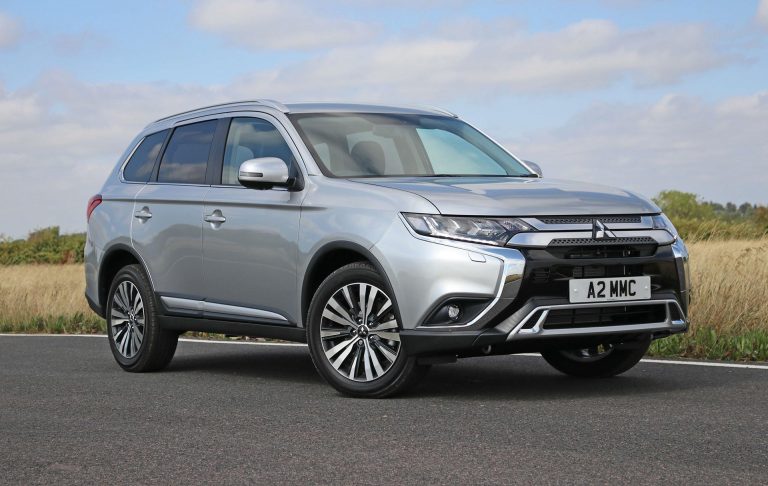
 With all five rear seats folded, up to 1,608 litres of boot space is available.
Mitsubishi has also updated its ‘Dynamic Shield’ design language on all 2019 versions of the Outlander. Changes include a new honeycomb mesh front grille, front lower extension and new headlamp design, revised rear bumper and new two-tone 18-inch alloy wheels.
Interior updates range across reduced engine noise, more supportive front seats, one-touch electric operation on all four windows, a heated windscreen and Mitsubishi’s new SDA (Smartphone Link Display Audio) system. This includes Apple CarPlay and Android Auto compatibility with DAB and Bluetooth connectivity.
Mitsubishi also claims improved driving dynamics on the Outlander, accomplished by increased structural rigidity with additional structural adhesive welding applied between the body panels. The front strut and rear dampers have also been modified to increase the damping force at low speed to provide a smoother low-speed ride.
With all five rear seats folded, up to 1,608 litres of boot space is available.
Mitsubishi has also updated its ‘Dynamic Shield’ design language on all 2019 versions of the Outlander. Changes include a new honeycomb mesh front grille, front lower extension and new headlamp design, revised rear bumper and new two-tone 18-inch alloy wheels.
Interior updates range across reduced engine noise, more supportive front seats, one-touch electric operation on all four windows, a heated windscreen and Mitsubishi’s new SDA (Smartphone Link Display Audio) system. This includes Apple CarPlay and Android Auto compatibility with DAB and Bluetooth connectivity.
Mitsubishi also claims improved driving dynamics on the Outlander, accomplished by increased structural rigidity with additional structural adhesive welding applied between the body panels. The front strut and rear dampers have also been modified to increase the damping force at low speed to provide a smoother low-speed ride.

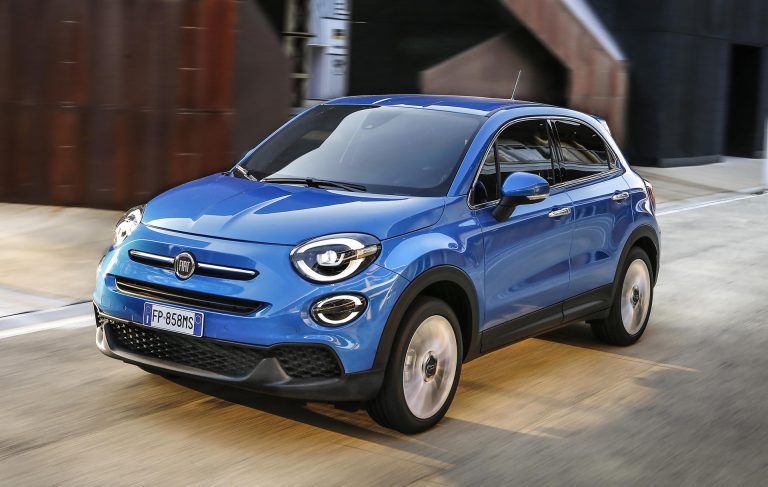
 New driving assistance technology now available for the 500X includes Traffic Sign Recognition, Speed Advisor (which matches the speed of the car to the speed limit identified by the Traffic Sign Recognition) and Lane Assist, all now included as standard on all versions of the car.
Blind Spot Alert, Adaptive Cruise Control and City Brake Control (autonomous emergency braking) are on the options list.
All versions of the 500X are now supplied with Fiat’s Uconnect infotainment system, accessed through a seven-inch touchscreen and including Apple CarPlay and Android Auto compatibility.
Revisions to the exterior include new LED daytime running lights, LED headlights and rear lights. The three trim levels – Urban, City Cross and Cross – are given bespoke treatments. Urban gains a new front and rear bumper design, while the new Cross look adds protective skid plates.
Fiat dealers are taking orders for the new 500X now, at prices starting from £16,995.
New driving assistance technology now available for the 500X includes Traffic Sign Recognition, Speed Advisor (which matches the speed of the car to the speed limit identified by the Traffic Sign Recognition) and Lane Assist, all now included as standard on all versions of the car.
Blind Spot Alert, Adaptive Cruise Control and City Brake Control (autonomous emergency braking) are on the options list.
All versions of the 500X are now supplied with Fiat’s Uconnect infotainment system, accessed through a seven-inch touchscreen and including Apple CarPlay and Android Auto compatibility.
Revisions to the exterior include new LED daytime running lights, LED headlights and rear lights. The three trim levels – Urban, City Cross and Cross – are given bespoke treatments. Urban gains a new front and rear bumper design, while the new Cross look adds protective skid plates.
Fiat dealers are taking orders for the new 500X now, at prices starting from £16,995.

Automotive Website of the Year


Automotive Website of the Year
Automotive Website of the Year