The fifth-generation Toyota RAV4 has been unveiled at the New York Auto Show – in a market where the SUV is the best-selling car.
Expected on UK sale early in 2019, the new RAV4 is the first model built on the brand’s Toyota New Global Architecture platform. This has a lower centre of gravity and more effective weight distribution than its predecessor, leading to improved economy and handling through the more rigid body construction.
Another aspect of the new platform is the wheelbase, extended by 30mm to free up more interior space. Combined with shorter front and rear overhangs, this produces a length of 4.6m, almost identical to the outgoing car. The new RAV4 is slightly wider and Toyota says luggage space is also increased, though by how much is yet to be revealed.
Significantly different is the styling, the new RAV4 given a distinctly bolder look designed to emphasise its credentials as an off-road SUV – the higher ground clearance evidence of this.
Toyota adds that both of the powertrains in the RAV4 will be new, a 2.0-litre petrol unit and a 2.5-litre hybrid. A diesel option is not expected to be offered, and it’s possible that UK buyers will only be able to choose the hybrid – performance and economy figures for which are yet to be released.
The hybrid uses a newly-developed electric motor drive that employs two electric motors, one on each axle. This format cuts energy losses which aids fuel economy, while offering an effective all-wheel-drive system. A front-wheel drive variant could also be offered.
When the new RAV4 goes on sale its biggest rival will be the Nissan Qashqai, British built and currently the UK’s best-selling SUV.
The first Sportback version of the Audi RS 5 performance model has been unveiled at the New York Auto Show.
The five-door model will sit alongside the existing RS 5 Coupe, and employ the same mechanical specification including the 2.9-litre V6 petrol engine. This boasts two turbochargers mounted between the banks of cylinders.
Peak power of the unit is rated at 450hp, alongside 600Nm of torque produced between 1900 and 5000rpm. This results in a 0-62mph time of 3.9 seconds and the potential for a terminal speed of up to 174mph.
All-wheel-drive standard
An eight-speed automatic transmission is mounted as standard, its shift times tuned for more rapid response, and combined with the permanent all-wheel-drive. As standard, the power is split 40:60 front to rear, though when conditions require up to 85% can be sent to the front axle or 70% to the rear.
UK-spec RS5s also gain a sport differential on the rear axle. The cockpit-operated drive select control allows various aspects of the quattro all-wheel drive system and several other elements of the driving experience to be tailored to the driver’s individual preferences.
The car’s five-link suspension is also specifically modified to RS specification, while a sport variant on the options list includes Dynamic Ride Control – this offers adjustable, electronically controlled damping, along with ceramic brakes and RS-specific steering.
Exterior styling upgrades include extended wheel arches and a wide, flat single-frame grille, solid air intakes with a honeycomb structure typical of an RS, gloss black design elements and a front spoiler with matte aluminium quattro lettering.
The rear end gains an RS-specific diffuser insert, RS exhaust system with oval tailpipes and a spoiler lip. The RS 5 Sportback sits on 19-inch wheels as standard, while a range of 20-inch designs is on the options list.
Inside are sport seats in Nappa leather with honeycomb stitching, a flat-bottomed multifunction sports leather steering wheel and RS-specific information displays in the ‘virtual cockpit’ digital display providing information on tyre pressure, torque and G forces.
The RS 5 Sportback will also be a practical performance car. Its boot offers a 480-litre capacity extending to 1300 litres when the rear seats are fully folded. Alternatively, these can be folded in a 40:20:40 split ratio.
Audi is targeting the RS 5 Sportback initially at the North American market, targeting the likes of the BMW M3 – a UK on-sale date is yet to be announced but industry observers predict it will be around the end of 2018.
The car finance sector has started 2018 with some surprisingly good results, based on the information published last week by the Finance and Leasing Association.
Despite private new car sales falling by nearly 10% in January, point-of-sale consumer car finance (ie – finance arranged via car dealers) on new cars was down by only 4%. In addition, the amount borrowed was up by 4% on last year, meaning that the average amount borrowed on new cars was up by more than 8% compared to the same month in 2017.
It’s a bit early to say whether this means we can expect an even bigger result than last year’s record levels of car finance debt, but it’s a worrying start.
Point-of-sale finance continues to monopolise the new car finance market, with more than 88% of private new car buyers using finance sourced by the dealer to fund their cars. This is up from about 86% a year ago. Most buyers use a personal contract purchase (PCP) to fund their new cars, borrowing more than £19,000 per vehicle on average in January.
Cars bought on finance by consumers through dealerships, January 2018
New business
Jan 2018
% change on prev. year
3 months to Jan 2018
% change on prev. year
12 months to Jan 2018
% change on prev. year
New cars
Value of advances (£m)
1,167
+4
3,686
-1
18,840
+1
Number of cars
61,204
-4
186,674
-9
988,025
-7
Used cars
Value of advances (£m)
1,544
+20
3,785
+15
15,697
+12
Number of cars
131,870
+13
320,855
+10
1,372,597
+7
Total cars
Value of advances (£m)
2,711
+13
7,471
+6
34,537
+6
Number of cars
193,074
+7
507,529
+2
2,360,622
0
Data (c) Finance and Leasing Association
Used car finance continues to soar
The news for finance companies was even better on the used car front. The number of finance agreements sold increased by 13% compared to the same month last year, while the total amount borrowed increased by 20%, meaning that average borrowing on used cars increased by 6%. Used car buyers borrowed, on average, £11,700 in January.
Dealer-sourced finance has continued to grow at a substantial rate over the last decade, with the total amount lent to car buyers in January 2018 more than double what it was five years ago.
It is hard to say how much this continuing growth can be attributed to people choosing a used car over a new one, as used car finance growth has been on a steady upward trend since 2011. Private new car sales started falling (year-on-year) in April 2016 and have fallen every month since then, but there doesn’t appear to have been a corresponding boost to used car finance levels that would indicate it’s all quite that simple.
Will this increase the chances of another interest rate rise?
This is the third month of results published since the Bank of England increased the base interest rate from 0.25% to 0.5% in November 2017, and it has clearly done nothing to slow the car finance market.
Obviously, car finance on its own won’t determine the Bank’s monetary policy, but it is a clear sign that consumers are not reducing their level of borrowing. The amount of debt per customer is at record levels, and continuing to rise each month. If this behaviour is being repeated in other sectors, like personal loans and credit cards, we can expect to see another interest rate rise sooner rather than later.
The performance version of the Alfa Romeo Stelvio SUV, the Quadrifoglio, has gone on sale at prices starting from £69,500.
With 510hp on offer from its 2.9-litre bi-turbo V6 engine the newcomer will join a growing number of performance models in the growing premium SUV market. Challengers are expected to include the forthcoming BMW X3 M and Jaguar F-Pace SVR.
The power, combined with torque of 600Nm from 2500 to 5000rpm, sends the Stelvio Quadrifoglio through 62mph from rest in 3.8 seconds, and onto a terminal speed of over 176mph.
The engine is combined as standard with an eight-speed auto transmission and with the Q4 all-wheel-drive system – in normal mode the vehicle is rear-wheel-drive, with 100% of its torque put through the rear axle, but can transfer up to 50% to the front when conditions demand.
Alfa Romeo’s Chassis Domain Control co-ordinates a suite of electronic aids including active suspension, the electronic stability control and torque vectoring. The latter employs two electronically controlled clutches in the rear differential, separately assigning torque to each wheel, ensuring the most effective power transfer to the road under demanding conditions such as cornering on the limit.
Specification of the Quadrifoglio will be range-topping and will include bespoke 20-inch alloy wheels that require reprofiled wheel arches, a restyled rear diffuser, a four-pipe sports exhaust and bi-xenon headlamps with LED daytime running lights.
Notable elements inside include a leather dashboard and door tops, leather and Alcantara seats, leather steering wheel, carbon fibre trim and stainless steel pedals. An 8.8-inch Alfa Connect infotainment system sits in the centre console and includes Apple CarPlay and Android Auto smartphone compatibility..
The safety specification is extensive too, including Autonomous Emergency Braking, Lane Departure Warning, Blind Spot Monitoring, an Integrated Braking System, Forward Collision Warning and a rear-view camera with guidance lines.
First UK deliveries of the Alfa Romeo Stelvio Quadrifoglio are expected in the summer.
What is it?
The Volvo XC40 is the Swedish brand’s first compact SUV, targeting the likes of the Range Rover Evoque and Jaguar E-Pace.
Key features
More youthful style, high technology, efficient powertrains
Our view
The Volvo XC40 arrives late to the premium compact SUV market but will make its mark within it.
Combining all the major advances of its larger XC60 and XC90 sisters with a distinctive, younger-pitched style, it also scores on the quality of its technology and the efficiency of its powertrains. It is a worthy European Car of the Year.
Similar cars
Audi Q3, Mercedes-Benz GLA, Range Rover Evoque
Volvo appears to be able to do little wrong at present – global sales jumped 22% in 2017 (though they slid 18% in the declining UK market), the 90 Series has earned rave reviews, and now the XC40 has won the brand its first ever European Car of the Year title, before even hitting UK roads.
The XC40 is Volvo’s first compact SUV and one might wonder why the brand has taken so long to get into a market where all the action is. But the car is part of a considered SUV programme that started with the XC90 and continued with the XC60.
This comes at a time when the Swedish brand has been transitioning, moving upmarket to more directly challenge the premium heavyweights. And while the Range Rover Evoque kick-started the premium SUV market a few years ago, only recently has the sector really come to life with the latest versions of the BMW X1, Audi Q3 and Mercedes-Benz GLA.
Interestingly, however, one of the XC40’s likely most direct rivals is only appearing at the same time as the Swedish contender. Volvo will hope to seriously dent Jaguar’s lofty ambitions for its E-Pace.
In many ways, the XC40 reflects the DNA of its successful sisters the XC90 and XC60, in a more compact package. But it also cuts a distinctive visual appearance – a much bolder design first seen on the almost identical Concept 40:1 unveiled in May 2016, and set to form the building blocks for further 40 Series cars that will follow.
It’s an attractive design pitched towards a more youthful audience, featuring plenty of sculpted panels and sharp angles, personalisation options in such areas as the contrasting paint finish on the roof, and neat touches such as the way the doors overlap the sills so you don’t transfer road grime from sill to clothes.
The Volvo XC40 is an attractive design pitched towards a more youthful audience.
Buying and owning the Volvo XC40
The XC40 is the first Volvo on the new CMA (compact modular architecture) platform, which will also underpin coming 40 Series cars. The platform offers many major advances, from improving interior space to saving weight, and is specifically designed to accept a range of drivetrains including plug-in and full-electric units.
Both will form part of the future XC40 powertrain options. For now, it’s a choice of five of the brand’s downsized 2.0-litre Drive-E engines, two diesel units of 150 and 190hp, and three petrol engines of 190hp, 247hp and a brand-new three-cylinder T3 unit offering 156hp.
As is typical for the market, both front and all-wheel-drive transmissions will be available on all models except the T3 that is front-powered only. Volvo expects 60% of all XC40 sales to be of the 150hp D3 diesel, two-thirds of these front-wheel-drive. An eight-speed auto transmission will be the standard, though the D3 diesel and T3 petrol also offer a six-speed manual alternative.
Trim levels are based around the brand’s familiar Momentum, R Design and Inscription grades, though each also offers a Pro version with such extras as a powered, heated driver’s seat and headlamps that bend around corners.
Equipment levels are generous – topping the list on the entry-level Momentum model are navigation through Volvo’s superb portrait-style infotainment screen, remote control of various functions through a smartphone app, auto LED headlamps, a Drive Mode feature offering five engine/chassis settings including an off-road mode, and a 12-inch digital driver’s instrument panel.
R-Design is expected to be the most popular trim and includes both sports suspension and several styling upgrades, but for early buyers the First Edition launch model will be most appealing. It adds close to £5,000 to the cost but also many extras including a tilting glass sunroof, park assist, a premium Harman Kardon sound system and significant extra safety technology.
The XC40 is so new it has not at the time of writing been run into various solid objects as part of the Euro NCAP test programme, but with Volvo’s focus on safety innovation and outstanding results in all its other models, a top five-star result is virtually certain.
The car bristles with the latest safety tech – we are pleased to see that every version comes as standard with the City Safety pack that includes autonomous emergency braking as well as a lane-keeper and road sign and driver alert aids. Only the fact that some of the most impressive technology is on the options list prevents us giving the car a top 10-point safety score.
These options are combined into an ‘Intellisafe Pro’ pack, costing £1,400 and including the Pilot Assist system that autonomously steers the car, BLIS blind-spot warning, adaptive cruise control and a cross-traffic alert with auto braking. This pack does come as standard on the First Edition launch model.
Inside the Volvo XC40
The XC40 features an interior that is minimalist and stylish.
Remember when Volvo interiors were plain irritating, especially the centre console with its full alphabet’s worth of buttons? Those times seem a very long ago. The XC40 is very well screwed together with a layout that is minimalist, stylish – just cool, basically.
Particularly good is the driver’s environment. Every car gets a digital instrument display on a 12-inch screen and the latest incarnation of Volvo’s oh-so-good portrait-style nine-inch infotainment touchscreen.
The screen takes a little getting used to, but once you do it’s so user-friendly, and offers full connectivity through Apple CarPlay or Android Auto, as well as voice activation and the on-call convenience and emergency assistance service.
Our one gripe concerns the graphics of the satnav system. They are simply not as crisp as those offered particularly by VW Group products, while panning out the screen loses the detail of side roads rather earlier than on rivals.
However, if your XC40 is lucky enough to be fitted with the around-view parking monitor (standard on the First Edition, otherwise part of the £1,600 Xenium pack that also includes the sunroof and automatic parking), this is pure witchcraft. On screen appears a crisp view of the car, but seemingly filmed from 20 feet above it, making inch-perfect parking a doddle.
Interior space is competitive with the opposition. The XC40 is longer and wider than several of its rivals and this translates to good space within for four adults, five at a push.
A range of clever touches adds to the appeal – for example, if you want to go beyond the standard 480-litre boot space by removing the parcel shelf, there’s a space to stow it under the floor. Moving the speakers from the doors has freed up cavernous storage pockets, while even the glovebox includes a curry hook – a small point, but useful nonetheless.
Driving the Volvo XC40
Progress in a Volvo XC40 is enjoyable for both driver and passengers
Big news in the powertrain department is the new T3 petrol engine but, unfortunately, supplies of cars with this unit are a little behind the rest, so on the launch event we had to content ourselves with the T4 and T5 petrols and the D4 diesel.
All three engines impress with their flexibility and eagerness, though all three can add a slightly intrusive engine note if pushed hard. However, you don’t really have to push them that hard, because they accelerate briskly and especially with the eight-speed auto transmission, seamlessly up the range.
We remain particularly impressed by the D4 diesel. It is an extremely flexible unit, refined too, and not at the expense of efficiency – plus 55mpg fuel economy and CO2 emissions of under 140g/km, on an all-wheel-drive model with an auto gearbox, shines above many of the XC40’s rivals.
The XC40 is a supremely comfortable vehicle to travel in – the ride seems angled towards relaxing, smothering bumps and ruts in very effective fashion.
Remarkably, however, such comfort does not evolve into a wallowy performance if one tries to push on through a series of challenging bends. The XC40 remains composed, upright and confidence-inducing, even if the Drive Mode system is set to favour the default comfort setting over a more sporty mode.
To sum up, progress in an XC40 is highly enjoyable, for the driver and their passengers.
Summary
The Volvo XC40 starts at £27,905, which buys a front-wheel-drive T3 petrol powered machine in Momentum trim with a manual gearbox. Diesels start at £28,965, all-wheel-drive at £30,405 with the D3. Cheapest First Edition variant is the D4 in AWD form, costing from £39,305.
A major debut with the XC40 is ‘Care by Volvo’ – initially available to customers inside the M25 motorway, the brand calls it a subscription service and it is much more than a contract hire programme.
Inspired by mobile phone contracts, a fixed monthly fee covers rental of the car, servicing, roadside assistance and remarkably, insurance for up to three people aged between 25 and 79 – this last Volvo expects will be particularly attractive to younger drivers.
The car is replaced every 24 months while subscribers also get access to a different Volvo for 14 days a year – perhaps a large estate for the family holiday for example. And Volvo intends to add a range of connected services to the programme.
All of which could be an attractive means to get in what is a highly attractive vehicle. It’s becoming increasingly difficult to find aspects of modern Volvos to criticise – each is a step forward in comfort, practicality, style, economy, performance and particularly safety.
The XC40 may be arriving a little late to the premium compact SUV market – but it is going to carve itself a large slice of it.
Key features Bigger and more refined than before, significantly upgraded cabin, more safety features, better infotainment
Our view The Vauxhall Insignia Sports Tourer is a welcome addition to the traditional estate sector for buyers who need a hard working load-lugger rather than a lifestyle SUV.
First report – December 2017
Fuel economy has been almost as good as claimed
Sometimes when it comes to serious load-lugging, nothing can do the job better than an estate. However, the trusty estate has lost ground in recent years to some of the larger SUVs that also deliver decent payloads and can comfortably seat five people.
Vauxhall believes it has a viable alternative. With its fleet heritage, the car maker performed respectably with Astra and Vectra in this sector, but for its all-new large family car offering the off-trend estate name has been discarded in favour of something more dynamic: the Insignia Sports Tourer.
The Car Expert is testing a model in high-end Elite Nav spec to assess the ownership experience over the next three months.
First impressions are positive. The car oozes quality from the neatly-defined exterior styling, complete with attractive door creases and a contour tracing chrome strip, to a first-class cabin with full leather trim, high-quality soft-touch plastics and clear instrumentation which together shows just how much the brand has upped its game in interior design.
While the car will be chosen for its voluminous rear space (an impressive 560 litres with the seats up, almost tripling to 1,665 litres with them down; 135 litres more than the old model), the real star is the small 1.6-litre turbo diesel engine which effortlessly punches above its weight to deliver 136hp. So far it has made light work of several long motorway journeys where cruising speed is effortlessly reached and maintained and around town, where power delivery is never found wanting even when pulling away when fully laden.
So far fuel economy, has been impressive with a running average of 52.6mpg and a best journey of 61.1mpg (a 320-mile motorway jaunt), against a claimed 62.8mpg. Not bad at all.
Second report – January 2018
The Insignia is guaranteed to stick out of most parking spaces
Our long-term Vauxhall Insignia Sports Tourer is designed to carry families and their gear in comfort as well as transporting hefty loads. We’ve found this super-sized estate does both exceptionally well, especially when called upon to swallow up bulky items with the back seats down to reveal a wide, deep and flat load bay.
To date, our cargo inventory has included a seven-foot Christmas tree, a large oval patio table, a mountain bike and random items of furniture. All have been easily accommodated and no item has so far proved too bulky to load and stow securely. Much of this is down to the low and wide loading point and high ceiling which is much higher than the car’s cleverly tapered profile makes it look.
In terms of comfort, estates can be something of a mixed bag because they are designed for load-lugging but invariably spent a lot of time being driven empty. This inevitably means compromises in the ride and handling package. However, we’ve found the Insignia to be comfortable to drive and be driven in, regardless of what’s being carried, with its relatively soft suspension setting making motorway journeys particularly comfy and ironing out most rough surfaces.
The real surprise, however, is the car’s agility. Although it is guaranteed to stick out of most parking spaces, reversing into them, or parallel parking, is effortless thanks to its tight turning circle, front and rear sensors and a reversing camera which doesn’t cry wolf at the first sign of an obvious obstacle.
The car is also equipped with all sorts of creature comforts from Apple CarPlay, a wi-fi hotspot, to an interactive App and Vauxhall’s OnStar telematics and safety system, which we’ll talk about next time.
Third report – February 2018
Curtis has been enjoying Apple CarPlay, although a faulty USB hub ruined his fun initially.
Our long-term Insignia Sport Tourer continues to impress by delivering excellent load-lugging functionality coupled with impressive fuel economy.
Since last month, our running average has improved marginally from 52.6mpg to 53.1mpg – but more satisfying was the 66.1mpg the car returned on a 92-mile round trip. Granted most of those were motorway miles, driven at a steady speed with the car unladen, but it just shows how flexible our Insignia’s super frugal 1.6-litre diesel engine can be.
As the miles pile on, what’s really struck us is just how good the car’s environment is. Yes, the leather seats are supportive and comfy and there’s plenty of leg, head and shoulder room for all, but what is really impressing us is the rather excellent infotainment system which bundles DAB radio, smartphone access, streaming services and satnav all in one place; or IntelliLink as Vauxhall calls it.
Common with many new cars, our Vauxhall Insignia features the brilliant Apple CarPlay (and Android Auto for non-Apple mobiles), which replicates selected apps from an iPhone on its eight-inch tablet-style screen.
Once hooked up, this means you can chop and change between Spotify, BBC iPlayer Radio and your favourite podcasts. Furthermore, Google Maps can be accessed if you prefer its interface and functionality to the car’s satnav system; which I do. And text messages can be read by an amusingly robotic voice and responded to via Siri safely whilst on the move.
However, the system did have a perplexing glitch. Each time we plugged in the iPhone, the system would fire up and then hang. If we jiggled the lead around it would work for a while before failing again.
On one particularly long journey, we used the satnav to find the nearest Vauxhall dealer. A helpful sales executive confirmed it was a known problem with the USB hub. The car subsequently returned briefly to Vauxhall, the faulty hub was replaced and it has been performing perfectly ever since.
The car’s list of useable tech continues with Vauxhall’s impressive Onstar connectivity system and a dedicated My Vauxhall app which we’ll report on next month.
Fourth report – March 2018
After four busy months on The Car Expert fleet, it’s the end of the road for our Vauxhall Insignia Sports Tourer.
Vauxhall’s always performed well in the estate sector with hard working, if not terribly refined, load-luggers built for high mileage company car drivers. However, things have moved on and the brand has been forced to up its game to offer something better suited to more demanding buyers looking for a wagon with a German badge.
Well, the good news is that Vauxhall has upped its game for the latest-generation Insignia wagon which debuted in 2017. It might have the Griffin badge on its grille, but this car was engineered and built in Germany by Opel for the needs of ultra-demanding German drivers. It shows.
If you’re in the market for an estate with over-generous levels of usable space and haven’t driven a Vauxhall for a while, then you’ll be pleasantly surprised by the Insignia. Outside the car is undeniably stylish, cleverly utilising a chrome strip to give a sleek profile. While the interior in Elite trim is smart and upmarket with smooth surfaces and excellent visibility.
Add to this creature comforts such as heated front seats which come on automatically when it’s cold and at a temperature it judges to be the most appropriate for the conditions; a much appreciated warm welcome when the Beast from the East sent temperatures plummeting to record lows in March. In a welcome touch of inclusivity, there are even heated seats in the rear which were greatly appreciated on a 5am run to Heathrow Airport to drop off some long-haul passengers dressed for warmer climates.
During the extended cold spell, we also appreciated the integrated heater element in the front windscreen, which quickly thawed the heaviest of frosts, and the heated steering wheel; something I had previously dismissed as a gimmick until faced with starting high mileage journeys in sub-zero temperatures.
There’s a lot more to like from the all-inclusive infotainment system to the excellent head-up display which for just an additional £290 is an absolute must-have optional extra. We also liked the app that allows you to keep an eye on tyre pressure and fuel levels, open the doors and sound the horn and flash the lights; great if you can’t quite remember where you parked in a large car park.
After 8,128 miles we remain fans of the economic but plucky 136hp 1.6-litre diesel engine, which never ceased to punch above its weight. It delivered some outstanding fuel economy with an overall average of 53.5mpg and an all-time best of 66.1mpg.
Over the months we’ve found the ride and refinement to be good with even the noisiest stretches of the M25 failing to intrude too much. The six-speed manual transmission proved to be more than adequate although an automatic box would be more suited to the car upmarket aspirations.
The estate market might be smaller than it was back in the days before the proliferation of SUVs but it is no less competitive with fewer brands chasing bigger market shares. For car buyers with regular load lugging requirements there is no substitute for an estate and with an on the road price of £26,320 the Vauxhall Insignia Sports Tourer makes a convincing and classy case for itself.
Volkswagen has unveiled the third-generation version of its Touareg large SUV, ahead of putting the car on UK sale in the third quarter of 2018.
The new model was revealed in Beijing, China, reflecting the increasing importance of the Chinese market to European brands – Volkswagen describes China as “its largest market” and sales of SUVs in the Asian country have mushroomed in recent times.
Described as a milestone for the brand’s SUV campaign, the new Touareg is a global SUV and is being pitched further upmarket as a premium model on the basis of new design, significantly advanced technology and higher quality materials.
The Touareg is 8cm longer and 4cm wider than the vehicle it replaces, and this results in a significant increase in luggage capacity, from 697 to 810 litres with all seats up. The body, meanwhile, has seen a significant diet, 106kg lighter due to the use of 48/52% mix of aluminium and high-strength steels in its construction.
Highlight of the interior is Volkswagen’s ‘Innovision Cockpit’ – a fully digital instrument setup on a 12-inch display can be combined with the Discover Premium infotainment system which uses its own 15-inch screen, resulting in a major reduction in buttons and switches. Volkswagen says that the car can adapt to individual occupants’ tastes, using a new level of connected systems and programmes.
The Touareg will also offer the largest and widest range of driver assistance, handling and comfort systems yet seen on a Volkswagen. These range to a thermal-imaging camera spotting pedestrians and animals at night, all-wheel steering and a front cross traffic alert system.
European Touaregs will initially go on sale with V6 diesel engines of either 231hp or 286hp. A V6 petrol engine of 340hp is set to follow, while a V8 turbodiesel of 421hp is also planned and is predicted to be in the eventual UK line-up.
Early Chinese versions of the Touareg will include a plug-in hybrid model with 367hp – Volkswagen is not saying when this is likely to come to Europe though it is expected to. All powertrains are expected to include an eight-speed auto transmission and all-wheel-drive.
As part of its 25th birthday celebrations, the Vauxhall Corsa range will see the return of the Corsa GSi name to the UK later this year.
The Corsa GSi takes the key chassis and design elements from the current Corsa VXR model using the sporty three-door body, with a raft of exterior design cues to set it apart from the regular car.
Large air intakes and a honeycomb grille dominate the front of the car, while deep sill extensions and carbon-trimmed features adorn its flanks. At the rear, a deep rear spoiler matches the extra bodywork to the front and sides, while a chrome tailpipe completes the look.
Inside, leather Recaro seats allow drivers to sit low in the car. A leather sports steering wheel and aluminium pedals continue the sporty theme. The GSi comes standard with Vauxhall’s IntelliLink touchscreen infotainment system, offering Apple CarPlay and Android Auto connectivity.
Riding on 18-inch alloy wheels, the Corsa GSi takes its suspension and brakes – with red-painted calipers – from the current 210hp Corsa VXR. The firmer springs and dampers offer better control at high speeds, and improved grip in both wet and dry conditions.
More information about the new Vauxhall Corsa GSi will be available later in the year when order books open.
Mazda has announced UK pricing and specification for updated versions of its Mazda 6 model, which goes on sale this summer. It features an upgraded cabin, mildly-revised styling, a new petrol engine and an upgraded diesel engine.
Priced from £23,045 to £32,795, the range features 24 models across four trim levels: SE-L Nav+, SE-L LUX Nav+, Sport Nav+ and GT Sport Nav+.
Matched exclusively to the range-topping GT Sport Nav+ trim is Mazda’s new 2.5-litre SkyActiv-G engine, making its UK debut and paired with a six-speed automatic gearbox. With a cylinder deactivation system, this direct-injection four-cylinder engine switches between four and two-cylinder operation to improve fuel economy in light use without affecting performance when required.
The 2018 model year visual changes include a fresh frontal design focused around a new grille, which has its mesh positioned deeper within the surround. Revised LED headlamps include the wingtip motif from the grille surround, and the front fog lights are now incorporated into the headlight cluster. As a result, the lower bumper has been redesigned for improved aerodynamics.
At the rear, the saloon has a remodelled boot lid, while both the saloon and estate feature cleaner rear bumper styling. Topping off the styling updates are new alloy wheel designs and the introduction of the Soul Red Crystal paint colour that has been popular in other Mazda models.
Inside, highlights include a larger eight-inch centre display screen, a seven-inch screen in the driver’s instrument binnacle and the adoption of a full-colour head-up display. The dashboard and door trims have been redesigned, seat comfort has been improved and the top-spec GT Sport Nav+ features more luxurious materials such as Sen woodgrain trim, brown Nappa leather and suede.
In addition to the new 2.5-litre SkyActiv-G petrol engine, the 2.0-litre SkyActiv-G version has been enhanced with new intake ports, new pistons and revised fuel injection and cooling. For diesel drivers, the 2.2-litre SkyActiv-D diesel engine now produces 184hp (up from 175hp) in its highest state of tune.
The new Mazda 6 also benefits from suspension fine-tuning for improved ride, handling and steering characteristics.
With an increase in standard active safety equipment across the range, all models now feature a range of advanced technology including blind-spot monitoring with rear cross traffic alert, adaptive cruise control, lane-keep assist and autonomous emergency braking.
Jaguar’s all-electric I-Pace has gone on sale in the UK in S, SE and HSE derivatives alongside a First Edition.
With a 90kWh lithium-ion battery, the I-Pace claims a range of up to 298 miles (on the new WLTP cycle) and owners will be able to achieve a 0-80% battery charge in an hour and a half using a rapid charger unit (50kW).
I-Pace will be fully compatible with next-generation DC rapid chargers (100kW) as the technology is rolled out across the UK, which will enable a zero to 80% charge in just 40 minutes. Home charging with an AC wall box (7kW) will achieve the same state of charge in just over ten hours, which is acceptable for most overnight charging purposes.
A number of smart range-optimising technologies help to squeeze every mile out of the car’s range. This includes a battery pre-conditioning system, which automatically raises (or lowers) the temperature of the car’s battery while plugged in to maximise range when you drive away.
Twin electric motors for all-wheel drive traction
Skateboard-style arrangement of electric motors and battery pack
Two electric motors – which feature driveshafts passing through the motors themselves for compactness – are placed at each axle, with the aim of delivering a combined performance of 400hp and 696Nm, and all-wheel-drive, all-surface traction. The two motors help launch the I-Pace from a standing start to 60mph in just 4.5 seconds.
The I-Pace’s aluminium architecture uses sophisticated riveting and bonding technology to deliver a light, stiff body structure. Together with the structural battery pack, it has a torsional rigidity of 36kNm/degree – the highest of any Jaguar.
The battery is placed centrally between the two axles, and as low down as possible, with a seal between the housing and the underfloor. This location enables an ideal 50:50 weight distribution and a low centre of gravity: together with the advanced double wishbone front and multi-link rear axle with (optional) air suspension and configurable suspension settings, Jaguar promises agile handling and outstanding ride comfort.
Its sleek, coupé-like silhouette is inspired by the Jaguar C-X75 concept car from several years ago, and also helps provide class-leading aerodynamics. When additional cooling is required, active vanes in the grille can open to allow more air in, then close again when no longer needed to smooth airflow and reduce drag.
Improved interior space and infotainment
i-Pace interior promises to be a significant improvement over the rest of the Jaguar range
Inside, the layout optimises space for passengers. Although the I-Pace is a mid-sized SUV, the cab-forward design and electric powertrain mean that interior space is more comparable to large SUVs. Rear legroom is helped by the lack of any transmission tunnel, plus there is extra storage space under the seats. Boot space is 656 litres, increasing to 1,453 litres when the rear seats are folded flat.
I-Pace also debuts Jaguar’s new Touch Pro Duo infotainment system, which uses a combination of touchscreens, capacitive sensors and tactile physical controls to make it intuitive to use. Hopefully, this will eliminate a significant weakness in all Jaguar models of recent years, whose infotainment systems have lagged behind those of its rivals.
The navigation system is also designed to specifically address the unique needs of an electric vehicle. It can assess the topography of the route and gain insights from previous journeys, including driving style, to calculate personalised range and charging status. The aim is to provide improved accuracy to ensure maximum driver confidence.
The Jaguar I-Pace is available to order now, with prices starting at £58,995 on-road (including the £4,500 government plug-in car grant).
The image of a Range Rover may conjure up thoughts of opulent interiors, intimidating looks and go-anywhere ability. But under the skin, the engine choices have remained stubbornly powerful, polluting and thirsty. Until now?
Now Land Rover has introduced the Range Rover plug-in hybrid, which gives city dwellers an alternative to plain old internal combustion. It combines a four-cylinder petrol engine with an electric motor and battery, capable of travelling up to 31 miles on battery power alone – perfect for commuting or cross-city jaunts.
This engine is priced near the top of the existing model line-up – dearer than both V6 and V8 diesels plus the V6 petrol, but not as expensive as the fire-breathing V8 petrol models. It can count the new Bentley Bentayga hybrid and Porsche Cayenne hybrid as rivals.
The biggest change for this model is the powertrain – but more on that later. For 2018, every Range Rover model receives some extra glitz and bling, along a with a few worthwhile upgrades.
There’s a new grille inspired by the smaller Range Rover Velar, the tailpipes have been integrated into the rear bumper and there are new lights front and rear.
Inside, nearly every button on the centre console has gone, replaced instead by a dual-touchscreen setup. Where buttons remain, they’re seamlessly integrated into one another, and light-up too.
Thicker windows and noise-cancelling tech aim to make the car even quieter than before, and there are new seats, too.
How does it look?
The Range Rover is massive, intimidating and unmistakable, and 2018’s changes only serve to build on this. The Velar-inspired grille and new headlamps walk a fine line between glitzy and vulgar (you’ll have to decide which), and a wide array of colours and trims mean you can style it to suit either the country club or the nightclub.
Only some subtle badging marks this out as a hybrid, with the electric charging port concealed neatly behind the Land Rover badge in the front grille.
What’s the spec like?
The PHEV powertrain is available across all Range Rover trim levels and even base models are seriously luxurious vehicles.
Entry-level Vogue models, which start at £86,965 on-road, get a full Windsor leather interior, triple-zone climate control, a fixed panoramic glass roof, 20-inch alloy wheels, and matrix LED headlights to name but a few choice items.
Step up to £93,465 Vogue SE and the wheels grow to 21 inches, the excellent Terrain Response system comes as standard and the stereo becomes an excellent Meridian system.
Top-spec Autobiography includes executive rear seating, walnut veneer, 24-way electric seats with heating and cooling and a suede headliner for £105,865.
It’s rather easy to increase these prices with a few items from the options list on any of the models, but Apple CarPlay and Android Auto are still disappointing omissions. That’s our only major gripe, though.
What’s the Range Rover plug-in hybrid like inside?
Nearly every traditional button has been eliminated from the inside of the latest Range Rover, a move which looks good but takes some getting used to. The central twin-touchscreen setup works quite well, with the upper handling media and navigation while the lower takes on driving modes, climate and seat controls.
There’s very little to mark it out as a PHEV in here either – though we would have liked a few buttons to save delving into confusing sub-menus to control battery charge and usage.
Everything is incredibly plush, though, and the interior is a lesson in duality – after all, how many other cars can wade in water 90cm deep while giving you a hot stone massage?
There’s also plenty of room, especially in long-wheelbase models. The battery pack underneath the boot floor does eat into space, though, and the load area beneath the parcel shelf is long and wide but shallow – you still get 802 litres of space to play with, though.
What’s under the bonnet?
The Range Rover PHEV debuts the brand’s first plug-in hybrid powertrain. It mates a 300hp, 2.0-litre petrol engine with an 85kW electric motor for a maximum power figure of 405hp. That’s good for a 0-60mph sprint of 6.4 seconds and a top speed of 137mph – or 85mph if travelling on electricity alone.
Land Rover claims a combined fuel economy figure of 101mpg. The reality is very dependent on how you drive. If you charge the car every night and the majority of your journeys are within the 31-mile electric range, you might hardly need to use the petrol engine. In solo cruising with a discharged battery, though, we achieved a more realistic Range Rover economy figure of 24mpg.
The engine is powerful, with a seamless transition between power sources. Push it hard, though, and the raucous note of the comparatively small engine penetrates the cabin.
What’s the Range Rover plug-in hybrid like to drive?
Range Rovers are at their best while ‘wafting’ at high speed on a smooth road – nothing’s changed here. Air suspension irons out the bumps and the vast wheels make mincemeat of minor road irritations.
What’s surprising is how well the Range Rover hides its size – it’s remarkably easy to drive, aided by peerless visibility and accurate steering. However, the heavy hybrid model isn’t quite as responsive as its siblings down a twisting road – the retuned suspension doesn’t hide bumps in the same way, and changes of direction are more ponderous.
It’s ideal in the city, though, where the serene sensation of running on pure electricity makes the Range Rover feel somehow even more luxurious.
Verdict
The Range Rover has been around for a few years, but this bang up-to-date hybrid drivetrain and fresh interior ensure it feels as good as it ever has.
The new hybrid model is an impressive achievement, too, but works best in city conditions – those with regular long trips to accommodate would be best served by one of the diesel engines.
Whichever form you buy it in, though, the Range Rover is a serious rival to the best luxury cars out there – and one that makes you feel like a king every time you drive it.
Model as tested: Range Rover P400e PHEV Price (on-road): £86,965 Engine: 2.0-litre petrol with electric motor Power: 405 hp Torque: 640 Nm Top speed: 137 mph 0-60mph: 6.4 seconds Fuel economy (combined): 101 mpg CO2 emissions: 64 g/km
In the past 12 months, potholes caused damage to vehicles costing a total of £915 million to repair, according to a study for Kwik Fit. That’s an increase of 34% on the figure of £684 million from two years ago.
The average cost of repairing damage to components, including tyres, wheels, suspension and bodywork, has risen only slightly – from £108.60 in 2016 to £111. However, the number of drivers whose vehicles have suffered damage has skyrocketed over the last 24 months – from 6.3 million drivers a year to 8.2 million – leading to the total bill for repairs increasing by £231 million.
According to the survey, some 70% of drivers say they have hit at least one pothole a week over the last 12 months, with a quarter (25%) hitting one every single day. Drivers in the north-west of the country have the worst experience, with over a third (36%) of drivers suffering a pothole impact on a daily basis.
Poor weather and visibility make potholes harder to see
Drivers give a combination of factors as the reasons for hitting pothole; 88% of drivers cited road or weather conditions, such as the pothole being hidden by a puddle or it being too dark to spot, but many (47%) also said they had to make a deliberate decision to hit the pothole as avoiding it would have compromised their own safety and that of other road users.
Almost one in ten drivers (9%) admitted that the impact was their own fault, as they were either not paying attention to the road surface or driving too fast to stop in time.
A quarter of drivers who have hit potholes over the last year have suffered costly damage to their car, with the most common repairs being to tyres (4.2 million), wheels (2.7 million), suspension (2.4 million) and bodywork (1.2 million).
Drivers overwhelmingly believe that the nation’s roads are deteriorating, with 76% saying that the road surfaces on their most frequently made journeys are in a worse condition than five years ago, with 52% saying they are significantly worse.
One in five local roads structurally poor
This mirrors the findings of the ALARM report from the Asphalt Industry Alliance, also published today, which reveals that one in five local roads are now classed as ‘structurally poor’ – a 20% increase on last year.
The condition of the road network is having an impact on driver behaviour, some aspects of which are likely to make the situation even worse. One in eight drivers (12%) say they drive a longer route than the most direct journey as it has better road surfaces, thus adding unnecessary wear and tear to both road and vehicles, as well as using extra fuel; 1.5 million drivers say the poor road surfaces have caused them to switch their car to a more rugged vehicle such as an SUV or 4×4, while one million have bought a cheaper vehicle which they don’t mind getting damaged.
The impact on vehicles has also led to drivers changing their car maintenance habits; 5% of drivers say they buy cheaper tyres as the road surfaces damage them before the tread wears out. However, 1.5 million drivers (4%) do precisely the opposite, buying more expensive tyres which are better at coping with the poor condition of the roads. Over two million drivers (6%) say they have left damage to their car unrepaired as they are sure it will get damaged again soon.
Roger Griggs, communications director at Kwik Fit, says: “The poor condition of the road network is hitting motorists’ wallets ever harder. Unfortunately, experience of past years has shown us that the recent cold weather will only make the problem worse and we are likely to see even more drivers suffering serious damage from impacts with potholes.
“It’s important to note that while sometimes a pothole will cause a blowout to a tyre, in many cases the damage is not immediately obvious.
“Often a pothole can cause a slow puncture, bulge on the inside tyre wall or hairline crack in the wheel rim, which only becomes evident days after the impact.”
Ford has opened the order books on its new crossover version of its best-selling model – the Fiesta Active.
Three variants are available to choose from. The Fiesta Active 1 costs £17,790 on-road, the B&O PLAY costs £19,190 and Active X is priced at £20,290.
All three feature more rugged body styling, rough-road suspension with increased ride height, roof rails, front fog lights and 17-inch alloy wheels. There are three selectable drive modes: Eco, Normal and Slippery, while rough-terrain capabilities are managed by a recalibrated hill-start assist configuration for the Fiesta’s electronic stability programme (ESP).
Ford’s SYNC 3 infotainment system enables drivers to control audio and connected smartphones using voice commands, or via the tablet-style colour touchscreen, and is compatible with both Apple CarPlay and Android Auto.
The Fiesta Active B&O PLAY is equipped with a distinctive black roof with black roof rails, and matching electrically operated and heated door mirrors, plus a B&O PLAY premium audio system with 360-degree sound and 10 speakers.
The Active B&O PLAY includes a yellow colour theme and additional features such as cruise control, rain-sensing wipers, auto-dimming rear-view mirror, a centre console with armrest and illuminated cup holders, plus a four-inch TFT instrument cluster screen with traffic sign recognition.
More equipment is fitted as standard to the Active X, including partial leather upholstery with heated front seats, electrically-folding door mirrors with puddle lights, satnav and DAB digital radio on a larger eight-inch touchscreen, keyless entry and start, and a reversing camera with rear parking sensors.
On-road safety is boosted thanks to lane-keeping technology, rear seat belt minder, rear centre headrest, auto headlamps, heated windscreen and tyre pressure monitoring, while passenger comfort aids include electric windows, rear privacy glass, driver seat height and lumbar adjustment and air conditioning.
Ford’s award-winning 1.0-litre EcoBoost petrol engine is offered with four different power outputs: 85hp, 100hp, 125hp and 140hp, allied to a new six-speed manual gearbox. CO2 emissions are as low as 105 g/km. For diesel buyers, all three Fiesta Active models are also available with an 85hp 1.5-litre engine, with CO2 levels as low as 96g/km.
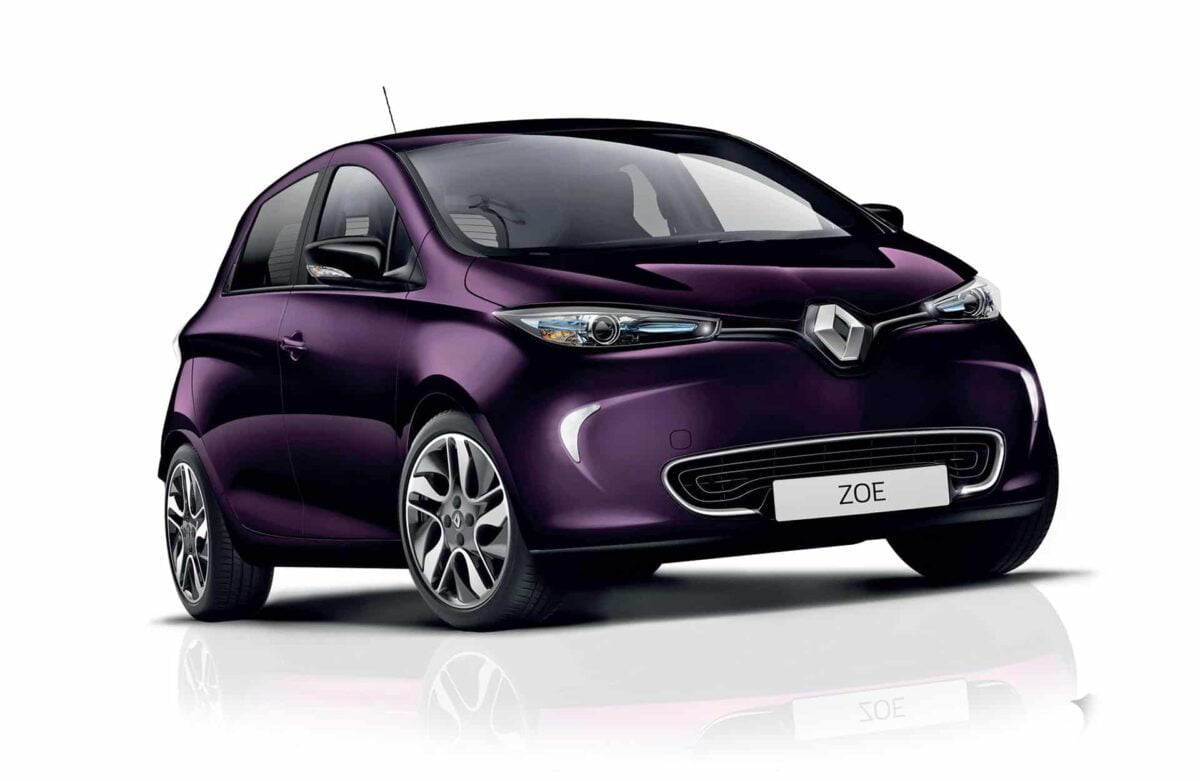
Minor trim updates and a more powerful electric motor have been announced for the Renault Zoe, with customer deliveries due to start in late summer.
Starting from £18,420 on-road (including the government plug-in car grant but excluding battery rental), the latest version features a new R110 electric motor offering increased power (up 20hp) but still with the same 186-mile real-world range – claimed to be the best of any mainstream electric vehicle. The R110 motor provides 110hp of power at 3,000rpm and 225 Nm of torque from just 250rpm. It accelerates from zero to 62mph in 11.9 seconds and has a top speed of 84mph.
For customers more likely to use public rapid chargers whilst travelling longer distances, the Q90 electric motor option is still available with both trim levels. This charges the Zoe from 0-80% full in just over an hour when using a 43kW charge point. The Zoe Q90 with Z.E.40 battery provides an estimated real-world range of 174 miles. The Q90 delivers 90hp at 3,000 rpm and 221 Nm of torque from 250rpm, accelerates to 62mph in 13.5 seconds and has a top speed of 84mph.
Zoe enters a purple patch
The latest Zoe offers new optional ‘Aconite’ dark metallic purple paint and an optional purple interior pack. Android Auto has been added to the R-Link Evolution infotainment system, allowing drivers to display driving-compatible Android applications stored on their smartphone on the Zoe’s touchscreen.
The optional Purple Interior Pack consists of a violet satin finish for the dashboard trim strip and air vent, gear lever base, speaker surrounds and top-stitching, with black and violet fabric upholstery.
The 2018 Zoe range has been simplified to a choice of two trim levels, Dynamique Nav and Signature Nav.
The entry-level Dynamique Nav comes with keyless entry, automatic lights and wipers, rear parking sensors, cruise control, climate control, seven-inch infotainment system with TomTom satnav. The top-spec Signature Nav adds leather upholstery, audio system by Bose, heated front seats, electrically-folding door mirrors and a reversing camera.
Zoe continues to be available to purchase in two ways. First, under a battery hire scheme, where pricing starts at £18,240 on-road after the government plug-in car grant, with battery leasing from £59 per month on top. Alternatively, drivers can buy the Zoe outright, with pricing starting from £24,020 on-road after the government plug-in car grant of £4,500 is accounted for.
Every Zoe purchased by a retail customer includes a 7kW fast-charging wallbox with free home installation.
New finance offers as well
Renault has also updated its finance offers for the entire Zoe range for the first half of 2018, with options available for both personal contract purchase (PCP) and hire purchase (HP).
Renault is offering 4.9% APR on three-year PCP deals (known as Renault Selections). Alternatively, customers can opt to finance their new Zoe on a 0% APR HP five-year deal. The offers are available either with or without the battery included.
As always, we have checked over the finance offers and highlighted the points you need to be aware of.
The fine print on the Renault Zoe finance offers
These finance offers are for selected new Renault Zoe models only. Renault PCP agreements are branded “Renault Selections”. HP agreements don’t get a catchy name.
The offers listed on the Renault website are only examples, and you are entitled to adjust the deposit and annual mileage to suit your own needs (within limits).
The annual mileages shown on the website examples are all set at 6,000. This is less than most drivers average per year, so make sure you are choosing an annual mileage allowance that suits your needs.
The 0% APR offers apply to selected hire purchase agreements only. If you want different terms, the interest rate may no longer be 0%.
The excess mileage on the PCP packages is 8p/mile. That’s £80 for every 1,000 miles you go over your limit, so make sure you allow yourself enough mileage when setting up the finance agreement. The fee only applies if you are giving the car back and claiming the guaranteed future value (GFV). HP customers do not need to worry about excess mileage.
Cars have to be ordered by 2 July 2018 and delivered by 31 August 2018.
The deposit contribution cannot be used in conjunction with any other advertised offer.
The finance offers are provided through Renault dealers by Renault Finance. If a dealer offers you a finance deal that does not match these details or from another lender, it is not part of this offer.
McLaren Special Operations (MSO), the bespoke division of McLaren Automotive, is extending its Sports Series with the introduction of the 570GT MSO Black Collection.
It features a new MSO bespoke carbon black exterior paint, as well as an upgraded sports exhaust with lightweight Nano Black finisher and sport pack. Only 100 examples are being offered globally at a price of £179,950, with deliveries starting this summer.
The MSO Defined Black Pack replaces standard-fit dark palladium components including front and rear splitters, side skirts and air intakes with black. Completing the look are the five-twin-spoke forged wheels with a new gloss black diamond finish, shod with Pirelli P Zero Corsa tyres and black brake calipers with carbon ceramic brakes.
The interior of the McLaren 570GT is enhanced with new MSO Black Collection trim, which includes a unique combination of jet black leather with carbon black Alcantara accents on the centre tunnel, lower instrument panel, headliner, steering wheel and speaker surrounds.
The electric and heated memory sports seats are wrapped in semi-aniline leather featuring unique MSO logo embroidery on the headrests. The ignition key is painted in carbon black, as is a bespoke dedication plate located under the centre console.
A panoramic roof incorporating a UV-filtering black privacy tint glass is standard and can be upgraded at additional cost to include an electrochromic function. This allows customers to select their preference from five different degrees of tint using electrochromic ‘smart glass’ technology.
The 570GT MSO Black Collection also includes the GT Upgrade Pack comprising vehicle lift, rear-view camera, electrically-adjustable steering column and a 12-speaker Bowers & Wilkins stereo system.
If you want a new hybrid car that won’t plunge in value during its first year then the one to go for is the Toyota C-HR, according to a new study by automotive data researchers HPI.
In fact, Toyota and its luxury brand Lexus dominated the results between them, affirming the company’s long-standing commitment to hybrid cars as a viable alternative to diesels for car buyers.
The HPI analysis looked at hybrid and plug-in hybrid vehicles at one year old and 10,000 miles, and found the Toyota C-HR (£26,301 new) retains 84.5% of its value in that period and loses around £4,000. The Lexus NX (£38,976) comes a close second, holding 79.5% of its value and losing £8,038 over the same period.
Commenting on the study, Chris Plumb from HPI said: “While hybrids have grown in volume in recent years, they still remain relatively scarce in the used market compared to the traditional fuel types.
“As plug-in hybrid vehicles have not been widely adopted by fleets in any volumes, supply reaching the markets is patchy and demand exceeds supply. Buyers should avoid high mileage and poor condition examples as they are a turn-off to second-hand buyers. Finally, always make sure you pick a vehicle with a full service history.”
The list is completed by; the Toyota Prius+ (78.6%), Suzuki Ignis (78.3%), Toyota RAV4 (77.4%), Kia Niro (77.2%), Toyota Prius (76.6%), Lexus IS (74.4%) and Hyundai Ioniq (74.1%).
Less than a third of UK drivers have enough personal association with their cars to give them a pet name, according to a survey by driving organisation IAM RoadSmart.
The poll, carried out by the independent road safety charity on its Facebook and Twitter channels, revealed how unsentimental Brits are when it comes to their vehicles.
On Facebook in the space of 24 hours this week 703 people voted: some 469 people said their car did not have a name (67%), while 234 had given their car a moniker. On Twitter 131 people voted. Some 69% said they had not given their car a name and 31% had.
Some names given to cars include a Hyundai i20 called Holly, a BMW called Brad, a Jeep called Dudley, a Volkswagen Beetle in yellow and black called Bumblebee and a Land Rover called Toby.
Other more individual choices include Gargamel (after the evil character in the Smurfs cartoon series), Black Dahlia, NATO Anti-Tank Vehicle (a Volvo 340!) and Dorcas (a Biblical character known for her good works).
One very affectionate account read: ‘Mr Bimble, our Metro – 23 years old, still bimbling along, and left everyone standing in the snow!’
Two people chose to call their cars KITT, after the talking Pontiac driven by Michael Knight (played by David Hasselhoff) in the ‘80s TV series Knight Rider. One of these is a Tesla Model S.
Sarah Sillars, outgoing chief executive officer of IAM RoadSmart, said: “People seemed to enjoy our survey, and while they clearly have a lot of affection for their vehicles, giving them a name seems to be a step too far for the majority. But even some of the very best drivers remain more than happy to buck the trend and give their car a name.”
What is it?
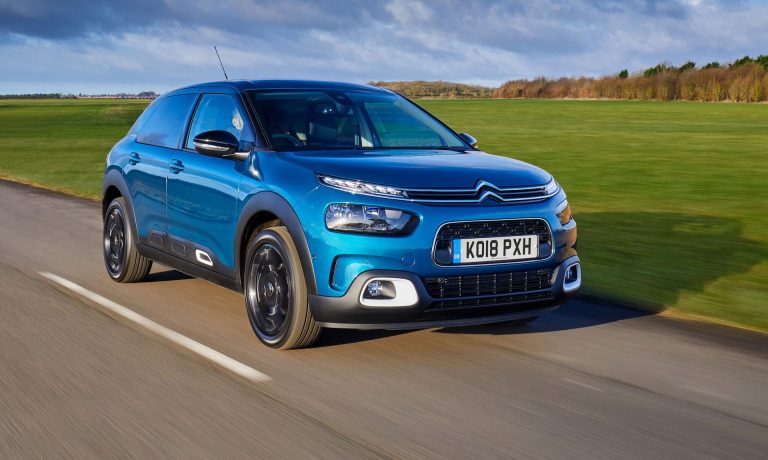
The latest Citroën C4 Cactus is an updated, repositioned version of the brand’s mould-breaking family car.
Key features
Improved ride quality, improved comfort, ‘different’ detailing
Our view
The new Citroën C4 Cactus has grown up, but while more conventional it’s not completely so, still offering styling to appeal, together with significant improvements in ride quality and interior comfort.
Anyone considering a Focus, Astra or Golf should also look at this.
Similar carsPeugeot 308, Volkswagen Golf, Ford Focus
The updated C4 Cactus is more conventional, but not too conventional
Full review
Introduction
The Citroën C4 Cactus first appeared in 2014 and kicked off a new era of more distinctive models from the French brand. The car was also hard to pigeon-hole and as Citroën already sold a Focus-rivalling C4 family hatch, some dubbed the Cactus an SUV.
But it wasn’t really like any normal SUV, in fact it wasn’t really like anything else, with its quirky styling, particularly on the interior and most controversially in the form of the large ‘airbump’ body cladding hung on the doors.
Now there is a significantly updated version of the Cactus, and Citroën has addressed the confusion, sort of. Firstly the new car is more grown up, so less quirky, though thankfully not to the degree that one would call it conventional.
It also now has a more obvious place in the Citroën line-up. In the last four years the C3 Picasso MPV has been replaced by the C3 Aircross SUV, and the C4 hatch, which didn’t sell in great numbers, has been dropped. All of which, Citroën’s marketing types tell us, creates a gap in the range for the Cactus to move “upmarket” into the family hatch segment. Simples…
The major changes to the new Cactus involve suspension and comfort – it’s the first model in the European Citroën range to get the ‘Progressive Hydraulic Cushion’ suspension system, and the first Citroën anywhere with the brand’s ‘Advanced Comfort’ seats.
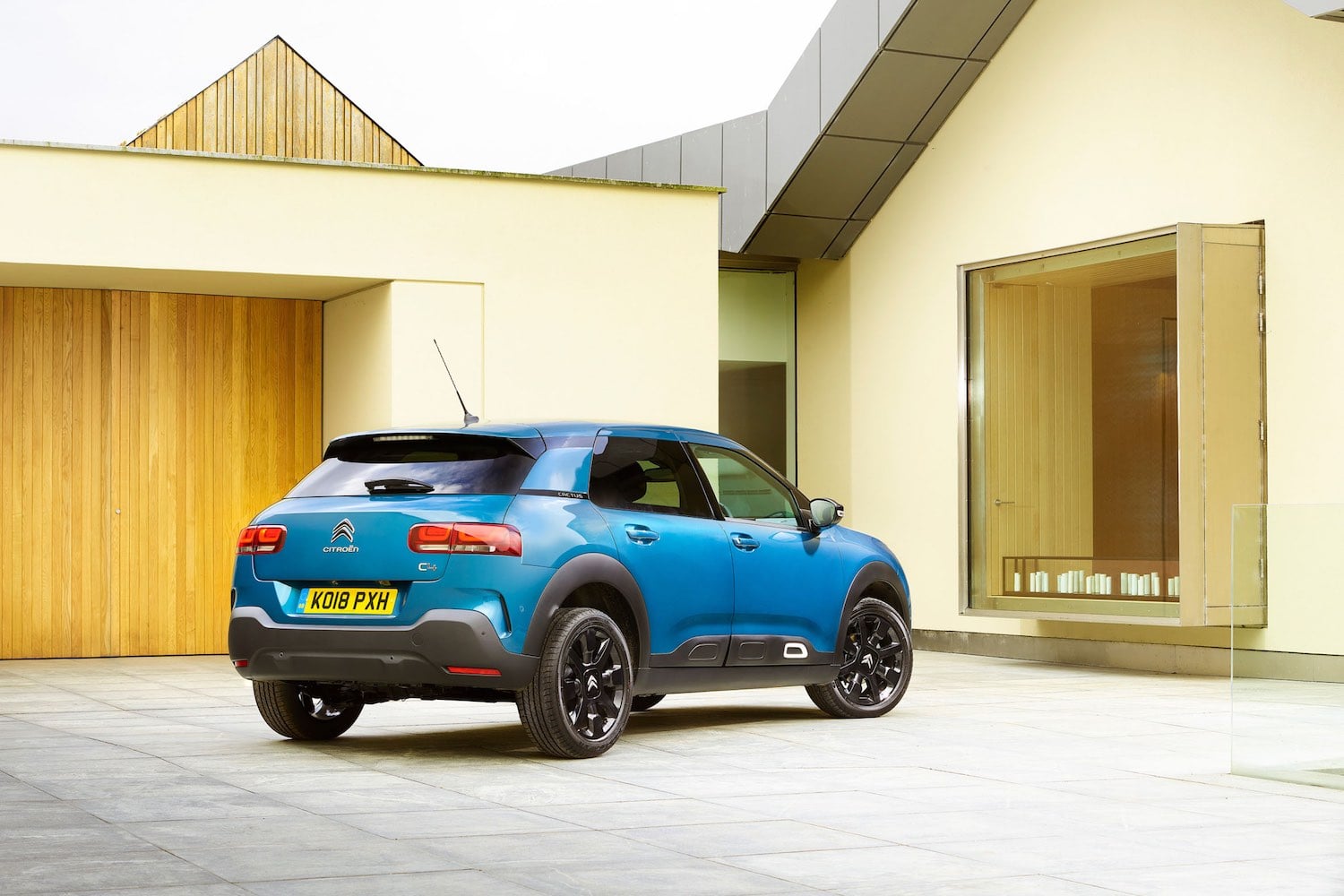
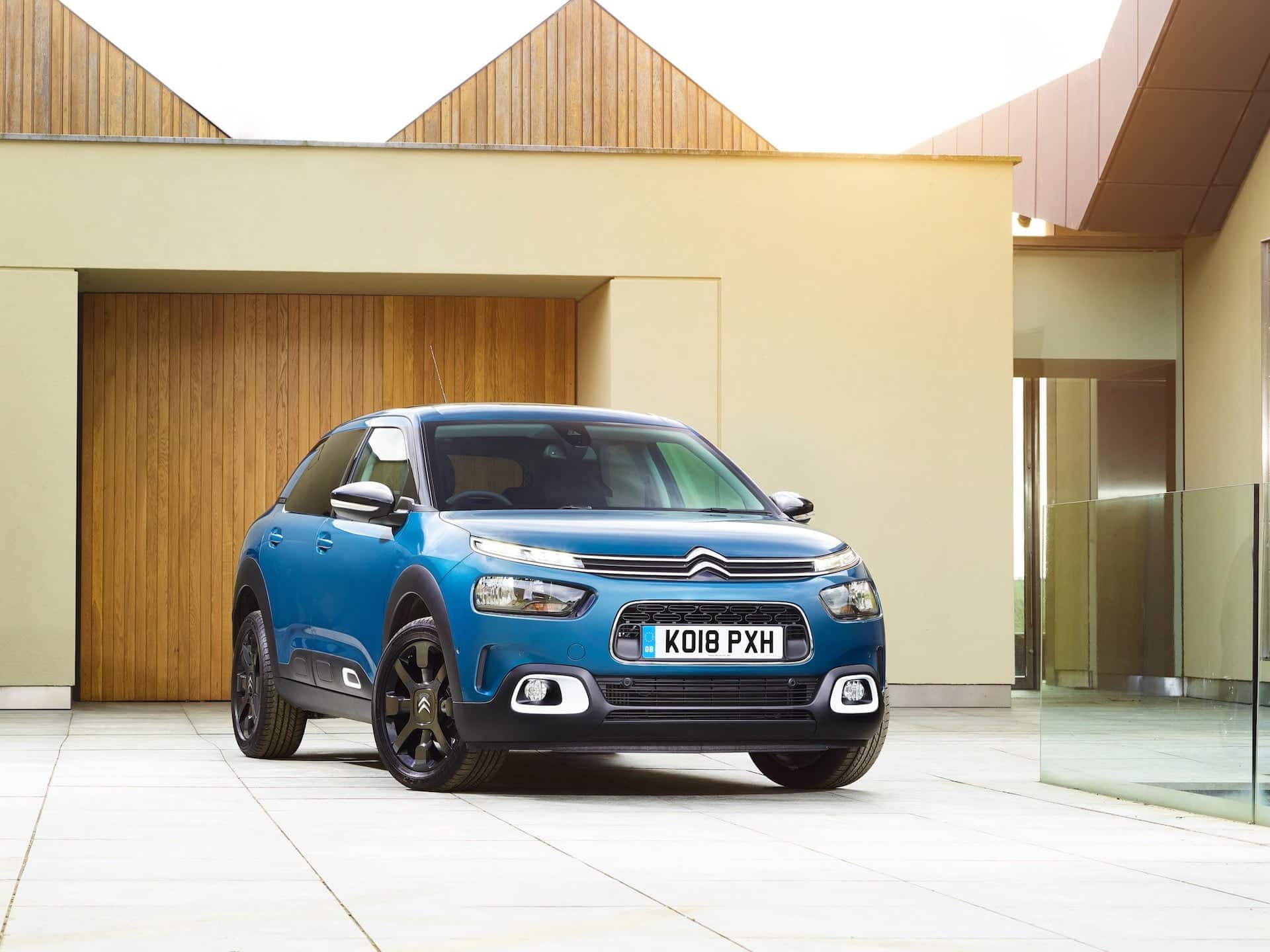
Externally, Citroën insists that 90% of the components have changed. The quirky, chunky looks that convinced some the car was an SUV, and helped to attract more than 30,000 buyers, have gone – the airbumps are still there, but now in a more innocuous strip at the base of the doors.
There is a broader look to the front end, extensive use of chrome detailing on front and back, while the new LED lamps have black inserts. The car looks stylish while more mainstream, but Citroën’s current mainstream is attractive, so it turns heads in the right way.
The new Citroën C4 Cactus is less quirky, more stylish
Buying and owning a Citroën C4 Cactus
This is a ‘mid-life evolution’ of the Cactus, so in terms of shell it’s the same as the outgoing car – 4.1 metres long with short overhangs front and rear, a 2.6-metre wheelbase, on underpinnings shared with the Peugeot 208 and DS 3. Citroën continues to claim a 150kg weight advantage over perceived rivals, the best power to weight ratio in the market we are told, leading to less fuel consumption and lower emissions.
The big change is in the suspension, with the addition on all versions of Citroën’s Progressive Hydraulic Cushions. Developed in the brand’s World Rally Championship motorsport programme, the system adds two hydraulic aids to the dampers, producing a ‘magic carpet’ ride. To prove it, the route on the UK launch event deliberately targeted some of the most pothole-scarred roads in Buckinghamshire.
The C4 Cactus is priced to compete, starting from a mere £17,265 – for now. This buys the Feel Edition, a specific launch model and the only one available with the 82hp petrol engine. After May the range will revert to Feel, starting from 17,965 with a 110hp engine, and Flair, from £19,865 again with the 110hp unit.
Said engine range is familiar to followers of PSA Group products, though we are told it has been revised for the new car. All three petrol units are three-cylinder units of 1.2 litres, the third being a 130hp version offered for the first time on the Cactus. All bar the 82hp variant are turbocharged, while for diesel fans there is a single four-cylinder 1.6 diesel of 100hp, the only engine to dip its CO2 emissions below 100g/km.
All engines are combined with five-speed manual gearboxes, apart from the 130 which gets a six-speed. Alternatively, the 110 petrol can be specified with a six-speed automatic transmission.
Feel models come as standard with such niceties as 16-inch alloy wheels, parking sensors, hill-start assist, fog lights that see around corners and an infotainment system based around a seven-inch touchscreen and including DAB digital radio, Bluetooth and smartphone compatibility.
Upgrade to Flair and the alloys get an inch larger while equipment highlights include a satellite navigation system with access to connected emergency and assistance services, a panoramic glass roof, rear parking camera and extra safety aids.
Personalisation is a big part of the Cactus offering and this includes 31 exterior colour combinations, focusing on nine body colours and four colour packs applied to such areas as the foglamp surrounds and airbumps. Four different interior designs are also offered.
At the time of writing the latest Cactus had not been crash-tested by Euro NCAP. Back in 2014, the previous version scored four stars, but the new model has gained from additional safety technology particularly in the form of driver aids. Autonomous braking, speed limit recognition and blind-spot monitoring are among a suite of driver assistance technologies available, though you do need to go for the Flair trim to get them as standard.
Inside the Citroën C4 Cactus
The ‘maturing’ of the C4 Cactus has not meant removing the interior niceties
Within the Cactus is hidden the second major innovation, the Advanced Comfort Seats. Citroën makes no bones about aiming to be a manufacturer renowned for the comfort of its cars, and goes about achieving it with large seat swabs, high-density foam, a thick textured surface and extra bolstering. At least for the front-seat occupants – those in the back make do with something more traditional.
However, it’s a comfortable environment whether in front or back. Even tall occupants will not feel cramped in the front seats, and while the rear is cosier there is plenty of room for two – it’s a bit tight for three.
Boot space, meanwhile, is 385 litres. This is comparable to many of the car’s rivals, and it’s a practical space – square with no lumps of suspension turret and the like getting in the way. However, it is a quite high loading lip to lift bags over.
Thankfully the ‘maturing’ of the Cactus has not extended to removing some of the interior niceties that this writer so liked on the original. The flat padded front shelf, forming the top of the glove box, remains, as do the very neat straps acting as door closers – quirky in a very positive way. Mind you in some areas this does seem to be at the expense of convenience features – the lack of grab handles above the doors is noticeable for example.
Driving the Citroën C4 Cactus
The C4 Cactus really does soak up virtually everything pitched up into it.
Much of our launch event testing was conducted with the 110hp engine, cars with this unit and in Flair trim expected to be the biggest sellers. It’s a refined powerplant and certainly suits the efforts made to take the car upmarket.
Being a three-cylinder, this unit does have the characteristic low-rev chug, which one notices basically due to it being the only audio note of any significance. Much effort has been expended on the acoustic comfort for occupants, with thicker glass, new door seals and more sound insulation. That engine note is by no means intrusive, if anything attractive, and soon fades to very little sound at all as the car accelerates.
Said engine is also eager in its acceleration but soon settles into a smooth cruise on the motorway. The 130 variant is certainly more powerful, though one questions whether it’s worth another £800 and fuel consumption and emissions penalties (albeit slight ones).
You have got to hand it to Citroën – the potholes and tarmac dips and bumps on the test route were truly scary in places. But as promised, the suspension of the Cactus really does soak up virtually everything pitched up into it. The most severe jolts are smothered to the point of being merely noticeable in the cabin, rather than alarming.
The car is quite softly suspended and one notices it when pitching into a corner, in that the car does lean over a bit, but it is all very controllable and overall this feels like a comfortable car to do many a mile in.
Summary
When the Citroën C4 Cactus launched in 2014 its basic refusal to conform to stereotype won it fans, and those fans may worry at talk of the car ‘growing up’. True, the exterior mods have made the Cactus look more conventional, though thankfully not completely, while inside the clever touches remain.
More importantly, the extensive revamp, particularly the suspension and interior comfort changes, have added significantly to the appeal of the car – they are indeed advances for which the function fulfils the hype.
The Cactus remains a car that will appeal to those who need a family hatch but who don’t want a family hatch like everyone else’s. And in this case, choosing to be different doesn’t come with penalties – in a very competitive market sector the Citroën C4 Cactus is very much a contender.
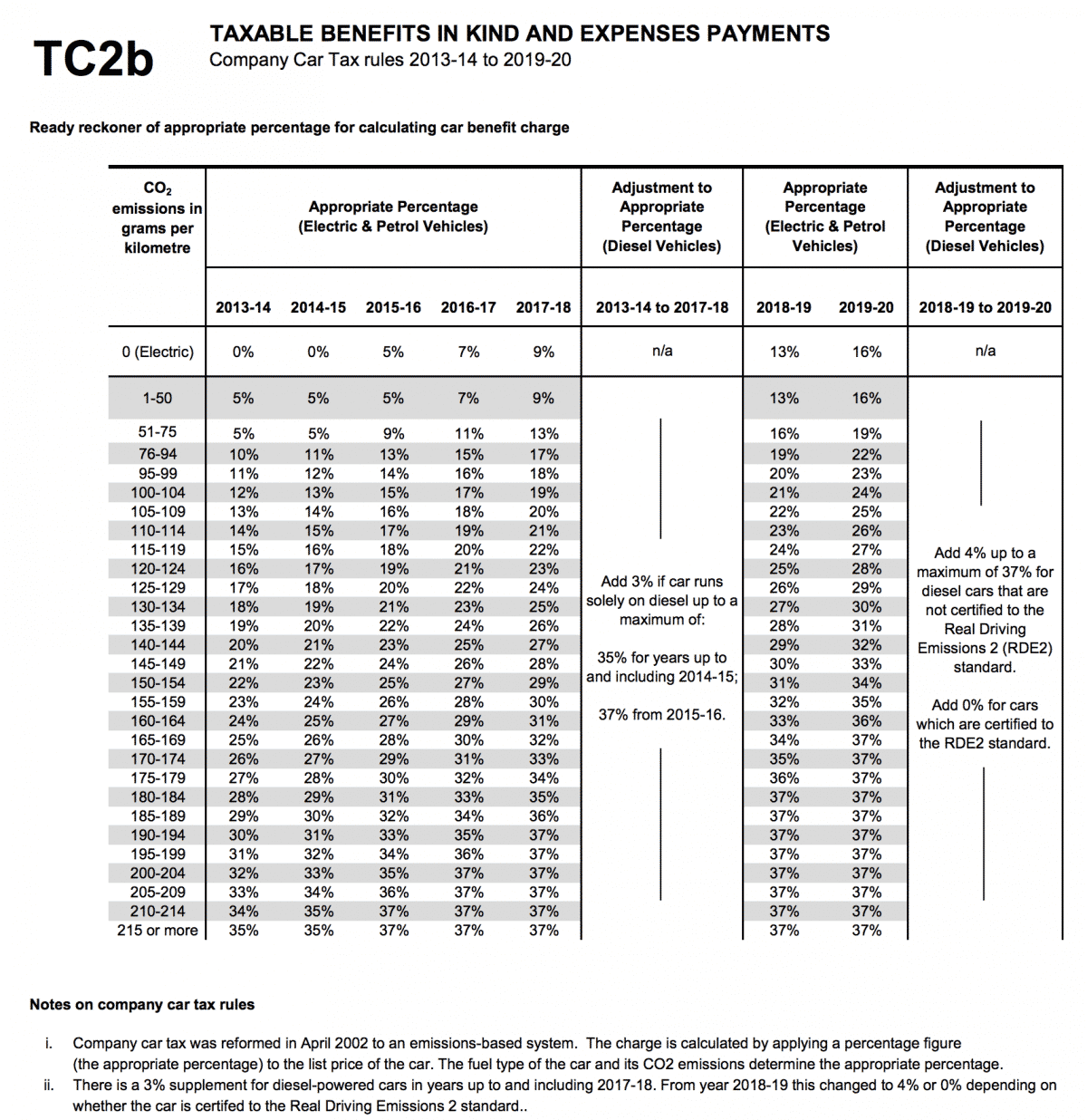
Company car drivers are being reminded that on 06 April, the start of the 2018/19 tax year, benefit-in-kind (BIK) tax rates will increase across the board.
For cars with carbon dioxide (CO2) emissions above 75g/km – which is most vehicles – there will be a 2% increase in BIK tax. This means, for example, that an employee driving a 120g/km petrol engined model will see their tax bill increase from 23% of the P11D value in 2017/18 to 25% in 2018/19.
At the low-emissions end of the scale, rates for cars with emissions of 0-50g/km increase by 4% and those with emissions of 51-75g/km by 3%.Source: gov.uk
Diesel supplement also increasing
What’s more, the current company car BIK tax supplement for diesel vehicles will increase from 3% to 4% at the same. As a result, employees driving diesel cars will experience a three percentage point tax hike starting next month.
The supplement increase is estimated by the Government to impact on 800,000 employees and is being applied to all diesel cars that are not certified to the Real Driving Emissions 2 standard. As of right now, there are no certified models available.
When HM Treasury announced the supplement increase in last November’s Budget it forecast that drivers of a BMW 3 Series (CO2 emissions 111-130g/km) would see tax bills rise in 2018/19 by £60 (basic rate taxpayer) and £120 (higher rate taxpayer), drivers of a BMW 6 Series (CO2 emissions 131-150g/km) by £125/250 and drivers of a Ford Focus (CO2 emissions 91-100g/km) by £43/£86.
Motorists are being advised to check the condition, tread depth and pressure of their tyres on a regular basis or face a fine of up to £2,500 and three penalty points for each defective tyre.
The warning has come from road safety and breakdown organisation GEM Motoring Assist, as the Government commissions a study to understand the relationship between tyre degradation, time and road safety.
GEM road safety officer Neil Worth commented: “We rely on our tyres to keep us safe on journeys. After all, they provide the only contact between the car we’re driving and the road surface. In an extreme situation, correctly-inflated tyres with good levels of tread will allow all the other safety systems on a car to work at their most effective.
“Inadequate tread or incorrect pressure mean one thing: the safety systems on your vehicle will not work as efficiently. That’s why regular checks on tyre inflation and tread depth are so important.”
GEM points out that there are also fuel economy benefits from properly-inflated tyres – incorrect inflation increases the chances of damage to a tyre, and under-inflated tyres create more resistance on the road, leading to an increase in fuel consumption and CO2 emissions.
Neil Worth concludes: “We’re urging drivers to take time on a regular basis to ensure their tyres are correctly inflated, with plenty of tread. Straightforward checks don’t take long, and good tyres really could prove a life-saver for you and your passengers… possibly on your very next journey.”
Eight simple tyre care tips:
Check the tread on each tyre on a regular basis – every two weeks should be a minimum.
Remember that you should carry out proper checks across the entire width of a tyre and around its circumference. Check the depth of the main tread grooves in several places across and around the tyre.
Use a simple gauge to check tread depth. The legal minimum tread depth for a car is 1.6 mm across the central three-quarters of the tread width and round its entire circumference.
You will also find tread wear indicators at regular intervals around the main grooves. When a tyre’s tread surface is worn to the same level as these indicators, then the tyre is at the legal limit and must be replaced.
Check for any cuts, tears, swellings and bumps. These could be caused by going through a pothole or hitting the kerb. If there’s anything to give you cause for concern, then get the tyre checked by an expert as soon as possible.
Check pressure using a tyre pressure gauge or the air machines found on most garage forecourts (some will charge you, a few are still free). Pressures for your car can normally be found in your owner’s manual. You may also find the pressure marked on the driver’s door pillar or inside the fuel flap. Otherwise, look up the pressures you need using a tyre pressure website.
Recommended tyre pressures change if you are carrying a full load or a lot of passengers. So make sure you use the right figure for the journeys you are about to make.
Don’t forget to check the condition of your spare tyre. Too often it’s the forgotten tyre until you suddenly find you need it.
Last year more than a quarter of all drivers changed their car insurance provider, according to new figures from comparison site GoCompare.
The number of people in the UK who switched their car insurance increased from 22% in 2016 to 27% in 2017. The increase in switching activity has been largely attributed to rising premiums in the car insurance market, which reached record levels last year and are believed to have prompted more drivers to investigate their options.
Average motor premiums rose by 9% in 2017, according to the Association of British Insurers (ABI), adding an extra £40 to the average motor insurance policy.
In a wide-ranging survey, the report revealed that 47% of people switched at least one of the top 10 financial products in the last 12 months, with car, home insurance and household utilities the most likely to be switched.
Matt Oliver from GoCompare commented: “In 2017 car insurance premiums hit a record high and the cost of home cover also increased, and it seems this was the cue for many people to shop around and switch to a better deal. We know from our own research that nothing makes loyal customers head for the exit quicker than an insurance renewal letter telling them their premium is going up.
“Customers have woken up to the fact that, where insurance is concerned, loyalty doesn’t pay. Providers typically use their best deals to attract new customers, so often the only option for existing customers is to go elsewhere.
GoCompare’s top five tips to help people get the best deals
Plan ahead in order to give yourself time to review your arrangements and make sure that you’re still getting a good deal, keep a diary note of key dates including renewal dates, expiry dates of fixed rates or tariffs, the end of introductory offers.
Never accept an insurance renewal or energy tariff change without first checking that the new price you are being offered is competitive.
As well as comparing prices and headline rates, check the small print of the deal you are being offered. Make sure that you are making like-for-like comparisons and understand all the charges, any penalties, exclusions and terms and conditions you will be required to meet, and that the product is right for you.
If you’ve signed up for a product with an attractive introductory rate, make sure you review the arrangement before the end of the offer period otherwise you could end up paying more in the long run.
Use a comparison website – they provide quick and up-to-date information on a wide range of financial products and services.
Fiat has unveiled yet another new 500 special series, this time called Collezione. It is available both as a hatch and a convertible, featuring new chrome trims on the front bumper, bonnet and mirror caps, an exclusive 16-inch alloy wheel design and two new two-tone paint schemes.
Several colour combinations can be chosen, including the two-tone Primavera (Bossa Nova White and Lunar Grey) and Acquamarina (Bossa Nova White and Smooth Mint) combinations, as well as Taormina Ivory, Bossa Nova White White and Epic Blue. A chrome Collezione logo autographs the boot lid.
The interior has a colour-coded dashboard: white in combination with Primavera and mint in the combination with Acquamarina. The seats are also in two colours, with a grey striped base and ivory upper section, and are embroidered with the 500 logo. The Collezione logo also appears inside, embroidered on the floor mats.
The new Fiat 500 Collezione is optionally available with Fiat’s latest seven-inch touchscreen and HD LIVE radio, which is also Apple CarPlay ready and Android Auto compatible. There are also the options of integrated TomTom navigation and a Beats Audio stereo upgrade.
The Fiat 500 Collezione is on sale now. It is only available with the 1.2-litre 69hp petrol engine, coupled with either a five-speed manual or Dualogic automated manual transmission. Prices start at £13,865 on-road.
Vauxhall has introduced its electronic IntelliGrip traction control system on the new Grandland X SUV, which was not available when the model was launched last year.
The system is exactly the same as available on various Peugeot SUVs, which is not surprising as the Grandland X is based on the Peugeot 3008. It uses the car’s stability control and engine management settings to optimise grip for four different surfaces (road, snow, mud and sand, plus you can disable it altogether). Only the front wheels are driven, as with any Grandland X model.
The idea is that the IntelliGrip system offers comparable traction and stability to a four-wheel drive system but with much less weight, and therefore better fuel economy and emissions.
The system has been broadly praised in reviews of different Peugeot models, although ultimately it is not a genuine off-road substitute for a full four-wheel drive system. For the light dusting of dirt or snow that your average faux-by-four will ever have to face, however, it’s likely to be perfectly satisfactory.
There are five modes available to the driver to select from:
Normal/On-road: Default setting for normal on-road driving. The electronic stability programme (ESP) and traction control are calibrated for normal road driving conditions.
Snow: Traction control minimises the slip of the front wheels, slows the spinning wheel down and transfers the torque to the other front wheel.
Mud: This mode allows more slip on muddy surfaces, enabling the wheel with the least traction to spin when the vehicle is launching to ensure that mud is removed and the tyres can re-establish traction. Meanwhile, the wheel with the highest grip is provided with the highest torque.
Sand: Sand mode allows a small amount of simultaneous wheel spin on the two driven wheels, enabling the car to advance and reducing the risk of sinking.
ESP Off: This deactivates the ESP and traction aids to give the driver complete control over the vehicle’s movement at low speed. The electronic nannies automatically switch back on into normal mode at speeds above 31mph.
The IntelliGrip system is available with any of the powertrain combinations on the Grandland X, excluding 2.0-litre 177hp diesel variant in Ultimate trim. It is part of the “All Road Pack” option, which also includes five-spoke, 18-inch alloy wheels and 225/55 R18 all-season tyres. The “All Road Pack” option can be selected for SE, Tech Line Nav, Sport Nav and Elite Nav model variants.
Dacia has revised its compact SUV Duster line-up and launched two new trim levels, expending the range to a total of three grades; Access, Air and Nav+.
The new Air trim starts at £10,995 on-road and features air conditioning, DAB digital radio, Bluetooth connectivity, height-adjustable driver’s seat, 16-inch steel wheels, body-coloured front and rear bumpers, electric front windows, USB and AUX connections, and front fog lights as standard.
The new Nav+ trim starts at £13,095 on-road and, in addition to the Air, adds a seven-inch touchscreen multimedia system with satnav, rear parking sensors, reversing camera and 16-inch alloy wheels. It also features electric rear windows, heated and electrically-adjustable door mirrors, on-board computer and a leather steering wheel.
Access and Air versions of the Duster are available with a 1.6-litre 115hp petrol engine. The Nav+ is available with a 125hp petrol engine or a 1.5-litre dCi 110hp diesel engine.
All versions of the Duster can be specified with either two-wheel drive or four-wheel drive and a manual gearbox. The automatic six-speed automatic transmission is only available on Nav+ trim with the diesel engine, priced at £15,495 on-road. The pairing returns fuel economy of 62.8mpg (NEDC combined) and CO2 emissions of 116g/km.
The new Duster range, which starts at £9,495 on-road, is available to order now with first customer deliveries from April.
The 2016 Ford Ka (petrol manual) was, on average, the fastest-selling used car at dealerships in the UK last month according to Auto Trader, taking an average of 17 days to leave forecourts.
Hot on its heels were three SUVs, the 2015 Audi Q5 (diesel automatic) and the 2015 Vauxhall Antara (diesel manual) which both took an average of 19 days to sell in February, and the 2011 Audi Q5 diesel manual, which averaged 20 days between arriving on the forecourt and departing with a new owner.
Wintry conditions in February boosted the popularity of SUVs, with six of the ten fastest-selling vehicles on Auto Trader being 4x4s (or faux-by-fours). The Hyundai ix35, Volvo XC90 and Mazda CX-5 also made the top ten.
The 2015 Ford Ka was the fastest-selling car in February, says Auto Trader
February was another solid month for used diesel cars, making up seven of the national top ten-selling models on its site. A diesel also took the top spot in three of the 13 regions and countries tracked: North West (2016 Hyundai Tucson – diesel manual – 19 days), Wales (2017 Nissan Qashqai – diesel manual – 24 days) and Northern Ireland (2017 Volkswagen Golf – diesel manual – 37 days).
Hatchbacks were outnumbered nationally, but at a regional/country level, they were the clear winners, recording the fastest turn of sale in all but one region. In fact, so popular was the hatchback in the West Midlands, the South West, Yorkshire and Northern Ireland last month, no other body type made it onto their respective top tens.
So, what does this mean for used car buyers? Well, if you’re looking for a two-year-old Ford Ka or one of the other popular models listed above, you need to move fairly quickly rather than dragging your heels. And you should probably not expect as much opportunity to haggle on price as you might get on less popular models.


 Toyota adds that both of the powertrains in the RAV4 will be new, a 2.0-litre petrol unit and a 2.5-litre hybrid. A diesel option is not expected to be offered, and it’s possible that UK buyers will only be able to choose the hybrid – performance and economy figures for which are yet to be released.
The hybrid uses a newly-developed electric motor drive that employs two electric motors, one on each axle. This format cuts energy losses which aids fuel economy, while offering an effective all-wheel-drive system. A front-wheel drive variant could also be offered.
When the new RAV4 goes on sale its biggest rival will be the Nissan Qashqai, British built and currently the UK’s best-selling SUV.
Toyota adds that both of the powertrains in the RAV4 will be new, a 2.0-litre petrol unit and a 2.5-litre hybrid. A diesel option is not expected to be offered, and it’s possible that UK buyers will only be able to choose the hybrid – performance and economy figures for which are yet to be released.
The hybrid uses a newly-developed electric motor drive that employs two electric motors, one on each axle. This format cuts energy losses which aids fuel economy, while offering an effective all-wheel-drive system. A front-wheel drive variant could also be offered.
When the new RAV4 goes on sale its biggest rival will be the Nissan Qashqai, British built and currently the UK’s best-selling SUV.


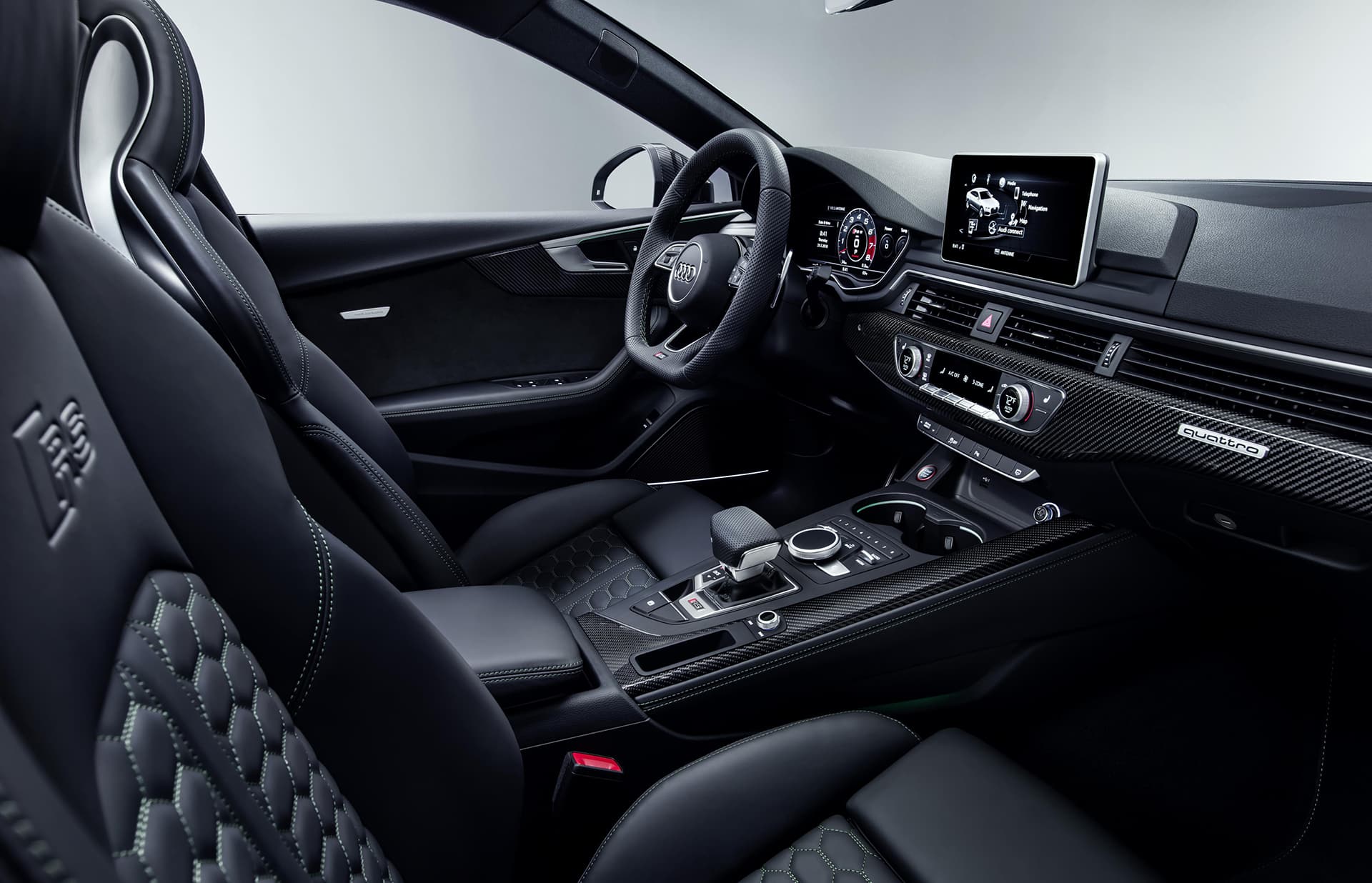 Inside are sport seats in Nappa leather with honeycomb stitching, a flat-bottomed multifunction sports leather steering wheel and RS-specific information displays in the ‘virtual cockpit’ digital display providing information on tyre pressure, torque and G forces.
The RS 5 Sportback will also be a practical performance car. Its boot offers a 480-litre capacity extending to 1300 litres when the rear seats are fully folded. Alternatively, these can be folded in a 40:20:40 split ratio.
Audi is targeting the RS 5 Sportback initially at the North American market, targeting the likes of the
Inside are sport seats in Nappa leather with honeycomb stitching, a flat-bottomed multifunction sports leather steering wheel and RS-specific information displays in the ‘virtual cockpit’ digital display providing information on tyre pressure, torque and G forces.
The RS 5 Sportback will also be a practical performance car. Its boot offers a 480-litre capacity extending to 1300 litres when the rear seats are fully folded. Alternatively, these can be folded in a 40:20:40 split ratio.
Audi is targeting the RS 5 Sportback initially at the North American market, targeting the likes of the 


 The engine is combined as standard with an eight-speed auto transmission and with the Q4 all-wheel-drive system – in normal mode the vehicle is rear-wheel-drive, with 100% of its torque put through the rear axle, but can transfer up to 50% to the front when conditions demand.
Alfa Romeo’s Chassis Domain Control co-ordinates a suite of electronic aids including active suspension, the electronic stability control and torque vectoring. The latter employs two electronically controlled clutches in the rear differential, separately assigning torque to each wheel, ensuring the most effective power transfer to the road under demanding conditions such as cornering on the limit.
Specification of the Quadrifoglio will be range-topping and will include bespoke 20-inch alloy wheels that require reprofiled wheel arches, a restyled rear diffuser, a four-pipe sports exhaust and bi-xenon headlamps with LED daytime running lights.
Notable elements inside include a leather dashboard and door tops, leather and Alcantara seats, leather steering wheel, carbon fibre trim and stainless steel pedals. An 8.8-inch Alfa Connect infotainment system sits in the centre console and includes Apple CarPlay and Android Auto smartphone compatibility..
The safety specification is extensive too, including Autonomous Emergency Braking, Lane Departure Warning, Blind Spot Monitoring, an Integrated Braking System, Forward Collision Warning and a rear-view camera with guidance lines.
First UK deliveries of the Alfa Romeo Stelvio Quadrifoglio are expected in the summer.
The engine is combined as standard with an eight-speed auto transmission and with the Q4 all-wheel-drive system – in normal mode the vehicle is rear-wheel-drive, with 100% of its torque put through the rear axle, but can transfer up to 50% to the front when conditions demand.
Alfa Romeo’s Chassis Domain Control co-ordinates a suite of electronic aids including active suspension, the electronic stability control and torque vectoring. The latter employs two electronically controlled clutches in the rear differential, separately assigning torque to each wheel, ensuring the most effective power transfer to the road under demanding conditions such as cornering on the limit.
Specification of the Quadrifoglio will be range-topping and will include bespoke 20-inch alloy wheels that require reprofiled wheel arches, a restyled rear diffuser, a four-pipe sports exhaust and bi-xenon headlamps with LED daytime running lights.
Notable elements inside include a leather dashboard and door tops, leather and Alcantara seats, leather steering wheel, carbon fibre trim and stainless steel pedals. An 8.8-inch Alfa Connect infotainment system sits in the centre console and includes Apple CarPlay and Android Auto smartphone compatibility..
The safety specification is extensive too, including Autonomous Emergency Braking, Lane Departure Warning, Blind Spot Monitoring, an Integrated Braking System, Forward Collision Warning and a rear-view camera with guidance lines.
First UK deliveries of the Alfa Romeo Stelvio Quadrifoglio are expected in the summer.


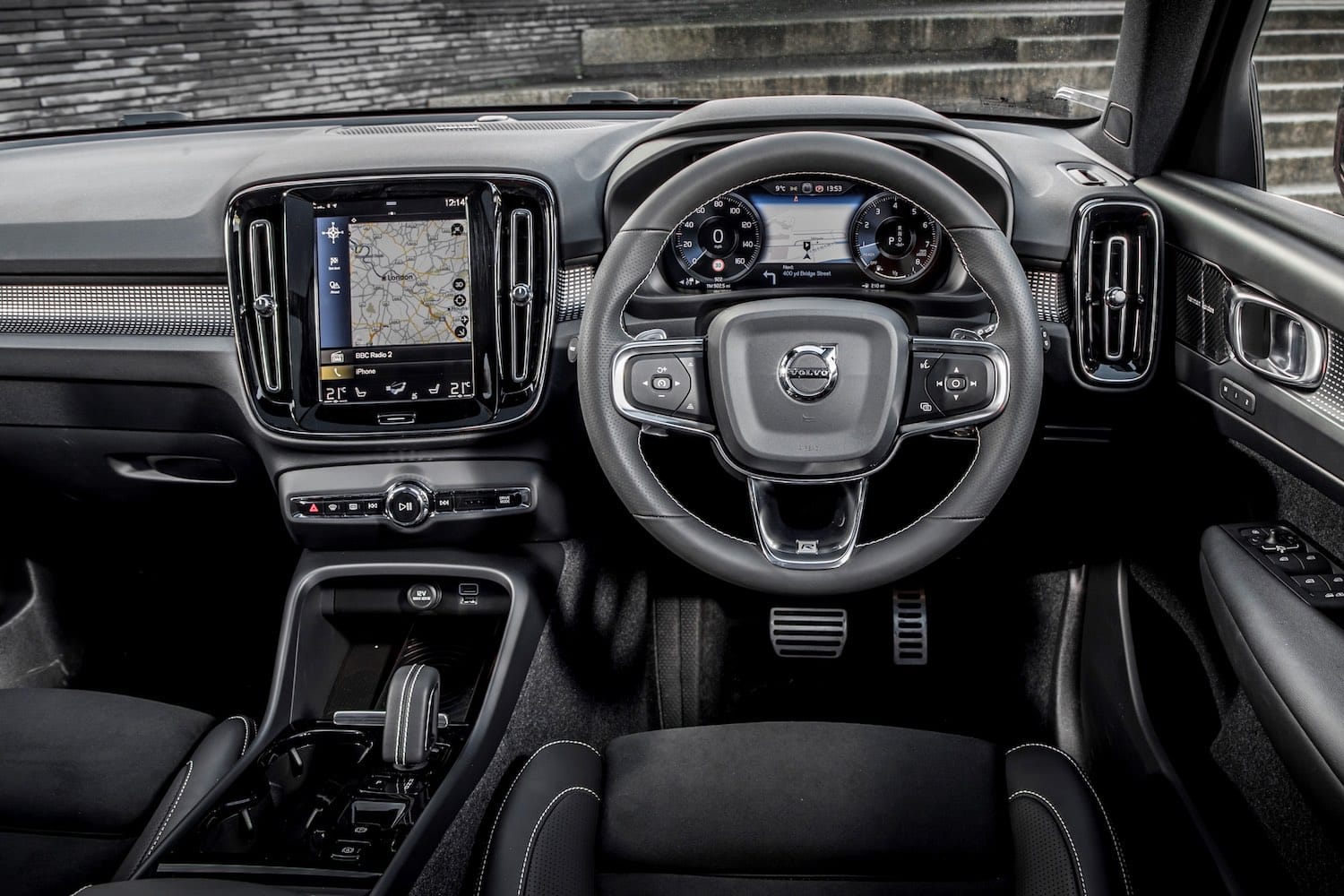


 Highlight of the interior is Volkswagen’s ‘Innovision Cockpit’ – a fully digital instrument setup on a 12-inch display can be combined with the Discover Premium infotainment system which uses its own 15-inch screen, resulting in a major reduction in buttons and switches. Volkswagen says that the car can adapt to individual occupants’ tastes, using a new level of connected systems and programmes.
The Touareg will also offer the largest and widest range of driver assistance, handling and comfort systems yet seen on a Volkswagen. These range to a thermal-imaging camera spotting pedestrians and animals at night, all-wheel steering and a front cross traffic alert system.
European Touaregs will initially go on sale with V6 diesel engines of either 231hp or 286hp. A V6 petrol engine of 340hp is set to follow, while a V8 turbodiesel of 421hp is also planned and is predicted to be in the eventual UK line-up.
Early Chinese versions of the Touareg will include a plug-in hybrid model with 367hp – Volkswagen is not saying when this is likely to come to Europe though it is expected to. All powertrains are expected to include an eight-speed auto transmission and all-wheel-drive.
Highlight of the interior is Volkswagen’s ‘Innovision Cockpit’ – a fully digital instrument setup on a 12-inch display can be combined with the Discover Premium infotainment system which uses its own 15-inch screen, resulting in a major reduction in buttons and switches. Volkswagen says that the car can adapt to individual occupants’ tastes, using a new level of connected systems and programmes.
The Touareg will also offer the largest and widest range of driver assistance, handling and comfort systems yet seen on a Volkswagen. These range to a thermal-imaging camera spotting pedestrians and animals at night, all-wheel steering and a front cross traffic alert system.
European Touaregs will initially go on sale with V6 diesel engines of either 231hp or 286hp. A V6 petrol engine of 340hp is set to follow, while a V8 turbodiesel of 421hp is also planned and is predicted to be in the eventual UK line-up.
Early Chinese versions of the Touareg will include a plug-in hybrid model with 367hp – Volkswagen is not saying when this is likely to come to Europe though it is expected to. All powertrains are expected to include an eight-speed auto transmission and all-wheel-drive.