Looking for vans, pick-ups and light commercial vehicles? Visit our sister site, The Van Expert.

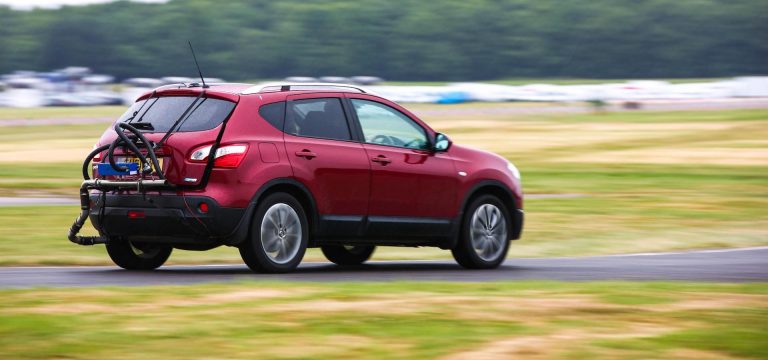
WLTP may not be the snappiest of abbreviations, but it will soon become an important part of the car-buying process along with monthly payment budgeting, creature comfort choices and, of course, colour.
In essence, this is a new fuel economy and emissions testing regime aimed at holding car manufacturers more accountable for the data they produce on new cars, while giving customers a more accurate picture of how their car will perform in the real world.
The Car Expert looks at what WLTP is all about and how it will become part of your decision making when buying a car.

WLTP stands for the somewhat cumbersome “World Harmonised Light Vehicle Test Procedure”.
It’s a new EU testing regime launched in September 2017. New cars are tested in a completely new way to give buyers more reliable figures on achievable miles per gallon (mpg) and carbon dioxide (CO2) emissions.
In theory, this should help you more accurately compare and select the car best suited to the type of driving you do. It will also determine how much road tax (actually called vehicle excise duty, or VED) or company car benefit-in-kind (BIK) tax you will have to pay; both of which will continue to be linked to CO2 emissions.
It’s now six months since WLTP was introduced, and in another six months (September 2018) there will be WLTP test information on all new cars on sale in UK showrooms.
No. Regardless of what happens with Brexit, this is a European-wide standard that is part of a wider regulatory process. It forces all car manufacturers to dramatically reduce the CO2 emissions of new cars.
Car makers have been ordered by the EU to reduce the average CO2 emissions across all new cars sold in 2021 to just 95g/km or face hefty fines. As all car manufacturers will have to build cars that comply with this order for other European markets anyway, it would make no sense for the UK to implement different regulations.
Good question. The answers range from a genuine need to address air quality across the continent, especially in heavily congested cities – some of which have already moved to ban diesel-engined cars – as well as the lasting legacy of Dieselgate, where the Volkswagen Group was found to have falsified the CO2 ratings of certain vehicles when undergoing emission testing.

Also, the previous system was antiquated and widely discredited. First introduced in the 1980s and not updated since 1997, the New European Driving Cycle (NEDC) relied solely on rolling-road tests to produce emissions and fuel economy ratings reflecting the best possible outcomes in controlled laboratory conditions.
However, cars have moved on since the NEDC tests were last updated more than 20 years ago. The average vehicle is now loaded with high-tech safety and comfort features, from electronic stability control, parking sensors and airbags, to air conditioning, heated windscreens and electric seats. Yet the way vehicles were tested had not kept pace, resulting in a gap between performance in the lab and on-road where fitment of these in-car technologies can differ across models, and conditions such as speed, congestion, road surface and driving style can vary dramatically from journey to journey and driver to driver.
These advanced safety and comfort features may not be fitted to vehicles as standard and only available at extra cost, or they may be fitted in some countries but not others. Many of these items can impact the weight and/or aerodynamics of a car, and therefore affect their emissions and fuel economy. Yet under the current rules, only the most basic model without any such extras is tested.
Under WLTP, cars will be individually rated according to what gear they have onboard. It’s fair to assume that the more kit is added, the poorer the rating will be, and this will impact pricing. Expect car makers to look closely at how they can bundle creature comforts together and delete some options to achieve the best possible ratings and prices.
The car manufacturers have also become exceptionally good at gaming the current system, by optimising their vehicles to perform better in the lab tests – even if that means compromising real-world performance for their customers. The idea is that this should not be possible under the new tests.
Ultimately, car buyers should get a better idea of what the real fuel economy and emissions levels of a new car should be under WLTP than the old NEDC tests.

The old NEDC system determined test values based on a theoretical driving profile; think of boffins in lab coats with clipboards gathered around a car on a rolling road.
However, the WLTP cycle was developed using far more rigorous rolling road testing (see the infographic below), combined with real-world driving data to better represent everyday driving. What this means is that the boffins are still there (although clipboards have been traded for tablets) but their laboratory findings are married to those produced by cars driven by real drivers on real roads equipped with high-tech emissions measuring devices.
The WLTP driving cycle is divided into four parts with different average speeds reflecting different roads: low (city), medium (urban), high (A-road) and extra high (motorway). Each part contains a variety of driving phases, stops, acceleration and braking phases. For a certain car type, each powertrain configuration is tested with WLTP ratings reflecting the car’s lightest (most economical) and heaviest (least economical) loads.
WLTP was developed with the aim of being used as a global test cycle across different world regions, so tailpipe emissions and fuel consumption values would be comparable across borders. It will be the new standard across Europe, with other governments invited to recognise it for their countries.
What differentiates WLTP from NEDC is the inclusion of (sorry folks!) yet another acronym: RDE, or Real Driving Emissions.
In a world first, new models being developed for sale in the UK and Europe will need to prove their air quality credentials by undergoing real-world road testing.
This uses special portable emissions measurement equipment to record and analyse the trace tailpipe emissions of pollutants CO2, nitrogen oxide (NOx) and particulates, while the car is driven in a wide range of every-day and extreme conditions, including carrying a heavy load up a steep hill at high speed in very low temperatures.
RDE testing has been designed to demonstrate that new cars’ emission ratings are those achieved in real-world conditions meaning the tough Euro-6 engine emissions standard are met on the road as well as in the lab.

Not very well! It is expected that most cars tested under WLTP and RDE are likely to show poorer fuel economy and higher CO2 emissions than the same car tested under the old NEDC test.
According to JATO Dynamics, the automotive industry research company, cars already retested under WLTP are showing a greater than expected increase over their original NEDC CO2 rating.
Significant rises in CO2 emissions were found across the board. For example, a Peugeot 308 with a 1.2-litre 130hp petrol engine saw its rating rise from 104g/km (NEDC) to 117g/km (WLTP), an increase of 13%.
Meanwhile, a BMW X6 3.0-litre diesel increased from 157g/km (NEDC) to 183g/km (WLTP), an increase of 17%.
Expect similar discrepancies in the fuel consumption figures published by car manufacturers, especially as the current claimed combined ratings are mostly unachievable in real-world driving.
Yes. From September 2018, if a car has not got its WLTP certification it cannot be sold in the UK.
By September 2019, all cars will also have undergone the full RDE testing for both NOx and particulate emissions.
Not just yet, as there will be a transition period in place while the new standards are phased in. New cars will be tested under both the new WLTP and old NEDC protocols until 2020. The exisiting NEDC ratings for CO2 and fuel consumption will still be used to calculate both road tax (VED) and benefit-in-kind (BIK) company car tax until 2020.
This will probably be confusing at first, but it will at least allow car buyers to see how inaccurate the old tests are in comparison to the new ones. If you are comparing different models when you are looking to buy a new car, it will be very important to make sure you are comparing like-for-like figures, rather than the new WLTP figure for one car against the old NEDC figure for another car.
Hopefully from 2020, when the old NEDC ratings are finally phased out, there will be more clarity.


What is it?
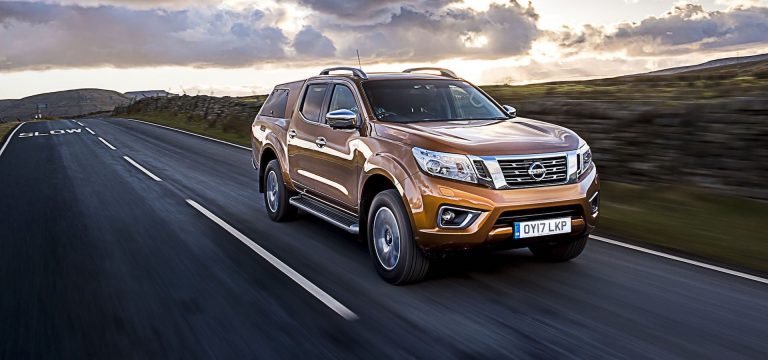
The current Nissan Navara is the third generation of a core pick-up contender.
Key features
Multi-link rear suspension, improved interior, downsized engines
Our view
The current, third-generation Nissan Navara does a very good job of bringing SUV-like refinement to the pick-up sector without compromising payload capacity or off-road ability.
Rear suspension changes, in particular, have made the Navara Double Cab a vehicle one can confidently use at work in the week and at play over the weekend.
Similar cars
Ford Ranger, Mitsubishi L200, Toyota Hilux
The Nissan Navara is one of the best-known pick-up trucks on the market, and when the latest, third-generation model went on sale in 2016, it replaced a model that had lasted for a decade.
The revamp was not before time for other reasons. The Navara has always had core rivals in the Toyota Hilux and Mitsubishi L200, but recently, the pick-up market has significantly expanded.
The new Renault Alaskan is essentially another version of the Nissan; the Volkswagen Amarok is rising in popularity, and in particular, Ford’s decision to properly sell its Ranger in Europe for the first time has proved a big success, the model becoming very familiar on UK roads. And if money’s no object, one can even buy a Mercedes-Benz pick-up now – like the Renault, it’s also based on the Navara platform.
So the Navara has had to raise its game, and Nissan’s recipe has been to make improvements in several areas without compromising the features that have previously made the vehicle so popular, especially its go-anywhere all-wheel-drive capability.
The Navara is available as a King Cab or Double Cab – our test vehicle is the latter, and it is this that has seen the major chassis changes. The leaf springs formerly suspending the back axle may have suited the working environment but they were somewhat harsh on rear-seat occupants, so the replacement with a multi-link setup was welcome.
Up front, the 2016 update saw the diesel engine downsized to 2.3 litres, which can be had with either 160 or 190hp. It’s up to 24% more efficient than the engine it replaced.
Inside there were major quality upgrades, along with a healthy injection of the latest technology including such niceties as the 360-degree around view monitor, which Nissan was an early adopter of.

Double cab pick-ups have become more and more popular as genuine dual-purpose vehicles – work truck during the week and family car on the weekend. This has meant that pick-ups have had to evolve, with more comfort and better road manners but without compromising the ‘day job’.
One of the stated aims with the latest Nissan Navara was to make it more SUV-like and our test model came fitted with the Grand Truckman hard top, the less expensive of two options in this area. For around £2,000 fitted, the unit completely covers the load bed and includes a heated rear window, pop-out side windows, an interior light and roof bars, while also dialling into the vehicle’s central locking. There is also a premium version, costing close to £3,900, that adds full interior lighting and trim, as well as a stop light.
Nissan has made some changes to increase the Navara’s capacity. Our Double Cab has a load bed extended by just under 7cm over its predecessor. Now almost 1.6m long, it’s at the top end of the sector. Combine that with a payload rating in excess of one metric tonne and a 3.5-tonne towing ability, and this vehicle is built to be a workhorse.
The load bed is swathed in tough plastic while notable is the C-channel load system, a neat addition. Solidly built channels are fitted to the rear of the cabin bulkhead and the sides of the load bed, in which clamps slide to secure cargo. With pick-ups naturally light in the rear end the last thing one wants is up to a tonne sliding around in the rear as you go around corners…
Mechanically the choice of Navara is simple – one diesel engine, two power levels, manual or auto transmission, selectable all-wheel-drive on all models except one version of the King Cab. Four trim levels are available, while standard equipment on all versions includes seven airbags, an electronic braking differential, off-road electronic aids including hill start assist, cruise control and electric windows.
The five-year warranty is a welcome part of the standard specification, while when tested in 2015 the Navara earned a four-star Euro NCAP safety rating. It scored particularly highly in a side impact barrier test, but in other tests protection of the rear-seat passengers was marked down, while the low-speed autonomous emergency braking system was only an option.

Nissan has tried very hard to improve the interior quality of the Navara, appreciating that many owners will want to use their weekday workhorse as weekend family transport, while some will buy it simply because they like driving pick-ups.
For the third generation, the insides underwent a complete redesign, making use of Nissan’s experience with its more road-only SUVs and in the process freeing up more space. Anyone getting into this after a Qashqai or an X-Trail will be in familiar surroundings.
So while the fixtures and fittings remain robust, as they must be in a working vehicle, there is also a sense of style and quality, within our top-spec model a lot of piano black trim included. It’s good looking without descending to a level that would be impractical in such a vehicle.
We are told that the support in the front seats was evolved from techniques created by the NASA space programme! Whatever, it works – the seats are very comfortable even after a long trip, the writer completing a couple of hundred motorway miles in the Navara.
Our test car is to top-line Tekna specification, so comes with plenty of toys. Those seats are leather upholstered and heated. The seven-inch touchscreen of the infotainment system dominates the centre console, and includes DAB digital radio, a colour reversing camera (combined with sensors on the Tekna), Bluetooth audio streaming, app integration and live traffic updates.
Said screen also serves as the screen for the Around View Monitor. This system, which uses cameras to give the driver a bird’s eye view of the car, is particularly useful when negotiating a tricky and tight off-road course.
In total, the revamp of the interior has been well executed, and only the height above the ground reminds occupants that they are in a pick-up.
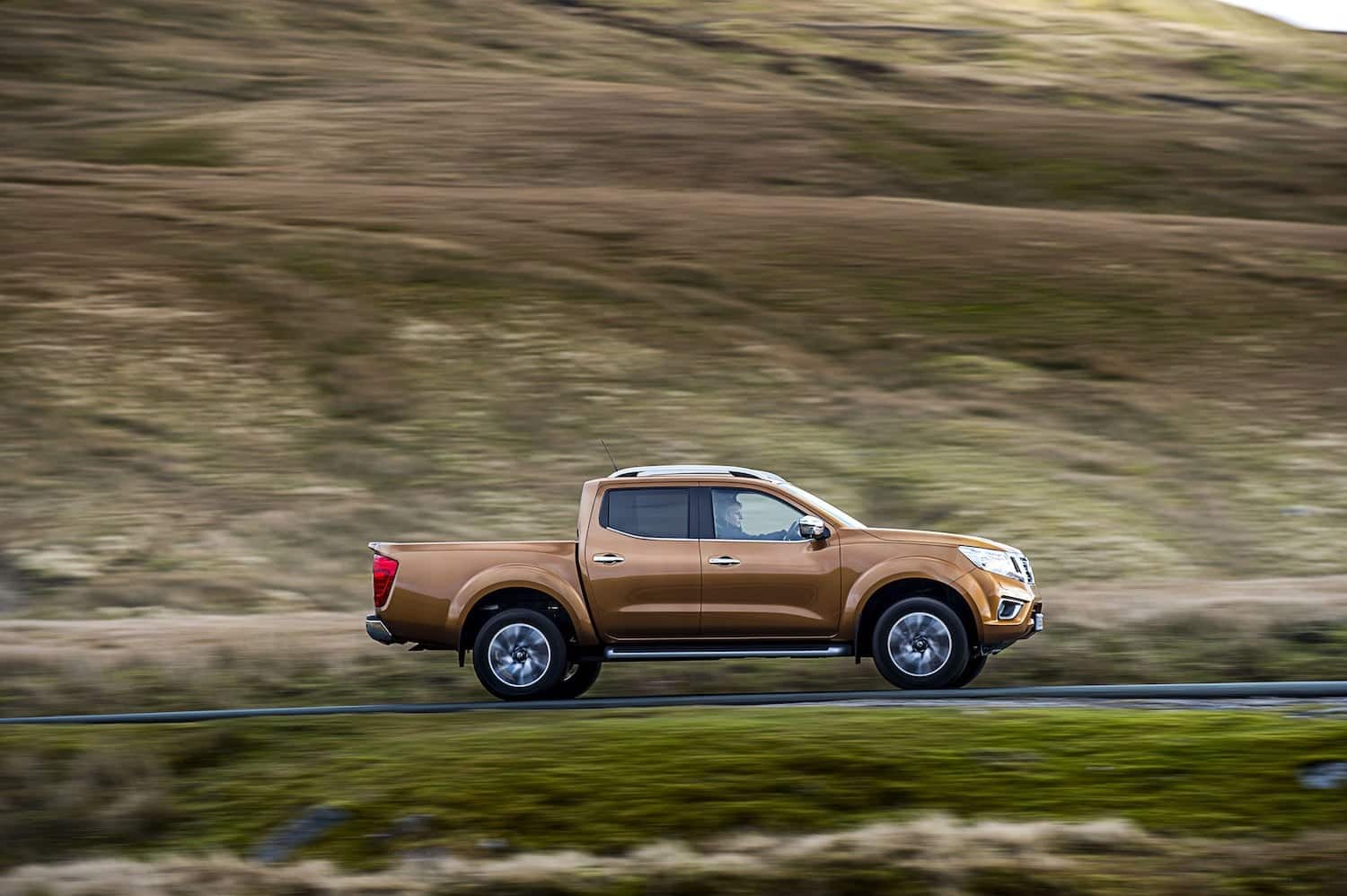
With our test vehicle boasting the higher power engine, there was no shortage of get-up and go. Nissan has provided a proper engineering solution to adding potency to the 2.3-litre diesel unit, the 190hp employing two turbochargers whereas the 160 unit has only one. As a result, acceleration is smooth and refined, quite unlike the loud, clattery progress that once was the norm on such vehicles.
Our test model is fitted with the six-speed manual transmission and this is less impressive than the engine. The long gear lever can sometimes be a little vague to shift. There is an auto option that we haven’t tried, but which could be a viable alternative in this environment.
All-wheel-drive is easily selected from a dial on the centre console, and it includes both high and low-range settings – a locking differential is available as an option, but in standard form the Navara is more than capable off-road, and comes with such aids as hill descent control.
Without doubt the biggest gain on the latest version is the change to the rear suspension. The five-link unit that now comes as standard on the Double Cab is in a different league to the former leaf-spring setup (which remains on the King Cab). Once when driving such vehicles the attention was always on the over-lively rear end, but now it feels just like an SUV to drive, while rear-seat passengers will particularly appreciate the improvements in comfort.
From the driver’s seat, this pick-up is still one high-up machine, but also one that can carry far more speed into corners with confidence. Grip levels are improved and there is far less of that waggly rear-end sensation that used to have one treating bendy bits with caution, especially in damp conditions.
One aspect that is notable – the exterior restyling that accompanied Nissan Navara Mk3 included a raising of the front wings, probably to make it look more like an SUV. This does make them a little too prominent in the eye line when driving, though generally this is a good vehicle to see out of, with the around-view monitor as back-up.
The Nissan Navara has always been a leading contender amongst workhorse pick-up trucks, but today such vehicles are expected to do a lot more than simply be workhorses. In its third-generation form the Navara addresses these requirements and meets them in style.
The current Navara is a good-looking vehicle which inside offers much comfort in quality surroundings, and plenty of technology. It is also a comfortable vehicle to ride in, so long as one chooses the Double Cab which the vast majority of buyers will. The rear suspension changes have effectively revolutionised the vehicle’s ride quality and handling ability.
At the same time, the Navara has lost none of the robust ability that vehicles of this type need first and foremost. It offers a good-sized load bed with excellent payload and towing capacity. And it can carry that payload into the most inhospitable of conditions thanks to a very effective all-wheel-drive chassis.
For anyone who would really like an SUV, but who needs a pick-up, the Nissan Navara will be high on the consideration list.

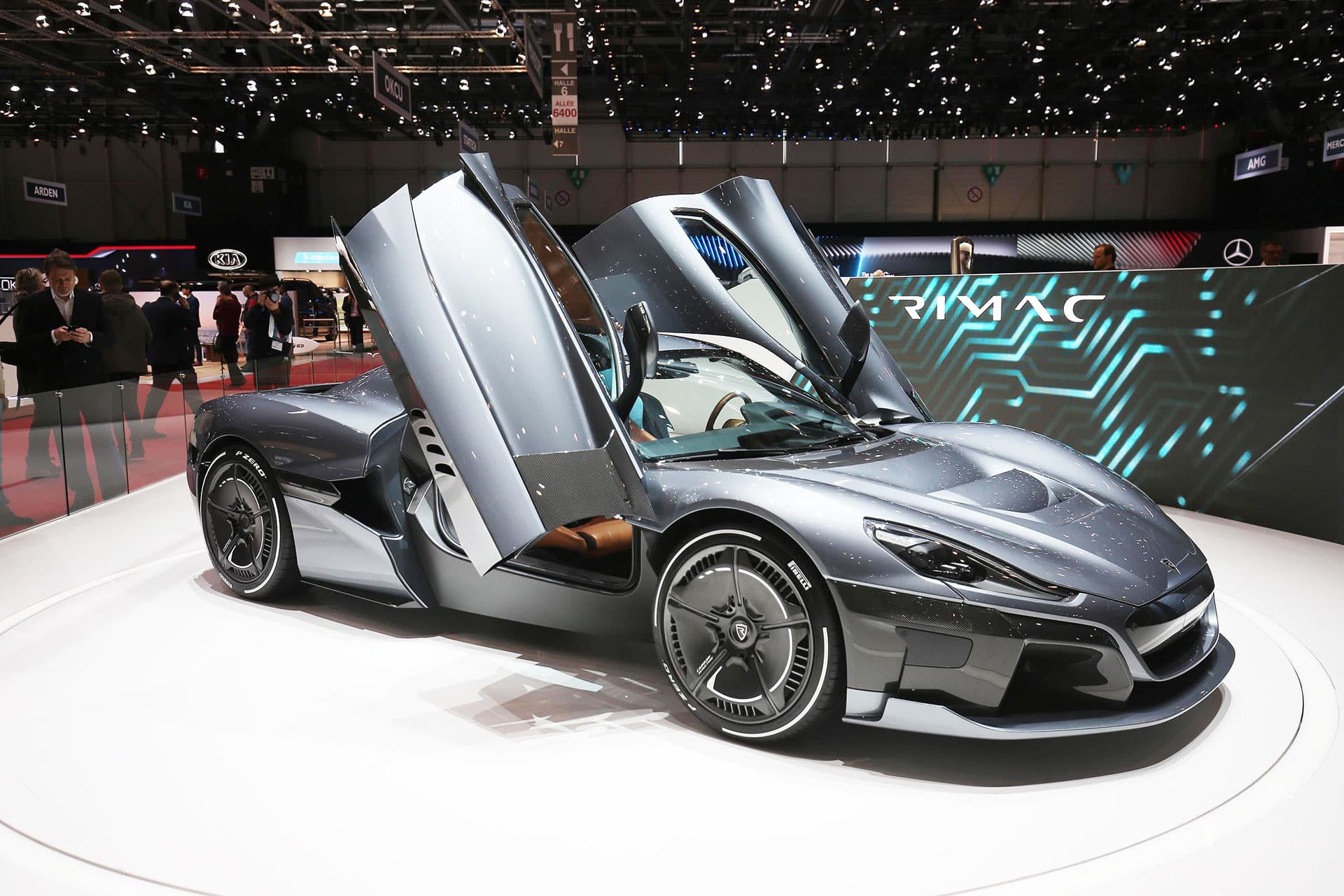 This is the Rimac C_Two, and if the name sounds familiar, it’s because there has been a Rimac Concept 1. Nine of them were built, and one was famously crashed and set on fire by a certain Richard Hammond.
The C_Two is built in Croatia, it has an electric drivetrain, with apparently 1,914hp, and claims a 0-62mph time of 1.85 seconds and a top speed of 258mph. The two-seater is propelled by four electric motors and has a claimed range of around 400 miles between charges.
This is the Rimac C_Two, and if the name sounds familiar, it’s because there has been a Rimac Concept 1. Nine of them were built, and one was famously crashed and set on fire by a certain Richard Hammond.
The C_Two is built in Croatia, it has an electric drivetrain, with apparently 1,914hp, and claims a 0-62mph time of 1.85 seconds and a top speed of 258mph. The two-seater is propelled by four electric motors and has a claimed range of around 400 miles between charges.
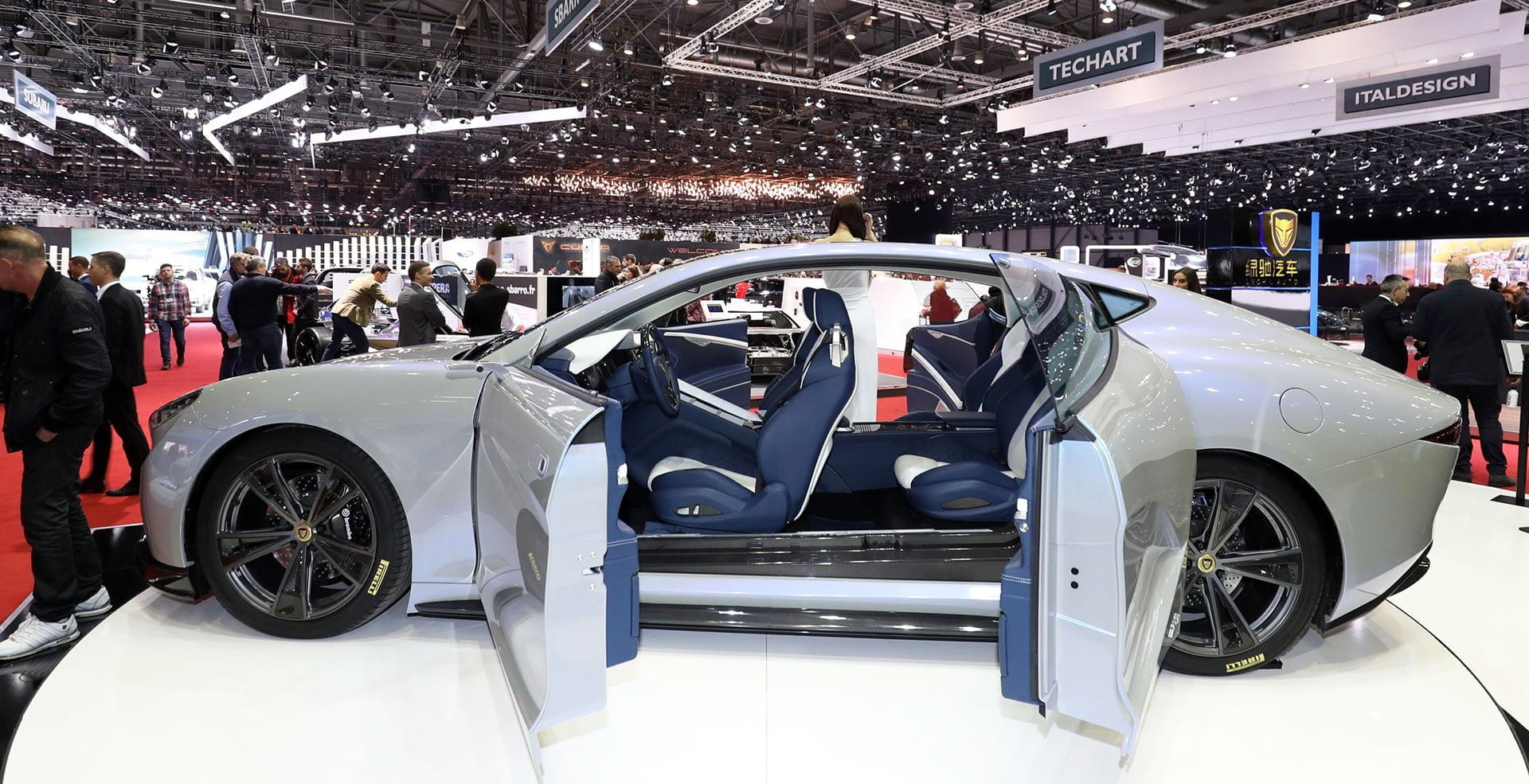
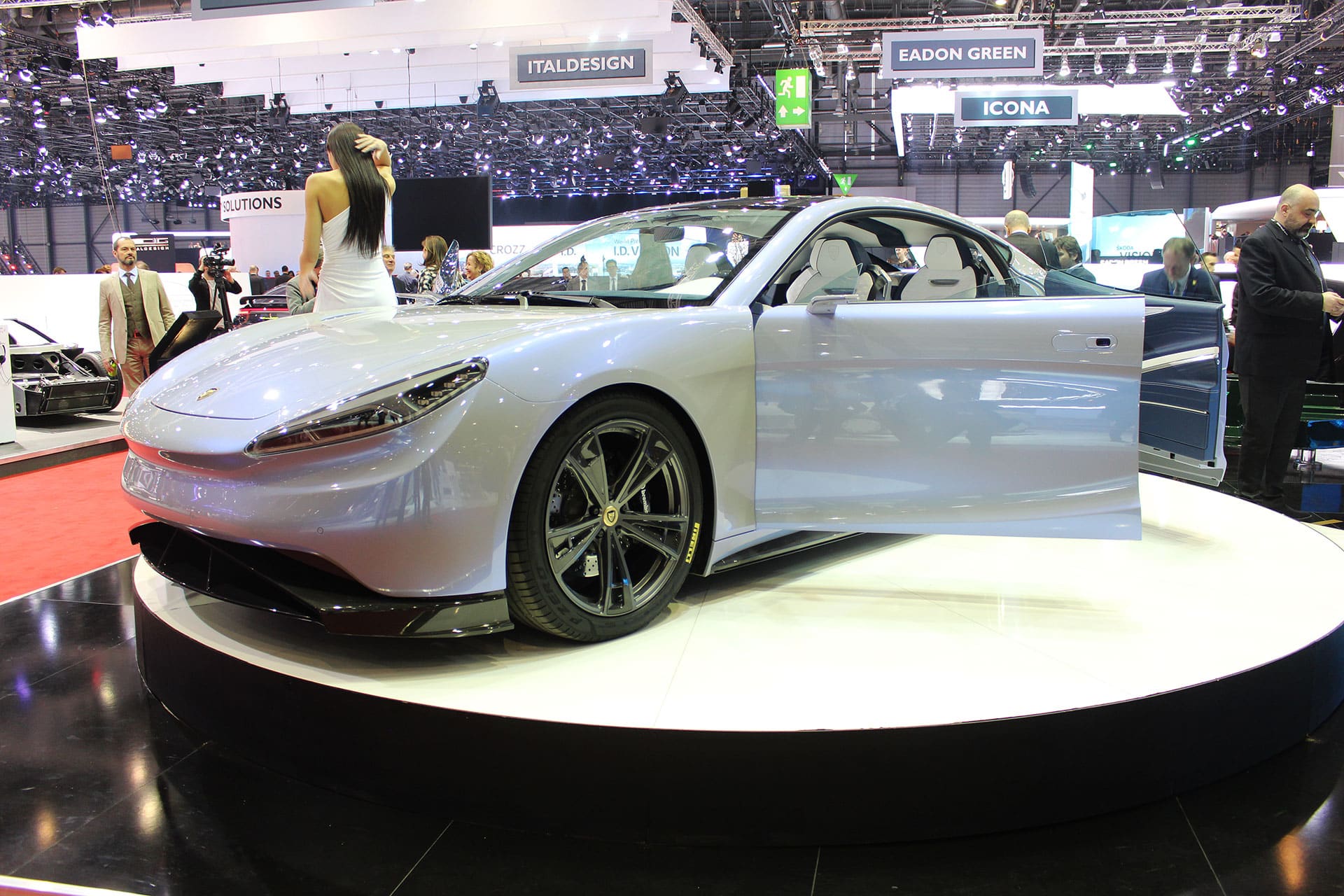 This four-seater limousine comes from Chinese newcomer Lvchi Auto, and is powered by a 1,000hp electric drivetrain. Four electric motors are involved with a claimed 0-62mph time of under three seconds.
Debuting at the show, Lvchi has big plans – it will start taking orders for a sports car and a coupé at the end of December 2019, by which time an electric SUV, MPV and saloon will have been unveiled, and two and four-seat city cars and a five-door hatch are planned by 2020. The company plans to sell 100,000 cars in 2019 and 550,000 by 2023, by which time its Chinese plants will be joined by one in Italy…
This four-seater limousine comes from Chinese newcomer Lvchi Auto, and is powered by a 1,000hp electric drivetrain. Four electric motors are involved with a claimed 0-62mph time of under three seconds.
Debuting at the show, Lvchi has big plans – it will start taking orders for a sports car and a coupé at the end of December 2019, by which time an electric SUV, MPV and saloon will have been unveiled, and two and four-seat city cars and a five-door hatch are planned by 2020. The company plans to sell 100,000 cars in 2019 and 550,000 by 2023, by which time its Chinese plants will be joined by one in Italy…
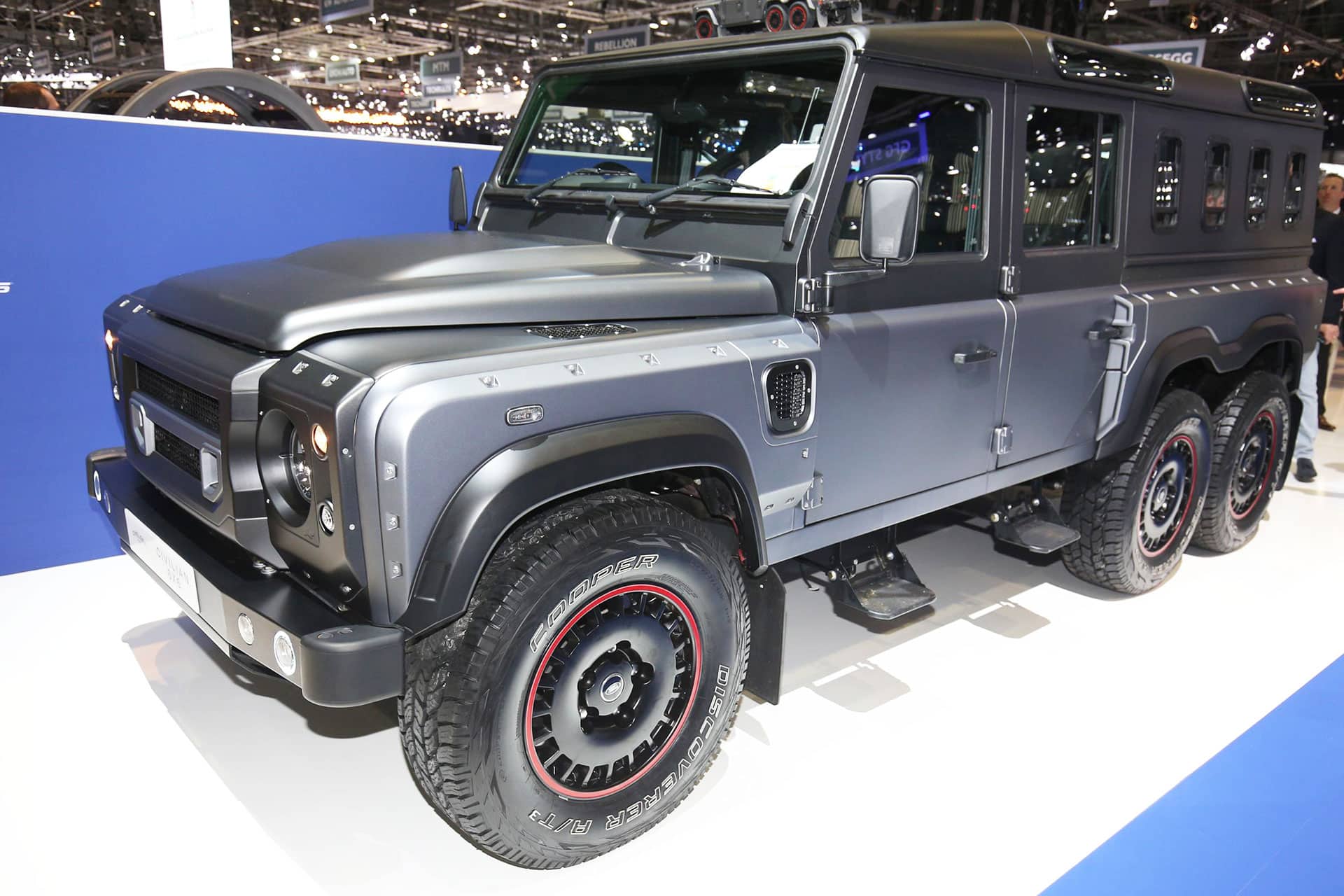 This may look like a Land Rover Defender because, basically, that’s the starting point for this huge six-wheeled vehicle, called the 6×6 Civilian Carrier and built by the – wait for it – Chelsea Truck Company.
No, it’s not the Chelsea Tractor Co, and yes the firm is based in London. Almost 5.5 metres long, the vehicle boasts exterior styling carried out by UK aftermarket specialist Kahn Design, and unsurprisingly it claims to offer a great deal of off-road prowess…
This may look like a Land Rover Defender because, basically, that’s the starting point for this huge six-wheeled vehicle, called the 6×6 Civilian Carrier and built by the – wait for it – Chelsea Truck Company.
No, it’s not the Chelsea Tractor Co, and yes the firm is based in London. Almost 5.5 metres long, the vehicle boasts exterior styling carried out by UK aftermarket specialist Kahn Design, and unsurprisingly it claims to offer a great deal of off-road prowess…
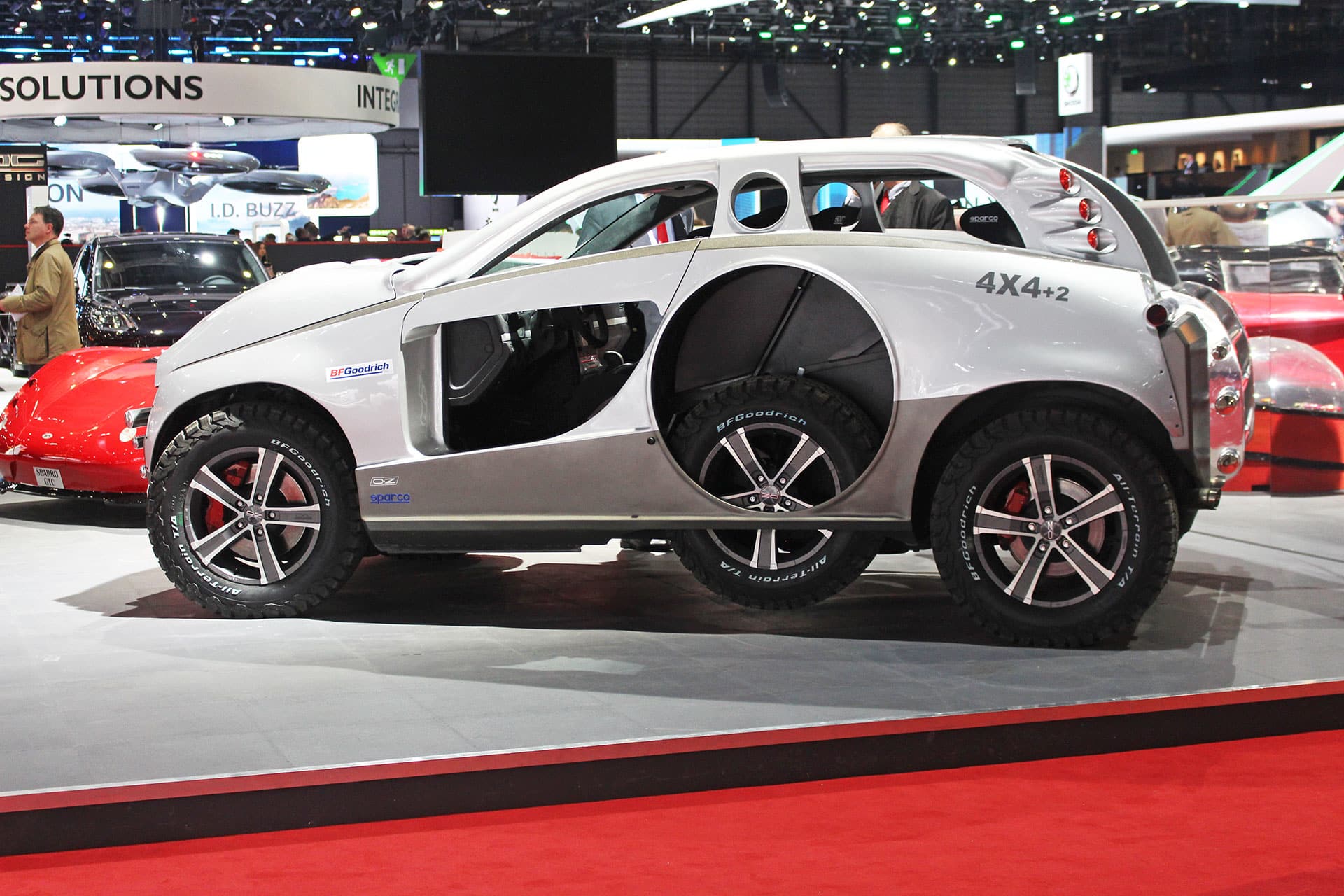 And while we are talking six-wheelers… This is the 4×4+2 from French creators Sbarro. Think it looks scary? You would be right, but we can add some extra frightening facts – several components, including the engine, started life at Porsche…
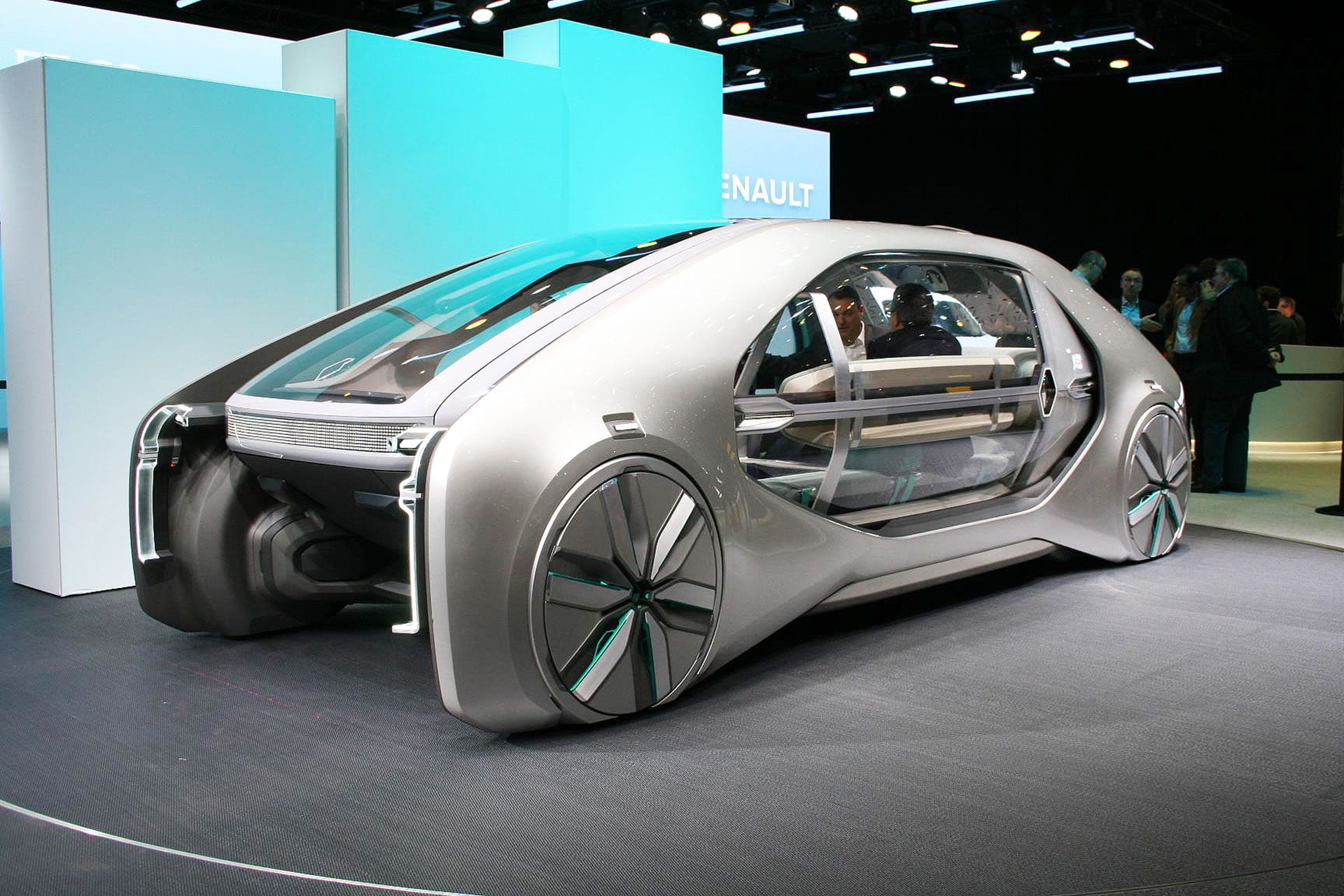
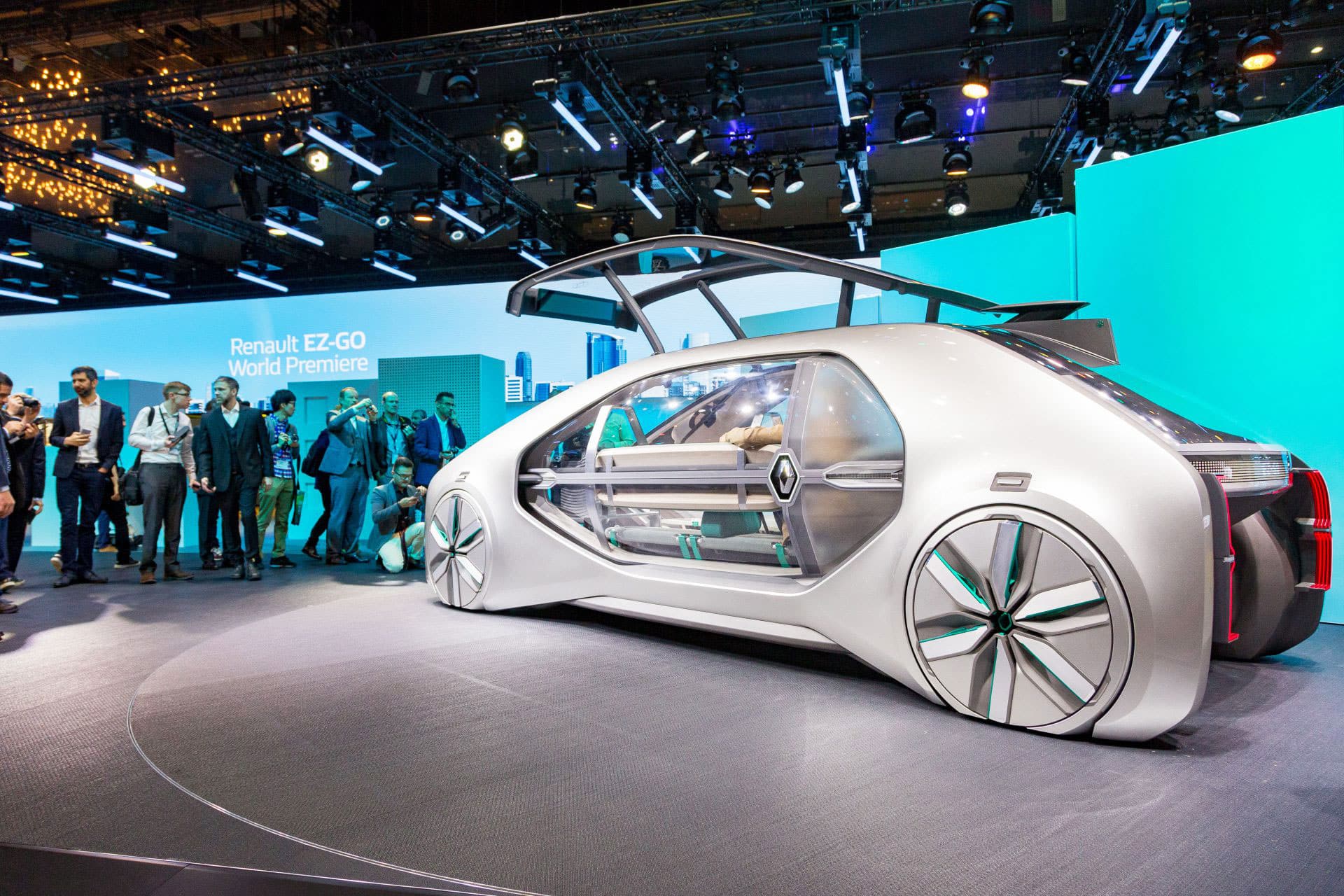 This concept could be for real, because it’s on the Renault stand. The EZ-Go is an autonomous vehicle that in the future could provide the role of taxi in emissions-free city centres.
Six occupants can be accommodated, all sitting facing each other, and they enter through a glass roof that raises out of the way.
This concept could be for real, because it’s on the Renault stand. The EZ-Go is an autonomous vehicle that in the future could provide the role of taxi in emissions-free city centres.
Six occupants can be accommodated, all sitting facing each other, and they enter through a glass roof that raises out of the way.
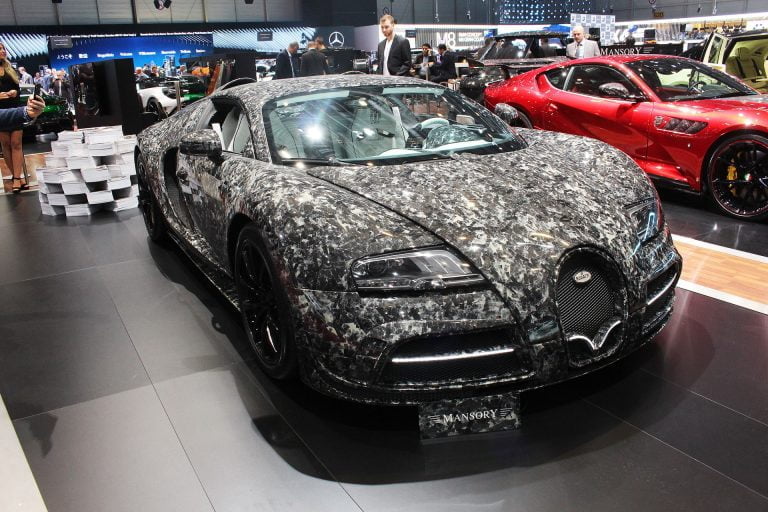
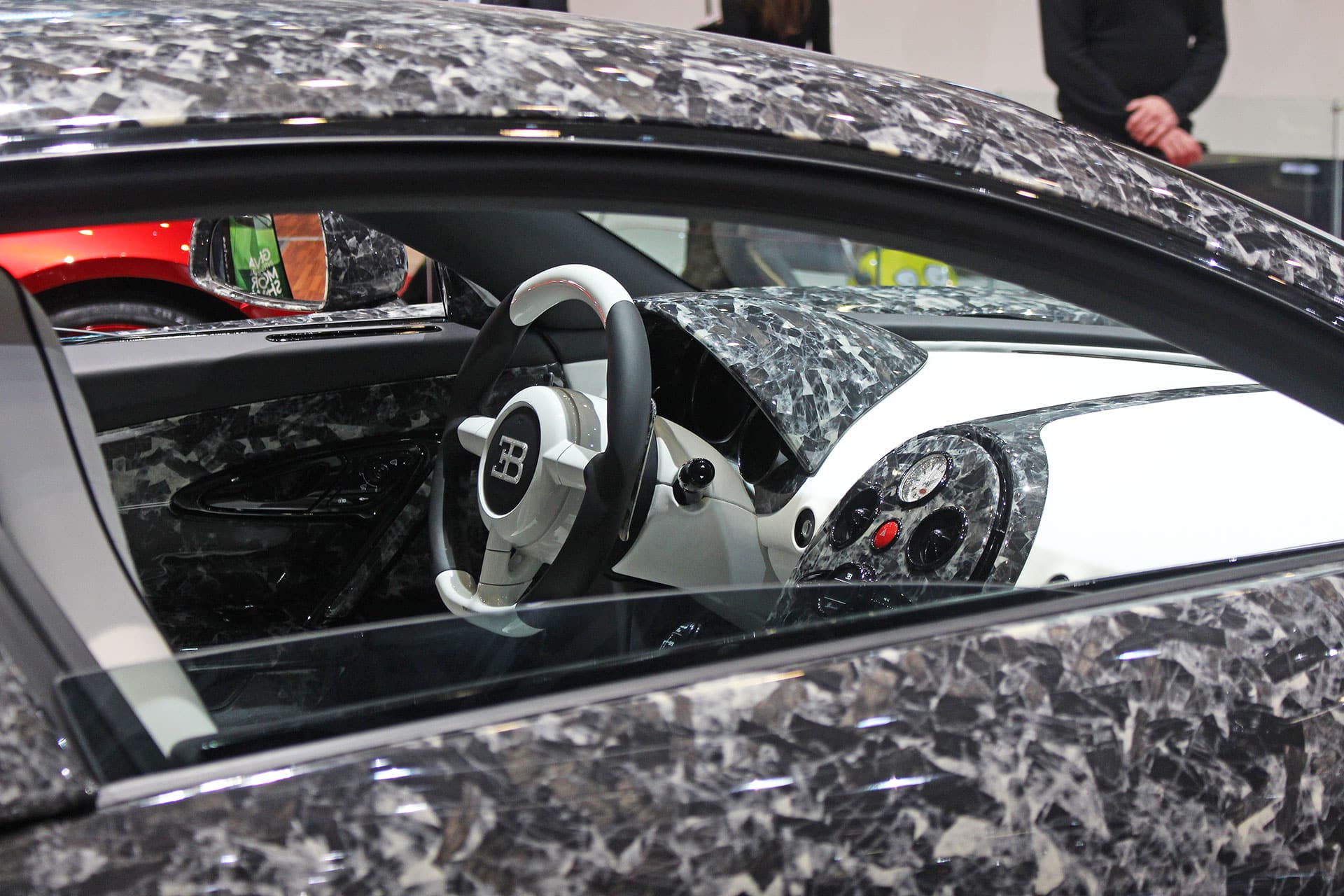
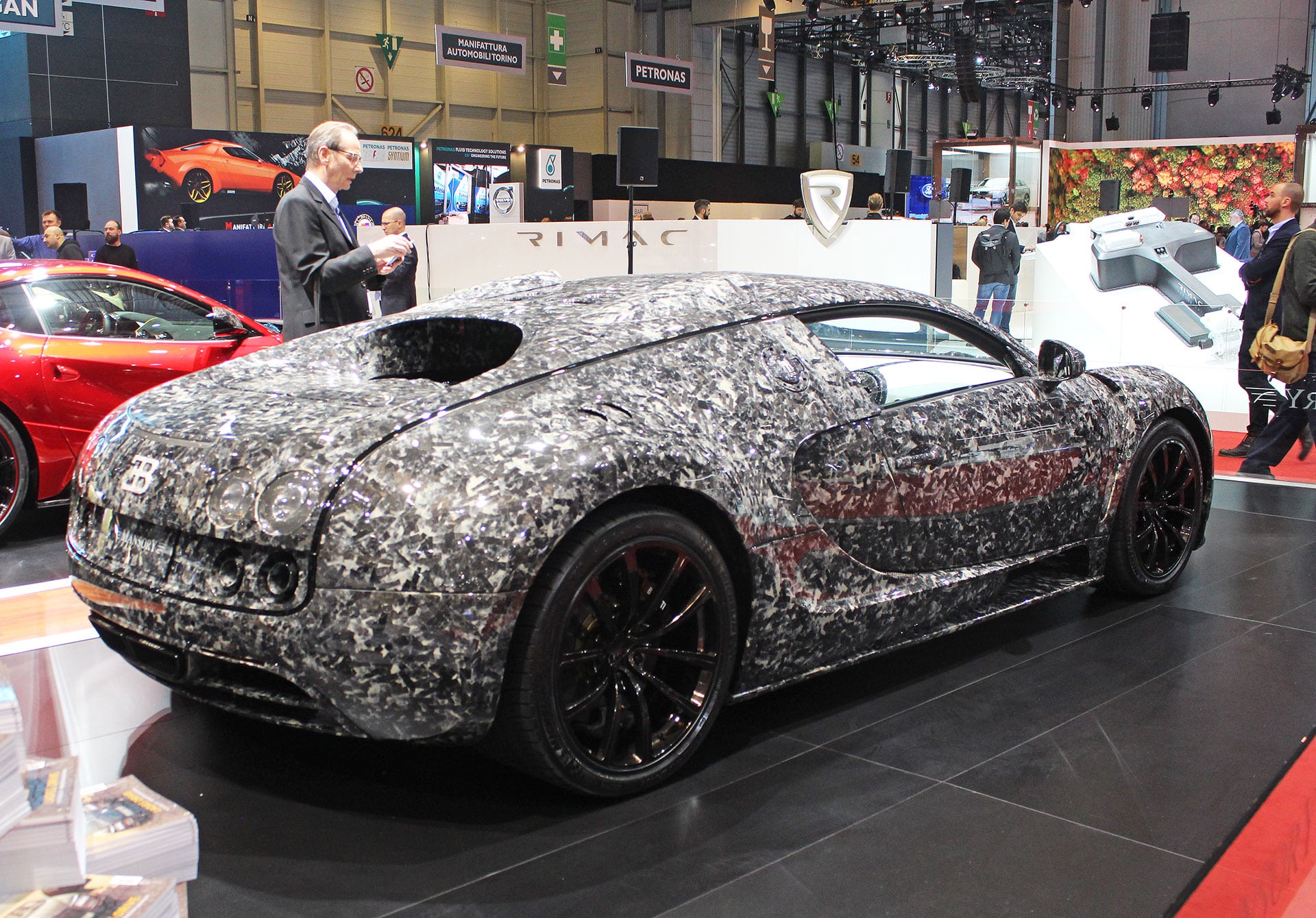 Everyone we have shown pictures of this car to has reacted – well not very positively. It is a take on the Bugatti Veyron by German aftermarket stylist Mansory. The effect, employed as liberally inside as on the exterior, is a sort of polished marble, actually created using carbon fibre.
Would you pay £1.5 million or so to have your car look permanently as if it has been snowed on?
Everyone we have shown pictures of this car to has reacted – well not very positively. It is a take on the Bugatti Veyron by German aftermarket stylist Mansory. The effect, employed as liberally inside as on the exterior, is a sort of polished marble, actually created using carbon fibre.
Would you pay £1.5 million or so to have your car look permanently as if it has been snowed on?
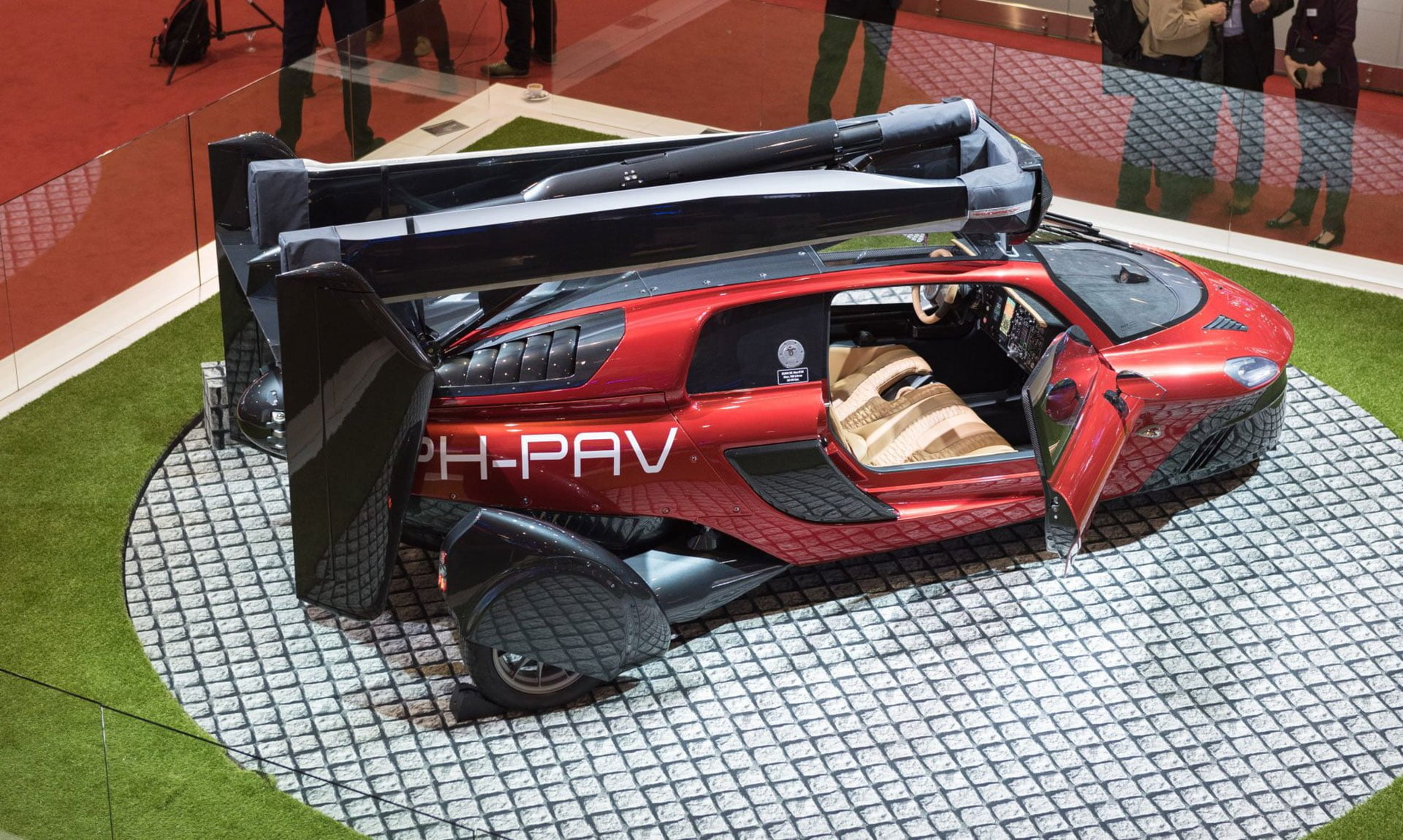 This extraordinary device claims to be the world’s first production flying car. The PAL-V Liberty is made in Holland and is a three-wheeled dual-engined vehicle, one for driving it on the ground and the other for powering the rotor blades atop it.
Those perusing it at the Geneva show are able to place orders for the first production versions, due on and above the roads in around a year. The cost? a mere 499,000 Euros, around £445,000 in UK money, before taxes. That price does include some flying lessons, but if it’s still a bit too steep, PAL-V plans a Sport model at a mere €299,000 (£254,000). Time we feel, to fly away from Geneva…
This extraordinary device claims to be the world’s first production flying car. The PAL-V Liberty is made in Holland and is a three-wheeled dual-engined vehicle, one for driving it on the ground and the other for powering the rotor blades atop it.
Those perusing it at the Geneva show are able to place orders for the first production versions, due on and above the roads in around a year. The cost? a mere 499,000 Euros, around £445,000 in UK money, before taxes. That price does include some flying lessons, but if it’s still a bit too steep, PAL-V plans a Sport model at a mere €299,000 (£254,000). Time we feel, to fly away from Geneva…

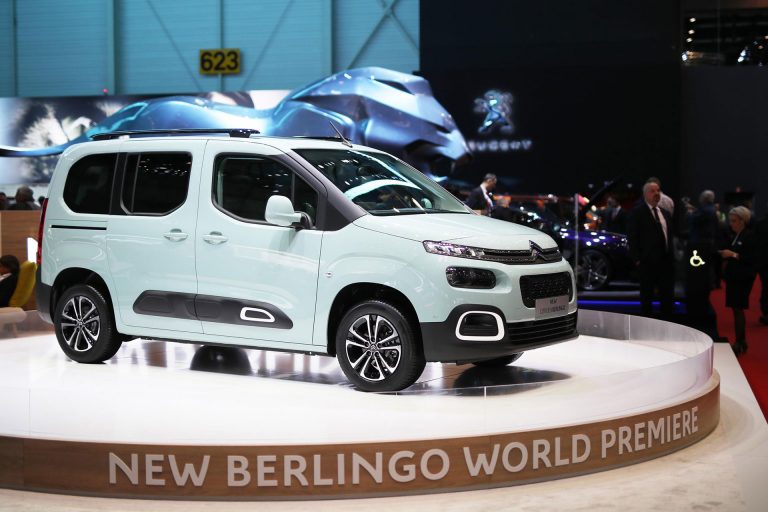
 Underpinning the new model is Citroën’s latest EMP2 platform, and this has resulted in visual changes. The new Berlingo has a higher and shorter front end with a more forward-set windscreen. It also gains the ‘air bump’ styling side panels first seen on the first Cactus.
Technology upgrades to the Berlingo will include 19 driving assistance systems and four connectivity technologies. The engines will be updated too, including PSA Group’s new BlueHDi 130 1.5 diesel unit, and the new EAT8 eight-speed automatic gearbox.
Underpinning the new model is Citroën’s latest EMP2 platform, and this has resulted in visual changes. The new Berlingo has a higher and shorter front end with a more forward-set windscreen. It also gains the ‘air bump’ styling side panels first seen on the first Cactus.
Technology upgrades to the Berlingo will include 19 driving assistance systems and four connectivity technologies. The engines will be updated too, including PSA Group’s new BlueHDi 130 1.5 diesel unit, and the new EAT8 eight-speed automatic gearbox.


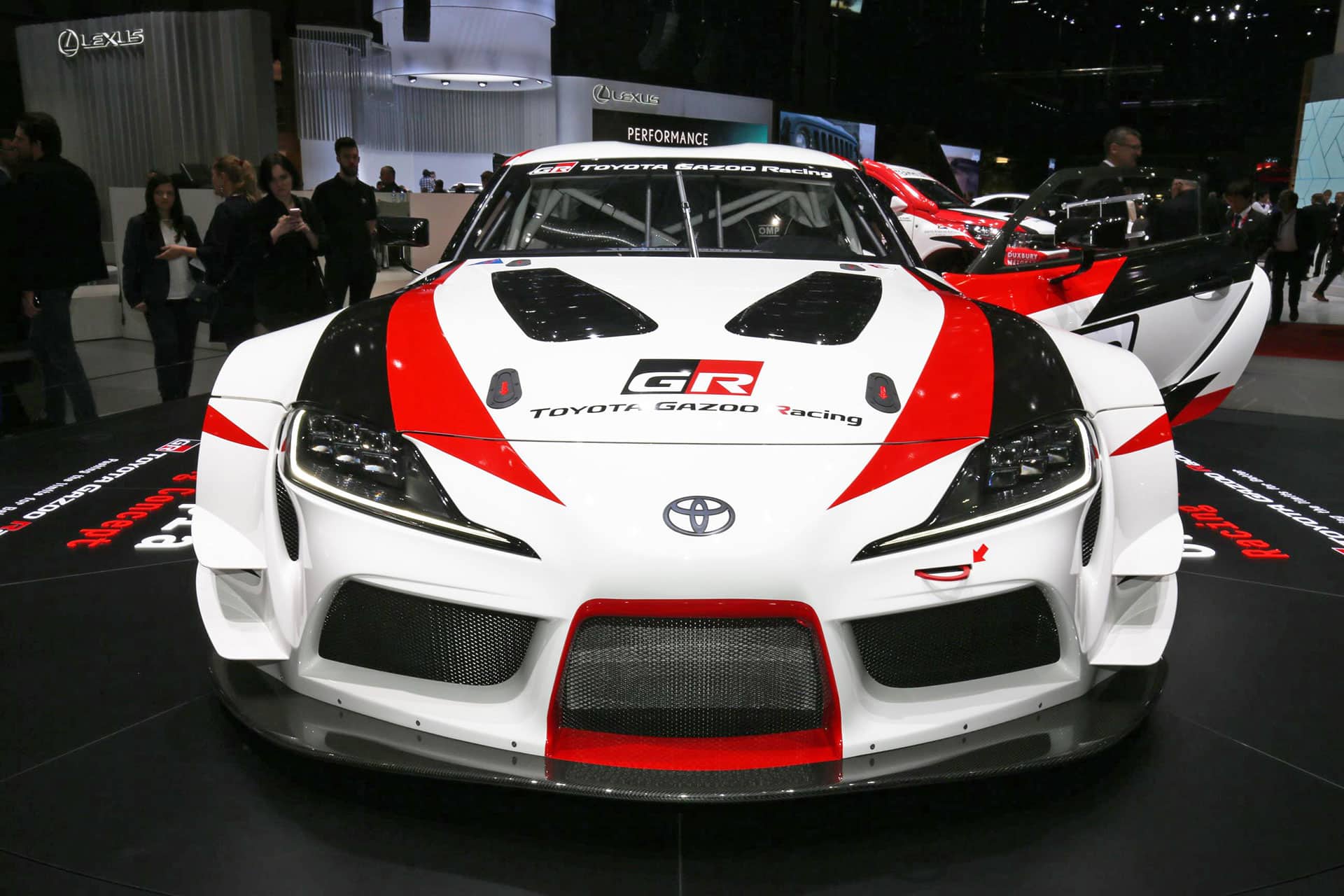
 Just what level that performance might reach is currently being kept under wraps too, with no technical details released to accompany the concept. Industry rumours suggest that the road car will produce around 340hp from its engine and, of course, offer a sub-four-second 0-62mph time.
Visually the concept is clearly in the traditional Supra mould – a muscular-looking, front-engined, rear-wheel-drive two-seater sports car.
Unsurprisingly, the racing concept makes extensive use of lightweight composite materials in such areas as the wide front and rear bumpers, front splitter and rear diffuser, side skirts, door mirror housings, the bonnet and the rear wing. Even the window are lightweight lexan, rather than glass.
The new Supra road car is expected to break cover in 2019.
Just what level that performance might reach is currently being kept under wraps too, with no technical details released to accompany the concept. Industry rumours suggest that the road car will produce around 340hp from its engine and, of course, offer a sub-four-second 0-62mph time.
Visually the concept is clearly in the traditional Supra mould – a muscular-looking, front-engined, rear-wheel-drive two-seater sports car.
Unsurprisingly, the racing concept makes extensive use of lightweight composite materials in such areas as the wide front and rear bumpers, front splitter and rear diffuser, side skirts, door mirror housings, the bonnet and the rear wing. Even the window are lightweight lexan, rather than glass.
The new Supra road car is expected to break cover in 2019.
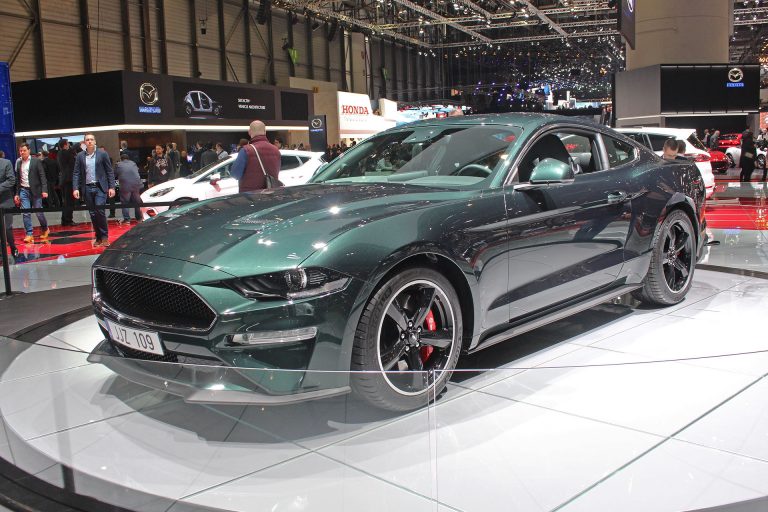
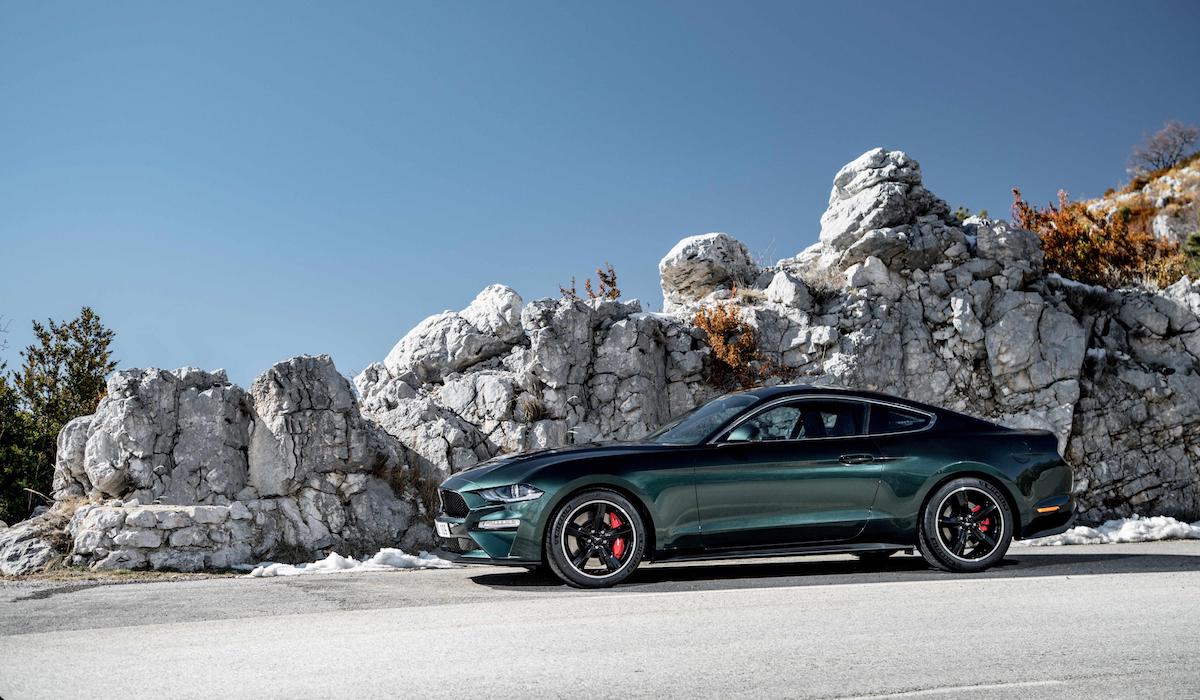 The Bullitt’s 5.0-litre V8 engine will be tuned to produce an anticipated 464hp, 14 horses more than the current most potent model, the GT. It also includes rev-matching technology to smooth out gear changes.
Buyers of the Bullitt will be able to choose liveries connected to the film, either Shadow Black or a Dark Highland Green exterior colour. Ford is not currently saying how many will be made to UK specification or what they will cost.
The Bullitt’s 5.0-litre V8 engine will be tuned to produce an anticipated 464hp, 14 horses more than the current most potent model, the GT. It also includes rev-matching technology to smooth out gear changes.
Buyers of the Bullitt will be able to choose liveries connected to the film, either Shadow Black or a Dark Highland Green exterior colour. Ford is not currently saying how many will be made to UK specification or what they will cost.
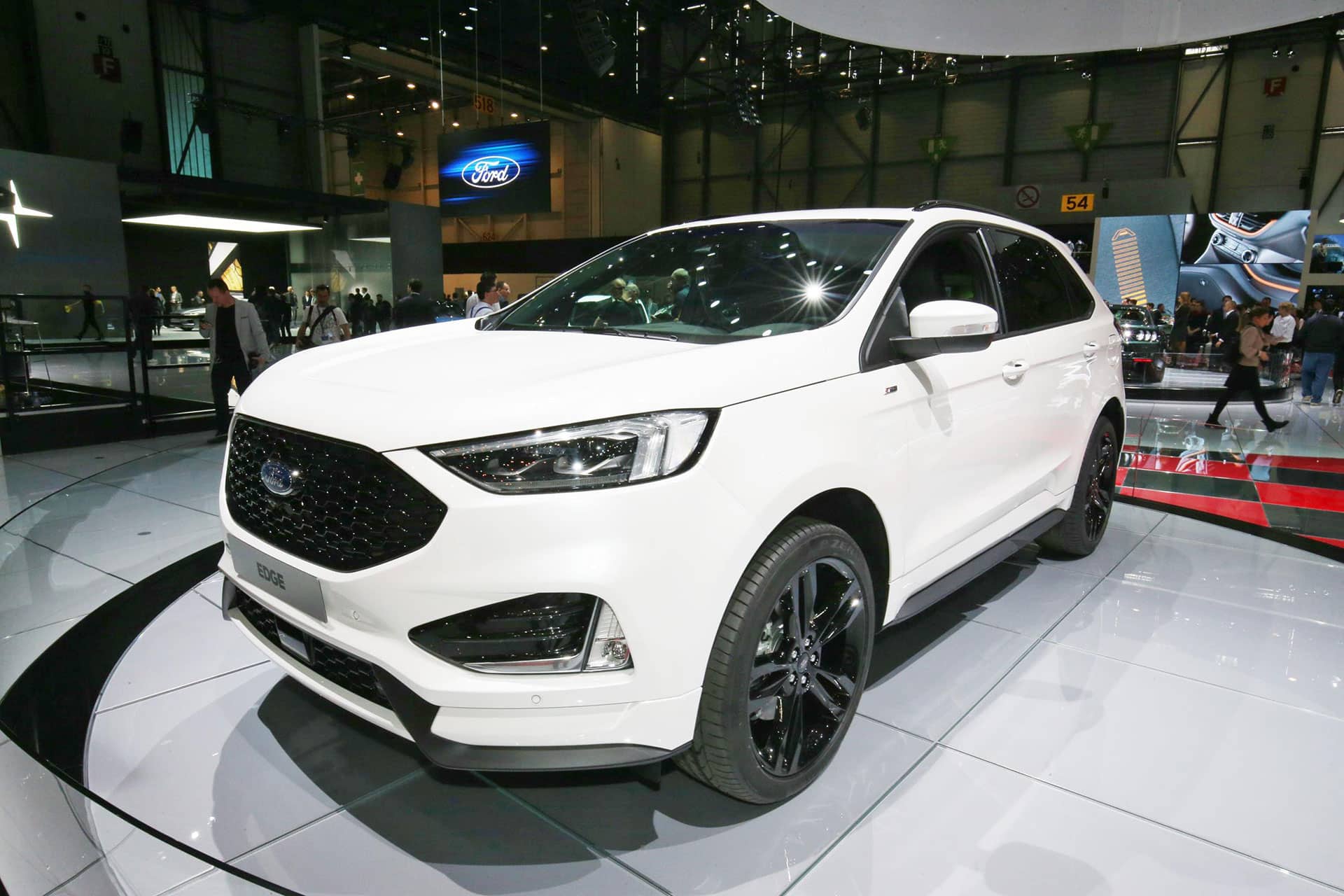 The revamped Edge is described as Ford’s most technically advanced SUV yet. Its drive assistance technologies, in particular, are updated to make the most of current camera and sensor advances. The adaptive cruise control includes a system to keep the car centred in its lane, while post-collision braking and an evasive steering aid also feature.
When the latest Edge goes on sale it will be available with a new 238hp bi-turbo diesel engine and equally new eight-speed auto transmission.
The revamped Edge is described as Ford’s most technically advanced SUV yet. Its drive assistance technologies, in particular, are updated to make the most of current camera and sensor advances. The adaptive cruise control includes a system to keep the car centred in its lane, while post-collision braking and an evasive steering aid also feature.
When the latest Edge goes on sale it will be available with a new 238hp bi-turbo diesel engine and equally new eight-speed auto transmission.








 Options packages




 Learned judging panel












 Italian styling house Pininfarina first showed its H2 Speed concept, with a hydrogen fuel-cell engine using four electric motors, at the 2016 Geneva show and won the concept of the show award. Now the car is back, and set to become a production model, just 12 being made and all for track-only use.
The latest version of the H2 Speed is larger in all areas than the 2016 concept, but with no increase in weight. Its powertrain, developed by Swiss specialist GreenGT, produces 653hp, good enough for a 0-62mph time of 3.4 seconds and a maximum speed of 186mph.
Pininfarina describes it as a car for “speed- and performance-loving gentleman drivers who also respect the environment and are attracted at the same time by the exclusivity typical of a Pininfarina-designed vehicle.” What they are not saying yet is how much it will cost…
Italian styling house Pininfarina first showed its H2 Speed concept, with a hydrogen fuel-cell engine using four electric motors, at the 2016 Geneva show and won the concept of the show award. Now the car is back, and set to become a production model, just 12 being made and all for track-only use.
The latest version of the H2 Speed is larger in all areas than the 2016 concept, but with no increase in weight. Its powertrain, developed by Swiss specialist GreenGT, produces 653hp, good enough for a 0-62mph time of 3.4 seconds and a maximum speed of 186mph.
Pininfarina describes it as a car for “speed- and performance-loving gentleman drivers who also respect the environment and are attracted at the same time by the exclusivity typical of a Pininfarina-designed vehicle.” What they are not saying yet is how much it will cost…


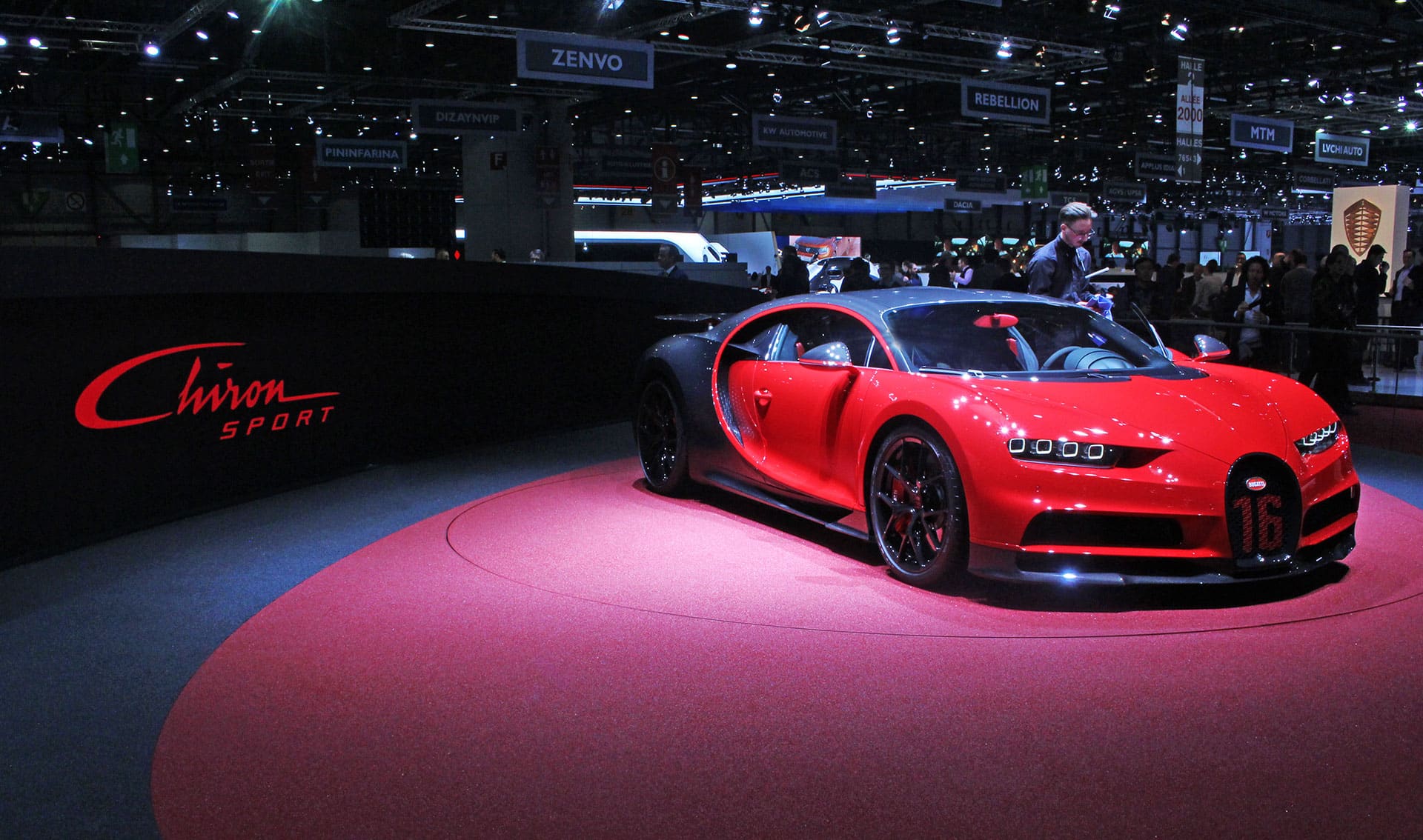 Bugatti Chiron Sport


 These days virtually every motor show unveiling is telegraphed days before, which made this one all the more surprising. Porsche revealed a new crossover version of its forthcoming Mission E electric model, dubbed the E-Cross Turismo. The concept’s all-wheel-drive powertrain is powered by 800-volt electrics which gives it more than 600hp and a 0-62mph time of 3.5 seconds.
Porsche promises that the E-Cross Turismo will be able to perform multiple rapid accelerations without losing power, and will be fast to recharge, providing a range of 250 miles after just 15 minutes plugged in. The concept is described as ‘road ready’ and produced to gauge customer interest. The smart money says a production version will go on sale in 2021.
These days virtually every motor show unveiling is telegraphed days before, which made this one all the more surprising. Porsche revealed a new crossover version of its forthcoming Mission E electric model, dubbed the E-Cross Turismo. The concept’s all-wheel-drive powertrain is powered by 800-volt electrics which gives it more than 600hp and a 0-62mph time of 3.5 seconds.
Porsche promises that the E-Cross Turismo will be able to perform multiple rapid accelerations without losing power, and will be fast to recharge, providing a range of 250 miles after just 15 minutes plugged in. The concept is described as ‘road ready’ and produced to gauge customer interest. The smart money says a production version will go on sale in 2021.
 The e-SIV is the fifth concept for an electric car that we have seen from the Korean brand on SsangYong, though there is still no news as to when one of these will translate into a production model. This latest is a mid-sized SUV and we do know that the body shape will form the basis of SsangYong’s next production model in this market.
While boasting an electric drivetrain, the concept mainly focuses on connectivity and autonomous driving – e-SIV stands for Electronic Smart Interface Vehicle. The car can reach level 3 autonomous driving standard, recognizing its lane, staying in it and keeping a safe distance from other vehicles. And the connectivity allows everything from remotely charging the battery to turning various equipment on and off, and offering an extensive infotainment service.
The e-SIV is the fifth concept for an electric car that we have seen from the Korean brand on SsangYong, though there is still no news as to when one of these will translate into a production model. This latest is a mid-sized SUV and we do know that the body shape will form the basis of SsangYong’s next production model in this market.
While boasting an electric drivetrain, the concept mainly focuses on connectivity and autonomous driving – e-SIV stands for Electronic Smart Interface Vehicle. The car can reach level 3 autonomous driving standard, recognizing its lane, staying in it and keeping a safe distance from other vehicles. And the connectivity allows everything from remotely charging the battery to turning various equipment on and off, and offering an extensive infotainment service.


 British luxury sports car manufacturer Aston Martin has unveiled an all-electric concept at the Geneva motor show that revives the famed Lagonda badge.
The Lagonda Vision Concept previews at least one and possibly two production models, to launch between 2021 and 2023, and Aston Martin insists the revived Lagonda will be true to the heritage of the company founded by Anglo-American entrepreneur Wilbur Gunn in 1904.
Gunn’s Lagondas were known for their innovation, one model in 1910 boasting a form of monocoque decades before the technology became widely accepted. Aston Martin bought Lagonda in 1947 and continued the tradition, particularly with the strikingly-styled Aston Martin Lagonda of the 1980s.
British luxury sports car manufacturer Aston Martin has unveiled an all-electric concept at the Geneva motor show that revives the famed Lagonda badge.
The Lagonda Vision Concept previews at least one and possibly two production models, to launch between 2021 and 2023, and Aston Martin insists the revived Lagonda will be true to the heritage of the company founded by Anglo-American entrepreneur Wilbur Gunn in 1904.
Gunn’s Lagondas were known for their innovation, one model in 1910 boasting a form of monocoque decades before the technology became widely accepted. Aston Martin bought Lagonda in 1947 and continued the tradition, particularly with the strikingly-styled Aston Martin Lagonda of the 1980s.
 Now, according to Aston Martin CEO Andy Palmer, the new Lagonda aims to continue the trend. The company is planning to usher in “the biggest revolution in land-bound transportation since the invention of the car” on its way to becoming what Aston Martin claims will be the world’s first zero-emission luxury brand.
“We believe people associate luxury in their cars with a certain traditional and even old-fashioned approach because, to date, that is all that’s been available to them,” commented Palmer at the unveiling of the car. “Lagonda exists to challenge that thinking and prove that being modern and luxurious are not mutually exclusive concepts.”
Described as a ‘near future’ design study, the Vision Concept was unveiled alongside two 40% scale models of potential future Lagonda models, one a coupé and the other an SUV. According to Aston Martin chief creative officer, Marek Reichman, electrification allows a complete redesign of a car’s packaging.
Now, according to Aston Martin CEO Andy Palmer, the new Lagonda aims to continue the trend. The company is planning to usher in “the biggest revolution in land-bound transportation since the invention of the car” on its way to becoming what Aston Martin claims will be the world’s first zero-emission luxury brand.
“We believe people associate luxury in their cars with a certain traditional and even old-fashioned approach because, to date, that is all that’s been available to them,” commented Palmer at the unveiling of the car. “Lagonda exists to challenge that thinking and prove that being modern and luxurious are not mutually exclusive concepts.”
Described as a ‘near future’ design study, the Vision Concept was unveiled alongside two 40% scale models of potential future Lagonda models, one a coupé and the other an SUV. According to Aston Martin chief creative officer, Marek Reichman, electrification allows a complete redesign of a car’s packaging.
 “Our new concept shows the scope of design opportunities that open up once you no longer need to provide space for a large power source directly in front of the passenger compartment,” Marek says, adding: “In the Lagonda Vision Concept, the batteries occupy the floor of the car. Everything above that line belongs to us.”
The Vision is significantly shorter and lower than traditional limousines but offers internal space for four, including plenty of room to stretch out. According to Reichman, without any internal combustion architecture to accommodate the designers were able to finalise the interior in detail and then build the car’s exterior around it. So, for example, there is no bonnet as it doesn’t need one.
Aston Martin is currently providing few performance details of the Lagonda Vision, only saying that it has been designed to accept batteries giving its all-wheel-drive powertrain a range of up to 400 miles between charges. The car is also designed to accept level four autonomous technology, in effect being able to drive itself on all recognisable roads.
“Our new concept shows the scope of design opportunities that open up once you no longer need to provide space for a large power source directly in front of the passenger compartment,” Marek says, adding: “In the Lagonda Vision Concept, the batteries occupy the floor of the car. Everything above that line belongs to us.”
The Vision is significantly shorter and lower than traditional limousines but offers internal space for four, including plenty of room to stretch out. According to Reichman, without any internal combustion architecture to accommodate the designers were able to finalise the interior in detail and then build the car’s exterior around it. So, for example, there is no bonnet as it doesn’t need one.
Aston Martin is currently providing few performance details of the Lagonda Vision, only saying that it has been designed to accept batteries giving its all-wheel-drive powertrain a range of up to 400 miles between charges. The car is also designed to accept level four autonomous technology, in effect being able to drive itself on all recognisable roads.
 Decisions about how Lagonda will be marketed have also apparently still to be made – whether the cars will sold from existing Aston Martin dealerships or separately. No production facility has yet been revealed although it is known that the plant currently being constructed for the DBX SUV in St Athan, South Wales, would have the capacity for a second model.
Palmer describes Lagonda as a brand without limits, saying; “It will produce cars that exploit technology, without being obsessed with it for its own sake – and It will enable Lagonda to redefine the concept of luxury within the automotive and other spheres.”
Decisions about how Lagonda will be marketed have also apparently still to be made – whether the cars will sold from existing Aston Martin dealerships or separately. No production facility has yet been revealed although it is known that the plant currently being constructed for the DBX SUV in St Athan, South Wales, would have the capacity for a second model.
Palmer describes Lagonda as a brand without limits, saying; “It will produce cars that exploit technology, without being obsessed with it for its own sake – and It will enable Lagonda to redefine the concept of luxury within the automotive and other spheres.”


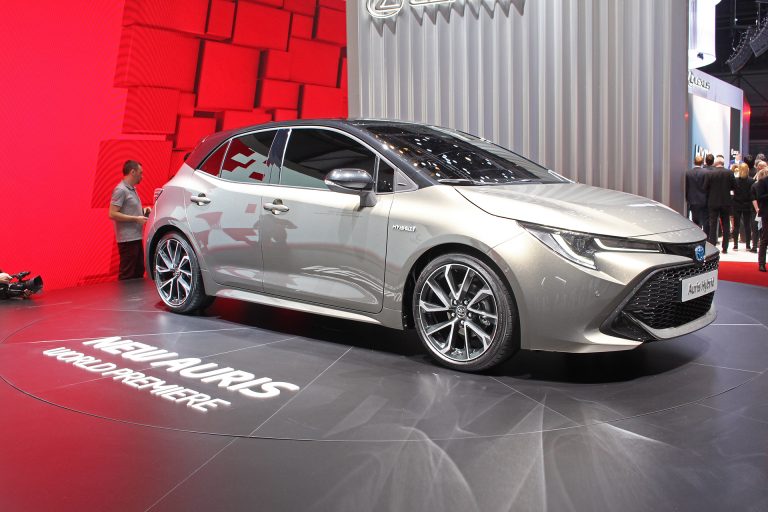
 The new Auris is built on the Toyota New Global Architecture (TNGA) architecture, which is already used by the current Prius and C-HR models, which simplifies vehicle design in key areas while improving rigidity and lowering the centre of gravity. This improves handling and stability, as well as safety. The latest Prius has been rightly praised for offering a far more enjoyable driving experience than previous models, so hopefully the same success can be replicated with the Auris.
As with most new models, the latest Auris is a bit bigger than the old one. Length grows by about 4cm and width by 3cm, although height has been reduced by 2.5cm (an inch, for those still stuck in Victorian times). The bonnet, in particular, has been lowered significantly, providing not just a sleeker look but a clearer view ahead for the driver.
Toyota’s desire for more dynamic styling is bolstered by a narrower grille and full-LED headlights. Front overhang has also been marginally reduced to improve both the car’s appearance and weight distribution. At the back, the rear window is more raked to provide a more compact look, which belies a slightly longer rear overhang. Again, the lights are all LEDs and a strong horizontal design theme visually exaggerates the car’s width.
Toyota has spent £240 million to prepare and equip the Burnaston plant for building cars on the new TNGA architecture. This gives rise to the possibility that other models could be added to the production mix in the future, although nothing has been said about this. The majority of engines for the new Auris will be built at Toyota’s Deeside factory in Wales.
The new Auris is built on the Toyota New Global Architecture (TNGA) architecture, which is already used by the current Prius and C-HR models, which simplifies vehicle design in key areas while improving rigidity and lowering the centre of gravity. This improves handling and stability, as well as safety. The latest Prius has been rightly praised for offering a far more enjoyable driving experience than previous models, so hopefully the same success can be replicated with the Auris.
As with most new models, the latest Auris is a bit bigger than the old one. Length grows by about 4cm and width by 3cm, although height has been reduced by 2.5cm (an inch, for those still stuck in Victorian times). The bonnet, in particular, has been lowered significantly, providing not just a sleeker look but a clearer view ahead for the driver.
Toyota’s desire for more dynamic styling is bolstered by a narrower grille and full-LED headlights. Front overhang has also been marginally reduced to improve both the car’s appearance and weight distribution. At the back, the rear window is more raked to provide a more compact look, which belies a slightly longer rear overhang. Again, the lights are all LEDs and a strong horizontal design theme visually exaggerates the car’s width.
Toyota has spent £240 million to prepare and equip the Burnaston plant for building cars on the new TNGA architecture. This gives rise to the possibility that other models could be added to the production mix in the future, although nothing has been said about this. The majority of engines for the new Auris will be built at Toyota’s Deeside factory in Wales.

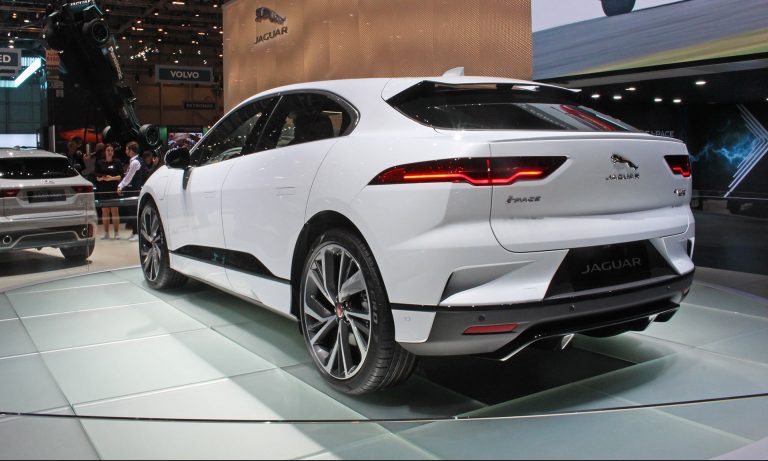
 The much-awaited Jaguar electric SUV makes its public debut at the show. This is the first pure electric production vehicle from the famed British manufacturer, though it will be by no means the last, Jaguar planning a whole host of plug-in model with the next thought to be a version of the XJ saloon.
The I Pace is also a rare Jaguar not be a proper British car – it will be built by Magna Steyr in Austria, and we can expect to spot it on UK roads from mid-2018.
The much-awaited Jaguar electric SUV makes its public debut at the show. This is the first pure electric production vehicle from the famed British manufacturer, though it will be by no means the last, Jaguar planning a whole host of plug-in model with the next thought to be a version of the XJ saloon.
The I Pace is also a rare Jaguar not be a proper British car – it will be built by Magna Steyr in Austria, and we can expect to spot it on UK roads from mid-2018.
 As one traditional British name embraces electricity, so does another. Bentley is unveiling a plug-in hybrid version of its very successful Bentayga SUV at the show.
Described by its makers as the world’s first luxury hybrid and a first step towards full electrification, the new Bentayga variant combines the electric motor with a new turbocharged 3.0-litre V6 petrol engine, which makes the official CO2 emissions figures of 75g/km remarkable for such a large luxury segment car.
The Bentayga Hybrid will offer an all-electric range of 31 miles, and while a full recharge using a domestic three-pin socket will take 7.5 hours, installing a callbox will cut this time to 2.5 hours.
As one traditional British name embraces electricity, so does another. Bentley is unveiling a plug-in hybrid version of its very successful Bentayga SUV at the show.
Described by its makers as the world’s first luxury hybrid and a first step towards full electrification, the new Bentayga variant combines the electric motor with a new turbocharged 3.0-litre V6 petrol engine, which makes the official CO2 emissions figures of 75g/km remarkable for such a large luxury segment car.
The Bentayga Hybrid will offer an all-electric range of 31 miles, and while a full recharge using a domestic three-pin socket will take 7.5 hours, installing a callbox will cut this time to 2.5 hours.
 The Skoda Vision X is a concept but described “as the third model in the Skoda SUV family” after the Kodiaq and Karoq. Therefore it looks very likely that this car will make production, and indeed it is expected to go on sale in 2019, rivalling the Arona and T-Roc from sister brands SEAT and Volkswagen.
The Vision X appears in this report, however, as the concept boasts not just a hybrid electric powertrain, but one using compressed natural gas instead of petrol.
The result is a versatile power delivery with very low emissions, under 90g/km. The novel power plant won’t be on the first production models, but could preview a future technology direction.
The Skoda Vision X is a concept but described “as the third model in the Skoda SUV family” after the Kodiaq and Karoq. Therefore it looks very likely that this car will make production, and indeed it is expected to go on sale in 2019, rivalling the Arona and T-Roc from sister brands SEAT and Volkswagen.
The Vision X appears in this report, however, as the concept boasts not just a hybrid electric powertrain, but one using compressed natural gas instead of petrol.
The result is a versatile power delivery with very low emissions, under 90g/km. The novel power plant won’t be on the first production models, but could preview a future technology direction.
 The electric plans of Volkswagen under its I.D. branding are well known, and while the I.D. Vizzion, debuting at the show, is a concept, it is expected to evolve into the fourth of at least five planned I.D. models. This will become a very upmarket saloon, an electric successor to the Phaeton large luxury car that VW sold between 2003 and 2016.
The concept boasts fully autonomous driving technology, an occupant able to move it by means of voice and gesture control, and it is no slouch – the all-wheel-drive powertrain, using two motors and two gearboxes, puts out more than 300hp for a 0-62mph time of 6.3 seconds. VW’s first I.D. models should go on sale in 2020, the Vizzion likely around a year later.
The electric plans of Volkswagen under its I.D. branding are well known, and while the I.D. Vizzion, debuting at the show, is a concept, it is expected to evolve into the fourth of at least five planned I.D. models. This will become a very upmarket saloon, an electric successor to the Phaeton large luxury car that VW sold between 2003 and 2016.
The concept boasts fully autonomous driving technology, an occupant able to move it by means of voice and gesture control, and it is no slouch – the all-wheel-drive powertrain, using two motors and two gearboxes, puts out more than 300hp for a 0-62mph time of 6.3 seconds. VW’s first I.D. models should go on sale in 2020, the Vizzion likely around a year later.
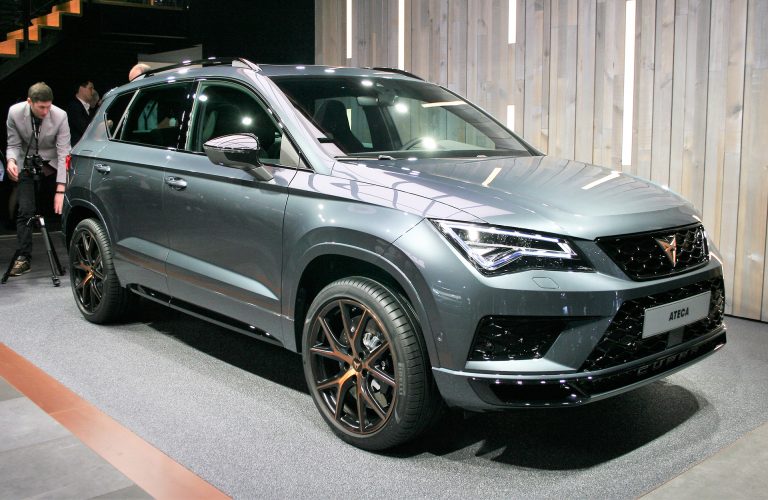
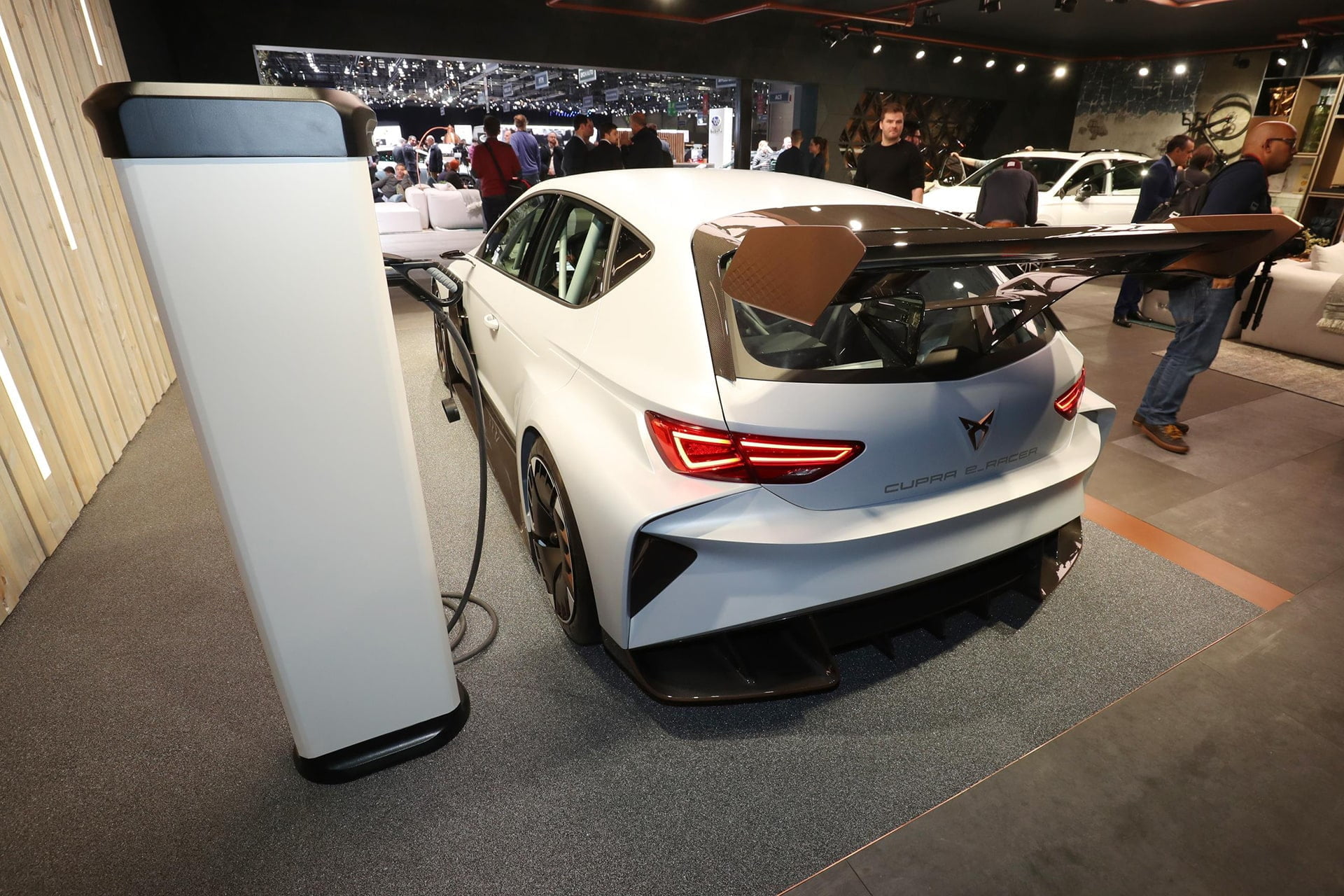
 There is no SEAT in the title because this Geneva show marks the debut of Cupra as the Spanish manufacturer’s standalone performance sub-brand. And while the first production model on the stand is a Cupra variant of the Ateca SUV, most interest will surround the E-Racer, a fully electric version of the Leon touring car racer and set to get its own series in 2019.
The E-Cupra boasts more than 400hp of continuous power, peak output of 680hp and a 0-62mph time of 3.2 seconds. As a comparison, cars in Britain’s most popular race series, the British Touring Car Championship (BTCC), have around 300hp, so a full-grid of electric touring cars likely will not be dull…
There is no SEAT in the title because this Geneva show marks the debut of Cupra as the Spanish manufacturer’s standalone performance sub-brand. And while the first production model on the stand is a Cupra variant of the Ateca SUV, most interest will surround the E-Racer, a fully electric version of the Leon touring car racer and set to get its own series in 2019.
The E-Cupra boasts more than 400hp of continuous power, peak output of 680hp and a 0-62mph time of 3.2 seconds. As a comparison, cars in Britain’s most popular race series, the British Touring Car Championship (BTCC), have around 300hp, so a full-grid of electric touring cars likely will not be dull…  Definitely a British car is the Toyota Auris – the Japanese brand having only this week confirmed that the latest generation of its family car will be built at its Burnston plant and be powered by Welsh-built engines. The third-generation Auris is expected to boast more distinctive styling as Toyota attempts to boost its competent but slow-selling hatch.
 One of the biggest rivals to the Toyota Auris will be the third generation of the Kia Ceed. It’s a long time since the unveiling of a new Kia failed to get the attention of journalists, and while the Ceed doesn’t sell as many as the brand’s Sportage SUV, it is still an important model and the new one will gain all the quality and technology that has completely changed perceptions of the Korean brand’s product.
The new Ceed, which goes on UK sale in the summer, also loses something – the apostrophe in the name, a butt of jokes by the likes of Top Gear, is gone in a bid to add to the car’s mainstream appeal.
One of the biggest rivals to the Toyota Auris will be the third generation of the Kia Ceed. It’s a long time since the unveiling of a new Kia failed to get the attention of journalists, and while the Ceed doesn’t sell as many as the brand’s Sportage SUV, it is still an important model and the new one will gain all the quality and technology that has completely changed perceptions of the Korean brand’s product.
The new Ceed, which goes on UK sale in the summer, also loses something – the apostrophe in the name, a butt of jokes by the likes of Top Gear, is gone in a bid to add to the car’s mainstream appeal.
 Volvo has plenty of reason to celebrate at Geneva – not only has it won the European Car of the Year trophy with its XC40, but the show sees the debut of the new V60 estate. The new V60 is expected to prove as successful alongside its XC60 SUV sister as the larger V90 is with the XC90.
The newcomer is pitched as a ‘sporty’ estate and expected to earn more sales for Volvo against the premium heavyweights of Audi, BMW and Mercedes-Benz.It is expected on UK roads in the autumn.
The latest to join the expanding Lexus crossover line-up will be the most dramatic-looking model yet. First shown as a concept at the Paris show in 2016, the Lexus UX is a small SUV described as an ‘Urban Crossover’ by its makers.
The UX is pitched as a real driver’s car – the cockpit is focused around the driver and the car built on an all-new platform that promises far greater rigidity and a lower centre of gravity – Lexus says the UX will have ‘the handling of a hatchback.’ When it goes on sale it will rival such cars as the Jaguar E-Pace and Mercedes-Benz GLA.
Volvo has plenty of reason to celebrate at Geneva – not only has it won the European Car of the Year trophy with its XC40, but the show sees the debut of the new V60 estate. The new V60 is expected to prove as successful alongside its XC60 SUV sister as the larger V90 is with the XC90.
The newcomer is pitched as a ‘sporty’ estate and expected to earn more sales for Volvo against the premium heavyweights of Audi, BMW and Mercedes-Benz.It is expected on UK roads in the autumn.
The latest to join the expanding Lexus crossover line-up will be the most dramatic-looking model yet. First shown as a concept at the Paris show in 2016, the Lexus UX is a small SUV described as an ‘Urban Crossover’ by its makers.
The UX is pitched as a real driver’s car – the cockpit is focused around the driver and the car built on an all-new platform that promises far greater rigidity and a lower centre of gravity – Lexus says the UX will have ‘the handling of a hatchback.’ When it goes on sale it will rival such cars as the Jaguar E-Pace and Mercedes-Benz GLA.
 The saloon is dead, long live the fastback. The Peugeot 508, unveiled at the show, will offer buyers something different to the current glut of new SUVs when it goes on sale, probably before the end of 2018.
Peugeot has abandoned the saloon styling of the first-generation 508 in favour of a much more dramatic fastback shape. Naturally, it also gets the latest variant of Peugeot’s much-praised i-Cockpit. The petrol and diesel powertrain range is expected in time to be joined by a plug-in hybrid.
The saloon is dead, long live the fastback. The Peugeot 508, unveiled at the show, will offer buyers something different to the current glut of new SUVs when it goes on sale, probably before the end of 2018.
Peugeot has abandoned the saloon styling of the first-generation 508 in favour of a much more dramatic fastback shape. Naturally, it also gets the latest variant of Peugeot’s much-praised i-Cockpit. The petrol and diesel powertrain range is expected in time to be joined by a plug-in hybrid.
 Audi’s big saloon is gaining a significant updating to take on younger versions of its big rivals, the BMW 5 Series and Mercedes-Benz E-Class. On sale in the summer of 2018, the car boasts all of the technology that has been seen in other recent cars from Audi, particularly the larger A8.
Highlights include all-digital controls in the cockpit, the most up-to-date connectivity, and powertrains that include mild hybrid technology.
All photos: Andrew Charman
Audi’s big saloon is gaining a significant updating to take on younger versions of its big rivals, the BMW 5 Series and Mercedes-Benz E-Class. On sale in the summer of 2018, the car boasts all of the technology that has been seen in other recent cars from Audi, particularly the larger A8.
Highlights include all-digital controls in the cockpit, the most up-to-date connectivity, and powertrains that include mild hybrid technology.
All photos: Andrew Charman Automotive Website of the Year


Automotive Website of the Year
Automotive Website of the Year