Find an Expert Rating: 
Home Blog Page 136

Volvo XC40 takes Euro Car of Year title

The Volvo XC40 has been named the European Car of the Year for 2018. The new compact SUV, which is yet to arrive on UK roads, is the first Volvo model to take the prestigious award, traditionally presented on the eve of the Geneva motor show. And it won in impressive fashion – scoring 325 votes, significantly in front of the runner-up SEAT Ibiza with 242 votes and the third-placed BMW 5 Series with 226. Others shortlisted for the award, which is voted for by panels of leading motoring journalists from throughout Europe, were the Alfa Romeo Stelvio, Audi A8, the Citroën C3 Aircross and Kia Stinger. The XC40 launches Volvo’s new compact modular vehicle architecture (CMA), co-developed with the brand’s Chinese owner Geely and which will form the basis of all upcoming cars in the 40 series. These will include fully electrified vehicles, Volvo having committed to offering electrified versions across its model range by 2020.

Three-cylinder engines

The car will also debut the brand’s new three-cylinder Drive-E powertrain – the first three-cylinder engine in Volvo 91-year history. The all-new 1.5-litre direct-injection petrol unit uses the same modular design as Volvo’s four-cylinder Drive-E engines that have propelled the brand’s downsizing efficiency drive. The three-cylinder unit will also be incorporated into Twin Engine plug-in hybrid versions of the XC40, which will launch later along with a fully electric model. Commenting on the award, Volvo Cars president and CEO Håkan Samuelsson said that winning it with the new XC40 is perfect timing. “Volvo now has three globally available SUVs in its range for the first time – the XC40 will be a strong contributor to further growth, taking us into a new and fast-growing small SUV segment.” First UK deliveries of the XC40 are expected imminently at prices starting from £27,905. Volvo XC40 The Car Expert

BMW X2 launches in UK

0
The BMW X2 has gone on sale in the UK as the company’s ongoing attempt to squeeze an SUV-style vehicle into every possible niche continues. The BMW X2 is based on the X1 and shares the same wheelbase, but is a smidgen shorter (2cm, to be precise) and more than 7cm lower. Like its bigger SUV-cum-coupé-thing brothers, the X4 and X6, it has a stretched, coupé-style roofline and narrower windows than its more practical X1 sibling. Probably the most distinctive feature about the newest member of the BMW X family is that the brand’s famous kidney grille design is wider at its base than at its top. BMW designers claim this gives the new car a broader, more distinctive and sportier appearance. LED headlights are standard on sport and M Sport specifications. Around the back, strong horizontal lines visually exaggerate the X2’s width, with these lines continuing into the high-set rear lights. The LED rear lights are set in the L shape familiar from BMW coupés.

Interior based on X1

Inside, the instrument panel is much the same as that found on the X1, but naturally with extra pseudo-sportiness. Contrasting stitching is standard on all models, while the M Sport model comes with cloth and Alcantara upholstery and the M Sport X adds leather upholstery. Like its traditional rivals Audi and Mercedes-Benz, BMW is gradually coming around to the idea of having touchscreens controls in cars, after years of railing against them. As well as the latest iteration of its iDrive rotary controller, the X2 comes with standard touchscreen controls and optional voice control as part of a technology package. Standard specification includes a 6.5-inch touchscreen and satnav, with the option of a full-colour head-up display, also included in the technology pack. The LED lighting in the trim surfaces of the instrument panel and door panels forms a continuous band that extends all the way around the cabin to the rear. A mood lighting package is optional, allowing X2 owners to choose to be lit in orange, lilac, mint, bronze, blue or white. Naturally, being a BMW, you have to pay extra for Apple CarPlay or Android Auto, despite the fact that dozens of other car companies manage to offer this software for absolutely no charge whatsoever.

Only one engine at launch, more to come later

At launch, the only a 2.0-litre diesel engine with all-wheel drive will be available. It generates maximum output of 190hp and 400Nm of torque enabling a zero to 62mph time of 7.7 seconds. Official fuel consumption is 61.4mpg (depending on chosen wheels), while CO2 emissions are 121g/km (again, depending on wheels). Further powertrains will be added to the X2 line-up later in the year, in the shape of a petrol two-wheel drive model, and a lower-output diesel in either two-wheel drive or all-wheel drive. The car’s driving responses can be adapted between comfort, economy and sport modes. The set-up available for sport mode gives the car more dynamic steering and powertrain responses. If the optional adjustable dampers are specified, the car’s suspension can be adjusted to individual requirements in either comfort or sport modes. As with most BMW vehicles, sports suspension fitted as standard on the BMW X2 M Sport and M Sport X models, which means tauter spring and damper tuning, as well as a 10mm lower ride height. The BMW X2 is now on sale at BMW dealers, with prices starting at £33,980 on-road for the xDrive 20d SE model.

Alfa Romeo Nürburgring Editions celebrate lap records

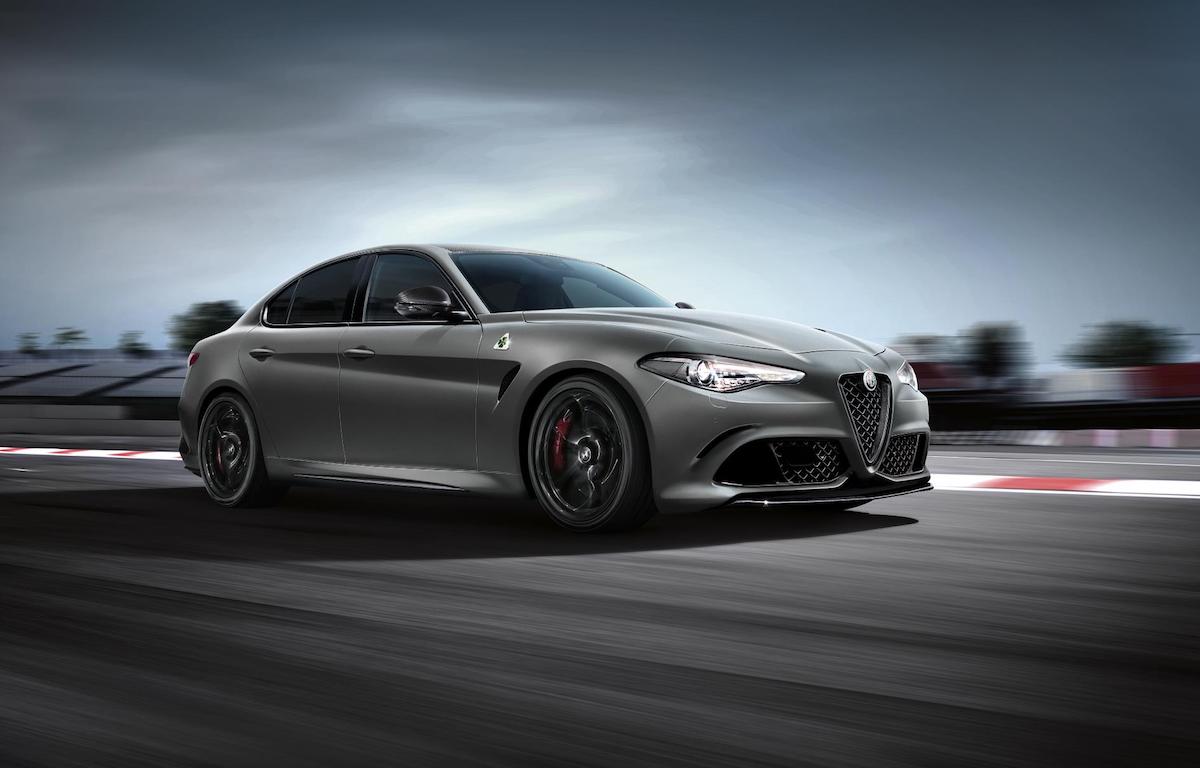
The stars of the Alfa Romeo stand at this week’s Geneva motor show will be the new Nürburgring Editions of the Stelvio Quadrifoglio SUV and Giulia Quadrifoglio saloon models. They have been created to celebrate the records recorded by Alfa Romeo on the legendary German race track. The Stelvio Quadrifoglio currently holds the record for the fastest SUV in its segment, with a lap time of 7 minutes, 51.7 seconds. How relevant this statistic is to anyone actually buying a mid-size SUV is highly debatable, but for the record, the Alfa is currently the fastest. Similarly, the Giulia Quadrifoglio is the current record-holder for standard production four-door saloons, with a lap time of 7 minutes 32 seconds. Both cars are powered by the same 2.9-litre V6 twin-turbo engine that was totally not developed by sister brand Ferrari, and totally not related to the 2.9-litre V6 twin-turbo engine of identical dimensions that used to live under the bonnet of the Ferrari California T. Pure coincidence, apparently.
Alfa Romeo Giulia Quadrifoglio Nürburgring Edition
Just 108 of each model will be made, to commemorate 108 years since ALFA (Anonima Lombardia Fabbrica Automobili, or Lombardy car manufacturing company) was founded in Milan. The new limited editions have a numbered badge in the carbon fibre dashboard insert and are available in an exclusive Circuito Grey colour. Building on the standard Quadrifoglio specification, the “NRING” special series models include carbon-ceramic brakes, Sparco racing seats with red stitching and carbon shell structure, Mopar automatic transmission knob with carbon insert, leather and Alcantara steering wheel with carbon inserts as standard. The front badge and the mirror caps are made of carbon fibre, as are the side skirt inserts, while tinted windows, active cruise control, Harman Kardon premium audio package, and Alfa’s top-spec infotainment and satnav system complete the package. The Giulia version also includes a new bare carbon roof.
Alfa Romeo Stelvio Quadrifoglio Nürburgring Edition

Kia Sorento GT-Line review

60-second summary

What is it?
The latest Kia Sorento is a large, range-topping full 4×4 SUV

Key features
Seven seats, new premium models, new eight-speed auto gearbox

Our view
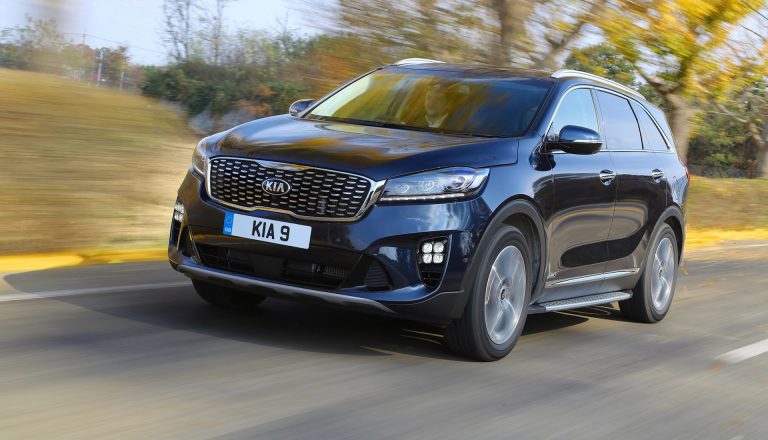
The Kia Sorento GT-Line is a clear effort to keep the SUV, for many years the brand’s flagship model, competitive against many emerging rivals, and in most areas the upgrades work.

Buyers tempted by a GT-Line will gain a lot of SUV for the money, with loads of interior space and significantly improved interior quality. It boasts more up-to-date technology – especially the new eight-speed auto gearbox – and the ability to go much further off the tarmac than many of its rivals could manage.

Buyers wanting a large, quality all-rounder should certainly take a look at the Sorento.

Similar cars
Hyundai
 Santa Fe, Skoda Kodiaq, Nissan X-Trail

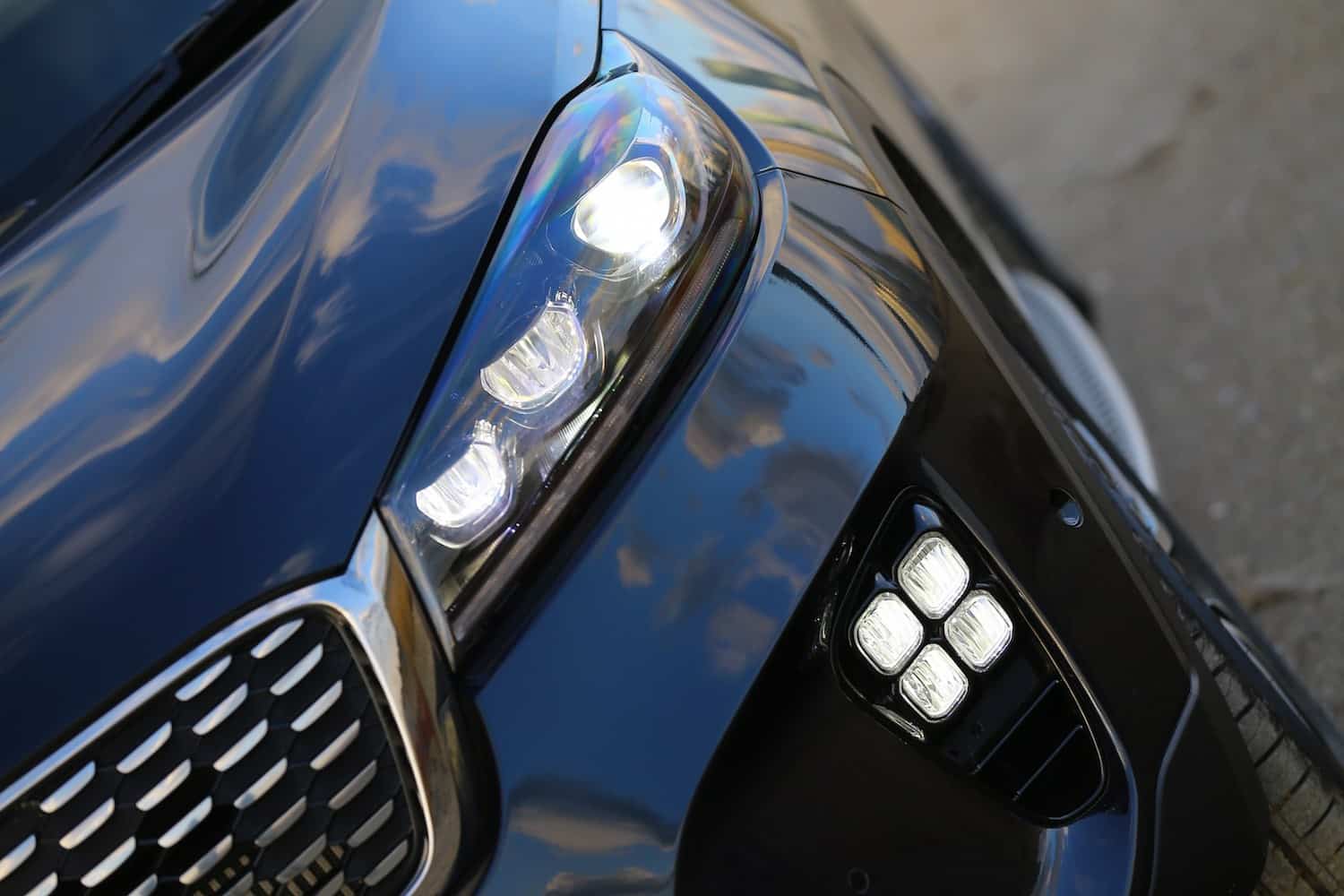
Kia Sorento GT-Line headlights 2018
Lots of light bulbs…

Full review

Introduction

For many years, the Kia Sorento was the Korean brand’s flagship. The ‘proper’ big SUV was always the first to get the new technology, and when the latest, third-generation model launched in 2015 it was seen as leading phase two of Kia’s transformation, from budget brand to mainstream manufacturer of quality cars.

Today, however, there’s a new flagship in town. The Sorento has lost its top dog status to the Kia Stinger, the newly-released and potent-looking coupé. And the SUV is also facing competition like never before from a whole host of new rivals entering the market – all much newer, and with more up-to-date technology.

So Kia’s answer, for a model it still considers a highly important part of its line-up, is to update the Sorento – principally by adding two new range-topping trim levels. And as part of this package, the previous six-speed auto transmission is replaced by an all-new eight-speed variant.

The Sorento does have two factors in its favour as it fights off the new SUV onslaught. Firstly unlike many of its rivals, it is a proper, full-time four-wheel-drive off-roader, with true go-anywhere ability.

Secondly, it has seven seats, and for those who need such capacity the options today are much more limited than they used to be. The rise of the SUV has in turn seen the virtual death of the MPV, and few of the new breed offer the bulk carrying ability their predecessor people-carriers did.

The problem for the Sorento, however, is that one other SUV that does also offer seating for seven is the Skoda Kodiaq – a rival almost universally praised since its launch little over a year ago and one that is increasingly becoming the car everyone must beat.

Kia Sorento GT-Line review 2018 (The Car Expert)
New GT-Line models sit at the top of the updated Kia Sorento range.

Buying and owning a Kia Sorento

The central changes to the new Sorento range are the addition of the two new trim levels, GT Line and GT Line S. These sit above the existing KX1 and KX2 grades and offer an alternative to the KX3 grade, while also effectively replacing the previous range-topping KX4.

Both newcomers are only available with the new auto transmission. The GT Line is £7,500 more than the cheapest Sorento, the £28,995 KX1 with manual transmission, and £1,800 above the cheapest auto in KX2 grade.

So what does one get for the money? Both the GT-Line and GT-Line S gain subtle exterior styling upgrades, in the form of bespoke double five-spoke alloy wheels, stainless steel side steps, red brake calipers, more stylish ‘ice-cube’ headlamps and twin exhaust pipes.

Inside there is plentiful leather, on the seats, steering wheel and gear shift, all of it in a black shade and grey-stitched.

In terms of equipment the GT-Line takes the KX2 as a start point, and adds keyless entry and start, power adjustment of the front seats in eight directions, a seven-inch digital display ahead of the driver, plus safety upgrades aiding lane keeping and observing speed limits, plus a driver attention warning system.

Choose the GT-Line S and the bill jumps another £5,500. The additions over the GT-Line are led by a significant safety upgrade – this is the only Sorento on which autonomous emergency braking comes as standard.

Blind spot detection, a rear cross traffic alert for reversing out of parking spaces, and adaptive cruise control are also part of the safety specification, and the Sorento earned a five-star Euro NCAP rating back in 2014.

Getting into tight spaces is further aided by a park assist system and an around-view monitor which can be viewed at any speed, while other niceties supplied as standard include two extra power adjustments on the front seats (which are ventilated), a panoramic sunroof, LED headlamps that bend around corners, solar reflecting glass and window blinds, and a ten-speaker sound system.

One final major plus is the fact that, like all Kias, the Sorento comes with a seven-year warranty – definitely worth having.

Inside the Kia Sorento

Kia Sorento GT-Line dashboard (The Car Expert)
Lashings of leather in GT-Line spec improve the feeling of quality

The Car Expert set the new Sorento models a major challenge by firstly driving them just days after getting out of the Skoda Kodiaq, and also by firstly trying one of the ‘normal’ KX2 variants.

The Sorento KX2 is a very competent, traditional SUV, but slipping into it the surroundings immediately feel dated, compared to not only the Skoda but other more recent rival challengers.

The surfaces are ordinary, areas such as the satnav graphics appear a generation behind, while starting a car with a key seems so old hat these days. This clearly shows the pace of change because, when it launched in 2015, the Sorento represented a pivotal step up in Kia quality standards.

The interiors of GT-Line models, however, pull back much of the deficit. The plentiful leather does a lot to increase the feeling of quality. The satnav still appears a bit basic in its graphics and over colourful compared to the likes of VW Group’s product, but at least the screen is big and easy to use, and housed in a stylish centre binnacle. And yes, there is keyless entry.

The Sorento is a big SUV, and this translates to loads of interior space, especially above the head and whether in front, back or very back. Unusually for seven-seaters, the rearmost two seats are usable by not just younger occupants, though getting into them is not quite as easy as in, for example, the Kodiaq.

With all seven seats in place, the boot offers 142 litres of space. Fold the rear seat flat – a very easy process – and this grows to 605 litres, fold both rear rows and you have a massive 1,662 litres – that’s more than 50 over the sister Hyundai Santa Fe, though again not as much as in the Skoda.

Driving the Kia Sorento

Kia Sorento GT-Line on the road (The Car Expert 2018)
Sorento feels planted although ponderous if cornered too enthusiastically

Choosing one’s powertrain on a Sorento is easy as it only comes with one engine, a 2.2-litre diesel developing 200hp and 441Nm of torque. On GT-Line models this can only be combined with the new eight-speed automatic transmission – an option on other models.

Replacing the previous six-speed unit, the eight-speeder improves official combined cycle fuel economy to 43.5mpg alongside a small reduction in CO2 emissions to 170g/km. For such a big SUV, these are better than adequate figures.

It is also a highly refined gearbox. While accelerating crisply, reaching 60mph in just over nine seconds which is competitive with rivals, the Sorento feels totally relaxed. The automatic shifts are slick and sure, with none of the hunting such transmissions can suffer from. The new ‘box is definitely an improvement on its six-speed predecessor.

On the road the Sorento cabin is a hushed, comfortable environment to travel in – much effort was expended on improving noise vibration and harshness in the design of the third-generation model, and the work is evident in the lack of evidence of any extraneous sounds or bumps.

The Sorento is also a proper 4×4, and as a result feels very planted and sure-footed on the road, though it can be a bit ponderous if cornered too enthusiastically. You do, however, have the sure knowledge that it would not be fazed if the road ran out. Driving one on the launch event during the worst winter for many years proved undramatic.

Summary

With rivals emerging at a rapid rate, Kia had to do something to keep the Sorento competitive in its market. The addition of the GT-Line models just about fulfils the brief.

While perhaps not quite offering enough to tempt potential buyers away from a Kodiaq, the Kia Sorento GT-Line is a lot of SUV for the money. It’s big, with loads of interior space, and with significantly better perceived interior quality than previously.

The new transmission is a definite forward step, and the Sorento also retains the ability to go much further off the tarmac than many of its rivals could manage. Buyers wanting a large, quality all-rounder should certainly take a look at it.

Kia Sorento GT-Line rear view (The Car Expert 2018)
Addition of GT-Line models just about does enough to keep Sorento competitive in the marketplace.

New car sales dip slightly in February

New car registrations fell by just under 3% in February, according to results published this morning by the Society of Motor Manufacturers and Traders (SMMT). However, it’s not a particularly drastic state of affairs – February is traditionally one of the two quietest months of the year, and the difference between this year and last is less is only about 2,300 cars. The fall is also significantly less than last month’s results, which saw new car registrations down by 6% year-on-year. The drop was evenly spread across private and fleet new car registrations, although business registrations (the smallest sector) fell more sharply – but again, this only means about 700 units in February. Within those numbers, however, the story largely follows the same pattern as the last 12 months. Diesel sales continue to nosedive, with petrol sales picking up the slack. Alternatively-fuelled vehicles (basically hybrids and EVs) were also slightly weaker than expected despite a slight increase compared to last year. Petrol cars commanded more than 60% of the new car market, while AFVs were at 4.4% – better than last year, but below the 5% mark that we have come to expect over the last year.
New car registrations February 2018
February’s results showed less of a fall than in recent months.

Diesel sales continuing to plummet

This time last year, the tide had started to turn against diesels, with sales in Feb 2017 some 9% down on Feb 2016. AS we all know, this accelerated through 2017 and has continued into 2018. In February 2018, diesel registrations were more than 23% down on the same month in 2017, meaning a drop of about 30% in the last two years. Diesel’s share of the market is now down below 36%, compared to 45% last year and nearly 49% two years ago. Both private and fleet buyers continue to ignore the increasingly desperate pro-diesel propaganda being pushed by the SMMT and other industry mouthpieces. As we have previously predicted, it looks like diesel sales will continue to fall in coming months, probably settling at about 30% market share. This is absolutely not a UK phenomenon, despite the rhetoric from those with vested interests. All across Europe, diesel sales are falling at similar rates as car buyers and governments continue to move away from diesel power. In the short term, this has meant a revival for petrol cars, but will inevitably lead to rapid growth in hybrids and electric vehicles as soon as car companies can bring them to market.

What can we expect from March numbers?

March is traditionally the biggest month of the year for new car registrations, as new number plates arrive and many private and fleet buyers rush to buy new cars with the latest numbers. However, we need to remember that last March was an all-time record as buyers rushed to beat major road tax changes that came into effect in April 2017. This March represents the best chance for diesel cars to show some sign of temporary recovery, as road tax for virtually all new diesel cars will increase in April. Dealers and manufacturers will be hoping that fleets repeat last year’s decision to bring forward vehicle replacements to beat the road tax increase. However, unlike last year, the extra road tax burden is probably not sufficient to overcome depreciation costs from changing cars a few months earlier. Private buyers, on the other hand, tend to react more strongly to tax-saving incentives, so maybe we will see a one-off boost to private diesel new car purchases in March. Overall, it’s likely to be another month of negative headlines for March, but given that the first quarter of last year was a record period, we will really have to wait and see how the second quarter unfolds to really assess the state of the new car market.

Ford Fiesta reigns supreme once again

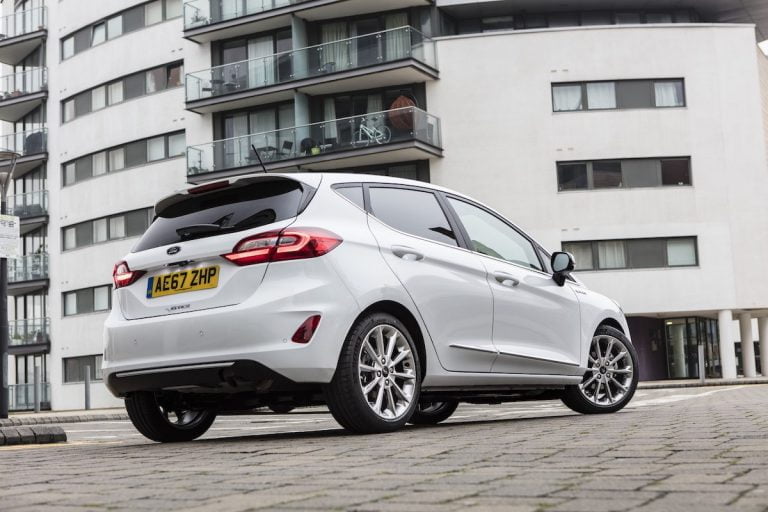
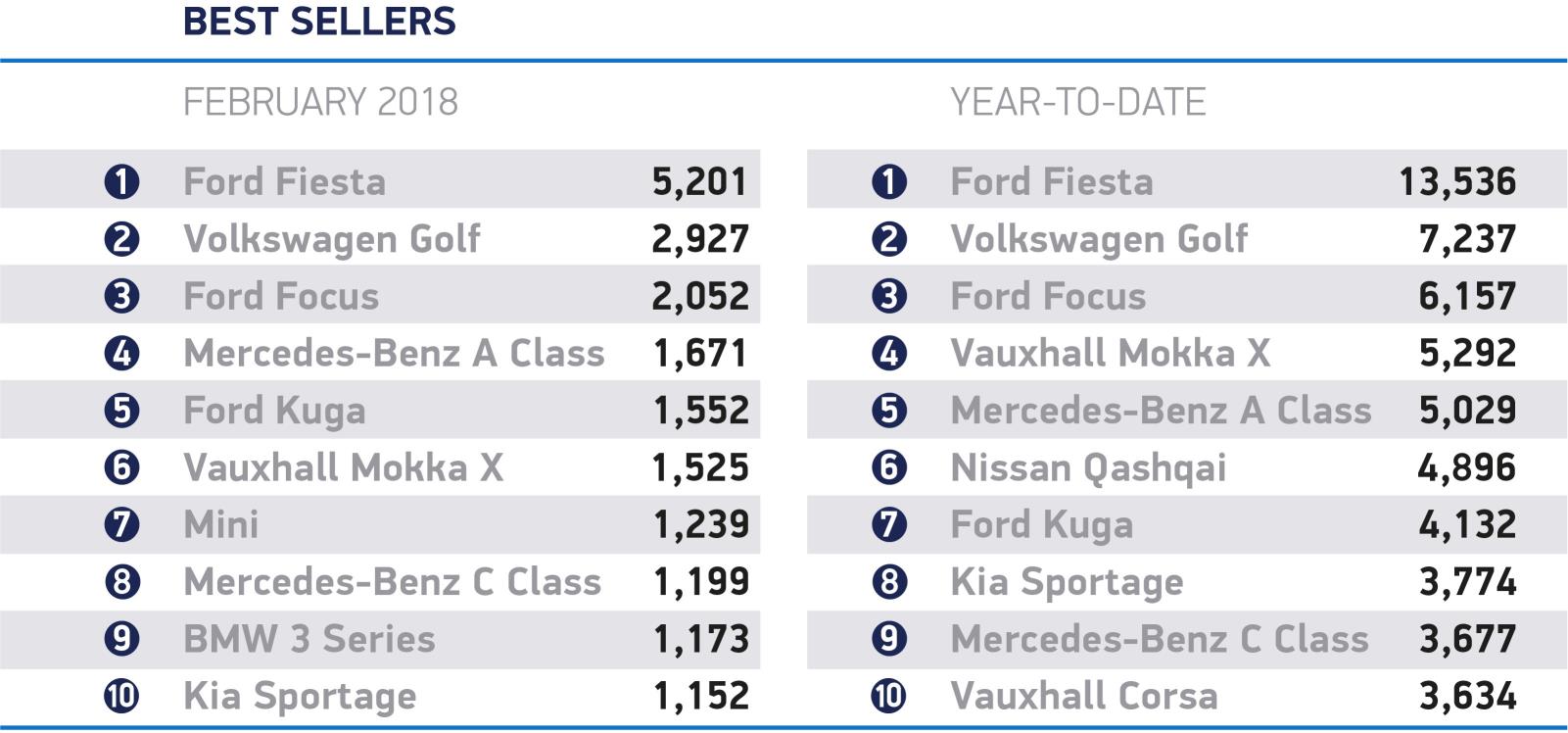
Looking at the monthly best-sellers list, it is no surprise to see the Ford Fiesta dominant as usual, with an enormous margin over the second-placed Volkswagen Golf. Keen run-out deals have helped the Ford Focus and Mercedes-Benz A-Class to third and fourth places respectively. The BMW 3 Series made an appearance in the Top Ten for the first time in a while, in ninth place and only 26 units behind the rival Mercedes-Benz C-Class in eighth.
Best selling new cars, February 2018
Another dominant month for the Ford Fiesta in February

Audi A6 back in business

Audi has unveiled an all-new A6 executive saloon, integrating many of the refinements and innovations from the latest A8 luxury flagship. The new Audi A6 will make its public debut at next week’s Geneva motor show before going on sale in the UK in the summer. The new A6 has grown slightly in size, and every model in the range will feature mild hybrid technology to reduce fuel consumption and emissions. Audi claims improvements to comfort and handling, as well as a raft of technological improvements passed down from the flagship Audi A8 model. The latest version of the A6 has been launched with one petrol and one diesel engine, both using automatic transmissions and all-wheel drive, although more engine options will inevitably be added over the next year as usual.
Audi A6 saloon, March 2018
Just when you thought Audi grilles couldn’t get any bigger.

Audi’s new direction on driver input

One of those upgrades is a new digital operating system with touchscreen format, which offers fast access to vehicle functions thanks to its logical and flat menu structure. Configurable favourites buttons help tailor the system to the user’s preferences, and it allows up to seven drivers to store their preferred settings in individual user profiles and set up to 400 parameters. Central vehicle functions can be placed in the required position in the screen by dragging and dropping icons like managing apps on a smartphone. The driver controls the infotainment via the upper display, which measures nine inches in standard form or ten inches where the upgraded navigation system has been specified. The lower display is used for climate control and convenience functions, as well as text input. In addition, the head-up display projects important information onto the windscreen directly in front of the driver. The optional MMI navigation plus system features include a self-learning function based on the driven routes, which generates intelligent search suggestions. Route guidance is provided online on the servers run by service provider HERE; these servers factor in the traffic situation in the entire region. If the flow of data is interrupted, the navigation switches to the online route guidance that runs in parallel. MMI navigation plus has optional add-on modules, including two sound systems headed by the Bang & Olufsen Advanced Sound System delivering 3D sound. Shortly after launch, an on-street parking service. The new A6 features natural-language voice control, which processes questions and commands in two ways; with onboard stored data and also – in conjunction with the optional MMI navigation plus – with detailed knowledge from the cloud. Also as an option, you can replace your conventional vehicle key with an app. It allows an Android smartphone to lock/unlock the car and start the engine. Near Field Communication transfers data to the car. The owner can pass the access data onto five people or smartphones. Comfort features include parking pilot and the garage pilot, which will become available at a later date and will be capable of autonomously manoeuvring the car into and out of a parking space or garage. The parking pilot and the garage pilot will form part of the forthcoming Parking pack. Two other packages will be available at launch – the City assist package includes features such as a crossing assist system, while the Tour package offers adaptive cruise assist, which supplements the adaptive cruise control by means of gentle steering intervention to keep the vehicle in lane, and efficiency assist, which promotes an economical driving style. Behind the assistance systems lies a high-tech module called the central driver assistance controller (zFAS). It continuously calculates a detailed model of the environment from a fusion of sensor data. Depending on equipment, the sensor set includes up to five radar sensors, five cameras, twelve ultrasonic sensors as well as a laser scanner – another major innovation.
Audi A6 interior, March 2018
Latest generation of Audis is finally embracing touchscreens after years of criticising them

Mild hybrid technology across the new Audi A6 range

All engines in the new A6 feature new mild hybrid technology. Here a belt alternator starter (BAS) works together with a lithium-ion battery, enabling the A6 to coast at speeds of between 34mph and 99mph in the interest of fuel economy and to initiate its start-stop function earlier – at speeds of 13mph and below. The engine is restarted from standstill predictively as soon as the vehicle in front of the Audi A6 starts moving. During deceleration, the BAS recovers up to 12 kW of energy. In real-world driving, Audi claims the mild hybrid technology can improve the car’s range by up to 62 miles. The interior of the new Audi A6 is even larger than in the outgoing model. Rear legroom exceeds not only the previous model but also rivals like the Mercedes-Benz E-Class and BMW 5 Series, while headroom and shoulder room measurements in both front and rear are also more generous than previously. The new Audi A6 is claimed to be noticeably sharper than the outgoing model from a handling perspective, thanks to innovative new suspension options. Customers can choose from four set-ups: the conventional steel spring suspension, sports suspension, suspension with damper control and adaptive air suspension, also with controlled damping. Progressive steering that becomes quicker and more direct as the steering angle increases is standard, and dynamic all-wheel steering can also be added to further enhance this agility. As part of the launch in the European markets, Audi offers the new A6 with two engines – one petrol and one diesel. The petrol unit is a 3.0-litre V6 unit, which powers the saloon from rest to 62mph in 5.1 seconds thanks to outputs of 340hp and 500 Nm, and tops out at an electronically limited 155mph. The 3.0-litre diesel V6 with 286hp delivers similar performance, with the help of an impressive 620 Nm torque output. All A6 models will be exclusively equipped with automatic transmission. The 3.0 diesel unit is paired with a conventional eight-speed unit, while the 3.0 petrol engine is paired with a seven-speed double-clutch gearbox. Both launch-spec engines channel their outputs through quattro all-wheel drive as standard, although the exact technical solution depends on your choice of fuel (or more accurately, gearbox). The diesel model with its conventional transmission runs a familiar self-locking centre differential all-wheel drive format, while the petrol engine and slicker transmission works with a more efficient all-wheel drive system called ultra, which is capable of engaging the rear axle instantly whenever needed but decouples it during cruising to maximise efficiency. The new Audi A6 will go on sale in the UK in the summer. Pricing and specification for our market will be confirmed nearer to launch. Audi A6 rear, March 2018

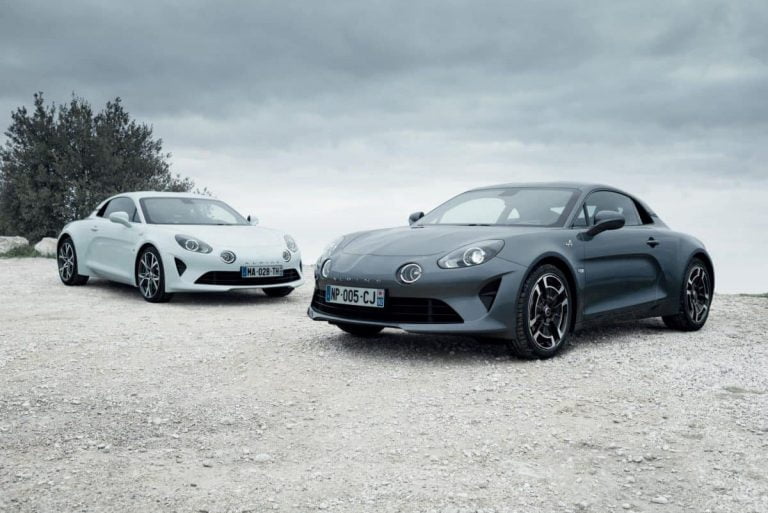
Two new versions of the Alpine A110

Two new versions of the Alpine A110 will be unveiled at next week’s Geneva motor show – the A110 Pure and A110 Légende. It was a year ago, at the 2017 Geneva show, that Renault’s revived sports car brand Alpine unveiled the production version of the new-generation A110, following numerous concepts over the years. Both new specifications of the A110 share the same full aluminium structure, 252hp 1.8-litre mid-mounted engine, seven-speed dual-clutch automatic transmission with double wishbone suspension front and rear. The A110 Pure represents the model at its lightest and most driver-focused, which translates to a stripped-down specification to reduce both weight and price. Meanwhile, the Légende adds more luxury kit for drivers who prefer comfort to ultimate performance. Standard equipment includes six-way adjustable lightweight seats, full leather upholstery and gloss-finished carbon fibre interior trim. Three new exterior colours will also be added to the Alpine range.

Dacia improves Duster scrappage deal

Dacia is increasing its scrappage allowance on selected versions of the Duster compact SUV for 18-registration customers to as much as £2,000. Until the end of March, the Duster Lauréate dCi 110 4×2 and 4×4 now receive an extra £500 and £1,000 respectively on top of their existing scrappage scheme offers. This means the front-wheel drive version now comes with a scrappage allowance of £1,500, while the all-wheel drive variant offers a scrappage allowance of £2,000. In addition to this, during a special Dacia Week event at participating dealers between the 12 and 18 March, the Duster Lauréate dCi 110 will be available with up to a £2,200 deposit contribution when purchased on a three-year 4.9% PCP offer.   Prestige and Ambiance versions of the Duster continue to be available with a scrappage allowance of £1,000. The Dacia scrappage scheme also extends to the Sandero hatchback model. Access specifications of both models are not included in the scrappage scheme. Drivers wanting to take advantage of the scrappage scheme must part-exchange a car that is Euro-4 standard or older, registered before 31 December 2009. Vehicles traded in under this scheme will be scrapped.

Checking the fine print

  • This offer is a part-exchange allowance, for selected used cars part-exchanged against selected new cars.
  • Your current car can be from any brand, but must be built to Euro-4 emissions standard or earlier, first registered no later than 31 December 2009.
  • You must be the owner of the part-exchange vehicle and the buyer of the new car (same name and registered address).
  • You must have owned the old car for at least 90 days, to stop people buying an old banger for £100 and then getting a £2,000 part-exchange allowance for it.
  • The scrappage price is fixed for any car part-exchanged as part of the scheme, not an allowance on top of the car’s value. You are effectively getting nothing for your car, but a discount on the new car (although it won’t be written that way on the contract).
  • You must buy and take delivery of your car by 31 March 2018.
  • This offer cannot normally be used on top of any other offers from the dealer/manufacturer/finance company, although Dacia is having a special finance event from 12-18 March where you can combine the scrappage allowance with
  • The offer is not dependent on you taking any finance package or other products.

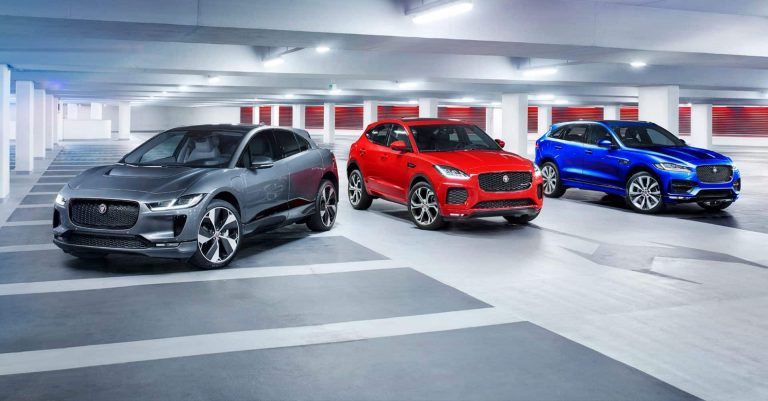
Jaguar I-Pace first of an electric range

Full details of the Jaguar I-Pace have been unveiled, claimed to be the first all-electric SUV from a premium European brand. What is expected to be a vital model to the future of the manufacturer – the first of several electric Jaguars – was revealed in a live online broadcast, ahead of its public debut at the Geneva motor show next week. And Jaguar has already opened order books for the car, at prices from £63,495 – the Government’s £4,500 grant to electric vehicle buyers will bring this down to £58,995. First deliveries are expected as soon as July. The I-Pace has been designed from the outset as an electric vehicle (EV) and also a performance one. Its all-wheel-drive powertrain promises a 400hp output and a resultant 0-60mph time of only 4.5 seconds. Jaguar I-Pace The Car ExpertThe car is built around a bespoke aluminium architecture with the battery placed between the axles to create both a low centre of gravity and perfect 50:50 weight distribution. Emphasising the car’s sporting credentials, Jaguar will even organise a race series for the I-Pace alongside the Formula E international championship for electric single-seater race cars. However Jaguar insists that the I-Pace is also a practical EV, quoting a range between charges of up to 298 miles. It will recharge from 0 to 80% in 85 minutes using a public 50kW fast charger, and a half-hour charge will give it an 80-mile range. The car is also fully compatible with the 100kW DC rapid-charging technology being rolled out across the UK, which will cut the 80% charge time to 40 minutes. Using a 7kW home-charging wall box for overnight charging will achieve the same 80% charge in three hours. “For I-Pace customers fuel stations are a thing of the past, after overnight charging they’ll wake up every morning with a ‘full tank of fuel'” says Jaguar I-Pace line director Ian Hoban. Jaguar I-Pace The Car ExpertJaguar adds that while in terms of exterior dimensions a mid-sized SUV, the I-Pace will offer interior space to compare with larger SUV rivals. The lack of internal combustion engine infrastructure, such as a transmission tunnel, frees up extra interior space and storage, while the 656-litre boot expands to 1453 litres with the seats folded flat. New technology will feature heavily in the I-Pace. The debuting Touch Pro Duo infotainment system includes a navigation system directly focused on EVs, assessing such aspects of the planned route as hills and recalling previous journeys to calculate a personalised range and charging status to provide highly accurate information. Also debuting will be Amazon Alexa Skill. Drivers will be able to ask questions of an Alexa-enabled device on such aspects as the car’s range and whether the next journey is achievable without a recharge. The I-Pace will be the first Jaguar to update its software over-the-air. While, however, the I-Pace will be the latest product from a thoroughly British brand and designed and developed in the UK, it will not be a strictly British car. With space at a premium in its UK plants, not to mention Brexit concerns, Jaguar has contracted Austrian giant Magna-Steyr to build the car.  

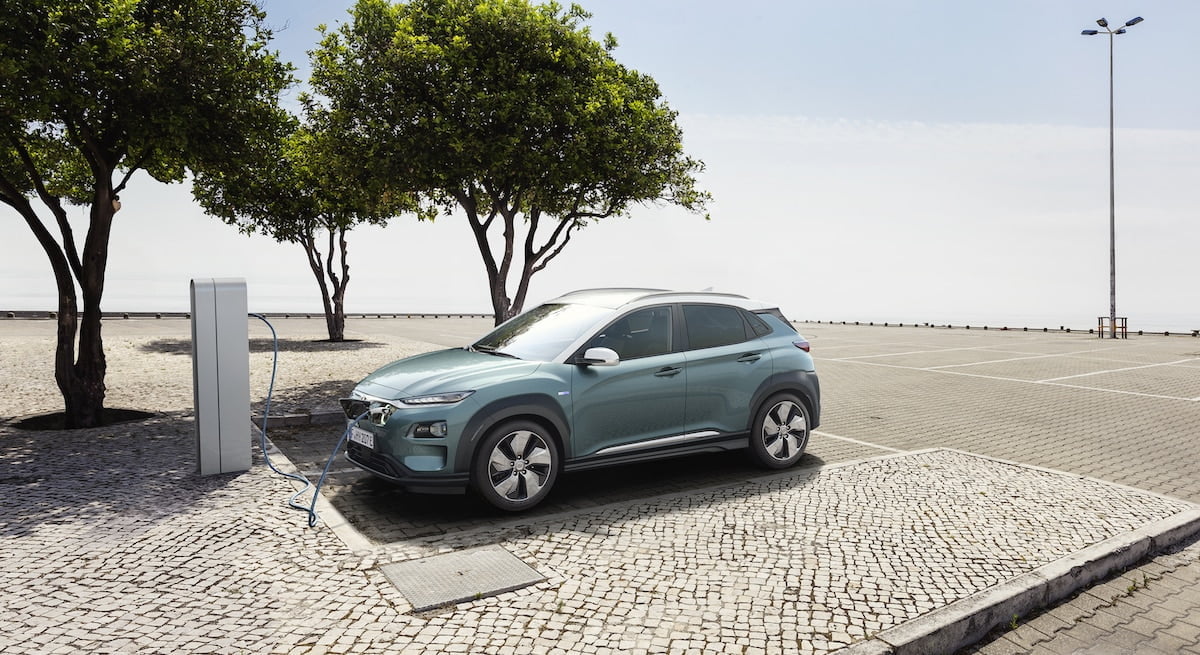
Hyundai unveils first all-electric SUV

Hyundai is claiming an industry first with the unveiling of the new Kona Electric – the first all-electric SUV to the market. The new Kona Electric offers a choice of two different powertrains. The long-range 204hp version with a 64 kWh battery provides an electric range of up to 292 miles and an energy consumption of 15.2 kWh/100 km (internal target under WLTP regulations). The electric motor delivers an output of 150 kW, accelerating the Kona Electric to 62mph in 7.6 seconds. With a battery capacity of 39.2 kWh, the basic 135hp version drives you up to 186 miles on a single charge with the motor delivering 99 kW and an energy consumption as low as 14.8 kWh/100 km (internal target under WLTP regulations). It is capable of covering 186 miles and has an acceleration potential of 9.3 seconds from 0 to 62mph. Both powertrain versions deliver 395 Nm of immediate torque, with full power available from the first second. The Kona Electric also features an adjustable regenerative braking system. Charging the lithium-ion polymer battery up to 80% only takes about 54 minutes using a 100 kW direct current (DC) fast charger. With the 7.2 kW on-board-charger, charging with alternating current (AC) takes 9 hours 40 minutes for the long-range battery pack and 6 hours 10 minutes for the shorter-range battery pack. Drivers also have the option of charging their car at a compatible regular household power socket using the ICCB-cable (in-cable control box). The charging port is located at the front of the vehicle, next to the Hyundai logo. Charging the Hyundai Kona electric SUVThe Kona Electric is easy to spot compared to the regular Kona thanks to the lack of grille, because electric motors don’t need a radiator like petrol or diesel engines. LED daytime running lights sit on top of the LED headlights, while the battery models also sport a two-tone roof. Inside, the infotainment system integrates navigation, media and uses Apple CarPlay and Android Auto, as well as offering wireless charging for compatible devices. The Kona Electric is equipped with the company’s latest active safety and driving assistance technologies, called SmartSense: autonomous emergency braking with pedestrian detection, blind spot detection including rear cross traffic alert, lane departure warning with lane keep assist, driver attention warning and speed limit information. The new high-resolution seven-inch supervision cluster displays the different gauges, such as the speedometer, battery charge level, energy flow and driving mode to the driver. Depending on the selected drive mode, background colour and gauges are adapted to always provide the most important and useful information. In addition, the head-up display (HUD) projects the relevant driving information directly to the driver’s line of sight. This allows faster processing of information while keeping attention on the road ahead. Given that electric cars don’t have the ability to use heat from the engine to warm the cabin, buyers will appreciate three-stage ventilation heating system for the front seats, as well as an optional heated steering wheel.

Renault offers discounts on Twingo, finance deals on Clio

Renault has launched new discounts and finance offers on its Twingo and Clio models to coincide with the new 18-plate registrations that start today. The Twingo range has seen prices reduced by up to £2,400. Unusually these days, the discounts are not dependent on taking a finance agreement. The range now starts at £8,495 on-road for the Twingo Expression SCe 70 model, which is a £1,500 drop on the normal RRP of £9,995. There are no cash discounts on the Renault Clio range, but the entry-level Play model is available with a 0% APR on a four-year PCP agreement with nearly £2,000 in deposit contribution. It is being advertised at £159/month, although this is based on 6,000 miles a year (see our analysis of the fine print below). The rest of the Clio range, as well as the Twingo, is available with a 4.9% APR PCP finance agreement. These offers come with significantly better deposit contributions in order to keep the monthly payments down. Looking at the Renault website, the difference between the 0% and 4.9% PCP offers on the Clio Play are minimal. Essentially, Renault is boosting the deposit contribution to cover the interest, meaning your payments are exactly the same. In fact, the 4.9% offer is possibly better as it has a more beneficial voluntary termination point…

What’s in the fine print?

  • These offers are for selected new Renault models only.
  • Finance provided by Renault Finance. UK residents only (excluding the Channel Islands). Over 18s only.
  • A 0% APR offer means that you should pay absolutely no interest or fees over the course of the agreement (although penalty fees may still apply).
  • The annual mileages shown on the website examples are all set at 6,000. This is less than most drivers average per year, so make sure you are choosing an annual mileage allowance that suits your needs.
  • The excess mileage on the PCP packages is 8p/mile. That’s £80 for every 1,000 miles you go over your limit, so make sure you allow yourself enough mileage when setting up the finance agreement. The fee only applies if you are giving the car back and claiming the guaranteed future value (GFV).
  • Offers cannot be used with other schemes or finance offers.
  • Cars have to be ordered by 31st March 2018 and registered by 30th June 2018.
  • This offer cannot be used in conjunction with any other Renault UK promotion.
  • The finance offers are provided through Renault dealers by Renault Finance. If a dealer offers you a finance deal that does not match these details or from another lender, it is not part of this offer.
As with any car purchase, work out your budget before you visit the showroom and don’t be persuaded to go beyond it – regardless of what the smiling sales executive suggests. They don’t have your best interests at heart, but The Car Expert does!
Renault Twingo discounts for March 2018
Big discounts across the Renault Twingo range

Caterham 620S test drive

0
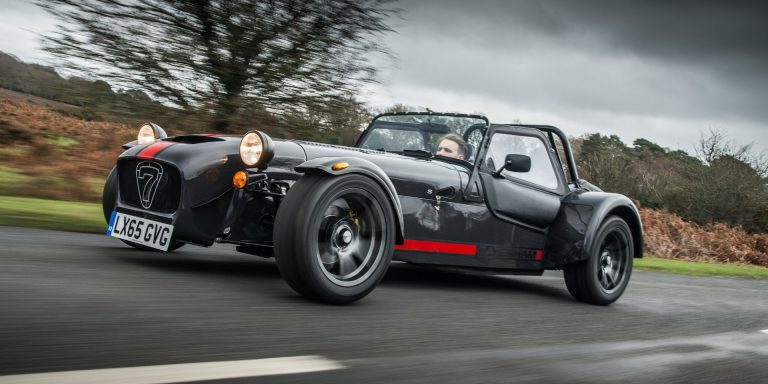
If you want to go fast, then you usually have to part with a fair amount of money. The Bugatti Veyron, famously one of the quickest cars ever built, cost the best part of £2 million. Then there’s the Caterham way. The 620S that we have here can hit 60mph in under four seconds – close to the Veyron’s time – yet costs from £44,995. In short, there are few ways to go as quick for as little money.

What’s new about the Caterham 620S?

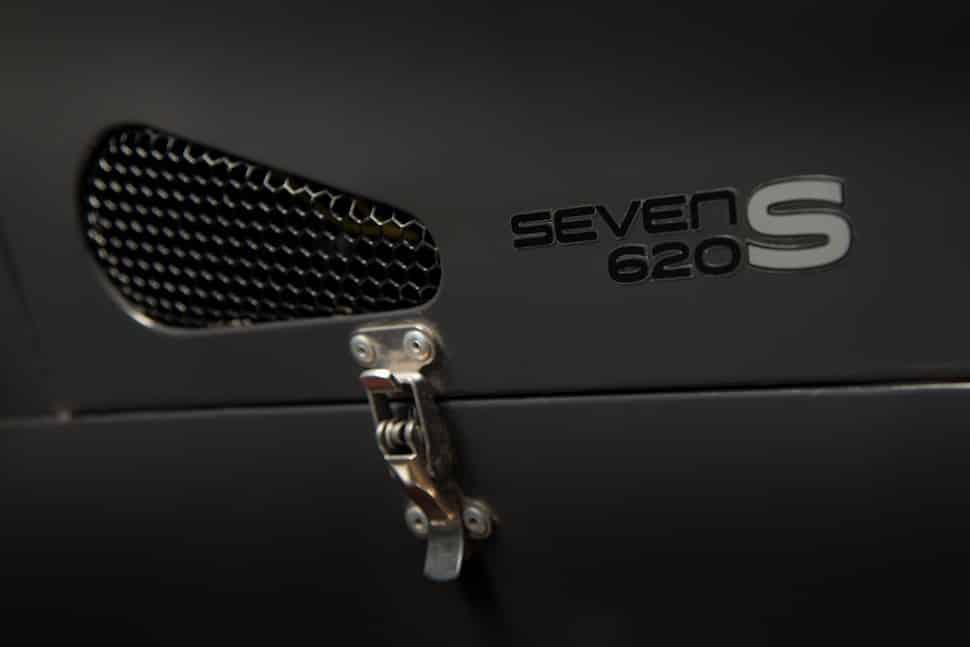
Our 620S used the SV chassis, making it wider and more accessible to taller drivers. In addition, the 620S gets a smattering of design cues which help it stand out from the crowd, including a nose with an air intake embedded in it – an easy way to differentiate this car from the rest of the Seven line-up. Of course, the biggest changes here are mechanical; the supercharged motor in the 620S is supremely powerful (we’ll talk more about that in a moment), while the S pack brings a softer, more road-focused suspension setup than the one you’ll find on the more hardcore R version.

How does it look?

The Seven remains somewhat of a design classic, but the 620S is about as modern as that look can be. As mentioned, it’s recognisable thanks to the vented nose cone, while it also benefits from a gunmental colour-painted chassis, giving it a stealthy, undercover look. Of course, there are plenty of options that you can add to make it look even more special. Caterham can even finish your 620S with any colour you could think of – just supply the paint code, and it’ll do the rest. Everyone loves the look of a Caterham – there are few who don’t stop and stare when it passes by. It’s still an iconic design, even 50 years after the original was penned.

What’s the spec like?

As mentioned, you don’t get a lot of toys for your money. The key attributes are all mechanical – the car’s overall cost is spent on the engine, chassis and gearbox. As standard, you get a lovely Momo steering wheel, black leather seats and a four-point racing harness, as well as the previously mentioned windscreen and sidescreens. The 15-inch alloy wheels are shod in sticky ZZS tyres, while a limited-slip differential comes included in the price too. There are swathes of options to choose from too. Heated carbon-fibre seats will no doubt appeal to those who want to be a little warmer, while that wider SV chassis is a good option for those who want a little more space in the cabin. In truth, anyone over six foot will struggle for room in a ‘regular’ Caterham, which is why the SV chassis is such a handy option.

What’s the Caterham 620S like inside?

Much like any Caterham, the 620S doesn’t have a huge amount to offer in terms of creature comforts. The S pack does bring a heater, boosting the car’s comfort levels, while a 12-volt socket means that you can charge a smartphone – though that’s about it for in-car features. The biggest benefit from the inclusion of the S pack is the full windscreen, hood and sidescreens, which all make the car far more useable in typical British weather. The lack of any real features doesn’t make the Seven’s cabin a dull place to be, however. The driving position is spot-on, while the carbon-fibre dash looks and feels well made. The variety of toggle switches may be difficult to decipher at first, but using them soon becomes second nature after time.

What’s under the bonnet?

The engine in the 620S is nothing short of remarkable. Two litres in capacity and featuring a supercharger, it produces 314hp and 296Nm of torque yet the car weighs just 610kg – giving it a figure of 515hp per tonne, which is more than a Ferrari Enzo or McLaren 650S. It’s simply a breathtaking amount of performance to be found in a ‘regular’ road car. That fury is sent to the rear wheels via a five-speed manual transmission and can power the 620S to a top speed of 145mph. If you’re looking for economy, this isn’t the place to go. The 620S will return an estimated 30mpg on the combined cycle, though this will drop harshly under heavy driving. That said, the S model benefits from a larger fuel tank than other Seven models – so touring is a more viable prospect.

What’s the Caterham 620S like to drive?

Driving the 620S is a dramatic experience. The steering is impeccably well-judged, with the smallest of hand movements on the wheel directing the Caterham exactly where you want it. The five-speed gearbox is smooth to operate (though can feel notchy when cold), while the softer suspension is exactly as you’d want on UK roads – not too firm for the bumps, but not so pliable as to leave the car feeling wallowy. Then there’s the performance. There’s nothing to prepare you for the way a car with over 300hp and weighing just 610kg fires itself down the road. The twin-outlet exhaust howls in a close-to-demonic way, rising to a near-deafening tone under heavy acceleration. There are really very few cars quite like it on the road today.

Summary

The Caterham 620S is a real giant killer, capable of taking down nearly any supercar on sale today. However, even a ‘regular’ Caterham can deliver big thrills without the razor-sharp edge you’ll find in this one. Though the 620S benefits from many features designed to make it more comfortable, it remains overwhelmingly spiky to drive, with traction close to non-existent in the wet. Though just under £45,000 may seem good value considering the performance, in truth you’d probably be just as happy with a lower-powered Caterham at half that price. The Caterham 620S is built in Britain.

Key specifications

Model: Caterham 620S SV Price (on-road): £46,995 Engine: 2.0-litre supercharged petrol Gearbox: Five-speed manual Power: 314 hp Torque: 296 Nm Top speed: 145 mph 0-60mph: 3.44 seconds Fuel economy (combined): N/A CO2 emissions: N/A

Changes to car insurance write-off categories

As the UK’s used car market is about to enter its peak period (following an influx of part exchanges against new 18-plate models), a survey of consumers by vehicle history checker My Car Check has found that 89% were unaware of the recent write-off category changes. In October 2017, the old A, B, C and D categories were replaced with new codes, which focus on safety rather than the cost of repair:
  • A – car must be scrapped in its entirety
  • B – car must be scrapped, but may be broken up for parts
  • S – car has suffered structural damage, but may be repaired and returned to the road
  • N – car has suffered non-structural damage, but may be repaired and returned to the road
Mark Bailey, head of CDL Vehicle Information Systems, which owns My Car Check, said: “We are checking new category write-offs almost daily now, so the fact that 9 out of 10 people are unaware of them is a worry, especially when you consider that four of those who did know were motor traders. “It shows that more must be done to educate buyers about write-offs, so they can either decide they want nothing to do with them, or they go into it with their eyes open, fully aware of the risks. “Safety is paramount and written-off vehicles have to be properly repaired in order to perform as they should in the event of a second crash. There might be things the seller doesn’t know, or things they’d rather not tell you, so do your own history check to find out exactly what you’re getting into.” A write-off is an accident-damaged vehicle that an insurer decides is either beyond repair or too expensive to fix. Category A (e.g. burnt-out by fire) and B (e.g. major rear-end shunt) write-offs should never return to the road. Categories S and N replace the old Categories C and D. Category S write-offs have suffered some sort of structural damage (e.g. collapsed crumple zone), and will be unsafe until they have been professionally repaired. Category N write-offs have suffered non-structural damage (e.g. cosmetic damage or electrical issues), but are simply uneconomical to repair based on the car’s market value.
MINI Cooper Category N insurance write-off
It might look like very minor damage, but it was enough for the insurance company to write this MINI off (Category N).
Leaving the safety aspect aside, there’s the impact on desirability and value to consider with S and N (and the old C and D) grade write-offs. A category N write-off that has had minor damage repaired will generally be worth about 25% less than a similar vehicle with clear history. Some insurers will check the history of vehicles and can refuse to cover them or charge higher premiums. In the event of a claim, if it is discovered the vehicle has been previously written-off, they might offer a smaller amount to reflect the market value.

Boost for UK as Toyota confirms new Auris

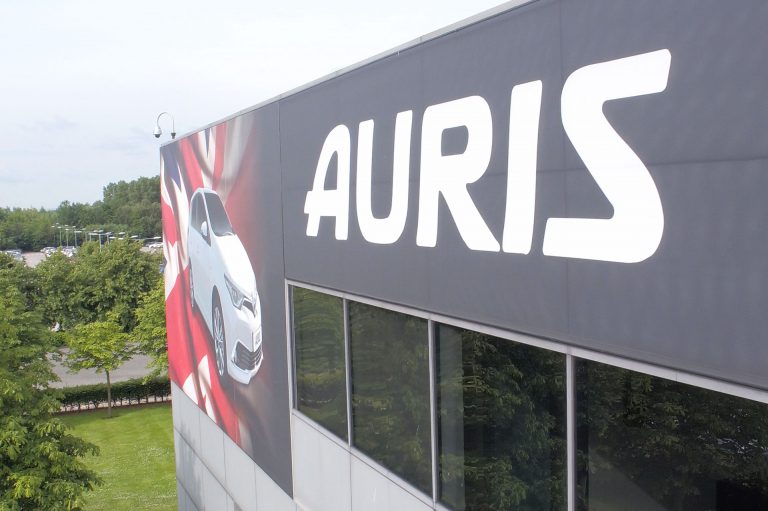
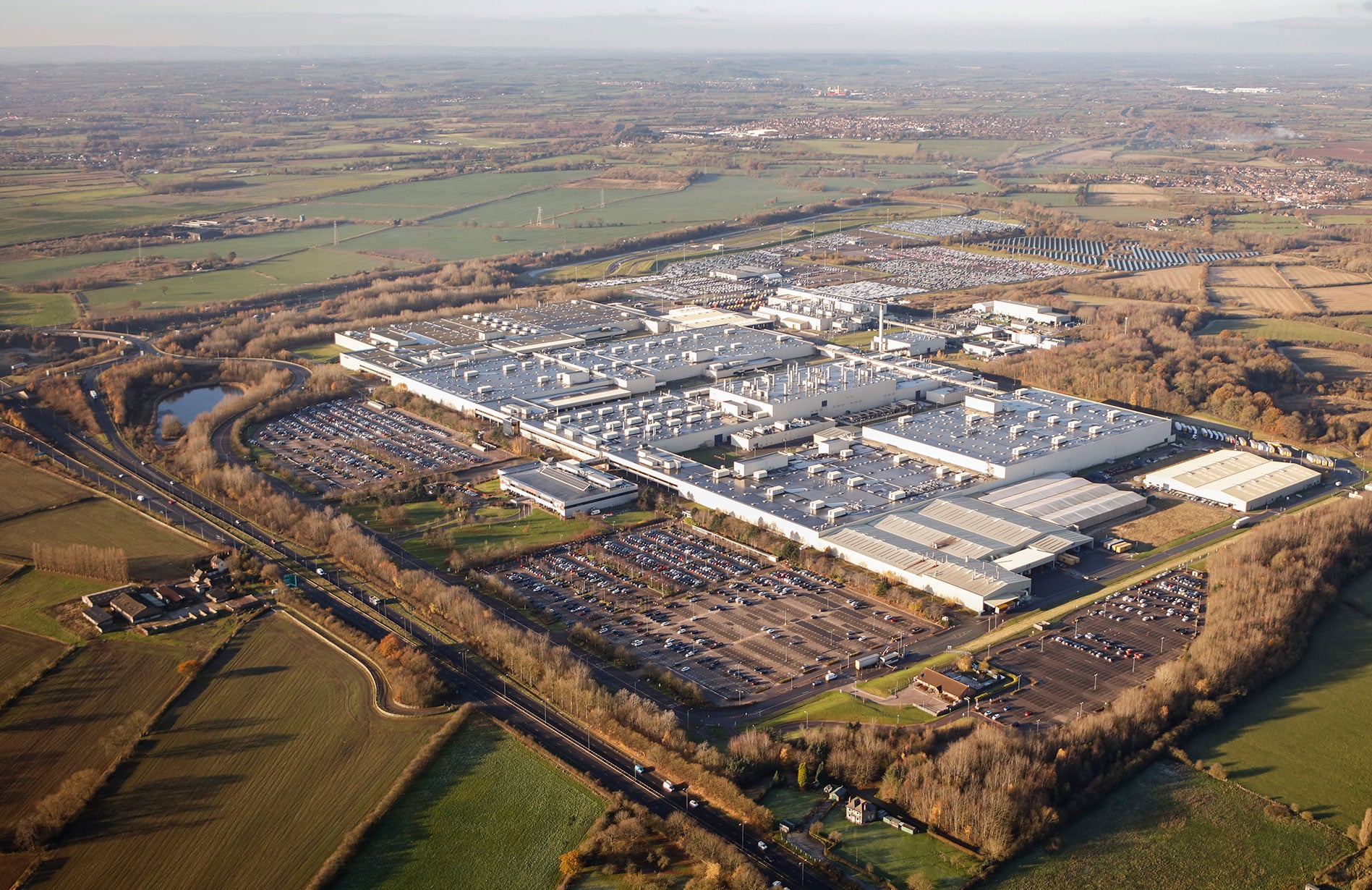
The Car Expert Best of British horizontal bannerToyota is to build the third generation of its Auris family hatch at its UK plant. The news that Auris production will remain at the Burnaston facility near Derby boosts the British automotive industry at a time of uncertainty, with manufacturers reconsidering their investment in the UK as Brexit negotiations continue. However, Toyota Motor Europe announced only a year ago that it was to invest more than £240 million in its UK plant, upgrading the factory with new equipment, technologies and systems to enable manufacture of vehicles on the Toyota New Global Architecture (TNGA) platform. The next Auris, which will be unveiled at the Geneva motor show on 6th March, will use the TNGA platform. And in further good news for British manufacturing, most of the engines installed in the Auris will be built at Toyota’s plant in Deeside, north Wales.
Toyota Burnaston The Car Expert
The announcement secures the mid-term future of Toyota’s UK plant.
Announcing the news on a visit to Burnaston, TME President and CEO Dr Johan van Zyl said that producing TNGA-based vehicles locally is a key part of Toyota’s plan to strengthen the global competitiveness of its plants. “Today’s announcement that we will manufacture the new Auris at Burnaston, with most engines to be supplied from Deeside, shows our confidence in the skills and capabilities of our TMUK members,” he added. However Dr van Zyl also made a plea to the politicians negotiating the UK’s post-Brexit relationship with Europe. “As a company, we are doing what we can to secure the competitiveness of our UK operations as a leading manufacturing centre for our European business. “With around 85% of our UK vehicle production exported to European markets, continued free and frictionless trade between the UK and Europe will be vital for future success.” Industry sources suggest the next Auris will go on sale late in 2018, in hybrid form. Rumours continue to circulate suggesting that the petrol-engined version to be launched later will revert to the Corolla name, replaced by the Auris in 2010, in a bid to boost sales of the model.
Toyota Auris 3rdgen The Car Expert
Toyota has issued a teaser picture of the new Auris ahead of its Geneva unveiling.
   

Drivers still flouting phone rules

One in five drivers is still using their mobile at the wheel a year after tough new penalties were introduced, according to a new survey from vehicle CCTV providers SmartWitness. It means that 7 million motorists are still regularly flouting the law, even though it could result in automatic disqualification. In March last year, the government doubled the penalties to six points on the licence and on-the-spot-fines of £200. Drivers who get six points within two years of passing their test are automatically banned. The level of abuse has gone down since the clampdown was introduced – one in four drivers were using their phones while driving at the time the new penalties were brought in. Figures released by the Department for Transport reveal there are still unacceptably high levels of illegal phone use among drivers, with 37% of drivers believing the chance of getting caught is minimal, and 52% not concerned about the impact of getting caught.

Checking your phone while stopped in traffic is still illegal

The most common way drivers break the law is by checking their phones for incoming messages while driving: 21% of motorists admitted to doing that. One in seven drivers (14%) said they still spoke on the phone while at the wheel and answered incoming calls, Three-quarters of drivers (76%) were aware of the increased penalties and two-thirds of those surveyed (67%) said they would support a further increase in fines and penalty points to deter future abuses. The overwhelming majority of drivers breaking the law with phones (69%) claim that they only did it when they were stuck in traffic or moving slowly, and nearly all drivers (92%) ignore their phones when they are driving at speed. And only 8% of drivers have a ‘cradle’ in their cars so they can use their phones hands-free and avoid breaking the law. SmartWitness chief executive Paul Singh said: “While it is welcome news that fewer drivers are using their phones behind the wheel, these figures are still a huge concern for everyone wanting to improve road safety. Studies consistently show that using a mobile phone while driving is as dangerous as drink driving. Yet 7 million drivers are consistently flouting the law and ignoring concerted efforts to clamp down on the problem. “The way to tackle this abuse is to make using your phone at the wheel as socially unacceptable as drink driving and we all have responsibility to hammer home this point. If you know of a driver using a phone or you are a passenger with someone who does this, tell them to stop.” Neil Worth, road safety officer for breakdown provider GEM Motoring Assist, commented:“You wouldn’t do it with a police officer watching… so ask yourself is there anything that makes it any less risky or foolish just because the police aren’t there? The answer is no. It is irresponsible and puts not only your own safety at risk, but the safety of those who happen to be sharing the road space with you.

Handy tips for mobile phone safety

GEM Motoring Assist has produced a list of mobile phone tips for drivers:
  1. You’re allowed to use a mobile phone when you are safely parked, with the engine off and the handbrake on.
  2. Do not pick up your phone in any other driving situation, including when you’re stationary at traffic lights or queueing in traffic.
  3. The only exception to this is if it’s an emergency and it would be unsafe or impractical to stop, in which case you may call 999.
  4. Don’t assume that using a hands-free kit means you have dealt with the risk. You are still allowing yourself to be distracted from the task of safe driving, and you could still be prosecuted for not being in control (an offence that carries a £100 fine and three penalty points).
  5. Take a few minutes before a journey to make important calls or to check voice messages and emails. Work together with friends, family, colleagues and work contacts to remove the expectation that we should all be available, all the time.
  6. Plan journeys to build in breaks from driving, where you can call, text or email or interact with social media in a safe environment.

Kia Optima update gets new design and enhanced tech

Kia has introduced a range of design enhancements and two new powertrain options to its Optima saloon and estate – a new 136hp 1.6-litre diesel engine, and a 163hp 1.6-litre petrol engine. A switchable drive mode selector lets the driver switch between Eco, Comfort, Sport and Smart modes. Each mode can then be further customised to prioritise fuel economy or more immediate acceleration. ‘Smart Mode’ is designed to anticipate the driver’s needs, switching automatically between Eco, Comfort and Sport modes depending on conditions. This enables the Optima to adapt to the driver’s behaviour and the road conditions, pre-empting the driver’s preference for different speeds and driving environments. Kia designers have made a series of modifications to the Optima’s exterior design. These include a revised front bumper design, as well as new LED tail lamps and a revised design for the head- and fog lamps. Saloon models also feature a new rear bumper design. The grille features a new bright chrome finish to create a more sophisticated, purposeful appearance. A new paint colour called ‘Runway Red’ is available, as well as new alloy wheel designs. Inside, the cabin features a newly-designed steering wheel and satin-chrome trim on the centre console which extends across the dashboard. Buyers can specify their interior in black, two-tone black and grey cloth or leather, or choose a new brown cloth or leather upholstery. There’s new ambient lighting around the dashboard and doors, which can be switched between six different colours.

GT and GT Line updates

The GT Line and flagship GT models also get some new design updates. These consist of new LED fog lamps, 18-inch alloy wheel designs, and gloss black colouring for the mirror caps, side sills and air intake grille. GT Line models are distinguished by dual twin exhausts, while the Optima GT is fitted with chrome twin exhaust tips. The interiors feature the same improvements to material quality and trim as the standard car, while the seats are now available in two-tone black and red leather. Black leather with contrasting red stitching is also available. The GT has front seats embroidered with subtle GT logos in contrast black or grey stitching, depending on the choice of upholstery.

Safety improvements

The updated Optima is available with Kia’s Advanced Driver Assistance Systems, a suite of active safety technologies to avoid or mitigate the effects of collisions. This includes a driver drowsiness detection system, autonomous emergency braking with pedestrian recognition, lane-keeping assist, and full LED swivelling headlamps with automatic high beam. These technologies are claimed to make the Optima one of the safest cars in its class. The new Optima is available with seven- or eight-inch touchscreen infotainment systems, with navigation and connected services powered by TomTom. The system offers Apple CarPlay and Android Auto to enable full smartphone integration.  In the centre console is a wireless smartphone charger for compatible devices. The infotainment system is linked to a higher-resolution 360º camera system. The system uses cameras at the front, rear and sides of the vehicle to provide the driver with an overall view of their surroundings, making it easier to complete low-speed parking manoeuvres. As with all Kia models, the new Optima will come with a seven year, 100,000 mile warranty. The upgraded Optima saloon and Sportswagon go on sale across Europe in the autumn – full UK specification, line up and pricing will be announced in due course.

Toyota announces Aygo update

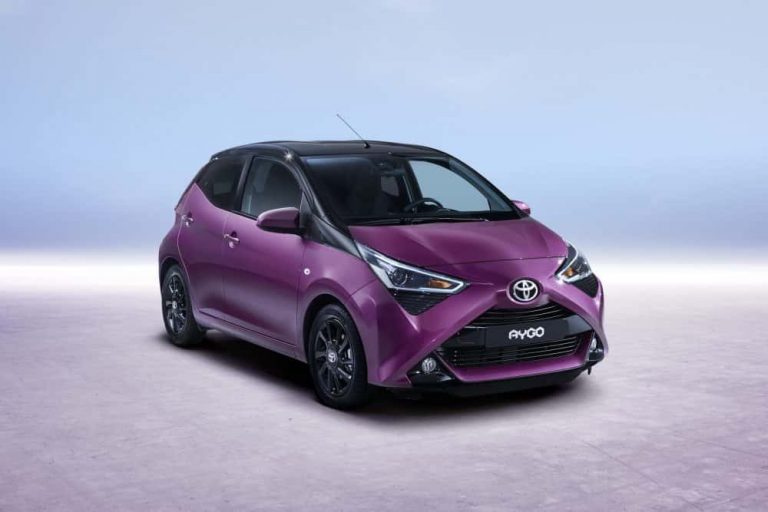
A facelifted version of Toyota’s popular Aygo city car will make its debut next week at the Geneva motor show. The frontal view of the new Aygo has been tidied up with redesigned headlight units incorporating LED daytime running lights, while the lower section frames the front grille with black, gloss black or silver ornamentation beneath the lights. New LED lights feature at the rear and the facelift is finished off with new colours and new wheel designs. In the cabin, the instrumentation has been upgraded with graphics that have a more three-dimensional look and a new illumination colour. Most grades have new seat fabrics and a more premium colour scheme has been introduced. The 1.0-litre three-cylinder engine has been tweaked to meet tougher emissions standards. Changes include a new fuel injector system, a higher compression ratio, new low-friction components, a cooled exhaust gas recirculation system and an improved balancer shaft for less vibration at idling speed. Output is slightly higher, with power creeping up by 2hp to 71hp, with 93Nm of torque at 4,400rpm – although acceleration from rest to 62mph still requires a leisurely 13.8 seconds. Fuel consumption has improved from 68.9 to 72.4mpg (combined cycle), which delivers a commensurate reduction in CO2 emissions. Improvements to engine performance have been complemented by changes to the suspension settings and steering software, while sealing and sound absorption materials have been added to the dashboard, front pillars, doors and rear deck to reduce cabin noise. UK pricing and specifications will be announced nearer the car’s on-sale date later this year.

Rolls-Royce Ghost honours its illustrious namesake

Rolls-Royce is creating a collection of 35 Rolls-Royce Ghosts in homage to the original Silver Ghost model of 1907. A solid sterling-silver hallmarked Spirit of Ecstasy, the muse that has guided motor cars created by the marque since 1911, will hint at the pioneering heritage of this motor car’s forebear. A black-gold-plated collar enshrouds the base of the Spirit of Ecstasy, itself bearing the unique identity of this collection. An insert is crafted from hammered copper, in tribute to the copper extensively used in the engine bay of the original Silver Ghost. Cassiopeia Silver, a complex bespoke silver paint that incorporates both warm and cool tones, bathes the exterior in a hue that echoes the silver paint of the original motor car. The face of the limited-edition model is distinguished by black-painted grille veins that mimic the distinctive black grille of the ‘Silver Ghost’, while the fully-polished wheel centres, encircled with ‘SILVER GHOST – SINCE 1907’ engraved on a Cassiopeia Silver backing, echo the fine details of the original car. Inside, accents of a specially created ‘Forest Green’ leather provide a nod to the original interior colour scheme. A newly-designed silver tipped leather is incorporated onto the front and rear door cards. Additionally, a silver inlay has been set into the open pore wood of the fascia and door cappings, flanking a hallmarked solid silver ingot. The clock is also styled as an ingot of silver, engraved with ‘Silver Ghost Since 1907’. The door sill plates are engraved with the words ‘Silver Ghost Collection – One of Thirty-Five’, while the traditional Rolls-Royce umbrellas in the doors are edged in a silver-coloured binding and have open-pore oak handles, with the end of the handle engraved. A bespoke central console contains a time-piece, sunglasses and accessories case,  alongside a Silver Ghost pen. As a finishing touch and to complete the collection, a special Silver Ghost hamper is also provided.

Model Year updates for Rolls-Royce Ghost

In addition to the bespoke details listed above, the Silver Ghost Collection also benefits from several model year updates to the Rolls-Royce Ghost. The most noticeable of these is a bolder and more sculptured face, with the grille frame pushed further forward to produce a stronger sweep back into the front wings and give the front of the car a more three-dimensional look. The traditional grille now has more deeply-set vanes, while the redesigned front bumper now features strongly horizontal lines. Two new 21-inch wheel designs are now offered. Additional sound dampening materials have been added to the doors, rear wings and luggage compartment, which work in combination with a new acoustic film fitted between the glass layers in the side and rear windows to further reduce noise entering the cabin. A totally new multimedia interface and larger screens for the rear passengers are part of a comprehensive entertainment upgrade. The new system also now responds to natural speech rather than predetermined commands, whilst navigation is improved by real-time traffic information. Entertainment and communication is also enhanced by Blu-ray and significantly enhanced wi-fi capability, plus improved USB and HDMI connections and three sets of Kleer wireless headphones.

Rear-wheel drive Audi R8 roars in

0
Audi is bolstering its R8 sports car range with the limited-edition V10-powered R8 Rear Wheel Series. Unlike every Audi R8 ever sold to customers for more than a decade now, this one is driven solely through the rear wheels, rather than all four wheels using Audi’s quattro system. Despite the rearward bias in the drivetrain, performance off the line and beyond remains rapid, with the 0-62mph sprint being dispatched in just 3.7 seconds (Spyder: 3.8 seconds) and the pace remaining furious until the maximum 198mph (Spyder: 197mph). The mid-mounted V10 engine, which is now one of the last naturally-aspirated powerplants in the segment, produces 540hp and peak torque of 540 Nm at 6,500 rpm. Combined fuel economy in the R8 Coupé V10 RWS amounts to 22.8mpg, corresponding to 283 g/km of CO2. The R8 Spyder version is fractionally worse in both cases, but not enough to matter. Visually, the new R8 variant is distinguished by a matte black grille and matte black air apertures at the front and rear of the car. The upper sideblade of the coupé is finished in gloss black, with the lower blade in body colour. Similar to the R8 LMS GT 4, a red Audi Sport decal running over the bonnet, roof and over the rear spoiler can be optionally applied to the coupé. Inside, the driver and passenger sit in heated sports seats covered in leather and Alcantara, with fine nappa leather in black or grey also available as an option. As another visual identifier, the dashboard bears an emblem “1 of 999” indicating the limited number of units. The Audi R8 V10 RWS is fitted as standard with black-finished, 19-inch cast aluminium wheels in a five-spoke V-design that are exclusive to the model, with 245/35 tyres up front and 295/35 at the rear. As an alternative, optional 20-inch forged aluminium alloy wheels in either matt titanium or gloss anthracite black are shod with 245/30 front tyres and 305/30 rears. The overall specification mirrors that of the R8 V10 quattro, featuring all-LED headlights and LED rear lights with dynamic indicators as well as Audi’s Virtual Cockpit, high-definition sound system, navigation system and a suite of infotainment services. Keyless entry & start, cruise control and the front and rear parking sensors complete the standard equipment package. Further options such as laser headlights, a specially-developed Bang & Olufsen sound system, wireless charging and smartphone interface are also available. Audi Sport also offers owners the opportunity for more personalisation, with a gloss carbon finish extending to the mirror housings, front spoiler lip and engine bay, while the Audi exclusive programme can also be comprehensively applied to various touchpoints on the interior to ensure that no two R8s are the same. For the R8 Spyder RWS, the fully automated hood can be finished in black, red or brown, contrasting with the seven paint finishes, or even one of the 50 hues in the Audi exclusive palette. With prices starting from £112,450 on-road for the coupé and £121,140 on-road for the Spyder, first deliveries of the rear-wheel drive models will start this week.

Pro-diesel propaganda sounding increasingly desperate

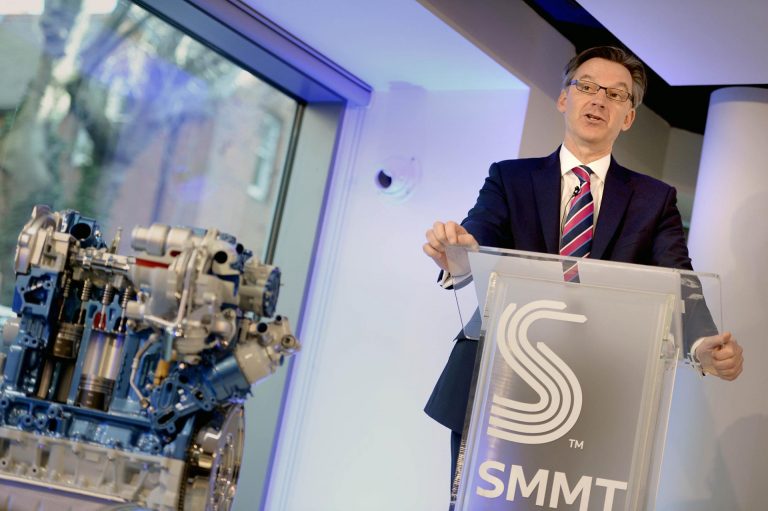
As consumers across Europe continue to turn away from new diesel cars, the Society of Motor Manufacturers and Traders (SMMT) has launched its annual New Car CO2 Report, a 29-page pro-diesel propaganda piece that, as usual, hurls the blame for collapsing diesel sales at the UK government and threatens apocalyptic disaster if we don’t all resume buying diesel cars immediately. Despite the headlines screaming about an “anti-diesel backlash” being the cause for nominal (not real) CO2 values increasing during 2017, the opening paragraphs of the SMMT report actually reveal that the primary culprit for this increase in theoretical (not real) CO2 output is actually a shift in consumer preferences towards SUV-style vehicles – referred to as “dual purpose” in the report – and away from traditional smaller/lighter hatchbacks, saloons and estates. “Changing consumer vehicle preference was also ongoing in 2017, with demand for small cars such as Superminis down, whilst the Dual Purpose segment saw volumes rise,” says the report. “SMMT estimates that the impact of the segment shift accounted for around 55% of the rise in CO2 emissions.” Or, as the report points out further in: “… a net shift from the Supermini to Dual Purpose segment (which are on average 27.6% higher CO2 emitting) also impacted on the overall market average.” So more than half of these theoretical CO2 increases came from consumer choosing bigger, heavier cars that produce nearly 30% more pollution than smaller, lighter cars. This was the primary factor in the results and yet the SMMT humorously describes this as “also impacting” the data, while the headlines blame “the anti-diesel agenda” instead. It’s the sort of misrepresentation that would make the Daily Mail proud. The remaining 45% is, of course, blamed on the SMMT’s favourite topic, with falling diesel sales estimated to have contributed to less than half of the meaninglessly theoretical (not real) CO2 increase. Inevitably, the SMMT press release accompanying its 29-page love letter to the diesel engine makes no mention whatsoever of the real primary cause for the (not real) increase in CO2 figures. Instead, there are hundreds of words devoted to “the anti-diesel agenda” and “confusion over government policy”.

Why do you keep saying that these figures are not real?

The SMMT has picked on a single number for its reporting – the official CO2 emissions figure for each new car on sale – and decided that this is the sole determinant of CO2 emissions from new cars. But that doesn’t actually tell you anything. It’s a bit like looking at the top speed measurement for every car on sale and saying that cars are now faster than they were last year. That would only be relevant if every car was driven at its top speed all the time, but obviously that doesn’t happen. We generally drive at the speed limit or at a speed appropriate to the road conditions, so the fact that your new car will do a maximum of 150mph, compared to your old car that could only manage 140mph, is largely irrelevant if you never go beyond 70mph. The same applies to emissions levels. Unless you know how much CO2 has actually come out of every tailpipe of every new car sold in 2017 compared to every new car sold in 2016, it’s impossible to say whether emissions actually increased, decreased or stayed the same. The SMMT report fails to address this, although it does provide limited data that suggests that overall emissions from all cars on UK roads have been falling despite increased vehicle use: “Emissions from road transport have risen in each of the past three years, as vehicle use has increased. The rise has largely offset the gains made between 2008 and 2013, to leave emissions just 1.3% below their 2000 levels. Vehicle use since 2000 has increased by 11.7%.” There are a huge number of factors that can influence emissions output, only one of which is the official lab test figures for each car in controlled laboratory conditions – which we all know are ridiculously inaccurate indications of how cars perform in the real world, especially for diesel cars. A diesel car in stop-start urban traffic will use more fuel in a 10-mile journey than a similar petrol car covering the same 10 miles on a rural A-road at a steady 60mph. A diesel car that covers 15,000 miles per year will use more fuel and produce more pollution than a petrol car that only covers 5,000 miles per year. A Lamborghini Aventador might have an official emissions rating of 370g/km, but if you buy one and park it up in your garage for the whole year, its actual emissions output will be zero. Yet the report makes no attempt to understand actual vehicle usage to determine the real environmental effects of our new car choices. Driving style can affect emissions by as much as 15%, while poor maintenance can affect emissions by 50%. These two fairly important facts are buried right in the final paragraph of the SMMT report, despite their significance to actual real-world emissions outputs. The report also gives scant consideration to the millions of cars taken off the road during 2017. I can guarantee you that the average CO2 output of all the cars that were scrapped or SORNed in the last year was significantly higher than the average CO2 level of the new cars that replaced them. Many manufacturers have been using their own initiative to offer scrappage schemes that specifically target older, more polluting part-exchange vehicles to be scrapped in favour of brand new, lower-emissions models. The SMMT report briefly mentions this in one line on page 23 with no further comment. So even using the SMMT’s own flawed measurements, the average CO2 output of the UK’s collective car park of 35+ million vehicles almost certainly decreased rather than increased during the last year.

Diesel sales are collapsing worldwide, not just in the UK

The SMMT’s continual attacks on the UK government and the media for their alleged “anti-diesel agenda” conveniently ignore the fact that diesel sales are falling pretty much all over the world and especially in Europe. In Germany, home to the biggest diesel-producing car brands on the planet, diesel sales have fallen even further than they have here in the UK. In January, German new car sales grew 12% compared to the same month last year. But diesel sales fell by 17%, a result that put diesel about 29% behind the overall market. Diesel’s market share has fallen to 33%, down from 45% a year before. British new car sales fell by 6% compared to last January, with diesel sales down 25%. That makes diesel some 19% worse than the overall market, or 10% better than the German result. Diesel’s market share now stands at 36%, down from 45% this time last year. In France, diesel’s market share has been falling for the last few years, dropping to 47% in 2017 from a figure of 73% five years previously. Across all of Europe, new car sales grew by more than 3% during 2017, but diesel sales fell by nearly 8%. Diesel’s market share was just under 44%, the lowest it has been for more than a decade. As in most markets, the diesel collapse is accelerating – Europe-wide diesel sales were down by more than 20% in December, which is broadly similar to what we have seen here in the UK. This week, the giant Fiat Chrysler Automobiles has been reported to be planning to kill off all its diesel models in the next four years. This is thanks to a combination of plummeting worldwide demand and increased costs of developing diesel engines to meet new emissions regulations. Last week, Porsche announced that it had stopped all diesel model production, although this week it appears to be backtracking somewhat on whether this would be a permanent position. Unlike Fiat, Porsche is mired in parent company Volkswagen’s Dieselgate scandal, with its Cayenne diesel SUVs having to be recalled and an impending recall or even a Europe-wide buyback on its smaller Macan diesel SUV model. Today, a German court has ruled that German cities are entitled to ban diesel cars from their streets, in a landmark case that overruled appeals from state governments to block the bans on diesel cars by Stuttgart (famously home to both Mercedes-Benz and Porsche) and Düsseldorf, with other cities set to follow. Even for the UK car industry and its lobbyists, it’s a stretch to see how the UK government and media could be responsible for this worldwide shift away from diesel power.

Car companies only have themselves to blame

The current plight of diesel cars may be of concern to car companies who are heavily financially committed to its future, but consumers have no reason to feel sorry for manufacturers nor obliged to buy diesel cars because it suits the industry. For many years, manufacturers and dealers have been pushing car buyers into diesel cars because it suited them, not because it was in the customers’ best interests. If you’re an average urban or suburban dweller covering 8-10,000 miles per year and changing your car every three or four years, a diesel car has never been a great economic choice. Yet millions of such buyers continue to drive diesel cars because it’s been the default option. Manufacturer finance companies have been happily lending money to diesel car buyers on PCP and PCH agreements with annual mileages as low as 5-6,000 miles. There’s no way that any driving that little should be buying or leasing a diesel car, yet no-one from the finance companies, manufacturers or dealers has spoken up to point this out. Instead, they have all cheerfully taken your money and congratulated you on your new purchase. Over the last couple of decades, every major car company has prioritised good lab test outcomes over good customer outcomes. In other words, manufacturers have been more interested in building cars that achieved great fuel economy and emissions results in a lab environment at the expense of how those cars performed in the real world.  This has been particularly noticeable with diesel models, where “official” figures bear little to no resemblance to results achieved by owners of those models. Why do you think that modern automatic cars now come with seven, eight, nine or even ten gears? It’s certainly not for our benefit; five or six gears is plenty for normal driving purposes. It’s simply to achieve better laboratory results, where the car will always be in the optimal gear at any point in the test, allowing for a better theoretical result that has almost no bearing on what you will achieve in your own driving. Why do you think that car manufacturers have ditched spare wheels on almost all of their models? Again, it’s not for our welfare – in fact, it’s one of the biggest bugbears of new car buyers around the world. One of the reasons (among others, like penny-pinching) is for emissions testing purposes. By throwing away the spare wheel, car makers can save weight and space (and saving space saves even more weight), which gives a tiny incremental improvement to lab figures. In the real world, you may save a pittance of fuel by losing your spare wheel, but the inconvenience of not having that spare when you need it will generally outweigh the saving.

The real source of anti-diesel sentiment

And then we come to the single biggest cause of the “anti-diesel backlash” around the world. Not the British government, the Mayor of London or the mainstream media. Not The Car Expert or Greenpeace or Elon Musk. I refer, of course to the Volkswagen Dieselgate scandal. For years, the Volkswagen Group was (and possibly still is) cheating its lab tests by fitting millions of diesel VW, Audi, SEAT, Skoda and Porsche cars – and vans from Volkswagen Commercial Vehicles – with hidden ‘defeat devices’. These devices are software systems that override the car’s official programming and basically switch off all of the emissions systems unless it detects the car is in a lab test situation. Given that only a few cars ever enter a testing lab, that has meant millions of vehicles have been permanently spewing enormous levels of toxic diesel fumes into the air all over the world for years, far beyond the legal limits as defined by the lab tests. The media storm generated by this shock news in September 2015 rapidly encompassed the ill feeling car buyers have long harboured towards every car manufacturer that has put lab testing performance ahead of real-world performance. As usual, the industry tried to blame others, saying the lab tests were really at fault. But, to the car industry’s considerable disappointment, consumers are not that stupid. And what action did the Society of Motor Manufacturers and Traders take upon receiving the news that one of its members had been responsible for such reprehensible conduct? Did it suspend or expel Volkswagen and associated brands from its little club for bringing the entire automotive industry into disrepute? Did the SMMT, in fact, make any kind of statement to even gently criticise Volkswagen’s behaviour? Of course not. Days after Volkwagen’s astonishing deception was revealed to the world, the SMMT issued a statement saying: “The UK automotive industry understands the concerns consumers may have following the actions of one manufacturer in regard to emissions testing and the subsequent decision to recall a large number of its cars.” The statement then quickly switched its attention to criticising the inadequacy of the lab tests, in a sleazy PR move these days known as a ‘Spacey‘. So they didn’t mention the monkey-gassing criminals by name, nor acknowledge the fact that these “actions” from six different brands involved more than a million cars sold in the UK. The SMMT presumably still happily rakes in significant membership fees each year from all the Volkswagen brands (in addition to the six brands above, Bentley, Lamborghini, Bugatti, Scania, MAN and Ducati were not implicated in the scandal). If more than a million Volkswagen Group cars in the UK have been generating vast and illegal quantities of emissions over several years, with a few hundred thousand still not fixed despite promises to do so, wouldn’t that completely undermine the SMMT’s carefully-constructed artifice on CO2 outputs? In fact, wouldn’t it make any numbers the SMMT wants to come up with even less relevant? And they still want us to believe that it’s all the government’s fault that diesel sales are falling.

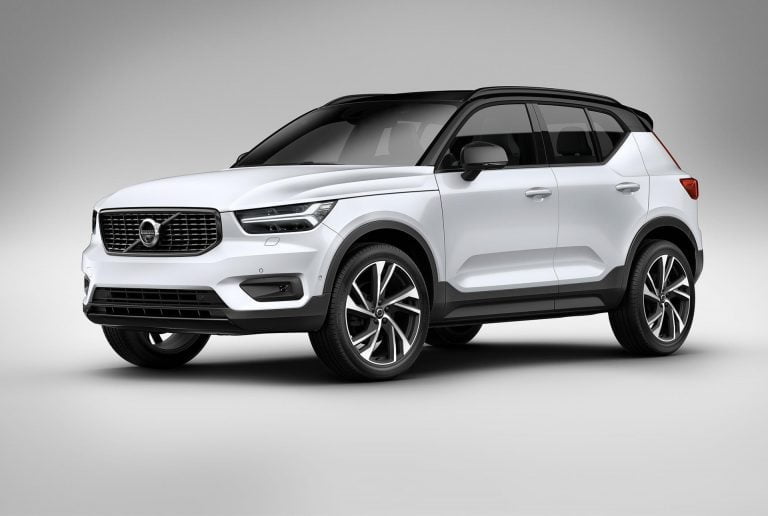
Platinum Edition Nissan X-Trail plus finance offer

Nissan is adding a new limited edition Platinum Edition SV specification to its mid-size X-Trail SUV range. The Platinum Edition SV is a £2,000 upgrade to the existing N-Connecta models. Nissan claims that the cost of the additional extras would normally add up to more than £2,800, resulting in a nominal £828 “saving” for customers. For your extra £2K, the Platinum Edition is distinguished from regular N-Connecta models by silver ‘styling plates’ (faux bash plates) all the way around the car, chrome mirror caps and boot trim, and front bumper overriders. The Platinum Edition models also get alloy ‘sports’ pedals and footrest, 18-inch metallic black alloy wheels, and a double USB port for rear-seat passengers to charge their devices.

Finance offer to accompany the extra trinkets

In addition, Nissan X-Trail Platinum Edition models will be eligible for an additional £750 deposit contribution if you take out a personal contract purchase (PCP) car finance agreement with Nissan Finance. Nissan is currently offering 0% APR representative on PCP finance for all X-Trail models with a £1,000 deposit contribution, along with two years’ free servicing. Alternatively, you can have a larger deposit contribution of £2,500 but the interest rate increases to 3.49% APR representative. Over a typical three-year PCP agreement, the difference between the two offers only works out to about £500, so customers should look carefully at which option suits there needs better.

What’s the fine print on that finance offer?

  • These offers are for selected new Nissan models only.
  • The offers listed on the Nissan website are only examples, and you are entitled to adjust the deposit and term to suit your own needs (within limits).
  • Cars have to be ordered and delivered by 2 April 2018.
  • The finance offer is provided through Nissan dealers by Nissan Finance. If a dealer offers you a finance deal that does not match these details or from another lender, it is not part of this offer.
  • A 0% APR offer means that you should pay absolutely no interest or fees over the course of the agreement (although penalty fees may still apply).
  • The 3.49% APR is a representative rate, which means that you may not be offered that rate depending on your circumstances but at least 51% of customers must be offered it.
  • The example offers have an annual mileage allowance of 10,000 miles. This is a realistic allowance for most UK buyers, but you should ensure that the allowance on your finance agreement is realistic to your needs.
  • The excess mileage charge for this offer is 8p/mile, which works out to £80 per 1,000 miles that you exceed your allowance over the life of the agreement.
  • The finance offers are not available in conjunction with any other offer, although you are still free to negotiate the best possible price for the car with your dealer.
As with any car purchase, work out your budget before you visit the showroom and don’t be persuaded to go beyond it – regardless of what the smiling sales executive suggests. They don’t have your best interests at heart, but The Car Expert does!

Trailer safety checklist

On average there are 4,809 towing incidents annually in the UK, which most commonly occur on motorways and major A-roads. To help motorists stay safe on the road, IAM RoadSmart and the National Trailer and Towing Association have issued the following checklist for drivers to work through before setting off.

Towing a vehicle

The trailer operator or the driver of the towing vehicle has the responsibility for the safe operation of the trailer and needs to carry out the following checks:
  • Be sure to check that your driving licence entitles you to tow the combination of a vehicle and trailer.
  • Have you checked the weight? Remember to ensure that the load you intend to carry is within the trailer’s official payload.
  • Bear in mind that the actual gross weight being towed needs to be within the towing vehicle manufacturer’s recommended maximum towing limit (whether braked or unbraked).
Volkswagen Passat towing a caravan

Trailer checks before each journey

  • If the trailer is laden, is the load correctly distributed and secure? To stop your trailer from being unstable, spread the load across the board and avoid having too much or too little nose weight. Even a heavy load will need to be strapped down, as gravity itself is not enough.
  • Before you set off, check that your lights are working correctly and are damage-free. Whilst doing this, also check that the lighting cable and plug are in good condition.
  • Be sure the correct number plate is fitted. This should be the same registration number as your vehicle and needs to conform to DVLA standards.
  • Check that your breakaway cable or secondary coupling is undamaged and connected correctly to a suitable point on the tow bar or towing vehicle. As well as inspecting for damage, make sure that the trailer is correctly coupled to the towball or pin.
  • The tyre pressure must be correct and all tyres free from cuts, bulges and with adequate tread (including the spare). Remember, tyres must have a continuous tread depth of at least 1.6mm on cars, light vans and trailers, across the centre three-quarters of the width.
  • It’s crucial that the wheel nuts and bolts are tightened to the correct torque for safety and for a smooth journey.
  • If required, are the mudguards secure and in satisfactory condition?
  • Take into consideration the size of your vehicle and the trailer. Is the coupling height correct? Check that your trailer is not excessively nose down or nose up. If your vehicle and trailer don’t align, get an adjustment plate to accommodate this issue.
  • Be aware of the national speed limit for a vehicle towing a trailer. The maximum speed limit on a single carriageway road is 50mph, and 60mph on a dual carriageway or motorway.
National Trailer and Towing Association trailer

Fiat brands to phase out diesel?

Fiat Chrysler Automobiles, owner of the Fiat, Alfa Romeo, Maserati, Abarth, Jeep, Chrysler and Dodge brands, is reported to have decided to drop diesel engines from all of its cars by 2022. According to a report in the Financial Times, Fiat Chrysler is preparing to unveil a four-year plan in June that will see it phase out diesel engines from all of its passenger car models around the world. Commercial vehicles, such as the Fiat Professional range of vans and the RAM pick-up truck brand in America, will not be part of the plan and will continue to offer diesel models. The decision is based on falling demand across Europe and the increasing costs of making diesel engines compliant with tougher emissions regulations. The FT suggests that it will cost car manufacturers about 20% more to develop diesel engines that meet new European emissions laws, at a time when demand for diesel cars is collapsing in almost every European market.

Diesel’s spectacular fall from grace

Fiat Chrysler is the largest global car company to take the decision to kill off its diesel cars, and comes a week after Porsche announced it had already stopped building diesel cars. Unlike Porsche, however, Fiat Chrysler has not been barred from selling its diesel models across Europe by the German government… Instead, this appears to be a genuine case of a major manufacturer weighing up the economic pros and cons of the situation and making a bold call to do away with diesels altogether. Fiat Chrysler’s CEO, Sergio Marchionne, is notoriously hard-nosed when it comes to strategic decisions, and this report has all the hallmarks of a typical Marchionne call to lead rather than wait and see what others decide. Diesel is still more popular in Fiat Chrysler’s home of Italy than any other European country, and Italy is responsible for about half of all of Fiat’s European sales, but clearly the business case for diesel is so weak that the company is prepared to risk its Italian sales position by ditching diesel altogether. Diesel’s share of the new car market has fallen to 43% in Europe, although that is skewed by markets like Italy where it still holds a 56% share. In the UK, diesel has fallen to about 36% of the market and has been falling for more than 18 months. Fiat Chrysler is clearly expecting those numbers to continue to fall further in coming years.

A big nail in diesel’s coffin

The Fiat Chrysler decision will send shockwaves through the global car industry, even though rival manufacturers will currently be weighing up the very same options. Regardless of whether you believe that the latest Euro-6 diesel engines really are as good as the industry cheerleaders claim, and there is considerable dispute to such industry claims from environmental groups, it seems that consumers across Europe have already made their decision. Many regional governments across Europe have also moved to ban diesel cars, with cities like Paris, Stuttgart (home to Mercedes-Benz and Porsche), Athens and Madrid announcing that diesel-engined cars will be banned from city centres. If Fiat Chrysler can decide to kill off all its diesel passenger cars within four years, who will be next? Toyota (the biggest automotive brand in the world) has already suggested that it may not launch another new model with a diesel option, and several manufacturers are rumoured to be struggling to comply with tougher European emissions tests (the WLTP tests that will replace the current NEDC tests).

Volvo S90 review

60-second summary

What is it?
The Volvo S90 is the Swedish brand’s range-topping premium large saloon.

Key features
Stylish looks, extensive tech, strong safety package.

Our view
The Volvo S90 offers the quality the targeted clientele expects and technology that is every bit as good and in some areas more advanced than executive rivals, and wraps it in a package that is as visually pleasing as Volvos never used to be.

This car is Volvo’s most significant challenge yet to the likes of Audi, BMW and Mercedes-Benz.

Similar cars
Audi
 A6, BMW 5 Series, Mercedes-Benz E-Class

Volvo S90 R-Design door sill graphic
R Design is Volvo’s answer to BMW M Sport and Audi S Line

Full review

Introduction

Volvo is on the up – and leading the Swedish brand’s global charge are its range-topping 90 series models launched in 2016.

In 2017 Volvo reported global sales increases of more than 22% – in Europe the rise was almost 12%, even considering the confidence-knocking Brexit saga. Such figures are clear evidence of the investment that has gone into the brand since Volvo was bought from Ford by Chinese giant Geely in 2010.

No cars more keenly demonstrate this progress than the 90 Series. The XC90 SUV, S90 saloon and V90 estate are pretty exclusive – pitched as range-topping executive cars, they are targeted at putting what hasn’t been previously been considered a premium brand directly against the very best from Audi, BMW and Mercedes-Benz. They may be the most exclusive Volvos, but the XC90 is the brand’s second best-selling car after the XC60, and the S90 only just behind in third.

When The Car Expert tested the S90 on its launch in 2016, we described it as an example of Volvo’s most concerted effort yet at breaking into the premium club, and suggested that the Germans should be worried. Having now spent a week with an S90 putting it through a full road test, we are ever more convinced that this is indeed a true premium contender.

For a start, it looks the part. Volvos used to have presence, but not a positive one – they were generally brick-like and bulky. The S90 is big, yes – distinctly longer and wider than the S80 it replaced. but it is also stylish with a purposeful front end and broad sweeping flanks that offer a welcome change from the over-familiar profiles of its numerous German rivals.

Volvo S90 saloon review (The Car Expert)
S90 design offers a welcome change from the over-familiar profiles of its German rivals

Buying and owning a Volvo S90

The S90 is built on the same ‘Scaleable Product Architecture’ platform as its XC90 SUV sister, and shares the same expansive wheelbase – as well as much of the mechanics. These include the Drive-E powertrains, which have revolutionised Volvo product – the much more compact engines, only of four cylinders and offered in petrol, diesel and hybrid form, allow significant weight saving alongside efficiency gains. So the S90’s larger dimensions do not make it a heavyweight.

Launching just before the UK’s anti-diesel rhetoric got into its stride, the S90 was initially offered only with a pair of diesel engines, the D4 of 190hp and the D5 of 235hp – reflecting its predicted clientele of almost entirely fleet buyers.

Not surprisingly, in November 2017 the range was extended by a 190hp T4 petrol engine, while the impressive T8 plug-in hybrid version is also available – at an eye-watering £57,705. That is almost £20,000 more the £38,760 of our version. Diesel remains a viable decision for many fleet buyers and we are driving the powertrain many will get to choose, the D4 unit with 190hp, an eight-speed auto gearbox, front-wheel drive transmission and plus 60mpg fuel economy.

Since we went to the launch, however, the two trim levels of Momentum and Inscription have been joined by another. Our car is to the mid-range R-Design trim, described as the sporty variant – it adds a changed front-end design with fog lights integrated to the spoiler, bespoke alloy wheels and interior detailing, but more importantly a sports chassis with a promise of improved road holding.

Volvo’s safety credentials have never been in question of course, and the S90’s five-star Euro NCAP rating is no surprise. The car bristles with safety tech, topped by the Pilot Assist feature. Standard on every 90 model, this takes adaptive cruise control to a new level and a long way towards autonomous driving.

Pilot Assist now adds small steering movements to keep the car in the centre of a motorway lane while on the move, as well as allowing stop-start progress in a queue without input from the driver. They are expected to keep their hands loosely on the steering wheel while the system is active, and it works very well – the way it gently steered us around the curve of the link road between the M42 and M5 motorways south of Birmingham was impressive, if a little unnerving.

Inside the Volvo S90

Volvo S90 dashboard (The Car Expert)
Vertical touchscreen is the hub for all in-car controls

On slipping inside the S90 one is firstly impressed by the space, whether in front, back or the 500-litre boot – curiously the S90 actually measures up slightly longer than its V90 estate sister. Then there is the sheer quality of one’s surroundings.

R-Design adds sports seats and black headlining, and while to a much darker theme, the interior is every bit as high class as the Momentum and Inscription trims we experienced on the launch. The leather is of very high quality, the fit of everything equally so.

One of the biggest revolutions to Volvo dash designs, in fact all dash designs arrived with the 90 models, the driver’s controls totally redesigned and based primarily around a vertical central touchscreen infotainment system. It soon becomes second nature and easy to use, and in navigation mode particularly falls into the area of “Why didn’t someone do this ages ago?”

This system has neatly removed much of the clutter that Volvo centre consoles, in particular, used to suffer from, and what separate controls remain are sensibly placed and fall naturally to hand. The audio is impressive too, especially if one chooses the optional Bowers & Wilkins system, British made and boasting a mere 18 speakers.

Driving the Volvo S90

Volvo S90 R-Design on the road
On the road, the S90 is very accomplished indeed.

Any builder of large premium cars faces a huge problem when it comes to the chassis – the BMW 5 Series. For years, the challenger from Bavaria has been regarded as the benchmark for handling prowess – its combination of efficient power plants and impeccably-tuned chassis makes that car the one model that most lives up to BMW’s ‘Ultimate Driving Machine’ tag.

The S90 represents Volvo’s most concerted effort yet to challenge that dominance, and the recipe is – on paper – impressive. The car combines a double-wishbone front suspension with a high-tech new design on the rear axle, conventional coil springs making way for a transverse leaf spring formed from composite. Its compact enough to keep the boot big, while offering very fine suspension control.

So, on the road the S90 is very accomplished indeed – though even in R-Design mode, with its stiffer springs and reworked dampers, it is still not quite on the level of the BMW, a car that you feel is focused firmly on the driver first.

Volvo claims that this approach is deliberate, allowing all occupants of the S90 to travel in ‘relaxed confidence’ and yes, the S90 definitely offers that, closing up hundreds of motorway miles with barely a murmur.

The interior is hushed, the gear shifts smooth and the engine never intruding, yet this little four-cylinder unit still provides all the purposeful yet refined acceleration one needs. It’s not as potent as the D5 of course, but it doesn’t really need to be – just over eight seconds to 62mph is not exactly pedestrian.  Only at idle, particularly when first starting, does the Drive-E diesel sound less refined than its German competition, and then by only a whisker.

Summary

That boost to Volvo sales offered by the S90 is less apparent in the UK. The really big sales for the car are coming from China and the US, where saloons are far more popular than over here.

In Britain, saloons only really register when one gets into the premium market. And previously, an owner who considered it quite normal to drive a booted BMW, Audi or Mercedes would not consider a Volvo as a potential rival. Now they definitely should.

The Volvo S90 offers the quality the targeted clientele expects, technology that is every bit as good as – and in some cases more advanced than – executive rivals, and wraps it up in a package that is as visually pleasing as Volvos never used to be. This is a true premium contender.

Volvo S90 saloon 2018 review (The Car Expert)
The Volvo S90 offers the quality its targeted clientele expects.

Toyota updates Prius for 2018

Toyota’s family of Prius hybrid electric models were along the pathfinders in the alternative fuel technology market and for 2018 the Japanese brand has updated its model line-up with the promise of real-world fuel economy of over 80mpg for the basic hatchback and over 230mpg for the all-electric plug-in model. Equipment changes for the 2018 Prius include automatic wipers as standard on all versions apart from Active grade, a leather-trimmed steering wheel and on Active and Business Editions a new-style 15-inch alloy wheel, which can also be specified as an option for Business Edition Plus and Excel grade models in place of the 17-inch wheels. Finally, Autumn Silver has been added to Prius’s colour palette. Using the new real-word testing procedure, a Prius on 15-inch wheels returns a combined figure of 83.1mpg and CO2 emissions of 78 g/km.
Toyota Prius+
The Toyota Prius+ gets several updates for 2018
Prius+, the seven-seat hybrid member of the Prius family, is now equipped as standard with Toyota’s Safety Sense package. This includes a Pre-Collision System; Adaptive Cruise Control; Lane Departure Alert; Automatic High Beam and Road Sign Assist, automatically showing speed limits, warning and command signs on the driver’s multi-information display when driving on major routes. The model line-up has been rationalised into two grades: Icon and Excel. Key equipment features for the Icon version include 16-inch alloy wheels, rain-sensing wipers, dusk-sensing headlights, reversing camera, smart entry, automatic air conditioning, power windows, heated/folding door mirrors, auto-dimming rear-view mirror, front fog lights and Toyota’s Touch 2 multimedia system with DAB and CD player. The Excel model comes with Intelligent Park Assist, plus 17-inch alloys, rear privacy glass, sun shades, heated seats and Toyota Touch 2 with Go, adding navigation and connectivity to the infotainment functions. Customers also have an expanded choice of paint options, with new Autumn Silver and Regency Red options. Prius+ returns 61.4mpg on 16-inch wheels and records CO2 emissions of 106 g/km. The Prius Plug-in, the second generation of Toyota’s plug-in hybrid electric vehicle, goes into 2018 with no changes to its equipment specifications. Like its sister Prius family models, it has new fuel and emissions figures which shows a combined fuel consumption of 245 g/km on 15-inch wheels and combined cycle CO2 emissions of 28 g/km.