Looking for vans, pick-ups and light commercial vehicles? Visit our sister site, The Van Expert.


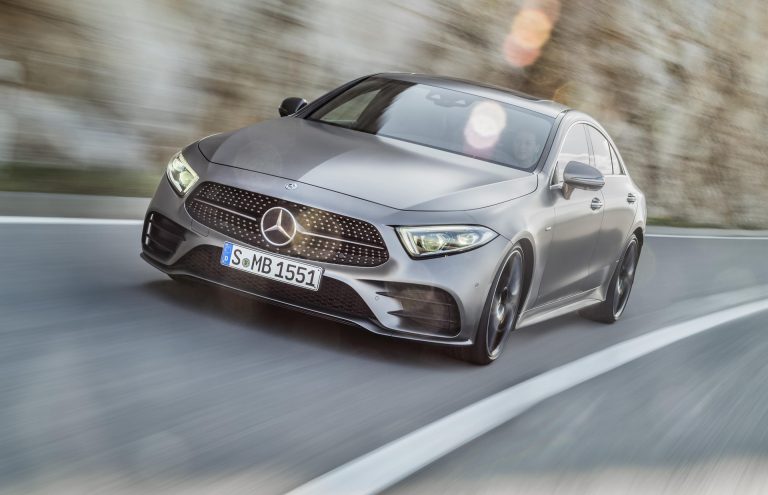




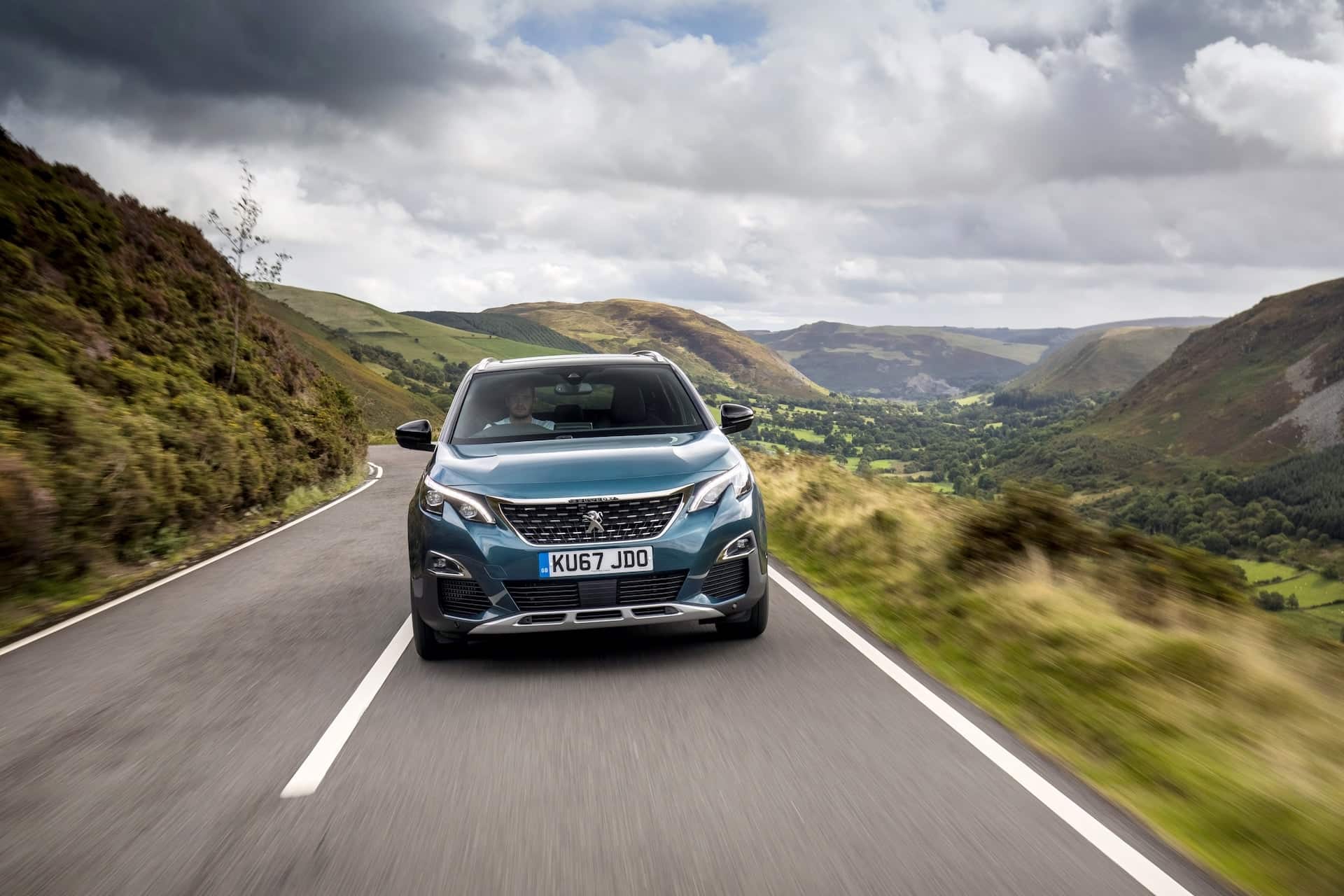

 Part of the system involves Active Steering Assist, claimed as a world-first and steering the car away from a permanent obstacle, such as a crash barrier or a pedestrian, if it calculates braking will not avoid a collision.
CoDrive, meanwhile, adds to the usual cruise control system to reduce the strain on the driver. Including technology dubbed Lane Tracing Assist, it works to keep the car in its lane, distinguishing between tarmac, grass and kerbs, and will make steering inputs to help.
Part of the system involves Active Steering Assist, claimed as a world-first and steering the car away from a permanent obstacle, such as a crash barrier or a pedestrian, if it calculates braking will not avoid a collision.
CoDrive, meanwhile, adds to the usual cruise control system to reduce the strain on the driver. Including technology dubbed Lane Tracing Assist, it works to keep the car in its lane, distinguishing between tarmac, grass and kerbs, and will make steering inputs to help.


An updated version of the Volkswagen Golf SV has gone on sale, with the people-carrier version of the big-selling model gaining a range of upgrades.
The Golf SV has a wheelbase 50mm longer than the hatch and estate variants, and in terms of overall length sits between its sibling models. Inside occupants sit 85mm higher than in the hatch and estate, and the rear bench seat slides by up to 180mm to make the car more versatile.
Notable among the upgrades is an enhancement to the safety specification. All Golf SVs now include autonomous emergency braking, which includes a monitor to react to pedestrians crossing in front of the vehicle.
Further safety tech available on the options list includes Emergency Assist, which tries to wake the driver if they become unresponsive. If that is unsuccessful, it brings the car to a halt with hazard flashers on. Parallel parking and trailer assistance are also offered.
Every Golf SV is now offered with a touchscreen infotainment system – the standard version increases in size from six to eight inches. Optionally available is the Discover Navigation Pro unit with a glass nine-inch touchscreen, while all models also get a CD player, DAB radio and simultaneous pairing of two mobile smartphones via Bluetooth.
On the exterior new front and rear bumpers are fitted, the rear diffuser trim is revised and all-LED tail lights fitted, while a full-LED headlamp setup is on the options list.
Four trim levels are available and among the six-strong engine line-up (four petrol and two diesel) is a new unit. The 1.5-litre TSI Evo petrol engine includes Active Cylinder Technology, that shuts down two of its four cylinders to reduce fuel consumption whenever possible. The new engine is available in 130 and 150hp forms.

Prices for the new Volkswagen Golf SV range from £20,475, buying a 1.0-litre 85hp petrol version with a five-speed manual gearbox in entry-level S trim, to £28,595 for the 2.0-litre petrol 150hp variant in GT trim with a seven-speed automatic transmission.

 Matched to an equally new six-speed manual gearbox, the 1.5-litre diesel has been refined to cut its CO2 emissions, though Ford is not yet quoting figures. It produces 125hp and 300Nm of torque, and is available as standard in front-wheel-drive form.
The 1.5-litre unit will also be the only engine matched to the new all-wheel-drive system, which in normal running powers the front wheels but will be able almost instantaneously to send up to 50% of the torque to the rear wheels.
Alongside the diesel Ford also intends to launch a new 100hp 1.0-litre petrol model in mid 2018, promising improved economy and emissions over existing powertrains. Launch engine options will be a 100hp 1.5-litre diesel and 125hp and 140hp versions of the 1.0-litre EcoBoost petrol engine.
Prices for the new EcoSport range will be released closer to its showroom debut.
Matched to an equally new six-speed manual gearbox, the 1.5-litre diesel has been refined to cut its CO2 emissions, though Ford is not yet quoting figures. It produces 125hp and 300Nm of torque, and is available as standard in front-wheel-drive form.
The 1.5-litre unit will also be the only engine matched to the new all-wheel-drive system, which in normal running powers the front wheels but will be able almost instantaneously to send up to 50% of the torque to the rear wheels.
Alongside the diesel Ford also intends to launch a new 100hp 1.0-litre petrol model in mid 2018, promising improved economy and emissions over existing powertrains. Launch engine options will be a 100hp 1.5-litre diesel and 125hp and 140hp versions of the 1.0-litre EcoBoost petrol engine.
Prices for the new EcoSport range will be released closer to its showroom debut.

Volkswagen UK’s managing director, Paul Willis, has been forced to admit that the company has received nearly 17,000 complaints from customers whose vehicles have suffered after receiving the company’s so-called “fix” for its emissions-cheating Dieselgate models.
Willis appears to think that 17,000 recorded complaints from UK customers represents a complete success, noting in a letter to Chair of the Transport Committee that in his and Volkswagen’s opinion, that “no systemic issue in respect of impaired performance has been identified”.
Meanwhile, reports of “fixed” Volkswagens, Audis, Škodas and SEATs breaking down or going into limp mode – in some cases only a few miles after having the repair work conducted by a dealership – continue to rack up.
Complaints include noticeably worsened fuel economy, broken exhaust gas recirculation (EGR) valves and clogged diesel particulate filters (DPFs), despite Volkswagen’s official position that “the technical measure has no adverse impact on fuel consumption figures, CO2 emissions figures, engine output, torque, noise emissions, or durability of the engine and its components”.
Willis’ letter was in response to a request from the Chair of the Transport Committee, Lilian Greenwood MP, in which she requested an update from Volkswagen on a number of issues, starting with confirmation that Volkswagen still had no intention of compensating UK drivers for its emissions cheating.
Ms Greenwood also questioned Volkswagen’s progress in applying its fix, which the company had promised to complete by autumn 2017, and asked about the many complaints her committee had received about the negative impacts of Volkswagen’s fix.
She also asked how many customers have received compensation for problems arising from the fix, and what measures Volkswagen was taking in the UK to reduce NOx as it is doing in Germany.
Willis confirmed that Volkswagen has no intention of compensating customers in Europe, which is no great surprise although still disappointing for the 1.2 million UK customers who bought an affected Volkswagen Group vehicle. More than 40,000 UK owners have joined a class action lawsuit against Volkswagen over the Dieselgate scandal, so this may result in the company having to pay out something to owners eventually.
Willis argued that Volkswagen had made excellent progress on its fixing of customers cars, because they have completed about 75% of the job in the time he promised. Clearly, Willis is eyeing up a future career as a painter and decorator, as they never seem to get their jobs finished on time, either.
To be fair, a large number of clued-up owners have explicitly rejected the company’s offer to “fix” their vehicles, so it will be impossible for Volkswagen to ever complete the task as promised. Many others are angry because they feel they were duped into believing the recall work was compulsory, when they would have refused it if they realised they had a choice.
The Volkswagen Diesel Consumer Forum, which now comprises more than 6,600 angry Volkswagen/Audi/SEAT/Skoda owners and still growing, claims that Volkswagen has never disclosed exactly what the “fix” entails. Forum founder Gareth Pritchard said, “So far, 820,000 cars have had the emissions software update in the UK. Yet not one owner has had it explained to them what the fix does to our cars. It’s very easy in those circumstances for VW to deny there is an issue when it won’t tell us what has been changed or how our cars should be operating.”
Willis refused to disclose how many customers have received compensation for failures resulting from the fix, claiming that it was “competitively sensitive information”. He did not elaborate on who such “competitors” would be that could benefit from knowing how many customers Volkswagen had compensated for its own failings.
He also made a rather ambiguous statement that seemed to suggest that 75% of customers who had sought reimbursement have had their claims approved, although it could easily be interpreted that only 75% of those who were actually approved (rather than all applications) have actually been approved for payment. It was a very wordy phrasing, which seemed designed to obfuscate rather than illuminate…
In his letter to the Transport Committee, Willis claimed that “the vast majority of customers have been satisfied with the technical measures”, although he did not provide any evidence to back this up. He went on to boast about his company’s scrappage scheme, which offers customers between £1,800 and £6,000 on certain part-exchange vehicles – the catch, of course, being that they have to buy a new Volkswagen Group vehicle, and only selected models are included in the offer.
Finally, Willis explained that Volkswagen would be offering “widespread voluntary software updates” on certain Euro 5 diesel models, including cars that have already received the dieselgate “fix”. No doubt, many owners will be far more reluctant to let Volkswagen meddle with their cars’ software next time around after their experiences last time.
A second Volkswagen executive has been jailed over his role in the Volkswagen Dieselgate scandal. Oliver Schmidt led Volkswagen USA’s environmental and engineering office in Michigan, and learned of the cheating scheme in 2015, according to court documents as reported by the BBC. He pleaded guilty to conspiracy and violating the Clean Air Act in August, and will spend the next seven years in prison – as well as being hit with a US$400,000 fine.
Volkswagen has been fined more than US$15 billion over its emissions cheating in the USA, but has so far got off scot-free in the UK and Europe thanks to regulations that are worded slightly differently.
Should you buy a used diesel Volkswagen, Audi, SEAT or Skoda that has been “fixed”? No. There are far too many reports of breakdowns, poor performance and poor fuel economy for it to be a safe bet, despite the company’s protestations. There are literally thousands of other vehicles for sale that are less risky places to put your money.
Should you buy a used diesel Volkswagen, Audi, SEAT or Skoda that has not been “fixed” but is on the list? Probably not. If your car develops any engine or exhaust problems and you have not had the “fix” done, you are less likely to be offered any support from the Volkswagen Group for repairs, or a dealer may go ahead and apply the fix without your knowledge – and the company says it can’t be undone afterwards (although aftermarket specialists are doing good business out of ‘rolling back’ the fix for affected customers).
If you are considering buying a used diesel Volkswagen Audi, SEAT or Skoda, you should absolutely check whether it’s on the recall list and find out whether it has had the work done.
If you own one of these vehicles, whether fixed or unfixed, you have every right to be angry. The Dieselgate scandal has made people wary of buying a used car on the cheat list, regardless of our recommendation above. You will get no apology from Volkswagen, despite the company screwing you over. If you want to sell your car privately or part-exchange it on a non-VW Group vehicle, your car’s value is likely to suffer.
If you part-exchange it for another Volkswagen/Audi/SEAT/Skoda, you may be eligible for a boost to your part-exchange value (called something insipid like a “customer loyalty bonus”), but the downside is you have to buy a new car from the same company that has just screwed you.


 What’s in store for 2018?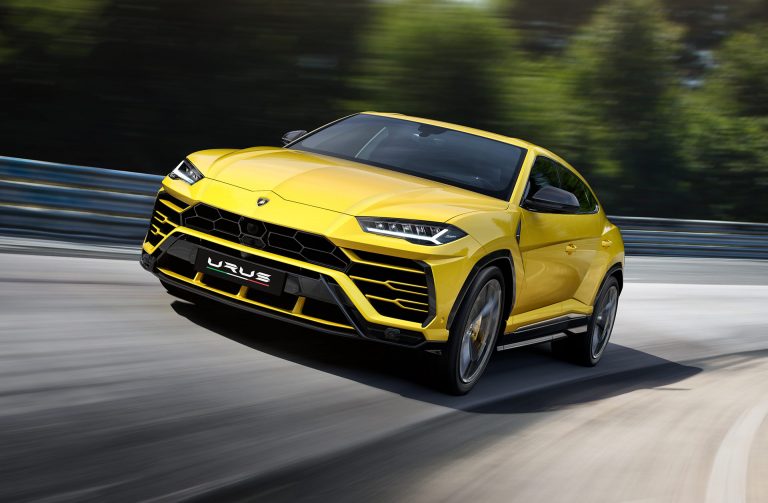
 Four-wheel steering also features, turning the rear wheels by up to three degrees to aid manoeuvrability at low speeds, stability at high speeds. Other chassis technology includes active torque vectoring and carbon-ceramic brakes, while there are six driving modes selectable from the cockpit, including off-road, sand and snow modes.
The engine is placed low in the chassis to improve the centre of gravity, while Lamborghini also claims that the Urus kerb weight of under 2,200kg gives it the best power-to-weight ratio of 3.38kg/hp. The Bentayga of sister brand Bentley tips the scales at 2440kg.
The Urus shares its platform with the Bentayga, also used under the Audi Q7 and Porsche Cayenne. The Lamborghini is one of the most coupé-like SUVs offered in the sector, with its profile two-thirds metal and one-third glass.
Four-wheel steering also features, turning the rear wheels by up to three degrees to aid manoeuvrability at low speeds, stability at high speeds. Other chassis technology includes active torque vectoring and carbon-ceramic brakes, while there are six driving modes selectable from the cockpit, including off-road, sand and snow modes.
The engine is placed low in the chassis to improve the centre of gravity, while Lamborghini also claims that the Urus kerb weight of under 2,200kg gives it the best power-to-weight ratio of 3.38kg/hp. The Bentayga of sister brand Bentley tips the scales at 2440kg.
The Urus shares its platform with the Bentayga, also used under the Audi Q7 and Porsche Cayenne. The Lamborghini is one of the most coupé-like SUVs offered in the sector, with its profile two-thirds metal and one-third glass.
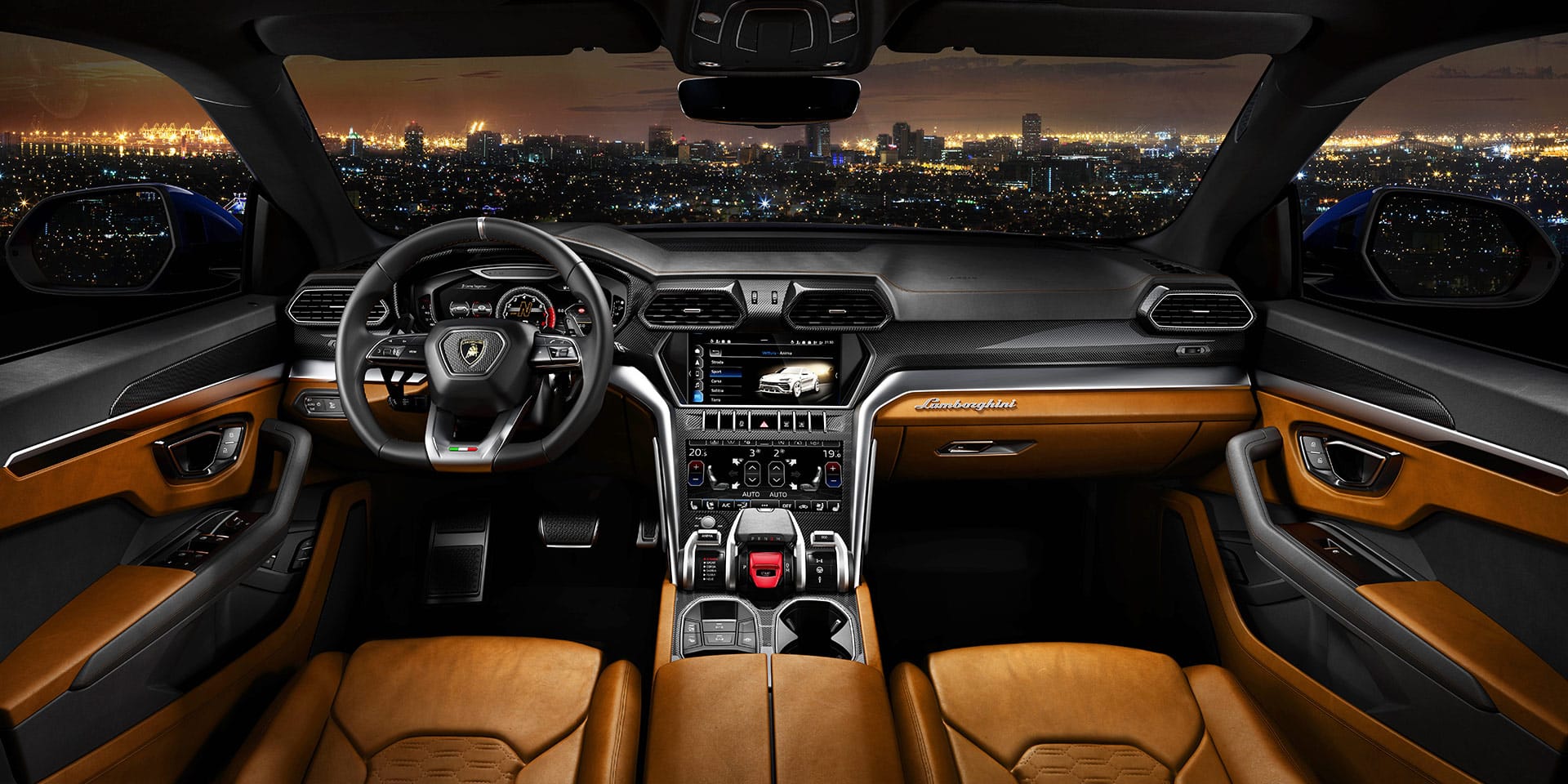 Exterior detailing includes references to Lamborghini sports cars, such as a peak on the bonnet reminiscent of the Miura and Aventador, and diagonal bonnet lines first seen on the Countach. Also recalled is the LM002, an off-roader produced by Lamborghini between 1986 and 1993.
First deliveries of the Urus are planned for Spring 2018, at prices likely to start from around £165,000. The SUV is expected to double Lamborghini’s annual production volume, and the Urus range will expand, likely including a plug-in hybrid version.
Exterior detailing includes references to Lamborghini sports cars, such as a peak on the bonnet reminiscent of the Miura and Aventador, and diagonal bonnet lines first seen on the Countach. Also recalled is the LM002, an off-roader produced by Lamborghini between 1986 and 1993.
First deliveries of the Urus are planned for Spring 2018, at prices likely to start from around £165,000. The SUV is expected to double Lamborghini’s annual production volume, and the Urus range will expand, likely including a plug-in hybrid version.







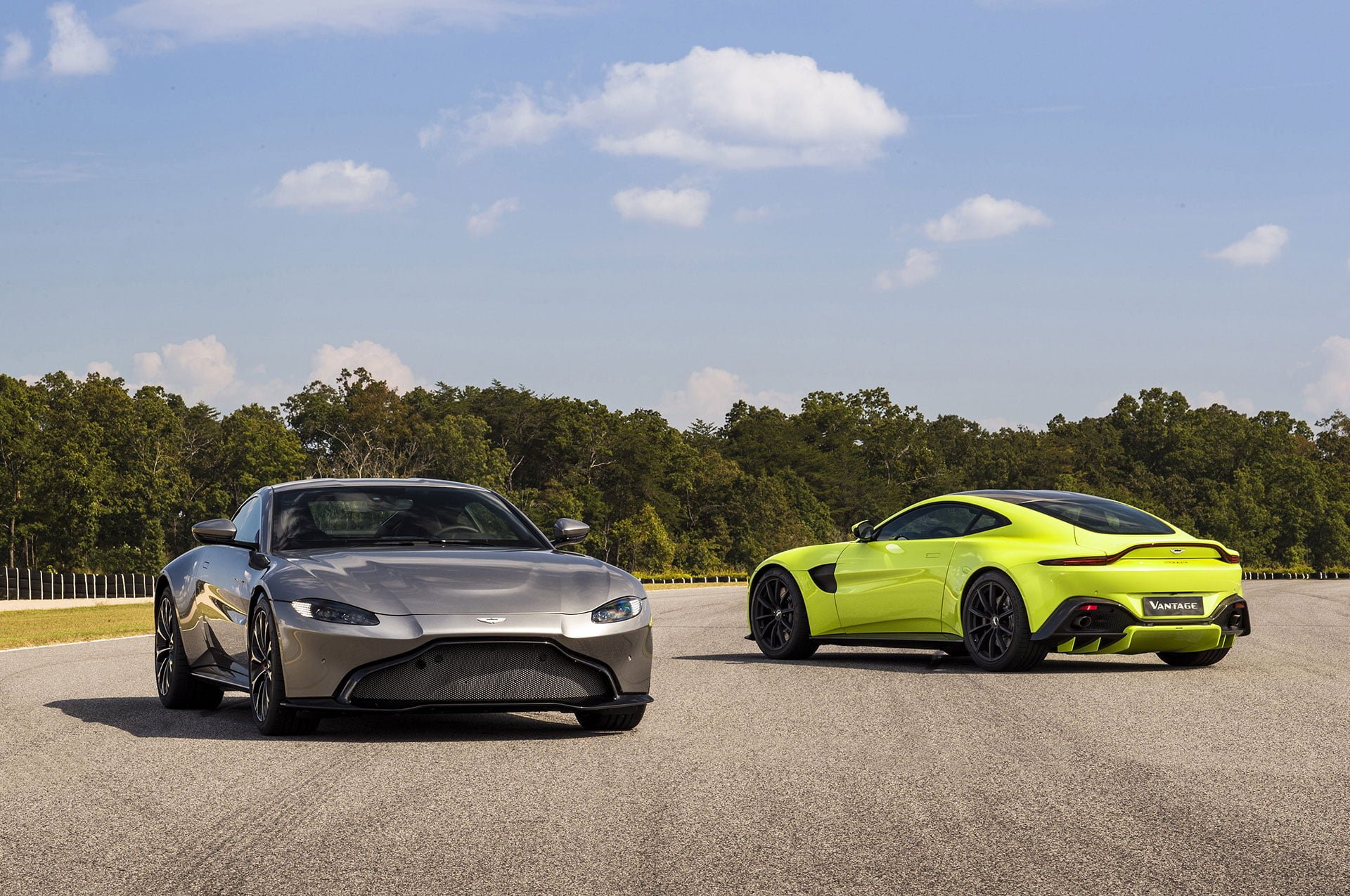
 The shell generates significant downforce which again is a route Aston Martin has not previously pursued with its road cars. Construction is an evolution of the aluminium structure used on the recently launched DB11, though Aston Martin adds that 70% of the Vantage structure is new. The interior replicates the bolder look of the exterior with a focus on the driver.
Power for the new Vantage is provided by a 4-litre twin-turbo V8 engine which is set as far back and low down in the chassis as possible to improve the car’s centre of gravity and provide a perfect 50:50 weight distribution. Combined with an eight-speed transmission, it produces 505hp at 6000rpm, together with 685Nm of torque between 2000 and 5000rpm, which sends the Vantage through 60mph in 3.5 seconds and onto a maximum speed of 195mph.
Industry observers suggest a V12 version of the car is likely to launch later, but not a hybrid as Aston Martin’s already announced plans to offer electrified versions of all its cars are scheduled from 2025, suggesting the next generation of Vantage will be the first with electric power.
Electronic aids on the new car include stability and torque vectoring chassis assistance, speed-dependent electric power steering and for the first time on an Aston Martin an Electronic Rear Differential (E-Diff). Linked to the car’s electronic stability control system, it is said to understand the car’s behaviour, reacting much more efficiently than a conventional LSD to direct the engine’s power to the relevant wheel. As a result, the car feels more planted both in terms of straight-line stability and cornering performance.
Aston Martin is now taking orders for the new Vantage, at prices starting from £120,900.
The shell generates significant downforce which again is a route Aston Martin has not previously pursued with its road cars. Construction is an evolution of the aluminium structure used on the recently launched DB11, though Aston Martin adds that 70% of the Vantage structure is new. The interior replicates the bolder look of the exterior with a focus on the driver.
Power for the new Vantage is provided by a 4-litre twin-turbo V8 engine which is set as far back and low down in the chassis as possible to improve the car’s centre of gravity and provide a perfect 50:50 weight distribution. Combined with an eight-speed transmission, it produces 505hp at 6000rpm, together with 685Nm of torque between 2000 and 5000rpm, which sends the Vantage through 60mph in 3.5 seconds and onto a maximum speed of 195mph.
Industry observers suggest a V12 version of the car is likely to launch later, but not a hybrid as Aston Martin’s already announced plans to offer electrified versions of all its cars are scheduled from 2025, suggesting the next generation of Vantage will be the first with electric power.
Electronic aids on the new car include stability and torque vectoring chassis assistance, speed-dependent electric power steering and for the first time on an Aston Martin an Electronic Rear Differential (E-Diff). Linked to the car’s electronic stability control system, it is said to understand the car’s behaviour, reacting much more efficiently than a conventional LSD to direct the engine’s power to the relevant wheel. As a result, the car feels more planted both in terms of straight-line stability and cornering performance.
Aston Martin is now taking orders for the new Vantage, at prices starting from £120,900.


What is it?
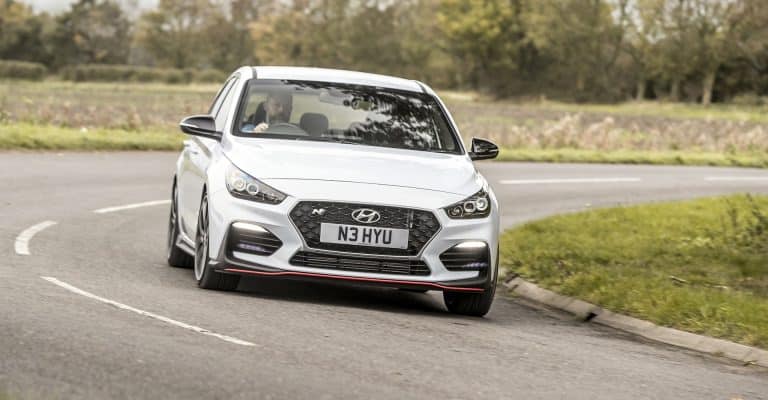
The Hyundai i30 N is the brand’s first performance model, a more potent version of the mid-sized family hatch.
Key features
Our view
The Hyundai i30 N is one of the most surprising new cars of 2017. The brand’s new N division has produced a complete package with every bit as much performance prowess as far better-known and established rivals.
All of this is available in a car that one can live with just as easily as much less powerful everyday hatches. Add in an extensive specification, a strong safety package and a five-year warranty at a value-for-money price, and the Hyundai i30 Nis a definite winner – on road or track…
Similar cars
Volkswagen Golf GTI, Ford Focus ST, Honda Civic Type R
Hyundai has not previously made a performance production model and few of the brand’s core customers probably expect it to. The hot hatch market does not appear natural technology for the Korean badge, once a pure budget choice, today regarded as a more upmarket value brand.
Hyundai’s enthusiastic UK boss, Tony Whitehorn, tells us that he could imagine fans of hot hatches hearing of the new performance version of the i30 hatchback, dubbed the N, dismissing the car as offering likely nothing more than jacked-up suspension and a chip in the engine management system.
They could not be more wrong. The i30 N will be the first of a range of N performance cars and Hyundai has clearly demonstrated its intentions by to poaching Albert Biermann to head the division. He has been responsible for most of BMW’s most-admired M models over the last two decades.
N stands both for Namyang, Hyundai’s enormous research and development centre in Korea, and the Nurburgring, the challenging 14-mile circuit in Germany where much of this car’s development was carried out.
Hyundai expects to sell many examples of the i30 N to trackday enthusiasts, who spend their free time pounding their pride and joy round the UK’s race circuits. And the brand’s confidence in the car is so marked that the UK launch includes time on just about the most challenging UK circuit available to the trackday crowd – Cadwell Park in Lincolnshire, dubbed the ‘mini-Nurburgring.’

The basis of the i30 N is the five-door i30 hatch, and importantly virtually all the changes made to give the car performance prowess are hidden under the skin. The i30 is already regarded as a very good value family car, and both in terms of specification and as we will shortly see performance the N retains this appeal.
Two versions of the car are on offer. The N costs £24,995, the N Performance £27,995 – highly competitive pricing amongst the perceived opposition which Hyundai claims is the likes of the Volkswagen Golf GTI and Ford Focus ST rather than the more potent Focus RS or Honda Civic Type R.
Both N models use the same turbo petrol engine of two litres. In the N it produces 250hp, while the N Performance gains an extra 25hp. Torque figures are the same across both versions, at 353Nm from just 1750rpm, while an overboost feature can add an extra 25Nm for up to 18 seconds – great for swift overtaking. Best 0-62mph time is 6.1 seconds in the more expensive version, while the 6.4 seconds of the stock model matches the opposition.
A six-speed manual gearbox is standard, actually a strengthened version of that from the larger i40 model, while other upgrades include significant stiffening to the shell to aid the car’s handling prowess.
Visual changes are not as radical as the likes of Honda has done with the Civic Type R. The i30 N is intended to be an everyday car, so while the front and rear bumpers, the side skirts and the alloy wheels are bespoke, they are not radical redesigns and the car looks pleasing to the eye. Most obvious markers, in fact, are the Performance Blue paintwork that is only offered as an N option, and the red finish to the calipers acting on the enlarged brake discs.
The options list is notable because basically there isn’t one – the only choices are metallic or pearlescent paint, and on the N Performance specifying the same cloth seat finish as the N, instead of the standard leather of the higher performance model. This no-cost alternative is really aimed at the truly competitive, as it saves 12kg in weight…
This lack of options does not mean that the i30 N is a stripped-down hot hatch – far from it. The standard specification is just as in the rest of the range, long and impressive – particularly as this will be regarded as a range-topping i30.
LED head and tail lights, adaptive cruise control, keyless entry and start and an eight-inch touchscreen satellite navigation system with Android Auto and Apple Car Play compatibility all come as standard, before one starts talking about the performance upgrades. N Performance models also add the leather and suede seats, electrically adjustable up front, and an ‘Active Variable Exhaust System’ which Hyundai says it added just for fun and which basically allows the car to make evocative ‘crackle’ and ‘pop’ sounds from the exhaust when in the N or Custom drive modes – more on which shortly.
The safety package is as pleasingly extensive as other Hyundais. Autonomous emergency braking with a collision warning is standard, as are hill-start assist, driver and emergency stop sign alerts. While the i30 N has not specifically been tested by Euro NCAP, it retains the full safety package of the mainstream i30 that scored five stars earlier in 2017.
One major plus of the i30 N is its warranty. The car is supplied with the same five-year deal that is standard across the Hyundai range, but remarkably it also covers track use. It won’t sort any crash damage resulting from too fast a corner entry and a meeting with a barrier, but if the engine cries enough, for example, Hyundai will want to know.

Stepping inside the i30 N will be familiar territory to anyone who has driven any of the mainstream range. The interior space replicates that of the rest of the range, generally good, with slightly restrictive rear headroom but a 395-litre boot that outdoes many rivals. The seats are more cossetting than the normal car’s to keep the driver in one place when cornering hard on the track, but not to the degree that becomes uncomfortable on a long journey.
The design of the cockpit is not at all radical but generally well thought-out and put together. Everything one expects from a normal road car is there in terms of audio, Bluetooth, navigation and smartphone connection, including wireless charging.
Being an N, however, there are some extras. The instrument display includes a bespoke digital cluster that offers information aimed at trackday use, providing lap times, acceleration and G-force recorded, while a line of shift lights on the dash light up as one goes up the rev range, turning from orange to red as the max power point comes closer.
The driving modes are selected by two buttons, mounted either side of the bottom spoke of the steering wheel. The lefthand one offers the usual normal, eco and sport modes, while the righthand one is intended only for the track. Its N Performance mode stiffens everything up and produces the most performance, while a custom mode allows one to for example have all of the performance without the rock-hard suspension, perhaps for enthusiastic progress along a challenging and empty country road.

The i30 N is of course intended as a driver’s car, which is why the launch day focuses on laps of the challenging Cadwell Park. But rural Lincolnshire also offers surprisingly challenging roads, and a route around these proves that this really is an everyday performance car. In its normal, even sport mode, it is as well-behaved as any other family hatch, and a shopping trip to the supermarket, or a drive across half of the country with miles of motorway munching, will prove unremarkable and fatigue-free.
When one wants the car to perform, however, the i30 N becomes truly remarkable – in just how good it is. While our test cars are to N Performance specification, with more performance extras that include an electronic limited slip differential, larger brakes and wheels and bespoke Pirelli performance tyres, it is the handling that most impresses.
A combination of excellently sorted suspension and well-designed electronics stops the front-end diving under braking, then point the car’s nose into the apex of the bend and hold the rear tight as the revs are wound on, with none of the rear-end fidgetiness that one expects.
There’s more. Launch control enables superbly rapid getaways from a standing start, while out on the track a brake knock-back feature pre-loads the callipers to ensure when one steps on the pedal retardation is instant. The faster one tries, the better the car becomes, accompanied by the right noise, the active exhaust adding the popping and banging soundtrack. This can be turned off but why would you want to? It is a whole lot of fun.
Albert Biermann has been quoted as saying he was given a blank sheet of paper and “the opportunity of a lifetime” when appointed as the head of the N division. On the evidence of the Hyundai i30 N, he’s made the most of that opportunity.
Any experienced performance driver who steps into the i30 N will initially express major surprise and then start to smile. This is certainly no chipped hatch with big wheels – it has every bit as much prowess as better-known rivals, and indeed this reviewer found it to be just as much fun as the so-called class above Honda Civic Type R that he drove recently on road and track. And all this is clothed in an overall package which is no less an everyday car than any mainstream Hyundai, Ford or Volkswagen.
The Hyundai i30 N proves that performance car fans do not need to compromise – this really is the best of both worlds.

Automotive Website of the Year


Automotive Website of the Year
Automotive Website of the Year