Find an Expert Rating: 
Home Blog Page 167

Subaru marks half century of boxing clever

Subaru is celebrating 50 years since the introduction of its horizontally-opposed ‘boxer’ engine.

The boxer, so called due to the engine’s pistons resemble the punch-counterpunch motion of a boxer’s fists, is today used in all Subaru’s globally-sold cars, and also widely used by Porsche.

The layout of the engine places the pistons opposite each other in a side-to-side symmetrical layout. The opposing pistons work to cancel out the inertia force of each other, resulting in less vibration and a much better rotational balance to provide smooth acceleration right up to the highest engine speeds.

By its nature the boxer is also compact, which allows it to be fitted lower in the engine bay than a conventional four-in-line engine, lowering the centre of gravity and improving handling.

The first Subaru to use the boxer was the 1000 small car launched on 14th May 1966. To date, more than 16 million such engines have been sold in Subarus, and today it is combined with the brand’s Symmetrical All-Wheel Drive (AWD) system.

The future for the boxer looks assured in Subaru’s car line-up, while the handling and weight-friendly format of the engine have also found favour in motorsport, Subaru winning multiple World rallying titles in boxer-equipped Imprezas. Currently in the UK, leading race team BMR is developing boxer-powered examples of Subaru’s Levorg in the British Touring Car Championship (BTCC).

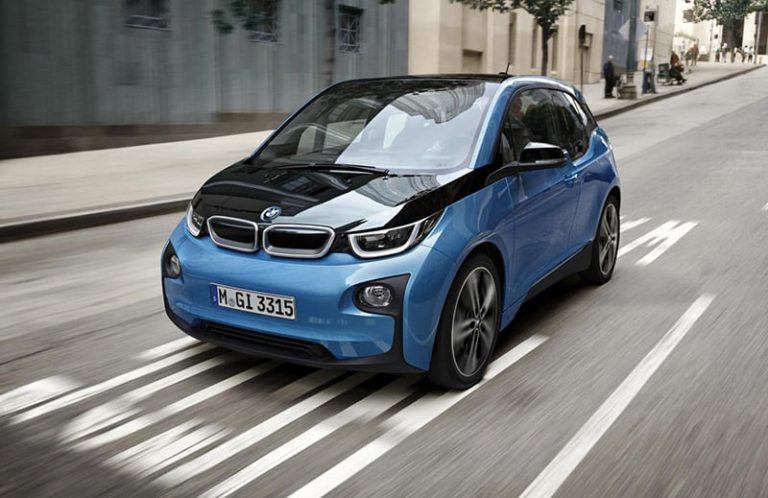
BMW’s i3 stretches electric range

BMW is upgrading its i3 electric car with major battery changes.

Modifications to the batteries of both the i3 and i3 Range Extender will turn them from 60Ah to 94Ah units, boosting the range by more than 50 per cent.

The modifications centre on refining the internal packaging, including adding more electrolyte material, to the 12 cells in each of the eight modules forming an i3’s lithium-ion battery.

As a result the battery’s capacity increases to 33kWh, powering a hybrid synchronous electric motor developed specifically for the i3, with a 167bhp output and 1284lbft of torque, all available from first movement of the car.

According to BMW, the new battery will allow the stock i3 to complete up to 195 miles of everyday driving between charges.

Its Range Extender sister, which is fitted with an additional small petrol engine of 38hp to generate power to recharge the battery if required, will add a further 81 miles.

The 7.1-second 0-62mph time of the i3 is unaffected, the Range Extender achieving the same figure in 8.1 seconds. And even using the air conditioning or optional heating, will not affect the battery’s abilities, these systems having a second function of keeping the battery at the optimum temperature of 20deg C for best performance.

The Range Extender’s CO2 emissions have also been approved, by a single gram to 12g/km, the fully-electric i3 remaining at zero. And as the changes to the battery have been achieved without making it any larger, existing i3 customers can upgrade if they wish.

Battery charging times have also been reduced, the car now including a DC Rapid-charge unit as standard. AC charging is now multi-phase allowing at 3.7, 7.4 or 11 kW, improved by 50 per cent over the previous i3 60Ah and cutting charging time to under three hours, Charging can also be carried out at home using a standard three-pin plug or by specifying a BMW i Wallbox.

BMW has also added to the options list available for the i3, extending the range of interior finishes and also offering the Protonic Blue with exterior colour with Frozen silver metallic highlight, previously only available on the i8 sports car.

The updated i3 variants will be on sale from July, at £27,830 for the all-electric version and £30,980 for the Range Extender, both prices including the Government’s £4,500 ‘plug-in’ grant. The battery comes with an eight-year, 100,000-mile warranty.

Skoda extends Yeti Monte Carlo line

Skoda is extending its Yeti Monte Carlo model line with three new versions.

The Monte Carlo trim – originally established to recall Skoda’s sporting history – can now be specified on the SUV with a 109bhp 1.2 TSI petrol engine or a 2-litre TDI diesel also of 109bhp, while the petrol unit is optionally offered with a seven-speed DSG auto gearbox.

These will sit in showrooms alongside the already available 2.0 148bhp diesel Yeti Monte Carlo.

Monte Carlo variants are all front-wheel drive and standard equipment includes 17-inch ‘Origami’ alloy wheels finished in gloss black, Bi-Xenon headlamps with a cornering function and dynamic angle control, black roof and door mirrors and black spoilers at the front and rear, and a black front grille, Monte Carlo badging and LED rear lights.

Inside, the specification includes a three-spoke Supersport leather multifunction steering wheel, sports seats with Monte Carlo upholstery and Monte Carlo floor mats, instrument cluster and door sill trims.

Order books are open now for the new models – the 1.2 TSI variant costs from £19,700, the DSG version adding another £1,100, while the 108bhp diesel is £21,045.

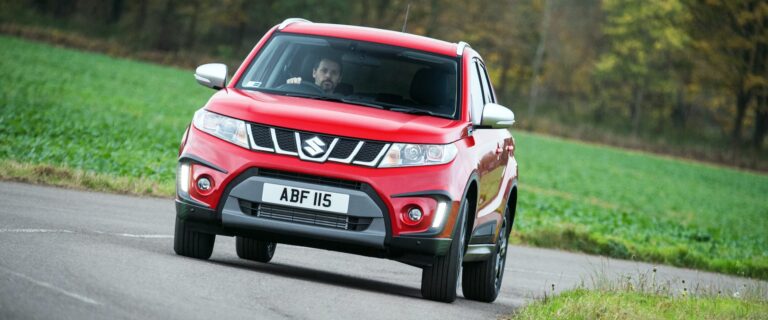
Suzuki Vitara 1.4 BoosterJet review

What is it?
New turbocharged petrol version of competent small SUV from Suzuki.

Key features
Smallest capacity engine but with most performance. Top S spec and all-wheel drive.

Our view
The new BoosterJet version adds the missing link of performance to the Suzuki Vitara, but without sacrificing its impressive efficiency.


The Car Expert first drove the latest generation of one of Suzuki’s longest-lived model lines in February 2015, the Vitara reinvented in a bid to take full advantage of Europe’s burgeoning crossover market, and central to Suzuki GB’s ambitious growth plans.

Suzuki has a proud history of making small and affordable SUVs, and the latest Vitara is a worthy addition to that tradition that has been well received. However this latest version, the first to employ the brand’s new Boosterjet petrol engine technology, is expected to provide an extra attraction to the model, offering a degree of performance lacking in either the 1.6 petrol or diesel launch units. Will it boost Vitara sales? A full road test over a week gave us the opportunity to find out.

Styling/interior

We were praiseworthy of the new Vitara’s looks on the launch event in 2015 – it is sleek and stylish, and has been likened to the Range Rover Evoque. In contrast to its predecessors it is aimed, like most of the current crossover breed, at the on-road than off-road market, but traditional Suzuki styling elements remain, such as the clamshell bonnet.

The designers have tried hard to make the S trim, the fourth and most expensive of the Vitara grade structure, stand out from its fellow models. Bespoke exterior treatments include a more imposing vertical grille design, a rear upper spoiler, door mirrors finished in satin silver and gloss black 17-inch alloy-wheels. The standard-fit LED headlamps have red projector covers.

Inside the upholstery is finished with red stitching which gives it a more upmarket feel, while there is plenty of detailing, red surrounds to the dash air vents for example.

The overall impression on slipping inside the Vitara, however, is one of space, particularly when one considers the price of the car, which even at this range-topping level is comparable with smaller segment SUVs like the Nissan Juke. There’s plenty of room for at least two adults in the back and a usefully-sized, well-shaped boot with a low loading lip.

There are some areas which show up the budget value of the Vitara. The plastics are generally of the hard variety, which never look as refined, while the doors are very light. As a result they lack that satisfying ‘clunk’ when swung shut, while the lesser poundage results in them often not latching shut without a second attempt.

Generally, however, the interior of the Vitara is well laid out and a pleasurable environment to travel in.

Engine

Suzuki expects the new engine, a 1.4-litre direct injection turbo petrol unit, to become a popular part of the Vitara line-up, thanks to its combination of significantly more power. It’s up by 17% compared to the 1.6-litre petrol unit, yet combined with fuel economy gains of 4%.

This is achieved by the use of a small displacement, high torque turbocharger with a controllable wastegate valve. It closes to increase boost pressure during heavy load but remains open during normal driving. An air bypass valve ensures the turbo does not ‘stall’ when the throttle is closed and then quickly reopened.

Particularly impressive is the torque – with its peak output of 162lbft coming in at a low 1,500rpm, the car pulls impressively from low speeds which makes it feel far more eager than other Vitara models.

Our test model came with the standard-fit six-speed manual gearbox and all-wheel-drive transmission. An automatic gearbox is also available, with just a mile per gallon fuel penalty and CO2 emissions only a single gram higher than with the manual, at a price premium of £1,350.

On the road

When tested on the launch last year the standard Vitara proved competent, if not as sporty as its looks suggested. Immediately one moves onto the road in the Boosterjet version, the difference is palpable. The plentiful low-down torque makes for smart acceleration, the unit then settling into refined, smooth delivery when cruising at motorway speeds. And after two long motorway hauls during our test we can attest to the cabin comfort.

Our test week coincided with some not at all spring-like weather around our Welsh borders dominated test route, and the AllGrip four-wheel-drive system really came into its own, emphasising how such transmissions add as much safety on road as they do ability off road. The system boasts four driving modes, varying from auto through sport, snow and lock. The sport mode certainly suits the engine, particularly when cornering when the chassis exudes confidence and the shell stays pleasingly upright.

The only, slight, downside is the steering. While precise enough, it does not provide enough feel to match the directness of the powertrain. It’s not bad, by any means, just not quite as well-tuned compered to the car as a whole.

Equipment

The Boosterjet engine is only available with the top level S trim and all-wheel-drive, and while the plus £20,000 price may initially seem a little expensive, when one considers the extensive equipment specification included it becomes much more tempting.

For example, both hill-hold and hill-descent control are included, the latter usually expected to be included in more off-road pitched SUVs. And with a differential lock able to be selected in the AllGrip transmission’s four drive modes, the Vitara really can keep going with confidence when the tarmac runs out.

The safety package is impressive and has earned the Suzuki Vitara a five-star Euro NCAP rating – the first SUV to qualify under the more strict regime introduced in 2015. Seven airbags are standard, including a driver’s knee airbag, while the active safety package includes a Radar Barke Support system which alerts the driver (loudly…) if it detects a car stopped or moving slowly in front, and in extreme situations can automatically apply the brakes. On the typically crowded motorways of the UK this did initially prove a little over-sensitive, but the sensing distance can be adjusted to suit one’s individual preference.

The motorway hauls also provided plenty of opportunity to try the highly effective adaptive cruise control, while among other useful driver aids included as standard are front and rear parking sensors and a rear parking camera.

The camera uses the centre console touchscreen normally occupied by the much appreciated DAB digital radio and the satellite navigation. Again standard on the S model, the satnav is a bit menu-heavy but effective enough in operation.

Summary

When The Car Expert first tested the latest Suzuki Vitara, we concluded that it was a good value small SUV with a pleasing amount of style. The new Boosterjet version adds the missing link of performance, but without sacrificing substantial efficiency – fuel economy of plus-50mpg for an all-wheel-drive petrol SUV is impressive.

We look forward to the Boosterjet engine spreading throughout the range, and we expect the S version of the Suzuki Vitara to become one of the most popular options in the range – a second coming for petrol power?

Suzuki Vitara – key specifications

Test date: April 2016
Model tested: Suzuki Vitara 1.4 Boosterjet S
Options fitted:
None
Price: £20,899
Engine: 1.4-litre petrol
Power (bhp):
138 @ 5,500rpm.
Torque (lb/ft):
162lbft @ 1,500-4,000rpm.
0-62mph (sec):
10.2
Top speed (mph): 124
Fuel economy (combined, mpg): 52.3
CO2 emissions (g/km):
127
Key rivals:
Nissan Juke, Renault Captur, Škoda Yeti

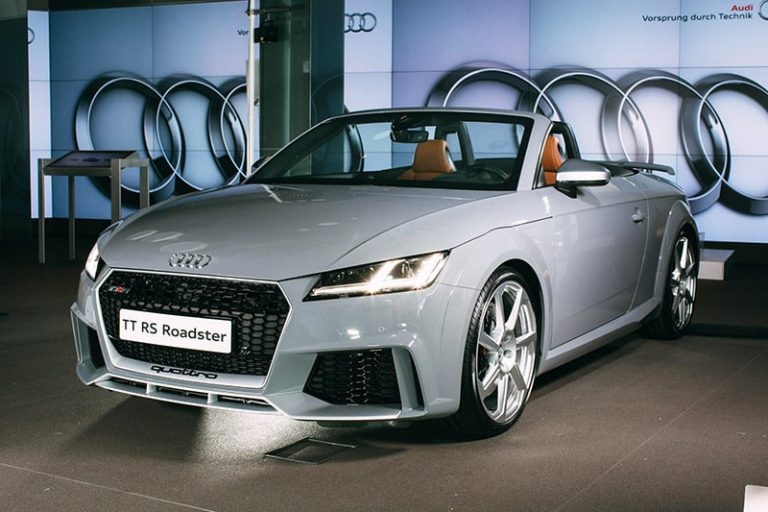
Audi’s fastest TT drop-top debuts in UK

Audi is unveiling the most powerful version of its TT model yet, simultaneously in London and China.

The TT RS Roadster is debuting at Audi’s West London showroom at the same time as its coupé sister is unveiled at the Beijing motor show.

Revealing the car in London reflects the fact that more Audi TTs are bought in the UK than anywhere else – British buyers account for almost half of all European sales of the model.

The new versions are are the second generation of the TT RS line and both use Audi’s new five-cylinder 2.5-litre TFSI turbocharged petrol engine. This is a development of a unit that has taken five ‘Engine of the Year’ titles, the major update being the use of a weight-saving aluminium block and a 17% increase in power – it produces 394bhp and 354lbft of torque, the latter between 1,700 and 5,850rpm.

As a result the Coupe will pass 62mph from rest in 3.7 seconds – four tenths quicker than its predecessor. The Roadster follows just behind at 3.9 seconds, three tenths up on its previous version, and both are capable of up to 174mph.

The Coupe is also half a second faster than its direct rival, the newly-unveiled Cayman S from Porsche.

As standard the TT RS models use a seven-speed S tronic dual-clutch gearbox, with its ratios specially selected for the car and steering-wheel paddles for manual control, and matched to quattro all-wheel drive.

The chassis sits a centimetre lower to the ground than the stock TT, on 19-inch alloy wheels (20-inch forged aluminium versions on the options list) and with stiffer springs and dampers. The progressive steering, becoming more direct with increasing input, is taken from Audi’s RS models.

Brakes are uprated too, combining 370mm vented perforated front discs on the front axles with 310mm monoblock versions at the rear. Eight-piston front calipers are used and carbon-ceramic brakes are an option.

Visually the TT RS gains bespoke front and rear bumpers, the front boasting deeper air intakes, along with extended side sills, elliptical exhaust tailpipes and a large fixed spoiler, which can be exchanged for a smaller extendable version.

Also debuting on the TT RS are OLED rear lights – the O stands for organic, and reflects a light signature that is high contrast, can be continuously dimmed, does not cast any shadows and does not require any reflectors.

Each rear light module contains contains four units which become smaller from the inside out. The biggest bears the TT logo and the four Audi rings.

Inside Audi says the controls are focused on the driver, making use of the brand’s much-praised digital ‘virtual cockpit’ with its 12-inch screen. This gains a bespoke ‘RS screen’ highlighting the rev counter and showing information including tyre pressure, torque and g‑force. A rev-limiter shift light also features on the virtual cockpit.

Order books for the TT RS models will open in summer 2016, with first deliveries at the end of the year. Prices are yet to be announced.

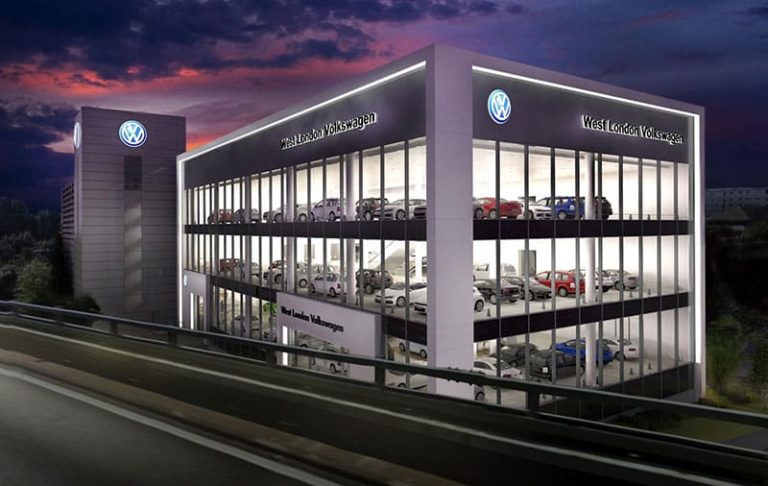
UK government: Only VW cheated tests

A UK Government investigation into the emissions levels of new cars has concluded that only Volkswagen used a ‘defeat device’ to falsify emissions tests.

The study, conducted in the wake of the Volkswagen emissions scandal, also concluded to little surprise that all 37 models tested had higher nitrogen oxide levels in real-world motoring than recorded in laboratory tests.

“Our tests have not detected evidence of test cycle manipulation strategies as used by the Volkswagen Group,” the Government report stated.

“However, tests have found higher levels of nitrogen oxide (NOx) emissions in test track and real-world driving conditions than in the laboratory for all manufacturer’s vehicles, with results varying significantly between different makes and models.”

In subsequent discussions with manufacturers, the Government testers were told that the emissions control strategy for NOx is less effective at lower temperatures in order to ensure durability and protect the engine from damage. Manufacturers also stated that the unrepresentative nature of the current laboratory type approval test, the New European Drive Cycle (NEDC) would have contributed to the distortion compared to published test figures.

Further improvements to regulations required

The report states that further improvements to regulations are necessary to avoid future uncertainties in emissions testing, and adds that manufacturers need to work hard to quickly improve the emissions performance of their vehicles ahead of new European regulations soon to be introduced.

These will include the ‘Real Driving Emissions’ test, which the UK claims to have secured. It will be introduced in stages across Europe from 2017 and include some tests reflecting normal use of cars.

“Even before the introduction of the new requirements, we are urging manufacturers to introduce new technologies to reduce emissions sooner than the new EU regulations require,” the report states.

“Some manufacturers have announced that they intend to make changes to vehicles already in use, to improve emissions, and will offer this to customers on a voluntary basis – we welcome this and encourage action from other manufacturers.”

Volkswagen agrees deal with US government

Meanwhile, Volkswagen has reached ‘an agreement in principle’ with the US Government over the approximately 480,000 vehicles affected by the emissions scandal in America.

Options offered to affected owners include buying back their car, cancelling leases or having their cars modified, subject to the US State Department approving the modifications.

IN a decision by a US District Judge, all owners will be offered “substantial compensation” and VW will establish a fund to both compensate for the environmental damage done by the excess nitrogen oxide emissions from its engines, and to promote environmentally friendly car technology.

More manufacturers under investigation

The fallout from the VW scandal is continuing. This week the offices of PSA Group, parent company of Peugeot and Citroën, was raided by emissions investigators from the French Government. PSA insists its cars are fully compliant with emissions regulations and it is fully complying with any investigations.

Meanwhile in Japan, Mitsubishi’s offices were raided after the manufacturer admitted falsifying fuel consumption figures on Japanese-market cars.

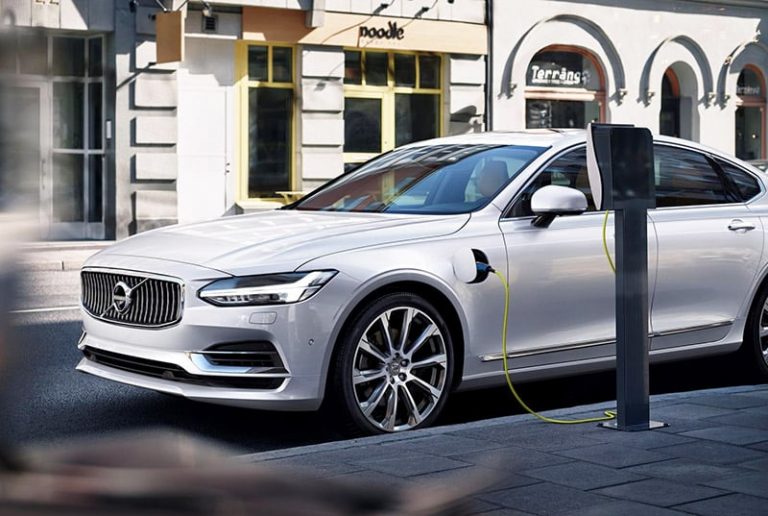
Volvo launches bid for million electrics

Volvo has announced plans to sell one million ‘electrified’ cars by 2025.

The Swedish brand will achieve this aim by including at least two hybrid versions in every model line, and launching its first all-electric car in 2019.

According to company president and CEO Håkan Samuelsson the target is deliberately ambitious. “It is going to be a challenge, but Volvo wants to be at the forefront of this shift to electrification,” he says.

For the past five years Volvo’s product development has been undertaken with the emergence of electric cars regarded as a priority – the two new vehicle architectures, Compact Modular Architecture (CMA) for smaller cars and Scalable Product Architecture (SPA) for larger models are both designed to fully incorporate hybrid or electric technology.

The larger Volvo 90 and 60 series cars are to be built on SPA, and a global range of smaller 40 series cars will follow, built on the CMA architecture. All of these will include electric models on the way to the cumulative total of one million electrified cars.

Mitsubishi admits fuel test rigging in Japan

Mitsubishi has admitted supplying misleading information for fuel consumption tests, but insists that the data only affects models on sale in the Japanese market.

The admission to Japanese authorities comes in the wake of the Volkswagen emissions test scandal and has an immediate effect on shares in the Japanese manufacturer, which slumped by more than 15%.

According to Mitsubishi Motors Corporation (MMC) fuel consumption testing data submitted to Japan’s Ministry of Land, Infrastructure, Transport and Tourism was “improperly presented in order to improve fuel consumption rates.”

The statement from MMC added that the testing method used was different from that required by Japanese law.

Production and sales of the four cars affected have been suspended. The four are all sold only in Japan and comprise the eK Wagon, eK Space and the Nissan Dayz and Roox, both built by Mitsubishi for Nissan. All are examples of the small-engined ‘Kei’ cars built specifically for the Japanese home market.

MMC says it has acted quickly to apologise to its customers and stakeholders and will put in place a committee of external experts to fully investigate the issue. The company pursues an open and transparent policy and the results of the investigation will be made public as soon as it is complete.

The managing director of Mitsubishi’s UK division, Lance Bradley, believes the company has acted quickly and decisively. “We understand that such issues are of great concern to consumers – I would like to reassure everyone that there is no evidence to suggest that UK or European models are affected,” he adds.

Five-star Prius pioneers new safety test

Industry safety specialist Euro NCAP has performed its first test of Autonomous Emergency Braking technology, on the Toyota Prius.

The safety body is now including the test in its well-known star rating system for new cars, which it says will encourage crash-avoidance technology being fitted to all cars.

Autonomous Emergency Braking (AEB) is able to detect both vehicles and pedestrians ahead of the car and to brake automatically to either avoid or lessen the severity of a collision.

According to Euro NCAP the ‘Toyota Safety Sense’ system fitted as standard to the Prius worked well and helped the car gain a top five-star safety rating.

Euro NCAP secretary general Dr Michiel van Ratingen believes that including AEB in the rating system is a key milestone, “that will help the proliferation of the crash avoidance technology into all segments of the market.”

Meanwhile the first set of 2016 crash-test results from Euro NCAP has also seen the first award of a dual rating, reflecting the amount of safety equipment available on a model’s options list.

The standard rating will continue to be a baseline, reflecting the safety features included in a car’s standard equipment list. Whether a second rating is published with the optional equipment taken into account is up to the manufacturer.

The new Suzuki Baleno hatchback only scores three stars in standard form, But Suzuki offers the optional safety pack ‘Radar Brake Support’ which includes an AEB City and AEB Inter-Urban system, and with the pack included, the Baleno’s rating increases to four stars.

According to Euro NCAP this dual rating allows consumers to easily understand the safety benefits which can be achieved by the additional crash avoidance equipment offered as options.

“To provide accurate and clear information to consumers about the latest systems and what benefit they might bring, is becoming more challenging – the dual rating will simplify the choice for the safest car,” adds van Ratingen.

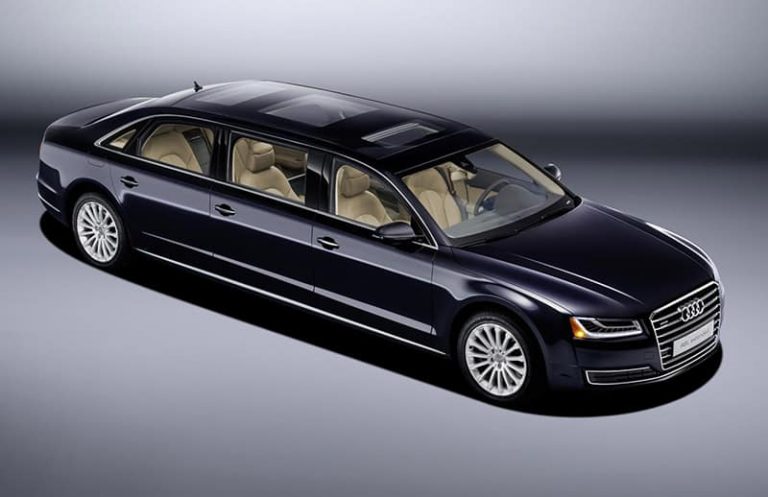
Audi stretches its longest car

Audi has built a one-off A8 saloon for a customer, extending its L model in length by a further metre.

The A8 L extended measures up at almost 6.4 metres long, with a wheelbase of 4.2 metres. It boasts six individual seats in three rows, Audi stating that occupants in each enjoy “exquisite comfort.”

According to its creators the major challenge was to maintain the rigidity and safety of the extra-long body. The almost entirely aluminium Audi Space Frame gained extended side sills and a centre tunnel in extruded aluminium sections.

A double rear bulkhead was added to separate the cabin from the boot, and extra profiled aluminium tubes and cross braces added to the roof along with a 2.4-metre long glass panel to promote an impression of space inside the car.

The outer skin of the A8 L extended is completely reworked from the windscreen pillar back to maintain the look of the car’s silhouette, while 19-inch 15-spoke wheels complete the look, concealing brakes sourced from the S8 performance version of the A8 line-up.

The head and rear lamps both include side marker lights, specified by law for vehicles of such length.

All six seats are upholstered in Valcona leather in a velvet beige colour and the third row includes a continuous centre console, a Rear Seat Entertainment display and a cool box.

Powering the car is a 3.0-litre petrol engine producing 305bhp and torque of 325lbft, put through an eight-speed tiptronic gearbox and quattro all-wheel drive. The A8L extended can complete the 0-62mph sprint in 7.1 seconds and go on to an electronically governed top speed of 155 mph.

The A8 L extended took a year to create and Audi has not stated how much it cost its customer, though industry sources suggest a price of around 350,000 Euros. The brand has said that it is receiving requests for more examples of the car.

VW targets SUV growth with new Tiguan

Volkswagen intends to become a much bigger player in the SUV market in coming years and leading the first offensive is the all-new Tiguan.

Dealers have now opened order books for the second-generation Tiguan, which will replace a car that is now the brand’s third best-seller on the UK market, having increased sales in every year since its launch in 2007.

Initially the new model is on offer powered by the 2.0 diesel of 150hp, in front and all-wheel-drive form, and an AWD variant of the 2.0 petrol of 180hp. These two are expected to take 75% of all UK sales.

Within months this range will extend to four diesel and three petrol engines, with power outputs from 115 and 125hp offered in front and all-wheel-drive, with six-speed manual or seven-speed dual-clutch automatic gearboxes.

All engines are Euro-6 emissions compliant and all will offer both power and efficiency gains over their predecessors,

The new Tiguan is the first VW SUV to make use of the highly versatile MQB platform, also used by such wide-ranging models as the Golf and Audi TT, and also the basis of the forthcoming Ateca SUV from sister brand SEAT.

Those updating from a previous Tiguan will find more interior space, thanks chiefly to a wheelbase extended by 8cm to just under 2.7m, and increased overall dimensions. The length goes up by 6cm to just under 4.5m, width by 3cm to just over 1.8m. However, the vehicle’s height is shaved by 3cm, giving it a less upright look.

Despite the dropped roof, VW claims extra headroom inside the new model, and knee room extended by 3cm, both courtesy of the MQB platform. Rear boot space is 470 litres with all seats in place extending to 1,655 litres with the rear bench seat folded – a 145-litre gain over the previous model. This bench seat can also be slid by up to 18cm, again freeing up 1,345 litres of extra space.

Volkswagen also claims what it describes as a unique towing capacity of up to 2,500kg for the new Tiguan, dependent on model.

Safety will also be a major selling point of the new Tiguan, with all versions offering electronic aids including Front Assist; City Emergency Braking and Pedestrian Monitoring.

The launch versions of the new Tiguan will cost from £25,530 for the front-wheel-drive diesel model, in entry-level S trim, and £32,115 for the all-wheel drive petrol, which is available from the fourth-tier SEL trim.

Tiguans will soon be joined in VW showrooms by more SUVs – the brand has made clear its intention to offer an SUV in every major segment in future, displaying concept versions at recent motor shows such as the T-Cross Breeze unveiled at the Geneva event in March.

Ford Mustang review (2016 – 2018)

What is it? First-ever European variant of iconic Ford Mustang muscle car.
Key features: V8 and four-cylinder engines, hard or soft tops, tempting price.
Our View: The Ford Mustang is an impressive package, with performance, practicality and specification – at a similarly impressive price.
Type of review: First UK drive


On slipping into the cabin of Ford’s new release, the latest variant of a model with half a century of history but for the first time available in Europe, the writer’s colleague comments on the lack of Ford badges – there is not one, on the bonnet, the interior, even the rear flank.

There doesn’t need to be any, however. In their place sits a chromed image of a horse in full flight, leaving no doubt this is an example of one of the few truly iconic model names in the motoring world – Mustang…

As indicative of the US muscle car line as Camaro is to Chevrolet, mention of the name Ford Mustang immediately conjures images – mostly of Hollywood superstar Steve McQueen pulling increasingly sideways slides in the 1968 movie Bullitt, a sequence regarded by many as the greatest celluloid car chase of all time.

Throughout its long history the Mustang has reflected its era, some versions more successfully than others, and now, entering its sixth generation, it benefits from a maker that is very much looking globally, espousing the ‘One Ford’ philosophy.

What this means is that Ford’s icon, previously merely imitated on this side of the Atlantic with models such as the Capri, is now being officially allowed outside its US home. For the first time there is a distinct European model of the Mustang, even extending to right-hand drive versions for UK fans.

Thankfully, Ford is also appreciating the power of motorsport right now, and the Mustang arrives as the middle tier of a Ford Performance sub brand with the RS at the base, the GT supercar at the top.

On offer to those wanting to find out why this name is so special are two body styles, Fastback and Convertible, and two engines. One couldn’t possibly offer a Mustang without a 5-litre V8 engine, but for those who cannot consider the not very eco-credentials of such a powerplant there is also a ‘sensible’ Turbo 2.3-litre Ecoboost unit. Notably, however, off the 1,000-plus Mustang orders taken so far in the UK, around 65 per cent are for the V8…

Ford Mustang body styles have varied over the years from muscle-toned to flabby but thankfully the new one remembers its roots. Even the presence of classic former versions on the launch event – including that Bullitt car – can’t detract from a new model whose profile instantly presents an image of power and purpose. Boasting several vital references to the line throughout its styling, the car looks the part, and our test vehicles certainly turn heads along the Northamptonshire test route.

This is also a big car, especially for a coupe. The new Mustang is more than 4.7 metres long and including the door mirrors two metres wide, with a 2720mm wheelbase. Such dimensions are more akin to large family cars than performance coupes, and one is regularly reminded of this on the Northamptonshire test route, roads that are somewhat less wide than their US counterparts.

Owning a car with such a revered nameplate one needs to feel the effect when slipping inside, and the new Mustang does not disappoint. Whether it’s that chrome stallion on the steering wheel, replicated in a glovebox badge that also bears the simple phrase ‘Since 1964’, or retro references such as the row of toggle switches at the base of the centre console, the cabin delivers the image required.

There are more modern touches of course – anyone who has driven the latest Mondeo will recognise the Sync touchscreen infotainment system for example. And it’s not all positive – for such a special car there is a little too much hard plastic evident in the surfacing, an element that appears to have not transferred well from the US norm to the European…

In a busy day’s driving The Car Expert samples both Convertible and Fastback, 2.3 and 5.0 engines (the V8 variants designated GT), six-speed manual and six-speed auto transmissions, the latter with steering wheel paddles for manual shifts when preferred. While auto might seem anathema to a European performance car, it is far more familiar to American buyers for whom the ‘stick shift’ is much less favoured.

To consider the turbocharged 2.3 unit first – this is a thoroughly competent engine that does not disgrace itself in such surroundings, and makes a nice noise, if artificially enhanced by the audio unit’s electronics. Its 312 horsepower is still plentiful for a coupe – while a bit slow to get going (it is hauling around 1.7 tonnes of muscle car after all) it feels swift enough when at speed to justify the performance coupe credentials. A sub six-second 0-62mph time is enough to keep buyers amused while the 35mpg fuel economy ensures not too close a relationship with the local filling station.

Economy, however, has never been what Pony Cars, as these models were long ago dubbed in the US, are about. Such cars are about putting the 414 horses of a V8 motor through the rear wheels, and listening to the deep-throated rumble that results – it is such elements that ensure that the seemingly outdated concept of NASCAR racing, with its V8 race cars directly evolved from machines such as the Mustang, is by far the most popular form of motorsport Stateside.

So the Ford Mustang needs its V8, and is well suited to it. The 0-62mph time is slashed by a second, making this the fastest coupe Ford has ever offered in Europe, though with the peak power served up at 6,500rpm, the torque of 391lbft coming in at a relatively high 4250rpm, a generous right foot is needed to produce the most effective response.

All of this, of course, only adds to the signature V8 soundtrack. With the Convertible’s hood lowered – this achieved by simply turning a central locking handle and pressing on a button to operate the folding mechanism electronically – the audio sounds particularly good.

However this V8 boasts a wide spread of usable power, and cruising through a village it is smooth, refined and hushed, justifying the Mustang’s credentials as a performance car one can live with. And this versatility is further enhanced by four drive modes, ranging from Normal through Sport, a winter-specific setting and at the other extreme a Track mode with (on V8 versions) such delights as launch control and a line lock enabling one to spin the rear wheels and literally burn rubber from the tyres.

In one area, however, this car does not respect its history. Traditionally US muscle machines are tremendously quick in a straight line, but cannot go around bends, and in this sense the Mustang breaks the mould. Ford has endowed it with all-round independent suspension and with as a result it does handle, the combination of power, weight and an effective chassis planting it into bends and producing confident and enjoyable cornering.

Equipment levels are impressive – all versions come as standard with 19-inch wheels, automatic xenon headlamps, dual-zone climate control, LED tail lamps and a rear diffuser, while inside there is a nine-speaker sound system and that Sync 3 voice-controlled system based around an eight-inch colour touchscreen.

So the Ford Mustang is an impressive package, with performance, practicality and specification – and then one comes to the price. Just under £31,000 for the 2.3 makes it a tempting prospect, but adding just £4,000 to upgrade to V8 power? The Mustang GT costs around £15,000 less than any credible V8-powered rival, and at such a price the fuel ‘economy’ (a mere 20.9mpg on the combined cycle) becomes easier to justify.

As a result, one can understand why those 1,000-plus UK buyers who have already signed up for the Mustang are favouring the GT, and why the throaty growl of a V8 from over there could soon become a rather more familiar sound over here…

Ford Mustang – key specifications

Models tested: Ford Mustang 2.3 Ecoboost Convertible manual, 5.0 V8 GT Fastback Manual, 5.0 V8 Convertible Auto
On Sale: April 2016
Range price: From
£30,995 (V8 £34,995)
Insurance groups:
From 41E.
Engines: Petrol 2.3, 5.0 V8.
Power (bhp):
312, 414
Torque (lb/ft):
319, 391.
0-62mph (sec):
5.8*, 4.8*.
Top speed (mph): 145, 155.
Fuel economy (combined, mpg): 35.3* (auto 28.8), 20.9* (23.5).
CO2 emissions (g/km): 179** (auto 225), 299** (281).
Key rivals: Porsche Cayman, Vauxhall VXR8.
Test Date: April 2016.
* = manual transmission, fastback.

1604_Ford_Mustang_T06

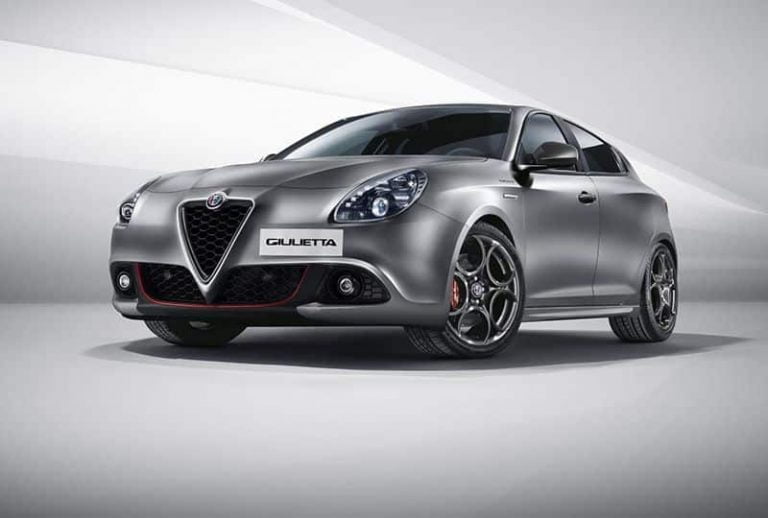
Alfa Giulietta gains a new look

Alfa Romeo has put a refreshed version of its Giulietta hatch on sale, boasting styling and specification changes and a new engine/transmission option.

The latter sees the 120hp 1.6-litre Multijet turbo diesel engine now offered with the Alfa TCT twin dry-clutch transmission. The combination produces a 0-62mph time of about ten seconds and a top speed of 121mph, while returning official combined-cycle fuel economy of 74mpg and a 99g/km CO2 emissions level, putting the car in zero road tax territory.

Styling changes include a new honeycomb grille, piano black or red detail panels, revisions to the head and fog lamp surrounds, new alloy wheel designs, changes to the exhaust tailpipes and the addition of Alfa White and Lipari Grey to the exterior colour choices.

Inside the seat upholsteries and dash and door panel trim have all been revised, the trip computer display updated and a Uconnect infotainment system added, offering live services such as music streaming, traffic updates and social media connectivity through a smartphone.

Five trim levels are available in the new Giulietta range across four petrol and three diesel engines, at prices ranging from £18,450 to £28,480.

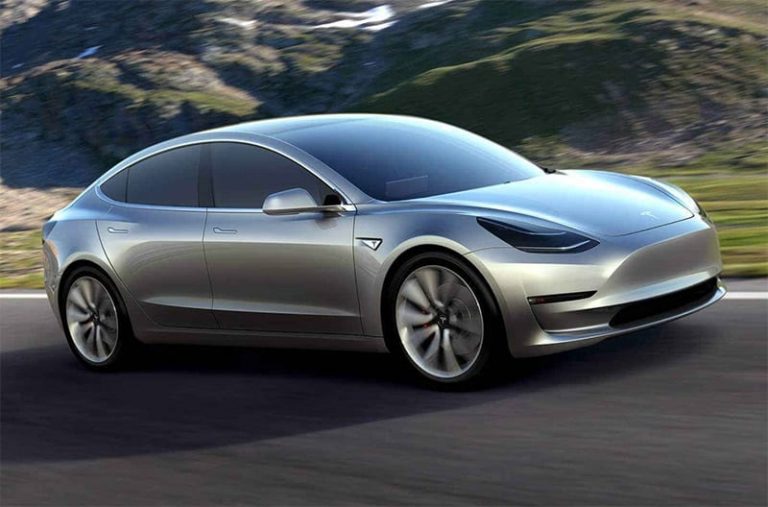
Tesla unveils its electric game-changer

US-based electric manufacturer Tesla has unveiled its ‘most affordable car’ yet – the Model 3 – its ‘most affordable car’ yet.

With a UK selling price that could be around £35,000 before factoring in the government’s plug-in grant, the Model 3 is predicted to give the brand a credible rival to the premium fleet heavyweights of BMW, Mercedes-Benz and Audi.

Dubbed by Tesla founder Elon Musk as the car he set out to build at the start, the Model 3 is a four-door saloon – effectively a downsized version of the already on-sale Model S, to a size that can challenge the likes of the BMW 3 Series, Audi A4 and Mercedes-Benz C-Class.

The Model 3 is said to seat five adults comfortably with interior cabin space that no rival can match, due to making use of the space usually taken up by a conventional powertrain. As a result the front row seats can be moved further forward while like the existing Model S the Model 3 also offers bootspace in both the front and rear.

The Tesla’s electric drivetrain will promise much more than compactness, however. Tesla says it will be capable of a 0-60mph time of under six seconds and crucially a range between charges of up to 215 miles – far in excess of any current production rival.

Musk, describing the car at an event staged at the Los Angeles base of Tesla’s SpaceX programme to build a reusable space rocket, says that the Model 3 is the brand’s high-volume affordable-price product developed from its three predecessors – the initial Roadster, and the Model S and X.

Tesla adds that the Model 3 boasts a five-star safety rating. Musk expects it to go on sale in the US towards the end of 2017, at prices starting from $35,000 before incentives, and the brand says that it has taken more than 115,000 deposits of $1,000 in the first 24 hours since revealing the car.

Subaru updates best-selling Forester

Subaru is refreshing its Forester SUV for 2016 to maintain its status as the brand’s best-selling UK model.

The upgrades include extra soundproofing, interior enhancements and additional safety measures, as well as subtle styling changes.

Exterior alterations include a new wing-motif mesh on the hexagonal grille, a reshaped front bumper with L-pattern chrome trim, designed to accentuate the car’s low centre of gravity and wide track.

A black finish is applied to the base of the wraparound ‘hawk-eye’ headlamps, and new LED combination lamps fitted at the rear.

Inside there is a greater amount of soft-touch surfacing, new piano black and metallic trim, new cloth and leather upholstery options including brown leather, and a higher resolution to the TFT driver’s display.

The upgrades to the soundproofing include front door and quarterlight glass increased in thickness from 3.5mm to 4mm, rear door glass up from 3.1 to 3.4mm, and a more sound-absorbent material in the seals.

The dashboard gains extra soundproofing particularly where it meets the base of the windscreen and in the front passenger footwell to drown out noise from the engine and wind.

Safety upgrades include the availability of Adaptive Front Lighting on the LED headlamps.

Other changes range across updated suspension settings for improved ride comfort particularly over poor road surfaces, and a new steering gearbox with a quicker ratio.

The new Forester goes on UK sale in April 2016 with prices starting from £25,495 for the 2.0i XE. The best-selling variant, the 2.0D XC, costs from £26,995.

Mazda MX-5 is the world’s top car

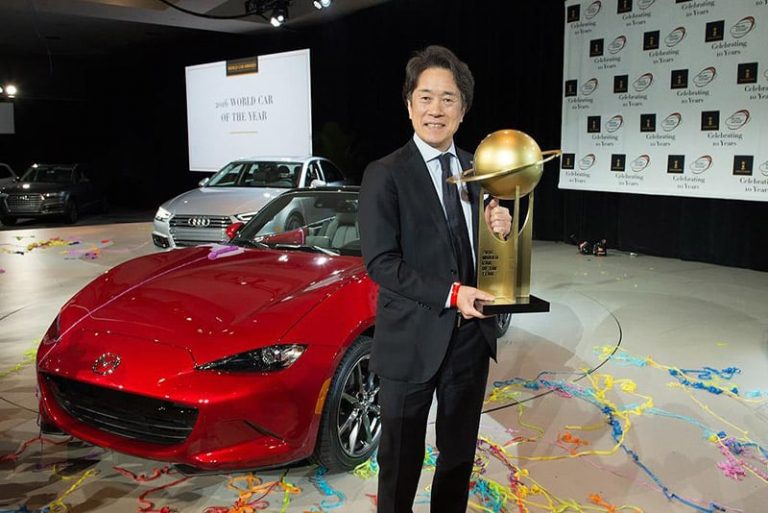
Judges in the World Car of the Year award have followed the example of UK motoring journalists and awarded their top prize to the latest Mazda MX-5 roadster.

In the European Car of the Year award, announced in March at the Geneva Motor Show, UK journalists on the judging panel placed the MX-5 first by several points, but votes by their European counterparts saw the award going to the Vauxhall/Opel Astra, with the MX-5 only third.

Now the international jury choosing the World Car of the Year, announced this week at the New York International Auto Show, has placed the Mazda first in a 23-strong list of new cars, the roadster beating fellow finalists the Audi A4 and Mercedes-Benz GLC.

Like the European awards, the World Car of the Year jury consists of 73 motoring journalists, drawn from 23 countries, who give points in several categories to a list of eligible models chosen by a steering committee from newcomers on sale in at least two continents. The initial list of 23 is narrowed to a 10-strong shortlist and then the three finalists.

The title is the second for Mazda in the 12-year history of the awards, the Mazda2/Demio winning in 2008. And the MX-5 took a second award on the night, for Design of the Year, beating the Jaguar XE and a second Mazda, the CX-3.

Mazda’s North American CEO Masahiro Moro describes the awards as a wonderful honour for everyone connected with the company. “As our iconic MX-5 roadster approaches one million units of production, this award is proof that it is as young, vibrant, fun and relevant as ever, and proof that every Mazda looks as incredible as it drives, and drives as incredibly as it looks,” he says.

Other World Car awards presented in New York saw the BMW 7 Series take the luxury car category, the Audi R8 named best performance car and the Toyota Mirai World Green Car.

Subaru shows its new Impreza

Subaru has unveiled production versions of its new Impreza at the New York International Auto Show.

The car has been revealed in both five-door hatch and four-door saloon form. Currently, the Japanese brand is merely stating that the five-door is under consideration for the European market, but it is believed that in a change from previous Subaru practice only the hatch will be sold in the UK.

The new car is built on the new Subaru Global Platform which is said to have improved body rigidity by more than 70%, while also being capable of accommodating future autonomous drive technology. The exterior look launches the brand’s latest design language

The new Impreza is bigger than its predecessor, 41mm longer, 38mm wider and on a 2,670mm wheelbase, extended by 25mm over the outgoing model. As a result, a more spacious cabin is promised, while the car also sits 10mm closer to the ground aiding aerodynamics.

Subaru is giving few details of powertrain options, other than stating that the Impreza will feature the brand’s trademark four-cylinder horizontally-opposed ‘Boxer’ engines and symmetrical all-wheel drive.

It will also be fitted with the new EyeSight driver safety assist system, described as a “second pair of eyes” and using stereo cameras to monitor road and traffic ahead, identify potential hazards and act accordingly. EyeSight is already available on Subaru’s vehicles in Japan and research by the brand suggests fitted vehicles have been involved in 62 per cent fewer collisions.

Other technology includes further safety aids and a new infotainment system, controlled by a large touchscreen and including voice control and smartphone-style apps to offer such functions as digital music playing, Bluetooth wireless capability and iPod control.

Performance enthusiasts will be pleased to hear that a new WRX STi model of the Impreza is planned, with rumours suggesting it could be a hybrid.

Subaru is yet to reveal a UK on-sale date for the new Impreza.

Maserati Ghibli Diesel review

What is it?
Refresh of luxury brand’s entry-level model.

What’s new?
Cleaner emissions, suspension tweaks, upgraded infotainment system

Our view:
The latest gentle makeover for the Maserati Ghibli simply adds extra lustre to an already very good product.


Maserati has always traded on luxury, sporting but not overtly sporty cars and the latest gentle makeover for the Ghibli simply adds extra lustre to an already very good product.

The car gains a number of subtle changes – its engines, both diesel and petrol, are now Euro 6 emissions compliant, achieved on our diesel test car through the fitting of the AdBlue engine additive, while the suspension has been worked on to further improve the already impressive ride and handling.

The brand is determined in only adding technology that will not dilute the driving experience of its product. Blind Spot Alert fulfils that brief, an important extra safety feature. The power boot lid with hands-free operation simply adds convenience.

Inside there is now a Siri Smart personal assistant feature, the standard Harmon Kardon sound system has been improved, and on the optional premium Bowers & Wilkins system there is now technology that enhances the sound of compressed music files. Black piano trim, Segna silk inlays and extra detailing complete the package.

The diesel powerplant is audibly as inoffensive as one could possibly expect while serving up no lack of pace when pushed hard. In cruise mode, at motorway speeds it is very refined indeed, and retains much of that refinement even when showing how confidently this car can be cornered.

Maserati is a bit of a hidden gem. The Ghibli serves up every bit as much luxury as perhaps better-known rivals, but with a diesel engine offering fuel consumption figures close to 50mpg it is also a surprisingly sensible purchase, especially in the corporate market.

Perhaps the convincing factor, however, one missed by many potential buyers, is that this diesel-powered luxury car costs from £49,160. Why follow the masses and spend £50,000 on an innocuous BMW or Mercedes-Benz, when one can have a Maserati?

Maserati Ghibli – key specifications

Tested model: Maserati Ghibli Diesel
Price: £49,160
On sale: 2016
Engine: V6 diesel, 271bhp, 443lbft
0-62mph and max speed: 6.3sec, 155mph (limited).
Economy and emissions: 47.9mpg, 158g/km
Test date: March 2016

Aston/Red Bull F1 to make ‘ultimate’ car

Aston Martin and Red Bull Racing are joining forces to build what is described as ‘the ultimate of all road cars’.

The tie-up between the luxury British sports car brand and the multiple Formula One World Championship-winning racing team comes within weeks of Aston Martin unveiling the DB11 model and announcing that it will be constructed in a new factory in south Wales.

No details of the new car, codenamed AM-RB 001, are currently available, but industry observers predict it will beat all road rivals in terms of performance and handling, and also leave several race cars in its wake. Rumours suggest it will be made in a run of around 100 cars each of which cost at least £2 million.

The car will be designed jointly by Red Bull Racing’s Chief Technical Officer, Adrian Newey and Aston Martin’s Chief Creative Officer, Marek Reichman, and according to Aston Martin will represent the ultimate blend of cutting edge F1 technology with Aston Martin’s signature sports car design.

The two companies believe that the combined talents of Newey, widely noted as the most successful Formula One designer of all time, and Reichman, Aston Martin’s design chief since 2005, along with what are described as the world’s best aerodynamicists, composite experts and manufacturing masters, will produce the ultimate hypercar.

Aston Martin returns to F1 – but only as a sponsor

The reveal of plans for the AM-RB 001 comes alongside the announcement of a tie-up between the two companies, an ‘innovation partnership’ that will see Aston Martin’s winged logo return to Grand Prix racing for the first time since 1960, on Red Bull’s F1 cars.

According to Aston Martin CEO Dr Andy Palmer, Formula One offers the ultimate global stage to build wider awareness of the Aston Martin brand but partnership will deliver even more than that when the hypercar hits the road.

“Between Q by Aston Martin Advanced, Red Bull Advanced Technologies and project partner AF Racing AG, we are going to create a car that will excite and stir the imaginations of the car designers of the future and a global audience of sports car enthusiasts,” Palmer says.

“These are exciting times for Aston Martin and arriving hot on the heels of our DB11 launch earlier this month, this new partnership underlines that our brand really is racing again.”

The optimism is shared by Red Bull Racing team principal Christian Horner who describes the project as very exciting for everyone in the team. “It’s an incredible project which also realises a dream and vision long held by Adrian to design a road car – we are very much looking forward to what I’m certain will be a successful partnership,” Horner says.

Hyundai teases Genesis NY concept

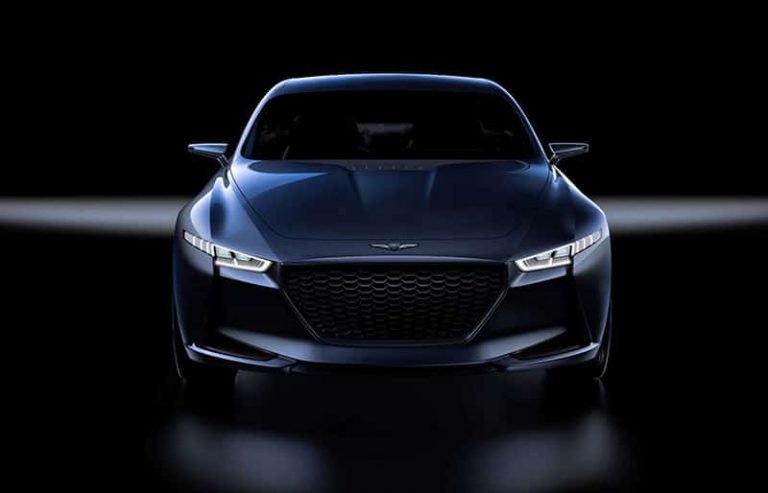
Hyundai will continue the development of its Genesis luxury sub-brand with the unveiling of a concept at the New York International Auto Show on 23rd March.

The brand has unveiled a single image and a teaser video of the new car, but is giving very little information away ahead of the unveiling.

The car is simply dubbed ‘the New York Concept’ and Hyundai describes it only as a four-door sports saloon “expressing the design direction hat will distinguish forthcoming Genesis products”.

According to Genesis brand head Manfred Fitzgerald, the new model is a progressive concept car that showcases the design quality of the brand. “With its expressive volumes and refined design, the New York Concept truly embodies the athletic elegance, which characterizes Genesis products,” he says.

Industry observers believe the car previews the forthcoming Genesis G70, pitched as a rival to BMW’s 3 Series and the Audi A4.

Genesis will effectively be to Hyundai what Lexus is to Toyota, and target the big hitters in the premium market such as Audi, BMW, Jaguar and Mercedes-Benz. Six new Genesis models will launch by 2020.

Clues to the Genesis – the teaser video

Bouyant SEAT plans second SUV

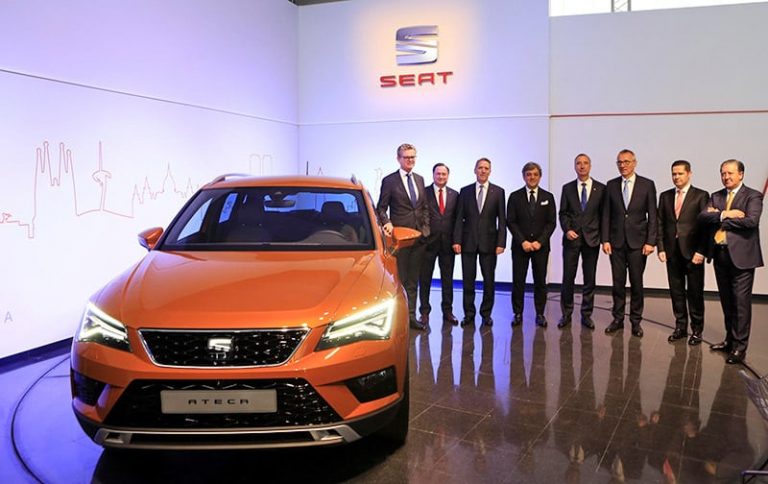
SEAT is to launch a second SUV model in 2017 to rival the likes of Nissan’s Juke.

The car, described as “a smaller all-road crossover” will be sold alongside the Ateca that arrives in showrooms this year.

The plans have been revealed as part of SEAT’s annual report announcement in which the Spanish brand announced its first profit since 2008.

Details of the new SUV are currently non-existent, SEAT only stating that it will be completely designed and developed at the company’s Martorell, Barcelona, headquarters. However it is thought that the car will be based on the next Ibiza supermini and be built on the wide-ranging VW Group MQB platform. It is not likely to be seen until early in 2017.

SEAT recorded a profit after tax of 6 million Euros, contrasting with a loss of €66 million in 2014 and put down to a growth in sales and a product mix that makes a greater contribution to profits.

Turnover was 8.3 billion euros, 11 per cent up on 2014, the company’s best ever result and double the revenue in 2009. Average earnings per vehicle increased by 3.5 per cent.

According to SEAT head Luca de Meo the progress in 2015 was twofold, both obtaining a positive result for the first time since 2008, and achieving it during a year of major challenges.

“We are implementing the right strategy that enables us to face the challenge of sustaining long-term profitability with optimism – we have a brilliant future ahead of us thanks to the launch of new products and the integration of new technologies in both the field of mobility as well as connectivity”, de Meo says.

Sales grew for a third year in a row, for the first time breaking 400,000 vehicles in a single year, thanks mainly to recoveries in main European market such as Spain and Italy, the fifth consecutive year of growth in Germany, SEAT’s main market, and success in Mexico. Conversely in the UK registrations were 47,654, almost 11 per cent down.

The return to profit did not come at the expense of future development – SEAT spent €586 million on investment and R&D, 28 per cent more than in 2014.

McLaren targets track with new models

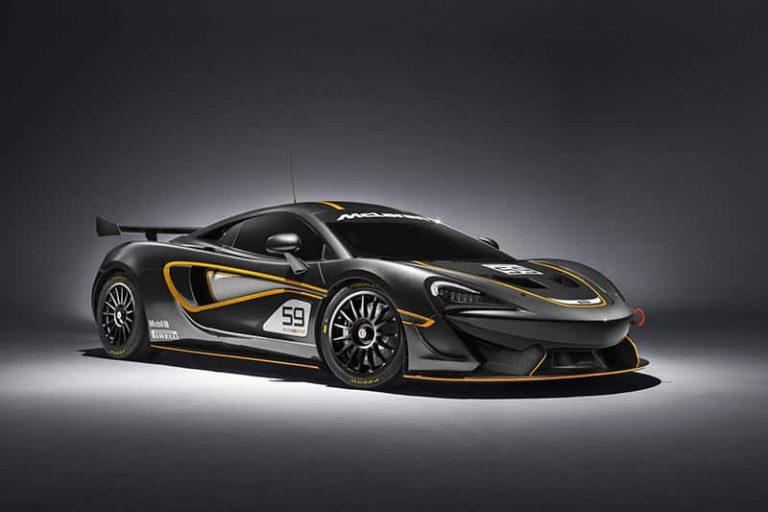
McLaren Automotive is unveiling two new models in its recently-launched Sports Series, both specifically intended for track use.

Both the 570S GT4 and 570S Sprint have been developed with the brand’s motorsport division McLaren GT, and GT racing category specialist CRS GT Limited.

The 570S GT is intended for competition and will be developed in a racing environment over the 2016 season. McLaren customer team Black Bull Ecurie Ecosse will run one car in the nine-round British GT Championship, alongside its GT3 specification McLaren 650S.

The Sprint, which is not due to be unveiled for some weeks, will be aimed more at the trackday customer, and will be sold without the specification required to meet motorsport competition regulations. However buyers who choose a Sprint will be able to upgrade it to GT4 specification at a later date if they choose.

To meet its motorsport requirements the GT adds an FIA-approved rollcage and fire extinguisher to the carbonfibre MonoCell II chassis that is common to the road 570 models. The carbnfibre technology has not been seen in GT4 racing before and is expected to be a major benefit due to its light weight and strength.

1603_McLaren_570S_GT4_02

The bodywork is reprofiled, using carbonfibre and aluminium panels, to cover front and rear tracks widened to 1644mm and 1593mm respectively to accommodate centre-lock cast magnesium alloy race wheels and Pirelli sick race tyres.

Other aerodynamic additions include a high-level rear wing on aluminium pylons, a larger front splitter and reprofiled floor. The bonnet is also redesigned, similar to a GT3 unit with exit ducts from an extra high-temperature radiator mounted in the nose.

Two-way adjustable motorsport dampers and coilover springs are fitted along with an onboard jacking system, while the 3.8-litre twin-turbo V8 engine is the same as in the Sports Series road cars.

Following its year of development the 570S GT4 will become eligible for GT4 series worldwide from 2017, and McLaren will offer cars for sale to race teams at £159,900 direct from the factory.

Details of the 570 Sprint will be revealed when it is unveiled in coming weeks.

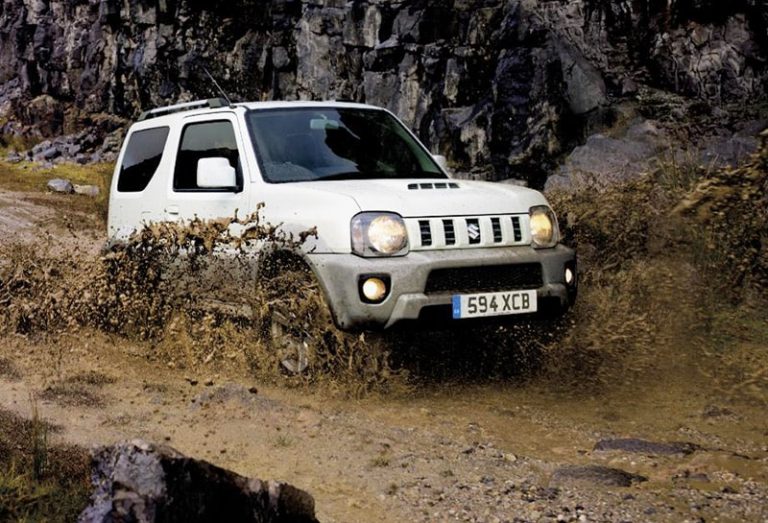
Suzuki adds Adventure to Jimny

Suzuki is launching a new special edition version of its long-running Jimny 4×4 model.

The Jimny Adventure adds extra equipment to the current model – only 200 examples will be available to UK buyers.

Based on the SZ4 trim level, the Adventure adds full-screen satellite navigation with Bluetooth connectivity, a hard spare wheel cover with an ‘Adventure’ logo on it, and a bespoke Pearl White Metallic / Quasar Grey two-tone paint finish.

This is on top of the SZ4 standard specification that includes Dark Silver 15-inch alloy wheels, synthetic leather seats, air conditioning and rear privacy glass.

Price for the Jimny Adventure is £14,949 including metallic paint, which Suzuki says is only £1,000 more than an SZ4 model before the metallic option at £430 is added.

Adventure models use the Jimny’s standard all-alloy 16 valve 1.3-litre engine with manual transmission. Combined cycle fuel economy is quoted at 39.8mpg with CO2 emissions of 162g/km.

Since launch in 1998 the Jimny has sold 24,000 in the UK and Suzuki says many owners are highly loyal to the model, now on their third or even fourth car in succession.

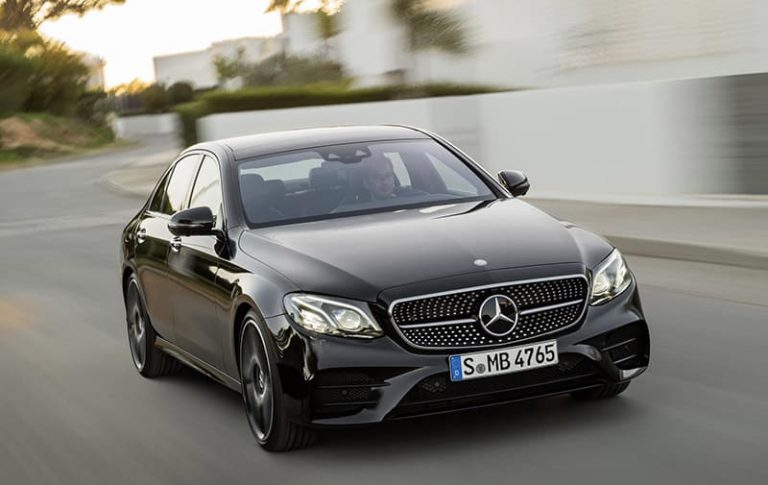
Mercedes E-Class gets AMG potency

Mercedes-Benz is unveiling the fourth in its new range of AMG variants and the first of the performance models in the E-Class range.

The Mercedes-AMG E 43 4Matic will make its debut at the New York International Motor Show on 23rd March and is expected in UK showrooms in September, joining the already announced SLC 43 and coupe and convertible versions of the C43 4Matic.

Power for the E 43 comes from the same uprated 3-litre V6 twin-turbo engine in the other AMG models.

For the E-Class, however, the engine receives further enhancements, including new larger turbochargers and software remapping, taking its power output to 395bhp, 33 horses more than its sisters.

As a result the E 43 will crest the 0-62mph sprint in 4.6 seconds and go on to an electronically-limited 155mph, while returning combined-cycle fuel economy of 34mpg and CO2 emissions of 189g/km.

All-wheel-drive is standard on the car with the 384lbft of torque – on offer form just 2500rpm – biased to the rear at a rate of 31:69 per cent. The also standard-fit 9G-Tronic automatic transmission is retuned for shorter shift times, as is the chassis that includes Mercedes’ Air Body Control air suspension and a more direct steering ratio, along with uprated brakes.

Visually the E 43 boasts signature AMG styling including three large cooling inlets at the front, the outer pair fitted with cross fins, and a diamond and chrome grille. The detailing and the 19-inch five-spoke alloy wheels are finished in gloss black, while at the rear are fitted a silver chrome diffuser, twin chrome-plated exhaust pipes and a boot spoiler in the body colour.

1603_Mercedes_E43_AMG_4Matic_02.jg

Sports front seats dominate the interior, an Artico man-made leather and Dinamica fibre as standard or nappa leather as an option, replicated on the door panels and dashboard and all stitched in red. Bespoke pedals, a lback roof lining and red seat belts are also included.

The flat-bottomed steering wheel is in black nappa leather, again red stitched, while the dash is to an AMG-specific layout including a 4.5-inch multifunction colour display and a lap timer.

Prices for the E 43 4Matic are yet to be announced – they are expected to start from above £50,000.

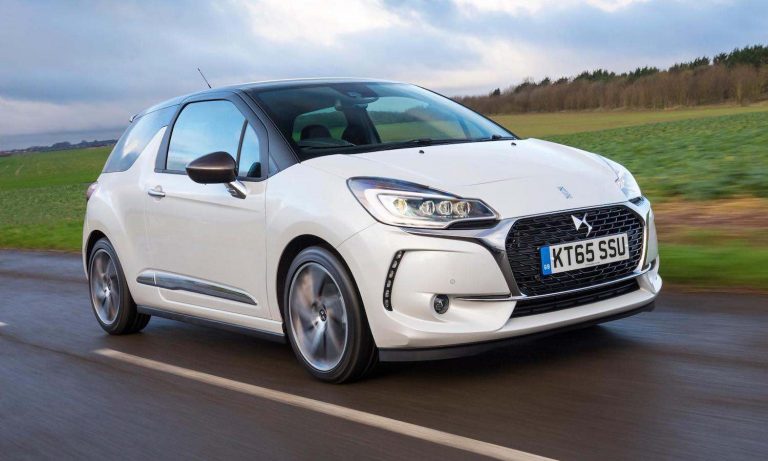
DS 3 review

What is it? The facelifted DS 3 is the big seller of Citroën’s upmarket sub-brand.
Key features: New nose styling, two new engines, better interior.
Our View: There’s nothing radical about the upgrades to the DS 3, but they allow an eight-year old design to present itself as fresh and appealing.
Type of review: First UK drive


The DS 3 was the first car launched when Citroën decided to create an upmarket sub-brand back in 2010, and has become by far the most important of the three DS models launched so far – particularly in the UK.

The Citroën DS3 supermini joined the Fiat 500 as the first cars to seriously challenge the domination that the MINI had previously enjoyed with particularly the young, fashion-conscious buyers.

As a result, the UK quickly became a leading market for the Citroën DS3 and its cabrio sister launched in 2013 – Britain is the third largest market for DS Automobiles as a whole after China and France, and the 16,500 DS3s sold in the UK than in 2015 outdid any other market.

DS Automobiles has spent the last nine months establishing its own identity away from its Citroën parent, and the Citroën DS3 has now become the DS 3. It is the last of the three-strong model range to receive the treatment – the next DS will be an all-new bespoke model.

According to DS, the changes are aimed at making the car “more premium, more dynamic, more desirable” – something which is perhaps most important with the DS 3 thanks to its fashion-led audience.

The updates – applied at the same time to both hatch and cabrio versions of the car – range across a new exterior look, an upgraded interior, and two new engines, together with significant increases in the number of personalisation options that form such an essential part of the DS 3’s DNA.

Styling signatures from the 2010 car that remain include the ‘floating’ roof look, the two-tone exterior colours with the roof in a different finish, and the ‘shark’s fin’ kick ups on the side panels.

Added to these is a much bolder nose, incorporating the ‘DS Wings’ motif – the most direct link with the original DS of 1955 and already familiar from the revamped DS 4 and DS 5. For the first time it is evolved into a ‘double-wing’ design that encompasses the headlamps – new units combining LEDs and xenon – and new LED fog lights. It certainly gives the front end a more distinctive appearance.

There are major changes on the inside, principally to the dash that sees a new seven-inch touchscreen added to the top of the centre console. It takes care of all the major in-car controls and in the process allows the removal of some 20 buttons, making for a much less cluttered appearance.

With both the previous revamped models having boasted much more up-to-date connectivity options it’s no surprise to find the DS 3 offering smartphone integration in the form of Apple CarPlay and the Android-based MirrorLink system, and these can be controlled either by voice recognition or through the touchscreen.

There are minor irritations – some of the touchscreen functions are not quite as user-friendly as a simple dash switch, and the surfacing varies in levels of premium feel, but overall it’s a comfortable environment.

The practical plus factors of the interior remain – the DS 3 still offers the rear-seat space that its great rival the MINI doesn’t, the cabrio claiming with some justification to be the only soft-top in its segment to accommodate five adults, while also allowing its roof to be opened at speeds up to 70mph. And the boot space – 285 litres in the hatch, 245 in the cabrio – also outstretches the opposition.

There are now seven engines in the DS 3 line-up, five petrol and two diesel. The two new arrivals are both petrol units, the three-cylinder PureTech 130 and a sports-pitched range-topper, the turbocharged 1.6-litre THP 210. This provides the power for a new trim level dubbed Performance, and which also extends to a re-engineered chassis with a Torsen limited-slip differential, bespoke suspension with tracks extended by 26mm front and 14mm rear, a 15mm lower ride height, uprated brakes with Brembo front callipers, a large bore exhaust and lightweight 18-inch alloy wheels.

Production of DS 3 Performance versions won’t begin until April, however, and most DS buyers will choose from the three-cylinder 1.2 PureTech petrol units of which the new 129bhp variant is now the most powerful alongside its established 81 and 109bhp sisters.

The new engine is not quite as quick to 62mph as the MINI Cooper at which it is clearly targeted, accomplishing the sprint in 8.9 seconds, but it certainly feels eager, without being coarse. This unit and the DS chassis may not produce quite such an impressive handling and sporty package as its German rival, but it combines competent handling and ride comfort to a degree that quickly becomes very enjoyable.

Most popular will likely remain the THP 110 petrol unit. It can be had with a six-speed manual or the EAT6 auto transmission, and in manual form offers plus 65mpg fuel economy and CO2 emissions quoted at 100g/km.

With the revamp comes changes to trim levels. The three core levels are Chic, Elegance and Prestige, and they are joined by Ultra Prestige, the already-mentioned Performance and a more exclusive version dubbed Performance Black – as its name suggests including matt black paintwork with gold highlights.

Depending on model, equipment now available for the DS 3 includes front and rear parking sensors, a reversing camera and on manual versions a hill-start assist function. Many buyers will also no doubt be swayed by the many personalisation options. DS claims that they now number more than three million, and include 78 body and roof colour combinations, 10 roof decals for the hatch and four fabric roofs on the cabrio.

It is simple to sum up the new DS 3 – there is nothing radical about the upgrades, but they serve to enhance a package that while basically an eight-year old design still presents itself as a fresh and appealing option in the stylish supermini market. MINI beware, your major challenger just got better…

DS 3 – key specifications

On Sale: February 2016
Range price:
£13,995-£24,795
Insurance groups:
TBA.
Engines: Petrol 1.2 (x3), 1.6 (x2). Diesel 1.6 (x2)
Power (bhp):
81/109/129, 162/207. 99/118.
Torque (lb/ft):
87/151/170. 177/221. 187/210.
0-62mph (sec):
12.3/9.6*/8.9, 7.5/6.5. 10.8/9.3.
Top speed (mph): 108/118*/127, 135/143. 117/118.
Fuel economy (combined, mpg): 61.4/65.7*/62.8, 50.4/52/3. 83.1/78.5.
CO2 emissions (g/km):
107/100*/105, 129/125. 87/94.
Key
rivals: MINI, Fiat 500, Audi A1.
Test Date: February 2016
* = manual gearbox
All performance data with hatch version.