Looking for vans, pick-ups and light commercial vehicles? Visit our sister site, The Van Expert.
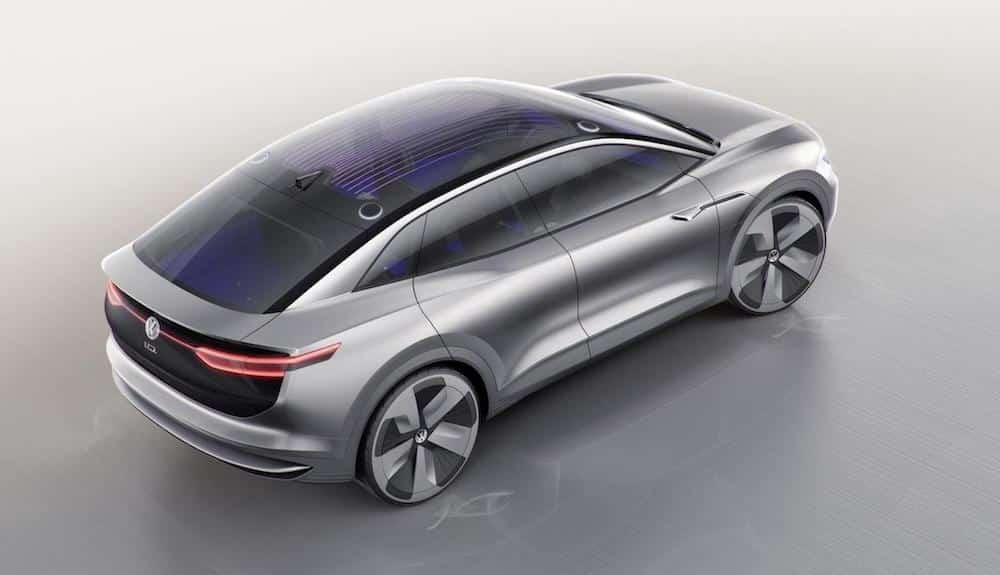
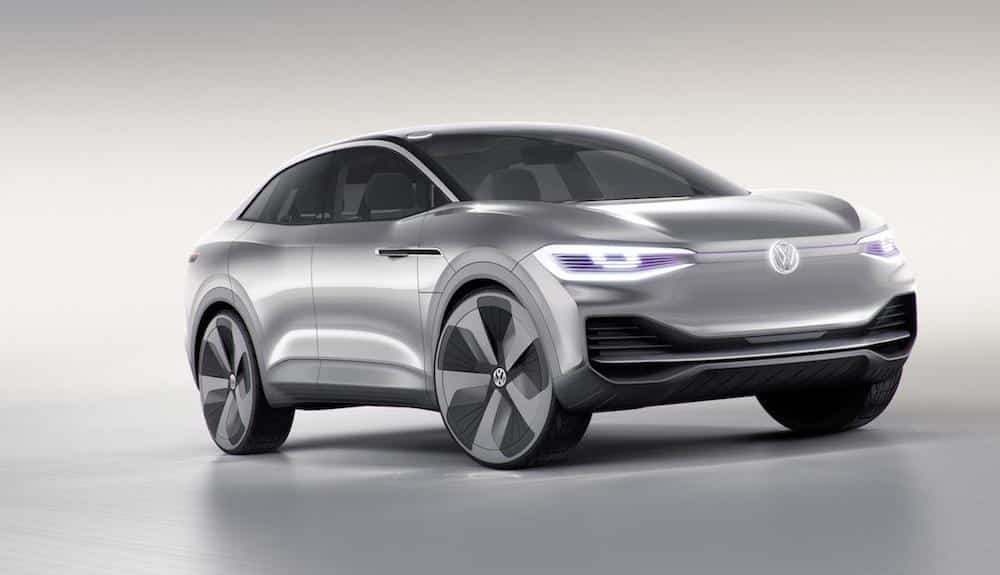
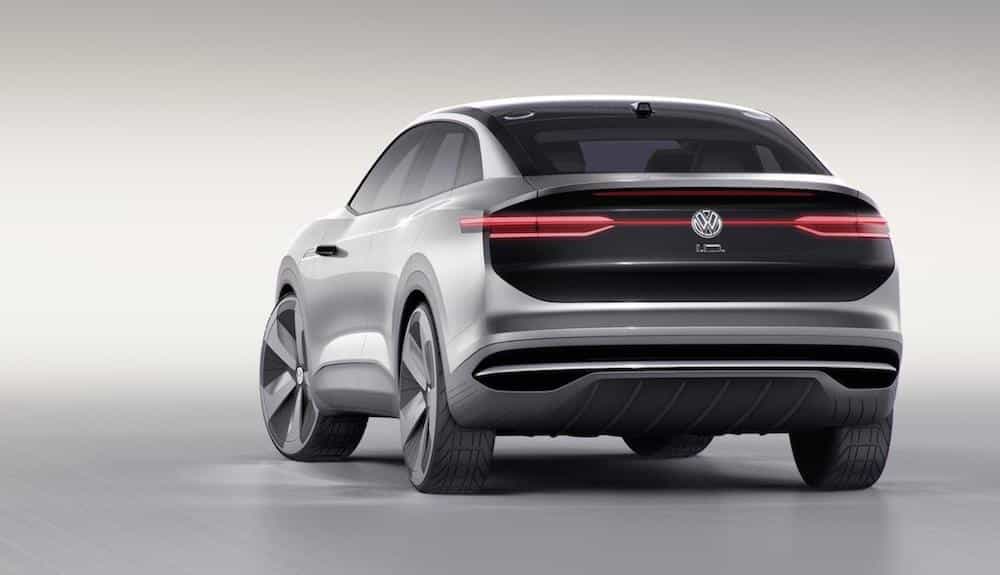
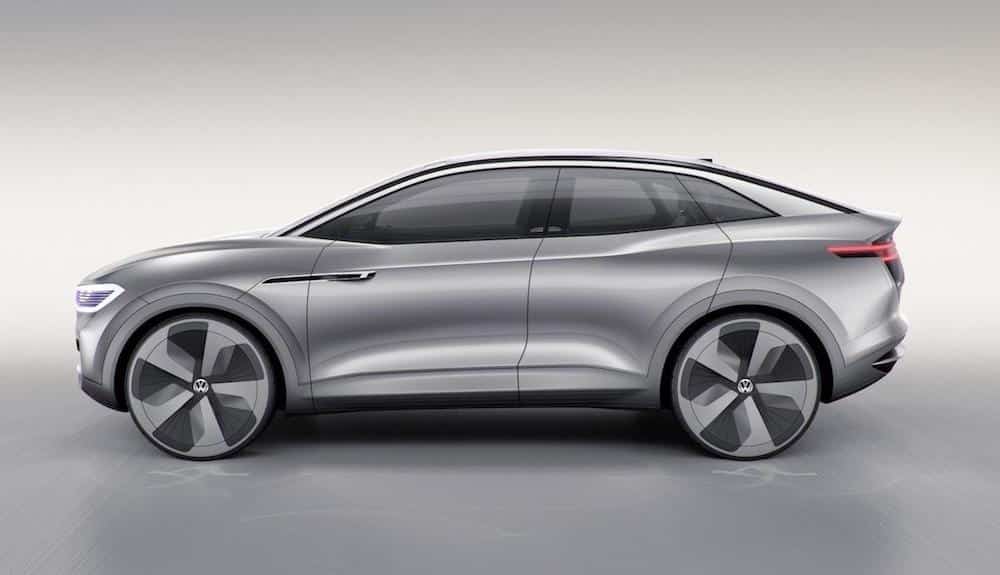
Shanghai: Volkswagen debuts I.D. Crozz concept
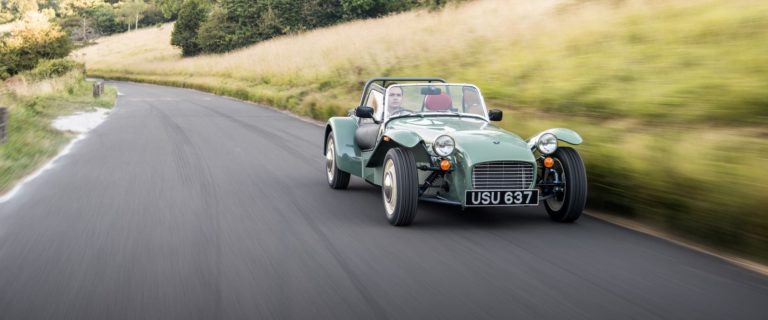
Caterham Seven Sprint test drive
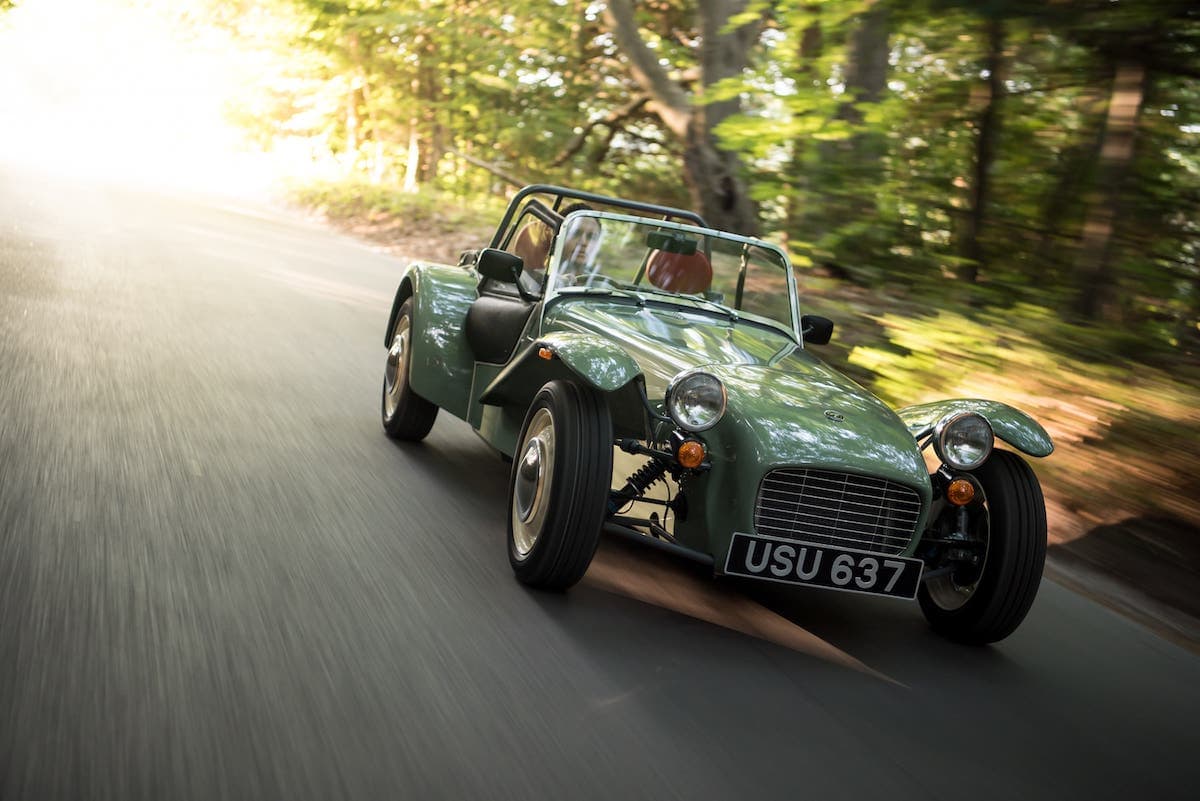
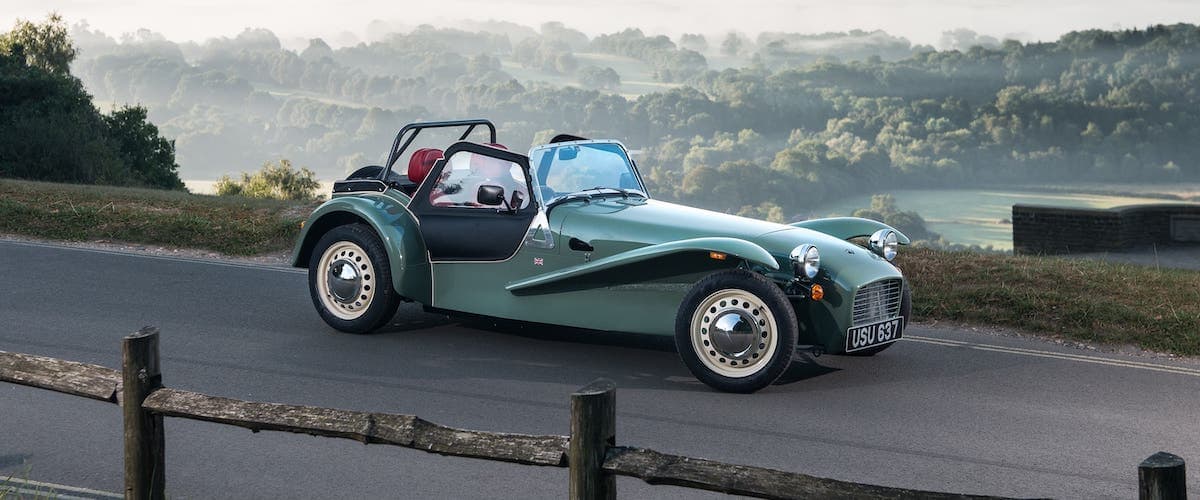
The Caterham Seven, which is the descendant of the original Lotus Seven, has been around for a while now – 60 years in fact. To celebrate, Caterham has created this – the Seven Sprint.
Epitomising Lotus founder Colin Chapman’s ideas of a lightweight, good to drive two-seater, the Sprint happily flaunts its retro looks. Underneath the bonnet sits a small 660cc three-cylinder turbocharged motor from Suzuki. This may not sound like much, but given the Sprint’s low weight of 490kg, it’s more than enough to get it up to speed in a brisk enough time.
Looks and image
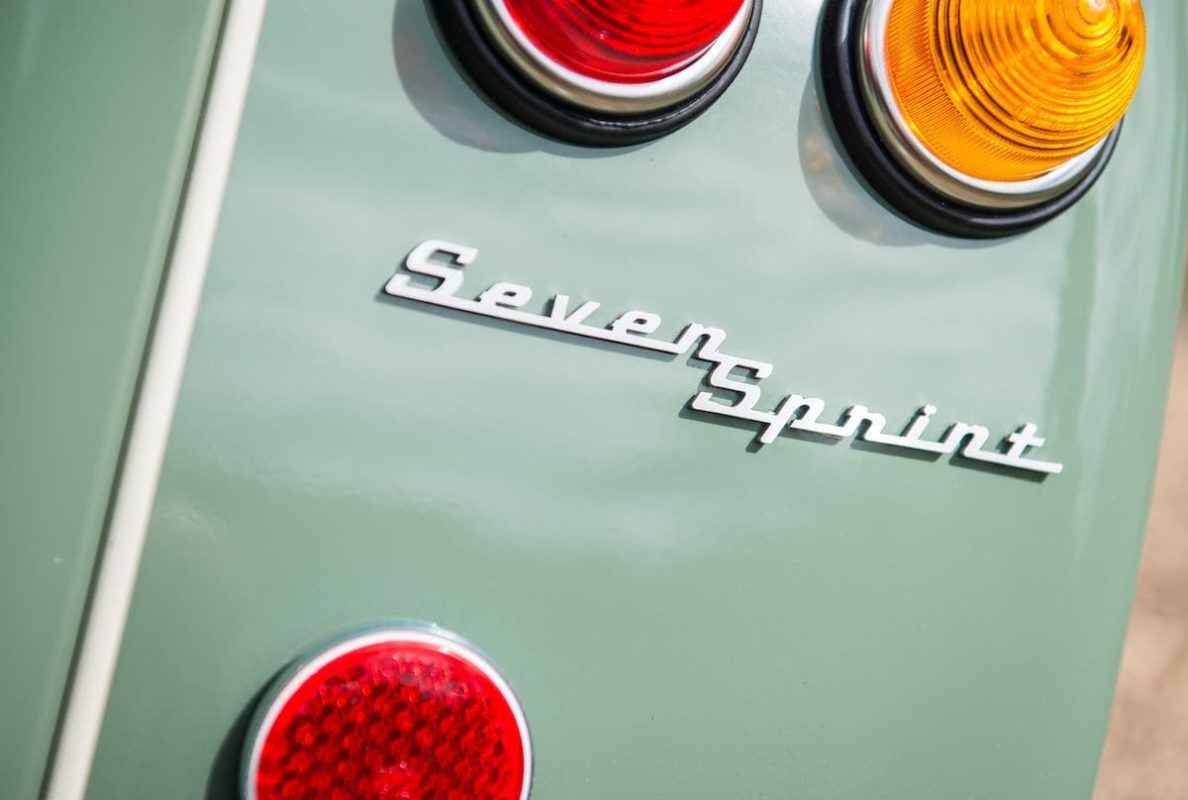
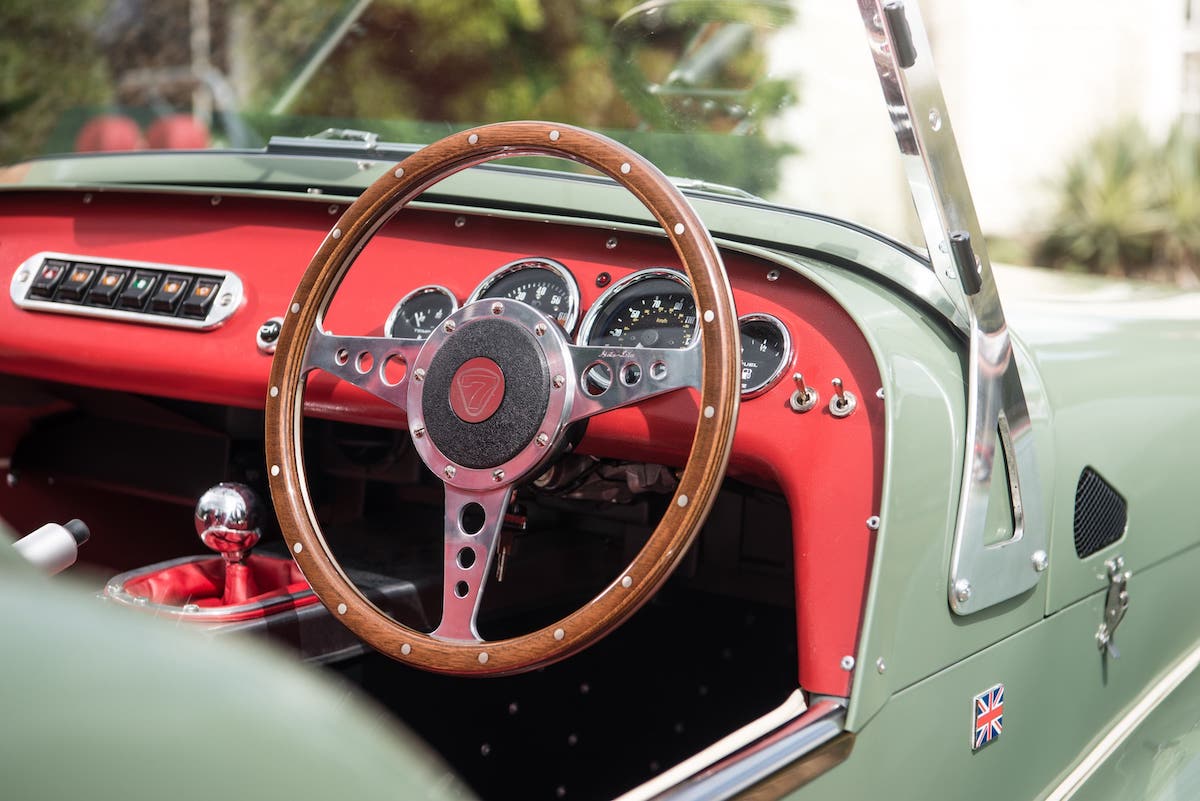
It’s hard not to love the look of the Seven Sprint. The exterior has been tastefully finished, with touches such as the traditional metal model badges at the rear and the crème alloy wheels giving it a distinctly retro appeal. Inside, it’s just as pretty, with comfortable sports seats trimmed in red leather and a thin moto-lita steering wheel transporting you back to the early days of Caterham. It’s all very well executed, however – it feels every bit of its £27,995 price tag.
All of the dials are clear and easy to read, and the toggle switches for the headlamps have a refreshing amount of robustness to them. The handmade quality of the Sprint is hard to ignore, and it’s something buyers will no doubt appreciate too.
Space and practicality
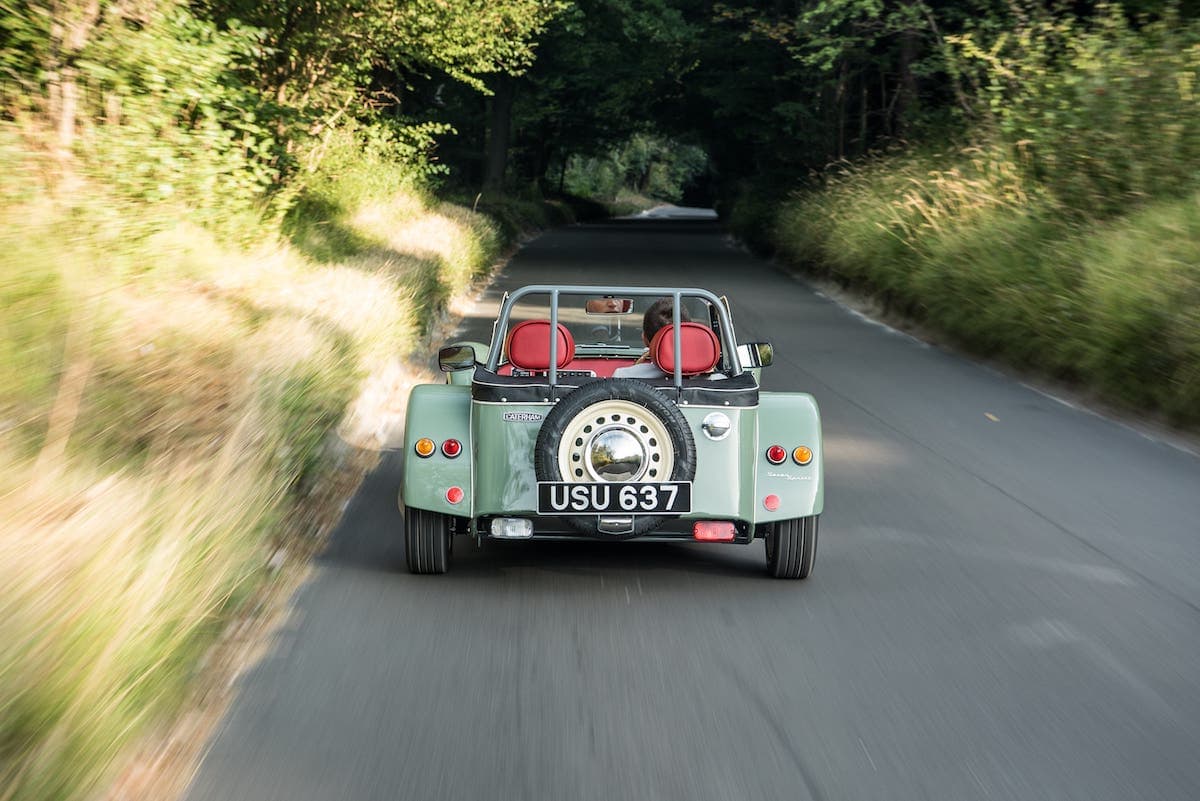
Caterhams aren’t exactly well-known for their practicality levels, and the Seven Sprint is, unsurprisingly, no different. There’s not even a glove box in this model, though you do get the added bonus of a 9-volt charging point. In all fairness, though, the area behind the rear seats is more than enough for a soft weekend bag or a few items of shopping, so taking the Sprint for a weekend away isn’t unimaginable.
Behind the wheel
You’d be hard-pressed not to wear a big grin when driving the Caterham Seven Sprint. It’s a truly refreshing driving experience, one without the distractions found in modern cars. The steering offers huge amounts of feedback, with each and every difference in road quality being translated through the steering wheel and into your hands.
That said, this does mean that longer journeys can be tiring – though the Seven Sprint was never designed to be a long-distance commuter.
The five-speed gearbox is a delight to use, though it can be notchy when cold. The handling is sharp and nimble, while the narrow tyres fitted to all four wheels ensure that the Sprint is a lot of fun at even low speeds. Though Caterham creates cars that will easily reach 60mph in half the time that the Sprint does, you never feel like you’d want more power – the Sprint has just enough shove for all occasions.
Value for money
Yes, the £27,995 that the Seven Sprint is a fair amount of money. You don’t get much in the way of standard equipment, technology or even comfort, for that matter.
However, what you do get is an all-encompassing experience, one which makes you wonder just why you need 18-way adjustable seats or radar-guided cruise control at all. In all fairness, some may not appreciate the car’s exposure to the elements nor its relatively unrefined character at motorway speeds, but the vast majority will enjoy the way it feels.
Who would buy one?
It’s safe to say that the Caterham Seven Sprint would suit those drivers who want a car to keep in the garage and wheel out on sunny Sunday afternoons for a leisurely drive through the country. However, it’d be just as well accustomed to daily driving. Yes, you’ll probably have to get a little more wrapped up than you would in a normal car, but it’s more than worth it.
The overall experience is one you’ll want to have time and time again, which is why if you do choose a Caterham, it’s best to use it each and every day.
Key specifications
Model: Caterham Seven Sprint
Price as tested: £27,995
Engine: 660cc three-cylinder petrol
Gearbox: Five-speed manual
Power: 80 hp
Torque: 107 Nm
Top speed: 100 mph
0-60mph: 6.3 seconds
Fuel economy (combined): 57.6 mpg
CO2 emissions: 114 g/km
New four-cylinder engine for Jaguar F-Type
Updates across the Jaguar F-Type range
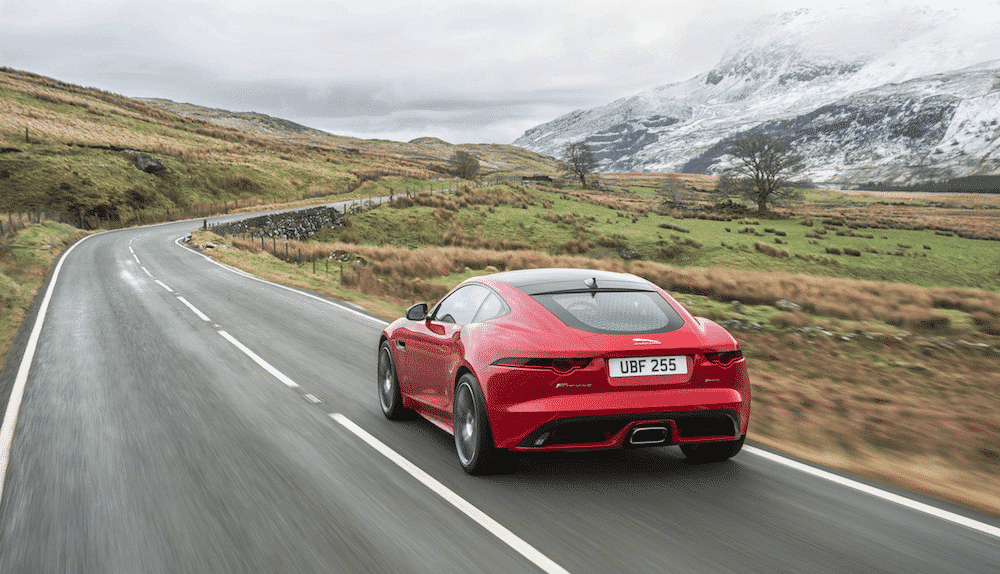
The new engine is part of a broader refresh for the F-Type range, which first went on sale in 2012. Most noticeably, the front and rear bumpers have been redesigned, and it is now available with full LED headlights and lighter 18-inch alloy wheels. Inside, minor updates include slimline seats, an improved infotainment system, more chrome and aluminium trim bits and a frameless rearview mirror. Safety-wise, Jaguar has introduced a forward-facing stereo camera and the F-TYPE comes with autonomous emergency braking and lane departure warning as standard. Optional safety features include traffic sign recognition, adaptive cruise control, lane keeping assistant and a driver drowsiness detector. The F-Type four-cylinder will be available as both a coupeé and convertible. It is on sale now, with prices starting from £49,900.On sale in 2020? MG E-motion electric sports car
Under four sec to 62mph
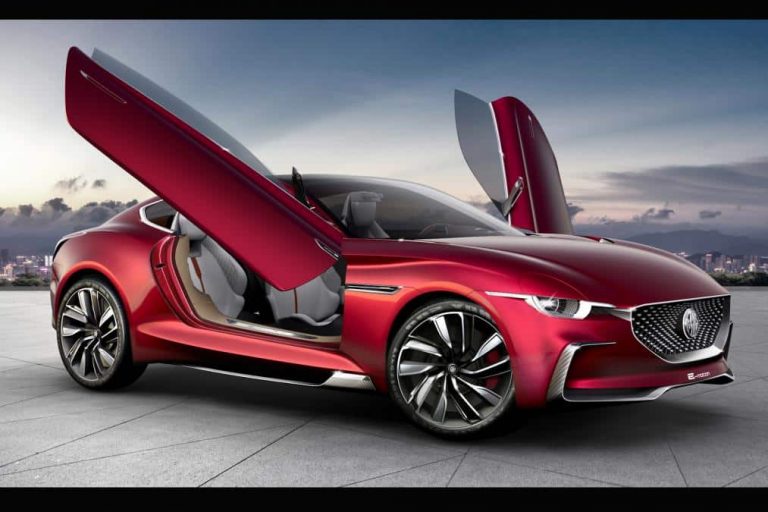
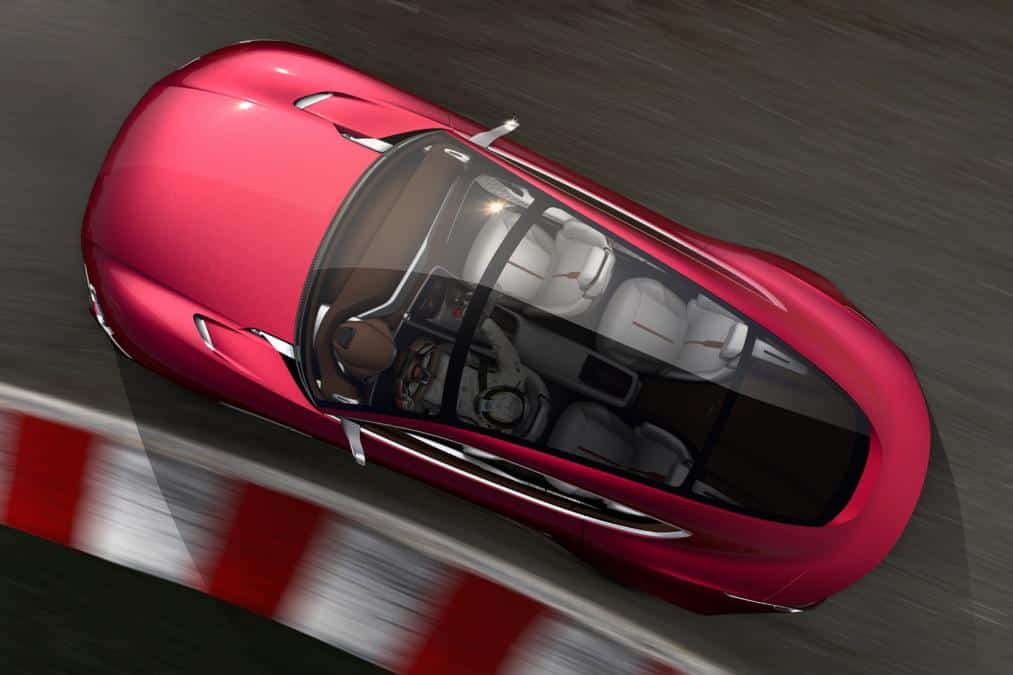
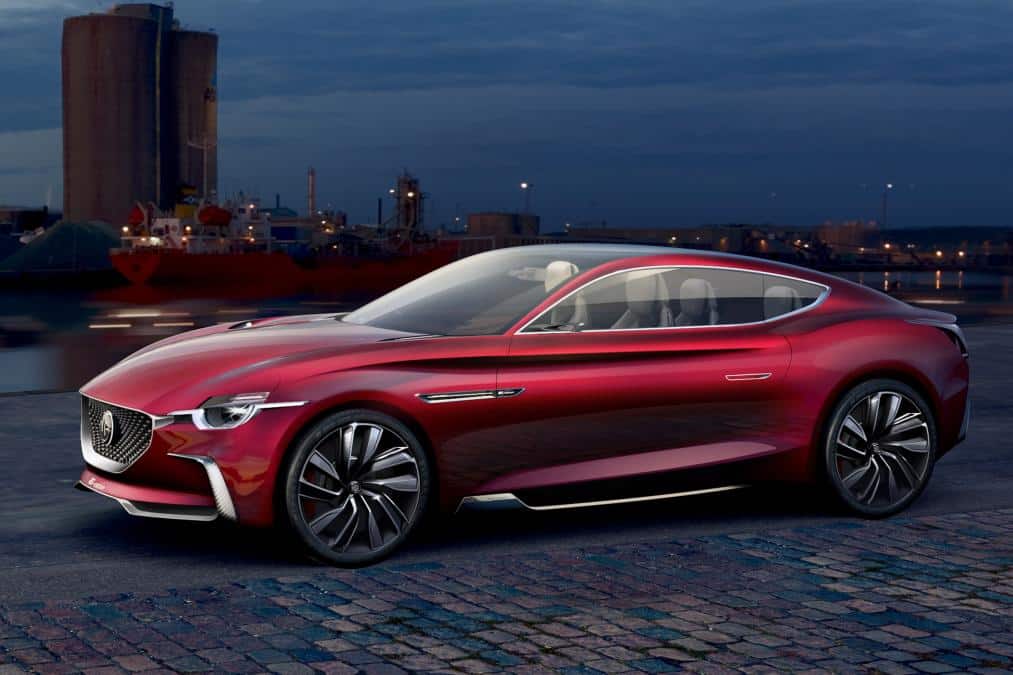
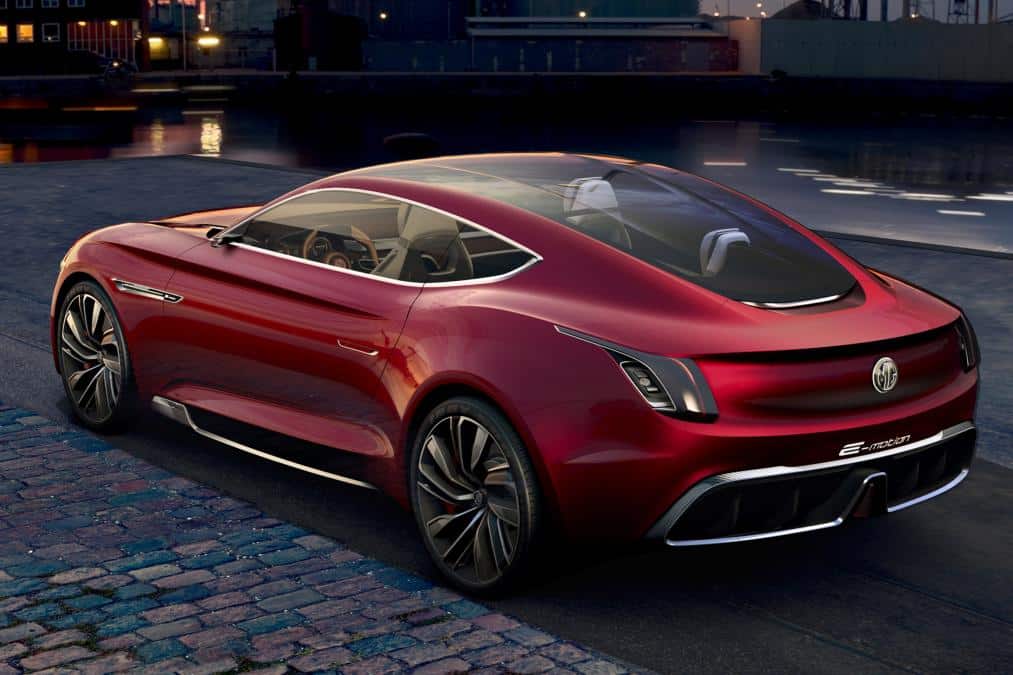
Details of the plug-in electric drivetrain have not been released but MG says that it makes the E-motion capable of a sub four-second 0-62mph time, while having a range between charges of more than 310 miles. The car is also equipped with an intelligent infotainment system and fully internet-compatible, which MG believes will position it perfectly for the younger market. Notable styling elements of the four-seater car include the butterfly doors and a starlight matrix front grille and headlights that the designers says have been inspired by the London Eye.Vauxhall Grandland X to take on Qashqai
Five-seat only
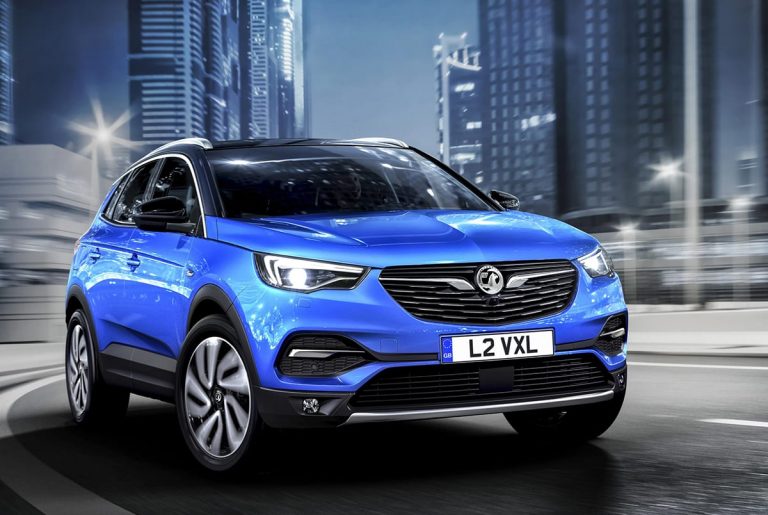
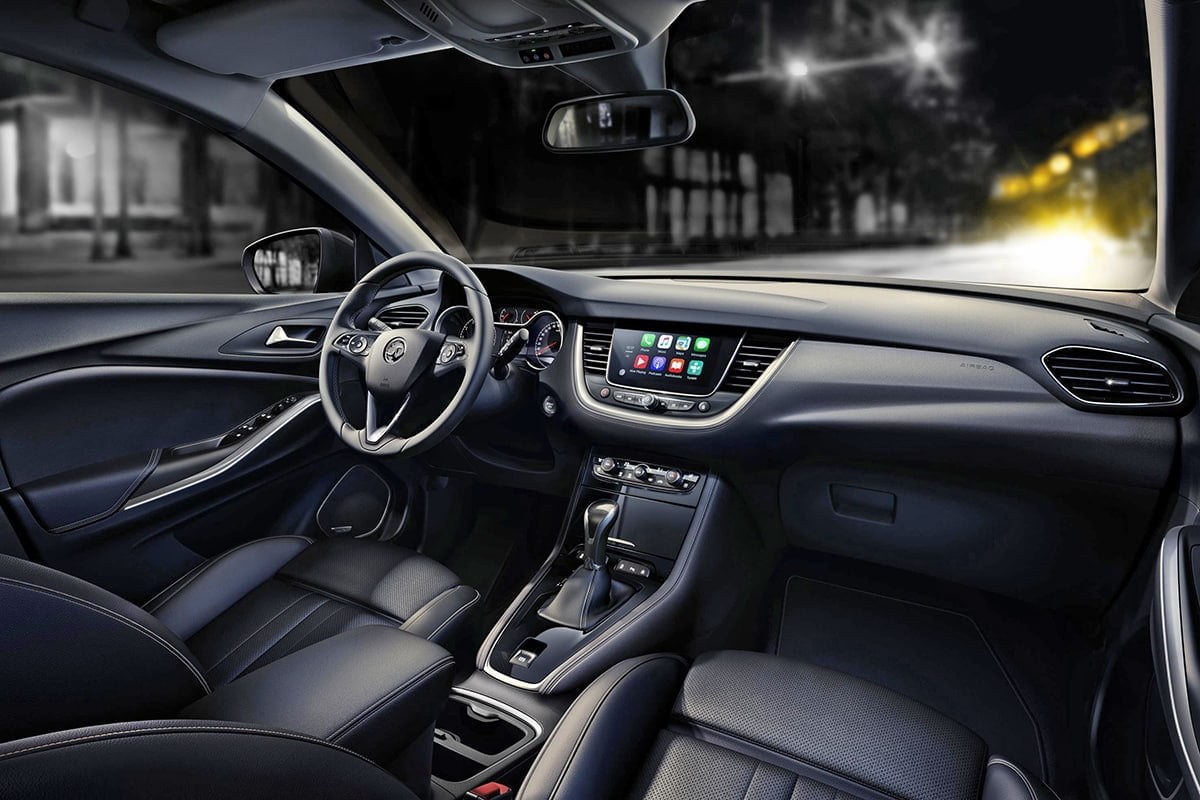
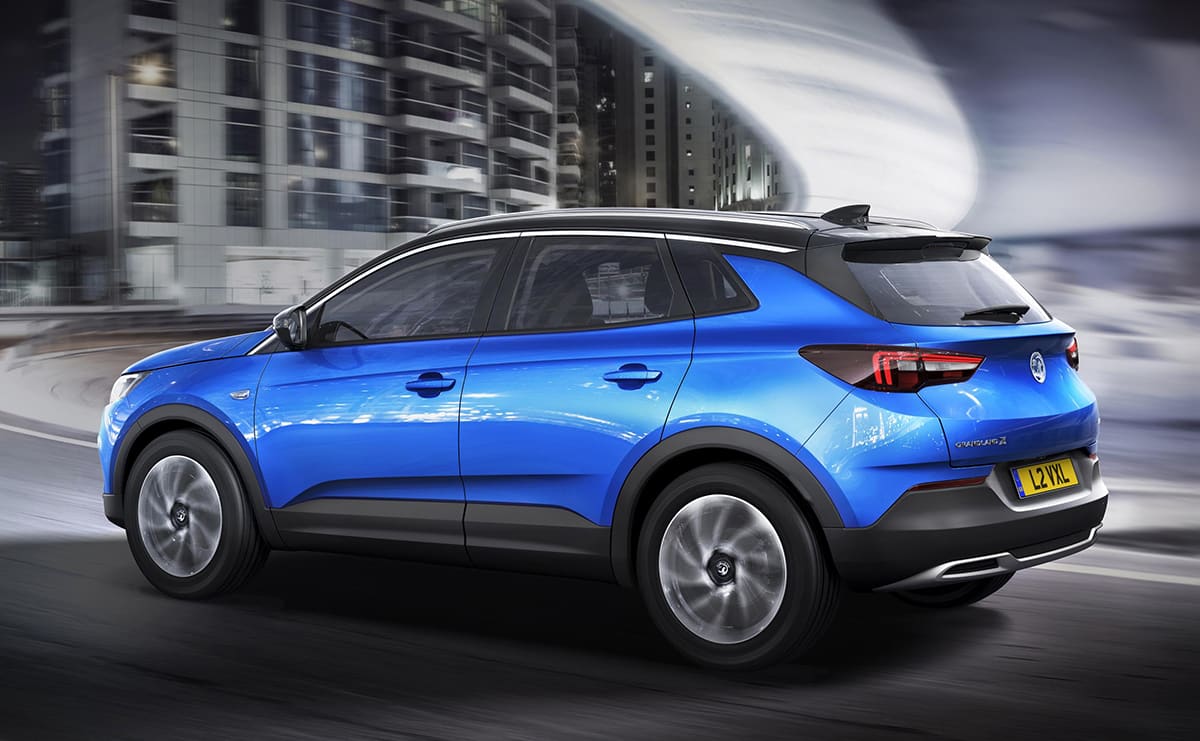
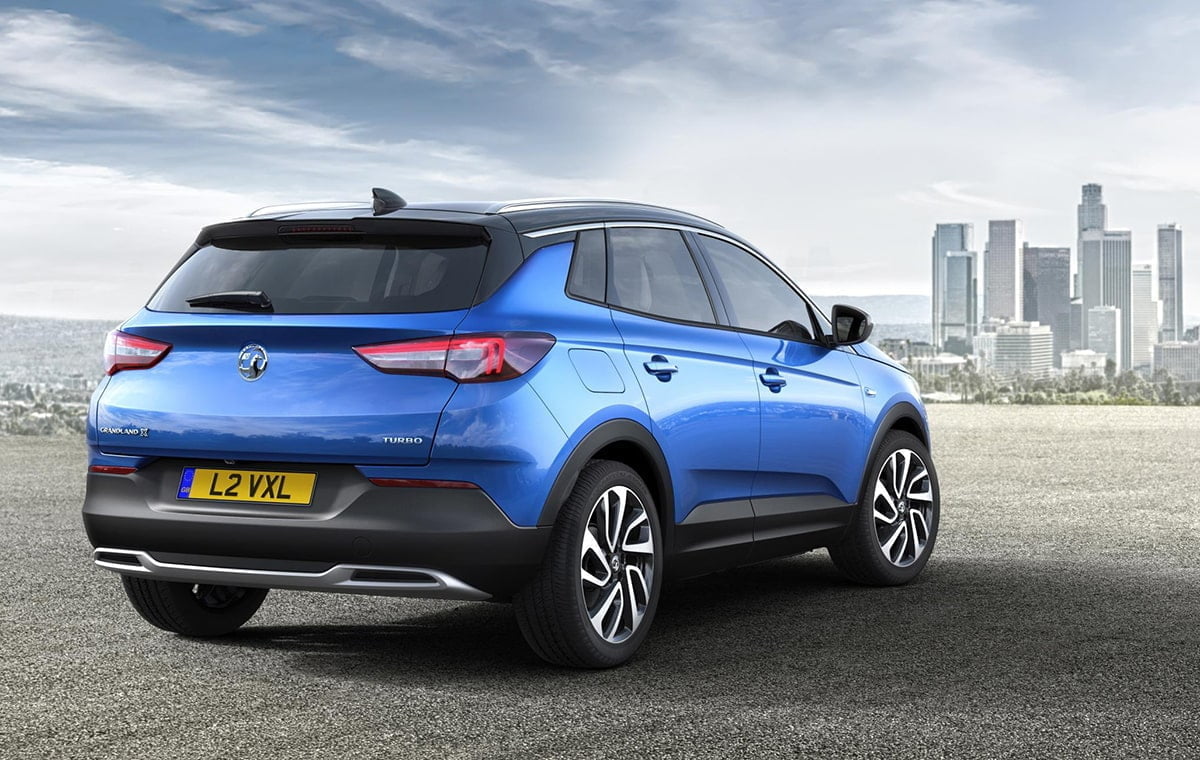
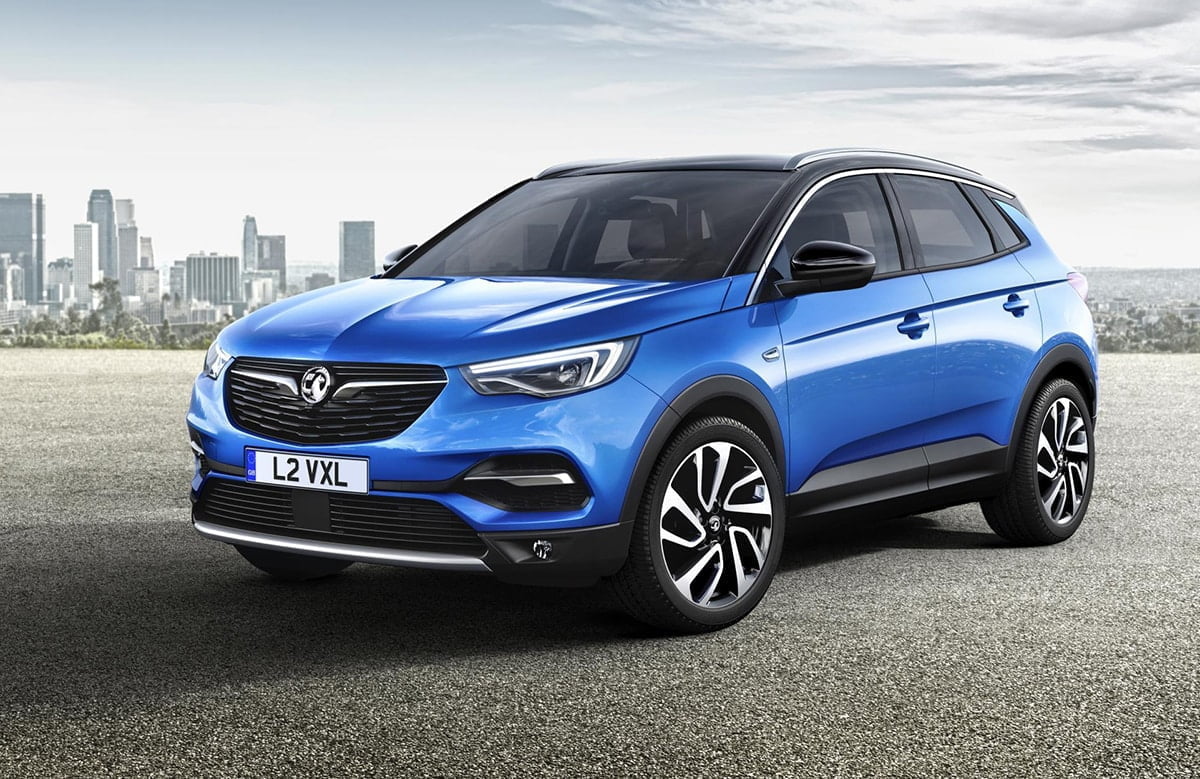
Vauxhall appears to have foregone an opportunity, however, to make the Grandland X a seven-seat SUV. It is described as having a spacious interior to carry five passengers and their luggage, the boot space being 514 litres, expanding to 1652 litres with the rear seats folded. Currently there are no details of the car’s powertrain options apart from Vauxhall stating that Grip Control, PSA Group’s off-road traction aid will be available. This suggests standard versions of the Grandland X will be front-wheel-drive. It is expected that PSA Group engines will be part of the line-up and industry observers expect entry-level models to use a 1.5-litre petrol unit.
The technology available with the new SUV is being heavily promoted – the Grandland X will include a host of assistance and comfort systems. Among them are adaptive cruise control with pedestrian detection and automatic emergency braking, a driver drowsiness alert and park assist. Adaptive Forward Lighting LED headlamps include a cornering light, high beam assist and auto leveling.
Heated seats both front and rear and a heated steering wheel will also be available, as will a smart tailgate that opens with a kick.
Vauxhall’s latest IntelliLink connectivity systems and the personal connectivity and service assistant Vauxhall OnStar will as expected form part of the Grandland X specification.
The Vauxhall Grandland X is expected in UK showrooms early in 2018.
Mercedes-Benz S-Class lines up six
Change of direction
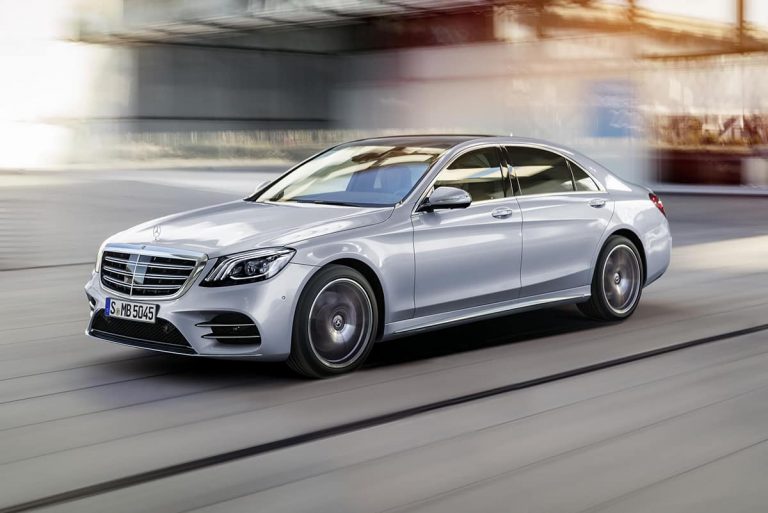
The use of in-line six cylinder units is a switch in direction for Mercedes-Benz which has been using V6 units since 1997. The new units are evolved from the latest four-cylinder engine range and are expected to be expanded into other Mercedes models. What is not known yet is how many of the new engines will be available in S-Class models on sale in the UK market. Diesel variants are expected on sale first and will include the in-line six available in the S 350 d4Matic model with 286hp and 600Nm of torque, and the S 400 d4Matic with 340hp and 700Nm – the most powerful diesel car yet built by Mercedes-Benz. Despite the significant power increase, the new units use seven per cent less fuel than the previous equivalents, quoted at 51.4mpg and 145g/km and 50.4mpg and 147g/km respectively.
Skoda Vision E is brand’s first electric concept
Space-generating layout
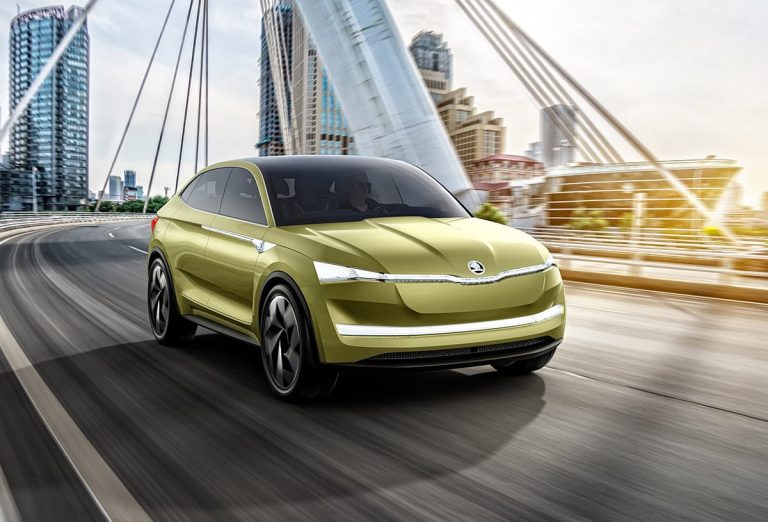
Measuring 4688mm long, 1924mm wide and 1591mm high the Vision E also has a 2851mm wheelbase, which is 60mm longer than the recently launched Kodiaq SUV, and made possible by the compact nature of the electric drivetrain and battery pack. The resultant interior space is generous, further aided by the lack of a transmission tunnel. Notable elements include rotating, body-contoured and slightly raised individual seating positions, multiple touch displays for driver and front passenger along with a central touchscreen in the middle of the dashboard and phoneboxes on the inside of the doors.
A distinctive exterior design features a bold shaped bonnet with an LED lighting strip running across the entire width below the narrow, triangular Matrix LED headlamps, a gently sloping roofline that gives the car a coupe-look, a lack of door pillars and rear-hinged doors which allow very easy access.
Skoda intends that from 2025 one in four of its cars sold worldwide will be a plug-in or pure electric vehicle. The first will be the PHEV version of the Superb, expected in 2019.
Citroën C5 Aircross to debut in Shanghai
Four PHEV modes
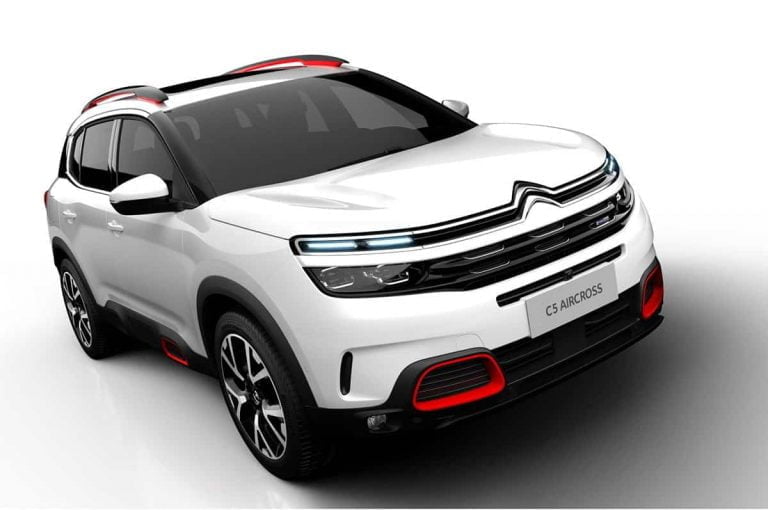
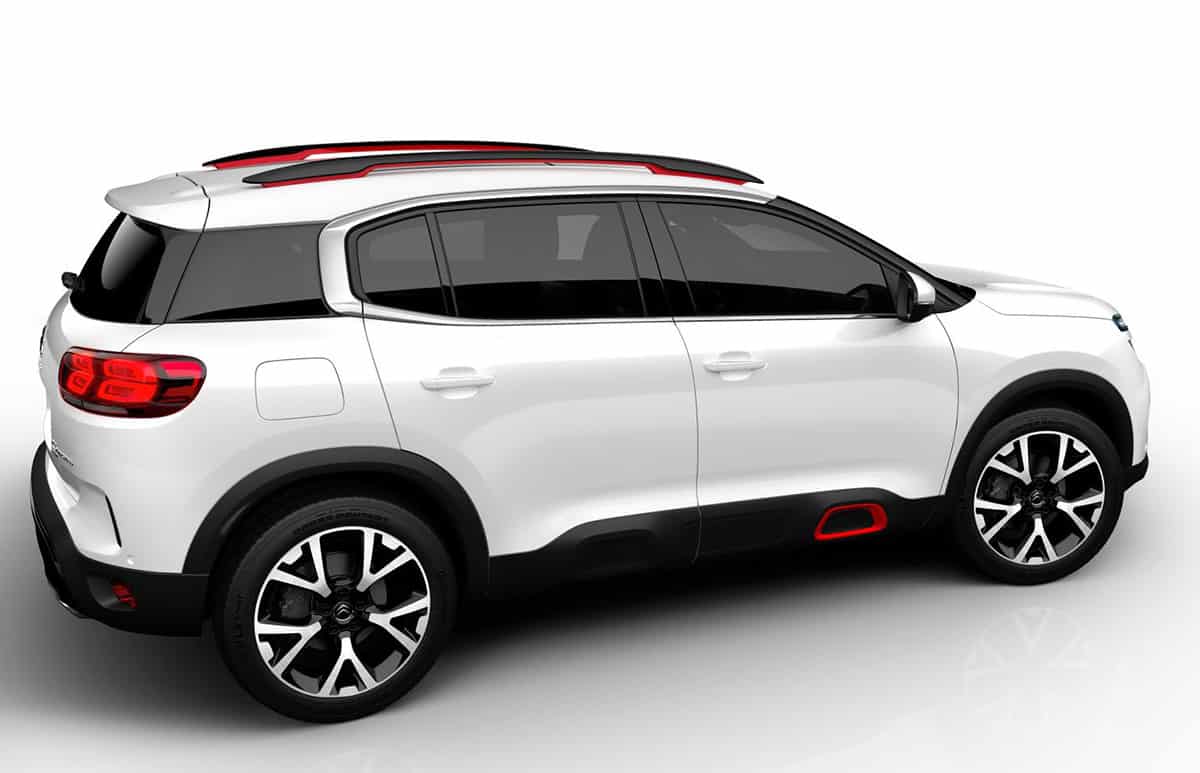
Citroën says that four driving modes will be available in the PHEV version of the C5 Aircross. All electric will have a range of up to 36 miles (60km), while there will also be a long-distance Hybrid mode during which the system will not recharge, a Combined mode and a 4×4 mode. Standard versions of the car will be front-wheel-drive only, but will offered with the PSA Group’s highly effective Grip Control system that aids traction on off-road surfaces. The C5 Aircross is based firmly on the Aircross concept first shown in 2015 and is built on the PSA Group platform that also underpins the recently released Peugeot 3008. It measures 4500mm long, 1840mm wide and 1670mm high, on a 2730mm wheelbase, and promises a boot capacity of 482 litres.
A new suspension system debuts with the model, described by Citroën as ‘an important milestone’ in the development of its Advanced Comfort programme. The system uses ‘Progressive Hydraulic Cushions’ to improve damping quality and overall ride comfort, and according to its creators has resulted in the filing of 20 new patents.
‘Magic carpet’ ride
The new Citroën system adds two hydraulic stops to each suspension unit – one for rebound and one for compression, resulting in the suspension functioning in two steps, depending on the loads placed on it. The hydraulic stops are used when required and are said to create a ‘magic carpet’ effect, as if the car were flying over bumps and dips in the road. Citroën CEO Linda Jackson describes the New C5 Aircross as “the symbol of a brand with strong momentum,” and the first practical illustration of the brand’s offensive on the SUV market. “(The C5 illustrates) our ability to approach it in our own way, with greater emphasis on character, comfort and on-board well-being – New C5 Aircross will clearly be a major growth driver for Citroën,” Jackson adds.
Infiniti QX30 review
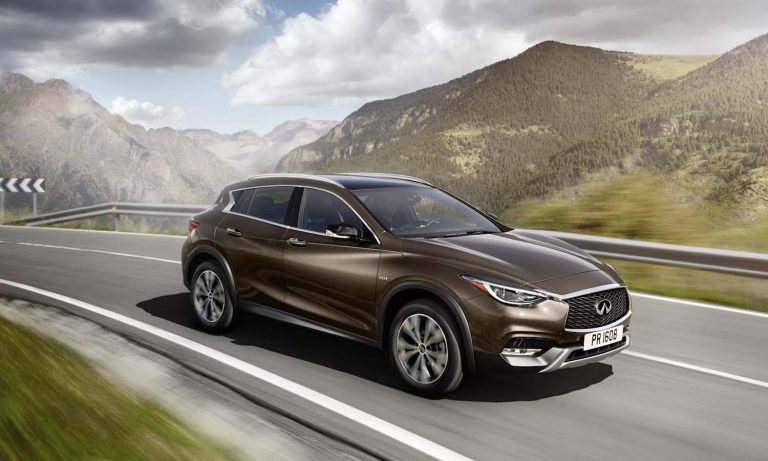
Anyone who follows the motor industry knows that these days virtually no manufacturer can do without an SUV or crossover model. Even the premium market is no longer immune from such things, and so we now have the Infiniti QX30. That Nissan’s luxury brand should go the crossover route is no surprise – while a major player in the US, Infiniti is still having to work hard to establish itself in Europe, and with direct rival Audi’s Q3 totally outstripping its sales predictions, there is clear evidence that upmarket buyers are as crossover hungry as the mainstream. Next page: Styling and interior
New York: Toyota FT-4X SUV concept unveiled
Jaguar F-Pace wins 2017 World Car of the Year
- Read more Jaguar news, reviews and features at The Car Expert
- Mazda MX-5 wins 2016 World Car of the Year
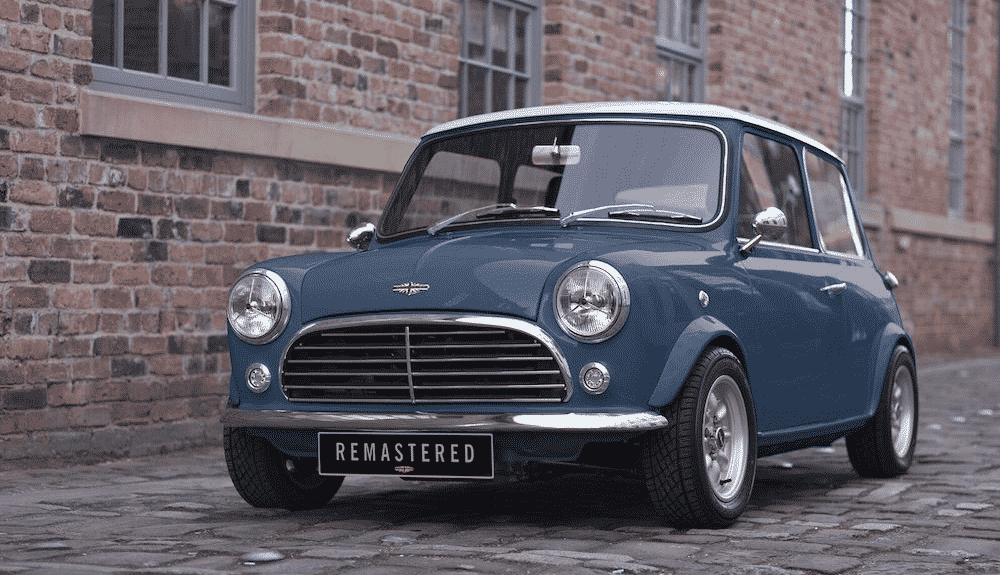
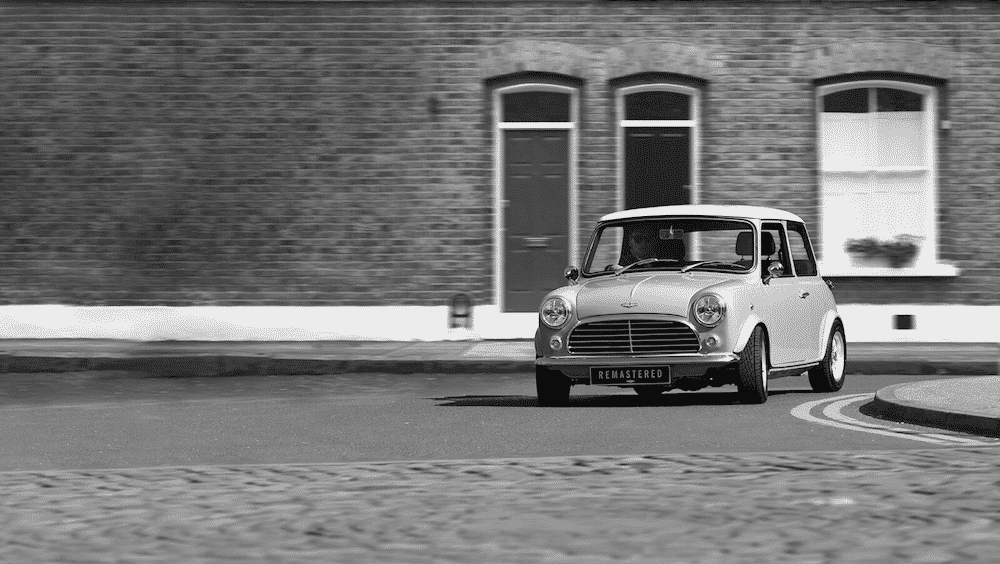
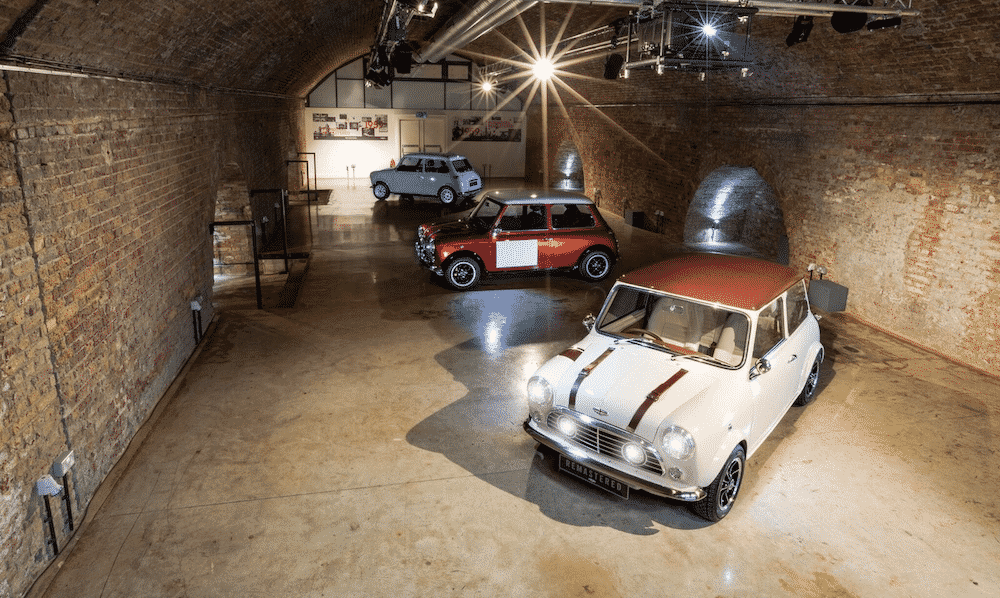
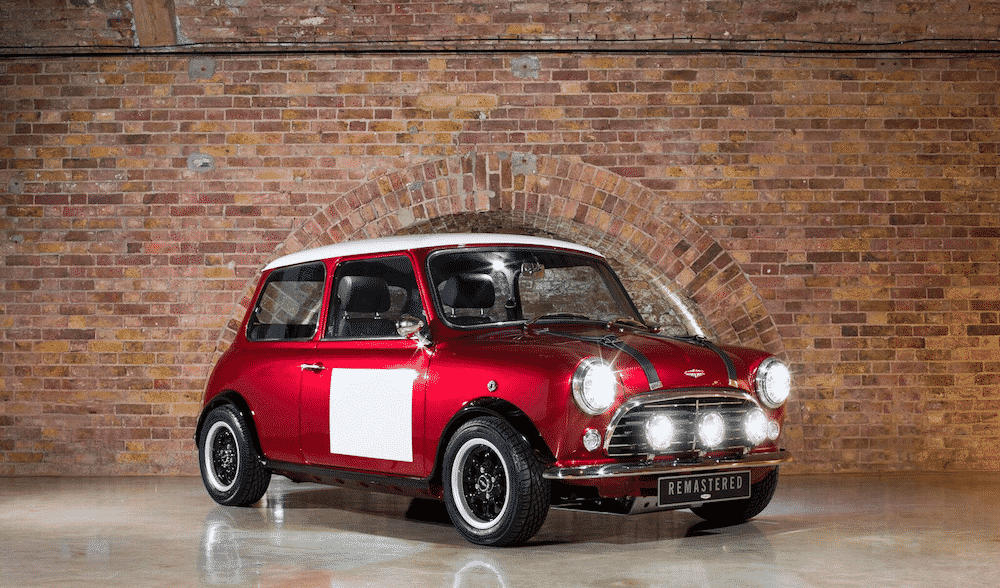
David Brown Automotive unveils Mini Remastered
Classic looks but all-new construction
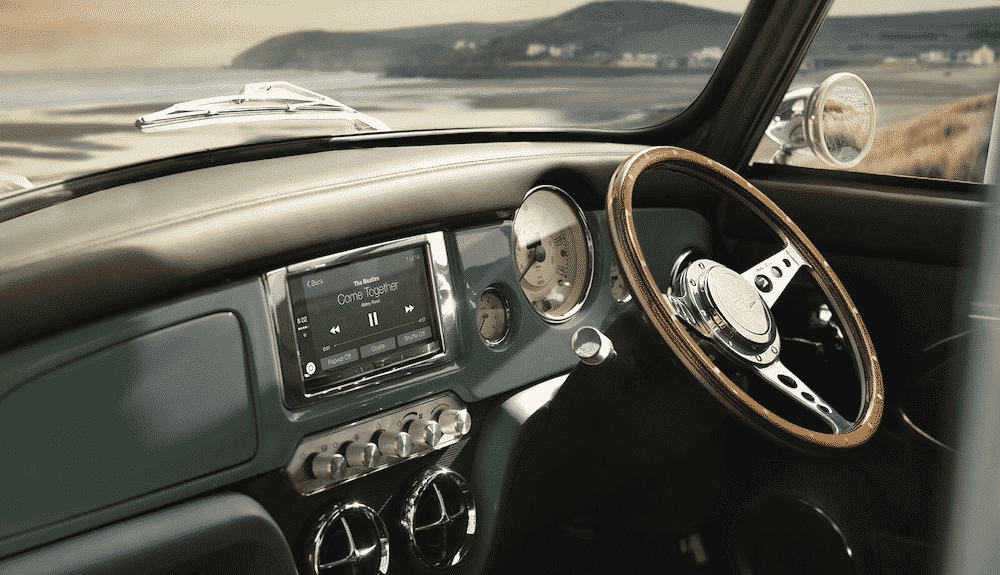
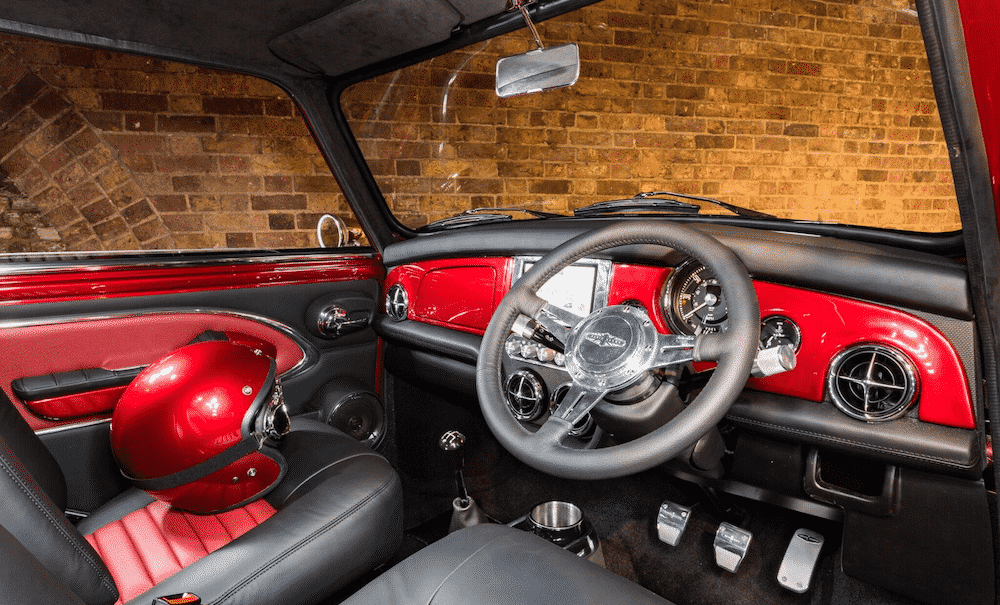
About the only parts carried over from an original Mini are the engine and gearbox, which have been completely reconditioned. The chassis and panels are all new, and have been ‘de-seamed’ to smooth out the distinctive inside-out appearance of the original panel joins. Structural beams and support struts provide additional rigidity, while soundproofing gives a much quieter ride than the original. The deep and lustrous paint finish seen in the images below is apparently the result of a four-week process. Inside, an all-new handcrafted layout includes bespoke sculpted seats, retro-style Smiths dials and a David Brown Automotive engraved steering wheel. A cup holder has been added to the central console and the leather-lined luggage space and petrol tank come in the car’s contrasting roof colour. The Mini Remastered features a number of technological updates, although that’s a low bar to clear – the original Mini wasn’t exactly extravagantly kitted-out even by 1959 standards. The infotainment system includes Apple CarPlay, Android Auto, a four-speaker sound system, keyless ignition, a USB connector and charging point. Push-button start and remote central locking are also included. The Mini Remastered a fully-reconditioned 1,275cc engine, which apparently provides a power increase of up to 50%. The four-speed gearbox has also been re-engineered, and the suspension and brakes upgraded over original specifications.Create your own bespoke Mini Remastered
Being a completely hand-built and bespoke vehicle, personalisation options abound. The car’s paint finish, roof colour, interior trim and wheels await your imagination, with the opportunity to add almost any additional options and accessories you can think of. Pricing for the Mini Remastered has yet to be announced, but reports have suggested it is likely to start at about £70,000 and climb quickly. The car will make its debut at the Top Marques Monaco show in Monte Carlo later this month.
Audi confirms new Q8 and Q4 models for production
Audi has confirmed that it will be adding two new models to its ever-expanding crossover/SUV family, with the Q8 and Q4 set to go into production over the next two years.
Audi is hopeful that the new Q models will “increase its competitiveness in an extremely important segment.”
Audi Q8 to sit at the top of the SUV family tree
The Audi Q8, which has already been previewed at both the Detroit and Geneva motor shows this year in different configurations, will sit at the top of a full range of eight Audi Q-model crossover/SUV models when it enters production in 2018. Like the A8 saloon to be unveiled later this year, it will feature the company’s latest efforts in assistance and infotainment systems.
The new Audi Q8 will be produced alongside its Q7 sister in Bratislava, Slovakia, at the Volkswagen Group production plant that also produces the Volkswagen Touareg, Porsche Cayenne and new Bentley Bentayga.
Audi Q4 plugs yet another niche
The Q4 will be a coupé-style small crossover, based on the existing Audi Q3 compact SUV and using the Volkswagen Group’s modular MQB platform.
Production will commence in 2019 in Győr, Hungary, where the Audi TT range is currently assembled. Audi Q3 production will also move to the Hungarian plant next year, from its current assembly site at SEAT’s Martorell factory.
Volvo XC60 on UK roads in Autumn
Trio of engines
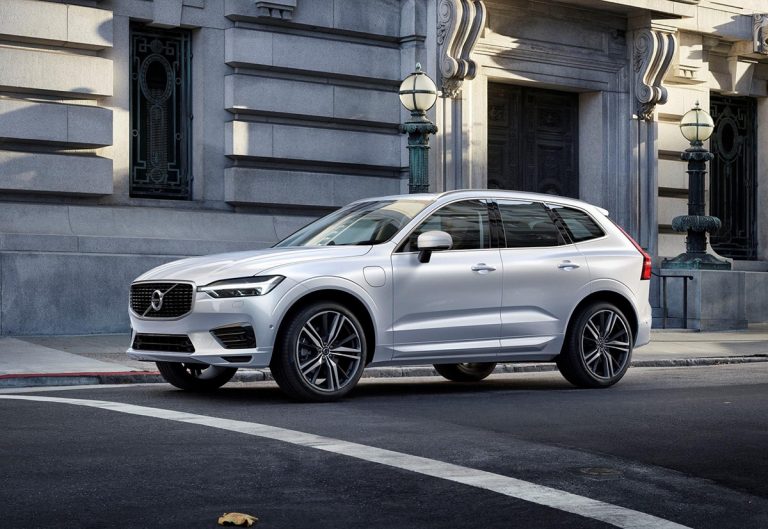
Initially the XC60 will be available with three engine options, all 2.0-litre four-cylinder units. All are combined with eight-speed auto transmissions and all-wheel-drive. The D4 diesel produces 190hp and returns combined cycle fuel economy of 55.4mpg and CO2 emissions of 133g/km.
Its more powerful sister the D5 has 235hp, 51.4mpg and 144g/km, and also boasts the PowerPlus feature that uses compressed air to spin up the twin turbochargers and cut lag.
The petrol option is the T5, with 254hp, economy of 39.2mpg and emissions of 164g/km.
Standard equipment on entry-level Momentum versions include leather-faced upholstery, LED headlights with active high beam, two-zone climate control with a ‘CleanZone’ air-filtration system, heated front seats, a powered tailgate and 18-inch alloy wheels.
Also standard is the Volvo Sensus infotainment system. This is based around a nine-inch portrait-style touchscreen and includes satellite navigation with lifetime annual map updates and Real-Time Traffic Information (RTTI), and voice-activation. Access to the internet and a range of cloud-based apps such as Spotify, TuneIn, Stitcher and Yelp is also offered.
Safety technology standard across the XC60 range includes Volvo’s City Safety system. This offers automatic emergency braking with pedestrian, cyclist and large animal detection, and Steer Assist. Dubbed a world first by Volvo, this attempts to avoid or cut the severity of collisions by aiding steering inputs.
Meanwhile on the options list for every car is the semi-autonomous drive system Pilot Assist. At speeds up to 80mph it can assist with the steering and control acceleration and braking required to keep the car within lane markings and at a set cruising speed or distance from a vehicle ahead. Volvo says that Pilot Assist is a step towards fully autonomous driving.
Aston Martin Vanquish S Red Arrows edition
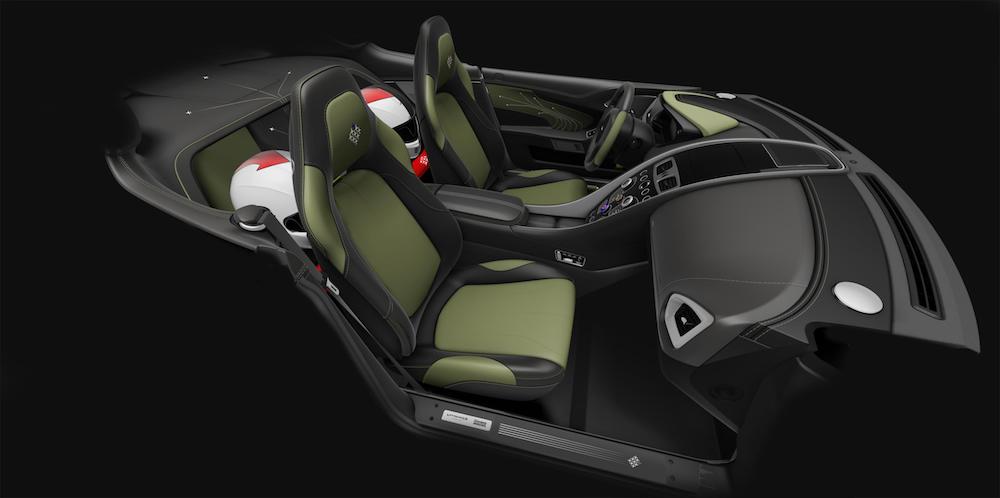
Inside, the green contrast colour is inspired by the traditional RAF flight suit.Interior details take their cue from both the Red Arrows and the RAF. The pinewood green contrast colour is inspired by the RAF’s classic flight suit, and green webbing is also used for the seat belts.
A Red Arrows logo – nine aircraft in diamond formation – is embroidered on the seat backs and also features on the sill and engine inspection plaques. These will be signed (one through ten) by the corresponding Red Arrows pilot.
Ditching the rear seats available in a regular Vanquish, the rear of the cabin houses twin racing helmets which are finished in the livery of the Red Arrows.
Owners of the Vanquish S Red Arrows edition will each receive a 1:18 model of their car and the BAE Systems Hawk aircraft used by the Red Arrows since 1979, as well as a car cover and a Build Book.
The Vanquish S Red Arrows editions are available to purchase at Aston Martin Cambridge.

Audi Q5 review
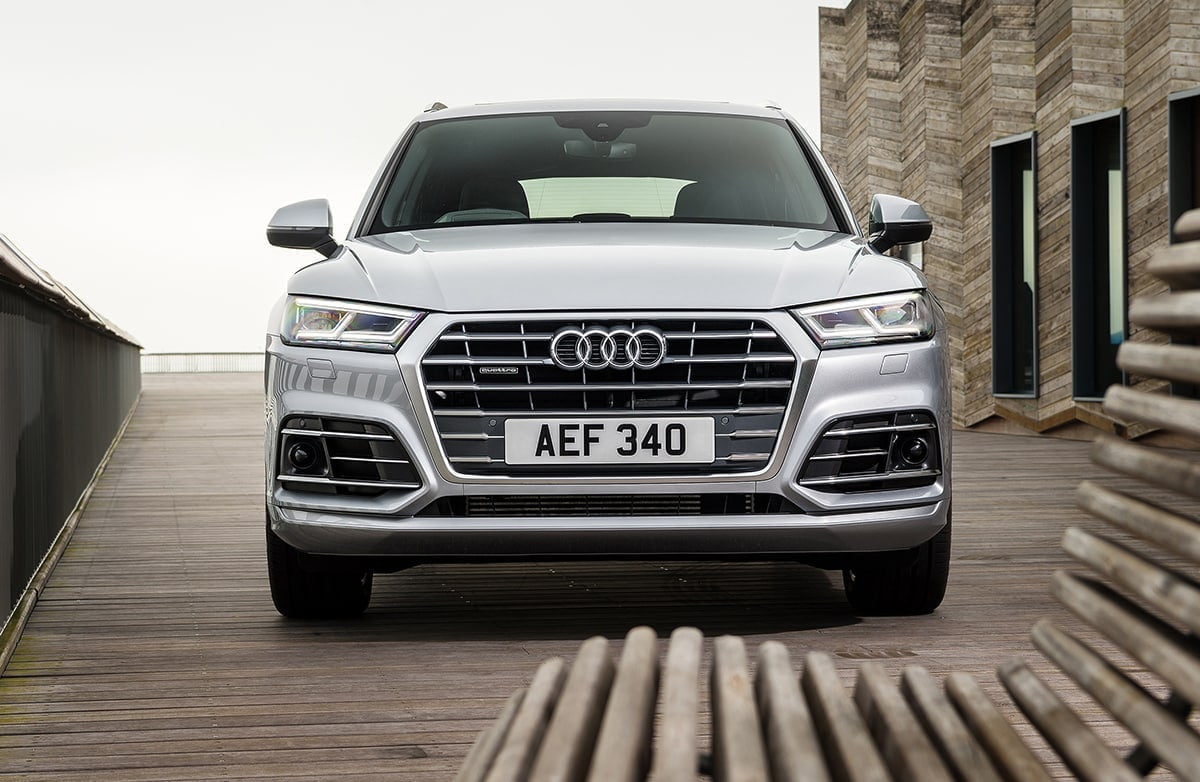
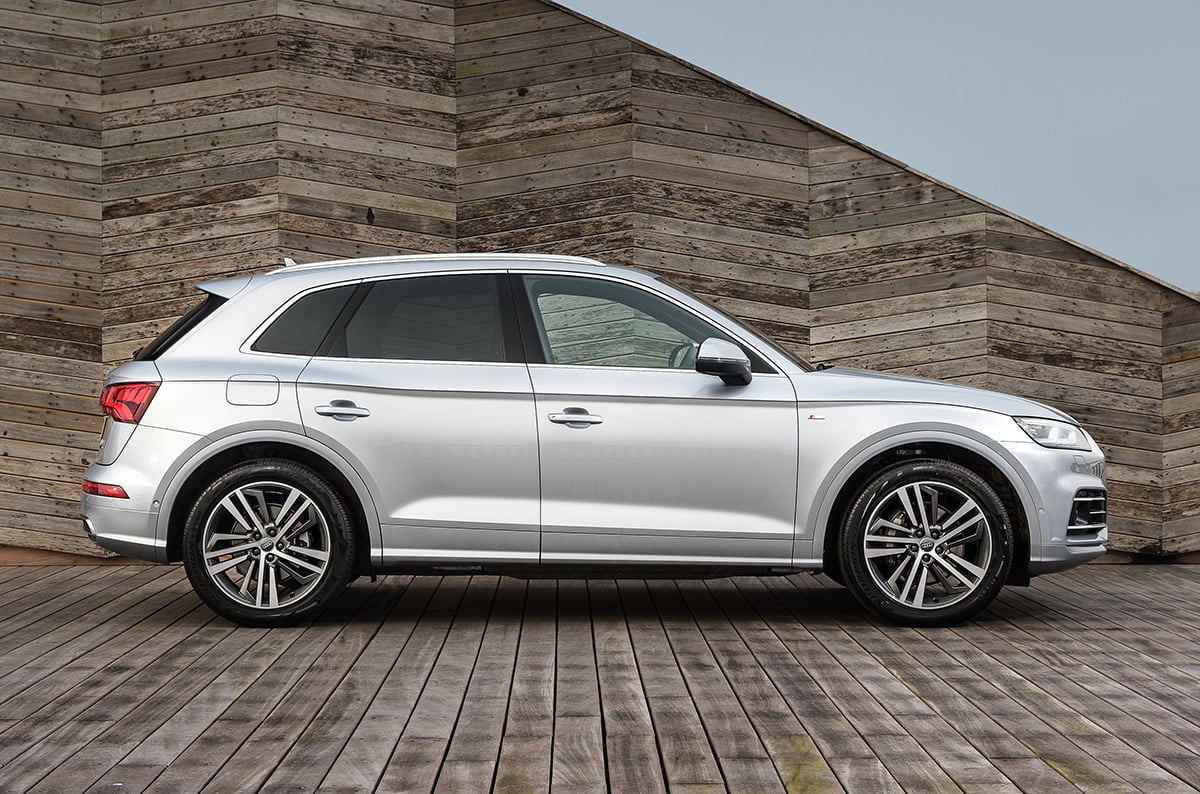
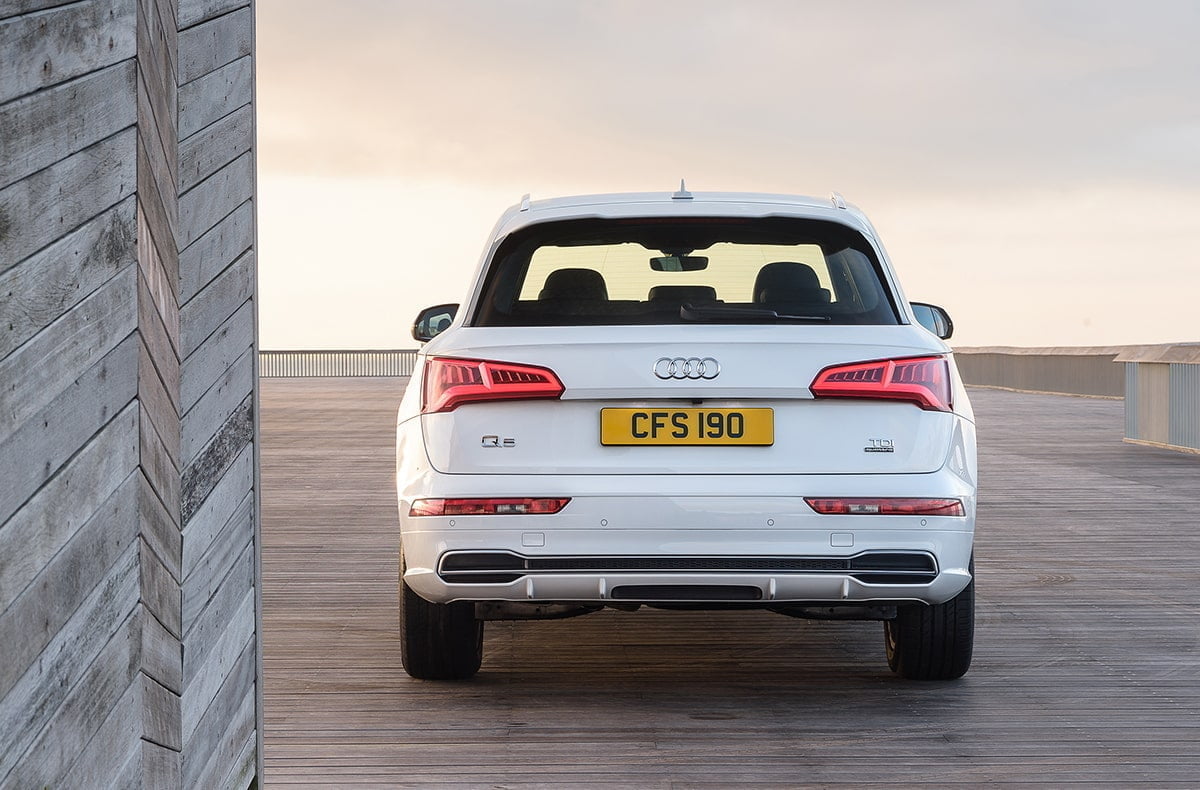
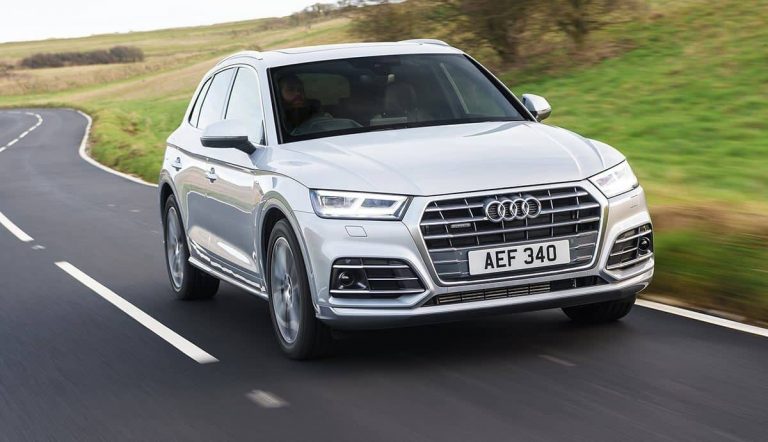
The Audi Q5 was the second SUV to be launched by the German premium brand in 2008, but has since become a cornerstone of a Q line-up that already includes the Q3 and Q7 and is set to add a Q4 and Q8. Audi has sold 1.6 million Q5s globally, putting it comfortably ahead of direct rivals such as the BMW X3 and more recently the Jaguar F-Pace. So for the all-new second-generation version, on UK roads in June, it is no surprise that evolution is the order of the day, making the most of Audi’s gains in construction and technology. Despite being a larger car, the new Q5 has also been on a diet, losing up to 90kg depending on model, and mostly achieved through using new materials such as high-strength steels and aluminium.
Outside and in
Visually it’s a good looking SUV – from the large, signature Audi grille, the profile sweeps back in a style much more large car than SUV. Boxy is not a word you use with this car. Which is interesting as in fact, the new Q5 outstretches its predecessor in virtually all areas, measuring up 3cm longer at 4.7m, an unchanged width of 1.9m, and 6mm taller at just under 1.7m. The wheelbase has been extended by a mere 1cm, which claims to free up more interior space, and certainly as one slips inside it feels a roomy car in front or back. Again, all the vital dimensions have grown – two adults will feel comfortable travelling in back, and there will be space for their luggage too, the boot volume up by 10 litres to 610 litres (1,550 with the rear seats folded).Powertrains
Audi launches the new Q5 range with a simple, two-way engine choice. The car for our brief taster test is fitted with the 2.0-litre TDI diesel engine of 190hp, while petrol fans, for now, must make do with an also 2.0-litre TFSI unit with just 252hp. There is a further petrol option, with a 3.0-litre TFSI unit of 354hp, but that’s in the performance-pitched SQ5 that launches at the same time as the stock car. Of course this exclusive choice will expand before long. A new version of the 3-litre TDI will be first in line with power increased to 286hp, and we can be confident that there will be more, considering the previous generation ended up with an extensive powertrain choice that extended to a hybrid model and a diesel version of the SQ5.On the road
Our brief test drive around enjoyable roads in Warwickshire proved that the Q5 is a very confident SUV. Both of the 2.0-litre engines are combined with a seven-speed dual-clutch auto transmission and the ultra version of the quattro all-wheel-drive system. This runs in front-wheel drive mode when cruising to save fuel. As well as the weight saving, the Q5’s on-the-road prowess benefits from a new five-link suspension system and updates to the electro-hydraulic power steering. On the options list, but not fitted to our test car, is Dynamic Steering, varying its ratio dependent on speed and steering input. However, we do get the no-cost option of stiffer, ‘S sport’ suspension, while if we wanted to spend money on the options list we could go the full self-levelling air suspension route. Initial impressions suggest a very efficient, comfortable cruise while in the corners the car is, well normal. It doesn’t bring a grin to the face with sharp turn-in and sports-car like grip, but it doesn’t unnerve either – it does everything… well perfectly fine, thank you.Equipment
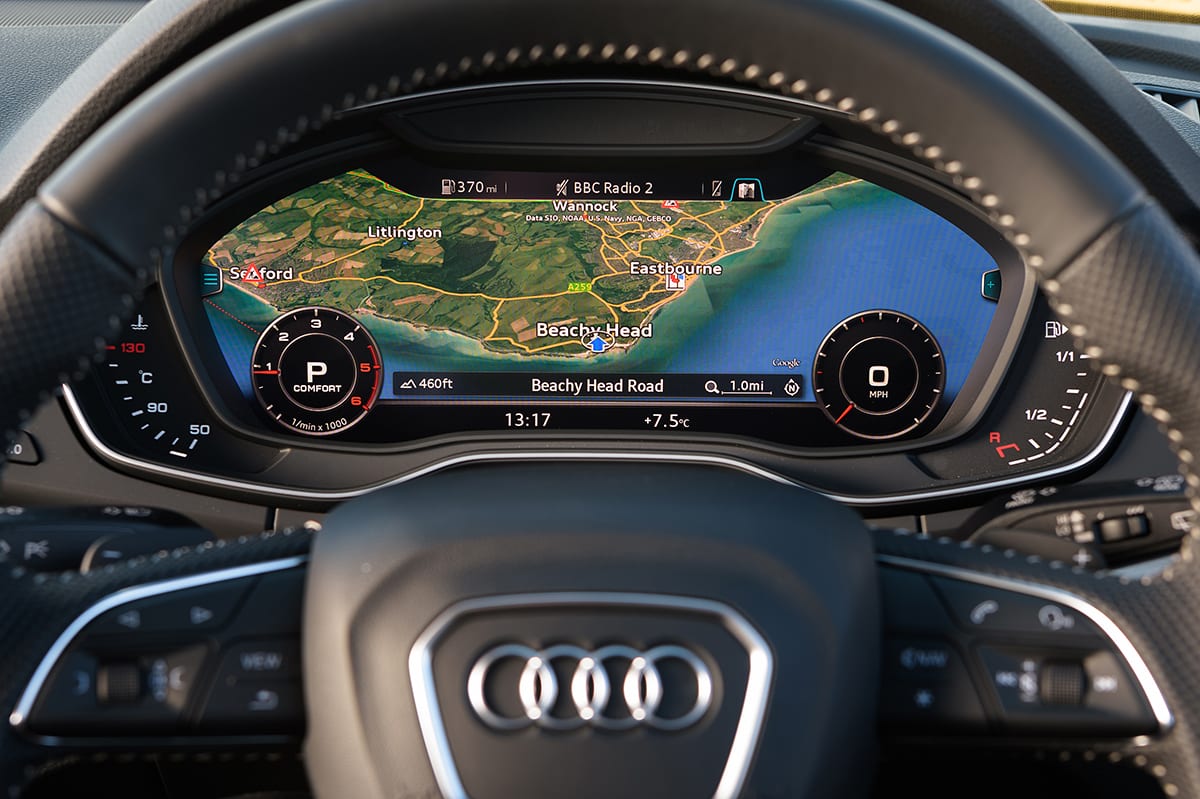
The new Q5 comes in the established SE, Sport and S line specifications, and now includes a more extensive standard equipment list. The Smartphone interface, parking sensors, a powered tailgate and the Drive Select system with its Comfort, Dynamic and Efficiency modes are supplied on all cars. However there is also a very long options list – our test car boasted some 13 of them, including the £250 virtual cockpit and a ‘Technology Pack’, adding such niceties as navigation, wireless phone charging and connected services, and also adding a cool £1,100 to the price. Dip into the list too deeply and it’s very easy to take even an entry-level Q5 past the £40,000 mark that now bumps up annual VED tax costs by £310 a year. Most buyers will probably live with that, however. While detailed opinions will await our full appraisal, it’s immediately clear that the new Q5 is a significant evolution of its predecessor, and likely to maintain the numbers that have made it a best seller.Audi Q5 – key specifications
Model tested: Audi Q5 2.0 TDI quattro 190hp S line S tronic Price: £40,220 (Range price £37,150-£ 41,040) On sale: Orders Feb 2017, on road June 2017 Engine: 2.0-litre diesel, 190hp, 400Nm 0-62mph and max speed: 7.9 sec, 135mph Economy and emissions: 56.5mpg, 132g/km* Key rivals: BMW X3, Mercedes-Benz GLC, Jaguar F-Pace Test date: April 2017 * = with 18-inch wheels The Car Expert Taster Tests are concise summaries of new models to the market, that we have driven for under 50 miles. They are often preludes to full road tests of the vehicle at a later date.
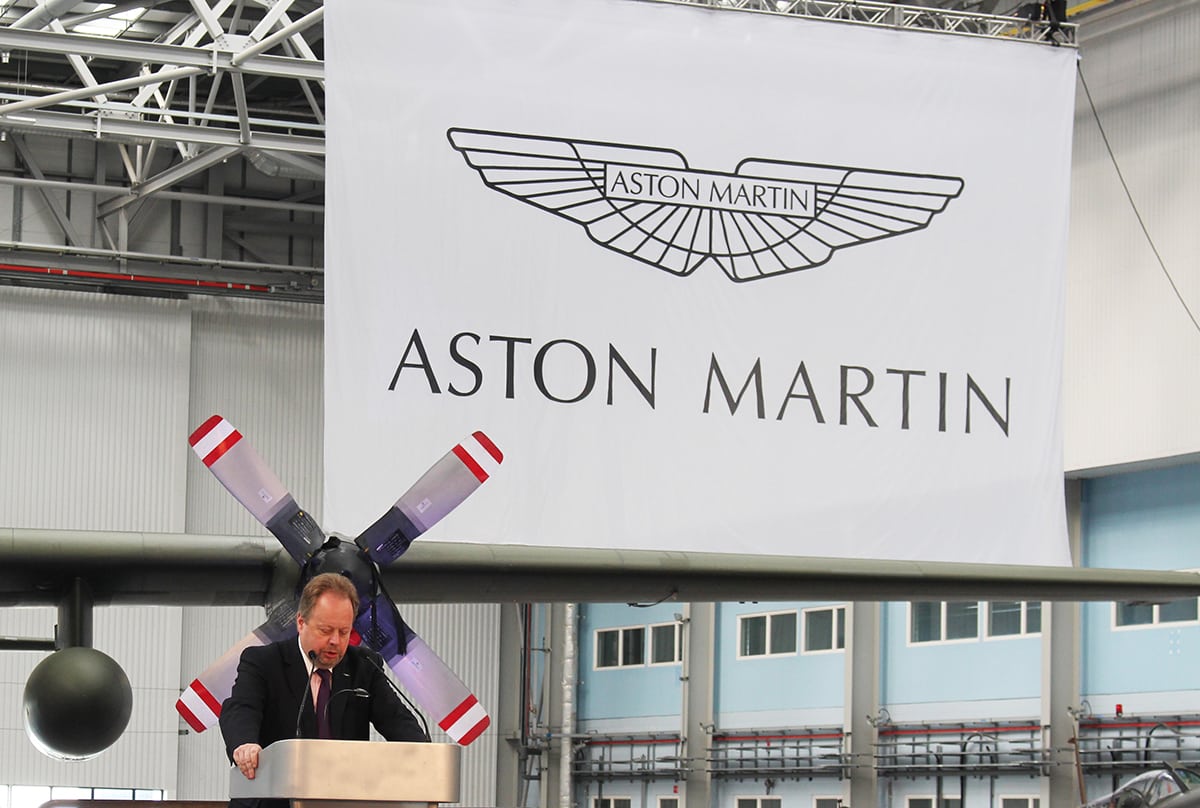
Aston Martin gets keys to DBX plant
Job creation
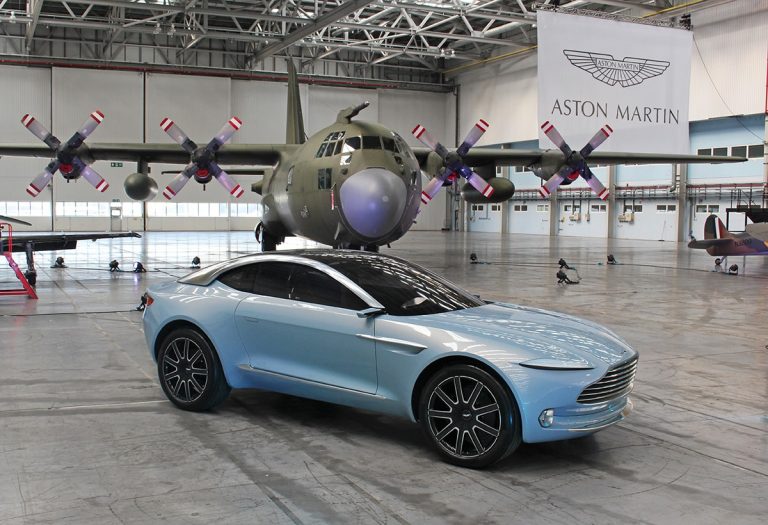
By the time production starts 750 jobs will be created at St Athan, employees selected from more than 3,000 applications. The first staff employed for the new plant are already training at Gaydon. The site was officially handed over to Aston Martin president and CEO Dr Andy Palmer by Secretary of State for Defence Michael Fallon. The importance of the new plant to the Welsh automotive industry was demonstrated by the presence at the event of Welsh First Minister Carwyn Jones, and Secretary of State for Wales, Alun Cairns. All three, commented Dr Palmer, had been instrumental in securing the site for Aston Martin. Carwyn Jones added that with phase II of redevelopment commencing at St Athan, supply chain companies throughout Wales will also have the opportunity to bid for contracts worth over £60m through the Welsh Government’s own Sell to Wales procurement site.
Global winner
Speaking directly to The Car Expert following the ceremony, Dr Palmer said that the St Athan site had been chosen over 20 possible production locations around the globe primarily because of the passionate support offered by the Welsh Government. “The single-minded passion of the minister to get us here closed some of the other problems,” Dr Palmer said, adding that the existence of the three super hangars to convert would save the project about a year in delivery time compared to a greenfield site.

Vauxhall Insignia Country Tourer heads for Frankfurt
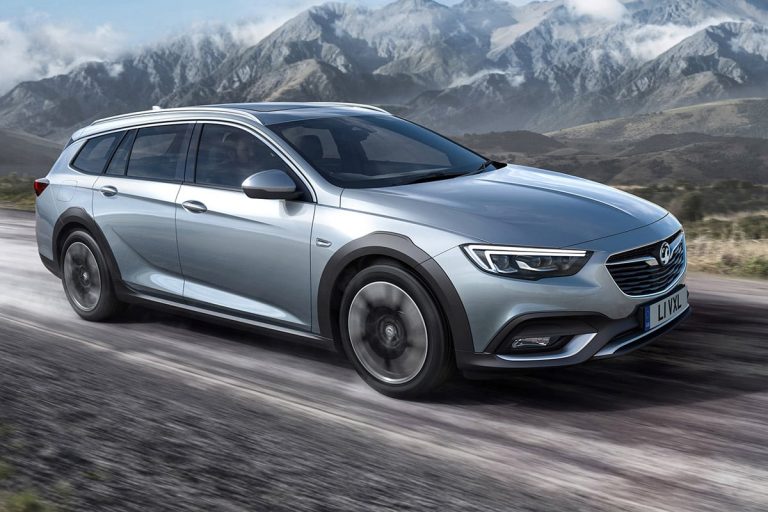
The Vauxhall Insignia Country Tourer will be unveiled at the Frankfurt motor show in September as the third member of the brand’s latest large car range.
The car is effectively an off-roader version of the Sports Tourer, the estate variant of the new Vauxhall Insignia line-up. It targets the likes of the Volvo V90 Cross Country, Volkswagen Passat Alltrack, and Audi A4 and A6 allroad models.
Vauxhall says that the Country Tourer is more spacious and considerably lighter than its predecessor, thanks to its all-new architecture, and includes much innovative technology.
The car sits 2cm higher from the ground compared to the Sports Tourer, and comes with signature black cladding around its lower shell, along with silver front and rear skid plates to give it a more rugged appearance.
New diesel engine
According to its makers the Country Tourer will be offered with a wide powertrain range, though details are yet to be specified. It will likely follow that of the Sports Tourer but will include a new range-topping diesel engine and the availability of an eight-speed automatic gearbox.

All-wheel-drive will also be on offer, with torque vectoring – this employs two electrically controlled multi-plate clutches to more precisely transmit power to each wheel as it is needed.
The car will use an improved version of the FlexRide chassis that adapts the dampers, steering, throttle response and shift points (on automatic models). There are three modes, ‘Standard’, ‘Sport’ or ‘Tour’, which can be selected by the driver.
The new Country Tourer has a 9cm longer wheelbase compared to the previous version, while cargo space with the 40/20/40 seats folded down goes up 135 litres over the old car to 1665 litres.
Technology aids include a feature of the Keyless Open & Start that allows the tailgate to be opened by a simple kicking motion under the rear bumper. A vehicle silhouette projected onto the ground shows the correct area and another kicking motion will close it.
Other technology is shared with the Grand Sport and Sports Tourer variants. Among highlights are the second generation of adaptive IntelliLux LED matrix headlamps, which has 16 LED segments integrated into each slim design, and includes active curve lighting and and LED spotlight with a range of up to 400 metres.
A head-up display, adaptive cruise control(ACC) with automatic emergency braking, Lane Keep Assist with automated steering correction and Rear Cross Traffic Alert will also be available for the car, as will Apple CarPlay and Android Auto compatible IntelliLink connectivity infotainment systems.
Vauxhall is not yet indicating prices for the Insignia Country Tourer but as the car will be pitched as a range-topping member of the Insignia line-up, it is likely to cost somewhat more than the around £25,300 of its predecessor.
Tax rises fuel record March car market
17-plate buyers
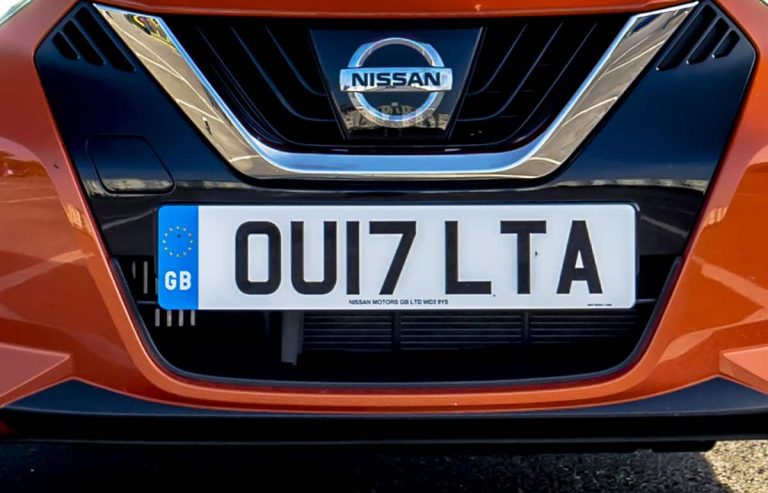
March is always a busy month for car dealers due to the twice-yearly change in registration plates, this month to 17 plates. However observers believe most of the sales growth was due to buyers avoiding new VED rates that came into force on 1st April, adding extra costs to the vast majority of new cars (For the full story of the tax changes see here). “These record figures are undoubtedly boosted by consumers and businesses reacting to new VED changes, pulling forward purchases into March, especially those ultra-low emission vehicles that will no longer benefit from a zero-rate fee,” SMMT chief executive Make Hawes said. “This bumper performance probably means we will see a slowdown in April, exacerbated by the fact there are fewer selling days this year given Easter timing,” Hawes added.
Fleet sales bouyant
Much of the March market was driven by fleet sales, for which the VED changes will add significant extra costs. The 12 per cent increase in the fleet and business sector also no doubt accounted for a halt to recent sliding diesel sales, registrations climbing 1.6 per to 295,256 vehicles. The alternative-fuelled sector, which includes electric cars, continued its steep climb. Registrations surged some 31 per cent in March to 22,818, though this still represents only 4.1 per cent of the overall market. Meanwhile the New Car Top Ten continues to have a familiar look about it, with the Ford Fiesta still secure in the number one spot. some 25,428 examples were registered in March, more than 8,000 ahead of nearest rival the Ford Focus.New-look Black Pack for MINI Clubman

Nissan Juke special editions add pulse and style
Juke Tekna Pulse
The main new feature of note on the Juke Tekna Pulse is an updated six-speaker sound system by French audio specialists Focal. The main speakers are rated at a maximum of 120 watts (compared to 40 watts on the rest of the Juke range) and the tweeters are rated at 100 watts, again compared to 40 watts on the regular models. The Tekna Pulse also has sports pedals and floor mats included as standard. The Juke Tekna Pulse costs an additional £1,455 over the standard Juke Tekna, at a starting price of £20,700 compared to £19,245. Only 1,500 Tekna Pulse models will be built.Juke N-Connecta Style
Looking like slightly better value is the N-Connecta Style model, which is priced at £670 over the regular N-Connecta. In addition to the larger alloy wheels and black pack, the N-Connecta Style adds xenon headlights over and above the standard N-Connecta specification. The standard N-Connecta is priced from £18,085, while the updated N-Connecta Style starts at £18,755. Both models are available to order from Nissan dealers now.Hyundai Kona to target Nissan Juke
Nissan Micra review (2017-2018)
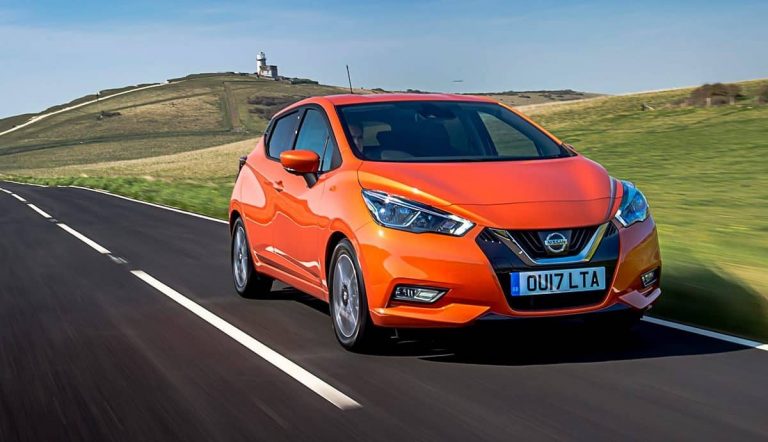
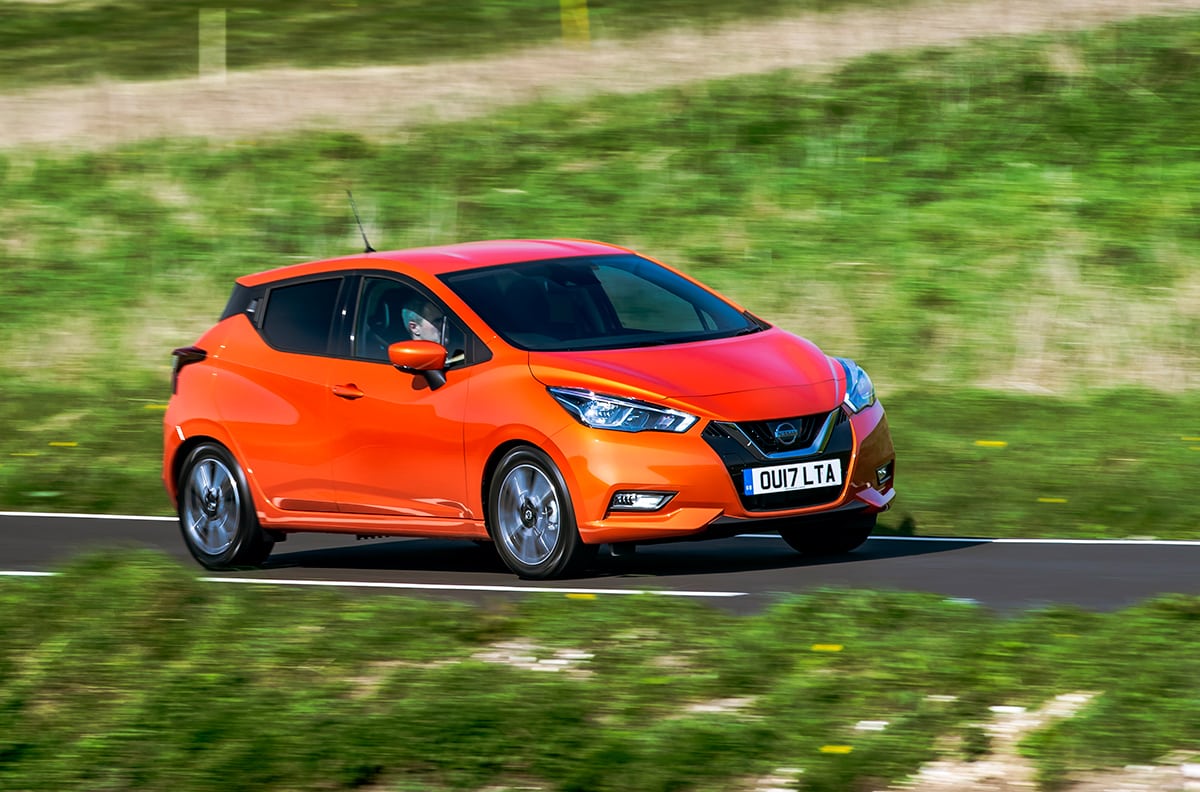
For years the Nissan Micra was established as a distinctive contender in the supermini market, with its curvy, instantly recognisable if somewhat Marmite exterior. Times have changed for the car, however. Nowadays it lives in the shadow of the massively successful Qashqai and Juke SUVs. And the last version of the supermini was a global car that really did not offer any attractive headlines for discerning UK buyers. Now with the new, fifth-generation Micra, Nissan is fighting back. We are told that this car will re-establish itself as a top-10 seller on the UK market, and “at the heart” of the supermini segment. “Only the name is the same,” Nissan personnel insist, though that is not quite correct as the car uses an existing platform, albeit one that has undergone major development.
Mainstream design
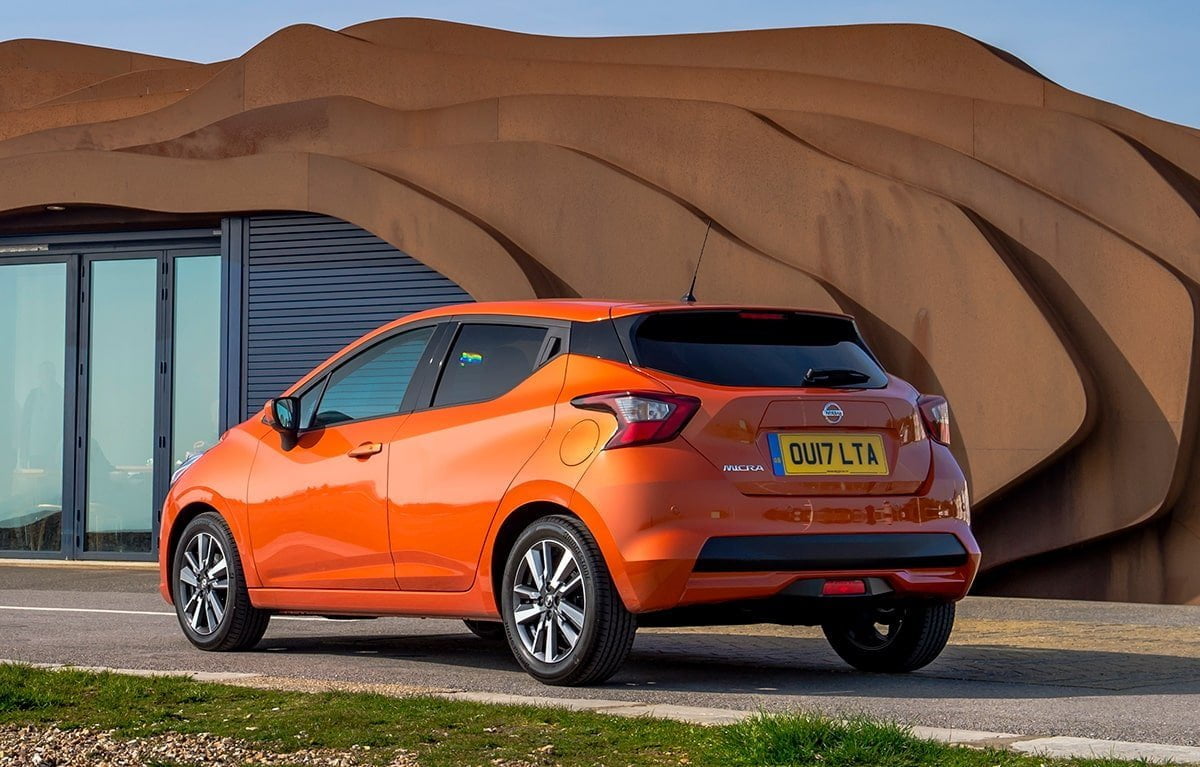
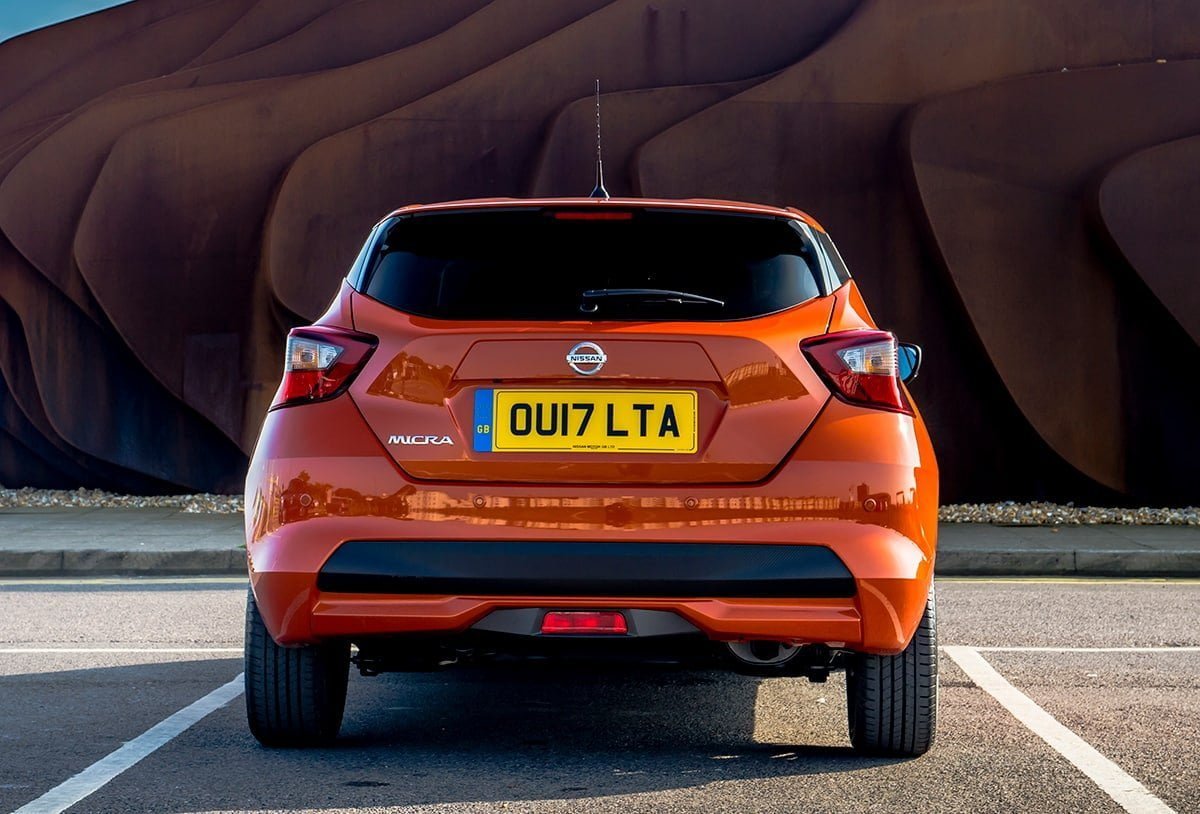
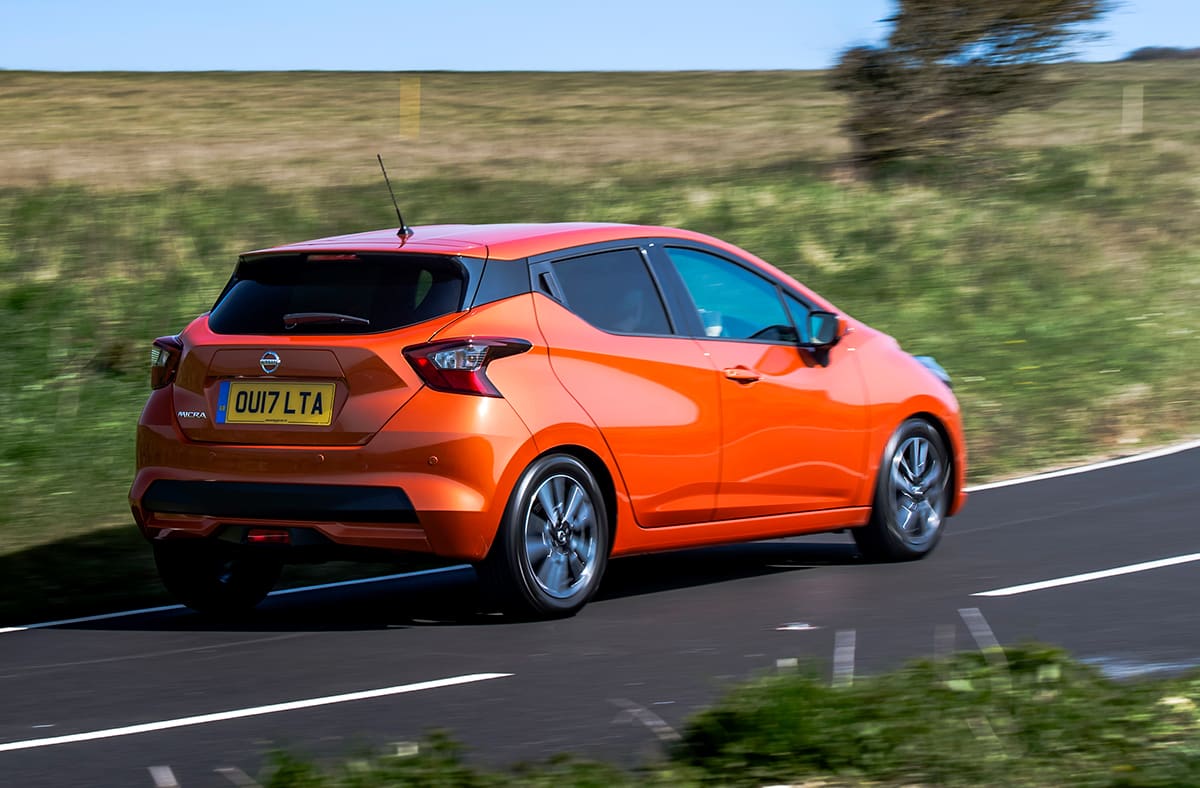
While the new Micra is a lot more agreeable to look at than its dull direct predecessor, the distinctive curvy styling of the early generations has also been abandoned for something more mainstream, while competing squarely with its rivals in the traditional areas of equipment and technology. Only offered as a five-door, the new car is substantially longer than the Mark 4, by some 174mm. It’s 78mm wider, but also 55mm lower. As a result the car looks distinctly more athletic.Interior excellence
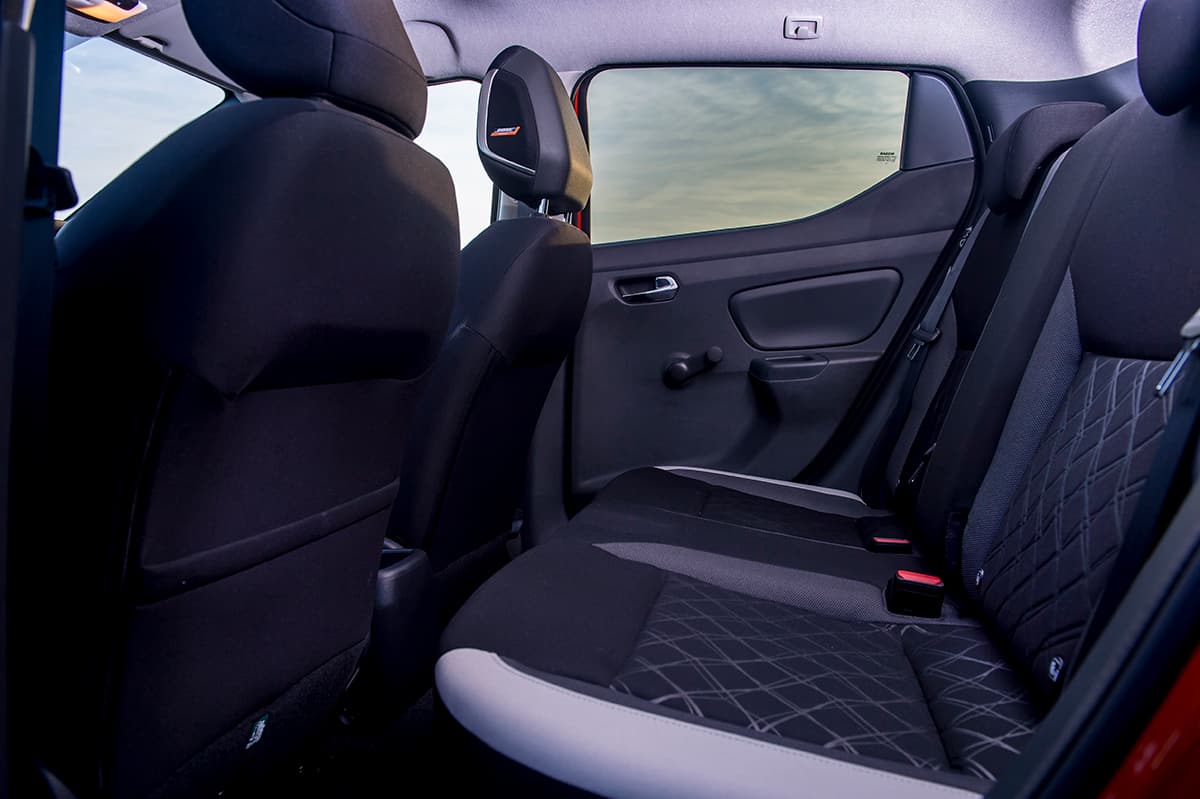
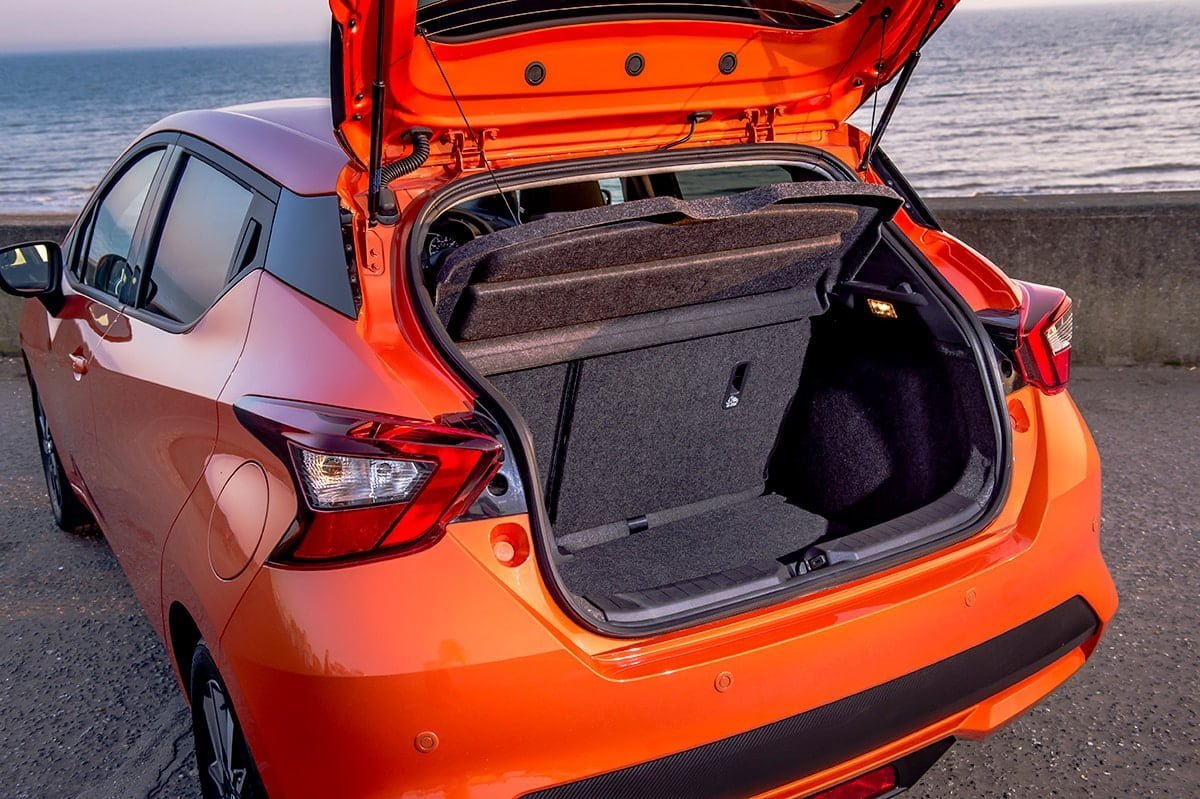
Those who have driven a fourth-generation Micra will notice the biggest differences on slipping inside. Style was not a phrase one used with the old car, but the new one is a revelation. According to Nissan “the cabin is based around a T-shaped ‘gliding wing’ dashboard, with simple and harmonious structures that create excellent space for the driver and front passenger.” Not sure what that means, but it certainly looks good. Finished in a two-tone shade, it is well laid out with, admittedly in the upper spec cars we are driving on the launch, a lot of soft-to-the-touch quality trim on show. The tech includes an infotainment system controlled by a touchscreen mounted high on the centre console. Again, our upper spec models get the top NissanConnect system, with a seven-inch full colour screen, DAB radio, satellite navigation and smartphone-style apps. It’s a spacious car too, no surprise with the extra length perhaps. The 300-litre boot outstretches the biggest-selling rivals, while still leaving plenty of rear-seat kneeroom. Drop those seats and the space jumps to 1004 litres. Taller occupants might consider the roof a little close, but overall this is a roomy supermini.Powertrains
Three engine options will be available for the Micra – not as many as some rivals offer but Nissan does say that this is the launch line-up so perhaps more are on the way. All three are downsized versions of existing engines, consisting of a 1-litre three-cylinder petrol with 71hp, a turbo version of 0.9 litres with 90hp, and a 90hp diesel of 1.5 litres and four cylinders. The very first cars in the UK are not available with the 1-litre petrol, which we are told will be here “soon”. On the launch event we drove with the turbo petrol unit, likely to be the major seller, and it proved most capable. This is an engine we know – also found in the Twingo of sister brand Renault and Mercedes-Benz smart models. It is not exactly fast, cresting 62mph from rest in 12.1 seconds, but it is enthusiastic enough to suit this environment while producing the economy and emissions figures – 64mpg and 99g/km – to make the Micra competitive. Standard transmission is a five-speed manual unit and this is an excellent unit, with slick, swift changes.On the road
Nissan insists that the Micra has been engineered specifically to suit European and particularly UK roads. As well as lower in height, the shell is also stiffer while new suspension has been added. Technology also aids the on-the-road dynamics. Intelligent Ride Control uses the engine and brakes to try and dial out the fore/aft pitching motion felt when going over large bumps such as traffic humps. Then there is Intelligent Trace Control, which when cornering, automatically applies and adjusts the inside brakes and outside wheels to keep the car pointing where intended. They all work very well – the car feels a little more engaged than does the general supermini pack. It’s not quite as cossettingly comfortable as some, and not quite as excellent in its handling as is the Ford Fiesta (but then what rival to the Ford is?). But the Micra does a very good job of being a competent all-rounder.Five grades
Five trim levels will be on offer with the new Micra range. The entry Visia grade includes 15-inch steel wheels, front fog lights, a two-speaker audio system and Bluetooth compatible audio. The safety package is notable too, ranging across six airbags, Lane Departure Warning and Intelligent Lane Intervention, and Intelligent Emergency Braking with Pedestrian detection. Nissan is describing the safety package available for the Micra as the most comprehensive ever offered on one of its small cars – other tech available includes traffic sign recognition and the well-known around-view monitor giving a 360-degree view of the car’s surroundings. Top of the grades is the Tekna, notable elments including 17-inch alloy wheels, keyless entry and start, a rear view camera with rear parking sensors through the NissanConnect touchscreen, and a BOSE audio system with six speakers, two of them in the driver’s headrest. And of course as is the way with today’s small cars, personalisation reigns. Starting with a choice of 10 exterior colours there are also exterior and interior colour packs and a range of body decals. Nissan has done an impressive job on the new Micra, rescuing a car that was rapidly descending into obscurity and thrusting it right back into the mainstream. In looks and performance the Micra now contends squarely with its competitors and in some elements, notably the interior, it leaves many rivals in its wake.
Nissan Micra – key specifications
Model tested: Nissan Micra 0.9t N-Connecta On Sale: March 2017 Range price:£11,995-£1,765 Insurance groups: 1E-8E Engines: Petrol 1.0, 0.9T. Diesel 1.5. Power (hp): 71, 90. 90. Torque (Nm): 95, 140. 220. 0-62mph (sec):tba, 12.1. 11.9. Top speed (mph): tba, 109. 111. Fuel economy (combined, mpg): TBC, 64.2. 88.3. CO2 emissions (g/km): TBC, 99. 85. Key rivals: Vauxhall Corsa, Honda Jazz, Ford Fiesta Test Date: March 2017 All figures with 15/16in wheels, manual gearbox, intelligent start-stop.
Volkswagen Golf GTE gets more kit for less cash
- Read more Volkswagen news, reviews and features at The Car Expert
- Read The Car Expert review of the pre-facelift Golf GTE
Volkswagen claims that the battery can be charged in less than 3.5 hours from a domestic plug socket, or just over two hours if you install a domestic wallbox. The car’s charging socket is hidden behind the Volkswagen badge in the grille.
As with the old model, drivers can switch between four driving modes: a purely-electric E-Mode; a hybrid mode where the car will switch between petrol and electric as suits; a battery-charging mode which only uses the petrol engine; and GTE Mode, which uses both petrol and electric power together for maximum performance.
Pricing starts at £28,135 for the regular Golf GTE and £29,635 for the GTE Advance, which includes £2,500 from the government’s plug-in car grant (PICG). Along with the rest of the updated Volkswagen Golf range, the new Golf GTE is on sale now.
New SsangYong Rexton flagship launches
Brand identity
The exterior look follows SsangYong’s latest ‘Nature-born 3 Motion’ design language. Notable elements include the ‘spread-wing’ radiator grille and the lines on the flanks that rise towards the rear bumper. Both these elements were first seen on the smaller Tivoli and both are set to be a feature of all future models from SsangYong to create a recognisable brand identity. The new Rexton also features various elements designed to give it a more upmarket appearance, including the availability of 20-inch wheels, daytime running lights and LED fog, side and indicator lights.