Looking for vans, pick-ups and light commercial vehicles? Visit our sister site, The Van Expert.

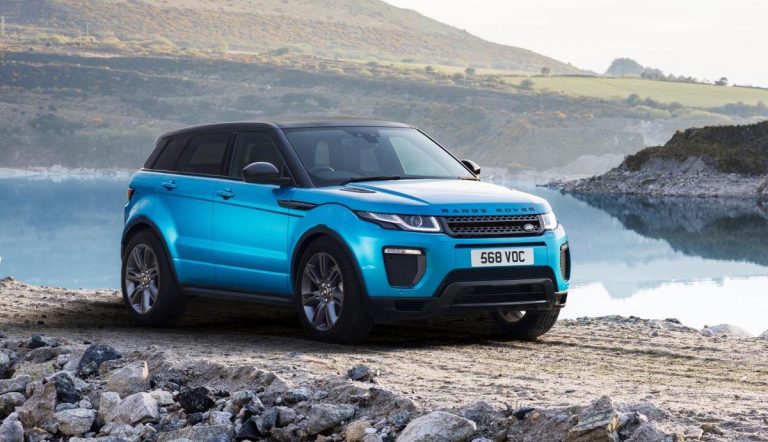
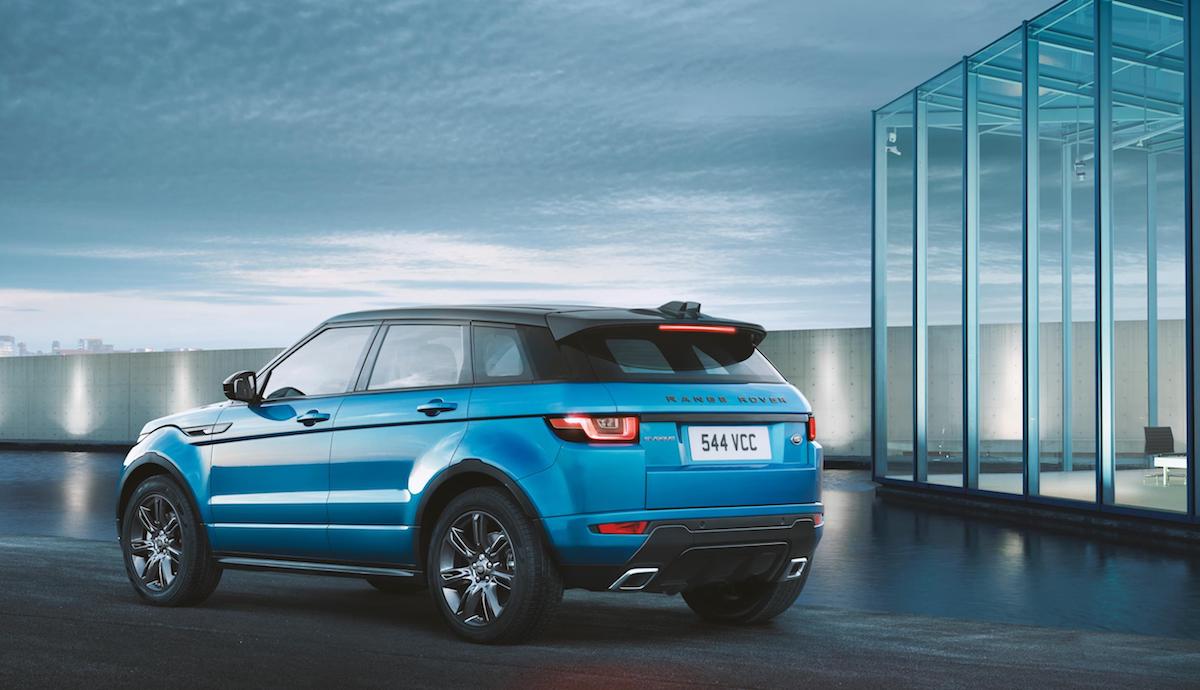
Six years after the model first went on sale, Land Rover has announced a special edition model of its popular SUV: the Range Rover Evoque Landmark.
March saw UK car manufacturing at a record high and, according to Land Rover, an Evoque rolls off the production line at their Halewood plant every 170 seconds. The site has produced 600,000 units of the Evoque since 2011, with the majority destined for export markets.
Based on the 180hp TD4 diesel Evoque, the Landmark is available in three colours: Yulong White, Corris Grey and Moraine Blue. Exterior design details include grey accents with the fixed panoramic glass roof and 19-inch alloy wheels.
Inside, the Evoque Landmark features leather seats with contrasting grey stitching, as well as keyless entry and automatic handsfree tailgate.
An array of optional technology includes a ten-inch touchscreen which provides a 4G Wi-Fi hotspot and is compatible with Spotify. Owners can use a dedicated app to check the fuel level and location of their vehicle and to pre-heat or cool the cabin. Those opting for Touch Pro Services get real-time traffic mapping and a sidebar featuring weather, news headlines and a flight tracker.
Pricing for the Range Rover Evoque Landmark starts from £39,000 for the manual model and £40,000 for the automatic. Land Rover will open its order books on 10th May when the Landmark appears at the Royal Windsor Horse Show.




What is it?
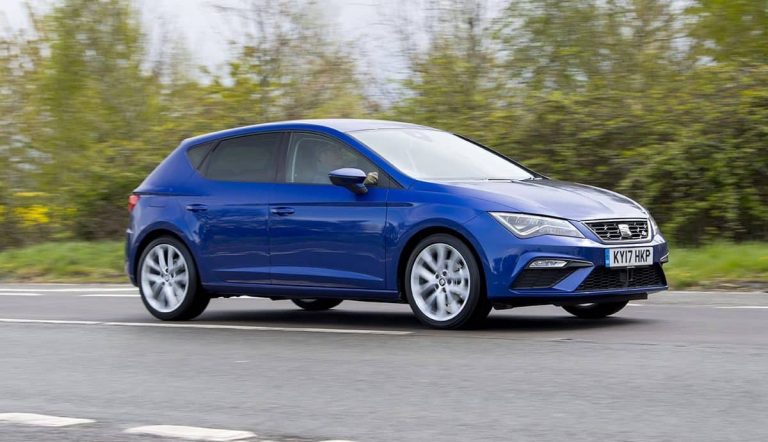
The new SEAT Leon is a mid-life refresh for brand’s biggest-selling model.
Key features
Subtle styling changes, new engine option, updated tech.
Our view
The revamp to the SEAT Leon is all that is needed to keep a top-contending model competitive – it remains a must-try for any family hatch buyer.
When the SEAT Leon launched in 1999, it established the Spanish brand as a mainstream contender. It has since become SEAT’s best-selling model, in one of the most competitive sectors in the market where its rivals include top-ten fixture cars such as the Ford Focus and Vauxhall Astra.
The market is changing, however, with more and more buyers defecting from traditional family hatches to SUVs – SEAT is adding two more to the Ateca it launched in 2016. So the Leon needs to evolve to stay in the game.
And that is exactly what the latest package of changes, applied to the third-generation Leon launched in 2012, comprise. This mid-life refresh is not about major headlines but a host of upgrades, mostly making use of the new technology launched in more recent newcomers such as the Ateca. The biggest news is the availability of a 1.0-litre three-cylinder petrol engine previously only offered to continental buyers.
The new Leon arrived in showrooms in February, the revamp applied at the same time to all three versions – three-door SC, five-door hatch and ST estate, while also extending to the range-topping off-road pitched Leon X-perience. For the purpose of this review, however, we are focusing on the core five-door hatch.
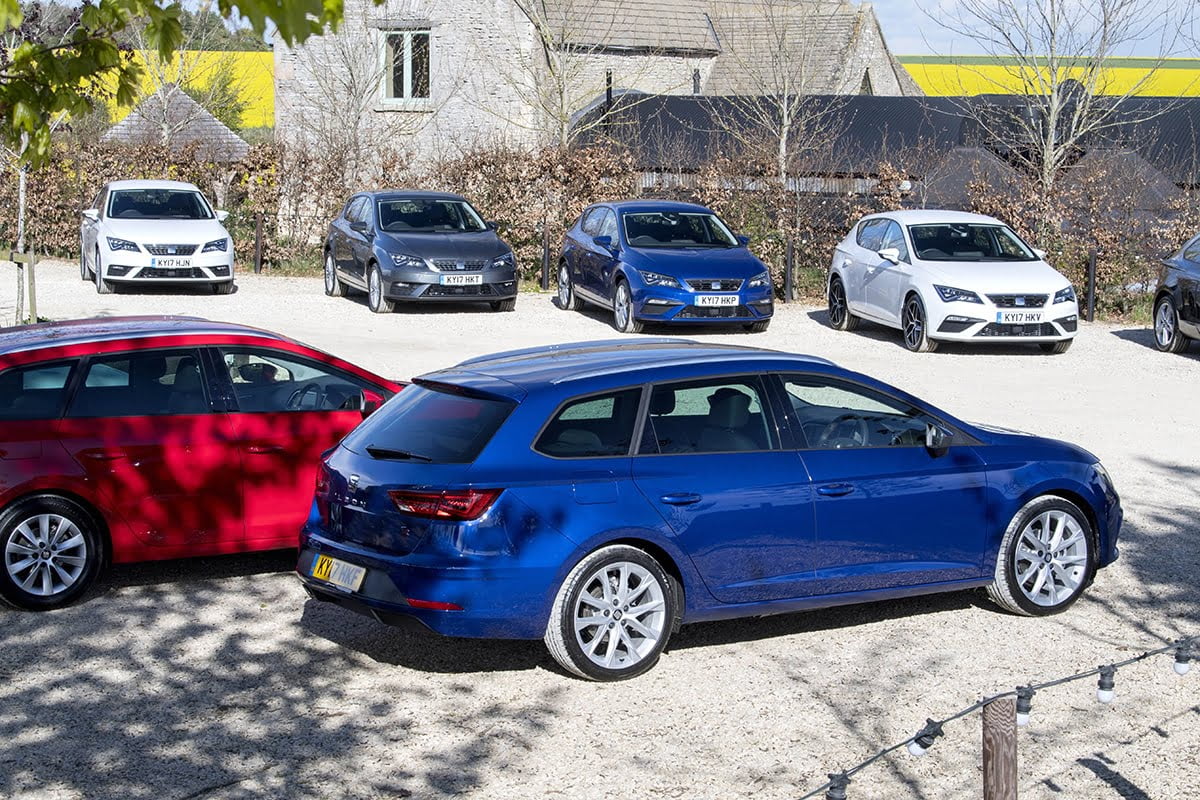
SEAT describes the new exterior look as ‘subtle changes’, which is fine as the canvas the designers have to work with is so good anyway. The Leon has long been considered one of the best-looking family hatches on the market, with a purposeful profile based on sharp crease lines – notably on the bonnet and flanks.
The revamp seeks to add a little more sportiness to those looks. A slightly bolder front end gains a lower bonnet, wider grille and a redesigned bumper. The new technology is in the form of LEDs in the headlights, indicators and fog lights – yes we know the previous Leon had LED headlamps, but apparently the new ones offer triple the light intensity of their predecessors.
Equally, the Leon’s interior has been much praised for its cockpit-like feel, with the instruments grouped towards the driver and all placed close together, being very easy to use. Here again, it’s about subtle improvements, with new finishes and ambient lighting in a choice of eight colours which “occupants can adapt according to their mood.” Does one really get in a car and think “I’m not very happy this morning, so I’ll change the lighting from orange to blue”?
Seriously, however – it’s a very effective interior and does not require much in the way of improvement, although the major update (replacing the manual handbrake with an electric one) does free up lots of between-the-seats space.
The Leon was one of the first new models launched on the VW Group’s flexible MQB platform and thus there is plenty of space for front and rear passengers and their luggage. At 380 litres the boot is some 64 bigger than in a Focus, and 10 more than the Astra. Drop the rear seats and it extends to a gargantuan 1,470 litres, though loading requires humping one’s luggage over a rather high rear sill.


Propulsion choices for the Leon remain plentiful, drawing on the many options in the VW Group engine catalogue. The five petrol units available range from 1.0 to 1.8 litres and 115 to 180hp, while there are three diesels, a 1.6-litre with 115hp and a pair of 2.0-litre units with either 150 or 184 horses.
Of this eight just two are changed over the previous model. The 1.6 diesel has had its power increased by five horses to 115hp, while improving economy and emissions, while there is a completely new-to-the-UK unit in the form of a 1.0-litre three-cylinder TSI. This is an impressive little engine, its sub 10-second 62mph sprint feeling enthusiastic while the combined cycle fuel economy is comparable to the diesels and the emissions figure of 102g/km best in the range.
SEAT expects, however, that the 1.4 petrol, with its clever ability to shut down two cylinders when cruising to save fuel, will remain the most popular choice amongst retail buyers. Fleet drivers meanwhile will go for the smallest diesel.
Six speeds are general across the transmission range, whether in manual or in the auto gearbox, though the 1.6-litre diesel has a five-speed manual ‘box and there are seven with the 1.4 EcoTSI engine and the auto-equipped 1.6 TDI.


Both of the most popular engines and the new 1.0-litre came under The Car Expert’s gaze during the launch event, and it is to little surprise that all behaved impeccably. They combine smooth, almost silent progress with eager pick up and smooth shifts whether through manual or DSG transmissions.
All testers of family hatches know that the Ford Focus offers the most effective chassis, but the Leon comes very close to bettering it, adding to the car’s generally sporty profile. A series of twisting bends is accomplished in fine style with precise turn-in and fine control through the apexes with plentiful grip. Equally, cruising at speed limits the Leon is assured, effectively smothering road surface imperfections.


Five trim levels are on offer across the five-door range, including a new top-level XCellence grade. But perhaps most notable is the excellent safety package.
Standard safety features extend to multi-collision braking and a new tiredness recognition system, that reacts to changes in the inputs to the steering wheel and sounds a warning. DSG (automatic) models gain a host of extras including a lane-keeping function and even the ability to slow the car to a stop if the driver does not react after a certain period.
Other new technology options available with the Leon are headed by connectivity. These range up to a hub that maintains full functions of any smartphone through the car while wirelessly charging said phone at the same time.
The SEAT Leon has always been regarded very highly and the package of updates applied to the latest model simply enhance a quality package. It’s thoroughly practical while offering more personality than its perhaps more mainstream-regarded sister, the Volkswagen Golf. Buyers in the market for a family hatch should have the Leon high on their consideration list.
Models tested: SEAT Leon Technology 1.0 TSI 115hp six-speed manual, 1.4 EcoTSI 150hp seven-speed auto, 1.6 TDI 115hp seven-speed auto.
On Sale: Feb 2017
Range price:£18,470-£26,790
Insurance groups:12E-24E
Engines: Petrol 1.0, 1.2, 1.4 (2), 1.8. Diesel 1.6, 2.0 (2).
Power (hp): 115, 110, 125/150, 180. 115, 150/184.
Torque (Nm): 200, 175, 200/250, 250. 250, 340/380.
0-62mph (sec):9.6, 9.9, 9.1/8.0, 7.5. 9.8, 8.4/7.5.
Top speed (mph): 123, 121, 126/140. 122, 134/142.
Fuel economy (combined, mpg): 64.2, 57.6, 54.3/57.6, 47.1. 70.6, 64.2/62.8.
CO2 emissions (g/km): 102, 114, 120/114,138. 105, 112/118.
Key rivals:Ford Focus, Vauxhall Astra, Renault Megane.
Test Date: April 2017
All figures best results with manual gearbox where available.



There have been a number of stories in the mainstream media recently about PCP (personal contract purchase) car finance driving a boom in car sales that will shortly become a bust, with massive knock-on effects for the car industry and the UK economy.
But what is driving those claims, and what are the implications for car buyers?
The Telegraph, the Sun, the Times and others have reported that the Bank of England is looking to regulate PCPs to prevent lenders charging excessively high interest rates to sub-prime customers. The Financial Conduct Authority (FCA) has also launched an investigation into how car finance is sold at dealerships, having stated a while back that it was watching the industry for evidence of mis-selling.
The tabloid papers have jumped a few steps forward and are predicting madness and mayhem if the number of PCP agreements falls, whether as result of Brexit, tougher selling rules or some other reason. With about 75% of personal car purchases from traders currently being made on a PCP agreement, a reduction in car finance approvals could lead to a significant downturn in sales. This has the potential to negatively affect the factories that build the cars, the dealers who sell them and most everyone else involved in the enormous automotive industry.
There are a few separate issues at play here, which inevitably have been mixed up – much like the Volkswagen Dieselgate scandal from 18 months ago that has catalysed an anti-diesel crusade around the world.
As part of its evaluation of the broader credit market in the UK, the Bank of England is concerned that some car finance lenders are loaning money for PCP car finance to sub-prime (higher-risk) customers at excessively high interest rates. The Telegraph has reported that the Bank of England is contemplating tougher affordability tests, similar to those imposed in recent years on mortgage applications.
Should affordability tests be strengthened, more people might be declined finance, resulting in fewer customers. This would initially have an impact on new and used car sales at the cheaper end of the marketplace, as inevitably sub-prime loans tend to be for lower amounts than normal loans. But, there is the potential for a knock-on effect if cheaper cars become harder to sell, gradually pulling prices down across the board.
The Bank of England’s investigations are part of a broad look at how the finance markets operate. It is taking a big-picture approach, while the Financial Conduct Authority is separately looking at the issue of how PCPs are being presented and sold to customers.
“Mis-selling” is a strong accusation in the financial world, usually with strong repercussions. So when the FCA announced that it had opened an investigation into the mis-selling of PCPs by car dealers, it generated headlines and provoked a strong response from car industry groups.
However, the FCA’s announcement, as reported in the Times, should not come as a surprise. The FCA said long ago that it was monitoring the situation and was considering an investigation – The Car Expert reported on it last July – and it had been discussed less formally for many months before that. Claims lawyers have also been priming themselves to launch action against dealers and finance companies who are guilty of mis-selling PCP car finance.
The FCA’s main concerns are that PCP products are not being adequately explained to customers, and are not being presented in an impartial manner.
In a speech at the Credit Summit conference in London in March 2017, Jonathan Davidson, Director of Supervision – retail and authorisations at the FCA, said: “Relevant here is not just the question of affordability, but also whether consumers are able to compare and choose effectively between financing options.
“The range of products available means that consumers’ choices are not always straightforward and they may have to take account of a number of variables in order to determine the most suitable product for their circumstances. These variables will depend on their attitude towards ownership of the vehicle at the end of the contract and the amount they want to pay on a monthly basis.”
Anyone selling car finance at a dealership must be accredited by the FCA to do so, but crucially they are only accredited in a ‘non-advisory’ capacity. This means that the salesperson is obliged to present you with all of the available finance options in a fair and transparent manner, highlighting the relevant points to consider, so that you can make an informed decision in your own time.
The reality is often very, very different for most customers. Salespeople in franchised dealerships are heavily financially incentivised to sell cars with PCP car finance packages, with monthly targets to hit and significant rewards or penalties based on their performance. Inevitably, this means that salespeople are pushing customers towards PCP offers instead of other alternatives – either consciously or subconsciously.
In some dealerships, salespeople are also measured on how much money each customer is financing, the idea being to push customers towards borrowing more money by purchasing a more expensive car and/or putting down a smaller deposit.
It is difficult to establish how prevalent this sort of selling behaviour is throughout the industry without active intervention and enforcement by the FCA. Indeed, this does not appear to be happening at anywhere near the levels required, especially when it comes to actively monitoring what is being said by sales staff to customers.
Sales staff are required to complete an online FCA quiz each year to maintain their accreditation, but this is easily cheated (for example, one employee can complete the quiz for all staff members) and it does not provide insight into what is actually going on at point of sale.
Unsurprisingly, the car industry is happy with things as they are, and has no interested in reforming the system to make life better for customers.
However, the FCA has already introduced new regulations for selling GAP insurance which could provide a guide to how car finance sales could be improved. Since September 2015, car dealers are not allowed to sell GAP insurance as an add-on on the same day they sell a car. From the day GAP is first discussed, there must be specific written information provided to customers and then there must be two clear days until a buyer can actually purchase GAP insurance for their car. So if you are discussing GAP insurance for your new car on a Monday, the dealer cannot sell you GAP until Thursday.
The regulation of GAP insurance was implemented to stop widespread price gouging on by dealers all across the country, to a captive customer who often had never even heard of GAP. A similar principle could be applied to car finance.
There is no reason (apart from obvious resistance from the car industry) that a 48- or 72-hour period could not be mandated between providing a formal car finance offer and signing an agreement. Similar advice material could be provided to buyers, just as now happens with GAP insurance sales, allowing buyers to make a more informed decision about their purchasing plans.
An alternative option, which would encounter even more resistance, is mandating a proper cooling-off period that applies to both the finance agreement and the vehicle sale. A PCP car finance agreement, like any other finance agreement, has a 14-day cooling-off period whereby the borrower can cancel the contract without penalty. That’s all well and good in theory, but it’s not that simple.
Most car sales agreements do not have any cooling-off period, so cancelling your PCP simply means you then have to pay for the car in cash. Given that people tend to use a PCP because they don’t have the cash to pay for the car, the current cooling-off provision is meaningless. If buyers were able to cancel their PCP and return the car as well, dealers would be far more careful about how they sold the product in the first place…
But is the current media storm going to lead to a brighter future for car buyers, or will it simply blow over with no real improvements? And will the economy come crashing down if PCP car finance deals suffer?
Contrary to the tabloids’ sensationalist headlines, there is unlikely to be any great crisis if there is a crackdown on PCP sales tactics. In fact, there are already some brands and dealers who are gradually starting to move away from PCPs.
What will happen is that finance companies will simply shift their efforts to other finance methods, like leasing, rather than PCP offers. Leasing is much less transparent, and conveniently avoids most of the legal obligations and consumer rights associated with purchase agreements like PCP and HP (hire purchase) finance. That’s great for dealers but even more disadvantageous to customers.
Other finance mechanisms, like peer-to-peer lending schemes, have been growing in the sub-prime market in recent years as well, so there will always be ways for people to finance cars. But, just like the crackdown on payday loans led to an increase in logbook loans, that doesn’t mean it will lead to a better outcome for consumers.
Additionally, the growth in online car sales is likely to weaken dealers’ hands in pressuring customers to take finance. As more manufacturers start offering buyers the option to conduct every aspect of their car purchase online, it becomes easier to ensure that the rules and regulations are actually being followed. Customers will have to click to download documents, and confirm that they have read and agree to the terms and conditions. If they choose not to read those documents, that’s not the seller’s problem.
Tougher car finance rules could well have a significant impact on the car market. But if a significant chunk of today’s car sales are being made on terms that are unfair to consumers, why should it be allowed to continue?
Consumer rights should always take priority over corporate profits, and the scare-mongering from the car industry is simply evidence that this is not currently the case.



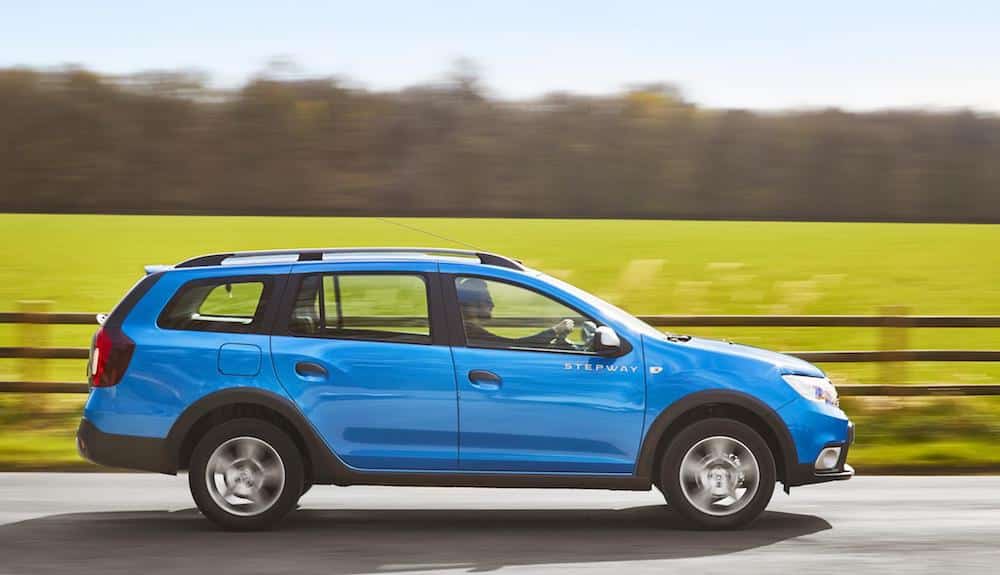
Dacia has announced UK pricing and specification for its updated Logan MCV Stepway, which was unveiled at the Geneva motor show earlier this year.
The Logan MCV maintains its 573-litre boot space, while the Lauréate trim adds a two-tone bumper, satin-effect chrome skid plate, fog lights and LED daytime running lights. ‘Stepway’ decals feature on the front doors and dark metal is used for the wing mirrors and roof bars.
Customers can choose from nine different paint finishes, and the Logan’s overall look is completed by 16-inch wheels. Inside, the Logan includes upgrades that Dacia introduced across the board in 2016.
Standard specification for the Logan includes heated and electrically adjustable wing mirrors, rear parking sensors and a height-adjustable driver’s seat. The infotainment system features a seven-inch touchscreen, USB and AUX sockets, Bluetooth connectivity and satellite navigation.
The Logan is available with a choice of two engines: the TCe 90hp petrol or the dCi 90hp diesel. Both are paired with a five-speed manual transmission.
The Logan MCV Stepway is priced from £11,495 and is available to order now, with UK deliveries commencing from June.

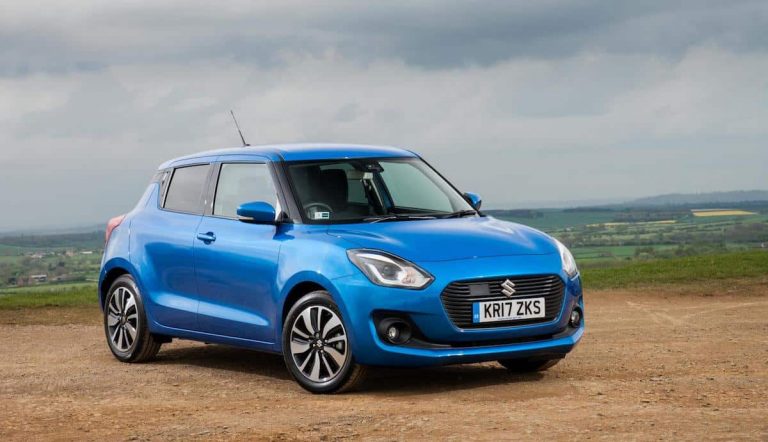
Suzuki has announced pricing and specification details for its third-generation Swift, which goes on sale in June.
As standard, the five-model range comes with six airbags, air conditioning, DAB radio with Bluetooth, LED daytime running lights, 15-inch wheels and front electric windows.
The entry-level 1.2-litre SZ3 with Dualjet engine and manual transmission is priced at £10,999. The mid-range 1.0-litre SZ-T with Boosterjet engine and manual transmission adds a rear view camera, Smartphone link display audio, 16-inch alloy wheels and costs from £12,999. The top-of-the-range 1.0-litre SZ5 with Boosterjet engine and automatic transmission starts at £15,849 and features 16-inch polished alloy wheels, satellite navigation, keyless entry and rear electric windows.
Customers can choose metallic paint at £485 or dual-tone metallic paint at £650.
All models are covered by Suzuki’s three-year/60,000-mile vehicle warranty and come with one-year AA Suzuki Assistance offering 24-hour UK and European roadside assistance and recovery.





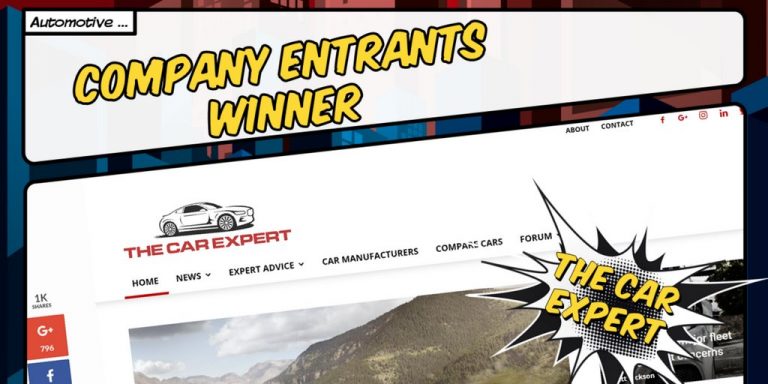
 The Car Expert has been awarded Best Automotive Blog (company division) at the UK’s largest awards event for independently-produced digital content, the UK Blog Awards.
It was the fourth year in a row that The Car Expert has made the finals of the awards, but the first time in the Company division. Previously, the site was categorised in the Individual division, and was Highly Commended at last year’s awards, as it had been a one-man show until last July.
As our regular readers will be aware, The Car Expert absorbed Car & Van News last year, and we also established a sister site for commercial vehicles, The Van Expert. The site has been reorganised, and we welcomed Andrew Charman as our news and road test editor.
It has been a huge year for us, and an enormous amount of work has been put in by the team. To win this award in our first year as a team is a great achievement. Last year the prize was won by Car Throttle, so it is an honour to follow in their wheeltracks and be chosen over a strong field of other sites.
Thank you to everyone who voted for The Car Expert to help us reach the finals every year for the last four years.
A huge thanks to Andrew Charman for his efforts since joining us, which has allowed us to add new car reviews and daily news updates to the site.
Now part of Immediate Network, we have a young team of content and social media editors who have made an important contribution to our growth. Special thanks to Jamie Munro, who did a lot of the work to integrate the Car & Van News reviews with our site, and Katharine Morgan for her news reporting since joining the team a month ago – especially during the Geneva motor show. Our new logo and all of the design improvements have been made by Immediate Network’s designer, Phil Allardice.
Finally, I would personally like to thank my wonderful partner Kate for all her support for nearly six years since The Car Expert first become an idea. She has been very patient as so many of my weekends and nights have been devoted to working on the website.
We are continuing to develop the site and add more features, and our traffic continues to grow. We have some big plans for the future, and I look forward to showing them off soon. We welcome any of your feedback and thoughts, and we will keep working hard to make The Car Expert even better.
The Car Expert has been awarded Best Automotive Blog (company division) at the UK’s largest awards event for independently-produced digital content, the UK Blog Awards.
It was the fourth year in a row that The Car Expert has made the finals of the awards, but the first time in the Company division. Previously, the site was categorised in the Individual division, and was Highly Commended at last year’s awards, as it had been a one-man show until last July.
As our regular readers will be aware, The Car Expert absorbed Car & Van News last year, and we also established a sister site for commercial vehicles, The Van Expert. The site has been reorganised, and we welcomed Andrew Charman as our news and road test editor.
It has been a huge year for us, and an enormous amount of work has been put in by the team. To win this award in our first year as a team is a great achievement. Last year the prize was won by Car Throttle, so it is an honour to follow in their wheeltracks and be chosen over a strong field of other sites.
Thank you to everyone who voted for The Car Expert to help us reach the finals every year for the last four years.
A huge thanks to Andrew Charman for his efforts since joining us, which has allowed us to add new car reviews and daily news updates to the site.
Now part of Immediate Network, we have a young team of content and social media editors who have made an important contribution to our growth. Special thanks to Jamie Munro, who did a lot of the work to integrate the Car & Van News reviews with our site, and Katharine Morgan for her news reporting since joining the team a month ago – especially during the Geneva motor show. Our new logo and all of the design improvements have been made by Immediate Network’s designer, Phil Allardice.
Finally, I would personally like to thank my wonderful partner Kate for all her support for nearly six years since The Car Expert first become an idea. She has been very patient as so many of my weekends and nights have been devoted to working on the website.
We are continuing to develop the site and add more features, and our traffic continues to grow. We have some big plans for the future, and I look forward to showing them off soon. We welcome any of your feedback and thoughts, and we will keep working hard to make The Car Expert even better.
 Stuart Masson
Editor,
The Car Expert
Stuart Masson
Editor,
The Car Expert 


Automotive Website of the Year


Automotive Website of the Year
Automotive Website of the Year