Toyota intends the i-Tril Concept to be a viable alternative to city cars, other all-electric models and motorcycles.
An electric motor housed in the axle unit powers the i-Tril, while it’s four-metre turning circle makes it suited to urban streets.
The i-Tril weighs just 600kg and has a tapered shape – the tracks of the 19-inch front wheels are 1,200mm, while the tracks of the 20-inch back wheels are 600mm.
The i-Tril features Active Lean technology, which Toyota has previously shown on the i-Road concept three years ago. A hinge between the rear axle and the cabin, allows the body and front tyre to lean, while the powered rear wheels remain perpendicular to the road surface. When the i-Tril is in autonomous mode and approaching a corner, a display panel alerts the occupants as to which way the cabin is about to lean.
The front wheels and wings are separate from the main body of the i-Tril. The butterfly-opening doors are hinged on a slope, giving easy access to the driver and passengers. Toyota insists that it is still possible to open the doors within a regular parking space.
As the doors open they remove a section of the floor, creating a smaller footprint. The front seat can swivel 20 degrees for easy access, whilst the front seat headrest is fixed to the roof and pivots down when the vehicle is switched on.
Toyota intends the i-Tril to be capable of operating fully autonomously, and is targeting a range of more than 185 miles between charges.
The i-Tril has no pedals and is instead operated by left and right-hand control nodes that work in a similar manner to a computer joystick or mouse. Steering, acceleration and braking are all controlled electrically via a drive-by-wire system. The multimedia and infotainment systems are voice controlled. The resulting interior layout is very minimalistic in design, with most of the traditional control points eliminated.
The i-Tril has a one-plus-two seating layout, much like a McLaren F1 supercar from the 1990s. The driver is positioned up front in the centre of the car, while the rear of the cabin accommodates a two-seater bench.
Toyota describes the i-Tril concept as “a snapshot of the kind of vehicle we might expect to see on city streets in the 2030s”.
Toyota intends the i-Tril Concept to be a viable alternative to city cars, other all-electric models and motorcycles.
An electric motor housed in the axle unit powers the i-Tril, while it’s four-metre turning circle makes it suited to urban streets.
The i-Tril weighs just 600kg and has a tapered shape – the tracks of the 19-inch front wheels are 1,200mm, while the tracks of the 20-inch back wheels are 600mm.
The i-Tril features Active Lean technology, which Toyota has previously shown on the i-Road concept three years ago. A hinge between the rear axle and the cabin, allows the body and front tyre to lean, while the powered rear wheels remain perpendicular to the road surface. When the i-Tril is in autonomous mode and approaching a corner, a display panel alerts the occupants as to which way the cabin is about to lean.
The front wheels and wings are separate from the main body of the i-Tril. The butterfly-opening doors are hinged on a slope, giving easy access to the driver and passengers. Toyota insists that it is still possible to open the doors within a regular parking space.
As the doors open they remove a section of the floor, creating a smaller footprint. The front seat can swivel 20 degrees for easy access, whilst the front seat headrest is fixed to the roof and pivots down when the vehicle is switched on.
Toyota intends the i-Tril to be capable of operating fully autonomously, and is targeting a range of more than 185 miles between charges.
The i-Tril has no pedals and is instead operated by left and right-hand control nodes that work in a similar manner to a computer joystick or mouse. Steering, acceleration and braking are all controlled electrically via a drive-by-wire system. The multimedia and infotainment systems are voice controlled. The resulting interior layout is very minimalistic in design, with most of the traditional control points eliminated.
The i-Tril has a one-plus-two seating layout, much like a McLaren F1 supercar from the 1990s. The driver is positioned up front in the centre of the car, while the rear of the cabin accommodates a two-seater bench.
Toyota describes the i-Tril concept as “a snapshot of the kind of vehicle we might expect to see on city streets in the 2030s”.
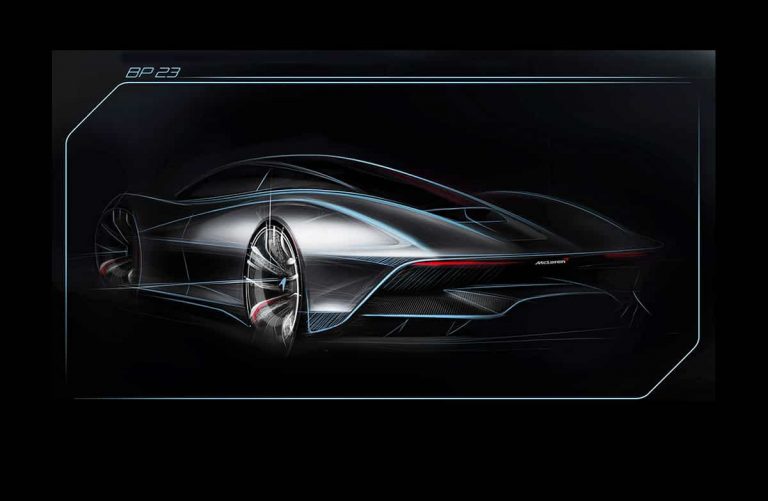
 First deliveries of the BP23 are expected in 2019. Rumours suggest it will debut carbonfibre technology that will expand across the McLaren model range.
Meanwhile hybrid powertrains are expected to feature much more prominently among the 15 new models that the brand plans to launch by 2022 under the ambitious ‘Track 22’ business plan, announced by McLaren Automotive CEO Mike Flewitt at the Geneva Motor Show in March 2016.
First deliveries of the BP23 are expected in 2019. Rumours suggest it will debut carbonfibre technology that will expand across the McLaren model range.
Meanwhile hybrid powertrains are expected to feature much more prominently among the 15 new models that the brand plans to launch by 2022 under the ambitious ‘Track 22’ business plan, announced by McLaren Automotive CEO Mike Flewitt at the Geneva Motor Show in March 2016.

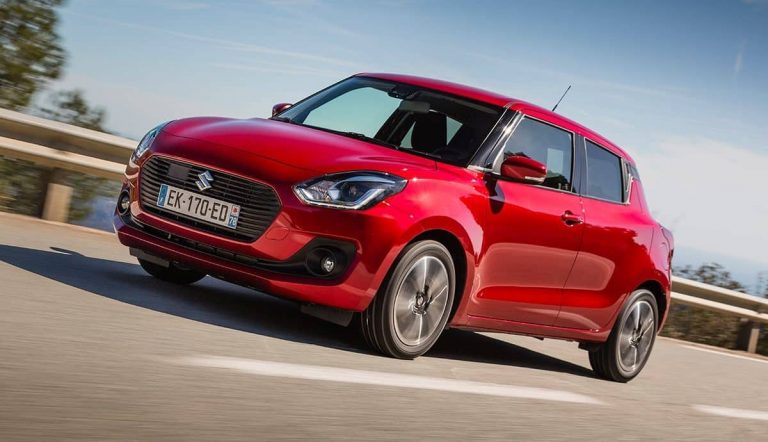
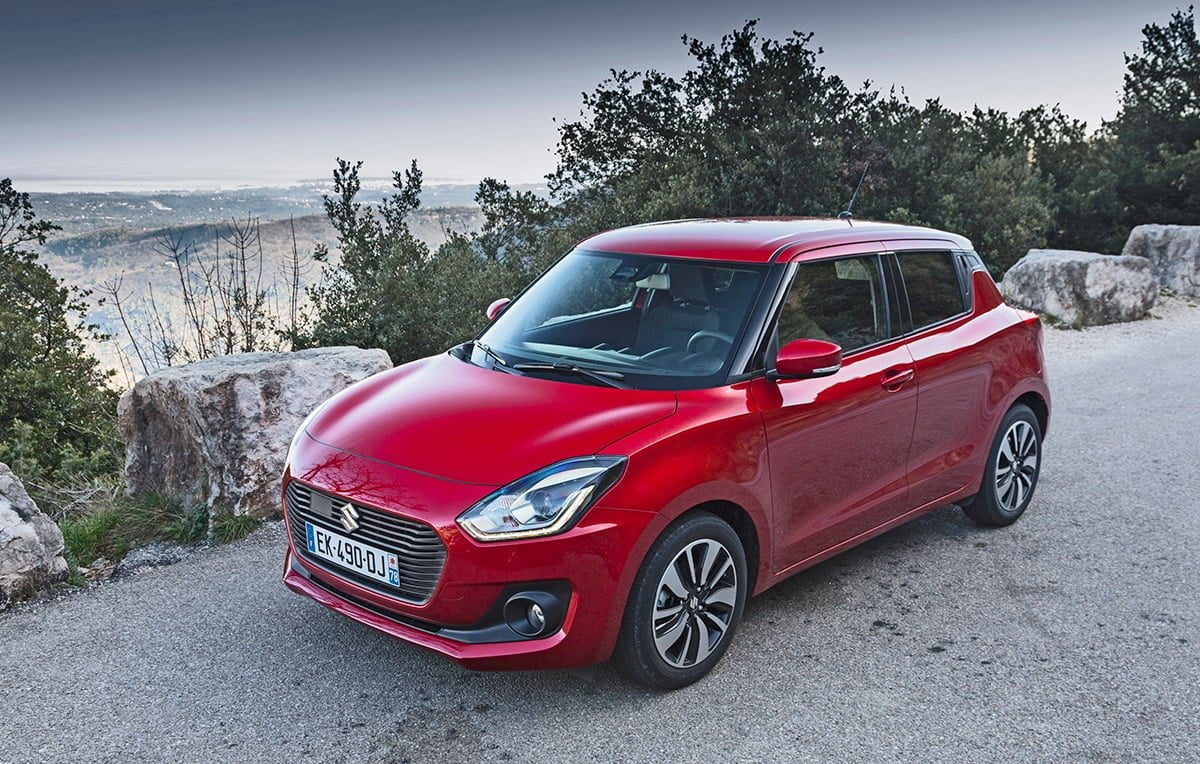


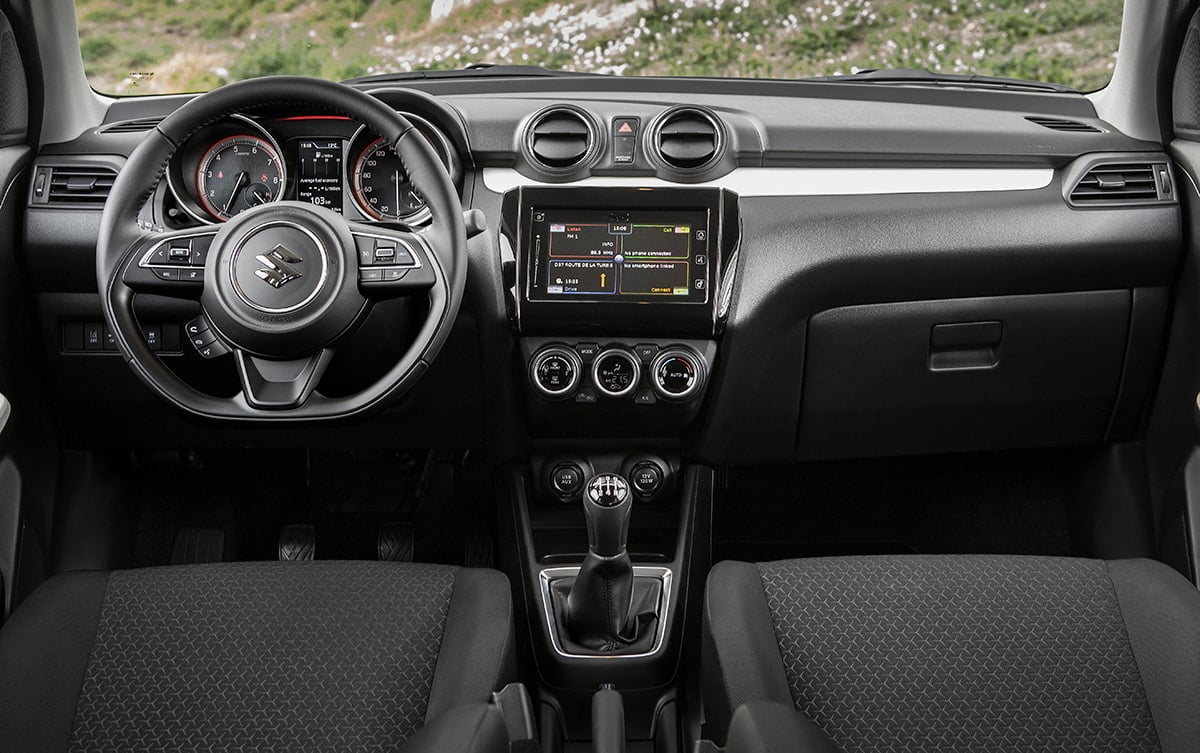


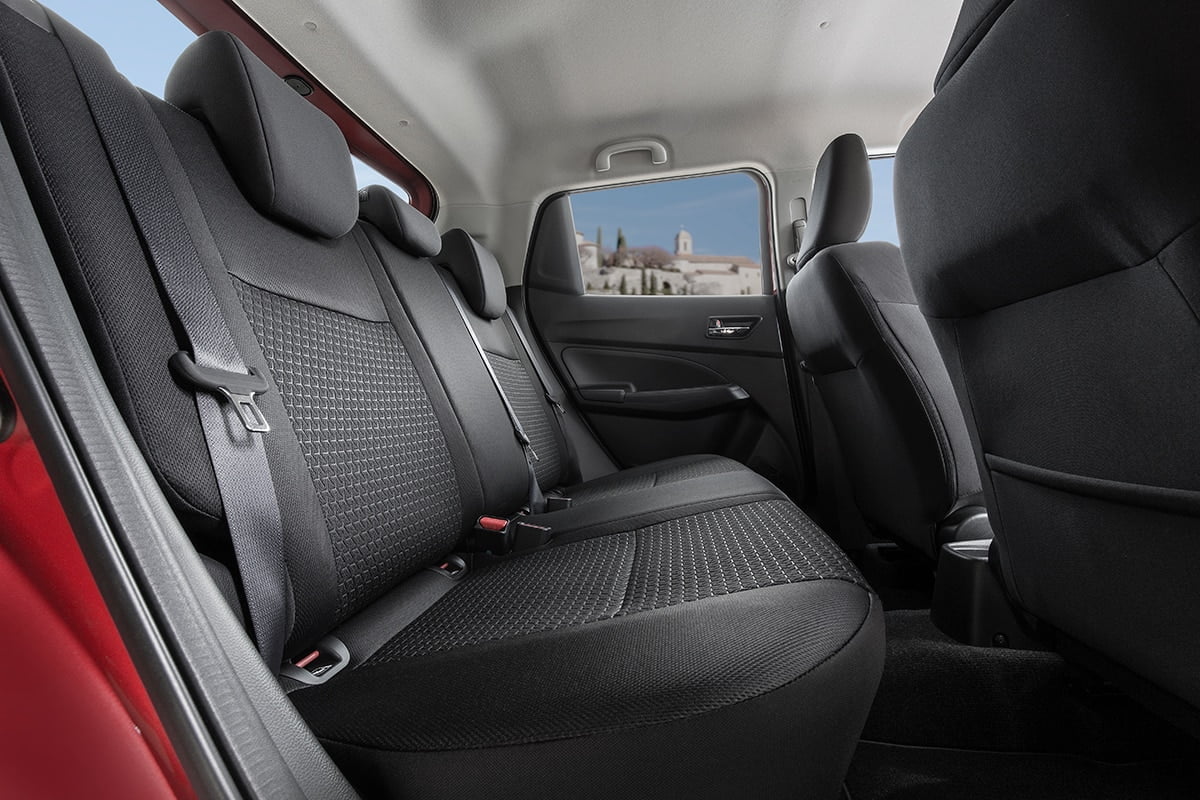


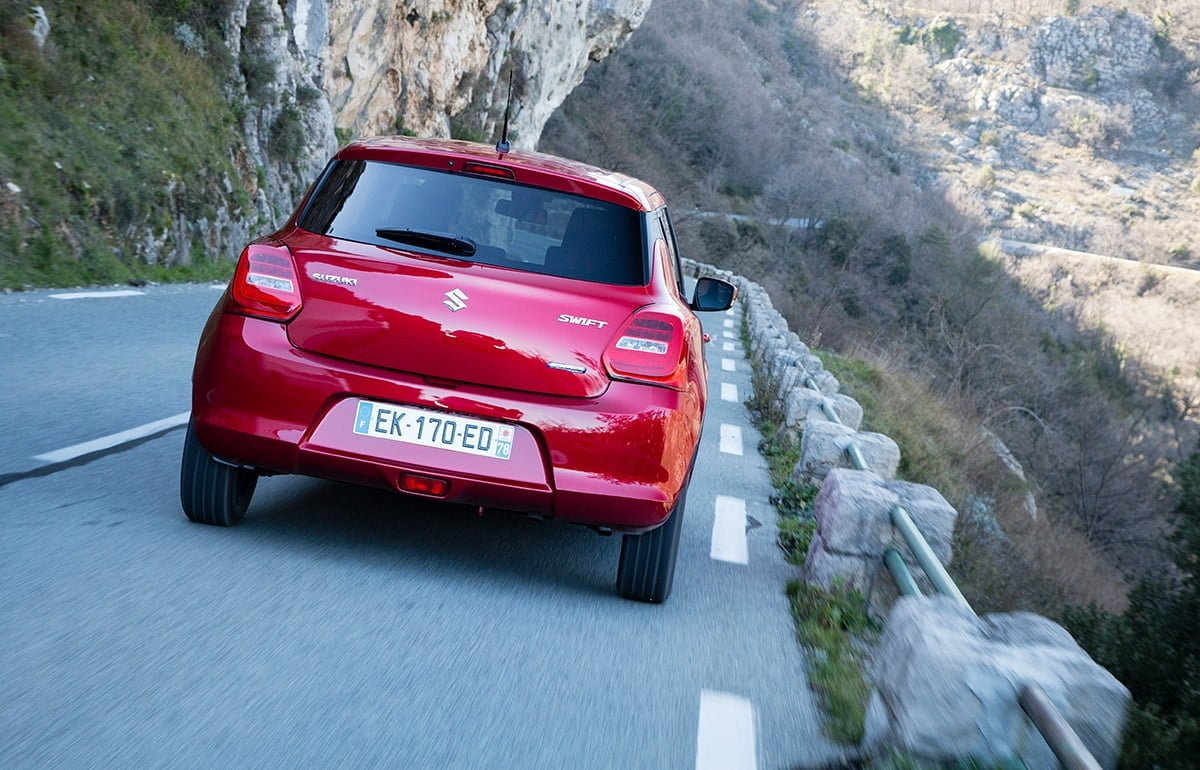
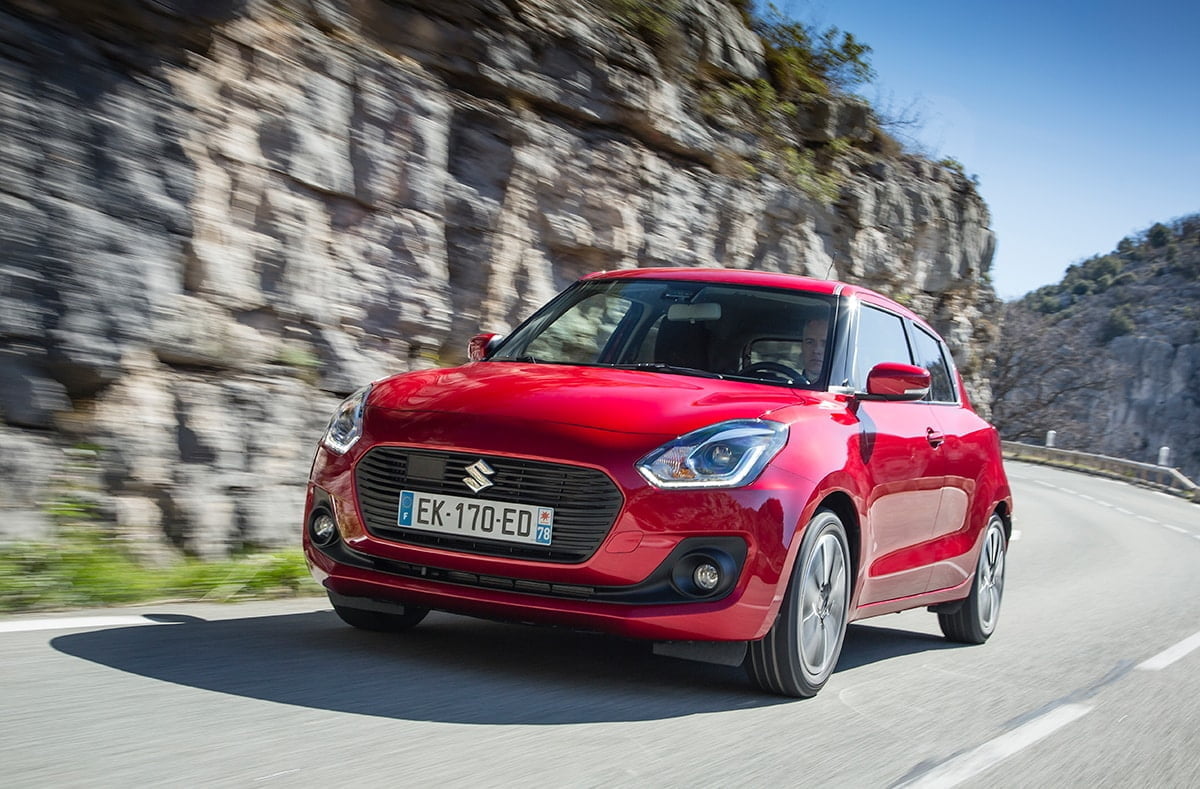 Suzuki Swift – key specifications
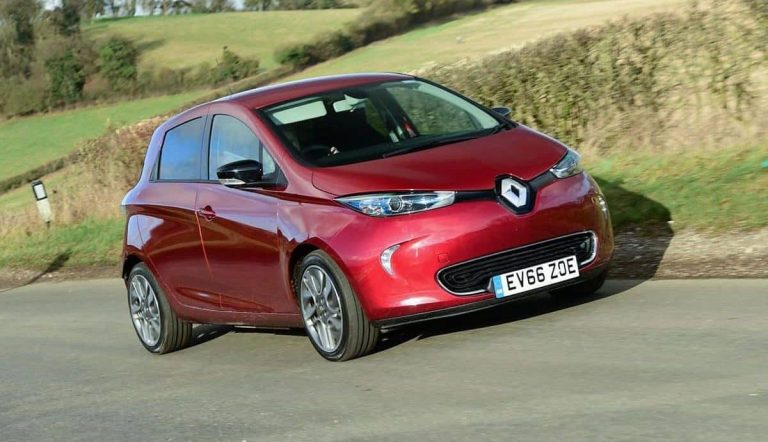
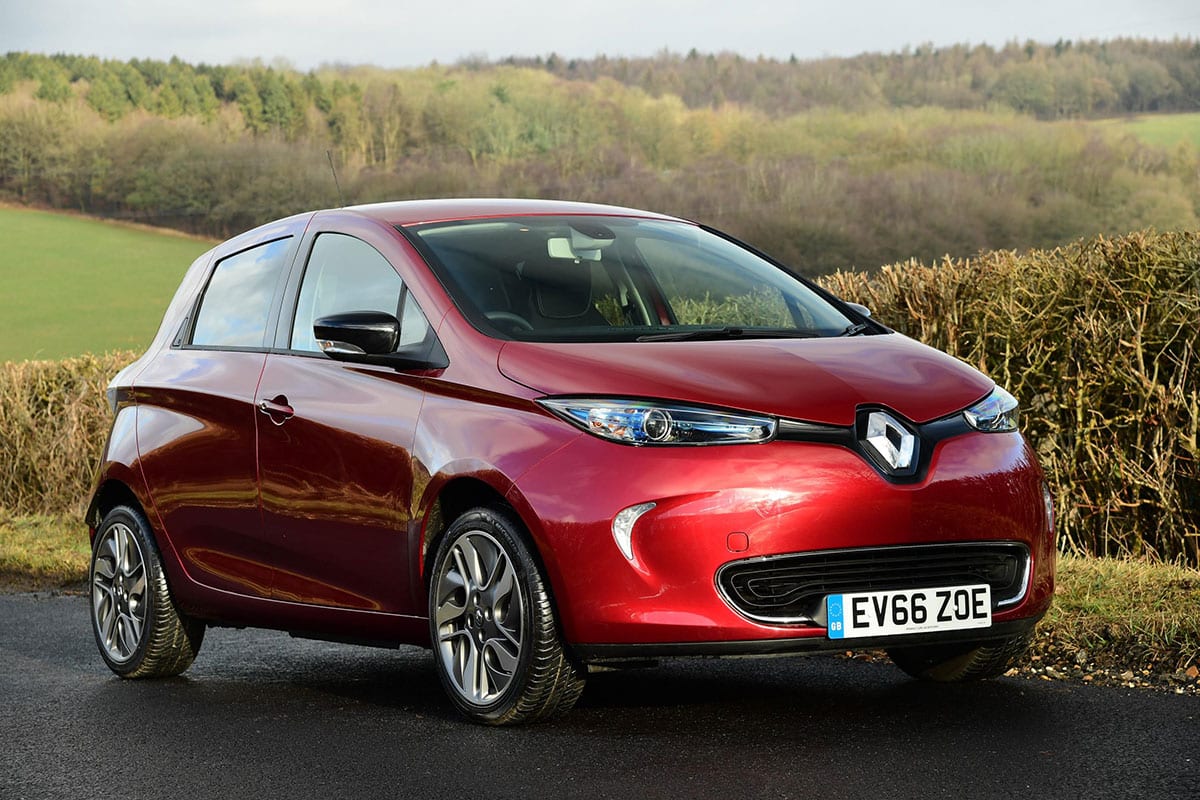
 Other changes to the 2017 Zoe include the addition of a new range-topping trim level, Signature Nav, which among other things includes the quick charger as standard. Also offered on this trim level are leather upholstery, a seven-speaker Bose audio system, rear parking camera, bespoke 16-inch alloy wheels and lumbar adjustment on the driver’s seat.
Across the range the interior and exterior are mildly modified and there are three new exterior colours, Mars Red, Titanium Grey and Ytrium Grey, the last only on Signature Nav cars.
Other changes to the 2017 Zoe include the addition of a new range-topping trim level, Signature Nav, which among other things includes the quick charger as standard. Also offered on this trim level are leather upholstery, a seven-speaker Bose audio system, rear parking camera, bespoke 16-inch alloy wheels and lumbar adjustment on the driver’s seat.
Across the range the interior and exterior are mildly modified and there are three new exterior colours, Mars Red, Titanium Grey and Ytrium Grey, the last only on Signature Nav cars.




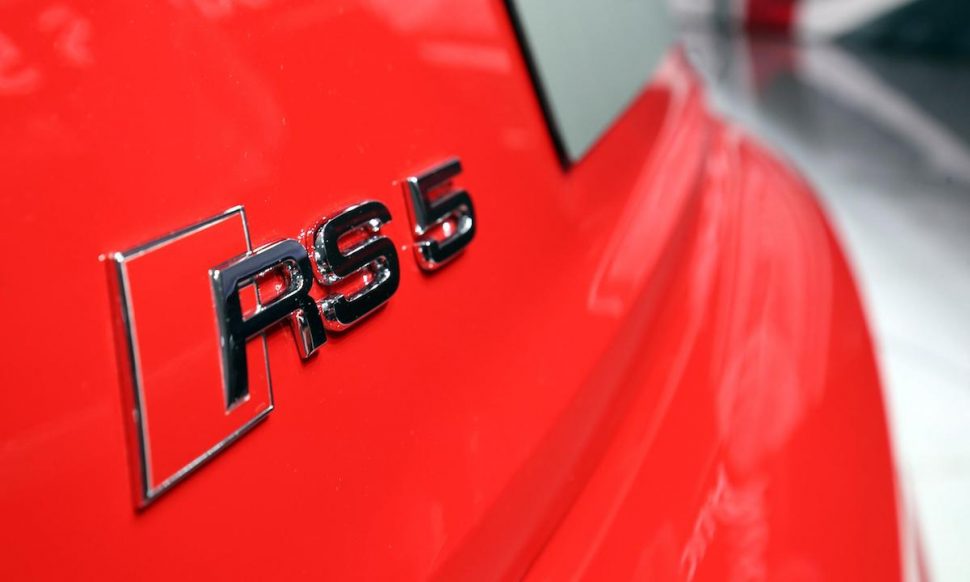
The all-new Audi RS 5 Coupe made its debut at the Geneva motor show last week, representing the apex of the new A5 range that has rolled out over the last six months.
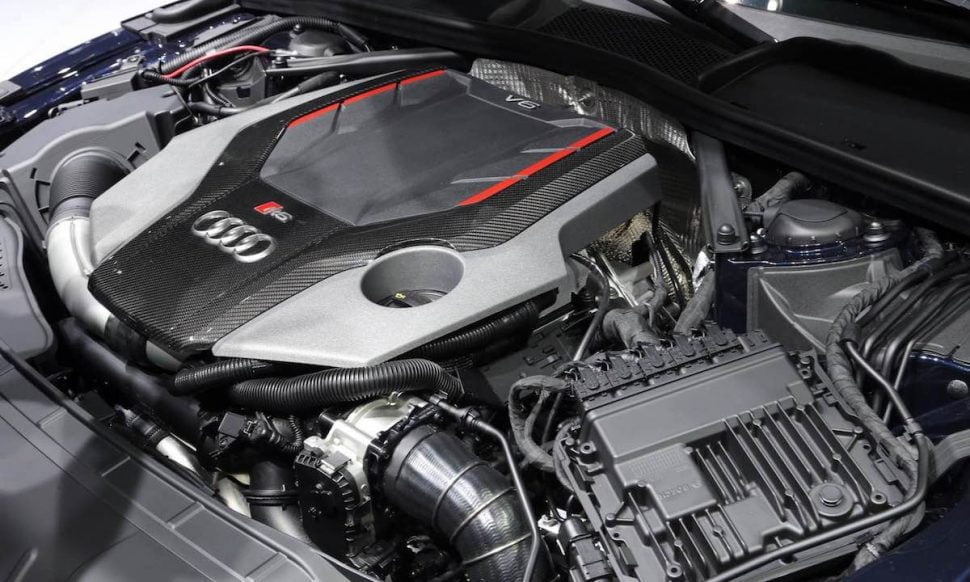
The second-generation Audi RS 5 has a new 2.9-litre twin-turbo V6 engine to replace the old model’s 4.2-litre naturally-aspirated V8 unit. The new engine, which has already been seen in sister brand Porsche’s Panamera, produces the same 450hp as the previous model, but with an increase in torque – now at 60Nm – across a wider range. The new engine is almost certain to be fitted into the new Audi R8 at some stage soon as well.
As well as improved output from the engine, the new RS 5 has been on a diet, weight has reduced by 60kg over the previous model. As a result, Audi claims that the 0-62mph time has reduced to 3.9 seconds, half a second quicker than its predecessor. The lower kerb weight should also result in improved handling, something the original RS 5 was heavily criticised for.
The quattro all-wheel drive system distributes drive to the front and rear axles in a 40:60 ratio, giving the new RS 5 a slight rear-wheel-drive bias. A torque vectoring sports differential will be available at additional cost.
Interestingly, Audi has replaced the old car’s double-clutch automatic gearbox with an old-school torque converter automatic transmission, although it has eight ratios compared to seven previously. This is presumably an attempt to improve emissions and fuel consumption on the official test cycle, rather than a decision to improve the driving experience.
The weight of the RS 5 has been reduced by 60kg. An optional carbon roof and ceramic brakes offer scope to reduce this further at extra cost.
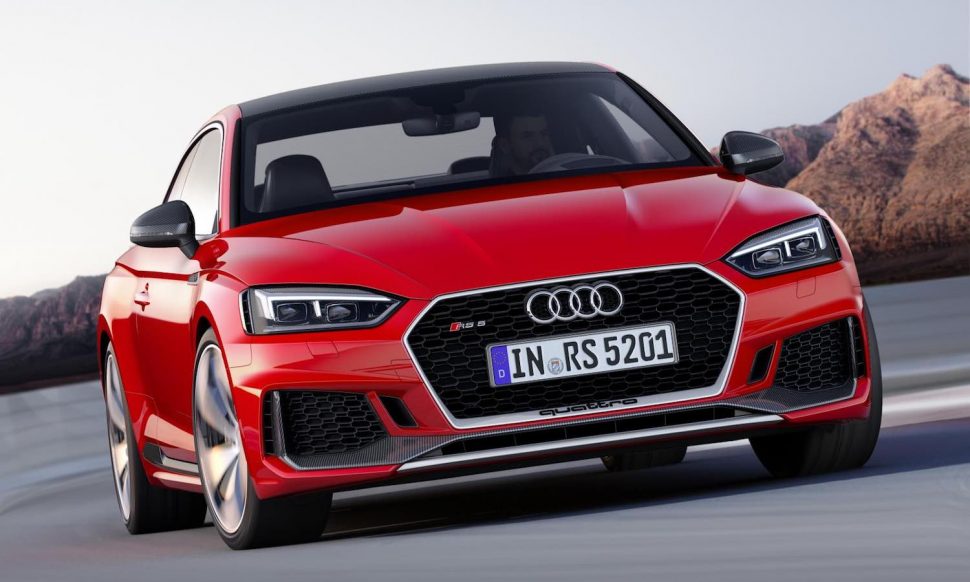
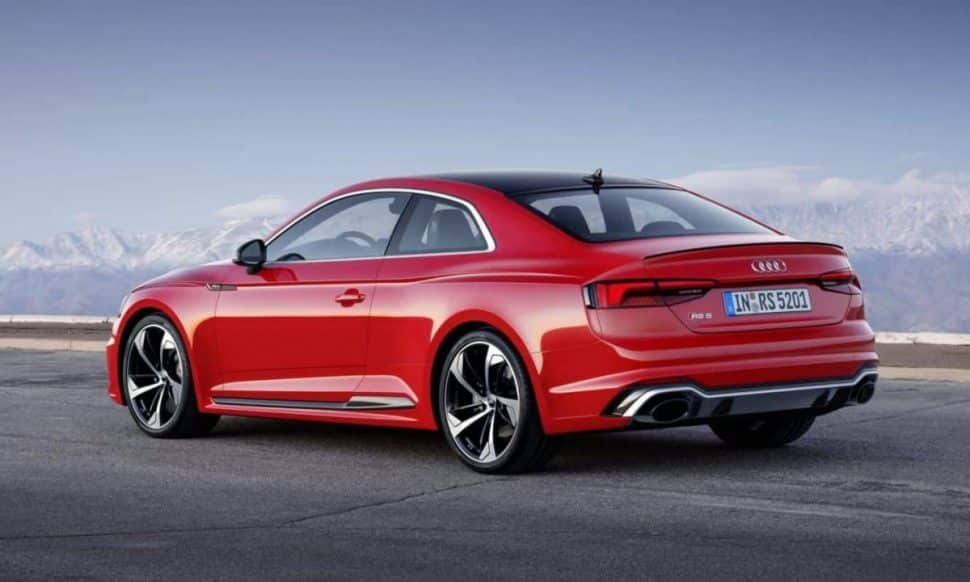
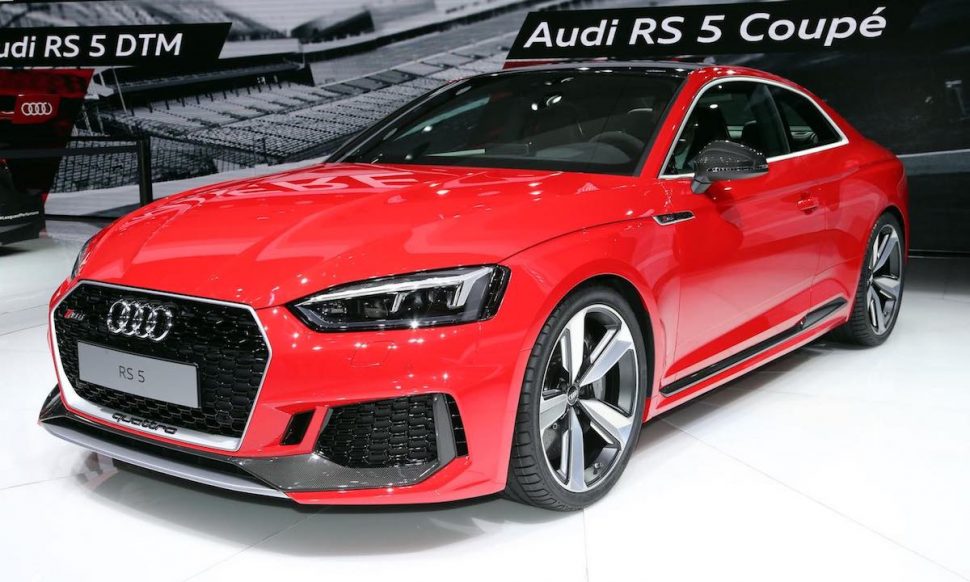
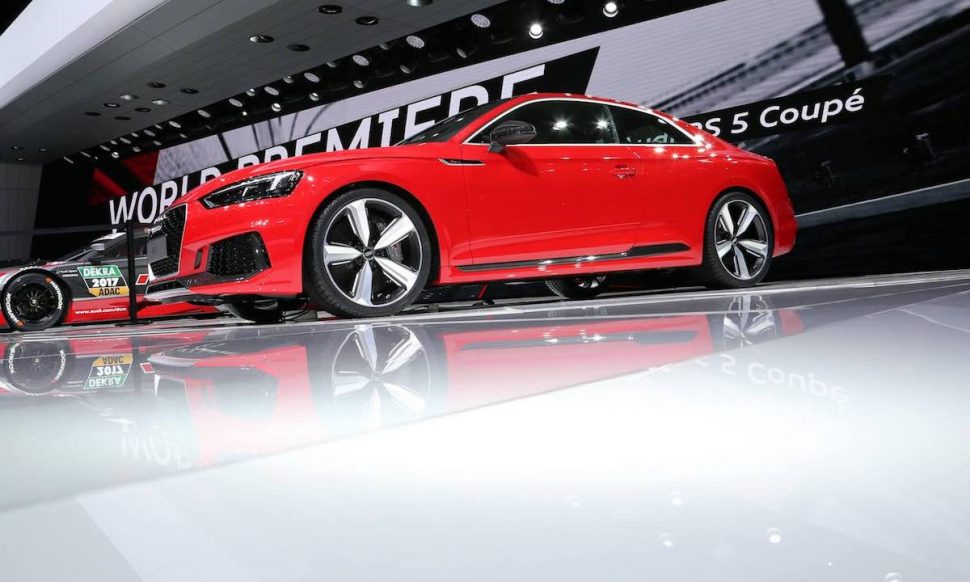
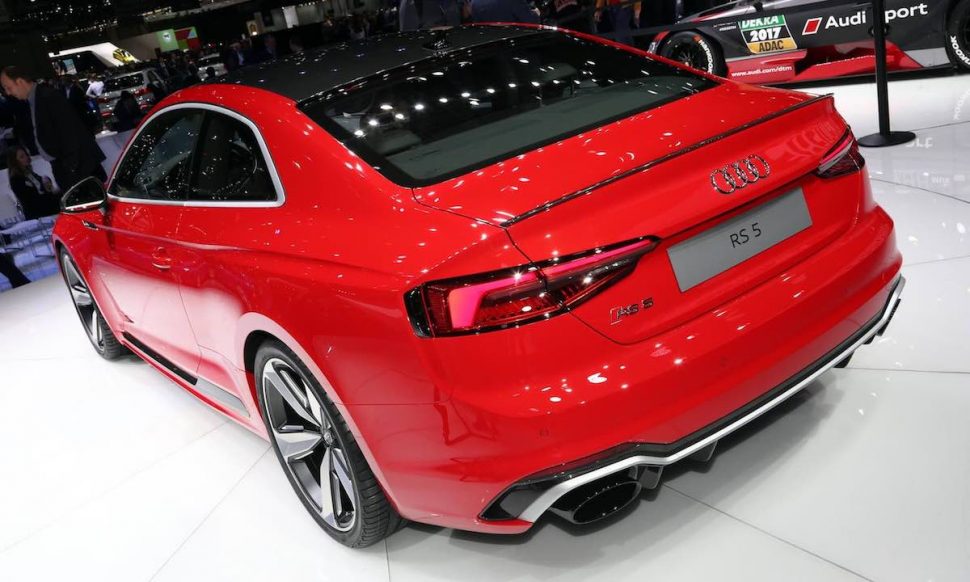
The new Audi RS 5 is allegedly the first car to benefit from Audi Sport’s new design philosophy, though as with any Audi design evolution, it is an extremely subtle shift in direction. Inspiration has been drawn from the Audi 90 quattro IMSA GTO racing car from the 1990s, though you would need to be a bit of an Audi fanatic to spot that.
Audi Sport claims that the koala-nose radiator grille (not an official term…) is wider and flatter than the regular A5, and the front and rear wheel arches have been pumped out in the usual RS style.
The new RS 5 comes with 19-inch alloy wheels as standard, with 20-inch wheels available. Customers can choose from the usual gloss black, carbon and matt aluminium packages, whilst Audi Sport offers an exclusive metallic Sonoma green paint finish.
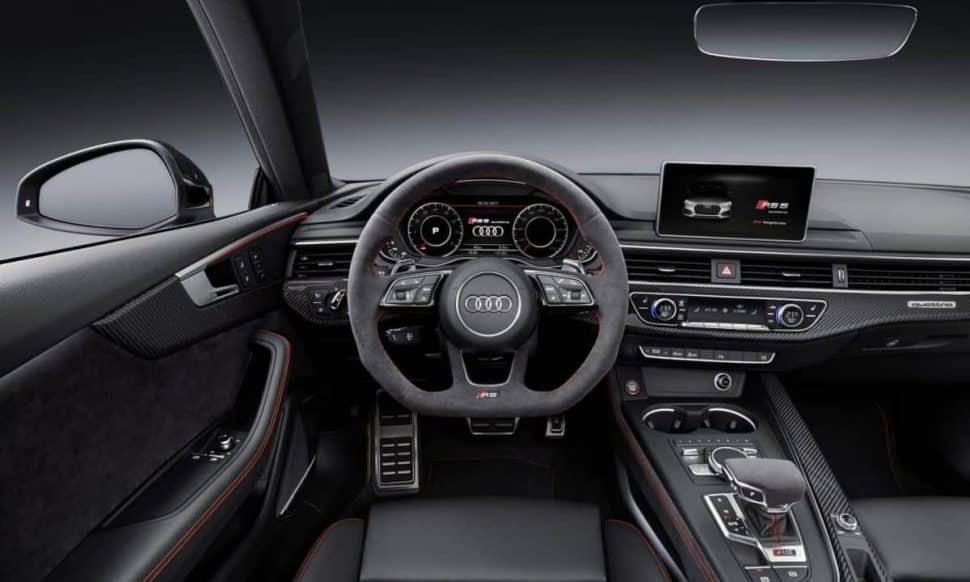
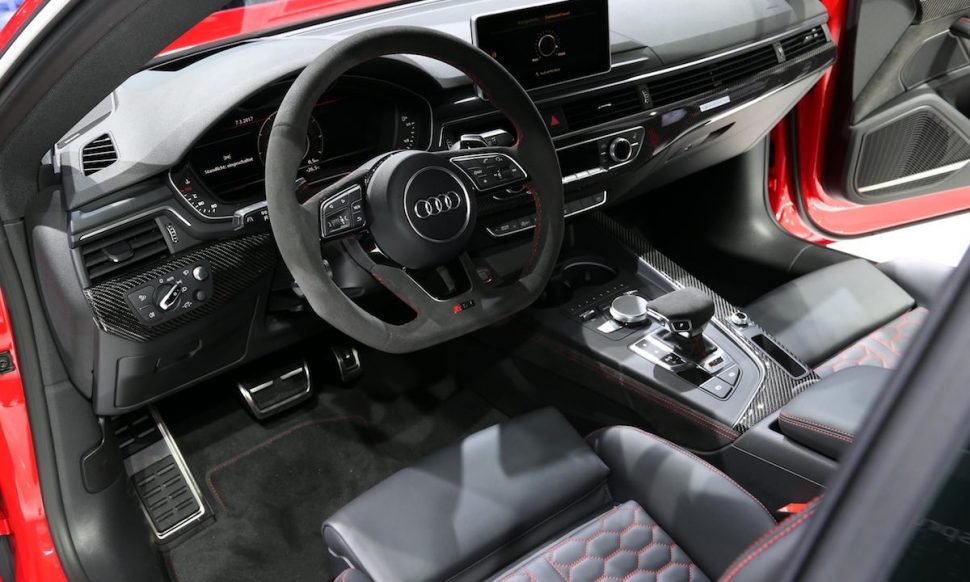
Inside, the cabin gets the traditional RS treatment, with red highlights and stitching on the steering wheel, selector lever, seats and seat belts. The leather sports seats are available with diamond stitching, and RS logos are splashed across the cabin to remind your passengers that this is not a regular A5 diesel. The virtual cockpit display has been upgraded to provide information on tyre pressure, torque and g-forces.
The interior follows the layout established by the rest of the A5 range, and although UK specification has not yet been announced, it is reasonable to expect that the RS 5 will be equipped with a high level of comfort and safety equipment.
Order books for the Audi RS 5 Coupe are due to open in May, and the first customers can expect to take delivery of their cars in the Summer. If you like the sound of the RS 5 Coupe but would prefer it to be a bit more wobbly and blustery, a Cabriolet version is almost certain to be announced in coming months.




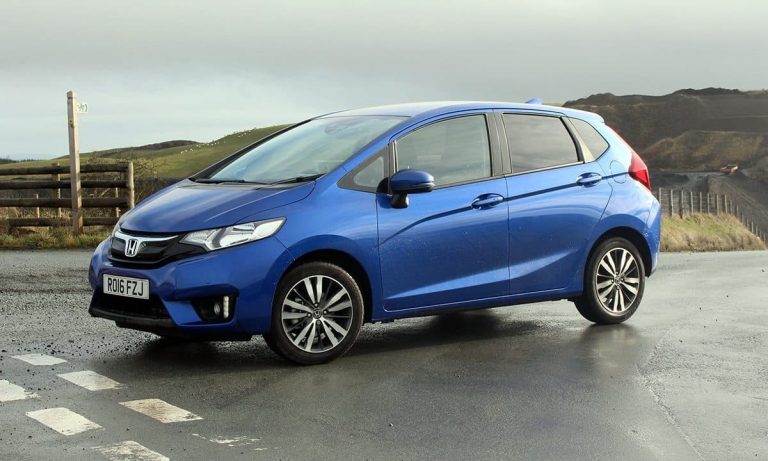
What is it: The current Honda Jazz is the third generation of the brand’s core supermini.
Key features: Completely new look, improved interior space, more tech.
Our view: The Honda Jazz scores adequately in all areas, and highly for its equipment. In terms of space rivals cannot compare with it.
Review type: Full road test.
Is the Honda Jazz a misunderstood car? Despite concerted marketing efforts by its makers – partiularly at the launch of the third-generation version in 2015 – the Jazz has never quite shaken its reputation as a car bought by the more mature motorist.
There is a perfectly good reason for this, however. With age comes experience, the ability to recognise a good value, practical product. Perhaps the Jazz has an elder following because of all the basic things it does rather well.
The 2015 redesign was no mere cosmetic exercise. It involved a complete ground-up renewal, the car built onto Honda’s latest B-segment platform shared with the HR-V crossover. Combined with an exterior length extended by 95mm, the wheelbase by 30mm, the result was much better use of the interior space and the fitting of Honda’s clever Magic Seats system, more on which shortly.
Lighter weight and an updated chassis were other factors suggesting that this Jazz should be a significant improvement.
The Honda Jazz has never looked like a typical supermini, its profile suggesting more mini MPV. The 2015 update served to add muscle to the profile with bolder lines, a distinct sliced horizontal line and the addition of the family face with its ‘X’ shape on the front end.


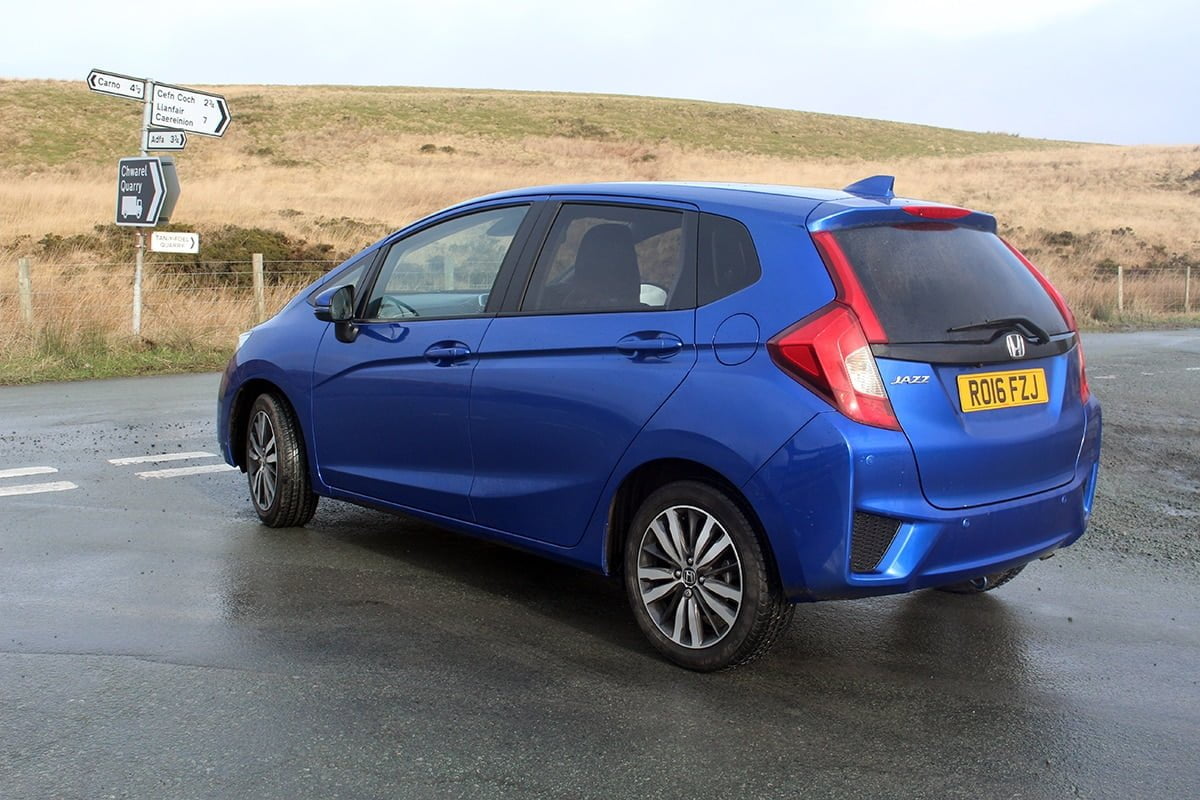
It may be different, but it is not a bad direction to go in. Instead of the friendly curviness of typical superminis, the Jazz presents a more purposeful stance.
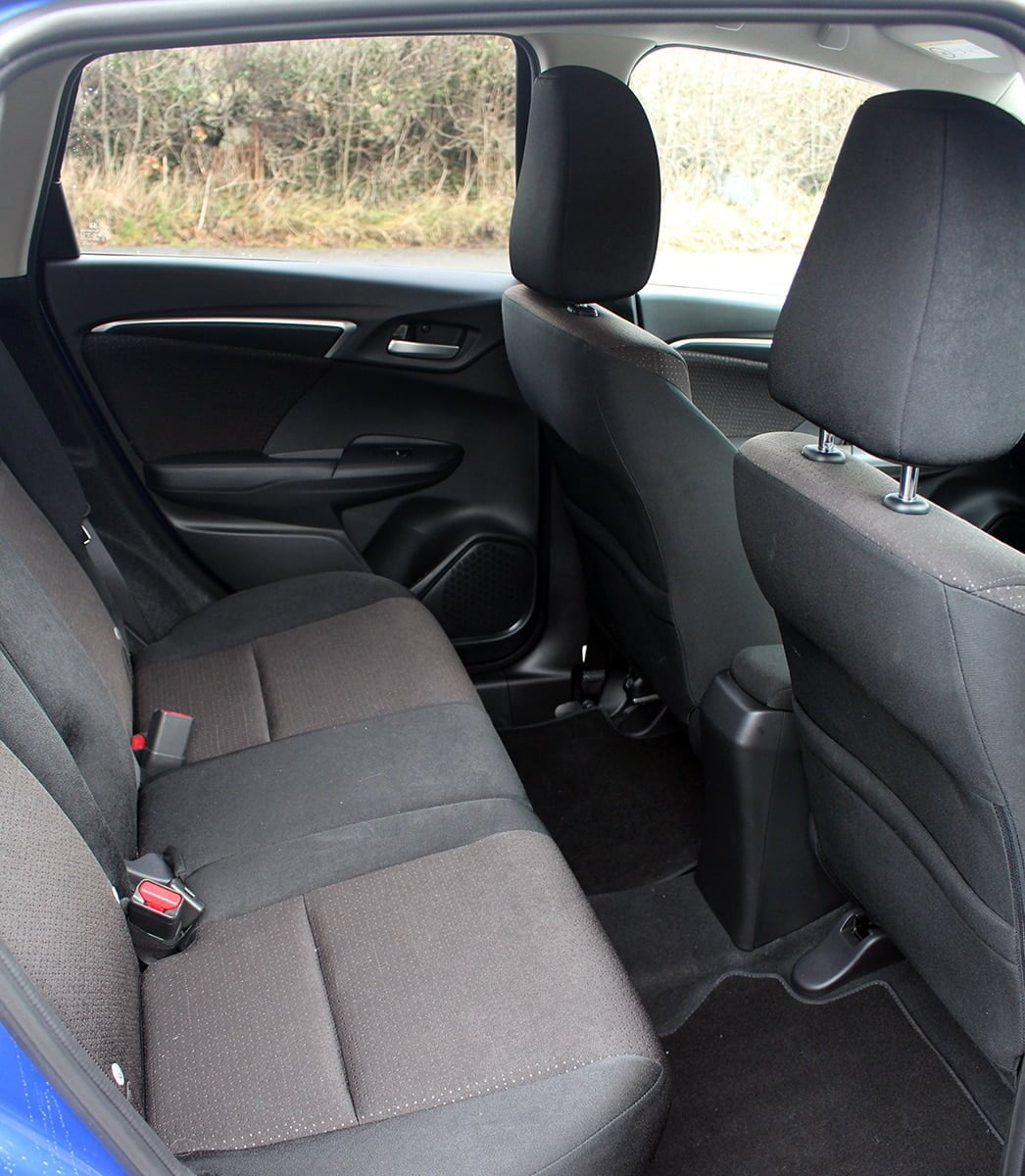
It is inside, however, where the Jazz really scores, and the MPV analogy mostly holds sway. For a supermini there really is a lot of space, particularly in the rear seats – adults will not be compromised in these.
Then there is the boot – almost 400 litres when most rivals struggle to achieve 300. It’s sensible space too, and the Magic Seats can be adjusted through a range of versatile settings to accommodate just about any awkward shape one might desire to carry.
The dash instruments are practical but the touch-sensitive controls – an app-based ‘pinch, swipe and tap‘ system – do not have a distinct action and in general one feels the Jazz is suffering in a time when supermini interiors are making sudden leaps forward. It is already beginning to feel a little dated.
Same with the fit and finish – it’s all put together competently enough, but others have stepped up their game and you feel the Honda needs to as well.
Just one engine is available for the Jazz. It’s a 1.3-litre petrol unit, naturally aspirated where many rivals have gone turbo. So it does not feel that enthusiastic, and to get the best out of it you have to make serious use of the rev range. It is smooth enough, however, and the six-speed manual gearbox fitted to our test car is a pleasure to use with its slick shifts. There is a CVT option, though it is not a great option.

Similarly the 55.4mpg fuel economy and 120g/km emissions levels are reasonable for a petrol-powered car but there are rivals who do better.
So the Jazz engine needs working hard to get the best out of it, which makes it a little thrashy. But the car scores very well in its chassis. As part of the design package for the latest version Honda engineers focused on redesigning the front suspension, which had come in for criticism in previous incarnations of the car. And they did a very good job.
The Jazz smothers all but the worst bumps, and grips well when cornered enthusiastically. The steering is a little light for such situations, but in the car’s natural environment of the urban streets, the steering is a boon allowing easy manouvering and ensuring living with a Jazz is an easy process.
The safety specification is certainly a plus point on the Jazz. On all but the entry-level model the Honda safety technology package, dubbed the Advanced Driver Assist System, is standard. It includes Intelligent Speed Assist, Forward Collision Warning, Lane Departure Warning, the Traffic Sign Recognition system and High-beam Support System, while the City-Brake Active system is standard on even the base model – all electronic aids aiming to make the driver’s job easier.
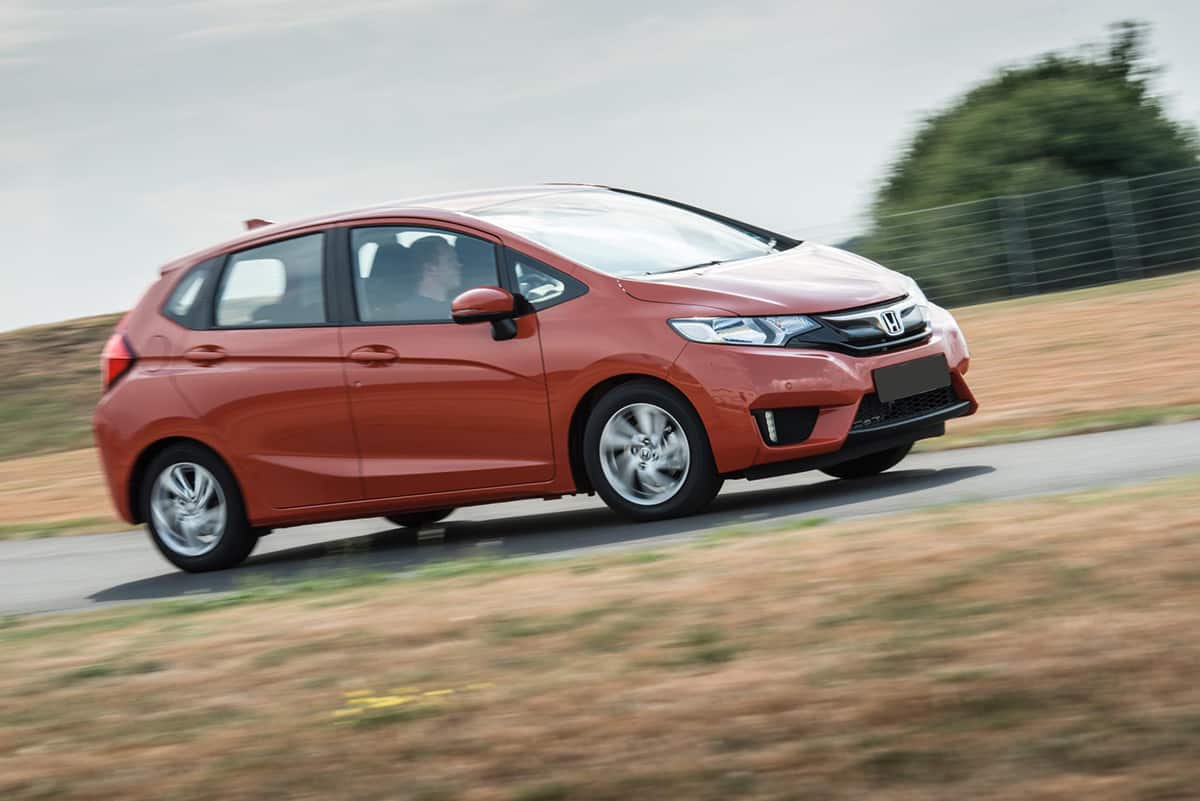
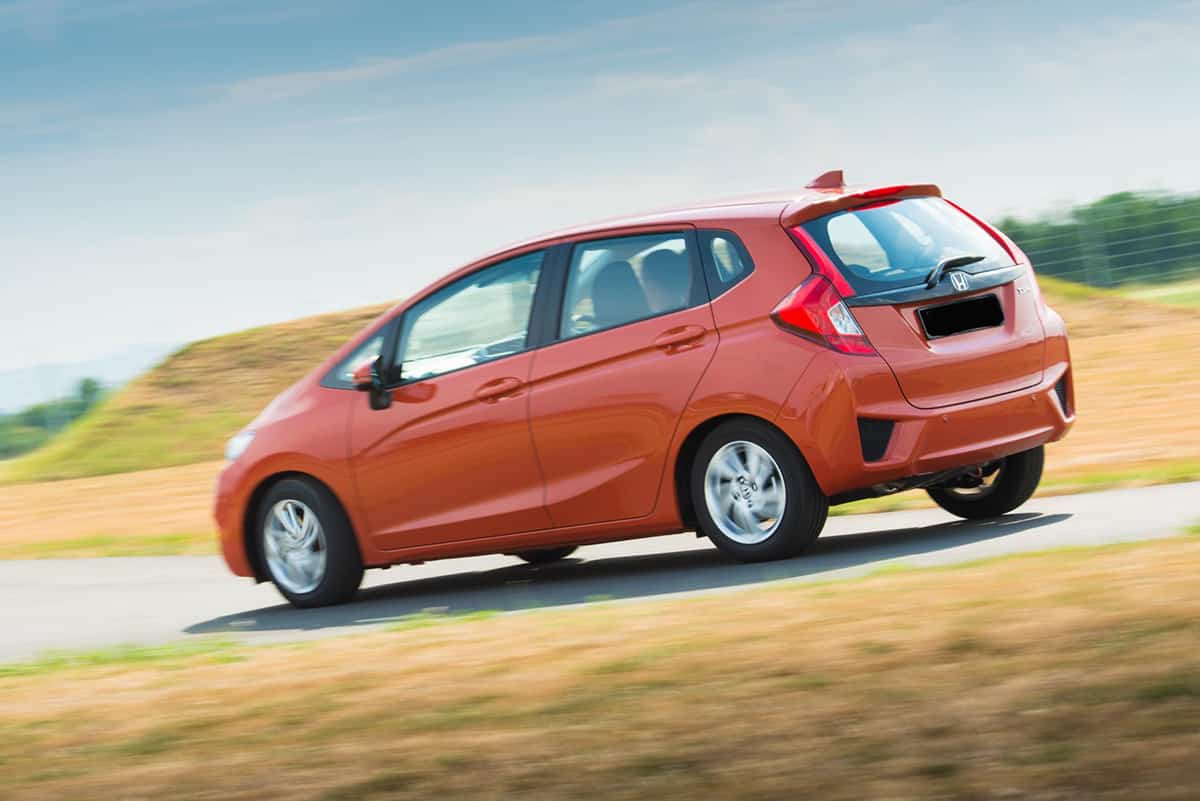
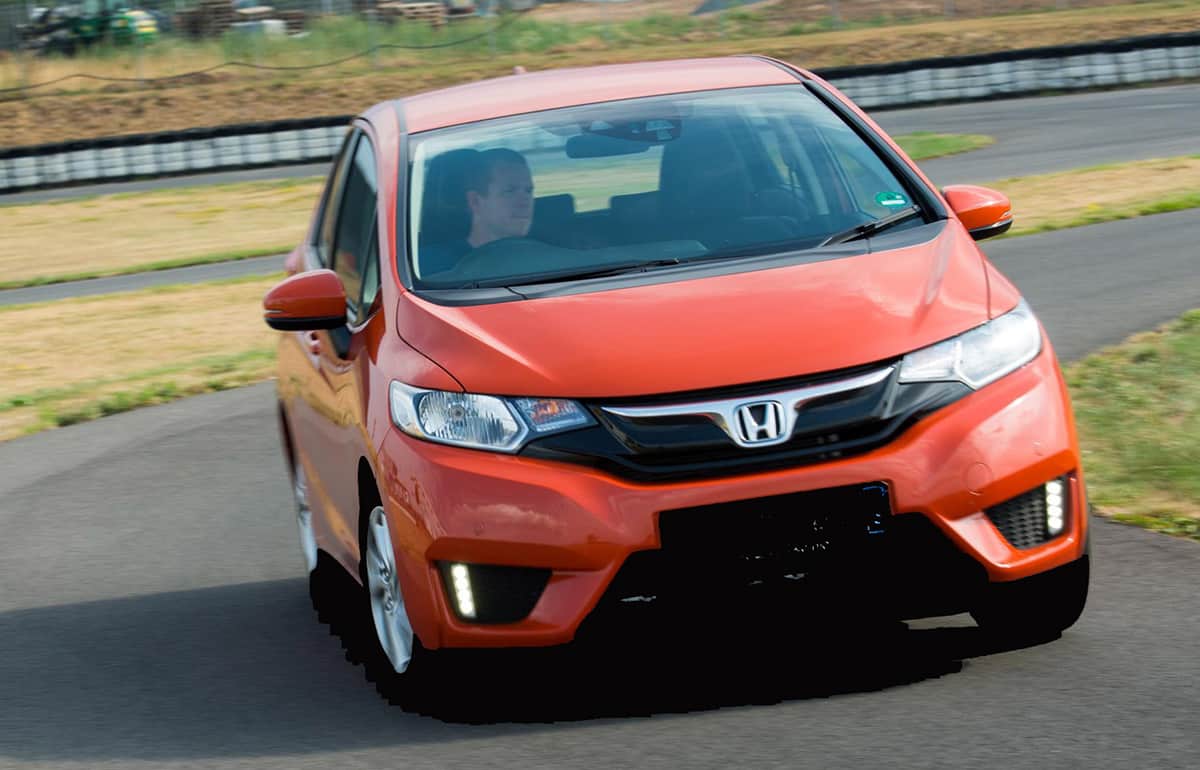
Our test car is to top EX Navi spec and so comes with quite a selection of equipment. Keyless entry and start, automatic climate control and a six-speaker audio system are standard, as are 16-inch alloy wheels and front fog lamps. The Honda Connect in-car infotainment system is also supplied, with that pinch, swipe and tap format on a seven-inch touchscreen. And Garmin navigation is included too, along with a rear parking camera.
The Honda Jazz is a perfectly competent supermini that does everything needed of it adequately enough. It’s just that rivals outscore it in individual areas. If you want a supermini with lots of equipment for the money, it scores highly. And if you want a supermini with lots of space, there is no other choice.
Test Date: January 2017
Model Tested: Honda Jazz 1.3 I VTEC EX Navi
Price:£16,755.
Insurance group: 13E.
Engine: Petrol 4-cylinder 1318cc
Power (hp):102 @ 6000rpm
Torque (Nm):123 @ 5000rpm
0-62mph (sec):11.5
Top speed (mph): 118
Fuel economy (combined, mpg): 55.4
CO2 emissions (g/km): 120
Key rivals: Volkswagen Polo, Toyota Yaris, Ford Fiesta.

With 2.3 million vehicles sold since 2007, the Nissan Qashqai has been one of the most successful crossover vehicles of the last decade. This week, Nissan unveiled the facelifted Qashqai at the Geneva motor show.
The new model features minor modifications to the suspension, damping and steering systems, as well as an updated design both inside and out and improvements to its driver aid systems.
In a first for the mass-market sector, the new Qashqai will also be available with a semi-autonomous driving mode where the driver will be able to completely let go of the steering wheel in certain circumstances.
Inside, Nissan has introduced the Tekna+ grade offering leather-trimmed seats. Other interior updates include a flat-bottomed steering wheel and four-way controller for the dashboard.
The infotainment system offers DAB radio and satellite navigation with a smart user interface. A BOSE seven-speaker sound system is available as an option.
Nissan claims that improved use of absorption materials, including thicker rear glass, has reduced noise in the Qashqai’s cabin.
The front end of the Qashqai has been redesigned and the rear and front lights revised. Adaptive front lighting improves night-time safety. Two new paint finishes are available: Vivid Blue (as seen in Geneva) and Chestnut Bronze. There is a choice of 17, 18 or 19-inch alloy wheels.
Driver aids are improved and extended in the new model, with the major additions being pedestrian recognition for the AEB system and a rear cross traffic alert which reduces the risk of low-speed impacts when reversing. Other available driver aids include blind spot and lane departure warnings.
Nissan will also be introducing a semi-autonomous capability called ProPilot. The system allows the car to drive itself within its lane on a motorway-syle road with no input required from the driver. ProPilot controls the car’s steering, acceleration and braking, and can be used in traffic or at high-speed. Future updates to the system will allow it to change lanes and deal with junctions, but this will not be available at launch.
Paul Willcox, Chairman of Nissan Europe, hopes that the new Qashqai “will continue to define and set new standards in the crossover segment.”
The new Nissan Qashqai goes on sale in the UK in July 2017.

The name is the big news surrounding the Aston Martin Valkyrie. Making its debut at the Geneva show, the hypercar adopts the ‘V’ naming convention of the Aston Martin brand.
The Valkyrie is being developed in conjunction with Formula One designer Adrian Newey, previously responsible for the World Championship-winning cars of Red Bull Racing.
The Geneva display car effectively only shows the visual appearance of the Valkyrie – its chassis is still under development. Aston Martin describes it as a Formula One car for the road and its mid-engined powertrain combines a 6.5-litre V12 Cosworth unit to a KERS energy-recovery system developed straight from those on F1 cars.
The publicly-stated goal when the collaboration with Red Bull Racing was announced was to produce a car which could match a Formula One car around Silverstone.
The production version of the Aston Martin Valkyrie is expected to launch in 2019, and the price is estimated at £2 million each – and every one of the strictly limited production run has already been sold.
Reports at the show suggest that Aston Martin will use the reputation established by the Valkyrie, along with development elements such as the aerodynamic package, to launch a mid-engined supercar.
Likely appearing in 2021, the new model would rival such cars as the McLaren 720S, which has launched at the Geneva event. This would mark a significant shift from the brand’s current model range of a number of variations on a front-engined coupé theme, all sharing the same platform.
Aston Martin is on a significant expansion and regeneration programme at present – the DBX SUV is also expected in 2019, built in a brand-new plant converted from enormous MOD hangers at St Athan in Wales. A revival of the Lagonda badge is also believed to be in the pipeline.

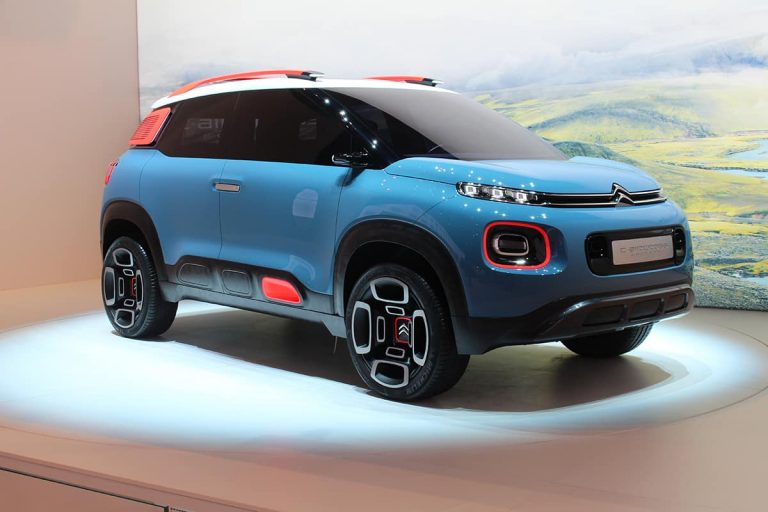
The Citroën C-Aircross Concept debuts at the Geneva motor show as ‘a new vision’ of the French brand’s future SUV line.
In fact it is the likely replacement for the current C3 Picasso, and when the production version is unveiled – possibly at the Frankfurt show in September, it will be pitched against the mass-selling Nissan Juke.
The design takes the latest styling language established with the recent C4 Cactus and particularly C3 models and applies it to a SUV format. Notable touches on the concept include rear-hinged back doors which give the cabin a spacious feel when they are opened.
Technology features heavily in the concept – the car includes a colour head-up display that replaces the traditional instrument panel, a single-spoke steering wheel with controls mounted on it, rear facing cameras instead of mirrors and wireless induction charging for smartphones.
The production model, likely on sale early in 2018, is expected to use the same engine range employed in the C3 and C4 Cactus. It will also follow the current crossover trend in not offering an all-wheel-drive option, though PSA’s impressive Grip-Control traction aid will be available.
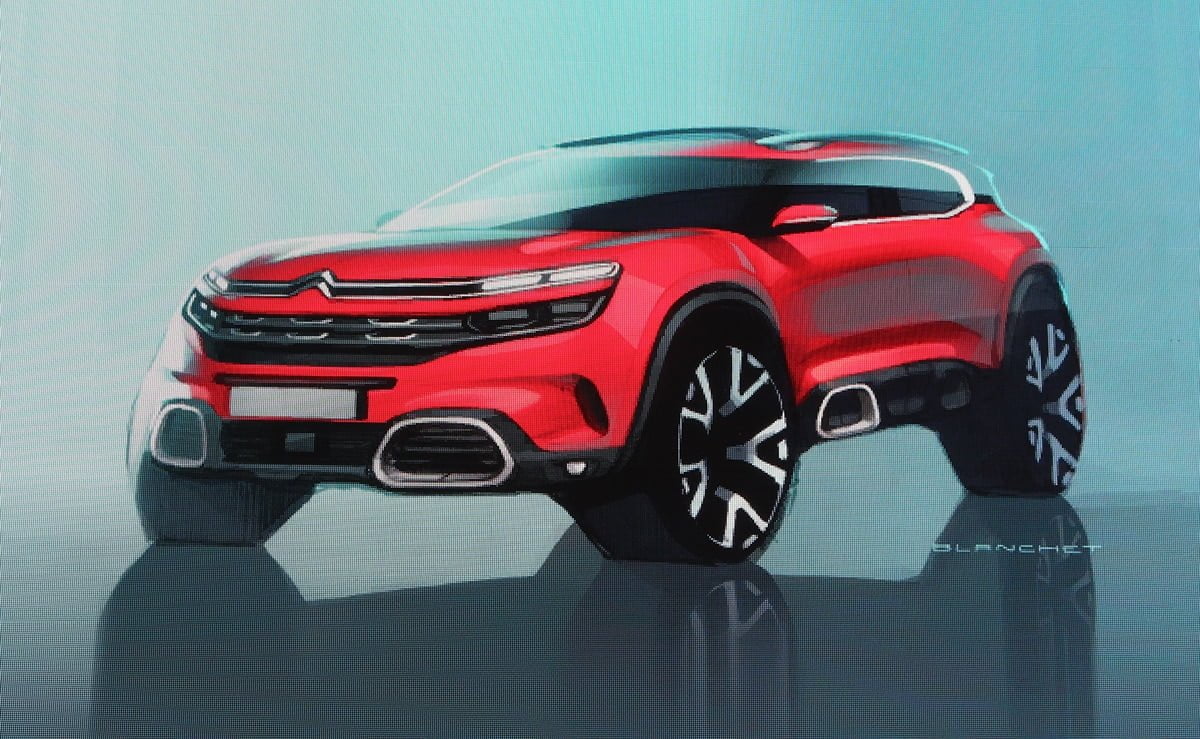
Citroën used the unveiling of the C-Aircross to tease its next concept, the brand’s head Linda Jackson revealing two sketches of the C5 Aircross. This will be unveiled at the Shanghai motor show in April, and evolve into a mid-sized crossover that will adopt the C5 badge when it launches, probably early in 2018.


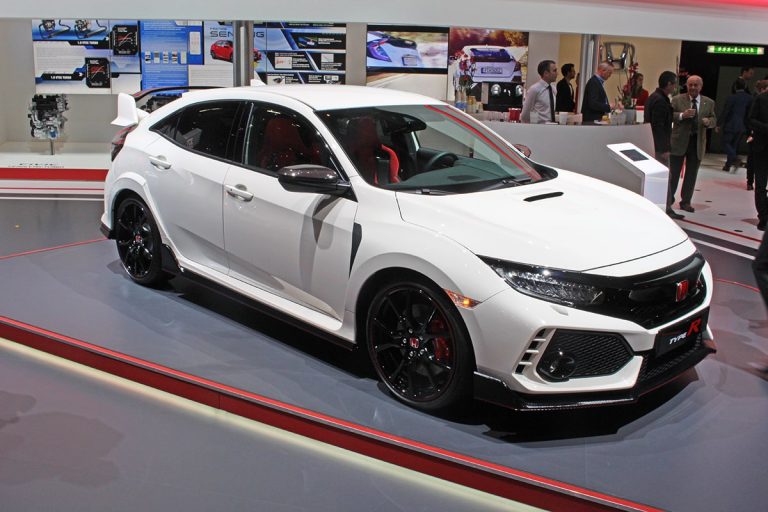
New versions of the Honda Civic Type R seem to come around quickly these days and summer 2017 will see the fifth generation of the model on sale.
Built like its predecessor in the UK, at Honda’s Swindon plant, the new Civic Type R is based on the tenth-generation Civic range that arrives in showrooms at the end of March.
Unlike its predecessor the requirements of the new Type R were taken account of when the mainstream Civic was at the design stage, which is the reason for its rapid reveal, even before the stock car has gone on sale.
While it uses the same 2.0-litre VTEC turbo petrol engine of the outgoing model, the new Civic Type R benefits from improvements to the powertrain. Peak power goes up 10hp to 320hp, while the torque figure remains at the same 400Nm. Honda says that work on the ECU settings has improved drivability and throttle response on the car.
Performance and economy settings for the new car are still to be released, though it is expected to be slightly faster to 62mph than the 5.7 seconds that the current Type R takes.
Criticisms levelled at the current Type R have included a view that it is a bit too extreme for a road car, and Honda appears to have made efforts to address this and produce a more versatile hot hatch. Notably the driving modes available now include a ‘Comfort’ setting alongside the traditional ‘Sport’ and ‘+R’ modes – the latter is specifically designed for use when the car is on a circuit.
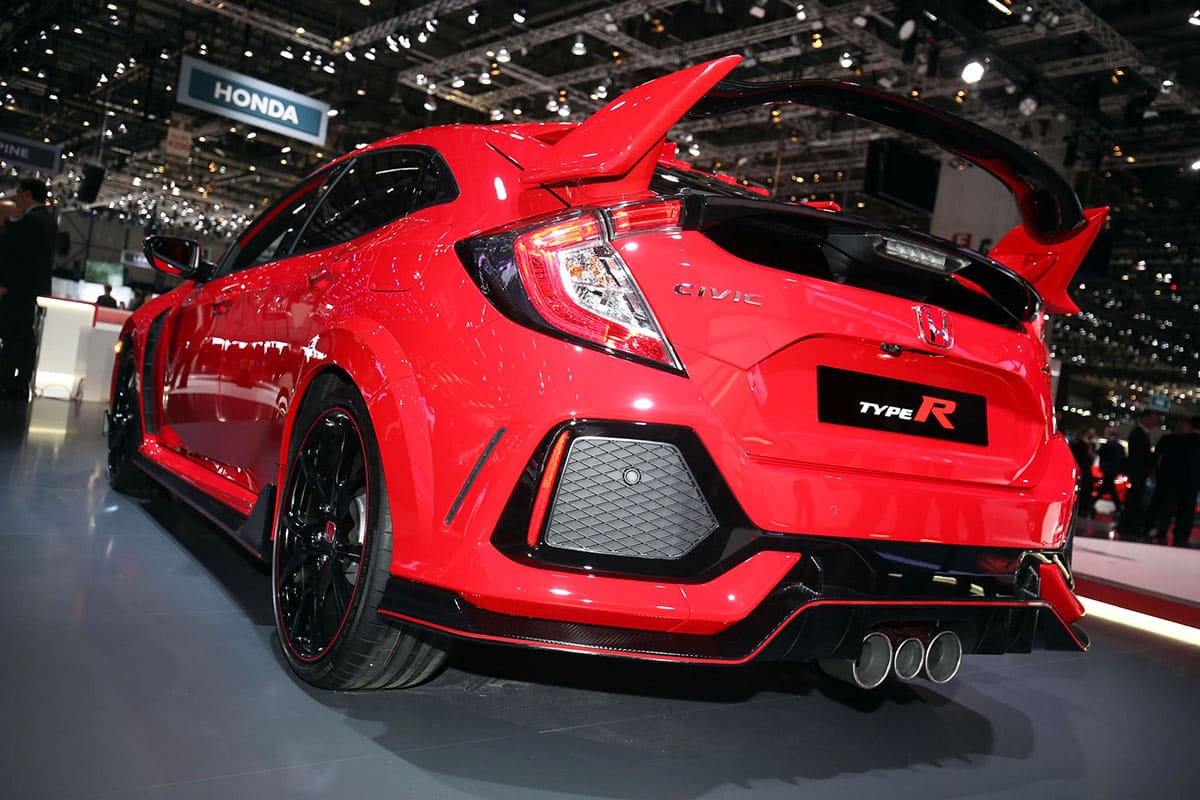
The new Civic Type R is described as 38 per cent more torsionally rigid than its predecessor. It is larger in length in width and lower in height than the outgoing Type R, with a centre of gravity reduced by 34mm.
Chassis improvements over the mainstream Civic include new geometry on the Macpherson strut front suspension to minimise torque steer and maximise handling response. At the back more rigid arms are fitted to the newly designed independent multi-link system.
The aerodynamics, always a highly visual element of the Type R, are improved with a smoother underbody, front air curtain, a lightweight rear wing and vortex generators at the trailing edge of the roof line.
According to Honda the bold body styling contributes to a class-leading balance between lift and drag, contributing to greater high-speed stability.
Prices for the new model are still to be confirmed – the current Type R costs from £30,000.
Also debuting on Honda’s Geneva stand is the NeuV, a battery electric concept that learns about its owner and acts accordingly.
According to its creators the NeuV (pronounced new-vee) takes advantage of the fact that most privately-owned cars spend 96 per cent of their time idle.
When not being used by its owner, the car can function as an autonomous ride-share vehicle ferrying customers. And while not in use it can feed energy back to the Grid in times of high demand, earning its owner money in the process.
The NeuV includes an ‘emotion engine’ called HANA (Honda Automated Network Assistant), which learns from the driver by detecting emotions behind their judgments. It can then apply what it has learnt from the driver’s past decisions to make new choices and recommendations.
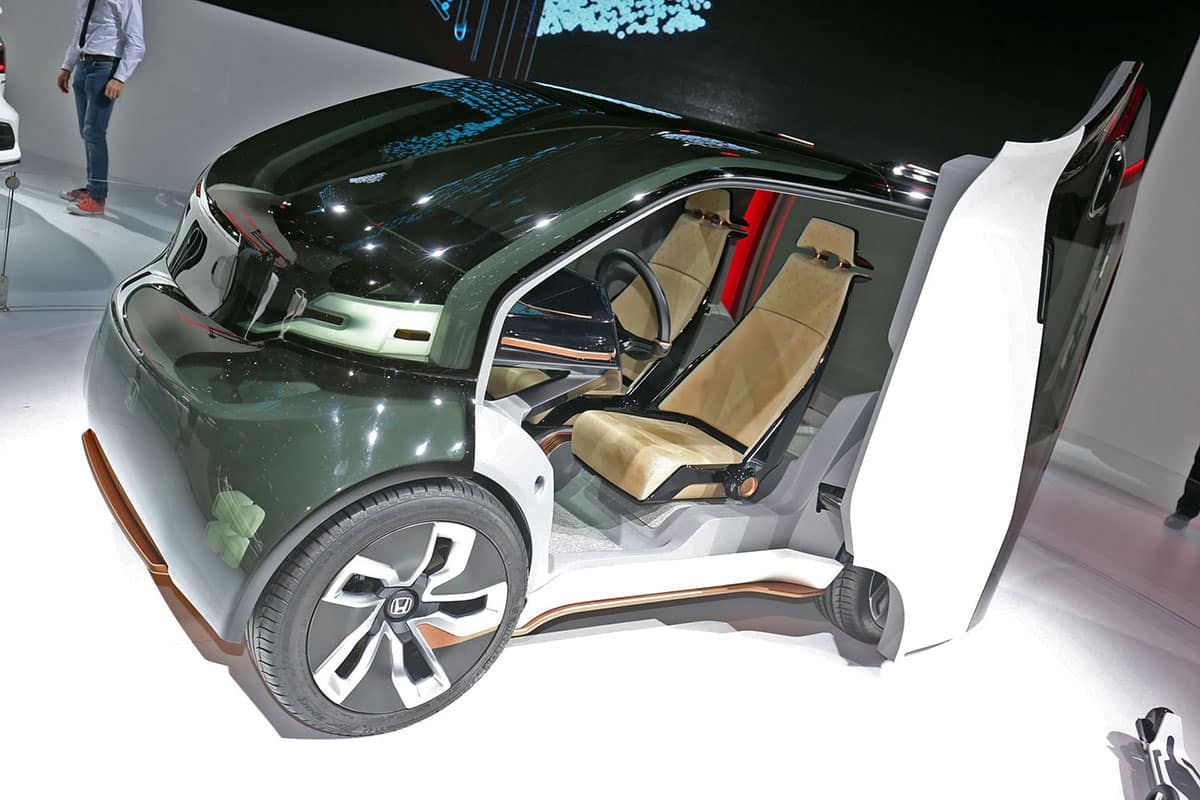
Two people and their luggage can be carried by the NeuV, and it also provides storage space and a charging point for a ‘Kick ’n Go’ electric scooter concept to help passengers get to their final destination.
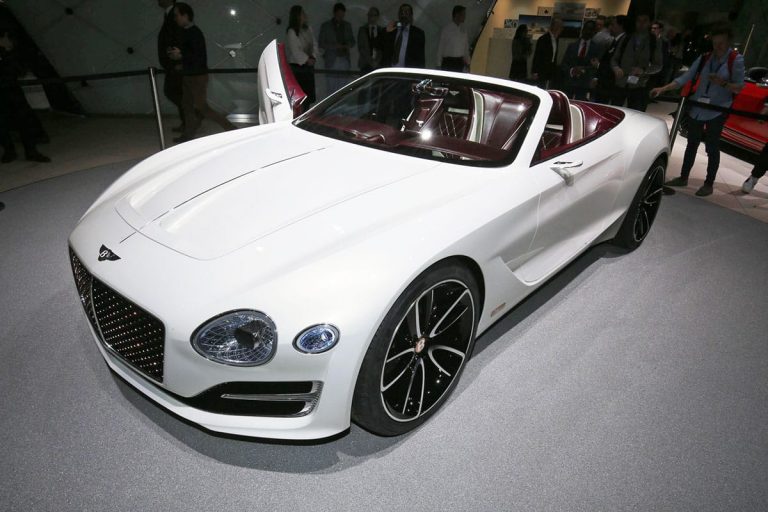
The Bentley EXP 12 Speed 6e and Jaguar I-Pace may both be concepts but demonstrate how all aspects of the automotive industry, including the premium and luxury sectors, are looking increasingly to an electric future.
With the EXP 12 Speed 6e, unveiled at the Geneva show, Bentley aims to demonstrate that an all-electric version of one of its cars will not compromise the quality, refinement and high performance levels that customers of the luxury brand expect.
“The EXP 12 Speed 6e is a concept to show that Bentley is defining electric motoring in the luxury sector, with the appropriate technology, high quality materials and refinement levels you’d expect from a true Bentley,” company chairman and CEO Wolfgang Dürheimer says.
This version of the concept is aimed mainly at gauging reaction to Bentley’s latest exterior and interior design direction, and no mechanical details of the Speed 6e powertrain have been released.
Bentley is working towards electric technology that will include high-speed inductive charging and give the car a range sufficient for the ‘grand touring’ requirements of the brand’s customers.
“An electric Bentley would, for example, be able to drive between London and Paris or Milan and Monaco on a single charge and the onboard experience will be enhanced for both driver and passenger thanks to the integration of state-of-the-art technology,” Bentley’s launch release states.

The brand is planning for an electric future, with plug-in hybrid variants set to be offered across the Bentley model range starting with the Bentayga SUV in 2018.
“This concept enables us to engage with luxury customers and gather feedback on our approach,” Dürheimer says. “Bentley is committed to offering an electric model in its future portfolio and we are interested to receive feedback on this concept.”

The Jaguar I-Pace concept makes its European debut following its reveal at Geneva in January, and a production version will not be far behind.
Jaguar has been taking registrations from customers wanting to be among the first to own a production I-Pace, and according to reports 350 have already signed up.
While the car is closely related to the recently launched F-Pace, development of the I-Pace required the design teams to ‘tear up the rule book’, according to Jaguar design director Ian Callum. The result, he believes, is a no-compromise smart, five-seat sports car and a performance SUV in one.
“The I-Pace Concept is a radical departure for electric vehicles – it represents the next generation of battery electric vehicle design,” Callum says.
“It’s a dramatic, future-facing design – the product of authentic Jaguar DNA matched with beautiful, premium details and British craftsmanship.”
The production I-Pace will be on the roads in 2018 as Jaguar’s first-ever battery-powered electric vehicle. “(It) opens a new chapter in the history of our legendary brand,” Callum says.


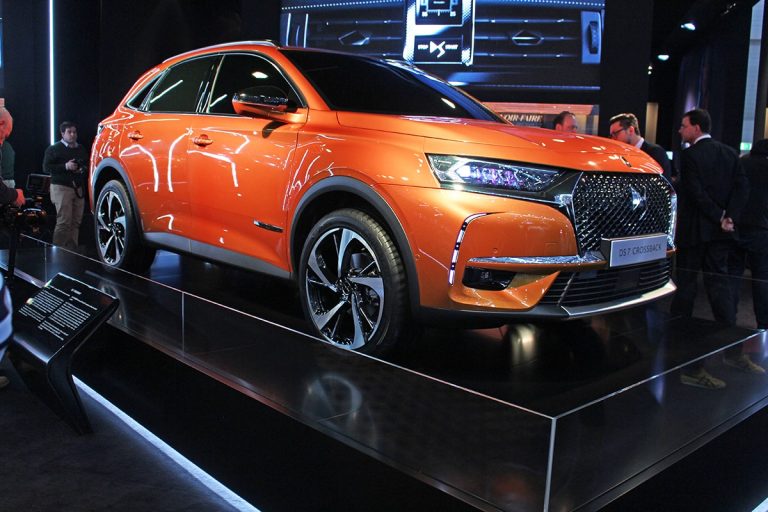
Unveiling the DS 7 Crossback at the Geneva show is a significant moment for PSA Group’s spun-off ‘avant garde’ brand.
When the SUV arrives on UK roads in 2018 it will be the first car designed specifically as a DS – currently the entire range on sale are reworked and rebadged versions of cars offered by parent brand Citroën.
The DS 7 Crossback intends to make a mark in the mushrooming upmarket mid-sized SUV market, and prime rivals will be the Audi Q5 and Jaguar F-Pace.
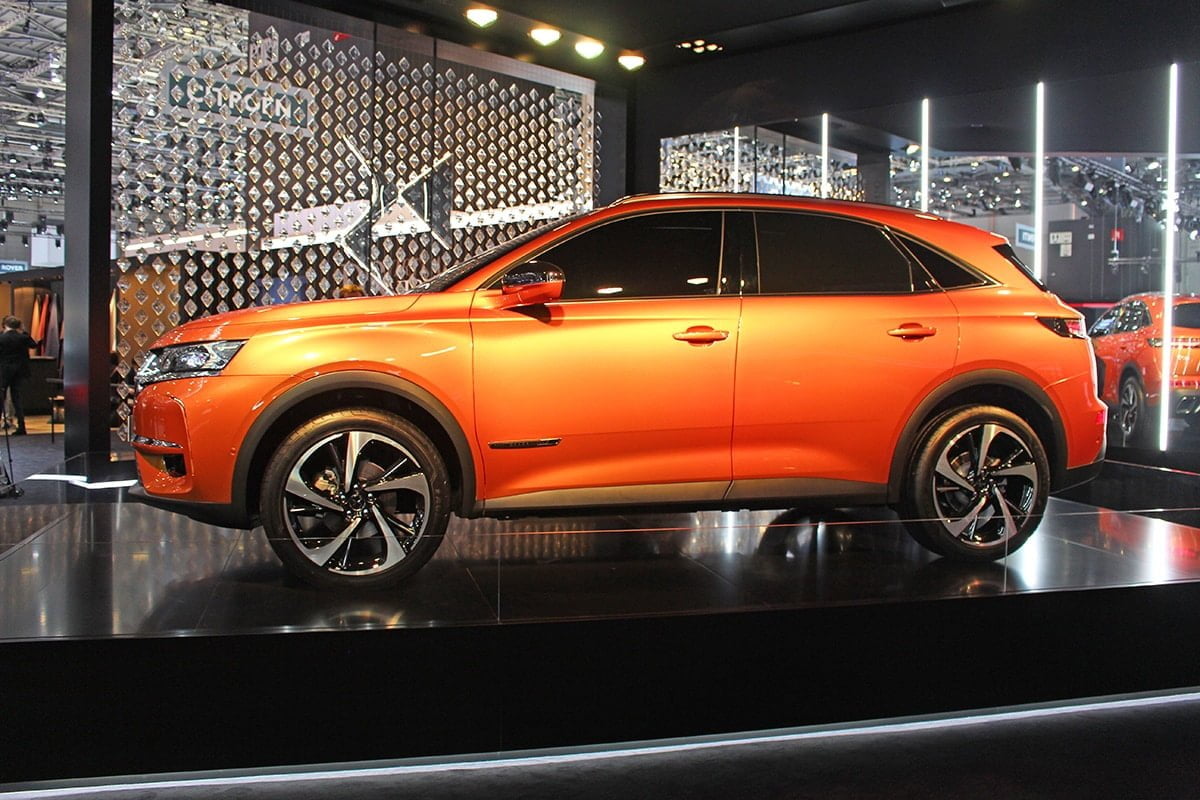
It is certainly a distinctive car, with the signature DS styling, including the front headlamp ‘wings’ and pencil-thin daytime running lights. Active LED headlamps will be offered on production models, along with a complex tail lamp setup comprising 42 LEDs.
The car is built on the PSA Group modular EMP2 platform. All versions will be front-wheel-drive only apart from the range-topping hybrid, with a choice of six powertrains. Entry-level will be the three-cylinder 1.2-litre petrol unit with 130hp, and there will be 180 and 225hp versions of a 1.6-litre turbo petrol engine.
Diesel options will comprise a new 1.5-litre unit of 130hp and said to produce impressive fuel economy, and a 2-litre with 180hp.
The plug-in hybrid ‘E-Tense’ version, evolved from the E-Tense concept seen at the 2016 Paris show, is the first petrol PHEV model across the entire PSA Group. It will go on sale in 2019, a year after the mainstream range.
A 200hp petrol engine and 109hp electric motor drive the front wheels, and a second 109hp motor powers the rears, creating the only all-wheel-drive option in the DS 7 range. Up to 37 miles will be possible in completely electric mode
And charging will take 4.5 hours in standard mode with a 2.5-hour fast option.
DS is already taking reservations from customers who wish to own the initial ‘Premiere’ versions of the DS7 Crossback – details of the newcomer are on a website launched directly following the unveiling of the car in Geneva.
Premiere models will feature signature styling elements including the distinctive ‘watchstrap’ interior upholstery.
Prices for the DS 7 are yet to be revealed but industry sources suggest they will range from around £30,000 to £40,000, making them a highly competitive option in the premium market.
Once the DS 7 is on sale it will be followed quickly by a raft of new models as DS establishes its own identity. Replacements for the current DS3, 5 and 7 models are expected along with four SUVs.
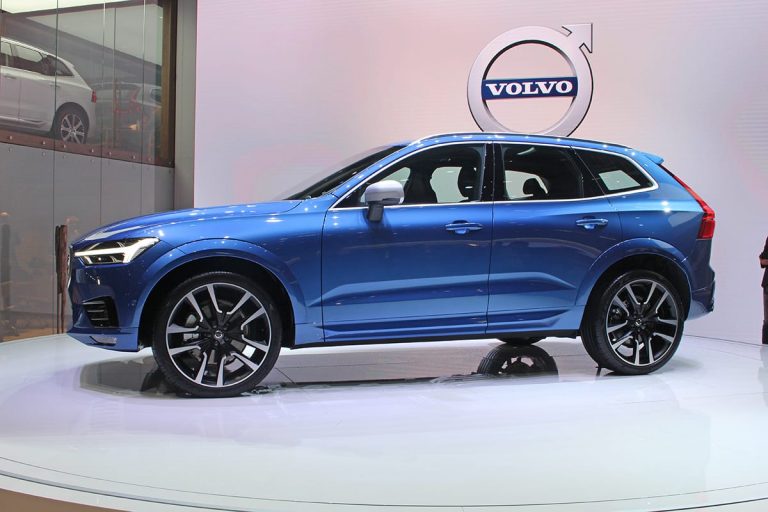
The Volvo XC60, unveiled in Geneva, is the second generation of the brand’s mid-sized SUV and a vital part of the Swedish brand’s mushrooming fortunes.
Volvo has seen major growth since reinventing its range around the ‘Drive-e’ programme – UK registrations were up eight per cent in 2016, and the second-generation XC60 is expected to boost this progress – in nine years on sale the outgoing model has sold almost a million globally and today accounts for 30 per cent of Volvo’s volume.
When it arrives in UK showrooms in September the XC60 is expected to target buyers of the Jaguar F-Pace and Audi Q5 in what is now a very competitive upmarket mid-sized SUV market.
The new Volvo XC60 is built on the Swedish brand’s latest SPA large car platform – this has already been used on the successful range-topping 90 Series models and will also be the basis for the next generation S60 saloon and V60 estate, which are expected in 2018.
The new XC60 measures up longer by 62mm, with a wheelbase extended by 91mm, and wider than the outgoing car, but looks sleeker due to the 14mm shaved from the height.
The XC60 will be offered with the Drive-e powertrains already familiar, particularly in the 90 Series cars. At launch these will comprise the 190hp D4 and 235hp D5 diesel, the petrol unit of 254hp and the T8 Twin Engine petrol hybrid.
Much praised since launching in the XC90, the T8 unit produces 407hp, resulting in a 5.3-second 0-62mph time. Volvo has not yet released any other figures for the XC60, but the hybrid version of car’s larger sister, the XC90, offers CO2 emissions levels of just 49g/km.
Volvo is heavily promoting the safety package available for the XC60, dubbing the new model one of the safest cars ever made.
The City Safety system now includes a Steer Assist feature. This is employed both by a new safety system called Oncoming Lane Mitigation to guard against head-on collisions, and the Blind Spot Indication System to reduce the risk of lane-changing collisions.
Volvo is a major player in developing autonomous driving technology – available as an option on the XC60 is the Pilot Assist system. This takes care of steering, acceleration and braking on well-marked roads at speeds up to 78mph.
Unveiling the XC60 at the Geneva show, Volvo president and CEO Håkan Samuelsson says that the brand has a strong heritage in designing stylish and dynamic SUVs that offer the latest in technology.
“The new XC60 will be no exception – it’s the perfect car for an active lifestyle, and it represents the next step in our transformation plan,” Samuelsson adds.


Automotive Website of the Year


Automotive Website of the Year
Automotive Website of the Year