Find an Expert Rating: 
Home Blog Page 171

End of the line for Chrysler in UK

The Chrysler brand will disappear from the UK market in 2017.

The news, which has come as little surprise, has been confirmed today by Fiat Chrysler Automobiles UK management.

British sales of Chrysler models have been steadily declining in recent years – according to Society of Motor Manufacturers & Traders figures, the brand registered only 1,982 vehicles in 2014, down 21 per cent from the 2,515 of 2013 and the close to 3,500 figure recorded in 2012. When you take out the inevitable dealer demonstrators, press fleet, hospitality, sponsorship and other self-registered vehicles, it means that precious few Britons actually bought a new Chrysler in 2014.

Attractive and distinctive models such as the 300C saloon/estate and the Grand Voyager people carrier formerly brought success for Chrysler in the UK, but sales of these have been virtually killed off by increasingly stringent emissions regulations, high fuel prices and a move away from MPV-based vehicles.

Following the global brand’s rescue by Fiat in 2011 Chrysler launched two new models: the Ypsilon supermini – built on the same platform as the Fiat 500 – and the VW Golf-sized Delta, both of which were effectively Lancia models rebadged for the UK market.

However the slow-selling Delta was quietly dropped in 2014, leaving the Ypsilon as the only major model in the UK line-up.

The Car Expert understands that Fiat’s brand realignment will also see Lancia withdrawn from all European markets apart from Italy, where it still enjoys a viable share of the market.

In the UK, FCA will focus its American efforts on Chrysler’s sister brand Jeep. The iconic US badge is on the expansion trail in Britain, particularly with its newly-launched Renegade model.

Caterham Drift Champion drifting experience

0

How much fun can you have in a car in a large and damp car park? Well if you are in a Caterham Roadsport 140 that’s been specially tuned for drifting and donuts, then then the answer is “an awful lot!”.

The problem with this idea is that most people don’t have either a Caterham or a suitable car park to play in. So Caterham have come to the rescue with their fantastic Drift Champion experience. You can spend an entire day up at Silverstone, learning how to perfect the art of drifting in a controlled environment under the expert guidance of Caterham’s instructors. And a couple of weeks ago, I was invited up to have a go.

We have covered driving experiences before here at The Car Expert, but the Caterham Experience program is a bit different for a couple of reasons. Firstly, the whole operation is owned and operated by the Caterham car company themselves rather than a third party, so the cars are all factory-prepped and liveried and the instructor team are hand-picked by the company. Secondly, you get loads of time behind the wheel. On my trip, we had four drivers sharing each car, so the ratio of driving time to standing-around-time was pretty good.

Caterham offers a choice of driving experiences – a circuit programme on the famous Silverstone track, and the Drift Champion experience. I was lined up to spend the day drifting.

What exactly is drifting?

Drifting is the art of sliding a car around a course, with the emphasis on style rather than speed. In fact, for the entire day of drifting, we never got out of first gear. But there is an enormous amount of fun to be had in first gear, performing giant slaloms and donuts. Professional drifting is judged on style and technical prowess, with speed a secondary factor. The sport has become immensely popular over the last decade, having its origins in Japan and spreading globally. Cars that are ideally suited for drifting are lightweight rear-wheel-drive vehicles – exactly like a Caterham, funnily enough.

So how do you drift a car?

The first thing to get your head around is that it’s possible to drift and slide the right car at remarkably low speeds with the right set-up – as I said, we never got beyond first gear all day long. That makes it quite accessible, and means we could use a car park at Silverstone for the drift experience rather than needing a proper race track.

Caterham drifting experience at Silverstone

The object is to throw the car off its natural balance, and then maintain its unbalanced state for as long as possible, sliding sideways rather than travelling straight ahead. To do this, you stab the brakes hard and steer sharply into a corner, which throws the car’s weight forwards and makes the rear end go light. Then you stab the throttle and the rear wheels will immediately start to spin. From there, you simply keep stabbing the throttle while holding the car in an elegant, drifting slide all the way around the bend. Sounds simple, right?  Well it’s anything but!

Deliberately throwing a car out of balance and then trying to keep it there goes against everything you are ever taught about driving on a road or track. Usually the idea is to keep the car very much under control and pointing in the direction you want to go. So changing that behaviour and forcing yourself to brake, steer and accelerate in a very different style requires plenty of practice to even start to get it right.

After a morning of practice and instruction, we were starting to get the hang of things. Although it was hardly perfect, our efforts at least started to make us look like drifters rather than panicked learner drivers. And then over lunch, it started raining…

Rain, of course, makes a road slippery. And for drifting, that can be a very good thing. Jumping back in the car after lunch, on what was now a greasy wet surface, I found it much easier to throw the car off balance and get the back end to slide. But it did mean that controlling the slide was trickier, as the car would spin around like a top much more easily than in the dry. Keeping the car balanced on the edge of sliding and spinning was difficult, and usually resulted in you facing back the way you came from.

I found that a slightly wet track produced best results, being easy to get the car to start sliding and not too tricky to keep it going. As the rain started to get quite serious and the circuit became very wet, I was spending less time drifting and more time spinning. And of course, a Caterham isn’t very weatherproof, so we all ended up very wet. But no-one was complaining as we were too busy enjoying ourselves to notice!

So how much fun is it really?

Quite simply, a hilarious amount of fun. And to get good results, very challenging too. The speeds are low and the whole event is carefully controlled (and only one car on track at a time), so it’s all quite safe. Caterham runs the events most weekends throughout the year (except when it’s simply too cold/snowing/icy at Silverstone over December and January), so get in touch and give it a go. You will absolutely love it!

Stuart attended the Caterham Drift Experience as a guest of Caterham Cars.  Photos (c) Caterham Cars.

Mazda 2 review

What is it?
All-new version of the Mazda2 supermini best-seller.

Key features:
New look, upgraded quality, more tech.

Our view: The Mazda2 is very much a contender that supermini rivals, including Ford’s Fiesta, need to take notice of.


Mention the word Mazda and for most the immediate image coming to mind is an iconic two-seater roadster. If not the MX-5, perhaps the Mazda 6 that rivals the Ford Mondeo in the fleet market, more recently the sharply-styled CX-5 crossover.

In fact, they are all outsold by a perhaps all-too-easily dismissed supermini – the Mazda2. Look out for the car while on the road and you quickly realise just how many of them are around, and why the all-new Mazda2, arriving in showrooms in March, is so important to the brand’s UK performance.

The Mazda2 was once closely related to the Ford Fiesta, in the days that Ford had a major stake in the Japanese brand. That’s not the case these days, but the Fiesta, the UK’s best-selling car, remains the rival the Mazda has to beat.

This it aims to do by making full use of Mazda’s now familiar SkyActiv construction technology and ‘Kodo Soul in Motion’ styling language. The 2 is the last of the existing Mazda range to get this treatment, and it benefits greatly from it – the curvy visuals of the previous third-generation car are replaced by an exterior of distinctive creases that produce a good-looking whole.

Such positive first impressions are strengthened on slipping inside. Firstly there appears to be plenty of space, front and back.

The new Mazda2 is built using the SkyActiv modular platform and measures up 140mm longer and 20mm taller than its predecessor. Crucially the wheelbase is 80mm longer, which combined with such measures as thinner seat backs frees up more passenger space, as well as extending the boot capacity by 30 litres to 280 litres. This extends to 950 litres with the rear seats folded, but still falls short of the Fiesta’s capacity at 290/970 litres.

The second major impression on inspecting the Mazda’s interior is of quality. The brand really has stepped up in this area – the Sport Nav trim variants driven on the launch boasted soft-touch surfaces and a sensibly laid-out dash with high quality switchgear.

The seven-inch colour touchscreen, standard on SE-L models and above, looks a little ‘stuck-on’ to the top of the centre console, but the satellite navigation that is standard on Nav grades is one of the clearest and easy-to-follow units this reviewer has experienced.

At launch the Mazda2 offers four engine options, all SkyActiv units. Three of them are variants of a 1.5-litre petrol engine in 74, 89 and 113bhp power outputs, along with a 1.5 diesel of 103bhp.

The Car Expert tried the 89bhp petrol, likely to be the best seller, and the diesel unit. Some might like the extra power of the 113bhp unit, but we feel only the most cash-strapped will want the entry-level 74bhp engine. The 74bhp Mazda2 is £2,000 less to buy than an 89bhp version, but is also 2.7 miles per gallon less fuel efficient and with CO2 emissions 5g/km higher.

The 89bhp unit offers a good compromise between efficiency and performance. It pulls freely, though you need a few revs dialled in to get it going, and it is smooth in its delivery. A Mazda2 with this engine won’t write any performance headlines but it is every bit as competent as rivals in the class.

Supermini buyers don’t tend to favour diesels but Mazda considers it worthwhile offering one and the 1.5 deserves its billing, offering an excellent blend of performance and efficiency including an 89g/km CO2 emissions figure, the only Mazda2 in free road tax territory.

However said diesel is slower to 62mph than its 89bhp petrol sibling by more than 1.5 seconds, and costs £2,000 more to buy, so it would take quite a lot of driving to justify the 20mpg or so extra fuel economy and £20 saving in road tax.

The latest Mazda2’s body-shell weighs in seven per cent less than its predecessor, while the high-strength steel construction of the SkyActiv chassis gives it 22 per cent more torsional rigidity.

As a result one expects confident handling and the car does not disappoint. The steering is quite light but offers good feedback and well-placed cornering to the degree that it’s a degree of fun. Cruising in a straight line, meanwhile, it’s exceptionally well behaved.

Mazda offers the 2 in five trim levels, effectively SE, SE-L and Sport plus navigation variants of the latter two. Standard equipment is good, particularly in terms of safety with every car including Hill Hold Assist, a tyre pressure monitoring system, Dynamic Stability Control and traction control.

DAB radio is offered on all but entry-level SE models, as is Bluetooth, while move up the grades and the spec includes LED headlamps, auto wipers, parking sensors, along with quite a lot more.

A look at the options list, meanwhile, reveals technology not so long ago seen only on premium models and certainly not superminis, such as Lane Departure Warning, Smart City Brake Support, Blind Spot Monitoring, Rear Cross Traffic Alert and Active Driving Display – the last effectively a head-up display rising on a clear screen from the top of the steering column.

The ultimate question remains, is the Mazda2 better than Ford’s Fiesta? The answer is no, but it’s very much a contender that supermini rivals, including Ford, need to take notice of.

Mazda2 – key specifications

Model tested: Mazda2 1.5 90hp petrol, 1.5 105hp diesel
On sale: March 2015
Range price: £11,995-£17,395
Insurance group: 13E-19E
Engines: Petrol 1.5 x 3, Diesel 1.5
Power (bhp): 74/89/113, 103
Torque (lb/ft): 100/109/109, 162
0-62mph (sec): 12.1/9.4*/8.7, 10.1
Top speed (mph): 106/114*/124, 111
Fuel economy (combined, mpg): 60.1/62.8*/56.5, 83.1
CO2 emissions (g/km): 110/105*/117, 89
Key rivals: Ford Fiesta, Volkswagen Polo, Renault Clio
Test Date: March 2015
* = with manual gearbox

Infiniti Q70 review

What is it? The Infiniti Q70 is an updated and renamed replacement for the M30d saloon.
Key features: New diesel engine, more equipment.
Our view: The Infiniti Q70 has its shortcomings, but may suit a buyer who needs a premium high-mileage workhorse and doesn’t want to be one of the crowd.


The latest version of the Infiniti Q70 saloon launched onto the UK market at the start of 2015, bidding to challenge very strong opposition in the likes of the BMW 5 Series and the Mercedes E-Class.

However this is not really a ‘new’ Infiniti, but an updated, upgraded version of the M30d saloon which gained the Q70 badging to fit into the Japanese brand’s latest naming convention.

By far the most significant change on the 2015 version is the fitting of a Mercedes-Benz sourced 2.2-litre diesel engine. Replacing the previous 3.0-litre unit and installed within the The Car Expert test car, the new engine is far more fleet-friendly.

Infiniti expects the diesel to take the lion’s share of sales over the other two power options, a 3.7-litre, 315bhp and very thirsty petrol unit and the petrol-electric hybrid that puts out 358bhp. The hybrid engine is clearly pitched for its potency – it will hit 62mph in 5.3 seconds, more than 3.5sec faster than the diesel, but its 45.6mpg official combined cycle fuel economy is bettered by the diesel’s 57.6mpg.

Company executives looking for something more distinctive than the lines of familiar BMWs, Audis and Mercedes in the car park could certainly be drawn to the Infiniti. To begin with this is no small car – at 4,980mm it is some 73mm longer than a 5 Series BMW, though its 2,900mm wheelbase is 68mm shorter.

The Infiniti also boasts distinctive styling – some might say bulbous but others would argue that it is dominated by attractively muscular curves and a very large mesh grille that makes this car easy to spot.

The 2015 model update has added extra distinction, in particular to the more expensive of the two trims, Sport – the most notable extras are the enormous 20-inch diameter wheels. Other changes include front and rear bumpers with sharper creases, chrome detailing, particularly around that grille, and LED headlamps.

The cabin is spacious, as you would expect from such a large car, particularly in the rear seats, though the 450-litre luggage compartment is smaller than in rivals (note that in the hybrid model one loses 100 litres of this to accommodate the batteries).

The dash is very well put together, the way the centre console curves out towards the driver, putting the audio/climate/navigation controls in easy reach, a pleasing touch. However there are a lot of buttons scattered liberally around – no central rotary control here, and as such the layout feels a little behind-the-times compared to the recent advances from the likes of Audi. Once accustomed to it is all easy enough to use – just somewhat fussy.

Infiniti is placing great hopes in the 2.2 diesel engine. It will appeal to those who want smooth, unflustered progress, though it is a little noisy when first starting.

This unit won’t appeal, however, to those looking for swift progress. We’ve already stated that this is a large car and the new diesel is significantly smaller than the one originally installed in the Q70. From rest to 62mph takes 8.9 seconds, which is slow compared to rivals, while the 57.6mpg official combined cycle fuel economy also struggles to compete.

The seven-speed auto gearbox is smooth in operation, and rather swifter than in manual mode through either the gear lever or the slightly awkwardly placed steering column-mounted paddle shifts.

Attending the Geneva Motor Show required a motorway trawl from mid Wales to London Gatwick airport and back during the road-test period, and the motorway is certainly the Q70’s natural environment. It will glide along at the speed limit in relaxed fashion, and using the very effective radar-guided adaptive cruise control makes dispatching hundreds of miles a process without fatigue.

Come off the motorway, however, and it’s a different matter. While the car will crawl along traffic-choked urban routes without issue, it is less satisfying on flowing country A roads with lots of twists and turns, where it feels less assured. Inadequate feedback between steering and driver is accompanied by noticeable body roll from the softly-suspended chassis.

The Infiniti does score on its equipment. Every variant includes the LED headlights, a rear-view camera, front and rear parking sensors, navigation and leather seats with a ventilation feature.

Both the Premium and Sport grades can be upgraded to Tech variants which add significant extra equipment particularly where safety is concerned. Alongside the already mentioned radar cruise control, the spec includes lane departure warning and blind spot warning.

Creature comforts are improved by an upgraded Bose sound system with extra speakers in the front seats, while the rear parking camera makes way for Nissan group’s clever 360-degree ‘bird view’ version.

The new Infiniti Q70 has its shortcomings – but with the new diesel, it is far more of a competitive proposition to the German might that governs the fleet-dominated sector in which this car must compete. The competitive price and the extensive equipment could be the factors that convince a buyer who needs a reliable and possibly high-mileage workhorse, who wants a premium car, but doesn’t want to be one of the crowd.

Infiniti Q70 – key specifications

Model tested: Infiniti Q70 2.2d Sport Tech
On sale: January 2015
Price: £35,850 (Range £32,650-£46,600)
Insurance group: 35E
Engine: Diesel 2.2-litre (also 3.7 petrol, 3.5-litre hybrid)
Power (bhp): 167 (315/358)
Torque (lb/ft): 295 (266/403)
0-62mph (sec): 8.9 (6.2/5.3)
Top speed (mph): 137 (155/155)
Fuel economy (combined, mpg): 57.6 (27.7/45.6)
CO2 emissions (g/km): 129 (235/145)
Key rivals: BMW 5 Series, Audi A6, Mercedes-Benz E-Class
Test Date: March 2015

Postcard from the Geneva motor show

Every March, Geneva plays host to probably the best motor show in the world. Frankfurt might be bigger, but Geneva is almost universally regarded as the highlight of the year for professional showers.

This year, I was lucky enough to not just visit the show, but attend the two press days which precede the public opening of the show. So what was it like to go behind the scenes at the world’s most glamorous motor show?  Well, read on…

The main press day at the Geneva motor show is wall-to-wall with media types, along with some privileged insiders and their bratty kids who get to see all the cars before the commoners are allowed in on Thursday. They are all falling over one another to catch glimpses of tablecovers being whipped off cars that have (almost always) already been shown on the internet a week ago on various automotive websites.

The battle for media airtime means that there are very few real surprises unveiled at the shows anymore. If a car is important, its release will be handled via high-res images and carefully scripted releases in the lead up to the show, rather than cameraphone shots of the car surrounded by six million cameramen all trying to take close-up photos of tiny details.

But there is usually at least one new release that is kept secret until its unveiling at the show, and this year there were two:  the Bentley EXP 10 Speed 6 and the Aston Martin DBX.

A Bentley concept had been expected, but no details had been disclosed. The Aston, however, was a bigger surprise, and also the winner of the ‘Most Niches Covered By One Car’ award (which I just made up). It’s a GT! It’s a crossover! It’s an electric vehicle! It’s all wheel drive! It’s a bird! It’s a plane! It also looks like the result of a DB9 mating with a Nissan Juke, but Aston seemed pretty proud of it anyway.

Photos vs. reality

One thing that always strikes me about seeing new models is how different they can look in the metal compared to their official photos. The Nissan Sway, for example, looks really good when you see it for real, whereas the photos didn’t look anything special.

The exception to this rule is Audi. Their cars look just like they do in photos, which is to say, like an Audi. The new R8 looks like they simply took the old car, sharpened and flattened any curved parts, and then made it 10% faster with better wi-fi (note to self – those facts may need checking back at base).

The 2015 McLarenHonda F1 car also looks fantastic under lights, with a paint scheme that is quite spectacular. What looks like plain black paint in photos or on TV is actually a very complicated dark grey colour, full of silver specks and sparkles, really highlighting the car’s curves and overall shape. Unfortunately it still just looks like really boring plain black on TV, which is where everyone actually sees it.

By contrast, the 1988 McLaren-Honda on display in the TAG-Heuer hall was a perfect example of a simple livery working perfectly from any angle, the white and dayglo-red Marlboro colour scheme looking bold and brilliant (despite no Marlboro logos on the car, because McLaren seems determined to ignore the fact that they sponsored the team for many millions of pounds for many years).

Maserati the famous clothing company

Maserati pulled a neat trick to pad out its stand in the absence of any new cars to show. They simply devoted about a third of their floor area to selling clothing and other merchandise instead. Clearly this is the influence of master beancounter Sergio Marchionne, who presumably calculated that a sweet concept car would cost a couple of million Euros and not be saleable, but flog some polo shirts for a couple of weeks and the show pays for itself.

Across the aisle, sister brand Alfa Romeo obviously missed that memo, as they simply rehashed their usual trick of pulling an old car out of the museum and draping beautiful Italian girls over the same cars they showed last year.

The forgotten brands

While the world wide web is spinning with millions of people drooling over news of the latest McLaren, Ferrari and Koenigsegg releases, it’s not all front page coverage for some brands at Geneva. Brands like Lotus struggle to get much exposure, and most of the people standing on the Lotus stand were trying to get a good photo of the new McLaren.

And it seems a downright shame that the hardworking car mutilators at Mansory and Kahn, and wacky inventors at Rinspeed and Sbarro, get almost no coverage in the automotive media, despite literally every magazine and website being right there next to them.

The poor guys at Brabus looked balefully on as everybody waltzed straight past their latest carbon fibre-bewinged Mercedes models without so much as a second glance. Maybe they should offer coffee and snacks, which worked wonders for Volkswagen and caused many journos to pretend they were really interested in the latest Polo…

PR people running ragged

Day One of the press program is all about big manufacturer press conferences, which happen across the halls every fifteen minutes or so. A motor show news conference is like a military operation, conducted with perfect efficiency and precision timing.

Mr Big Wig steps up on cue, delivers the usual impassioned speech about how the car under the tablecloth will herald a new dawn, blah blah blah, music, lights and smoke, then he’s gone.

The photographers start firing, a platoon of Japanese ‘reporters’ descends on the new car to sit inside and explore its every detail (while taking copious notes in books that all appear to have been loaned to them by another manufacturer…), and then the marauding pack of media troops off to the next conference (although not before rifling through the canapés, of course).

All that’s left are two blokes with feather dusters and the haunted remains of what used to be the manufacturer’s PR team, totally spent after chasing their favoured journos around to reiterate the Big Wig’s message and offer exclusive/pointless trivia as appropriate.

Themes of the show – pulsing indicators and giant video walls

Two themes seemed to be gathering pace across the industry at Geneva this year. The first is that LED car lights are allowing manufacturers to play with car lighting like never before. Indicators consisting of dozens of LEDs no longer just flash on and off in unison; they sweep or pulse in directions, which sounds cheesy but actually gives a car quite an organic feel. Unfortunately it didn’t really show up on video very well, so I don’t have anything to show you here, but some manufacturers have really grasped the concept and everyone else will follow very quickly.

The second is not so much car-related but stand-related. Every stand had GIANT VIDEO WALLS. Everywhere. In fact, the whole back wall of the Opel stand was a giant video wall. Plus they had several huge video screens hanging from the ceiling as well. If you are an epileptic, it’s time to accept that you will never be able to visit a motor show again.

Press Day – the real highlight

Italdesign_Giugiaro_01

Among all of the new releases, one model really stood out at Geneva. It was the limited edition Italdesign Giugiaro… (drum roll)… choc ice. This was, without doubt, the most well-received model launch of the day, and it’s not hard to see why every journo, photographer and blogger wanted in on the action.

The Giugiaro choc ice is truly an ice cream like no other. Forget your paper wrapping, this choc ice comes packaged in its own bespoke black box, proudly bearing the Italdesign logo and graphics. Opening the lid, the choc ice practically glides out into your hand, revealing a smooth chocolate coating that is perfectly uniform in colour and depth all around the ice cream itself. This is clearly a premium product, virtually incomparable to the mass-produced choc ices you find in the freezer at Sainsbury’s.

Biting through the chocolate layer, one finds that the Giugiaro choc ice has a real depth of quality to match its sensual styling. The ice cream centre is rich and creamy, with real vanilla flavour only adding to the overall experience.

Even the stick, so often overlooked as simply the bit to hold on to by most confectioners, is gloriously tactile on the Italdesign choc ice, and suitably reflects the obsession to detail that “Designer of the Century” Giorgetto Giugiaro is renowned for. The great master himself was present on the Italdesign Giugiaro stand, beaming with pride as the press devoured his latest creation.

In fact, the only thing letting the occasion down was some poor set design; the convivial atmosphere being somewhat interrupted by a large black concept car rotating on a turntable right in the middle of the Italdesign ice cream parlour. Apparently it drives itself or something, so you would think it would have the decency to move out of the way.

Summary

The Geneva motor show is an amazing exhibition of all the latest cars from all the greatest manufacturers in the world. To visit during the heavily-restricted press days was a fantastic experience for a humble blogger. For more photos from the 2015 Geneva Motor Show, visit The Car Expert on Instagram.

Land Rover to build roofless Evoque

Land Rover’s big news at the Geneva Motor Show concerns a vehicle that is not on display – a Range Rover Evoque Convertible.

The UK brand has confirmed it is to build a drop-top version of its hugely successful Range Rover Evoque by releasing pictures and a video of the car testing – underground…

The Evoque is shown driving through the 26-mile network of tunnels being constructed underneath London for the Crossrail project.

According to Land Rover, such a test allowed the car to be driven with its roof down without attracting prying eyes.

Land Rover programme director Murray Dietsch says that the car had a number of obstacles to negotiate.

“The tunnels are still under construction, so we had a unique opportunity to explore the vehicle’s all-terrain ability in unchartered territory,” he adds.

The Evoque Convertible project has been under consideration at Land Rover for some time. A concept version was revealed at the Geneva motor show back in 2012. The huge sales success of the smallest Range Rover model, and the new customers it has brought to the brand, has given Land Rover the confidence to proceed with a new model which will be further away from its muddy roots than any car it has previously built.

Land Rover will announce further details about the Evoque Convertible later this year. It will be built alongside the five door and coupé Evoque models at Land Rover’s Halewood plant in the UK, and is expected to go on sale in 2016.

Suzuki Vitara review 2015

What is it?
The all-new Suzuki Vitara is the latest in a successful line of small SUVs

Key features
2WD/4WD, crossover styling, long spec

Our view
With sharp pricing and strong performance, Suzuki’s optimism for its new car seems very well founded.


The Suzuki Vitara is a model that is core to the very heritage of the Suzuki brand. Since it first appeared on the market in 1988, it has effectively shown off the brand’s prowess in all-wheel-drive powertrains, and in the process sold 2.87 million examples across the globe.

For the past few years, however, the only version of the car one has been able to buy on the UK market is the Grand Vitara, a big sister model that is a throwback to the previous fifth-generation Vitara series.

Now the Grand Vitara has come to the end of the line. It’s making way for a new Vitara, one that is crucial to Suzuki’s bold plans to build on the market growth achieved by what many consider one of the smaller Japanese brands. In three years Suzuki’s UK sales have jumped from 20,000 to more than 37,000 a year, boosting its market share from one to 1.5 per cent.

The other major factor guiding the new Vitara is its target market – the small crossover segment has mushroomed in both sales figures and competing makes in recent times. Every badge now wants to be part of this market and the new Suzuki arrives just as do two potential new rivals, the Jeep Renegade and the Fiat 500X we reviewed recently.

But if there is one market that Suzuki should be in, it’s this one – unlike most of its competitors, the brand has a very long heritage of making small, affordable 4x4s, stretching way before the Vitara to the initial Jimny of 1970.

While the predecessors were off-road pitched, the all-new Vitara is aimed squarely at the clientele buying all these crossovers – buying them mostly for the dominant road presence and which mostly has no intention of ever subjecting their car to an off-tarmac experience.

It’s a smaller car than its predecessor, sitting between its prime rivals the Nissan Juke and Skoda Yeti. But with a starting price firmly in the territory of the smaller car, the Suzuki offers a roomy option to a typical B-segment crossover, including a 375-litre boot. It does not feel significantly smaller than the car it replaces.

The body is new and scores on style – more than one observer on the launch event suggested it had elements of Land Rover’s much-vaunted Range Rover Evoque about it.

Similarly the interior is a new design and thoroughly practical – it makes no headlines, does nothing particularly different, but the surfaces are of higher quality than the pricing would suggest and the controls exactly where one needs to find them, nothing more, nothing less.

The Vitara powertrain line-up is simple – two engines, one petrol one diesel, both of 1.6 litres and both with 118bhp. The petrol version can be matched to a five-speed manual or six-speed auto gearbox, the diesel six-speed manual only, and both can be supplied with either front-wheel drive or Suzuki’s AllGrip all-wheel-drive system.

Suzuki expects most take-up of the Vitara to be with the petrol engine, despite the car offering far greater appeal than previously to fleet drivers – including residual value predictions of plus 40 per cent, which is high for the class.

The petrol engine is a competent unit, its 11.5-second 0-62mph time in front-wheel-drive form reasonable for the class. But that acceleration figure is matched by the diesel, which also has the advantage of a 236lbft torque figure more than double that of the petrol unit and from 1,750rpm, compared to 4,400rpm. The Car Expert liked the diesel engine fitted in our test vehicle, though it is a little noisy, and the £1,500 price premium will keep the sales advantage in petrol territory.

We were also able to test the car in all-wheel-drive format. Today’s crossover buyer almost invariably sticks with two-wheel-drive, the average 4WD take-up only around 10 per cent of the mix, and indeed some rivals don’t even offer the option.

Suzuki, however, believes as much as a quarter of Vitara buyers will go the 4WD route, based on the brand’s heritage and the effectiveness of the proven AllGrip system. This sits happily powering the front wheels and only spreads the torque around when needed. And as such, it doesn’t suffer from the fuel economy and emissions drawbacks one expects with 4WD.

Certainly, the system works seamlessly, and of course adds extra safety to boot – it is a worthwhile £1,800 investment over the 2WD version.

On the road the Vitara is firmly planted and well behaved – but this does not come as a surprise either, as the underpinnings are basically those of the S-Cross. The steering is light, but not overly so, and one never loses confidence in the car even when cornering enthusiastically.

While few will ever take a Suzuki Vitara off road, it will be able to cope with such conditions, unlike several rivals. The AllGrip has four modes, including ‘Snow’ for when the going gets very slippery, and a lock mode for extricating the car from bogged-down situations.

AllGrip cars also come with hill descent control, while every Vitara is fitted with a hill-hold system.

The two different potential Vitara audiences are exemplified in two optional styling packs available – ‘Urban’ and ‘Rugged’. The former includes chrome detailing and a spoiler, the latter protective skid plates and edge protectors. There are also plenty of options to personalise as appears to be the current trend.

More impressive perhaps is the car’s standard equipment. Every one of the three trim levels includes Bluetooth connectivity and DAB radio, all but the entry-level cars link audio functions to one’s smartphone and come with navigation. Go for the top SZ5 trim and highlights on the equipment list include adaptive cruise control, radar brake control and LED projector headlamps.

When one considers that the only Suzuki Vitara more expensive than £20,000 is a diesel-engined, all-wheel-drive full-spec SZ5 variant, Suzuki’s optimism for its new car seems very well founded.

Suzuki Vitara – key specifications

Model Tested: Suzuki Vitara 1.6 DDiS SZ5 AllGrip
On Sale: April 2015
Range price: £13,999-£21,299
Insurance group: TBA
Engines: Petrol 1.6. Diesel 1.6
Power (bhp): 118. 118
Torque (lb/ft): 115. 236
0-62mph (sec): 11.5/12.5*/12.0**/13.0***. 11.5/12.4**
Top speed (mph): 112 (all models)
Fuel economy (combined, mpg): 53.3/51.3*/50.4**/49.5***. 70.6/67.2**
CO2 emissions (g/km): 123/127*/130**/131***. 106/111**
Key rivals: Nissan Juke, Renault Captur, Fiat 500X
Test Date: February 2015
All performance figures 2WD with manual gearbox except
* = auto gearbox, ** = 4WD manual, *** = 4WD auto.

Mazda 6 review (2015 – 2017)

What is it?
A facelifted version of the Mazda 6 large family car that originally launched in 2013.

Key features:
More equipment, more tech, better cabin.

Our view: Competitive against the Ford Mondeo and starting at a lower price.


Do car manufacturers take much notice of the feedback given to their new models? The reviews in magazines and on sites such as The Car Expert, and the comments of those who drive the cars?

Well in Mazda’s case the answer would appear to be a solid yes. The 2015 Mazda 6 (styled by the company as the Mazda6) large family car is just arriving in UK showrooms, and while there are no mechanical changes, no new engines to promote, there are a host of changes that are directly the result, we are told, of criticisms of the car first launched in 2013.

Such differences are noticeable as soon as one slips inside the car. The interior has always been a prime area of concern for those analysing the Mazda against its rivals, criticised for its dull design, prolific buttons on the dash, and an impression that it doesn’t quite have the quality to challenge prime rivals such as the Ford Mondeo.

In the new Mazda 6 the instrument panel and centre console have been completely redesigned. The handbrake lever makes way for an electronic version to free up space on a more compact centre console.

Key to the new design is a seven-inch colour touchscreen, mounted atop said centre console and combining with the rotary ‘Multimedia Commander’ to both cut the number of buttons and make the whole thing easier to use. The MMC itself is more weighty and positive in use, the buttons around it – including a very sensibly placed audio volume control – falling more naturally to one’s fingers. It is definitely an improvement.

Among the new niceties to control are the MZD Connect infotainment system, allowing access to internet and social media services, and Mazda’s first DAB digital radio – the lack of which was another regular complaint with the previous car.

All this comes on all versions of the car. Choose the top Sport Nav option of the three trim levels available and you also gain full-leather upholstery, an integrated navigation system, eight-way powered adjustment on the driver’s seat and six ways on the front passenger’s, these seats both heated and more supportive than previously.

There’s a premium Bose surround sound system with some 11 speakers, and finally the ActiveDriving display – effectively a head-up display, projected on a clear plate at the base of the windscreen and offeirng information on speed, navigation commands and cruise control.

Crucially, it all feels rather more upmarket, an impression that is only heightened once one gets underway. Mazda has addressed another regular criticism, the amount of noise in its cars.

The improvement we are told is 25% or 2.4dB, achieved by extra sound-absorbing material in the arches, the inner roof and door linings, and improved sealing of shut points. Certainly, the difference is noticeable.

As far as actually driving the car is concerned, there is no difference to be felt, as the revisions have not extended to the powertrains or chassis. In either Saloon or Tourer form, is still offered with the same engine line-up – 2.0-litre petrol units of 143 and 162bhp, and a pair of diesels offering either 148 or 172bhp.

There are some visual exterior differences, but only if you choose the Sport Nav grade. This has been differentiated from its sister models by subtle changes mainly to the lighting.

The signature wing around the front grille is now emphasised, producing a more recognisable face to the car especially in the rear-view mirror at night, thanks to the LED headlamps. And there is a more distinctive rear-light signature too.

One other aspect that should be mentioned with this Mazda6 is on the options list – the Safety Pack, which covers a range of technologies.

Included are very clever adaptive headlights. They employ a series of LEDs and rather than dropping off main beam when the Mazda6 either comes up behind another car or has one come towards it, they simply turn off the LEDs that will directly blind the other vehicle’s occupants, retaining the wide scope of light.

There is a new blind-spot monitor that also incorporates a rear-vehicle monitor to anticipate potential issues when overtaking traffic, while the same system is used as a rearwards monitor looking for potential obstructions, such as pedestrians, when reversing out of a parking space.

It’s a busy time for Mazda – by the end of 2015 the oldest car in its range will be the Mazda3, launched in January 2014. The Mazda6 is a core part of the brand’s growth plans and overall this range of upgrades can be nothing but good news for the car.

Is it as good as the just-launched Ford Mondeo and Volkswagen Passat? The argument would be easier against the Ford than the VW, and as the Mazda’s pricing does start from a lower point than both rivals. No buyer is likely to be disappointed by the Mazda6 – it is certainly a prime contender in the market particularly for fleet users.

Mazda 6 – key specifications

Model tested: Mazda 6 2.2-litre diesel 175hp Sport Nav saloon
On sale: February 2015
Range price: £19,795-£28,795
Insurance group: 16E-23E
Engines: Petrol 2.0 (2). Diesel 2.2 (2).
Power (bhp): 143, 162. 148, 172.
Torque (lb/ft): 155, 155. 280, 310.
0-62mph (sec): 9.5/9.6*, 9.1/9.1*. 9.1/9.2*, 7.9/8.0*
Top speed (mph): 129/128*, 134/133*. 130/130*, 139/137*.
Fuel economy (combined, mpg): 51.4/50.4*, 47.9/47.9*. 68.9/64.2*, 62.8/61.4*
CO2 emissions (g/km): 129/131*, 135/136*. 107/110*, 119/121*
Key rivals: Ford Mondeo, Vauxhall Insignia
Test Date: February 2015
All performance figures with manual gearbox.
All figures with saloon except * = Tourer

Part-exchange prices: Why is my car’s value so low?

One of the biggest complaints from car buyers is that when they want to part-exchange (trade-in) their current car, the dealer offers them a pathetic amount of money.  But is this reality or perception? 

Many of the issues about a car’s part-exchange valuation come from a misunderstanding of how a dealer arrives at the number that they are offering you for your car. Read on to learn more, as well as some tips for understanding what your car is really worth before you set foot in a dealership.

The dealer is scamming me!

It’s a familiar story. You bought a shiny new car three years ago, have looked after it lovingly and spent a fortune on servicing and running costs, and now the sleazy car salesman across the desk is telling you it’s worth less than half what you paid for it not that long ago. Surely the dealer is scamming you for thousands of pounds on the part-exchange value?

Well to start with, it’s almost certain that the dealer really is offering you less than your car is worth. This is called lowballing, and dealers do it most of the time. And why not?

There’s no law which says they have to offer you a great price for your part-exchange. If you accept their offer, they’ve bought a car cheaply. If you say no, they can gradually negotiate back to what the car is really worth if they need to. So never accept a dealer’s first offer, regardless of whether you’re buying a Peugeot or a Porsche.

But let’s take it back a few steps, before you even set foot in that car showroom. There are a couple of good reasons you’re horrified by that part-exchange offer, and they’re both your own fault.

Firstly, you’re probably overestimating your car’s worth; and secondly, there’s probably a few things you can do (or should have been doing) to protect its value better.

Today we’re going to help you understand why your car’s part-exchange value is lower than you think, and next time we will give you some advice on how to get more money for your car at part-exchange time.

What is my part-exchange really worth?

If you simply guess at your car’s current value, you will almost certainly overestimate it.  Probably by quite a lot. If you have a cursory look at car ads to see what cars like yours are selling for, you’re still probably overestimating it.

If you look at your car with any kind of emotional attachment, especially if you have named it or have photos of it on your Facebook profile, you are definitely overestimating it.

To really know your car’s value accurately, you need to do a bit of homework. It’s not difficult, but it could be worth hundreds or even thousands of pounds in your negotiations.

The car dealer will assume you don’t really know your car’s value, while they have the advantage of plenty of industry data to know exactly how much to pay for it. You won’t fool them into paying too much for your car, but you can make sure they pay you a fair price.

Firstly, you must look at your car with complete emotional detachment. To you, it may have been a magnificent chariot that has ferried you comfortably around the countryside on your many adventures. But to a car dealer it’s simply another Ford Fiesta, which is probably slightly better or slightly worse than the last ten Ford Fiestas they looked at.  Which were all in the last week. And most of their owners loved them dearly as well. So it’s not “Ferdie the Fiesta”, it’s a 59-plate Ford Fiesta LXi 5-door petrol manual in blue with black cloth.

Secondly, now that you’ve taken off your rose-tinted glasses, have a really good look at your car. Those little scratches that you never really noticed or had forgotten about? There’s quite possibly a few hundred pounds (or maybe a lot more) of paintwork needed before a car dealer can sell that car now.

Same goes for your wheels. Crunched them against a kerb?  That’ll be £50-£100 per wheel to fix, and it may also need replacement tyres if you’ve damaged the sidewalls.

Have you had the car serviced by an official dealership, on time and every time? If not, the part-exchange valuation will be marked down heavily.

Did you pay a lot of money for expensive optional extras?  They’re probably worth absolutely nothing by now. Sorry to be the bearer of bad news, but most optional extras add virtually nothing to your part-exchange value.

Now that you’ve been a bit more objective about you car’s condition, have a look at some of the tools online that will help you estimate your car’s true value. A good place to start is an online buying service like our partner Motorway, or others. There’s plenty of them to choose from, and it will give you a reasonable starting point.

Industry data from CAP and/or Glass’s is also useful, but bear in mind that these companies don’t actually buy your car, so just because they say it should be worth a lot of money doesn’t mean that anyone will actually pay that much.

A dealer or online car buying service is actually making you an offer to buy your car, so their prices are genuine rather than theoretical. Looking at classified ads on Auto Trader or other sites can be misleading, as it tells you what price a seller is asking for, but it doesn’t tell you what the car ends up selling for or how long the seller has been trying to shift the car.

If you’re looking at dealer ads, you need to factor in a dealer’s profit margin and cost of business, which can be a few thousand pounds. As an indication, the dealership I last worked at had a rough difference of £3,000 between the price we would buy an absolutely immaculate car for and the price we would sell it for. That worked out at about £1,000 of profit and £2,000 of business costs. This was a prestige main dealership, so the costs were relatively high, but we weren’t trying to make a massive profit margin on the vehicles.

How does a dealer value my car?

If you’re judging your car’s value based on what dealers are selling similar cars for, then you need to be taking a number of things into account, all of which reduce the amount a dealer will pay for your car.

Firstly, a dealer will look a the exact make, model and specification of your car. There can be a massive difference in value between two similar-looking Volkswagen Golfs, for example. One could be a base model with small engine, manual gearbox, no desirable options and in an unpopular colour (blues and reds may look great but are usually less popular than other colours), while the other could be a top-spec car with a diesel engine, automatic gearbox and painted silver or black.

Aftermarket modifications will also usually hurt your vehicle’s value – it doesn’t matter how phat you think your oversize wheels and dark tinted windows are, there’s a high probability that future buyers won’t be so impressed, so dealers will mark you down accordingly.

Secondly, a dealer will look at the car’s age. Six months here or there may not seem significant to you, but there may have been a major model upgrade in that time which could make a car that’s only slightly older far less valuable at trade-in time.

Also, a car that’s just out of new car warranty will be worth less than a car that still has some warranty left, even if it’s only a few months. Buyers certainly prefer some kind of warranty, so dealers will value it accordingly.

Thirdly, a dealer will judge a car’s condition. This consists of all of the obvious and visible points, as well as a more detailed analysis of the things which are not immediately obvious but influence the car’s value significantly. Leaks, rust, tyre wear (including the spare), service history, MOT reports, and so on. A dealer is trying to decide how much money they are going to need to spend before the car is ready for sale. Every penny they have to spend preparing the car is a penny less that they will be giving you.

Fourthly, the dealer will look at your car’s mileage. Essentially, a car with low mileage for age will be valued slightly higher, but a car that has higher-than-average mileage will usually be marked down heavily.

Again, this is purely based on customer preferences, so dealers buy and sell accordingly. It doesn’t matter if the mileage is “all motorway mileage”, a customer will always prefer to buy a car with lower mileage than one with higher mileage. And you can’t prove where those miles took place anyway, so the old “motorway mileage” excuse is worthless.

Other considerations

Those four points are the big ones in determining your part-exchange value, but a dealer will also look at how many owners a car has had. One owner from new is desirable but not usually worth any more than a couple of owners, but a number of owners in a short period will be considered suspicious and valued downwards accordingly – regardless of whether or not there’s a valid reason.

There is also the simple equation of supply and demand, and individual bias. One dealer may have had good returns on selling Vauxhall Corsas, so may be prepared to pay a bit more for your nice Corsa. Another dealership might have struggled to shift the last three Corsas they had in stock, so may be less generous in what they offer for yours.

To arrive at the price they offer you for your car, a dealer will look at their likely selling price for your car, and then subtract their profit margin (they are a business, after all), subtract their costs of running the business, and then subtract anything they will need to spend on your car.

They will use industry data from CAP and/or Glass’s as a guide, and use all of that information to come up with a price of what they are prepared to pay for your car. However, going back to the start of this article, that doesn’t mean that they will offer you that much to start with…

Summary

The more time you spend getting to understand the real value of your car, the better position you will be in when it comes to buying your next car. You won’t be so shocked when dealers offer you what seems to be a pittance for your car, and you’ll be better placed to negotiate up to a fair figure.

And because you started your new car calculations with a more realistic figure in mind, you will be in a better position to look for cars that you will be able to afford.

Far too many people already have their heart set on a specific car, and their calculations get blown out of the water because they massively overestimated their part-exchange value. Unwilling to give up on their dream car, they end up paying far more than they can afford and end up in all sorts of trouble trying to keep up with their payments.

Suzuki Celerio review

What is it?
The Suzuki Celerio is a new small car which replaces two models in the Suzuki range

Key features
Best in class space, efficiency

Our view
Does not offer the appeal of some of its rivals, but if head rules over heart then the Suzuki Celerio is a serious contender.


Suzuki claims very firmly that it “knows small cars”. The brand sells 2.8 million of them across the world each year, remarkably almost a third of that total in India alone where it has 40% of the entire car market. Suzuki also tops Japan’s ‘K’ car market for small fuel-efficient vehicles.

In the UK that sales figure has so far been a rather more modest 17,500 per annum, split across two vehicles, 3,500 for the Splash and 14,000 for the long-lasting and very successful Alto. And between them they accounted for almost half of Suzuki’s record UK volume and 13 per cent growth in 2014.

Now however, both are in the past, replaced by one new city car, the Celerio. This is a model that Suzuki believes will sell on three pillars – best-in-class space, best-in-class efficiency and standard equipment levels rivals cannot match.

The Celerio looks larger than the average city car, which is misleading as its length of 3,600mm is around the same as rivals such as the Hyundai i10, but with a slightly longer wheelbase of 2,425mm. It certainly outstretches competitors on height, 1,540mm compared to say the i10’s 1,500, and while this gives the Suzuki a more boxy appearance, it does translate into lots of interior space.

Slip inside – this is a full five-door car, with wide-opening rear doors – and you certainly feel you are in something much bigger particularly in the back, where an adult can be comfortably if a little cosily accommodated in the central fifth seat. Boot space of 254 litres is also more than its direct competitors and can extend to 726 litres with the split-folding rear seats down.

The cockpit layout is sensible, the driver’s seat height adjustable on all versions. Surfaces are hard plastic but solid, which with chunky switchgear gives an impression of durability. Thanks to the tall roofline front-seat occupants sit quite upright which for the driver gives an excellent outside view.

At launch all Celerios are fitted with a three-cylinder 1.0-litre petrol engine of 67bhp, offering combined cycle fuel economy of 65.7mpg while the 99g/km CO2 emissions places the car amongst its rivals just inside free road tax territory.

This engine is adequate, especially around the Celerio’s natural urban environment. It feels a little underpowered out on the open road, though the 0-62mph time of 13.5 seconds is faster than its rivals by almost a second.

Such times are returned with the five-speed manual gearbox – from April 2015 Suzuki will also offer its ‘AGS’ (Auto Gear Shift) transmission which while significantly slower to 62mph (16.4 sec in auto mode, 15.2 in manual) promises automatic convenience without efficiency losses. Fuel consumption and CO2 emissions match its manual sibling. It also has a ‘creep’ function enabling the car to inch forward at 5mph in queueing traffic without using the accelerator, simply taking one’s foot off the brake.

Also launched in April will be the more interesting engine, a 1.0-litre version of Suzuki’s ‘dualjet’ unit already tested by The Car Expert in 1.2-litre form in the Swift. This uses two injectors per cylinder which improves the fuel mix and therefore efficiency.

While having the same 67bhp as the launch engine, the dualjet’s torque figure rises slightly, cutting half a second off the 0-62mph time, but crucially its official combined cycle fuel economy stretches past 78mpg and CO2 emissions plummet to 84g/km, which no rivals can match. Suzuki proudly dubs the dual jet Celerio; “the most efficient car you can buy for under £10,000”.

On the road the Celerio is easy to drive, particularly on urban streets where the light steering and tight turning circle of 9.4 metres come into their own. At higher speeds on open roads it is merely adequate – on twisting country roads one gets more satisfaction from the confidence-inducing steering of the likes of the Skoda Citigo. However, the Suzuki’s stability is impressive, even at motorway speed limits.

Suzuki does not expect from the Celerio anything like the volumes it enjoyed with the Alto and Splash – annual sales are predicted at 6,000 a year. The main reason for the previous higher figures was the bargain basement starting price of the Alto, £5,995, which was worth 11,000 sales a year.

The Suzuki Celerio is not bargain basement – prices start from £7,999, which is still £250-£400 cheaper than its predicted direct rivals. Suzuki sees the competition coming from the likes of Hyundai’s i10, the Kia Picanto and Skoda Citigo, and is happy to leave the perceived style-driven younger driver market to the Fiat 500 and the trio of city cars from Citroën, Peugeot and Toyota.

As well as the price and its extra space, the Suzuki will score on a host of standard equipment its rivals don’t have – alloy wheels, air conditioning, Bluetooth connectivity, even DAB digital radio.

All of this comes on the cheaper SZ3 versions which Suzuki expects almost three quarters of buyers to choose. The SZ4, £1,000 more expensive, adds only smarter alloy wheels, body coloured and chrome detailing, electric mirrors, front foglamps, two extra audio speakers, rear electric windows and a pocket on the back of the front seat.

The Suzuki Celerio does not offer the instant ‘cute’ appeal of some of its rivals in the city car class. But if head rules over heart, this car’s practicality makes it a very serious contender indeed.

Suzuki Celerio – key specifications

Model tested: Suzuki Celerio 1.0 SZ4
On Sale: February 2015
Range price: £7,999-£8,999 (at launch)
Insurance group: TBC
Engines: Petrol 1.0 (x2)
Power (bhp): 67/67
Torque (lb/ft): 66/69
0-62mph (sec): 13.5/13.0
Top speed (mph): 96/96
Fuel economy (combined, mpg): 65.7/78.4
CO2 emissions (g/km): 99/84
Key rivals: Hyundai i10, Kia Picanto, Skoda Citigo
Test Date: January 2015
* All performance figures with manual gearbox

Ford Focus ST review

What is it? Latest version of the Ford Focus ST hot hatch
Key features: Diesel engine option, hatch or estate body
Our view: For those who want a car that is exhilarating to drive yet well-behaved and comfortable, the Focus ST ticks a lot of boxes.


With the Focus ST and Golf GTI, Ford and Volkswagen take half of the performance hatch market between them – other rivals, such as the Renaultsport Megane, are mere observers to the battle between the two prime contenders.

Volkswagen launched an all-new GTI last year, evolved from the seventh-generation Golf. And now that the new Ford Focus has gone on sale, the ST version has followed close behind.

Some 13 years on from the first Ford Focus ST 170 of 2002, the fourth-generation car offers plenty of headlines. For starters, despite a smaller four cylinder 2.0-litre turbo engine displacing the previous model’s 2.5-litre five-cylinder unit, with 247bhp – 22 horses more than its predecessor – the petrol-engined car is the most powerful ST yet.

It will only be the most potent Focus for a while, however, as a new variant of the even more musclebound Focus RS is on the way, with more than 350bhp…

The downsizing of the petrol engine is in the search for more efficiency, and the 41.5mpg official combined cycle fuel economy and 159g/km CO2 emissions are efficient to a degree unheard of in such cars not so many years ago.

However there is now an even more efficient ST – the latest model can for the first time be specified with a 2.0-litre diesel engine, which when combined with the estate body shell available alonngside the hatch, puts the car for the first time on the radar of user-chooser fleet buyers.

Yet while the diesel boasts very un-performance car fuel economy figures of 67.3mpg and CO2 emissions of a mere 110g/km, it also has only 182bhp, a lot less than its petrol sibling. From rest the diesel hatch reaches 62mph in 8.1 seconds, a full 1.6 seconds slower than the petrol version, which will then go on to 154mph long after the diesel has topped out at 135mph. Surely a typical ST fan would be seriously disappointed by the diesel?

In a word, no. During the launch event, on very challenging roads around Barcelona in Spain, The Car Expert made the test as tough as possible by driving the diesel variant after the petrol, and in estate form, which is even slower, but it surprised with its effectiveness.

The clue is possibly in the torque, the pulling power, which in diesel form is 29lbft better than in the petrol. While acceleration and maximum speed figures make the deadlines, the most enjoyment from such a car comes from its cornering ability, and few can match the Focus in this respect.

At the wheel of the diesel through bends of ever-varying severity with plentiful hairpins thrown in, it was easy to forget that this was an estate, and difficult to seriously mark it down compared to the petrol version driven the day before.

Of course the entire Focus line has always been renowned for the quality of its chassis and in the ST, these qualities take a further step up, the addition of a raft of new chassis tech leading the car’s creators to describe it as “the most advanced ST yet”.

Chief amongst the tech is the ‘Enhanced Transitional Stability’ (ETS) system, an industry first according to Ford. Incorporated into the Electronic Stability Control, ETS monitors the car’s stability and the driving style to predict when a loss of control or skid might occur. It then intervenes to try and prevent such dramas by braking individual wheels – even in dramatic direction changes at speed such as suddenly going from one motorway lane to another.

The suspension is retuned with new springs and damper settings, the ESC has three settings (including one which turns most of it, and the ETS, off), and a host of other upgrades make this one of the most complex chassis setups Ford has yet produced.

The important aspect, however, is that it works, very well indeed. The Focus is a delight to drive with enthusiasm. Alongside the inch-perfect cornering and plentiful grip, the Torque Vectoring system provides all the traction needed, just when it is wanted.

Looks are important in this class and the ST will not be confused with a stock Focus – even if the in-your-face ‘Tangerine Scream’ paintwork is not selected (this very bright orange the least popular of the exterior shades, most owners choosing blue).

On the outside the ST gains a new and dominant mesh grille, bespoke bumpers and rear diffuser, rear spoiler and side skirts, and of course specific 19-inch alloy wheels with red brake callipers.

Inside there are Recaro seats, the flat-topped steering wheel with leather, chrome and aluminium liberally applied, and an evocative little additional instrument panel with turbo boost, oil pressure and oil temperature gauges atop the centre console. And all this is applied to the latest Focus instrument layout, much improved over its predecessor with fewer buttons.

It all goes together very well, but perhaps the one major area where the Ford Focus ST will surely score is in its price. At £22,195 (petrol or diesel, there being no price premium for the oil burner), the base model undercuts even a three-door Golf GTI by more than £4,000, and offers more power. The RenaultSport Megane has 15 horsepower over the Focus but again a less practical three doors, and costs £3,700 more.

The out-and-out performance fans will keep patient for now, and await the Focus RS. But for those who want a car that is exhilarating to drive, particularly through a challenging series of bends, yet which is also as well behaved and comfortable to run as a daily driver, the Ford Focus ST ticks a lot of boxes.

Ford Focus ST – key specifications

Model tested: Focus ST 2.0 EcoBoost hatch, 2.0 TDCi wagon
On sale: Jan 2015
Range price: £22,195-£27,095
Insurance group: TBC
Engines: Petrol 2.0. Diesel 2.0
Power (bhp): 246. 182
Torque (lb/ft): 266. 295
0-62mph (sec):
6.5. 8.1 (wagon 0.2 slower)
Top speed (mph): 154. 135
Fuel economy (combined, mpg)*: 41.5. 67.3
CO2 emissions (g/km)*: 159. 110
Key rivals: Volkswagen Golf GTI, Renaultsport Megane 265
Test Date: January 2015
* = with auto start-stop

Hyundai i20 review 2015

What is it? Second-generation version of Hyundai i20 supermini
Key features: More space, sharper style, more equipment
Our view: A definite step forward, and a lot of car for the money.


Since being introduced in 2009 the Hyundai i20 has become one of the brand’s big sellers, and a crucial player in the brand’s continued UK growth after being propelled to prominence by the recession-era Government scrappage scheme.

However compared to its smaller and larger sisters the i10 and i30, the supermini-sized i20 has written few headlines – which it really needs to do if it is to compete in a market where rivals include the much-praised Volkswagen Polo, the brand-new Vauxhall Corsa and Britain’s best-selling car, the Ford Fiesta. And in the ‘New Generation’ i20, Hyundai feels it has the answer.

First impressions are certainly positive. The looks of the second-generation i20 are sharper, more purposeful – and in appearance it feels less supermini, more hatch from the next sector up.

Such feelings are not entirely misplaced. The Hyundai i20 is built on an all-new platform – the car is longer, lower and wider than its predecessor and crucially has a wheelbase extended by 45mm to 2570mm. The resultant 1892mm of combined front and rear legroom enables Hyundai to claim best-in-class interior space, along with a 326-litre boot. This is 36 litres more than in the Fiesta, and 10 more than in the Focus – which is from the next class up…

Slipping inside the i20 it certainly feels roomy, in front or back. Ahead of the driver is a pretty traditional dash layout, and it’s here perhaps where the Hyundai lags behind its big-name rivals.

While the panel fit and surfacing is of good quality, it doesn’t feel as plush as the latest from the likes of Ford and Volkswagen. And in an era when touchscreen-based centre consoles are becoming the norm, the more traditional display of the i20 feels a little dated, the top-of-dash mounted smartphone holder enabling one to use its navigation app a somewhat basic alternative.

The new i20 launches with a five-way engine choice, all of which are existing Hyundai units, updated to meet the latest EU6 emissions regulations. They will be joined by a brand new 1.0-litre three-cylinder T-GDI turbocharged petrol engine of 118bhp, the first of a new family of power units, but this is still some months away.

There are three petrol units of 1.2-litre 74bhp, 1.2-litre 83bhp, and 1.4-litre 99bhp, plus 1.1-litre 74bhp and 1.4-litre 89bhp diesels. The Car Expert drove the more powerful of the 1.2-litre petrol units, and overall it’s a competent, refined engine, smoothly accelerating and bowling along happily at motorway speeds, with little noticeable noise.

The problem is it takes a while to get to such speeds – 13.1 seconds to 62mph is pedestrian compared to rivals who have the advantage of turbochargers on their engines. The Hyundai also suffers the moment it encounters a significant gradient, its mere 90lbft of torque causing one to hurriedly drop through the five-speed gearbox, which it should be said is very slick and precise in operation. The new engine could well be a major gain for the i20.

In terms of roadholding and handling – the Fiesta is better, but then just about everyone in the segment looks to the Ford for its benchmark. Hyundai has made great strides with its chassis – it’s comfortable in a straight line, with only the largest of potholes making themselves felt in the cabin, and it is equally competent and easy to place into corners, staying upright with confidence-inducing grip.

The new i20 is offered in five trim levels, and our test car was furnished in the second SE grade, with which by far the majority will be sold. The spec is impressive, including such niceties as daytime running lights, leather on the steering wheel and gear-knob, parking sensors and, surely fast becoming an essential accessory, Bluetooth connectivity for one’s phone – controlled either by steering wheel controls or voice recognition.

A comprehensive safety spec includes technology one doesn’t necessarily expect in volume superminis, such as Emergency Stop Signal and Lane departure warning, described by Hyundai as a segment first.

Similar highlights are on the options list, including a full-length panoramic sunroof.

When one factors in the price of our test car, £12,725, it becomes a serious contender. Fiesta and Vauxhall can both compete on price but with less equipment, the VW Polo is more expensive and again with less equipment, while no contender matches the Hyundai on space or its five-year warranty.

So the new Hyundai i20 is a definite step forward, and should keep many supermini buyers in a Hyundai – it’s a lot of car for the money.

Hyundai i20 – key specifications

Model tested: Hyundai i20 SE 1.2 84PS
On sale: January 2015
Price: £12,725
Insurance group: TBA
Engine: 1.2-litre petrol
Power (bhp): 83
Torque (lb/ft): 90
0-62mph (sec): 13.1
Top speed (mph): 106
Fuel economy (combined, mpg): 55.4
CO2 emissions (g/km): 119
Key rivals: Ford Fiesta, Vauxhall Corsa, Volkswagen Polo
Test Date: January 2015

Does black box insurance reduce young driver crashes?

0

One of the most significant and controversial developments in car insurance for many years has been the growth of ‘black box insurance’. You fit a black box recording unit to your car which monitors your driving behaviour and reports it back to the insurance company. 

If your driving is considered ‘safe’, then you may see reduced insurance premiums.  If your driving is considered ‘unsafe’, your insurance costs may start to go up. If your insurer thinks you’re really dangerous, they may even withdraw their cover completely. There is usually also the facility for the black box to provide the driver with feedback (via smartphone) to advise on how to improve your driving.

More and more car insurance companies are now applying black box telematics to their young driver policies, which is not surprising given that young drivers are at greatest risk of having car accidents.  In order to reduce their phenomenally high insurance costs, plenty of youngsters are accepting the box to save on their insurance premiums (so I guess they are choosing the money AND the box?  Don’t worry, I’ll see myself out…).

However it seems inevitable that the technology will start to spread to the rest of us soon enough. There have been plenty of concerns about privacy issues, as well as having ‘big brother’ looking over your shoulder to see how fast you’re going, but it’s a pretty safe bet that all insurance companies will want to push the technology onto us very soon.

So does a black box actually make a difference?

One of the pioneers of black box insurance has been ingenie, and they have now recorded enough information from their insured young drivers to produce a young drivers report, highlighting the effects of their black box technology in improving young driver behaviours. It makes for some interesting reading, although plenty more independent research needs to be done to assess the full benefits and drawbacks of the technology.

Financing your BMW company car

This article is brought to you by BMW UK. For decades, many jobs have had a company car as part of their salary package. This could either be because the job requires the use of a suitable car, or because it is advantageous for the employee’s tax purposes.  In the past, a company would purchase or lease a large number of vehicles and then simply allocate them to employees. Sometimes the employee would get some input as to the type of company car they wanted, sometimes not. Most companies no longer directly provide a vehicle for employees, but instead provide a ‘company car allowance’ as part of the employee’s salary package.  Sometimes the employer will impose restrictions on what sort of vehicle the employee can choose for their company car, but sometimes the employee is free to choose whatever they like. The net financial position for the employee is usually equivalent to simply being given a car, but they can now choose how to spend this allowance on a car of their own choice and which suits their needs best. As a result, manufacturers like BMW have tailored car finance packages specifically designed to appeal to company car drivers.

Company car finance options

For company car drivers, there are generally two main choices of car finance from BMW: Personal Contract Purchase (PCP) or Personal Contract Hire (PCH). The two products have many similarities but a few important differences. Here we will explore these differences and explain how they may affect how you choose to finance your company car.

Personal Contract Hire

Contract Hire is a lease, rather than a purchase product, so you are essentially renting your BMW for the period of the agreement. The monthly payment will depend on the price of the vehicle, any up-front payment you want to make, how long you want to run the finance for (usually two to four years) and your annual mileage.  Your annual road tax (if any) is also included, and you have the ability to include servicing and maintenance within your monthly payments. Contract Hire is very simple, and particularly good if your company car is predominantly or exclusively for business use. If you are able to claim any VAT on the car (talk to your accountant), then Contract Hire is usually the cheapest way to drive a new BMW. Because there is a VAT component, a Contract Hire agreement can only be taken on a VAT-qualifying vehicle (new car or something like a demonstrator, rather than a pre-owned car where the VAT has already been paid). At the end of the agreement, you simply give the car back to BMW Finance. You will be charged for any excess mileage or damage to the vehicle, or if you fail to follow the car’s service schedule.

BMW Select – Personal Contract Purchase

BMW Select is the name that BMW Finance gives to their PCP finance product.  We have discussed how a PCP works previously, and it remains the preferred choice for most company car drivers if the car is going to be for predominantly personal use. There is no VAT component, so you can choose BMW Select for new or Approved Used BMW. Once you have found a new or used BMW that you like, you choose how much you want to pay up front (including any part-exchange, if you want to trade in a car), how long you want to run the finance for (usually two to four years), and what annual mileage you expect to cover. You will see that the above is all very similar to a Contract Hire agreement, and that’s because they are both calculating the same thing – how much your car be worth at the end of the agreement, as this will determine the payments. BMW Select is a purchase product rather than a lease, so instead of paying monthly rental payments, you are paying off a chunk towards owning the car (in housing terms, it’s like a mortgage payment instead of a rent payment). Over the course of the agreement, you are paying off the car’s depreciation and at the end of the agreement you have a remaining amount outstanding. This amount is called the Guaranteed Minimum Future Value. You still owe this amount to the finance company, and you have three choices for how you settle this and end the agreement:
  1. Give the car back to BMW Finance. Essentially, this means that you have treated your PCP just like a Contract Hire. Similarly, you will be charged for excess mileage, damage or incomplete service history.
  2. Keep your car. You will have to pay the remaining finance outstanding (the GMFV), as you have only paid the depreciation. This is usually up to half the total value of the car.
  3. Part-exchange your car. You still owe the GMFV amount, but the car may well be worth more than this figure. If you part-exchange your car on another new or used car and it is worth more than the GMFV, the dealer will settle your GMFV and you can use whatever’s left towards your next car.

Summary

If you are not claiming VAT on your company car, then most drivers will tend to choose a PCP like BMW Select over Contract Hire. It offers more flexibility (used cars are eligible if you don’t want a new car), gives you more choices at the end of the agreement – including the option to buy the car outright – and is usually better if you want or need to change your car before the end of the agreement. A BMW Finance representative can discuss your needs and provide you with specific quotations for both BMW Select and Personal Contract Hire agreements on your chosen vehicle.

Disclaimer

Most car finance agreements in the UK are regulated by the Financial Conduct Authority, and anyone involved in the selling of car finance must be accredited by the FCA. You should always consider the terms and conditions of any agreement carefully before taking out any form of car finance, as you are making a substantial ongoing commitment and there may be significant costs if you change your mind or are unable to meet your commitments at a later date.

Ford Mondeo review 2015

What is it? All-new Ford Mondeo is the latest version of Ford’s fleet favourite.
Key features: Wide powertrain choice including a hybrid, more tech, improved chassis.
Our view: a solid and impressive vehicle, although doesn’t quite come up to the standard of the new Volkswagen Passat


The UK launch date for the latest Ford Mondeo has for some time been a subject of discussion amongst motoring media – while very much part of the blue oval’s global ‘One Ford’ strategy, the car is finally reaching UK showrooms more than three years after its US equivalent, the Fusion, went on sale.

The delays have been for several reasons, not least the relocation of the car’s European production facility, and a Ford technician on the launch event was keen to emphasise that the time between US and Euro Mondeos has not been wasted, particularly in tuning the new chassis to suit our roads.

The D segment of traditional large family cars may have shrunken in recent years but it still accounts for plenty of sales, the vast majority to fleet buyers and thus the Mondeo is an important car for Ford – 1.4 million over four generations have been sold to UK buyers since it first replaced the Sierra in 1993.

It doesn’t dominate its rivals like its smaller sisters the Focus and Fiesta, because the biggest sellers in this market wear the premium badges of Audi, BMW and Mercedes-Benz, but the Ford Mondeo is effectively the volume brand contender. As a comparison, BMW sold around 40,000 3 Series cars in the UK in 2014, the Mondeo 14,000. Ford says it is looking for first-year sales of 20,000 from the new model.

The new Ford Mondeo arrives like its predecessor in five-door hatch and estate styles, plus a single four-door offering this time, the first Mondeo hybrid. Ford says almost two thirds of buyers will choose the five-door, predicting estate sales of 35 per cent and three per cent for the hybrid, though according to sales head Andy Barratt early interest in the hybrid suggests that this figure may be conservative.

Slipping behind the wheel one can see that Ford has tried very hard to move the interior ambience upmarket. The spacious surroundings remain – you really can carry five adults long distances in reasonable comfort while retaining luggage capacity of 550 litres in the hatch. Fold the rear seats and load to the roof and you will get 1,466 litres in, but neither figure can beat Volkswagen’s four-door Passat.

Similarly while the trim and finish of the Mondeo is some of the best we’ve seen in a Ford, having the benefit of having tested the Passat only days before highlights the fact that the Mondeo still doesn’t come up to the standards of its Volkswagen rival – the plastics do not feel as expensive and they mark more easily.

The new Mondeo launches with two petrol, three diesel and the hybrid powertrain. The petrol units are of 1.5-litre 157bhp and 2.0 236bhp, but between them will account for just five per cent of sales. Similarly the official prediction for the 2.0 184bhp hybrid is three per cent, despite its 99g/km CO2 emissions figure.

No, it’s the three diesels that the mainly fleet user-chooser buyers will be interested in, and in particular the two 2-litre units of 148 and 177bhp – the latter seeing particularly strong test-drive demand.

The 1.6-litre 114bhp diesel will account for the remainder of sales until more engines arrive in the Spring, notably the 1-litre highly frugal three-cylinder unit that’s claimed a hat trick of engine-of-the-year titles. There will also be a third 2-litre diesel of 207bhp with a six-speed powershift transmission, and an all-wheel-drive Mondeo – the first time such a transmission has been fitted since the model’s earliest days, when it proved highly popular.

On the launch event The Car Expert drove Mondeo’ powered by the 148bhp diesel and the hybrid, both in Titanium trim. The petrol-electric drivetrain is of course highly frugal and tax friendly, but it’s not as refined as the diesel which is just eight grams of CO2 worse off in the emissions stakes – two tax bands maybe, but a more satisfying car to drive particularly with its six-speed manual gearbox. While its bigger sister is attracting all the attention, the lower-power 2-litre diesel has the grunt to move this not exactly small car along rapidly enough for most drivers.

Ford says that one of the major advantages in the delayed launch of the Mondeo was the opportunity to tune it completely to the less than perfect road conditions of Europe and particularly the UK, and it shows.

This car combines its traditional MacPherson strut front suspension with a new rear-end setup dubbed integral ink, and it’s very impressive. Ride quality is sublime whether on rutted B roads or high-speed motorways, but push on through corners and the chassis is well up to the task, helped greatly by the electric power steering and the adaptive dampers.

Ford’s other major card with the new Mondeo is the availability of a suite of new tech, notably the Sync 2 infotainment system, active park assist, adaptive LED headlamps, pre-collision warning systems that can detect pedestrians in the road – the list goes on.

For this writer, however, the most impressive of all the new tech was something deceptively simple, inflatable rear seatbelts. Effectively they are airbags for rear-seat passengers, giving them the level of protection those up front already enjoy should a collision happen. They are on the options list, but at a mere £175, and of course will include residual values if specified – something that seems a no-brainer…

Overall the new Ford Mondeo is a solid and impressive answer to the increased threat from recent rivals. This writer believes, having tested both cars close together, that the Ford doesn’t quite come up to the standard’s of VW’s Passat, but then again it’s significantly cheaper, prices starting from £20,795. The launch of the luxury version, the Vignale, later in 2015 may really give the VW a run for its money, but in the meantime the host of buyers who choose the Mondeo as their car are unlikely to be disappointed, even if most of them are spending their employer’s money…

Ford Mondeo – key specifications

Model tested: 2.0-litre
On Sale: Jan 2015
Range price: £20,795-£26,995
Insurance group: 17E-29E
Engines: Petrol 1.5, 2.0. Diesel 1.6, 2.0 (2). Hybrid 2.0
Power (bhp): 157, 236. 114, 148/177. 184
Torque (lb/ft): 177, 251. 199, 258/295. 128
0-62mph (sec): 9.2, 7.9. 12.1, 9.4/8.3. 9.2
Top speed (mph): 138, 149. 119, 134/140. 116.
Fuel economy (combined, mpg): 48.7, 38.7. 78.5, 68.9/64.2. 67.3.
CO2 emissions (g/km): 134, 169. 94, 107/115. 99.
Key rivals: Vauxhall Insignia, VW Passat, Peugeot 508
Test Date: January 2015
* Range price covers 4-dr, 5-dr, estate. All performance figures refer to 5-dr with manual gearbox where available, best combined mpg, lowest CO2

The London Classic Car Show – a capital success

0

The UK is certainly home to many classic car events throughout each year, such as Goodwood’s Festival of Speed and Revival or Birmingham’s NEC Classic Car Show, but it was felt that the nation’s capital was missing out on all the action.

And so, last weekend played host to the inaugural London Classic Car Show, held in the halls of London’s ExCel centre, home to London Motor Shows of years gone by.

A classic event right from the start

Over four days, more than 25,000 car enthusiasts drooled over some of the finest machines ever to grace a road or racetrack, as well as a Grand Avenue running right through the centre of the whole show. Each day several featured cars would parade up and down the avenue, providing a unique difference to most car shows which are purely static. Most of the highly-valuable vehicles were treated fairly gently by their owners, but the sight and sound of a Lotus 102 Formula One car sliding around a roundabout and jetting up and down the avenue certainly got the crowd excited. Although the folks attending the neighbouring Boat Show were probably a bit bemused by the noise…

Iconic classic cars around every corner

Everywhere you looked there were displays of legendary cars from all the great manufacturers. Octane magazine sponsored an exhibit of great Le Mans cars from across the decades. Motor Sport magazine hosted a similar display of seminal F1 racers. A special exhibit celebrated the achievements and genius of Adrian Newey, the most sucessful designer in Formula One history. Another exhibit curated by James May of Top Gear fame presented a display of what he considered to be the ‘Thirteen Cars That Changed The World’.

Naturally, British classic cars were featured heavily on most stands, and the show probably had more E-Type Jaguars than you have ever seen in one spot, including a fabulous polished aluminium coupé from renowned E-Type specialists Eagle. There were rare and unique cars from the likes of Bentley, Aston Martin, Rolls-Royce and even Bristol, not to mention marques from all over the world. Ferraris naturally abounded all around the hall, Porsches of every flavour were on display and Maserati had a large stand to commemorate their centenary.

Just when I thought there couldn’t be any more dream cars to spot, I stumbled across a Ferrari 288 GTO which looked to have been simply abandoned in a corner on its own, almost as if the organisers had run out of room and didn’t quite know where to put it.

A classic event, with an encore already booked

By all accounts the inaugural London Classic Car Show was a huge success, which was thoroughly deserved as it was a fantastic event – especially as a first effort.   The organisers have already confirmed that the show will return next year, and promise that it will be at least 50% bigger than this year. So mark down 18-21 February 2016 in your diary right now and make sure you don’t miss out.

Stuart attended the 2015 London Classic Car Show as a guest of Footman James classic car insurance brokers.

Volkswagen Passat review

What is it?
All-new Volkswagen Passat is the latest version of a fleet favourite.

Key features
Lighter weight, new engines, innovative tech.

Our view
The new Volkswagen Passat is a major contender, but is notably more expensive than a Ford Mondeo.


Cars such as the Golf might make most of the headlines but the Passat is a very important model to Volkswagen.

This is a car regarded as a core part of the brand’s line-up for the past four decades, during which 22 million have been sold globally, 442,000 in the UK. And it is very much VW’s biggest fleet player, company buyers accounting for more than 80 per cent of sales.

Now there is a new, eighth-generation Volkswagen Passat, and while VW might suggest that the car’s quality of construction and bang up-to-date tech will attract buyers downsizing from premium contenders by the likes of BMW and Audi, its biggest challenge will come from a much-delayed new model launching just a few weeks after the Passat – the Ford Mondeo.

The new Passat is offered like its predecessors in both saloon and estate form, and takes full advantage of the VW Group’s latest MQB modular platform and lightweight body construction techniques seen in other recent new models. While it has a substantially longer wheelbase, extended by 79mm over its predecessor and thus translating to more interior space, it weighs in at up to 85kg lighter, with resultant efficiency and handling improvements.

Visually the car looks assured and purposeful, and the positive first impressions are enhanced on slipping behind the wheel. The interior feels very spacious, courtesy of that extra wheelbase length. Luggage space is increased too, 21 litres up in the saloon to 586 litres, and 47 in the estate, to 650 litres –1,780 when filled to the roof.

Quality of fit and finish is generally high, though on our test cars the finish of the surround to the navigation touchscreen did not match the upmarket feel of surfaces around it.

The instrumentation is very clear and easy to live with, and this aspect is soon to improve further, the Passat set to be offered with the digital dashboard Active Info Display that has already highly impressed in sister brand Audi’s TT. A head-up display will also be available in due course.

A notable aspect of the new Volkswagen Passat line-up is the lack of any petrol engines. In fairness sales of previous petrol models were minuscule, but VW’s decision to go diesel only does come at a time when we are seeing the first stirrings of a diesel backlash particularly in urban environments.

There will be a petrol option – but only in the plug-in hybrid model, combined with an electric motor to offer 215bhp and an official range of more than 620 miles. But we won’t see this until October.

There are four engine options at launch, all new with the entry model a 1.6-litre unit of 118bhp. The other three are all of two litres, with 148, 197 of 236bhp, the last a bi-turbo unit in a range-topping model also boasting 4Motion all-wheel-drive. According to VW all are improved over their predecessors with fuel efficiency gains of up to 14%.

The bi-turbo is matched as standard to the seven-speed variant of the DSG twin-clutch auto-manual gearbox, while all other models can be specified with either a six-speed manual or six-speed DSG box.

The Car Expert got to drive cars with all but the entry engine, and it will be of little surprise to learn that all three tested units are spirited in performance but equally smooth and quiet.

The 147bhp engine is more than adequate to keep this quite large car on the move, and the extra power of the larger engines could be regarded as much more of a performance bonus than a necessity.

However the 4Motion all-wheel-drive, for some a desirable extra with today’s increasingly unpredictable weather and resultant challenging driving conditions, is only available with the range-topping bi-turbo engine.

Ride comfort on the road is up to the standards one would expect, though choosing the sport chassis mode does stiffen matters up to a degree of choppiness. But overall one could imagine eating up many a motorway mile in this car.

Similarly, in corners the Passat is well composed – it’s no sports car, but then it’s not meant to be. It will traverse twisting roads with competence while not providing a particularly exciting driving experience.

Extra technology features heavily in the new Passat range, with the various innovations topped by a trio of driver aids. The first, dubbed Traffic Jam Assist, brakes, accelerates and even steers the car in queues, taking the pressure off the driver.

Emergency Assist will intervene if it detects the car drifting out of a motorway lane, guiding it back and if necessary braking the car to a full stop if the driver doesn’t respond.

Finally, Trailer Assist will cleverly reverse a car and trailer combination into a parking space, with the driver only accelerating and braking as needed.

There will be five trim levels, and ignoring the entry-level S trim is an advantage – moving up one grade to SE, a cost of £1095, adds a host of extra equipment including Front Assist, Adaptive Cruise Control, the Pre-Crash system, Driver Profile Selection, Ergo Comfort seats and front and rear parking sensors.

The first Passats are on UK roads in January, and the initial range will soon extend. A diesel BlueMotion model will join the range in June, with combined cycle fuel economy of around 78mpg, and the soft-roader type Alltrack Estate will arrive a month later, ahead of the plug-in hybrid in October.

Will it beat the Mondeo? Our test of the Ford later this month will offer big clues. Certainly the new Volkswagen Passat is a major contender – though at prices starting from £22,215, with a £1,530 premium for the Estate, buyers will need to find around £1,400 more than they will for a Mondeo.

Volkswagen Passat – key specifications*

Models tested: VW Passat 2.0 150PS, 190PS, 240PS 4Motion
On sale: First deliveries January 2015
Range price: £22,215-£35,505
Insurance group: 12E-28E
Engines: Diesel 1.6, 2.0 (3)
Power (bhp): 118, 148/187/236
Torque (lb/ft): 185, 251/295/369
0-62mph (sec): 10.8, 8.7/7.7/6.1
Top speed (mph): 128, 135/146/149
Fuel economy (combined, mpg)**: 70.6, 64.2/61.4/53.3
CO2 emissions (g/km)**: 105, 106/116/119/139
Key rivals: Ford Mondeo, Vauxhall Insignia
Test Date: January 2015
* all figures refer to saloon
** figures for cars with DSG gearbox

Ford Focus review (2014 – 2018)

What is it? Significantly updated version of mass-selling Ford Focus family hatch and estate.
Key features: Sharper exterior, new engines, more technology.
Our view: Does everything the previous model has done, but better


Facelifting the Ford Focus, to produce this latest version, is a task that is not undertaken lightly. This car is about to be named the world’s best-seller, for the third year in succession.

Globally it sells 1.5 million a year, while UK buyers love it, and it spends most months of the year firmly in second place in the new car top ten, only beaten by its smaller Fiesta sister.

So Ford would be forgiven for making only subtle changes. But in this update of the third-generation Focus the subtleties are confined to the exterior and combined with revisions to the interior and most significantly upgrades to the powertrains and a raft of new technology.

A series of tweaks, following the brand’s latest ‘One Ford’ global styling language already seen on the Fiesta and the soon to arrive in the UK Mondeo, have certainly improved the car’s visual presence. The chrome grille is more prominent, the narrower headlamps adding to the more purposeful stance. The rear is similarly treated for a cleaner, less cluttered look.

There are major changes inside, which according to Stephan Presser, engineering manager of the new car, have been aimed at creating more cockpit-like surroundings for the driver, as well as simplifying the instrumentation.

It all works very well indeed. Slipping into the driver’s seat the immediate impression is of quality, enhanced as much by the fit and finish as by the very attractive blue-lit instruments.

Dominating the instrumentation is the eight-inch touchscreen atop the centre console – larger than the previous screen it’s also easy and intuitive to use, to the degree that one expects in premium-segment cars. It has in turn vastly reduced the numbers of buttons on the dash, previously a Focus minus point.

Other interior changes, meanwhile, include more storage, notably between the front seats which is customisable to the owner’s preference.

Highlights of the new engine line-up are the arrival of new 1.5-litre Ecoboost petrol and TDCI diesel units. Both replace previous 1.6 versions and match them for power, while improving economy and emissions by up to nine per cent.

The 99bhp 1.0-litre Ecoboost engine, which won many plaudits when introduced a year ago, is further refined. With auto start-stop fitted it shaves its CO2 emissions from 109 to 105g/km, while next year a 123bhp version is set to be some 19 per cent more efficient than the 1.6 it in turn will replace.

On the UK launch event The Car Expert tried the 1.5-litre diesel of 118bhp, in the Ford Focus Estate, and the 1.0-litre Ecoboost in hatch form. If we had to choose between them then the diesel appeared to offer a little extra refinement, but both are very efficient powerplants.

The Focus has always been renowned for its roadholding, which other manufacturers have spent much time, and expense, trying to replicate. Such challenges have prompted Ford to again move the bar upwards in the latest model, a series of changes concentrating on reducing steering effort without sacrificing feedback, smoothing out any coarse areas, and a host of body mods to improve aerodynamics, stiffen the shell and cut out extraneous noises.

The result is an even more effective on-the-road performance, and there is no more pertinent indication of just how competent the Focus is than the fact that when driving the Estate, one could just as easily be at the wheel of the hatch.

Among the technology highlights are new adaptive headlamps, which offer some eight different modes automatically adjusting to suit the environment, from city streets to motorways at speed.

The Active City Stop, which will automatically brake the car if it senses a collision is likely, will now work at speeds up to 30mph, 10mph more than previously. At faster speeds a new ‘pre-collision assist’ system performs a similar function.

Focus drivers should never be troubled by tight parking spaces – perpendicular and parallel parking modes can now be specified to the park assist system, while also included is a feature that automatically steers out of a space, not just in, and another that warns of approaching vehicles when reversing out of a space.

The technology is certainly impressive but it does not obscure the one overriding fact regarding the new Ford Focus. In simple terms, it does everything the previous model has done, but better, which is likely the worst thing manufacturers of its rivals would want to hear…

Ford Focus – key specifications

Model tested: Ford Focus 1.5TDI, 1.0
On sale: November 2014
Range price: £13,995-£25.585
Insurance group: 7E-22E
Engines: Petrol 1.0 (2), 1.5 (2), 1.6 (3). Diesel 1.5 (2), 1.6 (2), 2.0.
Power (bhp): 99/123, 147/179, 84/103/123. 94/118, 94/113, 147.
Torque (lb/ft): 125/125, 170/170, 104/110/117. 119/119, 159/199, 258.
0-62mph (sec): 12.5/11.0, 8.9/8.6, 14.9/12.3/10.9. 12.0/9.2, 12.5/10.8, 8.7.
Top speed (mph): 116/121, 131/139, 106/113/119. 113/121, 113/121, 130.
Fuel economy (combined, mpg): 61.4/60.1, 51.4/51.4, 47.9/47.9/47.9. 74.3/74.3, 62.8/70.6, 70.6.
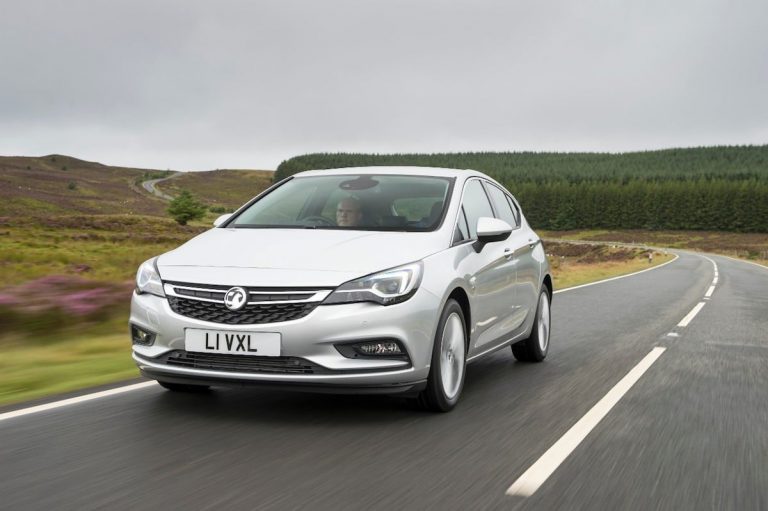
CO2 emissions (g/km): 105/108, 127/127, 136/136/136. 98/98, 117/109, 105.
Key rivals: Vauxhall Astra, Volkswagen Golf
Test Date: December 2014
* All figures relate to five-door hatch with manual gearbox and auto stop-start where fitted.

Audi A3 e-tron review

What is it? The Audi A3 e-tron is a plug-in hybrid version of the familar A3 Sportback.

Key features: Electric powertrain, low running costs, strong performance.

Our view: The Audi A3 e-tron drives just like any other A3 model, cruising and cornering with a competence that inspires confidence.


It is generally accepted that the electric car is going to grow in both acceptance and popularity, as buyers become more familiar with the technology and used to seeing such cars on the road.

Leading the way in the electric market is the plug-in hybrid format, principally because it removes the major drawback, apart from price, that prevents many from switching to electric – range anxiety.

The Mitsubishi Outlander PHEV (plug-in hybrid electric vehicle) launched earlier in 2014, has already proven just how popular such technology can be, but it is this car, Audi’s first ‘e-tron’, and the forthcoming Golf GTE from sister brand Volkswagen that are expected to make the plug-in hybrid a mainstream model.

The first impression one gets on viewing the A3 e-tron is that it looks no different from the best-selling A3 Sportback model that it is based on. But for subtle badges, and on slipping behind the wheel a single extra switch on the centre console, this could be any of the range tested by The Car Expert in March 2013.

On the road, until one plays with the various electric modes, the car feels in most respects no different to driving any normal A3. So what makes it worthy of a price tag that even with the Government’s £5,000 plug-in car grant taken into account, is just over £5,700 more than an equivalent ‘normal’ A3 Sportback in Sport trim?

The answer is the hybrid powertrain. Matched to the 1.4-litre TFSI petrol engine of 147bhp is a 75kw electric motor, built in to a bespoke version of Audi’s six-speed S tronic auto/manual transmission and driving through the front wheels.

Power for the motor is supplied by a battery mounted with the fuel tank, under the floor and above the rear axle, which does impinge somewhat on boot space – the 280 litres (1,120 with rear seats folded down) is 100 litres less than a stock A3 Sportback and further compromised by the suitcase-sized pack that contains the standard-supplied charging lead and which lives in the boot.

The battery can be charged through the charging lead, which is connected via a panel behind the four-ring grille badge and takes two hours 15 minutes for a full charge. Or a normal domestic three-pin socket can be used, though this extends charging time to around four hours.

A neat touch is the ability to remotely monitor charging, pause it, and set such aspects as the climate control to have the car just how the driver likes it from the moment they get in, by either using a web portal or an app downloaded to a smartphone.

That’s the technology, and the resultant performance and economy figures make for impressive reading. The combined petrol/electric powerplant gives the A3 e-tron more than 50 extra horsepower, plus 7.5lbft more torque. This translates to a 0-62mph time of 7.6 seconds, seven tenths quicker than the petrol car, along with a terminal speed increased by 3mph to 138mph.

Along with this, the A3 e-tron returns CO2 emissions figures slashed by 79g/km to a positively miniscule 37g/km, and official combined cycle fuel economy of 176.6mpg – more than 100 miles further on a gallon than the stock car.

Now while there is no doubt that the e-tron will be a great deal more frugal in fuel use than the standard car, no-one truly expects to achieve even close to the official mpg figures in the real world. But such figures are used to set the various charges one faces for driving a car, and this is where the e-tron will really score – particularly if one is a fleet user.

Instead of VED band C, the A3 e-tron sits in band A, so there is no road tax to pay – no congestion charge either. In terms of Benefit-in-Kind tax, the rating plummets from 19 per cent to a bottom-drawer five per cent – with the resultant tax savings potentially running into thousands of pounds a year.

Starting the A3 e-tron is a silent process. The car has four modes, selected by that switch on the centre console, and the default is pure EV, hence the lack of engine noise.

One can drive the e-tron in EV mode out on the open road, for up to 31 miles with a full battery charge. The maximum speed drops to 80mph, but that is still above the UK motorway speed limit. It is also eerily quiet, with none of the radio-control model-like whine one is used to with EVs.

The most usual setting will likely be hybrid auto mode, which combines the engine and motor, engaging the latter as often as is practical and thus cutting fuel consumption and emissions.

In either of these modes if one suddenly finds a need for extra pace, kicking down the throttle like on a typical auto car will bring the petrol engine into action, with just the slightest of gaps before the car powers forward with enthusiasm.

There is also hybrid-hold mode, which calls upon the engine solely to provide the propulsion, preserving the battery charge for later use such as in an emissions-restricted city centre, and hybrid-charge mode, which uses the engine both for propulsion and as a generator to boost the battery charge. You feel the braking effect from the car’s coasting in this mode, but only in this mode.

Switching through the various modes is a simple one-click process, and a multi-colour dagrammatic display between the speedometer and rev counter keeps the driver fully updated as to what power they have available.

On the road, as already stated, the e-tron drives just like any other Audi A3 – the extra weight over the rear axle makes no appreciable difference, and the car cruises and corners with a competence that quickly inspires confidence.

Audi has set up 34 of its dealers as ‘e-tron centres’ with staff specially trained to sell the car. The brand admits that it doesn’t expect to see big numbers, at least initially – currently the UK electric market extends to only 40,000 vehicles with plug-ins only accounting for 5,500 of those. But as Audi’s Jon Zammett told media at the e-tron’s launch, this is a first move by the brand. The segment is doubling in size year on year, the upwards curve steadily steepening. We can likely expect more e-tron models from Audi…

Audi A3 e-tron – key specifications

Model Tested: Audi A3 e-tron Sportback
On Sale: January 2015
Range price: £29,950*
Insurance group: 23A
Engines: 1.4 petrol
Power (bhp): 147 (201 with electric)
Torque (lb/ft): 184 (258 with electric)
0-62mph (sec): 7.6**
Top speed (mph): 138**
Fuel economy (combined, mpg): 176.6
CO2 emissions (g/km): 37
Key rivals: BMW i3, Volvo V60 hybrid
Test Date: November 2014
* = With £5,000 Government Plug-in car grant included
** = in hybrid mode

Fiat 500X review (2014 – 2017)

What is it? The Fiat 500X is an all-new compact crossover variant of the popular 500 line.
Key features: On and off-road versions, nine-speed auto gearbox, drive selector.
Our view: A very capable addition to the 500 family


Fiat 500X crossover (The Car Expert)

The Fiat 500 was the first car to seriously challenge the Mini for ‘lifestyle’ appeal, and in the years since first launching the car Fiat has proven it can diversify its 500 range every bit as much as BMW has done with its baby – we’ve had cabriolet 500s, less-than-convincing MPV 500s, and now we have possibly the most important 500 since the first of the current line.

The Fiat 500X is a compact crossover that brings the Italian company into a sector dominated by the Nissan Juke and gives Fiat a contender in a category that has mushroomed in importance in the last decade – from just 5% to 20% of the European market.

However the 500X is not, like its siblings, a reworked version of the 500 supermini. While it shares most of the family identifiers, notably the ‘moustache and eyes’ front-end look and clamshell bonnet, this is a new car designed from the outset for its market.

In fact it is rather more closely related to its American cousin, the Jeep Renegade, also due in the UK in 2015. The two share much of their mechanical components including the platform.

The Fiat 500X will appeal to different buyers than the Renegade, however. The international launch of the car, at the Fiat Group’s proving ground near the Italian city of Turin, provided a direct comparison between the 500X and various versions of the Renegade under test at the time, and the Fiat clearly boasts a far more slippery, stylish look.

This holds true whichever of the two versions one chooses. The car is being marketed in two distinct directions – the ‘urban’ 500X with front-wheel drive and Pop, Popstar and Lounge trims, and a more off-road style version dubbed 500X Cross in front-wheel drive and 500X Cross Plus with on-demand all-wheel drive.

Visually the main difference between the two types are the chunky bumpers and skid plates on the 4WD variants, along with an increase in ride height from 162mm to 179mm. This improves the approach, breakover and departure angles to add to the off-road credentials.

The 500 has long been praised for its cabin ambience and the 500X maintains the theme. The retro feel remains in a nonetheless highly practical dash, which is much less fussy than the MINI’s. The driving position is good too, slightly higher than the norm as you expect in an SUV-type vehicle, but not overly so.

This is also a compact crossover with space, in front, back and boot – Fiat quotes 350 litres of luggage space, which with the rear seats folded extends up to between 950 and 1,000 litres, depending on what type of spare wheel you choose.

Three of the eventual six engine options will be available in the ‘Opening Edition’ launch models. These are the 140hp 1.4-litre turbo MultiAir II petrol unit and diesels in 120hp 1.6 and 140hp 2.0-litre MultiJet II varieties.

The first two will be supplied in FWD form with six-speed manual gearboxes, the second as an AWD model with a market-first nine-speed auto, more of which shortly.

Later the engine line-up will expand to include a 110hp 1.6-litre petrol unit with a five-speed manual gearbox and FWD, and an AWD version with the nine-speed auto box and 170hp. An entry-level FWD 1.3-litre diesel model of 95hp will be added too.

On the launch, The Car Expert got to try the 1.6- and 2.0-litre diesel engines. The former is expected to be the best seller among UK buyers and it certainly impresses, with its eager progress to 62mph in 10.5 seconds and refined cruising thereafter. It’s torquey yet smooth and the six-speed manual gearbox slick and confident in its action.

The 2.0-litre is a world apart, mainly due to its automatic gearbox, allied to the all-wheel-drive. Nine speeds are a first in this segment, and they suit the car very well indeed, the changes so frequent that the engine rev note never becomes noticeable, let alone intrusive.

The system also includes a manual function, through steering-wheel-mounted paddles, and this can be a bit of a culture shock, learning to make nine shifts in the same range where previously six have been the norm, and in all honesty, it is best to leave the box in auto and let it sort itself.

The on-the-road performance of the Fiat 500X is particularly noticeable, but only for its lack of drama. Fiat is keen to point out the 70 per cent of high-strength steels employed in the body structure, and the resultant stiffness helps to promote an accomplished ride and precise cornering.

All bar entry-level Pop models of the 500X include an interestingly-named ‘Drive mode’ selector, which on FWD cars can alternate between ‘Auto’, ‘Sport’ and ‘All-weather’ settings and alters engine performance, power steering settings and ESC calibration accordingly, along with the shift patterns of auto gearbox versions.

The Cross and Cross Plus get a modified unit with All-weather making way for ‘Traction’. On FWD versions this activates Fiat’s clever Traction Plus electronic front differential, while on the AWD variants it speeds up the transmission of torque to the rear axle when needed.

All of which gives the two Cross versions a more-than-adequate degree of ability when the tarmac runs out, as Fiat proved with a suitable course on the launch event. While this was more green lane than proper off-road, it proved that this crossover will go a lot further than the vast majority of owners will ever want to take it.

The other technology included on all bar the entry cars is topped by the Uconnect infotainment system. Operated through a five-inch touchscreen this includes Bluetooth phone and music streaming aux-in and USB ports and the ability to read incoming text messages on compatible mobile phones.

On top models, the screen grows to six inches and satellite navigation is standard (it’s an optional upgrade on the smaller version, as is DAB digital radio).

Dealers start taking orders for the Opening Edition models – which will include several normally optional items as standard – in December, with the first cars on UK roads in April.

Fiat won’t state how many 500X models it expects to sell, arguing that this is an all-new market for the brand. But it is clear that there are very high hopes for the car. As there should be – this is a very capable addition to the 500 family and should be checked out by any buyer who before now might not have looked far beyond a Juke.

Fiat 500X – key specifications

Model tested: Fiat 500X 1.6 Multijet manual diesel, 2.0 Mulitjet 140HP 9-spd auto
On Sale: Order December 2014, deliveries April 2015
Price (full range): £14,595-£25,845
Insurance group: TBC
Engines (at launch): 1.4 petrol. 1.6, 2.0 diesel
Power (bhp): 140. 120, 140
Torque (lb/ft): 170. 236, 258
0-62mph (sec): 9.8. 10.5, 9.8
Top speed (mph): 114. 112, 114
Fuel economy (combined, mpg): 47, 69, 51
CO2 emissions (g/km): 139. 109, 144
Key rivals: Nissan Juke, Renault Captur, Mini Countryman
Test Date: November 2015

Suzuki Swift Dualjet review

What is it?
New frugal Dualjet petrol engine option for the Suzuki Swift supermini.

Key features
Economy and emissions improvements, zero road tax.

Our view
Same performance but better fuel economy and lower emissions.


The latest Suzuki Swift has been on sale for four years now and was updated in 2013.

Where the Swift has lost out to more recent supermini rivals, however, is in its engine, in that it hasn’t been able to offer a petrol unit below the tax-removing 100g/km CO2 emissions barrier. That changes in January 2015 with the arrival of the Dualjet.

The Dualjet is a significantly modified version of the 1.2 petrol engine. As its name suggests, it uses twin fuel injectors per cylinder, which allows them to be placed closer to the inlet manifolds, which Suzuki says produces a finer air/fuel mixture which therefore more efficiently transfers into the cylinder.

There are other engine modifications to suit the new format (along with auto stop-start), and while power drops by four horses to 89bhp, torque increases slightly, from 118 to 120lbft. Together with longer ratios in the gearbox, the result is signficantly improved economy and emissions. The former jumps from an official combined cycle figure of 56.5 to 65.7mpg, and the latter is cut from 116 to 99g/km.

All this comes at the expense, performance-wise, of nothing at all. Top speed is cut by half a mile per hour, but at 102.5mph it’s irrelevant anyway. The 0-62mph time of 12.3sec is identical.

On the road, the major improvements come around town, the Swift’s natural environment, where the car feels distinctly more nippy and eager when compared to the outgoing version. In start-stop traffic in particular it’s an agreeable companion.

Once out on the open road, the Swift Dualjet bowls along with confidence and refinement, and its audio signature only becomes noticeable at high motorway speeds.

As for the rest of the car, nothing has changed since we last checked out the Swift. The cabin is still well laid out and fitted together. Space is adequate, though better in front than back, while the on-the-road performance is equally adequate, the ride comfort a plus, the lack of life in the steering less so.

Suzuki says that the new Dualjet engine will, initially at least, be offered on SZ4 two-wheel drive five-door models and will cost an additional £500. This makes it £15,139, which is pricey for a supermini, though the SZ4 trim has recently had DAB radio and satellite navigation added to a specification that already included automatic air conditioning, electric rear windows, rear privacy glass, push button keyless start, automatic headlamps, cruise control and mirrors with integrated turn indicators.

Whether Suzuki plans to extend the Dualjet to SZ3 models remains to be seen – the resultant price of under £13,500 would boost the Swift from a supermini worth considering to a definite contender.

Suzuki Swift Dualjet – key specifications

Model tested: Suzuki Swift 1.2 Dualjet SZ4 5dr
On Sale: January 2015
Range price: £15,139
Insurance group: TBC
Engine: 1.2 petrol
Power (bhp): 89
Torque (lb/ft): 89
0-62mph (sec): 12.3
Top speed (mph): 102
Fuel economy (combined, mpg): 65.7
CO2 emissions (g/km): 99
Key rivals: Ford Fiesta, VW Polo
Test Date: October 2014

What is a deposit contribution?

Many car manufacturers advertise a deposit contribution as part of a finance offer on a new car – and sometimes on a used car. But what is the difference between (for example) a £2,000 discount and a £2,000 deposit contribution? After all, it’s £2,000 that the customer doesn’t have to pay, right?

With a normal discount, a seller offers any buyer a reduction in the price of the vehicle, regardless of how the customer is paying for the vehicle. Simple. The problem with that plan is that the discount comes directly out of the seller’s profit margin. So a £2,000 discount on a £20,000 car means that the customer saves £2,000 but it costs the seller £2,000.

A deposit contribution means that the manufacturer and/or dealer and/or finance company is giving you an amount towards the car, but with strings attached. And the key string is that you have to take the manufacturer’s finance to get the deposit contribution (and sometimes, it has to be a specific finance plan like a PCP, rather than any other finance plan they may offer).

So a £2,000 deposit contribution means that the seller is still taking a £2,000 hit up-front, but they get to make at least some of it back (or possibly even more than it originally cost them) in finance profit over the following years.

How does a deposit contribution affect me?

Well, that depends on how you are financing your car. In some cases, it makes virtually no difference to the customer at all whether you are getting a discount or a deposit contribution. If you are financing the car through the dealership anyway, then a dealer giving you £2,000 off the car’s price is the same thing as them giving you £2,000 towards the car’s price – it’s £2,000 you don’t have to spend.

However, if you are not planning to take the manufacturer’s finance offer then you won’t be eligible for the deposit contribution, meaning you have to pay the extra £2,000.  This means you need to work out whether or not it’s cheaper for you to still pay by your planned method, or take the manufacturer’s finance and claim the deposit contribution.

Even if you have got a lower interest rate from another finance company or bank, it might still cost you more than using the dealer’s finance and getting the cash from the manufacturer. So get your calculator out and crunch your numbers carefully.

Can I get a deposit contribution without taking their finance offer?

Officially, no. To be eligible for the deposit contribution, you will almost certainly have to sign up for the dealer’s finance plan. However, there is usually a loophole in the contract which you can take advantage of…

How to claim the deposit contribution without taking the finance

Any PCP or HP car finance offer sold at a car dealership in the UK is a regulated agreement subject to certain legal provisions. One such provision is that you can cancel your finance agreement within 14 days of it being activated, with no penalties or charges and no affect on your credit score.

So if your plan is to pay cash for your new car, you can:

  1. Sign up for the manufacturer’s finance offer. which allows you to take advantage of the deposit contribution
  2. Take delivery of your car
  3. Immediately cancel the finance

This will result in the finance company immediately invoicing you for the amount borrowed, which you pay them with the cash you were going to use anyway.

Isn’t there some kind of catch?

Not usually. The only possible catch would be if the dealer wrote on the vehicle contract that the deposit contribution would be negated if the finance was cancelled, and that you would have to pay it back. However, that almost never happens, and it is fairly problematic for the dealer and manufacturer to enforce anyway. Simply, once the customer has driven off in their new car, any chance of getting more money out of them is going to be slim.

The manufacturers also know that the vast majority of customers will not cancel their agreements, so they are content to keep offering deposit contributions instead of discounts. If it becomes a much bigger issue then they may start to look for other alternatives.

The key thing to remember is that you have 14 days from the contract being activated to cancel the finance agreement. You need to do this in writing and you need to be very clear with the finance company.

If you don’t properly communicate your cancellation to the finance company (or if you forget…) and you go over the 14-day cancellation period, you will be subject to fees and charges when you try to cancel the agreement.

It’s also important to remember that cancelling your finance agreement doesn’t mean you can give the car back. It just means that you have to pay cash to cover the amount you borrowed to buy the car. So don’t think that this is a way to get out of your obligations after you have taken delivery of your vehicle. For more information on that, have a look at this article.

What if I’m financing elsewhere?

I know of a few customers who have juggled two finance deals to try and beat the system – signing up to the manufacturer finance offer to get the deposit contribution, then cancelling it and signing up to another lower-rate finance offer elsewhere to pay the manufacturer finance company back.

This is risky, because if there are any delays in getting your second finance plan set up and paid out, you will miss out on paying back the manufacturer finance company on time. Not really recommended unless you are very confident in what you are doing…

Mini 5-door hatch review

What is it?
The Mini 5-door hatch is the practical sibling to the familiar 3-door version.

Key features:
Two extra doors, longer wheelbase, full engine range.

Our view:
The Mini 5-door will sell in huge numbers to those who love the lifestyle image it projects.


The biggest criticism levelled at the Mini has always been its lack of rear seat space. In the latest hatch the designers claim to have addressed this, but the launch of a ‘proper’ five-door variant – appearing six months after the latest three-door – certainly makes accessing what rear seat space there is rather easier.

There are more basic reasons for this latest member of the seemingly ever-expanding Mini line-up. The supermini market in which this car competes is split 70/30 in favour of five-door cars over their three-door counterparts, and all of the Mini’s prime rivals – the Audi A1, Ford Fiesta, Peugeot 208 and VW Polo, sell far more five-door models than three-door.

There is, of course, already a Mini 5-door model available; the Countryman. But it appeals to a specialist, outdoor audience, and the new car is expected to have a much wider clientele – and a different one to the existing three-door. That car is seen as appealing mostly to single people or young couples, the new five-door to young families who need the extra practicality. It also gives Mini far more opportunities in the fleet sector – many company car buyers are forbidden from choosing three-door vehicles.

The car is not simply the existing shell with two extra apertures. The Mini 5-door measures up at 161mm longer than its sibling – at 3,982mm it’s actually longer than most of its mainstream rivals, so not that mini after all. It’s also 11mm taller than a regular three-door Mini, though of the same width.

Possibly the most crucial measurement, however is the wheelbase, which gains 72mm, freeing up vital interior space. And front and rear headroom are more than 50mm better than the Fiesta or Polo, with only the A1 coming close at 5mm less than the Mini’s 942mm.

The Mini 5-door is not quite so generous on bootspace. While the 278 litres is some 67 better than the three door’s it falls two litres short of the Polo,12 shy of the Fiesta.

Slipping inside the car it’s clear that rear space has improved, making this variant rather more practical than the three-door, but it’s still cosy in the back compared to more traditional superminis.

Of course neither this or the ‘stylishly fussy’ dash layout, which objective critics would describe as concerned more with form than function, will matter to the likely market for this car, as it will be bought simply because it is a Mini.

The five-door body is being made available right across the Mini range, so there is a six-strong choice of trims – One, Cooper and Cooper S, all in both petrol and diesel varieties – with power outputs ranging from 94 to 187bhp and both the One D and Cooper D models below the important 100g/k CO2 emissions barrier. All but the One variants are on sale from launch, the entry models following a couple of months later.

All the engines are three-cylinder units with the exception of the four-cylinder S variants, and all are familiar from the three-door Mini range. Our brief test drive singled out the Cooper D model, and it is unsurprisingly impressive, its quiet, smooth powerplant sending it through 62mph in 9.4 seconds while returning close to 80mpg official combined cycle fuel economy figures and emissions well into free road tax territory.

This is combined with a chassis long renowned for its precise, fun handling (wrongly dubbed ‘go-kart like’ by many). Adding the extra wheelbase length has not affected these qualities at all, and possibly one of the biggest plusses of this new MINi is that it is still very much a highly enjoyable car to drive enthusiastically – even before one starts delving into the driving aids available for the car.

In terms of price, every Mini 5-door is £600 more than its three-door equivalent, prices starting at £13,830 for the Mini One. The Cooper D we tried costs from £17,050, which might seem expensive for a supermini – and this is before one starts dipping into the extensive options list of BMW-derived technology and lifestyle-pitched personalisation.

As stated, however, the price won’t matter, because the Mini 5-door will sell in huge numbers, mainly to those who love the car and the lifestyle image it projects. Those that have driven three-door versions and have had to very reluctantly give them up when the children arrived, or those who have desired a Mini but simply not been able to consider a three-door with a cramped rear, will be queueing for this model.

Mini 5-door – key specifications

Model Tested: Mini 5-door Cooper
On Sale: October 2014
Range price: £13,830-£19,530
Insurance group: TBC
Engines: 1.2, 1.5, 2.0 petrol. 1.5 x2, 2.0 diesel
Power (bhp): 101, 135, 189 . 94/115, 167
Torque (lb/ft): 133, 162, 207. 162/199, 266
0-62mph (sec): TBC, 8.2, 6.9. TBC/9.4, 7.4
Top speed (mph): TBC, 129, 144 . TBC/126, 140
Fuel economy (combined, mpg): TBC, 60.1, 47.9. TBC/78.5, 68.9
CO2 emissions (g/km): TBC, 109, 139. TBC/95, 109
Key rivals: Audi A1, Ford Fiesta, Volkswagen Polo
Test Date: October 2014

Audi TT coupé review

What is it? The Audi TT coupé Mk3 is the latest generation of Audi’s distinctive sports car
Key features: Lightweight build, new chassis, digital ‘virtual cockpit’
Our view: On the evidence of our first drive, the new Audi TT coupé will maintain its predecessors’ astonishing success


To many observers the TT coupé is the car that initiated Audi’s meteoric rise to the leading premium brand it is today.

When the first Audi TT coupé was unveiled as a concept in 1995, its Bauhaus-inspired styling won instant admirers. And those admirers became customers when the concept reached production with virtually no changes, very much not the norm at the time.

In those days Audi was a brand in the shadow of rivals BMW and Mercedes, with a range of 17 models planning its first Le Mans 24 Hours campaign. Since then there have been 13 Le Mans wins, Audi has become the top premium brand in the UK, and the third-generation TT joins a model line-up of some 47 cars.

These include an even more performance-orientated model in the R8, and the styling of the new TT relates to its more potent sibling by means of a mimicking style to the grille and front bumper. And the motorsports success is also marked, the signature daytime running lights including a vertical stroke replicating the headlamps of the latest Le Mans winner.

Overall the TT’s exterior visuals are an evolution of its predecessors, applied to a shell that takes full advantage of the latest Audi Space Frame technology hybrid construction – 27 per cent of it formed from aluminium. So while the new TT is virtually the same size as the outgoing version, it weighs up to 50 kilos lighter.

One dimension has changed significantly – the wheelbase is 37mm longer, which gives the car much more of a wheel on each corner stance and frees up some extra interior space, including extending the boot capacity by 13 litres to 305 litres (712 with the rear seats folded down). But this is still very much a 2+2 machine, with very limited rear seat space.

Stepping inside the Audi TT coupé reveals one of the biggest headlines – a radically redesigned cabin. Audi’s ‘virtual cockpit’ debuts in the car with the touchscreen relocated from the centre console to the dash.

Said screen is a 12.3-inch LCD display that stretches right across the instrument binnacle and incorporates the rev counter and speedometer dials. By the touch of a button on the steering wheel the two either dominate the screen or are reduced in size to reveal more of the sat nav map – or courtesy of the options list Google Earth satellite images.

In conjunction with the MMI dial between the seats, this screen controls all the usual functions – from navigation to vehicle settings, phone to audio, leaving the heating and ventilation controls on the centre console. Except that these are not in their traditional positions, but neatly incorporated into the core of each air vent. Overall it’s a minimalist cabin and highly attractive.

The new Audi TT coupé launches with a simple, two-way engine choice – both of 2 litres, petrol or diesel. Both are matched to a six-speed manual gearbox and front-wheel-drive transmission, while the petrol unit can also be specified with the S-tronic auto ‘box and quattro all-wheel-drive. The diesel earns Audi’s ‘ultra’ badge for its most efficient models, thanks to best CO2 emissions figures of 110g/km and combined cycle fuel economy of 67.3mpg.

On the launch event, The Car Expert tested both engines, and they are both very effective. While the petrol unit is at least a second quicker to 62mph than the diesel – 6.0sec versus 7.1sec – the latter does not feel at all sluggish, accelerating crisply and smoothly.

Combining the petrol unit with quattro all-wheel drive and the S-tronic twin-clutch gearbox significantly cuts sprint times further. A full seven tenths faster to 62mph, it is also very assured. During the launch its advantages were very evident in the tricky conditions of rain-lashed twisty Scottish roads, the rapid transmission adding a very satisfactory blip sound to each change.

More options will arrive soon, in the shape of the 305bhp engine of the Audi TTS, still of 2.0 litres and expected on the roads in March 2015. And as in previous TT generations, there will be a Roadster variant.

The chassis has benefited from the latest tech, principally Audi’s drive select active driving system, standard on all TTs. Comfort, Dynamic, Efficiency, Individual or Auto modes can be selected through the MMI, each adjusting engine settings, steering and transmission. In Efficiency mode it even alters the air conditioning and the start-stop system, while on all-wheel drive versions shutting down the quattro when only front-wheel propulsion is required.

Drive select tops the complex chassis setup, but the TT remains only a very good car to drive, not an excellent one. It doesn’t quite have the precise, direct feel of a purist sports car, but as an overall package it is still impressive.

Prices for the new Audi TT start at £29,860 – some £4,000 more expensive than its predecessor but reflecting the major advances in the technology evident in this car.

It’s available in Sport and S line trim, the latter adding LED head and tail lamps, 19-inch wheels and extra body styling, plus as a no-cost option bespoke sports suspension that reduces the ride height by 10mm.

The UK is the biggest market for the Audi TT – even beating Germany – and the first generation car sold 50,000, the second 60,000. Can the Mk3 TT maintain such success? On the evidence of our first drive, most certainly. The car is packed with totally up-to-date technology in basically the same distinctive shell – it will certainly sell.

Audi TT coupé – key specifications

Model Tested: Audi TT 2.0TDI Ultra Sport, 2.0 TFSI quattro S line
On Sale: First deliveries January 2015
Range price: £29,860-£35,335
Insurance group: TBC
Engines: 2.0-litre petrol, 2.0-litre diesel
Power (bhp): 226, 181
Torque (lb/ft): 273, 280
0-62mph (sec): 6.0 (5.3*), 7.1
Top speed (mph): 155, 150
Fuel economy (combined, mpg): 47.9 (44.1*), 67.3
CO2 emissions (g/km): 137 (149*), 110
Key rivals: BMW Z4, Mercedes-Benz SLK, Porsche Cayman
Test Date: October 2014
* = with quattro all-wheel-drive, s-tronic gearbox

Vauxhall Corsa review

What is it?
All-new generation of Vauxhall Corsa, the nation’s second-biggest selling supermini.

Key features:
New look, better quality, more equipment.

Our view:
Ticks all the boxes – many thousands of buyers are likely to be perfectly satisifed


Few cars matter as much to a manufacturer as does the Corsa to Vauxhall. In the UK’s entire new car market this car is only consistently beaten by its rival from Ford, the Fiesta.

The Corsa accounts for a third of Vauxhall’s volume and outsells the entire UK ranges of the likes of Renault, SEAT and Mazda. In 2013 more than 84,000 Corsa’s found UK buyers and this year the total is running at 70,000 despite the imminent arrival of an all-new model.

So replacing the Corsa with a fourth-generation version has massive implications for Vauxhall – this is one car that the brand cannot afford to get wrong…

Perhaps that’s part of the reason why Vauxhall/Opel’s chief designer, Andrew Dyson, is keen to describe the new Corsa as “an evolution”. Yet on first glance it is clear much has changed about the car, notably the more distinctive exterior resulting from the incorporation of the ‘sculptural design’ language introduced to the brand’s cars by Dyson’s predecessor Mark Adam.

The car boasts bolder visuals, distinct creases and the signature ‘floating blade’ motif stamped into the doors, following the styling seen on other recent Vauxhall product.

The Corsa also has distinct three-door and five-door bodyshells, which emphasise the fact that the car tends to serve two distinct audiences – the three-door model, often a second car in the household, is bought by younger motorists who consider it more sporty than the five-door, a car purchased by those wanting something smaller than they have been used to before.

Every body panel on the Corsa is new, we are told, and so is the interior – and it shows. The
cabin is a definite improvement on previous Corsa’s – it offers an impression of quality construction, much helped by the high-gloss finishes and soft-touch surfaces used in proliferation, while it can also feature a great deal of technology, the like of which has not been seen in superminis until very recently.

Vauxhall’s IntelliLink is a case in point, an infotainment system with a touchscreen that dominates the centre console, and which integrates completely with Apple and Android smartphones, with many of their apps usable through the car.

Other advances serve to make living in the Corsa that bit easier – the heated windscreen, standard on all models, being a case in point. A rear parking camera, bi-xenon headlamps, and a safety suite that can include the likes of blind spot and lane departure warning aids, all show how this Corsa is a distinctly more advanced car than its predecessor.

Space wise there are no great advances over the previous model, but it compares well with supermini rivals and neat touches such as the easy-fold seats aid rear access in the three-door model.

The Corsa comes to market with a seven-strong engine line-up, five petrol and two diesel, reflecting the fact that most supermini buyers shun diesel power. As is normal with any new car launch in these times, all see economy and emissions improvements compared to predecessors.

The Car Expert tried the two headline makers amongst the petrol range, firstly a new version of the 99bhp 1.4-litre turbo engine. While adequate the unit failed to excite, feeling somewhat coarse and struggling for acceleration despite its 148lbft torque figure.

However Vauxhall is pinning its future on a new family of small direct injection engines, and the first of these, a three-cylinder 114bhp 1-litre unit, gives cause for optimism. While compared to the 1.4 it matches more power to less torque of 122lbft, it makes far better use of it, accelerating strongly yet smoothly – in summary a highly refined powerplant that certainly suits its supermini environment.

Vauxhall is keen to point out that the Corsa chassis was specifically tuned to cope with the worst that British roads could throw at it; “If it can cope with UK roads, it can cope with anything,” we are told… Achieving this included suitably camouflaged prototypes coming to Britain a year ahead of launch to cover thousands of miles testing on UK roads.

Chassis changes include a 5mm lower ride height, stiffer subframes and revised suspension geometry, all of which combine to produce a very competent on-the-road performance, smooth and comfortable in a straight line, precise and easy to place in corners with well-weighted steering. It is, of course, going up against the Fiesta, and while Ford’s chassis prowess is renowned, this Vauxhall certainly offers a challenge to it.

Where the Corsa also scores is in its price – the cheapest is the three-door 1.2-litre 69bhp variant in Sting trim – first of nine trim levels, reduced by one from the previous car but with the number of individual models slashed by half. The Sting costs from £8,995, almost £1,000 less than an entry-level Fiesta and indicative of price cuts across the Corsa range up to £3,000 lower than previous equivalents. For the record the cheapest of the 114bhp three-cylinder engines is found in the Sting R at £10,995.

Vauxhall expects to sell broadly similar levels of new Corsas as it did the old one, and it is easy to see why. The new model ticks all the boxes – with careful engine choice many thousands of buyers are likely to be perfectly satisifed with their new Vauxhall.

Vauxhall Corsa – key specifications

Model tested: Vauxhall Corsa 1.4 T, 1.0
On sale: October 2014
Range price: £8,995-£15,990
Insurance group: 2E-8E
Engines: 1.0 x 2, 1.2, 1.4 x 2 petrol. 1.3 x 2 diesel
Power (bhp): 89/114, 69, 89/99. 74/94
Torque (lb/ft): 122/122, 84, 95/148. 140/140
0-62mph (sec): 11.9/10.3, 16.0, 13.2/11.0. 14.8/11.9
Top speed (mph): 112/121, 101, 109/115. 102/113
Fuel economy (combined, mpg): 65.7/56.5, 53.3, 55.4/55.4. 76.3/88.3*
CO2 emissions (g/km): 100/114, 124, 119/119. 99/85*
Key rivals: Ford Fiesta, Peugeot 208, Renault Clio
Test Date: October 2014
* = best figure, dependent on spec. Manual gearbox