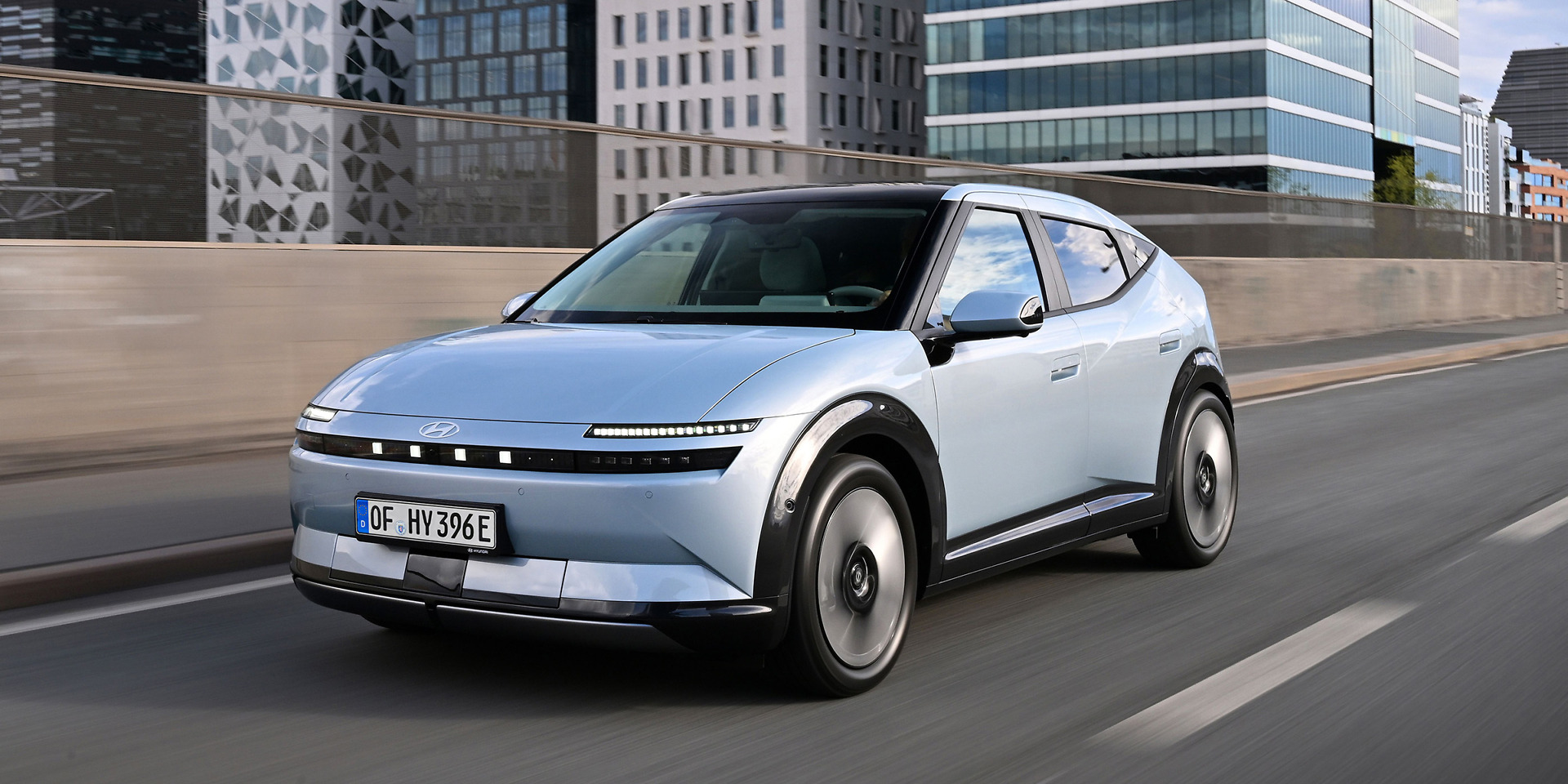





Hyundai has announced UK pricing details for its new Ioniq 3, a compact electric supermini with a class-leading battery range and a starting price that puts it among the UK’s more affordable EVs.
Described by Hyundai as an ‘Aero Hatch’, the Ioniq 3 sits below the Ioniq 5 and brings several technologies from the company’s larger electric cars into a smaller, cheaper package.
Despite its small hatchback dimensions, Hyundai is marketing practicality a major selling point to differentiate the Ioniq 3 from rivals in the seriously competitive small electric car class.
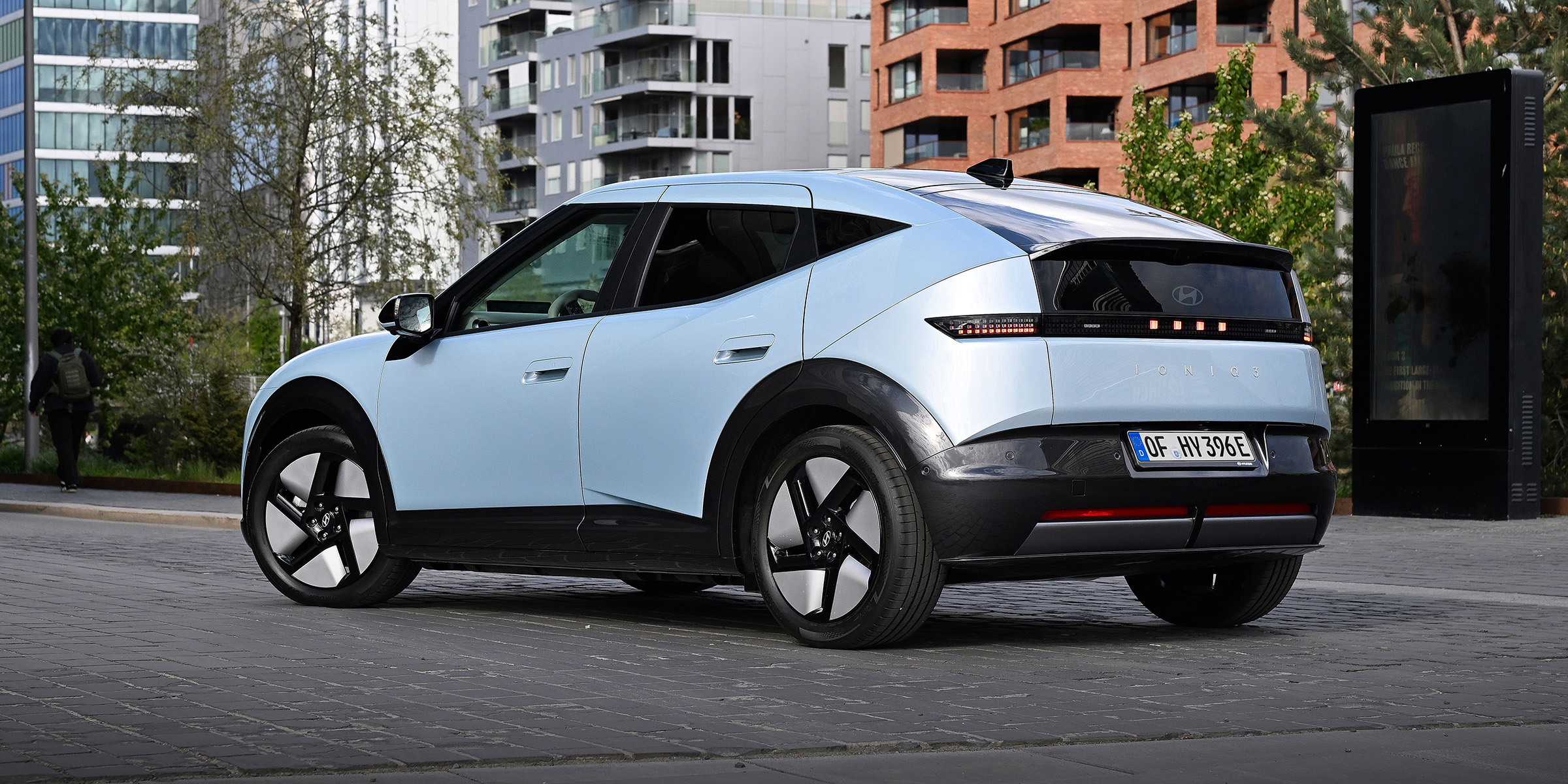
The Ioniq 3 offers 441 litres of boot space, along with additional underfloor storage and a floating centre console. That boot space figure is unusually generous for a supermini-sized car and even exceeds many larger family hatchbacks.
Two batteries and up to 308 miles of range
Two battery sizes will be offered. Entry-level ‘Advance’ cars can be specified with a 42kWh battery and 147hp motor, providing a battery range of 213 miles.
A larger 61kWh battery is paired with a 135hp motor and extends the official battery range to 308 miles in ‘Advance’ trim. Range varies with specification and wheel size, falling slightly to 303 miles for ‘Premium’ and 300 miles for ‘Ultimate’.
Important to note that Hyundai says these range figures are ‘expected’. If confirmed, that would give offer more single-charge range than key electric supermini rivals, including the 281-mile Volkswagen ID. Polo and 252-mile Renault 5 E-Tech electric.
The sportier-looking ‘N Line Evo’ also uses the 61kWh battery and 135hp motor but its larger 19-inch wheels help reduce expected range to 265 miles. This model isn’t more powerful than the rest of the range, changes are largely cosmetic. It adds bespoke bumpers, a larger rear spoiler and an N Line-themed interior, as well as additional parking and camera tech.
The Ioniq 3 uses a 400V electrical architecture, rather than the 800V system found in the larger Ioniq 5 and Ioniq 6. Hyundai has yet to provide a peak DC charging rate or 10% to 80% charging time in this announcement, though the Korean brand adds that Vehicle-to-load (V2L) capability is also available, allowing the battery to power external electrical equipment.
New technology debuts in the Ioniq 3
The Ioniq 3 will be the first European Hyundai to use the company’s ‘Pleos Connect’ infotainment system. Depending on specification, this is presented through a 13- or 15-inch touchscreen.
Other available technology includes ‘Plug & Charge’, an integrated EV route planner and Hyundai ‘Digital Key 2’ which allows you to lock, unlock, and start your vehicle using a compatible smartphone or smartwatch. There’s also ‘Memory Reverse Assist’, which records the car’s inputs over the previous 50 metres and can help retrace that route in reverse – potentially useful when navigating narrow driveways or car parks.
Four specifications are offered: ‘Advance’, ‘Premium’, ‘Ultimate’ and ‘N Line Evo’. The latter is primarily a sporty styling and equipment upgrade rather than a performance model, retaining the same 135hp motor as other 61kWh versions. It adds bespoke bumpers, a larger rear spoiler, 19-inch wheels and an N Line-themed interior, as well as additional parking and camera technology.
UK pricing and availability
Prices start at just over £22k for the Ioniq 3 Advance with the 42kWh battery, while the 61kWh Advance costs £25,745.
‘Premium’, ‘Ultimate’ and ‘N Line Evo’ models start at around £27k, £30k and £32k respectively.
Hyundai is advertising lower pricing figures incorporating either its ‘Reservation Saving’ or in anticipation of the car being added to the government’s list of electric car grant models, although grant eligibility hasn’t been confirmed just yet. On that basis, the 61kWh ‘Advance’ could cost £24k, with ‘Premium’, ‘Ultimate’ and ‘N Line Evo’ falling to around £26k, £28k and £30k respectively.