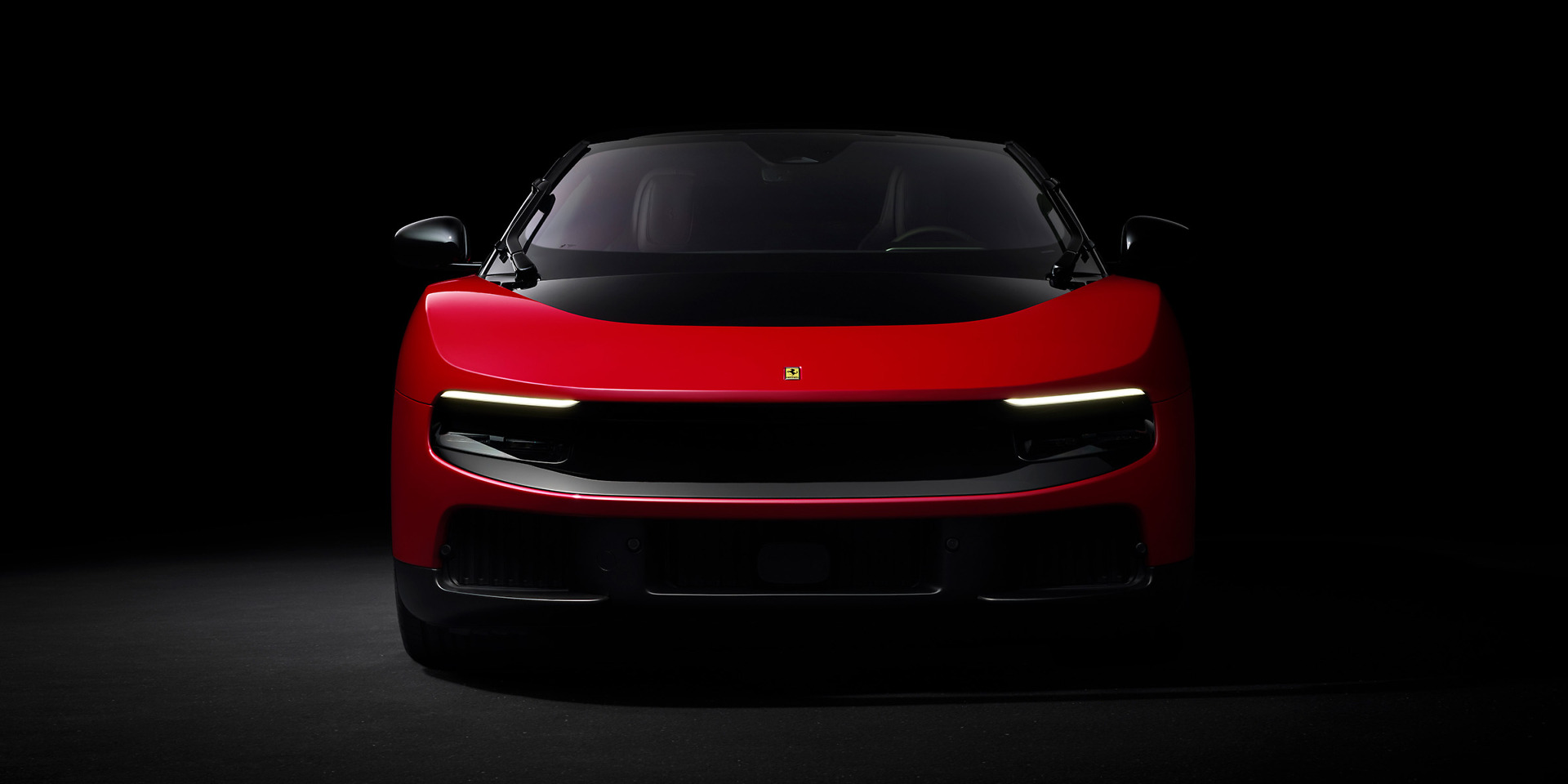





Ferrari has revealed its first-ever fully electric production car, the new Ferrari Luce, marking one of the biggest moments in the company’s history since the launch of its first road car almost 80 years ago.
Unveiled in Rome, the new Luce isn’t intended to replace Ferrari’s petrol-powered sports cars. Instead, it sits alongside the firm’s existing petrol and hybrid models, and will rival battery-powered alternatives like Porsche Taycan Turbo GT, and Lotus Evija.
The Luce produces a combined 1,050hp from four electric motors – one driving each wheel – allowing it to accelerate from 0-62mph in 2.5 seconds and reach a top speed of more than 190mph. Ferrari also claims a driving range of more than 330 miles on a single charge.
Four motors, four-wheel drive and four-wheel steering
Each wheel is powered by its own electric motor, giving engineers precise control over how much power is sent to each corner of the car. Ferrari says this allows the car to react more quickly and accurately than conventional all-wheel-drive systems.
The car also features four-wheel steering, meaning the rear wheels can turn slightly to improve manoeuvrability at low speeds and stability at higher speeds.
The Ferrari also has a system that allows drivers to manually adjust acceleration and regenerative braking using paddles behind the steering wheel. Unlike many electric cars that simply deliver maximum power instantly, the Luce is designed to give drivers more control over how performance is delivered.
Due to the large battery and electric motors, the Luce is significantly heavier than any traditional Ferrari, with a curb weight of 2,260kg – about as heavy as large SUVs like the Volvo EX90 and Land Rover Defender.
Fast charging and long-distance capability
Power comes from a large 122kWh battery developed in-house by Ferrari.
The company claims the battery can add around 70kWh of charge in 20 minutes when connected to a suitably powerful 350kW rapid charger.
Ferrari says owners will benefit from a dedicated eight-year warranty covering key electric powertrain components, including the battery, motors and charging systems. The Luce will also be included in Ferrari’s existing seven-year servicing programme.
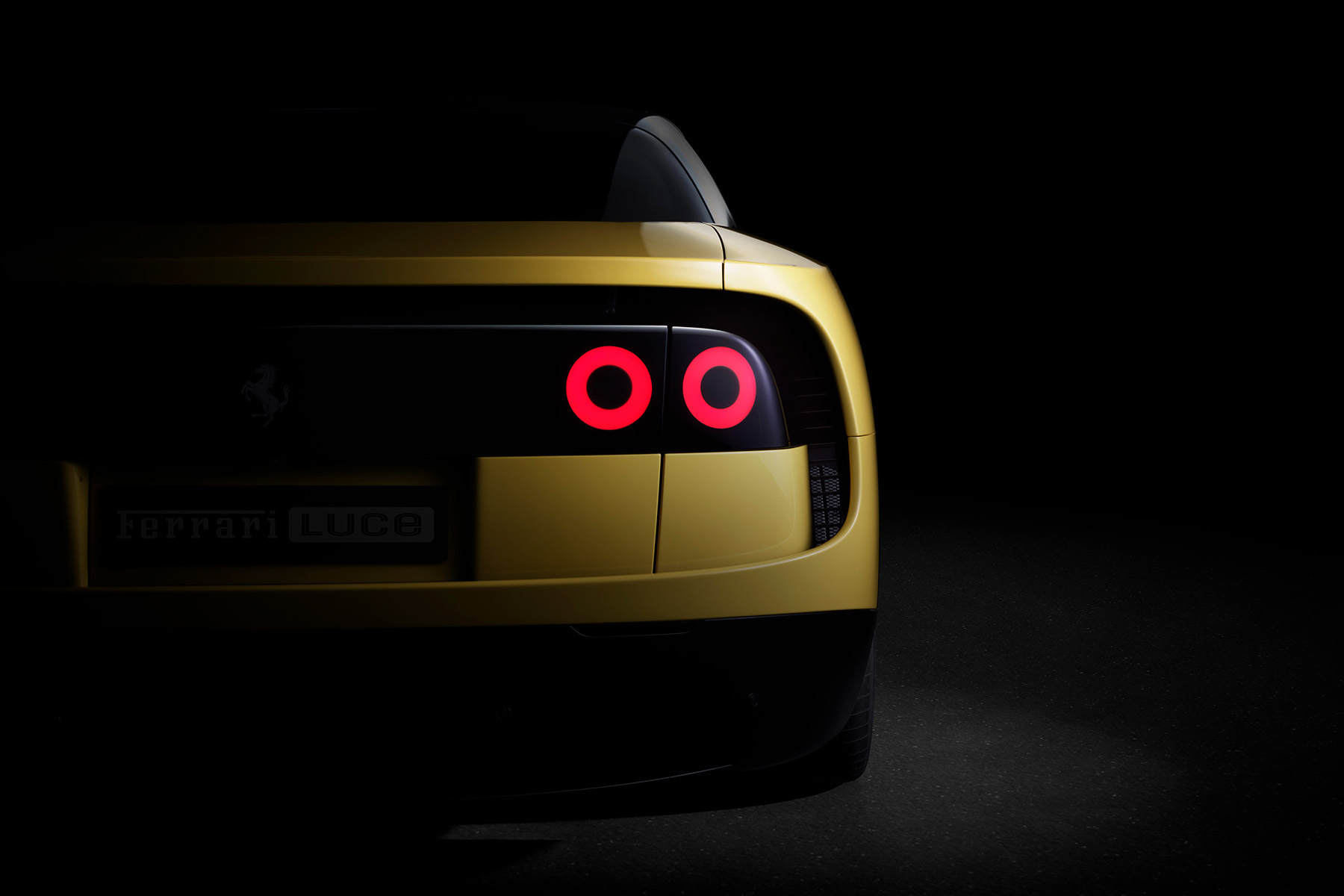
Ferrari wanted it to sound like a Ferrari
Rather than creating an artificial engine note, Ferrari says it has developed a system that amplifies the natural sounds produced by the electric motors and drivetrain. Sensors monitor vibrations and mechanical noises from the powertrain, which are then enhanced and fed both inside and outside the car.
Drivers can choose how prominent the sound is, ranging from near-silent operation to a more engaging soundtrack when driving enthusiastically.
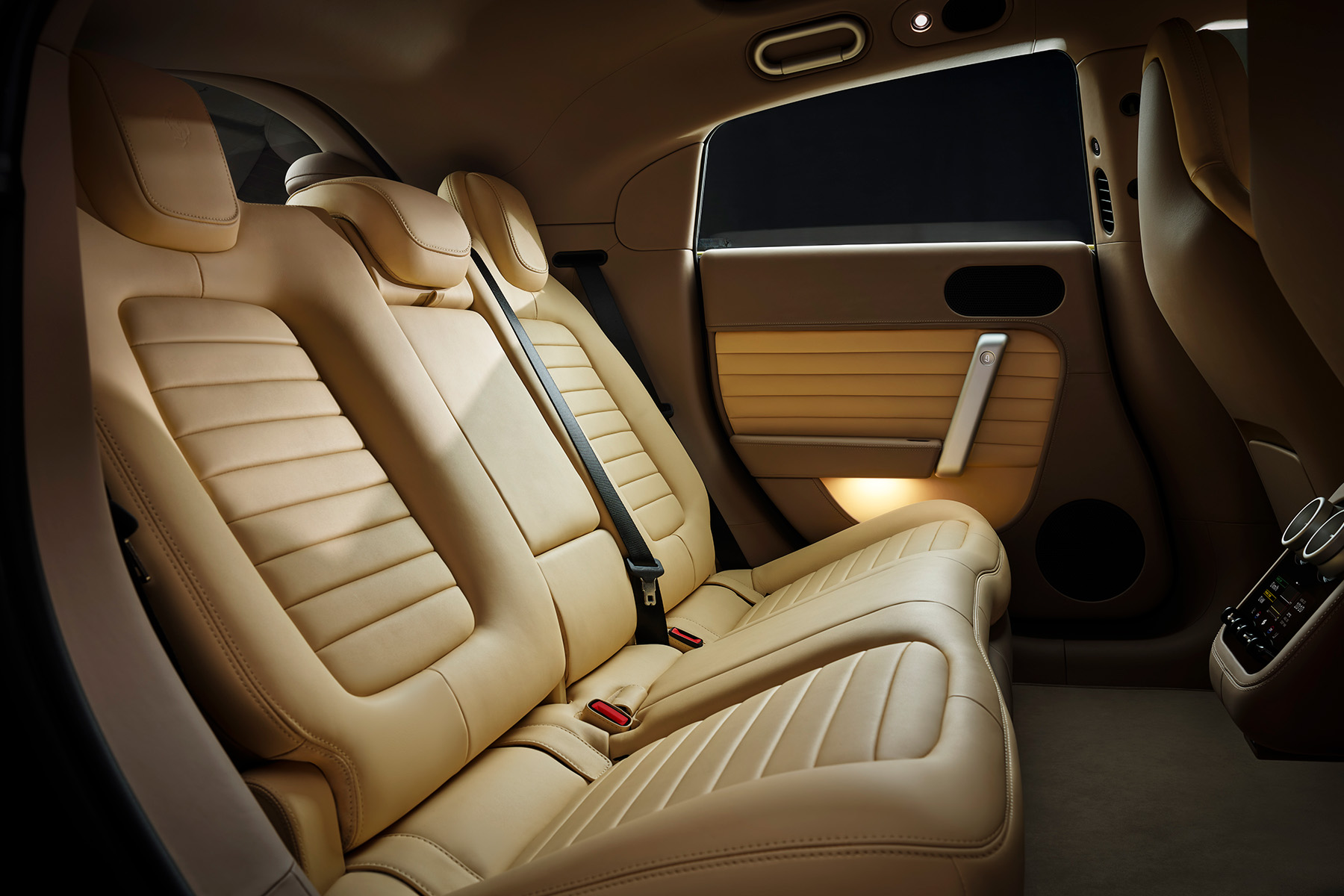
Ferrari’s first five-seat car
Perhaps the biggest surprise is that the Luce isn’t a low-slung two-seat supercar.
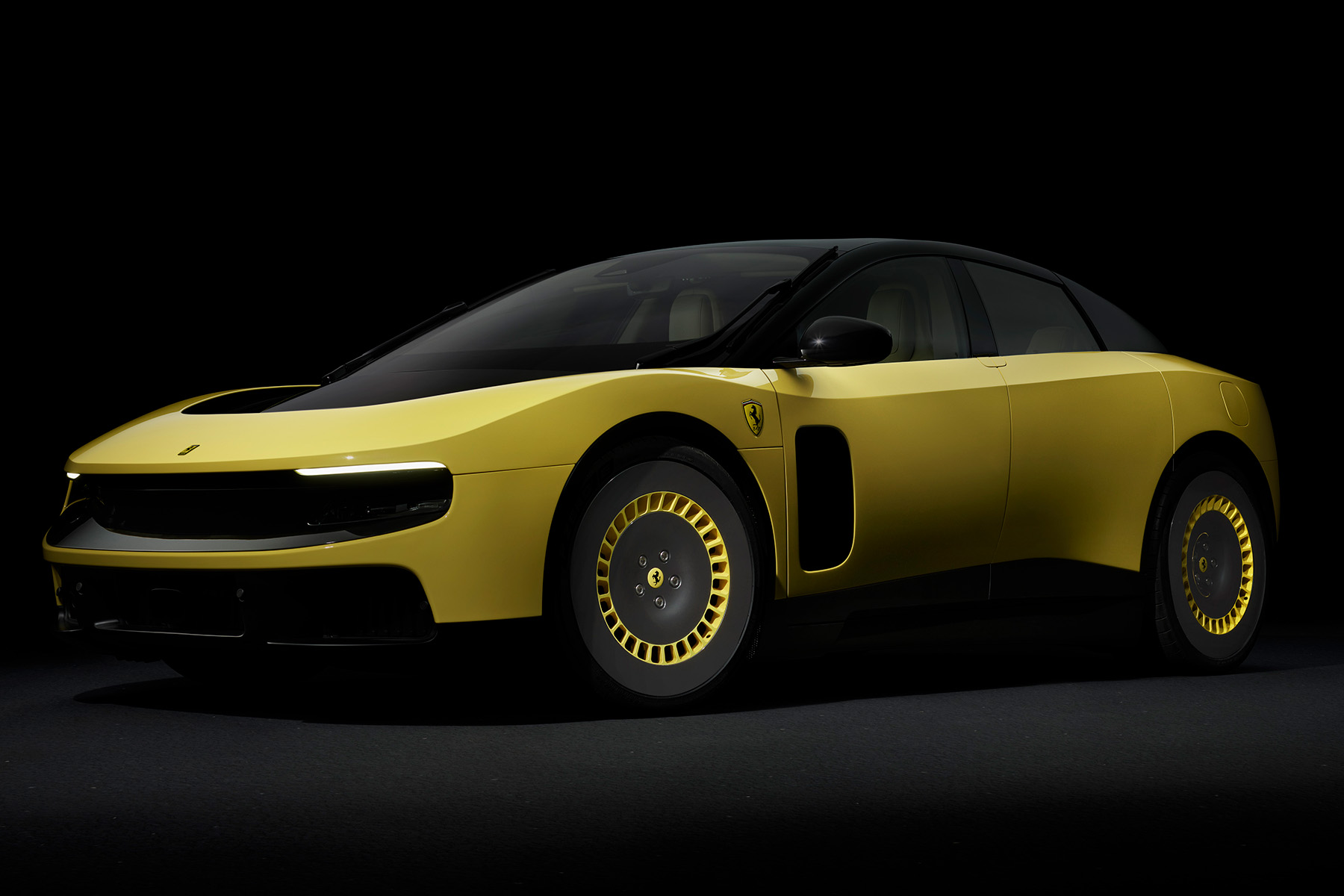
Instead, Ferrari has created a large four-door grand tourer with seating for five people. While the Purosangue SUV can carry four occupants, the Luce is the first Ferrari ever to offer five seats, which presumably gives it genuine family-car practicality alongside its supercar performance.
Physical controls make a welcome return
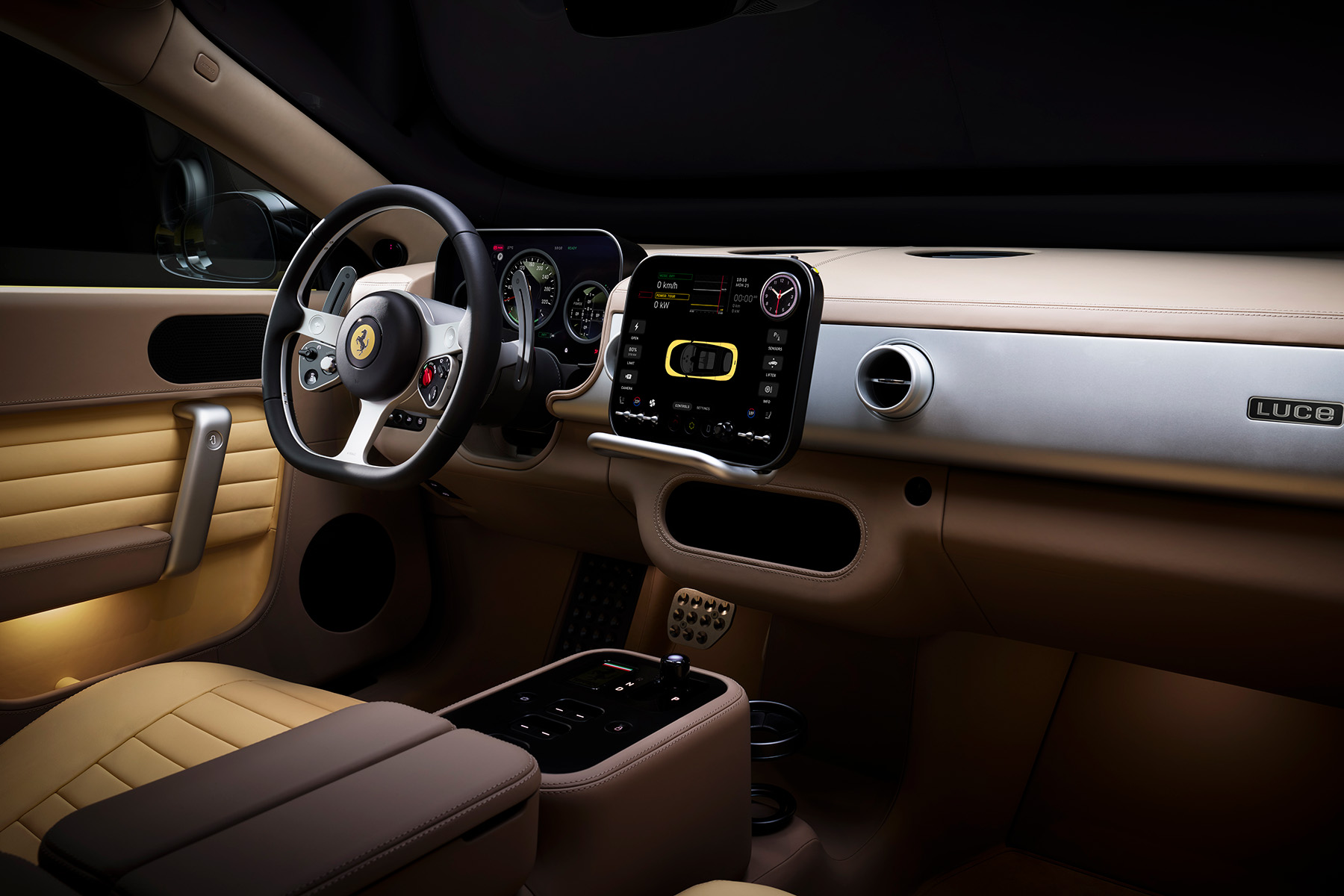
Ferrari worked with LoveFrom, the design company founded by Sir Jony Ive – best known for his work designing the Apple iPhone, iPad and Apple Watch.
The result is a much cleaner and simpler design than most modern Ferraris. The company says the exterior, interior and digital interfaces were all developed together to create a consistent look and feel throughout the car.
Inside, Ferrari has deliberately moved away from the touch-sensitive controls that have attracted criticism on some recent models. Instead, the Luce combines digital displays with proper physical buttons, switches and rotary controls for key functions such as climate control and drive modes.
A glimpse of Ferrari’s future
The Luce is arguably Ferrari’s most important new model since the launch of the original hybrid SF90 Stradale.
While Ferrari has repeatedly stated that petrol-powered V8 and V12 models will remain part of its line-up for the foreseeable future, the Luce demonstrates how seriously the company is taking electrification.
More importantly, Ferrari appears determined to prove that an electric car can still feel like a Ferrari. Whether traditional enthusiasts agree will only become clear once the first customers get behind the wheel, but the numbers alone suggest Maranello’s electric future is going to be anything but slow.
No UK pricing was announced, but given the technology involved and Ferrari’s positioning, a starting price comfortably north of £300,000 seems likely. More details, including the car’s price tag, are sure to follow in the coming months. Check back soon!