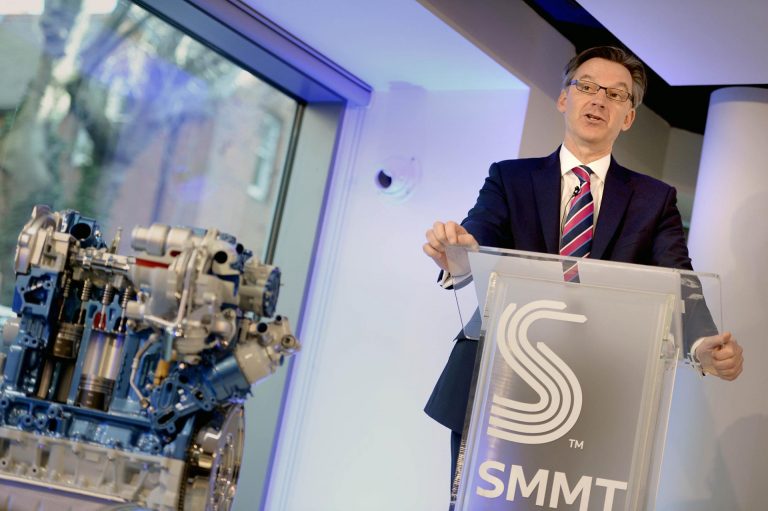
As consumers across Europe continue to turn away from new diesel cars, the Society of Motor Manufacturers and Traders (SMMT) has launched its annual New Car CO2 Report, a 29-page pro-diesel propaganda piece that, as usual, hurls the blame for collapsing diesel sales at the UK government and threatens apocalyptic disaster if we don’t all resume buying diesel cars immediately.
Despite the headlines screaming about an “anti-diesel backlash” being the cause for nominal (not real) CO
2 values increasing during 2017, the opening paragraphs of the SMMT report actually reveal that the primary culprit for this increase in theoretical (not real) CO
2 output is actually a shift in consumer preferences towards
SUV-style vehicles – referred to as “dual purpose” in the report – and away from traditional smaller/lighter hatchbacks, saloons and estates.
“Changing consumer vehicle preference was also ongoing in 2017, with demand for small cars such as Superminis down, whilst the Dual Purpose segment saw volumes rise,” says the report. “SMMT estimates that the impact of the segment shift accounted for around 55% of the rise in CO
2 emissions.”
Or, as the report points out further in: “… a net shift from the Supermini to Dual Purpose segment (which are on average 27.6% higher CO
2 emitting) also impacted on the overall market average.”
So more than half of these theoretical CO
2 increases came from consumer choosing bigger, heavier cars that produce nearly 30% more pollution than smaller, lighter cars. This was the primary factor in the results and yet the SMMT humorously describes this as “also impacting” the data, while the headlines blame “the anti-diesel agenda” instead. It’s the sort of misrepresentation that would make the
Daily Mail proud.
The remaining 45% is, of course, blamed on the SMMT’s favourite topic, with falling diesel sales estimated to have contributed to less than half of the meaninglessly theoretical (not real) CO
2 increase.
Inevitably, the SMMT press release accompanying its 29-page love letter to the diesel engine makes no mention whatsoever of the real primary cause for the (not real) increase in CO
2 figures. Instead, there are hundreds of words devoted to “the anti-diesel agenda” and “confusion over government policy”.
Why do you keep saying that these figures are not real?
The SMMT has picked on a single number for its reporting – the official CO
2 emissions figure for each new car on sale – and decided that this is the sole determinant of CO
2 emissions from new cars. But that doesn’t actually tell you anything.
It’s a bit like looking at the top speed measurement for every car on sale and saying that cars are now faster than they were last year. That would only be relevant if every car was driven at its top speed all the time, but obviously that doesn’t happen. We generally drive at the speed limit or at a speed appropriate to the road conditions, so the fact that your new car will do a maximum of 150mph, compared to your old car that could only manage 140mph, is largely irrelevant if you never go beyond 70mph. The same applies to emissions levels.
Unless you know how much CO
2 has actually come out of every tailpipe of every new car sold in 2017 compared to every new car sold in 2016, it’s impossible to say whether emissions actually increased, decreased or stayed the same.
The SMMT report fails to address this, although it does provide limited data that suggests that overall emissions from all cars on UK roads have been falling despite increased vehicle use: “Emissions from road transport have risen in each of the past three years, as vehicle use has increased. The rise has largely offset the gains made between 2008 and 2013, to leave emissions just 1.3% below their 2000 levels. Vehicle use since 2000 has increased by 11.7%.”
There are a huge number of factors that can influence emissions output, only one of which is the official lab test figures for each car in controlled laboratory conditions – which we all know are ridiculously inaccurate indications of how cars perform in the real world, especially for diesel cars.
A diesel car in stop-start urban traffic will use more fuel in a 10-mile journey than a similar petrol car covering the same 10 miles on a rural A-road at a steady 60mph. A diesel car that covers 15,000 miles per year will use more fuel and produce more pollution than a petrol car that only covers 5,000 miles per year.
A
Lamborghini Aventador might have an official emissions rating of 370g/km, but if you buy one and park it up in your garage for the whole year, its actual emissions output will be zero. Yet the report makes no attempt to understand actual vehicle usage to determine the real environmental effects of our new car choices.
Driving style can affect emissions by as much as 15%, while poor maintenance can affect emissions by 50%. These two fairly important facts are buried right in the final paragraph of the SMMT report, despite their significance to actual real-world emissions outputs.
The report also gives scant consideration to the millions of cars taken off the road during 2017. I can guarantee you that the average CO
2 output of all the cars that were scrapped or SORNed in the last year was significantly higher than the average CO
2 level of the new cars that replaced them.
Many manufacturers have been using their own initiative to offer
scrappage schemes that specifically target older, more polluting part-exchange vehicles to be scrapped in favour of brand new, lower-emissions models. The SMMT report briefly mentions this in one line on page 23 with no further comment.
So even using the SMMT’s own flawed measurements, the average CO
2 output of the UK’s collective car park of 35+ million vehicles almost certainly decreased rather than increased during the last year.
Diesel sales are collapsing worldwide, not just in the UK
The SMMT’s continual attacks on the UK government and the media for their alleged “anti-diesel agenda” conveniently ignore the fact that diesel sales are falling pretty much all over the world and especially in Europe. In Germany, home to the biggest diesel-producing car brands on the planet, diesel sales have fallen even further than they have here in the UK.
In January,
German new car sales grew 12% compared to the same month last year. But diesel sales fell by 17%, a result that put diesel about 29% behind the overall market. Diesel’s market share has fallen to 33%, down from 45% a year before.
British
new car sales fell by 6% compared to last January, with diesel sales down 25%. That makes diesel some 19% worse than the overall market, or 10% better than the German result. Diesel’s market share now stands at 36%, down from 45% this time last year.
In France, diesel’s market share has been falling for the last few years,
dropping to 47% in 2017 from a figure of 73% five years previously.
Across all of Europe,
new car sales grew by more than 3% during 2017, but diesel sales fell by nearly 8%. Diesel’s market share was just under 44%, the lowest it has been for more than a decade. As in most markets, the diesel collapse is accelerating – Europe-wide diesel sales were down by more than 20% in December, which is broadly similar to what we have seen here in the UK.
This week, the giant Fiat Chrysler Automobiles has been reported to be
planning to kill off all its diesel models in the next four years. This is thanks to a combination of plummeting worldwide demand and increased costs of developing diesel engines to meet new emissions regulations.
Last week,
Porsche announced that it had
stopped all diesel model production, although this week it appears to be backtracking somewhat on whether this would be a permanent position. Unlike
Fiat, Porsche is mired in parent company Volkswagen’s
Dieselgate scandal, with its Cayenne diesel SUVs having to be recalled and an impending recall or even a Europe-wide buyback on its smaller Macan diesel SUV model.
Today, a German court has ruled that
German cities are entitled to ban diesel cars from their streets, in a landmark case that overruled appeals from state governments to block the bans on diesel cars by Stuttgart (famously home to both
Mercedes-Benz and
Porsche) and Düsseldorf, with other cities set to follow.
Even for the UK car industry and its lobbyists, it’s a stretch to see how the UK government and media could be responsible for this worldwide shift away from diesel power.
Car companies only have themselves to blame
The current plight of diesel cars may be of concern to car companies who are heavily financially committed to its future, but consumers have no reason to feel sorry for manufacturers nor obliged to buy diesel cars because it suits the industry.
For many years, manufacturers and dealers have been pushing car buyers into diesel cars because it suited them, not because it was in the customers’ best interests. If you’re an average urban or suburban dweller covering 8-10,000 miles per year and changing your car every three or four years, a diesel car has never been a great economic choice. Yet millions of such buyers continue to drive diesel cars because it’s been the default option.
Manufacturer finance companies have been happily lending money to diesel car buyers on
PCP and
PCH agreements with annual mileages as low as 5-6,000 miles. There’s no way that any driving that little should be buying or leasing a diesel car, yet no-one from the finance companies, manufacturers or dealers has spoken up to point this out. Instead, they have all cheerfully taken your money and congratulated you on your new purchase.
Over the last couple of decades, every major car company has prioritised good lab test outcomes over good customer outcomes. In other words, manufacturers have been more interested in building cars that achieved great fuel economy and emissions results in a lab environment at the expense of how those cars performed in the real world. This has been particularly noticeable with diesel models, where “official” figures bear little to no resemblance to results achieved by owners of those models.
Why do you think that modern automatic cars now come with seven, eight, nine or even ten gears? It’s certainly not for our benefit; five or six gears is plenty for normal driving purposes. It’s simply to achieve better laboratory results, where the car will always be in the optimal gear at any point in the test, allowing for a better theoretical result that has almost no bearing on what you will achieve in your own driving.
Why do you think that car manufacturers have
ditched spare wheels on almost all of their models? Again, it’s not for our welfare – in fact, it’s one of the biggest bugbears of new car buyers around the world.
One of the reasons (among others, like penny-pinching) is for emissions testing purposes. By throwing away the spare wheel, car makers can save weight and space (and saving space saves even more weight), which gives a tiny incremental improvement to lab figures. In the real world, you may save a pittance of fuel by losing your spare wheel, but the inconvenience of not having that spare when you need it will generally outweigh the saving.
The real source of anti-diesel sentiment
And then we come to the single biggest cause of the “anti-diesel backlash” around the world. Not the British government, the Mayor of London or the mainstream media. Not
The Car Expert or Greenpeace or Elon Musk.
I refer, of course to the
Volkswagen Dieselgate scandal.
For years, the Volkswagen Group was (and possibly still is) cheating its lab tests by fitting millions of diesel
VW,
Audi,
SEAT,
Skoda and
Porsche cars – and vans from
Volkswagen Commercial Vehicles – with hidden ‘defeat devices’. These devices are software systems that override the car’s official programming and basically switch off all of the emissions systems unless it detects the car is in a lab test situation. Given that only a few cars ever enter a testing lab, that has meant millions of vehicles have been permanently spewing enormous levels of toxic diesel fumes into the air all over the world for years, far beyond the legal limits as defined by the lab tests.
The media storm generated by this shock news in September 2015 rapidly encompassed the ill feeling car buyers have long harboured towards every car manufacturer that has put lab testing performance ahead of real-world performance.
As usual, the industry tried to blame others, saying the lab tests were really at fault. But, to the car industry’s considerable disappointment, consumers are not that stupid.
And what action did the Society of Motor Manufacturers and Traders take upon receiving the news that one of its members had been responsible for such reprehensible conduct? Did it suspend or expel Volkswagen and associated brands from its little club for bringing the entire automotive industry into disrepute? Did the SMMT, in fact, make any kind of statement to even gently criticise Volkswagen’s behaviour?
Of course not.
Days after Volkwagen’s astonishing deception was revealed to the world, the SMMT issued a statement saying: “The UK automotive industry understands the concerns consumers may have following the actions of one manufacturer in regard to emissions testing and the subsequent decision to recall a large number of its cars.”
The statement then quickly switched its attention to criticising the inadequacy of the lab tests, in a sleazy PR move these days known as a ‘
Spacey‘.
So they didn’t mention the
monkey-gassing criminals by name, nor acknowledge the fact that these “actions” from six different brands involved more than a million cars sold in the UK. The SMMT presumably still happily rakes in significant membership fees each year from all the Volkswagen brands (in addition to the six brands above, Bentley, Lamborghini, Bugatti, Scania, MAN and Ducati were not implicated in the scandal).
If more than a million Volkswagen Group cars in the UK have been generating vast and illegal quantities of emissions over several years, with
a few hundred thousand still not fixed despite promises to do so, wouldn’t that completely undermine the SMMT’s carefully-constructed artifice on CO
2 outputs? In fact, wouldn’t it make any numbers the SMMT wants to come up with even less relevant?
And they still want us to believe that it’s all the government’s fault that diesel sales are falling.




 The much-awaited
  As one traditional British name embraces electricity, so does another.
  The
The  The electric plans of
  There is no
  Definitely a British car is the
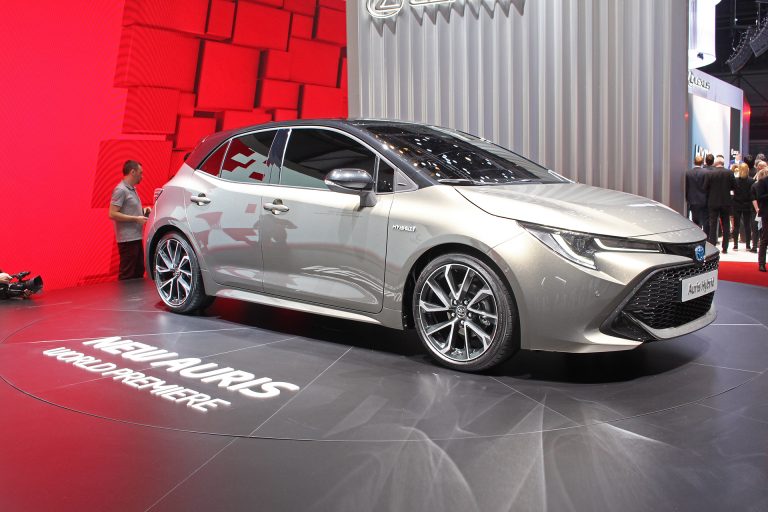
  One of the biggest rivals to the Toyota Auris will be the
 The saloon is dead, long live the fastback. The









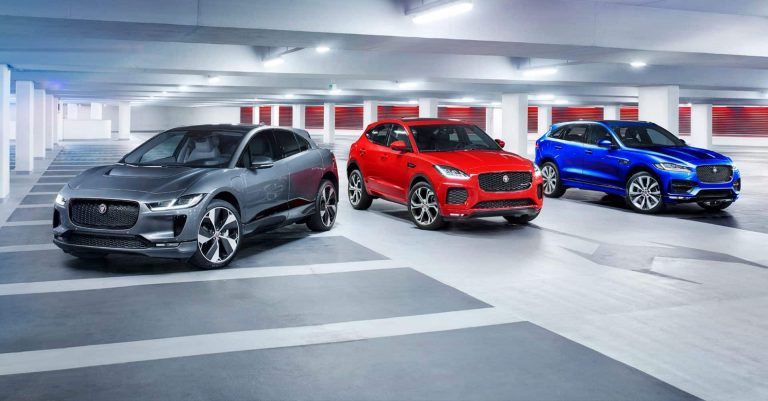
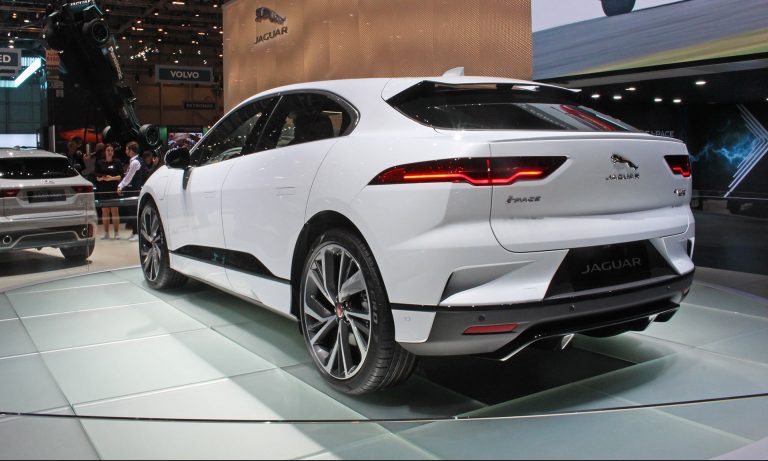
 The car is built around a bespoke aluminium architecture with the battery placed between the axles to create both a low centre of gravity and perfect 50:50 weight distribution. Emphasising the car’s sporting credentials, Jaguar will even organise a
  Jaguar adds that while in terms of exterior dimensions a mid-sized SUV, the I-Pace will offer interior space to compare with larger SUV rivals. The lack of internal combustion engine infrastructure, such as a transmission tunnel, frees up extra interior space and storage, while the 656-litre boot expands to 1453 litres with the seats folded flat.
New technology will feature heavily in the I-Pace. The debuting Touch Pro Duo infotainment system includes a navigation system directly focused on EVs, assessing such aspects of the planned route as hills and recalling previous journeys to calculate a personalised range and charging status to provide highly accurate information.
Also debuting will be Amazon Alexa Skill. Drivers will be able to ask questions of an Alexa-enabled device on such aspects as the car’s range and whether the next journey is achievable without a recharge. The I-Pace will be the first Jaguar to update its software over-the-air.
While, however, the I-Pace will be the latest product from a thoroughly British brand and designed and developed in the UK, it will not be a strictly British car. With space at a premium in its UK plants, not to mention Brexit concerns, Jaguar has contracted Austrian giant Magna-Steyr to build the car.
Jaguar adds that while in terms of exterior dimensions a mid-sized SUV, the I-Pace will offer interior space to compare with larger SUV rivals. The lack of internal combustion engine infrastructure, such as a transmission tunnel, frees up extra interior space and storage, while the 656-litre boot expands to 1453 litres with the seats folded flat.
New technology will feature heavily in the I-Pace. The debuting Touch Pro Duo infotainment system includes a navigation system directly focused on EVs, assessing such aspects of the planned route as hills and recalling previous journeys to calculate a personalised range and charging status to provide highly accurate information.
Also debuting will be Amazon Alexa Skill. Drivers will be able to ask questions of an Alexa-enabled device on such aspects as the car’s range and whether the next journey is achievable without a recharge. The I-Pace will be the first Jaguar to update its software over-the-air.
While, however, the I-Pace will be the latest product from a thoroughly British brand and designed and developed in the UK, it will not be a strictly British car. With space at a premium in its UK plants, not to mention Brexit concerns, Jaguar has contracted Austrian giant Magna-Steyr to build the car.