Fiat Chrysler Automobiles, owner of the Fiat, Alfa Romeo, Maserati, Abarth, Jeep, Chrysler and Dodge brands, is reported to have decided to drop diesel engines from all of its cars by 2022.
According to a report in the Financial Times, Fiat Chrysler is preparing to unveil a four-year plan in June that will see it phase out diesel engines from all of its passenger car models around the world.
Commercial vehicles, such as the Fiat Professional range of vans and the RAM pick-up truck brand in America, will not be part of the plan and will continue to offer diesel models.
The decision is based on falling demand across Europe and the increasing costs of making diesel engines compliant with tougher emissions regulations. The FT suggests that it will cost car manufacturers about 20% more to develop diesel engines that meet new European emissions laws, at a time when demand for diesel cars is collapsing in almost every European market.
Diesel’s spectacular fall from grace
Fiat Chrysler is the largest global car company to take the decision to kill off its diesel cars, and comes a week after Porsche announced it had already stopped building diesel cars. Unlike Porsche, however, Fiat Chrysler has not been barred from selling its diesel models across Europe by the German government…
Instead, this appears to be a genuine case of a major manufacturer weighing up the economic pros and cons of the situation and making a bold call to do away with diesels altogether. Fiat Chrysler’s CEO, Sergio Marchionne, is notoriously hard-nosed when it comes to strategic decisions, and this report has all the hallmarks of a typical Marchionne call to lead rather than wait and see what others decide.
Diesel is still more popular in Fiat Chrysler’s home of Italy than any other European country, and Italy is responsible for about half of all of Fiat’s European sales, but clearly the business case for diesel is so weak that the company is prepared to risk its Italian sales position by ditching diesel altogether.
Diesel’s share of the new car market has fallen to 43% in Europe, although that is skewed by markets like Italy where it still holds a 56% share. In the UK, diesel has fallen to about 36% of the market and has been falling for more than 18 months. Fiat Chrysler is clearly expecting those numbers to continue to fall further in coming years.
A big nail in diesel’s coffin
The Fiat Chrysler decision will send shockwaves through the global car industry, even though rival manufacturers will currently be weighing up the very same options. Regardless of whether you believe that the latest Euro-6 diesel engines really are as good as the industry cheerleaders claim, and there is considerable dispute to such industry claims from environmental groups, it seems that consumers across Europe have already made their decision.
Many regional governments across Europe have also moved to ban diesel cars, with cities like Paris, Stuttgart (home to Mercedes-Benz and Porsche), Athens and Madrid announcing that diesel-engined cars will be banned from city centres.
If Fiat Chrysler can decide to kill off all its diesel passenger cars within four years, who will be next? Toyota (the biggest automotive brand in the world) has already suggested that it may not launch another new model with a diesel option, and several manufacturers are rumoured to be struggling to comply with tougher European emissions tests (the WLTP tests that will replace the current NEDC tests).
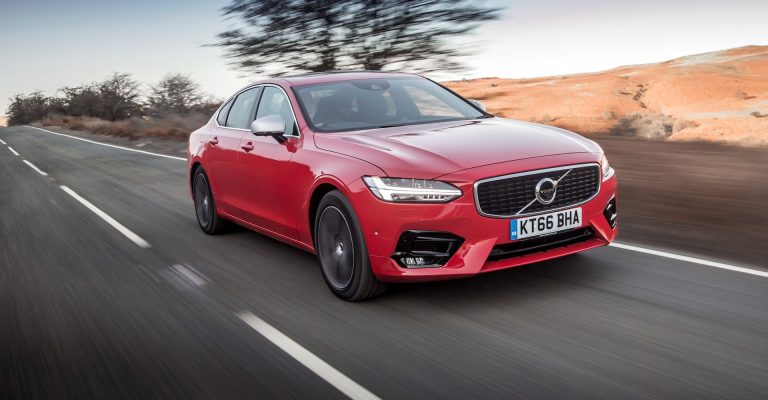
What is it? The Volvo S90 is the Swedish brand’s range-topping premium large saloon.
Key features Stylish looks, extensive tech, strong safety package.
Our view The Volvo S90 offers the quality the targeted clientele expects and technology that is every bit as good and in some areas more advanced than executive rivals, and wraps it in a package that is as visually pleasing as Volvos never used to be.
This car is Volvo’s most significant challenge yet to the likes of Audi, BMW and Mercedes-Benz.
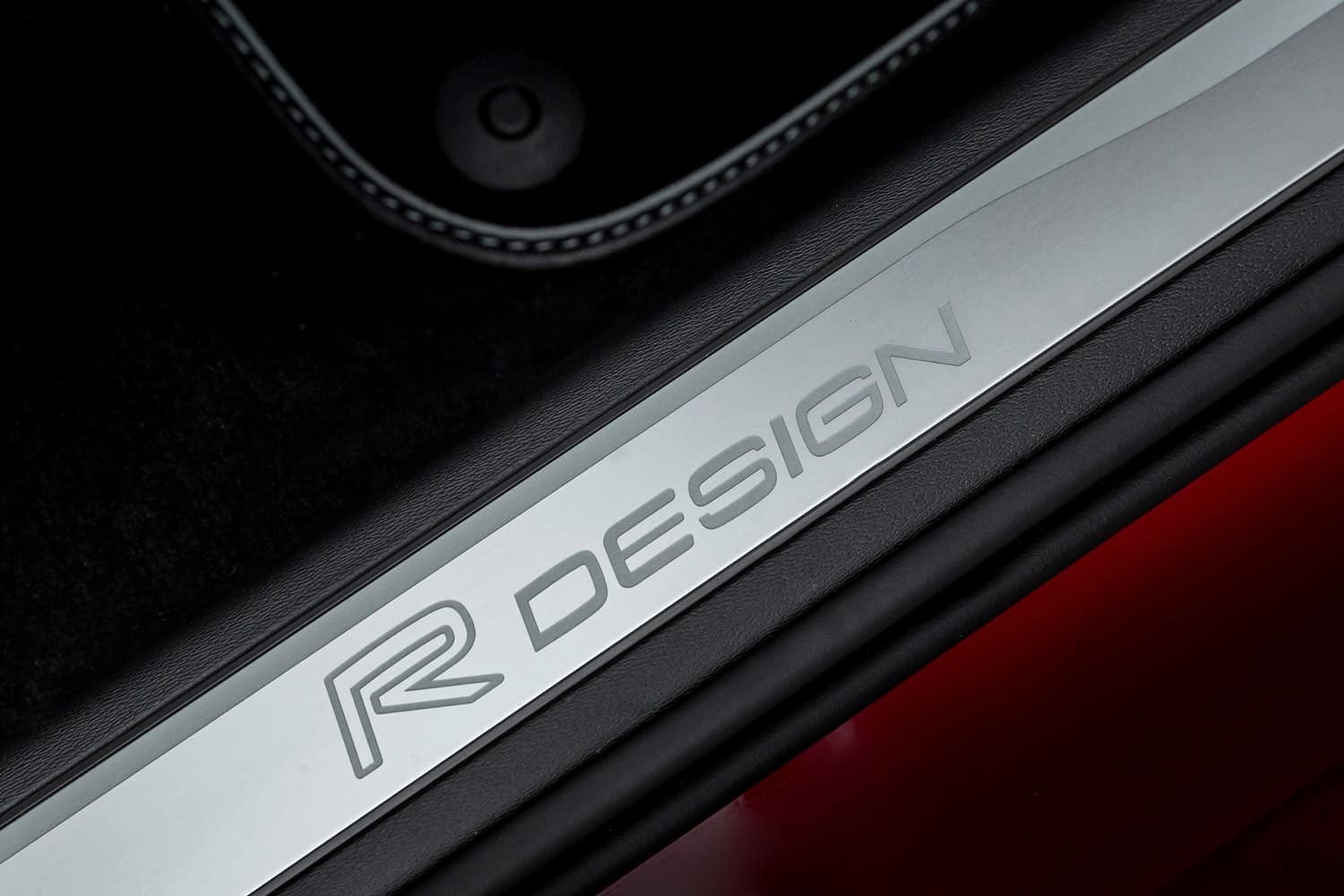
R Design is Volvo’s answer to BMW M Sport and Audi S Line
Full review
Introduction
Volvo is on the up – and leading the Swedish brand’s global charge are its range-topping 90 series models launched in 2016.
In 2017 Volvo reported global sales increases of more than 22% – in Europe the rise was almost 12%, even considering the confidence-knocking Brexit saga. Such figures are clear evidence of the investment that has gone into the brand since Volvo was bought from Ford by Chinese giant Geely in 2010.
No cars more keenly demonstrate this progress than the 90 Series. The XC90 SUV, S90 saloon and V90 estate are pretty exclusive – pitched as range-topping executive cars, they are targeted at putting what hasn’t been previously been considered a premium brand directly against the very best from Audi, BMW and Mercedes-Benz. They may be the most exclusive Volvos, but the XC90 is the brand’s second best-selling car after the XC60, and the S90 only just behind in third.
When The Car Expert tested the S90 on its launch in 2016, we described it as an example of Volvo’s most concerted effort yet at breaking into the premium club, and suggested that the Germans should be worried. Having now spent a week with an S90 putting it through a full road test, we are ever more convinced that this is indeed a true premium contender.
For a start, it looks the part. Volvos used to have presence, but not a positive one – they were generally brick-like and bulky. The S90 is big, yes – distinctly longer and wider than the S80 it replaced. but it is also stylish with a purposeful front end and broad sweeping flanks that offer a welcome change from the over-familiar profiles of its numerous German rivals.
S90 design offers a welcome change from the over-familiar profiles of its German rivals
Buying and owning a Volvo S90
The S90 is built on the same ‘Scaleable Product Architecture’ platform as its XC90 SUV sister, and shares the same expansive wheelbase – as well as much of the mechanics. These include the Drive-E powertrains, which have revolutionised Volvo product – the much more compact engines, only of four cylinders and offered in petrol, diesel and hybrid form, allow significant weight saving alongside efficiency gains. So the S90’s larger dimensions do not make it a heavyweight.
Launching just before the UK’s anti-diesel rhetoric got into its stride, the S90 was initially offered only with a pair of diesel engines, the D4 of 190hp and the D5 of 235hp – reflecting its predicted clientele of almost entirely fleet buyers.
Not surprisingly, in November 2017 the range was extended by a 190hp T4 petrol engine, while the impressive T8 plug-in hybrid version is also available – at an eye-watering £57,705. That is almost £20,000 more the £38,760 of our version. Diesel remains a viable decision for many fleet buyers and we are driving the powertrain many will get to choose, the D4 unit with 190hp, an eight-speed auto gearbox, front-wheel drive transmission and plus 60mpg fuel economy.
Since we went to the launch, however, the two trim levels of Momentum and Inscription have been joined by another. Our car is to the mid-range R-Design trim, described as the sporty variant – it adds a changed front-end design with fog lights integrated to the spoiler, bespoke alloy wheels and interior detailing, but more importantly a sports chassis with a promise of improved road holding.
Volvo’s safety credentials have never been in question of course, and the S90’s five-star Euro NCAP rating is no surprise. The car bristles with safety tech, topped by the Pilot Assist feature. Standard on every 90 model, this takes adaptive cruise control to a new level and a long way towards autonomous driving.
Pilot Assist now adds small steering movements to keep the car in the centre of a motorway lane while on the move, as well as allowing stop-start progress in a queue without input from the driver. They are expected to keep their hands loosely on the steering wheel while the system is active, and it works very well – the way it gently steered us around the curve of the link road between the M42 and M5 motorways south of Birmingham was impressive, if a little unnerving.
Inside the Volvo S90
Vertical touchscreen is the hub for all in-car controls
On slipping inside the S90 one is firstly impressed by the space, whether in front, back or the 500-litre boot – curiously the S90 actually measures up slightly longer than its V90 estate sister. Then there is the sheer quality of one’s surroundings.
R-Design adds sports seats and black headlining, and while to a much darker theme, the interior is every bit as high class as the Momentum and Inscription trims we experienced on the launch. The leather is of very high quality, the fit of everything equally so.
One of the biggest revolutions to Volvo dash designs, in fact all dash designs arrived with the 90 models, the driver’s controls totally redesigned and based primarily around a vertical central touchscreen infotainment system. It soon becomes second nature and easy to use, and in navigation mode particularly falls into the area of “Why didn’t someone do this ages ago?”
This system has neatly removed much of the clutter that Volvo centre consoles, in particular, used to suffer from, and what separate controls remain are sensibly placed and fall naturally to hand. The audio is impressive too, especially if one chooses the optional Bowers & Wilkins system, British made and boasting a mere 18 speakers.
Driving the Volvo S90
On the road, the S90 is very accomplished indeed.
Any builder of large premium cars faces a huge problem when it comes to the chassis – the BMW 5 Series. For years, the challenger from Bavaria has been regarded as the benchmark for handling prowess – its combination of efficient power plants and impeccably-tuned chassis makes that car the one model that most lives up to BMW’s ‘Ultimate Driving Machine’ tag.
The S90 represents Volvo’s most concerted effort yet to challenge that dominance, and the recipe is – on paper – impressive. The car combines a double-wishbone front suspension with a high-tech new design on the rear axle, conventional coil springs making way for a transverse leaf spring formed from composite. Its compact enough to keep the boot big, while offering very fine suspension control.
So, on the road the S90 is very accomplished indeed – though even in R-Design mode, with its stiffer springs and reworked dampers, it is still not quite on the level of the BMW, a car that you feel is focused firmly on the driver first.
Volvo claims that this approach is deliberate, allowing all occupants of the S90 to travel in ‘relaxed confidence’ and yes, the S90 definitely offers that, closing up hundreds of motorway miles with barely a murmur.
The interior is hushed, the gear shifts smooth and the engine never intruding, yet this little four-cylinder unit still provides all the purposeful yet refined acceleration one needs. It’s not as potent as the D5 of course, but it doesn’t really need to be – just over eight seconds to 62mph is not exactly pedestrian. Only at idle, particularly when first starting, does the Drive-E diesel sound less refined than its German competition, and then by only a whisker.
Summary
That boost to Volvo sales offered by the S90 is less apparent in the UK. The really big sales for the car are coming from China and the US, where saloons are far more popular than over here.
In Britain, saloons only really register when one gets into the premium market. And previously, an owner who considered it quite normal to drive a booted BMW, Audi or Mercedes would not consider a Volvo as a potential rival. Now they definitely should.
The Volvo S90 offers the quality the targeted clientele expects, technology that is every bit as good as – and in some cases more advanced than – executive rivals, and wraps it up in a package that is as visually pleasing as Volvos never used to be. This is a true premium contender.
Toyota’sfamily of Prius hybrid electric models were along the pathfinders in the alternative fuel technology market and for 2018 the Japanese brand has updated its model line-up with the promise of real-world fuel economy of over 80mpg for the basic hatchback and over 230mpg for the all-electric plug-in model.
Equipment changes for the 2018 Prius include automatic wipers as standard on all versions apart from Active grade, a leather-trimmed steering wheel and on Active and Business Editions a new-style 15-inch alloy wheel, which can also be specified as an option for Business Edition Plus and Excel grade models in place of the 17-inch wheels. Finally, Autumn Silver has been added to Prius’s colour palette.
Using the new real-word testing procedure, a Prius on 15-inch wheels returns a combined figure of 83.1mpg and CO2 emissions of 78 g/km.
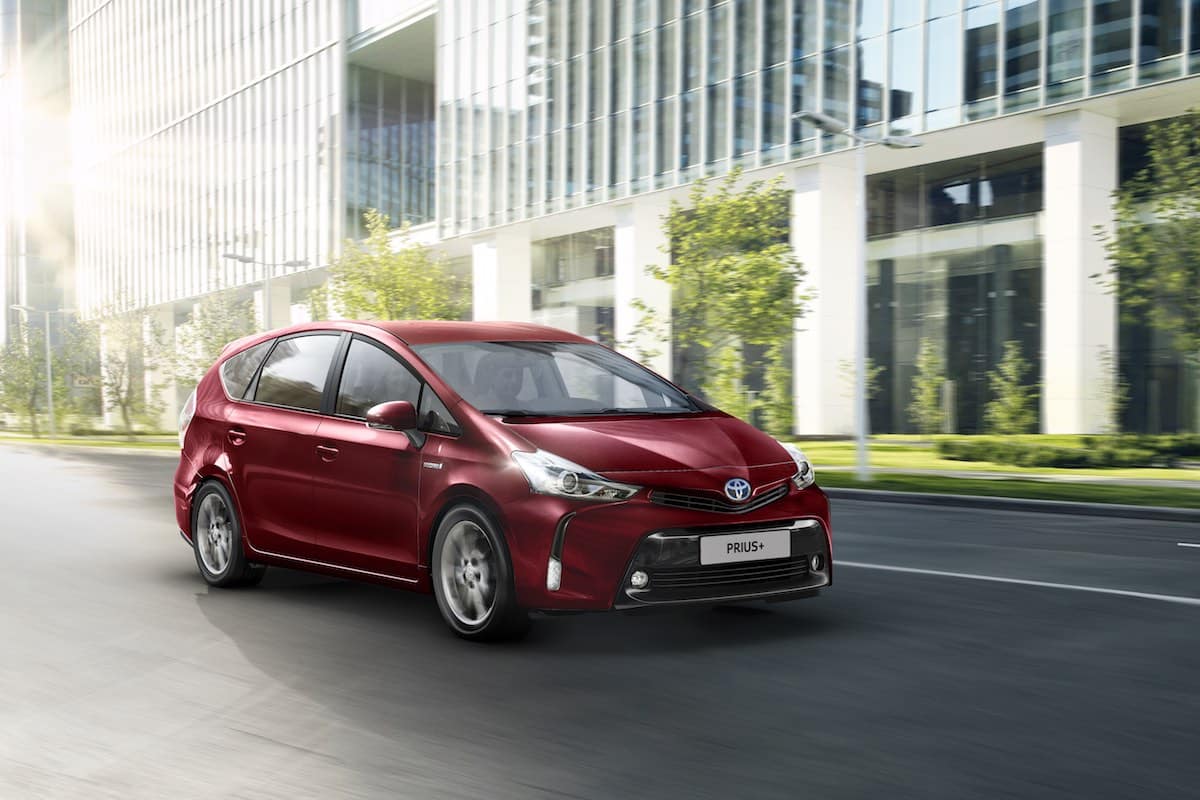
The Toyota Prius+ gets several updates for 2018
Prius+, the seven-seat hybrid member of the Prius family, is now equipped as standard with Toyota’s Safety Sense package. This includes a Pre-Collision System; Adaptive Cruise Control; Lane Departure Alert; Automatic High Beam and Road Sign Assist, automatically showing speed limits, warning and command signs on the driver’s multi-information display when driving on major routes.
The model line-up has been rationalised into two grades: Icon and Excel. Key equipment features for the Icon version include 16-inch alloy wheels, rain-sensing wipers, dusk-sensing headlights, reversing camera, smart entry, automatic air conditioning, power windows, heated/folding door mirrors, auto-dimming rear-view mirror, front fog lights and Toyota’s Touch 2 multimedia system with DAB and CD player.
The Excel model comes with Intelligent Park Assist, plus 17-inch alloys, rear privacy glass, sun shades, heated seats and Toyota Touch 2 with Go, adding navigation and connectivity to the infotainment functions. Customers also have an expanded choice of paint options, with new Autumn Silver and Regency Red options.
Prius+ returns 61.4mpg on 16-inch wheels and records CO2 emissions of 106 g/km.
The Prius Plug-in, the second generation of Toyota’s plug-in hybrid electric vehicle, goes into 2018 with no changes to its equipment specifications. Like its sister Prius family models, it has new fuel and emissions figures which shows a combined fuel consumption of 245 g/km on 15-inch wheels and combined cycle CO2 emissions of 28 g/km.
Breakdown service GEM Motoring Assist is urging motorists to take extra care as winter weather and plunging temperatures are predicted from this weekend.
Pressure on breakdown organisations is likely to increase significantly as motorists attempt to deal with flat batteries and other issues made worse by temperatures expected to fall several degrees below freezing across much of the country.
GEM is encouraging drivers to make good use of some simple safety tips in order to reduce the chance of risk, delay and difficulty.
GEM’s winter weather driving tips
Don’t drive if you don’t really need to. If you have to make a road journey, ensure your car is properly equipped for the likely conditions.
Listen for weather updates, and plan your travel accordingly.
Prepare a set of essential items, including shovel, fully-charged mobile phone, torch, ice scraper, food, water, jump leads, first-aid kit, warm clothes and a supply of sand or gravel to assist with grip if your wheels are spinning.
Keep your speeds down, leave plenty of space between yourself and the vehicle in front, don’t overtake snowploughs and gritter trucks, and be ready for sudden, rapid deteriorations in conditions.
Remember that driving in winter conditions can be hard work, so ensure you build in breaks on your journeys.
This image raises important questions, like “Why is there a street sign in the middle of the road?”
GEM road safety officer Neil Worth advised: “Forecasters have made clear that it’s likely to become very cold during the weekend and into next week. We urge drivers to have a plan ready now, which will hopefully make the likely winter conditions easier to deal with.
“Top of the list, of course, is to postpone a journey if you possibly can. Agree to reschedule a meeting or a visit if it’s not vital. In that way, you’re avoiding a lot of potential trouble for yourself and ensuring you won’t be putting additional strain on emergency and recovery crews, who are sure to be at full stretch in the coming days.
“And if you do have to travel, please make sure you have a good breakdown policy in place”.
Two-thirds of drivers in Britain automatically renew their car insurance and a large proportion do so without even checking they are getting a good deal, which could be costing motorists up to £1.3 billion a year at renewal time.
A study by GoCompare on the eve of the release of the new 18 registration plate, found that only 38% of motorists take the time to check the previous year’s premium to see how it has changed. The auto-renewal study revealed that 15% of drivers let their insurance continue with the same provider for another year without checking whether they are getting a good deal.
When asked why they had auto-renewed their cover, 24% had done so out of loyalty to their insurer while 11% confessed they’d done so because they find car insurance confusing and didn’t feel confident enough to switch providers.
Other reasons for sticking with the same insurer included a good experience with a past claim (9%), the expectation that because the current insurer was competitive last year they would offer a competitive renewal price (9%).
Drivers are more loyal than insurance companies deserve
The average length of time drivers stay loyal to the same provider is 3.2 years; over a fifth (21%) have been with the same insurer for more than three years, while 15% have stayed loyal for over 4 years.
The study also found that the main reason people switched at renewal was a premium increase (70%), while 42% said they always shop around. The main explanation giving for staying with the same insurer was that the hassle of switching would be outweighed by the savings for changing provider.
Drivers were also asked what action they take when they receive their insurance renewal notification. Only 38% open and deal with it immediately, fewer still (10%) read it thoroughly while 22% merely skim read the renewal letter.
Just 38% take the time to check the previous year’s premium to see how it has changed and only 18% check their renewal offer for changes to the cover provided.
Matt Oliver from GoCompare car insurance commented: “When policies come up for annual renewal, insurers offer to continue your cover without you needing to take any action. While this approach helps ensure you don’t inadvertently allow your insurance cover to expire, auto renewing customers can pay a hefty price for the convenience.
“Insurers typically use their most competitive offers to attract new customers and rely on existing customers’ apathy to charge higher renewal prices. Customers switching could save up to £279.42, which goes to demonstrate that when it comes to car insurance, loyalty doesn’t pay.”
Matt Oliver continued: “A simple way to beat rising premiums is to act as soon as you receive your insurance renewal letter rather than leaving it to the last minute. If you delay renewing your cover until the eleventh hour, you’ll limit your choices and reduce the amount you could have saved by switching sooner.”
Top tips from GoCompare to get the best car insurance deals:
Never accept your renewal quote without first checking that the price you are offered is competitive – even if your insurer was the cheapest last year.
Give yourself time to review your cover – note the renewal date in your diary and shop around at least a week before your policy renews to get the best deal.
Compare prices and check the small print. Make sure you’re making like-for-like comparisons and understand all the charges, any penalties, exclusions and terms and conditions you will be required to meet.
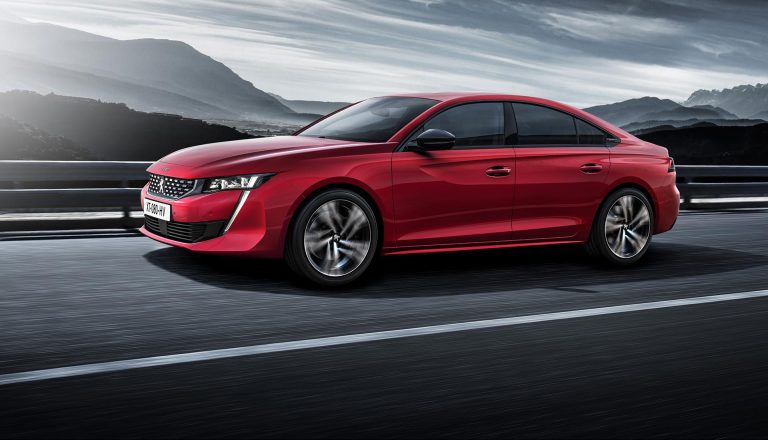
Goodbye Peugeot 508 saloon, hello Peugeot 508 fastback. The French brand’s large car is getting a new five-door body shape to offer an alternative to SUVs.
Peugeot will unveil the all-new 508 at the Geneva motor show on 6th March, with a striking new design that the brand says breaks the mould of the previous four-door saloon.
Sales of traditional cars in the large D segment have been declining, sales going instead to ever-rising numbers of SUVs. Peugeot hopes the new 508 will appeal to buyers due to its sporty look, and also take sales from premium rivals such as the Audi A7 Sportback, BMW 6 Series Gran Coupé and Mercedes-Benz CLS.
The designers have worked very hard to inject a new personality into the looks of the car, using a sports coupé profile as inspiration and including such detail touches as bold window designs, frameless doors and large alloy wheels filling the arches.
Replacing the previous boot, the hatchback also adds practicality, offering a much wider access to the car’s 487-litre boot space.
Inside the 508 gains the latest version of Peugeot’s much-praised i-Cockpit, featuring a 12-inch head-up digital instrument panel, a 10-inch touchscreen angled towards the driver and a leather-trimmed steering wheel. An ‘Amplify’ feature allows the driver to choose either ‘Boost’ or ‘Relax’ ambient lighting.
Peugeot is not yet releasing detailed information on the powertrain line-up but states that the 508 will be available with six petrol and diesel engine options, ranging from 130 to 225hp.
Driver assistance systems will also feature heavily on the car, including a night-vision setup. This employs an infra-red camera which can detect pedestrians both at night and in poor visibility conditions – Peugeot says it is a first in the segment.
Prices for the new 508 range will be announced closer to the car’s launch, which is expected in the summer of 2018.
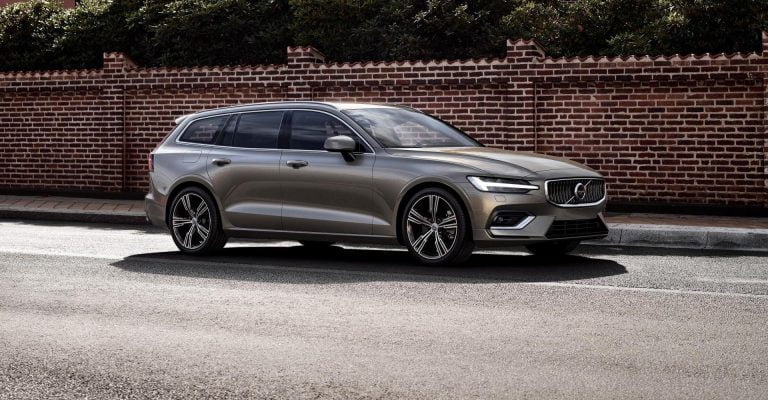
Volvo’s new five-door V60 mid-size premium estate will cost from under £32,000 when it arrives on these shores later this year – and motorists will be able to drive away with one for a flat-fee monthly subscription.
The new V60 shares Volvo’s Scalable Product Architecture (SPA) platform with the XC60 SUV and three top-of-the-line 90 series cars, which have been the collective force behind the company’s record-breaking global sales performance in recent years.
In what is being claimed as a first for the segment, customers can take delivery of the new V60 via Volvo’s new premium subscription service, Care by Volvo, which offers car access via a monthly flat-fee subscription rather than ownership.
The compact estate will be available with two plug-in hybrid powertrain options: the new T6 Twin Engine AWD petrol plug-in hybrid that generates a combined 340 hp, or the T8 Twin Engine AWD petrol plug-in hybrid that delivers 390 hp. Two conventional petrol and two diesel engine options will also be available from launch.
Safety features include City Safety autonomous emergency braking, which is claimed to be the only system on the market to recognise pedestrians, cyclists and large animals. In a world first, City Safety now also engages automatic braking to mitigate oncoming collisions.
The Pilot Assist system – which supports the driver with steering, acceleration and braking on well-marked roads up to 80 mph – has been upgraded with improved cornering performance. The V60 also includes Run-off Road Mitigation, Oncoming Lane Mitigation and other steering-assistance systems. The optional Cross Traffic Alert with auto-brake further improves safety for people inside and outside the car.
The Sensus infotainment system is fully compatible with Apple CarPlay, Android Auto and can use 4G to keep drivers connected at all times. The system is controlled via a tablet-style touchscreen that combines car functions, navigation, connected services and entertainment apps.
UK prices for the V60 will start at £31,810 on-road (full pricing and specification details will be announced shortly). First customer deliveries are expected in the autumn.
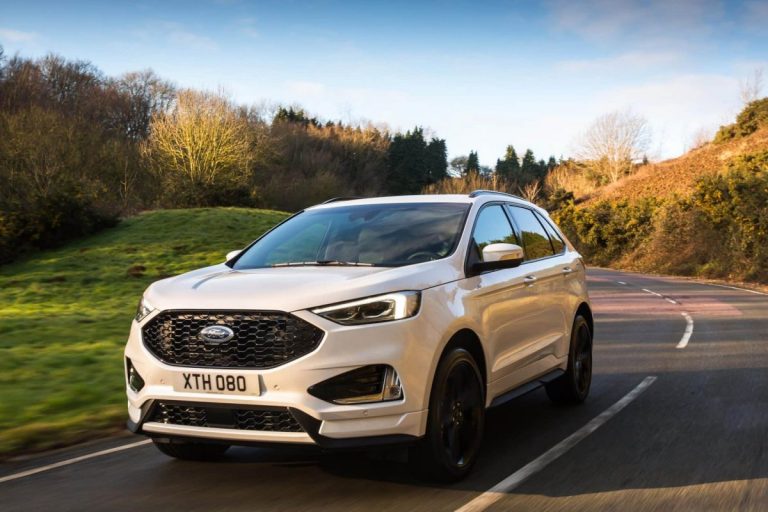
Ford has revealed full details on the forthcoming new Ford Edge SUV – a vehicle that the company describes as its most technologically sophisticated SUV to date.
The new Edge offers a comprehensive range of camera- and sensor-based driver assistance technologies including the European debuts of Post‑Collision Braking, Evasive Steering Assist and Adaptive Cruise Control with Stop-and-Go and Lane Centring Assist.
It also debuts in Europe a new powerful and fuel-efficient bi-turbo variant of Ford’s 2.0‑litre EcoBlue diesel engine, combined with a new eight-speed automatic transmission. The 238hp unit is also combined with all-wheel drive.
Equipped with start-stop as standard, a 190hp version of the 2.0-litre diesel engine is also offered in conjunction with a six-speed manual gearbox and all-wheel drive, as well as a 150hp version combined with the eight-speed automatic and front-wheel drive.
Unveiled in ST-Line specification, the new Edge features colour-coded lower mouldings in the doors and body, and black finish for the grille. The ST-Line model also gets 20-inch alloy wheels (with 21-inch wheels available as an extra-cost option), dual exhausts, perforated leather/dinamica seats with 10-way power front seats, perforated leather steering wheel, and gearknob featuring red stitching for manual gearbox models and aluminium sports pedals, black headlining and floor mats.
Wireless charging of compatible devices is also included, as is Ford’s latest SYNC 3 communications and entertainment system – compatible with Apple CarPlay and Android Auto at no cost (take note, BMW). Customers can upgrade their audio experience with a new premium B&O PLAY sound system.
The new Edge also offers a new fully-configurable 3D digital instrument cluster that allows drivers to personalise the layout of the speedometer, rev-counter and vehicle information displays.
When it goes on sale later this year (UK pricing still to be announced) all-new Edge will be offered to customers in Europe in Vignale, Titanium and Trend models, in addition to the sporty ST-Line.
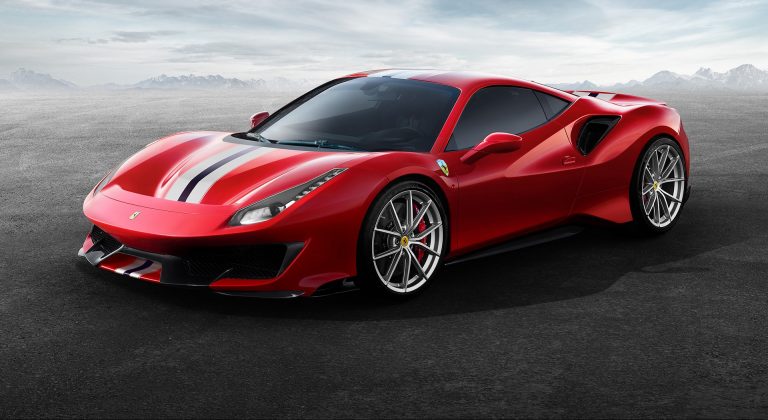
Ferrari always unveils something new and show-stopping each year at the Geneva motor show and this year it is the 488 Pista – its most powerful V8 yet.
Succeeding the 360 Challenge Stradale, 430 Scuderia and 458 Speciale that formed Ferrari’s V8-engined special series, the 488 Pista is described as a “significant step forward” in both its handling and its technology.
Ferrari says the latter is carried over directly from the brand’s racing programmes and the Pista name is a direct homage to Ferrari’s motorsports heritage. The car has been developed using experience from Ferrari’s involvement in the FIA World Endurance Championship – winning five Manufacturers’ titles and 29 of 50 races in the GTE class in the six years since the series’ inception, and 25 years’ experience running the Ferrari Challenge one-make series.
The Pista weighs 90kg less than its 488 GTB base model and combines this with the biggest power boost ever applied to a special series car. The 50hp increase, taking peak power to 720hp, makes this the most powerful V8 Ferrari road car ever produced – it passes 62mph from rest in 2.85 seconds, and 124mph in 7.6 seconds, going on to a terminal speed of 211mph.
Measures directly adopted from motorsport include powertrain lightening – extending to the exhaust manifolds, crankshaft and flywheel, while also adding titanium con rods and carbon-fibre intake plenums. The air intakes have been moved to the car’s rear spoiler to smooth out the airflow, while the turbochargers come from the 488 Challenge and are fitted with integrated rev sensors.
Downforce increase
Aerodynamic advances on the Pista include a duct on the car’s front derived directly from F1 racing, a bespoke angle for the front diffusers, redesigned vortex generators, a double-kinked rear diffuser and a longer, higher and optimised rear spoiler. Ferrari quotes a 20% increase in downforce.
Meanwhile, the car’s mechanical and electronic controls have been enhanced and combined to particularly improve the Pista’s on-the limit performance, making the car’s full potential easier to both reach and control.
Among much new technology a world first is claimed for the Ferrari Dynamic Enhancer – this uses software to adjust the brake pressure at the callipers, improving performance through and when powering out of corners.
Ferrari is not yet quoting a price for the 488 Pista, but industry observers expect it to cost from around £215,000.
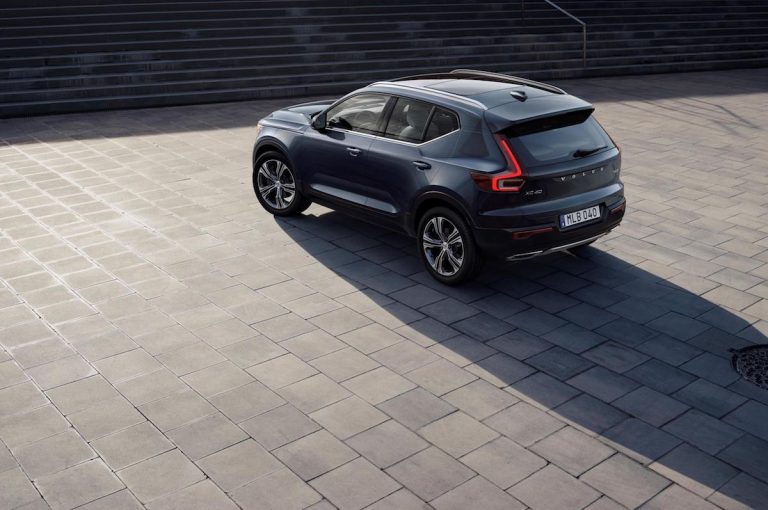
Volvo is to launch the XC40, its entry into the compact SUV segment, with the brand’s first three-cylinder engine, with prices starting at under £28,000.
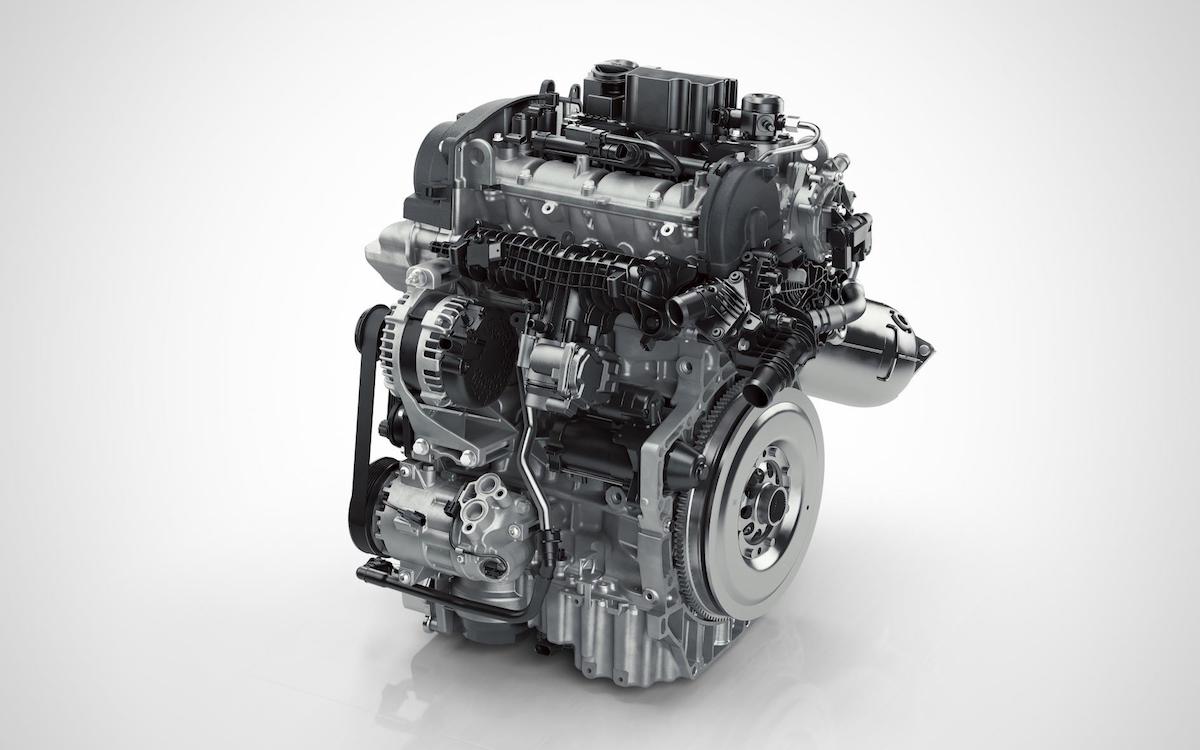
The all-new 1.5-litre, three-cylinder, direct-injection petrol engine was developed in-house using the same modular design as Volvo’s four-cylinder Drive-E engines. The three-cylinder powertrain (badged T3) comes with a six-speed manual transmission, with an eight-speed automatic option to follow next year.
The new unit has also been designed for integration into plug-in hybrid cars. Hybrid and fully-electric models of the XC40 will be added to the range in due course.
Volvo Drive-E three-cylinder petrol engine
Volvo’s current D3 150hp diesel and T4 190hp petrol engines are also added to broaden the XC40 engine offer.
XC40 customers have a choice of trim levels, including entry-level Momentum and dynamic R-Design versions, plus the luxurious new Inscription trim level.
Inscription trim offers exterior styling choices with a range of 18-inch to 21-inch wheel options, unique skid plates, side window and grille mesh chrome, plus model-specific paint colours.
Inside, Inscription adds a crystal gear knob on automatic models and Driftwood decorative inlays, which Volvo previously introduced in the latest-generation XC60 mid-size SUV.
XC40 customers can further express themselves with accessories such as the new exterior styling kit that offers brushed stainless steel skid plates, lower door trim mouldings and integrated dual tailpipes, and the new accessory roof spoiler.
UK prices for the XC40 T3 range from £27,905 on the road, with Inscription versions available from £30,405. First customer deliveries are expected this summer.
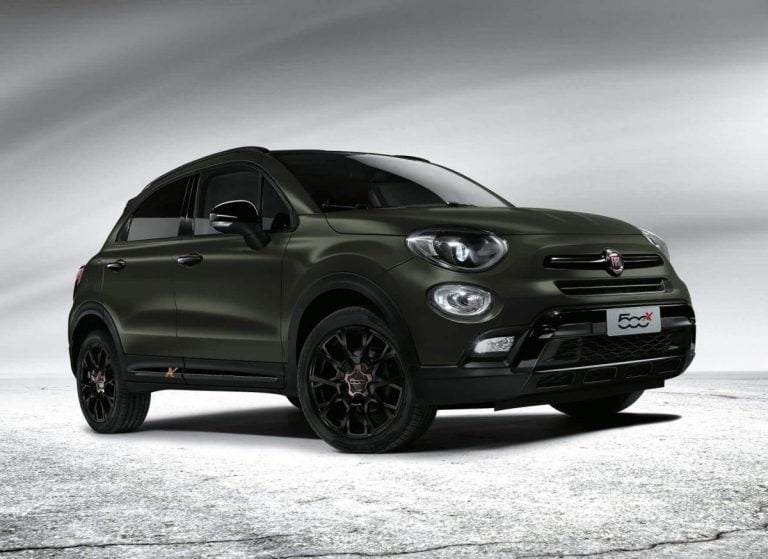
The Fiat500X has been refreshed for 2018 to include upgraded infotainment technology and a simplified line-up, with prices starting under £16,000.
The 500X now offers Fiat’s latest Uconnect system, with a seven-inch touchscreen from the Pop Star trim level up, and offers Apple CarPlay and Android Auto as standard. The system offers Bluetooth interface with hands-free controls, audio streaming, text message reader and voice recognition.
Apple CarPlay allows your iPhone to integrate with the display and native controls of the car, allowing the driver to make calls, play music, send and receive messages, get directions optimised for traffic conditions using Apple Maps and much more.
Android Auto offers access to navigation via Google Maps, with real-time traffic information and lane guidance, as well as Google Play Music and other music services.
Drivers can also stay in touch with Uconnect LIVE services. Users who download the free Uconnect LIVE app from the App Store or Google Play Store to their smartphone can enjoy music streaming with Deezer and TuneIn, news from Reuters, connected navigation with TomTom LIVE and can stay in touch with friends via Facebook and Twitter.
The simplified 500X range is now available in three trim levels, combined with a choice of three petrol and two diesel engines.
Fiat is also offering a number of options packs to boost the standard specifications. These include the Cold Weather pack, which comes with a heated steering wheel, heated front seats and heated wiper area, or the City pack to add electrically folding and heated door mirrors and rear parking camera. Marching Green paint is now available exclusively on Cross Plus models.
The Fiat 500X is available to order now priced from £15,550 on-road for the 500X Pop 1.6-litre 110hp petrol, rising to £25,250 for the 500X Cross Plus 2.0-litre 140bhp with all-wheel drive.
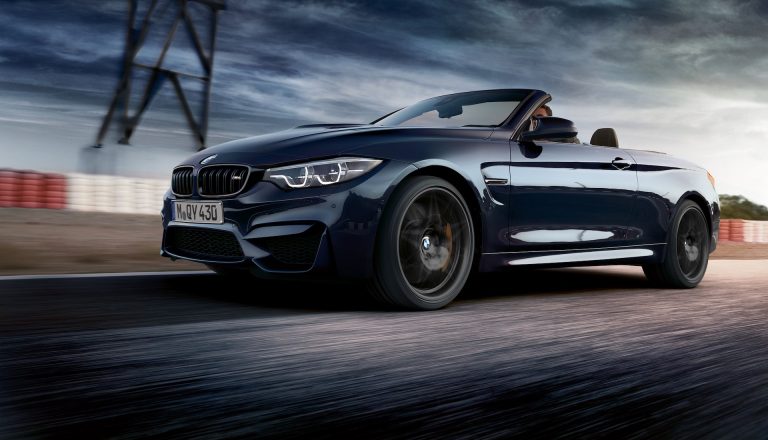
BMWis offering the latest in high-tech luxury open-top motoring – if you have a spare £80,000 to spend and are quick off the mark.
The special limited edition BMW M4 Convertible Edition 30 Jahre open-top four-seater has a maximum output of 450hp, a sports exhaust system, adaptive suspension with specific sport mode, and a sports configuration of the stability control system DSC and the Active M differential. Only 30 have been allocated to the UK, at a price of £76,675 on-road.
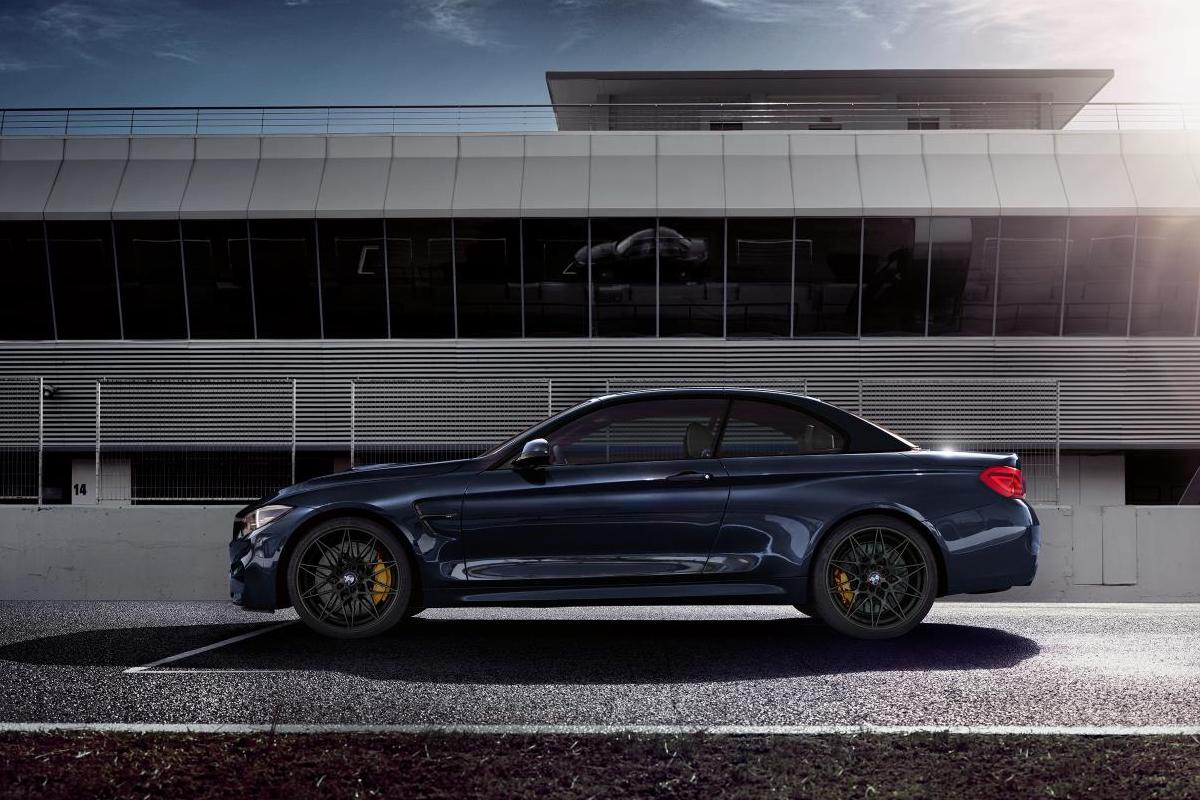
There is a choice of two body colours: Macao Blue metallic pays tribute to the original high-performance M3 Convertible’s debut over three decades ago; and Frozen Dark Grey Metallic, which is available exclusively in the UK.
Standard features include BMW Individual High Gloss Shadow Line trims for the twin kidney grille surrounds, the M side gills, the model lettering and the forged M light alloys boasting a star-spoke design. The 20-inch wheels come in a matt Orbit Grey finish offered exclusively for this model.
The Merino leather trim, the colour scheme of which matches the desired vehicle body paintwork, characterises the interior of the BMW M4 Convertible Edition 30 Jahre. In conjunction with the exterior colours Macao Blue or Frozen Dark Grey Metallic, there is a choice of the two-tone colour combinations Black/Fjord Blue and Black/Silverstone.
Other interior features include contrast stitching on the headrests as well as M floor mats with piping in the respective contrasting colour. The interior trim is finished in carbon fibre, which comes as standard.
The logo ‘30 Jahre Edition’ is imprinted both on the door sills and headrests. Additionally, the wording ‘30 Jahre Edition 1/300’ on the passenger side dashboard to give an indication of the exclusiveness of the model.
Power is delivered by a straight six-cylinder twin-turbo petrol engine, which when matched to the optional seven-speed dual-clutch automatic transmission and the Active M differential gives performance figures of 62mph in 4.3 seconds, a limited top speed of 155mph, emissions at 203 g/km and 32.5 miles to the gallon.
To mark 25 years since it was launched in the UK – and boost falling sales – Vauxhall is offering its Corsa supermini with an attractive headline finance offer from £149 per month, with a £149 initial rental.
The offer is on a personal contract hire (PCH) agreement, for the Corsa Energy 1.4-litre three-door hatch. There are some important terms and conditions to this offer; for all the details, check our analysis of the fine print below.
Despite there being a quarter of a century between the original and current Corsa, the retail price on entry-level models has only increased by £3,850. The first Corsa in 1993 was supplied with a cassette player while the current model offers Apple CarPlay. Its most popular engines have almost doubled in power over the last 25 years, and its interior dimensions have grown significantly.
As Vauxhall’s best-selling model, over two million have been sold in the UK – the equivalent of nine purchases an hour. However, the Corsa has suffered a sales slump in 2017, and 2018 hasn’t started too well either. Vauxhall will be hoping that this and other Corsa offers will help sales pick up against some very tough opposition in the supermini sector.
What’s the fine print on this offer?
This offer is for a specific Vauxhall Corsa model and is not guaranteed to be available on any other specification.
The offer listed on Vauxhall’s website is only an example, and you are entitled to adjust the initial rental, term and mileage to suit your needs (within limits).
Cars have to be ordered and delivered by 31 March 2018.
The annual mileage on the advertised offer is only 5,000 miles. This is well below the average mileage of UK drivers, so make sure your quote reflects your intended usage of the car.
Excess mileage will be charged at 5p/mile, which is £50 per 1,000 miles that you exceed your allowance over the term of the agreement.
A personal contract hire agreement is a rental agreement – you will never own the car or have the option to own the car.
The finance offer is provided by ALD Automotive, trading as Vauxhall Leasing. If a dealer offers you a finance deal from another lender, it is not part of this offer.
As with any car purchase, work out your budget before you visit the showroom and don’t be persuaded to go beyond it – regardless of what the smiling sales executive suggests. They don’t have your best interests at heart, but The Car Expert does!
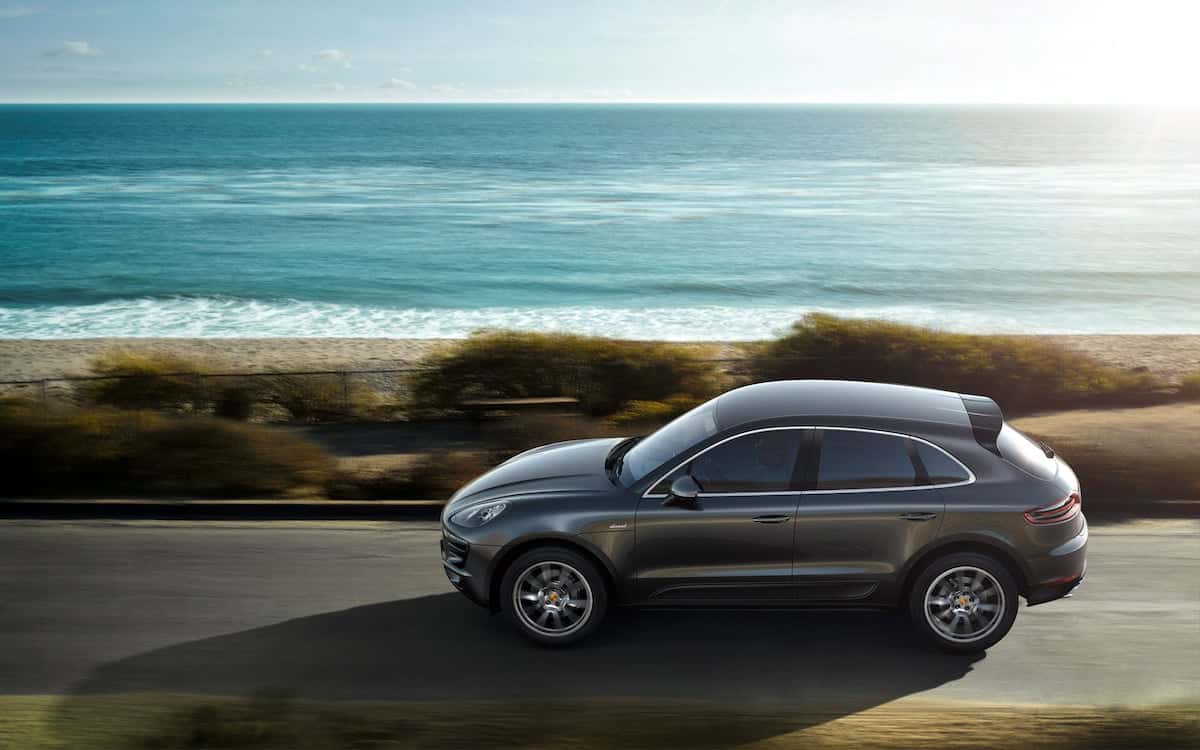
Porsche has become the first big-name European car company to announce that it is withdrawing all diesel models from sale.
In fact, Porsche has already ceased production of diesel cars, with the last Macan SUV diesels rolling down production lines last week. Diesel-powered models of the Cayenne SUV and Panamera saloon had already been discontinued as part of their last model-year updates.
In a statement to several car enthusiast websites, Porsche cited a “cultural shift” away from diesels, although the company also pointed out: “Diesel engines traditionally play a subordinate role at Porsche.” It is believed that diesel models made up only 15% of all Porsche sales in 2017, with that number likely to keep falling if the manufacturer persisted with a diesel offering.
The very idea of a diesel Porsche has been controversial since the brand first introduced a diesel Cayenne in 2009, with the qualities of a diesel engine seeming to be at odds with Porsche’s sporting ethos.
Tainted by the Volkswagen Dieselgate disgrace
However, it’s not quite as simple as Porsche deciding that there isn’t enough demand to keep offering diesel models. Along with its fellow Volkswagen family brands, Porshce has been locked in battle with German regulators (KBA) for months over emissions-cheating Dieselgate software in its diesel models.
Unlike Porsche’s trademark flat-six engines used in its sports cars, the diesel engines for its SUVs and saloons were simply taken from its Volkswagen parent with minimal tweaking to differentiate them from the same units found in common old Audis and Volkswagens. And this is how Porsche got caught up in Dieselgate.
Porsche has been severely embarrassed by its involvement in the Volkswagen Group’s Dieselgate scandal, with both Macan and Cayenne SUV models caught up in controversy over emissions cheating. The Porsche statement pointedly noted that: “Porsche does not develop or build diesel engines itself,” suggesting that Dieselgate is still a touchy subject in Stuttgart.
The company has had to issue a recall on Cayenne diesel models, and the KBA has refused to approve Audi’s proposed “fix” for the Macan diesel engine, meaning Porsche cannot sell that car and may have to buy back every diesel Macan it has ever built. In the face of these troubles, killing its diesel models altogether was perhaps the easiest solution.
It is believed that Porsche sued sister brand Audi for €200 million in damages last year over manipulated diesel engines supplied by Audi for the Macan and Cayenne. Porsche was also forced to axe its successful Le Mans-winning sportscar racing programme as part of Volkswagen’s show of penance for its Dieselgate disgrace, although it has announced it will enter the all-electric Formula E series in 2019.
In stark contrast to its lack of unique diesel powerplants, the company has been investing heavily in its electrification programme, with the first fully-electric production Porsche model set to be unveiled in the next year or so.
It seems likely that other niche and luxury brands will consider following Porsche’s example in ditching diesel fairly soon. Brands like Maserati and fellow Volkswagen family brand Bentley have only recently started offering diesel models, and may be fairly pragmatic about killing off diesel models as soon as sales start to slide.
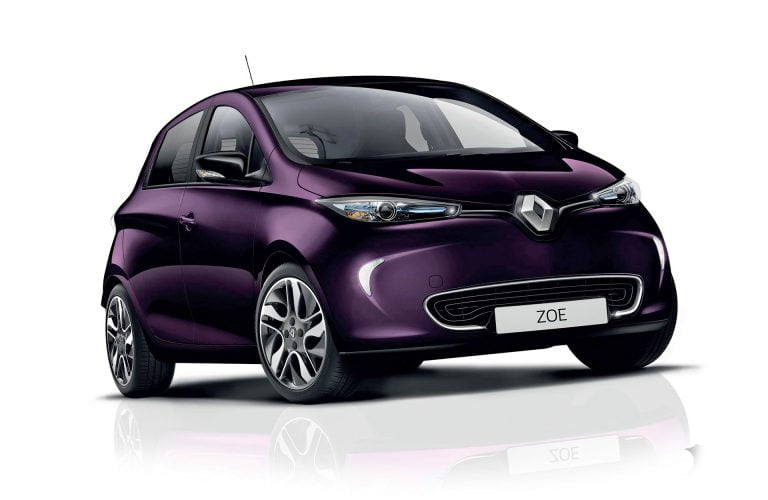
The Renault ZOE, Europe’s best-selling electric car, is gaining a power boost thanks to a new motor.
2018 model year ZOEs will be the first Renault to use a new 80kW electric motor, the R110. Adding 12kW, equivalent to 16hp, to the car’s output, it is also described as more versatile than its predecessor – the ZOE is now two seconds quicker between 50 and 75mph.
Renault adds that the R110 motor retains the same 225Nm of peak torque as the existing R90 unit. It will not replace it but be an additional option for ZOE buyers, Renault now offering 44, 57, 60, 68 and 80kW motor options across its electric range. Alongside the ZOE this range includes the Kangoo Z.E. and Master Z.E vans.
Also added to new versions of the ZOE is Android Auto smartphone compatibility through Renault’s R-Link Evolution infotainment system.
A new dark metallic purple body colour joins the range, dubbed Aconite. This will be available for ZOEs specified in Dynamique Nav trim upwards. A new Purple Interior Pack can also be specified – this includes a violet satin finish for the dashboard trim strip and air vent, gear lever base, loudspeaker surrounds, top stitching along with black and violet fabric upholstery.
Renault dealers will start taking orders for the new ZOE variants in the spring, with first deliveries in late summer. Prices have yet to be announced.
What is it?
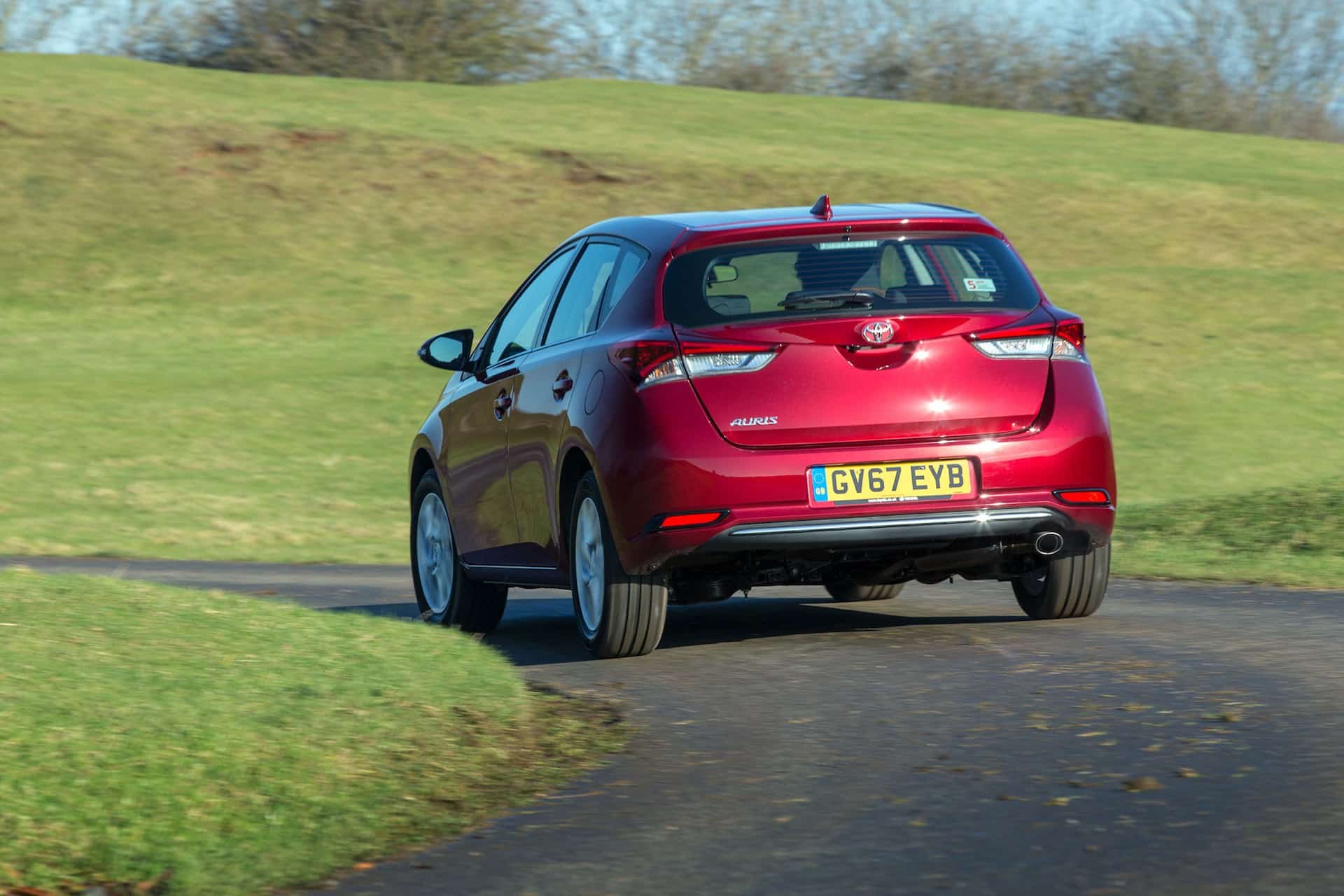
The Toyota Auris is the latest, revamped version of the brand’s British-built family hatch.Key features
Revised styling, only petrol or hybrid engines, Strong safety spec.
Our view
The Toyota Auris is a competent, ultra-dependable entrant in the family hatch market, and the latest package of updates improves the car in many areas. But this is a competitive sector with some now very high-quality cars in it.
The Auris has to fight harder to be visible against its competitors and having failed to address a totally innocuous image, it doesn’t come up to traditional rivals such as the Ford Focus and Vauxhall Astra – at a time when they are facing severe competition from new challengers, especially from Korea.
The Toyota Auris is built in the UK.Similar carsFord Focus, Vauxhall Astra, Volkswagen Golf
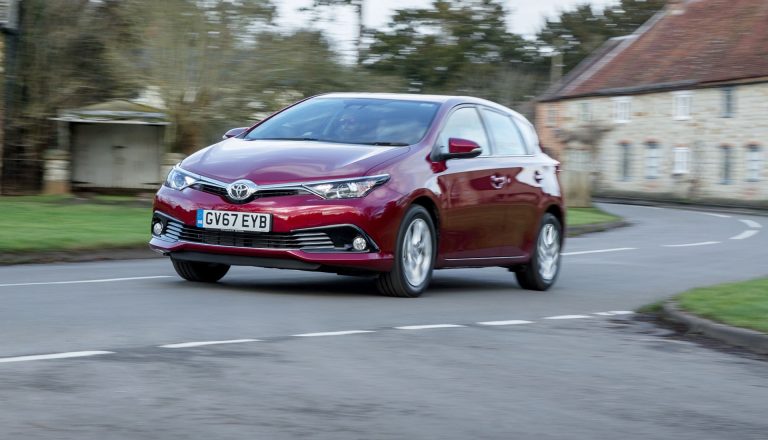
There is a new Toyota Auris in showrooms – well, sort of.
Toyota’s family hatch has undergone a ‘focusing and streamlining’ in a bid to keep on competing in a family hatch market that remains highly competitive despite the rise of the SUV. However, as this car goes on sale, the rumours grow that this will be the last Auris.
For years its predecessor, the Corolla, was the butt of motoring jokes – especially on TV programmes such as Top Gear. It was derided, not for doing anything particularly badly, just for being so dull. So back in 2007 Toyota decided to launch an all-new car with a new name – Auris.
Now we hear that the next Auris will be – a Corolla. This will happen basically because sales of the Auris are steadily declining and something has to be done to turn them around.
That slide has already seen diesel versions of the car ditched – they didn’t sell even before the politicians endowed diesel engines with pariah status. Now you have a simple two-way choice of a 1.2-litre petrol unit, or the 1.8-litre hybrid – and around three-quarters of Auris buyers choose the latter.
The 1.2 was added to the range in 2015 when the Auris underwent a major revamp. This was much more than a facelift, the new engines joined by body changes including a lower roofline and sharper nose – in the process providing the Auris with a degree of visual style it badly needed. The latest update refines these visuals, again trying to pitch the car more upmarket while adding such niceties as LED daytime running lights.
So why is the Auris – one of just three British-built family hatches on the market today – so unappreciated? To try and find out we are testing the most ‘normal’ version, the 1.2 petrol, eschewing the hybrid. That unit no doubt attracts many motorists for which the electric part is an important buying consideration, and it is only supplied with a less than impressive CVT transmission.
The 1.2-litre engine was added to the range in 2015 when the Auris underwent a major revamp.
Buying and owning a Toyota Auris
The Auris continues to be offered in hatch and estate ‘Touring Sports’ versions, both body styles available with the petrol and hybrid powertrains, and all also offered in all four trim levels – Icon, Icon Tech, Design and Excel.
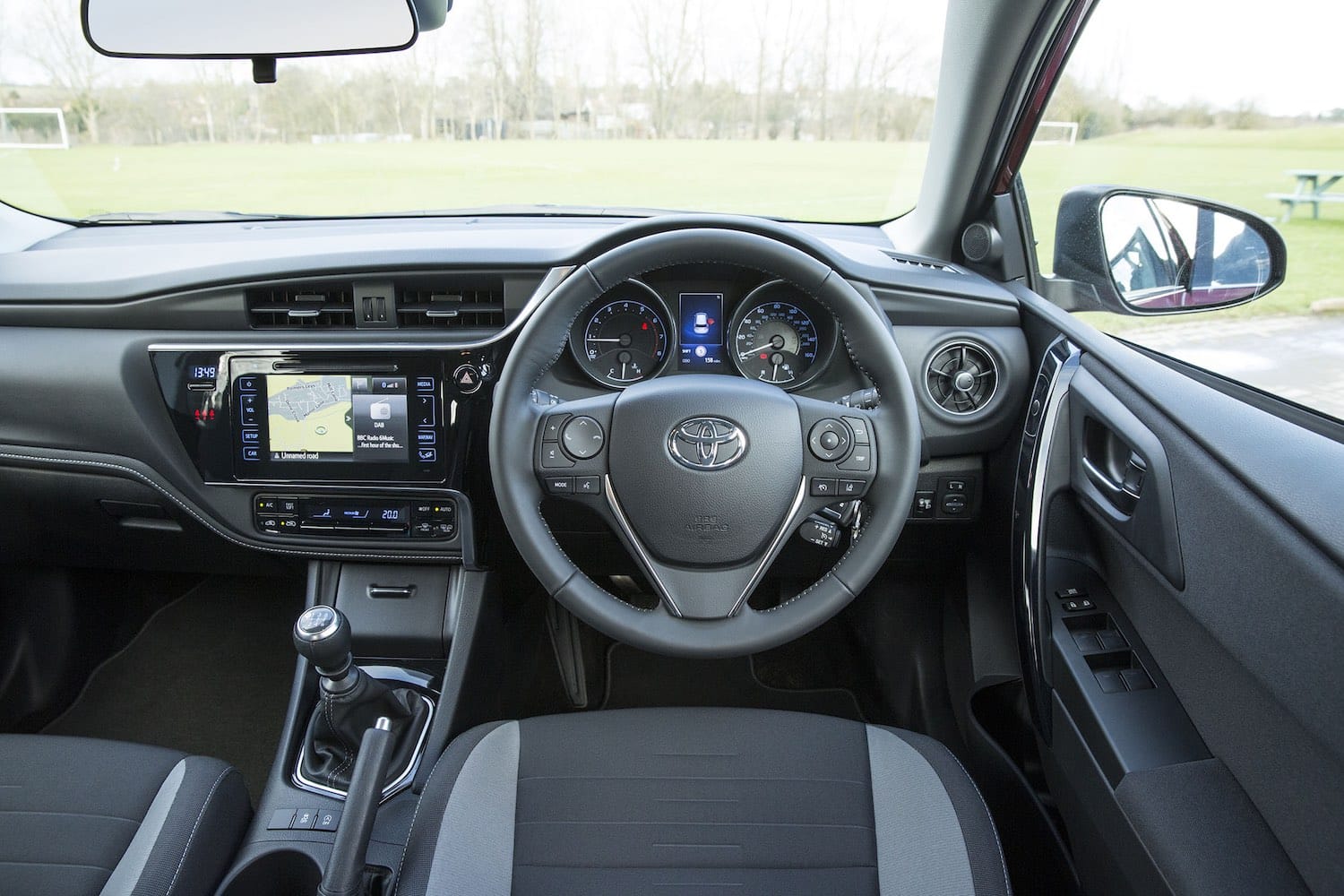
Standard equipment even on the entry-level Icon grade is impressive. Alloy wheels, automatic air conditioning, electric windows all round, leather on the steering wheel and gear knob are included, as is Toyota’s Touch 2 touchscreen, with a six-speaker audio, DAB digital radio, and Bluetooth.
It’s not many entry-level cars that include a reversing camera as standard, and this is just part of a comprehensive safety package that helped earn the Auris a top five-star Euro NCAP safety rating when it was last crash tested, way back in 2013.
Toyota groups its systems under the ‘Safety Sense’ banner and every car includes Lane Departure Alert and the Pre-Collision system – autonomous emergency braking. At speeds between 6 and 49mph, the driver is alerted both visually and audibly if the system detects the likelihood of a collision. If the driver fails to react in time, the system brakes the car.
The Icon Tech grade applied to our test car adds just £150 to the £20,155 price of the entry-level hatch. For this, the specification gains cruise control, navigation and smartphone connectivity.
All of this makes the Toyota Auris competitive against its major rivals, the Ford Focus and Vauxhall Astra, though all three struggle to stay ahead of their now comparable quality rivals from Korea, Kia’s Ceed and the Hyundai i30.
Inside the Toyota Auris
The interior is an improvement on the outgoing model, but rivals do a better job
The Auris revamp has included more work to the interior, building on a major redesign that was part of the 2015 facelift. Again, the aim is to make the surroundings appear more upmarket and sophisticated, and measures taken have included ‘a reduction in the visual mass of the dashboard design’ – i.e. it’s less in your face.
In truth this is a bit of a reversal – the original Auris of 2007 had a rather attractive curvy dash setup but the 2015 replacement was much more slab-like and less attractive.
Other measures in a bid to emphasise the quality includes more consistent illumination of the instruments, and crisper finishes to the detailing.
Leaving aside the driver’s surroundings, the Auris offers a reasonably spacious interior, both in front and back, despite being one of the shortest cars in the class. Boot space is reasonable too, at 350 litres, is comparable with Ford and Vauxhall. Others in the class offer a lot more, however – the Hyundai i30 has 395 litres, the Honda Civic a cavernous 477 litres.
Overall, the interior of the new Auris is an improvement over the outgoing model, but it still doesn’t match up to many of its rivals – the finish is dull, the perceived quality still average. The market is moving quickly in this area and the Auris is not keeping up.
Driving the Toyota Auris
The Auris is a highly competent, if unremarkable, performer on the road.
When the 1.2-litre turbo petrol unit arrived with the 2015 revamp, we were praiseworthy, describing it as “very smooth, whether ticking over or accelerating strongly – so long as one does not ask too much of the lower end of the rev range.”
That opinion holds today – it is a remarkably refined powerplant and, when first moving away, one could almost imagine one is driving the hybrid in full electric mode.
Yet the engine also has some pull – its 10.1 second 0-62mph time is well up at the sharp end when compared to rivals. In terms of economy and emissions the 1.2-litre Auris is in the ball park at 58.9mpg and 112g/km respectively, but whereas just three years ago the new engine endowed the car with a reputation for frugality, rivals have caught up and moved (just) ahead.
The latest revamp has seen work to the suspension, to both improve ride comfort and keep the car more upright in the corners. The power steering has been modified for better feel and feedback, and a swathe of extra soundproofing added – this definitely works, the cabin a very quiet place in which to travel.
All of which adds up to a highly competent performance on the road, if unremarkable. The steering is too light and doesn’t provide the confidence to attack challenging bends with gusto, though body roll is not as pronounced as in former versions while in a straight line the ride quality is very compliant.
Overall, this is not an exciting car to drive at all – but it is very easy to get accustomed to, comfortable to travel in and undemanding to live with.
Summary
The Toyota Auris is a competent package that, for a whole host of buyers, will offer all they need – comfort, reasonable quality, unflustered progress and dependable reliability, day after day after day.
In 2017, however, Toyota sold a mere 14,487 examples of the Auris, of which more than 10,000 were hybrids. In comparison, Ford Focus sales were just shy of 70,000, while Vauxhall sold almost 50,000 Astras. Why?
The problem for the Auris is while it is competent, it is just so devoid of personality. Yes, it is ultra-dependable, but to the point where five minutes after getting out of the car one forgets everything to do with the drive.
Of course, for most motorists, dependability in their daily driver will be all they require – but the sales figures suggest they still look for just a bit more when buying…
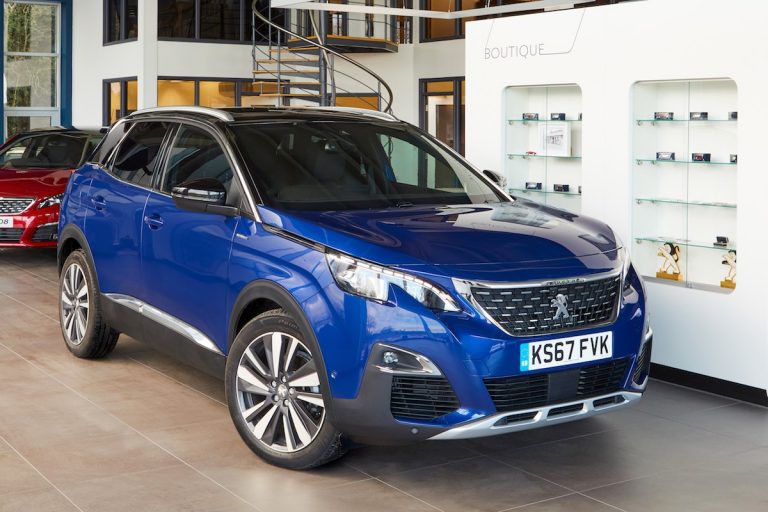
The Peugeot 3008 and 5008 SUV models can now both be ordered in a new GT Line Premium trim, which adds a bundle of extras over the existing GT Line specification for a discounted price.
On both models, GT Line Premium specification adds keyless entry-and-start functionality and a foot-operated smart electric tailgate. There are also driver seat multi-point massage function, driver and front passenger seat heating and a panoramic sunroof, plus 19-inch diamond-cut alloy wheels.
Customers opting for the new trim grade have the choice of a total of five engines available to specify on the two models.
Peugeot 5008 GT Line Premium
Prices start with the entry-level 1.2-litre 130hp petrol engine, on-the-road at £28,590 for the 3008 and £30,565 for the 5008.
The extra equipment on the new trim level would normally be valued at £2,720 if ordered individually. GT Line Premium prices are £2,125 and £1,850 over the equivalent 3008 and 5008 models in standard GT Line specification, representing theoretical savings of £575 and £870 respectively if you actually wanted all those particular bits.
The new specifications are available to order online and from Peugeot dealers now.
A pledge from Highways England to install additional emergency refuge areas at smart motorway locations where drivers are most likely to stop in live lanes has prompted road safety organisation GEM Motoring Assist to encourage drivers to put safety first on motorway journeys.
GEM road safety officer Neil Worth comments: “Motorways may be the fastest roads we use, but they are statistically also the safest; there are fewer collisions on motorways than on other roads.
“However, the high speeds used on motorways mean that when there is a crash, it is likely to be more serious. That’s why on average around one in 50 motorway collisions is fatal, compared with one in 70 on all other roads.
“We are also advising drivers to ensure they know the rules and signs relating to smart motorways, which are becoming more commonplace,” added Neil, who says that understanding how a smart motorway works, and knowing what to do if you break down in a stretch of smart motorway, could well prove a lifesaver.
“A serious danger is when there is insufficient time and space between vehicles travelling at high speed. As well as this, distracted drivers – using a mobile phone or device, re-setting the satnav or attempting to eat and drink at the wheel – pose a risk to themselves and those around them.
“Poor lane discipline brings risks – for example, driving in the middle lane when the left-hand lane is empty, or changing lanes without proper observations or signalling. This also applies around junctions when drivers are leaving or joining the motorway. Too often drivers make last-minute decisions, either deliberately or unintentionally, and end up cutting across lanes of traffic to get off the motorway or into the correct lane if the carriageway is about to split.
“Busy urban stretches of motorway are particularly risky, as there are often several junctions and intersections across short distances.
“It’s also important to remember that there are risks when traffic is light. In these situations, there is little or nothing to engage the attention of a driver on a long journey. As a result, alertness can drop and concentration can dip, making it easy to miss a developing hazard.
GEM’s 10 tips for safer motorway driving
Plan your journey so you know when to join and leave the motorway. You’re far less likely to be taken by surprise when it comes to choosing the correct lane at junctions and intersections.
Choose a safe speed and use the left-hand lane of the motorway unless you are overtaking.
Check your following distance by the ‘two-second rule’. Watch the vehicle in front go past a signpost, under a bridge or past some other reference point. Then speak out: “Only a fool breaks the two-second rule.” If you pass the same point before you have finished the sentence, then you are too close.
Double your following distance in wet weather.
Scan the road a long way ahead so that you have early sight of developing hazards.
Make regular mirror checks. If you observe a fast-approaching vehicle, then take steps to move out of its way. Before changing lanes, check your mirrors and blind spots, and indicate your intention to move either left or right. Only commence the manoeuvre when you know you can complete it safely.
Avoid any sort of distraction. No mobile device, no interfering with stereo or satnav, no eating or drinking. Give 100% of your attention to driving.
If you are about to miss your motorway exit, don’t make last-minute risky manoeuvres to leave the motorway. Continue to the next junction and turn around, or follow the revised satnav instructions.
Familiarise yourself with the rules and signs that apply to smart motorways, so that you stay safe and avoid a ticket for speeding or using a closed lane.
Know what to do if you break down in a stretch of smart motorway is a big help for road safety. Then you will know what to do if you experience a breakdown yourself, and will also understand what’s happening if another vehicle breaks down.
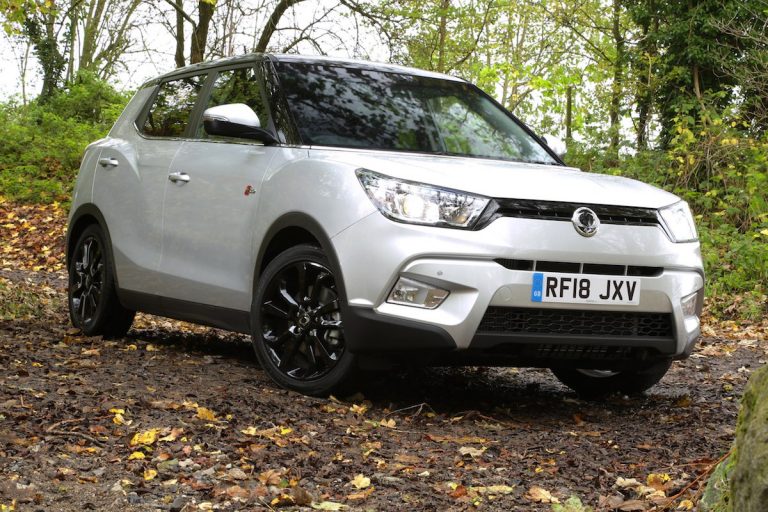
SsangYong has announced new 0% finance packages on two of its SUV models, the Tivoli and Korando.
The interest-free offers are on a conditional sale agreement (very similar to a hire purchase) and requires a 30% deposit.
The offer applies to all Tivoli and Tivoli XLV (the extended model), and to Korando SE models. Cars have to be ordered and delivered by the end of March, so you can pick up a 67-plate car this month or an 18-plate version of the same car in March.
What about the fine print?
These offers are for selected new SsangYong models only.
The offers listed on the SsangYong website are only examples, and you are entitled to adjust the deposit and term to suit your own needs (within limits).
Cars have to be ordered and delivered by 31 March 2018.
The finance offer is provided through SsangYong dealers by GMAC. If a dealer offers you a finance deal that does not match these details or from another lender, it is not part of this offer.
A 0% APR offer means that you should pay absolutely no interest or fees over the course of the agreement (although penalty fees may still apply). The monthly payment should be easy to work out, as it should simply be the total amount borrowed divided by the number of months in the agreement.
The finance offers are not available in conjunction with any other offer, although you are still free to negotiate the best possible price for the car with your dealer.
As with any car purchase, work out your budget before you visit the showroom and don’t be persuaded to go beyond it – regardless of what the smiling sales executive suggests. They don’t have your best interests at heart, but The Car Expert does!
The rising threat of criminals using GPS/GSM jamming technology to block systems designed to track stolen cars has become an issue for car owners when making security system choices.
Tracker has launched the new S5 Plus, a recovery system that’s resilient to jamming. The system combines VHF with GPS and GSM technology, which makes it resilient to jamming.
Vehicles fitted with a Tracker S5 Plus unit also benefit from Tracker’s Mesh network. This patented network technology enables an activated device (as a result of theft) to be silently located by using other passing vehicles fitted with a Tracker device, helping police quickly trace and recover more vehicles than ever.
The new system is accredited by independent safety and security experts Thatcham and meets the insurance requirements of the new Thatcham S5 standard, which means the S5 Plus could potentially see users benefit from lower car insurance premiums.
The Tracker S5 Plus includes Europe-wide coverage with unauthorised driver alerts, using driver ID tags, as well as notifications of a low or disconnected battery. A 24/7 alert monitoring centre ensures a rapid response to any report of vehicle theft.
The S5 Plus also comes with the dedicated Tracker Touch app, bringing a number of features to the owner’s fingertips, including ‘find my car’, theft reporting and crime rating for an area before parking.
A rare DVLA number plate ‘TAX 1′ is expected to fetch up to £100,000 when it is auctioned next week – but drivers thinking about buying a personalised plate are being urged to consider the insurance implications.
The plate, which may appeal to tax experts or taxi firms, is likely to be one of the most expensive ever sold. And while a registration plate costing tens of thousands of pounds will be beyond most people’s finances, personal plates are growing in popularity.
Personalised registration numbers from the DVLA start at £250 and, in 2016-17 the DVLA reportedly sold about 375,000 personalised plates.
The perfect private plate for a 4×4?
Is your private plate covered by your car insurance?
But, GoCompare car insurance is warning drivers thinking about buying a personalised plate that if their vehicle is stolen or written off, the private plate may be at risk.
The company analysed 302 comprehensive car insurance policies, which revealed only 19 specifically cover the loss of a personalised plate if the car was lost or stolen. Of those providing cover, the sum insured varied widely from £200 to unlimited. 16 insurers cover a financial loss of £5,000 or more.
When an insurance claim is made for the cost of a car, the insurer owns both the vehicle and the registration number assigned to it. This also applies to personalised plates.
The claimant can repurchase the registration number from the insurer, if it still owns it, for no more than the settlement price. But, if the vehicle has already been disposed of by the insurer, then all rights to the registration plate go with the vehicle.
If a car with a personalised plate is stolen and not recovered, its owner will have to wait 12 months to get the number plate back. To reclaim the personalised plate, they will also have to prove that the car had a valid MOT and tax at the time of theft.
Similarly, motorists who’ve had a car with a personalised number plate written off have to arrange for the number to be transferred to another vehicle or retained on a certificate in sufficient time before the claim is settled.
Registration numbers move with the vehicle, not the owner
Registration numbers move with the vehicle they are assigned to, not the person who bought it. So, if the vehicle is written off and the car scrapped – the number plate can disappear with it.
The policyholder will need to contact the DVLA and their insurer to let them know that they want to keep the plate. The insurer will then write a letter of non-interest and send it to the DVLA.
The registered keeper will have to pay a retention fee to keep the plate if they don’t have another vehicle to transfer it to.
Matt Oliver from GoCompare commented: “When you register a personalised plate to a vehicle, you need to tell your insurer immediately, otherwise your policy could be invalidated. And if you’ve paid a lot for a registration number, you should consider whether it’s properly insured.”
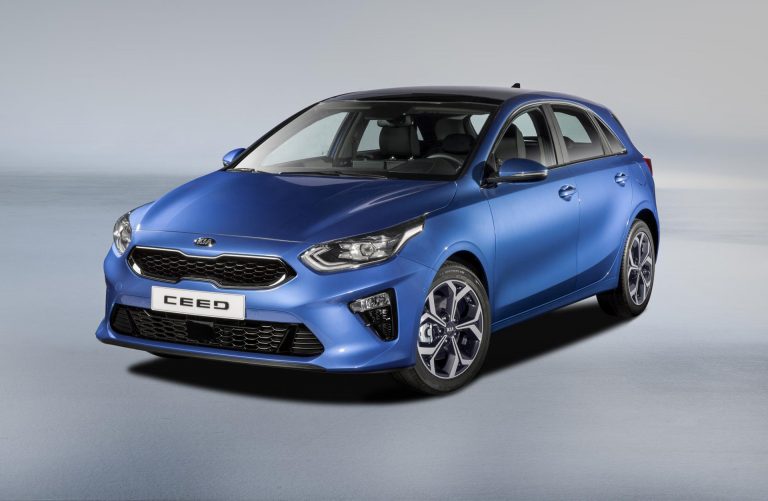
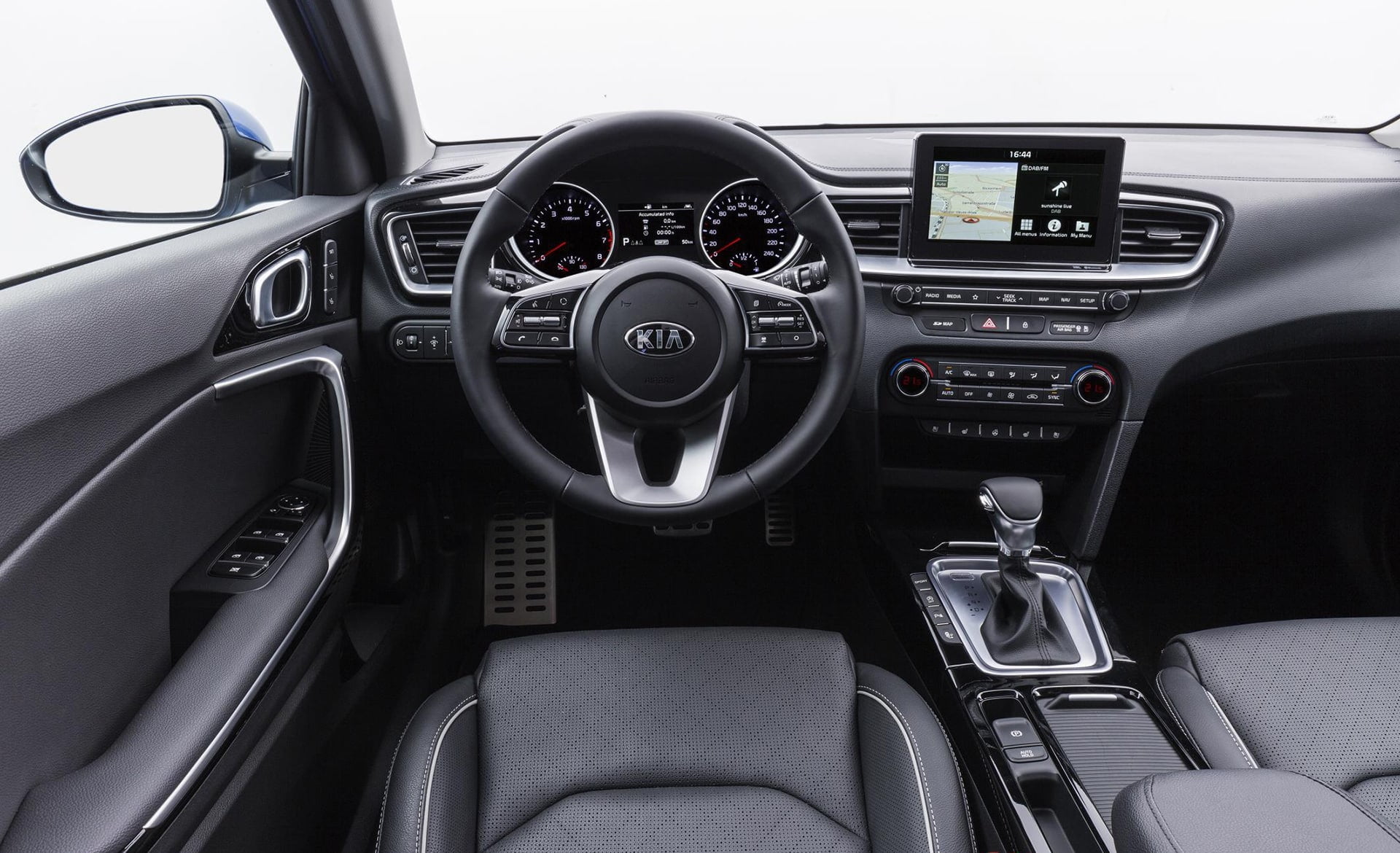
The new Kia Ceed has been revealed ahead of its public debut at the Geneva motor show on 6th March, the Korean brand describing it as ‘one of the most innovative cars in its class.’
Kia aims to move the Ceed upmarket and to take a larger slice of the family hatch market, targeting top sellers the Ford Focus and Volkswagen Golf. Efforts to make its car more recognisable include changing the name, Ceed replacing the previous and often mis-spelt cee’d.
Two of the three planned Ceed body styles will be unveiled at the Geneva show, the five-door hatch and an as-yet unnamed model which is expected to be the estate. A range-topping shooting brake variant is likely to join the range in 2019 and is expected to be based on the Proceed concept displayed at the Frankfurt show in September 2017.
Kia is heavily promoting the European credentials of the new Ceed, the car having been designed at the brand’s European design centre in Frankfurt, Germany and engineered exclusively using European roads as the benchmark.
The car is built on Kia’s new ‘K2’ platform, and is 2cm wider and 2cm lower than the outgoing model. Its wheelbase remains at 2.6m, the front overhang shortened by 2cm and rear overhang extended by 2cm. The boot is larger at 395 litres and Kia promises more front headroom, a lower driving position and an increase in shoulder room for rear passengers.
Describing the launch of the original cee’d in 2006 as a watershed moment for the brand, Kia Motors Europe CEO Michael Cole says that the all-new Ceed offers a truly contemporary and recognisable design, and advanced technologies to enhance comfort, convenience and safety.
“Its new engines and suspension will make it more enjoyable and engaging to drive, and will continue to offer the same high quality that customers expect from Kia,” Cole adds.
The Ceed will be the first Kia to offer ‘level two autonomy’ through its ‘Lane Following Assist’ technology and Kia adds that a comprehensive range of advanced driver assistance systems will be available for the car.
The engine line-up will also be new, and will include a 140hp 1.4-litre petrol engine and an efficient new 1.6-litre diesel.
The new Ceed will go on sale first in left-hand drive European markets, in the second quarter of the year. Kia is yet to announce when the first right-hand-drive versions will arrive in showrooms.
Thousands of motorists up and down the country will be visiting car showrooms in the coming weeks to make sure they are one of the first on the road with the new 18-plate registrations that start in March.
To ensure that buyers get the best deal and don’t make any obvious mistakes when selecting a new purchase, automotive dispute resolution provider, The Motor Ombudsman has a simple “ABC” formula to follow.
The main purpose of the formula is to encourage consumers to look at, and work through, the key considerations when deciding on a purchase, as there are many factors to take into account when doing so. These range from how to choose a retailer, to confirming that the right documentation is available with the vehicle when it arrives.
The Motor Ombudsman’s ABC formula:
Always make sure that the independent garage or franchised dealer is accredited to The Motor Ombudsman’s Chartered Trading Standards Institute (CTSI)-approved Motor Industry Vehicle Sales Code of Practice.
This will give you the peace of mind that the seller of the car is meeting the highest of standards of service, and that they are signed up to an impartial Alternative Dispute Resolution (ADR) provider, such as The Motor Ombudsman, should something go wrong.
All businesses adhering to the Code can be found at the click of a button on The Motor Ombudsman’s online Garage Finder.
Budgeting is key when selecting a make, model and fuel type. Take time to do the necessary research and keep to what you can afford in terms of the deposit, any long-term repayment plans, and the running and maintenance costs.
Check the pricing and specification of the vehicle carefully upon ordering and receiving the car, and that all paperwork is present and accurate. This includes finance and servicing agreements, invoices, receipts, warranty and insurance policies, as well as relevant registration documents.
Bill Fennell, managing director of The Motor Ombudsman, said: “A car is often a significant financial commitment for many, and there’s a lot of different pieces of information to digest for consumers throughout the entire purchase process.
“Therefore, to steer motorists in the right direction as we approach the new registration, we have introduced a simple formula for motorists to follow as a quick reference guide. This is so as to create a buying and subsequent ownership experience which is as straightforward as possible.”
Three out of four motorists buying a new car on finance are not convinced they are getting the best deal; almost all of them admit that they don’t fully understand the small print, and two-thirds end the experience dissatisfied.
These and other results from a survey by online car finance broker FairSquare echo the message that The Car Expert has been spreading for years – that car buyers do not understand car finance and they do not trust car dealers to give them a fair deal.
The survey of more than 2,000 car owners found a distinct lack of understanding, trust and appeal when it comes to approaching car finance products and the car buying experience.
89% of car buyers don’t fully understand the ‘small print’ of their car finance deal
Buyers financing cars with no idea of how finance works
Last year, more than three-quarters of all cars bought in the UK were purchased with finance products. However, 89% of buyers did not fully understand the ‘small print’ of their car finance deal – such as what happens if the stipulated mileage is exceeded – and 60% admitted signing up without knowing what the consequences may be.
Some 32% were not aware that multiple applications for credit can adversely affect personal credit scores; 73% of buyers felt unsure as to whether they were being offered fair deals or not; 66% were dissatisfied after completing a car purchase and 37% said they would consider buying their next car online – up from 25% in 2016.
Asked to rate the stress of buying a car most people put it above experiences such as a visit to the dentist, a visit to the doctor, Christmas shopping, using public transport during commuter peak times, visiting in-laws and watching a horror movie.
The least favourite elements of car buying were:
visiting dealerships and forecourts
filling out lengthy requests for personal information, and having to repeat the process with each different provider
comparing prices of the same vehicle and finance offers from different retailers
feeling pressurised into a sale without time to properly consider
feeling that the finance offered may not be the best but one that pays the supplier the greatest commission
inspecting used vehicles
Paul Bartley, CEO of FairSquare, says: “These results paint a pretty disappointing and unsatisfactory picture of the car buying and financing landscape in the UK.
“Even if consumers feel they are paying the right price for the car, there is clearly a lack of understanding of the finance products available to them, together with the benefits and risks associated with those products. Access to like-for-like comparisons is very challenging and time-consuming.”
Ford has announced a limited run of 50 Heritage Edition Focus RS models, priced at £39,895 and exclusive to the UK market, before production stops altogether in April this year.
Each will be finished in a unique Tief Orange body colour, along with grey brake callipers behind black forged alloy wheels and the RS Edition’s trademark contrasting black door mirrors and rear spoiler. They also come equipped with partial leather Recaro seats, privacy glass, a sunroof, rear parking sensors, power-fold door mirrors, cruise control with speed limiter and heated steering wheel.
All Focus RS Edition models feature a front mechanical Quaife limited-slip differential (LSD) while the Heritage Edition also gains the dealer-fitted FPM375 Mountune upgrade, increasing overboost power from 350hp to 375hp and torque from 470Nm to 510Nm, thanks to a high-flow induction kit, uprated turbo re-circulating valve and calibration.
The mechanical LSD limits engine torque delivered to a wheel that has reduced traction on the road surface and redistributes torque to the wheel with more traction to counteract the wheelspin that can hamper acceleration and stability.
By controlling the torque delivered to each front wheel, the Focus RS Edition’s Quaife LSD enables drivers to exploit the power delivered by its 2.3-litre EcoBoost engine in high-performance driving situations.
Other specification includes variable all-wheel drive, which adjusts the front-to-rear torque distribution to suit the current driving situation, dynamic torque vectoring – which uses electronically-controlled clutch packs on the rear axle to send up to 100% of the available torque to either rear wheel and torque vectoring control (TVC) – which automatically applies small amounts of brake force to limit wheelspin at the front axle.
Andy Barratt, chairman and managing director, Ford of Britain, said: “The RS brand is hugely important to Ford and is recognised across the globe; however it has a special place in the hearts of UK Ford fans.
“This latest model is the best RS we’ve ever produced, so it seems a fitting tribute as we approach its 50th anniversary.”





 Inside the 508 gains the latest version of Peugeot’s much-praised i-Cockpit, featuring a 12-inch head-up digital instrument panel, a 10-inch touchscreen angled towards the driver and a leather-trimmed steering wheel. An ‘Amplify’ feature allows the driver to choose either ‘Boost’ or ‘Relax’ ambient lighting.
Peugeot is not yet releasing detailed information on the powertrain line-up but states that the 508 will be available with six petrol and diesel engine options, ranging from 130 to 225hp.
Driver assistance systems will also feature heavily on the car, including a night-vision setup. This employs an infra-red camera which can detect pedestrians both at night and in poor visibility conditions – Peugeot says it is a first in the segment.
Prices for the new 508 range will be announced closer to the car’s launch, which is expected in the summer of 2018.
Inside the 508 gains the latest version of Peugeot’s much-praised i-Cockpit, featuring a 12-inch head-up digital instrument panel, a 10-inch touchscreen angled towards the driver and a leather-trimmed steering wheel. An ‘Amplify’ feature allows the driver to choose either ‘Boost’ or ‘Relax’ ambient lighting.
Peugeot is not yet releasing detailed information on the powertrain line-up but states that the 508 will be available with six petrol and diesel engine options, ranging from 130 to 225hp.
Driver assistance systems will also feature heavily on the car, including a night-vision setup. This employs an infra-red camera which can detect pedestrians both at night and in poor visibility conditions – Peugeot says it is a first in the segment.
Prices for the new 508 range will be announced closer to the car’s launch, which is expected in the summer of 2018.

 Measures directly adopted from motorsport include powertrain lightening – extending to the exhaust manifolds, crankshaft and flywheel, while also adding titanium con rods and carbon-fibre intake plenums. The air intakes have been moved to the car’s rear spoiler to smooth out the airflow, while the turbochargers come from the 488 Challenge and are fitted with integrated rev sensors.


 Drivers can also stay in touch with Uconnect LIVE services. Users who download the free Uconnect LIVE app from the App Store or Google Play Store to their smartphone can enjoy music streaming with Deezer and TuneIn, news from Reuters, connected navigation with TomTom LIVE and can stay in touch with friends via Facebook and Twitter.
The simplified 500X range is now available in three trim levels, combined with a choice of three petrol and two diesel engines.
Fiat is also offering a number of options packs to boost the standard specifications. These include the Cold Weather pack, which comes with a heated steering wheel, heated front seats and heated wiper area, or the City pack to add electrically folding and heated door mirrors and rear parking camera. Marching Green paint is now available exclusively on Cross Plus models.
The Fiat 500X is available to order now priced from £15,550 on-road for the 500X Pop 1.6-litre 110hp petrol, rising to £25,250 for the 500X Cross Plus 2.0-litre 140bhp with all-wheel drive.
Drivers can also stay in touch with Uconnect LIVE services. Users who download the free Uconnect LIVE app from the App Store or Google Play Store to their smartphone can enjoy music streaming with Deezer and TuneIn, news from Reuters, connected navigation with TomTom LIVE and can stay in touch with friends via Facebook and Twitter.
The simplified 500X range is now available in three trim levels, combined with a choice of three petrol and two diesel engines.
Fiat is also offering a number of options packs to boost the standard specifications. These include the Cold Weather pack, which comes with a heated steering wheel, heated front seats and heated wiper area, or the City pack to add electrically folding and heated door mirrors and rear parking camera. Marching Green paint is now available exclusively on Cross Plus models.
The Fiat 500X is available to order now priced from £15,550 on-road for the 500X Pop 1.6-litre 110hp petrol, rising to £25,250 for the 500X Cross Plus 2.0-litre 140bhp with all-wheel drive.
 Standard features include BMW Individual High Gloss Shadow Line trims for the twin kidney grille surrounds, the M side gills, the model lettering and the forged M light alloys boasting a star-spoke design. The 20-inch wheels come in a matt Orbit Grey finish offered exclusively for this model.
The Merino leather trim, the colour scheme of which matches the desired vehicle body paintwork, characterises the interior of the BMW M4 Convertible Edition 30 Jahre. In conjunction with the exterior colours Macao Blue or Frozen Dark Grey Metallic, there is a choice of the two-tone colour combinations Black/Fjord Blue and Black/Silverstone.
Other interior features include contrast stitching on the headrests as well as M floor mats with piping in the respective contrasting colour. The interior trim is finished in carbon fibre, which comes as standard.
The logo ‘30 Jahre Edition’ is imprinted both on the door sills and headrests. Additionally, the wording ‘30 Jahre Edition 1/300’ on the passenger side dashboard to give an indication of the exclusiveness of the model.
Power is delivered by a straight six-cylinder twin-turbo petrol engine, which when matched to the optional seven-speed dual-clutch automatic transmission and the Active M differential gives performance figures of 62mph in 4.3 seconds, a limited top speed of 155mph, emissions at 203 g/km and 32.5 miles to the gallon.
Standard features include BMW Individual High Gloss Shadow Line trims for the twin kidney grille surrounds, the M side gills, the model lettering and the forged M light alloys boasting a star-spoke design. The 20-inch wheels come in a matt Orbit Grey finish offered exclusively for this model.
The Merino leather trim, the colour scheme of which matches the desired vehicle body paintwork, characterises the interior of the BMW M4 Convertible Edition 30 Jahre. In conjunction with the exterior colours Macao Blue or Frozen Dark Grey Metallic, there is a choice of the two-tone colour combinations Black/Fjord Blue and Black/Silverstone.
Other interior features include contrast stitching on the headrests as well as M floor mats with piping in the respective contrasting colour. The interior trim is finished in carbon fibre, which comes as standard.
The logo ‘30 Jahre Edition’ is imprinted both on the door sills and headrests. Additionally, the wording ‘30 Jahre Edition 1/300’ on the passenger side dashboard to give an indication of the exclusiveness of the model.
Power is delivered by a straight six-cylinder twin-turbo petrol engine, which when matched to the optional seven-speed dual-clutch automatic transmission and the Active M differential gives performance figures of 62mph in 4.3 seconds, a limited top speed of 155mph, emissions at 203 g/km and 32.5 miles to the gallon.







 Describing the launch of the original cee’d in 2006 as a watershed moment for the brand, Kia Motors Europe CEO Michael Cole says that the all-new Ceed offers a truly contemporary and recognisable design, and advanced technologies to enhance comfort, convenience and safety.
“Its new engines and suspension will make it more enjoyable and engaging to drive, and will continue to offer the same high quality that customers expect from Kia,” Cole adds.
The Ceed will be the first Kia to offer ‘level two autonomy’ through its ‘Lane Following Assist’ technology and Kia adds that a comprehensive range of advanced driver assistance systems will be available for the car.
The engine line-up will also be new, and will include a 140hp 1.4-litre petrol engine and an efficient new 1.6-litre diesel.
The new Ceed will go on sale first in left-hand drive European markets, in the second quarter of the year. Kia is yet to announce when the first right-hand-drive versions will arrive in showrooms.
Describing the launch of the original cee’d in 2006 as a watershed moment for the brand, Kia Motors Europe CEO Michael Cole says that the all-new Ceed offers a truly contemporary and recognisable design, and advanced technologies to enhance comfort, convenience and safety.
“Its new engines and suspension will make it more enjoyable and engaging to drive, and will continue to offer the same high quality that customers expect from Kia,” Cole adds.
The Ceed will be the first Kia to offer ‘level two autonomy’ through its ‘Lane Following Assist’ technology and Kia adds that a comprehensive range of advanced driver assistance systems will be available for the car.
The engine line-up will also be new, and will include a 140hp 1.4-litre petrol engine and an efficient new 1.6-litre diesel.
The new Ceed will go on sale first in left-hand drive European markets, in the second quarter of the year. Kia is yet to announce when the first right-hand-drive versions will arrive in showrooms.


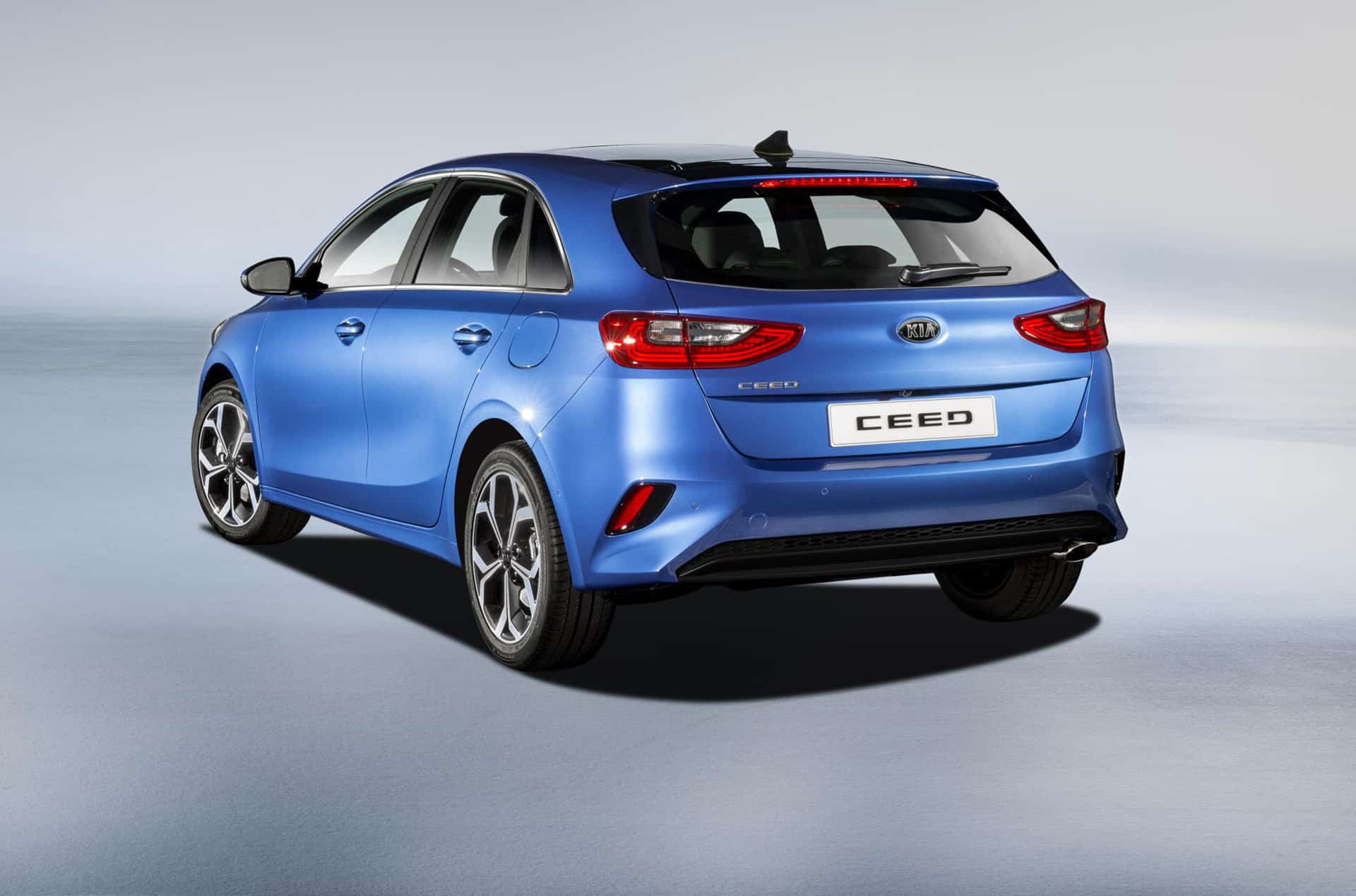
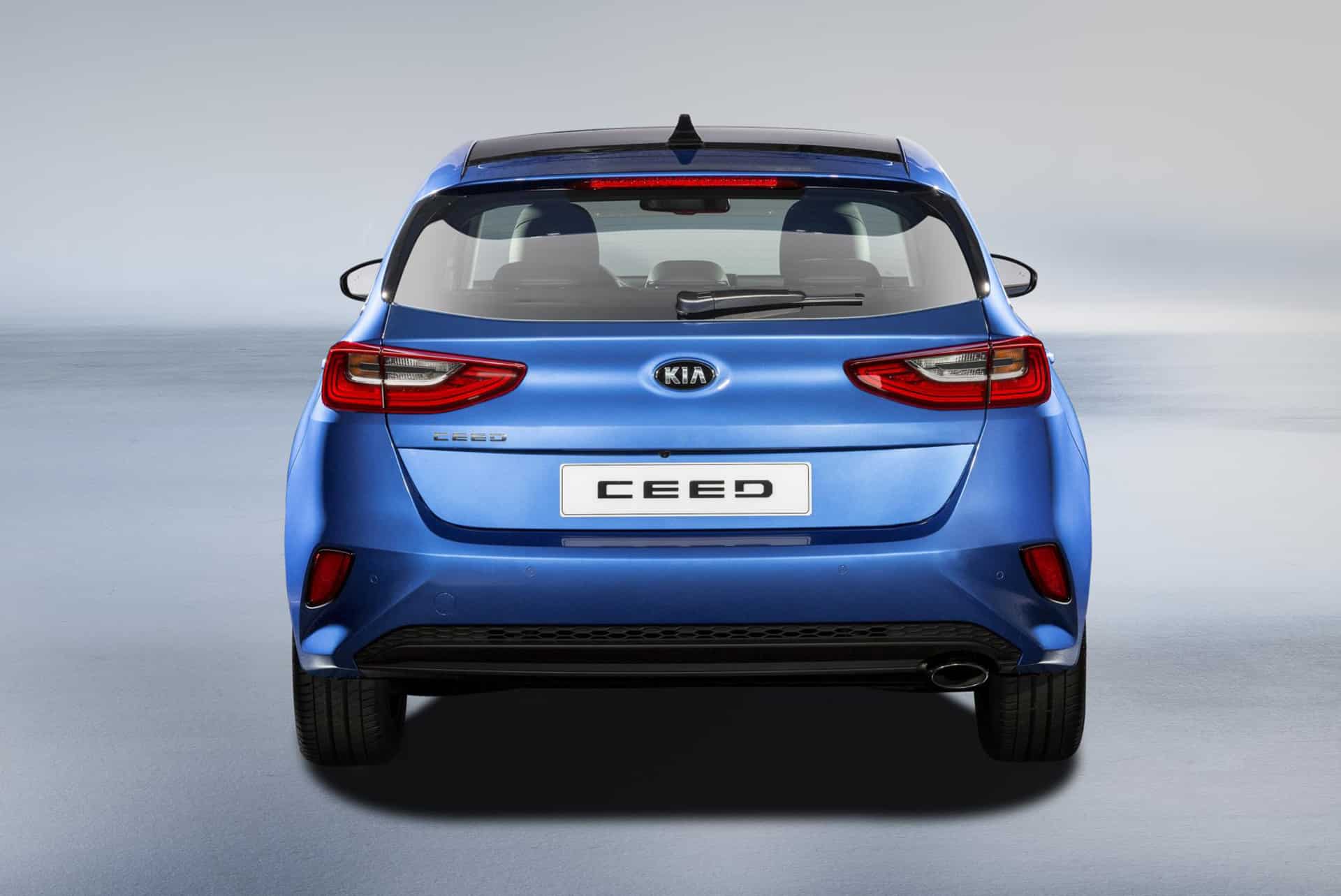
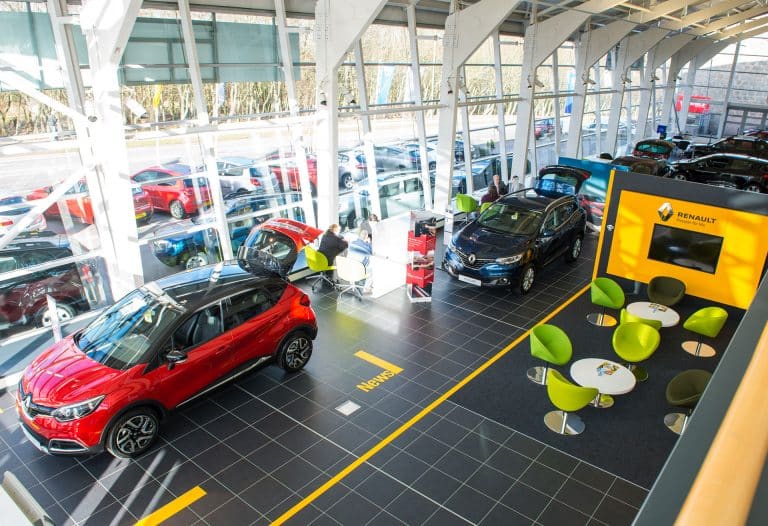


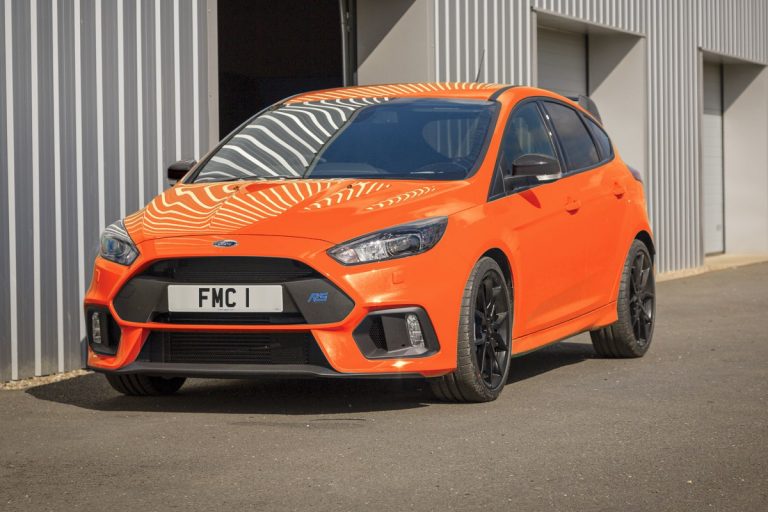
 By controlling the torque delivered to each front wheel, the Focus RS Edition’s Quaife LSD enables drivers to exploit the power delivered by its 2.3-litre EcoBoost engine in high-performance driving situations.
Other specification includes variable all-wheel drive, which adjusts the front-to-rear torque distribution to suit the current driving situation, dynamic torque vectoring – which uses electronically-controlled clutch packs on the rear axle to send up to 100% of the available torque to either rear wheel and torque vectoring control (TVC) – which automatically applies small amounts of brake force to limit wheelspin at the front axle.
Andy Barratt, chairman and managing director, Ford of Britain, said: “The RS brand is hugely important to Ford and is recognised across the globe; however it has a special place in the hearts of UK Ford fans.
“This latest model is the best RS we’ve ever produced, so it seems a fitting tribute as we approach its 50th anniversary.”
By controlling the torque delivered to each front wheel, the Focus RS Edition’s Quaife LSD enables drivers to exploit the power delivered by its 2.3-litre EcoBoost engine in high-performance driving situations.
Other specification includes variable all-wheel drive, which adjusts the front-to-rear torque distribution to suit the current driving situation, dynamic torque vectoring – which uses electronically-controlled clutch packs on the rear axle to send up to 100% of the available torque to either rear wheel and torque vectoring control (TVC) – which automatically applies small amounts of brake force to limit wheelspin at the front axle.
Andy Barratt, chairman and managing director, Ford of Britain, said: “The RS brand is hugely important to Ford and is recognised across the globe; however it has a special place in the hearts of UK Ford fans.
“This latest model is the best RS we’ve ever produced, so it seems a fitting tribute as we approach its 50th anniversary.”