

What is it?
The Skoda Karoq replaces the previous Yeti model in the enormous compact SUV marketplace battle.
Key features
Spacious, practical, value for money
Our view
The all-new Skoda Karoq is more than just a replacement for the popular (at least in the UK) Yeti. In fact, it’s almost an anti-Yeti. Gone are the squared-off proportions, left-field styling and general feeling of character. In their place is an accomplished and far more mainstream model.
The Karoq feels like it has absorbed the good points from most of its rivals in the compact SUV marketplace and combined them into one package. The only problem (depending on how you look at such things) is that it’s almost entirely unmemorable in every way.
If you don’t actually like cars and just want something to get you from point A to point B with comfort and practicality, and without breaking the bank, it’s pretty much perfect.
Similar cars
Nissan Qashqai, Peugeot 3008, SEAT Ateca, very many others…
Another week, another compact SUV arrives in UK car showrooms. This week, it’s the Skoda Karoq joining the party. It replaces the Skoda Yeti, although it’s a very different sort of creature.
The compact SUV (or compact crossover, if you prefer) is the 21st-century version of the family hatchback. Two adults up front, two-and-a-bit kids in the back and enough boot space for a week’s worth of shopping or a weekend’s worth of luggage. Every manufacturer worth mentioning now has at least one of these vehicles in its line-up, and sometimes more if it’s trying to segment different demographics.
Skoda previously had the Yeti in this market. Although it wasn’t the first compact crossover in the shopping centre car park, it was certainly around a few years before most others jumped on the bandwagon. The Yeti’s identity befitted a new and unusual type of vehicle, a left-field choice compared to something like a regular Skoda Octavia hatch or estate. It was tall and square, with oddball headlights and a distinctive appeal. It wasn’t as wacky as the best-forgotten Skoda Roomster, but it certainly stood apart from the pack. And that summed up Skoda at the time – sharpening up its act but still drumming along to its own beat.

Now, however, things have moved on. The small-medium crossover market is no longer a niche; it’s the default choice for a family car. And Skoda is no longer a niche player, either. Over the last decade, the brand has gone from bargain bin to family favourite, and the decidedly different Yeti became rather out of step with the rest of the range. A mid-life facelift smoothed out the looks a bit, but it still had limited appeal in the fastest-growing market segment on the planet.
The Skoda Karoq, therefore, epitomises where the brand is right now. It’s a bit bigger than its predecessor, but that’s normal in the automotive market. What’s really changed is that the Karoq is a far more mainstream offering than the Yeti, which is one of the reasons it has picked up a new name. This is not a New Yeti; in fact, it’s almost an anti-Yeti. The styling is smooth and rather bland (although the front end, like all Skodas, is overly fussy), and dimensions are good to excellent in every direction compared to the class average.
Under the skin, the Karoq shares its platform and mechanical bits with the SEAT Ateca and Volkswagen Tiguan – plus a myriad of other vehicles based on the Volkswagen Golf underpinnings. On the surface, however, Skoda seems to have absorbed all the best bits from its very many rivals in this market and assembled them into a Karoq. Does that make it the best of its kind? Well, yes and no.

Like the rest of the Skoda family, the Karoq offers a lot of value for your money. The range consists of four trim levels, including one aimed specifically at fleet customers, plus two petrol and two diesel engines. In particular, the entry-level SE and mid-spec SE L models include a very competitive level of kit compared to similar vehicles from other manufacturers.
The top-spec Edition models include almost everything you could ever want in a family car, but the price is getting close to £30,000 for petrol models and beyond that for diesel models (although the diesel models do come with four-wheel drive, whereas the petrol models are only available as front-wheel drive).
The fleet-spec SE Technology won’t generally be available from dealerships for retail customers, although presumably they’ll pop up as used cars after a year or two. These models are probably the best value of all, as the price is the same as the regular SE but you get satnav, adaptive cruise control and front & rear parking sensors thrown in. Plus fleet buyers won’t pay anywhere near the retail price anyway, so company car drivers are getting the pick of the range and the best pricing.
Petrol engines consist of 1.0-litre and 1.5-litre options, producing 115 and 150hp respectively. Both are available with a six-speed manual or (for an extra £1,300) seven-speed automatic transmission. The petrol models are expected to be the bigger sellers of the Karoq range, especially with the current anti-diesel sentiment created by Skoda’s evil-empire parent company, Volkswagen. If you do want a diesel engine, there’s a choice of a 1.6-litre producing 115hp and a 2.0-litre with 150hp, with the same choice of gearboxes.
The diesel models might have identical power statistics to the petrol equivalents, but they produce more torque for carrying a full car-load of passengers and luggage, plus they have theoretically better fuel consumption and emissions. Of course, this is Volkswagen we are talking about so you can’t really trust their numbers…
If you want or need four-wheel drive, you need to have the 2.0-litre diesel engine. This makes it considerably the most expensive choice of Karoq.
Safety-wise, it’s good news all round. The Skoda Karoq comes fitted standard with autonomous emergency braking (which Skoda and other Volkswagen brands insist on calling Front Assist) to help reduce collisions, and it was awarded five stars from Euro NCAP for its safety systems and crash-test performance. Edition models get additional accident-avoidance safety tech that is optional on lower models, like lane-keeping assist and blind-spot monitoring.

If the outside of the Skoda Karoq is impeccably drawn, solidly-built yet largely bland, the interior is much the same story. Materials are of good quality, it’s all well screwed together and the layout looks thoroughly conventional. There’s none of the quasi-futuristic look of a Peugeot 3008, and thankfully none of the dodgy plastics of some of its lesser rivals.
Everything is laid out very well, following the current trend for eliminating as many buttons as possible and throwing everything into a large central touchscreen. Despite the fact that touchscreens are still not well suited to driving, everyone’s going that way and Skoda is no different. The base-level eight-inch screen is actually easier to use on the move than the higher-spec nine-inch unit found on the Edition model, as it has a proper volume knob (although placed on the wrong side of the screen, away from the driver) and better virtual button placement either side of the screen.
All models get Apple CarPlay and Android Auto compatibility as standard (note to BMW: stop charging nearly £300 for this!). The sound quality is decent from the regular system but definitely better if you cough up another £400 for the optional ten-speaker Canton sound system.
The seating position and level of adjustment in both the front seats and steering wheel is very good, visibility is much better than most cars since the Karoq is not pretending to be a sports car or private jet, rear-seat passengers have plenty of room and the boot is reasonably large and well-shaped for family kit-shifting requirements.

Our drive route on the Skoda Karoq launch went from Lincoln to Grimsby and back, so there wasn’t a lot in the way of hills and valleys. There was a good combination of motorway, A-road and windy, crumbly B-road driving, however, so we got to give the Karoq a good workout in varying conditions.
We drove the 1.5-litre 150hp petrol engine in both manual and automatic forms, and it is a great option for most family customers. It is zippy in city traffic and will hold its performance well with a load of passengers and cargo. If you don’t want a diesel but you still have to carry stuff around, it’s the best engine in the range.
The automatic transmission is smooth and efficient, happily working its way through all seven gears as needed to give you either performance or economy as needed. The manual gearbox is light and easy to use, and a lot more enjoyable than the auto if you’re not stuck in stop-start traffic every day. The steering is light and lifeless, like almost every car in this segment, but the Karoq responds well to your directions.
The ride is generally very good, but it’s actually the cheaper models (SE and SE Technology) that feel comfier due to their smaller wheels and taller tyres. If you want to sacrifice comfort for style with the 18-inch wheels and lower-profile tyres on the SE L and Edition models (and optional for the lower models), there’s not too much to worry about as the more blinged-up Karoq models still soak up most bumps, potholes and speed humps without trouble. Handling is not especially exciting, but the Karoq goes pretty much exactly where you want to with no fuss or bother.
The seats are both comfortable and supportive, so a three-hour first leg followed by another 90 minutes after lunch was no problem at all. Noise levels from the petrol engine were good – the diesel is likely to be a bit noisier, but if you have the stereo on or are chatting to your passengers, you probably wouldn’t notice.
All in all, it’s extremely competent without raising your pulse – perfect if that’s what you’re looking for.
In almost every objective way possible, the Skoda Karoq is a very good vehicle. It does exactly what it says on the tin, with no surprises (unless you live under a rock and haven’t seen a Skoda since about 1997). For a family with a couple of kids, it ticks all the boxes.
The only downside is that, within half an hour of driving the Karoq, nothing especially memorable comes to mind. It was very good at everything and bad at nothing. Actually, if you want to pick nits, the standard-spec cruise control buttons on the indicator stalk are fiddly to use. The optional (£300) adaptive cruise control gets its own stalk and it’s much easier to operate. But that’s really about it.
So if you’re simply looking for a comfortable, practical family car that offers good value for money, the Skoda Karoq should probably be at the top of your shopping list. If you want to enjoy throwing your smallish hatchback-based crossover down a B-road like a sports car, or if you want to stand out from the crowd, this is not that sort of vehicle. If you don’t really like cars and just want one that does the job of moving you and your loved ones from here to there, this is quite possibly it.

| Cars bought on finance by consumers through dealerships | ||||||
| New business | Nov 2017 | % change on prev. year | 3 months to Nov 2017 | % change on prev. year | 12 months to Nov 2017 | % change on prev. year |
| New cars | ||||||
| Value of advances (£m) | 1,385 | +2 | 5,627 | +1 | 18,413 | +2 |
| Number of cars | 69,287 | -8 | 284,432 | -9 | 974,049 | -7 |
| Used cars | ||||||
| Value of advances (£m) | 1,237 | +16 | 3,866 | +13 | 15,003 | +11 |
| Number of cars | 104,683 | +10 | 331,601 | +7 | 1,322,786 | +6 |


 It’s been around since 2012, but the current model Mercedes-Benz A-Class has continued to rise through the ranks each year. Strong residual values, along with competitive pricing and finance deals, have helped the A-Class knock its biggest rival, the Audi A3, out of the top ten best-selling cars list.
The A-Class has hit the top ten in what is likely to be its last full year before a replacement model comes along before the end of 2018. Interestingly, A-Class sales do not include the CLA saloon (it’s not a coupé, despite what Mercedes wants you to believe), whereas the next-generation model is likely to receive a saloon model (precisely like the Audi A3, in fact) and the CLA is likely to be killed off. So the A-Class may see increased sales numbers over the next year or two.
Next page: Moving up the alphabet
It’s been around since 2012, but the current model Mercedes-Benz A-Class has continued to rise through the ranks each year. Strong residual values, along with competitive pricing and finance deals, have helped the A-Class knock its biggest rival, the Audi A3, out of the top ten best-selling cars list.
The A-Class has hit the top ten in what is likely to be its last full year before a replacement model comes along before the end of 2018. Interestingly, A-Class sales do not include the CLA saloon (it’s not a coupé, despite what Mercedes wants you to believe), whereas the next-generation model is likely to receive a saloon model (precisely like the Audi A3, in fact) and the CLA is likely to be killed off. So the A-Class may see increased sales numbers over the next year or two.
Next page: Moving up the alphabet

 The SMMT blames anti-diesel rhetoric and the potential for tax hikes causing buyers to hesitate over buying. “However, these cars remain the right choice for many motorists – especially those who travel longer distances – with lower CO2, better fuel economy and, with these newer vehicles, dramatically reduced air quality emissions,” the industry body says, quoting its own figures suggesting that on average buyers of diesels save £132 a year on their costs.
Hawes is adding to growing calls for an industry-wide Government scrappage scheme to replace older, more polluting diesel cars. “Keeping older vehicles on the road will not only mean higher running costs but will hold back progress towards our environmental goals,” he said.
“Consumers should be encouraged to buy the right car for their lifestyle and driving needs irrespective of fuel type – whether that be petrol, electric, hybrid or diesel as it could save them money.”
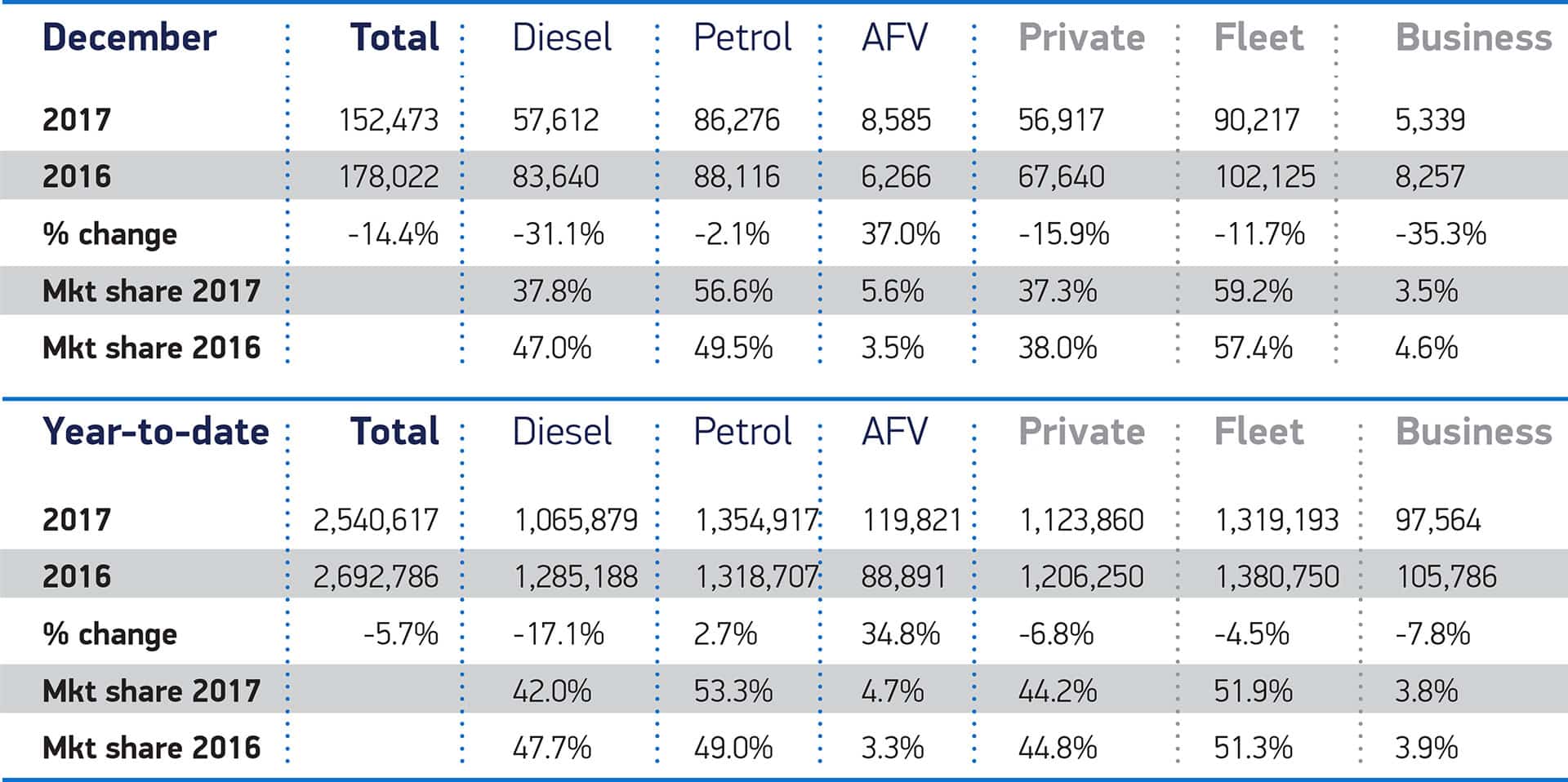
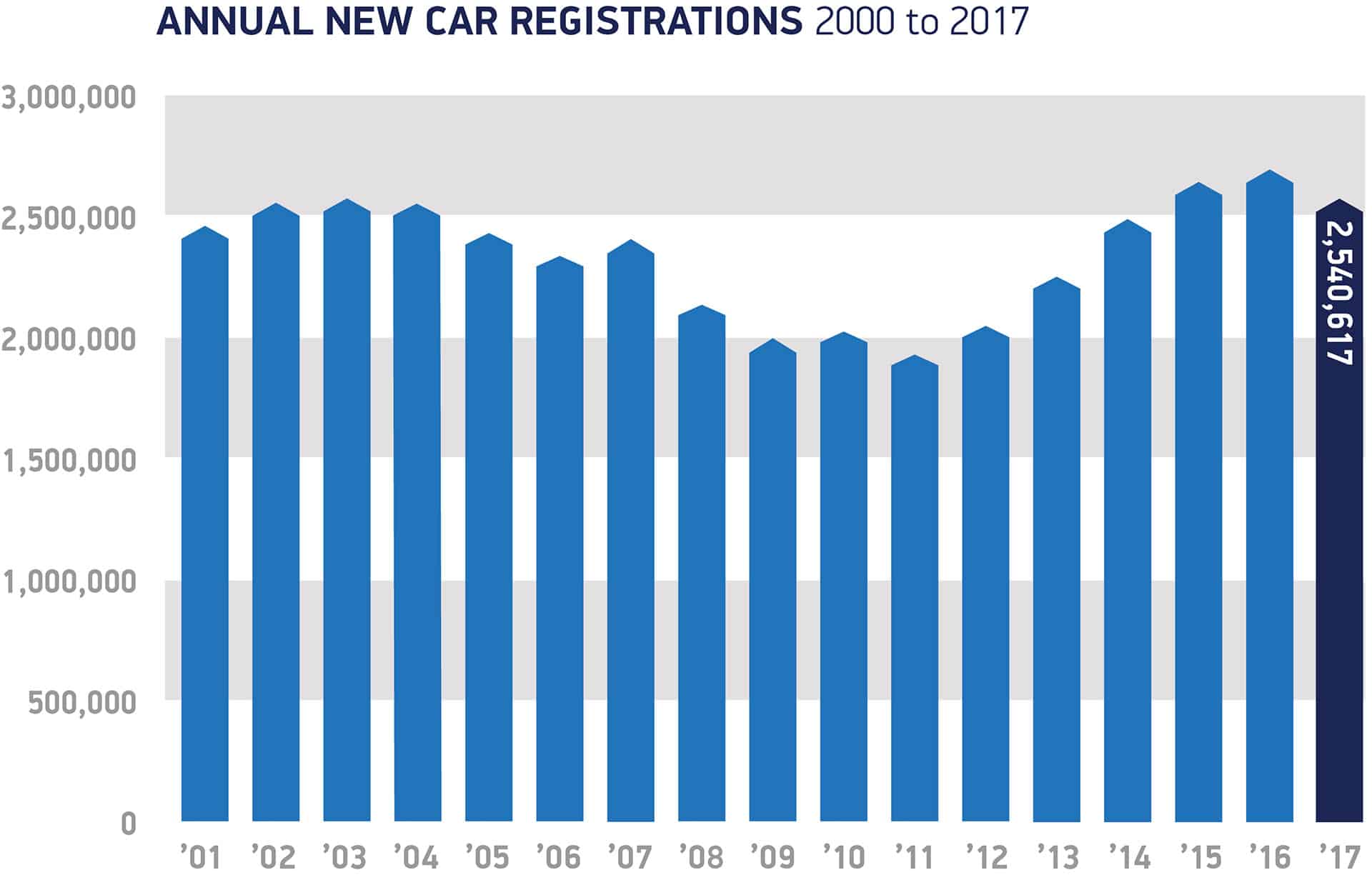
One upside to the latest figures is a surge in sales of ‘alternatively-fuelled’ vehicles, which includes electric and hybrid cars. These rose by 34.8%, 119,821 registered over the year. Such vehicles now enjoy their highest ever share of the market though it is still just 4.7%.
Hawes summed up 2017 as “undoubtedly a very volatile year” and added that lacklustre economic growth means that the industry expects a further weakening in the market for 2018. However he added that this could be good news for car buyers; “The upside for consumers is some very, very competitive deals.”
The SMMT blames anti-diesel rhetoric and the potential for tax hikes causing buyers to hesitate over buying. “However, these cars remain the right choice for many motorists – especially those who travel longer distances – with lower CO2, better fuel economy and, with these newer vehicles, dramatically reduced air quality emissions,” the industry body says, quoting its own figures suggesting that on average buyers of diesels save £132 a year on their costs.
Hawes is adding to growing calls for an industry-wide Government scrappage scheme to replace older, more polluting diesel cars. “Keeping older vehicles on the road will not only mean higher running costs but will hold back progress towards our environmental goals,” he said.
“Consumers should be encouraged to buy the right car for their lifestyle and driving needs irrespective of fuel type – whether that be petrol, electric, hybrid or diesel as it could save them money.”
One upside to the latest figures is a surge in sales of ‘alternatively-fuelled’ vehicles, which includes electric and hybrid cars. These rose by 34.8%, 119,821 registered over the year. Such vehicles now enjoy their highest ever share of the market though it is still just 4.7%.
Hawes summed up 2017 as “undoubtedly a very volatile year” and added that lacklustre economic growth means that the industry expects a further weakening in the market for 2018. However he added that this could be good news for car buyers; “The upside for consumers is some very, very competitive deals.”

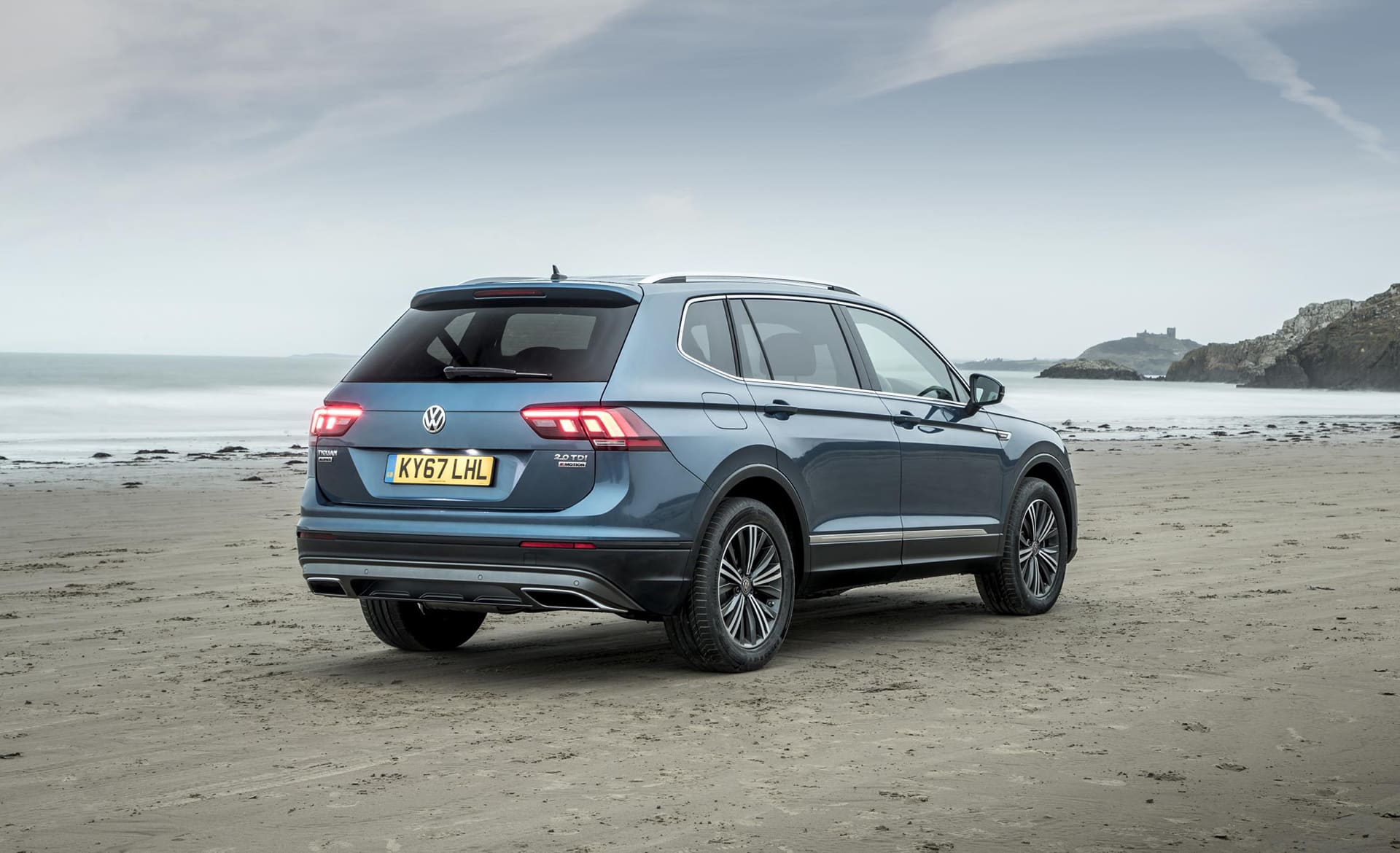
 The all-wheel-drive is part of a package intended to position the Tiguan Allspace as a ‘proper’ off-roader. The 4WD system includes ‘Onroad’, ‘Snow’, ‘Offroad’ and ‘Offroad individual’ driving modes, and an optional off-road pack is available with a front bumper increasing the approach angle from 16.9 degrees to 24 degrees, plus extra underbody protection and chrome door sill protectors.
The three diesel engines are all of two litres and turbocharged, with either 150, 190 or 240hp. The range-topping 240 unit, costing from £39,965, is like its petrol equivalent supplied exclusively with 4WD and the automatic transmission. The 150hp unit, meanwhile can be bought in front or four-wheel-drive, with six-speed manual or seven-speed automatic transmission.
From launch the Tiguan Allspace will be available in two trim levels, SE Navigation and SEL. A more sports-styled R-Line grade will be offered from late Spring 2018.
The all-wheel-drive is part of a package intended to position the Tiguan Allspace as a ‘proper’ off-roader. The 4WD system includes ‘Onroad’, ‘Snow’, ‘Offroad’ and ‘Offroad individual’ driving modes, and an optional off-road pack is available with a front bumper increasing the approach angle from 16.9 degrees to 24 degrees, plus extra underbody protection and chrome door sill protectors.
The three diesel engines are all of two litres and turbocharged, with either 150, 190 or 240hp. The range-topping 240 unit, costing from £39,965, is like its petrol equivalent supplied exclusively with 4WD and the automatic transmission. The 150hp unit, meanwhile can be bought in front or four-wheel-drive, with six-speed manual or seven-speed automatic transmission.
From launch the Tiguan Allspace will be available in two trim levels, SE Navigation and SEL. A more sports-styled R-Line grade will be offered from late Spring 2018.


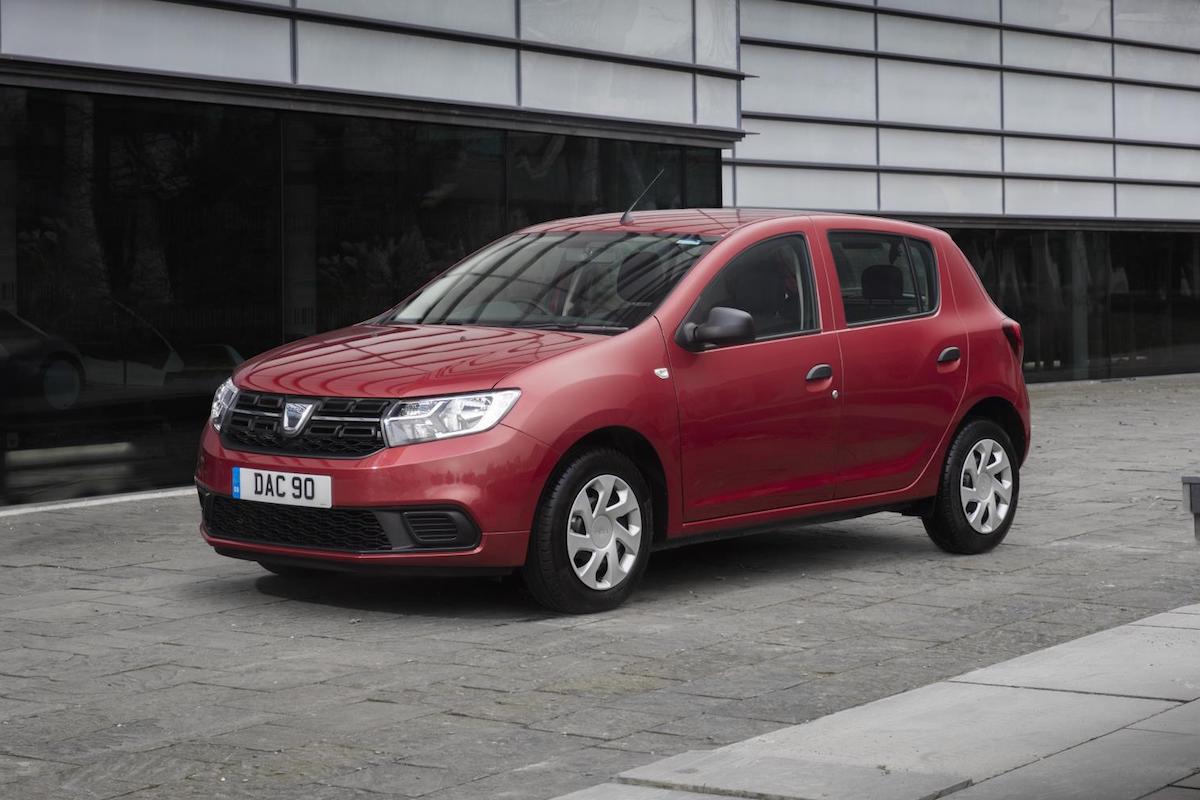

Order books are open for the revamped Citroën C4 Cactus, the car set to hit UK roads in April at prices from £17,265 – for a while.
While the revised model includes a number of updates, perhaps the most notable change is a move away from the bold styling that the Cactus launched with in 2014. Gone are the big ‘air bump’ side mouldings on the doors, replaced by much smaller, more discreet items at the base of the doors.. The car looks much more of a conventional large hatch, sitting above its C3 sister which has also donated its front-end styling.
The new Cactus will be offered with a revised powertrain choice ranging across 110 or 130hp petrol or 100hp diesel engines, and in two core trim levels, Feel and Flair. However the £17,265 price tag applies to a limited numbers launch model, dubbed Feel Edition and powered by an 82hp petrol engine.
Based on the Feel trim, the Feel Edition gets the Deep Red colour trim pack and Metropolitan Red interior trim. It also comes fitted with the brand’s ‘Advanced Comfort’ seats, but not the new Progressive Hydraulic Cushion suspension that is standard on Feel and Flair trim. Making its debut on a European Citroën, this system is said to offer ‘the ride of a magic carpet’ without affecting handling.
Citroën has also significantly upgraded the driver assistance systems offered on the Cactus, with up to 12 now available depending on trim level chosen. An Active Safety Brake autonomous emergency braking system and Lane Departure Warning are both standard on Flair models, while also available is the clever Grip Control that can produce four-wheel-drive like traction.
Connected navigation, connection to an emergency and assistance service and Mirror Screen phone compatibility are now also on offer to Cactus buyers.
Mainstream Feel versions of the new Cactus will start from £17,965, with the 110hp version of the petrol engine, and range up to £21,165 for a Flair model with the same engine but a six-speed auto transmission. The 130hp engines cost £800 more than the 110, and the diesels another £230.


What’s the most expensive item you’ve ever bought online? Maybe a laptop, an Xbox, 50-inch flat screen 4K TV or an iPhone? Or perhaps that holiday you took last summer?
Buying online is easy and could not be more convenient. The journey taken for any of these purchases follows a similar course involving price comparisons, checking availability and reading customer reviews before adding to a basket, heading for the checkout, tapping in your credit card details and pressing the buy button. Simple. After that, there’s that moment of anxiety knowing your hard-earned cash has gone into the ether and then savouring the thrill when the confirmation email pops into your inbox.
If it’s so easy and convenient, would you buy a car online? A number of car manufacturers are now offering online purchasing for new cars, and some dealers are launching online purchasing for both new and used cars, and it looks like 2018 could be a pivotal year for online car sales.
The same rules apply to buying a £1,000 smartphone as they do to purchasing a £20,000 car. You do your initial research online to shortlist the make, model and colour, hunt around for who is offering the best monthly price, visit a retailer to see it in the metal, just to be sure you like the look and feel, and then buy it.
Being able to buy a car online is not a new concept. Vauxhall launched a service a decade ago during the first flush of internet retailing, but it was ahead of its time and was quietly withdrawn.
Things have moved on since then with 2017 seeing an unprecedented rush of car brands tapping into this emergent market. They are targeting digital-savvy new car buyers who prefer the online route to thumbing through car magazines and trawling around the internet to draw up a shortlist, visiting showrooms to kick the tyres before uncomfortably haggling over the price.
Around 97% of car buyers use the internet when researching their new car and the number of dealer visits made before purchasing has dropped dramatically from four a decade ago to just 1.6 visits today. Adding a ‘buy’ button to online car adverts is a natural extension of this process and one that has been latched onto by car manufacturers and some dealers.
With this in mind, The Car Expert offers you a guide to what to consider if you’re thinking of making your next new car purchase from the comfort of your sofa.
Pretty soon it will be easier to say which car makes do not offer the option to buy a car online. BMW was first out of the blocks in late 2015 with its BMW Retail Online offering.
The service set the template for subsequent initiatives covering vehicle configuration, part-exchange values, finance options, test drives through dealerships and a live-chat with a product genius or guru (car maker shorthand for a non-commission driven product expert rather than pushy salesperson). And then onto the final purchase either online or through a dealer.
Since then Hyundai, smart, Peugeot and Mitsubishi have all joined the party. Expect more brands to reveal their online sales plans as competition in the digital marketplace grows.
There are six key features to BMW Retail Online. The online journey starts with the tool “Find your BMW”, leading into the vehicle configurator. With a click on the “Buy your BMW” button the customer selects a retailer, is shown cars in stock and selects their preferred finance method.
The customer can then finalise all steps of the purchase with their chosen retailer in the Retailer Online showroom. Buyers can also ask questions along the way through a live chat service manned by product specialists who are available for questions seven days a week from 8am to 7pm.

Customers using Hyundai’s Click to Buy service can choose a car, arrange a part-exchange, sort out finance and pay online. The process is claimed to take just five minutes to complete, with the handover taking place from the customer’s designated dealership or – in what Hyundai claimed as a market first – straight to their driveway.
Click to Buy is a natural progression of Hyundai’s fresh approach to car retailing which has seen the opening of digital stores at London’s Bluewater and Westfield Stratford shopping centres. Here customers can talk to a product specialist, configure a car, have a test drive, and then buy online in the store or from home.

Peugeot distanced its Order Online from other brands’ services because it said it provides more choice by allowing customers to configure and order a car to their requirements, rather than being restricted to buy dealer stock. Buyers can also track the progress of their order from placement to delivery.
The service includes guaranteed part-exchange valuations, various financing options and a dealer test drive. Delivery can be to a dealer or the customer’s home. Peugeot claims customers can choose and buy a car online within 30 minutes.

With its simple two-model car line-up – fortwo and forfour – and a choice of pre-configured models, Smart is able to offer a speedy service which it claims can take just 12 days from order to delivery. There are three payment packages enabling customers to choose from either a low monthly payment, a standard offer, or a lower deposit. Cars can be financed from just £119 a month.
Customers can choose to either collect their new smart from a local retailer or have it delivered to their home.

Meanwhile, Volvo has announced that its eagerly awaited Polestar performance sub-brand will only be available through online ordering when it goes on sale in 2019. Furthermore, cars will only be available to lease rather than purchase. Likewise, the forthcoming Lynk & Co brand will only be available through online ordering and on a subscription basis. There’s a connection here, as Volvo and Lynk & Co are both owned by the China-based Geely group.

No. While all the car maker services we list claim to be different, they are fundamentally similar. They all allow buyers to save their proposed purchase and completing the transaction face-to-face with a real human being in a dealership if that’s what you prefer.
No. There are moves afoot to add online car purchasing to dealer main websites which will give customers a greater choice of brands and models although cars being offered for sale are more likely to be used or what’s termed “nearly-new” cars with the latest registration plate and low mileages.
The first dealer group service to go live was a used car initiative quietly launched in 2017 by Vertu Motors, one of the UK’s largest car retailers, through its Bristol Street Motors branded showrooms in England.
The group was pleased with the take-up from its initial trial and will now roll the service out across its 120 showrooms, including those operated by Macklin Motors in Scotland.
More dealers are set to follow with the launch of a new back-end e-commerce trading platform by iVendi, the car retailing tech company, who have piloted an online buying service, which incorporates finance options. The system has been piloted by 500 dealers ahead of a national rollout in 2018.
If you buy a car online, you benefit from more legal protection than if you walk into a showroom and buy the exact same vehicle. You are covered by the Consumer Contracts (Information, Cancellation and Additional Charges) Regulations 2013, which covers “distance selling” where a product is not sold in person.
When buying online, you have the right to cancel from the moment an order is placed until 14 days after taking delivery of the car. If you are buying a car in person from a dealer, you do not have the same right. It doesn’t matter if it’s a new or used car, the law is the same.
The seller (and online sales for any manufacturer will be managed by a separate company, either a dealership or a company specifically set up for the purpose) must provide you with details of their returns/cancellation policy. They must also explain who pays for the cost of returning the car if you change your mind. Their policy may include charges for returning or collecting the vehicle, but they must provide you with this information up front. You are liable for any damage you cause to the car.
Technology and society are adopting internet shopping at a rapid rate, and it’s about to get an awful lot easier to buy a car online.
Would you be comfortable enough to buy a car online? Have you already bought a car online? Let us know your thoughts in the comments section below.

What is it?
The Mercedes-Benz X-Class is the brand’s first entry into the pick-up market and, it claims, the first such model in the premium market.
Key features
Off-road capable, upmarket design, targeted trim levels.
Our view
The launch of the Mercedes-Benz X-Class bring desirability of a level never before seen to the pick-up sector. The vehicle combines upmarket comfort, finishing and technology with proper off-road ability, but one pays a premium for the badge.
Similar cars
Nissan Navara, Ford Ranger, Toyota Hilux
‘Pick-up by Mercedes-Benz’ is not a phrase one might expect to hear, but it is now fact, as the Mercedes-Benz X-Class arrives on the market.
In launching what it describes as the first such vehicle offered by a premium manufacturer, Mercedes is hoping to attract two very different kinds of buyers, and is targeting versions of the X-Class specifically at the different markets.
The model is marketed by the brand’s commercial vehicle arm – indeed the entry-level X-Class will be hoping to appeal to those who need such a vehicle for their work, and like the idea of a badge with rather more kudos than, say, the Toyota Hilux or Nissan Navara.
The Mercedes is rather more closely related to the Nissan than one might think. Strip off the bespoke bodyshell, with looks that clearly follow the design language of Mercedes SUV models, and underneath is effectively the mechanical specification of the Navara, including its tough, ladder-frame chassis.
However, Mercedes expects the biggest sales for its new model to be of vehicles in the top of the three specification levels. There are plenty of buyers who are attracted to the pick-up as a lifestyle choice, and the hope is that the combination of Mercedes-Benz premium quality and tech in the pick-up format will be a winner.
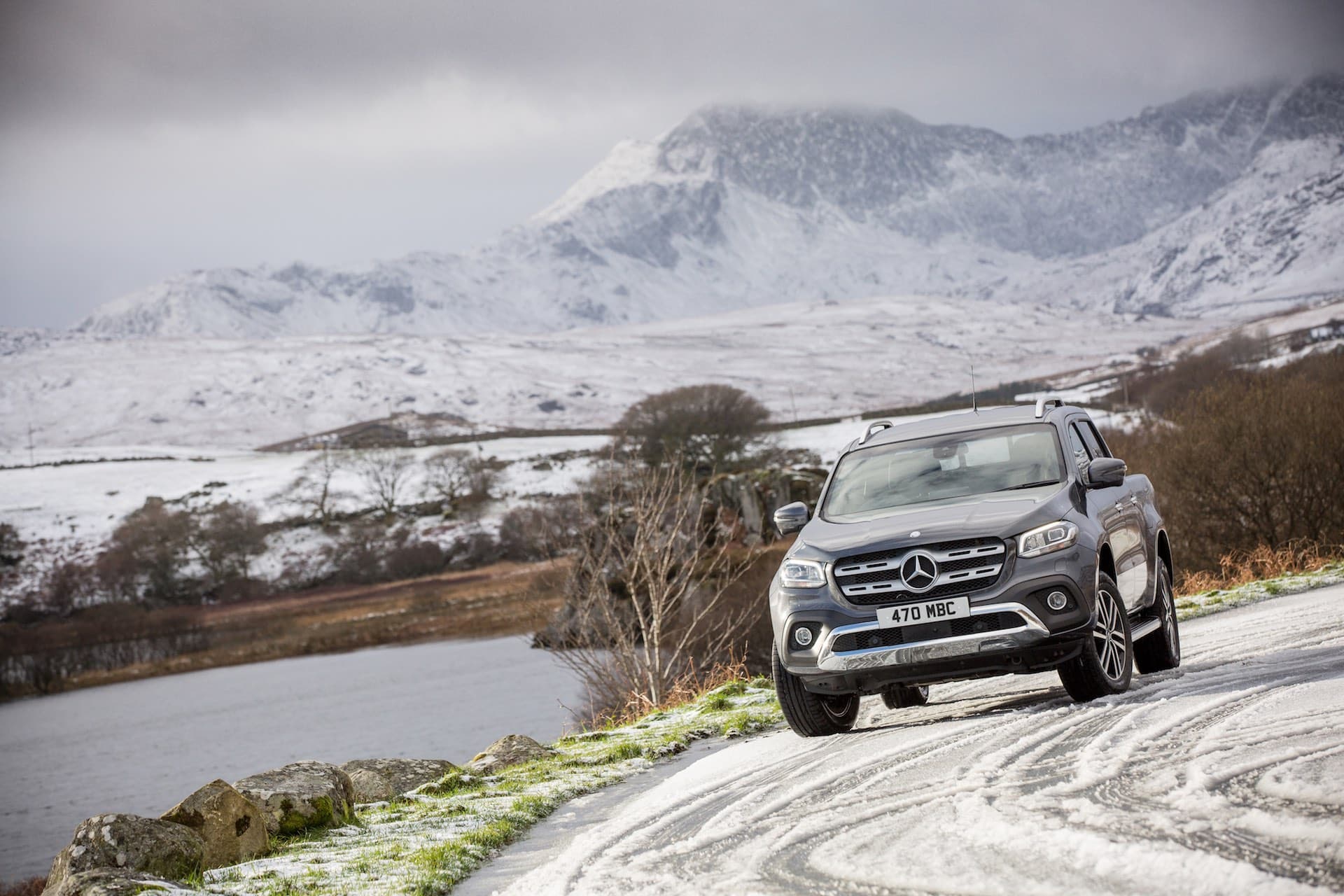
Mercedes-Benz will offer the X-Class with a three-way engine line-up, though the range-topping X 350 d with its 258hp and 550Nm of torque won’t be in showrooms until the middle of 2018. Currently, the choice is between the X 220 d, with a 2.3-litre turbo diesel engine of 163hp and 403Nm, and the X 250 d – this adds an extra turbo to the same powerplant, boosting horses to 190hp and torque to 450Nm.
Six-speed manual or seven-speed auto gearboxes are available depending on model, while unlike rivals there is no two-wheel-drive option – every X-Class comes with selectable 4WD, running with the rear wheels powered in normal use but including cockpit-selectable all-wheel-drive in both high and low range.
In fact, while this may be an upmarket pick-up, the makers are keen to emphasise it’s a proper pick-up, with the off-road ability one might expect and commercial users will require.
So the X-Class can wade through water up to 600mm deep, and it can tip sideways to a shade under 50 degrees. It also boasts a towing capacity of up to 3.5 tonnes, and can be supplied with a 221mm ground clearance which gives it an angle of approach of some 30 degrees and a 22-degree ramp angle.
Okay to get the big ground clearance (plus 20mm on standard) requires spending on the options list, but the capability to match more traditional pick-ups is certainly there. Also on that options list, for example, is a differential lock.
This target marketing is also evident in the trim levels. There are three; Pure, Progressive and Power, with the Pure costing from £27,310 (plus VAT) and aimed at commercial users. It includes steel wheels, black fabric upholstery and such like. Once one starts going up to Progressive or Power grades, less robust features such as alloy wheels, painted panels and silver trim come into play.
Progressive versions cost £1,200 (plus VAT) more than Pure variants, while Power is another £3,500 on top, and only offered with the more powerful 2.3-litre engine. Equipment includes LED headlamps, electric mirrors, electrically adjustable front seats, leather trim and controls on the steering wheel.
Being a Mercedes-Benz, the options list is extensive, and depending on the depth of the wallet one can specify everything from parking sensors and camera to heated seats and even heated windscreen washer jets.
Where the X-Class certainly scores is on its safety package. Euro NCAP has already tested the model and given it a top five-star rating, and the standard specification includes autonomous emergency braking, lane-keeping, traffic sign recognition and hill-start functions, as well as a reversing camera.

As mentioned the extent of the interior ‘ambience’ will depend on which level of X-Class one goes for, and not surprisingly our launch event test model is to top Power specification. But common to all is an elevated driving position which gives good vision except out of the rear, which has only a small window cut into the rear bulkhead of the passenger cabin.
Every X-Class is to double cab format, which means two rows of seats each with their own set of doors. The rear is usefully spacious too, with a bench seat offering enough width and height to easily accommodate three adults – the model benefits from being both longer and wider than the Nissan it is related to.
On the downside, there is not much space to store stuff, particularly considering pick-ups don’t come with boots. There is, of course, the load bed, which is 2.1 metres square.
The Mercedes is quite a lot more expensive that the Nissan, and a fair amount of this goes into providing the premium interior finish buyers of the three-pointed star badge expect. The surfaces are all soft touch and of high quality, as is the switchgear, and the layout is typical of the brand’s car output. There is some tough and scratchy plastic, but it’s down by the footwells where it’s most needed.
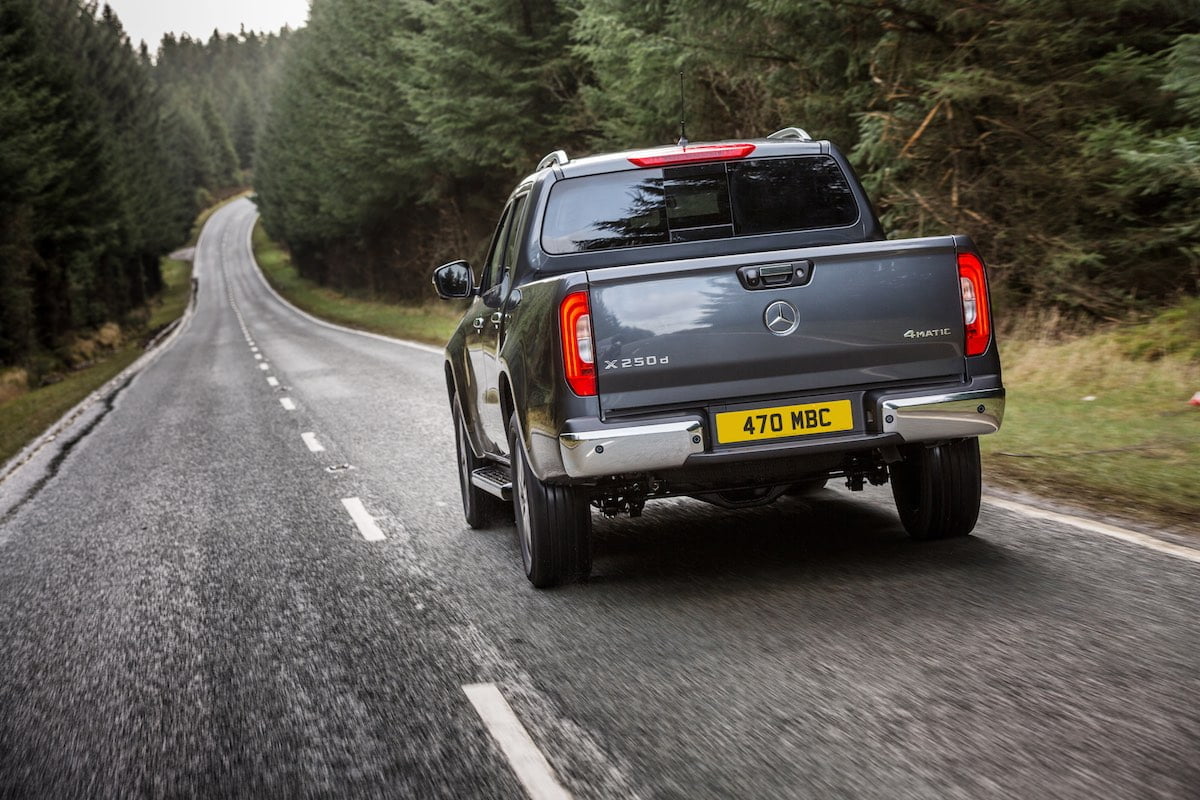
Does it feel like a pick-up to drive? Yes, but a very upmarket one. The powerplant is smooth in its power delivery and refined to boot. Motorway speeds are achieved with no fuss – rest to 60mph takes around 12 seconds. At such speeds the cabin is quiet to a degree that will impress those coming out of other pick-ups – especially the absence of wind noise.
The steering is well weighted, though the fact that this is a big, high-slung machine with a solid rear axle never lets one forget that one is driving a pick-up truck. There is a degree of hauling it through corners required and the effects of poor surfaces do find their way to the cabin.
At the end of the day, this is probably the most upmarket pick-up truck on the market, with a price to match. Successful business owners who like such vehicles could well be attracted to it, being able to drive a Mercedes-Benz while still claiming the tax benefits that comes with it being designated a commercial vehicle.
The Mercedes view that the best sales will be of the upper trim levels is probably pretty accurate. It’s difficult to imagine too many examples of the X-Class being used as workhorses on building sites, but bosses visiting those building sites, and the urban lifestyle crowd, will likely consider the desirability of a Mercedes to be worth paying the £6,000-odd price hike over an equivalent Nissan Navara.


What is it?
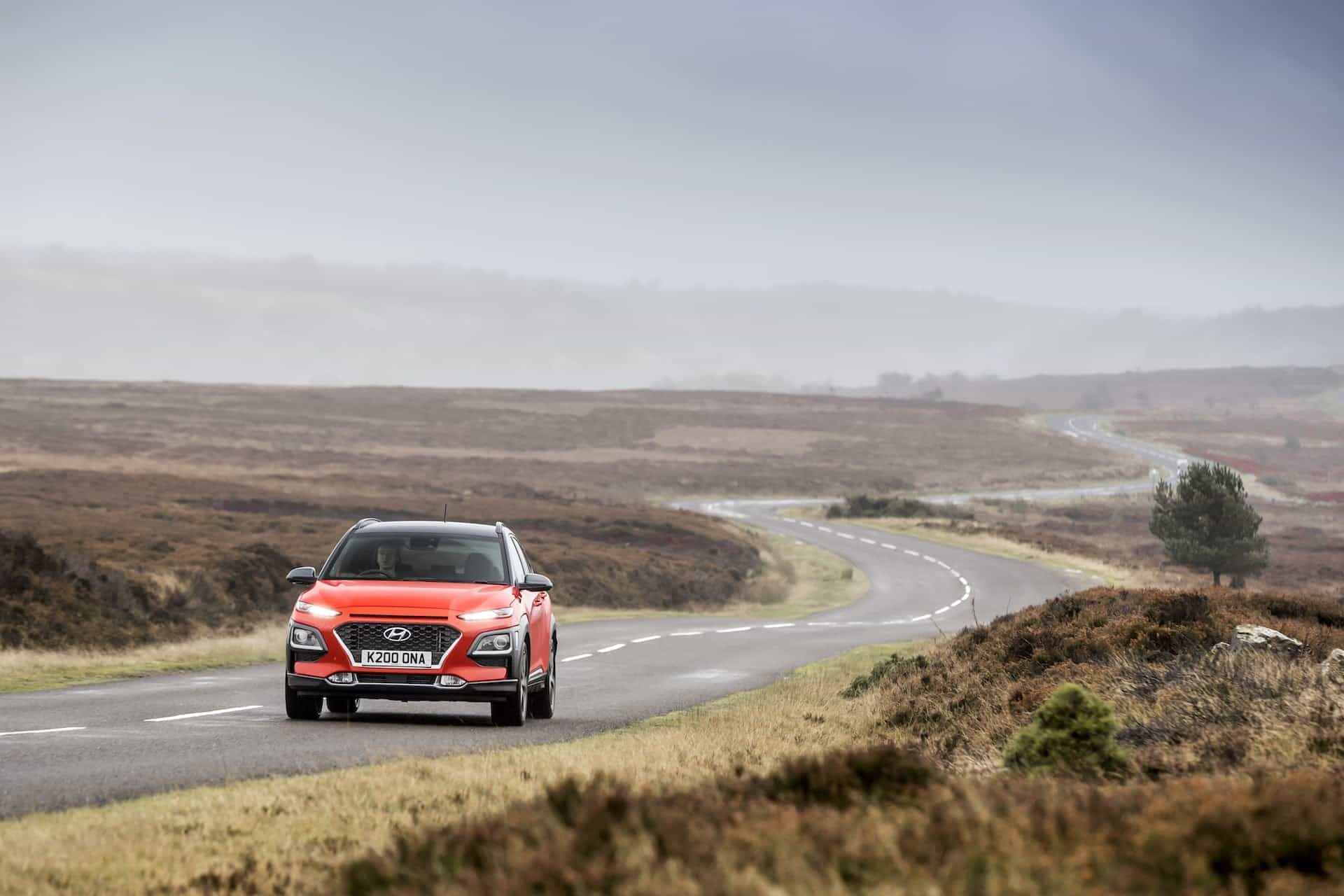
The Hyundai Kona is the brand’s first direct entry in the bulging small SUV market, and the most style-led design from the Korean brand yet.
Key features
Distinctive exterior design, all-wheel-drive option, planned electric power option.
Our view
The Hyundai Kona does enough to justify its place amongst the main contenders in the small SUV market but not enough to rise above them. Rivals can offer significantly more boot space and score slightly better in other areas, but the Kona does represent a good-value package with plenty of equipment and a warranty that beats most of its competitors.
Similar cars
Kia Stonic, Citroën C3 Aircross, Nissan Juke
For the car industry, 2017 has been all about small SUVs. Right at the end of the year, another is joining a crowded market in the form of the Hyundai Kona.
The Kona sits below the brand’s Tucson SUV and alongside the iX20 compact MPV, and with the buying public seemingly unable to get enough of these small sit-up-and-beg cars right now, this car is expected to become a major seller in the Hyundai line-up.
Problem is, the Hyundai Kona arrives in a market not only traditionally led by the mass-selling Nissan Juke, but bulging with new entries and with yet more on the way. So Hyundai’s recipe to stand out from the crowd appears to be visual presence – the Kona is the most style-focused model from the brand yet.
Extensive black cladding and bold angles on the exterior profile certainly provide the Kona with a distinctive look. Hyundai tells us that like the newly-launched and much-praised i30N performance hatch, the car is designed to appeal to a new section of the market, and move the brand up from those who simply buy cars for the most sensible reasons.
We reckon the Kona’s styling will prove somewhat marmite amongst the buying public, but then again, controversial looks have proven very successful for the Nissan Juke…
Among those many rivals will be the Stonic from sister brand Kia, launched only a few months ahead of the Kona. The two share their engines and much of their technology, but not, as many erroneously believe, their underpinnings. The Kona gets a new platform, which allows it to offer an all-wheel-drive option like few of its rivals, and from next year an all-electric model, like even fewer of its rivals…

The buyer rushing to snap up a Hyundai Kona at launch will have a simple range from which to choose. There are just two engines, both petrol and of either 1.0 or 1.6-litre capacity. A choice of 1.6 diesels will join the line-up in summer 2018, with the all-electric version to follow.
There are five trim levels – dubbed S, SE and Premium, plus SE and GT versions of the Premium grade. S models get the smallest alloy wheels, at 16 inches, though these do result in better mpg and emissions ratings. Notable standard equipment includes air conditioning, DAB digital radio with Bluetooth, LED daytime running lights, cruise control and electric mirrors and windows.
Biggest sellers are expected to be SE models, costing £1300 more than S. The wheels grow by an inch, while the major additional tech is a seven-inch centre console touchscreen. This allows Apple CarPlay and Android Auto smartphone integration, and also shows the image from the standard fit rear camera and parking sensors.
Style add-ons include roof rails and leather on the steering wheel. Typical of this market personalisation is a major part of the Konda DNA, extending to 10 different metallic body finishes and three contrasting shades for the roof and door mirror housings.
Premium models jump another £1,300 over SE. The wheels expand another inch, a host of extra styling details are added, while more pertinently the tech now includes a bigger touchscreen with satellite navigation, keyless entry and start, climate control, a more upmarket audio system and wireless phone charging.
Spend from £21,195 on a Premium SE and you will be enjoying such niceties at a head-up display, lots of electric tech and leather. Finally there is the range-topping GT, costing from £24,995 and only offered with the larger 1.6-litre engine, a double-clutch auto transmission and all-wheel-drive.
Other notables amongst the GT equipment are full LED headlamps and a digital driver’s display, while it is the only Kona to include the Safety Pack as standard, which effectively means autonomous emergency braking – a £235 option on other versions.
Safety is one area in which the Kona knocks its Kia Stonic sister aside. Both were analysed in the same series of crash tests by safety body Euro NCAP, and while the Stonic needed its optional safety pack to be taken into account to boost its three-star score to a top five-star rating, the Kona scored five stars in standard specification. And this was despite the fact that you generally pay extra for autonomous emergency braking on both cars.
On the other hand the Kona does, like all Hyundais, come with one of the better warranties on the market, extending to five years and with unlimited mileage.

The driver’s surroundings in a Hyundai Kona are roomy and easy to get comfortable in, with good all-round vision from the elevated seating position that comes with small SUVs.
The interior is not nearly so marmite, except that it is mostly black, with only the accents around such areas as the heating vents adding any contrast. They are finished in one of three colours – orange, lime or red, and these colours are replicated on the stitching of the seats and steering wheel. The personalisation options can also extend to seat belts in lime or red.
Most of the plastic is of reasonable quality, though it drops off the lower down the dashboard one’s eyes scan. However the touchscreen fitted to all but entry-level models is well sited and easy to use, while the switchgear also feels of good quality in use.
The Kona is not so impressive in the rear, and especially the boot. Rear-seat passengers have plentiful headroom but very little ahead of their knees, while the space-saver spare wheel fitted on all but entry-level models severely restricts boot space – while the Kona’s 361 litres is more than in the now somewhat dated Juke, it pales against some rivals – the Citroën C3 Aircross, for example – offering more than 500 litres.

The Car Expert spent a week in the company of the 1.0-litre 120hp petrol engine that is expected to power the majority of Konas sold. It’s a unit already familiar from the Kia Stonic, and impresses with both its pulling power and refinement.
This is especially true in the low-speed environment of the typical urban crawl. Combined with a slick-shifting six-speed manual gearbox (only the top 1.6-litre all-wheel-drive version of the car comes with the twin-clutch automatic transmission) it makes the Kona very easy to live with around town.
Out on the open road, the Kona continues to impress. The ride is slightly firm, but not to a degree that is uncomfortable. Uneven road surfaces are generally dialled out making for undramatic progress.
The lightness of steering touch through slow-speed corners translates to a more weighty but satisfactory effort at higher speeds. The Kona is not a car that has one eagerly awaiting twisty sequences of bends, but it is better than many in the class.
It will be interesting to try the diesels when they come on stream, especially combined with the all-wheel-drive transmission as these models boast a different rear suspension layout, replacing the standard torsion bar with a multi-link setup.
In terms of economy, the 1.0-litre engine proves adequate. It falls behind rivals in both economy and emissions, if not by much. But it is notable that the Stonic, which employs the same engine, will go at least a couple of miles further per gallon while pumping out a couple of grams less CO2, yet also beats the Kona to 62mph by more than two seconds.
Hyundai has done a credible job of creating a small SUV that offers a little distinction in an overcrowded market.
If you need plentiful rear-seat space and a big boot then this will not be the model for you. But if this is less important and you are looking for a solid car with pleasant driving manners, plenty of equipment and a dash of style, then the Hyundai Kona should certainly be on your list of potentials.

What is it?
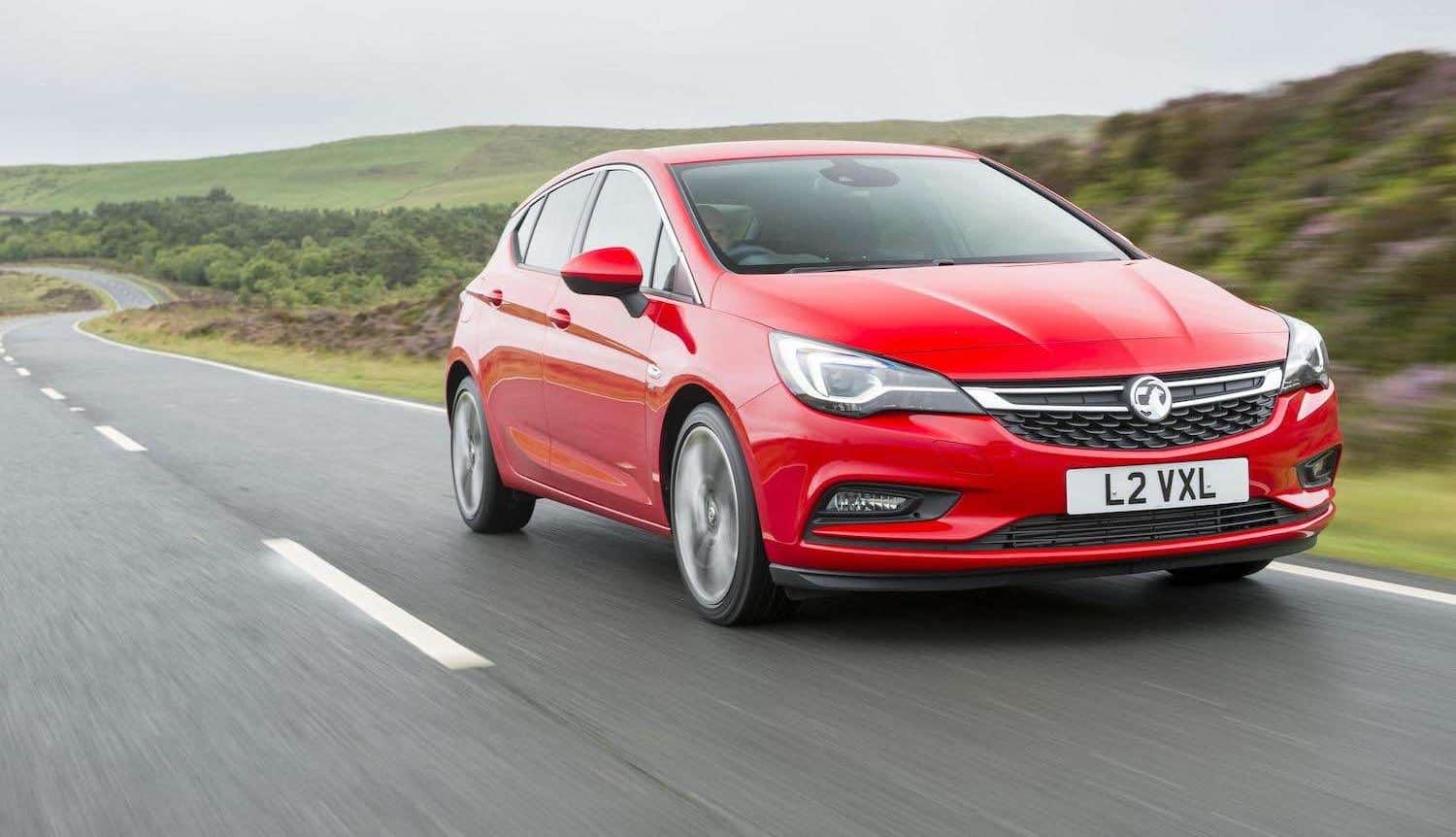
The Volkswagen T-Roc is a Golf-sized crossover and the most style-focused SUV yet from the brand.
Key features
Stylish design, personalisation options, 4WD available
Our view
The Volkswagen T-Roc is not the cheapest compact SUV for its overall size and specification, and it has some dodgy interior plastics, but these do not detract from what is overall a highly impressive package.
The car is stylish to look at both outside and in, has enough practicality to match its rivals and then, once on the road, leaves them in its wake. The powertrains are enthusiastic yet refined, the handling to a standard way above the norm in this market. As a result, those in the market for a compact SUV should definitely consider the T-Roc.
Similar cars
Toyota C-HR, Vauxhall Mokka X, SEAT Ateca
Fans of SUVs, who we are led to believe are increasingly becoming the majority of today’s car buyers, have never had it so good. The choice is bewildering, and being added to virtually every month.
Clearly indicative of this is the launch by Volkswagen of a new compact SUV, despite the fact it already has a model competing in the same market. However the Volkswagen T-Roc, arriving on UK roads early in 2018, is pitched as a very different car to its established sibling the Tiguan.
At 4.2m long, the T-Roc is some 25cm shorter than the Tiguan, but the differences run far deeper than that. This is the most style-focused SUV Volkswagen has yet made – it’s a proper example of the new breed of crossovers, expected to appeal to three times more private buyers than fleet ones. They will be drawn in by sharp styling and personalisation options such as two-tone exterior finishes with contrasting roofs.
Certainly viewed from the outside the T-Roc is one of the more attractive compact SUVs on the market, looking lower and more purposeful than many of its rivals, with a hint of coupé about it. In fact, in both size and style the car is much closer to the Volkswagen Golf hatch chassis it shares, and it is also effectively a VW version of the Audi Q2.
As such this new model effectively bridges the gap between traditional compact SUVs such as the Tiguan and the new breed of supermini crossovers such as the Kia Stonic, the Hyundai Kona and such like. But just to further muddy the waters, Volkswagen will in 2018 launch a smaller sister to the T-Roc and a proper supermini SUV, in the T-Cross – confused yet?

Volkswagen is phasing in the T-Roc, with initially only petrol versions available. There are three such engines on offer, a 1.0-litre with 115hp, a 1.5-litre 150hp and the range-topping 2.0-litre with 190hp.
The 1.0-litre comes with a six-speed manual gearbox, the 150 with either the manual or a seven-speed dual-clutch auto, and the 190 only with the auto. And one major plus that the T-Roc offers compared to many rivals is the feature one used to specifically buy SUVs to take advantage of – four-wheel-drive. It’s an option on 150 models, standard on the 190.
In the Spring of 2018, the diesels will join the range. There are two, a 1.6-litre with 115hp and the manual gearbox, and a 2.0-litre putting out 150hp. It can be specified in manual or auto form, and if desired with the 4WD on the manual variant.
While many don’t realise that 4WD is a safety feature, only around 10% of T-Roc buyers are expected to choose their car with it – this compares to a 50/50 split on the Tiguan and reflects the fact that as many as three quarters of T-Roc buyers will likely be private motorists buying the car firstly for its visual appearance.
Equally eight out of 10 sales are expected to be of petrol-powered cars, and the most popular trim level predicted to be SE, the second of currently four options (a fifth is due in 2018). However the specification of even entry-level S models is impressive, including electronic climate control; an infotainment system controlled by an eight-inch colour touch-screen, Bluetooth telephone and audio connection, DAB radio and 16-inch alloy wheels.
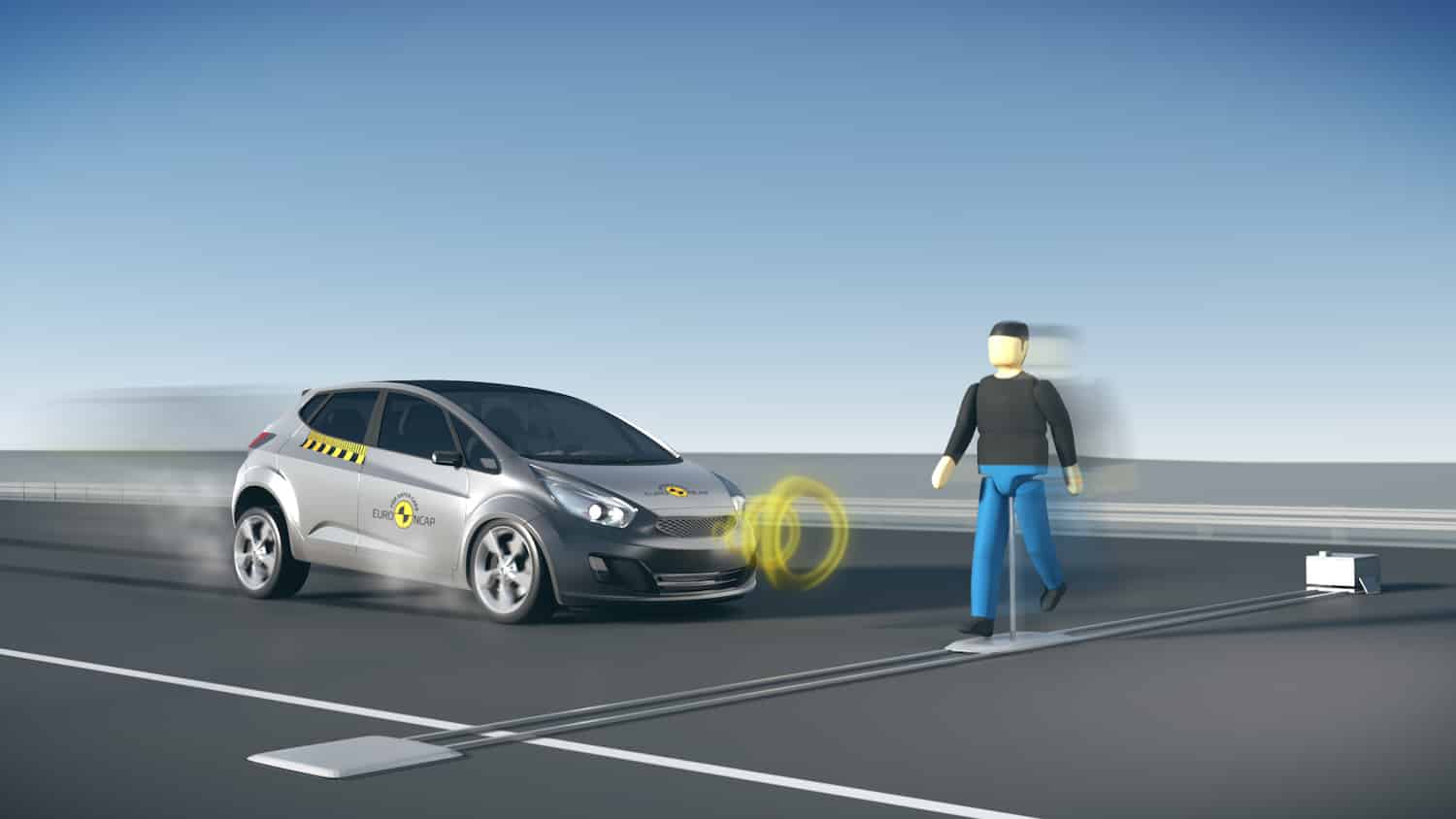
The T-Roc also scores well on safety. Euro NCAP has given it a top five-star rating, courtesy of such standard-fit features as autonomous emergency braking, lane-keeping systems and pedestrian alerts.

Volkswagen claims that the T-Roc is compact on the outside and spacious on the inside, with the best boot space than all its direct rivals – 445 litres extending to 1290 with the rear seats dropped. It’s a nice flat boot too, partly due to the fact that T-Rocs come with a choice of a space-saver or a proper spare wheel.
Certainly when one settles inside it feels comfortable, with adequate room up front, though those attempting to carry three adults in the rear will likely find their passengers feeling rather more cosy – especially in the middle seat. Except above their head, where space should be adequate for all but the tallest occupants, despite the high seating positions which give an elevated view outside and provide one of the major advantages the T-Roc offers over the Golf.
The dash layout is generally standard Volkswagen fare, but it is well laid out with the instrument display and the centre console touchscreen on the same axis. Depending on model choices on the options list can extend up to the digital Active Info Display version of the instrument panel, which for example includes the option to flick a button and have a navigation map stretching right across the panel instead of the speed and rev dials.
Personalisation options include four different finishes on the interior panels – the plastic on the door cards, dash panel and the edges of the gear console can be supplied trimmed in yellow, brown, orange or blue.
However, the general quality of the interior plastics on the T-Roc is slightly disappointing, hard, scratchy and a bit low rent compared to what we are used to from VW.

At the UK launch event, The Car Expert was able to try both the expected best-selling 1.0 petrol unit and its larger 1.5 stablemate. Of course, these are both proven units, though the 1.5 is also the most recently developed engine in the range. This is both plentiful with its performance and boasts the ability to shut down two of its four cylinders when not under load to improve efficiency.
However on the evidence of our test it’s only worth going for the more powerful option if you really feel you need the pace. The three-cylinder turbocharged 1.0 is a very efficient little unit, no less refined than its bigger sibling. And while 10.1 seconds to 62mph is not exactly rapid, it is not that slow either, and in the T-Roc feels swifter than a stopwatch might suggest.
The real revelation of the T-Roc, however, is in its chassis. We’ve tested a whole host of new SUVs over the past year as the market has exploded, and we have got used to describing dull, lifeless handling and indifferent ride quality – “no worse than rivals in the market” has almost become a catchphrase.
Not so the T-Roc – the driver enjoys a good view all round, with no significant blind spots, and their passengers a comfortable ride as the car smothers the bumps and potholes of a typical UK road surface. Note, however, that the 17-inch wheels on our 1.0-litre test car were more efficient in this respect than the 18-inch equivalents with their lower-profile tyres on the 1.5 version.
Ride comfort does not come at the expense of handling prowess, and it is here where the T-Roc excels. It turns in precisely, stays upright under cornering load, and displays impressive levels of grip. This is the best-handling SUV in its market, a much more enjoyable driving proposition than all its rivals.
The Volkswagen T-Roc is not the cheapest compact SUV for its overall size and specification, though it compares well with some of its rivals and it comes with some not VW-like elements such as the dodgy interior plastics.
However, the car also offers another not very VW-like trait in that style and on-the-road dynamics are given as much importance as practicality. The car looks good without sacrificing interior space, and on the road it proves a revelation – the powertrains are enthusiastic yet refined, the handling to a standard way above the norm in this market.
On that basis, it’s easy to agree with Volkswagen’s prediction that the T-Roc will become one of the brand’s best-selling models. Overall, it’s an impressive package.




| Model | Scrappage allowance |
| Aygo | £2,000 |
| Yaris | £2,500 |
| Auris | £3,500 |
| Verso | £3,500 |
| RAV4 | £3,500 |
| C-HR | £1,000 |
| Avensis | £3,500 |
| Prius | £2,000 |
| GT86 | £2,000 |
| Land Cruiser | £4,000 |
| Hilux | £2,000 |
| Proace | £2,000 |

| Model | Scrappage allowance |
| up! | £1,800 |
| e-up!* | £3,300 |
| Polo | £2,000 |
| Golf (hatch, SV, estate) | £4,000 |
| e-Golf* | £4,000 |
| Touran | £4,000 |
| Tiguan | £4,000 |
| Beetle | £4,000 |
| Jetta | £4,000 |
| Passat (saloon, estate) | £5,000 |
| Passat GTE* | £6,000 |
| Arteon | £5,000 |
| Sharan | £6,000 |
If you’re considering buying a new or used diesel-engined car then you could be forgiven for thinking that you’ll be ostracised by all right-thinking people for such a reckless anti-environmental choice.
You might also be a little confused over the government’s stance on diesel; having encouraged its usage for many years for its fuel efficiency and low carbon dioxide (CO2) emissions, it performed a dramatic U-turn in the 2017 Autumn Budget by raising its benefit-in-kind taxation for company car drivers and increasing the Vehicle Excise Duty (VED), or road tax, charge.
On top of this, there’s been plenty of misinformation trotted out in some quarters of the popular media about diesel that has tarred the latest generation of more efficient and cleaner diesel engines with the same brush as older and less refined units.
As a car buyer, you will want to choose the best fuel type for your personal requirements as well as the environment. And with this in mind, The Car Expert has dug deep into the diesel debate to assess the pros and cons of the fuel to help you with your car purchase decision making.
Diesel’s bad press can be traced back to 2015 with Dieselgate, when it emerged that millions of diesel-engined vehicles sold by Volkswagen Group brands were equipped with software programmed to give false nitrogen oxide (NOx) readings when subjected to emission tests.
The scale of the scandal cannot be overstated as it resulted in around 11 million vehicles being recalled around the world for rectification work across VW’s car and van brands, as well as Audi, Skoda and SEAT.
The whiff of the scandal has been present ever since, with the popular view that diesel engines are worse polluters than their petrol counterparts. To set the record straight, diesel engines produce lower carbon dioxide (CO2) levels than comparably-sized petrol engines but higher NOx, or particulate/soot, emissions.
However, the latest generation Euro-6 engines, which have been available on new cars since September 2015 have delivered significantly reduced levels of both CO2 and NOx – diesel has cleaned up its act.
The Autumn Budget clarified the government’s position on diesel; it doesn’t like the fuel and is now actively legislating against its usage. However, don’t panic! The changes were small and could have been much, much worse.
While the rights and wrongs of the government’s approach, after years of encouraging drivers to buy diesel-engined cars, can be argued at length, what is certain is that it will not allow itself to be seen to promote the use of the fuel by choosing to legislate against it.
From 6 April 2018, all company car drivers running diesels will see the long-standing 3% benefit-in-kind supplement raised to 4%; a move that will penalise individuals for choosing diesel for its fuel efficiency and therefore make it less attractive amongst some user-choosers; even though for high mileage drivers it is the only option.
An even more overt message was the penalising of new generation Euro-6 engines which were rounded on for not complying with the Real Driving Emissions Step 2 (RDE2) standards, even though they don’t currently exist and will not be mandatory on new cars until 2021.
This was a particularly bizarre move, worthy of Kafka, but by moving all diesels that do not comply with RDE2 (and that is currently all diesels) into a higher VED band from April 2018, the government has made a statement of intent; it might only equate to an extra £20 in the first year of registration but can be seen as an indicator of how diesel will be treated in the future.
Further down the line, the government has pledged to outlaw the sale of all new purely diesel or petrol cars from 2040.
No. Some UK cities are looking at ways of improving air quality in the major conurbations and are considering the introduction of a toxin charge on older vehicles. London is currently leading the way with the £10 daily T-charge, which is paid in addition to the Congestion Charge.
The London scheme was introduced in October 2017 for diesel and petrol-engined vehicles powered by pre-Euro-4 engines, so that’s all cars registered before January 2005. Additionally, there have been reports that Mayor Sadiq Khan is considering a £12.50 daily levy on all diesels entering Greater London from 2019; a move that would penalise hundreds of thousands of families who have bought diesel-engined cars in good faith.
This is the million dollar question and clearly an important consideration if you’re about to commit to a new or used car purchase.
What we do know is that new diesel sales are significantly down year-on-year, but there’s no shortage of used models coming into the market following several successive years of market growth.
The advance intelligence from Auto Trader, the UK’s biggest marketplace for used car sales, is that advertised prices are holding up. Despite average values falling £143 month-on-month in November 2017, year-on-year used prices were up 3% according to its Retail Price Index.
Diesel also remains the most searched-for fuel type amongst new and used car buyers, accounting for 55% of all searches on the Auto Trader website in November 2017.
Commenting on the findings, Karolina Edwards-Smajda, Auto Trader’s retailer and consumer product director, said: “The negative rhetoric surrounding diesel, which has been fuelled by the government’s recent announcements, is undoubtedly contributing to the decline in new and used car sales and has impacted used car prices in November.
“Although used diesels have been showing much greater resilience, with their value continuing to increase year-on-year, as well as remaining the most searched-for fuel type on our marketplace, our Retail Price Index does show a small month-on-month decline for the first time in eight months. It’s too early to tell whether this is an emerging trend or not, so we will continue to monitor prices closely.”
Before considering the alternatives you need to weigh up exactly what you need the car for. The absolute prerequisite for choosing diesel is if you expect to do annual mileages of at least 10,000 miles.
Diesels are unsuited for short hop work because they need long distances to return anything near their claimed combined consumption figures and also to generate sufficient energy to burn off soot in their diesel particulate filters (DPF). A common cause of diesel car failures is blockages to their DPFs, requiring costly repair work.
Petrol is the most obvious alternative to diesel, with carmakers now delivering some outstanding downsized engines offering lower emissions, more horsepower and diesel-rivalling fuel economy.
Electric plug-ins are only suited to relatively short hop usage and require somewhere at home where you can easily recharge overnight. Recent years have seen improvements in ranges with the Nissan Leaf achieving a claimed 235 miles and the Renault Zoe 250 miles. However, these are optimal figures achieved in laboratory conditions. Real world stop-start driving can severely reduce these ranges especially once the heating or air-conditioning are switched on.
The best compromises are any number of petrol or diesel hybrids, from the Toyota Prius to the Mercedes-Benz C 300h, which remove the issue of range anxiety and deliver some outstanding fuel economy. It’s also worth looking at plug-in hybrids (PHEV) such as the Mitsubishi Outlander or Kia Optima, which are low-emission hybrids boosted with batteries that can be recharged from the mains to deliver pure electric power.
If it’s a new car and your annual mileage covers a lot of long journeys, then yes. It will be fitted with the latest Euro-6 type engine and will be high on fuel economy and low on emissions. If you are buying used then factor in that models registered before September 2015 may have older generation Euro-5 engines which, at some stage in the future, are likely to be the next to be scrutinised by the government and local authorities.



Automotive Website of the Year


Automotive Website of the Year
Automotive Website of the Year