Vauxhall has new French owners – PSA Group has announced that the purchase of the British brand and its German Opel sister has now been completed.
The acquisition from US giant General Motors will make PSA Group, which owns Peugeot, Citroën and DS Automobiles, the second biggest car maker in Europe after Volkswagen Group. PSA now has around 17% of the market.
PSA insists that under its leadership – which ends 88 years of Vauxhall-Opel ownership by GM – the two manufacturers will retain their identities and be operated as ‘iconic German and British brands.’ “We are witnessing the birth of a true European champion today,” commented PSA chairman Carlos Tavares.
“We will assist Opel and Vauxhall’s return to profitability and aim to set new industry benchmarks together – we will unleash the power of these iconic brands and the huge potential of its existing talents,” Tavares adds. “Opel will remain German, Vauxhall will remain British – they are the perfect fit to our existing portfolio of French brands Peugeot, Citroën and DS Automobiles.”
Performance plan
PSA now intends to produce a ‘performance plan’ for the two brands within 100 days, the aim being to return them to profitability of 2% by 2020 and 6% by 2026. However the future of Vauxhall’s UK plants at Ellesmere Port, which builds the Astra, and Luton, producing the Vivaro van, could remain uncertain for some time.
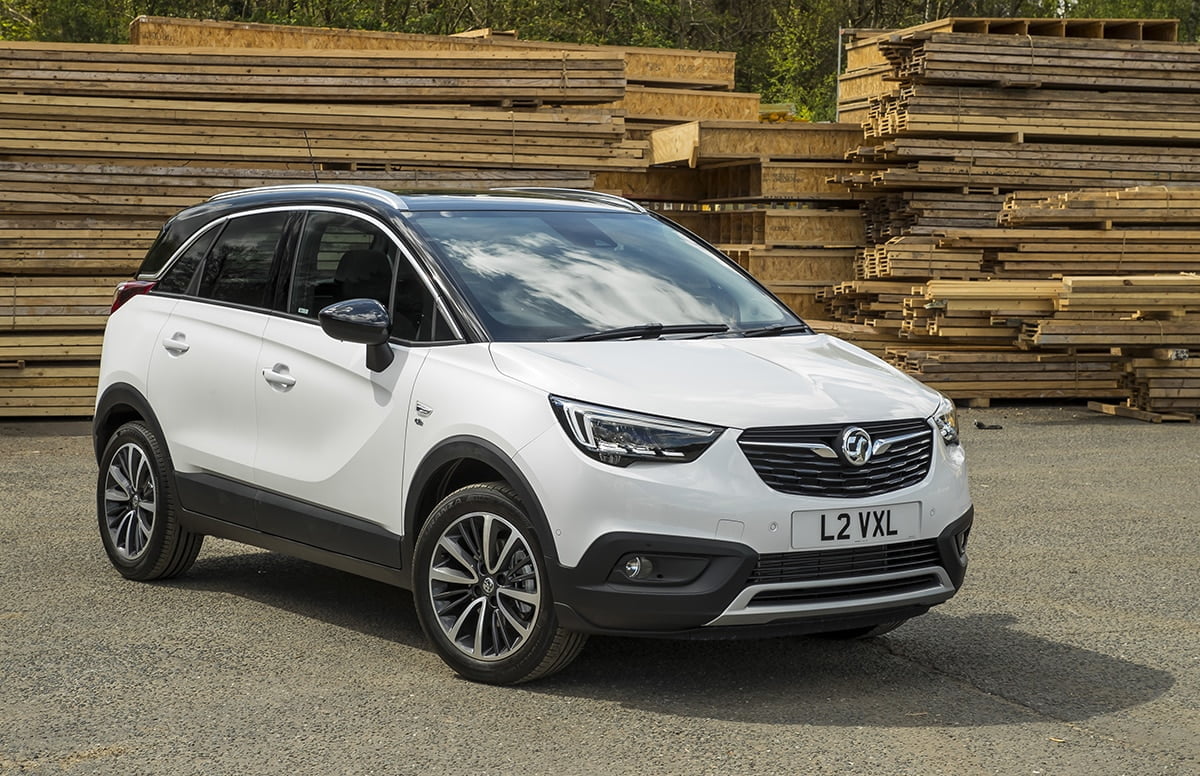
Part of the future plans will no doubt involve model sharing which has been going on between PSA and Vauxhall-Opel since 2012. The Vauxhall/Opel Crossland X and Grandland X both share platforms and are built with Peugeot’s 2008/3008 range, while the next Corsa, due to 2019 will also be a joint product. The makeup of light-commercial vehicles are also shared with PSA.
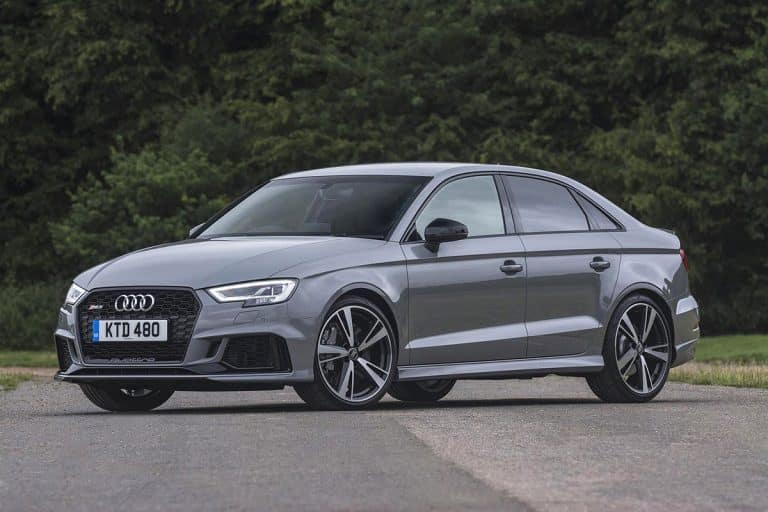
Dealers are now taking orders for the new Audi RS 3, a model which claims the title of the first 400hp car in its class.
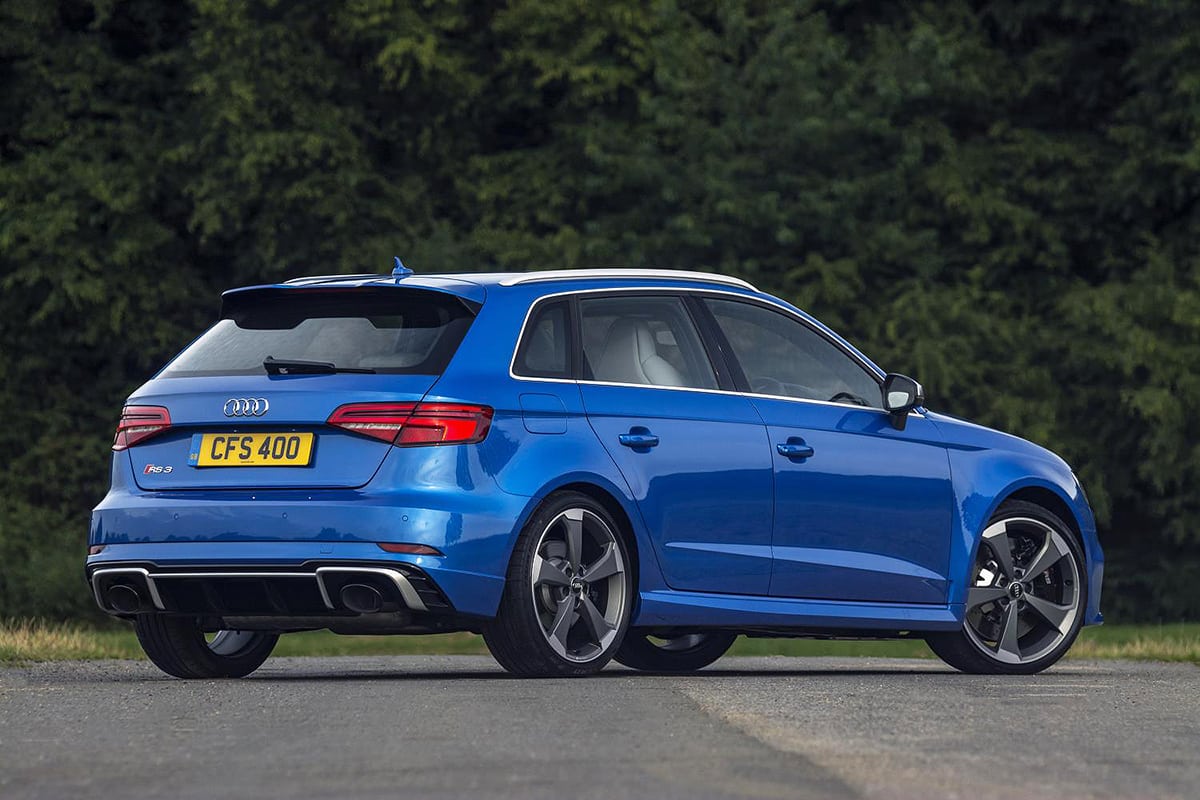
The new RS 3 is available in both Sportback five-door hatch form and for the first time as a saloon. It will cost from £44,300 for the hatch and £45,250 for the saloon, with first cars expected on UK roads in September.
Propelling the two models is a new five-cylinder 2.5-litre turbo petrol engine, the most potent ever offered in a series production Audi and with its aluminium construction 26kg lighter than its predecessor. Torque figure is 480Nm, on offer from 1700 to 5850rpm which translates to a 0-62mph time of 4.1 seconds and an electronically-limited maximum speed of 155mph – this can be extended to 174mph.
The engine is matched to a seven-speed dual-clutch automatic transmission and quattro all-wheel drive, while also standard is the Audi drive select system with its Comfort, Dynamic, Auto and Individual modes. This can be used to adjust the shift points of the transmission, and the proportion of torque directed rearwards, as well as the progressive steering, engine management and adjustable exhaust flaps.
Bespoke wheels
Other changes compared to a standard Audi A3 include a front track extended by 20mm with mildly flared wheel arches, and a 14mm extension at the rear. The car sits on 19-inch five-spoke alloy wheels with ‘rotor’ or ‘blade’ designs specific to the Sportback and Saloon.
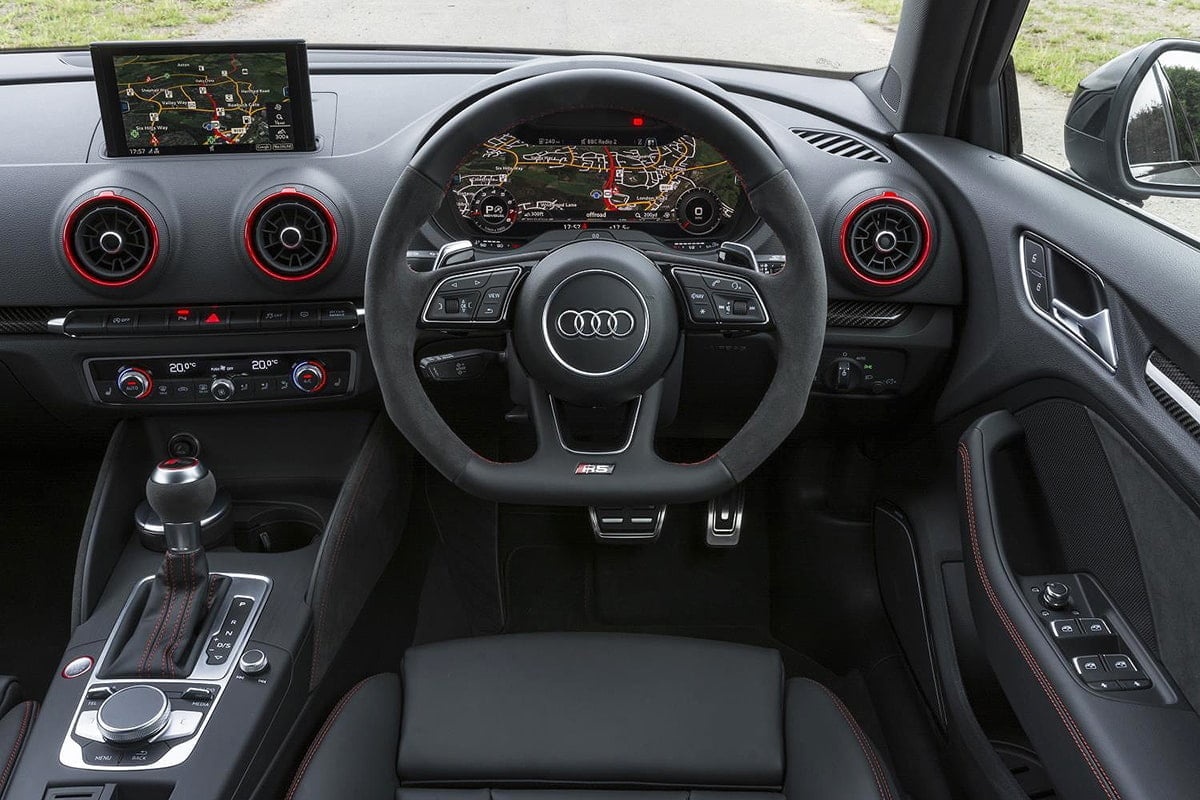
Visually the RS 3 gains a bespoke single frame grille with matt aluminium surround, deep side skirts and a rear roof-edge spoiler with high gloss black inserts on the Sportback, or an integrated bootlid lip version in body colour in the Saloon. Interior highlights include heated, RS-embossed and contrast-stitched front sport seats finished in black Fine Nappa leather and a leather and Alcantara flat-bottomed RS sport steering wheel. Stainless steel pedals, titanium grey ‘optic 3D design’ inlays and extensive use of aluminium trim elements also feature.
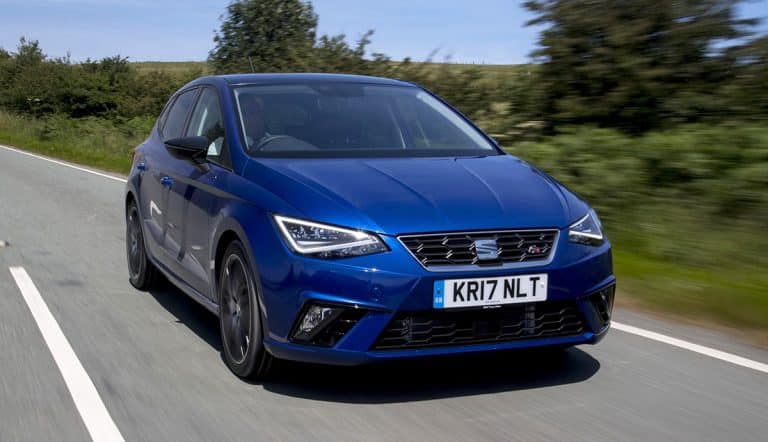
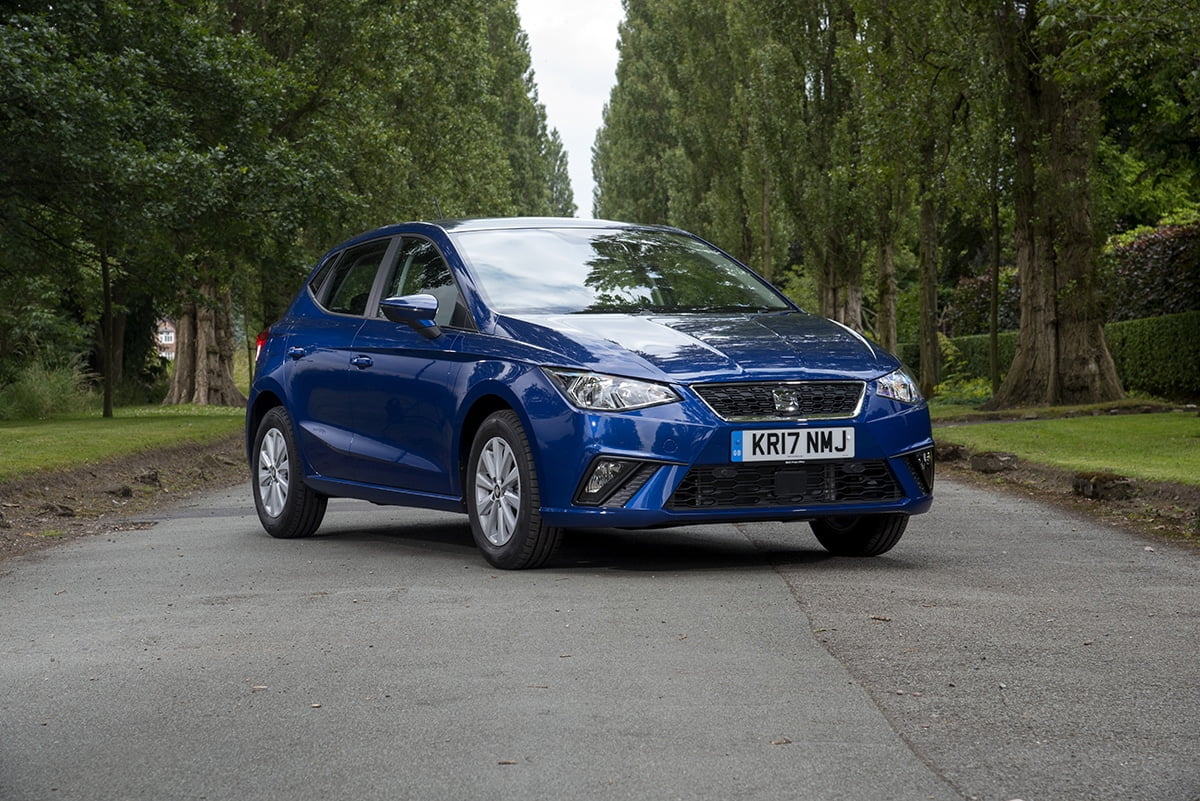
The SEAT Ibiza is a model crucial to the Spanish brand’s fortunes. The Ibiza forms one of the three ‘brand pillars’, the others being the larger Leon and the new Ateca SUV, and these in recent times have enabled SEAT to emerge from far too long a period as ‘Volkswagen’s problem child’.
Today SEAT is on the up – as the fifth-generation Ibiza launches the brand is seeing UK sales 20% ahead of 2016, and Britain is now firmly established as SEAT’s third-biggest market after Spain and Germany.
There is one more reason why those creating the new Ibiza cannot afford to get it wrong – the car’s main rival is Britain’s biggest seller of all, the Ford Fiesta…
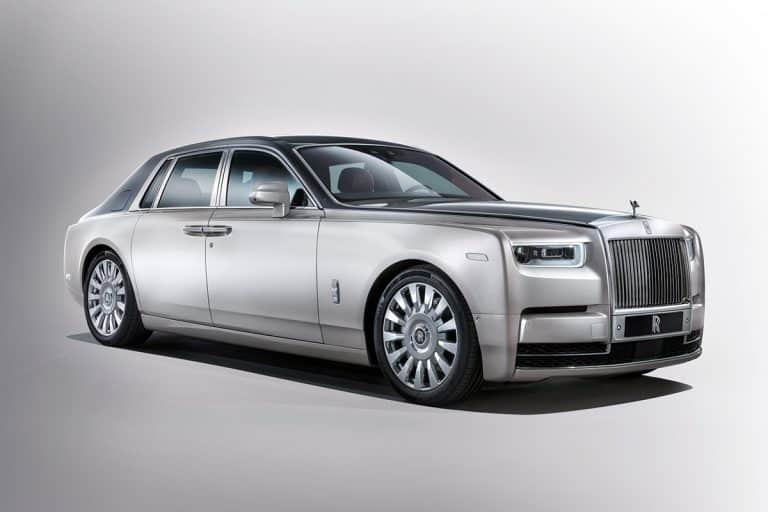
The new Rolls-Royce Phantom has been unveiled at an event in London – the second generation of the car that began the renaissance of the Rolls-Royce brand under the ownership of BMW in 2003.
Rolls-Royce describes the new Phantom as the most technologically advanced car it has ever produced. It is the first of a family to be built on a new all-aluminium platform dubbed the ‘Architecture of Luxury”, and will be followed in 2019 by the brand’s first SUV, currently named Project Cullinan.
The new, lighter architecture produces a car slightly shorter than its predecessor with a 19mm shorter wheelbase, but 30% stiffer, with resultant improvements to ride comfort. This will be further aided by electronic chassis control systems and self-levelling air suspension, using a stereo camera system integrated into the windscreen to see the road ahead and adjust the chassis ahead of road indentations.
The suspension is new too, a combination of a double-wishbone front and five-link rear axle, while four-wheel steering is added to the menu, all focused on passenger comfort to produce the latest evolution of what Rolls-Royce describes as its ‘magic carpet’ ride.
First turbo engine
Power for the Phantom comes from a newly-created engine, which is still a V12 configuration but turbocharged for the first time. The 6.75-litre unit boasts twin turbos and offers 582hp along with 900Nm of torque from just 1700rpm, likely to produce a 5.3-second 0-62mph time. Matched to a satellite-aided eight-speed transmission the powertrain is said to help produce what its creators describe as “the most silent motor car in the world.”
The new Phantom is expected on sale in 2018 at prices yet to be revealed. Industry sources suggest they will start from around £400,000, while a version with a 200mm longer wheelbase will also be offered.
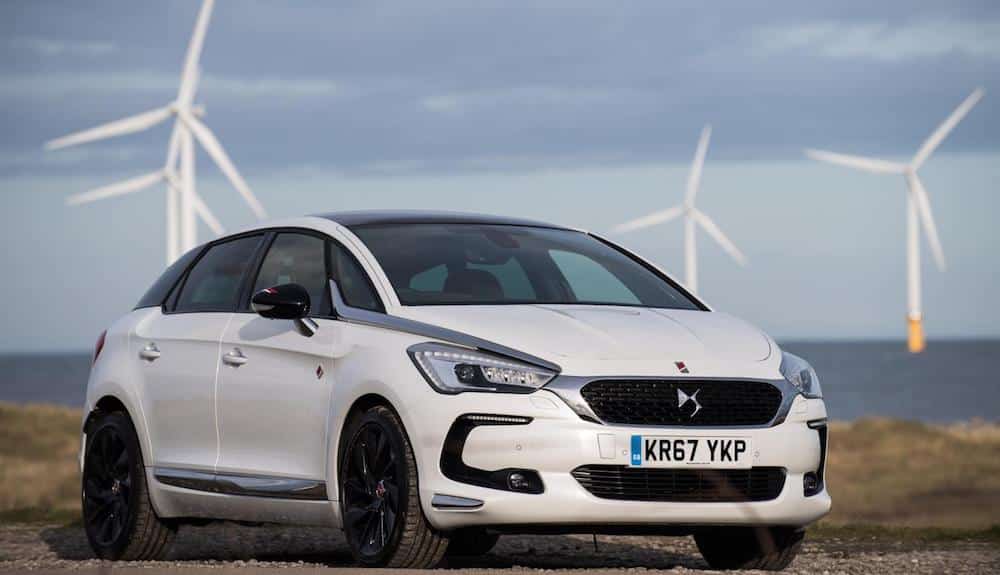
DS Automobiles has announced a range of finance offers to try and boost its third-quarter sales, with a range of deposit contributions available on PCP deals for new DS 3, DS 4 and DS 5 models.
The company will be hoping to pull more punters into showrooms after a disappointing first half of the year, with sales down 45% on the first half of 2016.
The PCP offers are all based on a 4.9% representative APR, which is decent but not outstanding in the current car finance market. All offers also require a minimum 15% deposit from the customer.
DS 3 models have deposit contributions ranging from £1,000 for Connected Chic specifications up to £3,500 for DS 3 Elegance models. DS 3 Performance models do not get any deposit contribution (although you’ll probably get a few hundred quid if you ask for it).
DS 4 and DS 4 Crossback models are available with a £2,800 deposit contribution, including limited-edition models like the DS 4 Crossback Terre Rouge and the DS 4 Crossback Moondust.
DS 5 models get a £2,950 deposit contribution and also require a minimum 20% deposit from the customer.
The Car Expert says… always check the fine print on finance offers
DS Automobiles refers to a personal contract purchase as “Elect 3”. Confusingly, its leasing agreements are called “Elect 4” and the DS website homepage prioritises the leasing offers rather than the PCP finance offers.
The deals are advertised with an APR of 4.9% representative, with a fixed interest rate that is also 4.9%. That means that there should be no fees anywhere on the finance agreement (apart from excess mileage fees).
The offers set out on the DS website are only examples, and you are entitled to adjust the term, deposit and annual mileage to suit your own needs. The annual mileage used in all of the examples provided is only 6,000 – which is lower than most people drive in a year, so bear that in mind. Some of the examples do not actually show the annual mileage, which is very naughty and is a breach of FCA standards. You have to go into the terms and conditions page to find the mileage, rather than having it displayed as part of the offer.
Excess mileage fees are not advertised but are likely to be about 10p/mile. That’s £100 for every 1,000 miles you go over your limit, so make sure you allow yourself enough mileage when setting up your finance agreement.
The finance deal only applies to new cars, which does not include dealer demonstrators or pre-registered cars.
Cars have to be sold and delivered by 30 September 2017. That means you can get one now with a 17-plate, or wait until September and get one with the new 67-plates that start from 1 September. If you are planning to keep the car for three years or less, you may be better off waiting for the 67-plates, as it may be worth more at the end of the agreement.
The finance offers are provided through DS Automobiles dealers by PSA Finance UK. If a dealer offers you a finance deal that does not match these details or from another lender, it is not part of this offer.
As with any car purchase, work out your budget before you visit the showroom and don’t be persuaded to go beyond it – regardless of what the smiling sales executive suggests. They don’t have your best interests at heart, but The Car Expert does!
Read more DS news, reviews and features at The Car Expert
UK motorists are finding it easier to understand the benefits of electric cars than they are modern, clean diesel engines, according to Volvo UK’s managing director.
Speaking to The Car Expert at the recent launch of the new Volvo XC60, Jon Wakefield said that there is now a growing real understanding of what electrification of cars can provide. “That education is coming from all sorts of areas, not just the just the automotive industry,” he said. “It always helps to give people the facts, so they can make their own minds up.”
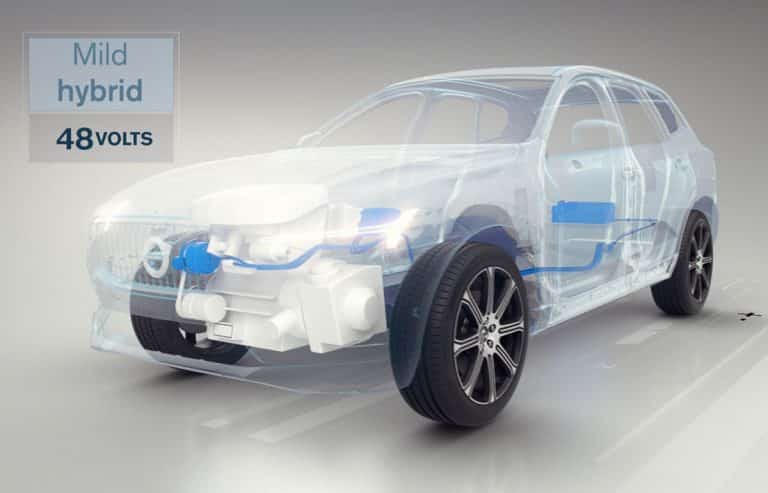
Volvo has recently committed to all of its new cars sold after 2019 having some form of electric motor. These will include hybrids – these combine petrol or diesel engines with electric motors and are now significantly growing in popularity. Toyota recently reported what it described as an “unprecedented” 30% surge in hybrid sales.
Meanwhile, there is a growing backlash against diesel engines in the market, but according to Wakefield the ‘black smoke image’ of diesels being generated by some media is not taking account of the latest engine technology such as in Volvo’s Drive-e range.
“The diesel sector is more riddled with misunderstanding than electrification,” he said. “In the smaller segments there is definitely a switch from diesel towards petrol engines, but in larger cars diesel is still holding its own.”
Volvo has already committed to an electric future.
He adds that the education of the buying public is key to the future of diesel, and points to anecdotal information from dealers that suggests that the market for large diesel cars in London – focus of much of the air quality publicity – appears to be strengthening. “People in London have realised there is a diesel issue, but they have then read the facts and realised that our diesel engines are very clean and very efficient,” Wakefield said.
However, he does not see any increasing backlash against diesel engines as a future issue for Volvo. “We have diesel engines, we have petrol engines, and we will be electrifying. If the market moves away from diesel we are well equipped to go with it.”
The UK government has announced that it will ban the sale of new petrol and diesel cars from 2040. Inevitably, the mainstream media launched itself into a frenzy even before the details were announced, and the usual confusion and Twitter ranting have ensued.
At 22 years into the future, this ban may seem like a long way away, but it will take a lot of work to actually make it happen. Not just for the car industry, but for the required infrastructure to charge millions of electric cars.
To achieve a 100% switch of new cars and vans from petrol or diesel engines to “electrified” motors (which includes hybrids) will be a major challenge, but certainly achievable. Today, fully-electric cars only make up about 1% of all new car sales in the UK, with hybrids making up another 3%. The remaining 96% run on either petrol or diesel.
To hit the 2040 target, electric vehicle sales will have to start replacing fossil-fuel vehicles at a rate of more than 150,000 cars per year. Given that these numbers will include hybrids, this is not unreasonable over a 20-year period.
Most car manufacturers have already been working on developing electrified powertrains for all their cars for several years now. This week’s announcement simply gives them a target date for implementation. Despite any public protestations, they will welcome a formal deadline.
In fact, the UK is far from a world leader in this regard. France recently announced a similar 2040 target date, Germany and India are ten years ahead of that with a target of 2030, and Norway and the Netherlands plan to stop selling petrol and diesel cars in 2025, just over seven years away. The real powerhouse behind the electric car revolution is China. Despite not setting a date for banning petrol and diesel cars, China is leading the push towards electric cars because it has so many massive cities with major pollution problems.
Electrified does not mean purely electric
The inclusion of hybrid vehicles along with purely-electric cars is critical for this plan to work. It also means that pollution levels will not fall as rapidly as with purely electric vehicles.
Realistically, most hybrid cars spend the first few minutes of a journey as an electric car and the remainder as a petrol car lugging a large dead battery and useless electric motor around. This will still be allowed under the 2040 proposal.
Plug-in hybrids spend more time operating electrically (therefore more time dragging a large petrol engine, emissions system and fuel tank around) before switching to petrol mode, while range extender vehicles use a petrol engine as a generator to power an electric motor whose battery has gone flat.
So it’s clear that petrol power will still have a role in new cars after 2040, albeit a smaller one than today. Diesel is a different story, however. For several reasons, diesel engines are generally not as good in hybrid scenarios, which is why there are very few diesel hybrid cars for sale compared to petrol hybrids.
Today’s announcement is only going to accelerate the decline of diesel-powered passenger cars in the UK. That will be of concern to the car industry, but it’s probably only bringing forward the inevitable.
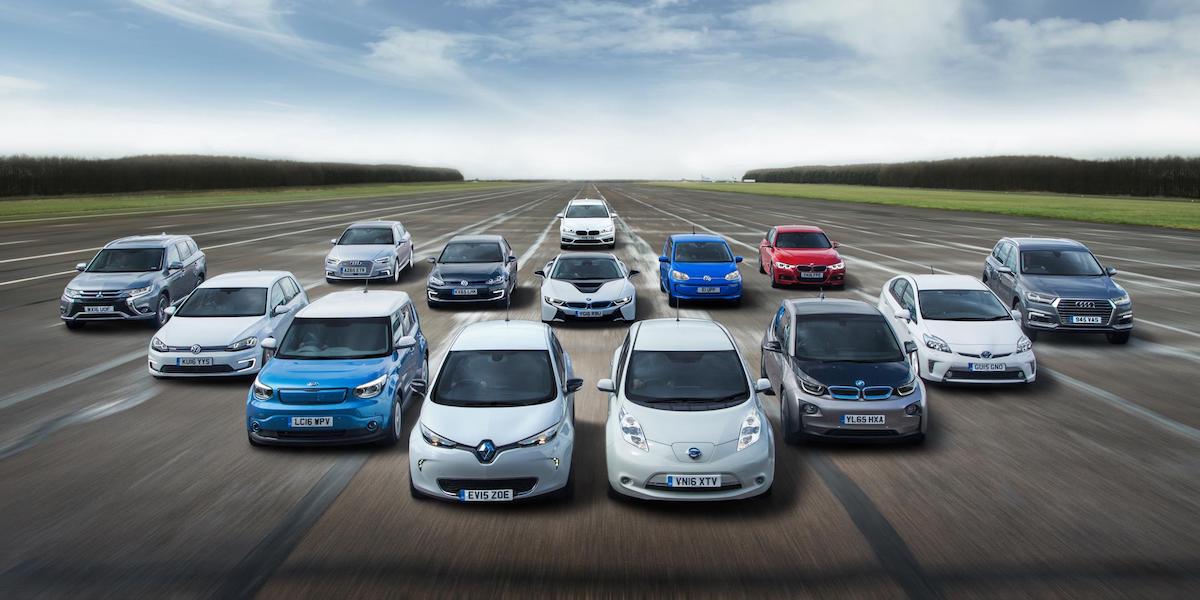
A selection of electric and plug-in hybrid cars now on sale in the UK
How to get consumers to buy electric cars – carrots and sticks
Currently, new electric, plug-in hybrid and range extender cars benefit from a government grant of up to £4,500 to make them more affordable. There are also various support mechanisms for electric car owners to install upgraded charging units at home or work. These incentives will need to be maintained or increased to help get sales up to the levels required.
Other enticements, such as EV-only parking spaces or motorway lanes, will probably be needed as well. Of course, these will benefit buyers of used EVs as well as new cars.
The inevitable flipside of this sort of ambition will be a steady increase in penalties for petrol and diesel vehicles over the next two decades.
There are numerous methods available to do this, but the most likely short-term candidates will be increasing road tax (vehicle excise duty, or VED) charges for new petrol or diesel cars. Fuel duties will also start to increase, although this obviously hits used car buyers as much as new car buyers and is always unpopular with voters.
After that, congestion or pollution charges to enter cities will appear. London will be the first UK city to introduce this in 2019, and others like Manchester and Birmingham will follow eventually.
Then there will be increased charges for parking permits, tunnel and bridge tolls, taxes for disposing of waste oils, and so on. The only limits will be the imaginations of the bureaucrats. Again, these will hit owners of existing cars as well as used car buyers, not just new car buyers.
However, there is another tax problem that will inevitably arise. Motorists have been a favoured cash cow for governments for many decades, usually from tax added onto the price of fuel. But with far less petrol and diesel being sold, far less tax will be raised. Expect creative new ways to tax electric vehicles once there are enough of them on the roads to bring in significant tax revenue.
As the marketplace shifts towards electrified vehicles, the resale value of petrol and diesel cars will start to sink. This is likely to accelerate over the next decade as we hit a tipping point. With plummeting used values and increased costs of ownership, fossil-fuel car sales will spiral downwards during the 2030s.
This will most likely lead to the scrapping of perfectly-serviceable used cars that simply have no market value, as happened during the last scrappage scheme in 2019 but on a much larger level. The government has rejected calls for an immediate scrappage scheme of older diesel cars, but it seems inevitable that something along those lines will happen eventually.
In the next few years, the price of petrol and diesel at your local service station may actually decrease despite increased taxation. The oil-producing cartels in the Middle East will be concerned that they now have a finite time to sell all of the oil sitting under their deserts – if we’re all driving electric cars, we won’t need their oil. This is likely to lead to heavy discounting as the different producers and countries desperately try to flog all of their oil before demand disappears.
How will we charge all these electric cars?
The biggest obstacle to hitting the government’s 2040 target is not likely to be getting the cars on the road. It’s going to be keeping them charged.
A petrol or diesel car needs about two minutes to refuel with enough energy to drive about 300 miles. Charge an electric car for two minutes and you won’t get enough energy to get to the end of your street. The average electric car needs 5-6 hours of charge to get about 100 miles. That will improve as technology develops, but it’s still the biggest problem in the widespread uptake of electric cars.
There will need to be considerable investment in more charging points for all of these new electric cars. Both private and government money will have to flow into providing more charging points in public spaces, as well as on residential streets, in office car parks and so on. The UK is going to need hundreds of thousands (if not millions) of charging points to service tens of millions of electric cars.
Within a decade, you can expect to see numerous charging points on every street in major cities – there will need to be if we are all going to be able to charge our cars. You can already imagine the complaints from people about the visual clutter of charging points strewn up and down every street in the country…
There is considerable concern at the national electricity network’s ability to cope with millions of extra cars being plugged into the grid at the same time. Most of that will be addressed by smart charging at off-peak times, but there will be a need for other solutions like home battery units to store electricity. These are just starting to hit the market now, but will become much bigger news over the coming decade.
So in summary, the 2040 target is achievable from the car industry’s side, regardless of how much certain dinosaurs will moan about it. Every car manufacturer was already working on pretty much this exact scenario even before the government’s announcement. But it is still going to take an enormous amount of effort from all sides to make it happen.
As the issue of car finance mis-selling bounced back into the mainstream media this week, the latest car finance results show that car buyers are taking on ever-increasing amounts of finance debt to fund their new or used car purchases.
Figures published by the Finance & Leasing Association (FLA) showed that, although the number of new car agreements decreased by 13% in line with the SMMT’s registration data (down 14%), the amount being borrowed only dropped by 7%, meaning a net increase in the amount borrowed per car. The average borrowing for new cars, almost always in the form of a personal contract purchase (PCP), reached £19,669 in May 2017. This is a 13% increase on the same month last year, despite the fact that average weekly earnings have only increased by 1% over the same period.
Used car finance results are also pushing upwards, although at a slightly slower rate. Average borrowing for May 2017 was £11,370, an increase of 5% year-on-year. The FLA’s used car figures are less indicative of the overall used car market than for new cars, however. The majority of used car sales are not funded by dealer-sourced finance (eg – cash sales, private sales, registration transfers within households, etc.)
Since 2009, average weekly earnings have increased by approximately 15% across the UK. Yet the average level of borrowing on new cars has increased by about 55% over the same period, and average used car debt has increased by about 38%.
Much of this increase has been fuelled by the popularity of PCP car finance, which has meant customers are buying more expensive vehicles for the same monthly payments. However, the Bank of England is concerned that the increasing level of car finance debt could lead to increasing defaults. With national car finance debt now more than £50 billion, there is a risk that any collapse in the sector could have knock-on effects for the broader economy.
Ultimately, the car industry cannot rely on continuing to push its customers further and further into debt to maintain sales. Whether or not PCP car finance is a bubble waiting to burst, and how any such bubble bursting would impact on the rest of the economy, is still being fiercely debated.
As part of its wider plans for an electric future, BMW has confirmed that a fully-electric MINI will go into production in 2019.
The MINI’s existing diesel, petrol and plug-in hybrid powertrains will be joined by an electric three-door model. The electric powertrain will be manufactured in Germany and fitted into the car at the MINI plant in Oxford.
The German manufacturer has also announced that from 2020 its vehicle architecture will be structured in such a way as to allow for the fitment of either a combustion engine, plug-in hybrid or fully-electric drivetrain.
The brand is one of many to have committed to an electric future, with nine electric models already on the market. Toyota, Volvo, Aston Martin and smart are among other manufacturers looking ahead to an electric future.
BMW electric models set for launch include the i8 Roadster next year, the X3 in 2020 and the iNEXT in 2021. By 2025, the company expects electrified vehicles to account for 15-25% of its total sales.
BMW hopes to sell 100,000 electrified vehicles this year, bringing the total number of its electrified models on the road to 200,000.
Bentley has unveiled a new limited edition version of its Continental GT Convertible. Only 30 examples of the Galene will be available worldwide.
Apparently named after the Greek goddess of calm seas, and inspired by luxury yachting, the Galene has been created by Bentley’s bespoke division, Mulliner, in association with Princess Yachts.
The convertible is powered by a 4.0-litre twin-turbo V8 engine, producing 507hp and a maximum torque of 660Nm.
Taking its cue from the high seas, the Galene has a Glacier White paint finish with Sequin Blue detailing and a dark blue retractable hood. Clearly having thought of everything, Bentley has designed 21-inch ‘Propeller Wheels’.
Inside, there’s a new bespoke wood finish, Pinstripe Walnut. The Glacier White paintwork is echoed inside and the front fascia features a hand-painted illustration of a superyacht by Jaume Vilardell.
Looking to rule the roads: the Bentley Continental GT Galene
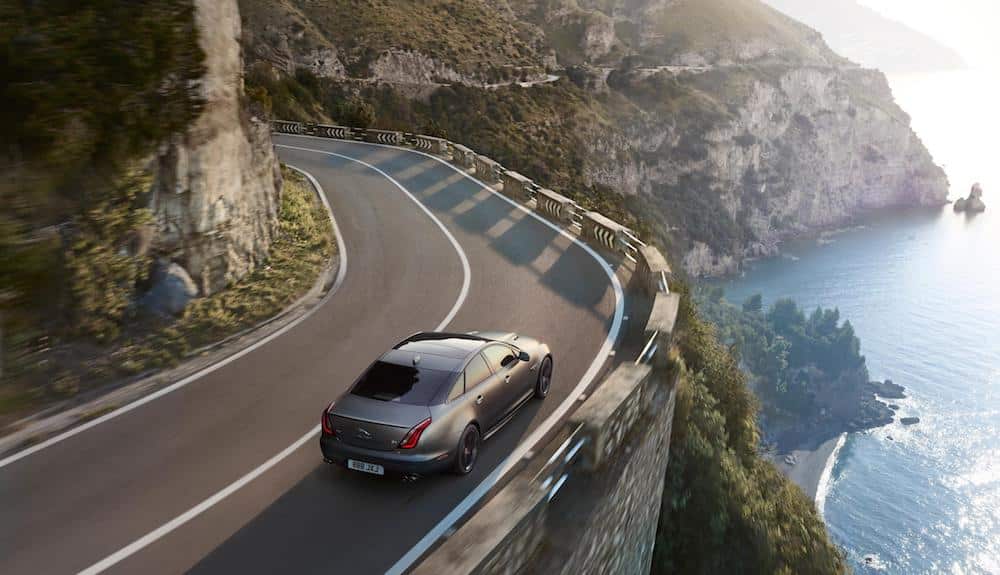
The Jaguar XJ range has got its 2018 model-year updates along with a new range-topping performance model: the XJR575.
Jaguar has enhanced the XJ’s connectivity with 4G Wi-Fi capability which can be paired with up to eight devices and a new larger ten-inch touchscreen.
Lane keep assist, driver drowsiness detection and forward traffic detection are all as standard, while autonomous emergency braking now features pedestrian detection.
XJR575 gives performance
The XJR575 joins the XJ range as the new flagship performance model. The 5.0-litre supercharged V8 engine has had its power upgraded from 550 to 575hp. With a maximum torque of 700Nm, the XJR575 has a top speed of 186mph and a 0-60mph time of 4.2 seconds.
With a bespoke rear spoiler, side sills and front bumper, the XJR575 has 20-inch gloss-black wheels with red brake calipers. The new model is available in two exclusive colours: Velocity Blue and Satin Corris Grey.
The updated XJ range is available to order now with UK pricing starting from £59,995 and from £93,710 for the XJR575.
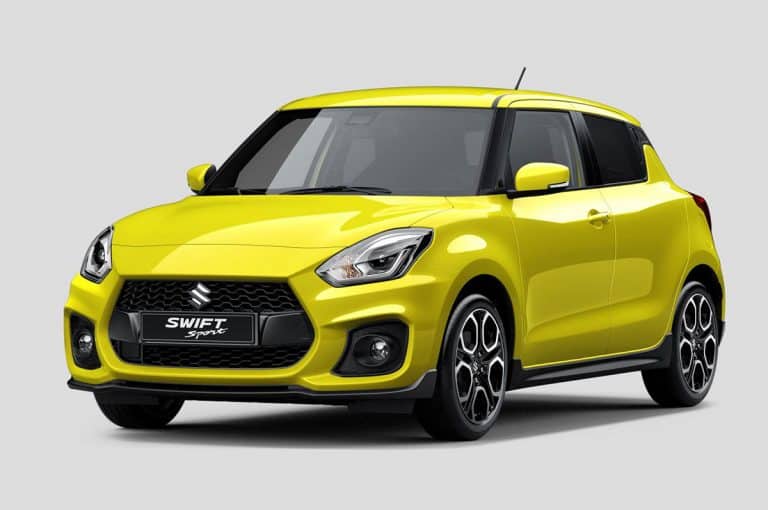
The third-generation Suzuki Swift Sport will debut at the Frankfurt Motor Show in September.
The Japanese brand’s hot hatch has always been a popular model since the first examples launched in 2005. According to Suzuki, the new car has undergone a complete redesign “and delivers an all-new level of excitement for sport minded drivers across the world.”
Uprated Boosterjet
The Car Expert understands that the new Swift Sport will be the first version of the car to be turbocharged, using the 1.4-litre Boosterjet engine of the Vitara SUV but with the 140hp power output increased for the supermini. The current model uses a naturally-aspirated 1.6-litre engine with 138hp.
Suzuki launched the new version of the standard Swift at the Geneva Motor Show in March, to general acclaim – when we tested the car, we concluded that it was a significant step forward from its predecessor.
When it goes on sale, most likely in summer 2018, the new Swift Sport will face stiff competition in the performance end of the supermini market from models such as the Ford Fiesta ST and the Volkswagen Polo GTI – both expected to launch before the Suzuki.
Details of the new Swift Sport will be revealed at the Suzuki press conference during the Frankfurt show on 12th September, and The Car Expert will post all the details as we get them.
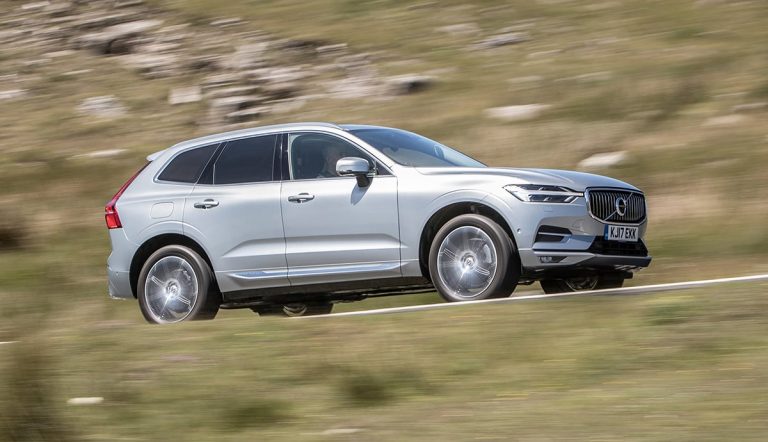
What is it? The Volvo XC60 is the second generation of the brand’s mid-sized SUV.
Key features New design from larger XC90, new engines, more technology.
Our view The new Volvo XC60 draws heavily on its larger XC90 sister to produce a car which, while not the most fun in the class, is impressive as a complete package.
It is a good time to be associated with Volvo. The Swedish brand has flourished under its ownership by Chinese giant Geely – in 2017 alone sales in the UK are up 8% this year, on top of a 7.5% increase last year.
Most of this growth this has been fuelled by the new 90-series line-up (S90, V90 and XC90), which has been much praised by, among others, The Car Expert.
The 90 models are range toppers, however. Can such success transfer to Volvo’s bigger-volume cars? We are here to find out with the launch of the second-generation Volvo XC60 – the SUV that is the brand’s biggest seller of all.
Not surprisingly, Volvo appears to have applied a simple formula in designing the replacement for the original XC60 launched in 2008 – shrink wrap the XC90.
Happily adopting the larger model’s design language, this car could have been built for those who have tried an XC90, loved it but who just can’t justify such a big, upmarket SUV.
Mercedes-Benz and Audi have announced recalls for nearly four million diesel cars across Europe in a bid to avoid fines and vehicle bans in European cities.
Major car manufacturers are working with the German government on a “diesel rescue plan” to prevent widespread bans being implemented on diesel cars, according to Automotive News.
Daimler has announced a voluntary recall of more than three million Mercedes-Benz diesel cars and vans across Europe for a software update designed to reduce NOx pollution. Unlike its embattled rival Volkswagen, Daimler has made no rash promises that performance and economy will not be affected by the fix.
Daimler had already issued a recall for more than 250,000 of its compact models (A-Class, B-Class, CLA-Class) and V-Class passenger vans, but the new recall massively expands this to cover nearly every diesel Mercedes-Benz car sold since about 2009.
Audi has today announced a voluntary recall of 850,000 cars powered by its V6 and V8 diesel engines across Europe and other markets. The recall will also affect models from Volkswagen, such as the Touareg, and Porsche, such as the Cayenne, powered by these engines. Audi is also claiming that the recall is for a software update to reduce NOx pollution. These new 850,000 vehicles are in addition to the Audi four-cylinder diesel cars already recalled under the original Dieselgate scandal.
The German sources who spoke to Automotive News claim that the car industry should be able to reduce NOx pollution by up to 20% with software changes. However, it will almost certainly require reducing performance and/or reducing fuel economy to achieve this result.
These huge recalls are partly a PR attempt for the two car companies to get ahead of a looming crisis for diesel cars. The thinking appears to be that it is better to voluntarily recall the vehicles than being told to do so by governments.
The German government has convened a summit of European car manufacturers for early August. It will be made clear to all manufacturers that they will need to take immediate and substantial action to avoid their diesel cars being banned from entering German cities.
This week’s recall announcements from Mercedes and Audi are likely to be the first of many. The German summit will include key figures from all the major car companies, and it is almost certain that other major car companies will have to make similar plans for recalling their diesel cars. The numbers of diesel cars recalled could quickly reach the tens of millions.
The latest Audi and Mercedes-Benz recalls cover diesel cars built to comply with both Euro-5 and Euro-6 emissions regulations. These are the very vehicles touted by the industry as being the “cleanest” diesel cars ever built.
Industry groups like the SMMT have long argued that current Euro-6 diesel cars present no problems for urban environments and that car manufacturers are being unfairly demonised. Yet a recall of another four million diesel cars, with potentially millions more to follow, suggests that there is no end in sight to the current diesel woes.
Sales of new diesel cars have collapsed in the UK over the last three months, with registrations down 27% in April, 20% in May and 14% in June. If this trend continues, it will start to have significant ramifications for consumers, car manufacturers, finance companies and car dealers.
UK pricing and specification for the all-new Alfa Romeo Stelvio has been announced, following the model’s appearance at Goodwood last month. The first SUV from the Italian manufacturer was unveiled at the LA motor show last year.
At launch, the Stelvio will be available with a choice of two engines: a 2.2-litre 210hp diesel and a 2.0-litre 280hp petrol. Both come with Q4 all-wheel drive and ZF eight-speed automatic transmission as standard. From September, the Stelvio can be ordered with a 2.2-litre 180hp diesel or 2.0-litre 200hp petrol engine.
The entry level Stelvio trim level includes 17-inch alloy wheels, LED rear lights, dual-zone climate control, an 8.8-inch infotainment system with DAB radio, Bluetooth, AUX and USB connectivity. Super, the next step up, adds 18-inch alloys, front parking sensors and leather upholstery.
Speciale offers 19-inch alloy wheels, Bi-Xenon headlights and heated front seats. The top-of-the-range Milano Edizione, exclusively available for the launch of the Stelvio, adds sports seats, a 10-speaker sound system that Alfa Romeo is calling a Sound Theatre, 20-inch alloys, keyless entry and a rearview camera.
The Stelvio received a five-star Euro NCAP rating in the latest round of safety testing, scoring 97% for adult occupant protection; the best in its category. Standard safety features include an integrated brake system, autonomous emergency braking with pedestrian detection, blind spot monitoring, forward collision warning and lane departure warning.
The Alfa Romeo Stelvio is available from September with pricing starting from £33,990.
DS has announced a new Connected Chic trim level for its DS 3 model. Positioned between the Chic and Performance Line trims, Connected Chic features styling updates and the infotainment upgrades.
The ageing DS 3 remains the most popular model in the DS line-up, with over 400,000 sold worldwide and nearly a quarter of those in the UK.
The new trim level’s ‘chicness’ comes in the form of 17-inch alloy wheels, LED front fog lights, tinted windows and automatic air conditioning. Satellite navigation and a seven-inch colour touchscreen with Mirror Screen, MirrorLink and Apple CarPlay takes care of the connectivity.
The Contrast Pack consists of a two-tone paint finish. This sees the five body colours – white, red, green, black and pearlescent white – are paired with a black roof and door mirrors.
A range of petrol and diesel engines are available and can be paired with either manual or automatic transmission, along with stop-start technology. The DS 3 received a five-star Euro NCAP rating when it was last tested back in 2009, but times have moved on a lot since then.
Connected Chic costs £900 more than the Chic trim, but DS claims that it adds £2,000 worth of additional equipment to the model which is set to arrive in UK showrooms soon.
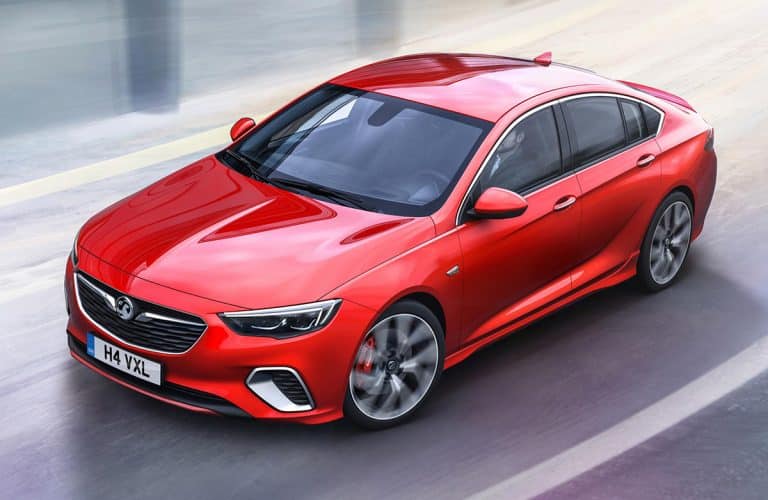
First pictures of the Vauxhall Insignia GSi have been released – a range-topping performance model set to be unveiled at the Frankfurt Motor Show on 12th September.
The GSi, restoring a trim level last seen on the Vectra C not made since 2008, is powered by a new 2.0-litre turbo petrol engine of 260hp and with 400Nm of torque. This is matched to a new eight-speed auto gearbox with steering wheel paddle shifts.
Power output of the new car is some 70hp less than the previous Insignia VXR performance model, but the GSi is said to be able to lap the Nurburgring Nordschleife circuit in Germany – regarded as today’s performance car barometer – faster than the VXR. The pace is said to be due to all-wheel drive, a new version of Vauxhall’s FlexRide adaptive damper chassis, and Brembo performance brakes.
Lower and lighter
A 10mm lower ride height is key to the setup of the Flexride chassis, which also includes a fourth bespoke driving mode setting alongside Standard, Tour and Sport, dubbed Competition. Drivers can also switch off the car’s traction control system.
Torque vectoring replaces the conventional rear axle differential in the drivetrain. This uses two clutches to accelerate each rear wheel individually as required by the driving situation and prevent understeer.
Visual differences to the stock Insignia include chrome air intakes at the front and a rear spoiler, while the interior gains full-leather sports seats, a leather sports steering wheel and aluminium pedals. The car is also 160kg lighter than a stock Insignia.
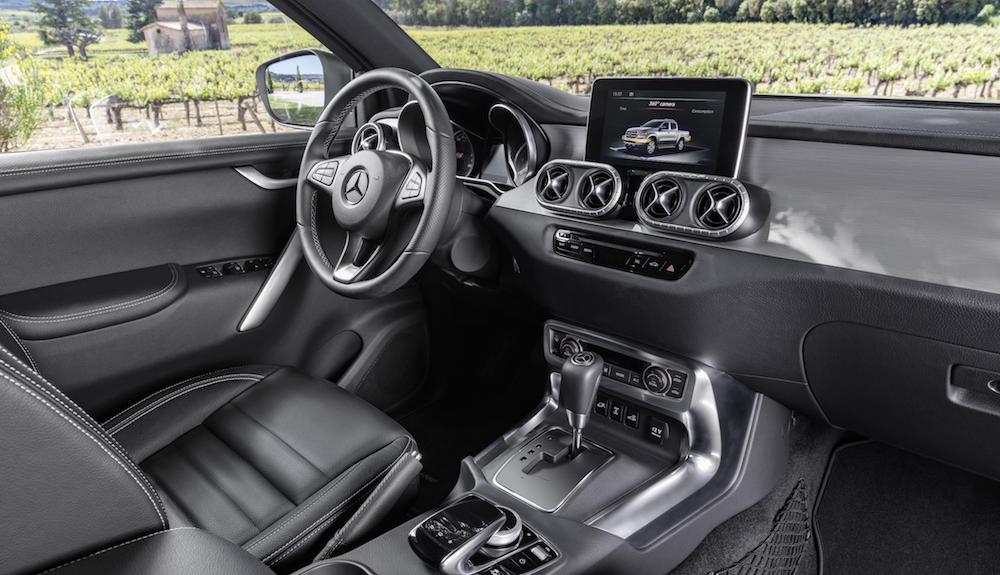
The new Mercedes-Benz X-Class pickup is here. Built on the Nissan Navara platform and based on the concept unveiled at the Paris motor show last year, the X-Class is intended to serve both as an all-terrain pickup and as a vehicle for urban use.
Mercedes-Benz will be hoping to capitalise on the current high demand for pick-ups. In May of this year, pickups were the only segment of the new LCV market to see growth, and a large number of those vehicles are bought for play rather than work.
Pure Progressive Power
The X-Class is available in three trim levels: Pure, Progressive and Power. Those opting for the X-Class as a lifestyle vehicle are likely to find themselves Power-hungry, as this is the top-spec trim level offering the most comfort and style. The front bumper is colour coded, the rear bumper is chromed and there is a choice of three interior trims.
Further styling options are available in the form of a side bar, canopy, various tonneau covers, nine paint finishes and several alloy wheel designs. Customers can also opt for an electrically-opening rear window.
The X-Class is available with two four-cylinder diesel engines; a 2.2-litre offering 163hp and a 2.5-litre with 190hp, with a choice of six-speed manual or seven-speed automatic transmission. From mid-2018, a top-of-the-range 3.5-litre V6 258hp diesel engine will join the ranks.
Apparently immune to the petrol power renaissance, Mercedes-Benz is only offering the 165hp petrol variant of the X-Class in left-hand drive.
So what can those engines do? Well, Mercedes-Benz is keen to assure customers that the X-Class can carry 17 full 50-litre beer barrels or pull a trailer with three horses or an eight-metre yacht. Whichever takes your fancy.
Finishing touches
With its venture into the pick-up segment, Mercedes-Benz is aiming to impress with a touch of luxury. To this end, the X-Class has an eight-inch touchscreen, multi-function steering wheel and multi-function touchpad, all borrowed from its luxury car family.
Customers will find themselves faced with a choice of six seat covers, and Mercedes-Benz is keen to assert that the X-Class will be available with the widest choice of materials and colours in the pick-up segment.
The latest in connectivity will enable owners to check their vehicle’s fuel level and location and navigate door to door.
Safety-wise, plenty of assistance is on hand in the form of active braking, lane keeping and traffic sign recognition. For those not content with a simple reversing camera, a 260-degree camera can be specified.
UK pricing is yet to be announced, and full specifications will be announced closer to the local X-Class arriving on UK forecourts in November.
The limited-edition Jeep Wrangler Rubicon Recon, unveiled at the Geneva motor show in March, has gone on sale. It follows the Wrangler Night Eagle that went on sale in May.
The Rubicon Recon is powered by Jeep’s 3.6-litre 284hp V6 petrol engine which is paired with a five-speed automatic gearbox.
Jeep is claiming that the Rubicon Recon has better off-road capability than a regular Wrangler thanks to a stronger front axle and heavy-duty cast rear differential covers.
Available in three paint finishes – Gobi, Bright White and Granite Crystal – the Rubicon Recon has 18-inch alloy wheels and customers can opt for a soft or hardtop which comes in black. Red accent lettering features on either side of the bonnet, with a black hard spare tyre cover completing the look.
The black and red theme continues inside with red accent stitching on the black leather heated seats, red accent netting on the front door pockets and red accent coloured seat belts.
The Rubicon Recon is on sale now and costs from £40,505 for the two-door version and £42,175 for the four-door.
The recent renaissance of petrol power at the expense of diesel continues with additional petrol engines being announced for Skoda and Volkswagen models.
The move follows the continued decline in diesel sales, down 15% in June, 20% in May and 27% in April. The direct beneficiary of this swing away from diesel has been petrol cars, hence the move from Volkswagen and Skoda to beef up their petrol offerings.
For its fleet customers, Skoda is introducing three additional petrol engines to its Octavia estate, while the brand’s Superb gets a 1.4-litre 150hp unit with either automatic or manual gearbox.
Skoda’s Head of Fleet, Henry Williams, said that the introduction of the new engines was “due to increasing demand from customers”.
Meanwhile, following its continued Dieselgate difficulties, Volkswagen has expanded the powertrains available for its Passat range with four new petrol units. The brand has also expanded the range of petrol engines for its Tiguan SUV with seven new units.
Hyundai has announced the latest addition to its i30 line up. The five-door Fastback coupé follows the launch of the i30 range in March and the i30 Tourer earlier this month.
Customers can choose from a range of powertrains including 1.4-litre 140hp petrol, 1.0-litre 120hp petrol, 1.6-litre 110hp diesel and 1.6-litre 136hp engines. Depending on which is chosen, a six-speed manual or seven-speed dual clutch transmission can be specified.
To create the Fastback, Hyundai has played with the proportions of the original i30, lowering the roof line by 25mm and elongating the car by 115mm. A total of 12 paint finishes are available including three pearlescent, seven metallic and two solid.
Inside, an eight-inch touchscreen with Apple CarPlay and Android Auto is optional, while the navigation system comes with a free seven-year subscription to LIVE services offering up-to-date information. A wireless charging system is also available.
Standard safety features include autonomous emergency braking, driver attention alert, lane keeping assist and high beam assist, which dims main beam headlights to avoid blinding oncoming drivers. Speed Limit Information Function recognises road speed signs and displays the speed limit for the driver. The i30 received a five-star Euro NCAP rating when tested earlier this year.
The i30 Fastback will be available early next year.
With the first half of the year behind us, the new car market has been quite volatile. A monster month in March was largely due to the government’s new road tax rules, which in turn led to a very quiet April. By May, a general election had been called and that always puts a dampener on new car sales.
Although total new car registrations are down about 1.3% on last year’s record numbers, the detail within has been interesting.
Diesel sales have practically stalled in the last three months, down 20% from 2016 levels, which will be causing headaches at many car companies and dealerships. Hybrid and electric vehicle sales continue to increase, a pattern which looks set to continue as what are currently referred to as “alternatively-fuelled vehicles” become the new normal.
As always, some car brands have enjoyed strong growth, many are in a roughly similar place to last year and others have fallen alarmingly. Below, we take a look at the ten best performers and ten worst performers, based on the 2017 results compared to last year.
(Note: The biggest winner in percentage terms is actually Chevrolet, but since the manufacturer no longer officially sells cars in the UK, we have not included it here. Also, the SMMT did not report McLaren’s UK registration numbers for the corresponding period in 2016, so its growth cannot be measured).
The ten biggest winners so far for 2017:
Aston Martin (up 110%)
Aston Martin has more than doubled its sales results compared to the first six months of 2016. This will largely be due to the introduction of the all-new DB11 model, and a seemingly-endless run of limited edition Vantages as the model comes to the end of its model cycle.
In the UK and Europe, Infiniti has always struggled to emulate the brand’s success and market presence in the US. But the company continues to push on, and has made some significant investment in Euro-specific models like the Q30 and QX30, both built in Nissan’s Sunderland plant right here in the UK.
A new Q60 coupé adds brand presence and showroom appeal, but is not likely to significantly boost sales numbers.
As the fallout from the Dieselgate emissions scandal continues, the BBC’s consumer affairs programme, Watchdog, has investigated reports of ‘fixed’ Volkswagen cars losing power.
Of the 1.2 million diesel cars in the UK that were fitted with the ‘defeat device’ to manipulate the results of emissions testing, over 720,000 have received a software update to remove this feature. But now, a number of Volkswagen owners have reported that cars which have received the Dieselgate software fix have been going into ‘limp mode’.
Limp mode is a common safety feature in many cars that is activated to prevent further damage to the engine or transmission. After providing an initial warning on the dashboard display, the vehicle suddenly and rapidly decelerates down to about 20mph.
Watchdog spoke to Kirsty Blackwell who was driving her Volkswagen Caddy along the motorway when the car suddenly went into limp mode. She was able to get her car off the road, but “no longer feels particularly confident” with her car.
The programme also interviewed Lisa Bryant-Jones, whose Volkswagen Passat went into limp mode on a dual carriageway. While trying to manoeuvre the car off the road, her car was hit by a lorry and written off.
Watchdog’s report did not indicate whether the drivers they interviewed had seen any warning messages or lights on their dashboards before the cars went into limp mode.
So what does this mean if you own an affected model?
Volkswagen maintains that there is no link between the reported engine problems and its Dieselgate repair procedures.
The company told Watchdog: “Implementation of the technical measures does not cause limp home mode to engage nor does it increase the incidence of limp home mode occurring.
“Relevant authorities have confirmed that the technical measures have no adverse impact on the MPG figures, the CO2 emissions figures, engine output, maximum torque and noise of the affected vehicles.”
Customers who have experienced issues with their vehicle are urged to call Volkswagen’s helpline on 08000 930049.
Earlier this year, a government Transport Select Committee questioned Volkswagen bosses.
Volkswagen UK Managing Director, Paul Willis declared that the software fix has “no effect on real-world driving”.
But after chairing the committee, MP Louise Elman said: “I was not at all satisfied with their answers, they are not credible. This is simply outrageous – Volkswagen should stop denying the problem they’ve created and put things right.”
What can Volkswagen do to put Dieselgate right?
In the US where the defeat device was first discovered being used to cheat emissions tests, Volkswagen pleaded guilty and reached a $10bn settlement with the Federal Trade Commission. The company agreed to buy back or repair all affected vehicles and provide their owners with $5,000 compensation.
A similar settlement was reached in Canada, but only after owners took out a class action lawsuit against the company.
Closer to home, the story is a little different. The wording in the relevant EU legislation (and most other parts of the world) is slightly different to the US equivalent, so Volkswagen insists that the defeat devices weren’t cheating the tests in Europe. As such, the company argues that no compensation is needed. Essentially, the company has found a legal loophole based on semantics and it is planning to ignore any and all requests to offer UK and European owners any meaningful gesture.
But, the European Commission hopes to pressure Volkswagen into providing compensation voluntarily. In March, it hosted a meeting of 22 consumer protection authorities who agreed to prepare collective action against the company.
Should political pressure fail to persuade, Volkswagen could still be forced to pay out some sort of compensation eventually. It’s currently facing a range of class action lawsuits such as the one being made in the UK, and another in the Netherlands on behalf of approximately 180,000 Dutch Volkswagen owners.
Thinking of buying a used affected model?
Legal action is likely to take some time, unfortunately. Of short-term interest, and if you are thinking of buying a used affected model, is Volkswagen’s announcement in response to consumer complaints that it will provide a two-year guarantee for affected European cars that have been fixed.
The limited guarantee will cover some exhaust and emissions control parts, but only in vehicles that have done less than 155,000 miles and depending on their service history.
Given the apparent driving issues that have arisen in ‘fixed’ models, the probable effect on resale values and the enormous number of other used cars available on the market that do not have any such Dieselgate concerns hanging over them, we cannot recommend that anyone buy a used Volkswagen, Audi, SEAT or Skoda with one of the affected diesel engines.
If you are looking at buying a used car from any of these brands, check the car’s registration on the relevant link below. If it’s on this list, avoid it and move on.
Volkswagen’s reluctance to compensate its European customers is unsurprising. Having initially set aside £4.8bn to cover costs in the US it’s ended up paying well over double that.
The $10bn settlement only related to 482,000 American cars and it’s thought there are nearly 18 times as many (8.5 million) affected cars in Europe. These include some models sold under the Audi, Skoda, SEAT and Porsche brands.
Soon after details of the Dieselgate scandal were uncovered in September 2015, the company posted its first quarterly loss for 15 years and the price of its shares fell by around a third. However, although sales initially fell, they have now largely recovered to pre-Dieselgate levels. The Volkswagen Group quickly returned to profitability and is now trying to reinvent itself as a champion of electric cars.
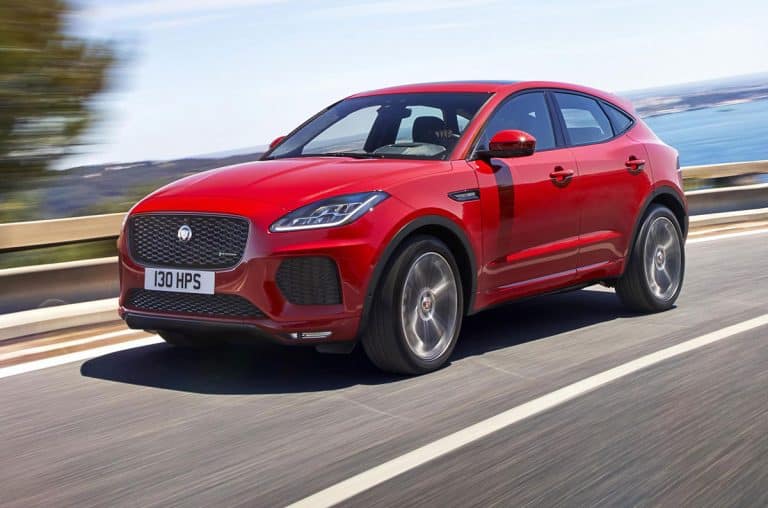
This is the Jaguar E-Pace SUV, and if industry observers are to be believed we are going to be seeing a lot of it.
The new, smaller sister to the already highly successful F-Pace is predicted to become the best-selling model in the Jaguar range. As a result, Jaguar could soon emulate Porsche in becoming a brand with a performance image that actually sells more SUVs than sports cars or saloons.
In fact, demand for the E-Pace is predicted to be so significant that Jaguar has contracted out its production to Austrian firm Magna Steyr – none of JLR’s UK plants, which are working close to capacity, can accommodate such a major new model.
The E-Pace was unveiled on Thursday evening at a glitzy event staged at London’s Excel exhibition centre. The highlight of the entertainment saw stuntman Terry Grant set a record 15.3 metre, 270-degree barrel roll in the car.
When it arrives at UK Jaguar dealers, the E-Pace will be pitched as a significantly more sporty SUV than its larger F-Pace sister. Jaguar says that the styling of the E-Pace has been evolved directly from the F-Type sports car.
Buyers will be able to choose a version with a 300hp engine sending the car through 60mph from rest in under six seconds, and will also be able to select sporty 21-inch wheels from the options list.
Jaguar design director Ian Callum describes the E-Pace as ‘the sports car of its class’.
“Our new compact SUV combines the interior space, connectivity and security that families expect with the kind of proportions, purity of design and performance not usually associated with such a practical vehicle,” Callum says.
The E-Pace will also be the first front-wheel-drive Jaguar to go on sale since the X-Type saloon, that ceased production in 2009. However only entry-level E-Paces will be front propelled – all other models will have all-wheel-drive powertrains.
Five engines
Another first sees the E-Pace offering the first engine line-up in the Jaguar Land Rover range to be comprised entirely of Ingenium units, built at the JLR engine plant near Wolverhampton in the West Midlands. The choice ranges across three petrol and two diesel units.
Underneath the Jaguar E-Pace is constructed on the same architecture used on the Discovery Sport from sister brand Land Rover, though Jaguar’s engineers insist it has been specifically tailored to its new use. The car boats short front and rear overhangs, which place its large wheels at each corner, while a notable feature taken directly from the F-Type is the teardrop shape of the side windows.
Technology available to E-Pace drivers will include Configurable Dynamics technology, allowing the personalisation throttle, steering and transmission settings. Connectivity will also be a strong selling point, the car’s 4G wi-fi hotspot providing content streaming through up to eight devices simultaneously, while a Touch Pro infotainment system will allow occupants to access their favourite smart device apps through the car.
Jaguar E-Pace prices will start from £28,500, pitching it direct against the BMW X1 and Audi Q3 in one of the currently most competitive sectors of the UK car market. And it won’t be the final SUV from Jaguar – an all-electric model, the I-Pace, launches in 2018.
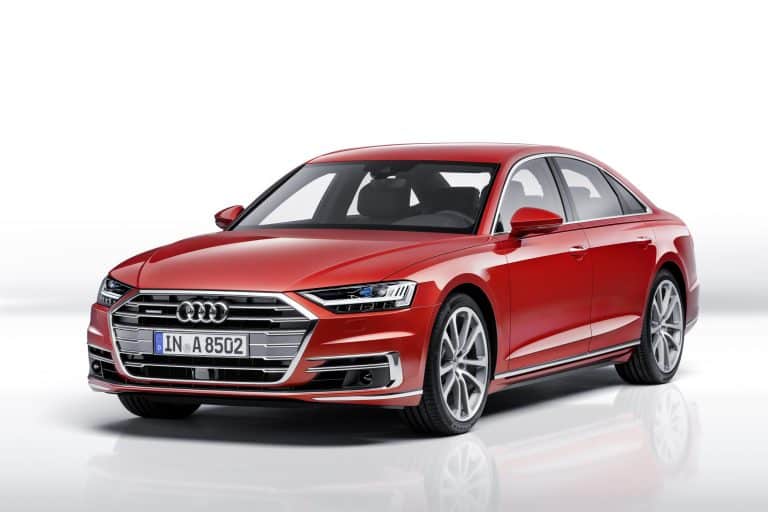
The new Audi A8 has been unveiled at a special event in Barcelona, the car’s creators describing it as “the future of the luxury class.”
The latest A8 is the brand’s most technologically advanced car yet, and Audi also claims that it is the first production car in the world to be developed for highly autonomous driving. From 2018 Audi will begin to roll out piloted driving functions to aid such manoeuvres as driving into parking spaces, garages and negotiating traffic jams.
New design look
The new A8, which will be sold in both standard 5.17-metre long form or with a wheelbase extended by 130mm, debuts a new design language for the brand. Drawing heavily on the Audi Prologue concept car debuted at the 2014 Los Angeles Auto Show it features significant changes including a major reshaping of the grille.
Initial powertrains will include extensively re-engineered versions of the V6 turbo diesel and petrol units, with 286 and 340hp respectively. They will quickly be joined by a new 4-litre eight-cylinder TDI diesel of 435hp while a 6-litre W12 will also be on offer.
Likely to be most anticipated, however, will be the A8 L e-tron quattro, a plug-in hybrid version combing a 3-litre TFSI petrol engine and electric motor for 449hp and 700Nm of torque.
Order books for the new A8 range open in September with first deliveries expected before the end of 2017. UK prices are still to be announced – industry observers suggest they will start at close to £70,000.