There are very few car names that just about everyone will immediately recognise – but Ferrari is certainly one of them.
The story of Ferrari is one of two separate businesses – the racing team and the production car operation – joined at the hip but operating quite independently of one another for most of the company’s history.
The racing team came first, created by Enzo Ferrari in 1929 to run Alfa Romeos in competitions all over Europe. The road car business didn’t come along for another 20 years, after the second world war, and was originally little more than a means for Enzo to fund his racing programme.
Over its almost-100-year history, Ferrari has become not only the most revered name in world motorsport, but the most exclusive of sports car manufacturers. In Italy, Ferrari is not merely a car maker but almost a religion. Its most fanatical fans even have their own name – the tifosi.
How did a failed racing driver from a working-class family in the 1920s achieve all this? Read on…
So who or what is Ferrari?
The foundation of Ferrari is built on motor racing. In founder Enzo Ferrari’s lifetime, the road car business basically only existed to pay for his motor racing exploits.
Enzo started competing in 1919 at the age of 21. He managed to get a seat driving for Alfa Romeo, Italy’s premier post-war racing team, but his managerial skills turned out to be significantly better than his driving and he eventually became Alfa’s team manager.
He founded his own team in 1929, called Scuderia Ferrari, and purchased a few Alfa Romeos to race. Alfa then decided to shut down its own racing team and handed everything over to Scuderia Ferrari to become the company’s unofficial racing department. In 1937, Alfa bought it all back again at a handsome profit for Enzo, but he became disillusioned and left in 1939 to set up on his own again.
War then intervened before Enzo had even started making his own cars and, like pretty much every other car company in the world, his manufacturing operations were turned over to the production of war materials. As soon as the war was over, Enzo returned to his ambition to manufacture his own racing cars.
To help fund his ambitions, Ferrari planned to sell racing cars to wealthy amateur drivers. This inevitably led to the idea of selling road cars to similarly wealthy customers, and the Ferrari car company was officially born in 1947.
For many years, Ferrari’s road vehicles were little more than barely detuned racing cars with number plates. Enzo Ferrari himself had little interest in the road car division – it existed solely to fund his racing team.
The early road cars were typically two-seat models with V12 engines and bodies designed by various Italian coachbuilders. Eventually, Ferrari settled on Turin firm Pininfarina to design his cars, a relationship that would last for 60 hugely successful years until styling was taken in-house in 2012.
As the 1950s progressed, Ferrari road cars became increasingly desirable. Hollywood stars considered they’d really made it if they drove one, or even were seen in one, and the company developed a mystique unlike any other brand. By 1960, however, the demands of running the car company and the racing team were taking their toll, and Enzo began looking for an alliance to help with road car production. Talks with Ford proceeded a long way, but Enzo abruptly ended them to the fury of Henry Ford II, who resolved to beat Ferrari at Le Mans, leading to a fierce on-track rivalry between the two brands in the late 1960s.
Ferrari finally found its partner in Fiat, which took a 50% stake in the company in 1969. Enzo had just launched the Dino 206, named after his son who had died as a young man. Fiat’s help was essential to get the Dino up and running, followed by other decisive models such as the sharply styled Daytona and a range of new cars throughout the 1970s.
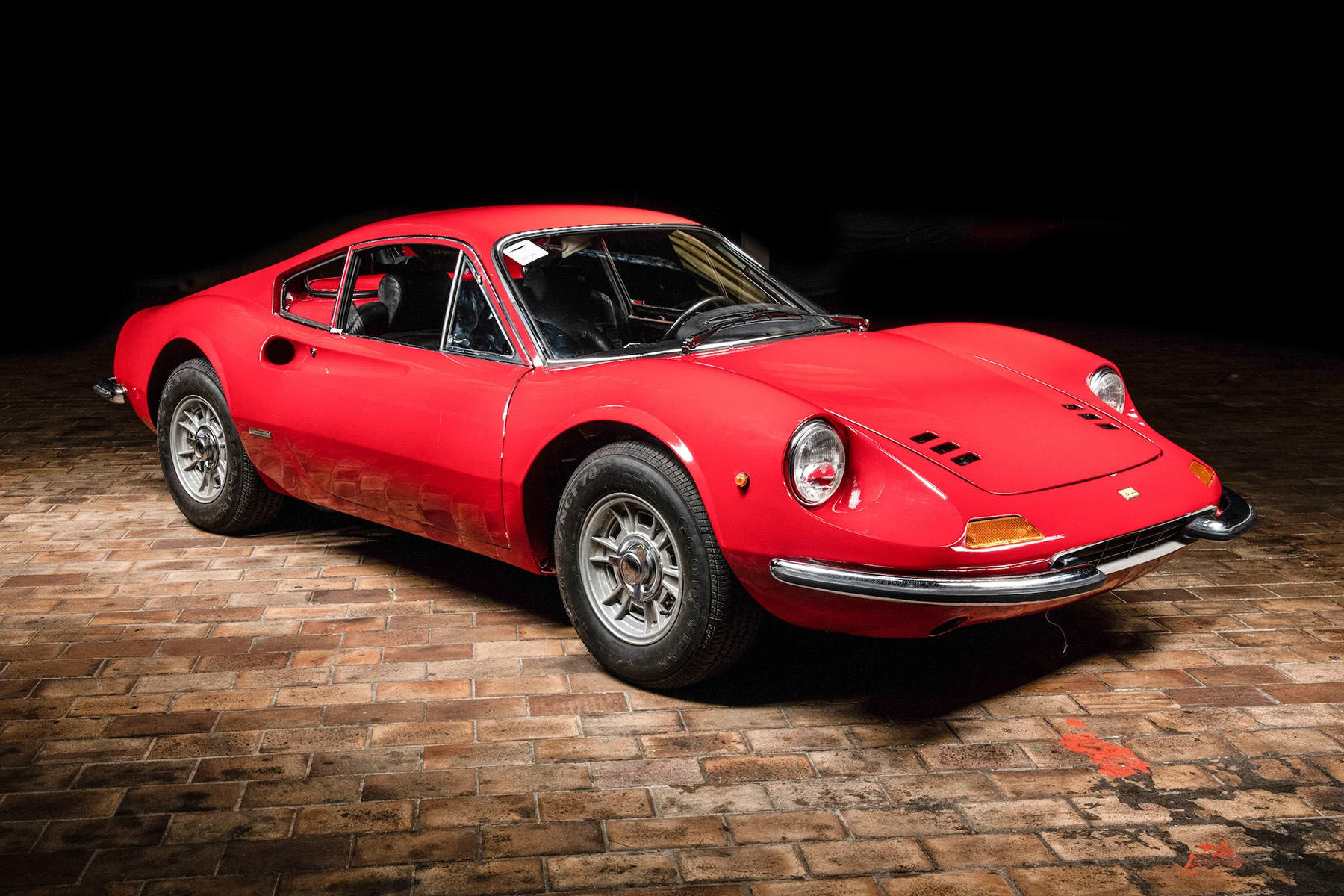
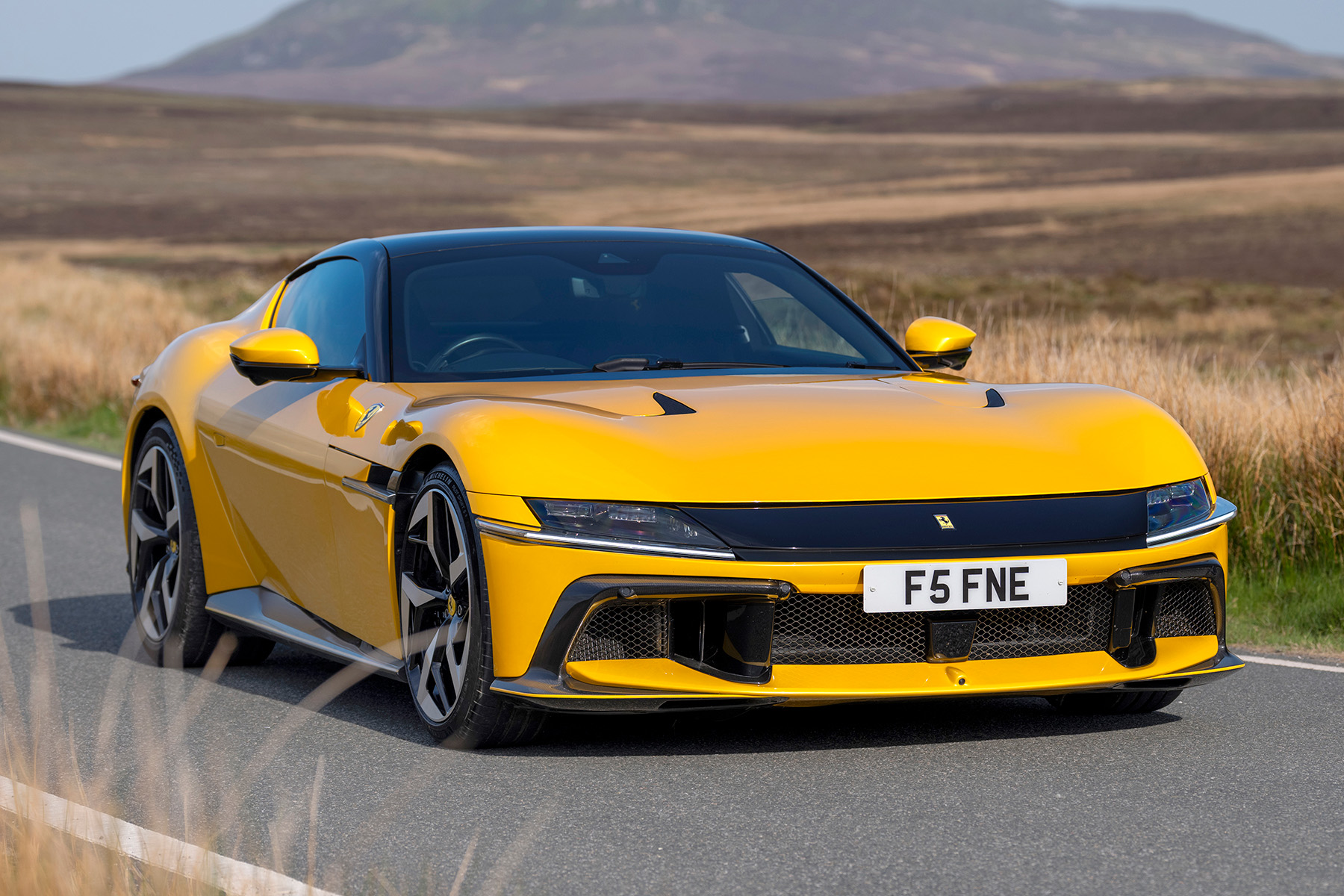
In the 1980s, Ferrari launched its first supercar, the 288 GTO, which was followed by the F40, Enzo’s last car before he died in 1988.
Upon Enzo’s death, Fiat’s stake in Ferrari increased to 90%, with the remaining 10% going to Enzo’s second son, Piero. After a tumultuous period of transition and some dark financial periods that would have almost certainly buried the company without Fiat’s benevolence, Ferrari stabilised and then began to improve. Over the next three decades, the road car division blossomed like never before, with a succession of outstanding new production models and limited-edition flagship models like the F50, Enzo Ferrari, LaFerrari and now the new F80.
Ferrari became an independent company once again in 2016, separated from Fiat after nearly 50 years of ownership, and has flourished on its own. It sells less than 14,000 cars a year, but is considered one of the most valuable car manufacturers in the world, worth around $85 billion in 2023.
The company is still largely defined by its performance on the race track, having become the most renowned team in international motorsport. To date, it has won 15 F1 World Drivers’ Championships, 16 F1 World Constructors’ Championships and 12 overall victories in the Le Mans 24 Hours, as well as thousands of race victories in many categories of GT racing on tracks all over the world.
What models does Ferrari have and what else is coming?
Today, the cheapest Ferrari starts at around £180,000 and prices escalate quickly up to around half a million – and even further if you want one of the company’s limited-run specials that pop up from time to time. Yet Ferrari supercars sell out virtually as they are announced and even getting on the waiting list is by no means guaranteed.
Ferrari’s cars are always produced in limited numbers, with demand consistently outstripping supply and maintaining the image of exclusivity. Each new model tends to earn rave reviews for its performance and driving dynamics. Typically, the cars are expensive to own and have limited environmental credentials, but these factors seldom concern their owners. As such, they all tend to struggle in The Car Expert’s unique Expert Rating Index, but this will be unlikely to bother too many current or prospective customers.
Even Ferrari has to have a starting point for its model range, a position currently filled by the Roma, priced from £178,000 as a coupe, £213,000 in convertible form. Reviewers describe it as mixing performance with as much practicality as one might expect from a Ferrari.
The Roma is about to be replaced by a new model called the Amalfi. The newcomer uses the same chassis as its predecessor, although with revised styling and various technical improvements. For now, the drop-top Roma Spider will remain on sale, with a convertible version of the Amalfi not due for another year or so.
The Roma’s big brother is the Ferrari 12Cilindri, launched in 2024 as the latest in a long line of large GT models powered by the V12 engines that were always the favourites of founder Enzo Ferrari. Anyone wealthy enough to pay the £340,000 starting price (for the coupe, the convertible adding another £30,000) will enjoy the 12Cilindri’s on-road performance, universally praised by reviewers.
Current Ferrari range on our Expert Rating Index


Ferrari has not ignored recent trends in the luxury market and in a move regarded as sacrilege to some, has followed the likes of Lamborghini and Maserati by launching an SUV. The Purosangue went on sale in 2023 at prices starting from £361,000. Yet while it may be Ferrari’s first five-door model, this car is nothing like a typical SUV, with a 6.5-litre V12 petrol engine and a body shape closer to a sports car.
Ferrari doesn’t like the phrase SUV, calling the Purosangue a ‘dynamic coupe’, and reviewers have agreed that it drives like pretty much no other SUV on sale.
Owning a Ferrari might be a petrolhead’s ultimate dream, but the marque cannot ignore the march of electrification. You can’t buy a fully electric Ferrari yet, although that will change in 2026. Meanwhile, two plug-in hybrid models have emerged from Maranello.
The Ferrari 296 is mid-engined with a plug-in hybrid 3.0-litre V6 unit, offered as either a GTB coupe from £260,000 or as the GTS, which has a targa top and starts at £280,000. Reviewers praised its style, performance and road dynamics, but were less impressed with the electric system and the touch-sensitive driving controls.
In the same way that the Roma has a big brother in the 12Cilindri, the 296 has a bigger, faster sibling called the SF90 Stradale – again, available in coupe and cabriolet format and with an even more powerful plug-in hybrid powertrain. The car was launched in 2019 to mark the 90th anniversary of the race team, although it’s now out of production and about to be replaced by an upgraded model called the 849 Testarossa.
Next year will be a big one for the company. As well as introducing the new Amalfi and Testarossa models, Ferrari will unveil its first fully electric model. It has already shown off some of the technical features of its new EV, but we have yet to see the car itself and we don’t even know what its name will be.
Where can I try a Ferrari car?
You will not find a Ferrari outlet on your average high street or industrial estate – there are a mere 18 official showrooms around the UK, with the highest concentration located in the Home Counties around London.
As one might expect, each centre is more of a plush boutique than a run-of-the-mill car dealership, and not the kind of place one might while away an hour or two kicking tyres on a Saturday afternoon…
What makes Ferrari different to the rest?
In today’s market, there are more than a few manufacturers of top-level desirable supercars – but only one is Ferrari. The Italian manufacturer has built up a mystique that no amount of promotion can ever replicate.
Part of this stems from Ferrari being a manufacturer that never lets production of its cars overtake demand. It is also said that you can’t simply go out and buy a new Ferrari – the company considers the merit of all of its customers, ranking their desirability, and in some cases, the most exclusive models are only sold to those who have already owned several Ferraris.
Ferrari also monitors what owners do with their cars; modifications are not allowed unless carried out by the factory, and owners not treating their cars with suitable respect can be blacklisted – some have even been sued by the company. All of this helps to maintain the most exclusive brand image in the car market.
Many of those lucky enough to own a Ferrari probably don’t care how it ranks against rivals – it’s a Ferrari, that’s all that matters to them, and the reason all those rivals will always come second to the cars with the prancing horse badge.
A Ferrari fact to impress your friends
With a brand as romantic as Ferrari, it should come as no surprise to learn that the company’s famous prancing horse logo has a famous and complex story behind it as well.
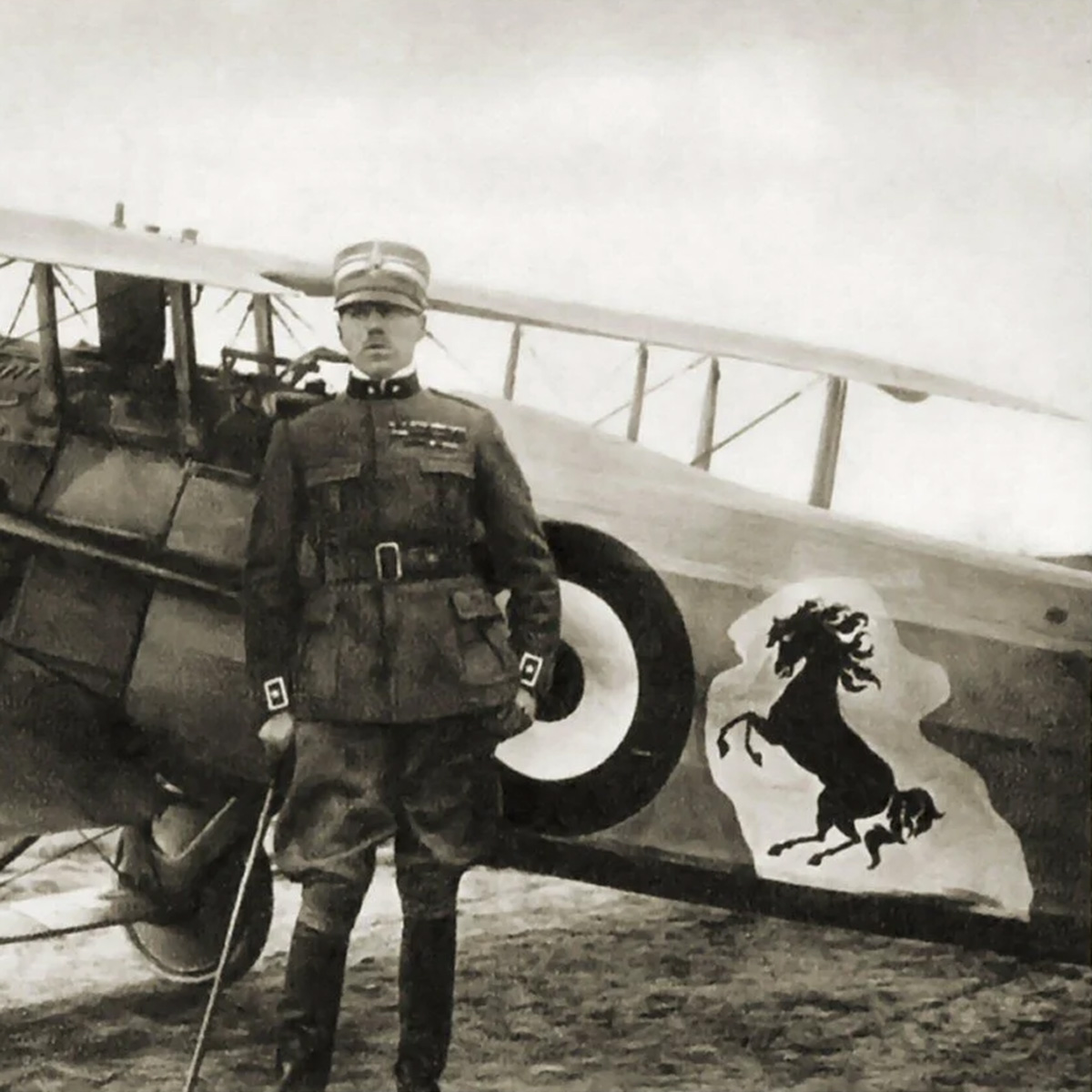
The logo was previously used by Italian WWI flying ace, Count Francesco Baracca. His mother asked Ferrari to carry the prancing horse on his cars for luck, and so Baracca’s logo became the basis for Ferrari’s famous cavallino rampante.
What is less well known is that Baracca apparently adopted the horse as his logo after shooting down a German pilot, who was carrying the prancing horse logo on his plane as it was the emblem of his home town of Stuttgart. Many years later, Stuttgart would become the home of Porsche, which contains the city’s emblem in the centre of its own company logo – the very same prancing horse…
Buy a Ferrari
If you’re looking to buy a new or used Ferrari, The Car Expert’s partners can help you find the right car.

Find a used Ferrari with Motors. Find out more
Find a new or used Ferrari with Auto Trader. Find out more

Find a new or used Ferrari with Carwow. Find out more