Find an Expert Rating: 
Home Blog Page 142

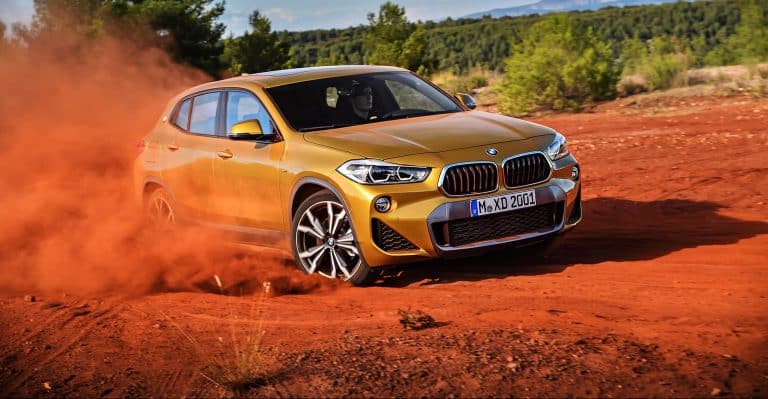
BMW X2 looks for younger audience

The BMW X2 has been unveiled as the brand’s sportiest small crossover yet – designed to attract more younger buyers than the other six models already in the X range. First seen as Concept X2 at the Paris Motor Show in 2016, the newcomer measures up at 4360mm long – 20mm shorter than its X1 sister. At 1526mm it is also more than 70mm lower. Much of this is removed from the depth of the windows, giving the car a sportier look which is emphasised by a new-design version of BMW’s signature kidney grille – wider at the base than at the top, it adds to the car’s planted look. The X2 does match its X1 sister in the 2670mm wheelbase – the two cars share the same platform used under the 2 Series Active Tourer and are being built alongside each other at Regensburg in Germany. With a short bonnet and rear overhang, the X2 promises plenty of interior space, including a 470-litre boot. Initially, the X2 will be sold in a single version – the xDrive 20d. This is powered by a 2-litre four-cylinder turbocharged diesel engine of 190hp and 400Nm of torque, put through an all-wheel-drive transmission. A degree of off-road ability is added by this transmission with hill-descent control fitted as standard. The 20d offers 7.7-second 0-62mph time while returning combined cycle fuel economy of 61.4mpg and CO2 emissions of 121g/km. Three more variants will follow in 2018, all also 2-litre turbocharged models. The 20i petrol model will be on sale in front-wheel-drive form only, while there will be 18D diesel versions in both two and all-wheel drive formats. BMW will offer four trim levels for its new SUV, in the familiar SE, Sport, M Sport and M Sport X grades. SE models sit on 17-inch wheels, all others on 19-inch wheels with 20-inch variants offered as options, while LED headlamps are standard on all bar the entry-level SE. all versions also get a 6.5-inch Touch Control Display with navigation system as standard, while the options list includes such niceties as a head-up display. Dealers open order books for the car in mid-November, with the X2 xDrive 20D SE costing from £33,980. BMW X2 The Car Expert  

Collapsing car sales – is the car industry in crisis?

New car sales figures for the six months between April and September (Q2 and Q3) made uncomfortable reading for many people in the UK automotive industry. 132,000 fewer new cars were registered than over the same six-month period last year, and there appears to be no end in sight to the falling market.

Initially, the industry brushed off concerns. Changes to road tax rules were said to be responsible for boosting sales in Q1 and hurting car sales in Q2 as buyers raced to beat the tax rises. Seemed reasonable.

Then in mid-April, the prime minister called a general election. That’s traditionally never a good thing for car sales, as both private and fleet buyers hold off purchasing for a few weeks to see how things pan out. Then we had the debacle of the hung election and uncertainty that lasted until the end of June.

So it was easy to write-off poor overall sales figures for Q2 as the result of external events. But you would then expect things to stabilise and bounce back to normal during Q3. Except that didn’t happen. July, then August and then September were all bad months as well.

Industry organisations like the SMMT have been eager to point the blame at Brexit, lack of government support, economic uncertainty, media coverage, aliens or any other external cause they can think of. But very few people within the automotive sector seem to accept that the car industry has played a large part in bringing its current problems on itself. It’s quite simple:


The UK car industry is reliant on customers buying cars they don’t need with money they don’t have. That is simply not sustainable.


Over the course of this decade, new car sales have soared year-on-year. Certainly part of this was a recovery from the global financial crisis, but it has been more than that. Private new car sales increased by 46% between 2011 and 2016, just ahead of an overall market growth of about 39% for the same period, according to SMMT figures. So where did this growth come from?

The country’s population grew by less than 4% over the same period, so it was clearly existing drivers choosing to buy new cars, rather than any massive population increase. Average weekly earnings improved by less than 9%, although real-world incomes have barely changed at all, so it’s not like we all had extra cash to flash on a shiny new car. The inevitable answer is cheap car finance in the form of personal contract purchase (PCP) and leasing (personal contract hire, or PCH) agreements.

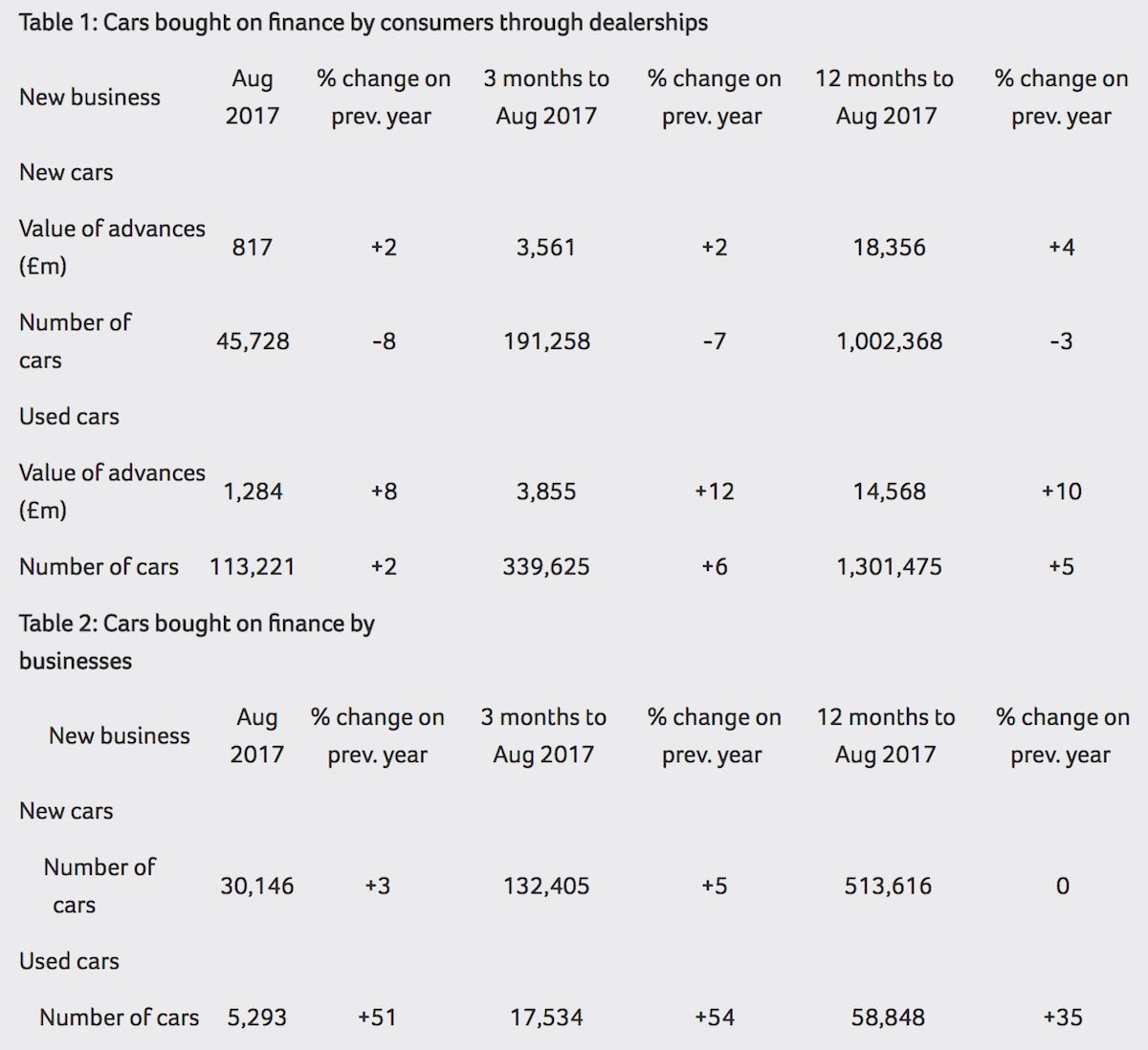
At the start of this decade, fewer than half of private new car buyers financed their cars through the dealership, with the majority borrowing from a bank or elsewhere, or using their own savings. Today, nearly 90% of private new car buyers are financing through dealerships, which is all because of PCP car finance.

Although the PCP has been around for a long time, its popularity has boomed over the course of this decade. The government scrappage scheme in 2009/2010 was a massive boost in getting first-time new car buyers onto the PCP treadmill, providing a handy deposit that was combined with low monthly payments to put many thousands of drivers into a new car for the first time.

As the market recovered from the global financial crisis, demand for both new and used cars was strong and PCP customers came to the end of their agreements to find that they had a handy amount of equity between their car’s value and its settlement figure, which they rolled into another PCP on another new car. And as millions of car buyers have found over the last few years, once you get onto the PCP or leasing merry-go-round, it’s quite difficult to get off again.

Short-term desperation has caused longer-term problems

With PCP finance becoming more popular and customers swayed by low monthly payments, car manufacturers and finance companies began looking for ways to gain an edge and keep sales flowing. Different methods have been used to keep the advertised monthly payments as low as possible for both PCP and lease agreements, putting short-term results ahead of long-term sustainability.

Finance companies started pushing guaranteed future values (GFV/GMFV) up, even though used car values were falling due to the increased number of three-year-old cars coming back onto the market. The better the GFV, the lower the monthly payment. Of course, that meant less chance of a customer having equity at the end of the agreement, but that was a problem for tomorrow, not today.

Advertised offers have been based on ever-decreasing annual mileages. Instead of basing calculations on 10,000 miles per year, which is a reasonable average for most drivers, most deals are now advertised on the basis of 6,000 miles per year. Lower mileages mean better GFVs, which keep monthly payments down, etc. This was often not conveyed clearly to customers and many buyers have found themselves with unexpected excess mileage penalties.

The other tactic has been to stretch the contract lengths from the previous default of 36 months (three years) out to 42 months or 48 months (four years). A longer term means lower monthly payments on either a PCP or a lease. Again, it’s great for doing business today but creates problems tomorrow.

The net result of these tactics is that customers are coming back at the end of their PCP agreements (or before, when dealers have been chasing them with phantom early upgrade offers) to find that they don’t have their expected or promised equity, so they don’t have a ready-made deposit for a new car. With less deposit, they can’t afford the car they want, so they take a four-year term instead of a three-year term. That means that they are not going to be buying another car for at least a year longer than last time.

If every private PCP customer switched from a three-year PCP to a four-year PCP, some quick back-of-the-envelope maths suggests that it would cost the industry about 300,000 new car sales per year. If contract hire (both private and corporate) customers did the same thing, it would be even more disastrous. It would have a much greater impact than the various external excuses being thrown around.

Customers are still dependent on low monthly payments

Plenty of industry mouthpieces have complained that the general media is scaring the public away from buying cars with dire warnings about the perils of car finance. But those arguments don’t really stack up.

Media coverage and other warnings about PCP finance don’t appear to be putting people off. Monthly reports from the Finance & Leasing Association (FLA) show that a record 86% of private new car buyers are financing at dealers in 2017. The number of deals being done has decreased in line with the decrease in new car sales, but the amount of money being borrowed is still going up as buyers take on even higher levels of PCP debt.

It’s not like we’re seeing more buyers borrowing from elsewhere or paying cash. They’re still taking dealer finance – there’s just fewer of them about, and they are being talked into taking longer contracts so there will continue to be fewer coming back again each month for the next few years.

There have been waves of financial incentives and cheap credit thrown at car buyers to keep them coming into showrooms, but it would seem that the new car market has reached saturation point. There simply aren’t enough customers for all these vehicles. And with used car values continuing to fall, new cars are starting to look very expensive by comparison.

Tokyo show suggests more Nissan LEAF models

0
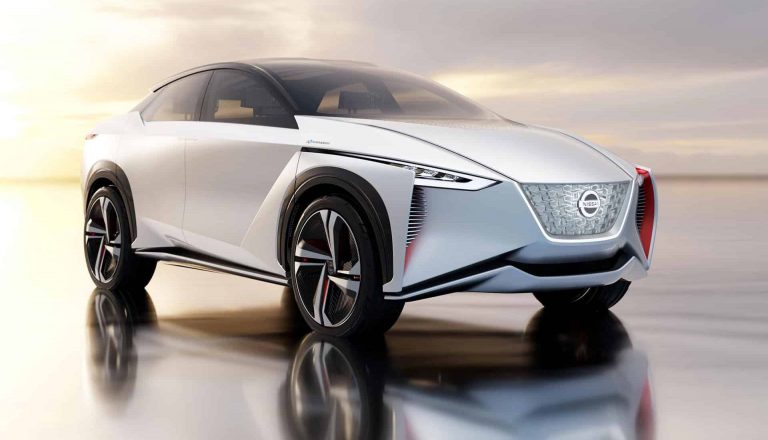
A pair of concepts unveiled at the Tokyo Motor Show suggest that the Nissan LEAF electric car is set to grow into a family. The iMx electric crossover, and the LEAF NISMO performance concept, are both widely predicted to evolve into production models in the near future. The electric platform that underpins the latest LEAF is also used, in updated form for the iMx, a four-seater crossover model. It offers all-wheel-drive thanks to the two electric motors, one on each axle, producing a total output of around 430hp with 700Nm of torque. A compact platform allows a completely flat floor, translating to generous interior space, and Nissan adds that the low centre of gravity of the electric powertrain will make the iMx an impressive vehicle to drive. However when occupants don’t want to drive the concept will be able to take over with its in-built ProPilot autonomous system.
Nissan iMx The Car Expert
Flat floor of iMx means lots of space inside.
The car’s battery can be charged conventionally or wirelessly and will also serve as a power source, able to pass power to the grid. It is also claimed to offer a driving range of more than 370 miles. Nissan is not currently revealing any future additional LEAF models, though personnel from the brand have suggested that an Electric Vehicle (EV) crossover model is in their plans. The styling of the iMx is very close to the latest production LEAF. There are also currently no clues as to any performance upgrades that will accompany the forthcoming NISMO version of the LEAF, set to launch in the near future as the brand seeks to make its EV standard bearer appeal to more image-conscious buyers. This process has become easier because the latest LEAF production model is both lower and wider than its predecessor, and the NISMO Concept on show in Tokyo includes the more aggressive body additions and styling that characterise models in the sporty sub-brand. In a further move to strengthen its EV image, Nissan will effectively replace sister brand Renault in the all-electric FIA Formula E single-seater championship for the 2018-19 season. And the brand has also unveiled a future EV safety measure at the show – ‘Canto’. Derived from the Latin for “I sing,” Canto is described as the future sound of Nissan’s electric vehicles. It will vary in tone and pitch depending on whether the vehicle is accelerating, decelerating or coasting, and will allow pedestrians to hear the normally virtually silent EVs approaching them.
Nissan LEAF NISMO The Car Expert
NISMO concept version of LEAF previews production model on the way.

Tokyo show debut for flagship Lexus LS+ concept

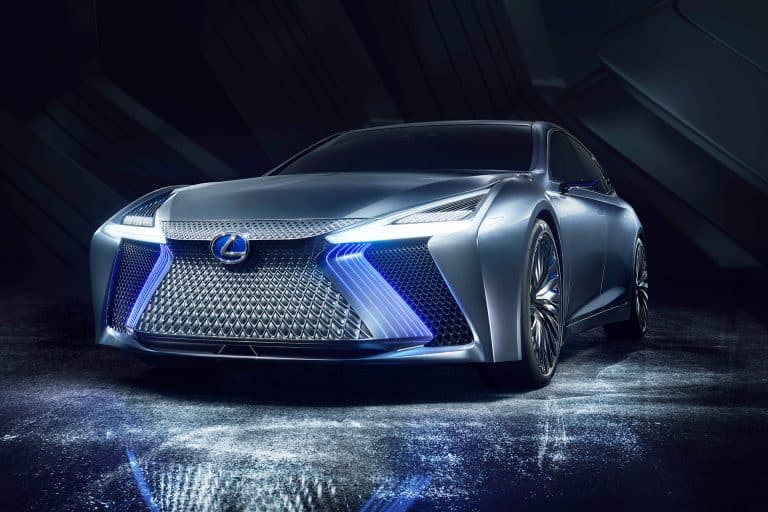
The Lexus LS+ Concept, unveiled at the Tokyo Motor Show, previews a host of autonomous driving technology coming to the brand’s future models. According to Lexus, the technologies are aimed at making driving both safe and smooth while still fun, and some of them are planned to feature on new Lexus models launched in the first half of the 2020s. Included on the LS+ Concept are systems dubbed Highway Teammate, set to allow fully autonomous-driving on motorways, from joining to exiting, in 2020. Drivers are already able to make use of systems that allow the car to autonomously merge onto motorways, make lane changes and diverge off them, as well as staying in lane and a safe distance from the vehicle ahead. The technology recognises actual traffic conditions, makes judgements and responds accordingly. The LS+ Concept takes this a stage further by communicating with a data centre to update its system software, so that new functions can be added. This can include information on roads and surrounding areas to increase the level of automated driving possible. “In effect, the vehicle can grow with its users, representing a new era for the way in which people can become emotionally attached to their cars,” Lexus says. Also featured on the Tokyo show concept are indications to the future direction of the  Lexus ‘L-finesse’ design language. The signature spindle grille is made bolder and features a shutter mechanism that improves cooling performance and the car’s overall aerodynamics. Both the headlamps and rear lights partly use lasers for illumination, and the side mirrors are electronic. Lexus launched its F range of performance models with the IS F in 2007 and also debuting at the Tokyo show are limited edition models to celebrate the 10th anniversary of the F line. The bespoke specification of these cars will include performance dampers and titanium exhaust silencers, and exterior styling details in CFRP composite material, complementing a matt grey paint finish and blue interior. Just 50 10th anniversary versions each of the RC F coupe and GS F saloon will be built, but European fans will miss out as they will only be sold in Japan.
£104K buys Mercedes-Benz S-Class Coupe

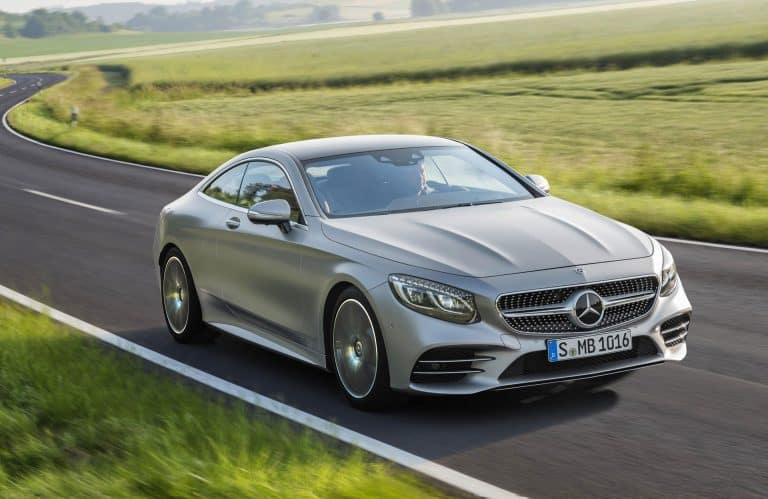
Dealers are now taking orders for the updated Mercedes-Benz S-Class Coupe, with prices starting from £104,115. Entry model to the flagship range, unveiled at the Frankfurt motor show in September, is the S 560, replacing the outgoing S 500. Major change to the model is its 4.0-litre bi-turbo V8 petrol engine, producing 469hp and 700Nm of torque. The S 560 will reach 62mph from rest in 4.6 seconds and go on to an electronically-limited 155mph, while returning combined-cycle fuel economy of 34mpg and producing CO2 emissions of 188g/km. Above the S 560 sit two AMG variants, the S 63 and S 65. The £128,015 S 63 uses AMG’s own 4.0-litre twin-turbo unit. With 612hp and 900Nm on tap the 0-62mph time is 4.2 seconds, alongside 31.7mpg and 203g/km. The S 65, costing from £189,615, is powered by a 6-litre V12 engine with 630hp and a torque figure of 1000Nm. This cuts another tenth of a second from the 62mph sprint time to 4.1sec, while like the S 63 top speed remains limited to 155mph. Official efficiency figures for the top model are 23.7mpg and 279g/km. Buyers will only be able to buy the S 560 in AMG Line trim. Highlights of the equipment list include wireless phone charging, air suspension; a 12.3-inch widescreen cockpit and infotainment display; a panoramic sunroof, a memory package including electrically adjustable seats and steering wheel and ambient lighting with a choice of 64 colours. Owners of the S 63 will also enjoy massaging seats and various AMG accessories including a sports exhaust and suspension, sports seats finished in Nappa leather, a bespoke grille and 20-inch alloy wheels. S 65 models, meanwhile add a Burmester high-end sound system, intelligent lights with Swarovski crystals fitted, a head-up display, 360-degree camera and extra comfort and driver aids. Standard on the S 63 and S 65 is the Driving Assistance package ranging across several electronic aids such as distance and steering controls, speed limit, braking and evasive steering assistance, and blind-spot and lane-keeping systems. The package also includes route-based speed adaptation, slowing the car down as it approaches junctions, roundabouts and toll roads. S 560 owners can buy the Driving Assistance package as a £2,580 option, or £1,695 if specified with the £4,995 Premium Equipment line, adding such niceties as Nappa leather, a 360-degree camera and the various extra comfort packages. First deliveries of the new S-Class Coupe models are expected in January 2018.

New Audi A7 Sportback revealed

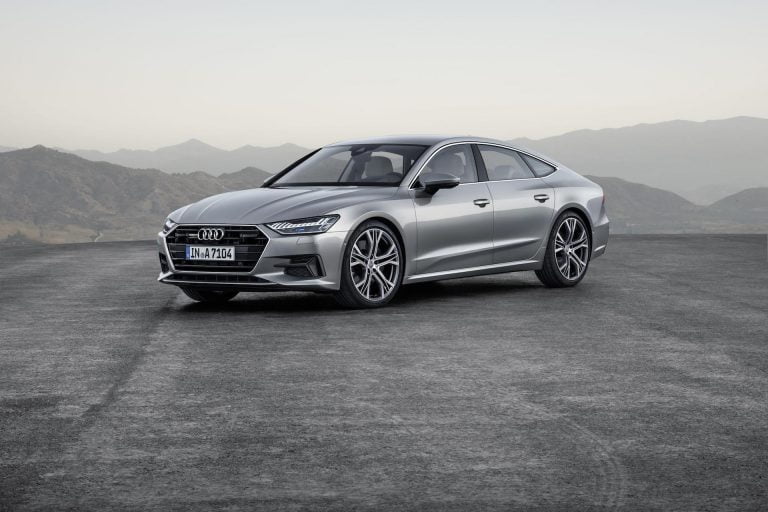
Audi has unveiled the second generation of the A7 Sportback, a sleeker, five-door liftback incorporating much of the technology from the new A8 saloon flagship. Although very similar in overall size and shape to the previous model, the second-generation A7 is an all-new production showcasing Audi’s latest design language and technological know-how. Its first public showing will be Los Angeles motor show in November, with UK orders opening early in 2018. The styling follows Audi’s current trend for an even larger grille and slimmer LED headlights up front, and slim LED tail lights at the back. Like the previous model, the new A7 Sportback has a large rear hatchback to access a 535-litre boot. Both regular (SE) and S Line trims are expected when the car goes on sale next year.
Audi A7 Sportback rear, October 2017
The new Audi A7 hasn’t strayed from the original formula.
Inside, the A7 Sportback follows the lead of the new A8 saloon by replacing the previous MMI controls with twin touchscreen displays. An optional virtual cockpit digital display replacing the traditional dials, as well as a head-up display projecting selected information onto the windscreen, will give the driver plenty of information at any time. Size-wise, it’s very similar to the old model, with maybe a fraction more knee room for rear-seat passengers. UK-spec cars will have three seats as standard in the rear, although the centre seat is not going to be very comfortable for longer journeys. The A7 Sportback will also provide higher levels of driver assistance and semi-autonomous driving, which will progressively ramp up over the anticipated life cycle of the car. The Audi AI system will allow the A7 Sportback to manoeuvre itself into and out of parking spaces and garages without a driver behind the wheel, and advanced cruise control support systems will help keep the car in its lane on motorways and A roads – much like the Tesla Autopilot system. At launch, the A7 Sportback will only be available with a 3.0-litre petrol V6 engine paired with a seven-speed automatic transmission. Additional petrol and diesel engines will follow, and presumably a hybrid as well. All versions of the vehicle will have ‘mild hybrid’ technology, using a 48-volt electrical system to allow the battery to control minor systems and potentially even switch off the engine while coasting. Final UK prices and specifications will be announced closer to the car’s UK launch early in 2018. Audi has suggested that prices will start at about £56,000 on-road. The new A7 will be in for a fight right from the start, however, as Mercedes-Benz is expected to unveil its new A7 rival, the third-generation CLS, in coming weeks.
Audi A7 Sportback interior, October 2017
The cabin takes much of its design from the new flagship A8 saloon.

Car makers struggle to predict diesel future

Sliding sales of diesel-engined cars, reshaping the UK market, have caught the automotive industry by surprise. The Car Expert has heard totally different opinions the future of diesel from two different brands within 24 hours, as manufacturers struggle to predict future trends and production quotas between petrol and diesel cars. While UK car registrations slumped by 9% in September – normally one of the two biggest months of the year for the market due to the change in registration plates – diesel registrations plummeted almost 22%. Year-to-date diesel demand has slid 14% to under 43% of the market, and the rate appears to be accelerating. A study commissioned by aftersales specialist Kwik-Fit suggested only one in six people planning to buy a new car in the next two years would consider a diesel.

Confusion driving customers away from diesel

Most in the industry agree that a wave of negative and often ill-informed publicity over the emissions of diesel, including the threats of bans, have hit the market – many of the ‘scare stories’ failing to discriminate between older, dirtier diesel engines and the newest-technology, more emissions-friendly units. “The confusion surrounding air quality plans has not helped, but consumers should be reassured that all the new diesel and petrol models on the market will not face any bans or additional charges,”  said Mike Hawes, chief executive of the Society of Motor Manufacturers & Traders (SMMT), following the release of the latest registration figures. However, only days after Hawes’ statement, Oxford City Council unveiled plans to start banning all petrol and diesel cars from Oxford city centre as early as 2020. Nowhere has the effect been seen more than in the SUV sector, the fastest-growing part of the UK market. More and more buyers are turning to petrol in a sector formerly dominated by diesel. “We expect our petrol/diesel split on the Stonic to be 65-35%,” Kia product specialist Monica Forgo told The Car Expert at the launch of the brand’s new Kia Stonic small SUV this week. “But it could be 70-30, and within year it might even be 80-20 – the market has changed so much and we are monitoring it very closely.” One day later, however, Citroën’s Dan Bullimore offered a very different view at the launch of the brand’s new C3 Aircross – a direct rival to the Stonic. “We expect the initial split to be 75-25 in favour of petrol, but to then revert to 60-40,” he said. “We have done a lot of work with our dealers to help them to explain to customers the advantages of our modern diesel engines and the differences between them and older units – particularly with regard to NOx emissions,” Bullimore added. All of which suggests that the only predictable aspect of the diesel market over the coming months is that it will be unpredictable…
Citroën expects diesel sales to return to its new C3 Aircross model.

Suzuki rolls out new finance offers

Suzuki has announced a range of new PCP finance offers across its model range.

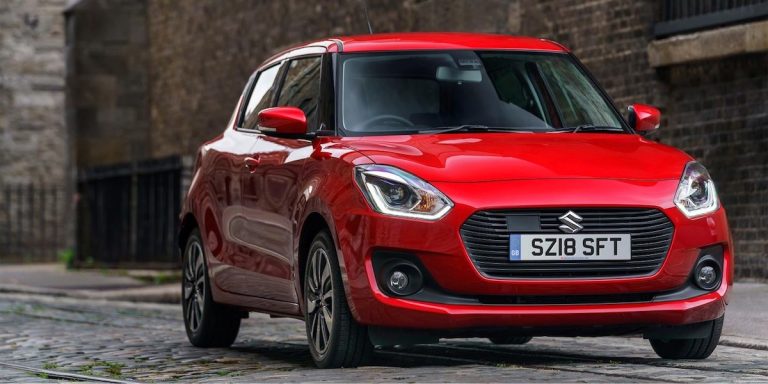
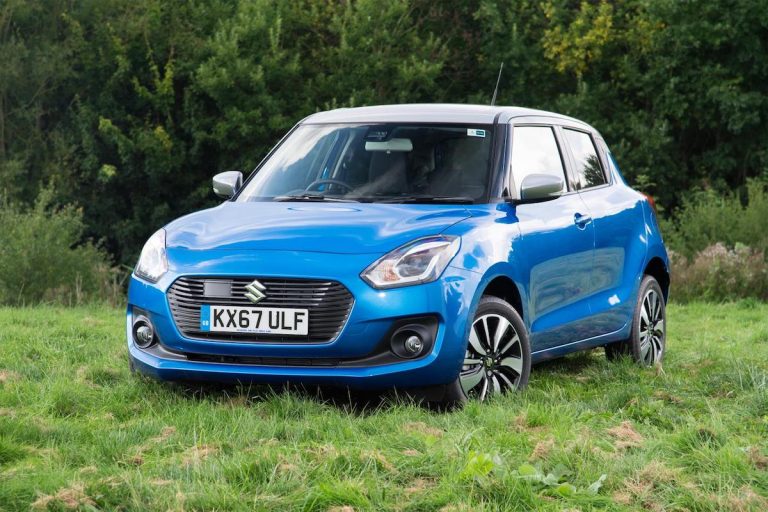
The best deals are on the Suzuki Swift and Vitara ranges, which benefit from 0% interest-free finance on a personal contract purchase (PCP). All other models are offered with a 5.9% APR representative (which is nothing to get too excited about), although Baleno and S-Cross models have deposit contributions of up to £2,500 available for finance customers, while Ignis and Celerio customers get free insurance and servicing if they take out the finance offer. The finance offers cannot be used in conjunction with any other offer, like Suzuki’s scrappage scheme that has just been extended.

On Suzuki Swift and Vitara models, the PCP offer is 0% APR, which means no interest and no fees. There is no minimum deposit required, although obviously the more you put in up-front, the less you will have to pay each month.

The Baleno range has deposit contributions of either £1,500 or £2,000 on selected models, if taken with a PCP that is offered at 5.9% APR representative. S-Cross models. The interest and fees will probably account for about £1,500, so the discount offered up front is then clawed back over the next 3-4 years.

Similarly, S-Cross models are offered with a £2,500 deposit contribution in conjunction with a PCP. Again, the 5.9% APR representative interest rate means that you will probably pay back about £2,000 in interest and fees by the end of the agreement.

Celerio and Ignis models get three years’ free servicing and 12 months’ free insurance (assuming you’re over 21 and have a clean licence with no recent insurance claims) if you’re taking PCP finance at 5.9% APR representative. Again, bear in mind that you will probably be paying somewhere from £1,000 to £1,500 in interest over the course of the agreement, so you’ll need to compare other insurance and servicing quotes to decide how much you would really be saving.

The Car Expert examines the fine print

  • These personal contract purchase (PCP) finance offers are for selected new Suzuki models only.
  • The offers listed on the Suzuki website are only examples, and you are entitled to adjust the deposit and annual mileage to suit your own needs (within limits).
  • The annual mileages shown on the website examples are all set at 8,000. This is a bit less than most drivers average per year, so make sure you are choosing an annual mileage allowance that suits your needs.
  • The excess mileage on the PCP packages is up to 14p/mile. That’s £140 for every 1,000 miles you go over your limit, so make sure you allow yourself enough mileage when setting up the finance agreement. The fee only applies if you are giving the car back and claiming the guaranteed future value (GFV). HP customers do not need to worry about excess mileage.
  • Cars have to be ordered and delivered by 31 December 2017.
  • The deposit contribution cannot be used in conjunction with any other advertised offer, like the Suzuki scrappage scheme.
  • The finance offers are provided through Suzuki dealers by Suzuki Financial Services. If a dealer offers you a finance deal that does not match these details or from another lender, it is not part of this offer.

As with any car purchase, work out your budget before you visit the showroom and don’t be persuaded to go beyond it – regardless of what the smiling sales executive suggests. They don’t have your best interests at heart, but The Car Expert does!

Winter offers from Suzuki

Kia Stonic review

60-second summary

What is it? The Kia Stonic is the brand’s first small SUV, entering UK’s the fastest-growing car market. Key features High-riding stance, new-tech petrol engine, strong connectivity and safety package Our view Kia’s first entry into the booming small SUV market does enough to make it a contender against an ever-increasing list of rivals. Based on the Rio supermini, it offers the more muscular visuals and high-riding stance that B SUV buyers demand, while being an easy car to drive and to live with – especially if one chooses the impressive 1-litre petrol engine. Rear-seat space is cosy, the boot more so, while the car’s road holding and handling are competent rather than impressive. But a reasonable specification and strong warranty add to the Stonic’s appeal. Similar cars Nissan Juke, Peugeot 2008, Renault Captur

Full review

Introduction

Everybody wants a small, or what the market describes as B-segment, SUV these days and so every manufacturer wants to make one – our reviewer went straight from the Kia Stonic launch to that of the Citroën C3 Aircross that will become a direct rival. Kia believes that a market that was worth 1.1 million vehicles in Europe in 2016 will reach 2.2 million by 2020. In the UK the Stonic is expected to take 10,000 to 15,000 sales in its first full year but the Korean brand’s number crunchers admit that judging by how many the larger Sportage takes, that figure could be conservative. This is a very important car for Kia. So what makes the brand so confident? Well the Stonic is, like every other B SUV, chasing a slice of the market established by the Nissan Juke – it’s a compact car that has been muscled up to offer more road presence that would a traditional small hatch. In fact, it is directly evolved from the Kia Rio supermini and built alongside it in South Korea. You can’t have all-wheel-drive in your Stonic, because no buyer these days wants SUV go-anywhere ability, they just require SUV go-anywhere looks. They also want lots of connectivity, one of today’s biggest selling points. And they want style and personalisation, which is why the upper of the two trim levels, First Edition, includes a two-tone body and roof paint job. All this is placed on an attractive body shell, the Stonic presenting a chunky but purposeful visual presence – basically it looks the part, if anything a little sleeker than most of its rivals.
Kia Stonic UK launch
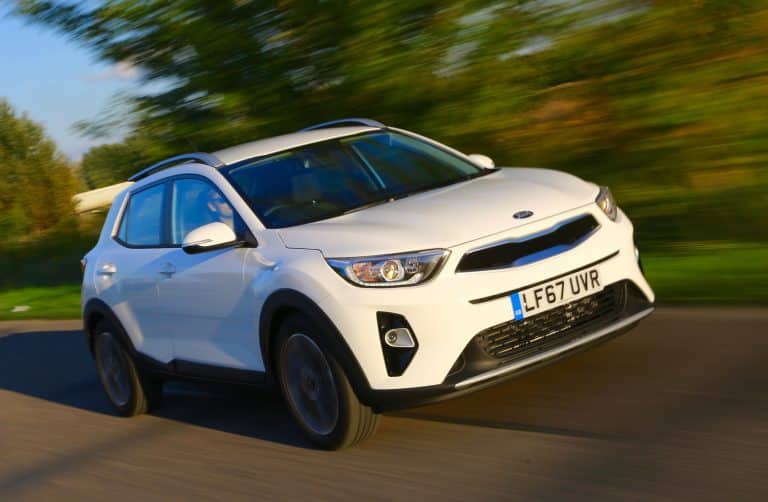
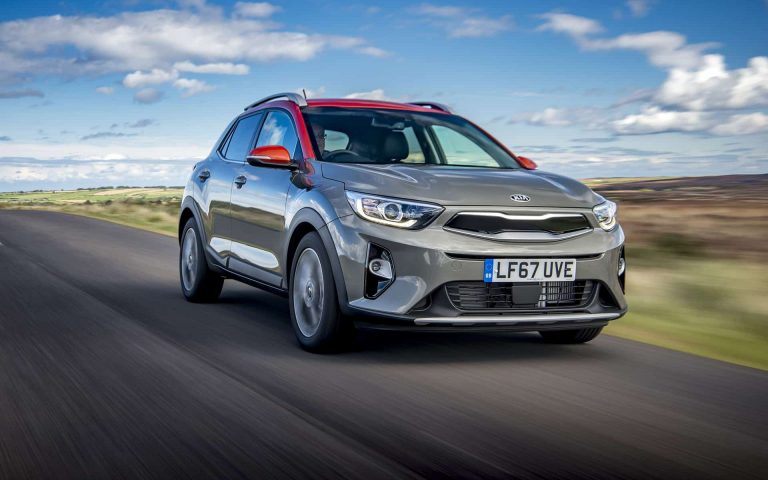
The Kia Stonic has a chunky but purposeful look

Buying and owning the Kia Stonic

Buyers of the Stonic are faced with an easy-to-understand line-up. There are just two trim levels, ‘2’ and ‘First Edition’, and three engines – the same selection offered to Rio buyers. The ‘old tech’ if you like is the 1.4-litre petrol unit in the entry-level car. It produces a mere 99hp, which means it takes an asthmatic 12 seconds plus to pass 60mph. And while doing that its combined-cycle fuel economy figure only just breaks 50mpg and it produces 125g/km of CO2 emissions. Compare that to the star of the range, the three-cylinder direct-injection turbo petrol unit. It’s smaller, just one litre in size, yet it serves up 120 horses. This slashes the 0-60mph time under 10 seconds, while also improving economy and emissions. At just £700 more than the 1.4, the 1-litre a worthwhile step up. Diesel fans are served by a single 1.6 unit, with 110 horsepower and of course by far the best economy and emissions. Traditionally supermini buyers have only wanted petrol engines, whereas SUVs have been heavily biased towards diesels. But tradition doesn’t count any more – Kia expects 60% of Stonic buyers to choose petrol and admits the figure could end up being a lot higher as negative publicity continues to drive down diesel sales. At the time of writing the Stonic has not been through a Euro NCAP crash test. The testers will be pleased to see a range of driver-assistance technologies available for the car, including Autonomous Emergency Braking and lane departure warning systems. They may be less delighted that these only come as standard on the First Edition model, being an option on 2 versions. The 2 does include Vehicle Stability Management as part of its Electronic Stability Control system. Not only does this protect against skidding, the system fights against the car running wide in corners and keeps it straight when braking heavily. Hill Start Assist is standard too. Those choosing the 2 grade also get some other desirable equipment, such as DAB radio, Apple Carplay and Android Auto smartphone compatibility, air conditioning and rear parking sensors. Upgrade to First Edition – an increase of £2,700 – and as well as the additional safety the extras include a two-tone paint job, keyless entry and starting, heated seats, auto air conditioning and a seven-inch touchscreen navigation system with connected services. And like all Kias, the Stonic offers one significant peace-of-mind feature – a seven-year, 100,000-mile warranty. Discounted service plans are also available.

Inside the Kia Stonic

Kia Stonic interior (The Car Expert)
Mostly grey with a dash of colour
The interior of the Stonic is typical of recent Kia models. Or more precisely, it’s very typical of the Rio, replicating the layout of its sister car. This is not a bad thing as the setup is user-friendly with all the buttons and switches falling easily to hand. However – rivals are upping their game. Soft-touch plastics and fine detailing are becoming increasingly the norm in this market, and in this area Kia could soon be left behind. The colour contrasts one gets with First Edition models are essential to lift the finish above the ordinary. B SUVs are not renowned for their space, being effectively jacked-up superminis, and the Stonic maintains the image. It’s okay up front, and the high seating position – the Stonic is 70mm taller than the Rio – gives the driver good visibility though the thick rear pillars compromise over the shoulder of oncoming traffic. In the rear, however, it’s rather more cosy, while boot space of 352 litres is a lot less than rivals from Peugeot and Renault. This does extend to 1,155 litres with the seats folded down.

Driving the Kia Stonic

Kia Stonic dynamic spray (The Car Expert)
Ride is firm but comfortable at higher speeds
On the launch event, The Car Expert drove Stonics fitted with the 1.0-litre petrol and the diesel engines – these will take by far the majority of sales. Both are smooth and refined in operation, delivering their power effectively. The diesel does make a bit of noise when accelerating hard, and overall the petrol is the most impressive powerplant. Ride quality is comparable to the Rio, which is no bad thing. The ruts and bumps of a typical UK road can make themselves felt in the cabin rather than being soaked up by the suspension, but at higher speeds they dial out for a slightly firm but comfortable ride. The steering is a little too light and devoid of feel, especially at higher speeds, but this also translates to agile progress through urban streets. In short, this is a very easy car to live with, confident and undemanding. And for that reason, it will likely tick most of the right boxes with its target market.

Summary

The Kia Stonic provides the brand with an effective contender in what is now a very important market. It does not stand out from the increasing crowd of B SUVs, but equally it is favourably comparable to most of its rivals. That, along with a reasonable amount of standard equipment and a strong warranty, should put it on many buyers’ shortlists.
Kia Stonic on road (The Car Expert)
The Kia Stonic compares favourably to most of its rivals

Suzuki extends scrappage scheme offer

UPDATE: Suzuki has announced that its scrappage scheme has been extended until the end of December 2017. Suzuki has become the latest car manufacturer in the UK to offer a scrappage scheme for older part-exchange vehicles against a selection of new models. An allowance of up to £2,000 is available on selected models across the entire Suzuki range, with the focus on higher-specification levels rather than base models. Owners trading in any vehicle (from any brand) with a Euro 4 emissions standard engine or earlier, and registered before 2010, are eligible for the scrappage allowance. All part-exchange vehicles traded in under the scheme will be scrapped rather than re-sold. The Suzuki offer is only valid this month, with buyers having to take delivery of their new vehicles by 30 September. UPDATE: This has now been extended, and buyers will have until 31 December to buy and take delivery of an eligible new Suzuki. The savings for each model and grade in the Suzuki Scrappage Scheme are as follows:
Model Variant Scrappage saving (inc. VAT)
Celerio SZ4 £1,000
Ignis SZ-T & SZ5 £1,000
Jimny SZ4 £1,000
Baleno SZ-T & SZ5 £2,000
S-Cross SZ-T & SZ5 £2,000
Swift SZ-T & SZ5 £2,000
Vitara SZ-T, SZ5 & S £2,000
 

The Car Expert checks the fine print

  • This offer is a part-exchange allowance, for selected used cars part-exchanged against selected new cars.
  • Your current car can be from any brand, but must be built to Euro 4 emissions standard or earlier. This will definitely be cars registered before 31 December 2009, although some cars had Euro 5 specification engines earlier than this.
  • You must be the owner of the part-exchange vehicle and the buyer of the new car (same name and registered address).
  • You must have owned the old car for at least 90 days, to stop people buying an old banger for £200 and then getting a £2,000 part-exchange allowance for it.
  • The scrappage price is fixed for any car part-exchanged as part of the scheme, not an allowance on top of the car’s value. You are effectively getting nothing for your car, but a discount on the new car (although it won’t be written that way on the contract).
  • You must order and take delivery by 31 December 2017.
  • This offer cannot be used on top of any other offers from the dealer, manufacturer or finance company. Other offers may prove to be a better option, depending on your circumstances.
  • The offer is not dependent on you taking any finance package or other products.
Suzuki Vitara - scrappage scheme 2017

Vauxhall Grandland X review

60-second summary

What is it? The Vauxhall Grandland X is the company’s entry into the very tough mid-sized SUV/crossover market. Key features Good specification levels, moderate off-road capabilities, practical design Our view The Grandland X is a critical new car for Vauxhall. The company expects that it will become its second-most popular model for retail customers after the Corsa supermini, and will be crucial in ensuring buyers continue to flock into Vauxhall showrooms for the next few years. Vauxhall has set its prices higher than many of its major rivals, but is offering a lot of kit for your money in return. Safety kit is very good on most models, although the base model SE misses out on key accident avoidance technology like autonomous emergency braking. Perfectly competent although never really compelling, the Grandland X ticks all the boxes that modern family cars need to tick. It’s comfortable, practical and well equipped for the money, and Vauxhall is expected to be competitive on finance offers once the Grandland X hits showrooms. It’s certainly impressive, but then so are most of the cars in this class. Similar cars Nissan Qashqai, Peugeot 3008, Toyota RAV4, many others…

Full review

Introduction

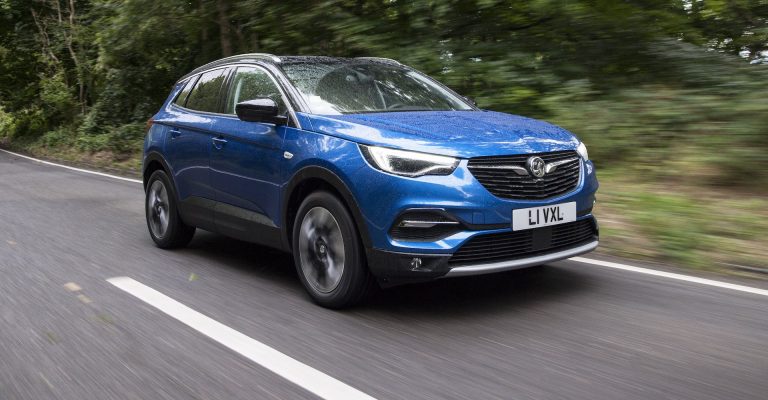
The Grandland X is a very important car for Vauxhall. European sales of conventional hatchbacks and saloons, like the Astra and Insignia, are steadily sliding downhill every year. In their place have come hordes of soft-roader SUVs; minimal actual off-roading capabilities but with tougher looks and higher seating positions. The Nissan Qashqai originally led the way, but now everyone is piling into the market and the vast majority of new cars we review here at The Car Expert are faux-by-fours of some sort. Vauxhall is playing catch-up in this area, having killed off its unloved and uncompetitive Antara model a few years ago. The new Grandland X marks a fresh start for the British brand in the mid-size SUV segment, with a large helping hand from its new French owners PSA Groupe. The Grandland X shares its underpinnings with other members of the family, like the Peugeot 3008 and 5008, DS 7 Crossback and Citroën C5 Aircross. Plunging into the middle of the pack, Vauxhall has set its prices higher than many of its major rivals – but is offering a lot of kit for your money in return. Once you start ticking options boxes on a Nissan Qashqai or SEAT Ateca, it largely evens out. And in any case, it will all depend on the finance and discounting offers that will inevitably follow the launch of the new model, and Vauxhall is not usually afraid to slash prices to boost sales. Ultimately, the Grandland X will need to be a sales success to help boost Vauxhall’s profitability and market share. The company expects that it will become the second-biggest selling model to retail customers in its range, behind the Corsa. Astra and Insignia sales are dominated by fleet buyers, so this car needs to pull regular punters into Vauxhall showrooms for the next seven years.
The Vauxhall Grandland X is handsome yet familiar in Elite Nav trim

Buying and owning a Vauxhall Grandland X

The Grandland X is being launched with four trim specifications, three aimed at retail customers and one targeting fleet buyers. There is a simple choice between a single 1.2-litre petrol engine and a 1.6-litre diesel engine (for an extra £1,375), with the petrol unit a bit perkier but the diesel probably better if you’re loading the car up with family and luggage. None have four-wheel drive, relying on trick software to enhance grip on loose surfaces like mud or snow. The Tech Line Nav model is cheapest on paper (about £22,300 on-road), but is intended as a fleet model for company car drivers and there are unlikely to be retail offers available to private buyers. The retail customer range starts with the SE trim level at about £22,500 on-road. That’s dearer than the Tech Line Nav and it gets much less standard equipment, which is because it’s basically a price-leader model that will only account for 5% of sales. But it will presumably look appealing in adverts for £199/month on a PCP or similar with attractive discounts. The mid-spec for private buyers is Sport Nav, which is more than £2,000 dearer than the Tech Line Nav – with that extra money only giving you a different style of alloy wheel. But it does give you an indication that there will be regular discounting on Sport Nav models to make them more competitive. Top of the line is the Elite Nav, which gets all the available gizmos and safety features. In terms of safety, the Grandland X scored five stars from Euro NCAP and has a good standard level of safety equipment. The base model SE doesn’t get autonomous emergency braking or other advanced safety systems, which is disappointing, but since Vauxhall doesn’t really expect to sell very many of those it’s not as much of an issue as it otherwise might be. The rest of the range comes standard with a safety pack, comprising autonomous emergency braking, driver drowsiness detection, lane assist and a forward collision alert.

Inside the Vauxhall Grandland X

Vauxhall Grandland X dashboard (The Car Expert)
The dash layout is clean and well thought out
The Grandland X might be based on the Peugeot 3008 and have very similar dimensions inside, but the layout is far more conventional than the Peugeot’s dazzling digital displays. That probably says a lot about Vauxhall’s intended market for the car; straight down the middle of the road and not too off-putting for technophobes or buyers of advancing years. If you’ve recently set foot inside a new Astra, Insignia or Crossland X, it will look very familiar. But that’s not necessarily a negative, because it all works very well indeed. Switchgear is well organised and logically laid out, showing that considerable thought has gone into it. A small but important example: the volume knob on most car stereos is placed on the left side of the dashboard. Why? Because it’s more convenient if your steering wheel is on the left-hand side. But on right-hand drive cars, manufacturers almost never bother to change the stereo controls, so British drivers have to reach further to grab the most frequently-used control on the dashboard. Vauxhall has been smarter than most, however, and put the volume knob right in the middle of the dash, under the infotainment screen, and within a comfortable arm’s reach for both driver and front passenger. I know, I’m petty. But it shows a level of thought absent in most new cars. The seats are comfy enough and the all-round visibility is reasonable, much like any other modern SUV – higher up than a regular car but still with thick pillars everywhere. Headroom and legroom are also fine both front and rear, although as usual the rear centre seat is not a pleasant place to spend any length of time. Boot space is good, and big enough for most family use. There’s a double floor so you can hide a few things out of sight, or lower the floor to fit some bulkier cargo if you need to. In other words, it’s very similar to most other cars in its class without quibbling about a few litres here and there. The same can’t be said about the glovebox, which is tiny and virtually unusable except for maybe storing an actual pair of gloves. Other storage for various odds and ends is also a bit mean, so you’ll need to get serious about slimming down the amount of unnecessary stuff you carry around in your car.

Driving the Vauxhall Grandland X

Vauxhall Grandland X - rear on-road
A comfortable drive – more so on the 18-inch wheels than the 19-inch wheels
Much like the interior, the Grandland X driving experience is entirely sensible and middle-of-the-road. It’s comfortable and quiet. It feels reassuringly predictable, with everything happening exactly as you expect it to. The steering is light for easy wheel-twirling in car parks, although there’s no great feel of what’s going on with the front wheels. The gearshift and clutch on manual cars are easy to use, so you shouldn’t have to endure agony with every gear change on long journeys. Like most modern diesel engines, the 1.6-litre unit in the Grandland X is functional rather than fun, but it does give the feeling that it will happily go all day with a carload of people and luggage and won’t break a sweat. The petrol engine is a bit zippier on solo trips and flat roads, but it is less likely to maintain that edge when you load it up with extra weight and point it up a hill. It is just under £1,400 cheaper though, so you’ll need to decide what you need your car to do before deciding which way to go. The ride is generally pretty comfortable, although the 18-inch wheels on the Sport Nav and Tech Line Nav models make life a bit more comfy than the standard 19-inch wheels on the Elite Nav models.

Summary

The overwhelming feeling from the Grandland X is that it’s a very competent car that can stand comfortably alongside its competitors, without offering anything compelling or unique. There’s not many reasons not to choose a Grandland X, but there’s also no “must-have” feeling about it. It’s impressive, but then so are most of the cars in this class. The Grandland X ticks pretty much all the boxes that modern families need to tick. It’s comfortable, practical and well equipped for the prices listed. The finance offers will be announced closer to the car’s on-sale date of December/January, but if the payments are comparable to a Qashqai or 3008 then the Grandland X will be a perfectly reasonable choice.  
There's not much not to like in the Grandland X
There’s not much not to like in the Grandland X

Safety upgrades on updated Lexus CT 200h

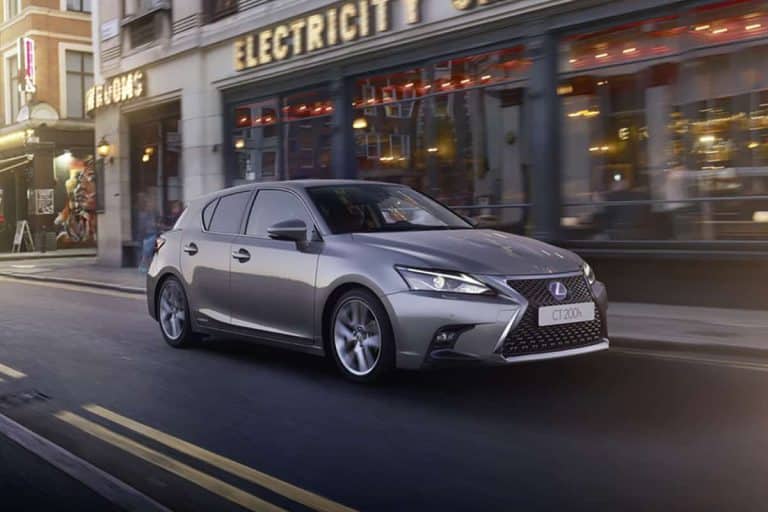
A series of updates to the Lexus CT 200h hybrid includes a significant improvement in the car’s safety package. Described by Lexus as the world’s first luxury hybrid hatchback, the CT 200h has sold 27,000 examples in the UK in the seven years since it launched, more than a third of the model’s entire European sales. Now a facelift package for 2018 model year cars includes new styling to the exterior and interior, a simplified grade structure and the inclusion of the Lexus Safety System+ package as standard on all but entry-level SE models. The safety package comprises active technology including a system to lessen the severity of collisions, adaptive cruise control, a lane-departure warning with an assistance system, automatic high-beam headlamps and traffic sign recognition. Styling updates are intended to give the car more presence. There is a new mesh pattern to the grille which no longer has a bumper dividing it up, while on the top  Premier and F Sport Premier Pack models the daytime running lights sit above the headlamps and flow into the car’s side styling lines. L-shaped lights top the rear-end modifications. Inside there are new upholstery and colour options, while the navigation system that is optional on all bar the entry-level model and standard on upper grades gains a larger screen, growing from seven to 10.3 inches. The simplified grade structure sees the entry SE model joined by a new Luxury grade, above which is the F Sport model with sports-pitched additions including performance dampers and bespoke styling. Top of the range remains the Premier model. No changes have been made to the CT 200h powertrain, the car still claiming a combined-cycle fuel economy figure of plus 73mpg and COemissions down to 88g/km. Order books are open for the revised car at prices from £23,495.

Volvo’s electric spin-off brand launches first car

0
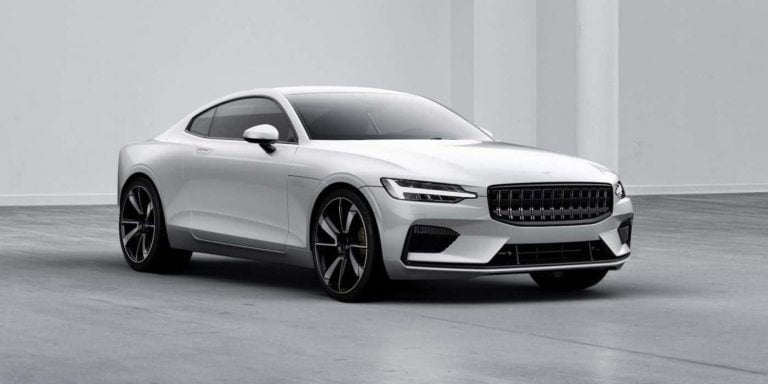
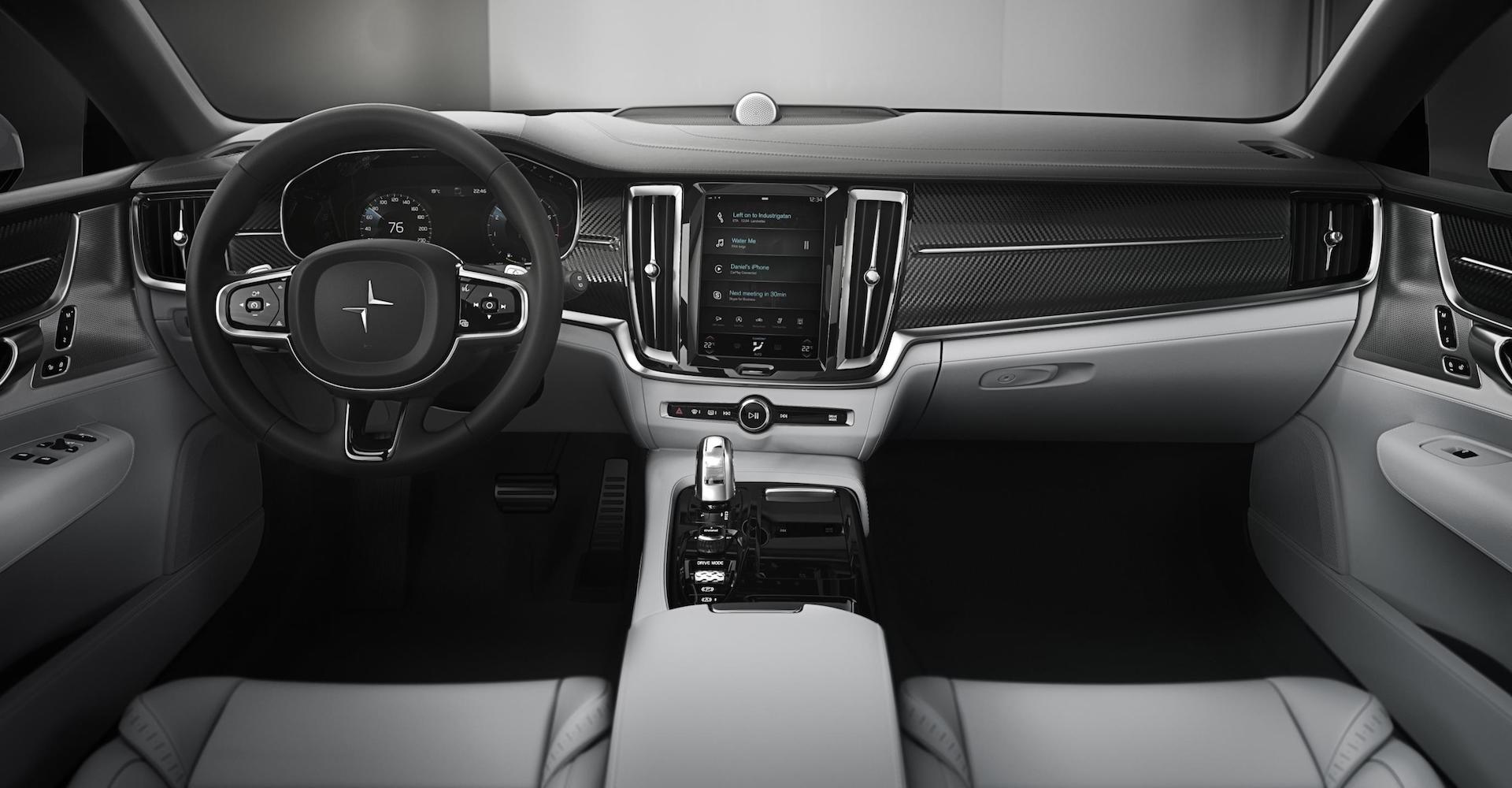
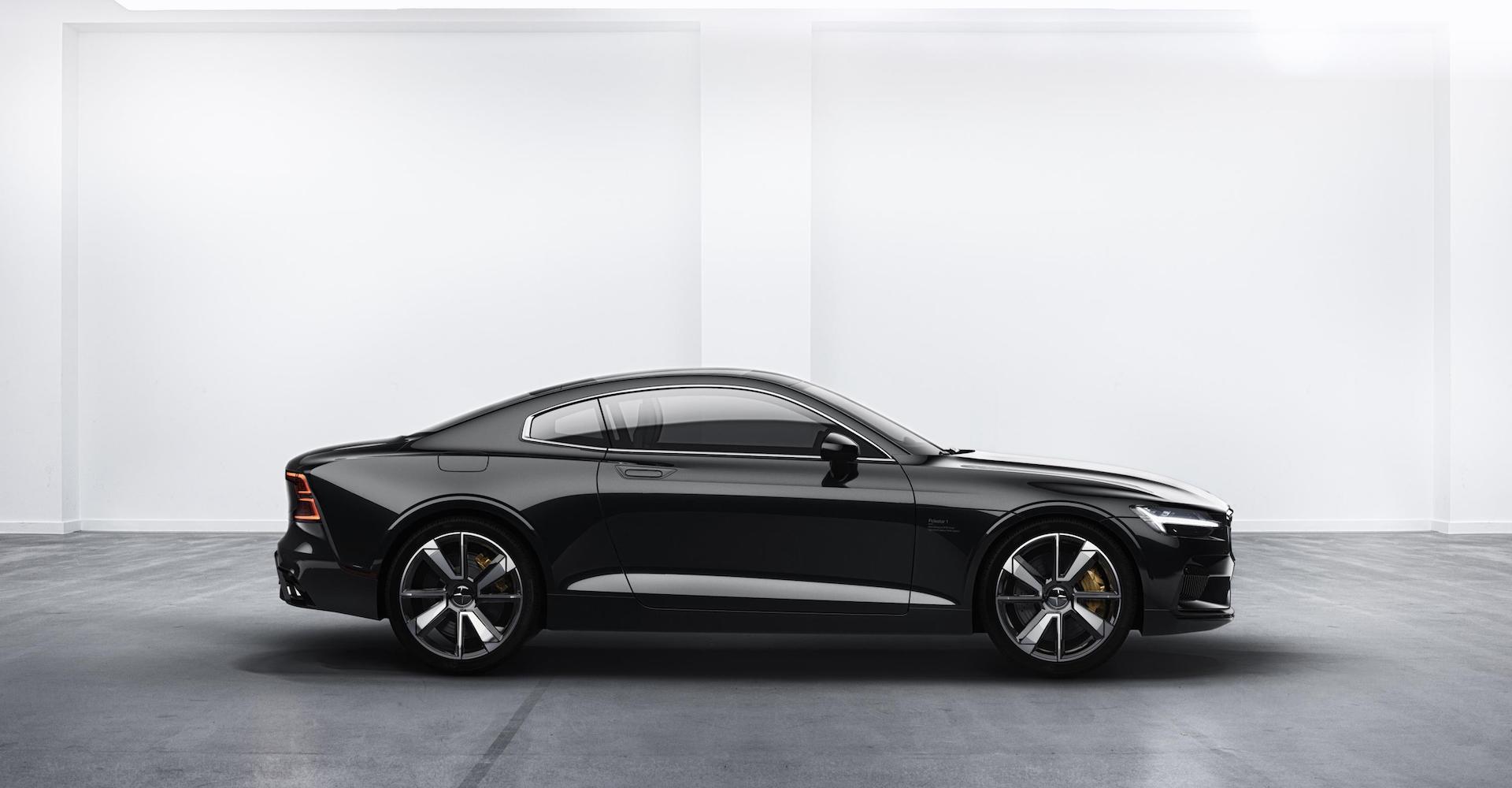
Polestar, the new performance electric car brand from Volvo, has unveiled its first new car, the Polestar 1. Set to start production in a new factory in China in 2019, the Polestar 1 is a 600hp, 2+2 coupé that is based heavily on the design of the 2012 Volvo Concept Coupé. It will be a plug-in hybrid electric vehicle, with two electric motors driving the rear wheels and a Volvo 2.0-litre petrol engine driving the front wheels. Polestar plans to build no more than 500 cars per year. Polestar claims that the car will be able to travel more than 90 miles on electric power alone, meaning that most drivers will rarely experience the petrol engine in regular use. For maximum performance, the petrol and electric motors operate together to deliver the maximum 600hp and 1,000Nm available. The Polestar 1 will be the flagship of the new range, and is expected to be the only model that will be built as a hybrid. Subsequent models are intended to be strictly electric vehicles. The Polestar 1 will be based on the same basic platform as Volvo’s latest models, but Polestar’s engineers claim that 50% of the platform is new and bespoke to this model. It is more than half a metre shorter than the Volvo S90 saloon, and extensive use of carbon fibre has helped save a claimed 230kg of weight. Despite not carrying a Volvo badge, the Polestar 1 is clearly an extension of the Swedish brand’s principles and design language – both inside and out. The new Volvo S90 and V90 evolved from the same stunning 2012 Volvo concept that inspired the new Polestar 1, and the shared visual identity is evident – even down to the “Thor’s Hammer” headlights and C-shaped rear lights. Most of the dashboard looks like it has been lifted straight out of the Volvo 90-series models, which is definitely no bad thing as those cars have been highly praised for their interiors.

Subscription service only, no cash buyers please

Polestar will also embrace Volvo’s new subscription service for its vehicles rather than traditional car ownership. The Polestar 1 and subsequent models will only be offered on an “all-inclusive” two- or three-year plan. This new premium leasing concept will also allow customers access to other Volvo and Polestar models on a short-term basis as part of the overall monthly payment. The vehicle can also be shared via a smartphone app, replacing a traditional car key. The new customer concept will include collection and delivery for servicing, and ultimately is likely to bypass the normal new car dealership model altogether. Polestar does intend to build a small number of retail facilities in prominent locations, but most customers are likely to arrange test drives and order vehicles online, never setting foot in a dealership.

First of a new family of Polestar vehicles

The Polestar 1 will be followed in short order by two more models, to be named as (wait for it…) the Polestar 2 and Polestar 3. Unlike the flagship GT, these will be purely electric vehicles running off battery packs and will also be more practical than the two-door model. The Polestar 2 will be a mid-sized car, aimed directly at the new Tesla Model 3. It is expected to launch in late 2019. It will be the entry-level model in the Polestar family, and will be followed to market by the Polestar 3, a larger “SUV-style” electric vehicle. Presumably, this will be something larger than a Volvo XC60 but smaller than an XC90. A launch date hasn’t been revealed, but is likely to be 2020 or 2021. All Polestar models are likely to be built in China. A new factory is being constructed in Chengdu, and is due to open in mid-2018 in time to start pre-production of the first Polestar 1 vehicles. It is not yet known what will become of the Polestar-branded Volvo performance models. Currently, the Volvo S60 and V60 Polestar models are offered, and a number of Polestar performance upgrades are available across the Volvo range.

SsangYong Rexton review

60-second summary

What is it? The latest SsangYong Rexton is a completely new version of the brand’s traditional large SUV. Key features Seven seats, fully off-road capable 4×4, major interior upgrades. Our view The new SsangYong Rexton is a major advance that will surprise those familiar with the brand and should persuade others to check it out. It remains a traditional large SUV with selectable 4×4 transmission and body-on-frame construction – this makes it less assured on the road but capable of serious off-road ability and a heavyweight towing capacity. Inside there is a great deal of space, especially in the enormous boot, but the major advance is in the quality of the fit and finish. This competes with rivals perceived to be much more upmarket. The Rexton can’t compete with those rivals for the efficiency of its engine, but it does come well equipped and with an impressive standard safety package that includes autonomous emergency braking. Similar cars Hyundai Santa Fe, Kia Sorento, Land Rover Discovery

Full review

Introduction

The big old SsangYong Rexton SUV signifies how many people still view the Korean manufacturer – a budget brand relying on old tech and basic quality, a bit like Kia and Hyundai once were. That view no longer really fits SsangYong, however. Recent new models, particularly the Tivoli and XLV, have brought significant growth to what is actually the oldest Korean brand of all, tracing its history back to 1954. Yet SsangYong also remains one of the smallest brands, and to continue the growth and close the yawning gap to its young upstart rivals, cars such as the Rexton have to be brought into line. The all-new, fourth-generation Rexton goes quite some way to achieving this, particularly in terms of looks, interior quality and refinement. But it’s not all about revolution. In an age of monocoque SUVs, the Rexton retains its old-style body-on-frame construction. So it also retains its membership of the declining club of proper serious off-roaders, but will its on-the-road refinement suffer as a result? And with a price tag for the upper models significantly increased over predecessors, can this really still be seriously considered as a low-cost option to the likes of the Land Rover Discovery?
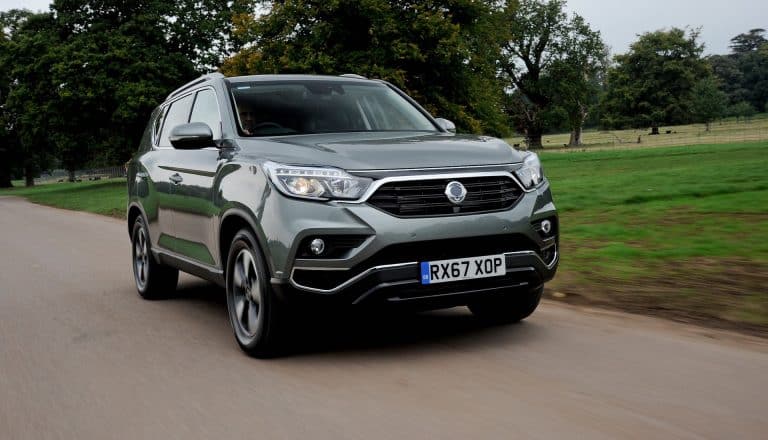
SsangYong Rexton large SUV review 2017 | The Car Expert
The new Rexton presents a much more modern image than the previous model

Buying and owning a SsangYong Rexton

Choosing a new Rexton will be quite a simple process. Mechanically they are all the same, using the same 2.2-litre four-cylinder turbodiesel of the previous generation, though with a small amount of extra power squeezed out of it. On offer is 181hp, along with 400Nm of torque, which in this heavyweight environment results in an 11.1-second 0-62mph time – adequate, if not exciting. The engine can be combined with a six-speed manual gearbox but an attractive option is the seven-speed automatic, which is a unit sourced from Mercedes-Benz and behaves very well. And every Rexton comes with selectable all-wheel-drive – no pussy-footing front-wheel-drive only models here. The unit boasts a low-ratio mode, and with the car’s high-stance providing steep approach and departure angles, and Hill Descent Control, the Rexton can hold its own when the going gets rough. One other major plus is the car’s towing weight – the Rexton can haul 3.5 tonnes, which will make it attractive to the likes of the equestrian community, and allows it to compete with much more upmarket rivals such as the Discovery. Prices start from £27,500 and range across three trim levels – EX, ELX and Ultimate. Some have questioned the £37,500 price of the latter for a brand still considered a budget option, but this does pay for a lot of equipment. One can have the entry EX level with seven seats, while it also boasts 17-inch alloy wheels, manual air conditioning, a smart audio system accessed through an eight-inch screen, power/folding door mirrors, front and rear parking sensors, automatic headlights and wipers and cruise control. The standard safety package is notable too – the likes of Euro NCAP will no doubt point to this budget brand offering autonomous emergency braking as standard along with forward collision and lane departure warnings, high beam assistance and traffic sign recognition. An extra £4,500 buys the ELX – the wheels get an inch larger, and there are such niceties as leather upholstery, dual-zone and rear air-con, heated and powered front seats and keyless entry. The central infotainment screen grows to nine inches, which is useful as it now includes TomTom navigation. There’s a digital instrument cluster and nine instead of six airbags. Ultimates only come in five-seat form and with the seven-speed auto transmission. The £37,500 price tag also pays for such desirables as 20in alloys, high-intensity headlights and LED fog lights with a cornering function, quilted nappa leather and a smart tailgate that opens or closes with a wave. The safety package jumps too  – a 3D around-view camera is included, as are lane-change assist, blind-spot detection and rear-cross traffic alert driver aids.

Outside and Inside the SsangYong Rexton

SsangYong Rexton dashboard | The Car Expert review 2017
Interior trim is finished to a notably high standard.
On first viewing, the new Rexton presents a much more modern image. The latest styling treatment follows the LIV-2 concept unveiled at the Paris Motor Show in September 2016, and the look is smoother throughout, which allows the car to appear far more confident alongside rivals in the car park. It’s not quite so pleasing from the rear, as the Rexton still boasts an enormous rear overhang – this machine outstretches the Hyundai Santa Fe by some 150mm though at 4850mm in length it remains 100mm shorter than a Volvo XC90, another car SsangYong would like to steer customers away from. The advantage of the stuck-out rear end becomes apparent once inside the car. Everywhere is spacious, front and back, and if you choose a five-seater version you get a gargantuan 820 litres – a lot more than the longer Volvo even before you think of folding the seats. Making even more of an impression than the interior space, however, is the quality. Admittedly on the launch event we did not get to try the entry-level EX model, but the interior trim on the ELX and Ultimate versions is to a notably high standard. Evolved from the Tivoli, it features plastics that are soft touch and the chromework neatly detailed. It’s slightly too ‘blingy’ but also a world apart, in a good way, from previous Rextons.

Driving the SsangYong Rexton

SsangYong Rexton rear view | The Car Expert review 2017Taking the Rexton onto the road we were ready to be unimpressed, due to the designers retaining that body-on-frame construction. Off-road such a build provides the robustness one needs, as well as the impressive towing ability, but it doesn’t usually translate to the predictable, higher-standard handling of more modern monocoque designs. The Rexton maintains the trend, but it’s not as bad as one might expect. Cruising on a motorway it is composed and noticeably quiet – the designers have worked hard on cutting noise, vibration and harshness out of the car and to a great extent they have succeeded. In corners the car is not quite so assured – the softness of the suspension can make itself felt on sharp corners with a degree of body roll, but again it’s not excessive and a whole lot better than previous versions of the car. The diesel engine plays its part too – under acceleration it remains refined, only really producing any significant audio note when really accelerated hard. However it can’t compete with more modern, downsized units in terms of efficiency – 36mpg and plus 200g/km emissions levels are somewhat old generation in today’s market.

Summary

SsangYong has improved the Rexton to an extent that will greatly surprise those who know the brand – especially once they get in it. The car will also score highly on the level of equipment supplied, in particular the safety package – justifying the now more substantial pricing. Whether such first impressions will lead to purchases will likely depend on the requirements of the buyer. If you are looking for an SUV for the road, with car-like handling and great efficiency, then the Rexton is not for you. If, however, you want a strong, robust 4×4, that can tow a heavy caravan or trailer not only to the scenery but through it, but you also want rather more than the low-rent, black plastic interior that formerly was a signature element of any vehicle with versatility, then you should check out the SsangYong Rexton.
SsangYong Rexton with horse box | The Car Expert review 2017
The SsangYong Rexton is a strong, robust 4×4 that can tow a heavy caravan or trailer not only to the scenery but through it

£32K buys Kia Stinger flagship GT

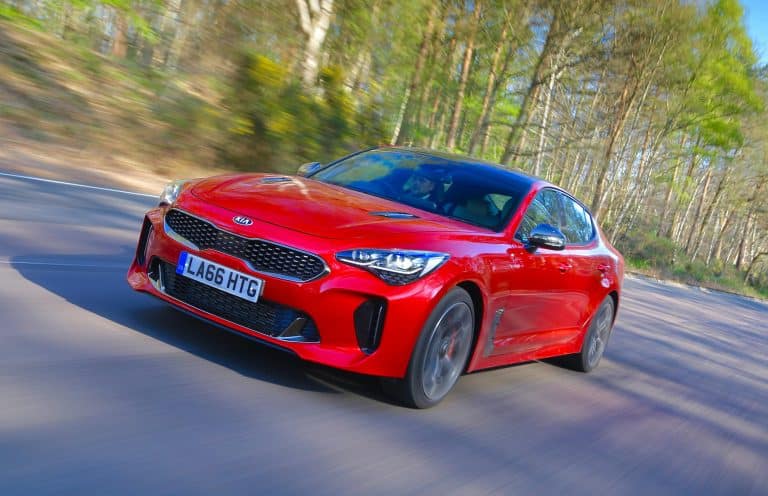
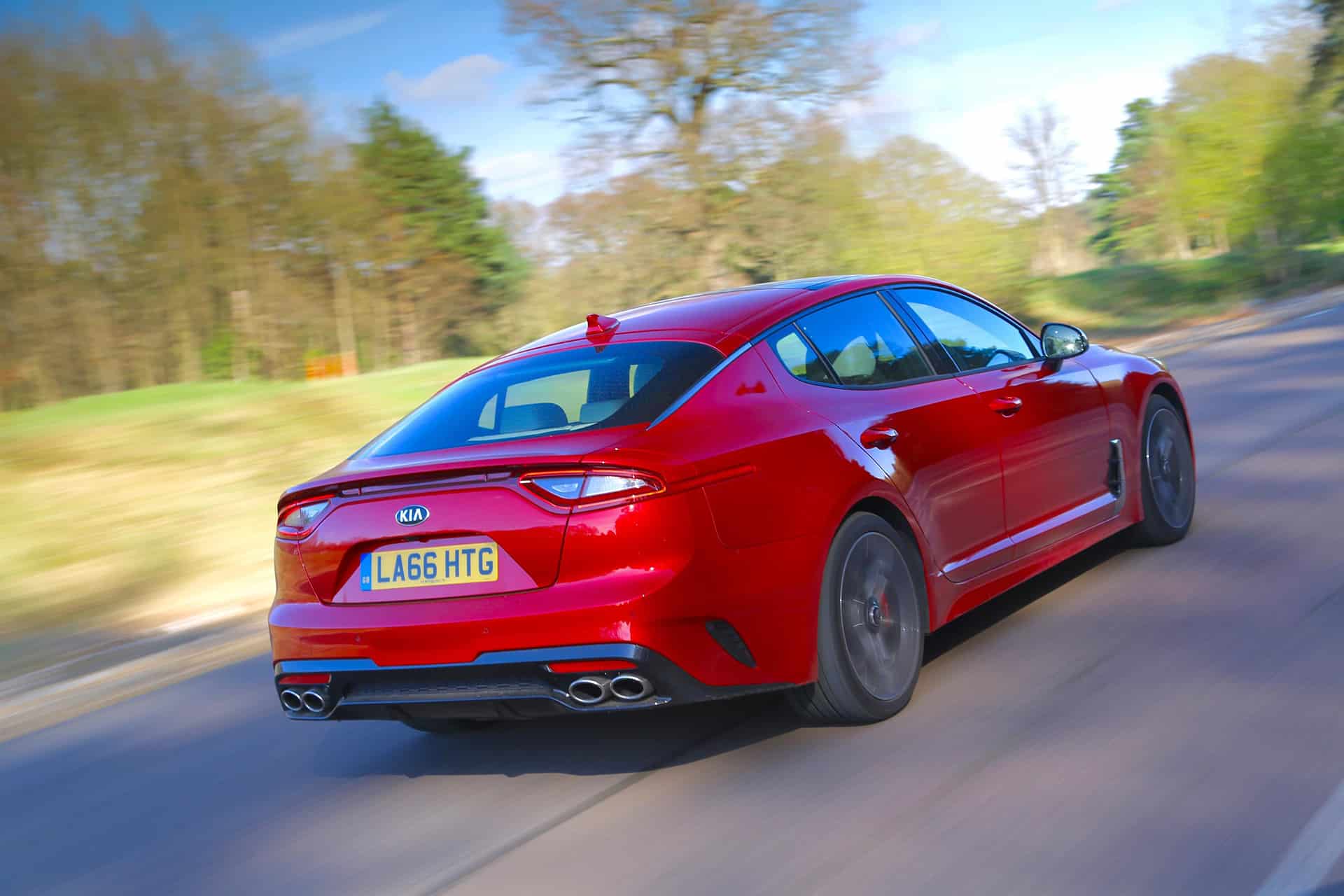
Prices have been revealed for the Kia Stinger, the brand’s first GT, its first rear-wheel-drive car to be sold in the UK and set to become a flagship model. Order books are now open for the Stinger and when it goes on sale in January 2018, the car will cost from £31,995 to £40,495. Evolved from a concept first unveiled at the Frankfurt Motor Show in 2011, the Stinger is regarded as a game-changing model for the brand; “(It is) a car to convince people, if anyone still needs convincing, that the company has put the days when it was a value-driven brand mainly concerned with durability and practicality behind it,” Kia states, adding that the car emphasises that Kias can now be desirable in their own right. Kia Stinger The Car Expert

Five models, three engines

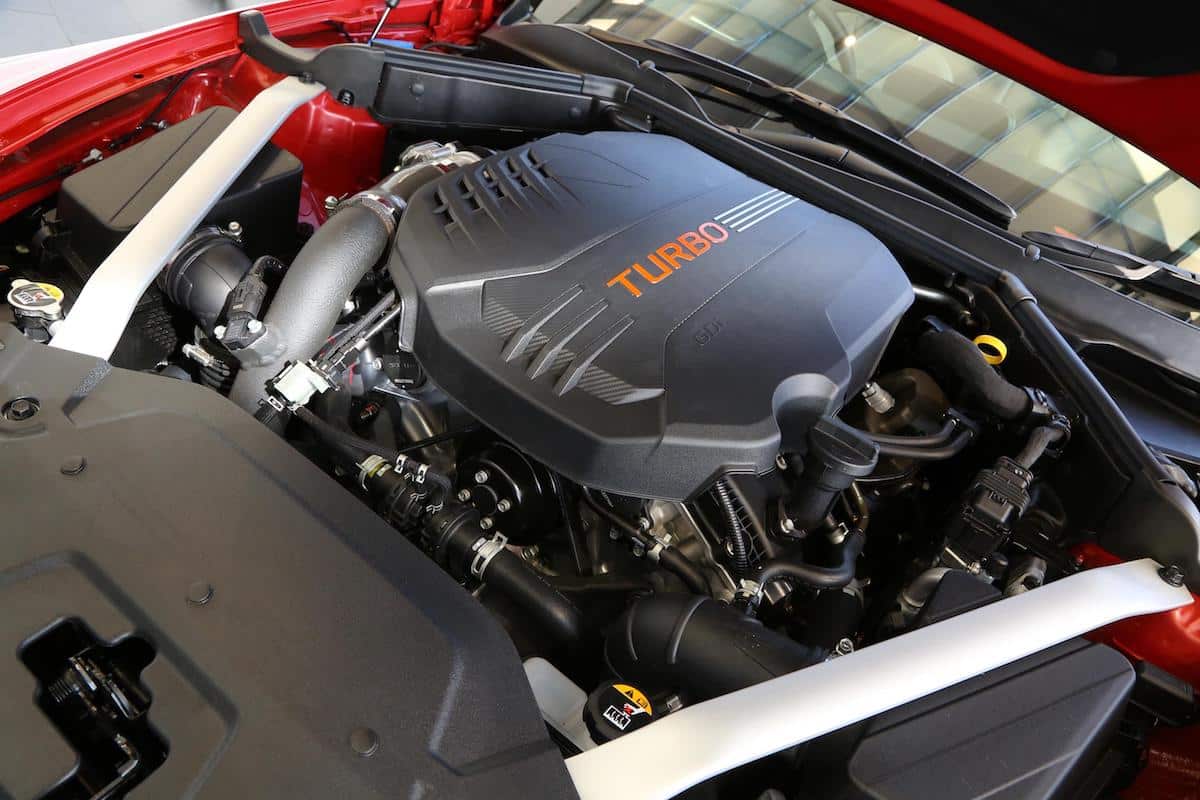
Five versions of the Stinger will be available, based on three trim grades (GT-Line, GT-Line S and GT-S) and three turbocharged engines. Both the GT-Line and GT-Line S will be offered with either a 247hp 2.0-litre four-cylinder petrol engine or a 200hp 2.2-litre turbodiesel. Range-topper will be the £40,495 GT-S, powered by a twin-turbo 370hp 3.3-litre V6 engine capable of taking the car to a 4.7-second 0-62mph time and on to a top speed of 168mph. All versions will use an eight-speed automatic gearbox with five different shift and throttle programmes and the option of full manual control using the steering wheel-mounted paddles. Kia describes a GT as a high-performance luxury car rather than a sports car and adds that the Stinger’s specifications reflect this. All versions include an 8-inch touchscreen navigation system with European mapping and a Traffic Messaging Channel. This is linked to Kia Connected Services with TomTom, offering information from traffic, weather and local searches to speed camera locations. Android Auto and Apple CarPlay connectivity is included, as is Bluetooth with voice recognition and music streaming. A reversing camera, front and rear parking sensors and a seven-inch digital instrument cluster feature too, along with a head-up display displaying speed and navigation instructions and a first for Kia in the UK. Kia Stinger engine

MINI 1499 GT recalls classic sports model

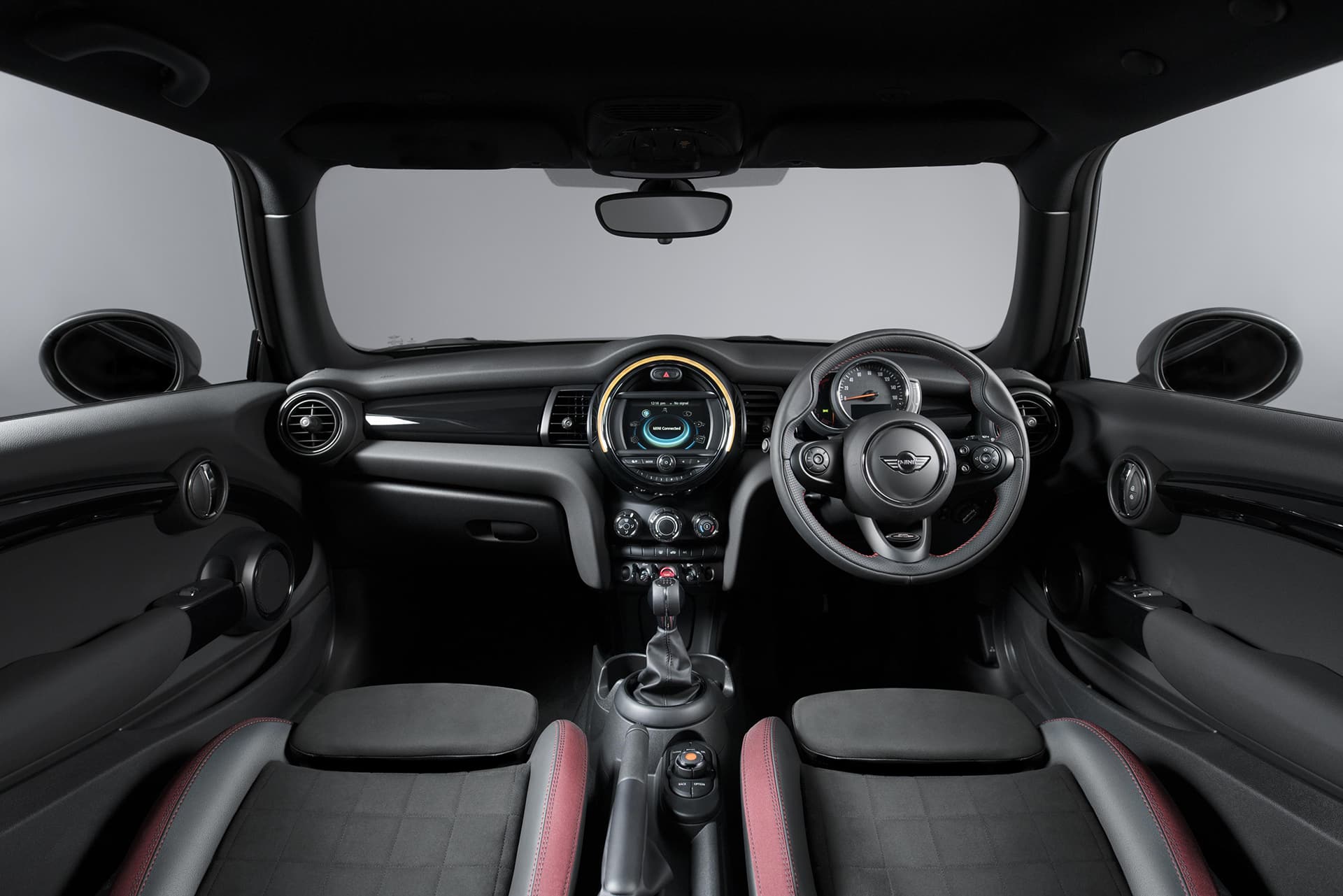
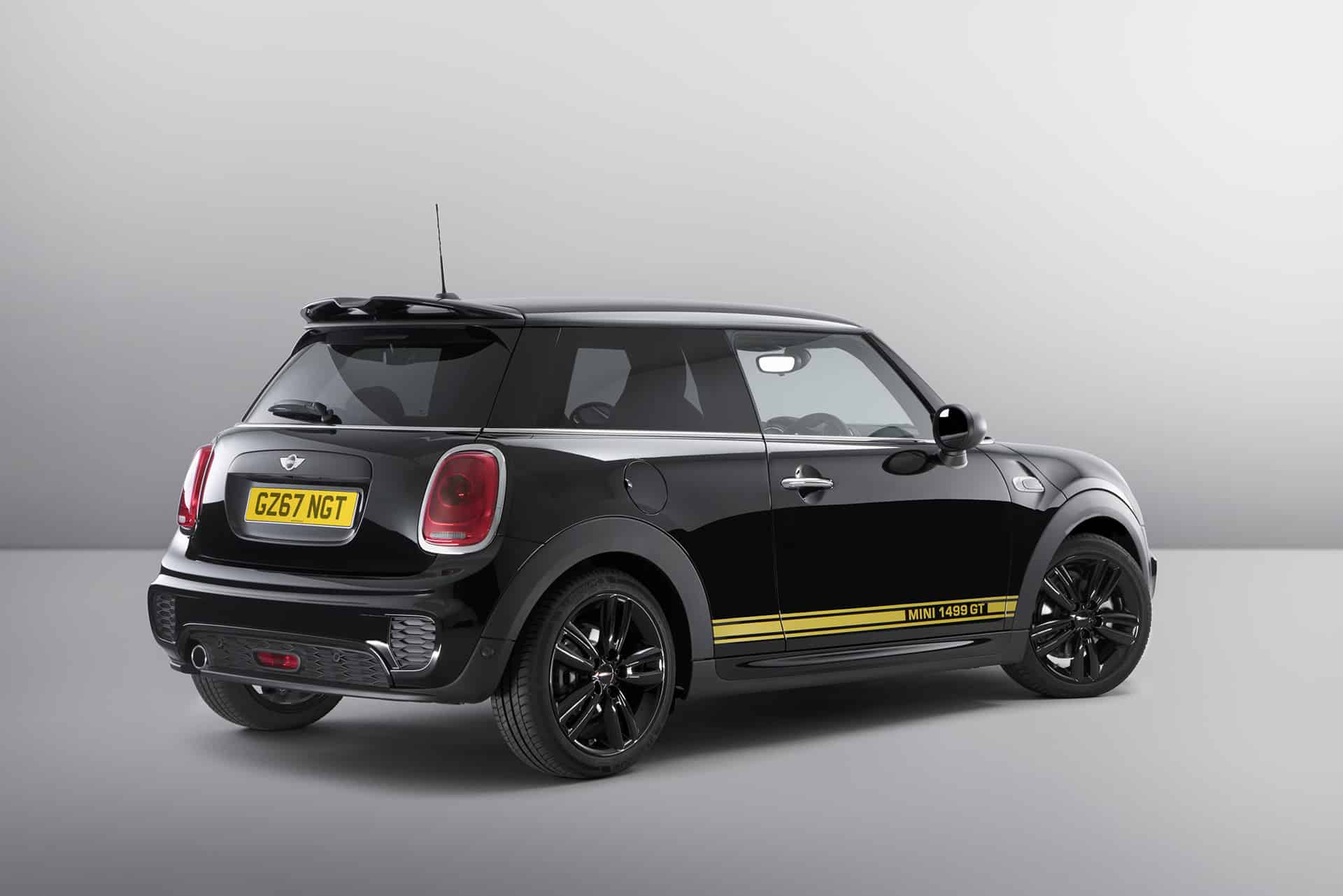
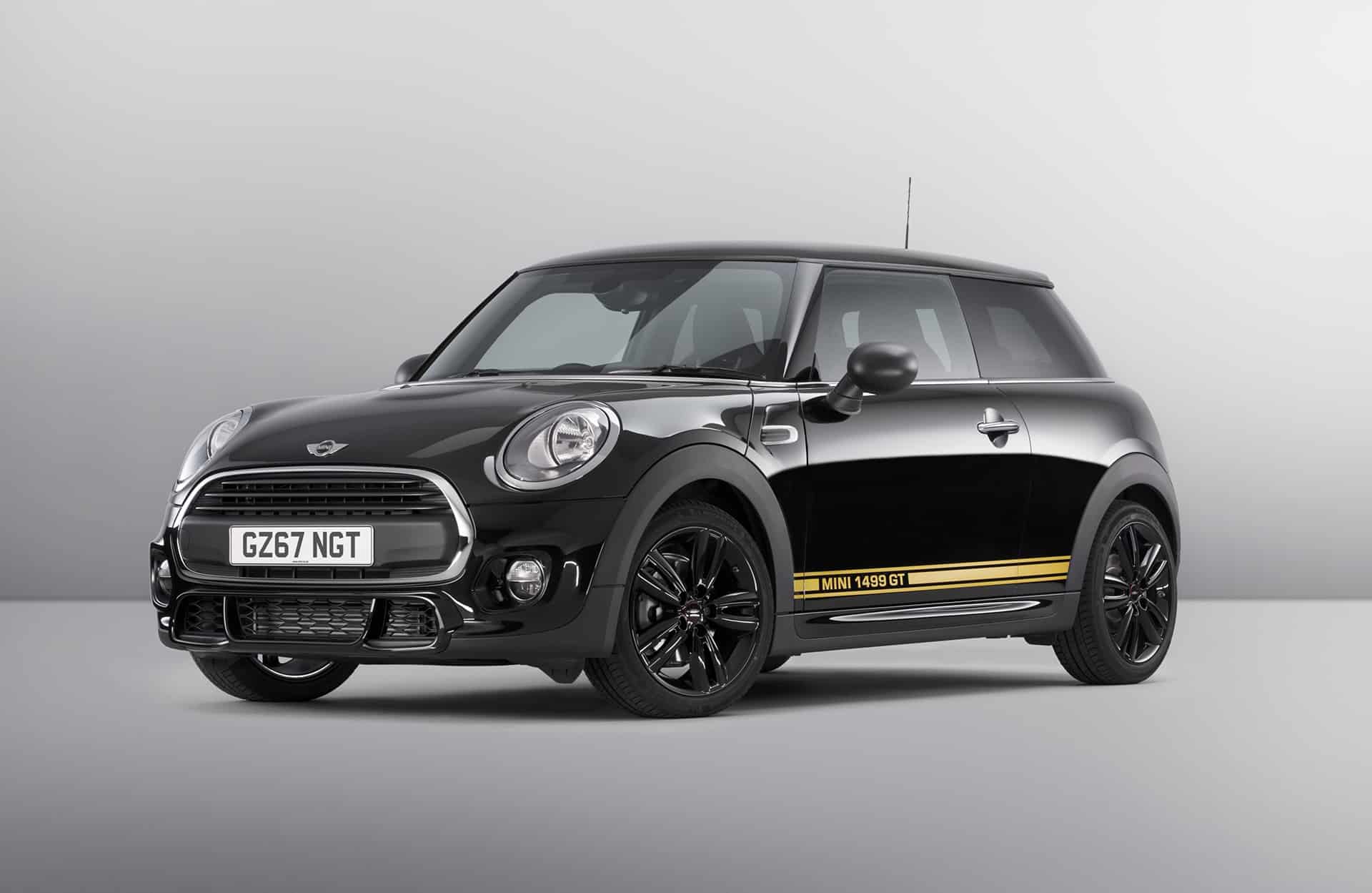
The MINI 1499 GT special edition is inspired by a classic version of the small car but also signifies a change in powertrain direction for the BMW-owned range. The 1499 GT is inspired by the 1275 GT, a sports-pitched version of the original Mini launched in 1969. Obvious links to the original include the distinctive stripes running along the sides under of the doors, and the increased engine capacity. However, while the 1969 car achieved its 1275cc capacity by boring out the engine of the then 998cc standard Mini, the new special edition replaces the 1.2-litre engine previously used in the MINI with a 1.5-litre three-cylinder turbo unit – it is understood the 1.2 engine is being phased out of the range to make it easier for the car to meet future emission regulations. In the 1499 GT, the new engine produces 102hp and takes the car through 62mph from rest in 10.1 seconds. Mechanically the only other change over the standard car is the addition of sports suspension.

Yours in black or white

However, the special edition boasts a number of styling and equipment upgrades. It is only offered in black or white, with the side stripe in gold or black accordingly. A John Cooper Works Sport Pack is added, consisting of 17in black alloy wheels, dark tinted windows and white indicator lenses, while the car also gains a JCW styling pack of bespoke front and rear bumpers, side skirts, spoiler and door kick plates. Inside there are sports seats in a Dinamica fabric and leather combination, a perforated leather steering wheel with red stitching and black interior trim. The wheel includes controls for various functions, while cruise control and smartphone compatibility are also part of the package. Order books are open for the new car, at prices starting from £16,990, and the 1499-strong production run will only be sold through UK dealers. MINI is also launching a new finance package with the 1499 GT – ‘MINI Ready Fuel Go offers one year’s inclusive insurance with a £299 customer deposit and £299 monthly payment.

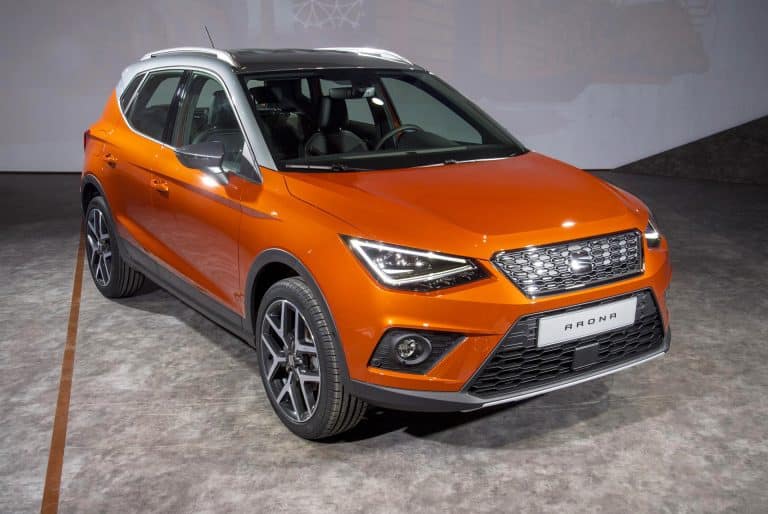
SEAT Arona crossover goes on sale at £16.5K

Dealers are now taking orders for the new SEAT Arona, as the Spanish brand ramps up its SUV offensive. SEAT’s first compact crossover model will arrive in showrooms on 17th November at prices from £16,555. It will slot into the brand’s line-up alongside the larger Ateca that has already proved highly successful. With the Arona SEAT is also debuting a new grade format which the brand says will make choosing the right new car much easier for buyers. Instead of being offered basic grades with various options or option packs, customers will simply choose their trim level, engine and body colour.

Trimming the range

To accommodate the new thinking, the number of trims available is extended to six. The SE, FR And Xcellence trims familiar from other SEAT models are joined by more extensively equipped variations on each – SE Technology, FR Sport and Xcellence Lux. Entry-level SE models include metallic paint as standard, and also come supplied with 17-inch alloy wheels, a two-tone roof, black roof rails, chrome front grille, power-adjustable door mirrors, LED daytime running lights and tail lights, front cornering fog lights and automatic headlights. Highlights of the interior include air conditioning and a five-inch touchscreen controlling a six-speaker audio system with DAB radio, Bluetooth and aux-in/USB connections. The standard active safety package is quite comprehensive, including frontal collision avoidance, hill hold and tiredness recognition systems, as well as cruise control.

Technology package

Those wanting more toys will be able to choose the Technology variant – this adds a larger, eight-inch colour touchscreen and a navigation package including a 3D map display and voice control. Smartphone compatibility is also part of the Technology package, MirrorLink, Apple CarPlay and Google Android Auto phones able to connect through the SEAT Full Link system. A wireless phone charger, an extra USB port, two SD card slots and rear parking sensors also feature. Five powertrains will initially be available for the Arona – a 1.0-litre three-cylinder TSI petrol engine with 95 or 115hp, a 1.5 four cylinder with 150hp, and 1.6 diesels producing either 95 or 115hp. Depending on model chosen they will be available with five or six-speed manual gearboxes and a DSG auto unit. SEAT Arona The Car Expert

Porsche tops growing hybrid resale values

Thinking of buying a hybrid car? Your best bet is the £80,000 Porsche Panamera – at least when you come to sell it again. In a very bad month for new car registrations in September, the only bright spot was the alternatively-fuelled market, which includes hybrids and full electric cars. As sales of petrol cars slipped back just over 1% and diesels plummeted more than 22%, the alternative fuelled sector jumped 41%. At 94,125 cars year-to-date, it still represents just 4.6% of the overall market, but that is up from 3.3% a year ago.

Premium hybrids retain value

According to data specialists hpi, the Porsche Panamera tops the hybrid table in terms of Residual Value (RV) – how much of the original buying price an owner will get back when they sell the car after three years or 30,000 miles. The four-seater Porsche will lose on average just £14,515 from its £79,715 average new price, giving it an impressive RV of 81.8%. In second place comes the BMW 7 Series hybrid at 75.7%, losing £17,983 from its average £73,717 price, and then the much sought-after Volvo XC90 SUV, with a 70.6% RV cutting £18,489 from its average £62,817 new price. In fact, the top of the hybrid RV table is dominated by the premium makes, and it’s only when one looks down in seventh that more mainstream models start to appear. The Volkswagen Passat petrol hybrid, selling for an average of £39,073, will return 64.5% of that price after three years, losing £13,891. The only other non-premium brand to make it into the hybrid RV top 15 is Kia, with its Optima. This retains 56.1% of its value, losing £14,890 from its £33,940 average selling price. According to hpi senior editor James Dower, the expanding choice of hybrid models is now providing credible options for buyers after all types of car, from small superminis to large SUVs” “Petrol hybrid values increased for the fourth month in a row with average values rising by 1.1%,” Dower says. “It’s a growing market as we see more manufacturers releasing new models with hybrid powertrains and it appears that consumers have embraced the technology with few concerns over the life of a battery.” Hybrid resale values The Car Expert

Renault offers interest-free finance on selected models

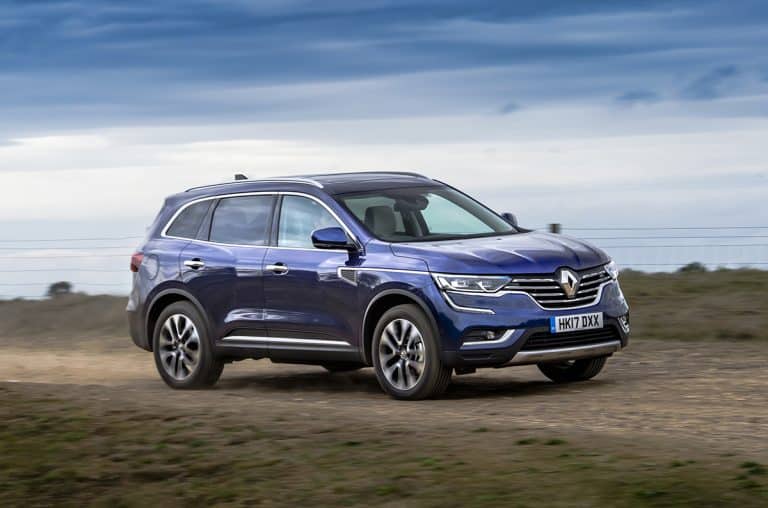
Renault has launched a range of interest-free PCP and HP finance offers on selected new vehicles for the rest of 2017. Three-year 0% APR (no interest or fees) personal contract purchase (PCP) offers are available on the Renault Clio, Captur, Kadjar, Megane, Scenic and Koleos model ranges. For customers looking for a four-year term, the interest rate goes up to 4.9% APR. Minimum customer deposits apply to these 0% offers, ranging from £499 for Clio and Captur to 10% for the other models. Most models in the Renault range are also available with a four-year 0% APR hire purchase (HP) offer. This offer requires a 40% minimum customer deposit, and additional deposit contributions are available. These range from £500 for a Twingo up to £2,000 on a Kadjar and Megane. Scenic/Grand Scenic and Koleos models have hire purchase offers at 2.9% APR rather than 0%, but do come with £2,000 deposit contributions.

Big discounts on ZOE electric car range

For the electric ZOE models, everything gets a little more complicated because you have to factor in the government plug-in car grant and battery rental. But the key messages are that there is more than £6,000 available in deposit contributions on a PCP agreement, with an interest rate of 4.9% APR. If you prefer a hire purchase, the ZOE is available with 0% APR on a five-year HP agreement, with deposit contributions of up to £2,500 plus the government plug-in car grant. You still need to rent a battery for a minimum of £59/month (usually more, depending on your mileage), however.

Renault ZOE electric carThe Car Expert examines the fine print

  • These finance offers are for selected new Renault models only. Renault PCP agreements are branded “Renault Selections PCP Finance”. HP agreements don’t get a catchy name.
  • The offers listed on the Renault website are only examples, and you are entitled to adjust the deposit and annual mileage to suit your own needs (within limits and above minimum requirements).
  • The annual mileages shown on the website examples are all set at 6,000. This is less than most drivers average per year, so make sure you are choosing an annual mileage allowance that suits your needs.
  • The 0% APR offers apply to selected terms only. If you want different terms (like four years instead of three), the interest rate may no longer be 0%.
  • The excess mileage on the PCP packages is 8p/mile. That’s £80 for every 1,000 miles you go over your limit, so make sure you allow yourself enough mileage when setting up the finance agreement. The fee only applies if you are giving the car back and claiming the guaranteed future value (GFV). HP customers do not need to worry about excess mileage.
  • Cars have to be ordered by 31 January 2018 and delivered by 31 March 2018.
  • The deposit contribution cannot be used in conjunction with any other advertised offer.
  • The finance offers are provided through Renault dealers by Renault Finance. If a dealer offers you a finance deal that does not match these details or from another lender, it is not part of this offer.
As with any car purchase, work out your budget before you visit the showroom and don’t be persuaded to go beyond it – regardless of what the smiling sales executive suggests. They don’t have your best interests at heart, but The Car Expert does!

Dacia extends warranty offer for finance customers

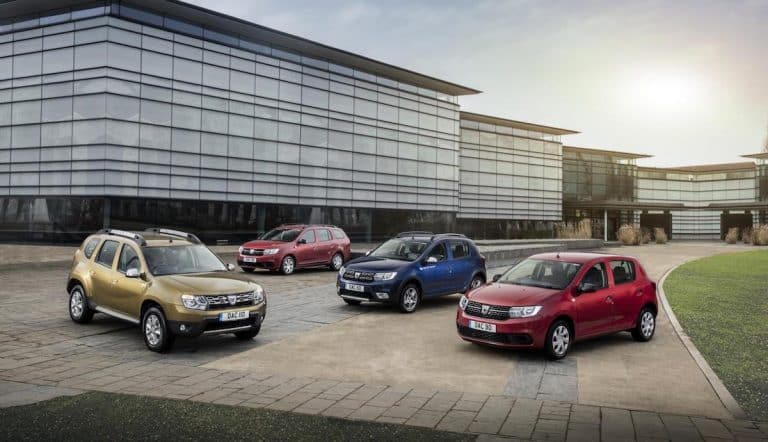
Dacia has extended its free two-year extended warranty offer to customers who buy a new Dacia model on a PCP or HP car finance package. The offer now runs until the end of January 2018.

The offer is limited to buyers who purchase a new Dacia on a personal contract purchase (PCP) or hire purchase (HP) finance package. The press information stipulates a four-year finance plan, but the Dacia UK website makes no mention of this and customers have reported to The Car Expert that they have been offered the free extended warranty on a three-year PCP.

The two-year extended warranty offer is available on any model in the Dacia range, but excludes entry-level Access specification vehicles. It is normally priced at £395, and provides an overall five-year warranty on the vehicle.

Dacia Duster models also get a deposit contribution in addition to the extended warranty freebie, with £1,250 on offer for diesel engines (up from £1,000 previously) and £250 for petrol engines (down from £500 previously).

The Car Expert explains the fine print

  • This offer gives customers a free two-year extended warranty on selected new Dacia models, but only if the customer takes out a selected finance package.
  • The value of the extended warranty is £395, so you need to ensure that the cost of taking out the finance is worth it. Typically the cost of a PCP finance agreement will be several thousand pounds.
  • The finance package must be a PCP or HP agreement from Dacia Finance.
  • The offers set out on the Dacia website are only examples, and you are entitled to adjust the deposit and annual mileage to suit your own needs. The APR shown on the examples is 7.9%, but that does not mean you will be offered a similar rate.
  • The annual mileage used in all of the examples is only 6,000, which is lower than most people drive in a year, so bear that in mind.
  • The excess mileage on the PCP package is 8p/mile. That’s £80 for every 1,000 miles you go over your limit, so make sure you allow yourself enough mileage when setting up the finance agreement. The fee only applies if you are giving the car back and claiming the guaranteed future value (GFV). HP customers do not need to worry about excess mileage.
  • Cars have to be ordered by 31 January 2018 and delivered by 31 March 2018.
  • The finance offers are provided through Dacia dealers by Dacia Finance. If a dealer offers you a finance deal that does not match these details or from another lender, it is not part of this offer.

As with any car purchase, work out your budget before you visit the showroom and don’t be persuaded to go beyond it – regardless of what the smiling sales executive suggests. They don’t have your best interests at heart, but The Car Expert does!

New Skoda finance offers

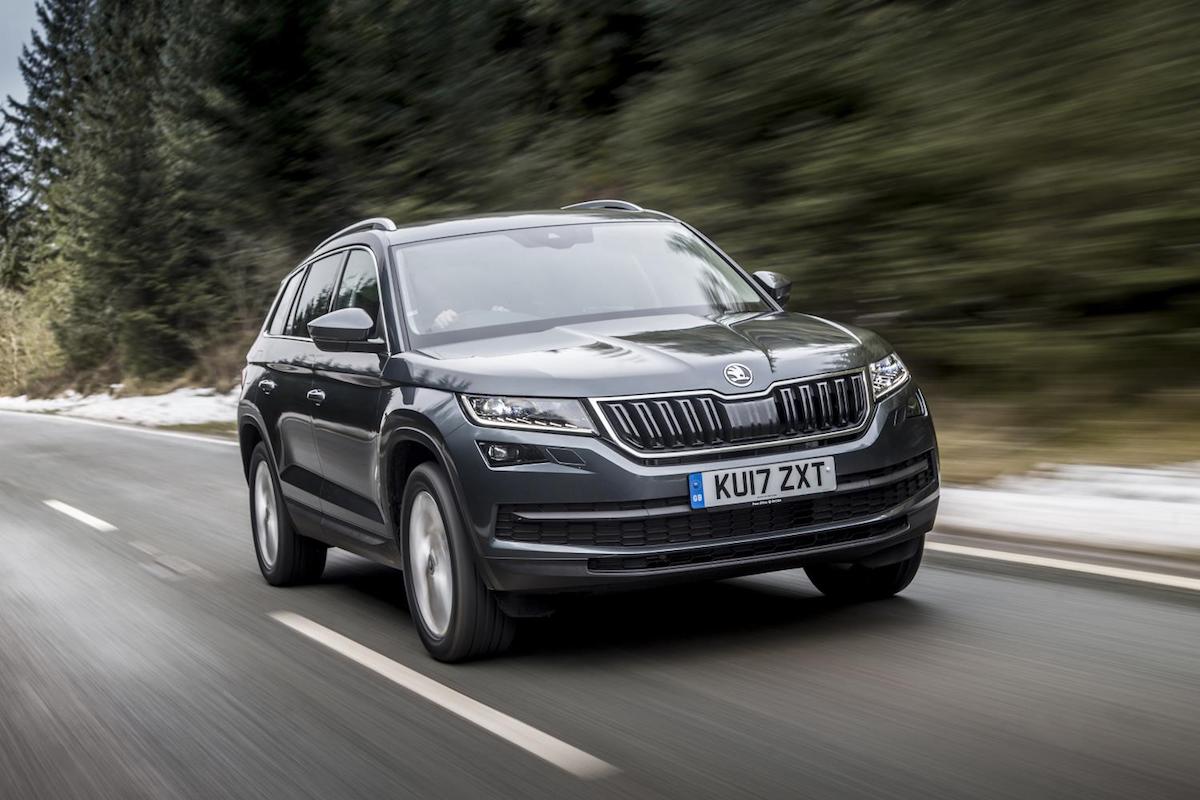
Skoda has announced a range of deposit contributions and PCP finance offers on selected models for orders placed between now and the end of the year. With incentives on Octavia, Superb, Fabia and Yeti models, Skoda will be hoping for a strong end to the year. The company is doing well in a shrinking market, but that is partly due to a growing model range rather than increasing sales of the core models. The new finance offers apply to personal contract purchase (PCP) agreements, which are branded as Skoda Solutions. The soon-to-be-obsolete Skoda Yeti is available with interest-free 0% APR finance and a £1,500 deposit contribution. As the Yeti is no longer in production, the offer only applies to vehicles already in stock – however, it also means that dealers may be happy to haggle on further discounts to get rid of them. Skoda Octavia and Skoda Superb models get a £3,000 deposit contribution on all specifications except SE Technology, as well as a representative interest rate of 4.9% APR. Skoda Fabia models get a £2,000 deposit contribution, with a very competitive 2.9% APR interest rate. The Skoda Rapid also benefits from a 2.9% APR with a deposit contribution of £1,800, while the Skoda Citigo (except S specification) gets the same 2.9% APR with a £1,000 deposit contribution. Skoda Kodiaq models (except SE Technology specification) get a £2,000 deposit contribution with an APR of 5.5%. The all-new Skoda Karoq, which replaces the Yeti, is also available with a PCP offer even though the first cars are not set to arrive until January 2018. A £1,500 deposit contribution is available, although the interest rate is a fairly poor 6.1% APR. The above finance offers are not available in conjunction with the Skoda scrappage scheme or any other offer.

The Car Expert examines the fine print

  • These offers provide a nominated deposit contribution towards selected new Skoda models, over and above any other discount you negotiate with the dealer.
  • The finance offers listed on the Skoda website are only examples, and you are entitled to adjust the term, deposit and annual mileage to suit your own needs.
  • The annual mileages shown on the website examples are all set at 10,000. It is handled somewhat confusingly by referring to a “42 month, 35,000 miles agreement”, which is not exactly best practice for clarity.
  • The APRs and excess mileage charges shown in the examples vary depending on the model chosen, so check the details carefully to make sure you are happy with what you are being offered.
  • The APRs shown represent a combination of interest and fees, so make sure you understand how much you have to pay up front, each subsequent month and at the end of the agreement.
  • Excess mileage fees only apply if you are giving the car back and claiming the guaranteed future value (GFV) at the end of the agreement.
  • Cars have to be ordered by 2 January 2018. The Skoda website does not specify a delivery date, so check with your dealer.
  • The deposit contribution cannot be used in conjunction with any other advertised offer.
  • The finance offers are provided through Skoda dealers by Skoda Financial Services (a division of Volkswagen Financial Services). If a dealer offers you a finance deal that does not match these details or from another lender, it is not part of this offer.
As with any car purchase, work out your budget before you visit the showroom and don’t be persuaded to go beyond it – regardless of what the smiling sales executive suggests. They don’t have your best interests at heart, but The Car Expert does!

Range Rover Velar earns crash test praise

The Range Rover Velar has shone in the latest set of crash tests performed by safety body Euro NCAP. Range Rover’s new crossover model not only gained a top five-star safety rating, but earned extra praise from the testers with its suite of standard-fit active safety features including Autonomous Emergency Braking. EuroNCAP describes the new compact SUV as ‘ one of the best overall performers, with good results in all aspects of safety.’ The Velar is the 15th SUV tested by Euro NCAP since the start of 2016, reflecting the mushrooming popularity of the segment, but Matthew Avery, director of research at Euro NCAP’s UK member Thatcham Research, says that the Range Rover model’s performance stood out. “Modern SUVs perform consistently well in impact testing, particularly for adult occupant protection,” Avery says. “The Velar however not only performs well in a crash – especially in Euro NCAP’s exacting side impact test – but also in active safety, with its suite of standard-fit technologies designed to avoid the crash happening at all.” The Velar’s assisted safety feature score of 75% rates some 7% above average for the SUVs tested since January 2016.

Strong standard safety

Thatcham Research was recently among motoring bodies calling for greater standard fitment of Autonomous Emergency Braking, which is said to have the potential to cut rear-end collisions by 38%. The Velar includes Interurban Autonomous Emergency Braking as standard, alongside an Adaptive Speed Limiter, Lane Departure Warnings and seat-belt reminders for all passengers. “Following five-star ratings for the Discovery and Discovery Sport, this is another signal from Jaguar Land Rover that safety is a priority,” Avery adds. “With small SUV sales set to break the two million barrier in 2018, it’s exciting to see one of the leading carmakers in the category deliver on standard-fit active safety systems.”Range Rover Velar Euro NCAP

Media warnings not slowing down car finance lending

The latest car finance results show that the media attention regarding car finance is not reducing the level of borrowing on either new or used cars. Overall borrowing in August was up despite a continued slowdown in new car sales, according to the latest data from the Finance and Leasing Association (FLA). The number of new cars financed decreased by 8% compared to the same month in 2016, which is less than the 10% fall in private new car sales according to the corresponding SMMT registration data. New car borrowing was up 2% despite the 8% decrease in volume, meaning that the average amount borrowed by private new car buyers was up 10% on the same period last year. This is in line with the year-to-date results for 2017, and on average new car buyers are borrowing £1,600 more for their new cars in 2017 than they did last year. 86% of private new car buyers financed their car through the dealership, with the vast majority of those using a personal contract purchase (PCP) to fund their new car. This figure has remained stable over the last 12 months, although it’s important to remember that private sales make up less than half of all new car sales, with the majority being fleet and business purchases.

Used car borrowing still growing

Used car results showed that borrowing continues to accelerate. There was 2% growth in the number of used car finance agreements for August compared to last year, but the amount borrowed increased by 8%, so on average buyers were borrowing about 6% more. Again, this is in line with the results for the year to date, with used car buyers borrowing about £540 more for each car than they did last year. We won’t get used car sales results for the same period until sometime in November, so we will have to wait and see how the borrowing numbers compare to the sales numbers. Car finance debt, August 2017

BMW 5 Series review

60-second summary

What is it? The BMW 5 Series is the latest, all-new version of a car many regard as the definitive upmarket saloon. Key features New engine range, upgraded interior, more technology. Our view The new BMW 5 Series has evolved in all areas and remains the complete package that all the rivals have to beat. Rather than striking off in any radical new direction, the car gains significantly more efficient engines, a marked increase in interior quality, and a wholesale application of the very latest technology available, particularly in terms of driver-assistance systems and infotainment. On the road, the handling is not quite as sharp as previous 5 Series generations and the sheer breadth of the tech available can become distracting. But overall the BMW 5 Series remains a car that the target buyer will need very good reasons for not choosing first. Similar cars Audi A6, Mercedes-Benz E-Class, Jaguar XF

Full review

Introduction

The BMW 5 Series has long been the upmarket saloon that every rival looks enviously at, and a particular favourite of fleet drivers. Despite the best efforts of the likes of Audi with its A6 and Mercedes-Benz with the E-Class, the BMW inexorably keeps racking up the best-in-class awards for its combination of quality, practicality and a reputation for unrivalled driving ability. The bad news for those rivals is that earlier in 2017, BMW launched an all-new 5 Series. Styling changes remind one of the larger 7 Series sister, but are just a minor element of the new package – far more relevant are the new modular engine range, significant quality upgrades to the interior, and a whole host of new technology. For The Car Expert’s road test, we spent a week with the 520d, the core model of the 5 Series line-up, and in the case of our test car boasting all-wheel-drive to take on the best that Audi’s quattro can offer.
BMW 5 Series review | The Car Expert | New car reviews 2017
Familiar BMW styling disguises a whole host of new technology

Buying and owning the BMW 5 Series

Buyers of the new BMW 5 Series range have a symmetrical choice – four engines, two petrol and two diesel, all matched to a standard auto transmission. Rear-wheel drive is standard as one would expect in a BMW, but all-wheel-drive is also available, as is the option of rear-wheel-steering. All the powerplants are examples of the latest modular range already seen in several other BMW and MINI models. The core of the 5 Series line-up will remain the 520d, with its four-cylinder 2.0-litre diesel engine of 190hp and forming the entry into 5 Series ownership at prices from £36,025. Combine this with combined cycle fuel economy of close to 70mpg and a mere 108g/km emissions figure (in 2WD form), and one can see why it is chosen by so many fleet buyers. Bigger sister is the 530d, costing from £43,835. Its six-cylinder unit puts out 265hp, producing a sub six-second 0-62mph time with still impressive plus-60mpg economy. For petrol buyers the choice is between the 530i or 540i, costing from £43,985 and £46,645 respectively and the 540i fitted with AWD as standard. And there are more engines on the way, including a plug-in hybrid version with combined cycle fuel economy of 134mpg and an all-electric range of 28 miles. Trim levels are simple too –­ basically a choice of SE or the more performance-imaged M Sport. And the days of BMWs with no standard equipment, everything on the options list are long gone – even choosing the ‘base’ SE one will get satellite navigation, DAB radio, parking sensors front and back, heated leather seats and dual-zone climate control as standard. Of course, there is a lengthy options list, and by the time one gets to our M Sport test car with all the toys included, the amount of equipment is mind-boggling. Remote parking for example – the car will park itself if desired, with one able to jump out and move it backwards and forwards while standing by it. This is achieved through a ‘Display key’ which looks like something out of Star Trek, and for a key is huge – pocket filling. It also recharges itself on a pad at the base of the centre console where one can also power up a mobile phone. BMW’s Connected Drive services are available, part of a host of information one can access through the infotainment screen. In the case of our car this extended to weather reports and even Wikipedia online encyclopaedia entries – while at motorway speeds… Overall the BMW’s safety package is impressive and has earned the car a five-star Euro NCAP rating, the crash-test body highlighting the autonomous emergency braking, active bonnet to reduce pedestrian injuries in a collision and the speed limit setting. Notable in the options is the Driving Assist Plus package which includes lane departure and blind-spot warnings, lane-keeping steering assistance and a system to keep the car stable if forced to make an emergency jink around an obstacle.

Outside and inside the BMW 5 Series

BMW 5 series dashboard | The Car Expert
The cabin benefits from improved quality
The new 5 Series is effectively the same size car as its predecessor, if quite a lot lighter thanks to the wide use of new technology construction techniques. While boasting subtle styling updates which are clearly inspired by the larger 7 Series, notably the wide ‘kidney’ grille that dominates the front end, the shell includes a number of efficiency-improving measures. These cut the car’s drag by 10% and therefore improve fuel economy and emissions. Among the clever tech are shutters on the grille that only open when the engine needs the cool air, at other times smoothing out the flow, and measures to cut out turbulence in the wheel arches. Inside has seen rather more extensive upgrades, though seasoned BMW users will find the driver’s surroundings familiar – again, especially if they have previously driven a 7 Series. The layout hasn’t changed much because it works so well – but the display is now completely digital, the infotainment screen sits at the very top of the centre console where it is easy to use with the merest glance from the road ahead. This is particularly useful, of course, if making much use of all that information one can have sent to the car. Meanwhile, the surroundings are so plush – the materials are all soft touch and ooze quality, the seats very supportive and comfortable. There’s loads of space in the front cabin, still quite a lot in the rear, and an enormous boot – and this has a flat floor and a wide loading aperture.

Driving the BMW 5 Series

BMW 5 Series on road - The Car Expert
The new 5 Series is happier on motorways than B roads
BMW’s latest range of engines is a highly refined bunch. Our 520d is freely giving of its power, but the only way one knows it is visually – the engine is virtually silent in operation, while smoothly dialling in the propulsion. Chassis setup is clearly biased towards serene progress, even in our M Sport version that has uprated suspension and brakes alongside the slightly more aggressive styling package. Our test involved a long drive from mid-Wales to north of Edinburgh in Scotland, and with supportive seats and the sheer quality of the interior we arrived as refreshed as when we started. Yet while the chassis setup makes for oh-so-comfortable cruising over mile after mile of motorway, turn off onto challenging B roads and it’s not quite so satisfactory. Such a route would once have provided a perfect opportunity for the car to live up to BMW’s long-lived ‘Ultimate Driving Machine’ slogan, but today it’s all a little less precise and not so perfectly weighted. The car has plenty of grip – especially with the all-wheel-drive chassis in our test version – and it can still be fun, just not way ahead of rivals like it used to be.

Summary

The new BMW 5 Series has evolved with the times – the recipe appears to have been ‘wherever there is technology available to improve it, apply liberally.’ As a result, just as the latest contenders from rival brands almost catch up, the 5 Series eases ahead again. Driving enthusiasts will find that this is not quite as satisfying a car dynamically as its predecessors, but to virtually every buyer that won’t matter. They will choose it because it is simply the complete package, with all the quality, technology and capability one could want. This is still the car that everyone else has to beat.
BMW 5 Series side profile | The Car Expert
The BMW 5 Series is still the one to beat

September new car sales slump to five-year low

Private new car sales slumped to a five-year low in September to cap off a horror six months for the industry, according to the latest industry figures released today by the Society of Motor Manufacturers and Traders (SMMT). With September being the second-biggest month of the year for new car sales (behind March), there had been hope of a strong market performance. However, the 2017 market decline continued unabated, with diesel sales continuing to flounder. The overall new car sales market fell by 9% compared to the same month last year, with just over 426,000 new cars being registered in September. In what is always a very big month for private sales (with private buyers traditionally being more interested in the new number plate changes than fleet and business purchasers), private sales were 9% off 2016 numbers and fleet sales were also 10% down.
New car registrations, September 2017
Another good month for hybrids, another shocking month for diesels
Despite most manufacturers launching scrappage schemes and/or finance offers largely aimed at boosting diesel sales, it was yet another disastrous month for diesels with registrations falling by 22% compared to September 2016. Diesel’s market share remains at last month’s 40%, compared to more than 47% at this time last year, and this trend can be expected to continue for the rest of the year. After a strong opening quarter (helped by concerns about road tax increases), the new car market has plunged more 132,000 units over the last six months compared to the same period last year. Used car results for the year to date have remained strong. The next update won’t be until some time next month, and these results will be key to determining whether customers are turning from new cars to used cars, or if they are simply choosing not to buy cars at all. The SMMT comments accompanying the monthly report were somewhat curious; CEO Mike Hawes used clairvoyance to state that “consumers should be reassured that all the new diesel and petrol models on the market will not face any bans or additional charges”, when clearly local or national governments could announce measures at any time to charge or ban petrol or diesel cars from certain high-pollution zones. Hawes also suggested that everyone should keep buying new cars because “fleet renewal is the best way to address environmental issues in our towns and cities”, which rather contrasts with most environmental experts who suggest that it would be better if we all caught buses or rode bicycles rather than driving cars in urban environments.

Hybrids still powering up

Once again, the only bright spot on the horizon is the continued growth in “alternatively-fuelled vehicles” (hybrids and electric cars, essentially). More of these have been registered in the first nine months of 2017 than in all of 2016. Market share for AFVs remains above 5%, with a performance in September 41% better than last year. While this is obviously good news, it still represents a small percentage of the overall market – to put it in perspective, diesel and petrol market losses were eight times greater than AFV gains. Hybrid gains will continue to increase as virtually every manufacturer rolls out plans to electrify their cars, but in order to hit the government’s 2040 plans for all new cars to be electrified, the rate of growth will need to increase much faster than at present.

Qashqai rises to the top

There was quite a bit of change in the market top ten this month, with the Nissan Qashqai vaulting to the top of the charts ahead of last month’s top-selling Volkswagen Golf and the  Ford Fiesta. Having bounced from nowhere into the top three last month, the Vauxhall Mokka X fell straight back out again in September. There was further mixing of the top ten, as the Ford Kuga and Kia Sportage fell out but the Mercedes-Benz A-Class and C-Class models both re-appeared, along with the MINI hatch. With August being one of the slowest months of the year, and September immediately following as one of the busiest, the top ten is often mixed up by manufacturers pushing different models with different offers. Year-to-date, the Ford Fiesta remains on top, ahead of its bigger sister the Ford Focus, which in turn is fractionally ahead of the Volkswagen Golf. Looking beyond the top ten individual models, it’s been a good year for brands like Infiniti, Abarth and SEAT, while brands like Fiat, Jeep, SsangYong and Vauxhall are well behind last year’s results so far. The last three months of the year could see more change in the rankings as end-of-year offers ramp up and dealers desperately try to shift stock, so we’ll be watching closely.
Top ten, September 2017
Nissan Qashqai topped the charts in September, and Mercedes-Benz returned

The Car Expert says – it’s a buyer’s market

After a strong opening quarter (helped by concerns about road tax increases), the new car market has plunged more 132,000 units over the last six months compared to the same period last year. April, May and June could use the road tax changes and the election as excuses, but the slump has continued over the last three months as well. This means that, all over the country, car dealers will have unsold vehicles piling up around their ears and will be falling behind their sales targets. They are going to be desperate to do deals. We have been covering the numerous new car offers and scrappage schemes that have been announced in recent weeks, but it is very likely that canny buyers will be able to secure even greater discounts on models that are underperforming against manufacturers’ expectations. There are huge savings to be had on many diesel cars, although falling residual values are tending to cancel out much of the up-front savings – therefore monthly finance payments are not dropping as much as you might expect. It’s definitely time to haggle hard to get the best deal, and be brave enough to walk away if you’re not getting what you want. Another dealer may well be more agreeable to meeting your needs. There will be plenty of offers around between now and the end of the year, so don’t be rushed into anything that’s not exactly what you want.