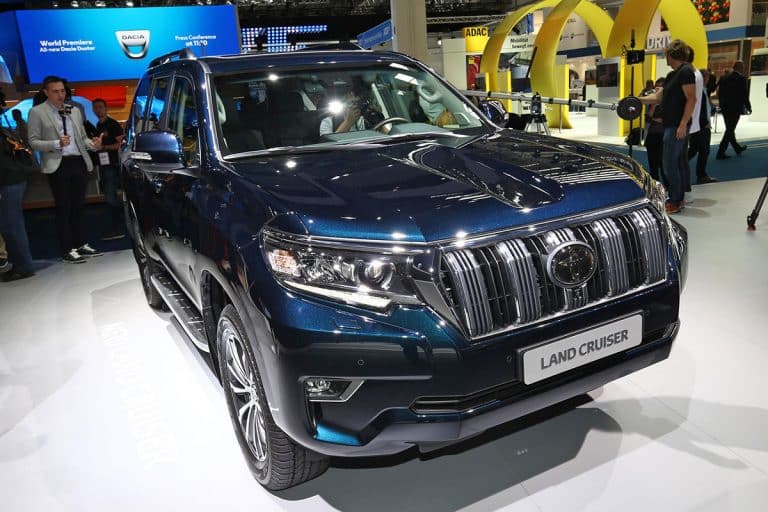
The updated version of the Toyota Land Cruiser, one of the few remaining SUVs with true off-road capability, debuts at the Frankfurt motor show.
Changes to the robust vehicle include styling enhancements to give it a more modern but durable look, a higher quality interior and driving improvements. The exterior modifications increase the length of the vehicle by 60mm to 4840mm and are also aimed at making off-road progress easier – they include reshaping the bonnet to improve downwards visibility at its centre, and raising the tops of the wings so the driver can more easily judge where the edge of the vehicle is.
Inside the driver will find the switchgear more sensibly grouped, the layout dominated by a new eight-inch touchscreen for the Toyota Touch 2 with Go multimedia system, Optitron meters and a 4.2-inch display ahead of the steering wheel.
Occupants now have the use of front seat ventilation, rear seat heating and automatic climate control, while an electric heated windscreen, heated washer nozzles, reverse-tilting door mirrors and a new smart key design have also been added.
The Land Cruiser retains its single engine choice, a 2.8-litre turbodiesel with 178hp and 370Nm of torque. This takes the big vehicle through 62mph in 12.7 seconds while returning combined cycle fuel economy of 38.2mpg and CO2 emissions of 194g/km. Eastern European markets also get the option of 2.7 and 4.0-litre petrol engines but there appear to currently be no plans to offer these engines to UK buyers.
Safety features have also been upgraded, particularly on vehicles with the automatic transmission. These now get Toyota’s Safety Sense active technology package that includes a Pre-Collision System (PCS) with pedestrian detection function, Adaptive Cruise Control (ACC), Lane Departure Alert (LDA) and Automatic High Beam (AHB). A Blind Spot Monitor with Rear Cross Traffic Alert and an upgraded tyre pressure warning system are also part of the revamped package.
The latest Subaru Impreza is debuting at the Frankfurt show and like its predecessors will be a permanently all-wheel-drive option to rivals such as the Ford Focus and Vauxhall Astra.
Using the same Global Platform architecture as the Subaru XV launched at the Geneva show in March, the fifth generation of the five-door hatch is 10mm lower, 35mm wider and with a 25mm longer wheelbase compared to its predecessor. This translates to a cabin 29mm wider at the front and 34mm at the rear, with 26mm more rear seat legroom and 10 litres of extra luggage space in a boot extended by 41mm.
Engines on a diet
The Impreza will be offered with Subaru’s familiar and highly compact Boxer flat-four engines. The 1.6-litre 114hp launch engine is said to have had 70 per cent of its components redesigned, shaving 14kg from its weight. Similarly, the 156hp 2.0-litre unit, that will join the range at a later date, has been 80 per cent redesigned, shaving 12kgs.
The Lineartronic Continuously Variable Transmission (CVT) has also undergone a redesign, with yet more weight savings of 7.8kg and wider ratios to improve acceleration. Meanwhile, the Impreza’s chassis is significantly stiffer, improving both handling and refinement with less noise and vibration entering the cabin.
When it goes on sale later in 2017 the Impreza will be fitted with Subaru’s complete Eyesight safety package, ranging across Pre-Collision Braking and Throttle Management, Adaptive Cruise Control, Lane Departure & Sway Warning, Lane Keep Assist and Lead Vehicle Start Alert.
Subaru is not currently saying whether the Impreza range will eventually include a WRX model – these rally-inspired versions were once a core part of the model line-up.
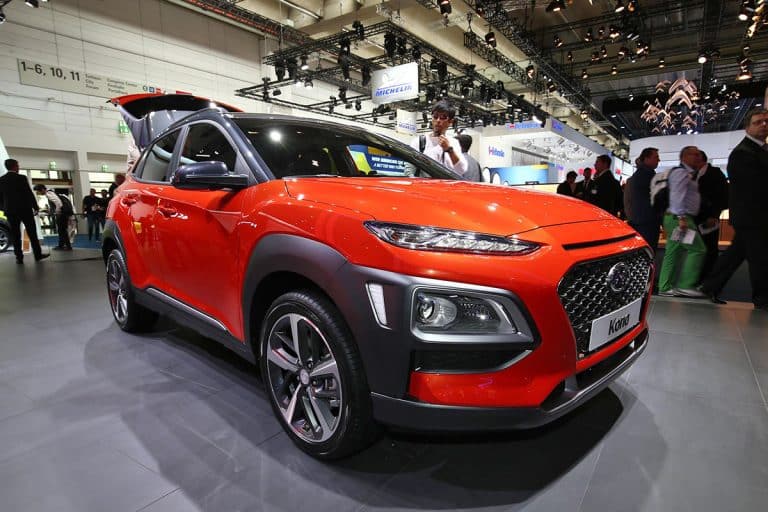
The Hyundai Kona is one of three debuts for the Korean brand that considers Frankfurt its home motor show in Europe.
The new Kona small SUV, the i30N performance model and the i30 Fastback coupe variant have all been created at Hyundai’s European and German headquarters – the brand has its design, technical and testing centres, and its motorsport operations, in the region around Frankfurt.
Closely related to Kia’s Stonic also debuting at the show, the Kona will go on sale with optional on-demand all-wheel-drive and a range of powertrain options including the latest double-clutch automatic transmissions. It is expected to target the likes of the Nissan Juke and Renault Captur, and like the Stonic will become one of the biggest-selling models for its brand.
The i30 N is Hyundai’s first performance model to go on general sale, and is inspired by the recently launched Touring Car racer built to the global TCR series regulations. It uses a 2.0-litre turbocharged engine with 250hp in standard from – this can be boosted to 275hp with the optional Performance Package, cutting the 6.4-second 0-62mph time to 6.1 seconds.
The i30 Fastback will provide Hyundai with a contender in the growing five-door coupe segment. It will be powered by two downsized turbocharged petrol engines carried over from the recently launched latest Hyundai i30 hatch models, and will be supplied with the latest Hyundai SmartSense active safety and driving assistance technology.
Hyundai is also showing a new powertrain line, dubbed Smart Stream. First in the new line-up are a 1.6-litre T-GDi engine and an eight-speed wet dual-clutch transmission. New technologies on the engine include Continuously Variable Valve Duration (CVVD), which independently tunes valve opening and closing to maximize performance and fuel economy while cutting emissions. The transmission, meanwhile promises quicker and smoother gear changes than its predecessor, also contributing to lower fuel consumption.
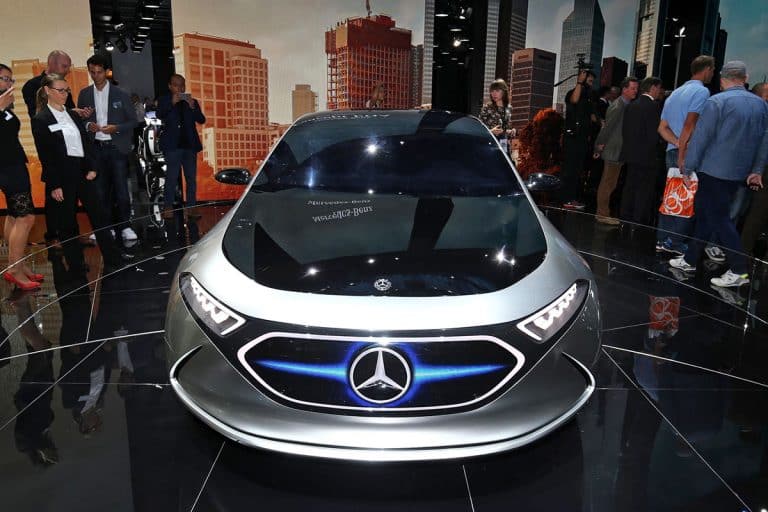
The Mercedes-Benz EQA, unveiled at the Frankfurt motor show, is set to provide competition for BMW’s i3 electric compact car.
Displayed as a concept, the EQA is the second model in the Mercedes EQ sub brand of electric cars. The production version will go on sale in 2020 and will join the larger EQC model in showrooms.
The EQA uses a pair of electric motors providing permanent all-wheel-drive. It will make use of scalable battery architecture, allowing its output to be increased to more than 200kW – equivalent to 272hp. The range will extend to around 250 miles, again dependent on the battery capacity installed. Wallbox, rapid and induction (using sensors in the road surface) charging methods will be available for the car.
‘Sensual’ body style
Like its EQC sister model, the EQA’s styling turns around the current trend by reducing sharp edges and lines to a minimum for a more curved appearance dubbed ‘Sensual Purity’. A styling highlight is the lighting, that uses laser fibres to produce a spiral-shaped signature.
The car is built on a versatile new platform that Mercedes-Benz will use on all its forthcoming electric models. The EVA platform supports a wide range of packaging including front, rear or all-wheel-drive, and enables the EQ range to be built on the same production lines as conventional Mercedes cars.
According to Mercedes-Benz head Dr Dieter Zetsche, the EQA is indicative of an electric initiative that is gathering pace. “By 2022 Mercedes-Benz Cars will have launched more than ten all-electric vehicles on the market, and the Mercedes-Benz Concept EQA proves that we are serious about introducing electric mobility throughout the portfolio,” he says.
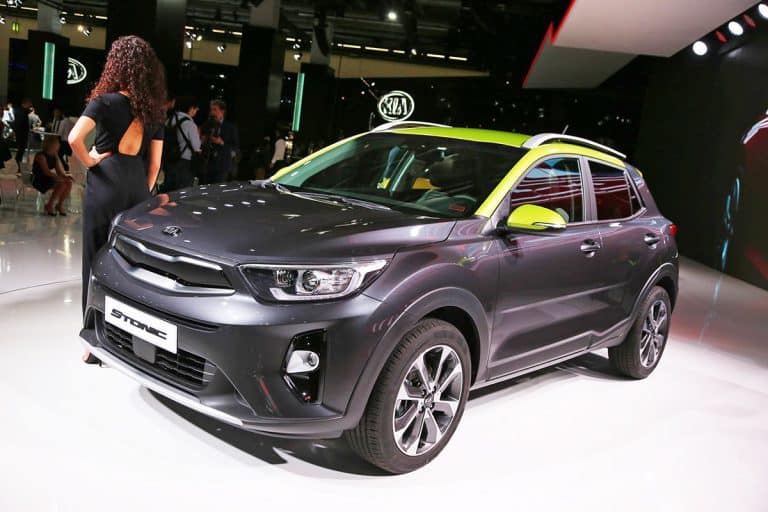
Many heading for the Kia stand at the Frankfurt show will be looking to check out the Proceed Concept revealed last week, but also debuting is an important new crossover, the Kia Stonic.
Further expanding Kia’s presence in the fastest-growing segment of the UK and European market, the Stonic will soon be in showrooms – The Car Expert will be bringing you a full UK test this time next month.
Designers of the Stonic describe it as ‘an eye-catching and confident compact crossover’ and ‘the most colourful Kia ever.’ The car is clearly aimed at the lifestyle market, with the mass-selling Nissan Juke its prime rival.
Signature styling elements such as the ‘tiger-nose’ grille remain but the car also boasts a two-tone paint finish. It can be ordered in up to 20 colour combinations, with a choice of five contrasting colours for the roof. Similarly, buyers can choose from a range of colour packs for the interior. But Kia adds that the basics have not been forgotten, the Stonic packaged to release as much interior space as possible, and available with all the latest safety and connectivity technology.
Kia is not yet releasing details of the Stonic powertrain line-up, only stating that they will comprise a range of lightweight petrol and diesel engines, each paired with a manual transmission – suggesting that initially at least there will be no auto option. The engines are likely to replicate those in other Kia models, including petrol units in 84hp 1.25-litre, 100hp 1.4 and 120hp 1.0 turbo form, and a 110hp 1.6 diesel.
Kia expects big things of the Stonic, predicting that it will become one of the brand’s top three sellers.
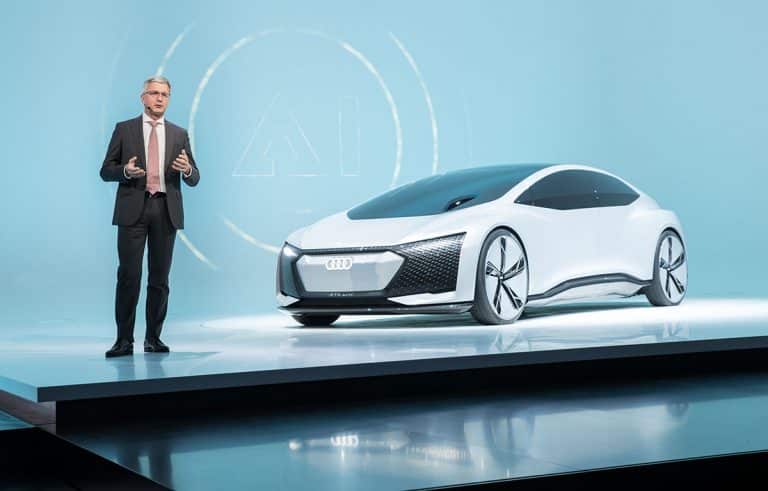
When not talking electric, the Frankfurt show is all about autonomy and the Audi Aicon is a clear vision of the brand’s future self-driving technology.
The four-door 2+2 concept for a luxury saloon of the future is a fully autonomous vehicle, to the extent that the car does not even possess a steering wheel or pedals – these “unnecessary” items have been removed to liberate more space for occupants.
Audi describes the car’s interior as equivalent to a first-class airline cabin. And the space within is huge, created by the sheer size of the car at 5444mm long with a wheelbase of 3470mm – some 240mm longer than the current extended Long version of the latest Audi A8. Large glass surfaces also help to create the impression of space.
Headlights – so last century
As well as predicting a possible self-driving future, the Aicon also previews technology likely to find its way onto future Audi mainstream production models. This could include the lighting which replaces conventional headlights with digital display surfaces using hundreds of triangular pixel segments that form three-dimensional recreations of the Audi AI symbol.
According to Audi an autonomously driving vehicle of the future will not need long-range headlights. The Aicon uses a laser and radar sensor system that even in the dark can reliably find the way and detect possible obstacles in good time. Projector modules illuminate the road and surroundings in high resolution and project signals onto the ground. They can even communicate warnings to passers-by before they can see the car.
The Aicon powertrain comprises four electric motors with a total 260kW output – equivalent to 353hp. Each drives a single wheel and are individually controlled to provide continuously variable quattro all-wheel-drive capability. And perhaps demonstrating that the designers have thought of everything –when passengers exit the Audi Aicon in the dark, a ‘light companion”’’ is activated: A mini-drone with a flashlight safely illuminating the user’s walking path to their door!
The latest version of the Volkswagen I.D. Crozz, unveiled at the Frankfurt motor show, is a further major pillar of the group’s electric strategy that will see some six billion Euros of investment in the next five years.
The I.D. Crozz is a four-door SUV/coupe crossover model and was first shown at the Shanghai event in April – the latest version boasts revised front and rear styling which is considered to more closely replicate that of the production version set to launch in 2020.
The interior has also been redeveloped, making the most of the lacks of central door pillars (B-pillars) to create what Volkswagen describes as ‘a superior amount of space and highly versatile seating concept.’
‘Golf-like’ handling
The car boasts all-wheel-drive, using two electric motors, one mounted on the front axle and one on the rear. The battery pack is incorporated low between the axles which the car’s creators say gives it handling characteristics comparable to a Golf GTI hatchback.
Total power is 306hp, top speed 111mph and Volkswagen quotes a range between charges of 310 miles. The battery pack can be charged to 80 per cent capacity in 30 minutes using a fast-charger system.
The I.D. Crozz will launch alongside the I.D. compact car in 2020, and will be followed by the I.D. Buzz in 2022 – this car a modern version of the brand’s famed Kombi camper van. All three share the same electric platform that is critical to Volkswagen’s electric strategy – the Frankfurt show has also seen the unveiling of ‘Roadmap E’, a group-wide electric strategy described as the most comprehensive in the global automotive industry and promising 80 new electric vehicles by 2025.
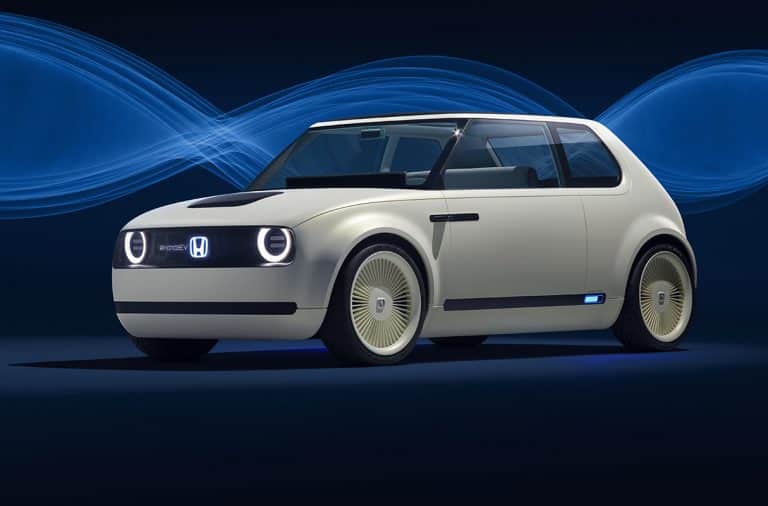
Electric power is, without doubt, a major theme of the 2017 Frankfurt motor show and typical of the new models is the Honda Urban EV Concept.
Built on a completely new platform, the car is said to set the direction for the technology and design of a future battery-electric Honda production car. Honda says this car will be launched within two years – “This is not some vision of the distant future,” says president and CEO Takahiro Hachigo, suggesting that the concept is pretty close to the finished car.
The Urban EV Concept has a low and wide stance, seating four occupants. It is also highly compact, measuring up 100mm shorter than Honda’s current smallest car the Jazz supermini.
A notable styling touch is the blue backlighting of the Honda emblem on the front, which will be on all future Honda EVs. Whether the facility to display messages between the headlamps, such as greetings and advice for other drivers, will make the production model is much more open to question.
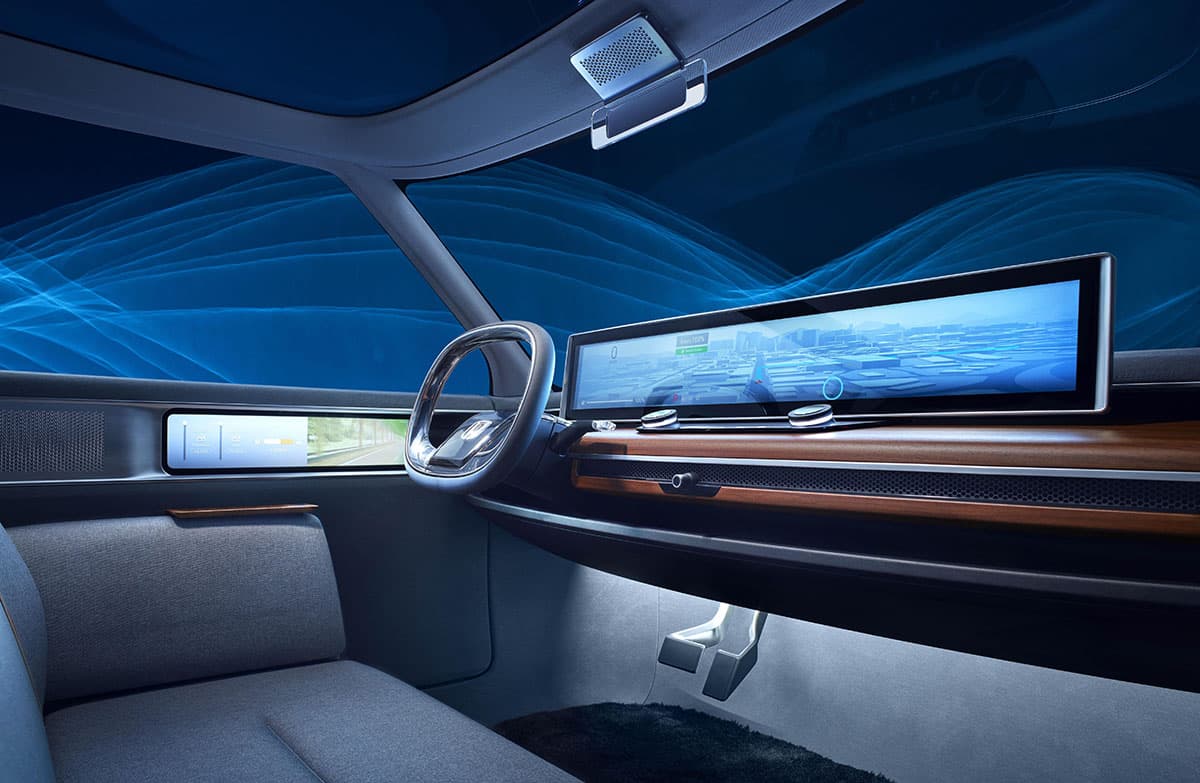
Slim windscreen pillars and a wide wraparound windscreen should ensure excellent visibility for the driver, while entry is easy too, thanks to rear-hinged doors. The two bench seats are upholstered in different finishes, while the front of the cabin includes a ‘floating dash console’ and a wraparound information screen extending into the doors.
Honda is not quoting details of the EV Urban Concept’s performance or its range yet, but it will no doubt take advantage of the Power Manager Concept also launched at the Frankfurt show. This is a more efficient energy storage system, that releases electricity generated by renewable sources back into the home or sells it to the grid.
Honda launched its ‘Electric Vision’ strategy at the 2017 Geneva motor show – this includes the development of a dedicated electric vehicle platform, featuring fully-electric powertrain technology. A high-density, lightweight battery pack, integrated heat management and transferring energy both to and from the vehicle all feature in the strategy.
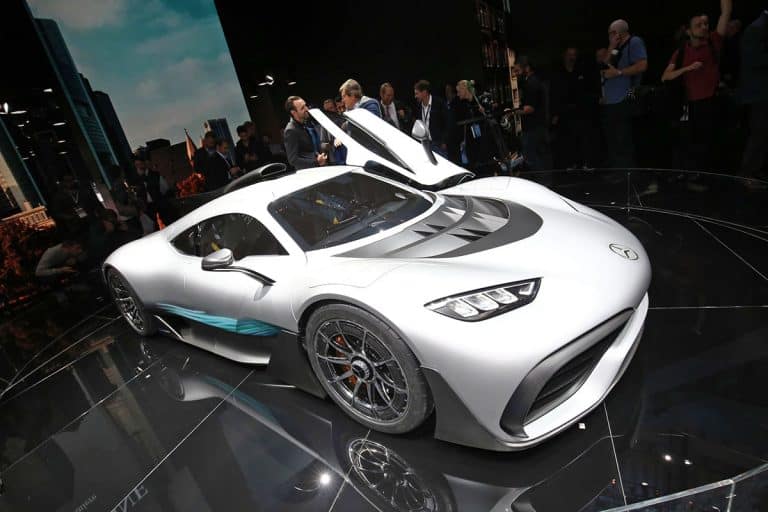
Mercedes-Benz is bidding for star of the show status at Frankfurt with the Mercedes-AMG Project One – a Formula One-inspired hybrid two-seater hypercar with more than 1,000hp.
Unveiled at an event on the eve of the show by Mercedes F1 star Lewis Hamilton, the Project One is designed to bring the technology created by the brand’s Grand Prix team to road cars. Its all-wheel-drive powertrain is a reworked version of the F1 unit, combining a 1.6-litre V6 turbo petrol engine with four electric motors.
The mid-mounted engine reaches speeds of 11,000rpm while the two electric motors in the front axle can reach a remarkable 50,000rpm. The car is so fast that instead of the usual 0-62mph time its makers quote a 0-124mph time, of a mere six seconds, and a top speed of more than 218mph. Complete figures are to be announced as the car still has more than a year’s development ahead of it before going on sale.
Electric-only mode
The car uses a lithium-ion battery pack that can be recharged by kinetic energy recovery from braking and coasting, and by more traditional plug-in methods. Project One will also be able to undertake short journeys, up to 16 miles, in all-electric mode as a front-wheel-drive car.
According to Mercedes-Benz chairman Dr Dieter Zetsche, the Project One is the realisation of a long-held dream of engineers to bring motor racing technology to the road. “Motorsport is not an end in itself for us – faced with intense competition, we develop technologies from which our production vehicles also subsequently benefit,” Zetsche says. “We are drawing on our experiences and successes from three constructors’ and drivers’ world championships to bring Formula 1 technology to the road for the first time.”
Mercedes intends to make just 275 examples of the Project One, at a price equivalent to around £2.08 million, and apparently all are already reserved. First customers should see their cars by mid 2019.
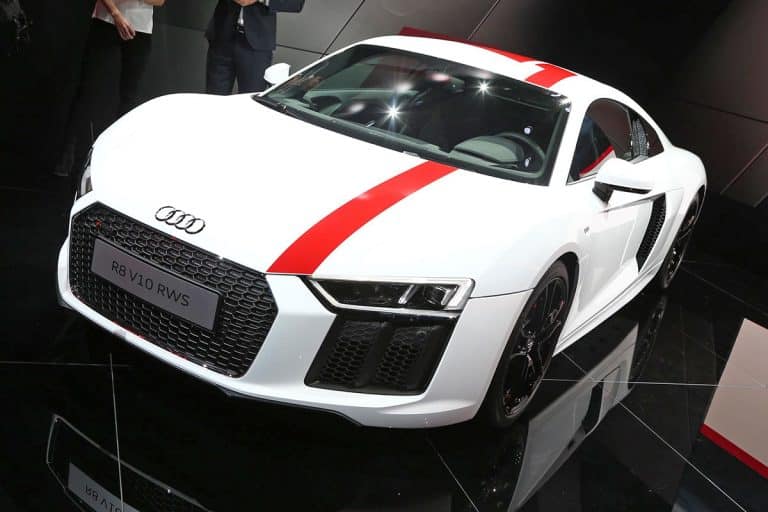
A new Audi R8 model has been unveiled on the eve of the Frankfurt motor show, taking the brand into rear-wheel-drive territory for the first time.
Produced by the Audi Sport GmbH competition division, the R8 V10 RWS and R8 Spyder V10 RWS are based on Audi’s R8 LMS Le Mans racing cars. Dealers start taking orders on Friday 15 September, at prices from £110,000, and only 999 will be made.
The same 5.2-litre V10 petrol engine of the R8 quattro model is used, with 540hp on tap alongside 540Nm of torque. Audi quotes a 3.7-second 0-62mph time for Coupe versions, a tenth slower for the open-top Spyder, and a top speed of 198mph.
These acceleration figures are two-tenths slower than the quattro version, despite the RWS models not needing a front propshaft, multi-plate clutch and centre differential and as a result weighing 50kg less in coupe form (Spyder 40kg).
Audi has applied subtle styling touches to differentiate the RWS from other R8 models. Principally these consist of matt black finishes on the grille and the air intakes, and a gloss black upper side blade on coupe versions. A red film stripe running over the entire car from front to back is available as an option.
Audi Sport GmbH CEO Stephan Winkelmann describes the R8 V10 RWS as a car made for purists. “A limited-edition special model for customers with an appreciation for essential driving enjoyment, the R8 V10 RWS is an absolutely exclusive offer,” he says. “With its mid-mounted V10 engine and rear-wheel drive, it successfully brings the driving concept of our R8 LMS racing car to the streets.”
Power changes are included in a significantly updated version of the Ford Mustang, unveiled ahead of its public debut at the Frankfurt Motor Show this week and aimed specifically at European buyers.
The updates see the power of the muscle car’s range-topping 5.0-litre V8 engine increased to 450hp from 416, but the 2.3-litre Ecoboost unit is cut back to 290hp from 317. Ford says the 5.0-litre will now be the fastest-accelerating Mustang yet, though does not give figures.
We are also promised that the power reduction of the Ecoboost version will not affect the car’s performance, due to a new overboost function for the turbocharger which is triggered under heavy acceleration to provide an extra burst of boost following each up-shift. This works in conjunction with a new 10‑speed transmission that is being fitted to both versions of the car.
New exterior look
Styling changes are intended to give the car a sleeker, more athletic appearance. It has a lower bonnet profile with the air vents integrated, the lower grille remodelled for a more aggressive look and improved aerodynamics, and LED headlamps included. The back has its bumper and diffuser section reshaped, while an optional boot spoiler is now available.
There are chassis changes too – the dampers are recalibrated for greater corner stability, a new suspension joint stiffens the rear end and thicker anti-roll bars added. Options now include a MagneRide damping system that electrically stimulates a fluid inside the damper body to instantly react to road surface changes.
A host of driver assistance technologies are now available for the Mustang, just months after the car gained a shock two-star Euro NCAP safety rating. This was later increased to three stars after more safety equipment was added as standard, and now pre-collision assist with pedestrian detection will be available, as will adaptive cruise control with a distance alert, and lane departure warning. However, Ford has not stated if any of these will be standard equipment.
What is it?
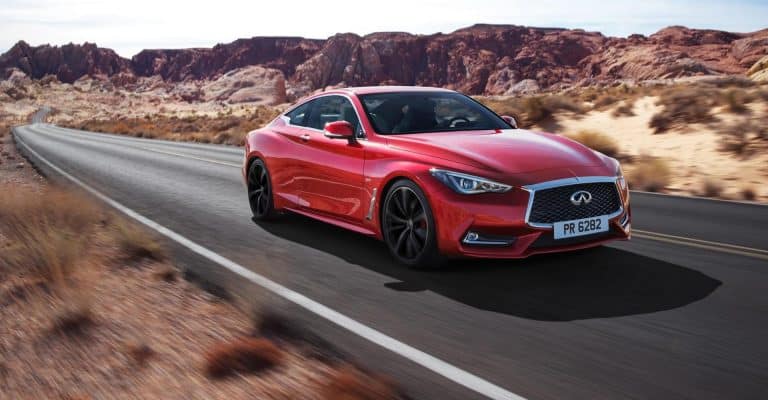
The Infiniti Q60 is a new four-seater coupé model.
Key features
Distinctive looks, V6 engine availability, all-wheel-drive.
Our view
The Infiniti Q60 adds a good-looking new model to the choice of four-seater coupés on the market, but lacks a personality to go with the visual appeal.
Similar carsAudi A5, BMW 4 Series, Lexus RC F
Infiniti is still battling to establish a true identity in the UK alongside the more familiar premium brands, and part of that effort involves filling the more niche areas of the range. So we now have this new four-seater coupé, the Q60 – reviving a model originally called the G37 and last sold in Europe in 2014.
The Q60 is the first new model to appear after the volume-chasing Infiniti Q30 and QX30 ranges, and the coupé has its work cut out – in recent times a whole host of upmarket contenders have been unveiled in this niche. They include new versions of the Mercedes-Benz C-Class, the BMW 4 Series, Audi’s A5 range and for those with deep pockets, the 5.0-litre V8 powered Lexus RC F.
Tough competition, which Infiniti is tackling with a distinctive-looking shape, lots of technology and a perhaps surprising all-petrol powertrain line-up.
Like many of its rivals, the Q60 is evolved from a saloon model, the Q50. And it certainly has the looks – the car is long, low and wide, with muscular proportions exemplified by the strong lines swooping down to the grille. Combine these with some clever detailing, such as the angles and curves in the rear screen pillar, and you have a car that turns heads far more than some of its more mainstream rivals.
The Infiniti Q60S coupé is a sleek-looking car that certainly turns heads
Buying and owning an Infiniti Q60
When Infiniti launched the Q60 at the Detroit Motor Show in January 2016, observers expressed surprise that the mere two engine options did not include a diesel, and concluded that its chances of UK success would be damaged as a result. Just 18 months on, with negative publicity sending diesel sales sliding, that decision does not seem so blinkered.
Of the two petrol engines available by far the most sales are likely to be of the 2.0-litre four-cylinder unit with 208hp and put through a rear-wheel-drive transmission. The range-topping 3.0-litre twin-turbo V6 will not be an engine for the eco-conscious – the quoted 31mpg will ensure you maintain a healthy relationship with your local filling station, while the combination of a 210g/km emissions figure and a selling price well over £40,000 will hit the pocket for tax under the new post-April 2017 VED rules.
Four trim levels are on offer for the Q60, either Premium or Sport levels with additional Tech grades on both – our test car was supplied in the top Sport Tech trim. Prices start from around £34,300 for the Premium version of the 2.0-litre engine with rear-wheel drive, and included are such niceties as autonomous emergency braking, a reversing camera, auto-levelling LED headlights and traffic sign recognition.
The Sport models are as the name suggests angled more towards on-the-road performance, so the direct adaptive steering is added, as are paddle shifts on the steering wheel. Electric adjustment of the seats also features on this trim.
You will need a Tech version of either trim for the reversing camera to check all around the car, but more importantly, you will gain satellite navigation, adaptive cruise control, a more impressive Bose sound system with 13 speakers and very effective blind-spot monitoring.
Inside the Infiniti Q60
Two separate screens and plenty of switches and buttons make the dashboard appear busy
The distinctive styling theme continues inside the cabin, particularly in the centre console. Accommodating two touchscreens one under the other, this console boasts strong descending lines and a width that slims down the nearer it gets to the floor.
Two screens and rather a lot of switches and buttons make the driver’s environment appear a little busy, but it does soon become second nature to use. It also looks suitably modern and up-to-date, though this effect is jarred slightly by the use of ‘old tech’ such as the foot-operated handbrake in the pedal box.
Up front, there is plenty of room for occupants, but the same cannot be said for the rear seats. Firstly they are not that easy to access, the movable top mount for the front seat belts getting in the way. Once inside, the strong downwards slope of the rear roofline will ensure that all but the shortest occupants form rather too close a relationship with the rear screen.
Driving the Infiniti Q60
Our test car was fitted with the range-topping unit, and is likely to be a far more exclusive choice. The 3.0-litre twin turbo, one of a new range, draws on the brand’s extensive experience with V6 power plants. It puts out 405hp at 6,400rpm, with 475Nm of torque on tap from a pleasingly low 1600rpm. And it is combined with an all-wheel drive transmission, taking on the likes of Audi’s quattro.
The power output is impressive, certainly outdoing several rivals for its potency, and hitting 62mph in five seconds flat is evidence that this car makes the most of its horses and that torque – overtaking slower traffic is a matter of moments. The disappointment is that it doesn’t exactly sound like it performs – it’s almost too well behaved, dialling in the power smoothly but also so quietly.
3.0-litre Q60S all-wheel-drive flagship will not be the biggest-selling model in the range
Unfortunately, the transmission does not live up to the billing either – it may have seven speeds but it struggles to keep up with enthusiastic driving – one is left feeling that an Audi unit would do a much better job here.
Infiniti does not scrimp on its chassis setup for the Q60, though you have to choose the 3.0-litre AWD model to be able to take advantage of all the toys, such as the Dynamic Digital Suspension. This and the ‘drive-by-wire’ Direct Adaptive Steering, standard on Sport models, offer a range of modes varying from comfort to high performance-focused settings.
Everything works together very well indeed. On suburban roads with lots of tight turns the car is very easy to handle, and out on a motorway it cruises in comfort and then stiffens up to offer highly placeable steering through a series of twisty corners.
All this is good – but… it is so good, one doesn’t really feel what the car is doing through the steering wheel. It almost suggests one could sit back and let the car do everything itself. Fine if you want a good-looking coupé that requires almost no effort at all to drive many miles, which of course will suit many very well. But it does leave the Q60 lacking a bit of personality.
Summary
The Infiniti Q60 adds a good-looking new model to the choice of four-seater coupés on the market – though in this case, it’s more 2+2 than four-seater. It is also very efficient, perhaps almost too efficient, as a result lacking just a little of the charisma one expects from such coupés.
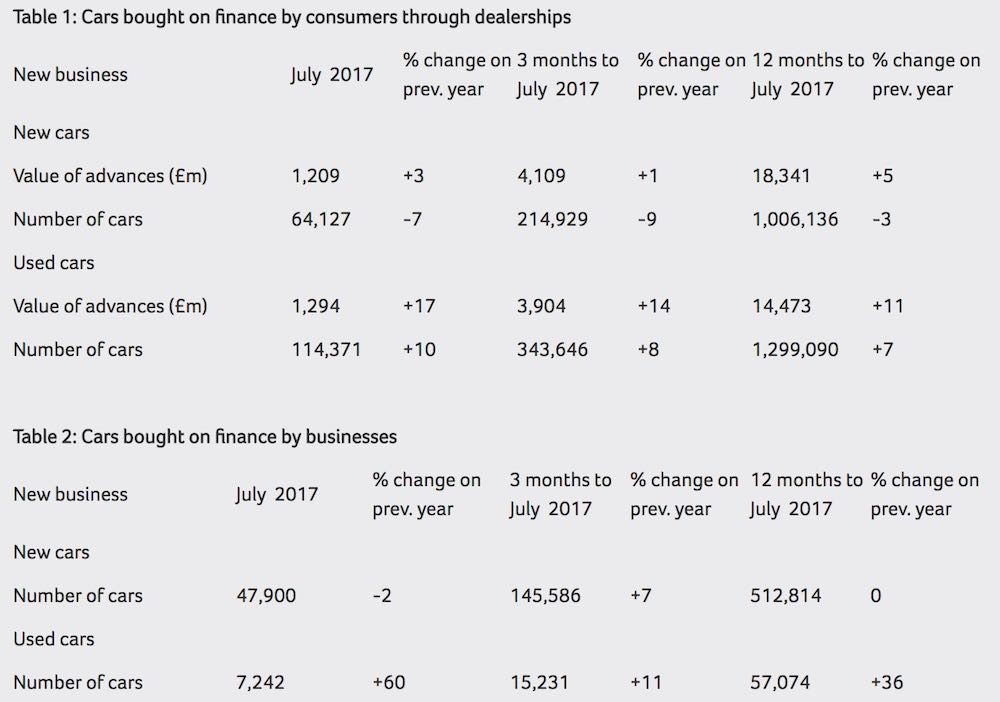
The latest monthly car finance figures show that car buyers are borrowing more and more money to finance both new and used cars, despite all the media attention directed at PCP car finance.
The results for July, published today by the Finance and Leasing Association (FLA), show a 7% decrease in the number of new cars financed in July compared to last year, but the average borrowing increased by a significant 15%, meaning that total car finance debt grew by 3% over the same month last year.
Used car results also show that more buyers are continuing to borrow through dealer-provided finance, and are continuing to borrow more money on each car. Overall use car finance debt increased by 17% over the same month last year, which was a result of 10% more cars being financed at an increase of 6% more borrowing per car.
The used car results reflect an increasing number of car buyers choosing PCP car finance for used cars as well as new cars. Used car finance via dealers has doubled in the last five years, with an increase of 23% average borrowing per car in that time.
An all-new, £90,000 TVR Griffith has been unveiled at the Goodwood Revival meeting and will go into production late in 2018, signalling the return of the evocative British sports car brand after a decade away.
The new Griffith retains one of TVR’s most well-known model names and is described as remaining true to the brand’s heritage, while employing cutting-edge engineering – notably the innovative iStream architecture created by former F1 and McLaren road car designer Gordon Murray.
The highly torsionally rigid structure and body panels are in carbon composite, TVR stating that its newcomer is only the second front-engined production car to feature a flat floor. A full ground-effect aerodynamic package is included, while the car weighs a mere 1,250kg with a perfect 50:50 weight distribution.
Under four secs to 60
Power is provided by is a naturally aspirated 5.0-litre Cosworth-enhanced V8 engine of more than 500hp, mated to a six-speed manual gearbox. The new Griffith is said to have a maximum speed of more than 200mph, and a sub 4.0-second 0-60mph time.
According to TVR chairman Les Edgar, who four years ago led the consortium that bought the company from then-owner, Russian Nikolai Smolenski, the new Griffith embodies TVR’s long-standing ethos of the ‘Spirit of Driving’ – the principle of using engineering rather than electronics to deliver an involving driving interface where the driver will always be fully in control.
“Today’s unveiling is the culmination of nearly three years of tireless work by the team, and we’re all proud to be able to show the new TVR Griffith to the world, Griffith said. “This is unmistakably a TVR, a British muscle car that’s as awesome and brutal as it is charismatic and refined. Importantly, the new TVR offers levels of technical sophistication, comfort, reliability and practicality never seen by the brand before.”
PSA Groupe, which comprises Peugeot, Citroën and DS Automobiles, has joined the rest of the volume brands in the UK with a scrappage offer for older part-exchange vehicles.
The three French brands have been a little more generous than many of their rivals, however, by accepting cars registered up to 31 December 2010, which is a year newer than most similar schemes. Of course, newer cars are likely to be worth more anyway, so won’t necessarily benefit from the scrappage offer.
Citroën’s scrappage allowances vary from £1,600 on the newly-launched C3 Aircross up to £6,400 on the soon-to-be-discontinued C3 Picasso. There are also offers on the Citroën LCV range, which we will be covering over at The Van Expert.
Peugeot is offering allowances from £1,750 on the 108 up to £6,000 on the 508 range. There are also offers on the Peugeot LCV range, which we will be covering over at The Van Expert.
DS Automobiles allowances run from £3,500 on selected DS 3 models up to £5,500 on DS 5 models.
The scrappage allowances cannot be used in conjunction with any other offers, so even if you have an eligible part-exchange vehicle, you should check to see if there are any better deals for your circumstances.
Citroën models
Scrappage allowance (inc. VAT)
C1 (excludes Touch spec)
£1,750
C3 (excludes Touch spec)
£1,750
C3 Aircross (excludes Touch spec)
£1,600
C3 Picasso
£6,400
C4
£5,000
C4 Cactus (excludes Touch spec)
£3,900
C4 Picasso
£4,200
Grand C4 Picasso
£4,700
Berlingo Multispace
£2,500
Peugeot models
Scrappage allowance (inc. VAT)
108
£1,750
208
£2,750
2008 SUV
£2,750
308 petrol models
£2,750
308 diesel models
£3,750
3008 SUV petrol models
£2,000
3008 SUV diesel models
£2,500
508
£6,000
Partner Tepee
£2,500
DS Automobiles models
Scrappage allowance (inc. VAT)
DS 3 (excludes Performance, Performance Black & B.R.M models)
£3,500
DS 3 Cabrio (excludes Performance, Performance Black models)
£4,500
DS 4
£5,000
DS 4 Crossback
£5,000
DS 5
£5,500
The Car Expert examines the fine print
This offer is a part-exchange allowance, for selected used cars part-exchanged against selected new cars.
Your current car can be from any brand, but must have been first registered no later than 31 December 2010. The first registration date is found in your V5C logbook registration document.
You must be the owner of the part-exchange vehicle and the buyer of the new car (same name and registered address).
You must have owned the old car for at least 90 days (three months), to stop people buying an old banger for £200 and then getting a £2,000 part-exchange allowance for it.
The scrappage price is fixed for any car part-exchanged as part of the scheme, not an allowance on top of the car’s value. You are effectively getting nothing for your car, but a discount on the new car (although it won’t be written that way on the contract).
New cars must be ordered and registered no later than 31 December 2017.
This offer cannot be used on top of any other offers from the dealer, manufacturer or finance company.
The offer is not dependent on you taking any finance package or other products.
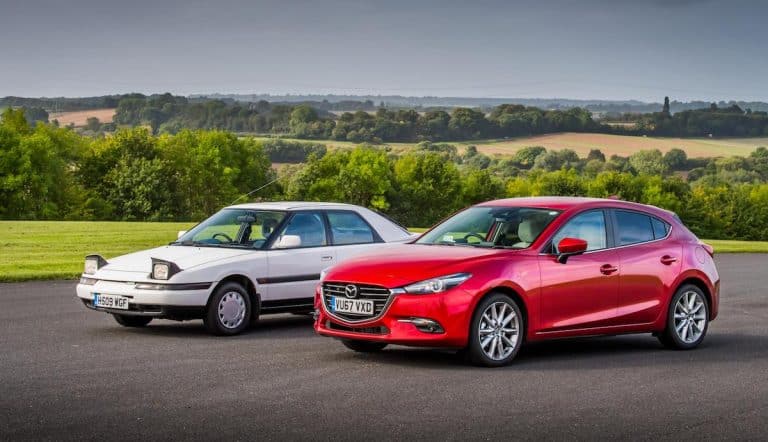
Mazda UK has joined the legion of manufacturers offering scrappage scheme allowances for older part-exchange vehicles against a selection of new models.
The offer applies to any car first registered before 31 December 2009. Unlike most rival schemes, the Mazda offer is not restricted to Euro 4 vehicles or earlier, so early Euro 5 cars from some manufacturers will also be eligible.
The programme is only available for selected new Mazda models and specifications, all of which must have an official CO2 emissions level of less than 130g/km.
Mazda 2 petrol models are eligible for a £2,000 allowance. Mazda CX-3 diesel crossover models get a £3,000 allowance. Mazda 3 and Mazda 6 petrol models get a £4,000 discount, while Mazda 3 and Mazda 6 diesel models get a £5,000 allowance. Other Mazda models are not included in the scheme.
The offer runs until the end of December, but cannot be used in conjunction with any other dealer, manufacturer or finance company offer.
Mazda is offering a low-rate PCP and conditional sale finance offer, with a representative APR of 3.9%, but you don’t have to take finance to be eligible for the scrappage allowance.
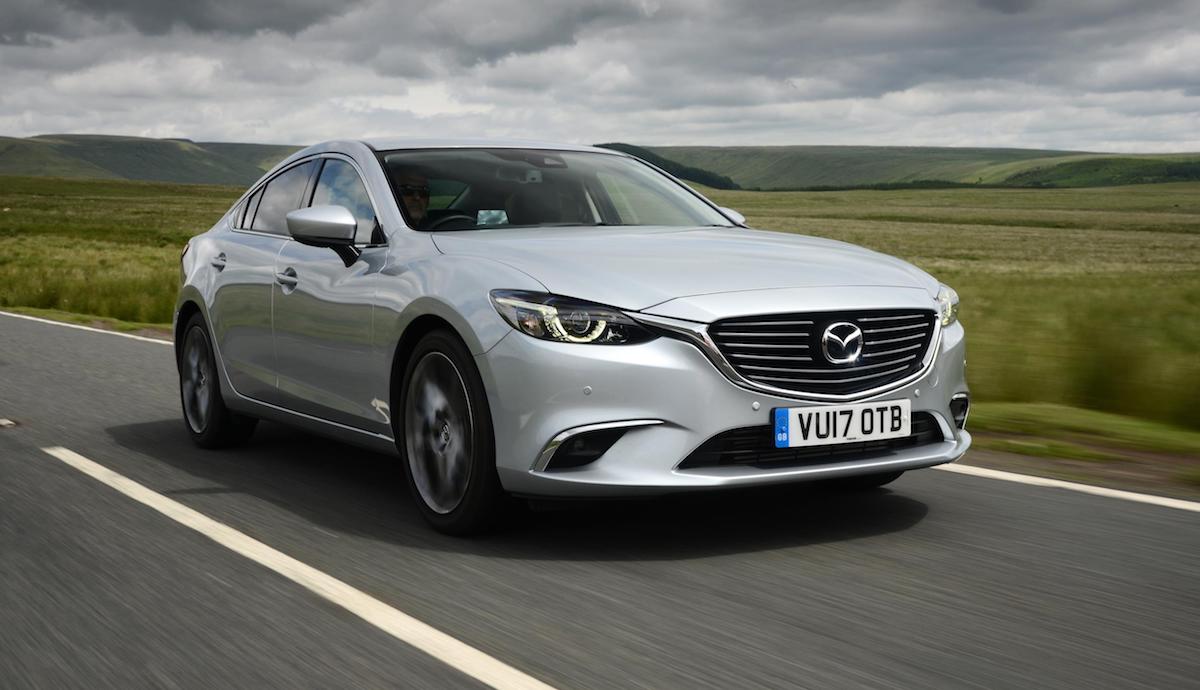
Up to £5,000 scrappage allowance is available on selected Mazda6 models
The Car Expert examines the fine print
This offer is a part-exchange allowance, for selected used cars part-exchanged against selected new cars.
Your current car can be from any brand, but must have been first registered no later than 31 December 2009. The first registration date is found in your V5C logbook registration document.
You must be the owner of the part-exchange vehicle and the buyer of the new car (same name and registered address).
Mazda has not specified a minimum ownership period for part-exchange vehicles.
The scrappage price is fixed for any car part-exchanged as part of the scheme, not an allowance on top of the car’s value. You are effectively getting nothing for your car, but a discount on the new car (although it won’t be written that way on the contract).
New cars must be ordered and registered no later than 31 December 2017.
This offer can be used on top of any other offers from the dealer/manufacturer/finance company.
The offer is not dependent on you taking any finance package or other products.
£2,000 scrappage allowance is available on selected Mazda2 models
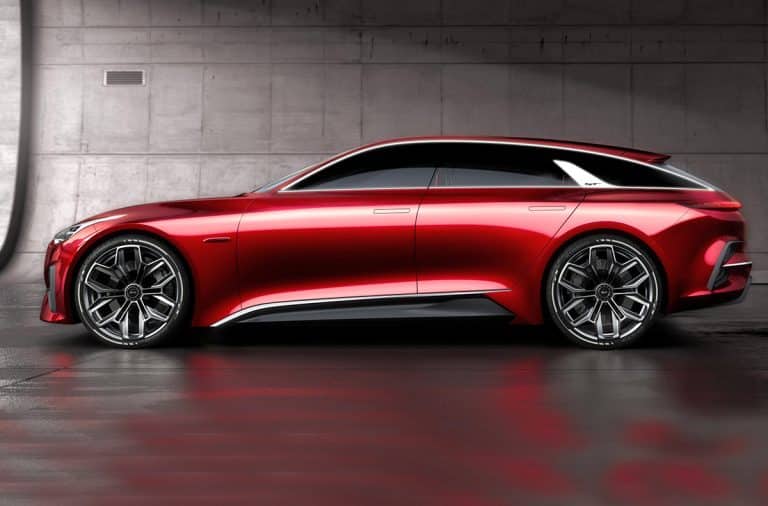
The Kia Proceed Concept, to be unveiled at the Frankfurt Motor Show next week, previews both the expected styling look of the next generation Cee’d range set to launch in 2018, and a possible new body style.
Designed at the Kia European design studio next door to the site of the Frankfurt show, the concept is described as an ‘extended hot hatch’, effectively a shooting brake. If it reaches production it will extend the Cee’d line-up, which currently runs across three and five-door hatchbacks and an estate.
Kia’s European chief designer officer, Gregory Guillaume, describes the concept as a potential different halo model for the Cee’d family, as many European drivers are now seeking performance alternatives to the three-door hot hatch. “The Proceed Concept represents a bold new vision of how the vibrant soul of the pro_cee’d could be reincarnated and revitalised for a new generation of performance-oriented drivers,” Guillaume says, which suggests that the current three-door will not be part of the next-generation Cee’d line-up.
Bold styling treatment
In line with this aim, the styling is more distinctive than the mainstream Cee’d, with a low stance, muscular bodywork and sharp detailing. The bodywork includes a bold ‘Sharkblade’ design element that also emphasises the lack of B-pillars (door pillars), and the car sits on 20-inch six-spoke aluminium wheels.
Other styling influences from the current Kia range are also incorporated, notably the ‘Tiger Nose’ grille, a bonnet shape designed by the Stinger model soon to go on sale, and a full-length glazed roof.
Should the Proceed reach production it will likely only appear after the next mainstream Cee’d range launches with the styling treatment displayed on the concept.
Jaguar has unveiled the Future-Type concept and announced that all Jaguar Land Rover cars will be electrified in some way by 2020.
Speaking at a technology event organised by JLR in London, company CEO Dr Ralf Speth announced that a “portfolio of electrified products” will be introduced across the model range, embracing fully electric, plug-in hybrid and mild hybrid vehicles. “Our first fully electric performance SUV, the Jaguar I-PACE, goes on sale next year,” Speth confirmed.
The Future-Type concept is a narrow-bodied fully autonomous vehicle with what is described as 2+1 ‘social’ seating – the idea being that if a user wishes to for example talk to their child while taking them to school, they can use the two seats and let the car take charge of the journey.
Live-at-home steering wheel
Technological highlight of the Future-Type is what JLR dubs the first intelligent and connected steering wheel, called Sayer after the designer of the iconic Jaguar E-Type. Designed to live in the home, the wheel boasts voice-activated artificial intelligence (AI) technology and can carry out a wide range of tasks from summoning the car, playing music, booking restaurant tables or even checking the contents of the owner’s fridge.
While relaxing in their living room owners will be able to tell Sayer where they need to be the following day and at what time. and the system will work out when a car needs to autonomously arrive at the door – based on the time the owner normally gets up – and will also advise which parts of the journey the owner might enjoy driving themselves.
As a sign of its commitment to electric cars, JLR also displayed an EV version of the 1960s E-Type, dubbed the E-Type Zero. The car, a restored Series 1.5 Roadster, is completely original apart from its 220kW electric powertrain. This uses a lithium-ion battery pack with the same dimensions, and similar weight, to the XK six-cylinder engine used in the original E-type, with the motor mounted behind and the whole in exactly the same location as the original’s engine and transmission.
A greater range, additional technology and revised styling to attract a wider customer base are all features of the latest Nissan LEAF electric car.
Images and information of the second-generation LEAF have been revealed ahead of its public debut at the Frankfurt Motor Show on 12th September. Built in Britain, the car is due on sale across Europe from January 2018, succeeding the current LEAF that has become the world’s best-selling electric car with more than 283,000 sold since 2010.
Nissan is quoting an official (New European Driving Cycle) range between charges of the new car of 235 miles. And also planned is a higher-power model which will also boast a longer range – some observers predict that the LEAF will gain a version in Nissan’s NISMO performance sub-brand in order to attract younger buyers.
The powertrain of the new LEAF has had its energy efficiency improved and both power and torque uprated, to 150hp and 320Nm respectively. Maximum speed will be 90mph but the 0-62mph time has not yet been stated.
Driving tech added
New technology in the LEAF includes the ProPilot driver assistance system which makes driving safer and easier on single-lane roads, and the ProPilot Park which will automatically control acceleration, steering and braking to park the car. Also included is an e-Pedal, allowing drivers to start, accelerate, decelerate and stop simply by the way they press the accelerator pedal. When the accelerator is fully released, regenerative and friction brakes are applied automatically, gradually bringing the car to a complete stop.
The car’s exterior styling follows that of the IDS Concept unveiled at the Tokyo Motor Show in 2015. The current V-motion grille family design is incorporated, detailed in blue to signify the car is electric. The interior has also been completely redesigned.
The Honda CR-V Hybrid Prototype will be displayed at the Frankfurt motor show later this month, and previews a production model in which the company’s popular mid-size SUV will go hybrid for the first time.
Due on sale in 2018, the next-generation Honda HR-V Hybrid is expected to signal the expansion of electrified drivetrains across the brand’s range. Its newly developed i-MMD (intelligent Multi Mode Drive) hybrid system combines a 2.0-litre petrol engine with two electric motors – one for propulsion and one generating energy for the batteries.
Gearing in the hybrid model is fixed, according to Honda creating ‘a direct connection between moving components, enabling a smooth transfer of torque within the system.’ Power and economy figures for the powertrain are yet to be revealed.
Styling evolves
The Honda CR-V Hybrid Prototype also reveals the look of a general CR-V styling facelift. This will debut in showrooms with the 1.5-litre petrol-engined version of the CR-V, which will go on sale before the production version of the hybrid. In the same week that figures reveal UK diesel sales have slid again, Honda has made a possibly highly significant move in no longer offering a diesel-engined CR-V to European customers.
While described as an ‘evolutionary design that is sophisticated and sporty’, the restyle of the CR-V is extensive, and the resultant car measures up slightly longer, wider and higher than the current model.
The A-pillars (windscreen pillars) are thinner, wheel arches wider, and both wheels and tyres increased in size. Both the bonnet and rear flanks gain sharper contours, and the nose reflects the brand’s latest family styling with bespoke headlamp signatures.
New car registrations fell by more than 6% in August compared to last year, with private buyers shying away from showrooms and diesel cars continuing to have a disastrous time, according to results released today by the Society of Motor Manufacturers and Traders (SMMT).
Private sales were 10% down on the same time last year, while fleet sales recorded a more moderate 3% drop (although this will include a lot of self-registered cars, as manufacturers and dealers tend to register more vehicles to themselves when demand drops). Business sales were down 14% but this is a much smaller sector, with less impact on the overall picture.
The woes for new diesel car sales continued in August, with registration numbers down more than 21% on last year. Diesel cars made up less than 40% of the market, an historic low, while petrol sales were up by just under 4%, to an overall 55% of the market, as buyers continue to switch from diesel to petrol power.
Hybrids and electric cars continue to show improvement, up 58% on last year. Almost 4,000 ‘alternatively-fuelled’ cars were registered in August, and the sector again accounted for more than 5% of the overall market.
Within the broader picture are other interesting details. SUVs continue to grow in popularity, with an 8% increase compared to the same month last year. Large family cars were also up marginally, which is something of a surprise, and executive cars also improved slightly. Hatchbacks, people movers and other types of car all decreased.
For SMMT bingo fans it was a disappointing month. There were no mentions of “Brexit” or “the single market” anywhere in the press release, nor any pleas for the government to do something to protect the automotive sector.
Good month for hybrids and electric cars, another bad month for diesels.
Volkswagen Golf is back on top
It was another good run for the Volkswagen Golf, returning to the top of the charts in August. The new Ford Fiesta improved to second place, and is generally expected to resume its traditional place at the top of the charts once supply of the all-new model is up to speed.
The Vauxhall Mokka X vaulted into the Top 10, ending up in third place, ahead of usual suspects like the Ford Focus, Volkswagen Polo, Vauxhall Corsa and so on. It was also a good month for the Ford Kuga, appearing in fifth place, while the Nissan Qashqai slipped from third back to tenth as supplies of the old model ran out and the new model started to arrive.
Hopes pinned on scrappage schemes and aggressive offers
August is always a slow month for new car sales, with private buyers, in particular, hanging back for the number plate change in September. With a number of manufacturers now offering aggressive scrappage schemes and other offers, the hope will be that they can claw back the losses from the middle of the year and salvage a decent yearly result by December.
Good month for the Volkswagen Golf and Vauxhall Mokka X, not so good for the Nissan Qashqai or the Mercedes A and C Classes
The Skoda Karoq will be unveiled at the Frankfurt motor show as the Czech brand ramps up its SUV offensive.
A smaller sister to the Kodiaq and effectively replacing the highly successful Skoda Yeti, the Karoq is 4382mm long, 1841mm wide and 1605mm high. The significantly long wheelbase of 2638mm promises plentiful interior room, while boot space is generous too, at 521 litres, growing to 1630 litres with the rear seats folded forward.
Alternatively, VarioFlex rear seats can be fitted as part of the brand’s ‘Simply Clever’ programme – these consist of three separate rear seats that can be individually adjusted or even removed, providing between 479 or 588 litres of space which can grow to 1810 litres.
Digital direction
Skoda is heavily promoting the Karoq as the most digitised model in its range. The highlight is the first fully digital instrument panel offered in a Skoda, which can be customised to the driver’s preferences. All the displays are also linked to the car’s infotainment system, while other technology includes a wi-fi hotspot.
The Karoq will go on sale with a five-strong engine lineup, two petrol and three diesel. Capacities available range through 1.0, 1.5, 1.6 and 2.0 litres and power outputs from 115 to 190hp and the 190hp 2.0 diesel comes as standard with all-wheel-drive and a seven-speed DSG auto gearbox. All other powertrains will be orderable with either the DSG or a six-speed manual ‘box.
More details of the Karoq will be revealed when the car is unveiled on 12th September at the Frankfurt show. UK sales are expected to start in January 2018.
Fiat Chrysler Automobiles (FCA) has announced its scrappage offers for its four UK brands – Fiat, Alfa Romeo, Abarth and Jeep.
Like most of the other schemes on offer, the FCA scrappage offers apply to for any part-exchange cars built to Euro 4 emissions standards or earlier, with either petrol or diesel engines. This means definitely cars first registered before 31 December 2009, although some vehicles had Euro 5 engines before that date.
The scrappage offers only run until 30 September, so cars must be ordered and delivered by the end of this month.
The allowance cannot be used in conjunction with any other offer from the dealer, manufacturer or finance company, such as Alfa Romeo’s “Test me” deposit contribution offer, so buyers will have to examine the offers available and decide which is best.
All vehicles part-exchanged under the programme will be scrapped.
Make and model
Series
Scrappage allowance
Fiat 500
Pop
Up to £2,125
Fiat 500X
All
£2,500
Fiat 500L
All
Up to £3,500
Fiat Panda
All (excl. Pop)
£2,000
Fiat Tipo
All
Up to £1,500
Fiat Punto
All
£3,500
Fiat 124 Spider
All
£3,000
Abarth Spider
All
Up to £3,000
Abarth 595
All
£1,095
Jeep Renegade
All
£3,500
Alfa Mito
All (excl. entry model)
£2,500
Alfa Giulietta
All (excl. entry model)
Up to £5,300
Alfa Giulia
All models (excl. entry version & Quadrifoglio)
£3,250
The Car Expert checks the fine print
This offer is a part-exchange allowance, for selected used cars part-exchanged against selected new cars.
Your current car can be from any brand, but must be built to Euro 4 emissions standard or earlier. This will definitely be cars first registered no later than 2009, although some cars had Euro 5 specification engines earlier than this.
You must be the owner of the part-exchange vehicle and the buyer of the new car (same name and registered address).
You must have owned the old car for at least 180 days (six months), to stop people buying an old banger for £200 and then getting a £2,000 part-exchange allowance for it.
You must order your new car and take delivery before 30 September 2017.
This offer cannot be used on top of any other offers from the dealer/manufacturer/finance company.
The offer is not dependent on you taking any finance package or other products.
What is it?
The Toyota C-HR is the brand’s distinctive entry into the booming compact crossover market.
Key features
Hybrid powertrain, bold styling.
Our view
It may be late to the compact crossover party, but the C-HR has certainly made a spectacular entrance. With its riot of angles and creases, the C-HR certainly makes a head-turning statement.
Toyota will have no worries about sliding diesel sales where its new crossover is concerned, because you can’t have a diesel in the C-HR. The choice is between the 1.2-litre turbo petrol engine or the 1.8-litre petrol-electric hybrid.
The C-HR comes in a choice of three specifications, all of which offer good levels of equipment. The cabin feels airy and spacious, thanks to a combination of excellent design and top-notch quality.
The C-HR handles very well and certainly belies its high-riding crossover stance. Ride comfort is exemplary, soaking up the bumps on poor condition surfaces and damping them out of the cabin. Officially the car returns 72mpg, but hovering close to 60mpg in real-world motoring is still impressive.
This is a crossover that exudes style amongst many more ordinary-looking rivals, and it also ticks the boxes of quality and (mostly) practicality.
Similar carsNissan Qashqai, Renault Kadjar, SEAT Ateca
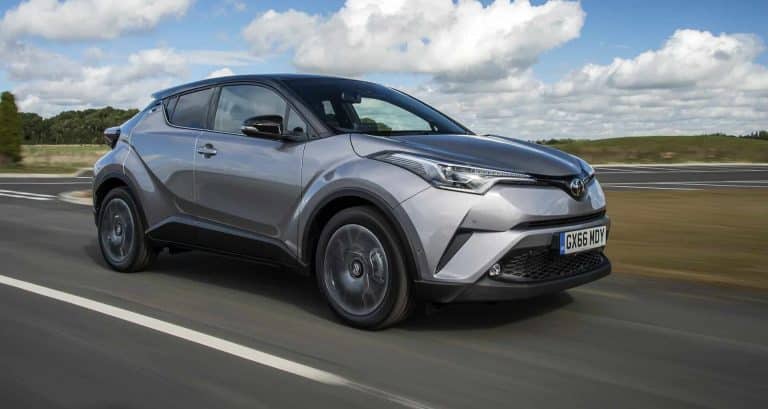
There is absolutely no doubt that the Toyota C-HR instantly polarises people. Upon seeing it in a TV commercial, this tester’s offspring dubbed it the ugliest car she had ever seen. When the test version arrived for testing, she was forced to admit it looked better in the metal than on the screen. This car certainly breaks the mould of typical Toyota fare.
Over the last few years, the compact crossover segment has exploded in popularity around the globe. The Nissan Qashqai started the ball rolling a decade ago and now almost every manufacturer is trying to cash in, resulting in a very crowded marketplace. The C-HR is also up against quality opposition like the Renault Kadjar, SEAT Ateca, Peugeot 3008 and Volkswagen Tiguan.
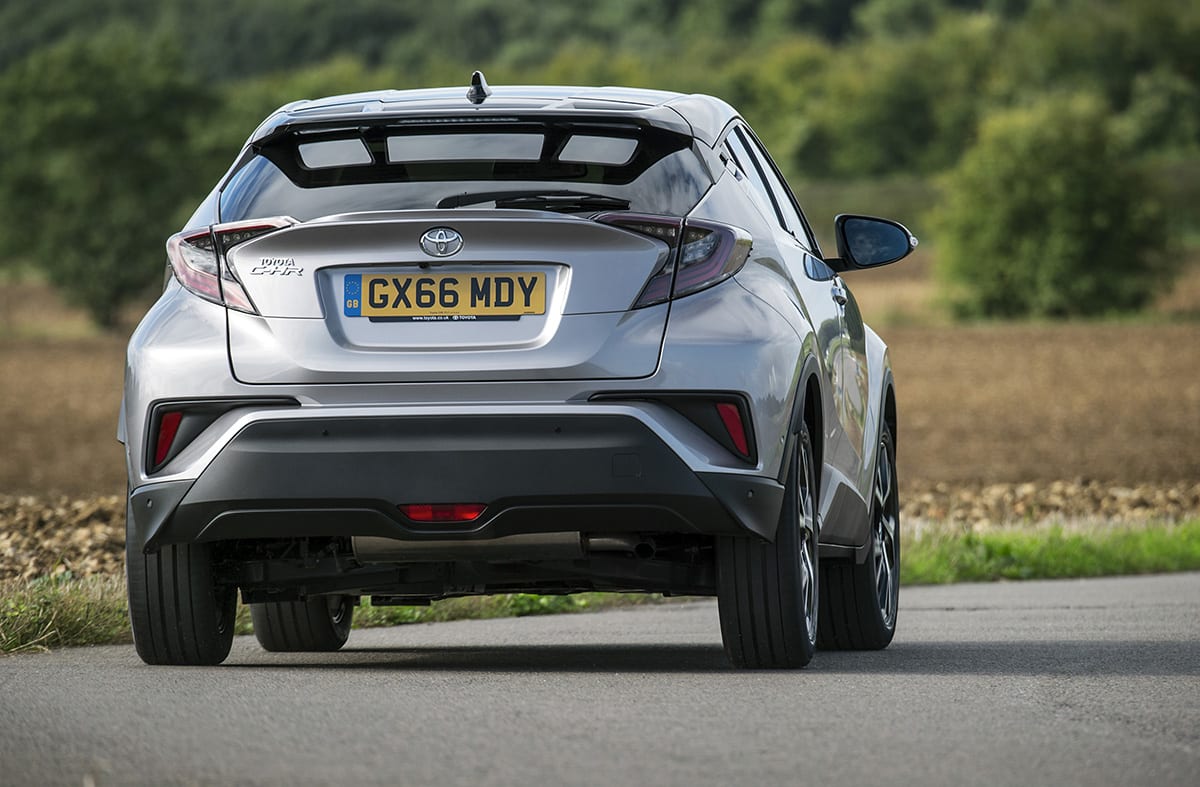
So it may be late to the party, but the C-HR has certainly made a spectacular entrance. According to Toyota, this is a car that illustrates the aim of head man Akio Toyota’s determination to take the shackles off his designers – “to allow greater stylistic freedom and promote creative engineering to deliver eye-catching designs and more driving pleasure.” The nose is dominated by a bold V shape sweeping to the centre point of the grille. The rear is no less distinctive, with a rear screen so raked it is almost horizontal. With its riot of angles and creases, the C-HR certainly makes a head-turning statement.
However, visuals are but one element of a successful model – once we start delving into the practicalities, how does the C-HR stack up against its ever more plentiful opposition? Pretty well, mostly…
The Toyota C-HR certainly stands out in a crowd
Buying and owning a Toyota C-HR
Toyota will have no worries about sliding diesel sales where its new crossover is concerned, because you can’t have a diesel in the C-HR. The choice is between the 1.2-litre turbo petrol engine of 114hp, or the hybrid. This combines a 1.8-litre petrol unit with an electric motor to produce a combined 120hp.
Toyota is, of course, an evangelist for such systems, and the one in the C-HR offers all the advantages of the brand’s many years’ experience with the technology. The battery is more dense in its energy storage, which means it can be reduced in size and will charge faster. The electric motors are smaller but more efficient. Even the petrol engine part of the equation has been significantly re-engineered to work better with the electric motor.
Every C-HR comes with Toyota’s comprehensive ‘Safety Sense’ package of active safety systems. Autonomous emergency braking and pedestrian recognition, Lane Departure Warning, Traffic Sign Recognition and Automatic High Beam headlight operation are all part of the package. Euro NCAP awarded the C-HR five stars earlier this year, with an outstanding set of scores.
The C-HR comes in a choice of three specifications, all of which offer good levels of equipment. The entry-level Icon spec starts at £23,685 for the hybrid model, and includes 17-inch alloy wheels, dual-zone air conditioning, touchscreen multimedia system and rain-sensing wipers.
Mid level is Excel, and the most popular. The seats are part-leather and the front ones are heated. Satnav, keyless entry and parking sensors with parking assistance are included, as are larger alloys and extra safety systems such as a blind-spot monitor and measures to stop one reversing into a passing car. Finally, the Dynamic grade gains metallic paint with a contrasting black roof, LED headlamps and bespoke alloy and upholstery designs, although the price tag is now up over £28,000.
Running costs are also very competitive, largely thanks to the hybrid system. Fuel economy is impressive, and road tax is cheaper than its petrol or diesel rivals. Insurance should be reasonable as well.
Inside the Toyota C-HR
Interior is a massive step up from previous Toyota models
Slip behind the driver’s seat and things are immediately impressive. The design is another new departure for Toyota, dubbed ‘Sensual Tech’, and designed to appeal for its fashionable look as much as its functionality. It feels airy and spacious, thanks to a combination of excellent design and top-notch quality.
The dash fascia sweeps around the driver, the infotainment screen flows vertically out of it, and there are lots of creditable details, from the family look of all the switchgear to the shape of the cupholders.
It also all feels premium – piano black finishes in abundance, soft-touch quality plastics, and on our admittedly top-spec model bespoke fabrics on the upholstery.
Look over your shoulder, however, and you realise that the rear windscreen is an example of form over function. It’s very small in the mirror and visibility out of the back is compromised as a result. Equally, the tiddly rear side windows make sitting in the back an overly cosy experience, although head and legroom are a little more generous than one might expect.
One other area where style has compromised practicality is the boot. The 377 litres, (extending to 1,160 with the rear seats folded) is adequate, but around 100 litres less than major rivals. And this can’t be blamed on the hybrid power system, which doesn’t intrude into the load space like on many other hybrid vehicles.
Driving the Toyota C-HR
The C-HR handles better than you would expect for a tall car.
The C-HR is the second model – after the Prius – to be constructed on Toyota’s latest modular platform, dubbed TNGA, Toyota New Global Architecture. This won’t mean much to many drivers until they actually take the car onto the road.
The C-HR handles very well indeed, and certainly belies its high-riding crossover stance. Toyota has worked hard to keep the centre of gravity as low as possible, and the result is a planted stance and a well-controlled, upright poise through corners. The steering is well weighted, providing plenty of confidence-inducing feedback, while the ride comfort is exemplary, relaxing on motorways, soaking up the bumps on poor condition surfaces and damping them out of the cabin.
Cruise around town, or gently along the motorway, and the car feels refined and a relaxing drive. Accelerate to overtake that slower car, however, and the petrol engine makes its presence audibly much felt, while the CVT gearbox feeds in loads of revs before changing up. All of which results in the interior ambience becoming thrashy and anything but refined.Not quite so impressive, sadly, is the powertrain. It almost bullies you in driving it as economically as possible, and even then very little of your progress will be in full-electric mode – the engine wakes up very soon after one depresses the accelerator pedal.
The answer is to treat everything gently, not to try to be sporty. In such form, the C-HR is an upmarket companion. The three drive modes include Eco and Sport settings alongside the Normal, but in truth, it’s that middle mode that offers the best balance between propulsion and thrash metal.
One other plus from the gentle touch – one gets the feelgood factor of seeing the impressive fuel economy figures on the infotainment screen. Officially the car returns 72mpg, but hovering close to 60mpg in real-world motoring is still impressive.
Summary
The Toyota C-HR has its minus points – some space restrictions and a performance that doesn’t quite match up to the sporty image of its coupé styling.
However, it also achieves the aim of its creators. This is a crossover that exudes style amongst many more ordinary-looking rivals, and it also ticks the boxes of quality and (mostly) practicality. Overall it’s an impressive contender.
Kia is the latest manufacturer to join the scrappage scheme frenzy for the new 67-plate registration season, with offers on the Picanto and Rio models.
Unlike other brands with several terms and conditions, Kia’s offer is comparatively simple. It will offer £2,000 for any part-exchange vehicle more than seven years old when traded in against a new Kia Picanto or Kia Rio.
There’s no requirement to have owned the part-exchange vehicle for a minimum length of time, so long as the name and address of the old car match those for the new car.
The scrappage offer cannot be used in conjunction with any other dealer, manufacturer or finance company offer.
The Car Expert checks the fine print
This offer is a part-exchange allowance, for selected used cars part-exchanged against selected new cars.
Your current car can be from any brand, but must be at least seven years old.
You must be the owner of the part-exchange vehicle and the buyer of the new car (same name and registered address).
The scrappage price is fixed at £2,000 for any car part-exchanged as part of the scheme, not an allowance on top of the car’s value. You are effectively getting nothing for your car, but a £2,000 discount on the new car (although it won’t be written that way on the contract).
You must order your new car and take delivery before the end of the year.
This offer cannot be used on top of any other offers from the dealer/manufacturer/finance company.
The offer is not dependent on you taking any finance package or other products.