






Private new car purchases were down by more than 7% in February, according to latest data published by the Society of Motor Manufacturers and Traders (SMMT) today, in another disappointing month for the car industry.
Fleet registrations were almost exactly the same as last year, however, and business registrations were up, so the overall new car market was down about 3%.
It should be pointed out that February is traditionally one of the two quietest months of the year (along with August), so a fall in numbers is less important than it would be in March or September. Just under 80,000 new cars were registered in February, whereas about 300,000 would normally be registered in March as the new 20-reg number plates are launched. How much this will be affected by coronavirus-related issues remains to be seen, but the car industry will be far more worried about that than about a slow February.
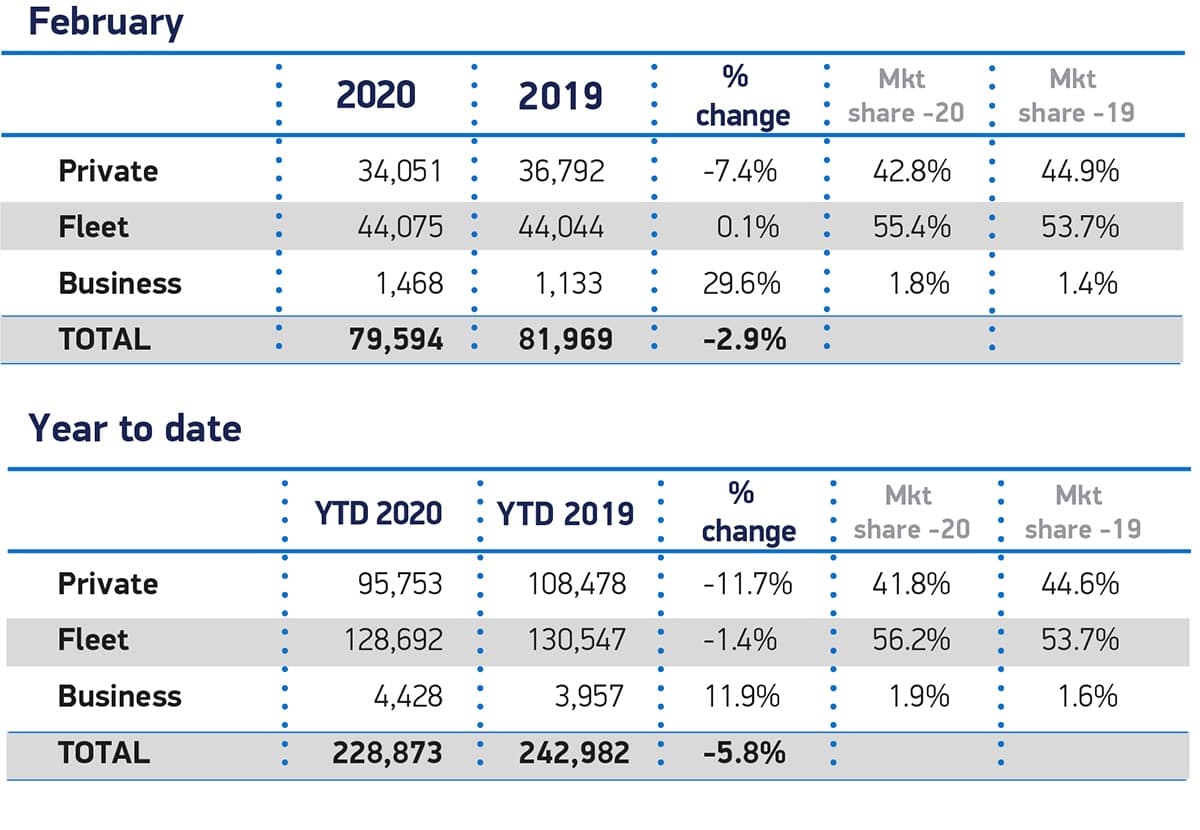
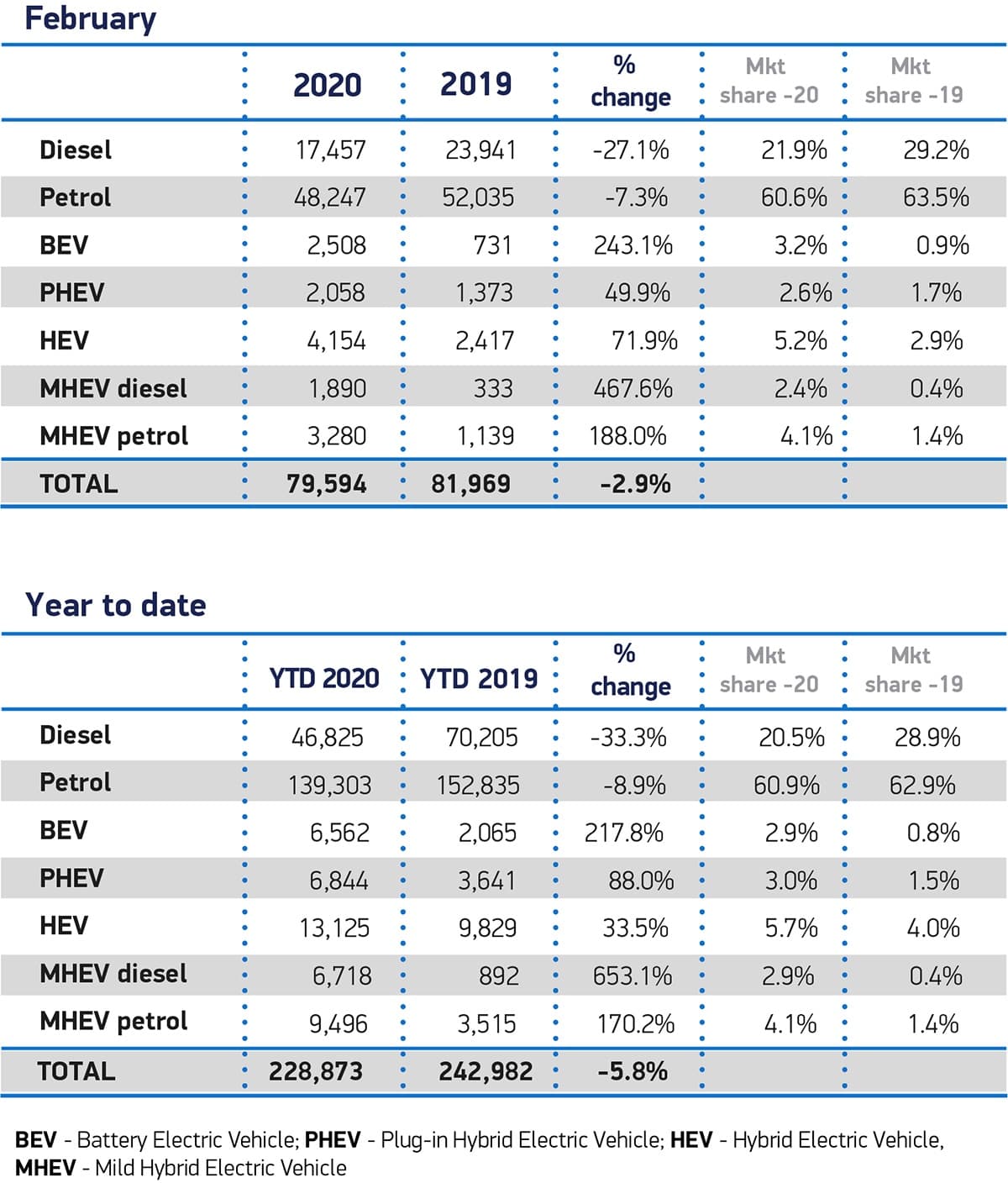
The unpopularity of diesel fuel shows no sign of letting up, with market share for diesel cars (including mild hybrid diesels) down at about 24%, some 5% lower than at the same time last year. Electrified cars continue to grow in popularity, and this should start to accelerate as more new models (and more cheaper new electric vehicles) arrive during 2020. The SMMT is also calling for government to remove VAT from electric cars in order to stimulate growth, as well as the re-introduction of the plug-in car grant for plug-in hybrids.
Will coronavirus affect March new car sales?
Many retail sectors have reported significantly reduced footfall over the last week or so, as customers start to avoid public spaces due to concerns about the spread of COVID-19 – a.k.a. the coronavirus. Car showrooms will be no different.
March and September are the two biggest months of the year for new car registrations, as buyers like to take delivery of new cars with the latest number plates. Many of the cars that have already hit the road with 20-reg plates will have been ordered over the last couple of months, so sales numbers will probably not have been significantly affected just yet. However, with more than three weeks of the month still to go, any decline in showroom traffic now will almost certainly mean a sales slowdown in the second half of the month.
Other retail sectors are expecting a boost in online sales to at least partly cancel out falls in high street sales, but the car industry is still a long way behind when it comes to online sales. Those companies who have embraced it may benefit, but overall the likely result is that customers will simply delay their new car purchases where possible.
On top of that, we are almost certainly going to see production slowdowns as manufacturers close factories. Even if they dont have any problems at their own facilities, almost every car company is heavily reliant on Chinese suppliers for many components. This may affect March sales, but is more likely to hit over the next few months. At this stage, it’s difficult to say what sort of impact this will have for car buyers, but it’s unlikely to be helpful.
Good month, bad month
With February being such a quiet month in terms of customer demand, it doesn’t take a big increase or decrease in numbers to create a large swing in percentages. So any large growth or fall in registrations should be taken with a pinch of salt, as they could be driven by manufacturers choosing to self-register a lot of extra vehicles or hold back depending on their own requirements. Unsurprisingly, there were more big swings than we’d normally see during the year.
Bearing that in mind, February’s numbers look to be good news for Abarth, DS Automobiles, Fiat, Land Rover, Lexus, MG, Nissan, Porsche, SEAT, SsangYong, Toyota and Volkswagen, who all recorded double-digit growth against a market that was down 3%.
It wasn’t that good for Alpine, Audi, Dacia, Ford, Jaguar, Jeep, Maserati, Mazda, Mitsubishi, Peugeot, Renault, Smart, Subaru or Suzuki, who all recorded a fall of more than 10% compared to last year.
Golf to the fore as Fiesta falters
The outgoing Volkswagen Golf hit the top of the sales charts in February, as car buyers took advantage of good deals on run-out models ahead of the launch of the all-new model in the next few months.
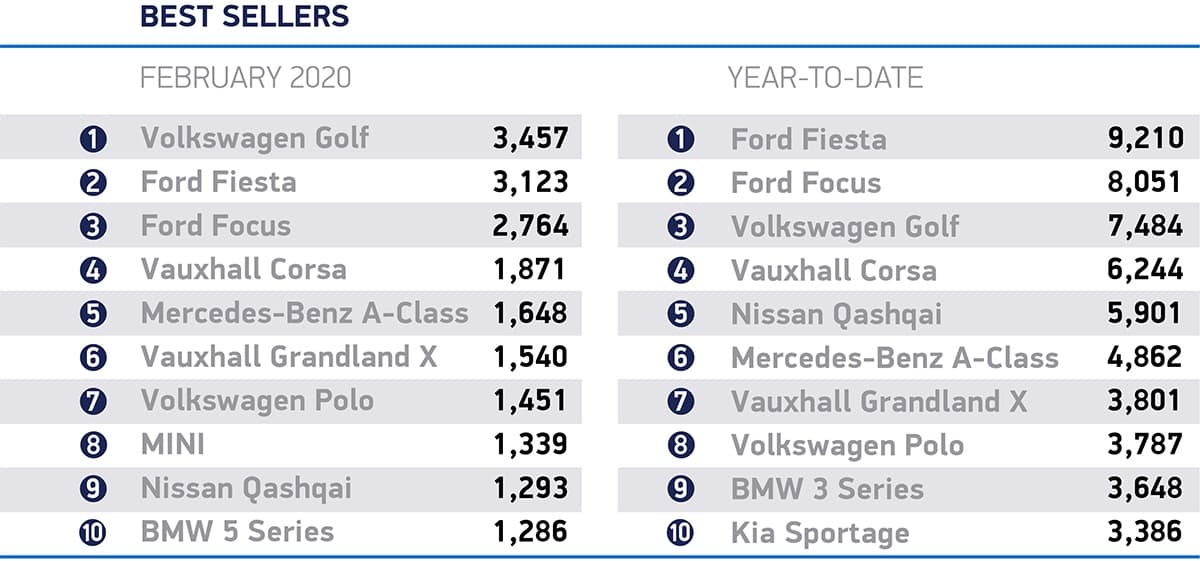
It wasn’t exactly a disaster for Ford, as the Fiesta still finished up in second place with the Focus in third. Overall, though, Ford registrations were down more than 18% compared to a year ago, so the rest of the range looks to have had a tough month. Ford has already reduced Fiesta production in Germany, partly because of a fall in UK demand.
Vauxhall is likely to be pleased, with the outgoing Corsa holding fourth place while the Grandland X crossover jumped to sixth place and continued its strong start to the year. The Nissan Qashqai slipped back to ninth place, and was almost pipped by a new entry to the Top Ten, the BMW 5 Series. If anyone knows the last time the 5 Series featured in the list of the UK’s ten best-selling cars, please let us know in the comments section below.