Make and model: Mitsubishi Outlander
Description: Plug-in hybrid SUV
Price range: £46,995 to £49,995, plus optional extras
Summary: The new Mitsubishi Outlander is smooth, practical and backed by a trusted badge, but its high pricing and dated cabin tech make it harder to recommend.
The new Mitsubishi Outlander is an important car for Mitsubishi in the UK. Along with the new L200 pick-up, it marks Mitsubishi’s return to the new car market after sales stopped in 2021, although aftersales support continued throughout that absence.
Mitsubishi says it has 120 dealers offering aftersales support across the UK, with 60 already signed up to sell new cars again. For buyers nervous about newer Chinese brands, that established dealer network and familiar badge may provide reassurance.
This latest Outlander is a plug-in hybrid SUV, which makes sense given Mitsubishi’s success with the previous Outlander plug-in hybrid. In the mid-2010s, that car became one of the default choices for buyers who wanted a plug-in hybrid family car, although it’s fair to say that many people were more attracted to the tax savings on offer at the time than any reduction in running costs…
The new Outlander has a 2.4-litre petrol engine, a 23kWh battery and two electric motors – one at the front and one at the rear. Total system output is 299hp, with an official electric driving range of 53 miles.
There are two trims: Nativa and Diamond. Our launch drive was in the seven-seat Nativa, but this review covers the wider Outlander range rather than that version alone. The five-seat Diamond uses the same plug-in hybrid drivetrain and all-wheel-drive set-up, so the driving impressions apply across both models.
Price and equipment
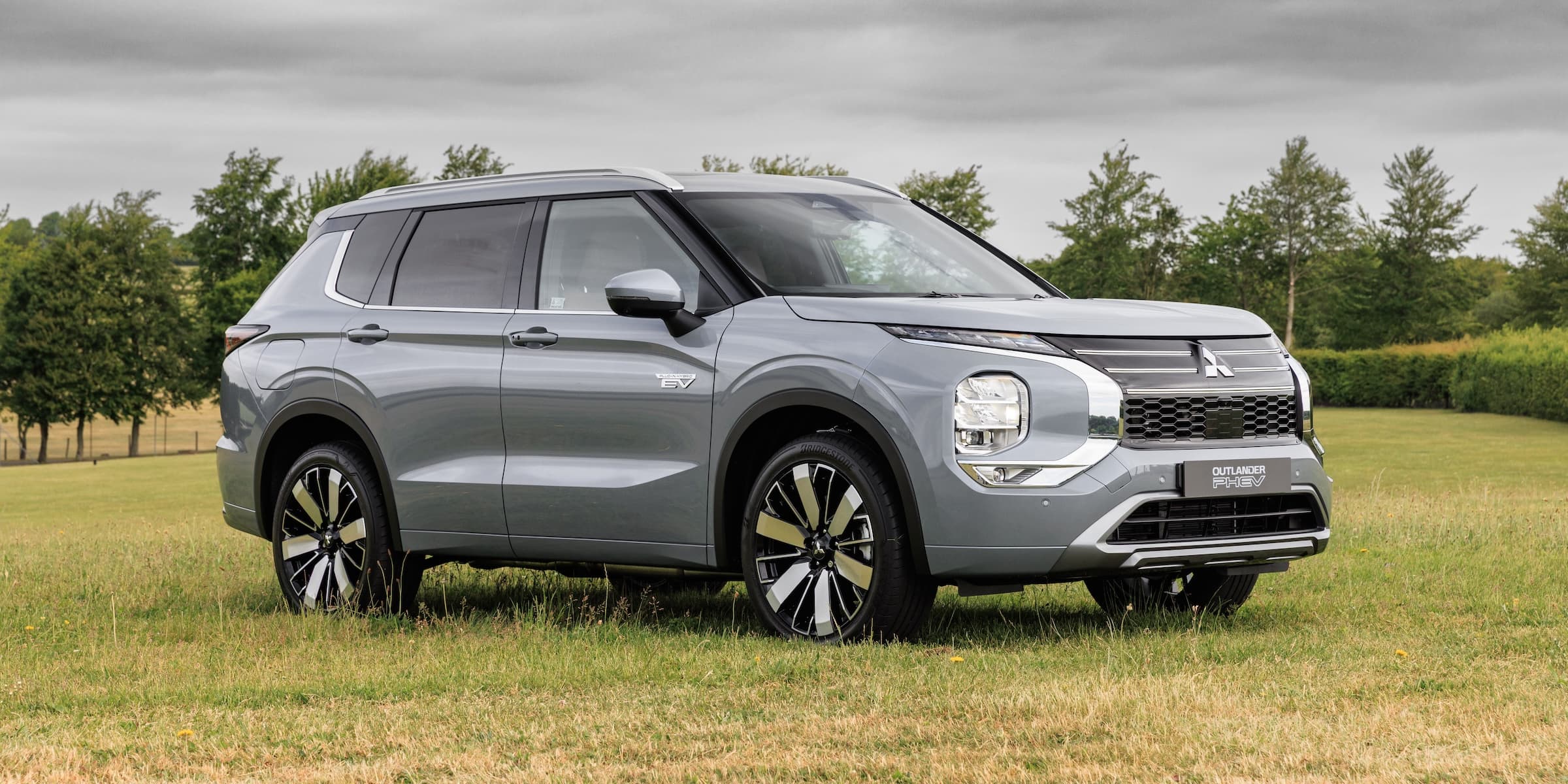
The Mitsubishi Outlander range starts with the seven-seat Nativa, priced from £47K. The five-seat Diamond costs £50K and adds a more premium cabin specification.
That pricing is on the steep side, especially now that several newer plug-in hybrid SUVs are arriving with long electric ranges, lots of equipment and lower prices. Mitsubishi is a more familiar name than most new Chinese brands, but it’s still asking buyers to pay nearly £50K for a car from a company that has only just returned to the UK new car market after walking away five years ago.
The Nativa is the more practical family choice if you need seven seats, although the third row is only really suitable for small children and short journeys. The Diamond gives up the extra two seats but adds more luxury equipment, including ventilated and massaging front seats, heated rear seats, three-zone climate control, a panoramic sunroof, hands-free tailgate, a digital rear-view mirror and upgraded cabin trim.
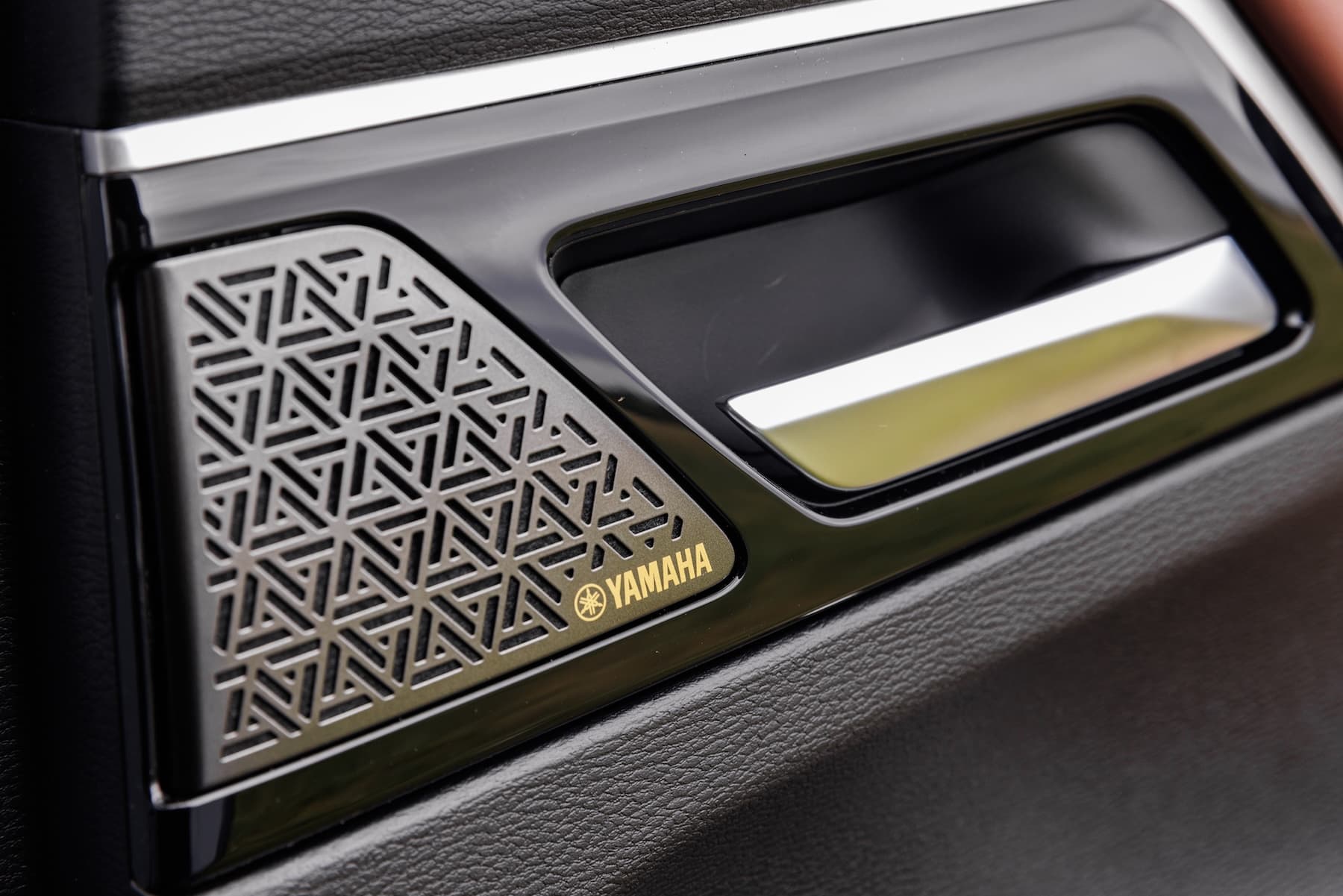
Both versions come with a 12-inch central touchscreen, head-up display, wireless phone charging, Apple CarPlay and Android Auto, keyless entry, front and rear parking sensors, a 360-degree camera and plenty of driver assistance kit. The Yamaha sound system is also standard, with eight speakers in the Nativa and a 12-speaker set-up with subwoofer in the Diamond.
Mitsubishi is clearly aiming the Outlander at family buyers who want a well-equipped, comfortable SUV rather than a bargain. That may work for some loyal Mitsubishi customers, but there are a lot of good cars available for £50K, so the Outlander faces a much tougher market than its predecessor did.
Inside the car
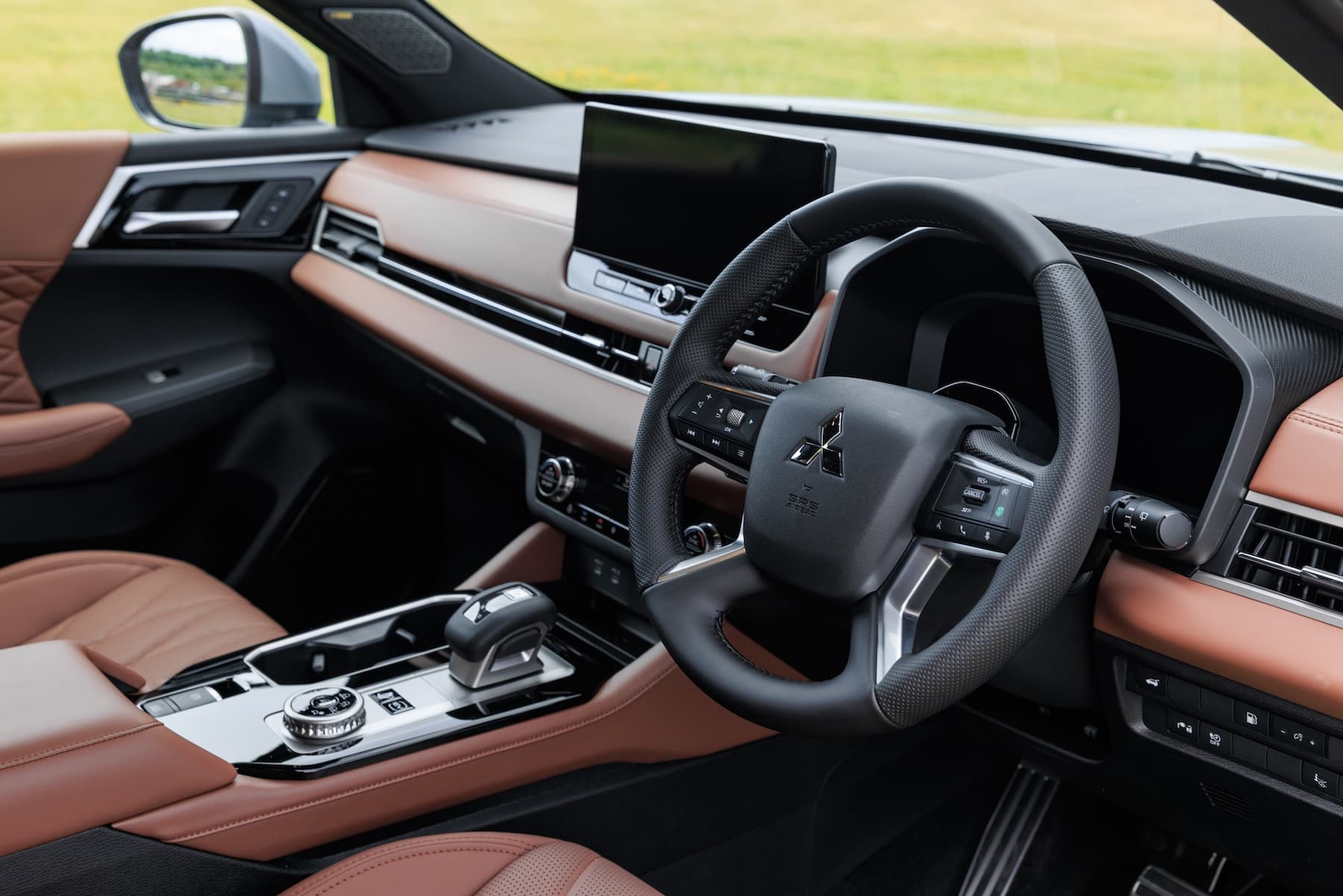
Mitsubishi seems proud that the Outlander still has lots of physical buttons rather than forcing everything through the touchscreen. We agree with the principle, although the execution feels a bit old-fashioned.
The dashboard and switchgear look about ten years out of date in places, but the good news is that most of the buttons are clearly labelled. You don’t sit there pressing random buttons and wonder what will happen, which is more than can be said for some newer cars with supposedly more advanced interiors.
There’s also a dedicated shortcut button for the driver assistance settings, which is excellent. More car makers should do this, because drivers need a quick way to adjust these systems if they are annoying, distracting or poorly suited to the road they are on.
Cabin comfort is generally good. The Outlander feels like a proper family SUV, with a comfortable driving position, decent storage and a useful amount of space. The Diamond’s brown leather interior looks more upmarket than the Nativa’s synthetic black trim, although the overall cabin design still feels more traditional than modern.
The Yamaha sound system is a highlight. Mitsubishi made a point of saying that this is a dedicated Yamaha system, rather than simply a famous badge placed over someone else’s speakers as some other brands are known to do, and it does sound good. It’s definitely better than plenty of extra-cost premium systems in rival cars.
Both versions offer useful load space when the rear seats are folded, with up to 1,600 litres available. The Nativa has a payload of 711kg, while the Diamond is rated at 517kg. Both can tow 1,600kg braked or 750kg unbraked, which gives the Outlander some useful working ability for family buyers with trailers, small boats or leisure kit.
Driving range and charging
The Outlander has a 23kWh battery and an official electric driving range of 53 miles. That should be enough for plenty of school runs, commutes and local trips if you can charge at home or at work.
Like most latest-generation plug-in hybrids, the Outlander spends much of its time driving like an EV. The petrol engine often works as a generator to supply electricity to the motors, rather than acting like a normal petrol engine doing all the hard work itself. The system can also use the petrol engine to drive the wheels directly at higher speeds when that’s more efficient.
The result is a much smoother driving experience than you get in many European plug-in hybrids. It feels more like the latest Chinese plug-in hybrid models, where the electric motors do most of the work and the petrol engine is mostly there to support them.
Official fuel economy is 313mpg, but as with any plug-in hybrid, that figure is absolutely meaningless. If you do most of your driving on electric power, the Outlander will be very cheap to run day to day. If you rarely plug it in, you will simply be driving a heavy petrol SUV with a lot of unused hybrid hardware.
One oddity is the rapid-charging connection. The Outlander uses a CHAdeMO connector for rapid charging rather than the CCS connector used by most modern electric cars and plug-in hybrids. That feels old-fashioned, especially when several newer rivals have moved on. It probably will not matter much for most owners, because a plug-in hybrid will usually be charged at home, but it does make the underlying battery technology feel a little dated and may limit the number of public charging points available to recharge.
A full charge from a home wallbox takes about six and a half hours, while a rapid charge to 80% takes about half an hour in ideal conditions. For most owners, the better routine will be to plug in overnight and use the car as an EV for normal daily driving.
On the road
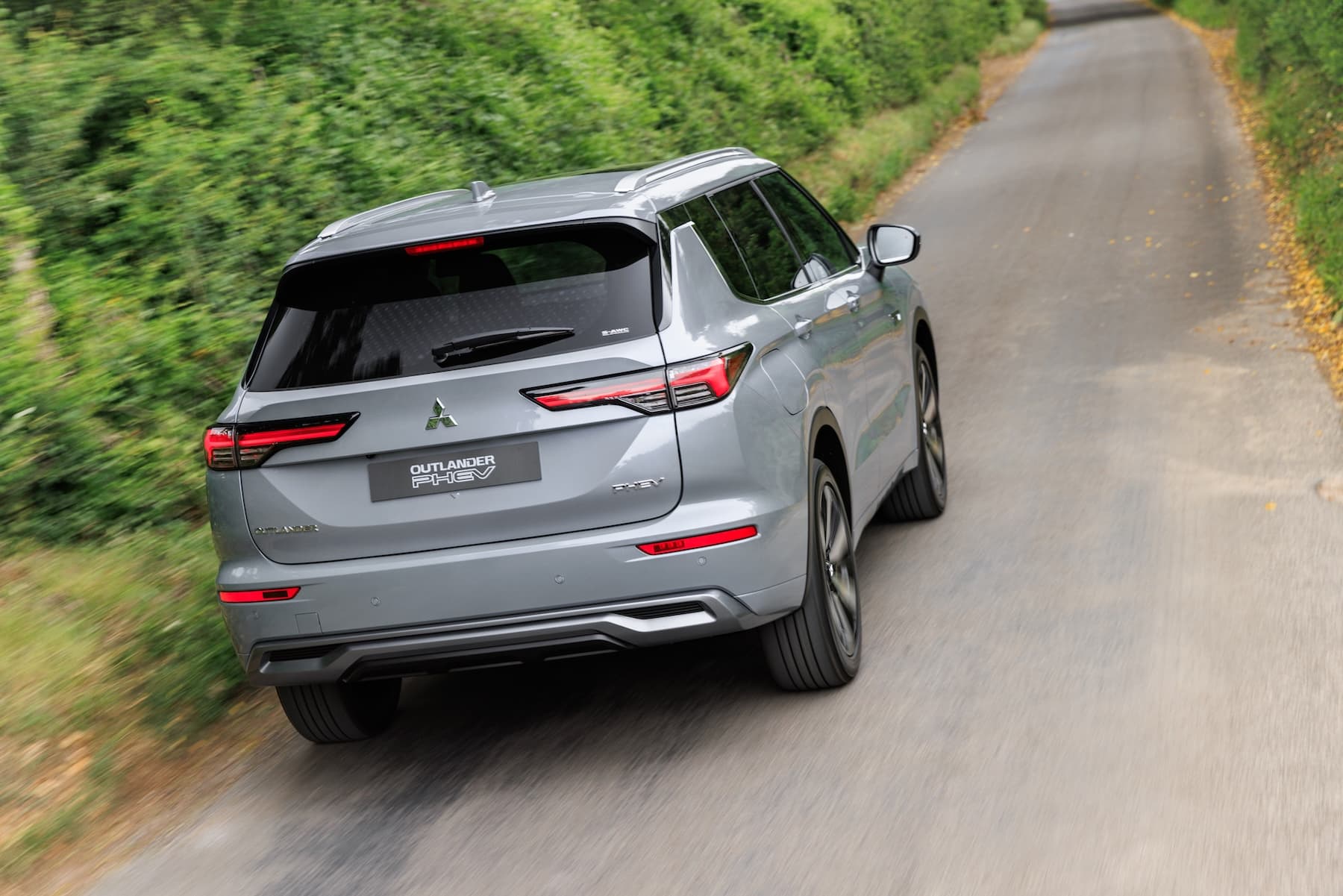
The Outlander is generally good to drive. It’s still a family SUV, so there’s not much to get excited about when it comes to handling, but it’s smooth, easy and reassuring.
Performance is adequate rather than lively. The total system output is 299hp, and 0-62mph takes 7.9 seconds. That’s quick enough for normal family use, although the car may feel less responsive when loaded with passengers and luggage, especially in the seven-seat Nativa.
The petrol-electric integration is the best part of the driving experience. Because the Outlander mostly behaves like an electric car, it feels smooth and quiet in normal driving. The engine cuts in when needed, but it usually does so without making the whole car feel unsettled.
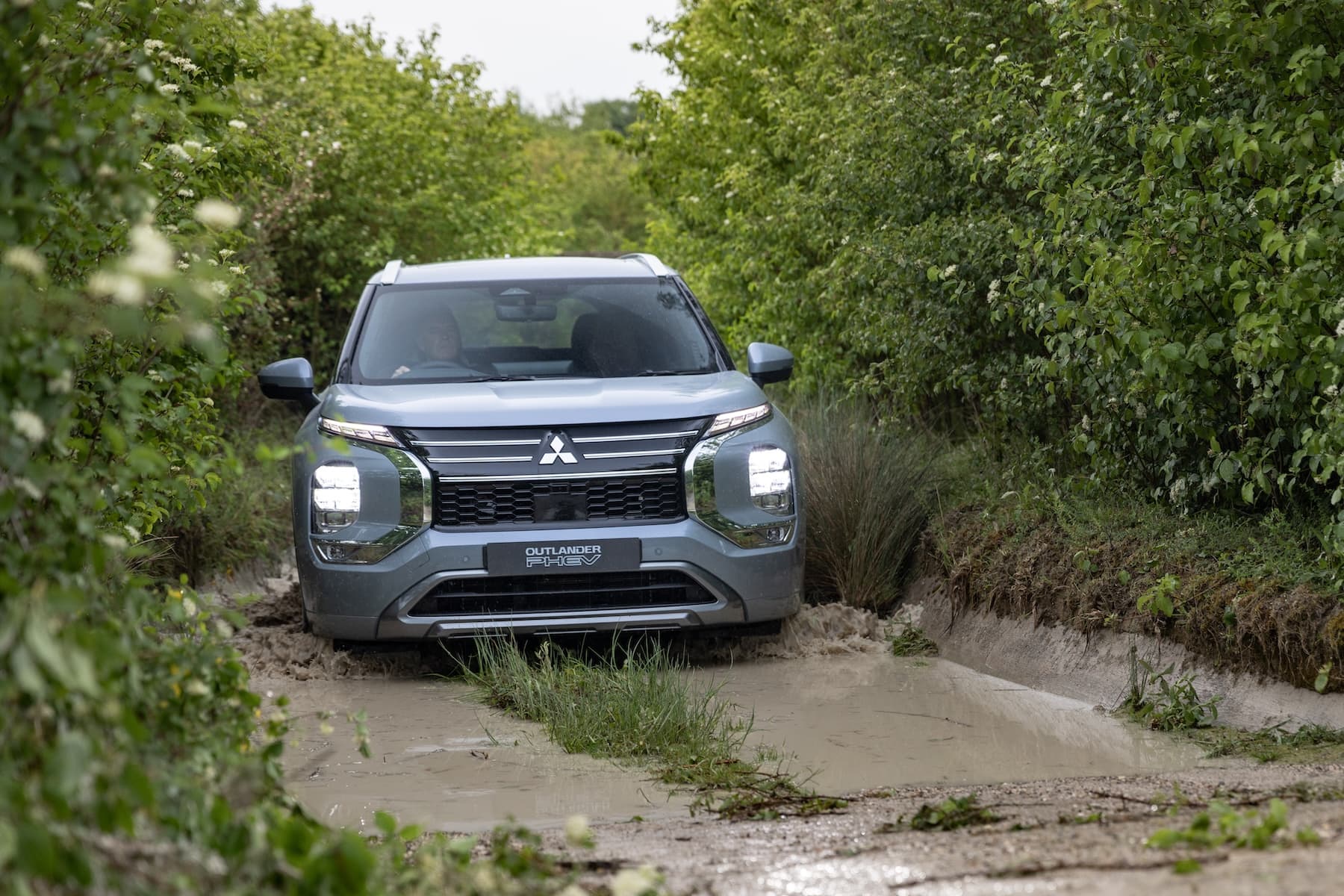
Mitsubishi has fitted a full-time all-wheel-drive system using the front and rear electric motors. The company is confident about the Outlander’s off-road ability, and the car also has seven drive modes covering different conditions, including Eco, Normal, Tarmac, Power, Gravel, Snow and Mud.
We did some gravel driving on the launch, and the Outlander coped perfectly well. It wasn’t a particularly challenging route, though, and most all-wheel-drive SUVs would probably have managed it just as easily.
The drive-mode system feels a bit fiddly. Most owners will probably leave the car in Normal most of the time, and some of the extra modes feel like they need too much explanation. If someone has to explain the differences in detail, the average customer is unlikely to get the full story.
Overall, the Outlander feels safe and sensible rather than memorable. That’s not meant as a criticism, because most family SUV buyers want comfort, smoothness and predictability far more than sharp handling.
Ownership
The Mitsubishi Outlander does not yet have a Euro NCAP safety rating, so there’s no independent crash-test score to report at this stage. The standard safety equipment list is extensive, with automatic emergency braking, lane assistance, blind-spot intervention, traffic sign recognition, driver attention alerts, rear automatic braking, a 360-degree camera and child presence detection all included.
The Mitsubishi Outlander also does not yet have an Expert Rating in our unique Expert Rating Index, as there is not enough ownership data available to calculate a score. Once more information is available, we’ll add the Outlander to the database and publish a full Expert Rating page.
Mitsubishi advertises the Outlander with an eight-year/100,000-mile warranty package, but the important detail is that the full eight years depend on service-activated cover. From our perspective, that means we would treat it as a five-year warranty, with the possibility of extending cover to eight years if the car is serviced through Mitsubishi’s dealer network.
That’s still useful, but it shouldn’t be treated in the same way as an unconditional eight-year warranty. Buyers planning to keep the car long-term should check the service requirements carefully before relying on the full advertised cover.
Servicing is required every 12,500 miles or 12 months, whichever comes first. Mitsubishi’s established dealer network should help here, particularly as aftersales support continued after the company exited the market in 2021.
Verdict
The new Mitsubishi Outlander is a sensible, smooth and practical family SUV that arrives at an interesting time. Plug-in hybrids are becoming popular again, and Mitsubishi is returning to a market it once helped define.
There’s plenty to like. The petrol-electric system is smooth, the official electric range is useful, the Yamaha sound system is very good and the Nativa’s seven-seat layout gives Mitsubishi a rare selling point in the plug-in hybrid SUV market. It also helps that Mitsubishi is a recognised and trusted brand rather than another unfamiliar new arrival.
But the Outlander no longer has the market to itself. The pricing looks high compared with newer plug-in hybrid rivals, the rapid-charging connector feels outdated and the cabin is more old-fashioned than premium in places. The front-end styling is also somewhat challenging, even in a world of many odd-looking SUVs.
For loyal Mitsubishi customers, the new Outlander will feel like a reassuring return. For everyone else, it’s a competent and comfortable plug-in hybrid SUV, but not an obvious bargain. Mitsubishi is back, and the Outlander is perfectly respectable, but the market has moved on a long way since the previous model was the default choice.
We like:
- Smooth petrol-electric integration
- Useful electric-only range
- Physical climate controls and ADAS shortcut button
- Seven-seat option on Nativa
- Excellent Yamaha sound system
We don’t like:
- Price looks high against newer rivals
- Third-row seats are very tight
- CHAdeMO rapid charging feels outdated
- Dashboard design looks old-fashioned
- Front-end styling will divide opinion
Similar cars
BYD Seal U | Chery Tiggo 9 | Honda CR-V | Hyundai Santa Fe | Jaecoo 8 | Kia Sorento | Mazda CX-80 | MG S9 | Nissan X-Trail | Omoda 9 | Peugeot 5008 | Skoda Kodiaq | Toyota RAV4 | Volkswagen Tayron
Key specifications
Model tested: Mitsubishi Outlander PHEV Nativa
Price as tested: £47,995
Powertrain: 2.4-litre petrol engine, 23kWh battery and two electric motors
Gearbox: single-speed automatic
Power: 299 hp
Torque: 195 Nm
Top speed: 106 mph
0-62 mph: 7.9 seconds
Electric range: 53 miles
CO2 emissions: 20g/km
Euro NCAP safety rating: Not yet tested
TCE Expert Rating: Not yet rated