Make and model: Peugeot E-3008 GT
Description: Mid-sized electric SUV
Price range: £46,060 to £54,590 (plus options)
Summary: The Peugeot E-3008 GT is capable and refined, but disappointing rear space, a divisive i-Cockpit and a premium price tag make it a difficult car to recommend wholeheartedly.
For a broader ownership picture, see our Peugeot E-3008 Expert Rating, which combines media reviews, safety data, reliability, running costs and warranty cover.
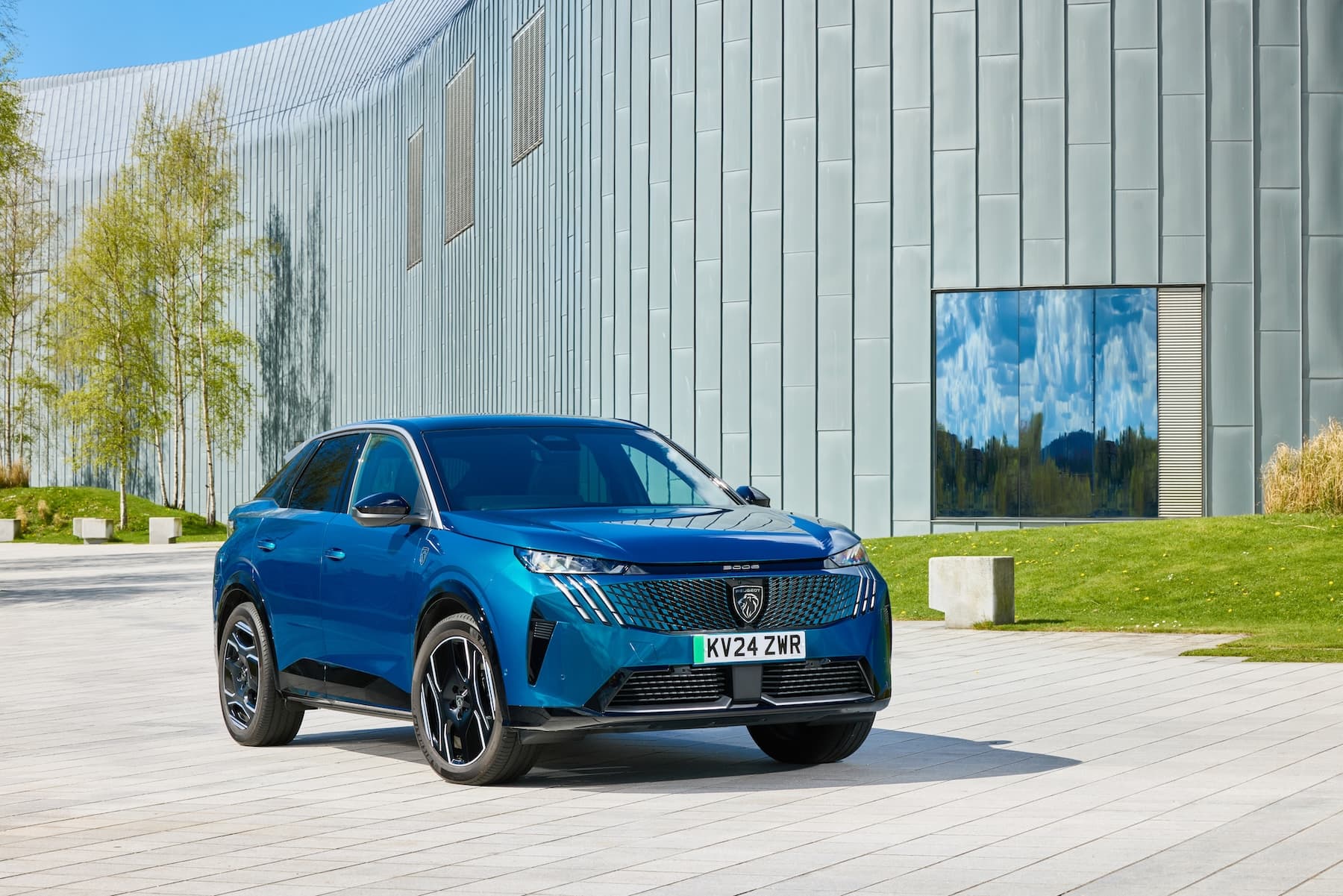
The Peugeot E-3008 is a mid-sized electric SUV built on the same platform as the petrol 3008, positioned as the brand’s flagship electric model in what is one of the most competitive segments in the market. It’s also closely related to several other models in the Stellantis family, like the larger Peugeot E-5008, as well as the Citroën ë-C5 Aircross, Vauxhall Grandland Electric, DS Nº8 and others.
The E-3008 is available in a range of battery and power configurations – this is the dual-motor all-wheel drive version with a 73kWh battery, priced at just under £55K in GT Premium trim. That price is important context for everything that follows.
For a broader ownership picture, see our Peugeot E-3008 Expert Rating.
Price and equipment
At nearly £55K for our top-spec test car, the mid-sized E-3008 sits in premium territory. The equipment list carries all the usual things you’d expect to see, but then so do plenty of cars at lower prices. Having ventilated seats and a giant sunroof is no longer the preserve of high-end models, with most Chinese family cars offering up loads of kit for less money.
On top of the competition from new Chinese brands, the E-3008’s pricing brings competition from premium brands like Audi, BMW, Mercedes, Polestar and Lexus, as well as Stellantis stablemate DS Automobiles. As with many mainstream brands, Peugeot is being squeezed from above and below, and being in the middle is not a particularly comfortable spot.
Inside the car
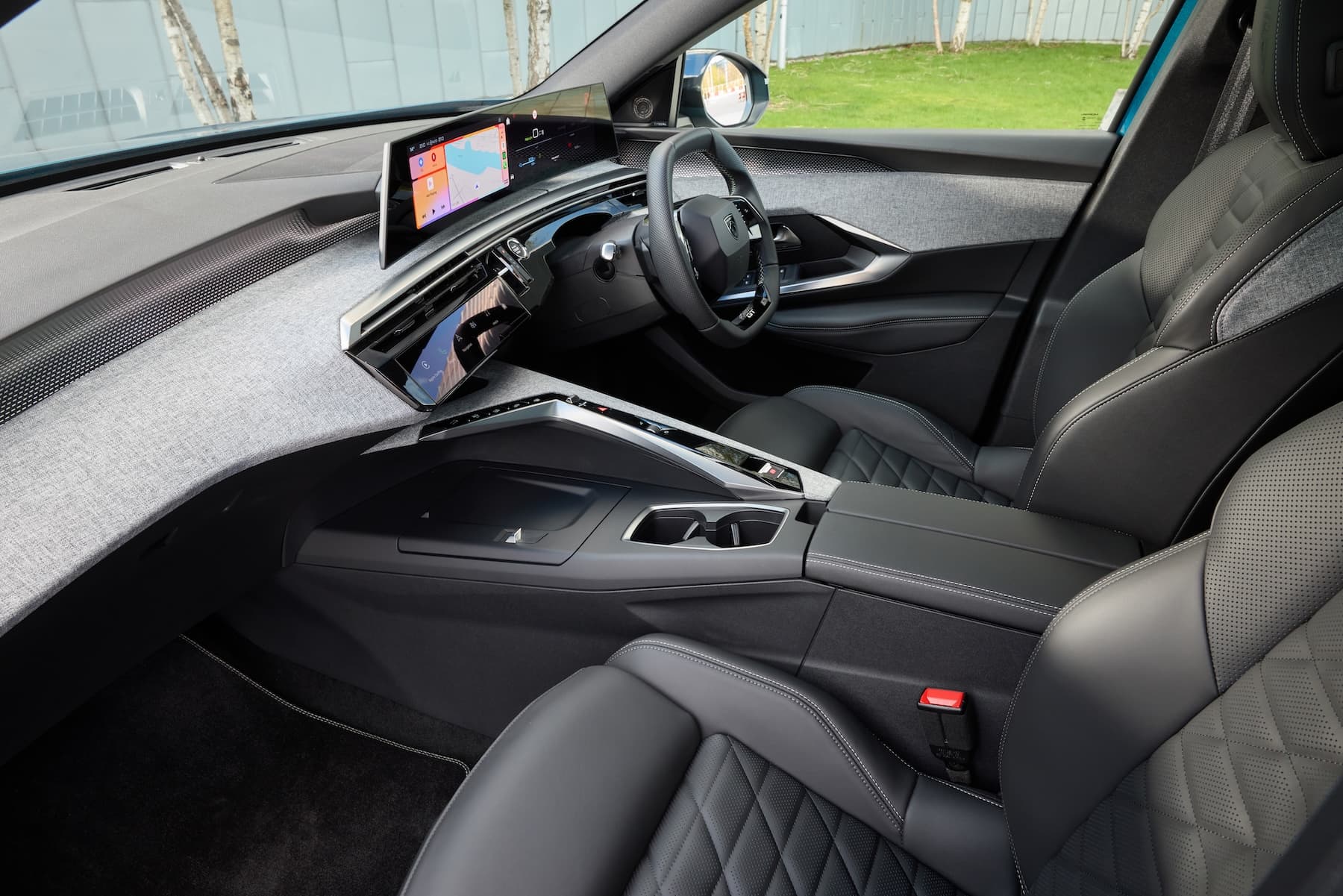
Peugeot’s i-Cockpit layout – a small steering wheel with the driver’s display mounted high above it rather than behind it – divides opinion, and a week of driving didn’t convert me to it. The small wheel feels unnatural in the hand and never settles into something that feels right. Other manufacturers have experimented with similar concepts and carried it off better; Citroën’s approach in the ë-C3 Aircross feels more resolved, and the new BMW iX3’s setup is more distinctive and also more comfortable.
The twin screens are a more positive story. They’re large enough to use comfortably without being the overwhelming presence you find in some Chinese rivals, and they work well in practice. There’s also a row of large touch-sensitive controls beneath the main screen, which is a better solution than burying everything in menus – though physical buttons would still be preferable. A dedicated CarPlay button is a thoughtful touch that more manufacturers should adopt. The panel isn’t customisable, however, which is a missed opportunity.
The absence of separate air-conditioning controls is a frustration that becomes more irritating over time. Climate adjustment requires going through the touchscreen, which is the kind of task you don’t want to be doing while moving.
The cabin layout suffers from a large, solid centre console that separates driver and passenger in a way that makes the front cabin feel enclosed and snug, if not quite claustrophobic. This is likely a consequence of sharing the platform with the petrol 3008, where a transmission tunnel is required. Many dedicated electric family cars have a much more open cabin – the Nissan Ariya and Hyundai Ioniq 6 being good examples. The console does provide two storage compartments, which is something.
The cloth trim on the dashboard and door panels is genuinely nice and a better choice than plastic at this price. Combined with customisable ambient lighting, the ambience is one of the E-3008’s best qualities.
Unfortunately, various other cabin features don’t hit the same standard. The Focal-branded stereo is surprisingly average given its premium billing, while the ventilated seats were barely perceptible in use.
The small gear selector – a Stellantis item shared across a wide range of the group’s vehicles from vans to performance cars – is positioned slightly awkwardly on the dashboard and responds slowly, which is particularly annoying during low-speed manoeuvring.
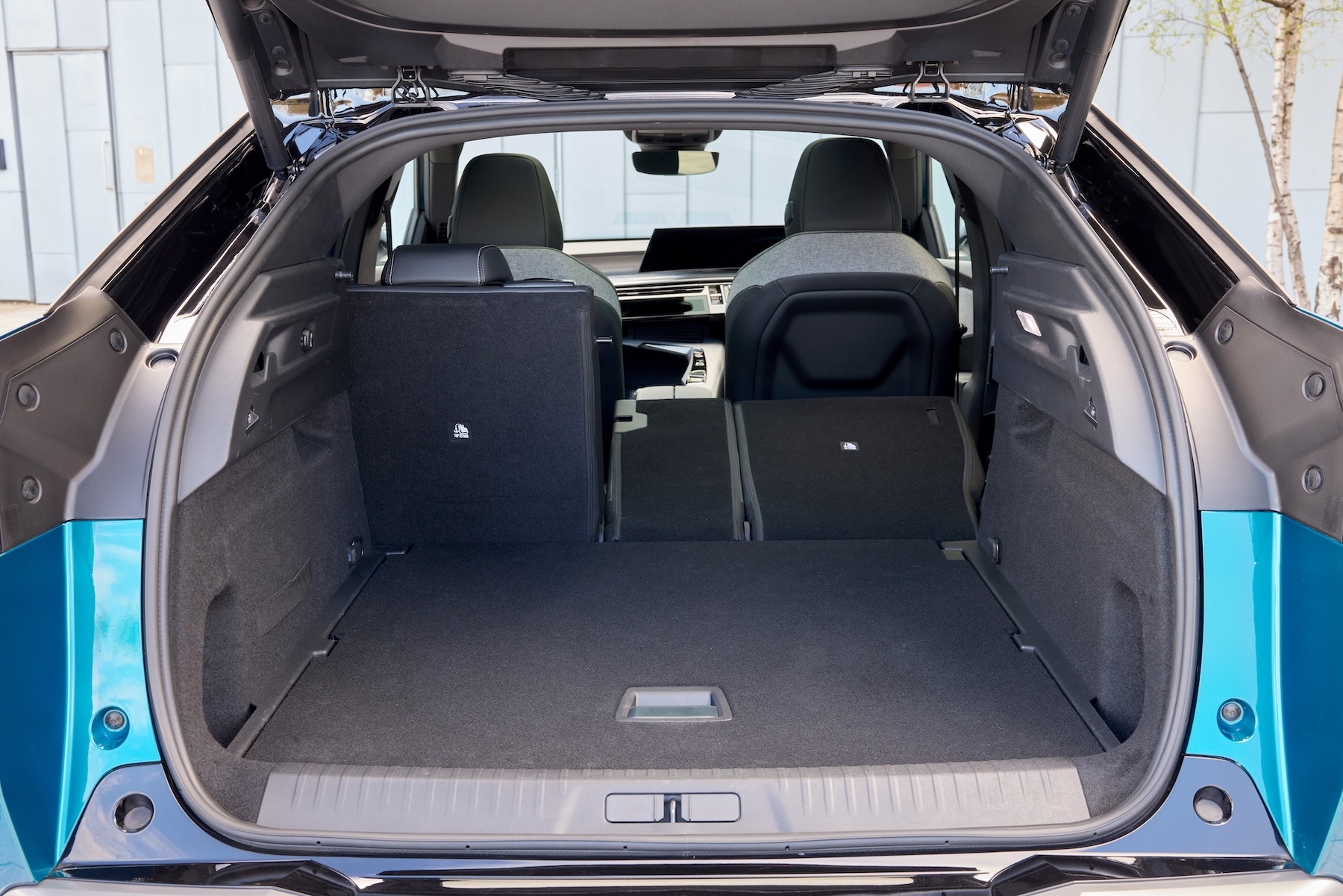
Rear passenger space is where the E-3008 falls most noticeably short for a family SUV at this price. Legroom and kneeroom in the back are disappointing, though headroom is fine and the floor is flat, which is a useful and somewhat surprising feature given the shared platform with the petrol model.
The rear door shape makes getting in and out somewhat awkward, and with the sunroof blind closed the rear cabin feels quite dark.
Last but not least, there are no dedicated bottle holders in any of the door pockets – a small but telling detail on a car that positions itself as a premium family vehicle.
Driving range and charging
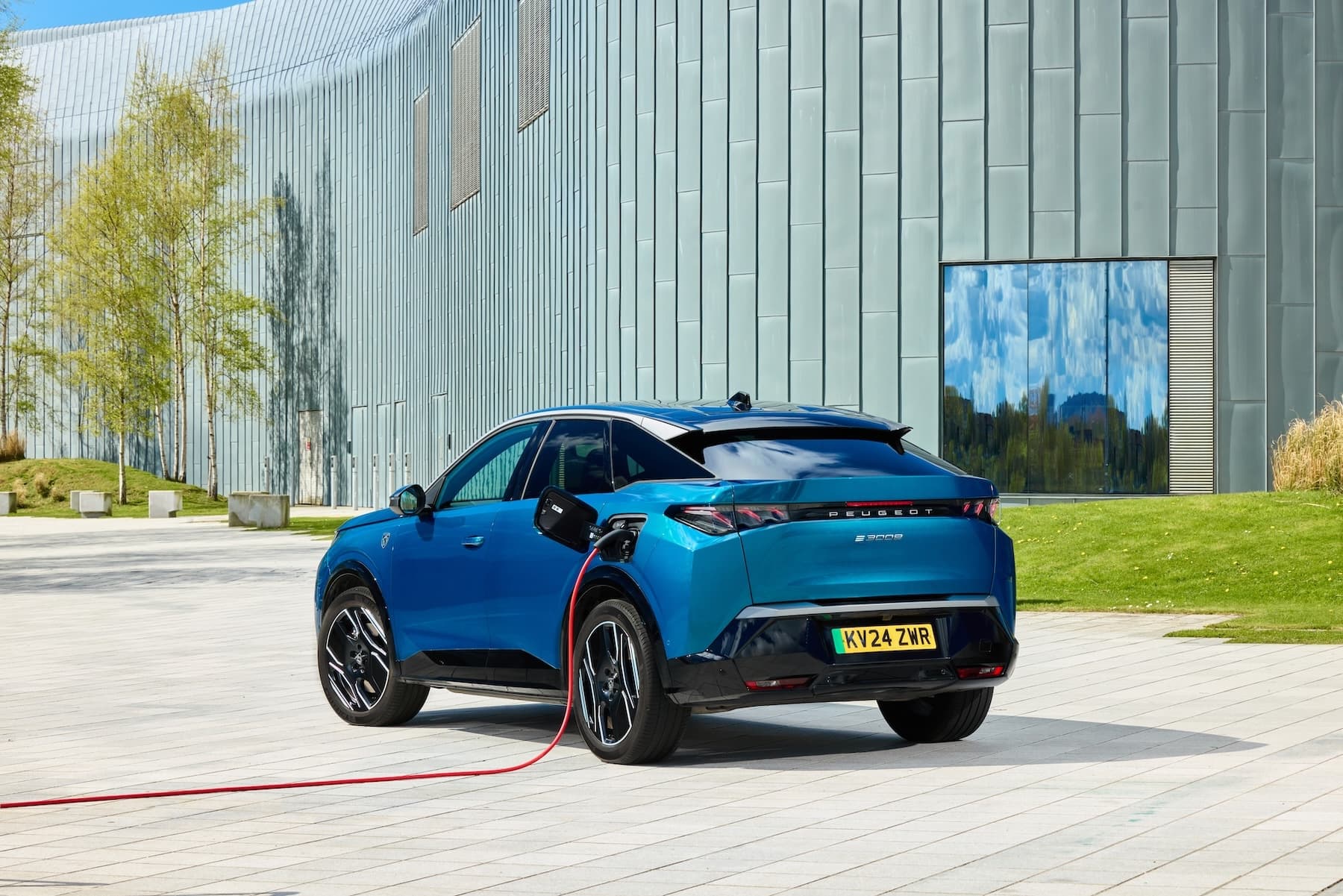
The dual-motor version claims up to 303 miles of range on the official test, rising to 372 miles in city driving conditions. Real-world range will be lower, as always, but the 73kWh battery is large enough that daily range anxiety shouldn’t be a concern for most drivers.
Charging peaks at 160kW at a compatible public fast charger, taking around half an hour from 20% to 80%. That’s faster than most UK public chargers at the moment, but not as fast as some rivals that can take up to 350kW for much faster charging.
Home charging via a 7kW wallbox takes around four-and-a-half hours for the same 20-80% charge.
On the road
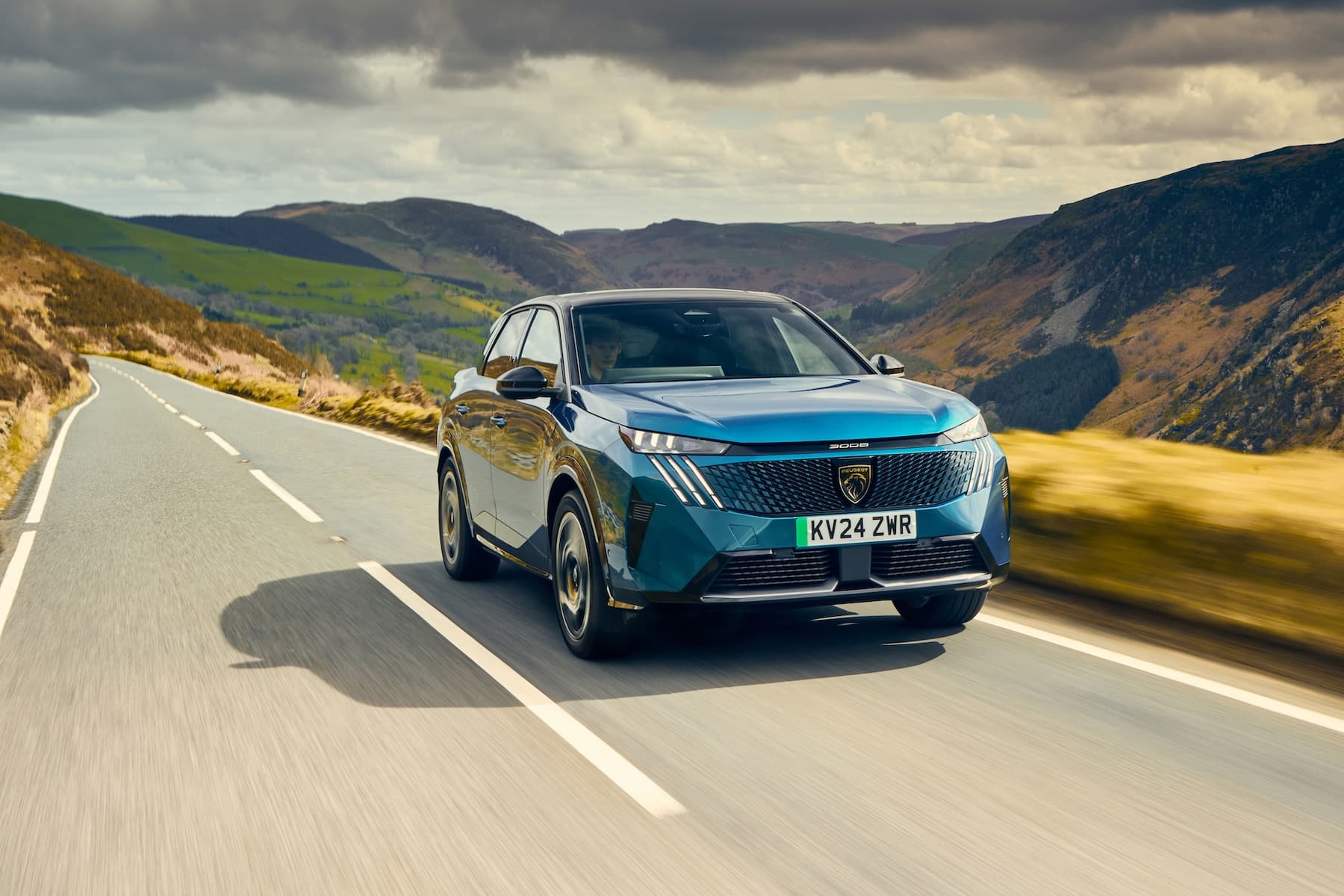
The E-3008 driving experience is competent and comfortable, without being particularly memorable. The ride handles most potholes well, which is certainly handy in the UK, and the car is generally quiet and refined on the move – notably more so than the DS Nº8 I drove a few weeks earlier. Sport mode produces a noticeably more responsive feel than the default modes, which is more than can be said for many cars where the difference between modes is barely perceptible.
The all-wheel-drive system provides decent traction in wet weather, and the 0-62mph time of six seconds gives it enough performance for most situations. It’s not a car that excites, but it does most things in a relaxed, capable manner.
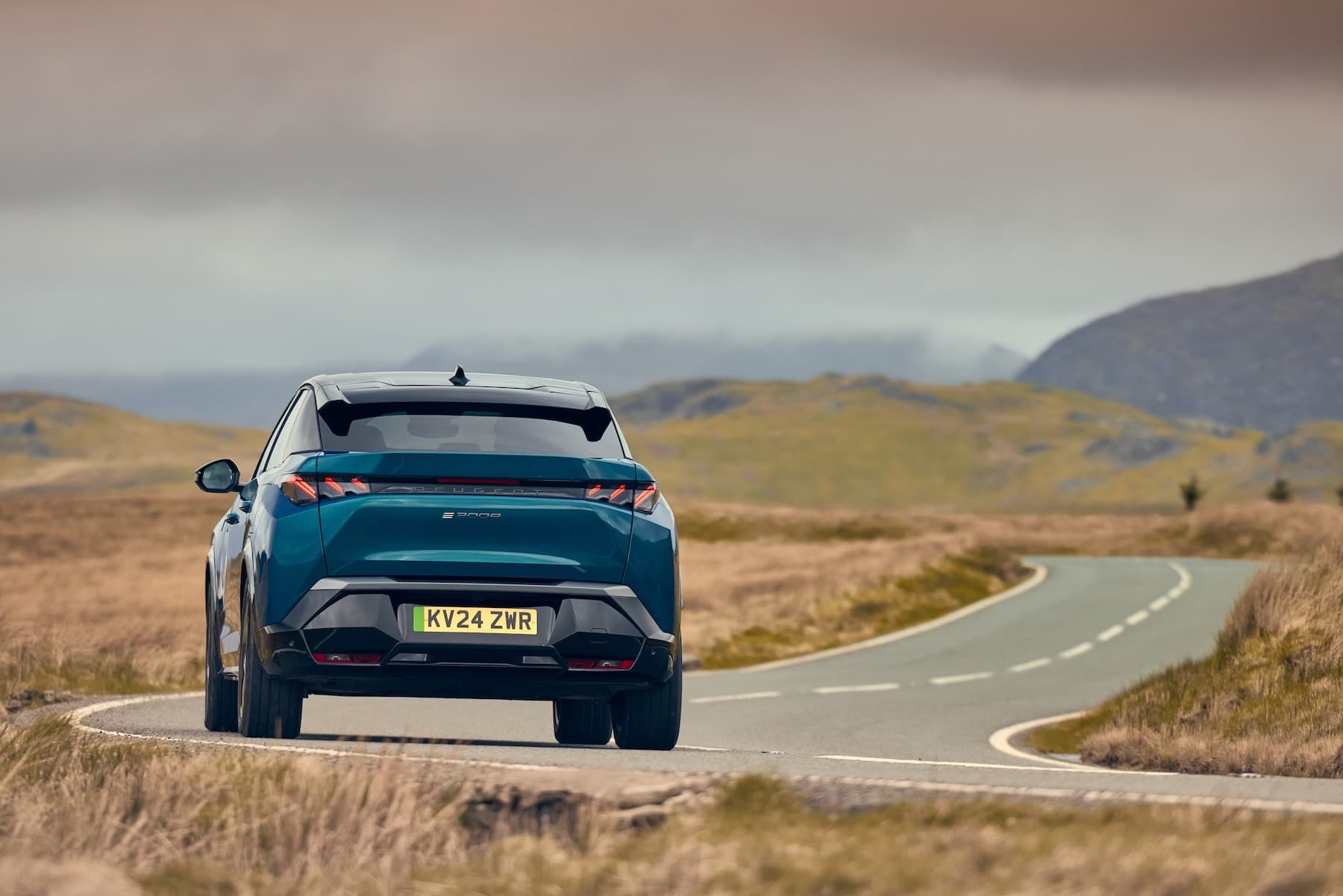
There’s no ‘frunk’ storage compartment under the front bonnet, which is expected given the shared platform with petrol variants, but it’s a reminder that this is not a car designed from the ground up as an electric vehicle. More irritatingly, there’s no rear windscreen wiper, which was an annoyance on cold, wet mornings.
Ownership
The E-3008 has been awarded a four-star safety rating from Euro NCAP, with decent scores for adult and child protection. However, it falls short of a full five-star rating because its technology systems don’t detect rear-seat occupants and its driver attention monitoring systems don’t nag you sufficiently. In our opinion, neither of those is a dealbreaker for safety.
Peugeot’s new car warranty is about the bare minimum in the UK, being three years or 60,000 miles, whichever comes first. The battery components get the usual eight-year/100,000-mile warranty that you’ll find on almost every EV.
The review score reflects the driving experience. Our Peugeot E-3008 Expert Rating tells a broader story, combining the subjective opinions of car reviews with objective safety data, running costs, warranty information and more – which means the Expert Rating often arrives at a notably different conclusion. It’s worth reading both before making any buying decision.
Verdict
The Peugeot E-3008 is a capable, well-equipped electric SUV that does most things adequately. The driving experience is refined, the range is competitive and the equipment list is long. But at just over £56K, it needs to do considerably more than adequate.
The practical shortcomings – disappointing rear space, awkward rear-door access, no frunk, no bottle holders, no rear wiper – are difficult to overlook at this price. The i-Cockpit layout remains an acquired taste that a week of driving didn’t help me acquire. And the value question becomes uncomfortable when you consider what else £56K buys.
There’s a good car somewhere in the E-3008, probably in the lower-spec Allure models in the £45-48K price bracket. But at £55K, it doesn’t stack up.
For a broader ownership picture, see our Peugeot E-3008 Expert Rating.
We like:
- Refined and quiet on the road, handling potholes and urban surfaces well
- Competitive range and fast charging at compatible public chargers
- Flat rear floor is a useful and unexpected feature given the shared platform
- Sport mode produces a genuinely noticeable difference in responsiveness
We don’t like:
- Rear passenger space is disappointing for a family SUV at this price
- i-Cockpit small steering wheel never feels natural, even after extended use
- At just over £56K, the overall package doesn’t justify the premium convincingly
- No rear windscreen wiper, no dedicated bottle holders in doors, no frunk – poor for practicality
Similar cars
Audi Q4 e-tron | BMW iX3 | Citroën ë-C4 | Cupra Tavascan | Ford Mustang Mach-E | Genesis GV60 | Hyundai Ioniq 5 | Kia EV6 | Leapmotor C10 | Mercedes-Benz EQA | Mini Countryman Electric | Nissan Ariya | Omoda E5 | Polestar 3 | Renault Scenic E-Tech | Skoda Enyaq iV | Subaru Solterra | Tesla Model Y | Toyota bZ4X | Volkswagen ID.4 | Volvo EX40
Key specifications
Models tested: Peugeot E-3008 GT Premium
Price as tested: £54,590
Powertrain: dual electric motors, all-wheel drive
Gearbox: single-speed automatic
Power: 239 kW (325 hp)
Torque: 509 Nm
Top speed: 112 mph
0-62mph: 6.0 seconds
Battery range: 303 miles
CO2 emissions: 0 g/km
Euro NCAP safety rating: Four stars (May 2025)
TCE Expert rating: A (70%) as of April 2026