Make and model: Citroën ë-C3 Aircross
Description: Small electric SUV
Price range: £24,315 to £54,590 (plus options)
Summary: The Citroën ë-C3 Aircross is sensibly priced, well-equipped and practical. The only drawback is that real-world range falls well short of official claims.
For a broader ownership picture, see our Citroën ë-C3 Aircross Expert Rating, which combines media reviews, safety data, reliability, running costs and warranty cover.
The Citroën ë-C3 Aircross is a compact electric SUV at an accessible price point, sitting in one of the busiest segments of the current electric car market.
The ë-C3 Aircross is highly regarded here at The Car Expert as an ownership proposition, and it won our Best Value Family Car 2026 award. That was based on its affordability – both to buy and run – as well as positive media reviews from across the UK since it was launched last year.
For a broader ownership picture, see our Citroën ë-C3 Aircross Expert Rating. This review focuses on what the car is like to drive and live with over time.
Price and equipment
The Citroën ë-C3 Aircross range starts from just over £24K for the Collection trim level, with the Max tested here from £25.5K. For the money, the standard equipment list is strong. The Collection includes a ten-inch touchscreen with wireless Apple CarPlay and Android Auto, automatic air conditioning with physical controls, ambient interior lighting, keyless entry and a driver assistance suite including automatic emergency braking and lane departure warning. The Max adds wireless phone charging, a heated steering wheel, blind-spot detection, front parking sensors, 3D navigation, and LED rear lights. The test car was also fitted with heated front seats, which do not appear in the standard equipment list for either trim – worth checking with your dealer before ordering.
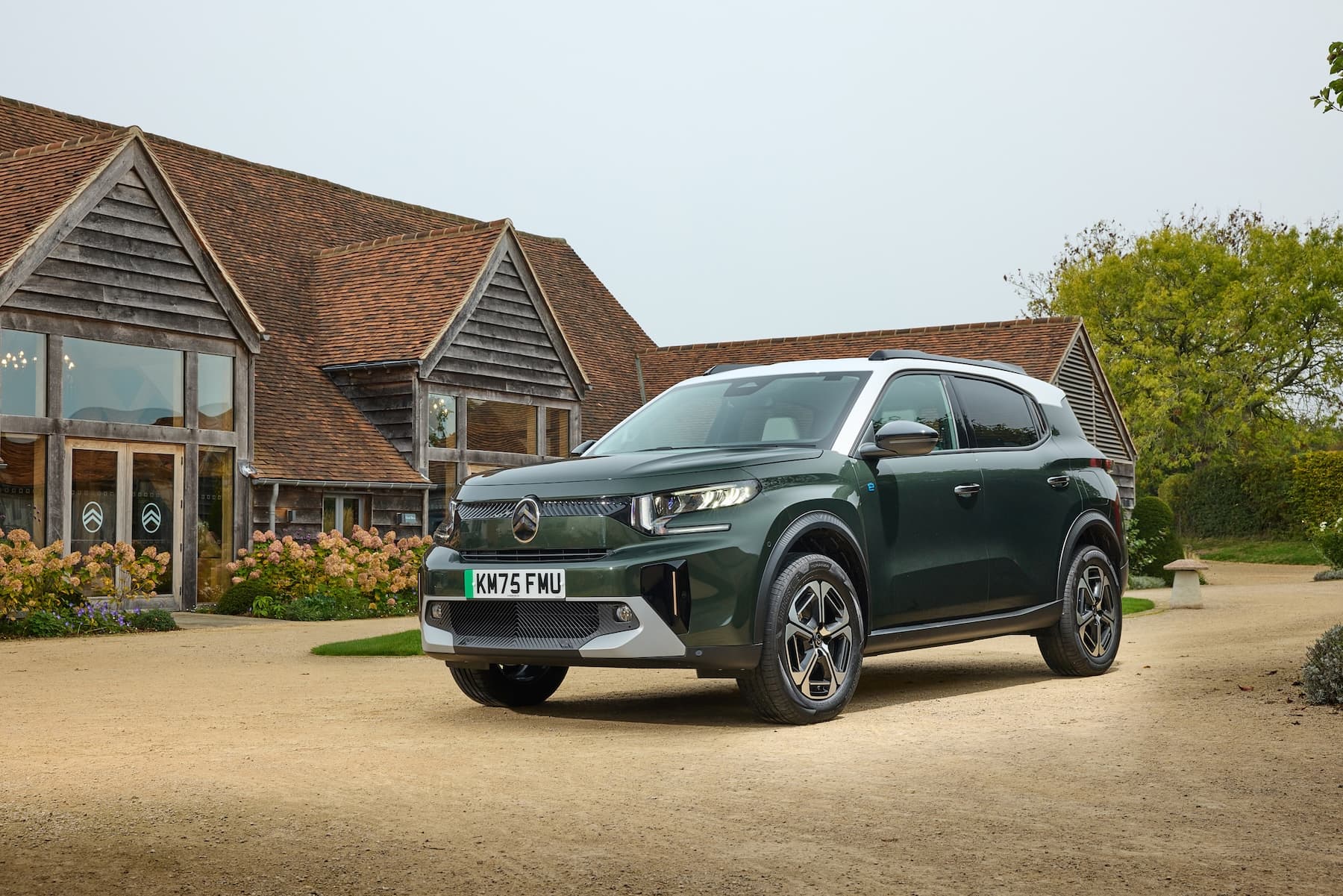
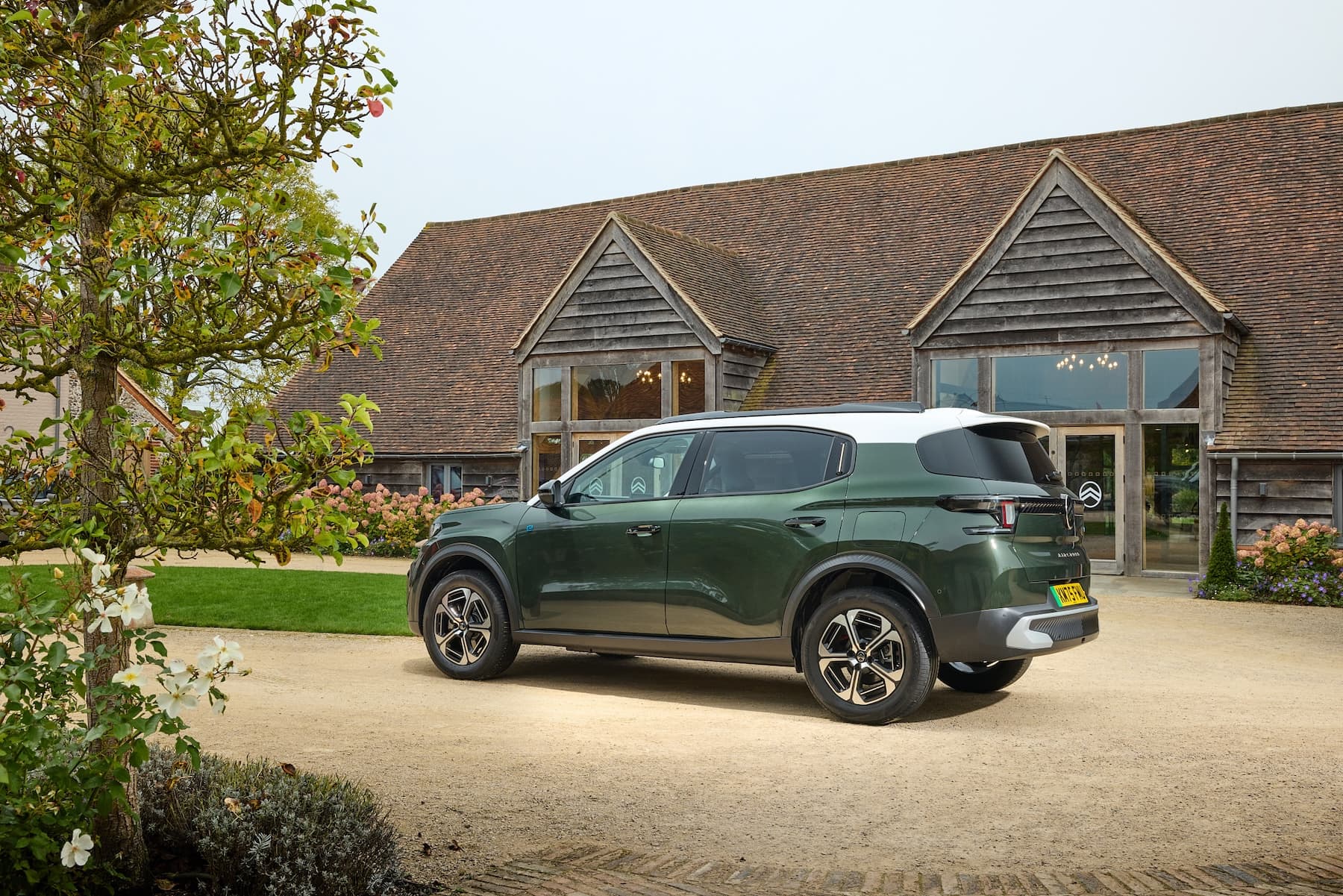
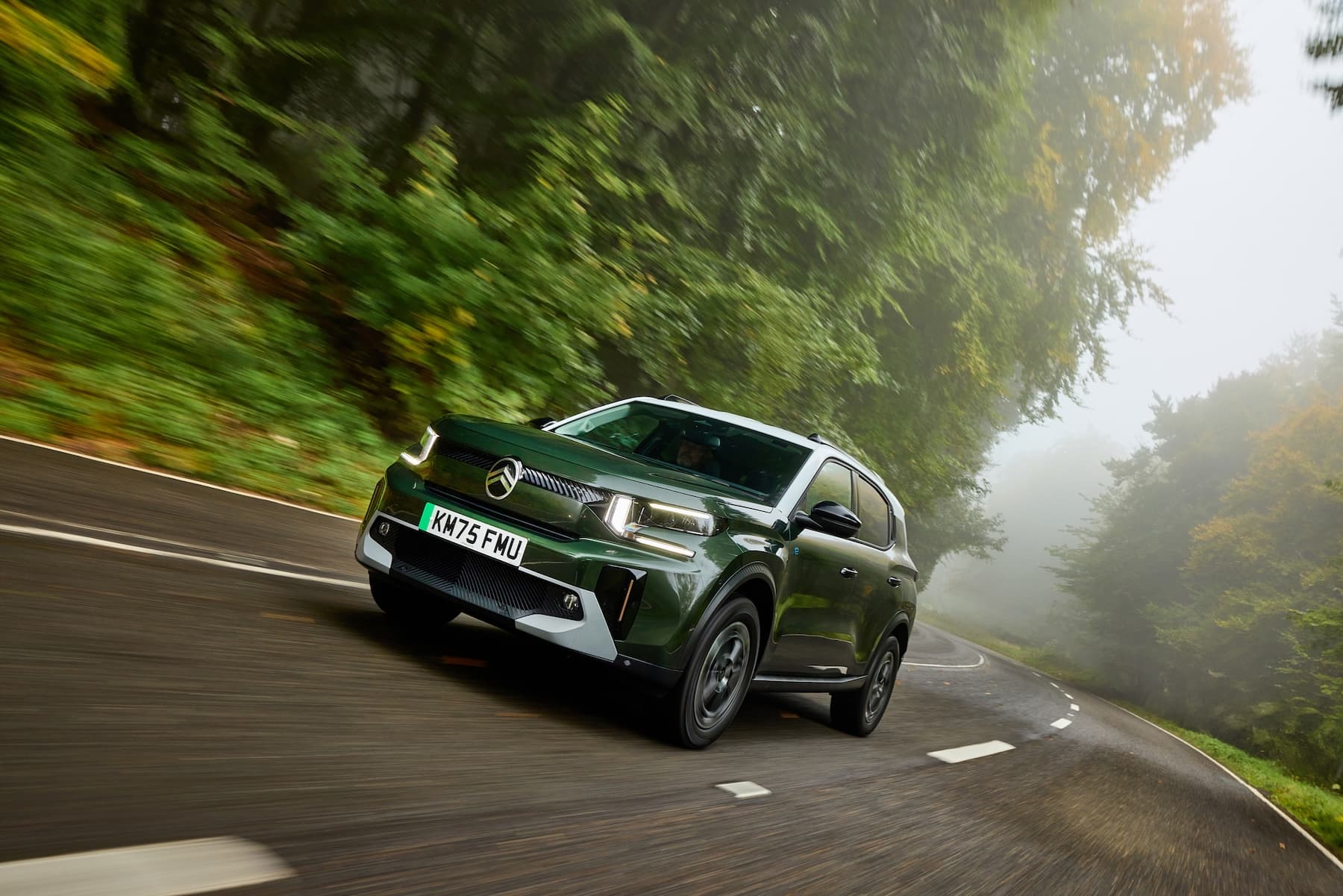
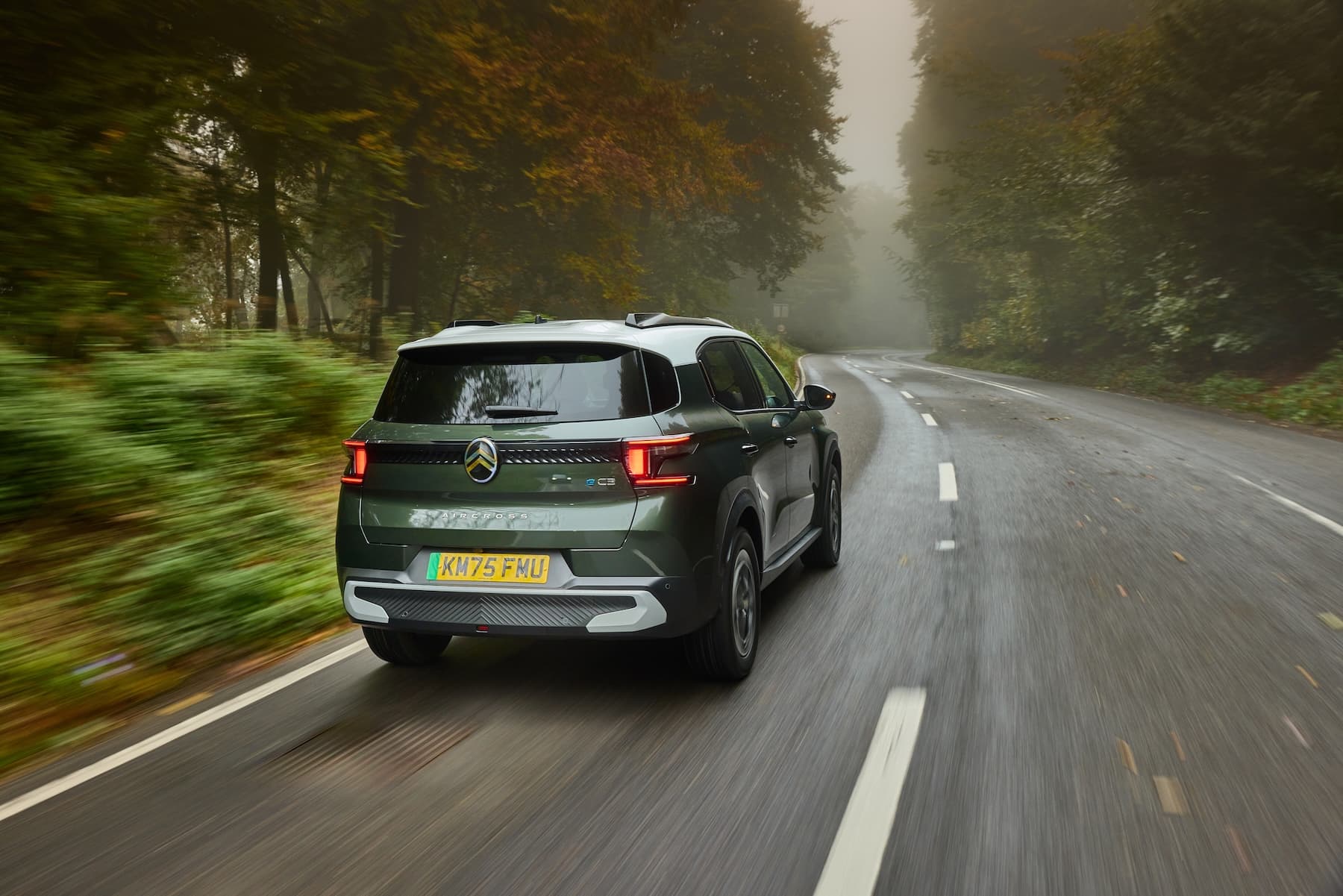
Body colours and the distinctive colour clips that sit around the car’s exterior are available as options. Our test car arrived in green with a white roof (it was the exact car seen in the photos), a combination that divided opinion – practical for spotting the car in a crowded car park, though not to everyone’s taste as a style choice.
Inside the car
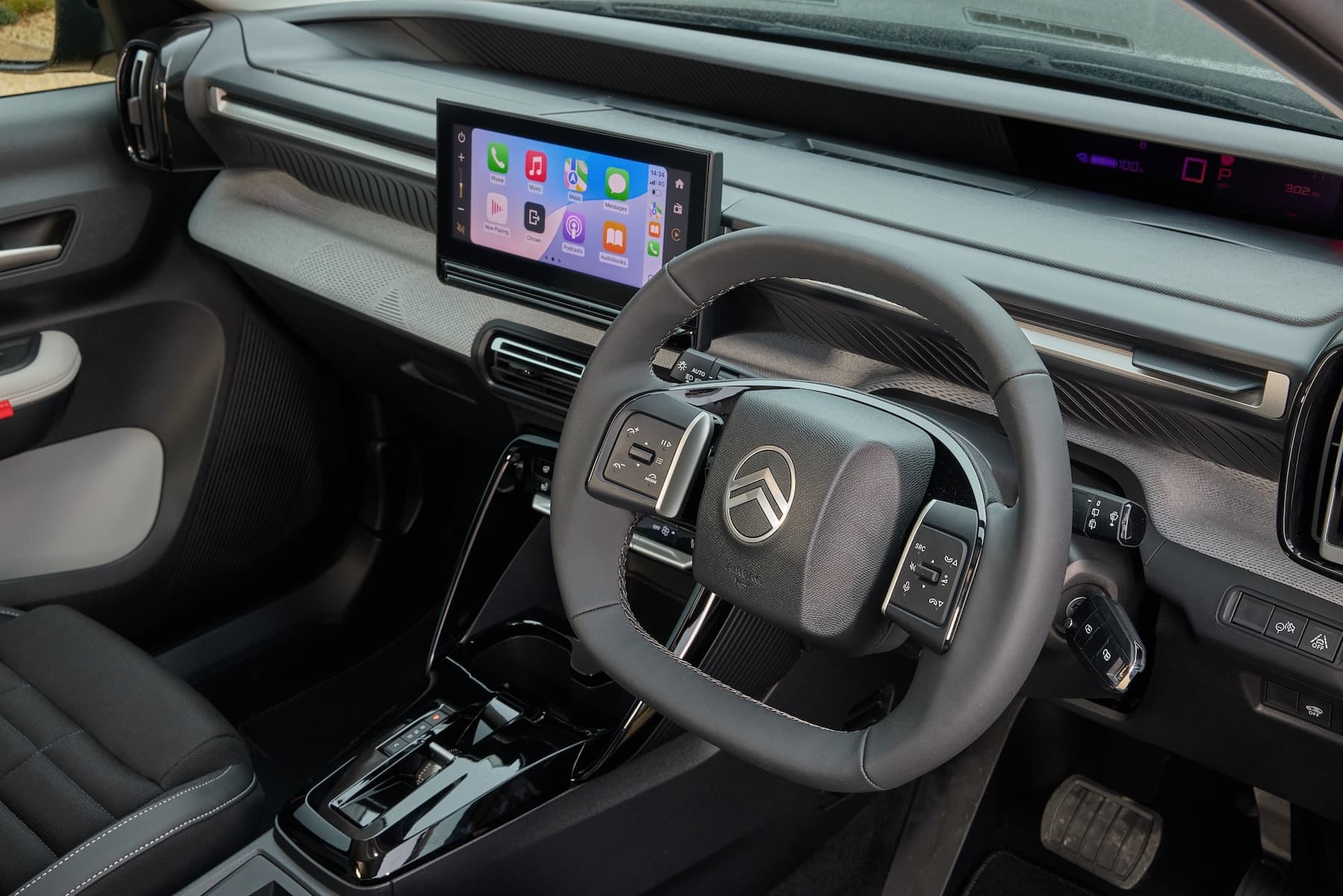
The cabin is simple and honest, which suits the price. Rather than chasing an elaborate design, Citroën has focused on making the space pleasant and functional. Fabric and cloth surfaces on the dashboard and door panels are noticeably nicer than the grey plastics usually found at this price from many rivals.
The most interesting design decision is the driver display, which is a small digital screen mounted at the base of the windscreen, replacing the conventional instrument cluster behind the steering wheel. It works well, presenting key information clearly without distracting from the road. It is less elaborate than BMW’s full-width panoramic windscreen system, but considerably better than Peugeot’s i-Cockpit arrangement, where a similar concept is let down by a steering wheel that never feels natural. Here, the compact steering wheel is more comfortable than Peugeot’s version, though the grip positions are not quite perfect. The display would also benefit from more customisation options.
The central touchscreen is a sensible size – large enough to use without dominating the dashboard, demonstrating that you don’t need a screen the size of a small television for a touchscreen to work well. Its limitations lie in the software: functionality is restricted and personalisation options are limited. The physical air conditioning controls are a genuine highlight. Having a dedicated set of buttons for climate functions rather than routing everything through a touchscreen is exactly what more manufacturers should do, and it is done well here.
The driver assistance disable function is thoughtfully implemented – a dedicated button with a touch-and-hold action to switch off specific systems. Again, something all cars should offer.
The front seats are firm and lack lumbar adjustment. They are supportive enough for a long day – 360 miles in one day produced no significant discomfort – but lack the shape and bolstering that more demanding drivers might want. The heated front seats and heated steering wheel in the MAX are welcome in winter. The wireless charger is conveniently placed, though the phone became noticeably hot during use.
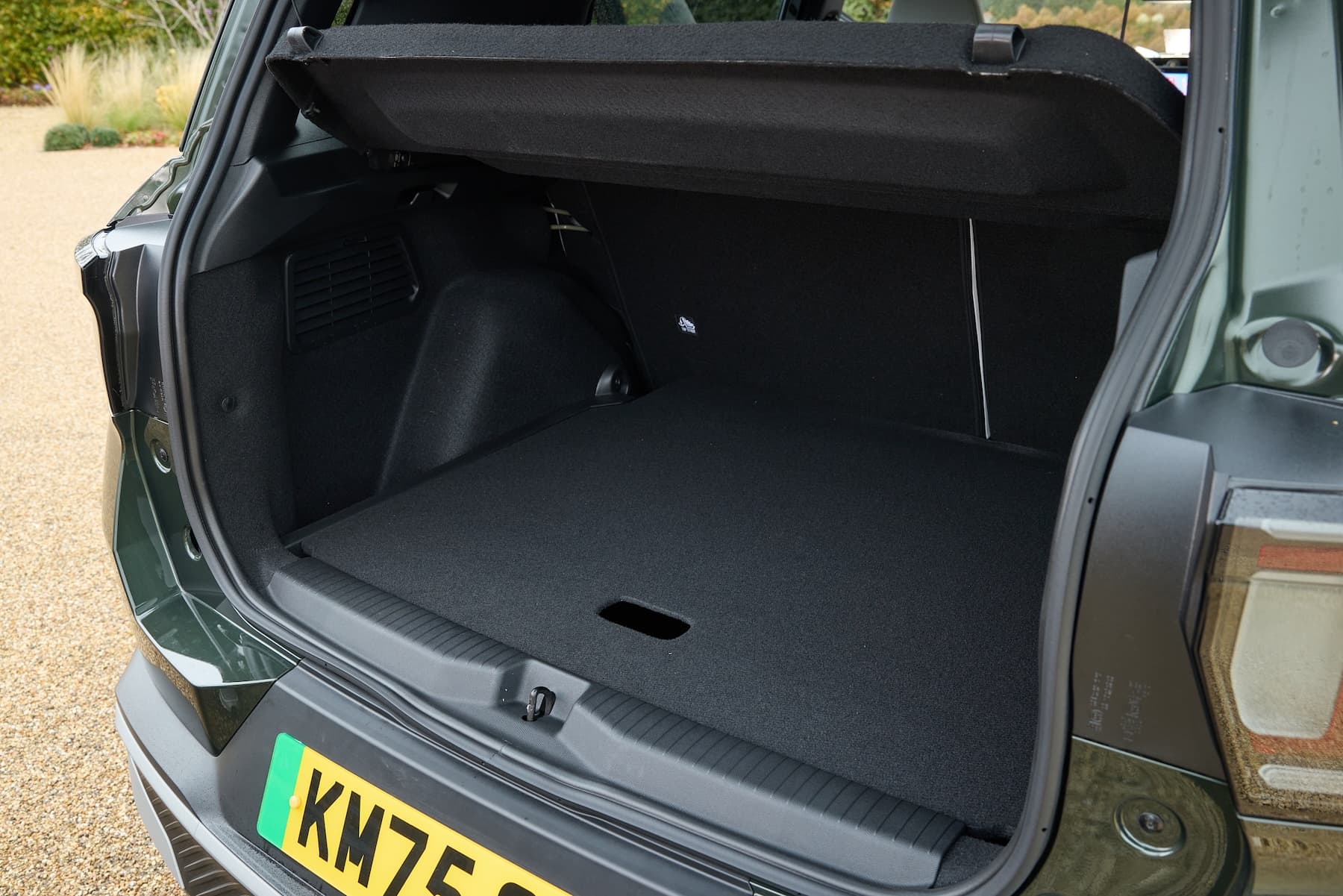
Rear space is good for a car of this size. Headroom is generous, the floor is nearly flat and there is useful clearance beneath the front seats for rear passengers’ feet. The batteries beneath the floor raise the seating position slightly, meaning knees sit a little higher than ideal, though it is better than some cars in this class. The absence of a central rear armrest will be a frustration to some, and the rear seat splits only 2/3 to 1/3 rather than offering a more versatile arrangement. The boot offers up to 460 litres with the rear seats in place. A small pocket at the top of the front seatback is a thoughtful detail for keeping a phone accessible on the move.
The four door trims each carry a small fabric tag with motivational messages: ‘Have fun’, ‘Be cool’, ‘Feel good’ and ‘Be Happy’. Reactions will vary. They are, at the very least, original…
Driving range and charging
The 44kWh battery claims up to 188 miles on the official test. Our test car showed an estimated 174 miles at a full charge – already below the headline figure. At motorway speeds, real-world range fell closer to 100 miles, which is a significant shortfall for anyone who does any regular higher-speed driving. Slowing to 60mph improved efficiency noticeably, but that is not a realistic solution for time-constrained journeys.
This is the most important caveat for anyone considering the Standard Range version. For predominantly urban and suburban use, the range is workable. For mixed or motorway-heavy driving, the Extended Range variant with the 54kWh battery and up to 249 miles of claimed range would be a considerably more sensible choice.
Charging at a public fast charger at up to 100kW takes just under half an hour from 20% to 80%. A full charge from a 7kW home wallbox will likely take six to seven hours. The charging port is on the left rear of the car. It did not appear to lock reliably on the test car, though this may have been a procedural issue rather than a fault.
On the road
The driving experience is comfortable and competent. The ride absorbs poor surfaces well and deals with urban road imperfections without drama. Steering is very light, which suits city use and feels natural for the class.
Performance from the 113hp motor is adequate rather than brisk – throttle response feels organic, which will reassure drivers making the move from small petrol SUVs. Initial response is positive enough, but acceleration fades notably as speed picks up.
On open roads and at higher speeds, it is less convincing. But this is a city-focused car rather than a motorway cruiser, and should be judged on those terms.
The regenerative braking system is not as sophisticated as many EVs. It offers only two settings – on or off – with no intermediate steps, no paddle control and no one-pedal driving. For a car aimed squarely at urban use, where smooth deceleration and energy recovery are most valuable, this feels like a significant omission.
Ownership
The Citroën ë-C3 Aircross has not yet been assessed for safety by Euro NCAP, so we can’t tell you how it performs in an emergency.
The standard new car warranty runs for three years or 60,000 miles, which is on the short side. Battery components are covered separately for eight years or 100,000 miles.
The review score reflects the driving experience. Our Citroën ë-C3 Aircross Expert Rating tells a broader story, combining the subjective opinions of car reviews with objective safety data, running costs, warranty information and more – which means the Expert Rating often arrives at a notably different conclusion. It’s worth reading both before making any buying decision.
Verdict
The Citroën ë-C3 Aircross Max is a well-considered electric SUV at a sensible price. Thoughtful design decisions – physical climate controls, a useful head-up display, a practical interior – reflect a manufacturer thinking about usability rather than specification lists. Rear space is good, equipment is generous and the overall package represents honest value.
The Standard Range version’s real-world range is its most significant limitation. Motorway driving quickly erodes the headline figure, and buyers with regular longer journeys should seriously consider the Extended Range option before committing. The lack of multi-step regeneration and one-pedal driving is also a missed opportunity in a car that pitches itself as an urban specialist.
Choose the larger battery, coupled with its low running costs (which helped it to secure our Best Value Family Car 2026 award), and the Citroën ë-C3 Aircross makes a compelling case for itself as a new family car.
For a broader ownership picture, see our Citroën ë-C3 Aircross Expert Rating.
We like:
- Physical air conditioning controls
- Driver display is intuitive and works better than a conventional instrument cluster
- Rear space is good for the class, with a near-flat floor and useful underfoot clearance
- Dedicated ADAS disable button with touch-and-hold function – exactly how it should work
- Competitive pricing with a strong standard equipment list
We don’t like:
- Real-world range on the Standard Range version falls well short of the claimed figure at motorway speeds
- No multi-step regeneration and no one-pedal driving
- Front seats are firm and lack lumbar adjustment
- Central touchscreen has limited functionality and personalisation options
- No central rear armrest, and the rear seat split is a basic 2/3 to 1/3
Similar cars
Alfa Romeo Junior Elettrica | BMW iX1 | BYD Atto 2 | Cupra Born | DS 3 E-Tense | Fiat 600e | Ford Puma Gen-E | Honda e:Ny1 | Hyundai Kona Electric | Jaecoo E5 | Jeep Avenger Electric | Kia Niro EV | Mazda MX-30 | Mercedes-Benz EQA | MG S5 EV | Omoda E5 | Peugeot E-2008 | Renault 4 E-Tech | Smart #1 | Suzuki e Vitara | Toyota Urban Cruiser | Vauxhall Frontera Electric | Volkswagen ID.3 | Volkswagen ID.4 | Volvo EX30
Key specifications
Models tested: Citroën ë-C3 Max
Price as tested: £24,515
Powertrain: single electric motor, front-wheel drive
Gearbox: single-speed automatic
Power: 83 kW (113 hp)
Torque: 124 Nm
Top speed: 89 mph
0-62mph: 13 seconds
Battery range: 188 miles
CO2 emissions: 0 g/km
Euro NCAP safety rating: Not yet tested (as of June 2026)
TCE Expert rating: A (70%) as of June 2026