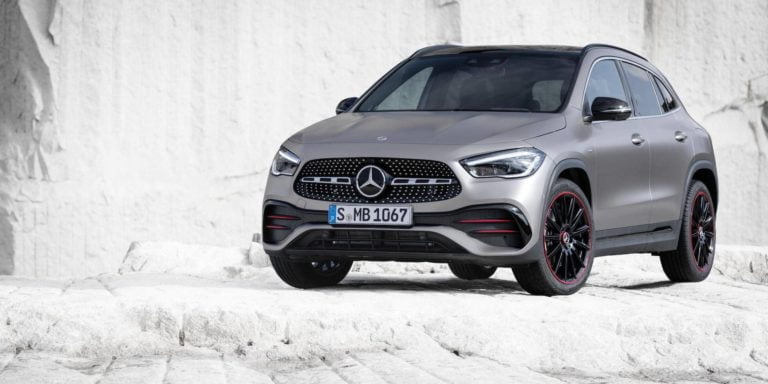
Mercedes-Benz has revealed its latest GLA — the second generation of the crossover model.
Taking on the likes of the BMW X2 and Audi Q2, it’s ten centimetres higher than the car it replaces yet its overall length comes in just under two centimetres shorter. Despite these changes, it’s said to offer more front headroom and rear legroom than the car it replaces could.
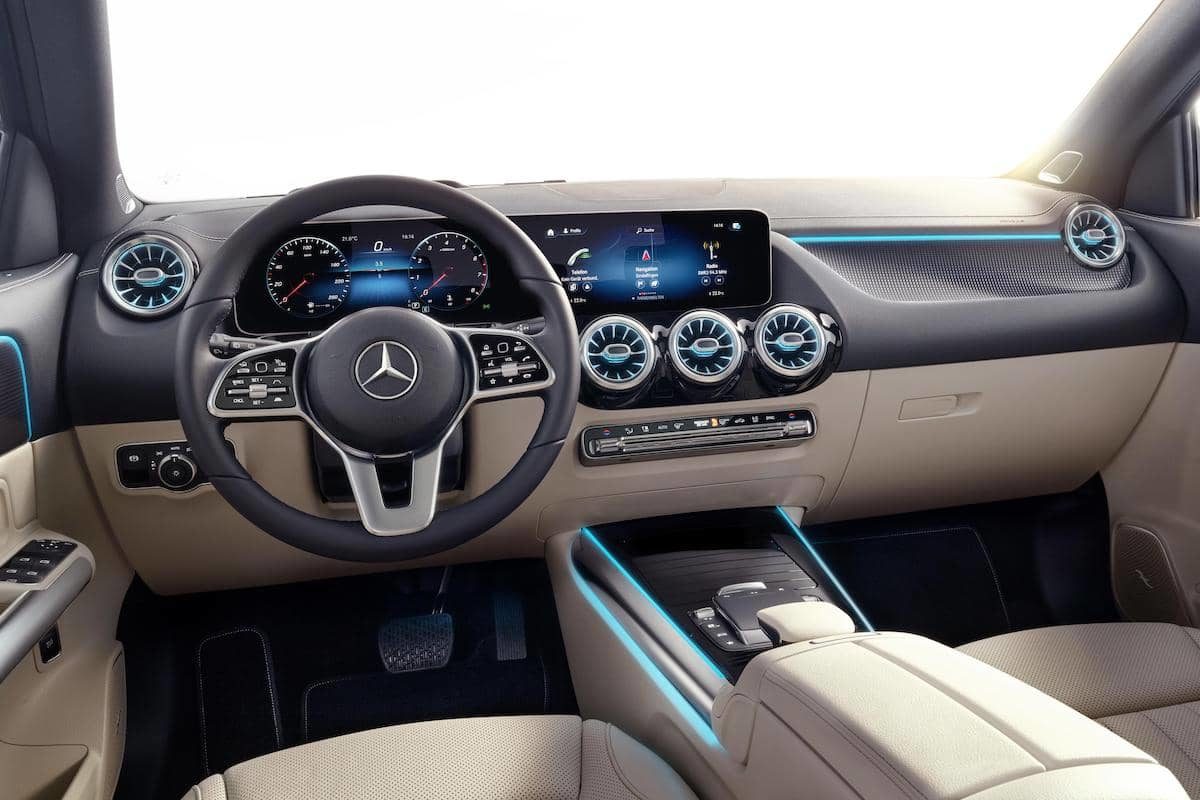
The interior will be familiar to anyone who has sat in the current-generation A-Class, with a twin-screen setup measuring ten inches in high-spec models dominating the centre of the cabin. Lower specification cars will get two seven-inch displays instead.
Mercedes says that the driving position is higher than it was in the previous GLA, while the 421-litre boot represents a 14-litre increase over its predecessor.
The engine line-up for the GLA is set to mirror that found on the A-Class, but from launch just two powertrains are available; a 1.3-litre turbocharged petrol with 163hp and 250Nm in the GLA 200, and a 306hp 2.0-litre turbocharged petrol in the GLA 35. The latter version is capable of hitting 60mph from a dead stop in under five seconds.
Though that AMG-tweaked version gets four-wheel-drive as standard, it’ll be available on non-AMG versions too.
Prices for the new Mercedes-Benz GLA have yet to be announced, but they’re likely to be revealed closer to the car going on sale in spring 2020.
Private new car sales were down by 6% in November compared to the same month last year, with the general election predictably causing havoc for retailers.
On the other hand, fleet registrations were up by almost 3% in November, according to the latest data published by the Society of Motor Manufacturers and Traders (SMMT), which meant that the overall new car market was down by just over 1% compared to the same month last year.
Source: SMMT
Any election period tends to cause potential buyers to keep their wallets firmly in their pockets, and all signs suggest that we can expect a muted end to a disappointing year for new car sales.
Good news for plug-in cars, not so much for diesels
Diesel sales continue to fall as fleets follow private buyers in turning away from the fuel in favour of petrol and, increasingly, electric or hybrid models.
Source: SMMT
It was a good month for electric cars, with registrations up massively year-on-year thanks to an increasing number of electric models now available in showrooms. Plug-in hybrids also improved, up 35% from the admittedly low levels of 12 months ago. Regular hybrids are still growing in number as well, so it all added up to a market share for alternatively-fuelled vehicles of more than 10% for the first time.
Corsa returns to the top of the charts
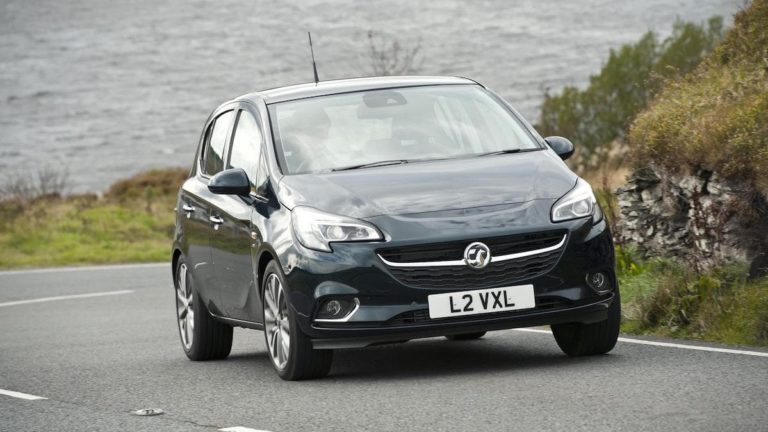
The soon-to-be-replaced Vauxhall Corsa has yo-yoed its way through the 2019 sales charts. It hit the top spot in September, fell out of the Top Ten altogether in October, and bounced back to the #1 slot again in November. Can it hold on to the top spot in December before it bows out in January in favour of the all-new model?
The Vauxhall Corsa is the nation’s best-selling car for the second time in three months
The real surprise was that the Ford Fiesta wasn’t hot on its heels. Second spot went to another model that’s in full runout mode, the Ford Kuga. The Fiesta did cling onto third place, but only just ahead of the Volkswagen Golf.
After that, there were no great surprises in the Top Ten in November, and the year-to-date results suggest that the whole-year rankings are pretty much set. The Corsa’s strong performance saw it jump the Ford Focus for third place in year-to-date registrations, so it will be interesting to see if December’s results change this at all.
As usual, we’ll look at the ten best-selling cars in more details in the next day or two.
Good month, bad month
The overall market may have been relatively stable in November, but some brands had great months while others were not looking so healthy.
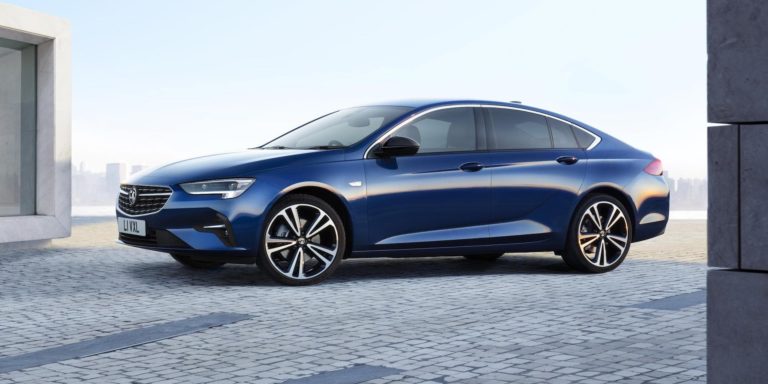
Vauxhall has revealed the first look at its facelifted Insignia, which is now only available in a liftback body style.
With a refreshed look and a host of added technologies, Vauxhall hopes that its revised flagship saloon can regain some popularity in a dwindling market.
While 1.2 million Insignias have been sold in the UK since the nameplate was first introduced ten years ago to replace the unloved Vauxhall Vectra, numbers have been tumbling in recent years as buyer flock towards SUVs rather than traditional saloons and estates. In fact, Vauxhall has quietly dropped the estate versions (Sports Tourer and Country Tourer) as part of the model’s facelift.
The current generation Vauxhall Insignia was launched in 2017, and currently holds a score of 72% according to The Car Expert’s unique Expert Rating system, which has aggregated more than 40 UK media reviews. That score is identical to its traditional rival, the Ford Mondeo, but significantly behind the class-leading Volkswagen Passat.
Exterior changes to the Insignia are subtle. A redesigned front bumper and some extra chrome detailing on the grille make up the revisions to the front, along with reshaped headlights incorporating new LED Matrix technology. At the rear, there are silver exhaust trims at the lower side of the bumper.
Those new headlights use 84 individual LED bulbs within each unit, and, when combined with a forward-facing camera, can adjust their beams to avoid dazzling oncoming road users. The LED daytime running lights have been placed in a new location, too.
Vauxhall has updated the amount of driver assistance technology on the Insignia. It now gets a rear-view camera to improve rearward visibility, while rear cross-traffic alert elevates safety when reversing out of spaces. The Insignia was awarded a five-star safety rating by Euro NCAP when it was launched in 2017.
Inside, the Insignia will be available with either a seven- or eight-inch touchscreen system housing Apple CarPlay and Android Auto smartphone integration systems.
Details surrounding engine and gearbox choices for the new Vauxhall Insignia have yet to be revealed and are likely to be announced in full in January when it is set to make its debut at the Brussels Motor Show.
In what will create the fourth-largest car group in the world, the proposed merger between FCA and PSA will see a new powerhouse as the next age of the automobile looms.
Peugeot and Fiat, founded in 1896 and 1899 respectively, are the lead entities of the PSA and FCA consortiums. Between them, these two groups own the brands Abarth, Alfa Romeo, Axiam, Chrysler, Citroën, Dodge, DS Automobiles, Fiat, Jeep, Lancia, Maserati, Opel, Peugeot, RAM and Vauxhall.
FCA’s parent company, Exor, also still holds a stake in Ferrari and its chairman, John Elkann, is set to become chairman of the new PSA-FCA operation.
Is it relevant that the PSA logo was shown before the FCA logo on the official announcments from each company?
Latest in a long line of collaborations
Mergers and acquisitions are nothing new in the automotive industry. Almost all of your favourite car brands are part of a major group or allied with other brands in some way. The Volkswagen Group (VW, Audi, Porsche, SEAT, Skoda, Bentley, Lamborghini and Bugatti) and the Renault-Nissan Alliance (which also incorporates Alpine, Dacia, Datsun, Infiniti and Mitsubishi, as well as the obvious Nissan and Renault) are just two examples of long-standing, large corporations who have joined forces to survive and prosper in an ever more difficult market.
This “super-merger” of two large consortiums in PSA and FCA shows how the industry is having to work together more than ever to face the next challenges facing the industry. In particular, zero-emissions technology like battery electric and hydrogen fuel cell systems are something both companies have been lagging behind on over this last decade.
Now, with emissions laws and the threat of colossal fines, the combined might of two 120+ year old companies is needed to catch up.
Playing to each other’s strengths
One major advantage of PSA and FCA, in particular, joining forces rather than collaborating with potential partners, is a god fit between the geographical and technological strengths of the two groups.
PSA does not currently sell any cars in North America (the world’s second largest car market), where FCA is well established through its Chrysler/Dodge/Jeep/RAM brands. A strong US infrastructure has helped FCA with the reintroduction of Fiat and Alfa Romeo to America after many years away, and can potentially do the same for Peugeot and Citroën.
Meanwhile, Fiat has been gradually falling behind the industry standard with most of its cars in Europe while PSA’s latest models have been steadily improving and are much closer to the top of the class. FCA will be able to update its line-up at not only Fiat, but also Alfa Romeo and possibly even Lancia and areas of Maserati through shared platforms with PSA models, and improved buying power for bulk materials and supplies.
Fiat also currently collaborates with the Renault-Nissan Alliance on most of its van range, which could be easily replaced with equivalent PSA models in very short order. Vauxhall is already going through this process with its van models, which were also previously shared with Renault.
PSA has the smarts to manage the merger
What gives me confidence in this merger is the people in charge of PSA at the moment. Carlos Tavares, current chairman of PSA and the CEO of the new group, has turned Peugeot around in an outstanding fashion over the past five years.
From near bankruptcy earlier this decade, PSA has managed to turn that a financial black hole into a business so profitable that it could afford to buy Opel and Vauxhall from GM in 2017. It is creating good cars in the process, and has managed a corporate turnaround with relatively few job losses.
This success has given me confidence that the financial future of the new partnership could bring Fiat and Peugeot back to the forefront of the automotive discussion.
What new cars could be in the pipeline?
Cars that are already in planning and making preparations for production, such as the next Fiat 500 and the Maserati Alfieri coupé, may not initially benefit from this partnership as most of the components, designs and infrastructure will already be in place. However, there may still be benefits from infrastructure upgrades and production improvement methodology, along with a firmer financial safety blanket if any problems occur.
When it comes to upgrading either those cars, or expanding the model line-up for any of the brands that fall under the PSA-FCA umbrella, the real benefits of this merger are likely to be seen.
How would you like to see a fast Lancia supermini? That would be more financially achievable if it was based on a Peugeot 208 GTi, whose platform will also expected to be used for the next Vauxhall Corsa and Citroën C3, plus potentially a new Fiat Punto replacement and even a new Alfa Romeo to replace the recently-deceased Mito.
The same platform and component sharing principle can be applied across the board, just as it does now for the Volkswagen Group. You want a fast, electric Peugeot 508? Oh, Maserati has a powerful new electric powertrain that could be used, saving millions in development. By spreading the cost and taking in all the rewards, you make a better business.
What about motorsport programmes?
Peugeot will return to Le Mans in 2022 after more than a decade away
There is one question mark, however. What will this merger mean for motorsport? Well, I’ve considered this for quite some time, and I think it will be very beneficial for PSA and FCA take a divide-and-conquer approach, akin to the Volkswagen Group has operated over the years – especially at Le Mans with Audi, Bentley and Porsche.
Just after the news of the merger, Peugeot announced it was joining the WEC’s new Hypercar class in 2022. My worry, after initially being very happy that Peugeot would be back in endurance racing, was that it would stop Ferrari and/or Maserati also joining the field in the future.
But, then I asked, why not both? The general public won’t care. Maserati, Ferrari and Peugeot fans will continue to support their favourite brands as they have done for the last 100 years.
If PSA/FCA does what Audi and Porsche do in having separate operations (but still quietly learning from each other), everyone wins. The fans get more cars from more brands to watch and support. For the overall organisation, if one outfit has a bad race then the other can take the plaudits for the entire company!
In Formula One, a spending cap is coming and Ferrari and Alfa Romeo are already there, so hopefully those programmes will be secure. In the WEC, Peugeot is coming in 2022 and Ferrari is aid to be exploring the new rules, so maybe Maserati could leverage involvement from these two brands? Formula E is already part of the overall programme with DS Automobiles.
DTM could be an excellent fit for Maserati, especially with Aston Martin now involced. NASCAR seems a perfect fit for Dodge, while Chrsler could become an engine supplier in IndyCar. The WRC would pretty much beg for Lancia to return, especially with Citroën now gone. In WTCR, Opel and Vauxhall could re-live their glory years of the 1990s, perhaps with Fiat and Alfa Romeo involved as well.
How likely is any of the above?
The question mark will always be there as to whether or not the boardroom management will allow the company to take this aggressive approach, especially since one of the key reasons for this merger is to cut costs.
We could actually see a huge reduction of PSA and FCA’s budgets outside of their core road car sector until the two companies are sufficiently integrated, which could take up most of the next decade.
There has been considerable nervousness at Vauxhall’s Ellesmere Port plant here in the UK, which could suffer from any rationalisation of the new company’s manufacturing facilities. Ellesmere Port has been almost constantly battling rumours of closure for more than a decade under both GM and PSA ownership, so employees will not welcome yet more conjecture over their fate in coming months.
But overall, if this new company wants to show itself to be up with the best of the big players then it could certainly have the brands, technology and firepower to do so – both in motorsport and on the road.
I’m very excited for the prospects of this merger. Time will tell if I’m right.
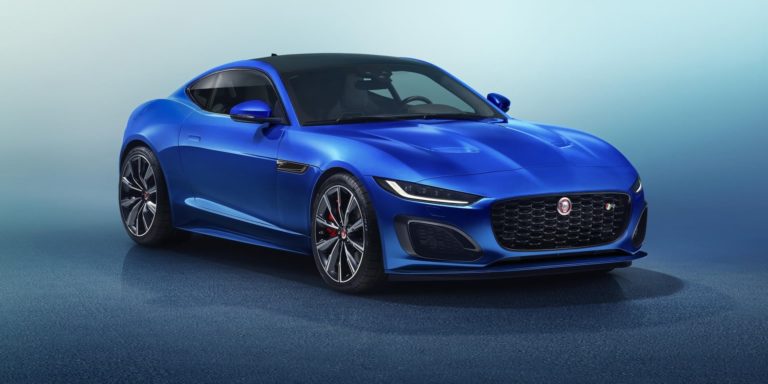
Jaguar has revealed its new-look Jaguar F-Type coupe and convertible, bringing a striking new look to its sports car after six years on sale.
The new car ditches the V6 engine available with its predecessor and is instead offered with just V8 and 2.0-litre, four-cylinder powertrain options.
Available from just over £54,000, the refreshed F-Type is still available in coupe and convertible forms, with all incorporating a lightly revised interior with more tech and driver-focused features than before.
The exterior changes are most noticeable at the front of the F-Type, with sleeker headlights giving the nose of the car a more aggressive appearance. The rear of the car gets a subtler update, though the ‘roundel’ lights which were such a signature of the F-Type have been ditched in favour of a single ‘blade’ style unit.
Inside, the cabin of the F-Type is dominated by a new 12-inch digital dashboard setup ahead of the driver, which is combined with a central infotainment screen incorporating Apple CarPlay and Android Auto. The entire system also comes with over-the-air updates for the first time.
The entry-level engine is now the 300hp 2.0-litre four-cylinder petrol, with the V6 unit having been ditched. A less powerful version of the firm’s 5.0-litre supercharged V8 sits in the middle of the line-up with 450hp and the choice of rear- or all-wheel-drive, while the tip-top unit remains the full-fat V8 engine in the F-Type R which now produces 575hp and 700Nm of torque – up 25hp and 20Nm on the older model. All cars get an eight-speed automatic gearbox.
The range-topping SVR has been cut too, though a lot of that car’s mechanical upgrades – such as adaptive dampers and stiffer rear knuckles and ball joints – have been carried over to the R.
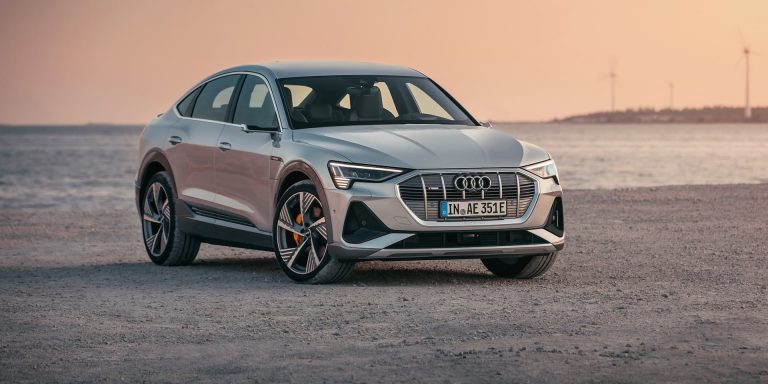
Audi has revealed its latest all-electric vehicle – the e-tron Sportback – at the Los Angeles motor show.
Described as the firm’s second bespoke electric vehicle, it’s probably more accurately considered to be a variation on the original e-tron model. That’s not necessarily a bad thing, as the Audi e-tron has received very favourable reviews from the UK motoring media and currently holds an impressive score of 83% according to our unique Expert Rating aggregator.
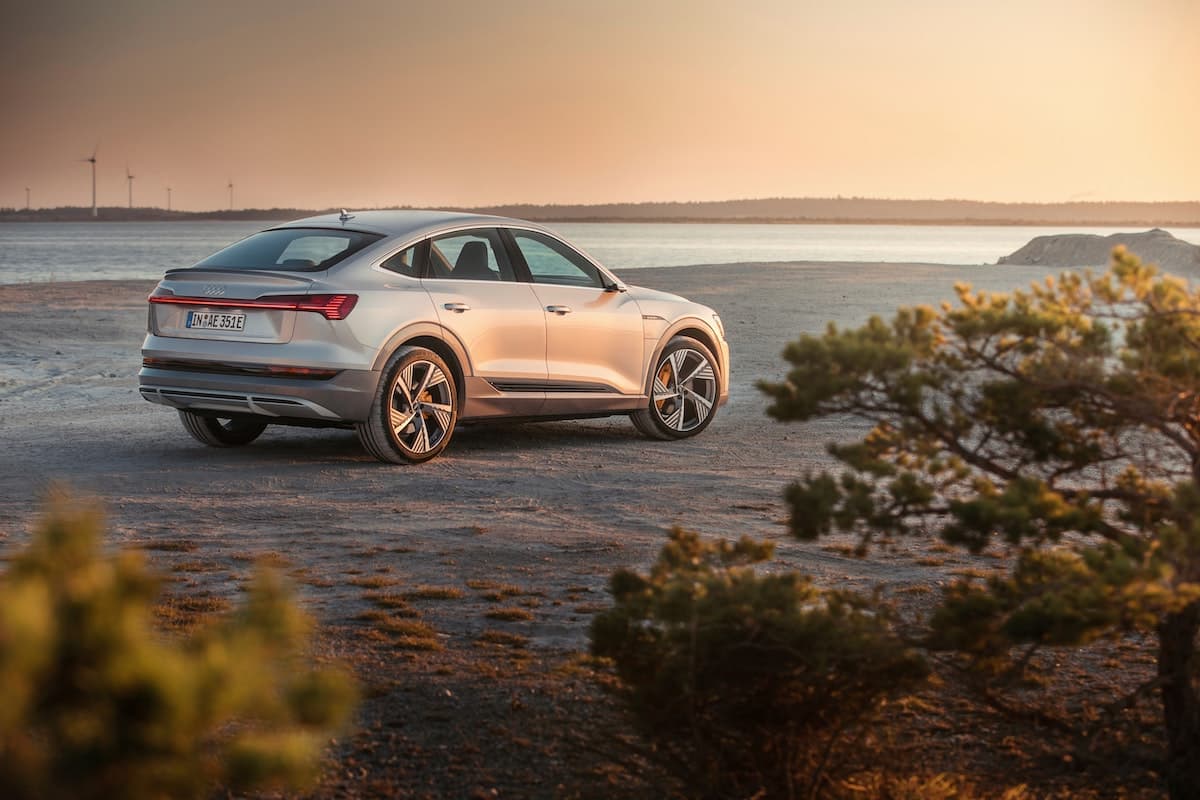
Like virtually every German SUV model released in the last few years, the e-tron is now available in a more expensive yet less practical version. It’s the same weight, length and height as the standard model, with the main visual difference of the e-tron Sportback being a more raked roofline.
As well as flattening out the overall look of the car, the sleeker roofline also helps with aerodynamic efficiency – the e-tron Sportback has a slightly lower drag coefficient compared with the regular e-tron. It’s not a big difference, but Audi claims that it equates to an extra six miles of range.
Under that slightly more aerodynamic body, there are some mechanical differences. The e-tron Sportback can decouple the front and rear axles so it can become rear-wheel-drive (the regular e-tron is all-wheel-drive-only), which helps to add a further six miles of range.
In total, Audi claims that the e-tron Sportback will return 277 miles on a single charge. Its engineers have also swapped the two water pumps cooling the batteries in the standard e-tron with a single larger one, saving even more weight and adding range.
The range-topping e-tron Sportback 55 produces 360hp from two electric motors and a 95kWh battery. Audi claims that it’ll go from 0-60mph in under six seconds when in sport mode. The firm also states that the Sportback can recuperate up to 30% of its total range through brake regeneration alone.
And though the vast amount of fixtures and fittings both inside and out are identical to those on the e-tron, the Sportback is the first mass-production car to get digital matrix LED headlights. Using systems usually found in video projectors, with individual tiles which can be adjusted 5,000 times per second.
UK pricing for the Sportback has yet to be confirmed, but Audi has stated that it will start at a bit over £71,000 (based on current exchange rates) in Germany. First deliveries are expected to start in spring 2020.
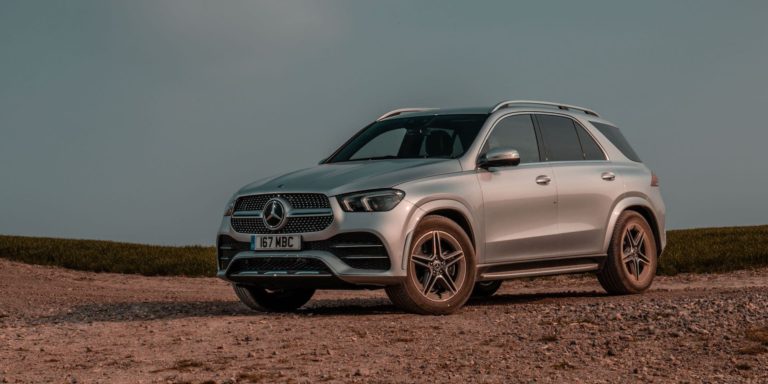
The Mercedes-Benz GLE is a large SUV model that sits between the smaller GLC and larger GLS in the Mercedes-Benz SUV family. This the current model, which arrived in the UK in 2019.
Although it’s the second generation to wear the GLE badge, it’s actually the fourth generation of the model (which was originally called the ML from 1997 to 2015).
The GLE range consists of a regular SUV model and a GLE Coupe body style, which is not actually a coupé but rather an almost identical SUV shape with a more raked cargo area. There is also a higher-performance model called the Mercedes-AMG GLE 53, and an even faster GLE 63 version arrived in 2020.
The GLE has received particular praise for its interior design and quality, as well as its comfortable ride. However, it has been criticised for tight third-row seating and unimpressive handling.
As of July 2025, the Mercedes-Benz GLE holds an Expert Rating of C, with a score of 60%. Its reliability score is good, and the plug-in hybrid models help contribute to very good CO2 emissions, but its media review score are only average and its running costs are extremely high.
Highlighted reviews and road tests from across the UK automotive media. Click any of the boxes to view.
Featured reviews
“What it does take from its saloon siblings is largely good stuff, although we’d like a more refined ride. At this price point the diesel doesn’t feel special enough, either. The pick of the range looks like a pricier petrol with the fancier adjustable suspension.”
“It’s all very calm, very relaxed and totally unobtrusive. It makes it all feel very late-1990s, when lap times and acceleration figures weren’t the be-all and end-all as they are today. Further proof that less can be more and all the better for it.”
Score: 8 / 10 “The Mercedes-Benz CLE Coupé is very comfortable, looks the part, has a fantastic cabin and a rare diesel option… but it’s no sports car.” Author: Mark Nichol Read review
Car
Model reviewed: Range overview Score: 6 / 10 “Relaxing rather than exciting, the CLE will find favour with exactly the same sort of buyers who purchased the old C- and E-Class coupes. Which is just what it’s meant to do.” Author: Keith Adams Read review
Carbuyer
Model reviewed: Range overview Score: 7.8 / 10 “The Mercedes CLE looks good, offers a decent amount of room inside and drives well, replacing two models in one go.” Author: Charlie Harvey, Andy Goodwin Read review
Carwow
Model reviewed: Range overview “The Mercedes-Benz CLE Coupe is one of those increasingly rare sights – a sleek two-door coupe. It has a good-sized boot, but it could be a bit cramped for rear seat passengers.” Read review
Motoring Research
Model reviewed: Range overview Score: 8 / 10 “Replacing both the C-Class coupe and E-Class coupe in Mercedes-Benz’s rationalised range, the CLE manages to be a more convincing proposition than either car, with smart styling, relaxed road manners and a roomy interior.” Author: John Redfern Read review
Parkers
Model reviewed: Range overview Score: 8 / 10 “No surprises with the Mercedes-Benz CLE – it’s a comfortable, premium and good-looking coupe. We felt there was more C-Class than E-Class about the way it drove, but it shouldn’t put buyers off from either side. But either way, we like it.” Author: Keith Adams Read review
Regit
Model reviewed: CLE 300 4Matic AMG Line Premium Plus Score: 8 / 10 “If you were ever in any doubt that two could become one, the Mercedes-Benz CLE has proved it is possible. Yes, there will be people out there who will say it’s not like the outgoing C-Class or E-Class Coupe models, but we think they have found the perfect balance between the two.” Author: Maxine Ashford Read review
The Telegraph
Model reviewed: 3.0-litre petrol automatic CLE 450 AMG Line Premium Plus Coupe Score: 8 / 10 The Mercedes-Benz CLE is a modern take on the archetypal Mercedes coupe, and all the better for it. In much the same way as those two-door Mercs of old, the CLE feels as though it would be most at home with its nose pointed south, whisking you to a table by the Med for dinner in understated style.” Author: Alex Robbins Read review
Top Gear
Model reviewed: Range overview Score: 7 / 10 “Relaxing to drive but infuriating to operate, the CLE is an old-school coupe spoiled by poorly integrated tech.”
Read review
Safety rating
Independent crash test and safety ratings from Euro NCAP
The Mercedes-Benz GLE has a better-than-average reliability score of 71%, according to workshop and extended warranty data provided exclusively to The Car Expert by our commercial partner, MotorEasy.
The average repair cost of just over £500 is quite competitive for such a large and expensive vehicle. Gearbox repairs have been the most expensive problems, with an average repair bill of about £2,300. Thankfully, these have been quite rare to date.
Running cost rating
Monthly cost of ownership data provided exclusively for The Car Expert by Clear Vehicle Data
Fuel consumption
Average
Score
Petrol models
28 mpg
E
Diesel models
37 mpg
D
Plug-in hybrid models
343 mpg
A
CO₂ output
Average
Score
Variation
Score
Petrol models
230 g/km
D
Diesel models
199 g/km
D
Plug-in hybrid models
20 g/km
A
Battery range
Average
Score
Variation
Score
Plug-in hybrid models
36 miles
E
Insurance group
Average
Score
Variation
Score
All models
50
F
Service and maintenance
Cost
Score
Year 1
£452
D
Year 2
£1,118
D
Year 3
£1,846
D
Year 4
£2,289
D
Year 5
£2,980
D
Overall
£8,685
D
The Mercedes-Benz GLE is an expensive car to run, according to numbers provided exclusively to The Car Expert by our data partner, Clear Vehicle Data.
Fuel consumption is unsurprisingly poor for petrol models, and only average for diesels. The plug-in hybrid stats look good on paper, but this is largely a function of misleading EU/UK government lab tests that make every plug-in hybrid look amazing. There are no real-world situations where you’re going to get 270 miles out of a single gallon (4.5 litres) of fuel and a bit of electricity.
Insurance and scheduled servicing costs for the GLC are likely to be high, especially compared to similarly sized cars from other brands.
Warranty rating
New car warranty information for the Mercedes-Benz GLE
Overall rating
B
68%
Petrol or diesel models
C
41%
Hybrid or plug-in hybrid models
A
82%
New car warranty duration
3 years
New car warranty mileage
Unlimited miles
Battery warranty duration
8 years
Battery warranty mileage
100,000 miles
Mercedes-Benz’s new car warranty is only average, and not as attractive as some other cars in a similar price bracket as the GLE.
The duration is three years, with no limit on mileage – although, in reality, the mileage numbers are likely to be fairly irrelevant as most cars only cover about 10,000 miles each year.
In addition to the standard new car warranty, the GLE plug-in hybrid models have an eight-year/100,000-mile warranty for the battery components. The overall rating above is a mix of the different models.
Awards
Significant UK trophies and awards that the Mercedes-Benz GLE has received
2021
Auto Trader New Car Awards – Best seven-seater
Similar cars
If you’re looking at the Mercedes-Benz GLE, you might also be interested in these alternatives
While the automotive industry is struggling to keep up with the rise of EVs – many scrambling to bring models to market to avoid being stung by huge environmental fines – this situation surprisingly provides a gateway for firms willing to innovate.
One of these companies is Polestar. It’s a manufacturer that started out as being Volvo’s performance arm, but it’s now separated to become its own carmaker, which will merely focus on electrified models. It’s worth noting that it’s still heavily linked with Volvo under big owner Geely’s ownership.
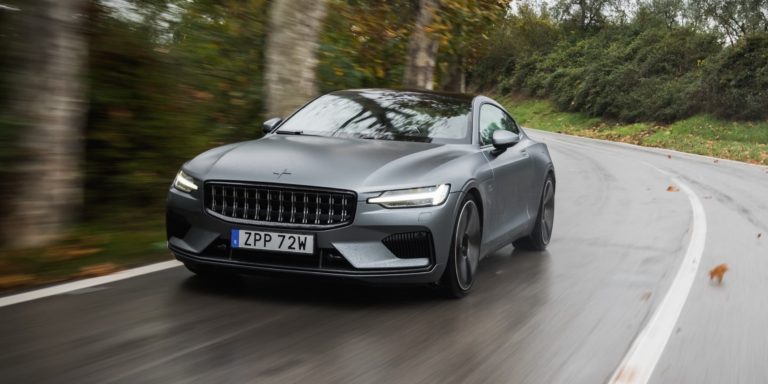
And here is Polestar’s first model – the ‘1’. Bizarrely for a firm that will, from this point onwards, just launch pure EVs, this new GT car is a plug-in hybrid — but a rather clever one at that.
It’s hardly a surprise to see just how Volvo-like the Polestar 1 is, given its inspiration is the Volvo Concept Coupe. That show car was the first model to sit on Volvo’s new Scalable Product Architecture (SPA) that underpins models like the Volvo S90, but on the ‘1’ it’s been strengthened through a carbon-fibre cross member. That material is key elsewhere, too, as the body of the model is made from carbon-fibre reinforced plastic.
The other big news is the new plug-in hybrid powertrain, with the 1’s setup being completely different to other Volvos – producing 610hp, while also offering the longest claimed electric range of any plug-in hybrid on sale today.
But among all this brilliance is one snarling concern – the Polestar 1 is only available in left-hand-drive, meaning it will be a niche, at best, choice in the UK.
How does it look?
In a word, the Polestar 1’s styling is sensational. The proportions are just about perfect with an extended bonnet, long doors and gorgeous 21-inch alloy wheels.
As we mentioned earlier, its whole inspiration is the Volvo Concept Coupe – hence why it’s recognisable first as a Volvo and second as a Polestar. There’s nothing wrong with that, as Volvos are some of the best-looking cars around.
But it’s remarkable how close the Swedish firm has managed to get this production model to the 2013 concept – the carbon-fibre body said to allow for further scope to exactly replicate a car’s design. It really is one of the best-looking cars around, and it’s undoubtedly that design that will be the selling point for most buyers.
What’s the spec like?
Given the Polestar 1 costs an eye-watering £139,000, it’s pleasing just how much kit it comes with. A few equipment highlights are Pilot Assist semi-autonomous driving – something that’s about unique in this class – along with Nappa leather sports seats and active bending LED headlights.
The line-up is simple, too, and aside from splashing out an additional £5,000 to have your car with matte paint, or the choice of three wheel finishes and two interior combinations, that’s where the option boxes end.
That high price might seem a lot – especially when you consider that you could buy a Bentley Continental GT for not a lot more money – but this technology remains expensive, particularly with such an advanced powertrain like this.
What’s it like inside?
If you’ve spent much time in a Volvo interior, you’ll see just how similar the Polestar 1 is inside to its parent brand’s cars. While Polestar has added bits of expensive carbon fibre, a truly terrific Bowers & Wilkins sound system and a few more pleasing luxurious touches, the design and layout is just about identical.
It’s not exactly a bad thing, as Volvo interiors are some of the best around, but there could be an element of disappointed from an owner when they realise that their Polestar has a very similar-looking cabin to a £30,000 Volvo XC40.
The four-seat Polestar 1’s batteries also significantly eat into the boot space, leaving just 143 litres, which will allow for a couple of small suitcases at best. Though, of course, practicality isn’t a priority. A cool touch in the boot, though, is that Volvo has left the batteries on show. “Why hide them?”, was the firm’s reasoning.
What’s under the bonnet?
Open the hood and there lies a supercharged and turbocharged 2.0-litre petrol engine, which itself produces more than 300hp. But joining that are two electric motors, along with two batteries that offer a capacity of 34kWh – larger than some EVs.
The combination of engine and electric itself produces in excess of 500hp, but there is also an integrated starter motor adding further performance, which allows for a maximum of 610hp and 1,000Nm of torque. We’re talking supercar figures here then, and it certainly feels like that – even when carting around 2,350kg of weight. Foot to the floor in ‘Power’ mode and 0-60mph would be met in four seconds, and Polestar says it will reach a top speed of 155mph.
With both electric motors at the rear, it can be run as a rear-wheel-drive car, or all-wheel-drive once the engine kicks in. The gearbox of choice is an excellent eight-speed automatic transmission.
The 34kWh battery also enables the Polestar to have an impressive claimed 78 miles. And as it can also be charged with a 50kWh rapid charger (unlike many PHEVs), the battery can be topped up in less than an hour. That long electric range allows for some astonishingly low running costs – CO2 emissions of just 15g/km, and a claimed fuel economy figure of 403.5mpg.
What’s it like to drive?
One of the key benefits of electric cars is the seamless performance, and this is undoubtedly the key asset to the Polestar. It picks up speed at an alarming rate, and the changeover to when the petrol engine kicks is one of the smoothest of any petrol-electric model.
The stiffer chassis is also noticed – there’s next to no body roll, and direct steering makes it very easy to place through the corners, with torque vectoring instantly sending power to the wheels that need it most to ensure it always feels controlled.
Quite unusually for such an advanced car, it doesn’t come with electronic dampers like most cars in this class do – rather it makes use of high-quality Ohlins ones that have to be manually adjusted. In the standard factory setting, they’re perhaps a bit too firm, though never uncomfortable. They can be adjusted without the need of a specialist, though we reckon it’s a bit of a faff, and we imagine most owners will leave them how they came. The Akebono brakes also provide superb stopping power.
Verdict
In terms of styling, technology and performance the Polestar 1 is an absolute masterclass, and undoubtedly a superb showcase at to what Polestar will hopefully offer from future all-electric models.
But it’s sadly compromised by not being offered as an RHD model (due to such low volumes and the expense of a conversion) – something that makes it deeply impractical in the UK, and also, its expensive list price.
Yet the Polestar 1 will be a fantastic indulgent purchase for those lucky enough to be able to afford it and won’t be bought by those who care about it being impractical or costly. You’re likely to never see one on British roads, but if and when you do, it will be just as special to lay your eyes on as it will be for the person behind the wheel.
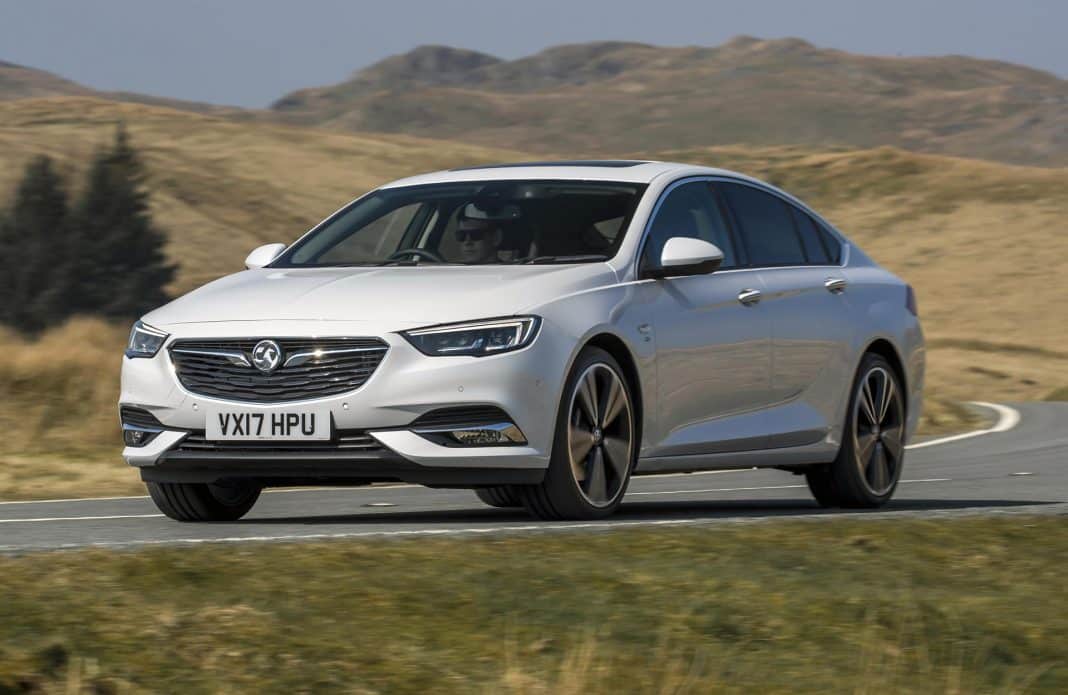
The Vauxhall Insignia was a large family/executive car, available in both liftback (Insignia Grand Sport) and estate (Insignia Sports Tourer) body styles.
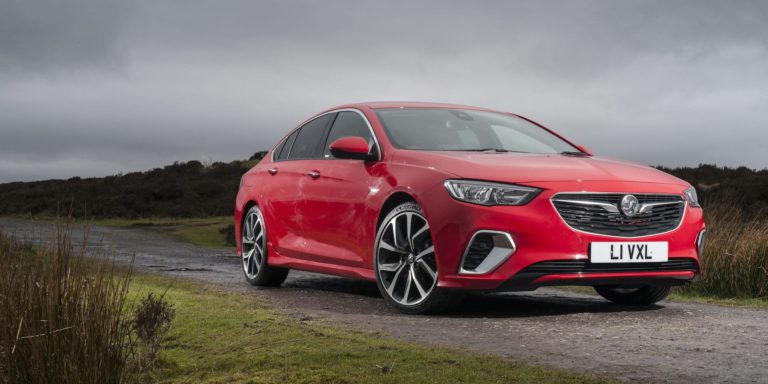
The latest generation was introduced in 2017, with a higher-riding Country Tourer estate version added a few months later and the GSi performance model a few months after that. The Insignia is or has been sold in other countries as the Opel Insignia, Buick Regal and Holden Commodore.
A facelifted model arrived in UK showrooms in early 2020. As part of this upgrade, the slow-selling estate (Sports Tourer) and Country Tourer models were dropped from the range, leaving only the liftback models on sale.
The Insignia has received particular praise for its comfort, interior space and value for money. However, it has been criticised for not matching the levels of quality or fuel economy on offer from several rivals.
As of March 2026, the Insignia holds a Used Car Expert Rating of C, with a score of 61%.
Body style: Large liftback and estate Engines: petrol, diesel Price when new: From £20,045
Launched: Summer 2017 Last updated: Spring 2020 Discontinued: Spring 2022
Image gallery
Vauxhall Insignia Country Tourer
Vauxhall Insignia Grand Sport
Vauxhall Insignia GSi
Vauxhall Insignia GSi
Vauxhall Insignia Sports Tourer
Media reviews
Highlighted reviews and road tests from across the UK automotive media. Click any of the boxes to view.
The Car Expert
Model reviewed: GSi Score: 7.2 / 10 “Equipment levels are better than rivals from Ford and Volkswagen but economy is poorer, while it’s difficult to see many choosing it over a BMW or an Audi unless funding is critical.” Read review
Model reviewed: Grand Sport liftback Score: 7.2 / 10 “The Insignia’s on-road performance will deliver all that the vast majority of its target market will ever need, and it comes in at a very competitive price.” Read review
Model reviewed: Sports Tourer estate range Score: 7.6 / 10 “The car looks better than its predecessor, offers an interior of higher quality and comes with as much latest technology as its rivals. Couple all this with the price and the Insignia is a serious contender in its market.” Read review
Auto Express
Model reviewed: 1.5 diesel 2021 Score: 6 / 10 “The Vauxhall Insignia remains a decent all rounder in what is becoming a shrinking market. It’s striking, loaded with standard kit and offers great value for money.” Read review
Model reviewed: GSi Score: 6 / 10 “The Insignia remains a very pleasant, relaxing machine in which to cover miles. However, if you can live without four-wheel drive, the cheaper petrol is almost as quick and at least £5,500 cheaper. “ Read review
Model reviewed: Sports Tourer estate range Score: 8 / 10 “The Vauxhall Insignia Sports Tourer is a comfortable and competent load-lugger that gives pricier premium rivals a run for their money.” Read review
Model reviewed: Grand Sport liftback range Score: 8 / 10 “Practical, stylish large family hatch offers plenty of kit for a tempting price” Read review
Auto Trader
Model reviewed: 2020 update Score: 8 / 10 “The Vauxhall Insignia is a fleet favourite, and has been improved with more efficient new diesel and petrol engines.” Read review
Model reviewed: Grand Sport liftback range Score: 8 / 10 “The Vauxhall Insignia is a large family car that goes toe-to-toe with traditional family favourites like the Ford Mondeo and Volkswagen Passat. It sets itself apart with sleek styling, a high-quality interior, lots of space, lots of kit and an affordable price tag.” Read review
Business Car
Model reviewed: Insignia SRi VX-Line Nav 2.0 Petrol Auto Score: 6 / 10 “The Insignia as tested here feels like a car that’s being held back by its spec. For keen drivers who might tolerate a higher tax bill in return for a thrilling drive, it will feel like an unconvincing halfway house They’d be better off considering more full-blooded performance car alternatives.” Read review
Car
Model reviewed: 2021 Score: 8 / 10 “Despite its many qualities, there are also reasons not to buy the new Insignia GSi. It’s too thirsty, too dour and too expensive.” Read review
Model reviewed: 2.0-litre diesel automatic Sports Tourer estate GSi Score: 6 / 10 “There is plenty to appreciate about the Vauxhall Insignia GSi. It’s comfortable, roomy, decently refined, well equipped with safety and infotainment, suitably clean and economical, and capable of maintaining brisk cross-country average speeds. It’s just not very much fun to drive or exciting to live with.” Read review
Model reviewed: Country Tourer estate Score: 8 / 10 “Is the Vnsignia Country Tourer worth its £1355 premium over the standard Sports Tourer? Absolutely.” Read review
Model reviewed: Sports Tourer range Score: 6 / 10 “If you’re after a well-priced family wagon with an abundance of space, kit and comfort levels step this way. The Vauxhall Insignia Sports Tourer improves on its predecessor and some.” Read review
Model reviewed: Grand Sport liftback range Score: 8 / 10 “While the new Insignia Grand Sport doesn’t entirely bend the needle on the desirability meter, it’s certainly a much more likeable thing than the model it replaces – and more practical too.” Read review
Carbuyer
Score: 8.6 / 10 “The Vauxhall Insignia Grand Sport is sharper to look at and drive, while offering lots of equipment for the money.” Read review
Model reviewed: Country Tourer estate Score: 7 / 10 “The Vauxhall Insignia Country Tourer is a practical, capable and good-looking SUV alternative.” Read review
Model reviewed: Sports tourer estate Score: 8 / 10 “The latest Vauxhall Insignia Sports Tourer is a far more accomplished all-rounder than its predecessor.” Read review
Carwow
Model reviewed: Sports Tourer estate range Score: 7 / 10 “The Vauxhall Insignia Sports Tourer comes with an impressive amount of equipment as standard and makes a great long-distance cruiser but some alternatives are better to drive.” Read review
Model reviewed: Country Tourer estate Score: 6 / 10 “The Vauxhall Insignia Country Tourer is a comfortable motorway cruiser that has optional four-wheel drive but isn’t as affordable as the very similar Insignia Sports Tourer.” Read review
Model reviewed: Grand Sport liftback range Score: 7 / 10 “The Vauxhall Insignia Grand Sport has a low price, lots of standard equipment and a decent interior but alternatives are more stylish and have flashier interiors.” Read review
Company Car Today
Model reviewed: 1.5-litre diesel manual SE Nav “The efficiency figures for the revised Insignia are excellent, although the 1.5 diesel takes a bit of stirring to get going. But the flagship Vauxhall model still looks good, and is well specced.” Read review
Model reviewed: 1.6-litre petrol Elite Nav “If a powerful petrol engine is on the list then the Insignia’s is a good bet, although the 165hp version makes much more sense in terms of running costs.” Read review
Model reviewed: Country Tourer estate “Neat addition to excellent new Insignia line-up will be of limited appeal due to higher emissions.” Read review
Model reviewed: 2.0-litre diesel Sports Tourer estate Tech Line “The Vauxhall Insignia Sport Tourer seems like a competitive car, emissions apart, until you get to the list price. Then it seems devastatingly good value.” Read review
Model reviewed: Grand Sport liftback range Score: 8.1 / 10 “The low list price and high equipment levels grab the attention, backed up by the styling change. Not perfect, but it pushes Vauxhall forward in the sector.” Read review
Daily Mail
Model reviewed: 2.0-litre petrol manual Grand Sport VX-Line Nav Score: 8 / 10 “This is a big shiny beast of a motor that is considerably less expensive than it looks, fairly economical to run and is looking better than ever before with its new sexy side scoops, open exhaust and an all-new, go-faster, iron-fresh crimp in the centre of the bonnet.” (Chris Evans) Read review
Daily Mirror
Model reviewed: 1.6-litre petrol automatic Grand Sport SRi liftback Score: 8 / 10 “Old favourite keeps on delivering, big time.” Read review
Eurekar
Model reviewed: SRi VX-Line Nav 2.0-litre petrol automatic “The latest Vauxhall Insignia is head and shoulders above its predecessors, crammed with technology; yet still retains an almost classic styling which has been here since 2017.” Read review
Evo
Model reviewed: GSi Score: 6 / 10 “The Vauxhall Insignia GSi moves across the road with surprising fluency and naturalness. The steering is well weighted and accurate, if not brimming with feedback, and while the 20-inch wheels do have a tendency to crash into sharper road intrusions, overall body control and damping is good.” Read review
Model reviewed: Grand Sport liftback GSi BiTurbo Score: 5 / 10 “Flagship Insignia has all the right kit, but it doesn’t offer enough excitement over better-balanced and cheaper versions.” Read review
Model reviewed: Grand Sport liftback range Score: 6 / 10 “A more spacious and stylish Vauxhall Insignia is still lacking the performance gene” Read review
Heycar
Model reviewed: Sports Tourer estate range Score: 6 / 10 “The Insignia Sports Tourer fails to perform particularly well in one area. That said, it’s good value if you go for the base specification and comes with a decent range of engines.” Read review
Model reviewed: Liftback range Score: 7 / 10 “If the Vauxhall Insignia Grand Sport is lacking in one area it’s badge appeal. Chuck in competition from the SUV market and it’s no wonder it’s selling in rapidly declining numbers. But, for the wise buyer, it’s an undeniably good car available at a very affordable price with an extensive amount of standard kit. It’s massive, too, which makes it a very versatile family car.” Read review
Honest John
Model reviewed: Grand Sport Score: 6 / 10 “New more efficient engines and the lightest of restyles aren’t enough to stop the Vauxhall Insignia feeling like a dinosaur on the edge of extinction, but at least you can make huge savings on brand new cars.” Read review
Model reviewed: Sports Tourer estate range Score: 8 / 10 “If you’re looking for load space, the Vauxhall Insignia is easily one of the best family estate cars around. Plus it’s relaxed and comfortable to drive with enough space for adults in the back.” Read review
Model reviewed: GSi “The Vauxhall Insignia GSi certainly has its strong points. If you’re looking for a straightforward, capable car that’s quick and well equipped, it should be on your shortlist.” Read review
Model reviewed: 1.6-litre diesel manual Grand Sport SRi Nav “A Skoda Superb feels more upmarket and a Ford Mondeo is a little sharper to drive, but the new Insignia is a big step forward and a much smarter buy than its predecessor.” Read review
Parkers
Model reviewed: Grand Sport liftback range Score: 7.8 / 10 “Grown-up looks and more interior space than ever.” Read review
Model reviewed: Sports Tourer estate range Score: 8.2 / 10 “Vauxhall’s family barge is more practical than ever.” Read review
The Sun
Model reviewed: 2.0-litre diesel Grand Sport liftback GSi “The Insignia GSi feels more accomplished than a lot of fast Vauxhalls from the past, despite not really being that fast.” Read review
Model reviewed: 2.0-litre diesel Sports Tourer estate VX-Line “It’s now a tasty proposition for families and businessmen who want a decent drive, value plenty of kit, but can’t afford German prices.” Read review
The Sunday Times
Model reviewed: 2021 Score: 7 / 10 “The Vauxhall Insignia is surprisingly satisfying to drive, comfortable, spacious and has enough new technology to keep it relevant in a fast-changing segment. It’s also not unattractive.” Read review
Model reviewed: Grand Sport Score: 6 / 10 “The bells, whistles, chic design and bargain price still won’t convince you” Read review
The Telegraph
Model reviewed: 2.0-litre diesel automatic Sports Tourer estate GSi Score: 8 / 10 “The Vauxhall Insignia GSi is one of the best fast diesel estates you can buy. Sure-footed and lively, it’s one of a very small number of family cars that you might want to take on a week-long Alpine adventure.” Read review
Model reviewed: Country Tourer estate Score: 8 / 10 “There’s a case to be made for the Insignia Country Tourer being the best car that Vauxhall builds. It’s comfortable, roomy and considerably better to drive than the company’s SUVs. However, while keenly price to buy outright, on finance rivals get much closer, as well as being more economical.” Read review
Model reviewed: Sports Tourer estate range Score: 7 / 10 “Despite Vauxhall’s claims about premium interior quality, the Insignia Sports Tourer is not about to tear buyers away from their Audis and BMWs. However, it does represent a serious rival to estate versions of the VW Passat, Ford Mondeo and Skoda Superb, particularly when you factor in its aggressive pricing.” Read review
Model reviewed: 1.5-litre petrol manual Grand Sport Score: 6 / 10 “On this evidence Vauxhall’s new Insignia comes up slightly short, although the 1.6-litre turbodiesel is a fine machine.” Read review
Top Gear
Model reviewed: Insignia Score: 6 / 10 “Tthe Vauxhall Insignia ticks every cost-effective box, and is quite refined.” Read review
Model reviewed: Grand Sport liftback range Score: 7 / 10 “New Vauxhall Insignia ticks every cost-effective box, and is much more refined than before. Still tricky to be enthusiastic about, though.” Read review
Safety rating
Independent crash test and safety ratings from Euro NCAP
The Vauxhall Insignia has a below-average reliability score, according to exclusive extended warranty data provided by our partners at MotorEasy. This score covers both this Insignia model range and the original (pre-2017) version.
Over a quarter of all reported problems with the Insignia relate to its engine, with an average repair bill of nearly £800. The other areas to look out for are the suspension and electrical system, which both account for just over a fifth of repair claims respectively. Gearbox problems are the most expensive, but fortunately they appear to be relatively rare.
If you’re looking at a used Vauxhall Insignia, make sure any extended warranty cover you purchase covers all of these potential problem areas.
Awards
Trophies, prizes and awards that the Vauxhall Insignia has received
2022
Carbuyer Awards – Best Used Family Car
Company Car Today CCT100 Awards – Best Upper Medium Car
2021
Carbuyer Awards – Best Used Family Car
Company Car Today CCT100 Awards – Best Upper Medium Car
Business Car Awards – Best Upper-Medium Car
2020
Company Car Today CCT100 Awards – Best Upper Medium Car
2019
Professional Driver Awards – Best Private Hire Car
J.D. Power Customer Satisfaction Awards – Most Dependable Midsize Car
Company Car Today CCT100 Awards – Best Upper Medium Car
2018
Scottish Car of the Year Awards – Best 4×4 (Insignia Country Tourer)
Auto Express Awards – Best Family Car
Company Car Today CCT100 Awards – Best Upper Medium Car
Carbuyer Best Car Awards – Best Large Family Car
4×4 Magazine Awards – Best Crossover Estate
2017
Carbuyer Best Car Awards – Best Large Family Car
Similar cars
If you’re looking at the Vauxhall Insignia, you might also be interested in these alternatives
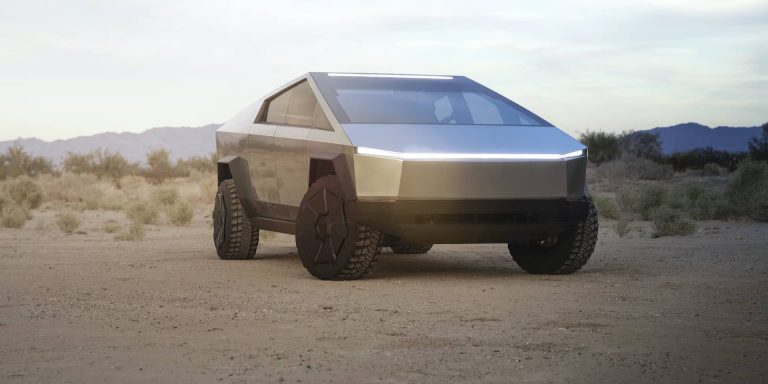
Tesla has unveiled its first electric pickup truck – known as Cybertruck – at an event in Los Angeles.
However, it’s created headlines worldwide not for the bizarre styling of the vehicle but for a failed demonstration of the vehicle’s supposedly shatterproof armoured windows.
The futuristic-looking vehicle will apparently be released at the end of 2021, and with a range of up to 500 miles, although as with any Tesla launch it’s probably best to pencil it into your diary rather than using permanent ink.
Tesla says the vehicle has “more utility than a truck, with more performance than a sports car”, while company boss Elon Musk attempted to show its ruggedness during a live demonstration at the launch event in Los Angeles.
Not as tough as it looks?
The launch will be best remembered for a bizarre series of demos that have immediately been mocked on social media around the world. Mr Musk first directed Tesla head of design, Franz von Holzhausen, to hit the door of the truck repeatedly with a sledgehammer, before suggesting it was nearly bulletproof.
However, when attempting to show off the Cybertruck’s supposedly shatterproof armoured glass by having Mr von Holzhausen throw a metal ball at it, the glass broke – in two attempts on separate windows.
This led a clearly sheepish Mr Musk to say “at least it didn’t go through” and that there was “room for improvement”.
Tesla also said the top of the range, triple electric motor version of the Cybertruck would be capable of going from zero to 60 miles an hour in 2.9 seconds – comparable with many sports cars.
The truck will start at 39,900 dollars (£31,000) for the single motor version and can be pre-ordered in America now, Mr Musk said.
He had teased the idea of creating a truck for some time, first tweeting about building a truck in 2012, before including the idea in his so-called “master plan” for the company, published in 2016.
Mr Musk also referenced the unusual design of the Cybertruck last year, saying in an interview with Recode that the vehicle had taken on a “futuristic-like cyberpunk, ‘Blade Runner’” design.
As part of the announcement, Mr Musk also unveiled a quad bike built by the company, which can fit into the back of the Cybertruck and also be charged once there.
The Cybertruck is the fourth production model that Tesla has unveiled that is not actually available to buy, and the previous three are not likely to be hitting UK roads anytime soon. Earlier this year, the company revealed the Model Y crossover, while the next-generation Tesla Roadster and the Tesla Semi truck were revealed two years ago and have still yet to start production.
Lexus has pulled the covers back on the UX 300e — the firm’s first electric car.
Designed with the Chinese market in mind and based on the existing UX crossover, the Lexus UX 300e features a 150kW electric motor that’s linked to a 54.3kWh battery pack.
As a result, Lexus says it’s capable of covering ‘around’ 250 miles on single charge, with charging speeds of up to 50kW supported. No word yet on how long a charge will take, however.
The existing UX range has a fairly middling score on The Car Expert’s unique Expert Rating aggregator system, which combines reviews from 18 of the top UK motoring websites to give new car buyers the best possible buying information. As of November 2019, the Lexus UX has a score of 67%, which is well behind the class-leading Volvo XC40 and Range Rover Evoque.
Though its powertrain may be a step away from the UX’s regular hybrid powertrain, the styling of the Lexus UX 300e has remained largely identical. The large front grille remains despite the absence of an internal combustion engine, though a new wheel design and an underbody cover have been introduced in a bid to cut drag.
Changes have been made to the platform as well to accommodate the new powertrain. Additional bracing and shock absorber tweaks have been made to aid refinement, which is taken further with new insulation around the battery that aims to cut external road noises feeding into the cabin.
Though it remains to be seen if any new equipment will be added to the car, the Japanese firm has confirmed its ‘LexusLink’ smartphone application will allow owners to preheat the car, as well as check its battery level remotely. An artificial sound is also created by the car — dubbed Active Sound Control — and is delivered into the interior.
Lexus will first introduce the UX300e in China in 2020, with a view to it arriving on the UK market by 2021. Pricing and specifications for the Lexus UX 300e are likely to be confirmed closer to its launch, though expect a bump over the current UX’s £29,905 starting price.
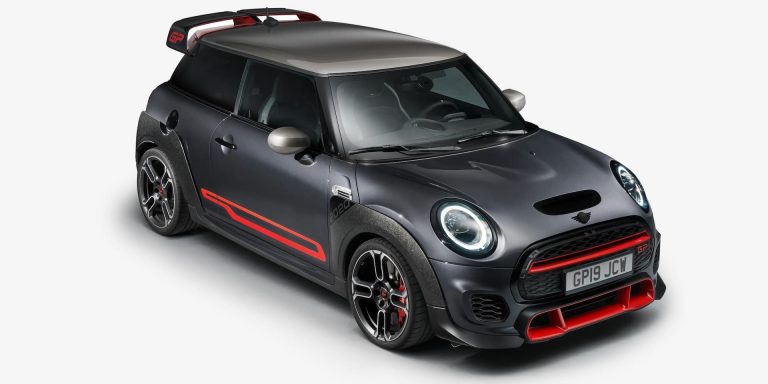
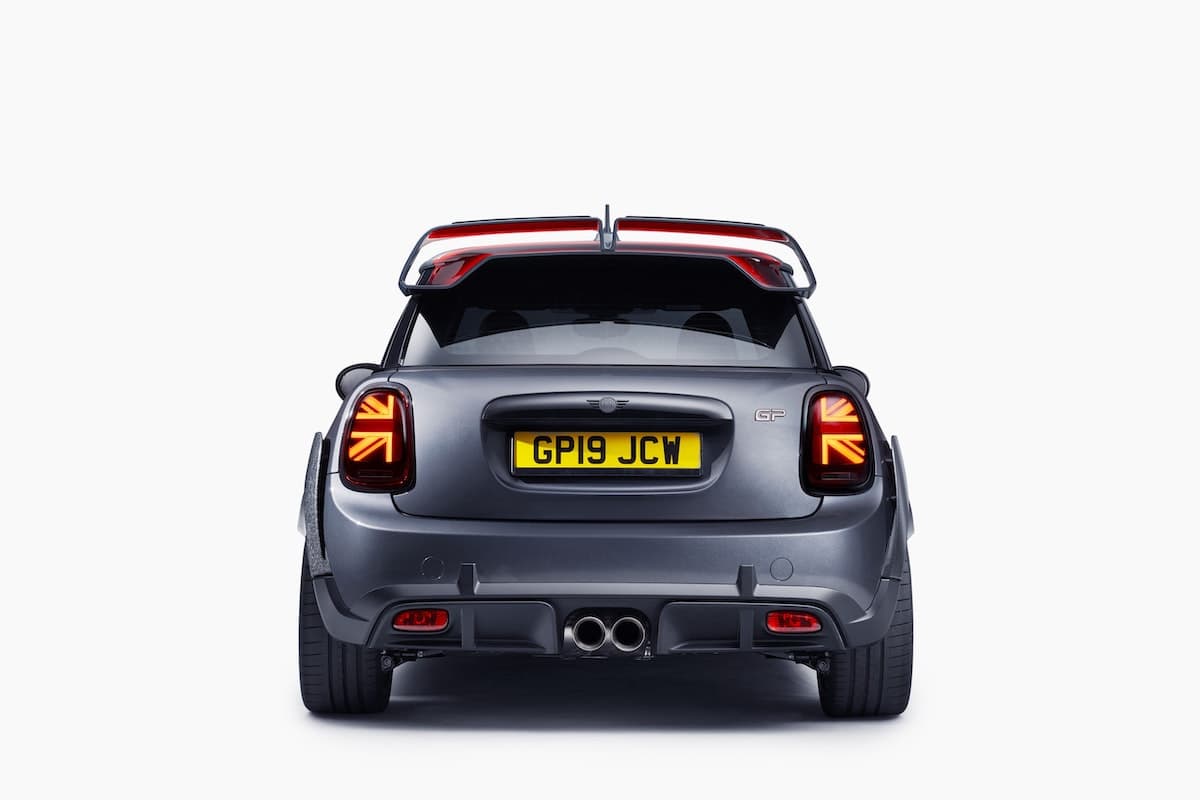
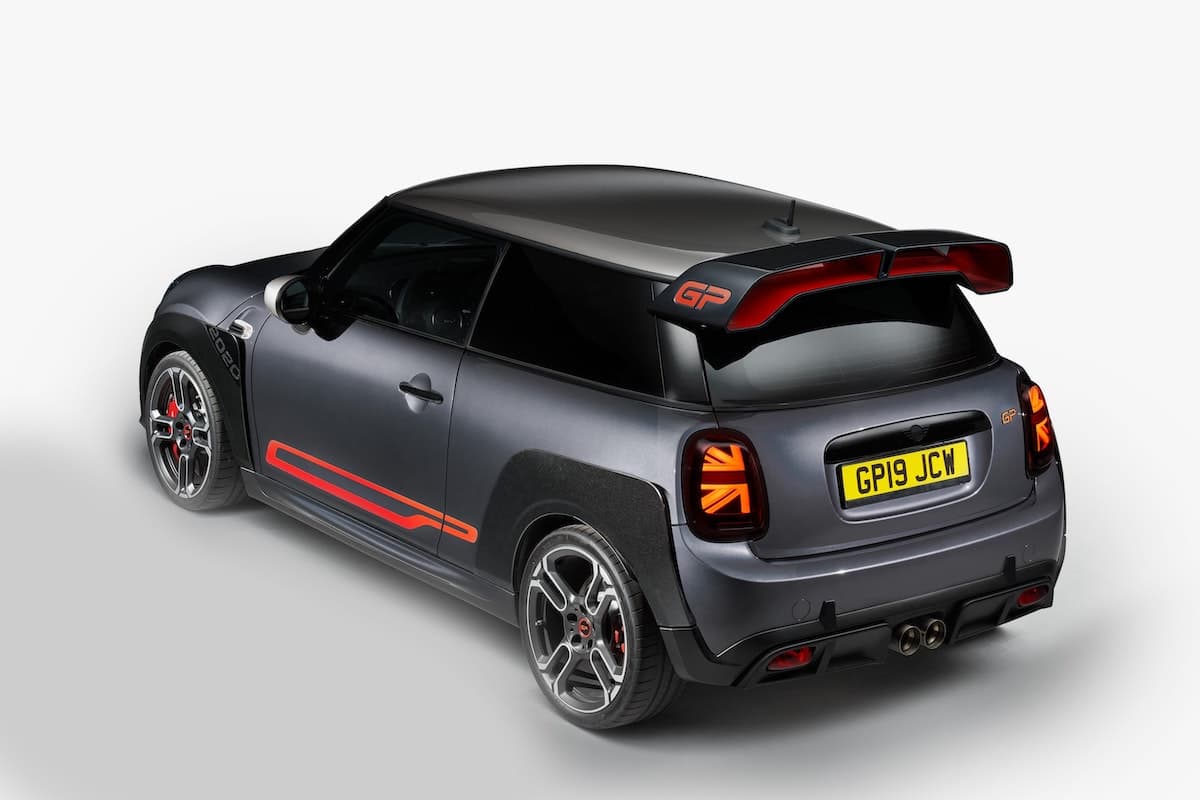
Mini has revealed its most hardcore road car yet – the Mini John Cooper Works GP.
Having been confirmed for production last year and teased in a series of images since, the hotly-anticipated Mini has finally broken cover in road-ready guise.
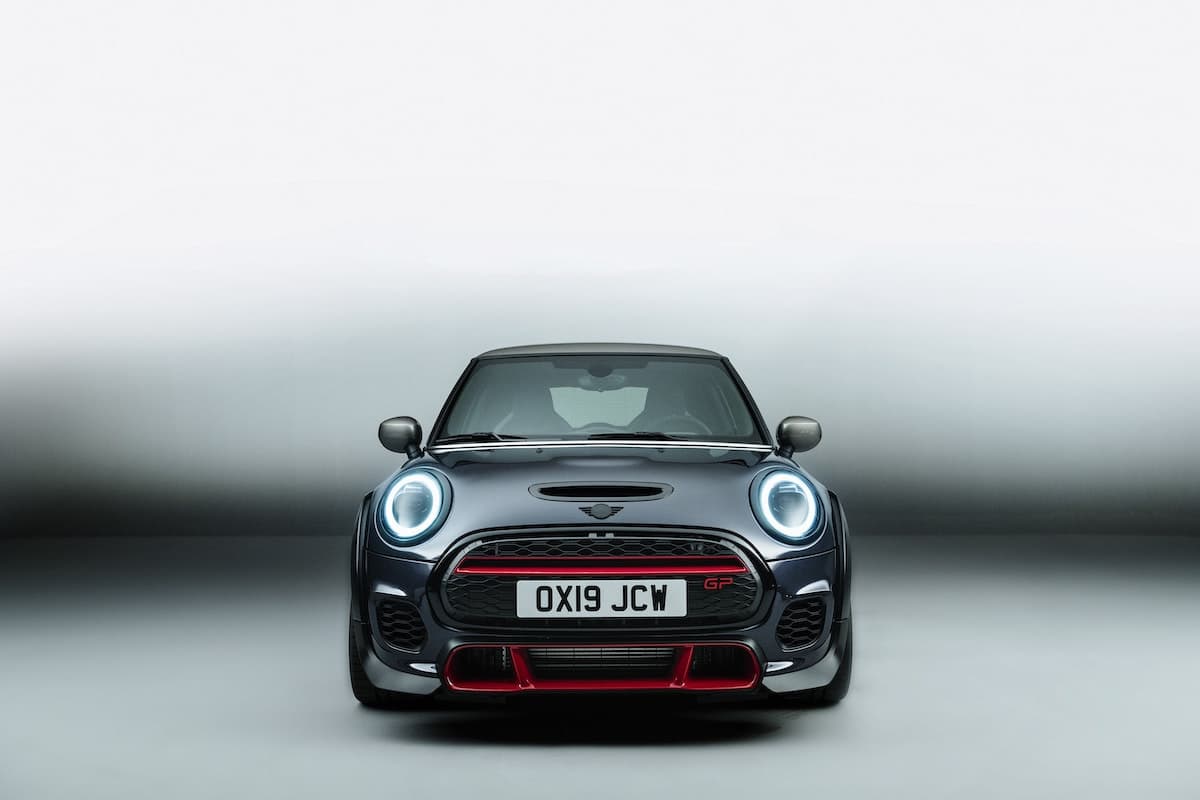
Though easily recognisable as a product of the British firm, it doesn’t take much to realise this is no regular Mini Cooper. Hugely flared wheel arches made from carbon fibre-reinforced plastic are present on all four corners of the car, while its front bumper takes on an extremely aggressive look.
A twin-exhaust exhaust setup sits centrally in a new diffuser, while an eye-catching rear wing sits at the top of the car. Distinctive 18-inch, four-spoke alloys hark back to previous GP models and the look is completed with a grey and red livery.
Under the race car-esque bodywork sits a 2.0-litre turbocharged engine, producing 306hp and 450Nm of torque — equalling the latest Mini Clubman John Cooper Works for the title of most powerful Mini ever. Power is sent to the front wheels via an eight-speed automatic gearbox, resulting in a 0-60mph time of five seconds flat while a 165mph top speed is said to be possible.
There’s more at play than just looks and a big engine, though. A number of chassis-stiffening enhancements have been made, while a model-specific suspension setup sees the car sit a centimetre lower than the regular John Cooper Works. A new high-performance brake setup helps slow the car back down, too, while a ‘GP’ mode has been introduced to the stability control system which unleashes the car’s full potential.
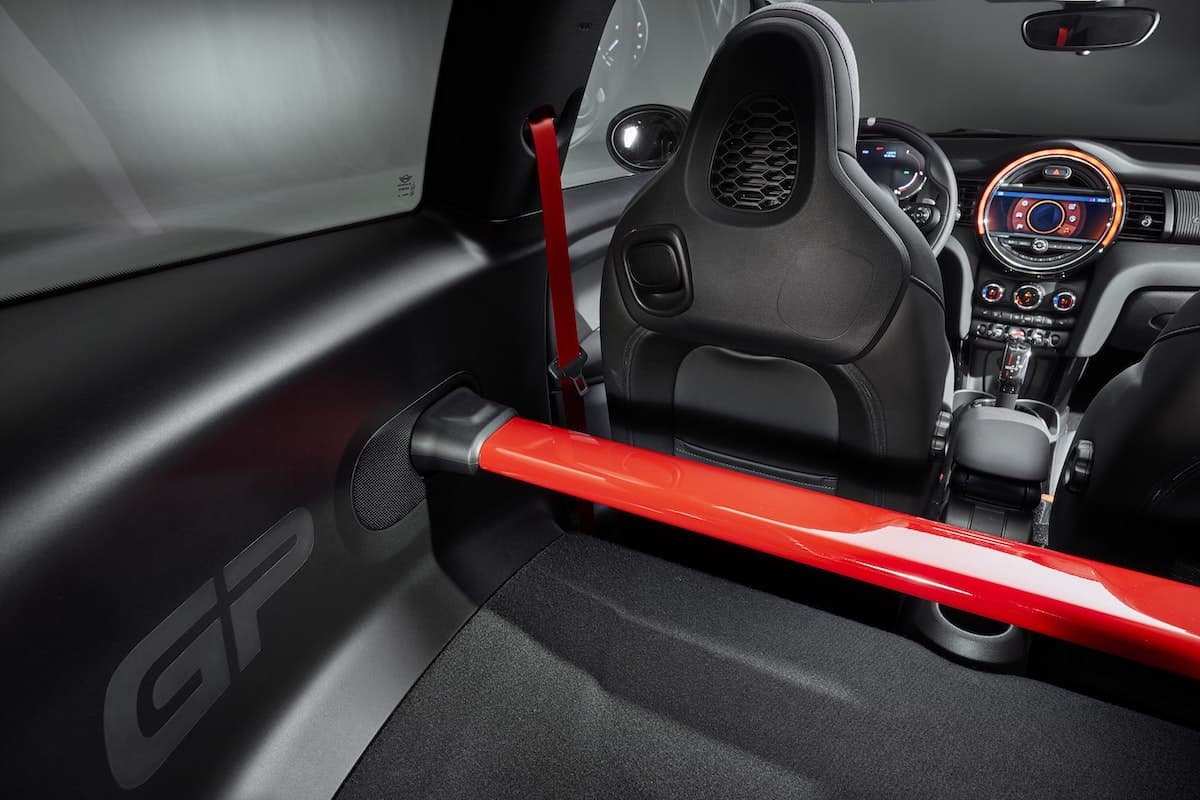
The most notable change inside the car is the removal of the rear seats, making the GP strictly a two-seater. In place of the back row is a large strut brace for improved chassis stiffness, with weight savings also achieved as a result.
Sports seats feature and are finished in a Dinamica/leather upholstery combination, while the steering wheel is trimmed in Nappa leather with a 12 o’clock marking and sits in front of 3D-printed metal paddle shifters.
Just 3,000 examples of the Mini John Cooper Works GP are slated for production, with UK pricing kicking off at £34,995. Order books for the car are now open, with the first examples set to be built in March.
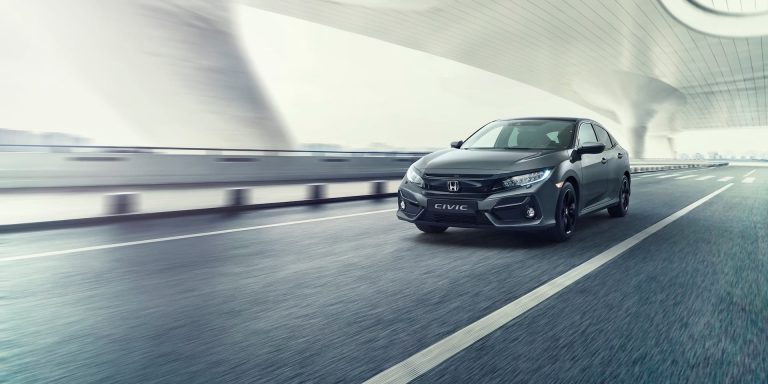
Honda has rolled out a host of upgrades to its Civic hatchback ahead of 2020.
Currently built in the UK (but not for much longer), this generation of the Honda Civic was first introduced in 2015 — with this update marking the model’s first major upgrade. The Civic range currently has a very decent score of 79% on The Car Expert’s unique new Expert Rating aggregator system, which collates reviews from 18 of the UK’s top motoring websites. This score puts it a few points behind the class leaders but well ahead of many other rivals.
A sportier look for the facelifted model is said to be achieved with the introduction of an ‘elegant’ lower front grille, with smoother surfaces and new styling blades. Tweaked LED daytime running lights follow these new blades, while full LED headlights are now a standard feature across the range.
New 16-inch alloy wheels are included on entry-level cars, while a fresh 17-inch option is now available on higher-spec models. An ‘Obsidian Blue’ paint finish has been introduced as well.
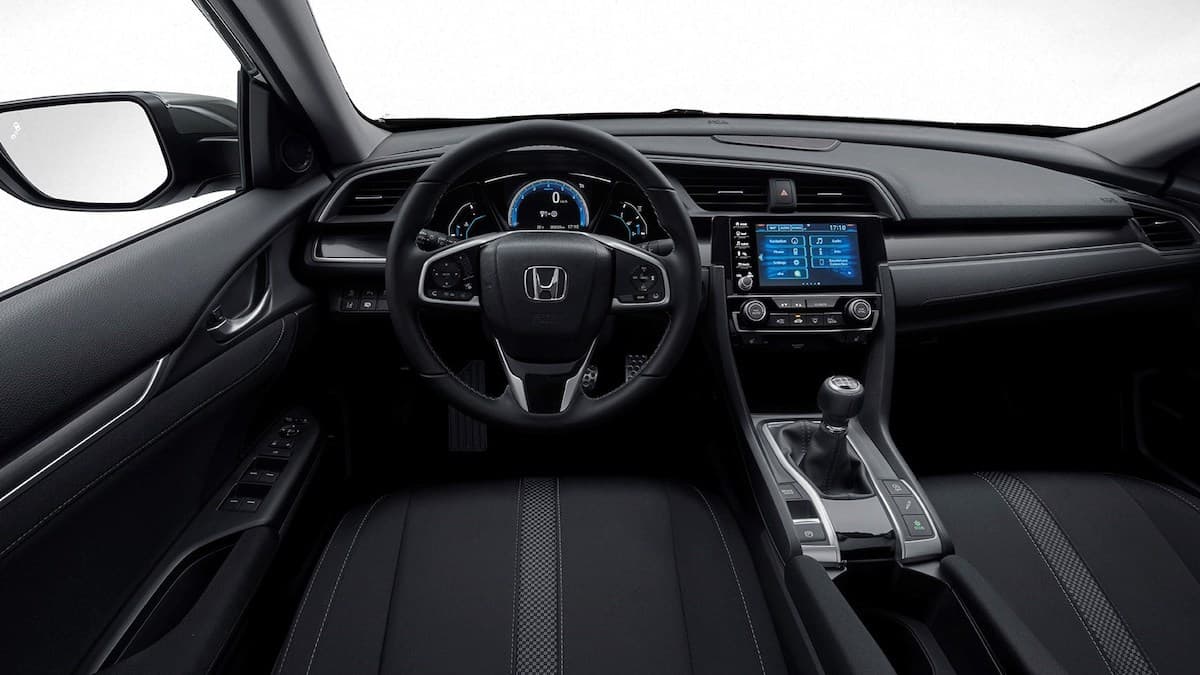
Inside the car, new interior panels are said to ‘reinforce’ a premium approach and an eight-way electrically-adjustable driver’s seat is now included for high-spec cars. A revised infotainment system has been introduced too, which sees the introduction of physical buttons for various features — along with its climate control. Android Auto and Apple CarPlay are both supported as standard.
No changes have been made to the powertrain line-up, which still consists of 1.0-litre and 1.5-litre petrol units, as well as a 1.6-litre diesel option.
Pricing and specifications for the revised Honda Civic have yet to be revealed, though it’s said to be hitting showrooms in January 2020. It remains to be seen if the high-performance Type R hot hatch will benefit from these upgrades, too.
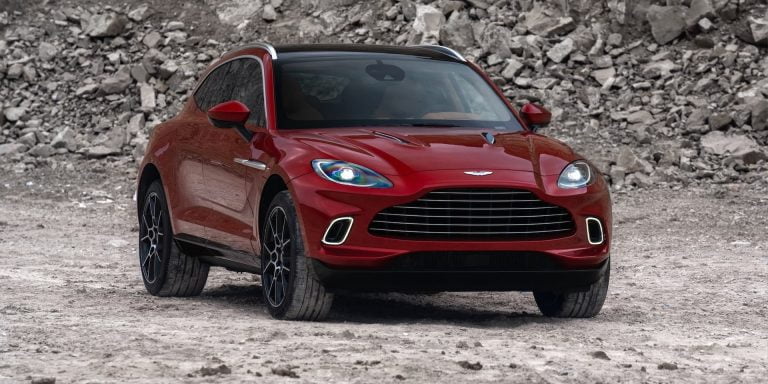
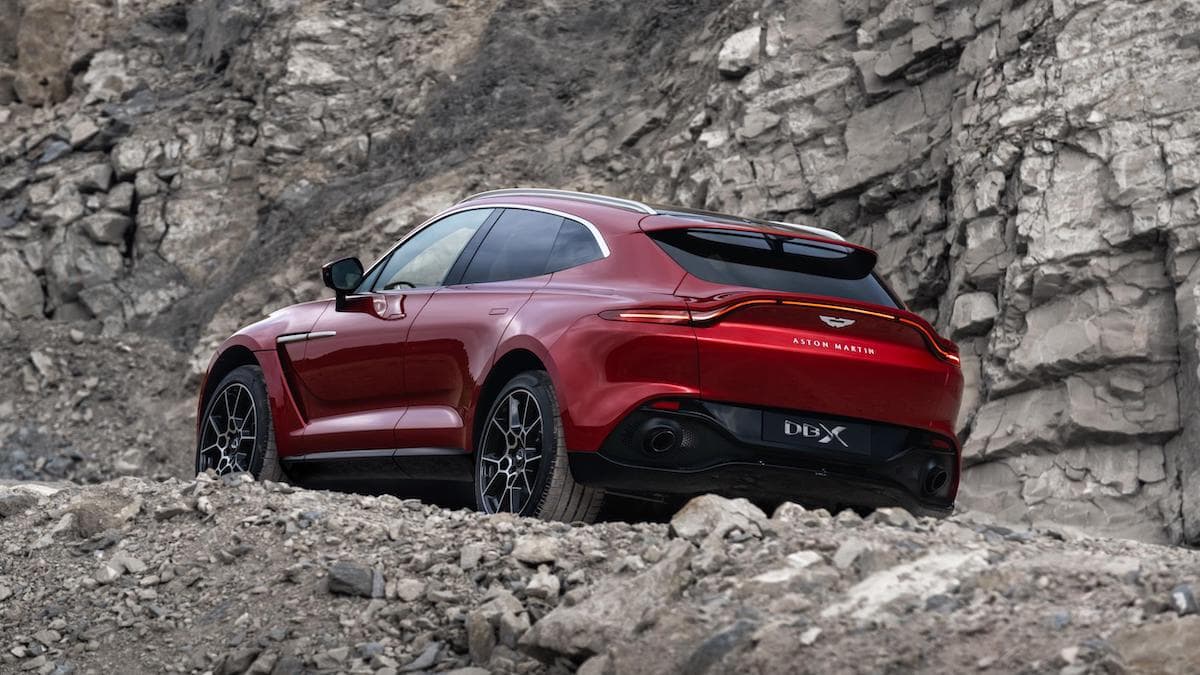
After a lengthy teaser campaign, Aston Martin has unveiled its first sports utility vehicle (SUV) in its 106-year history.
The British luxury car maker hopes the £158,000 Aston Martin DBX will boost its flagging sales in the same way that rival sports car manufacturer Porsche revived its financial fortunes with the first Cayenne SUV more than 15 years ago.
The firm described its first full-size five-seat vehicle as being “extremely adaptable to a wide variety of lifestyle needs and owners”. It offers “equal space and comfort” for passengers in the front and rear, with “class-leading” headroom and legroom.
The DBX has a claimed top speed of 191mph and can accelerate from 0 to 62mph in 4.5 seconds.
Aston Martin Lagonda president and group chief executive Dr Andy Palmer said: “I can’t emphasise enough how incredibly exciting and significant DBX is for Aston Martin.
“Through its development alone, this beautiful SUV has already taken the company into new territories and in inspiring directions.”
He went on: “This is a real landmark for this great British brand and I promise that DBX will reward all who experience it in their everyday lives.”
Despite completely overhauling its sports car line-up in the last few years with the all-new DB11, Vantage and DBS Superleggera models, Aston Martin reported a pre-tax loss of more than £92 million for the first three quarters of this year as sales volumes slid on “tough trading conditions” in the UK and Europe.
The company blamed falling sales in the UK and Europe as well as weak demand for its entry-level Vantage sports car. This is unlikley to be helped by Ferrari launching its new Roma coupe that directly targets rivals like the Vantage.
The new Aston Martin DBX is available to order from your nearest Aston Martin dealership now, with the first deliveries scheduled for spring 2020.
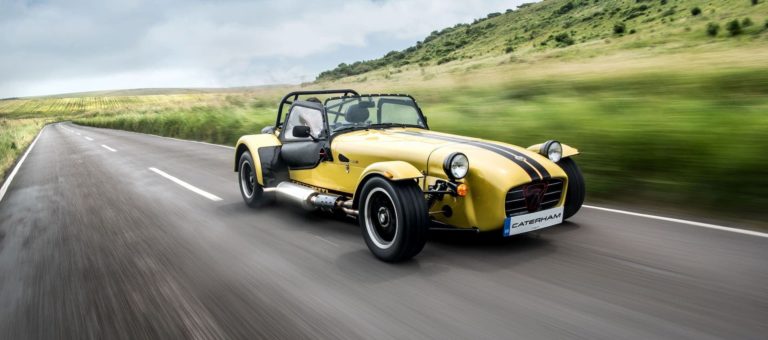
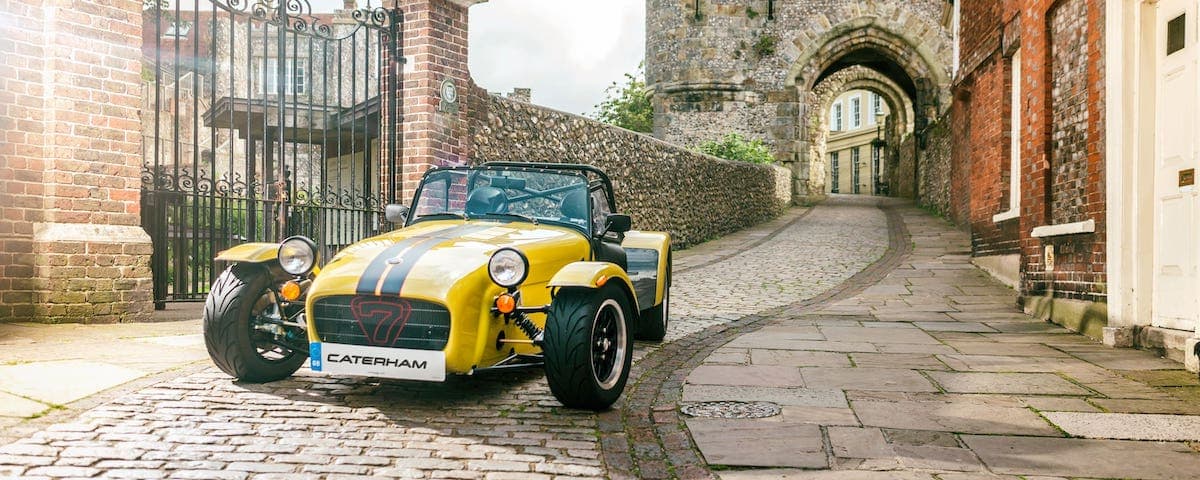
Caterham’s line-up has expanded in recent years, with variations of its iconic Seven appearing thick and fast. There are supercharged cars, turbocharged cars and cars which follow a familiar formula, like this – the 420R.
Utilising a Ford-sourced engine and featuring a track-focused equipment package, it has been created for those who like to inject a bit of motorsport pedigree into their road car.
But does it still succeed out on the public roads, or is it too sharp and too much of a handful? We’ve been out in the 420R to find out.
Believe it or not, despite its classic styling there’s quite a lot of new features on the 420R. It’s now got LED headlights – a big bonus for Caterhams – as well as new backlit dials and even a heated windscreen. It may not be cutting-edge tech by modern car standards, but for the Seven it’s big news indeed.
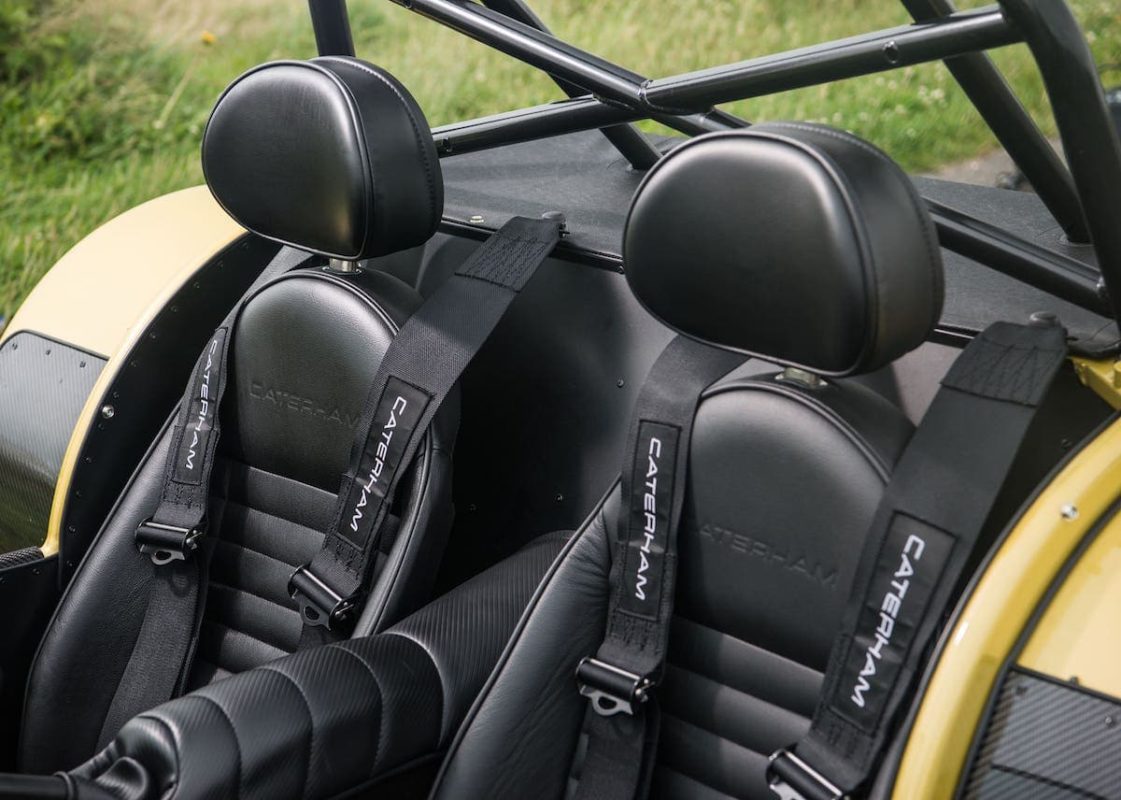
But, of course, the main point of a Caterham is to be driven. It’s why, in this R-spec car, you get a limited-slip differential, uprated suspension and a lightweight flywheel. You even get composite race seats and a four-point harness. It’s a serious bit of kit, this, so you can forgive it for not having the latest in comfort-related technology.
How does it look?
The Caterham Seven still looks like nothing else on the road today. Park it near a modern supercar, and it’s likely that people will naturally be drawn towards the dinky two-seater instead. The LED headlights have helped to sharpen things up a bit, and they’re not only better to look at but a lot more effective at night – the standard halogens found on the Seven simply don’t do enough to light up the night in front of you.
The 420R’s styling is more aggressive than other Caterham models, that’s for sure, but it’s still recognisable.
What’s the spec like?
It’ll come as no surprise that the 420R isn’t bristling with technology nor laden with screens and displays. It’s a great antidote to how complex modern cars are, mind you, and the bare-bones experience that you get with a Caterham is one that few other manufacturers can match.
There is the option to fit heated seats – our test car didn’t come with them, however – so this is an extra which could help to slightly lift the comfort levels inside the Seven during a spirited winter’s drive.
What’s it like inside?
It’s worth mentioning that our test 420R came in large body specification, which means that there’s a good amount more room in the cabin than you’d find in a standard Caterham Seven. It opens up the car to those taller drivers for whom a Seven may have been too uncomfortable to drive, as well as those people who find the regular cabin too constrictive.
The sport seats are impressively comfortable and there’s a great sense of snugness when you’re sat in the cabin. The heaters are surprisingly effective too and though the roof is rudimentary in its construction, it does a good job at keeping the worst of the weather out – though we’d always argue that the Seven is best driven with the roof off unless absolutely necessary.
What’s under the bonnet?
The 420 is the entry point into 2.0-litre engine-powered Sevens, with those underneath utilising a 1.6-litre instead. Here, you get 210hp from a Ford-sourced four-cylinder engine, driving the rear wheels through a five-speed manual gearbox. Weight comes in at just 585kg, and Caterham quotes 375hp-per-tonne.
It means that the 420R will go from 0-60mph in just 3.8 seconds before hitting a top speed of 136mph. It’s performance that will scare off most sports cars, and even give some supercars a run for their money. You also get coil spring suspension with Bilstein sport dampers up front and a semi-independent suspension setup at the rear. In addition, sticky Avon ZZS tyres help give the Caterham even more grip.
What’s it like to drive?
Driving the 420R is a mixture of the rudimentary and the sublime. Get out of a modern car – even a run-of-the-mill hatchback and into the 420R and it’s like jumping time periods. The steering is heavy and unassisted, the clutch is snappy when cold and the gearbox has the strong, mechanical feel that you just don’t get today. Around town it’s a challenge to drive, that’s for sure.
But increase the speed and things clear pretty quickly. The Ford-sourced engine just loves to be revved out – you get the best of it towards the top of the rev range – while the perfectly spaced pedals make heel and toe gearchanges a breeze. Then there’s the grip, which in the dry is available in spades. It’s in the wet where the Caterham becomes a bit more of a handful, where the Avon tyres and plentiful power mean that the rear wheels can quickly be overcome with the slightest amount of throttle.
Verdict
The Caterham 420R is arguably one of the sweetest points of the entire lineup. It features a sharp edge that only Sevens fitted with the 2.0-litre engine get, without bringing the lunacy associated with the supercharged 620R range-topper.
Yes, it may not be to everyone’s tastes, but for those who want to get out and experience just how a car should handle, then the 420R is hard to beat. Throw in those optional heated seats and you could have a car which will put a smile on your face in all weathers.
Car sickness is a common problem for many of us. If you’re prone to feeling unwell in a car, even the thought of a long car journey can make your stomach turn.
According to the RAC, one in five people experience symptoms of car sickness, and it’s even more common in children. So it’s something most people have either experienced themselves or had to clean up at one time or another.
Once car sickness sets in, it can be really difficult to recover properly. As with most things, prevention is better than cure – so follow these tips from the start of your journey rather than after you already start to feel ill, as by then it may be too late to prevent your breakfast coming back up again.
One of the key factors in any form of motion sickness – whether it’s in a car, boat or even playing a video game – is a difference between what your eyes and ears are each telling your brain. Most of these tips are ways to try and get your eyes and ears in sync again, which will help to calm the signals being sent from your brain to your stomach.
If you’re one of those who are susceptible to car sickness, or have kids who seem to suffer it a lot, fret no longer. There are some things you can do to help, although it affects everyone differently and therefore the solutions that work best for you may be different too.
We’ve put together this list of tips for keeping a queasy stomach under control on a road trip. Follow them right from the start and you’ll have a much better chance of a happy journey.
Pick the right seat
Most people find sitting in the front is better than the back for avoiding car sickness (PA)
One way to avoid car sickness before even setting off can simply come down to picking the right seat. Minimising perceived motion can be very effective in countering symptoms, and there’s no better place to do that than in the front.
Sitting in the back of a car and staring at a stationary seat in front can trick your brain to think you’re not moving, but the sound and balance signals from your ears will cause confusion in your brain — resulting in the feeling of sickness. Sitting in the middle seat if you must be in the back can help counter this, too.
If you have a car full of people on a long trip, try to rotate everyone’s seating position during the journey so each passenger gets some time up front.
Eyes ahead on a fixed point
Passengers should keep their eyes on the horizon or the road ahead to minimise car sickness (PA)
This is aimed more at passengers than drivers but looking outside the car on a fixed point is another easy way to help counter the effects of motion sickness.
Looking at passing objects or cars travelling the other way will enhance the effects — so instead, look to fix your eyes on one constant thing, like the road ahead as it stretches out to the horizon.
If you’re helping children, direct their attention to major scenery points ahead in the distance rather than those right by the roadside that will flash past rapidly. In other words, count windmills from wind farms up ahead rather than cows in the paddock alongside.
Fresh air and good ventilation
Fresh air can be a big help to prevent both car sickness and drowsiness (PA)
Just like any kind of sickness, breathing fresh air will do wonders to help. Open a window to let it circulate around the car, and have the air conditioning on to keep the cabin well-ventilated and well-cooled. If you have a sunroof, popping that open can help to circulate air as well.
If you’re opening a rear window, you’ll probably need to open at least one front window as well to prevent the annoying buffeting that is likely to result.
Close your eyes and take deep breaths
Sometimes, it’s easier to just pretend you’re not travelling. Closing your eyes can shut off the visual cues of motion that can freak your brain out while focusing on your breathing will distract your mind from everything else.
This tip tends to get mixed results and may not be that useful once you’re already starting to feel nauseous. It’s definitely best to try in the early stages, when you’re not feeling quite right but your stomach is still relatively calm.
Obviously, this tip is only aimed at passengers. We don’t generally recommend that drivers closer their eyes while behind the wheel…
Distract yourself
Music can be helpful, too (PA)
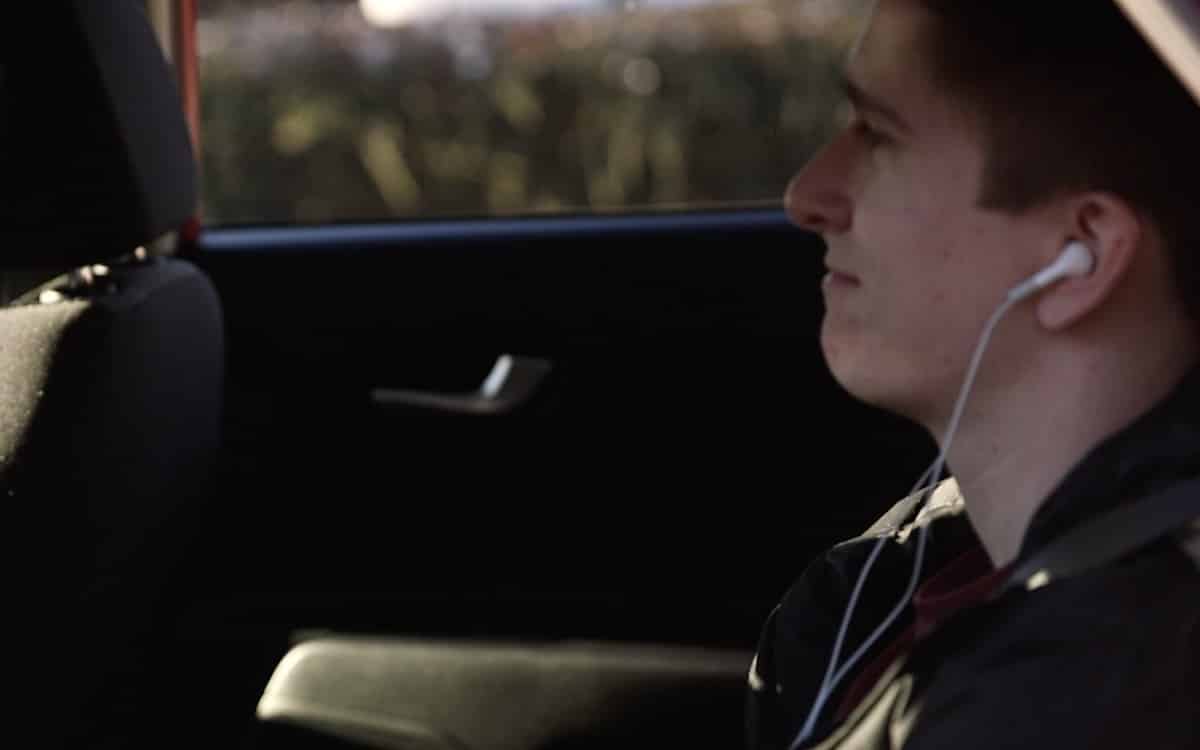
Similar to our previous tip of closing your eyes, distracting yourself by other means can help with reducing the symptoms of car sickness. Chatting to other people in the car or listening to some talk radio (or an audiobook) can help.
Some people find listening to music through earphones can be a particular benefit, rather than through the car stereo as you normally would. As well as the distraction element of having songs to concentrate your mind on, earphones can help to block out some of the external signals to the ears that contribute to motion sickness. It’s definitely worth a try.
For kids, a game like “I Spy” can also help distract their attention away from their discomfort.
Think about your food choices
If you’re prone to car sickness, eating a heavy meal or drinking alcohol before getting into the passenger’s seat, or even while there, could heighten your discomfort.
Eat and drink well in advance of your journey, and pack light snacks for the trip if you’re in need of something to eat.
Put the book or phone down
Stop reading to help manage car sickness symptoms (PA)
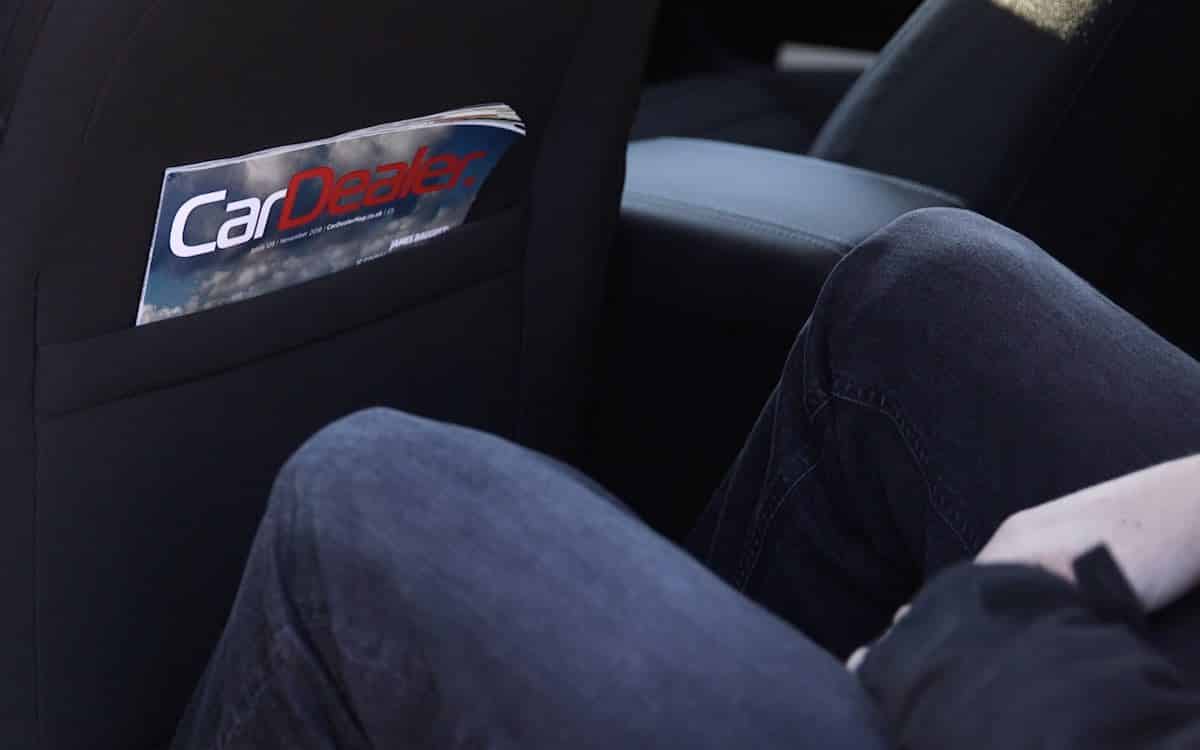
While distracting yourself can help with motion sickness, some ‘distractions’ will only serve to make it worse. As mentioned before, fixing on a static object in the car can mess with your senses — and as a result, reading a book or playing on your phone or tablet while on the move can only worsen things.
Take a break
A lot of these tips will help delay the onset of car sickness, but once it takes hold it can be very difficult to recover. In this situation, the best cure is usually to be stationary and out of the car altogether.
On longer journeys, taking frequent breaks can minimise the chances of symptoms worsening — and also gives you a chance to take in some fresh air.
Use this chance to grab a drink or a light bite to eat, too. Stretch your legs with a quick walk and let the kids run around for 10-15 minutes to get the circulation going again.
Seek medical advice for your car sickness
No matter how hard some try, car sickness just won’t go away. In this case, it’s worth speaking to your doctor or pharmacist, who may prescribe you with appropriate medication to ease the symptoms.
This can affect you more as you get older, and you may find that your tolerance for car journeys decreases over time. As with many other balance-related issues, the ears are key to avoiding or suffering from car sickness, and this is something that becomes more of an issue as we age.
Summary
As we said at the top of this article, prevention is always better than cure. Actively managing your behaviour (or your kids’ behaviour) on a car trip can help to prevent the onset of car sickness, or at least help control your queasiness.
Once your stomach starts trying to turn itself upside-down, there’s no easy way out and you’re pretty much consigned to a miserable spell by the roadside. So plan ahead and everyone will enjoy the journey a whole lot more.
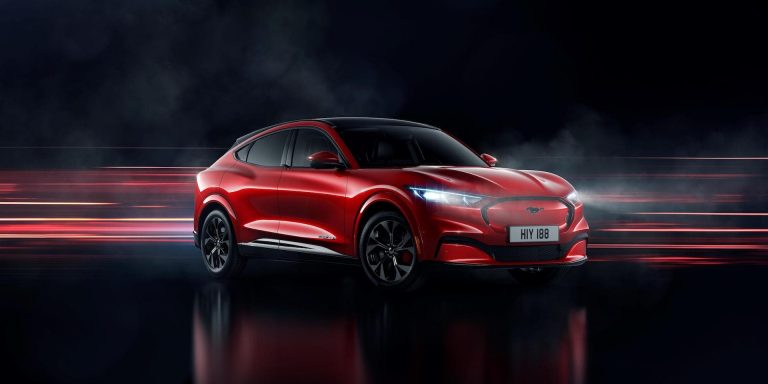
Ford has revealed its all-electric rival to the Tesla Model X and Jaguar I-Pace – The Ford Mustang Mach-E.
An all-new, purpose-built vehicle, the Mustang Mach-E is one of 14 electrified Ford vehicles due to come to Europe by the end of 2020.
The launch model will pack 337hp, while a more powerful 465hp GT version is due to arrive at a later date.
It will be launched initially with two battery pack sizes and three power outputs. At the entry point of the range sits a single motor-driven version with either a 75kWh battery and a 245hp motor or a 99kWh battery and a 290hp motor. Both should hit 60mph in under eight seconds, while ranges of 280 miles and 370 miles should be possible from each respective powertrains.
Further up in the range sits a twin-motor all-wheel-drive version with the choice of either a 75kWh battery and 245bhp, or a 99kWh battery and 337hp. Both versions should go from 0-60mph in under seven seconds while returning claimed ranges of 260 and 335 miles.
How exactly is an electric SUV a Mustang?
Stuart Masson
The biggest discussion point of Fords new electric model has been the use of the Mustang name for a vehicle that quite clearly bears no relation to the familiar two-door Mustang coupé.
The Mach-E is Ford’s first step to expanding the Mustang name into a sub-brand, in much the same way that the Transit name now covers every van in the Ford rage, or the way that Land Rover now uses the name Range Rover on four different models.
The company hasn’t said what model will be the next to carry the Mustang brand, but we probably won’t have to wait too long to find out.
Bill Ford, Ford Motor Company executive chairman, said: “At the first-ever Detroit auto show, Henry Ford said he was working on something that would strike like forked lightning.
“That was the Model T. Today, the Ford Motor Company is proud to unveil a car that strikes like forked lightning all over again. The all-new, all-electric, Mustang Mach-E. It’s fast. It’s fun. It’s freedom. For a new generation of Mustang owners.”
Inside, the Mach-E benefits from a 15-inch infotainment screen with touch, swipe and pinch controls which, Ford state that ‘every smartphone owner will be comfortable using’.
First deliveries are expected to commence in October next year, with prices likely to start around £40,000.
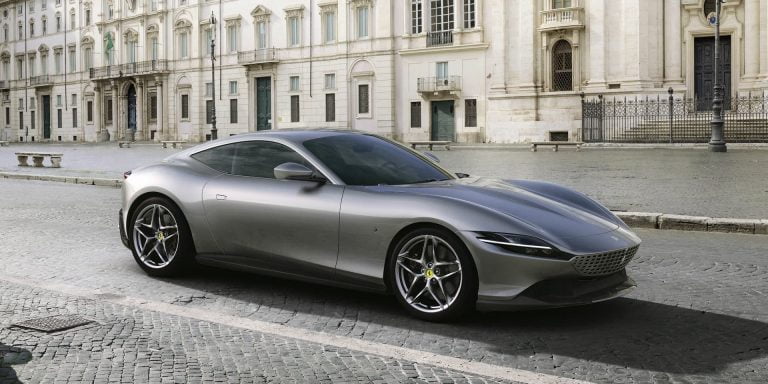
Ferrari has revealed another new model – its fifth this year – with the front-engined, V8-powered Roma coupé.
Named after the Italian capital city, this grand tourer boasts 620hp and 760Nm of torque from its 3.9-litre turbocharged V8 engine. Power is sent to the rear wheels via an eight-speed automatic gearbox. As a result, 0-60mph is covered in 3.2 seconds with the car’s top speed said to be in excess of 199mph.
Based on the same platform as the Portofino convertible, the Roma’s engine sits at the front of an elongated coupé body. The Roma takes on a classically-inspired look that is quite different to anything else in the current Ferrari line-up. Using hallmarks of the 250 GT Lusso of the 1960s, it features sleek bodywork with minimal disruptions in its design and a short rear overhang.
In order to keep grip at a high level without affecting the clean aesthetic, the Ferrari Roma utilises a rear spoiler that deploys at higher speeds — then retracting to return the smooth silhouette of the car.
Ferrari describes the front of the cabin as containing two ‘cells’. In effect, this sees the driver’s and passenger’s side of the car split by a centre console that swoops down from the dashboard. This looks to create an almost single seater-like effect at either side, and is again very different from any of Ferrari’s other models.
A 16-inch digital instrument cluster sits in front of the driver in place of traditional dials and gauges, while a vertically-mounted eight-inch infotainment is housed within the centre console.
There’s also a rear bench seat to give the car the ability to carry four occupants at any one time, though based on similar efforts from other manufacturers, we imagine this ‘+2’ layout will serve better for children or as extra luggage room.
There is no word yet on pricing and availability for the Ferrari Roma as yet, but expect a mid-late 2020 arrival.
Skoda has revealed its all-new Octavia, with hybrid technology and a new look for the model debuting.
Available in either hatchback or estate forms, the Czech machine takes on the firm’s latest corporate design. The result is thin LED headlights flanking a wide chrome-trimmed grille, with simple body lines and an elegant approach at the rear end.
There’s also more boot space than ever thanks to increased vehicle dimensions, with 600 litres in its hatch body style — rising to 640 for the estate variant.
Powering the car is a selection of petrol, diesel and plug-in hybrid engines. Though full UK availability has yet to be confirmed, we can expect to see the iV model, which pairs a 1.4-litre petrol engine to an electric motor. European markets will also benefit from the inclusion of a CNG-powered option, though that’s extremely unlikely to be brought to the UK.
It’s also the first Skoda to use shift-by-wire for its DSG automatic transmission. This sees mechanical gear selection replaced with electronic controls, in turn translating to a smaller shift selector.
Inside the car, the driver is met with a new two-spoke steering wheel design, featuring a new layout of buttons and scroll wheels to control various functions. Sitting behind that is the firm’s Active Info Display technology, which replaces traditional dials and gauges with a screen to show key information.
A centrally-mounted infotainment system ranges from eight to ten inches in screen size, which will also incorporate the firm’s new Laura digital assistant — which exists in the same vein as Amazon’s Alexa or Google Assistant. USB-C ports are also dotted around the cabin, which allows for faster smartphone charging where supported.
Skoda has also brought in new ‘Simply Clever’ features to the car, including smartphone storage pockets on the back of the front seats for the benefit of passengers in the rear, along with a funnel built into the car’s windscreen washer fluid reservoir.
Pricing and specifications for the new Skoda Octavia have yet to be confirmed but expect the car to arrive on the market early in 2020.
What is it? The four-door version of Mazda’s Focus and Astra rival also debuts new engine technology.
Key features Four doors and therefore more space in the back, more environmentally-friendly engine.
Our view The Mazda 3 saloon is an attractive new option for buyers of the brand’s Focus and Astra rival and in some ways more practical, offering more rear-seat and boot space than its hatch sister.
The SkyActiv-X engine, meanwhile, is a major advance, with its diesel-like efficiency wrapped up in a petrol package. Whether one goes for the hatch or saloon version of the Mazda 3, the SkyActiv-X should be the default engine choice.
This latest version, however, is a body shape that is usually not at all popular in the UK, the four-door saloon format favoured only by buyers of premium brands such as Audi or BMW.
Much more important is the engine debuting with this model but also set to be a major part of sales across the Mazda 3 range. The 2.0-litre unit is the first petrol engine to employ Mazda’s SkyActiv-X format, an evolution of the brand’s against-the-grain environmental advances that eschew downsizing for more efficiency within the engine.
Skyactiv-X uses a new technology called Spark Controlled
Compression Ignition (SPCCI) and Mazda claims, with some justification, that it
offers diesel-like economy and emissions, but within a petrol engine.
Visually the saloon model certainly brings something new to
the Mazda 3 range. Mazda tells us that the four-door shares only its bonnet and
windscreen with the hatchback, but it adheres to the same ‘Kodo – soul in motion’
design language as its sister, and is attractive to the eye.
The saloon also shares its wheelbase with the hatch, but overall is 20cm longer, which should translate to improvements in rear seat and boot space – something we marked down in our hatch review.
Buying and owning a Mazda 3
Saloon variants of the Mazda 3 are only offered at present
with the Skyactiv-X engine, and in four trim levels, dubbed Sport, Sport Lux,
GT Sport and GT Sport Tech. With all trim levels the powertrain can be
specified with six-speed manual or auto transmissions and the Skyactiv-X is
also now available for the hatchback, following the same trim format.
Cheapest saloon is the Sport at £23,555 in manual form (£25,095 as an auto) while the range-topping GT Sport Tech costs £27,575 for a manual and £29,095 for the auto.
As in the previously reviewed hatch the equipment level
across all versions is impressive, especially in terms of technology. All cars,
for example, get a head-up display projecting vehicle speed, navigation
instructions and traffic signs onto the windscreen.
Navigation is standard through a nine-inch screen, while Apple CarPlay and Android Auto are also included. Adaptive cruise control comes supplied too, but you do have to go up a level to the £24,875 Sport Lux to upgrade the parking sensors to a reversing camera and gain keyless entry and start.
The Mazda five-door hatch clocked up a five-star safety rating with crash testers Euro NCAP, earning lots of ‘full points’ comments, and the safety specification is repeated with the saloon. Autonomous emergency braking is part of the radar cruise control on all models while blind-spot monitoring and rear cross-traffic alert come as standard too.
Spend out on a top-spec cars and you get some useful extra
safety tech, including Cruising & Traffic Support (CTS) – a variation
of adaptive cruise control that accelerates and decelerates the car in traffic
jams while also keeping it in the middle of the lane via small steering
movements.
Top-spec GT Sport Tech variants also add a braking function to the rear cross-traffic alert, while the standard-fit driver attention alert is upgraded to a monitoring system that uses an interior camera to watch the driver’s face, particularly their eye movements, and gauges whether they might be about to fall asleep at the wheel, alerting them accordingly.
Inside the Mazda 3 saloon
When we slipped inside the Mazda 3 hatch we liked the quality of construction, with its upmarket-feeling surfaces, and we liked the minimalist driver’s cockpit, which of course is replicated in the saloon.
The driver’s essential information is transmitted by three
large, traditional dials (though in digital format) mounted in a large pod
behind the steering wheel, which is very user-friendly. The infotainment screen
is right atop the centre console and so close to the driver’s eye line, but
it’s not a touchscreen, operated by a single rotary control which Mazda claims
is less distracting than prodding one’s finger on the glass.
What we liked less in the hatch was the interior space,
which particularly in the back was somewhat cosy, especially for taller
occupants, and with a boot of just 351 litres in capacity. The saloon boot is extended
to 444 litres, and the rear seats are generally easier to access, thanks to
larger doors. A slightly higher roof line helps free up more space in the rear
cabin, and generally it’s more comfortable to travel in the back of the saloon
than in the hatch.
Driving the Mazda 3
So that engine then – Skyactiv-X is set to have a big input into the entire Mazda powertrain line-up (predicted to take 60% of sales) due to its Spark Controlled Compression Ignition. It is also matched to the same mild-hybrid system used by the more conventional Skyactiv-G petrol engine, adding to the efficiency.
Without getting too technical, SCCI allows use of a highly
lean and emissions-efficient air to fuel mix, and the engine can switch
seamlessly between conventional spark compression and combustion ignition, by
using the spark plug to trigger both types of compression in different ways.
Using a precisely injected richer zone of atomised fuel to combust the earlier added lean mixture of fuel and air results in more efficient ignition and as a result significant gains in economy and emissions – the best figures (depending on transmission, wheel sizes and such) are 52.3mpg and just 96g/km of CO2, which are very much in diesel territory.
The engine does not feel like a diesel on the road – in fact at most times it feels no different to a conventional petrol unit. There’s no diesel-like rattle, but neither is there the low-down torque one gets in a diesel. Proper pulling power doesn’t come in until around 3000rpm, although that is better than the 4000rpm of the Skyactiv-G petrol unit.
Acceleration is smooth if not particularly urgent, while
cruising along in normal motoring the powertrain is very well behaved. And if you do tackle that challenging B road
the Skyactiv-X will return some of the enrthusiasm that the Skyactiv-G
distinctly lacks – though it’s not that exciting…
In terms of handling the saloon behaves no differently to
the hatch. In other words it’s highly competent and with a pleasing ride
quality that is slightly stiff but not too much. Overall it’s an impressive
package.
Summary
The saloon is an attractive addition to the Mazda 3 choices but it remains to be seen whether it will score with buyers in a way four-door models previously haven’t.
The Skyactiv-X petrol engine, however, will very likely become the most popular powertrain option across the Mazda 3 range as it ticks all the boxes, offering the kind of economy and emissions one expects from a diesel but with none of the stigma now associated with diesel.
Volvo has launched a new offer to reimburse UK buyers of its plug-in hybrid models with a year’s worth of electricity costs.
The offer has been introduced to ensure that people use their plug-in hybrids as efficiently as possible, topping up the batteries regularly rather than relying on petrol power.
Dubbed ‘Take Charge’, the incentive is available to anyone who purchases one of Volvo’s seven plug-in hybrid models between now and June 30, 2020.
Volvo is the only brand to offer a plug-in hybrid variant across every model in its range (XC40, S60, V60, XC60, S90, V90 and XC90).
The firm will monitor the level of charge put into a car using the Volvo On Call app, and then Volvo will give the customer a rebate based on the average price of electricity.
Keeping your plug-in hybrid plugged in
The offer will help to address recent criticisms of plug-in hybrid vehicles, which do not offer any environmental benefits if owners simply use them as petrol vehicles, rather than maximising the use of the electric motor and batteries.
Kristian Elvefors, Volvo Car UK managing director, said: “At Volvo, in keeping with our Swedish roots, we’ve always taken a keen interest in looking after the environment. Our recently stated ambition to become a carbon-neutral company by 2040 shows we are serious about addressing climate change.
“It’s crucial that we help our plug-in hybrid customers understand how they can make the most of their car’s electric potential. So, by meeting their electricity charging costs for a year, we can encourage them to develop the good habit of regularly recharging their car’s battery, as well as saving them money at the same time.”
The offer is open to private and business customers too, and because Volvo is keen to encourage drivers to charge their cars, the company car driver will receive the refund at the end of the year rather than their employer.
For 40 years, the Vauxhall Astra has been a mainstay of the British car market. Since the first iteration was introduced in 1979, more than three million units have been sold and seven generations have elapsed – making it one of Britain’s favourite models.
Now, Vauxhall has revealed the mid-generation facelift for the seventh generation, and with it is offered with a series of new updates to bring up to scratch against recent arrivals in the market, like the latest Ford Focus, Hyundai i30 and new Kia Ceed – not to mention the all-new eighth-generation Volkswagen Golf that will arrive in early 2020. The Astra has also been sliding down the sales charts over the last couple years, so these changes are more than welcome.
The Vauxhall Astra currently holds a rating of 74% according to The Car Expert’s unique Expert Rating aggregator, which combines review scores from 18 of the top UK motoring website to give you an impartial overview of the media scores. That score puts it firmly in the midfield of the segment, so the new model need to step up its game against cars like the Focus and Golf.
So, can the refreshed Astra go toe-to-toe with some of the toughest rivals in the UK new car market? Let’s get behind the wheel to find out.
Surprisingly for a mid-life facelift, there’s quite a lot new here. Vauxhall, now under the stewardship of the giant French PSA Group, has added a completely new range of engines and transmissions to suit.
The firm has also been hard at work in the wind tunnel, claiming to make this Astra the most aerodynamically efficient model in its class – with the estate Sports Tourer said to be even sleeker. Chassis tweaks have been made to the Astra for improved comfort and damping control over bumps.
There has also been a rationalisation of the trim levels, with Vauxhall now offering seven specifications for people to choose from. But with that comes new features, such as touchscreen infotainment systems as standard across the line-up, while wireless charging, a digital instrument display and ergonomic sports seats are fitted to top-end models.
How does it look?
With the facelift comes a new fascia, which features more prominent chrome detailing and a new grille for a slightly sportier look. The visual tweaks are also aimed at making the car sleeker, with this Astra the smoothest yet. All of these design changes, including special flaps behind the grille to direct airflow, have been added to improve fuel efficiency.
Vauxhall also continues to offer the Astra with the class-exclusive Matrix LED headlights, with the units featuring a signature design. LED daytime running lights are fitted as standard.
The rear is almost identical to before. It’s certainly not an ugly car and we’d say it looks smarter – although we think the Sports Tourer estate version is the better looking of the two body types.
What’s the spec like?
With the refreshed model, Vauxhall has ensured that entry-level options come with a good standard of equipment. Starting from £18,885, the base SE model features 16-alloy wheels, a seven-inch touchscreen infotainment system, smartphone mirroring, air conditioning, Bluetooth and cruise control – covering all the essentials.
In the Elite Nav trim we tried, Vauxhall also includes 17-inch alloys, an eight-inch touchscreen, climate control, leather seats and steering wheel with heating function, front camera system, LED headlights and an eight-inch digital instrument cluster. Prices for that start from £23,955.
Our test car also came with front and rear parking sensors – an option box we’d definitely tick – and a heated windscreen, with a few other additions besides, taking the total cost to £26,210.
What’s the Vauxhall Astra like inside?
Vauxhall has incorporated a series of new features into the cabin and has decluttered the dashboard considerably. It’s well put together and solidly built, with scratchy plastics few and far between.
It isn’t the most exciting cabin in the world, but it does the job more than well enough. The Elite Nav model we tested also came with leather upholstery throughout, with the front sports seats being very comfortable.
The facelifted Astra is also rather spacious, with even taller drivers allowing for lots of legroom in the rear. The 370-litre boot space is also well-shaped and the boot lip isn’t too high either, making it easy to load and unload.
What’s under the bonnet?
As previously mentioned, the refreshed Astra comes with a series of new engines – three to be precise. There are two petrol blocks – measuring 1.2 and 1.4 litres in size – and a single diesel unit, a 1.5-litre. All three engines are three-cylinder units.
We tried the highest output petrol, the 145hp 1.2-litre, which also develops 225Nm of torque. Alongside a six-speed manual transmission, the Astra can get from 0-60mph in 8.8 seconds and reach a top speed of 137mph.
With this combination on board, the hatchback feels more than fast enough and nice to use. You can rev the engine quite highly before needing to change gear and it feels well-refined. Through the WLTP cycle, it’s claimed that this Astra can return up to 54.3mpg and just 99g/km of CO2.
What’s the Vauxhall Astra like to drive?
Chassis changes are telling, as the Astra felt stable and composed on the bumpy test route weaving through the Leicestershire countryside. A few bumps were transferred into the cabin, but they were few and far between, while wind and road noise are well-concealed. Having only driven on 17-inch alloys, we can confirm that it feels well-damped with these alloys fitted.
There is a lack of feel due to the electic power steering, but it’s direct and only goes to understeer when really pushed. When cruising, the Astra settles down very well and will remain a favourite for those needing a cossetted hatchback for long distances.
Despite the sloping roofline and smaller rear windows, all-round visibility is good. It’s easy to get comfortable, with a steering column that is adjustable for both height and reach, and well-bolstered seats with adjustable lumbar support.
Verdict
With the new range of engines and equipment, Vauxhall has done an impressive job with this mid-life refresh for the Astra. It may not be as complete as the rival Ford Focus, but it manages to be comfortable, nice to drive and spacious – all the things a typical hatchback buyer needs.
The automatic transmission on the diesel is a major let down though, so we’d recommend going for the manual gearbox if you’re going to plum for the more efficient engine.
This mid-life update is a good step up for the Astra, and on the whole, makes it a more appealing package. It’s likely to remain popular with its core market and continue to be a strong contender in the large family hatchback segment.
The Volkswagen Passat was a large family car, the eighth generation of the long-running Passat name. It was launched in the UK in 2015, with a facelift and 2019, and ended production in late 2023 ahead of the launch of an all-new model that will arrive in early 2024.
The saloon version of the Passat was discontinued in early 2022 in response to falling sales, while the estate model continued. A similar fate has befallen its traditional family car rivals, the Ford Mondeo and the Vauxhall Insignia, which were both discontinued around the same time.
Traditional saloon and estate cars have been struggling for years as buyers increasingly choose SUVs and crossovers. However, Volkswagen continued to develop the Passat range, with a more rugged Passat Alltrack Estate and performance GTE plug-in hybrid versions added to the range.
The Passat range received largely positive reviews from the UK motoring media, with the estate version earning slightly higher scores than the saloon. The GTE model was also widely acclaimed.
The Volkswagen Passat received particular praise for its refinement, comfort and space. Its driving dynamics were not as sharp as some similar vehicles, however, and it was more expensive than many of its rivals.
An all-new Volkswagen Passat arrived in the UK in Spring 2024. It is only available as an estate, with a choice of petrol or petrol/electric plug-in hybrid power. Diesel versions are not offered.
No longer on sale, this version of the Passat has a Used Car Expert Rating of B, with a score of 68%. It scores top marks for its CO2 emissions (helped by the plug-in hybrid version) and running costs, while its media reviews are also good. However, the Passat’s reliability record is only average, and its safety score is poor compared to newer cars.
Body style: Large estate (and previously saloon) Engines: petrol, diesel, plug-in hybrid Price when new: From £35,395 on-road
Launched: Winter 2014/15 Last updated: Summer 2019 Replacement due: Spring 2024
Image gallery
Media reviews
Reviews, road tests and comparisons from across the UK automotive media. Click any of the boxes to view.
The Car Expert
+
Model reviewed: (range review) “With a well-appointed cabin, powerful and economical engines and a premium appearance, the Volkswagen Passat provides an enticing alternative to an SUV.” Read review
“Ride comfort on the road is up to the standards one would expect, though choosing the sport chassis mode does stiffen matters up to a degree of choppiness.” Read review
Auto Express
+
Model reviewed: Score: 8 / 10 “The VW Passat Estate is a refined, comfortable and hugely versatile family car.” Read review
Model reviewed: GTE Estate Score: 8 / 10 “The Volkswagen Passat is a fantastic family car, and this GTE version is among the most accomplished plug-in models currently on sale.” Read review
Model reviewed: Range overview Score: 7 / 10 “The Volkswagen Passat will appeal to company car buyers keen on driver assistance technology and premium appeal, and it remains spacious, practical and easy to drive.” Read review
Model reviewed: GTE Estate Score: 9 / 10 “As a proposition for the huge swathes of motorists who want a hardy family estate with the low tailpipe emissions and tax benefits of electric power, as well as the convenience of a petrol engine for longer journeys, nothing else is likely to better the classy yet efficient and practical Volkswagen Passat GTE.” Read review
Model reviewed: Range overview Score: 8 / 10 “The VW Passat has classy looks and a premium cabin that set it apart from the family car norm” Read review
Auto Trader
+
Model reviewed: Saloon range Score: 8.6 / 10 “From conventional petrols and diesels through to a sporty plug-in hybrid the latest Volkswagen Passat stylishly combines cutting edge powertrains with the latest in-car and driver-assistance tech.” Read review
Car
+
Model reviewed: GTE saloon Score: 8 / 10 “There is nothing wrong with anything the Passat does – far from it.” Read review
Model reviewed: Passat Estate 2.0-litre diesel automatic R-Line Edition Score: 8 / 10 “The Passat is not an exciting car, and we’ve been a bit harsh with it on that basis. But, as is the case with most Volkswagens, it’s impossible to argue that the package of comfort, quality and refinement it provides aren’t appealing traits.” Read review
Car Keys
+
Model reviewed: 2.0-litre diesel automatic Score: 9 / 10 “With the Passat being such a huge sales success, it’s clear that Volkswagen is doing something right with the model in this market. If the latest Passat’s comfortable ride, spacious interior and range of great powertrains are anything to go by, it’s a very compelling option next to an SUV.” Read review
Carbuyer
+
Model reviewed: Saloon range Score: 8.6 / 10 “The Volkswagen Passat has a quality feel and offers lots of space, but the Mazda 6 is better to drive.” Read review
Model reviewed: Estate range Score: 9 / 10 “The Volkswagen Passat Estate is a consummate all-rounder. Refined, relaxing and with an upmarket interior, it also manages to be hugely practical.” Read review
Model reviewed: Alltrack estate Score: 8 / 10 “It’ll be a niche choice, but as a classy, comfortably and high-quality family estate with a bit of off-road ability, the Volkswagen Passat Alltrack makes sense.” Read review
Carwow
+
Model reviewed: plug-in hybrid GTE estate Score: 8 / 10 “The plug-in Hybrid Volkswagen Passat GTE Estate can travel 34 miles on electricity, is hugely spacious and comfortable to drive. Private buyers may be better off with a petrol or diesel, mind.” Read review
Model reviewed: plug-in hybrid GTE saloon Score: 8 / 10 “The plug-in Hybrid Volkswagen Passat GTE can travel 34 miles on electricity, is hugely spacious and comfortable to drive. Private buyers may be better off with a petrol or diesel, mind.” Read review
Model reviewed: Estate range Score: 8 / 10 “The Volkswagen Passat Estate is comfy, quiet and huge inside, but you’ll have more fun driving its alternatives if that’s more important to you.” Read review
Model reviewed: Alltrack estate Score: 7 / 10 “The Volkswagen Passat Alltrack offers genuinely improved off-road ability and a spacious cabin. It’ll be expensive next to other Passats, though, and you don’t get much choice.” Read review
Model reviewed: Saloon range Score: 8 / 10 “It’s easy to overlook the Volkswagen Passat in favour of its obvious German saloon rivals, but its great space, comfort and tech warrant attention. That said, it is fairly bland to drive.” Read review
Company Car Today
+
Model reviewed: 2.0-litre diesel automatic R-Line “Traditional saloons and estates, once the favourite of the company car market, are now on the wane, but the Volkswagen Passat retains enough support to continue. Based on a heavily updated version of the eighth-generation car the new Passat once again offers understated class in an increasingly tough sector.” Read review
Model reviewed: 1.4-litre petrol automatic SE Business saloon “Petrol engine option not only gives more choice in the Passat range, but is also competitive on fuel and tax against the diesel versions. More so now than ever, it will pay to do the sums for your mileage needs before making a choice.” Read review
Daily Mail
+
Model reviewed: Estate GT Score: 10 / 10 “Passatisfaction guaranteed …until you put your foot down! You’ll be blown away by the VW estate’s size and looks. If only it had the speed to match.” (Chris Evans) Read review
Model reviewed: 2.0-litre diesel automatic SE Business estate “Used as much for work as for leisure and pleasure, these estates can take a pounding. This new version really does look and feel like the business.” Read review
Daily Mirror
+
Model reviewed: 1.4-litre petrol-electric plug-in hybrid automatic GTE estate Score: 6 / 10 “The argument for the Passat GTE – and any PHEV – is heavily influenced by how we’ll be using them. If you are going to have difficulties charging the battery at home or nearby, then a plug-in hybrid is totally pointless. For now, you’d still be better off saving money and buying a petrol or diesel version.” Read review
Fleetworld
+
Model reviewed: 2.0-litre diesel automatic Score: 8 / 10 “The Passat diesel is still the de facto estate car for fleets and the latest revisions only add to its appeal. New engine technology certainly helps and successfully garners more bang for buck. Likewise, SEL trim hits the sweet spot, although desirable options quickly mount up.” Read review
Green Car Guide
+
Model reviewed: plug-in hybrid estate GTE Score: 8 / 10 “If you want a plug-in hybrid estate then you’re in luck – the Volkswagen Passat Estate GTE offers electric driving for up to 33 miles, with a petrol engine for longer journeys.” Read review
Model reviewed: GTE estate Score: 10 / 10 “As well as being refined, and offering a sporty driving experience in GTE mode, it is also a large, practical car, and one that feels very high quality.” Read review
Model reviewed: BlueMotion saloon Score: 8 / 10 “The Volkswagen Passat BlueMotion scores highly for economy and for motorway manners, but loses out on marks as an all-rounder for not being any form of driver’s car.” Read review
Honest John
+
Model reviewed: Saloon range Score: 8 / 10 “The latest Passat is impressive, with good levels of refinement and notable improvements in fuel economy and performance. However, in raising its game, Volkswagen has also raised the Passat’s prices and this will alienate some buyers, especially when you consider that cheaper rivals like Skoda, use the same platform, engines and running gear.” Read review
Model reviewed: Estate range Score: 8 / 10 “The Volkswagen Passat Estate is a very impressive car, offering plenty of space, good performance and high levels of comfort. It’s especially appealing as a tow car, particularly with the optional trailer assistance system installed. The Passat is fairly expensive, however.” Read review
Model reviewed: GTE estate “The updates for 2019 are minimal, but the Passat continues to be one of the best all-round estate cars on sale. Its interior feels well-made and premium, and it’s a comfortable long-distance cruiser. With a longer range for the plug-in hybrid model and added technology, it’s now easier than ever to recommend a Passat GTE.” Read review
Motoring Research
+
Model reviewed: Range overview Score: 7 / 10 “The Volkswagen Passat is one of Europe’s most popular saloon and estate cars, bridging the gap between volume models and the premium players.” Read review
Parkers
+
Model reviewed: Saloon range Score: 8.4 / 10 “Passat is an accomplished, well-rounded four-door” Read review
Model reviewed: Estate range Score: 9.2 / 10 “Enormously practical, impressively high-tech and pleasingly comfortable.” Read review
Model reviewed: Alltrack estate Score: 9 / 10 “If you need a spacious estate with a luxurious interior that can hold its own when the going gets rough, this car should be on your radar.” Read review
The Sun
+
Model reviewed: Range overview “Chances are, if you buy a Passat, it will be the only car you buy for the rest of your life.” Read review
The Sunday Times
+
Model reviewed: GTE saloon Score: 7 / 10 “The perfect family car – if you do a 20 mile daily commute.” Read review
Model reviewed: 2.0-litre diesel automatic SE Business Score: 6 / 10 “It’s a very handsome car that handles nicely, uses little fuel and is extremely quiet and comfortable. Inside, everything is screwed together beautifully and everything is where you expect it to be. If ever I’m at an airport and the rental company gives me the keys to a car like this, I shall be very pleased.” (Jeremy Clarkson) Read review
The Telegraph
+
Model reviewed: GTE saloon Score: 8 / 10 “The GTE remains one of the best plug-in hybrids out there, with a useful boost in electric range. Yes, it’s a bit vanilla, but a Volkswagen Passat should slot into your life so inconspicuously you won’t mind.” Read review
Model reviewed: Saloon range Score: 8 / 10 “With its classy interior, upmarket image and low running costs, the Volkswagen Passat is not only a rival for the Ford Mondeo, but also a viable alternative the BMW 3 Series, Audi A4 and Mercedes C-Class, particularly for those who value space over driving thrills.” Read review
Model reviewed: Estate range Score: 8 / 10 “The Volkswagen Passat Estate is a great buy not only for its boot space, but also its classy image, sensible running costs and comfortable driving experience.” Read review
Top Gear
+
Model reviewed: Estate range Score: 6 / 10 “Like your cars straightforward, fuss-free, and practical? You’ll really like this. (Very) quietly excellent without ever being memorable.” Read review
Model reviewed: Saloon range Score: 7 / 10 “Volkswagen serves up more of the same and it’s now better than ever.” Read review
Safety rating
Independent crash test and safety ratings from Euro NCAP
The Volkswagen Passat was tested by Euro NCAP back in 2014 and awarded a five-star safety rating. However, this rating expired in January 2021 and is no longer valid. This is normal practice, as Euro NCAP reviews its ratings on most cars annually with most ratings expiring after about six or seven years.
However, if you are comparing a used Volkswagen Passat to vehicles of similar age, whose ratings will have probably also expired, its safety rating score is still useful.
Eco rating
Independent economy and emissions ratings from Green NCAP
No eco rating
The Volkswagen Passat was not lab tested by Green NCAP during its production life.
Reliability rating
Reliability data provided exclusively for The Car Expert by MotorEasy
Total claims: 331 Average repair cost: £438.35 Last updated: January 2024
The Volkswagen Passat has a good reliability score, according to exclusive extended warranty data provided to us by our partner MotorEasy. This score applies to both the current-generation Passat and previous models.
The Passat is generally reliable car, and most repair costs for Passat warranty claims are lower than average as well. The most common problems, making up around half of all claims, relate to either the suspension or braking system. Fortunately the average repair cost for both areas is around £250. What lowers the Passat’s reliability score is the cost of potential gearbox issues. While rare, a gearbox fault can cost around £1,300.
If you’re looking at buying a used Volkswagen Passat, make sure any extended warranty you purchase covers these potential problem areas.
Running cost rating
Monthly cost of ownership data provided exclusively for The Car Expert by Clear Vehicle Data
Fuel consumption
Average
Score
Variation
Score
Petrol models
44 mpg
C
42 – 46 mpg
C – D
Diesel models
57 mpg
B
49 – 60 mpg
A – C
Plug-in hybrid models
229 mpg
A
188 – 257 mpg
A – A
CO₂ output
Average
Score
Variation
Score
Petrol models
145 g/km
B
135 – 178 g/km
A – C
Diesel models
128 g/km
A
123 – 193 g/km
A – D
Plug-in hybrid models
28 g/km
A
25 – 33 g/km
A – A
Battery range
Average
Score
Variation
Score
Plug-in hybrid models
38 miles
D
37 – 40 miles
D – D
Insurance group
Average
Score
Variation
Score
All models
21
A
15 – 32
A – C
Service and maintenance
Cost
Score
Year 1
£163
A
Year 2
£466
A
Year 3
£770
A
Year 4
£1,018
A
Year 5
£1,372
A
Overall
£3,789
A
For a large car, the Volkswagen Passat has a pretty good set of running costs, according to whole-life cost numbers provided exclusively to The Car Expert by our data partner, Clear Vehicle Data.
Fuel consumption for the petrol versions is reasonable, and the diesel versions are even better. Road tax should be good, based on the decent CO2 scores.
The plug-in hybrid version looks amazing on paper, but this is largely a function of the unrepresentative EU/UK government lab tests, which are completely unsuited to measuring plug-in hybrids. There are no real-world circumstances where you’re going to get 229 miles out of one gallon (4.5 litres) of petrol and some electricity.
Servicing and insurance costs are excellent, which will help ensure that the Passat remains affordable for at least the first five years of its life.
Security rating
Independent vehicle theft and security ratings from Thatcham Research
The Alfa Romeo 4C sports car is reported to have been cut from production.
The Italian sports car was absent from a list of the firm’s current and future models shown at the firm’s third-quarter earnings report last week. The 4C also appears to have been removed from Alfa’s online configurator and sales listings.
The PA news agency has approached Alfa Romeo for comment.
With the sports car market proving unpredictable in recent years, the Alfa Romeo 4C has struggled to compete with more established rivals for sales. According to data collated by carsalesbase.com, just 421 examples were sold across Europe in 2018 — compared with 8,202 for the Porsche 718 in the same year.
This fresh report comes after the Italian firm also canned plans for a new GTV coupe and 8C successor. These changes in Alfa’s product plans comes on the heels of parent company FCA’s merger with French giant PSA Group, though it hasn’t been confirmed to be a direct result of it.
Instead, Alfa Romeo looks to focus on introducing more SUVs to its line-up, as well as introducing a refreshed version of its Giulia saloon. It revealed the Tonale compact crossover at the Geneva motor show in March as a near-production concept, though it looks set to hit roads soon.
It was a disappointing month for the car industry in October, with private new car sales down by more than 13%. With all the political manoeuvring around Brexit and a general election, this was not exactly a surprise – but it was still painful for many car dealers and manufacturers.
However, as always there were some makes and models that performed well among the doom and gloom. It was a good month for Alpine, Audi, Bentley, DS Automobiles, Lexus, Porsche and SEAT, which all enjoyed increased registrations of at least 10% over the same month last year.
Don’t put too much weight into the year-on-year comparisons, however, as this time last year several brands were still struggling with having enough stock available thanks to the WLTP emissions regulations that came into force in September 2018.
After some major fluctuations in September, the top ten list settled down a bit in October. Let’s have a closer look:
The UK’s ten best-selling cars, October 2019
1. Ford Fiesta
After being bumped off its perch in September by the Vauxhall Corsa, it was situation normal in October as the Ford Fiesta returned to the top of the charts. Incidentally, the Corsa fell out of the top ten altogether in October, so maybe Vauxhall has run out of cars as its now out of production and the new model doesn’t arrive until early next year.
The Fiesta currently holds an Expert Rating of 86% in The Car Expert’s all-new New Car Ratings
database, which compares reviews from across the UK motoring media.
This is higher than any other car in the supermini class and the
second-highest rating in this month’s top ten best-sellers list, so it
seems that motoring journalists and the buying public are in agreement
on the Fiesta’s qualities.
The Nissan Qashqai claimed the runner-up spot this month, the highest it has ranked for a long time. The British-built crossover edged out the third-placed VW Golf by less than 100 units, which also closes it to less than 300 units behind the Mercedes-Benz A-Class in year-to-date sales.
The Nissan Qashqai currently holds an Expert Rating of 74%
in our New Car Ratings database, which is midfield for the compact
crossover segment and in the bottom half of scores for a Top Ten-selling
car.
October was a much better month for Volkswagen as far as the Top Ten was concerned, with the Golf bouncing back up to third and the Tiguan and Polo joining it in the best-sellers list. A handy margin over its arch rival, the Ford Focus, also helped the Golf to edge further ahead in second place for year-to-date sales as well. With only two months to go in 2019 and the Golf now out of production, this could be critical.
It’s still hard to believe that Mercedes-Benz is the third-most-popular brand in the UK, ahead of the likes of Vauxhall and Toyota. That’s partly because of the enormous model range now on offer, but also the huge (and increasing) popularity of the A-Class hatchback and saloon.
The Mercedes-Benz A-Class has an Expert Rating of 77% in The Car Expert’s New Car Rating system. The overall score is dragged down somewhat by lower ratings from a couple of performance car titles (Evo and Top Gear), otherwise it would be a solid 80% or more. However, it does rank highly for safety, winning awards from Euro NCAP, Thatcham and What Car? for its protective qualities.
The Ford Focus improved one place from sixth to fifth this month, less than 50 units behind the Mercedes A-Class. However, a stronger month for the Volkswagen Golf means the Focus lost a but more ground to its arch rival in the year-to-date race. It will need a strong finish to the year to overhaul the Golf, although the VW is now out of production so supply might be more difficult.
The Ford Kuga had another good month in October. Its sixth place and a good haul of customer means that it is closing in on the Mini hatch for seventh place in year-to-date sales, now just over 500 units behind and closing the gap quickly.
The current model is not long for this world, with an all-new replacement announced back in March. The current model has a relatively poor Expert Rating of 65% on our New Car Ratings aggregator, which is the lowest score in the top ten this month.
It was a good month for the Kia Sportage, improving from eighth place in September. It narrowly pipped the Volkswagen Tiguan to seventh place by just 41 units in October, but is now pretty comfortable in tenth place for year-to-date sales with just two months remaining.
The Sportage currently holds an Expert Rating of 72% in our aggregated New Car Ratings database, which is midfield for medium SUVs but a couple of points behind the best-selling Nissan Qashqai and quite a margin behind the top cars in the mid-size SUV segment.
The Volkswagen Tiguan returned to the top ten in October, and was the fourth of five SUV/crossover models in the best-sellers list this month. The Tiguan range comprises the regular model and the longer seven-seat Tiguan Allspace.
The Volkswagen Tiguan holds a strong Expert Rating of 79% in our New Car Ratings aggregator, which is not quite the best in class but certainly among the leaders.
Like the Tiguan, the Volkswagen Polo made a return to the top ten list in October. It was ninth for the month and remains in ninth place for year-to-date registrations. With just a couple of months to go for 2019, it looks like it will stay that way.
The Polo holds an Expert Rating of 79% in The Car Expert’s New Car Ratings calculator, which is good but a fair way behind the class-leading Ford Fiesta.
It’s always nice to see a new face. Making its debut in the top ten this month is the new Range Rover Evoque. The baby Rangie had a great month to claim the final spot in the list, and was less than 60 units behind the Volkswagen Polo.
The Evoque currently holds an Expert Rating of 82% in our aggregated New Car Ratings database, which is very good and places it alongside the Volvo XC40 as joint best in class.