Find an Expert Rating: 
Home Blog Page 102

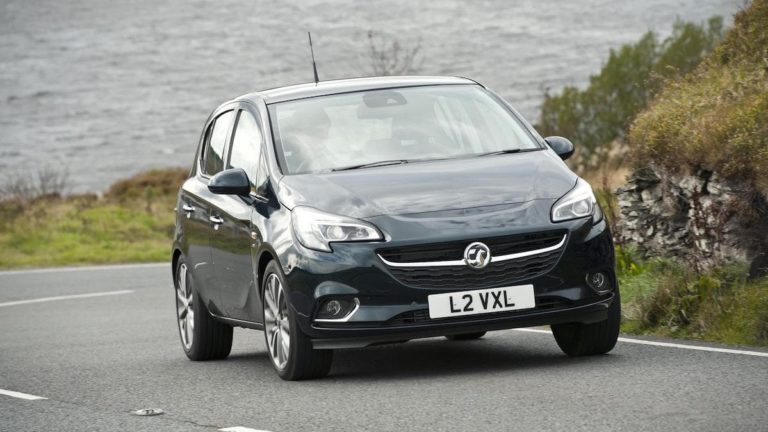
Vauxhall Corsa review

60-second summary

What is it?
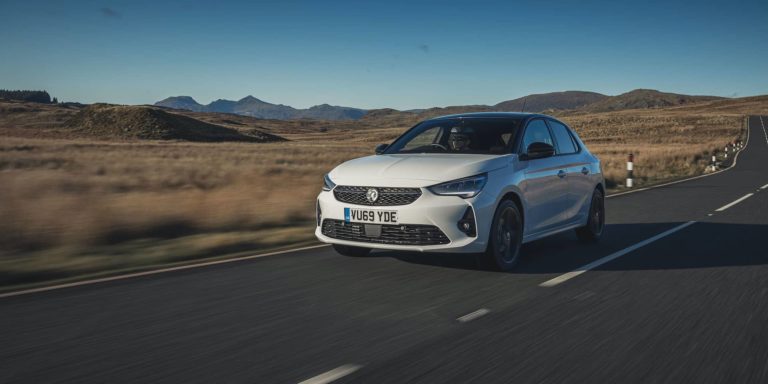
The all-new Vauxhall Corsa is the fifth generation of one of the UK’s biggest-selling cars, and a very different car to previous Corsas.

Key features

  • New and different look on all-new Peugeot-Citroën sourced chassis
  • More efficient engines with fully electric version on the way
  • 10% weight saving improving efficiency and handling

Our view
This is by far the most impressive new Vauxhall we’ve driven for a while – it looks good, performs well on the road and is generally efficient.

Only a dull interior prevents truly fulsome praise of a car that should be able to retain its best-selling status.

Similar cars

Citroën C3 | Ford Fiesta | Honda Jazz | Hyundai i20 | Kia Rio | Mazda 2 | Mini hatch | Nissan Micra | Peugeot 208 | Renault Clio | SEAT Ibiza | Skoda Fabia | Suzuki Swift | Toyota Yaris | Volkswagen Polo

Full review

Introduction

Everyone knows the Vauxhall Corsa – an almost permanent fixture in the UK’s car sales top ten, never quite overtaking its deadly rival the Ford Fiesta but always a UK best-seller.

Since the first Corsa replaced the Vauxhall Nova in 1993 more than 2.1 million have been shifted in the UK. Many of today’s motorists first got behind the wheel in a driving school Corsa, while their own first car (both this writer’s sons included) was a Corsa.

The Corsa has evolved over four generations and let’s face it, we pretty much know what we are getting with this supermini. Which is why the new, fifth-generation model is such a surprise, because it looks like no Corsa we’ve previously seen.

The clues to this revolution? Vauxhall chief designer Richard Shaw describes the new Corsa as one of the quickest design processes seen in the company and senior development engineer Thomas Wanke describes the new one as so much different to its predecessor which he says “looked more like a minivan” (MPV to you and me).

It’s all down to the takeover in late 2017 of Vauxhall and its German sister brand Opel by PSA Group, parent brand of Peugeot and Citroën. The PSA design teams descended upon their equivalents at Vauxhall-Opel, saw the virtually signed off and evolutionary fifth-generation, all-Vauxhall Corsa and said, “nah, you’re not doing that. Here’s our latest chassis going under the next Peugeot 208 – use it to build something better.”

And so the new Corsa looks like a bang up-to-date small car, just not like the Corsa we’ve known before. For a start it’s a lot lower – some 5cm has come off the roof height. With its new proportions, longer bonnet, much narrower dash fascia, and sculpted details it is indeed pleasing to the eye.

It’s a lot lighter too, 10% of the old version’s poundage removed, with better packaging, plus more efficient engines (topped by a soon to launch full-electric model) and lots of tech. Sounds promising…    

Buying and owning a Vauxhall Corsa

According to product manager Zoe Peacock, a watchword in sorting the new Corsa’s model range was simplicity. This is basically because you the customer no longer goes into a dealership and lets a salesperson demonstrate their intricate knowledge of different paint finishes, trims and equipment, but instead you do it yourself online, perusing the brand’s website.

Prices for the current range (we’ve yet to try or get full details of the electric variant) rise from £15,550 to £25,950. Engine choices consist of only two petrol units and a diesel – all are of three cylinders, the petrol version 1.2 litres in size and offering 75 or 100 hp, while the 1.5-litre diesel puts out 102 hp.

Vauxhall has not followed many rivals in totally removing diesel from their superminis, principally because the Corsa still attracts a lot of fleet sales, for which the fuel economy of up to 70mpg and emissions down to 85g/km can still produce tax advantages.

The electric version, meanwhile, produces the equivalent of 136hp with 260Nm of torque, while promising the all-important range of up to 205 miles – more than enough for most users’ daily commute… It’s also the quickest Corsa currently available, the instantly available maximum torque sending it through 60mph from rest in just 7.6 seconds – the fastest petrol version can only manage 9.3 seconds.

A manual transmission is standard on both the petrol and diesel Corsas, five speeds on the entry-level 75hp version (yes, they still make five-speed gearboxes…) and six on the rest. The 100hp petrol engine can alternatively be paired with an eight-speed auto transmission for an extra £1,730.

Trim levels are simpler than the initial list of 27 different models(!) might appear. Core trims are SE, SRi and Elite and SE and SRi can be extended by ‘Nav’ versions with as the name suggests satellite navigation included, by ‘Premium’ versions with extra equipment, and by ‘Nav Premium’ – you guessed it, combining the two.

If you want the 75hp engine you can only have it at SE trim level but all the other basic engine options (100hp petrol, 100hp petrol auto, and diesel) are available in SE, SRi and Elite form. You can’t have an Elite without navigation, while the range is topped by an Ultimate model that only comes with the 120hp engine and an eight-speed auto transmission – confused yet?

Equipment levels aren’t bad – the SE gets alloy wheels, air conditioning, LED headlamps and daytime running lights, and a seven-inch colour touchscreen infotainment system that includes DAB, Apple CarPlay and Android Auto – which of course means you don’t really have to pay the extra £740 for a Nav model – just use the app on your smartphone…    

SRi and Elite versions are closely comparable in price as they are effectively different treatments, the former for those wanting a sportier image and the latter tending towards luxury.

Whereas SRi buyers will covet the exterior styling pack with its two-tone paint job (black roof and pillars), alloy pedals and sports seats, those choosing Elite will be enjoying its ambient LED lighting, leather-effect trim, better sat nav and extra tech such as rain-sensing wipers, heated front seats and steering wheel and the Vauxhall Connect remote assistant.

The Ultimate, of course, has the lot – keyless opening and starting, an electric parking brake, adaptive cruise control, Vauxhall’s clever Intellilux headlamps and even leather seats with the driver’s including a massage function. Some of these features can be obtained with other trims by buying a Premium version.

A five-star Euro NCAP safety rating appears to be the norm for new models these days so it’s surprising that the Corsa only earned four stars in its crash test, despite offering as standard all the usual active measures including autonomous emergency braking (AEB) and lane-departure warning.

However, all is apparently not as it may seem – due to the rear seats only having two instead of three headrests scores for their protection were not included and, as a result, neither were the scores for the AEB. The Corsa missed out on a five-star rating by one measly point – so basically buyers can be reassured that it’s comparable with rivals in terms of safety. 

Inside the Vauxhall Corsa

The new Corsa is slightly longer than the outgoing version, with the wheelbase extended by 3cm. The far more efficient packaging of the latest PSA ‘Compact Modular Platform’ frees up extra space while the boot has grown too, from 285 litres with the seats up to 309. Drop the rear seats and you have a whole 1,118 litres to play with.

There are compromises though and that significant roof dropping is definitely felt in the rear, in which headroom is cosy for most and tight for anyone of more than average height. It’s not exactly generous in the legroom either and three adults will not want to travel far in the back.

From the driver’s seat, the view is of a dash more attractively laid out than previous Corsa though still basically Vauxhall – the PSA effect has not extended to fitting the i-cockpit digital setup you now get in Peugeots and Citroëns.

There are some strong styling touches – notably the body-colour line slicing right across the dash at hands-on-wheel level. And there are practical considerations too, such as a touchscreen infotainment system ever so slightly angled towards the driver. Mind you this is a PSA-inherited unit and not the best on the market by any means, lazy and less than user-friendly in operation.   

Meanwhile, the two vents atop said touchscreen do result in the climate controls being a long way down in the depths of the centre console. All the switchgear is plain, black and cheap-looking plastic and overall it’s all just a bit too old hat when rivals are coming up with new and impressive interpretations of interior layouts.

Driving the Vauxhall Corsa

The new Corsa’s driving prowess should be greatly aided by the weight saving of some 108kg, achieved by a host of methods such as ultra-high-strength metals and laser-welding. The engines are all aluminium, as is the bonnet, and even the seats are a new, lighter design.

On the launch, The Car Expert tried out cars with the 100hp petrol and the diesel engine. And no matter which we drove one thing became clear immediately – this car is so much better to drive than the old Corsa.

The on-the-road prowess really shows in the corners. It’s about so much more than a lower seating position – a major reworking of the steering makes for precise, enjoyable placing into a bend, while a well-designed suspension package ensures confidence through the corner, while settling down to comfortable progress at speed on a straight road.

SRi models are particularly competent in the bendy bits, as the ‘sporty’ upgrade includes beefed-up suspension mounts, plus a ‘Sport’ switch which among other things beefs up the engine note.

The 100hp petrol engine is refined and enthusiastic enough, though we could do with the option of a bit more power in a model range that previously has hosted VXR models. There’s a chance apparently of a 130hp variant and we feel that would find a ready home in the Corsa.

The diesel, meanwhile, is merely adequate and feeling increasingly dated amongst its sister powertrains – a buy you would make only if you have to…

We also tried out the eight-speed auto transmission and this is an impressive unit. Fast-acting, smooth and flexible, we imagine it would be particularly welcome on long journeys – the kind one would not attempt in the old Corsa…          

Summary

This writer of advancing years has now attended a few new Vauxhall Cora launches and always come away with a feeling of “It’s just another Corsa,” but not this time. PSA’s input into the fifth-generation Corsa has been almost entirely of great benefit, with the only significant minus point the interior – and Vauxhall did that.

This is a grown-up Corsa – a small car people previously bought because, well they always buy a Corsa, just became a model that can truly be described as desirable on similar levels to its rivals.  

Good points

  • Exterior looks
  • More efficient packaging
  • Excellent on-road performance

Bad points

  • Dull interior
  • Lack of room in rear cabin
  • Lack of more powerful engines

Key specifications

  • Make and model: Vauxhall Corsa
  • Specification: SRi Nav Premium 1.2 Turbo
  • Price (on-road): £20,440 (range starts £15,550)
  • Engine: 1.2-litre petrol
  • Transmission: six-speed manual
  • Power: 100 hp
  • Torque: 205 Nm
  • 0-60mph: 9.3 sec
  • Top speed: 121 mph
  • Fuel economy (combined): 47.9-52.3mpg (WLTP)
  • CO2 emissions: 96 g/km (WLTP converted to NEDC)
  • Insurance group: TBC
  • Euro NCAP rating: 4 stars (2019)
Lamborghini introduces rear-driven Huracan Evo variant

0

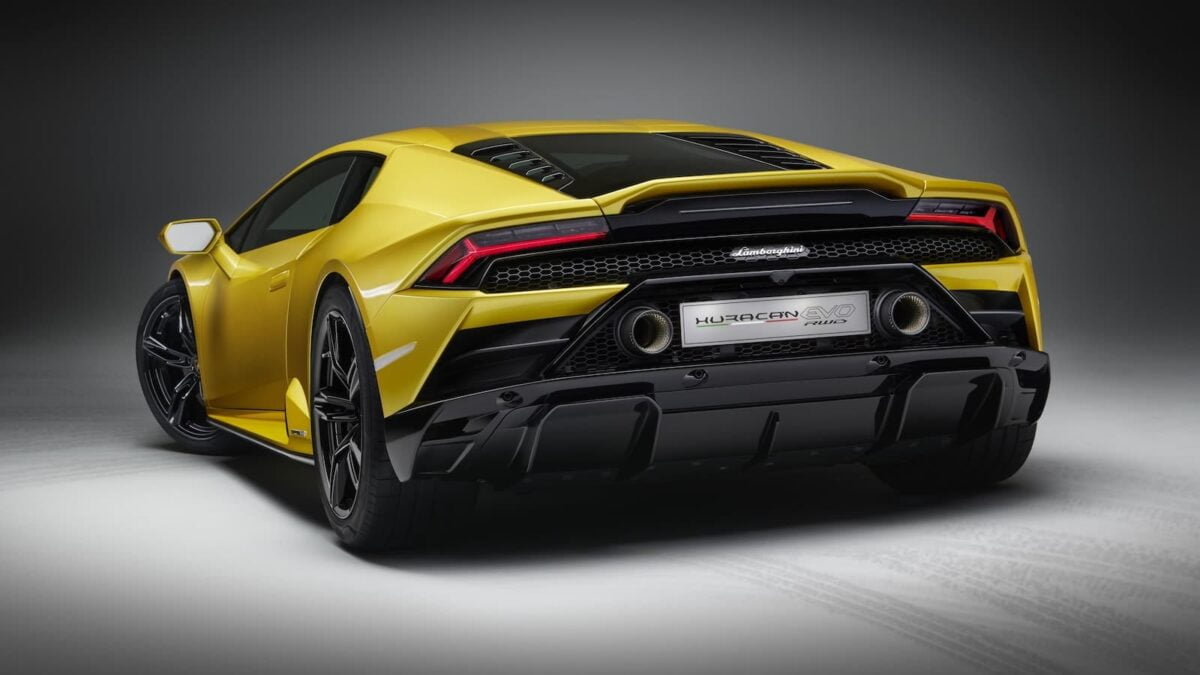
Lamborghini has taken the covers off a rear-wheel-drive version of its Huracan Evo supercar.

Designed to give a more involving driving experience, the Evo rear-wheel-drive retains its naturally-aspirated 5.2-litre engine but ditches the all-wheel-drive setup to send all 610hp through the rear wheels alone.

That power output is the same as the standard all-wheel-drive Huracan, but represents a 30hp drop on the standard Evo version introduced last year.

Lamborghini claims the rear-driven Huracan Evo will go from 0-60mph in three seconds before heading to a 202mph top speed.

Lamborghini Huravan Evo RWD - rear view | The Car Expert

Stefano Domenicali, Lamborghini chairman and chief executive officer said: “This car reminds the driver of Lamborghini’s pure engineering origins: the driver is at the center of the Huracan Evo RWD’s performance, with unfiltered feedback and an emotive and more engaging driving experience controlled by the pilot.

“The Huracan Evo RWD performance relies on the harmony between man and machine: driving skills and the Huracan Evo’s RWD mechanics deliver perfectly balanced dynamics, physical feedback and a pure performance.”

The removal of the all-wheel-drive system means that the Evo RWD tips the scales at 1,389kg dry — 33kg less than the standard model. It gets the same Strada, Sport and Corsa drive modes as the standard car too, but the system has been retuned to ensure the engine delivers torque in a more effective way for the different drivetrain layout.

A new front splitter and air intake has been fitted to help differentiate this car from other Huracan models, while all cars sit on 19-inch alloy wheels as standard – though 20-inch versions can be fitted as an optional extra.

Available to order now, first delivers of the Lamborghini Huracan Evo RWD are expected to commence in the spring – with each car costing £137,000 before taxes.

Positive end to negative year for new car sales

Some good results for new car registrations in December will have brought some Christmas cheer to the car industry at the end of another year of falling sales.

Overall new car registrations for 2019 were just over 2.3 million, according to the Society of Motor Manufacturers and Traders (SMMT), which was a fall of more than 2% compared to 2018 and the lowest results since 2013. However, it was very much in line with expectations at the start of the year so hardly a surprise.

December’s results showed an increase of more than 3% compared to the same month last year, but this was all thanks to fleet registrations. Private new car sales were almost exactly the same as last December.

For the whole-year figures, it was much the same story. Private new car sales were down by more than 3%, while fleet regisrations were up by just under 1%. Although they only make up a small fraction of the overall numbers, small businesses bought 34% fewer cars than last year.

Diesel still falling, EVs starting to gain traction

Sales of new diesel cars continued to slide in December, with almost three petrol cars sold for every diesel car. For the whole year, diesel’s market share (including mild hybrids, which are now counted separately for political purposes) fell by more than 5% and now account for barely more than a quarter of all new car sales.

It was a strong end to the year for electric and plug-in hybrid cars, however, as well as regular hybrids. These made up just under 10% of the market, just below November’s peak of just over 10%.

In terms of whole-year sales, the numbers still don’t look great for battery power, but if the growth in the last six months continues into 2020 then this will start to look far more respectable at long last.

Good times, bad times

Several manufacturers recorded impressive results in December, which when combined with the growth in fleet registrations suggests that some brands have been pre-registering a *lot* of cars to boost their numbers.

In other cases (like Audi), big year-on-year gains are more to do with the fact that they had a terrible month this time last year.

Some brands ended 2019 on a low note, with Abarth (-63%), Alfa Romeo (-22%), Infiniti (no sales at all), Jaguar (-19%), Lotus (-50%), Maserati (-50%), Mercedes-Benz (-15%), Mini (-15%), Mitsubishi (-54%), Smart (-90%), SsangYong (-35%) and Vauxhall (-51%) recording double-digit declines compared to last December.

Golf wins the month but Fiesta still holds 2019 top spot

November’s biggest-selling model, the Vauxhall Corsa, fell back out of the top ten altogether in December, bringing its yo-yo year to a end ahead of the all-new model arriving in January. It appears Vauxhall dealers have finally run out of stock, with the Corsa only adding about 600 sales to its total.

Instead, it was another run-out model that took sales honours in December, with the Volkswagen Golf edging out the overall 2019 champion, the Ford Fiesta. The rest of the top ten looked a little different to normal, with the BMW 3 Series, Tesla Model 3 (simply listed as “Other”) and Vauxhall Grandland X all making an appearance.

As usual, we’ll look at the top ten models in more details later this week, as well as reviewing the whole year in the new car market.

Audi A1 S line Competition test drive

The A1 has been quite the hit for Audi, providing the least expensive entry point to the premium brand’s range as well as an option for city dwellers who want something small without sacrificing badge appeal.

For the most part, it’s available with small and economical engines designed to keep running costs low. However, nestled in the line-up is the S line Competition trim, which boasts a large-for-the-segment 2.0-litre engine with a power output that matches the current hot supermini of choice, the Ford Fiesta ST.

However, unlike the Ford, the Audi doesn’t have much in the way of performance upgrades to tame that grunt – will this make it a fun diamond in the rough, or an unruly mess? We had to find out…

What’s new about the Audi A1 S line Competition?

This being the updated A1, the Competition gets the same general improvements seen across the range, including that much more aggressive and sporty-looking styling, which is amplified slightly in this trim. It’s also slightly longer than the original A1, which has helped increase cabin space, while the boot capacity has increased 65 litres to 335.

Audi has gone some way to acknowledge that this is a go-faster model, fitting sport suspension with adjustable dampers and drive modes, twin tailpipes… and painting the brake calipers red, the sure sign of a go-faster model.

How does it look?

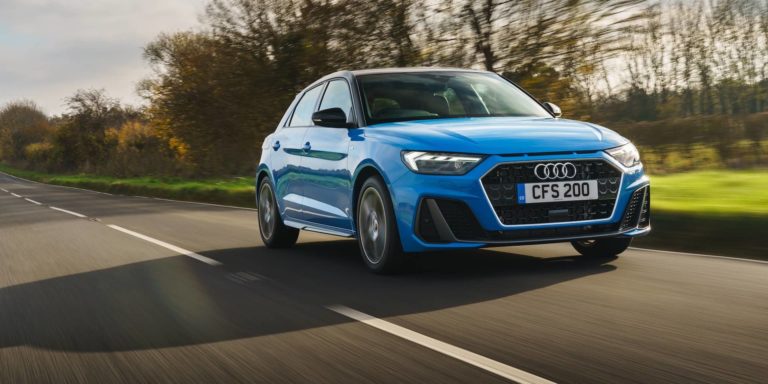
The A1 might be the baby Audi but it makes up for it with brawny looks. While the previous-generation car had a softer appearance, the new one looks like it’s trying to dress up like the firm’s RS models – even in lower trims. This is largely achieved through the three bonnet slits that pay homage to the Audi Sport Quattro rally icon of the Eighties, a design feature that’s also on the R8 supercar.

The S line Competition gets some unique styling points to give it a sporty edge, such as the grey door mirrors and vanes in the front bumper to further mimic the styling cues of RS models, as well as 17-inch alloy wheels, red brake calipers and S badging inside.

Our car was wearing Turbo Blue paint, which is a bright and eye-catching shade that works brilliantly with the extrovert styling of the A1.

What’s the spec like?

Considering it’s £25k for a supermini, the A1 S line Competition is well-specified with impressive levels of standard equipment. Assistance systems include Audi’s front collision warning system, cruise control, lane departure warning and rear parking sensors.

You also get the digital cockpit included, as well as Audi’s smartphone interface, DAB digital radio, and air conditioning.

Those looking to splash the cash to get even more creature comforts can opt for the £1,695 Technology Pack, which adds satellite navigation, an upgraded digital cockpit and wireless phone charging; a £1,150 Comfort and Sound Pack, which brings a Bang & Olufsen sound system, upgraded parking aids and heated front seats; and a £695 Plus Pack, with dual-zone climate control, tinted windows and a front centre armrest.

All these packs feature sought-after equipment, but ticking these three boxes brings you perilously close to a £30,000 Audi A1…

What’s the Audi A1 S line Competition like inside?

As we’ve come to expect from Audi, the A1’s interior is one of the best in its class. Most of the materials are good quality, and there’s plenty of technology on board – just because this is the smallest Audi doesn’t mean it misses out in that department. With the responsive central screen controlling most functions and the excellent digital instrument binnacle, the A1 feels fully up to date.

Audi A1 S line Competition interior and dashboard | The Car Expert

Taller drivers might find the driving position somewhat cramped, but generally speaking the A1 doesn’t feel too claustrophobic inside.

What’s under the bonnet?

The engine’s a familiar one for VW Group cars. It’s from the ubiquitous EA888 family of engines, here in 2.0-litre, 200hp form, making the Audi A1 S line Competition something of a Volkswagen Polo GTI twin.

For a supermini to have that much power is enticing, and the 6.3-second 0-60mph time and 146mph top speed prove there’s certainly brisk performance on offer. Here it’s exclusively mated to a six-speed automatic transmission, which is keen to indulge your full throttle mischief making.

What’s the Audi A1 S line Competition like to drive?

The best way to describe the driving experience is: a handful. With 200hp going through the front wheels and only software that uses the brakes to tame wheelspin – the Fiesta ST has an optional limited-slip differential, which works wonders – the front end does like to tug and pull.

However, once you’re used to its fairly yobbish characteristics when pushing on, the A1’s small dimensions, light weight and punchy engine combine to make for a genuinely quick cross-country steer.

It’s distinctly lacking in character, with the considerably less expensive ST providing much more driver involvement. The trade-off, though, is that the Audi settles into everyday driving duties much more smoothly.

Verdict

The Audi A1 S line Competition offers a compelling option in the hot supermini segment. Unlike the cheaper Volkswagen Polo GTI and Ford Fiesta ST, it’s not ostensibly a performance model – and it shows in the lack of driver involvement.

It’s quick, though, and would be the best of the three to live with, offering excellent refinement, decent equipment levels and plenty of badge appeal. Spending circa £25k on a supermini is borderline obscene – ticking options which push it closer to £30k even more so – but if that’s not off-putting, this high-spec Audi A1 S line Competition is an appealing prospect.

Similar cars

Ford Fiesta ST | Mini Cooper S | Volkswagen Polo GTI

Key specifications

Model as tested: Audi A1 S line Competition 40 TFSI
Price (on-road): £25,010
Engine: 2.0-litre four-cylinder petrol
Gearbox: Six-speed automatic
Power: 200 hp
Torque: 320 Nm
Top speed: 146 mph
0-60mph: 6.3 seconds
Fuel economy (combined): 47.1 mpg
CO2 emissions: 137 – 136 g/km

New Peugeot 2008 specs and prices revealed

0

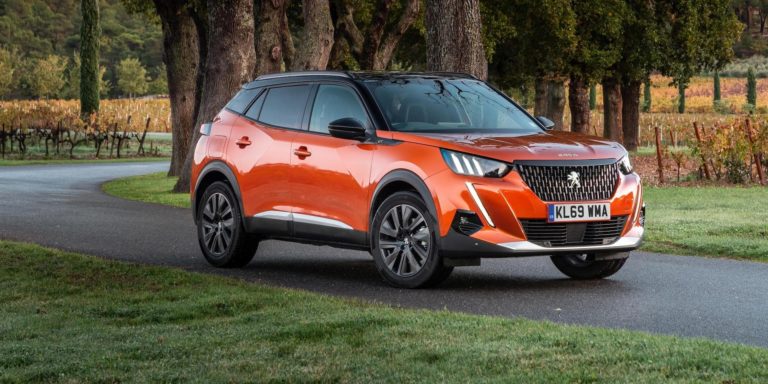
Peugeot has announced pricing and specifications for its new 2008 and e-2008 SUVs.

Priced from £20,150 and £28,150 respectively, both are on sale and available to order now.

Introduced to rivals the likes of the Nissan Juke and Hyundai Kona, the 2008 will be available in one of four trims – Active, Allure, GT Line and GT. Even base-spec cars get 16-inch alloy wheels and a seven-inch infotainment setup housing Apple CarPlay and Android Auto.

Prices for the mid-range Allure car start from £22,350 for the combustion-powered variant, rising to £30,300 for the all-electric version. These cars get upgraded 17-inch alloy wheels and a range of gloss black exterior touches among other features.

Higher-up GT Line models start from £26,100, and get 18-inch diamond-cut alloy wheels, LED headlights and a full sports bodykit. Opting for this trim on the e-2008 bumps the price up to £32,000.

Things are rounded off with the range-topping GT, priced from £31,575 on the normal 2008 and £34,275 on the e-2008. It boasts a higher range of assistance systems such as adaptive cruise control, lane-keeping assist and active blind-spot monitoring.

2020 Peugeot 2008 - rear view | The Car Expert

Five conventional powertrains are available from launch, kicking off with a 1.2-litre turbocharged petrol engine developing 100hp. The same unit can be optioned with 130hp, albeit for a £2,200 premium. Both come with a six-speed manual gearbox as standard or an eight-speed automatic for an additional £1,550.

Up next is a more potent 1.2-litre turbocharged petrol with 155hp – though this can only be specified with the eight-speed automatic. It offers emissions of 113g/km of CO2 and can return up to 45.6mpg.

Then there’s the 1.5-litre four-cylinder diesel with 100hp and 250Nm of torque. Peugeot claims it can return up to 54.4mpg while emitting between 96 and 102g/km of CO2.

The all-electric e-2008 uses a 135bhp electric motor linked to a 50kWh battery. Peugeot claims it’ll travel up to 193 miles on a full charge, and can be taken from empty to full in just seven and a half hours via a domestic 7.4kW wall box charger.

First deliveries of the new Peugeot 2008 and e-2008 are expected in late April 2020.

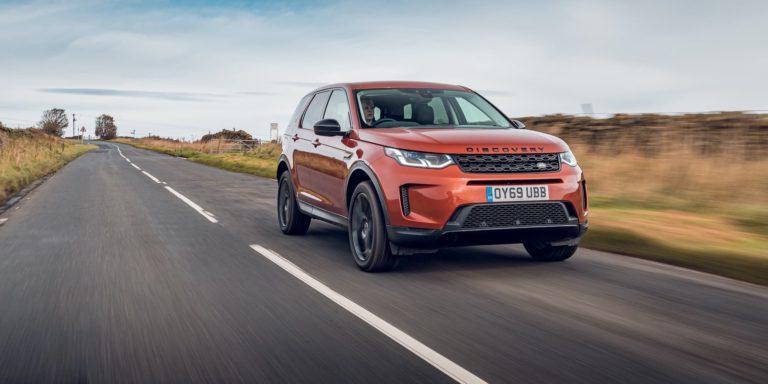
Land Rover Discovery Sport review

60-second summary

What is it?
A mid-life refresh for Land’s Rover’s mid-sized offering, but with rather more than a typical refresh

Key features
New platform, new electrified engines, new interior, lots of new tech.

Our view
This is much more than a refresh of the Land Rover Discovery Sport. It is a comprehensive update all of which is positive for the model, which combines excellent refinement on the road with supreme ability off it.

The payback?  Adding hybrid technology to the engines improves the efficiency but there are rivals that score much higher in this area. But leave the beaten track, and long after they are defeated by the terrain, the Disco Sport will still be going.   

Similar cars
Audi Q5 | BMW X3 | Hyundai Santa Fe | Jaguar F-Pace | Kia Sorento | Mercedes-Benz GLC | Mitsubishi Shogun Sport | Nissan X-Trail | SEAT Tarraco | Skoda Kodiaq | Volkswagen Tiguan Allspace | Volvo XC60


Full review

Introduction

It’s only four years ago that we first got to try the replacement for Land Rover’s most road-friendly and thus highly popular and long-lasting model, the Freelander.

The Discovery Sport moved the game on substantially, using the underpinnings of the then equally new Evoque from its upmarket sister brand Range Rover, resulting in quality on the road but still plenty of capability off it.

Not surprisingly the Discovery Sport has enjoyed the same level of success as the previous Freelander – Land Rover sells 120,000 across the globe each year, matching the Evoque and with UK buyers taking 20% of them.

Now we find ourselves in the Lake District, testing what is supposed to be a mid-life refresh for the Disco Sport – except it seems somewhat churlish to call this a refresh when the recipe includes all-new and electrified engines on a new platform, with an equally new interior and lots of latest tech to excite.

There’s a good reason of course. There’s an all-new Evoque on the block, built on Jaguar Land Rover’s equally new ‘Premium Transverse Architecture’. And following the example of its predecessor by making use of the sister model’s underpinnings opens up lots of possibilities for the Discovery Sport.

The question is should you buy this when you can get most of the hardware, and the perceived extra cachet of the Range Rover badge, on the actually slightly cheaper Evoque? Admittedly the latter is slightly smaller than the Disco Sport and offered only in five-seat format, not five plus two.  

The car’s chassis is both lighter and stiffer than its predecessor’s, which means greater efficiency and better refinement on the road. The major advantage, however, is that this chassis has been designed to accept electric additions to JLR’s latest Ingenium engines.

All car manufacturers are rushing to electrify their ranges, but especially those who make SUVs and who if they don’t get their average emissions down will soon be staring at big fines from the European Union. The Disco Sport launches with a range of mild-hybrid diesel and petrol powerplants (plus one non-hybrid diesel) while plug-in versions will join the line-up in 2020.

The new architecture also gives Land Rover the chance to let its designers loose in the interior, then pouring in lots of new tech released in the four years since the Disco Sport went on sale – some of which debuted a few months ago on, you guessed it, the Evoque.

What went unsaid in the Land Rover launch material, however, is that there was another urgent imperative to substantially upgrade the Discovery Sport. The original model suffered from horrendous reliability issues, many (but not all) relating to diesel particulate filter problems on Ingenium engines. These meant the particulate filter clogged up rapidly and resulted the car breaking down repeatedly, leaving thousands of customers stranded and irate…

Land Rover has always publicly denied there was a problem, but internal technical directives published in our forum and on other websites prove otherwise. The large owners’ forum website also has hundreds of complaints from disgruntled owners.

The Discovery Sport has regularly appeared at or near the bottom of new car reliability lists from the likes of Which? magazine and others over the last few years, so hopefully this comprehensive update has managed to address a long list of quality and reliability issues.

  • Land Rover Discovery Sport review – front | The Car Expert
  • Land Rover Discovery Sport review – rear | The Car Expert

Buying and owning a Land Rover Discovery Sport

The latest Discovery Sport launches with six powertrain options, of which the 150hp diesel is both the only non-hybrid unit and the only power option available in front-wheel-drive.

All-wheel-drive variants (surely the only way to buy a Land Rover?) come in 150, 180 and 240hp diesels and 200 and 250hp petrols. The front-wheel-drive 150 diesel is sold with a six-speed manual gearbox, while all the others are only available with a nine-speed automatic. 

There are four trim levels dependent on engine, plus ‘R-Dynamic’ versions of all four with bespoke styling. The car ticks the box on safety, earning a five-star Euro NCAP rating back in 2014 – the standard safety specification includes autonomous emergency braking, a lane keeping aid, driver fatigue monitor and reversing camera, while on the options list are such useful extras as adaptive cruise control with a steering function keeping the car in the centre of its lane.

 You will pay £31,575 for the non-hybrid front-wheel-drive diesel, the first hybrid all-wheel-drive model being the D150 at £36,425. Petrol versions start at £36,775 with the P200, and range-topper is the petrol P250 R-Dynamic HSE at £48,575.

It’s an old adage that the vast majority of buyers of capable SUVs will never truly put their vehicle’s full off-road abilities to the test, but at least with a Land Rover you do get to discover what it can do. Every sale includes a half day at one of Land Rover’s Experience centres, of which there are nine in the UK.

At these, new owners are taken on an off-road course (in one of the centre’s vehicles, not their own), ascending and descending ridiculous gradients, ploughing through deep mud tracks and wading through rivers. Always useful to know what one’s vehicle is capable of… 

Inside the Land Rover Discovery Sport

Land Rover sells the Disco Sport as a ‘five plus two’ model but the third row of seats are optional, folding out of the floor, and very cramped – you wouldn’t want to travel far in them unless you are a very small child.

Far better to treat this as a five-seater – a highly spacious and versatile five-seater, especially in the rear. Clear evidence that Land Rover is muscling in on Range Rover territory is the attention given to passengers not sitting up front – there’s loads of adjustability in the rear seats which both slide and tilt, while the seat back is split 40/20/40, offering some 24 combinations.

  • Land Rover Discovery Sport review – dashboard | The Car Expert

Second and third-row passengers get their own individual heating controls, USB and 12-volt sockets, there is passenger wireless phone charging, a 4G wi-fi hotspot and even cupholders in the third row.

Boot space is impressive too – a gargantuan 829 litres, or more than 980 if you slide the second-row seats as far forward as they’ll go.

Anyone familiar with the outgoing Disco Sport and frustrated by its dash will find a revelation in the new one. Inspired again by the Evoque, the driver’s controls have been completely redesigned.

The centre console in particular is well thought-out, with the high-mounted infotainment system now based around a much larger ten-inch touchscreen with ‘swipe and pinch’ movements, in the process cutting down on the far too extensive number of buttons that were on the old car. And if you don’t like JLR’s own not-always-great navigation, Apple CarPlay and Android Auto smartphone compatibility is included.

Under the screen the climate control and controls for such as the Terrain Response system are all neatly grouped together on a lower panel. In upper-spec models the driver also gets their own 12-inch digital info display behind the steering wheel, with a head-up display among the options available.

Generally the interior construction is of high quality, with lots of soft-touch surfaces, though some of the plastics, especially in the centre console, look a little shiny and cheap.   

Driving the Land Rover Discovery Sport

The new Disco Sport is built around the latest PTA platform, producing a basic body 10% stiffer than its predecessor which aids refinement. It’s also specifically engineered to accommodate electric elements to the engines, either mild hybrids or the plug-in versions coming later. And the battery is carefully packaged to avoid eating up interior space.

As mentioned, the hybrid variants will be on sale later in 2020, using a three-cylinder JLR Ingenium engine. For now the choice is between 2.0-litre four-cylinder diesel or petrol units, all except one combined with a 48-volt mild hybrid system.

The mild hybrid format harnesses energy from deceleration, putting it back into the system like a traditional alternator but notably using it to aid performance – the energy is employed as ‘torque fill’, overcoming the lag that is typical of a turbo engine under initial acceleration. As with other mild hybrid vehicles, it can’t travel on electric power alone.

When braking at speeds under 17mph the system also stops the engine, which aids fuel economy – Land Rover quotes an 11% saving plus a 10g/km improvement in CO2 emissions. The range between fill-ups also increases by an impressive 123 miles.

While on the road, the AWD models make use of Land Rover’s ‘Driveline Disconnect’ system – effectively a smart transmission turning them into 2WD models for motorway progress and saving just a little in the economy and emissions stakes.

  • Land Rover Discovery Sport off-road test – front | The Car Expert
  • Land Rover Discovery Sport off-road test – rear | The Car Expert
  • Land Rover Discovery Sport off-road test – front | The Car Expert
  • Land Rover Discovery Sport road test – rear | The Car Expert

All of this adds up to an extremely refined performance on the road, so long as you don’t press on too enthusiastically. Do that and the car feels just a little like it’s aware of its weight (all that off-road architecture does come with some penalties) while the auto transmission, while smooth, is a little slow to decide on its next cog.

Mind you, this is no sports car and doesn’t pretend to be – its biggest talents lie in the scenery. Cruising on a motorway in our D180 test car proved a very relaxing experience, and meandering through a series of bends was an easy process – the car doesn’t need hustling…

Despite the hybrids and various eco and emissions-saving tricks, the Disco Sport doesn’t score too highly in these areas. Official figures of 40mpg and 183g/km for our 180 diesel is nothing to get excited about – again a drawback of carrying around all that weight.  

No-one needs telling that Land Rovers are completely at home off-road and our time with the Disco Sport at Land Rover Experience Yorkshire duly proved this. If anything, the new model is even better, with its latest Terrain Response software, impressive ground clearance, approach and departure angles, and even a wading ability increased by some 10cm to 60cm – that’s two feet in old money and useful in a world where flooding seems a more regular issue to tackle.

There’s more new tech to play with too, again nicked from the Evoque and generally useful stuff, though mostly on the options list and so an extra expense.

The camera-based Clearsight rear view mirror, with its 50-degree high definition image, vastly improves the view of what’s behind, whether keeping an eye on following traffic or unruly youngsters in the rear seats.

The Clearsight around view, which as its name suggests gives a complete view around the vehicle including underneath (effectively looking downwards as if the engine and floor aren’t there) is as useful for negotiating car park bollards as rocks on a quarry track.

There is even an aid to make reversing a trailer a piece of cake  – using a rotary control on the dash you steer the trailer and the vehicle automatically counter steers accordingly. Very clever…             

Verdict

This is a wide-ranging revamp of the Discovery Sport and the car is a lot better for it. All of the additions are improvements and result in a highly refined SUV that is a pleasure to drive along a motorway while confidence-inducing to tackle a highly-challenging off-road route in.

While the addition of hybrid technology improves the economy and emissions, the Disco Sport cannot match some rivals in this area. But none of them can come close to it in terms of sheer off-road ability.

Some will be tempted by that Range Rover badge and the slightly cheaper price of the Evoque, but the Land Rover Discovery Sport is worth the extra for its space and the fact that it is a truly versatile upmarket SUV.  

A key question that remains unanswered at this time is whether Land Rover has finally fixed the many reliability problems that plagued the original model. Only time will tell on that front, but many current Discovery Sport owners will be hesitant to splash out on another one or recommend the model to their friends and family.

Good points

  • New, more efficient engines
  • Top-level off-road ability
  • Better on-road refinement

Bad points

  • Still not great for economy
  • No telling whether past reliability issues have been addressed
  • Third row seats very tight

Key specifications

Model as tested: Land Rover Discovery Sport D180 SE
Price (on-road): £43,175
Engine: four-cylinder 2.0-litre diesel
Transmission: Nine-speed automatic
Power: 180 hp
Torque: 430 Nm
0-62mph: 9.7 sec
Top speed: 125 mph
Fuel economy (combined): 40.4mpg (WLTP)
CO2 emissions: 183 g/km (WLTP)
Insurance group: 32
Euro NCAP rating: 5 stars (2014)

Calls made for zero tolerance on drink-driving

0

Calls are being made for a zero-tolerance policy towards drink-driving as a recent study confirmed that alcohol-related deaths are on the rise in the UK.

A new study has found that the UK, with the exception of Scotland, has the highest drink-driving limit in the entire EU and one of the highest limits in the world.

The European Transport Safety Council reported that the only other country with an alcohol limit as high as the UK’s was Malta – until it brought in stricter policies last year.

The number of drink-related fatalities in the UK had increased, according to the study, up 4% from the 240 in 2010 to an estimated 250 during 2017.

The UK’s dubious drink-driving honour

Joshua Harris, director of campaigns for road safety charity Brake, said: “This report lays bare the UK’s failure to tackle the menace of drink-driving compared to our EU counterparts. With England and Wales having the dubious honour of the highest drink-drive limit in Europe and more people dying on our roads due to drink-driving, the time for action is now.

“Our current drink-driving limit gives a false impression that it is acceptable to mix alcohol and driving – which couldn’t be further from the truth. Decisive action is needed to end this blight on our roads and prevent the needless loss of life.

“A zero-tolerance drink drive limit is a proven effective solution, as this report shows, and we call on the Government to implement this urgently, making clear to drivers that not a drop of alcohol is safe.”

Scotland sets the example

The current alcohol to blood limit in England, Wales and Northern Ireland stands at 80mg of alcohol per 100ml of blood – a level that has stayed the same for more than 50 years.

Scotland lowered its limit to 50mg five years ago, which is the same as most countries across the EU and the rest of the world.

A study of 1,000 people in Scotland by breathalyser manufacturer AlcoSense found that 53% of motorists have now reduced the amount of alcohol they drink, when they know they are driving either later the same day or the following morning.

The research also revealed that two thirds of Scottish motorists would not now drive even after one alcoholic drink  – whereas prior to the law change they would have driven after one or two drinks. 

The UK was one of just six countries to record a rise in drink-driving-related deaths, alongside Austria, Estonia, Hungary, Sweden and Slovakia.

The small rise in the deaths in the UK in 2017 does go against a steady decline in numbers over the previous four decades.

2020 Volkswagen Golf test drive

Just like mince pies at Christmas and hot cross buns at Easter, the Volkswagen Golf seems to be eternal. It’s remained unfazed by the whole Dieselgate debacle and has cleverly evolved to become electrified and connected – ensuring VW doesn’t shun its changing customers.

It’s by far Volkswagen’s most popular car and is arguably one of the most important new cars on sale – given it’s rarely seen outside of the top five best-selling cars list. In fact, after seven years on sale, the Golf looks set to end 2019 as the second-most popular car in the UK.

It’s equally popular with the critics. Despite being around since 2012, the seventh-generation Golf still commands acclaim from road testers. It holds a class-leading score of 82% on The Car Expert’s unique Expert Rating system, which aggregates car reviews from 18 of the country’s top motoring websites.

After more than 45 years on sale, Volkswagen has managed to produce a remarkable 35 million examples, and come February 2020 you’ll be able to buy this all-new eighth-generation example. But can this new version continue to lead the path like the last example did?

What’s new about the Volkswagen Golf?

In typical Golf style, this latest model looks like it could just be a facelift, but it’s underneath and inside where Volkswagen has been waving its magic wand.

Starting with the interior, Volkswagen has completely digitalised the cabin, getting rid of the majority of physical buttons and fitting the car with a ten-inch touchscreen and digital cockpit as standard, the latter being unique to this class – for the time being at least. Further tech introduced includes Car2X – essentially where the Golf can ‘communicate’ with other cars and infrastructure.

And in terms of electrification, Volkswagen is introducing mild-hybrid technology to the Golf – at first with a petrol engine paired to an automatic transmission.

How does it look?

In true VW fashion, the Golf’s design has evolved rather than revolved – though why would you change such a popular and winning formula?

Viewed side-on, you’d be hard-pressed to notice the difference, aside from the all-new line-up of alloy wheels – particularly as it retains near-matching dimensions to the outgoing car.

  • 2020 Volkswagen Golf review – front | The Car Expert
  • 2020 Volkswagen Golf review – side profile | The Car Expert

But it’s the front where you’ll notice most of the changes with its new LED headlights, while a full-length front apron gives the Golf a more aggressive look than before.

Jumping to the rear, you’ll notice Volkswagen’s prominent new logo (it’s slimmer than before, if you couldn’t tell) along with more prominent ‘GOLF’ lettering beneath the badge. The full suite of LED lights are also prominent at the rear.

So, while this might not be a revolutionary design, it’s a classy update and one that will undoubtedly appeal to the Golf’s loyal buyers.

What’s the spec like?

If you’re familiar with VW’s trim level structure, you’ll know all about Volkswagen’s trademark S, SE and SE L grades that have lasted the test of time.

But for a change of scenery, Volkswagen is now adopting new nomenclatures – meaning Life, Style and R-Line are the options from launch, the last grade being the only aspect of continuity.

Standard kit is excellent and includes LED headlights and keyless start plus a ten-inch infotainment screen that offers a host of connected services as well as the digital cockpit. Plenty of safety kit is also offered – namely lane-keep assist and automatic emergency braking.

Volkswagen hasn’t yet announced prices for the new Golf, although given this jump in out-of-the-box equipment, we’d expect a noticeable rise on top of the outgoing Golf’s £21,120 starting price.

As yet, the new Volkswagen Golf has not been crash tested by Euro NCAP. The previous model scored a five-star rating, but we’ll have to see if the new one can match that.

What’s the new Volkswgen Golf like inside?

The new interior is headed up by a huge ten-inch touchscreen that seems to control, well, everything. All physical buttons seem to have been eradicated to create this entirely digitalised interior – helped by the new ‘Hello Volkswagen’ voice control service and touch buttons dotted throughout, even for the sunroof.

2020 Volkswagen Golf review – interior and dashboard | The Car Expert

While it certainly looks the part – transforming the Golf for the ’20s – we can’t help but feel this needless button-removing has gone too far. Merely changing the temperature means you have to use this slightly awkward slider positioned below the touchscreen when a traditional rotary knob would do a much better job with less hassle.

Aside from that, it’s all business as usual inside, with the Golf offering a generous amount of rear space for its size. While the 380-litre boot isn’t class-leading, it’s more than generous enough for a family hatchback. Visibility is also faultless.

What’s under the bonnet?

Powering our test car is the 130hp variant of the turbocharged 1.5-litre, which comes mated to a six-speed manual transmission – expected to be the best-selling configuration.

It’s a good mix for the Golf – offering excellent refinement as you can barely hear it at low revs, while cylinder deactivation tech is just one of the touches that go into making the engine more efficient than before, although VW can’t give us the figures just yet.

While performance isn’t this engine’s strong point, it’s a good all-rounder, feeling plentiful at motorway speeds while also having a bit of buzz for the more twisty roads. Admittedly, it can feel sluggish at times when overtaking, although the 150hp variant of the same engine provides the remedy for this.

What’s it like to drive?

The story of the Volkswagen Golf for years has been that it’s a comfortable and refined option, and that undoubtedly remains the same with this new model.

Even at motorway speeds the Golf is impressively refined – only a bit of wind noise from the door mirrors making its way into the cabin – giving a comfortable and supple ride that isn’t even hampered by our test car’s 18-inch alloy wheels.

For now, we can only imagine how silky smooth it feels on the entry-level 16s. It’s certainly no surprise that the Golf has become such a fleet favourite – there are few better cars at this price point that would be more comfortable to trundle up and down the motorway in.

  • 2020 Volkswagen Golf road test – front | The Car Expert
  • 2020 Volkswagen Golf road test – rear | The Car Expert
  • 2020 Volkswagen Golf road test – side | The Car Expert

But while being a great cruiser, it’s not a byword for driving enjoyment. Sure, body roll is well controlled and the steering is smooth and linear, but it’s all very safe and predictable. That’ll be ideal for the vast majority of buyers, but if you want a dash of sparkle behind the wheel, the Ford Focus or Mazda 3 are better choices.

Verdict

Volkswagen already had a near-class-leading model with the outgoing Golf, and it didn’t need to do a great deal to this new eighth-generation model to bring it right to the forefront of the competitive family hatchback class.

With this 1.5-litre petrol configuration, it leaves you wanting for very little, and the Golf would be a terrific choice if you spend lots of time cruising on the motorway. Although the fiddly new touchscreen might be a gripe at first, we’re in no doubt that it would be quickly adjusted to once you’re living with it on a daily basis.

With efficiency figures and pricing yet to be revealed, it’s a bit soon to say if the new Golf is the new ‘car to beat’ in this class, although the pathway seems to have been laid.

Similar cars

Alfa Romeo Giulietta | Citroën C4 Cactus | Fiat Tipo | Ford Focus | Honda Civic | Hyundai i30 | Kia Ceed | Mazda 3 | Mini Countryman | Peugeot 308 | Renault Megane | SEAT Leon | Skoda Scala | Skoda Octavia | Toyota Corolla | Vauxhall Astra

Key specifications

Model as tested: Volkswagen Golf 1.5 TSI 130 Style
Price (on-road): TBA
Engine: 1.5-litre turbocharged petrol
Gearbox: Six-speed manual
Power: 130 bhp
Torque: 200 Nm
Top speed: 133mph
0-60mph: 9.0 seconds
Fuel economy (combined): TBA
CO2 emissions: TBA
Euro NCAP safety rating: Not yet tested

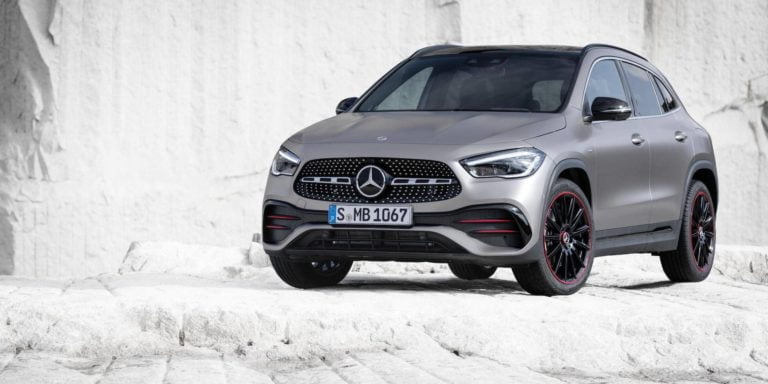
Mercedes-Benz unveils second-generation GLA

0

Mercedes-Benz has revealed its latest GLA — the second generation of the crossover model.

Taking on the likes of the BMW X2 and Audi Q2, it’s ten centimetres higher than the car it replaces yet its overall length comes in just under two centimetres shorter. Despite these changes, it’s said to offer more front headroom and rear legroom than the car it replaces could.

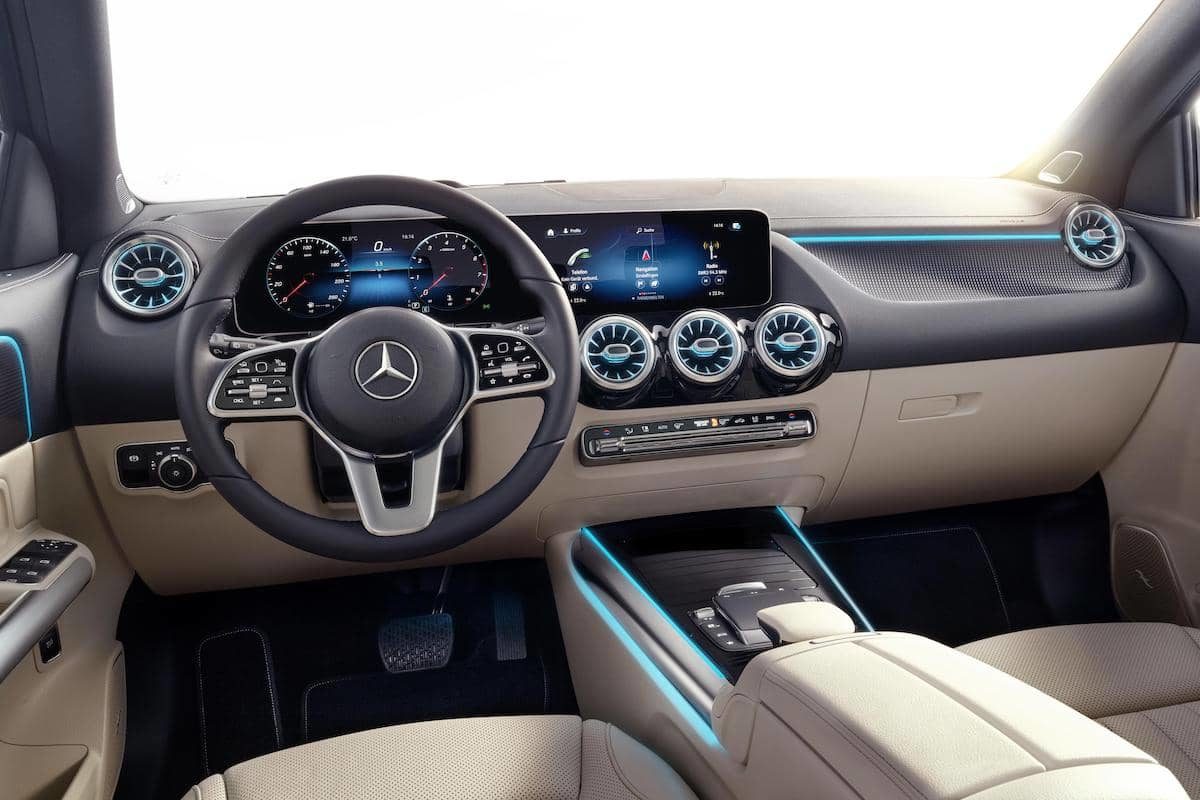
The interior will be familiar to anyone who has sat in the current-generation A-Class, with a twin-screen setup measuring ten inches in high-spec models dominating the centre of the cabin. Lower specification cars will get two seven-inch displays instead.

Mercedes says that the driving position is higher than it was in the previous GLA, while the 421-litre boot represents a 14-litre increase over its predecessor.

The engine line-up for the GLA is set to mirror that found on the A-Class, but from launch just two powertrains are available; a 1.3-litre turbocharged petrol with 163hp and 250Nm in the GLA 200, and a 306hp 2.0-litre turbocharged petrol in the GLA 35. The latter version is capable of hitting 60mph from a dead stop in under five seconds.

Though that AMG-tweaked version gets four-wheel-drive as standard, it’ll be available on non-AMG versions too.

Prices for the new Mercedes-Benz GLA have yet to be announced, but they’re likely to be revealed closer to the car going on sale in spring 2020.

Election nerves keep customers away from showrooms in November

Private new car sales were down by 6% in November compared to the same month last year, with the general election predictably causing havoc for retailers.

On the other hand, fleet registrations were up by almost 3% in November, according to the latest data published by the Society of Motor Manufacturers and Traders (SMMT), which meant that the overall new car market was down by just over 1% compared to the same month last year.

New car registrations, November 2019
Source: SMMT

Any election period tends to cause potential buyers to keep their wallets firmly in their pockets, and all signs suggest that we can expect a muted end to a disappointing year for new car sales.

Good news for plug-in cars, not so much for diesels

Diesel sales continue to fall as fleets follow private buyers in turning away from the fuel in favour of petrol and, increasingly, electric or hybrid models.

New car registrations by fuel type, November 2019
Source: SMMT

It was a good month for electric cars, with registrations up massively year-on-year thanks to an increasing number of electric models now available in showrooms. Plug-in hybrids also improved, up 35% from the admittedly low levels of 12 months ago. Regular hybrids are still growing in number as well, so it all added up to a market share for alternatively-fuelled vehicles of more than 10% for the first time.

Corsa returns to the top of the charts

The soon-to-be-replaced Vauxhall Corsa has yo-yoed its way through the 2019 sales charts. It hit the top spot in September, fell out of the Top Ten altogether in October, and bounced back to the #1 slot again in November. Can it hold on to the top spot in December before it bows out in January in favour of the all-new model?

The Vauxhall Corsa is the nation’s best-selling car for the second time in three months

The real surprise was that the Ford Fiesta wasn’t hot on its heels. Second spot went to another model that’s in full runout mode, the Ford Kuga. The Fiesta did cling onto third place, but only just ahead of the Volkswagen Golf.

After that, there were no great surprises in the Top Ten in November, and the year-to-date results suggest that the whole-year rankings are pretty much set. The Corsa’s strong performance saw it jump the Ford Focus for third place in year-to-date registrations, so it will be interesting to see if December’s results change this at all.

As usual, we’ll look at the ten best-selling cars in more details in the next day or two.

Good month, bad month

The overall market may have been relatively stable in November, but some brands had great months while others were not looking so healthy.

It was good news for Alpine, Audi, DS Automobiles, Ford, Jeep, Lexus, MG and Porsche, who all recorded growth of at least 10% compared to the same month last year.

Meanwhile, things were not as pleasant for Abarth, Alfa Romeo, Bentley, Dacia, Fiat, Jaguar, Kia, Lotus, Maserati, Mini, Mitsubishi, Renault, Smart, SsangYong, Suzuki and Vauxhall, who all saw registrations fall by double-digit percentages compared to last November.

Vauxhall Insignia updated for 2020

0

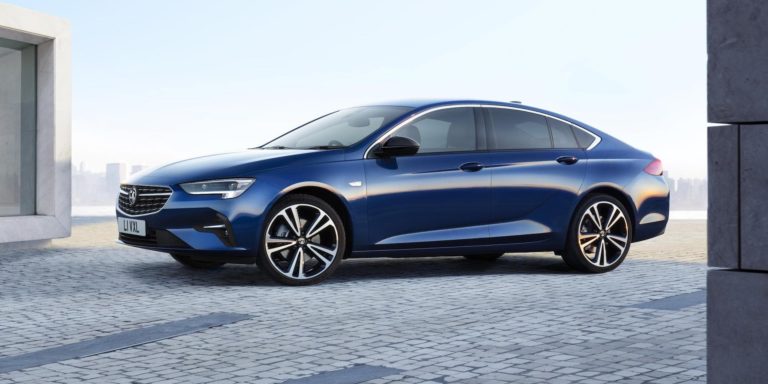
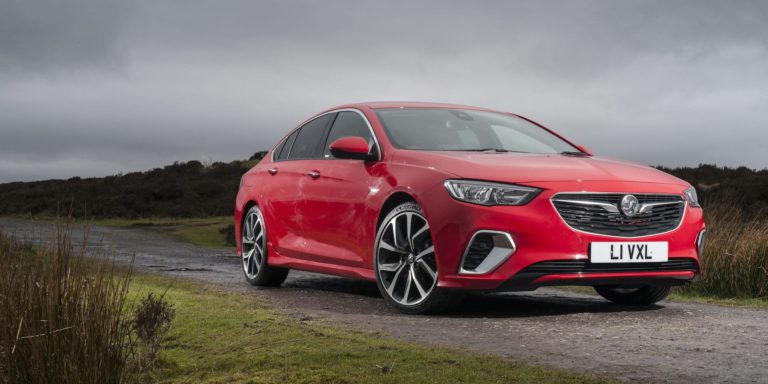
Vauxhall has revealed the first look at its facelifted Insignia, which is now only available in a liftback body style.

With a refreshed look and a host of added technologies, Vauxhall hopes that its revised flagship saloon can regain some popularity in a dwindling market.

While 1.2 million Insignias have been sold in the UK since the nameplate was first introduced ten years ago to replace the unloved Vauxhall Vectra, numbers have been tumbling in recent years as buyer flock towards SUVs rather than traditional saloons and estates. In fact, Vauxhall has quietly dropped the estate versions (Sports Tourer and Country Tourer) as part of the model’s facelift.

The current generation Vauxhall Insignia was launched in 2017, and currently holds a score of 72% according to The Car Expert’s unique Expert Rating system, which has aggregated more than 40 UK media reviews. That score is identical to its traditional rival, the Ford Mondeo, but significantly behind the class-leading Volkswagen Passat.

Vauxhall Insignia MY2020 – rear | The Car Expert

Exterior changes to the Insignia are subtle. A redesigned front bumper and some extra chrome detailing on the grille make up the revisions to the front, along with reshaped headlights incorporating new LED Matrix technology. At the rear, there are silver exhaust trims at the lower side of the bumper.

Those new headlights use 84 individual LED bulbs within each unit, and, when combined with a forward-facing camera, can adjust their beams to avoid dazzling oncoming road users. The LED daytime running lights have been placed in a new location, too.

Vauxhall has updated the amount of driver assistance technology on the Insignia. It now gets a rear-view camera to improve rearward visibility, while rear cross-traffic alert elevates safety when reversing out of spaces. The Insignia was awarded a five-star safety rating by Euro NCAP when it was launched in 2017.

Inside, the Insignia will be available with either a seven- or eight-inch touchscreen system housing Apple CarPlay and Android Auto smartphone integration systems.

Details surrounding engine and gearbox choices for the new Vauxhall Insignia have yet to be revealed and are likely to be announced in full in January when it is set to make its debut at the Brussels Motor Show.

What can we expect from the Fiat-Peugeot merger?

In what will create the fourth-largest car group in the world, the proposed merger between FCA and PSA will see a new powerhouse as the next age of the automobile looms.

Peugeot and Fiat, founded in 1896 and 1899 respectively, are the lead entities of the PSA and FCA consortiums. Between them, these two groups own the brands Abarth, Alfa Romeo, Axiam, Chrysler, Citroën, Dodge, DS Automobiles, Fiat, Jeep, Lancia, Maserati, Opel, Peugeot, RAM and Vauxhall.

FCA’s parent company, Exor, also still holds a stake in Ferrari and its chairman, John Elkann, is set to become chairman of the new PSA-FCA operation.

Is it relevant that the PSA logo was shown before the FCA logo on the official announcments from each company?

Latest in a long line of collaborations

Mergers and acquisitions are nothing new in the automotive industry. Almost all of your favourite car brands are part of a major group or allied with other brands in some way. The Volkswagen Group (VW, Audi, Porsche, SEAT, Skoda, Bentley, Lamborghini and Bugatti) and the Renault-Nissan Alliance (which also incorporates Alpine, Dacia, Datsun, Infiniti and Mitsubishi, as well as the obvious Nissan and Renault) are just two examples of long-standing, large corporations who have joined forces to survive and prosper in an ever more difficult market.

This “super-merger” of two large consortiums in PSA and FCA shows how the industry is having to work together more than ever to face the next challenges facing the industry. In particular, zero-emissions technology like battery electric and hydrogen fuel cell systems are something both companies have been lagging behind on over this last decade.

Now, with emissions laws and the threat of colossal fines, the combined might of two 120+ year old companies is needed to catch up.

Playing to each other’s strengths

One major advantage of PSA and FCA, in particular, joining forces rather than collaborating with potential partners, is a god fit between the geographical and technological strengths of the two groups.

PSA does not currently sell any cars in North America (the world’s second largest car market), where FCA is well established through its Chrysler/Dodge/Jeep/RAM brands. A strong US infrastructure has helped FCA with the reintroduction of Fiat and Alfa Romeo to America after many years away, and can potentially do the same for Peugeot and Citroën.

Meanwhile, Fiat has been gradually falling behind the industry standard with most of its cars in Europe while PSA’s latest models have been steadily improving and are much closer to the top of the class. FCA will be able to update its line-up at not only Fiat, but also Alfa Romeo and possibly even Lancia and areas of Maserati through shared platforms with PSA models, and improved buying power for bulk materials and supplies.

Fiat also currently collaborates with the Renault-Nissan Alliance on most of its van range, which could be easily replaced with equivalent PSA models in very short order. Vauxhall is already going through this process with its van models, which were also previously shared with Renault.

PSA has the smarts to manage the merger

What gives me confidence in this merger is the people in charge of PSA at the moment. Carlos Tavares, current chairman of PSA and the CEO of the new group, has turned Peugeot around in an outstanding fashion over the past five years.

From near bankruptcy earlier this decade, PSA has managed to turn that a financial black hole into a business so profitable that it could afford to buy Opel and Vauxhall from GM in 2017. It is creating good cars in the process, and has managed a corporate turnaround with relatively few job losses.

This success has given me confidence that the financial future of the new partnership could bring Fiat and Peugeot back to the forefront of the automotive discussion.

What new cars could be in the pipeline?

Cars that are already in planning and making preparations for production, such as the next Fiat 500 and the Maserati Alfieri coupé, may not initially benefit from this partnership as most of the components, designs and infrastructure will already be in place. However, there may still be benefits from infrastructure upgrades and production improvement methodology, along with a firmer financial safety blanket if any problems occur.

When it comes to upgrading either those cars, or expanding the model line-up for any of the brands that fall under the PSA-FCA umbrella, the real benefits of this merger are likely to be seen.

How would you like to see a fast Lancia supermini? That would be more financially achievable if it was based on a Peugeot 208 GTi, whose platform will also expected to be used for the next Vauxhall Corsa and Citroën C3, plus potentially a new Fiat Punto replacement and even a new Alfa Romeo to replace the recently-deceased Mito.

The same platform and component sharing principle can be applied across the board, just as it does now for the Volkswagen Group. You want a fast, electric Peugeot 508? Oh, Maserati has a powerful new electric powertrain that could be used, saving millions in development. By spreading the cost and taking in all the rewards, you make a better business.

What about motorsport programmes?

Peugeot 908 at Le Mans in 2011 | The Car Expert
Peugeot will return to Le Mans in 2022 after more than a decade away

There is one question mark, however. What will this merger mean for motorsport? Well, I’ve considered this for quite some time, and I think it will be very beneficial for PSA and FCA take a divide-and-conquer approach, akin to the Volkswagen Group has operated over the years – especially at Le Mans with Audi, Bentley and Porsche.

Just after the news of the merger, Peugeot announced it was joining the WEC’s new Hypercar class in 2022. My worry, after initially being very happy that Peugeot would be back in endurance racing, was that it would stop Ferrari and/or Maserati also joining the field in the future.

But, then I asked, why not both? The general public won’t care. Maserati, Ferrari and Peugeot fans will continue to support their favourite brands as they have done for the last 100 years.

If PSA/FCA does what Audi and Porsche do in having separate operations (but still quietly learning from each other), everyone wins. The fans get more cars from more brands to watch and support. For the overall organisation, if one outfit has a bad race then the other can take the plaudits for the entire company!

In Formula One, a spending cap is coming and Ferrari and Alfa Romeo are already there, so hopefully those programmes will be secure. In the WEC, Peugeot is coming in 2022 and Ferrari is aid to be exploring the new rules, so maybe Maserati could leverage involvement from these two brands? Formula E is already part of the overall programme with DS Automobiles.

DTM could be an excellent fit for Maserati, especially with Aston Martin now involced. NASCAR seems a perfect fit for Dodge, while Chrsler could become an engine supplier in IndyCar. The WRC would pretty much beg for Lancia to return, especially with Citroën now gone. In WTCR, Opel and Vauxhall could re-live their glory years of the 1990s, perhaps with Fiat and Alfa Romeo involved as well.

How likely is any of the above?

The question mark will always be there as to whether or not the boardroom management will allow the company to take this aggressive approach, especially since one of the key reasons for this merger is to cut costs.

We could actually see a huge reduction of PSA and FCA’s budgets outside of their core road car sector until the two companies are sufficiently integrated, which could take up most of the next decade.

There has been considerable nervousness at Vauxhall’s Ellesmere Port plant here in the UK, which could suffer from any rationalisation of the new company’s manufacturing facilities. Ellesmere Port has been almost constantly battling rumours of closure for more than a decade under both GM and PSA ownership, so employees will not welcome yet more conjecture over their fate in coming months.

But overall, if this new company wants to show itself to be up with the best of the big players then it could certainly have the brands, technology and firepower to do so – both in motorsport and on the road.

I’m very excited for the prospects of this merger. Time will tell if I’m right.

Updated Jaguar F-Type arrives with dramatic new look

0

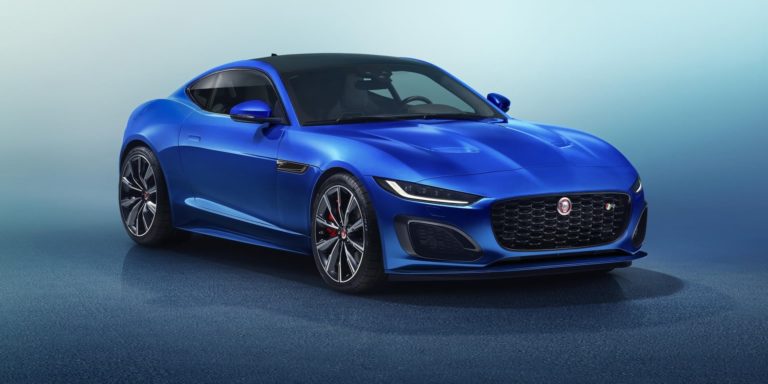
Jaguar has revealed its new-look Jaguar F-Type coupe and convertible, bringing a striking new look to its sports car after six years on sale.

The new car ditches the V6 engine available with its predecessor and is instead offered with just V8 and 2.0-litre, four-cylinder powertrain options.

Available from just over £54,000, the refreshed F-Type is still available in coupe and convertible forms, with all incorporating a lightly revised interior with more tech and driver-focused features than before.

The exterior changes are most noticeable at the front of the F-Type, with sleeker headlights giving the nose of the car a more aggressive appearance. The rear of the car gets a subtler update, though the ‘roundel’ lights which were such a signature of the F-Type have been ditched in favour of a single ‘blade’ style unit.

  • 2020 Jaguar F-Type - rear | The Car Expert
  • 2020 Jaguar F-Type - headlight detail | The Car Expert
  • 2020 Jaguar F-Type - interior and dashboard | The Car Expert

Inside, the cabin of the F-Type is dominated by a new 12-inch digital dashboard setup ahead of the driver, which is combined with a central infotainment screen incorporating Apple CarPlay and Android Auto. The entire system also comes with over-the-air updates for the first time.

The entry-level engine is now the 300hp 2.0-litre four-cylinder petrol, with the V6 unit having been ditched. A less powerful version of the firm’s 5.0-litre supercharged V8 sits in the middle of the line-up with 450hp and the choice of rear- or all-wheel-drive, while the tip-top unit remains the full-fat V8 engine in the F-Type R which now produces 575hp and 700Nm of torque – up 25hp and 20Nm on the older model. All cars get an eight-speed automatic gearbox.

The range-topping SVR has been cut too, though a lot of that car’s mechanical upgrades – such as adaptive dampers and stiffer rear knuckles and ball joints – have been carried over to the R.

The new Jaguar F-Type is available to order now.

Audi unveils all-electric e-tron Sportback

0

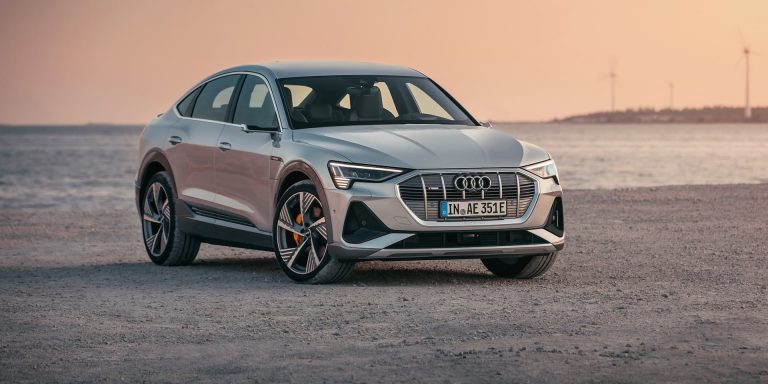
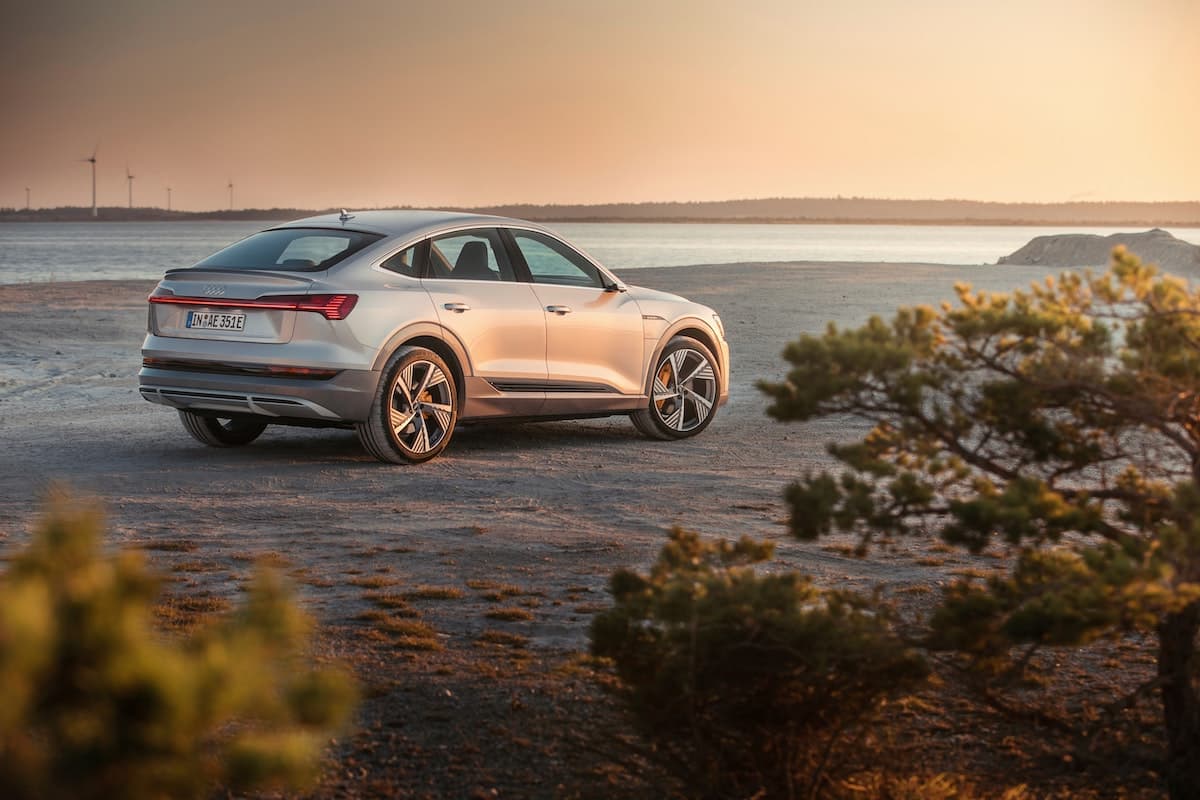
Audi has revealed its latest all-electric vehicle – the e-tron Sportback – at the Los Angeles motor show.

Described as the firm’s second bespoke electric vehicle, it’s probably more accurately considered to be a variation on the original e-tron model. That’s not necessarily a bad thing, as the Audi e-tron has received very favourable reviews from the UK motoring media and currently holds an impressive score of 83% according to our unique Expert Rating aggregator.

Like virtually every German SUV model released in the last few years, the e-tron is now available in a more expensive yet less practical version. It’s the same weight, length and height as the standard model, with the main visual difference of the e-tron Sportback being a more raked roofline.

As well as flattening out the overall look of the car, the sleeker roofline also helps with aerodynamic efficiency – the e-tron Sportback has a slightly lower drag coefficient compared with the regular e-tron. It’s not a big difference, but Audi claims that it equates to an extra six miles of range.

Under that slightly more aerodynamic body, there are some mechanical differences. The e-tron Sportback can decouple the front and rear axles so it can become rear-wheel-drive (the regular e-tron is all-wheel-drive-only), which helps to add a further six miles of range.


You may also like:

In total, Audi claims that the e-tron Sportback will return 277 miles on a single charge. Its engineers have also swapped the two water pumps cooling the batteries in the standard e-tron with a single larger one, saving even more weight and adding range.

The range-topping e-tron Sportback 55 produces 360hp from two electric motors and a 95kWh battery. Audi claims that it’ll go from 0-60mph in under six seconds when in sport mode. The firm also states that the Sportback can recuperate up to 30% of its total range through brake regeneration alone.

And though the vast amount of fixtures and fittings both inside and out are identical to those on the e-tron, the Sportback is the first mass-production car to get digital matrix LED headlights. Using systems usually found in video projectors, with individual tiles which can be adjusted 5,000 times per second.

UK pricing for the Sportback has yet to be confirmed, but Audi has stated that it will start at a bit over £71,000 (based on current exchange rates) in Germany. First deliveries are expected to start in spring 2020.

2020 Audi e-tron Sportback - rear view | The Car Expert

Mercedes-Benz GLE

Summary

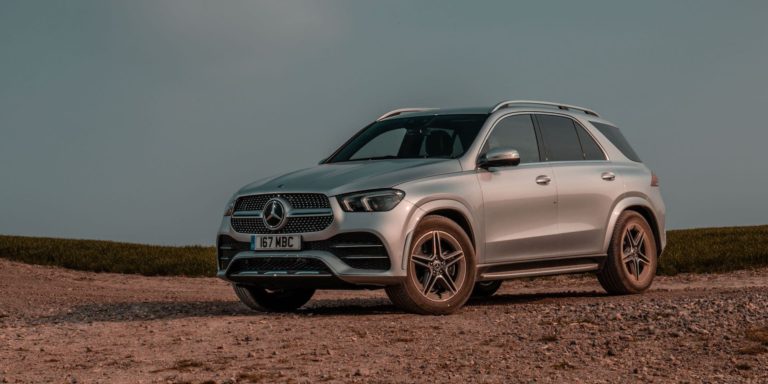
The Mercedes-Benz GLE is a large SUV model that sits between the smaller GLC and larger GLS in the Mercedes-Benz SUV family. This the current model, which arrived in the UK in 2019.

Although it’s the second generation to wear the GLE badge, it’s actually the fourth generation of the model (which was originally called the ML from 1997 to 2015).

The GLE range consists of a regular SUV model and a GLE Coupe body style, which is not actually a coupé but rather an almost identical SUV shape with a more raked cargo area. There is also a higher-performance model called the Mercedes-AMG GLE 53, and an even faster GLE 63 version arrived in 2020.

The GLE has received particular praise for its interior design and quality, as well as its comfortable ride. However, it has been criticised for tight third-row seating and unimpressive handling.

As of July 2025, the Mercedes-Benz GLE holds an Expert Rating of C, with a score of 60%. Its reliability score is good, and the plug-in hybrid models help contribute to very good CO2 emissions, but its media review score are only average and its running costs are extremely high.

Key specifications

Body style: Large SUV and Coupé SUV
Engines: petrol, diesel, plug-in hybrid
Price: From £77,985 on-road

Launched: Spring 2019
Last updated: Spring 2023
Replacement due: TBA

Media reviews

Highlighted reviews and road tests from across the UK automotive media. Click any of the boxes to view.

Featured reviews

More reviews

Auto Trader

Car

Carbuyer

Carwow

Motoring Research

Parkers

Regit

The Telegraph

Top Gear

Safety rating

Independent crash test and safety ratings from Euro NCAP

Overall score: 5 stars
Date tested: July 2019
Read the full Euro NCAP review

Adult protection: 91%
Child protection: 90%
Vulnerable road users: 78%
Safety assist: 78%

Eco rating

Independent economy and emissions ratings from Green NCAP

No eco rating

As of July 2025, the Mercedes-Benz GLE has not been assessed by Green NCAP.

Reliability rating

MotorEasy logo 600x167

Reliability data provided exclusively for The Car Expert by MotorEasy

All data based on MotorEasy average workshop costs for extended car warranty claims

The Mercedes-Benz GLE has a better-than-average reliability score of 71%, according to workshop and extended warranty data provided exclusively to The Car Expert by our commercial partner, MotorEasy.

The average repair cost of just over £500 is quite competitive for such a large and expensive vehicle. Gearbox repairs have been the most expensive problems, with an average repair bill of about £2,300. Thankfully, these have been quite rare to date.

Running cost rating

Clear Vehicle Data logo close crop

Monthly cost of ownership data provided exclusively for The Car Expert by Clear Vehicle Data

Fuel consumptionAverageScore
Petrol models28 mpgE
Diesel models37 mpgD
Plug-in hybrid models343 mpgA
CO₂ outputAverageScoreVariationScore
Petrol models230 g/kmD
Diesel models199 g/kmD
Plug-in hybrid models20 g/kmA
Battery rangeAverageScoreVariationScore
Plug-in hybrid models36 milesE
Insurance groupAverageScoreVariationScore
All models50F
Service and maintenanceCostScore
Year 1£452D
Year 2£1,118D
Year 3£1,846D
Year 4£2,289D
Year 5£2,980D
Overall£8,685D

The Mercedes-Benz GLE is an expensive car to run, according to numbers provided exclusively to The Car Expert by our data partner, Clear Vehicle Data.

Fuel consumption is unsurprisingly poor for petrol models, and only average for diesels. The plug-in hybrid stats look good on paper, but this is largely a function of misleading EU/UK government lab tests that make every plug-in hybrid look amazing. There are no real-world situations where you’re going to get 270 miles out of a single gallon (4.5 litres) of fuel and a bit of electricity.

Insurance and scheduled servicing costs for the GLC are likely to be high, especially compared to similarly sized cars from other brands.

Warranty rating

New car warranty information for the Mercedes-Benz GLE

Overall ratingB68%
Petrol or diesel modelsC41%
Hybrid or plug-in hybrid modelsA82%
New car warranty duration3 years
New car warranty mileageUnlimited miles
Battery warranty duration8 years
Battery warranty mileage100,000 miles

Mercedes-Benz’s new car warranty is only average, and not as attractive as some other cars in a similar price bracket as the GLE.

The duration is three years, with no limit on mileage – although, in reality, the mileage numbers are likely to be fairly irrelevant as most cars only cover about 10,000 miles each year.

In addition to the standard new car warranty, the GLE plug-in hybrid models have an eight-year/100,000-mile warranty for the battery components. The overall rating above is a mix of the different models.

Awards

Significant UK trophies and awards that the Mercedes-Benz GLE has received

2021

  • Auto Trader New Car Awards – Best seven-seater

Similar cars

If you’re looking at the Mercedes-Benz GLE, you might also be interested in these alternatives

Audi Q7 | Audi Q8 | BMW X5 | BMW X6 | Land Rover Discovery | Lexus RX LMaserati Levante | Porsche Cayenne | Range Rover Sport | Volkswagen Touareg | Volvo XC90

Buy a Mercedes-Benz GLE

If you’re looking to buy a new or used Mercedes-Benz GLE, The Car Expert’s partners can help you find the right car

Motors 600x300

Find your next used car with Motors. Find out more

Auto Trader logo 600x300

Find your next new or used car with Auto Trader. Find out more

Carwow logo 600x300

Find your next new or used car with Carwow. Find out more

Lease a Mercedes-Benz GLE

If you’re looking to lease a new Mercedes-Benz GLE, The Car Expert’s partners can help you find a competitive deal

Leasing-com logo

Personal contract hire deals from Leasing.com. Find out more

Select Car Leasing logo

Personal contract hire deals from Select Car Leasing. Find out more

Carwow logo 600x300

Personal contract hire deals from Carwow. Find out more

Subscribe to a Mercedes-Benz GLE

If you’re interested in a car subscription, The Car Expert’s partners can help (PS: What’s a car subscription?)

SelfDrive UK logo

Car subscriptions from SelfDrive.
Find out more

Drive Fuze logo 600x300

Car subscriptions from DriveFuze.
Find out more

Cocoon Vehicles logo 600x300

Car subscriptions from Cocoon.
Find out more

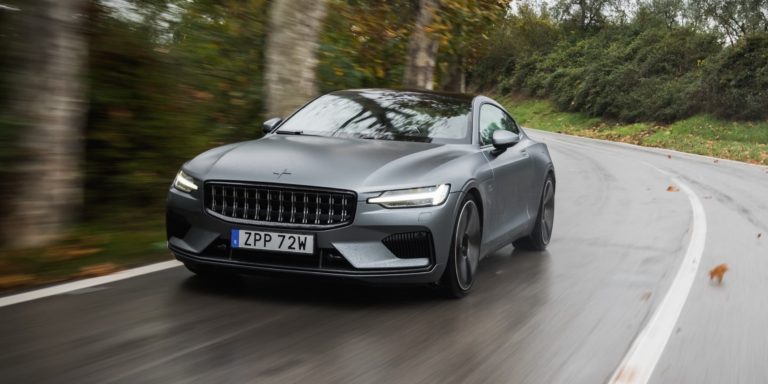
Polestar 1 test drive

While the automotive industry is struggling to keep up with the rise of EVs – many scrambling to bring models to market to avoid being stung by huge environmental fines – this situation surprisingly provides a gateway for firms willing to innovate.

One of these companies is Polestar. It’s a manufacturer that started out as being Volvo’s performance arm, but it’s now separated to become its own carmaker, which will merely focus on electrified models. It’s worth noting that it’s still heavily linked with Volvo under big owner Geely’s ownership.

And here is Polestar’s first model – the ‘1’. Bizarrely for a firm that will, from this point onwards, just launch pure EVs, this new GT car is a plug-in hybrid — but a rather clever one at that.

What’s new?

It’s hardly a surprise to see just how Volvo-like the Polestar 1 is, given its inspiration is the Volvo Concept Coupe. That show car was the first model to sit on Volvo’s new Scalable Product Architecture (SPA) that underpins models like the Volvo S90, but on the ‘1’ it’s been strengthened through a carbon-fibre cross member. That material is key elsewhere, too, as the body of the model is made from carbon-fibre reinforced plastic.

The other big news is the new plug-in hybrid powertrain, with the 1’s setup being completely different to other Volvos – producing 610hp, while also offering the longest claimed electric range of any plug-in hybrid on sale today.

But among all this brilliance is one snarling concern – the Polestar 1 is only available in left-hand-drive, meaning it will be a niche, at best, choice in the UK.

How does it look?

In a word, the Polestar 1’s styling is sensational. The proportions are just about perfect with an extended bonnet, long doors and gorgeous 21-inch alloy wheels.

As we mentioned earlier, its whole inspiration is the Volvo Concept Coupe – hence why it’s recognisable first as a Volvo and second as a Polestar. There’s nothing wrong with that, as Volvos are some of the best-looking cars around.

But it’s remarkable how close the Swedish firm has managed to get this production model to the 2013 concept – the carbon-fibre body said to allow for further scope to exactly replicate a car’s design. It really is one of the best-looking cars around, and it’s undoubtedly that design that will be the selling point for most buyers.

Polestar 1 test drive 2019

What’s the spec like?

Given the Polestar 1 costs an eye-watering £139,000, it’s pleasing just how much kit it comes with. A few equipment highlights are Pilot Assist semi-autonomous driving – something that’s about unique in this class – along with Nappa leather sports seats and active bending LED headlights.

The line-up is simple, too, and aside from splashing out an additional £5,000 to have your car with matte paint, or the choice of three wheel finishes and two interior combinations, that’s where the option boxes end.

That high price might seem a lot – especially when you consider that you could buy a Bentley Continental GT for not a lot more money – but this technology remains expensive, particularly with such an advanced powertrain like this.

What’s it like inside?

If you’ve spent much time in a Volvo interior, you’ll see just how similar the Polestar 1 is inside to its parent brand’s cars. While Polestar has added bits of expensive carbon fibre, a truly terrific Bowers & Wilkins sound system and a few more pleasing luxurious touches, the design and layout is just about identical.

It’s not exactly a bad thing, as Volvo interiors are some of the best around, but there could be an element of disappointed from an owner when they realise that their Polestar has a very similar-looking cabin to a £30,000 Volvo XC40.

The four-seat Polestar 1’s batteries also significantly eat into the boot space, leaving just 143 litres, which will allow for a couple of small suitcases at best. Though, of course, practicality isn’t a priority. A cool touch in the boot, though, is that Volvo has left the batteries on show. “Why hide them?”, was the firm’s reasoning.

What’s under the bonnet?

Open the hood and there lies a supercharged and turbocharged 2.0-litre petrol engine, which itself produces more than 300hp. But joining that are two electric motors, along with two batteries that offer a capacity of 34kWh – larger than some EVs.

The combination of engine and electric itself produces in excess of 500hp, but there is also an integrated starter motor adding further performance, which allows for a maximum of 610hp and 1,000Nm of torque. We’re talking supercar figures here then, and it certainly feels like that – even when carting around 2,350kg of weight. Foot to the floor in ‘Power’ mode and 0-60mph would be met in four seconds, and Polestar says it will reach a top speed of 155mph.

With both electric motors at the rear, it can be run as a rear-wheel-drive car, or all-wheel-drive once the engine kicks in. The gearbox of choice is an excellent eight-speed automatic transmission.

The 34kWh battery also enables the Polestar to have an impressive claimed 78 miles. And as it can also be charged with a 50kWh rapid charger (unlike many PHEVs), the battery can be topped up in less than an hour. That long electric range allows for some astonishingly low running costs – CO2 emissions of just 15g/km, and a claimed fuel economy figure of 403.5mpg.

What’s it like to drive?

One of the key benefits of electric cars is the seamless performance, and this is undoubtedly the key asset to the Polestar. It picks up speed at an alarming rate, and the changeover to when the petrol engine kicks is one of the smoothest of any petrol-electric model.

The stiffer chassis is also noticed – there’s next to no body roll, and direct steering makes it very easy to place through the corners, with torque vectoring instantly sending power to the wheels that need it most to ensure it always feels controlled.

Quite unusually for such an advanced car, it doesn’t come with electronic dampers like most cars in this class do – rather it makes use of high-quality Ohlins ones that have to be manually adjusted. In the standard factory setting, they’re perhaps a bit too firm, though never uncomfortable. They can be adjusted without the need of a specialist, though we reckon it’s a bit of a faff, and we imagine most owners will leave them how they came. The Akebono brakes also provide superb stopping power.

Verdict

In terms of styling, technology and performance the Polestar 1 is an absolute masterclass, and undoubtedly a superb showcase at to what Polestar will hopefully offer from future all-electric models.

But it’s sadly compromised by not being offered as an RHD model (due to such low volumes and the expense of a conversion) – something that makes it deeply impractical in the UK, and also, its expensive list price.

Yet the Polestar 1 will be a fantastic indulgent purchase for those lucky enough to be able to afford it and won’t be bought by those who care about it being impractical or costly. You’re likely to never see one on British roads, but if and when you do, it will be just as special to lay your eyes on as it will be for the person behind the wheel.

Similar cars

Aston Martin DB11 | Bentley Continental GT | Porsche Taycan

Key specifications

Model: Polestar 1
Price: £139,900
Engine: 2.0-litre petrol-electric plug-in hybrid
Power: 610 hp
Torque: 1,000 Nm

Top speed: 155 mph
0-60mph: 4.0 seconds
Fuel economy (combined): 403.5 mpg
CO2 emissions: 15 g/km

Vauxhall Insignia (2017 to 2022)

Summary

The Vauxhall Insignia was a large family/executive car, available in both liftback (Insignia Grand Sport) and estate (Insignia Sports Tourer) body styles.

The latest generation was introduced in 2017, with a higher-riding Country Tourer estate version added a few months later and the GSi performance model a few months after that. The Insignia is or has been sold in other countries as the Opel Insignia, Buick Regal and Holden Commodore.

A facelifted model arrived in UK showrooms in early 2020. As part of this upgrade, the slow-selling estate (Sports Tourer) and Country Tourer models were dropped from the range, leaving only the liftback models on sale.

The Insignia has received particular praise for its comfort, interior space and value for money. However, it has been criticised for not matching the levels of quality or fuel economy on offer from several rivals.

As of March 2026, the Insignia holds a Used Car Expert Rating of C, with a score of 61%.

Key specifications

Body style: Large liftback and estate
Engines: petrol, diesel
Price when new: From £20,045

Launched: Summer 2017
Last updated: Spring 2020
Discontinued: Spring 2022

Media reviews

Highlighted reviews and road tests from across the UK automotive media. Click any of the boxes to view.

The Car Expert

Auto Express

Auto Trader

Business Car

Car

Carbuyer

Carwow

Company Car Today

Daily Mail

Daily Mirror

Eurekar

Evo

Heycar

Honest John

Parkers

The Sun

The Sunday Times

The Telegraph

Top Gear

Safety rating

Independent crash test and safety ratings from Euro NCAP

Overall score: 5 stars
Date tested: July 2017
Date expired: January 2024
Read the full Euro NCAP review

Adult protection: 93%
Child protection: 85%
Vulnerable road users: 78%
Safety assist: 69%

Eco rating

Independent economy and emissions ratings from Green NCAP

No eco rating

The Vauxhall Insignia was not lab tested by Green NCAP during its production life.

Reliability rating

MotorEasy logo 600x167

Reliability data provided exclusively for The Car Expert by MotorEasy

All data based on MotorEasy average workshop costs for extended car warranty claims

The Vauxhall Insignia has a below-average reliability score, according to exclusive extended warranty data provided by our partners at MotorEasy. This score covers both this Insignia model range and the original (pre-2017) version.

Over a quarter of all reported problems with the Insignia relate to its engine, with an average repair bill of nearly £800. The other areas to look out for are the suspension and electrical system, which both account for just over a fifth of repair claims respectively. Gearbox problems are the most expensive, but fortunately they appear to be relatively rare.

If you’re looking at a used Vauxhall Insignia, make sure any extended warranty cover you purchase covers all of these potential problem areas.

Awards

Trophies, prizes and awards that the Vauxhall Insignia has received

2022

  • Carbuyer Awards – Best Used Family Car
  • Company Car Today CCT100 Awards – Best Upper Medium Car

2021

  • Carbuyer Awards – Best Used Family Car
  • Company Car Today CCT100 Awards – Best Upper Medium Car
  • Business Car Awards – Best Upper-Medium Car

2020

  • Company Car Today CCT100 Awards – Best Upper Medium Car

2019

  • Professional Driver Awards – Best Private Hire Car
  • J.D. Power Customer Satisfaction Awards – Most Dependable Midsize Car
  • Company Car Today CCT100 Awards – Best Upper Medium Car

2018

  • Scottish Car of the Year Awards – Best 4×4 (Insignia Country Tourer)
  • Auto Express Awards – Best Family Car
  • Company Car Today CCT100 Awards – Best Upper Medium Car
  • Carbuyer Best Car Awards – Best Large Family Car
  • 4×4 Magazine Awards – Best Crossover Estate

2017

  • Carbuyer Best Car Awards – Best Large Family Car

Similar cars

If you’re looking at the Vauxhall Insignia, you might also be interested in these alternatives

Alfa Romeo Giulia | Audi A4BMW 3 Series | Ford Mondeo | Mazda 6Mercedes-Benz C-Class | Peugeot 508 | Skoda Superb | Toyota Camry | Volkswagen Arteon | Volkswagen Passat | Volvo S60Volvo V60

More news, reviews and information about the Vauxhall Insignia at The Car Expert

Everything you need to know about Vauxhall

Everything you need to know about Vauxhall

Vauxhall Insignia updated for 2020

Vauxhall Insignia updated for 2020

The best used estate cars for under £20,000

The best used estate cars for under £20,000

The return of Vauxhall

The return of Vauxhall

Most new diesel cars still pollute beyond legal limits

Vauxhall Insignia gains 200hp engine

Vauxhall Insignia gains 200hp engine

Vauxhall Insignia GSi review

Vauxhall Insignia GSi review

Vauxhall Insignia Sports Tourer long-term review

Vauxhall Insignia Sports Tourer long-term review

‘Fastest’ Vauxhall Insignia GSi on sale at £33.4K

‘Fastest’ Vauxhall Insignia GSi on sale at £33.4K

Vauxhall Insignia Grand Sport review

Vauxhall Insignia Grand Sport review

Frankfurt: Vauxhall offers four debut models

Frankfurt: Vauxhall offers four debut models

Frankfurt debut for potent Vauxhall Insignia GSi

Frankfurt debut for potent Vauxhall Insignia GSi

Buy a used Vauxhall Insignia

If you’re looking to buy a Vauxhall Insignia, The Car Expert’s partners can help you find the right car

Motors 600x300

Find your next used car with Motors. Find out more

Auto Trader logo 600x300

Find your next new or used car with Auto Trader. Find out more

Carwow logo 600x300

Find your next new or used car with Carwow. Find out more

Tesla unveils ‘futuristic’ Cybertruck electric pick-up truck

0

Tesla has unveiled its first electric pickup truck – known as Cybertruck – at an event in Los Angeles.

However, it’s created headlines worldwide not for the bizarre styling of the vehicle but for a failed demonstration of the vehicle’s supposedly shatterproof armoured windows.

The futuristic-looking vehicle will apparently be released at the end of 2021, and with a range of up to 500 miles, although as with any Tesla launch it’s probably best to pencil it into your diary rather than using permanent ink.

Tesla says the vehicle has “more utility than a truck, with more performance than a sports car”, while company boss Elon Musk attempted to show its ruggedness during a live demonstration at the launch event in Los Angeles.

Not as tough as it looks?

The launch will be best remembered for a bizarre series of demos that have immediately been mocked on social media around the world. Mr Musk first directed Tesla head of design, Franz von Holzhausen, to hit the door of the truck repeatedly with a sledgehammer, before suggesting it was nearly bulletproof.

However, when attempting to show off the Cybertruck’s supposedly shatterproof armoured glass by having Mr von Holzhausen throw a metal ball at it, the glass broke – in two attempts on separate windows.

This led a clearly sheepish Mr Musk to say “at least it didn’t go through” and that there was “room for improvement”.

Tesla also said the top of the range, triple electric motor version of the Cybertruck would be capable of going from zero to 60 miles an hour in 2.9 seconds – comparable with many sports cars.

The truck will start at 39,900 dollars (£31,000) for the single motor version and can be pre-ordered in America now, Mr Musk said.

He had teased the idea of creating a truck for some time, first tweeting about building a truck in 2012, before including the idea in his so-called “master plan” for the company, published in 2016.

Mr Musk also referenced the unusual design of the Cybertruck last year, saying in an interview with Recode that the vehicle had taken on a “futuristic-like cyberpunk, ‘Blade Runner’” design.

As part of the announcement, Mr Musk also unveiled a quad bike built by the company, which can fit into the back of the Cybertruck and also be charged once there.

The Cybertruck is the fourth production model that Tesla has unveiled that is not actually available to buy, and the previous three are not likely to be hitting UK roads anytime soon. Earlier this year, the company revealed the Model Y crossover, while the next-generation Tesla Roadster and the Tesla Semi truck were revealed two years ago and have still yet to start production.

Lexus UX 300e EV revealed

0

Lexus has pulled the covers back on the UX 300e — the firm’s first electric car.

Designed with the Chinese market in mind and based on the existing UX crossover, the Lexus UX 300e features a 150kW electric motor that’s linked to a 54.3kWh battery pack.

As a result, Lexus says it’s capable of covering ‘around’ 250 miles on single charge, with charging speeds of up to 50kW supported. No word yet on how long a charge will take, however.

The existing UX range has a fairly middling score on The Car Expert’s unique Expert Rating aggregator system, which combines reviews from 18 of the top UK motoring websites to give new car buyers the best possible buying information. As of November 2019, the Lexus UX has a score of 67%, which is well behind the class-leading Volvo XC40 and Range Rover Evoque.

Though its powertrain may be a step away from the UX’s regular hybrid powertrain, the styling of the Lexus UX 300e has remained largely identical. The large front grille remains despite the absence of an internal combustion engine, though a new wheel design and an underbody cover have been introduced in a bid to cut drag.

Changes have been made to the platform as well to accommodate the new powertrain. Additional bracing and shock absorber tweaks have been made to aid refinement, which is taken further with new insulation around the battery that aims to cut external road noises feeding into the cabin.

Though it remains to be seen if any new equipment will be added to the car, the Japanese firm has confirmed its ‘LexusLink’ smartphone application will allow owners to preheat the car, as well as check its battery level remotely. An artificial sound is also created by the car — dubbed Active Sound Control — and is delivered into the interior.

Lexus will first introduce the UX300e in China in 2020, with a view to it arriving on the UK market by 2021. Pricing and specifications for the Lexus UX 300e are likely to be confirmed closer to its launch, though expect a bump over the current UX’s £29,905 starting price.

Mini John Cooper Works GP revealed as two-seat ultra-hot hatch

0

Mini has revealed its most hardcore road car yet – the Mini John Cooper Works GP.

Having been confirmed for production last year and teased in a series of images since, the hotly-anticipated Mini has finally broken cover in road-ready guise.

Though easily recognisable as a product of the British firm, it doesn’t take much to realise this is no regular Mini Cooper. Hugely flared wheel arches made from carbon fibre-reinforced plastic are present on all four corners of the car, while its front bumper takes on an extremely aggressive look.

A twin-exhaust exhaust setup sits centrally in a new diffuser, while an eye-catching rear wing sits at the top of the car. Distinctive 18-inch, four-spoke alloys hark back to previous GP models and the look is completed with a grey and red livery.

  • Mini John Cooper Works GP - front | The Car Expert
  • Mini John Cooper Works GP - rear | The Car Expert
  • Mini John Cooper Works GP - top rear | The Car Expert
  • Mini John Cooper Works GP - interior strut brace | The Car Expert

Under the race car-esque bodywork sits a 2.0-litre turbocharged engine, producing 306hp and 450Nm of torque — equalling the latest Mini Clubman John Cooper Works for the title of most powerful Mini ever. Power is sent to the front wheels via an eight-speed automatic gearbox, resulting in a 0-60mph time of five seconds flat while a 165mph top speed is said to be possible.

There’s more at play than just looks and a big engine, though. A number of chassis-stiffening enhancements have been made, while a model-specific suspension setup sees the car sit a centimetre lower than the regular John Cooper Works. A new high-performance brake setup helps slow the car back down, too, while a ‘GP’ mode has been introduced to the stability control system which unleashes the car’s full potential.

The most notable change inside the car is the removal of the rear seats, making the GP strictly a two-seater. In place of the back row is a large strut brace for improved chassis stiffness, with weight savings also achieved as a result.

Sports seats feature and are finished in a Dinamica/leather upholstery combination, while the steering wheel is trimmed in Nappa leather with a 12 o’clock marking and sits in front of 3D-printed metal paddle shifters.

Just 3,000 examples of the Mini John Cooper Works GP are slated for production, with UK pricing kicking off at £34,995. Order books for the car are now open, with the first examples set to be built in March.

Honda Civic upgraded for 2020 model year

0

Honda has rolled out a host of upgrades to its Civic hatchback ahead of 2020.

Currently built in the UK (but not for much longer), this generation of the Honda Civic was first introduced in 2015 — with this update marking the model’s first major upgrade. The Civic range currently has a very decent score of 79% on The Car Expert’s unique new Expert Rating aggregator system, which collates reviews from 18 of the UK’s top motoring websites. This score puts it a few points behind the class leaders but well ahead of many other rivals.

A sportier look for the facelifted model is said to be achieved with the introduction of an ‘elegant’ lower front grille, with smoother surfaces and new styling blades. Tweaked LED daytime running lights follow these new blades, while full LED headlights are now a standard feature across the range.

New 16-inch alloy wheels are included on entry-level cars, while a fresh 17-inch option is now available on higher-spec models. An ‘Obsidian Blue’ paint finish has been introduced as well.

Inside the car, new interior panels are said to ‘reinforce’ a premium approach and an eight-way electrically-adjustable driver’s seat is now included for high-spec cars. A revised infotainment system has been introduced too, which sees the introduction of physical buttons for various features — along with its climate control. Android Auto and Apple CarPlay are both supported as standard.

No changes have been made to the powertrain line-up, which still consists of 1.0-litre and 1.5-litre petrol units, as well as a 1.6-litre diesel option.

Pricing and specifications for the revised Honda Civic have yet to be revealed, though it’s said to be hitting showrooms in January 2020. It remains to be seen if the high-performance Type R hot hatch will benefit from these upgrades, too.

Aston Martin DBX SUV is finally revealed

0

After a lengthy teaser campaign, Aston Martin has unveiled its first sports utility vehicle (SUV) in its 106-year history.

The British luxury car maker hopes the £158,000 Aston Martin DBX will boost its flagging sales in the same way that rival sports car manufacturer Porsche revived its financial fortunes with the first Cayenne SUV more than 15 years ago.

The DBX will be built at Aston Martin’s newly built factory in St Athan, South Wales.

The firm described its first full-size five-seat vehicle as being “extremely adaptable to a wide variety of lifestyle needs and owners”. It offers “equal space and comfort” for passengers in the front and rear, with “class-leading” headroom and legroom.

The DBX has a claimed top speed of 191mph and can accelerate from 0 to 62mph in 4.5 seconds.

  • Aston Martin DBX - side view | The Car Expert
  • Aston Martin DBX - rear view | The Car Expert
  • Aston Martin DBX - interior and dashboard | The Car Expert

Aston Martin Lagonda president and group chief executive Dr Andy Palmer said: “I can’t emphasise enough how incredibly exciting and significant DBX is for Aston Martin.

“Through its development alone, this beautiful SUV has already taken the company into new territories and in inspiring directions.”

He went on: “This is a real landmark for this great British brand and I promise that DBX will reward all who experience it in their everyday lives.”

Despite completely overhauling its sports car line-up in the last few years with the all-new DB11, Vantage and DBS Superleggera models, Aston Martin reported a pre-tax loss of more than £92 million for the first three quarters of this year as sales volumes slid on “tough trading conditions” in the UK and Europe.

The company blamed falling sales in the UK and Europe as well as weak demand for its entry-level Vantage sports car. This is unlikley to be helped by Ferrari launching its new Roma coupe that directly targets rivals like the Vantage.

The new Aston Martin DBX is available to order from your nearest Aston Martin dealership now, with the first deliveries scheduled for spring 2020.

Caterham 420R test drive

0

Caterham’s line-up has expanded in recent years, with variations of its iconic Seven appearing thick and fast. There are supercharged cars, turbocharged cars and cars which follow a familiar formula, like this – the 420R.

Utilising a Ford-sourced engine and featuring a track-focused equipment package, it has been created for those who like to inject a bit of motorsport pedigree into their road car.

But does it still succeed out on the public roads, or is it too sharp and too much of a handful? We’ve been out in the 420R to find out.

What’s new?

Believe it or not, despite its classic styling there’s quite a lot of new features on the 420R. It’s now got LED headlights – a big bonus for Caterhams – as well as new backlit dials and even a heated windscreen. It may not be cutting-edge tech by modern car standards, but for the Seven it’s big news indeed.

But, of course, the main point of a Caterham is to be driven. It’s why, in this R-spec car, you get a limited-slip differential, uprated suspension and a lightweight flywheel. You even get composite race seats and a four-point harness. It’s a serious bit of kit, this, so you can forgive it for not having the latest in comfort-related technology.

How does it look?

The Caterham Seven still looks like nothing else on the road today. Park it near a modern supercar, and it’s likely that people will naturally be drawn towards the dinky two-seater instead. The LED headlights have helped to sharpen things up a bit, and they’re not only better to look at but a lot more effective at night – the standard halogens found on the Seven simply don’t do enough to light up the night in front of you.

The 420R’s styling is more aggressive than other Caterham models, that’s for sure, but it’s still recognisable.

What’s the spec like?

It’ll come as no surprise that the 420R isn’t bristling with technology nor laden with screens and displays. It’s a great antidote to how complex modern cars are, mind you, and the bare-bones experience that you get with a Caterham is one that few other manufacturers can match.

There is the option to fit heated seats – our test car didn’t come with them, however – so this is an extra which could help to slightly lift the comfort levels inside the Seven during a spirited winter’s drive.

What’s it like inside?

It’s worth mentioning that our test 420R came in large body specification, which means that there’s a good amount more room in the cabin than you’d find in a standard Caterham Seven. It opens up the car to those taller drivers for whom a Seven may have been too uncomfortable to drive, as well as those people who find the regular cabin too constrictive.

The sport seats are impressively comfortable and there’s a great sense of snugness when you’re sat in the cabin. The heaters are surprisingly effective too and though the roof is rudimentary in its construction, it does a good job at keeping the worst of the weather out – though we’d always argue that the Seven is best driven with the roof off unless absolutely necessary.

What’s under the bonnet?

The 420 is the entry point into 2.0-litre engine-powered Sevens, with those underneath utilising a 1.6-litre instead. Here, you get 210hp from a Ford-sourced four-cylinder engine, driving the rear wheels through a five-speed manual gearbox. Weight comes in at just 585kg, and Caterham quotes 375hp-per-tonne.

It means that the 420R will go from 0-60mph in just 3.8 seconds before hitting a top speed of 136mph. It’s performance that will scare off most sports cars, and even give some supercars a run for their money. You also get coil spring suspension with Bilstein sport dampers up front and a semi-independent suspension setup at the rear. In addition, sticky Avon ZZS tyres help give the Caterham even more grip.

What’s it like to drive?

Driving the 420R is a mixture of the rudimentary and the sublime. Get out of a modern car – even a run-of-the-mill hatchback and into the 420R and it’s like jumping time periods. The steering is heavy and unassisted, the clutch is snappy when cold and the gearbox has the strong, mechanical feel that you just don’t get today. Around town it’s a challenge to drive, that’s for sure.

But increase the speed and things clear pretty quickly. The Ford-sourced engine just loves to be revved out – you get the best of it towards the top of the rev range – while the perfectly spaced pedals make heel and toe gearchanges a breeze. Then there’s the grip, which in the dry is available in spades. It’s in the wet where the Caterham becomes a bit more of a handful, where the Avon tyres and plentiful power mean that the rear wheels can quickly be overcome with the slightest amount of throttle.

Verdict

The Caterham 420R is arguably one of the sweetest points of the entire lineup. It features a sharp edge that only Sevens fitted with the 2.0-litre engine get, without bringing the lunacy associated with the supercharged 620R range-topper.

Yes, it may not be to everyone’s tastes, but for those who want to get out and experience just how a car should handle, then the 420R is hard to beat. Throw in those optional heated seats and you could have a car which will put a smile on your face in all weathers.

Similar cars

Alpine A110 | Ariel Atom | Lotus Elise | Mazda MX-5 | Subaru BRZ | Toyota GT86 | Zenos E10

Key specifications

Model as tested: Caterham 420R
Price: from £35,490
Engine: 2.0-litre petrol
Gearbox: Five-speed manual

Power: 213 hp
Torque: 203 Nm
Top speed: 136 mph
0-60 mph: 3.8 seconds

Fuel economy (combined): TBA
CO2 emissions: TBA
Euro NCAP safety rating: Not rated
TCE Expert Rating: Not rated

How to avoid car sickness

0

Car sickness is a common problem for many of us. If you’re prone to feeling unwell in a car, even the thought of a long car journey can make your stomach turn.

According to the RAC, one in five people experience symptoms of car sickness, and it’s even more common in children. So it’s something most people have either experienced themselves or had to clean up at one time or another.

Once car sickness sets in, it can be really difficult to recover properly. As with most things, prevention is better than cure – so follow these tips from the start of your journey rather than after you already start to feel ill, as by then it may be too late to prevent your breakfast coming back up again.

One of the key factors in any form of motion sickness – whether it’s in a car, boat or even playing a video game – is a difference between what your eyes and ears are each telling your brain. Most of these tips are ways to try and get your eyes and ears in sync again, which will help to calm the signals being sent from your brain to your stomach.

If you’re one of those who are susceptible to car sickness, or have kids who seem to suffer it a lot, fret no longer. There are some things you can do to help, although it affects everyone differently and therefore the solutions that work best for you may be different too.

We’ve put together this list of tips for keeping a queasy stomach under control on a road trip. Follow them right from the start and you’ll have a much better chance of a happy journey.

Pick the right seat

Passenger in the front seat to avoid car sickness
Most people find sitting in the front is better than the back for avoiding car sickness (PA)

One way to avoid car sickness before even setting off can simply come down to picking the right seat. Minimising perceived motion can be very effective in countering symptoms, and there’s no better place to do that than in the front.

Sitting in the back of a car and staring at a stationary seat in front can trick your brain to think you’re not moving, but the sound and balance signals from your ears will cause confusion in your brain — resulting in the feeling of sickness. Sitting in the middle seat if you must be in the back can help counter this, too.

If you have a car full of people on a long trip, try to rotate everyone’s seating position during the journey so each passenger gets some time up front.

Eyes ahead on a fixed point

Passengers should keep their eyes on the horizon or the road ahead to minimise car sickness
Passengers should keep their eyes on the horizon or the road ahead to minimise car sickness (PA)

This is aimed more at passengers than drivers but looking outside the car on a fixed point is another easy way to help counter the effects of motion sickness.

Looking at passing objects or cars travelling the other way will enhance the effects — so instead, look to fix your eyes on one constant thing, like the road ahead as it stretches out to the horizon.

If you’re helping children, direct their attention to major scenery points ahead in the distance rather than those right by the roadside that will flash past rapidly. In other words, count windmills from wind farms up ahead rather than cows in the paddock alongside.

Fresh air and good ventilation

Open a car window to prevent car sickness
Fresh air can be a big help to prevent both car sickness and drowsiness (PA)

Just like any kind of sickness, breathing fresh air will do wonders to help. Open a window to let it circulate around the car, and have the air conditioning on to keep the cabin well-ventilated and well-cooled. If you have a sunroof, popping that open can help to circulate air as well.

If you’re opening a rear window, you’ll probably need to open at least one front window as well to prevent the annoying buffeting that is likely to result.

Close your eyes and take deep breaths

Sometimes, it’s easier to just pretend you’re not travelling. Closing your eyes can shut off the visual cues of motion that can freak your brain out while focusing on your breathing will distract your mind from everything else.

This tip tends to get mixed results and may not be that useful once you’re already starting to feel nauseous. It’s definitely best to try in the early stages, when you’re not feeling quite right but your stomach is still relatively calm.

Obviously, this tip is only aimed at passengers. We don’t generally recommend that drivers closer their eyes while behind the wheel…

Distract yourself

Music can help prevent car sickness
Music can be helpful, too (PA)

Similar to our previous tip of closing your eyes, distracting yourself by other means can help with reducing the symptoms of car sickness. Chatting to other people in the car or listening to some talk radio (or an audiobook) can help.

Some people find listening to music through earphones can be a particular benefit, rather than through the car stereo as you normally would. As well as the distraction element of having songs to concentrate your mind on, earphones can help to block out some of the external signals to the ears that contribute to motion sickness. It’s definitely worth a try.

For kids, a game like “I Spy” can also help distract their attention away from their discomfort.

Think about your food choices

If you’re prone to car sickness, eating a heavy meal or drinking alcohol before getting into the passenger’s seat, or even while there, could heighten your discomfort.

Eat and drink well in advance of your journey, and pack light snacks for the trip if you’re in need of something to eat.

Put the book or phone down

Stop reading to help manage car sickness symptoms
Stop reading to help manage car sickness symptoms (PA)

While distracting yourself can help with motion sickness, some ‘distractions’ will only serve to make it worse. As mentioned before, fixing on a static object in the car can mess with your senses — and as a result, reading a book or playing on your phone or tablet while on the move can only worsen things.

Take a break

A lot of these tips will help delay the onset of car sickness, but once it takes hold it can be very difficult to recover. In this situation, the best cure is usually to be stationary and out of the car altogether.

On longer journeys, taking frequent breaks can minimise the chances of symptoms worsening — and also gives you a chance to take in some fresh air.

Use this chance to grab a drink or a light bite to eat, too. Stretch your legs with a quick walk and let the kids run around for 10-15 minutes to get the circulation going again.

Seek medical advice for your car sickness

No matter how hard some try, car sickness just won’t go away. In this case, it’s worth speaking to your doctor or pharmacist, who may prescribe you with appropriate medication to ease the symptoms.

This can affect you more as you get older, and you may find that your tolerance for car journeys decreases over time. As with many other balance-related issues, the ears are key to avoiding or suffering from car sickness, and this is something that becomes more of an issue as we age.

Summary

As we said at the top of this article, prevention is always better than cure. Actively managing your behaviour (or your kids’ behaviour) on a car trip can help to prevent the onset of car sickness, or at least help control your queasiness.

Once your stomach starts trying to turn itself upside-down, there’s no easy way out and you’re pretty much consigned to a miserable spell by the roadside. So plan ahead and everyone will enjoy the journey a whole lot more.

This article was first published in November 2018. Most recently updated November 2019.

Ford unveils all-electric Mustang Mach-E

1

Ford has revealed its all-electric rival to the Tesla Model X and Jaguar I-Pace – The Ford Mustang Mach-E.

An all-new, purpose-built vehicle, the Mustang Mach-E is one of 14 electrified Ford vehicles due to come to Europe by the end of 2020.

The launch model will pack 337hp, while a more powerful 465hp GT version is due to arrive at a later date.

It will be launched initially with two battery pack sizes and three power outputs. At the entry point of the range sits a single motor-driven version with either a 75kWh battery and a 245hp motor or a 99kWh battery and a 290hp motor. Both should hit 60mph in under eight seconds, while ranges of 280 miles and 370 miles should be possible from each respective powertrains.

Further up in the range sits a twin-motor all-wheel-drive version with the choice of either a 75kWh battery and 245bhp, or a 99kWh battery and 337hp. Both versions should go from 0-60mph in under seven seconds while returning claimed ranges of 260 and 335 miles.


How exactly is an electric SUV a Mustang?

Stuart Masson

The biggest discussion point of Fords new electric model has been the use of the Mustang name for a vehicle that quite clearly bears no relation to the familiar two-door Mustang coupé.

The Mach-E is Ford’s first step to expanding the Mustang name into a sub-brand, in much the same way that the Transit name now covers every van in the Ford rage, or the way that Land Rover now uses the name Range Rover on four different models.

The company hasn’t said what model will be the next to carry the Mustang brand, but we probably won’t have to wait too long to find out.


Bill Ford, Ford Motor Company executive chairman, said: “At the first-ever Detroit auto show, Henry Ford said he was working on something that would strike like forked lightning.

“That was the Model T. Today, the Ford Motor Company is proud to unveil a car that strikes like forked lightning all over again. The all-new, all-electric, Mustang Mach-E. It’s fast. It’s fun. It’s freedom. For a new generation of Mustang owners.”

Inside, the Mach-E benefits from a 15-inch infotainment screen with touch, swipe and pinch controls which, Ford state that ‘every smartphone owner will be comfortable using’.

First deliveries are expected to commence in October next year, with prices likely to start around £40,000.