Cupra has announced a limited-edition version of its not-a-SEAT Ateca performance SUV.
Restricted to just 100 units in the UK, the Cupra Ateca Limited Edition brings with it both increased performance and a higher specification than the standard car.
Of the 100 allocated cars, 80 will be finished in Rhodium Grey or Energy Blue, while 20 will be painted Graphene Grey and will also be fitted with a titanium Akrapovic exhaust system to really annoy your neighbours for an extra £3K.
Regardless of whether it has a 7kg lighter exhaust, the Limited Edition model uses the same 2.0-litre four-cylinder petrol engine as the standard Cupra Ateca, driving all four wheels. It can go from 0-62mph in just under five seconds before hitting a top speed of 152mph.
If you like the idea of bigger numbers at extra cost that somehow don’t improve performance figures, you’re in luck. A dealer-fitted ABT Sportsline power upgrade is now available for the Cupra Ateca (presumably for regular models as well as the Limited Edition cars). This boosts power from 300hp to 350hp and torque from 400Nm up to 440Nm.
For some reason, a 16% increase in power and 10% increase torque yields no improvement to official acceleration results. Supposedly, the ABT pack provides better mid-range torque delivery to “improve drivability and response when on the move”, although no figures are quoted. Top speed also increases by 6mph to 158mph, which will come in very handy if the government decides to increase the national speed limit to 160mph.
Visually, there are a few changes to the Cupra Ateca Limited Edition to distinguish it from the regular model (as well as the garden-variety SEAT Ateca). Newly-designed 20-inch copper-highlighted alloy wheels come as part of the package, as well as a copper-thread carbon fibre roof spoiler. The same copper thread effect is used on the wing mirror covers, too. Those larger alloy wheels (up from 19 inches on the standard model) mean that the Cupra Ateca Limited Edition can be fitted with performance 18-inch Brembo brakes for better stopping power.
Inside, the biggest talking points are that the seats are covered in petrol blue Alcantara and the interior mounldings get a copper carbon fibre look to match the exterior.
Prices for the Cupra Ateca Limited Edition start from £42,120, rising to £45,160 for the same car fitted with the Akrapovic exhaust system and finished in Graphene Grey paint.
It’s no understatement to say that the 500 is Fiat’s icon – a model that keeps soldiering on with minimal changes, yet never seems to look a day older.
The reborn 500 was launched in 2007, and while there have been more special editions than there have been DFS sales, as well as a mild facelift a few years back, it’s more or less the same car that it was 13 years ago.
But with manufacturers increasingly under pressure to make their cars more environmentally friendly, it’s time for the first electrified Fiats to show their faces…
First things first, we should get out of the way that this isn’t technically Fiat’s first electrified model, as a pure-electric 500e has previously been sold in small numbers in the United States.
However, it’s the first electrified model for Europe – featuring a new 1.0-litre petrol engine mated to an electric motor and battery, which will over time replace the existing 1.2-litre petrol unit previously available.
Slightly confusingly, the Fiat 500 Hybrid isn’t a ‘proper’ hybrid in that it can’t run on electrical power alone – so it’s not a ‘zero emissions capable’ vehicle. It’s actually a mild hybrid, which means that the electrical motor and (very small) battery pack are only used to augment the petrol engine. This provides improved performance and fuel economy, but there’s no electric-only mode like you’d get on a Toyota Yaris Hybrid.
To help celebrate the new powertrain, there’s yet another special edition – the Hybrid Launch Edition in this case. More on that later.
How does it look?
Fiat says most 500 buyers choose them because of how they look – something that comes as no surprise given the vibrant chic looks, the vast array of colour combinations, and variety of specifications to choose from.
For a 13-year-old design, the 500 still looks fresh, modern and appealing, with mild tweaks continuing to make it stand out in the supermini class. None more so than the Hybrid Launch Edition version tested here with its cool Dew Green paintwork, special hybrid badging and satin chrome detailing. Our model’s panoramic sunroof and 17-inch alloy wheels also help it to look the part, and will no doubt continue to make it that desirable fashion accessory that many view it as.
What’s the spec like?
The change from the old 1.2-litre engine to a 1.0-litre mild-hybrid has added around £500 to the price of the model – though you’ll be able to recoup some of this expense back with the lower running costs.
It means that prices for the model now start from £12,665, meaning it’s not quite the bargain it once was. But our top-spec Launch Edition is too pricey – costing from £16,795 – enough to buy you a Volkswagen Up! GTI.
It offers plenty of kit, though, including LED running lights, a Beats sound system, rear parking sensors and climate control to name but a few niceties.
What’s the Fiat 500 Hybrid like inside?
The same flair and character of the exterior makes its way into the 500’s cabin, too, with a whole host of cool details offering something a little different in the city car class. There’s a colour-coded matt dash, for example, and a glass roof throws plenty of light into the cabin.
However, the ageless design can’t be said for the cabin, with plenty of cheap plastics making it feel a bit low-rent next to the new wave of softer touch plastics. These would be forgivable on the entry-level 500, but don’t quite cut the mustard on this top-spec version.
If you choose this model, though, you’re treated to some special seating upholstery made of ‘Seaqual’ yarn. They feel and look pretty ordinary, though they’re made entirely from recycled plastics, some of which have come from the sea. Bragging about them will certainly earn you brownie points with the kale and spinach smoothie brigade…
What’s under the bonnet?
The 1.0-litre petrol unit in the 500 Hybrid is the latest in Fiat’s FireFly engine series, though it’s the first to be fitted with mild-hybrid technology. It combines the block with a belt-starter generator and a small battery.
Watching paint dry feels quicker than waiting for the 500 to get up to speed, with just 70hp and 92Nm on tap. The sprint from 0-60mph takes a rather lethargic 13.8 seconds, and maxed out, Fiat says it will hit 104mph. The firm also promises that it delivers 25 per cent more torque than before, though you’d struggle to tell.
The mild-hybrid technology does, however, bring efficiency savings, with Fiat claiming it will return 53.3mpg, while CO2 emissions are particularly low at 88g/km – that’s 20% less than the outgoing 1.2-litre petrol engine.
What’s the Fiat 500 Hybrid like to drive?
Fiat has the city car market nailed, and the 500 is truly excellent in urban areas. Its light steering (enhanced further with a ‘City’ mode) makes it incredibly nippy, and tremendously easy to park. And while it takes a while to get up to speed, that doesn’t matter too much when you’re zipping between the lights.
The ride could be more comfortable, though refinement on the whole is decent, and thanks to a six-speed manual transmission (most cars in this segment only have five gears) it doesn’t feel too far out of its depth at higher speeds. That’s providing you keep at a constant speed – trying to overtake at anything above 50mph feels like an impossibility.
One bizarre feature of the hybrid, though, is the coasting function. It’s only available at slower speeds, though it’s unlike many mild-hybrids which automatically disengage once you haven’t been accelerating for a few seconds. That’s because the Fiat needs you to put into neutral to be able to take advantage of this – it’s something that feels unnatural, and also not particularly safe.
Verdict
Making the 500 a hybrid feels like a step that Fiat was forced into doing, rather than one it wanted to – the bosses themselves admitting that they’ve watched from afar to see if electrified models take off, before choosing to join the party once they’re convinced people are actually buying them.
That’s maybe a harsh evaluation, as the new system is smooth and returns decent efficiency, but it still offers limited performance and the need to take it out of gear to make it coast just feels lazy.
But none of this detracts from the fact that the Fiat 500 remains the most characterful, stylish and lovable city car on sale today – something that none of its rivals can even get remotely close to it for.
It was a slow start to the year for the car industry, with private new car sales down 14% in January compared to the same month last year. Although consumer hesitation was unexpected as Brexit frenzy peaked ahead of the UK’s departure from the EU at the end of the month, the scale of the fall will have been painful for dealers and manufacturers.
Ford certainly started the year strongly, with the Fiesta and Focus locking out the top two spots on the sales charts, while the locally-built Nissan Qashqai also had a good month to place third. As for the rest of the top ten, read on…
The UK’s ten best-selling cars, January 2020
1. Ford Fiesta
The champ has taken a bit of a pummelling in recent months, with the Vauxhall Corsa and Volkswagen Golf taking turns at the top of the charts late in 2019. There have even been reports that Ford is cutting European production of the Fiesta due to a slowdown in UK demand.
However, the Fiesta certainly started 2020 with a bang, with more than 6,000 cars registered in January. That’s nearly 13% better than last year in a market that fell 7%, which is impressive.
The Fiesta currently holds an Expert Rating of 86% in The Car Expert’s New Car Ratings database, which compares reviews from across the UK motoring media. This is higher than any other car in the supermini class and the second-highest rating in this month’s top ten best-sellers list, so it seems that motoring journalists and the buying public are in agreement on the Fiesta’s qualities.
Like its little brother, the Ford Focus had a strong month in January. Not only was it second on the charts, but Ford registered 20% more Focus models this year than in the same month for 2019. Given that its two top models had a stellar month, the rest of the Ford range must have underperformed since the brand sold fewer cars in total than this time last year.
The Ford Focus currently holds an Expert Rating of 81% in our New Car Ratings database, just 1% lower than the outgoing Volkswagen Golf. However, a new Golf is looming on the horizon and will present the Focus with a tough new challenge this year.
The Nissan Qashqai keeps on keeping on, finishing 2019 in sixth place on the sales charts and starting 2020 in third place. Not bad for a model that is expeced to be replaced by an all-new model later this year.
As usual, the Qashqai maintained its title of the best-selling British-built car. In fact, it was the only British-built car in the top ten this month. It was also comfortably the most popular crossover model, with almost double the registrations of the Kia Sportage
The Nissan Qashqai currently holds an Expert Rating of 74%
in our New Car Ratings database, which is midfield for the compact
crossover segment and in the bottom half of scores for a Top Ten-selling
car.
It’s the last days on sale for the current Vauxhall Corsa, as the all-new model starts making its way onto British roads. Still, the old one keeps racking up sales as Vauxhall clears out the remaining stock, starting 2020 exactly where it ended 2019 in fourth place.
It might have been a popular car over the last six years, but the Vauxhall Corsa only holds an Expert Rating of 64%, which is the lowest score among this month’s top ten cars according to our Expert Rating aggregator. Reviews for the new model have been significantly better, so we expect it to achieve a better Expert Rating once we collate them all shortly.
Third, fourth and fifth places were all filled by models in run-out mode. Like the Corsa, the current Volkswagen Golf is about to make way for an all-new model that should land in the next month or two. ANd like the Corsa, the outgoing model keeps on selling in numbers that newer rivals would kill for.
The Golf enjoyed a titanic sales tussle with the Ford Focus throughout 2019, eventually winning that battle by just over 2,000 units. After the first month of 2020, however, it’s already 1,300 units behind the Focus. Volkswagen dealers will be looking forward to getting the new Golf Mk8 into their showrooms very soon.
Despite being on sale since 2012, the Mk7 Volkswagen Golf still holds an Expert Rating of 82% in The Car Expert’s New Car Ratings database, which is the best rating of any car in its class. Can the new model top this?
The darling of the aspirational small car set continues to be the Mercedes-Benz A-Class. It was the fifth best-selling car in the UK in 2019, and starts 2020 only just down on that in sixth place. Mercedes-Benz overall was the third best-selling brand in the UK, so maybe it’s time we stop referring to it as a premium brand and recategorise it as a mainstream or volume brand.
The Mercedes-Benz A-Class has an Expert Rating of 77% in The Car Expert’s New Car Rating system. It ranks highly for safety, winning awards from Euro NCAP and Thatchamfor its protective qualities.
A regular lurker in the lower half of the top ten is the Kia Sportage, which reappeared in January. It was a good month for Kia’s biggest-selling model, which finished in tenth place in full-year registrations for 2019.
The Sportage currently holds an Expert Rating of 72% in our aggregated New Car Ratings database, which is midfield for medium SUVs but a couple of points behind the best-selling Nissan Qashqai and quite a margin behind the top cars in the mid-size SUV segment.
It was a good start to the year for the BMW 3 Series range, continuing on its strong end to last year.
The 3 Series range continues to grow, with the Touring (estate) models now on sale alongside the saloon, and an ever-increasing number of variants available.
With a score of 88%, the new BMW 3 Series has the highest Expert Rating of any car in the top ten, according to our unique New Car Ratings aggregator. Even though this has fallen slightly since launch, when it rated more than 90%, it’s still comfortably clear of anything else in its class.
The Volkswagen Polo was the ninth best-selling car in the UK in 2019, and that’s exactly where it starts 2020. It’s the third of three superminis in the top ten chart this month, although a long way off the numbers generated by the Ford Fiesta and Vauxhall Corsa.
The Polo holds an Expert Rating of 79% in The Car Expert’s New Car Ratings calculator, which is good but a fair way behind the class-leading Fiesta.
It’s a new face in the final place of the top ten this month, as the Vauxhall Grandland X makes an appearance. The largest of Vauxhall’s crossover has been buoyed by a growing model range, with a plug-in hybrid powertrain now available.
Like the Corsa, the Grandland X doesn’t let average media reviews get in the way of scoring decent sales numbers. The Grandland X currently holds an Expert Rating of 69% based on 16 UK media reviews, according to our unique aggregator, which is in the bottom half of its class and well off the pace of the class-leading Peugeot 3008.
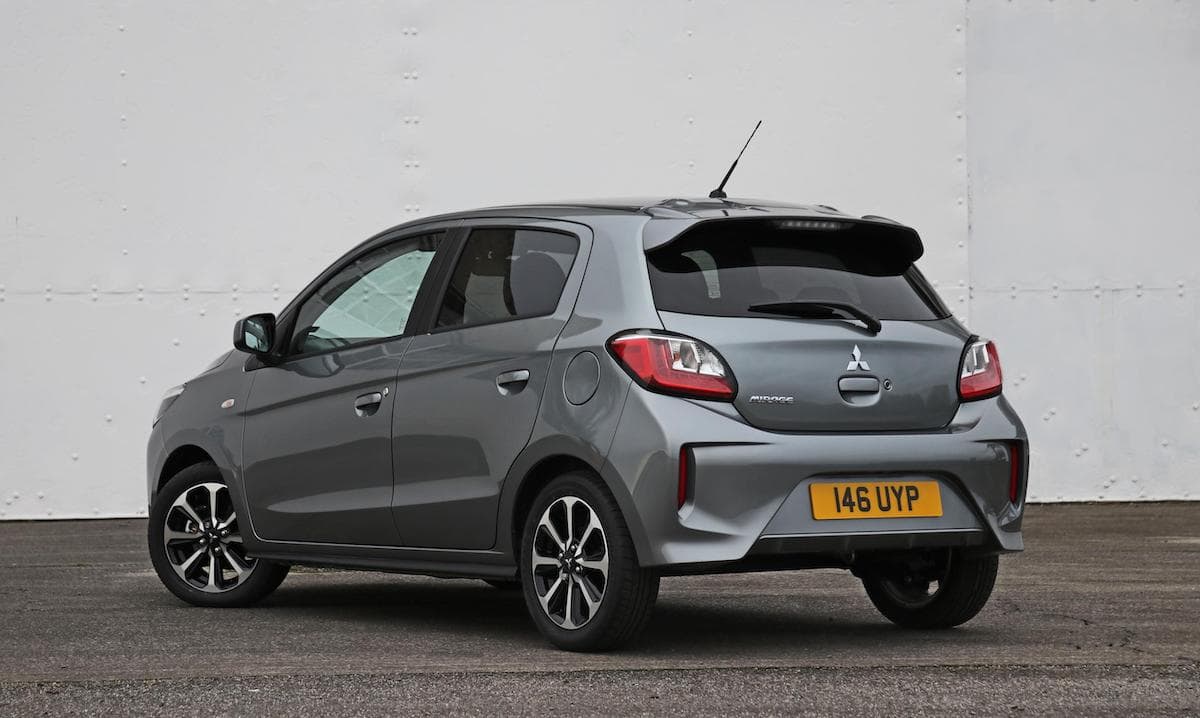
The revised Mitsubishi Mirage is now available in the UK, with pricing starting at £10,550.
At its entry price, the supermini comes in ‘Verve’ guise which brings electric windows, a leather-trimmed steering wheel, a rear spoiler, air conditioning, Bluetooth audio support and a height-adjustable driver’s seat to the car.
Moving up to £12,495 ‘Design’ trim builds on that with 15-inch alloy wheels, keyless start, an infotainment system with Android Auto and Apple CarPlay support, faux leather/fabric upholstered seats, a red-accented front grille, rear privacy glass, electric folding mirrors and a leather-trimmed gear stick.
Available at the launch of the Mirage is range-topping ‘First Edition’. With a £14,035 starting price, this adds LED headlights and daytime running lights, chrome accents to the front grille, rear parking sensors, cruise control, heated front seats, front fog lights and Forward Collision Mitigation (autonomous emergency braking) to reduce the risk of accidents. These variants stand out with ‘First Edition’ badging too.
Initially introduced in 2012, revisions to the Mirage for 2020 have brought a new front end to the car to bring it more in-line with Mitsubishi’s larger offerings as well as a broadened rear bumper. Revisions have been made to the cabin to up its quality, including new inserts and upholstery.
Powering all variants of the supermini is a 1.2-litre naturally-aspirated petrol engine, sending 79bhp and 106Nm of torque to the front wheels via a five-speed manual, with the option of a CVT automatic available. In manual ‘Verve’ specification — the Mirage’s most efficient guise — it’s said to return 56.5mpg while emitting 113g/km of CO2.
Order books are now open, with the new Mitsubishi Mirage said to be arriving in showrooms this week.
Consumer new car purchases fell by just under 14% compared to the same month a year ago, according to data published this week.
Some 11,700 fewer cars new were registered in January than during the same month in 2019, according to the Society of Motor Manufacturers and Traders (SMMT). The majority of this fall was due to a drop in private new car sales – down 14% – while fleet sales were down by just over 2%
With the frenzy of Brexit activity reaching a peak in January as the UK finally made good on its 2016 referendum vote to leave the EU, customers kept their wallets firmly in their pockets. The industry will now be nervously waiting to see if the market bounces back in February and the all-important registration month of March.
(SMMT) – which means any comments about how to spell ‘January’ should be directed their way…
Diesel sales plumb new depths, EVs keep improving
Sales of diesel cars* were down 27% year-on-year, falling below a market share of 20%. This suggests that fleet buyers are following consumers in abandoning diesel in ever-growing numbers. The SMMT press release still talks about “confusion” over diesel cars, but there appears to be no confusion at all from buyers at all – they very clearly don’t want diesel cars.
Alternatively-fuelled vehicles (electric cars, plug-in hybrids, regular hybrids) reached a record market share of almost 12% in January, up from less than 7% in the same month last year.
(SMMT)
Transport Secretary Grant Shapps claimed the figures show Government investment is “powering the electric transition across the UK’s roads”, but the reality is probably somewhat different.
Sales for plug-in hybrids more than doubled from the artificially low numbers a year ago, when a number of plugin models had been temporarily withdrawn from sale due to WLTP compliance dramas. The number of pure electric cars leaving showrooms tripled compared with January 2019 – largely thanks to the new Tesla Model 3, which has been a strong seller since its launch last August.
Neither of these is directly connected to government actions, although ongoing investment in electric vehicle infrastructure will certainly encourage more car buyers to go electric.
*including diesel mild hybrids, which the SMMT has recently decided to report separately
Good times, bad times
While the overall market took a New Year’s tumble, some brands started off 2020 better than others.
After taking a bit of a beating at the end of last year, the Ford Fiesta returned to the top of the sales charts in January. And right behind it was its bigger brother, the Ford Focus.
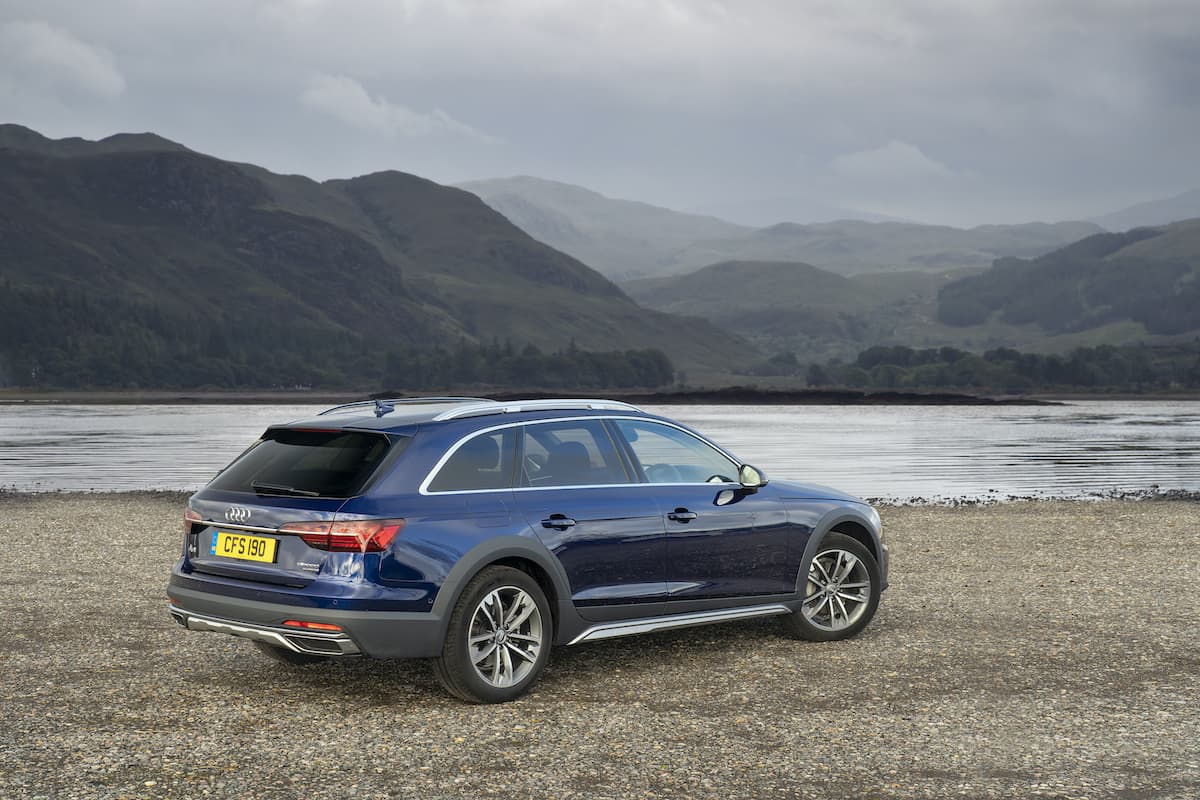
The Audi A4 is a compact executive model available as either a saloon or estate (called the A4 Avant). It sat between the smaller A3 saloon and larger A6 saloon and estate models. The current model was launched in 2015 and received a mid-life update in 2019. Production ended in 2024 and the car has now been replaced by the new Audi A5.
The top-spec A4 model was called the S4 and there is also a more off-road-capable model called the A4 allroad quattro. There was a high-performance model called the RS 4.
The Audi A4 range received generally positive reviews from the UK motoring media, although overall opinions varies from mild disinterest to strong enthusiasm. The A4 allroad quattro model tended to score slightly lower than the regular A4 models, while the top-spec S4 scored slightly higher from car enthusiast titles. The A4 got consistent praise for its build standards and interior quality, but lagged behind rivals for driving enjoyment and offers no hybrid or electric versions.
The Audi A4 has now ended production, and is the final last fossil-fuel-powered A4 model. Audi is splitting its models names – EVs will have even numbers, while combustion models will have odd numbers. So the replacement for this A4 will be the new Audi A5, while there will be a new electric A4 coming along in the next year or two.
No longer on sale, the Audi A4 range has a Used Car Expert Rating of D, with a score of 59% and a similar score as a used car. It earned decent media review scores and its CO2 emissions are low, with these results countered by historically poor reliability and high running costs.
Interior quality still sets the standard for the class
Enormous range should cover pretty muxh every need
Much better to drive than previous models
Competitive finance and leasing packages
Audi A4 lowlights
Can’t match a BMW 3 Series for driving dynamics
No electrified models available
Boot space, especially in estate version, not best in class
Allroad is quite expensive compared to regular versions
Key specifications
Body style: Medium saloon and estate Engines: petrol, diesel Price when new: From £38,985 on-road
Launched: Autumn 2015 Last updated: Autumn 2019 Ended production: Spring 2024
Image gallery
Media reviews
Highlighted reviews and road tests from across the UK automotive media. Click any of the boxes to view.
The Car Expert
+
Model reviewed: A4 Avant “”It scores both in practicality, out-spacing its BMW and Mercedes rivals in all important areas, and in the sheer pleasure of being inside it and driving it.” Read review
Model reviewed: A4 saloon “It’s not a sports car, but it will enable one to complete a 200 miles-plus motorway journey in the most unfussy way possible, arriving relaxed and ready.” Read review
Auto Express
+
Model reviewed: A4 saloon Score: 8 / 10 “The Audi A4 offers technology and quality when compared to its small executive saloon rivals.” Read review
Model reviewed: Range review Score: 8 / 10 “The A4 keeps its place as a sensible, no-nonsense, modern and upmarket saloon car in a class of increasing complexity.” Read review
Model reviewed: Avant range review Score: 8 / 10 “Audi has really gone to town on the latest A4, with mild-hybrid tech and improved infotainment.” Read review
Model reviewed: S4 Score: 8 / 10 “The S4’s switch to diesel power might seem to come at an odd time, but it’s a powertrain that’s a perfect match for the car’s character.” Read review
Model reviewed: A4 allroad Score: 6 / 10 “Get a mix of estate car practicality and SUV looks with the Audi A4 Allroad” Read review
Model reviewed: A4 Avant Score: 8 / 10 “The Audi A4 Avant estate is everything you’d expect it to be: it’s a more practical version of the classy and refined A4 saloon.” Read review
Auto Trader
+
Model reviewed: Saloon range Score: 8 / 10 “The Audi A4 will be near the top of any executive car buyer’s shortlist, and it thoroughly deserves its place there. It’s enjoyable and comfortable to drive, a joy to sit in, practical enough for a family and very competitive on kit and cost. One of the best cars of its type.” Read review
Model reviewed: A4 Avant estate range Score: 8 / 10 “The Audi A4 Avant will be near the top of any prestige estate car buyer’s shortlist, and it thoroughly deserves its place there. It’s enjoyable and comfortable to drive, a joy to sit in, practical enough for a family and very competitive on kit and cost. One of the best cars of its type.” Read review
Model reviewed: A4 allroad estate Score: 8.2 / 10 “The Audi A4 allroad is an exceptionally refined and comfortable motor, with a gem of an engine range that produces strong performance and excellent efficiency. It also provides estate-car versatility, an immaculately tailored cabin and a superb four-wheel-drive system.” Read review
Car
+
Model reviewed: Range review Score: 8 / 10 “It now has a sharper look, a suitably tech-heavy interior to keep you entertained, and a wide selection of engines to pick from.” Read review
Car Keys
+
Model reviewed: Saloon range Score: 9 / 10 “The new A4 continues the theme of what Audis are best known – comfort and refinement. The update that has been given has made the model step in-line with its key rivals from BMW and Mercedes.” Read review
Model reviewed: A4 allroad estate Score: 7 / 10 “Compared to the regular Audi A4 Avant, the A4 allroad is noticeably less poised on public roads, as well as being more exensive to run. If, however, you genuinely need some off-road capability, the A4 allroad is an interesting alternative to an SUV.” Read review
Carbuyer
+
Model reviewed: S4 saloon Score: 8 / 10 “For discreet, luxurious and swift motoring, the Audi S4 takes some beating” Read review
Model reviewed: A4 saloon Score: 8.6 / 10 “With the finest interior in its class, the Audi A4 is a comfortable and affordable-to-run executive saloon.” Read review
Model reviewed: A4 Avant Score: 8.6 / 10 “The Audi A4 Avant is a thoroughly modern yet conservative estate car, with a big boot and a sophisticated interior.” Read review
Model reviewed: A4 allroad Score: 7.8 / 10 “The Audi A4 Allroad retains the best aspects of the standard estate, but adds improved ride comfort and increased off-road ability” Read review
Carwow
+
Model reviewed: S4 Avant estate Score: 8 / 10 “The Audi S4 Avant has a strong diesel engine and handling that’ll put a smile on your face, but also a boot big enough for a family. There are better-handling cars still, mind.” Read review
Model reviewed: S4 saloon Score: 8 / 10 “The Audi S4 has a stonking diesel engine and handling that’ll put a smile on your face, but also fuel economy that won’t get you down. There are better-handling cars still, mind.” Read review
Model reviewed: A4 Avant estate range Score: 8 / 10 “The Audi A4 Avant has top-drawer interior quality and comes with a high level of technology and standard kit. If you value a thrilling drive or huge boot space, though, there are better.” Read review
Model reviewed: A4 allroad Score: 8 / 10 “The Audi A4 allroad is beautifully made inside and comes with a high level of technology and standard kit. If you value edgy design or a thrilling drive, though, there are better options.” Read review
Model reviewed: A4 saloon range Score: 8 / 10 “The Audi A4 feels solidly put together and comes with a cabin roomy enough to seat five, but alternatives are more fun to drive and don’t reserve desirable options for top-spec cars.” Read review
Company Car Today
+
Model reviewed: 2.0-litre diesel automatic 25 TDI Sport estate “Slight visual uplift, better infotainment screen and more efficient engines are all welcome, but it’s not a radical upgrade to a car that is already well liked by company car drivers.” Read review
Daily Mail
+
Model reviewed: Range overview “It’s a civilised and comfortable car to drive with good road manners and typically smart but minimalist interior styling, punctuated by the new free-standing 10.1-inch touchscreen which dominates the dashboard and comes as standard.” Read review
Evo
+
Model reviewed: A4 saloon range Score: 8 / 10 “Still not the driver’s car of the class, but the A4 is strong in all other areas.” Read review
Model reviewed: S4 TDI Score: 8 / 10 “No B-road thriller, but the latest S4 is good to drive and makes more sense than ever in its new diesel format.”
Read review
Model reviewed: S4 TDI Score: 8 / 10 “No B-road thriller, but the latest S4 is good to drive and makes more sense than ever in its new diesel format.” Read review
Model reviewed: S4 Score: 8 / 10 “The first thing that strikes you about the S4 is how refined it is.” Read review
Model reviewed: A4 Avant S Line Score: 8 / 10 “The latest Audi A4 Avant builds on solid, refined reputation of its predecessors with impressive, if not inspiring dynamics.” Read review
Model reviewed: A4 allroad Score: 8 / 10 “It’s perfect if you want the space of an estate, some off-road ability but you can’t live with the shame and ignominy of having an SUV.” Read review
Heycar
+
Model reviewed: A4 allroad range Score: 7 / 10 “Cars like the Audi A4 Allroad have become something of a countryside staple. Much like Barbour waxed jackets, border collies and colourful bunting, there seems to be one in almost every quaint village car park.” Read review
Model reviewed: Saloon range Score: 8 / 10 “No matter how popular SUVs of all shapes and sizes become, there will always be demand for the good old saloon. But with a wide range of talented opposition, why should you choose an Audi A4? Simply put, it’s one of finest examples of the breed, with strong abilities and very few faults.” Read review
Model reviewed: Estate range Score: 8 / 10 “Audi is one of the few premium marques that sells almost as many estates as it does saloons. This practical body style – which it calls Avant – fits with the company’s understated styling cues and four-wheel drive legacy.” Read review
Honest John
+
Model reviewed: A4 allroad quattro Score: 8 / 10 “There are few natural alternatives to the Audi A4 allroad, the Volvo V60 Cross Country being the most obvious. So the Audi has made a niche for itself. But it’s an expensive niche. With prices starting at more than £35,000 it’s far from cheap.” Read review
Model reviewed: Range overview Score: 10 / 10 “For those who demand the best refinement and quality, the Audi A4 is hard to beat. It might not be quite as sharp to drive as the BMW 3 Series on a country road, but on motorways it’s quieter and more relaxed, plus it is available with a huge range of technology.” Read review
Model reviewed: 2.0-litre diesel automatic Ultra Sport “Audi has clearly worked hard to improve the agility of the A4 and it does feel a lot better, but it doesn’t quite match the finesse of the BMW 3 Series or the rewarding cornering ability of the XE.” Read review
Motoring Research
+
Model reviewed: Range overview Score: 8 / 10 “Avoid the largest alloys and it delivers a nice, cushioned ride, especially if you opt for the adaptive suspension. For drivers who spend their time pounding the motorways of Britain, the Audi A4 is a delight. For those who prefer to take the long way home, the BMW remains the class leader.” Read review
Motors
+
Model reviewed: Range overview Score: 9 / 10 “The Audi A4 has a high-quality and roomy interior, and is very refined”
Read review
Parkers
+
Model reviewed: A4 saloon range Score: 9 / 10 “High-quality compact executive is a great all-rounder” Read review
Model reviewed: A4 Avant range Score: 8.4 / 10 “Classy and refined compact executive estate” Read review
The Sunday Times
+
Model reviewed: 2.0-litre diesel automatic 50 TDI quattro S Line Score: 8 / 10 “A lovely thing to sit in but arguably not the best exec saloon to drive.” Read review
Model reviewed: allroad quattro Score: 8 / 10 “If an SUV isn’t your style but you want a car that’s made up to great escapes, the Audi A4 allroad makes a strong case for itself. It looks as athletic as a pair of Nike cross-country running shoes and, importantly, can deliver on its promises. And allroad Audis tend to hold their value well, making them a shrewd purchase.” Read review
Model reviewed: 3.0-litre diesel automatic quattro S Line Score: 8 / 10 “A slice of dull perfection.” (Jeremy Clarkson) Read review
The Telegraph
+
Model reviewed: A4 Avant range Score: 6 / 10 “The Audi A4 Avant is a nice enough car, but it simply costs too much to buy and run to justify its inherent ordinariness. When there are so many seriously competitive rivals out there that offer more for less, it’s hard to see why you’d choose the A4 instead.” Read review
Model reviewed: (range review) Score: 7 / 10 “The latest Audi A4 is a very good car in many areas. It feels rock-solid inside, with that Audi slickness and tactility we’ve come to know and love, and it’s cheap to lease and to run. However, Audi’s reputation for reliability at the moment isn’t great, and both the A4’s warranty and its standard specification are a little stingy.” Read review
Model reviewed: A4 allroad Score: 6 / 10 “This smaller sister of the impressive A6 Allroad should be great to drive and a viable alternative to the Q5 and a lot of other SUVs, but it isn’t. Twitch steering, a poor ride and a less-than-stellar driving experience fail to compensate for the lovely cabin and excellent 2.0-litre diesel.” Read review
Top Gear
+
Model reviewed: Estate range Score: 7 / 10 “Majors on refinement and tech, but the drive’s alright these days too.” Read review
Model reviewed: 3.0-litre diesel automatic S4 Avant TDI Score: 7 / 10 “Shifting the S4 to diesel has also done Audi a favour – it’s put some daylight it between it and the petrol V6 RS4, which has struggled to come across as more than an S4-plus.” Read review
Model reviewed: (range review) Score: 8 / 10 “Audi rejects agility in favour of comfort. The result is the best A4 ever.” Read review
Safety rating
Independent crash test and safety ratings from Euro NCAP
The Audi A4 was originally tested by Euro NCAP back in 20xx and awarded a five-star rating. However, this rating expired in January 2022 and is no longer valid as the car no longer meets the standards required for such a rating. This is normal practice, as Euro NCAP reviews its ratings on most cars annually with most ratings expiring after about six or seven years.
However, if you are comparing a used A4 to vehicles of similar age, whose ratings will have probably also expired, its safety rating score is still useful.
Eco rating
Independent economy and emissions ratings from Green NCAP
No eco rating
The Audi A4 was not assessed by Green NCAP during its production life.
Reliability rating
Reliability data provided exclusively for The Car Expert by MotorEasy
Total claims: 772 Average repair cost: £811.55 Last updated: August 2024
The Audi A4 has a poor reliability score, according to workshop data from our commercial partner MotorEasy. This score applies to the current generation (2015 onwards) as well as previous models.
By far the most common problems reported for A4 owners relate to the engine – these are also expensive, with an average repair bill of about £1,300. Suspension and braking problems are also quite common, although usually much cheaper to repair.
Most concerningly, there are plenty of reports of gearbox problems with an average repair bill of more than £1,600. If you own an Audi A4 or are looking at purchasing a used one, it’s certainly worth considering a used car warranty that covers all these problem areas.
Running cost rating
Monthly cost of ownership data provided exclusively for The Car Expert by Clear Vehicle Data
Fuel consumption
Average
Score
Variation
Score
Petrol models
40 mpg
D
28 – 46 mpg
C – E
Diesel models
50 mpg
B
38 – 60 mpg
A – D
CO₂ output
Average
Score
Variation
Score
Petrol models
164 g/km
C
139 – 229 g/km
B – D
Diesel models
151 g/km
B
124 – 197 g/km
A – D
Insurance group
Average
Score
Variation
Score
All models
28
B
20 – 50
A – F
Service and maintenance
Cost
Score
Year 1
£263
C
Year 2
£721
C
Year 3
£1,193
C
Year 4
£1,473
C
Year 5
£2,000
C
Overall
£5,650
C
Running costs for the Audi A4 range are a rather mixed bag, according to data provided exclusively to The Car Expert by our commercial partner, Clear Vehicle Data.
Fuel economy is disappointing for petrol models but good for diesel-engined versions. Compared to the rest of the mid-sized saloon sector, the car’s service and maintenance costs are fairly average, and insurance costs likely are likely to be much cheaper than rivals like the Mercedes-Benz C-Class, based on data from the UK’s insurance group assessor, Thatcham Research.
Date: February 2022 Recall number: R/2022/036 Model types: All Build dates: 11/2019 to 02/2021 Number of vehicles affected: 5,327 Defect: Following a previous campaign, the toe and/or camber values on the rear axle may, in certain circumstances, incorrectly be changed without this being noticed. Remedy: Check the affected seat frame connection and replace the frame if required.
Date: June 2021 Recall number: R/2021/236 Model types: All Build dates: 11/2019 to 02/2021 Number of vehicles affected: 10,089 Defect: One or more nuts which do not meet the specifications may have been fitted on the rear axle suspension links. Remedy: The affected nuts on the rear axle will be replaced on affected vehicles.
Date: June 2021 Recall number: R/2021/204 Model types: All Build dates: 12/2015 to 12/2018 Number of vehicles affected: 263 Defect: Vehicles may have been fitted with a hinged towing bracket on which the locking mechanism in the hinge module could be faulty. Remedy: The hinge module for the towing bracket must be checked and, where necessary, replaced on the vehicles affected.
Date: October 2020 Recall number: R/2020/302 Model types: All Build dates: 07/2020 Number of vehicles affected: 8 Defect: The seat frame may not have been bolted correctly to the seat rail on the driver and/or front passenger side. Remedy: Check the affected seat frame connection and replace the frame if required.
Date: October 2020 Recall number: R/2020/265 Model types: All Build dates: 08/2018 to 03/2020 Number of vehicles affected: 11,936 Defect: It is possible that moisture may enter the belt-driven starter-alternator. Remedy: The starter-alternator must be replaced on the affected vehicles.
Date: October 2020 Recall number: R/2020/138 Model types: All Build dates: 06/2017 to 03/2020 Number of vehicles affected: 34,982 Defect: It is possible that moisture may enter the belt-driven starter-alternator. Remedy: The starter-alternator must be replaced on the affected vehicles.
Date: June 2019 Recall number: R/2019/175 Model types: All Build dates: 12/2015 to 12/2018 Number of vehicles affected: 135 Defect: Hinged towing bracket on which the locking mechanism in the hinge module could be faulty. Remedy: The hinge module for the towing bracket must be checked and replaced, if required.
Date: May 2019 Recall number: R/2019/149 Model types: All Build dates: 02/2019 to 03/2019 Number of vehicles affected: 85 Defect: An error in the casting process may affect the rigidity of the shock absorber fork. Remedy: The corresponding shock absorber forks must be replaced on the affected vehicles.
Date: March 2019 Recall number: R/2019/099 Model types: All Build dates: 02/2014 to 09/2016 Number of vehicles affected: 2,763 Defect: Fuel may escape from one or both fuel rails (low-pressure side). Remedy: The fuel rails for the low-pressure side of both cylinder banks must be replaced on the affected vehicles.
Date: December 2018 Recall number: R/2018/365 Model types: All Build dates: 02/2017 to 07/2017 Number of vehicles affected: 8 Defect: Airbag securing bolts may not be to the correct torque. Remedy: Check and replace bolts as required.
Date: June 2018 Recall number: R/2018/152 Model types: All Build dates: 05/2011 to 05/2017 Number of vehicles affected: 137 Defect: Moisture may enter the electronic components and cause overheating and failure of the additional coolant pump. Localised smoulder damage cannot be ruled out and, in individual cases, may cause vehicle to catch fire. Remedy: The additional coolant pump must be replaced and, in addition, a software update of the engine control unit must be carried out
Date: April 2018 Recall number: R/2018/086 Model types: All Build dates: 10/2014 to 10/2017 Number of vehicles affected: 5,092 Defect: The aluminium trim may become detached from the loudspeaker trim in the front or rear doors. Cuts and other injuries from the sharp edges may occur. Remedy: All four aluminium strips on the loudspeaker trims will be replaced.
Date: May 2017 Recall number: R/2017/115 Model types: All Build dates: 05/2011 to 10/2016 Number of vehicles affected: 2,844 Defect: Foreign particles in the coolant can lead to a blockage in the additional coolant pump and cause the pump to overheat. Remedy: Update the software, which will deactivate the additional coolant pump in the event of malfunction. If there has been a malfunction of the additional water pump, it will be replaced.
Date: February 2017 Recall number: R/2017/078 Model types: All Build dates: 02/2017 to 07/2017 Number of vehicles affected: 2,622 Defect: Due to an error in the manufacturing process, the airbag and/or seat belt pre-tensioner may not trigger in the event of a collision. Remedy: Replace airbag assembly and seat belt pre-tensioner where necessary.
Date: January 2017 Recall number: R/2016/294 Model types: All Build dates: 02/2017 to 07/2017 Number of vehicles affected: 201 Defect: The backrests of the front seats may not have been assembled correctly. This may increase risk of injury to occupants during a collision. Remedy: Check frames and, if necessary, replace affected components.
As of August 2024, there have been 14 DVSA vehicle safety recalls issued between 2017 and 2022 for this generation of Audi A4. These cover several different issues and affect different numbers of vehicles, while some recalls extend to other Audi models as well.
Not all vehicles are affected by recalls. You can check to see if your car is included in any of the above recalls by visiting the DVLA website or contacting your local Audi dealer.
If your car is affected by a recall, the vehicle must be repaired and you should not be charged for any work required. If you are buying a used A4, you should insist that any outstanding recall work is completed before you take delivery of the vehicle.
The ban on the sale of new petrol and diesel cars in the UK will be brought forward to 2035 under new government plans to be announced today.
Prime minister Boris Johnson is launching the COP26 climate conference, which will take place in November in Glasgow, where he will urge other countries to follow the UK’s example by setting emissions targets to reach net zero.
As part of this drive, the government will consult on bringing forward the planned ban on the sale of new petrol and diesel vehicles from 2040 to 2035 – and earlier if possible.
Unlike the previous announcement and the 2040 date, this latest plan would also ban the sale of new hybrid and plug-in hybrid vehicles, leaving only electric cars (powered by either batteries or hydrogen fuel cells) exempt.
Johnson said: “Hosting COP26 is an important opportunity for the UK and nations across the globe to step up in the fight against climate change. As we set out our plans to hit our ambitious 2050 net zero target across this year, so we shall urge others to join us in pledging net zero emissions.
“There can be no greater responsibility than protecting our planet, and no mission that a Global Britain is prouder to serve. 2020 must be the year we turn the tide on global warming– it will be the year when we choose a cleaner, greener future for all.”
Andrea Leadsom, business and energy secretary, said: “The UK has a proud record in tackling climate change and making the most of the enormous economic potential of clean technologies.
“This is my number one priority, and we will raise our ambition in this year of climate action, including with new plans to decarbonise every sector, enabling a greener future for all our children.”
The ‘Road to Zero’ needs a road map
As yet, no detail exists on the government’s plan, which will require enormous investment in electric vehicle infrastructure and a plan to start disposing of millions of perfectly serviceable petrol, diesel and hybrid cars that will quickly become worthless as customers shift towards electric vehicles.
The plan will go out for consultation after the announcement, but spokespeople from all sides have already got their soundbites in. Unsurprisingly, environmental groups have criticised the 2035 date for not being ambitious enough, while the car industry has inevitably complained that it’s unrealistic and will threaten jobs.
Mike Hawes, chief executive of the Society of Motor Manufacturers and Traders (SMMT), described the current state of the UK’s charging network as “woefully inadequate” and called for government to clarify its plans.
He said, “With current demand for this still expensive technology still just a fraction of sales, it’s clear that accelerating an already very challenging ambition will take more than industry investment.”
Edmund King, AA president, said the new target for a ban on combustion-engined new car sales was incredibly challenging. “We must question whether we will have a sufficient supply of a full cross-section of zero emissions vehicles in less than fifteen years,” he said.
“We will also need a package of grants coupled with a comprehensive charging infrastructure at homes and in towns, cities, motorways and rural locations.
“At the very least, the Government should cut VAT on new EVs to boost sales and make vehicles more affordable to those on lower incomes.”
He also raised concerns that hybrids would be excluded from sale under the plans.
Alex Buttle, director of car selling comparison websiteMotorway.co.uk, said that most car buyers were still resistant to switching to a fully-electric car. “The government needs to look closely at the schemes that are on offer,” he said.
“The major issue remains access to charging points. There is clearly resistance from car owners to switch until they are confident there’s a charging infrastructure in place that will be able to cope with demand.
“Although the green argument is a powerful one, and many of us would happily drive less polluting cars, too many people who rely on their vehicles every day are concerned about the number of available public and private electric charging points.
“When we polled UK drivers recently about switching to electric, an inadequate charging infrastructure was the most common reason cited by respondents as to why they wouldn’t consider switching to an electric car over the next five years.”
Dan Hutson from car insurance comparison site CompareTheMarket.com echoed these sentiments: “To really kickstart the move from diesel and petrol to electric, however, the Government needs to go a lot further in terms of electric vehicle infrastructure. Public charging points in metropolitan areas are in dire need.
“With off-street parking a rarity, uptake of electric vehicles will be slow without the installation of hundreds of easy-to-access charge points across UK cities.”
Renault is hoping to take a chunk out of the Ford Focus and Volkswagen Golf’s domination of the family hatchback market by giving the Megane a mild refresh.
Updates to the outside are minimal, but improved technology and a new plug-in hybrid powertrain are now offered.
The latter is a petrol-electric unit that uses a 1.6-litre four-cylinder engine with two electric motors, paired to an automatic gearbox that Renault claims can deliver ‘barely noticeable gear changes’.
Its battery capacity is 9.8kWh, providing an all-electric range up to 40 miles at speeds up to 84mph. It will only be available on the Megane estate at launch but will be added to the hatchback line-up at a later date.
In the cabin, there’s a new nine-inch multimedia screen and ten-inch dashboard screen, while an advanced cruise control system is now available. On the outside there are LED headlights to improve visibility at night as well as giving the car a stronger look.
Safety-wise, the Renault Megane does not get any significant new upgrades as part of this mid-life facelift. Euro NCAP rated it five stars back in 2015 when the model was first launched, although testing standards have got tougher in the last few years.
The sporty Renault Megane RS hot hatch has also been updated, with the entry level engine being dropped. Instead, the 300hp version of the 1.8-litre engine is included across the range and has more torque at 420Nm (up from 390).
The number of car insurance providers refusing to cover the damage caused by drivers putting the wrong fuel in their cars has increased considerably since 2016, according to new research.
Misfuelling (putting petrol in a diesel car, or putting diesel in a petrol car) can cause significant damage to your vehicle, resulting in issues with a variety of components and – at worst – causing complete engine failure.
It can often cost several thousands of pounds to repair which, in the past, insurers would have covered under the accidental damage section of a policy.
However, this cover has gradually been excluded from many insurance policies.
Back in 2016, less than half of car insurance policies on the market excluded damage caused by misfuelling. Today, 59% of car insurance products exclude damage caused by putting the wrong fuel in.
Michael Powell, consumer motor expert at Defaqto, who collated the research, says: “It is easy to put the wrong fuel in your car by mistake, particularly if you are driving one that you’re not used to. If you realise that you’ve put the wrong fuel in, do not start your car’s engine but do try and move the car to a safe place.
“If the engine is started, the incorrect fuel will enter the fuel system and potentially cause serious damage. This mistake can cost you dearly if you’re not covered for the damage caused.
“If you do have breakdown cover call your provider and ask if they can help. Otherwise, you may need to call a repairer and pay for the costs involved. Either way, it is essential that you do not start your car’s engine as the potential damage could be very expensive to repair.”
However, though more insurance providers are excluding misfuelling cover, more breakdown providers are including it. In 2016, just over half of the breakdown products on the market included cover towards the costs of recovering a car which had been misfuelled, while today that has increased to nearly two thirds.
Luxury sports car-maker Aston Martin Lagonda has agreed to sell a £182 million stake to a consortium led by a Canadian billionaire as part of a major fundraiser to protect the future of the British manufacturer.
The company, known for making James Bond’s cars of choice, said it will raise a total of £500 million through the group’s investment as well as a £318 million rights issue supported by major shareholders.
Aston Martin said a consortium led by Lawrence Stroll, owner of Formula One team Racing Point, has purchased a 16.7% stake, with the option of increasing to 20% once the rights issue takes place. Stroll’s consortium beat a rival bid from Chinese automotive giant Geely, which already owns Volvo, Lotus, the London Electric Vehicle Company and a chunk of Daimler (makers of Mercedes-Benz).
In conjunction with the investment from Stroll, Aston Martin is cutting back its electric ambitions to concentrate on its current product range. The intended resurrection of the Lagonda name as an electric luxury car brand to rival Rolls-Royce has been cancelled, while the future of the company’s first electric model, the Rapide E, appears to be in doubt.
Cash-strapped but still taking over an F1 team
The company is using Lawrence Stroll’s ownership of the Racing Point F1 team to rebrand the operation as a works Aston Martin Racing team from 2021. The company’s current sponsorship of the Red Bull Racing F1 team will end after this season.
However, Aston Martin’s hypercar collaboration project with Red Bull is set to continue. Red Bull Advanced Technologies (Red Bull Racing’s technological and engineering department for external clients) has announced that it will continue to work with Aston Martin on the Valkyrie hypercar project.
The ultra-exclusive road car is in the final stages of development, with the first batch of 150 road cars due to be delivered to customers at the end of the year. It will feature a Formula 1-inspired hybrid powertrain, with an electric motor and battery system developed by EV experts Rimac mated to a 6.5-litre V12 petrol engine, promising a combined output of 1,175hp and 900Nm of torque.
The Aston Martin Valkrie delights the crowd at Silverstone during the 2019 British Grand Prix weekend
“No alternative” to finding a wealthy investor
Chairwoman Penny Hughes said Aston Martin’s “difficult trading performance in 2019” put severe pressure on its liquidity and left the company with “no alternative” but to secure significant investment.
“Without this the balance sheet is not robust enough to support the operations of the group,” she said.
“Notwithstanding recent weak trading, the strength of the Aston Martin brand and our expanding portfolio of cars has allowed us to attract a strong new partner in Mr Stroll to support the turnaround of the business.”
The car-maker said 2019 was a “disappointing year” after trading fell below expectations due to weak sales of its Vantage model, as well as poor sales across its vehicles in Europe and the UK.
Mr Stroll is also set to join the company’s board as executive chairman, replacing Ms Hughes, as part of the deal.
He said: “Aston Martin Lagonda makes some of the world’s most iconic luxury cars, designed and built by very talented people.
“Our investment announced today underpins the company’s financial security and ensures it will be operating from a position of financial strength.”
Andy Palmer, Aston Martin president and group chief executive, said: “The past year has been a regrettably disappointing and challenging time for the company.
“Today’s fundraising is necessary and provides a platform to support the long-term future of the company.
“Mr Stroll brings strong and proven expertise in both automotive and luxury brands more widely, which we believe will be of significant benefit to Aston Martin Lagonda.”
Shares in the company surged 28.4% to 516.9p in early trading on Friday.
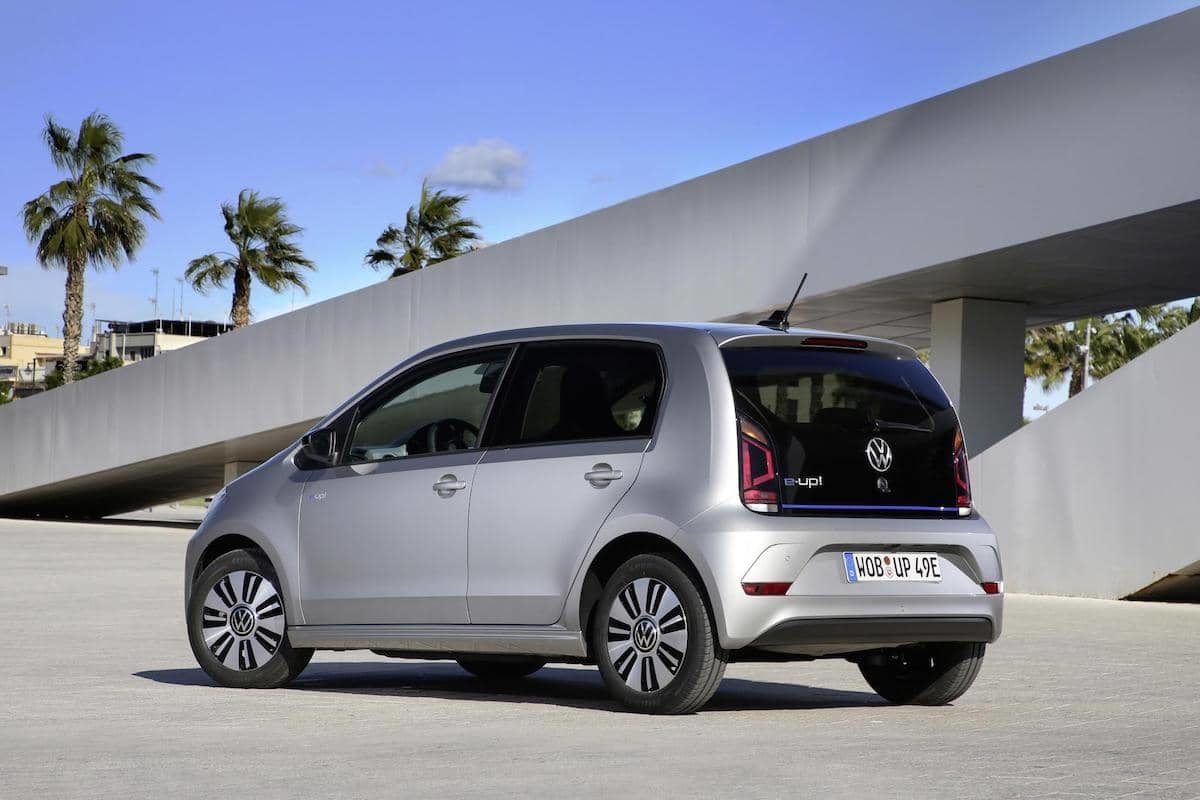
The updated Volkswagen e-Up has gone on sale in the UK, boasting a vastly improved range as well as plenty of improved equipment.
The most important news for the all-electric city car is the fact it can now travel almost twice as far as the previous model, being capable of travelling 159 miles on one charge, up from 83 miles. This comes from the addition of a larger lithium-ion battery pack.
Equipment upgrades introduced to petrol-engined versions of the Up have also been fitted to the electric variant, including lane-keep assist, a multi-function camera, curtain airbags, and a smartphone integration cradle.
Standard equipment on the Volkswagen e-Up includes heated front seats, heated windscreen, climate control, rain-sensing wipers, and a free option of cruise control. The e-Up is differentiated from other models in the range by 15-inch alloy wheels, bespoke bumpers, and blue strips in the front grille and bootlid.
Despite the extra safety kit, the Volkswagen e-Up and the rest of the Up range only scores a three-star safety rating from Euro NCAP. When the Up was first launched way back in 2011, it was rated a five-star car. However, safety standards have moved on considerably throughout the last decade and the baby Volkswagen no longer matches the best in its class.
Tim O’Donovan, EV product marketing manager at Volkswagen UK, said: “We are very pleased to have secured limited stock in the UK for this latest electric version of our popular city car. With a proven electric powertrain, impressive range, and excellent value-for-money the e-up! is a zero-emissions city car that can venture far beyond the city limits.
“Volkswagen is entering the era of the electric ‘People’s Car’. After finding great success with the e-up! and e-Golf we are excited to see the ID.3 arriving on our shores this summer, which will be our first ground-up new electric car based on the MEB platform.”
The Volkswagen e-Up is on sale now, with prices starting at £19,695.
The Tesla Model 3 is the culmination of Elon Musk’s electric car company master plan. First came the Roadster, a small Lotus Elise-based sports car designed to make EVs cool, followed by the Model S, a premium saloon that would make big profits. With SUVs becoming the most popular market segment, he then added the Model X, an upmarket people carrier with a similar goal to the S.
The end goal was this, the Model 3, targeting an affordable price point to bring electric motoring to the masses. There have been plenty of hiccups and delays along the way, both for the company as a whole and this model in particular, but the Model 3 finally hit UK soil for the first time last year.
US buyers have access to an impressively inexpensive entry price of $35,000 (circa £27k), but in the UK prices start at £38,500 for a Standard Range Plus model – top-spec Performance models start at £52,000.
Initial reviews from the UK media have been very positive, and the Tesla Model 3 currently holds an impressive Expert Rating of 84% on The Car Expert’s Expert Rating scale. This is based on 21 UK reviews, and compares very favourably with executive car rivals – regardless of power source.
With all that in mind, has the Model 3 been worth the wait?
Under the skin, the Model 3 follows a similar format to the Model S and Model X, with batteries fitted beneath the floor and utilising an electric motor for propulsion.
In the Standard Range Plus model we’re testing, there’s a single electric motor on the rear axle, making it rear-wheel-drive, while Performance models also get a motor on the front axle to provide more performance and all-wheel-drive.
The interior is all-new too, with the stand-out feature being a single, centrally mounted screen containing all functions. Meanwhile, Tesla’s dedication to being technologically ahead of the game means it has the best smartphone app in the business, which can control functions remotely and even act as a key.
How does it look?
While the Tesla Model S draws some criticism for being rather featureless, there’s no denying it has a simple, upmarket elegance. The Model 3, on the other hand, is somewhat lacking in this department.
It’s not unattractive, looking sleek and muscular at the front, but the rear end tapers gently into an odd combination of saloon and hatchback that ultimately results in a bulbous rear.
Our test car, painted in white, was compared to a fridge on more than one occasion. That might be a bit harsh, but given that this car is designed to act more like a high-tech appliance rather than appeal on an emotional level, perhaps it’s an apt comparison – it would be one of those fridges with a high-definition monitor and WiFi built-in for some reason though, wouldn’t it?
What’s the spec like?
Standard Range Plus models come with a ‘partial premium interior’, which includes heated front seats, four USB slots and docking for two phones.
All cars also get a tinted glass roof with ultraviolet and infrared protection, Bluetooth connectivity, white paint, and 18-inch alloy wheels. Optional upgrades include a tow hitch (£1,000), 19-inch alloy wheels (£1,450), and ‘full self-driving capability’ (£5,800).
Dual-motor all-wheel drive models are available for £47,000 in Long Range guise or £52,000 in Performance trim. These also get the premium interior with heated seats at the rear, and a one-year connectivity subscription for live traffic updates, music streaming and internet browsing.
In terms of safety, the Model 3 rates highly. Euro NCAP not only awarded it five stars, but named it as one of the safest cars of 2019 as its joint Best Large Family Car along with the new BMW 3 Series.
What’s the Tesla Model 3 like inside?
If the exterior looks like a hatchback designed by committee, the interior couldn’t be further from it. It’s an overused cliché, but it’s like an Apple Store, all minimalism and clean surfaces.
There’s one screen that looms large in the centre of the dashboard, with essential information such as the speed sitting in the top corner closest to you – adjusting to looking left to see your speed doesn’t take long to adjust to.
The screen itself houses one of the slickest infotainment systems in the business. The design is simple rather than sparkling, but it responds quickly to inputs and is intuitive to navigate around, which is more than can be said of rivals. Its size also makes it ideal for navigation, so you can be zoomed in quite close but still see instructions far ahead.
As for space, the batteries in the floor and lack of engine mean there’s loads of room for passengers, particularly those up front, while only the tallest passengers would find rear headroom intrusive.
The overall luggage space is 425 litres, which in reality provides more than enough capacity for even the biggest family shop.
What’s under the bonnet?
Literally speaking, nothing – or rather, a ‘frunk’ that provides a decent amount of extra luggage space up front, just one of the additional benefits of using compact electric motors. In this Standard Range Plus model, there’s a single electric motor on the rear axle that makes 302bhp and 420Nm of torque.
Those numbers are impressive, but it would be easy to regard this as ‘the slow one’ compared with the near-500bhp Performance version. However, with a 0-60mph time of about 5.4 seconds, it’s anything but. Under hard acceleration this entry Model 3 really shifts, helped by that instant-on torque response of the electric motors, so you’re never left wanting more.
What’s the Tesla Model 3 like to drive?
While straight-line performance won’t leave you disappointed, if you’re looking for a left-field BMW M3 rival you might find the Model 3’s cornering abilities somewhat lacking.
It’s not necessarily that it can’t corner at speed, rather that the steering is incredibly light and completely lacking any feedback. On top of that, its eco-focused tyres, which help improve range, have a tendency to squeal under duress rather than bite into the Tarmac.
The Tesla Model 3, therefore, lends itself better to those who want a serene, relaxing experience 99% of the time, with blistering straight-line performance for occasional stress-busting blasts.
In this case, the American excels. The silent propulsion of the electric motors is helped by sound-deadening in the cabin that means exterior noises are kept to a minimum, and any qualms about build quality appear to have been addressed, with no squeaks or rattles from the trim.
It is interesting to note, however, that the Autopilot feature that is so often lauded as a hugely enticing Tesla feature was largely disappointing. It’s not a semi-autonomous driver aid as many think, rather an advanced adaptive cruise control system that’s also common on rival premium cars. We found it late to react to cars on the motorway and jerky on the brakes; similar systems from Mercedes-Benz and Volvo work much better.
Verdict
Tesla is an exciting manufacturer because it approaches the car industry from a fresh perspective. Sometimes, that works against it, resulting in product delays and build quality issues, but in the case of the Model 3, it can result in a product that feels genuinely different.
Whether it’s the seamless app integration, fast charging network or easy ordering process, Tesla has managed to build an ownership experience that’s largely just as desirable as the cars themselves. The fact the Model 3 brings this into reach for a whole new demographic is exciting, and it’s no surprise to see it pushing established names in the sales charts.
It might not appeal on an emotional level, but the Tesla Model 3 manages to be fast yet serene, packed full of appealing tech, and practical to boot. With low running costs thrown into the mix, there’s not much going against it.
Model as tested: Tesla Model 3 Standard Range Plus Price (on-road): £39,490 Powertrain: electric motor Power: 306 hp Torque: 420 Nm Top speed: 140 mph 0-60mph: 5.3 seconds Range: 254 miles (WLTP) Euro NCAP safety rating:5 stars (2019)
More than 1.2 million people were caught behind the wheel of untaxed cars in 2019, representing a two-fold increase on the figure from 2013 when the paper tax disc was last in use.
When tax discs were abolished in October 2014, authorities said that it would save the taxpayer £14 million a year. However, that move has been blamed for many drivers forgetting to renew their car tax.
Figures, released via a Freedom of Information request submitted by MotorEasy, show that the number of offenders caught from 2014 to 2017 was 1,373,184. The number fell from 2018 to 2019, but the 2019 figures only include the first 11 months.
The greatest jump experienced was from 2014 to 2015, when an additional 278,025 untaxed vehicles were discovered.
Duncan McClure Fisher, MotorEasy chief executive, said: “Vehicle tax is levied as an excise duty and must be paid for vehicles driven or parked on UK roads.
“Modernising the way it’s handled had to come at some point, but it seems overall there’s been a bit of a bump in the road – with a large increase in the number of people not paying last year compared to 2014.
“This means an exercise designed to save money on printed discs has resulted in a huge loss in tax revenue for the UK Government, which has a knock-on effect on public services such as road maintenance. If fines have doubled you can be sure the number of untaxed vehicles has also grown significantly.
“It may be that people think they can avoid paying vehicle tax because they don’t have to display a disc, or because they don’t have that physical reminder of their expiration date.”
Counting the cost of supposed savings
It’s been more than five years since the government abolished the requirement for cars to display tax discs in the windscreen. It will save taxpayers £14 million a year, they said.
“No it won’t,” said organisations like the RAC, predicting that the number of untaxed cars would skyrocket. The clever people at the DVLA described these claims as “nonsense”. But, inevitably, that’s exactly what happened.
The number of unlicensed vehicles more than doubled in the year after the new rules were introduced, with more than 560,000 untaxed vehicles costing the country a claimed £80 million. Five years later, hundreds and hundreds of millions of pounds in road tax owed have been lost. We last reported on this back in 2016, yet still the DVLA persists with this lunacy.
Lotus has brought ‘improved usability’ to its Evora range with a new variant — the Lotus Evora GT410.
Sitting alongside the GT410 Sport, this new model takes on more comfort-focused features over its sibling as standard despite undercutting it in price.
Sparco sports seats and air conditioning are included, while a reversing camera has been introduced to improve visibility in low-speed manoeuvres. Its infotainment system also features Apple CarPlay as standard, along with DAB Radio.
More sound deadening material has been added as well to cut down road noise and improve refinement, while integrated armrests and storage bins have been fitted to the doors.
Alterations have been made to the Evora GT410’s suspension setup up as well for a more comfortable ride, while Michelin Pilot Sport 4S tyres are fitted as standard for better all-weather grip.
Its engine remains the same, with a supercharged 3.5-litre V6 located in the middle of the car delivering 410hp and 420Nm of torque to the rear wheels. As a result, 0-60mph is covered in 4.1 seconds, with a 186mph top speed said to be possible.
Pricing for the Lotus Evora GT410 kicks off at £82,900, undercutting the Sport by £3,000, with order books now open.
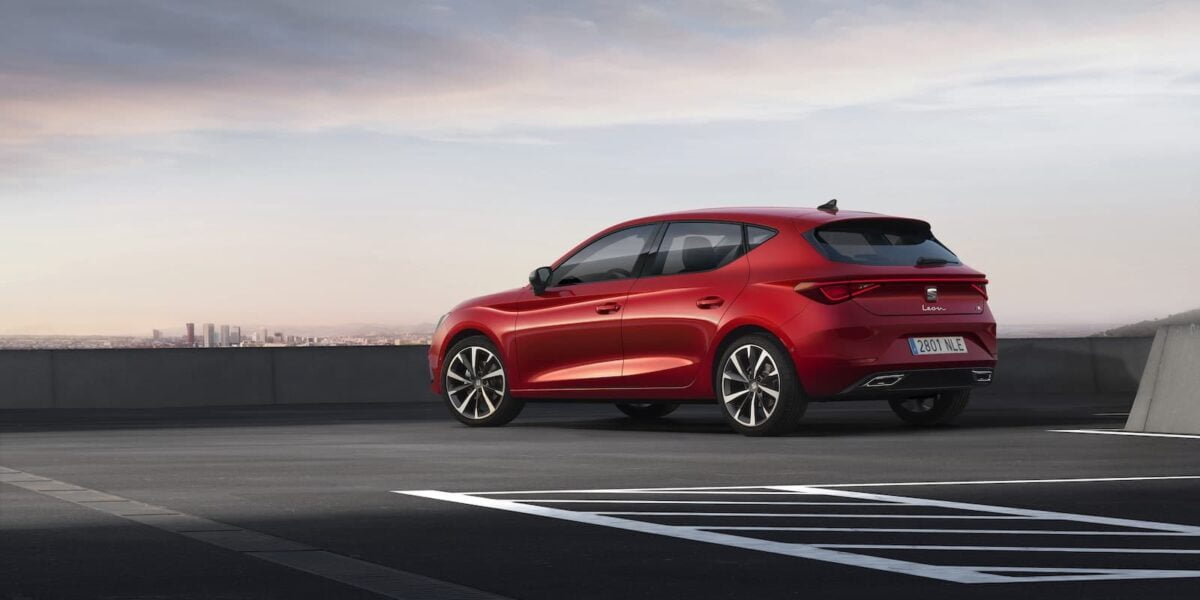
SEAT has revealed its new Leon family car, which it claims will be the ‘most advanced vehicle’ ever made by the firm, thanks to advanced on-board technology, safety systems, and electrified powertrains.
Based on the latest Mk8 Volkswagen Golf unveiled late last year, the new SEAT Leon will continue to be offered in hatchback and estate forms. There will be a wider choice of powertrain options that includes petrol, diesel, mild hybrid, and plug-in hybrid options. Manual and automatic gearbox options are available depending on engine choice, while FR and FR Sport trim levels also get three driving mode presets: Evo, Normal and Sport.
Mild hybrids to the fore
As with most manufacturers, the Volkswagen Group is embracing mild hybrid powerplants to improve fuel economy and emissions, to comply with upcoming EU legislation. The new SEAT Leon’s electrified powertrains include a mild hybrid option for the 110hp 1.0-litre and 150hp 1.5-litre petrol units, using a small electric motor and battery to allow for engine-off coasting to save fuel.
Being a mild hybrid, the electric motor cannot drive the car and is purely used to assist the petrol motor.
Meanwhile, a full plug-in hybrid powertrain will also be available, which combines a 1.4-litre petrol engine with an electric motor that is powered by a 13kWh battery pack. The combined output is 202hp, with an impressive electric-only range of up to 38 miles.
Sharper, sleeker design
The exterior has been redesigned with a focus on improving overall efficiency through improved aerodynamics. It also incorporates the new LED headlights and full width tail lights, though the design is more evolution than revolution, looking very similar to its predecessor.
The new Leon is longer than before, which SEAT says has resulted in improved legroom for passengers in the back. Elsewhere in the cabin, there’s a new ‘floating’ dashboard design, SEAT’s digital cockpit, and improved lighting.
Impressive technology levels are included as standard, including LED headlights. In the cabin, owners can utilise a new voice recognition system that can understand natural language, benefit from real-time data through connections to the cloud, and plug-in hybrid owners can manage charging from an app.
SEAT says it has also fitted its most advanced safety systems, too, including giving the car the ability to constantly monitor its surroundings to react to dangerous situations. We will bring you the Leon’s Euro NCAP safety scores as soon as they are published.
Order books for the new SEAT Leon are set to open imminently, though prices and UK delivery dates have yet to be confirmed.
UK motorists will continue to be able to drive in the EU as normal after Brexit and until the transition period is over.
The existing rules allow motorists to drive in EU countries on a full UK licence, but there had been concerns that permits would be required to drive on the continent after January 31.
However, in a statement yesterday to the PA news agency, the Department for Transport said: “Under the withdrawal agreement, arrangements for drivers (both commercial and private motorists) will remain as they are now during the transition period.
“This means that UK motorists will be able to continue to drive in the EU as they do now, until 31 December 2020. UK motorists will therefore not require an International Driving Permit (IDP) alongside their UK driving licence when driving in the EU as a visitor during this time.
“Whether IDPs will be required to drive in the EU from 1 January 2021 will be subject to future relationship negotiations.”
After numerous delays, 31 January 2020 will be the day the UK leaves the EU after MPs voted in favour of the Withdrawal Agreement Bill and it was given Royal Assent. After that date, the UK will enter a transition period, where many of the existing agreements with the EU will remain in place. From 1 January 2021, any new deals that have been negotiated will come into force.
Under current rules, when driving in countries outside the EU, UK motorists may need an IDP, which is a small booklet that can be bought for £5.50 over the counter at most post offices. When applying for one, you must bring their full and valid UK photocard driving licence and a passport-standard photograph. If your licence is still the old paper version, you need to bring that plus a valid passport as proof of ID, as well as a passport-standard photograph.
If you’ve watched commercial television for more than about ten minutes in the last few years, you’ll probably have seen loads of ads talking about your credit score. These ads inevitably encourage you to visit a website and pay for a monthly subscription to help you “improve your credit score”.
When talking about financial matters, plenty of people talk about credit scores (or credit ratings) as if they are all-defining numbers that determine your financial future. Interestingly, none of those people preaching about credit scores seem to work for banks or finance companies…
So what exactly is a credit score, and is it as important as the ads on the TV make it out to be? Let us explain.
Understanding your credit history and credit score
There are several companies (called credit reference agencies) who claim to be able to tell you your “FREE credit score”, and claim that this magical number determines how likely you are to be accepted for finance. When you visit their websites and input all your personal data, it will spit out a score and then usually a bunch of green ticks and red warning symbols that make it look very serious.
Genuinely important, or just a sales tool to take your money? Hmmm…
The score is based on a combination of facts, like your credit history and your personal details, and their opinions, based on assumptions they have made from your credit history. The score they come up with is in no way official, nor do banks actually look at this credit score when considering your finance application.
The purpose of all the warning symbols is to try and terrify you into thinking there are problems with your credit score, and that this will affect your chances of being approved for car finance, a mortgage, credit card or other form of loan.
The credit site will helpfully offer advice on how to improve your credit score and monitor it over time, and all you need to do is pay them £15 a month, every month. They will also, super helpfully, provide you with a list of finance products that they suggest may be suitable for you based on your credit score.
From the above paragraph, can you spot the real reasons they want you to “know your credit score”? It’s simple:
Offering you a FREE credit score is simply a way to get you to sign up for a £15/month subscription that you don’t need.
They are suggesting a range of finance products that they will get paid a commission on if you take out a loan from the links on their site.
The agency takes your credit history (which is all factual stuff) and applies its own algorithms to it (which are only their opinions) to produce a score that is supposed to give you an indication of your ‘creditworthiness’. The agency then offers you advice on how to improve your score if you take out a monthly subscription, and places advertisements for finance products in front of you (without any guarantee that you will be accepted for them) that it will be paid commissions on if you take them up.
There are three main credit reference agencies in the UK: Experian, Equifax and CallCredit. All three of them will give you a free credit score; Experian rates you out of 999, Equifax scores you out of 700 and CreditCall goes a bit further at 710.
Why did they choose those numbers? Who knows – maybe they think it sounds more complicated than rating you out of 100 and so you’ll think they’re really clever.
The scores from each agency are also calculated differently, so a score of 500/999 (50%) from Experian doesn’t mean you’ll get a score of 350/700 from Equifax or 355/710 from CallCredit. They could be completely different – a bit like how you can get vastly different car insurance quotes from different companies based on the exact same information.
It’s all aimed at selling you stuff, rather than giving you an honest assessment of your financial options. Did you really think these companies were spending vast sums of money on advertising simply to try and help you?
Do finance companies look at your credit score?
No, they don’t. When you apply for finance, the finance company will look at your credit history (which is all factual) as held by the credit reference agencies, but they will also consider a number of other factors, none of which are contained in your credit score. These factors include things like your annual salary, which is important because it determines whether the loan payments will be affordable, and which is not covered by your credit score.
Finance companies will also look at your employment history, your living status (renting, mortgage, living with parents, etc.), your residential status (do you have the right to remain in the UK for the length of the loan?) and so on. Again, this is important information and none of it is included in your credit score.
Once the finance company considers whether you can afford the loan and whether you are likely to pay it all off, they will make a decision on whether to approve the application.
Finance applications will never ask you for your credit score.
Is a credit score a completely worthless concept?
Although its primary purpose is to help sell you stuff, that doesn’t mean a credit score is worthless. The score is the agency’s analysis of your credit history, making some assumptions and educated guesses based on what’s contained in that history. And some of those assumptions are perfectly reasonable.
For example, every time you make a formal finance application it will be recorded on your credit history. It won’t record whether you were approved or declined for each application, merely that you applied. You may be approved for finance by two different car finance companies but only be buying one car. Obviously, if you subsequently take out a loan then that will show on your history as well.
If you apply for several loans from different lenders in a short space of time, the agency will assume that you keep getting declined and are therefore trying more and more lenders to get a loan. As such, they will downgrade your score each time you apply for a loan. The more loans you apply for, the more it affects your score. A bank will probably think along similar lines when they are reviewing your application, so that aspect of the score is a useful predictor of how your application may be viewed by a lender.
The credit reference agencies all claim that their scores are designed to replicate the way that a finance company will assess your loan application, but they are always working from incomplete information.
Your credit score is not worthless, but it’s also not as important as they like to make out. That’s because they’re trying to sell you stuff off the back of your credit score, so of course they’re going to tell you it’s important. Think of it as a useful guide, but not a bible.
Your credit history IS important
Your credit history is a record of all your finance agreements and applications, so it’s a very important consideration for any lender when reviewing your application. Everything that has happened with your finance agreements is recorded and will either work for you or against you.
If you have missed payments, defaulted on loans or have too many loans all outstanding at any time, a lender is much less likely to consider you a safe bet. On the other hand, if you have a steady track record of taking out loans and then paying them off on time, making all your payments and borrowing within your means, a lender will look more favourably on your application.
Essentially, a lender will give you their own score based on their own criteria. The difference is that, unlike the credit reference agencies, the lender won’t tell you what that score is or how it is calculated.
Make sure your personal information is correct
One of the most important things you can do with your free credit score report is to check that all your personal information is correct. The credit reference agencies get this information from your credit history provided to them by the lenders, but they don’t really check whether it’s 100% accurate and this can have serious implications for you.
If there are any errors in your personal details, it can have a major effect on your ability to get finance. I personally went through this a few years ago, when a bank (HSBC, actually) had provided the credit reference agencies with an incorrect and non-existent address for me. I was trying to close my HSBC credit card and take another card elsewhere, and was very surprised to be declined. It took a few weeks of arguing with Experian and HSBC to get it resolved, and Experian was frankly not interested in helping me out at all, despite the fact that the incorrect information they were holding on me was impacting my ability to obtain finance.
As soon as it was sorted, my bank not only approved the credit card but wanted to increase the limit and offer me other loan products as well! And I did eventually get a written apology from the head of customer services at Experian.
Negative credit history doesn’t last forever
Negative factors on your credit history will undoubtedly hurt your chances of getting any sort of finance, but they will drop off the record after a period of time, so you won’t be penalised forever if you miss a few payments or get yourself into a bit of financial trouble.
However, poor credit history can hurt you for a number of years if you’re not careful, which is why we always tell you to keep your repayment levels comfortably within your means with plenty of breathing room in case of any unexpected trouble.
Fiat has confirmed UK pricing and specifications for upcoming mild-hybrid variants of its Fiat 500 and Fiat Panda superminis.
Under the bonnet of both cars is a new powertrain that links a three-cylinder 1.0-litre petrol engine with a 12-volt electric motor, with the latter working to improve efficiency by allowing the petrol unit to remain switched off for longer.
This new combination produces 70hp and 92Nm of torque, sent to the front wheels via a six-speed manual gearbox. Fiat claims the 500 equipped with this new unit can achieve 53.3mpg on the WLTP Combined cycle while emitting 88g/km of CO2, while the Panda is said to be capable of 49.6mpg and 89g/km of CO2 respectively.
Being mild hybrids, neither of the vehicles are able to move under purely electrical power, with the electric motor only used to assist the petrol engine and therefore reduce fuel consumption and emissions output.
Though visually near-identical to regular versions of the Fiat 500 and Fiat Panda, each of these electrified models will be distinguished by a ‘Hybrid’ logo at the rear as well as a ‘H’ pattern made from a design of two dew drops in the centre console.
Both of the existing car’s core trim levels will remain in place at the introduction of the mild-hybrid powertrains, though these will be joined by a new Launch Edition model. This grade sees the introduction of seats made from a material called Seaqual Yarn, said to be created from recycled plastic.
Pricing for the Fiat 500 and Panda mild-hybrid variants kick off from £12,665 and £13,885 respectively, while Launch Edition models can be had from £16,795 and £14,385. 500 deliveries will begin in February, with the Panda to follow from March.
Suzuki looks set to take its popular Jimny off sale across Europe, including the UK, in order to meet new European Union emissions targets.
The small 4×4 had only been introduced to the range in 2019, though its 1.5-litre engine’s CO2 emissions output of either 154g/km or 170g/km depending on transmission output has a detrimental effect on Suzuki’s range-wide emissions. Autocar India reports the model will be taken off sale ‘imminently’ as a result, a story that has been widely repeated elsewhere.
Upcoming EU legislation will require a manufacturer’s new car fleet to have a maximum average of 95g/km, with Suzuki moving a number of its models — including the Swift Sport and Vitara — to new mild-hybrid drivetrains in order to meet this target.
A Suzuki statement said the model would remain on sale in ‘limited numbers’ throughout 2020 but it has not offered details for 2021 and beyond. The firm added it would make ‘every effort’ to deliver cars to customers who have already placed an order, which is not exactly reassuring for anyone who is currently contemplating buying a Jimny in the near future.
Autocar India says the Jimny will return in 2021 in select European markets as a commercial model with the rear seats removed, meaning it would be excluded from the firm’s fleet emissions for passenger vehicles. It also suggested the Jimny could return with a revised powertrain in order to meet CO2 targets at a later date.
The BMW X5 is a large SUV model that sits between the smaller X3 and the larger X7 in the BMW SUV family. The current model went on sale in 2018 and is the third generation of BMW X5.
The X5 is available with a choice of petrol, diesel or plug-in hybrid powertrains. There is also a range-topping X5 M Competition model, which is covered in a separate page.
Motoring journalists have praised the X5 for strong on-road performance and a comfortable interior. The plug-in hybrid powertrain is also considered to be one of the better implementations of this technology. However, the X5 has been criticised for a lack of off-roading ability and fussy, divise styling.
As of July 2025 2024, the BMW X5 holds a New Car Expert Rating of D, with a score of 58%. It’s not as desirable as a used car, where its rating slips to an E with a score of just 48%. The scores reflect excellent media reviews and relatively low CO2 emissions (helped by the plug-in hybrid models), but poor results for ownership – woeful reliability and high running costs.
Model reviewed: Range overview “The BMW X5 falls down in too many areas to call it a definite class-leader, but the attraction will be there for many – it’s still a status symbol, it’s still eye-catching and it’s still great to drive.” Read review
Auto Express
Model reviewed: M Competition 2021 Score: 8 / 10 “Technically, the BMW X5 M Competition is an impressive performance SUV, but unlike rivals such as the Range Rover Sport SVR, it lacks the sparkle that puts a smile on your face.” Read review
Model reviewed: Range review Score: 8 / 10 “It’s hard to criticise a car that can deliver genuinely low running costs, lightning fast performance, and enough space for five people to travel in genuine comfort.” Read review
Car
Model reviewed: 3.0-liter petrol/electric plug-in hybrid xDrive50e M Sport Score: 8 / 10 “The BMW X5 is one of the sharper to drive SUVs out there. While the 50e needs a software update to sort out a couple of things, it still offers a lot. And, more generally, the X5 has a great range of engines, a well-sorted chassis – even if the increasingly decorative design inside and out is dating quickly.” (Georg Kacher) Read review
Car Keys
Model reviewed: 3.0-litre petrol-electric plug-in hybrid automatic xDrive 45e Score: 9 / 10 “Unlike other plug-in hybrids, this BMW X5 xDrive45e is a seriously well-rounded package. From its 54-mile electric range that means you might rarely have to utilise the petrol engine at all, to its exceedingly low company car tax bills, it’s a very appealing model.” Read review
Carbuyer
Model reviewed: Range overview Score: 8.6 / 10 “The BMW X5 has had a growth spurt that makes it a better all-rounder, but it still offers a satisfying drive” Read review
Model reviewed: xDrive45e hybrid Score: 7.6 / 10 “The switch between electric and petrol is smooth, and the combined maximum power of the motor and six-cylinder petrol is a considerable 389bhp, resulting in 0-62mph in 5.6 seconds.” Read review
Company Car Today
Model reviewed: Plug-in hybrid xDrive 45e M Sport “Even if the car wasn’t so good, the costs case would make the PHEV compelling. Add in the impressive range and performance and it’s a winner.” Read review
Daily Mail
Model reviewed: (range review) “It’s a refined but sporty drive with sharp steering and good handling on corners and plenty of punch for overtaking and cruises effortlessly on motorways, with sufficient oomph when required. The engine is quiet and smooth, while still engaging.” Read review
Electrifying.com
Model reviewed: 3.0-litre petrol-electric plug-in hybrid xDrive45e Score: 9 / 10 “BMW’s thoroughly refreshed plug-in hybrid SUV is great to drive and has a decent electric-only range too. Besides making it easier to do electric only miles, it brings massive tax benefits for company car drivers.” Read review
Evo
Model reviewed: Range overview Score: 7 / 10 “BMW’s original SUV is still its best, still handling like a big 5-series. It’s just a shame it means so much less today…” Read review
Green Car Guide
Model reviewed: xDrive 45e PHEV Score: 9 / 10 “The BMW X5 xDrive45e plug-in hybrid drives like a BMW rather than a hybrid, and it has an official electric driving range of 54 miles.” Read review
Heycar
Model reviewed: Range overview Score: 9 / 10 “The BMW X5 is a highly impressive SUV. It’s practical, spacious and comfortable, but also fun to drive. A smooth gearbox, powerful engines and supple air suspension make it a compelling package. It’s expensive, but the plug-in hybrid 45e has minute running costs and is luxurious enough to feel worth it.” Read review
Honest John
Model reviewed: Range overview Score: 10 / 10 “Our biggest grievance with the X5 is BMW’s refusal to offer Android Auto – which says a lot about how good the car is. It’s great to drive, with a premium interior and plenty of space for the family.” Read review
Motoring Research
Model reviewed: Range overview Score: 9 / 10 “The X5 is arguably the sweet-spot in BMW’s range of SUVs – not to mention one of the best family off-roaders you can buy.” Read review
Parkers
Model reviewed: Range review Score: 8.8 / 10 “Imposing SUV is luxurious and great to drive” Read review
The Sunday Times
Model reviewed: Range overview “Packed so full of gizmos, there’s no room for fun” (Jeremy Clarkson) Read review
Model reviewed: Range overview “BMW’s X5 is now bigger, bolder and more tech-laden than ever” Read review
The Telegraph
Model reviewed: 30d 3.0-litre diesel automatic Score: 8 / 10 “Undemonstrative design (apart from the huge grille) but comfortable, competent, with surprisingly good ride and handling, and a decent turn of speed. If you’ve got to have an SUV and don’t want a Range Rover Sport this is as good as it gets” Read review
Top Gear
Model reviewed: Range overview Score: 7 / 10 “The X5 is more of a tech tour de force than ever, but did it have to be this brash, BMW?” Read review
Model reviewed: xDrive 45e “According to BMW, this plug-in hybrid is the X5 for all your needs. Which is a bold claim.” Read review
Safety rating
Independent crash test and safety ratings from Euro NCAP
The BMW X5 was tested by Euro NCAP back in 2018 and awarded a five-star rating. However, this rating expired in January 2025 and is no longer valid as the car no longer meets the standards required for such a rating. This is normal practice, as Euro NCAP reviews its ratings on most cars annually with most ratings expiring after about six or seven years.
Although the rating has now expired, the score is still useful if you are comparing a used X5 to vehicles of similar age – whose ratings will have probably also expired.
Eco rating
Independent economy and emissions ratings from Green NCAP
No eco rating
As of July 2025, the BMW X5 has not been lab tested by Green NCAP.
Reliability rating
Reliability data provided exclusively for The Car Expert by MotorEasy
Total claims: 958 Average repair cost: £941.88 Last updated: April 2025
The BMW X5 has a very poor reliability score of 15%, according to workshop and extended warranty data provided exclusively to The Car Expert by our partner, MotorEasy, sourced from both official dealerships and independent workshops. This score applies to both the current X5 generation (2018 onwards) and earlier models.
As well as a high number of reports, the average cost of repairs is high at about £950. This is obviously a lot more than the cost of a used car warranty, which is well worth keeping in mind if you own a BMW X5 or are interested in buying a used X5.
Engine failures are commonly reported and are the most expensive problems, with an average repair bill of nearly £2,500. Gearbox repairs are similarly expensive, although thankfully not as common. Suspension faults are the most common problem, with an average repair bill of £600.
Running cost rating
Monthly cost of ownership data provided exclusively for The Car Expert by Clear Vehicle Data
Fuel consumption
Average
Score
Petrol models
25 mpg
E
Diesel models
38 mpg
D
Plug-in hybrid models
312 mpg
A
CO₂ output
Average
Score
Variation
Score
Petrol models
260 g/km
D
Diesel models
194 g/km
C
Plug-in hybrid models
21 g/km
A
Battery range
Average
Score
Variation
Score
Plug-in hybrid models
60 miles
D
Insurance group
Average
Score
Variation
Score
All models
48
D
Service and maintenance
Cost
Score
Year 1
£515
D
Year 2
£1,061
D
Year 3
£1,691
D
Year 4
£2,121
D
Year 5
£2,735
D
Overall
£8,123
D
According to numbers provided exclusively to The Car Expert by our data partner, Clear Vehicle Data, the BMW X5 is quite expensive to run in the short- and long-term.
Petrol models have poor fuel consumption and diesels are a bit better. The plug-in hybrid looks good on paper, but this is deceptive – every plug-in hybrid looks great in theory, but this is because of rubbish EU/UK government lab testing. You certainly won’t get 312 miles of driving from one gallon (4.5 litres) of fuel and a bit of electricity…
The battery range of the plug-in hybrid is good, at 60 miles according to the official tests. That’s better than most plug-in hybrids, but you’ll still need to charge it almost daily to get best use out of the electric motor and battery. By comparison, an equivalent mid-size full EV would get more than 250 miles out of its battery so most households would only need to charge it once a week.
Scheduled servicing costs are rather costly on average over five years of ownership too.
Warranty rating
New car warranty information for the BMW X5
Overall rating
B
68%
Petrol or diesel models
C
41%
Hybrid or plug-in hybrid models
A
82%
New car warranty duration
3 years
New car warranty mileage
Unlimited miles
Battery warranty duration
8 years
Battery warranty mileage
100,000 miles
BMW’s new car warranty is only average, and not as attractive as some other cars in a similar price bracket as the X5.
The duration is three years, with no limit on mileage – although, in reality, the mileage numbers are likely to be fairly irrelevant as most cars only cover about 10,000 miles each year.
In addition to the standard new car warranty, the X5 plug-in hybrid models have an eight-year/100,000-mile warranty for the battery components. The overall rating above is a mix of the different models.
Awards
Trophies, prizes and awards that the BMW X5 has received
2022
Business Car Awards – Best Premium Large SUV
2021
Auto Express Awards – Best Large Premium SUV
Business Motoring Awards – Best Large SUV
Carbuyer Awards – Best Large Plug-in Hybrid (xDrive45e)
Company Car Today CCT100 Awards – Best Premium Large SUV
2020
Auto Express Awards – Best Large Premium SUV
Carbuyer Awards – Best Large Plug-in Hybrid
2019
Company Car Today CCT100 Awards – Best Large SUV
Similar cars
If you’re looking at the BMW X5, you might also be interested in these alternatives
Subaru has confirmed a goal of ensuring that all of its cars feature some form of electrification technology (either hybrid or pure electric power) by the mid-2030s.
It comes on top of an announcement that 40% of the company’s global sales will be electric or hybrid by 2030.
Tomomi Nakamura, Subaru president, said: “Even in this once-in-a-century period of profound transformation, Subaru’s strong commitment and dedication towards car-manufacturing that we have cultivated throughout our history remain unchanged. With the aim of making Subaru different from other brands, we will further hone the distinctive qualities that make a Subaru a Subaru, maintaining the unique attributes our customers have come to expect.
“At the same time, as we work to fulfil our social responsibilities, including the protection of the global environment, we will leverage Subaru’s unique character and technological innovation to contribute to the creation of a carbon-free society.”
The firm remains committed to its horizontally-opposed ‘boxer’ range of engines, as well as its EyeSight driver assist systems and technologies. It means that as Subaru aims for electrification, it will continue to develop these technologies.
The current e-Boxer drivetrain is described by its maker as a ‘mild hybrid’, although that’s not strictly accurate based on conventional description of hybrid technology. The e-Boxer has an electric motor and battery, just like a regular hybrid vehicle, only much smaller. This means it can only provide very short bursts of electrical power to drive the wheels. In practice – if not in principle – it does act like a mild hybrid in using an electric boost to assist the petrol engine most of the time.
In addition to its pledge for electrification, Subaru has also stated a goal of reducing well-to-wheel CO2 emissions for its new vehicles by 90% for 2050 compared to 2010 levels.
Porsche has unveiled new six-cylinder versions of its 718 Cayman and Boxster.
Taking on a detuned version of the range-topping Cayman GT4 engine, the GTS 4.0 twins boast 400hp from the 4.0-litre flat-six unit, sent to the rear wheels via a six-speed manual gearbox. As a result, 0-60mph is covered in 4.3 seconds with a 182mph top speed possible in both models.
In a bid to give the GTS 4.0 models a distinct engine note, a sports exhaust system is fitted as standard too — which also contains a petrol particulate filter in an effort to cut emissions.
Under the skin of these 718 variants is the standard inclusion of ‘Porsche Active Suspension Management’, which aims to improve cornering and offers a 2cm lower ride over standard versions of both cars.
Cross-drilled brake discs with red brake calipers are a standard inclusion and are housed in 20-inch alloy wheels, with a ceramic composite braking system available as an optional extra.
Inside the car, Alcantara features prominently throughout the cabin. The material is used for the standard sport seats, steering wheel, centre console gear stick and armrests. The Cayman also sees an Alcantara roof lining included.
Order books for the Porsche 718 Cayman and Boxster GTS 4.0 are now open, with on-road prices starting from £64,088 and £65,949 respectively. First deliveries of the six-cylinder models are expected in March.
The cost of car insurance has hit a two-year high, according to new figures.
An average car insurance premium has now reached £815 following a £41 increase over the last 12 months – the highest rise in prices for two years – according to latest data published by insurance comparison site Confused.com.
In fact, premiums have risen by £32 in the past three months, which represents the biggest quarterly increase in more than two years.
It means that premiums are now nearing closer to the 2011 peak of £858, with motorists paying just £43 less than this for an average yearly premium.
Female drivers have been hit particularly hard by the increase, having to now pay £48 more than 12 months ago. It means that female drivers can now expect to pay £767 for their insurance on average, but these still stay lower than those for male drivers who have experienced a £37 increase year-on-year and now pay £854 per year on average.
Certain younger drivers have also felt the brunt of the increases. 18-year-old drivers searching for insurance will have seen rises of £147 in 12 months, resulting in a £2,130 average premium cost. Prices for 19-year-old and 17-year olds also increased by £137 and £116 respectively.
Increases have been experienced across the board regardless of age, with older drivers aged 38 and 60 paying the most for both these age groups.
Louise O’Shea, Confused.com chief executive, said: “It’s January, the month to save money and re-evaluate our spending. But the bad news is car insurance costs are increasing. And, as drivers, this is something we can’t avoid. If costs continue to accelerate at this pace, we could be paying record prices by the end of the year.
“Shopping around is key to saving on car insurance. And even if your renewal price is cheaper, or the same, it’s likely there will be another insurer out there willing to offer a better price.”
The Bentley Mulsanne will bid farewell to the world with a limited-edition ‘6.75 Edition’ model.
That name refers to the 6.75-litre V8 engine under the bonnet, which was first introduced way back in 1959 – although has undergone several updates since that time to keep it in production.
The engine will also be finally phased out of production with the discontinuation of the Mulsanne. The luxury saloon will cease to roll off the production line this spring, says Bentley.
This limited run of 30 cars celebrates the 60th anniversary of that engine, which here produces 530hp and 1,100Nm. To help distinguish it against more ‘ordinary’ sister models, the Bentley Mulsanne 6.75 Edition boasts a range of visual changes.
The exterior of the car gets gloss black trim elements such as the flying ‘B’ on the bonnet, as well as chrome front and rear headlights. Large 21-inch wheels sit on all four corners, too.
Lift the bonnet, and the air intake is finished in black rather than the usual silver, while the engine number plaque is signed by Bentley chairman and chief executive Adrian Hallmark.
Inside, a ‘6.75’ badge has been stitched into the seats while a commemorative plaque is fitted to the centre console. The traditional clock face has been replaced by cutaway drawings of the car’s engine, too.
Staff who worked on the Bentley Mulsanne’s production will be redeployed elsewhere, namely onto the introduction of the hybrid Flying Spur, which is expected to arrive before 2023.
MG has introduced a new Exclusive Nav grade to its MG 3 line-up in a bid to enhance the model’s appeal.
Available to order now, this new trim sits at the top of the range with the headline addition being a new version of the firm’s ‘iGo’ infotainment system. That’s projected on an eight-inch display placed centrally in the dashboard and offers support for Bluetooth devices alongside Android Auto and Apple CarPlay connectivity.
Alongside that, the MG 3 Exclusive Nav also boasts a six-speaker audio setup, DAB radio and a reversing camera.
Powering the car is the existing 1.5-litre naturally-aspirated petrol unit. It delivers 105hp and 137Nm of torque to the front wheels via a five-speed manual gearbox, resulting in a 0-60mph time of 10.4 seconds with a 108mph top speed.
Fuel returns of 42.3mpg on the WLTP Combined cycle are claimed, with CO2 emissions weighing in at 140g/km.
Daniel Gregorious, MG head of sales and marketing, said: “We are constantly analysing customers’ needs and requirements to produce a line-up which truly complements the buyer’s busy and varied lifestyle.
“The introduction of the MG 3 Exclusive Nav brings our smallest model in line with the rest of the MG line-up and further solidifies our promise to offer affordability without compromising on specification or quality.
“The affordable model continues to stand out as an attractive option in the supermini market with its intelligent design and generous 7-year warranty making it the perfect small-car partner.”
Safety-wise. the MG 3 hatch lags far behind the best in its class. It received a three-star rating from Euro NCAP back in 2014, which was an average score back then and the tests have only got tougher in recent years.
Pricing for the MG 3 Exclusive Nav starts at £12,995. The firm is also launching the model with a £1,500 deposit contribution when purchased through PCP.