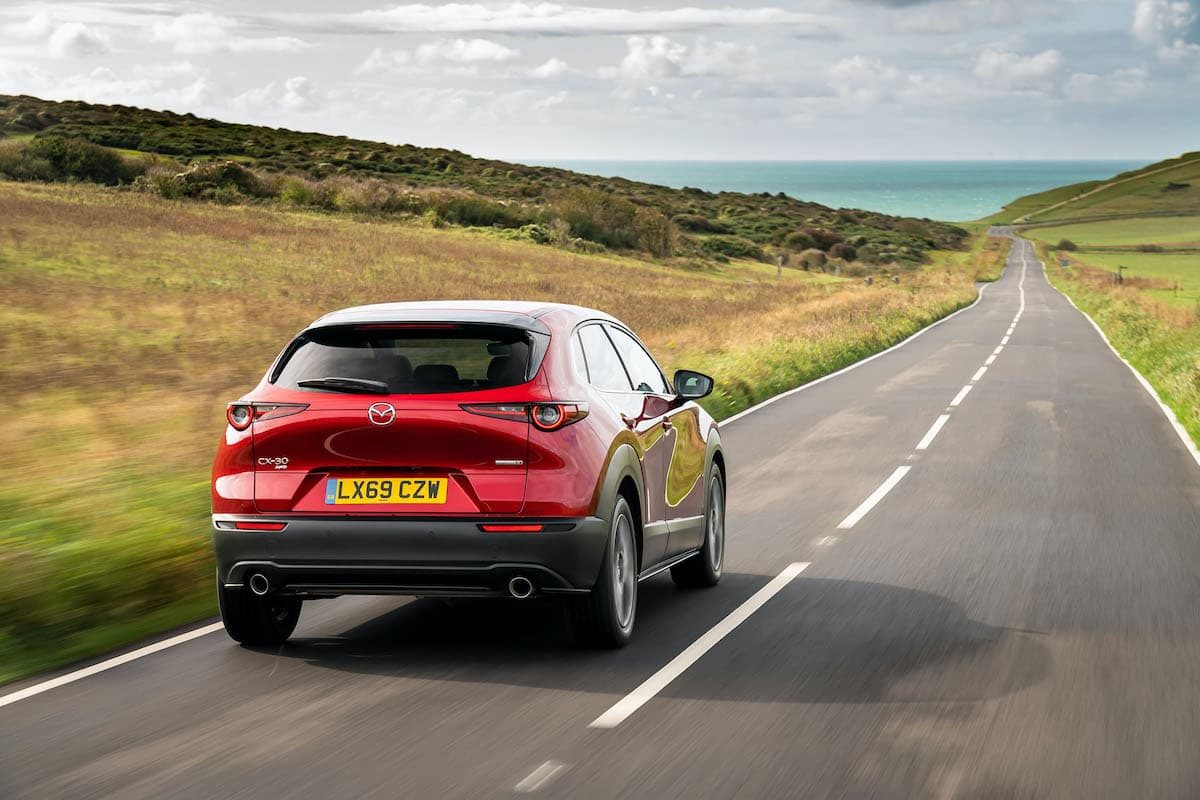
Nissan is aiming to make its longer-range Leaf e+ more accessible with a cut-price trim grade.
New to the line-up is the Nissan Leaf e+ N-Tec, of which just 1,000 examples will be offered. This trim is priced at £32,795 (including the £3,500 government plug-in car grant) which represents a £3,100 saving on the range-topping Leaf e+ Tekna.
This comes at the compromise of equipment but retains the larger 62kWh powertrain offered by the Leaf e+, which Nissan claims can deliver up to 239 miles of range between charges. For comparison, the standard 40kWh powertrain delivers a claimed 168 miles. However, Nissan’s range claims have been questioned in the past so take that with a grain of salt.
It also boasts 215hp and 340Nm of torque, delivered to the front wheels. As a result, 0-60mph is covered in 6.7 seconds with a 98mph top speed.
Standard equipment on the N-Tec includes an eight-inch touchscreen infotainment setup with support for Android Auto and Apple CarPlay, 17-inch alloy wheels and the Leaf’s one pedal ‘e-pedal’ technology. Goodies added for no cost over the standard Leaf includes LED fog flights, semi-autonomous ProPilot features, an electronic parking brake and a metallic blue front splitter.
Prices for the three-door Land Rover Defender 90 will start at £40,290, making it almost £5,000 less expensive than the starting price for the larger 110 model.
The 90 is expected to appeal to those who use their 4×4 off-road more often, boasting a short wheelbase and minimal overhangs that the company claims makes it ‘the most capable Land Rover ever made’.
There are four option packs available for the 90, called Explorer, Adventure, Country and Urban, which give the model slightly different specifications adapted to different use cases. The most popular on the 110 so far has been Urban, a £517 pack that ‘equips Defender to stand out in the suburbs’ – which also tends to reveal where the ‘most capable Land Rover ever made’ is really likely to be found…
Finbar McFall, Land Rover’s global product marketing director, said: “We have experienced unprecedented demand for New Defender 110 and the official introduction of Defender 90 is sure to boost interest.
“As the family grows to include an efficient plug-in hybrid powertrain and commercial derivatives later this year, we look forward to continuing this success. If our experience with the Defender 110 is anything to go by, we can expect over half of customers to opt for one of the four Accessory Packs, making New Defender the most accessorised and personalised Land Rover we have ever produced.”
The Defender 90 model is designed with the same view towards practicality as its larger sibling, with features like a ‘jump seat’ in the centre of the front row, which means it can carry a total of six people. The seat folds away when not in use to double as a large armrest.
Order books for the Defender 90 are open now with deliveries expected ‘later this summer’. Prices for the Defender 110 start at £45,240 and first deliveries are due in the spring. Meanwhile, commercial derivatives will join the range later this year, priced from £35,000, excluding VAT.
Way back when, the naturally-aspirated V8 engine was something that defined the high-end performance coupe segment — but that trend has died out for the most part as car manufacturers look for smaller, more efficient engines to keep emissions down in line with international regulations.
BMW’s second-to-last M3 utilised a V8 engine, but the last model switched to a six-cylinder unit (and the next one is expected to maintain that). The once-hellish 6.3-litre Mercedes-AMG C63 kept its cylinder count, but dropped down to 4.0 litres and took on a couple of turbochargers. A similar thing happened with the Audi RS 5 too, swapping its eight cylinders for six.
There is an outlier to this trend though, and one that’s often forgotten. You see, the Lexus RC F joined the fray in 2014 in a fashion that went against tide — offering a naturally-aspirated 5.0-litre V8 engine. Admittedly sales never set the world alight, but Lexus hasn’t given up the ghost and has recently treated the distinctively-styled coupé to a light refresh. Are the updates to this old brute effective? We find out….
Though Lexus is a firm very much focused on hybrid technologies these days, it (perhaps surprisingly) hasn’t messed with the RC F’s powertrain formula here — sticking with that raucous V8 of old — albeit with a little less power.
Changes do come beyond that, though. Visual alterations include new headlights, a tweaked front grille and revised taillights, while mechanical changes are namely refined suspension bushings, minor weight savings and launch control as standard. New Michelin Pilot Sport 4S tyres are thrown into the package as standard, too.
How does it look?
In the grand scheme of things, little has changed in the way the Lexus RC F looks — not that we’re calling that a bad thing. Its altered headlights are the most noticeable change and to us improve the package, but you’d be hard pressed to notice tweaks otherwise.
Its overall styling remains quintessentially Japanese, with its low-slung silhouette littered with peculiar angles and ‘look at me’ styling elements. It’s certainly an acquired taste, particularly in the Azure Blue colour our test car is in, but this particular tester is a fan.
What’s the spec like?
When it comes to standard equipment, Lexus has thrown the book at the RC F. Luxuries like rain-sensing wipers, automatic headlights, all-round parking sensors, keyless start and its infotainment system are thrown in out of the box, while Lexus’ Safety System + brings adaptive cruise control, lane keeping assist, automatic high beams and pre-collision warning.
Pricing kicks off at £62,900 for the RC F, which undercuts most rivals, though it’s worth noting that used examples as recent as 2016 can be had for under £30,000 easily — so be prepared for a notable drop in value through ownership.
Our test car comes in at a £75,600 — putting it at the rather steep end of things. The extra cost covers its Azure Blue paint (£250), blind spot monitoring with rear cross traffic alert (£500), a Mark Levinson audio system (£1,000), a sunroof (£900), trim inlays (£300) and, perhaps most notably, the £9,750 track pack.
That last-most item adds BBS alloy wheels, carbon ceramic brakes with red Brembo callipers and a rear diff with torque vectoring.
The Lexus RC F comes with all the usual safety-related equipment you’d expect from a car at this price tag, however the RC range has never been crash-tested by Euro NCAP so we can’t tell you whether that all adds up to a five-star score or not.
What’s it like inside?
Though updates have come to the outside of the car, that treatment hasn’t really come to the interior. To an extent, that’s fine, it’s still loaded with high-quality materials and feels incredibly well put together.
It does feel outdated, though. The woeful infotainment system is still controlled via an irritating touchpad, and there’s even a CD player included for a real throwback. We’d like to have seen the introduction of parent company Toyota’s latest system here.
As for space, four can be seated and the rear row is surprisingly usable on shorter journeys — though we’d avoid carrying four adults for longer trips. Its boot can hold 366 litres of luggage, too, which is notably down on the BMW M4’s 445-litre capacity.
What’s under the bonnet?
So, on to the V8 that defines the Lexus RC F. This 5.0-litre, eight-cylinder unit produces 460hp and 520Nm of torque (down 15hp and 10Nm as a result of stricter emissions regulations), delivered to the rear wheels through an eight-speed automatic gearbox.
As a result, the RC F is capable of 0-60mph in 4.1 seconds before reaching an electronically-limited 168mph top speed. Efficiency is far from the name of the game here, with a claimed WLTP combined figure of 23.9mpg with CO2 emissions weighing in at 258g/km.
The old-school nature of this car is a bit of an anomaly today, and that gives a distinctive character to the unit. Initially, it can feel sluggish with a lack of immediate torque but once the revs tick over the 3,000rpm mark its power comes in with a real ferocity — a curve that’s matched by its engine note too.
What’s it like to drive?
Though the engine of the Lexus RC F may be brash and spine-tingling, the driving experience isn’t really that at all.
This isn’t some agile monster looking to carve up every corner in its path and run circles around its rivals. Rather this feels more like a refined cruise missile — happy to sit on a motorway in supreme comfort and turn on the straight-line goods when called upon. If mashing the throttle to indulge in acceleration is your thing, you may find yourself at home here.
When it comes to cornering though, the RC F can be frustrating. It’s not particularly keen to get its power down (though cold January weather didn’t help that) and while there is a sense of composure through the corners, the car never particularly at home when trying to attack a tight country road. Soft-set suspension creates a wallowy feel to the rear of the car, and it’s hard to make the most of the evident performance on offer as a result.
Verdict
Though updated for 2020, the Lexus RC F still very much remains an old school machine — for better and worse in some areas.
Its engine is something to behold in a modern era of turbocharging and electrification, providing one of the most addictive audible experiences of any car on the market as well as brutal acceleration to back the brawn up.
It’s just a shame the driving experience leans more towards that of a long-distance cruiser than a real performance animal, feeling more like an Alcantara-clad wingback chair than a Recaro bucket seat to make a furniture comparison. It doesn’t feel quite right.
Alfa Romeo Giulia Quadrifoglio | Audi RS 5 | BMW M4 | Ford Mustang | Mercedes-AMG C63
Key specifications
Model as tested: Lexus RC F with Track Pack Price (on-road): £75,600 Engine: 5.0-litre petrol V8 Gearbox: Eight-speed automatic Power: 460 hp Torque: 520 Nm Top speed: 168 mph 0-60mph: 4.1 seconds Fuel economy (combined): 23.9 mpg CO2 emissions: 258 g/km Euro NCAP safety rating: Not tested
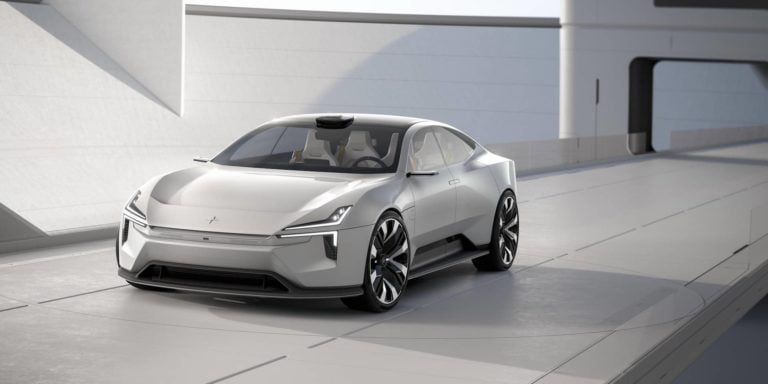
This sharply styled concept car is the Polestar Precept, and it has been designed to show off the firm’s future design direction as well as its commitment to using more sustainable materials.
The Swedish premium car manufacturer, which is closely tied to Volvo, says this concept ‘sets the tone’ for future Polestar vehicles.
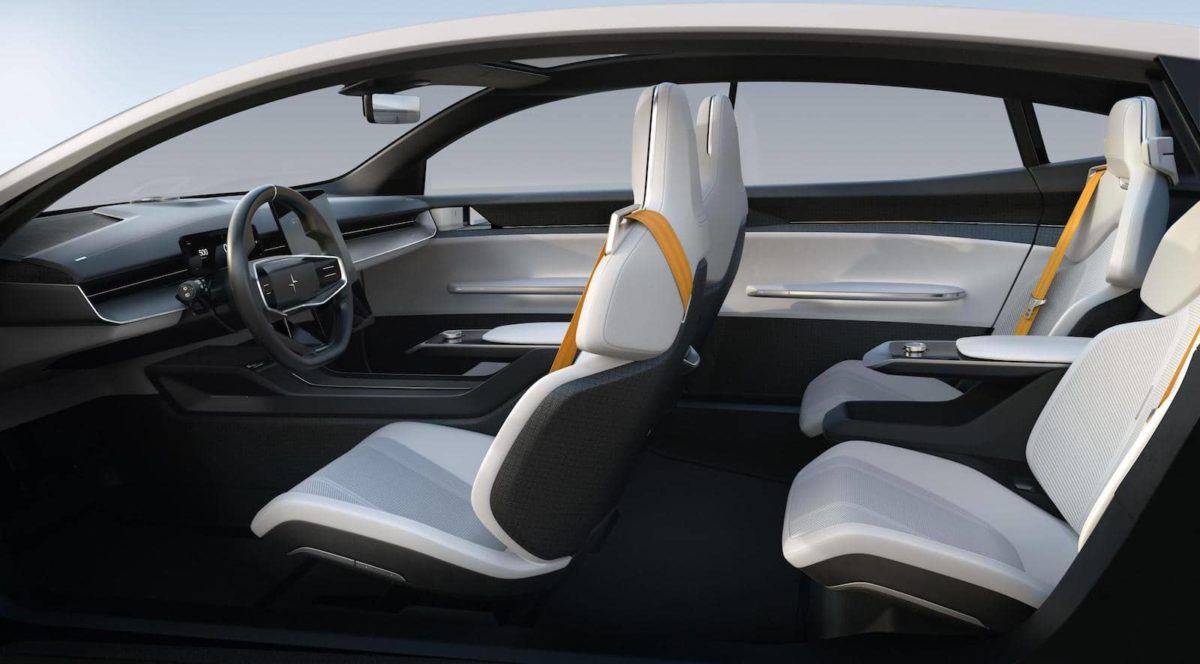
One of the key talking points is its use of sustainable materials. For example, the plant-based composites used for interior panels and the seatbacks save up to 50% in weight and produce 80% less plastic waste than conventional materials.
Meanwhile, the seat surfaces are 3D-knitted from recycled plastic bottles, the seat bolsters and headrests are made from recycled cork vinyl, and the carpets come from reclaimed fishing nets.
It also features Polestar’s next-generation infotainment system, which is powered by Android. The ‘human-machine interface’ (HMI) system is operated through a portrait-orientated central touch screen and a 12-inch driver display – the latter of which houses eye tracking software that can optimise screen displays on the move.
The exterior’s sharp creases and minimalist design put a focus on aerodynamic efficiency, something that’s important to get the most range out of the all-electric powertrain. Meanwhile, keeping the batteries low in the wheelbase contributes to the low and sleek profile.
Maximilian Missoni, head of design at Polestar, said: “Polestar Precept’s aesthetics are rooted in cutting-edge technology rather than looking back in time at historical, automotive references.
“At Polestar we see technology as an enabler, as a tool to solve our society’s problems and we translated this attitude into a new set of design principles. The combination of sustainable materials and high-tech smart systems opens an entirely new chapter of avant-garde luxury design and shows where Polestar is heading.”
The Polestar Precept will make its public debut at the Geneva motor show from March 5 to 15.
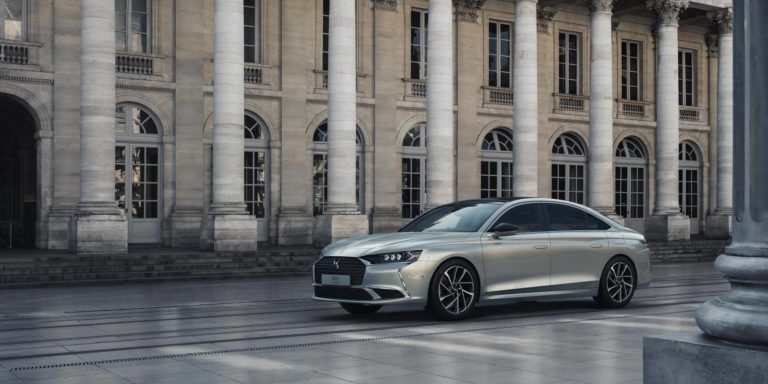
DS Automobiles has revealed an all-new saloon called DS 9 for the premium segment, which will sit at the top of its range.
The third truly standalone model from PSA Group’s premium arm – following the DS 7 Crossback and DS 3 Crossback models – the DS 9 will be offered with powerful electrified powertrains.
At launch, there will be an E-Tense-badged plug-in hybrid model, using a petrol engine and electric motor that will offer 225hp and an electric-only range of between 25 and 31 miles. There are three drive modes, with ‘Electric’ being the default setting on start-up to maximise efficiency and a ‘Hybrid’ option that chooses between petrol, electric, or a combination of both depending on the driving conditions. There’s also a sport mode that offers maximum performance.
After launch, two more hybrid powertrains will join the line-up, the first being a 250hp unit with two-wheel-drive and a larger electric-only range, and a high-performance 360hp unit with four-wheel-drive.
DS is focusing on passenger comfort provided by the large wheelbase, saying rear passengers have a ‘huge amount of space’. The back seats are also heated, cooled and massaging. Up front, there’s a dashboard covered in Nappa leather and an Alcantara roof lining, as well as DS’s usual bold styling choices.
It also includes impressive technology also seen on the DS 7 Crossback, such as night vision, Matrix LED headlights and adaptive cruise control.
Béatrice Foucher, CEO DS Automobiles, said: “Since the launch of new brand DS in 2015, one goal excited our team: being able to offer a large French saloon. Our ambition to embody French luxury expertise in a car led to the arrival of a new benchmark in the premium saloon segment, and this desire to convey French culture through a car is translated today into DS 9.”
The DS 9 is being built in China for export around the world. Order books will open later this year with deliveries expected to begin in 2021.
The Tesla Model X was a large electric SUV/crossover with seating for up to seven people. It was launched in Europe in 2016 and discontinued in early 2026.
The Model X received consistently positive reviews from the UK motoring media, although it didn’t have any directly comparable rivals as points of reference for most of its time on sale.
It received particular praise for its performance, minimalist styling and innovative ‘Falcon’ wing rear door design, but it was criticised for not matching the build quality of other cars in its price range.
From 2023, the Model X was only available in top-spec trim and in left-hand drive, which limited its appeal to UK buyers. Along with the Model S, the Model X was discontinued in early 2026.
As of March 2026, the Tesla Model X has a Used Car Expert Rating of E, with a score of 52%. It scores top marks for its zero tailpipe emissions, and also gets good grades for its safety rating and media review scores. However, running costs and reliability scores let it down.
Body style: Large SUV/crossover Powertrain: electric motor and batteries Price: From £100,290 on-road
Launched: Summer 2016 Last updated: Summer 2019 Discontinued: Spring 2026
Image gallery
Media reviews
Highlighted reviews and road tests from across the UK automotive media. Click any of the boxes to view.
The Car Expert
Model reviewed: 90D “The Tesla Model X is targeted at wealthy people with a big family who want to make a statement about the planet’s future – or who just want to be seen that way.” Read review
Auto Express
Model reviewed: Range overview Score: 7 / 10 “If you want a ludicrously quick crossover with all-electric drive and funny doors, the Tesla Model X is it.” Read review
Car
Model reviewed: 90kW Performance Score: 8 / 10 “The Tesla Model X is no longer the clear-cut disruptor it once was, but it remains a singular presence on the road. Nothing else quite combines falcon doors, cinema-style seating layouts, massive screens and hypercar acceleration. In 2025, though, UK buyers need to see it more as a used-car proposition. New orders in RHD are off the table, and inventory is scarce.” Author: Curtis Moldrich, Keith Adams Read review
Carbuyer
Model reviewed: Range overview Score: 7.4 / 10 “With cutting-edge looks and the technology to back them up, the Tesla Model X is one of the most impressive and family-friendly electric cars you can buy.” (Andy Goodwin) Read review
Company Car Today
Model reviewed: 100D Score: 8.5 / 10 “Not subtle in any way, and certainly not cheap, but a useable range, massive practicality and immense performance make for a very appealing car.” Read review
Daily Mail
Model reviewed: 90D “The Tesla Model X is a phenomenal family car. It’s comfortable, it’s quick, it’s packed full of gadgets and it’s a calming place to be – and that sense of calm more than anything else is what you need when driving around with the family.” Read review
Green Car Guide
Model reviewed: 100D Score: 10 / 10 “It’s amazing to drive, and our week with the car shows that it can fit into your life perfectly, even if a very muddy hill is involved. And it’s from a company that didn’t even exist 15 years ago. At £100,000, it’s not cheap – but it’s the future.” Read review
Model reviewed: Range overview Score: 10 / 10 “The Tesla Model X genuinely pushes forward the boundaries of what can be done with cars to make them more sustainable as well as highly impressive to drive and to live with.” Read review
Honest John
Model reviewed: Range overview “Tesla’s seven-seat MPV with unusual bi-folding rear doors is expensive” Read review
Parkers
Model reviewed: Range overview Score: 8 / 10 “Capable, roomy and fast, with street theatre rear doors” Read review
The Telegraph
Model reviewed: Range overview Score: 7 / 10 “The Tesla Model X is a desirable car and offers useful additional space over the Model S for big families. However, while its electric range and performance impress, it is also expensive compared with rivals.” Read review
Top Gear
Model reviewed: Range overview Score: 8 / 10 “Not cheap, and not a conventional SUV, but a thoroughly capable family wagon.” Read review
Which EV?
Model reviewed: Score: 9.1 / 10 “The Tesla Model X is a stunning premium SUV. It drives like a much smaller, lighter car and is incredibly fast, whichever version you go for. The interiors are minimal but comfortable for long journeys, and the level of technology included is unparalleled. There are lots of flexible seating options for different occupant needs, the luggage space is potentially huge, and it can tow over two tons as well. This is a very expensive car, but the most accomplished electric SUV currently on the market.” (James Morris) Read review
Safety rating
Independent crash test and safety ratings from Euro NCAP
The Tesla Model X was tested by Euro NCAP back in 2019 and awarded a five-star rating. However, this rating expired in January 2026 and is no longer valid as the car no longer meets the standards required for such a rating. This is normal practice, as Euro NCAP reviews its ratings on most cars annually with most ratings expiring after about six or seven years.
Although the rating has now expired, the score is still useful if you are comparing a used Model X to vehicles of similar age – whose ratings will have probably also expired.
Eco rating
Independent economy and emissions ratings from Green NCAP
No eco rating
The Tesla Model X was not assessed by Green NCAP during its production life.
The Green NCAP programme measures exhaust pollution (which is zero for an electric car) and energy efficiency. Electric cars are much more energy-efficient than combustion cars, so the Model X is likely to score very highly in Green NCAP testing whenever it ever takes place. Check back again soon.
Reliability rating
Reliability data provided exclusively for The Car Expert by MotorEasy
Total claims: 52 Average repair cost: £926.99 Last updated: April 2025
The Tesla Model X has a very poor reliability rating of just 10% as of April 2025 (our most recent data point). The Car Expert’s reliability information is provided exclusively to us using workshop and extended warranty data from our partner, MotorEasy, sourced from both official dealerships and independent workshops.
As well as having a poor reliability score, the average repair cost on a Model X is quite expensive at more than £900. The most common faults reported to date relate to its suspension.
Similar cars
If you’re looking at the Tesla Model X, you might also be interested in these alternatives
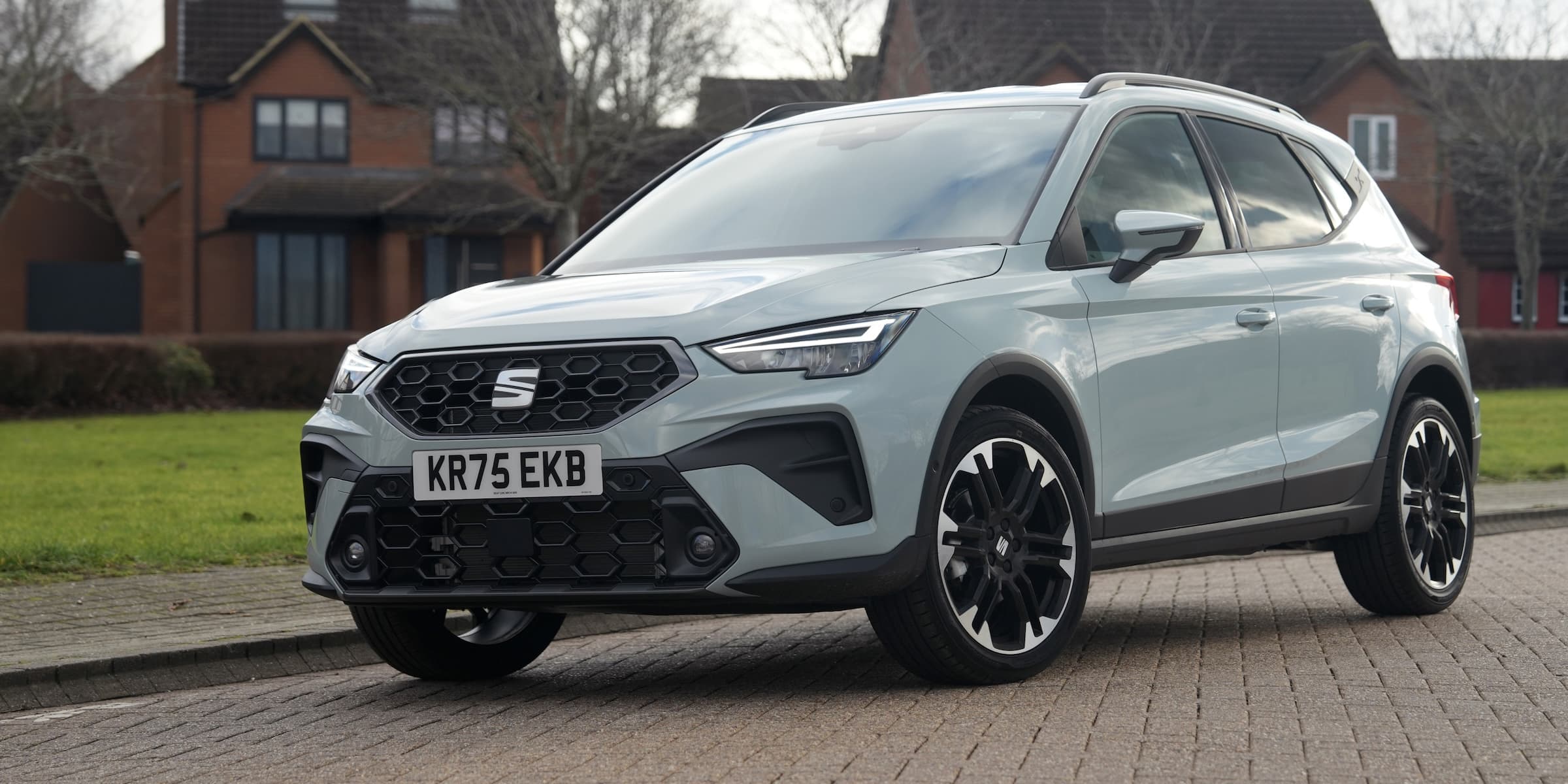
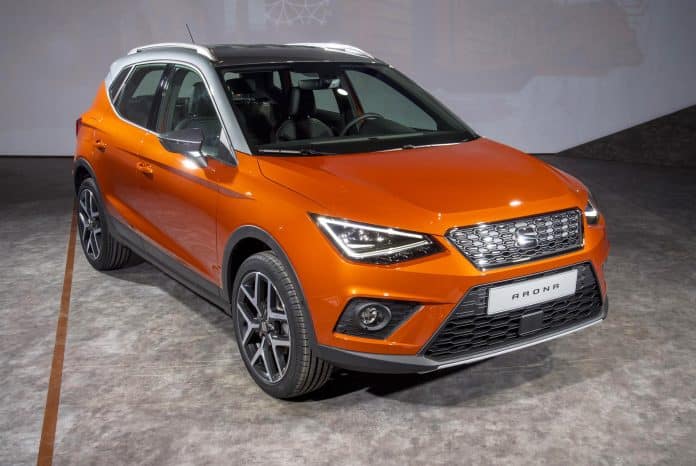
The SEAT Arona is a small, supermini-based SUV/crossover that sits below the Ateca in the SEAT SUV family. It was launched in summer 2017 before arriving in the UK later that year.
The Arona is based on the SEAT Ibiza hatchback, and internally it looks and feels almost identical. It also shares a lot of its componentry with the related Volkswagen Polo, T-Cross and T-Roc models.
The Arona has been widely praised for its driving characteristics and decent standard equipment levels. However, the diesel engine has been criticised for being noisy and slow, while concerns have been raised about its behaviour during emergency braking and swerving manoeuvres.
A facelifted Arona was announced in late 2025, arriving in the UK in early 2026. This mostly consisted of some light cosmetic changes, with few mechanical upgrades.
As of March 2026, the SEAT Arona holds a New Car Expert Rating of B, with a score of 67%. It gets top marks for its low running costs, while its media review scores and CO2 emissions are also good.
Body style: Small SUV/crossover Engines: petrol, diesel Price: From £22,450 on-road
Launched: Autumn 2017 Last updated: Summer 2018 Replacement due: TBA
Image gallery
Media reviews
Highlighted reviews and road tests from across the UK automotive media. Click any of the boxes to view.
The Car Expert
Score: 8 / 10 “The Arona is by no means the cheapest small SUV on the market, but it is one of the best.” Read review
Auto Express
Model reviewed: Range overview Score: 8 / 10 “The SEAT Arona is one of the leading offerings among a huge array of small SUVs on the market, offering a composed and refined drive. All versions receive pretty generous standard equipment.” Read review
Business Car
Model reviewed: 1.0-litre petrol manual FR Score: 8 / 10 “With no mechanical changes, the SEAT Arona drives much the same as before. The latest changes, especially the interior, mark this Arona out against increasingly tough compact SUV opposition.” Read review
Car
Model reviewed: Range overview Score: 8 / 10 “Is it interesting? Not really. Is it fun? It’s not really that either. Are there niggles? There’s the odd one. But in a world of overcomplication, the Seat Arona is one of the few remaining cars on sale that feel like an island of sufficiency and a refuge from excess. It shouldn’t be overlooked.” Author: Jake Groves Read review
Car Keys
Model reviewed: Facelift range Score: 8 / 10 “Considering SEAT has made such mild tweaks to the Arona, it really shows just what a great product it was beforehand. This crossover is still up there with the best, with the fun driving experience really helping to set it apart from many in this class – though there might be roomier models in this class.” Read review
Carbuyer
Model reviewed: Range overview Score: 8 / 10 “The compact SEAT Arona offers the brand’s typical stylish looks and sporty feel in a practical shape” Read review
Carwow
Model reviewed: Range overview Score: 7 / 10 “The SEAT Arona is a safe and roomy small SUV but it’s interior feels a bit cheap in places and high-spec models are quite expensive.” Read review
Company Car Today
Model reviewed: 1.0-litre petrol manual FR Sport Score: 8.1 / 10 “The SEAT Arona is well worth considering, mainly because it has great whole-life costs, it’s competitively specced, reasonably practical, and drives pretty well.” Read review
Daily Mail
Model reviewed: 1.0-litre petrol manual FR Sport Score: 8 / 10 “This is simply the most sensible car I’ve ever driven, with everything just as it should be and no surprises. A car, perhaps, for people who have no interest in cars.” (Chris Evans) Read review
Evo
Model reviewed: 1.0-litre petrol manual FR Sport Score: 7 / 10 “SEAT’s Arona is one of the bigger entertainers in this class, but not yet an alternative to a hot supermini for people like us” Read review
Green Car Guide
Model reviewed: 1.0-litre petrol manual FR Score: 9 / 10 “The SEAT Arona FR 1.0 TSI 115PS 6-speed manual offers fun, agility, economy, and practicality. It looks good and it’s even affordable. These are the key features that we look for in a car, and there aren’t many faults.” Read review
Heycar
Model reviewed: Range overview Score: 9 / 10 “The SEAT Arona is one of the best small SUVs on the market today. While it’s pricier than the equivalent Ibiza hatchback, all models are loaded with standard equipment and it’s a very practical choice. It’s also good to drive and cheap to run.” Read review
Honest John
Model reviewed: Range overview Score: 8 / 10 “List price aside, we think the Arona is one of the best all-rounder compact crossovers. More comfortable than the Captur and more practical than the Juke, SEAT’s second crossover is another success story for the Volkswagen-backed carmaker.” Read review
Model reviewed: 1.0-litre petrol manual “The SEAT Arona is a crossover that impresses. True, it is more expensive than a Renault Captur or a Nissan Juke, but the extra money gets you more equipment and, quite frankly, a better car. It’s quite possibly the best small crossover on sale.” Read review
Parkers
Model reviewed: Range overview Score: 8.4 / 10 “The SEAT Arona is a stylish, jacked-up small family car with tempting finance deals available” Read review
The Sun
Model reviewed: 1.0-litre petrol manual “I am not 100% sold on the exterior, however, which can look a little plain in some colours and trims. And this is one crossover that definitely won’t enjoy going off the beaten path. But it is very good at what it does and is certainly one of the best little SUVs in what is currently a very crowded market.” Read review
The Telegraph
Model reviewed: 1.0-litre petrol manual FR Score: 8 / 10 “Pleasingly unpretentious, with a whiff of sporting behaviour in its make-up, the SEAT Arona isn’t a car to excite any of the senses except perhaps the wallet and the satisfaction of a vehicle well designed for its job.” Read review
Model reviewed: Range overview Score: 8 / 10 “Although not perfect, the SEAT Arona is the only car of this type to score consistently strongly across all categories. And so, just as the SEAT Ibiza has become a frontrunner in the supermini class, so the Arona moves into pole position as far as small crossovers are concerned.” Read review
Model reviewed: 1.6-litre diesel manual FR Score: 6 / 10 “Try to forget the idea it’s an SUV and this little car makes more sense. It rides and handles well and has plenty of space inside. You need to do a lot of miles to make the noisy diesel version pay back its extra purchase cost, but in petrol form the SEAT Arona surpasses rivals in the battle for supermini crossover honours.” Read review
Top Gear
Model reviewed: Range overview Score: 6 / 10 “The SEAT Arona is a decent enough crossover, but a Leon hatchback is bigger, better and no more expensive” Read review
Safety rating
Independent crash test and safety ratings from Euro NCAP
Clean Air Index: 9.8 / 10 Energy Efficiency Index: 6.1 / 10
The rating above only applies to the versions of the SEAT Arona powered by a 1.5-litre petrol engine and manual gearbox. It does not apply to any other engine/gearbox combination.
Reliability rating
Reliability data provided exclusively for The Car Expert by MotorEasy
No reliability rating
As of March 2026, we don’t have enough reliability data on the SEAT Arona to generate a reliability rating.
The Car Expert’s reliability information is provided exclusively to us using workshop and extended warranty data from our partner, MotorEasy, sourced from both official dealerships and independent workshops.
As soon as MotorEasy has sufficient data on the Arona, we’ll publish the results here.
Running cost rating
Monthly cost of ownership data provided exclusively for The Car Expert by Clear Vehicle Data
Fuel consumption
Average
Score
Petrol models
51 mpg
C
Diesel models
57 mpg
B
CO₂ output
Average
Score
Variation
Score
Petrol models
126 g/km
B
Diesel models
129 g/km
B
Insurance group
Average
Score
Variation
Score
All models
14
A
Service and maintenance
Cost
Score
Year 1
£150
A
Year 2
£411
A
Year 3
£712
B
Year 4
£938
B
Year 5
£1,280
B
Overall
£3,491
B
The SEAT Arona is a relatively affordable car to own and run, according to whole-life cost numbers provided exclusively to The Car Expert by our data partner, Clear Vehicle Data.
Fuel consumption isn’t as good as some other small SUVs, but servicing and insurance bills should be much better than most rivals.
Awards
Trophies, prizes and awards that the SEAT Arona has received
2019
Tow Car Awards – Best Tow Car, Ultralight category
DieselCar & EcoCar Top 50 – Best Compact SUV
2018
DieselCar & EcoCar Top 50 – Best Compact SUV
Red Dot Design Awards – Best Product Design
Similar cars
If you’re looking at the SEAT Arona, you might also be interested in these alternatives
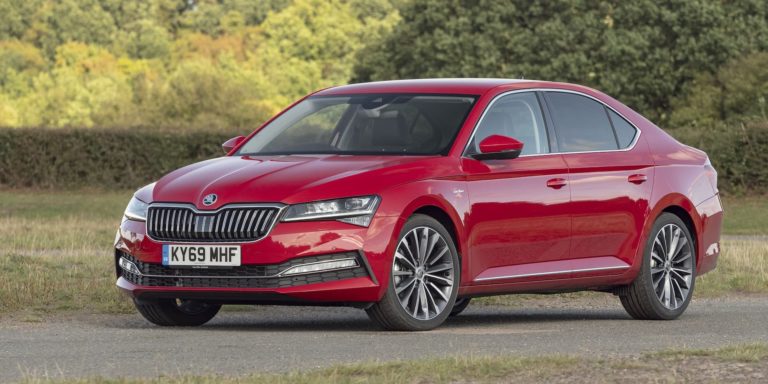
The Skoda Superb was a large family/executive car, available as either a liftback or an estate. This car was the previous third-generation model, launched in 2015 and remaining in production until 2023.
The Superb received almost unanimous acclaim from the UK motoring media and continues to receive numerous awards every year. Over its production life, the Superb won more than 60 awards from the UK motoring media by our count (see ‘Awards’ section below).
The Skoda Superb received considerable praise for its practicality, design and value for money. Even more impressive was that it received almost no real criticisms, apart from Jeremy Clarkson bemoaning its lack of soul.
An all-new Superb was unveiled in late 2023, with the first cars arriving in the UK in summer 2024.
As of March 2026, the third-generation Skoda Superb has a Used CarExpert Rating of A, with a score of 68%. It scores top marks for its excellent media reviews and low CO2 emissions, while its reliability record and running costs are also very good. The only poor score is for its safety rating, as its Euro NCAP score is long out of date now.
Body style: Large liftback and estate Engines: petrol, diesel, plug-in hybrid Price when new: From £28,675 on-road
Launched: Summer 2015 Last updated: Winter 2019/20 Replaced: Summer 2024
Image gallery
Media reviews
Highlighted reviews and road tests from across the UK automotive media. Click any of the boxes to view.
The Car Expert
Model reviewed: 2.0-litre petrol automatic SE L “This facelift may only bring marginal changes to the Skoda Superb, but with a fresher look and additional kit, it’s helped to strengthen it further.” Read review
Score: 7.6 / 10 “More than ever before, the Skoda Superb will provide those in the market for a large executive car with all they will require – whether they are stepping out of a Volkswagen Passat or a BMW 5 Series.” Read review
Auto Express
Model reviewed: Range overview Score: 10 / 10 “Skoda’s flagship Superb boasts sleek styling, plenty of space and great value for money.” Read review
Model reviewed: 1.4-litre petrol/electric plug-in hybrid iV SE L estate Score: 9 / 10 “Adding a plug-in powertrain has done very little to dent the appeal of the new Skoda Superb Estate, in fact, it could become the pick of the range for many buyers.” Read review
Model reviewed: Range overview Score: 10 / 10 “Skoda’s flagship Superb boasts sleek styling, plenty of space and great value for money” Read review
Model reviewed: Range review Score: 9 / 10 “Its comfortable suspension set-up compliments its limo-like rear seat space, and the quiet engine and comfy seats all add into its relaxed feel.” Read review
Model reviewed: Range review Score: 8 / 10 “We get behind the wheel of the refreshed Skoda Superb Estate, and find it is still a winner in the space race.” Read review
Model reviewed: Sportline Score: 8 / 10 “Looking for a fast and subtle saloon, but can’t afford a BMW 7 Series? The range-topping Skoda Superb makes a case as perfect cut-price alternative.” Read review
Car
Model reviewed: Range review Score: 8 / 10 “That relaxed vibe is what the Superb is all about.” Read review
Car Keys
Model reviewed: 1.4-litre petrol/electric plug-in hybrid iV estate Score: 9 / 10 “The plug-in hybrid has added yet further appeal to the range of the excellent Skoda Superb. It might be marginally less spacious and more expensive than other petrol and diesel versions, but the smooth powertrain and opportunity for ultra-low running costs make the iV look like a convincing option.” Read review
Model reviewed: 2.0-litre petrol automatic SE L Score: 9 / 10 “Slight tweaks were all that were needed to ensure the Skoda Superb Estate remains right at the top of this class in the large family car sector. Few others can combine value for money, comfort and spaciousness quite like the Superb, while also wrapping it up in a classy and premium package.” Read review
Model reviewed: 2.0-litre diesel automatic Score: 10 / 10 “Skoda hasn’t changed the Superb massively with this new car, but it didn’t need to. It’s a testament to just how excellent the model was in the first place that it continues to be so well-rounded, even four years after the last generation went on sale.” Read review
Carbuyer
Model reviewed: Estate range Score: 9.6 / 10 “The Skoda Superb Estate offers a huge amount of space for the money, so it’s worth considering instead of an SUV.” Read review
Model reviewed: Liftback range Score: 8.6 / 10 “The Skoda Superb hatchback has more space, comfort and capability than just about any car for the price” Read review
Carwow
Model reviewed: Estate range Score: 9 / 10 “The Skoda Superb Estate offers masses of boot space and a high-quality feel for a keen price. A Passat has a nicer interior, though, and the Superb doesn’t exactly get your pulse racing on the road.” Read review
Model reviewed: Liftback range Score: 9 / 10 “The Skoda Superb offers class-leading rear legroom and high levels of build quality for a keen price. A Passat has a nicer interior, though, while a Mondeo is more fun to drive.” Read review
Company Car Today
Model reviewed: 1.4-litre petrol/electric plug-in hybrid iV L&K liftback “Instantly the Superb of choice for company car drivers – if their journey pattern suits PHEVs – although the Skoda looks pricey compared to rival plug-ins.” Read review
Model reviewed: 2.0-litre diesel automatic SE L “Still excellent, Skoda’s flagship Superb has had a mild improvement and subtly improved styling, but all the bits that make it such a good company car are wisely unfettled.” Read review
Daily Mirror
Model reviewed: 1.4-litre petrol-electric plug-in hybrid automatic iV SE Technology liftback Score: 8 / 10 “The plug-in hybrid version of Skoda’s best car – the Superb iV – is not just an impressive, very relaxing method of transport, but a ‘must-have’.” Read review
Model reviewed: 2.0-litre diesel automatic SE L estate “If there’s a car that didn’t need a facelift it’s the Skoda Superb. Fortunately, the tweaks to this one have done nothing to spoil an already fantastic package.” Read review
Evo
Model reviewed: Liftback range Score: 8 / 10 “Traditional family cars like the Skoda Superb may be losing out to crossovers in the market, but on the road there’s still a lot to be said for a lower roofline and longer footprint. The Superb has body control quite unlike any higher-roofed vehicle, yet rides excellently on most surfaces – even on larger, more stylish wheel options.” Read review
Fleetworld
Model reviewed: 2.0-litre diesel automatic 4×4 SE L estate Score: 8 / 10 “With its combination of generous equipment and frugal engines, as well as its sharp looks, there’s lots to praise about the new Skoda Superb. If you need a load-lugger you need look no further.” Read review
Green Car Guide
Model reviewed: Plug-in hybrid Score: 8 / 10 “The Skoda Superb Estate iV is a very good all-round car. The key selling points are the large amounts of space for occupants and luggage, the fact that you can drive at least 20 miles on zero-tailpipe emission electric power (and then around 500 miles on petrol), and that, at £33,000, it’s a lot of car for the money.” Read review
Model reviewed: 2.0-litre diesel automatic 4×4 L&K Score: 9 / 10 “The Skoda Superb 4×4 is ideal for carrying lots of people and luggage on longer motorway journeys, when it has good performance, it feels very surefooted, and the economy is also respectable. It’s very competent – rather than exciting – to drive.” Read review
Heycar
Model reviewed: Saloon range Score: 8 / 10 “If space is the ultimate luxury, then the Skoda Superb can be counted as one of the most luxurious cars in the world. It’s not just a little bit spacious, either, it’s vast, with the sort of lounging room in the rear you’d expect to get in a luxury saloon like the Mercedes S-Class.” Read review
Model reviewed: Estate range Score: 9 / 10 “You can try and justify choosing another big estate over the Skoda Superb, but you’ll almost certainly fail. Few cars at any price manage to so comprehensively achieve all the key attributes that the segment demands, and that it does so without being flashy or expensive makes it all the more likeable.” Read review
Honest John
Model reviewed: Range overview Score: 10 / 10 “One of the best and most spacious family cars money can buy.” Read review
Model reviewed: 2.0-litre petrol automatic 4×4 liftback “While the changes to the Skoda Superb might not be dramatic, it remains our favourite large family car on the market. There’s an engine to suit every purpose (including a plug-in hybrid on its way) and it’s a hugely practical choice with an interior that belies its price. The Superb continues to live up to its name.” Read review
Parkers
Model reviewed: Estate range Score: 9.2 / 10 “A great estate with bags of room, majoring on value” Read review
Model reviewed: Liftback range Score: 8.6 / 10 “Excellent full-sized hatchback renders costlier rivals irrelevant” Read review
The Sun
Model reviewed: 1.6-litre diesel manual “It’s refreshing to drive an honest, no-nonsense family car which does exactly what it says it will. The superb Skoda Superb.” Read review
The Sunday Times
Model reviewed: 2.0-litre diesel manual estate “It is extremely good value for money. It’s really rather good-looking. It is spacious. Yet it has the same amount of soul as a fridge freezer.” (Jeremy Clarkson) Read review
Model reviewed: 2.0-litre petrol automatic 4×4 liftback SE L Score: 8 / 10 “This version of the Skoda Superb is probably as stealthy as a sporting saloon comes. The secret’s out: forget about the Octavia vRS, this is Skoda’s best fast car. Next time you see one, remember who might be at the wheel.” Read review
The Telegraph
Model reviewed: 1.4-litre petrol-electric plug-in hybrid iV Sportline Plus liftback Score: 10 / 10 “Whether you plump for a lesser version, or splash out on this one instead, the Skoda Superb iV is one of the best plug-in hybrids on the market, and a righteous addition to the already brilliant Superb range.” Read review
Model reviewed: Range overview “Sold against fleet favourites such as the Vauxhall Insignia and Ford Mondeo, the Skoda Superb represents decent value for money, a refined drivetrain and the sort of looks that don’t mark it out as a mass-market car.” Read review
Model reviewed: 1.5-litre petrol manual SE Score: 10 / 10 “It won’t surprise you to learn that very little has changed with this facelift. But it didn’t need to, because the Skoda Superb was a cracking buy beforehand, and it’s just as superb – if not even more so – now.” Read review
Top Gear
Model reviewed: Estate range Score: 9 / 10 “Everything we loved about the old Skoda Superb Estate (size, space, value) with added updated interior tech and a genuinely stylish body. Verging on genius.” Read review
Model reviewed: Liftback range Score: 8 / 10 “No pun needed: the Skoda Superb is excellent. Every inch an Audi A6 rival. Honest.” Read review
Model reviewed: 2.0-litre petrol automatic Sportline Plus Score: 8 / 10 “It’s not badged vRS, but thanks to a Sportline bodykit, suede sport seats, sporty wheels, and a sporty flat-bottomed steering wheel… well, it’s not lacking in sport.” Read review
Safety rating
Independent crash test and safety ratings from Euro NCAP
The Skoda Superb was assessed by Euro NCAP back in 2015 and awarded a five-star rating. However, this rating expired in January 2022 and is no longer valid. This is normal practice, as Euro NCAP reviews its ratings on most cars annually with most ratings expiring after about six or seven years.
As Euro NCAP’s standards are continually evolving, you can’t compare a five-star from 2015 to a similar score from 2023. However, if you are comparing a used Skoda Superb to vehicles of similar age, whose ratings will have probably also expired, its safety rating score is still useful.
Eco rating
Independent economy and emissions ratings from Green NCAP
No eco rating
The Skoda Superb was not lab tested by Green NCAP during its production life.
Reliability rating
Reliability data provided exclusively for The Car Expert by MotorEasy
Total claims: 96 Average repair cost: £520.61 Last updated: April 2025
As of April 2025 (our most recent data point), the Skoda Superb has a reliability score that’s better than average, according to warranty data provided exclusively to us by our commercial partner, MotorEasy. This score applies to both this model and older (pre-2015) generations.
The average repair bill is more than £500, which is quite good but still more than the cost of a used car warranty, so that’s worth bearing in mind. The most common problems reported to date are engine (average repair bill of more than £900) and suspension (average repair bill of less than £300).
Gearbox repairs are the most expensive problems reported, which is fairly normal, with an average repair bill of about £1,400. Thankfully, these have been fairly rare to date.
Make sure that any used car warranty you buy covers all of the areas of concern shown above.
Running cost rating
Monthly cost of ownership data provided exclusively for The Car Expert by Clear Vehicle Data
Fuel consumption
Average
Score
Petrol models
41 mpg
C
Diesel models
53 mpg
B
Plug-in hybrid models
236 mpg
A
CO₂ output
Average
Score
Variation
Score
Petrol models
157 g/km
C
Diesel models
140 g/km
C
Plug-in hybrid models
27 g/km
A
Battery range
Average
Score
Variation
Score
Plug-in hybrid models
40 miles
D
Insurance group
Average
Score
Variation
Score
All models
24
B
Service and maintenance
Cost
Score
Year 1
£213
C
Year 2
£566
C
Year 3
£926
C
Year 4
£1,185
C
Year 5
£1,569
C
Overall
£4,459
C
Running costs for the Skoda Superb range are a mixed bag, according to data provided exclusively to The Car Expert by our commercial partner, Clear Vehicle Data.
Fuel economy is disappointing for petrol models but good for diesel-engined versions. The plug-in hybrid models look amazing on paper, but this is largely thanks to ridiculous EU/UK government lab tests that are completely inadequate for plug-in hybrids. There is no way you will ever travel for 236 miles on a single gallon (4.5 litres) of fuel and some electricity…
The battery range of the plug-in hybrid model is lacking a few miles when compared to most rivals, with a 37-mile electric-only range unlikely to cover most of the weekly commutes without consistent re-charging.
Compared to the rest of the large saloon sector, the car’s service and maintenance costs are lower than average. Insurance costs likely to be cheaper than you might expect too, based on data from the UK’s insurance group assessor, Thatcham Research.
Awards
Trophies, prizes and awards that the Skoda Superb has received
2022
Carbuyer Awards – Best Used Estate Car
Fleet World Awards – Best Upper Medium Fleet Car
2021
Business Motoring Awards – Best Estate Car
Carwow Awards – Best Large Hybrid Car (Superb iV) + Best Estate Car
DieselCar & EcoCar Top 50 – Best Large Car + Best Large Estate Car
Fleet News Awards – Best Upper Medium Car
Fleet World Awards – Best Upper Medium Fleet Car
2020
Auto Express Driver Power – Best Family Car
Business Car Awards – Best Upper-Medium Car
Carbuyer Awards – Best Plug-in Hybrid
DieselCar & EcoCar Top 50 – Best Large Car + Best Large Estate Car
Fleet News Awards – Best Upper Medium Car
Fleet World Awards – Best Upper Medium Fleet Car
2019
Carwow Awards – Practicality Award
DieselCar & EcoCar Top 50 – Best Large Car + Best Large Estate Car
DieselCar & EcoCar Used Car Top 50 – Used Car of the Year + Best Used Large Car + Best Used Estate car
Fleet News Awards – Best Upper Medium Car
Fleet World Honours – Best Upper Medium Car
Honest John Awards – Best Large Car
Parkers New Car Awards – Best Large Family Car
2018
DieselCar & EcoCar Top 50 – Best Large Estate + Best Large Hatch
DieselCar & EcoCar Used Car Top 50 – Best Used Estate car
Fleet News Awards – Best Upper Medium Car
Fleet World Honours – Best Upper Medium Car
Honest John Awards – Best Large Car
Tow Car Awards – Best Tow Car, 1400-1549kg
2017
ACFO Awards – Fleet Car of the Year
Auto Express Awards – Best Family Car
BusinessCar Awards – Best Upper Medium Car
Carbuyer Awards – Best Estate Car
Fleet News Awards – Best Upper Medium Car
Fleet World Honours – Best Upper Medium Car
Honest John Awards – Best Large Family Car
Tow Car Awards – Best Tow Car, 1400-1549kg
2016
Auto Express Awards – Best Family Car + Best Estate Car
Carbuyer Awards – Best Estate Car
Contract Hire and Leasing Awards – Best Large Family Car
Fleet News Awards – Best Upper Medium Car
Fleet World Honours – Best Upper Medium Car
Honest John Awards – Most Popular Large Family Car
Professional Driver Awards – Private Hire Car of the Year
Sunday Times Top 100 – Best Large Estate Car
Telegraph Car Awards – Best Family Car
Tow Car Awards – Best Tow Car, 1400-1549kg
2015
Scottish Car of the Year Awards – Best Estate Car
Similar cars
If you’re looking at the Skoda Superb, you might also be interested in these alternatives
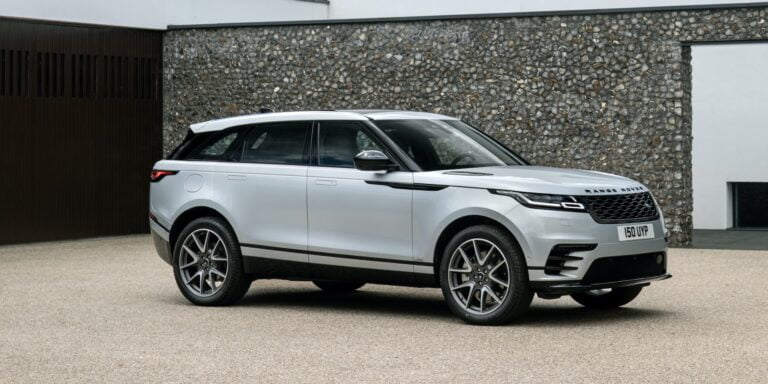
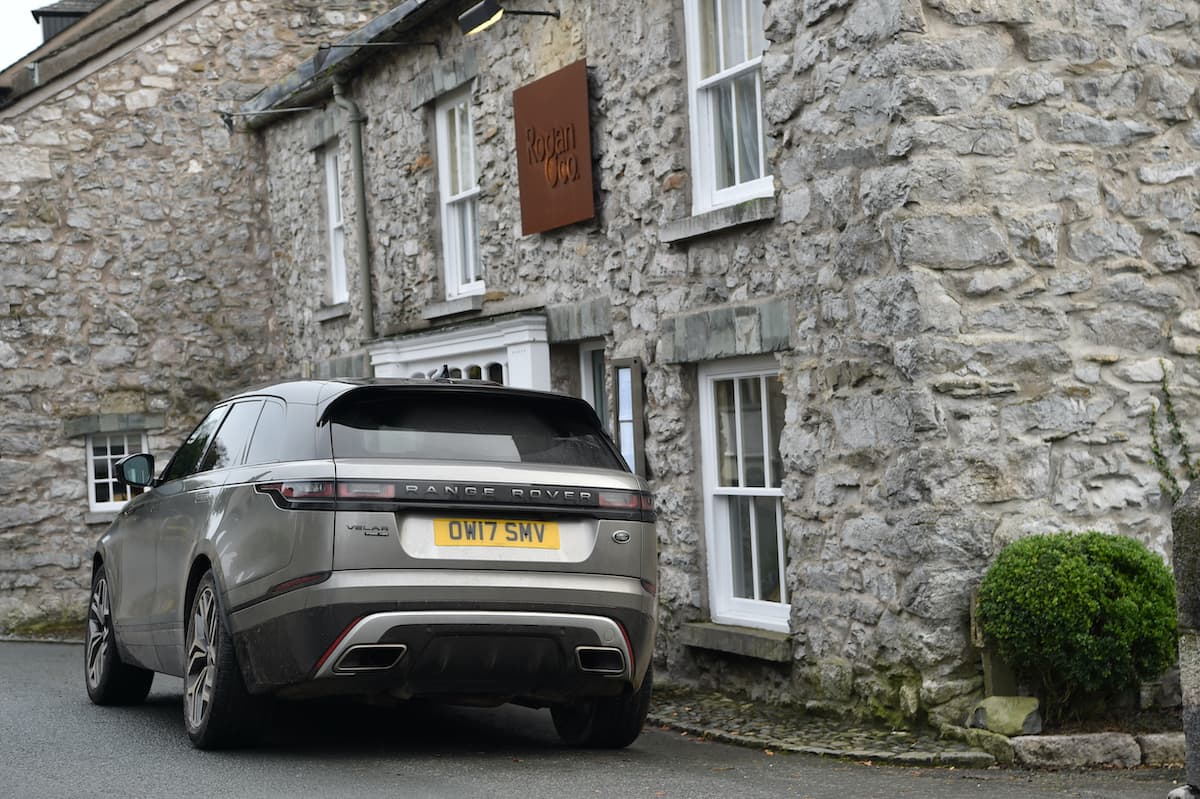
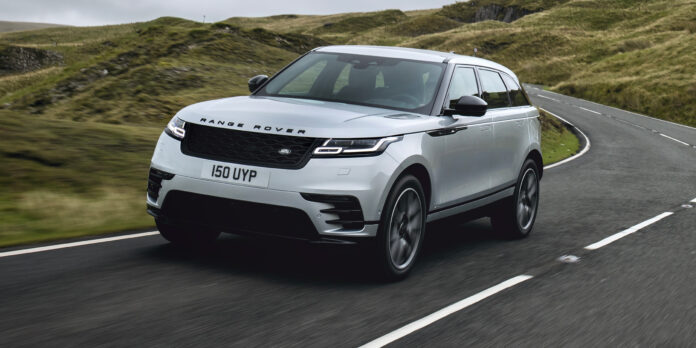
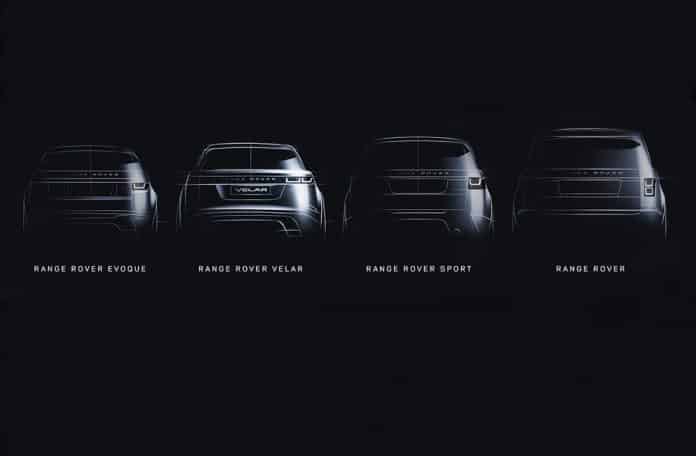
The Range Rover Velar is a luxury SUV by Land Rover that sits between the Range Rover Evoque and Range Rover Sport in the model range. It is built at Jaguar Land Rover’s factory in Solihull.
The Velar was launched in the summer of 2017, with a high-performance SVAutobiography model added a year later. It is built on the same platform as the Jaguar F-Pace SUV, XF saloon and XE saloon models.
The Velar has received consistently good scores from the UK motoring media across all models in the range. It has been particularly praised for its design and comfortable driving experience, however it has been criticised for being overly expensive and not hitting the same quality standards as rivals.
As of March 2026, the Range Rover Velar holds a New Car Expert Rating of E, with a score of 53%. Its best results are from media reviews and low CO2 emissions (thanks to the plug-in hybrid model), but running costs and reliability problems count heavily against it.
Body style: Medium SUV/crossover Engines: petrol, diesel Price: From £54,455 on-road
Launched: Summer 2017 Last updated: Spring 2023 Replacement due: TBA
Image gallery
Media reviews
Highlighted reviews and road tests from across the UK automotive media. Click any of the boxes to view.
Featured reviews
“The Range Rover Velar isn’t the cheapest option in the market – but that won’t bother its target market. This is a significant upmarket SUV contender.”
Model reviewed: 2.0-litre diesel automatic HSE D240
Model reviewed: P400e PHEV 2021 Score: 9 / 10 “The Land Rover Range Rover Velar is more attractive than ever with plug-in hybrid power – and it was a pretty attractive proposition in the first place.” Read review
Model reviewed: SVAutobiography Dynamic Score: 8 / 10 “It may be expensive, but the Range Rover Velar SVAutobiography is a deeply impressive performance SUV.” Read review
Model reviewed: 2.0-litre diesel automatic SE Score: 8 / 10 “Regular motorway users could do far worse than pick its blend of comfortable ride, cruising refinement and long-distance range.” Read review
Model reviewed: SVAutobiography Dynamic Score: 8 / 10 “Jaguar Land Rover’s Special Vehicle Operations wanted to add performance to the Velar without sacrificing comfort, and it looks to have nailed the brief, building on the standard car’s strengths of style and refinement, while adding extra sharpness and a thunderous engine.” Read review
Auto Trader
Score: 8 / 10 “New engines and a full plug-in hybrid option add further appeal to Range Rover’s stylish and sporty Range Rover Velar.” Read review
Model reviewed: Range overview Score: 7 / 10 “What if you want all the prestige of a Range Rover, but without the tall, upright stance? What if, in other words, you want your Range Rover to be slinky and stylish? Well, this Velar, with its lower roofline and laid-back stance, might be just the thing.” Read review
Car
Model reviewed: Hybrid Score: 8 / 10 “The Land Rover Range Rover Velar Hybrid is as stylish and dynamically impressive as SUVs go, and the Velar’s new plug-in powertrain gives it another great selling point.” Read review
Model reviewed: SVAutobiography Dynamic Score: 8 / 10 “The crucial news is this is the only Velar to get JLR’s 5.0-litre supercharged V8.” Read review
Model reviewed: 3.0-litre petrol automatic First Edition P380 Score: 8 / 10 “The Range Rover Velar is a beautifully designed and (mostly) finely wrought car. It will sell well to the growing number of affluent urbanites who want a stand-out SUV. They’ll buy it, probably love it, and get covetous glances from neighbours, other road users and the fashion conscious.” Read review
Carbuyer
Model reviewed: Range overview Score: 7.6 / 10 “The Range Rover Velar is one of the coolest SUVs money can buy, with eye-catching looks and cutting-edge in-car technology.” Author: Richard Ingram, Antony Ingram Read review
Model reviewed: (range review) Score: 8.2 / 10 “The Range Rover Velar is one of the coolest SUVs money can buy, with eye-catching looks and cutting-edge in-car technology.” Read review
Company Car Today
Model reviewed: 2.0-litre diesel automatic HSE “Classy, stylish and progressive in styling and technology, the Velar fills a hole in the Range Rover range.” Read review
Daily Mail
Model reviewed: 3.0-litre diesel automatic Score: 10 / 10 “The Range Rover Velar is so good-looking, it has suddenly made even the Evoque and the Jaguar F-Pace look worryingly dated by comparison.” (Chris Evans) Read review
Eurekar
Model reviewed: Velar PHEV “All in all, the latest Range Rover Velar not only looks stunning in its styling, but it boasts state-of-the-art on-board technology and all the luxury you could wish for – all powered by cleaner engines.” Read review
Evo
Model reviewed: 2021 Score: 7 / 10 “Elegant Land Rover Range Rover Velar SUV now has the powertrains it deserves.” Read review
Model reviewed: SVAutobiography Dynamic Score: 8 / 10 “Push harder, even in the suspension’s Dynamic mode, and the Velar’s body does move around to a certain level, but it never lacks control, floating over the worst imperfections in the road surface without feeling like that 542bhp is getting away from you.” Read review
Model reviewed: Range overview Score: 6 / 10 “The Range Rover Velar looks and feels special inside and out, and offers a suitably luxurious driving experience too.” Read review
Heycar
Model reviewed: Range overview Score: 7 / 10 “The Range Rover Velar is stunning on the outside, and feels slick and modern on the inside. It’s a refined and comfortable cruiser rather than a sporty drive, but has the traditional SUV strengths of a big boot and great off-road ability. We just wish it came with more kit.” Read review
Honest John
Model reviewed: Range overview Score: 8 / 10 “It rides well enough and is very relaxing to drive. What we’re not too keen on is the 2.0-litre diesel engine. The Ingenium unit is certainly quick enough but lacks the refinement and smoothness you’d expect of a premium car like the Velar. Luckily, there are also decent petrols available.” Read review
Parkers
Model reviewed: Range overview Score: 8.2 / 10 “Super-stylish Range Rover for townies is well worth considering” Read review
The Sun
Model reviewed: 5.0-litre petrol automatic SV Autobiography “New Range Rover Velar SV is posh and potent — but it comes at a price” Read review
Model reviewed: 2.0-litre diesel automatic “The Range Rover Velar is the British firm’s best yet and raises the bar with its classy cabin and slick technology” Read review
The Sunday Times
Model reviewed: 3.0-litre petrol automatic HSE P380 Score: 8 / 10 “Outrageously expensive and has a silly name. You’ll still want one, though.” (Jeremy Clarkson) Read review
Top Gear
Model reviewed: Range overview Score: 8 / 10 “The Range Rover Velar majors on style but it’s still a useful car. It’s roomy enough for a family, not so big it’s awkward in cities, and capable of unusual off-road feats.” Read review
Model reviewed: SVAutobiography Dynamic Score: 7 / 10 “Mentally it’s an increasingly hard car to justify – expensive to buy and run, and with a power unit rapidly approaching end-of-life obsolescence. So, a confession: I rather liked it. It’s flattering, I like that it swerves the full-ticket fakery of an SUV that thinks it’s a sports car. It’s a more honest, pleasing car than that. This could catch on.” Read review
Safety rating
Independent crash test and safety ratings from Euro NCAP
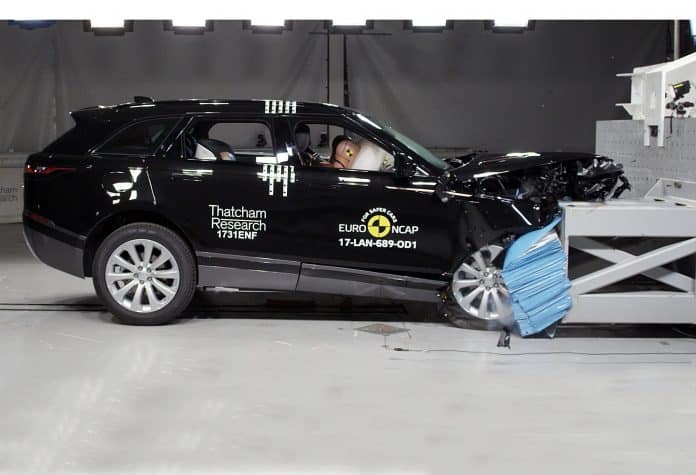
The Range Rover Velar was assessed by Euro NCAP back in 2017 and awarded a five-star rating. However, this rating expired in January 2024 and is no longer valid as the car no longer meets the standards required for such a rating. This is normal practice, as Euro NCAP reviews its ratings on most cars annually with most ratings expiring after about six or seven years.
However, if you are comparing a used Velar to vehicles of similar age, whose ratings will have probably also expired, its safety rating score is still useful.
Eco rating
Independent economy and emissions ratings from Green NCAP
No eco rating
As of March 2026, the Range Rover Velar has not been lab tested by Green NCAP.
Running cost rating
Monthly cost of ownership data provided exclusively for The Car Expert by Clear Vehicle Data
Fuel consumption
Average
Score
Petrol models
28 mpg
E
Diesel models
40 mpg
D
Plug-in hybrid models
155 mpg
A
CO₂ output
Average
Score
Variation
Score
Petrol models
227 g/km
E
Diesel models
185 g/km
D
Plug-in hybrid models
41 g/km
A
Battery range
Average
Score
Variation
Score
Plug-in hybrid models
39 miles
E
Insurance group
Average
Score
Variation
Score
All models
50
F
Service and maintenance
Cost
Score
Year 1
£364
D
Year 2
£771
D
Year 3
£1,281
D
Year 4
£1,615
D
Year 5
£2,134
D
Overall
£6,165
D
The Range Rover Velar is a relatively expensive car to own and run, according to whole-life cost numbers provided exclusively to The Car Expert by our data partner, Clear Vehicle Data.
The plug-in hybrid gives the impression of being very economical and cheap to run, but this is largely due to misleading UK/EU government lab tests. There is no way you will ever be able to drive a Velar for 161 miles on a gallon (4.5 litres) of petrol and some electricity…
Insurance is typically expensive for anything with a Range Rover badge, while servicing costs are average.
Reliability rating
Reliability data provided exclusively for The Car Expert by MotorEasy
Total claims: 118 Average repair cost: £1464.80 Last updated: April 2025
As of April 2025 (our most recent data point), the Range Rover Velar has a woeful reliability score of just 10%, according to workshop and warranty data provided exclusively to The Car Expert by our partners at MotorEasy.
The most common fault is also, unfortunately, the most expensive. Engine repairs have an-eye-watering average bill of £4,000. Electrical problems are also common, although they’re much cheaper to fix. The overall average repair bill is high, at about £1,500.
If you’re looking at a used Range Rover Velar, make sure any extended warranty cover you purchase covers all of these potential problem areas.
Recalls
Official DVSA safety recalls that have been issued for the Range Rover Velar
2024
2023
2022
2021
2019
2018
Date: June 2024 Recall number: R/2024/255 Model types: All Build dates: 11/2023 to 03/2024 Number of vehicles affected: 30 Defect: The incorrect specification of plastic was used to manufacture the oil filter housing. This housing may over time and with vehicle use crack. This could result in oil under pressure leaking and coming into contact with hot components of the engine which may result in a fire. Additionally oil may leak onto the road surface posing a skid hazard. Remedy: Replace the oil filter housing complete with filter and associated O-rings.
Date: March 2024 Recall number: R/2024/145 Model types: All Build dates: 09/2020 to 02/2022 Number of vehicles affected: 16,598 Defect: The manufacturer has developed a software enhancement to further increase vehicle security. Remedy: The software enhancement will deploy this update and reduce the theft risk.
Date: June 2024 Recall number: R/2024/113 Model types: All Build dates: 03/2020 to 02/2024 Number of vehicles affected: 18,354 Defect: A turbocharger oil feed pipe may, over time, loosen and lead to an oil leak. Remedy: Replace the turbocharger oil feed pipe O-rings and install an additional clamp.
Date: October 2023 Recall number: R/2023/293 Model types: All Build dates: 11/2022 to 09/2023 Number of vehicles affected: 770 Defect: On affected plug-in hybrid vehicles, it is possible that the internal combustion engine will not start when required. This may occur whilst the vehicle is in motion and the vehicle will operate in Electric Vehicle (EV) Mode only. When the EV system is no longer able to propel the vehicle the vehicle will unexpectedly slow down and no drive is possible. Remedy: Software update to the powertrain control module.
Date: May 2023 Recall number: R/2023/087 Model types: All Build dates: 12/2019 to 01/2023 Number of vehicles affected: 18,151 Defect: On affected vehicles there is a risk where the water pump pully drive belt can become damaged leading to detachment or destruction. Where water pump pulley drive is lost, this leads to a loss coolant flow in the engine. Remedy: Affected vehicles will have the engine coolant elbow replaced. In addition, a turbocharger feed coolant pipe will be replaced.
Date: May 2023 Recall number: R/2023/044 Model types: All Build dates: 08/2022 to 01/2023 Number of vehicles affected: 499 Defect: For certain 3.0-litre AJ20-P6 vehicles, a small number of engines the cam carrier oil gallery hasn’t been fully drilled. As a result the oil channel could be blocked leading to accumulation of oil against the pressure control valve rubber membrane and subsequently an external oil leak or increased oil carryover into the air intake system. Remedy: The engine cam carrier will be inspected and where an incorrectly machined cam carrier is found replace it with a correctly machined component. Depending on mileage and engine conditions further associated components may require replacement.
Date: August 2022 Recall number: R/2022/222 Model types: All Build dates: 12/2021 to 05/2022 Number of vehicles affected: 2,981 Defect: Damaged front seat belt pretensioner tube may have been installed on the seat belt retractor. Remedy: Inspect the seat belt pretensioner tube for damage and if damage is identified the seat belt retractor will be replaced.
Date: June 2021 Recall number: R/2021/231 Model types: All Build dates: 01/2020 to 04/2021 Number of vehicles affected: 7,502 Defect: The rubberised fuel return hose assembly may have been incorrectly manufactured. Remedy: Inspect the date code on the fuel return pipe and replace the part if necessary.
Date: April 2019 Recall number: R/2019/049 Model types: All Build dates: 03/2015 to 07/2018 Number of vehicles affected: 4,779 Defect: Vehicles failed to routinely achieve the required levels of CO2 emissions. Remedy: Update the vehicle software to the latest version.
Date: January 2019 Recall number: R/2019/013 Model types: All Build dates: 10/2018 to 12/2018 Number of vehicles affected: 219 Defect: The crankshaft pulley retaining bolt may fracture due to a production specification error. Remedy: Replace the crankshaft pulley centre retaining bolt with one that has been manufactured to the correct specification.
Date: March 2018 Recall number: R/2018/059 Model types: All Build dates: 04/2017 to 11/2017 Number of vehicles affected: 5,958 Defect: The air inlet door linkages to the Heating Ventilation and Air Conditioning may detach become detached and depending on operating mode position cause unexpected severe condensation/fogging of the interior windows. At temperatures below 0 degrees Celsius where the linkage detaches in recirculation mode it may not be able to clear condensation/fog from the inside of the front windscreen or other windows which can restrict the driver’s field of vision and could lead to an increased risk of an accident. Remedy: Recall the vehicles that are likely to be affected and download the latest software to the vehicle. Additionally the actuator arm will be replaced.
Date: March 2018 Recall number: R/2018/036 Model types: All Build dates: 05/2016 to 01/2018 Number of vehicles affected: 1,537 Defect: The brazing of the fuel rail end caps is inconsistent and may not correctly seal the fuel rail ends. Fuel vapour and liquid fuel leaks can occur over time. This can lead to a liquid fuel leak into the engine bay. Remedy: On affected vehicles replace the fuel rail with a correctly manufactured version.
As of September 2024 (our most recent data point), there have been 12 DVSA vehicle safety recalls on the Range Rover Velar addressing various different issues.
Not all vehicles are affected by recalls. You can check to see if your car is included in any of the above recalls by visiting the DVLA website or contacting your local Land Rover dealer.
If your car is affected by a recall, the vehicle must be repaired and you should not be charged for any work required. If you are buying a used Velar, you should insist that any outstanding recall work is completed before you take delivery of the vehicle.
Almost a third of UK car drivers have no idea whether petrol, diesel, hybrid or electric is the right choice for them when they change their car, according to a new survey.
With a certain amount of mystery surrounding the right fuel choice for the job, it appears that motorists are feeling left in the dark about which car they should pick next.
Matters are not helped by the latest government plans announced this month that propose to ban the sale of new combustion-engined cars (petrol, diesel, hybrid and plug-in hybrid) from 2035. This is a significantly more substantial step than banning purely petrol and diesel cars by 2040 as previously planned. Existing cars would still be allowed to continue driving as normal.
It’s worth noting that these plans have not yet been progessed as legislation, so there’s a chance that the goalposts may move again before being finalised.
With the proposed ban being brought forward to a date 15 years from now, there is the potential that resale values of petrol, diesel and hybrid-powered cars could start to be affected in the next few years, affecting the cars we drive now and will be buying next. This will only increase if and when almost inevitable changes start to be made to financially penalise combustion-engined cars. Whether it’s clean air zones, additional taxes on petrol and diesel fuels, road tax or other measures, local and central governments will almost certainly start introducing measures to ‘incentivise’ drivers to choose electric cars.
So what should power your next car?
Of the 2,000 drivers surveyed by GAP insurance provider Insurethegap.com, 30% admitted that they wouldn’t know whether to opt for a petrol, electric or diesel-powered vehicle when looking to buy a new or used car.
Younger drivers aged 18-24 were even less sure, with 41% admitting that they wouldn’t know which fuel to opt for.
Because of this confusion, 31% said that they were keeping their current car for longer than they usually would – with 33% of male and 29% of female respondents saying this.
In addition, more than half of those surveyed said that they found the prospect of electric vehicle ownership ‘too daunting’ to think about buying one as their next car.
Ben Wooltorton, chief operating officer at InsuretheGap.com, said: “From 2035 or sooner, drivers will only be able to buy electric or hydrogen cars. However, looking at the results of this survey, this looks like a big leap of faith for many consumers who are clearly unsure about what type of car they should be buying.
“You can understand why people are feeling insecure as we were told not long ago that we should all buy diesel, and now diesel is being banned. It seems that many drivers need greater confidence that the issues around running an electric car are resolved before they will commit.”
Most buyers not yet ready to go fully-electric
Currently, fewer than 3% of all new cars sold are electric, while for used cars it’s less than 1%. This will increase significantly over the next few years as more manufacturers start offering more electric models at more affordable prices, but clearly there is still a long way to go until electric power becomes the default option for UK car buyers.
As well as a lack of suitable cars to choose from, almost every survey conducted on electric cars highlights the lack of recharging infrastructure as a key stumbling block to buyers choosing an electric vehicle instead of a petrol or diesel model.
Of course, it’s not unusual for car buyers to be unsure what sort of car to buy – we get loads of questions along the lines of “should I buy a petrol or diesel car?” and have done since this site was founded more than eight years ago. Unfortunately, there’s no convenient data available to check these latest survey results against buyers’ uncertainty five or ten years ago.
The Peugeot 208 is a small, supermini-class, five-door hatchback. The current model was launched in 2019 and arrived in UK showrooms in January 2020.
The new 208 is also available with an electric motor, which is called the E-208. We have a separate page for this model, as it is substantially different to the combustion-engined model.
The media review scores for the 208 to date have been generally average, with praise for the car’s design – both inside and out – as well as its interior quality. However, some sources have been rather critical of the firm ride and poor handling compared to the best cars in its class. A four-star Euro NCAP safety rating is also below the scores set by some rivals.
The 208 and E-208 range received a mid-life update in late 2023. This consisted of lightly revised styling and some interior technology upgrades, but is fundamentally the same car underneath.
As of September 2025, the Peugeot 208 has a New Car Expert Rating of C, with a score of 63%. It scores top marks for its low CO2 emissions, while its running costs are also good. However, its safety score and reliability record are only average, while Peugeot’s new car warranty coverage is very poor.
Model reviewed: Range overview Score: 8 / 10 “The new Peugeot 208 offers something sufficiently distinctive to make Brits question their devotion to the stuck-in-a-rut Ford Fiesta, and sufficiently samey to pose a dilemma for Vauxhall Corsa loyalists – 208 and Corsa are duplicates under the skin, bar ride and handling and specification tweaks.” Read review
Car Keys
Model reviewed: Range overview Score: 8 / 10 “Peugeot has significantly improved the 208 in just about every area – dishing out an incredibly stylish and appealing model that will have massive appeal to those looking for a desirable city car.” Read review
Carbuyer
Model reviewed: Range overview Score: 8.4 / 10 “The Peugeot 208 hatchback is a modern, stylish supermini with a future-proof engine range but it’s a shame it’s not more fun to drive.” Read review
Company Car Today
Model reviewed: 1.2-litre petrol automatic Allure “A smart supermini that will win buyers with its looks and grown-up drive.” Read review
Daily Mirror
Model reviewed: 1.2-litre petrol automatic GT Line Score: 8 / 10 “The all-new Peugeot 208 supermini looks fantastic – even if it isn’t quite the best in its class.” Read review
Green Car Guide
Model reviewed: 1.2-litre petrol automatic GT Line Score: 8 / 10 “The new Peugeot 208 is an excellent all-round car. It’s fun and sporty on country roads, it’s easy to live with in the city, and it feels like a refined car from a class above on the motorway. It also looks good and the interior has an interesting modern dashboard. There are very few weak points, aside from the fact that it could be easier to access information on the infomedia system.” Read review
Heycar
Model reviewed: Range overview Score: 8 / 10 “You have to go all the way back to the 205 to find a small car Peugeot could genuinely be proud of, but the new Peugeot 208 rights that wrong. From its lion-like exterior to its dashing, infotainment-heavy interior, comfortable drive and excellent petrol engines, the 208 is a class act that’s well worth consideration.” Read review
Honest John
Model reviewed: 1.2-litre petrol manual “With its stylish looks and superb interior, we think the Peugeot 208 is a car that will sell itself as soon as potential buyers enter showrooms. It’s not perfect – the infotainment system is frustrating, there are more practical choices available and some will prefer how the Ford Fiesta drives – but it’s a car that’ll appeal to both head and heart.” Read review
Model reviewed: Range overview Score: 8 / 10 “The interior of the Peugeot 208 GT-Line feels just as upmarket as bigger and more expensive Peugeot models like the 508 and 3008 with a similar i-cockpit in which you look over the small steering wheel at the driver display rather than through it.” Read review
Parkers
Model reviewed: Range overview Score: 9 / 10 “Smart looks – even smarter tech and engineering” Read review
The Sun
Model reviewed: 1.2-litre petrol GT Line “It will sell like hot sausage rolls on looks alone. And it’s the same story inside. But it’s a bit of a case of style over substance, if I’m brutally honest. The ride quality isn’t brilliant. It’s a bit jiggly. The boot has shrunk. And Peugeot’s signature small steering wheel doesn’t work in this car — particularly for taller drivers who like to sit low.” Read review
The Sunday Times
Model reviewed: Range review Score: 6 / 10 “Lovely package massively let down by ride and handling” Read review
The Telegraph
Model reviewed: 1.2-litre petrol manual Active Score: 8 / 10 “Compared to the Renault Clio, the Peugeot 208 is more enjoyable and more comfortable to drive. It’s easier too, and when you’re dealing with traffic in town, where these cars will usually be found, that counts for a lot.” Read review
Model reviewed: 1.2-litre petrol manual GT Line Score: 8 / 10 “Great-looking or over the top? It depends on your point of view, but there’s no denying the design work that’s gone into this car, on which so many hopes are pinned. Launching one car with petrol, diesel and battery drivetrains is brave, but perhaps far-sighted. Either way, it’s entertaining, good fun and unmistakably French.” Read review
Top Gear
Model reviewed: Range overview Score: 7 / 10 “A supremely desirable, futuristic ‘mini with a powertrain for everyone. Just beware the firm ride” Read review
Safety rating
Independent crash test and safety ratings from Euro NCAP
Clean Air Index: 5.1 / 10 Energy Efficiency Index: 7.2 / 10 Greenhouse Gas Index: 4.5 / 10
Three stars
The Peugeot 208 1.2-litre petrol variant of the 208 achieved a three-star eco rating from Green NCAP in November 2021, while the 1.5-litre diesel version was awarded a three-star eco rating from in July 2021.
Green NCAP said: “The Peugeot 208 1.5 BlueHDi 100 represents the latest in diesel technology and performs well. It achieves high scores for Energy Efficiency. The Greenhouse Gas Index is the weakest of the three areas of assessment, but the Peugeot emerges with a solid three-star rating.”
Running cost rating
Monthly cost of ownership data provided exclusively for The Car Expert by Clear Vehicle Data
Fuel consumption
Average
Score
Petrol models
53 mpg
B
Diesel models
73 mpg
A
CO₂ output
Average
Score
Variation
Score
Petrol models
108 g/km
A
Diesel models
108 g/km
A
Insurance group
Average
Score
Variation
Score
All models
23
B
Service and maintenance
Cost
Score
Year 1
£168
B
Year 2
£503
B
Year 3
£759
B
Year 4
£997
B
Year 5
£1,372
B
Overall
£3,799
B
The Peugeot 208 should be a very cheap car to own and run, according to whole-life cost data provided exclusively to The Car Expert by our technical partner, Clear Vehicle Data.
Fuel consumption for the petrol models are good, while the diesel models are excellent (although few of them were sold before the diesel-engined 208s were discontinued). The CO2 levels for both models are excellent.
Insurance costs are competitive, as are servicing and maintenance costs over the first five years. Some small cars are cheaper to run, but the Peugeot 208 is still a cheap car to own and live with.
Reliability rating
Reliability data provided exclusively for The Car Expert by MotorEasy
Total claims: 206 Average repair cost: £556.36 Last updated: April 2025
The Peugeot 208 has a reliability score that’s about average, according to workshop and warranty data provided by our partners at MotorEasy. This score covers both the current-generation 208 and the previous (pre-2019) versions.
Unfortunately, the most frequently reported problems with the 208 relate to its engine, which can lead to a bill in the range of £1,200. A common car on UK roads, MotorEasy has received several warranty claims for electrical system, suspension and braking system faults, but these types of repairs are comparatively much cheaper to fix.
If you’re looking at a used Peugeot 208, make sure any extended warranty cover you purchase covers all of these potential problem areas.
Warranty rating
New car warranty information for the Peugeot 208
Overall rating
E
17%
New car warranty duration
3 years
New car warranty mileage
60,000 miles
Peugeot’s new car warranty is pretty much the bare minimum offered in the UK, with a duration of three years and a limit of 60,000 miles. Other rivals in the price bracket do better (and in some cases, much better).
Warranty on a used Peugeot 208
If you are purchasing an ‘Approved Used’ 208 from an official Peugeot dealership, you will get a minimum six-month warranty included.
If you are buying a used 208 from an independent dealership, any warranty offered will vary and will probably be managed by a third-party warranty company.
If you are buying a used 208 from a private seller, there are no warranty protections beyond any remaining portion of the original new car warranty.
If you’re looking to buy a used car that is approaching the end of its warranty period, a used car warranty is usually a worthwhile investment. Check out The Car Expert’s guide to the best used car warranty providers, which will probably be cheaper than a warranty sold by a dealer.
Date: April 2024 Recall number: R/2024/176 Model types: All Build dates: 12/2023 to 02/2024 Number of vehicles affected: 445 Defect: Incorrect MCU (motor control unit) calibration may result in a loss of propulsion while driving. Remedy: Update the MCU calibration.
Date: March 2024 Recall number: R/2024/135 Model types: All Build dates: 01/2022 to 11/2022 Number of vehicles affected: 550 Defect: On affected vehicles below 12,500 miles, under certain, conditions engine emissions may lead to a non-compliance to regulatory requirements. Remedy: Check the mileage of the vehicle and update the ECU (engine control unit) calibration on vehicles below 12,500 miles.
Date: March 2024 Recall number: R/2024/117 Model types: All Build dates: 10/2023 to 11/2023 Number of vehicles affected: 21 Defect: Affected vehicles may have been assembled with the wrong instrument panel cluster, which may display the speed in KM/H instead of MPH. Remedy: Check the instrument cluster and replace it if necessary.
Date: December 2023 Recall number: R/2023/353 Model types: All Build dates: 06/2023 to 11/2023 Number of vehicles affected: 375 Defect: The A-pillar trim may be incorrectly assembled, which could lead to detachment of the trim through lateral airbag deployment. Remedy: Remove A-pillar trim check clip assembly and refit correctly if necessary.
Date: May 2023 Recall number: R/2023/140 Model types: All Build dates: 07/2019 to 11/2022 Number of vehicles affected: 29,537 Defect: The AC compressor stator wiring could develop a fault, leading to current loss inside the AC compressor that could result in a vehicle powertrain shutdown when driving. Remedy: Reprogram the powertrain diagnosis ECU with updated software.
Date: December 2022 Recall number: R/2022/347 Model types: All Build dates: 08/2022 Number of vehicles affected: 4 Defect: Some braking and suspension components may not have been tightened to the correct torque during assembly. Remedy: Check and tighten affected bolts to the correct torque.
Date: September 2022 Recall number: R/2022/285 Model types: All Build dates: 04/2022 Number of vehicles affected: 2 Defect: Various component fixings which have not been tightened to the correct torque settings due to incorrect tightening operations during the assembly. Remedy: Retighten the affected component fixings to assure the correct torque tightening.
Date: May 2020 Recall number: R/2020/166 Model types: All Build dates: 09/2019 to 03/2020 Number of vehicles affected: 10 Defect: The steering geometry could be incorrectly set due to an incorrectly calibrated setting rig in the manufacturing plant. Remedy: Check the steering alignment and adjust if set incorrectly. If the front tyres are worn, these will also be replaced.
Date: May 2020 Recall number: R/2020/164 Model types: All Build dates: 07/2019 to 12/2019 Number of vehicles affected: 107 Defect: The fixing of the front wing wheel arch trim does not conform to specification. Remedy: The repair consists of adding an additional fixing screw to the bottom of the front wheel arch trim.
Date: February 2020 Recall number: R/2020/038 Model types: All Build dates: 08/2019 Number of vehicles affected: 1 Defect: The routing of the rear brake pipes may not be correct and could cause them to fail. Remedy: Check and replace affected pipes if necessary.
As of September 2024 (our most recent data point), there have been ten DVSA vehicle safety recalls on the current Peugeot 208 to address different issues.
Not all vehicles are affected by recalls. You can check to see if your car is included in any of the above recalls by visiting the DVLA website or contacting your local Peugeot dealer.
If your car is affected by a recall, the vehicle must be repaired and you should not be charged for any work required. If you are buying a used Peugeot 208, you should insist that any outstanding recall work is completed before you take delivery of the vehicle.
Volvo has revised its range-topping S90 saloon and V90 estate, with the model sporting a lightly tweaked look and upgraded equipment.
Up front, altered headlights see a new lighting signature brought to the cars while scrolling indicators have been added too. The Swedish firm has also introduced a range of new exterior colours and alloy wheels for both models.
Stealing equipment introduction headlines is a new (and optional) Bower and Wilkins audio system that includes a new amplifier, noise cancellation tech and a new setting that Volvo says ‘mimics the sound of your favourite jazz club’.
Also added for the first time in European markets is an ‘Advanced Air Cleaner’. Already used on Chinese-market Volvos, this allows drivers to check the quality of the air in the cabin and is capable of removing particles on demand.
Wool blend seats have also been made optional for both the S90 and V90, having debuted on the XC90 SUV last year, while range-topping variants can be optioned with a leather-free interior. There are also a couple of extra USB charging points for rear-seat passengers and wireless charging for compatible smartphones.
There are no safety upgrades associated with this trim update, which is not a huge issue as the Volvo S90 and V90 still have outstanding scores from Euro NCAP.
Mild hybrids now available across the Volvo range
Alongside these new updates, Volvo has confirmed 48-volt mild-hybrid technology will be rolled out on every model in the range in coming months. This technology works to allow the engine to stay off when coming to a stop, ultimately cutting emissions and fuel consumption, and will be fitted to both petrol and diesel engines.
UK pricing, specifications and availability of the revised Volvo S90 and Volvo V90 models have yet to be confirmed.
The Hyundai i10 is a small, city-class hatchback. The current model was launched at the Frankfurt motor show in September 2019 and arrived in the UK in early 2020. It is the third generation of i10.
The new i10 arrives at a time when other manufacturers are withdrawing from the city car market due to the difficulties of hitting EU emissions targets in a low-price vehicle with no electrification. However, Hyundai seems committed to the sector and has produced an all-new model that currently has the highest Expert Rating of any city car we have analysed to date.
The Hyundai i10 had received almost unanimously good reviews from the UK motoring media, right up until Euro NCAP published its safety rating for the i10 in December 2020. It scored three stars, including multiple test results where it earned the lowest rating of ‘poor’. As a result, Which? magazine immediately reduced its rating to ‘Don’t Buy’ status.
The i10 has received particular praise for its interior quality, equipment levels and driving experience. Several reviewers had previously suggested the Volkswagen Up is still better overall, but the main criticism has now become the i10’s sub-par safety rating.
As of April 2025, the Hyundai i10 has a New Car Expert Rating of A, with a score of 70%. Its running costs and CO2 emissions are low, while reliability should be very good as well. These factors also mean that the i10 rates an A as a used car, where running costs and reliability are prioritised. The only sour note is that the safety rating is poor by 2024 new car standards.
“The Hyundai i10 is a cracking city car with cute looks and lots of room inside – shame about the sluggish entry-level model, though, and avoid the automatic gearbox.”
Model reviewed: Range overview Score: 8 / 10 “The Hyundai i10 is a capable, comfortable and surprisingly practical city car, offering decent onboard tech in a simple, smart-looking package.” Author: Ellis Hyde Read review
Model reviewed: 1.0-litre petrol manual N Line Score: 8 / 10 “The Hyundai i10 is a superb little city car. It’s crammed with technology and kit you don’t expect to see at this price point, while the addition of a new 1.0-litre turbo engine in this N Line model brings a welcome injection of performance.” Author: Jonathan Burn Read review
Auto Trader
Model reviewed: Range overview Score: 8.2 / 10 “A compact city car with the refinement and technology to mix it out of town, the all-new Hyundai i10 is affordable, reliable and includes all the latest safety gear as standard. It’s a good-looking car, with optional contrast roof colours that help jazz up the exterior.” Read review
Business Car
Model reviewed: 1.0-litre petrol manual N Line Score: 8 / 10 “In terms of fleet application, this car’s appeal is still fairly narrow. But if companies are keen to introduce an element of driver choice at a small car level, we could see why there would be interest in the range-topping i10 N Line.” Read review
Car
Model reviewed: Range review Score: 8 / 10 “The i10 is one of an increasing number of Hyundai models that won’t put you straight to sleep. It’s stylish and desirable, a feat that’s difficult to pull off at this end of the market. The updated interior offers class-leading space and some big-car kit that will make downsizers feel more at home, too.” Author: Tom Wiltshire Read review
Car Keys
Model reviewed: 1.0-litre petrol manual Score: 8 / 10 “The new Hyundai i10 is exactly what you should expect from a city car, but also so much more in the process. It remains easy to pilot around town but also gains added safety kit and technology – though you might have to splash out on the top models to gain access to the latter.” Author: Ted Welford Read review
Carbuyer
Model reviewed: Range overview Score: 8 / 10 “The Hyundai i10 is a city car with as much space and equipment as many superminis, making it good value.” Author: Andy Goodwin Read review
Company Car Today
Model reviewed: 1.0-litre petrol manual N Line “A well-worked makeover adds a new dimension to the sensible Hyundai i10, though there is a question as to how many people would be looking for a £16,000 Hyundai city car.”
Model reviewed: 1.2-litre petrol manual Premium “Genuinely nice to drive and with decent space plus an enormous amount of standard equipment, but top-spec car looks a touch pricey.”
Daily Mirror
Model reviewed: 1.2-litre petrol manual Premium Score: 6 / 10 “The new Hyundai i10 is a simple and straightforward city car, not bristling with unwanted tech.” Author: Colin Goodwin Read review
Fleetworld
Model reviewed: 1.0-litre petrol manual N Line Score: 8 / 10 “Could do with more power to make it really top-notch, but there’s plenty still to enjoy about Hyundai’s smallest N Line.” Read review
Model reviewed: Range overview Score: 8 / 10 “There’s a lot to be said for the Hyundai i10, which manages to offer big-car equipment and efficient engines in an appealing package.” Author: Jonathan Musk Read review
Heycar
Model reviewed: Range overview Score: 9 / 10 “The Hyundai i10 is pretty much the perfect city car. It offers more space than most, is incredibly comfortable yet remains good value for money. We’d put it on par with the excellent Volkswagen Up.” Read review
Honest John
Model reviewed: Range overview Score: 8 / 10 “It’s not the small car bargain it once was, but the Hyundai i10 retains its good old fashioned mix of value and comfort.” Read review
Parkers
Model reviewed: Range overview Score: 8.4 / 10 “Arguably the best city car.” Author: Alan Taylor-Jones Read review
The Sun
Model reviewed: 1.2-litre petrol manual Premium “The all-new Hyundai i10 is a tidy little motor that would suit a 17-year-old as much as a 77-year-old and vice versa” Author: Rob Gill Read review
The Telegraph
Model reviewed: 1.0-litre petrol manual N-Line Score: 10 / 10 “Somehow this car gets the balance right; it’s more than the sum of its parts, fun and appropriately equipped. Even its drawbacks are things to be tolerated – and who wants to drive for two hours without a break to stretch out.” Author: Andrew English Read review
Model reviewed: 1.2-litre petrol manual Premier Score: 10 / 10 “There’s little it doesn’t do well. So if you can live with its comparative lack of flair, this is now the best city car there is.” Author: Alex Robbins Read review
Top Gear
Model reviewed: Range overview Score: 7 / 10 “City cars aren’t quite dead yet – the Hyundai i10 is grown-up, comfy and loaded with kit” Read review
Model reviewed: 1.2-litre petrol manual SE Connect Score: 7 / 10 “As rivals around it go fully electric – or disappear from price lists altogether – cheap little petrol-powered cars begin to seem less and less like they’re classed ‘essential transport’. We’re pleased Hyundai sees differently, because this is A Good Car.” Read review
Safety rating
Independent crash test and safety ratings from Euro NCAP
The Hyundai i10 has an excellent reliability score of 90% as of April 2025, according to workshop and warranty data provided exclusively to The Car Expert by our partner, MotorEasy. This score applies to both the current model (2019 onwards) and the previous model.
As well as generally being a reliable car, repair bills are likely to be pretty cheap if things do go wrong. To data, the average warranty claim bill has been just over £200, which is excellent. The most common faults so far have related to the car’s braking system, but the repair costs have been low.
Running cost rating
Monthly cost of ownership data provided exclusively for The Car Expert by Clear Vehicle Data
Fuel consumption
Average
Score
Variation
Score
Petrol models
52 mpg
B
41 – 57 mpg
B – D
CO₂ output
Average
Score
Variation
Score
Petrol models
124 g/km
A
114 – 157 g/km
A – C
Insurance group
Average
Score
Variation
Score
All models
4
A
1 – 10
A – A
Service and maintenance
Cost
Score
Year 1
£154
A
Year 2
£420
A
Year 3
£680
A
Year 4
£865
A
Year 5
£1,132
A
Overall
£3,251
A
The Hyundai i10 is a very affordable car to own and run, according to whole-life cost numbers provided exclusively to The Car Expert by our data partner, Clear Vehicle Data.
Servicing and insurance costs are low, while fuel consumption should be very good in normal day-to-day driving circumstances.
Awards
Trophies, prizes and awards that the Hyundai i10 has received
2023
Auto Express Awards – Best City Car
2021
carwow Awards – Best Small Car
2020
Carbuyer Awards – Best City Car
Similar cars
If you’re looking at the Hyundai i10, you might also be interested in these alternatives
Hyundai has pulled back the covers on the new i20 ahead of next week’s Geneva motor show, with the supermini the first car to sport the firm’s ‘Sensuous Sportiness’ approach to design.
Now in its third generation, the i20 has taken on a more aggressive look than before. Up front, sharp headlights flank a wide grille with muscular faux intakes pushed out to each side of the front bumper.
Creases stretch from the front quarter panels, along the door and to the rear with a bold approach to design taken at the back of the car. Eccentric taillights are connected by a bar stretching the width of the car, with a two-tone paint finish seeing the roof and upper boot opening finished in a different colour from the rest of the car.
Underneath the bonnet, a new mild-hybrid petrol setup will be the only offering at launch in the UK. This sees a 1.0-litre turbocharged unit linked up to a 48-volt electric motor, producing 100hp and delivering power to the front wheels via a six-speed manual gearbox or a seven-speed dual-clutch automatic. No word yet on performance or efficiency figures, though.
Clearly they must still be finishing up the interior…
Hyundai claims the cabin is roomier than before too, as a result of the i20’s longer and wider body. Boot space is also up to 351 litres, representing a 25-litre increase over the previous iteration.
Stealing equipment headlines are a set of ten-inch digital displays — the first mounted in front of the driver in place of traditional dials and gauges with the second mounted centrally and playing host to the i20’s infotainment system. It’s not clear yet if these will be standard or optional equipment, though it has been confirmed Apple CarPlay and Android Auto are available.
There’s also set to be a wireless smartphone charging pad, an eight-speaker Bose audio system and a comprehensive package of safety features available for the car.
Expect to hear more on UK pricing and specifications for the new Hyundai i20 as its release later in the year approaches.
Honda has overhauled its Civic Type R, introducing a track-focused version along with a more subdued option.
Range-wide alterations follow on from that of the base Civic, including infotainment upgrades that see the introduction of physical buttons. Subtle styling changes also come in the form of lightly altered fog light surrounds, new LED light clusters and daytime running lights.
Mechanical changes have been made as well. A larger air intake is said to improve cooling with the following drag increase then offset by a redesigned dam under the bumper, while minor alterations have been made to the suspension to improve handling. Uprated brakes are included too.
Rounding out range-wide changes are the introduction of an Alcantara steering wheel and newly shaped gear knob that harks back to older Type R models.
Civic Type R Sport Line
Civic Type R Limited Edition
Lightweight Limited Edition
Those looking for a no-compromise Civic Type R can now opt for the Limited Edition, assuming said customers dip into their wallets fast enough. Restricted to just 100 units in Europe (no word on how many of those are UK bound), this track-oriented edition has seen a number of enhancements made in the name of outright performance.
Its infotainment and air conditioning systems have been torn out, as well as a variety of soundproofing elements, in a bid to shed as much weight as possible. It’s said to be 47kg than the standard Type R GT as a result.
New 20-inch forged BBS alloy wheels have been introduced too and have been wrapped in Michelin Cup 2 tyres for maximum grip. The 2.0-litre turbocharged four-cylinder retains its 320hp and 400Nm of torque, sent via a six-speed manual gearbox to the front wheels with a resulting 0-60mph time of 5.5 seconds.
Marking out the Limited Edition is a ‘Sunlight Yellow’ paint scheme contrasted by black styling elements and a darkened ‘Civic’ badge.
Stealthy Sport Line
Those who love the performance of the Civic Type R but don’t really want to scream about it can now opt for a Sport Line specification. This gives a more understated appearance, with the large rear wing replaced with a deck spoiler and the signature red strip around the edge of the car replaced with a grey alternative.
The Civic Type R Sport Line gets a unique set of 19-inch alloy wheels, while inside the car, the red bucket seats are replaced with similar black units.
There’s no word yet on pricing and UK specifications for the refreshed Civic Type R range. We may get more news at next week’s Geneva motor show, or we may have to wait until closer to the mid-2020 market introduction to find out.
Cupra has revealed the new high-performance Leon, which will feature a plug-in hybrid powertrain option for the first time. It is set to be displayed for the first time at the upcoming Geneva motor show.
Available with a variety of power output options, the petrol-electric variant will wear eHybrid badging and offer 245hp from a combination of a 1.4-litre petrol engine and electric motor. It will feature a 13kWh battery that offers electric-only range up to 37 miles with CO2 emissions expected to fall below 50g/km.
A 2.0-litre petrol engine is also available, with three outputs to choose from. For the hatchback and estate variants, there’s a 245hp and 370Nm of torque option as well as a 300hp and 400Nm version.
The most powerful Cupra Leon is a 310hp and 400Nm option that’s only available on the estate. It features four-wheel-drive for improved traction, while all models receive large 370mm Brembo brakes to improve stopping power.
The Cupra Leon is 2.5cm lower at the front and 2cm lower at the rear than the standard model to lower the centre of gravity, and gets a variety of driver modes to change the car’s character from sedate daily driving to track-focused sport modes.
Inside, there are figure-hugging bucket seats, a Cupra steering wheel, and large ten-inch infotainment touchscreen, while copper and dark chrome detailing further distinguishes this as the Cupra model.
Wayne Griffiths, Cupra CEO, said: “The SEAT Leon Cupra has been a bestseller, with close to 44,000 units sold in the last generation.
“With the launch of the new Cupra Leon, we will strengthen the Cupra brand, by giving a new identity to a very emblematic car. The new Cupra Leon is the King of Leons.”
In 2018, SEAT’s performance division Cupra split off to become its own brand, exclusively building performance versions of SEAT cars, with unique models also in the pipeline. Last year, the brand sold 24,700 units – up almost 72% on 2018 – thanks to the introduction of the Cupra Ateca, the firm’s first standalone model. The Cupra Leon is available to order now.
The Nissan Juke is a small SUV/crossover that sits below the Qashqai in the Nissan range. The current model was launched in 2019 and is the second generation of Juke. Like the original model, it is built in Nissan’s factory in Sunderland.
The new Juke has a much more competitive Expert Rating than the old model, based on the 24 reviews we have analysed so far. This puts it in the top half of its field, although it is still some way behind the class leaders in the small SUV/crossover segment.
The Nissan Juke has received widespread praise for its smoother styling compared to the divisive original, as well as being much better to drive. However, despite the big step forward, the engine is considered weak and it is still not considered to be as well finished as the Volkswagen T-Cross or T-Roc models.
As of May 2025, the Nissan Juke holds a New Car Expert Rating of B, with a score of 67%. It scores top marks for its low average CO2 emissions, while running costs are low and it has a good safety rating. However, its media review scores and its reliability record are poor.
Body style: Small SUV/crossover Engines: petrol, hybrid Price: From £20,985 on-road
Launched: Autumn 2019 Last updated: Summer 2022 Replacement due: TBA
Image gallery
Media reviews
Highlighted reviews and road tests from across the UK automotive media. Click any of the boxes to view.
Featured reviews
“The Nissan Juke remains a popular contender in an ever-more crowded market and this new hybrid version will presumably help it maintain that place. If you find driving a traditional hybrid slightly odd and unpredictable, this one is less so. Should you be keen to go electric but less keen on the price or having to plug your car in and recharge it, then you may well find this car to your liking.”
Model reviewed: 1.6-litre petrol/electric hybrid Tekna
“The Nissan Juke has styling like no other and a decent amount of standard equipment, but it’s uncomfortable to drive and there’s not much space in the back.”
Model reviewed: 1.0-litre petrol manual Tekna+ “Nissan has done pretty well with this second generation of the Juke, though its existence in a market of many rather than one means this may not be quite the mega-hit of its predecessor.” Read review
Auto Express
Model reviewed: Range overview Score: 6 / 10 “Once a trend-setter, the Nissan Juke now plays catch-up with a bunch of rivals it helped to inspire.” Author: Max Adams, Paul Adam Read review
Model reviewed: Range overview Score: 6 / 10 “Nissan has had a long time to get the second-generation Juke right, but on this form it’s missed the mark. Maybe we’ll be more positive when we try a manual car in a less expensive trim, yet in a market where excellence is the norm, the Nissan Juke is merely good.” Read review
Auto Trader
Model reviewed: 2024 facelift Score: 6 / 10 “The second-generation Nissan Juke is a lot less shocking to look at than the original, but the abundance of alternatives these days means it’s not quite selling as well. To give it a bit of extra appeal for 2024 it’s had a few more tweaks. Mainly some material improvements in the cabin, a bigger touchscreen, more equipment in general, and a new ‘N-Sport’ trim level. None of this is enough to make the Juke the best small SUV on the market, but it’s all welcome stuff.” Author: Mark Nichol Read review
Model reviewed: Range overview Score: 8 / 10 “The second-generation Nissan Juke is a big improvement on the original, stylish SUV that shook up the market when it first appeared on the scene back in 2010. It’s better to drive, roomier and nicer inside, and its engine emits lower emissions too.” Read review
Car
Model reviewed: Range overview Score: 6 / 10 “Not only has space for both occupants and luggage increased, with a notable 58mm extra rear seat knee room, but the dashboard and instrumentation design has taken a major bound in the right direction.” Read review
Car Keys
Model reviewed: Range overview Score: 9 / 10 “Nissan has done a great job with the second-generation Juke. It might not be the revolutionary sales hit that the first Juke was, nor is it particularly engaging to drive, but this is a model that ticks plenty of boxes for buyers and deserves to be another hit for Nissan.” Read review
Carbuyer
Model reviewed: Range overview Score: 6.6 / 10 “The latest Nissan Juke is better to drive and more family-friendly, with improved space and a bigger boot.” Author: Charlie Harvey Read review
Company Car Today
Model reviewed: 1.0-litre petrol manual N-Connecta Score: 7.9 / 10 “Nissan urgently needed a new Juke, given the activity in the sector, and the new car does everything it needs to without leaping forward against the competition.” Read review
Model reviewed: 1.0-litre petrol manual Tekna+ “Big improvements over a car that was rather showing its age. The Nissan Juke’s advances in efficiency, practicality, safety tech and driving experience more than counter the slightly lacklustre new petrol engine.” Read review
Daily Mirror
Model reviewed: 1.0-litre petrol automatic Tekna Score: 8 / 10 “The new Nissan Juke is a huge improvement over the previous model. It’s more practical and spacious but still looks distinctive. Both the manual and auto will do around 45mpg and you get a lot of kit for your money, especially in the higher-spec versions. Plus, it’s made in Britain.” Read review
Fleetworld
Model reviewed: 1.0-litre petrol manual N-Connecta “Additional space and an improved drive are Juke highpoints and should prove attractive to fleets.” Read review
Green Car Guide
Model reviewed: 1.0-litre petrol manual N-Connecta Score: 7 / 10 “The Nissan Juke has the crossover styling and the SUV driving feel that people want, but underneath there’s an engine that should deliver efficiency.” Read review
Heycar
Model reviewed: Range overview Score: 6 / 10 “The old Nissan Juke was distinctly average yet still sold very well, so it almost doesn’t matter how good the latest model is. Fortunately, the new Nissan Juke is pretty good. The interior feels well-finished, and it’s more practical than ever.” Author: Andrew Brady Read review
Honest John
Model reviewed: Range overview Score: 6 / 10 “The stylish Nissan Juke is a desirable all-rounder that won’t cost a lot to buy or run. It’s more spacious than before, while there’s a generous amount of safety kit fitted as standard. Even the hybrid model isn’t that efficient, though, while it’s not as comfortable or as fun to drive as certain rivals.” Read review
Model reviewed: 1.0-litre petrol manual “Nissan identified three key ways that the first Juke was bad and has focused mainly on addressing those issues.” Read review
Parkers
Model reviewed: Range overview Score: 5.8 / 10 “If you’re head over heels for the looks, and don’t mind life in the slow lane, the Nissan Juke isn’t a terrible choice, certainly after the raft of improvements brought about in 2024. Even so, we’d still recommend trying a few rivals before committing to buying one.” Author: Alan Taylor-Jones Read review
The Telegraph
Model reviewed: 1.6-litre petrol/electric hybrid Tekna Score: 6 / 10 “While it is eye-catching to look at, nicely finished inside, ingeniously engineered and decent enough to drive, the Nissan Juke Hybrid is also more expensive to buy and less efficient than its diesel and even hybrid rivals. So when it comes down to it, that makes it quite hard to recommend unless you really love the way it’s styled.” Read review
Model reviewed: 1.0-litre petrol automatic N-Connecta Score: 8 / 10 “The Nissan Juke is now very likeable, and comes with a welcome slice of personality. Highlights include a smart interior, a useful boot, a comfortable ride and slick handling; shame the engine is a little gutless and the automatic gearbox distinctly average, but you can’t have everything. “ Read review
Top Gear
Model reviewed: Range overview Score: 7 / 10 “The looks might be polarising but it’s not actually ugly and certainly not – bigger crime – bland” Read review
Model reviewed: 1.0 DIG-T Tekna+ Score: 7 / 10 “It’s got a squatter, more purposeful stance, and the detailing is less… weird.” Read review
Safety rating
Independent crash test and safety ratings from Euro NCAP
The Nissan Juke has a reliability score that’s slightly lower than average, according to exclusive extended warranty data provided by our partners at MotorEasy. This score covers both the current-generation Juke and the previous (pre-2019) version.
The most common reported fault with the Juke relates to its braking system, although the average repair bill is only about £200. Be aware of gearbox problems, however – they’re not uncommon, and are expensive with an average repair bill of more than £2,700.
If you’re looking at a used Nissan Juke, make sure any extended warranty cover you purchase covers all of the potential problem areas listed above.
Running cost rating
Monthly cost of ownership data provided exclusively for The Car Expert by Clear Vehicle Data
Fuel consumption
Average
Score
Variation
Score
Petrol models
47 mpg
C
44 – 49 mpg
C – C
Hybrid models
58 mpg
B
55 – 59 mpg
A – B
CO₂ output
Average
Score
Variation
Score
Petrol models
137 g/km
B
132 – 145 g/km
A – B
Hybrid models
110 g/km
A
109 – 113 g/km
A – A
Insurance group
Average
Score
Variation
Score
All models
19
A
17 – 19
A – A
Service and maintenance
Cost
Score
Year 1
£203
B
Year 2
£525
B
Year 3
£921
B
Year 4
£1,108
B
Year 5
£1,471
B
Overall
£4,228
B
The Nissan Juke scores well in most of its running costs, with very good results for servicing, insurance and road tax. The only area where it doesn’t achieve excellent results is fuel consumption – which is unfortunately the most significant monthly cost.
Results are average for the petrol model, but that’s not a great result for a small, supermini-based SUV/crossover. Some rivals perform better.
Similar cars
If you’re looking at the Nissan Juke, you might also be interested in these alternatives
The Toyota Camry was a large family/executive saloon that launched in 2019, replacing the Toyota Avensis. Unlike the Avensis, the Camry was not available in an estate body style. All versions of the Camry sold in the UK were powered by a petrol-electric hybrid engine.
Despite relatively low media review scores, the Toyota Camry was praised for being comfortable, quiet, efficient and practical. The main criticisms related to its driving experience, which was described as “lacklustre” compared to rivals.
After little more than two years on sale, the Camry was withdrawn from UK sale in late 2021. A replacement is not expected as Toyota, like most car companies, is concentrating on SUVs for its larger vehicles.
As of March 2026, the Toyota Camry holds a Used Car Expert Rating of C with a score of 59%.
Highlighted reviews and road tests from across the UK automotive media. Click any of the boxes to view.
The Car Expert
Model reviewed: Excel “As a car to get from one place to another without fuss, it’s hard to go wrong with the Toyota Camry. It’s easy to drive, spacious enough and efficient.” Read review
Auto Express
Model reviewed: Range review Score: 7 / 10 “The Camry should prove reliable and safe. The five-year warranty is a bonus.” Read review
Model reviewed: 2.5 Hybrid Auto Excel Score: 7 / 10 “It is comfortable, spacious and impressively refined around town, with loads of kit and a luxuriously appointed interior.” Read review
Car
Model reviewed: Range overview Score: 6 / 10 “The new Camry is coming here only as a ‘self-charging’ (ie not a plug-in) hybrid, so Toyota has gone the whole hog and made Hybrid part of the car’s name.” Read review
Car Keys
Score: 8 / 10 “As an everyday saloon that’s practical, well-priced and fitted with plenty of standard equipment, the Toyota Camry is a model that ticks lots of boxes for buyers. As a niche saloon that’s also quite stylish to look at, it’s a car we can definitely recommend.” Read review
Carbuyer
Model reviewed: (range review) Score: 7.8 / 10 “The Toyota Camry has returned to the UK with a hybrid powertrain and company-car appeal.” Read review
Carwow
Model reviewed: Range overview Score: 7 / 10 “The Toyota Camry is back after a 15-year hiatus, offering a punchy but fuel-efficient hybrid engine and lots of standard kit. That said, its infotainment is average and it’s quite pricey.” Read review
Company Car Today
Model reviewed: 2.5-litre petrol hybrid automatic Excel “Comfortable, well specced, efficient and with a decent cabin, the Toyota Camry has plenty going for it but will remain a niche, if very sensible, choice.” Read review
Honest John
Model reviewed: Range review Score: 8 / 10 “It’s in its element at low speeds, where the comfort-focused suspension soaks up lumps and bumps without a fuss and the light steering makes negotiating city traffic a piece of cake.” Read review
Parkers
Model reviewed: Range review Score: 7.8 / 10 “An appealing, leftfield cost-effective big saloon” Read review
The Sun
Model reviewed: Range overview “It’s basically the same car as a Lexus ES — but for six grand less. The styling isn’t quite as sleek, and it doesn’t have the status of the Lexus badge. But in terms of quality and comfort, it’s well and truly on a par.” Read review
The Telegraph
Model reviewed: (range review) Score: 6 / 10 “On paper, this should be a company car driver’s dream. But the Toyota Camry is less than the sum of its petrol/electric hybrid parts. Expensive compared to conventional and hybrid rivals, it also sports some of the zaniest cabin colours and materials. Sadly that doesn’t make up for the lacklustre driving experience.” Read review
Top Gear
Score: 5 / 10 “The hybrid-only Toyota Camry is not a bad car. Quiet, comfortable, and economical. You get lots of kit, and because it’s a Toyota, said kit will surely keep working forever.” Read review
Safety rating
Independent crash test and safety ratings from Euro NCAP
No safety rating
The Toyota Camry was not assessed by Euro NCAP during its production life.
Eco rating
Independent economy and emissions ratings from Green NCAP
No eco rating
The Toyota Camry was not assessed by Green NCAP during its production life.
Running cost rating
Monthly cost of ownership data provided exclusively for The Car Expert by Clear Vehicle Data
Fuel consumption
Average
Score
Hybrid models
52 mpg
B
CO₂ output
Average
Score
Variation
Score
Hybrid models
123 g/km
B
Insurance group
Average
Score
Variation
Score
All models
32
C
Reliability rating
Reliability data provided exclusively for The Car Expert by MotorEasy
No reliability rating
As of March 2026, we don’t have enough reliability data on the Toyota Camry to generate a reliability rating.
The Car Expert’s reliability information is provided exclusively for us using extended warranty data from our partner, MotorEasy. As soon as MotorEasy has sufficient data on the Camry, we’ll publish the score here.
Similar cars
If you’re looking at the Toyota Camry, you might also be interested in these alternatives
The Kia Stonic is a small SUV/crossover based on the Kia Rio hatchback. It was launched in late 2017 and is the smallest crossover in the Kia range.
The Stonic has received mixed reviews from the UK motoring media, but the final scores in most reviews have been poor relative to other cars.
One of the reasons for the poor scores is the Stonic’s safety rating. The entry-level models only received a three-star safety rating from Euro NCAP, while the top-end models get more safety kit (optional on the base models) and scored five stars (in any case, the ratings have now expired due to age). Some sources penalise this more than others, so the Stonic gets a four-star rating from one consumer-focused title yet a “Don’t Buy” recommendation from another…
Other than stiffing buyers of the base models when it comes to safety, the Kia Stonic generally gets praised for its driving dynamics and Kia’s standard seven-year warranty. However, it is criticised for poor boot space and not being as good as the Kia Rio hatchback it’s based on.
The diesel engine version has been discontinued along the way, in line with the world’s overwhelming rejection of diesel power. Now the only engine available is a petrol unit, either with or without mild hybrid assistance.
As of July 2025, the Kia Stonic has a New Car Expert Rating of D, with a score of 58%. It scores top marks for its low CO2 emissions and running costs, and Kia’s seven-year new car warranty, but its safety score and media review scores are very poor.
“The Kia Stonic is an affordable small SUV with funky looks and an industry-leading warranty, but alternatives are roomier and have posher-feeling interiors.”
Model reviewed: Range overview Score: 6 / 10 “The Kia Stonic is a decent small crossover, but its rivals have it beaten for style, space and efficiency.” (Ellis Hyde) Read review
Auto Trader
Model reviewed: Range overview Score: 7.2 / 10 “You’re spoiled for choice in the small SUV sector, the Kia Stonic playing for your attention through a combination of sharp looks, generous equipment and an enjoyable driving experience. These are all appealing, but if you want comfort or a more premium feel you may be better served elsewhere.” Read review
Business Car
Model reviewed: Range overview Score: 7 / 10 “In terms of a mild hybrid comparison in this segment, the obvious choice is the Ford Puma, and on a cost basis the Stonic actually comes out slightly ahead, being cheaper to buy and sitting one company car tax BIK band lower in comparable spec. However, the Puma does remain the more appealing package overall.” Read review
Car
Model reviewed: Range overview Score: 6 / 10 “It’s a likeable little package that does its job easily as well, if not better, than the vast swathes of rivals it has to contend with. While it’s a little staid in isolation, taken in context it’s a good effort to build a car that a lot of people want to buy.” Read review
Carbuyer
Model reviewed: Range overview Score: 7.2 / 10 “The Kia Stonic is competent rather than compelling and it’s hard to justify paying the extra over the Kia Rio on which it’s based.” (Andy Goodwin) Read review
Company Car Today
Model reviewed: 1.0-litre petrol manual First Edition Score: 7.1 / 10 “The Kia Stonic just lacks that little something extra to make it a logical option. It’s decent in most areas, but the poor ride and small boot count against it.” Read review
Green Car Guide
Model reviewed: 1.0-litre petrol manual First Edition Score: 8 / 10 “The Kia Stonic is good to drive, practical, and interesting, but of course you pay a premium for a small SUV over a boring hatchback” Read review
Honest John
Model reviewed: Range overview Score: 6 / 10 “The decision to choose the Kia Stonic over a SEAT Arona or Mazda CX-3 will very much depend on expectation. For those in need of an affordable crossover with a huge warranty and low life costs, the Stonic will be something of a long-term bargain. “ Read review
Parkers
Model reviewed: Range overview Score: 7.6 / 10 “Looks like an off-roader, drives like a sporty hatchback” Read review
The Sun
Model reviewed: Range overview “Good looking, punchy engines, clever technology and great value for money” Read review
The Telegraph
Model reviewed: Range overview Score: 7 / 10 “The Kia Stonic enters a crowded marketplace as one of the better handling compact SUVs, plus of course the firm’s excellent seven-year warranty. However, its pricing is pretty punchy, it has a firmer ride than many rivals and isn’t quite as spacious as the best in class.” Read review
Top Gear
Model reviewed: Range overview Score: 6 / 10 “Better to drive than most small crossovers, but as hamstrung as its rivals for boot size” Read review
Safety rating
Independent crash test and safety ratings from Euro NCAP
The Kia Stonic is currently available in four trim specifications in the UK. The two lower-spec models have a more basic safety specification than the higher-spec models, and received a three-star score from Euro NCAP. The more expensive models have additional active safety (accident avoidance) equipment, which gives them a five-star rating.
However, regardless of which version of the Stonic you’re looking at, these safety ratings expired in January 2024 and are no longer valid as the car no longer meets the standards required for the ratings. This is normal practice, as Euro NCAP reviews its ratings on most cars annually with most ratings expiring after about six or seven years.
Although the ratings have now expired, the scores are still useful if you are comparing a used Stonic to vehicles of similar age – whose ratings will have probably also expired.
Eco rating
Independent economy and emissions ratings from Green NCAP
No eco rating
As of July 2025, the Kia Stonic has not been assessed by Green NCAP.
Running cost rating
Monthly cost of ownership data provided exclusively for The Car Expert by Clear Vehicle Data
Fuel consumption
Average
Score
Petrol models
50 mpg
B
Diesel models
57 mpg
B
CO₂ output
Average
Score
Variation
Score
Petrol models
129 g/km
A
Diesel models
130 g/km
A
Insurance group
Average
Score
Variation
Score
All models
9
A
Service and maintenance
Cost
Score
Year 1
£131
A
Year 2
£429
A
Year 3
£706
A
Year 4
£902
A
Year 5
£1,209
A
Overall
£3,377
A
The Kia Stonic is a pretty affordable car to own and run, according to whole-life cost numbers provided exclusively to The Car Expert by our data partner, Clear Vehicle Data.
Diesels will always be the more fuel efficient choice, but petrol models also offer decent fuel economy. Insurance premiums are low, and service and maintenance costs over the course of five years of ownership should be excellent too.
Reliability rating
Reliability data provided exclusively for The Car Expert by MotorEasy
No reliability rating
As of July 2025, we don’t have enough reliability data on the Kia Stonic to generate a reliability rating.
The Car Expert’s reliability information is provided exclusively to us using workshop and extended warranty data from our partner, MotorEasy, sourced from both official dealerships and independent workshops.
As soon as MotorEasy has sufficient data on the Stonic, we’ll publish the results here.
Warranty rating
New car warranty information for the Kia Stonic
Overall rating
A
85%
New car warranty duration
7 years
New car warranty mileage
100,000 miles
Kia’s new car warranty is one of the best in the new car market, and better than pretty much any rival brands in a similar price bracket to the Stonic.
The duration is seven years, with a limit of 100,000 miles. This is good news for both new and used car buyers, as it helps the residual value of the Stonic for new car buyers when they come to sell the car, and it gives near-new car buyers confidence that they are covered for years to come.
If you’re looking to buy a used car that is approaching the end of its warranty period, a used car warranty is usually a worthwhile investment. Check out The Car Expert’s guide to the best used car warranty providers, which will probably be cheaper than a warranty sold by a dealer.
Similar cars
If you’re looking at the Kia Stonic, you might also be interested in these alternatives
The Cupra Ateca is a performance version of the regular SEAT Ateca, and the first car to be branded as a stand-alone Cupra model. It is still sold and serviced from selected SEAT dealerships, but the performance is far superior to the regular SEAT versions.
Fundamentally, this is still a SEAT Ateca underneath, so size and interior layout are identical – as are the safety systems and overall Euro NCAP safety rating. Sales, servicing and warranty matters are also handled through the SEAT dealer network. Future Cupra models are expected to diverge more visibly from the SEAT range, although it may be a while before stand-alone Cupra dealerships start popping up.
The Cupra Ateca has received generally good reviews from performance-oriented motoring sources, which have praised its impressive performance for the money and for its rather unique proposition in the marketplace. The main criticisms are its almost unknown brand name and rather uninvolving driving experience compared to similarly-priced hot hatches.
A facelifted model was announced in summer 2020, in line with an update to the sister SEAT model. This included some minor styling tweaks and upgrades, and the revised Cupra Ateca arrived in the UK at the end of the year.
As of February 2026, the Cupra Ateca holds a New CarExpert Ratingof D with a score of 54%. It scores poorly in most areas, which reflects its age – now basically an eight-year-old car in its original SEAT form. With no replacement due from SEAT, and the new Cupra Formentor and Terramar models now part of the Cupra family, there appears to be little future for the Ateca once production of this model ends.
Body style: Medium SUV/crossover Engines: petrol Price: From £42,725 on-road
Launched: Summer 2018 Last updated: Autumn 2020 Replacement due: TBA
Image gallery
Cupra Ateca (2020 onwards)
Cupra Ateca (2020 onwards)
Cupra Ateca (2020 onwards)
Cupra Ateca (2018 – 2020)
Cupra Ateca (2018 – 2020)
Cupra Ateca (2018 – 2020)
Media reviews
Highlighted reviews and road tests from across the UK automotive media. Click any of the boxes to view.
The Car Expert
“The Cupra Ateca may be expensive, but it’s an attractive under-the-radar performance SUV. It’s practical, well-made and it goes like the clappers too.” Read review
Auto Express
Score: 7 / 10 “The Cupra Ateca is a talented performance SUV that offers tremendous pace, hot hatch-rivalling handling and loads of kit.” Read review
Auto Trader
Model reviewed: Score: 8.4 / 10 “The Cupra Ateca is unique at this price point as a practical and comfortable family SUV that also offers plenty of excitement behind the wheel, and speed to match. To get close to it would require something like a Porsche Macan, which is several thousand pounds more expensive.” Read review
Car
Score: 8 / 10 “Does the Ateca work as a Cupra model in its own right? In all honesty, this could well get away with still having a SEAT badge on the front, and with Cupra logos dotted about like they are currently.” Read review
Car Keys
Score: 8 / 10 “The Cupra Ateca is a hugely attractive proposition. It ticks plenty of boxes and is both great to drive and also impressively useful and practical. Sure, some might find it too closely aligned to Seat still, but the Ateca is a hugely promising start for Cupra.” Read review
Carbuyer
Score: 7.6 / 10 “The Cupra Ateca is an accomplished performance SUV at a tempting price but it’s a little short on character.” Read review
Carwow
Score: 7 / 10 “The Cupra Ateca SUV is a brilliant family car that’s fast and great to drive, but you’ll have to accept its gloomy interior and boy racer exterior complete with tuner-esque branding.” Read review
Daily Mirror
Score: 6 / 10 “SUV is fast, but it’s no sports car.” Read review
Eurekar
Model reviewed: “When Spanish brand Cupra set out on its own as the performance arm of SEAT it had only one model in its stable – a spiced up version of the Ateca SUV. Three years down the line and the Cupra Ateca has just been given a makeover making it look more dynamic and an upgrade to its onboard equipment to bring it right up to date.” Read review
Evo
Model reviewed: 2020 facelift Score: 6 / 10 “Cupra’s performance SUV has been spruced up, but it’s not enough to keep it competitive in a very crowded segment.” Read review
Heycar
Model reviewed: Range overview Score: 7 / 10 “This might look like a SEAT Ateca with a funny badge but it’s actually the start of something new. The Spanish car manufacturer has launched its performance sub-brand, Cupra, as an entity in its own right” Read review
Honest John
Model reviewed: Special Edition Score: 8 / 10 “The fastest crossover SUV on sale for (vaguely) sensible money.” Read review
Motoring Research
Model reviewed: Range overview Score: 8 / 10 “It would be easy to dismiss the Cupra Ateca as a badge-engineered folly. Cast your cynicism aside: this is a credible fast SUV” Read review
Parkers
Score: 7.8 / 10 “SEAT’s Cupra brand debuts with a sporty SUV” Read review
The Sun
“The Cupra Ateca is ahead of the SUV game with quick steering and good balance.” Read review
The Telegraph
Score: 8 / 10 “SEAT’s… sorry, Cupra’s Golf R on stilts is a surprisingly effective hot hatch substitute, and retains all the good points that make the cooking Ateca such a winner. It’s not as involving as some hot hatches, but it’s still plenty of fun – and it offers something unique.” Read review
Top Gear
Score: 7 / 10 “There’s not much else like it for the money, so long as you can get your head around the badge… and the price.” Read review
Safety rating
Independent crash test and safety ratings from Euro NCAP
The Cupra Ateca’s safety rating is based on the original SEAT version, which was tested by Euro NCAP back in 2016 and awarded a five-star rating. However, this rating expired in January 2023 and is no longer valid as the car no longer meets the standards required for such a rating. This is normal practice, as Euro NCAP reviews its ratings on most cars annually with most ratings expiring after about six or seven years.
Although the rating has now expired, the score is still useful if you are comparing a used Ateca to vehicles of similar age – whose ratings will have probably also expired.
Eco rating
Independent economy and emissions ratings from Green NCAP
No eco rating
As of February 2026, the Cupra Ateca has not been assessed by Green NCAP.
Reliability rating
Reliability data provided exclusively for The Car Expert by MotorEasy
No reliability rating
As of February 2026, we don’t have enough reliability data on the Cupra Ateca to generate a reliability rating.
The Car Expert’s reliability information is provided exclusively to us using extended warranty data from our partner, MotorEasy. As soon as MotorEasy has sufficient data on the Ateca, we’ll publish the score here.
Running cost rating
Monthly cost of ownership data provided exclusively for The Car Expert by Clear Vehicle Data
Fuel consumption
Average
Score
Petrol models
36 mpg
D
CO₂ output
Average
Score
Variation
Score
Petrol models
183 g/km
D
Insurance group
Average
Score
Variation
Score
All models
31
C
Service and maintenance
Cost
Score
Year 1
£244
C
Year 2
£602
C
Year 3
£1,028
C
Year 4
£1,275
C
Year 5
£1,664
C
Overall
£4,813
C
There’s mixed data on running costs for the Cupra Ateca. The most significant news is that fuel consumption from the 2.0-litre petrol engine is poor, meaning you’ll be a regular visitor to your local service station.
Insurance costs should be about average, while servicing costs over the first five years are better than average.
Awards
Trophies, prizes and awards that the Cupra Ateca has received
2023
Carbuyer Awards – Best Used Hot SUV
2019
Scottish Car of the Year Awards – Sports Car of the Year
Similar cars
If you’re looking at the Cupra Ateca, you might also be interested in these alternatives
The change follows research which found that learners with reading difficulties and disabilities felt more comfortable with video scenarios than written ones.
DVSA chief driving examiner Mark Winn said: “Being able to drive can be life-changing and the DVSA is committed to helping everyone access the opportunities driving can offer.
“We have worked closely with road safety experts and learners to create a theory test which fully tests a candidate’s knowledge of the rules of the road and is more accessible.”
A scenario could show a car being driven through a town centre or on a country road, with three multiple-choice questions on issues such as safe overtaking or why motorcyclists are considered vulnerable road users.
(c) DVSA
(c) DVSA
Making the driving test more inclusive
The bid to improve access to driving comes after the Department for Transport launched its inclusive transport strategy in July 2018.
The DVSA worked with the National Autistic Society, the British Dyslexia Association and the British Deaf Association to develop the change.
John Rogers, of community interest company Disability Driving Instructors, said: “A picture paints a thousand words, especially for candidates with special educational needs.
“Having to go back and forth between the text in the written scenario and the written questions and answers was a big obstacle to understanding what was required.
“Video scenarios should prove much easier to follow and the questions will hopefully appear more relevant.”
AA Driving School managing director Sarah Rees said: “Technology is key to the driver training industry and the new videos will dramatically improve the process for people who struggled with the previous text-heavy format.
“In the past you could have been the most capable, confident driver but fall at the first hurdle having to decipher written driving scenarios.”
Some 17 million theory tests have been conducted in the UK over the past ten years. Existing support for learners with reading difficulties, disabilities or health conditions includes extra time to take the test and having someone to read and reword questions for them.
The exam involves 50 multiple-choice questions and a hazard perception test. Both sections must be passed before a learner can book a practical test.
A series of changes to the practical test in Britain came into force in December 2017. They included following instructions from a satnav, a period of independent driving doubled to 20 minutes, and a refreshed selection of manoeuvres deemed more realistic.
Car finance lender Moneybarn has been fined almost £3 million by the Financial Conduct Authority (FCA) after failing to help vulnerable customers.
Moneybarn, which specialises in lending money to ‘sub-prime borrowers’ (people with poor or no credit history), has also paid more than £30 million in compensation to nearly 6,000 customers after the industry regulator found serious breaches over how it treated customers who fell into arrears.
The FCA slapped the sub-prime car finance lender with the £2.8 million fine after it said customers were not given a “realistic” timeframe to clear their arrears.
In a damning statement, the FCA also said that Moneybarn “did not communicate the likely financial consequences of failing to keep up with payments to customers in a way which was clear, fair and not misleading.”
More than 1,400 customers ended up defaulting on their loans after signing up to short-term repayment plans with the firm, which is owned by FTSE 250 lender Provident Financial.
The FCA said the payment plans were “unsustainable” and that many of the customers impacted by this were “vulnerable”. It said Moneybarn unfairly treated these customers, who often have a poor or no credit history, between April 2014 and October 2017.
The regulator added that Moneybarn has now voluntarily paid compensation to all 5,933 customers who were potentially affected by the firm’s failings.
Mark Steward, executive director of enforcement and market oversight at the FCA, said: “Moneybarn did not give its customers, many of whom were vulnerable, the chance to clear their arrears over a realistic and sustainable period.
“It also did not communicate clearly to customers, in financial difficulty, their options for exiting their loans and the associated financial implications, resulting in many incurring higher termination costs. These were serious breaches.”
The FCA said Moneybarn did not dispute its findings and agreed to redress customers, meanings its potential fine was reduced by 30%.
It’s one of those phrases thrown around far more than it should be in motoring circles, but the Skoda Superb Estate really is ‘all the car you’d ever need’. Whether it’s been a spacious family car or a corporate company car, this car has its brief nailed.
As Skoda’s flagship model, it’s a perfect showcase for what this Volkswagen Group-owned brand is all about – simple innovation, spaciousness and affordability. And to ensure it continues to be a worthy ‘halo’ model for the firm, it’s been given a mid-life facelift.
We’ve already tried it in hatchback form, but here’s our first go with an estate body…
Overall it’s a fairly mild update for the Skoda Superb, receiving slight styling tweaks that involves rejigging the front end and fitting clever new Matrix LED headlights that can automatically filter the main beam around traffic – meaning you can leave the car constantly on full-beam. Inside, convenience has also been enhanced with wireless phone charging and an underfloor boot storage divider.
Additional safety kit has also been fitted in the form of predictive cruise control. The Superb retains its pre-facelift five-star safety rating from Euro NCAP, recorded when the car was tested back in 2015.
How does it look?
The latest generation of Skoda Superb, introduced in 2015, has always been a handsome car, regardless of whether it’s in hatchback or estate form.
Skoda has built on this with some mild styling changes to help give it a fresher look. The tweaked grille is the most obvious change, while the front bumper is also subtly refreshed.
One of the most obvious ways of telling this updated Superb apart from its predecessor, though, is by looking at the rear where you’ll spot the firm’s new ‘SKODA’ lettering laid out across the boot – replacing the conventional badge offered previously.
What’s the spec like?
Even entry-level Superb models in ‘S’ trim get plenty of standard kit, with 16-inch alloy wheels, an eight-inch touchscreen, LED front and rear lights and keyless start being included for the £25,645 starting price for the Skoda Superb Estate. You can save yourself £1,300 by choosing the hatchback version, too.
In high-spec SE L trim the Superb comes laden with standard kit, including Matrix LED headlights, heated front seats and a whole host of safety equipment, including blind-spot monitoring. Our test car also came with the larger nine-inch touchscreen as a £1,210 option – something we don’t feel is necessarily worth spending extra on as the regular eight-inch unit is more than up to the job. Though even with that, £595 metallic paint a £150 spare wheel, the Superb only costs £33,995.
Given an entry-level BMW 3 Series Touring (which is also smaller) costs from £34,065, we reckon the Superb still represents fantastic value for money.
What’s it like inside?
If you’re looking for a spacious estate, there are few as versatile and practical as the Superb. With five seats in place, it has the largest boot of any wagon on sale today, with a huge 660 litres of space. Folding the rear bench increases this to an astonishing 1,950 litres. You’d be looking at a seven-seat MPV or SUV to get a boot as big as this one.
Rear seat space is also exceptionally generous, with luxury car levels of room in the back offering plenty of room even for taller adults.
And while the interior quality might not be up to the standard of premium rivals, plenty of soft-touch materials, leather upholstery and a clear layout still makes the Superb’s cabin a very pleasant place to spend time. Touches like umbrellas in the door and little bins in the door cards are also perfect examples of the ‘Simply Clever’ innovations Skoda is great at offering.
What’s under the bonnet?
There is no shortage of choice when it comes to powertrain options for the Skoda Superb, with plenty of diesel and petrol engines and a new plug-in hybrid. The 2.0-litre diesel engines have long proven to be the most popular, though with diesel slowly falling out of favour the petrol versions are likely to rise in demand on this new model.
Under the bonnet of our test car is the VW Group’s staple 2.0-litre petrol unit which, in this guise, produces 190hp and 320Nm of torque. Power is sent to the front wheels via a seven-speed DSG automatic transmission.
It’s decently quick, with 0-60mph taking 7.5 seconds and it’ll reach a claimed top speed of 142mph. As for efficiency, Skoda claims it’ll return around 37mpg combined, though on a long journey we found it could quite easily return 45mpg, with CO2 emissions of 141g/km.
What’s it like to drive?
Despite a relatively punchy engine under the bonnet, the Superb isn’t a model that’s about delivering maximum driver enjoyment – rather it feels much better suited to relaxed cruising.
The ride is very comfortable even on the larger 18-inch alloy wheels fitted to our test car, and it soaks up potholes tremendously well. This 2.0-litre petrol engine is also refined and smooth – offering a plentiful amount of power to the Superb, though the cheaper 150hp 1.5-litre petrol would likely offer all the performance most would need. We also found the seven-speed automatic gearbox a bit hesitant at times.
Light steering, while not inspiring much confidence, makes the Superb an easy car to manoeuvre around town – helping to make it feel like a smaller car than it is. That’s handy because it really is vast. Measuring nearly five metres long, it’s a very similar length to a Range Rover Sport.
Verdict
This facelift might only have seen marginal changes introduced to the Skoda Superb, though with a fresher look and additional safety kit, it has only helped to strengthen this model’s positioning further.
This 2.0-litre petrol unit might not be the sweetest spot in this model’s range, as you could be better served by the smaller and cheaper 1.5-litre petrol engine, or a more frugal 2.0-litre diesel instead. But either way, this can’t detract from what is one of the most impressively well-rounded cars on sale today, which offers a mix of spaciousness and refinement that very few cars can equal.
The UK’s used car market remained steady during 2019 with a total of 7,935,105 cars changing hands during the year.
It was essentially an identical result to the previous year, with a strong second half of the year making up for a slow first half, according to data from the Society of Motor Manufacturers and Traders (SMMT).
Overall used car sales for 2019 were a little over short of 2018’s figure, which is statistically negligible on nearly 8 million cars. In same cases, however, the word ‘sales’ is not really relevant, as this number includes every vehicle that changed keeper on the DVLA database. So it includes parents handing cars over to their kids, transferring registration to a spouse, and so on.
Sales of petrol cars fell by 0.3% to just under 4.5 million transactions, while those of diesel vehicles dropped by 0.6% to a little less than 3.3 million, representing a market share of just under 42%. With new diesel sales plummeting in the last few years, this will start to be reflected in used car sales over the next few years.
With the strong growth in new hybrids and electric cars over the last couple of years, it was inevitable that this would start to filter through to the used car market as well. There was a significant rise in the number of used alternatively fuelled vehicles – which comprises hybrid, plug-in hybrid and full-electric vehicles – increasing by 23% with 135,516 sales taking place. However, this still only represents less than 2% of the overall market, so this can be expected to keep growing rapidly each year.
Hatchbacks still on top but SUVs growing
Superminis remained the most popular segment of used car, taking up a 33% market share. Lower medium and upper medium segments were the next most popular with a 27% and 12% respective market share, while the ‘dual purpose’ (SUV) segment was the only one to post growth in the full year, up 11% to take a 12% market share.
The most popular used car of 2019 was the Ford Fiesta, which is hardly a revelation since it’s been the best-selling new car in the UK for a generation. Likewise, the rest of the ten most popular used cars reflect the greatest hits of the new car market for the last decade.
The top ten models were exactly the same as the previous year, with only a mild shift in the order. Interestingly, only two of the ten models increased their sales figures on 2018 as the market diversifies away from hatchbacks towards SUVs.
Source: Society of Motor Manufacturers and Traders (SMMT)
As usual, the South East of England leads the way in used car sales with just under 15% of the total market share – which is more than all of Scotland and Wales combined. The top ten regions were exactly the same as in 2018, in exactly the same order. Three of the regions saw increased sales (North West, Yorkshire/Humberside and London) while seven saw decreases.
Borrowing increasing despite flat sales
The Finance and Leasing Association also published its 2019 figures this week, showing that despite a flat year for used car sales, the number of used cars financed through dealerships increased by 2%, while the amount borrowed increased by 4%.
Used car bought on finance by consumers at point of sale
Dec 2019
% change
3 months to Dec 2019
% change
12 months to Dec 2019
% change
Value of advances (£ billion)
1.177
11
4.148
4
18.374
4
Number of cars
90,956
7
330,058
2
1,489,929
2
Source: Finance and Leasing Assocation (FLA)
More than £18 billion was borrowed on just under 1.5 million used cars in 2019, both of which are record numbers. The average amount borrowed per used car also hit a new full-year record, averaging just over £12,300. All of these numbers have been increasing steadily every year for the last decade, regardless of the country’s political or economic situation.
These numbers only cover money loaned by members of the Finance and Leasing Association, which basically refers to money borrowed through car dealers at point of sale. Money lent by banks, parents, loan sharks and any other financiers is not included.
What is it? The Mazda CX-30 is a third, and mid-sized, member of Mazda’s SUV family.
Key features Coupe-like looks, quality and equipment, alternative route to engine efficiency
Our view The Mazda CX-30 sits between the existing CX-3 and CX-5 models to very effectively fill what may seem a small niche. It’s a well-built, stylish-looking crossover – in fact, it’s the most family hatch-like SUV around. Only a cramped rear prevents it being one of the best on the market.
Walking into the press presentation for the new Mazda CX-30 compact SUV, the car was parked on display between its sisters, the CX-3 and CX-5. And to be honest, without looking at their posteriors it was difficult to tell them apart.
A helpful graphic during the presentation saw the profile of the CX-5 put up on the screen, the CX-30’s laid on top of it (ever so slightly smaller), and the CX-3’s put on top of that (a little smaller still).
It reminded this reviewer of those badly off-register snaps
one used to occasionally get from the photo processors in the days before
digital – or the effect you get when watching a 3D movie at the cinema and
taking those silly glasses off.
Yet according to Mazda’s suits, the CX-30 is set to become
the brand’s UK best-seller – taking over from the CX-5. Why? When it is so
closely related to its siblings? Basically because this is a goldilocks car –
“I tried that CX-5 and it was just a little too big, the CX-3, a little too
small – but this CX-30, it’s just right…”
Yes, this car is a gap-filler, but an effective one. Why not CX-4? Because Mazda makes one of those for the Chinese market. So we get CX-30, because it’s based on the Mazda 3, standing 10cm taller but actually 7cm shorter that the hatchback so that its young family buyers find it easier to manoeuvre around town.
The CX-30 certainly has its work cut out, taking on such established big hitters as the Nissan Qashqai and Toyota C-HR and strong newcomers, the likes of the Volkswagen T-Roc and Ford’s brand-new Puma. And Mazda also believes it can steal some previous buyers of upmarket models such as the Audi Q3 and BMW X2.
The styling of the CX-30 has been inspired by a ‘sleek and
bold’ concept and this is certainly a purposeful-looking vehicle. Its long
bonnet gives the roofline a low stance and the car as a whole coupe-esque
visuals, which will appeal to those who want to follow the SUV trend but don’t
like anything too boxy. This is much closer to hatchback than SUV.
The plastic cladding applied to areas such as the wheelarches is perhaps the least attractive aspect of the car, but overall this is a distinctive-looking new challenger in an overcrowded market.
Buying and owning a Mazda CX-30
There’s not too much to understand when studying Mazda CX-30
buying options, with just two petrol engines available, both with mild hybrids
attached to help stretch the efficiency. It’s available in other markets with a
diesel, but not in a UK that has fallen so much out of love with oil-burners.
As the brand’s second ‘new generation model’, the CX-30 follows the Mazda 3 hatch launched last year in making use of the latest SkyActiv-X petrol unit. This bucks the trend of modern downsizing by being of 2.0-litre capacity and offering a 180hp power output. And it does this while returning emissions as low as 105g/km and fuel economy nudging 48mpg – impressive.
The only other option is the slightly older tech SkyActiv-G, also of 2.0-litre capacity and putting out 122hp. Making do without Mazda’s latest clever Spark Controlled Compression Ignition tech, the smaller unit is less efficient, with best figures of 116g/km and 45.6mpg.
Really choosing the SkyActiv-X is a no-brainer, despite it being more expensive – the cheapest CX-30 is £22,895, the equivalent X £24,375 . It’s no surprise the more than two-thirds of sales are expected to be with the more powerful engine.
You can have the 122hp engine with a six-speed manual or
auto shifting, but only in two-wheel-drive form. The 180 also comes with manual
or auto choices but also the option of a full all-wheel-drive transmission.
Trim levels are familiar to Mazda-philes. There are four,
dubbed SE-L, Sport, Sport Lux and GT Sport, the latter also offering a ‘Tech’
sub-grade. Tech basically adds three recently developed active safety features,
Driver Monitoring, Front Cross Traffic Alert (FCTA) and Cruising & Traffic
Support (CTS). The latter is useful, on auto gearbox models accelerating
braking and steering the car when in a traffic jam.
Not that you need the top trim for an excellent safety package – adaptive cruise control with autonomous emergency braking, blind-spot detection with a rear cross-traffic alert, and lane-keeping are included in a package that earned the CX-30 a five-star Euro NCAP rating and the highest score for adult occupants ever recorded in the crash-test programme.
There are plenty of toys on entry-level cars too – auto
headlights and wipers for example, parking sensors, leather on the steering
wheel, even a head-up display. Mazda doesn’t like options lists and so you get quite
a bit of equipment to start with or pay more to move up a trim level.
Inside the Mazda CX-30
It you read our review of the Mazda 3 back in June 2019 then we need not detain you too long here, as the CX-30 interior is effectively lifted wholesale from that car and produces the same plusses and minuses – excellent fit, finish and quality of controls, and poor rear cabin space.
Expanding into SUV territory does not benefit interior
dimensions much – remember this car is somewhat shorter than its hatch
inspiration – and for adults travelling in the back is somewhat cramped. Headroom
is okay but legroom on the tight side.
You do get a bigger boot though, 430 litres (expanding to almost 1,400 litres with the rear seats folded). This compares to around 350 in the hatch and the smaller CX-3.
Up front is as effective as we have come to expect from
Mazda. The essential dials ahead of the driver are big and traditional, easy to
read.
The brand has never let form overtake function and we’ve
often commented for example on its infotainment screens appearing as if they’ve
been stuck on top of the centre console – this one emerges from the dash, but this
doesn’t matter as it works extremely well, is easy to read. It’s easy to use too
– Mazda refuses to use touchscreens, arguing that traditional rotary dials are
less frustrating and distracting. They may have a point…
Driving the Mazda CX-30
So far we’ve driven the CX-30 with the 180hp SkyActiv-X
engine which is expected to attract most buyers. It’s an impressive unit in
many ways, and very different to the downsized turbocharged engines becoming
the norm in rivals, but the absence of that extra boost does make itself felt
when accelerating from low down the rev range.
Use all the revs and the car does accelerate briskly – 8.5
seconds is plenty fast enough in this market. And once cruising at motorway
speeds it settles down to a smooth, hushed note.
This car certainly impresses with its chassis. Ride comfort
is very good, and hustle it at speed through a series of corners and it remains
pleasingly upright with no discernible body roll until speeds you really
shouldn’t be driving such a car at. Only very poor road surfaces unsettle it.
Overall this soon becomes a car that is easy to live with – fun to drive when you want to have fun, easy to traverse across a traffic-choked town. It should appeal widely.
Summary
The Mazda CX-30 may be not that much smaller than a CX-5, or
larger than a CX-3, but it is generally the best of all worlds. It boasts
stylish looks, a distinctive visual presence that could well make it appeal to
those Audi and BMW buyers. And when they step inside they will be impressed by
the surroundings, built to a quality that Mazda does so well.
They will be less impressed by the rear-seat space, and will need to accept Mazda’s refusal to follow the herd when it comes to engines, but do that and what remains is a compact SUV that ticks more boxes than many of its rivals.