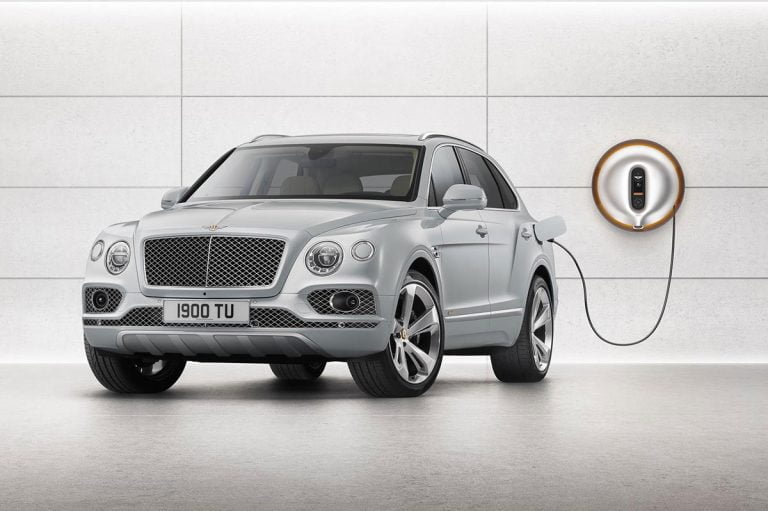
Bentley wants to build the electric car its customers are demanding, but says the battery technology required to do it properly is yet to appear.
According to the luxury brand’s chief executive, Adrian Hallmark, existing EV battery technology is comparable to “buying a battery that could only power a light bulb to half its capacity”.
As a result, an electric Bentley with adequate range would need so many battery packs it would be too heavy. If the weight was acceptable the car would not travel far enough on a single charge.
Speaking to Autocar magazine at the Goodwood Festival of Speed, Hallmark pointed to customer surveys that showed the brand’s customers are much more receptive to EVs than any of their rivals. Meanwhile, customer clinic data has shown that a recent concept’s desirability would have been higher if it had been a pure EV.
Hallmark made it clear that he is “in a rush” to build an electric Bentley.
“As a brand we should be at the forefront, and it is clear that there is absolute demand from certain customers for it – including a new target group of customers who want it, not just to comply with regulations but because it is desirable to them,” he said.
“But the issue is whether we can build a car that meets our values – and today we cannot. The conundrum is getting enough battery power density, getting the battery control modules as efficient as possible and then creating a car that delivers the required aero, rolling resistance and other parameters to be as efficient as possible.
“We are wrestling with multiple dimensions and it is my belief – and it is an informed estimate not a defined goal – that we will have the capability of building a car with the high performance and high range capabilities that our customers expect by around 2025.”
According to Hallmark, an electric Bentley must have a range of at least 400 miles, equivalent to a traditional internal combustion engine’s fuel tank. He added that the UK’s charging infrastructure also needs to improve.
These days it feels like plastic-clad, high-riding versions of hatchbacks and estates are everywhere. From the Ford Fiesta Active to the Volvo V90 Cross Country, there’s more to choose from than ever before.
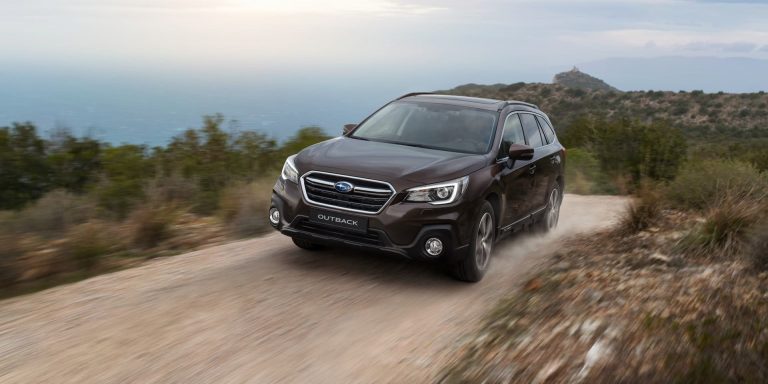
One of the first on the scene, though, was the original Subaru Outback back in 1995. Then just a high-riding version of the maker’s Legacy estate, the Outback has since gone on to replace it entirely, though is still based on the platform of the Legacy saloon sold elsewhere in the world.
It might be about to be replaced, but that hasn’t stopped Subaru tweaking the Outback’s formula for its last few years on sale. Firstly, notable by its absence, is a diesel engine: Subaru now only offers petrol power for the Outback, and just one engine choice at that.
The interior has had a tweak or two as well, starting with the infotainment. There’s a bigger touch screen than before, and it’s now Apple CarPlay and Android Auto compatible too – something of a must these days.
There’s extra safety gear too: Lane Keep Assist is new, as is a selection of new cameras dotted around the exterior (including under each door mirror) to ease manoeuvring.
How does it look?
To our eyes, the Outback is more appealing to look at than the average SUV. Its rough-and-tough plastic cladding, high ground clearance and big tyres are unashamedly off-road focussed – and combined they give the Outback a no-nonsense vibe. Compare that with the usual style-over-substance crossovers and the Subaru starts to stand out.
With that said, there’s nothing overly stylish about the way the Outback looks. It’s not unpleasant to look at, but its shape isn’t as sleek as the average estate car, and Subaru’s rather anonymous corporate front end design isn’t what you’d call memorable.
Still, it’s not a bad looker, and it manages what few cars can: to be almost totally classless. The Outback would look just as at home on a driveway in suburbia as halfway up a farm track.
What’s the spec like?
Subaru’s focus these days is safety, and it shows. On top of the permanent four-wheel-drive – itself something of a safety feature – Subaru has loaded up the Outback with every conceivable bit of safety technology available as standard. Adaptive cruise control, pre-collision braking, lane departure warning, blind spot and cross traffic alert, lane keep assist, the list goes on. The Outback also scored a five-star safety rating from Euro NCAP back in 2014.
There are just two trim levels: SE and SE Premium, both of which have more than generous kit levels. The latter of gets leather seats, a powered boot lid, larger alloys and the larger eight-inch colour touch screen. All Outbacks get heated, electrically adjustable front seats, LED headlights, satellite navigation, reversing camera and the aforementioned safety kit.
Spec a Skoda Octavia Scout – itself not an expensive car – to the same level and you’ll be looking at spending around £3,000 more than the basic Outback.
What’s the Subaru Outback like inside?
Being a Subaru, it’s authentically Japanese inside the Outback – which is to say it’s well put together, if a bit plasticky. Everything is logically laid out, and most of the switchgear has a reassuring feel.
The seats are comfortable, though the leather doesn’t feel as supple as that in its European rivals, and it feels as light and airy as the best of its crossover rivals.
That could be because the Outback isn’t short of space. The rear seats fold (nearly) flat to reveal 1,848 litres of boot space up to the roof – considerably more than the likes of the Volvo V90 and Ford Mondeo – and with the seats up, a very reasonable 559 litres are available.
What’s under the bonnet?
Boxer, or ‘flat’, engines – those with horizontally-opposed pistons – are in Subaru’s DNA, so it’s no surprise to find one under the bonnet of the Outback. Here it’s a 2.5-litre, naturally-aspirated one with a not unreasonable 175hp – enough to make reasonable progress, but not what you’d call quick.
Where it’s shown up these days is a lack of torque: it makes only 235Nm, less than even a Ford Focus 1.5-litre EcoBoost, and far less than the average 2.0-litre diesel. Fuel economy isn’t great at 33mpg combined on the old NEDC system, but is roughly par for the course based on petrol rivals with similar power.
There’s only one choice of gearbox too: Subaru’s automatic ‘Lineartronic’ CVT. It’s not terrible, and it is at least reasonably smooth when pottering around town, but trying to encourage some pace out of the Outback sends the revs skyrocketing into a typical CVT drone. A modern torque converter-based automatic would be infinitely better.
It’s worth pointing out that the Subaru Outback scored a paltry one-star eco rating from Green NCAP, the brand-new independent body run by Euro NCAP to assess new car environmental credentials. At this time, very few cars have actually been tested so it’s impossible to say how the Outback stacks up against its rivals.
What’s the Subaru Outback like to drive?
The Outback might look like an estate, but it’s surprisingly lofty – at 1.6 metres in height it’s taller than a Nissan Qashqai. As such, it doesn’t handle with any of the poise of usual estates like the Ford Mondeo or Mazda 6 – pitching and rolling where normal cars would remain relatively flat.
There’s a good reason for that though: the Outback has an impressive 20cm of ground clearance, rivalling that of the Land Rover Discovery Sport and even the Toyota Land Cruiser. Think of the Outback in this context and it fares better: more fun and refined than the average SUV, certainly.
Take the Outback off the beaten track – which we did – and things improve yet still. There’s only one electronic mode for off-roading – X-Mode, which engages hill descent control for downhill bits, and uses a brake-based LSD for climbing up slippery slopes – but it seems to do the job.
Being relatively light for an off-roader (1,600kg compared to a Discovery Sport’s 1,900kg) helps too, though the 2.5-litre engine needs to be worked hard to make progress on challenging terrain.
Verdict
Subaru has a habit of carving out a niche for its models, and the Outback is no different. There are more efficient, more car-like rivals available for the same money, but none will match the Outback’s off-road abilities. Only the Mercedes-Benz E-Class All Terrain is likely to get close, but at a cost: over £62,000, twice the price of the Outback.
It’s certainly not perfect, but if you need a reasonably-priced, well-equipped family car that simply must be capable off-road, the Subaru Outback is unbeatable.
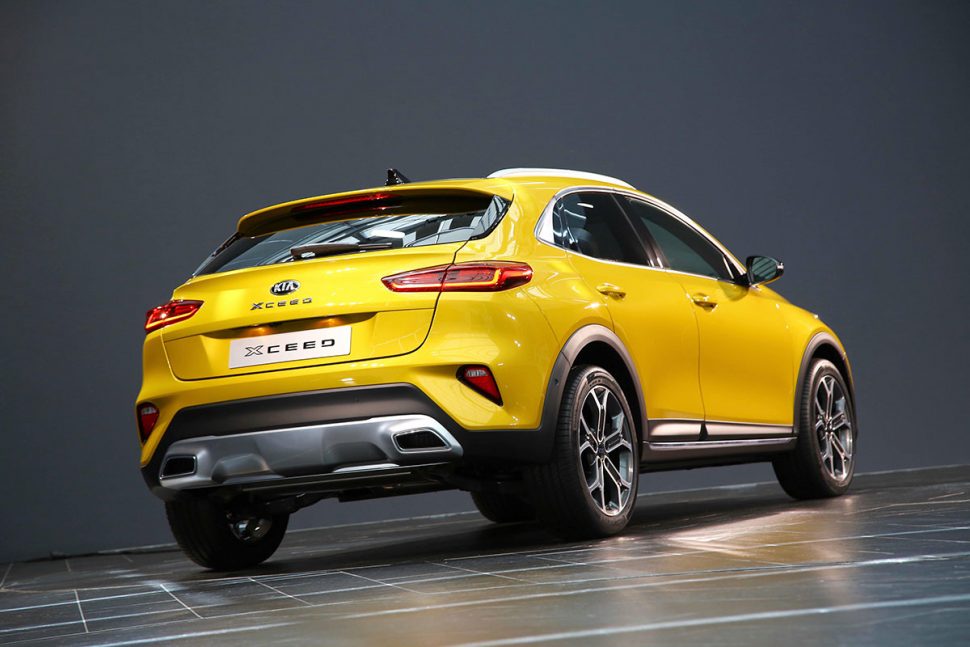
The new Kia XCeed crossover will cost from £20,795 when it arrives in UK showrooms in September.
The fourth member of the Ceed range, the car is described as an ‘urban crossover’ with ‘coupe-like design’, Kia saying that the XCeed’s design and its handling are sportier than is the norm with a traditional SUV. In fact Kia calls it a CUV – a ‘crossover utility vehicle’.
It will go on sale with a choice of 1.0-litre and 1.4-litre petrol engines and a 1.6-litre diesel, and in three trim levels, Kia’s now familiar grades of 2, 3 (starting from £23,295) and First Edition (from £28,095).
The XCeed has a higher ground clearance than its sibling models, which helps add 43mm to the car’s height, while it is also 85,, longer than the Ceed hatch. Kia adds, however, that the sloping roofline means that the car still sits lower than a typical SUV, giving the car a more dynamic and distinctive look.
According to its makers, the front door panels are the only exterior panels common to the XCeed and the Ceed hatchback. The front-end treatments are distinctly different and the crossover has bespoke 16- or 18-inch alloy wheels.
Current petrol options for XCeed buyers are the three-cylinder 1.0-litre T-GDi (Turbocharged Gasoline Direct injection) engine with 120hp and 172 Nm of torque, and a four-cylinder 1.4-litre T-GDi with 140hp and 242Nm.
The high-power 1.6-litre T-GDi engine found in the Ceed GT and ProCeed GT is also being specified for the XCeed, but is not yet being listed as a UK option. It produces 204hp and 265Nm.
There are also two 1.6 diesel options, both Kia’s Smartstream units described as the cleanest diesel engines ever produced by the brand and the most fuel efficient in the range. They offer 115 or 136hp.
All engines can be paired with a choice of six-speed manual or seven-speed dual-clutch transmissions, with the exception of the 1.0-litre, which is manual only. Kia has also indicated that the XCeed will gain mild hybrid and plug-in hybrid options in early 2020.
A highlight feature of the XCeed is Kia’s new ten-inch TFT LCD widescreen system. Standard on 3 and First Edition grades, it uses new telematics software that can be accessed using a smartphone app to offer the driver a range of information. This includes anything from whether the doors are locked to a record of the last month’s usage.
Other information includes live traffic, weather, and availability of parking spaces, while the system includes a split-screen mode, home screen customisation, and multiple Bluetooth connections.
Ford is joining the select band of manufacturers trying to appeal to the very top-end track day market with a Mk II version of its GT supercar.
The GT Mk II, unveiled on the first day of the Goodwood Festival of Speed, is claimed to be potentially faster than the race GT that competed in the Le Mans 24 Hours last month.
Larry Holt, chief technical officer of Multimatic which designs and engineers the GT for Ford, introduced the Mk II at Goodwood. He said that it had been created as an answer to questions from customers as to what would be the ultimate performance version of the GT.
Ford launched its road-going supercar in 2016, built a race version that won its class in the Le Mans 24 Hours that year, and has just completed the 500th example of the car.
“This car comes from the dream of a racing car without balance of performance,” Holt said. “The road version of the GT has 650 horsepower, but at Le Mans we race it with 495hp mandated by the series to balance all the cars in the GT category. The rear wing on the racing car is mandated, you can’t have front wheel arch louvres, a number of things you can’t have.”
Larry Holt (by front wheel) describes the new Ford GT Mk II following its unveiling at Goodwood. Photo: Andrew Charman
“So this is a car not limited by race rules, or those of the road – it is strictly for enjoying on the track only.”
The upgrades to the Mk II do not centre on power, the 700hp put out by its 3.5-litre engine only 50 horses more than the same unit in the road car, though 200 more than the race version is allowed. The newcomer does weigh in around 150kg lighter than the Mk I, though the race car remains significantly lighter.
Where the Mk II really scores over its siblings, however, is in aerodynamics. Multimatic has been able to employ such aspects as louvres to the front wheels, a dual-element rear wing and a ‘next generation’ underwing that are not permitted on the race car.
“We are generating about 450lbs more aerodynamic downforce compared to the racing car and around four times the downforce of the road car,” Holt said.
Other elements bespoke to the Mk II include 19-inch wheels (the race car runs on 18-inch versions, the Mk I road car on 20-inch) and a higher performance version of the Mk I’s carbon-carbon brake package – the race car is limited to steel brake discs.
Inside the design of the cabin is completely new but with the instrument panel arrangement of the race car. A full FIA-certified roll cage is fitted, while also approved by motorsport’s governing body is a passenger seat – allowing owners to give their friends a memorable track ride.
Those owners will be few – Ford says that just 45 examples of the GT Mk II will be made, each at a price starting from $1.2 million…
Ford is not currently revealing performance figures for the GT Mk II, though Holt says that in extensive track testing the car has proven around 10 seconds a lap quicker than the Mk I road car. But despite the prodigious performance he contends that the lucky owners will not struggle to control it; “Ford’s philosophy is that we don’t deliver cars that are difficult to drive. This car still has the very benign driving experience of the road car – it flatters the novice but has the ability to kick all the other professionals’ ass…”
He adds that “everyone will ask” how the Mk II stacks up against the race car, which he adds is still significantly lighter than the newcomer and runs on a ‘confidential’ tyre only available to the team, whereas the MkII runs on slick tyres from Michelin that can be brought over the counter.
“That tyre is worth four or five seconds – with confidential tyres this car would likely be quicker than the race car. It’s very, very quick…”
The Vauxhall Astra has been given a mid-life refresh, with a raft of new engines, minor styling tweaks and eco-focused changes.
Having been around since 2015, the Astra is very much due for an update. It currently holds an Expert Rating of 74% in The Car Expert’s unique New Car Ratings aggregator, which compiles reviews from across the top UK motoring media sources. this is about average for the class, but falls well behind the class leaders like the Volkswagen Golf and Ford Focus.
Vauxhall will also be hoping that the updated Astra hatchback and estate can grab the attention of car buyers, as sales have been sliding for a while now, and the Astra has fallen out of the Top Ten best-seller list this year.
Many of the changes transition the popular hatchback away from old GM parts. The French firm hasn’t been able to swap its own engines directly into the Astra, so it gets its own bespoke range of petrol and diesel powerplants.
A 1.2-litre petrol engine is available with 110, 130 or 145hp, each with a six-speed manual gearbox and expected to achieve between 51.4 and 54.3mpg. A 145hp 1.4-litre with a CVT automatic is also offered, promising 47.9 to 49.6mpg.
A 1.5-litre diesel is also available in 105 and 120hp outputs. Both get a six-speed manual, while the more powerful version also gets a nine-speed automatic option. The manual is said to return 60.1 to 64.2mpg, while the automatic is able to achieve 53.3 to 57.6mpg.
The new engines have combined with extensive work to reduce the amount of drag created by the Astra to see fuel consumption and CO2 emissions reduced by 19% compared with the outgoing model.
On-board technology has also been upgraded with a higher resolution front and rear camera, a new infotainment system and a connected navigation system that can update with real-time traffic information.
The updated Vauxhall Astra goes on sale next month, with the first customers due to receive their cars in November. Prices haven’t been revealed but expect a small increase over the current car’s £18,905 starting price.
Any make and model of passenger or commercial vehicle is eligible for the scrappage scheme, providing it was registered on or before 31 December 2012. It also must have been owned by the buyer for 90 days or more prior to scrapping.
Buyers must order a Ford vehicle before 30 September and register the vehicle before 31 March 2020.
The saving can be used towards most of Ford’s current line-up of passenger vehicles, with the exceptions being Ka+, Fiesta Trend, all Zetec models, Mustang and all ST cars (Fiesta ST and Focus ST derivatives).
It can also be used against a range of the firm’s commercial vehicles, save for the Transit Connect and Ranger Raptor.
The Car Expert checks the fine print
This offer is a part-exchange allowance, for selected used cars part-exchanged against selected new cars.
Your current car can be from any brand, but must have been first registered no later than 31 December 2012.
You must be the owner of the part-exchange vehicle and the buyer of the new car (same name and registered address).
You must have owned the old car for at least 90 days, to stop people buying an old banger for £200 and then getting a £2,000 part-exchange allowance for it.
You must order your new car no later than 30 September 2019 and take delivery no later than 31 March 2020.
This offer can be used on top of any other offers from the dealer, manufacturer or finance company.
The offer is not dependent on you taking any finance package or other products.
Private new car sales fell nearly 5% in June, according to the latest registration data published today by the Society of Motor Manufacturers and Traders (SMMT). In comparison, fleet registrations were down by 2.5%.
June falls about halfway between the two registration-plate change months of March and September, so it’s not unusual to see private sales taking a lower percentage of the overall numbers, as fleets tend be less bothered about the numbers on the number plates than private buyers. So a market share of 40% for private new car buyers, against a year-to-date average of 45%, is fairly normal and exactly the same as last year’s performance.
Among the industry’s chief concerns is the continued slump in sales of plug-in hybrid vehicles, which continue to run at about half of what they were this time last year. This is due to a combination of lack of availability of these vehicles in dealerships and the removal of government grants for plug-in hybrid models, which made them about £4,500 dealer overnight last November. In fact, plug-in hybrids were outsold by full electric vehicles in June.
The SMMT has finally started breaking down the ‘alternative fuel vehicle’ category to show the specific registrations for electric cars, plug-in hybrids, regular hybrids and mild hybrids, which is more useful than lumping them all together (even if it’s debatable whether mild hybrids should be listed under their own category instead of just included in overall petrol or diesel numbers). This will cause some short-term confusion over the next few months but will settle down eventually.
Diesel’s popularity continues to wane, falling slightly below the year-to-date average of 27%, but it remains a steady decline for what used to the most popular fuel source in the UK. Registrations of regular hybrids were also down by just under 5% as well, although this appears to be a temporary blip since sales are well up on a year-to-date comparison with last year. Two-thirds of all new car were petrol-powered.
The SMMT has started breaking down registrations by fuel type in much more detail
First half of 2019 shows longer-term trends
As we have now hit the half-year point of 2019, we can look at the year-to-date figures to see some long-term trends. Private new car sales are down 3%, with the majority of that fall coming in the last three months after a reasonably solid start to the year. Fleet registrations are only down 1% for the first six months of the year, which is somewhat surprising given the ongoing concern of businesses up and down the country regarding Brexit.
Diesel continues to fall in popularity, down nearly 20% on last year, which was a similar amount down on the previous year. We can expect this to continue, although an eventual bottoming-out must be coming soon.
Despite a poor month in June, registrations of regular hybrids are up 17% up on the first half of last year. The lack of plug-in hybrid sales appears to be getting worse, so we will see if that recovers over the next few months as more new models come on stream. Full-electric cars continue to grow strongly, up 60% over the first six months of the year, although they still represent less than 1% of the overall market.
Two-thirds of all new cars registered in 2019 have been petrol-powered, with this share steadily increasing as diesel sales correspondingly decline.
Good month, bad month
June was a good month for Dacia, Lotus, MG and Toyota, who all reported growth of more than 10% in June. A few other big-volume brands also held their numbers or at least did better than the overall market average of a 5% fall. In particular, Ford and Audi recorded better performances than they have all year.
It was a big month for small cars in June, with the eternally market-leading Ford Fiesta followed by the Vauxhall Corsa and Mini hatch on the best-sellers list. The Toyota Yaris bounced back into Top Ten at seventh, followed by the Volkswagen Polo in eighth.
The rest of the Top Ten list was made up of four mid-size hatchbacks (VW Golf, Ford Focus, BMW 1 Series and Mercedes A-Class) and only the Nissan Qashqai flying the flag for the SUV/crossover segment. Don’t start writing your obituaries for 4x4s just yet, however, as their overall popularity isn’t going to collapse anytime soon.
A car finance story on BBC News on Saturday has highlighted the public’s continued lack of understanding when it comes to car finance agreements, as well as the futility of debating the issue on social media.
The story was based on a discussion on the BBC Radio 4 programme Money Box a week ago, in which I was a guest panellist. We were discussing the increasing number of complaints about car finance in recent years, which originated from a Money Box listener who contacted the programme about her family’s financial predicament as a result of an ill-advised car purchase.
The particular example involved a 23-year-old woman, who was a first-year university student with a part-time job. She went to a used car dealership and ended up buying a £16K Audi on hire purchase, with total repayments of £21K over five years at a rate of £330 per month. She struggled with the repayments right from the start, then lost her job and now even with her family’s help she can’t afford it. She has now missed a couple of payments and can’t find a way out of the situation.
The programme introduced the topic using the case study of this particular family’s situation before a brief discussion of the latest complaints numbers from the Financial Ombudsman’s Service, a few words from the Finance and Leasing Association (basically the lobby group for the car finance companies) and a few words from me.
Illustrating the entire car finance industry with one example
Obviously, this young woman has made a serious financial mistake. That’s not in doubt at all. It has already caused her and her family a lot of grief, and there is no simple solution that lets them undo it all and start again.
The problem with the case study approach is that it’s very easy for the industry to push back on that one example and basically say “Well, she was stupid to buy a car she couldn’t afford. She’s old enough to know what she was doing. It’s her own fault, not the finance company or the industry.” The BBC certainly isn’t alone in this regard. I was interviewed for a programme on Channel 4’s Dispatches a couple of years ago that worked in exactly the same way, with exactly the same responses.
Predictably, the social media response to the BBC News article has also been full of sanctimonious preaching about how stupid this young woman was, how stupid her parents were for not raising her better, how taking out car finance is stupid anyway and that everyone should just buy £500 bangers rather than stupid near-new Audis.
The reality is that it’s not just one person who has made a big mistake, and trying to shut down the whole car finance discussion by shunting blame onto one individual’s bad decision avoids the larger issues.
Many thousands of people are getting into serious trouble with their car finance each year, and many more are having to make uncomfortable life decisions because they’re devoting too much of their monthly income to their car payments.
“I literally have no idea what any of those numbers mean. I just want the car!”
What very few people, especially those with any connection to the car industry, want to discuss is how a 23-year-old uni student with a part-time job and minimal credit history was ever approved to borrow £16,000 (total repayment including interest and fees was about £21,000).
Unless it was a very well-paid part-time job, the monthly payments would swallow up a large chunk of her income. Even if the young woman was as completely idiotic as those unfriendly folks on Twitter have suggested, it should have been pretty obvious to those people whose jobs involve dealing with finance applications on a daily basis.
The business manager at the dealership should have realised that the payments were unrealistic as he/she was making the application to the finance company. The finance company’s automatic systems should have flagged it up as dubious, and the person at the finance company who approved the application should have known it was unrealistic. So why was the application not rejected at any point in the process?
The car industry and its associated finance companies need to start accepting more responsibility for how their agents – the shiny-suited salespeople in their dealerships – are selling these complicated car finance products. There are two very good reasons for this: firstly, and most obviously, for the benefit of customers. And secondly, because its in the industry’s own best interest.
Lending responsibly and treating customers fairly
The Financial Conduct Authority (FCA), which regulates the car finance sector in the UK on behalf of the government, requires that anyone selling finance must lend responsibly and treat their customers fairly at all times.
The biggest problem in the car finance process always seems to come back to the fact that the finance company does not deal directly with the end customer, but goes through a middleman in the form of the dealership. This is different from a bank loan, where you speak directly to someone at the bank when you apply for the loan and/or you are directly applying via the bank’s own software or paperwork.
With dealer financing, the authorised representative at the dealership (usually called the business manager) is acting as an agent for the finance company while also acting as a salesperson for the dealership. The dealership, in turn, may be operating as an agent for a car manufacturer but is usually owned by a different individual or company.
Once the dealership sells the car and the customer drives off, it’s no longer their problem if the customer defaults on the payments. It becomes a matter for the finance company to deal with. If the customer ever comes back to the dealer to say that they can’t afford the payments, the dealer just sees that as a chance to sell them a cheaper car and take another commission. If that’s not going to work, the dealer just fobs the customer off to the finance company.
This tangle of accountability and responsibility means the pressure on individuals and dealerships to sell more cars (and more car finance) usually trumps the obligation to sell and lend responsibly.
For the average person who generally has no idea how this tangled-up industry works, the whole process is confusing. They are inevitably guided by what the supposed expert in front of them in the showroom is telling them, just as they are with any other finance application.
Although the car industry denies it, there are uncomfortable parallels with the mortgage crisis and PPI mis-selling scandals that have rocked the banking world over the last decade. Due diligence takes a back seat to immediate profit, and keeps doing so until the bubble eventually bursts.
Believe it or not, this guy does not really have your best interests at heart…
Car finance is the goose that lays the golden eggs
This site’s position on car finance has never been that it’s a good or bad thing. Like any financial instrument (credit card, mortgage, even a payday loan), there’s nothing wrong with any car finance product if it’s being sold responsibly and used responsibly.
The car industry is utterly reliant on car finance for its survival. Things like Brexit and free-trade deals are trivial in comparison. Over the last decade, the number of people financing their new and used car purchases at the dealership – rather than via a personal loan or other means – has skyrocketed, and this has significantly changed the entire industry.
As of mid-2019, about 91% of all private new car purchases are financed at the dealership, up from about 40% at the start of this decade*. The number of used cars financed through dealers has also increased at a similar rate. This is thanks to the prevalence of PCP car finance (largely provided by the manufacturers’ own finance companies), which encourages car buyers to borrow more money on more expensive cars.
As a result, the average value of each loan has increased spectacularly – along with the debt incurred by the car buyers. Ten years ago, the average amount of money borrowed on a new car in the UK was about £12K. Today it’s about £20K*. That’s a 60% increase, despite the fact that real incomes have not increased much at all over the last decade.
Given the enormous growth in customers arranging car finance via the dealerships, it’s no surprise that the number of complaints and problems have also increased. Most of the high-traffic articles on this site are those about how car finance works, how voluntary termination works, settling finance early and trying to escape financial penalties. Our forums and article comments get questions at a much faster rate than we can answer them.
If everybody took the advice of the sanctimonious Twitterers and simply bought cheap cars with their cash savings, the whole car industry would collapse. The £500 bangers won’t exist unless someone has bought those cars in the first place several years ago and then they’ve eventually depreciated away to a level that the average person can afford to buy with cash.
The whole car industry is built on a foundation of people buying cars they don’t need with money they don’t have. Whether that is right or wrong is not the question that we’re currently trying to answer, but if the industry wants things to continue as they are, it’s incumbent on the manufacturers and finance companies to make sure that absolutely nothing jeopardises the ongoing provision of finance to their customers.
Before you apply for car finance, you should… Oh. Too late.
What needs to happen?
The industry opposes any suggestions that affordability rules need to be tightened, yet the number of people running into trouble with their car finance continues to increase.
This is not an isolated case and it’s time for the industry to do better. If that means sacrificing some sales and/or forcing people to buy cheaper cars, so be it. Brands like Audi and BMW may lose out but cheaper brands will do better.
Cowboy dealers who push customers to borrow more money than they can realistically afford in order to flog a few more cars this month need to be pulled into line. If that means they lose their ability to source finance altogether or even lose their franchises, so be it. There are more than enough car dealers in the country, so losing a few bad apples is no bad thing.
The alternative is to keep doing nothing until the FCA decides to tighten regulations to a much tougher level than the industry wants in order to protect consumers from themselves. That would have a much bigger impact on the whole industry, as it would almost certainly result in blanket lending limits being set that would affect hundreds of thousands of car buyers each year.
Unfortunately, both the car and finance industries have long histories of being unable to save themselves from their own greed. This issue is unlikely to change that.
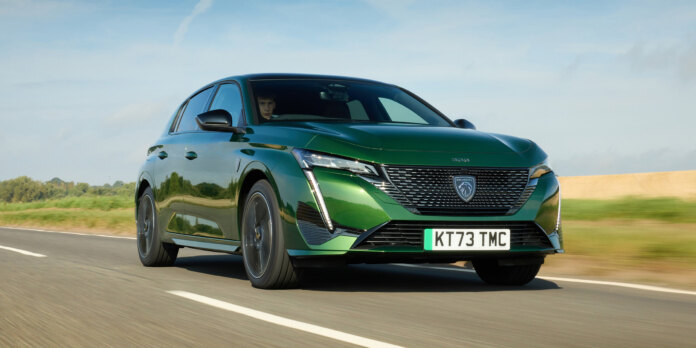
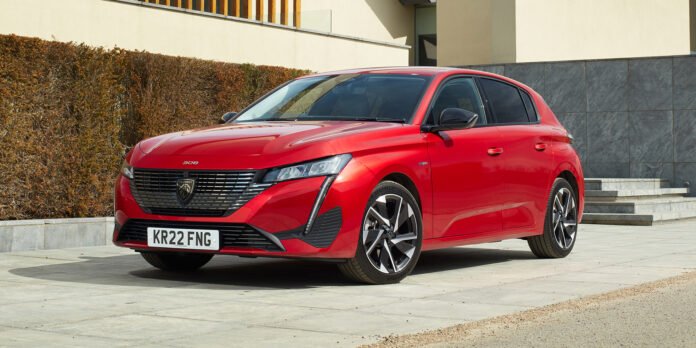
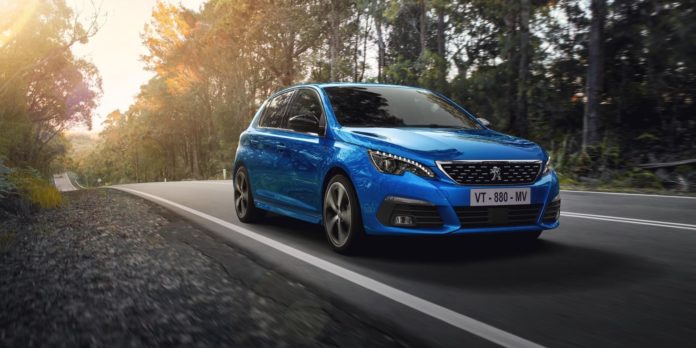
The Peugeot 308 was a medium-sized family car, available as a five-door hatchback and an estate (called the 308 SW). This model was unveiled in late 2013, before going on sale in the UK in early 2014. The hatchback was followed by the SW about six months later. It ceased production in 2021, replaced by an all-new model in 2022.
The 308 received generally good reviews from the UK motoring media across its seven-year lifespan, although the scores tend to trail the class leaders. This was partly due to the car’s somewhat polarising interior design, which utilises Peugeot’s i-Cockpit layout that has divided both reviewers and car buyers.
Aside from the dashboard layout, the Peugeot 308 received particular praise for its smooth, comfortable and refined driving experience, as well as its efficient engines. Criticisms have been directed at the car’s tight rear seats and a lack of driving enjoyment.
The higher-spec 308 GT model also tended to score lower than the regular models. There was a high-performance model called the 308 GTi, which is not covered here.
As of September 2025, the Peugeot 308 holds a Used Car Expert Rating of D, with a score of 59%. It gets good grades for its low CO2 emissions, but the rest of its report card is average to very poor.
Model reviewed: (SW estate range review) Score: 8 / 10 “When it comes to compact estates, the Peugeot 308 SW is the space leader, with a classy cabin and efficient engines.” Read review
Car
Model reviewed: (range review) “The Peugeot 308 is not an exciting car, and there’s nothing wrong with that. Comfy, refined and efficient, it’s a worthwhile alternative to the usual mid-size hatch suspects.” Read review
Model reviewed: 308 SW GT Line estate Score: 8 / 10 “There’s much to like about the Peugeot 308 SW; it has a genuinely distinctive interior (marred by the awkward touchscreen), dynamics biased towards comfort make it a great motorway cruiser but its chassis is adept enough on B-roads too, and it has so much luggage space it feels almost like a car from the size class above. “ Read review
Model reviewed: 308 GT Score: 6 / 10 “The petrol and diesel versions of the 308 GT feel like remarkably different cars, and neither quite hits the spot from a performance perspective. They also face tough competition from aggressively priced rivals.” Read review
Carbuyer
Model reviewed: (SW estate range review) Score: 8 / 10 “The Peugeot 308 SW is a small estate car with a huge boot, economical engines and plenty of interesting features.” Read review
Model reviewed: (hatchback range review) Score: 7.8 / 10 “The Peugeot 308 hatchback is an attractive alternative to rivals that’s comfortable, spacious and reliable.” Read review
Carwow
Model reviewed: 308 SW estate range Score: 6 / 10 “The Peugeot 308 SW is a sleek-looking estate with a big boot, plenty of equipment and a classy cabin, but not everyone will get on with the driving position.” Read review
Model reviewed: Hatchback range Score: 6 / 10 “The Peugeot 308 looks great, comes with loads of kit as standard and it’s pretty practical, too – just don’t expect passengers to enjoy sitting in its rather cramped back seats.” Read review
Honest John
Model reviewed: (SW estate range review) Score: 8 / 10 “The Peugeot 308 SW offers a great blend of comfort, style and practicality. Add in low running costs, easy driving dynamics and impressive refinement and there’s a lot to like.” Read review
Model reviewed: (hatchback range review) Score: 8 / 10 “This 308 is the closest Peugeot has yet come to building a car that’s genuinely good enough to compete with the likes of the Honda Civic and ever-popular Ford Focus.” Read review
Model reviewed: 308 SW estate “A car with enough pleasing technical advances and so good to drive that its European Car of the Year accolade genuinely seems to be justified.” Read review
Parkers
Model reviewed: Hatchback range Score: 8 / 10 “Understated and underrated hatchback hero – GTi is a highlight” Read review
Model reviewed: SW estate range Score: 9 / 10 “The Peugeot 308 SW is competitively priced, has impressive luggage volume figures and the new engines are excellent. With its smart, unusual interior it has a little more character than most of its rivals, too.” Read review
Model reviewed: GT Score: 7 / 10 “There are some very appealing aspects – such as the looks, level of standard kit and how comfortable it is – along with some less-impressive attributes. We found the handling left us wanting, and the diesel version doesn’t seem to make much sense at all.” Read review
The Sun
Model reviewed: 308 GT “The Peugeot 308 GT is the middle ground for those who want to drive something a bit premium but who aren’t in the market for a mid-life crisis. It’s like a hot mum — not turning heads everywhere it goes, but still hot enough to be checked out in Asda.” Read review
Model reviewed: (hatchback range review) “The Peugeot 308 may not have the precise ride and handling of the class-leading Ford Focus — but it’s getting very close.” Read review
The Sunday Times
Model reviewed: 308 GT Score: 6 / 10 “Turning the heat up to tepid.” Read review
Model reviewed: (range review) Score: 8 / 10 “High-tech hatchback has a few real-world issues.” Read review
The Telegraph
Model reviewed: 1.2-litre petrol automatic Allure Score: 6 / 10 “A smart and well-equipped family car, but one with too many niggles. It’s neither comfortable nor easy to drive, the new automatic is a let-down, and while the boot is vast, the rear seats certainly aren’t.” Read review
Model reviewed: 1.5-litre diesel manual Allure Score: 6 / 10 “Visually the Peugeot 308’s facelift is modest to the point of being unnoticeable, but the new 1.5-litre diesel engine has real merit. It’s smooth, reasonably powerful and should be cheap to run, too.” Read review
Model reviewed: (hatchback range review) Score: 6 / 10 “The Peugeot 308 is well priced and equipped, and the diesel engines are some of the most efficient around. However, it isn’t as good to drive or as easy to live with as many rivals, including the SEAT Leon and VW Golf.” Read review
Model reviewed: (SW estate range review) Score: 7 / 10 “The Peugeot 308 SW has a huge boot and is well priced and equipped, plus it’s available with some of the most efficient engines around. Just bear in mind that it isn’t as fun to drive or as spacious in the back as the Ford Focus Estate or VW Golf Estate.” Read review
Top Gear
Model reviewed: Hatchback range Score: 8 / 10 “This is the best family hatch Peugeot has ever made. Smooth, refined, and comfortable.” Read review
Model reviewed: SW (estate) range Score: 7 / 10 “The Peugeot 308 SW is among the best compact estates on sale (partly because it isn’t really compact at all).” Read review
Safety rating
Independent crash test and safety ratings from Euro NCAP
The Peugeot 308 was tested by Euro NCAP back in 2013 and awarded a five-star rating. However, this rating expired in January 2020 and is no longer valid as the car no longer meets the standards required for such a rating. This is normal practice, as Euro NCAP reviews its ratings on most cars annually with most ratings expiring after about six or seven years.
Although the rating has now expired, the score is still useful if you are comparing a used 308 to vehicles of similar age – whose ratings will have probably also expired.
Eco rating
Independent economy and emissions ratings from Green NCAP
No eco rating
The Peugeot 308 was not lab tested by Green NCAP during its production life.
Running cost rating
Monthly cost of ownership data provided exclusively for The Car Expert by Clear Vehicle Data
Fuel consumption
Average
Score
Petrol models
38 mpg
D
CO₂ output
Average
Score
Variation
Score
Petrol models
125 g/km
B
Diesel models
124 g/km
B
Insurance group
Average
Score
Variation
Score
All models
21
B
Due to its age, we don’t have a complete set of running costs data for the previous-generation Peugeot 308.
The biggest cost for most owners is fuel, and the petrol models were quite poor. We don’t have data for the diesel models.
Insurance costs should be reasonable, but we don’t have five-year servicing costs as the 308 is now to old to generate this information.
Reliability rating
Reliability data provided exclusively for The Car Expert by MotorEasy
Total claims: 285 Average repair cost: £429.33 Last updated: April 2025
The Peugeot 308 has a reliability score that’s middle of the pack, according to warranty and workshop data provided exclusively to The Car Expert by our partners at MotorEasy. This score covers this version of the 308 and previous (pre-2014) models.
If you’re looking at a used Peugeot 308, make sure any extended warranty cover you purchase covers all of these potential problem areas.
Awards
Trophies, prizes and awards that the Peugeot 308 has received
2019
Honest John Awards – Most Highly-Rated Car
2015
Carbuyer Awards – Estate Car of the Year
Business Car Manager – Best Company Car to Buy
ContractHireAndLeasing.com Car of the Year Awards – Best Estate Car to Lease
2014
European Car of the Year
Similar cars
If you’re looking at the Peugeot 308, you might also be interested in these alternatives
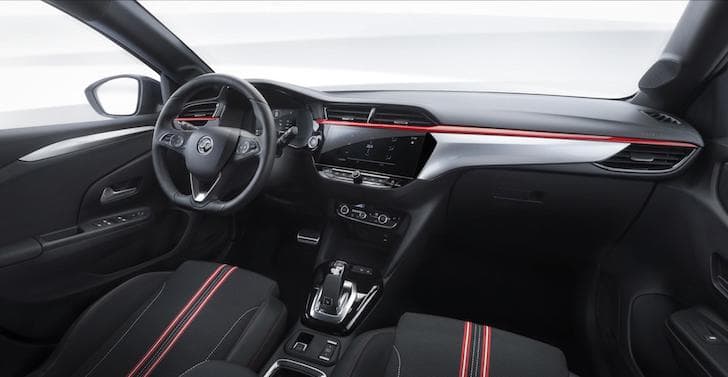
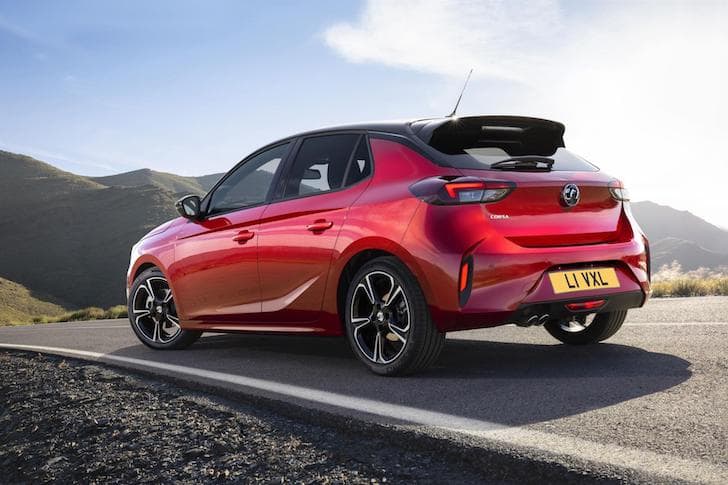
Vauxhall has revealed details of petrol and diesel powertrains for its all-new Vauxhall Corsa, following on from the reveal of the all-electric Corsa-e last month.
From launch, two petrol units and one diesel will be offered for the supermini. Kicking off the former’s range is a 1.2-litre three-cylinder unit producing 75hp that’s sent through a five-speed manual gearbox.
Up next is a 100hp turbocharged unit of equal capacity, lifted straight from French owner PSA Group’s catalogue, coupled to either a six-speed manual or eight-speed automatic gearbox. As for the sole diesel, that’s a 1.5-litre unit developing 100hp and 250Nm of torque.
These internal combustion engines join the all-electric e-Corsa in the range, which features a 50kWh battery. Range is claimed at 211 miles, with charging from flat to 80% said to take just 30 minutes on a rapid unit.
The new Corsa is the first model designed from the ground-up under Vauxhall’s PSA Group ownership, after it purchased the British firm (along with sister brand Opel) in 2017. It’s said to weigh 980kg — up to 108kg less than the previous car — despite retaining similar dimensions
Full specifications for the Corsa are yet to be confirmed, but Vauxhall has said equipment will include full LED headlights, Vauxhall Connect services and a ten-inch infotainment screen. There’s no official word yet on the arrival date for the new Vauxhall Corsa, but we expect it to be in early 2020.
Volvo has armed selected XC90 and XC60 models for high-risk security jobs with its new Armoured range.
For extra heavy-duty protection, Volvo offers the XC90 Armoured (heavy). Fitted with 1cm-thick steel armour and 5cm-thick bulletproof glass in its toughest guise, this version of the Volvo XC90 Armoured is said to be resistant to both ballistics and explosives.
This suit of armour brings the car’s total weight up to 4.5 tonnes with five occupants on-board, which is more than two tonnes heavier than a regular Volvo XC90. Accordingly, the company has upgraded the suspension and braking systems to cope with the extra heft.
Based on the T6 version of the SUV, it’s powered by a 2.0-litre petrol engine producing 310hp and 300Nm of torque. The base car is capable of 0-60mph in 6.3 seconds, but expect this extra weight to hamper that.
Once the regular underlying XC90 is built in Torslanda, Sweden, it’s then sent to Germany for specialist firm Trasco Bremen GmbH to kit out with the heavy-duty protection equipment.
5cm thick glass in the XC90 Armoured (heavy) can withstand ballistic and explosive attacks.
Those looking for a lighter-armoured vehicle can opt for a car with thinner armour and glass, known as the Armoured (light) and available in both XC60 and XC90 sizes.
Specific details haven’t been confirmed, but these vehicles are primarily designed to protect against handguns — with Latin America and Europe the key markets. Weight increases by about 250kg over the regular XC60 and XC90 models, which is again compensated for by improved brakes and suspension.
Stephan Green, Volvo Cars Special Vehicles marketing director, said: “We are proud to be able to offer these armoured cars. With our armoured cars, we can provide vehicles with a high level of personal security for individuals who require heightened protection.”
Sales of the heavy-duty XC90 Armoured will begin towards the end of 2019, with the lighter-spec variants due to go on sale next year. You’ll have to speak to Volvo directly to find out more in terms of pricing and specification.
Ford has revived the Puma name for a new model – but unlike the original, this one’s not a small sports car. Instead, it’s a new small crossover, which majors on practicality and efficient powertrains.
While the badge is more commonly associated with the Ford Puma coupe from the turn of the century, it has been commandeered for a model that aims to tap into the lucrative small family crossover market.
It will get Ford’s new mild-hybrid powertrain, which utilises a small battery and electric motor to take over ancillary functions at low speeds and assist the internal combustion engine to improve efficiency.
It will be available on the 125hp and 155hp 1.0-litre petrol engines, with Ford claiming the electric motor improves efficiency by around 9%.
A 125hp version of the 1.0-litre engine will also be available without the mild-hybrid set-up, while a diesel powertrain and seven-speed automatic transmission will join the line-up after launch.
Practicality is high on the agenda of the Puma, which features a clever “MegaBox” luggage compartment in the bottom of the boot, which helps increase boot space to a class-leading 456 litres. Ford says the load area can accommodate two bags of golf clubs standing upright.
The Puma’s styling is described as “a new chapter in Ford’s design identity”, with high-mounted headlights and a sloping roofline at the rear. It has been launched in ST-Line trim, which is available with 18- or 19-inch alloy wheels, a sporty body kit and functional roof spoiler.
Inside, there’s plenty of technology on offer, including a wireless charging pad, an infotainment system with touchscreen, 12-inch digital instrument cluster, and an optional ten-speaker B&O sound system.
Vehicles fitted with the automatic gearbox have access to an advanced cruise control system, with other safety technologies including local hazard information, parking aids and pre-collision assists also available.
Stuart Rowley, president of Ford Europe, said: “We believe Puma is going to really resonate with drivers in Europe.
“We’ve gone to every length to give customers the flexibility they want, and the best-looking car they’ve ever owned.”
The Ford Puma will go on sale at the end of 2019 with pricing to be revealed closer to that time.
The government wants only cars that are “effectively zero emissions” being sold in the UK by 2040, and is under pressure from environmental groups to bring that date forward. As a result, ultra-low emission zones are starting to pop up in cities as local authorities try to tackle air pollution, and electric vehicles are considered the way forward in achieving this.
However, the buying public has been slow to embrace EVs, with legitimate concerns about range and recharging, and less legitimate worries about stuff like whether you can drive them in the rain (Yes, of course you can).
To encourage motorists into zero-emission cars, the government offers a plug-in car grant to make EVs more affordable. How do you take advantage of this discount? Read on…
What types of vehicle are eligible for the plug-in car grant?
The plug-in grant doesn’t just apply to cars, it’s also applicable for vans, motorcycles, mopeds and taxis, so long as their official emissions figures fall under the amounts specified in the legislation.
The grant has been running since 2011, but the criteria were toughened up in October 2018 (and the maximum grant amounts reduced) in response to the continued reduction in the cost of electric vehicle technology. The stricter new requirements meant dozens of plug-in hybrid cars that had previously been eligible for the grant were now excluded – effectively making those cars £4,500 dearer overnight.
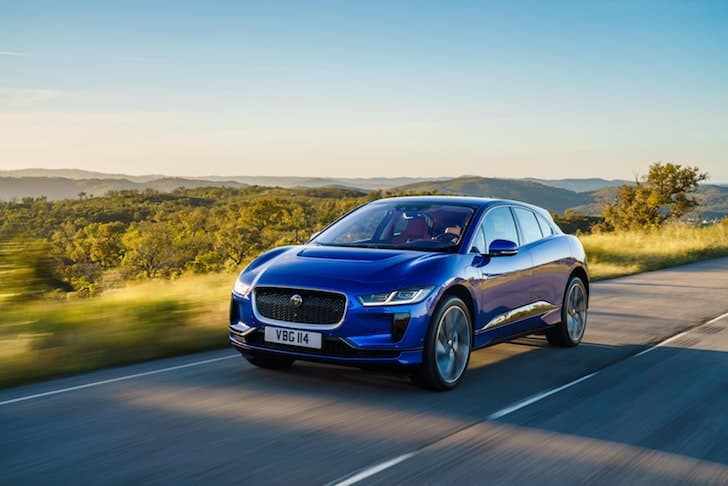
The all-electric Jaguar I-Pace is eligible for the government plug-in car grant
What are the categories?
The criteria required for a vehicle to be eligible for the grant is different depending on the type of vehicle. For cars and taxis, they must emit less than 50g/km of CO2 and be able to travel at least 70 miles without any emissions at all (according to the official EU tests).
Motorcycles must produce zero tailpipe emissions and be able to travel at least 31 miles between charges. Mopeds can’t have any emissions either, but only have to travel at least 19 miles on a charge. Finally, vans must have CO2 emissions of less than 75g/km and travel at least 10 miles between charges.
How much can I save?
Again, this depends on the category. Car buyers can save 35% of the vehicle’s value up to a maximum of £3,500 (prior to October 2018 the maximum was £4,500). Motorcycle and moped buyers can get 20%, up to a maximum of £1,500.
The biggest potential savings are for van and taxi drivers, who can save 20% of the vehicle’s value up to £8,000 and £7,500 respectively.
Electric vans like the Volkswagen e-Crafter are also eligible for the plug-in grant
Which cars are eligible for the plug-in car grant?
As of June 2019, there are 24 cars, 13 motorcycles, 16 mopeds, 11 vans and one taxi currently eligible for the grant. The full list is available on the government’s website.
There are a wide variety of cars available, ranging from relatively inexpensive superminis like the Renault Zoe and Smart EQ Fortwo, up to more premium options such as the Audi e-tron and Tesla Model S.
In the taxi category, the only eligible option is the LEVC TX, which is the latest generation of London black cab and is a type of hybrid known as a ‘range extender’. Its wheels are driven by an electric motor and it can be plugged into a socket to charge its battery, but it also has a petrol engine acting as a generator to recharge the batteries when necessary.
What do I need to do to get it?
Absolutely nothing. The beauty of the plug-in car grant is that there’s no onus on you to fill out forms or chase rebates – the grant is automatically applied to the cost of the car and the government reimburses the dealer or manufacturer you’ve bought the car from.
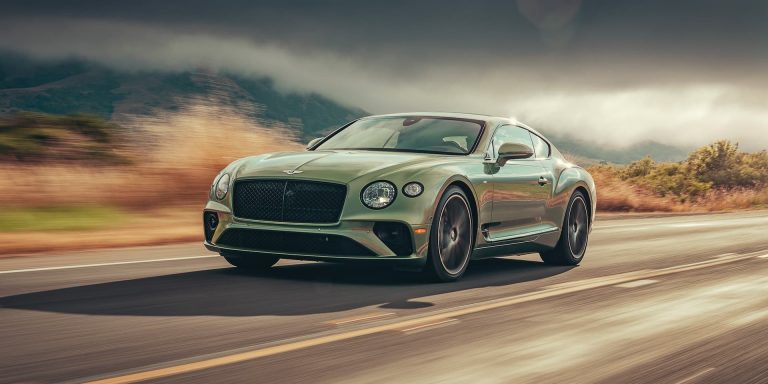
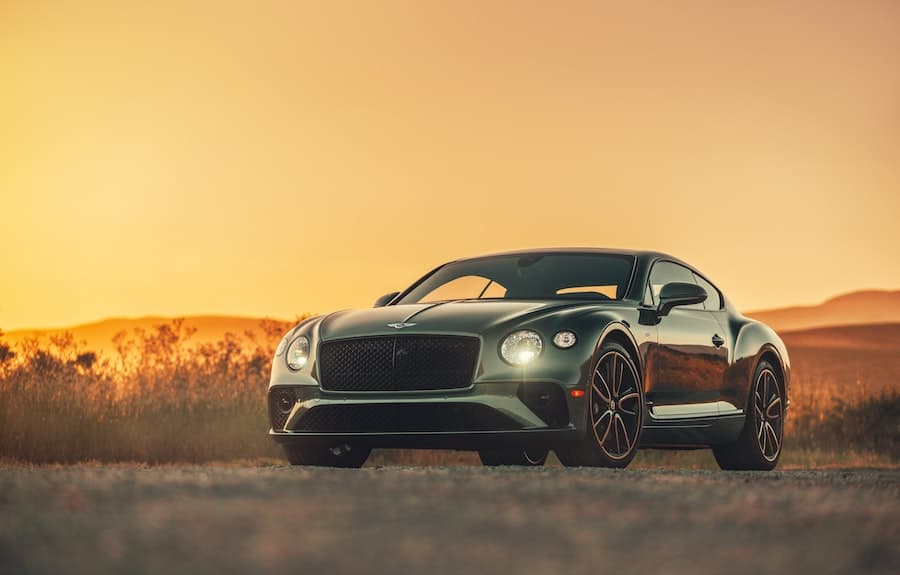
The Bentley Continental GT has long been the default choice in the luxurious grand tourer segment. And while the top-notch W12 engine has been retained on the new Conti, the popular V8 option wasn’t carried over from the older car to the new one when it launched last year.
Until now. Bentley has introduced its 4.0-litre twin-turbocharged V8 engine to the new Continental, promising a reduction in overall weight without any decrease in outright performance. The W12 is still available, of course.
We’ve headed out to California to see what it’s like, and whether it changes the Continental GT experience.
As mentioned, the biggest difference here is that engine. We’ll get to it in more detail in just a minute, but the major changes elsewhere are subtle. There are V8 badges on the car’s flanks, while Bentley’s Dynamic ride – which is standard-fit on the W12 – is an optional extra on the V8.
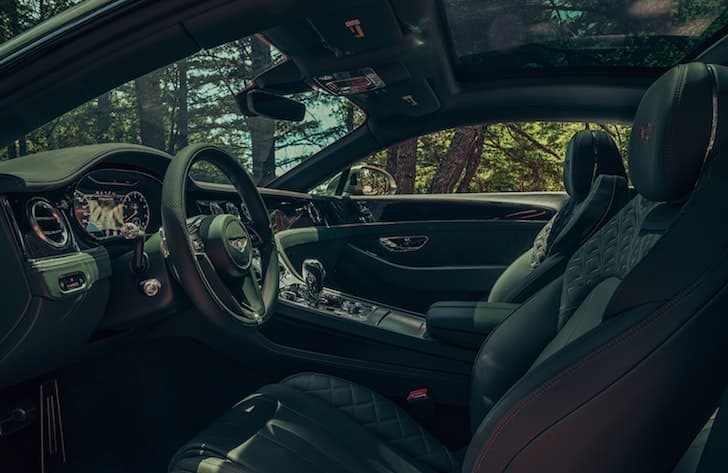
It’s packed with safety tech, such as active lane assist and traffic jam assist, while retaining that all-important sense of occasion that you get with all Bentleys. The interior is hand-finished, and an optional new revolving infotainment screen adds a sense of theatre to the cabin. But, as with the engine, more on that just below.
How does it look?
The new Continental GT is a well-rounded advancement on the older car in terms of looks. It’s impressive, that’s for sure, and during our time in California it caused many a head to turn and smartphone to snap. The bold front headlights sit either side of a now even larger front grille, while sharp cuts help keep things interesting on the flanks.
In our eyes, the rear of the car is the weakest point. The oval lights seem at odds with the shape of the car. But looks are, of course, subjective.
What’s the spec like?
The biggest change to the latest generation of Continental GT is the inclusion of a 12-inch central touchscreen. It houses satellite navigation, media functions and Apple CarPlay smartphone connectivity too. The infotainment was a weak point for the older Continental, but this is a far better system, thanks to an easy to navigate layout and responsive screen.
And if that wasn’t enough, it rotates. Press a button and the screen turns to reveal a set of analogue dials or do without completely and leave a clean piece of wood trim there instead. It allows you to de-clutter the cabin, and it works well. It’s a little pricey, however; tick the box, and you’ll find an additional £4,770 on the car’s price.
What’s the Continental GT V8 like inside?
The interior of the Continental GT V8 is superbly finished, with high-quality leather meeting metal vents and glossy trim pieces. Ergonomically it’s spot on too, with plenty of adjustment for the driver via the seat and steering wheel.
Does it feel worthy of its £148,000 base price? For sure. There are plenty of knurled controls, and the buttons have a solid feeling to them too.
Our only real issue comes from the passenger’s seat. There’s no real padding on the side closest to the driver, and a lack of grab handle near the gearstick (as you’ll find on a variety of sports cars) or in the traditional position above the window means your legs can quite often bash into the main tunnel when cornering hard. It’s a small niggle, we’ll admit, but it’s a niggle all the same.
In terms of safety, Bentleys are not submitted to anything as vulgar as independent crash testing by Euro NCAP (plus it would be very expensive for Euro NCAP to purchase and then destroy at least four Continentals in the process), but it comes with all the latest safety kit you’d expect of a £150,000 luxury motor car.
What’s under the bonnet?
Under the Bentley’s long, sweeping bonnet is where the biggest change lies. The new 4.0-litre twin-turbocharged V8 produces 550hp and a hefty 770Nm of torque. It means that the Continental GT V8 is good for a 0-60mph dash in 3.9 seconds, only two-tenths slower than the big W12, before running onto a top speed of 198mph. They’re impressive figures for what is still a large car.
It’s down to the placement of the turbochargers inside the ‘V’ of the engine for better response, as well as the car’s all-wheel-drive system which helps with traction. Power is sent to the wheels through an eight-speed double-clutch automatic gearbox.
The engine has been placed further back than before to help with the car’s balance, while three-chamber air springs deliver the best possible ride, as well as also giving the driver the ability to firm them up for more ‘spirited’ driving.
What’s the Continental GT V8 like to drive?
Look at the Continental GT and, upon first impressions, you’d argue that its sheer size would be a limiting factor. Around town, its bulk does indeed obstruct you slightly, with that long bonnet and low-slung driving position meaning low-speed manoeuvres take a little more effort. It’s what you’d expect from a car of this type, though.
But it’s with increased speed where the Bentley manages to disguise its size so well. Turn-in is brilliantly sharp, and thanks to both the wealth of torque at your disposal and the all-wheel-drive system you can pin the throttle at the corner’s exit and find it dragging itself out with brutish force. Even sharper corners feel no match for it, and then when you’re done seeing where its limits lie, it’ll settle down to a cruise in typical Bentley fashion.
It’s when you pick up the pace that things change elsewhere too. The V8 is almost fighter plane-loud in its aural assault on your ears, bellowing and crackling – it’s brilliantly full of character.
Verdict
The Bentley Continental GT V8 is, as the name suggests, a grand tourer first and foremost. But this V8 version goes further than that. The weight shed by swapping the W12 out for the V8 gives it genuine agility in the corners, while the engine’s refinement means it’s still got that cross-country ability you want from a car of this type.
Though many would see the W12 as the ‘top’ engine and therefore the go-to option, we’d argue the opposite is the case. The V8 transforms the Continental GT experience, and means that should you want to exploit a twisty, technical road you can. It broadens the GT’s abilities considerably, which is why the Continental GT V8 is, in our eyes, the one to go for.
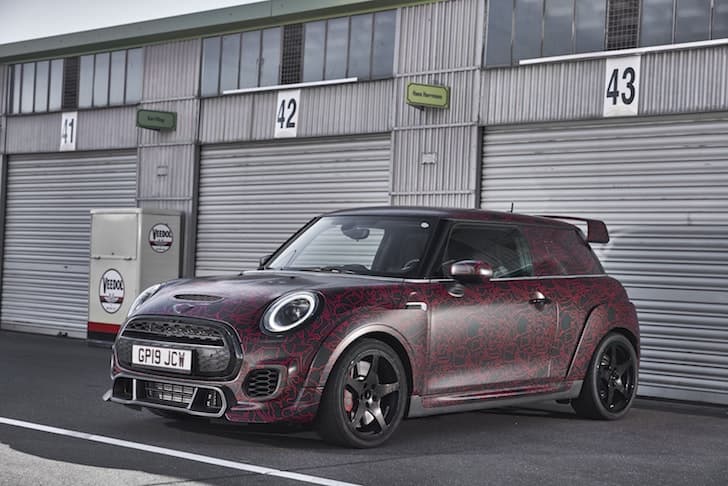
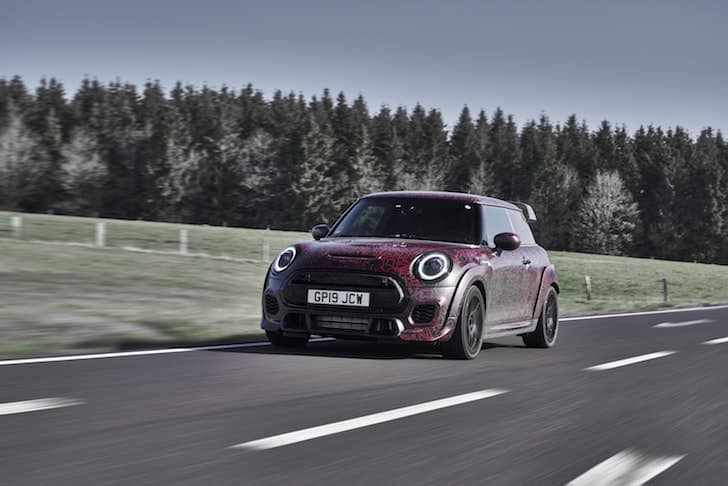
Mini has teased its new John Cooper Works GP model at the famous Nurburgring 24-hour race.
The more hardcore version of the popular hot hatch has not yet been revealed in full production trim but a camouflaged version was displayed at the ‘Green Hell’ over the weekend, covered in track layouts of famous race circuits from around the world.
The firm revealed that the car is lapping the iconic circuit about 30 seconds quicker than its predecessor. With the previous model setting a lap time of 8m 23s, that means the new car has broken the eight-minute barrier before full testing has even been completed.
Full specifications for the car are yet to be revealed, but Mini says the car will have more than 300hp from its 2.0-litre, four-cylinder, turbocharged engine, as well as light alloy wheels, large air intakes and bespoke suspension. Other upgrades visible on the prototype include an aggressive wide-arch body kit and a prominent rear spoiler.
The GP model is a more focused track-orientated version of the JCW hot hatch, inspired by the Mini Challenge race car. The previous generation model had stickier tyres, adjustable suspension, functional aerodynamics, uprated brakes and deleted rear seats to save weight.
The full Mini John Cooper Works GP production model is due to be revealed later this year, with deliveries scheduled for 2020. Just 3,000 units are slated for production.
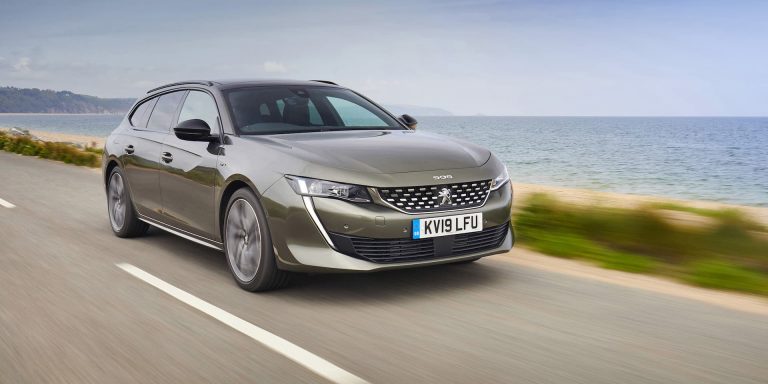
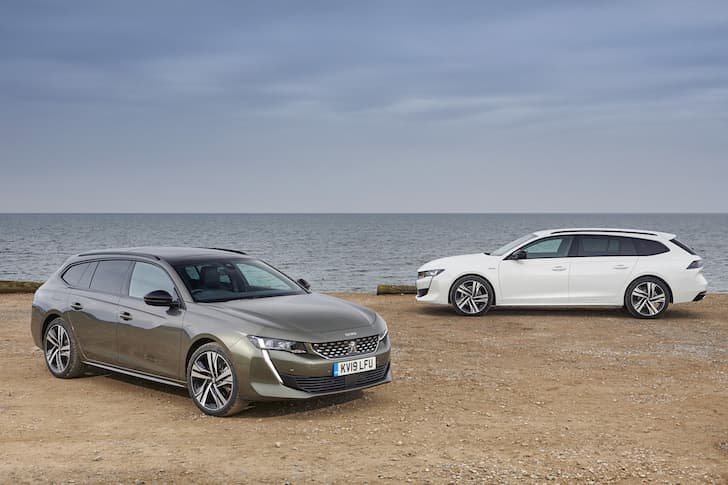
What is it? The Peugeot 508 SW is the estate version of the French brand’s latest large family car.
Key features Striking design, practical boot space, quality interior
Our view The Peugeot 508 SW matches its Fastback sister as a car to turn the heads of those who have always bought premium estates, especially in the fleet market.
Peugeot has managed to maintain striking visuals in the more practical estate body shape, and overall the car is well built with generally efficient engines and plenty of technology.
Similar cars Audi A4 | BMW 3 Series | Ford Mondeo | Kia Optima | Mazda 6 | Mercedes-Benz C-Class | Skoda Superb | Vauxhall Insignia | Volkswagen Passat | Volvo V60
When Peugeot launched the latest version of its 508 onto a sceptical British market in October 2018, we were presented with a car both pitched and priced against premium market names from the likes of Audi and BMW.
This was a bold aim, as the previous 508 was a thoroughly
forgettable car, but the new one delivered in most areas. It brimmed with tech,
it was generally well put together, and with its fastback-style exterior shape
it looked the part.
Now with the 508 SW, Peugeot seeks to use a similar formula to tackle the upmarket models that form the bedrock of the motorway mile-crunching fleet market – estates.
Like the saloon, the new estate is built on PSA Group’s latest EMP2 platform. The important result of this is a 70kg weight saving compared to its predecessor. New engines promise better economy and emissions with no compromise in performance, while the cabin is packed with the latest technology including the much-feted i-Cockpit digital display.
Potential buyers will first be drawn to the 508 by its looks and the SW apes the saloon in this respect. It’s low, at 1.42 metres standing less than 2cm above the fastback, and is a mere 4cm longer – both versions of the modern 508 being distinctly more compact than their predecessors.
It’s difficult to make an estate look as attractive as a
fastback saloon but Peugeot does a pretty good job. Most notable in the
exterior profile is the roof slope, downwards towards the tailgate, which gives
the car a very attractive presence but suggests rear-seat headroom may be
tight. However, appearances can be deceptive…
Visually, the Peugeot 508 SW certainly fulfils the brief – it looks nothing like the many, very many, German rivals on UK roads.
Buying and owning the Peugeot 508 SW
The 508 SW is of course closely related to its saloon sister
and this is reflected in the model line-up. Again we have 14 different versions
across four engines, and again the fleet-driver aim of the car means that
bucking the trend of today’s overall market, diesel buyers have more choice
than those that prefer petrol.
Both petrol engines are based around two recently launched units dubbed PureTech and of 1.6-litres, with either 180hp or 225hp. You can’t have a petrol engine in entry-level Active trim, and you can’t have a manual gearbox – all versions use an eight-speed automatic transmission, which admittedly allows manual shifts if you are that way inclined.
Diesel options range across a 1.5-litre BlueHDi unit with 130hp, and 2.0-litre versions with either 160 or 180hp. The smallest oil burner can be had with a six-speed manual transmission instead of the automatic, and across the first three of the five trim levels.
The five trims are dubbed Active, Allure, GT Line, GT and
First Edition, and yes range-topping First Edition is supposed to only be sold
for a limited period.
Prices start from £26,845 for an Active model with a diesel and manual gearbox, and quite a bit of tech even at this level. For starters, the i-Cockpit is standard on all 508 models, fastback or estate. Basically, this is a 12-inch digital display ahead of the driver that can be configured to individual preferences – big or small dials, navigation displays or other info in the middle, orange or blue backgrounds and the like. It is rather absorbing…
Dual-zone climate control, auto wipers and headlamps, rear parking sensors, electric driver’s seat adjustment and Connected 3D navigation are all included, though you likely won’t use the latter as Apple CarPlay, Android Auto and Mirrorlink smartphone compatibility is also part of the package allowing easy use of the likes of Google Maps with its free traffic announcements and such.
Like the fastback, the safety specification of the 508 SW is impressive and easily earning a top five-star Euro NCAP crash-test rating. Thatcham Research also rated the Peugeot 508 range as one of the ten safest new cars for 2019. Active safety measures include auto emergency braking, a distance alert, lane keeping and road edge detectors.
Inside the Peugeot 508 SW
Remember that sloping roof? Well the 508 SW is somewhat tardis-like because tall adults sitting in the back will be cosy, but not exactly scraping their head on the ceiling.
More important perhaps in an estate is boot space, and here the 508 can beat its premium rivals, but not some mainstream opposition it still needs to compete against. With all seats in place there are 530 litres on offer, and this increases to 1780 litres with the rear seats folded down.
These capacities are respectively 25 and 270 more than the Audi A4 Avant, and they beat the BMW by 35 and 280. But the Volkswagen Passat Estate offers 650 litres with seats up (matching the Peugeot for space with seats folded) while the Skoda Superb Estate beats all comers with a gargantuan 660 litres, extending to 1,950 litres in two-seater form.
However the Peugeot’s space is rather practical. The loading
lip is low, and the boot aperture wide with minimal intrusion from such
irritations as wheelarches. And with the seats folded you get a pleasingly flat
floor.
We praised the fit and finish of the fastback and of course
the estate matches it – the surfaces are of high quality, especially if you
choose the expected big-selling GT Line variants with such niceties as a
leather effect on the steering wheel and the seats, with double-stitching too.
The minor irritations also remain, however. It takes a while
to become accustomed to the combination of a small diameter steering wheel,
which has to be set rather low to see the displays on the i-Cockpit, and the
equally compact gear lever. And while the centre console works well, the row of
horizontal switches below the infotainment screen is attractive to look at but
not quite so user-friendly.
Driving the Peugeot 508 SW
The 508’s driving position is generally good for visibility
in all the important areas, though it’s not that comfortable and as mentioned
the steering wheel position is odd, lower than many will like due to its
compact dimensions.
On the launch event The Car Expert was able to drive
cars fitted with the most powerful engines – the 225hp petrol and the 180hp
diesel, both in top specification GT trim (discounting the limited run First
Edition).
We are told the petrol engine is new and it is smooth enough while fairly swift, hustling this car through 62mph in 7.4 seconds. But the gearbox certainly likes to keep the driver guessing – sometimes it will let the revs climb into higher figures before intervening, at others being rather too keen to explore all of its eight speeds.
Most buyers in the target market will likely choose diesel
and while the lower-powered variants will take more sales, the 2-litre 180hp is
a generally impressive piece of kit. The 8.4-second 0-62mph time is obviously
in the top petrol version’s shadow, but the diesel counters by going almost 10
miles further on very gallon. Mind you the CO2 emissions rating is
only around 5g/km better than the petrol range-topper.
The 508 SW is not a car to drive over enthusiastically. You
don’t get enough feel through the steering wheel to encourage enthusiastic
cornering, but of course such scenarios are not its natural environment.
Cruising mile upon mile of motorway, the 508 SW will reward
with a comfortable, cossetting ride and a highly refined, one could say hushed
audio note, whether petrol or diesel powered and all the better to enjoy the
more upmarket audio system in our GT versions.
Summary
The Peugeot 508 SW virtually matches the conclusions we reached after driving its fastback sister. Firstly, and crucially for Peugeot, it looks and acts like a more premium car than mass-market rivals from the likes of Volkswagen, which does make it a viable consideration for those buyers fed up with choosing Audis, BMWs or Jaguars.
The Peugeot 508 range (covering both fastback and estate) currently has an Expert rating of 76% on The Car Expert’s unique New Car Ratings system, based on more than 20 different reviews from the UK’s leading automotive websites. This is slightly above average but not quite on the same level as some of its more premium rivals.
The car launches into a market steadily being decimated by crossovers but is a more satisfying drive than any of those higher-slung contenders. And with Peugeot continuing to focus very heavily on keeping residual values high, it will certainly appeal to both fleet drivers and their managers.
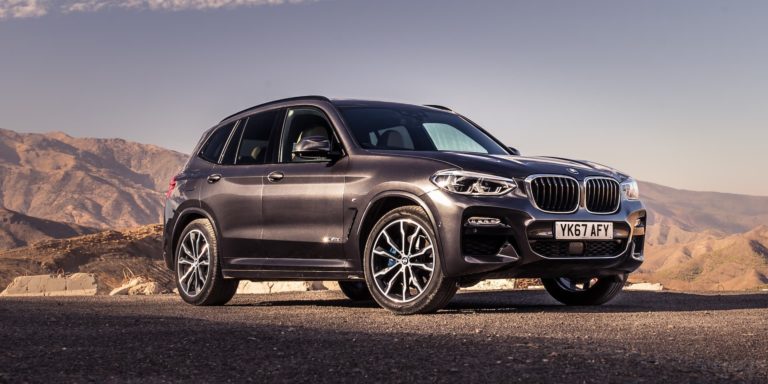
The BMW X3 is a mid-size SUV/crossover, and this is the former third-generation model, which launched in 2017. It was replaced by the fourth-generation X3 in late 2024.
The X3 received positive reviews from the UK motoring media, ranging from good to outstanding. It received particular praise for its driving dynamics and high-quality interior. The main criticisms were directed at the relatively poor standard equipment list, with many features only available as expensive options.
An electric version of the BMW X3, called the iX3, joined the range in the UK in Summer 2021. We have a separate page for that car here. A facelifted X3 range arrived in the UK in the Autumn of 2021, which features lightly revised styling and more standard equipment.
No longer on sale, the third-generation BMW X3 holds a Used Car Expert Rating of C, with a score of 62%. It scores well for CO2 emissions and media reviews, but its Euro NCAP safety rating has now expired due to age and it’s expensive to live with.
Body style: Medium SUV/crossover Engines: petrol, diesel, plug-in hybrid Price when new: From £48,005 on-road
Launched: Autumn 2017 Last updated: Autumn 2021 Replacement due: TBA
Image gallery
Media reviews
Highlighted reviews and road tests from across the UK automotive media. Click any of the boxes to view.
The Car Expert
Score: 8.2 / 10 “The X3 ticks so many boxes that one might wonder why it isn’t more feted. Perhaps it remains an under-the-radar success because it does just about everything right, and simply becomes a part of the owner’s daily life.” Read review
Auto Express
Score: 8 / 10 “The latest version of the BMW X3 improves refinement, ride quality and style. Cutting-edge technology marks it out as one of the best in the business in this area, too.” Read review
Model reviewed: xDrive30e 2020 Score: 8 / 10 “The BMW X3 xDrive30e plug-in petrol SUV offers potentially huge savings in running costs and maintains the typical X3 strengths of comfort, build quality and tech.” Read review
Model reviewed: Range review Score: 8 / 10 “The latest version brings new levels of refinement, ride quality and style, as well as a raft of new technologies that return the model to the ranks of the market leaders.” Read review
Model reviewed: M Competition Score: 7 / 10 “This new X3 M Competition is what you’d expect, given its target audience, blending a user-friendly all-wheel-drive system with steering and suspension that do well to disguise the heft.” Read review
Model reviewed: xDrive30e plug-in hybrid Score: 8 / 10 “The xDrive 30e will no doubt appeal to SUV buyers currently unable to commit to an electric car. It looks and drives like an X3, and that’s no bad thing at all.” Read review
Auto Trader
Model reviewed: Range overview Score: 8 / 10 “The X3 sits in the middle of the incredibly competitive mid-size SUV sector and BMW has gone all-out to make it a true premium player. As such it’s packed with the latest technology, spacious, luxurious and available with a wide range of engines.” Read review
Car
Model reviewed: M Competition Score: 8 / 10 “That engine is a real treat, though – generating huge power throughout the rev range and doing so in a linear, boost-free way that feels distinctly un-turbocharged.” Read review
Model reviewed: M Competition Score: 8 / 10 “Displacing three litres and boosted by two independent monoscroll turbochargers the X3M produces 503bhp and 443lb ft of torque in Competition specification.” Read review
Model reviewed: 20d M Sport Score: 8 / 10 “For those who want an SUV, and want one that’s good to drive and offers great practicality – and more off-roading ability than you’ll ever need –the new BMW X3 is a fine choice.” Read review
Model reviewed: (range review) Score: 8 / 10 “The BMW X3 is a great all-rounder. It offers space, versatility, refinement and engaging driving dynamics, so much so that X5 owners might be tempted to downsize.” Read review
Car Keys
Model reviewed: 2021 Score: 8 / 10 “When it comes to driving enjoyment the BMW X3 remains right at the top of the segment, while a classy interior and a still-stylish design helps matters. Read review
Carbuyer
Model reviewed: (range review) Score: 8 / 10 “The latest BMW X3 blends comfort, technology and real driver appeal in a very well rounded package.” (Richard Ingram) Read review
Model reviewed: M Competition Score: 7.2 / 10 “The BMW X3 M Competition is a fast, practical SUV with a great engine but the ride is firm.” Read review
Carwow
Model reviewed: Range overview Score: 9 / 10 “The BMW X3 is a comfortable and roomy family car that’s easy to drive and comfortable. Sadly, some advanced safety kit and high-tech infotainment features cost extra.” Read review
Company Car Today
Model reviewed: Plug-in hybrid xDrive 30e M Sport “Despite the compromised boot design, the BMW X3 xDrive30e is still ahead of its competition for space, range, fun and tax band.” Read review
Model reviewed: 2.0-litre diesel automatic 20d M Sport Score: 8.2 / 10 “A car with few weaknesses, although it would have been nice if emissions had come down, and BMW could also have done more to make the new X3 look different.” Read review
Evo
Model reviewed: M Score: 4 / 10 “This might sound harsh, but the X3 M feels like a product of an internal department’s will to have this small niche in the market filled, rather than a car engineered by people with the passion or interest to execute it properly.” Read review
Model reviewed: (range review) Score: 7 / 10 “BMW’s latest SUV should sell better than ever, but entertainment takes a back seat to practicality and tech.” Read review
Model reviewed: M40i Score: 8 / 10 “Brisk with an impressive chassis but, like most SUVs, short on thrills.” Read review
Fleetworld
Model reviewed: X3 xDrive30e M Sport Score: 8 / 10 “Appealing economics arrive with the plug-in X3 making it the obvious fleet choice, but other plug-in BMWs offer even more appeal.” Read review
Heycar
Model reviewed: Range overview Score: 9 / 10 “The BMW X3 is the brand’s mid-size SUV, so it’s big enough to give you a great view out over other traffic and handle family transport duties with aplomb, yet small enough to feel nimble to drive and easy to park.” Read review
Honest John
Model reviewed: (range review) Score: 10 / 10 “Third-generation BMW X3 combines rugged off-road looks with sporting presence.” Read review
Model reviewed: 30d “The biggest question posed by the excellent new BMW X3 is why would you need the slightly bigger X5? The new X3 is almost extraordinarily good, as if BMW engineers have used a check-list of every fault and criticism of the old X3 and corrected all of them.” Read review
Motoring Research
Model reviewed: Range overview Score: 8 / 10 “The BMW X3 stands out in a crowded sector by the way it drives. Handling is class-leading, while all engines offer strong pace and economy.” Read review
Parkers
Model reviewed: Range review Score: 8.2 / 10 “Spacious, dynamic comfortable SUV updated for 2022” Read review
The Sun
“Britain’s appalling roads are BMW’s gain, as the latest incarnation of its X3 does smooth-riding ‘family SUV’ as well as anything on the market.” Read review
The Telegraph
Model reviewed: 2.0-litre petrol-electric plug-in hybrid xDrive30e M Sport Score: 8 / 10 “If you really want to take full advantage of the electric revolution, you’ll still need to wait for the iX3 to come along next year; doubtless, it’ll be quieter and smoother. But until then, the BMW X3 xDrive30e is a worthy stand-in – and if you need a company car right now, it’ll do the job very nicely indeed.” Read review
Model reviewed: (range review) Score: 8 / 10 “Nothing exactly new, more a raised game from this premium family SUV. Quite likeable, though a little dull and not a great-looking car.” Read review
Top Gear
Model reviewed: Range overview Score: 8 / 10 “The X3 has never done BMW much credit, but the new one is a thorough enough job to take on the class best.” Read review
Safety rating
Independent crash test and safety ratings from Euro NCAP
The BMW X3 was originally crash tested by Euro NCAP back in 2017 and awarded a five-star rating. However, this rating expired in January 2024 and is no longer valid as the car no longer meets the standards required for such a rating. This is normal practice, as Euro NCAP reviews its ratings on most cars annually with most ratings expiring after about six or seven years.
However, if you are comparing a used X3 to vehicles of similar age, whose ratings will have probably also expired, its safety rating score is still useful.
Eco rating
Independent economy and emissions ratings from Green NCAP
No eco rating
The BMW X3 was not tested by Green NCAP during its production life.
Reliability rating
Reliability data provided exclusively for The Car Expert by MotorEasy
Total claims: 358 Average repair cost: £478.50 Last updated: April 2025
The BMW X3 has a fairly average reliability score of 69% as of April 2025 (our most recent data point), according to workshop and warranty data provided by our partner, MotorEasy. This applies to both the current (2017 onwards) generation as well as the previous models. That’s good news if you’re looking at buying a used X3.
There’s more good news. The average repair cost is less than £500, which is much better than most vehicles – regardless of price point.
When the X3 does have problems, they tend to be relatively inexpensive. Even big-ticket items like engine and gearbox repairs have cost less than on many other cars – an average of £800-£900, compared to £1,500+ on many similar cars from other manufacturers.
Running cost rating
Monthly cost of ownership data provided exclusively for The Car Expert by Clear Vehicle Data
Fuel consumption
Average
Score
Petrol models
35 mpg
D
Diesel models
45 mpg
C
Plug-in hybrid models
137 mpg
A
CO₂ output
Average
Score
Variation
Score
Petrol models
183 g/km
D
Diesel models
163 g/km
D
Plug-in hybrid models
47 g/km
A
Battery range
Average
Score
Variation
Score
Plug-in hybrid models
28 miles
E
Insurance group
Average
Score
Variation
Score
All models
37
D
Service and maintenance
Cost
Score
Year 1
£285
C
Year 2
£643
C
Year 3
£1,050
C
Year 4
£1,363
D
Year 5
£1,810
D
Overall
£5,151
D
Running costs for the BMW X3 are higher than the market average, according to numbers provided exclusively to The Car Expert by our data partner, Clear Vehicle Data.
Fuel consumption for petrol models is below par, although diesels are a bit better. The plug-in hybrid looks good on paper, but this is deceptive – every plug-in hybrid looks great in theory, but this is because of rubbish EU/UK government lab testing. You certainly won’t get 141 miles of driving from one gallon (4.5 litres) of fuel and a bit of electricity…
The battery range of the plug-in hybrid is poor when compared to its SUV rivals too, offering 28 miles on a full battery. Should you opt for the X3 plug-in hybrid, you’ll still need to charge it almost daily to get best use out of the electric motor and battery. By comparison, an equivalent mid-size full EV would get more than 250 miles out of its battery so most households would only need to charge it once a week.
Scheduled servicing costs are average when compared to the market as a whole.
Awards
Trophies, prizes and awards that the BMW X3 has received
2018
Auto Express Awards – Best Mid-Size Premium SUV
Similar cars
If you’re looking at the BMW X3, you might also be interested in these alternatives
The Volkswagen Passat is a huge car – and not just in a dimensional sense. It’s been around since the 1970s and has proved so successful that the 30 millionth example rolled off the production line in April.
So, while you might not have been paying attention to this mid-sized executive car, it’s been quietly racking up sales, driven largely by company fleets. The fact the estate outsells the saloon on these shores by two to one shows it’s even resistant to the SUV onslaught. (Even if sales have slowed thanks to consumers’ 4×4 obsession.)
This being a mid-life refresh, there’s nothing too drastic to report. On the outside, styling changes are minimal, something we’re getting used to as manufacturers overhaul engines to meet strict new emissions targets rather than spend time and money on a fresh face.
However, the Passat has become the first VW to get the firm’s new semi-autonomous driving aid called Travel Assist. It combines the latest adaptive cruise control and lane-keep assist to maintain driving with minimal input from the driver. It’s particularly useful in stop/start traffic, but it’s a long way short of similar systems used by the likes of Audi and Mercedes.
The big news, though, is powertrain-related, with an updated plug-in hybrid model and new engines with particulate filters and cylinder deactivation included in the range to improve economy and emissions.
How does it look?
Aesthetic upgrades might be few and far between, but even so, there’s no denying the new Passat is a handsome thing – particularly in R-Line specification, as our test car is, which means it gets a sportier, more upmarket look. The flat grey paintwork and black accents give it an air of sophistication, while we sincerely hope plenty of buyers are brave enough to go for the bottle green paint. It’s lovely.
Volkswagen told us that its market research says buyers perceive the Passat as a premium option, pitching it against heavy hitters such as the BMW 3 Series and Mercedes-Benz C-Class. The bold, angular styling and deep metallic paint really help it feel like a genuine alternative – as does the interior build quality.
One thing to note here, though – we only had access to high-spec models at the launch and haven’t seen entry-level models yet. The Passat does have a history of looking a little dull in lower trims, struggling more to wear its premium badge.
What’s the spec like?
Again, UK specifications have not yet been revealed, but we know the trim levels will be SE, SEL and R-Line, with a limited-run estate-only R-Line Edition, which will be available at launch. Based on the standard equipment list at the international launch, even entry-level models should have plenty of kit.
Expect smartphone integration, LED headlights and taillights and safety equipment such as front collision assist to be included on all models. Travel Assist will also be standard across the range, so all Passat buyers will have access to VW’s advanced adaptive cruise control.
Expect the usual upgrades of styling kits, larger alloy wheels, more advanced safety and entertainment equipment, and more premium upholstery inside. A Dynaudio sound system will also be available as an option, which we’re told has proved hugely popular on other models in VW’s range.
The updated Volkswagen Passat carries over its existing five-star safety rating from Euro NCAP, being tested back in 2014.
What’s the Volkswagen Passat like inside?
If there’s one area that Volkswagen struggles just a touch when trying to fit in as a true premium alternative to the established players in this segment, it’s the cabin. The Arteon, for example, felt more like a bigger, high-spec Golf than a true premium limo for example. Great, but not special.
The same could be said of the Passat interior, which looks near enough identical to the Arteon, but given the fact that equivalent models should be less expensive, it works better here.
There’s a lot of space inside, everything feels solidly put together, and there are plenty of high-quality materials, though scratchy plastics on the centre console are a little disappointing.
Meanwhile, Volkswagen’s infotainment system is up there with the best of them. It’s hard to find too much to whinge about.
What’s under the bonnet?
The UK range will feature three petrols, four diesels and the petrol-electric plug-in hybrid. We got behind the wheel of the middle diesel, a 2.0-litre, four-cylinder turbocharged unit making 240hp and 500Nm of torque.
It’s an impressive bit of kit and suits the Passat’s character perfectly, despite having a disappointingly old school diesel chug. Out on the road, the decent torque figure means that briskly pulling out of junctions requires little forethought or commitment, while the surge of performance in the middle of the rev range makes motorway overtakes a cinch.
However, with economy figures of 40mpg and CO2 emissions of 156g/km, those focusing on low running costs might be better off with this engine in 150hp guise. VW doesn’t have economy figures for that just yet, but expects it to be the UK’s best-seller when it joins the range later this year.
What’s the Volkswagen Passat like to drive?
The Passat formula hasn’t changed for a long time. It’s a big, comfortable, practical family car that’s ideal for those who travel many miles on the motorway and need something with lots of space for kids and/or work equipment.
Therefore, it’s at its best when you follow blue signage to M roads and let the engine sink into a low-effort cruise. The ride is comfortable, soaking up road imperfections with little fuss. That all changes if you select Sport from the drive mode selector, though – this large load-lugger doesn’t suddenly transform into a thrilling B-road companion, it just makes cracks in the road annoyingly obvious.
Despite its size, it’s also surprisingly adept at inner-city life, too. Flick back to one of the other drive modes and that comfortable ride means potholes and badly repaired roads go largely unnoticed in the cabin, helped by efforts by VW to reduce body vibrations being transferred to the cabin. It’s all very relaxing.
Verdict
With over 30 million built, it’s clear that the Volkswagen Passat has quietly built itself into a behemoth of the executive car market. As SUVs continue to eat into the sales of traditional saloons and estates, it’s a shame that models such as this could be going the way of the dodo.
With a capacious and well-appointed cabin, plenty of practicality, an excellent range of powerful and economical engines and a premium appearance, the Passat continues to provide an enticing alternative in this segment.
If you need the space and cover plenty of motorway miles, it really does cover all bases. It might just be strong enough to keep you out of that SUV, too.
Maserati has confirmed that the two high-performance versions of its Levante SUV will be coming to the UK, with prices starting from £104,900.
The Maserati Levante GTS and Trofeo both benefit from a 3.8-litre V8 twin-turbocharged engine derived from a Ferrari unit, which is also found in the firm’s Quattroporte GTS saloon. In the SUV, it makes 530hp in GTS form and 580hp in the Trofeo.
Maserati describes the Trofeo as the “pinnacle” of the Levante range and says it is capable of completing the 0-60mph sprint in 3.9 seconds before hitting a top speed of 186mph. Those impressive acceleration figures are aided by the four-wheel-drive system and a new ‘race’ driving mode that brings a launch control function.
The exterior has been given a more aggressive styling makeover, with an aluminium bonnet with air vents, 21-inch forged aluminium wheels and carbon-fibre aerodynamic parts. Fifty examples of a launch edition will also be available, which features three exclusive paint jobs, leather upholstery and contrast stitching.
The GTS, meanwhile, gets a more ‘elegant’ exterior makeover, with a view to making it the more comfort-focused and sophisticated alternative to the hard-core Trofeo.
Both V8 models are on sale from today, with the Levante Trofeo making its UK public debut at the Goodwood Festival of Speed next month. Prices start at £104,900 for the GTS, £124,900 for the Trofeo and £159,900 for the Trofeo Launch Edition.
If you’ve ever been in the market for a used car, there’s a strong chance you’ve heard the term ‘full service history’ (or commonly FSH).
This is a desirable trait in any used car, and one that used car dealers use to catch the eye of potential buyers. But what does it mean, exactly? And is it worth paying extra for a car that has a full service history?
What is a full service history?
Fairly simply, a car with an FSH is one that has been maintained at every required interval since it was built, with work carried out either by a manufacturer directly or by an approved service centre.
Basically, the car has been serviced by an official dealership on time, every time. All regular work has been undertaken, as well as major items like cambelts when they fall due.
If a car has not been serviced on time, every time, or has been taken to a non-approved garage for a service, then it would be considered to have a partial service history.
When looking at any used car, you should demand to see its service history so you can verify for yourself that the service record is complete. If a single stamp is missing or has not been done by an official dealership, it’s not a full service history.
Having an FSH means that a car has been maintained consistently to the standards outlined by the manufacturer when it rolled off the production line, with all of the required service tasks undertaken and all of the correct procedures followed.
It means that any parts used will be from manufacturer-approved sources and will match the exact specification of the original parts taken off the car, rather than third parties which may or may not match the original ones.
With modern cars being heavily controlled by the onboard computer systems that regulate almost every aspect of the vehicle, it also means that the software is kept up to date – just like your phone or home computer.
Car manufacturers are also increasingly designing cars that require specialist tools to be able to properly service the car. Some of this is due to very tight packaging of all the different components under the bonnet in modern cars, but it’s also likely that some of it is done deliberately to try and make life harder for non-approved garages.
All this means that a car with a full service history is likely to be in the best possible shape it can be.
Is it worth paying extra for a car with a full service history?
Whenever you buy a used car, you are buying a vehicle that has been used and abused by someone else and there’s no way you can be 100% sure how well it has been looked after.
However, if the car has been fully maintained by an official dealership, it’s a sign that the car is more likely to be mechanically sound. It’s certainly not a guarantee, but it’s a good start.
If a car has a problem outside its warranty period, a manufacturer is more likely to contribute to the cost of repairs if the car has a full service history. However, it’s certainly not a given that a full service history will definitely help you out and it would be considered on a case-by-case basis.
You should only consider paying extra money for a used car with a full service history if it has been done by the manufacturer official service centres. If the servicing has been done by a non-approved garage, it’s not worth any extra money – regardless of what a car salesman tells you.
How much is a full service history worth?
While it’s certainly preferable to buy a car with a full service history by the manufacturer’s official dealerships, it’s impossible to put a set value on how much extra you should pay for a car that has it. Used car valuation experts HPI suggest that it won’t make a lot difference to cheaper or older cars, but can significantly affect newer or premium models.
If a car has been fully serviced by a reputable garage that knows the model and has the required tools to undertake all the work as prescribed by the manufacturer, then the mechanical condition of the car may be every bit as good. But you have to look a bit harder to ensure this is the case, rather than relying on the manufacturer’s own service standards.
If a car has a different garage stamping the book each time, or the services have not been done on time and every time, it’s a sign that the previous owner hasn’t shown too much care and probably doesn’t look after the car in other ways.
How can I maintain a full service history?
Service intervals can vary wildly depending on car, so check your owner’s handbook for more information. Some cars have a straightforward time or mileage service schedule, while other cars have a variable schedule that depends on how the car is driven.
When buying a car, you need to understand what the servicing schedule is so that you know when your next service will be due and what your costs are likely to be. All the information will be in your owner’s handbook, so make sure you read it closely.
How can I check my car’s service history?
Every car should come with a service book, marked out with stamps denoting the date of a car’s service and how many miles were covered at the time of the work being carried out. If you’re struggling to find it, they’re often bundled in the wallet that also includes the owner’s handbook.
Traditionally, a car’s service book would be stamped at every service, with the date and mileage noted down. However, most new cars now have a ‘digital service record’, which means that the data is stored on the manufacturer’s database and the service books are not stamped.
This has come about for a couple of reasons. Firstly, customers are notorious for forgetting to take their service books with them when they take the car in for a service so it can be difficult for a dealership or garage to know what work has been done and when.
Secondly, a detailed national database means that any dealer can pull up the details of all the work your car has had at any other authorised dealership across the country, rather than just a simple stamp to say it’s had a service of some sort.
A workshop should always give you a detailed invoice and breakdown of all the work undertaken on your car during a service.
You should always be given an itemised invoice whenever your car is serviced, which lists exactly what work has been done and how much each job cost. Make sure you keep this information somewhere safe so you can refer to it again later if needed and so that it’s there when you want to sell the car.
If a dealer cannot produce a car’s full service history on the spot, assume it doesn’t have one. Excuses like: “We’re getting the service centre to send us the details”, or: “You should be able to get that from the main dealer” are not acceptable and are almost certainly lies.
What does FMSH mean? Or FPSH, or FASH, etc?
Dealers will often include the brand name in the service history acronym. So ‘FMSH’ could mean ‘Full Mercedes Service History’, for example. ‘FBSH’ might mean ‘Full BMW Service History’ and ‘FASH’ could be ‘Full Audi Service history’.
Like any car jargon, if you’re not sure what something in the advertisement or service book means, always ask the seller. Don’t assume that it will all be fine.
The Mercedes-AMG A 35 is a performance version of the Mercedes-Benz A-Classby the company’s performance division, AMG. It was launched at the 2018 Paris motor show.
The A 35 model is a new addition to the Mercedes-AMG family, sitting between the regular Mercedes A-Class models and the range-topping A 45 model, the second-generation version of which joined the range in late 2019. It’s available as either a five-door hatchback or a four-door saloon, like the regular A-Class models.
The Mercedes-AMG A 35 has received good to very good reviews from the UK motoring media, with praise for its overall performance and high-quality interior. However, its price premium above the regular A-Class range has pulled its scores down accordingly.
The A 35 also suffers a bit in terms of media reviews by being not as fast and exuberant as the range-topping A 45 version, which journalists absolutely love. However, for normal customers handing over their own money, the A 35 is still exceptionally rapid. It’s also easier to live with, cheaper to run and more comfortable on a day-to-day basis. The styling is also slightly more toned down than the A 45, which plenty of customers will prefer.
As of March 2026, the Mercedes-AMG A 35 has a New Car Expert Rating of C, with a score of 59%. It has a good safety rating and reliability record, although its media reviews and CO2 emissions are only average, while its running costs are poor.
Highlighted reviews and road tests from across the UK automotive media. Click any of the boxes to view.
Featured reviews
“The updated Mercedes-AMG A 35 possesses the same premium-focused appeal as before, we can’t help but feel, however, that the mid-life changes should’ve been more comprehensive. The on-board technology impresses but crucially, the A 35 isn’t near the best cars in its class to drive. Those looking for a well-equipped and refined hot hatchback won’t do much better, though.”
“The Mercedes-AMG A35 is a capable hot hatch that feels better-suited to fast road driving than the pricier A45, though it does lack the character that car’s ludicrous performance provides.”
“The Mercedes-AMG A35 is a fantastic bit of kit. It looks smart, has an excellent interior, and has the performance to take on the best hot hatches.” Read review
Auto Express
Model reviewed: Saloon Score: 7 / 10 “It has strong pace in a nice and not-too-expensive package, but this is not a proper driver’s AMG.” Read review
Model reviewed: 2019 version (pre-facelift) Score: 8 / 10 “It’s hugely fast and incredibly adept, and it’s all backed up with a gorgeous interior.”
Car
Score: 8 / 10 “It won’t thrill like a Civic Type R and it isn’t quite a Focus RS-level hooligan enough for some, but it’ll be just as fast point-to-point and will still slap gigantic a smile on your face.” Read review
Carbuyer
Score: 7.6 / 10 “Mercedes-AMG’s answer to the Volkswagen Golf R is fast, fun to drive and boasts a high-quality, tech-packed interior.” Read review
Carwow
Model reviewed: Saloon “The Mercedes-AMG A 35 Saloon is fast and fairly practical, but while it’s cheaper than the similar AMG CLA 35, it’s not quite as pretty.” Read review
Daily Mirror
Model reviewed: 2.0-litre petrol automatic hatchback “Even in standard spec, the Mercedes-AMG A35 is pretty special – with an interior that’s a cut above all the opposition.” Read review
Evo
Score: 8 / 10 “First impressions suggest the A35 feels like a more convincing hot-hatch than the outgoing A45, but its real test will be back in the UK.” Read review
Honest John
“Serious drivers might find something like a Honda Civic Type R more rewarding, but the A 35 will be a much nicer car to live with day-to-day.” Read review
The Sun
“It’s taken a while, but Mercedes has finally cottoned on to the fact that a well-priced hot hatch was required — and it’s come up with an absolute belter.” Read review
The Telegraph
Score: 6 / 10 “Was Mercedes aiming to create a warm hatch version of the acclaimed new A-class? If it did, it failed; performance fiends will love the looks and the performance, but against some highly accomplished rivals the A35 comes across as over-wrought and lacking in finesse.” Read review
Top Gear
Score: 7 / 10 “Fast on the straights and in corners, but curiously light on spice and engagement.” Read review
Safety rating
Independent crash test and safety ratings from Euro NCAP
The Mercedes-AMG A 35 has not specifically been crash tested by Euro NCAP, but it shares its safety rating with the overall A-Class range that scored five stars when it was tested in 2018.
Available as standard on the A 35 is automatic emergency braking, lane-keeping assistance and driver attention monitoring. Blind-spot monitoring is also available for an extra cost.
Eco rating
Independent economy and emissions ratings from Green NCAP
No eco rating
As of March 2026, the Mercedes-AMG A 35 has not been assessed by Green NCAP.
Reliability rating
Reliability data provided exclusively for The Car Expert by MotorEasy
Total claims: 259 Average repair cost: £530.70 Last updated: April 2025
The Mercedes-Benz A-Class family (including the AMG models) has a better-than-average reliability score, according to warranty data provided exclusively to The Car Expert by our partner MotorEasy. This score and data cover both the current generation and previous (pre-2018) models.
The average repair cost of more than £550 is rather average for a mid-sized car but considerably more than the cost of a used car warranty, which is worth considering.
The most commonly reported faults to date have been with the car’s braking and electrical systems, which have been relatively cheap to fix at less than £300. However, there have been a reasonable number of claims for engine and gearbox faults, which have an average repair bill of around £1,000 and £2,000, respectively.
What is more concerning, if you own an A-Class or are thinking about buying a used one, is that there have been (as of December 2024) an astonishing 44 separate recalls issued by the DVSA in the UK for the current-generation A-Class.
Running cost rating
Monthly cost of ownership data provided exclusively for The Car Expert by Clear Vehicle Data
Fuel consumption
Average
Score
Petrol models
33 mpg
D
CO₂ output
Average
Score
Variation
Score
Petrol models
192 g/km
D
Insurance group
Average
Score
Variation
Score
All models
34
D
Service and maintenance
Cost
Score
Year 1
£339
D
Year 2
£817
D
Year 3
£1,496
E
Year 4
£1,718
D
Year 5
£2,235
D
Overall
£6,605
D
The Mercedes-AMG A 35 is faster and more luxurious than a regular A-Class, so its not surprising that it will cost you more to own and run as well. This is based on data provided exclusively to The Car Expert by our technical partner, Clear Vehicle Data.
Fuel consumption for petrol models is poor, while road tax will also hurt over the first five years as the A 35 is stung by the government’s additional tax on cars over £40K.
Insurance is actually pretty decent for an AMG model, but servicing costs over the first five years are significantly more expensive than a regular A-Class.
Awards
Trophies, prizes and awards that the Mercedes-AMG A 35 has received
2019
News UK Motor Awards – Hot Hatch of the Year
Similar cars
If you’re looking at the Mercedes-AMG A 35, you might also be interested in these alternatives
Aston Martin has revealed that its next hypercar all be called the Valhalla.
Described until now as the AM-RB 003, the newcomer follows the tradition established by the previous Aston Martin Valkyrie by adopting the name from Norse mythology.
In the Norse tradition Valhalla was a great hall ruled over by the god Odin, where half of those killed in battle would spend the afterlife. It was deemed a great honour to die in battle, and the slain warriors who would travel to Valhalla were chosen by Valkyries.
The mid-engined, petrol-electric hypercar is being developed in conjunction with Red Bull Advanced Technologies, sister firm to the World Championship-winning Formula One team.
The Valhalla will make use of the technology and experience that Aston Martin gained from building the Valkyrie, but whereas the previous hypercar was specifically for track use, the newcomer will be track-focused but road legal.
Signature elements will be the lightweight construction methods, the body made solely from carbon-fibre, and what Aston Martin describes as “radical aerodynamics”.
Power will come from a turbocharged V6 petrol engine and a battery-electric hybrid system. Performance figures are yet to be revealed, Aston Martin quoting only the number of cars that will be built, which will be 500.
Emotional name
Announcing the name, Aston Martin Lagonda chief executive Andy Palmer, said: that Aston Martin model names always attract a lot of attention because they invariably capture an emotion or tell a story.
“In following the Valkyrie, we knew the Aston Martin Valhalla needed to make a strong statement of its own, yet also offer continuity and a clear connection,” he added. “Norse mythology contains such powerful language and rich storytelling it felt only right that the AM-RB 003 should follow the Valkyrie’s theme.”
BMW has unveiled the 8 Series Gran Coupe, a four-door variant completing the luxury flagship range.
The Gran Coupe will arrive in showrooms in September alongside the existing coupe and convertible models. It is bigger in most dimensions than its two-door coupe sibling, 23cm longer, 3cm wider and 6cm higher with a wheelbase stretched by 20cm.
The four-door variant is based on the same platform as the two-door models, but has had its chassis tuned specifically for its extra dimensions. Adaptive M sports suspension is fitted as standard.
Four versions will be available at launch. The 840i puts out 340hp from its straight six-cylinder petrol engine, and is available in rear or four-wheel-drive versions. The high-performance V8-engined M850i produces 530hp put through an all-wheel-drive powertrain and sending it through 62mph from rest in 3.9 seconds.
A diesel model is also available with 320hp and badged 840d. Like its siblings it is specified with BMW’s eight-speed Steptronic automatic transmission with change paddles on the steering wheel.
Standard equipment includes sports seats, an instrument panel and door cards trimmed in leather, a panoramic glass roof only available on the Gran Coupe, and individual rear seats to give passengers. According to BMW the car offers more rear legroom than any previous coupe from the brand.
The Gran Coupe will make its public debut at BMW’s NextGen media conference in Munich later this month. Dealers are now taking orders, at prices starting from £69,340.
The SEAT el-Born electric car has made its first appearance in the UK as the brand gears up for future electrification.
The concept, which will become a production model in 2020, has been on show at a media event in Liverpool following its global reveal at the Geneva motor show in March.
SEAT’s first electric vehicle to go on sale will be a version of the Mii on sale at the start of next year. But it is the el-Born, built on the Volkswagen Group’s new MEB platform specifically designed for electrification, that points to the future of the brand.
SEAT is still not yet revealing too many technical and mechanical details of the el-Born though we do know that the car will have a range between 185 and 260 miles, reach 62mph from rest in 7.5 seconds and using a DC charger will be able to regain 160 miles of range in 30 minutes.
Exterior design head Joaquin Garcia describes the “very modern, monolithic” look of the el-Born
However speaking at the Liverpool event, SEAT’s head of exterior design Joaquín García has offered more details on the exterior design of the el-Born, which has to fulfil a dual agenda of setting an image of SEAT’s electric vehicles and offering the best possible aerodynamic performance to increase the car’s range between charges.
“Our mindset was that electric cars are really fun to drive, they are exciting with their acceleration and their handling and the design should reflect this,” Garcia says.
He highlights the front end of the el-Born. “It is an evolution of the new family face of SEAT that we launched on the flagship Tarraco SUV, but on an electric car it is much more progressive,” he says.
The upper grille is a prime element of the design, though technically it is no longer needed as an electric motor does not need cooling in the way of a traditional engine. “So we have made it more of an ornamental element – it provides an identity to the car and is more integrated to the shape of the car. It’s the same with the SEAT logo. It is flush to the body, which makes it appear very technological.”
As the grille has no technical purpose in an EV, it can contribute more significantly to the look of the car.
Smoothing out the airflow is vital on an EV as less drag means greater range. A number of elements contribute to this, from ensuring that corners and angles in the body break up the flow as little as possible, to using lightweight wheels with aerodynamic covers over them.
But according to Garcia it is just a important that the car looks aerodynamic and sporty. “For example, the way the rear window graphic connects to the rear spoiler gives a floating effect to the roof, which integrates with the spoiler area, making it look like not an added element but an integrated design. it’s all very modern and monolithic.”
The interior of the el-Born is equally vital to the image; “It is sculptural and emotional – all the interior design lines point to the dash and the driver and the sporty look is enhanced by a flat-bottom steering wheel, the seats and the trim.”
Garcia also emphasises that technology will be very important to the el-Born. “The instrument cluster behind the steering wheel and the infotainment screen in the centre are designed to appear as floating elements – all in all this is a very technological and emotional vehicle.”
The el-Born is regarded as essential to continuing SEAT’s impressive turnaround. Once described as the VW Group’s ‘problem child’, in 2018 the brand sold almost 520,000 cars, the best performance in its history. And that growth is continuing in 2019, so far up 7.7 per cent across Europe, despite challenging market conditions.
The UK, SEAT’s third-biggest market after Germany and Spain, saw record sales last year of more than 62,000 cars – “We were the fastest-growing brand in the UK in both 2017 and 2018,” says SEAT UK MD Richard Harrison.
Jaguar has announced a worldwide recall of its all-electric I-Pace SUV over potential braking issues.
It affects cars made in 2018 and early 2019, with the British manufacturer advising of a fault with the I-Pace’s electrical regenerative braking system. The issue could mean that the car doesn’t come to a halt as effectively as it should.
A statement from the company said: “Jaguar is conducting a voluntary recall following the identification of a regulatory compliance deviation with the electrical regenerative braking system of 2019MY and certain 2020MY Jaguar I-Pace vehicles.
“Through its internal engineering testing, the company identified that in the unlikely event of an electrical regenerative brake system failure, affected vehicles do not meet the regulated standard for the time to transition brake force to the friction brake system.
“This means that the stopping distance may be potentially extended. A brake system software update will ensure that the vehicles meet the regulatory requirements. The modifications made to affected vehicles will be made free of charge and every effort will be made to minimise inconvenience to the customer during the short time required for the work to be carried out”.
The I-Pace is currently Jaguar’s only all-electric offering, capable of delivering up to 292 miles between charges. It currently holds an Expert Rating of 85% on The Car Expert’s unique New Car Rating system, which gathers new car reviews from across the UK automotive media.