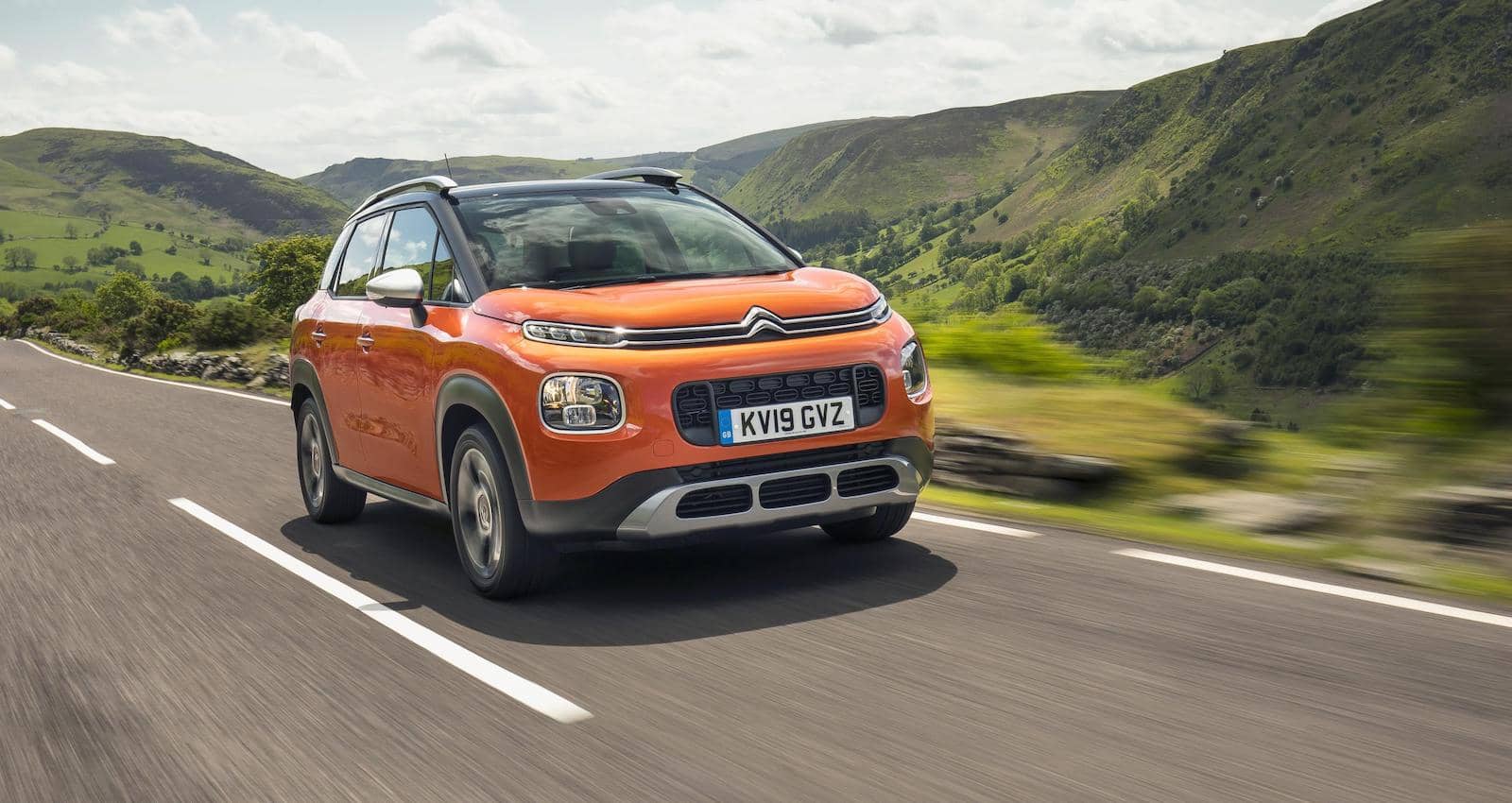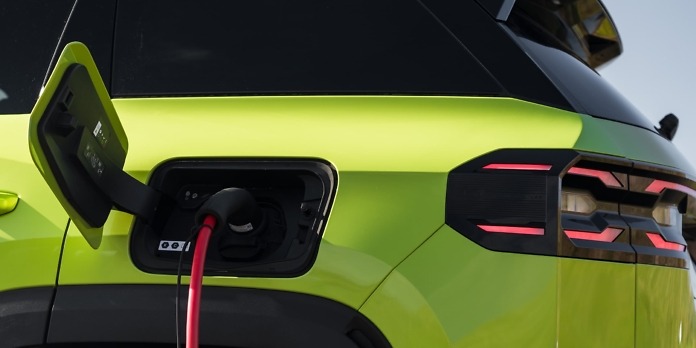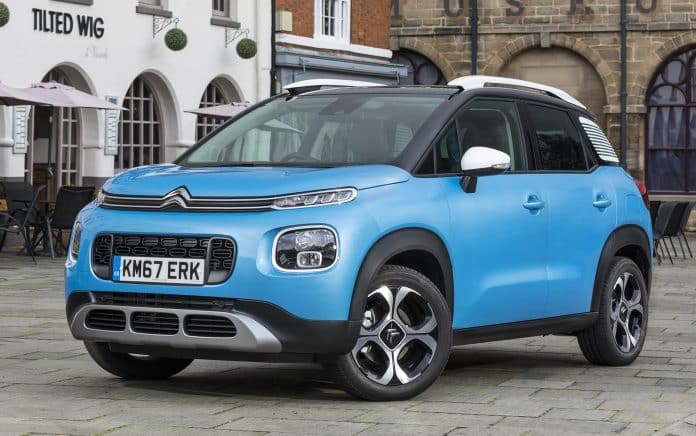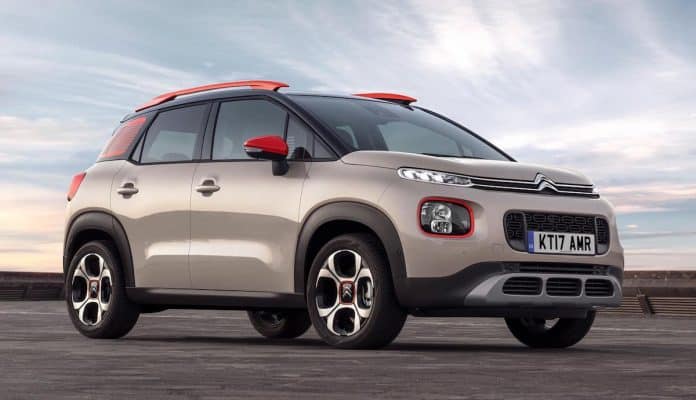
Find an Expert Rating: 
Home Blog Page 110

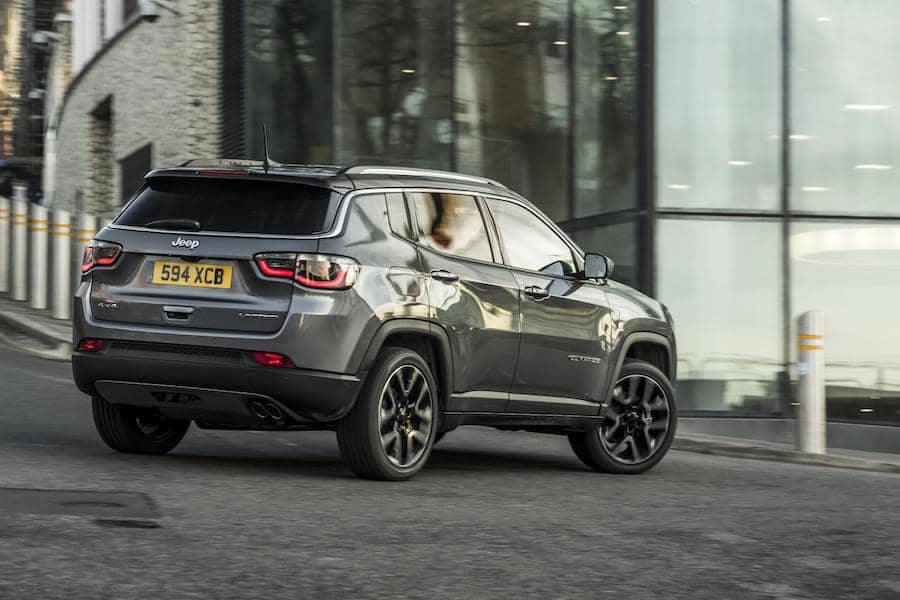
Jeep Compass

Summary

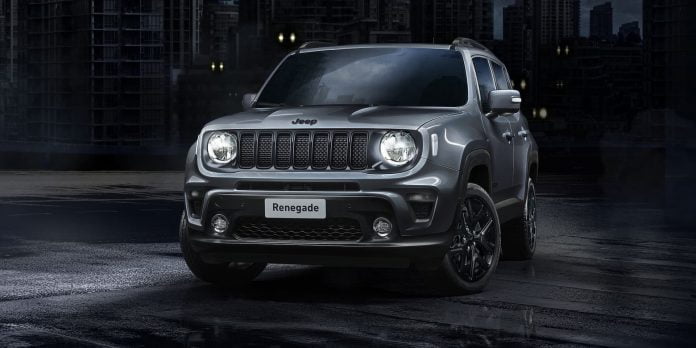
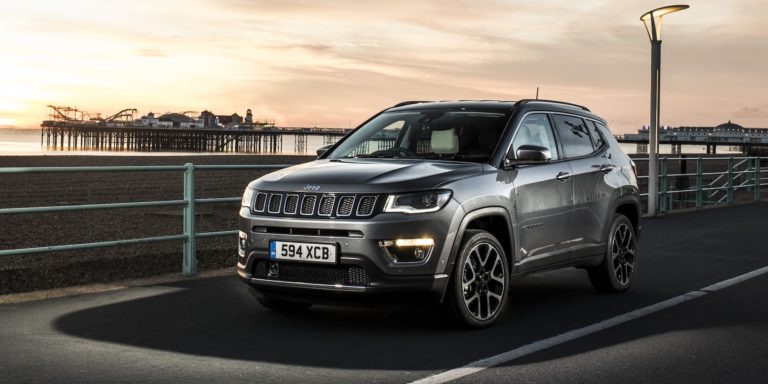
The Jeep Compass is a mid-sized SUV, which was revealed in America in late 2016 but did not reach UK showrooms until early 2018. It sits between the smaller Renegade and larger Cherokee in the Jeep range.

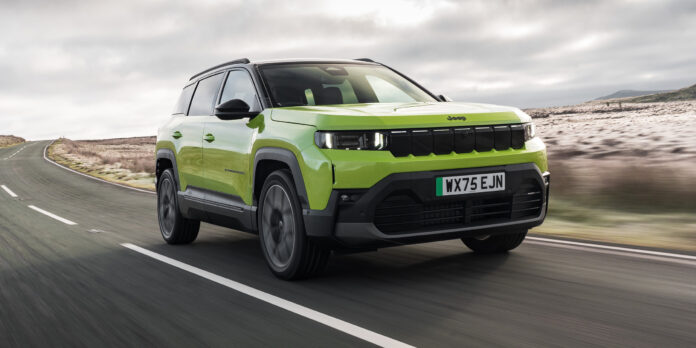
In late 2025, this second-generation range was replaced by a new third-generation Compass line-up, which consists of petrol mild-hybrid and electric models.

Despite a more urban focus than traditional Jeep models, the Compass retained the company’s traditional off-roading ability and is far more suited to rough terrain than most of its rivals.

No longer on sale, our industry-leading Expert Rating index places the Compass right down near the bottom of the mid-sized SUV/crossover segment with a Used Car Expert Rating of E and a score of 50%.

The Compass received praise for its impressive off-road abilities, being one of the few SUVs that is actually comfortable on anything tougher than a gravel driveway. However, was criticised for its on-road dynamics and lack of sophistication in one of the most competitive segments in the UK new car market.

Key specifications

Body style: Medium-size SUV
Engines: petrol, plug-in hybrid
Price when new: From £34,580 on-road

Launched: Winter 2017/18
Last updated: Summer 2020
Replaced: Winter 2025/26

Media reviews

Highlighted reviews and road tests from across the UK automotive media. Click any of the boxes to view.

Featured reviews

More reviews

Auto Express

Auto Trader

Business Car

Car

Car Keys

Carbuyer

Company Car Today

Green Car Guide

Honest John

Parkers

The Sun

The Telegraph

Top Gear

Safety rating

Independent crash test and safety ratings from Euro NCAP

Overall score: 5 stars
Date tested: September 2017
Date expired: January 2024
Read the full Euro NCAP review

Adult protection: 90%
Child protection: 83%
Vulnerable road users: 64%
Safety assist: 59%

Notes on safety rating

The Jeep Compass was tested by Euro NCAP back in 2017 and awarded a five-star rating. However, this rating expired in January 2024 and is no longer valid as the car no longer meets the standards required for such a rating. This is normal practice, as Euro NCAP reviews its ratings on most cars annually with most ratings expiring after about six or seven years.

Although the rating has now expired, the score is still useful if you are comparing a used Compass to vehicles of similar age – whose ratings will have probably also expired.

Eco rating

Independent economy and emissions ratings from Green NCAP

No eco rating

The Jeep Compass was not lab tested by Green NCAP during its production life.

Reliability rating

Reliability data provided exclusively for The Car Expert by MotorEasy

All data based on MotorEasy average workshop costs for extended car warranty claims

The Jeep Compass has a better-than-average reliability rating according to warranty claim data provided by our partner MotorEasy. The caveat to this score is that we don’t have data from a large number of vehicles yet, so this score could fluctuate over time as more data is added to our system.

The good news is that repair costs are one of the most affordable across the board, especially when compared to the high warranty claims of many other SUVs in this class. The exception is fuel system repair costs, which have been quite high to date.

An average repair bill of less than £400 is reasonable, although some other small SUVs are cheaper.

If you’re looking at a used Jeep Compass, make sure any extended warranty cover you purchase covers all the potential problem areas shown above. You’re more likely than other cars to need repairs, but hopefully they’ll cost less than most others.

Running cost rating

Monthly cost of ownership data provided exclusively for The Car Expert by Clear Vehicle Data

Fuel consumptionAverageScore
Petrol models36 mpgD
Diesel models44 mpgC
Plug-in hybrid models149 mpgA
CO₂ outputAverageScoreVariationScore
Petrol models132 g/kmB
Diesel models166 g/kmD
Plug-in hybrid models47 g/kmA
Battery rangeAverageScoreVariationScore
Plug-in hybrid models23 milesE
Insurance groupAverageScoreVariationScore
All models49E
Service and maintenanceCostScore
Year 1£259C
Year 2£667D
Year 3£1,108D
Year 4£1,312D
Year 5£1,705C
Overall£5,051D

The Jeep Compass has a mixed bag of scores when it comes to running costs, according to whole-life cost numbers provided exclusively to The Car Expert by our data partner, Clear Vehicle Data.

Fuel economy is poor for the petrol models, and only average for the (now discontinued) diesel versions. The plug-in hybrid looks great on paper, but this is more a function of the inaccurate EU/UK government lab testing process, which is pretty much useless for plug-in hybrids.

Insurance group ratings are high on average but with significant variation across the range, so make sure you get several insurance quotes before committing.

Finally, servicing and maintenance over the car’s first five years look to be pretty good.

Similar cars

If you’re looking at the Jeep Compass, you might also be interested in these alternatives

Citroën C5 Aircross | Ford Kuga | Honda CR-V | Hyundai Tucson | Kia Sportage | Mazda CX-5 | MG HS | Nissan Qashqai | Peugeot 3008Renault Austral | SEAT Ateca | Skoda Karoq | SsangYong Korando | Subaru XV | Suzuki S-Cross | Toyota C-HRVauxhall Grandland | Volkswagen Tiguan

More news, reviews and information about the Jeep Compass at The Car Expert
Jeep Compass Electric review – first UK drive

Jeep Compass Electric review – first UK drive

Jeep Compass

Jeep Compass

Everything you need to know about Jeep

Everything you need to know about Jeep

Mild hybrid Jeep Renegade and Compass unveiled

Mild hybrid Jeep Renegade and Compass unveiled

Jeep Compass updated with new efficient engine

Jeep Compass updated with new efficient engine

Night Eagle trim revealed for Jeep Renegade and Compass

Night Eagle trim revealed for Jeep Renegade and Compass

Jeep Compass review

Jeep Compass review

Jeep Compass compact SUV goes on sale

Jeep Compass compact SUV goes on sale

Jeep reveals all-new Compass SUV

Jeep reveals all-new Compass SUV

Buy a Jeep Compass

If you’re looking to buy a new or used Jeep Compass, The Car Expert’s partners can help you find the right car.

Cazoo 600x300

Find your next used car with Cazoo. Find out more

Auto Trader logo 600x300

Find your next new or used car with Auto Trader. Find out more

Carwow logo 600x300

Find your next new or used car with Carwow. Find out more
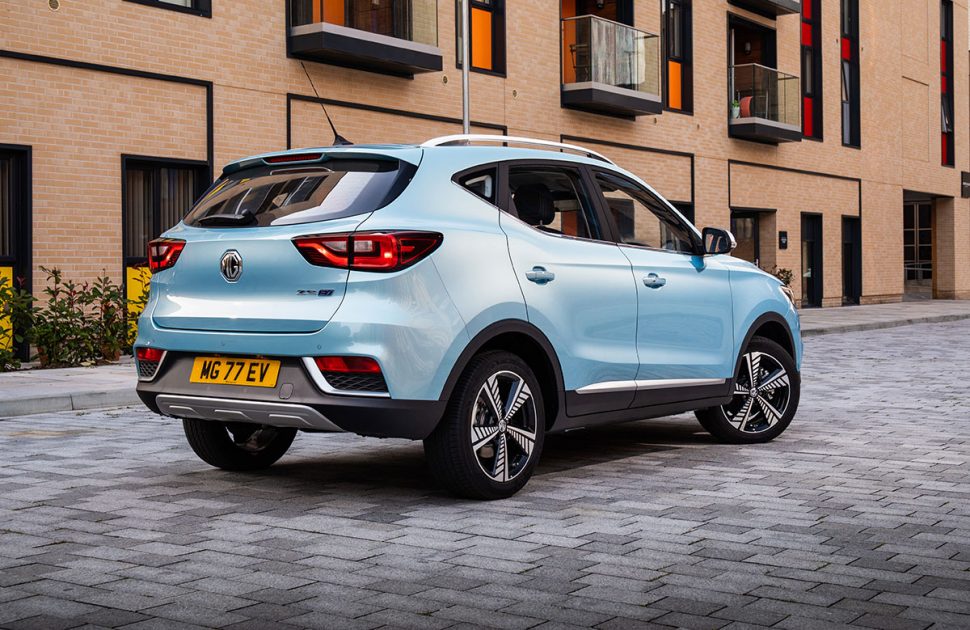
MG ZS EV test drive

MG launched the ZS compact SUV last year and has enjoyed great success with it – the brand’s year-to-date sales of almost 6,300 cars are around 2,000 up on the same period in 2018 and 1,500 of those sales are the ZS.

The success of the ZS is largely down to one factor – price. According to our unique Expert Rating, which aggregates reviews from 15 of the top UK motoring websites, the ZS currently holds a score of 55% – the lowest score of any compact SUV/crossover we have analysed this year. But it’s also one of the cheapest.

Now MG hopes to further boost the ZS sales success story with an electric version – the brand’s first EV and the standard-bearer for four electrified cars to launch by 2021. These will comprise another battery-electric model and two plug-in hybrids including the production version of the E-Motion sports car concept.

MG describes the ZS EV as ‘the first truly affordable, family-friendly electric car’. These are brave words in a market growing ever more competitive – can it live up to the billing?

What’s new about the MG ZS EV?

The MG ZS EV is basically the brand’s standard small SUV, but with its internal combustion engine and transmission replaced by an electric drivetrain. This is no compromise aftermarket solution, however – MG insists that from its earliest design sketches the ZS was always intended to incorporate electrics.

There are other changes – some styling elements and an increase in specification, some of this attempting to put right previous areas of criticism, particularly where safety is concerned. But basically, you will be buying the ZS EV because you want an electric car and want to pay as little as possible.

How does it look?

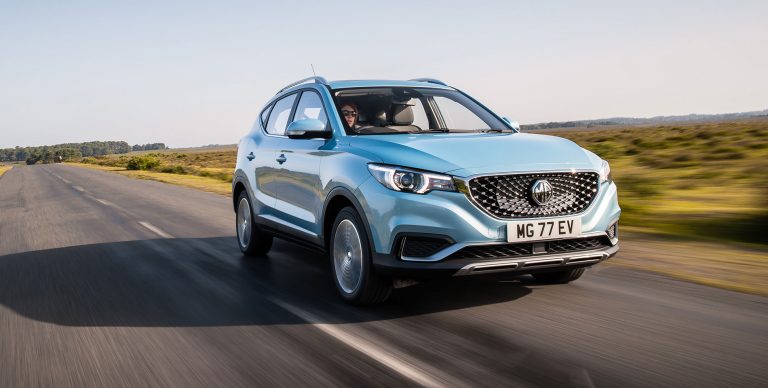
The MG ZS EV looks very much like its internal combustion sister, and that’s not a bad thing. The design has an unpretentious exterior presence that will merge into its surroundings to sit unobtrusively alongside rivals from larger brands.

There are some bespoke touches to the electric model, however. It gets its own design of alloy wheels, created to be both light in weight and to increase aerodynamic efficiency – both essential to extending battery range.

The grille is evolved from MG’s standard ‘star-rider’ design. Dubbed ‘Stellar Field’ it includes a section that flips up to reveal the battery charging sockets. And finally, there’s a new paint finish, following the trend to identify electric vehicles with blue colours and dubbed ‘Pimlico Blue.’

What’s the spec like?

The MG ZS EV is offered in two trim levels, Excite and Exclusive, but one immediate plus point is that both come with an impressive safety package – though perhaps this is not a surprise considering that when launched in 2017 the standard ZS received poor reviews for its safety package and a mere three-star Euro NCAP safety rating.

MG’s Pilot Driver Assistance Suite, standard on all cars, includes autonomous emergency braking with pedestrian and cyclist detection, adaptive cruise control with stop-and-go facility, a lane departure warning and lane-keeping assistant, and a traffic-jam assistant which brakes, accelerates and keeps the car in its lane.

Highlights of the Excite trim are those 17-inch diamond-cut alloy wheels, keyless entry and start, and an eight-inch touchscreen with sat-nav plus Apple CarPlay and Android Auto smartphone compatibility.

Buy the top-spec Exclusive, and you also get blind-spot detection and a rear cross-traffic alert included.

An extra £2,000 buys an Exclusive, and as well as the extra active safety it includes a panoramic opening sunroof, electric heated folding mirrors, leather-style seats with the fronts heated and the driver’s electrically adjustable, and a rear parking camera.

It’s also worth remembering that all ZS models come with MG’s seven-year warranty, which also covers the battery and adds a significant value extra to the car.

And the cost? Well on the road the Excite is priced at £28,495 and the Exclusive £30,495. But applying the Government’s plug-in car grant takes £3,500 off these prices, which does bring the ZS into affordable territory even before one considers the launch offer, more of which directly…

What’s the MG ZS EV like inside?

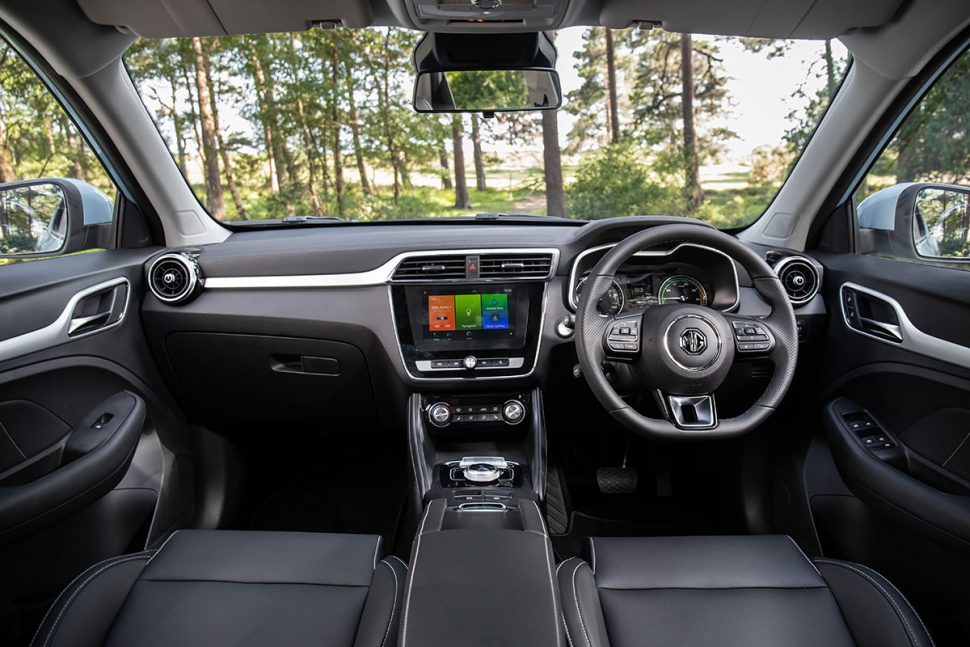
Basically, just like the standard ZS. And that’s slightly a shame, because while it is practically laid out and easy to use, the quality of the surfaces does put the MG somewhat in the shadow of its perceived rivals from the likes of Kia and Hyundai. There’s a lot of plastic that appears hard to the touch and proves to be so.

Where the ZS does score is in space. It is a roomy contender in the small SUV market, and housing the battery under the floor ensures none of this is compromised in the cause of green motoring. The boot space of 448 litres, for example, is more than 90 litres larger than in the likes of the Ford Ecosport, Nissan Juke or Mazda CX-3.

What’s under the bonnet?

In the space previously occupied by the three-cylinder 1.0-litre or four-cylinder 1.5-litre internal combustion engine, the MG ZS EV houses an electric motor of 105kW (143hp). This is allied to a one-speed automatic transmission and powered by a 44.5kWh battery pack housed under the floor.

The ZS claims a range under the WLTP combined cycle of 163 miles, and 231 miles on a city driving cycle. The battery pack is water-cooled, which makes it compatible with CCS rapid chargers. Using a 50kW rapid charger an 80% charge can be achieved in 40 minutes – with a 7kW wall box a full charge takes 6.5 hours.

What’s the MG ZS EV like to drive?

Overall, we have yet to find out. The driving time on the launch event was confined to a tortuous route through central London streets, which ensured we seldom crested 20mph. But what this did show is that the ZS EV will be a willing companion in one of its prime target markets, for city-centre workers or dwellers seeking to avoid paying out in congestion or low-emission zones.

It is a very easy car to drive. The steering is light, though not overly so, taking much of the stress out of manoeuvring through the inevitable queues. And the instant torque of the electric drivetrain really comes into its own when getting away from yet another set of traffic lights – MG quotes a 0-60mph time of 8.5 seconds but a 0-30mph time of just 3.2 seconds.

One notable aspect is the kinetic energy recovery system. There are three levels of regeneration, and on the maximum setting the ZS becomes virtually a one-pedal car, using engine braking to slow the car as soon as one lifts off the throttle pedal and at the same time sending some charge back to the battery.

So on the streets of a city, the MG ZS EV is an effective proposition. As to whether it stacks up once out of the jams and onto the open road, we will need to reserve opinion until our full review later in the year.

Verdict

One of the biggest compliments paid to the MG ZS is that those seeking a smaller SUV should consider it alongside much bigger-selling models from the better-known names in the business, so it’s no surprise that MG has chosen this car with which to step into the electric arena. And this could be an inspired move. We can’t give the car a complete thumbs-up until we undertake a more rounded review, but first impressions are positive.

Meanwhile, if you’ve read enough already and are taken by the MG ZS EV, you should move quickly. For the first 1,000 examples, MG is matching the Government grant, which brings the entry point to electric motoring down to just £21,495 (as well as throwing in a free home callbox charger).

Based on that asking price of £21,495, MG is hoping to target monthly PCP payments that slide under the magic £300 a month mark, although this will very much depend on how you configure your deposit, term and annual mileage.

When you equate the cost of fuel, MG reckons you’ll save £75 a month on your motoring costs compared to the equivalent ZS petrol model. And over four years, with the lower servicing charges of an EV, the saving is claimed to be more than £6,000. Tempting…

Similar cars

Citroën C3 Aircross | Dacia Duster | Fiat 500X | Ford EcoSport | Honda HR-V | Hyundai Kona | Kia Stonic | Mazda CX-3 | Mitsubishi ASX | Nissan Juke | Peugeot 2008 | Renault Captur | SEAT Arona | SsangYong Tivoli | Suzuki Vitara | Vauxhall Crossland X | Volkswagen T-Roc

Key specifications

Model as tested: MG ZS EV Exclusive
Price as tested (on-road): £26,995 (after plug-in car grant)
Powertrain: Synchronous electric motor supplied by batteries
Gearbox: single-speed automatic
Power: 143 hp
Torque: 260 Nm
Top speed: 87 mph
0-60mph: 8.5 seconds
Range between charges (WLTP combined): 163 miles
CO2 emissions: 0 g/km

Bentley Flying Spur launches with limited edition model

Bentley has revealed a First Edition version of its new Flying Spur luxury saloon that will only be available for the first 12 months of the car’s production run.

The trim level will have a higher specification than is usual on the Flying Spur, including various features as standard that would typically be optional.

These include the Flying B mascot on the bonnet, a rotating display on the dashboard, configurable mood lighting, 22-inch alloy wheels and a panoramic sunroof. The car also includes a suite of safety systems, including adaptive cruise control, night vision and a head-up display.

Unique to the First Edition are various Union Flag badges with a number one in the centre, a winged emblem on the seat headrests, and Union Flag First Edition treadplates.

To celebrate its centenary and to support the Elton John AIDS Foundation Gala, Bentley will auction a Flying Spur First Edition. The new owner will be allowed to specify their car using the British firm’s ‘Co-Creation Luxury Service’, which is usually “offered only to a tiny selection of clients”. A member of Bentley’s design team will work with the new owner to make their car unique.

Bentley Flying Spur The Car Expert

The third-generation Flying Spur was unveiled in June, described as a ground-up redesign and on the same chassis as the Continental GT coupe, extending the wheelbase by 13cm despite being less than 2cm longer than its predecessor overall.

Power for the Flying Spur is provided by a 6.0-litre W12 petrol engine with 635hp and 900Nm of torque. It can complete a 0-60mph sprint in 3.7 seconds and go on to a top speed of 207mph.

Volvo issues vehicle recall over fire risk

Nearly 70,000 Volvo cars in the UK are being recalled over a fire risk related to an engine problem, the manufacturer said.

Certain models built between 2014 and 2019 are affected by the issue.

The firm’s investigations found that “in very rare cases” a piece of plastic fitted as part of the engine can melt, causing a fire “in the most extreme cases”.

A spokesman for the Swedish company said it has received reports of “a very small number” of cars catching fire, but no-one has been injured.

The 69,616 UK cars affected are among more than half a million being recalled globally.

The affected models have four-cylinder diesel engines and are 2014-2019 versions of the following:

  • S60 and S60 Cross Country saloon
  • S80 saloon
  • S90 saloon
  • V40 and V40 Cross Country hatch
  • V60 and V60 Cross Country estate
  • V70 and XC70 estate
  • V90 and V90 Cross Country estate
  • XC60 SUV
  • XC90 SUV

Volvo said it was contacting all customers whose vehicles are affected to alert them to the fire risk issue. Drivers are being told it is “safe to continue to use your car” if it does not show any symptoms indicating a problem, such as an engine warning light illuminating, a lack of power or an “unusual smell”.

A second letter will be sent confirming when a solution to the problem is available.

Volvo said it notified the relevant authorities about the issue “as soon as it was identified”. It apologised to customers for the inconvenience caused, stating that it is taking “full responsibility to ensure the highest quality and safety standards of our cars”.

The Driver and Vehicle Standards Agency (DVSA) head of vehicle safety branch Ian Bartlett said: “DVSA’s priority is to protect everyone from unsafe drivers and vehicles.

“After being informed of the risk by Volvo, we worked with the manufacturer to recall the vehicles as soon as possible to help protect the public.

“We will ensure that the owners of these vehicles are notified of the recall and that vehicles are inspected as a priority.”

If you have any of the cars above registered from 2014 onwards, you can find out whether your car is affected by the recall by calling your local Volvo dealer. There is also information here on the Volvo Cars UK website. Any remedial work required will not be charged to you.

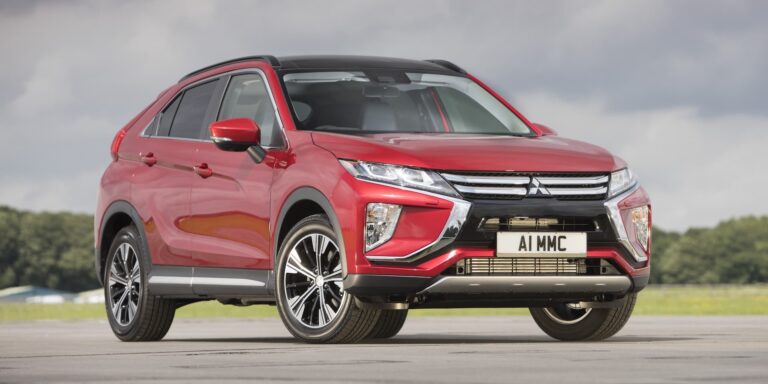
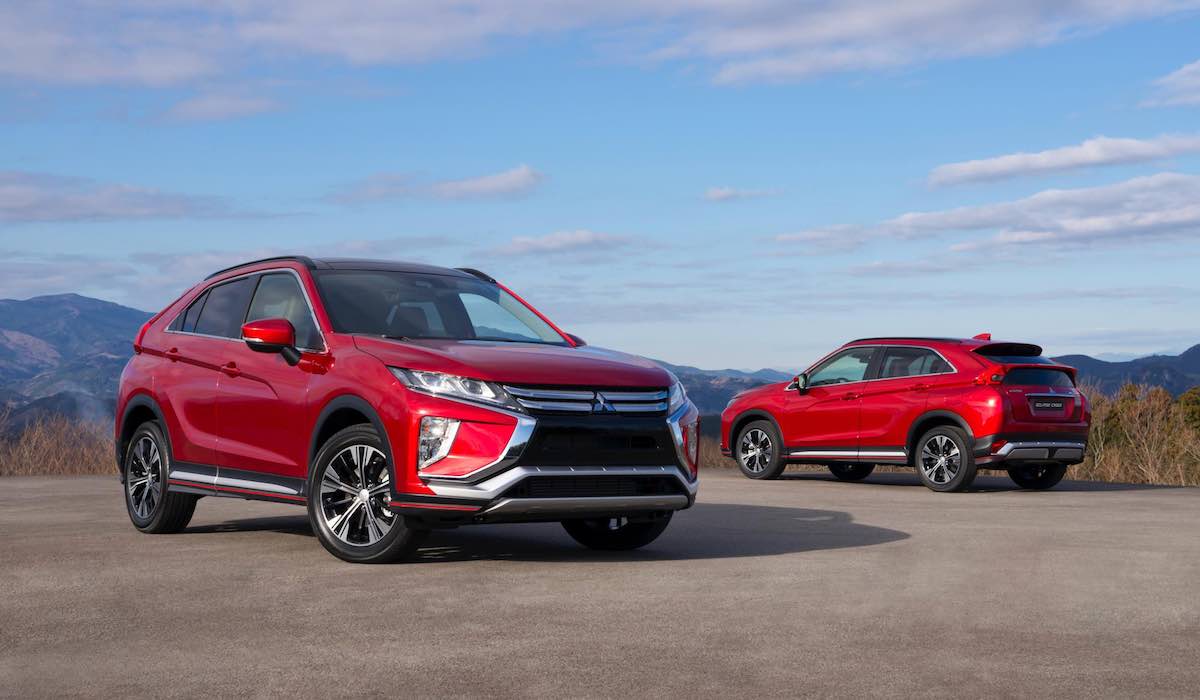
Mitsubishi Eclipse Cross (2018 to 2021)

Summary

The Mitsubishi Eclipse Cross is a medium-sized SUV/crossover, unveiled in early 2017 and launched in the UK in early 2018. it sat between the smaller ASX and larger Outlander in the Mitsubishi SUV range until the company withdrew from the UK market altogether in September 2021.

Unlike the other traditionally rugged Mitsubishi SUVs in the family, the Eclipse Cross prioritises style over practicality, and competed against car-based crossovers like the Nissan Qashqai, Renault Kadjar and countless other rivals.

The Eclipse Cross received praise for its sharp styling and general comfort, but was criticised for its driving experience and lack of sophistication compared to the class leaders.

No longer on sale, the Mitsubishi Eclipse Cross holds a Used Car Expert Rating of C, with a score of 63%. It scores top marks for its low running costs, although its CO2 emissions and safety rating are only average, and its media review scores were poor.

Key specifications

Body style: Medium SUV/crossover
Engines: petrol, diesel
Price: From £21,930 on-road

Launched: Winter 2017/18
Last updated: N/A
Removed from sale: Autumn 2021

Media reviews

Highlighted reviews and road tests from across the UK automotive media. Click any of the boxes to view.

Auto Express

Car

Carbuyer

Carwow

Heycar

Honest John

Motoring Research

Parkers

The Sun

The Telegraph

Top Gear

Safety rating

Independent crash test and safety ratings from Euro NCAP

Overall score: 5 stars
Date tested: November 2017
Date expired: January 2024
Read the full Euro NCAP review

Adult protection: 97%
Child protection: 78%
Vulnerable road users: 80%
Safety assist: 71%

Eco rating

Independent economy and emissions ratings from Green NCAP

No eco rating

The Mitsubishi Eclipse Cross was not lab tested by Green NCAP during its production life.

Reliability rating

MotorEasy logo 600x167

Reliability data provided exclusively for The Car Expert by MotorEasy

No reliability rating

As of March 2026, we don’t have enough reliability data on the Mitsubishi Eclipse Cross to generate a reliability rating.

The Car Expert’s reliability information is provided exclusively to us using extended warranty data from our partner, MotorEasy. As soon as MotorEasy has sufficient data on the Eclipse Cross, we’ll publish the score here.

Similar cars

If you’re looking at the Mitsubishi Eclipse Cross, you might also be interested in these alternatives

Citroën C5 Aircross | Ford Kuga | Honda CR-V | Hyundai Tucson | Jeep CompassKia Sportage | Mazda CX-5 | MG HS | Nissan QashqaiPeugeot 3008 | Renault Kadjar | SEAT Ateca | Skoda Karoq | SsangYong Korando | Subaru XV | Suzuki S-Cross | Toyota C-HRVauxhall Grandland X | Volkswagen Tiguan

More news, reviews and information about the Mitsubishi Eclipse Cross at The Car Expert

Mitsubishi announces winter finance offers

Mitsubishi announces winter finance offers

Outstanding results in latest safety tests

Outstanding results in latest safety tests

Geneva: Mitsubishi Eclipse sharpens up

Geneva: Mitsubishi Eclipse sharpens up

Mitsubishi Eclipse Cross compact SUV revealed

Mitsubishi Eclipse Cross compact SUV revealed

Mitsubishi Eclipse Cross to debut at Geneva

Mitsubishi Eclipse Cross to debut at Geneva

Geneva debut for Mitsubishi ‘Qashqai rival’

Geneva debut for Mitsubishi ‘Qashqai rival’

Buy a Mitsubishi Eclipse Cross

If you’re looking to buy a used Mitsubishi Eclipse Cross, The Car Expert’s partners can help you find the right car

Motors 600x300

Search less, live more. We make finding the right car simple. Find out more

Auto Trader logo 600x300

Search for your next new or used car with Auto Trader. Find out more

Carwow logo 600x300

Discover great deals available on both new and used cars. Find out more

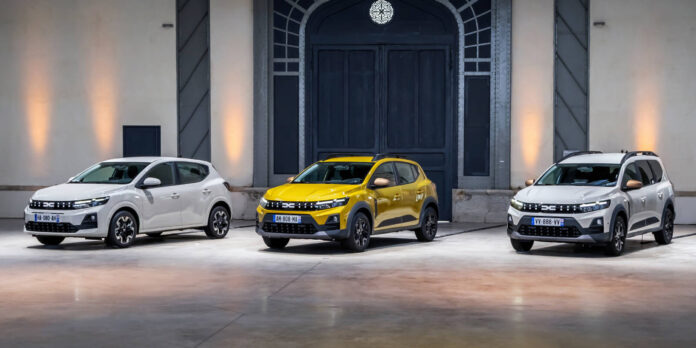
Dacia Sandero Stepway (2013 to 2020)

Summary

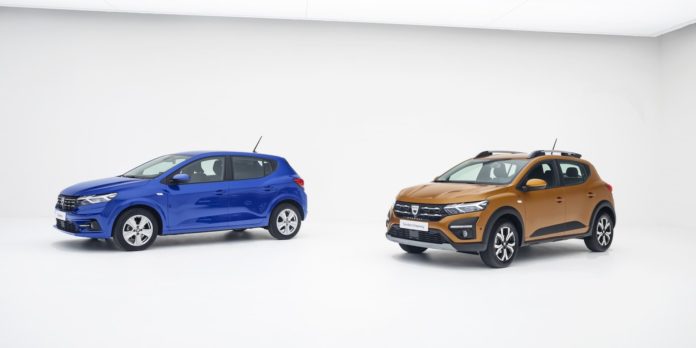
The Dacia Sandero Stepway was an upgraded and off-road styled version of the Sandero supermini hatchback. The model seen here is the second generation, which was launched in 2013 and facelifted in 2017. Production ended in 2020 ahead of an all-new Sandero that arrived in the UK in Spring 2021.

Despite the looks, the Sandero Stepway had minimal off-roading ability and was not available with four-wheel drive. However, this is relatively common among similar hatchback-based SUV/crossover vehicles.

The Sandero Stepway received particular praise from reviewers for its spaciousness, decent equipment levels and low running costs. Like all Dacia models of its generation, its absolute performance in any area against rivals wasn’t great, but when considered against its very low prices, it was considered excellent value for money.

As of February 2026, the Dacia Sandero Stepway holds a Used Car Expert Rating of D, with a score of 59%. It scores top marks for its excellent reliability record and also gets good grades for its low running costs. However, its safety scores are poor compared to newer cars and media review scores were not very flattering.

Key specifications

Body style: Five-door hatch/crossover
Engines: petrol, diesel
Price when new: From £9,195 on-road

Launched: Spring 2013
Last updated: Winter 2018/19
Replaced: Spring 2021

Media reviews

Highlighted reviews and road tests from across the UK automotive media. Click any of the boxes to view.

The Car Expert

Auto Express

Car

Carbuyer

Carwow

Heycar

Honest John

Parkers

The Sun

The Sunday Times

The Telegraph

Safety rating

Independent crash test and safety ratings from Euro NCAP

Overall score: 4 stars
Date tested: May 2013
Date expired: January 2020
Read the full Euro NCAP review

Adult protection: 80%
Child protection: 79%
Vulnerable road users: 57%
Safety assist: 55%

Notes on safety rating

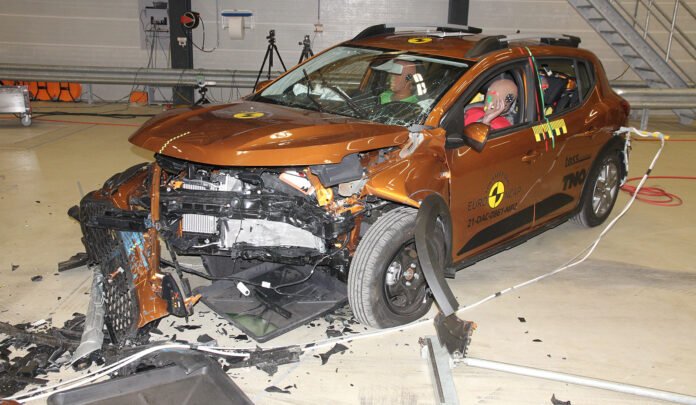
The Dacia Sandero range (which includes the Sandero Stepway) was awarded a four-star safety rating from Euro NCAP back when this model was launched in 2013. However, this rating expired in January 2020 as the Sandero no longer met the requirements for a four-star car. This is normal practice, as Euro NCAP reviews its ratings on most cars annually with most ratings expiring after about six or seven years.

However, if you are comparing a used Dacia Sandero Stepway to vehicles of similar age, whose ratings will have probably also expired, its safety rating score is still useful.

Eco rating

Independent economy and emissions ratings from Green NCAP

No eco rating

The Dacia Sandero Stepway was never assessed by Green NCAP during its production life.

Reliability rating

MotorEasy logo 600x167

Reliability data provided exclusively for The Car Expert by MotorEasy

All data based on MotorEasy average workshop costs for extended car warranty claims

As of April 2025 (our most recent data point), the Dacia Sandero range (including the Stepway) has a good reliability score, according to workshop and warranty data provided exclusively to The Car Expert by our partner, MotorEasy.

Although only based on a relatively small number of cars so far, the average repair bill is less than £400. This is reasonable, although it should be noted that engine repairs to date have been more expensive, with an average repair cost of nearly £800.

Similar cars

Dacia Duster | Fiat Panda 4×4 | Ford Fiesta Active | Hyundai ix20 | MG ZS | Nissan Juke | SsangYong TivoliSuzuki Vitara | Vauxhall Crossland X

More news, reviews and information about the Dacia Sandero family at The Car Expert

Three Dacia models given mid-life update

Three Dacia models given mid-life update

Everything you need to know about Dacia

Everything you need to know about Dacia

Additional engine option for Dacia Sandero

Additional engine option for Dacia Sandero

Dacia Sandero

Dacia Sandero

The cheapest new cars on sale in 2022

The cheapest new cars on sale in 2022

Another safety disaster for Dacia

Another safety disaster for Dacia

Renault needs to lift its game on safety

Renault needs to lift its game on safety

Dacia Sandero Stepway

Dacia Sandero Stepway

Safety advances leave Dacia trailing

Safety advances leave Dacia trailing

All-new Dacia Sandero range revealed

All-new Dacia Sandero range revealed

Dacia Sandero (2013 to 2020)

Dacia Sandero (2013 to 2020)

Updates for Dacia Sandero and Logan MCV

Updates for Dacia Sandero and Logan MCV

Buy a Dacia Sandero Stepway

If you’re looking to buy a used Dacia Sandero Stepway, The Car Expert’s partners can help you find the right car

Motors 600x300

Search less, live more. We make finding the right car simple. Find out more

Auto Trader logo 600x300

Search for your next new or used car with Auto Trader. Find out more

Carwow logo 600x300

Discover great deals available on both new and used cars. Find out more

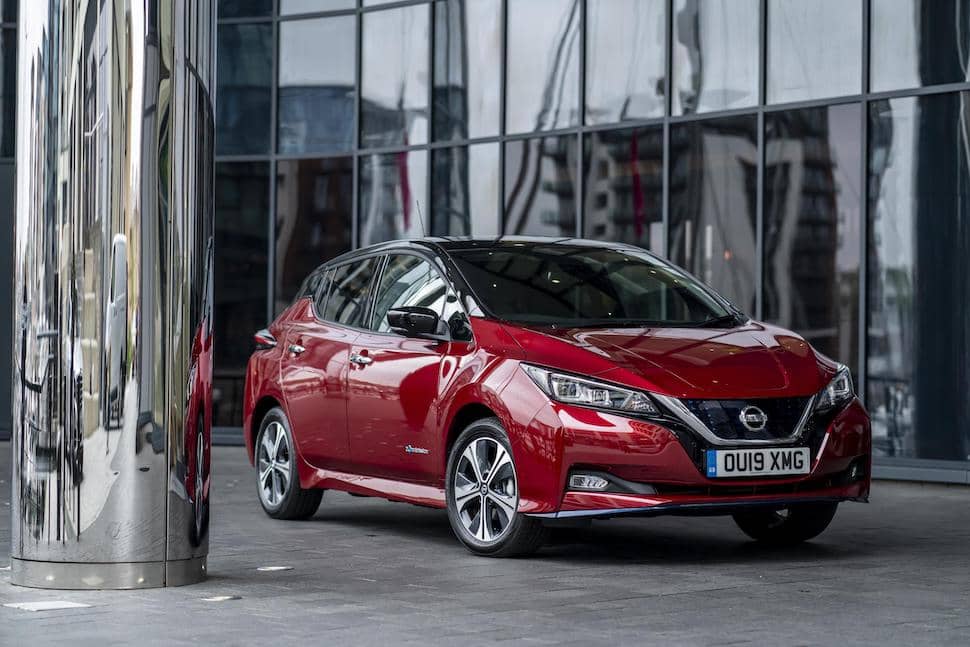
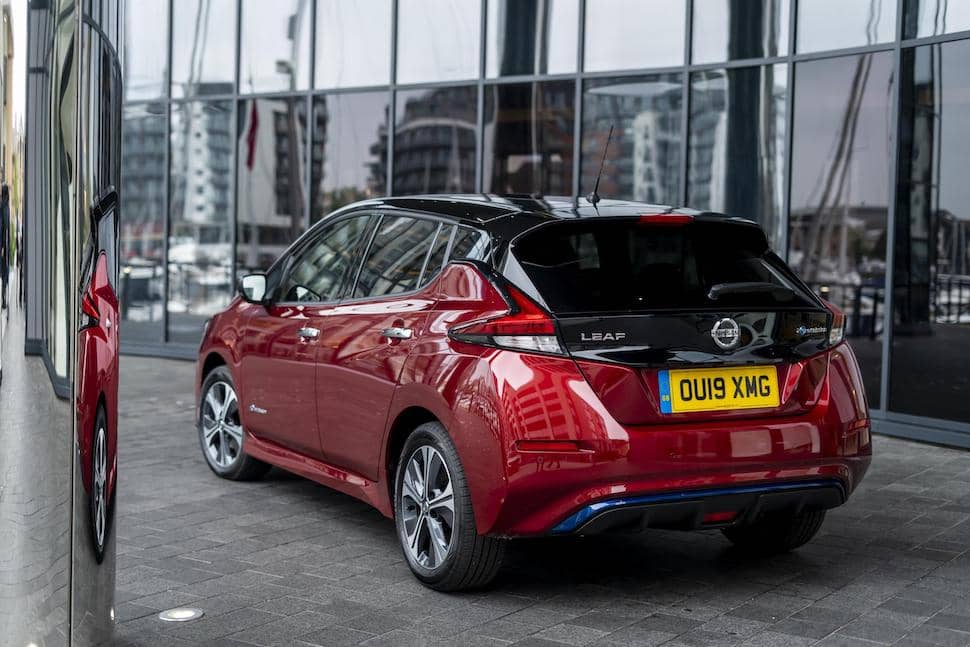
Nissan Leaf e+ review

60-second summary

What is it?
The Nissan Leaf e+ is a version of the electric car with a new battery pack that extends its power and range.

Key features
Longer battery range, more power, driving assistance tech.

Our view
The Nissan Leaf e+ is a worthy range-topper with significant advantages from its new, denser battery pack.

Owners will appreciate the more enthusiastic performance and more miles between recharges, but they still won’t be able to keep up with some of the car’s newer rivals.

Similar cars

Hyundai Kona Electric | Hyundai Ioniq Electric | Kia Soul EV | Kia e-Niro | Mini Countryman plug-in hybrid | Volkswaen e-Golf


Full review

Introduction

Anyone who knows anything about electric cars will know of the Nissan Leaf. When the all-electric car launched in 2010 it soon grabbed the unofficial title of ‘green motoring’ standard-bearer from the Toyota Prius hybrid.

Since then the Leaf has become the world’s biggest-selling electric car, with 400,000 finding owners across the globe. More than 25,000 of these have gone to UK buyers, boosted by European Leafs being built at Nissan’s UK plant in Sunderland.

A second-generation Leaf launched in February 2018, a complete redesign with a less ‘distinctive’ but far more satisfying body shape. The look of the first Leaf shouted, “I’m an electric car, buy me if you want to shout to the world that you are saving the planet!” But the current one will slide far more unobtrusively into the office car parking space alongside traditional family hatches.

But even as the new car arrived rivals were stacking up – rivals with significantly greater ranges between charges. So now we get a second version of the Leaf, the e+ – a top-specification model with a new, much denser battery pack which means a greater range, and more power under the right foot.

But is a more muscular battery enough to stem the rivals that are already here, such as the Hyundai Kona Electric and Kia e-Niro, and those still to come from European brands such as Volkswagen and Peugeot?    

Buying and owning a Nissan Leaf e+

The big difference between the Nissan Leaf e+ and the standard Leaf tested by The Car Expert in January 2018 is the battery pack.

Nissan says that the newly-developed 62kWh pack offers 55% more capacity and approximately 25% better energy density, yet it remains virtually the same size and shape as the pack in the standard 40kWh Leaf.

Which means that in terms of size and crucially interior space, the Leaf e+ is just the same as the existing version – well it’s 5mm higher on the standard-fit 16-inch wheels.

Those interested in the technical stuff may like to know that the pack uses a new design that allows varying numbers of cell modules and a laser welding technique that reduces each module’s overall length. And changing the number of lamination layers of each cell means it is much easier to match the shape of the pack to the vehicle’s dimensions.

What it actually means is that the Leaf e+ puts out 217hp and 340 Nm of torque, compared to the 150hp and 320Nm of the most potent standard model. This sees the new car through 62mph from rest in 6.9 seconds, more than 4.5 seconds ahead of the cheapest standard sibling though only a second faster than the 150hp version.

All that extra capacity also has a big effect on range – the Leaf e+ is quoted at up to 239 miles between charges under the latest WLTP testing protocol and that is more than 70 miles further than a standard car.

So that’s good then? Well yes, but not entirely. Yes, the range is a big improvement, but it still does not come up to new kids on the block such as the e-Niro or Kona, both of which still go 40 miles further than a Leaf e+ before the juice runs out. And that becomes all the more relevant when one talks prices.

Nissan is marketing the e+ as the halo version of its electric car. That means it only comes in the top Tekna trim level, and that new battery hardware adds £4,900 to the cost compared to the 150hp Tekna. The e+ costs a whopping £35,895, three grand more than its Korean rivals, and that’s once the Government’s £3,500 plug-in car grant has been taken off – without that you’d be looking at an almost £40,000 electric car.

There is one advantage to that top specification – the e+ does include as standard Nissan’s ProPilot active driving assistance technology, with an adaptive cruise control that keeps the car centred in its lane and will slow it to a stop, and restart it, in congested traffic. The standard Leaf earned a five-star Euro NCAP safety rating last year and this system adds an extra level of protection.

There is one more minus – battery recharging. The recharging market is still very confused, and Nissan has stuck with the Chademo system, basically because there are suitable public connections at most motorway service stations and many other locations. And the e+ can use 50kW DC chargers to recover 80% of battery life in around 40 minutes, which is around the same time as its 50kWh sister car despite the extra range.

However, the Nissan’s air-cooled battery pack won’t cope for long with the faster chargers being introduced by rivals such as CCS – and yes, the Hyundai and Kia can…

Inside the Nissan Leaf e+

This is a version of the Leaf we tested last year so what we said about the interior of that car still applies. The interior is functional, with plenty of space, well laid out and the plastics of acceptable quality.

Tekna means such niceties as heated leather seats and steering wheel and plenty of equipment. However, Nissan has not taken the opportunity to put right a major criticism from testers last year, the lack of reach adjustment on the steering wheel, which by the way is of that slightly stylish flat-bottomed design.

The centre console is well designed with the large eight-inch touchscreen infotainment display placed right at the top. All Leafs, e+ included, get the NissanConnect infotainment system, which includes TomTom Live traffic updates on the navigation and the ability to send routes to the car from a smartphone app. You can even use the app to pre-set the air-con or heating while the car is recharging.

Admittedly the graphics of the sat nav are not up to the standard of some rivals, but that doesn’t really matter as Apple CarPlay and Android Auto smartphone connectivity is also standard, which means one can use the generally more up-to-date Google Maps.

Driving the Nissan Leaf e+

The Leaf e+ is enthusiastic off the line, the beauty of the instant torque served up by an electric powertrain. And this makes it great for swift overtaking manoeuvres. It cruises well on the motorway too.

However that extra dense battery pack does add 150 kilos to the car’s kerb weight, and you do feel it. It’s by no means alarming – the steering isn’t unnaturally heavy and the car does go where it’s pointed, but there is an impression that one is hauling more poundage through the bends, and especially when under heavy braking. This may be a more sporty Leaf, but it’s no sports car.

One major aspect of all second-generation Leafs is the e-pedal, effectively a kinetic energy regeneration system. It’s very easy to get used to driving while hardly ever using the brake pedal, relying instead on the drivetrain to slow the car while also adding to the range.

Generally the Leaf e+ remains an easy car to drive, with the only significant minus point the large body pillars which don’t help with peripheral vision.  

Summary

The Nissan Leaf e+ adds a significant extra option to those wanting to join the rapidly increasing numbers driving the UK’s most popular electric car. It comes with extra safety technology that is worth having, and in terms of power and range the battery pack brings the car closer to its growing number of new rivals.

However this new top-model Leaf does not beat those rivals, either for range or driving enjoyment – and compared to them it is the expensive option. 

Good points

  • Higher performance than standard Leaf
  • Extended range between charges
  • More safety technology as standard

Bad points

  • Pricier than rivals
  • Still does not have range of rivals
  • Charging tech limits speed of recharges

Key specifications

Make & modelNissan LEAFKia e-NiroHyundai Kona Electric
Specificatione+ 3.ZeroFirst EditionPremium 64 kWh
Price (on-road)£35,895*£32,995*£32,845*
Powertrain62 kWh electric motor64kWh electric motor64kWh electric motor
Transmissionsingle-speed automaticsingle-speed automaticsingle-speed automatic
Power217 hp204 hp204 hp
Torque340 Nm395 Nm395 Nm
0-62mph6.9 seconds7.5 seconds7.6 seconds
Top speed98 mph104 mph104 mph
Range (combined)239 miles (WLTP)279 miles279 miles
CO2 emissions 0 g/km0 g/km0 g/km
Insurance groupTBA2826
Euro NCAP rating5 stars (2018)5 stars (2016)**5 stars (2017)**

* all prices include the Government plug-in grant
** non-electric version crash-tested

Chevrolet Corvette changes to middle lane

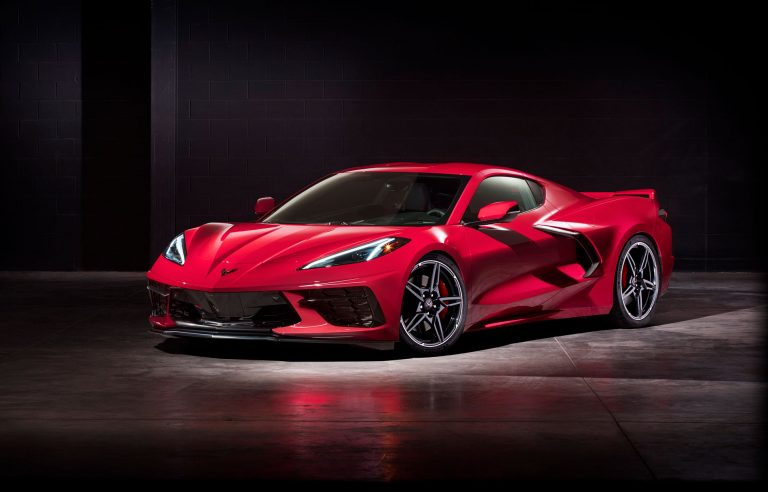
The all-new Chevrolet Corvette has been revealed after years of rumours and teasers – and the new model is very different from what has gone before.

While latest versions of the other pillars of the US muscle-car establishment, the Chevrolet Camaro and Ford Mustang, clearly evoke their predecessors, the new Corvette Stingray is turning from muscle car to supercar format.

It retains a traditional V8 power plant, but this has been moved from beneath the bonnet to behind the driver in a mid-engined layout.

Chevrolet says the new positioning of the 6.2-litre engine improves weight distribution. It also allows the driving position to be moved forward and closer to the axle, which is said to improve responsiveness and a sense of control.

Chevrolet Corvette The Car Expert

The V8 develops 495hp, put through the rear wheels via an eight-speed dual-clutch transmission. With the Z51 Performance Package, the car completes the 0-60mph sprint in under three seconds, making it the fastest-accelerating Corvette ever.

The aggressive styling treatment is said to be inspired by modern fighter jets and Formula One race cars, while still incorporating classic Corvette cues.

According to Michael Simcoe, vice president of global design at General Motors, redesigning the Corvette Stingray from the ground up; “presented the team with a historic opportunity, something Chevrolet designers have desired for over 60 years.

“It is now the best of America, a new arrival in the mid-engine sports car class – we know Corvette can stand tall with the best the world has to offer,” he says.

Pricing for the Corvette Stingray has not yet been revealed, but Chevrolet has hinted at a sub-$60,000 (£53,700) price tag in the US. And Chevrolet is following the example of Ford with the Mustang by confirming that the new Corvette will be sold in the UK as a right-hand drive model for the first time.

Chevrolet Corvette The Car Expert

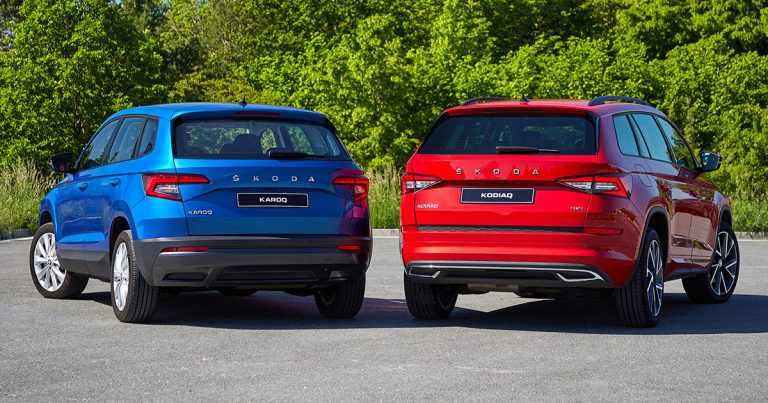
Skoda updates Kodiaq and Karoq with new tech

Skoda has revealed updates to its Karoq and Kodiaq SUVs for the 2020 model year.

The changes include a minor styling tweak that brings the models in line with the latest exterior visuals applied to more recent Skodas, plus new safety technologies.


We’ve gathered the top UK reviews of the Skoda Karoq and Kodiaq – how do they stack up?

A fresh engine option is also now available on the Karoq, a 2.0-litre turbodiesel already available in the Kodiaq. It has a power output of 190hp and includes a diesel particulate filter so that it meets the latest emissions regulations.

Both models can now be supplied with side assist as optional safety equipment, replacing the blind spot monitoring system. The technology uses radar sensors to monitor the driver’s blind spot and includes an alert that warns if cars are moving behind the driver while reversing.

Skoda blind spot The Car Expert

The optional adaptive chassis system, which includes drive mode selection, is now available on front-wheel-drive models, where it was previously only an option for four-wheel-drive models. It changes the suspension’s settings depending on whether it’s in comfort, normal or sport mode.

Skoda has updated its keys to protect against keyless theft, which is becoming a major issue in the UK. They now deactivate after a period of inactivity, which prevents criminals from gaining entry to a vehicle by boosting the signal of a key that is left in a house overnight.

The exterior styling changes are minor. Both models now include the word ‘Skoda’ written across the boot lid in large lettering, as seen on the new Scala and Kamiq models. Meanwhile, a new 20-inch alloy wheel design is available on the Kodiaq’s Sportline, L&K and vRS trims.

Prices for the updated Skoda Karoq start at £21,945, while the Kodiaq is available from £29,095.

Skoda rear badge The Car Expert

Jaguar XE (2015 to 2024)

Summary

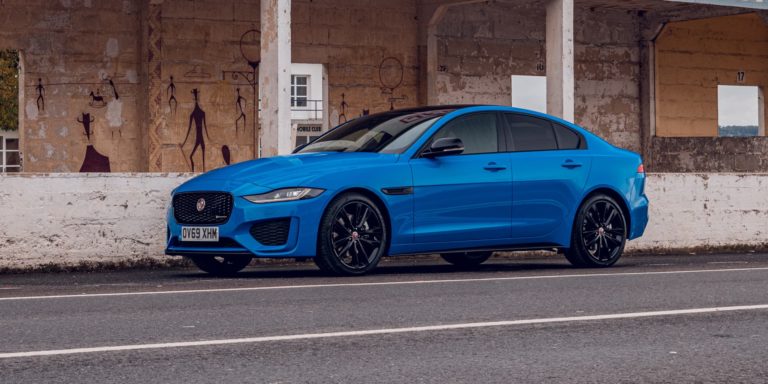
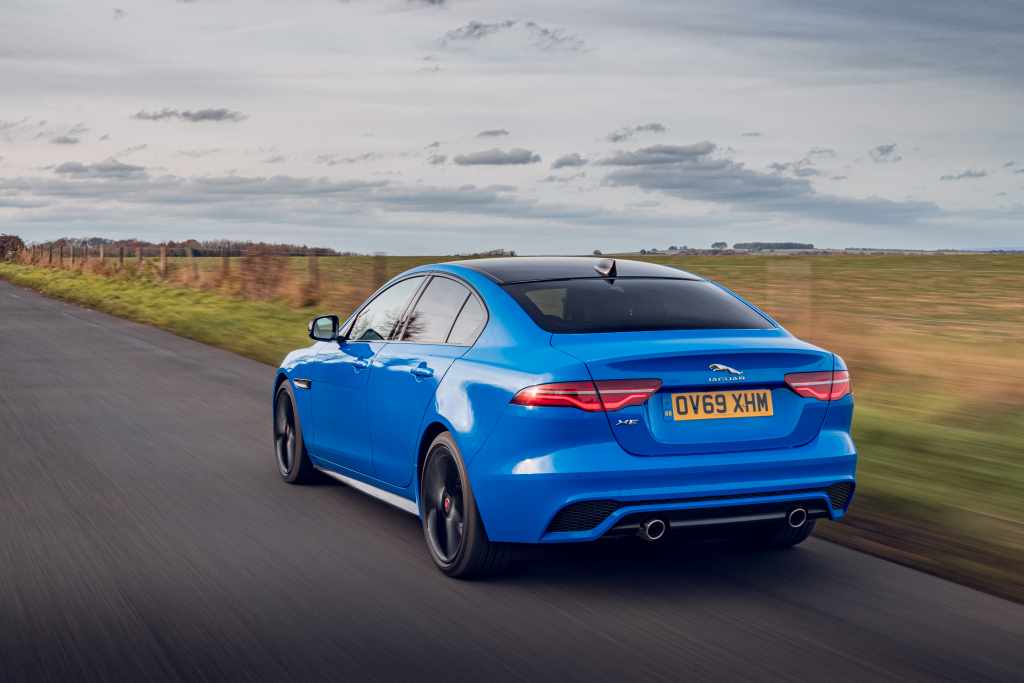
The Jaguar XE was a medium-sized premium saloon and was the entry-level saloon in the Jaguar range. Unveiled in Autumn 2014, it first hit UK roads in Summer 2015 and was in production until Summer 2024.

Built here in the UK at Jaguar’s Castle Bromwich factory in the Midlands, the XE was given a major overhaul and facelift in early 2019, with improved specification and a lower price. While it was praised for its stylish design and engaging driving experience, it was also criticised for its lack of practicality and underwhelming infotainment system compared to its rivals.

Sean Carson of Auto Express stated that the XE “really feels like a desirable product on every front”, while Stuart Gallagher of Evo said it had “sharper styling than ever inside and out”, and the Top Gear team concluded it was “comfy and quiet yet brilliant to drive. The handling-nerd’s car in this class.”

However, the XE was also criticised for its practicality. Carwow noted that, while the XE did come with a premium interior that was significantly improved after its 2019 facelift, its back seats were “very cramped”.

Parker‘s Keith Adams was critical of the car’s infotainment system, as it could be “quite difficult to press items on the lower screen accurately while on the move, especially as it’s partially blocked by the gear selector.”

Overall, reviewers concluded the Jaguar XE was a refined executive saloon and a good leftfield alternative to its German rivals in the premium compact executive car segment. As Heycar‘s Andrew Brady wrote, “people looking for a sporting, enjoyable to drive alternative to the 3 Series, A4 and C-Class are well served by Jaguar’s stylish XE. It’s a good choice if you dare to be different, and enjoy your driving.”

No longer on sale, the Jaguar XE holds a Used Car Expert Rating of D with a score of 59%. It gets good grades for its media review scores and decent CO2 emissions, but its running costs and safety score are only average, while reliability has been very poor.

The Car Expert Best of British horizontal banner

Key specifications

Body style: Mid-sized saloon
Engines: petrol, diesel
Price when new: From £33,210 on-road

Launched: Summer 2015
Last updated: Spring 2019
Discontinued: Summer 2024

Media reviews

Highlighted reviews and road tests from across the UK automotive media. Click any of the boxes to view.

Featured reviews

More reviews

Auto Express

Car

Carbuyer

Carwow

Daily Mail

Evo

Heycar

Honest John

Parkers

The Sun

The Sunday Times

The Telegraph

Top Gear

Safety rating

Independent crash test and safety ratings from Euro NCAP

Overall score: 5 stars
Date tested: December 2015
Date expired: January 2022
Read the full Euro NCAP review

Adult protection: 92%
Child protection: 82%
Vulnerable road users: 81%
Safety assist: 82%

Notes on safety rating

The Jaguar XE was tested by Euro NCAP back in 2015 and awarded a five-star rating. However, this rating expired in January 2022 and is no longer valid as the car no longer meets the standards required for such a rating. This is normal practice, as Euro NCAP reviews its ratings on most cars annually with most ratings expiring after about six or seven years.

Although the rating has now expired, the score is still useful if you are comparing a used XE to vehicles of similar age – whose ratings will have probably also expired.

Eco rating

Independent emissions and efficiency ratings from Green NCAP

No eco rating

The Jaguar XE was not tested by Green NCAP during its production life.

Reliability rating

Reliability data provided exclusively for The Car Expert by MotorEasy

All data based on MotorEasy average workshop costs for extended car warranty claims

The Jaguar XE has a very poor reliability rating of just 26%, according to workshop and warranty claim data provided by our partner MotorEasy.

Like other saloons in the Jaguar range, a common repair that XE owners claim for is electrical repairs, which in this case cost over £400 on average. The most common, though, are engine problems. Unfortunately, they’re also by far the most costly, with an average repair fee of more than £2,100.

If you’re looking at a used Jaguar XE, make sure any extended warranty cover you purchase covers all of these potential problem areas.

Running cost rating

Clear Vehicle Data logo close crop

Monthly cost of ownership data provided exclusively for The Car Expert by Clear Vehicle Data

CO₂ outputAverageScoreVariationScore
Petrol models193 g/kmD
Diesel models133 g/kmB
Insurance groupAverageScoreVariationScore
All models29C
Service and maintenanceCostScore
Year 1£278C
Year 2£631C
Year 3£1,040C
Year 4£1,318C
Year 5£1,724C
Overall£4,991C

The Jaguar XE is a relatively affordable car to own and run, according to whole-life cost numbers provided exclusively to The Car Expert by our data partner, Clear Vehicle Data.

While insurance premiums are expected to be around the market average, maintenance and servicing costs should be good over the course of five years of ownership.

Awards

Trophies, prizes and awards that the Jaguar XE has received

2016

  • UK Car of the Year Awards – Best Executive Car
  • Auto Express Awards – Compact Executive Car of the Year
  • BusinessCar Awards – Business Car of the Year
  • SME Company Car of the Year Awards – Company Car of the Year + Best Large Company Car

2015

  • Fleet World Awards – Best New Car
  • Auto Express Awards – Compact Executive Car of the Year
  • Scottish Car of the Year Awards – Best Executive Car
  • Diesel Car Awards – Best Large Car
  • Telegraph Awards – Car of the Year + Best Business Car
  • Festival Automobile International – Most Beautiful Car of 2014

Similar cars

If you’re looking at the Jaguar XE, you might also be interested in these alternatives

Alfa Romeo Giulia | Audi A4 | Audi A5 Sportback | BMW 3 Series | BMW 4 Series Gran Coupé | Ford Mondeo | Kia StingerMercedes-Benz C-Class | Peugeot 508 | Polestar 2 | Tesla Model 3 | Volkswagen Arteon | Volkswagen Passat | Volvo S60

More news, reviews and information about the Jaguar XE at The Car Expert

Jaguar stops new car sales ahead of 2026 re-launch

Jaguar stops new car sales ahead of 2026 re-launch

Everything you need to know about Jaguar

Everything you need to know about Jaguar

Jaguar XE and XF gain range-topping 300 Sport models

Jaguar XE and XF gain range-topping 300 Sport models

Jaguar XF updated with more tech and lower prices

Jaguar XF updated with more tech and lower prices

Jaguar XE test drive

Jaguar XE test drive

Jaguar Land Rover recalls 44,000 cars for emissions breaches

Jaguar Land Rover recalls 44,000 cars for emissions breaches

Jaguar XE gets a raft of updates

Jaguar XE gets a raft of updates

Jaguar XE SV Project 8 blasts into Goodwood

Jaguar XE SV Project 8 blasts into Goodwood

Jaguar Land Rover expands Ingenium engine range

Jaguar Land Rover expands Ingenium engine range

Jaguar adds new engines to core models

Jaguar adds new engines to core models

Jaguar XE moves to booming Birmingham plant

Jaguar XE moves to booming Birmingham plant

Like the Jaguar XE? Try out its rivals…

Like the Jaguar XE? Try out its rivals…

Buy a Jaguar XE

If you’re looking to buy a used Jaguar XE, The Car Expert’s partners can help you find the right car.

Motors 600x300

Find your next used car with Motors. Find out more

Auto Trader logo 600x300

Find your next new or used car with Auto Trader. Find out more

Carwow logo 600x300

Find your next new or used car with Carwow. Find out more

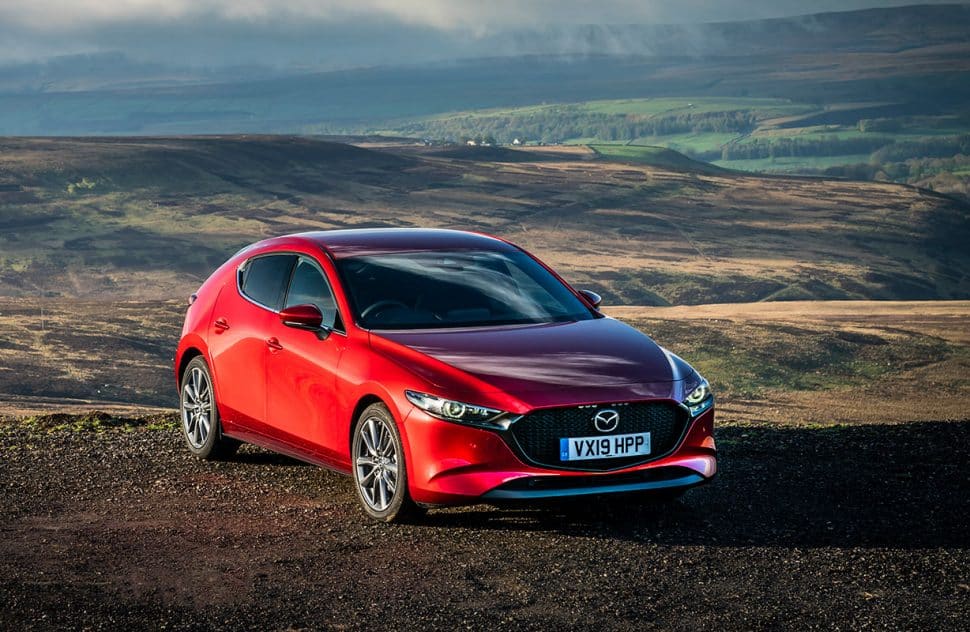
The petrol Mazda 3 with ‘diesel-like’ fuel economy

Mazda 3 models with the brand’s new Skyactiv-X petrol engine will arrive in showrooms in October, at prices starting from £23,555.

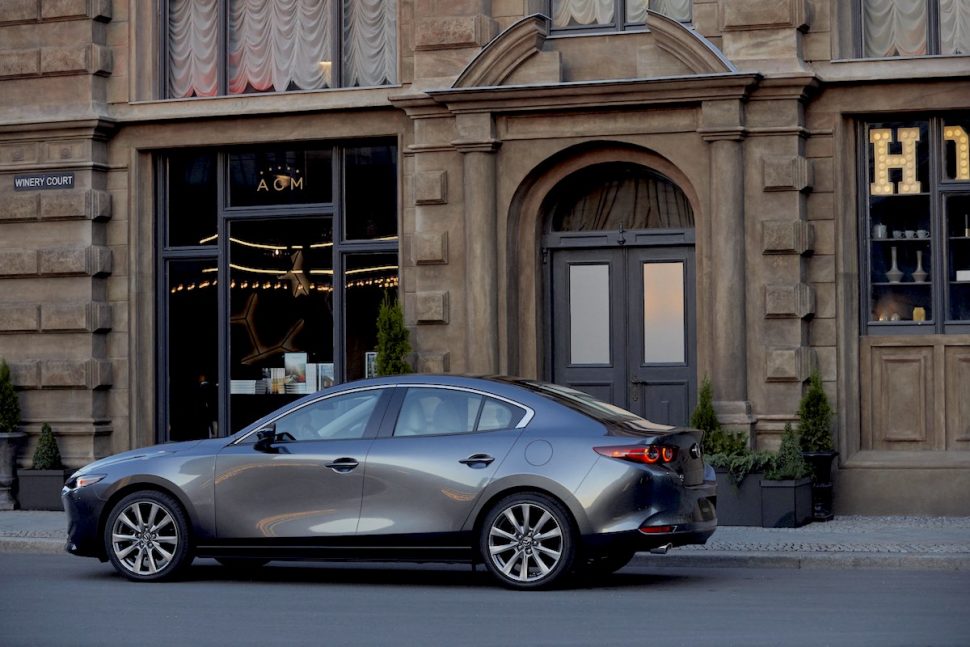
The family hatchback is the first Mazda to be fitted with the supercharged 2.0-litre four-cylinder petrol engine. A new saloon model is set to join the Mazda 3 line-up in the autumn and that will also be offered with the Skyactiv-X.

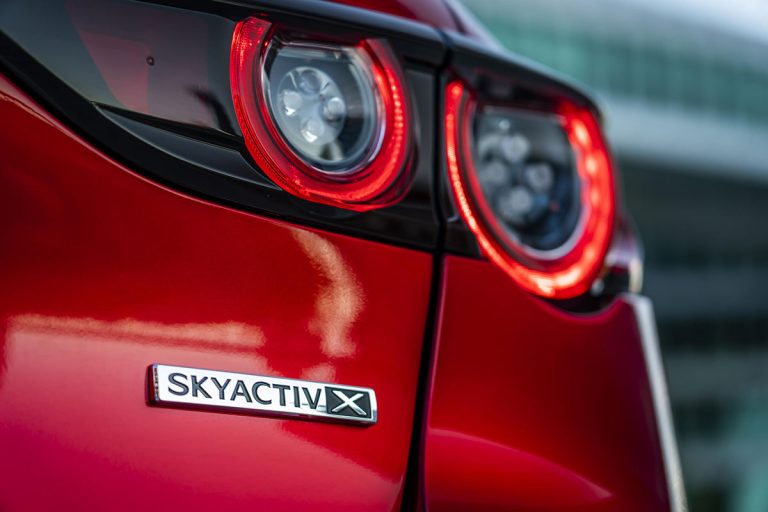
The new engine is claimed to offer the best of both worlds – combining technology used in both petrol and diesel engines to offer petrol-like performance but with diesel economy and emissions.

Skyactiv-X is said to be the world’s first production petrol engine to use compression ignition to provide drivers with the free-revving performance of a petrol engine with the superior response of a diesel.

Producing 180hp with 224Nm of torque, the unit has the highest compression ratio for a production petrol engine in the world, while its lean-burn capabilities produce long fuel economy and low emissions.

Mazda 3 Saloon the Car Expert
Mazda 3 saloon will join ange in the Autumn.

Mazda claims fuel consumption figures of up to 51.4mpg while producing CO2 emissions of 103g/km. The car will reach 62mph from rest in eight seconds and go on to 134mph.

The powertrain joins a 2.0-litre four-cylinder petrol and a 1.8-litre four-cylinder turbocharged diesel in the car’s list of engine options. It will be offered with six-speed manual or auto transmission options, while top-specification models will be available with all-wheel drive.

Trim levels range from entry-level SE-L to range-topping GT Sport Tech, while standard equipment on all cars includes LED headlights, rear parking sensors, cruise control and an eight-inch infotainment system with Apple CarPlay and Android Auto smartphone compatibility.

1907 Mazda 3 The Car Expert

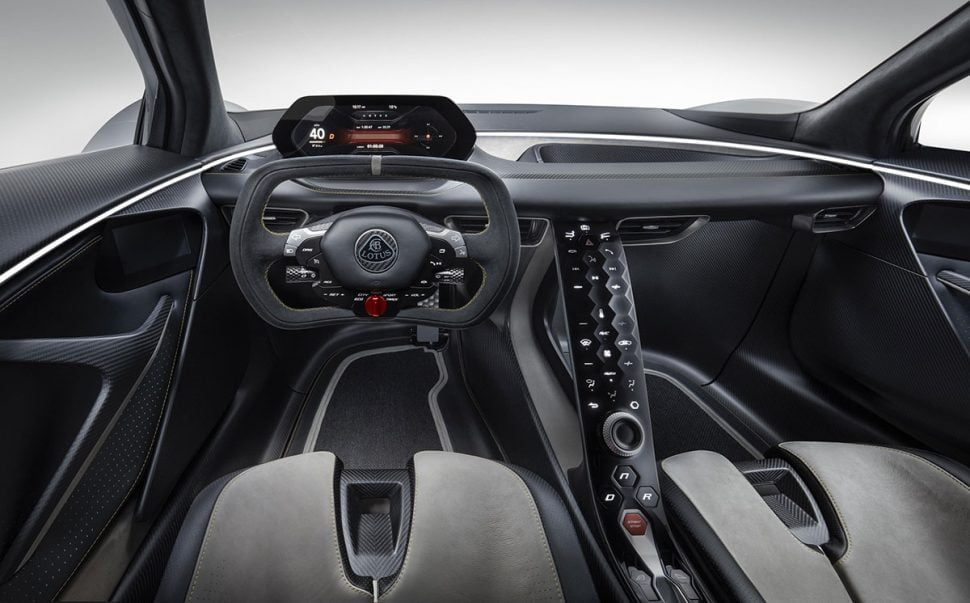
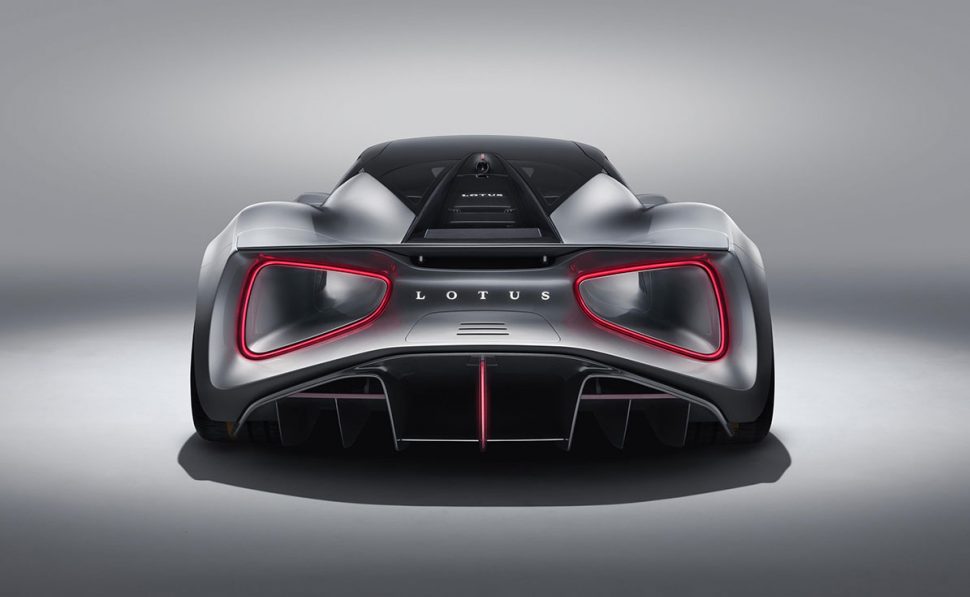
New Lotus Evija is £1.7m electric hypercar

Lotus has unveiled a long-awaited all-new model in the form of an electric hypercar.

The Norfolk sports car maker claims that its Evija is “the world’s most powerful series production road car”.

Evija – pronounced Eh-vi-ya – means ‘the first in existence’, highlighting the car’s status as beginning a new chapter in Lotus history.

Performance figures for the Evija will be ‘targeted’ at 2,000hp and 1,200Nm of torque, giving the model a 0-60mph time of less than three seconds and a top speed in excess of 200mph.

Lotus has not yet revealed any technical details of the Evija’s powertrain. However, the brand’s technical partner in the project is Williams Advanced Engineering, sister brand to the famed Formula One racing team and with extensive electric drivetrain experience for the likes of Jaguar and the all-electric Formula E motorsport series.

Lotus Evija The Car Expert

According to Lotus, the Evija will employ the “lightest, most energy-dense electric power package ever fitted to a road car”. Design parameters include targeted overall weight of just 1,680kg, which would make the car impressively light for an electric vehicle.

Achieving this will involve extensive use of carbon-fibre, including the monocoque chassis and bodywork.

Active aerodynamics will feature on the car with the rear spoiler deploying as required, while large venturi tunnels will channel air from the front and sides of the car through the bodywork at the rear.

Lotus claims that the Evija will have a 250-mile range between charges, and will recharge to 80% capacity using a 350kW charger in 12 minutes. This is the highest-capacity charger currently available but the car will be capable of accepting a charge of up to 800kW, future-proofing it for when faster systems are released.

Lotus Evija The Car Expert

According to Lotus Cars CEO Phil Popham, the Evija will re-establish the brand in the hearts and minds of sports car fans and on the global automotive stage.

“This is another amazing moment in the history of our company – the Evija is a true Lotus in every sense, it has been developed with an unwavering passion to push boundaries, to explore new ways of thinking and to apply groundbreaking technologies,” Popham said.

Only 130 examples of the Evija will be built and each will cost £1.7m. Lotus is now taking £250,000 deposits for the car.

Lotus Evija The Car Expert

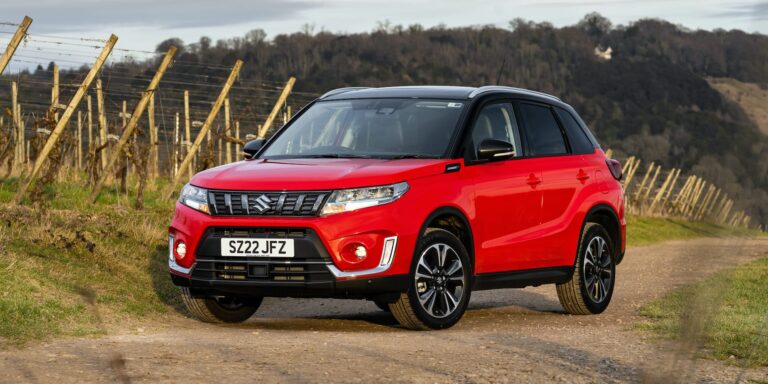
Suzuki Vitara

Summary

The Suzuki Vitara is a small SUV/crossover. The current model is the fourth-generation Vitara, which went on sale in 2015 and was given a substantial facelift in late 2018.

The Vitara has received generally review scores from the UK motoring media, which have declined over time as the Vitara has been on sale since 2015 and has long been overtaken by newer rivals.

It has received particular praise for its practicality, versatility and value for money, but has been criticised for the low quality of its interior fittings compared to rivals.

As of March 2026, the Suzuki Vitara holds a New Car Expert Rating of D with a score of 58%. This score places the car firmly in the lower end of the small SUV category in our Expert Rating Index.

Key specifications

Body style: Small SUV/crossover
Engines: petrol, petrol/electric hybrid
Price: From £23,749 on-road

Launched: Spring 2015
Last updated: Spring 2022
Replacement due: TBA

Media reviews

Highlighted reviews and road tests from across the UK automotive media. Click any of the boxes to view.

Featured reviews

More reviews

The Car Expert

Auto Express

Car

Carbuyer

Company Car Today

Evo

Heycar

Honest John

Parkers

The Sun

The Sunday Times

The Telegraph

Top Gear

Safety rating

Independent crash test and safety ratings from Euro NCAP

Overall score: 5 stars
Date tested: April 2015
Date expired: January 2022
Read the full Euro NCAP review

Adult protection: 89%
Child protection: 85%
Vulnerable road users: 76%
Safety assist: 75%

Notes on safety rating

The Suzuki Vitara was tested by Euro NCAP back in 2015 and awarded a five-star rating. However, this rating expired in January 2022 and is no longer valid as the car no longer meets the standards required for such a rating. This is normal practice, as Euro NCAP reviews its ratings on most cars annually with most ratings expiring after about six or seven years.

Although the rating has now expired, the score is still useful if you are comparing a used Vitara to vehicles of similar age – whose ratings will have probably also expired.

Eco rating

Independent economy and emissions ratings from Green NCAP

Model tested: 1.0-litre petrol manual 110hp

Overall score: 2 stars
Date tested: November 2020
Read the full Green NCAP review

Clean Air Index: 3.3 / 10
Energy Efficiency Index: 4.9 / 10

Reliability rating

Reliability data provided exclusively for The Car Expert by MotorEasy

All data based on MotorEasy average workshop costs for extended car warranty claims

The Suzuki Vitara has a reliability score that’s better than average, according to exclusive extended warranty data provided by our partners at MotorEasy. This score covers both the current-generation Vitara and the earlier (pre-2015) versions which were called ‘Grand Vitara’.

Faults are reportedly cheap to fix across the board for Vitara owners, but watch out for gearbox issues which, although more rare, can cost around £800.

If you’re looking at a used Suzuki Vitara, make sure any extended warranty cover you purchase covers all of these potential problem areas.

Running cost rating

Clear Vehicle Data logo close crop

Monthly cost of ownership data provided exclusively for The Car Expert by Clear Vehicle Data

Fuel consumptionAverageScore
Petrol models51 mpgC
Hybrid models52 mpgB
CO₂ outputAverageScoreVariationScore
Petrol models124 g/kmB
Hybrid models123 g/kmB
Insurance groupAverageScoreVariationScore
All models19A
Service and maintenanceCostScore
Year 1£178B
Year 2£518B
Year 3£861C
Year 4£1,113C
Year 5£1,548C
Overall£4,218C

The Suzuki Vitara is a relatively affordable car to own and run, according to whole-life cost numbers provided exclusively to The Car Expert by our data partner, Clear Vehicle Data.

The fuel economy of both petrol and diesel models is very good when compared to other compact crossovers, and the Vitara’s insurance and maintenance costs are predicted to remain manageable over the course of five years of ownership.

Awards

Trophies, prizes and awards that the Suzuki Vitara has received

2019

  • Honest John Awards – Best Small Crossover
  • Cargurus Used Car Awards – Best Small Crossover

2016

  • Honest John Awards – Car of the Year
  • Tow Car Awards – Ultralight Tow Car of the Year

Similar cars

If you’re looking at the Suzuki Vitara, you might also be interested in these alternatives

Citroën C3 Aircross | Dacia Duster | Fiat 500X | Ford EcoSport | Honda HR-V | Hyundai BayonHyundai Kona | Jeep Renegade | Kia Stonic | Mazda CX-3MG ZS | Mitsubishi ASXNissan Juke | Peugeot 2008 | Renault Captur | SEAT Arona | Skoda Kamiq | SsangYong Tivoli | Toyota Yaris Cross | Vauxhall Crossland | Vauxhall Mokka | Volkswagen T-Cross | Volkswagen T-Cross | Volkswagen T-Roc

More news, reviews and information about the Suzuki Vitara at The Car Expert

Suzuki e Vitara

Suzuki e Vitara

Everything you need to know about Suzuki

Everything you need to know about Suzuki

Suzuki Vitara hybrid review

Suzuki Vitara hybrid review

Facelifted Suzuki Vitara goes on sale

Facelifted Suzuki Vitara goes on sale

Suzuki rolls out new finance offers

Suzuki rolls out new finance offers

Suzuki Vitara 1.4 BoosterJet review

Suzuki Vitara 1.4 BoosterJet review

Suzuki Vitara review 2015

Suzuki Vitara review 2015

Buy a Suzuki Vitara

If you’re looking to buy a new or used Suzuki Vitara, The Car Expert’s partners can help you find the right car.

Motors 600x300

Find your next used car with Motors. Find out more

Carwow logo 600x300

Find your next new or used car with Carwow. Find out more
Auto Trader logo 600x300

Find your next new or used car with Auto Trader. Find out more

Lease a Suzuki Vitara

If you’re looking to lease a new Suzuki Vitara, The Car Expert’s partners can help you find a competitive deal.

Carparison 600x300

Personal contract hire deals from Carparison Leasing. Find out more

Leasing-com logo

Personal contract hire deals from Leasing.com. Find out more

Carwow logo 600x300

Personal contract hire deals from Carwow. Find out more

Subscribe to a Suzuki Vitara

If you’re interested in a car subscription, The Car Expert’s partners can help. (PS: What’s a car subscription?)

Cocoon Vehicles logo 600x300

Car subscriptions from Cocoon.
Find out more

Just Vehicle Solutions logo 600x300

Car subscriptions from Just Vehicle Solutions.
Find out more

Flexible Vehicle Contracts logo 600x300px

Car subscriptions from Flexible Vehicle Contracts.
Find out more

Mazda CX-5 (2017 to 2026)

Summary

The Mazda CX-5 was a medium-sized SUV/crossover, with this second-generation model launched in 2017 and on sale until 2026. Globally, it was Mazda’s best-selling model.

The CX-5 received plenty of positive reviews from across the UK automotive media, with particular praise for its clever engineering, strong engines and comfortable cabin. It was considered a strong all-rounder that served as a very competent family car.

A few titles criticised the driving experience for not being as good as some rivals, but other sources praised the way it drove, so this is not a unanimous opinion.

This generation of CX-5 ended production in 2025 ahead of an all-new model arriving in 2026.

As of March 2026, the Mazda CX-5 has a Used Car Expert Rating of D, with a score of 59%. It gets good grades for its low running costs and media review scores, but its CO2 emissions are only average and its reliability record is very poor.

Key specifications

Body style: Medium-sized SUV/crossover
Engines: petrol, diesel
Price: From £31,045 on-road

Launched: Summer 2017
Last updated: Winter 2018/19
Replacement due: Summer 2026

Media reviews

Highlighted reviews and road tests from across the UK automotive media. Click any of the boxes to view.

Featured reviews

More reviews

The Car Expert

Auto Express

Auto Trader

Car

Carbuyer

Carwow

Company Car Today

Evo

Green Car Guide

Honest John

Motoring Research

Parkers

The Sun

The Sunday Times

The Telegraph

Top Gear

Safety rating

Independent crash test and safety ratings from Euro NCAP

Overall score: 5 stars
Date tested: September 2017
Date expired: January 2024
Read the full Euro NCAP review

Adult protection: 95%
Child protection: 80%
Vulnerable road users: 78%
Safety assist: 59%

Notes on safety rating

The Mazda CX-5 was originally crash tested by Euro NCAP back in 2017 and awarded a five-star rating. However, this rating expired in January 2024 and is no longer valid as the car no longer meets the standards required for such a rating. This is normal practice, as Euro NCAP reviews its ratings on most cars annually with most ratings expiring after about six or seven years.

However, if you are comparing a used CX-5 to vehicles of similar age, whose ratings will have probably also expired, its safety rating score is still useful.

Eco rating

Independent economy and emissions ratings from Green NCAP

Model tested: 2.0-litre petrol manual 165hp

Overall score: 2 stars
Date tested: November 2020
Read the full Green NCAP review

Clean Air Index: 3.8 / 10
Energy Efficiency Index: 4.1 / 10
Greenhouse Gas Index: 3.7 / 10

Green NCAP reviewed the 2.0-litre petrol CX-5 back in 2020, saying: “With a 121 kW 2.0 litre Skyactiv engine, the car has a three-way catalyst but no gasoline particulate filter. Under normal test conditions, the car performs well for pollutant abatement, with good control of most emissions.

“However, when the engine is pushed, as it is in Green NCAP’s robustness tests, emissions control deteriorates and values of CO and particulates become very high. However, emissions of some important greenhouse gases are tightly controlled and the vehicle scores relatively well in that part of the assessment. All in all, a balanced performance that earns the CX-5 a two-star overall rating.”

Reliability rating

Reliability data provided exclusively for The Car Expert by MotorEasy

All data based on MotorEasy average workshop costs for extended car warranty claims

The Mazda CX-5 has a poor reliability score of just 17% as of April 2025 (our most recent data point), according to workshop and warranty data provided by our commercial partner, MotorEasy. This covers both first- and second-general models.

The average repair bill for the CX-5 is very high, at nearly £1,500. This is due to very high repair costs for engine and gearbox, although other bills are also above average.

The big issue for the CX-5 is the engine, which makes nearly half of all warranty claims. It’s also an expensive problem, with an average repair cost of more than £2,500.

However, it’s not just our data that has flagged reliability issues with the Mazda CX-5. In August 2022, warranty provider Warrantywise ranked the CX-5 ninth in the least reliable used cars (up to ten year old) on sale in the UK.

So if you own or are considering buying a used Mazda CX-5, it’s certainly worth considering a used car warranty that covers all of the potential trouble spots shown in the charts above – especially the engine.

Running cost rating

Clear Vehicle Data logo close crop

Monthly cost of ownership data provided exclusively for The Car Expert by Clear Vehicle Data

Fuel consumptionAverageScore
Petrol models42 mpgC
Diesel models46 mpgC
CO₂ outputAverageScoreVariationScore
Petrol models153 g/kmC
Diesel models161 g/kmC
Insurance groupAverageScoreVariationScore
All models20B
Service and maintenanceCostScore
Year 1£222C
Year 2£568C
Year 3£909C
Year 4£1,141C
Year 5£1,570C
Overall£4,410C

The Mazda CX-5 is a relatively affordable car to own and run, according to whole-life cost numbers provided exclusively to The Car Expert by our data partner, Clear Vehicle Data.

While petrol models are thirstier than the average car, diesel models offer good fuel economy, and the CX-5’s insurance premiums are on the cheaper side.

Awards

Trophies, prizes and awards that the Mazda CX-5 has received

2020

  • Scottish Car of the Year Awards – Best Used Car

2018

  • Auto Express Driver Power Awards  – Interior and Comfort category winner

Similar cars

If you’re looking at the Mazda CX-5, you might also be interested in these alternatives

Citroën C5 Aircross | Ford Kuga | Honda CR-V | Hyundai Tucson | Jeep CompassKia Sportage | MG HS | Mitsubishi Eclipse CrossNissan Qashqai | Peugeot 3008 | Renault Kadjar | SEAT Ateca | Skoda Karoq | SsangYong Korando | Subaru XV | Suzuki S-Cross | Toyota C-HRVauxhall Grandland X | Volkswagen Tiguan

Buy a Mazda CX-5

If you’re looking to buy a new or used Mazda CX-5, The Car Expert’s partners can help you find the right car

Motors 600x300

Find your next used car with Motors. Find out more

Auto Trader logo 600x300

Find your next new or used car with Auto Trader. Find out more

Carwow logo 600x300

Find your next new or used car with Carwow. Find out more
Lease a Mazda CX-5

If you’re looking to lease a new Mazda CX-5, The Car Expert’s partners can help you find a competitive deal

Leasing-com logo

Personal contract hire deals from Leasing.com. Find out more

Carwow logo 600x300

Personal contract hire deals from Carwow. Find out more

Select Car Leasing logo

Personal contract hire deals from Select Car Leasing. Find out more

Subscribe to a Mazda CX-5

If you’re interested in a car subscription, The Car Expert’s partners can help (PS: What’s a car subscription?)

Cocoon Vehicles logo 600x300

Car subscriptions from Cocoon.
Find out more

Just Vehicle Solutions logo 600x300

Car subscriptions from Just Vehicle Solutions.
Find out more

Flexible Vehicle Contracts logo 600x300px

Car subscriptions from Flexible Vehicle Contracts.
Find out more

Honda HR-V (2015 to 2021)

Summary

The second-generation Honda HR-V is a small SUV/crossover that shares its platform with the previous Jazz supermini. This model was launched in 2015 and it came to the end of its production cycle in early 2021, ahead of an all-new hybrid-only HR-V model launching later the same year.

The HR-V received average to good reviews from the UK motoring media across its production life, with our overall Expert Rating generally placing it in the middle of the small SUV/crossover field over the last couple of years. The HR-V Sport model that arrived towards the end of its model life tended to receive poorer reviews than the rest of the range.

The Honda HR-V received particular praise for its spaciousness, practicality and versatility, but was criticised for a lack of refinement and poor value for money compared to rivals.

No longer on sale, the Honda HR-V has a Used Car Expert Rating of C, with a score of 62%.

Key specifications

Body style: Small SUV/crossover
Engines: petrol, diesel
Price: From £20,040 on-road

Launched: Autumn 2015
Last updated: Spring 2019
Replacement due: Late 2021

Media reviews

Highlighted reviews and road tests from across the UK automotive media. Click any of the boxes to view.

The Car Expert

Auto Express

Auto Trader

Car

Car Keys

Carbuyer

Carwow

Daily Mail

Evo

Heycar

Honest John

Parkers

The Sunday Times

The Telegraph

Top Gear

Safety rating

Independent crash test and safety ratings from Euro NCAP

Overall score: 5 stars
Date tested: November 2015
Date expired: January 2022
Read the full Euro NCAP review

Adult protection: 86%
Child protection: 79%
Vulnerable road users: 72%
Safety assist: 71%

Note on safety rating

The second-generation Honda HR-V was originally crash tested by Euro NCAP back in 2015 and awarded a five-star rating. However, this rating expired in January 2022 and is no longer valid as the car no longer meets the standards required for such a rating. This is normal practice, as Euro NCAP reviews its ratings on most cars annually with most ratings expiring after about six or seven years.

However, if you are comparing a used Honda HR-V to vehicles of similar age, whose ratings will have probably also expired, its safety rating score is still useful.

Eco rating

Independent economy and emissions ratings from Green NCAP

No eco rating

The Honda HR-V was not lab tested by Green NCAP during its production life.

Reliability rating

MotorEasy logo 600x167

Reliability data provided exclusively for The Car Expert by MotorEasy

All data based on MotorEasy average workshop costs for extended car warranty claims

As of April 2025 (our most recent data point), the Honda HR-V has a good reliability score of 79%, according to workshop and warranty data provided exclusively to The Car Expert by our partner, MotorEasy.

The only caveat to this score is that it comes from relatively few vehicles to data, so the score may fluctuate as more data is added over time.

Running cost rating

Clear Vehicle Data logo close crop

Monthly cost of ownership data provided exclusively for The Car Expert by Clear Vehicle Data

Fuel consumptionAverageScore
Petrol models42 mpgC
Diesel models55 mpgB
Hybrid models52 mpgB
CO₂ outputAverageScoreVariationScore
Petrol models153 g/kmC
Diesel models134 g/kmC
Hybrid models122 g/kmB
Insurance groupAverageScoreVariationScore
All models22B
Service and maintenanceCostScore
Year 1£224C
Year 2£524B
Year 3£902C
Year 4£1,093C
Year 5£1,530C
Overall£4,273C

The Honda HR-V is a reasonably expensive car to own and run, according to whole-life cost numbers provided exclusively to The Car Expert by our data partner, Clear Vehicle Data.

Although it gets decent scores for servicing and maintenance, and the hybrid and diesel models look fairly economical, the better-selling petrol models have poor fuel economy for quite a small car.

Awards

Trophies, prizes and awards that the Honda HR-V received

2017

  • Honest John Awards – Best Small Crossover

2016

  • AM Awards – New Car of the Year
  • Tow Car Awards – Best Tow Car, under 1,400kg

Similar cars

If you’re looking at the Honda HR-V, you might also be interested in these alternatives

Citroën C3 Aircross | Dacia Duster | Fiat 500X | Ford EcoSport | Hyundai Kona | Jeep Renegade | Kia Stonic | Mazda CX-3MG ZS | Mitsubishi ASXNissan Juke | Peugeot 2008 | Renault Captur | SEAT Arona | Skoda Kamiq | SsangYong Tivoli | Suzuki Vitara | Toyota Yaris Cross | Vauxhall Crossland | Vauxhall Mokka | Volkswagen T-Cross | Volkswagen T-Roc

Buy a used Honda HR-V

If you’re looking to buy a Honda HR-V, The Car Expert’s partners can help you find the right car.

Motors 600x300

Search less, live more. We make finding the right car simple. Find out more

Auto Trader logo 600x300

Search for your next new or used car with Auto Trader. Find out more

Carwow logo 600x300

Discover great deals available on both new and used cars. Find out more

Citroën C3 Aircross (2017 to 2024)

Summary

The Citroën C3 Aircross was a small SUV/crossover that shared its platform and many components with its sister models, the Peugeot 2008 and Vauxhall Crossland. It was revealed in early 2017 and went on sale at the end of that year. It was replaced by an all-new model in late 2024.

An updated C3 Aircross arrived in the UK in Summer 2020. It was a facelift of the existing car, rather than an all-new model, so the updates were relatively minor.

The C3 Aircross received average to good reviews from the UK motoring media throughout its production life, although it struggled to match newer rivals in its later years. It received praise from reviewers for its versatility and individual styling that distinguished it from many of its rivals, but was criticised for a lack of refinement and relatively poor standard specification.

As of January 2025, the Citroën C3 Aircross has a Used Car Expert Rating of B, with a score of 65%. It scores top marks for its running costs, while the C3 family’s reliability record is also good. However, its Euro NCAP safety rating has expired due to age and its media review scores are relatively poor.

Key specifications

Body style: Small SUV/crossover
Engines: petrol, diesel
Price: From £20,770 on-road

Launched: Autumn 2017
Last updated: Spring 2020
Replacement due: TBA

Media reviews

Highlighted reviews and road tests from across the UK automotive media. Click any of the boxes to view.

The Car Expert

Auto Express

Auto Trader

Car

Car Keys

Carbuyer

Carwow

Company Car Today

Evo

Heycar

Honest John

Motoring Research

Parkers

The Sun

The Sunday Times

The Telegraph

Top Gear

Safety rating

Independent crash test and safety ratings from Euro NCAP

Overall score: 5 stars
Date tested: November 2017
Date expired: January 2024
Read the full Euro NCAP review

Adult protection: 85%
Child protection: 82%
Vulnerable road users: 64%
Safety assist: 60%

Notes on safety rating

The Citroën C3 Aircross was originally tested by Euro NCAP back in 2017 and awarded a five-star rating. However, this rating expired in January 2024 and is no longer valid as the car no longer meets the standards required for such a rating. This is normal practice, as Euro NCAP reviews its ratings on most cars annually with most ratings expiring after about six or seven years.

However, if you are comparing a used C3 Aircross to vehicles of similar age, whose ratings will have probably also expired, its safety rating score is still useful.

Eco rating

Independent economy and emissions ratings from Green NCAP

No eco rating

The Citroën C3 Aircross was not assessed by Green NCAP during its production life.

Reliability rating

Reliability data provided exclusively for The Car Expert by MotorEasy

All data based on MotorEasy average workshop costs for extended car warranty claims

The Citroën C3 family (including the Aircross) has a better-than-average reliability rating as of our last data point of October 2024, according to workshop and warranty data provided exclusively to The Car Expert by our partner, MotorEasy. This includes both current and previous-generation C3 models.

Fortunately, the average repair price is quite respectable at less than £400. However, engine faults are the most common issue and average about £600 for repairs, while gearbox repairs – although rare – average nearly £1,000.

If you own a Citroën C3 Aircross, or you’re interested in buying a used one, make sure that any used car warranty you purchase covers all of the potential problem areas shown above.

Running cost rating

Monthly cost of ownership data provided exclusively for The Car Expert by Clear Vehicle Data

Fuel consumptionAverageScore
Petrol models50 mpgC
Diesel models67 mpgA
CO₂ outputAverageScoreVariationScore
Petrol models140 g/kmC
Diesel models130 g/kmB
Insurance groupAverageScoreVariationScore
All models16A
Service and maintenanceCostScore
Year 1£163A
Year 2£456B
Year 3£722B
Year 4£973B
Year 5£1,352B
Overall£3,666B

The Citroën C3 Aircross should be a very affordable car to own and run, according to whole-life cost data provided exclusively to The Car Expert by our technical partner, Clear Vehicle Data.

The petrol models will use a bit more fuel than the diesel versions, but they’ll be cheaper to buy and will probably hold their value better over time.

Insurance costs are excellent, as are servicing and maintenance costs over the first five years. You’ll struggle to find a cheaper small SUV/crossover to live with than the Citroën C3 Aircross.

Awards

Trophies, prizes and awards that the Citroën C3 Aircross has received

2022

  • Auto Express Awards – Best Used Small MPV

2020

  • Company Car Today CCT100 Awards – Best Compact Crossover

2019

  • Auto Express Awards – Small SUV of the Year
  • Business Motoring Awards – Best Small SUV
  • Company Car Today CCT100 Awards – Best Compact Crossover

2018

  • Company Car Today CCT100 Awards – Best Compact Crossover
  • UK Car of the Year Awards – Best Small Crossover

Similar cars

If you’re looking at the Citroën C3 Aircross, you might also be interested in these alternatives

Dacia Duster | Fiat 500X | Ford EcoSport | Ford Puma | Honda HR-VHyundai Bayon | Hyundai Kona | Jeep Renegade | Kia StonicMG ZS | Nissan Juke | Peugeot 2008 | Renault Captur | SEAT Arona | Skoda Kamiq | SsangYong Tivoli | Suzuki Vitara | Toyota Yaris Cross | Vauxhall Crossland | Vauxhall Mokka | Volkswagen T-Cross

More news, reviews and information about the Citroën C3 Aircross at The Car Expert

Electric car grant – all the EVs with discounts in 2026

Electric car grant – all the EVs with discounts in 2026

New Rip Curl trim tops Citroën C3 Aircross range

New Rip Curl trim tops Citroën C3 Aircross range

Citroën launches new C3 Aircross Rip Curl edition

Citroën C3 Aircross gains auto braking as standard

Citroën C3 Aircross gains auto braking as standard

Outstanding results in latest safety tests

Outstanding results in latest safety tests

Citroën C3 Aircross review

Citroën C3 Aircross review

Details of new Citroën C3 Aircross

Details of new Citroën C3 Aircross

Bye Picasso, hello Citroën C3 Aircross

Bye Picasso, hello Citroën C3 Aircross

Geneva: Citroën plots crossover future

Geneva: Citroën plots crossover future

Citroen C-Aircross to take on Nissan’s Juke?

Citroen C-Aircross to take on Nissan’s Juke?

Buy a Citroën C3 Aircross

If you’re looking to buy a new or used Citroën C3 Aircross, The Car Expert’s partners can help you find the right car

Motors 600x300

Find your next used car with Motors. Find out more

Auto Trader logo 600x300

Find your next new or used car with Auto Trader. Find out more

Carwow logo 600x300

Find your next new or used car with Carwow. Find out more

Renault Mégane RS (2018 to 2022)

Summary

The Renault Mégane RS (which stands for Renault Sport) was a high-performance model based on the regular Mégane mid-sized family hatchback. This model was launched in 2018 and was the third (and final) generation. Unlike previous versions, it was only available as a five-door model rather than a three-door.

The Mégane RS was available with 280hp in Sport or Cup specifications, and with 300hp in Trophy or Trophy-R specification.

The Renault Mégane RS received good to very good scores from the UK motoring media, although the top-spec models generally received better ratings than the entry-level 280hp model. It was particularly praised for the quality of its driving experience, with outstanding handling and road holding. The only real criticisms were that it wasn’t as fun on a track as previous generations.

This was the last Mégane RS model, with the petrol Mégane family replaced by the all-new 2022 Renault Mégane E-Tech EV. Future performance Renaults are also expected to be branded as Alpine models, much like Abarth does with performance Fiat models or Cupra does with performance SEATs.

As of March 2026, the Renault Mégane RS holds a Used Car Expert Rating of D, with a score of 57%. It gets good grades for its media review scores and the Mégane’s historic reliability record, but all its other scores are poor.

Key specifications

Body style: Five-door hatch
Engines: 280hp or 300hp petrol
Price: From £32,995 on-road

Launched: Spring 2018
Last updated: Spring 2019
Ended production: Spring 2022

Media reviews

Highlighted reviews and road tests from across the UK automotive media. Click any of the boxes to view.

Auto Express

Car

Carwow

Daily Mail

Evo

Honest John

The Sun

The Sunday Times

The Telegraph

Top Gear

Safety rating

Independent crash test and safety ratings from Euro NCAP

Overall score: 5 stars
Date tested: December 2015
Date expired: January 2022
Read the full Euro NCAP review

Adult protection: 88%
Child protection: 87%
Vulnerable road users: 71%
Safety assist: 71%

Note on safety rating

The Renault Mégane RS shared its safety rating with the regular Mégane hatchback, which was tested by Euro NCAP in December 2015 and awarded a five-star rating with very good scores across the board. However, this rating expired in January 2022 and is no longer valid. This is normal for Euro NCAP ratings, as the standards required to achieve each star rating get tougher every year.

However, if you’re looking at purchasing a used Mégane RS, you should certainly consider it to be a very safe car when compared to other cars from the same era (2016 to 2021).

Eco rating

Independent economy and emissions ratings from Green NCAP

No eco rating

The Renault Mégane RS was not lab tested by Green NCAP during its production cycle.

Reliability rating

MotorEasy logo 600x167

Reliability data provided exclusively for The Car Expert by MotorEasy

All data based on MotorEasy average workshop costs for extended car warranty claims

The Renault Mégane has a reliability rating that’s better than average, according to exclusive warranty data provided to The Car Expert by our partner, MotorEasy. This score covers both this generation of Mégane and Mégane RS, as well as previous models.

The most common problems for Mégane owners, with a quarter of all warranty claims, are braking system issues. Fortunately, these have been relatively inexpensive, with an average repair cost of less than £200. Likewise, suspension faults are fairly common but relatively inexpensive.

It’s worth noting that gearbox issues have cropped up in Méganes and are relatively common, with an average repair cost of about £600. If you’re looking at a used Mégane, make sure any extended warranty you purchase covers all of these potential problem areas.

Running cost rating

Clear Vehicle Data logo close crop

Monthly cost of ownership data provided exclusively for The Car Expert by Clear Vehicle Data

Fuel consumptionAverageScore
Petrol models34 mpgD
CO₂ outputAverageScoreVariationScore
Petrol models186 g/kmD
Insurance groupAverageScoreVariationScore
All models37D

The Renault Mégane RS is a relatively expensive car to own and run, according to whole-life cost numbers provided exclusively to The Car Expert by our data partner, Clear Vehicle Data.

Due to its age, we don’t have any five-year servicing cost data, but fuel consumption is poor (and will be worse if you exploit the Mégane’s exceptional performance) and insurance costs are likely to be relatively high for the car’s value.

Similar cars

If you’re looking at the Renault Mégane RS, you might also be interested in these alternatives

Audi RS 3 | BMW M135i | Cupra Leon | Ford Focus ST | Honda Civic Type R | Mercedes-AMG A 35 | Suzuki Swift Sport | Volkswagen Golf R | Volkswagen Polo GTI

Buy a Renault Mégane RS

If you’re looking to buy a used Renault Mégane RS, The Car Expert’s partners can help you find the right car

Motors 600x300

Find your next used car with Motors. Find out more

Auto Trader logo 600x300

Find your next new or used car with Auto Trader. Find out more

Carwow logo 600x300

Find your next new or used car with Carwow. Find out more

Electric cars to be exempt from company car tax

Businesses looking to add electric cars to their fleets are set for a boost next year — with zero-emission vehicles set to be exempt from company car tax in 2020.

Following a review of the changes to the new Worldwide Harmonised Light Vehicle Test Procedure (WLTP) regulations, the Treasury has abandoned benefit-in-kind charges (BiK) on electric cars next year.

As a result, cars emitting less than 50g/km of CO2 and capable of at least 130 miles of electric range will be covered by a 0% BiK rate from April 6 next year. This theoretically stretches to hybrids and plug-in hybrids as well, although no models fitting these criteria are currently available in the UK.

Charges will apply from the 2021/22 financial year though, with a 1% BiK rate on these vehicles, which will increase to 2% in 2022/23. A 2% rate had originally been planned to be applied in 2020/21.

A statement from the Treasury said it “recognises the value of the company car market in supporting the transition to zero-emissions technology” and also considers that by encouraging more company car drivers into low-emission cars, it can help generate “a competitive second-hand market in these vehicles”.

New Mini Electric launched at Oxford factory

0

The Mini Electric, the company’s first fully-electric model, has been unveiled at the car-maker’s Oxford factory.

Mini claimed the car could be a “tipping point” and encourage motorists who have been considering switching to an electric vehicle to “take that step now”.

Manufacturing of the Mini Electric will begin at the plant in Cowley, Oxford, later this year, with deliveries beginning in spring 2020. The zero-emission vehicle will be fully integrated into the production process at Oxford, running down the same lines as conventionally-fuelled Mini models.

Mini Electric at its Oxford factory | The Car Expert

The Mini Electric forms part of parent company BMW’s electric vehicle offensive. By 2023, the company plans to have 25 electrified (regular hybrid, plug-in hybrid and fully electric) models on the market, with more than half of those being fully-electric cars.

Unsurprisingly, the Mini Electric is immediately recognisable as a three-door Mini hatchback, with only a few visual clues to distinguish it from the rest of the range. The biggest giveaway is the enclosed grille instead of the traditional louvred design.

Boot space is claimed to be exactly the same as regular Mini hatch models, at 211 litres with the rear seats up. Inside, the Mini Electric gets a new digital dashboard in place of traditional analogue dials, which can also display charging and battery use information.

Mini claims the electric powerplant will allow off-the-line acceleration comparable to the Cooper S performance model, with a 0-60mph time of 7.3 seconds. Top speed, however, is rather lower than the petrol models at 93mph – which is common for electric cars. In real-world use, it means that motorway driving at 70-ish mph is pushing the car’s limits rather than a comfortable cruise.

Range on a full charge is claimed at 124-144 miles, according to the official WLTP lab tests. In the real world, this is likely to mean about 100 miles.

Pricing starts at £24,400 on-road (after the government plug-in grant is included), with Mini targeting customers who want to finance or lease the car for under £300 per month. Like most Mini models, however, this can quite quickly be ramped up by several thousand pounds once you start delving into the options list.

The Mini Electric is on sale now. Production will commence later this year, with first customer deliveries expected early next year.

The Car Expert Best of British horizontal banner

Range Rover (2013 to 2021)

Summary

The Range Rover is the flagship SUV model from Land Rover, and is separate to smaller models that share its name (Range Rover Sport, Velar and Evoque). This model here is the fourth-generation Range Rover, which was built from 2012 until 2021.

Although an SUV and very capable off-road, this Range Rover was the first to be genuinely viewed as a luxury car alongside traditional prestige saloons from the likes of Mercedes-Benz and BMW. And as the luxury SUV market has boomed in recent years, it also faced challenges from more expensive luxury brands like Bentley and Rolls-Royce.

The Range Rover received almost universally positive scores from the UK automotive media across its nine-year lifespan. It was particularly praised for its ability to combine off-road ability, practicality and opulence into a single package.

However, like most Land Rover models, it has repeatedly been criticised for numerous reliability and quality faults that buyers should not expect to have to put up with. In fact, as of October 2022 it has the worst reliability score of any car we currently track, with a shockingly bad score. Similarly, in August 2022 it was branded as the least reliable used car on sale in the UK by car warranty provider Warrantywise.

This model ended production in late 2021, replaced by an all-new model that arrived in UK showrooms in Spring 2022.

As of March 2026, the Range Rover holds a Used Car Expert Rating of E, with a score of just 41%. Despite its desirability and good review scores from the media, the Range Rover is let down by its abysmal reliability rating and high running costs. Its safety rating is also long out of date, which is not surprising due to its age.

The Car Expert Best of British horizontal banner

Key specifications

Body style: Large SUV
Engines: petrol, diesel, plug-in hybrid
Price: From £83,655 on-road

Launched: Winter 2012/13
Last updated: Spring 2018
Production ended: 2021

Media reviews

Highlighted reviews and road tests from across the UK automotive media. Click any of the boxes to view.

The Car Expert

Auto Express

Auto Trader

Car

Carbuyer

Carwow

Daily Mail

Evo

Heycar

Honest John

Parkers

The Sunday Times

The Telegraph

Top Gear

Safety rating

Independent crash test and safety ratings from Euro NCAP

Overall score: 5 stars
Date tested: November 2012
Date expired: January 2019
Read the full Euro NCAP review

Adult protection: 91%
Child protection: 84%
Vulnerable road users: 63%
Safety assist: 86%

Notes on safety rating

The Range Rover was originally crash tested by Euro NCAP back in 2012 and awarded a five-star rating. However, this rating expired in January 2019 and is no longer valid as the car no longer meets the standards required for such a rating. This is normal practice, as Euro NCAP reviews its ratings on most cars annually with most ratings expiring after about six or seven years.

Although the rating has now expired, the score is still useful if you are comparing a used Range Rover to vehicles of similar age – whose ratings will have probably also expired.

Eco rating

Independent economy and emissions ratings from Green NCAP

No eco rating

The Range Rover was not lab tested by Green NCAP during its production life.

Reliability rating

MotorEasy logo 600x167

Reliability data provided exclusively for The Car Expert by MotorEasy

All data based on MotorEasy average workshop costs for extended car warranty claims

Like most Land Rovers, the Range Rover has earned an abysmal reputation for reliability. As of April 2025 (our most recent data point), it has a shockingly bad reliability rating of 10% – one of the lowest of any car we currently track. This applies to both this generation of Range Rover and earlier generations.

However, it’s not just our data that paints the Range Rover in a bad light. A report from Warrantywise found it to be the UK’s least reliable used car up to ten years old.

If you own or are considering buying a used Range Rover, we’d strongly recommend a used car warranty that covers all of the potential trouble spots shown in the charts above.

Awards

Trophies, prizes and awards that the fourth-generation Range Rover received

2021

  • carwow Awards – Best Luxury SUV (P400 PHEV)
  • Motor Trader Industry Awards – Best Premium Used Car

2013

  • Auto Express Awards – Best Luxury Car

More news, reviews and information about the Range Rover at The Car Expert

Everything you need to know about Land Rover

Everything you need to know about Land Rover

Electric cars – what’s on sale and what’s coming in 2024?

Electric cars – what’s on sale and what’s coming in 2024?

Best large SUVs of 2022

Best large SUVs of 2022

Five-star crash test results for 15 new cars

Five-star crash test results for 15 new cars

Range Rover named the UK’s most unreliable used car

Range Rover named the UK’s most unreliable used car

Range Rover

Range Rover

All-new Range Rover SV and PHEV available to order

All-new Range Rover SV and PHEV available to order

All-new Range Rover unveiled

All-new Range Rover unveiled

Range Rover gets mild hybrid update

Range Rover gets mild hybrid update

Range Rover SDV8 test drive

Range Rover SDV8 test drive

Six SUV pioneers that blazed the trail for today

Range Rover plug-in hybrid test drive

Range Rover plug-in hybrid test drive

Similar cars

If you’re looking at the Range Rover, you might also be interested in these alternatives

Aston Martin DBX | Audi Q8 | Bentley Bentayga | BMW X7 | Lamborghini Urus | Mercedes-Benz GLS | Porsche Cayenne | Rolls-Royce Cullinan

Buy a Range Rover

If you’re looking to buy a used Range Rover, The Car Expert’s partners can help you find the right car

Motors 600x300

Search less, live more. We make finding the right car simple. Find out more

Auto Trader logo 600x300

Find your next new or used car with Auto Trader. Find out more

Carwow logo 600x300

Find your next new or used car with Carwow. Find out more
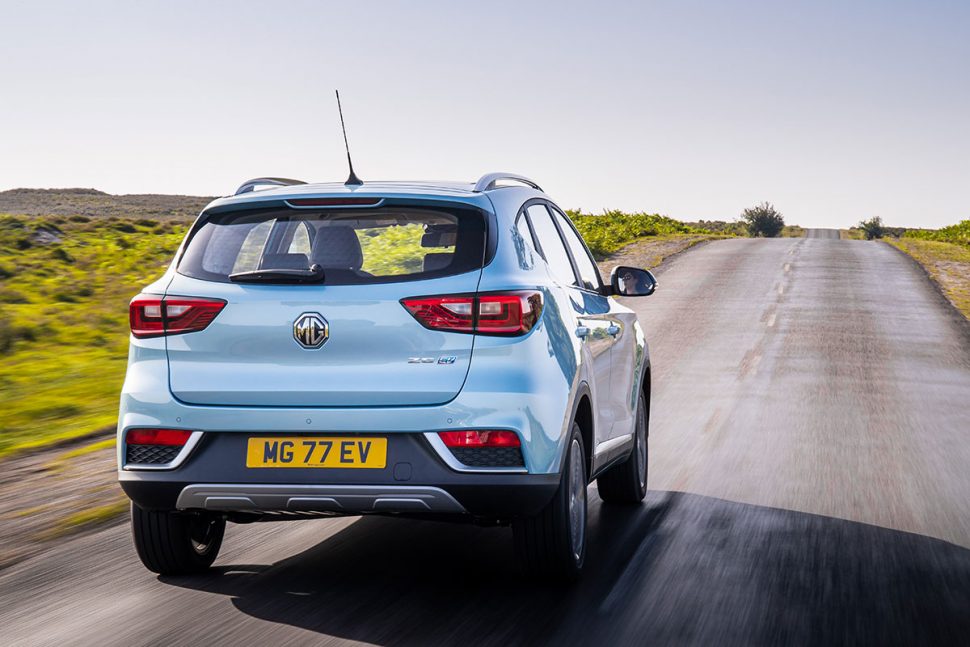
SEAT Tarraco (2019 to 2024)

Summary

The SEAT Tarraco was a large seven-seat SUV/crossover, which made its premiere at the 2018 Paris motor show before going on sale in the UK in early 2019. It was discontinued in the summer of 2024.

The Tarraco shared its platform with the similarly-sized Skoda Kodiaq, and received generally average scores from the UK motoring media. It was particularly praised for its practicality, spaciousness and value for money. The main criticism was that the third row of seats was cramped compared to other seven-seat SUV rivals.

As of March 2026, the SEAT Tarraco holds a Used Car Expert Rating of C, with a score of 62%. Most of its scores are average to poor.

Key specifications

Body style: Large SUV/crossover
Engines: petrol, diesel
Price when new: From £33,415

Launched: Winter 2018/19
Last updated: Spring 2019
Discontinued: Summer 2024

Media reviews

Highlighted reviews and road tests from across the UK automotive media. Click any of the boxes to view.

The Car Expert

Auto Express

Auto Trader

Car

Car Keys

Carbuyer

Carwow

Company Car Today

Daily Mirror

Green Car Guide

Heycar

Parkers

The Sun

The Telegraph

Top Gear

Safety rating

Independent crash test and safety ratings from Euro NCAP

Overall score: 5 stars
Date tested: February 2019
Date expired: January 2026
Read the full Euro NCAP review

Adult protection: 97%
Child protection: 84%
Vulnerable road users: 79%
Safety assist: 79%

Notes on safety rating

The SEAT Tarraco was tested by Euro NCAP back in 2019 and awarded a five-star rating. However, this rating expired in January 2026 and is no longer valid as the car no longer meets the standards required for such a rating. This is normal practice, as Euro NCAP reviews its ratings on most cars annually with most ratings expiring after about six or seven years.

Although the rating has now expired, the score is still useful if you are comparing a used Tarraco to vehicles of similar age – whose ratings will have probably also expired.

Eco rating

Independent economy and emissions ratings from Green NCAP

No eco rating

The SEAT Tarraco was not assessed by Green NCAP during its production life.

Reliability rating

MotorEasy logo 600x167

Reliability data provided exclusively for The Car Expert by MotorEasy

No reliability rating

As of April 2025 (our most recent data point), we don’t have enough reliability data on the SEAT Tarraco to generate a reliability rating.

The Car Expert’s reliability information is provided exclusively to us using workshop and extended warranty data from our partner, MotorEasy, sourced from both official dealerships and independent workshops. 

As soon as MotorEasy has sufficient data on the Tarraco, we’ll publish the results here.

Running cost rating

Clear Vehicle Data logo close crop

Monthly cost of ownership data provided exclusively for The Car Expert by Clear Vehicle Data

Fuel consumptionAverageScore
Petrol models37 mpgD
Diesel models48 mpgC
CO₂ outputAverageScoreVariationScore
Petrol models175 g/kmD
Diesel models156 g/kmC
Insurance groupAverageScoreVariationScore
All models24B
Service and maintenanceCostScore
Year 1£203B
Year 2£523B
Year 3£917C
Year 4£1,167C
Year 5£1,578C
Overall£4,388C

The SEAT Tarraco is a relatively expensive car to own and run, according to whole-life cost numbers provided exclusively to The Car Expert by our data partner, Clear Vehicle Data.

The biggest ownership bills are usually fuel, and the Tarraco doesn’t do too well here (which is not that surprising, given that it’s a large seven-seat SUV). However, servicing and insurance bills are likely to be much more reasonable.

Awards

Trophies, prizes and awards that the SEAT Tarraco has received

2022

  • Fleet World Awards – Best Fleet Large SUV

2021

  • Auto Express Awards – Best Large SUV
  • Fleet World Awards – Best Fleet Large SUV

2020

  • Parkers New Car Awards – Best Large Family Car
  • Auto Express Awards – Best Large SUV
  • Fleet World Awards – Best Fleet Large SUV

2019

  • Auto Express Awards – Best Large SUV

Similar cars

If you’re looking at the SEAT Tarraco, you might also be interested in these alternatives

Citroën C5 Aircross | Honda CR-V | Hyundai Santa Fe | Kia SorentoLand Rover Discovery Sport | Mitsubishi Shogun Sport | Nissan X-Trail | Peugeot 5008 | Skoda Kodiaq | SsangYong Rexton | Subaru Forester | Suzuki Across | Toyota RAV4 | Volkswagen Tiguan Allspace

More news, reviews and information about the SEAT Tarraco at The Car Expert

Everything you need to know about SEAT

Everything you need to know about SEAT

SEAT Tarraco test drive

SEAT Tarraco test drive

Five-star safety ratings for Mercedes, Honda and SEAT

Five-star safety ratings for Mercedes, Honda and SEAT

Pricing and specs confirmed for Seat Tarraco SUV

Pricing and specs confirmed for Seat Tarraco SUV

SEAT Tarraco third and biggest SUV

SEAT Tarraco third and biggest SUV

Buy a SEAT Tarraco

If you’re looking to buy a new or used SEAT Tarraco, The Car Expert’s partners can help you find the right car.

Motors 600x300

Find your next used car with Motors. Find out more

Auto Trader logo 600x300

Find your next new or used car with Auto Trader. Find out more

Carwow logo 600x300

Find your next new or used car with Carwow. Find out more

Lease a SEAT Tarraco

If you’re looking to lease a new SEAT Tarraco, The Car Expert’s partners can help you find a competitive deal.

Leasing-com logo

Personal contract hire deals from Leasing.com. Find out more

Carwow logo 600x300

Personal contract hire deals from Carwow. Find out more

Select Car Leasing logo

Personal contract hire deals from Select Car Leasing. Find out more

Subscribe to a SEAT Tarraco

If you’re interested in a car subscription, The Car Expert’s partners can help. (PS: What’s a car subscription?)

Cocoon Vehicles logo 600x300

Car subscriptions from Cocoon.
Find out more

Just Vehicle Solutions logo 600x300

Car subscriptions from Just Vehicle Solutions.
Find out more

Flexible Vehicle Contracts logo 600x300px

Car subscriptions from Flexible Vehicle Contracts.
Find out more

SEAT Tarraco test drive

SEAT has had a successful time of it recently. It was the fastest-growing car manufacturer in the UK last year, and has seen sales increase steadily too. This has been bolstered by the introduction of two SUV models — the Ateca and the smaller Arona — which have both gone down a treat with consumers.

Now, the Spanish firm is hoping to extend its appeal with this – the SEAT Tarraco.

Sitting above the Ateca and Arona in terms of size, it’s aiming to capture the attention of those who want the sporty looks of a SEAT, but with a touch more practicality – and seven seats, to boot.

What’s new about the SEAT Tarraco?

As mentioned, the Tarraco comes into the SEAT line-up as the largest SUV the firm offers. It’s underpinned by Volkswagen Group’s MQB-A long wheelbase platform – the same as the one you’ll find underneath the Kodiaq from sister company Skoda. It means that though the smaller Ateca is restricted to just five seats, the Tarraco can deliver three genuine seating rows, matching the number in the manufacturer’s other seven-seater, the Alhambra people carrier.

But whereas the Alhambra is about out-and-out spaciousness, the Tarraco has been designed to not only be practical, but good to drive too. It’s why you’ll find sporty driving modes fitted, along with all-wheel-drive in certain models.

How does it look?

SEAT has applied some new features to the Tarraco to help differentiate it from the rest of the range, while still maintaining some degree of lineage from the rest of its line-up. It’s why the headlamps have a similarly sleek design to the Ateca, but set further back up the bonnet. And while the sharp crease line running along its flank may appear similar to that seen on the Arona, it’s longer and bolder, giving the seven-seater a more dynamic appeal.

Overall, it’s a well-executed design. The full-width brake light at the rear is certainly eye-catching, and the variety of chrome elements dotted along the car’s exterior make for a premium-looking vehicle.

What’s the spec like?

SEAT has simplified its trim levels and essentially eliminated any optional extras. In fact, you’re only able to add a space-saver spare wheel, a tow bar or panoramic sunroof – and that’s it. Otherwise, you have to pick from one of four trim lines; SE, SE Technology, Xcellence and Xcellence Lux.

Our test car was finished in the final and most luxurious trim level, which brings with it a multitude of features – though it’s worth noting that even base-spec cars get an eight-inch central touchscreen and ten-inch digital cockpit fitted as standard.

Xcellence Lux cars get 20-inch alloy wheels, front sports seats and a top view camera, as well as heated front and outer rear seats. In truth, the standard specification is so comprehensive that we’d struggle to see many drivers wanting for more features.

In terms of safety, the SEAT Tarraco scores highly, with a five-star rating from independent experts Euro NCAP awarded earlier this year.

What’s the SEAT Tarraco like inside?

Because of its Volkswagen Group connections, the interior of the Tarraco is likely to feel familiar to anyone who has been in a current-generation Tiguan, Karoq or Golf. That’s no bad thing whatsoever; it’s very well put together, with decent materials used throughout. Chrome accents at the front of the cabin help brighten it up, while the widescreen infotainment screen gives it a high-tech feel.

But though tech is all well and good, how does the Tarraco do in an area where’s it important in this segment – spaciousness? For the most part, very well. The first and second rows are roomy, with big windows helping to give an airiness to the cabin. And while the third row of seats may not be a favourite place to be for adults, they’ll be more than enough room back there for children.

In terms of boot space, there are 230 litres to play with when that third row is in place, rising to 700 litres with it folded down. With both third and second rows flat, there’s a huge 1,775-litre space on offer.

What’s under the bonnet?

Our test car came fitted with the most powerful diesel on offer – a 2.0-litre turbocharged unit with 190hp and 400Nm of torque. Here, it sends power to all four wheels via a seven-speed DSG automatic gearbox. Seat says the Tarraco, when powered by this engine, is good for a 130mph top speed and will do the 0-60mph sprint in a very respectable 7.8 seconds.

Economy-wise, it’s par for the course in this segment. The 2.0-litre engine puts out 147g/km of CO2 and will return between 37.2 and 38.2mpg on the combined cycle.

There’s just one other diesel option, and that uses the same 2.0-litre lump, albeit with 150hp. Then there’s a 1.5-litre turbocharged petrol (SEAT expects this to be one of the most popular), and a more powerful 2.0-litre petrol too.

What’s the SEAT Tarraco like to drive?

SEAT has always pitched itself towards the more driver-orientated end of the market, and while that may make sense with hot hatchbacks, it doesn’t key in quite as well with the seven-seater, family-angled end of the segment.

Fortunately, it has dialled back things with the Tarraco; the steering is relatively light around town (which makes it easy to pilot at slow speeds), while the DSG gearbox in our test car shifted smoothly when up and running – though power delivery can be a touch sluggish when going from a dead stop.

Our only issue came with the ride; the 20-inch alloys fitted to our test car may look excellent, but add a level of harshness that you don’t expect from a car of this type. We tested another vehicle on smaller 18-inch units and this helped ease the problem, though it still wasn’t eradicated completely.

Verdict

The Tarraco may be yet another entry into the SUV segment, but it’s one well worth considering. It’s laden with standard equipment, is spacious and practical too. The ride may be harsh, but stick to smaller-wheeled versions and it’s unlikely to be troublesome to most.

The diesel engine fitted to our test car fitted the character of the vehicle, and will suit long-distance drivers. However, the variety of other powertrains means there’s undoubtedly going to be one for all buyers.

As of July 2019, the SEAT Tarraco has an Expert Rating of 77% on The Car Expert’s analysis of the leading UK automotive media reviews. This is slightly better than its sister model, the Skoda Kodiaq. We’ll keep updating this score as more reviews are published over the coming months.

Similar cars

Citroën C5 Aircross | Hyundai Santa Fe | Kia Sorento | Land Rover Discovery Sport | Nissan X-Trail | Peugeot 5008 | Skoda Kodiaq | Volkswagen Tiguan Allspace

Key specifications

Model as tested: SEAT Tarraco Xcellence Lux
Price as tested (on road): £40,090
Engine: 2.0-litre turbocharged diesel
Gearbox: Seven-speed automatic
Power: 190 hp
Torque: 400 Nm
Top speed: 130 mph
0-60mph: 7.8 seconds
Fuel economy (combined): 37.2-38.2 mpg
CO2 emissions: 147 g/km

Britain’s best-selling cars – June 2019

New car registration numbers published last week show that the market was down 5% in June 2019 compared to the same month last year.

It was a hot month for hatches, with nine of the top ten models being entirely or predominantly of a hatchback body style. Only one SUV/crossover model, the Nissan Qashqai, featured in the running, while no saloon models featured at all this month.

June was a good month for DaciaLotusMG, Toyota and Volvo, who all saw growth of at least 10% compared to the same month last year. Meanwhile, things were not so rosy for AbarthAlfa Romeo, Bentley, BMW, CitroënDS Automobiles, Fiat, Honda, Infiniti, Maserati, McLaren, SkodaSmartSsangYong, Suzuki, Vauxhall and Volkswagen, who all saw double-digit declines compared to the same month last year.

Check out our report on the registration numbers: New car sales down 5% in June.

Despite the overall theme being another month of falling sales, there are still plenty of popular cars flying out of new car showrooms. Here are the ten best-selling cars for June 2019.

Ten best-selling cars – June 2019

1. Ford Fiesta

Ford Fiesta news, reviews, safety and eco ratings | Britain's best-selling cars | The Car Expert

Seasons change, governments rise and fall, another World Cup has come and gone, and still the Ford Fiesta reigns supreme at the top of the UK new car sales charts.

The Fiesta currently holds an Expert Rating of 85% in The Car Expert’s all-new New Car Ratings database, which compares reviews from across the UK motoring media. This is higher than any other car in the supermini class and also the highest rating in the top ten best-sellers list, so it seems that motoring journalists and the buying public are in agreement on the Fiesta’s qualities.

2. Vauxhall Corsa

Vauxhall Corsa 2017 - ratings and reviews | The Car Expert

The Vauxhall Corsa is in full run-out mode, and it appears that plenty of people are snapping up a deal as production of the current model comes to a halt later this year. Second place this month means that the Corsa solidifies its fourth-place position overall as we hit the halfway mark for 2019.

The Vauxhall Corsa holds an Expert Rating of 63%, which is one of the lowest scores among the Top Ten cars in The Car Expert’s New Car Rating database. The current model is due for replacement late this year or early next year, and Vauxhall dealers will be eager for the new Corsa to take the fight to the ever-dominant Ford Fiesta.

3. Mini hatch

Mini three-door hatch (2018) ratings and reviews | The Car Expert

The Mini hatch range bounced back from outside the top ten to claim third spot this month, which comes as a bit of a surprise. The Mini has been yo-yoing its way up and down the sales charts this year, and June’s good result has helped push it up one place to eighth in the year-to-date results after the first six months of 2019.

The Mini hatch holds a very solid score of 81% in our New Car Ratings aggregator, which is better than most cars in its class despite being older than many of its rivals.

4. Volkswagen Golf

Volkswagen Golf 2017 - ratings and reviews | The Car Expert

The current generation of Golf may be reaching the end of its life, having been launched back in 2012, but it remains popular among UK buyers. The Golf is the country’s third most popular new car at the halfway point of 2019, right behind its arch-rival, the Ford Focus.

The Volkswagen Golf holds an Expert rating of 84% in The Car Expert’s New Car Ratings database, so it’s popular with journos as well as buyers.

5. Ford Focus

Ford Focus 2018 - ratings and reviews | Uk's best-selling cars | The Car Expert

The Ford Focus slipped back from second to fifth place this month, narrowly pipped for fourth by the Volkswagen Golf (by just over 20 cars). It still holds second place in the overall year-to-date standings, basically maintaining its margin over the Golf in third.

The Focus currently holds an Expert Rating of 82% in our New Car Ratings database, and was also listed by safety gurus Thatcham Research as one of the ten safest cars for 2019.

6. Nissan Qashqai

2019 Nissan Qashqai wallpaper | The Car Expert

The Qashqai wasn’t the most popular British-built new car in Britain for a change in June, with that honour going to the Mini hatch. However, it was the only SUV/crossover model to feature in this month’s top ten, as small to mid-size hatchbacks dominated the sales tables.

A decade ago, the original Qashqai almost had the compact SUV/crossover market all to itself. Today, it’s the fastest-growing segment in the new car market. Despite this, the current Qashqai continues to see of every new challenger – despite being one of the oldest models in the sector, having being launched in 2014.

The Nissan Qashqai currently holds an Expert Rating of 74% in our New Car Ratings database, which is midfield for the compact crossover segment and in the bottom half of scores for a Top Ten-selling car.

7. Toyota Yaris

Toyota Yaris Y20 review 2019 | The Car Expert

Another re-entry this month was the Toyota Yaris supermini, which was also the only hybrid vehicle in the top ten. Seventh place meant it outsold the Volkswagen Polo and also crept back up to tenth place in the overall year-to-date figures as we reached the halfway mark for the year.

The Toyota Yaris currently has an Expert Rating of 68% in our New Car Ratings database, which is below average for both the top ten club and compared to the best performers in its class. However, it remains the only hybrid supermini currently on sale.

8. Volkswagen Polo

Volkswagen Polo (2018) - ratings and reviews | The Car Expert

The Volkswagen Polo was up one spot to eighth in May, although it’s still fairly comfortable in seventh position in year-to-date registrations as 2019 reaches half-time.

The Polo holds an Expert Rating of 79% in The Car Expert’s New Car Ratings calculator, which is good but a fair way behind the class-leading Ford Fiesta.

9. BMW 1 Series

BMW 1 Series (2015-2019) ratings and reviews | The Car Expert

Another model in run-out mode is the BMW 1 Series, with the existing model due to make way shortly for its all-new replacement from about September. The current model is now out of production, so BMW dealers will be clearing out their stocks of whatever’s left. This will probably mean that sales start to fall off rapidly as they run out of vehicles, so this could be the last time we see the current-generation 1 Series in the top ten.

The current BMW 1 Series still holds a reasonably strong Expert Rating of 77% in our New Car Ratings aggregator, which is not too shabby for a model that was launched back in 2011.

10. Mercedes-Benz A-Class

Mercedes-Benz A-Class 2018 - ratings and reviews | The Car Expert

Still in the top ten, but falling back to the bottom of the table in June, is the Mercedes-Benz A-Class. It’s a sign of how popular the car is that tenth place in the sales charts will be considered a disappointment for Mercedes management.

The Mercedes-Benz A-Class has an Expert rating of 78% in The Car Expert’s New Car Rating system. The overall score is dragged down somewhat by lower ratings from a couple of performance car titles (Evo and Top Gear), otherwise it would be a solid 80% or more.

Hyundai i30

Summary

The Hyundai i30 is a mid-sized family car range that consists of hatchback, liftback (i30 Fastback) and estate (i30 Tourer) body styles. The current model is the third generation i30, launched in late 2016 before going on sale in the UK in early 2017.

There is a high-performance version of the i30, called the i30 N. We have a separate page for this model here.

The Hyundai i30 has received average to good reviews from the UK motoring media, and ranks right in the middle of the midfield for this sector. It has been praised for its practicality and low running costs, although has been criticised for a lack of driver appeal compared to some of its rivals.

The i30 was updated in late 2020, with the most obvious difference being sharper front-end styling. There were also some equipment updates, while the engines are now all mild-hybrid units for extra electrical boost. This was an update to the existing vehicle, rather than an all-new model.

As of March 2026, the Hyundai i30 has a New Car Expert Rating of C, with a score of 63%. It scores highly for running costs, low CO2 emissions and excellent reliability, while its score is dragged down by poor media reviews. However, its low ownership costs and strong reliability help it to achieve an A grade in our used car calculations.

Key specifications

Body style: Five-door hatch, liftback and estate
Engines: petrol, diesel
Price: From £21,260

Launched: Winter 2016/17
Last updated: Autumn 2020
Replacement due: TBA

Media reviews

Highlighted reviews and road tests from across the UK automotive media. Click any of the boxes to view.

Featured reviews

More reviews

Auto Express

Auto Trader

Business Car

Car

Carbuyer

Carwow

Company Car Today

Evo

Fleetworld

Heycar

Honest John

Motoring Research

Parkers

The Telegraph

Top Gear

Safety rating

Independent crash test and safety ratings from Euro NCAP

Overall score: 5 stars
Date tested: July 2017
Date expired: January 2024
Read the full Euro NCAP review

Adult protection: 88%
Child protection: 84%
Vulnerable road users: 64%
Safety assist: 68%

Notes on safety rating

The Hyundai i30 was tested by Euro NCAP back in 2017 and awarded a five-star rating. However, this rating expired in January 2024 and is no longer valid as the car no longer meets the standards required for such a rating. This is normal practice, as Euro NCAP reviews its ratings on most cars annually with most ratings expiring after about six or seven years.

However, if you are comparing a used i30 to vehicles of similar age, whose ratings will have probably also expired, its safety rating score is still useful.

Eco rating

Independent economy and emissions ratings from Green NCAP

No eco rating

As of March 2026, the Hyundai i30 has not been lab tested by Green NCAP.

Reliability rating

Reliability data provided exclusively for The Car Expert by MotorEasy

All data based on MotorEasy average workshop costs for extended car warranty claims

The Hyundai i30 has a very good reliability rating, according to workshop and warranty data provided by our partner MotorEasy. This data includes repair costs for this current model and older (pre-2017) models.

Repair costs for the i30 are pretty low across the board in the even of a fault. Supension issues are most common, but only cost around £120 to fix.

If you own a Hyundai i30 or you’re interested in buying a used i30, make sure any extended warranty cover you purchase covers all of the potential problem areas listed above.

Running cost rating

Clear Vehicle Data logo close crop

Monthly cost of ownership data provided exclusively for The Car Expert by Clear Vehicle Data

Fuel consumptionAverageScore
Petrol models48 mpgC
Diesel models60 mpgB
CO₂ outputAverageScoreVariationScore
Petrol models136 g/kmC
Diesel models127 g/kmB
Insurance groupAverageScoreVariationScore
All models13A
Service and maintenanceCostScore
Year 1£175B
Year 2£458B
Year 3£738B
Year 4£940B
Year 5£1,220A
Overall£3,531A

The Hyundai i30 is a very affordable car to own and run, according to whole-life cost numbers provided exclusively to The Car Expert by our data partner, Clear Vehicle Data.

In pretty much every category, the i30 scores an A. Even the petrol models should be very economical in day-to-day driving, although the diesels are more efficient for long motorway journeys.

Similar cars

If you’re looking at the Hyundai i30, you might also be interested in these alternatives

Alfa Romeo Giulietta | Citroën C4 | Citroën C4 Cactus | Fiat Tipo | Ford Focus | Honda Civic | Kia Ceed | Mazda 3 | Mini Countryman | Peugeot 308 | Renault Megane | SEAT Leon | Skoda Scala | Skoda Octavia | Suzuki Swace | Toyota Corolla | Vauxhall Astra | Volkswagen Golf

Buy a Hyundai i30

If you’re looking to buy a new or used Hyundai i30, The Car Expert’s partners can help you find the right car.

Motors 600x300

Find your next used car with Motors. Find out more

Auto Trader logo 600x300

Find your next new or used car with Auto Trader. Find out more

Carwow logo 600x300

Find your next new or used car with Carwow. Find out more
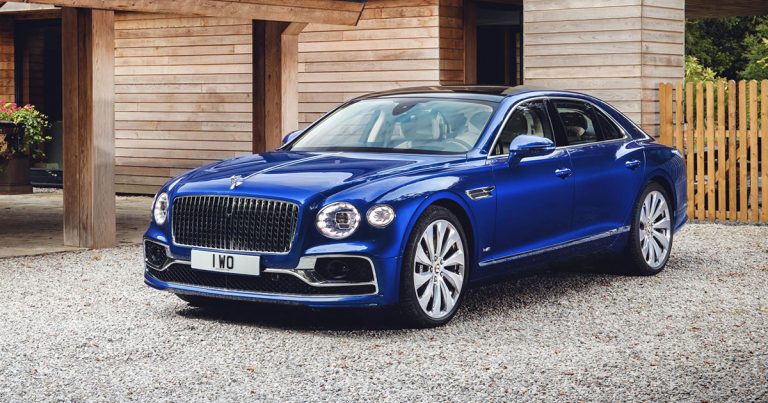
Lease a Hyundai i30

If you’re looking to lease a new Hyundai i30, The Car Expert’s partners can help you find a competitive deal.

Leasing-com logo

Personal contract hire deals from Leasing.com. Find out more

Carwow logo 600x300

Personal contract hire deals from Carwow. Find out more

Select Car Leasing logo

Personal contract hire deals from Select Car Leasing. Find out more

Subscribe to a Hyundai i30

If you’re interested in a car subscription, The Car Expert’s partners can help. (PS: What’s a car subscription?)

Cocoon Vehicles logo 600x300

Car subscriptions from Cocoon.
Find out more

Just Vehicle Solutions logo 600x300

Car subscriptions from Just Vehicle Solutions.
Find out more
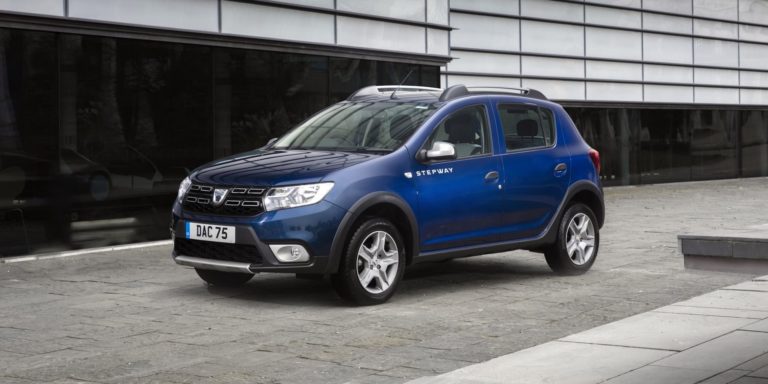
Flexible Vehicle Contracts logo 600x300px

Car subscriptions from Flexible Vehicle Contracts.
Find out more

Lexus LC Convertible heading for showrooms

The Lexus LC Convertible, so far seen only as a concept, is to become a production model.

The Japanese brand unveiled a convertible concept version of its well-received LC Coupe at the Detroit motor show in January, immediately sparking predictions that the car would reach showrooms.

Now having demonstrated the concept model at the Goodwood Festival of Speed, Lexus has confirmed that production will begin ‘in the near future’.

Despite the camouflaged livery worn by the car at Goodwood, it is clear that the convertible’s styling will be almost identical to the coupe in all areas except the roof and rear deck.

Lexus LC Convertible the Car Expert

Koji Sato, Lexus International executive vice president, described the Goodwood Festival of Speed as the perfect venue for the car as the event “celebrates the history and culture of the automobile and serves as a gathering place for some of history’s most notable cars and drivers.
“Lexus is honoured to join this festival, and I could not be happier to unveil this prototype model of the LC convertible at the same venue where the LC coupe made its debut in 2016,” he added.

No further details were offered concerning the forthcoming production model, but it is almost certain to replicate the engine range of the Coupe – a 5.0-litre petrol V8 and a petrol-electric plug-in hybrid.

Lexus LC Convertible the Car Expert