Find an Expert Rating: 
Home Blog Page 111

Updated BMW X1 SUV gets the big grille treatment

BMW has revamped its X1 SUV, based around an updated exterior look and more interior design choices.

The X1’s first major revision since the firm’s entry-level SUV was introduced in 2015 is dominated by the major exterior change, the significantly larger and more dominant ‘kidney’ grille. A redesigned bumper and new LED headlights are also fitted while at the back of the car, larger exhaust pipes are introduced with redesigned rear lights.

For the first time the X1 is available with puddle lights — projecting an X1 logo onto the ground from the driver-side mirror when the car is unlocked. these are now options on SE and Sport models and standard equipment for xLine and M Sport variants.

1905 BMW X1 The Car Expert

Inside the car, new upholstery options have been introduced to the range. Anthracite with grey contrast stitching (or orange optionally) is now available on Sport models, while M Sport variants gain a new black leather trim as standard.

The powertrain line-up offers the same choice of petrol and diesel engines as previously, though BMW has confirmed a plug-in hybrid variant will be joining the X1 range in March 2020. The xDrive25e is claimed to be capable of more than 31 miles on electric power alone on a single charge.

Dealers are now taking orders for updated BMW X1 models at prices starting from £28,795. Customer deliveries are expected to begin in July.

1905 BMW X1 The Car Expert

New Ferrari SF90 Stradale is a 1,000hp plug-in hybrid

Ferrari has unveiled the new SF90 Stradale, the Italian brand’s most powerful road car to date.

Named to celebrate the 90th anniversary of the Scuderia Ferrari racing team, which pre-dated the road-car side of the business by nearly 20 years, the SF90 Stradale is Ferrari’s second electrified car after the LaFerrari hypercar from 2013. It also shares its name with the Ferrari SF90 Formula One racing car being campaigned by the Scuderia this year.

More significantly, it is both Ferrari’s first plug-in machine and the brand’s first hybrid production car. The SF90’s powertrain mates a redesigned 3.9-litre V8 of 780hp to an electric motor that adds a further 220hp.

Power from the V8 is sent to the rear wheels via an eight-speed dual-clutch automatic gearbox – another first for Ferrari – while the electric motor powers the front axle.

This all-wheel-drive system incorporates Ferrari’s new ‘RAC-E’ technology on the electrified axle, too. Ferrari likens it to ‘a hand guiding the car into corners’, using torque vectoring technology to optimise the percentage of power sent to each wheel at any one time.

All of this adds up to a 0-60mph time of 2.3 seconds (Ferrari’s quickest car to date) and a top speed of 211mph. Although lap times have not yet been announced, the SF90 Stradale is also likely to be the fastest Ferrari to ever lap its historic Fiorano test track.

Being a plug-in hybrid, the Ferrari SF90 Stradale is also capable of running solely on electric power, Ferrari claiming that it can cover just over 15 miles between charges when in EV mode.

The major technical innovations on the car may be underneath the skin but there is also visible technology, including a drag reduction system (DRS) on the SF90’s rear wing.

1905 Ferrari SF90 Stradale The Car Expert

Ferrari has abandoned the large rear wing format employed by many supercars in favour of a system that lowers a segment of bodywork in front of the wing to increase downforce under braking and hard cornering, before raising it again to minimise drag. In total, the SF90 can produce 390kg of downforce.

Inside the car, an overhauled steering wheel features touch-sensitive buttons to put most of the car’s functions at the driver’s fingertips. Behind it sits a new 16-inch digital instrument cluster, as well as a new head-up display.

Even the key is new – the SF90 is entirely ‘keyless’, allowing it to be locked, unlocked and started with the fob in the driver’s pocket. This fob has been designed to look identical to the Ferrari badge at the front of the car.

Ferrari expects many owners to use their SF90 Stradale on the track and for them the ‘Assetto Fiorano’ package is available. This adds carbon fibre door panels and underbody elements, plus titanium springs and exhaust components to shave 30kg off the weight of the standard car, while its 20-inch forged alloy wheels are shod with Michelin Pilot Sport Cup 2 tyres for increased grip.

Ferrari is yet to announce the price of the SF90 Stradale. As the firm’s new range-topper, it is expected expect it to surpass the £260,000 of the previous flagship model, the 812 Superfast. First deliveries of the SF90 Stradale are scheduled for 2020.

1905 Ferrari SF90 Stradale The Car Expert

All-new BMW 1 Series revealed

BMW has pulled the covers off its eagerly-awaited new 1 Series hatchback – the third-generation version of the German firm’s best-selling model in the UK.

The new 1 Series is slightly smaller in length than the outgoing model, but increased width and a longer wheelbase ensures improved interior space – most notably for rear passengers – alongside a 380-litre boot, which is now 20 litres more spacious.

A new look has also been introduced, with BMW’s evolved kidney grille featuring alongside sharp LED lights and alloy wheels up to 19 inches.

The previous two versions of the 1 Series have all been rear-wheel drive (minus the all-wheel xDrive option on selected diesel engines) but the new model is strictly front-wheel drive as standard, while the M135i and 120d engines are both all-wheel drive.

2019 BMW M135i - rear | The Car Expert

Some have mourned the loss of the fantastic 3.0-litre six-cylinder engine of the hot hatch version, with the new M135i sporty variant coming with a 2.0-litre four-cylinder petrol engine producing 306hp, which allows for a 0-60mph time of just 4.6 seconds.

The hot M135i has been unveiled alongside the standard hatch, and it comes with sportier styling and chassis improvements for an improved drive, along with bigger brakes and retuned steering.

There’s only one other petrol unit available – the 140hp 1.5-litre 118i. The diesel options consist of a 1.5-litre 116d producing 115hp, a 150hp 2.0-litre 118i and a 120d xDrive that utilises a 190hp 2.0-litre diesel.

The options list is also awash with innovative tech, such as features that can reverse you out of tight parking spaces, your own ‘personal assistant’ to tell you about traffic jams and find nearby cafes – operated using the command ‘Hey BMW’ – and a Digital Key that can unlock and start the car using just a smartphone.

Unlike the last 1 Series, no three-door variant is being offered this time around. Prices start from £24,430 – a slight increase over the outgoing hatch’s £23,605 tag – and rise to £36,430 for the range-topping M135i xDrive.

Order books are now open, with first deliveries expected in September.

Honda e to offer standard-fit cameras in place of door mirrors

The Honda e electric car will be the first production model to fit door cameras in place of wing mirrors as standard.

Launching in 2020, the Honda will not be the first car fitted with cameras – Audi now offers them on its e-tron. But the Honda will be the first to provide them as standard equipment.

Cameras can offer a superior view of the scene behind the car compared to traditional door mirrors, but the major advantage in electric cars is their size. A camera pod is much smaller than a door mirror pod, causing significantly less drag and helping to increase the range between charges of an EV.

According to Honda, the side cameras reduce drag by 90%, compared with conventional door mirrors. That results in around a 4% improvement for the whole vehicle.

The Japanese manufacturer adds that the side camera mirror system helps the e retain its modern and clean design, as the small camera pods hug close to the doors and add little disruption to the smooth A-pillars and doors, which have flush pop-out handles.

1905 Audi e-tron
Audi camera system mounts screens in door pockets close to view of traditional wing mirror.

Audi and Honda have developed the camera technology in differing ways. Audi has incorporated the screens for the rear view image into the inside top corner of the door, close to where a driver would usually look towards the wing mirrors. However, Honda’s screens display a much larger view as part of the dashboard.

The Honda side camera mirror system also lets users switch between a ‘normal’ and ‘wide’ view, for improved visibility.

Honda’s new electric city car claims more than 125 miles of range, and will include a fast-charge function that will restore battery power to 80% in 30 minutes.

UK buyers can now reserve a Honda e online by putting down an £800 deposit. The total purchase price is expected to be around £28,000.

Honda e Prototype 2019 The Car Expert
First seen at Geneva show, Honda e goes on sale in 2020. Photo: Andrew Charman

Volvo S60 review

60-second summary

What is it?
The Volvo S60 is the Swedish brand’s latest mid-sized saloon, competing against premium-badged heavyweights.

Key features
Two plug-in hybrids in range, front or all-wheel drive, striking looks.

Our view
The Volvo S60 maintains the Swedish brand’s recent record of top-quality build and plenty of tech in a striking visual package.

While it can’t quite match some rivals for its on-the-road dynamics, it’s a pretty efficient all-round alternative to the traditional premium rivals. 

Similar cars
Alfa Romeo Giulia | Audi A4 | BMW 3 Series | Jaguar XE | Lexus IS | Mercedes-Benz C-Class | Peugeot 508

Full review

Introduction

On the face of it, there is not a lot to write about the all-new Volvo S60 – because to Volvo fans, most of this car will already be familiar.

The arrival of the S60 completes the renewal of the Swedish brand’s mid-sized model line and the two other members – the V60 estate and off-road themed V60 Cross-Country, have been with us for some time. This car is effectively the V60 in four-door saloon form, save for one major difference, under the bonnet.

This is the first modern Volvo to come to market without the option of a diesel engine – Volvo delivering on its promise to move away from oil burners. And that fact is far more important than this being the first Volvo to be built in the brand’s state-of-the-art new factory in Charleston, South Carolina, USA.

Why? Because the Volvo S60 is the car that the brand expects to take on the biggest hitters in the most competitive part of the premium sector. Volvo wants to steal sales from the BMW 3 Series, Audi A4 and Mercedes-Benz C-Class, as well as the likes of Jaguar’s XE and Alfa Romeo’s Giulia.

Such cars are all dominant players in the fleet sector where until now diesel’s benefit-in-kind tax advantages have kept it the preferred choice. Yes the picture is changing but Volvo clearly hopes to accelerate that change – not through the T5 petrol engine in the launch cars, but a choice of not one but two plug-in hybrid variants that will soon join the range. Is the brand focusing on electric too early? Time will tell…

Visually the new S60 paints a rather more distinctive picture in the company car park than do its over numerous and oh so conventional rivals such as the 3 Series. This Volvo boasts the same sculpted panels as its V60 sister, the same clever details cascading down from the 90 Series cars, such as the concave grilles and ‘Thor’s Hammer’ headlamp signature. The rear works well too, the strong curves along the flanks meeting at the top of the boot to produce a slightly nose-down, purposeful appearance. 

Buying and owning the Volvo S60

As mentioned, the S60 does not get the two diesel options that are expected to take the majority of sales in its V60 estate sister. In fact, the launch choice is very simple – one petrol engine through a front-wheel-drive transmission.

The engine in question is the 2.0-litre ‘Drive-E’ unit and it puts out 250hp. Combined with 350Nm of torque, the result is a 6.5-second sprint to 62mph, fuel economy between 35 and 40mpg and CO2 emissions between 152 and 155g/km (WLTP measuring method). 

Even when the two plug-in hybrids join the range Volvo still expects 85% of UK buyers to go for the straight petrol option, so the S60 is clearly not being pitched as an entry to premium saloon ownership.

The 2.0-litre petrol engine will also be the basis of the two plug-in hybrid variants, both of which will be all-wheel-drive. The T8 Twin Engine will offer a total of 390hp and a 4.6-second 0-62mph time, while expected to return official emissions figures of 39g/km – fuel economy is yet to be revealed.

This drivetrain will also be offered as a version ‘breathed upon’ by Volvo’s Polestar performance sub-brand, adding another 15 horses and an extra 30Nm of torque and cutting the 0-62mph time to 4.4 seconds.

All this will cause company car buyers to crunch numbers – the BIK tax rate on the petrol S60 is 34-35% but the T8 plug-in version cuts this to just 16%. There could, however, be an argument for holding on as Volvo is hinting at range expansion – a T6 petrol engine in both normal and traditional hybrid variants.    

S60 trim levels number four, sort of, and curiously they don’t match those of the V60. Entry is the R-Design Plus, but for the launch this is being offered as ‘R-Design Edition’ boasting extra useful tech. This includes a rear-view camera, adaptive cruise control with the pilot-assist semi-autonomous steering aid, blindspot information system and that vital bit of software in today’s connected market, smartphone integration with Apple CarPlay and Android Auto. The £37,935 price tag also provides 19-inch wheels, a 14-speaker premium sound system and heated steering wheel.

When the mainstream range goes on sale, at the same starting price of £37,935, all of the above will be extra-cost options best bought as part of a ‘Value Pack’ – the Smartphone integration for example, disappointing to see on an options list, will cost £300 to add. 

The other two trim levels, still to come at the time of writing, are the performance-pitched ‘Polestar Engineered’ cars primarily featuring uprated engine, transmission, suspension and brakes, and the range-topping Inscription Plus. The latter gets Nappa leather, ventilated front seats, driftwood interior inlays… but you still have to pay £300 more to plug in your Smartphone…

We should add that the general equipment levels on the entry models are quite impressive – you don’t expect to find such niceties as a head-up display and hands-free boot opening on a base car.

Finally as one would expect from a Volvo, the S60 really scores on safety. The blind-spot warning might be an option (also including a rear cross-traffic alert) but the standard kit is extensive, including an autonomous emergency braking system that monitors the behaviour of oncoming traffic as well as that moving in the same direction as the car. A five-star Euro NCAP crash-test rating was no surprise, the car scoring maximum possible points in some areas.

Inside the Volvo S60

When we reviewed the V60 around nine months ago, we argued that the interiors of current Volvos could beat the exteriors for the most visible evidence of the brand’s transformation. Of course, we are dealing with a basically identical interior here, and it still impresses with its immediate feeling of premium quality when one steps inside. This is thanks to the quality of the surfaces, their fit and detailing.

Like most recent Volvos, the new S60 is built on the brand’s latest SPA modular platform, and what that means for buyers coming out of the previous car is a wheelbase stretched by 10cm and more interior space as a result.

The car certainly feels roomy whether seated in front or back. Luggage space is reasonable – the 442 litres is slightly bigger than that in a C-Class but a little less than in a 3 Series or an A4. It is easily accessed – the loading space is wide, the loading lip low and hands-free opening standard on all variants.    

The driver’s environment remains efficient and functional, dominated by the portrait-format Sensus touchscreen infotainment screen on the centre console. We stand by our previous comments on this – you need a day or so to get used to the tablet-style swipe operation and it could benefit from one or two of the most basic car functions moving onto separate buttons.

Driving the Volvo S60

As mentioned, at this early stage we only get to drive S60s fitted with the 2.0-litre T5 petrol engine – quite a powerful unit for an everyday premium saloon.

Over a launch test route that takes in many miles of reasonably challenging roads in the Scottish Highlands it does not disappoint, wafting along in supreme comfort but with no shortage of poke when needed – for example dispatching another car in a rapid overtaking move.  

Part of the recipe for this latest S60 model is all-new suspension front and rear, the leading end benefiting from a double-wishbone setup. Additionally, the launch cars (and all R-Design Plus versions) come as standard with a sports suspension setup, which means stiffer springs, faster-reacting dampers, thicker roll bars and a ride height shaved by just over a centimetre.

These mods do not affect the general comfort of the Volvo, and one gets the impression that the company car staple of munching hundreds of motorway miles will hold no qualms for an S60 driver.

Having said that, the launch R-Design Edition spec does include 20-inch, rather than 19-inch, wheels and these do add a slight harshness to the ride, with the bumps of less than quality road surfaces not completely filtered out before reaching the cabin occupants.

The sports suspension mods do add a certain confidence when one wants to enjoy the car through a series of challenging high-speed bends (of which the Scottish Highlands boast plenty). As such, the S60 becomes quite fun to drive – but not to the finely-honed standards of a rear-wheel-drive BMW 3 Series…

Summary

The S60 is another quality car from Volvo, but it’s also a slightly curious thing. It boasts elements of comfortable cruiser and elements of sporty plaything, but not enough to be principally one or the other. 

There are some rational reasons to choose the Audi or the BMW over Volvo’s latest – but in the S60 you do get quite a lot of high quality car for your £38,000 outlay. And with this car not boasting a confusing line-up of lots of different engines, you will be guaranteed to be driving something a little more exclusive than the general herd. 

Good points

  • Strong safety package
  • Interior space
  • Tech surprises in entry-level spec

Bad points

  • Some rivals offer bigger boot
  • Touchscreen needs some getting used to
  • After launch, tech such as Apple CarPlay option only


Key specifications

Make & ModelVolvo S60Jaguar XEAlfa Romeo Giulia
SpecificationT5 R Design PlusSE P250 Auto RWD2.0 Veloce
Price (on-road)£37,935£35,385£39,690
Engine2.0-litre petrol2.0-litre petrol2.0-litre petrol
Transmission8-speed auto8-speed auto8-speed auto
Power250 hp250 hp280 hp
Torque350 Nm365 Nm400 Nm
0-62mph6.5 sec6.5 sec5.7 sec
Top speed145 mph155 mph149 mph
Fuel economy (combined)35.3-39.3 mpg (WLTP)39.2 mpg (NEDC)46.3 mpg (NEDC)
CO2 emissions152 g/km (WLTP159 g/km (NEDC)158 g/km (NEDC)
Insurance GroupTBC30E34E
Euro NCAP rating5 stars (2018)5 stars (2015)5 stars (2016)

Rolls-Royce Cullinan

Summary

The Rolls-Royce Cullinan is a large luxury SUV and the newest model in the Rolls-Royce family. It has been a controversial addition to the line-up, although initial sales have been reported to be very strong.

Like all Rolls-Royce models, the Cullinan is built in the UK at the company’s facility in Goodwood.

The Rolls-Royce Cullinan has received mostly positive scores from the UK motoring media. It has received particular praise for its comfort and interior quality, but has been criticised for its poor cabin proportions and very high fuel consumption.

As of March 2026, the Rolls-Royce Cullinan holds a low New Car Expert Rating of E with a score of 52%. While the car has a positive media reception, the Cullinan has pretty terrible Eco and Running Cost Ratings, like much of the Rolls-Royce range.

The Car Expert Best of British horizontal banner

Key specifications

Body style: Large SUV
Engine: petrol
Price: From £185,500 on-road

Launched: Autumn 2018
Last updated: N/A
Replacement due: TBA

Media reviews

Highlighted reviews and road tests from across the UK automotive media. Click any of the boxes to view.

Auto Express

Car

Carbuyer

Daily Mail

Evo

Parkers

The Telegraph

Top Gear

Safety rating

Independent crash test and safety ratings from Euro NCAP

No safety rating

As of March 2026, the Rolls-Royce Cullinan has not been tested by Euro NCAP, and due to its price and exclusivity, we think it is unlikely to ever happen. If and when it is put through its paces by Euro NCAP, we will publish the results here.

Eco rating

Independent economy and emissions ratings from Green NCAP

No eco rating

As of March 2026, the Rolls-Royce Cullinan has not been lab tested by Green NCAP.

Reliability rating

MotorEasy logo 600x167

Reliability data provided exclusively for The Car Expert by MotorEasy

No reliability rating

As of March 2026, we don’t have enough reliability data on the Rolls-Royce to generate a reliability rating.

The Car Expert’s reliability information is provided exclusively to us using workshop and extended warranty data from our partner, MotorEasy, sourced from both official dealerships and independent workshops. 

As soon as MotorEasy has sufficient data on the Cullinan, we’ll publish the score here.

Running cost rating

Clear Vehicle Data logo close crop

Monthly cost of ownership data provided exclusively for The Car Expert by Clear Vehicle Data

Fuel consumptionAverageScore
Petrol models18 mpgE
CO₂ outputAverageScoreVariationScore
Petrol models365 g/kmE
Insurance groupAverageScoreVariationScore
All models50F

The Rolls-Royce Cullinan is – unsurprisingly – a very expensive car to own and run, according to whole-life cost data provided exclusively to The Car Expert by our technical partner, Clear Vehicle Data.

We currently only have limited information about the Cullinan, but the very poor CO2 output is an indication of similarly poor fuel consumption. Mind you, that’s exactly what you’d expect from a three-tonne SUV powered by an enormous V12 petrol engine.

Similarly, we don’t have servicing costs for the Cullinan at the moment, but as the saying goes: if you have to ask, you probably can’t afford it…

Awards

Trophies, prizes and awards that the Rolls-Royce Cullinan has received

2019

  • UK Car of the Year Awards – Best Luxury Car
  • Golden Steering Awards – Best Ultra Luxury SUV

Similar cars

If you’re looking at the Rolls-Royce Cullinan, you might also be interested in these alternatives

Aston Martin DBX | Bentley Bentayga | BMW X7 | Lamborghini Urus | Land Rover Range Rover | Mercedes-Benz GLS | Rolls-Royce Ghost

More news, reviews and information about the Rolls-Royce Cullinan at The Car Expert

Everything you need to know about Rolls-Royce

Everything you need to know about Rolls-Royce

Rolls-Royce gives Cullinan the Black Badge treatment

Rolls-Royce gives Cullinan the Black Badge treatment

Rolls-Royce Cullinan joins the SUV party

Rolls-Royce Cullinan joins the SUV party

Rolls-Royce SUV breaks cover

Rolls-Royce SUV breaks cover

Buy a Rolls-Royce Cullinan

If you’re looking for a new or used Rolls-Royce Cullinan, The Car Expert’s partners can help you find the right car

Motors 600x300

Find your next used car with Motors. Find out more

Auto Trader logo 600x300

Find your next new or used car with Auto Trader. Find out more

Carwow logo 600x300

Find your next new or used car with Carwow. Find out more

Toyota Yaris Y20 test drive

How time flies. This year marks 20 years since the original Toyota Yaris first went on sale – a model that increased the Japanese manufacturer’s European presence significantly, with the French-built hatchback offering buyers a compact and likeable hatchback that also proved to be safe and reliable.

Not a lot has changed in that respect, as the Yaris still frequently ranks near the top of the reliability charts, although further strings have been added to the car’s bow with a hybrid powertrain that now accounts for the majority of the model’s sales. That’s even more remarkable considering the hybrid costs over £2,000 more than the standard petrol model.

The Yaris received mild updates in 2017, with revised styling and a bundle of standard safety kit representing the highlights.

And now to mark 20 years of the Yaris, we have this – the celebratory Toyota Yaris Y20.

What’s new about the Toyota Yaris Y20?

At its release, the Toyota Yaris Y20 there was a limited-edition model of 1,998 units. Just 100 of these were destined for the UK, each painted in bright gold to match the shade of the original 1999 launch car.

However, Toyota then made the Y20 a permanent fixture in the Yaris brochure. Offered in a choice of gold, white, silver or black, the trim is complimented by a bi-tone finish to the roof, grille, side sills and fog light surrounds.

Grey detailing also extends to the cabin, which features a grey centre console and further detailing to the steering wheel. It also receives revised upholstery, and in typical special edition fashion, plenty of badges.

How does it look?

The Yaris itself isn’t a bad-looking model, with the X-shaped design signature first seen on the smaller Aygo working its way over to the Yaris. It’s certainly not going to get the heart racing, but is inoffensively styled and not fussy.

The Y20 adds an extra dose of glamour, too, even if it’s no more than a few option boxes being ticked on the standard car.

The bi-tone roof is a nice touch, while the machined 16-inch alloy wheels and grey accents help to differentiate the model from the standard Yaris, too. The swathes of Y20 badges might be a bit unnecessary though, as it’s little more than a glorified trim level.

What’s the spec like?

Designed to sit second from the top of the Yaris range, the Y20 does come with plenty of kit for the money – although it should for a model that costs nearly £20,000, and with the optional satellite navigation fitted to our test car, it pushes the price up to £20,470.

However, the standard equipment list of the Y20 is generous, with features such as front and rear parking sensors with a reversing camera, automatic emergency braking, lane departure warning, high beam assist and road sign recognition all thrown in from the off.

In short, unless you’re sold on the appeal of the Y20’s special edition nature, models further down the trim list make far more sense.

What’s the Toyota Yaris Y20 like inside?

While past superminis could get away with having cheap-feeling interiors, this is no longer the case, with buyers expecting so much more from their small cars – particularly on the inside.

Sadly, Toyota doesn’t seem to have got this memo, and the Yaris’s interior feels decidedly backward compared to rivals.

Toyota Yaris Y20 review 2019 - dashboard | The Car Expert

The layout itself is good, and Toyota has been reserved with the number of interior buttons to leave a fuss-free look, but the quality falls short of the mark. Cheap and scratchy plastics litter the cabin, and little attempt has been made to integrate soft-touch materials to the dash.

The touchscreen is yet another disappointment. Not only can be difficult to use, but it’s lacking Apple CarPlay and Android Auto in the way of smartphone connectivity, and those things are not even offered on the options list.

It’s also not particularly practical, with its 286-litre boot falling behind rivals, and with minimal rear seat space for adults. But then again, it sits in the supermini segment, so you can’t expect estate car levels of roominess.

What’s under the bonnet?

With the Y20, buyers have the option of choosing a standard 1.5-litre petrol engine or the hybrid tested here.

Powered by a 110bhp 1.5-litre petrol engine paired to an electric motor, the Yaris Hybrid offers reserved performance, rather than anything sprightly.

Toyota claims a 0-60mph time of 10.8 seconds and a top speed of 109mph, although the lacklustre CVT automatic gearbox does a poor job of offering those figures in the real world.

On the plus side, it will deliver where efficiency is concerned. Toyota’s claimed fuel economy figures are, unusually, quite underestimated. The firm claims 48mpg and CO2 emissions of 118g/km, but drive the Yaris Hybrid steadily and there’s nothing stopping you seeing fuel economy figures in the 60s around town. However, harsher driving will have the opposite effect, and motorway driving will leave you stopping at the pumps more than you would hope.

What’s the Toyota Yaris Y20 like to drive?

The Yaris Y20 is an odd car to drive, largely because it’s capable of so much more but is fundamentally flawed because of its hybrid powertrain.

As evidenced in 2017’s Yaris GRMN hot hatch, the supermini’s chassis is superb. The Y20 is grippy and offers minimal body roll, and once up to speed, can be quite pleasing to drive. The initial shove of torque from the electric motor is also welcome, but it’s short-lived and stunted by the CVT transmission, because any attempt at harsh acceleration results in unrefined revving with minimal performance gain.

But drive it steadily around town, and the Yaris proves to be far more pleasant. It’s nippy, relatively comfortable and providing you are gentle with the accelerator pedal, not too unrefined, either.

Verdict

Twenty years since its arrival and the Toyota Yaris is still a hugely successful model, and one of the UK’s best-selling models. It’s easy to admire its relaxed nature, credible safety record and, should you opt for the hybrid, impressively low running costs.

However, it’s not short of flaws. The interior is decidedly low rent for a car costing £20,000, and its lack of connectivity and disappointing CVT automatic gearbox model makes the Y20 a tough car to recommend.

Yes, the Toyota Yaris Y20 aims to celebrate 20 years of the model, but choosing a lower-spec car and saving yourself thousands of pounds feels like a much better cause for celebration than this average effort at reigniting the Yaris’s initial spark.

Similar cars

Alfa Romeo Mito | Citroën C3 | Ford Fiesta | Honda Jazz | Hyundai i20 | Kia Rio | Mazda 2 | Mini hatch | Nissan Micra | Peugeot 208 | Renault Clio | SEAT Ibiza | Skoda Fabia | Suzuki Swift | Vauxhall Corsa | Volkswagen Polo

Key specifications

Model as tested: Toyota Yaris Y20
Price (on-road): £20,470
Engine: 1.5-litre petrol engine with hybrid assistance
Gearbox: Continuously-variable automatic transmission (CVT)
Power: 100 hp
Torque: 136 Nm
Top speed: 109 mph
0-60mph: 10.8 seconds
Fuel economy (combined): 47.8 mpg
CO2 emissions: 118 g/km

Range Rover SDV8 test drive

We’re all familiar with the Range Rover – it’s one of the most prestigious off-roaders you can buy and competes just as effortlessly off-road with hardcore mud-pluggers such as the Toyota Land Cruiser as it does on-road with limousines such as the Mercedes-Benz S-Class.

The Range Rover is a big part of British motoring history, and one of our most successful automotive exports.

We’re testing it here in its Range Rover SDV8 Autobiography form – that’s Land Rover parlance for a 4.4-litre V8 diesel engine with lots of kit. It’s the biggest and most powerful diesel the company fits and sits above the entry-level V6 diesel but below the four-cylinder plug-in hybrid models in the range.

What’s new about the latest Range Rover?

Although the current Range Rover went on sale in late 2012, it has recently been facelifted to mimic the recently-introduced and smaller Range Rover Velar. There’s a new grille, flanked by sharp-edged headlights – wit smart Matrix LED units on this car. New tail lights also feature, while the exhaust pipes are integrated into the rear bumper.

Inside, there’s a dual-screen infotainment and control set up that Land Rover calls Touch Pro Duo. You’ll find it on most of the brand’s new cars, where it controls most of the car’s major functions – everything from its Terrain Response system to the electric rear seats.

How does it look?

Range Rovers are very spec-dependent – and vastly customisable, so it’s very easy to turn a subtly elegant car into a rather vulgar one. Choose your colours and wheels carefully, though, and the effect is smart.

There’s no hiding the car’s bulk, but sharp detailing in the head and taillights gives a modern aesthetic, while the flanks are broken up by contrasting detailing. It’s also unmistakeably a Range Rover thanks to the bold daytime running light signature.

Wheel choices range from 20 to 22 inches, though we’re not huge fans of any of the designs on offer. Still, Land Rover will happily perform most bespoke work if you pay them enough, so there’s no reason your Range Rover has to look like anybody else’s.

What’s the spec like?

All Range Rovers are well equipped, as you might expect for the price – the cheapest SDV8 model is nearly £90,000. Entry-level Vogue models get 20-inch wheels, a heated windscreen, Matrix LED headlights, triple-zone climate control, leather seats, keyless entry, the full suite of infotainment goodies and a rear camera.

However, our range-topping Autobiography (long-wheelbase models can step up further to SVAutobiography) was fitted out with 21-inch wheels, a panoramic sunroof, four-zone climate control, heated, cooled and massaging front seats, a suede headlining, surround cameras and adaptive cruise control.

Of course, there are myriad opportunities to personalise your Range Rover – numerous finishes for the exterior plus a wide selection of colours for the interior mean you won’t have to worry about seeing someone in the same one.

The Range Rover did get a five-star safety rating from Euro NCAP, but that was way back in 2012 and the rating expired earlier this year. That doesn’t mean it’s not a safe car, but it doesn’t match up to the best in its class anymore.

What’s the Range Rover SDV8 like inside?

The Range Rover’s always felt like a top-end premium product inside – the SDV8 is obviously no exception, featuring the same combination of sumptuous materials, straight-edged design and palatial space.

Range Rover SDV8 (2019) interior and dashboard | The Car Expert

Space for front-seat occupants, that is… the rear seats in this standard-wheelbase model are surprisingly cramped, and those who want the full limousine effect would be better served by the long-wheelbase model.

There’s rather a lot of electrics, too – our Autobiography-spec car had electrically operated rear seats, which worked very well until they gave up the ghost and refused to move further. And, though it’s possible to sit a third passenger on the middle seat, we wouldn’t recommend it – it’s high-set, slippery, and not especially comfortable.

What’s under the bonnet?

The Range Rover SDV8 model uses a 4.4-litre V8 diesel engine, which is something of a rarity in this day and age. That said, it’s certainly a powerful beast that’s perfectly suited to the car’s huge bulk.

Though peak power of 340hp is nothing like the 400+bhp you’d find in the equivalent V8 petrol, it’s torque where the SDV8 excels. 740Nm of it ensures that this car has performance that belies its size. 0-60mph takes just 6.5 seconds – making it almost as quick as a Volkswagen Golf GTI.

The combination is a fantastic one – the smooth, torquey diesel unit is perfectly suited to the Range Rover, moreso than the slightly strained V6 diesels that sit below it. There’s always power where you need it, and if you put your foot down the engine’s throaty warble gives the car a character somewhat missing from other models.

Fuel economy is surprisingly good, too – we were actually able to beat its supposed combined figure of 33.6 on more than one occasion. Combined with an enormous 86-litre fuel tank, this is a car you’d be very happy to cross continents in.

What’s the Range Rover SDV8 like to drive?

Make no mistake – this nearly three-tonne beast does not handle like a small car. However, flip the drive selector into Dynamic mode and it will deal with corners amazingly well. You can carry a surprising amount of speed through the bends, though your passengers may not thank you for it.

Range Rover SDV8 (2019) road test | The Car Expert

Standard-fit air suspension makes for an amazingly cushioned ride, though, and the vast wheels barely notice the majority of road imperfections. And, despite the car’s size, it’s a surprisingly easy thing to pilot around a tight city thanks to unparalleled visibility and a quick, accurate steering rack hiding behind the thin-rimmed steering wheel.

One also can’t overlook this car’s off-road ability. Though most owners will never use it, the Range Rover SDV8 remains one of the most capable mud-pluggers on the market, effortlessly dealing with just about anything that’s put in its way.

Verdict

The V8 diesel is a wonderful fit for the full-sized Range Rover – it makes the car truly superb for crossing vast distances in incredible comfort.

That being said, the V6 diesel does most of this as well, for a lower price, so you’d have to value the extra performance to opt for this higher-powered engine. Outside the engine bay, things are as they’ve always been and this remains one of the most premium, luxurious options on the market.

So the Range Rover SDV8 is a wonderful car while it works – which is always a concern with any Land Rover, even when it costs more than £100,000. But if you have the money (and a solid relationship with your nearest AA mechanic), it’s a lovely way to travel.

Similar cars

Bentley Bentayga | BMW X7 | Mercedes-Benz GLS | Porsche Cayenne

Land Rover Discovery Sport updated with hybrid tech and new interior

The Land Rover Discovery Sport has been given a major overhaul with a range of new petrol-electric hybrid powertrains and an updated interior.

Having been on sale for five years, the firm’s best-selling model was starting to feel its age in the face of stiff competition from premium rivals such as the Volvo XC60, and even more mainstream brands such as Skoda with the Kodiaq.

The Land Rover Discovery Sport has also been heavily criticised for quality and reliability issues, with an extensive catalogue of problems since it was launched. In multiple reliability surveys, it has regularly been regarded as one of the least-reliable new cars on sale.

At the heart of the Discovery Sport’s extensive refresh is the move to Land Rover’s new vehicle platform, which also underpins the second-generation Range Rover Evoque.

This opens up new powertrain possibilities for the Discovery Sport, and as such, it also shares the Evoque’s 48-volt mild-hybrid (MHEV) system. This is fitted as standard to all vehicles with an automatic transmission, although is not fitted to manual models. It uses an electric generator and small battery pack that can harvest and store energy under deceleration, then deploy it under acceleration to aid the internal combustion engine and improve fuel economy and emission figures.

At launch, there are three 2.0-litre diesel engine options and two 2.0-litre petrol units, all offered with all-wheel drive and automatic transmissions. An entry-level diesel is also available with front-wheel drive and a manual transmission. A petrol-electric plug-in hybrid (PHEV) will join the range later in 2019.

Land Rover Discovery Sport interior (2019) | The Car Expert

Exterior styling changes are relatively subtle, but inside there’s been a more extensive overhaul. The Discovery Sport gets Jaguar Land Rover’s latest ten-inch touchscreen infotainment system as standard, which is now compatible with Apple CarPlay and Android Auto.

Rawdon Glover, managing director of Jaguar Land Rover UK, said: “Discovery Sport has been a stunning sales success for Land Rover, leading the way for the past three years and selling almost 100,000 models in the UK to date.

“The new model combines everything the Discovery family of vehicles embodies with a greater focus on modern life – whether through the new electrified 48-volt MHEV or PHEV powertrains, the latest technologies that keep you connected at all times, or the durable materials used throughout the cabin.

“The result is a compact seven-seat SUV that caters for every family, in every eventuality.”

The new Land Rover Discovery Sport is available to order now with four standard trim options as well as four variations of the sportier, higher-specified R-Dynamic trim. Prices start from £31,575 and go up to £49,675 for the top-spec, highest-output diesel option.

Land Rover Discovery Sport rear (2019) | The Car Expert

Skoda Citigo-e is brand’s electric pioneer

Skoda has officially unveiled its first electric car – the Citigo-e iV – on the same day as rival Vauxhall revealed its first EV.

The Citigo-e iV is an electrified version of the Czech brand’s popular city car. Its single 61kW electric motor drives the front wheels, powered by a 36.8kWh lithium-ion battery. Power is quoted at 82hp with 210Nm of torque, capable of getting the car from 0-60mph in 12 seconds and onto a limited top speed of 81mph.

Skoda claims a range of 164 miles on a single charge. European-spec Citigo-e iVs will come with high-speed charging as standard, capable of supporting DC charging up to 40kW and recharging to 80% in an hour, but UK specifications are yet to be revealed. Using a regular 7.2kW system would take just over four hours to achieve the same level of charge, and a domestic wallbox around 12 and a half hours.

Prices for the Citigo-e iV are still to be revealed – these will be announced closer to the full launch which is expected early in 2020.

The five-door car is set to be available to UK buyers in two trim levels – SE and SE L. Styling touches differentiating the electric Citigo from the combustion engine-powered versions include a body-coloured front grille and a redesigned lower bumper.

Superb goes plug-in

Skoda has also unveiled an updated version of its range-topping Superb saloon, including a plug-in hybrid variant.

The car combines a 1.4-litre turbocharged petrol engine with a gearbox-mounted electric motor and a 13kWh battery to produce 218hp. 

Skoda claims that the plug-in Superb will travel on 34 miles on electric power alone, but, when combined with the fuel-efficient petrol engine, gives a claimed total range of 528 miles between fuel stops. 

The socket for the charging cable is located in the radiator grille at the front of the car. Three driving models – Sport, E-Mode and Hybrid – are included. 

Prices for the new Superb are yet to be announced, with the internal-combustion engined car arriving in September and the plug-in hybrid version in 2020.

Skoda Superb Plug-in The Car Expert
Plug-in version of Skoda Superb coming in 2020.

Next Vauxhall Corsa to include all-electric model

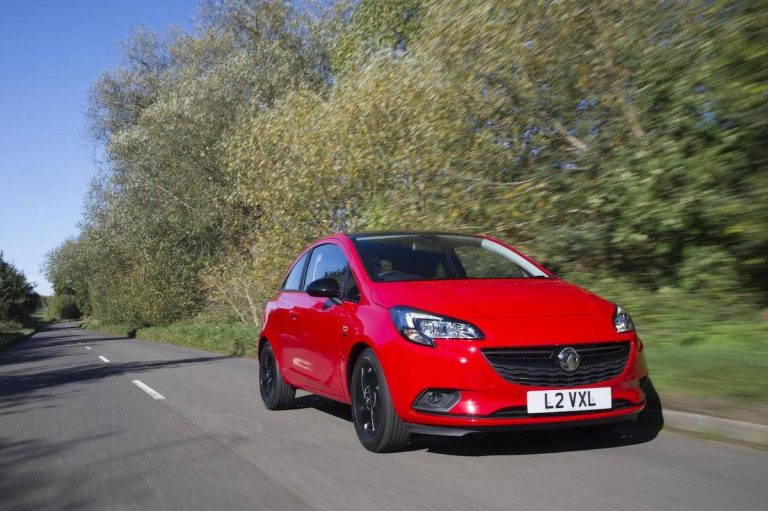
Vauxhall will join the move towards electric vehicles with the next generation of its best-selling Corsa supermini range.

Official pictures of the Corsa-e, the first of what Vauxhall says are three new all-electric models, have been released after images of the car were leaked on a French website.

The electric version of the supermini will arrive in showrooms in March 2020, following the traditional internal combustion version of the Corsa. This is the first Vauxhall model to have been created since the British firm was bought by the PSA Group and succeeds a car that was Britain’s third most popular last year, with more than 52,000 registered.

The Corsa-e is built on PSA Group’s CMP platform, sharing much of its design with the recently revealed Peugeot e-208. It is powered by a 50kWh battery linked to an electric motor, the powertrain developing 136hp and 260Nm of torque. The car will offer a sprightly 0-62mph time of 8.1 seconds with 0-31mph achieved in just 2.8 seconds.

Vauxhall Corsa-e The Car Expert

Vauxhall claims a range of 205 miles (WLTP measured) on a single charge, but adds that this can be extended by as much as 40% with the car in the Eco setting of the three driving modes. Eco makes full use of the regenerative braking system, while the car also offers Normal and Sport modes – Sport will cut range by around 10%.

The Corsa-e’s charging port is located behind the fuel filler cap, and the car can be charged to 80% in 30 minutes using a rapid charger.

Equipment available for the Corsa-e will include a ten-inch colour touchscreen, which incorporates Apple CarPlay and Android Auto smartphone integration systems. A range of driver assistance systems are fitted as standard, including adaptive cruise control and automatic traffic sign recognition.

Pricing for the Corsa-e will be revealed later in the year. Meanwhile, official details of the internal-combustion Corsa range are expected very shortly. It is not expected to significantly differ in styling from the electric variant, the Corsa’s looks however quite distinct from its Peugeot 208 sister car.

Peugeot e-208 - Geneva 2019 02 | The Car Expert
New Corsa-e built on same platform as Peugeot e-208.

Audi e-tron electric car among five-star safety winners

The all-electric Audi e-tron is one of seven vehicles to receive a top five-star safety rating in the latest round of crash tests conducted by Euro NCAP.

The large SUV fared particularly well for both adult and child occupant safety, scoring 91% and 85% respectively – comparing favourably with key rival the Jaguar I-Pace.

Sister petrol-electric hybrids the Lexus UX and Toyota RAV4 each gained a five-star rating with almost identical test results.

The Mazda 3 hatchback became just the fourth car to score 98% in the adult occupant safety sector, matching the Alfa Romeo Giulia and Volvo V40 and XC60. Close behind was the Volkswagen T-Cross, scoring 97% in this test.

Five-star ratings for the Renault Clio and Toyota Corolla completed an impressive round of test scores.

Mazda3 Euro NCAP The Car Expert
Mazda3 impressed Euro NCAP testers.

Michiel van Ratingen, secretary general of Euro NCAP described the success of all the cars, regardless of type of powertrain or class of vehicle tested, as encouraging.

“New cars on the market continue to offer more advanced technology as standard, systems that were not even considered an option a few years ago,” he commented.

“Vehicle manufacturers must respond on all levels to consumers’ expectations, but adding more safety is often challenged by market conditions. Despite this, we see the latest state-of-the-art safety technology being made standard on many of Europe’s best-selling family cars.”

Toyota RAV4 Euro NCAP The Car Expert
Side-impact test did not worry the Toyota RAV4.

Cupra Formentor coupe SUV hits road

SEAT has released pictures of the new Cupra Formentor on the roads – in Formentor, Mallorca.

The car, effectively a coupe version of the SEAT Ateca SUV, was first seen at the Geneva motor show in March. It is expected on sale in 2020 as the first bespoke Cupra model since the performance badge was separated from SEAT as a standalone brand.

However most observers expect the Formentor to also be offered as a SEAT in due course, with less potent powertrains.

Cupra Formentor SEAT The Car Expert

In Cupra form the Formentor boasts a plug-in hybrid powertrain, offering 245hp delivered through a dual-clutch DSG transmission. Few further technical details are currently being released, though the car is stated to be able to travel up to 31 miles (measured in the new WLTP format) in full electric mode.

Also highlighted are the design touches intended to make the Formentor a more sporty proposition than a typical SUV. While based mainly on the Ateca, they also include details lifted from SEAT’s new Tarraco large SUV.

The Formrntor is lower to the ground, with smooth instead of muscular looking body panelling.

An ‘infinite light concept’ – a full-width lighting bar – is designed to magnify the distinctive look of the car’s rear. This includes pronounced wheelarch shoulders, a large wing and a diffuser. The version in the pictures is also finished in a matt blue exterior colour.

Cupra Formentor SEAT The Car Expert

Motorists warned about buying used tyres

Motorists could be putting lives at risk buying dangerous second-hand tyres, councils have warned.

Part-worn tyres are being sold with serious safety defects, unsafe repairs and incorrect labelling, the Local Government Association (LGA) said.

The organisation which represents councils in England and Wales urged drivers buying second-hand tyres to check they are in good condition and have the required “part-worn” marking.

Tyre defects contribute to road deaths

Department for Transport figures show 17 people were killed and a further 147 were seriously injured during 2017 in accidents on Britain’s roads in which a tyre defect was a contributory factor.

An investigation carried out by ten councils across Yorkshire and the Humber found that nearly half (45%) of 29 used tyres examined were unsafe.

A prosecution by the London Borough of Barking and Dagenham resulted in a tyre business and company director being ordered to pay £2,712 for selling a customer an unsafe second-hand tyre which had a nail embedded in it.

Tyres with exposed cords – due to being worn down too much – also risk causing a driver to be unable to accelerate, steer and brake properly.

A pile of used tyres showing various levels of wear

Cheap used tyres may be illegal and unsafe

Simon Blackburn, chairman of the LGA’s Safer and Stronger Communities Board, said: “Dangerous part-worn tyres are putting motorists’ lives at risk and blatant, inexcusable breaches of the law are happening with shocking prevalence in some areas.

“Cheap used tyres might be tempting to buy but if they don’t have the correct legal markings, motorists could unknowingly buy illegal tyres which could contribute to a major accident.

“Motorists buying used tyres should go to a reputable trader and check they have ‘part-worn’ stamped on them as without this mark, they are unlikely to have been checked and the retailer is breaking the law.

“They should also look out for any cracks, tears, lumps and check the state of the thread before buying.”

RAC patrol of the year Ben Aldous said: “It doesn’t matter how new or well-maintained the rest of a car is, if its tyres are in poor condition drivers leave themselves open to losing grip on the road, and all the horrible consequences that could bring.

“Every year we attend hundreds of thousands of breakdowns where drivers’ tyres have failed them. While these might sometimes be unavoidable, such as after hitting a pothole, there are far too many times when breakdowns are caused by tyres that are badly worn.

“We strongly advise drivers to check the tread and pressure of their tyres at least once a fortnight, and before any long journey, to ensure they are in tip-top condition.”

BMW 8 Series Convertible on sale at £83k

BMW has put its 8 Series Convertible on UK sale at prices starting from £83,295, which is £7,000 more than the coupé version that went on sale in December.

The drop-top version of the German brand’s flagship model will be available from launch in two versions – both are all-wheel drive with the choice of a V8 petrol engine of 530hp or a six-cylinder diesel putting out 320hp.

More versions are expected to follow the initial powertrain options, including an M version with in excess of 600hp.


You may also like:

According to BMW, the built-in rigidity of the new 8 Series platform meant that only a small number of weight-increasing measures were required to create the Convertible. The drop-top tips the scales around 125kg heavier than its Coupe sister.

The soft-top roof is fully electric, opening and closing in 18 seconds and able to be activated at speeds up to 31mph. When open the soft top stows under a cover behind the cabin.

BMW 8 Series Convertible The Car Expert

Model specific features include two contour lines on the boot, and under the L-shaped rear lights a twilight bar also lights up.

The £83,295 price tag buys the diesel-powered M850i. It hits 62mph from rest in 5.2 seconds with 39.8-38.7mpg fuel economy and CO2 emissions of 161g/km.

In M850Xi form with the V8 engine, the Convertible hits 62mph from rest in 3.9 seconds with 26.6mpg fuel economy and CO2 emissions of 225g/km. Like the diesel, it is electronically limited to 155mph while the cost is £107,100.

Standard equipment includes adaptive LED headlamps, while on the options list are BMW’s LaserLights. These vary their road illumination according to conditions and offer a selective beam. Optional Come Line Exterior and M Carbon Exterior styling additions are also available for owners wishing to individualise their cars.

Bespoke paint finishes are also being offered with the 8 Series Convertible. At launch a choice of one non-metallic and seven metallic exterior paint finishes are available while a host of extra finishes are available on the BMW Individual programme including matt paint finishes with a satin surface and the Frozen Bluestone metallic shade.

BMW 8 Series Convertible The Car Expert

Electric MG ZS EV showcased at London Motor Show

MG Motor’s first-ever electric car, the MG ZS EV, has been officially unveiled to the public at this week’s London Motor and Tech Show.

It’s the first time that the car has been showcased in the metal since it was first announced back in March.

MG claims that almost 800 people have registered expressions of interest in the model already.

Full details surrounding the car have yet to be announced, but it’s expected to use a 150hp front-mounted electric motor enabling it to travel a reported 268 miles under the old NEDC test cycle. Using current WLTP test figures, this would put the car’s range at an estimated 192 miles.

MG says it can be charged up to 80% from flat in just 43 minutes when using a fast-charger. When using a standard domestic charger, a full charge will take around six-and-a-half-hours.

MG ZS EV electric vehicle interior and dashboard | The Car Expert

Daniel Gregorious, head of sales and marketing at MG Motor UK, says: “The arrival of the ZS EV represents the start of MG’s long-term brand and product expansion plan and we are delighted to be able to share it with the British public for the first time. The arrival of the ZS EV adds a new dimension to the car market by offering high-tech zero-emissions transport to a broader cross-section of buyers.”

The MG ZS EV is expected to go on sale in September. Although official prices are yet to be revealed, it’s thought that prices for it will start at around £24,000 after the government’s £3,500 electric car grant has been applied.

Lexus UX Hybrid

Summary

The Lexus UX Hybrid is a premium compact SUV/crossover and the first model in this sector for Lexus. The UX shares its underpinnings with several Toyota models and is only available in the UK as a petrol-electric hybrid.

An electric version of the Lexus UX called the UX 300e joined the range in 2020. We have built a separate page for that model as it drives somewhat differently to the conventional UX Hybrid models covered here.

The UX has received mostly average to good scores from the UK motoring media. Reviewers have praised its urban fuel economy and driving dynamics, which are greatly helped by its hybrid drivetrain, but have criticised its poor infotainment system and cramped interior dimensions.

As of March 2026, the Lexus UX Hybrid holds a New Car Expert Rating of C with a score of 63%.

Key specifications

Body style: Compact SUV/crossover
Power unit: petrol-electric hybrid
Price: From £34,770 on-road

Launched: Spring 2019
Last updated: N/A
Replacement due: TBA

Media reviews

Highlighted reviews and road tests from across the UK automotive media. Click any of the boxes to view.

The Car Expert

Auto Express

Auto Trader

Car

Carbuyer

Carwow

Company Car Today

Daily Mirror

Discover EV

Green Car Guide

Heycar

Honest John

Motoring Research

Parkers

The Sun

The Sunday Times

The Telegraph

Top Gear

Safety rating

Independent crash test and safety ratings from Euro NCAP

Overall score: 5 stars
Date tested: May 2019
Date expired: January 2026
Read the full Euro NCAP review

Adult protection: 96%
Child protection: 85%
Vulnerable road users: 82%
Safety assist: 77%

Eco rating

Independent economy and emissions ratings from Green NCAP

No eco rating

As of March 2026, the Lexus UX Hybrid has not been lab tested by Green NCAP.

Reliability rating

Reliability data provided exclusively for The Car Expert by MotorEasy

No reliability rating

As of March 2026, we don’t have enough reliability data on the Lexus UX to generate a reliability rating.

The Car Expert’s reliability information is provided exclusively to us using extended warranty data from our partner, MotorEasy. As soon as MotorEasy has sufficient data on the UX, we’ll publish the score here.

Running cost rating

Monthly cost of ownership data provided exclusively for The Car Expert by Clear Vehicle Data

Fuel consumptionAverageScore
Hybrid models54 mpgB
CO₂ outputAverageScoreVariationScore
Hybrid models120 g/kmB
Insurance groupAverageScoreVariationScore
All models23B
Service and maintenanceCostScore
Year 1£259C
Year 2£664D
Year 3£1,067C
Year 4£1,278C
Year 5£1,655C
Overall£4,923C

The Lexus UX Hybrid is a relatively affordable car to own and run, according to whole-life cost numbers provided exclusively to The Car Expert by our data partner, Clear Vehicle Data.

Fuel consumption is very good, although – like all hybrids – your results will very much depend on how careful you are with the accelerator and brake pedals to maximise use of the electric motor and battery.

Servicing and insurance costs are also likely to be better than average for the first five years of ownership, which is good for a premium-price car.

Similar cars

If you’re looking at the Lexus UX Hybrid, you might also be interested in these alternatives

Audi Q3 | BMW X1 | BMW X2 | DS 3 Crossback | Jaguar E-Pace | Lexus UX Electric | Mercedes-Benz GLARange Rover Evoque | Volvo XC40

More news, reviews and information about the Lexus UX at The Car Expert

Everything you need to know about Lexus

Everything you need to know about Lexus

Five of the safest new small SUVs on sale

Five of the safest new small SUVs on sale

Lexus UX gets infotainment and battery upgrades

Lexus UX gets infotainment and battery upgrades

More top ratings awarded, but green tests to get tougher

More top ratings awarded, but green tests to get tougher

Lexus UX Electric

Lexus UX Electric

UK demand drives Lexus to 250,000 hybrid SUV sales in Europe

UK demand drives Lexus to 250,000 hybrid SUV sales in Europe

Lexus UX gets new kit and finance offer

Lexus UX gets new kit and finance offer

Lexus UX 300e EV revealed

Lexus UX 300e EV revealed

Audi e-tron electric car among five-star safety winners

Audi e-tron electric car among five-star safety winners

Lexus UX test drive

Lexus UX test drive

New cars to look forward to in 2019

New cars to look forward to in 2019

New Lexus UX to take on compact SUV rivals

New Lexus UX to take on compact SUV rivals

Buy a Lexus UX

If you’re looking to buy a new or used Lexus UX, The Car Expert’s partners can help you find the right car.

Motors 600x300

Find your next used car with Motors. Find out more

Auto Trader logo 600x300

Find your next new or used car with Auto Trader. Find out more

Carwow logo 600x300

Find your next new or used car with Carwow. Find out more

Lease a Lexus UX

If you’re looking to lease a new Lexus UX, The Car Expert’s partners can help you find a competitive deal.

Leasing-com logo

Personal contract hire deals from Leasing.com. Find out more

Carwow logo 600x300

Personal contract hire deals from Carwow. Find out more

Select Car Leasing logo

Personal contract hire deals from Select Car Leasing. Find out more

Subscribe to a Lexus UX

If you’re interested in a car subscription, The Car Expert’s partners can help. (PS: What’s a car subscription?)

Cocoon Vehicles logo 600x300

Car subscriptions from Cocoon.
Find out more

Just Vehicle Solutions logo 600x300

Car subscriptions from Just Vehicle Solutions.
Find out more

Flexible Vehicle Contracts logo 600x300px

Car subscriptions from Flexible Vehicle Contracts.
Find out more

MG ZS (2017 to 2024)

Summary

The MG ZS is a budget compact SUV/crossover that first arrived in the UK in late 2017. This is the first-generation model, designed in the UK but built in China.

The original ZS is was available with either a petrol or diesel engine. An electric model joined the range in 2019, but this is not covered by this page. We have a separate page for the ZS EV right here.

The ZS range was facelifted in Summer 2020. This consisted of some visual updates as well as additional equipment, with trim levels and prices being re-organised to suit. There were no mechanical changes, so the updated ZS drives exactly the same as the pre-facelift version.

The MG ZS received poor to average reviews from the UK motoring media, and it has an Expert Rating of D with a score of just 59%, which is one of the lowest scores of any car we have collected data on so far. The electric ZS EV scores much better.

Reviewers praised the ZS for being more spacious than many rivals and for offering a seven-year new car warranty, but criticised its poor safety rating and underpowered engines.

MG ZS highlights

  • Seven-year new car warranty
  • Attractive low-cost price
  • Spacious cabin
  • Comfortable driving experience

MG ZS lowlights

  • Poor engine quality
  • Dated interior design
  • Poor safety rating
  • Excessive fuel consumption
  • Very basic tech features

Key specifications

Body style: Small SUV/crossover
Engines: petrol, diesel
Price when new: From £17,820 on-road

Launched: Winter 2017/18
Last updated: Summer 2020
Replaced: Autumn 2024

Media reviews

Highlighted reviews and road tests from across the UK automotive media. Click any of the boxes to view.

The Car Expert

Auto Express

Auto Trader

Car

Car Keys

Carbuyer

Carwow

Heycar

Honest John

Parkers

The Sun

The Telegraph

Top Gear

Safety rating

Independent crash test and safety ratings from Euro NCAP

Overall score: 3 stars
Date tested: December 2017
Date expired: January 2024
Read the full Euro NCAP review

Adult protection: 71%
Child protection: 51%
Vulnerable road users: 59%
Safety assist: 29%

Eco rating

Independent economy and emissions ratings from Green NCAP

No eco rating

No longer on sale, the first-generation MG ZS has not been lab tested by Green NCAP.

Reliability rating

Reliability data provided exclusively for The Car Expert by MotorEasy

No reliability rating

We don’t have enough reliability data on the MG ZS to generate a reliability rating.

The Car Expert’s reliability information is provided exclusively for us using warranty data from our partner, MotorEasy. As soon as MotorEasy has sufficient data on the ZS, we’ll publish the score here.

Running cost rating

Monthly cost of ownership data provided exclusively for The Car Expert by Clear Vehicle Data

Fuel consumptionAverageScore
Petrol models41 mpgC
CO₂ outputAverageScoreVariationScore
Petrol models158 g/kmC
Insurance groupAverageScoreVariationScore
All models13A
Service and maintenanceCostScore
Year 1£147A
Year 2£486B
Year 3£778B
Year 4£957B
Year 5£1,270B
Overall£3,638B

Running costs for the MG ZS are slightly below average but service and maintenance costs are excellent, according to numbers provided exclusively to The Car Expert by our data partner, Clear Vehicle Data.

Only available as a petrol model (the all-electric MG ZS EV is covered here), the SUV has an average fuel consumption of 41 mpg, which is acceptable but nothing to shout about. The car’s strong suit is its long-term maintenance costs, which are cheap when compared to the market as a whole over five years of ownership.

Awards

Trophies, prizes and awards that the MG ZS has received

2021

  • Auto Trader New Car Awards – Best Value New Car + Best Car for Dog Owners

Similar cars

If you’re looking at the MG ZS, you might also be interested in these alternatives

Citroën C3 Aircross | Dacia DusterFiat 500X | Ford EcoSport | Ford Puma | Honda HR-VHyundai Bayon | Hyundai Kona | Jeep Renegade | Kia Stonic | Mazda CX-3 | Mitsubishi ASX | Nissan Juke | Peugeot 2008 | Renault Captur | SEAT Arona | Skoda Kamiq | SsangYong Tivoli | Toyota Yaris Cross | Suzuki Vitara | Vauxhall Crossland | Volkswagen T-Cross

Buy an MG ZS

If you’re looking to buy a new or used MG ZS, The Car Expert’s partners can help you find the right car

Motors 600x300

Find your next used car with Motors. Find out more

Auto Trader logo 600x300

Find your next new or used car with Auto Trader. Find out more

Carwow logo 600x300

Find your next new or used car with Carwow. Find out more

Maserati to stop using Ferrari engines

Maserati is ceasing its engine supply from former sister brand Ferrari once its current supply contract expires.

Since 2002, the supercar manufacturer has built powertrains at its Maranello factory for the premium car firm from down the road in Modena – arguably one of the strongest selling points of Maserati cars – but that agreement is now set to come to a close.

The news was disclosed during Ferrari’s Q1 earnings call last week, with Ferrari chief executive Louis Camilleri saying: “Maserati has announced that at the end of that contract they will not renew it.

“So, eventually, we will no longer supply engines to Maserati, which actually from our perspective is actually a good thing, both from a margin perspective but also the fact that we can transfer a lot of the labour that’s been focused on the engines to the car side of the business.”

Maserati has used V8 petrol Ferrari engines for the last 17 years
Maserati has used V8 petrol Ferrari engines in its cars for the last 17 years

No end date has been officially confirmed for the end of the partnership, though reports suggest it will come to a conclusion in 2020 or 2021. Ferrari also has no plans to supply engines to any other manufacturers.

As a result of the move, Maserati will either have to develop its own engines going forward or source them from another firm — possibly within the Fiat Chrysler Association (FCA) umbrella. Ferrari had previously been a part of FCA, though it was spun off at the start of 2016.

It has been reported that Maserati will be turning to BMW for autonomous driving technology, so maybe there could also be a potential deal for engines from Munich to find their way to Modena.

Mini Countryman and Clubman JCW models updated

Mini has updated two performance models in its line-up – the John Cooper Works Clubman and John Cooper Works Countryman.

Both models utilise the same 2.0-litre turbocharged four-cylinder petrol engine as the cars they replace, but now produce a substantial 75hp more – now pushing out 305hp and 450Nm of torque.

Power is sent to all four wheels via an eight-speed automatic transmission. The gearbox also incorporates a launch control function, allowing the car to make the cleanest and quickest standing starts possible.

Mini Clubman John Cooper Works update | The Car Expert
Mini Clubman John Cooper Works

Mini claims that this power is enough to send the John Cooper Works Clubman from 0-60mph in 4.7 seconds, and the John Cooper Works Countryman to the same speed in 4.9 seconds. Both top out at an electronically limited 155mph top speed.

The pair are also available with new electronically adjustable dampers, and have had their suspension geometry extensively revised to help in the corners.

Inside, the duo get full John Cooper Works sport seats and steering wheel, along with a six-inch touchscreen infotainment system running Mini’s latest software. It also incorporates a reversing camera, while both cars also benefit from rear parking sensors, 18-inch wheels and heated seats, too. Those 18-inch alloys can be upgraded to 19-inch ‘Circuit Spoke’ units at an additional cost, however.

Both the Mini John Cooper Works Clubman and John Cooper Works Countryman will go on sale in July, priced from £34,250 and £35,550 respectively.

Audi A4 gets refreshed looks and updated engines

Audi has updated its popular A4 saloon and Avant (estate), giving the model a fresh new look and a revised range of engines.

Up front, the car receives newly designed air intakes and a grille that is wider than before. Different trim levels get different looks, too; SE and Sport models get horizontal grille slats, while the allroad quattro estate model receives vertical chrome slats. Meanwhile, performance-oriented S Line and S4 models get a honeycomb grille instead.

The air intake above the main grille also takes inspiration from the one found on the range-topping R8 supercar, as well as the A1 city car.

LED headlights are now fitted as standard to all Audi A4 models, though these can be upgraded to matrix versions as an optional extra.

The interior of the car remains largely unchanged over the car it replaces, though the main infotainment screen has been increased in size, and is now touch-operated – so the dial in the centre of the car that used to control the system has been removed.

In terms of engine choices, everything but the 190hp 2.0-litre and 230hp 3.0-litre diesel powertrains now feature mild hybridisation.

There are two new 2.0-litre diesels with 136hp and 163hp, as well as three additional 2.0-litre petrols with either 150hp, 190hp or 245hp. All get mild-hybrid technology.

The S4 model, meanwhile, ditches its old 3.0-litre turbocharged V6 petrol in favour of a 347hp 3.0-litre turbocharged diesel, again with a mild hybrid system.

The new Audi A4 range will go on sale in September, and full prices and specifications are expected to be released closer to that date.

New 620hp McLaren GT revealed

McLaren plans to open its range to a whole new audience with its new McLaren GT – a car that’s said to offer outstanding ride comfort and segment-leading cabin refinement.

It will be the first time McLaren has offered a true grand touring model, built with passenger comfort for long distance in mind.

To achieve this, the Woking-based manufacturer has adapted its existing platform and engine block to increase refinement and luggage capacity without affecting performance.

McLaren’s 4.0-litre, twin-turbocharged V8 is once again present, providing 620hp and 630Nm of torque. However, it has been tweaked for the GT with a flatter torque curve that provides more linear acceleration. The zero to 60mph sprint takes just 3.1 seconds, while the top speed is 203mph.

To increase passenger comfort, a new damping control system has been incorporated into the lightweight aluminium suspension set-up. McLaren says it has also improved the suspension controls it first introduced on the 720S supercar, which uses sensors to read the road and predict imperfections before adjusting the suspension in anticipation of bumps. Meanwhile, softer engine mounts reduce vibrations through the cabin.

The interior has been overhauled, too. It might look similar to existing McLarens, but there are new seats that are heated with extra padding and back support. They’re available in Nappa leather as standard with luxury leather, Cashmere and Alcantara options available.

The carbon-fibre passenger cell has had a bespoke section fitted at the rear to incorporate a new luggage area that McLaren says can accommodate a bag of golf clubs or a pair of skis. When combined with the front ‘frunk’ – a boot where the engine would be in a traditional car – the McLaren GT has an impressive 570 litres of luggage capacity.

2020 McLaren GT - top view | The Car Expert

On the outside, the styling is unmistakably McLaren but toned down compared with recent efforts. It has been designed to evoke traditional GT imagery while retaining a function over form ethos, such as incorporating air intakes for the radiators into the flared rear haunches.

Mike Flewitt, CEO of McLaren Automotive, said: “The new McLaren GT combines competition levels of performance with continent-crossing capability, wrapped in a beautiful body and true to McLaren’s ethos of designing superlight cars with a clear weight advantage over rivals.

“In short, this is a car that redefines the notion of a grand tourer in a way that only a McLaren could.”

Order books are now open for the McLaren GT, with prices starting at £163,000. Deliveries are scheduled for late 2019.

The Car Expert Best of British horizontal banner

Fiat 500 (2015 to 2025)

Summary

The Fiat 500 was a small three-door hatchback that was originally launched in 2007, echoing the beloved 1957 Fiat Cinquecento. It was given a major update in 2015 and had countless limited editions until sales finally ended in 2025.

A mild hybrid petrol engine was added to the range in early 2020 and is now the only engine choice. Although an all-new, all-electric model arrived in 2021, the existing model soldiered on for a few more years. An all-new petrol model based on the EV will arrive in the UK in 2026.

High-performance versions of the 500 were built by Fiat-owned Abarth and are not covered by this page. We have a separate page for the Abarth 595 models here.

The Fiat 500 received mixed reviews from the UK motoring media, with scores gradually falling as the car aged and fell further behind the class leaders. It received plenty of praise for its style and character, as well as its extensive personalisation options, however it was criticised for its lack of comfort and practicality, while consumer-oriented titles marked it down heavily for its lack of advanced safety features.

From 2021, the Fiat 500 was only available with a petrol engine and a manual gearbox. Fiat branded the engine as a ‘Hybrid’, but it was really only a mild hybrid. That means it couldn’t drive on electricity alone, with a small electric motor used to assist the petrol engine to improve fuel economy.

As of February 2026, the Fiat 500 holds a Used Car Expert Rating of C, with a score of 63%. It scores top marks for its low CO2 emissions and running costs, while its reliability record is also good. However, its media review scores and safety rating are poor.

Key specifications

Body style: Small three-door hatch
Engines: petrol (mild hybrid)
Price when new: From £16,800

Launched: Autumn 2015
Last updated: Winter 2019/20
Discontinued: Autumn 2025

Media reviews

Highlighted reviews and road tests from across the UK automotive media. Click any of the boxes to view.

The Car Expert

Auto Express

Car

Car Keys

Carbuyer

Carwow

Company Car Today

Heycar

Honest John

Parkers

The Sun

The Telegraph

Top Gear

Safety rating

Independent crash test and safety ratings from Euro NCAP

Overall score: 3 stars
Date tested: March 2017
Date expired: January 2024
Read the full Euro NCAP review

Adult protection: 66%
Child protection: 49%
Vulnerable road users: 53%
Safety assist: 27%

Notes on safety

Euro NCAP originally awarded the Fiat 500 a five-star rating when it was launched back in 2007. However, safety standards evolved more rapidly than the Fiat’s safety systems over the following decade; when the updated Fiat 500 was re-tested in 2017, it only scored three stars. This second rating then expired in January 2024. This is normal practice, as Euro NCAP reviews its ratings on most cars annually with most ratings expiring after about six or seven years.

In addition, the above rating only applies to the hatchback models and not the cabriolet version, which has not been tested and is specifically excluded from the rating data.

Although the rating has now expired, the score is still useful if you are comparing a used 500 to vehicles of similar age – whose ratings will have probably also expired.

Eco rating

Independent economy and emissions ratings from Green NCAP

Model tested: Hybrid 1.0-litre GSE Petrol FWD Manual

Overall score: 3 stars
Date tested: October 2022
Read the full Green NCAP review

Clean Air Index: 4.3 / 10
Energy Efficiency Index: 6.3 / 10
Greenhouse Gas Index: 5.2 / 10

Reliability rating

Reliability data provided exclusively for The Car Expert by MotorEasy

All data based on MotorEasy average workshop costs for extended car warranty claims

As of April 2025 (our latest data point), the Fiat 500 has a reliability score of 81%, which is better than average according to extended warranty data provided exclusively to The Car Expert by our partners at MotorEasy. This score covers both the current-generation 500 and the former (pre-2015) version – but not the new electric 500e models.

The Fiat 500 does appear to be cheap to repair when things go wrong, with an average repair cost of £430. That’s good news if you already own a 500 or are considering buying a used one.

The most common reported problems with the 500 relate to its suspension, with an average repair bill of around £200 to date. The other area to look out for is the gearbox, which accounts for a sixth of repair claims. Unfortunately, this is the most expensive type of fault on the list, costing almost £1,100 on average.

If you’re looking at a used Fiat 500, make sure any extended warranty cover you purchase covers all of these potential problem areas.

Running cost rating

Monthly cost of ownership data provided exclusively for The Car Expert by Clear Vehicle Data

Fuel consumptionAverageScore
Petrol models53 mpgB
CO₂ outputAverageScoreVariationScore
Petrol models106 g/kmA
Insurance groupAverageScoreVariationScore
All models12A
Service and maintenanceCostScore
Year 1£166B
Year 2£469B
Year 3£750B
Year 4£934A
Year 5£1,273B
Overall£3,592B

The Fiat 500 is a very cheap car to own and run, according to whole-life cost numbers provided exclusively to The Car Expert by our data partner, Clear Vehicle Data.

Other than fuel economy, which scores a B, the 500 scores straight-As in every other category. So a new or used Fiat 500 should be cheap to run.

Awards

Significant UK trophies and awards that the Fiat 500 has received

2021

  • Motor Trader Industry Awards – Best Volume Used Car

2019

  • Auto Express Driver Power Awards – Best Premium Small Car

2016

  • BusinessCar Awards – Best City Car
  • Contract Hire and Leasing Awards – City Car of the Year
  • Sunday Times Top 100 Cars – Best City Car

2015

  • Next Green Car Awards – City Car Award

Similar cars

If you’re looking at the Fiat 500, you might also be interested in these alternatives

Citroën C1 | Fiat Panda | Hyundai i10 | Kia Picanto | Peugeot 108 | SEAT Mii | Skoda Citigo | Smart EQ Fortwo | Toyota Aygo | Volkswagen Up!

More news, reviews and information about the Fiat 500 at The Car Expert

Petrol power returns to Fiat 500

Petrol power returns to Fiat 500

Everything you need to know about Fiat

Everything you need to know about Fiat

The 10 worst new cars on sale in 2024

The 10 worst new cars on sale in 2024

Collectors’ edition Fiat 500 available to order

Collectors’ edition Fiat 500 available to order

The ten biggest automotive developments of Queen Elizabeth’s reign

The ten biggest automotive developments of Queen Elizabeth’s reign

The cheapest new cars on sale in 2022

The cheapest new cars on sale in 2022

Government ends electric car subsidy

Government ends electric car subsidy

The best new convertibles for every budget

The best new convertibles for every budget

Fiat 500e

Fiat 500e

Fiat confirms pricing and specification for electric 500

Fiat confirms pricing and specification for electric 500

All-new electric Fiat 500 available to order

All-new electric Fiat 500 available to order

All-new Fiat 500 goes fully electric

All-new Fiat 500 goes fully electric

Buy a Fiat 500

If you’re looking to buy a new or used Fiat 500, The Car Expert’s partners can help you find the right car

Motors 600x300

Find your next used car with Motors. Find out more

Auto Trader logo 600x300

Find your next new or used car with Auto Trader. Find out more

Carwow logo 600x300

Find your next new or used car with Carwow. Find out more

Lease a Fiat 500

If you’re looking to lease a new Fiat 500, The Car Expert’s partners can help you find a competitive deal

Leasing-com logo

Personal contract hire deals from Leasing.com. Find out more

Carwow logo 600x300

Personal contract hire deals from Carwow. Find out more

Select Car Leasing logo

Personal contract hire deals from Select Car Leasing. Find out more

Subscribe to a Fiat 500

If you’re interested in a car subscription, The Car Expert’s partners can help (PS: What’s a car subscription?)

Cocoon Vehicles logo 600x300

Car subscriptions from Cocoon.
Find out more

Just Vehicle Solutions logo 600x300

Car subscriptions from Just Vehicle Solutions.
Find out more

Flexible Vehicle Contracts logo 600x300px

Car subscriptions from Flexible Vehicle Contracts.
Find out more

Refreshed Kia Niro hybrid and plug-in go on sale

Kia’s newly updated Niro Hybrid and plug-in hybrid models have gone on sale, with prices starting at £24,590.

The refreshed cars feature a new look, which takes inspiration from the all-electric e-Niro.

Though the car’s ‘Tiger Nose’ grille remains in place, it now sits alongside refreshed front and rear bumpers. Cars finished in ‘4’ specification get new ‘ice-cube’ headlamps, too.

All cars get LED daytime running lights as standard as well.

The PHEV model is available with 16-inch alloy wheels with dark grey inserts, while 18-inch diamond-cut alloys are fitted to cars in grades ‘3’ and ‘4’. Vehicles in ‘2’ specification get smaller 16-inch units – though these have been redesigned as well.

Inside, the Niro benefits from soft-touch materials on the top of the dashboard, while a new gloss black trim has been applied to the dashboard and instrument panel.

A new ten-inch display is also being introduced on ‘3’ and ‘4’ grades – while the latter specification also gets a seven-inch TFT driver display, too.

Kia is including a new telematics system – called UVO Connect – to all hybrid Niro models. It uses an in-built SIM card to retrieve and update live data, giving those behind the wheel access to real-time traffic information, as well as weather forecast and fuel station locations.

It can even give drivers information about on- and off-road parking, as well its price and location.

The system also features an app for both Android and Apple smartphones. It allows owners to access key information about their vehicle from their phone, as well as send information such as satellite navigation routes directly to the car.

Prices for the updated Niro range from £24,590 for a hybrid model in ‘2’ specification, up to £31,945 for a top-end PHEV version in ‘3’ trim.

Star and Rockstar trims added to Fiat 500 range

Fiat has bolstered its 500 city car range with two new specifications called Star and Rockstar.

Sitting at the top of the 500 model range, both Star and Rockstar offer a high level of standard equipment and technology.

Star features a new metallic ‘Powder Pink’ paint, as well as a range of chrome accents designed to give it a more premium appeal. A fixed glass roof is also included as standard, along with 16-inch alloy wheels.

Inside, there’s the option of either white sand and black, or a new Matelasse finish with ‘techno-leather’ details and embroidered 500 logo.

The dashboard can be finished in either matt white or matt Bordeaux colours. In the middle of the cabin sits a seven-inch infotainment screen with satellite navigation and media functions.

Fiat 500 Rockstar interior 2019 | The Car Expert

It’s available in either hatchback or convertible layouts, and can be specified with either a 1.2-litre petrol engine or 0.9-litre Twin Air powertrain. The former is available with either a six-speed manual or Dualogic automatic transmission, while the latter can only be chosen with the manual gearbox. Star cars are priced from £15,395.

Rockstar cars, in contrast, receive the bumpers and side sills from ‘Sport’ specification cars, but add 16-inch alloy wheels and satin finish bodywork details. It also receives a new exterior colour – Portofino Green.

The interior gets pinstripe fabric seats, which are edged with black eco leather. It too gets a seven-inch touchscreen infotainment system, and is available with the same engines as the Star. Rockstar cars are available from £15,565.