Find an Expert Rating: 
Home Blog Page 106

Mazda CX-3 (2015 to 2021)

Summary

The Mazda CX-3 was a compact SUV/crossover, and was sold in the UK from 2015 until 2021. It was the smallest in the Mazda SUV family, sitting underneath the larger CX-30.

The CX-3 was was unveiled in late 2014 before going on sale in the UK in the summer of 2015. An updated model arrived in the summer of 2018, and was then largely unchanged until it was taken off sale in 2021.

The Mazda CX-3 received plenty of praise for its styling, driving dynamics and real-world fuel economy; however, it was criticised for being more expensive than many rivals, with relatively high emissions levels.

The CX-3 was discontinued in Europe in 2021 with no replacement planned. The larger CX-30 therefore becomes the smallest SUV in the Mazda family.

No longer on sale, the Mazda CX-30 has an excellent Used Car Expert Rating of A, with a score of 73%. It scores top marks for its excellent reliability record and low running costs, while its CO2 emissions are also low. However, its media review scores were only average and its safety rating (now expired) is well off the pace of new models from Mazda and other brands.

Key specifications

Body style: Small SUV/crossover
Engines: petrol, diesel
Price: From £19,395 on-road

Launched: Summer 2015
Last updated: Summer 2018
Discontinued: Autumn 2021

Media reviews

Highlighted reviews and road tests from across the UK automotive media. Click any of the boxes to view.

The Car Expert

Auto Express

Auto Trader

Car

Car Keys

Carbuyer

Carwow

Company Car Today

Evo

Green Car Guide

Honest John

Parkers

The Sunday Times

The Telegraph

Top Gear

Safety rating

Independent crash test and safety ratings from Euro NCAP

Overall score: 4 stars
Date tested: September 2015
Date expired: January 2022
Read the full Euro NCAP review

Adult protection: 85%
Child protection: 79%
Vulnerable road users: 84%
Safety assist: 64%

Notes on safety rating

The Mazda CX-3 was originally crash tested by Euro NCAP back in 2015 and awarded a four-star rating. However, this rating expired in January 2022 and is no longer valid as the car no longer meets the standards required for such a rating. This is normal practice, as Euro NCAP reviews its ratings on most cars annually with most ratings expiring after about six or seven years.

Although the rating has now expired, the score is still useful if you are comparing a used CX-3 to vehicles of similar age – whose ratings will have probably also expired.

Eco rating

Independent economy and emissions ratings from Green NCAP

No eco rating

The Mazda CX-3 was not lab tested by Green NCAP during its production life.

Reliability rating

MotorEasy logo 600x167

Reliability data provided exclusively for The Car Expert by MotorEasy

All data based on MotorEasy average workshop costs for extended car warranty claims

As of April 2025 (our most recent data point), the Mazda CX-3 has an excellent reliability record of 87%, according to data provided exclusively to The Car Expert using workshop and extended warranty data from our partner, MotorEasy, sourced from both official dealerships and independent workshops. 

The only caveat is that the data comes from a limited number of cars at this time. We’ll keep updating this information as MotorEasy collects more data from CX-3 owners.

Running cost rating

Clear Vehicle Data logo close crop

Monthly cost of ownership data provided exclusively for The Car Expert by Clear Vehicle Data

CO₂ outputAverageScoreVariationScore
Petrol models160 g/kmC
Diesel models138 g/kmC
Insurance groupAverageScoreVariationScore
All models17A

The Mazda CX-3 is a relatively affordable car to own and run, according to whole-life cost numbers provided exclusively to The Car Expert by our data partner, Clear Vehicle Data. However, we have limited information available due to the age of the CX-3 (launched in 2015, discontinued in 2022).

Insurance costs should be particularly competitive, while CO2 emissions are about average.

Awards

Trophies, prizes and awards that the Mazda CX-3 has received

2016

  • Fleet News Awards – Best Compact SUV

Similar cars

If you’re looking at the Mazda CX-3, you might also be interested in these alternatives

Audi Q2 | Citroën C3 Aircross | Dacia Duster | Fiat 500X | Ford Puma | Honda HR-VHyundai Kona | Jeep Renegade | Kia Stonic | MG ZS | Mitsubishi ASXNissan Juke | Peugeot 2008 | Renault Captur | SEAT Arona | Skoda Kamiq | SsangYong Tivoli | Suzuki Vitara | Vauxhall Mokka | Volkswagen T-Roc

More news, reviews and information about the Mazda CX-3 at The Car Expert

Everything you need to know about Mazda

Everything you need to know about Mazda

Mazda CX-3 test drive

Mazda CX-3 test drive

Mazda gets on the scrappage scheme bandwagon

Mazda gets on the scrappage scheme bandwagon

Mazda updates CX-3 range

Mazda updates CX-3 range

Mazda CX-3 review

Mazda CX-3 review

Buy a used Mazda CX-3

If you’re looking for a used CX-3, The Car Expert’s partners can help you find the right car or a competitive finance deal

Motors 600x300

Search less, live more. We make finding the right car simple. Find out more

Auto Trader logo 600x300

The UK’s largest choice of new and pre-loved cars. Find out more

Carwow logo 600x300

Discover great deals available on both new and used cars. Find out more
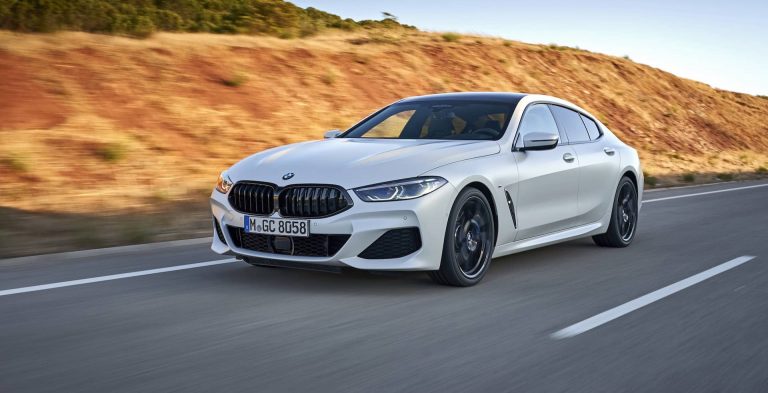
BMW 8 Series Gran Coupe test drive

Giant low-slung saloons branded as ‘four-door coupes’ are no new thing. It’s a not-so-niche segment, popularised by the likes of BMW and Mercedes over the last decade or so, to give buyers who need a saloon but really would love a coupe something of a middle ground.

In fact, the Japanese and Americans had already been doing it for decades before the idea even occurred to the Germans, with sleeker, sometimes pillarless four-door models known as ‘hardtops’ rather than ‘sedans’ (saloons). Nissan was doing it in the 1990s with the Skyline, while Chevrolet, Cadillac et al were doing exactly the same thing in the States way back in the 1950s.

It’s still a popular theme, so it’s no surprise to see BMW has taken its recently introduced flagship 8 Series coupe and slapped on an extra set of doors. In its standard guise, the 8 Series is something of a desirable cruiser — but does that remain in its newly-shaped form?

What’s new about the BMW 8 Series Gran Coupe?

Ok, so there is more to this car than just taking an 8 Series Coupe and adding some doors behind the fronts — it’s actually a noticeably larger form overall. It’s grown 23cm in length, 3cm in width and 6cm in height.

Some design alterations have been made to the car too. Though its front end is identical to the coupe, the windscreen is slightly steeper as a result of a higher roof, with a similar approach taken for the rear window to maximise boot space.

But, dimensions and slight styling tweaks aside, there’s little to differentiate between the 8 Series variants.

How does it look?

As mentioned, BMW has retained the recognisable 8 Series silhouette here — albeit with modifications for a more spacious vehicle.

BMW 8 Series Gran Coupe review – front view | The Car Expert

It still has an imposing effect upfront from its angular nose details and large grille, though, from the windscreen onwards, the morphing of the design is pretty obvious. Side-by-side with a coupe variant of the 8, it’s definitely the ugly duckling of the two — though as a standalone machine it remains a real head-turner.

What’s the spec like?

As standard, the 8 Series Gran Coupe’s exterior is enhanced with 20-inch alloy wheels, an ‘M Aerodynamic’ package and automatic LED head- and taillights. Luxuries inside the car include a thermally insulated windscreen, four-zone automatic air conditioning, heated front and rear seats, a head-up display and ambient interior lighting.

Pricing kicks off at £69,340, which is a well-valued package on the face things. Head into the options list though and that begins to skyrocket while moving up to an M850i sees a £97,720 starting cost. That does bring with it a notable increase in performance along with the higher price, though.

What’s the BMW 8 Series Gran Coupe like inside?

Much like the exterior design, the cabin of the 8 Series Gran Coupe is nearly identical to that of the regular two-door car, albeit with some modifications for the sake of passenger comfort.

That means those up front are met with a plethora of plush materials, with build quality throughout the car of a very high standard.

BMW 8 Series Gran Coupe review – interior and dashboard | The Car Expert

The big change here though is the extra space in the rear of the car. Many coupe-turned-four-doors tend to have an issue in providing proper comfort in the back. For the averaged size adult, that’s, fortunately, no problem here — with plenty of head- and legroom and even a separate dual-zone climate control system. Those blessed with more height may find their scalps touching the headliner, though.

What’s under the bonnet?

It’s the 840i Gran Coupe we’re driving here, denoting its 3.0-litre petrol six-cylinder powerplant. In this guise, it sends 340hp and 500Nm of torque to the rear wheels via an eight-speed automatic gearbox.

As a result, 0-60mph comes in five seconds flat with an electronically limited top speed of 155mph possible. BMW says the car can achieve 37.7-38.2mpg on the combined cycle while emitting 168g/km of CO2.

If we put the 840i Gran Coupe in its intended place — sitting out on a motorway and covering huge distances — there’s little to complain about under the bonnet. The powertrain’s refinement is impressive, with very little noise coming from upfront, while power delivery is consistent across the rev band which allows for perfect execution of merging and overtaking manoeuvers.

Take it on a back road, though, and it is a little undone. Hesitation from the gearbox makes it frustrating to apply power when exiting tighter corners, and there’s so much mass to the car that its power output feels far from enough to gather any real pace.

What’s the BMW 8 Series Gran Coupe like to drive?

At motorway speeds, with its adaptive cruise control system on and the car just doing its thing, the 8 Series Gran Coupe is a hard experience to beat. Refinement, like the engine, is very impressive — wind noise is minimal, it glides over the road and you’re really only going to hear surface noise if it’s a particularly harsh road.

  • BMW 8 Series Gran Coupe road test – rear three-quarter view | The Car Expert
  • BMW 8 Series Gran Coupe road test – front view | The Car Expert
  • BMW 8 Series Gran Coupe road test – rear view | The Car Expert

That’s what you would expect of a luxury grand tourer — and with that comes more compromises in spirited driving. The sheer mass of the car is hard to ignore when attacking corners with any velocity, and there’s a real sense the car isn’t comfortable with a ham-fisted approach — a sports car this is not.

Verdict

BMW has nailed the luxury coupe-turned-capable saloon formula with the 8 Series Gran Coupe. It near-matches the head-turning style and overall appeal of the two-door car while providing a genuinely usable space in the back for more practical purposes.

It does undercut the Porsche Panamera on price, though — in 840i guise at least — does lack in terms of driving dynamics. Those looking for more of a thrill should look towards the M850i — or hold out hope for an M8 variant of the four-door car.

Similar cars

Aston Martin Rapide | Audi A7 Sportback | Maserati Ghibli | Mercedes-Benz CLS | Porsche Panamera

Key specifications

Model as tested: BMW 840i Gran Coupe
Price (on-road): £69,340
Engine: 3.0-litre six-cylinder petrol
Gearbox: Eight-speed automatic
Power: 340 hp
Torque: 500Nm
Top speed: 155 mph
0-60mph: 5.0 seconds
Fuel economy (combined): 37.7-38.2 mpg
CO2 emissions: 168 g/km

Maserati planning electrification, new sports cars and another SUV

Maserati has a wave of plans for upcoming models, with the firm set to enter the electrification game — while also introducing a new sports car and SUV.

Set to arrive in 2020, the Italian car manufacturer’s first electrified model will be a hybrid variant of its Ghibli saloon, though specifics on the car have yet to be confirmed.

It’s also suggested its first all-electric cars will soon follow in the form of its next-generation GranTurismo and GranCabrio, stating these two vehicles ‘will herald the full electrification era for Maserati’.

Before that arrives though, the firm will introduce an all-new sports car in the same year the Ghibli hybrid is introduced. Again, details are scarce, though Maserati says it will be ‘packed with technology and reminiscent of [the manufacturer’s] traditional values’. This is expected to be based on the 2014 Maserati Alfieri concept car (pictured above), which was originally slated to reach production by 2017.

Maserati Ghibli | The Car Expert
The Ghibli will be the first Maserati to benefit from an electrified powertrain, due in 2020.

Following on from that will be a new SUV, which is set to become the flagship model for the firm. Though not confirmed, expect this to be a larger car than Maserati’s current sole SUV offering — the Levante. €800m has been earmarked to construct a new production line in Maserati’s Cassino factory in Italy for this car.

A similar amount is also being invested at the firm’s Turin plant too. This is to update its facilities to produce the new Ghibli hybrid, along with the upcoming GranTurismo and GranCabrio.

Maserati’s Modena factory is also receiving upgrades to facilitate production of its new sports car, along with an upgraded paint shop in anticipation of a new bespoke customisation arm for the firm.

Are you driving on illegal tyres?

0

Four million cars could be being driven on the road with illegal tyres that are bald or damaged, according to new research published this week.

And nearly two-thirds of motorists admitted to not fully understanding the rules around driving with worn-out tyres, risking a dangerous blowout or a fine.


You may also like:

A poll of 2,000 motorists on behalf of vehicle repair company Halfords Autocentre found that 13% of drivers have knowingly driven with tyres below the legal tread limit.

Meanwhile, 65% said they didn’t know that the legal tyre tread depth is 1.6mm across the central three quarters of the tyre. If caught, motorists risk a fine of £2,500 and three penalty points per tyre, meaning a fine of £10,000 and losing their licence if all four tyres are worn.

The survey also found that 27% of drivers haven’t checked their tyres in the past three months and 42% don’t know how to check their tyre pressures.

Illegal tyres can be caused by pothole damage | The Car Expert

Illegal tyres that are worn below the minimum tread limits, or have been damaged from bouncing through potholes or similar, can have serious negative effects on your car’s safety, as Haldfords warns.

Martin Barber, Halfords Autocentres tyres expert, says: “We were surprised to find that so many Brits are driving with tyres below the legal tread depth, which can reduce braking and steering ability especially in unpredictable weather and wet driving conditions.

“After completing millions of tyre checks to help keep Britain’s cars on the roads, we’re proud to offer a free tyre check for every motorist.”

October is Tyre Safety Month, and Halfords recommends drivers inspect their tyres for irregular wear or damage that could affect performance, as well as advising drivers to change their tyres when the tread gets below 2mm.

It is also recommended that you regularly check tyre pressures to avoid abnormal wear, increased fuel consumption and shortening the life of the tyre.

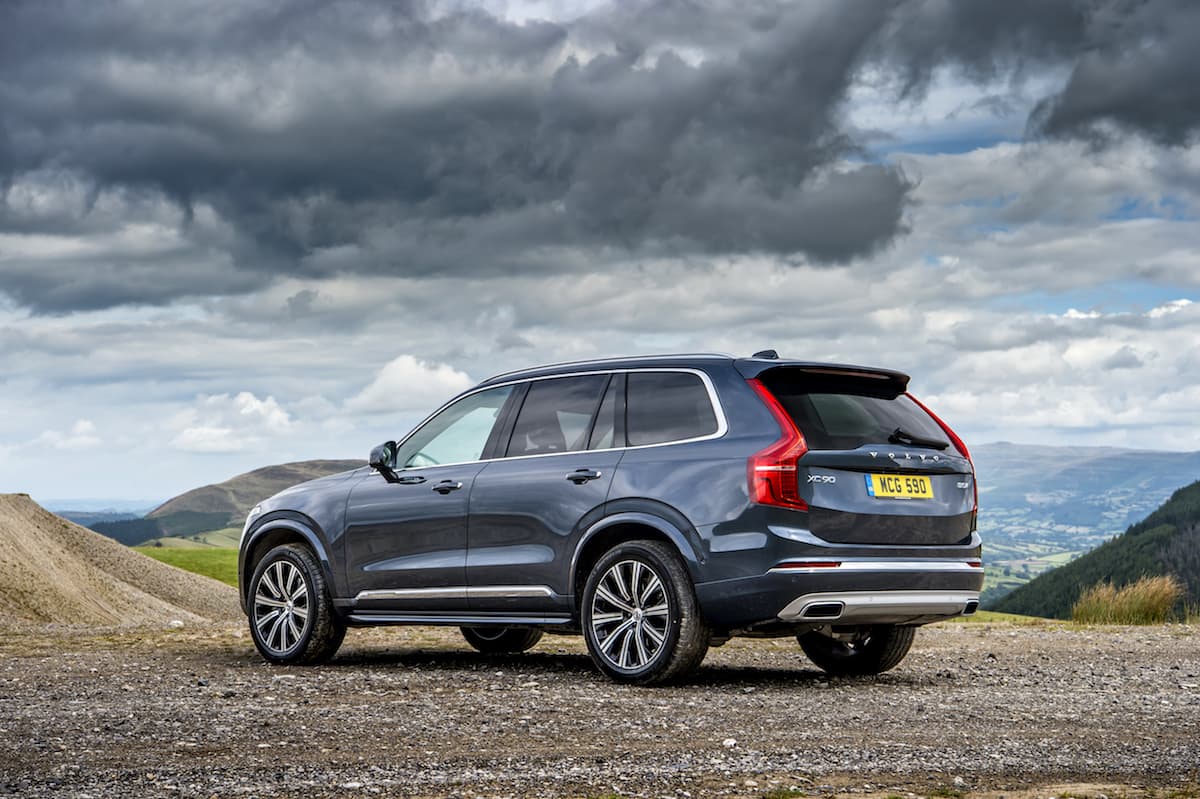
Volvo XC90

Summary

The Volvo XC90 is a large seven-seat premium SUV, which shares its architecture with the Volvo S90 saloon and V90 estate. The current model is the second generation, which arrived in the UK in early 2015 and received a mid-life update in the summer of 2019.

Volvo makes what is almost certainly a unique claim for the XC90 – that “not a single Volvo XC90 occupant has died in a car-to-car accident in the UK” since the original model was launched in 2002.

The Volvo XC90 has received universally positive reviews from the UK motoring media and has also received numerous awards. As of November 2022, as it enters the last months of its production life before being replaced, the XC90 still ranks as one of the best cars in its class according to our Expert Rating index, alongside the Land Rover Discovery and just ahead of the Audi Q7 and BMW X5.

The XC90 has been particularly praised for its styling, comfort and safety technology, with the main criticisms relating to reliability concerns on early models.

The XC90 was due to be replaced by an all-electric model called the Volvo EX90, which went on sale in 2024, but Volvo has decided to keep it around for a few years yet, so it was given a major update once again in 2024 with new looks and infotainment.

As of November 2025, the Volvo XC90 holds a New Car Expert Rating of D, with a score of 56%. It still achieves top marks for its media review scores, some ten years after it first went on sale, but its safety rating and CO2 emissions are now only average, while its reliability record and Volvo’s new car warranty offering are both poor, and its running costs are very high.

XC90 highlights

  • High-quality tech-laden interior
  • Clean exterior styling
  • Comfortable long-distance cruiser
  • Spacious cabin and boot space

XC90 lowlights

  • Expensive, base price and up
  • Fiddly infotainment
  • Alternatives are better off-roaders
  • Heavy weight felt through the handling

Key specifications

Body style: Large SUV
Engines: mild-hybrid, plug-in hybrid
Price: From £65,450 on-road

Launched: Spring 2015
Last updated: Summer 2019
Replacement due: TBA

Media reviews

Highlighted reviews and road tests from across the UK automotive media. Click any of the boxes to view.

Featured reviews

More reviews

The Car Expert

Auto Express

Auto Trader

Business Car

Car

Car Keys

Carbuyer

Company Car Today

Daily Mail

Evo

Green Car Guide

Heycar

Honest John

Motors

Parkers

The Sun

The Sunday Times

The Telegraph

Top Gear

Safety rating

Independent crash test and safety ratings from Euro NCAP

Overall score: 5 stars
Date tested: September 2015
Date expired: January 2022
Read the full Euro NCAP review

Adult protection: 97%
Child protection: 87%
Vulnerable road users: 72%
Safety assist: 100%

Notes on safety rating

The Volvo XC90 was tested by Euro NCAP way back in 2015 and awarded a five-star rating. However, this rating expired in January 2022 and is no longer valid as the car no longer meets the standards required for such a rating. This is normal practice, as Euro NCAP reviews its ratings on most cars annually with most ratings expiring after about six or seven years.

Although the rating has now expired, the score is still useful if you are comparing a used XC90 to vehicles of similar age – whose ratings will have probably also expired.

Eco rating

Independent economy and emissions ratings from Green NCAP

No eco rating

As of November 2025, the Volvo XC90 has not been lab tested by Green NCAP. If the XC90 is selected for assessment by Green NCAP, we will publish the results here.

Running cost rating

Clear Vehicle Data logo close crop

Monthly cost of ownership data provided exclusively for The Car Expert by Clear Vehicle Data

Fuel consumptionAverageScore
Petrol models24 mpgE
Diesel models40 mpgD
CO₂ outputAverageScoreVariationScore
Petrol models200 g/kmD
Diesel models183 g/kmD
Plug-in hybrid models31 g/kmA
Battery rangeAverageScoreVariationScore
Plug-in hybrid models43 milesD
Insurance groupAverageScoreVariationScore
All models44E
Service and maintenanceCostScore
Year 1£467E
Year 2£1,085E
Year 3£1,605E
Year 4£1,874E
Year 5£2,461E
Overall£7,492E

Given that it’s such a large and heavy vehicle, running costs for the Volvo XC90 are better than you might expect, according to whole-life cost data provided exclusively to The Car Expert by our technical partner, Clear Vehicle Data.

We don’t currently have fuel consumption data, but it will be closely related to CO2 emission data, which is average for diesel models and below average for petrol models – as you’d expect for a two-tonne, seven-seat SUV. While it’s not great, it’s still better than several similarly sized rivals.

Servicing costs are also pretty reasonable for a car of this price and sophistication, while insurance is in line or better than rivals.

The plug-in hybrid looks fantastic on paper, but this is largely due to ineffective EU/UK government lab tests that don’t propery account for plug-in hybrids. However, with an official battery range of 42 miles, you can do a fair amount of your daily driving on electric power if you are careful with your right foot.

Reliability rating

MotorEasy logo 600x167

Reliability data provided exclusively for The Car Expert by MotorEasy

All data based on MotorEasy average workshop costs for extended car warranty claims

The Volvo XC90 has a poor reliability score, according to exclusive workshop and extended warranty data provided by our partners at MotorEasy. This score covers both the current-generation XC90 and the original (pre-2015) version.

The most common reported problem with the XC90 relates to its engine, with an average repair bill of more than £1,300. Gearbox repairs are even more expensive, averaging more than £1,400, althouigh are thankfully less common.

If you’re looking at a used Volvo XC90, make sure any extended warranty cover you purchase covers all of the potential problem areas above.

Warranty rating

New car warranty information for the Volvo XC90

Overall ratingD28%
Petrol or diesel modelsE15%
Electric or hybrid modelsC50%
New car warranty duration3 years
New car warranty mileage60,000 miles
Battery warranty duration8 years
Battery warranty mileage100,000 miles

Volvo’s new car warranty is pretty much the bare minimum offered by any car manufacturer, and nowhere near as good as some other cars of similar size and/or price.

The duration is three years, with a limit of 60,000 miles. In addition to the standard new car warranty, the XC90 plug-in hybrid version has an eight-year/100,000-mile warranty for the battery components.

Warranty on a used Volvo XC90

  • If you are buying a ‘Volvo Selekt Approved Used’ XC90 from an official Volvo dealership, you will get a minimum 12-month/unlimited mileage warranty included.
  • If you are buying a used Volvo XC90 from an independent dealership, any warranty offered will vary and will probably be managed by a third-party warranty company.
  • If you are buying a used Volvo XC90 from a private seller, there are no warranty protections beyond any remaining portion of the original new car warranty.

If you’re looking to buy any used car that is approaching the end of its warranty period, a used car warranty is usually a worthwhile investment. Check out The Car Expert’s guide to the best used car warranty providers, which will probably be cheaper than a warranty sold by a dealer.

Recalls

Official DVSA safety recalls that have been issued for the Volvo XC90

Date: March 2024
Recall number: R/2024/124
Model types: All
Build dates: 08/2022 to 07/2023
Number of vehicles affected: 4
Defect: The screw joints for the seats and seatbelts may not have been torqued to the correct specification, which means in the event of an impact, insufficient protection will be available.
Remedy: Check and adjust the torque.

Date: December 2023
Recall number: R/2023/345
Model types: All
Build dates: 01/2014 to 09/2023
Number of vehicles affected: 572
Defect: The anchorage bolts for the second-row seatbelts and seat belt buckles may not have been correctly secured. In a worst-case scenario, this may not provide sufficient protection in the event of a collision.
Remedy: Inspect and re-install.

Date: January 2023
Recall number: R/2023/025
Model types: All
Build dates: 10/2022 to 01/2023
Number of vehicles affected: 10,197
Defect: There may be a potential software error in the brake control module.
Remedy: Update the brake control module software.

Date: October 2022
Recall number: R/2022/313
Model types: All
Build dates: 03/2021 to 10/2022
Number of vehicles affected: 4,755
Defect: The Engine Control Module (ECM) may prevent the combustion engine from starting.
Remedy: Download updated software.

Date: October 2021
Recall number: R/2021/360
Model types: All
Build dates: 02/2019 to 09/2019
Number of vehicles affected: 2,083
Defect: The thrust bearing in the turbocharger may not be robust enough.
Remedy: Replace turbocharger with a modified version, which has an improved thrust bearing.

Date: September 2021
Recall number: R/2021/331
Model types: All
Build dates: 05/2019 to 11/2020
Number of vehicles affected: 28
Defect: There may be an insufficient or missing welding connection in the hydraulic unit of the brake system.
Remedy: Replace the hydraulic unit.

Date: June 2021
Recall number: R/2021/205
Model types: All
Build dates: 11/2018 to 12/2019
Number of vehicles affected: 14,380
Defect: There is a risk that the 15-amp fuse could blow, which will prevent the low-pressure fuel pump operating.
Remedy: Replace the 15A fuse with a 20A fuse, which can withstand this peak.

Date: January 2021
Recall number: R/2021/001
Model types: All
Build dates: 09/2020
Number of vehicles affected: 704
Defect: Vehicles may have the Supplementary Restraint System (SRS) control unit incorrectly tightened to the car body.
Remedy: Inspect and tighten the SRS control unit.

Date: March 2020
Recall number: R/2020/073
Model types: All
Build dates: 01/2019 to 03/2020
Number of vehicles affected: 56,385
Defect: The Automatic Emergency Brake System – a function of the IntelliSafe system – may not always engage, increasing the risk of a collision.
Remedy: Affected vehicles must have new software downloaded.

Date: December 2019
Recall number: R/2019/452
Model types: All
Build dates: 11/2019 to 12/2019
Number of vehicles affected: 53
Defect: Possible loss of power whilst driving.
Remedy: Vehicles must have updated software downloaded.

Date: October 2019
Recall number: R/2019/180
Model types: All
Build dates: 09/2014 to 04/2018
Number of vehicles affected: 69,630
Defect: The engine’s plastic inlet manifold may melt and deform.
Remedy: Update vehicles with improved soot-reducing software cleaning of TMAP and EMAP. Fit additional hoses where necessary.

Date: April 2019
Recall number: R/2019/128
Model types: All
Build dates: 04/2014 to 05/2019
Number of vehicles affected: 959
Defect: An engine cooling system hose may break and could cause a coolant leak.
Remedy: Replace the hose on affected vehicles.

Date: January 2019
Recall number: R/2018/377
Model types: All
Build dates: 04/2015 to 05/2016
Number of vehicles affected: 30,777
Defect: Small cracks on the inside of a rubber fuel hose.
Remedy: Replacement of affected fuel hoses.

Date: November 2018
Recall number: R/2018/314
Model types: All
Build dates: 05/2016 to 10/2018
Number of vehicles affected: 7,322
Defect: There may be a software issue in the Vehicle Connectivity Module.
Remedy: Upgrade software in the Vehicle Connectivity Module.

Date: June 2017
Recall number: R/2017/188
Model types: All
Build dates: 09/2016 to 11/2016
Number of vehicles affected: 501
Defect: The pre-tensioner in the driver’s side third row passenger seat belt may not have been produced according to the correct specification. In the event of a collision, the pre-tensioner and seatbelt will still operate as intended but a very small part could enter the passenger compartment. As a temporary measure, until the seat belt has been replaced, it is recommended that the seatbelt is not used.
Remedy: On affected vehicles, replace the seat belt.

Date: March 2017
Recall number: R/2017/105
Model types: All
Build dates: 11/2016 to 03/2017
Number of vehicles affected: 2,409
Defect: The retaining bolts used to assemble the Inflatable Curtain may be broken and offer less protection in the event of an incident.
Remedy: On affected vehicles, replace all retaining bolts.

Date: January 2017
Recall number: R/2017/002
Model types: All
Build dates: 08/2016 to 09/2016
Number of vehicles affected: 1,415
Defect: It has been identified by the manufacturer that the airbag initiator does not meet specification. This can therefore result in the initiator not functioning correctly, which can lead to non-deployment of the airbag. Should a collision occur, there is an increased risk of injury to the occupants of the vehicle.
Remedy: Recall all affected vehicles to replace the airbags with a new quality assured component.

Date: November 2016
Recall number: R/2016/257
Model types: All
Build dates: 02/2015 to 08/2016
Number of vehicles affected: 47
Defect: There is a possibility the front seatbelt buckle stud may not have been punched correctly during production. This may result in a separation between the buckle and seatbelt bracket if the vehicle is involved in a collision.
Remedy: Recall all affected vehicles to inspect the seatbelt buckle and, if required, to replace the seatbelt buckle.

Date: October 2015
Recall number: R/2015/205
Model types: All
Build dates: 08/2015 to 09/2015
Number of vehicles affected: 9
Defect: Affected vehicles may have a crankshaft that has been insufficiently hardened, which may fail and may cause engine failure.
Remedy: Check identity of crankshaft. If the relevant marking is not present, replace engine.

Date: August 2015
Recall number: R/2015/174
Model types: All
Build dates: 01/2015 to 07/2015
Number of vehicles affected: 1,690
Defect: Interior panels may prevent the inflatable curtain airbags from deploying as intended. This could reduce the level of protection offered to third-row passengers in the event of an accident.
Remedy: Modify affected interior panels to allow the inflatable curtains to deploy as intended.

Date: June 2015
Recall number: R/2015/111
Model types: All
Build dates: 01/2015 to 05/2015
Number of vehicles affected: 301
Defect: The wiring harness for the Side Impact Protection System airbag (SIPS) on the driver’s and passenger’s front seats may have been routed incorrectly. This could result in the wiring harness becoming damaged, which will illuminate the Supplemental Restraint System (SRS) light on the instrument panel. If the SRS light is illuminated, additional care should be taken when driving the vehicle as SRS functions may be affected.
Remedy: Recall all affected vehicles to check the routing of the wiring harness and, if required, reroute it and repair any damage.

As of September 2024 (our most recent data point), there have been 21 DVSA vehicle safety recalls on the Volvo XC90 – at least one in every year since it has been on sale – to address different issues.

Not all vehicles are affected by recalls. You can check to see if your car is included in any of the above recalls by visiting the DVLA website or contacting your local Volvo dealer.

If your car is affected by a recall, the vehicle must be repaired and you should not be charged for any work required. If you are buying a used XC90, you should insist that any outstanding recall work is completed before you take delivery of the vehicle.

Awards

Trophies, prizes and awards that the Volvo XC90 has received

2025

  • Carwow Awards – Adventurer’s Choice Award

2022

  • Auto Express Awards – Best Used Large SUV

2020

  • News UK Motor Awards – Best Family SUV (XC90 T8)
  • Auto Trader Awards – Best seven-seater
  • Company Car Today CCT100 Awards – Best Premium Large SUV

2019

  • DrivingElectric Awards – Best Electrified Seven-Seater
  • Diesel Car and Eco Car – Best Used Luxury Car

2018

  • Company Car Today CCT100 Awards – Best Large SUV
  • BusinessCar Awards – Best Large SUV

2017

  • Auto Trader Awards – Best Green Car
  • Tow Car Awards – Best Hybrid

2016

  • UK Car of the Year Awards – Best SUV
  • Auto Express Awards – Best Large SUV
  • Fleet World Honours – Best SUV
  • Car Dealer Power Awards – Car of the Year
  • Professional Driver Car of the Year Awards – Best Green Car

2015

  • Auto Express Awards – Car of the Year + Best Large SUV
  • Scottish Car of the Year Awards – Best SUV
  • DieselCar Awards – Best 4×4
  • Stuff Gadget Awards – Car of the Year
  • ACFO Awards – Fleet Safety Initiative Award

Similar cars

If you’re looking at the Volvo XC90, you might also be interested in these alternatives

Audi Q7 | BMW X5 | Chery Tiggo 9 | Genesis GV80 | Jaecoo 9 | Land Rover Defender | Land Rover Discovery | Lexus RXMaserati Levante | Mercedes-Benz GLE | Porsche Cayenne | Range Rover Sport | Volkswagen Touareg

More news, reviews and information about the Volvo XC90 at The Car Expert

Everything you need to know about Volvo

Everything you need to know about Volvo

Tech upgrade for large Volvo EX90

Tech upgrade for large Volvo EX90

Volvo EX90

Volvo EX90

Long-standing Volvo XC90 SUV given another update

Long-standing Volvo XC90 SUV given another update

Electric cars – what’s on sale and what’s coming in 2024?

Electric cars – what’s on sale and what’s coming in 2024?

Last days of the dinosaurs: the best petrol cars under £75K

Last days of the dinosaurs: the best petrol cars under £75K

Volvo unveils all-electric EX90 SUV

Volvo unveils all-electric EX90 SUV

The best new petrol SUVs for every budget

The best new petrol SUVs for every budget

The best used family cars for every budget

The best used family cars for every budget

Volvo recalls more than 700,000 cars over emergency braking issue

Volvo recalls more than 700,000 cars over emergency braking issue

Volvo XC90 review

Volvo XC90 review

Volvo issues vehicle recall over fire risk

Volvo issues vehicle recall over fire risk

Buy a Volvo XC90

If you’re looking to buy a new or used Volvo XC90, The Car Expert’s partners can help you find the right car

Motors 600x300

Find your next used car with Motors. Find out more

Auto Trader logo 600x300

Find your next new or used car with Auto Trader. Find out more

Carwow logo 600x300

Find your next new or used car with Carwow. Find out more

Lease a Volvo XC90

If you’re looking to lease a new Volvo XC90, The Car Expert’s partners can help you find a competitive deal

Leasing-com logo

Personal contract hire deals from Leasing.com. Find out more

Carwow logo 600x300

Personal contract hire deals from Carwow. Find out more

Select Car Leasing logo

Personal contract hire deals from Select Car Leasing. Find out more

Subscribe to a Volvo XC90

If you’re interested in a car subscription, The Car Expert’s partners can help (PS: What’s a car subscription?)

SelfDrive UK logo

Car subscriptions from SelfDrive.
Find out more

Cocoon Vehicles logo 600x300

Car subscriptions from Cocoon.
Find out more

Just Vehicle Solutions logo 600x300

Car subscriptions from Just Vehicle Solutions.
Find out more

How often should you replace your car battery?

When you’re shopping for a new car, which features do you pay the most attention to? Most of us judge a car based on its engine capacity, its fuel efficiency, its size or the level of comfort it offers.

Few of us, on the other hand, pay much attention to our car’s battery. As one of the most important parts of any modern vehicle, your car battery manages a massive range of tasks and devices, from starting the engine to powering in-car computers.

In addition to changing your oil, replacing air filters and other general service tasks, taking care of your battery is one of the most effective ways to ensure your vehicle runs smoothly and without any problems.

Flat or damaged batteries are one of the top causes for roadside assistance calls, and a huge amount of breakdowns occur because of batteries that are simply too old for the job they’re performing.

In this guide, we’ll break down the facts regarding your battery and help you determine when it’s time to choose a replacement. We’ll also share car-specific tips to help you get the most from your vehicle’s battery and extend its lifespan.

Your car battery can become worn down in as little as three years

Although batteries can last for five years or more when properly cared for, most will become worn down and inefficient within three years of everyday use in normal conditions. Just like your computer or smartphone’s battery becomes less efficient with every charge, your car’s battery gradually deteriorates every time it’s charged up by the vehicle’s engine. After three years, it’s normally time to install a replacement.

After four or five years, most batteries will be almost completely unreliable and can present a number of safety and reliability issues. Luckily, it’s easy to identify if your battery is nearing the end of its lifespan.

Does your car’s electrical system respond like it should?

Even a car with a highly defective battery will function properly once it’s running, since much of the charge for the battery will come from the engine. This makes the best time to test the battery shortly after you switch your vehicle on.

Your car can still start quickly, even with a failing battery. However, features that have significant power demands that are powered by the battery, like headlights, may not function as well as they should.

Try starting your car at night with the headlights switched on. Are they dim? If the headlights look overly dim, put the vehicle in park or neutral and rev the engine. If the battery is failing, the headlights will get brighter as you apply the accelerator.

This is a great way to check if your battery is starting to fail. A completely broken battery is even easier to spot: when you turn the key in the ignition or push your car’s ignition switch, it won’t start at all.

The newer your car, the bigger the strain on its battery

As a general rule, the more sophisticated your car’s on-board computers are, the bigger the strain on its battery. Many new cars have powerful computers that are operating all the time, even when the vehicle itself is parked and switched off.

These computers can draw energy from the battery at a slow, steady rate, wearing it down over time. Although the charge each computer draws is tiny, the aggregate effect can drain the battery when it sits unused for a long time.

If you use your car infrequently, avoid letting its battery become drained by on-board computer systems by taking it for a short drive – around the block once or twice will do – to recharge it every week or two.

Checking the voltage on a car battery | The Car Expert

Check your car battery frequently to avoid breaking down

The next time you take your car into the garage for a routine service, make sure to ask for its battery to be checked. Battery wear isn’t always steady – your vehicle’s battery could go from 90% performance to 20% over the course of a few months.

Testing a battery is easy, and every reputable garage or repair shop will have its own set of electronic testers on hand to test yours. Regular tests can reveal when your battery needs to be replaced and help you avoid embarrassing breakdowns.

If your battery is showing signs of wear and hasn’t been replaced in two or three years, don’t take any risks. Car batteries are relatively inexpensive, and the small cost of a replacement is worth it to avoid the stress of a roadside breakdown.

Cars with stop-start technology may need special batteries

Does your car use stop-start technology to save petrol? Cars with engines that are designed to automatically switch off when at a standstill place a greater strain on their batteries than standard vehicles, and often need to use a special battery.

If your car has stop-start technology and you’re replacing its battery yourself, make sure you purchase a suitable replacement. Your nearest automotive shop will stock a battery designed to accommodate your vehicle’s extra needs.

By the way, if you’re replacing your battery yourself – which is quite simple on many cars – it’s important that you dispose of it safely. Find your nearest hazardous waste disposal service and never throw your car battery out with the rest of your rubbish.

Oxidation and corrosoin around the battery terminals will reduce its effectiveness

Care for your battery well to extend its lifespan

Just like driving aggressively will wear down your vehicle’s tyres and brakes, driving without thinking about your battery will reduce its lifespan. If you take good care of your battery, you’ll be able to get far more life out of it than usual.

Do you want to extend your car battery’s lifespan? Use the following tips to get the most out of your battery and extend its functional lifespan beyond the standard three-year mark:

  • Service your car frequently to prevent an inefficient engine and other vehicle components from straining the battery
  • Never leave your lights or air conditioning on while your vehicle is switched off, as they’ll drain the battery
  • Drive your car frequently (at least once every week) to prevent the battery from becoming too drained
  • Check your battery after you’ve driven off road or on a bumpy road, as the impacts can loosen its connections
  • Make sure your car battery’s terminals and casings are kept clean and free of dirt, dust and grit

Is it time to replace your car battery?

When was the last time you replaced your car’s battery? Whether your car works as new or its lights and other electronic devices are starting to show signs of age, there is no bad time to check your battery’s condition.

Changing your battery every 2-3 years will keep it running at its best and help you avoid embarrassing roadside or car park breakdowns. Is it time to replace your car’s battery?

Volvo to reveal all-electric XC40 next month

0

Volvo has confirmed that it is just weeks away from revealing its first all-electric vehicle, which will join the range of its XC40 SUV.

The Swedish carmaker made the revelation along with various technical renderings of the powertrain and the claim that it will be “one of the safest cars on the road”.

The existing petrol and diesel Volvo XC40 range has been highly acclaimed by the UK motoring media, which is reflected in its strong Expert Rating according to The Car Expert’s all-new and unique Expert Rating system. This aggregates review scores from up to 20 different UK media titles to give car buyers the most impartial advice available.

Electric powertrain for the new all-electric Volvo XC40

Electric XC40 gets extensive reworking

Details about the powertrain, such as battery size and range, have yet to be fully revealed for the vehicle, though Volvo says it has extensively reworked the XC40 to make sure it remains safe for occupants despite no longer having an engine under the bonnet.

The existing XC40 received a five-star safety rating from Euro NCAP with excellent crash scores but, on a conventional car, the engine absorbs a large chunk of energy in the event of a crash.

The electric XC40 will have a redesigned and reinforced frontal structure, a totally new safety structure for passengers and the battery, and a reinforced rear structure. The battery pack has been integrated into the vehicle structure in a way that helps dissipate energies away from the passengers in the event of a crash.

It also debuts a new advanced driver assistance system, which includes an array of radars, cameras and ultrasonic sensors that could be adapted for use on other vehicles and easily upgraded as technology advances.

Malin Ekholm, head of safety at Volvo Cars, said: “Regardless of what drives a car forward, be it an electric machine or combustion engine, a Volvo must be safe. The fully electric XC40 will be one of the safest cars we have ever built.

“The fundamentals around safety are the same for this car as for any other Volvo. People are inside, and the car needs to be designed to be safe for them.”

The announcement comes shortly after a plug-in hybrid version of the XC40 joined the range, which will hit UK roads in February 2020 and joins plug-in hybrid versions of its bigger XC60 and XC90 siblings.

The all-electric XC40 will make its public debut on October 16 when Volvo will reveal further technical details.

Cash no longer king for parking

Just one in nine UK drivers are still choosing to pay for parking with cash, a new study has found.

A new survey has quizzed 2,393 British motorists, finding card payments are the preferred method for 39% of respondents.

Dedicated parking apps followed as the second-most popular choice, taking 31% of the vote, while 19% opt to make a payment over the phone. Just 11% use loose change and notes when parking their car.

For those who opt not to pay with cash, not carrying any was one of the main reasons for 43% of respondents. The speed of contactless payments was a factor for 41%, while 36% said the parking machines they use no longer accept change or notes.

The average respondent pays £27.50 a month in parking chargers — with that figure rising to £80 for those who pay for parking at work.

Some also admitted to purposely not paying for parking, with 13% saying they had failed to do so on at least one occasion. Of these, 41% blamed broken machines, with 26% saying they struggled to operate them when they were working.

George Charles, a MoneySavingHeroes spokesperson, who commissioned the study, said: “With technology constantly updating, it’s hard for some people to keep up with all of the changes, especially the elderly who are still driving.

“Many parking stations offer both cash and card payments when it comes to parking, but some now only offer the option of paying by card.”

Car park operators have embraced cashless payments methods in recent years, as it reduces the costs associated with managing hundreds or even thousands of coin-operated machines for their parking facilities. The popularity of these alternative offerings is only likely to accelerate this transformation.

MG extends discounts on MG ZS EV

MG is introducing another incentive for customers interested in buying its new ZS electric vehicle.

The zero-emission crossover has resulted in ‘unprecedented customer demand’ for the brand after it promised a £3,500 discount on top of the government’s own £3,500 plug-in car grant for the first 1,000 customers in July. This resulted in a starting price of £21,495, making it the least expensive full-sized electric vehicle on the market.

It reached 1,000 orders in just two weeks before extending the offer to the next 1,000 customers. Two months later it has reached that figure and has announced a restructuring of its discounts.

The original offer was on the entry-level Excite trim, which is now available with an MG contribution of £3,000 on top of the government grant. This £6,500 discount makes the ZS EV’s starting price £21,995. The full £7,000 discount is still available on the top-spec Exclusive trim, bringing the price down to £23,495.

Plugging in an MG ZS EV | The Car Expert
Plugging in an MG ZS EV

Daniel Gregorious, head of sales & marketing at MG Motor UK, said: “Since the official launch of the ZS EV in July, MG dealerships across the country have reported unprecedented demand from customers eager to get behind the wheel.

“We have listened to all of the positive feedback and are delighted to offer this fully electric family SUV to the next 1,000 retail buyers from just £21,995. Our mission at MG is to make high-tech, zero-emissions cars available to all, and we are well on our way.”

The MG ZS EV features a 44.5kWh battery with a 143hp electric motor, promising a range of 163 miles. The firm says its dedicated factory is capable of producing 300,000 batteries per year.

Volkswagen bosses charged with market manipulation

German prosecutors have charged Volkswagen chief executive Herbert Diess, chairman Hans Dieter Poetsch and former CEO Martin Winterkorn with market manipulation in connection with the Dieselgate diesel emissions scandal that erupted in 2015.

The three men are accused of deliberately informing markets too late about the costs to the company that would result from the scandal, prosecutors in the city of Braunschweig said, meaning the executives had improperly influenced the company’s share price.

Winterkorn resigned shortly after the scandal became public.

Poetsch was chief financial officer at the time and became chairman of the Volkswagen Group supervisory board in late 2015. Diess arrived at the company shortly before the scandal broke and was initially the head of its core Volkswagen car brand.

Winterkorn was succeeded as CEO of the Group by Matthias Mueller, who was then replaced by Diess in April 2018.

The charges raise the prospect that Diess would have to spend significant time on his defence at a time when the company is facing a challenging transition towards producing more electric cars and providing mobility services such as car sharing through smartphone apps.

Volkswagen later rejected the charges as “groundless”. Hiltrud Dorothea Werner, the board member responsible for integrity and legal affairs, said VW had “meticulously investigated” the matter with the help of internal and external legal experts over nearly four years.

She said in a statement that if the indictment goes to trial, the company is “confident that the allegations will prove to be unfounded”.

It is not unprecedented for a German CEO to continue while fending off serious charges. Deutsche Bank chief Josef Ackermann was required to spend two days a week defending himself against charges of breach of trust in connection with his duties as a board member of mobile phone concern Mannesmann.

Mr Ackermann, who is no longer CEO, was found not guilty in 2004.

Dieselgate saga burns on for Volkswagen

Volkswagen admitted installing software in its diesel cars that turned on pollution controls when vehicles were being tested and switched them off during everyday driving. This software cheated emissions laws by making it look as if the cars met tough US limits on harmful pollutants known as nitrogen oxides.

Eleven million cars worldwide were equipped with the illegal software.

The diesel scandal has so far cost Volkswagen more than £26 billion in fines, recall costs and civil settlements, although UK owners of affected Volkswagen, Audi, SEAT and Skoda cars have received nothing despite tens of thousands of complaints to the company.

The firm apologised and pleaded guilty to criminal charges in the US, where two executives were sentenced to prison and six others charged, although they could not be extradited.

In a separate case, prosecutors in April charged Winterkorn and four others with fraud in the emissions cheating scandal, which has helped turn many Europeans against diesel engines and accelerated the push towards electric cars.

Prosecutors alleged that Winterkorn knew about the scheme since at least May 2014 and failed to put a stop to it. That contradicted his claim that he did not learn about it until shortly before US investigators announced it in September 2015.

Former Audi CEO Rupert Stadler was also arrested in June 2018 in relation to the Dieselgate scandal, and spent more than four months in a German prison before being released on bail at the end of October 2018.

Daimler fined for diesel violations

Meanwhile, prosecutors have fined Daimler £767 million over the alleged certification of Mercedes-Benz diesel cars whose emissions did not comply with regulatory requirements.

Prosecutors in Daimler’s home city of Stuttgart said it was fined over a negligent violation of supervisory duties.

Daimler said it had concluded it was “in the company’s best interest” to conclude the proceedings and it would not appeal.

McLaren GT test drive

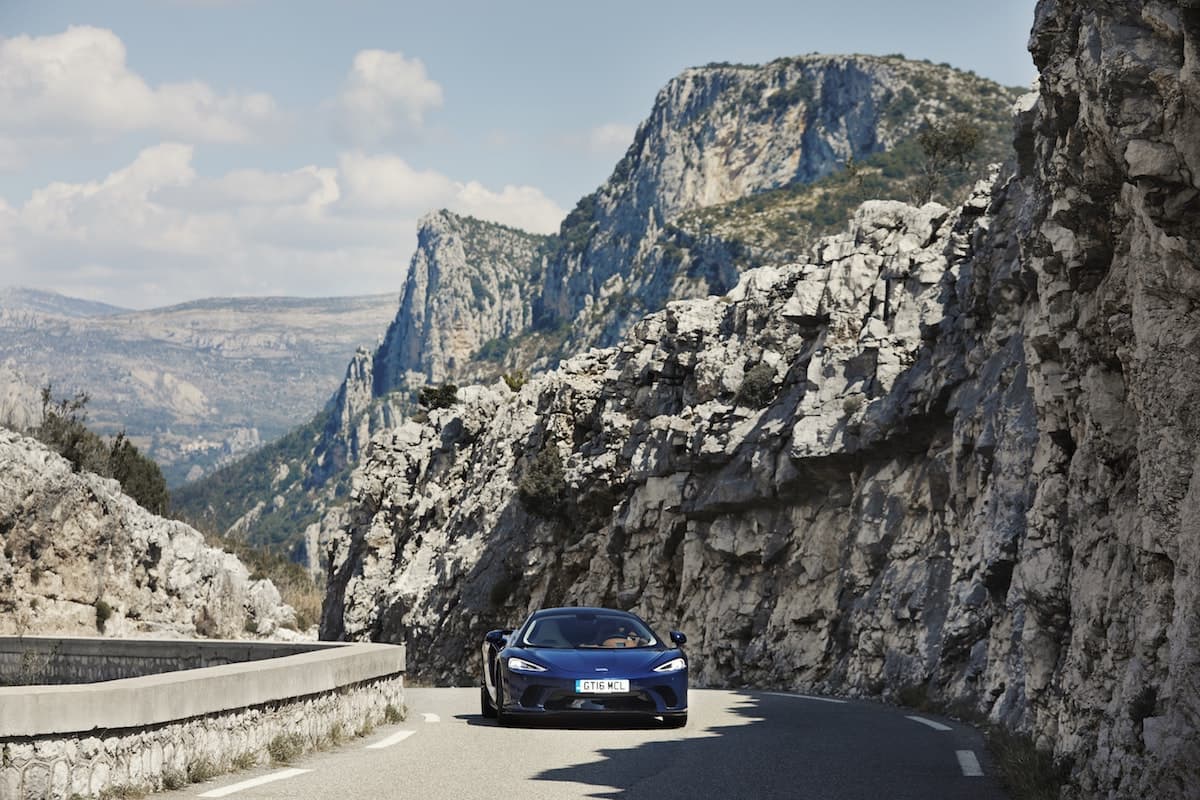
When you think of McLaren, what comes to mind? Most likely it’ll be a razor-edged supercar, be-winged and bellowing, all low-flying splitters and carbon-backed bucket seats. For the most part that’s true, but to tap into the lucrative grand tourer segment, the Woking-based firm has introduced this – the McLaren GT.

It’s designed to be a car which offers all of the thrills of a McLaren, but with the comfortable, continent-crossing abilities that you’d want from a grand tourer. Has it nailed both aspects and can it make a dent against established rivals in the class? We’ve headed to the south of France to find out.

The Car Expert Best of British horizontal banner

What’s new about the McLaren GT?

Traditionally, McLaren cars sit in three main categories – Sports, Super and Ultimate. The GT sits in none of those, instead residing in a new category out to one side which, handily, is called ‘GT’. Despite sitting out on a limb, the McLaren GT uses the same basic components as the other cars in the range.

However, some subtle changes have been made to make the GT more comfortable. The ride height can be increased to match that of a Mercedes-Benz C-Class in order to get over bigger speed bumps, while the glass has been thickened to improve in-cabin refinement.

How does it look?

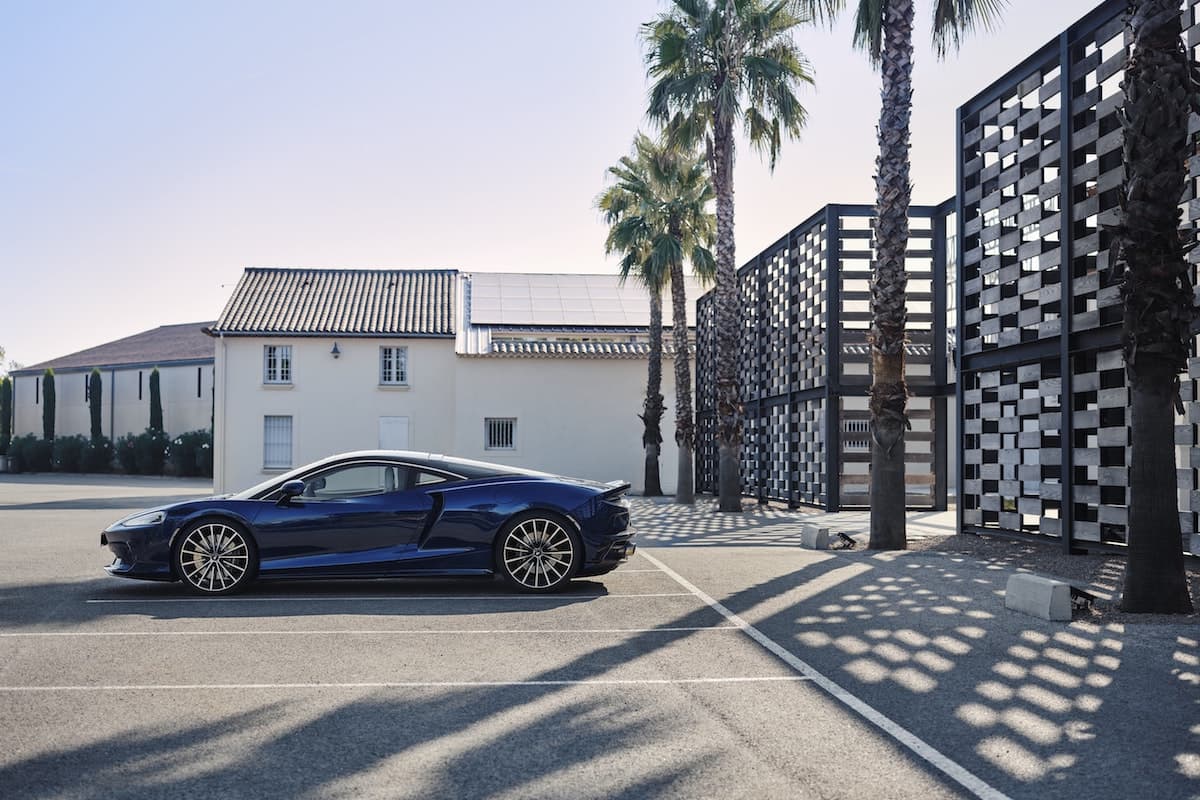
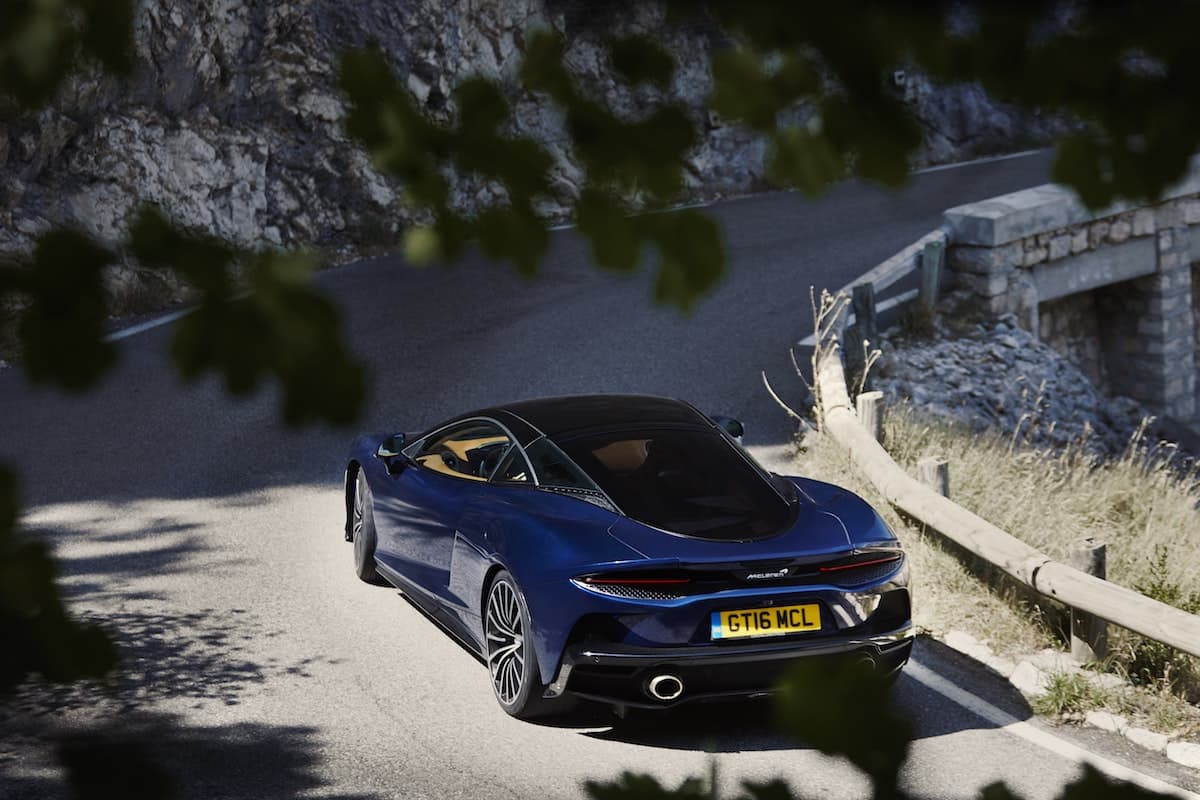
Long, imposing and impossibly sleek, the McLaren GT is a car which turns heads wherever it goes. It’s a long car, that’s for sure, rocking in at nearly 4.7m in length – that’s about 30cm longer than a Ford Focus, for instance, and longer than any Sports or Super series McLaren. The tapered rear end previews the look of the upcoming Speedtail hypercar, too.

McLaren GT review 2019 | The Car Expert

Around the back of the car, things are equally as sharp. The look is far less in-your-face than other cars in the McLaren range, that’s for sure, but it mirrors the under-the-radar, subtle approach usually taken with long-distance grand tourers.

What’s the spec like?

The main infotainment offering in the GT comes courtesy of an all-new touchscreen setup which is a huge step up for McLaren. Clear, crisp and responsive, it’s a genuinely impressive unit to interact with and makes accessing key features such as navigation or heating and ventilation controls far easier than on previous McLaren models.

Our car came in Luxe specification – a step up over the regular car – and this adds electronically-controlled seats with heating, as well as a function which automatically moves the seats to their rearmost position when parked, making exiting the vehicle easier. The trim also includes a piano black finish for the infotainment screen surround, along with chrome highlights which combine with interior lighting to give the cabin a more spaceship-like feeling.

What’s the McLaren GT like inside?

Open up the scissor doors, slide into the cabin and you’re met with a driver-focused seating position. In truth, we’d like the seat to go a little lower – but everything is logically placed around you, and there’s tons of adjustment in the steering wheel too. The whole forward area is kept impressively clutter-free too, with all of the main controls accessed via the central touchscreen that dominates the middle of the cabin.

  • McLaren GT review 2019 - interior and dashboard | The Car Expert
  • McLaren GT review 2019 - interior detail | The Car Expert

But McLaren has made a big deal of storage space with the GT, it being a grand tourer after all. At the rear, there’s 420 litres of space, and because it’s over the engine McLaren has lined the area with mark-resistant material, so either golf bags or skis – both of which the firm says will happily fit in the load area – won’t cause too much damage. It’s helped by a further 150 litres located in the nose.

All in, there’s 570 litres to play with. In terms of outright capacity, it trumps both the Bentley Continental GT and the Aston Martin DB11 by some margin, but it’s a far less usable space because of its raked shape.

What’s under the bonnet?

Mounted in the middle of the GT is McLaren’s tried-and-tested 4.0-litre twin-turbocharged V8 engine, which here produces 620hp and 630Nm of torque. It’s driven to the wheels through a seven-speed gearbox, which incorporates a launch control function for seamless standing starts. The GT’s performance stats make for impressive reading; 0 to 60mph takes 3.1 seconds, and flat-out it’ll crack 203mph. The GT certainly ticks the right boxes when it comes to performance, then.

Economy-wise, McLaren says that the GT will return 23.7mpg combined, while emissions sit at 270g/km under the latest WLTP tests. And when it comes to range – a key factor in grand tourers – McLaren says that the GT will manage 414 miles between trips to the pump, but this is under the older, less stringent NEDC tests.

What’s the McLaren GT like to drive?

Thumb the large, red starter button in the centre of the cockpit and the 4.0-litre V8 grumbles into life behind you and, initially at least, things are impressively simple. Around town, the automatic gearbox shifts smoothly, and the engine is barely audible as it ticks over.

  • McLaren GT road test 2019 - front | The Car Expert
  • McLaren GT road test 2019 - side | The Car Expert
  • McLaren GT road test 2019 - rear | The Car Expert

Gather some pace – which is easy to do in the GT – and the car is just as easy to drive. The steering has a decent amount of weight to it and taking manual control of the gearbox results in crisp, seamless shifts. The traction control systems aren’t too intrusive either, though in fully-on modes can be a little over-eager to disengage the power. We’d just like it to sound a little more exciting; the exhaust note feels a bit flat at times and at higher speeds seems to blend into the background.

The only real drawback is that, when travelling at speed, the GT just isn’t as cossetting as rival grand tourers. The ride is good, but it doesn’t feel vastly improved over a regular McLaren such as the 720S, for instance. Likewise, the engine noise isn’t too intrusive, but the cabin refinement is impeded by a fair amount of road noise.

Verdict

To understand the McLaren GT, it’s best to think about what a grand tourer is. Fast, for sure, and that’s an area the GT has licked. It’s also got to be capable of taking suitcases and bags and, again, this is something the McLaren GT does well.

A decent range is required too – if you don’t want your cross-country jaunt interrupted by too many fuel stops, that is – but here the GT falters; though the firm claimed 414 miles, our cars were reading just 185 miles after a fill-up, and after a brisk jaunt on the Route Napoleon our GT was left with just 50 miles. Not great for grand touring, then.

In the end the GT feels a little muddled. It’s not as sharp as other McLarens in the range but only feels slightly more comfortable out and about than cars like the road-orientated 570S – and in out-and-out cross-country sumptuousness, it’s trumped by rivals.

That’s not to say that the McLaren GT is a bad car as a whole – far from it – it just feels like McLaren introduced it because it felt it needed to, rather than because it wanted to.

Similar cars

Aston Martin DB11 | Bentley Continental GT | Ferrari GTC4Lusso | Mercedes-AMG S63 | Rolls-Royce Wraith

Key specifications

Model as tested: McLaren GT
Price (on-road): £163,000
Engine: 4.0-litre twin-turbo V8
Gearbox: Seven-speed automatic
Power: 620 hp
Torque: 630 Nm
Top speed: 203 mph
0-60mph: 3.1 seconds
Fuel economy (combined): 23.7 mpg
CO2 emissions: 270 g/km
Euro NCAP safety rating: Not tested

Toyota reveals rugged Corolla Trek for people with ‘active lifestyles’

0

Toyota has introduced a new variant of its Corolla Touring Sports aimed at people who need a little more off-road ability from their daily car.

Dubbed the Corolla Trek, it follows the tried and tested formula for such vehicles, featuring a ride height 2cm higher than the standard model to offer greater ground clearance, as well as protective cladding beneath the car to protect it when taking unpaved routes.

To make it stand out from the rest of the range, the Corolla Trek gets a honeycomb front grille, 17-inch alloy wheels, rear privacy glass, fog lamps and LED headlights. Inside, there’s two-tone upholstery to match the wood-finish elements of the dashboard and the Trek logo on the door step and tailgate.

Standard equipment includes a seven-inch screen in the instrument binnacle, an eight-inch infotainment screen in the dashboard, and the latest version of Toyota Safety Sense, which includes a suite of driver aids.

The Corolla Trek is only available with petrol-electric hybrid engines, with a choice of a 125hp 1.8-litre unit or 180hp 2.0-litre.

The model is a collaboration between Toyota and Trek Bicycle, with 16 examples of the model being used as support vehicles for the European legs of the Trek-Segafredo World Tour cycle event.

Honda Jazz (2015 to 2019)

Summary

The Honda Jazz is a five-door supermini-class small hatchback. This model was launched in the summer of 2015 and was updated in late 2018. Production of this model ended in 2019 ahead of the arrival of an all-new Jazz in the summer of 2020.

The Jazz received generally average reviews from the UK motoring media over the course of its production cycle, with a few outstanding scores from some consumer titles like Honest John. Based on 22 reviews by the end of its model life, the Jazz had an overall Expert Rating that placed near the bottom of the supermini class.

The Honda Jazz was universally praised by reviewers for its practicality and spaciousness compared to similarly-sized cars, however it was criticised for poor levels of ride comfort and refinement compared to the best cars in its class.

Reliability is a strong point for this generation of the Honda Jazz. As well as our own data shown below, Warrantywise ranked it as the UK’s most reliable used car in 2022.

Key specifications

Body style: Small five-door hatch
Engines: petrol
Price when new: From £14,600 on-road

Launched: Summer 2015
Last update: Winter 2017/18
Replaced: Summer 2020

Media reviews

Highlighted reviews and road tests from across the UK automotive media. Click any of the boxes to view.

Featured reviews

More reviews

Car

Carbuyer

Carwow

Company Car Today

Evo

Heycar

Honest John

Parkers

The Sun

The Sunday Times

The Telegraph

Top Gear

Safety rating

Independent crash test and safety ratings from Euro NCAP

Overall score: 5 stars
Date tested: November 2015
Date expired: January 2022
Read the full Euro NCAP review

Adult protection: 93%
Child protection: 85%
Vulnerable road users: 73%
Safety assist: 71%

Note on safety rating

The Honda Jazz was originally crash tested by Euro NCAP back in 2015 and awarded a five-star rating. However, this rating expired in January 2022 and is no longer valid as the car no longer meets the standards required for such a rating. This is normal practice, as Euro NCAP reviews its ratings on most cars annually with most ratings expiring after about six or seven years.

However, if you are comparing a used Honda HR-V to vehicles of similar age, whose ratings will have probably also expired, its safety rating score is still useful.

Eco rating

Independent economy and emissions ratings from Green NCAP

No eco rating

The Honda Jazz was not lab tested by Green NCAP during its production life.

Reliability rating

MotorEasy logo 600x167

Reliability data provided exclusively for The Car Expert by MotorEasy

All data based on MotorEasy average workshop costs for extended car warranty claims

As of April 2025 (our most recent data point), the Honda Jazz has a excellent reliability rating of 94%, according to warranty data provided exclusively to us by our commercial partner, MotorEasy. This score applies to both this generation Jazz, as well as both newer (2020 onwards) and previous (pre-2015) generations, which is good news if you are considering a used Honda Jazz.

Although we don’t have a huge number of data points yet, the repair bills claimed under warranty to date have been very inexpensive. All in all, the Jazz looks like being a reliable choice as a used car.

Running cost rating

Clear Vehicle Data logo close crop

Monthly cost of ownership data provided exclusively for The Car Expert by Clear Vehicle Data

No data

This generation of Honda Jazz is too old for us to have running cost data.

Awards

Trophies, prizes and awards that the Honda Jazz has received

2018

  • Honest John Awards – Best Small Hatchback

2017

  • Workshop Magazine Awards – Car of the Year

2016

  • Telegraph Cars Awards – Best Small Hatchback
  • Women’s World Car of the Year – Budget Car Award

Similar cars

If you’re looking at the Honda Jazz, you might also be interested in these alternatives

Citroën C3 | Dacia Sandero | Ford Fiesta | Hyundai i20 | Kia Rio | Mazda 2Mini hatch | Nissan Micra | Peugeot 208Renault Clio | SEAT Ibiza | Skoda FabiaSuzuki Swift | Toyota Yaris | Vauxhall Corsa | Volkswagen Polo

Buy a Honda Jazz

If you’re looking to buy a used Honda Jazz, The Car Expert’s partners can help you find the right car.

Motors 600x300

Search less, live more. We make finding the right car simple. Find out more

Auto Trader logo 600x300

Search for your next new or used car with Auto Trader. Find out more

Carwow logo 600x300

Discover great deals available on both new and used cars. Find out more

Most common reason for failing the new driving test revealed

0

New data has revealed the most common reasons for failing the new driving test.

First introduced in December 2017, the new test incorporated four changes. The independent driving section was increased from 10 to 20 minutes, and following sat-nav directions was also added.

Reversing manoeuvres were changed to exclude ‘reverse around a corner’ and ‘turn-in-the-road’, while candidates were also asked to answer two safety questions while out driving.

But it’s been revealed that the most common major fault – which means the driver has endangered themselves, the public or property and results in an instant fail – was a failure to observe properly at a junction.

In eight areas, including the Outer Hebrides, Hemel Hempstead and Motherwell, this caused over 40% of learners to fail their driving test.

This was followed by a failure to check mirrors when changing direction and improperly turning right at a junction.

Tom Preston, managing director of Hippo Leasing who compiled the data following a Freedom of Information request: “At the end of 2017, the DVSA introduced changes to the practical driving test to increase driver safety and the quality of training in light of the troubling statistic that road collisions remain the biggest killer of young people in the UK.

“Driving test faults reflect the factors which cause the most accidents on the road. Observation is the most common factor, according to the DfT, so while over 167,000 learners failed their practical test last year for this very reason, it’s important candidates learn from their mistakes to keep themselves and others safe once they’re qualified to drive.”

Volkswagen Golf bolstered with new high-spec trims

0

Volkswagen has given the outgoing Golf a shake up with a range of new trim levels designed to bring extra equipment without breaking the bank.

The three new trims are called Match Edition, GT Edition and R-Line Edition and replace Match, GT and R-Line, building on the standard equipment levels they offered. The new trims are £400 more than those they replace but offer the equivalent of £1,910 of additional equipment.

The new kit includes two-way climate control, LED headlights and a winter pack, which includes heated front seats and heated windscreen.

The current generation of Volkswagen Golf was first launched back in 2012 and its replacement will arrive on UK roads next year. Nevertheless, the current model holds a class-leading Expert Rating of 82% on The Car Expert’s unique Expert Rating system, which aggregates new car reviews from about 20 of the UK’s top motoring websites.

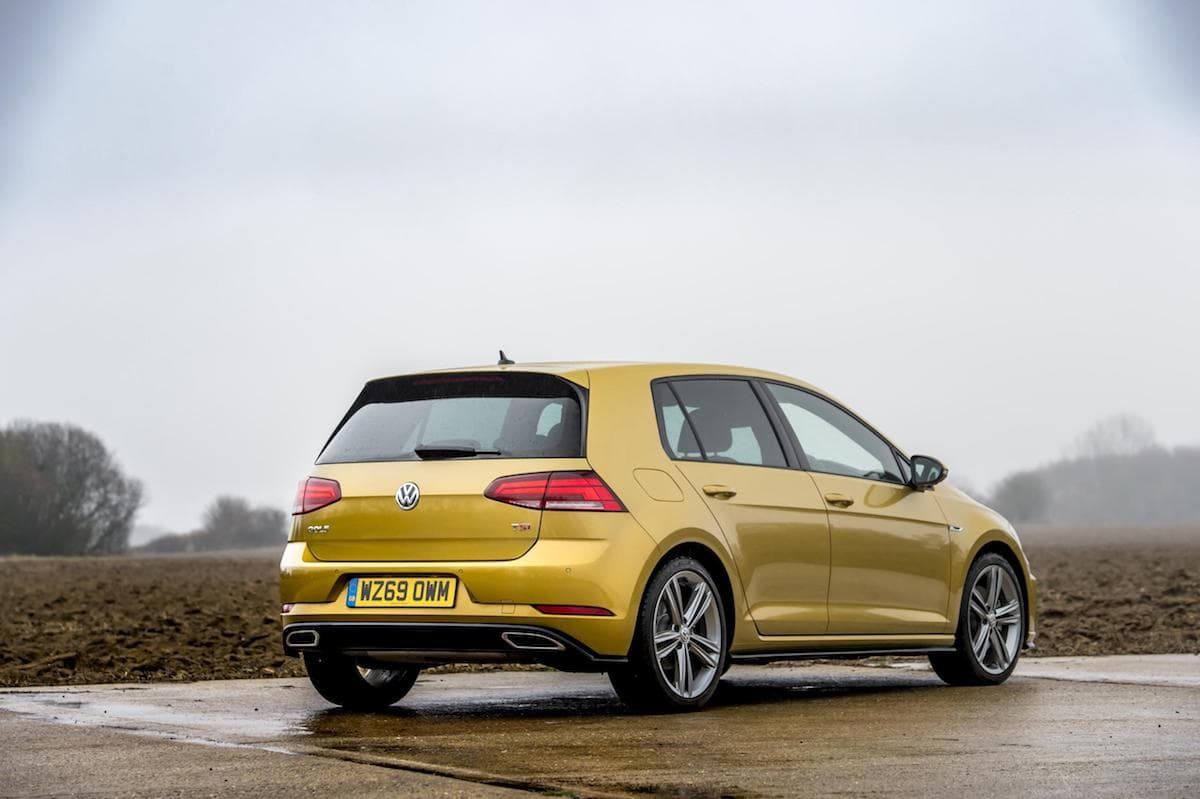
Volkswagen Golf R-Line Edition - rear view | The Car Expert

Dale Piper, Golf product manager at Volkswagen UK, said: “The Edition trim trio further strengthens the Golf’s appeal with a generous package of added equipment, boosting value by over £1,500.

“The Golf already represents a compelling competitive value package, and the Edition trims only go to strengthen this.

“Even though it was launched in 2012, the current, seventh-generation, Golf continues to win comparison tests against newer rivals, and remains our best-selling car by a comfortable margin.”

The new trims follow Volkswagen tradition of offering high-specification Edition variants of its models as they reach the end of their product cycle. The new eighth-generation Volkswagen Golf will be unveiled before the end of the year and go on sale in 2020.

Fiat, Alfa Romeo and Jeep freeze prices on cars ordered before Brexit deadline

Fiat Chrysler Automobiles has put a price freeze on all vehicles ordered before the Brexit deadline, even if the vehicle is delivered after October 31.

The guarantee, dubbed ‘Deal or No Deal’, applies to all Fiat, Abarth, Alfa Romeo and Jeep models regardless of what post-Brexit trade tariffs or currency fluctuations take place after the UK leaves the EU.

Reality check: Is Brexit making car finance more expensive?

Arnaud Leclerc, managing director at FCA UK, said: “We’re aware that questions around Brexit may cause concern for customers buying cars from European brands, but our ‘Deal or No Deal’ campaign will reassure our customers that the price of the car they order won’t change, even for post-Brexit deliveries.

“FCA will support customers during the Brexit transition period by ensuring that no matter what happens in the coming weeks, we’ll keep our prices exactly where they are.”

The UK’s deadline for exiting the EU is October 31, and prime minister Boris Johnson and his team have been meeting with senior EU officials to negotiate a withdrawal agreement.

Volvo XC90 review

60-second summary

What is it?
The Volvo XC90 has had a mid-life refresh – a mild visual update and mild hybrid technology under the bonnet

Key features
Mild hybrid diesel power to boost efficiency,

Our view
Volvo hasn’t felt the need to make change for change’s sake when it comes to its flagship SUV. There has been minimal meddling with the clean styling and, visually, the Volvo remains a model of restrained elegance.

Under the skin, a new mild-hybrid diesel will be the biggest seller and the electrical assistance helps provide more performance while using less fuel.

If you want a big SUV that is elegantly handsome, supremely comfortable and able to handle any job with effortless ease, the Volvo XC90 is the best in town.


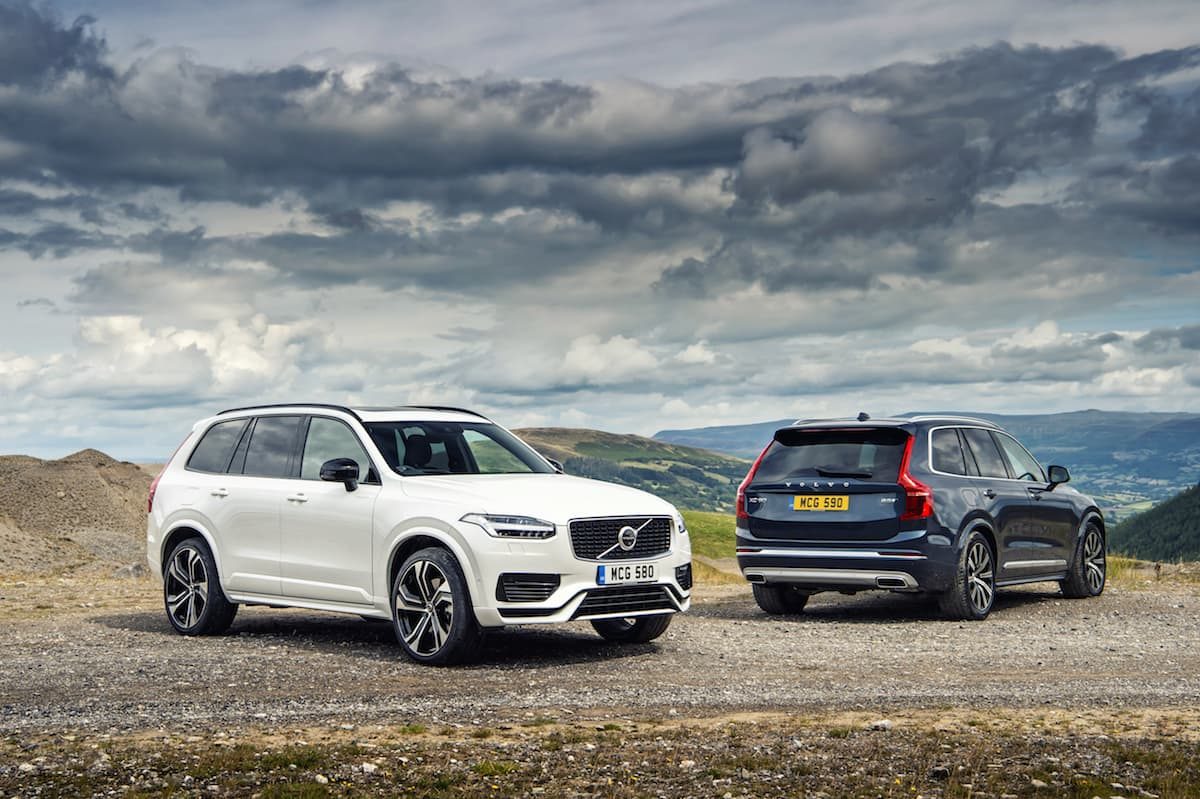
Volvo XC90 R-Design and Inscription | The Car Expert

Full review

Introduction

It’s hard to believe that the second-generation Volvo XC90 has been around for five years now. It’s been an enormously successful model for Volvo, not only following in the footsteps of the original model but setting the blueprint for every new Volvo that has followed. And it would sell in even greater numbers if UK car buyers could get over their obsession with Range Rover or premium German badges.

Now it’s time for the XC90’s mid-life update, and it’s pleasing to see that Volvo hasn’t felt the need to make change for change’s sake. There has been minimal meddling with the clean styling beyond the usual new wheels and plastic trims, and visually the Volvo remains a model of restrained elegance.

The real news is underneath, with the XC90 spearheading Volvo’s shift towards increased electrification across the range. A new mild hybrid diesel engine takes centre stage, providing 48-volt electrical assistance to either boost performance or drive electrical systems like headlights and stereo. Volvo claims up to 15% improvement in fuel economy from the new B5 mild hybrid set-up compared to the outgoing D5 diesel (basically the same engine minus the electrical assistance).

For now, the petrol T5 and T6 engine continue unchanged, but will be replaced by mild hybrid versions sometime in the next year. Meanwhile, the T8 plug-in hybrid version now offers more range from its battery to give a few more miles of electric running.

Officially, the B5 diesel should get you an average of 37-44mpg according to the latest official WLTP lab tests (depending on specification and, of course, your driving style and circumstances). That’s substantially better than the T5 or T6 petrol models, which should get about 26-30mpg. The T8 plug-in hybrid scores an average of 80-113mpg in the lab tests, but that will very much depend on how well you can keep it running on electrical power and minimise the use of the petrol engine.

Buying and owning a Volvo XC90

  • Volvo XC90 B5 Inscription MY2020 - front | The Car Expert
  • Volvo XC90 B5 Inscription MY2020 - rear | The Car Expert
  • Volvo XCVolvo XC90 T8 R-Design MY2020 - front | The Car Expert90 B5 R-Design MY2020 - front | The Car Expert
  • Volvo XC90 T8 R-Design MY2020 - rear | The Car Expert

The Volvo XC90 is available in three trim levels. Momentum is first up and provides a generous level of kit as standard, R-Design is the Sporty Spice version with big wheels and slightly more aggressive styling, while Inscription is the top-spec luxury model.

All three trims can also be upgraded to Pro versions with a package of extra goodies, and there’s the usual array of optional extras to quickly ratchet up the price if you get too greedy.

The B5 mild hybrid diesel and T5 petrol engines are available on all three trims, but you can’t have the T6 petrol or T8 plug-in hybrid powertrain in entry-level Momentum spec. Pricing starts at just over £52,000 on-road for a T5 petrol Momentum, with the B5 diesel just over £1,000 more. Stepping up to R-Design costs an extra £3,300, with the Inscription about £400 again.

In the UK, R-Design models are the most popular of the three trims, with about 40% of all XC90s specced this way. The diesel D5 engine has been the most popular powertrain since the current Volvo XC90 first arrived on UK roads in late 2014, and that’s set to continue with the updated model. Despite the overall shift away from diesel power in the marketplace, it still makes plenty of sense for a large, heavy SUV.

Sterling safety standards have always been part of the Volvo philosophy, and the XC90 performed exceptionally well when it was tested by Euro NCAP back in 2015 with some of the best scores ever achieved. The facelift doesn’t add anything new that wasn’t available before, but all versions of the XC90 get advanced lane-keeping assist and adaptive cruise control systems as standard. Blind-spot and rear cross-traffic alert systems are still optional, though.

Inside the Volvo XC90

  • Volvo XC90 Inscription interior | The Car Expert
  • Volvo XC90 R-Design interior | The Car Expert
  • Volvo XC90 R-Design interior detail | The Car Expert

Interior design is a real highlight of the current generation of Volvos. Once again, this started with the XC90 back in 2014 and, once again, Volvo has chosen not to go overboard with unnecessary change.

Most functions are controlled through a nine-inch touchscreen, keeping the dashboard clean and uncluttered. Other car manufacturers may follow a similar philosophy, but Volvo does it better than any of them. The few physical buttons and switches are beautifully detailed, such as the diamond-cut dials for volume and drive controls, or the crystal gear level on Inscription models (yes, I know this sounds tacky but it actually looks and feels lovely).

As is becoming de rigeur for premium brands, the conventional instrument dials have been replaced by a 12-inch digital screen that can display navigation and travel information, as well as your speedometer and other gauges.

The seats are superbly comfortable, the driving position is excellent and second-row passengers have plenty of room. The third row is inevitably pretty tight, but kids up to about 1.6 metres tall will be fine. Interior fit and finish was generally as you’d expect in a £50K+ car, although not quite best-in-class good.

The standard sound system is perfectly decent, but the optional Harman Kardon system (£850) is very good and the Bowers & Wilkins system (£3,000) is outstanding. If you want Apple CarPlay or Android Auto it’s a £300 option, but it’s included with the optional sound systems, which makes the Harman Kardon upgrade very tempting.

Downsides? A few. As much as we all love touchscreens in every part of our lives, they’re still harder to use on in a moving car compared to physical buttons and switches. And while Volvo’s nine-inch portrait screen layout was class-leading when it was new, today the graphics feel a little out-of-date compared to newer rivals. Nothing that’s inherently wrong in terms of how it works, but not quite as slick as some other systems.

Also bear in mind that if you choose the T8 plug-in hybrid, you’ll lose 40 litres of boot space plus you need to carry the chunky charging cable around. Not a big deal if you don’t use the third row of seats, but if you do then it doesn’t leave a lot of boot space to play with.

Driving the Volvo XC90

  • Volvo XC90 R-Design 2019 road test | The Car Expert
  • Volvo XC90 Inscription 2019 road test | The Car Expert

Being a mild hybrid, the Volvo XC90 B5 model isn’t able to run on electricity alone. That means you don’t get the surreal silence when driving through a village or town that you do in the T8 plug-in hybrid version, because the B5’s diesel engine is always grumbling away underneath. It’s not noisy, but it’s not quite as hushed as some rivals. The T5/T6 petrol units are smoother and sweeter than the diesel, but need to be worked harder when you’re carrying passengers and/or luggage.

The electrical assistance provided by the mild hybrid does help to make the B5 feel pretty punchy when you put your foot down, eliminating most of that small delay you normally get in a diesel car when you pull away from rest or start an overtaking move on the motorway.

The T8 plug-in hybrid is noticeably smoother and quieter, gliding around on electrical power for up to 23 miles (if you’re gentle) and with a petrol engine joining in smoothly when more response is needed or the battery’s running low.

Whichever engine is under the bonnet, the Volvo XC90 is a very comfortable car to drive. The steering lacks any real feeling but the nose responds faithfully to wherever you point it, and the XC90 rides smoothly on most road surfaces – especially if you have the (optional) air suspension and avoid the largest wheels in the brochure.

Fast cornering isn’t really this car’s forte, and your passengers will thank you to stop it with that silliness. Sit back, relax and let the big Volvo glide along from here to wherever you’re heading. Whether it’s the daily commute or a long road trip, it’s an enormously comfortable way to travel.

Verdict

If you want a big SUV that’s shouty and sporty and in your face all the time, there are many models around that can help you with those needs. This is not one of those cars.

If, however, you want a big SUV that is understated yet handsome, supremely comfortable and able to handle almost any job with effortless ease – even if you don’t need seven seats – the Volvo XC90 is still one of the best new cars you can buy.

In fact, if my money-no-object dream garage had space for only two cars, one of those cars would be the latest Ferrari/Porsche/Aston Martin supercar for weekend winding road fun, and the other one would be a Volvo XC90 T8 Inscription Pro for every other driving need. Please feel free to leave your hate mail in the comments section below.

The T8 plug-in hybrid is certainly the pick of the powertrains, but it’s £10K dearer than the perfectly decent B5 mild hybrid diesel and even more expensive than the equally competent T5 petrol – and not available on the Momentum spec either – so for most people the numbers won’t stretch that far. Despite justifiable concerns about the future of diesel, the B5 is still the best choice in the XC90 range for now.

Good points

  • Handsome, restrained styling
  • Supremely comfortable in the right spec
  • Clever interior design

Bad points

  • Touchscreen tricky to use on the move
  • Infotainment system no longer best in class
  • T8 plug-in hybrid is nice but pricey

Similar cars

Audi Q7 | BMW X5 | Jeep Grand Cherokee | Land Rover Discovery | Lexus RX L | Maserati Levante | Mercedes-Benz GLE | Porsche Cayenne | Range Rover Sport | Volkswagen Touareg

Key specifications

Model as tested: Volvo XC90 T8 Inscription
Price (on-road): £67,045
Powertrain: 2.0-litre petrol engine + electric motor
Gearbox: Eight-speed automatic
Power: 303hp + 87hp
Torque: 400Nm + 240Nm
Top speed: 140 mph
0-62mph: 5.8 seconds
Fuel economy: 80.7 – 113.0 mpg (WLTP)
CO2 emissions: xx
Euro NCAP rating: 5 stars (2015)

Pricing and specs for Fiat 500X Sport

0

The new Fiat 500X Sport will start from £22,500 and introduce a touch of sportiness at the top of the SUV’s range.

It gets more power from a new engine, sporty styling and mechanical upgrades that enhance its performance credentials.

The more powerful engine is a 150hp 1.3-litre petrol engine that’s attached to a dual-clutch automatic transmission, but buyers can also opt for a 1.0-litre unit with 120hp.

The suspension has been retuned with a focus on sportiness, with a ride height that sits just over a centimetre lower than before. Fiat says adjusted shock absorbers offer better road holding without compromising comfort.

  • 2020 Fiat 500X Sport interior and dashboard | The Car Expert
  • 2020 Fiat 500X Sport - rear view | The Car Expert

On the outside, the Sport gets body-coloured side skirts and wheel arches, a diffuser-like rear bumper design, dual chrome exhausts and full LED headlights, as well as a Sport-specific red paint. Eighteen-inch alloy wheels are fitted as standard, with 19-inch wheels available as an option.

Inside, there’s an aluminium gear knob and pedals, leather flat-bottomed steering wheel with Alcantara inserts, and a grey dashboard. There’s a seven-inch infotainment system with satellite navigation that’s compliant with Apple CarPlay and Android Auto, as well as climate control, rear parking sensors and cruise control as standard.

Fiat has also launched a Lounge specification, which focuses on interior refinement with a leather steering wheel and front armrest, while there’s also 16-inch alloy wheels, body-coloured mirror caps and rain sensors.

Abarth 595 Pista revealed

0

Abarth has revealed a new version of its 595, this time dubbed Pista.

Italian performance car aficionados may immediately link this to the Ferrari 488 Pista, but the comparisons end at name level — with the term translating into English as ‘track’.

The 595 is powered by a 165hp and 230Nm variant of Abarth’s peppy 1.4-litre turbocharged petrol engine, complete with a new Garrett turbine. Power is delivered through an automatic gearbox.

Acceleration and top speed figures haven’t been stated for the Pista, though it’s linked to a ‘Record Monza’ exhaust system which gives the car a distinctive set of vocal cords.

Abarth 595 Pista - rear | The Car Expert

The model is marked out by an eye-catching new matte grey and green livery. Inside the car, a flat-bottomed steering wheel with a centre strip features, with a ‘Sport’ button sitting on the dashboard. When pressed, this adjusts the car’s peak power and torque availability, as well as opening up the active exhaust.

An Abarth-specific braking system sees 284mm ventilated brake discs sat up top, with 240mm units at the rear.

Standard equipment for the car includes a seven-inch infotainment display with DAB radio, plus support for both Apple CarPlay and Android Auto.

Cash-in-hand pricing hasn’t been confirmed for the Abarth 595 Pista, though the firm is offering a PCH lease for £189 a month following a £3,780 deposit up to the end of September. Deliveries are expected imminently.

Subaru XV e-Boxer test drive

Since its introduction in 2011, the compact XV crossover has gone on to become Subaru’s most popular model. Its position was strengthened further with a brand new model in 2018, which brought a revised look and comprehensive safety improvements.

But now the XV has a fresh new challenge, along with its larger Forester sibling, and that is to usher in electrification into the Subaru brand with the XV e-Boxer and Forester e-Boxer – wiping away distant memories of the firm’s past in world rallying and performance.

While the manufacturer is not jumping fully into the world of EVs, the e-Boxer powertrain is a lightweight hybrid setup that shows the brand is starting to move towards electrification.

The e-Boxer is not a new concept, having been available on Subarus for quite a while Japan. But this is its first use in Europe – combining a 2.0-litre petrol engine with an electric motor and lithium-ion battery in a bid to make the XV more efficient, but also better to drive. So, can it deliver?

As of September 2019, the Subaru XV currently holds an overall Expert Rating of 63% according to our unique Expert Rating aggregator system. This places it firmly in the bottom half of all the compact SUV/crossovers we have analysed, so Subaru will be hoping that the XV e-Boxer gives a boost to the car’s appeal.

What’s new about the Subaru XV e-Boxer?

Given the XV was given a major overhaul last year, there wasn’t a need to make other changes to the XV – meaning the new underpinnings are the key difference on the XV e-Boxer.

Subaru describes the e-Boxer powertrain as a ‘mild hybrid’, although it doesn’t really fit that description, as well as ‘self-charging’, jumping on Toyota’s hybrid marketing spin. Mild hybrid models are available from many manufacturers these days, and the conventional description of a mild hybrid setup is one where the car uses a small amount of electrical power to assist the petrol or diesel engine, but it can’t run on electricity alone.

The e-Boxer is a bit different, however. It has an electric motor and battery just like a regular hybrid model, only much smaller, so it can run on electric-only power for very short periods of time and only under very light acceleration. So it’s more of a light hybrid than a ‘mild’ hybrid.

How does it look?

Since its original debut in 2011 the XV has always been a good-looking car, not being too bold but also not going unnoticed. The refresh last year also helped somewhat – ushering in revised bumpers and new LED lighting.

  • Subaru XV e-Boxer review 2019 –  front view | The Car Expert
  • Subaru XV e-Boxer review 2019 –  rear view | The Car Expert

We’re not so keen on the textured plastic cladding, though it’s refreshing that the XV isn’t faux rugged (like many of its rivals) rather the XV’s SUV-style looks are actually met with genuine all-terrain ability. With 22cm of ground clearance and beefy wheel arches, it certainly fulfils the rugged styling many buyers are craving for.

What’s the spec like?

Prices for the XV e-Boxer kick-off at £28,995, which does look a bit pricey next to rivals, though you have to factor in the impressive array of standard equipment you get for the money.

Two trims are offered; SE and SE Premium. The former comes with 18-inch alloy wheels, automatic LED headlights, keyless entry, a reversing camera and an eight-inch touchscreen to name but a few features.

Unlike other manufacturers, who charge for their safety features, Subaru bundles them all in from the offset. This means that as part of the ‘EyeSight’ package, you get adaptive cruise control, blind-spot monitoring, rear-cross traffic alert and lane-change assist. This all adds up to a five-star Euro NCAP rating.

Choosing SE Premium brings satellite navigation, electric leather seats and a sunroof, though at £2,000 extra, the base model looks better value.

The XV e-Boxer is also available in a new colour – Lagoon Blue Pearl – which certainly looked rather fetching on our test car.

What’s the Subaru XV e-Boxer like inside?

Subaru interiors have undoubtedly improved in recent years – not being as agricultural-feeling as they once were, and rather more luxurious instead.

Subaru XV e-Boxer review –  interior and dashboard | The Car Expert

There’s now plenty of soft-touch plastics, as well as leather on our top-spec SE Premium test car, while the eight-inch touchscreen is great to use – being both responsive and intuitive. The quality still falls short in places, but with a Subaru, there is always the impression it was built to stand the test of time, and that’s probably something worth choosing over a few luxuries.

Adding to this is Subaru’s ‘Eyesight’ safety system – offering a suite of safety assists, which should help buyers and families to feel at ease. The XV certainly fulfils the family brief, too, with a practical and versatile cabin, though its 345-litre boot is quite small compared to much more affordable cars.

What’s under the bonnet?

Sitting alongside the existing XV 1.6-litre petrol model, this new e-Boxer hybrid setup combines a 2.0-litre petrol unit together with an electric motor and a battery pack enabling around one mile of very gentle driving in pure-electric mode. Total output is 150hp and 194Nm of torque.

You might be wondering what the point is with a range like that? Well, a mild hybrid setup is all about using electrification to enhance the petrol engine – improving efficiency by 10% and allowing for slightly more torque – so even though the XV has limited all-electric propulsion, it really acts more like a regular mild hybrid vehicle.

Despite the electric boost, the performance figures are not particularly inspiring. 0-60mph takes 10.5 seconds and the XV s-Boxer will reach a top speed of 120mph. Though it doesn’t make a huge deal of difference to efficiency, with a claimed fuel economy figure of 35.7mpg, and CO2 emissions of 149g/km.

Subaru’s trademark all-wheel-drive remains, too, while many buyers will be pleased that the standard car’s 1,270kg towing limit remains.

What’s the Subaru XV e-Boxer like to drive?

Subaru has, for many years, had all-wheel-drive ability as one of its key focuses, and that remains unchanged despite adopting electrification. A dedicated ‘X-mode’ enables traction on a variety of surfaces and gives the XV remarkable ability on rough terrain.

Back onto the tarmac and it’s perfectly fine in normal steady driving, whereby the XV’s comfortable ride comes into its own – the broken Latvian roads closely resembling those in the UK. It also remains composed and doesn’t lean in the same way expected from many higher riding models.

  • Subaru XV e-Boxer road test 2019 –  01 | The Car Expert
  • Subaru XV e-Boxer road test 2019 –  02 | The Car Expert

However, the benefits of electrification are quite hard to see. While undoubtedly offering more torque, it only seems to develop any sense of urgency at around 4,000rpm, at which point the CVT transmission begins to sound unpleasantly loud. It’s also difficult to keep the XV in ‘EV’ mode, while the switch from electric to petrol power could be more seamless.

Verdict

Adding electrification to the XV range has undoubtedly enhanced this crossover. It’s a great first step for Subaru as it looks to introduce more similar systems to its range shortly, and also as it builds up to the launch of its first EV in the next couple of years.

Retaining the XV’s rugged charm and go-anywhere ability will definitely make this form of electrification appeal to Subaru buyers, who are notorious for their brand loyalty.

However, while the Subaru XV e-Boxer is far from class-leading – with the CVT gearbox being our main issue – it continues to be an interesting and unique alternative to the norm.

Similar cars

Citroën C5 Aircross | Ford Kuga | Honda CR-V | Hyundai Tucson | Jeep Compass | Kia Sportage | Mazda CX-5 | Mitsubishi Eclipse Cross | Nissan Qashqai | Peugeot 3008 | Renault Kadjar | SEAT Ateca | Skoda Karoq | Toyota RAV4 | Vauxhall Grandland X | Volkswagen Tiguan

Key specifications

Model as tested: Subaru XV e-Boxer SE Premium Lineartronic
Price: £30,995
Engine: 2.0-litre petrol engine with electrification
Gearbox: continuously-variable automatic transmission (CVT)
Power: 150 hp
Torque: 194 Nm
Top speed: 120 mph
0-60mph: 10.5 seconds
Fuel economy (combined): 35.7 mpg
CO2 emissions: 149 g/km

Volkswagen updates its company logo

Volkswagen has revealed an update to its company logo — marking the first time the firm has had a major rebrand since 2000.

Like the design of the company’s best-selling Golf model, the new logo is very much a case of evolution rather than revolution.

It retains the same stacked ‘VW’ lettering that has been a mainstay of the firm’s badging since its 1937 inception, though now takes on a flatter 2D effect rather than the 3D form of previous along with thinner lettering. The effect is very similar to what Lotus did with its logo revamp last month.

Revised Volkswagen logo | The Car Expert

Volkswagen says the simplified new design will ‘allow for more flexible use and will be outstandingly recognisable in digital media’.

Debuting on the newly-revealed, all-electric ID.3, the new badge will be accompanied by a ‘sound logo’ — a specific chime that will be used both in vehicles and in VW marketing. The fresh logo will appear on all future VW cars, though the firm has not yet confirmed how its audio compatriot will be deployed.

Alongside its passenger cars, Volkswagen’s commercial vehicle arm will also be taking on the new branding.

Hyundai 45 concept previews the brand’s future

0

Hyundai has revealed its future design direction at this year’s Frankfurt motor show with this — the Hyundai 45.

It pays homage to the firm’s Pony Coupe Concept, revealed in 1974, taking on an angular and almost wedge-like design.

Viewed from the side, the electric concept car has a boxy silhouette, as well as striking Z-shaped design details along the bodywork. Up front, two pairs of small, chopped rectangle LED headlights feature in a slim grille, with a similar approach for the car’s taillights.

  • Hyundai 45 concept - front view | The Car Expert
  • Hyundai 45 concept - rear view | The Car Expert
  • Hyundai 45 concept - interior and dashboard | The Car Expert

Hyundai has designed the interior with the concept’s autonomous functions in mind, creating a spacious area that’s described as a ‘unique living space’. Said to be inspired by traditional house furniture, it’s splashed with wood, fabric and leather trimmings.

Lounge chair-esque seats are implemented in the rear, with the front seats able to be swivelled around to allow front occupants to interact with other passengers when the car’s autonomous features are in use.

It’s more than just form here, with functional new tech showcased. A hidden camera system that replaces traditional wing mirrors is present, with Hyundai saying its exploring ways to put the feature into production.

Don’t expect the Hyundai 45 concept to enter production, though it could well inspire future cars from the firm.

Mini Clubman (2015 to 2024)

Summary

The Mini Clubman was a small estate based on the Mini hatch. This model was the second (and possibly last) generation that was launched in early 2015. As of 2024, the Clubman has been discontinued and essentially replaced by the brand’s newer Aceman crossover.

The second-generation Clubman was significantly larger and more practical than the original generation, and had conventional rear doors (instead of the original’s reverse-opening rear door but only on the driver’s side…) for easier access to the back seats. The model had unusual van-style doors at the back. They certainly look distinctive but were not as practical as a conventional tailgate.

Like the also now retired Mini hatch, the Clubman models were built here in the UK at Mini’s factory in Cowley, Oxfordshire. It was originally available with both petrol and diesel engines, but the diesel units were dropped across the whole Mini range during the Clubman’s lifespan.

As an estate version of the five-door Mini hatch, the Mini Clubman didn’t really have any direct competitors. Exterior size was comparable to a Volkswagen Golf but interior space falls somewhere between a Golf and the smaller Polo and similar cars. The Clubman was also available in a high-performance John Cooper Works (JCW) specification.

The Mini Clubman received generally positive scores from the UK motoring media, with fairly similar scoring for the top-spec JCW model. It received particular praise for its high level of personalisation and overall comfort. However, it was also criticised for numerous styling clichés that compromise its functionality, as well as being relatively expensive. The JCW version was also criticised for not being as good to drive as similarly-priced rivals.

As of March 2026, the Mini Clubman holds a Used Car Expert Rating of C with a score of 61%. It gets good grades for its low running costs and CO2 emissions, but its its reliability record and media review scores are only average. Its safety score is also poor as its Euro NCAP safety rating has long since expired.

The Car Expert Best of British horizontal banner

Key specifications

Body style: Small estate
Engines: petrol
Price when new: From £27,440 on-road

Launched: Autumn 2015
Last updated: Spring 2019
Discontinued: 2024

Media reviews

Highlighted reviews and road tests from across the UK automotive media. Click any of the boxes to view.

The Car Expert

Auto Express

Car

Car Keys

Carbuyer

Carwow

Company Car Today

Evo

Green Car Guide

Heycar

Honest John

Motors

Parkers

The Sun

The Sunday Times

The Telegraph

Top Gear

Safety rating

Independent crash test and safety ratings from Euro NCAP

Overall score: 4 stars
Date tested: December 2015
Date expired: January 2022
Read the full Euro NCAP review

Adult protection: 90%
Child protection: 68%
Vulnerable road users: 68%
Safety assist: 67%

Note on safety rating

The Mini Clubman was originally tested by Euro NCAP back in 2015 and awarded a four-star rating. However, this rating expired in January 2022 and is no longer valid as the car no longer meets the standards required for such a rating. This is normal practice, as Euro NCAP reviews its ratings on most cars annually with most ratings expiring after about six or seven years.

However, if you are comparing a used Mini Clubman to vehicles of similar age, whose ratings will have probably also expired, its safety rating score is still useful.

Eco rating

Independent economy and emissions ratings from Green NCAP

No eco rating

The Mini Clubman was not lab tested by Green NCAP during its production life.

Reliability rating

Reliability data provided exclusively for The Car Expert by MotorEasy

All data based on MotorEasy average workshop costs for extended car warranty claims

The Mini Clubman has a reliability score that’s about average, according to workshop and extended warranty data provided to us by our commercial partner, MotorEasy. This applies to both generations of the Clubman model.

Unfortunately, the most common problem area is also the most expensive – the engine, with an average repair bill of almost £1,200. If you’re buying (or have already bought) a Mini Clubman, you should probably consider an extended warranty to cover you once the factory new car warranty runs out.

Running cost rating

Monthly cost of ownership data provided exclusively for The Car Expert by Clear Vehicle Data

Fuel consumptionAverageScore
Petrol models43 mpgC
CO₂ outputAverageScoreVariationScore
Petrol models149 g/kmC
Insurance groupAverageScoreVariationScore
All models25B
Service and maintenanceCostScore
Year 1£158A
Year 2£446A
Year 3£711A
Year 4£961B
Year 5£1,273B
Overall£3,549B

Running costs for the Mini Clubman are a bit of a mixed bag, according to data provided exclusively to The Car Expert by our commercial partner, Clear Vehicle Data.

Most importantly in terms of your monthly budget, fuel consumption is only average. That’s fairly unimpressive given that the Clubman is not a large car.

The good news is that your annual road tax and insurance bills should be good, while scheduled servicing costs over the first five years are excellent.

Awards

Trophies, prizes and awards that the Mini Clubman has received

2022

  • News UK Motor Awards – Best Dog-Friendly Car

2021

  • News UK Motor Awards – Best Dog-Friendly Car

2018

  • Honest John Awards – Best Estate Car

Similar cars

If you’re looking at the Mini Clubman, you might also be interested in these alternatives

Alfa Romeo GiuliettaCitroën C4 Cactus | Fiat 500LFiat Tipo | Ford Focus | Honda Civic | Hyundai i30 | Kia Ceed | Mazda 3Peugeot 308 | Renault MeganeSEAT Leon | Skoda Fabia Estate | Toyota Corolla | Vauxhall Astra | Volkswagen Golf

More news, reviews and information about the Mini Clubman at The Car Expert

Everything you need to know about Mini

Everything you need to know about Mini

Mini Clubman marked for retirement with ‘Final Edition’

Mini Clubman marked for retirement with ‘Final Edition’

Mini Clubman John Cooper Works test drive

Mini Clubman John Cooper Works test drive

Mini Countryman and Clubman JCW models updated

Mini Countryman and Clubman JCW models updated

MINI minor updates across the range

MINI minor updates across the range

New-look Black Pack for MINI Clubman

New-look Black Pack for MINI Clubman

MINI Works Clubman powers into Paris

MINI Works Clubman powers into Paris

Buy a Mini Clubman

If you’re looking to buy a new or used Mini Clubman, The Car Expert’s partners can help you find the right car

Motors 600x300

Find your next used car with Motors. Find out more

Auto Trader logo 600x300

Find your next new or used car with Auto Trader. Find out more

Carwow logo 600x300

Find your next new or used car with Carwow. Find out more

All-new Land Rover Defender makes its debut

0

After years of concepts, rumours, teaser images and countless leaks, Land Rover has at last revealed the new Defender.

The original Land Rover Defender ended production in 2016, with a dedicated off-roader-sized gap in the British firm’s line-up since then. However, while the new model looks somewhat Defender-ish, it’s a decidedly upmarket reinterpretation with top-spec models starting at just under £80,000.

The design takes on a boxy but a modern look, with enclosed LED headlights, softer details and a distinctive rear light design. It draws inspiration not just from the original Defender, but also from previous Freelander and Discovery models.

It looks set to be just as capable as its famous forefathers thanks to some clever new tech. Underpinning the off-roader is a new ‘D7x’ platform, based on an aluminium monocoque, which Land Rover says is three times stiffer than traditional body-on-frame chassis setups.

  • 2020 Land Rover Defender 90 01 | The Car Expert
  • 2020 Land Rover Defender 90 02 | The Car Expert
  • 2020 Land Rover Defender 90 03 | The Car Expert

Debuting on the new Land Rover Defender is ‘Configurable Terrain Response’, which allows vehicle settings to be fine-tuned to cope with any particular surface — though pre-set options are there for beginners to off-roading too. The firm’s ‘ClearSight’ technology features as well, which utilises a camera setup to display the ground underneath the bonnet on the central screen.

A spartan approach is taken inside the car. Structural elements are exposed — both to save weight by doing away with materials that would normally cover these as well as showcase its rugged roots — while rubberised flooring shows the function-over-form approach Land Rover is taking.

It’s not entirely a blast from the past, though. A touchscreen infotainment system features and utilises over-the-air software updates to remain futureproof.

Available in short-wheelbase 90 or long-wheelbase 110 guises, the British off-roader is capable of seating seven in its largest form (six in the 90). Folding the rear-most row results in 1,075 litres of boot space — rising to 2,380 litres with the middle row flattened. Those looking for an open-air experience can opt for a fabric roof, too.

Powertrain choices at launch consist of two petrol options — a six-cylinder and four-cylinder — along with two four-cylinder diesels. Petrol offerings also utilise mild-hybrid technology, with a plug-in hybrid unit set to join the range next year.

Five trims will be offered for the Defender — namely S, SE, HSE, First Edition and Defender X. Pricing starts at £45,240 for long-wheelbase 110 models, with standard equipment across the range including LED head- and taillights, 18-inch steel wheels, a heated windscreen, a ten-inch screen supporting both Apple CarPlay and Android Auto, cruise control and a 3D 360-degree camera system.

Order books are set to open imminently for the reborn Land Rover Defender 110, with first deliveries expected in December. The short-wheelbase 90 variants are due mid-2020, with pricing expected to begin at £40,920.

Radical concept hints at next BMW 4 Series

0

The BMW Concept 4 has been unveiled with radical styling at the Frankfurt motor show.

Showcasing a dynamic look, the concept points firmly towards the design of the second-generation BMW 4 Series, expected in 2020, and the i4 electric car, expected in 2021.

The huge kidney grille at the front of the car is the most noticeable design feature, dominating the nose of the Concept 4. Following on from a similar design seen on the X7 SUV and 7 Series saloon, it is more vertical than previous examples and includes raised elements for a more three-dimensional visual effect.

Domagoj Dukec, head of BMW Design, points to the kidney grille as always a signature feature of BMW cars. “The BMW Concept 4 presents a confident and classy take on this iconic feature – at the same time, the BMW Concept 4 offers a look ahead to the expressive face of the 4 Series range,” he says.

According to its creators the Concept 4 takes inspiration from the classic 328 and 3.0 CSL models, which it references in its sweeping exterior lines. Currently, the LED lights have no glass cover but are worked into the body instead – but this is a feature unlikely to reach production versions.

There are no images of the car’s interior as yet, with the show car’s dark tints ensuring no view of the cabin could be had. However, given the car’s relationship to the latest 3 Series, it’s likely that the upcoming 4 Series interior will be largely the same as the saloon version.

BMW Concept 4 rear view The Car Expert