Mercedes-Benz will become one of Aston Martin’s key shareholders as part of an expanded technology agreement.
Representing an expansion on the pair’s existing deal, the move will give Aston Martin greater access to Mercedes technology, with highlights including the firm’s electric and hybrid powertrains. In addition, future electric architecture will be made available ‘for all product launches through to 2027’, according to Aston.
Heralded as a “transformational moment for Aston Martin” by executive chairman Lawrence Stroll, the agreement forms part of the firm’s “long-term product expansion plans”. Stroll also announced today that the luxury British carmaker is targeting revenue of £2bn by 2024/25.
Stroll added that the announcement was “truly game-changing”.
“We now have the right team, partner, plan and funding in place to transform the company to be one of the greatest luxury car brands in the world.”
The agreement will also see Mercedes gradually increase its stake in Aston Martin up to a maximum of 20%. Before, the German carmaker owned around 5% of Aston shares as part of a previous agreement.
Wolf-Dieter Kurz, head of product strategy at Mercedes-Benz Cars said: “We already have a successful technology partnership in place with Aston Martin that has benefited both companies.
“With this new expanded partnership, we will be able to provide Aston Martin with access to new cutting-edge powertrain and software technologies and components, including next generation hybrid and electric drive systems. Access to this technology and these components will be provided in exchange for new shares in Aston Martin.”
The new electric Fiat 500 will cost from £19,995 (after the plug-in car grant) when it goes on sale in the UK early next year.
There will be two battery options – 24kWh and 42kWh – which offer ranges of 115 and 199 miles respectively. The 24kWh battery has a 94hp motor and a top speed of 84mph, while the 42kWh battery gets a 120hp motor and 93mph top speed.
These are complemented by three trim levels, with entry level Action models getting the smaller battery and Passion and Icon trims getting the larger one. The new 500 is also available as a hatchback, cabriolet and ‘3+1’, which adds a third door on one side to make it easier to enter the back seats – though this won’t come to the UK immediately.
Standard equipment includes a drive mode selector, a smartphone cradle, Bluetooth connectivity, rear parking sensors, and a seven-inch screen in the instrument binnacle. It also gets 50kW charging abilities.
Upgrade to Passion, with prices starting at £23,495, and you get cruise control, climate control, a choice of two interior trims and a seven-inch infotainment system with Apple CarPlay and Android Auto. With the larger battery, it can charge at speeds of up to 85kW, getting to 80% capacity in about 35 minutes.
Icon is the top trim and starts at £24,995. It gets a ten-inch infotainment system with sat nav, 16-inch alloy wheels, and lighter shades for the interior design. It also has hands-free entry, with a wearable key that locks and unlocks the car automatically when you’re nearby.
Finally, a well-equipped launch edition called La Prima is also available, costing £26,995.
Prices for the cabriolet versions are considerably higher than these hatchback models and there is no Action trim available here. After the government plug-in car grant is taken into account, drop-top models start at £26,145 for Passion, £27,645 for Icon, and £29,995 for La Prima.
Order books open in December with first deliveries expected in March 2021.
Car insurance is something which is required by law in the UK. It protects drivers across the country and ensures that there’s cover in place should an incident occur.
Your car insurance premium price is determined by how the insurance company assesses your level of risk. If you don’t give your insurer the correct and current information about yourself, your car and your driving situation, your insurance will not be valid – especially if you have underpaid for the level of cover you actually need. It is your responsibility to make sure that everything you tell the insurance company is 100% correct, and that you update your information as soon as your circumstances change.
There are many simple mistakes that could leave your insurance invalidated in the eyes of the providers. Fortunately, they’re usually simple enough to avoid – and CarParts4Less has revealed ten of the most common to look out for below. By the time you get to the end, you may realise that you need to contact your insurer to update your information.
Car insurance premiums are often influenced by where the primary location listed on the policy is. Insurers take into accounts local crime rates, for instance, to alter how much a premium will cost.
It can, therefore, be tempting to list a location in a lower crime rate – or if you’re travelling to university with your car, to leave the policy’s address as your home – but in doing so, you’re invalidating your insurance.
The same applies to where your car is parked overnight – in a garage, on a private driveway or on the street. It might save you a few quid if you claim to keep the car in a garage, but if the insurance company can prove you don’t, any claim could be invalidated.
Ignoring your morning commute
There are three different types of car insurance usage options: social, domestic and pleasure; commuting to/from work; and business use. You may need to be covered for one, two or all three kinds of use.
Social, domestic and pleasure means that you’ll only be using your car for personal journeys and errands.
Commuting covers your trips to and from your normal place of work, or partial journeys to work (for example, you drive to the train station and then continue your commute via train).
Business use covers you if you use your car to drive to multiple places of business, travel to attend meetings in different locations or carry equipment. If you want to be covered for business use, you’ll also need to indicate your expected annual business mileage.
This division of vehicle use can come as a surprise to some people, who assume that car insurance will cover you whenever and wherever you are driving. However, that’s not the case in the UK. The benefit of this categorisation is that you don’t have to pay for cover that you don’t need. As business use and commuting tend to account for more accidents and claims, it’s unfair to make domestic drivers pay extra if they’re not using their car to get to work or while at work.
While it can be tempting to leave your car usage as ‘social only’ as it often brings lower premiums, if you’re found to be commuting then you are effectively uninsured for that journey. As a result, your insurer can refuse to pay out in the event of an accident.
UPDATE, November 2020: There has been a lot of online dicussion about this lately. If you are now driving to work as a result of Covid-19 and weren’t previously, you don’t need to contact your insurer to update your current policy to include ‘commuting’ – but you should probably do it anyway. And when your policy is up for renewal (or you choose to switch to another insurer), then you do need to update this information as you will be taking out a new policy. More information here.
Not informing your insurer about any car modifications
Modifying a car is seen as an exciting part of the overall owning experience by many, with upgrades allowing you to make your car ‘yours’.
However, fail to disclose any of these upgrades – even changes such as alloy wheels or window tinting – and insurers might not have your back if there’s an incident. It’s because upgrades can increase the risk of theft, meaning a policy would need to be adjusted to account for this.
Not informing your insurance company of minor accidents
If you’re involved in a small bump or collision with another motorist that only causes light cosmetic damage to a car, it’s often the case that you won’t want to make a claim on your insurance.
However, even if you don’t intend to make a claim, you still need to inform your insurers. This protects against the other driver changing their minds and making a claim against you in the future, while also highlighting the damage for future reference.
‘Fronting’
With insurance costs for new drivers increasing year by year, many look for ways to drive down the cost of their premiums. One common way is called ‘fronting’. This sees an older, more experienced driver (like a parent) named as the main driver on the policy, with the younger motorist added as a ‘named driver’ instead. Policies will likely drop in price, as a result.
However, doing so is a real no-no, and could result in any claims being denied and the policy cancelled. If escalated to court, this offence could turn into a fine of up to £5,000 and six penalty points on your driving licence.
Doing more miles than you thought
Your annual mileage is one of the key ways in which an insurer calculates how much you’ll have to pay for cover. After all, the more miles you spend on the road, the more likely it is that you will be involved in an accident.
However, you need to make sure that you’re as accurate as possible with your estimation of mileage when taking out a policy. If an insurer finds you’ve been doing more miles than initially disclosed, then they might not pay out following an incident.
Driving with pets
Driving with a pet in the car is something many people do on a regular basis. However, in order to reduce the risk of an accident being caused, it is a legal requirement that pets are secured in the vehicle. This is both for your pet’s safety and for yours.
If you crash while your pet is unsecured in your car, then there’s a good chance that your insurer won’t pay out.
Letting other people drive your car
Though many people have insurance policies that allow them to drive other cars, it’s often the case that this only provides third-party cover.
It means that, although your friend or relative might be able to legally drive your car, if they crash then there’s little chance that you’ll be able to claim for it.
If you’re going to be driving another car, it’s worth talking to your insurer about temporary cover to make sure you’re protected. There are also several insurance companies online that specialise in temporary cover for exactly this sort of thing.
You’ve recently changed jobs
Your occupation is yet another way insurers calculate your premiums, as certain jobs tend to have a higher risk factor. For this reason, it’s crucial that you inform your insurer if you change jobs, as if you fail to do so they might not pay out if an accident occurs.
Even if you get a promotion at work that results in a new job title, it may affect your premium. Speak to your insurer to make sure your details are up to date.
Charging for lifts
Some policies exclude cover for car sharing, even if you’re not making any money out of it. For those policies that do cover lift sharing, it might be voided if you start making a profit from giving lifts to others.
Earning money from giving lifts can identify you as a ‘taxi hire service’, which would need a completely different type of cover.
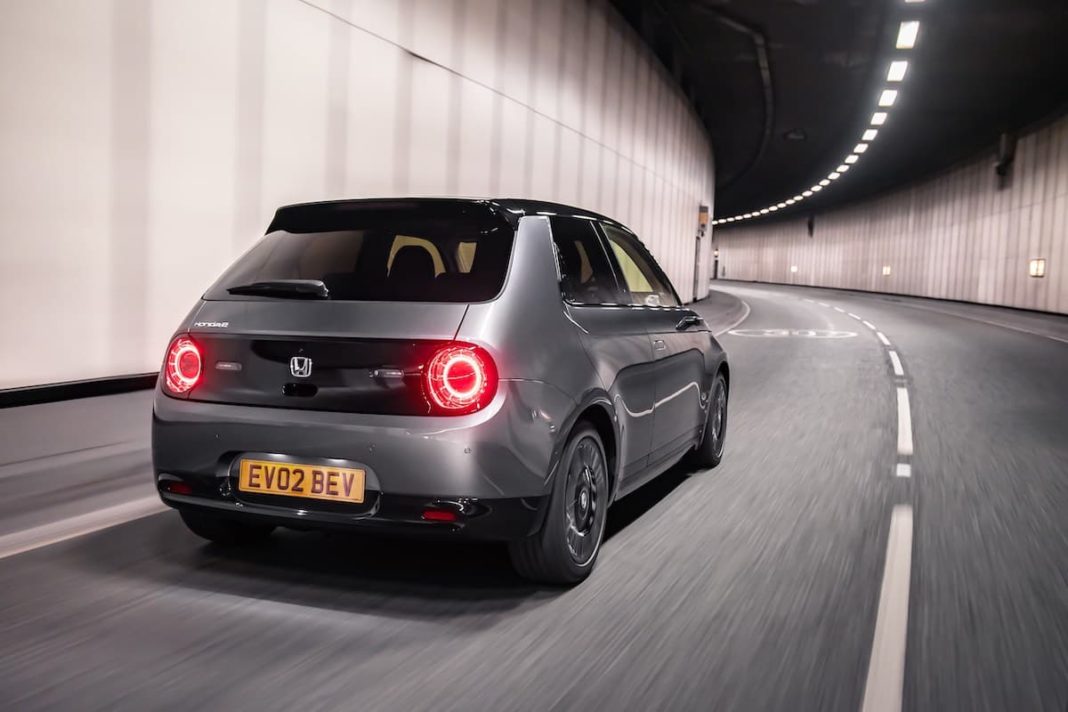
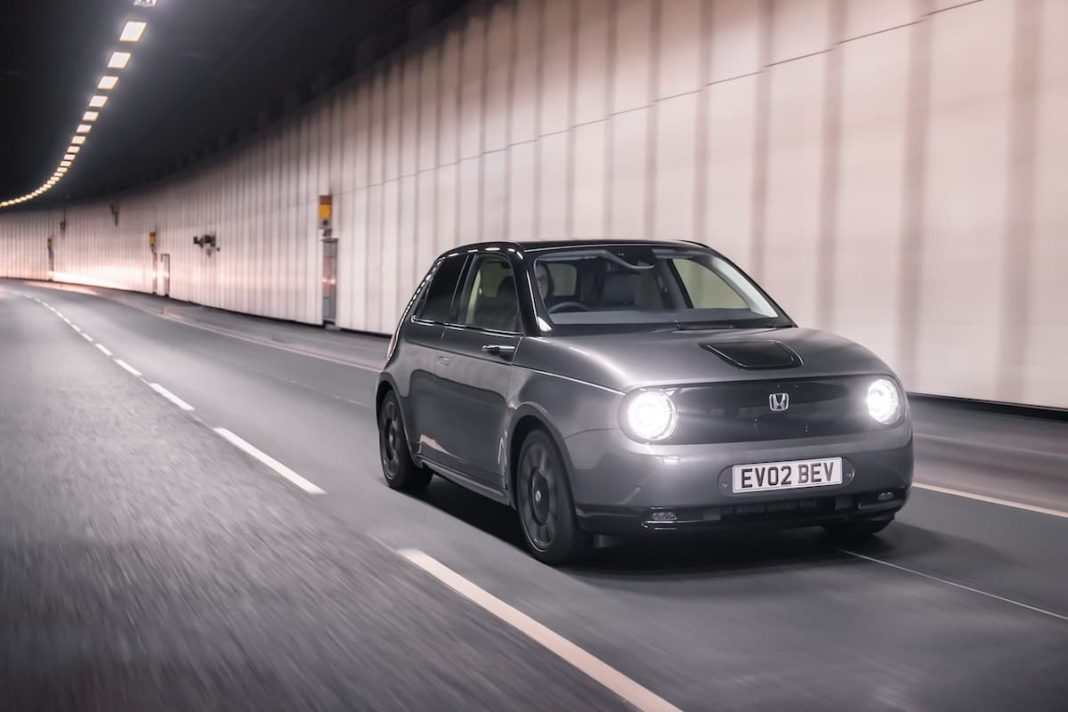
The Honda e was a small five-door electric city car hatchback. After various concept versions were shown by Honda in 2017 and 2018, the production version was revealed in 2019 and arrived in the UK in Summer 2020. It was sold until early 2024 when production ended without a replacement.
Unlike many electric vehicles, the Honda e was designed from the ground up as an electric car rather than being based on an existing petrol model. It also a showcased a new design direction for Honda, combining 1970s and 1980s retro styling elements with start-of-the-art technology.
Media reviews for the Honda e were positive but cautionary. It received universally high praise for its styling, technology and driving dynamics, which distinguished it from other city cars (either electric or petrol-powered). But reviewers also universally pointed out that the Honda e was expensive, with a starting price of more than £34,000, and had a limited battery range of little more than 100 miles in real-world conditions.
As of February 2026, the Honda e has a Used CarExpert Rating of B with a score of 69%. It scores top marks for its very low running costs and zero tailpipe emissions, but its safety rating is only average and its media review scores were poor – largely due to its high price. However, at the lower prices available on the used car market, this is less of a problem.
Body style: Small five-door hatch Motor: electric, battery-powered Price when new: From £34,420 on-road
Launched: Summer 2020 Last updated: N/A Discontinued: Spring 2024
Image gallery
Media reviews
Highlighted reviews and road tests from across the UK automotive media. Click any of the boxes to view.
Featured reviews
“The Honda e is a groundbreaking little car, and one which will undoubtedly prove immensely popular. Yes, you could say that the range restricts it, but for those who want a car which is easy to nip here and there in – charging on the fly – then it more than fits the bill.”
Model reviewed: Advance Score: 8 / 10 “Just a little more range would make the Honda e more appealing, but it’ll likely be fine for how most owners will use it. What you can’t deny is that Honda’s execution is superb; the e drives nicely, it’s comfortable, refined and even fun.” Read review
Auto Trader
Score: 9.5 / 10 “The sweet combination of impressive future tech and captivating retro design makes Honda’s small, urban EV a very tempting package.” Read review
Business Car
Model reviewed: Advance Score: 9 / 10 “The Honda e is a ground-breaking EV, from its design and drive to its multiscreen infotainment system. The latter especially feels way ahead of all other cars sold in the UK (large and luxury ones included). Drive and see for yourself.” Read review
Car
Model reviewed: Range overview Score: 8 / 10 “The Honda e is one of the most eye-catching electric cars we’ve yet seen. Its dinky size, cute face and properly cool interior are the biggest draws in its charm arsenal, so much so that some might overlook the low-ish available range and the price being higher than other city EVs.” Author: Tim Pollard Read review
Car Keys
Score: 8 / 10 “The Honda e looks brilliant, has interior technology that can rival luxury cars and is a brilliantly unique model that is a fantastic showcase for how innovative Honda can be when its engineers and designers can let their hair down. But the range and price are two sticking points.” Read review
Carwow
Model reviewed: Range overview Score: 6 / 10 “The Honda e looks like a CCTV control centre inside and a surprised panda outside. You’ll be surprised, too, when you see how much it costs given its modest range.” Read review
Company Car Today
Model reviewed: Advanced “Range and, to a lesser extent, price are big barriers to what is an otherwise excellent little car. Practicality is compromised for the sake of style, but it does it that very well.” Read review
Daily Mail
“You can fall very quickly and deeply for the charms of Honda’s new all-electric supermini. The Honda e is eye-catchingly cute, has bags of personality, a lively pace, and a great sense of style without being overly formal, and is a comfortable and interesting companion with which to hang out and chill.” Read review
Daily Mirror
Model reviewed: Advance Score: 8 / 10 “The Honda e is great looking but its limited range and high price is going to make it a rare sight on our roads. It’s a car that’s easy to love but Volkswagen’s e-Up – that costs £6,000 less yet has a longer range – is a much more logical buy.” Read review
Discover EV
Model reviewed: Advanced Score: 9 / 10 “Honda’s first electric car is more than a pretty face, it’s crammed with tech and rewardingly fun to drive, but you can’t get away from that limited range and hefty price tag. The truth of the matter is range anxiety is just that, the majority of us don’t need to feel anxious with a 100-plus miles of range.” Read review
Eurekar
“Honda believes that two-thirds of its global car sales will feature some form of electrification by 2030. The Honda e is an encouraging glimpse into that future, but it’s been made available to sample now.” Read review
Evo
Model reviewed: Range overview Score: 8 / 10 “Honda’s new electric car is fun to drive and bursting with personality, but low range may deter some.” Read review
Green Car Guide
Score: 8 / 10 “We have no doubt that the Honda e will be popular. The stunning looks mean it will easily turn more heads than most exotic supercars. But it’s impossible to ignore its limited range and lack of practicality in a market that’s becoming increasingly competitive and will only become more so.” Read review
Heycar
Model reviewed: Range overview Score: 7 / 10 “The Honda e is the must-have car of the moment. It combines quirky looks with a superb, modern interior and technology to keep even the most flippant of car buyers entertained. But its limited range means it won’t suit everyone’s needs, and there are more practical options on the market.” Read review
Honest John
Model reviewed: Range overview Score: 8 / 10 “The Honda e is the Apple iPhone of cars. It’s small, expensive, and will need recharging regularly. But many buyers will be happy to overlook its shortfalls in order to drive one of the most desirable electric cars on sale.” Read review
Parkers
Model reviewed: Range overview Score: 7.8 / 10 “Cute electric city car is a convincing urban runaround.” Read review
The Sun
“The ‘baby’ Honda e is a cool, clever and cheap electric car.” Read review
The Sunday Times
Model reviewed: Advance Score: 7 / 10 “The interior is so good you might ignore the range.” Read review
The Telegraph
Score: 6 / 10 “There’s much to like in this little Honda e. It’s refined, charming and feels quite fun to drive. But the rear seats are small, the luggage space tiny and the low range will put off some, while the e’s low efficiency is not what we expect of this Japanese car maker. “ Read review
Top Gear
Model reviewed: Range overview Score: 8 / 10 “Honda’s first electric car is impossibly cute, beautifully engineered and crammed with tech… but you’ll pay for it.” Read review
Which EV?
Model reviewed: Score: 7.2 / 10 “The Honda e is a car you will either love or hate, or possibly both at the same time. The bold styling provides a sense of occasion and the innovative equipment will keep you interested for some time too. It’s also quite fun to drive, particularly with the more powerful Advance motor. But the real-world range of scarcely 100 miles is a severe limitation. It’s a great little city car and short commuter, if you have home charging. But don’t even consider it for longer journeys.” (James Morris) Read review
Safety rating
Independent crash test and safety ratings from Euro NCAP
Independent economy and emissions ratings from Green NCAP
No eco rating
The Honda e was not tested by Green NCAP during its production life.
The Green NCAP programme measures exhaust pollution (which is zero for an electric car) and energy efficiency. Electric cars are much more energy-efficient than combustion cars, so the Honda e would almost certainly have scored very highly in Green NCAP testing if it had ever taken place.
Reliability rating
Reliability data provided exclusively for The Car Expert by MotorEasy
No reliability rating
As of December 2024, we don’t have enough reliability data on the Honda e to generate a reliability rating.
The Car Expert’s reliability information is provided exclusively to us using extended warranty data from our partner, MotorEasy. As soon as MotorEasy has sufficient data on the Honda e, we’ll publish the score here.
Running cost rating
Monthly cost of ownership data provided exclusively for The Car Expert by Clear Vehicle Data
Battery range
Average
Score
Variation
Score
EV models
256 miles
B
Electrical efficiency
Average
Score
Variation
Score
EV models
3.7 m/KWh
D
Insurance group
Average
Score
Variation
Score
All models
27
C
Service and maintenance
Cost
Score
Year 1
£126
A
Year 2
£314
A
Year 3
£513
A
Year 4
£656
A
Year 5
£918
A
Overall
£2,527
A
The Honda e is a relatively affordable car to own and run, according to whole-life cost numbers provided exclusively to The Car Expert by our data partner, Clear Vehicle Data.
It’s electrical efficiency (the EV equivalent of miles per gallon for a petrol or diesel car) is poor compared to newer EVs, but insurance premiums should be good compared to other cars. Scheduled servicing costs for the first five years should be excellent.
In addition, an official battery range of 137 miles is about average. That said, there a a number of newer EV hatchbacks on the market that can muster a few more miles on a single charge than this.
Awards
Trophies, prizes and awards that the Honda e has received
2021
UK Car of the Year Awards – Best City Car
Business Motoring Awards – Best Small Car
DieselCar and EcoCar Top 50 – Best Electric City Car
Southern Group of Motoring Writers Awards – Car of the Year
2020
Red Dot Design Awards – Best of the Best + Smart Product Award
DrivingElectric Awards – Best Tech
Similar cars
If you’re looking at the Honda e, you might also be interested in these alternatives
Bugatti has introduced a new track-only, high-performance hypercar – the Bolide.
It produces 1,850hp from a quad-turbocharged 8.0-litre W16 engine, yet weighs just 1,240kg. As a result, the Bolide brings performance which is ‘almost on par with Formula 1’, according to Bugatti, and should be able to push past the 300mph top speed marker.
The engine’s turbochargers have been redesigned while its dry-sump lubrication system has been revamped too, allowing the Bolide to produce more power than the road-going Chiron hypercar with which it shares its engine.
Bugatti’s claimed performance figures have been made when the Bolide is using 110-octane fuel, meaning it won’t push out quite as much power when running on standard 98-octane fuel.
At just 995mm tall, the Bolide is lower than the firm’s Chiron, while thanks to a series of aerodynamic elements, Bugatti claims that it can generate 1,800kg of downforce on the rear wing when travelling at 200mph.
Titanium pushrods with horizontal dampers form up key parts of the Bolide’s lightweight suspension setup, based around the car’s featherweight carbon fibre monocoque. Even the screws and bolts used across the Bolide are crafted from titanium in an effort to keep weight down. Ceramic brakes sit behind centre-lock forged aluminium wheels.
Technically just a concept for now, Bugatti hasn’t yet confirmed whether the Bolide will go into series production. If it does, it’s likely to be accompanied by a seriously high price tag – with the less powerful Chiron Super Sport costing just over £3 million when it first went on sale.
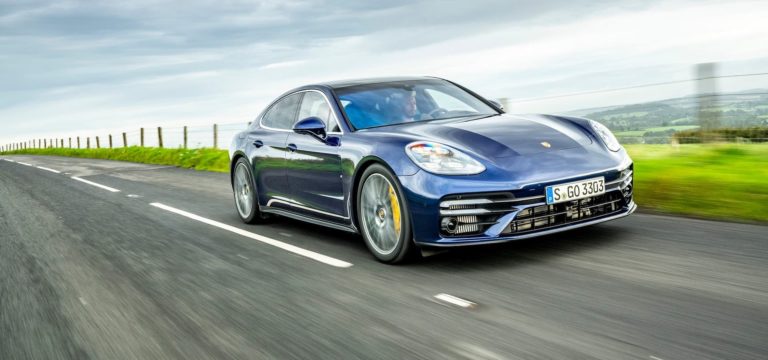
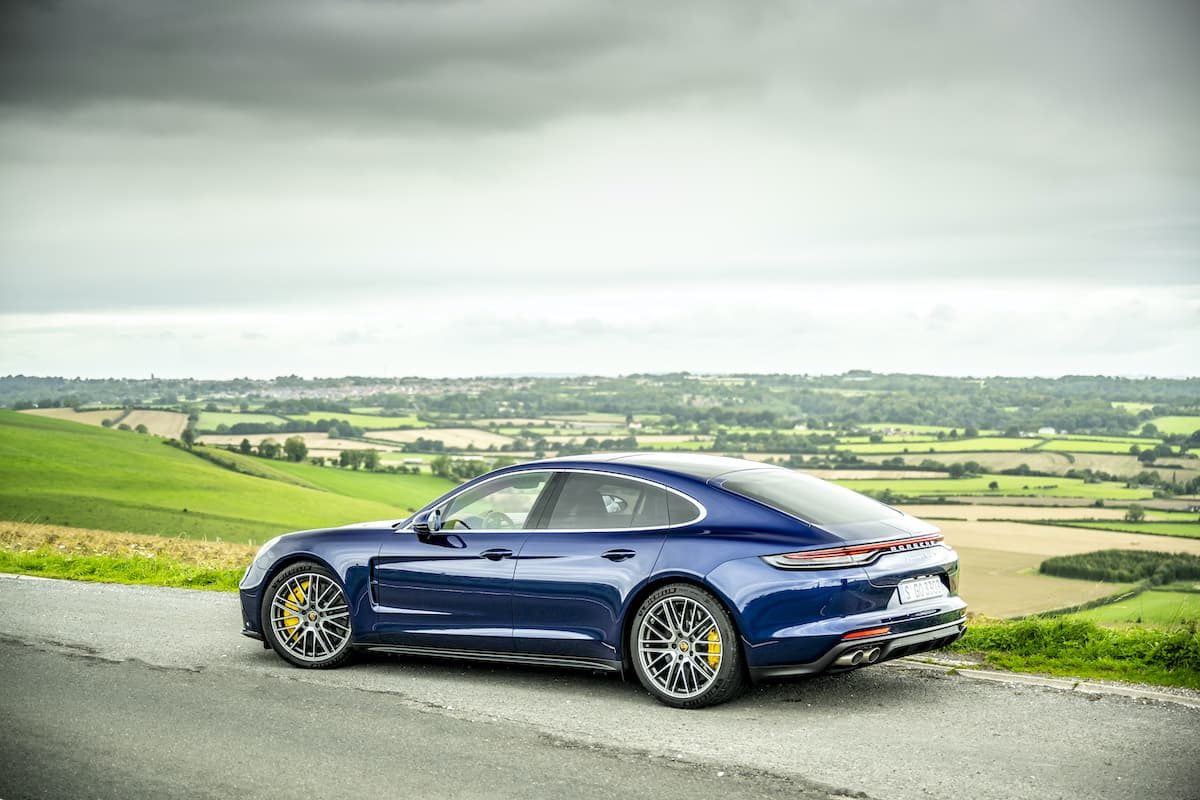
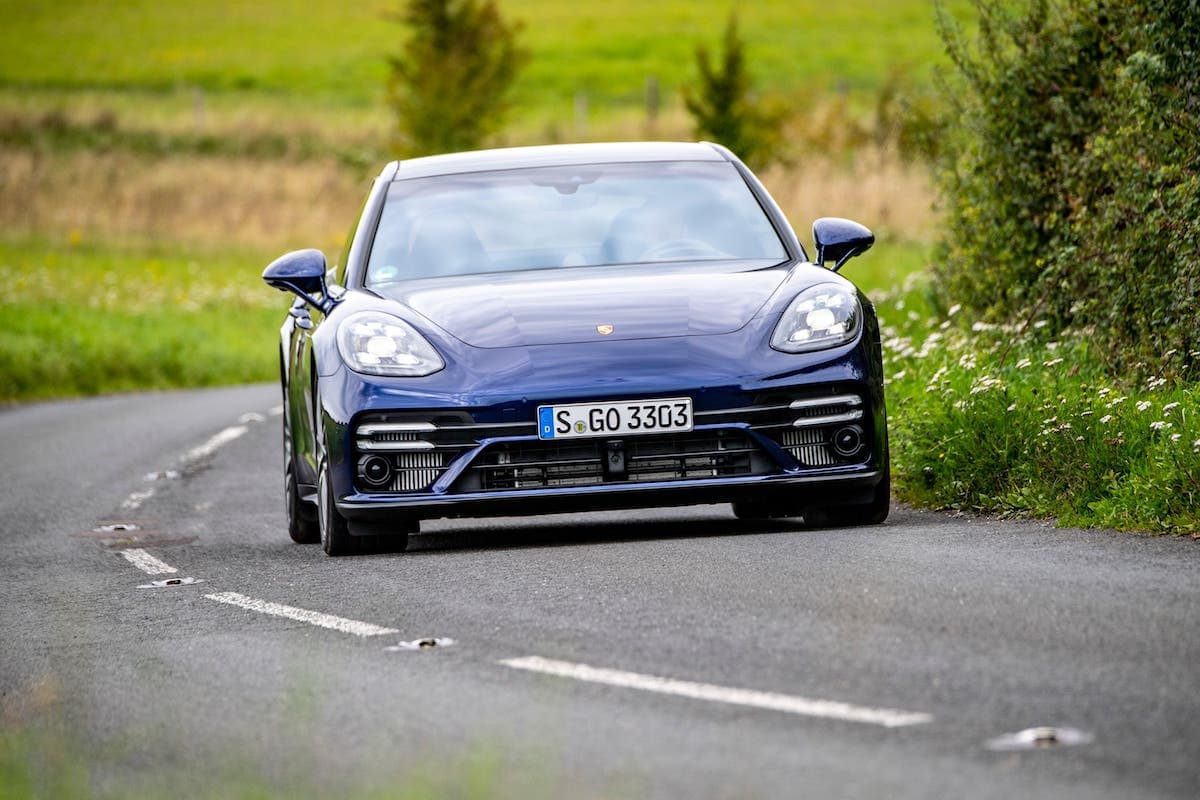
The Panamera is Porsche’s big, bruising performance executive car. For some time now it’s set the benchmark for driver involvement in this segment, outgunning rivals when it comes to outright excitement behind the wheel. Now, Porsche has seen fit to update it, tweaking the way it looks – ever so slightly – while adding a decent slug more power.
We’re testing it in full-fat Panamera Turbo S saloon specification, which stands as the most powerful model in the range. Let’s buckle up and find out what it’s like.
From the outside at least, it doesn’t appear that much has changed with the Panamera. It’s still vast in proportion, with the front and rear of the car separated by what feels like a postcode’s-worth of wheelbase. The nose of the car has been given a tweak in terms of design, mind you, but it’s largely the same look as the Panamera we saw released back in 2019.
It’s underneath where things have been given a considerable tweak. The damping has been improved, for instance, while the front axle bearings and engine mountings have been revised to increase the level of dynamic response you get. Plus, it has taken the same steering control as the 911 to improve the car’s input reactions.
How does it look?
The changes that have been made to the exterior of the Panamera have certainly tweaked what was already a rather good-looking sports saloon. It’s sharper, for sure, but in truth we never had too many arguments with the way the Panamera met the eye.
We’d always plump for the Sport Turismo version (the estate) which, in our eyes, looks even better. The rear of the regular Panamera, which can, from some angles, appear a little dumpy, is replaced by a swooping back in the Sport Turismo, only enhancing the overall look of the car.
What’s it like inside?
The cabin of the Panamera feels instantly luxurious. The materials are high-end and fitted seamlessly together, while the combination of glass, metal and leather is a tried-and-tested way of making a car’s cockpit feel genuinely special. It certainly works here.
It does feel like you sit a small amount higher than you’d expect, but with good levels of adjustability for the steering wheel it’s not hard to find a comfortable driving position. The large screens ahead of you in the instrument binnacle are clear and easy to read, while the sport mode dial on the steering allows you to easily tailor the car’s setup to your needs. It’s a great combination of the old and new.
There’s a good amount of legroom in the back, too, while 467 litres of boot space isn’t too bad for a car in this segment. It can be increased by folding the rear seats down, pushing the size up to more than 1,300 litres.
What’s the spec like?
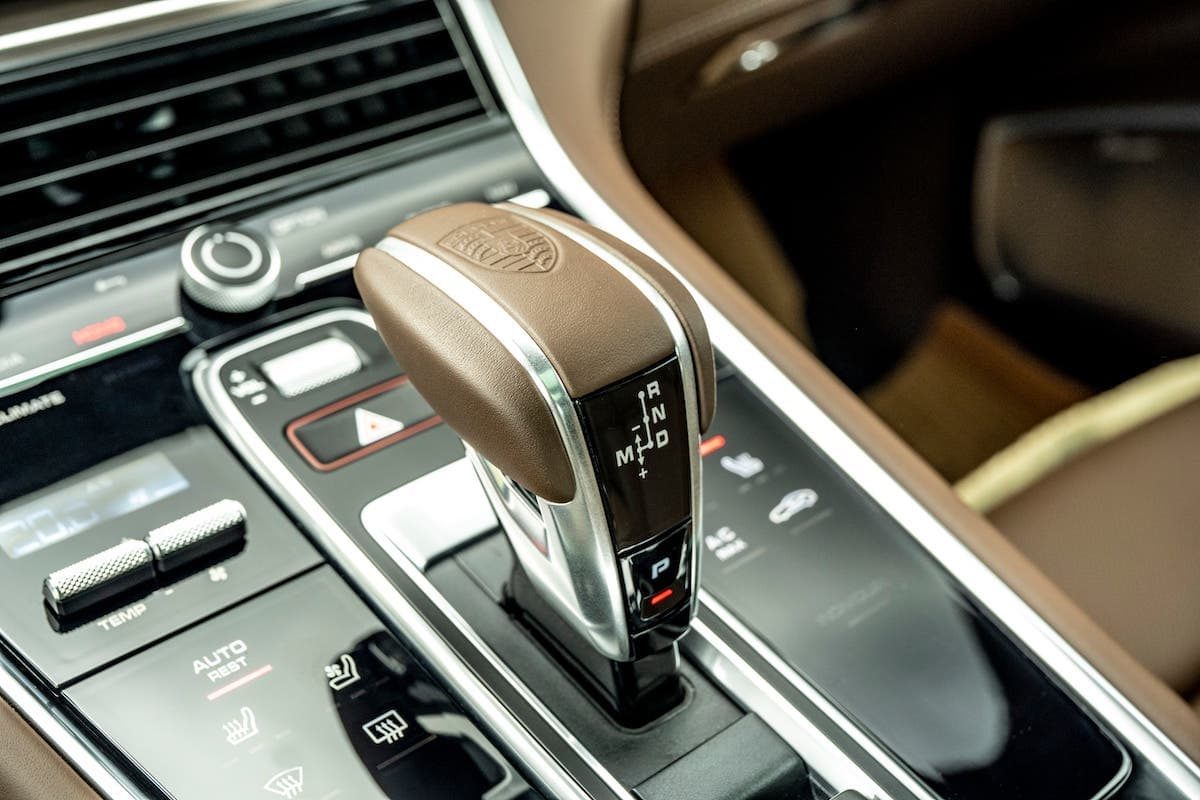
The Panamera is a car which is laden with equipment – as you’d expect from a car costing well over £130,000. The main infotainment offering is centred around a large, clear screen in the middle of the dashboard which now includes wireless Apple CarPlay connectivity for the first time. Porsche’s own software, however, is just as clear to use while haptic feedback buttons lower down towards the gearstick are responsive and easy to use.
All cars now ride on 21-inch wheels as standard too, while Porsche’s range of suspension systems – including adaptive air suspension, rear-axle steering and the firm’s power steering plus – all come as part of the Panamera’s base price.
What’s under the bonnet?
The Panamera Turbo S is powered by a thumping 4.0-litre twin-turbocharged V8 engine that makes 630hp and 820Nm of torque. It represents gains of 80hp and 50Nm over the old Turbo model, in fact. Power is sent to all four wheels through an eight-speed automatic gearbox and, when given enough space, means that the Panamera Turbo S will hit a top speed of 196mph, while the sprint to 60mph takes just under three seconds – not bad for a car weighing over two-and-a-half tonnes.
Of course, as a result of this performance the Panamera’s economy isn’t the best. CO2 emissions stand at up to 245g/km, while combined it’ll return 26.4mpg. Give the right pedal more work to do and it’s highly likely that you’ll be seeing figures in the high teens.
What’s it like to drive?
First off – and there’s no way to get away from it – the Panamera is a big car. Initially at least, you’re quite aware of simply how far the car’s edges are away from where you’re sat, which can be a little intimidating to begin with.
However, the more time you spend with the car, the smaller it becomes. The steering is light enough around town to easily pilot it through smaller spaces, while the newly revised suspension does an excellent job of isolating the lumps and bumps on the road from the cabin. Rear-wheel steering means it’s genuinely nimble at lower speeds, too.
Then there’s the performance. A car of this size accelerating the way the Panamera Turbo S does is nothing short of startling; even moderate uses of throttle result in a considerable amount of forward progression. Full throttle results in you hitting the national speed limit in the blink of an eye.
But the steering is the star of the show. It’s effortlessly well-weighted, and it means you can enjoy the Panamera through the bends just as much as the earth-shattering straight-line performance. You can add weight to the steering via the various driver modes, but in truth, it’s just right in its standard setting.
Verdict
The tweaks that Porsche has made to the Panamera have only helped to elevate an already impressively capable saloon car. The steering adjustments have made it sharper, while the added performance on this Turbo S only makes driving it even more exciting. It looks a touch sharper, too.
Little has changed about its positioning in the segment, then. It easily manages to be the best-handling car among its peers and that’s why, yet again, the Porsche Panamera Turbo S is a car that we can wholeheartedly recommend.
The Mercedes-Benz A-Class is now available with a new Exclusive Edition trim level that comes highly specified.
It builds on the already-high-spec AMG Line Executive equipment line, which gets a ten-inch high-resolution infotainment screen with the latest MBUX infotainment system, which includes ‘Hey Mercedes’ voice control.
This new trim level adds the Night Package, which includes privacy glass, a black radiator grille, black leather upholstery, and ‘edition’ badging throughout. Other highlights include 19-inch AMG alloy wheels in titanium grey, a panoramic sunroof, and 64-colour ambient lighting.
The Exclusive Edition Plus, which is available on the A220d and A250 engine, builds on the Premium Plus line and adds even more equipment. This gets ‘mountain grey magno’ paint, a ten-inch instrument binnacle, illuminated door sills, LED headlights, augmented navigation, advanced sound system and light-alloy 19-inch AMG wheels painted black.
Prices start at £31,305 for the A200 Exclusive Edition with a six-speed manual gearbox, or £32,905 with the seven-speed automatic. Diesel prices start at £34,005 for the A200d with an eight-speed automatic.
Exclusive Edition Plus starts at £37,320 for the A250 or £38,095 for the A220d.
The Exclusive Edition trim is available to order now with first deliveries beginning next month.
Hyundai has confirmed that the new i20 will cost from £18,595 and boast a new top-level trim called Ultimate.
The popular supermini’s new generation will be the first car to use Hyundai’s new ‘Sensuous Sportiness’ design language, as well as introducing a new mild-hybrid powertrain.
Following a similar tactic to the i10, which saw its range updated earlier this year, the new i20 gets a simplified trim line-up. Hyundai says each trim is now better specified than before, making residual values almost 5% better over three years than the model it replaces.
The entry-level trim is SE Connect, which gets 16-inch alloy wheels and LED daytime running lights for the exterior, while inside there’s an eight-inch touchscreen display with Apple CarPlay and Android Auto, air conditioning, cruise control, a leather-wrapped steering wheel and gear lever, and rear parking sensors with a reversing camera.
Step up to the Premium trim and prices rise to £20,795. Extra equipment includes 17-inch alloy wheels, LED headlights, automatic wipers, heated front seats and steering wheel, and a ten-inch infotainment system.
The top trim, called Ultimate, starts at £22,095 and gets a two-tone roof as standard, keyless entry, wireless smartphone charging pad, and a Bose sound system.
Ashley Andrew, managing director of Hyundai Motor UK said: “All new i20 has already received positive reviews for both its styling and dynamics and we can now reveal that it follows the lead set by the all new i10 earlier this year with an improved level of specification which focuses on exceeding customer expectations in this segment.
“The efficient 48V hybrid powertrain will deliver a strong balance between economy and performance, whilst drivers more focused on sportier handling and performance won’t have to wait too long until the i20 N Line and i20N join the range.”
Alongside this pricing, Hyundai also revealed the performance focused i20 N. This mini hot hatch gets styling touches inspired by the firm’s rally cars, and gets a new 1.6-litre petrol engine making 204hp and 275Nm of torque. Pricing for this model will be confirmed at a later date.
There was a time when the vast majority of cars in the UK were sold with manual gearboxes. However, as automatic transmissions have improved over the years, so has their popularity.
Today, we are seeing even mainstream models dropping manual gearboxes altogether. They’re still very popular in cheaper cars, as a manual gearbox costs a lot less to build than an automatic transmission, but the next few years could see the traditional stick shift facing extinction.
As the technology has advanced, we’ve seen a variety of different transmissions developed, many gaining their own confusing acronyms. To make life even more unhelpful, car company marketing departments always tend to like adding their own proprietary branding to things, so car buyers can easily get bewildered with it all means.
Here, we’ve put together a list of the most common types of gearbox and an explanation for how they work.
Manual transmission
Let’s start with the classic stick shift, which has been around for many decades. This involves using a gear stick to choose which gear you want to be in. You use a clutch pedal to disengage the gearbox with your left foot and (assuming a right-hand-drive vehicle as used in the UK), you change gears using the lever with your left hand. You then re-engage the clutch to re-connect drive from the car’s engine to its wheels.
One of the key advantages of a manual gearbox is that it gives the driver full control over which gear they want to be in, meaning you can drop a gear to get away quickly or stay in a higher gear to save fuel. Obviously, it also requires a level of skill to engage/disengage the clutch and shift gears whilst driving, making the learning curve steeper than the stop-and-go nature of an automatic transmission.
For modern cars that still offer a manual gearbox, usually you will find either five or six gears to choose from. A few cars, like the Porsche 911 and Aston Martin Vantage, have started to offer seven-speed manual gearboxes in the last couple of years.
A manual gearbox is entirely mechanical, so your hands and feet are directly moving gears and plates. In conjunction with the skills required to change smoothly, this is why a lot of keen drivers still prefer driving with a manual gearbox instead of an automatic.
Automatic transmission
While almost manual gearboxes on road cars follow the same basic principles, automatic transmissions are a whole different thing altogether. Different types of transmissions tend to suit different applications, while some don’t play happily with other mechanical aspects of your car.
Regardless of the mechanical workings going on beneath the surface, any automatic transmission will look pretty familiar to the driver – Park, Reverse, Neutral and Drive, maybe with additional functions like Sport or a manual shift mode.
In decades gone by, the gear lever would physically move the gears around inside the transmission so they needed to be long, thin levers for good leverage, and they looked much the same on any car.
These days, a ‘gear lever’ on an automatic transmission is simply an electronic switch that sends an instruction to the software than manages the gearbox. As a result, we’ve started to see designers choosing to use buttons, paddles or dials instead of old-style levers for controlling the transmission.
All of the different types transmissions detailed below are variations of the automatic gearbox.
Different types of automatic transmission
Torque converter
The torque converter is the “classic” automatic transmission, ha
ving been around since the 1950s and still commonly found in many new cars today.
Instead of using a clutch to disengage the engine from the gearbox when switching gears, it pushes fluid around a sealed case called an impeller. This section transfers the energy from the engine into the fluid, which is then transferred to the output shaft. The number of gears has steadily been increasing over the years, with most modern cars offering anywhere between six and ten speeds.
The advantages of this type of transmission are smooth acceleration from low speeds, as well as high torque at low engine revs. However, the driving experience is generally dulled in comparison with a manual, leading to the common nickname “slushbox”.
Compared to a manual version of the same car, the automatic would traditionally be slower and use considerably more fuel. However, advances in the last couple of decades have led to modern automatic gearboxes often being more economical than an equivalent manual gearbox in most driving circumstances. Reliability is generally pretty good, as you’d expect after 70 years of continuous development. Torque converter transmissions also cope pretty well in heavy-duty situations, so they’re often better than other types of automatic for four-wheel-drive vehicles and for towing.
In the late 1980s, some manufacturers started adding a manual shift option to this sort of transmission so drivers could manually shift up and down through the gears. Although it immediately became a popular feature, in reality the transmission tends to work best if left to its own devices. However, marketing departments couldn’t resist coming up with new names to describe these paddle-shifting automatics, such as:
BMW Steptronic
Mercedes-Benz Tipshift
Mercedes-Benz G-Tronic
Porsche/Audi Tiptronic
Volvo Geartronic
Single-clutch transmission
The single-clutch transmission first started appearing in the mid-1990s, based on Formula One racing cars that had started using a similar set-up. It was pioneered by Ferrari, which was also the first racing team to use this type of gearbox in F1.
These are sometimes referred to as semi-automatics or automated manuals, because they are essentially built like manual transmissions. They use a traditional clutch to disengage the engine between shifts, but the car does this instead of the driver. Instead the cabin, the gear lever looks like a traditional automatic shift. The driver flicks a paddle/pushes a gear lever and the car handles the rest.
This automated manual set-up tends to weigh a lot less than a traditional torque converter automatic, with a far more direct feel and less of the “slushiness”.
While the theory is great, most manufacturers have struggled to make them work properly. BMW had the best-known example (which it called SMG), but it was known for sluggish, jerky shifts. This type of transmission tends to work better when the driver treats it like a manual and uses the paddles to shift up and down – preferably lifting off the accelerator as you shift, much like you would in a regular manual.
There was plenty of unreliability in single-clutch transmissions for the first decade or so of their existence, which was also partly because they tended to be found in high-performance cars that were driver a fair bit harder than your gran’s Honda Jazz. Newer models tend to be far more robust.
This type of gearbox has now largely been superseded by dual-clutch transmissions. It’s also been known by the following markerting names:
Alfa Romeo Selespeed
Aston Martin Touchtronic
Audi R-Tronic
BMW SMG
Ferrari F1-Shift
Fiat Dualogic
Lamborghini e-gear
Smart Softip / Softouch
Dual-clutch transmissions (DCT)
This type of gearbox is fast becoming the most common kind of automatic transmission for petrol and diesel cars. Most Volkswagen Group brands – VW, SEAT and Skoda – call it a DSG (direct shift gearbox), although Audi confuses matters further by calling it an S-tronic and Porsche prefers the name PDK, but they’re all the same thing.
As the name suggests, there are two clutches in play with these gearboxes. In its most basic form, there will be two separate clutch systems – one for the odd-numbered gears and another for the even-numbered gears.
The gearbox can therefore pre-select the next gear before a shift happens, which means the shifts are considerably faster than with other types of gearbox. In performance cars, this has been developed to the point where gear changes are almost imperceptible.
This type of transmission offers the same sort of direct feel as a single clutch version, but is usually far smoother and more efficient to drive. It can also usually offer better fuel economy and performance than a manual gearbox. There can still be some jerkiness at low speed, and it can be a bit clunky when moving between first and reverse gears.
Early versions of these gearboxes (mid-late 2000s) were less reliable than later versions from the last decade, and they can be very expensive to fix if they break.
Audi S-Tronic
BMW/Mini Steptronic (yes, the same name they used on older auto transmissions)
Ferrari F1-Shift (yes, the same name they used…)
Porsche PDK
Volkswagen DSG
Constantly variable transmission (CVT)
This is one of those incredible theoretical technological feats that, in reality, still needs some work – but if manufacturers find a way to make them more pleasant to drive, they will beat all other gearbox types.
A CVT doesn’t have gears at all. Instead, it uses a cone shape with a band around that and another axle. The band can be moved up and down the cone to vary its length and therefore the gear ratio. Theoretically it offers infinitely variable ratios between its upper and lower limit, meaning it can be perfectly optimised for fuel efficiency or performance at any given time. This is particularly helpful for hybrid cars, which can use a CVT to balance the workload between the petrol engine and electric motor.
The downside is a driving experience that tends to feel bizarre and often unpleasant. When accelerating, it feels like the car is pulling against a rubber band. Meanwhile, the accompanying noise has a horrible drone because the revs go straight to the peak power point and stay there as the car picks up speed, rather than rising and falling as you work your way through multiple gears.
This type of transmission is more limited in how it works with modern all-wheel-drive systems than can vary the amount of drive that goes between front and rear wheels, so many AWD cars will use a torque converter or dual-clutch transmission instead.
The latest CVTs from Honda and Toyota do feel much better, so there’s hope for the gearbox yet…
Audi Multitronic
Subaru Lineartronic
Single-speed transmission
If you’re driving an electric car (or a hybrid vehicle that’s driving in electric mode), then you don’t really have a gearbox at all. That’s because there’s only one gear to transmit energy from the electric motor to the wheels. If you want to go faster, the electric motor spins faster. If you want to go slower, the motor slows down. Simples.
Because there are no gears and a direct connection from engine to wheels, the feeling is smooth and seamless, yet also direct with maximum efficiency.
Police forces across the UK are launching a national effort to bring down the number of uninsured drivers on the roads.
Starting today (October 26) and running until November 1, ‘Operation Drive Insured’ will see all of the UK’s 43 police forces bring an increased presence to the country’s roads in order to detect and seize uninsured cars.
The operation is being conducted in partnership with the National Roads Policing Operations, Intelligence and Investigation (NRPOII) committee in order to bring a much-escalated enforcement presence on the UK’s roads.
Commander Kyle Gordon, Head of NRPOII, said: “Many people will see uninsured driving as a victimless crime at best, or as only impacting on the profits of large insurance companies at worst. This is not the case.
“We know from our work in roads policing that uninsured drivers are statistically significantly more likely to cause a death or injury on the road, which too often sadly brings devastation to victims, families and communities up and down the country. They are also frequently involved in wider road crime.”
According to the Motor Insurers’ Bureau (MIB), 130 people are killed and 26,000 left injured in collisions caused by uninsured and untraced drivers.
Evidence from MIB has also shown that drivers without insurance are more likely to commit ‘hit and run’ offences, as well as be involved in other crimes.
However, MIB claims data has shown that the number of claims for compensation from victims of uninsured drivers has fallen by 26% since 2016, though the financial hardship being experienced by many as a result of the coronavirus pandemic has caused concerns that more people could be breaking the law by driving without insurance in order to save money.
Anna Fleming, chief operating officer at MIB, said: “We’ve made great strides in getting more people to drive insured in recent years, but the sad reality is with Covid-19 putting so many people under financial strain, uninsured driving levels could creep up. Everyone suffers the consequences of uninsured driving. We’re fully committed to our partnership with the police so we can get as many people as possible to drive insured to make roads safer and fairer for everyone.”
Motorists found to be driving without insurance face having their vehicle seized and potentially crushed, as well as being hit by a £300 fixed penalty notice and six licence points.
If escalated, they can be referred to court where they could face an unlimited fine and a ban from driving. Uninsured convictions can also show up on Disclosure and Barring Service (DBS) checks which can affect future employment.
The Hyundai Ioniq Electric was one of three separate versions of the Ioniq saloon family, along with plug-in hybrid and regular hybrid versions. It was a mid-sized family saloon, which was launched in 2016, updated in Autumn 2019, and discontinued in 2022.
The Ioniq Electric was considered one of the pioneers of electric car development, although in the last few years of its production its performance and driving range were eclipsed by many other vehicles – not least models like the Hyundai Kona Electric and Kia e-Niro from within the Hyundai/Kia family.
The Hyundai Ioniq Electric received generally positive reviews from the UK motoring media. The updated 2019 model was praised for offering a much improved range compared to the original model, which made it a far more suitable vehicle for many potential buyers. However, its driving dynamics were not as sharp as some newer electric vehicles, and the boot was quite small which restricts luggage space.
No longer on sale, the Hyundai Ioniq Electric has a Used Expert Rating of A, with a score of 74%. That’s a couple of points better than its hybrid and plug-in hybrid sisters.
Body style: Mid-size saloon Powertrain: battery electric vehicle Price when new: From £30,950 on-road
Launched: Summer 2016 Last updated: Autumn 2019 Discontinued: Summer 2022
Image gallery
Media reviews
Highlighted reviews and road tests from across the UK automotive media. Click any of the boxes to view.
Featured reviews
“While many electric vehicles play on rapid acceleration or futuristic styling inside and out to woo buyers, Hyundai’s approach is much more mundane – this is an ordinary-looking car that’s perfectly good (if exceedingly dull) to drive, while spacious and practical inside. And that’s where its appeal lies.”
“The Hyundai Ioniq Electric isn’t a class leader in any one area, but it certainly makes more of a case for itself with its improved real-world range. It’s practical enough to use as an everyday family car and there aren’t too many EVs for just over £30k that claim make a similar claim.”
Model reviewed: Namsan Edition (2023) Score: 8 / 10 “While the new Hyundai Ioniq 5 Namsan Edition is pricey, the powertrain and battery upgrades across the range are a welcome addition.” Read review
Model reviewed: Range overview (electric and hybrids) Score: 6 / 10 “The Hyundai Ioniq comes in three flavours, and is a more conventional-looking – and cheaper – proposition than the Toyota Prius.” Read review
Auto Trader
Score: 7 / 10 “While it isn’t the most glamorous or trendy of electric cars, the Hyundai Ioniq Electric ticks plenty of boxes. It’s easy to drive, reasonably practical and should prove effortless to own. If you are ruled more by your head than your heart, the Ioniq is well worth a look.” Read review
Business Car
Model reviewed: Premium Score: 8 / 10 “If you have access to personal charging via home or work and your commute can be accommodated within its range, the tax breaks, genuine driving fun, and distinct model, full-electric eco feel-good factor could be hard to beat. I’d recommend a test drive.” Read review
Car
Score: 6 / 10 “A good car in isolation. But the Hyundai Ioniq Electric suffers because the competition has come along in leaps and bounds. What was once thoroughly middle-of-the-pack now languishes near the bottom, but unfortunately doesn’t make that more palatable with a super-low price tag.” Read review
Car Keys
Score: 8 / 10 “The Ioniq Electric is yet another tempting electrified offering from Hyundai – bringing viable EVs into the mainstream with affordable pricing and good real-world ranges, though not class-leading.” Read review
Carbuyer
Model reviewed: Range overview Score: 8.2 / 10 “The Hyundai Ioniq Electric is a zero-emissions family-car that’s well designed and easy to drive”. Read review
Carwow
Score: 6 / 10 “The Hyundai Ioniq Electric is well equipped and offers good space for a family. It looks pricey next to other Ioniqs, though, and alternative electric cars are nicer inside.” Read review
Company Car Today
“The best small-family EV hatchback on the market. A very polished product now with better range and advanced connected car technology.” Read review
Discover EV
Model reviewed: Premium SE Score: 7 / 10 “Based purely on cost and range, we would not recommend you buy a Hyundai Ioniq Electric. There are other EV competitors that are cheaper to buy and also have much longer ranges. If you’re a Hyundai devotee and it fits in with your lifestyle and budget, then it may be for you – otherwise, it’s a tough sell.” Read review
Driving Electric
Model reviewed: Range overview Score: 8 / 10 “A mid-life facelift gave the Hyundai Ioniq Electric more range, more power and a new infotainment screen, so it’s still a strong contender in the family electric-car class.” Read review
Eurekar
Model reviewed: Range overview (including hybrids) “The Hyundai Ioniq Electric can handle motorway speed with ease, accelerate rapidly if required and stop almost on a sixpence as soon as the accelerator is released. That’s down to its regenerative braking function.” Read review
Evo
Score: 7 / 10 “Hyundai’s electric offering drives well, but its range has slipped behind ever-improving rivals.” Read review
Fleetworld
Model reviewed: Premium Score: 9 / 10 “There’s no question that the Hyundai Ioniq’s updates bring the car right up to speed. For fleets, the pricing should make it more attractive than larger battery cars while its efficiency means it still offers impressive range. To top it off, it comes fully loaded as standard too.” Read review
Green Car Guide
Score: 9 / 10 “The new Hyundai Ioniq Electric offers a longer driving range than the previous model, responsive acceleration, a comfortable ride, and a low centre of gravity, resulting in good handling.” Read review
Honest John
Model reviewed: All Ioniq models (including hybrids) Score: 8 / 10 “For those seeking an alternatively-fuelled car, the Hyundai Ioniq Electric is an interesting alternative to the Nissan Leaf EV. It’s competitively priced and very well-equipped, plus it comes with a reassuring five-year, unlimited mileage warranty.” Read review
Motors
Score: 7 / 10 “Compared to similarly-powered conventional hatchbacks, the Hyundai Ioniq Electric is quite an expensive proposition, even when you consider the savings on road tax and fuel costs. On the plus side, standard equipment is excellent, which does at least help to justify its list price.” Read review
Parkers
Score: 7.6 / 10 “Cut-price Tesla Model S impresses, but isn’t class-leading.” Read review
The Sun
Model reviewed: All Ioniq models (including hybrids) “It’s faster than the 30kWh Nissan Leaf Acenta, goes further and nearly a grand cheaper — with more kit. Fun to drive, stop-and-go like a dodgem with one gear, impossible to stall.” Read review
The Telegraph
Model reviewed: Premium Score: 8 / 10 “Freshly facelifted with a bigger battery and more range, the Hyundai Ioniq Electric might not look like much, but it can travel 194 miles on a charge and comes with a slew of toys.” Read review
Top Gear
Model reviewed: Range overview “A well-equipped EV with 26 miles more range – that’s an entire marathon – than an entry-level Nissan Leaf.” Read review
Which EV?
Model reviewed: Score: 6.4 / 10 “The latest Hyundai Ioniq Electric isn’t the most exciting EV on the market, although it is well equipped and practical, particularly in top Premium SE form. But it’s also rather expensive for what is essentially a standard family hatchback, when you can get the Nissan Leaf e+ with a longer range and faster performance for similar money.” (James Morris) Read review
Safety rating
Independent crash test and safety ratings from Euro NCAP
The Hyundai Ioniq Electric was originally crash tested by Euro NCAP back in 2016 and awarded a five-star rating. However, this rating expired in January 2023 and is no longer valid as the car no longer meets the standards required for such a rating. This is normal practice, as Euro NCAP reviews its ratings on most cars annually with most ratings expiring after about six or seven years.
Although the rating has now expired, the score is still useful if you are comparing a used Ioniq to vehicles of similar age, whose ratings will have probably also expired.
Eco rating
Independent economy and emissions ratings from Green NCAP
Clean Air Index: 10 / 10 Energy Efficiency Index: 8.5 / 10
Reliability rating
Reliability data provided exclusively for The Car Expert by MotorEasy
No reliability rating
As of March 2026, we don’t have enough reliability data on the Hyundai Ioniq Electric to generate a reliability rating.
The Car Expert’s reliability information is provided exclusively to us using workshop and extended warranty data from our partner, MotorEasy, sourced from both official dealerships and independent workshops.
As soon as MotorEasy has sufficient data on the Ioniq, we’ll publish the results here.
Running cost rating
Monthly cost of ownership data provided exclusively for The Car Expert by Clear Vehicle Data
Battery range
Average
Score
Variation
Score
EV models
187 miles
C
Electrical efficiency
Average
Score
Variation
Score
EV models
5.7 m/KWh
A
Insurance group
Average
Score
Variation
Score
All models
17
A
The Hyundai Ioniq Electric is a relatively affordable car to own and run, according to whole-life cost numbers provided exclusively to The Car Expert by our data partner, Clear Vehicle Data.
Electrical efficiency (the EV equivalent of miles per gallon for a petrol or diesel car) is very good, although a small battery means a driving range of less than 200 miles.
Insurance should also be competitive, however we don’t have data for servicing and maintenance costs.
Similar cars
If you’re looking at the Hyundai Ioniq Electric, you might also be interested in these alternatives
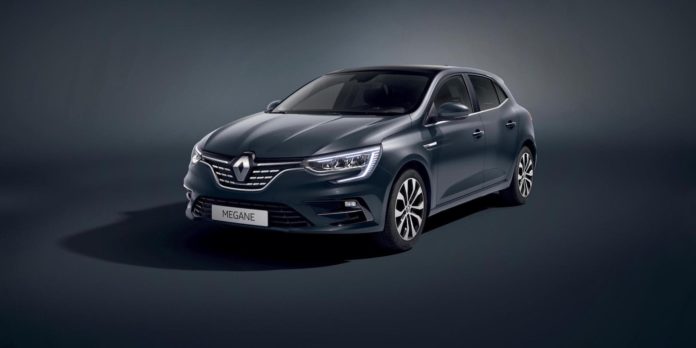
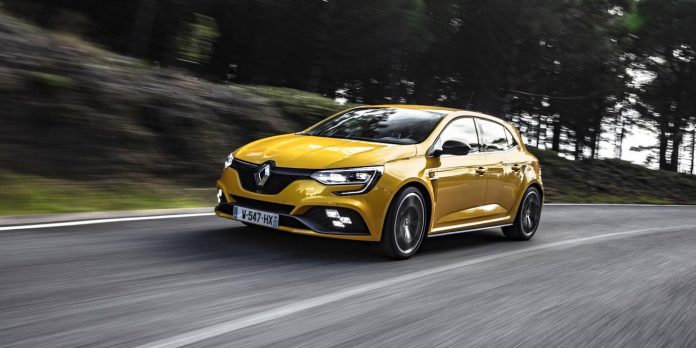
The Renault Mégane was a mid-size family car, available as either a hatchback and Sport Tourer (estate, in plain English). This model was the fourth generation, launched in the summer of 2016 and replaced in 2022 by the all-electric Mégane E-Tech.
Unlike the previous generation, this model was not produced in coupé or convertible versions. Initially sold with either petrol or diesel engines, a plug-in hybrid powertrain joined the range as part of a mid-life facelift that appeared in the UK in the second half of 2020. The top-spec version of the hatchback was the Mégane RS (Renault Sport), which is covered by a separate page and is not included in this rating.
The Renault Mégane was praised for its distinctive styling both inside and out, and for a generally stong level of standard equipment. However, it is not as spacious as many rivals and lacks the overall quality of the best in the class, so it wasn’t rated very highly.
No longer on sale, the Renault Mégane holds a Used Car Expert Rating of B, with a score of 68%. It scores top marks for its low running costs and CO2 emissions, while its reliability record is also good. However, its safety rating has now expired due to age and its media review scores were poor.
Body style: Five-door hatchback and estate Engines: petrol, diesel, plug-in hybrid Price: From £18,765 on-road
Launched: Summer 2016 Last updated: Summer 2018 Replaced: Summer 2022
Image gallery
Media reviews
Highlighted reviews and road tests from across the UK automotive media. Click any of the boxes to view.
Featured reviews
“The new Renault Mégane is a definite step forward in all areas. While the steering could be slightly more in feel with the road it’s a minor failing and the car should be a strong contender in a competitive market.”
Model reviewed: Hatchback range Score: 8 / 10 “A move upmarket has turned the practical and economical Renault Mégane into a desirable front-running hatchback.” Read review
Model reviewed: Sport Tourer (estate) range Score: 8 / 10 “The Renault Mégane Sport Tourer looks stylish and is good to drive, but it’s not as roomy as some rival estates.” Read review
Auto Trader
Model reviewed: Sport Tourer (estate) range Score: 7.6 / 10 “The Renault Mégane Sport Tourer majors on style and equipment, and provides plenty of both for an affordable price. However, it still doesn’t trouble the best small estates because it falls a little short on quality, it’s pretty average on practicality, and it’s rather so-so to drive.” Read review
Model reviewed: Hatchback range Score: 7.2 / 10 “The Renault Mégane doesn’t trouble the very best cars in the family hatchback class, because it falls a little short on quality, practicality and driving manners. That said, it’s still a reasonably compelling proposition. It looks great, it’s affordable to buy and run, and it comes packed with kit.” Read review
Business Car
Model reviewed: E-Tech Techno Score: 7 / 10 “The Renault Megane E-Tech looks great inside and out, drives well and in Techno spec is well-equipped. We worry about its winter range, the quality of some interior finishes and the depreciation.” Read review
Model reviewed: 1.6-litre petrol/electric plug-in hybrid R.S. Line hatchback Score: 8 / 10 “The Renault Megane plug-in hybrid has much about it that is commendable, and does seem a better-resolved product in hatch form than as an estate.” Read review
Model reviewed: 1.6-litre petrol-electric plug-in hybrid automatic Sport Tourer E-Tech Score: 7 / 10 “In the main, the E-Tech Mégane does a sterling job of coping with UK roads. It’s not the sharpest tool in the box when responding to steering inputs, which is probably partly down to the additional 105kg of batteries, but it soaks up lumps and bumps in a quiet, polished manner.” Read review
Car
Model reviewed: 1.5-litre diesel manual Dynamique S Sport Tourer (estate) Score: 6 / 10 “The Renault Mégane Sport Tourer is far from a bad car. It looks desirable, offers a good amount of space and its seats are highly comfortable. But it does itself no favours when it comes to the driving experience, with an unwilling engine, ho-hum dynamics and strangely leaden ride.” Read review
Model reviewed: 1.5-litre diesel manual hatchback Score: 6 / 10 “The latest-generation Renault Mégane is handsome, likeable, and a more colourful character than most mainstream hatches. But it’s no game-changer.” Read review
Model reviewed: 1.6-litre petrol automatic GT hatchback Score: 6 / 10 “As a car, the fourth-generation Renault Mégane is light years beyond the previous range: classy, solidly built, good looking and surprisingly interesting in a sector hardly bursting with innovation.” Read review
Car Keys
Model reviewed: 1.6-litre petrol automatic GT Nav hatchback Score: 8 / 10 “The beauty of a warm hatch is that it offers tasty performance but doesn’t hurt the bank too much. And that’s what the Renault Mégane GT does. Its combination of launch control, the 4Control system and impressive variable steering modes make it fun to drive and yet easy to live with.” Read review
Model reviewed: 1.5-litre diesel manual Dynamique S Nav hatchback Score: 8 / 10 “Although extremely popular, the Renault Mégane has long been a leftfield option in the hatchback market. But with rejuvenated style and fancy new tech, the Megane is now one of the go-to models for advanced tech and style.” Read review
Model reviewed: 1.5-litre diesel manual Dynamique S Sport Tourer (estate) Score: 8 / 10 “The latest Renault Mégane Sport Tourer is a significant improvement over what has come before it in terms of quality, practicality, technology and performance. It feels like a genuine contender to the best in its class and, on top of that, it has an interesting design that allows it to stand out more.” Read review
Carbuyer
Model reviewed: Hatchback range Score: 8 / 10 “A new look and impressive infotainment system helps the latest Renault Mégane stand out from rivals in the popular family hatchback class.” Read review
Model reviewed: Sport Tourer (estate) range Score: 8.6 / 10 “The Renault Mégane Sport Tourer is an attractive and practical small estate, but you’ll need to avoid the most basic trim if you want to enjoy all it has to offer” Read review
Carwow
Model reviewed: Sport Tourer (estate) range Score: 7 / 10 “The Renault Mégane Sport Tourer is a definitive departure from the dated design of the old model, but what sets it out from rivals – such as the Ford Focus estate, Peugeot 308 SW and Vauxhall Astra Sports Tourer – is its huge portrait infotainment screen.” Read review
Model reviewed: Range overview Score: 7 / 10 “The Renault Mégane is a family car with sharp looks that’s comfortable and easy to drive. It’s just that alternatives have more intuitive infotainment systems.” Read review
Company Car Today
Model reviewed: 1.6-litre petrol/electric plug-in hybrid Sport Tourer Iconic E-Tech “Well priced against rivals and a sensible PHEV addition to the Megane range that comes with a mild revision of Renault’s lower-medium model.” Read review
Model reviewed: 1.6-litre diesel automatic GT hatchback “It’s not cheap, but the Renault Mégane looks great, and is a tidy drive, although rival performance diesels emit less.” Read review
Daily Mail
Model reviewed: 1.6-litre petrol automatic GT hatchback Score: 8 / 10 “What we have here is yet another promising chapter in what has become a modern French classic.” (Chris Evans) Read review
Model reviewed: Hatchback range “On the look-out for a new family motor? The Renault Mégane perfectly fits the bill as a mid-sized five-seater family getaway car for those who are partial to French chic and still like to rev it up a bit.” Read review
Daily Mirror
Model reviewed: Hatchback range “Punters are spoilt for choice in the hatchback world, from the Audi A3 at the top to highly capable Hyundais and Kias at the other end. In the middle are excellent motors like the Vauxhall Astra, Ford Focus and the VW Golf. For me, the Renault Mégane’s styling inside and out makes it a strong contender.” Read review
Discover EV
Model reviewed: 1.6-litre petrol/electric plug-in hybrid estate “The Renault Megane is more expensive than the Kia Ceed. It also won’t travel as far as the Kia on battery power (with a range of 35 miles), but it certainly drives and looks better than its South Korean rival.” Read review
Eurekar
Model reviewed: 1.3-litre petrol manual GT-Line “Despite its sporting look, the Renault Mégane GT-Line is built for comfort rather than handling prowess. That’s not to say it doesn’t handle well – it does, and steers sharply – but the harder ride often associated with a sporty set up is all but absent.” Read review
Model reviewed: 1.3-litre petrol manual Iconic hatchback “Whichever version of the Renault Mégane you choose, you’ll have a car with a clear dash that has been tempted away from switches and buttons to smarter but less user-friendly touchscreen and just about enough legroom in the rear for a couple of larger adults.” Read review
Model reviewed: 1.5-litre diesel manual Dynamique S Nav “The Renault Mégane is a handsome machine, easily capable of holding its own in a family hatch beauty contest. Inside, the sense of style continues in a cabin dominated by black, from roof lining to seats finished in synthetic leather and cloth in the Dynamique S Nav spec.” Read review
Model reviewed: 1.5-litre diesel manual Dynamique hatchback “The Renault Mégane offers particularly refined travel thanks partly to an impressive absence of wind noise and the fact that very little road rumble is passed back into the cabin. The six-speed manual gearbox is light and unobtrusive, although I found the clutch pedal to be on the heavy side.” Read review
Fleetworld
Model reviewed: 1.6-litre petrol automatic GT Nav Sport Tourer (estate) “The Renault Mégane GT drives well, and looks and feels great. But as a company car, it has neither the performance nor the fuel economy to compete with its closest rivals or make sense – for head or heart – against other versions of the Mégane.” Read review
Model reviewed: 1.5-litre diesel manual 110hp hatchback “The Renault Mégane impresses not by reinventing this segment, but by being thoroughly competent in everything it does and great value for fleets. A strong option.” Read review
Honest John
Model reviewed: Hatchback range Score: 8 / 10 “Equipped with a specification that includes the fancy media system, the Renault Mégane makes for a very reasonably priced hatchback with a modern look and feel. A solid car and a solid investment – very much like a Golf, but without being a Volkswagen. You’ve changed, Renault.” Read review
Motors
Model reviewed: Range overview Score: 7 / 10 “The latest version of the Renault Mégane offers a stand-out style, an improved air of quality and a more refined overall experience, which are all the components needed to challenge in the crowded and incredibly competitive hatchback sector.” Read review
Parkers
Model reviewed: Hatchback range Score: 7 / 10 “Stand-out styling for French family hatchback.” Read review
Model reviewed: Sport Tourer (estate) range Score: 8.2 / 10 “Stylish estate is efficient and good to drive” Read review
The Sun
Model reviewed: Hatchback range “Clever, simple and efficient. Renault has used its loaf.” Read review
The Sunday Times
Model reviewed: GT hatchback Score: 6 / 10 “The Renault Mégane GT got a thumbs-down from the wife and daughter, a so-so from my son and an emphatic thumbs-up from me. Take from that what you will.” Read review
Model reviewed: 1.6-litre petrol automatic GT-Line Score: 6 / 10 “There are hotter hatches, certainly, and sharper ones. But possibly the high-end clobber and reset looks do enough to put the Renault Mégane back in contention.” Read review
The Telegraph
Model reviewed: 1.6-litre petrol-electric plug-in hybrid Sports Tourer E-Tech RS Line estate Score: 6 / 10 “This Renault Mégane feels like something of a flawed diamond. One minute you’re smitten with it; the next, one of its irritating niggles – that fiddly entertainment system, or those cheap dashboard plastics, for example – taps you on the shoulder and reminds you it isn’t perfect.” Read review
Model reviewed: 1.5-litre diesel manual Dynamique S Nav Sport Tourer (estate) Score: 8 / 10 “What this little French estate lacks in absolute load-carrying ability, it makes up for in practicality. The chassis is soft, but the ride is lovely and the engine is peppy and economical. Its slow-burning charm is addictive.” Read review
Model reviewed: Sport Tourer (estate) range Score: 7 / 10 “The Renault Mégane Sport Tourer is notable for being comfortable on a long journey and very good value for money. If it had a boot big enough to match the best in class then it might just scrape an extra point here, but as it stands there are better family estate cars on sale.” Read review
Model reviewed: Hatchback range Score: 8 / 10 “If you’re after a smooth and relaxing hatchback that does well on long journeys and is easy to drive around town, the Renault Mégane is a good bet. It isn’t as much fun to drive as the Ford Focus, but it is more comfortable – and while not as upmarket as a VW Golf, the Megane is better equipped.” Read review
Top Gear
Model reviewed: Range overview Score: 7 / 10 “Looks great, feels classy. Worth a look, Volkswagen and Ford owners.” Read review
Safety rating
Independent crash test and safety ratings from Euro NCAP
The Renault Mégane was tested by Euro NCAP in December 2015 and awarded a five-star rating with very good scores across the board. However, this rating expired in January 2022and is no longer valid. This is normal for Euro NCAP ratings, as the standards required to achieve each star rating get tougher every year.
However, if you’re looking at purchasing a used Mégane, you should certainly consider it to be a very safe car when compared to other cars from the same era (2016 to 2021).
Eco rating
Independent economy and emissions ratings from Green NCAP
No eco rating
The Renault Mégane was not lab tested by Green NCAP during its production cycle.
Reliability rating
Reliability data provided exclusively for The Car Expert by MotorEasy
Total claims: 203 Average repair cost: £345.63 Last updated: April 2025
The Renault Mégane has a reliability rating that’s better than average, according to exclusive warranty data provided to The Car Expert by our partner, MotorEasy. This score covers both this generation of Mégane as well as previous models.
The most common problems for Mégane owners, with more than a quarter of all warranty claims, are braking system issues. Fortunately, these have been relatively inexpensive with an average repair cost of less than £200. Likewise, suspension faults are fairly common but relatively inexpensive.
It’s worth noting that engine and gearbox issues have cropped up in Méganes. Although they are not as common as other faults, the average repair cost is about £600. If you’re looking at a used Mégane, make sure any extended warranty you purchase covers all of these potential problem areas.
Running cost rating
Monthly cost of ownership data provided exclusively for The Car Expert by Clear Vehicle Data
Fuel consumption
Average
Score
Variation
Score
Petrol models
47 mpg
C
45 – 49 mpg
C – C
Diesel models
61 mpg
A
60 – 63 mpg
A – A
Plug-in hybrid models
224 mpg
A
216 – 235 mpg
A – A
CO₂ output
Average
Score
Variation
Score
Petrol models
140 g/km
B
130 – 152 g/km
A – B
Diesel models
123 g/km
A
117 – 135 g/km
A – A
Plug-in hybrid models
29 g/km
A
28 – 30 g/km
A – A
Battery range
Average
Score
Variation
Score
Plug-in hybrid models
30 miles
E
30 – 30 miles
E – E
Insurance group
Average
Score
Variation
Score
All models
20
A
16 – 22
A – A
The Renault Mégane is a very affordable car to own and run, according to whole-life cost numbers provided exclusively to The Car Expert by our data partner, Clear Vehicle Data.
Servicing and fuel costs, which tend to be the biggest expenses, are both competitive.
Awards
Trophies, prizes and awards that the Renault Mégane has received
2017
Fleet World Honours – Best Lower Medium Car
2016
Scottish Car of the Year Awards – Best Family Car
Similar cars
If you’re looking at the Renault Mégane, you might also be interested in these alternatives
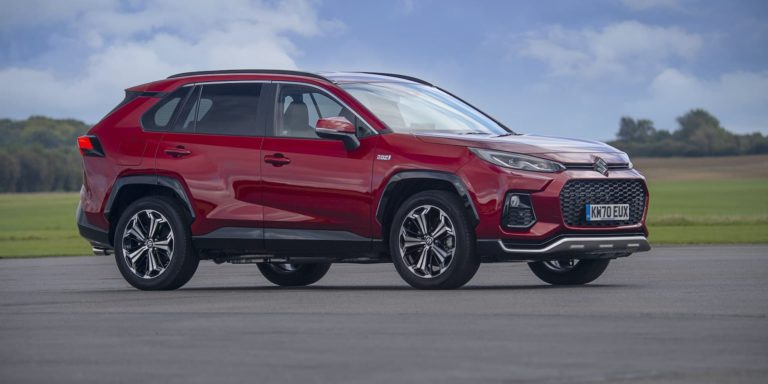
The Suzuki Across plug-in hybrid SUV will cost from £45,599 when it goes on sale in the UK next month.
Arriving as the firm’s plug-in hybrid model, the Across – which shares much of its underpinnings with the Toyota RAV4 – combines a 2.5-litre petrol engine with an electric motor and batteries. With a combined system output of 306hp, the Across takes the title as Suzuki’s most powerful to date, and allows it to sprint from 0-60mph in under 5.8 seconds and onwards to a top speed of 112mph.
But as a result of the electrification process, the Across emits 22g/km of CO2 on the official laboratory combined cycle, while fuel consumption stands at a claimed 282mpg. It’s also able to travel for up to 46 miles on electricity alone thanks to a large 18.1kWh battery.
Power is driven to all four wheels via a standard-fit E-Four system which is capable of dividing torque between the two axles in order to provide the most amount of traction available.
A sole trim level will be available from launch, bringing leather upholstery, dual-zone climate control and heated front and rear seats as standard. A large nine-inch central infotainment screen is fitted as standard too.
Though due to go on sale in November, Suzuki has already stated that there is ‘very limited supply availability’ for the first year, which could suggest long lead times for those wanting to get their hands on a Suzuki Across.
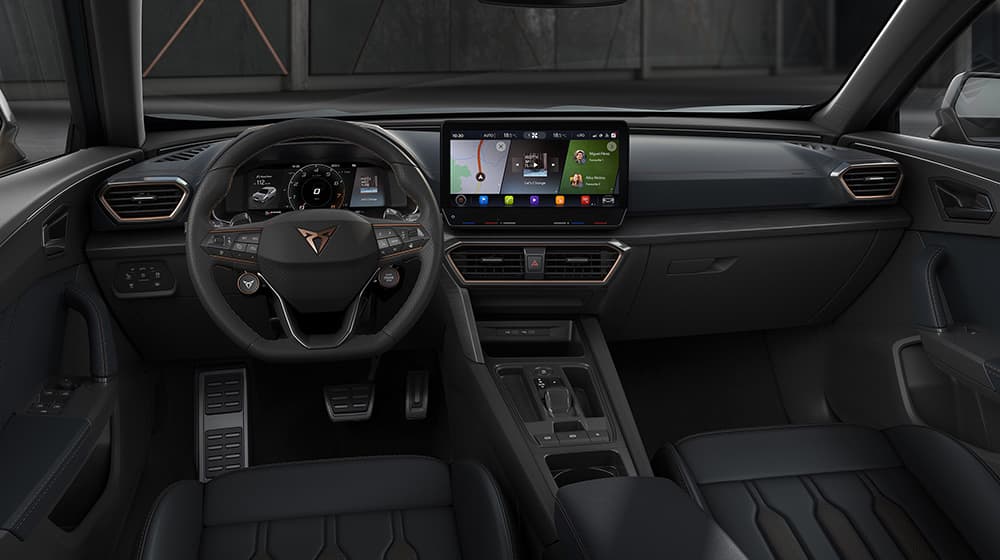
Cupra’s first vehicle developed solely for the brand since it became a separate entity from SEAT – the Formentor – has gone on sale in the UK.
Though the headline model is the 2.0-litre powered version with 310hp, this £39,830-model will be joined by lower-powered variants in order to ensure ‘Cupra remains accessible to all’.
These lower-powered models – which use a 1.5-litre, 150hp turbocharged petrol engine – will be priced from £27,300. This will sit below a lower-powered, 190hp version of the 2.0-litre engine.
A plug-in hybrid variant is also available, combining a 1.4-litre turbocharged petrol engine and 85kW electric motor with a 13kWh battery pack. It can be specified with either 204hp or 245hp, and both have a predicted electric-only range of 31 miles.
Both these 1.5- and plug-in hybrid Formentor models will be available to order in the UK in the first quarter of next year.
However, the range-topping version is available to order now, bringing performance-orientated suspension with adaptive chassis control, while a ‘DCC slider’ allows drivers to have a good degree of control over the damping force level of the shock absorber.
Equipped with all-wheel-drive, the Formentor features a system which can analyse the road in real-time and deliver power to the wheels with the most traction.
Inside, these high-specification cars benefit from heated leather bucket seats, a leather dashboard and a leather multi-function steering wheel. Higher-trim VZ3 and VZ Edition specifications are available with the range-topping Formentor too – priced at £42,000 and £43,840 respectively – bringing 19-inch copper wheels and Brembo brakes, as well as a panoramic sunroof. First deliveries of these Formentor models are expected to commence by the end of 2020.
Volkswagen has announced pricing for the updated Tiguan mid-size SUV, as well as expanding the engine range on its Arteon executive car.
Order books have now opened for the facelifted Tiguan, with prices starting at £24,915. The refreshed line-up incorporates six engine and gearbox combinations with four trim levels.
The Golf-based SUV has sold more than six million examples worldwide since launching in 2007, with the current model launched in 2016. Volkswagen has levelled up the equipment with new technology such as LED Matrix headlights and an improved infotainment system.
Diesel engine choices use dual-injected AdBlue to ‘significantly reduce nitrogen oxide emissions’ (not that Volkswagen is really trustworthy when it comes to diesel emissions – Ed), while the petrol engines get cylinder deactivation.
Entry-level Tiguan models get a 1.5-litre petrol engine with a six-speed manual gearbox, while equipment includes 17-inch alloy wheels, LED headlights, the new infotainment system and various safety systems.
At the top of the range, there are two trim levels called Elegance and R-Line. The former focuses on comfort and luxury features, while the latter adds more sporty styling and driving updates.
Expanded engine line-up for Arteon range
Meanwhile, the Arteon liftback and estate engine line-ups have been expanded, with 13 combinations of engine and gearbox available on each.
A new entry-level 1.5-litre petrol has been introduced, mated to a six-speed manual gearbox, with the intention of bringing the model’s cost of entry down – prices now start at £31,965 for the liftback and £32,765 for the new estate (which Volkswagen insists on referring to as a Shooting Brake, even though it’s not).
The most powerful unit is now the 200hp 2.0-litre diesel unit with a seven-speed automatic gearbox, available with either front- or all-wheel-drive.
Volkswagen has also confirmed that a 320hp R model will go on sale in the UK next year, while a hybrid option will join ‘in due course’.
The Ford Mustang Mach 1 has been confirmed for sale in Europe for the first time.
This limited-edition version of the iconic muscle car is claimed to be the ‘best-handling Mustang ever to reach Europe’, boasting performance upgrades to the exterior bodywork, engine and mechanical underpinnings.
Under the bonnet, the Mustang’s V8 engine has been modified with 460hp and 529Nm of torque. Upgrades include an open air induction system, intake manifold and 87mm throttle bodies from the Mustang Shelby GT350.
There are two gearbox options in the form of a ten-speed automatic or six-speed manual. The latter is a high-tech Tremec unit that features a twin-disc clutch to better manage high-RPM gear changes and gets automatic rev-matching.
To improve grip on the track, the Mach 1 benefits from a series of aerodynamic upgrades such as a new front splitter, new side grilles, rear diffuser and prominent rear spoiler. These combine to produce 22% more downforce than the standard Mustang GT.
MagneRide adjustable suspension makes the Mach 1 primed for track use when combined with stiffer front springs and anti-roll bars, with the 19-inch alloy wheels with Michelin Pilot Sport 4 tyres further improving grip.
Inside, there’s an Ebony colour scheme and aluminium detailing, leather sports seats, a unique start-up graphic for the 12-inch digital instrument cluster, and a unique plaque on the sill.
Matthias Tonn, Mustang Mach 1 chief programme engineer for Europe, said: “The original Mach 1 delivered the ultimate in production Mustang performance and proved itself with success in motorsport.
“The new Mach 1 is the most capable Mustang ever to reach Europe, with track-ready ability and a unique style that is more than worthy of wearing such a legendary badge.”
No details have yet been announced on timing or pricing for the UK.
Formerly known as the DS 3 Crossback E-Tense, the DS 3 E-Tense is an electric version of the regular DS 3 crossover. It arrived in the UK in early 2020, joining the petrol and diesel versions that had been on sale for about a year already.
The E-Tense shares both its overall platform and electric powertrain with the Peugeot e-2008, Vauxhall Corsa Electric and other small vehicles in the Stellantis family.
In late 2021, an update was announced that improved the DS 3 Crossback’s driving range. A further mid-life update landed in early 2023, which dropped the ‘Crossback’ tag, introduced a few cosmetic tweaks and another battery upgrade.
The DS 3 E-Tense has been praised for its distinctive styling, both inside and out. It’s smoother and quieter than the petrol or diesel models, with a comfortable ride. However, it’s not as practical as other vehicles that use the same platform, like the Peugeot e-2008, and is a similar price as larger vehicles with better battery range from other brands, like the Kia Niro EV or Hyundai Kona Electric.
As of February 2026, the DS 3 E-Tense has a New Car Expert Rating of B, with a score of 64%. It scores top marks for its low running costs and for having zero tailpipe emissions. However, its safety rating and new car warranty coverage are only average, while its media review scores are very poor.
Body style: Small SUV/crossover Motor: electric, battery-powered Price: From £36,995 on-road
Launched: Winter 2019/20 Last updated: Spring 2023 Replacement due: TBA
Image gallery
Crossback E-Tense (2020 – 2023)
Crossback E-Tense (2020 – 2023)
Crossback E-Tense (2020 – 2023)
E-Tense (2023 onwards)
E-Tense (2023 onwards)
E-Tense (2023 onwards)
Media reviews
Highlighted reviews and road tests from across the UK automotive media. Click any of the boxes to view.
Featured reviews
“There are lots of things to like about the new DS 3. Its composed and well judged electric powertrain makes it easy and reassuring to drive, with a decent real-world range, while the interior flair is more interesting than many other EVs in its class. But put simply, there’s just no getting around the fact that it’s an expensive compact SUV.”
“The DS 3 E-Tense is a sharp-looking small EV with a decent range and front space, but the rear seats are cramped and it’s not the most refined to drive.”
Model reviewed: Facelift DS 3 range Score: 6 / 10 “Compared with old this feels like a better product. And compared with the regular petrol model, it’s light years ahead in terms of noise and comfort. The DS 3 E-Tense won’t set the world alight but then most buyers will be more concerned with charging times than lap sectors. It’s interesting enough to make it on your shopping list if range and practicality aren’t top of your wants.” (Murray Scullion) Read review
Score: 6 / 10 “Chic styling, bags of tech and a comfortable drive only mean so much when the DS 3 Crossback E-Tense’s range is down on its rivals.” Read review
Carbuyer
Model reviewed: Range overview Score: 6.6 / 10 “The DS 3 Crossback E-Tense offers enough range for most people, but it’s far from the best electric car on sale” Read review
Carwow
Model reviewed: DS 3 Crossback E-Tense (pre-facelift) Score: 6 / 10 “The DS 3 Crossback E-Tense is a seriously stylish electric car with comfy suspension and a stunning interior but it’s let down by cramped back seats and limited electric range.” Read review
Company Car Today
Model reviewed: Ultra Prestige “Not quite as impressive as the Hyundai Kona Electric or Kia e-Niro for range, but the DS 3 Crossback E-Tense is very well-priced and whole-life costs look good thanks to a residual value of more than 40%.” Read review
Discover EV
Model reviewed: Range overview Score: 8 / 10 “People are not brand loyal when it comes to EVs, so to that extent DS are on a good footing – and seeing as this is the first electric premium compact SUV on the market it has no direct rivals anyway. Better still, with the orders that DS has projected they don’t foresee any problems with battery supply – so that may entice those who are waiting for an e-Niro or Kona Electric.” Read review
Driving Electric
Model reviewed: Range overview Score: 7 / 10 “The DS 3 Crossback E-Tense is a decent – if not quite class-leading – electric SUV that has refinement and unique styling on its side.” Read review
Electrifying.com
Model reviewed: Range overview Score: 6 / 10 “An upmarket electric SUV would seem to be the type of car which everyone is after. But the DS 3 Crossback doesn’t do anything better than cheaper rivals, so you’ll be choosing it for the looks alone.” Read review
Fleetworld
Model reviewed: Performance Line Score: 8 / 10 “The DS 3 Crossback E-Tense manages to appeal more than the petrol or diesel variants, but if you don’t need the range there are cheaper alternatives.” Read review
Green Car Guide
Score: 9 / 10 “The DS 3 Crossback E-Tense is an all-electric compact SUV with characterful design and a cosseting ride that is ideal for our poor quality urban road surfaces.” Read review
Honest John
“Cosmetically similar to the standard DS3 Crossback, the E-Tense features exclusive Pearl Crystal paint finish, satin-chrome finishes, E-Tense signature emblems and a special rear bumper (without an exhaust pipe).” Read review
“The DS 3 Crossback E-Tense is more fashionable than the Hyundai Kona Electric and Kia e-Niro, while it really looks the part without shouting about its eco credentials. It can’t travel as far as the Hyundai, though, while it’s compromised compared to in-house rival, the Peugeot e-208 hatchback.” Read review
Parkers
Model reviewed: Range overview Score: 6 / 10 “Elegant and chic in accomplished EV form.” Read review
The Sunday Times
Model reviewed: Opera (DS 3 facelift model) Score: 6 / 10 “With alternatives offering more space, better material quality and longer range, the DS 3 E-Tense struggles to justify its lofty price tag.” (James Fossdyke) Read review
Score: 8 / 10 “The white leather is exclusive to the E-Tense and DS says it’s likely to use the white leather steering wheel as a signifier for future pure-electric models, suggesting electric DS drivers will do well to carry with them some wet wipes, to keep it grime-free.” Read review
The Telegraph
“One particularly strong aspect of the performance is the highly refined performance of the regeneration and friction brakes which allow the DS 3 Crossback E-Tense to stop smoothly and progressively, unlike so many rivals which clatter to a halt, particularly from low speeds.” Read review
Top Gear
Model reviewed: Range overview Score: 6 / 10 “Not the EV we’d recommend, but if you like the way it looks and battery-power suits your lifestyle then by all means.” Read review
Which EV?
Model reviewed: Score: 7 / 10 “The DS 3 does have a quirky look, befitting the DS brand and heritage, but underneath that is the same Stellantis motor and battery found in so many of the group’s cars. It’s not a bad vehicle and it’s well-equipped at the premium trim levels, but these top trim levels are overpriced. We would suggest the Citroen e-C4 instead, which looks even nicer, has more space inside, and can provide similar features for less.” (James Morris) Read review
Safety rating
Independent crash test and safety ratings from Euro NCAP
All DS 3 models sold in the UK qualify for a five-star Euro NCAP rating, although additional safety equipment is available at extra cost. In some other European markets, the DS 3 only has a four-star rating as standard due to lower levels of safety equipment.
Eco rating
Independent economy and emissions ratings from Green NCAP
No eco rating
As of February 2026, the DS 3 E-Tense has not been assessed by Green NCAP.
The Green NCAP programme measures exhaust pollution (which is zero for an electric car) and energy efficiency. Electric cars are much more energy-efficient than combustion cars, so the DS 3 E-Tense is likely to score very highly in Green NCAP testing if and when it ever takes place. Check back again soon.
Running cost rating
Monthly cost of ownership data provided exclusively for The Car Expert by Clear Vehicle Data
Battery range
Average
Score
Variation
Score
EV models
247 miles
B
Electrical efficiency
Average
Score
Variation
Score
EV models
4.3 m/KWh
B
Insurance group
Average
Score
Variation
Score
All models
32
C
Service and maintenance
Cost
Score
Year 1
£128
A
Year 2
£342
A
Year 3
£534
A
Year 4
£733
A
Year 5
£1,012
A
Overall
£2,749
A
The DS 3 E-Tense is a very affordable car to own and run, according to whole-life cost numbers provided exclusively to The Car Expert by our data partner, Clear Vehicle Data.
Electrical efficiency (the EV equivalent of miles per gallon for a petrol or diesel car) is good, meaning that even the relatively small battery offers a decent amount of driving range.
Servicing and maintenance costs are also exemplary, with the five-year predictions showing a straight-A result. Insurance is the worst-performing cost here, and even that is merely average rather than being poor.
Reliability rating
Reliability data provided exclusively for The Car Expert by MotorEasy
No reliability rating
As of February 2026, we don’t have enough reliability data on the DS 3 range to generate a reliability rating.
The Car Expert’s reliability information is provided exclusively to us using extended warranty data from our partner, MotorEasy. As soon as MotorEasy has sufficient data on the DS 3, we’ll publish the score here.
Warranty rating
New car warranty information for the DS 3 E-Tense
Overall rating
C
50%
New car warranty duration
3 years
New car warranty mileage
60,000 miles
Battery warranty duration
8 years
Battery warranty mileage
100,000 miles
DS Automobiles’ new car warranty is pretty much the bare minimum offered in the UK, with a duration of three years and a limit of 60,000 miles. Other rivals in the price bracket do better (and in some cases, much better).
In addition to the standard new car warranty, there is an eight-year/100,000-mile warranty for the battery components.
Warranty on a used DS 3 E-Tense
If you are buying an ‘Approved Used’ DS3 or DS 3 Crossback from an official DS Automobiles dealership, you will get a minimum six months’ warranty included.
If you are buying a used DS3 or DS 3 Crossback from an independent dealership, any warranty offered will vary and will probably be managed by a third-party warranty company.
If you are buying a used DS3 or DS 3 Crossback from a private seller, there are no warranty protections beyond any remaining portion of the original new car warranty.
If you’re looking to buy a used car that is approaching the end of its warranty period, a used car warranty is usually a worthwhile investment. Check out The Car Expert’s guide to the best used car warranty providers, which will probably be cheaper than a warranty sold by a dealer.
Date: January 2022 Recall number: R/2022/013 Model types: All Build dates: 05/2019 to 09/2020 Number of vehicles affected: 194 Defect: The open circuit detection system could be over-sensitive, causing a number of operational issues including sudden power loss. Remedy: Download the latest software configuration, check some electronic units and replace them if necessary.
As of September 2024 (our most recent data point), there has been one DVSA vehicle safety recalls on the DS 3 Crossback E-Tense to address different issues. There have also been recalls on the broader DS 3 range, so check to see if your car is affected by any of those
Not all vehicles are affected by recalls. You can check to see if your car is included in any of the above recalls by visiting the DVLA website or contacting your local DS Automobiles dealer.
If your car is affected by a recall, the vehicle must be repaired and you should not be charged for any work required. If you are buying a used DS 3 or DS 3 Crossback, you should insist that any outstanding recall work is completed before you take delivery of the vehicle.
A loophole that currently allows drivers to escape punishment for hand-held phone use if they are taking a photo or playing a game will be closed under plans announced by the Government.
The Department for Transport is consulting on updating laws so that phone calls and texting are not the only functions banned when behind the wheel.
An exemption will be made under the plans to allow mobiles to be used for contactless payments if a vehicle is stationary and the goods or services are delivered immediately, such as for a drive-thru takeaway.
Ministers have rejected calls to go further by banning the use of hands-free functions – drivers will still be able to continue safely using devices “hands-free” while driving, such as a sat-nav secured in a cradle.
Roads Minister Baroness Vere said: “Our roads are some of the safest in the world, but we want to make sure they’re safer still by bringing the law into the 21st century.
“That’s why we’re looking to strengthen the law to make using a hand-held phone while driving illegal in a wider range of circumstances.
“It’s distracting and dangerous, and for too long risky drivers have been able to escape punishment, but this update will mean those doing the wrong thing will face the full force of the law.”
The change in law would apply across Britain and is expected to come into effect early next year, pending the outcome of the consultation.
In 2019, there were 637 casualties on Britain’s roads – including 18 deaths and 135 serious injuries – in crashes where a driver using a mobile was a contributory factor.
The punishment for drivers caught breaking the rules on hand-held mobile use are six penalty points and a £200 fine.
The University of Leeds was commissioned by the DfT to analyse mobile use by 52 drivers over a total of 765 journeys.
Some 662 phone interactions were observed, of which only 38 were completely hands-free.
A car being driven at 30mph travels 100 feet in just over two seconds, demonstrating how spending a moment to change a song on a playlist or check an app can result in a crash.
National Police Chiefs’ Council lead for Roads Policing, Chief Constable Anthony Bangham, said: “Using a mobile phone while driving is incredibly dangerous and being distracted at the wheel can change lives forever.
“Police will take robust action against those using a hand-held mobile phone illegally and proposals to make the law clearer are welcome.”
RAC head of roads policy Nicholas Lyes said: “The closing of this loophole is very welcome and reflects the multitude of ways drivers can use hand-held phones when behind the wheel in 2020.
“We know that the use of hand-held mobile phones at the wheel continues to represent a very real road safety risk, so it’s clear more needs to be done to make this as socially unacceptable as drink-driving.
“It’s important that alongside this change to the law, the Government looks seriously at other options that can help enforce the law, which should include new camera technology that can detect different types of hand-held mobile phone use.”
Renault has showcased its vision for the future with this – the Megane eVision concept.
Unveiled at the French manufacturer’s online eWays event, the concept will be the first Renault to use an advanced CMF-EV platform and kicks off a commitment by the firm to reduce its CO2 emissions by 50% by 2030.
The hatchback features ‘one of the thinnest batteries on the market’, according to Renault, which work alongside a compact powertrain in order to deliver a spacious and practical cabin.
A signal of what the production version – which will arrive in the UK in 2022 – will look like, the concept features a 60kWh battery which ensures a ‘long’ range according to Renault, while 130kW charging accessibility allows the car to accept a rapid charge. Renault claims that the concept will be able to go from 0-60mph in under eight seconds, too.
The exterior of the car features design hallmarks which would usually be associated with an SUV, but with the short overhangs of a more compact vehicle. It receives LED Matrix headlights which are brought together by a 3D display.
Inside, Renault says that there’s a sleek instrument panel found at the front of the cabin while illuminated edges give the interior of the car a lighter look.
Luca De Meo, CEO, Groupe Renault, said: “With the thinnest battery on the market, a 4.21-metre compact body offering the roominess of a C-segment vehicle, The Mégane eVision is a masterpiece of packaging. We took our 25-year best-seller and took it to the future.”
SEAT’s efficient new Leon plug-in hybrid has hit the market with prices starting from £30,970.
Combining a 1.4-litre turbocharged petrol engine with an electric motor and 13kWh battery pack, the Leon plug-in hybrid is capable of returning up to 235.4mpg and emissions as low as 27g/km.
It’s able to drive on electric power for up to 36 miles, too, while the battery pack can be fully charged in just four hours via a conventional domestic supply. Power is sent to the road through a six-speed DSG automatic transmission, while SEAT claims that it’s capable of going from 0-60mph in under 7.5 seconds.
The new plug-in hybrid powertrain is available on FR, FR Sport, Xcellence, Xcellence Lux and First Edition specifications, too.
SEAT has also incorporated a new mild-hybrid engine into the Leon’s line-up. It takes a 1.0-litre turbocharged petrol engine and combines this with a 48-volt starter-generator and compact battery to allow the car to coast with the engine switched off, therefore reducing emissions and improving efficiency. It can also add an extra ‘boost’ when accelerating.
Prices for the SEAT Leon plug-in hybrid model start from £22,720, yet a high level of standard equipment brings features such as 17-inch alloy wheels, tinted rear side windows and SEAT’s full digital cockpit system, which replaces to the traditional dials ahead of the driver for customisable screens. A ten-inch infotainment system gives access to media and satellite navigation functions, too.
This is Suzuki’s pocket-rocket – the Swift Sport. It’s a fun little hatchback that blurs the boundaries between a regular hatchback and a hot hatch, so for the sake of argument let’s call it ‘warm’.
When a Sport version first launched with the second-generation Swift supermini, it was famed for being a three-door and using a naturally-aspirated petrol engine – two things that have both changed two generations later. So, the latest model now uses a 1.4-litre turbocharged petrol engine and now comes in a five-door format only. We’ve been behind the wheel of this latest version to see what it’s like.
The current Suzuki Swift Sport arrived onto the scene in 2018 and continued to impress with its fun drive, low weight and racey looks. But Suzuki is under increasing pressure to reduce its CO2 emissions to meet targets, and with no plug-in hybrids or electric cars in its range, it’s quite the challenge.
So an easy way for Suzuki to do this is to electrify its entire line-up. From the funky Ignis city car to the Vitara 4×4, all Suzukis now come with new mild hybrid systems, and the Swift Sport hasn’t escaped this either. It’s not a full hybrid system as the car can’t run on electricity alone – the small electric motor is more of a booster for the petrol engine.
How does it look?
The Suzuki Swift Sport does a sterling job of making itself look a lot more powerful than it is, with its muscular bodykit, aggressive front and large dual-exit exhaust making it look very hot indeed. Large 17-inch alloy wheels and carbon-effect trim that runs along the lower part of the car are also great touches.
Looks-wise, just about nothing has changed when it comes to this latest Swift Sport, aside from a small ‘Hybrid’ badge on the boot. Indeed, this is definitely an electrified model that you could quite easily drive around and never realise the hybrid aspect to it – no bad thing at all, especially in a fun little hatchback like this.
What’s the spec like?
Before the latest-generation Swift Sport arrived in 2018, this warm hatch always cost around the £15,000 mark, so there was outcry when it jumped to £18,000 two years ago.
It doesn’t bode well then that this Suzuki’s price has now jumped to £21,570 – a mix of the cost of the hybrid system and current prices to import the model from Japan both being to blame for this steep increase.
While too expensive for what it is, it’s worth noting that the Swift Sport does come especially well-equipped. Along with the big alloys, sports seats, reversing camera and a touchscreen with smartphone mirroring and satellite navigation.
It gets a host of driver assistance tech – adaptive cruise control, blind-spot monitoring and rear cross-traffic alert are all included as standard, However, it’s important to point out that that the Swift Sport only scored a four-star safety rating from Euro NCAP back in 2017 despite all the assistance kit. Basic Swifts performed more poorly, with only a three-star rating. Given that several supermini rivals have a full five-star rating, this is a negative mark against the Suzuki.
What’s it like inside?
It’s a really mixed bag when it comes to the Swift Sport’s interior. Let’s start with the good, where you have brilliant supportive sports seats, a cool gloss black and perforated leather steering wheel and red trim that runs throughout the cabin. Tick, tick, tick.
But the issue is that all these sporty features are surrounded by a wash of hard and scratchy plastics. Sure, this is a car at the cheaper end of the spectrum, but an attempt to give it a few higher-quality touches wouldn’t hurt.
And while not being the largest supermini in this class, it’s quite roomy for what it is – two adults should have no trouble fitting in the back seats, though the 268-litre boot is small compared to rivals.
What’s under the bonnet?
It’s the same 1.4-litre petrol engine found pre-electrification in this latest Swift Sport, but it’s now mated to a 48-volt system. It’s essentially a mild-hybrid powertrain with the electricity helping to power the car’s ancillaries and provide extra assistance to the engine.
In total, the updated unit produces 128hp and 235Nm of torque – that’s 12hp down on power compared to before, but ever so slightly more torquey thanks to the hybrid system. But less power means less performance, with 0-60mph taking 0.7 seconds longer than before (now 8.9 seconds), though the 130mph top speed is unchanged.
The hybrid system, while adding only a small amount of weight, brings noticeable improvements to running costs, meaning the Swift can reach 50mpg in real-world conditions, with CO2 emissions of 127g/km.
What’s it like to drive?
The Suzuki Swift Sport has always been known for its fun, no-nonsense driving experience, and that absolutely remains the case. Despite a modest power output (mid-spec Clios can come with more power), the fact this Suzuki weighs just a little over a tonne makes up for that – feeling much quicker than the performance figures suggest.
It also handles well, can change direction at the drop of a hat and features a brilliant six-speed manual gearbox. So, while down on power, behind the wheel you’d be hard-pressed to tell.
In fact, the only real giveaway that this is a ‘hybrid’ from the driving seat is a bit of light regenerative braking when you take your foot off the accelerator, which charges the car’s small battery.
Verdict
Hybrid or not, the Suzuki Swift Sport remains a huge amount of fun to drive. It’s arguably one of the closest cars to remain true to the classic hot hatch formula – lightness, not too much power and a driving experience that will bring a big grin to your face, even well within the speed limit.
This Suzuki also looks cool, and comes laden with equipment, while the unintrusive mild-hybrid system also makes the Swift impressively efficient, even if you’re not driving with economy on your mind.
Yet while the hybrid element certainly hasn’t diminished the Swift Sport’s fun factor, it’s brought with it quite a hefty price increase that makes this Swift not quite as easy to recommend as it once was.
Ford Fiesta ST | Peugeot 208 GTi | Volkswagen Up GTI
Key specifications
Model as tested: Suzuki Swift Sport Hybrid Price: £21,570 Engine: 1.4-litre turbocharged petrol Gearbox: Six-speed manual
Power: 128 hp Torque: 235 Nm Top speed: 130 mph 0-60mph: 8.9 seconds
Fuel economy (combined): 50.1 mpg CO2 emissions: 127 g/km Euro NCAP safety rating:Four stars (2017) TCE Expert Rating: Not yet rated (as of October 2020)
BMW has provided a closer look at its upcoming 128ti hot hatch.
The new car, which is priced from £32,995 and is designed to slot underneath the range-topping M135i, brings a whole host of standard equipment as well as a variety of performance-based features. It’s set to go on sale next month.
Underneath the bonnet sits a 2.0-litre engine turbocharged petrol engine with 265hp and 400Nm of torque, driving power through an eight-speed automatic gearbox to the front wheels alone. As well as specially tuned M Sport suspension, the 128ti also receives a Torsen limited-slip differential as standard, further enhancing the car’s cornering abilities.
BMW claims that the 128ti will accelerate from 0-60mph in under six seconds, hit a top speed of 155mph and return up to 46.3mpg combined. Emissions stand at between 139g/km and 148g/km of CO2, too.
It also benefits from the brakes and anti-roll bars of the more powerful M135i, but manages to be 80kg lighter than this model.
Based on the existing M Sport specification, the 128ti features a full sport bodykit, as well as air intakes and front apron from the M135i. In addition, the side sills get unique ‘ti’ badging, while a variety of high-gloss elements – such as the kidney grille and tailpipe finishers – contrast the one of four exterior colours.
Light-alloy 18-inch wheels are included too and are exclusive to the model, while inside red accents have been used to highlight certain areas of the cabin. A red ‘ti’ badge has been stitched into the central armrest too, while standard equipment also includes M seat belts – among other features.
A central ten-inch screen is included as well, while a nine-inch head-up display can be fitted as an optional extra. Folding mirrors, heated seats and ambient lighting are also fitted as standard.
When it comes to boot space, there’s 380 litres of room as standard, which can be increased to 1,200 litres by folding down the rear seats.
Ford has removed its diesel engine options from the popular Fiesta hatchback range.
The Fiesta – which was previously available with two 1.5-litre four-cylinder diesel engines with either 85hp or 120hp – can now only be specified with petrol powertrains.
A spokesperson for Ford said that the diesel mix on Fiesta during 2020 has been ‘two to three per cent’, showing that demand had steadily declined.
It comes as a new mild-hybrid variant is launched, integrating a 48-volt hybrid with an efficient 1.0-litre Ecoboost turbocharged engine. With 155hp, the engine has already been used on the recent Puma.
Sales of diesel cars have continued to decline across the board as more efficient petrol, hybrid and electric versions come to the fore. In fact, diesels made up just 18% of sales in September 2020 – a considerable drop on the 50% market share in 2014.
The Fiesta has been the UK’s best-selling car every year for more than a decade. It is still the top seller after the first nine months of 2020, but the new Vauxhall Corsa – which is available with a full complement of petrol, diesel and electric power choices – is rapidly closing in on the Fiesta’s throne and could overtake it in the last three months of this year.
It’s perhaps a mark of just how desirable Lamborghinis are that a car with ultra-exotic looks, a screaming V10 engine and more power than anyone could ever need on the road could ever be considered the ‘entry level’ model. However, that’s exactly what we have here in the form of the Huracan Evo RWD.
Although the Italian supercar maker has earned a reputation for building flamboyant all-wheel-drive performance monsters, in recent years it has been the rear-wheel-drive models that have been considered the best drivers’ cars. Now the Huracan Evo line-up has been graced by such a variant, it’s time to find out if it’s still the one to have…
Unsurprisingly, it’s the switch from all- to rear-wheel-drive that’s required the biggest updates. The drivetrain has been overhauled, with Lamborghini developing a new traction control system specifically for this model. It has been designed to deliver torque smoothly, even before the car is fully stable again, to create a more predictable power delivery.
It also gets the latest version of Lamborghini’s infotainment system and styling revisions to differentiate it from the four-wheel-drive version.
Elsewhere it’s largely similar to other Evo models, with a body made from aluminium, carbon-fibre and thermoplastic resin to keep weight low, servo-assisted Dynamic Steering (which runs a RWD-specific tune) and a seven-speed dual-clutch gearbox.
How does it look?
If there’s one thing Lamborghini understands, it’s how to design a head-turning car. It helped that our test model was wearing bright green Verde Selvans paint – a £9,540 option – but you couldn’t go anywhere without seeing passers-by having a look, many in open-mouthed delight.
Its low wedge design and sharp angles make it stand out even in the supercar segment, and this RWD version gets a few extra touches to differentiate it from other Huracans. For example, it has a new front splitter, larger front air intakes, a high gloss black rear bumper and a unique rear diffuser.
What’s the spec like?
The Huracan Evo RWD Coupe starts at £137,000 and for that, you get a decent amount of equipment, such as the drive mode selector, launch control function, heated and folding side mirrors and a 12-inch fully digital instrument cluster.
However, as with any luxury car, the price can be dramatically increased in the options list, with our car specified up to £185,500. On top of the aforementioned paint, choice options included 20-inch Narvi alloy wheels (£4,950), transparent engine cover with LEDs (£4,050), and a Sensonum sound system (£2,520).
Two surprising additions to the options list are DAB radio for £540 and smartphone integration for £2,440. Both should really be included as standard on a car this price…
What’s the Huracan Evo RWD like inside?
The cool, angular design of the Huracan Evo RWD continues on the inside. The instrument binnacle houses a cool digital display, while the centrally-mounted touchscreen is a new eight-inch unit powered by Amazon Alexa that controls pretty much all interior functions. As such, there are a lot of menus to navigate and it’s not the most intuitive system, so it will take some getting used to.
Otherwise, it’s not as cramped as you might expect when it comes to headroom and shoulder room between passengers. However, six-foot-plus drivers might find the driving position a little compromised, which doesn’t help comfort on long journeys.
As for storage, it’s unsurprisingly limited, but again, it might be better than you think. The front trunk easily swallowed a camera bag with room for another travel bag, while there are a few small cubby holes in the cabin.
What’s under the bonnet?
If Lamborghini failed to deliver on every aspect of this car, but still gave it this engine, it would honestly be tough not to recommend it. The 5.2-litre, naturally aspirated V10 unit makes this car a joy to drive. It has a fantastically smooth yet ludicrously punchy power delivery that makes the charge to the redline utterly addictive.
And the noise is just something else. While Audi has seen the R8 (the Huracan’s ‘sister’ car) become quieter thanks to a gasoline particulate filter needed to meet emissions regulations, Lamborghini found a clever trick to avoid this, so it sounds like an old Formula 1 car when you’re really pressing on.
Facts and figures are almost irrelevant in a car that delivers such an emotional experience, but they help to complete the performance picture. It makes 602bhp and 560Nm of torque with a top speed of 202mph and a 0-60mph time of just 3.1 seconds. It’s rapid.
What’s the Huracan Evo RWD like to drive?
In recent years, the biggest complaint that’s been levelled at the Huracan is its trick Dynamic Steering technology, which artificially minimises the steering input needed. However, Lamborghini has been constantly developing it, and in the Huracan Evo RWD, it’s at its best yet. While you might lose some precision on track, for road driving it delivers an incredibly precise response to inputs and makes the car feel more agile.
Elsewhere, it’s clear the Huracan has been tuned to be driven quickly. At slower speeds it jiggles and skips on its stiff suspension, but once you’re pushing on the car settles and rides out road imperfections brilliantly. The gearbox is whip-crack quick to shift to deliver an almost imperceptible break in performance between gears, and the way the engine pushes you into the seat under hard acceleration is addictive.
However, speaking of the seats, this is the biggest complaint to be levelled at the car. Modern supercars are well-regarded for being so easy to drive and comfortable you could use them every day, but the seats in the Huracan Evo RWD are so uncomfortable that long journeys quickly came to be dreaded. The lumbar support on our optional ‘New Sport Seat’ was so aggressive I would get back pain not long after setting off, something I’ve never experienced before.
Verdict
The question we set out to answer at the start of this review was whether the entry-level Huracan Evo RWD was the one to have. And honestly, for those who enjoy driving, it is. While some buyers will prefer the extra security that comes from all-wheel-drive, the rear-wheel-drive version has a sense of playfulness that its more expensive sibling is missing.
What’s more, Ferrari has always been the go-to supercar maker for the true driving enthusiast. With this Huracan Evo RWD, Lamborghini might have completely closed the gap.
On The Car Expert’s unique Expert Rating index, which now compiles and aggregates reviews from 25 UK motoring websites, the Huracan currently holds a score of 84%, which is impressive overall but a long way behind the likes of the Porsche 911 or McLaren 720S. Perhaps this score will start to increase as more reviews of the Huracan Evo RWD model are published.
October marks tyre safety month, highlighting an often overlooked aspect of car maintenance. As the main point of contact between the car and the road, tyres are absolutely crucial when it comes to a vehicle’s overall safety.
Despite this, many people fail to routinely check their corners. According to a recent survey of 2,000 drivers by Halfords, some four million cars could be on the roads illegally with bald tyres, after 13% of 2,000 motorists admitted to driving with tyres which were below the legal tread depth.
The good news is that checking your tyres needn’t be complicated. Here’s what to look at to ensure that you’re safe on the road.
Tread depth
The legal minimum tread depth here in the UK is 1.6 millimetres. Leave your tyres to go below this and not only are you risking your safety, but there’s a chance that if found then you could face a fine – up to £2,500 per tyre – and penalty points on your licence.
With more water on the roads at this time of year, the risk of aquaplaning is higher too.
You can pick up a perfectly decent tyre pressure gauge for only a couple of quid at plenty of retailers or service stations. However, you can also use a 20p piece if you don’t have a gauge.
Insert it into the groove of the tyre and, if the outer band of the coin is obscured, then the tyres are legal. If you can see the groove, however, then it’s time for new tyres.
It’s quite normal for the driven wheels to wear more quickly than the non-driven wheels. For most modern cars, that means that your front tyres will wear down much more quickly than the rear tyres. For rear-wheel-drive vehicles (like most BMW or Mercedes saloons, for example), the rears may wear faster.
Pressures
Correct tyre pressure is very important for safety, as well as providing your car with the best combination of performance and fuel economy.
You may also need to bump up your tyre pressures if you are going for a long journey with a fully-laden car. Check your owner’s manual and the tyre pressure placard for the correct pressures.
Tyres that are over-inflated can puncture more easily, while tyres that are under-inflated will increase your fuel consumption – which, in turn, means larger fuel bills.
Checking tyre pressures is simple. The correct pressure for your vehicle can be found either in the car’s handbook, in the driver’s door opening or underneath the fuel filler cap. Find it, and ensure that all four tyres match this pressure. You can do this via a home compressor, or by an air supply found at most petrol stations.
General condition
Being completely black and sitting underneath dark wheelarches, it can often be tricky to spot any issues on the walls of the tyre. It’s easy to check, however.
Run your hands over the sidewall of the tyre and feel for any strange lumps or bumps. Do a visual check, too, and keep an eye out for any cuts or bulges.
If your tyres have been fitted for some time, there’s a chance that they could be dry and cracked too. If this is the case, then it’s probably a good idea to swap them out for some fresh rubber.
If you find any issues, it’s always worth changing the tyres.