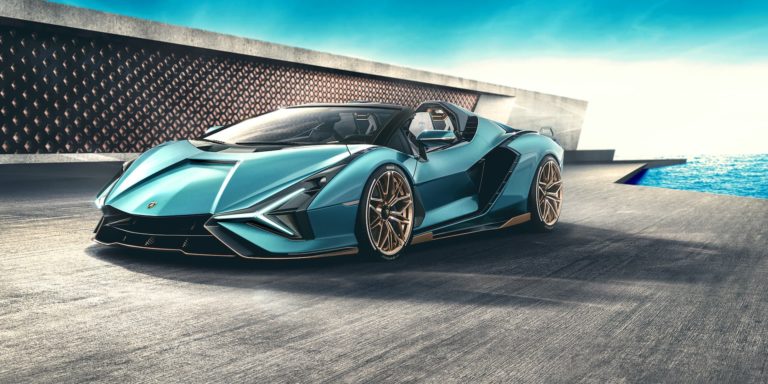
Lamborghini has revealed an incredibly limited run of Sián Roadster models, with all 19 having already been sold.
The drop-top version of the Italian firm’s latest hypercar packs an 820hp V12 powertrain that uses a 48-volt electric motor in the gearbox. It supplies 35hp to improve the immediacy of the engine’s response under acceleration, but can also run the car during low-speed manoeuvres.
To power the motor, the Sián has a supercapacitor, which Lamborghini says is three times more powerful and three times lighter than a traditional lithium-ion battery. It uses regenerative braking to replenish the supercapacitor, while the motor is used to fill the gaps between gear changes so the driver feels no pause in acceleration.
The Sián Roadster accelerates from 0-60mph in about 2.7 seconds and has a top speed “above 217mph”.
The Sián’s wild styling indicates the future designs of the brand’s cars, which have always stood out for their ostentatious aesthetics. It features the iconic Lamborghini Y-shaped headlights as well as sharp, angular body lines through to the rear – and debuts in a new colour called ‘Blu Uranus’.
Many of these bold styling choices have practical implications, such as the vents that direct air through the front bonnet and side air intakes and over the rear spoiler.
Stefano Domenicali, Automobili Lamborghini CEO, said: “The Sián Roadster encapsulates the spirit of Lamborghini.
“It is the expression of breathtaking design and extraordinary performance, but most importantly embodies important future technologies. The Sián’s innovative hybrid powertrain heralds the direction for Lamborghini super sports cars, and the open-top Sián Roadster affirms a desire for the ultimate lifestyle Lamborghini as we move towards a tomorrow demanding new solutions.”
The Sián coupe was revealed at the Frankfurt motor show last year, debuting Lamborghini’s trick supercapacitor technology.
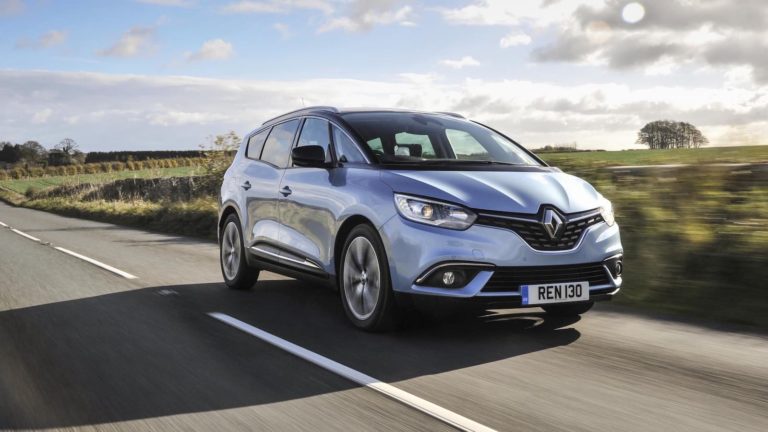
Renault has dropped the guillotine on two of the largest models in its range – the Grand Scenic people carrier and the Koleos SUV.
The company has cited “commercial reasons” for chopping the two models, which in plain English means that it couldn’t sell enough of them to make it worth the effort. Both will continue to be sold in Europe.
The Grand Scenic is Renault’s sole seven-seater model, and its departure comes after the regular Scenic was dropped last year.
Renault has said that the decision to remove the Grand Scenic from the range was made prior to Covid-19, and that the pandemic’s outbreak did not affect its plans.
The Grand Scenic will continue to be sold in Europe, however, as well as the Koleos. Originally launched in 1996, the standard Scenic and larger Grand Scenic have often been seen as a go-to option for families.
Introduced in 2017, the second-generation Koleos took its spot as the firm’s flagship SUV above its smaller Kadjar. Based on the Nissan X-Trail – utilising an Alliance platform sharing plan – the Koleos has only been available with five seats, while the Nissan offered a popular seven-seat option.
Renault issued separate statements confirming the axing of each model, although the comments were virtually identical, noting that the company has revised many of its core models in recent months and will be launching future new models in months to come.
A sign of things to come for the car industry in a post-coronavirus market?
Despite Renault’s insistence that the Grand Scenic’s withdrawl was decided before the pandemic hit Britain (no such claim was made for the Koleos, incidentally), it seems likely that every car manufacturer is going to be assessing its line-up and making some tough calls on which models are not worth keeping on. So it’s likely that others will be pruning their family trees in a similar fashion to Renault.
The Grand Scenic’s demise is not altogether suprising given the fall in demand for MPVs, with the vast majority of consumers preferring SUV models as large family cars. However, that makes the decision to cull the Koleos somewhat more surprising, since it is precisely that sort of vehicle. The Koleos was only updated at the end of last year, when it received a revised look, new engines and additional tech.
It’s been a tough year for Renault so far, even by the low standards of new car sales due to the coronavirus pandemic. The UK’s new car registrations are down by 48% for the first six months of the year, but Renault is down by 52% – despite all-new Clio, Captur and Zoe models arriving in the last 12 months. The company is also facing legal action over claims that more than a million Renault and Nissan vehicles were fitted with illegal emissions defeat devices.
When it comes to vans, the picture for Renault is even bleaker. The overall UK van market is down by44% for the first half of 2020 compared to 2019, but Renault is down by a whopping 65%. Could we see more underperforming models being given the chop in coming months?
In overall terms, June 2020 was another bad month for new cars sales, with overall numbers down 35% on the same month last year. However, it was a massive improvement over April and May as showrooms across England were allowed to reopen.
In some ways, it was almost a return to normal, with no great surprises in the top ten compared to some bizarre results in the last few months. Private new car registrations were down 19%, which was not great but a lot better than fleet registrations (down 45%), which helped this as well.
With English dealers open for the first time in more than ten weeks, a fair number of the June registrations will be orders placed before lockdown that were not able to be delivered until showrooms reopened. So it may be that the level of real post-lockdown demand is not as strong as it looks.
It will be interesting to see what happens in July, although it may be a bit of a disappointment unless fleets start placing large orders for vehicles to be delivered immediately. On a positive note, June’s numbers include very few cars from Wales, where dealerships only reopened on 22nd June, and basically nothing from Scotland, where showrooms didn’t open until the 29th.
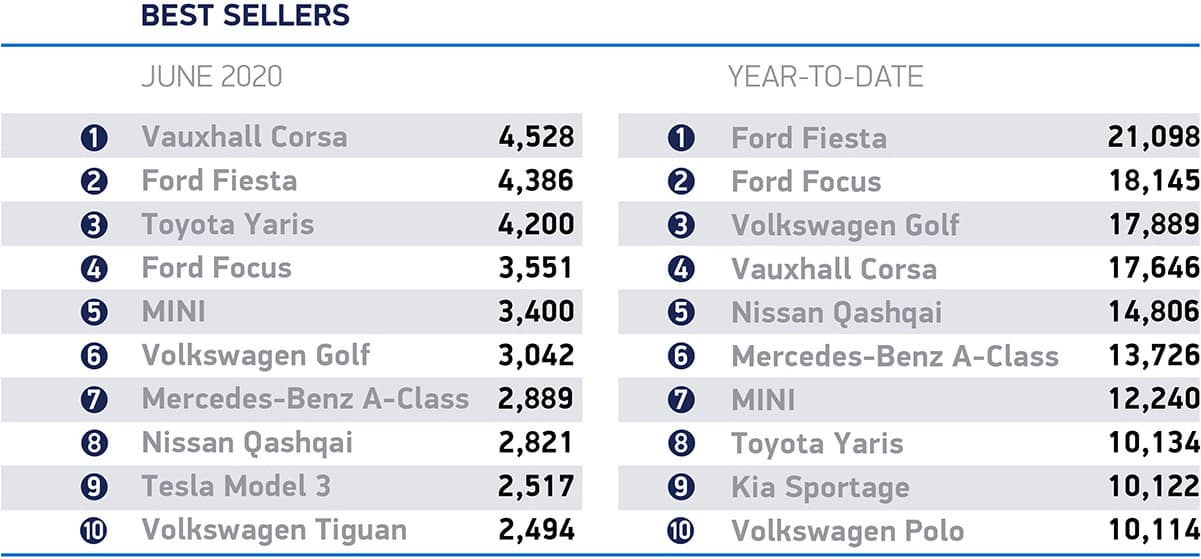
The UK’s best-selling new cars, June 2020
1. Vauxhall Corsa
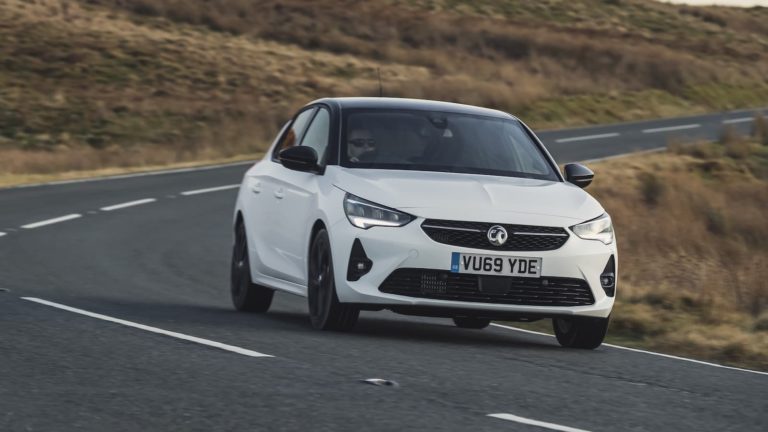
Third place in April. Second in May. Top of the table in June. Vauxhall has had an even worse 2020 to date than most brands, but the new Corsa seems to be hitting its stride nicely. And it gets bragging rights over its arch-nemesis, the Fiesta, for the third month in a row.
The new Corsa currently holds an Expert Rating of 71% on our unique aggregator scale, based on 23 reviews we have gathered so far. That puts it in the bottom half of the supermini class, although the all-electric Corsa-e does score better. We’ll be publishing our Expert Rating analysis of the Corsa-e in the next few days, but based on reviews we’ve aggregated so far it looks like it will be about 5% better than the petrol and diesel versions.
The Ford Fiesta moved up from third place to second in June, but remained one place behind the new Corsa. However, it did extend its lead at the top of the table in year-to-date registrations so there was still reason to smile for Ford fans.
The Fiesta currently holds an Expert Rating of 84% in The Car Expert’s New Car Ratings database, which compares reviews from across the UK motoring media. This is higher than any other car in the supermini class – just ahead of the SEAT Ibiza – so it seems that motoring journalists still prefer it over the Corsa, even if customers haven’t over the last three months.
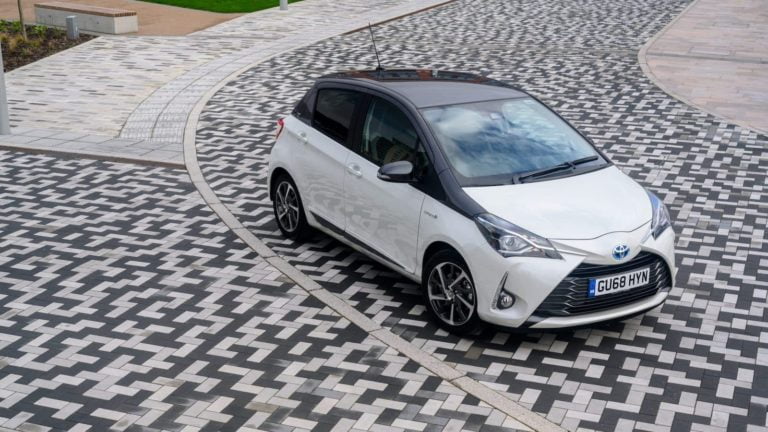
The biggest surprise of the month was the Toyota Yaris supermini popping up in third place. Soon to be replaced by an all-new model, Toyota dealers have been clearing the decks of existing Yaris stocks, which also helped make Toyota’s overall registrations for June look rather good, being almost 3% ahead of the same month last year against a market fall of 35%.
The Toyota Yaris currently has an Expert Rating of 64% in our New Car Ratings database, which is well below average the supermini class. However, initial reviews of the all-new model due to land shortly have been very positive, so Toyota will be hoping for big things.
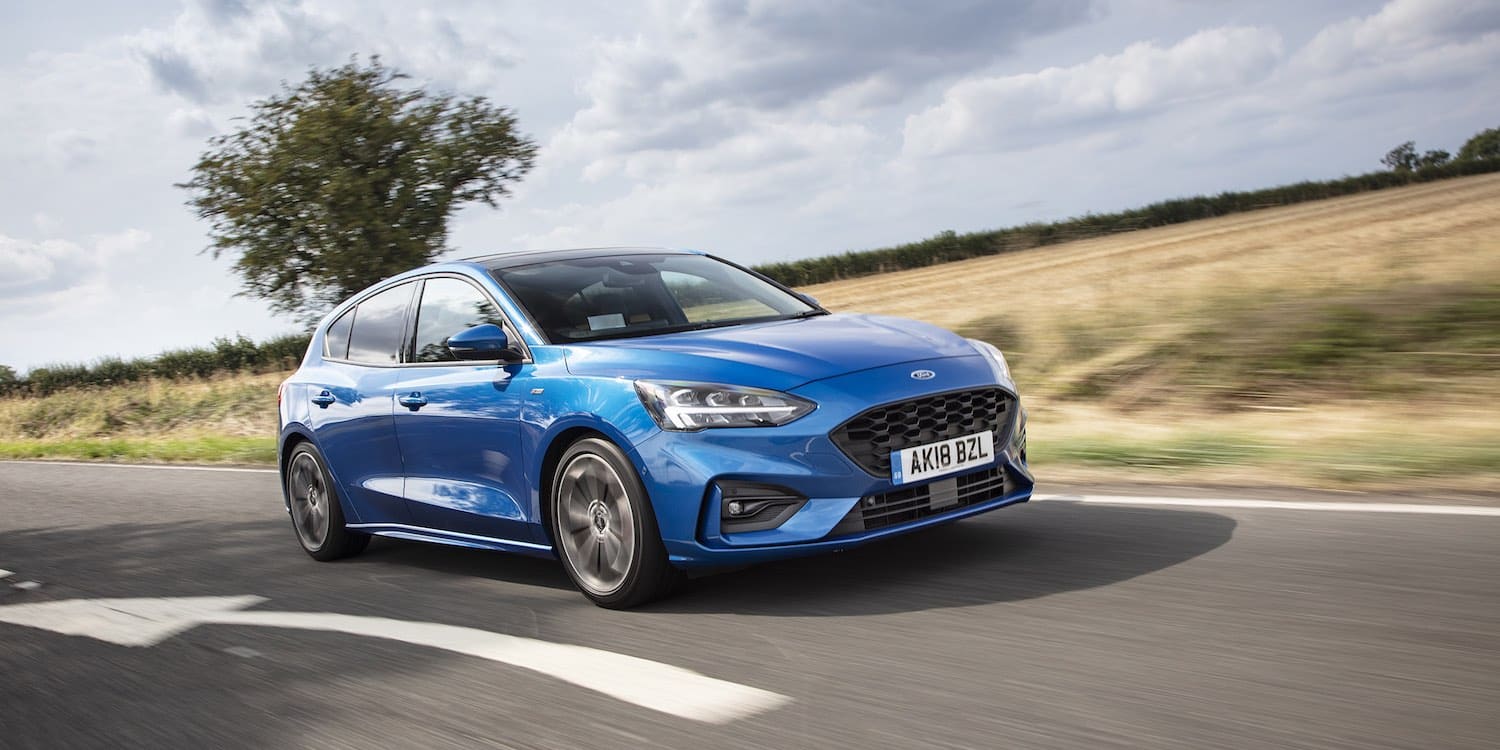
Like its little brother, the Ford Focus improved one spot in June. Its fourth-placing ranking helped it to overtake the Volkswagen Golf for second place in the year-to-date registrations as we hit the 2020 halfway point. However, the new Golf Mk8 is finally reaching UK dealers so it may be a tough battle for the Focus to keep its nose ahead for the second half of the year.
The Ford Focus currently holds an Expert Rating of 80% in our Expert Ratings database, which is better than most rivals but still 5% off the all-new Volkswagen Golf based on its reviews to date.
It’s almost become a tradition that the Mini hatch range achieves good results when consumer sales are strong relative to fleet registrations. That usually happens in the new-number-plate months of March and September, but it was the same sort of situation in the first post-lockdown month of June 2020.
The Mini hatch popped back into the top ten for the first time since March, which also made the Union Jack-waving supermini the best-selling British-built for the month (note: not all Minis are built in the UK, so you’ll have to check yours if this is something you’re particularly interested in).
The Mini hatch holds a very solid score of 80% in our Expertr Ratings aggregator, which is better than most cars in its class despite being much older than many of its rivals.
The first examples of the new Mk8 Volkswagen Golf have arrived, although this month’s registrations will almost certainly include a large number of the outoing Mk7 model. It’s actually the first time we’ve seen the Golf in this list since March, and Volkswagen will be hoping that the new Golf can sell up a storm over the rest of the year.
We haven’t had that many local reviews of the new Golf yet, but it currently holds an Expert Rating of 85% in our database, which is the best rating of any car in its class.
The Mercedes-Benz A-Class slid backwards a bit in June, as cheaper vehicles filled the six spots above it on the best-sellers list. Still, another reasonable month for the small Mercedes, all things considered.
The Mercedes-Benz A-Class has an Expert Rating of 77% in The Car Expert’s unique aggregated Expert Rating system. It ranks highly for safety, winning awards from Euro NCAP and Thatchamfor its protective qualities.
Another familiar face returned to the charts in June, as the Nissan Qashqai reappeared for the first time since March. It just missed out on seventh place, trailing the Mercedes A-Class by fewer than 80 units, but still heads the baby Benz in year-to-date sales. The Qashqai had to yield the honours for ‘Best-selling British-built car’ to the Mini once again, but it’s fair it’s still representing Sunderland proudly as the current-generation model heads towards retirement.
The ageing Nissan Qashqai currently holds an Expert Rating of 74% in our New Car Ratings database, which is midfield for the compact crossover segment and in the bottom half of scores for a top ten-selling car. A replacement is due to be revealed later this year, although the timeframe may be subject to change in light of the chaotic economic conditions currently enveloping the industry.
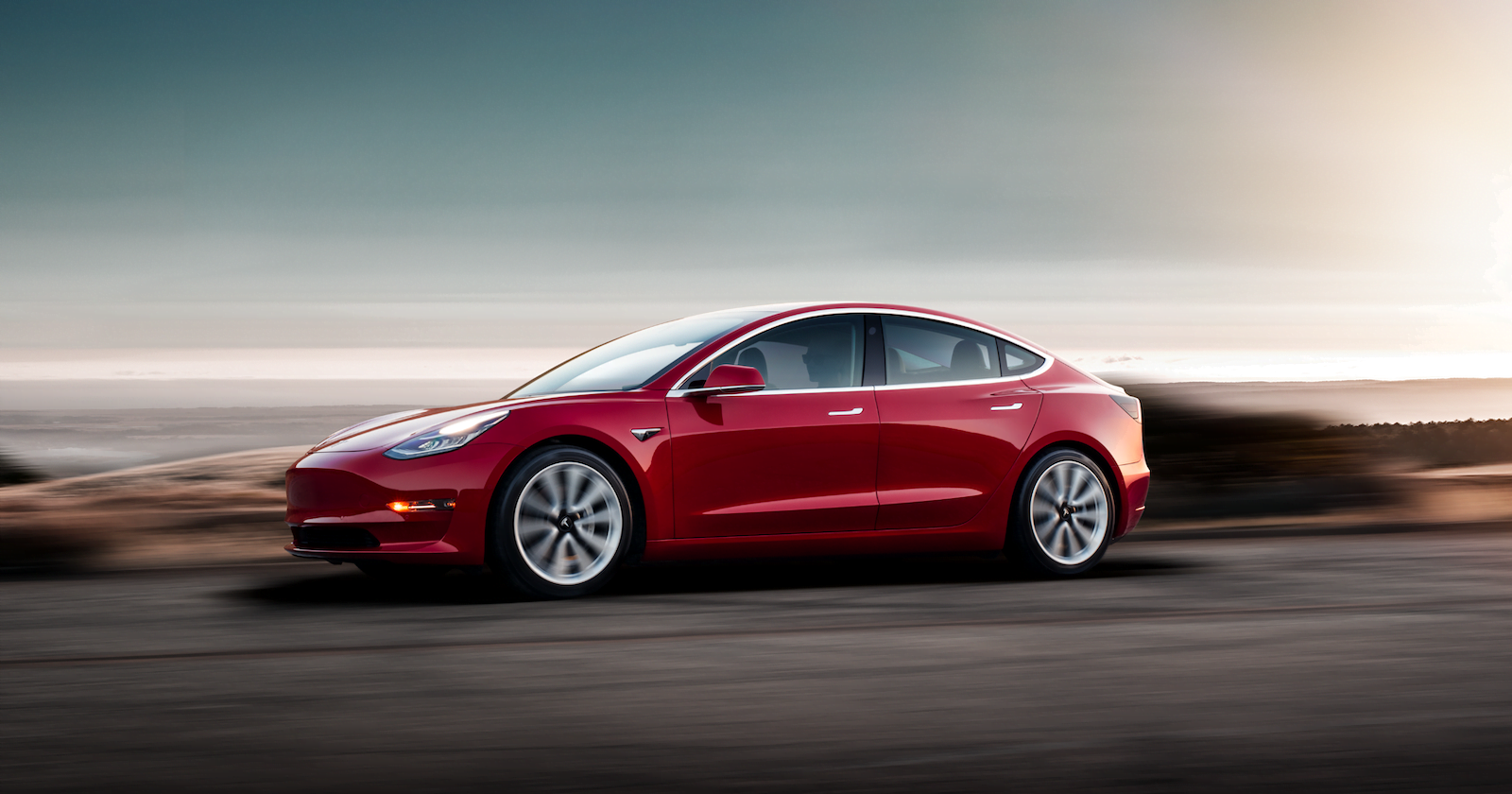
Tesla sold three times as many Model 3s in June as it did in May, yet it fell from first place to ninth in the sales charts as the big-name brands threw open their showroom doors. The Model 3 remains a runaway success for the electric car movement, however, taking nearly 30% of all the electric car registrations for the month.
The Tesla Model 3 currently holds an Expert Rating of 85% in our New Car Ratings database, which is certainly very good. However, there are still very few local reviews in our databse so this may vary by quite a bit (either up or down) in coming months once more local journalists get their hands on press vehicles.
Rounding out the top ten this month is the Volkswagen Tiguan, a model we haven’t seen in this list all year but an occasional sighting every few months. The Tiguan range comprises the regular model and the longer seven-seat Tiguan Allspace. The current model has been on sale for four years now, which means there is presumably a facelift model in the works that’s due to pop up any time soon.
The Volkswagen Tiguan holds a strong Expert Rating of 79% in our Expert Ratings aggregator, which is not quite the best in class but certainly among the leaders.
Skoda’s new Octavia range has grown again with its fourth-generation vRS line-up.
Set to go on sale in the UK this autumn, the Skoda Octavia vRS arrives as a comfortable but potent option in the performance segment of the market
Available as either a hatchback or estate, the new vRS benefits from a choice of three familiar power options from the Volkswagen Group family: a 245hp petrol engine, a 200hp diesel engine and a 245hp plug-in hybrid setup.
The petrol engine, a turbocharged 2.0-litre four-cylinder unit pushing out 370Nm of torque, is driven via a seven-speed gearbox sending power to the front wheels. Skoda claims that it will go from 0-60mph in 6.5 seconds and onwards to a top speed of 155mph.
The plug-in hybrid model combines a 1.4-litre turbocharged petrol with an electric motor for a combined output of 245hp and 400Nm. That means it not only matches the power output of the petrol, but eclipses its torque figure. Its performance times are slightly slower, however, with Skoda claiming a 0-60mph of 7.0 seconds and a top speed of 139mph. It should also be able to cover up to 37 miles on electric power alone, too.
The diesel, meanwhile, is a turbocharged 2.0-litre unit with 200hp, while there’s the option of either front- or four-wheel-drive. It runs the same seven-speed automatic gearbox as its petrol-powered stablemate.
All three boast sports suspension lowered slightly compared to the regular car, as well as adaptive dampers and a limited-slip differential for the petrol variants. A new body kit helps to differentiate the vRS from the rest of the Octavia range, and this is fitted alongside a new front bumper, roof spoiler and wheels up to 19 inches in size – 18-inch gloss black units are fitted as standard.
Inside, there’s plenty of Alcantara trim, as well as sport seats and two ten-inch screens fitted alongside one another to form the look of a single display.
Prices for the new Skoda Octavia vRS are expected to be released closer to the car’s on-sale date this autumn.
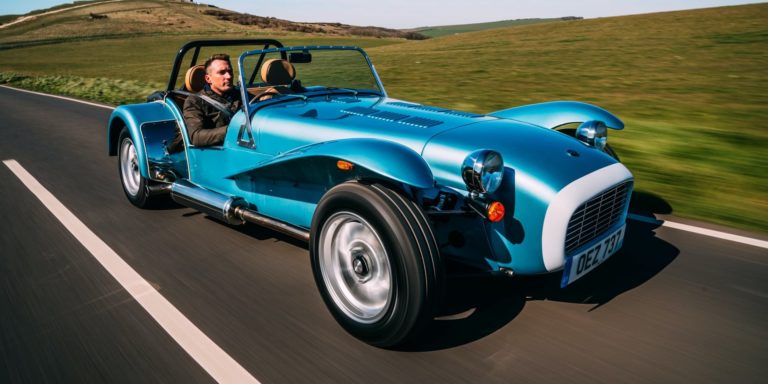
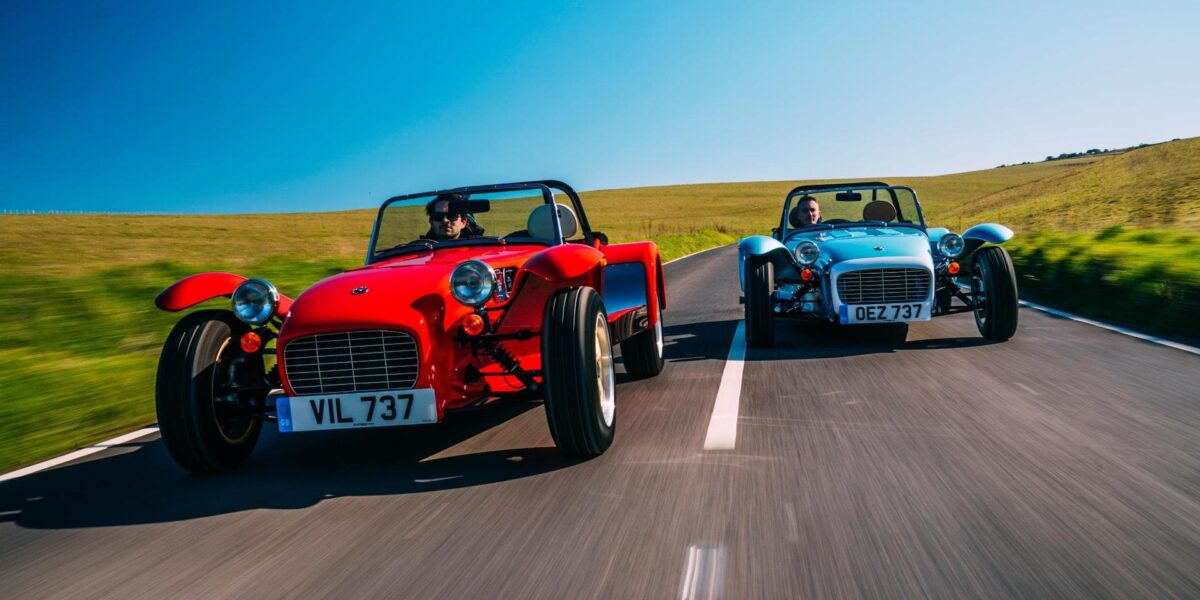
This is the Caterham Super Seven 1600 – a car with even more retro touches incorporated into its design than even the standard Seven can offer. According to Caterham, it draws inspiration from the classic Sevens of the 1970s which is why you’ll find flared arches and a high-quality interior befitting an old-school car in this decidedly brand-new two-seater.
But does it incorporate that driver-machine connection that has caused the Seven to prove so popular among driving enthusiasts? We’ve been out in the Super Seven 1600 to find out.
Though the look may be different, the recipe is the same here; there’s a reasonably powerful engine up front, drive to the rear wheels and space for two in the middle.
It’s a setup that Caterham has refined over the years and while new chassis sizes allow taller drivers to get comfortable – our ‘Large Chassis’ car was one such vehicle – the basic layout has been kept the same.
But Caterham has some tricks up its sleeve for the Super Seven 1600. It has taken learnings from 1970s motorsport to give the engine a little more kick, for instance, and there are other mechanical goings-on happening here too. But more on that later.
How does it look?
When it comes to head-turning design, the Caterham Seven still takes the biscuit. Few people miss this car when it comes zinging past, with the flared arches and bright ‘Caribbean Blue’ paint scheme of this car in particular making for a roadster few will miss. It certainly has a softer appeal to it compared with the carbon-fibre-laden, stripped-out models in the rest of the Seven range, making it better for trips along country lanes on sunny Sundays rather than razor-edged laps around Snetterton race track.
The retro-designed alloy wheels finish the look, while the mohair hood, boot cover and side screens only help it to feel even more like a classic two-seater.
What’s the spec like?
Prices for the Super Seven 1600 start from £33,495, and for that you get 14-inch silver alloy wheels, black leather seats, classic Smiths gauges and a choice between six special paint finishes. If you’re feeling adventurous, Caterham will deliver the Super Seven 1600 at home in kit form for you to assemble yourself, otherwise, you can spend £2,395 for the Crawley-based outfit to build it for you – on top of that initial £33,495.
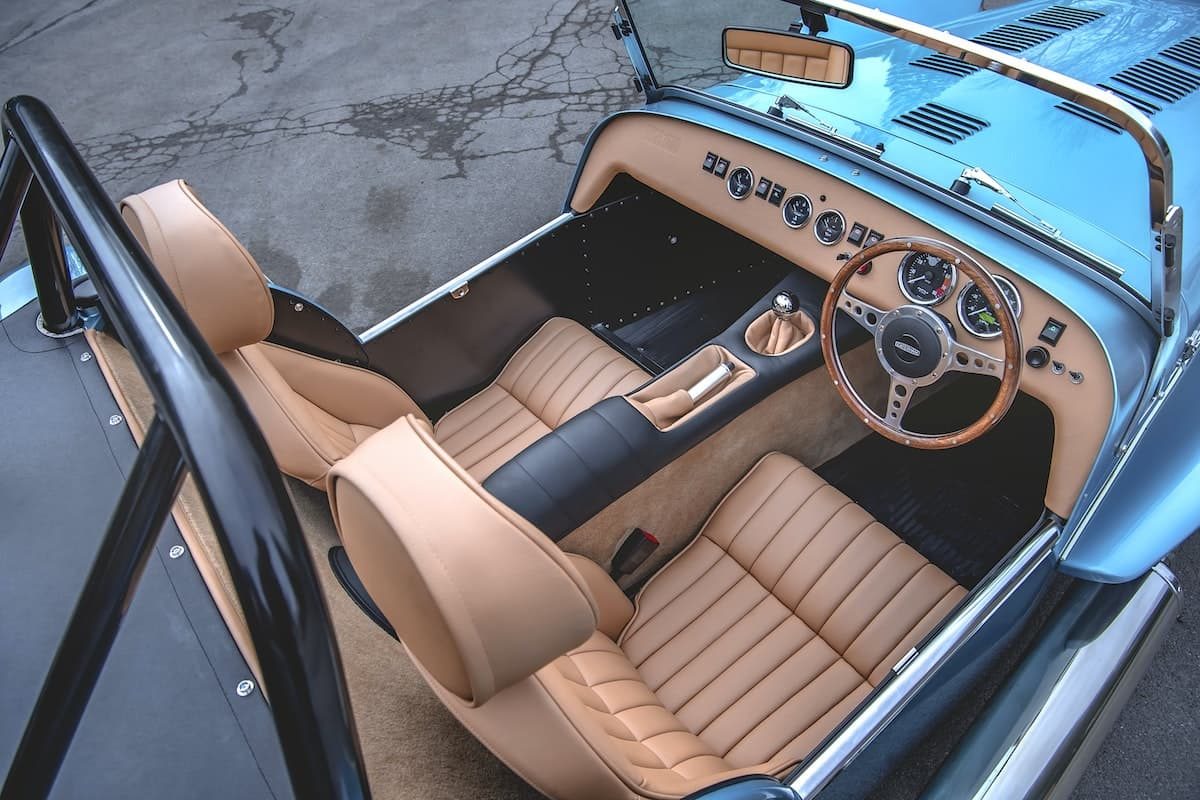
Our car, with its optional SV chassis, lowered floors and ‘Biscuit Beige’ leather seats chimed in at £39,655. It’s a lot of money for a car of this type, we’ll admit, but it’s a solid investment – Caterham values rarely dip, even with more miles on the clock.
What’s it like inside?
Make no mistake, even though this is the wider chassis option, the Super Seven 1600 is not a big car. Once you’re inside the cabin – not an easy feat in itself, particularly with the roof in place – there’s not a lot of room for, well, anything. Sure, there’s a small area behind the seats where you’ll be able to drop a few soft bags or some shopping, but in terms of practicality, the Seven isn’t up there.
But of course, that’s not the point of this car. The driving position is excellent, the heater blowers are powerful enough to take the edge off an evening chill, and there’s even a light to remind you to put your seatbelt on, which is practically cutting-edge technology for a Caterham. The leather for the seats is good quality, while all of the major touch points are finished in equally high-end materials.
What’s under the bonnet?
The Super Seven 1600 uses a 1.6-litre Ford Sigma for propulsion, and thanks to a generous 137hp – equating to 250hp-per-tonne in the featherweight, 565kg Caterham – that means a 0-60mph time of five seconds and a top speed of 122mph. Peak power comes high up in the rev range at 6,800rpm, while the peak amount of torque – 165Nm – arrives at 4,100rpm. Caterham has also fitted the engine with Twin 40s throttle-body upgrades and K&N filters for a more motorsport-inspired response.
Power is sent through a delightfully mechanical five-speed manual gearbox, while Caterham has fitted ‘our’ Caterham with its road suspension pack. Both a sport and track suspension setup are available for those who want a slightly more engrossing ride, but this is being pitched as a car for the road first and foremost – hence the suspension setup angled towards road use.
What’s it like to drive?
As with any Caterham, the sense of connection between driver and car is immediately present in the Super Seven 1600. The steering has a great deal of life to it, buzzing and chattering as the front wheels skip over the road ahead. In the dry, there are handfuls of grip to be found and while that’s considerably diminished in the wet, driven sensibly the Super Seven 1600 can be managed when the weather turns soggy.
Rev the engine out and you’re rewarded with a sumptuously savage bark from the engine, and the acceleration comes in equally raucous bouts. Though this is by no means a ‘quick’ Caterham, it’s more than pacey enough to see off most hot hatches. And in terms of sheer-willed entertainment, there aren’t many cars that feel quite so alive from behind the gloriously retro Moto Lita wheel.
Verdict
The Caterham Seven has never been a car that you purchase with your head. After all, it’s not particularly useable on a daily basis, it’s not practical and it’s not geared towards families whatsoever.
However, what cars like the Super Seven 1600 do is prove that there’s still a place for cars that revel in the joy of driving, something that this Caterham delivers time and time again. And though this is a car for the modern age, it’s still one that delivers the old-school thrills from the golden days of motoring.
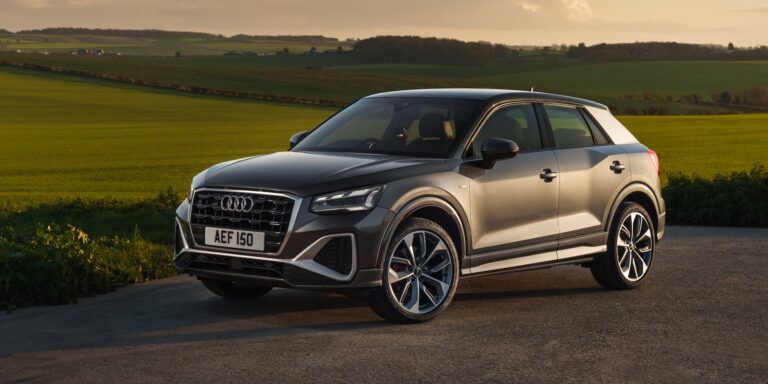
The Audi Q2 is a small SUV/crossover – the smallest in Audi’s ever-growing line of SUV models. It was launched in 2016 and shares a lot of its underpinnings with similar models from the wider Volkswagen family, such as the SEAT Arona, Skoda Kamiq and Volkswagen T-Roc.
The Q2 range is available with both petrol and diesel engines. The top-spec version is the Audi SQ2, which joined the line-up in 2019 and is powered by a 2.0-litre turbo petrol engine producing 300hp.
The Audi Q2 range has received generally good reviews from the UK motoring media. The top-spec SQ2 tends to score slightly better than the rest of the range, while cars powered by the entry-level 1.0-litre petrol have scored more poorly.
The Q2 has been praised for its overall quality and availability of advanced technology options, while the performance of the SQ2 model is particularly praised. However, it has been criticised for being relatively expensive compared to many rivals and with limited practicality, especially in the rear seats, compared to many rivals.
The Audi Q2 range received a mid-life facelift in late 2020. This wasn’t a major overhaul and was largely cosmetic in nature.
As of February 2026, the Audi Q2 has a New Car Expert Rating of D, with a score of 56%. That’s some way behind the best small SUVs on the market. It’s Used Car Expert Rating score is slightly better at 60%, as its competitive running costs make it relatively affordable to own and run.
Body style: Small SUV/crossover Engines: petrol, diesel Price: From £25,655 on-road
Launched: Autumn 2016 Last updated: Autumn 2020 Next update due: TBA
Image gallery
Audi Q2 (2021)
Audi Q2 (2021)
Audi Q2 (2016)
Audi Q2 (2016)
Audi SQ2 (2019)
Media reviews
Highlighted reviews and road tests from across the UK automotive media. Click any of the boxes to view.
The Car Expert
Model reviewed: 2.0-litre petrol automatic SQ2 “Those looking for a performance car would be better suited to the almost-identical Audi S3, or one of the other VW Group hot hatches. The Audi SQ2’s higher centre of gravity makes it feel a little less confidence-inspiring in corners, though there’s no denying its ability to cover ground quickly.” Read review
Score: 8.4 / 10 “An exciting new car that will attract many new Audi customers, affordable for the brand until one starts browsing the options list.” Read review
Auto Express
Model reviewed: Range overview Score: 8 / 10 “The Audi Q2 is a stylish crossover with big car features, but it’s pricey and less well-finished than you might expect.” Read review
Model reviewed: Range overview Score: 7 / 10 “The Audi Q2 has always offered plenty of appeal in the compact SUV market, and potential buyers are sure to love the increased standard spec on this new model, especially when it’s made all the more tempting by a small price drop compared with the previous version.” Read review
Model reviewed: 2.0-litre petrol automatic SQ2 Score: 7 / 10 “The Audi SQ2 can’t match the performance of an equivalent hot hatchback, but on the other hand it offers an image that a hot hatch can’t compete with – and one that modern buyers are craving.” Read review
Model reviewed: 1.4-litre petrol automatic S line Score: 6 / 10 “The 1.4-litre petrol engine is a good choice for the Audi Q2, but it’s pricey in S-line trim with added options.” Read review
Model reviewed: 1.0-litre petrol manual Score: 8 / 10 “This entry-level 1.0 TFSI is arguably the pick of the Audi Q2 range. It’s quick enough, remarkably quiet and will be cheap to run, and comes wrapped in a stylish crossover body.” Read review
Auto Trader
Model reviewed: Range overview Score: 8 / 10 “It’s pretty much a given that the stylish, configurable interior, fuel-efficient engines and tech-friendly equipment will be a hit with image-conscious company car drivers and Yummy Mummies alike.” Read review
Model reviewed: 2.0-litre petrol automatic SQ2 Score: 7 / 10 “The Audi SQ2 is a little more expensive to buy than the Cupra Ateca (which doesn’t have quite the same prestige image, but is much bigger and more practical), yet a good slice less than similarly sized premium rivals such as the BMW X2 M35i and the Mercedes-AMG GLA 45.” Read review
Business Car
Model reviewed: 2021 update Score: 7 / 10 “The Audi Q2 is definitely a more premium product than the Ford Puma, and of course there’s the driveway appeal of the Audi badge, but those factors need a lot of weight attached to them to justify the extra outlay.” Read review
Car
Model reviewed: Facelift range Score: 6 / 10 “The facelifted Audi Q2 doesn’t innovate, it just refines a formula that’s already proven very successful for the brand. There’s certainly nothing offensive about the way the Q2 drives, and with a comfortable ride and great interior, it’s really quite a pleasant place to spend time.” Read review
Model reviewed: 2.0-litre petrol automatic SQ2 Score: 8 / 10 “Love it or loathe it, we don’t particularly care. Some may lament the SQ2’s SUV-ishness but it opens up the Group’s performance end of the scale to a more lucrative market. If you’re desperate for the crossover look, the Audi SQ2 is a potent, entertaining and genuinely fast machine.” Read review
Model reviewed: 1.6-litre diesel manual Score: 8 / 10 “This is a polished, smart, very in-vogue kind of product – albeit a slightly unimaginative one – and one we think is well judged for its target demographic.” Read review
Model reviewed: 1.4-litre petrol automatic Score: 6 / 10 “The new Audi Q2 has the presence, the badge power and enough fundamental ability to do well.” Read review
Car Keys
Model reviewed: 2021 update Score: 8 / 10 “The Audi Q2 has always proven how high-quality and refined a compact car can be, and that remains true with this updated model. While it’s only a light refresh, a more striking look and additional technology certainly aids this crossover’s appeal.” Read review
Model reviewed: Range overview Score: 8 / 10 “While it might be on the pricey side, few cars can offer the luxury and cliched ‘premium feel’ that the Audi Q2 offers in this class thanks to its well-built interior. It’s also great to see an Audi standing out from the crowd, which is a trait we would like to see continue.” Read review
Carbuyer
Model reviewed: Range overview Score: 8 / 10 “The Audi Q2 is a stylish small SUV with an impressive engine range and a comfortable interior.” (Andy Goodwin) Read review
Model reviewed: 2.0-litre petrol automatic SQ2 Score: 7.4 / 10 “The Audi SQ2 is a discreet, desirable but expensive high-performance crossover that surprises in several ways.” Read review
Carwow
Model reviewed: 2.0-litre petrol automatic SQ2 Score: 7 / 10 “If you want performance, but also the raised driving position and butch looks of an SUV, then the Audi SQ2 will be for you. It’s pricey, though and not the most practical choice inside.” Read review
Model reviewed: Range overview Score: 7 / 10 “The Audi Q2 is a small SUV with a smart interior, plenty of optional high-tech touches and a raised driving position, but its back seats aren’t particularly comfy and high-spec models are quite pricey.” Read review
Company Car Today
Model reviewed: 2.0-litre petrol automatic SQ2 “While it’s clearly very rapid, it doesn’t feel like the out-and-out performance SUV you’d expect, given the power and performance figures. It’s only a 2.0-litre petrol engine, so the fuel economy figures will leave drivers well out of pocket on HMRC’s 14p-per-mile reclaim rate.” Read review
Daily Mail
Model reviewed: 1.4-litre petrol manual Score: 8 / 10 “There’s absolutely nothing wrong with Audi’s new SUV. Except that it’s only Quite Interesting.” (Chris Evans) Read review
Model reviewed: 1.4-litre petrol automatic “The Audi Q2 is a very practical proposition that looks classy on the drive.” Read review
Daily Mirror
Model reviewed: 2.0-litre petrol automatic SQ2 “While I’d still rather have a hot hatch, the Audi SQ2 is not far off delivering the same sense of fun by crossover standards.” Read review
Evo
Model reviewed: Range review Score: 7 / 10 “Audi’s most compact SUV is as impressive as it probably needed to be, but no more.” Read review
Green Car Guide
Model reviewed: 1.4-litre petrol automatic S line Score: 8 / 10 “The Audi Q2 is certainly a desirable small SUV. It provides a feel-good factor for the driver thanks to its interior ambience, and the exterior is more visually interesting than its bigger Audi SUV stablemates.” Read review
Heycar
Model reviewed: Range overview Score: 7 / 10 “The Audi Q2 is a premium alternative to small SUVs like the Nissan Juke and Peugeot 2008. It costs a little more than its mainstream competitors, but offers a stylish exterior design, classy and functional interior, and a broad range of engines and drivetrain options. It’s not the most practical or affordable though.” Read review
Honest John
Model reviewed: Range overview Score: 8 / 10 “If you don’t mind spending a pretty penny then the Audi Q2 is a more upmarket and desirable alternative to smaller crossover options like the Nissan Juke or Peugeot 2008.” Read review
Model reviewed: 1.0-litre petrol manual “There are surprisingly few alternatives of this size that can compete with the pull of the Audi brand – apart from perhaps the Mini Countryman.” Read review
Motoring Research
Model reviewed: Range overview Score: 8 / 10 “Apply an image-friendly badge to a popular body style and what do you get? The Audi Q2. Leaving aside the A1 Citycarver, this is Audi’s smallest SUV.” Read review
Motors
Model reviewed: Range overview Score: 7 / 10 “Unsurprisingly, given the popularity of both the Audi badge and the small crossover sector, the Q2 has been a huge hit from the outset, with some models requiring quite a long order lead time due to demand.” Read review
Parkers
Model reviewed: Range overview Score: 8.4 / 10 “Smallest Audi crossover delivers chunky styling and a fine drive.” Read review
The Sun
Model reviewed: 2.0-litre petrol automatic SQ2 “It’s quite clear the engine is the star of the show here. It’s the same 2.0-litre turbo we all know and love from the Golf R and Audi S3 – both sublimely good hot hatches.” Read review
Model reviewed: 1.4-litre petrol manual “Cool, small and affordable. Audi’s future king?” Read review
The Sunday Times
Model reviewed: 2.0-litre petrol automatic SQ2 “I cannot think of a single soul who would be interested in such a car.” (Jeremy Clarkson) Read review
Model reviewed: 1.4-litre petrol automatic Sport Score: 8 / 10 “The petrol-powered 1.4 would be our pick of the range. If you buy the petrol-powered model, ‘quality product’ just about sums up the Audi Q2. It might be aimed at the selfie-generation but there’s nothing shallow about Audi’s smallest Q car.” Read review
The Telegraph
Model reviewed: 2.0-litre petrol automatic SQ2 Score: 8 / 10 “Smart, slick and charming, this compact performance crossover inherits the mantle of rapid hatches of yesteryear” Read review
Model reviewed: 2.0-litre petrol automatic 190hp S Line Score: 8 / 10 “It is a mark of just how accomplished Audi’s small SUV is that despite not being the best Q2, when all things are considered, this 2.0 TFSI is still a highly desirable car.” Read review
Top Gear
Model reviewed: 2.0-litre petrol automatic SQ2 Score: 6 / 10 “Audi serves up a confident, capable hot crossover. Just forgets to add spice.” Read review
Model reviewed: Range overview Score: 6 / 10 “The Audi Q2 is pleasingly bold on the surface, but plays with a very safe bat beneath it.” Read review
Safety rating
Independent crash test and safety ratings from Euro NCAP
The Audi Q2 was originally crash tested by Euro NCAP back in 2016 and awarded a five-star rating. However, this rating expired in January 2023 and is no longer valid as the car no longer meets the standards required for such a rating. This is normal practice, as Euro NCAP reviews its ratings on most cars annually with most ratings expiring after about six or seven years.
However, if you are comparing a used Q2 to vehicles of similar age, whose ratings will have probably also expired, its safety rating score is still useful.
Eco rating
Independent economy and emissions ratings from Green NCAP
No eco rating
As of February 2026, the Audi Q2 has not yet been assessed by Green NCAP. If the Q2 is put through the Green NCAP lab testing programme, we will publish the results here.
Reliability rating
Reliability data provided exclusively for The Car Expert by MotorEasy
No reliability rating
As of February 2026, we don’t have enough reliability data on the Audi Q2 to generate a reliability rating.
The Car Expert’s reliability information is provided exclusively to us using extended warranty data from our partner, MotorEasy. As soon as MotorEasy has sufficient data on the Q2, we’ll publish the score here.
Running cost rating
Monthly cost of ownership data provided exclusively for The Car Expert by Clear Vehicle Data
Fuel consumption
Average
Score
Petrol models
45 mpg
C
Diesel models
52 mpg
B
CO₂ output
Average
Score
Variation
Score
Petrol models
145 g/km
C
Diesel models
144 g/km
C
Insurance group
Average
Score
Variation
Score
All models
21
B
Service and maintenance
Cost
Score
Year 1
£210
B
Year 2
£576
C
Year 3
£944
C
Year 4
£1,218
C
Year 5
£1,624
C
Overall
£4,572
C
The Audi Q2 is average when it comes to ownership and running costs, according to data supplied by our technical partner Clear Vehicle Data.
Petrol versions offer around 45 mpg, which is around the market average, and diesel models are the more economical choice. The SUV’s insurance premiums are pretty cheap when compared to rivals, and the car is predicted to be rather cheap to service and maintain over five years of ownership.
Date: August 2023 Recall number: R/2023/254 Model types: All Build dates: 10/2020 to 05/2023 Number of vehicles affected: 104,162 Defect: On affected vehicles an electrical connector for the power supply for the fuse carrier in the interior of the vehicle may have not been installed correctly. Remedy: Check the electrical connection and secure if necessary.
Date: July 2019 Recall number: R/2019/234 Model types: All Build dates: 02/2019 Number of vehicles affected: 1 Defect: The mounting for the head restraint may not be correctly welded to the outer backrest frame for the rear seat. Remedy: The backrest on the rear seat bench must be checked and if necessary replaced.
Date: November 2018 Recall number: R/2018/338 Model types: All Build dates: 05/2018 to 09/2018 Number of vehicles affected: 147 Defect: The rear back rest head restraint mounting is not correctly welded. Remedy: Check and replace rear back rest frame if required.
Date: October 2018 Recall number: R/2018/295 Model types: All Build dates: 01/2017 to 06/2018 Number of vehicles affected: 3,650 Defect: The electro-mechanical park brake may be released inappropriately. Remedy: The software for the brake control will be updated.
Date: November 2017 Recall number: R/2017/311 Model types: All Build dates: 08/2017 Number of vehicles affected: 30 Defect: The hardening process for the rear wheel bearing housings may not have been correctly performed. In the worst case this could lead to a fractured housing. Should a fractured housing occur there would be abnormal noises bad tyre wear and a theoretical possibility of wheel loss. Remedy: Recall the vehicles that are likely to be affected and replace the right and left rear wheel bearing housings.
As of September 2024 (our most recent data point), there have been five DVSA vehicle safety recalls on the Audi Q2 addressing various different issues.
Not all vehicles are affected by recalls. You can check to see if your car is included in any of the above recalls by visiting the DVLA website or contacting your local Audi dealer.
If your car is affected by a recall, the vehicle must be repaired and you should not be charged for any work required. If you are buying a used Q2, you should insist that any outstanding recall work is completed before you take delivery of the vehicle.
The average price of a litre of fuel went up in June, ending three months of price drops as lockdown eased.
Petrol prices went up 3.74p per litre, from an average of 107.11p to 110.85p, while diesel was up 2.89p per litre, rising from 112.07p to 114.96p.
The data from RAC Fuel Watch shows the prices rise in correlation to lockdown measures easing and more cars being on the road, with increasing demand seeing the price of a barrel of oil rising more than $6 (£4.80) to $41.87 (£33.51).
The lockdown price drops were driven by supermarkets, with many selling petrol for as low as £1 per litre helping to bring the petrol average to a low of 106.48p on May 19. Diesel saw an average of 111.8p on the same date.
However, RAC Fuel Watch says the ‘big four’ supermarkets are also now driving increases, with Morrisons, in particular, bumping up the price of both fuels by about 7p per litre, followed closely by Asda.
RAC fuel spokesman Simon Williams said: “The pump price rises witnessed in June will have been a nasty shock to the system for drivers. While those who continued to drive regularly throughout the pandemic will have benefitted from some very low prices, millions won’t have so will be disappointed that just as they start to drive more again prices are on the up.
“It is, of course, the lack of demand for fuel which caused prices to drop in the first place so sadly it’s no great surprise that they’re on the rise again now.
“But drivers should take quite a lot of comfort from the fact that both petrol and diesel are a whopping 17p a litre cheaper than they were at the end of January. That means a tank of fuel is on average £9 less than it was then.
“And with RAC data predicting this weekend could be the busiest of the year so far on the roads that’s at least a little bit of better news, particularly as the direction of travel for fuel prices is upwards.
“Oil producer group OPEC and its allies are continuing to restrict output which has successfully driven up the barrel price and that can only mean one thing for drivers in the coming weeks – higher prices.
“This is confirmed by RAC Fuel Watch data which shows that petrol is likely to go up by 2p a litre in the next fortnight. Diesel, however, shouldn’t rise much at all unless retailers use the saving in its slightly lower wholesale price to subsidise petrol.”
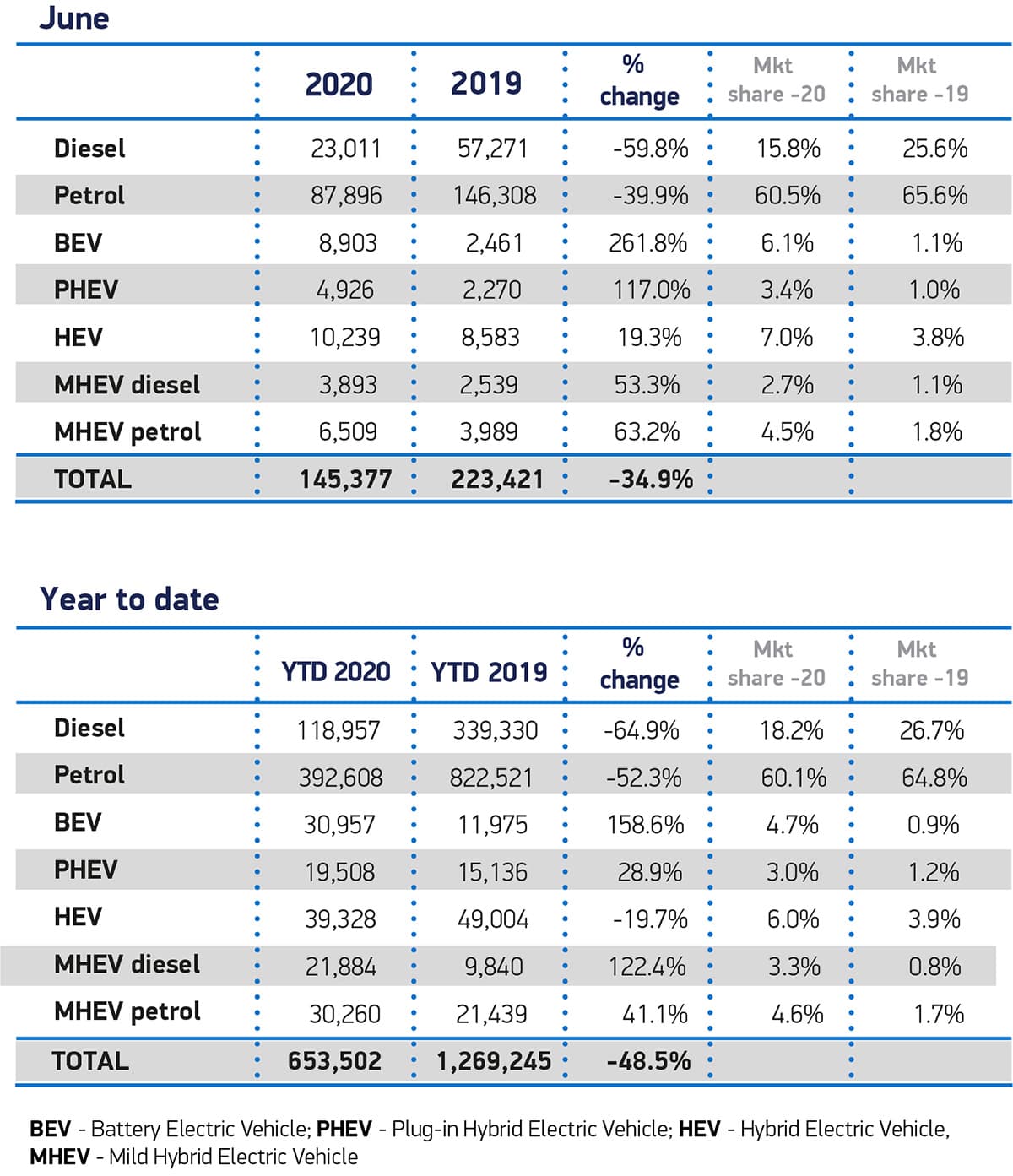
New car registrations in June showed a reasonable amount of recovery from the disastrous figures for April and May. According to figures published this morning by the Society of Motor Manufacturers and Traders (SMMT), overall new car registrations were down 35% compared to the same month last year, although there are plenty of caveates to those results.
Private new car sales led the way in June as consumers began returning to car showrooms, with sales down 19% compared to June 2019. In England, doors opened right from the start of the month – although the SMMT estimates that 20% of dealers remained closed – while in Wales the date to reopen was 22 June and Scottish dealers could only open on 29 June.
What is not clear is what percentage of these numbers were collections of vehicles ordered before lockdown, and how many were fresh sales once dealers re-opened. The industry is not expecting great things over coming months, with the SMMT setting out its case for government support ahead of an expected call for a new scrappage scheme.
Fleet and business registrations were far more subdued, down 45% and 53% respectively. This is not surprising, with many companies still closed or fighting to keep expenditure to an absolute minimum. Until employees start returning to their workplaces rather than operating from home, there is no great urgency to provide them with new company cars.
Diesel sales slumped to even lower levels in June at about 18% of the overall market (including mild-hybrid diesels), hurt even more by poor fleet registrations and a strong month for small cars, which are often not evan available with diesel options. This fall has come directly at the expense of of electrified vehicles, with hybrid/plug-in hybrid and full-electric cars taking a record 16.5% of all registrations in June.
Year-to-date picture shows scale of collapse
With the first half of the year now behind us, the scale of the hit that the car industry has taken is illustrated quite starkly. For the first six months of 2020, overall new car registrations are down by more than 48%, with fleet and business sales again performing worse than private sales.
Electrified cars have taken nearly 15% of all registrations so far this year, with full-electric cars showing the greatest growth. Petrol-powered cars have seen a slight loss in market share but still command 65% of the overall market. Diesel cars, unsurprisingly, have taken the biggest hit with sales down nearly two-thirds over the first half of this year compared to the same period last year.
Good month, bad month, ugly month
For most car manufacturers, June was another month of bad news. With the overall market down by nearly half, there wasn’t a great deal to cheer about – unless you happen to work for MG or SsangYong, that is. The two budget brands both had very strong months, with MG almost doubling its sales compared to June last year (and almost tripling its market share). SsangYong recorded a registration increase of 30% compared to June 2019, which also more than doubled its share of the total market.
The success of these two budget brands suggests that new car buyers are reining in their spending in the light of economic uncertainty, and harks back to a decade ago when then-budget brands Kia and Hyundai did similarly well in the wake of the banking crash of 2008. Incidentally, those calling for another government-sponsored scrappage scheme may do well to remember that budget brands did well last time it happened – at the direct expense of volume brands and UK-built cars…
It was also a good month for hybrid-focused brands Lexus (up 13%) and Toyota (up 3%) and not-exactly-a-budget-brand Bentley, which was up more than 8%.
On the other side of the ledger, it wasn’t a great re-opening for DS Automobiles, Honda, Hyundai, Mazda or Suzuki, all of whom saw registrations fall to a greater degree than the overall market. Some of that may be dependent on supply levels, so we’ll keep an eye on it in coming months.
Life was even worse for Smart, not looking too clever with a fall of 72% against a market down 48%. But taking the wooden spoon for June was Subaru, which saw an 82% fall for June and only registered 44 cars for the entire month. If that doesn’t improve in short order, we may be saying sayonara to Subaru in the UK altogether.
Corsa cleans up as small cars dominate sales
With a lot of economic uncertaintly about, and fleet registrations still very depressed, it’s probably not surprising that the new car market for June was dominated by small car sales. The new Vauxhall Corsa topped the table over the Ford Fiesta, with the nearly-departed Toyota Yaris in third place.
Tesla sold three times as many Model 3s in June as it did in May, but it still slipped from first to ninth place, just ahead of the Volkswagen Tiguan, which popped up in the top ten list for the first time in a while.
We’ll have are usual analysis of the top ten in coming days as usual.
Volvo has issued a recall of nearly 170,000 of its cars across the UK due to a securing cable that can suffer from wear over time and could result in reduced seatbelt function.
The recall applies to examples the following vehicles built from 2006 to 2018:
Volvo S60
Volvo S60 Cross Country
Volvo S80
Volvo V60
Volvo V60 Cross Country
Volvo V70
Volvo XC60
Volvo XC70
These models exclude cars in the firm’s current-generation cycle of vehicles. A total of 169,481 cars are affected.
In a statement, the Swedish manufacturer said that: “Investigations by Volvo Cars have identified that in very rare cases and under specific circumstances, a flexible steel cable connected to the front seat belts on certain Volvo models produced between 2006 and 2018 may under certain rare circumstances suffer from wear and fatigue over time.
“In extreme cases, damage to the cable, which is located in a rubber sleeve on the outside of the seats, could result in reduced seat belt restraint function.”
We do not compromise on safety, and always take full responsibility to ensure the highest quality and safety standards of our cars. We apologise for the inconvenience caused to our customers, and are grateful for their cooperation as we look to perform this precautionary action.
It also added that the issue is ‘extremely rare’ and that it ‘has had no reports either globally or in the UK of accidents or personal injuries connected to this issue.’
Volvo will contact owners of all affected cars to inform them of the issue and will be asking them to contact their closest Volvo dealer to book in their vehicle to have the issue corrected. If you are unsure whether your car is affected by this recall, contact your nearest Volvo dealer.
Drivers are being urged to get their cars MOT tested this summer to avoid the rush as thousands look to get their vehicles tested after making use of the six-month coronavirus extension.
The scheme, which draws to a close on August 1, was put into place to allow key workers to keep moving during the coronavirus pandemic without having to put their cars through the MOT test. Applied automatically, it granted a six-month extension to any vehicle with an MOT set to expire between March 30 and July 31.
However, a new survey by the RAC has found that nearly all of its network of approved garages are expecting demand to increase from October when the first cars that automatically qualified for the extension will require testing.
By October, 70% of these members anticipate significantly more demand, which could result in drivers finding it difficult to book their cars in for an MOT.
Despite the extension being automatically applied, drivers do not have to follow it, as cars can still be MOT tested as normal.
Adam O’Neill, RAC head of motoring services, said: “In many ways this is an ideal time for people to get their cars booked in for an MOT – whether they’ve already taken advantage of the automatic extension or not. Our garages have yet to see demand return to pre-lockdown levels, but if drivers wait until the autumn they’ll be trying to arrange MOTs at the same time as hundreds of thousands of others.
“Understandably, demand for MOTs and servicing fell sharply after the coronavirus lockdown as garages closed and the government instructed all of us to stay at home. But as the lockdown has started to be eased, drivers may be left wondering whether now is the right time to be getting their cars checked over, or whether making use of the MOT extension is the best course of action.
“The message from us is simple – our garages are fully open and all are operating to our Covid-19 Code of Conduct to help keep customers and staff safe. And with 70% of garages offering a collect-and-return service, reducing interaction with garage staff, drivers needn’t be put off from getting MOTs, servicing or other maintenance work completed.”
The Financial Conduct Authority (FCA) has outlined further proposals to extend the support on offer for car finance customers struggling to make their monthly payments as a result of the coronavirus pandemic, with lenders given only a few days to provide feedback before the measures are implemented.
The new proposals follow on from guidance issued in April for lenders to offer customers a three-month payment deferral (aka payment holiday) or other support if they had been affected by Covid-19 and the widespread lockdown across the UK. More than 600,000 car finance customers applied for support from lenders in the first month, with about 90% of those being granted.
The latest measures are aimed at both customers who have already taken a three-month payment deferral, as well as those who have yet to take up any form of payment support.
The new FCA guidance places the onus on lenders to contact customers before the end of their payment freeze and see if they are able to resume making payments. If so, they should agree a plan on how the missed payments (plus any interest) should be repaid.
If a customer tells the finance company that they are not able to resume payments, the lender should offer either a further three-month payment deferral or reduced payments for three months at a level the customer can afford. Alternatively, the lender is encouraged to offer any other means of support, such as waiving interest, to assist customers.
The FCA has also reiterated that any additional payment freezes or partial payment freezes offered under this latest guidance should not have a negative impact on a customer’s credit files. It has also extended the ban on repossessions until the end of October.
If a customer has not yet availed themselves of a payment freeze under the original FCA guidance, the period to do so has been extended to 31 October.
Christopher Woolard, Interim Chief Executive at the FCA, said: “It is vital that people facing temporary payment difficulties because of the impact of coronavirus get the assistance they need.
“For those who have already taken a payment freeze and can afford to start making payments, even partially, it is in their best interest to do so, but for those that need help it will be there.”
The industry has welcomed the latest proposals from the FCA, in particular the more nuanced approach that replaces the original blanket approach presented in April. Adrian Dally, head of motor finance at the Finance and Leasing Association (FLA), which represents the lenders, said: “The breadth of today’s guidance from the FCA recognises the variety of different situations that customers will be in at this point.
“With more parts of the economy reopening, many customers will be returning to work and will be able to resume full payments. For those returning to part time work, partial payments are an option.
“Customers who still need ongoing help will, of course, be supported. Motor finance lenders have been providing unprecedented levels of forbearance to customers since the start of the crisis, but it is now time for the Government to support the industry so that it is able to continue to offer finance to consumers and businesses at affordable rates during the recovery.”
The FLA has reported to The Car Expert that, for the 12 weeks up until the end of May, about 613,000 car finance customers had made a request for Covid-19-related support (data for June should be available soon). Of these requests, about 90% had been granted. Specific details about how many of these were for the full three months of payment holiday are not provided, but the very high percentage of approvals suggests that the lenders have been supportive to date.
Although the economic situation has certainly not improved since the FCA published its initial directives on coronavirus support measures in late April, the general sense of panic has subsided as everyone has started coming to terms with our new reality.
Back in April, the headline message from the FCA was that lenders should offer a three-month payment deferral to any customer who requested it, with a minor mention buried in a lengthy document that other support measures should be offered instead if they were more suitable. This time around, the regulator has been more forward about suggesting alternative options and promoting a more tailored approach to each customer.
A blanket three-month payment holiday offer was probably necessary in the first instance, as there was a pressing need to provide stability for the millions of car finance customers across the UK and prevent widespread defaulting. While the car industry and associated lenders were prepared to accept that directive at the time, there was a quiet insistence that it was only suitable as a one-off measure and that the industry couldn’t afford to repeat it.
One particularly welcome point within today’s FCA draft guidance was an expectation for lenders to contact customers who have taken a payment holiday to see if they can resume payments, rather than sitting back and waiting for customers to call up and beg for support. We received many complaints from readers who found it impossible to get hold of their finance companies to even discuss their situation, or lenders who refused to offer any kind of support until the FCA stepped in to issue clear directives (Volkwagen Finance, we’re looking at you).
Another point buried in the FCA’s 14-page document is that lenders must adequately explain the consequences of a further payment deferral. Car finance agreements will still accrue interest at the same rate, meaning that – unless you’re on a 0% APR agreement – every month that you don’t make a full payment will cost you more down the line. Lenders are also required to explain the consequences of extending the end date of finance agreements, and the implications for MOTs/servicing/warranties/insurance/breakdown cover.
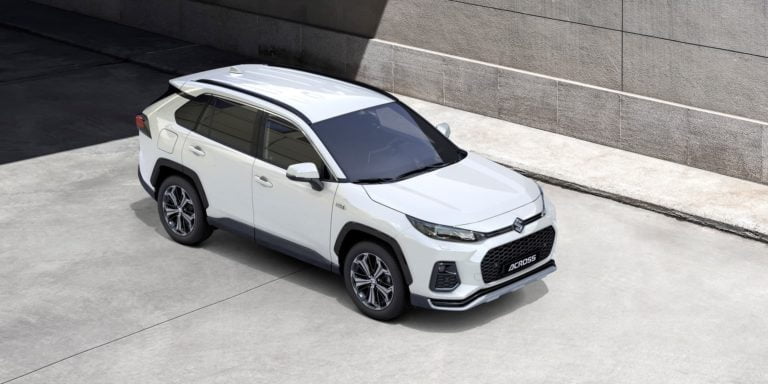
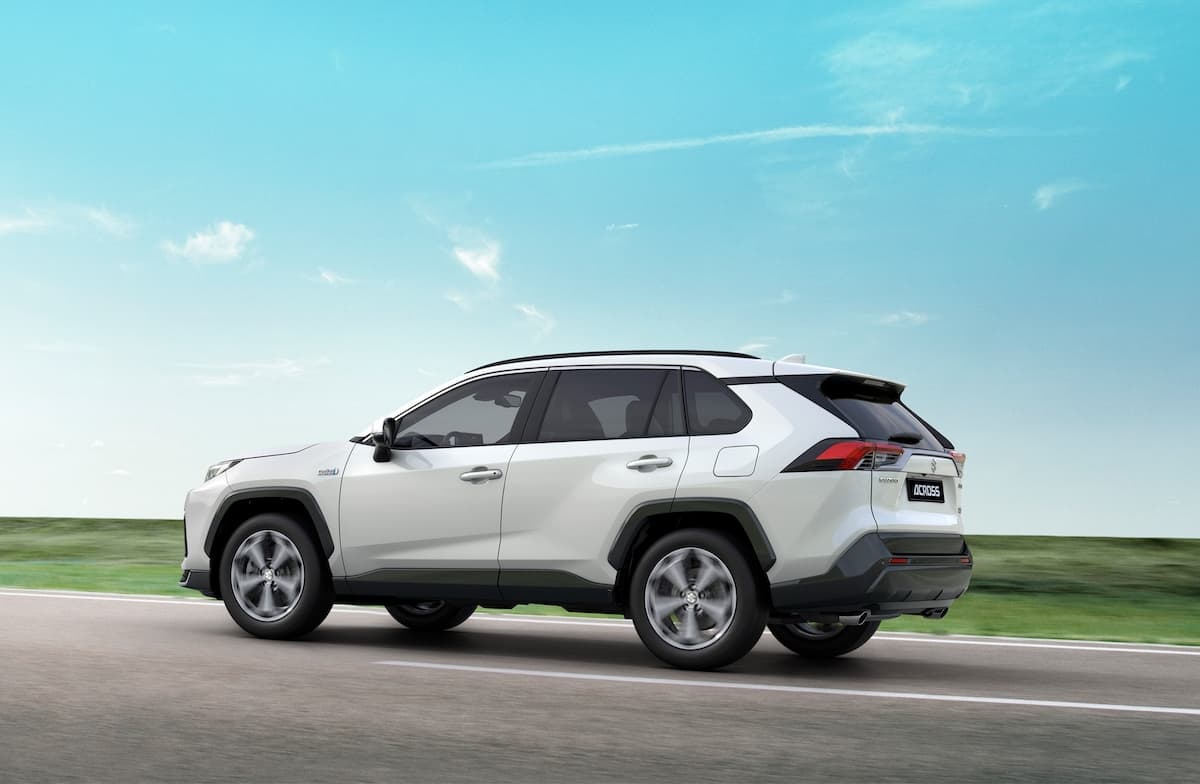
It’s essentially a rebadged and lightly restyled version of the Toyota RAV4 plug-in hybrid, and the first product from a joint venture between Suzuki and Toyota to develop electrified vehicles. The Across is expected to go on sale this autumn.
There are some distinguishing features between the Across and RAV4, with new front and rear bumpers, as well as redesigned LED headlights and 19-inch alloy wheels helping to separate the two.
The cabin benefits from a multifunction steering wheel, while the cabin is centred around a nine-inch touchscreen infotainment system which houses media functions and satellite navigation. Both Apple CarPlay and Android Auto are fitted too.
Underneath the bonnet sits a 2.5-litre four-cylinder petrol engine which is linked to a 18kWh battery pack and an electric motor fitted to each axle. Suzuki says that the total system output is 180hp and 270Nm of torque, while the Across will be able to travel up to 47 miles on solely electric power. At this stage, there is no news about a non-plug-in hybrid version being offered.
Suzuki has been keen to fit some level of off-road ability too, which is why the Across features a Trail setting – this can send power to the wheels with the most grip enabling it to tackle difficult terrains and conditions easily.
Distinct driver settings allow whoever is behind the wheel to tailor the car’s setup to specific settings and allow the car to run in either hybrid or fully electric modes. A ‘hold’ function has also been incorporated in order to save charge for later in the journey, such as when travelling through a city or urban area.
Prices for the Across are yet to be announced, but they’re likely to be in the same region as the RAV4’s £33,450 entry price.
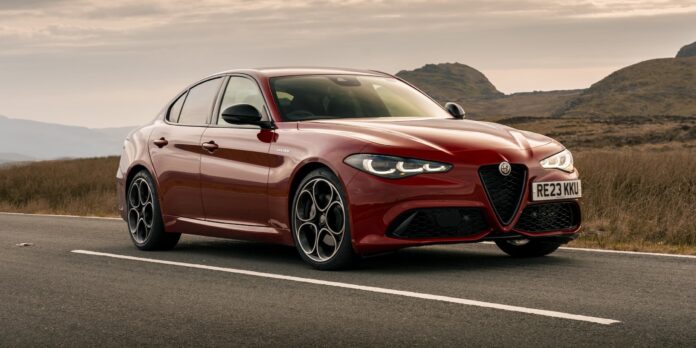
The Alfa Romeo Giulia Quadrifoglio is the high-performance version of the regular Giulia saloon, launched in 2016 with a Ferrari-developed 2.9-litre twin-turbo V6 petrol engine producing around 500hp.
It was developed to compete with established high-performance German sports saloons and remains closely related to the Stelvio Quadrifoglio SUV.
UK media reviews have been consistently enthusiastic about the Alfa Romeo Giulia Quadrifoglio, praising its sharp steering, balance and engine response. It is widely regarded as one of the most engaging performance saloons of its generation.
However, ownership considerations are less favourable. Running costs are very high, particularly for fuel, insurance and maintenance. Reliability data in recent years has been weak, and warranty cover is only average. As one of the oldest new car designs still on sale in the UK, its Euro NCAP safety rating has now expired and its dashboard technology no longer matches the newest rivals.
As of February 2026, the Alfa Romeo Giulia Quadrifoglio holds a New Car Expert Rating of E, with a score of 51%. While media review scores remain very strong, high running costs, high CO2 emissions, an expired safety rating and poor reliability data significantly reduce its overall ownership score.
Body style: Mid-sized saloon Engines: 2.9-litre petrol Price: From £86,885 on-road
Launched: Summer 2016 Last updated: Summer 2023 Replacement due: TBA
Image gallery
Media reviews
Highlighted reviews and road tests from across the UK automotive media. Click any of the boxes to view.
Featured reviews
“It was designed to take on the BMW M3, but stole our hearts along the way – the Alfa Romeo Giulia Quadrifoglio remains a masterpiece in its latest form.”
“The Alfa Romeo Giulia Quadrifoglio is a proper BMW M3-beater – it’s fantastic to drive. The sluggish infotainment might drive you up the wall, though.”
Model reviewed: Range overview Score: 8 / 10 “Minor tweaks mean the Alfa Romeo Giulia Quadrifoglio is still a strong competitor in the performance-car market.” Author: Alex Ingram Read review
Model reviewed: 2023 facelift model Score: 9 / 10 “The updated Alfa Romeo Giulia Quadrifoglio is better than ever, with a unique appeal and serious performance.” (Jordan Katsianis) Read review
Score: 10 / 10 “Several years after its launch, the Alfa Romeo Giulia Quadrifoglio remains one of the most thrilling super saloons on sale today. The driving experience is just as exhilarating as before, but minor tweaks for 2020 have improved the Gulia as an everyday package. The revised infotainment still isn’t perfect, but it’s an easy flaw to forgive. The next BMW M3 will have to be good to beat it.” Read review
Score: 9 / 10 “Alfa Romeo super saloon is a convincing rival to the Mercedes-AMG and BMW M establishment.” Read review
Car
Model reviewed: Score: 8 / 10 “It’s not getting any younger, but the Giulia Quadrifoglio is still an incredibly desirable performance saloon with the kind of delicate handling characteristics that its heavier German rivals struggle to match.” (James Dennison) Read review
Car Keys
Score: 9 / 10 “In terms of performance saloon cars, we can’t think of many more appealing prospects than the Alfa Romeo Giulia Quadrifoglio.” Read review
Carbuyer
Score: 8 / 10 “The Alfa Romeo Giulia Quadrifoglio is a thrilling super saloon that seems perfectly set up for UK roads” Author: Charlie Harvey, Alex Ingram Read review
Company Car Today
“While the regular Giulia can genuinely compete with the best premium saloons in its sector, this monster of a car shows that Alfa can still offer glamour, performance and desirability at the top end of the segment.” Read review
Daily Mail
Score: 10 / 10 “There is no other car in the world today with such understated sophistication, good looks and exhilarating performance. If this really is the make-or-break car Alfa has pinned its future on, then stand easy, everyone – mission accomplished.” (Chris Evans) Read review
The Sun
“It’s a rear-wheel drive Alfa/Ferrari. It’s everything you want it to be. Clarkson’s favourite. Top Gear mag’s Car of the Year. The safest car ever tested by Euro NCAP. And it comes with three years’ unlimited warranty, free servicing and roadside assistance. Alfa has got it so right.” Read review
The Sunday Times
Score: 8 / 10 “What I’m saying here, in this straight, no-cocking-about road test, is that Alfa Romeo has made a car dynamically better than the BMW M3. And it has. It really has. This is Iceland beating England. And I couldn’t be more pleased.” (Jeremy Clarkson) Read review
Score: 8 / 10 “The Alfa Romeo Giulia Quadrifoglio is the best four-door supersaloon on the market. Its Ferrari-derived V6 engine makes one of the finest noises of any car, and its handling characteristics make it an addictive plaything.” Read review
Top Gear
“The Alfa Romeo Giulia Quadrifoglio is one of the best cars I’ve driven. Its chassis and ride offer an incredible bipolar personality that sees it morph out of comfortable fuel-sipper to track nutter with a twist of a knob.” Read review
Safety rating
Independent crash test and safety ratings from Euro NCAP
The Alfa Romeo Giulia was originally tested by Euro NCAP back in 2016 and awarded a five-star rating. However, this rating expired in January 2023 and is no longer valid as the car no longer meets the standards required for such a rating. This is normal practice, as Euro NCAP reviews its ratings on most cars annually with most ratings expiring after about six or seven years.
However, if you are comparing a used Giulia Quadrifoglio to vehicles of similar age, whose ratings may also have expired, its safety rating score is still useful.
Eco rating
Independent economy and emissions ratings from Green NCAP
No eco rating
As of February 2026, the Alfa Romeo Giulia Quadrifoglio has not been assessed by Green NCAP.
If the Giulia Quadrifoglio is put through the Green NCAP lab testing programme, we will publish the results here. However, don’t be expecting an outstanding set of results from a 500hp petrol V6-powered sports saloon…
Running cost rating
Monthly cost of ownership data provided exclusively for The Car Expert by Clear Vehicle Data
Fuel consumption
Average
Score
Petrol models
28 mpg
E
CO₂ output
Average
Score
Variation
Score
Petrol models
229 g/km
E
Insurance group
Average
Score
Variation
Score
All models
48
E
Service and maintenance
Cost
Score
Year 1
£544
E
Year 2
£1,307
E
Year 3
£2,070
E
Year 4
£2,353
E
Year 5
£3,174
E
Overall
£9,448
E
As you might expect, the high-performance Alfa Romeo Giulia Quadrifoglio is an expensive car to run on the daily commute, according to data exclusively provided by our technical partner, Clear Vehicle Data.
Fuel consumption for the twin-turbo V6 engine is inevitably poor, which is closely related to the CO2 score. The Giulia’s huge performance also means it earns a very high insurance group rating, so you’ll pay quite a lot for your annual car insurance premium.
Reliability rating
Reliability data provided exclusively for The Car Expert by MotorEasy
Total claims: 69 Average repair cost: £1388.45 Last updated: April 2025
As of April 2025 (our most recent data point), the Alfa Romeo Giulia family holds a very poor reliability score of just 11%, according to data provided exclusively to The Car Expert by our commercial partner, MotorEasy.
Several of the repair bills have also been hugely expensive, such as an average gearbox repair cost of more than £8,000. Electrical system repairs are also far more expensive than you’d expect to see, with an average repair bill of almost £3,000. Fortunately, both of these problem types have been relatively rare to date.
In owners’ surveys conducted by some magazines, the Giulia has scored very well. However, these are not based on verified objective workshop data like the information we have above.
If you own an Alfa Romeo Giulia Quadrifoglio, or are looking buy a second-hand model, you should definitely think about purchasing a used car warranty that covers these problem areas.
Warranty rating
New car warranty information for the Alfa Romeo Giulia Quadrifoglio
Overall rating
C
51%
New car warranty duration
5 years
New car warranty mileage
75,000 miles
Battery warranty duration
0 years
Battery warranty mileage
0 miles
Alfa Romeo’s new car warranty is better than average, and better than most premium brands in a similar price bracket as the Giulia Quadrifoglio.
The duration is five years, with a limit of 75,000 miles.
Warranty on a used Alfa Romeo Giulia Quadrifoglio
If you are buying an ‘Alfa Romeo Certified’ Giulia Quadrifoglio from an official Alfa Romeo dealership, you will get a minimum 12-month warranty included.
If you are buying a used Alfa Romeo Giulia Quadrifoglio from an independent dealership, any warranty offered will vary and will probably be managed by a third-party warranty company.
If you are buying a used Alfa Romeo Giulia Quadrifoglio from a private seller, there are no warranty protections beyond any remaining portion of the original new car warranty.
If you’re looking to buy any used car that is approaching the end of its warranty period, a used car warranty is usually a worthwhile investment. Check out The Car Expert’s guide to the best used car warranty providers, which will probably be cheaper than a warranty sold by a dealer.
Recalls
Official DVSA safety recalls that have been issued for the Alfa Romeo Giulia Quadrifoglio
2023
2022
2021
2020
2019
2018
Date: July 2023 Model types: Giulia Quadrifoglio Build dates: 12/2015 to 11/2020 Number of vehicles affected: 100 Defect: Affected vehicles equipped with the option BRM (carbon ceramic matrix brakes) may face a braking management issue due to unexpected control unit signals. This may lead to a carbon ceramic disc rupture with a resultant risk of loss or degradation of braking performance. Remedy: Re-program the BSM (braking system module) with updated software.
Date: September 2022 Model types: All Build dates: 11/2020 to 05/2022 Number of vehicles affected: 973 Defect: The automatic headlight position sensors may not have been calibrated and therefore the function does not comply with the requirements of ECE R48. Remedy: Recalibration of the automatic headlight position sensors and alignment of the headlights.
Date: January 2022 Model types: All Build dates: 09/2020 to 06/2021 Number of vehicles affected: 157 Defect: Due to a production nonconformity there may be the possibility of a fuel leak from the fuel pressure and temperature sensor. Remedy: Replace the front fuel supply pipe and sensor.
Date: September 2021 Model types: All Build dates: 06/2021 Number of vehicles affected: 37 Defect: The vehicle may not comply with ECE Regulation 16 Amendment 07 where all seats must be equipped with a safety belt reminder function with visual and audible indication of seat belt status. Remedy: Conduct a software update to ensure the seat belt indication is available for all occupied seats.
Date: March 2021 Model types: Giulia Quadrifoglio Build dates: 03/2020 to 08/2020 Number of vehicles affected: 7 Defect: There is a possibility of the rear brake discs having micro-cracks. Remedy: Replace the rear brake discs.
Date: January 2020 Model types: All Build dates: 11/2018 to 09/2019 Number of vehicles affected: 57 Defect: The seats may not lock in the correct position. Remedy: Check and replace the seat frame if necessary.
Date: December 2019 Model types: All Build dates: 12/2017 to 09/2019 Number of vehicles affected: 116 Defect: Fuel leakages may occur and fumes may form inside the passenger compartment. Remedy: Fit a new plug and seal to the fuel fitter assembly.
Date: September 2019 Model types: All Build dates: 03/2016 to 08/2019 Number of vehicles affected: 2,402 Defect: More fuel than actually present in the tank could be displayed on the instrument panel. Remedy: Update the software of the control module which governs fuel level management.
Date: July 2019 Model types: All Build dates: 03/2016 to 06/2019 Number of vehicles affected: 493 Defect: Undesired acceleration of the vehicle may occur whilst active cruise control is operational. Remedy: Update the software in the brake system module.
Date: March 2018 Model types: All Build dates: 11/2017 to 12/2017 Number of vehicles affected: 11 Defect: The brake/clutch system components may be damaged and system performance may decay as a result of the potential presence of mineral oil in the brake-clutch fluid because the components are not compatible with mineral oil. As a result brake/clutch system performance may deteriorate. Remedy: Replace the components in the brake-clutch system.
As of September 2024 (our most recent data point), there have been eight DVSA vehicle safety recalls on the overall Alfa Romeo Giulia range, with another two that are specific to the Giulia Quadrifoglio. These cover headlights, fuel system, seats, software and brake issues.
Not all vehicles are affected by recalls. You can check to see if your car is included in any of the above recalls by visiting the DVLA website or contacting your local Alfa Romeo dealer.
If your car is affected by a recall, the vehicle must be repaired and you should not be charged for any work required. If you are buying a used Giulia, you should insist that any outstanding recall work is completed before you take delivery of the vehicle.
Awards
Trophies, prizes and awards that the Alfa Romeo Giulia Quadrifoglio has received
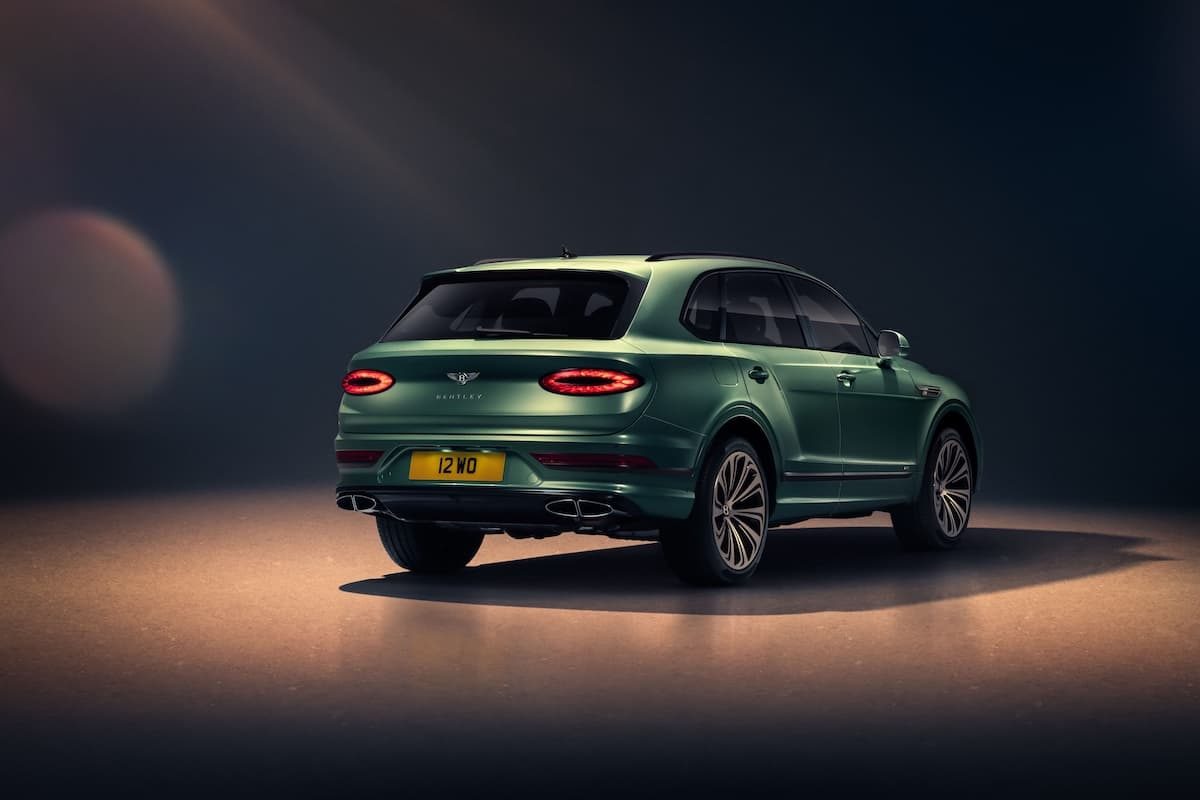
Bentley has revealed its updated Bentayga, which has been given a styling makeover to match the rest of the brand’s models, as well as receiving several technological upgrades.
The Bentayga was the first SUV for the luxury market when it was launched and has enjoyed dominant success as a result. Bentley says it has shifted 20,000 units since it was introduced in 2016 – more than any other Bentley over a four-year period.
However, with rivals joining the segment, the British firm has given the SUV an overhaul. While it’s still recognisable as a Bentayga, the new model gets the slim crystal-cut glass headlights seen on the Continental GT and Flying Spur. It’s also a centimetre wider on each side and the bonnet is 3cm higher to give the car “more presence”.
At the back, the taillights have also taken the same elliptical shape as the Continental models, and are now integrated into a wraparound bootlid. It’s the same size as before, but the new styling gives the impression of more width, according to design director Stefan Sielaff.
Interior comfort was another focus area, with a new centre console, seats and dashboard. Rear seat passengers can now have cooled seats as well as heated, and there’s a new tablet to give them control over in-car functions such as the entertainment.
Up front, there’s a new 11-inch touchscreen infotainment system that has updated software to make it faster and more responsive, including Apple CarPlay and Android Auto. Every Bentayga also has an embedded SIM card to give owners immediate access to connected services.
Other interior improvements include USB-C data ports and wireless phone charging as standard, while optional upgrades include a brushed aluminium trim, two new wood veneers and new quilted upholstery.
The Bentayga will be launched with the 550hp V8 petrol engine, and will be joined shortly after by the plug-in hybrid version in Europe and the UK. A W12 ‘Speed’ variant will join later and is expected to go to America first, where there is the most appetite for large-engined performance vehicles.
Bentley suggested pricing would be about 5% more than the current Bentayga when it goes on sale next week, so expect a starting price of approximately £140,000.
Slightly less ugly, should still be popular
Probably like many of its customers, the Bentley Bentayga is getting a mid-life facelift. A few nips and tucks are aimed at keeping it looking young against a growing field of competitors.
Designers have tried to make its butt look bigger, Kardashian-style. The front end has been made a bit wider and taller – the automotive equivalent of a boob job. The good news is that updated Bentayga looks slightly less ugly than the original model, although that never seemed to hurt sales among its target demographic.
Citroën has revealed its latest-generation C4 range, bringing a fresh new look to the midsize hatchback as well as a new electric powertrain option called the ë-C4.
Having previously been teased in images released a couple of weeks ago, this is the first time that we’ve seen the new model in full and learned all the technical details.
The new Citroën C4 is essentially a replacement for the current C4 Cactus, which will continue on for a while but will not be replaced. The offbeat C4 Cactus garnered plenty of critical acclaim over the years, but this failed to translate into sustained sales volumes. A 2018 facelift toned down the original version’s styling, but this didn’t help sales.
Compared to the Cactus, the new C4 has been raised up crossover-style in line with the current obsession for SUV and crossover vehicles, further exaggerated by styling that blends hatchback and crossover elements. The overall look evolves Citroën’s current design language while also drawing inspiration from its 1970s GS and 1980s BX models. The exterior of the car debuts new V-shaped LED headlights and taillights, while the grille represents an evolution of the one fitted to the facelifted C4 Cactus.
The interior also follows the trend for minimalist layouts, digital dials and a large central touchscreen to control most functions. A special tablet holder has also been integrated into the dashboard ahead of the front passenger (presumably out of the way of the airbag…), allowing them to comfortably view their devices while on the move.
In terms of engine options, the new Citroën C4 will be offered with a selection of its existing PureTech petrol and BlueHDi diesel engines, with power outputs ranging from 100hp to 155hp. The UK line-up will be detailed closer to the model’s on-sale date in September.
A range of advanced assistance systems have been incorporated into the car’s design, with highway driver assist and a level two semi-autonomous driving system included as standard. The new C4 has not yet been crash tested by Euro NCAP, but we will provide results as soon as it happens.
Customisation has been given increased emphasis with the new C4, with customers able to choose 31 different combinations for the exterior alongside six different ‘ambiences’ for the interior.
Citroën’s focus on comfort over handling is reflected in the fitment of its unique hydraulic suspension to help to provide a supple ride, combined with the company’s advanced comfort seats to help make the C4 as comfortable as possible.
High hopes for electric ë-C4
Front and centre at the virtual C4 launch was the ë-C4 electric version. Citroën hopes that the ë-C4 will account for about 10% of sales from launch, increasing quickly to 20% as more consumers demand electric vehicles. The company is adamant that a fully-electric model is a better option for the market than a plug-in hybrid powertrain like the one it offers in the C5 Aircross.
The ë-C4 utilises a 50kWh battery, which Citroën claims will return up to 217 miles between charges.
Production of the new Citroën C4 and ë-C4 will commence after the summer, with deliveries across Europe expected after that. Order books are expected to open in September, with full UK pricing and specifications likely to be announced in coming months.
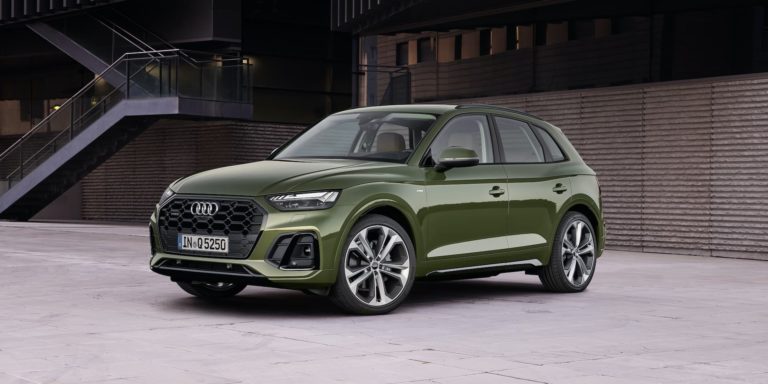
Audi has breathed fresh life into its Q5 mid-sized SUV range with a sharper look and new technological additions.
Set to arrive in the UK this autumn, the facelifted Q5 will initially be available in Sport, S line and Vorsprung specifications, while an Edition 1 trim line will be available for the first time as well.
Redesigned bumpers mean the new Q5 is officially a couple of centimetres longer than the car it replaces (although no important dimensions are altered) while the grille has been designed to look wider than before. Entry-level Sport edition cars boast LED headlamps – replacing the Xenon units available previously – while S line and Edition 1 cars get Matrix LED units fitted instead, a feature which only came as standard on Vorsprung model cars beforehand.
New Edition 1 cars boast 20-inch diamond-cut alloy wheels and a black exterior styling pack. It’s been introduced to offer the distinct exterior look of the Vorsprung but for a lower entry price.
Inside, the MMI display has been boosted in size, rising to ten inches against the seven- or eight-inch displays available previously. It’s also now a fully touch-controlled system, with the rotary controller removed entirely in favour of more storage. It features acoustic feedback – it’ll make a small ‘click’ noise when an icon is pressed – while voice control comes as standard on all models.
Amazon’s Alexa system has been incorporated into the car for the first time, allowing drivers to stream a playlist or control a smart device at home while on the move.
A full 12-inch driver display has also been made standard across the range having previously only come included with top-specification Vorsprung cars.
The range of engines remains the same as before, with a series of petrol, diesel and plug-in hybrid powertrains available.
Prices for the new Audi Q5 start from £42,950, with a more comprehensive price list likely to be announced closer to the car’s arrival in autumn.
A quick nip and tuck for one of the best in its class
The Audi Q5 has been popular with both the buying public and the media over the years. As of June 2020, our unique Expert Rating system shows that the current model holds an Expert Rating of 81% based on 25 UK reviews. That’s not quite the best in class (its closely-related cousing, the Porsche Macan, is a couple of points better), but it’s still a very strong score.
These upgrades are typical Audi mid-life facelift fare – an even bigger grille, a bigger (touch)screen display and LED headlights, but it will keep the Q5 competitive in both the showrooms and the magazines. Stuart Masson, Editor
Mandatory MOT tests for cars more than three years old will return from August, roads minister Baroness Vere has announced today.
Drivers had been granted a six-month exemption from MOT tests in March in an effort to help slow down the spread of coronavirus. However, with lockdown measures easing across the UK, MOT tests for cars, motorcycles and vans will once again be made mandatory in England, Scotland and Wales, bringing an end to the extension scheme.
Drivers with an MOT due date prior to 1 August will continue to receive a six-month exemption from the test, but their vehicle will still be required to be properly maintained and kept in a roadworthy condition. These people are still able to voluntarily get their cars MOT tested should they want to, however.
Roads Minister Baroness Vere said: “As people return to our roads, it is vital that motorists are able to keep their vehicles safe. That’s why as restrictions are eased, from 1 August MOT testing will again become mandatory.
“Garages across the country are open and I urge drivers who are due for their MOT to book a test as soon they can.”
Despite many garages closing during the coronavirus – with only a small number remaining open to cater for essential services – more than 90% are now open across the country, with capacity already reaching 70% of normal levels.
Even if drivers have been granted an automatic exemption, the Department for Transport (DfT) is asking drivers to still take their cars to be checked over by a professional mechanic if they notice something is wrong with their vehicle.
McDonald’s customers will be given the chance to power up their cars in restaurant car parks after the fast food giant announced plans to install hundreds of charging points at its UK sites.
While they munch on their fries, diners will be able to plug their cars in to the new ports, which can provide up to an 80% charge in under 20 minutes, McDonald’s said.
The project, which is a partnership with InstaVolt, will give drivers many more places to stop off when travelling up and down the country.
Hundreds of thousands of additional electric vehicle charging points will be needed to cover the UK if the Government is to hit its target to ban all new petrol and diesel cars from 2035.
In research commissioned by the fast food chain, more than half of people who do not own an electric car said that a lack of convenient charging points was a barrier to them switching.
Two thirds said they would reconsider if there was better coverage.
McDonald’s runs more than 1,300 sites up and down the UK, meaning the roll-out will reach many parts of the country.
The policy will also help its own staff, who are offered electric or hybrid vehicles if they are eligible for company cars.
“Appetite for electric vehicles, which will be a central part of the UK’s efforts to build back greener post Covid-19, is growing,” said McDonald’s UK and Ireland CEO Paul Pomroy.
“This partnership and ambition takes advantage of our scale, and is a real step forward for those already driving electric vehicles, as well as people considering making the switch.
“With over 1,300 restaurants our ambition would mean you would never be far from a charging point.”
He added: “Our ultimate ambition is to have more EV charging points on our premises than any other company in the UK and Ireland.”
The Toyota Prius was a medium-sized saloon, powered by a petrol-electric hybrid powertrain. The Prius was famous for being the original hybrid car, with the original model first launched back in 1997 in Japan. This is the fourth generation, which went on sale in the UK in early 2016.
In addition to the standard Prius shown here, which was a regular hybrid model with very limited electric range, there was also a Prius Plug-in model that could be charged from an external charging point and offers considerably greater electric range. There was also the Prius+, which is a seven-seat model based on the last-generation Prius saloon.
As hybridisation has become more common across the car industry in recent years, the number of potential rivals for the Prius has increased dramatically. Just within the Toyota family, the Corolla hatch/saloon/estate and the C-HR crossover are built on the same platform and feature the same hybrid drivetrains as the Prius, plus there’s the larger Camry saloon as well.
The Toyota Prius has always been well-known for its environmental credentials, but the latest model was also a considerable improvement to drive. It was praised for its ride and handling, as well as low running costs in urban driving. However, the styling polarised opinion and the Prius was viewed by many people as a minicab rather than a family car.
No longer on sale, the Toyota Prius holds a Used CarExpert Rating of A with a score of 73%.
Body style: Mid-size saloon Engines: petrol-electric hybrid Price when new: From £24,355 on-road
Launched: Spring 2016 Last updated: Spring 2019 Discontinued: Spring 2022
Image gallery
Media reviews
Highlighted reviews and road tests from across the UK automotive media. Click any of the boxes to view.
Auto Express
Model reviewed: AWD Score: 7 / 10 “Its main selling point is its fuel economy and, as ever, in this area the Prius absolutely excels.” Read review
Model reviewed: Range overview Score: 8 / 10 “The latest Toyota Prius continues to pioneer hybrid tech, but it’s also a great family car” Read review
Auto Trader
Model reviewed: Range overview Score: 7.6 / 10 “The Toyota Prius is an intriguing alternative to diesel-engined family cars, being well built, comfortable, spacious and extremely tax-efficient. It’s also imaginatively styled, comes with loads of safety kit and, despite some cheap-looking plastics, feels like it is built to last forever and a day.” Read review
Car
Model reviewed: Range overview Score: 8 / 10 “Aside from impressive eco numbers that will make it a massive company car hit, the big news here is how much more appealing the new Toyota Prius is to those who don’t begrudge putting fuel in our cars or lie awake fretting about the melting ice caps.” Read review
Car Keys
Model reviewed: Range overview Score: 8 / 10 “The Toyota Prius definitely wins at low-cost motoring and is certainly a competitor in this ever-changing market. And if you can afford it, we recommend forking out for the plug-in version and can charge it regularly, do it – you’ll see savings in the long term. Read review
Carbuyer
Model reviewed: Range overview Score: 8.4 / 10 “Whether you love or loathe its styling, the latest Toyota Prius is a practical and technology-filled hybrid that costs very little to run” Read review
Carwow
Model reviewed: Range overview Score: 7 / 10 “Look past the Prius’ alien styling and it’s a reasonably roomy family car that’ll cost pennies to run. Unfortunately, some desirable options aren’t standard” Read review
Daily Mail
Model reviewed: Range overview “It’s still one of the most practical hybrids on the market, with a boot more than capable of coping with a fortnightly food shop. But the fact it is now so enjoyable to drive may come as a surprise – and it’s that crucial element which Toyota is hoping will win over a whole new generation of motorists.” Read review
Daily Mirror
Model reviewed: 1.8-litre petrol-electric hybrid automatic AWD-i Score: 6 / 10 “There is a point in a four-wheel-drive Toyota Prius if you live somewhere you need traction or it snows a lot – but otherwise it’s pointless.” Read review
Driving Electric
Model reviewed: Range overview Score: 9 / 10 “If it’s a non-plug-in hybrid car you’re after and practicality and efficiency are key, then we’d recommend a Toyota Prius ahead of all its rivals.” Read review
Evo
Model reviewed: Range overview Score: 6 / 10 “The Toyota Prius has always made economical driving a game, and the latest version is improved in other areas, too.” Read review
Green Car Guide
Model reviewed: Prius Excel T+G Plus Score: 9 / 10 “The new Toyota Prius is still the definitive hybrid. You don’t need to plug it in, and it rewards with high levels of efficiency – if driven carefully. It’s perfectly pleasant to drive, if you’re not expecting the characteristics of a driver’s car. It’s also practical, with five seats and a big boot.” Read review
Honest John
Model reviewed: Range overview Score: 8 / 10 “The latest incarnation of the Toyota Prius is still king of the hybrids, with impressive fuel economy, extremely relaxed driving dynamics, good build quality and a very comfortable cabin. If you want to glide around effortlessly without using too much fuel, there are few better ways to go about it.” Read review
Motors
Model reviewed: Range overview Score: 7 / 10 “The Toyota Prius is all about fuel economy and low emissions and, like it or not, that comes with a very singular image. This innately comes with a stigma, that people who buy the Prius aren’t interested in cars or driving and are instead green activist bores.” Read review
Parkers
Model reviewed: Range overview Score: 8.2 / 10 “Surprisingly good to drive, with excellent efficiency and plug-in option” Read review
The Sun
Model reviewed: Range overview “It’s still not quite a driver’s car but no electric vehicle ever will be, no matter what Tesla will have you believe. And for now, the Prius is still the best at what it does.” Read review
The Sunday Times
Score: 6 / 10 “Toyota was right on hybrids but Prius is still for eco-warriors” Read review
The Telegraph
Model reviewed: (range review) Score: 7 / 10 “Much improved over its predecessors, the latest Toyota Prius can deliver exceptional economy in town and brings low company car tax bills, whilst also being pretty spacious and decent to drive.” Read review
Top Gear
Model reviewed: Range overview Score: 7 / 10 “Much better to drive than its predecessor; much worse to look at, too.” Read review
Safety rating
Independent crash test and safety ratings from Euro NCAP
As of April 2025 (our most recent data point), the Toyota Prius family – including the Prius Plug-in – has a very good reliability score of 90%. This includes previous generations of the Prius as well as this model.
The Car Expert’s reliability information is provided exclusively to us using workshop and extended warranty data from our partner, MotorEasy.
Awards
Trophies, prizes and awards that the Toyota Prius has received
2022
Carbuyer Awards – Best Used Hybrid
2021
Carbuyer Awards – Best Used Hybrid
2020
Honest John Satisfaction Index – UK’s Most Reliable Car
2019
Auto Express Driver Power Awards – New Car of the Year + Best Compact Family Car
DrivingElectric Awards – Best Used Hybrid Car
2018
Auto Express Driver Power Awards – Best Compact Family Car
Honest John Satisfaction Index – Car of the Year
Professional Driver Awards – Private Hire Car of the Year
2017
UK Car of the Year Awards – Best Family Car
Carbuyer Awards – Most Economical Car + Best Small Hybrid Car
Car Dealer Awards – Best Used Electrified Car
2016
Auto Express Awards – Green Car of the Year
Carbuyer Awards – Most Economical Car
Telegraph Cars Awards – Best Eco Car
Women’s World Car of the Year Awards – Best Green Car
Similar cars
If you’re looking at the Toyota Prius, you might also be interested in these alternatives
Driving lessons will be allowed to resume in England from July 4, it has been announced by House of Commons leader Jacob Rees-Mogg.
The Driver and Vehicle Standards Agency (DVSA) will, according to Rees-Mogg, be writing to all approved driving instructors to set out plans on how to recommence driver testing and to ‘help them return to a life that is as close to normal as possible.’
“From 4 July, I am happy to say that people will be able to take driving lessons on a motorcycle, or in a car, lorry or bus,” said Mogg. “And there will be a phased approach to resuming practical testing, so learners have the opportunity to practice before taking a test.”
Rees-Mogg also stated that lessons would recommence ‘as quickly and as fairly as possible, in a way that avoids a second peak in infections’ as he spoke during Business Questions in the Commons today.
The announcement applies to all driving lessons in England, including those for motorcycles and heavy vehicles. Car driving tests will restart in England on Wednesday 22 July, in order to give learner drivers time to have refresher lessons and practice before taking their test.
There has been no date given for resumption of driving lessons in Scotland or Wales, with their devolved governments yet to make any announcements. Northern Ireland will gradually resume lessons and testing on a broadly similar timeframe to England.
The final Bentley Mulsanne has been completed, bringing over a decade of production to a close.
More than 7,300 examples of the firm’s luxurious flagship have been produced during that period, and over 700 people have invested close to three million hours in crafting the vehicles.
Around 42 million spot welds have been made to create the bodywork, while more than a million hours have been dedicated to fitting the interiors. Close to 90,000 hours have been spent polishing the exteriors alone.
Adrian Hallmark, Bentley chairman and chief executive, said: “The Mulsanne is the culmination of all that we at Bentley have learnt during our first 100 years in producing the finest luxury cars in the world. As the flagship of our model range for over a decade, the Mulsanne has firmly solidified its place in the history of Bentley as nothing less than a true icon.
“I am immensely proud of the hundreds of designers, engineers and craftspeople that brought the Mulsanne to life over the last ten years. Now, as we begin Bentley’s journey to define the future of sustainable luxury mobility through our Beyond100 strategy, the role of Bentley flagship is passed to the new Flying Spur.”
Though Bentley has released images of the penultimate car – a Mulsanne Speed 6.75 Edition by Mulliner finished in rose gold – it is keeping its final Mulsanne behind closed doors for now, with the Crewe-base firm stating that ‘its future home remains a closely-guarded secret’.
Following a slow start, the Kuga SUV has been one of Ford’s best-selling models for a while now, with the industry’s love of big, practical SUVs mixing with the brand’s blue-collar appeal to make it a definite sales hit.
The latest generation is bigger than before with a whole new styling direction, and perhaps most importantly, a commitment to electrified powertrains from a brand that has lagged somewhat behind rivals in this department. The plug-in hybrid variant we’re testing here is a pretty big deal, then, thanks to lower running costs from a car that buyers already seem to love.
The big news is the plug-in hybrid powertrain, but we’ll go into more detail on that in the next segment. Instead, we’ll first look at the fact that the new Kuga has gone down a completely different styling direction than its predecessor, taking cues from the Ford Focus – in fact from some angles it’s easy to mistake it for Ford’s hatchback model.
Elsewhere, the interior has been brought up a notch, and there are new technologies both in the cabin and under the skin to improve the driving experience such as driver safety and assistance systems.
It sits on Ford’s new C2 vehicle architecture, which the company says has resulted in the new Kuga being lighter than its predecessor, more aerodynamic for better fuel economy, and with better crash safety.
How does it look?
While previous generations of the Kuga wore chunky “I’m an SUV” styling, the latest model ditches this in favour of a sleeker appearance. From a distance it looks like a family hatchback rather than an SUV, meaning it stands out less than rivals on the road but still offers the high driving position and practicality that has made this segment so popular.
Aside from the softer styling, some of this non-SUV look is achieved by having a more reclined windscreen and lower roof angle, which hides its height. Despite this appearance, it’s actually bigger than the outgoing model…
What’s the spec like?
There are five trim levels available for the Kuga: Zetec, Titanium, ST-Line, ST-Line X and Vignale. However, if it’s this plug-in hybrid powertrain you’re after, that excludes Zetec.
Prices start at £33,085 for the Titanium PHEV, and rise through the sporty-looking ST-Line models to the luxury-focused Vignale we’ve been testing. For this, prices start at £37,785 and equipment includes 19-inch alloy wheels, full LED headlights with automatic anti-glare full beam, premium leather seat trim with heated front seats and heated steering wheel, Vignale body kit, metallic paint, a fully digital 12-inch instrument cluster, automated park assist and a head-up display.
Traditionally, Ford’s Vignale trim levels have felt like an unnecessary expense over less expensive but still generously equipped trims. However, commanding only a few grand more than the ST-Line trims, the Vignale PHEV feels like good value for money, especially if you’re more focused on comfort than sporty looks.
What’s it like inside?
The cabin is one of the Kuga’s trump cards, because it feels exceptionally well made. Our top-spec Vignale model also comes incredibly well-specified, with high-quality materials used throughout and luxury extras such as a heated steering wheel and leather-wrapped instrument panel helping to improve the overall feel.
It’s very spacious too, making it ideal for families. Rear seat passengers, big and small, will have plenty of leg room, while boot space is decent at 411 litres, even if it is less spacious than non-hybrid versions.
If you’re not looking to stretch to the price of a top-spec model – or just don’t fancy putting premium leather at the mercy of the kids – the Kuga’s interior has all the practicality and build quality you could need in a family car, regardless of trim level.
What’s under the bonnet?
The hybrid powertrain uses a 2.5-litre petrol engine combined with an electric motor and generator that are powered by a 14.4kWh battery. This provides a decent, usable electric-only range of 35 miles, which means you could get away with rarely even using the petrol engine.
It makes a total of 225hp with a top speed of 125mph. Fuel economy figures are pretty wild at 202mpg, but only if you’re regularly topping up the batteries and only taking short trips is that a possibility, though we saw economy figures in the 60s during mixed driving. CO2 emissions are low, at just 32g/km.
It’s a rather hit and miss powertrain to use. At lower speeds where the electric motor is doing most of the work it’s brilliant, providing smooth but punchy response and silent operation. At motorway speeds with the engine on it’s still quiet enough, and even when the engine kicks in around town it’s not too intrusive. However, the CVT gearbox means that accelerating harder using the petrol engine is unrewarding with an unappealing soundtrack to boot.
What’s it like to drive?
There’s a lot to like about the Kuga, but the way it drives is its weak point. First, the positives. As we’ve come to expect from Ford products, it handles well, doing a good job of restraining its heft in corners, while also not being intimidating to drive around town thanks to the smooth and responsive electric motor.
However, there are quite a few negative aspects to the driving experience, such as the bizarre, rubbery self-centring of the steering wheel as you turn – something common to Fords but most prominent in the Kuga. Meanwhile, the brake pedal gives little feedback but is very sensitive, which makes slowing down smoothly difficult. We’re also not convinced by the ride, with it feeling very heavy over bumps.
Our verdict
The Ford Kuga PHEV is so close to being great. Its styling is sleek and unimposing, the interior is well made and spacious, and the electrified portion of its powertrain makes for a relaxing, effortless driving experience. What’s more, keep the batteries topped up and that useful electric range means running costs should be very low indeed.
However, it’s hard to get away from the fact it’s a bit of a letdown from behind the wheel. The inconsistent control weights make smooth driving a chore and detract from what should be a brilliant family SUV. A test drive is highly recommended, because if you can live with those negatives you’ve got yourself a handsome, practical SUV.
The new Kuga was launched in the UK just as the country went into lockdown, so we do not have many media reviews collected so far for our unique Expert Rating analysis. Those that have been published to date are all reviews of the Ford Kuga plug-in hybrid model (like this one).
We will add in more reviews as they are published, but it does mean that the Kuga’s current Expert Rating of 80% could change by a significant degree as the petrol and diesel models are tested by a larger number of websites.
Model as tested: Ford Kuga PHEV Vignale Price: £37,785 Engine: 2.5-litre petrol engine and electric motor Gearbox: continuously variable transmission (automatic) Power: 225 hp Top speed: 125 mph 0-60mph: 9.2 secs Fuel economy (combined): 202 mpg CO2 emissions: 32g/km Euro NCAP safety rating: Five stars (2019) TCE Expert Rating: 80% (May 2020)
Toyota and Lexus customers can now get up to £4,000 off the price of a new car through a new scrappage scheme.
To be eligible for the discount, buyers must trade in any passenger or commercial vehicle manufactured on or before 30 September 2012. They must have been the registered keeper for at least six months before placing the order for the new car, and both vehicles must be registered in the same name.
The discounts cannot be used in conjunction with any other special offers, but the same APR rates will be offered on personal contract purchase (PCP) agreements, including 0% APR on some Aygo, Yaris, Corolla, C-HR, RAV4 and Supra models.
The saving varies depending on the model. For Toyota, the maximum £4,000 is applied to the Supra and Hilux, while this discount applies to the Lexus ES saloon, NX, and the five- and seven-seat RX SUVs. The smallest saving is found on the Toyota Yaris, which gets a £1,500 discount.
The full list of eligible Toyota models is as follows:
Toyota says its previous scrappage schemes have resulted in 18,000 sales so far, as customers are encouraged out of more polluting older models and into its range of largely electrified vehicles.
The schemes are available through franchised Toyota and Lexus dealers until 30 September 2020, and the vehicle must be registered before 31 December 2020.
Vauxhall has revealed its revamped Mokka, which gets a striking new look and an electric version for the first time.
The second-generation model has a slightly longer wheelbase but is shorter overall, yet Vauxhall claims it has a similar boot capacity to the old version with 350 litres.
The new Mokka will be available with a range of internal combustion engines, but the big news is the introduction of an electric version, which will be available from launch. It will produce 135hp and 260Nm of torque, with a top speed of 93mph.
It has a charging capacity of 100kW as standard, which means it can be topped up to 80% within 30 minutes at a fast-charging location. The all-important range figure is 201 miles, which is decent given the size of this small crossover and on-par with rival models.
The new look front end is a sign of things to come from the brand, which says this will be the design of all future models. Dubbed “Vauxhall Vizor” (yes, really), the styling features LED headlights, the ‘wing’ design of the daytime running lights and Vauxhall’s famous badge.
Similarly, the updated ‘fully-digital cockpit’ will feature in future products from Vauxhall. The interior ushers in a new technological age for the brand, featuring a smart twin-screen setup that stretches from the instrument binnacle to the centre of the dashboard.
The infotainment screen is a seven-inch unit as standard but can be upgraded to ten inches, with both incorporated into the sweeping twin-screen unit.
The new Vauxhall Mokka goes on sale later this year with deliveries expected to begin in early 2021.
Volkswagen has unveiled its new Arteon Shooting Brake, an estate model that joins the liftback in the revamped Arteon range.
A plug-in hybrid powertrain and range-topping Arteon R model will be incorporated into the updated line-up. The new Arteon is expected to go on sale in the UK this autumn.
The Shooting Brake gives the Arteon a more practical layout, which is likely to be a big hit with those who liked the original fastback version but require the additional load space that an estate provides.
There’s a bit more headroom up front (only a centimetre) in the estate compared with the liftback, while a 590-litre boot is slightly larger too – and it can be increased to a healthy 1,632 litres by folding the rear seats flat.
The overall Arteon range has been given plenty of tweaks as part of its mid-life update, with LED headlights and a revised front grille being the most visible changes. Inside, buyers will find a new touch-sensitive control system for the air conditioning system as well as a new multifunction steering wheel. All cars get a ten-inch digital instrument cluster, while the main infotainment system comes as standard in an eight-inch layout, but can be optionally increased to nine inches.
A performance-orientated R version will sit at the top of the range, utilising a 2.0-litre turbocharged four-cylinder engine with 320hp and 420Nm of torque, sending power to all four wheels. This engine will be available with both estate and hatchback variants. These models also benefit from chassis tweaks, with lowered suspension and adaptive dampers helping to keep the Arteon flat and composed in the bends.
Buyers will also have the option of a plug-in hybrid powertrain that combines a 1.4-litre turbocharged four-cylinder petrol engine, electric motor and a battery back. Volkswagen claims that it’ll be able to travel up to 34 miles in electric-only mode.
These new powertrains stand alongside the pre-existing engines, with a range of 2.0-litre turbocharged engines available. A six-speed manual or seven-speed automatic gearbox can be selected, too.