Toyota has introduced a new variant of its Corolla Touring Sports aimed at people who need a little more off-road ability from their daily car.
Dubbed the Corolla Trek, it follows the tried and tested formula for such vehicles, featuring a ride height 2cm higher than the standard model to offer greater ground clearance, as well as protective cladding beneath the car to protect it when taking unpaved routes.
To make it stand out from the rest of the range, the Corolla Trek gets a honeycomb front grille, 17-inch alloy wheels, rear privacy glass, fog lamps and LED headlights. Inside, there’s two-tone upholstery to match the wood-finish elements of the dashboard and the Trek logo on the door step and tailgate.
Standard equipment includes a seven-inch screen in the instrument binnacle, an eight-inch infotainment screen in the dashboard, and the latest version of Toyota Safety Sense, which includes a suite of driver aids.
The Corolla Trek is only available with petrol-electric hybrid engines, with a choice of a 125hp 1.8-litre unit or 180hp 2.0-litre.
The model is a collaboration between Toyota and Trek Bicycle, with 16 examples of the model being used as support vehicles for the European legs of the Trek-Segafredo World Tour cycle event.
The Honda Jazz is a five-door supermini-class small hatchback. This model was launched in the summer of 2015 and was updated in late 2018. Production of this model ended in 2019 ahead of the arrival of an all-new Jazz in the summer of 2020.
The Jazz received generally average reviews from the UK motoring media over the course of its production cycle, with a few outstanding scores from some consumer titles like Honest John. Based on 22 reviews by the end of its model life, the Jazz had an overall Expert Rating that placed near the bottom of the supermini class.
The Honda Jazz was universally praised by reviewers for its practicality and spaciousness compared to similarly-sized cars, however it was criticised for poor levels of ride comfort and refinement compared to the best cars in its class.
Reliability is a strong point for this generation of the Honda Jazz. As well as our own data shown below, Warrantywise ranked it as the UK’s most reliable used car in 2022.
“The Honda Jazz has served as a versatile supermini for many years, and the latest car is the most practical and well equipped ever.”
Model reviewed: Range overview
Score: 6 / 10
Auto Express
More reviews
Car
Model reviewed: 1.3-litre petrol manual EX Navi Score: 6 / 10 “The Honda Jazz excels in a number of key areas: it leaves all its supermini rivals for dead in the versatility and practicality stakes. But the lack of character beneath the bonnet, the unsettled ride quality and ho-hum levels of refinement leave us disappointed.” Read review
Carbuyer
Model reviewed: Range overview Score: 7.8 / 10 “The Honda Jazz has a class-leading boot and the most spacious interior of any supermini, thanks to its tall roof and upright stance.” Read review
Carwow
Model reviewed: Range overview Score: 6 / 10 “The Honda Jazz is a roomy small family car that’s easy to drive, but a little dull-looking.” Read review
Company Car Today
Model reviewed: 1.5-litre petrol manual Sport Nav “The new trim level gives the Jazz more visual appeal, but most rivals are still more efficient and more rewarding to drive. The Honda does though score for P11D value, practicality and the slightly higher driving position.” Read review
Evo
Model reviewed: Range overview Score: 7 / 10 “Honda’s latest supermini drives well, but ultimately trades fun for practicality” Read review
Heycar
Model reviewed: Range overview Score: 6 / 10 “The Honda Jazz is an unusual small car, but its practicality and reliability are unbeatable in this class. If those are the things that matter most, it’s hard to argue with as a sensible purchase, but newer rivals have it licked when you consider their mature driving dynamics, stronger engines, and smarter on-board technology.” Read review
Honest John
Model reviewed: Range overview Score: 10 / 10 “It’s simply the most versatile small car on sale and one that’s easy to recommend.” Read review
Model reviewed: 1.5-litre petrol manual Sport “The new 1.5iVTEC Honda Jazz Sport is a revelation in that department, absorbing uneven, pock-marked Italian roads around Rome, cornering well and shifting along at a decent rate of knots.” Read review
Model reviewed: 1.3-litre petrol manual “There is nothing on sale to touch the Honda Jazz for practicality except perhaps the Nissan Note – but it doesn’t have Honda’s ‘Magic’ seats. The only other alternative is a less wieldy estate car. In fact the Jazz is probably the most practical small car on sale.” Read review
Parkers
Model reviewed: Range overview Score: 7.8 / 10 “The Honda Jazz has all the right ingredients, but lacks sparkle.” Read review
The Sun
Model reviewed: 1.3-litre petrol manual EX “Honda has sexed up the Jazz with more looks, more room and more equipment. It’s an appealing supermini.” Read review
Model reviewed: Range overview “The Ford Fiesta and VW Polo are still arguably the cooler options, but this third-generation Honda Jazz is a massive improvement. There’s very little out there that will swallow the contents of a student flat, return 56.5mpg on the way home to Mum’s and provide tunes via the on-board DAB radio.” Read review
The Sunday Times
Model reviewed: 1.3-litre petrol manual EX Navi Score: 4 / 10 “I can’t believe Honda has sunk this low. Six years ago it was making cars and television commercials that made you dizzy with desire. And now it’s making cars with engines that turn a lot of fuel into nothing at all.” (Jeremy Clarkson) Read review
Model reviewed: 1.3-litre petrol manual Score: 6 / 10 “The unlikely passion wagon” Read review
The Telegraph
Model reviewed: 1.5-litre petrol manual Sport Navi Score: 6 / 10 “Faster rather than more fun, the Jazz Sport doesn’t add a whole lot extra to Honda’s small car offering. However, there’s still plenty here to appreciate for those who want a practical and reliable car, only this time with a little more performance than before.” Read review
Model reviewed: Range overview Score: 7 / 10 “That the latest Honda Jazz differs very little from its predecessors is no bad thing in terms of how functional it is, or how reliable it will no doubt prove to be. However, while slightly better to drive than before, it’s still not a particularly comfortable car, particularly for longer journeys.” Read review
Top Gear
Model reviewed: Range overview Score: 7 / 10 “Not sexy, not fun, not a heartstring-tugger, but by gum is this a clever car. Brilliantly fit for purpose.” Read review
Safety rating
Independent crash test and safety ratings from Euro NCAP
The Honda Jazz was originally crash tested by Euro NCAP back in 2015 and awarded a five-star rating. However, this rating expired in January 2022 and is no longer valid as the car no longer meets the standards required for such a rating. This is normal practice, as Euro NCAP reviews its ratings on most cars annually with most ratings expiring after about six or seven years.
However, if you are comparing a used Honda HR-V to vehicles of similar age, whose ratings will have probably also expired, its safety rating score is still useful.
Eco rating
Independent economy and emissions ratings from Green NCAP
No eco rating
The Honda Jazz was not lab tested by Green NCAP during its production life.
Reliability rating
Reliability data provided exclusively for The Car Expert by MotorEasy
Total claims: 73 Average repair cost: £252.17 Last updated: April 2025
As of April 2025 (our most recent data point), the Honda Jazz has a excellent reliability rating of 94%, according to warranty data provided exclusively to us by our commercial partner, MotorEasy. This score applies to both this generation Jazz, as well as both newer (2020 onwards) and previous (pre-2015) generations, which is good news if you are considering a used Honda Jazz.
Although we don’t have a huge number of data points yet, the repair bills claimed under warranty to date have been very inexpensive. All in all, the Jazz looks like being a reliable choice as a used car.
Running cost rating
Monthly cost of ownership data provided exclusively for The Car Expert by Clear Vehicle Data
No data
This generation of Honda Jazz is too old for us to have running cost data.
Awards
Trophies, prizes and awards that the Honda Jazz has received
2018
Honest John Awards – Best Small Hatchback
2017
Workshop Magazine Awards – Car of the Year
2016
Telegraph Cars Awards – Best Small Hatchback
Women’s World Car of the Year – Budget Car Award
Similar cars
If you’re looking at the Honda Jazz, you might also be interested in these alternatives
New data has revealed the most common reasons for failing the new driving test.
First introduced in December 2017, the new test incorporated four changes. The independent driving section was increased from 10 to 20 minutes, and following sat-nav directions was also added.
Reversing manoeuvres were changed to exclude ‘reverse around a corner’ and ‘turn-in-the-road’, while candidates were also asked to answer two safety questions while out driving.
But it’s been revealed that the most common major fault – which means the driver has endangered themselves, the public or property and results in an instant fail – was a failure to observe properly at a junction.
In eight areas, including the Outer Hebrides, Hemel Hempstead and Motherwell, this caused over 40% of learners to fail their driving test.
This was followed by a failure to check mirrors when changing direction and improperly turning right at a junction.
Tom Preston, managing director of Hippo Leasing who compiled the data following a Freedom of Information request: “At the end of 2017, the DVSA introduced changes to the practical driving test to increase driver safety and the quality of training in light of the troubling statistic that road collisions remain the biggest killer of young people in the UK.
“Driving test faults reflect the factors which cause the most accidents on the road. Observation is the most common factor, according to the DfT, so while over 167,000 learners failed their practical test last year for this very reason, it’s important candidates learn from their mistakes to keep themselves and others safe once they’re qualified to drive.”
Volkswagen has given the outgoing Golf a shake up with a range of new trim levels designed to bring extra equipment without breaking the bank.
The three new trims are called Match Edition, GT Edition and R-Line Edition and replace Match, GT and R-Line, building on the standard equipment levels they offered. The new trims are £400 more than those they replace but offer the equivalent of £1,910 of additional equipment.
The new kit includes two-way climate control, LED headlights and a winter pack, which includes heated front seats and heated windscreen.
The current generation of Volkswagen Golf was first launched back in 2012 and its replacement will arrive on UK roads next year. Nevertheless, the current model holds a class-leading Expert Rating of 82% on The Car Expert’s unique Expert Rating system, which aggregates new car reviews from about 20 of the UK’s top motoring websites.
Dale Piper, Golf product manager at Volkswagen UK, said: “The Edition trim trio further strengthens the Golf’s appeal with a generous package of added equipment, boosting value by over £1,500.
“The Golf already represents a compelling competitive value package, and the Edition trims only go to strengthen this.
“Even though it was launched in 2012, the current, seventh-generation, Golf continues to win comparison tests against newer rivals, and remains our best-selling car by a comfortable margin.”
The new trims follow Volkswagen tradition of offering high-specification Edition variants of its models as they reach the end of their product cycle. The new eighth-generation Volkswagen Golf will be unveiled before the end of the year and go on sale in 2020.
Fiat Chrysler Automobiles has put a price freeze on all vehicles ordered before the Brexit deadline, even if the vehicle is delivered after October 31.
The guarantee, dubbed ‘Deal or No Deal’, applies to all Fiat, Abarth, Alfa Romeo and Jeep models regardless of what post-Brexit trade tariffs or currency fluctuations take place after the UK leaves the EU.
Arnaud Leclerc, managing director at FCA UK, said: “We’re aware that questions around Brexit may cause concern for customers buying cars from European brands, but our ‘Deal or No Deal’ campaign will reassure our customers that the price of the car they order won’t change, even for post-Brexit deliveries.
“FCA will support customers during the Brexit transition period by ensuring that no matter what happens in the coming weeks, we’ll keep our prices exactly where they are.”
The UK’s deadline for exiting the EU is October 31, and prime minister Boris Johnson and his team have been meeting with senior EU officials to negotiate a withdrawal agreement.
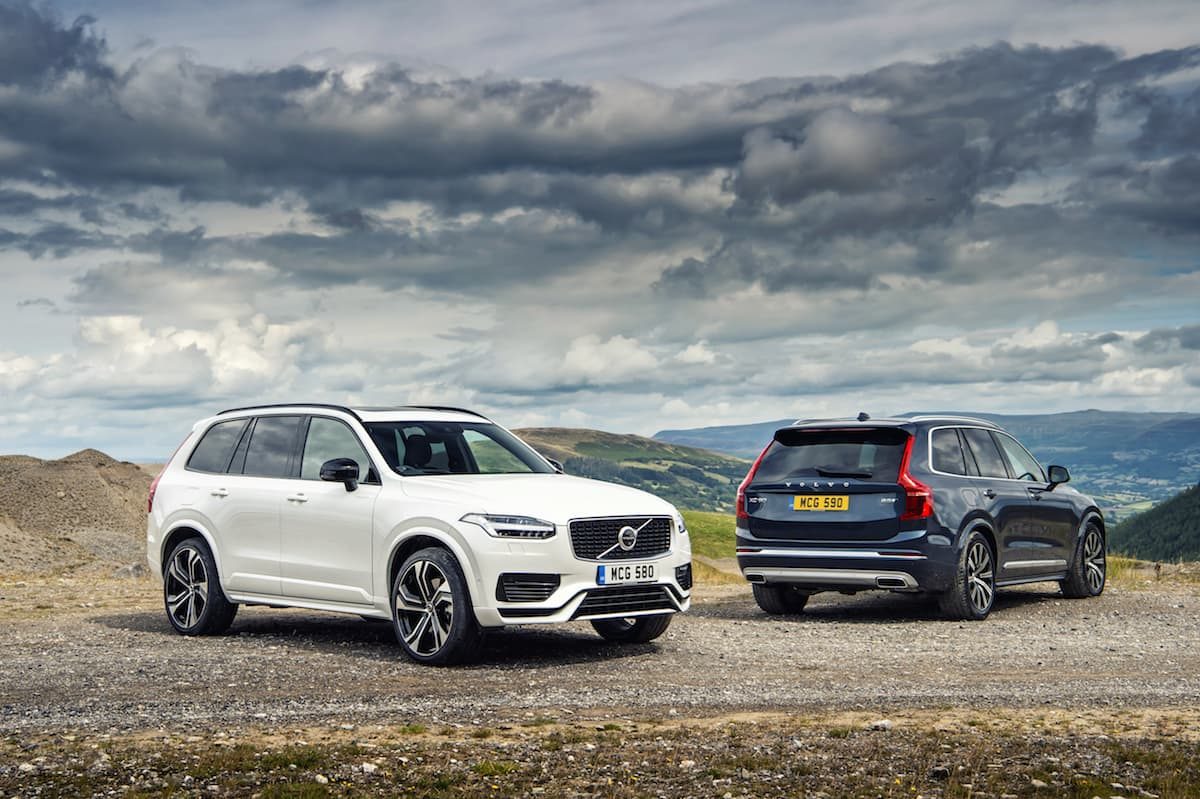
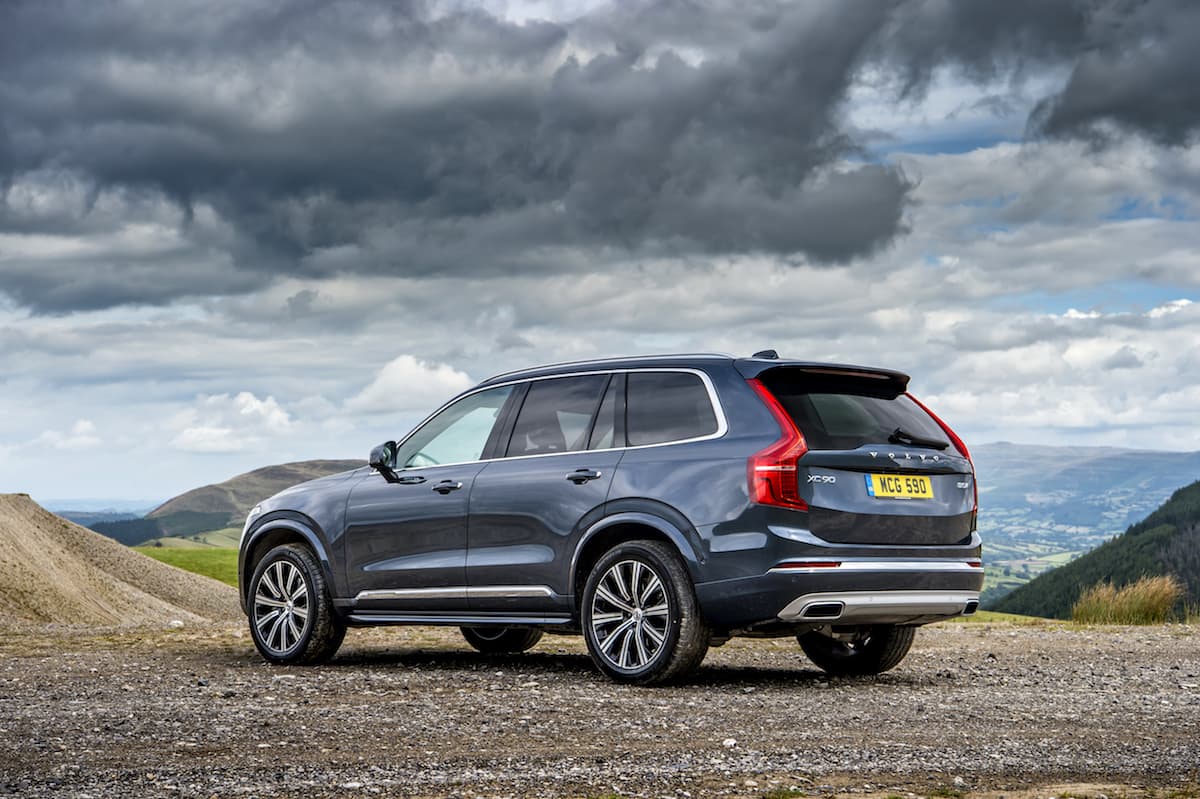
What is it? The Volvo XC90 has had a mid-life refresh – a mild visual update and mild hybrid technology under the bonnet
Key features Mild hybrid diesel power to boost efficiency,
Our view Volvo hasn’t felt the need to make change for change’s sake when it comes to its flagship SUV. There has been minimal meddling with the clean styling and, visually, the Volvo remains a model of restrained elegance.
Under the skin, a new mild-hybrid diesel will be the biggest seller and the electrical assistance helps provide more performance while using less fuel.
If you want a big SUV that is elegantly handsome, supremely comfortable and able to handle any job with effortless ease, the Volvo XC90 is the best in town.
It’s hard to believe that the second-generation Volvo XC90 has been around for five years now. It’s been an enormously successful model for Volvo, not only following in the footsteps of the original model but setting the blueprint for every new Volvo that has followed. And it would sell in even greater numbers if UK car buyers could get over their obsession with Range Rover or premium German badges.
Now it’s time for the XC90’s mid-life update, and it’s pleasing to see that Volvo hasn’t felt the need to make change for change’s sake. There has been minimal meddling with the clean styling beyond the usual new wheels and plastic trims, and visually the Volvo remains a model of restrained elegance.
The real news is underneath, with the XC90 spearheading Volvo’s shift towards increased electrification across the range. A new mild hybrid diesel engine takes centre stage, providing 48-volt electrical assistance to either boost performance or drive electrical systems like headlights and stereo. Volvo claims up to 15% improvement in fuel economy from the new B5 mild hybrid set-up compared to the outgoing D5 diesel (basically the same engine minus the electrical assistance).
For now, the petrol T5 and T6 engine continue unchanged, but will be replaced by mild hybrid versions sometime in the next year. Meanwhile, the T8 plug-in hybrid version now offers more range from its battery to give a few more miles of electric running.
Officially, the B5 diesel should get you an average of 37-44mpg according to the latest official WLTP lab tests (depending on specification and, of course, your driving style and circumstances). That’s substantially better than the T5 or T6 petrol models, which should get about 26-30mpg. The T8 plug-in hybrid scores an average of 80-113mpg in the lab tests, but that will very much depend on how well you can keep it running on electrical power and minimise the use of the petrol engine.
Buying and owning a Volvo XC90
Volvo XC90 B5 Inscription
Volvo XC90 Inscription
Volvo XC90 T8 R-Design
Volvo XC90 T8 R-Design
The Volvo XC90 is available in three trim levels. Momentum is first up and provides a generous level of kit as standard, R-Design is the Sporty Spice version with big wheels and slightly more aggressive styling, while Inscription is the top-spec luxury model.
All three trims can also be upgraded to Pro versions with a package of extra goodies, and there’s the usual array of optional extras to quickly ratchet up the price if you get too greedy.
The B5 mild hybrid diesel and T5 petrol engines are available on all three trims, but you can’t have the T6 petrol or T8 plug-in hybrid powertrain in entry-level Momentum spec. Pricing starts at just over £52,000 on-road for a T5 petrol Momentum, with the B5 diesel just over £1,000 more. Stepping up to R-Design costs an extra £3,300, with the Inscription about £400 again.
In the UK, R-Design models are the most popular of the three trims, with about 40% of all XC90s specced this way. The diesel D5 engine has been the most popular powertrain since the current Volvo XC90 first arrived on UK roads in late 2014, and that’s set to continue with the updated model. Despite the overall shift away from diesel power in the marketplace, it still makes plenty of sense for a large, heavy SUV.
Sterling safety standards have always been part of the Volvo philosophy, and the XC90 performed exceptionally well when it was tested by Euro NCAP back in 2015 with some of the best scores ever achieved. The facelift doesn’t add anything new that wasn’t available before, but all versions of the XC90 get advanced lane-keeping assist and adaptive cruise control systems as standard. Blind-spot and rear cross-traffic alert systems are still optional, though.
Inside the Volvo XC90
Volvo XC90 Inscription
Volvo XC90 R-Design
Volvo XC90 interior detail
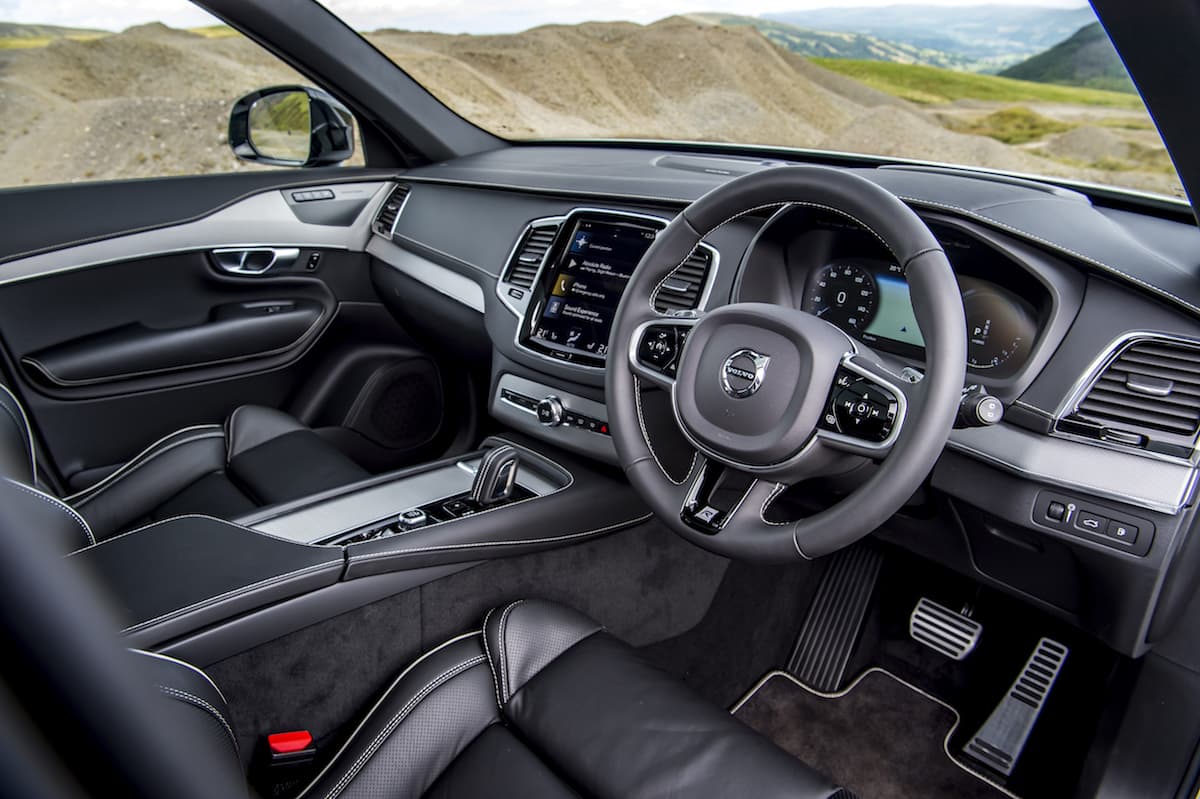
Interior design is a real highlight of the current generation of Volvos. Once again, this started with the XC90 back in 2014 and, once again, Volvo has chosen not to go overboard with unnecessary change.
Most functions are controlled through a nine-inch touchscreen, keeping the dashboard clean and uncluttered. Other car manufacturers may follow a similar philosophy, but Volvo does it better than any of them. The few physical buttons and switches are beautifully detailed, such as the diamond-cut dials for volume and drive controls, or the crystal gear level on Inscription models (yes, I know this sounds tacky but it actually looks and feels lovely).
As is becoming de rigeur for premium brands, the conventional instrument dials have been replaced by a 12-inch digital screen that can display navigation and travel information, as well as your speedometer and other gauges.
The seats are superbly comfortable, the driving position is excellent and second-row passengers have plenty of room. The third row is inevitably pretty tight, but kids up to about 1.6 metres tall will be fine. Interior fit and finish was generally as you’d expect in a £50K+ car, although not quite best-in-class good.
The standard sound system is perfectly decent, but the optional Harman Kardon system (£850) is very good and the Bowers & Wilkins system (£3,000) is outstanding. If you want Apple CarPlay or Android Auto it’s a £300 option, but it’s included with the optional sound systems, which makes the Harman Kardon upgrade very tempting.
Downsides? A few. As much as we all love touchscreens in every part of our lives, they’re still harder to use on in a moving car compared to physical buttons and switches. And while Volvo’s nine-inch portrait screen layout was class-leading when it was new, today the graphics feel a little out-of-date compared to newer rivals. Nothing that’s inherently wrong in terms of how it works, but not quite as slick as some other systems.
Also bear in mind that if you choose the T8 plug-in hybrid, you’ll lose 40 litres of boot space plus you need to carry the chunky charging cable around. Not a big deal if you don’t use the third row of seats, but if you do then it doesn’t leave a lot of boot space to play with.
Driving the Volvo XC90
Volvo XC90 T8 R-Design
Volvo XC90 B5 Inscription
Being a mild hybrid, the Volvo XC90 B5 model isn’t able to run on electricity alone. That means you don’t get the surreal silence when driving through a village or town that you do in the T8 plug-in hybrid version, because the B5’s diesel engine is always grumbling away underneath. It’s not noisy, but it’s not quite as hushed as some rivals. The T5/T6 petrol units are smoother and sweeter than the diesel, but need to be worked harder when you’re carrying passengers and/or luggage.
The electrical assistance provided by the mild hybrid does help to make the B5 feel pretty punchy when you put your foot down, eliminating most of that small delay you normally get in a diesel car when you pull away from rest or start an overtaking move on the motorway.
The T8 plug-in hybrid is noticeably smoother and quieter, gliding around on electrical power for up to 23 miles (if you’re gentle) and with a petrol engine joining in smoothly when more response is needed or the battery’s running low.
Whichever engine is under the bonnet, the Volvo XC90 is a very comfortable car to drive. The steering lacks any real feeling but the nose responds faithfully to wherever you point it, and the XC90 rides smoothly on most road surfaces – especially if you have the (optional) air suspension and avoid the largest wheels in the brochure.
Fast cornering isn’t really this car’s forte, and your passengers will thank you to stop it with that silliness. Sit back, relax and let the big Volvo glide along from here to wherever you’re heading. Whether it’s the daily commute or a long road trip, it’s an enormously comfortable way to travel.
Verdict
If you want a big SUV that’s shouty and sporty and in your face all the time, there are many models around that can help you with those needs. This is not one of those cars.
If, however, you want a big SUV that is understated yet handsome, supremely comfortable and able to handle almost any job with effortless ease – even if you don’t need seven seats – the Volvo XC90 is still one of the best new cars you can buy.
In fact, if my money-no-object dream garage had space for only two cars, one of those cars would be the latest Ferrari/Porsche/Aston Martin supercar for weekend winding road fun, and the other one would be a Volvo XC90 T8 Inscription Pro for every other driving need. Please feel free to leave your hate mail in the comments section below.
The T8 plug-in hybrid is certainly the pick of the powertrains, but it’s £10K dearer than the perfectly decent B5 mild hybrid diesel and even more expensive than the equally competent T5 petrol – and not available on the Momentum spec either – so for most people the numbers won’t stretch that far. Despite justifiable concerns about the future of diesel, the B5 is still the best choice in the XC90 range for now.
Audi Q7 | BMW X5 | Jeep Grand Cherokee | Land Rover Discovery | Lexus RX L | Maserati Levante | Mercedes-Benz GLE | Porsche Cayenne | Range Rover Sport | Volkswagen Touareg
Key specifications
Model as tested: Volvo XC90 T8 Inscription Price (on-road): £67,045 Powertrain: 2.0-litre petrol engine + electric motor Gearbox: Eight-speed automatic Power: 303hp + 87hp Torque: 400Nm + 240Nm Top speed: 140 mph 0-62mph: 5.8 seconds Fuel economy: 80.7 – 113.0 mpg (WLTP) CO2 emissions: xx Euro NCAP rating:5 stars (2015)
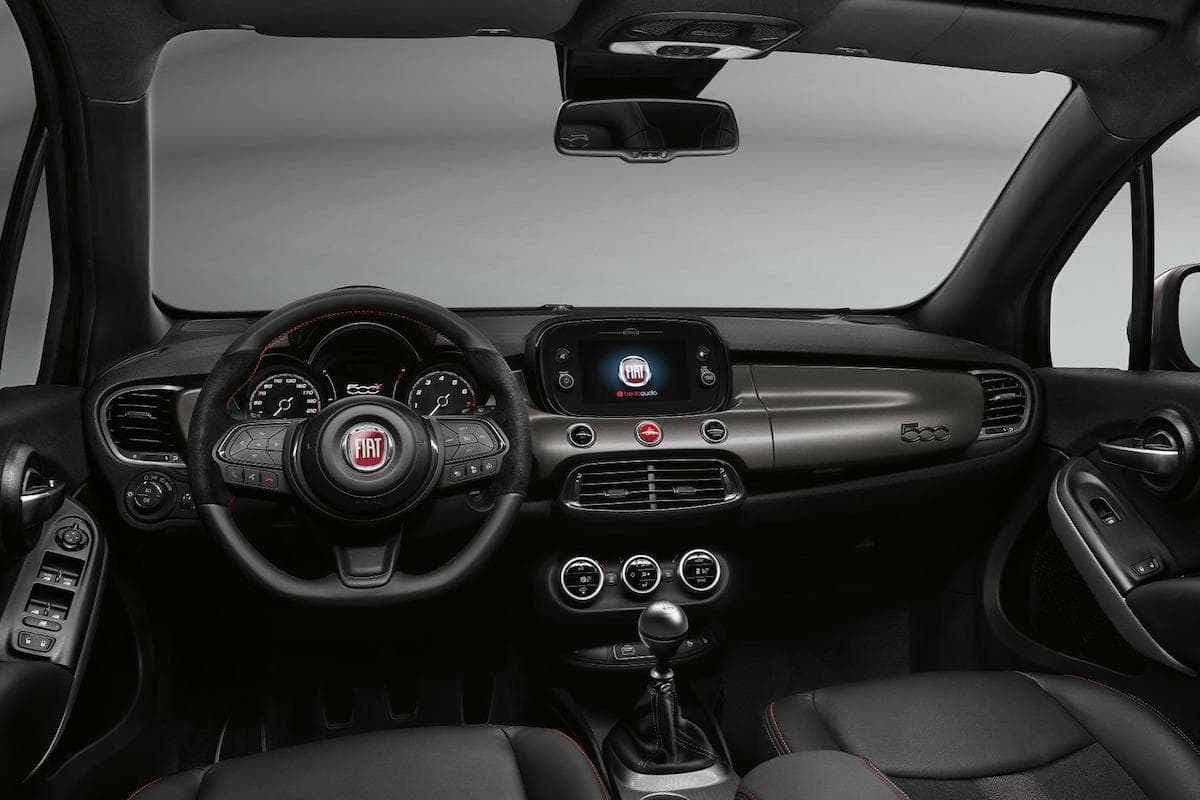
The new Fiat 500X Sport will start from £22,500 and introduce a touch of sportiness at the top of the SUV’s range.
It gets more power from a new engine, sporty styling and mechanical upgrades that enhance its performance credentials.
The more powerful engine is a 150hp 1.3-litre petrol engine that’s attached to a dual-clutch automatic transmission, but buyers can also opt for a 1.0-litre unit with 120hp.
The suspension has been retuned with a focus on sportiness, with a ride height that sits just over a centimetre lower than before. Fiat says adjusted shock absorbers offer better road holding without compromising comfort.
On the outside, the Sport gets body-coloured side skirts and wheel arches, a diffuser-like rear bumper design, dual chrome exhausts and full LED headlights, as well as a Sport-specific red paint. Eighteen-inch alloy wheels are fitted as standard, with 19-inch wheels available as an option.
Inside, there’s an aluminium gear knob and pedals, leather flat-bottomed steering wheel with Alcantara inserts, and a grey dashboard. There’s a seven-inch infotainment system with satellite navigation that’s compliant with Apple CarPlay and Android Auto, as well as climate control, rear parking sensors and cruise control as standard.
Fiat has also launched a Lounge specification, which focuses on interior refinement with a leather steering wheel and front armrest, while there’s also 16-inch alloy wheels, body-coloured mirror caps and rain sensors.
Abarth has revealed a new version of its 595, this time dubbed Pista.
Italian performance car aficionados may immediately link this to the Ferrari 488 Pista, but the comparisons end at name level — with the term translating into English as ‘track’.
The 595 is powered by a 165hp and 230Nm variant of Abarth’s peppy 1.4-litre turbocharged petrol engine, complete with a new Garrett turbine. Power is delivered through an automatic gearbox.
Acceleration and top speed figures haven’t been stated for the Pista, though it’s linked to a ‘Record Monza’ exhaust system which gives the car a distinctive set of vocal cords.
The model is marked out by an eye-catching new matte grey and green livery. Inside the car, a flat-bottomed steering wheel with a centre strip features, with a ‘Sport’ button sitting on the dashboard. When pressed, this adjusts the car’s peak power and torque availability, as well as opening up the active exhaust.
An Abarth-specific braking system sees 284mm ventilated brake discs sat up top, with 240mm units at the rear.
Standard equipment for the car includes a seven-inch infotainment display with DAB radio, plus support for both Apple CarPlay and Android Auto.
Cash-in-hand pricing hasn’t been confirmed for the Abarth 595 Pista, though the firm is offering a PCH lease for £189 a month following a £3,780 deposit up to the end of September. Deliveries are expected imminently.
Since its introduction in 2011, the compact XV crossover has gone on to become Subaru’s most popular model. Its position was strengthened further with a brand new model in 2018, which brought a revised look and comprehensive safety improvements.
But now the XV has a fresh new challenge, along with its larger Forester sibling, and that is to usher in electrification into the Subaru brand with the XV e-Boxer and Forester e-Boxer – wiping away distant memories of the firm’s past in world rallying and performance.
While the manufacturer is not jumping fully into the world of EVs, the e-Boxer powertrain is a lightweight hybrid setup that shows the brand is starting to move towards electrification.
The e-Boxer is not a new concept, having been available on Subarus for quite a while Japan. But this is its first use in Europe – combining a 2.0-litre petrol engine with an electric motor and lithium-ion battery in a bid to make the XV more efficient, but also better to drive. So, can it deliver?
As of September 2019, the Subaru XV currently holds an overall Expert Rating of 63% according to our unique Expert Rating aggregator system. This places it firmly in the bottom half of all the compact SUV/crossovers we have analysed, so Subaru will be hoping that the XV e-Boxer gives a boost to the car’s appeal.
Given the XV was given a major overhaul last year, there wasn’t a need to make other changes to the XV – meaning the new underpinnings are the key difference on the XV e-Boxer.
Subaru describes the e-Boxer powertrain as a ‘mild hybrid’, although it doesn’t really fit that description, as well as ‘self-charging’, jumping on Toyota’s hybrid marketing spin. Mild hybrid models are available from many manufacturers these days, and the conventional description of a mild hybrid setup is one where the car uses a small amount of electrical power to assist the petrol or diesel engine, but it can’t run on electricity alone.
The e-Boxer is a bit different, however. It has an electric motor and battery just like a regular hybrid model, only much smaller, so it can run on electric-only power for very short periods of time and only under very light acceleration. So it’s more of a light hybrid than a ‘mild’ hybrid.
How does it look?
Since its original debut in 2011 the XV has always been a good-looking car, not being too bold but also not going unnoticed. The refresh last year also helped somewhat – ushering in revised bumpers and new LED lighting.
We’re not so keen on the textured plastic cladding, though it’s refreshing that the XV isn’t faux rugged (like many of its rivals) rather the XV’s SUV-style looks are actually met with genuine all-terrain ability. With 22cm of ground clearance and beefy wheel arches, it certainly fulfils the rugged styling many buyers are craving for.
What’s the spec like?
Prices for the XV e-Boxer kick-off at £28,995, which does look a bit pricey next to rivals, though you have to factor in the impressive array of standard equipment you get for the money.
Two trims are offered; SE and SE Premium. The former comes with 18-inch alloy wheels, automatic LED headlights, keyless entry, a reversing camera and an eight-inch touchscreen to name but a few features.
Unlike other manufacturers, who charge for their safety features, Subaru bundles them all in from the offset. This means that as part of the ‘EyeSight’ package, you get adaptive cruise control, blind-spot monitoring, rear-cross traffic alert and lane-change assist. This all adds up to a five-star Euro NCAP rating.
Choosing SE Premium brings satellite navigation, electric leather seats and a sunroof, though at £2,000 extra, the base model looks better value.
The XV e-Boxer is also available in a new colour – Lagoon Blue Pearl – which certainly looked rather fetching on our test car.
What’s the Subaru XV e-Boxer like inside?
Subaru interiors have undoubtedly improved in recent years – not being as agricultural-feeling as they once were, and rather more luxurious instead.
There’s now plenty of soft-touch plastics, as well as leather on our top-spec SE Premium test car, while the eight-inch touchscreen is great to use – being both responsive and intuitive. The quality still falls short in places, but with a Subaru, there is always the impression it was built to stand the test of time, and that’s probably something worth choosing over a few luxuries.
Adding to this is Subaru’s ‘Eyesight’ safety system – offering a suite of safety assists, which should help buyers and families to feel at ease. The XV certainly fulfils the family brief, too, with a practical and versatile cabin, though its 345-litre boot is quite small compared to much more affordable cars.
What’s under the bonnet?
Sitting alongside the existing XV 1.6-litre petrol model, this new e-Boxer hybrid setup combines a 2.0-litre petrol unit together with an electric motor and a battery pack enabling around one mile of very gentle driving in pure-electric mode. Total output is 150hp and 194Nm of torque.
You might be wondering what the point is with a range like that? Well, a mild hybrid setup is all about using electrification to enhance the petrol engine – improving efficiency by 10% and allowing for slightly more torque – so even though the XV has limited all-electric propulsion, it really acts more like a regular mild hybrid vehicle.
Despite the electric boost, the performance figures are not particularly inspiring. 0-60mph takes 10.5 seconds and the XV s-Boxer will reach a top speed of 120mph. Though it doesn’t make a huge deal of difference to efficiency, with a claimed fuel economy figure of 35.7mpg, and CO2 emissions of 149g/km.
Subaru’s trademark all-wheel-drive remains, too, while many buyers will be pleased that the standard car’s 1,270kg towing limit remains.
What’s the Subaru XV e-Boxer like to drive?
Subaru has, for many years, had all-wheel-drive ability as one of its key focuses, and that remains unchanged despite adopting electrification. A dedicated ‘X-mode’ enables traction on a variety of surfaces and gives the XV remarkable ability on rough terrain.
Back onto the tarmac and it’s perfectly fine in normal steady driving, whereby the XV’s comfortable ride comes into its own – the broken Latvian roads closely resembling those in the UK. It also remains composed and doesn’t lean in the same way expected from many higher riding models.
However, the benefits of electrification are quite hard to see. While undoubtedly offering more torque, it only seems to develop any sense of urgency at around 4,000rpm, at which point the CVT transmission begins to sound unpleasantly loud. It’s also difficult to keep the XV in ‘EV’ mode, while the switch from electric to petrol power could be more seamless.
Verdict
Adding electrification to the XV range has undoubtedly enhanced this crossover. It’s a great first step for Subaru as it looks to introduce more similar systems to its range shortly, and also as it builds up to the launch of its first EV in the next couple of years.
Retaining the XV’s rugged charm and go-anywhere ability will definitely make this form of electrification appeal to Subaru buyers, who are notorious for their brand loyalty.
However, while the Subaru XV e-Boxer is far from class-leading – with the CVT gearbox being our main issue – it continues to be an interesting and unique alternative to the norm.
Model as tested: Subaru XV e-Boxer SE Premium Lineartronic Price: £30,995 Engine: 2.0-litre petrol engine with electrification Gearbox: continuously-variable automatic transmission (CVT) Power: 150 hp Torque: 194 Nm Top speed: 120 mph 0-60mph: 10.5 seconds Fuel economy (combined): 35.7 mpg CO2 emissions: 149 g/km
Volkswagen has revealed an update to its company logo — marking the first time the firm has had a major rebrand since 2000.
Like the design of the company’s best-selling Golf model, the new logo is very much a case of evolution rather than revolution.
It retains the same stacked ‘VW’ lettering that has been a mainstay of the firm’s badging since its 1937 inception, though now takes on a flatter 2D effect rather than the 3D form of previous along with thinner lettering. The effect is very similar to what Lotus did with its logo revamp last month.
Volkswagen says the simplified new design will ‘allow for more flexible use and will be outstandingly recognisable in digital media’.
Debuting on the newly-revealed, all-electric ID.3, the new badge will be accompanied by a ‘sound logo’ — a specific chime that will be used both in vehicles and in VW marketing. The fresh logo will appear on all future VW cars, though the firm has not yet confirmed how its audio compatriot will be deployed.
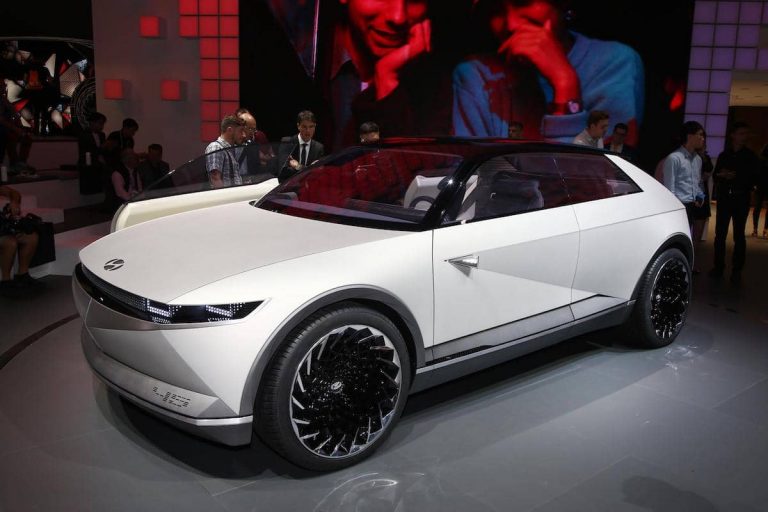
Hyundai has revealed its future design direction at this year’s Frankfurt motor show with this — the Hyundai 45.
It pays homage to the firm’s Pony Coupe Concept, revealed in 1974, taking on an angular and almost wedge-like design.
Viewed from the side, the electric concept car has a boxy silhouette, as well as striking Z-shaped design details along the bodywork. Up front, two pairs of small, chopped rectangle LED headlights feature in a slim grille, with a similar approach for the car’s taillights.
Hyundai has designed the interior with the concept’s autonomous functions in mind, creating a spacious area that’s described as a ‘unique living space’. Said to be inspired by traditional house furniture, it’s splashed with wood, fabric and leather trimmings.
Lounge chair-esque seats are implemented in the rear, with the front seats able to be swivelled around to allow front occupants to interact with other passengers when the car’s autonomous features are in use.
It’s more than just form here, with functional new tech showcased. A hidden camera system that replaces traditional wing mirrors is present, with Hyundai saying its exploring ways to put the feature into production.
Don’t expect the Hyundai 45 concept to enter production, though it could well inspire future cars from the firm.
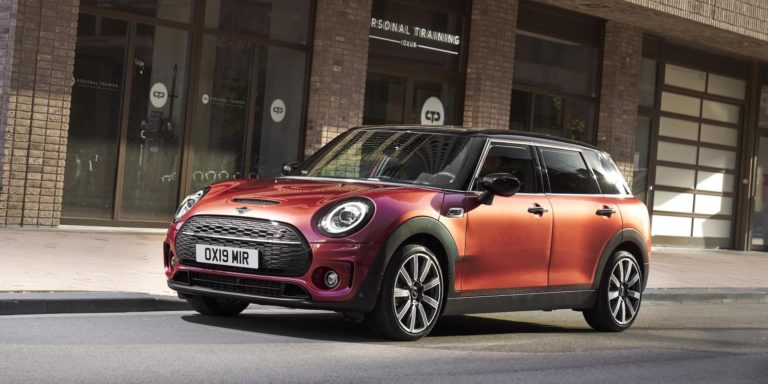
The Mini Clubman was a small estate based on the Mini hatch. This model was the second (and possibly last) generation that was launched in early 2015. As of 2024, the Clubman has been discontinued and essentially replaced by the brand’s newer Aceman crossover.
The second-generation Clubman was significantly larger and more practical than the original generation, and had conventional rear doors (instead of the original’s reverse-opening rear door but only on the driver’s side…) for easier access to the back seats. The model had unusual van-style doors at the back. They certainly look distinctive but were not as practical as a conventional tailgate.
Like the also now retired Mini hatch, the Clubman models were built here in the UK at Mini’s factory in Cowley, Oxfordshire. It was originally available with both petrol and diesel engines, but the diesel units were dropped across the whole Mini range during the Clubman’s lifespan.
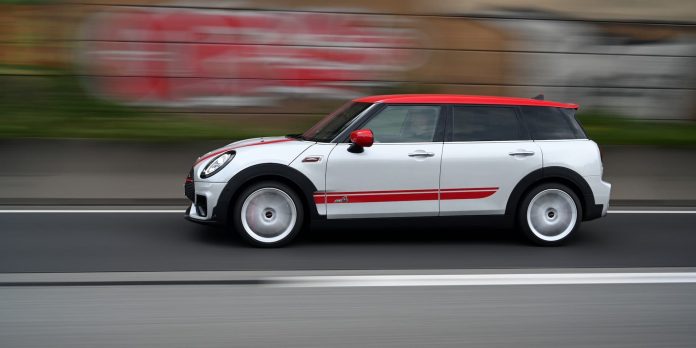
As an estate version of the five-door Mini hatch, the Mini Clubman didn’t really have any direct competitors. Exterior size was comparable to a Volkswagen Golf but interior space falls somewhere between a Golf and the smaller Polo and similar cars. The Clubman was also available in a high-performance John Cooper Works (JCW) specification.
The Mini Clubman received generally positive scores from the UK motoring media, with fairly similar scoring for the top-spec JCW model. It received particular praise for its high level of personalisation and overall comfort. However, it was also criticised for numerous styling clichés that compromise its functionality, as well as being relatively expensive. The JCW version was also criticised for not being as good to drive as similarly-priced rivals.
As of March 2026, the Mini Clubman holds a Used Car Expert Rating of C with a score of 61%. It gets good grades for its low running costs and CO2 emissions, but its its reliability record and media review scores are only average. Its safety score is also poor as its Euro NCAP safety rating has long since expired.
Body style: Small estate Engines: petrol Price when new: From £27,440 on-road
Launched: Autumn 2015 Last updated: Spring 2019 Discontinued: 2024
Image gallery
Media reviews
Highlighted reviews and road tests from across the UK automotive media. Click any of the boxes to view.
The Car Expert
Model reviewed: John Cooper Works Score: 9 / 10 “The Mini Clubman John Cooper Works is a unique proposition — a small family car with estate-like looks, genuine character and hot hatch performance. However, if the driving experience is key you might be left wanting.” Read review
Auto Express
Model reviewed: Range overview Score: 8 / 10 “The Mini Clubman is a fun, small estate that’s well-built and powered by a great range of engines – but it’s not that practical.” (Shane Wilkinson) Read review
Model reviewed: 1.5-litre petrol automatic Cooper Score: 7 / 10 “While the Clubman has always tried to be slightly more comfortable than the Hatch, it still has a chassis that’s typically MINI.” Read review
Model reviewed: JCW Score: 8 / 10 “Fast, fun and full of character, the MINI Clubman John Cooper Works finally offers buyers a unique take on the fast estate car theme.” Read review
Car
Model reviewed: John Cooper Works Score: 6 / 10 “How to celebrate the innovative front-wheel-drive Mini’s 60th birthday? By giving the biggest all-wheel drive John Cooper Works derivatives a 74bhp power boost.” Read review
Car Keys
Model reviewed: Range overview Score: 8 / 10 “Next to a conventional family hatchback, the Mini Clubman offers a dash of spark that you just don’t get from rivals – with a fun driving experience accompanied by a stylish look inside and out.” Read review
Carbuyer
Model reviewed: Range review Score: 8 / 10 “With its unconventional styling and twin boot doors, the Mini Clubman offers an appealingly left-field alternative to the traditional family hatchback.” Read review
Carwow
Model reviewed: Range overview Score: 8 / 10 “The Mini Clubman is the British brand’s take on the hum-drum estate car. It looks great and comes with plenty of kit, but more traditional alternatives are cheaper and more practical.” Read review
Company Car Today
Model reviewed: Range overview “Very minor updates don’t make a massive difference to the Mini Clubman’s appeal. It’s still a neat and slightly compromised alternative that hasn’t quite yet gained the mass appeal of rivals.” Read review
Model reviewed: 1.5-litre petrol manual City “A useful addition, and a fairly cost-efficient way into a fun little hatchback with all the essential equipment and a premium badge.” Read review
Evo
Model reviewed: John Cooper Works “Rarely has a small car of this power felt so toothless, whether it’s in the initial response to the throttle, hauling through the mid-range, or revving at the top end.” Read review
Model reviewed: Cooper S Score: 8 / 10 “In Cooper S spec the Mini Clubman is an interesting, enjoyable alternative to the hatchback and small-estate norm. Just make sure the first thing you do is switch the tyres.” Read review
Green Car Guide
Model reviewed: 2.0-litre diesel Cooper D Score: 10 / 10 “The Mini Clubman Cooper D, now with a decent amount of space for rear passengers and luggage, offers a good all-round package, with a major focus on character and driving fun.” Read review
Heycar
Model reviewed: Range overview Score: 8 / 10 “There are plenty of cars on the market that are dependable and capable but without much in the way of character, so the Mini Clubman is a welcome change.” Read review
Honest John
Model reviewed: Range review Score: 8 / 10 “If you’ve always wanted a Mini and found the rest of the range a little too tight for space, the Clubman is perfect. It competes well with the competition on price and standard equipment, plus it’s good to drive, comfortable and practical enough for a family.” Read review
Model reviewed: 2.0-litre diesel automatic Cooper SD All4 “Do you need All4? The answer is probably not. The purer, lighter and more cost-effective setup in any Mini is front-wheel drive, a manual gearbox and a petrol engine. The All4 diesel combo is both inferior and pricier.” Read review
Motors
Model reviewed: Range overview Score: 7 / 10 “The Mini Clubman is a stylish and well-finished small estate car. Offering better levels of practicality than the hatch upon which it is based, the Clubman addresses many issues that people have with the standard car’s levels of space.” Read review
Parkers
Model reviewed: Range review Score: 9 / 10 “It might not be as sharp as the hatchback but the Clubman has inherited all of the smaller car’s character, offering agile handling and strong levels of grip.” Read review
The Sun
Model reviewed: 2.0-litre diesel automatic Cooper SD All4 “The Mini Cooper SD Clubman All4 is the longest, lardiest Mini ever. It’s longer than Kanye West’s list of things Kanye West likes about Kanye West.” Read review
The Sunday Times
Model reviewed: 2.0-litre diesel automatic Cooper SD All4 Score: 8 / 10 “There are not many desirable, sporty family cars with four-wheel drive, in this price range, that live up to expectations by proving to be a jolly good romp on a nice stretch of road.” Read review
Model reviewed: 2.0-litre diesel manual Cooper D Score: 8 / 10 “Yes, it’s put on weight and length, but it still runs tight through corners, sweeps bends aside and seems firm in the hands and under the feet. It’s still a Mini, in other words. But a practical and comfortable one.” Read review
The Telegraph
Model reviewed: John Cooper Works Score: 4 / 10 “Sounds like faint praise, but this is quite a likeable vehicle as long as you don’t drive it hard. At that point it gets untidy and the brakes are truly awful. Clubman JCW tests the limits of what Mini can be and ends up feeling outgunned and expensive.” Read review
Model reviewed: Range review Score: 8 / 10 “In most ways the Clubman does a successful job of expanding the Mini’s appeal into a bigger, more family-oriented car that’s still fun and frugal to drive. However, those unconventional boot doors are a gimmick, and it’s expensive compared with many rivals.” Read review
Top Gear
Model reviewed: Range overview Score: 6 / 10 “The Mini Clubman has charm but, although roomier, it’s not as fun to drive as it was.” Read review
Model reviewed: John Cooper Works Score: 6 / 10 “Now very much on the same page as the Merc, Audi or VW. Just a pity it isn’t as playful or interactive to drive as you’d hope a JCW would be.” Read review
Safety rating
Independent crash test and safety ratings from Euro NCAP
The Mini Clubman was originally tested by Euro NCAP back in 2015 and awarded a four-star rating. However, this rating expired in January 2022 and is no longer valid as the car no longer meets the standards required for such a rating. This is normal practice, as Euro NCAP reviews its ratings on most cars annually with most ratings expiring after about six or seven years.
However, if you are comparing a used Mini Clubman to vehicles of similar age, whose ratings will have probably also expired, its safety rating score is still useful.
Eco rating
Independent economy and emissions ratings from Green NCAP
No eco rating
The Mini Clubman was not lab tested by Green NCAP during its production life.
Reliability rating
Reliability data provided exclusively for The Car Expert by MotorEasy
Total claims: 95 Average repair cost: £650.63 Last updated: April 2025
The Mini Clubman has a reliability score that’s about average, according to workshop and extended warranty data provided to us by our commercial partner, MotorEasy. This applies to both generations of the Clubman model.
Unfortunately, the most common problem area is also the most expensive – the engine, with an average repair bill of almost £1,200. If you’re buying (or have already bought) a Mini Clubman, you should probably consider an extended warranty to cover you once the factory new car warranty runs out.
Running cost rating
Monthly cost of ownership data provided exclusively for The Car Expert by Clear Vehicle Data
Fuel consumption
Average
Score
Petrol models
43 mpg
C
CO₂ output
Average
Score
Variation
Score
Petrol models
149 g/km
C
Insurance group
Average
Score
Variation
Score
All models
25
B
Service and maintenance
Cost
Score
Year 1
£158
A
Year 2
£446
A
Year 3
£711
A
Year 4
£961
B
Year 5
£1,273
B
Overall
£3,549
B
Running costs for the Mini Clubman are a bit of a mixed bag, according to data provided exclusively to The Car Expert by our commercial partner, Clear Vehicle Data.
Most importantly in terms of your monthly budget, fuel consumption is only average. That’s fairly unimpressive given that the Clubman is not a large car.
The good news is that your annual road tax and insurance bills should be good, while scheduled servicing costs over the first five years are excellent.
Awards
Trophies, prizes and awards that the Mini Clubman has received
2022
News UK Motor Awards – Best Dog-Friendly Car
2021
News UK Motor Awards – Best Dog-Friendly Car
2018
Honest John Awards – Best Estate Car
Similar cars
If you’re looking at the Mini Clubman, you might also be interested in these alternatives
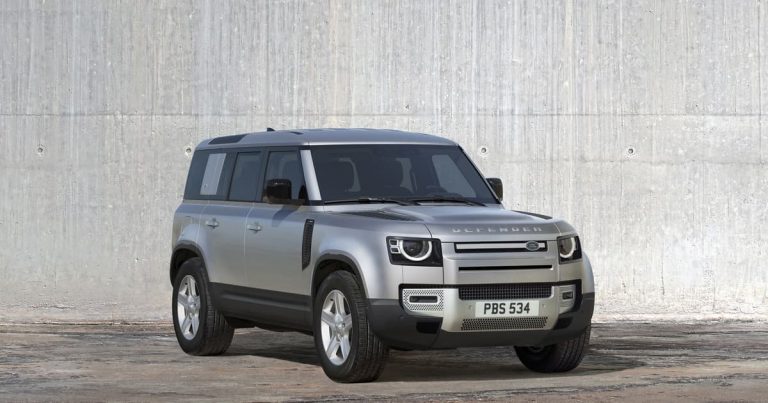
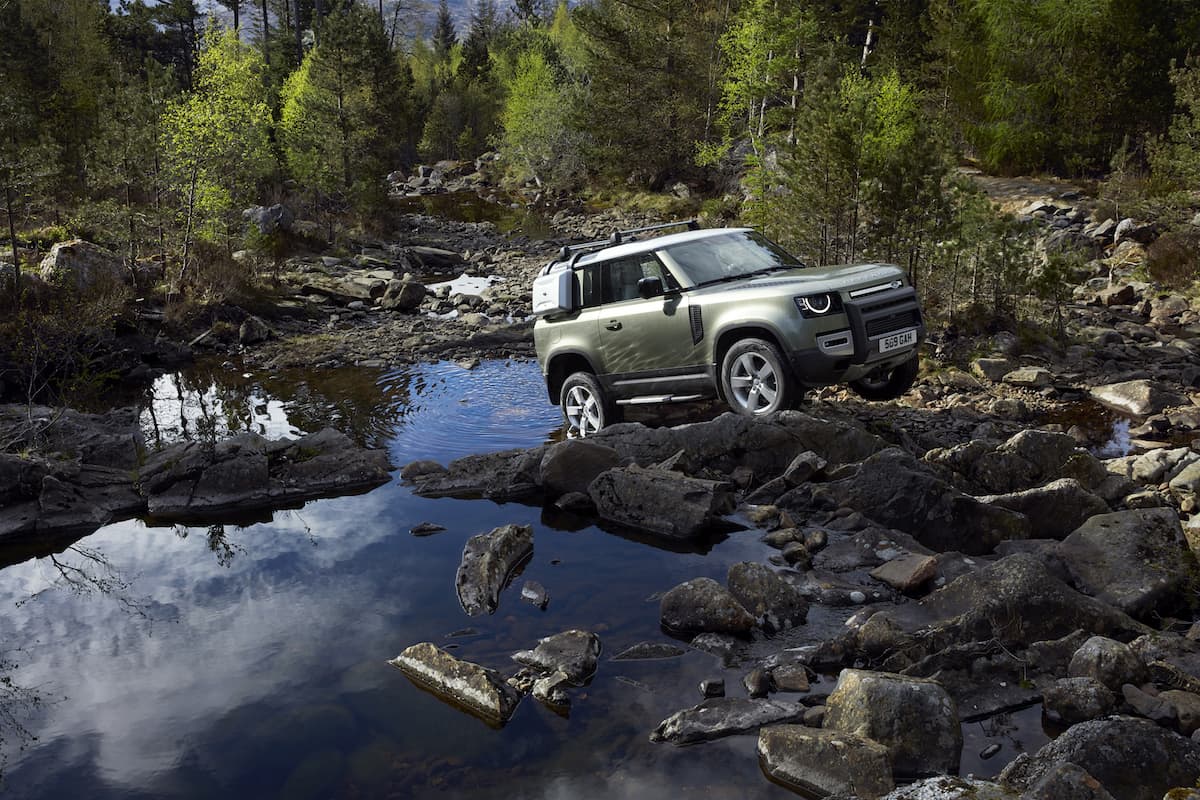
After years of concepts, rumours, teaser images and countless leaks, Land Rover has at last revealed the new Defender.
The original Land Rover Defender ended production in 2016, with a dedicated off-roader-sized gap in the British firm’s line-up since then. However, while the new model looks somewhat Defender-ish, it’s a decidedly upmarket reinterpretation with top-spec models starting at just under £80,000.
The design takes on a boxy but a modern look, with enclosed LED headlights, softer details and a distinctive rear light design. It draws inspiration not just from the original Defender, but also from previous Freelander and Discovery models.
It looks set to be just as capable as its famous forefathers thanks to some clever new tech. Underpinning the off-roader is a new ‘D7x’ platform, based on an aluminium monocoque, which Land Rover says is three times stiffer than traditional body-on-frame chassis setups.
Debuting on the new Land Rover Defender is ‘Configurable Terrain Response’, which allows vehicle settings to be fine-tuned to cope with any particular surface — though pre-set options are there for beginners to off-roading too. The firm’s ‘ClearSight’ technology features as well, which utilises a camera setup to display the ground underneath the bonnet on the central screen.
A spartan approach is taken inside the car. Structural elements are exposed — both to save weight by doing away with materials that would normally cover these as well as showcase its rugged roots — while rubberised flooring shows the function-over-form approach Land Rover is taking.
It’s not entirely a blast from the past, though. A touchscreen infotainment system features and utilises over-the-air software updates to remain futureproof.
Available in short-wheelbase 90 or long-wheelbase 110 guises, the British off-roader is capable of seating seven in its largest form (six in the 90). Folding the rear-most row results in 1,075 litres of boot space — rising to 2,380 litres with the middle row flattened. Those looking for an open-air experience can opt for a fabric roof, too.
Powertrain choices at launch consist of two petrol options — a six-cylinder and four-cylinder — along with two four-cylinder diesels. Petrol offerings also utilise mild-hybrid technology, with a plug-in hybrid unit set to join the range next year.
Five trims will be offered for the Defender — namely S, SE, HSE, First Edition and Defender X. Pricing starts at £45,240 for long-wheelbase 110 models, with standard equipment across the range including LED head- and taillights, 18-inch steel wheels, a heated windscreen, a ten-inch screen supporting both Apple CarPlay and Android Auto, cruise control and a 3D 360-degree camera system.
Order books are set to open imminently for the reborn Land Rover Defender 110, with first deliveries expected in December. The short-wheelbase 90 variants are due mid-2020, with pricing expected to begin at £40,920.
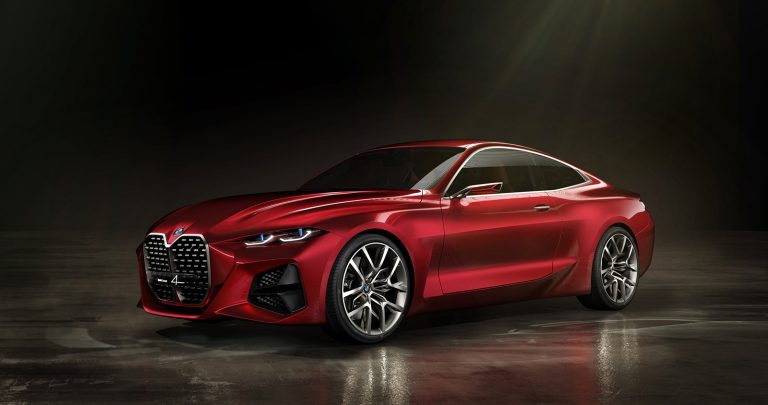
The BMW Concept 4 has been unveiled with radical styling at the Frankfurt motor show.
Showcasing a dynamic look, the concept points firmly towards the design of the second-generation BMW 4 Series, expected in 2020, and the i4 electric car, expected in 2021.
The huge kidney grille at the front of the car is the most noticeable design feature, dominating the nose of the Concept 4. Following on from a similar design seen on the X7 SUV and 7 Series saloon, it is more vertical than previous examples and includes raised elements for a more three-dimensional visual effect.
Domagoj Dukec, head of BMW Design, points to the kidney grille as always a signature feature of BMW cars. “The BMW Concept 4 presents a confident and classy take on this iconic feature – at the same time, the BMW Concept 4 offers a look ahead to the expressive face of the 4 Series range,” he says.
According to its creators the Concept 4 takes inspiration from the classic 328 and 3.0 CSL models, which it references in its sweeping exterior lines. Currently, the LED lights have no glass cover but are worked into the body instead – but this is a feature unlikely to reach production versions.
There are no images of the car’s interior as yet, with the show car’s dark tints ensuring no view of the cabin could be had. However, given the car’s relationship to the latest 3 Series, it’s likely that the upcoming 4 Series interior will be largely the same as the saloon version.
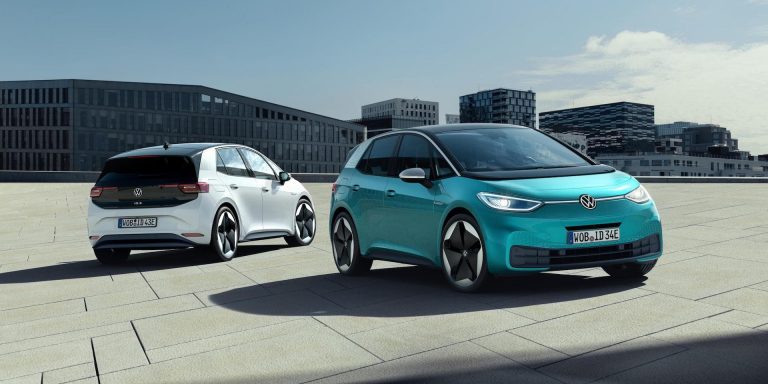
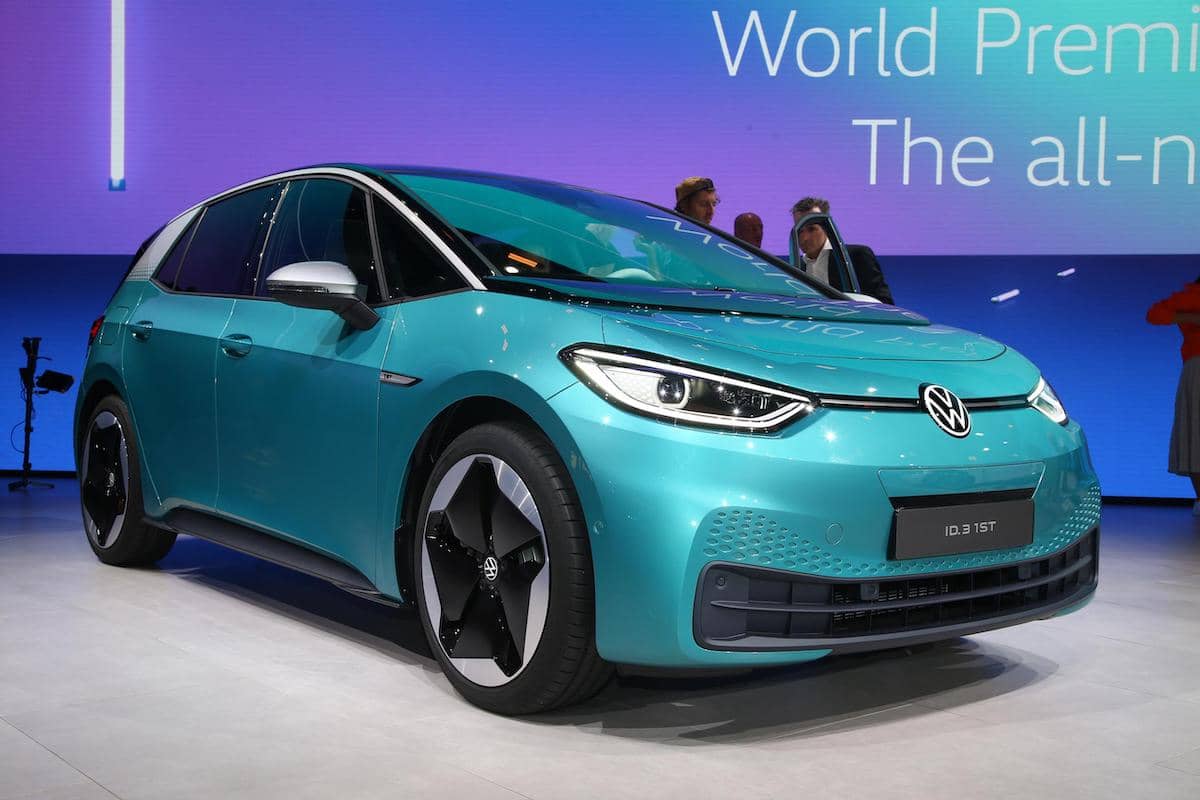
The all-electric Volkswagen ID.3 has made its world debut at the Frankfurt motor show.
Arriving as the firm’s first purpose-built all-electric vehicle, it’s based on a bespoke pure-electric platform which is destined to underpin several other models.
Initially offered in ‘1st Edition’ specification, it’ll come with a 204hp rear-mounted electric motor linked to a 58kWh battery. It means that the ID.3 will be able to travel between 186 and 261 miles on a single charge, according to Volkswagen.
All of those ‘1st Edition’ cars have already been reserved, with first deliveries expected to arrive in the UK next summer.
It’ll be around the same time that the remainder of the Volkswagen ID.3 range goes on sale. A lower-powered 150hp variant will be available – with a range of between 143 and 205 miles – along with a more powerful version with 204hp and a 77kWh battery. It’s this version that Volkswagen says will be able to travel up to 342 miles between trips to the plug.
The car is the same length and about 2cm wider than the Volkswagen Golf but arrives with a wheelbase that is 14cm longer than its conventional sister hatchback. That should result in better interior space – and boot space is decent too at 385 litres.
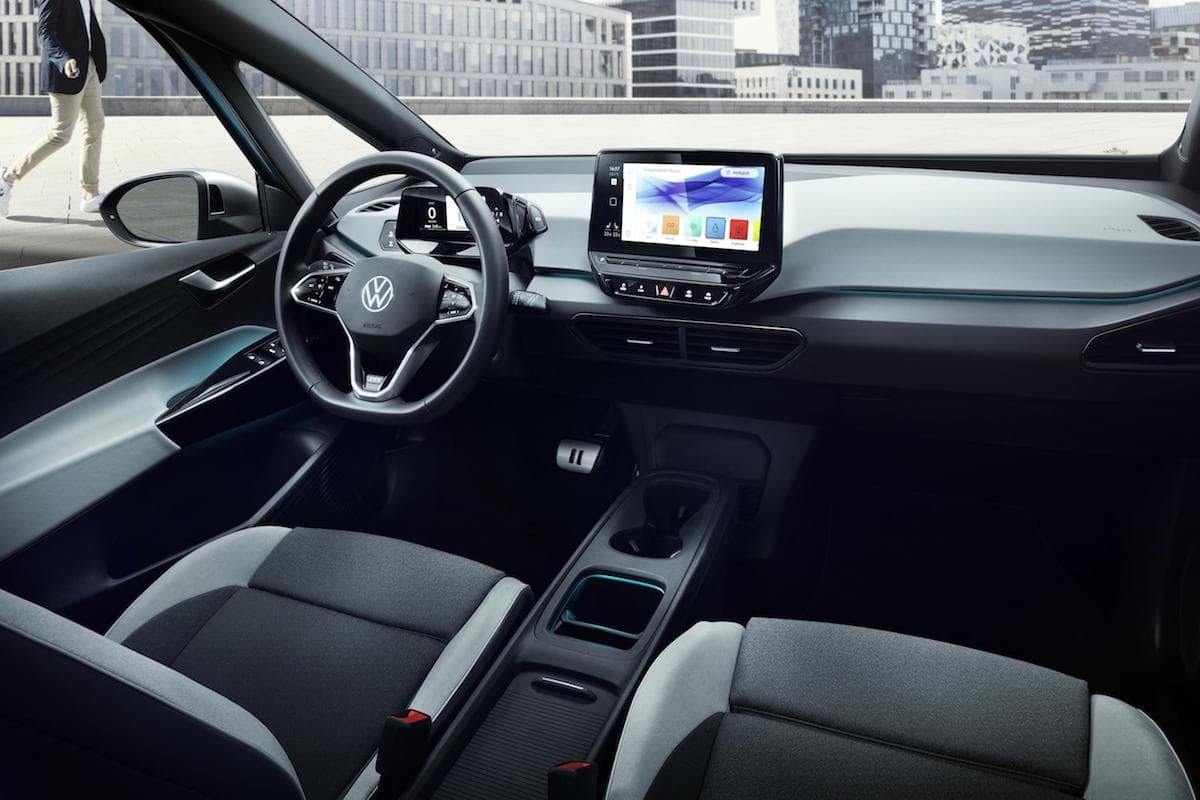
Inside, the cabin has been kept uncluttered. With a main floating ‘panel’ the primary source of infotainment. It’s ten inches in size and allows features Volkswagen’s ‘touch-sensitive bar’, letting the driver control various climate control options.
UK prices are yet to be revealed, but the Volkswagen ID.3 1st Edition is claimed to be priced ‘under €40,000’.
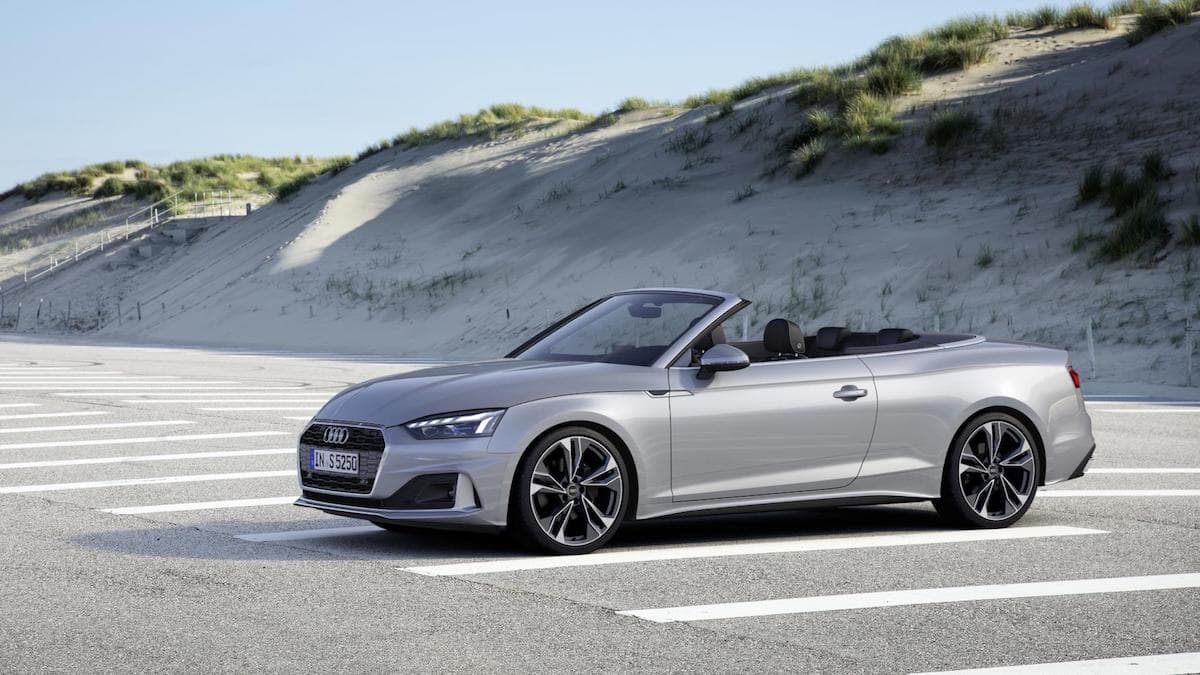
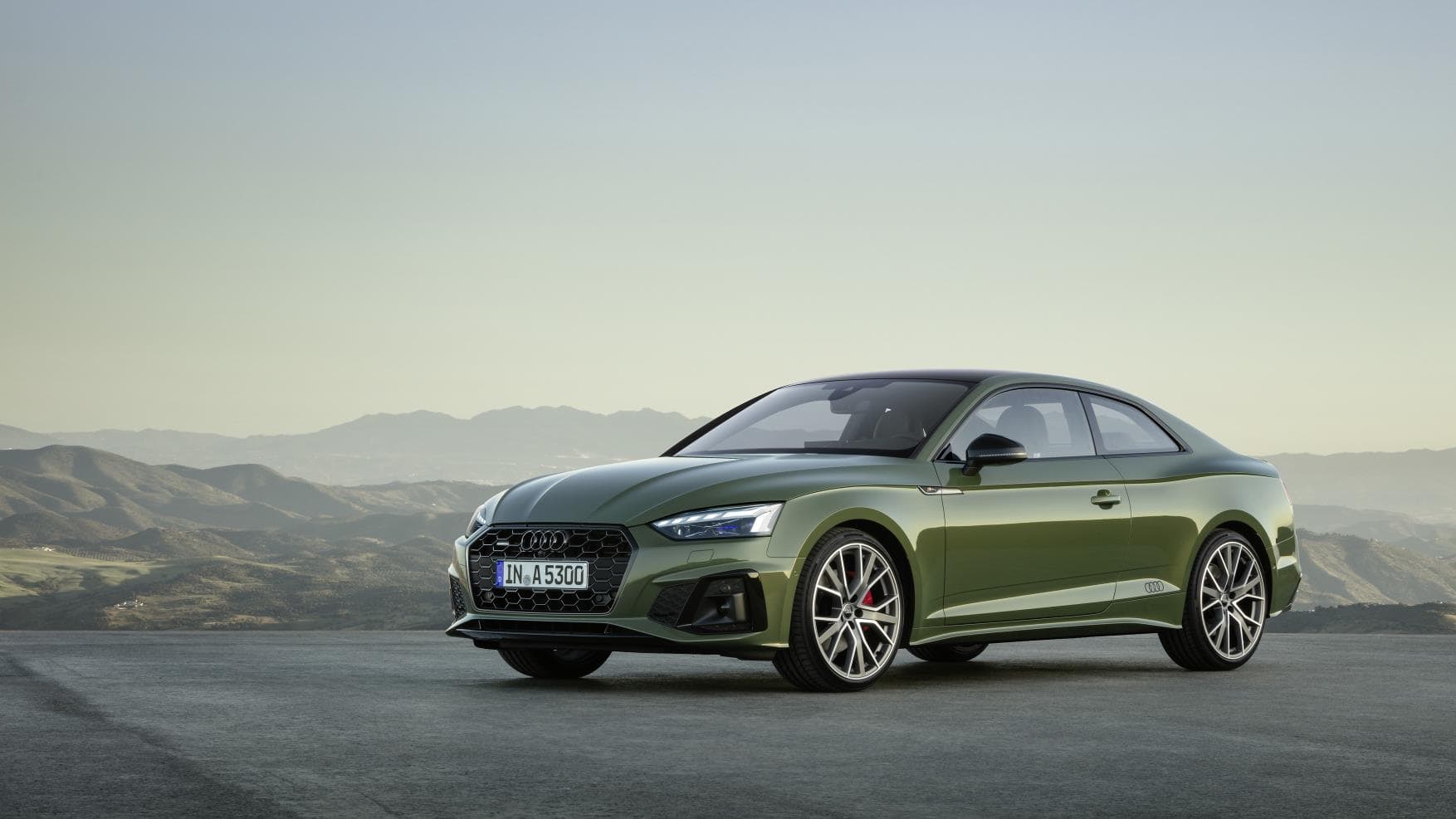
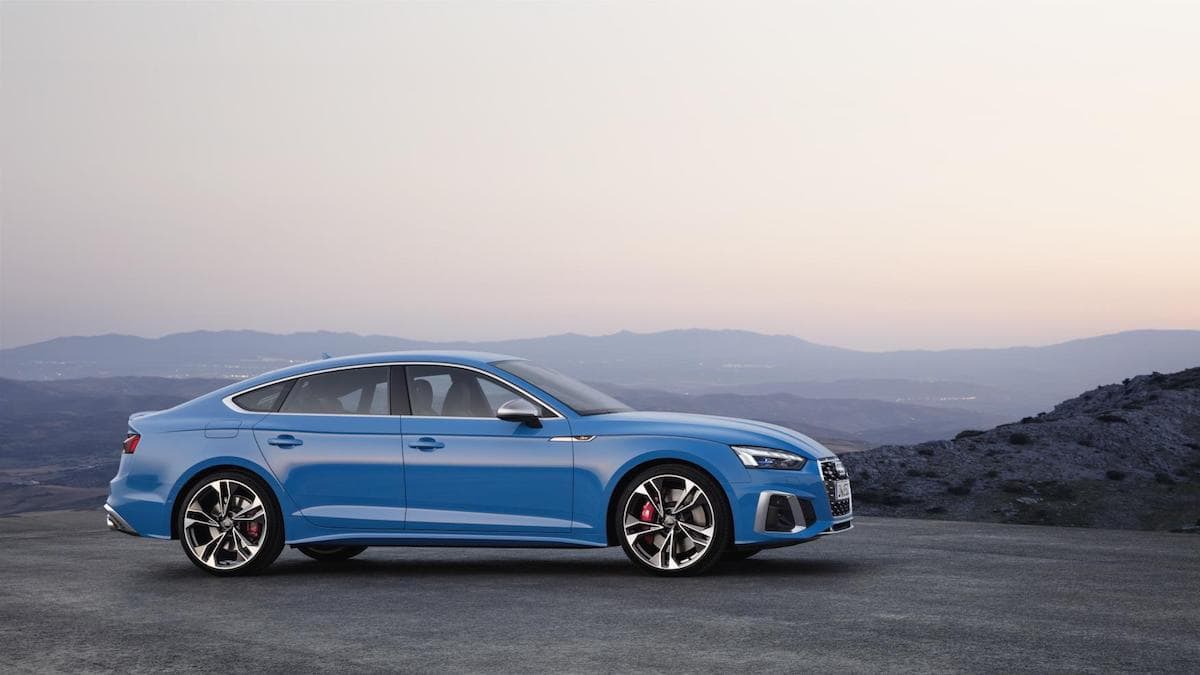
A facelifted Audi A5 range has been revealed, with the family of coupé, cabriolet and liftback models receiving some minor styling tweaks and more equipment. The updated models will make their public debuts at this week’s Frankfurt motor show.
Bringing the car in line with the rest of the German firm’s range, the Audi A5 range receives a restyled front bumper, which now plays host to a wider and flatter grille — with three air vents sitting atop. Audi says it delivers ‘considerably more visual impact’ than the outgoing car.
Adding to this new-look front end is the standard inclusion of LED headlights across the A5 line-up.
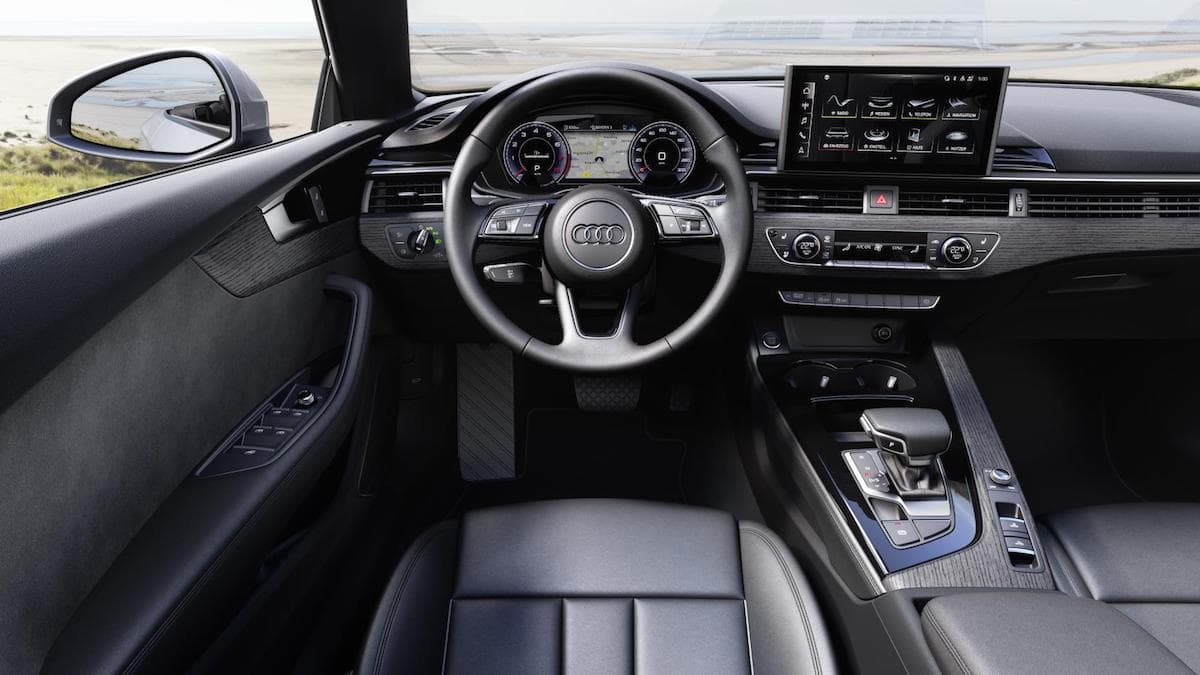
Inside the car, a large ten-inch infotainment screen will now come as standard in the UK — bringing a newly-introduced traffic light information function to the car. Also coming at no extra cost is Audi’s ‘virtual cockpit’ system, which replaces traditional dials and gauges in front of the driver with a 12-inch digital display.
A variety of petrol and diesel models will be available for the Audi A5 — each utilising mild-hybrid technology – ranging from 165hp in output, to 347hp in its most potent S5 form.
Rounding out the changes to the A5 range is a more performance-oriented suspension setup within the selectable drive modes function, which also comes as standard on UK models.
There are no changes to the Audi A5’s safety rating, with the A5 Coupé and A5 Sportback awarded five stars from Euro NCAP when they were first launched. This rating does not apply to the A5 Cabriolet, which is structurally different on account of its lack of a roof.
Pricing and full specifications for the new Audi A5 range have yet to be revealed, though order books are set to open later this year. First deliveries of the car – available in coupé, convertible and five-door liftback (A5 Sportback) form — are expected in spring 2020.
Ferrari has introduced two new drop-top supercars to its line-up, both of which are based on existing coupe models and will make their world premieres at this week’s Frankfurt motor show.
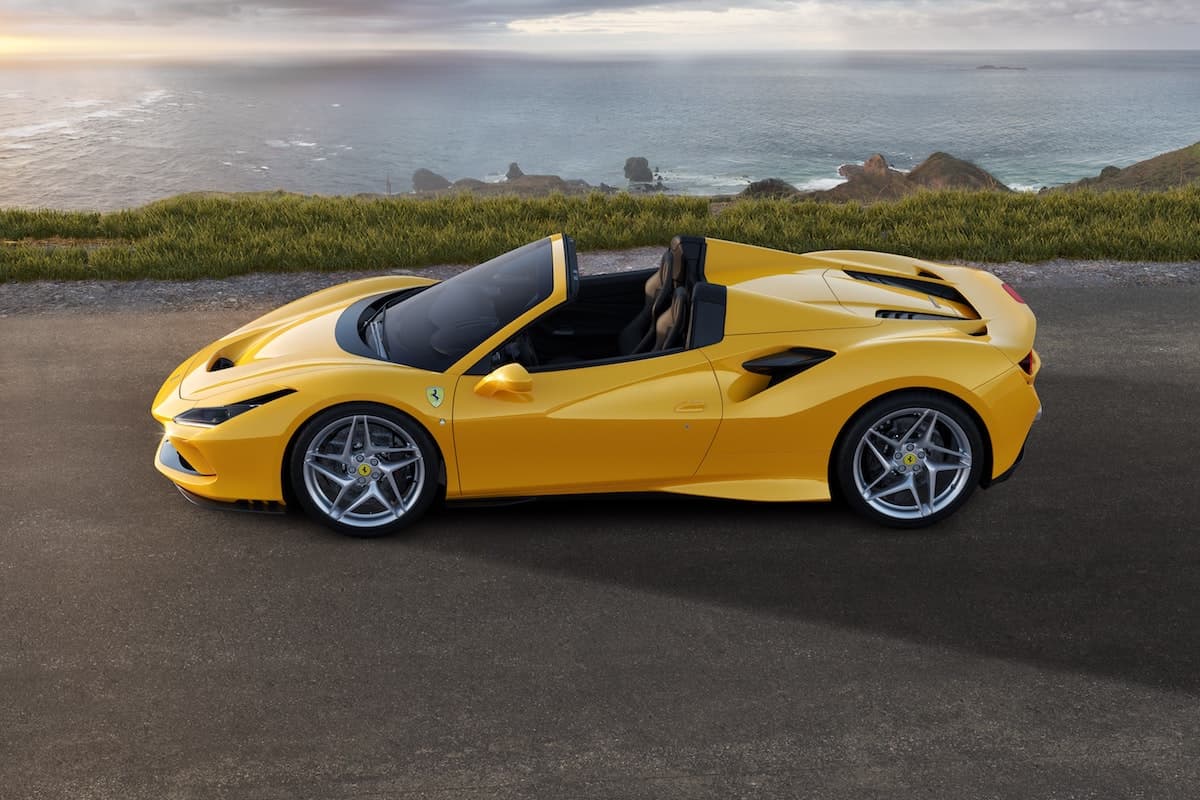
First up is the F8 Spider, a variant of the recently-introduced F8 Tributo with the addition of a hard-top folding roof. This is no surprise, as Ferrari offers a Spider version of its junior coupe with every generation.
Replacing the 488 Spider, it utilises the same 3.9-litre turbocharged V8 engine as the Tributo which produces 720hp and 770Nm of torque. With that power sent to the rear wheels via a seven-speed dual-clutch automatic gearbox, 0-60mph is said to be covered in 2.7 seconds with a top speed of 211mph possible.
Styling for the F8 Spider remains near-enough identical to its coupe brethren, though the glass engine canopy at the back of the car is replaced with a flat metal cover — which opens when the roof mechanism is activated. Ferrari says the hard-top roof can be deployed or retracted in 14 seconds, with the system operating at speeds up to 28mph.
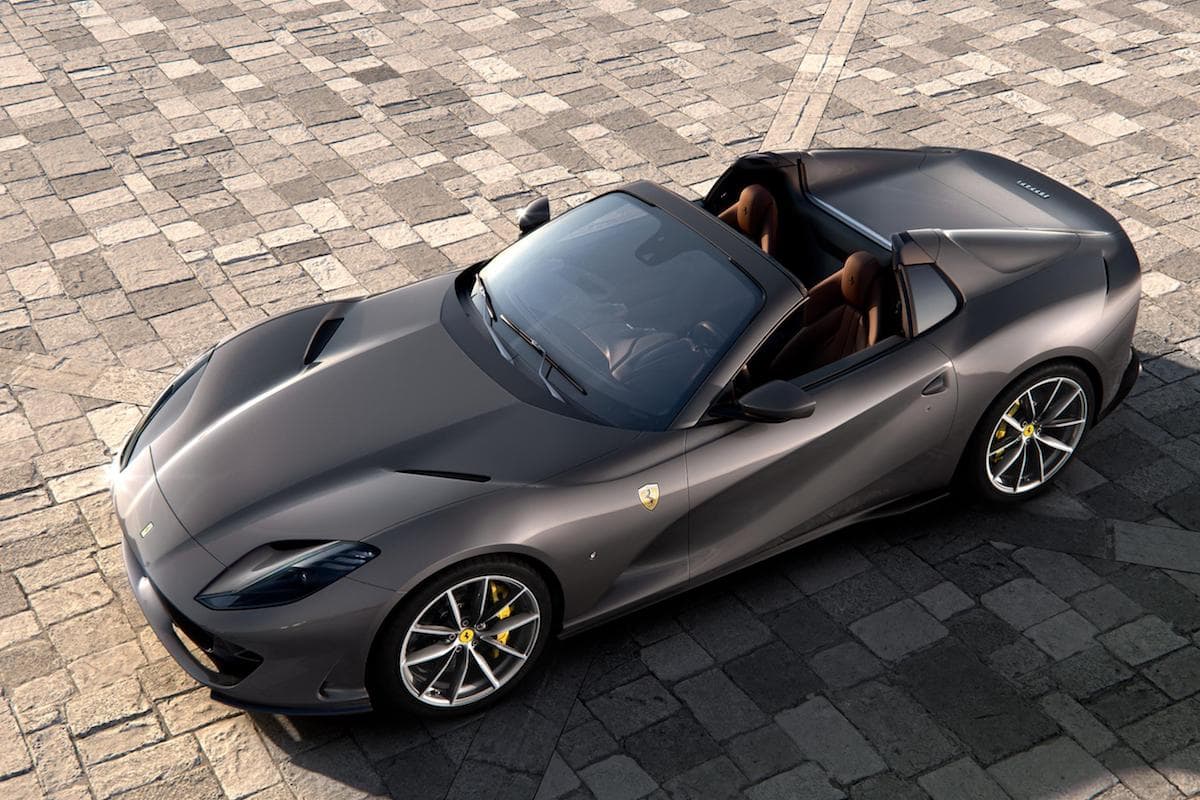
Debuting alongside the F8 Spider is the 812 GTS, a convertible variant of the larger 812 Superfast. This announcement was less expected, as Ferrari has not offered a series production front-engined V12 convertible since the 1969 ‘Daytona’ 365 GTS/4.
Previous models, like the F12 and 599, have offered limited production or special edition convertibles but not a regular production model.
Its naturally-aspirated 12-cylinder engine sends 800hp and 718Nm of torque to the rear wheels via a seven-speed dual-clutch automatic gearbox.
Ferrari hasn’t been too specific with performance details but says the GTS’ 0-60mph time is sub-three seconds, with a top speed in excess of 211mph.
Much like the F8 Spider, little has been changed to the 812’s design over its coupe sibling, though the rear section of the car has been altered to house its folding top. A flat metal panel now sits over the boot area, with two buttresses leading up to each headrest.
The roof’s retracting/deployment time and maximum operating speed are identical to that of the F8 Spider.
Pricing and specifications have yet to be revealed for either the Ferrari F8 Spider or 812 GTS, though both are expected to land in the UK next year.
Results published last week showed that private new car sales were 1.7% down on the same month last year, which is only about 700 vehicles as August is one of the two slowest months of the year.
The overall results were skewed by a fair amount of self-registration (where car companies and dealers register cars in their own names because they don’t have enough actual customers) and the headline-grabbing sales launch of the new Tesla Model 3.
There was a bit of movement in the top ten bestsellers list this month, with Ford and Volkswagen hogging most of the positions. Let’s have a closer look:
The UK’s ten best-selling cars – August 2019
1. Ford Fiesta
By our calculations, it’s been nearly two years since any other car beat the Ford Fiesta to the top spot in the registration rankings, and that doesn’t look like changing anytime soon. August marked yet another month of the Fiesta’s dominance, more than 500 units ahead of the next-best car.
The Fiesta currently holds an Expert Rating of 86% in The Car Expert’s all-new New Car Ratings database, which compares reviews from across the UK motoring media. This is higher than any other car in the supermini class and also the highest rating in the top ten best-sellers list, so it seems that motoring journalists and the buying public are in agreement on the Fiesta’s qualities.
The Volkswagen Golf had another strong month to finish second in the rankings. Not only that, but the margin back to its arch rival, the Ford Focus, was sufficient for the Golf to jump past the Focus into second place on the year-to-date ladder as well.
The Volkswagen Golf holds an Expert rating of 82% in The Car Expert’s New Car Ratings database, so it’s popular with journos as well as buyers.
This was the biggest surprise of the year to date, as the Tesla Model 3 became the third biggest-selling new car in the UK in its first month on sale. It’s also comfortably the best performance ever for an electric car.
However, there’s certainly an element of careful PR planning here. The Model 3 has been long anticipated, with plenty of customers having placed orders over a period of many months. So there was certainly a strong order book to account for the first shipload of cars arriving from the US. Register them all in the quietest month of the year and boom – instant best-seller and plenty of press attention.
Realistically, the Model 3 is not going to maintain this position. September will see more than 300,000 new cars registered, rather than the 92,573 in August. It’s entirely possible that the Tesla will drop right out of the top ten next month, even if it’s still maintaining its current delivery rate.
The Tesla Model 3 currently holds an Expert Rating of 82% in our New Car Ratings database, which is certainly very good. However, there have been very few local reviews yet so this may vary by quite a bit (either up or down) in coming months.
It’s the Fourth Focus once again this month, but the Ford only managed a bit over half the sales of its arch-rival, the Volkswagen Golf. This means it has slipped behind the Golf in year-to-date registrations, and Ford will be pushing for a strong September to try and pull that back.
Another August non-mover in fifth position is the Mercedes-Benz A-Class, which was only seven units short of beating the Ford Focus into fourth place.
The Mercedes-Benz A-Class has an Expert rating of 77% in The Car Expert’s New Car Rating system. The overall score is dragged down somewhat by lower ratings from a couple of performance car titles (Evo and Top Gear), otherwise it would be a solid 80% or more. However, it does rank highly for safety, winning awards from Euro NCAP, Thatcham and What Car? for its protective qualities.
Having bounced back into the top ten in July, the Ford Kuga improved one place to sixth in Augut. The current model is not long for this world, with an all-new replacement announced back in March.
The Kuga has a relatively poor Expert Rating of 65% on our New Car Ratings aggregator, which is one of the lowest scores for a top ten car. The current model was given a substantial update in 2017, but it lags behind the class leaders. Ford dealers will be keenly awaiting the new model, although the company hasn’t announced when it will arrive in the UK.
The Volkswagen T-Roc makes its debut in the 2019 top ten chart, arriving in seventh place at the expense of its supermini sister, the Volkswagen Polo, and becoming the best-selling small SUV in the country.
The T-Roc currently holds an Expert Rating of 82% in The Car Expert’s New Car Ratings calculator, which is very much at the sharp end of a highly competitive sector.
Another car holding its ground in August was the Volkswagen Tiguan, which was once again the third of four SUV/crossover models in the top ten. The Tiguan range comprises the regular model and the longer seven-seat Tiguan Allspace.
The Volkswagen Tiguan holds a strongExpert Rating of 79% in our New Car Ratings aggregator, which is not quite the best in class but certainly among the leaders.
The Vauxhall Corsa continues to yo-yo its way up and down the sales charts, falling to ninth in August but holding onto fourth in the year-to-date rankings. September is traditionally a good month for Corsa so, assuming dealers still have enough stock of the current model, the next few weeks could be the last hurrah before its replacement arrives.
The Vauxhall Corsa holds an Expert Rating of 64%, which is the second-lowest score among this month’s top ten cars according to our Expert Rating aggregator. Vauxhall dealers will be eager for the new Corsa to take the fight to the ever-dominant Ford Fiesta.
Making its first appearance in the top ten for months, albeit at the bottom of the ladder, was the Ford EcoSport. Another model in the late stages of its life, the EcoSport has popped up in the top ten on a few occasions this year.
The Sportage currently holds an Expert Rating of 58% in our aggregated New Car Ratings database, which is the lowest of any cars in the top ten and also one of the lowest of any of the 120 cars we have analysed to date.
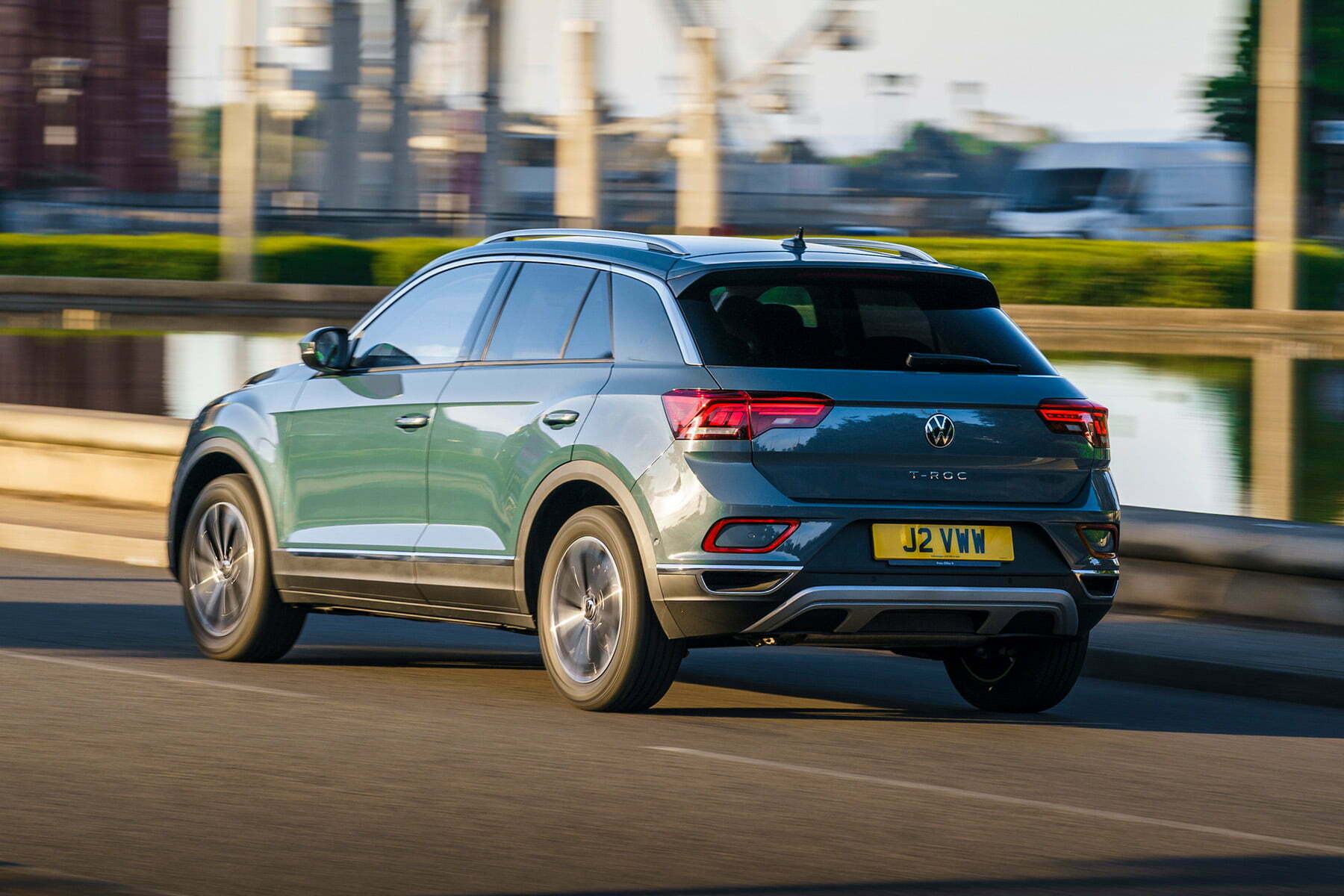
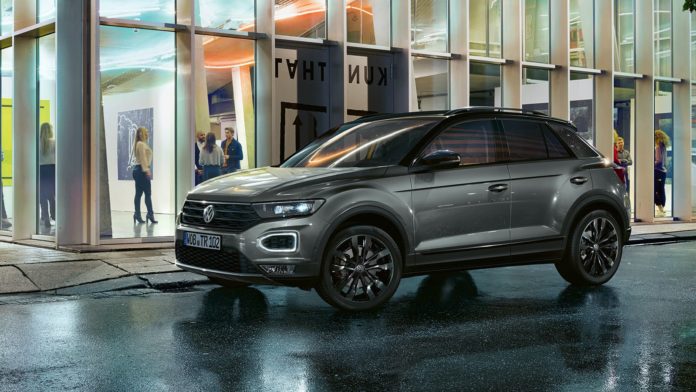
The Volkswagen T-Roc was a compact SUV/crossover that sits between the larger Tiguan and smaller T-Cross in the Volkswagen SUV family.
It was unveiled in the summer of 2017 with the first cars arriving in the UK by Christmas the same year. It ended production in 2025, being replaced by an all-new model in early 2026.
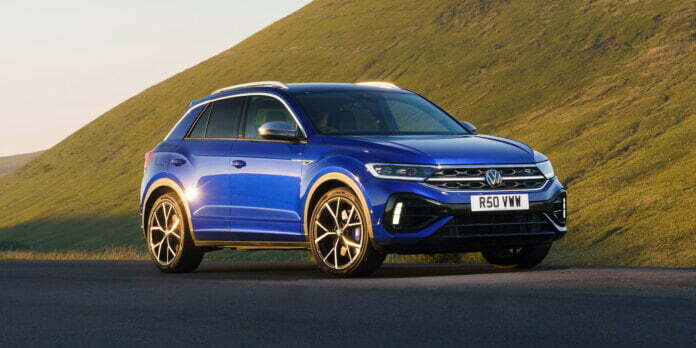
There was also a high-performance model called the T-Roc R, and a convertible version of the T-Roc, called the T-Roc Cabriolet, which joined the line-up in 2020.
The T-Roc has received particular praise for its comfort and overall refinement. However, it was criticised for not maintaining the same sort of interior quality that the rest of the Volkswagen range offers, while top-spec models were relatively expensive compared to their rivals.
A T-Roc facelift arrived in the UK in Spring 2022, consisting minor of exterior styling tweaks and on-board tech updates.
As of February 2026, the first-generation Volkswagen T-Roc holds a Used Car Expert Rating of B, with a score of 63%. It gets good grades for its low running cosyts and media review scores, but its other scores are average to poor.
“It might not set pulses racing but we commend the Volkswagen T-Roc’s straightforward approach with a good range of powertrains, solid practicality and competitive pricing.”
Model reviewed: 2023 facelift
Score: 8 / 10
Auto Express
Alastair Crooks
More reviews
Auto Express
Model reviewed: Range overview Score: 8 / 10 “The Volkswagen T-Roc Golf-based SUV is fun to drive, great to look at and family friendly – but cabin quality is most un-VW-like.” Read review
Auto Trader
Model reviewed: Range overview Score: 8 / 10 “The Volkswagen T-Roc plays on the same riff as the Golf but adds a higher driving position and additional flexibility.” Author: Catherine King Read review
Car
Model reviewed: Range review Score: 8 / 10 “Some of the dashboard materials are iffy and you’ll have to be seriously careful with the options list to get the best value for money. Plus, it’s not what you’d call exciting to drive. But how many crossover buyers really care about that last point?” Read review
Model reviewed: 1.0-litre petrol manual Design Score: 8 / 10 “Interested in a Volkswagen T-Roc? Get this one. It’s a much more convincing package in this specification than the higher-performance cars we initially tested.” Read review
Car Keys
Model reviewed: Cabriolet range Score: 7 / 10 “If you love the SUV styling and want a drop-top with a raised ride height, it’s this or a four-year-old Range Rover Evoque Convertible, which is worth noting is just about the same price. With decent-sized rear seats and a usable boot, you could happily use the T-Roc every day.” Read review
Carbuyer
Model reviewed: Range overview Score: 7.6 / 10 “The Volkswagen T-Roc looks good, drives well and offers plenty of space, but it’s pricey and some rivals have a nicer interior.” Author: Charlie Harvey Read review
Carwow
Model reviewed: Range overview Score: 7 / 10 “The Volkswagen T-Roc is a small, stylish SUV with a high-tech interior and a big boot, but alternatives are cheaper to buy and come with more space for back-seat passengers.” Read review
Company Car Today
Model reviewed: 1.5-litre petrol manual Design “The likeable T-Roc could become a stand-out model in VW’s line-up.” Read review
Green Car Guide
Model reviewed: 1.0-litre petrol manual Design Score: 9 / 10 “It may not result in a dramatic conclusion, but there is actually very little about the Volkswagen T-Roc to fault. The 1.0 TSI petrol model on test felt light and agile, it offered decent performance and economy, it was refined and quiet, and it was a practical body style.” Read review
Honest John
Model reviewed: Range review Score: 8 / 10 “There’s much to like about the Volkswagen T-Roc, most notably its refinement and comfort. It’s not the last word in excitement when it comes to driving, but it’s very capable nonetheless.” Read review
Model reviewed: 2.0-litre diesel “This is a small Volkswagen that appeals more to the heart than many of its siblings and stands comparison with the class best.” Read review
Motoring Research
Model reviewed: Range overview Score: 7 / 10 “The Volkswagen T-Roc is like a Golf that’s grown in every direction. It looks more distinctive, too. It starts to look expensive once you’ve progressed through the range, and its engines are surprisingly vocal for a Volkswagen. Not that any of these grumbles will stop it from selling like hot (rock) cakes.” Read review
Parkers
Model reviewed: Range review Score: 8.8 / 10 “Good-looking and fun SUV that’s great to drive and packed with kit” Read review
The Sun
Model reviewed: 1.5-litre petrol manual “Drivers should bear in mind the Volkswagen T-Roc skimps on the interior to look good where it matters- but once you get behind the wheel it’s a joy.” Read review
The Sunday Times
Model reviewed: 1.5-litre petrol automatic R-Line Score: 8 / 10 “A Golf with muscles and some dad jeans” Read review
The Telegraph
Model reviewed: 2.0-litre diesel manual SEL Score: 6 / 10 “If you want a diesel family crossover this Volkswagen T-Roc is one of the more desirable options. However, there’s still no escaping that it has a high price and a small boot compared with its petrol-powered counterparts.” Read review
Model reviewed: Range review Score: 8 / 10 “The Volkswagen T-Roc stands out in the crowded SUV market thanks to its funky styling and fun driving experience. It’s not as spacious as a Seat Ateca, and the quality of some of the interior plastics might not be as plush as you’d expect, but neither of those points are deal-breakers for what is a very good SUV indeed.” Read review
Top Gear
Model reviewed: Range overview Score: 7 / 10 “Just what the market ordered. Stylish crossover for people who don’t need family space. But don’t dig too deep beyond that.” Read review
Safety rating
Independent crash test and safety ratings from Euro NCAP
Clean Air Index: 7.7 / 10 Energy Efficiency Index: 4.4 / 10 Greenhouse Gas Index: 2.8 / 10
Reliability rating
As of February 2026, we don’t have enough reliability data on the Volkswagen T-Roc to generate a reliability rating.
The Car Expert’s reliability information is provided exclusively from workshop and extended warranty data from our partner, MotorEasy. As soon as we have sufficient data on the T-Roc, we’ll publish the score here.
Running cost rating
Monthly cost of ownership data provided exclusively for The Car Expert by Clear Vehicle Data
Fuel consumption
Average
Score
Petrol models
45 mpg
C
Diesel models
54 mpg
B
CO₂ output
Average
Score
Variation
Score
Petrol models
143 g/km
C
Diesel models
134 g/km
C
Insurance group
Average
Score
Variation
Score
All models
23
B
Service and maintenance
Cost
Score
Year 1
£169
B
Year 2
£472
B
Year 3
£778
B
Year 4
£1,023
B
Year 5
£1,374
B
Overall
£3,816
B
The Volkswagen T-Roc has a running cost report that’s mostly good. Insurance and road tax should be very cheap, as should scheduled servicing costs for the first five years.
However, fuel consumption – the biggest running cost – is not as good as you’d expect for this size of car. A score of ‘C’ for petrol versions is average, while diesel versions are good. But other small SUVs are better.
Similar cars
If you’re looking at the Volkswagen T-Roc, you might also be interested in these alternatives
What is it? The new SsangYong Korando is the latest, all-new version of the Korean brand’s mid-sized SUV.
Key features Interior space, new engines, more technology
Our view The SsangYong Korando remains the budget compact SUV option, but no longer feels that budget.
Major improvements in looks, refinement, build quality and particularly equipment levels mean that the Korando is no longer just for those who want an SUV but can’t really afford one.
SsangYong is the acknowledged budget member of the Korean brands, one that has focused on offering no-nonsense SUVs and pick-ups, but in recent times has been gaining a wider audience for its now more ‘normal’ cars.
Once credited in marketing one of the ugliest cars ever built in the Rodius, SsangYong’s recently-launched models, such as the new Tivoli and the latest Rexton, are cars that owners no longer feel embarrassed to be seen in.
Nowhere is this more evident than in the latest Korando – the fourth generation of a model that dates back to the early 1980s. This is a completely new Korando, with thoroughly modern visuals, new drivetrains and a plentiful smattering of the technology that is new to SsangYong owners but familiar in more mainstream SUVs.
Such updates are necessary, for the Korando sits in one of the most competitive sectors of the whole market. So is the Mk4 version a worthy alternative to such as the Kia Sportage, Volkswagen Tiguan or that vehicle that created the whole SUV boom, the Nissan Qashqai?
Buying and owning a SsangYong Korando
The Korando is the most critical model to SsangYong’s hopes of becoming a more familiar brand to UK buyers and it shows. This all-new fourth-generation version strikes a contemporary pose with agreeable visuals, most notably the brand’s signature ‘birds-wing’ front end.
What will most resonate, however, particularly with previous buyers, is the improved general quality of the car and especially the levels of equipment it now offers. Nowhere is this more true than in the safety package.
As well as a higher-strength body shell than previously, thanks to more extensive use of high-strength steels in the construction, the new Korando offers a host of active safety features as standard, topped by autonomous emergency braking but also including lane-departure warning and lane-keeping assist functions. The car goes on sale with the bonus of a newly announced five-star Euro NCAP safety rating.
Initially the Korando is available with a 1.6-litre diesel engine (with petrol and eventually all-electric versions to come), a two-wheel-drive standard format but with 4×4 versions too, and four grades.
Entry level will be the ELX at £19,995, followed by the Ventura at £22,995. We say “will be” because they both come only in 2WD form with the 1.5 petrol engine and a manual gearbox, so are not here yet.
Available from launch is the Pioneer, matched to the diesel engine and a seven-speed auto transmission, and on sale in two or four-wheel-drive format, from £26,495 or £28,495 respectively. The £26,495 price will also apply to 2WD manual versions of the range-topping Ultimate with the petrol engine. It can be bought now with the diesel, in 4WD and auto only at £31,995.
ELX should really only be on the shopping list if the budget is really tight. While it includes some niceties, keyless entry, leather on the steering wheel for example, the lack of even touchscreen infotainment makes paying a bit more for the Ventura more tempting. Additions include pretend leather on the seats, heated front seats, bigger alloy wheels, an electronic parking brake, front and rear parking sensors and a reversing camera, using the screen of the eight-inch infotainment system.
Pioneer grade is aimed firmly at those who tow things, which is why it only comes with the diesel engine and auto transmission. This ups the towing weight from 1,500kg to 2,000kg – rivals can match such ability, but only by going a long way up their trim levels and therefore price lists. Pioneers also come with a full-sized spare wheel which is useful but takes a chunk from the boot space.
Range-topping Ultimate models boast the biggest infotainment screen with navigation, while among other specification highlights are the largest, 19-inch, alloy wheels, proper leather upholstery, dual-zone climate control, LED headlamps, keyless start and even a powered tailgate.
Worth pointing out too is that SsangYong offers a full seven-year, 150,000-mile warranty across all its cars – just like the best-known Korean brand, Kia, and an extra not to be under-estimated.
Inside the SsangYong Korando
Any Korando owner updating from the previous model will likely feel the biggest changes once they get into it. The totally new interior design is a world apart from what has gone before and crucially can hold its own amongst mainstream rivals, unless you start spending lots of money for range-topping versions of those rivals.
The basics first – while looking quite substantial from the outside the new Korando is not that big an SUV – only around 40mm longer than its predecessor and about the length of say a Focus or Astra hatchback. But inside there is loads of room, especially for rear-seat passengers. Boot space is good too, 551 litres (without the full-size spare wheel) rising to 1,248 litres with the rear seats folded.
There are more soft-touch surfaces than we have ever seen in a SsangYong, which adds a more upmarket feel to the cabin. The design of the driver’s controls is functional, ranging up to a 10-inch digital instrument cluster ahead of the steering wheel on top-specification Ultimate models.
What you get in the centre console depends on the trim level. We would avoid the entry-level ELX which only comes with a radio, though it does include DAB and iPod connectivity. No nice touchscreen though, just an LCD display.
Ventura and Pioneer variants get an upgrade to an eight-inch colour touchscreen system, which also provides a screen for the reversing camera. There is no navigation, but that doesn’t really matter as the system includes Apple CarPlay and Android Auto smartphone integration and therefore direct access to such as Google Maps.
Buy the top-spec Ultimate and the touchscreen basically grows by an inch and adds navigation, which can be operated in ‘dual-map’ format combining with the digital cluster ahead of the driver.
Driving the SsangYong Korando
Currently the only engine available for the new Korando is the 1.6-litre diesel. A 1.5-litre petrol version is set to join the range in December 2019 with 164hp, but most anticipated is the full electric model due around the end of 2020, with we are told a range between charges of more than 200 miles.
SsangYong calls this a new diesel engine but the Korando unit is not as refined as say that of a Tiguan or Sportage – but it’s no longer a league behind them either. Some rattle at start up soon turns into a reasonably smooth tone that only really becomes intrusive if the unit is being worked very hard.
On which note, 12.1 seconds to 62mph is not as swift as some rivals but adequate in this market. The seven-speed auto transmission is smooth in its changes if not exactly rapid shifting.
Adequate is also an appropriate description of the Korando’s road manners, perhaps trending to the comfortable. It generally does a good job of smothering road imperfections, though at lower speeds the 19-inch wheels of Ultimate models are good at seeking out and transmitting bumps into the cabin.
More enthusiastic motoring does not really suit the Korando. While body roll is kept to a minimum when cornering, woolly steering does not encourage precise placement of the car, making it feel larger and more barge-like than it actually is. Generally, however the Korando offers an on-the-road performance much closer to more expensive rivals than previously.
Verdict
SsangYong’s core market has always been those who haul things behind their cars, principally caravanners and equestrian fans not wealthy enough to buy a Range Rover. They will love the new Korando, as it loses none of the budget qualities of its predecessors but gains a host of stuff previous owners had to do without, such as modern infotainment tech and a bang up-to-date safety package.
Equally these qualities should see the Korando appeal to a much wider audience, so long as SsangYong can convince them not to dismiss it without looking at it due to its keen pricing.
Remember when Kia and Hyundai were the almost secret, value-for-money Korean brands? That’s just about what SsangYong is now, and for someone wanting a solid but uncompromised SUV for not too much money, the SsangYong Korando is worth checking out.
Mazda has revealed its full pricing and specification structure for the new CX-30.
The new compact SUV, which slots in between the smaller CX-3 and larger CX-5 in the firm’s line-up, goes on sale priced from £22,895.
Available with the choice of two petrol engines, the Mazda CX-30 also arrives with a five-strong range of trim levels beginning at SE-L and ending with GT Sport Tech.
Jeremy Thomson, managing director of Mazda UK, said: “Like the all-new Mazda 3, this is a car that demonstrates the new standards of style, quality and technology found in our next–generation models.
“It’s also great that the groundbreaking Skyactiv-X engine is available from launch, as its low CO2, excellent fuel economy and performance, delivers a superb combination of benefits to our customers”.
The CX-30 is only available with all-wheel-drive from the Sport Lux trim level – third in line from base-spec SE-L – and above.
The first engine available is a 2.0-litre unit driving the CX-30’s front wheels and sending power through either an automatic or manual transmission. Featuring cylinder-deactivation technology, it should return up to 45.6mpg when utilising the six-speed manual.
The other powertrain available utilises Mazda’s innovative new Skyactiv-X engine. Featuring spark-controlled compression ignition, it mirrors the economy usually found with a diesel, but with the response of a petrol. Combined, Mazda says it’ll return 47.9mpg while emitting 105g/km of CO2.
All cars get a good standard of equipment included as standard, with even SE-L cars benefitting from 16-inch alloy wheels, rear parking sensors and LED headlights.
As yet, the CX-30 has not yet been crash tested by Euro NCAP, but recent Mazda products have all performed very well and there’s no reason to expect this one will be any different.
The Mazda CX-30 is available to order now, and first deliveries are expected to commence in January next year.
Smart has revealed its new look line-up ahead of next week’s Frankfurt motor show, as the firm makes the switch to only offering electric vehicles.
The German city car maker announced last year that it planned to stop selling combustion-engined vehicles in 2020 and has now revealed details of its refreshed line-up.
Its Fortwo and Forfour models will only be available with an 80hp electric motor, which will offer a claimed range of 91 to 99 miles in the Fortwo and 87 to 95 miles in the Forfour. Both models have a 0-60mph time of approximately 12 seconds and a top speed of 81mph.
UK models come equipped with a 22kW on-board charger as standard, meaning the Smart EQ’s batteries can be charged from 10% to 80% in under 40 minutes.
The current electric Smart ForTwo has received only modest reviews, according to The Car Expert’s unique Expert Rating aggregator, currently holding an overall rating of just 64% – one of the lowest scores from the 120 models we have analysed so far.
2020 Smart EQ ForTwo coupe
2020 Smart EQ ForTwo cabrio
2020 Smart EQ ForFour
Fresher styling to reflect electric power
The powertrain offering means Smart can provide a unique new look to its models’ styling. The front end no longer has a grille between the headlights, as has become common in combustion-engined cars, instead sporting smoothed bodywork with a Smart badge. Interestingly, the new models also seem to have largely abandoned its curious ‘C’ logo in favour of ‘smart’ lettering.
The interior has been updated with a new infotainment system that includes smartphone integration, while the Smart EQ app that lets you interact with the vehicle through your phone has received an overhauled user interface.
Daniel Lescow, head of brand and product management at Smart, said: “As a pioneer of urban mobility, it has always been part of Smart’s credo to rethink things.
“The switching of the entire product range to all-electric powertrains marks the start of a new chapter in the story of the Smart brand. In concert with innovative sharing concepts and digital services, we are the first manufacturer to switch completely and systematically from combustion engines to solely electric powertrains.”
The new Smart EQ Fortwo and Forfour will make their public debuts at the Frankfurt motor show next week, and are expected to arrive in the UK in early 2020.
Private new car sales were down by less than 2% in August, which was a slightly better result than recent months according to the latest figures published today.
The Society of Motor Manufacturers and Traders (SMMT) reports that the overall market was down 1.6% in August, which only equates to about 1,500 fewer vehicles in what is traditionally one of the quietest months of the year for new car registrations.
August was an improvement on the way the rest of the year has been going
Total new car registrations in August were about 92,000, compared to the 350,000ish we can expect in September. It should also be pointed out that it was the second-best August on record, behind only last year. However, this is likely to be for reasons other than buyers actually getting out and buying cars.
Diesel’s market share remained at about 26% as it has been for the last couple of months, suggesting that the slide in diesel is probably bottoming out – or at least slowing to a more manageable level for manufacturers and dealers.
There was good news for registrations of electric vehicles, which saw an enormous increase in year-on-year registrations – thanks largely to the UK launch of the new Tesla Model 3. However, this still equates to a market share of only 3%, showing that much more needs to be done in this area.
Hybrid vehicles also continued to grow, but plug-in hybrids are still struggling with numbers less than a third of full-electric vehicles. The fairly irrelevant mild hybrid vehicle registrations (which used to be counted as normal petrol or diesel cars, since they can’t move under electrical power) are also growing.
A good month for electric cars, but another poor month for plug-in hybrids
Industry wary of September slump
September is one of the two biggest months of the year for new car sales, with new number plates traditionally drawing buyers into showrooms.
After a terrible result last September, largely driven by manufacturers not having enough cars available that complied with new emissions regulations, the industry is wary of another potentially difficult month this year.
The Brexit paralysis in parliament is dragging on and seems almost certain to roll into next year, coupled with the threat of a general election in the near future. Both of these will undoubtedly continue to put customers off buying a new car if they have the ability to delay it.
While nearly all private new cars are bought on PCP finance, which basically forces a customer into another car when the agreement ends, the industry has been pushing customers into longer contract terms, meaning they’re not coming back as often. But, inevitably, the industry refuses to countenance the possibility of that actually being the main cause of the fall in new car registrations.
Good month, bad month
August was a good month for Alfa Romeo, Audi, Dacia, DS Automobiles, Jeep, Lexus, Maserati, MG, Porsche, SsangYong, Toyota and Volvo, who all saw registration numbers jump by at least 10% compared to the same month last year. As with last month, we’re fairly cynical about a few of those named and believe that there may have been a lot of self-registering going on to result in those gains.
As usual, the Ford Fiesta topped the sales charts in August, ahead of the Volkswagen Golf. Third place, however, was listed as ‘Other’. This was an excellent result for Other, which has not appeared in the top ten for a long time.
There has been suggestion that Other is actually the new Tesla Model 3, which launched in August. Certainly, the massive growth in electric car registrations would support this. It would certainly be an impressive debut, but it is unlikely that Tesla would be able to continue selling cars at this rate every month. The likelihood is that it was a calculated strategy to generate headlines in a quiet month.
‘Other’ really burst onto the scene this month…
The Volkswagen T-Roc also had a good month, making its first appearance in the top ten in seventh place. This came at the expense of the Nissan Qashqai, Volkswagen Polo and Kia Sportage, which all fell out.
As usual, we will explore the top-ten results in more detail over the next few days.
Independent car safety regulator Euro NCAP has revealed that seven new cars have taken a top five-star rating in its latest round of testing.
All of the cars tested in this month’s results achieved the highest rating, including the first five-star result for budget brand SsangYong.
Two crossovers are included here – namely the SsangYong Korando and Skoda Kamiq, both of which are due to arrive on the UK market imminently. The former has been commended for high levels of safety assistance equipment as standard, while the latter matches its VW Group platform mates in the Volkswagen T-Cross and SEAT Ateca in boasting a five-star rating.
The Mercedes-Benz EQC, Mercedes’ first all-electric car, is also part of this wave of cars taking top honours, equalling rivals in the Jaguar I-Pace and Audi e-tron. Its compact CLA saloon, based on the current A-Class hatchback, also received a five-star rating.
BMW’s new Z4 sports car took the highest score too, praised for an active bonnet system that lifts when a collision with a pedestrian is detected in order to minimise injury. Audi’s new A1 Sportback supermini also received a five-star award.
Finally, Ford resubmitted a lightly revised version of the Focus for testing. Despite being awarded a five-star rating in 2018, Euro NCAP found its automatic emergency braking system failed to provide adequate front seat whiplash protection. A revision to the system has rectified this, with the Focus’ five-star rating maintained.
Euro NCAP tests a number of areas on a new car to determine its level of safety — including adult and child occupant protection, pedestrian safety and the level of assistance equipment available. The independent body was founded in 1997 in a bid to provide clarity to consumers on the safety of new vehicles.
Michiel van Ratingen, Euro NCAP secretary general, said: “It’s great to see this continued commitment to improved safety. From these results, achieving five stars may look so easy, but to meet test and fitment requirements for technology are very demanding and always updated to incorporate the latest technology development and address priorities in road safety.”
After what seems an eternity of previews and teasers, Porsche has finally revealed its all-electric Taycan in all its glory ahead of next week’s Frankfurt motor show.
Plans for production of an all-electric Porsche were first revealed in 2015 with the Mission E concept, and now the production version has been realised.
Confusingly, Porsche is calling its two trim levels ‘Turbo’ and ‘Turbo S’ – despite the Taycan having no turbo at all since it doesn’t actually have an internal combustion engine.
The Taycan Turbo S uses a 93.4kWh battery linked to a motor on each axle, which sends at total 61hp to all four wheels to give a 0-60mph time of 2.6 seconds and a 161mph top speed. Range is pegged at 252 miles between charges.
Taycan Turbo variants produce less power at 680hp, with 0-60mph covered in 3.2 seconds and a top speed identical to the S, while range is boosted to 279 miles.
Unusually for a road-going EV, the Taycan uses a two-speed gearbox. This first gear is said to maximise acceleration, with the second aiding refinement at higher speeds.
Equipped with an 800-volt charging system, the Taycan is said to be capable of receiving 62 miles worth of charge in five minutes when plugged into a DC charger. Porsche also says the battery can be charged from flat to 80% in less than 23 minutes “under ideal conditions”, with maximum charging power coming in at 270kW.
Aiding performance is the addition of Porsche’s Dynamic Chassis Control and Active Suspension Management systems. Additionally, ‘Range’ mode joins the line-up of selectable driving settings, alongside ‘Normal’, ‘Sport’, ‘Sport Plus’ and ‘Individual’.
Inside the car, Porsche has done away with the majority of the traditional switchgear, replacing most buttons and dials with touchscreen functions in an 11-inch infotainment display. A new ‘Hey Porsche’ voice control system is also set to feature.
An entirely leather-free interior will be offered for the first time in a Porsche, instead using ‘innovative recycled materials’. The lack of an internal combustion engine also allows for two boot spaces like a Tesla Model S — 81 litres up front and 366 litres at the rear.
Pricing for the Porsche Taycan starts from £115,858, securing a Turbo model, with Turbo S variants available from £138,826. The firm has confirmed lower-output and ultimately more affordable variants of the car will be available later in the year, with a more practical Cross Turismo body style expected to arrive in late 2020.