Find an Expert Rating: 
Home Blog Page 105

British start-up to provide electric powertrains for classic cars

A new electric vehicle firm has set up shop in Silverstone, where it will build all-electric conversions of some of history’s most iconic classic cars.

Headed up by former Renault F1 boss Jon Hilton, Lunaz says it “will make the most beautiful and celebrated cars in history ready for the future” by fitting a completely unique electric powertrain that’s designed and built in-house.

The firm says its staff have experience with Aston Martin, Ferrari, Ford, Formula 1, Jaguar, Volkswagen, McLaren and Rolls-Royce. It is currently preparing a 1961 Rolls-Royce Phantom V, 1953 Jaguar XK120 and 1956 Rolls-Royce Silver Cloud for production.

Lunaz says each model will receive a unique powertrain set-up based on what’s appropriate for the vehicle. For example, the Jaguar will use an 80kWh battery pack that feeds a twin-motor propulsion system making 375bhp and 700Nm of torque.

Lunaz electric Jaguar XK120 coupe | The Car Expert

Each vehicle has been re-engineered from the ground up using accurate 3D scans and traditional coachbuilding skills are then used to build it. The interiors will retain the look of the originals, but with modern amenities such as WiFi, satellite navigation and infotainment screens.

David Lorenz, founder of Lunaz, said the idea for the company came to him while waiting for a recovery truck at the side of the road. He said: “I wanted a car like a 1953 Jaguar to be my daily driver, Lunaz takes a history we all love and gives it a bright future.

“We are innovating to create cars that are usable, dynamic, and stand as the ultimate drivers’ classics.

“For Luna, my daughter, not to have access to a car like the Mercedes-Benz 190SL when she is of driving age would be a tragedy. Without building Lunaz, this is the reality she faces.”

Order books for Lunaz products will open in November 2019, with prices starting at £350,000 excluding local taxes.

Nissan Juke test drive

There’s that old cliché about a difficult second album. If your first one is a colossal hit, there are big shoes to fill when it comes to that follow-up.

What once may have been a revolutionary new approach may now be the norm or even old news when the time comes for that sequel, with the world moving on and tastes changing. It’s possible to overcome, of course. Take a look at Nirvana’s Nevermind for example — the band’s successor to its incredible Bleach — becoming the band’s most acclaimed and successful record.

Which brings us to the new Nissan Juke — the follow-up to the car that started off the now-booming crossover segment. Once in a class of its own, the market is now flooded with contenders — but can the new Juke still rise to the top? We find out…

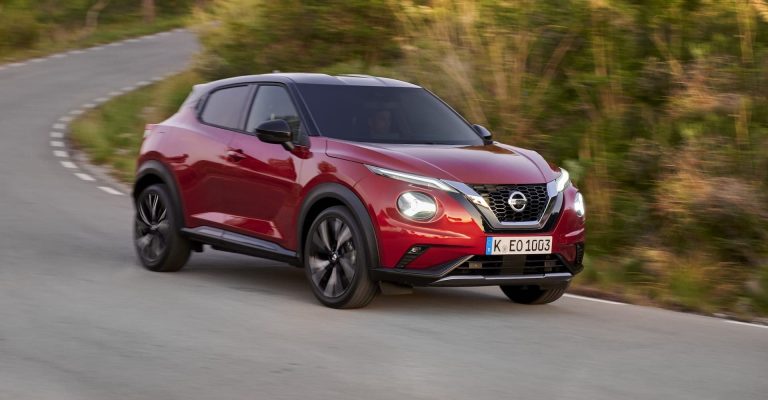
2020 Nissan Juke red and white | The Car Expert

What’s new about the new Nissan Juke?

Nissan had the mega first hit on its hands with the original Juke — selling over 1.5 million of them from its 2010 introduction to it just coming off the forecourts. With that in mind, it’s no surprise to see evolution rather than revolution here.

The most obvious case of that is in the new Juke’s design. Though it takes on a bit more of a modern and grown-up look than before, it still has the familiar separate headlamps that give it a distinctive beady-eyed look, while the overall silhouette is retained too.

A new chassis is said to improve drivability, though probably more appealing to buyers is the fact it increases boot and cabin space on the old car too — though we’ll come to that.

How does it look?

If there’s one thing the original Nissan Juke was known for, it’s how polarizing its design was. With that in mind, it would have been easy for the firm to take a safer route with the aesthetic and go for a more conventional look.

  • 2019 Nissan Juke review – front view | The Car Expert
  • 2019 Nissan Juke review – rear view | The Car Expert

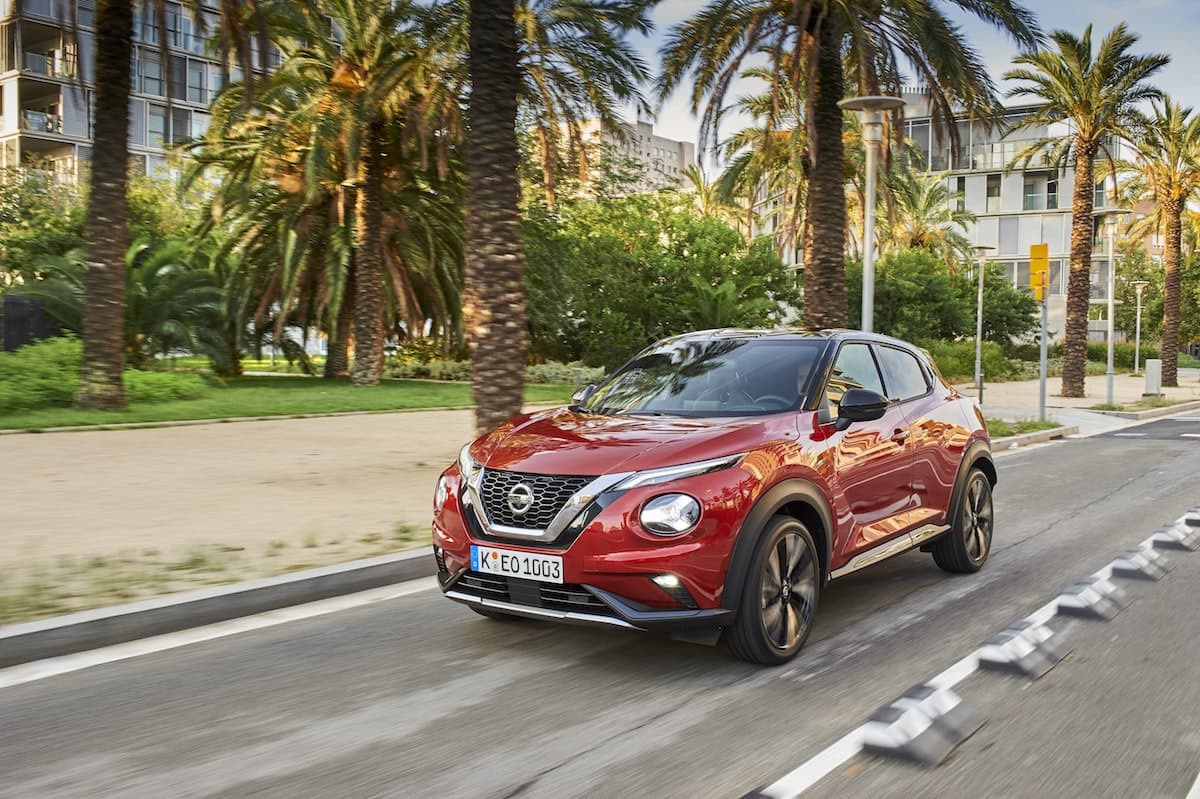
Instead, though, it’s opted to evolve the opinion-dividing visuals. It’s immediately recognisable as a Juke thanks to its large, low-set headlights and thin daytime runners up to — though these now flank Nissan’s corporate v-styled grille. At the back, the boomerang-esque lights have been swapped out for more conventional, boxy units to bring it in line with the rest of its model range — though we think this is no bad thing.

Though it does retain the general Juke look, the more modern take is smoother and more sophisticated than its predecessor. The result is still distinctive but less likely to split opinion than before.

What’s the spec like?

Pricing for the new Nissan Juke kicks off at £17,395, securing a Visia model. Kit thrown in as standard includes 16-inch steel wheels, LED headlights and a comprehensive safety package including autonomous emergency braking, cruise control, high beam assist, hill start assist and lane keep assistance.

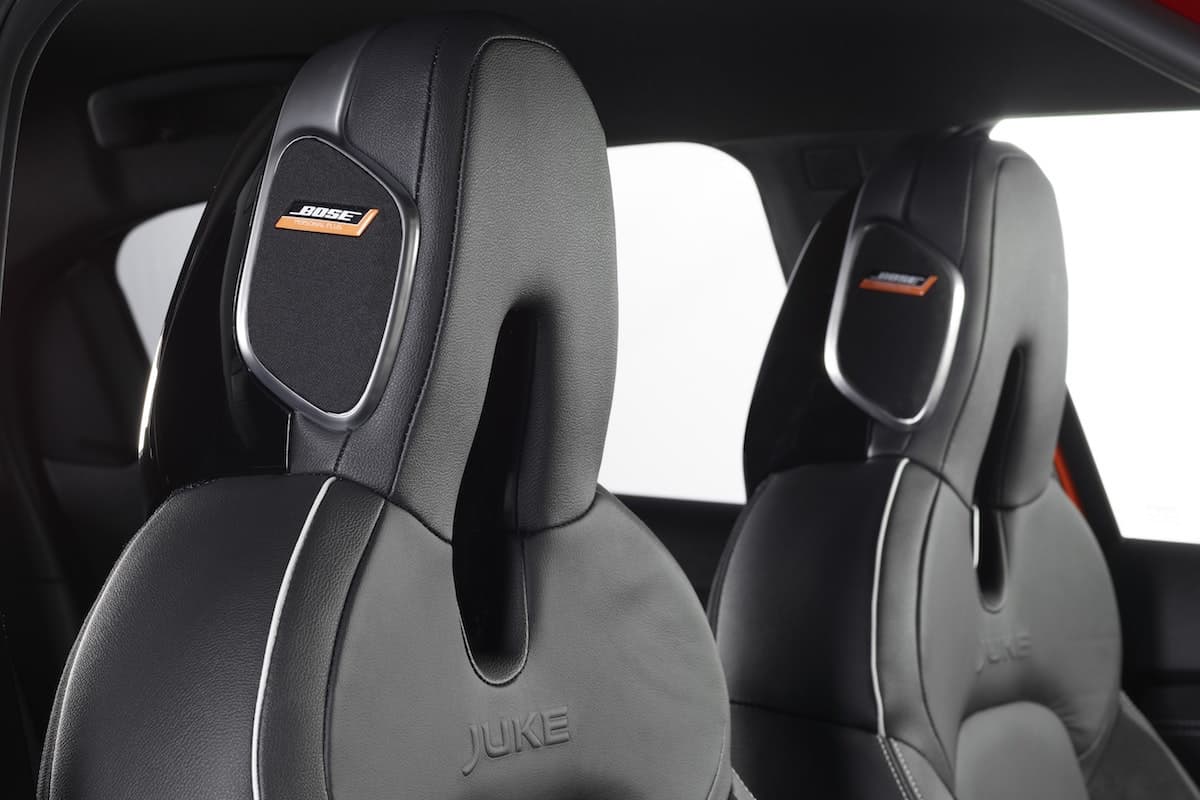
We’re behind the wheel of the Juke in high-spec Tekna+ form, which is available from £25,295. Additional extras here include 19-inch alloy wheels, an eight-inch touchscreen infotainment system with Android Auto and Apple CarPlay support, a Bose sound system (including headrest-integrated speakers on both front seats) as well as Nissan’s suite of ProPilot semi-autonomous technology.

We’ll have to wait a while before the new Nissan Juke is put through the rigorous Euro NCAP crash testing regime, but we’ll keep you posted.

What’s the Nissan Juke like inside?

One of the biggest changes to the new-generation Nissan Juke comes in its size, with growth in length, width and height. This naturally leads to more room in the cabin, with its improved space immediately apparent.

Both driver and passenger will find it to be more spacious than before, which is something that definitely needed to be improved upon, while those in the back will be that bit comfier too. Getting three full-sized adults in the back is still going to be a struggle, but for a small family car, it does the trick.

  • 2019 Nissan Juke review – interior and dashboard | The Car Expert
  • 2019 Nissan Juke review – front seats with Bose speakers | The Car Expert

Materials throughout the cabin are improved upon too, with faux leather trimmings working to give a more premium feel to the car. Hard scratchy plastics are still to be found, but they’re certainly less apparent before and crucially compared with most rivals.

As for boot space, the new Juke offers 422 litres, a hefty increase of over its predecessor’s 354 litres.

What’s under the bonnet?

At its launch, Nissan is offering just one engine option for the new Juke. It’s a 1.0-litre, turbocharged petrol unit producing 115hp and 180Nm (up to 200Nm in its self-controlled ‘over boost’ mode), with power sent to the front wheels through either a six-speed manual gearbox or seven-speed dual-clutch automatic.

It’s the former configuration we’re driving here, resulting in a 0-60mph time of 10.2 seconds with a 112mph top speed possible. As for efficiency, Nissan claims it will return up to 47.9mpg in mixed driving conditions with CO2 emissions weighing in at 112-118g/km.

Faults with the setup are pretty minimal. Power delivery is adequate, and torque comes in pretty smoothly across the rev range, though it’s certainly no performance car and those wanting a bit more grunt should hold out for the probability of a more powerful engine down the line.

What’s the Nissan Juke like to drive?

Nissan claims the Juke is more fun to drive than its predecessor, but don’t be fooled into thinking this is some bona fide sports machine. This is still a car best at home in the city centre.

  • 2019 Nissan Juke road test – front | The Car Expert
  • 2019 Nissan Juke road test – rear | The Car Expert

Steering is lightly-weighted which is great for navigating around tight streets, parking easily and generally not being irritating to live with on a daily basis. For most buyers, this is probably enough — though those coming into this with an engaging drive might want to look elsewhere.

There’s a feeling of disconnect between the road and car when pressing on, so tearing up a back road isn’t really a possibility here. It’s not perfect on a motorway either with a bouncy ride and notable wind noise compromising on refinement, though it’s livable for shorter trips.

Verdict

Nissan has done pretty well with this second generation of the Juke, though its existence in a market of many rather than one means this may not be quite the mega-hit of its predecessor.

It’s still likely to sell in droves though — particularly with current owners and fans of the original. The car is better in all areas than its predecessor, crucially on space, and it squares up well to newer rivals.

Those wanting something of a connection between car and road in their compact crossover will have to look elsewhere, but this is a car that’s bound for the city and it ticks the urban boxes well.

Similar cars

Citroën C3 Aircross | Dacia Duster | Fiat 500X | Ford EcoSport | Honda HR-V | Hyundai Kona | Kia Stonic | Mazda CX-3 | MG ZS | Mitsubishi ASX | Peugeot 2008 | Renault Captur | SEAT Arona | SsangYong Tivoli | Suzuki Vitara | Vauxhall Crossland X | Vauxhall Mokka X | Volkswagen T-Cross | Volkswagen T-Roc

Key specifications

Model as tested: Nissan Juke Tekna+
Price (on-road): £25,295
Engine: 1.0-litre petrol
Gearbox: Six-speed manual
Power: 115 hp
Torque: 170 Nm
Top speed: 112 mph
0-60mph: 10.2 seconds
Fuel economy (combined): 47.9 mph
CO2 emissions: 112-118 g/km

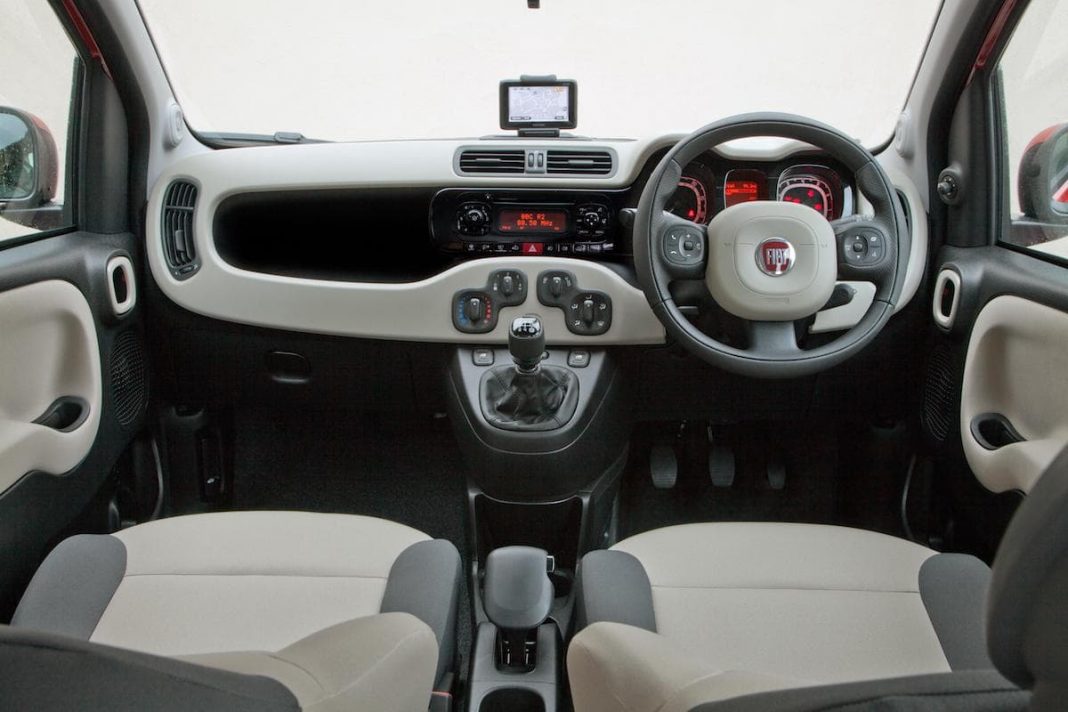
Fiat Panda (2012 to 2024)

Summary

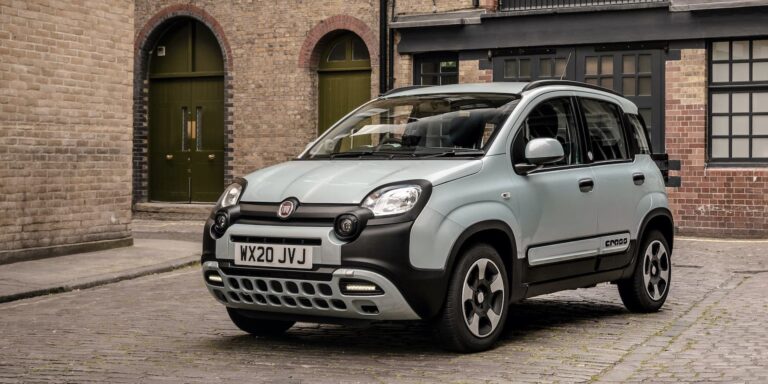
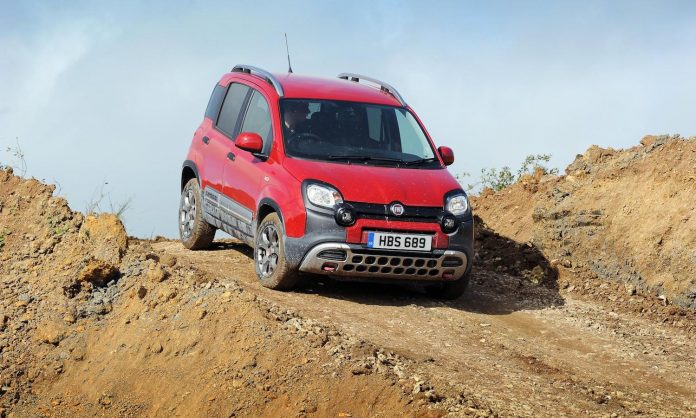
The Fiat Panda was a city car-sized five-door hatchback that was part of the Fiat range for about 12 years. Unusually, it is also offered either as a regular city car or as a 4×4 version with very decent off-roading ability that outperformed most conventional family SUVs.

The Panda was launched back in 2012 and received minor updates throughout its life. It was finally discontinued in the summer of 2024 to make way for the all-new Fiat Grande Panda arriving in 2025.

In 2018, the Panda scored zero stars in a Euro NCAP crash test – the worst score ever recorded by the safety organisation. There was substantial criticism of Fiat and calls for the car to be withdrawn from sale, but the car remained in production and on sale across Europe until the summer of 2024.

Despite its safety record, the Fiat Panda continued to receive mostly positive reviews from the UK motoring media, although the scores gradually declined over time as they would for any car that has been on sale for almost a decade. The regular model Panda was warmly praised for its city driving dynamics, while the 4×4 version was similarly acclaimed for its considerable off-road ability.

It’s a great shame that the Panda has such a terrible safety score, because the rest of the time it should be very reliable and very cheap to run as a used car. According to exclusive costs provided to The Car Expert by our data partners (see below), it has outstanding results in our reliability and running cost categories.

As of February 2026, the Fiat Panda holds a Used Car Expert Rating of C, with a score of 64%. It scores top marks for its low running costs and CO2 emissions, as well as its excellent reliability record. However, its safety rating is terrible and media review scores are poor.

Key specifications

Body style: Small five-door hatchback
Engines: petrol (with mild hybrid assistance)
Price: From £14,740 on-road

Launched: Spring 2012
Last updated: Spring 2019
Replacement due: TBA

Media reviews

Highlighted reviews and road tests from across the UK automotive media. Click any of the boxes to view.

The Car Expert

Auto Express

Car

Car Keys

Carbuyer

Carwow

Daily Mail

Evo

Green Car Guide

Heycar

Honest John

Parkers

The Sun

The Sunday Times

The Telegraph

Top Gear

Safety rating

Independent crash test and safety ratings from Euro NCAP

Overall score: 0 stars
Date tested: December 2018
Date expired: January 2025
Read the full Euro NCAP review

Adult protection: 45%
Child protection: 16%
Vulnerable road users: 47%
Safety assist: 7%

Note about the Euro NCAP rating

The current Fiat Panda was first tested by Euro NCAP when it was originally launched in 2011 and scored four stars. However, safety standards have increased over the course of this decade.

When the Panda was re-tested in 2018 against the latest criteria, it scored zero stars. In fact, it was the worst new car result in Euro NCAP’s history. The safety organisation said: “With nothing more than a seatbelt reminder scoring points in Euro NCAP’s Safety Assist box, the vehicle fails to reach even a single star.”

Eco rating

Independent economy and emissions ratings from Green NCAP

Model tested: 0.9 Twinair 4×2 manual

Overall score: 0 stars
Date tested: February 2019
Read the full Green NCAP review

Clean Air Index: 0 / 10
Energy Efficiency Index: 6 / 10

Model tested: 1.2 8V Petrol 4X2 Manual

Overall score: 2.5 stars
Date tested: February 2021
Read the full Green NCAP review

Clean Air Index: 4.3 / 10
Energy Efficiency Index: 5.7 / 10
Greenhouse Gas Index: 4.8 / 10

Additional eco rating

The Fiat Panda 1.2-litre petrol manual received a 2.5 star rating from Green NCAP in February 2021. This is a separate result from the one illustrated above, which is for the 0.9-litre engine.

Green NCAP said: “The car is tested here with the four cylinder 1.2 litre petrol engine, now Euro 6d-Temp compliant. With only a three-way catalyst by way of exhaust after-treatment, control of pollutant emissions is limited and, in the more challenging tests – cold ambient temperature, high-load highway – CO is high enough for all points to be lost. However, even without a gasoline particulate filter, particulate number is never excessive, in the laboratory or on the road. Energy efficiency is not impressive for such a small car.

“Overall, the Panda 1.2 petrol delivers respectable performance all-round and achieves a fair 2½ star rating.”

The written rating only applies to the 1.2-litre petrol manual version of the Fiat Panda, while the illustrated example only applies to the 0.9-litre petrol manual version. These results do not imply similar ratings for any other engine and gearbox combinations in the range.

Reliability rating

Reliability data provided exclusively for The Car Expert by MotorEasy

All data based on MotorEasy average workshop costs for extended car warranty claims

The Fiat Panda has an excellent reliability score of 90%, according to exclusive extended warranty data provided by our partners at MotorEasy. This score covers both generations of Panda (2012-2024 and pre-2012), although it’s based on a relatively small number of repair claims to date.

In addition to being very reliable, the Panda is one of the cheapest new cars to repair if it goes wrong, with an average repair bill of about £230.

Almost half of all reported problems with the Panda relate to its suspension, with an average repair bill of £140. The other area to look out for is the braking system, where repairs are about £260.

If you’re looking at a used Fiat Panda, make sure any extended warranty cover you purchase covers all of these potential problem areas.

Running cost rating

Monthly cost of ownership data provided exclusively for The Car Expert by Clear Vehicle Data

Fuel consumptionAverageScore
Petrol models55 mpgB
CO₂ outputAverageScoreVariationScore
Petrol models111 g/kmA
Insurance groupAverageScoreVariationScore
All models7A
Service and maintenanceCostScore
Year 1£116A
Year 2£378A
Year 3£612A
Year 4£805A
Year 5£1,103A
Overall£3,014A

The Fiat Panda is a very cheap car to own and run, according to whole-life cost numbers provided exclusively to The Car Expert by our data partner, Clear Vehicle Data.

The only thing stopping the Panda from getting a perfect set of straight-A scores is its fuel economy, which scores a B and is merely ‘very good’ rather than ‘outstanding’. However, for a petrol-powered car with no hybrid assistance (mild hybrids don’t really count), this is actually an excellent score.

You will struggle to find a car that’s cheaper to live with than a Fiat Panda.

Awards

Trophies, prizes and awards that the Fiat Panda has received

2021

  • 4×4 Magazine Awards – Best Crossover (Panda Cross)

2019

  • 4×4 Magazine Awards – Best Crossover (Panda Cross)

2018

  • 4×4 Magazine Awards – Best Crossover (Panda Cross)

2014

  • Towcar of the Year Awards – Best tow car under £16,500

2013

  • 4×4 Magazine Awards – Best Mini 4×4 (Panda 4×4)

2012

  • BBC Top Gear Awards – SUV of the Year (Panda 4×4)

Similar cars

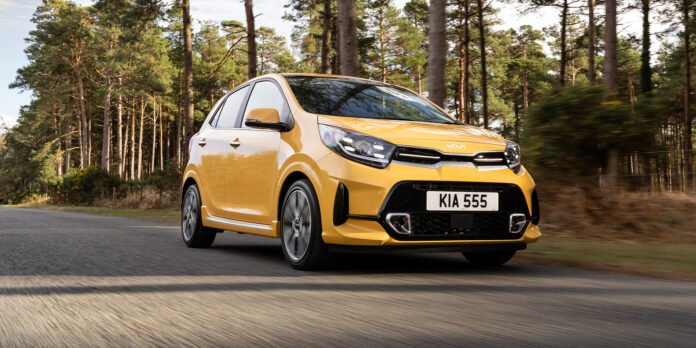
Citroën C1 | Fiat 500 | Hyundai i10Kia Picanto | Peugeot 108 | SEAT Mii | Skoda Citigo | Smart Forfour | Suzuki Ignis | Suzuki Jimny | Toyota Aygo | Volkswagen Up!

More news, reviews and information about the Fiat Panda at The Car Expert

Everything you need to know about Fiat

Everything you need to know about Fiat

The 10 worst new cars on sale in 2024

The 10 worst new cars on sale in 2024

Electric cars – what’s on sale and what’s coming in 2024?

Electric cars – what’s on sale and what’s coming in 2024?

The 10 worst new cars on sale in 2023

The 10 worst new cars on sale in 2023

The cheapest new cars on sale in 2022

The cheapest new cars on sale in 2022

Fiat extends (RED) range to include the Panda and Tipo

Fiat extends (RED) range to include the Panda and Tipo

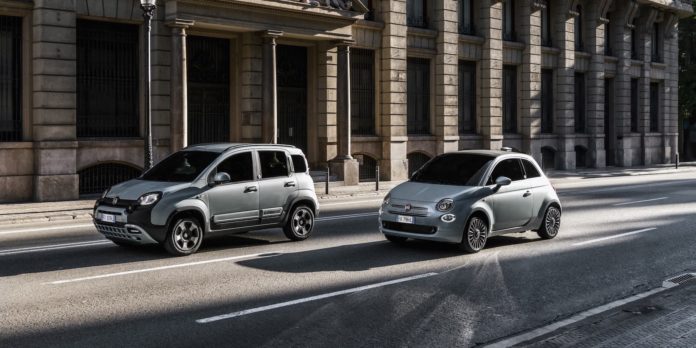
Pricing and specs for Fiat 500 and Panda mild hybrids

Pricing and specs for Fiat 500 and Panda mild hybrids

Geneva: Is Fiat Centoventi concept the next Panda?

Geneva: Is Fiat Centoventi concept the next Panda?

Fiat Panda branded a ‘zero-star car’ for safety

Fiat Panda branded a ‘zero-star car’ for safety

Fiat Panda Cross review

Fiat Panda Cross review

Buy a Fiat Panda

If you’re looking to buy a new or used Fiat Panda, The Car Expert’s partners can help you find the right car

Motors 600x300

Find your next used car with Motors. Find out more

Auto Trader logo 600x300

Find your next new or used car with Auto Trader. Find out more

Carwow logo 600x300

Find your next new or used car with Carwow. Find out more

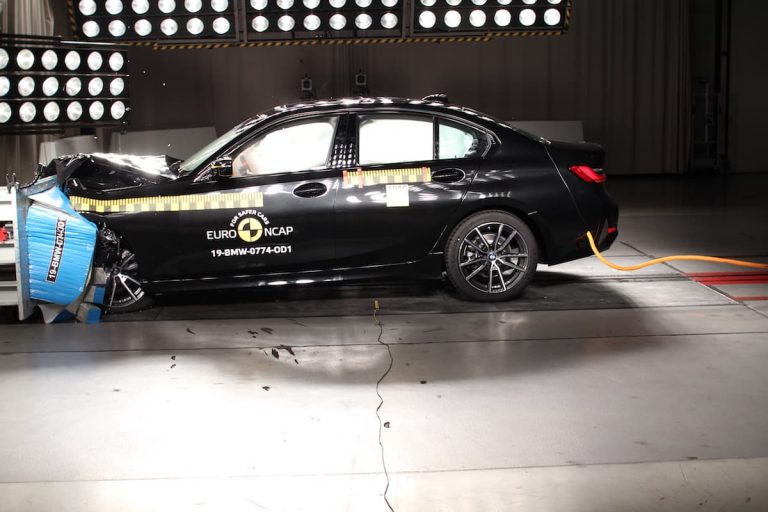
Five-star safety for latest BMWs

The all-new BMW 1 Series and 3 Series models have both been awarded a five-star safety rating by Euro NCAP, while the new Peugeot 208 and updated Jeep Cherokee scored four stars.

The new BMW 3 Series received particular praise, with the best results of any large family car tested by Euro NCAP against the 2018/2019 protocols.

Meanwhile, the all-new Peugeot 208 and facelifted Jeep Cherokee both scored four stars. The Peugeot result is something of a surprise, given that it is a brand new model and the previous 208 range scored the full five stars (as did the Peugeot 207 before that).

The Peugeot 208 narrowly missed out on a five-star rating, according to Euro NCAP, as it met the five-star requirements in all areas except the protection of vulnerable road users (pedestrians and cyclists, basically), which resulted in it being docked a star. So you’ll probably be OK if you’re inside the Peugeot but not so much if you get run down by one…

The Jeep, on the other hand, is a mid-life update rather than an all-new car. Back in 2013 when it was launched, the Cherokee scored five stars, and this new result highlights the tougher safety standards that cars must meet in 2019 to get a top score.

Euro NCAP described the Jeep Cherokee’s result as a “good but unexceptional performance across the board”, although the body did note that it was a considerably better result than the new Wrangler, which scored a lamentable one-star rating last year.

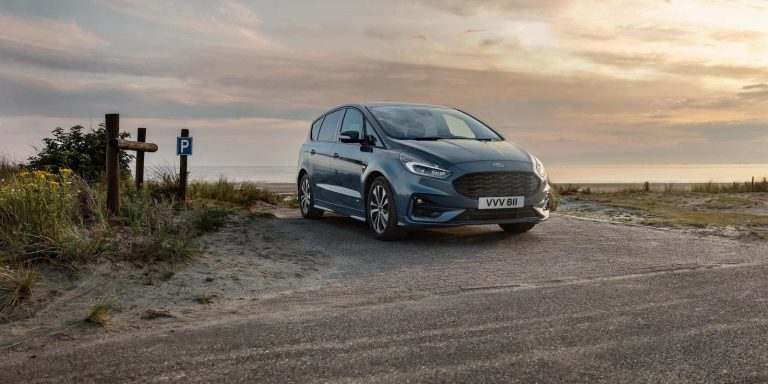
Ford breathes new life into S-Max and Galaxy models

0

Ford has announced a series of updates to its S-Max and Galaxy models, bolstering the appeal of the family-friendly seven-seaters.

Though the S-Max is pitched as the sportier variant – and the Galaxy the larger, more practical model – both have received matching changes as part of the refresh.

Each car gets chrome trim around the grille and fog lights, along with special black inserts on the ST-Line versions of the S-Max. In addition, 19-inch alloy wheels are available as an optional extra on both cars.

Ford Galaxy 2019 | The Car Expert

New electric seats can adjust in up to 18 ways, and aim to provide relief to those who suffer from back pain. An electric third row can be specified on the Galaxy too, while both cars offer the flexibility of 32 different seat and boot combinations.

A new FordPass Connect feature has been introduced too. It allows drivers to check the status of their vehicle remotely via a smartphone app, while also allowing the car to receive over-the-air updates which can provide information on live traffic updates.

They also come with the same 2.0-litre EcoBlue diesel engines that the pair received as part of a previous 2018 refresh, with outputs of either 150hp or 190hp available. Both can be specified with either a manual or automatic gearbox.

Both cars are available to order now, with prices start from £30,490 for the S-Max and £33,210 for the Galaxy.

Britain’s best-selling cars – September 2019

September is one of the two biggest months of the year for new car registrations – along with March – because of how the UK number plate system works.

Private new car buyers tend to be more interested in having the latest number plates than fleet buyers. A higher proportion of private car buyers also means that the type of cars that sell well in March and September can be quite different from the rest of the year.

Private buyers tend to buy fewer diesels, more EVs and hybrids than hard-nosed fleet buyers, who are driven by the overall bottom line and are generally far less interested in environmental matters. Consumers also tend to buy more small cars and more aspirational models, which means the registration results for each manufacturer may be completely different to other months of the year.

It was good news for Alpine, Bentley, Dacia, DS Automobiles, Lexus, Mazda, MG, Mini, Porsche, Renault, SEAT, Skoda, Suzuki and Volkswagen (and presumably Tesla), who all recorded sales increases of at least 10% year-on-year for September.

Meanwhile, it was a disappointing September for Abarth, Citroën, Fiat, Honda, Hyundai, Infiniti, Jaguar, Jeep, MaseratiSmart, SsangYong and Subaru, whose numbers fell by more than 10% compared to the same month last year.

The top ten list also saw some major shifts in September, so let’s have a closer look:

The UK’s ten best-selling cars, September 2019

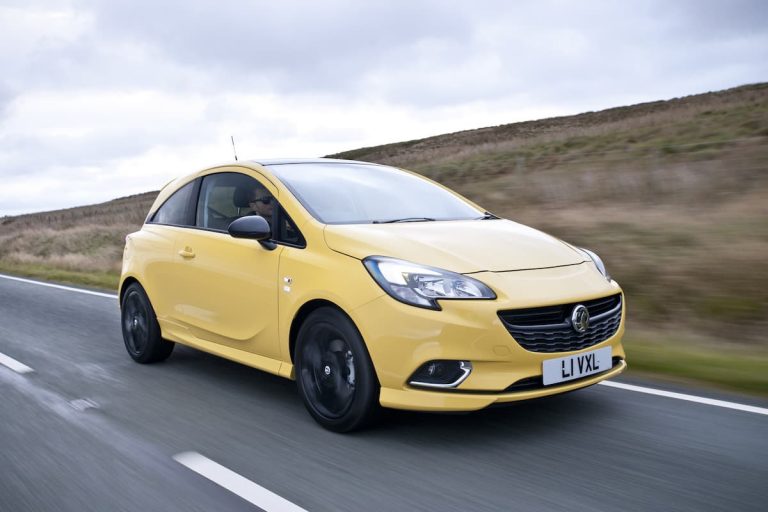
1. Vauxhall Corsa

Vauxhall Corsa 2017 - ratings and reviews | The Car Expert

The Vauxhall Corsa achieved a mighty victory in September, becoming the first car in two years to knock the all-powerful Ford Fiesta off the top of the charts.

September has always been a good month for the Corsa, which continues to yo-yo its way up and down the sales charts in 2019, having only ranked ninth in August and now moving up to second place (up from fourth) in year-to-date registrations . With stocks presumably running low ahead of the all-new model arriving in January, this was probably the last hurrah for the current Corsa.

It might have been the best seller, but the Vauxhall Corsa only holds an Expert Rating of 64%, which is the lowest score among this month’s top ten cars according to our Expert Rating aggregator.

2. Ford Fiesta

Ford Fiesta news, reviews, safety and eco ratings | Britain's best-selling cars | The Car Expert

All good things must come to an end, and so it is with the Fiesta’s two-year unbroken run atop the UK new car sales charts. Mind you, it wasn’t what you’d call a disaster – the Fiesta only dropped to second and there’s every chance it will return to the number one position next month.

The Fiesta currently holds an Expert Rating of 86% in The Car Expert’s all-new New Car Ratings database, which compares reviews from across the UK motoring media. This is higher than any other car in the supermini class and the second-highest rating in this month’s top ten best-sellers list, so it seems that motoring journalists and the buying public are in agreement on the Fiesta’s qualities.

3. Mercedes-Benz A-Class

Mercedes-Benz A-Class 2018 - ratings and reviews | The Car Expert

The darling of the aspirational small car set continues to be the Mercedes-Benz A-Class which jumped up to third place in September, a strong performance that also elevates the A-Class to fifth in year-to-date results ahead of the Nissan Qashqai.

The Mercedes-Benz A-Class has an Expert Rating of 77% in The Car Expert’s New Car Rating system. The overall score is dragged down somewhat by lower ratings from a couple of performance car titles (Evo and Top Gear), otherwise it would be a solid 80% or more. However, it does rank highly for safety, winning awards from Euro NCAP and Thatcham for its protective qualities.

4. Mini hatch

Mini three-door hatch (2018) ratings and reviews | The Car Expert

Another popular car with private buyers has always been the Mini hatch, so it’s not surprising to see it doing well in September. The Mini hatch range bounced back from outside the top ten to claim fourth spot this month, which is the first time we’ve seen it in the best-sellers chart since June. The Mini has been yo-yoing its way up and down the sales charts this year, and September’s good result has helped push it up one place to seventh in the year-to-date results.

The Mini hatch holds a very solid score of 80% in our New Car Ratings aggregator, which is better than most cars in its class despite being older than many of its rivals.

5. Nissan Qashqai

2019 Nissan Qashqai wallpaper | The Car Expert

The Qashqai was only the the second-most popular British-built new car in Britain in September thanks to strong sales for the Mini hatch. It’s also slipped to sixth place in year-to-date registrations. However, it was still the leading SUV/crossover model as usual, and makes a reappearance in the top ten chart after disappearing in August.

The Nissan Qashqai currently holds an Expert Rating of 74% in our New Car Ratings database, which is midfield for the compact crossover segment and in the bottom half of scores for a Top Ten-selling car.

6. Ford Focus

Ford Focus 2018 - ratings and reviews | Uk's best-selling cars | The Car Expert

The flip side of a strong private sale month is that fleet favourites tend to suffer in comparison. In that respect, the Ford Focus has done well to end up in sixth position and edge out its arch rival, the Volkswagen Golf, for the first time since May. The two cars are practically neck-and-neck in year-to-date registrations, with the Focus now less than 600 units behind the Golf.

The Ford Focus currently holds an Expert Rating of 81% in our New Car Ratings database, just 1% lower than the Golf, and was also listed by safety gurus Thatcham Research as one of the ten safest cars for 2019.

7. Volkswagen Golf

Volkswagen Golf 2017 - ratings and reviews | The Car Expert

The Golf was Volkswagen’s only car in the Top Ten this month, with the Polo and T-Roc falling out altogether. It wasn’t a great month for the Golf, either, with an even bigger drop than the Ford Focus pushing it down to seventh place. Plus the success of the Vauxhall Corsa means it has slipped back to third in the year-to-date numbers, with a narrow margin of just over 500 units back to the Focus.

Despite an all-new eighth generation set to be unveiled before Christmas, the current Volkswagen Golf still holds an Expert Rating of 82% in The Car Expert’s New Car Ratings database, which is the best rating of any car in its class.

8. Kia Sportage

Kia Sportage (2018) ratings and reviews | The Car Expert

Another re-entry thanks to the September plate change was the Kia Sportage. It was a good month for Kia’s biggest-selling model, which remains in tenth place in year-to-date registrations.

The Sportage currently holds an Expert Rating of 72% in our aggregated New Car Ratings database, which is midfield for medium SUVs but a couple of points behind the best-selling Nissan Qashqai and quite a margin behind the top cars in the mid-size SUV segment.

9. Ford Kuga

Ford Kuga 2017 - ratings and reviews | The Car Expert

It was the third month in a row for the Ford Kuga in the top ten in September, falling back from sixth place in August. The current model is not long for this world, with an all-new replacement announced back in March. Year-to-date the Kuga remains in eighth place, overtaking the Volkswagen Polo but having been leapfrogged by the Mini hatch.

The Kuga has a relatively poor Expert Rating of 65% on our New Car Ratings aggregator, which is the second-lowest score for a top-ten car. Ford dealers will be keenly awaiting the new model to take the fight to the Nissan Qashqai, although the company hasn’t announced when it will arrive in the UK.

10. BMW 3 Series

BMW 3 Series (2019) ratings and reviews | The Car Expert

Rounding out the Top Ten is a debut appearance for the all-new BMW 3 Series, with many buyers clearly waiting for the new 69-plate season to start before taking delivery.

At this stage, the 3 Series is only available as a saloon, with estate (known as Touring) models due to reach UK dealerships in the coming months.

With a score of 90%, the new BMW 3 Series has comfortably the highest Expert Rating of any car in the top ten, according to our unique New Car Ratings aggregator. As more variants of the new 3 Series make their way to UK roads for testing, it’s possible that this could start to change to some degree.

Could more electric cars lead to an 80mph motorway speed limit?

The speed limit on some motorways and dual carriageways could be raised to 80mph as more motorists buy electric vehicles.

The suggestion was made by transport secretary Grant Shapps at the Conservative Party conference, as he also suggested limits could also be lowered to 20mph outside schools for safety reasons.

Shapps said that the suggestion of raising speed limits on the motorways was previously put forward in 2011, but was scrapped as it was warned the higher speeds could generate an extra 2.2 million tonnes of CO2 each year.

However, with the popularity of electric vehicles constantly increasing, the proposal could be reconsidered.

Speaking at a transport debate in Manchester, Mr Shapps said: “On 80mph motorway speed limits: I’ve been thinking about this issue and maybe even sought advice on the subject of late. I think there is an argument for looking at our speed limits, both in terms of higher speed limits and actually lower limits – 20mph outside of schools.

“When it was last looked at in 2011, reviewing the last submission to ministers on the subject, it was thought the carbon emission addition would be too great.

“But since I am a driver of an electric car myself, I got to thinking about whether that would still be the case. I think there is an argument that once you have increased the level of electrification and therefore decreased or entirely removed carbon, that you might look at those things again.”

Last year, Highways England boss Jim O’Sullivan said that certain sections of the road network were ready for higher limits, but it was only ‘public opinion’ that was stopping the change.

The Alliance of British Drivers shares the sentiment, calling the 70mph limit ‘outdated and discredited’, arguing that statistics show there are ‘virtually no sober, responsible drivers involved in road traffic accidents where their speed is the primary definite causation factor’.

However, Nicholas Lyes, head of policy at the RAC motoring organisation, said that although the transport secretary made a good point about emissions, he called for ‘compelling evidence’ that increasing the limit would not impact safety.

He said: “Any move to raise speed limits on motorways to 80mph is fundamentally an issue of safety. Part of the problem is that at present, there is a high proportion of drivers that break the 70mph limit and drive nearer to 80mph. If the speed limit were to be changed to 80mph, there is a risk that the new default becomes even higher.

“Our motorways are currently the safest roads on the entire network, and we wouldn’t want to see anything happen that changes this. So, unless there is compelling evidence that a change in the limit on some stretches of road would not adversely affect safety, the current limit should be retained.”

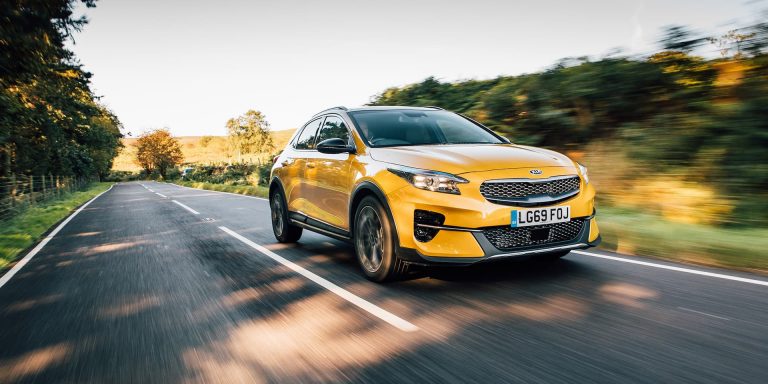
Kia XCeed review

60-second summary

What is it?
The Kia XCeed is a new compact-SUV variant of the brand’s core family car.

Key features
Strong styling, higher stance, revised suspension

Our view
The Kia XCeed sits above the Ceed hatchback, providing some of the perceived presence and space advantages buyers are apparently looking for without the need to spend out on a ‘proper’ SUV such as a Sportage.

The car looks impressive, rides well, and maintains the quality of fit, finish and technology we’ve become used to in the Ceed range. But the question remains as to whether it offers enough that is different to a standard Ceed to justify its rather higher selling prices.     


Full review

Introduction

New compact SUVs continue to appear in numbers, almost bursting an already saturated market, but it’s a surprise to see yet another one from Kia – a brand that already offers an SUV range stretching from Niro and Stonic to Sportage and Sorento.

The Kia XCeed is not a typical compact SUV, however. Kia describes it a CUV, a ‘Crossover Utility Vehicle’ and ‘a more sporty alternative’, but basically it’s an example of the very latest trend to segment slicing. Apparently there is enough space between typical family hatches and traditional compact SUVs to justify a whole new type of car ­– bigger than a hatch, not quite as in-your-face as a ‘proper’ SUV.

Kia is following a road already gone down by the likes of Ford with the Focus Active. The XCeed is the fourth and final member of the latest Ceed family and basically a mutant version of the hatch.

This car is, however, much more than a case of taking the basic Ceed shell, jacking up the ground clearance (by just over 4cm) and beefing up the wheelarches to stretch the width by a couple of centimetres. It is a bespoke body shape, the only body panels shared with the Ceed being the front doors. The extra length of nearly 9cm mostly goes into extended front and rear overhangs, the latter creating a bigger boot.

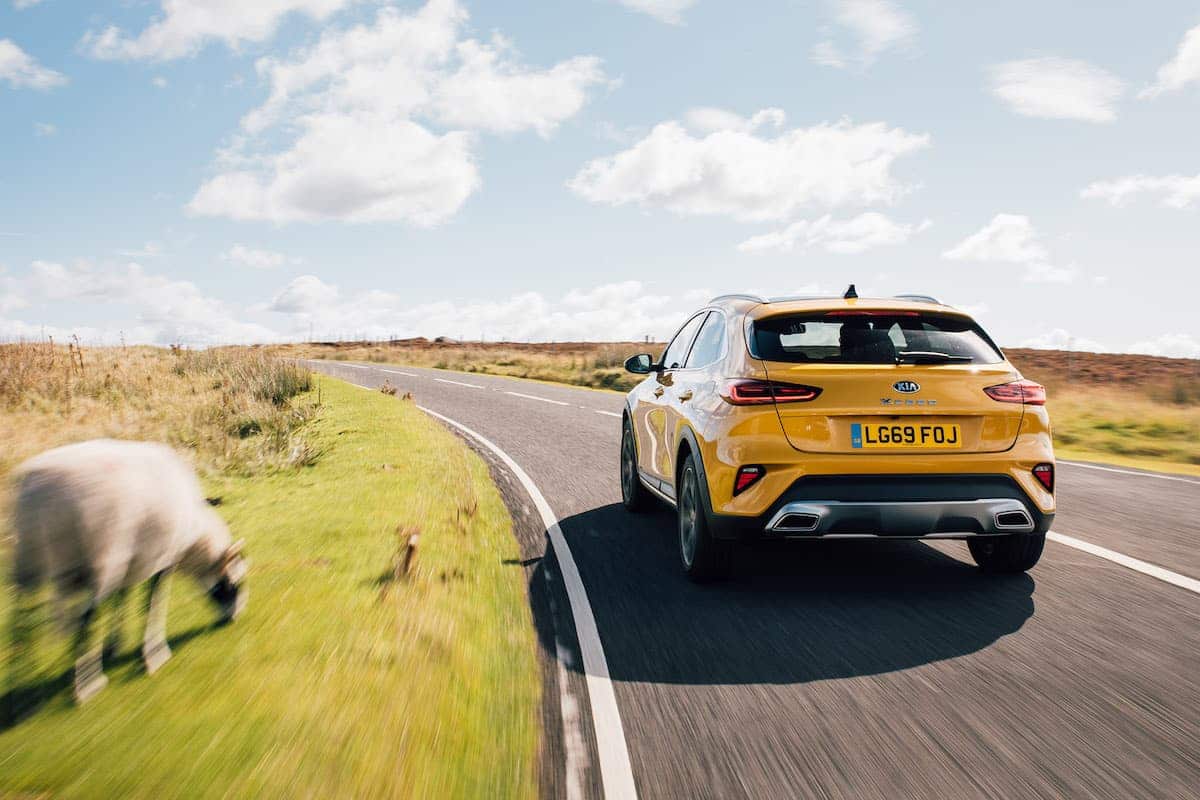
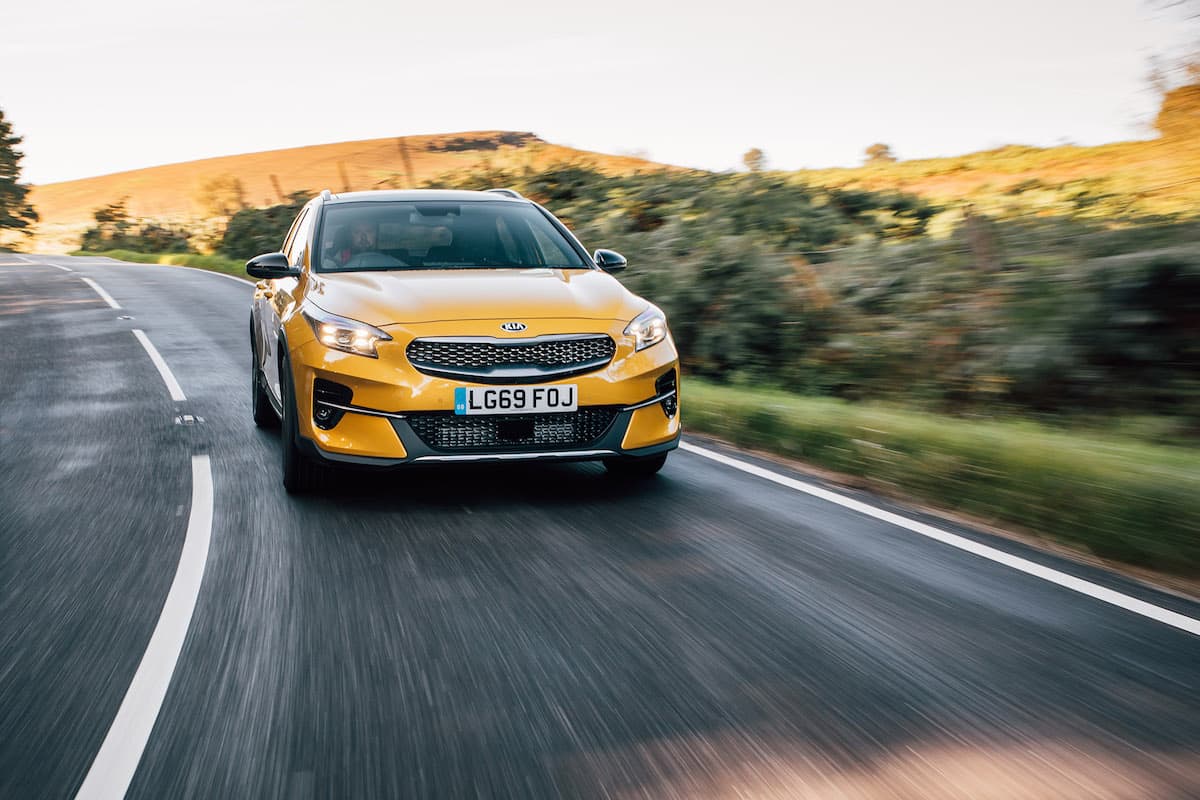
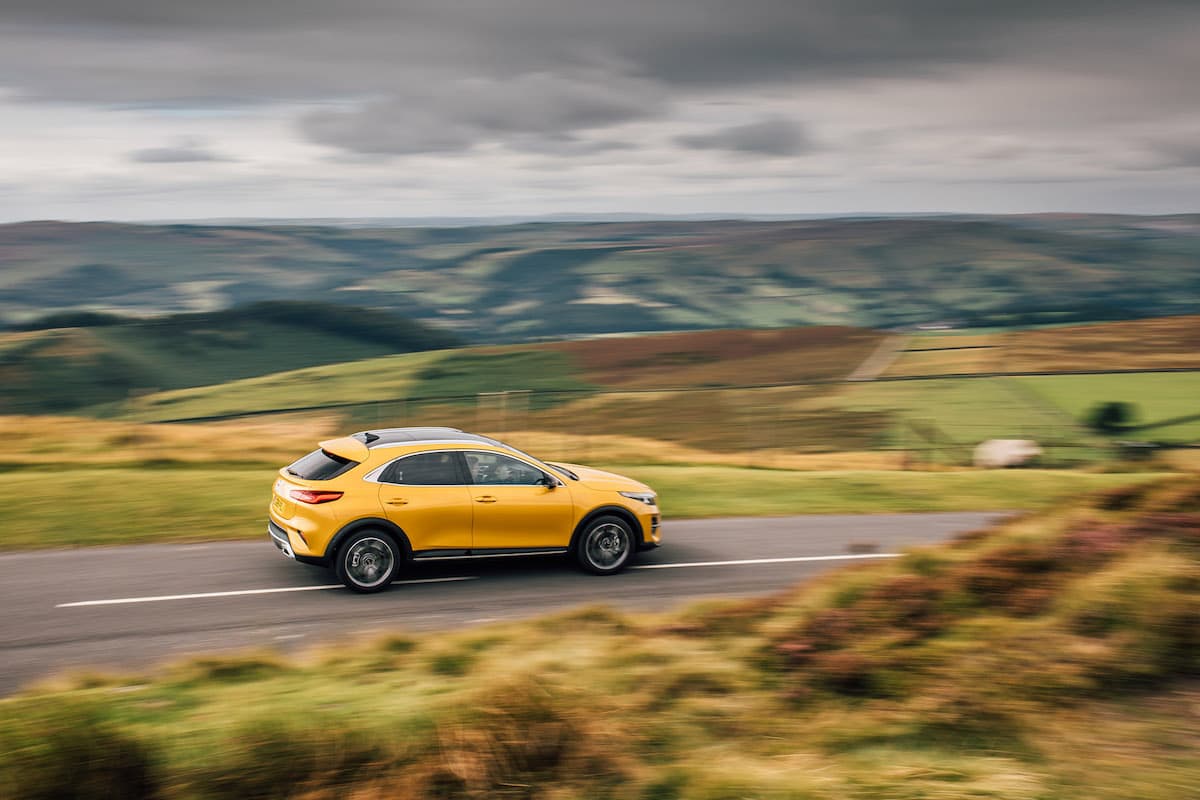
Whichever angle one views the XCeed from, it looks like a muscular car and definitely not like an SUV. Visually it hits the spot – this is an attractive-looking car, certainly much more so than the typical SUV. 

And while some might question the wisdom of launching yet another all-new model line in what we are constantly told are challenging times for the international automotive industry, Kia is confident of a market for its new model. It expects the XCeed to take sales from existing crossover SUVs like the Nissan Qashqai, and predicts it will eventually account for half of all sales in the Ceed range.

  • Kia XCeed review 2019 - front view | The Car Expert
  • Kia XCeed review 2019 - rear view | The Car Expert

Buying and owning a Kia XCeed

Being a member of the Ceed range, the XCeed generally replicates the hatch’s choices in terms of powertrains and trim levels. There are four engine options, two petrol and two diesel – a plug-in hybrid variant will join the range next year.

Three trim levels follow Kia convention, dubbed 2, 3 and First Edition. The latter is supposed to be on offer for a limited period but we confidently expect it to be succeeded by something similar.

Prices start at £20,795 which buys a 2 grade with a 1.0-litre petrol engine putting out 120hp and matched to a six-speed manual transmission. For an extra £1,250 one can have the 1.6-litre diesel of 115hp, which saves 15g/km of CO2 emissions and extends the fuel economy by almost 7mpg.

Highlights of the 2 grade include cruise control, keyless entry, auto headlights and on the inside an eight-inch touchscreen with DAB radio and a reversing camera. There’s no satnav but this is less of an issue with Apple CarPlay and Android Auto smartphone compatibility included, allowing the use of navigation apps.

Those buying cars in 3 grade, costing from £23,295, can choose from all four engines – the 1.0-litre petrol joined by a 1.4-litre with 140hp and a second 136hp version of the 1.6 diesel offered. The 1.4 petrol can also be specified with the seven-speed dual-clutch auto transmission.

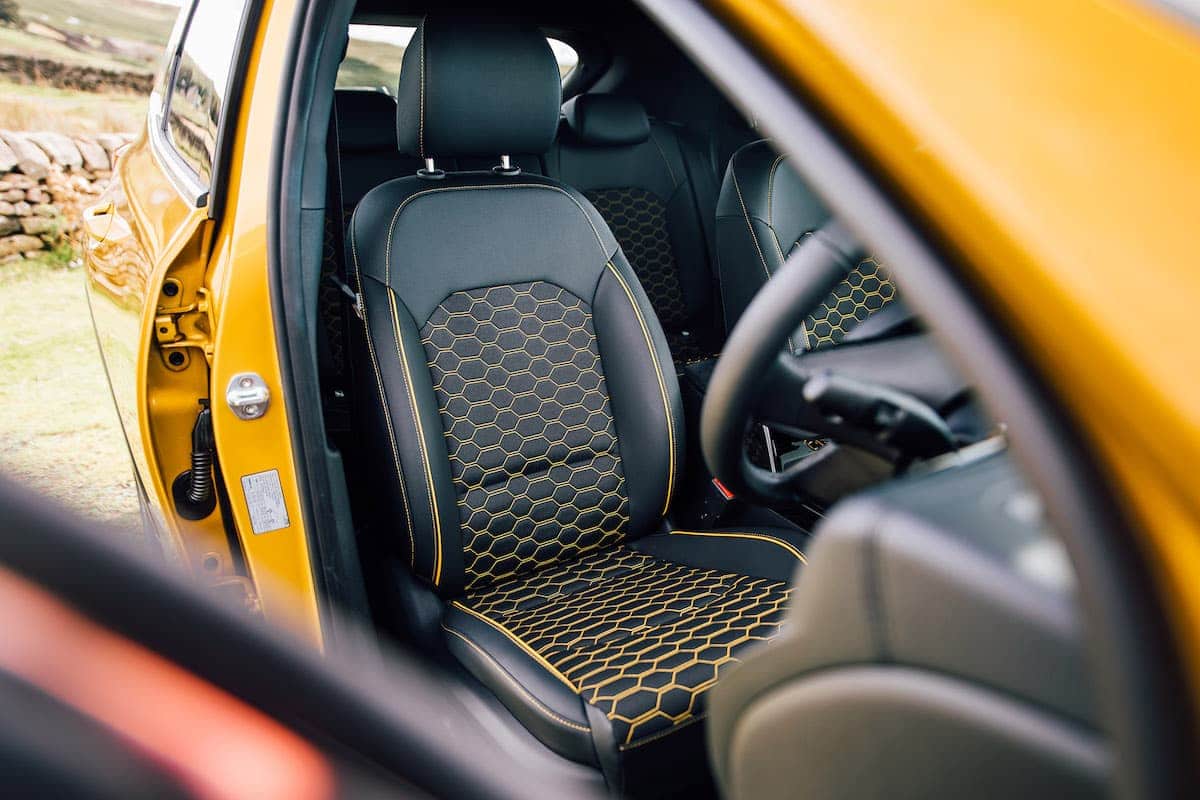
Niceties added to 3 grade cars include bigger alloys, auto wipers, semi-powered and heated front seats with faux leather bits, parking sensors, dual-zone air-con and a larger, ten-inch touchscreen with TomTom sat nav. A larger, colour digital info cluster is added to the dash while an electric parking brake and keyless entry and start are also included.  

Finally there is the range-topping First Edition grade, which can only be specified with the 1.4 petrol engine, with manual gearbox at £28,095 or auto for £29,195. It’s all about technology this model, the clever electronics including a parking assist system, even bigger centre touchscreen stretching past 12 inches, panoramic sunroof, electric tailgate… The outer rear seats are heated, there’s more of the faux leather, a premium eight-speaker sound system and wireless mobile charging.

Significantly, the First Edition includes a host of active safety aids, such as blind-spot and speed-limit warning and pedestrian and cyclist detection on the forward collision avoidance system (FCAS).

All XCeeds include the basic FCAS with its autonomous emergency braking, as well as a lane-keeping aid. The XCeed has not been subjected to a Euro NCAP crash test but its sister Ceed scored only four stars in its test, unusual in the current market. It was penalised for its results in the side-pole impact test and the pressure in the driver’s airbag.

As with other Kias, the XCeed comes with the brand’s seven-year warranty, which is well worth having.               

Inside the Kia XCeed

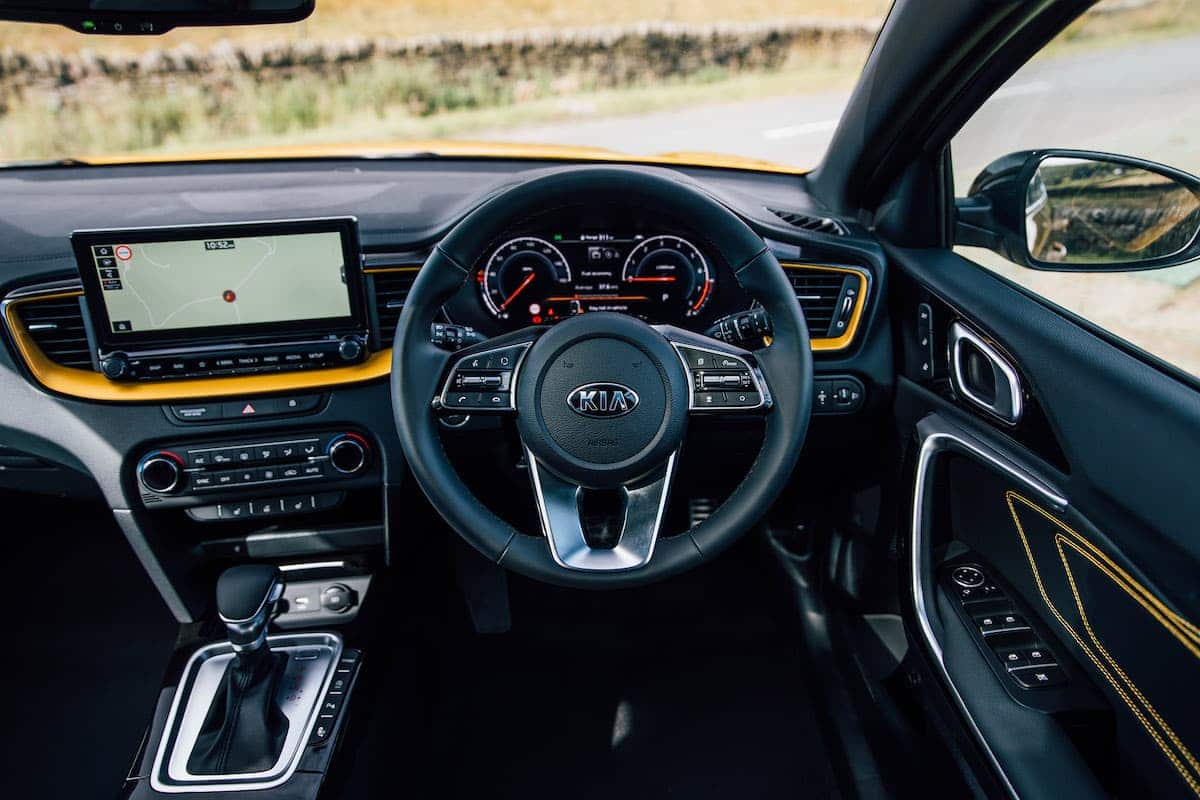
Stepping into the XCeed provides familiar surroundings as this is the same interior as the earlier launched Ceed and Proceed variants, the only differences between grades being basically the size of the touchscreen – still a ‘floating’ variant somewhat stuck on to the top of the centre console – and on First edition versions some body-colour trim in such areas as the air vents.

  • Kia XCeed review 2019 - interior and dashboard | The Car Expert
  • Kia XCeed review 2019 - seat trim | The Car Expert

We liked the quality in the Ceed and we still like it in this car, with lots of soft-touch surfaces and not too much nasty plastic. With the exception of the sticky-up screen it’s all well integrated with strong horizontal lines.

One of the ‘raisons d’etre’ of the XCeed is to offer SUV-like space, and it partially meets the brief here. Sit in it and your hips will be around 4cm higher than in a Ceed, which means easier getting in and out, but the increase in general room is not really significant over its hatch sister.

There’s a 426-litre boot, which is 31 litres more than in the Ceed but also slightly smaller than in traditional compact SUVs such as the Nissan Qashqai. Mind you the XCeed is no traditional compact SUV.

Driving the Kia XCeed

Cars with both petrol engines and the higher-powered diesel were available to test at the launch event. Again these engines are familiar from other Ceed models and quality units.

The 1.0-litre petrol proved particularly impressive in general driving, only feeling forced when worked very hard and its 1.4 sibling providing not as major a power hike as its extra capacity would suggest – the 62mph sprint time varies by around two seconds with the 1.0-litre taking just under 11 seconds.

The diesel engines offer the best economy and emissions, and the higher-powered variant we tested was generally refined though a little rattly at start up.

The transmissions are not quite so impressive. Manual shifts can be a bit sloppy and indistinct while at times the seven-speed auto is slow in operation – of the two we’d prefer the manual.

  • Kia XCeed road test 2019 - rear view | The Car Expert
  • Kia XCeed road test 2019 - front view | The Car Expert
  • Kia XCeed road test 2019 - side view | The Car Expert

On the road, the higher stance of the XCeed is no disadvantage. There is an update here over the standard Ceed, the front axle fitted with ‘hydraulic rebound stoppers’. Basically the bump stops or ends float in hydraulic fluid, which damps out the shocks from nasty road surfaces before they reach occupants in the cabin.

What this translates to is a highly enjoyable car to drive, comfortable and relaxing – one could easily imagine clocking up many a mile in the XCeed. It is equally impressive in corners – we liked Kia’s quite recently introduced electric power steering in the Ceed and it works equally well in this format. Placing the car precisely is an easy process and it maintains its composure through a bend with not enough body roll to be of concern.

Verdict

The Kia XCeed is another effective model from the Korean manufacturer, with the same quality and impressive dynamics as its siblings in the Ceed line-up, just in slightly elevated, slightly more spacious surroundings.

The ‘slightly’ is however the relevant factor. We are not convinced that this car offers enough extra over the standard Ceed to justify spending around £2,000 more, or whether those in the market for an SUV should choose it instead of a Sportage which is not that much further in the price stakes.

Having said that, the current domination by the SUV of all things car-related means that it’s more than likely that the XCeed will indeed become the best-selling Ceed model.       

Good points

  • Visually attractive
  • Quality interior
  • Comfortable ride

Bad points

  • Less than impressive gearboxes
  • Key safety kit only available on higher-spec models
  • Not that different to the regular Ceed

Similar cars

Citroën C4 Cactus | Dacia Sandero Stepway | Ford Focus Active | Mazda CX-30 | MG ZS | Mini Countryman | Skoda Octavia Scout | Subaru XV | Suzuki SX4 S-Cross | Toyota C-HR | Toyota Corolla Trek | Volkswagen T-Roc

Key specifications

Make and model: Kia XCeed 1.4-litre T-GDi First Edition
Price (on-road): £29,195
Engine: 1.4-litre petrol
Transmission: Seven-speed automatic
Power: 140 hp
Torque: 242 Nm
0-62 mph: 9.2 seconds
Top speed: 124 mph
CO2 emissions: 134 g/km
Insurance group: 18A
Euro NCAP rating: TBA (Kia Ceed scored four stars in 2019)

Jaguar XF (2015 to 2024)

Summary

The Jaguar XF was a large executive saloon and estate model, and for most of its production life, the largest saloon in the Jaguar range after the end of production of the flagship XJ range in early 2019.

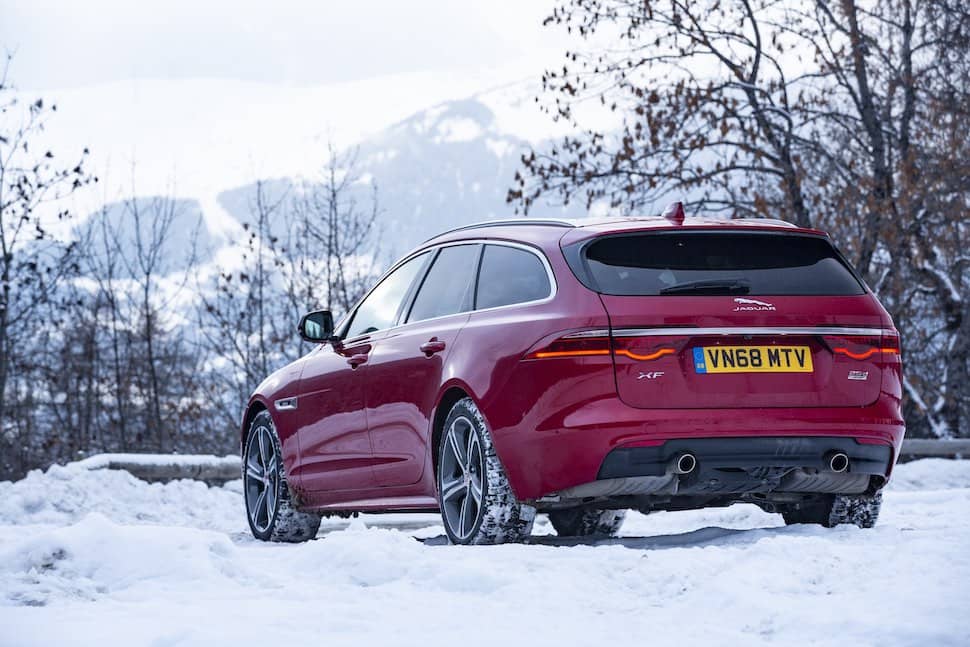
This was the second-generation model, which was launched onto the UK market in the summer of 2015. Initially only available as a saloon, an estate model (called the Sportbrake) was added in 2017. Both were built at Jaguar’s Castle Bromwich plant near Birmingham in England.

The XF ended production in Summer 2024 as Jaguar began shutting down production of its entire model range ahead of a complete brand relaunch.

The Jaguar XF received mostly positive reviews from the UK motoring media. It received particular praise for its driving dynamics and generous standard equipment levels, but was criticised for its interior quality and engine efficiency not being up to the same level as most of its major rivals.

As of March 2026, the Jaguar XF holds a Used Car Expert Rating of D with a score of 57%. It gets good grades for strong media reviews, but running costs and reliability have been poor, while its safety rating is now only average compared to newer cars.

The Car Expert Best of British horizontal banner

Key specifications

Body style: Large saloon and estate
Engines: petrol, diesel
Price when new: From £35,640 on-road

Launched: Summer 2015
Last updated: Spring 2019
Discontinued: Summer 2024

Media reviews

Highlighted reviews and road tests from across the UK automotive media. Click any of the boxes to view.

Featured reviews

More reviews

The Car Expert

Auto Express

Auto Trader

Business Car

Car

Carbuyer

Carwow

Company Car Today

Evo

Fleetworld

Green Car Guide

Heycar

Honest John

Parkers

The Sun

The Sunday Times

The Telegraph

Top Gear

Safety rating

Independent crash test and safety ratings from Euro NCAP

Overall score: 5 stars
Date tested: December 2015
Date expired: January 2022
Read the full Euro NCAP review

Adult protection: 92%
Child protection: 84%
Vulnerable road users: 80%
Safety assist: 83%

Notes on safety rating

The Jaguar XF was tested by Euro NCAP back in 2015 and awarded a five-star rating. However, this rating expired in January 2022 and is no longer valid as the car no longer meets the standards required for such a rating. This is normal practice, as Euro NCAP reviews its ratings on most cars annually with most ratings expiring after about six or seven years.

Although the rating has now expired, the score is still useful if you are comparing a used XF to vehicles of similar age – whose ratings will have probably also expired.

Eco rating

Independent emissions and efficiency ratings from Green NCAP

No eco rating

The Jaguar XF was not tested by Green NCAP during its production life.

Reliability rating

Reliability data provided exclusively for The Car Expert by MotorEasy

All data based on MotorEasy average workshop costs for extended car warranty claims

The Jaguar XF has a below-average reliability rating, according to workshop and warranty claim data provided by our partner MotorEasy.

Like other saloons in the Jaguar range, the most common repair than XE owners claim for is electrical repairs, which in this case cost about £500 on average. Gearbox problems are the most costly, with an average repair fee of £1,600. Fortunately gearbox issues are rare. Engine problems are much more common, with an average claim cost of more than £1,200.

If you’re looking at a used Jaguar XF, make sure any extended warranty cover you purchase covers all of these potential problem areas.

Running cost rating

Clear Vehicle Data logo close crop

Monthly cost of ownership data provided exclusively for The Car Expert by Clear Vehicle Data

Fuel consumptionAverageScore
Petrol models34 mpgD
Diesel models53 mpgB
CO₂ outputAverageScoreVariationScore
Petrol models191 g/kmD
Diesel models139 g/kmC
Insurance groupAverageScoreVariationScore
All models34D
Service and maintenanceCostScore
Year 1£331D
Year 2£728D
Year 3£1,232D
Year 4£1,496D
Year 5£1,979D
Overall£5,766D

The Jaguar XF is a mixed bag when it comes to running costs, according to whole-life cost numbers provided exclusively to The Car Expert by our data partner, Clear Vehicle Data.

Fuel economy is disappointing for petrol models but good for diesel-engined versions. Insurance costs and maintenance expenditure are predicted to be fairly average – not cheap but not overly expensive either.

Awards

Trophies, prizes and awards that the Jaguar XF has received

2021

  • DieselCar & EcoCar Top 50 – Best Executive Car

2020

  • DieselCar & EcoCar Used Car Awards – Best Used Executive Car

2018

  • SME Company Car of the Year Awards – Company Car of the Year + Large Company Car of the Year

2017

  • Auto Trader AwardsNew Car of the Year

2016

  • BBC Top Gear Awards – Best Saloon Car
  • Fleet World Honours – Best Executive Car
  • Fleet News Awards – Best Executive Car
  • DieselCar Awards – Best Executive Car
  • SME Company Car of the Year Awards – Best Director’s Company Car
  • Tow Car Awards – Best Tow Car, 1550-1699kg category

2015

  • Auto Express Awards – Design Award

Similar cars

If you’re looking at the Jaguar XF, you might also be interested in these alternatives

Audi A6 | Audi A7 Sportback | BMW 5 Series | DS 9 | Genesis G80Lexus ES | Maserati Ghibli | Mercedes-Benz CLS | Mercedes-Benz E-Class | Tesla Model S | Volvo S90 | Volvo V90

More news, reviews and information about the Jaguar XF at The Car Expert

Jaguar stops new car sales ahead of 2026 re-launch

Jaguar stops new car sales ahead of 2026 re-launch

Everything you need to know about Jaguar

Everything you need to know about Jaguar

Jaguar XE and XF gain range-topping 300 Sport models

Jaguar XE and XF gain range-topping 300 Sport models

Jaguar XF updated with more tech and lower prices

Jaguar XF updated with more tech and lower prices

Jaguar Land Rover recalls 44,000 cars for emissions breaches

Jaguar Land Rover recalls 44,000 cars for emissions breaches

Jaguar XF Sportbrake test drive

Jaguar XF Sportbrake test drive

Jaguar XF updated with efficiency improvements and more tech

Jaguar XF updated with efficiency improvements and more tech

Jaguar Land Rover expands Ingenium engine range

Jaguar Land Rover expands Ingenium engine range

Jaguar XF Sportbrake estate unveiled

Jaguar XF Sportbrake estate unveiled

Jaguar XF S review

Jaguar XF S review

Jaguar adds new engines to core models

Jaguar adds new engines to core models

Jaguar XF review

Jaguar XF review

Buy a Jaguar XF

If you’re looking to buy a used Jaguar XF, The Car Expert’s partners can help you find the right car.

Motors 600x300

Find your next used car with Motors. Find out more

Auto Trader logo 600x300

Find your next new or used car with Auto Trader. Find out more

Carwow logo 600x300

Find your next new or used car with Carwow. Find out more

Ford Mondeo Hybrid Estate test drive

There was a time when the Ford Mondeo was the king of the road. Back in the 90s, it was the repmobile of choice, regularly making its way to the upper reaches of the UK’s best-selling cars lists.

However, then the SUV revolution happened, and the Mondeo – and all large saloons and estates for that matter – saw sales slump as buyers preferred high driving positions and the premium allure of being seen in a 4×4.

The latest Mondeo, though, is still an enticing prospect. The cabin is spacious, there’s loads of room in the boot, and it looks good, too. This is the hybrid version, which is important because Ford reckons it will make up about half of all of Mondeo sales going forward.

What’s new about the Ford Mondeo Hybrid?

This isn’t the first time Ford has offered a hybrid version of the Mondeo, though it was only a saloon before, so this latest version is largely sporting the same updates seen across the rest of the range. So, there’s an updated exterior design, new alloy wheel designs, and improved interior fitment.

As you’ll hear in this review, though, the whole hybrid thing feels like an afterthought. This is most obvious when it comes to rear cargo space, with the electric motor and batteries bulging into the boot. It means that, with the rear seats up, boot space is actually slightly smaller than the non-hybrid saloon and over 100 litres smaller than the non-hybrid estate.

Opt for a Toyota Corolla Touring Sports and you get nearly 200 litres more from your hybrid estate – in a smaller car.

How does it look?

With Mondeo buyers moving on to premium SUVs, it’s no surprise to see that the latest versions of the estate have been trying to move the model upmarket. This updated Mondeo is no different, sporting a smart exterior that could easily be mistaken for the price point above.

  • Ford Mondeo hybrid estate – front view | The Car Expert
  • Ford Mondeo hybrid estate – rear view | The Car Expert

Despite its sheer size, it manages to look sharp and svelte up front, with the slim headlights and angular grille hiding its heft. Meanwhile, a range of high-quality metallic paints and chrome finishing help amplify this feeling.

What’s the spec like?

With Ford Mondeo Hybrid prices starting at £29,450, you get a decent amount of kit for your money. This includes 18-inch alloy wheels, twin digital displays in the instrument binnacle, heated front windscreen, DAB digital radio with satellite navigation, cruise control, and plenty more.

Our car was specified up to almost £34k, with the premium driver assistance pack coming highly recommended. It’s not cheap at £1,100, but adds a Sony DAB radio, parking assistants, rear-view camera and adaptive cruise control.

Again, though, that pesky Toyota rears its head to make the Mondeo a hard sell. The Corolla Touring Sports hybrid with equivalent performance starts at £28k, and while the kit isn’t quite as good and the premium feel falls behind inside and out, it’s better to drive and more practical.

Safety-wise, the Ford Mondeo range scored five stars from Euro NCAP when the current model was launched. That was back in 2014, however, and the car hasn’t been re-tested against the newer, tougher standards that are in place today.

What’s the Ford Mondeo Hybrid like inside?

The interior doesn’t differentiate itself from standard models in any way – though when you stop after a journey the dash displays a message that says “thanks for driving a hybrid!”, which is surely enough to make even the eco-friendliest of buyers roll their eyes.

Ford Mondeo hybrid estate – interior and dashboard | The Car Expert

Besides that, it’s standard Ford fare, with the decent (if far from class-leading) Sync infotainment system, eight-inch touchscreen, soft-touch materials and loads of space for front passengers. Rear passengers might find legroom a little bit less than you’d expect from a car this size, but it’s certainly not a deal-breaker.

What’s under the bonnet?

The hybrid system uses a 2.0-litre, naturally aspirated petrol engine and an electric motor that work together to power the front wheels. The combined power output is 185hp and 173Nm of torque, but it feels a lot less than that.

That’s largely thanks to the gearbox, which is a ‘power-split’ transmission that works a lot like a continuously-variable transmission (better known as a CVT). The idea is that it’s always at the optimum revs for economy and doesn’t have traditional gears.

However, it’s horribly unresponsive, reminding of the bad old days of CVTs, with a bizarre elastic sensation where what your right foot asks of the throttle pedal isn’t matched by the car.

What does work quite well, though, is the regenerative braking system, which is the only way to recharge the battery. Braking feel is largely consistent, so coming to a stop is typically smooth, something that couldn’t be said of the previous model.

What’s the Ford Mondeo Hybrid like to drive?

Unsurprisingly, then, those looking for something that will remind them of the joys of driving or simply be a pleasant companion during mind-numbing traffic jams should probably look elsewhere.

Even getting up to speed on a motorway is a noisy and frustrating experience, while a lack of throttle response means it can’t make up for its deficiencies in country lanes. Where the Ford Mondeo Hybrid does work quite well, though, is in town – when running in electric mode, throttle response is quicker, so slow-moving journeys are its forte – though the Mondeo’s huge size means it’s not exactly stress-free here.

Despite gearbox foibles, once you’re up to 70mph with the cruise control set, the Mondeo is a comfortable motorway mile-munching companion.

Verdict

It’s hard to understand just how Ford got the Mondeo Hybrid so wrong. It feels rushed and unfinished. The gearbox cripples the driving experience, making the big estate feel slow and unresponsive, while fuel economy isn’t even that impressive.

With more and more buyers looking towards electrified models, particularly in the business sector, this was an opportunity to claw back a few sales from SUVs. However, if you need the space of an estate and the low running costs of a hybrid, there are bigger and better rivals out there – the Toyota Corolla Touring Sports, for example.

Similar cars

Kia Optima | Mazda 6 | Peugeot 508 | Skoda Superb | Toyota Camry | Toyota Corolla Touring Sports | Vauxhall Insignia | Volkswagen Passat

Key specifications

Model as tested: Ford Mondeo Hybrid Titanium estate
Price: £33,845
Engine: 2.0-litre petrol engine and electric motor
Gearbox: continuously variable automatic transmission (CVT)
Power: 185 hp
Torque: 173 Nm
Top speed: 116 mph
0-60mph: 9.0 seconds
Fuel economy (combined): 46.3 mpg
CO2 emissions: 113 g/km
Euro NCAP safety rating: Five stars (2014)

All-electric Polestar 2 pricing confirmed

0

Prices for the upcoming Polestar 2 have been confirmed ahead of the car entering production early next year.

The all-electric performance fastback will cost from £49,900 when initial UK deliveries commence in June 2020. Polestar says that this is before government incentives, meaning that the 2 could have up to £3,500 removed from its price via the current plug-in grant and making the on-road price to customers £46,400.

Wait, what’s Polestar again?

Polestar is Volvo’s premium EV spin-off brand, and was previously the company’s in-house performance and racing operation. The brand name comes from the Pole Star, also known as the North Star, which is prominent in the Swedish night sky. It also explains the four-pointed star logo (apparently a three-pointed star is already used by another car company…).

The catchy ‘2’ model name refers to the fact that this – wait for it – Polestar’s second model, which followed the first model, called the Polestar 9000. Just kidding, it’s called the Polestar 1 and it’s not officially sold in the UK.

This latest model gets a 300kW electric motor and all-wheel drive, as well as suite of driver assistance systems. This includes a cutting-edge version of Pilot Assist, which can aid with the vehicle’s steering, throttle and brakes.

In addition, the Polestar 2 is the first car with an infotainment system powered by Android Automotive OS. This means that the car’s system has Google Assistant, Google Maps and Google Play Store all integrated into it. A full high-quality Harman Kardon sound system comes as standard as well.

The Polestar 2 also features a phone-as-key system which, as the name suggests, allows owners to open the car and start it via a smartphone.

Thanks to a sales model which keeps digital close, all Polestar vehicles will be purchased online directly from the company. However, the firm is planning to open a number of Polestar ‘Spaces’, where interested customers will be able to test drive and experience the cars in the metal before placing orders online.

Vauxhall Corsa tops the sales charts in September

New car registrations showed a small increase in September, according to the industry results published today, with the Vauxhall Corsa dethroning the Ford Fiesta from its long reign at the top of the charts.

Private new car sales were almost unchanged from the same month last year (an insignificant 0.1% increase), with the overall growth being driven by fleet increases of nearly 9% according to the data provided by the Society of Motor Manufacturers and Traders (SMMT).

Private sales were almost identical to the same month last year.

The caveat with getting too excited or disappointed with the results is that last year’s September results were highly distorted by changes to emissions legislation, which caught out several big brands and left them with very few cars to sell, but benefited other brands who had sorted themselves out in advance of the changes. Some of this year’s results are therefore corrections of unusual results last year.

September is also a big month for private new car buyers, who are attracted to the shiny new number plates, which significantly alters the make-up of the overall results.

Private buyers tend to buy fewer diesels, more EVs and hybrids, and more small and/or aspirational cars than hard-nosed fleet buyers, who are driven by the overall bottom line.

Diesel numbers not as bad as they look

It was another yet poor month for diesel-powered cars, but the reality was not quite as bad as the SMMT tries to make it look to suit its political agenda.

September is a big month for private new car sales, which impacts the overall results (good for EVs and hybrids, bad for diesels)

For the last few months, the SMMT has separated mild hybrids from normal petrol and diesel model, which has distorted the results. This is pretty dubious to start with, since mild hybrids are always powered by petrol or diesel and not by electricity alone, but it also distorts the overall diesel numbers by a greater proportion than other types of power source.

So rather than diesel cars showing a market share of 22.6%, it should really be considered to be 24.6% – still not great but much closer to what’s been happening for the rest of this year.

Being a big private sales month, the percentage of diesel sales is always lower in September than most months anyway, so declining consumer appetite for diesel cars is inevitably going to mean poorer results. The flip side of that is that the sales of electric and hybrid cars get a boost.

Fiesta toppled from throne as Corsa surges to the top

It’s been about two years since the top spot in the Top Ten was held by anything other than the Ford Fiesta, but that run has now come to an end. Mind you, the Fiesta has only slipped to second, and was only pipped by about 700 units, so it’s not exactly a crisis for Ford.

Quite a few changes this month, which we’ll explore in more detail in coming days

In the meantime, the departing Vauxhall Corsa has scored what will almost certainly be a final glory before its replacement model arrives in early 2020. New registration months are always strong for the Corsa, and Vauxhall has done well to topple its old rival in September.

As expected, the Tesla Model 3 – last month’s sales sensation – has fallen straight back out of the Top Ten. Looking at the overall results (Tesla does not declare its registration numbers to the SMMT), the Model 3 seems to have had another good month with similar sales to August. But August is a tiny month for the new car market and September is one of the largest, so everyone else had far more sales than August.

As always, we’ll look in more detail at the Top Ten in the next few days.

Good month, bad month

As always, there are winners and losers in the new car market. Comparing direct results to last year is difficult this month, as fuel economy and emissions legislation introduced last year significantly affected many brand results (in both good and bad ways). Therefore some of the names below are simply correcting big swings from last September’s results – particularly the Volkswagen Group brands, who were probably the hardest hit this time last year.

It was good news for Alpine, Bentley, Dacia, DS Automobiles, Lexus, Mazda, MG, Mini, Porsche, Renault, SEAT, Skoda, Suzuki and Volkswagen (and presumably Tesla), who all recorded sales increases of at least 10% year-on-year for September.

Meanwhile, it was a disappointing September for Abarth, Citroën, Fiat, Honda, Hyundai, Infiniti, Jaguar, Jeep, Maserati, Smart, SsangYong and Subaru, whose numbers fell by more than 10% compared to the same month last year.

Suzuki Ignis (2016 to 2025)

Summary

The Suzuki Ignis was a small city car-sized crossover model. It shared its name with a Suzuki model from the early 2000s, but this model was a completely different vehicle that was released in late 2016. It was sold in the UK until mid-2025.

Being a slightly more rugged version of a city car with optional four-wheel drive, the Ignis didn’t have many direct rivals. However, many conventional city cars would do a similar job for most buyers.

The Suzuki Ignis received mostly poor review scores from the UK motoring media, which declined notably over time after a positive start in 2016. It has also received a “Don’t Buy” recommendation from Which? magazine due to its relatively poor three-star safety rating.

The Ignis received praise for its quirky and distinctive styling, and general practicality for a city car. On the other hand, it was criticised for poor driving dynamics and cheap interior materials compared with other similarly priced vehicles.

As of March 2026, the Suzuki Ignis holds a Used Car Expert Rating of C with a score of 60%.

Key specifications

Body style: Small five-door crossover
Engines: petrol with mild hybrid assistance
Price when new: From £17,349

Launched: Winter 2016/17
Last updated: Summer 2019
Discontinued: Spring 2025

Media reviews

Highlighted reviews and road tests from across the UK automotive media. Click any of the boxes to view.

The Car Expert

Auto Express

Car

Carbuyer

Carwow

Daily Mail

Evo

Green Car Guide

Heycar

Honest John

Parkers

The Sun

The Sunday Times

The Telegraph

Top Gear

Safety rating

Independent crash test and safety ratings from Euro NCAP

Overall score: 3 stars
Date tested: November 2016
Date expired: January 2023
Read the full Euro NCAP review

Adult protection: 79%
Child protection: 79%
Vulnerable road users: 67%
Safety assist: 25%

Eco rating

Independent economy and emissions ratings from Green NCAP

No eco rating

The Suzuki Ignis was not assessed by Green NCAP during its production life.

Reliability rating

Reliability data provided exclusively for The Car Expert by MotorEasy

No reliability rating

As of March 2026, we don’t have enough reliability data on the Suzuki Ignis to generate a reliability rating.

The Car Expert’s reliability information is provided exclusively to us using extended warranty data from our partner, MotorEasy. As soon as MotorEasy has sufficient data on the Ignis, we’ll publish the score here.

Running cost rating

Monthly cost of ownership data provided exclusively for The Car Expert by Clear Vehicle Data

Fuel consumptionAverageScore
Petrol models55 mpgB
CO₂ outputAverageScoreVariationScore
Petrol models117 g/kmB
Insurance groupAverageScoreVariationScore
All models18A
Service and maintenanceCostScore
Year 1£139A
Year 2£425A
Year 3£661A
Year 4£857A
Year 5£1,242B
Overall£3,324A

The Suzuki Ignis is an exceptionally cheap car to run and own, according to data provided exclusively to The Car Expert by our commercial partner, Clear Vehicle Data.

Fuel consumption is very good for the petrol models (B) and even better for the diesel models (A). Road tax (which is based on CO2 results), insurance and scheduled servicing costs should all be very good as well (scores of A all round).

You’ll struggle to find a car that’s significantly cheaper to run than the Suzuki Ignis, whichever version you choose.

Awards

Trophies, prizes and awards that the Suzuki Ignis has received

2019

  • Honest John Awards – Best City Car

2017

  • Scottish Car of the Year Awards – Compact Car of the Year
  • Northern Group of Motoring Writers – Car of the Year

Similar cars

If you’re looking at the Suzuki Ignis, you might also be interested in these alternatives

Citroën C1 | Fiat Panda 4×4 | Hyundai i10 | Kia Picanto | Peugeot 108 | SEAT Mii | Skoda Citigo | Smart Forfour | Toyota Aygo | Volkswagen up!

More news, reviews and information about the Suzuki Ignis at The Car Expert

Everything you need to know about Suzuki

Everything you need to know about Suzuki

Pricing and specs for facelifted Suzuki Ignis

Pricing and specs for facelifted Suzuki Ignis

Facelifted Suzuki Ignis debuts

Facelifted Suzuki Ignis debuts

Toyota dominates list of best-value hybrids

Toyota dominates list of best-value hybrids

Best value cars to stop depreciation

Best value cars to stop depreciation

Suzuki rolls out new finance offers

Suzuki rolls out new finance offers

Crash testers name their best-performing cars of 2016

Crash testers name their best-performing cars of 2016

Suzuki Ignis review

Suzuki Ignis review

Paris 2016: Suzuki Ignis set to rival Fiat Panda

Paris 2016: Suzuki Ignis set to rival Fiat Panda

Paris debut for Suzuki’s Ignis crossover

Buy a Suzuki Ignis

If you’re looking to buy a new or used Suzuki Ignis, The Car Expert’s partners can help you find the right car.

Motors 600x300

Find your next used car with Motors. Find out more

Auto Trader logo 600x300

Find your next new or used car with Auto Trader. Find out more

Carwow logo 600x300

Find your next new or used car with Carwow. Find out more

Updated Toyota C-HR gets new hybrid engine and more equipment

0

The Toyota C-HR has been given a revamp, adding a new hybrid drivetrain alongside a sharper exterior design and more interior equipment.

The largest change comes in the form of a new 2.0-litre petrol hybrid powertrain with 185hp, which is about 63hp more than you’ll find in the 1.8-litre-powered version.

It’s claimed that the new engine will return up to 60mpg on the WLTP cycle, though complete consumption figures have yet to be confirmed.

CO2 emission figures sit at 118g/km, compared to 109g/km for the 1.8-litre-powered version.

The exterior changes have been left relatively subtle, with the addition of an optional gloss-black spoiler and upgraded front and rear light units two noticeable additions.

Toyota says that it has also tuned the car’s steering to give more feel, while changes to the suspension set-up are said to improve the levels of comfort within the car.

Toyota C-HR finally gets Apple CarPlay | The Car Expert
Finally…

A new infotainment system has been fitted in the C-HR’s cabin, incorporating both Apple CarPlay and Android Auto. Over-the-air map updates are included too, ensuring that the car’s satellite navigation system is constantly kept up-to-date.

Prices for the updated Toyota C-HR kick off from £25,625 for a car in entry-level Icon trim – representing a £3,190 increase over previous models. It’s also available to order now, with first deliveries expected to commence before the end of 2019.

Mazda CX-3 (2015 to 2021)

Summary

The Mazda CX-3 was a compact SUV/crossover, and was sold in the UK from 2015 until 2021. It was the smallest in the Mazda SUV family, sitting underneath the larger CX-30.

The CX-3 was was unveiled in late 2014 before going on sale in the UK in the summer of 2015. An updated model arrived in the summer of 2018, and was then largely unchanged until it was taken off sale in 2021.

The Mazda CX-3 received plenty of praise for its styling, driving dynamics and real-world fuel economy; however, it was criticised for being more expensive than many rivals, with relatively high emissions levels.

The CX-3 was discontinued in Europe in 2021 with no replacement planned. The larger CX-30 therefore becomes the smallest SUV in the Mazda family.

No longer on sale, the Mazda CX-30 has an excellent Used Car Expert Rating of A, with a score of 73%. It scores top marks for its excellent reliability record and low running costs, while its CO2 emissions are also low. However, its media review scores were only average and its safety rating (now expired) is well off the pace of new models from Mazda and other brands.

Key specifications

Body style: Small SUV/crossover
Engines: petrol, diesel
Price: From £19,395 on-road

Launched: Summer 2015
Last updated: Summer 2018
Discontinued: Autumn 2021

Media reviews

Highlighted reviews and road tests from across the UK automotive media. Click any of the boxes to view.

The Car Expert

Auto Express

Auto Trader

Car

Car Keys

Carbuyer

Carwow

Company Car Today

Evo

Green Car Guide

Honest John

Parkers

The Sunday Times

The Telegraph

Top Gear

Safety rating

Independent crash test and safety ratings from Euro NCAP

Overall score: 4 stars
Date tested: September 2015
Date expired: January 2022
Read the full Euro NCAP review

Adult protection: 85%
Child protection: 79%
Vulnerable road users: 84%
Safety assist: 64%

Notes on safety rating

The Mazda CX-3 was originally crash tested by Euro NCAP back in 2015 and awarded a four-star rating. However, this rating expired in January 2022 and is no longer valid as the car no longer meets the standards required for such a rating. This is normal practice, as Euro NCAP reviews its ratings on most cars annually with most ratings expiring after about six or seven years.

Although the rating has now expired, the score is still useful if you are comparing a used CX-3 to vehicles of similar age – whose ratings will have probably also expired.

Eco rating

Independent economy and emissions ratings from Green NCAP

No eco rating

The Mazda CX-3 was not lab tested by Green NCAP during its production life.

Reliability rating

MotorEasy logo 600x167

Reliability data provided exclusively for The Car Expert by MotorEasy

All data based on MotorEasy average workshop costs for extended car warranty claims

As of April 2025 (our most recent data point), the Mazda CX-3 has an excellent reliability record of 87%, according to data provided exclusively to The Car Expert using workshop and extended warranty data from our partner, MotorEasy, sourced from both official dealerships and independent workshops. 

The only caveat is that the data comes from a limited number of cars at this time. We’ll keep updating this information as MotorEasy collects more data from CX-3 owners.

Running cost rating

Clear Vehicle Data logo close crop

Monthly cost of ownership data provided exclusively for The Car Expert by Clear Vehicle Data

CO₂ outputAverageScoreVariationScore
Petrol models160 g/kmC
Diesel models138 g/kmC
Insurance groupAverageScoreVariationScore
All models17A

The Mazda CX-3 is a relatively affordable car to own and run, according to whole-life cost numbers provided exclusively to The Car Expert by our data partner, Clear Vehicle Data. However, we have limited information available due to the age of the CX-3 (launched in 2015, discontinued in 2022).

Insurance costs should be particularly competitive, while CO2 emissions are about average.

Awards

Trophies, prizes and awards that the Mazda CX-3 has received

2016

  • Fleet News Awards – Best Compact SUV

Similar cars

If you’re looking at the Mazda CX-3, you might also be interested in these alternatives

Audi Q2 | Citroën C3 Aircross | Dacia Duster | Fiat 500X | Ford Puma | Honda HR-VHyundai Kona | Jeep Renegade | Kia Stonic | MG ZS | Mitsubishi ASXNissan Juke | Peugeot 2008 | Renault Captur | SEAT Arona | Skoda Kamiq | SsangYong Tivoli | Suzuki Vitara | Vauxhall Mokka | Volkswagen T-Roc

More news, reviews and information about the Mazda CX-3 at The Car Expert

Everything you need to know about Mazda

Everything you need to know about Mazda

Mazda CX-3 test drive

Mazda CX-3 test drive

Mazda gets on the scrappage scheme bandwagon

Mazda gets on the scrappage scheme bandwagon

Mazda updates CX-3 range

Mazda updates CX-3 range

Mazda CX-3 review

Mazda CX-3 review

Buy a used Mazda CX-3

If you’re looking for a used CX-3, The Car Expert’s partners can help you find the right car or a competitive finance deal

Motors 600x300

Search less, live more. We make finding the right car simple. Find out more

Auto Trader logo 600x300

The UK’s largest choice of new and pre-loved cars. Find out more

Carwow logo 600x300

Discover great deals available on both new and used cars. Find out more

BMW 8 Series Gran Coupe test drive

Giant low-slung saloons branded as ‘four-door coupes’ are no new thing. It’s a not-so-niche segment, popularised by the likes of BMW and Mercedes over the last decade or so, to give buyers who need a saloon but really would love a coupe something of a middle ground.

In fact, the Japanese and Americans had already been doing it for decades before the idea even occurred to the Germans, with sleeker, sometimes pillarless four-door models known as ‘hardtops’ rather than ‘sedans’ (saloons). Nissan was doing it in the 1990s with the Skyline, while Chevrolet, Cadillac et al were doing exactly the same thing in the States way back in the 1950s.

It’s still a popular theme, so it’s no surprise to see BMW has taken its recently introduced flagship 8 Series coupe and slapped on an extra set of doors. In its standard guise, the 8 Series is something of a desirable cruiser — but does that remain in its newly-shaped form?

What’s new about the BMW 8 Series Gran Coupe?

Ok, so there is more to this car than just taking an 8 Series Coupe and adding some doors behind the fronts — it’s actually a noticeably larger form overall. It’s grown 23cm in length, 3cm in width and 6cm in height.

Some design alterations have been made to the car too. Though its front end is identical to the coupe, the windscreen is slightly steeper as a result of a higher roof, with a similar approach taken for the rear window to maximise boot space.

But, dimensions and slight styling tweaks aside, there’s little to differentiate between the 8 Series variants.

How does it look?

As mentioned, BMW has retained the recognisable 8 Series silhouette here — albeit with modifications for a more spacious vehicle.

BMW 8 Series Gran Coupe review – front view | The Car Expert

It still has an imposing effect upfront from its angular nose details and large grille, though, from the windscreen onwards, the morphing of the design is pretty obvious. Side-by-side with a coupe variant of the 8, it’s definitely the ugly duckling of the two — though as a standalone machine it remains a real head-turner.

What’s the spec like?

As standard, the 8 Series Gran Coupe’s exterior is enhanced with 20-inch alloy wheels, an ‘M Aerodynamic’ package and automatic LED head- and taillights. Luxuries inside the car include a thermally insulated windscreen, four-zone automatic air conditioning, heated front and rear seats, a head-up display and ambient interior lighting.

Pricing kicks off at £69,340, which is a well-valued package on the face things. Head into the options list though and that begins to skyrocket while moving up to an M850i sees a £97,720 starting cost. That does bring with it a notable increase in performance along with the higher price, though.

What’s the BMW 8 Series Gran Coupe like inside?

Much like the exterior design, the cabin of the 8 Series Gran Coupe is nearly identical to that of the regular two-door car, albeit with some modifications for the sake of passenger comfort.

That means those up front are met with a plethora of plush materials, with build quality throughout the car of a very high standard.

BMW 8 Series Gran Coupe review – interior and dashboard | The Car Expert

The big change here though is the extra space in the rear of the car. Many coupe-turned-four-doors tend to have an issue in providing proper comfort in the back. For the averaged size adult, that’s, fortunately, no problem here — with plenty of head- and legroom and even a separate dual-zone climate control system. Those blessed with more height may find their scalps touching the headliner, though.

What’s under the bonnet?

It’s the 840i Gran Coupe we’re driving here, denoting its 3.0-litre petrol six-cylinder powerplant. In this guise, it sends 340hp and 500Nm of torque to the rear wheels via an eight-speed automatic gearbox.

As a result, 0-60mph comes in five seconds flat with an electronically limited top speed of 155mph possible. BMW says the car can achieve 37.7-38.2mpg on the combined cycle while emitting 168g/km of CO2.

If we put the 840i Gran Coupe in its intended place — sitting out on a motorway and covering huge distances — there’s little to complain about under the bonnet. The powertrain’s refinement is impressive, with very little noise coming from upfront, while power delivery is consistent across the rev band which allows for perfect execution of merging and overtaking manoeuvers.

Take it on a back road, though, and it is a little undone. Hesitation from the gearbox makes it frustrating to apply power when exiting tighter corners, and there’s so much mass to the car that its power output feels far from enough to gather any real pace.

What’s the BMW 8 Series Gran Coupe like to drive?

At motorway speeds, with its adaptive cruise control system on and the car just doing its thing, the 8 Series Gran Coupe is a hard experience to beat. Refinement, like the engine, is very impressive — wind noise is minimal, it glides over the road and you’re really only going to hear surface noise if it’s a particularly harsh road.

  • BMW 8 Series Gran Coupe road test – rear three-quarter view | The Car Expert
  • BMW 8 Series Gran Coupe road test – front view | The Car Expert
  • BMW 8 Series Gran Coupe road test – rear view | The Car Expert

That’s what you would expect of a luxury grand tourer — and with that comes more compromises in spirited driving. The sheer mass of the car is hard to ignore when attacking corners with any velocity, and there’s a real sense the car isn’t comfortable with a ham-fisted approach — a sports car this is not.

Verdict

BMW has nailed the luxury coupe-turned-capable saloon formula with the 8 Series Gran Coupe. It near-matches the head-turning style and overall appeal of the two-door car while providing a genuinely usable space in the back for more practical purposes.

It does undercut the Porsche Panamera on price, though — in 840i guise at least — does lack in terms of driving dynamics. Those looking for more of a thrill should look towards the M850i — or hold out hope for an M8 variant of the four-door car.

Similar cars

Aston Martin Rapide | Audi A7 Sportback | Maserati Ghibli | Mercedes-Benz CLS | Porsche Panamera

Key specifications

Model as tested: BMW 840i Gran Coupe
Price (on-road): £69,340
Engine: 3.0-litre six-cylinder petrol
Gearbox: Eight-speed automatic
Power: 340 hp
Torque: 500Nm
Top speed: 155 mph
0-60mph: 5.0 seconds
Fuel economy (combined): 37.7-38.2 mpg
CO2 emissions: 168 g/km

Maserati planning electrification, new sports cars and another SUV

Maserati has a wave of plans for upcoming models, with the firm set to enter the electrification game — while also introducing a new sports car and SUV.

Set to arrive in 2020, the Italian car manufacturer’s first electrified model will be a hybrid variant of its Ghibli saloon, though specifics on the car have yet to be confirmed.

It’s also suggested its first all-electric cars will soon follow in the form of its next-generation GranTurismo and GranCabrio, stating these two vehicles ‘will herald the full electrification era for Maserati’.

Before that arrives though, the firm will introduce an all-new sports car in the same year the Ghibli hybrid is introduced. Again, details are scarce, though Maserati says it will be ‘packed with technology and reminiscent of [the manufacturer’s] traditional values’. This is expected to be based on the 2014 Maserati Alfieri concept car (pictured above), which was originally slated to reach production by 2017.

Maserati Ghibli | The Car Expert
The Ghibli will be the first Maserati to benefit from an electrified powertrain, due in 2020.

Following on from that will be a new SUV, which is set to become the flagship model for the firm. Though not confirmed, expect this to be a larger car than Maserati’s current sole SUV offering — the Levante. €800m has been earmarked to construct a new production line in Maserati’s Cassino factory in Italy for this car.

A similar amount is also being invested at the firm’s Turin plant too. This is to update its facilities to produce the new Ghibli hybrid, along with the upcoming GranTurismo and GranCabrio.

Maserati’s Modena factory is also receiving upgrades to facilitate production of its new sports car, along with an upgraded paint shop in anticipation of a new bespoke customisation arm for the firm.

Are you driving on illegal tyres?

0

Four million cars could be being driven on the road with illegal tyres that are bald or damaged, according to new research published this week.

And nearly two-thirds of motorists admitted to not fully understanding the rules around driving with worn-out tyres, risking a dangerous blowout or a fine.


You may also like:

A poll of 2,000 motorists on behalf of vehicle repair company Halfords Autocentre found that 13% of drivers have knowingly driven with tyres below the legal tread limit.

Meanwhile, 65% said they didn’t know that the legal tyre tread depth is 1.6mm across the central three quarters of the tyre. If caught, motorists risk a fine of £2,500 and three penalty points per tyre, meaning a fine of £10,000 and losing their licence if all four tyres are worn.

The survey also found that 27% of drivers haven’t checked their tyres in the past three months and 42% don’t know how to check their tyre pressures.

Illegal tyres can be caused by pothole damage | The Car Expert

Illegal tyres that are worn below the minimum tread limits, or have been damaged from bouncing through potholes or similar, can have serious negative effects on your car’s safety, as Haldfords warns.

Martin Barber, Halfords Autocentres tyres expert, says: “We were surprised to find that so many Brits are driving with tyres below the legal tread depth, which can reduce braking and steering ability especially in unpredictable weather and wet driving conditions.

“After completing millions of tyre checks to help keep Britain’s cars on the roads, we’re proud to offer a free tyre check for every motorist.”

October is Tyre Safety Month, and Halfords recommends drivers inspect their tyres for irregular wear or damage that could affect performance, as well as advising drivers to change their tyres when the tread gets below 2mm.

It is also recommended that you regularly check tyre pressures to avoid abnormal wear, increased fuel consumption and shortening the life of the tyre.

Volvo XC90

Summary

The Volvo XC90 is a large seven-seat premium SUV, which shares its architecture with the Volvo S90 saloon and V90 estate. The current model is the second generation, which arrived in the UK in early 2015 and received a mid-life update in the summer of 2019.

Volvo makes what is almost certainly a unique claim for the XC90 – that “not a single Volvo XC90 occupant has died in a car-to-car accident in the UK” since the original model was launched in 2002.

The Volvo XC90 has received universally positive reviews from the UK motoring media and has also received numerous awards. As of November 2022, as it enters the last months of its production life before being replaced, the XC90 still ranks as one of the best cars in its class according to our Expert Rating index, alongside the Land Rover Discovery and just ahead of the Audi Q7 and BMW X5.

The XC90 has been particularly praised for its styling, comfort and safety technology, with the main criticisms relating to reliability concerns on early models.

The XC90 was due to be replaced by an all-electric model called the Volvo EX90, which went on sale in 2024, but Volvo has decided to keep it around for a few years yet, so it was given a major update once again in 2024 with new looks and infotainment.

As of November 2025, the Volvo XC90 holds a New Car Expert Rating of D, with a score of 56%. It still achieves top marks for its media review scores, some ten years after it first went on sale, but its safety rating and CO2 emissions are now only average, while its reliability record and Volvo’s new car warranty offering are both poor, and its running costs are very high.

XC90 highlights

  • High-quality tech-laden interior
  • Clean exterior styling
  • Comfortable long-distance cruiser
  • Spacious cabin and boot space

XC90 lowlights

  • Expensive, base price and up
  • Fiddly infotainment
  • Alternatives are better off-roaders
  • Heavy weight felt through the handling

Key specifications

Body style: Large SUV
Engines: mild-hybrid, plug-in hybrid
Price: From £65,450 on-road

Launched: Spring 2015
Last updated: Summer 2019
Replacement due: TBA

Media reviews

Highlighted reviews and road tests from across the UK automotive media. Click any of the boxes to view.

Featured reviews

More reviews

The Car Expert

Auto Express

Auto Trader

Business Car

Car

Car Keys

Carbuyer

Company Car Today

Daily Mail

Evo

Green Car Guide

Heycar

Honest John

Motors

Parkers

The Sun

The Sunday Times

The Telegraph

Top Gear

Safety rating

Independent crash test and safety ratings from Euro NCAP

Overall score: 5 stars
Date tested: September 2015
Date expired: January 2022
Read the full Euro NCAP review

Adult protection: 97%
Child protection: 87%
Vulnerable road users: 72%
Safety assist: 100%

Notes on safety rating

The Volvo XC90 was tested by Euro NCAP way back in 2015 and awarded a five-star rating. However, this rating expired in January 2022 and is no longer valid as the car no longer meets the standards required for such a rating. This is normal practice, as Euro NCAP reviews its ratings on most cars annually with most ratings expiring after about six or seven years.

Although the rating has now expired, the score is still useful if you are comparing a used XC90 to vehicles of similar age – whose ratings will have probably also expired.

Eco rating

Independent economy and emissions ratings from Green NCAP

No eco rating

As of November 2025, the Volvo XC90 has not been lab tested by Green NCAP. If the XC90 is selected for assessment by Green NCAP, we will publish the results here.

Running cost rating

Clear Vehicle Data logo close crop

Monthly cost of ownership data provided exclusively for The Car Expert by Clear Vehicle Data

Fuel consumptionAverageScore
Petrol models24 mpgE
Diesel models40 mpgD
CO₂ outputAverageScoreVariationScore
Petrol models200 g/kmD
Diesel models183 g/kmD
Plug-in hybrid models31 g/kmA
Battery rangeAverageScoreVariationScore
Plug-in hybrid models43 milesD
Insurance groupAverageScoreVariationScore
All models44E
Service and maintenanceCostScore
Year 1£467E
Year 2£1,085E
Year 3£1,605E
Year 4£1,874E
Year 5£2,461E
Overall£7,492E

Given that it’s such a large and heavy vehicle, running costs for the Volvo XC90 are better than you might expect, according to whole-life cost data provided exclusively to The Car Expert by our technical partner, Clear Vehicle Data.

We don’t currently have fuel consumption data, but it will be closely related to CO2 emission data, which is average for diesel models and below average for petrol models – as you’d expect for a two-tonne, seven-seat SUV. While it’s not great, it’s still better than several similarly sized rivals.

Servicing costs are also pretty reasonable for a car of this price and sophistication, while insurance is in line or better than rivals.

The plug-in hybrid looks fantastic on paper, but this is largely due to ineffective EU/UK government lab tests that don’t propery account for plug-in hybrids. However, with an official battery range of 42 miles, you can do a fair amount of your daily driving on electric power if you are careful with your right foot.

Reliability rating

MotorEasy logo 600x167

Reliability data provided exclusively for The Car Expert by MotorEasy

All data based on MotorEasy average workshop costs for extended car warranty claims

The Volvo XC90 has a poor reliability score, according to exclusive workshop and extended warranty data provided by our partners at MotorEasy. This score covers both the current-generation XC90 and the original (pre-2015) version.

The most common reported problem with the XC90 relates to its engine, with an average repair bill of more than £1,300. Gearbox repairs are even more expensive, averaging more than £1,400, althouigh are thankfully less common.

If you’re looking at a used Volvo XC90, make sure any extended warranty cover you purchase covers all of the potential problem areas above.

Warranty rating

New car warranty information for the Volvo XC90

Overall ratingD28%
Petrol or diesel modelsE15%
Electric or hybrid modelsC50%
New car warranty duration3 years
New car warranty mileage60,000 miles
Battery warranty duration8 years
Battery warranty mileage100,000 miles

Volvo’s new car warranty is pretty much the bare minimum offered by any car manufacturer, and nowhere near as good as some other cars of similar size and/or price.

The duration is three years, with a limit of 60,000 miles. In addition to the standard new car warranty, the XC90 plug-in hybrid version has an eight-year/100,000-mile warranty for the battery components.

Warranty on a used Volvo XC90

  • If you are buying a ‘Volvo Selekt Approved Used’ XC90 from an official Volvo dealership, you will get a minimum 12-month/unlimited mileage warranty included.
  • If you are buying a used Volvo XC90 from an independent dealership, any warranty offered will vary and will probably be managed by a third-party warranty company.
  • If you are buying a used Volvo XC90 from a private seller, there are no warranty protections beyond any remaining portion of the original new car warranty.

If you’re looking to buy any used car that is approaching the end of its warranty period, a used car warranty is usually a worthwhile investment. Check out The Car Expert’s guide to the best used car warranty providers, which will probably be cheaper than a warranty sold by a dealer.

Recalls

Official DVSA safety recalls that have been issued for the Volvo XC90

Date: March 2024
Recall number: R/2024/124
Model types: All
Build dates: 08/2022 to 07/2023
Number of vehicles affected: 4
Defect: The screw joints for the seats and seatbelts may not have been torqued to the correct specification, which means in the event of an impact, insufficient protection will be available.
Remedy: Check and adjust the torque.

Date: December 2023
Recall number: R/2023/345
Model types: All
Build dates: 01/2014 to 09/2023
Number of vehicles affected: 572
Defect: The anchorage bolts for the second-row seatbelts and seat belt buckles may not have been correctly secured. In a worst-case scenario, this may not provide sufficient protection in the event of a collision.
Remedy: Inspect and re-install.

Date: January 2023
Recall number: R/2023/025
Model types: All
Build dates: 10/2022 to 01/2023
Number of vehicles affected: 10,197
Defect: There may be a potential software error in the brake control module.
Remedy: Update the brake control module software.

Date: October 2022
Recall number: R/2022/313
Model types: All
Build dates: 03/2021 to 10/2022
Number of vehicles affected: 4,755
Defect: The Engine Control Module (ECM) may prevent the combustion engine from starting.
Remedy: Download updated software.

Date: October 2021
Recall number: R/2021/360
Model types: All
Build dates: 02/2019 to 09/2019
Number of vehicles affected: 2,083
Defect: The thrust bearing in the turbocharger may not be robust enough.
Remedy: Replace turbocharger with a modified version, which has an improved thrust bearing.

Date: September 2021
Recall number: R/2021/331
Model types: All
Build dates: 05/2019 to 11/2020
Number of vehicles affected: 28
Defect: There may be an insufficient or missing welding connection in the hydraulic unit of the brake system.
Remedy: Replace the hydraulic unit.

Date: June 2021
Recall number: R/2021/205
Model types: All
Build dates: 11/2018 to 12/2019
Number of vehicles affected: 14,380
Defect: There is a risk that the 15-amp fuse could blow, which will prevent the low-pressure fuel pump operating.
Remedy: Replace the 15A fuse with a 20A fuse, which can withstand this peak.

Date: January 2021
Recall number: R/2021/001
Model types: All
Build dates: 09/2020
Number of vehicles affected: 704
Defect: Vehicles may have the Supplementary Restraint System (SRS) control unit incorrectly tightened to the car body.
Remedy: Inspect and tighten the SRS control unit.

Date: March 2020
Recall number: R/2020/073
Model types: All
Build dates: 01/2019 to 03/2020
Number of vehicles affected: 56,385
Defect: The Automatic Emergency Brake System – a function of the IntelliSafe system – may not always engage, increasing the risk of a collision.
Remedy: Affected vehicles must have new software downloaded.

Date: December 2019
Recall number: R/2019/452
Model types: All
Build dates: 11/2019 to 12/2019
Number of vehicles affected: 53
Defect: Possible loss of power whilst driving.
Remedy: Vehicles must have updated software downloaded.

Date: October 2019
Recall number: R/2019/180
Model types: All
Build dates: 09/2014 to 04/2018
Number of vehicles affected: 69,630
Defect: The engine’s plastic inlet manifold may melt and deform.
Remedy: Update vehicles with improved soot-reducing software cleaning of TMAP and EMAP. Fit additional hoses where necessary.

Date: April 2019
Recall number: R/2019/128
Model types: All
Build dates: 04/2014 to 05/2019
Number of vehicles affected: 959
Defect: An engine cooling system hose may break and could cause a coolant leak.
Remedy: Replace the hose on affected vehicles.

Date: January 2019
Recall number: R/2018/377
Model types: All
Build dates: 04/2015 to 05/2016
Number of vehicles affected: 30,777
Defect: Small cracks on the inside of a rubber fuel hose.
Remedy: Replacement of affected fuel hoses.

Date: November 2018
Recall number: R/2018/314
Model types: All
Build dates: 05/2016 to 10/2018
Number of vehicles affected: 7,322
Defect: There may be a software issue in the Vehicle Connectivity Module.
Remedy: Upgrade software in the Vehicle Connectivity Module.

Date: June 2017
Recall number: R/2017/188
Model types: All
Build dates: 09/2016 to 11/2016
Number of vehicles affected: 501
Defect: The pre-tensioner in the driver’s side third row passenger seat belt may not have been produced according to the correct specification. In the event of a collision, the pre-tensioner and seatbelt will still operate as intended but a very small part could enter the passenger compartment. As a temporary measure, until the seat belt has been replaced, it is recommended that the seatbelt is not used.
Remedy: On affected vehicles, replace the seat belt.

Date: March 2017
Recall number: R/2017/105
Model types: All
Build dates: 11/2016 to 03/2017
Number of vehicles affected: 2,409
Defect: The retaining bolts used to assemble the Inflatable Curtain may be broken and offer less protection in the event of an incident.
Remedy: On affected vehicles, replace all retaining bolts.

Date: January 2017
Recall number: R/2017/002
Model types: All
Build dates: 08/2016 to 09/2016
Number of vehicles affected: 1,415
Defect: It has been identified by the manufacturer that the airbag initiator does not meet specification. This can therefore result in the initiator not functioning correctly, which can lead to non-deployment of the airbag. Should a collision occur, there is an increased risk of injury to the occupants of the vehicle.
Remedy: Recall all affected vehicles to replace the airbags with a new quality assured component.

Date: November 2016
Recall number: R/2016/257
Model types: All
Build dates: 02/2015 to 08/2016
Number of vehicles affected: 47
Defect: There is a possibility the front seatbelt buckle stud may not have been punched correctly during production. This may result in a separation between the buckle and seatbelt bracket if the vehicle is involved in a collision.
Remedy: Recall all affected vehicles to inspect the seatbelt buckle and, if required, to replace the seatbelt buckle.

Date: October 2015
Recall number: R/2015/205
Model types: All
Build dates: 08/2015 to 09/2015
Number of vehicles affected: 9
Defect: Affected vehicles may have a crankshaft that has been insufficiently hardened, which may fail and may cause engine failure.
Remedy: Check identity of crankshaft. If the relevant marking is not present, replace engine.

Date: August 2015
Recall number: R/2015/174
Model types: All
Build dates: 01/2015 to 07/2015
Number of vehicles affected: 1,690
Defect: Interior panels may prevent the inflatable curtain airbags from deploying as intended. This could reduce the level of protection offered to third-row passengers in the event of an accident.
Remedy: Modify affected interior panels to allow the inflatable curtains to deploy as intended.

Date: June 2015
Recall number: R/2015/111
Model types: All
Build dates: 01/2015 to 05/2015
Number of vehicles affected: 301
Defect: The wiring harness for the Side Impact Protection System airbag (SIPS) on the driver’s and passenger’s front seats may have been routed incorrectly. This could result in the wiring harness becoming damaged, which will illuminate the Supplemental Restraint System (SRS) light on the instrument panel. If the SRS light is illuminated, additional care should be taken when driving the vehicle as SRS functions may be affected.
Remedy: Recall all affected vehicles to check the routing of the wiring harness and, if required, reroute it and repair any damage.

As of September 2024 (our most recent data point), there have been 21 DVSA vehicle safety recalls on the Volvo XC90 – at least one in every year since it has been on sale – to address different issues.

Not all vehicles are affected by recalls. You can check to see if your car is included in any of the above recalls by visiting the DVLA website or contacting your local Volvo dealer.

If your car is affected by a recall, the vehicle must be repaired and you should not be charged for any work required. If you are buying a used XC90, you should insist that any outstanding recall work is completed before you take delivery of the vehicle.

Awards

Trophies, prizes and awards that the Volvo XC90 has received

2025

  • Carwow Awards – Adventurer’s Choice Award

2022

  • Auto Express Awards – Best Used Large SUV

2020

  • News UK Motor Awards – Best Family SUV (XC90 T8)
  • Auto Trader Awards – Best seven-seater
  • Company Car Today CCT100 Awards – Best Premium Large SUV

2019

  • DrivingElectric Awards – Best Electrified Seven-Seater
  • Diesel Car and Eco Car – Best Used Luxury Car

2018

  • Company Car Today CCT100 Awards – Best Large SUV
  • BusinessCar Awards – Best Large SUV

2017

  • Auto Trader Awards – Best Green Car
  • Tow Car Awards – Best Hybrid

2016

  • UK Car of the Year Awards – Best SUV
  • Auto Express Awards – Best Large SUV
  • Fleet World Honours – Best SUV
  • Car Dealer Power Awards – Car of the Year
  • Professional Driver Car of the Year Awards – Best Green Car

2015

  • Auto Express Awards – Car of the Year + Best Large SUV
  • Scottish Car of the Year Awards – Best SUV
  • DieselCar Awards – Best 4×4
  • Stuff Gadget Awards – Car of the Year
  • ACFO Awards – Fleet Safety Initiative Award

Similar cars

If you’re looking at the Volvo XC90, you might also be interested in these alternatives

Audi Q7 | BMW X5 | Chery Tiggo 9 | Genesis GV80 | Jaecoo 9 | Land Rover Defender | Land Rover Discovery | Lexus RXMaserati Levante | Mercedes-Benz GLE | Porsche Cayenne | Range Rover Sport | Volkswagen Touareg

More news, reviews and information about the Volvo XC90 at The Car Expert

Everything you need to know about Volvo

Everything you need to know about Volvo

Tech upgrade for large Volvo EX90

Tech upgrade for large Volvo EX90

Volvo EX90

Volvo EX90

Long-standing Volvo XC90 SUV given another update

Long-standing Volvo XC90 SUV given another update

Electric cars – what’s on sale and what’s coming in 2024?

Electric cars – what’s on sale and what’s coming in 2024?

Last days of the dinosaurs: the best petrol cars under £75K

Last days of the dinosaurs: the best petrol cars under £75K

Volvo unveils all-electric EX90 SUV

Volvo unveils all-electric EX90 SUV

The best new petrol SUVs for every budget

The best new petrol SUVs for every budget

The best used family cars for every budget

The best used family cars for every budget

Volvo recalls more than 700,000 cars over emergency braking issue

Volvo recalls more than 700,000 cars over emergency braking issue

Volvo XC90 review

Volvo XC90 review

Volvo issues vehicle recall over fire risk

Volvo issues vehicle recall over fire risk

Buy a Volvo XC90

If you’re looking to buy a new or used Volvo XC90, The Car Expert’s partners can help you find the right car

Motors 600x300

Find your next used car with Motors. Find out more

Auto Trader logo 600x300

Find your next new or used car with Auto Trader. Find out more

Carwow logo 600x300

Find your next new or used car with Carwow. Find out more

Lease a Volvo XC90

If you’re looking to lease a new Volvo XC90, The Car Expert’s partners can help you find a competitive deal

Leasing-com logo

Personal contract hire deals from Leasing.com. Find out more

Carwow logo 600x300

Personal contract hire deals from Carwow. Find out more

Select Car Leasing logo

Personal contract hire deals from Select Car Leasing. Find out more

Subscribe to a Volvo XC90

If you’re interested in a car subscription, The Car Expert’s partners can help (PS: What’s a car subscription?)

SelfDrive UK logo

Car subscriptions from SelfDrive.
Find out more

Cocoon Vehicles logo 600x300

Car subscriptions from Cocoon.
Find out more

Just Vehicle Solutions logo 600x300

Car subscriptions from Just Vehicle Solutions.
Find out more

How often should you replace your car battery?

When you’re shopping for a new car, which features do you pay the most attention to? Most of us judge a car based on its engine capacity, its fuel efficiency, its size or the level of comfort it offers.

Few of us, on the other hand, pay much attention to our car’s battery. As one of the most important parts of any modern vehicle, your car battery manages a massive range of tasks and devices, from starting the engine to powering in-car computers.

In addition to changing your oil, replacing air filters and other general service tasks, taking care of your battery is one of the most effective ways to ensure your vehicle runs smoothly and without any problems.

Flat or damaged batteries are one of the top causes for roadside assistance calls, and a huge amount of breakdowns occur because of batteries that are simply too old for the job they’re performing.

In this guide, we’ll break down the facts regarding your battery and help you determine when it’s time to choose a replacement. We’ll also share car-specific tips to help you get the most from your vehicle’s battery and extend its lifespan.

Your car battery can become worn down in as little as three years

Although batteries can last for five years or more when properly cared for, most will become worn down and inefficient within three years of everyday use in normal conditions. Just like your computer or smartphone’s battery becomes less efficient with every charge, your car’s battery gradually deteriorates every time it’s charged up by the vehicle’s engine. After three years, it’s normally time to install a replacement.

After four or five years, most batteries will be almost completely unreliable and can present a number of safety and reliability issues. Luckily, it’s easy to identify if your battery is nearing the end of its lifespan.

Does your car’s electrical system respond like it should?

Even a car with a highly defective battery will function properly once it’s running, since much of the charge for the battery will come from the engine. This makes the best time to test the battery shortly after you switch your vehicle on.

Your car can still start quickly, even with a failing battery. However, features that have significant power demands that are powered by the battery, like headlights, may not function as well as they should.

Try starting your car at night with the headlights switched on. Are they dim? If the headlights look overly dim, put the vehicle in park or neutral and rev the engine. If the battery is failing, the headlights will get brighter as you apply the accelerator.

This is a great way to check if your battery is starting to fail. A completely broken battery is even easier to spot: when you turn the key in the ignition or push your car’s ignition switch, it won’t start at all.

The newer your car, the bigger the strain on its battery

As a general rule, the more sophisticated your car’s on-board computers are, the bigger the strain on its battery. Many new cars have powerful computers that are operating all the time, even when the vehicle itself is parked and switched off.

These computers can draw energy from the battery at a slow, steady rate, wearing it down over time. Although the charge each computer draws is tiny, the aggregate effect can drain the battery when it sits unused for a long time.

If you use your car infrequently, avoid letting its battery become drained by on-board computer systems by taking it for a short drive – around the block once or twice will do – to recharge it every week or two.

Checking the voltage on a car battery | The Car Expert

Check your car battery frequently to avoid breaking down

The next time you take your car into the garage for a routine service, make sure to ask for its battery to be checked. Battery wear isn’t always steady – your vehicle’s battery could go from 90% performance to 20% over the course of a few months.

Testing a battery is easy, and every reputable garage or repair shop will have its own set of electronic testers on hand to test yours. Regular tests can reveal when your battery needs to be replaced and help you avoid embarrassing breakdowns.

If your battery is showing signs of wear and hasn’t been replaced in two or three years, don’t take any risks. Car batteries are relatively inexpensive, and the small cost of a replacement is worth it to avoid the stress of a roadside breakdown.

Cars with stop-start technology may need special batteries

Does your car use stop-start technology to save petrol? Cars with engines that are designed to automatically switch off when at a standstill place a greater strain on their batteries than standard vehicles, and often need to use a special battery.

If your car has stop-start technology and you’re replacing its battery yourself, make sure you purchase a suitable replacement. Your nearest automotive shop will stock a battery designed to accommodate your vehicle’s extra needs.

By the way, if you’re replacing your battery yourself – which is quite simple on many cars – it’s important that you dispose of it safely. Find your nearest hazardous waste disposal service and never throw your car battery out with the rest of your rubbish.

Oxidation and corrosoin around the battery terminals will reduce its effectiveness

Care for your battery well to extend its lifespan

Just like driving aggressively will wear down your vehicle’s tyres and brakes, driving without thinking about your battery will reduce its lifespan. If you take good care of your battery, you’ll be able to get far more life out of it than usual.

Do you want to extend your car battery’s lifespan? Use the following tips to get the most out of your battery and extend its functional lifespan beyond the standard three-year mark:

  • Service your car frequently to prevent an inefficient engine and other vehicle components from straining the battery
  • Never leave your lights or air conditioning on while your vehicle is switched off, as they’ll drain the battery
  • Drive your car frequently (at least once every week) to prevent the battery from becoming too drained
  • Check your battery after you’ve driven off road or on a bumpy road, as the impacts can loosen its connections
  • Make sure your car battery’s terminals and casings are kept clean and free of dirt, dust and grit

Is it time to replace your car battery?

When was the last time you replaced your car’s battery? Whether your car works as new or its lights and other electronic devices are starting to show signs of age, there is no bad time to check your battery’s condition.

Changing your battery every 2-3 years will keep it running at its best and help you avoid embarrassing roadside or car park breakdowns. Is it time to replace your car’s battery?

Volvo to reveal all-electric XC40 next month

0

Volvo has confirmed that it is just weeks away from revealing its first all-electric vehicle, which will join the range of its XC40 SUV.

The Swedish carmaker made the revelation along with various technical renderings of the powertrain and the claim that it will be “one of the safest cars on the road”.

The existing petrol and diesel Volvo XC40 range has been highly acclaimed by the UK motoring media, which is reflected in its strong Expert Rating according to The Car Expert’s all-new and unique Expert Rating system. This aggregates review scores from up to 20 different UK media titles to give car buyers the most impartial advice available.

Electric powertrain for the new all-electric Volvo XC40

Electric XC40 gets extensive reworking

Details about the powertrain, such as battery size and range, have yet to be fully revealed for the vehicle, though Volvo says it has extensively reworked the XC40 to make sure it remains safe for occupants despite no longer having an engine under the bonnet.

The existing XC40 received a five-star safety rating from Euro NCAP with excellent crash scores but, on a conventional car, the engine absorbs a large chunk of energy in the event of a crash.

The electric XC40 will have a redesigned and reinforced frontal structure, a totally new safety structure for passengers and the battery, and a reinforced rear structure. The battery pack has been integrated into the vehicle structure in a way that helps dissipate energies away from the passengers in the event of a crash.

It also debuts a new advanced driver assistance system, which includes an array of radars, cameras and ultrasonic sensors that could be adapted for use on other vehicles and easily upgraded as technology advances.

Malin Ekholm, head of safety at Volvo Cars, said: “Regardless of what drives a car forward, be it an electric machine or combustion engine, a Volvo must be safe. The fully electric XC40 will be one of the safest cars we have ever built.

“The fundamentals around safety are the same for this car as for any other Volvo. People are inside, and the car needs to be designed to be safe for them.”

The announcement comes shortly after a plug-in hybrid version of the XC40 joined the range, which will hit UK roads in February 2020 and joins plug-in hybrid versions of its bigger XC60 and XC90 siblings.

The all-electric XC40 will make its public debut on October 16 when Volvo will reveal further technical details.

Cash no longer king for parking

Just one in nine UK drivers are still choosing to pay for parking with cash, a new study has found.

A new survey has quizzed 2,393 British motorists, finding card payments are the preferred method for 39% of respondents.

Dedicated parking apps followed as the second-most popular choice, taking 31% of the vote, while 19% opt to make a payment over the phone. Just 11% use loose change and notes when parking their car.

For those who opt not to pay with cash, not carrying any was one of the main reasons for 43% of respondents. The speed of contactless payments was a factor for 41%, while 36% said the parking machines they use no longer accept change or notes.

The average respondent pays £27.50 a month in parking chargers — with that figure rising to £80 for those who pay for parking at work.

Some also admitted to purposely not paying for parking, with 13% saying they had failed to do so on at least one occasion. Of these, 41% blamed broken machines, with 26% saying they struggled to operate them when they were working.

George Charles, a MoneySavingHeroes spokesperson, who commissioned the study, said: “With technology constantly updating, it’s hard for some people to keep up with all of the changes, especially the elderly who are still driving.

“Many parking stations offer both cash and card payments when it comes to parking, but some now only offer the option of paying by card.”

Car park operators have embraced cashless payments methods in recent years, as it reduces the costs associated with managing hundreds or even thousands of coin-operated machines for their parking facilities. The popularity of these alternative offerings is only likely to accelerate this transformation.

MG extends discounts on MG ZS EV

MG is introducing another incentive for customers interested in buying its new ZS electric vehicle.

The zero-emission crossover has resulted in ‘unprecedented customer demand’ for the brand after it promised a £3,500 discount on top of the government’s own £3,500 plug-in car grant for the first 1,000 customers in July. This resulted in a starting price of £21,495, making it the least expensive full-sized electric vehicle on the market.

It reached 1,000 orders in just two weeks before extending the offer to the next 1,000 customers. Two months later it has reached that figure and has announced a restructuring of its discounts.

The original offer was on the entry-level Excite trim, which is now available with an MG contribution of £3,000 on top of the government grant. This £6,500 discount makes the ZS EV’s starting price £21,995. The full £7,000 discount is still available on the top-spec Exclusive trim, bringing the price down to £23,495.

Plugging in an MG ZS EV | The Car Expert
Plugging in an MG ZS EV

Daniel Gregorious, head of sales & marketing at MG Motor UK, said: “Since the official launch of the ZS EV in July, MG dealerships across the country have reported unprecedented demand from customers eager to get behind the wheel.

“We have listened to all of the positive feedback and are delighted to offer this fully electric family SUV to the next 1,000 retail buyers from just £21,995. Our mission at MG is to make high-tech, zero-emissions cars available to all, and we are well on our way.”

The MG ZS EV features a 44.5kWh battery with a 143hp electric motor, promising a range of 163 miles. The firm says its dedicated factory is capable of producing 300,000 batteries per year.

Volkswagen bosses charged with market manipulation

German prosecutors have charged Volkswagen chief executive Herbert Diess, chairman Hans Dieter Poetsch and former CEO Martin Winterkorn with market manipulation in connection with the Dieselgate diesel emissions scandal that erupted in 2015.

The three men are accused of deliberately informing markets too late about the costs to the company that would result from the scandal, prosecutors in the city of Braunschweig said, meaning the executives had improperly influenced the company’s share price.

Winterkorn resigned shortly after the scandal became public.

Poetsch was chief financial officer at the time and became chairman of the Volkswagen Group supervisory board in late 2015. Diess arrived at the company shortly before the scandal broke and was initially the head of its core Volkswagen car brand.

Winterkorn was succeeded as CEO of the Group by Matthias Mueller, who was then replaced by Diess in April 2018.

The charges raise the prospect that Diess would have to spend significant time on his defence at a time when the company is facing a challenging transition towards producing more electric cars and providing mobility services such as car sharing through smartphone apps.

Volkswagen later rejected the charges as “groundless”. Hiltrud Dorothea Werner, the board member responsible for integrity and legal affairs, said VW had “meticulously investigated” the matter with the help of internal and external legal experts over nearly four years.

She said in a statement that if the indictment goes to trial, the company is “confident that the allegations will prove to be unfounded”.

It is not unprecedented for a German CEO to continue while fending off serious charges. Deutsche Bank chief Josef Ackermann was required to spend two days a week defending himself against charges of breach of trust in connection with his duties as a board member of mobile phone concern Mannesmann.

Mr Ackermann, who is no longer CEO, was found not guilty in 2004.

Dieselgate saga burns on for Volkswagen

Volkswagen admitted installing software in its diesel cars that turned on pollution controls when vehicles were being tested and switched them off during everyday driving. This software cheated emissions laws by making it look as if the cars met tough US limits on harmful pollutants known as nitrogen oxides.

Eleven million cars worldwide were equipped with the illegal software.

The diesel scandal has so far cost Volkswagen more than £26 billion in fines, recall costs and civil settlements, although UK owners of affected Volkswagen, Audi, SEAT and Skoda cars have received nothing despite tens of thousands of complaints to the company.

The firm apologised and pleaded guilty to criminal charges in the US, where two executives were sentenced to prison and six others charged, although they could not be extradited.

In a separate case, prosecutors in April charged Winterkorn and four others with fraud in the emissions cheating scandal, which has helped turn many Europeans against diesel engines and accelerated the push towards electric cars.

Prosecutors alleged that Winterkorn knew about the scheme since at least May 2014 and failed to put a stop to it. That contradicted his claim that he did not learn about it until shortly before US investigators announced it in September 2015.

Former Audi CEO Rupert Stadler was also arrested in June 2018 in relation to the Dieselgate scandal, and spent more than four months in a German prison before being released on bail at the end of October 2018.

Daimler fined for diesel violations

Meanwhile, prosecutors have fined Daimler £767 million over the alleged certification of Mercedes-Benz diesel cars whose emissions did not comply with regulatory requirements.

Prosecutors in Daimler’s home city of Stuttgart said it was fined over a negligent violation of supervisory duties.

Daimler said it had concluded it was “in the company’s best interest” to conclude the proceedings and it would not appeal.

McLaren GT test drive

When you think of McLaren, what comes to mind? Most likely it’ll be a razor-edged supercar, be-winged and bellowing, all low-flying splitters and carbon-backed bucket seats. For the most part that’s true, but to tap into the lucrative grand tourer segment, the Woking-based firm has introduced this – the McLaren GT.

It’s designed to be a car which offers all of the thrills of a McLaren, but with the comfortable, continent-crossing abilities that you’d want from a grand tourer. Has it nailed both aspects and can it make a dent against established rivals in the class? We’ve headed to the south of France to find out.

The Car Expert Best of British horizontal banner

What’s new about the McLaren GT?

Traditionally, McLaren cars sit in three main categories – Sports, Super and Ultimate. The GT sits in none of those, instead residing in a new category out to one side which, handily, is called ‘GT’. Despite sitting out on a limb, the McLaren GT uses the same basic components as the other cars in the range.

However, some subtle changes have been made to make the GT more comfortable. The ride height can be increased to match that of a Mercedes-Benz C-Class in order to get over bigger speed bumps, while the glass has been thickened to improve in-cabin refinement.

How does it look?

Long, imposing and impossibly sleek, the McLaren GT is a car which turns heads wherever it goes. It’s a long car, that’s for sure, rocking in at nearly 4.7m in length – that’s about 30cm longer than a Ford Focus, for instance, and longer than any Sports or Super series McLaren. The tapered rear end previews the look of the upcoming Speedtail hypercar, too.

McLaren GT review 2019 | The Car Expert

Around the back of the car, things are equally as sharp. The look is far less in-your-face than other cars in the McLaren range, that’s for sure, but it mirrors the under-the-radar, subtle approach usually taken with long-distance grand tourers.

What’s the spec like?

The main infotainment offering in the GT comes courtesy of an all-new touchscreen setup which is a huge step up for McLaren. Clear, crisp and responsive, it’s a genuinely impressive unit to interact with and makes accessing key features such as navigation or heating and ventilation controls far easier than on previous McLaren models.

Our car came in Luxe specification – a step up over the regular car – and this adds electronically-controlled seats with heating, as well as a function which automatically moves the seats to their rearmost position when parked, making exiting the vehicle easier. The trim also includes a piano black finish for the infotainment screen surround, along with chrome highlights which combine with interior lighting to give the cabin a more spaceship-like feeling.

What’s the McLaren GT like inside?

Open up the scissor doors, slide into the cabin and you’re met with a driver-focused seating position. In truth, we’d like the seat to go a little lower – but everything is logically placed around you, and there’s tons of adjustment in the steering wheel too. The whole forward area is kept impressively clutter-free too, with all of the main controls accessed via the central touchscreen that dominates the middle of the cabin.

  • McLaren GT review 2019 - interior and dashboard | The Car Expert
  • McLaren GT review 2019 - interior detail | The Car Expert

But McLaren has made a big deal of storage space with the GT, it being a grand tourer after all. At the rear, there’s 420 litres of space, and because it’s over the engine McLaren has lined the area with mark-resistant material, so either golf bags or skis – both of which the firm says will happily fit in the load area – won’t cause too much damage. It’s helped by a further 150 litres located in the nose.

All in, there’s 570 litres to play with. In terms of outright capacity, it trumps both the Bentley Continental GT and the Aston Martin DB11 by some margin, but it’s a far less usable space because of its raked shape.

What’s under the bonnet?

Mounted in the middle of the GT is McLaren’s tried-and-tested 4.0-litre twin-turbocharged V8 engine, which here produces 620hp and 630Nm of torque. It’s driven to the wheels through a seven-speed gearbox, which incorporates a launch control function for seamless standing starts. The GT’s performance stats make for impressive reading; 0 to 60mph takes 3.1 seconds, and flat-out it’ll crack 203mph. The GT certainly ticks the right boxes when it comes to performance, then.

Economy-wise, McLaren says that the GT will return 23.7mpg combined, while emissions sit at 270g/km under the latest WLTP tests. And when it comes to range – a key factor in grand tourers – McLaren says that the GT will manage 414 miles between trips to the pump, but this is under the older, less stringent NEDC tests.

What’s the McLaren GT like to drive?

Thumb the large, red starter button in the centre of the cockpit and the 4.0-litre V8 grumbles into life behind you and, initially at least, things are impressively simple. Around town, the automatic gearbox shifts smoothly, and the engine is barely audible as it ticks over.

  • McLaren GT road test 2019 - front | The Car Expert
  • McLaren GT road test 2019 - side | The Car Expert
  • McLaren GT road test 2019 - rear | The Car Expert

Gather some pace – which is easy to do in the GT – and the car is just as easy to drive. The steering has a decent amount of weight to it and taking manual control of the gearbox results in crisp, seamless shifts. The traction control systems aren’t too intrusive either, though in fully-on modes can be a little over-eager to disengage the power. We’d just like it to sound a little more exciting; the exhaust note feels a bit flat at times and at higher speeds seems to blend into the background.

The only real drawback is that, when travelling at speed, the GT just isn’t as cossetting as rival grand tourers. The ride is good, but it doesn’t feel vastly improved over a regular McLaren such as the 720S, for instance. Likewise, the engine noise isn’t too intrusive, but the cabin refinement is impeded by a fair amount of road noise.

Verdict

To understand the McLaren GT, it’s best to think about what a grand tourer is. Fast, for sure, and that’s an area the GT has licked. It’s also got to be capable of taking suitcases and bags and, again, this is something the McLaren GT does well.

A decent range is required too – if you don’t want your cross-country jaunt interrupted by too many fuel stops, that is – but here the GT falters; though the firm claimed 414 miles, our cars were reading just 185 miles after a fill-up, and after a brisk jaunt on the Route Napoleon our GT was left with just 50 miles. Not great for grand touring, then.

In the end the GT feels a little muddled. It’s not as sharp as other McLarens in the range but only feels slightly more comfortable out and about than cars like the road-orientated 570S – and in out-and-out cross-country sumptuousness, it’s trumped by rivals.

That’s not to say that the McLaren GT is a bad car as a whole – far from it – it just feels like McLaren introduced it because it felt it needed to, rather than because it wanted to.

Similar cars

Aston Martin DB11 | Bentley Continental GT | Ferrari GTC4Lusso | Mercedes-AMG S63 | Rolls-Royce Wraith

Key specifications

Model as tested: McLaren GT
Price (on-road): £163,000
Engine: 4.0-litre twin-turbo V8
Gearbox: Seven-speed automatic
Power: 620 hp
Torque: 630 Nm
Top speed: 203 mph
0-60mph: 3.1 seconds
Fuel economy (combined): 23.7 mpg
CO2 emissions: 270 g/km
Euro NCAP safety rating: Not tested