Find an Expert Rating: 
Home Blog Page 107

Mini Clubman John Cooper Works test drive

New-age, BMW-owned Mini has long traded on the heritage of the British brand to sell cars, and the John Cooper Works Clubman is the perfect example of this.

Unlike the bigger Countryman SUV, which is built in Austria, the Mini Clubman is still a British-built car. It’s assembled here in the UK at Mini’s Cowley, Oxfordshire, plant.

The Clubman name refers to an estate-like shape in a relatively small package with rear doors that open like on a van. Then there’s John Cooper Works (JCW), which is the name for the firm’s performance brand, named after the Mini racing legend.

Brought together here, they form an intriguing proposition in the ‘hot hatch’ market. Now with more power than ever before, the question is, is this just a quirky alternative or a genuine threat to more mainstream-looking rivals?

What’s new about the Mini Clubman JCW?

Mini has given the Clubman JCW a surprisingly thorough going over for what is actually a facelift upgrade. The engine has had a big boost in power making the updated Clubman JCW and Countryman JCW (which has enjoyed a similar fettling) the most powerful road-going Minis ever.

There’s a new eight-speed automatic gearbox, all-wheel-drive that features a mechanical locking differential on the front wheels to improve front end grip, and a reinforced body structure that makes it stiffer (and theoretically more responsive) than before. There’s also a new exhaust system that’s said to be noisier despite an emissions-friendly petrol particulate filter.

How does it look?

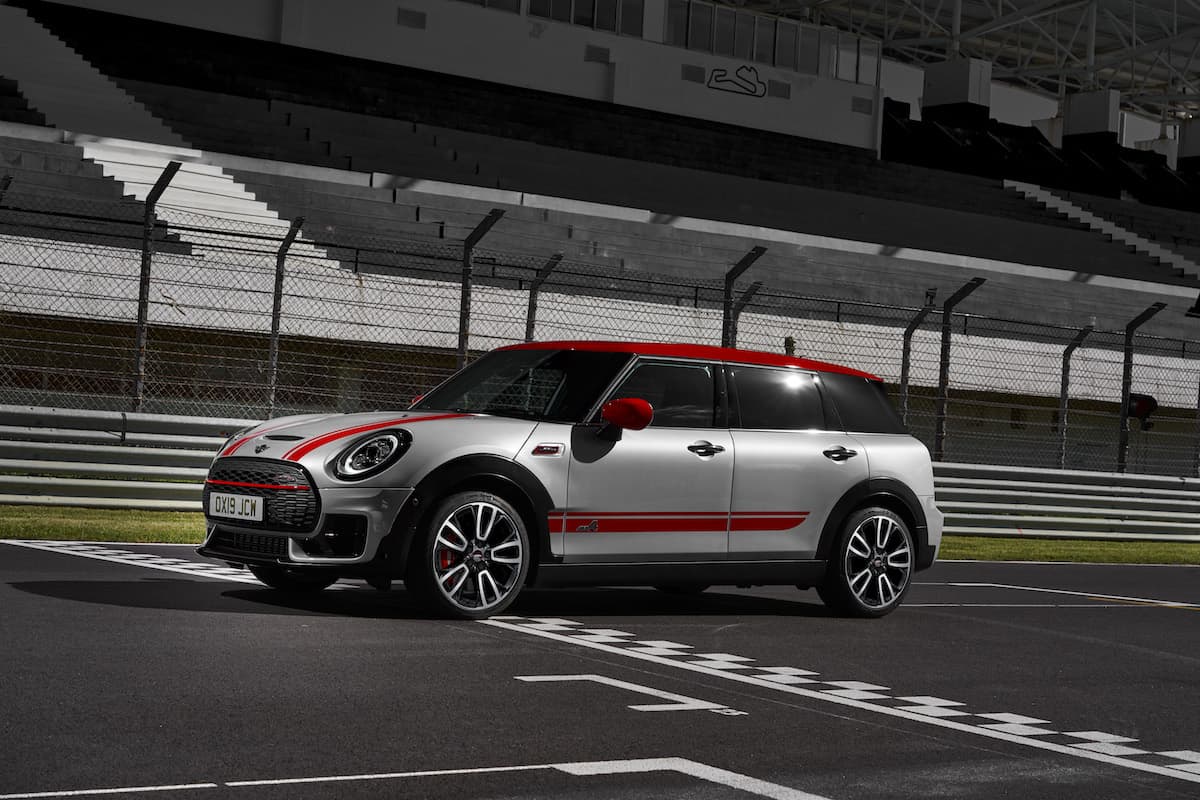
The Clubman’s unique selling point is that it truly does offer something different. It’s so easy to dismiss modern cars as incapable of having character, but this lovable Mini manages to mix retro-inspired styling with a quirky-looking, perfectly usable rear hatch that’s just so much more interesting than a regular estate.
  • Mini Clubman John Cooper Works review - front | The Car Expert
  • Mini Clubman John Cooper Works review - rear | The Car Expert
  • Mini Clubman John Cooper Works review - sunset | The Car Expert
The Car Expert Best of British horizontal banner

In JCW trim, its looks are amplified with a sporty body kit and a spoiler above the rear hatch, while the optional Union Flag rear taillights are a fun nod to the brand’s heritage. It’s something of a Tardis, too, looking compact on the outside but feeling spacious once you jump inside.

What’s the spec like?

Opt for a John Cooper Works Clubman and you’re looking at a hefty premium over the Cooper S, which is next in the trim hierarchy. That model starts at £23,900 compared with £34,250 for the JCW.

Aside from the extra performance and mechanical upgrades that are provided, there’s also a decent amount of equipment offered to justify the price tag.

On the outside, there are 18-inch alloy wheels, a JCW-specific body kit, performance brakes and a sports exhaust. Interior equipment includes sports seats, leather steering wheel, piano black interior trim, satellite navigation and a suite of driver aids.

In terms of safety, the Mini Clubman JCW isn’t exactly class-leading. The entire Clubman range scored a four-star Euro NCAP safety rating when it was first launched in 2015, and crash testing standards have only got tougher since then. Most rivals are solid five-star cars, many against newer and tougher safety tests.

What’s the Mini Clubman JCW like inside?

Something Mini has long nailed is interior ambience. Everything you see and touch looks and feels premium, from the dashboard materials to the satisfying feel of the aeroplane cockpit-like buttons in the centre console.

Mini Clubman John Cooper Works review - interior | The Car Expert

The large central infotainment screen is divisive, though. There’s a large circular light bar, which takes some getting used to, but the actual screen itself is clear and easy to use.

The overall sensation is that Mini continues to offer high quality interiors that are ergonomically excellent, while still managing to fit interesting design into the mix.

What’s under the bonnet?

The engine is essentially the same 2.0-litre turbocharged petrol unit that we’ve seen in the Cooper S models (and the new BMW M135i), but Mini’s engineers have made plenty of improvements to give it proper top-end hot hatch performance.

Power is now measured at 306hp and torque is 450Nm, up about 75hp and 100Nm on before. That’s a healthy gain that puts it on level-pegging with another premium performance rival, the Mercedes-AMG A 35, which the firm said it considers a direct competitor.

To achieve this increase in power, there’s a new crankshaft, uprated internal components, and a bigger, boostier turbocharger.

What’s the Mini Clubman JCW like to drive?

The defining feature of this updated JCW Clubman is the engine — the increased power output is noticeable. Put your foot down and the gearbox is fairly quick to respond, feeling a fraction lazy even in manual mode, but once engaged you surge towards the red line surrounded by a fruity four-cylinder thrum.

You quickly discover that this is a car that doesn’t like to be chucked about, instead preferring you to find a smooth rhythm on a winding road. It feels quite heavy, particularly under braking, so although it’s capable in corners it perhaps lacks that highly responsive ‘go-kart’ fun that fast Minis tend to have. A Mercedes-AMG A 35 certainly feels faster and livelier.

  • Mini Clubman John Cooper Works road test - front | The Car Expert
  • Mini Clubman John Cooper Works road test - top | The Car Expert
  • Mini Clubman John Cooper Works road test - rear | The Car Expert

Meanwhile, our test car had the standard-fit sports suspension, which we’d recommend avoiding. It means that no matter what drive mode you’re in, the suspension is hard, so you feel every ripple in the Tarmac – it would grate in everyday life. We didn’t get a chance to test the adaptive suspension, a £700 option, but the choice to tone down the ride would be welcome.

Verdict

The Mini Clubman John Cooper Works is a unique proposition — a small family car with estate-like looks, genuine character and hot hatch performance. Opt for the adaptive suspension and it should be comfortable enough to live with every day, which is important considering it’s so practical and the interior is such a lovely place to be.

However, if the driving experience is key you might be left wanting. The Clubman feels heavy and is therefore not as direct in its responses as those it considers rivals. If character is more important, though, the Mini Clubman JCW has it in spades, while still offering enough performance to keep most happy.

Similar cars

Audi S3 | Honda Civic Type R | Hyundai i30 N | Mercedes-AMG A 35 | Volkswagen Golf R

Key specifications

Model as tested: Mini Clubman John Cooper Works
Price (on-road): £34,250
Engine: 2.0-litre four-cylinder turbocharged petrol
Gearbox: Eight-speed automatic
Power: 306 hp
Torque: 450 Nm
Top speed: 155 mph
Acceleration (0-60 mph): 4.7 seconds 
Fuel economy (combined): 38 – 40 mpg (WLTP)
CO2 emissions: 161 – 169 g/km

All-new 2020 Nissan Juke revealed

0

The all-new Nissan Juke has been revealed this afternoon, the second generation of the model that defined the small crossover market.

With almost one million on the road in Europe, this new model is incredibly important for the Japanese manufacturer. It addresses two key criticisms faced by its predecessor – despite sales success, many bemoaned its oddball styling and cramped interior.

In fact, the previous Juke currently holds one of the lowest ratings of any car on The Car Expert’s unique Expert Rating system aggregator, based on 15 of the top UK media reviews from recent years.

  • 2020 Nissan Juke interior and dashboard | The Car Expert
  • 2020 Nissan Juke - rear | The Car Expert
  • 2020 Nissan Juke - side profile | The Car Expert
The Car Expert Best of British horizontal banner

Like the previous car, the new model will be built here in the UK at Nissan’s enormous Sunderland facility.

The new Nissan Juke sports larger dimensions than before, while the top-mounted bubble daytime running lights and indicators have been replaced by slimline units, and the circular headlamps house full LED technology as standard.

Inside, there’s more space than before – Nissan reckons rear passengers have 6cm of extra knee room and 1cm more head room, while the boot capacity is 20% bigger than before at 422 litres.

There are new soft-touch materials for the dashboard and door trims, which also addresses a common complaint of the previous model. A Bose sound system is offered, and sport seats are included as standard with optional Alcantara or leather upholstery. An eight-inch touchscreen display has integrated Apple CarPlay and Android Auto, while the NissanConnect app lets drivers check the status of their car from their phone.

One petrol engine is offered across the Juke range. It’s a 1.0-litre three-cylinder turbocharged unit making 115hp and can be paired with a six-speed manual transmission or seven-speed dual-clutch auto.

Prices start at £17,395 for the entry-level Visia model with the manual gearbox, with automatic cars starting at £20,395. The priciest entry point to the new range is the £25,395 Premiere Edition.

Basic safety equipment included on all trim levels includes cruise control and speed limiter, intelligent emergency braking, high beam assist and traffic sign recognition. ProPilot, Nissan’s advanced driver assistance technology, is standard on the automatic versions of the high-spec Tekna and Tekna+ grades, and can be optionally specified on automatic N-Connecta models.

First deliveries of the new Nissan Juke are scheduled to begin at the end of November.

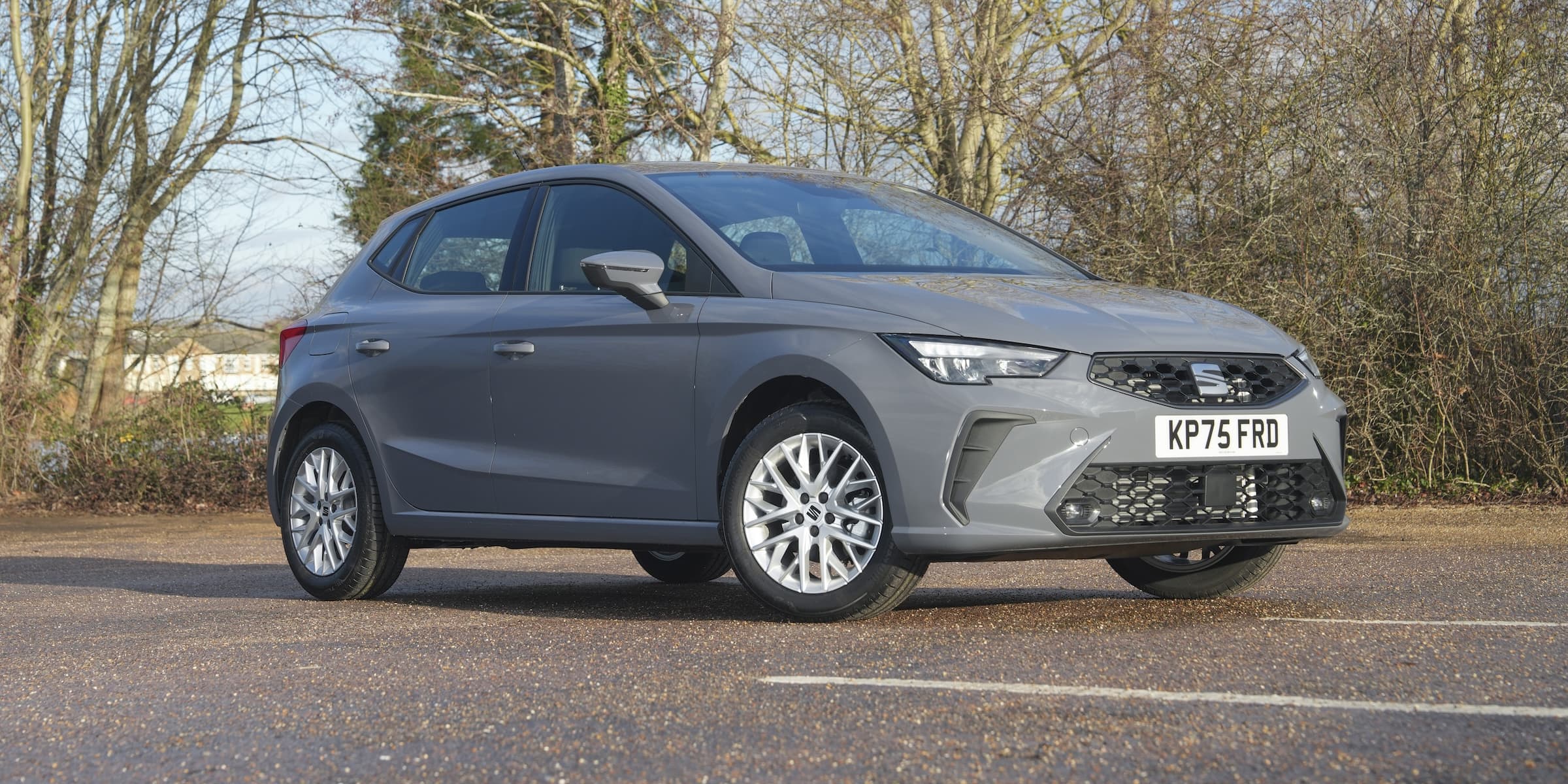
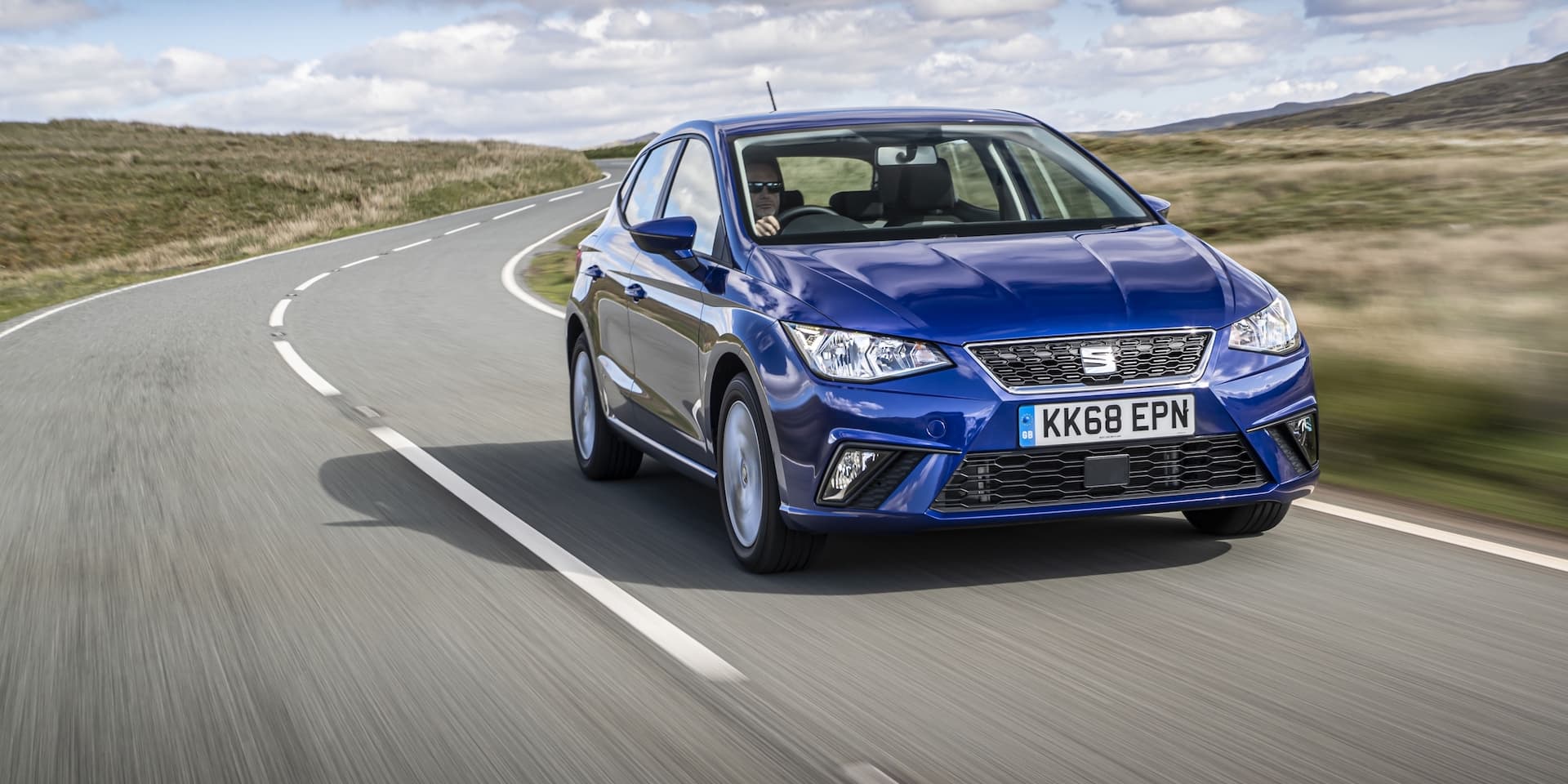
SEAT Ibiza

Summary

The SEAT Ibiza is a small, supermini-class hatchback. The current model arrived in the UK in the summer of 2017 and shares a lot of its underpinnings with the Volkswagen Polo and Audi A1.

Unlike previous generations, the current Ibiza is only available as a five-door hatch, with no three-door version. There is also a high-performance Ibiza Cupra model. We are building a separate page for this version, so check back soon. As is the case with most supermini-class small cars, there are no longer any diesel engine options available for the Ibiza range (although you’ll still be able to pick one up in the used car market).

The SEAT Ibiza has received mostly very positive reviews from the UK motoring media, as well as several awards. It has been particularly praised for its comfort and refinement, although its driving dynamics are not considered to be as sharp at the class-leading Fiesta.

An updated Ibiza arrived in the UK in late 2021, followed by another update in early 2026. These were both minor improvements to the original model, as production will continue until it is either uneconomical or unable to meet future regulations.

As of March 2026, the SEAT Ibiza holds a New Car Expert Rating of B, with a score of 69%. It gets top marks for its low running costs, while its CO2 emissions and media reviews are also good. SEAT’s new car warranty, however, is well off the pace of other brands like Hyundai and Kia.

Key specifications

Body style: Five-door hatch
Engines: petrol
Price: From £17,995 on-road

Launched: Spring 2017
Last updated: Autumn 2021
Replacement due: TBA

Media reviews

Highlighted reviews and road tests from across the UK automotive media. Click any of the boxes to view.

Featured reviews

More reviews

Auto Express

Car

Car Keys

Carbuyer

Carwow

Company Car Today

Eurekar

Evo

Green Car Guide

Heycar

Honest John

Parkers

The Sun

The Telegraph

Safety rating

Independent crash test and safety ratings from Euro NCAP

Overall score: 5 stars
Date tested: October 2022
Read the full Euro NCAP review

Adult protection: 82%
Child protection: 82%
Vulnerable road users: 66%
Safety assist: 70%

Eco rating

Independent economy and emissions ratings from Green NCAP

Model tested: 1.0-litre TSI Petrol FWD Automatic

Overall score: 2.5 stars
Date tested: October 2022
Read the full Green NCAP review

Clean Air Index: 5.8 / 10
Energy Efficiency Index: 5.1 / 10
Greenhouse Gas Index: 3.7 / 10

Reliability rating

MotorEasy logo 600x167

Reliability data provided exclusively for The Car Expert by MotorEasy

All data based on MotorEasy average workshop costs for extended car warranty claims

The SEAT Ibiza has an average reliability score as of April 2025 (our most recent data point), according to workshop and warranty data provided exclusively to The Car Expert by our partners at MotorEasy. This score covers both the current-generation Ibiza and the previous (pre-2017) fourth-generation version.

Almost a third of all reported problems with the ibiza relate to its suspension, with a rather cheap average repair bill of around £180. The other area to look out for is the engine, which accounts for just under a quarter of repair claims. Unfortunately, the bill for these engine faults can get quite expensive – nearly £1,100 on average. Gearbox repairs are even more expensive, at about £1,300.

If you’re looking at a used SEAT Ibiza, make sure any extended warranty cover you purchase covers all of the potential problem areas shown above.

Running cost rating

Clear Vehicle Data logo close crop

Monthly cost of ownership data provided exclusively for The Car Expert by Clear Vehicle Data

Fuel consumptionAverageScore
Petrol models52 mpgB
Diesel models61 mpgA
CO₂ outputAverageScoreVariationScore
Petrol models124 g/kmB
Diesel models126 g/kmB
Insurance groupAverageScoreVariationScore
All models14A
Service and maintenanceCostScore
Year 1£150A
Year 2£417A
Year 3£716B
Year 4£933B
Year 5£1,262B
Overall£3,478A

The SEAT Ibiza is a very affordable car to own and run, according to whole-life cost numbers provided exclusively to The Car Expert by our data partner, Clear Vehicle Data.

Servicing and insurance bills should be well below average, while fuel economy is very good.

Awards

Trophies, prizes and awards that the SEAT Ibiza has received

2020

  • Company Car Today CCT100 Awards – Best Supermini

2018

  • UK Car of the Year Awards – Best Supermini
  • SME Company Car of the Year Awards – Best Value Company Car

2017

  • Auto Express Awards – Best Supermini
  • Parkers New Car Awards – Best First Car
  • Red Dot Awards – Product Design Awards

Similar cars

If you’re looking at the SEAT Ibiza, you might also be interested in these alternatives

Citroën C3 | Dacia Sandero | Ford Fiesta | Honda Jazz | Hyundai i20 | Kia Rio | Mazda 2 | MG 3Mini hatch | Mitsubishi MirageNissan Micra | Peugeot 208 | Renault Clio | Skoda FabiaSuzuki Swift | Toyota Yaris | Vauxhall Corsa | Volkswagen Polo

Buy a new or used SEAT Ibiza

If you’re looking to buy a SEAT Ibiza, The Car Expert’s partners can help you find the right car

Motors 600x300

Find your next used car with Motors. Find out more

Auto Trader logo 600x300

Find your next new or used car with Auto Trader. Find out more

Carwow logo 600x300

Find your next new or used car with Carwow. Find out more

Lease a new SEAT Ibiza

If you’re looking to lease a new SEAT Ibiza, The Car Expert’s partners can help you find a competitive deal

Leasing-com logo

Personal contract hire deals from Leasing.com. Find out more

Carwow logo 600x300

Personal contract hire deals from Carwow. Find out more

Select Car Leasing logo

Personal contract hire deals from Select Car Leasing. Find out more

Car subscriptions

If you’re interested in a car subscription, The Car Expert’s partners can help (PS: What’s a car subscription?)

Cocoon Vehicles logo 600x300

Car subscriptions from Cocoon.
Find out more

Just Vehicle Solutions logo 600x300

Car subscriptions from Just Vehicle Solutions.
Find out more

Flexible Vehicle Contracts logo 600x300px

Car subscriptions from Flexible Vehicle Contracts.
Find out more

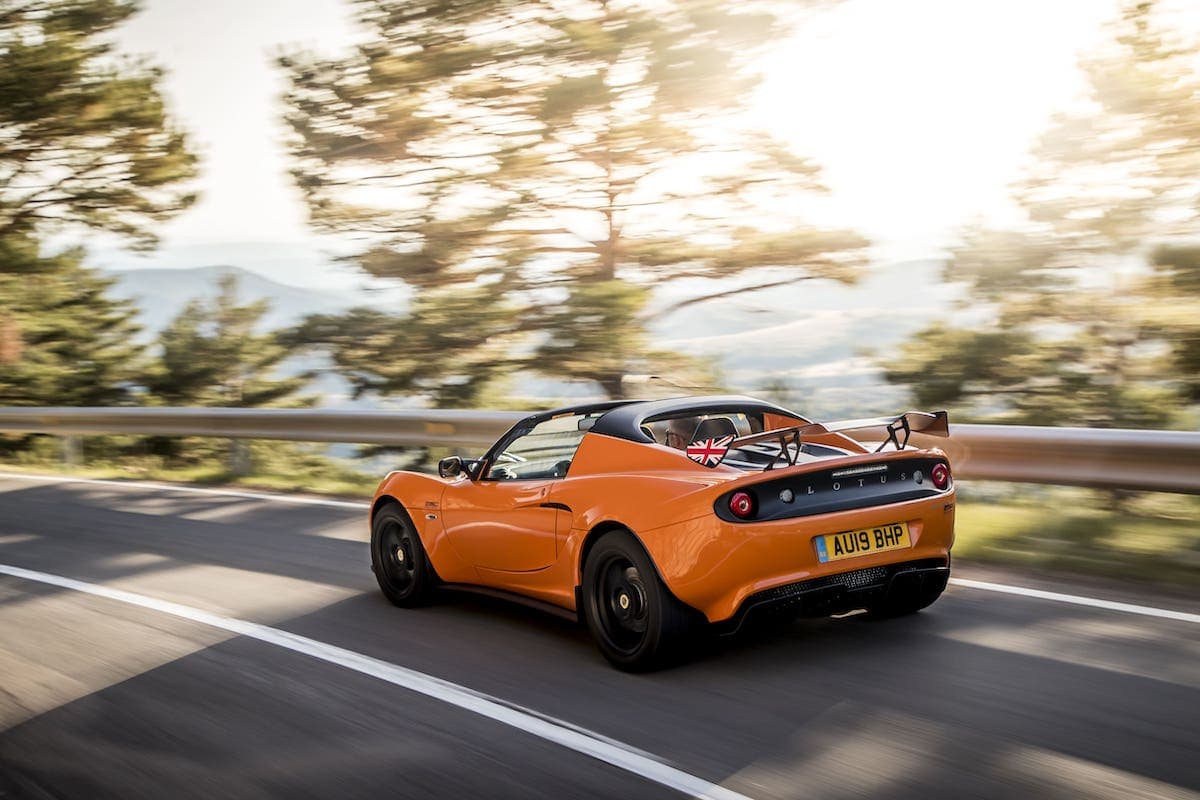
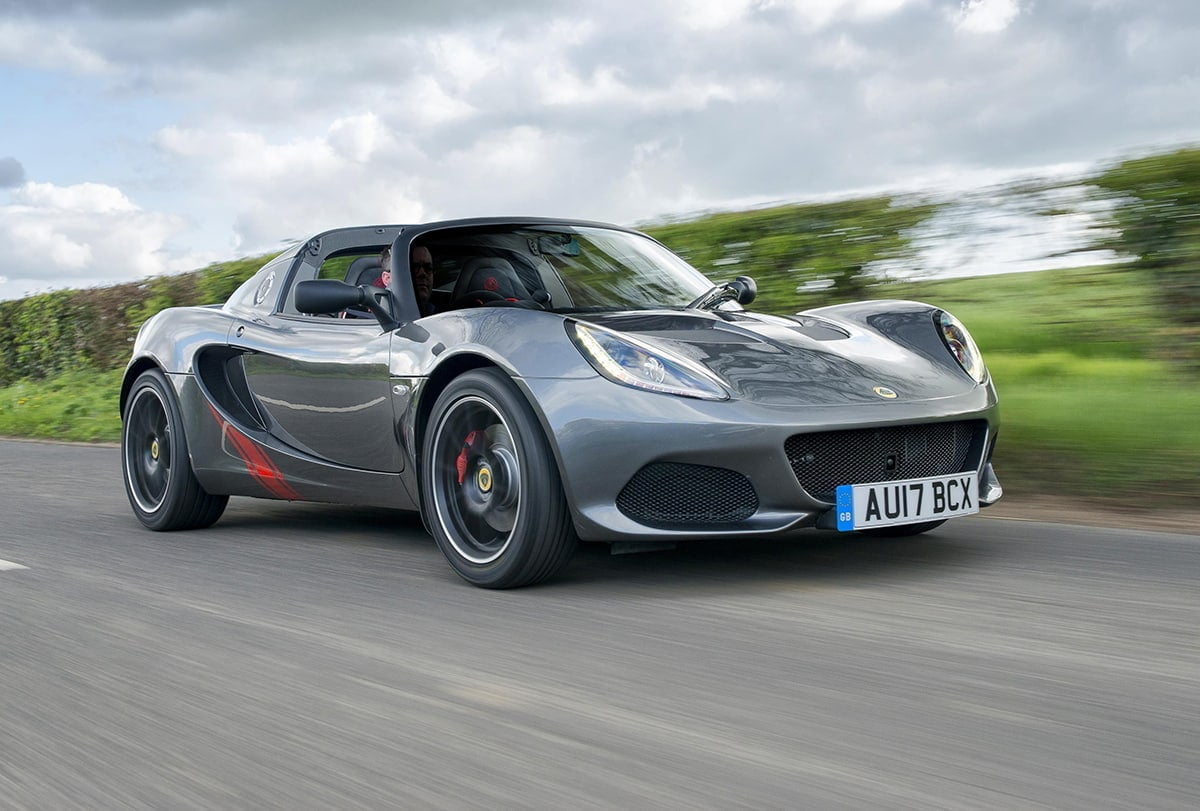
Lotus Elise (2010 to 2021)

Summary

The Lotus Elise is a lightweight, mid-engined, two-seat roadster. The current model is known as the Series 3 and was launched in 2010 2010, although it is a direct evolution of the original Elise that started production way back in 1996. Production finally came to an end in late 2021.

Over the years, the Elise was available in a variety of trim levels and special editions. All of them very much prioritised performance and driver engagement over comfort, so don’t expect

Being a very focussed driver’s car, the Lotus Elise was universally praised for its driving dynamics throughout its entire 25-year lifespan. However, the other compromises required to achieve this have inevitably resulted in mixed reviews overall from the motoring media. Enthusiast titles like Evo and Car have given it outstanding scores, while consumer titles have marked it much more harshly.

The Lotus Elise finally ended production in December 2021 after 25 years. To mark the occasion, Lotus launched one last limited-edition model, the Final Edition, in either Sport 240 or Cup 250 variants.

As of March 2026, the Lotus Elise holds a Used Car Expert Rating of D, with a score of 60%. It was popular with journalists, but its running costs are high and its eco performance is nothing special. But then the Elise is a very niche sports car that doesn’t aim to be a family car, so that’s not surprising.

The Car Expert Best of British horizontal banner

Key specifications

Body style: Two-door roadster
Engine: petrol
Price: From £41,655 on-road

Launched: Spring 2010
Last updated: Autumn 2017
Ended production: Autumn 2021

Media reviews

Reviews, road tests and comparisons from across the UK automotive media. Click any of the boxes to view.

Auto Express

Car

Carbuyer

Carwow

Evo

Honest John

Motoring Research

Parkers

The Sunday Times

Top Gear

Safety rating

Independent crash test and safety ratings from Euro NCAP

No safety rating

The Lotus Elise was never crash tested by Euro NCAP during its lifespan, which is not surprising given its tiny sales volumes.

Eco rating

Independent economy and emissions ratings from Green NCAP

No eco rating

The Lotus Elise was not lab tested by Green NCAP during its production life.

Reliability rating

MotorEasy logo 600x167

Reliability data provided exclusively for The Car Expert by MotorEasy

No reliability rating

As of March 2026, we don’t have enough reliability data on the Lotus Elise to generate a reliability rating.

The Car Expert’s reliability information is provided exclusively to us using workshop and extended warranty data from our partner, MotorEasy, sourced from both official dealerships and independent workshops. 

As soon as MotorEasy has sufficient data on the Elise, we’ll publish the results here.

Running cost rating

Clear Vehicle Data logo close crop

Monthly cost of ownership data provided exclusively for The Car Expert by Clear Vehicle Data

Fuel consumptionAverageScore
Petrol models36 mpgD
CO₂ outputAverageScoreVariationScore
Petrol models177 g/kmD

The Lotus Elise is a relatively expensive car to own and run, according to whole-life cost numbers provided exclusively to The Car Expert by our data partner, Clear Vehicle Data. However, due to its age, we only have limited data available.

Fuel consumption is not great, especially for such a small and light car. Given that this is the largest running cost of any car, that’s worth considering. We don’t have insurance group data or servicing costs beyond the first year.

Awards

Trophies, prizes and awards that the Lotus Elise has received

2019

  • Autocar Awards – Icon of Icons Award

Similar cars

If you’re looking at the Lotus Elise, you might also be interested in these alternatives

Abarth 124 Spider | Alfa Romeo 4C | Alpine A110 | Ariel Atom | Audi TT RS | Caterham Seven | Porsche 718 Boxster | Zenos E10

More news, reviews and information about the Lotus Elise at The Car Expert

Classic Heritage Edition Elise is latest Lotus special edition

Classic Heritage Edition Elise is latest Lotus special edition

Fastest Lotus Elise yet unveiled

Fastest Lotus Elise yet unveiled

Lightweight Lotus Elise Sprint leads range update

Lightweight Lotus Elise Sprint leads range update

Buy a Lotus Elise

If you’re looking to buy a used Lotus Elise, The Car Expert’s partners can help you find the right car

Motors 600x300

Search less, live more. We make finding the right car simple. Find out more

Auto Trader logo 600x300

Search for your next new or used car with Auto Trader. Find out more

Carwow logo 600x300

Discover great deals available on both new and used cars. Find out more

Cupra reveals all-electric Tavascan concept

0

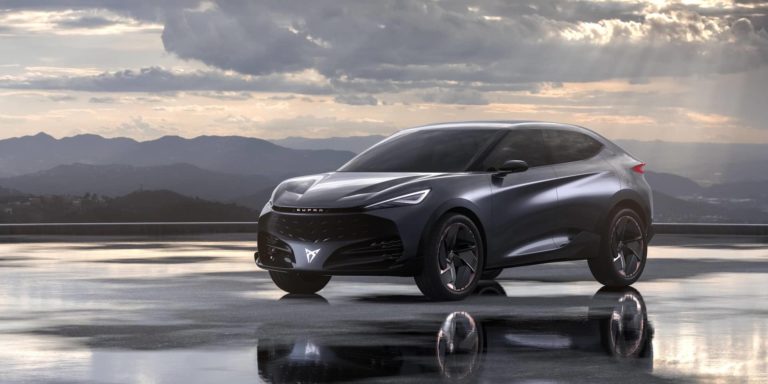
Cupra has unveiled its latest concept – the Tavascan.

Based on Volkswagen Group’s MEB platform, the Tavascan is an all-electric SUV with coupe styling, following on from the Formentor Concept introduced by Cupra earlier in the year.

It’s powered by two electric motors – one on the front axle, and the second on the rear – which combined produce over 300bhp. Cupra claims that the Tavascan will go from 0 to 60mph in ‘less than 6.5 seconds’.

A 77kWh battery provides the energy, and Cupra says that the Tavascan will be capable of travelling up to 280 miles on a single charge.

  • Cupra Tavascan concept - rear | The Car Expert
  • Cupra Tavascan concept - dashboard | The Car Expert

Wayne Griffiths, Cupra chief executive, said: “Besides the Cupra Formentor, which will be launched in 2020 alongside two other high-performance plug-in hybrid models, we have already proved our technological capabilities by developing the world’s first 100% electric touring car, the Cupra e-Racer.

“With the presentation of the all-electric Cupra Tavascan concept, we are translating this vision into the streets and proving that performance can be electrified”

Inside, the concept gets ‘3D leather relief’ bucket seats, while the dashboard has been designed to ‘float’. In front of the drivers sits a 12-inch digital instrument display, and this is joined by a 13-inch infotainment display. The latter can be adjusted to be angled towards the passenger, while the seats themselves house speakers.

The exterior of the car features 22-inch ‘turbine’ alloy wheels, while a diffuser at the rear helps aid aerodynamics. The rear light spans the full width of the vehicle, too.

As the Tavascan is just a concept for now, there are no indications as to whether or not it will enter production.

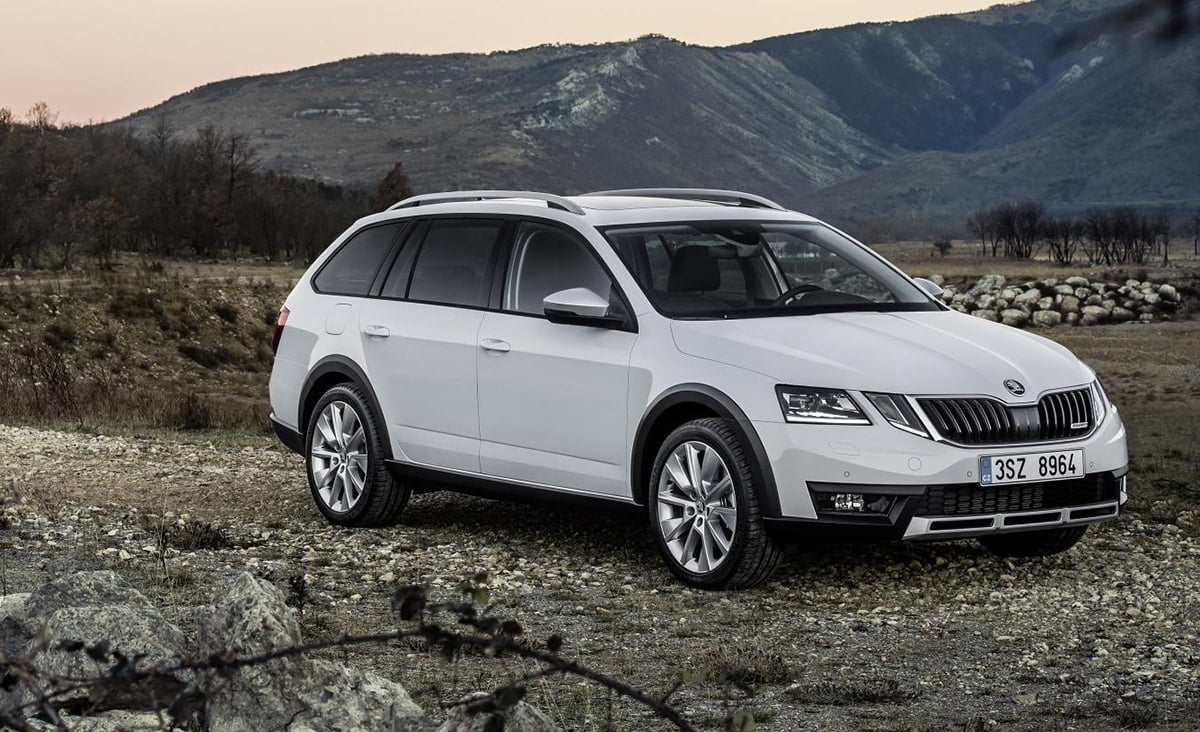
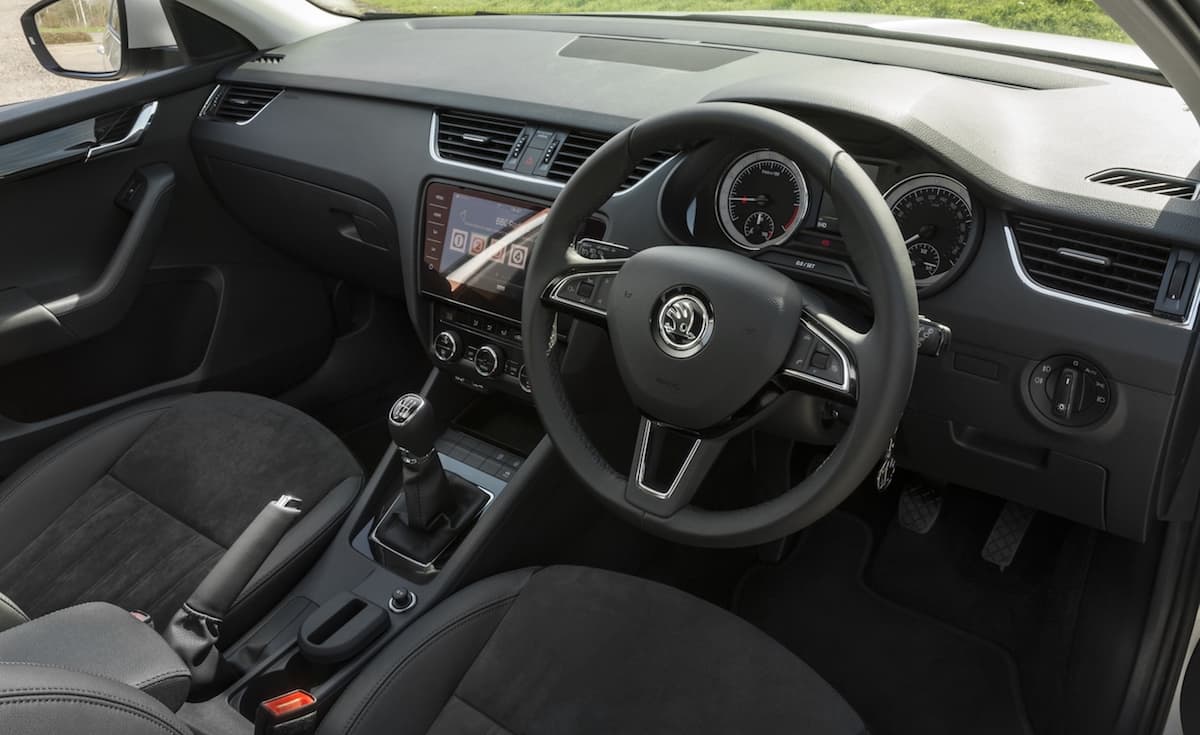
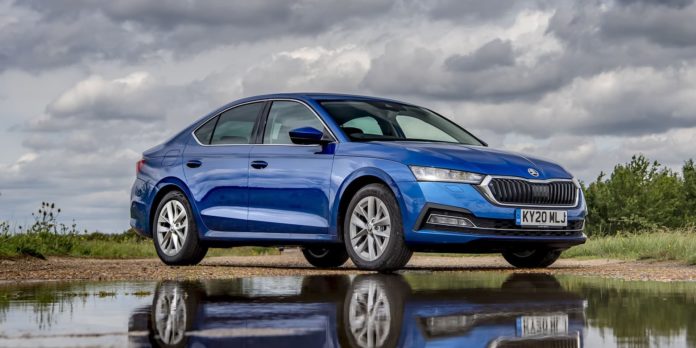
Skoda Octavia (2013 to 2019)

Summary

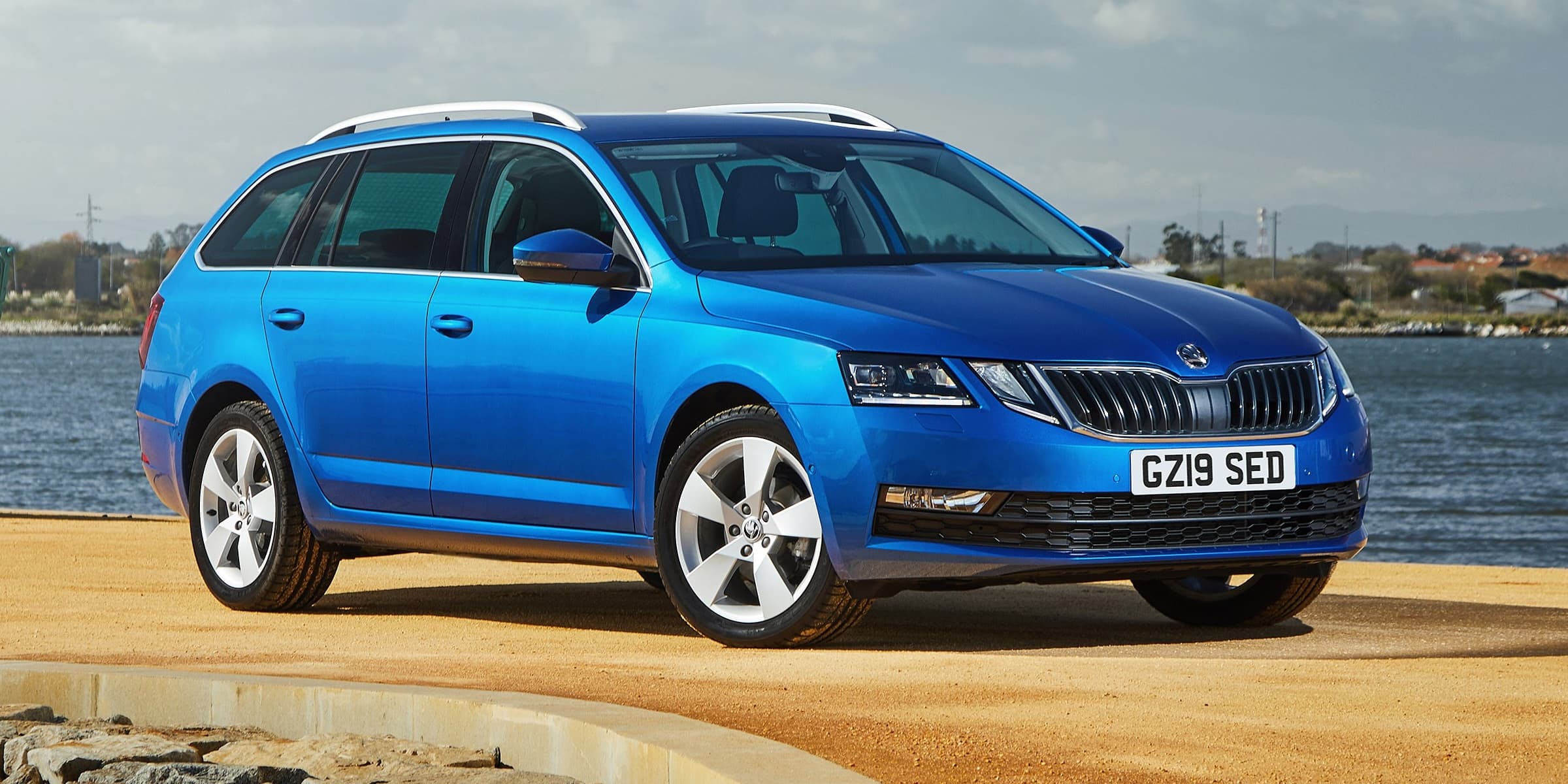
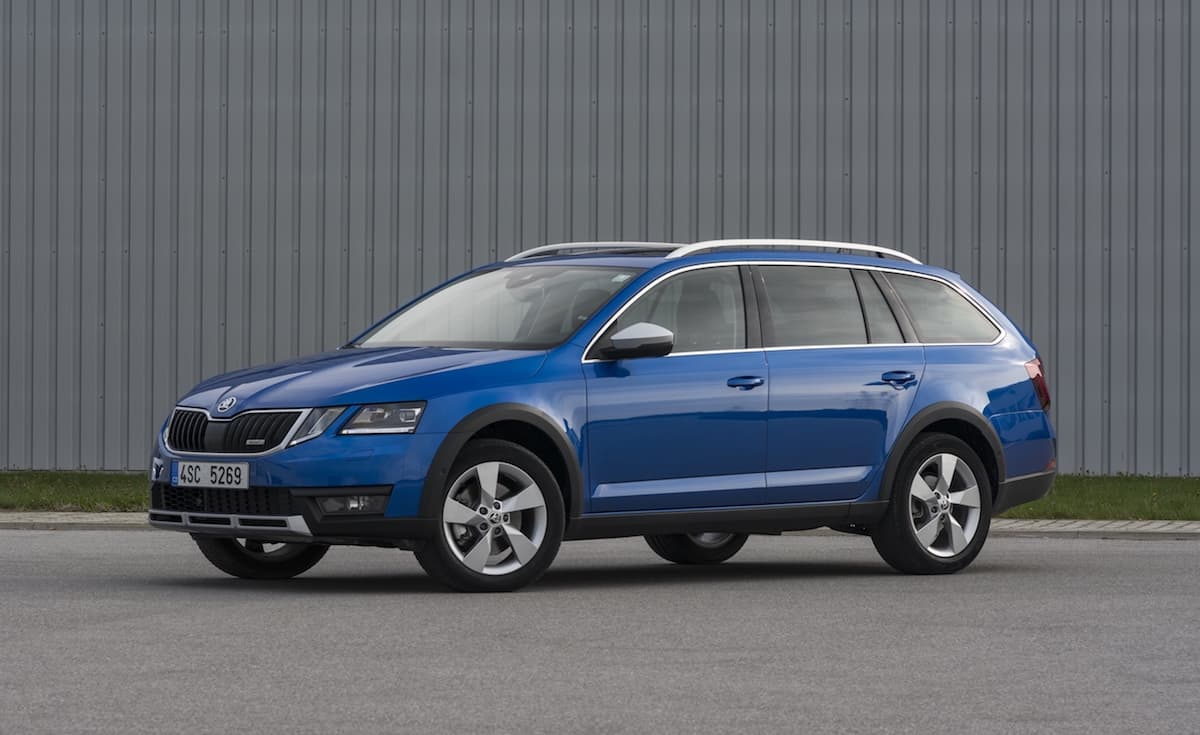
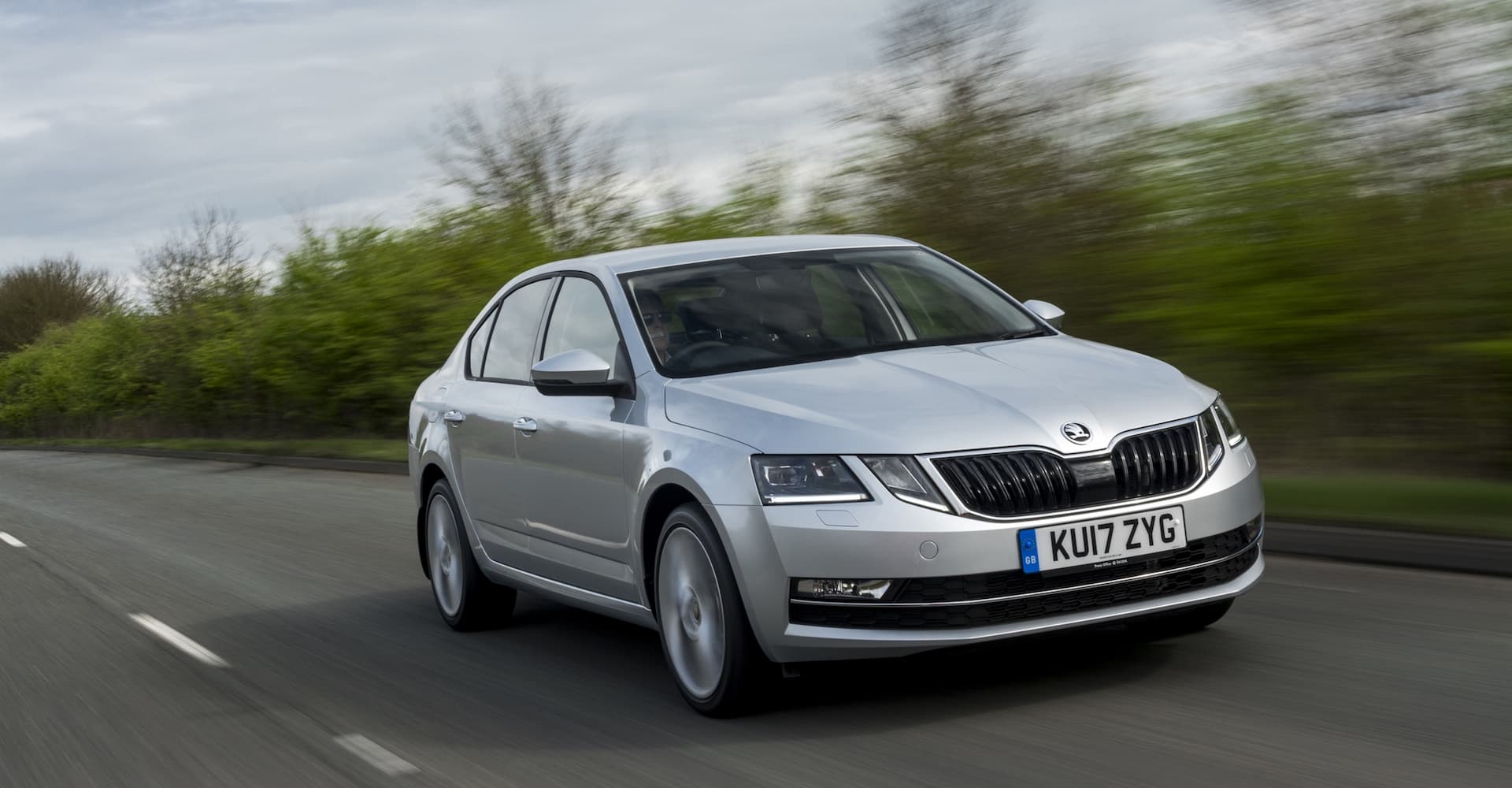
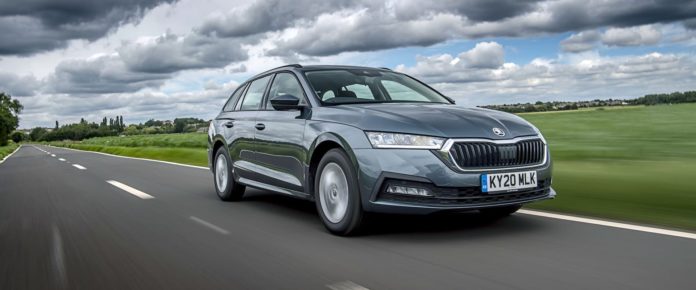
The Skoda Octavia was a medium-sized family car, available as either a five-door liftback or an estate. It was slightly bigger than the Skoda Scala – especially in the back seat and boot – but smaller than the Skoda Superb.

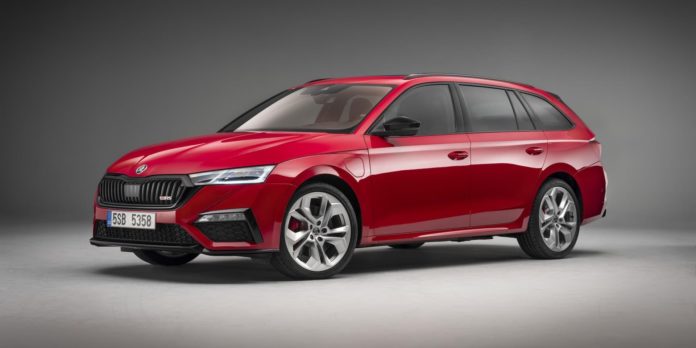
The model shown here is the third-generation Octavia, which was launched in early 2013 and facelifted in early 2017. It ceased production in 2019, with a new model going on sale in the UK in Summer 2020. The range included the high-performance vRS models and the more off-road-looking Octavia Scout (which was available only as an estate).

The Skoda Octavia received unanimously positive reviews from the UK motoring media, as well as numerous awards right throughout its seven years on sale. The Octavia’s size placed it somewhat between smaller VW Golf/Ford Focus rivals and larger VW Passat/Ford Mondeo rivals.

As of March 2026, the third-generation Skoda Octavia holds a Used Car Expert Rating of B, with a score of 66%. It scores top marks for its low running costs and positive media review scores, while its CO2 emissions and reliability records are also good. However, its safety score are poor compared to newer cars.

Key specifications

Body style: Five-door liftback and estate
Engines: petrol, diesel
Price when new: From £18,610 on-road

Launched: Spring 2013
Last updated: Spring 2017
Replaced: 2020

Media reviews

Highlighted reviews and road tests from across the UK automotive media. Click any of the boxes to view.

Auto Express

Car

Carbuyer

Carwow

Company Car Today

Evo

Green Car Guide

Honest John

Parkers

The Sunday Times

The Telegraph

Top Gear

Safety rating

Independent crash test and safety ratings from Euro NCAP

Overall score: 5 stars
Date tested: March 2013
Date expired: January 2020
Read the full Euro NCAP review

Adult protection: 93%
Child protection: 86%
Vulnerable road users: 66%
Safety assist: 66%

Notes on safety rating

The Skoda Octavia was awarded a five-star safety rating from Euro NCAP back when this model was launched in 2013. However, this rating expired in January 2020 as the Octavia no longer met the requirements for a five-star car. This is normal practice, as Euro NCAP reviews its ratings on most cars annually with most ratings expiring after about six or seven years.

However, if you are comparing a used Skoda Octavia to vehicles of similar age, whose ratings will have probably also expired, its safety rating score is still useful.

Eco rating

Independent economy and emissions ratings from Green NCAP

Model tested: 2.0-litre diesel automatic 2WD

Overall score: 3 stars
Date tested: October 2019
Read the full Green NCAP review

Clean Air Index: 6.7 / 10
Energy Efficiency Index: 5.7 / 10

Note about the Green NCAP rating
Please note that the above rating only applies to the designated powertrain, which in this case is a Skoda Octavia 2.0-litre diesel automatic in 2WD.

Reliability rating

MotorEasy logo 600x167

Reliability data provided exclusively for The Car Expert by MotorEasy

All data based on MotorEasy average workshop costs for extended car warranty claims

As of April 2025 (our most recent data point), the Skoda Octavia has a better-than-average reliability rating of 76%, according to data provided exclusively to The Car Expert by our partner, MotorEasy. This score covers not only this model, but also newer (2020 onwards) and previous (pre-2013) generations.

The average repair cost of just over £500 is fairly average, although obviously still more than the cost of a used car warranty so that’s worth bearing in mind. The most notable individual item is the gearbox, which has an average repair cost of about £1,500 in cars repaired to date.

Awards

Trophies, prizes and awards that the Skoda Octavia has received

2020

  • DieselCar & EcoCar Used Car Top 50 – Best Used Medium Car

2019

  • DieselCar & EcoCar Top 50 – Best Medium Estate
  • Tow Car Awards – Best car (up to 1,400kg)

2018

  • Auto Express Awards – Best Estate Car
  • Auto Trader Awards – New Car of the Year
  • DieselCar & EcoCar Top 50 – Best Medium Estate
  • Tow Car Awards – Best car (up to 1,400kg)

2017

  • Auto Express Awards – Best Estate Car
  • Carbuyer Awards – Best Small Estate + Best Family Car + Best Car for £300/month
  • Honest John Awards – Most Popular Estate
  • Green Apple Awards – Best Car + Best Larger Family Car
  • DieselCar Top 50 – Best Medium Estate
  • Tow Car Awards – Best car (up to 1,400kg)

2016

  • Auto Express Driver Power ratings – Best Family Car
  • Tow Car Awards – Best car (up to 1,400kg)

2015

  • Fleet News Awards – Best Estate
  • DieselCar Top 50 – Best Medium Estate
  • Tow Car Awards – Best car (up to 1,400kg)

Similar cars

If you’re looking at the Skoda Octavia, you might also be interested in these alternatives

Citroën C4 Cactus | Fiat Tipo | Ford Focus | Honda Civic | Hyundai i30 | Kia Ceed | Peugeot 308 | Renault MeganeSEAT Leon | Skoda Scala | Toyota Corolla | Vauxhall Astra | Volkswagen Golf

More news, reviews and information about the Skoda Octavia at The Car Expert

The best used family cars for every budget in 2025

The best used family cars for every budget in 2025

Everything you need to know about Skoda

Everything you need to know about Skoda

Sporty Skoda Octavia vRS given power boost

Sporty Skoda Octavia vRS given power boost

Refreshed Skoda Octavia now on sale

Refreshed Skoda Octavia now on sale

MG 4 achieves top marks in crash safety test

MG 4 achieves top marks in crash safety test

Last days of the dinosaurs: the best petrol cars under £25K

Last days of the dinosaurs: the best petrol cars under £25K

Skoda Octavia

Skoda Octavia

New Skoda Octavia vRS on sale this month

New Skoda Octavia vRS on sale this month

Skoda Octavia Estate test drive

Skoda Octavia Estate test drive

Skoda Octavia vRS joins the line-up

Skoda Octavia vRS joins the line-up

Skoda Octavia vRS iV plugs in

Skoda Octavia vRS iV plugs in

All-new Skoda Octavia revealed

All-new Skoda Octavia revealed

Buy a used Skoda Octavia

If you’re looking to buy a used Skoda Octavia, The Car Expert’s partners can help you find the right car

Motors 600x300

Search less, live more. We make finding the right car simple. Find out more

Auto Trader logo 600x300

Search for your next new or used car with Auto Trader. Find out more

Carwow logo 600x300

Discover great deals available on both new and used cars. Find out more

Kia Ceed range gets plug-in hybrid power

0

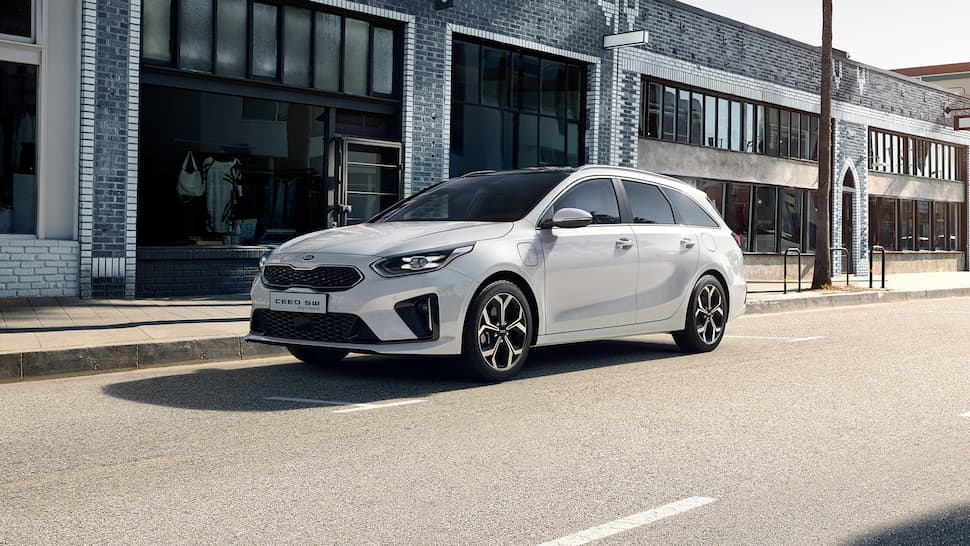
Kia has introduced a plug-in hybrid powertrain to two variants of its Ceed range, which are the first electrified options in the line-up.

Available on the recently introduced Xceed crossover, along with the Ceed Sportswagon estate, the unit consists of a 1.6-litre petrol engine linked to a 44.5kW electric motor — as seen in the firm’s Niro.

It produces a combined 140hp and 265Nm of torque, sending power through a six-speed dual-clutch automatic gearbox on both cars. The South Korean firm says an electric-only capability of 37 miles between charges is being targeted.

Regenerative braking technology features on the powertrain, which harvests kinetic energy under braking to recharge the unit’s 8.9kWh battery pack. Both the Xceed and Ceed Sportswagon plug-in variants will also run Kia’s ‘Virtual Engine Sound System’, which emits a noise up to 59 decibels to alert pedestrians of the vehicle’s presence in electric mode to comply with new EU regulations.

  • Kia Ceed SW plug-in hybrid | The Car Expert
  • Kia Xceed plug-in hybrid | The Car Expert

Changes to both cars that distinguish them from the range include closed-off front grilles to aid aerodynamic efficiency, with the Sportswagon also receiving ‘plug-in’ exterior badging.

Pricing and specifications are yet to be revealed for these new plug-in Kia Ceed variants, though the firm has confirmed they will be available on the European market early in 2020. A UK arrival with follow shortly after.

Land Rover Discovery

Summary

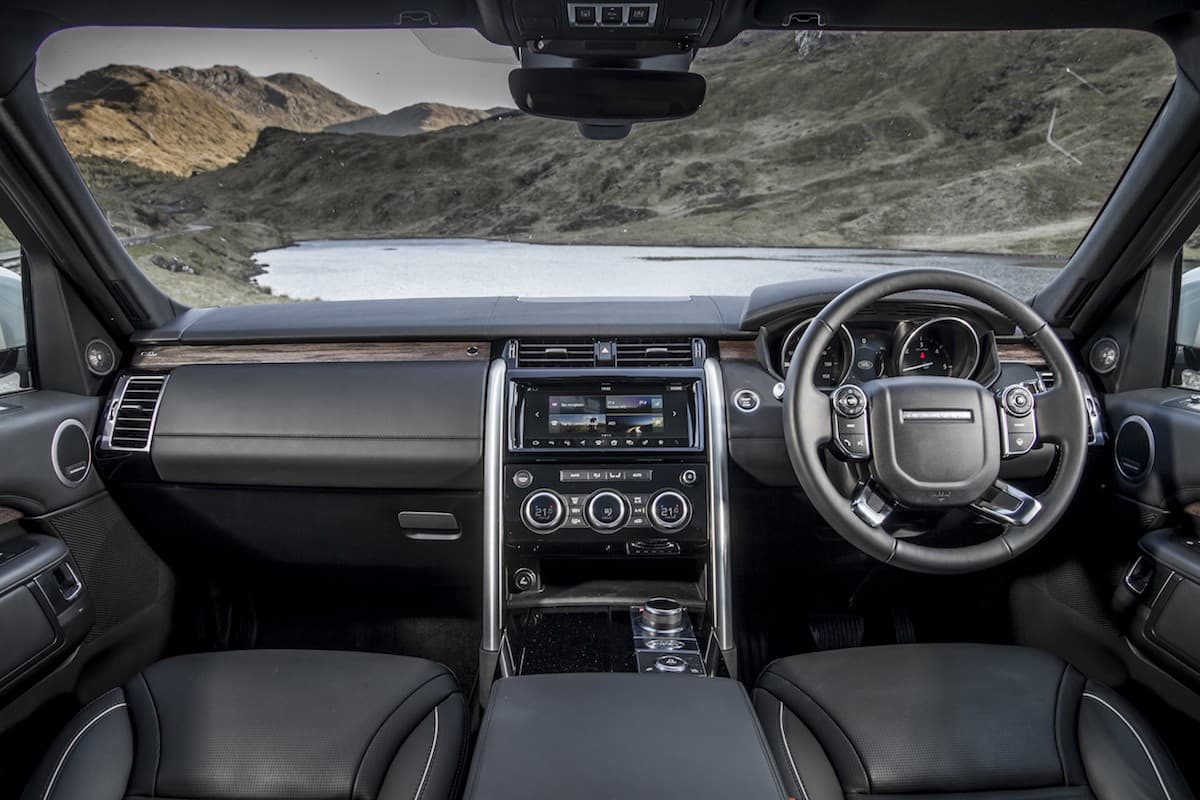
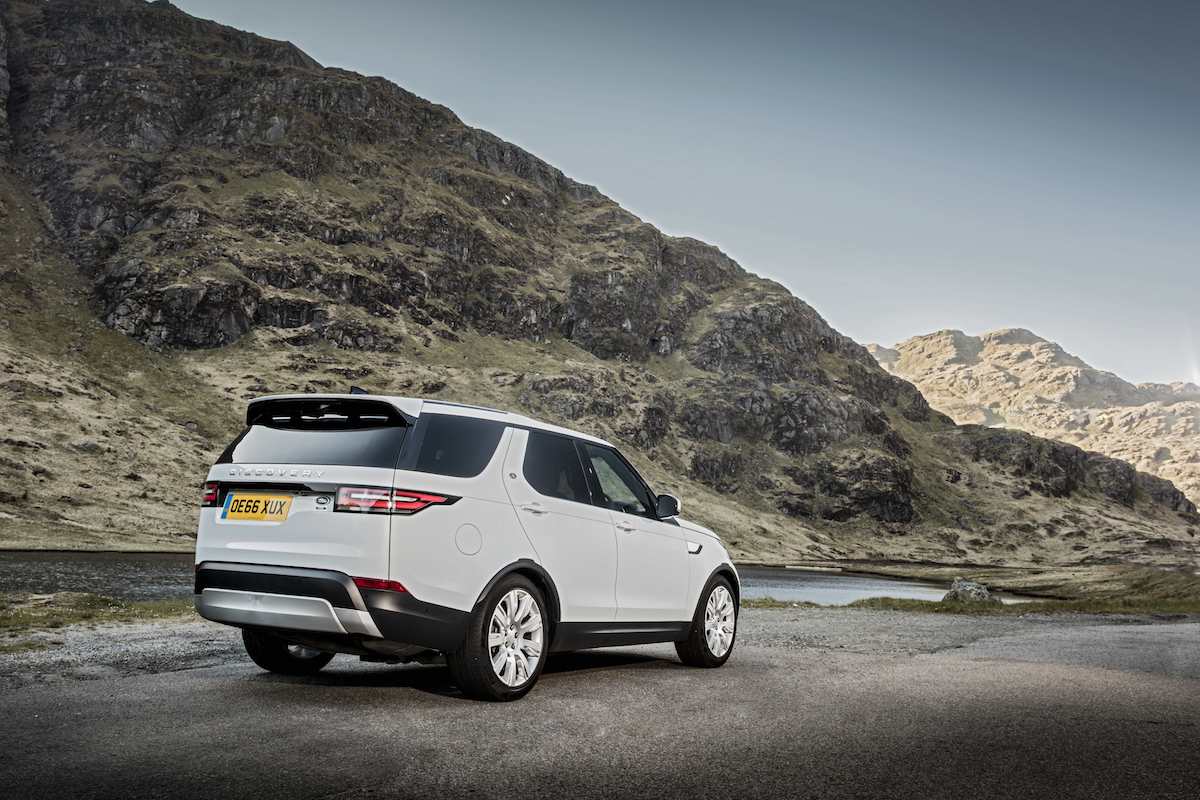
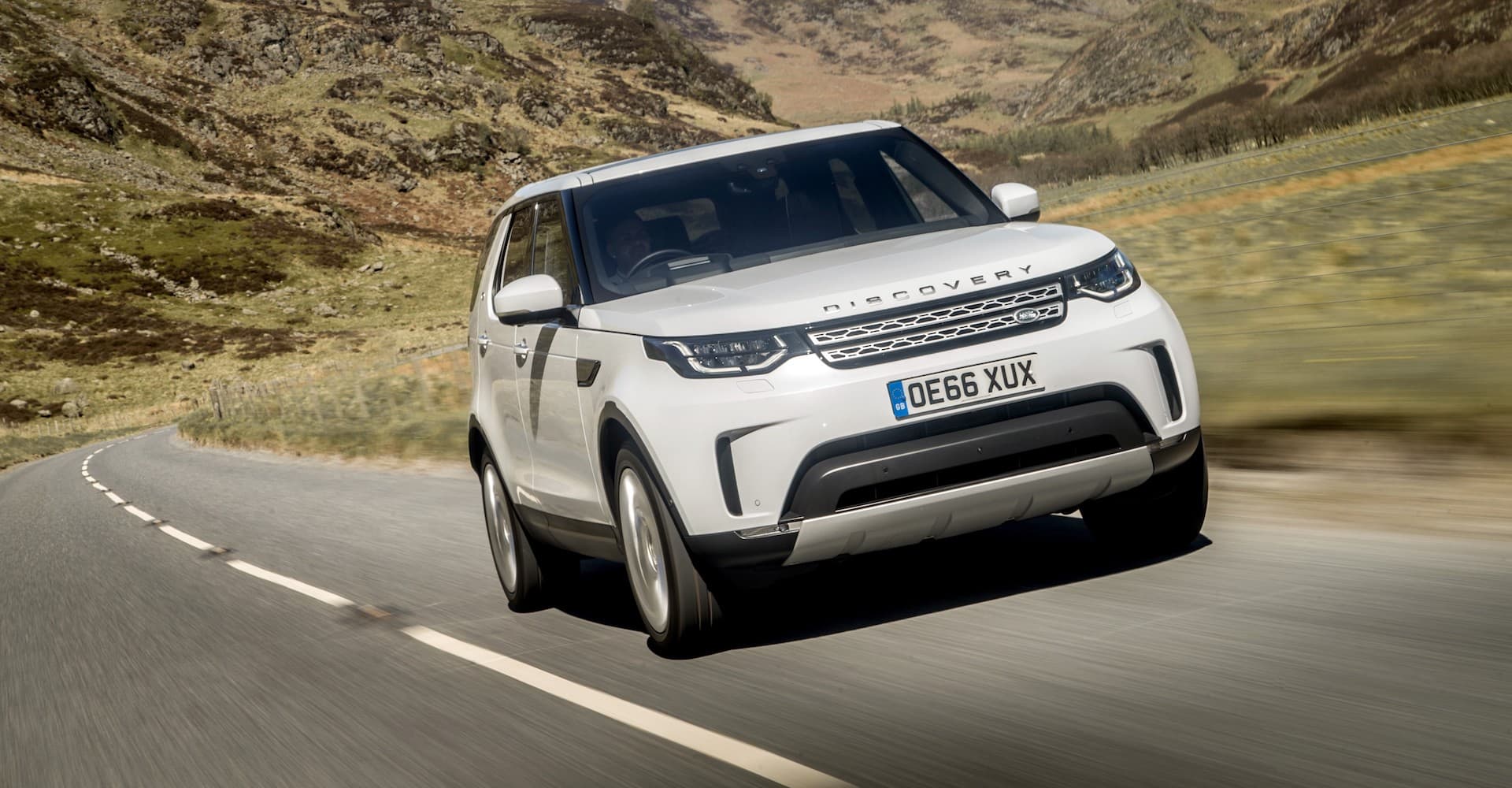
The Land Rover Discovery is a large seven-seat SUV. The current version was launched in the UK in early 2017 and is branded as the fifth-generation model, although it is really the third major iteration in the Discovery’s 30-year history.

The latest Discovery is also no longer built in the UK, as production shifted to Slovakia in 2018 (so it doesn’t get our “Best of British” badge).

The Land Rover Discovery has received a broad range of scores from the UK motoring media, ranging from below average to outstanding. Despite generating such diverse opinions, the Discovery ranks behind the venerable Volvo XC90, and behind its sister seven-seat SUV, the Land Rover Defender.

The Discovery has received particular praise for its combination of on- and off-road ability, as well as its interior comfort and practicality. However, it has been criticised for its polarising rear styling, reliability issues and expensive price tag compared to rivals.

At the end of 2020, the Discovery received a mid-life facelift that consisted of upgraded engines, a much-improved infotainment system and minor styling tweaks.

As of March 2026, the Land Rover Discovery has a New Car Expert Rating of E, with a score of 50%. Despite strong media reviews, the Discovery scores fairly poorly everywhere else. Its safety rating has expired due to age, while running costs and reliability are some of the worst in our database.

Discovery highlights

  • Talented on and off the road
  • Practical and polished interior design
  • Leisurely driving experience
  • Roomy cabin
  • Improved infotainment

Discovery lowlights

  • Expensive when compared to rivals
  • Very poor reliability record over many years
  • Cumbersome in urban areas
  • Poor fuel economy

Key specifications

Body style: Large SUV
Engines: petrol, diesel
Price: From £60,540 on-road

Launched: Winter 2016/17
Last updated: Autumn 2021
Replacement due: TBA

Media reviews

Highlighted reviews and road tests from across the UK automotive media. Click any of the boxes to view.

Featured reviews

More reviews

The Car Expert

Auto Express

Auto Trader

Car

Car Keys

Carbuyer

Carwow

Company Car Today

Daily Mail

Evo

Green Car Guide

Heycar

Honest John

Parkers

The Sun

The Sunday Times

The Telegraph

Top Gear

Safety rating

Independent crash test and safety ratings from Euro NCAP

Overall score: 5 stars
Date tested: March 2017
Date expired: January 2024
Read the full Euro NCAP review

Adult protection: 90%
Child protection: 80%
Vulnerable road users: 75%
Safety assist: 73%

Notes on safety rating

The Land Rover Discovery was originally crash tested by Euro NCAP back in 2017 and awarded a five-star rating. However, this rating expired in January 2024 and is no longer valid as the car no longer meets the standards required for such a rating. This is normal practice, as Euro NCAP reviews its ratings on most cars annually with most ratings expiring after about six or seven years.

However, if you are comparing a used Discovery to vehicles of similar age, whose ratings will have probably also expired, its safety rating score is still useful.

Eco rating

Independent economy and emissions ratings from Green NCAP

No eco rating

As of March 2026, the Land Rover Discovery has not been lab tested by Green NCAP.

Reliability rating

Reliability data provided exclusively for The Car Expert by MotorEasy

All data based on MotorEasy average workshop costs for extended car warranty claims

Like most Land Rovers, the Discovery has earned an abysmal reputation for reliability. As of April 2025 (our most recent data point), it has a shockingly bad reliability rating of 10% – one of the lowest scores of any car we currently track. Our data is provided to us from workshop and warranty records from our partner, MotorEasy. This applies to both this generation of Discovery and earlier generations.

In addition to being unreliable, the average repair cost for a Discovery when something goes wrong is very high at more than £1,500. In particular, engine issues are an expensive problem, with an average repair bill of more than £4,800.

If you own or are considering buying a used Land Rover Discovery, we’d strongly recommend a used car warranty that covers all of the potential trouble spots shown in the charts above.

Recalls

Official DVSA safety recalls that have been issued for the Land Rover Discovery

Date: June 2024
Recall number: R/2024/255
Model types: All Discovery models
Build dates: 11/2023 to 02/2024
Number of vehicles affected: 259
Defect: The incorrect specification of plastic was used to manufacture the oil filter housing. This housing may over time and with vehicle use crack. This could result in oil under pressure leaking and coming into contact with hot components of the engine which may result in a fire. Additionally oil may leak onto the road surface posing a skid hazard.
Remedy: Replace the oil filter housing complete with filter and associated O-rings.

Date: March 2024
Recall number: R/2024/145
Model types: All Discovery models
Build dates: 09/2020 to 01/2022
Number of vehicles affected: 5,105
Defect: The manufacturer has developed a software enhancement to further increase vehicle security.
Remedy: The software enhancement will deploy this update and reduce the theft risk.

Date: May 2023
Recall number: R/2023/044
Model types: All Discovery models
Build dates: 08/2022 to 01/2023
Number of vehicles affected: 499
Defect: For certain 2023 Model Year 3.0-litre vehicles, a small number of engines the cam carrier oil gallery hasn’t been fully drilled. As a result, the oil channel could be blocked leading to accumulation of oil against the pressure control valve rubber membrane and subsequently an external oil leak or increased oil carryover into the air intake system.
Remedy: The engine cam carrier will be inspected and where an incorrectly machined cam carrier is found replace it with a correctly machined component. Depending on mileage and engine conditions further associated components may require replacement.

Date: August 2022
Recall number: R/2022/222
Model types: All Discovery models
Build dates: 12/2021 to 05/2022
Number of vehicles affected: 2,981
Defect: Damaged front seat belt pretensioner tube may have been installed on the seat belt retractor.
Remedy: Inspect the seat belt pretensioner tube for damage and if damage is identified the seat belt retractor will be replaced.

Date: March 2022
Recall number: R/2021/436
Model types: All Discovery models
Build dates: 10/2018 to 06/2019
Number of vehicles affected: 669
Defect: The rubberised low-pressure fuel feed hose assembly may have been incorrectly routed during manufacture.
Remedy: Inspect the low-pressure fuel feed hose assembly and if misrouted replace the assembly.

Date: October 2021
Recall number: R/2021/333
Model types: All Discovery models
Build dates: 07/2020 to 08/2021
Number of vehicles affected: 509
Defect: The front passenger seats were manufactured without the occupancy detection sensor system (ODS) installed.
Remedy: Fit the occupant detection sensor to the front passenger seat.

Date: June 2021
Recall number: R/2021/229
Model types: All Discovery models
Build dates: 11/2019 to 03/2021
Number of vehicles affected: 3,323
Defect: Due to insufficient contact of the battery earth stud to the chassis the vehicle may exhibit various electrical faults.
Remedy: Replace the earth stud with a bespoke aftermarket specification part.

Date: April 2021
Recall number: R/2021/137
Model types: All Discovery models
Build dates: 11/2020 to 03/2021
Number of vehicles affected: 4,002
Defect: The front seat track end stop bracket may become deformed.
Remedy: Replace the front seat tracks with a modified part.

Date: January 2021
Recall number: R/2020/378
Model types: All Discovery models
Build dates: 09/2020 to 10/2020
Number of vehicles affected: 115
Defect: The fixing for the left hand side (LHS) 3rd Row Seat Belt upper anchorage may not be installed to the required specification.
Remedy: Inspect the rear (3rd row) seat belt anchorage fixing and the rear trim and replace the fixing if necessary.

Date: January 2021
Recall number: R/2020/324
Model types: All Discovery models
Build dates: 09/2018 to 08/2020
Number of vehicles affected: 10,040
Defect: Insufficient contact of the battery earth stud to the chassis.
Remedy: Replace the earth stud with a modified part.

Date: February 2020
Recall number: R/2020/027
Model types: All Discovery models
Build dates: 09/2019 to 12/2019
Number of vehicles affected: 10
Defect: Second row seat fixings missing.
Remedy: Replace the second row seat frame and ensure the fixings are tightened correctly.

Date: April 2019
Recall number: R/2019/049
Model types: All Discovery models
Build dates: 03/2015 to 07/2018
Number of vehicles affected: 4,779
Defect: Vehicles failed to routinely achieve the required levels of CO2 emissions.
Remedy: Update the vehicle software to the latest version.

Date: January 2019
Recall number: R/2019/013
Model types: All Discovery models
Build dates: 10/2018 to 12/2018
Number of vehicles affected: 219
Defect: The crankshaft pulley retaining bolt may fracture due to a production specification error.
Remedy: Replace the crankshaft pulley centre retaining bolt with one that has been manufactured to the correct specification.

Date: September 2018
Recall number: R/2018/243
Model types: All Discovery models
Build dates: 11/2017 to 03/2018
Number of vehicles affected: 24
Defect: Autonomous Emergency Braking (AEB) feature will not be available.
Remedy: On affected vehicles download the latest software to the vehicle.

Date: March 2018
Recall number: R/2018/036
Model types: All Discovery models
Build dates: 05/2016 to 01/2018
Number of vehicles affected: 1,537
Defect: The brazing of the fuel rail end caps is inconsistent and may not correctly seal the fuel rail ends. Fuel vapour and liquid fuel leaks can occur over time. This can lead to a liquid fuel leak into the engine bay.
Remedy: On affected vehicles replace the fuel rail with a correctly manufactured version.

Date: May 2017
Recall number: R/2017/145
Model types: All Discovery models
Build dates: 02/2017 to 03/2017
Number of vehicles affected: 836
Defect: The fuel return hose may leak. Increased fuel odour may be noticed and drivers may also observe liquid fuel puddles underneath the vehicle. It is possible that fuel may leak onto the road surface which can present a skid hazard to other road users increasing the risk of a crash. Should leaking fuel come into contact with a sufficiently hot surface in the engine bay there will be an increased risk of fire.
Remedy: Recall the vehicles that are likely to be affected and replace the fuel return hose.

Date: January 2017
Recall number: R/2016/289
Model types: All Discovery models
Build dates: 07/2016 to 10/2016
Number of vehicles affected: 4,964
Defect: The engine wiring harness of the 2.0-litre engined vehicles fitted with automatic transmission may have been incorrectly routed which may allow the wiring harness to contact the water charge air cooler bracket. Engine vibration can cause a chaffing condition where the outer sheathing of the cable can wear through and expose the wires of the engine harness. Depending on the orientation of the wires within the harness then damage to wires can result in electrical arcing and a short circuit. This condition can also result in the illumination of a warning light on the instrument panel loss of the electronic steering system engine cut out without warning melting of the cable sheathing and surrounding parts. Also in extreme circumstances it can cause an under-bonnet fire.
Remedy: All affected vehicles will be recalled to inspect the clearance between the engine harness and water charge air cooler bracket. If the clearance is not to the correct specification the wiring harness will be repositioned and secured to ensure the specified clearance is achieved. If the engine harness shows signs of chafing the engine harness will be repaired re-positioned to ensure the correct specification.

Date: December 2016
Recall number: R/2016/307
Model types: All Discovery models
Build dates: 07/2016 to 10/2016
Number of vehicles affected: 452
Defect: It has been identified by the air-bag manufacturer that the air-bag initiator generant mix ratio does not meet specification. This can therefore result in the initiator not functioning correctly which can lead to non-deployment of the air-bag. Should a collision occur then there is an increased risk of injury to the passenger.
Remedy: Recall all affected vehicles to replace the air-bag with a new quality assured component.

Date: December 2016
Recall number: R/2016/290
Model types: All Discovery models
Build dates: 03/2016 to 08/2016
Number of vehicles affected: 343
Defect: It has been identified that clamp bolt of the front lower control arm to knuckle fixing may have been incorrectly torqued/tighten this can cause a premature fatigue failure and possible separation of the joint. The driver will receive a warning in the form of noise a ABS warning light on the vehicles instrument panel or the misalignment steering wheel. In addition this is an early life failure. However if the driver does not heed the warning signs then the control the vehicle can be effected which can lead to an increased risk of a crash.
Remedy: Recall all affected vehicles to replace the affected front lower control arm to knuckle fixing and apply the correct torque. Some vehicles require recall remedy actions to one side only others to both sides of the vehicle.

Date: June 2016
Recall number: R/2016/132
Model types: All Discovery models
Build dates: 05/2016
Number of vehicles affected: 81
Defect: Due to a nonconformity of production the driver’s airbag may not deploy correctly and may not provide protection as intended.
Remedy: On affected vehicles replace driver’s airbag.

As of September 2024 (our most recent data point), there have been 20 DVSA vehicle safety recalls on the current-generation Land Rover Discovery, addressing various different issues.

Not all vehicles are affected by recalls. You can check to see if your car is included in any of the above recalls by visiting the DVLA website or contacting your local Land Rover dealer.

If your car is affected by a recall, the vehicle must be repaired and you should not be charged for any work required. If you are buying a used Discovery, you should insist that any outstanding recall work is completed before you take delivery of the vehicle.

Awards

Trophies, prizes and awards that the Land Rover Discovery has received

2021

  • Parkers New Car Awards – Best Seven-Seater

2020

  • DieselCar & EcoCar Top 50 – Best Luxury SUV

2018

  • DieselCar & EcoCar Top 50 – Best Luxury SUV
  • News UK Motoring Awards – Dog-Friendly Car of the Year

2017

  • Scottish Car of the Year
  • Auto Express Awards – Car of the Year
  • Tow Car Awards – Tow Car of the Year

2016

  • Tow Car Awards – Best Tow Car, 1,900kg + category

Similar cars

If you’re looking at the Land Rover Discovery, you might also be interested in these alternatives

Audi Q7 | BMW X5 | Genesis GV80 | Land Rover Defender | Lexus RX | Maserati LevanteMercedes-Benz GLE | Range Rover Sport | Tesla Model XToyota Land Cruiser | Volkswagen Touareg | Volvo XC90

More news, reviews and information about the Land Rover Discovery at The Car Expert

The best used family cars for every budget

The best used family cars for every budget

Everything you need to know about Land Rover

Everything you need to know about Land Rover

Land Rover Discovery review

Land Rover Discovery review

Last days of the dinosaurs: the best petrol cars under £75K

Last days of the dinosaurs: the best petrol cars under £75K

Land Rover Discovery Mk5 debuts in Paris

Land Rover Discovery Mk5 debuts in Paris

Land Rover teases Discovery ahead of Paris debut

Land Rover teases Discovery ahead of Paris debut

Jaguar Land Rover recalls 44,000 cars for emissions breaches

Jaguar Land Rover recalls 44,000 cars for emissions breaches

Land Rover celebrates Discovery’s 30th birthday

Land Rover celebrates Discovery’s 30th birthday

Land Rover Discovery 2.0-litre petrol test drive

Land Rover Discovery 2.0-litre petrol test drive

Crash test issues for Fiat and Ford

Crash test issues for Fiat and Ford

Buy a Land Rover Discovery

If you’re looking to buy a new or used Land Rover Discovery, The Car Expert’s partners can help you find the right car

Motors 600x300

Find your next used car with Motors. Find out more

Auto Trader logo 600x300

Find your next new or used car with Auto Trader. Find out more

Carwow logo 600x300

Find your next new or used car with Carwow. Find out more

Lease a Land Rover Discovery

If you’re looking to lease a new Land Rover Discovery, The Car Expert’s partners can help you find a competitive deal

Leasing-com logo

Personal contract hire deals from Leasing.com. Find out more

Carparison 600x300

Personal contract hire deals from Carparison Leasing. Find out more

Carwow logo 600x300

Personal contract hire deals from Carwow. Find out more

Subscribe to a Land Rover Discovery

If you’re interested in a car subscription, The Car Expert’s partners can help (PS: What’s a car subscription?)

Cocoon Vehicles logo 600x300

Car subscriptions from Cocoon.
Find out more

Just Vehicle Solutions logo 600x300

Car subscriptions from Just Vehicle Solutions.
Find out more

Flexible Vehicle Contracts logo 600x300px

Car subscriptions from Flexible Vehicle Contracts.
Find out more

Suzuki axes Celerio and Baleno models

Suzuki has axed its slow-selling Celerio and Baleno models from its UK range as part of an overall revamp of its passenger car line-up.

Offered as two of the cheapest cars in the firm’s range, both the Celerio and Baleno are still displayed on Suzuki’s website, though a spokesperson has announced that from the end of the month no new, unregistered cars will be available to buy.

Suzuki says it is “refocusing its model range to cater for the high popularity of its best-selling UK models”. This refers to models such as the Ignis, Swift, S-Cross and Vitara.


You may also like:

“This has resulted in sales of Celerio and Baleno being discontinued for the UK only. Suzuki is also preparing its range for future emission regulations in 2020, of which details will be confirmed and announced in the future.”

The pair never managed to trouble rivals such as the Honda Jazz and Skoda Citigo for outright sales, with 15,000 Balenos registered across Europe in 2018, compared with 37,000 Jazz registrations.

Some 21,000 Celerios were registered in 2018. However, this was more than eclipsed by other models – and even other cars in Suzuki’s range. Around 55,000 Swifts were registered in 2018, for example.

Hyundai Santa Fe (2018 to 2024)

Summary

The Hyundai Santa Fe is a large seven-seat SUV that sits above the Tucson and Kona in the Hyundai family. This is the fourth-generation model, which was replaced by a new iteration in 2024.

It received particular praise for its generous level of standard equipment and large boot, while it was criticised for being more expensive than expected.

A facelifted Santa Fe arrived in the UK in Spring 2021. As part of the update, the diesel engine was dropped in favour of a petrol/electric hybrid and a plug-in hybrid. Styling was updated both inside and out, while some extra tech equipment was added.

No longer on sale, the Hyundai Santa Fe has a Used Car Expert Rating of C, with a score of 64%. It gets points for low average CO2 emissions (thanks to the plug-in hybrid version) and a decent safety rating. However, running costs are fairly average and reliability has been poor.

Key specifications

Body style: Large SUV/crossover
Engines: Hybrid, plug-in hybrid
Price when new: From £41,445 on-road

Launched: Summer 2018
Last updated: Spring 2021
Replaced: Summer 2024

Media reviews

Highlighted reviews and road tests from across the UK automotive media. Click any of the boxes to view.

Featured reviews

More reviews

Auto Trader

Business Car

Car

Carbuyer

Carwow

Company Car Today

Heycar

Honest John

Parkers

The Sun

The Telegraph

Top Gear

Safety rating

Independent crash test and safety ratings from Euro NCAP

Overall score: 5 stars
Date tested: December 2018
Date expired: January 2025
Read the full Euro NCAP review

Adult protection: 94%
Child protection: 88%
Vulnerable road users: 67%
Safety assist: 76%

Notes on safety rating

The Hyundai Santa Fe was tested by Euro NCAP back in 2018 and awarded a five-star rating. However, this rating expired in January 2025 and is no longer valid as the car no longer meets the standards required for such a rating. This is normal practice, as Euro NCAP reviews its ratings on most cars annually with most ratings expiring after about six or seven years.

Although the rating has now expired, the score is still useful if you are comparing a used Santa Fe to vehicles of similar age – whose ratings will have probably also expired.

Eco rating

No eco rating

The Hyundai Santa Fe was not assessed by Green NCAP during its production life.

Reliability rating

Reliability data provided exclusively for The Car Expert by MotorEasy

All data based on MotorEasy average workshop costs for extended car warranty claims

The Hyundai Santa Fe has a poor reliability score as of April 2025 (our most recent data point), according to workshop and warranty data provided by our partner MotorEasy. This data refers to both the current model and older (pre-2018) models.

Braking issues are the most commonly reported faults, although they’re relatively affordable to repair, costing just under £300 on average. However, MotorEasy reports that gearbox faults cost about £3,000 on average. Fortunately these faults are rare. Engine faults are also reported, with an average bill of £1,300 to fix.

If you’re looking at a used Hyundai Santa Fe, make sure any extended warranty cover you purchase covers all of these potential problem areas.

Awards

Trophies, prizes and awards that the Hyundai Santa Fe has received

2019

  • Parkers Awards – Best seven-seater

Similar cars

If you’re looking at the Hyundai Santa Fe, you might also be interested in these alternatives

Honda CR-V | Kia Sorento | Land Rover Discovery Sport | Mitsubishi Outlander | Nissan X-Trail | Peugeot 5008 | SEAT Tarraco | Skoda Kodiaq | SsangYong Rexton | Subaru Forester | Suzuki Across | Toyota RAV4 | Volkswagen Tiguan Allspace

More news, reviews and information about the Hyundai Santa Fe at The Car Expert

The best used family cars for every budget in 2025

The best used family cars for every budget in 2025

Best Large Car 2025

Best Large Car 2025

Hyundai Santa Fe

Hyundai Santa Fe

Everything you need to know about Hyundai

Everything you need to know about Hyundai

New Hyundai Santa Fe SUV revealed

New Hyundai Santa Fe SUV revealed

Hyundai Santa Fe review

Hyundai Santa Fe review

Five-star safety ratings for seven new models

Five-star safety ratings for seven new models

New Hyundai Santa Fe to launch at Geneva

New Hyundai Santa Fe to launch at Geneva

Hyundai announces scrappage and emissions offers

Hyundai announces scrappage and emissions offers

Hyundai Santa Fe Endurance Edition

Hyundai Santa Fe Endurance Edition

The rise of the premium SUV in the UK

The rise of the premium SUV in the UK

Buy a Hyundai Santa Fe

If you’re looking to buy a used Hyundai Santa Fe, The Car Expert’s partners can help you find the right car.

Motors 600x300

Find your next used car with Motors. Find out more

Auto Trader logo 600x300

Find your next new or used car with Auto Trader. Find out more

Carwow logo 600x300

Find your next new or used car with Carwow. Find out more

Mazda MX-5 – 30 years old and still a world favourite

World favourite is a brave term to apply to any car but surely the tag fits the Mazda MX-5. In 30 years more than a million have been made, over four generations, but even today the most up-to-date version still subscribes to the basic DNA of the first 1989 car – a compact, rear-wheel-drive sports car that one cannot fail to enjoy driving.

Nowhere is this more true than in the UK, one of Mazda’s most important markets for the MX-5. British buyers snap up half of all European MX-5s, and a UK race series for the car has more than 100 registered competitors. Basically we love the car.

As the model celebrates its 30th anniversary, with of course a special edition version, in this feature we take a look at the four incarnations of the Mazda MX-5. This particular road tester is one of many avowed fans of the car and has been promising himself one for some time. But which would he buy?


Mazda MX-5 Mk1: 1989 to 1997

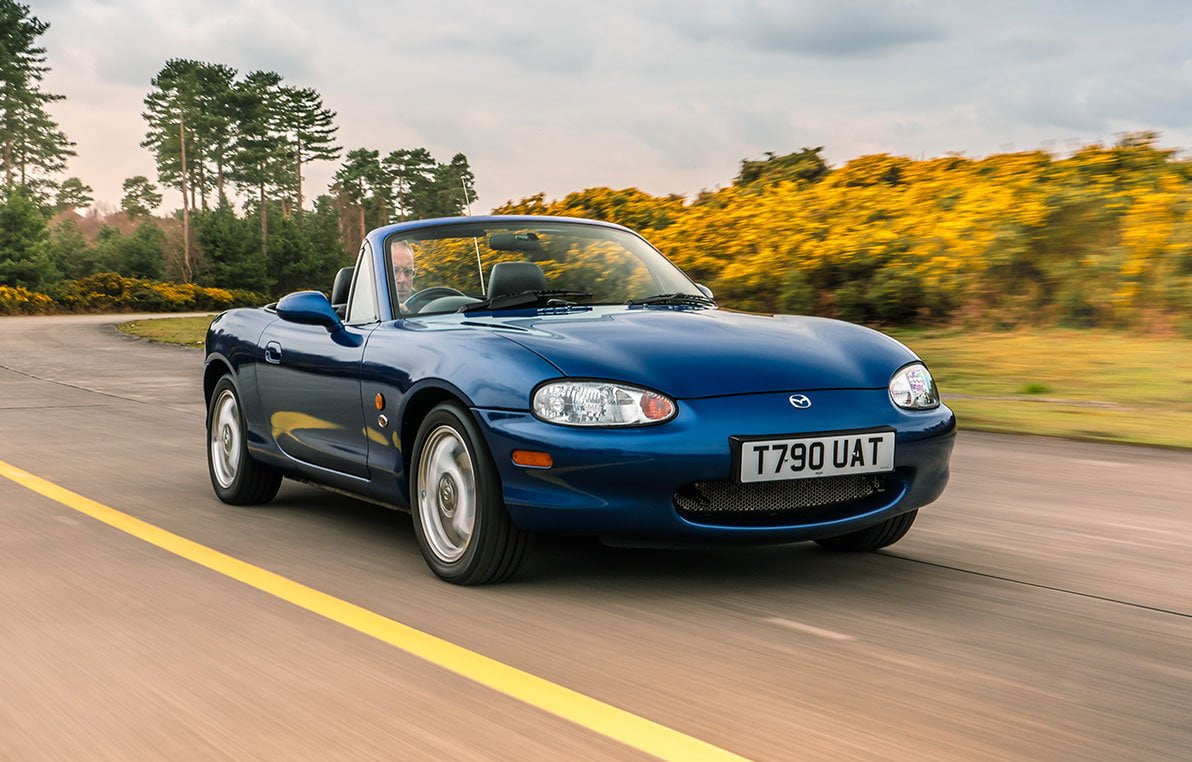
Mazda MX-5 Mk1 | The Car Expert

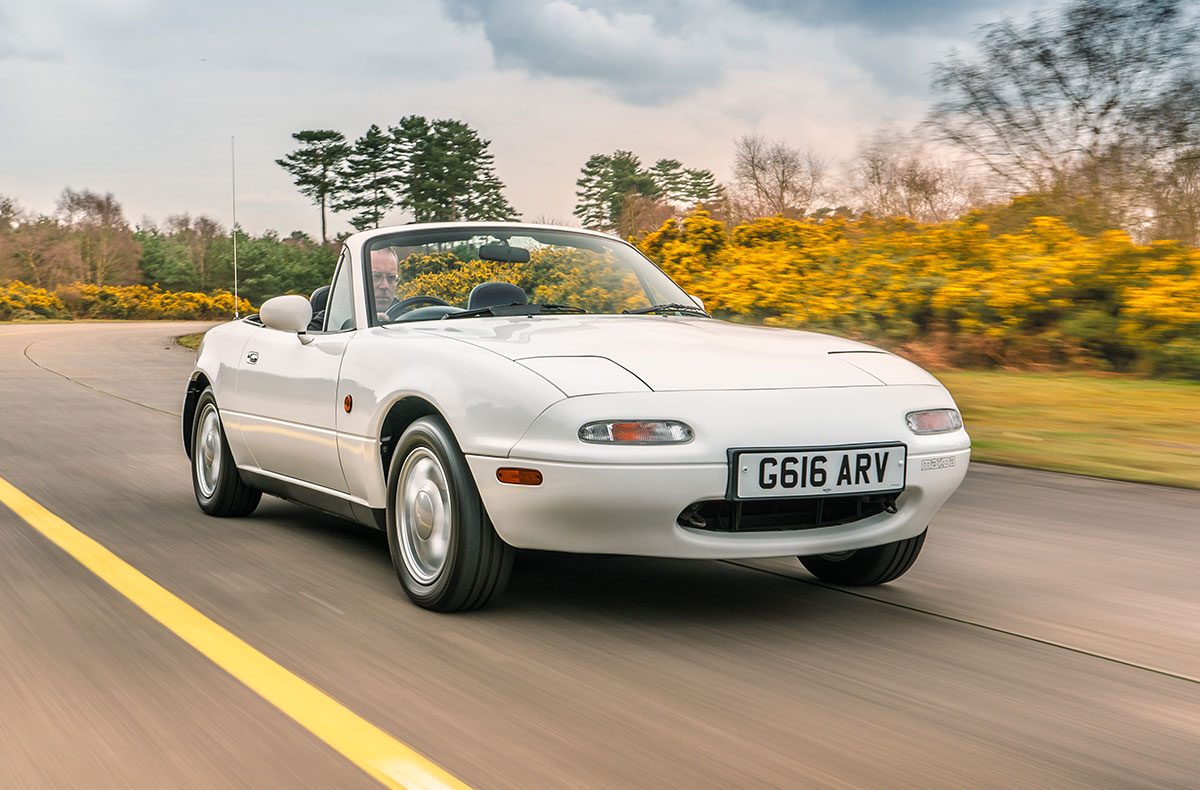
It’s fair to say that when Mazda launched the MX-5 in 1989 it caused a sensation. Not only was the car like nothing the then little-known Japanese manufacturer had previously produced, it was also like nothing on the market.

At least it was like nothing that sports car enthusiasts had seen since the demise of British classics such as the MGB, Lotus Elan et al. This was a spiritual successor to those cars, a proper roadster with a 1.6-litre engine of 115hp, a perfect 50:50 weight distribution and handling-friendly rear-wheel drive.

The MX-5 drove just like those old classics, in fact better than many of them, and it had bags of character. And it was a modern Japanese car, without such challenges as the rust-bucket sills that came with owning say a classic MG.

Buyers loved the pop-up headlamps, the fabric roof that was both light, aiding the handling, and could be raised or lowered in seconds simply by undoing two catches rather than mucking around with electronics. And when lowered it didn’t take up any of the admittedly modest bootspace.

The first generation MX-5 sold some 450,000 across the world in the eight years it was made, and during this time it gained a more powerful version with a 1.8-litre engine of 130hp, as well as an automatic gearbox engine (to be honest, auto shifting is sacrilege in a driver’s car such as the MX-5…).

Admittedly the car also gained in some quarters an unfair reputation, seen at the time as a model for lifestyle types who wanted to be seen in it car rather than actually enjoy driving it. Those who ignored it for such reasons had clearly never driven one.

Even today, to drive a Mk1 MX-5 is a real pleasure, because it boasts such placeable, inch-perfect handling, an on-the-road package that would not quite be replicated in later models, at least until the fourth-generation came along.

So would a Mk1 be our man’s MX-5 buy? It would for many, because it is in many ways the purest of the breed, especially its handling. But owning one now is really owning a classic car. Mechanically the MX-5 is a very simple car and being Japanese it is highly reliable, but Mk1s are of an age where you really will have to spend money and/or time keeping them on the road.


Mazda MX-5 Mk2: 1998 to 2005

Mazda MX-5 Mk2 | The Car Expert

With such a success on their hands Mazda’s designers faced the ‘difficult second album’ problem when creating the Mk2 version, but they overcame it. Launched in 1998, the car was instantly recognisable as the successor to the iconic Mk1.

The pop-up headlamps were gone, a styling touch that had dated very quickly, while the aerodynamics were improved along with details such as a proper glass rear screen in the hood.

There was a bigger boot, achieved by moving the battery and spare wheel under the floor. This also lowered the car’s centre of gravity, and combined with a more rigid body allowed the enthusiasts to breathe easily because the new car handled almost as well as the old one.

This was particularly true if you went for the 1.8-litre engine, as this had been given a 10 horsepower power hike and a six-speed gearbox – by the time the car was retired in 2005 it was putting out 146hp. The 1.6, meanwhile actually lost five horses.

Our man likes the Mk2 – it still has that purity of drive that we adored in the Mk1, but one feels there are less bits to show their age, especially the lack of pop-up headlamps.


Mazda MX-5 Mk3: 2005 to 2015

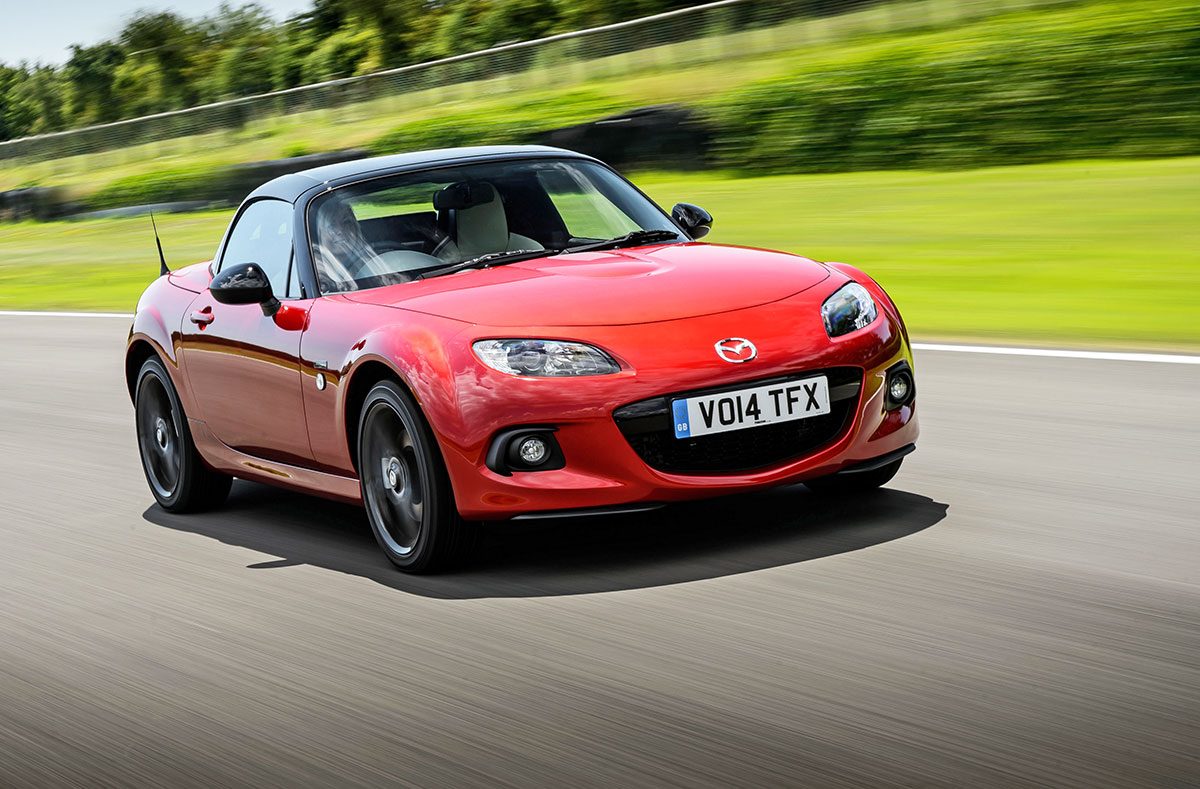
Mazda MX-5 Mk3 | The Car Expert

In many ways the Mk3 is seen as the least attractive of the MX-5 line – not that any of the models are unattractive, but this is regarded as the most sensible and therefore least fun version. 

It arrived in 2005 when technology in the car market was exploding, and it reflected the trend. Whereas the Mk2 had almost matched the Mk1 for size, the Mk3 was bigger. Not much, actually – while the wheelbase was extended by 6cm, the overall length sized out by only an extra 2cm, with a similar width stretch. But this had the effect of making the car look more grown-up, slightly affected by middle-age spread, no longer quite the diminutive sports car of its predecessors.

The new car did benefit from technology gains. There was more body rigidity, more modern materials to save weight. And there were new, all-alloy powertrains, a 1.8-litre with 126hp but most buyers going for the 2.0-litre version with 160 horses.

It’s only four years since the Mk3 MX-5 was retired and when slipping into a later model from the production run you really feel like you are in a modern car, with the surfaces, dash design and toys such as sat nav systems. No, it doesn’t feel quite as pure to drive as the earliest models, but it also feels a lot more solid. It’s a car one can happily use every day in comfort, but still have fun in.

And perhaps nothing demonstrated the sensible side of this generation than the launch in 2006 of a version with a retractable hard top. Electrics opened or closed in just 12 seconds and when down it sat in a special tonneau cover on the rear deck – adding a bit of weight but not taking any boot space. This version of the car was no longer the pure roadster, but its practicality ensured it became highly popular.


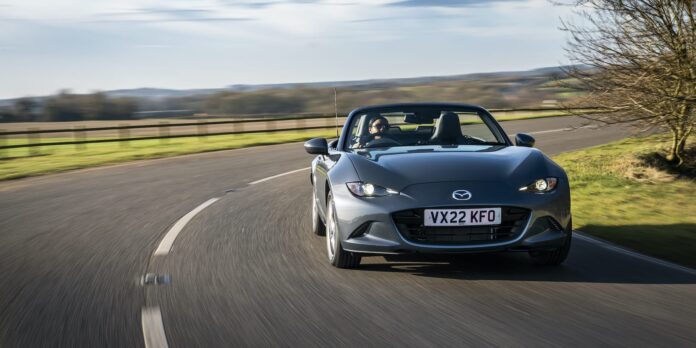
Mazda MX-5 Mk4: 2015 to today

Mazda MX-5 Mk4 The Car Expert

Mazda would never admit that it had gone too sensible with the Mk3 but suffice to say when creating the Mk4 the designers started with a clean sheet of paper, incorporating the brand’s trendsetting Skyactiv powertrain and chassis technology. 

And as can be read from our road tests of the model, they have succeeded in creating a thoroughly modern car that many road testers, this one included, believe actually outshines the original Mk1 in the handling stakes.

There is also a strong consensus from across the motoring media that the Mk4 MX-5 is once again at the top of its game. According to The Car Expert’s unique Expert Rating system, which aggregates new car reviews from about 16 of the top UK motoring websites, the latest MX-5 currently has an overall Expert Rating of 91%. That currently ranks it fourth of the 120 cars we’ve currently analysed (behind only the Porsche 911, McLaren 600LT and Alpine A110).

Today the roadster retains that fabric top just like that first car of 30 years ago and comes with the option of 1.5-litre 131hp or 2.0-litre 160hp engines. Or there is a new RF version with a metal targa top that in seconds transforms from snug coupe to wind in the hair – and comes with 24 extra horses. And to be honest, Mazda sells a few more RF versions than it does roadsters.

Remarkably it’s the shortest MX-5 ever – 6cm shorter than the original Mk1. In these more compact surroundings, the engine sits lower and further back, while the driver sits lower too, and closer to the car’s centre line.

These measures help to offset all the weight that has been added through the needs especially of extra safety protection and the technology expected in modern cars. Today’s MX-5 is still an absolute blast to drive, a car that one will go looking for challenging cross-country routes in, and at the end of the day will be perennially sad to get out of.


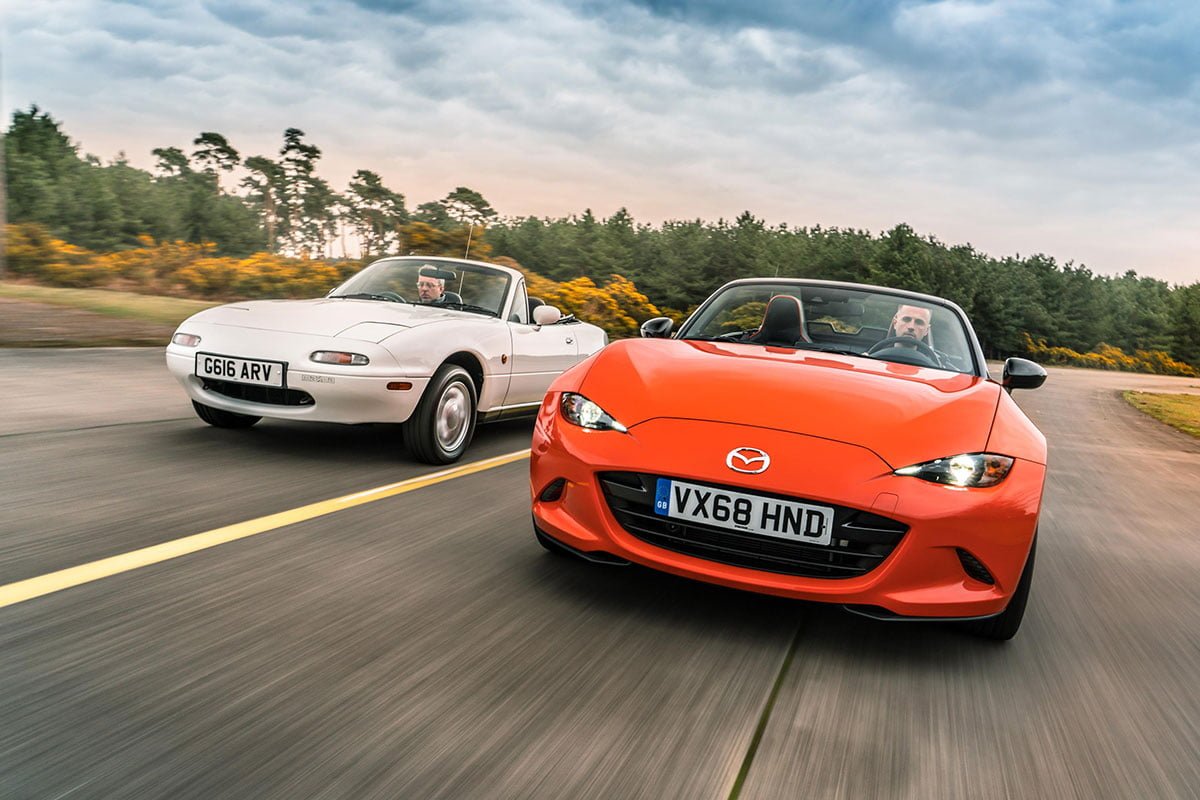
Mazda MX-5 30th Anniversary Edition

There have been many MX-5 special editions over the years and Mazda cannot let such a milestone as 30 years pass by without creating another. So we have the 30th Anniversary Edition – totalling 3,000 cars with just 550 on sale in the UK.

These will comprise 370 roadsters and 180 RF versions, at £28,095 and £29,895 respectively, so around £2500 more than the top standard versions.

Likely quite a lot of that extra cost pays for what Mazda tells us is a newly developed ‘Racing Orange’ body paint. Boy it is a bright colour, and it’s repeated on such details as the brake callipers.

Other additions include forged bespoke aluminium wheels developed by specialist Rays Co Ltd, Brembo brakes operated on by those bright callipers, and of course a 30th Anniversary badge that displays the model’s serial number.

Inside, there is a lot more orange – on the seats, door trim, dashboard, steering wheel, air vents and gear lever. There are sporty Recaro seats and Alcantara trim on the door trim and instrument panel. And one practical note – Apple Carplay and Android Auto comes as standard on this one.

The choice is yours

So, as mentioned, this road tester is a firm MX-5 fan. But as he takes a sip of tea from his MX-5 30th Anniversary mug and considers the options, which would he buy?

Money no object, it would have to be a current Mk4, as it ticks every box. But like for many, money is an object, and the second car to the ‘family runabout’ will by a used buy that will clock up quite a lot of mileage – us motoring journalists don’t spend all our time in test cars you know…

So, shock horror, it will likely be a Mk3, as the best combination of practical everyday car and sheer fun. You can pick up a really good eight to ten-year old MX-5 for around £4,000-£5,000 if you shop carefully, and being a basically simple and – crucially – Japanese-built sports car it’s virtually bulletproof. (Funnily enough, this is exactly the same conclusion that I came to last year – ed)

Others will prefer the classic feel of the earlier models, but one aspect will remain constant – whichever MX-5 you buy, you won’t be disappointed…

Mazda MX-5 30th Anniversary group The Car Expert

Night Eagle trim revealed for Jeep Renegade and Compass

0

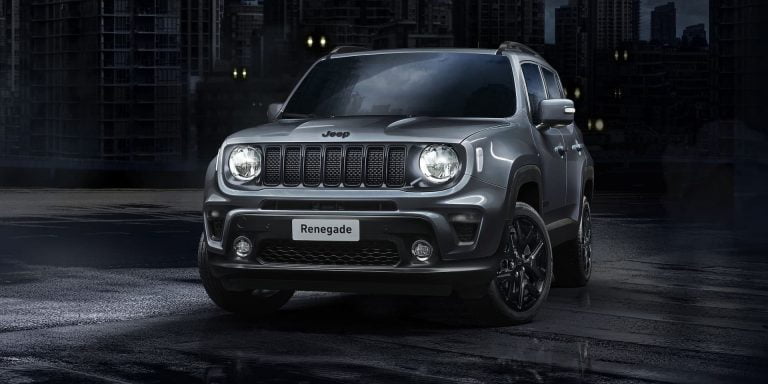
Jeep has brought a darker side to its Renegade and Compass ranges with new Night Eagle grades.

This trim level adds a number of dark styling tweaks to both SUVs in a bid to deliver a ‘bolder and sportier look’.

For the Renegade, Night Eagle specification brings a variety of gloss black highlights. Its grille surround, 18-inch alloy wheels and exterior badges are finished in the hue, while matching interior accents feature alongside black upholstery. A model-specific emblem completes the look.

Based on the Longitude grade, equipment highlights for the Renegade Night Eagle include an 8.4-inch infotainment system with Apple CarPlay and Android Auto support, dual-zone climate control and adaptive cruise control. Metallic paint is also available for no additional cost. Petrol engines include a 1.0-litre, 120hp unit and a 1.3-litre, 150hp motor. The sole diesel is a 120hp 1.6-litre powertrain.

Pricing for the Jeep Renegade Night Eagle begins at £23,445.

  • Jeep Compass Night Eagle - front | The Car Expert
  • Jeep Compass Night Eagle - rear | The Car Expert

The Jeep Compass Night Eagle receives very similar additions to the Renegade, with its grille, fog lights and window surrounds finished in gloss black — while the same treatment is applied to its badges. Two-tone black and aluminium 18-inch alloys are included, along with model-specific badging.

Also based on Longitude, the Compass features the same infotainment package as the Renegade. A sole 1.4-litre, 140hp petrol is offered, while two diesels are available — a 1.6-litre, 120bhp unit and a 2.0-litre, 140hp option. The petrol and former diesel are available with two-wheel-drive and a manual gearbox, with the latter black-pump car sending its power to all four wheels via an automatic transmission

The Jeep Compass Night Eagle is available from £27,730. Order books for both cars are now open.

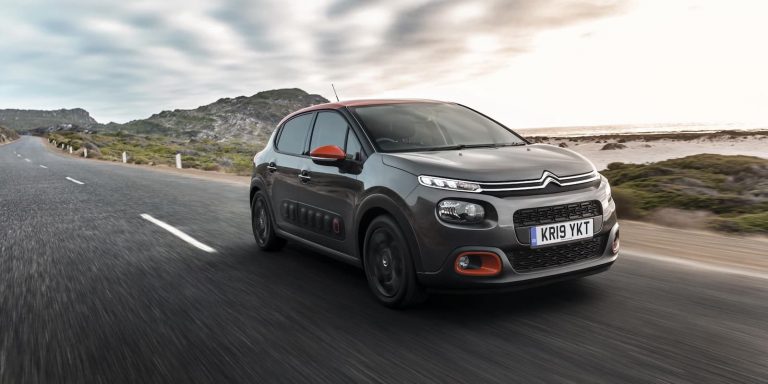
Revised Citroën C3 offers more upmarket features

0

The Citroën C3 supermini is getting a raft of upgrades, aimed at simplifying the range and emphasising its most popular trims.

Since the current-generation C3 went on sale in 2017, it has become Citroën’s best-selling car in the UK with the French firm saying buyers tend to lean towards the higher-specification trim levels.

To reflect this, the entry-level Touch trim will be discontinued, while Flair and Flair Nav Editions have been combined into the top-spec Flair Plus trim. This cuts the number of trim options from six to three.

The new entry point to the range is now Feel, starting at £15,860. This comes with 16-inch alloy wheels, a seven-inch colour touchscreen supporting smartphone connectivity, automatic air conditioning and lane departure warning. There are also four roof colour options.

Buyers can step up to the mid-range Origins trim, available from £17,160, which adds a black bi-tone roof, Airbump panels and an upgraded interior, as well as a suite of driver assistance systems.

The new top-level Flair Plus trim level is expected to be the most popular, as the two trims it replaces accounted for 62% of all Citroën C3 sales. Starting at £17,625, it comes with satellite navigation, integrated dashcam, leather steering wheel, reversing camera, tinted windows and red interior touches.

The engine range has also been updated, including two three-cylinder petrol engines and one four-cylinder diesel. The PureTech 110 petrol engine is available with a six-speed manual or automatic, while the other two have a five-speed manual. Efficiency has been improved through various technical upgrades, including new low-resistance tyres and hidden underbody panels that reduce drag.

Order books for the revised Citroën C3 range are set to open in October.

Can Heycar change the used car market?

Another new player has launched a used car classifieds website this month, entering an increasingly crowded marketplace. This one, however, seems to have friends in high places.

On the surface, Heycar looks very similar to the existing Auto Trader/Buyacar/Motors/everybody else offerings, but the crucial difference is that heycar is jointly owned by Volkswagen Financial Services (which trades as Audi Finance, SEAT Finance, Skoda Finance, Volkswagen Finance and more) and Daimler Mobility (formerly known as Daimler Financial Services, and you may know them better as Mercedes-Benz Finance), as well as a private venture company called BCG Digital Ventures.

Although owned by Volkswagen and Daimler (and the venture company), the platform is open to cars from all brands. However, Heycar is exclusively for dealers rather than private sellers, unlike Auto Trader and other platforms. The company claims to have 1,400 dealerships already on board, representing 50 different brands, which is certainly a good start – although it helps that it’s currently free for approved dealers to advertise their cars on Heycar.

heycar is a joint venture between Volkswagen Financial Services and Daimler Mobility (trading as Mercedes-Benz Finance)

Is Heycar really any better?

The key message heycar representatives were keen to sell at its launch earlier this week was a desire to make used car searching simpler. There are no adverts for car insurance, credit check services or GAP insurance, and results don’t annoyingly prioritise “sponsored adverts” like rival sites.

All of the cars listed on heycar must be less than eight years old and have covered less than 100,000 miles. They will also have a minimum warranty of 30 days, although there is no detail provided as to what level of warranty cover is offered.

Heycar also claims that it won’t allow cars that are repaired insurance write-offs (known as Cat S or Cat N), which is a departure from other sites.

By only working with selected dealerships, there are inevitably fewer cars to choose from. We checked half a dozen popular cars and another half-dozen less popular models on both Heycar and the market leader, Auto Trader. Even applying the same eight-year/100,000-mile limit to Auto Trader, it still offered more than double the number of cars to Heycar in virtually every one of our 12 searches.

If you’re planning to buy a used car from a dealer, the key will be whether the limited number of cars on offer at Heycar are basically the same cars you would consider on Auto Trader anyway (so in effect they’re not offering the cars you wouldn’t buy), or whether the choice really is too limited for most people.

At this stage, the answer to that will vary on a case-by-case basis, but the impression at the launch was very much that this is a significant new project that is setting up for the long haul. So we’ll need to wait a year or so to see how Heycar evolves and whether it becomes the classifieds site of choice for used car buyers.

How many used car sites do we really need?

Heycar was launched in Germany two years ago, and its owners appear to be very happy with progress over there. As the second-largest used car market in Europe, the UK is a logical next step for expanding the Heycar business.

But how many different used car classifieds sites is enough or too many? With Auto Trader, Motors, Buyacar and more, plus the likes of eBay and Gumtree, surely there’s no great need for another player. Which suggests that if Heycar is to succeed, it’s likely to be at the direct expense of at least one or more of its rivals.

Our top picks: The best sites for buying a new or used car

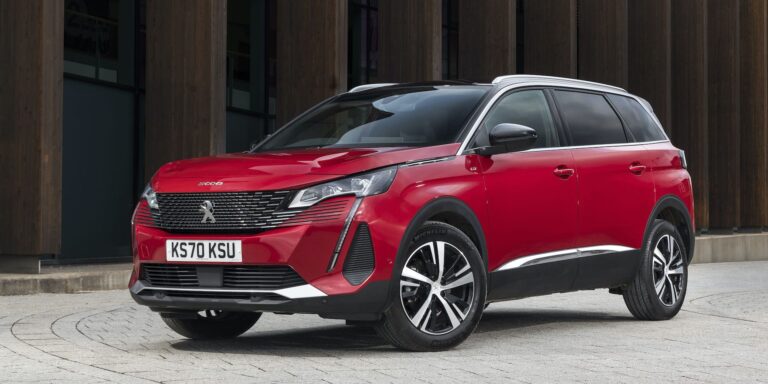
Peugeot 5008 (2017 to 2024)

Summary

The Peugeot 5008 is a seven-seat SUV/crossover based on the smaller 3008 model. This generation arrived in the UK in 2017 and, like the 3008, replaced a people carrier model with the same name. It remained in production until 2024 when it was replaced by an all-new model.

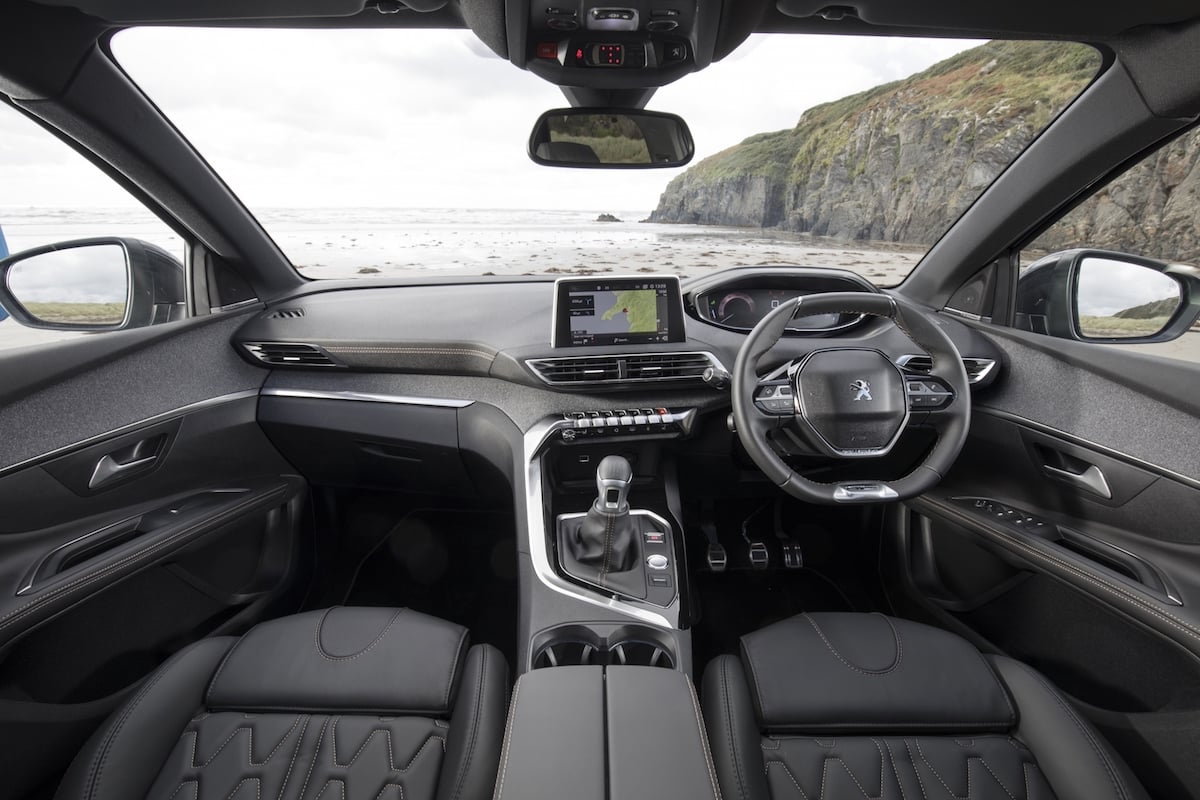
The 5008 was very much based on the smaller 3008 model, and many of the two cars’ characteristics were similar. Comfort and driving dynamics were strengths, while Peugeot’s unique i-Cockpit concept very much split opinion. The main criticisms relate to the 5008’s lack of off-roading ability for a car that looks like an SUV but isn’t really.

A facelifted 5008 arrived in the UK in early 2021, remaining on sale until Autumn 2024 when the current 5008 was launched as its replacement.

As of March 2026, the Peugeot 5008 has a Used Car Expert Rating of C, with a score of 64%. It scores well for having low CO2 emissions (thanks to the plug-in hybrid version bringing down the average) and running costs, while reliability is also a strong point. The only negative point to note is that the safety rating has now expired.

Key specifications

Body style: Five-door SUV/crossover
Engines: petrol, diesel
Price when new: From £36,745 on-road

Launched: Spring 2017
Last updated: Winter 2020/21
Replaced: Summer 2024

Media reviews

Highlighted reviews and road tests from across the UK automotive media. Click any of the boxes to view.

Featured reviews

More reviews

Auto Express

Auto Trader

Car

Carbuyer

Carwow

Company Car Today

Daily Mail

Green Car Guide

Heycar

Honest John

Parkers

The Sun

The Telegraph

Top Gear

Safety rating

Independent crash test and safety ratings from Euro NCAP

Overall score: 5 stars
Date tested: September 2016
Date expired: January 2023
Read the full Euro NCAP review

Adult protection: 86%
Child protection: 85%
Vulnerable road users: 67%
Safety assist: 58%

Notes on safety rating

The Peugeot 5008 was originally tested by Euro NCAP back in 2016 and awarded a five-star rating. However, this rating expired in January 2023 and is no longer valid as the car no longer meets the standards required for such a rating. This is normal practice, as Euro NCAP reviews its ratings on most cars annually with most ratings expiring after about six or seven years.

Although the rating has now expired, the score is still useful if you are comparing a used 5008 to vehicles of similar age – whose ratings will have probably also expired.

Eco rating

Independent economy and emissions ratings from Green NCAP

No eco rating

The Peugeot 5008 was not assessed by Green NCAP during its production life.

Reliability rating

Reliability data provided exclusively for The Car Expert by MotorEasy

All data based on MotorEasy average workshop costs for extended car warranty claims

As of April 2025 (our most recent data point), the Peugeot 5008 has a reliability score of 65% which is about average, according to workshop and warranty data provided exclusively to The Car Expert by our partners at MotorEasy. This score covers both the current-generation 5008 and the original (pre-2017) version.

Average repair costs overall are just over £400, which is very competitive. The biggest bills to date have been for engine repairs, which have also been the most common problems.

If you’re looking at a used Peugeot 5008, make sure any extended warranty cover you purchase covers all of the potential problem areas shown above.

Running cost rating

Monthly cost of ownership data provided exclusively for The Car Expert by Clear Vehicle Data

Fuel consumptionAverageScore
Petrol models46 mpgC
Diesel models54 mpgB
Hybrid models53 mpgB
CO₂ outputAverageScoreVariationScore
Petrol models150 g/kmC
Diesel models147 g/kmC
Hybrid models129 g/kmB
Insurance groupAverageScoreVariationScore
All models21B
Service and maintenanceCostScore
Year 1£172B
Year 2£488B
Year 3£748B
Year 4£968B
Year 5£1,307B
Overall£3,683B

The Peugeot 5008 should be a very affordable car to own and run, according to whole-life cost data provided exclusively to The Car Expert by our technical partner, Clear Vehicle Data.

Fuel consumption for petrol models is only average, while the hybrid and diesel models are better.

Insurance costs are excellent, as are servicing and maintenance costs over the first five years.

Awards

Trophies, prizes and awards that the Peugeot 5008 has received

2023

  • Auto Trader Awards – Best Seven-Seater Car

2022

  • Company Car Today CCT100 Awards – Best SUV

2021

  • Company Car Today CCT100 Awards – Best SUV

2020

  • Company Car Today CCT100 Awards – Best SUV

2019

  • Business Motoring Awards – Best Medium SUV
  • Company Car Today CCT100 Awards – Best SUV

2018

  • Company Car Today CCT100 Awards – Best SUV
  • Scottish Car of the Year Awards – Best Crossover
  • Tow Car Awards – Best in Class (1550-1699kg category)

Similar cars

If you’re looking at the Peugeot 5008, you might also be interested in these alternatives

Citroën C5 Aircross | Honda CR-V | Hyundai Santa Fe | Kia Sorento | Land Rover Discovery Sport | Mitsubishi Outlander | Nissan X-Trail | SEAT Tarraco | Skoda Kodiaq | SsangYong Rexton | Subaru Forester | Suzuki Across | Toyota RAV4 | Volkswagen Tiguan Allspace

More news, reviews and information about the Peugeot 5008 at The Car Expert

Peugeot cuts prices across its range

Peugeot cuts prices across its range

New ‘GT Premium’ trim for Peugeot 3008 and 5008

New ‘GT Premium’ trim for Peugeot 3008 and 5008

Peugeot E-5008

Peugeot E-5008

Peugeot 5008

Peugeot 5008

Everything you need to know about Peugeot

Everything you need to know about Peugeot

Peugeot 3008 and 5008 gain new engine option

Peugeot 3008 and 5008 gain new engine option

Peugeot 3008 and 5008 get trim level updates

Peugeot 3008 and 5008 get trim level updates

Most new diesel cars still pollute beyond legal limits

Peugeot ups the spec on its SUVs

Peugeot ups the spec on its SUVs

Peugeot 5008 SUV review

Peugeot 5008 SUV review

Peugeot unveils new 5008 SUV

Peugeot unveils new 5008 SUV

Buy a Peugeot 5008

If you’re looking to buy a used Peugeot 5008, The Car Expert’s partners can help you find the right car.

Motors 600x300

Search less, live more. We make finding the right car simple. Find out more

Auto Trader logo 600x300

Search for your next new or used car with Auto Trader. Find out more

Carwow logo 600x300

Discover great deals available on both new and used cars. Find out more

Volvo S60 range bolstered with plug-in hybrid powertrain

0

Volvo has broadened the appeal of its S60 range, with a plug-in hybrid powertrain now available alongside a range-topping specification.

Introduced to the saloon is the Swedish firm’s ‘T8 Twin Engine’ power unit, combining a 2.0-litre four-cylinder petrol engine with an electric motor. They combine to produce 390hp, sending the car from a standstill to 60mph in 4.4 seconds.

Volvo claims the car is capable of 176.5mpg on the combined cycle, while emitting 39g/km of CO2. Electric-only driving is also said to be possible for up to 36 miles between charges.

The T8 powertrain is exclusive to the newly-introduced R-Design Plus trim, which currently tops the S60’s range. This high-spec grade brings a head-up display, shift paddles, part-leather sports seats and ‘Metal Mesh’ inserts to the interior of the car, while the exterior benefits from gloss black trim elements and the option of 18-, 19- or 20-inch alloy wheels.

A petrol ‘T5’ powertrain is also available for R-Design Plus, with these models benefitting from chassis enhancements including stiffer springs and thicker anti-roll bars. It also rides a centimetre closer to the ground. Volvo says these changes offer ‘a more focused driving experience’.

Also introduced to the Volvo S60 is the option of adaptive dampers, which can be adjusted on the fly to stiffen the car for a more engaging drive or soften it for the sake of comfort.

Pricing for the Volvo S60 T5 R-Design Plus begins at £37,935, with T8 variants available from £49,805. Order books are now open for both, with deliveries to follow imminently. A T8 Polestar Engineered variant of the S60 will be arriving ‘soon’, according to Volvo, with this version boasting a 405hp powertrain.

McLaren to build open-top hypercar

0

McLaren has confirmed the fourth member of its hypercar ‘Ultimate Series’ line-up — an open-top roadster.

The yet-to-be-named car will arrive in 2020, following on from the P1 of 2013, the 2018 Senna and the upcoming Speedtail.

It will be limited to a production run of 399 examples and according to McLaren will be a road car first and foremost, rather than being aimed at track use.

McLaren has released a single teaser image of the car that shows a silhouette matching the rest of the brand’s current range. The side profile resembles that of the 720S supercar while the thin head and taillights are signature elements.

Currently there are few mechanical details, though McLaren has confirmed that the car will utilise a variant of the brand’s familiar 4.0-litre twin-turbocharged V8 engine. Its specification is said to be similar to that of the Senna, which produces 800hp.

According to McLaren Automotive chief executive Mike Flewitt, the new model demonstrates the brand’s intention to push boundaries.

“Our two current ultimate series cars, the Senna and Speedtail, offer unique and distinct driving experiences – now this new addition to the Ultimate Series, an open-cockpit roadster, will take road-focused driving pleasure to new levels,” Flewitt says.

Pricing for the upcoming open-cockpit McLaren is yet to be revealed though it is expected to be somewhere between the £750,000 Senna and £2.1m Speedtail.

McLaren Speedtail 2019 wallpaper | The Car Expert
New model will follow Speedtail in McLaren Ultimate Series

Lamborghini Huracán (2014 to 2024)

Summary

The Lamborghini Huracán was a mid-engined supercar, available in coupe or Sypder (convertible) versions. It was revealed at the 2014 Geneva motor show and arrived in the UK later that year. In early 2019, the updated Lamborghini Huracán Evo was launched. The range was retied in 2024, making way for the launch of its Temerario replacement in 2026.

Like most Lamborghini models, there have been various special editions and performance models, the most important of which is the Lamborghini Huracán Performante.

The Lamborghini Huracán, in all its forms, has received very good reviews in general from the UK motoring media, although its review scores were not quite to the same level as its main rivals, the Ferrari 488 and McLaren 720S. The updated Evo was considered a significant improvement on the original version based on the initial reviews we have analysed – although Ferrari then moved the goalpoasts again with the F8 Tributo.

No longer on sale, the Lamborghini Huracán holds a New Car Expert Rating of E with a score of 50%. While the supercar has an excellent set of review scores from the British motoring media, it is unsurprisingly very expensive to run, and this hinders its score.

Key specifications

Body style: coupe / convertible
Engine: petrol
Price: From £206,000 on-road

Launched: Spring 2014
Last updated: Spring 2019
Replacement due: TBA

Media reviews

Highlighted reviews and road tests from across the UK automotive media. Click any of the boxes to view.

Auto Express

Auto Trader

Car

Carbuyer

Daily Mail

Evo

Parkers

The Sun

The Sunday Times

The Telegraph

Top Gear

Safety rating

Independent crash test and safety ratings from Euro NCAP

No safety rating

No longer on sale, the Lamborghini Huracán has not been crash tested by Euro NCAP. If and when it is put through its paces by Euro NCAP, we will publish the results here. Given its price and exclusivity, it’s unlikely to ever happen.

Eco rating

Independent economy and emissions ratings from Green NCAP

No eco rating

No longer on sale, the Lamborghini Huracán has not been lab tested by Green NCAP. Again, we’re not expecting this to ever happen.

Reliability rating

Reliability data provided exclusively for The Car Expert by MotorEasy

No reliability rating

As of March 2026, we don’t have enough reliability data on the Lamborghini Huracán to generate a reliability rating.

The Car Expert’s reliability information is provided exclusively to us using extended warranty data from our partner, MotorEasy. As soon as MotorEasy has sufficient data on the Huracán, we’ll publish the score here.

Running cost rating

Clear Vehicle Data logo close crop

Monthly cost of ownership data provided exclusively for The Car Expert by Clear Vehicle Data

Fuel consumptionAverageScore
Petrol models19 mpgE
CO₂ outputAverageScoreVariationScore
Petrol models329 g/kmE
Insurance groupAverageScoreVariationScore
All models50F

The Lamborghini Huracan is a very expensive car to own and run, according to whole-life cost numbers provided exclusively to The Car Expert by our data partner, Clear Vehicle Data.

The car’s fuel economy of 20 mpg is one of the poorest fuel consumption stats in our Expert Rating Index, and insurance premiums are in the most expensive bracket too.

Warranty rating

New car warranty information for the Lamborghini Huracán

Overall ratingD37%
New car warranty duration3 years
New car warranty mileageUnlimited miles
Battery warranty duration0 years
Battery warranty mileage0 miles

Lamborghini’s new car warranty is better than average, and better than rival brands in a similar price bracket as the Huracán. The duration is three years, with no limit on mileage.

Warranty on a used Lamborghini Huracán

  • If you are buying an ‘Approved Used’ Lamborghini Huracán from an official Lamborghini dealership, you will get a minimum 12-month (24-month available as an option) warranty included.
  • If you are buying a used Lamborghini Huracán from an independent dealership, any warranty offered will vary and will probably be managed by a third-party warranty company.
  • If you are buying a used Lamborghini Huracán from a private seller, there are no warranty protections beyond any remaining portion of the original new car warranty.

If you’re looking to buy any used car that is approaching the end of its warranty period, a used car warranty is usually a worthwhile investment. Check out The Car Expert’s guide to the best used car warranty providers, which will probably be cheaper than a warranty sold by a dealer.

Similar cars

If you’re looking at the Lamborghini Huracán, you might also be interested in these alternatives

Aston Martin DBS | Audi R8 | Ferrari F8 Tributo | Lotus Evora | McLaren 720S | Mercedes-AMG GT R | Porsche 911 Turbo

More news, reviews and information about the Lamborghini Huracán at The Car Expert

Lamborghini Huracan Evo RWD test drive

Lamborghini Huracan Evo RWD test drive

Lamborghini reveals rear-wheel drive Huracán Evo Spyder

Lamborghini reveals rear-wheel drive Huracán Evo Spyder

Lamborghini introduces rear-driven Huracan Evo variant

Lamborghini introduces rear-driven Huracan Evo variant

New Lamborghini Huracan Evo revealed

New Lamborghini Huracan Evo revealed

Buy a Lamborghini Huracán

If you’re looking for a new or used Lamborghini Huracán, The Car Expert’s partners can help you find the right car or a competitive finance arrangement

Motors 600x300

Find your next used car with Motors. Find out more

Auto Trader logo 600x300

Find your next new or used car with Auto Trader. Find out more

Carwow logo 600x300

Find your next new or used car with Carwow. Find out more

1,600hp Bugatti Centodieci pays tribute to iconic EB110

0

Bugatti has revealed the Centodieci, a modern interpretation of the EB110, one of its most iconic models.

Based on the Chiron, the Bugatti Centodieci – which means 110 in Italian – was designed with the classic car’s wide wedge shape in mind, but with a modern twist that could incorporate the cooling requirements of the 8.0-litre W16 engine.

Those cooling requirements dictated the car’s design, with five round air intakes in the shape of a diamond fitted to the front, while the rear end features a wide air outlet to dispel hot air from the engine bay.

  • Bugatti Centodieci - front view | The Car Expert
  • Bugatti EB110, Bugatti Centodieci and Bugatti Chiron | The Car Expert
  • Bugatti Centodieci - rear view | The Car Expert

The engine produces 1,600hp and contributes to the hypercar’s 0-60mph time of 2.2 seconds. It can also hit 124mph in 6.1 seconds and 188mph in 13.1 seconds before going on to a top speed of 236mph.

Bugatti claims the Centodieci is 20kg lighter than the Chiron, which has been achieved by using a lightweight windscreen and carbon-fibre stabilisers.

Stephan Winkelmann, president of Bugatti, said: “With the Centodieci, we pay homage to the EB110 super sports car which was built in the 1990s and is very much a part of our tradition-steeped history.

“With the EB110, Bugatti catapulted itself to the top of the automotive world once again after 1956 with a new model.

“We are proud of our long Bugatti history, of which the EB110 is very much a part. That’s why we’re celebrating a reinterpretation of this extraordinary vehicle with the Centodieci – Italian for 110.”

Just 10 Centodieci models will be built and all have already been sold with a starting price of £7.3 million.

Dacia Duster gets new entry-level engine

0

Dacia has bolstered its Duster SUV range with a new entry-level petrol engine, although the good news is tempered by a £1,000 price rise.

Replacing the previous SCe 115 motor, the new TCe 100 is a turbocharged 1.0-litre three-cylinder engine sending 100hp and 260Nm of torque to the front wheels via a five-speed manual gearbox.

The latest Dacia Duster range has polarised the UK motoring media, with a broad range of opinions varying from outstanding to outright recommendations not to buy one. You can see all the leading reviews for the Duster right here at The Car Expert, thanks to our all-new and unique Expert Rating system.

Dacia Duster TCe 100 engine | The Car Expert
Dacia Duster TCe 100 1.0-litre petrol engine

Better performance but more money for Dacia Duster

Dacia says the new TCe 100 power unit delivers better performance and improved efficiency, though starting prices have risen from £9,995 to £10,995 as a result of its introduction. The engine is available on Access, Essential and Comfort trim levels, with prices topping out at £13,995.

It’s said to return 48.7-49.5mpg and emit 126g/km of CO2 regardless of its trim level, while sending the car from 0-60mph in 12.3 seconds and on to a 104mph top speed.
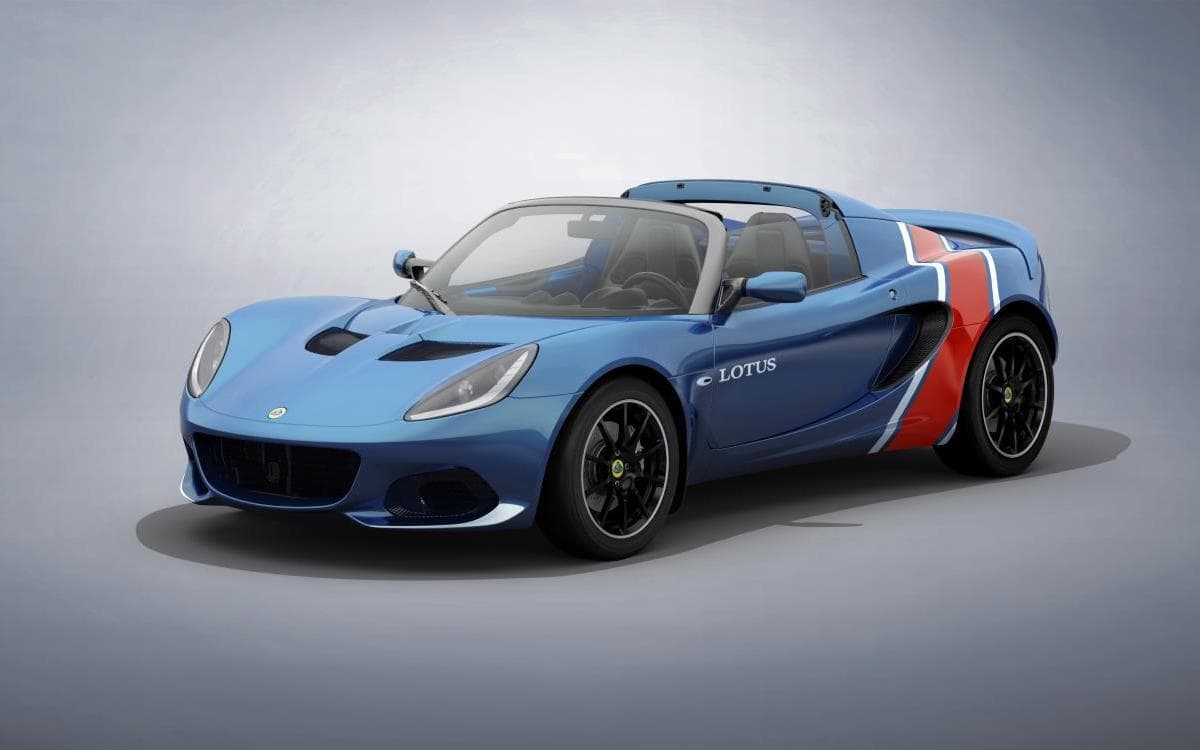
The rest of the Duster range is unaffected by the slight change, meaning more powerful TCe 130 and 150 petrol engines are still offered alongside a sole diesel — the Blue dCi 115. Also unimproved is the Duster’s poor three-star safety rating from Euro NCAP.

Owned by Renault, the firm will be expecting the new power unit to continue a successful run of sales for the Duster. It says registrations of the SUV have risen 89% year-to-date in 2019 compared with 2018, though last year did see the second-generation car introduced, with 10,000 new examples apparently sold so far this year.

Order books are now open for the Dacia Duster TCe 100, with deliveries to follow imminently.

Nissan Leaf (2018 to 2024)

Summary

The Nissan Leaf was a medium-sized five-door hatchback, and one of the pioneers of electric driving. This model was the second-generation Leaf and was built here in the UK at Nissan’s Sunderland plant.

The Nissan Leaf received particular praise over the course of its production life for its smooth, quiet operation and generous equipment levels. However, it has been criticised for not matching newer electric cars, like the Hyundai Kona Electric and Kia e-Niro, when it comes to overall range. The higher-spec models were also considered expensive compared to the entry-level models.

A mildly facelifted Leaf arrived in the UK in Spring 2022. This consisted of some minor styling tweaks, along with some fresh colours and alloy wheel designs.

This generation of the Leaf ended production in 2024, ahead of an all-new Leaf that was unveiled in the summer of 2025 and will go on sale in early 2026.

No longer on sale, the Nissan Leaf holds a Used Car Expert Rating of A, with a score of 78%. It scores highly for its exceptional reliability record, zero tailpipe emissions and low running costs. Its safety score is only average, as the testing was done back in 2018.

The Car Expert Best of British horizontal banner

Leaf highlights

  • Leisurely driving experience
  • Respectable battery range
  • Roomy interior with intuitive practical gadgets
  • Alluring affordable pricing
  • Low running costs

Leaf lowlights

  • At risk of being surpassed by newer EV rivals
  • Polarising exterior looks
  • The e-Niro and Kona Electric have better battery range
  • Slightly complicated infotainment

Key specifications

Body style: Five-door hatchback
Power: electric motor, battery-powered
Price when new: From £28,995 on-road

Launched: Spring 2018
Last updated: Summer 20222
Replaced: Autumn 2025

Media reviews

Highlighted reviews and road tests from across the UK automotive media. Click any of the boxes to view.

Featured reviews

More reviews

The Car Expert

Auto Express

Car

Carbuyer

Carwow

Company Car Today

Discover EV

Evo

Green Car Guide

Heycar

Honest John

Parkers

Regit

The Sun

The Telegraph

Top Gear

Which EV?

Safety rating

Independent crash test and safety ratings from Euro NCAP

Overall score: 5 stars
Date tested: April 2018
Date expired: January 2025
Read the full Euro NCAP review

Adult protection: 93%
Child protection: 86%
Vulnerable road users: 71%
Safety assist: 71%

Note on safety rating

The Nissan Leaf was assessed by Euro NCAP in 2018 and awarded a five-star rating. This rating expired in January 2025, as it no longer met the requirements for a five-star score. This is normal practice, as Euro NCAP reviews its ratings on most cars annually with most ratings expiring after about six or seven years.

However, if you are comparing a used Nissan Leaf to vehicles of similar age, whose ratings will have probably also expired, its safety rating score is still useful.

Eco rating

Independent economy and emissions ratings from Green NCAP

Model tested: 40 kWh N-Connecta

Overall score: 5 stars
Date tested: July 2019
Read the full Green NCAP review

Clean Air Index: 10 / 10
Energy Efficiency Index: 8.5 / 10

Reliability rating

MotorEasy logo 600x167

Reliability data provided exclusively for The Car Expert by MotorEasy

All data based on MotorEasy average workshop costs for extended car warranty claims

The Nissan Leaf has an excellent reliability score of 95%, according to workshop and warranty data provided exclusively to The Car Expert by our partner, MotorEasy. This score applies to both the first-generation (2011 to 2017) and second-generation (2018 to 2024) models. This score is the top result for all cars in our Expert Rating Index.

As well as having very few problems, repairs have proven to be quite cheap when a Leaf does have an issue, with an average repair bill of less than £300.

Running cost rating

Clear Vehicle Data logo close crop

Monthly cost of ownership data provided exclusively for The Car Expert by Clear Vehicle Data

Battery rangeAverageScoreVariationScore
EV models168 milesC
Electrical efficiencyAverageScoreVariationScore
EV models4.3 m/KWhB
Insurance groupAverageScoreVariationScore
All models24B
Service and maintenanceCostScore
Year 1£141A
Year 2£325A
Year 3£534A
Year 4£670A
Year 5£906A
Overall£2,576A

The Nissan Leaf is a very affordable car to own and run, according to whole-life cost numbers provided exclusively to The Car Expert by our data partner, Clear Vehicle Data.

Servicing and maintenance bills should be very inexpensive, and insurance is generally good as well. The Leaf has good electrical efficiency (the EV equivalent of miles per gallon in a petrol or diesel car), which means it can run for nearly 200 miles despite a modest battery size.

Recalls

Official DVSA safety recalls that have been issued for the Nissan Leaf

Date: June 2024
Model types: All
Build dates: 10/2019 to 06/2023
Number of vehicles affected: 1
Defect: The VIN stored in the vehicle system may not match the actual VIN of the vehicle. This may lead to a situation where a vehicle user can see information related to a different vehicle resulting in a data security breach.
Remedy: Replace the navigation display / control unit and the telematics control unit.

Date: July 2023
Model types: All
Build dates: 12/2017 to 05/2023
Number of vehicles affected: 37,574
Defect: A potential concern affecting the Vehicle Control Module (VCM) logic of some vehicles has been identified whereby in specific and rare circumstances after switching off the cruise control function there is a possibility of unintended acceleration.
Remedy: The software of the VCM will be updated.

Date: July 2017
Model types: All
Build dates: 02/2017 to 03/2017
Number of vehicles affected: 65
Defect: Due to a non confromity in production the headlamp auto aim function may not operate.
Remedy: Reconfigure and then reinitialise the headlamp leveliser control unit on affected vehicles.

As of September 2024 (our most recent data point), there have been four DVSA vehicle safety recalls on the second-generation Nissan Leaf. These cover software issues, parking brake and hedlights.

Not all vehicles are affected by recalls. You can check to see if your car is included in any of the above recalls by visiting the DVLA website or contacting your local Nissan dealer.

If your car is affected by a recall, the vehicle must be repaired and you should not be charged for any work required. If you are buying a used Leaf, you should insist that any outstanding recall work is completed before you take delivery of the vehicle.

Awards

Trophies, prizes and awards that the Nissan Leaf has received

2023

Auto Trader Awards – Best Car for City Drivers

2022

  • DrivingElectric Awards – Best Used Small Electric Car

2021

  • Carbuyer Awards – Best Used Family Electric Car

2019

  • Company Car Today CCT100 Awards – Best Electric Car

2018

  • Carwow Awards – Innovation Award
  • DieselCar and EcoCar Awards – Best Electric Car
  • World Car Awards – Best Green Car

Similar cars

If you’re looking at the Nissan Leaf, you might also be interested in these alternatives

Citroën ë-C4 | Hyundai Ioniq Electric | Hyundai Kona Electric | Kia Niro EV | MG 4 | Peugeot e-2008 | Polestar 2 | Tesla Model 3 | Toyota Prius Plug-In | Volkswagen ID.3

Buy a Nissan Leaf

If you’re looking to buy a used Nissan Leaf, The Car Expert’s partners can help you find the right car

Motors 600x300

Search less, live more. We make finding the right car simple. Find out more

Carwow logo 600x300

Discover great deals available on both new and used cars. Find out more

Auto Trader logo 600x300

Search for your next new or used car with Auto Trader. Find out more

Rolls-Royce unveils limited-run Ghost Zenith collection

0

Rolls-Royce has unveiled an incredibly limited-run Zenith collection for the Ghost, with just 50 units slated for production.

Based on the Ghost, the oldest offering in its range, Rolls-Royce says this collection offers the most bespoke options of any car in the model’s line-up yet.

It’s believed this is effectively the swansong for the British firm’s entry model in its current guise before a new generation arrives in 2020. The Ghost has been in production in this form since 2009, albeit with a facelift along the way.

Rolls-Royce Ghost Zenith

The Zenith takes inspiration from the 200EX concept revealed in 2009, which would go into production as the Ghost later that year. In fact, an ingot features in the centre console from that car’s original Spirit of Ecstasy bonnet ornament.

Engravings of the Ghost Zenith’s name can be found in its own Spirit of Ecstasy, along with its clock, while new illuminated door pockets introduced too. On top of that, its rear seats are embroidered in a fashion that pays homage to the 1907 Silver Ghost.

Both standard and long-wheelbase variants of the Ghost are available in Zenith guise, though Rolls-Royce hasn’t revealed pricing for the car. Order books are open, though will be closed ‘imminently’ — so now might be the time to search for that loose change behind the sofa.

Bentley Bentayga

Summary

The Bentley Bentayga is a large luxury SUV, launched in 2015 before going on sale in the UK in 2016. It is based on the same platform as the Volkswagen Touareg, Audi Q7, Porsche Cayenne and Lamborghini Urus.

The Bentley Bentayga has received particular praise for its comfort, performance and luxury, but has been criticised for its divisive styling and for not feeling sufficiently better than the Audi Q7 on which it is based. An updated model arrived in the second half of 2020, which went some way to addressing these issues and has seen improved review scores from initial reports.

The Bentaygas has received further upgrades and improvements over the years, with additional higher-performance models and a longer Extended Wheelbase version.

As of February 2026, the Bentley Bentayga holds a New Car Expert Rating of D, with a score of 55%. It gets good grades for its media review scores and Bentley’s new car warranty offering, but its CO2 emissions are unsurprisingly high and running costs even more so. We also don’t have a Euro NCAP safety rating for the Bentayga, which doesn’t help its overall score.

Key specifications

Body style: large SUV
Engine: petrol, plug-in hybrid
Price: From £185,500 on-road

Launched: Autumn 2015
Last updated: Summer 2025
Replacement due: TBA

Media reviews

Highlighted reviews and road tests from across the UK automotive media. Click any of the boxes to view.

Featured reviews

More reviews

Auto Express

Auto Trader

Car

Carbuyer

Carwow

Daily Mail

Electrifying.com

Eurekar

Evo

Heycar

Honest John

Motoring Research

Parkers

The Sun

The Sunday Times

The Telegraph

Top Gear

Safety rating

Independent crash test and safety ratings from Euro NCAP

No safety rating

As of September 2025, the Bentley Bentayga has not been tested by Euro NCAP. Based on its price, we’re not expecting it to ever happen – but if it does, we’ll update this section accordingly.

Eco rating

Independent economy and emissions ratings from Green NCAP

No eco rating

As of February 2026, the Bentley Bentayga has not been tested by Green NCAP.

Running cost rating

Clear Vehicle Data logo close crop

Monthly cost of ownership data provided exclusively for The Car Expert by Clear Vehicle Data

Fuel consumptionAverageScore
Petrol models21 mpgE
Plug-in hybrid models22 mpgE
CO₂ outputAverageScoreVariationScore
Petrol models298 g/kmE
Plug-in hybrid models68 g/kmA
Battery rangeAverageScoreVariationScore
Plug-in hybrid models28 milesE
Insurance groupAverageScoreVariationScore
All models50F

The Bentley Bentayga is a very expensive car to own and run, according to whole-life cost numbers provided exclusively to The Car Expert by our data partner, Clear Vehicle Data.

The SUV’s fuel economy of 21 mpg is one of the poorest fuel consumption stats in our Expert Rating Index, and insurance premiums are in the most expensive bracket too.

Reliability rating

MotorEasy logo 600x167

Reliability data provided exclusively for The Car Expert by MotorEasy

No reliability rating

As of February 2026, we don’t have enough reliability data on the Bentley Bentayga to generate a reliability rating.

The Car Expert’s reliability information is provided exclusive from extended warranty data from our partner, MotorEasy. As soon as MotorEasy has sufficient data on the Bentayga, we’ll publish the score here.

Recalls

Official DVSA safety recalls that have been issued for the Bentley Bentayga

Date: September 2023
Recall number: R/2023/252
Model types: Bentayga 6.0-litre W12 models
Build dates: 11/2015 to 04/2022
Number of vehicles affected: 1,036
Defect: On affected vehicles the electrical connectors on the W12 Fuel Supply Module located in the fuel tank can overheat and melt the flange material. Melting of the Fuel Supply Module flange material could result in a small fuel leak towards the top of the fuel tank.
Remedy: Replacement of the fuel supply module flange.

Date: May 2022
Recall number: R/2022/094
Model types: All Bentayga models
Build dates: 06/2020 to 12/2022
Number of vehicles affected: 977
Defect: The 2nd row seats may not be correctly aligned and locked on all seat rails.
Remedy: Check and re-set the relative 2nd row seat rail positions to ensure proper engagement of the seat rail runners.

Date: August 2021
Recall number: R/2021/297
Model types: Bentayga 4.0-litre V8 models
Build dates: 06/2021
Number of vehicles affected: 1
Defect: Incorrect software parameters may have been released for the Chassis Control Module of certain vehicles fitted with standard (passive) roll bars.
Remedy: The Chassis Control Module will be updated with the correct software parameters.

Date: May 2021
Recall number: R/2021/171
Model types: Bentayga 4.0-litre V8 models
Build dates: 12/2020
Number of vehicles affected: 1
Defect: Cracks could be present in the cylinder bore of specific V8 engines.
Remedy: Replace the engine of affected vehicles.

Date: May 2021
Recall number: R/2021/153
Model types: Bentayga 4.0-litre V8 models
Build dates: 12/2020
Number of vehicles affected: 12
Defect: The nut of the eccentric screw could break on the rear axle lower lever arm which may cause alterations in the wheel alignment of the rear axle.
Remedy: Replace with new known correct nuts from outside identified manufacturing batches. If the screw connection is already damaged this will additionally be replaced.

Date: August 2020
Recall number: R/2020/074
Model types: Bentayga 4.0-litre V8 models
Build dates: 01/2018 to 12/2019
Number of vehicles affected: 602
Defect: The fuel low pressure hose quick connect in the engine compartment could be subjected to temperatures above the design operating specification.
Remedy: Replace the existing fuel quick connect with one made of an improved material. Update engine cooling fan software where required.

Date: March 2020
Recall number: R/2020/074
Model types: Bentayga seven-seat models
Build dates: 01/2017 to 01/2020
Number of vehicles affected: 307
Defect: The third row seat belt pillar D-loop upper anchorages may not fulfil the legal load requirements.
Remedy: Replace the existing 14×26 mm bolt used to attach the seat belt D-loop with a 14x40mm bolt.

Date: April 2017
Recall number: R/2017/113
Model types: All Bentayga models
Build dates: 09/2016 to 03/2017
Number of vehicles affected: 109
Defect: Due to a poor earth connection steering power assistance may by lost.
Remedy: On affected vehicles check the earth connection. Where necessary remove clean and reconnect the earth cable.

Date: December 2016
Recall number: R/2016/261
Model types: All Bentayga models
Build dates: 11/2015 to 11/2016
Number of vehicles affected: 239
Defect: It has been identified that certain internal body joints or fixing may not have been torqued to the correct specification. If not torqued to the correct specification then the joints/fixings may loosen over time. This could affect the vehicle’s integrity if involved in a collision.
Remedy: Recall all the affected vehicle to check and if required torque certain internal body joints and fixings.

As of September 2024 (our most recent data point), there have been ten DVSA vehicle safety recalls on the Bentley Bentayga to address multiple issues.

Not all vehicles are affected by recalls. You can check to see if your car is included in any of the above recalls by visiting the DVLA website or contacting your local Bentley dealer.

If your car is affected by a recall, the vehicle must be repaired and you should not be charged for any work required. If you are buying a used Bentayga, you should insist that any outstanding recall work is completed before you take delivery of the vehicle.

Awards

Trophies, prizes and awards that the Bentley Bentayga has received

2025

  • Caravan and Motorhome Club Awards – Best Luxury Towcar

2023

  • Auto Trader Awards – Best Luxury Car

2021

  • 4×4 Magazine Awards – Best Luxury SUV

2016

  • Robb Report UK Awards – SUV of the Year
  • Esquire Awards – Car of the Year

Similar cars

If you’re looking at the Bentley Bentayga, you might also be interested in these alternatives

Aston Martin DBX | Audi Q8 | BMW X7Lamborghini Urus | Maserati Levante | Mercedes-Benz GLS | Mercedes-Benz G-Class | Porsche Cayenne | Range Rover | Range Rover Sport | Rolls-Royce Cullinan

More news, reviews and information about the Bentley Bentayga at The Car Expert

Everything you need to know about Bentley

Everything you need to know about Bentley

All the new cars launched at Goodwood 2025

All the new cars launched at Goodwood 2025

New V8-powered Bentley Bentayga Speed revealed

New V8-powered Bentley Bentayga Speed revealed

Bentley unveils limited run Bentayga Odyssean

Bentley unveils limited run Bentayga Odyssean

Longer Bentley Bentayga to become brand flagship

Longer Bentley Bentayga to become brand flagship

Bentley Bentayga review

Bentley Bentayga review

First Bentayga SUV rolls off Bentley line

First Bentayga SUV rolls off Bentley line

Frankfurt: Buyers clamouring for £160K Bentley SUV

Frankfurt: Buyers clamouring for £160K Bentley SUV

Bentley gets closer to unveiling SUV

Bentley gets closer to unveiling SUV

Mid-life facelift for Bentley Bentayga

Mid-life facelift for Bentley Bentayga

Mulliner appeal for Bentley Bentayga SUV

Mulliner appeal for Bentley Bentayga SUV

Bentley Bentayga SUV gains V8 engine

Bentley Bentayga SUV gains V8 engine

Buy a Bentley Bentayga

If you’re looking to buy a new or used Bentley Bentayga, The Car Expert’s partners can help you find the right car.

Motors 600x300

Find your next used car with Motors. Find out more

Auto Trader logo 600x300

Find your next new or used car with Auto Trader. Find out more

Carwow logo 600x300

Find your next new or used car with Carwow. Find out more

Before you apply for car finance…

Most cars these days are bought on some sort of finance agreement – more than 90% of all private new car sales, and up to half of all private used car sales. That means millions of people in the UK are taking out some form of car finance every year.

But despite the popularity of financing a new or used car, what is still surprising is the lack of preparation that most people put into their car finance decisions. Given that you are taking on thousands of pounds of debt to purchase that vehicle, it is very important that you understand what you are doing and have some plans in place.

Here are a few simple tips that you should follow before you sign your life away on that new or used car.

Before you apply for car finance, you should... Oh. Too late.
Before you apply for car finance, you should… Oh. Too late.

Understand the types of car finance available to you

Most private buyers will purchase a car on a personal contract purchase (PCP). This article specifically explains how a PCP works. If you can claim VAT on your vehicle, then a lease (contract hire or operating lease) may be worth considering. There are also other types of car finance, like hire purchase, conditional sale and lease purchase.

Each type of finance is different – not just in terms of the monthly payments, but your consumer rights and the terms and conditions of what you need to do to fulfil your side of the contract. Make sure you understand the implications of each type of car finance before you commit to anything so you don’t get caught out later on.

Car manufacturers and dealers will usually push the PCP because it works out best for them, but make sure it is the right solution for your needs.

Many people talk about ‘leasing’ when they really mean a PCP because the products appear similar, which creates confusion. Your rights and responsibilities are quite different in a lease (like personal contract hire) and a purchase product (like a personal contract purchase)

Knowledge is power, so make sure you know what you need rather than taking what a dealer wants you to take.

Plan for tomorrow, today

Many people get carried away by headline monthly numbers in new car adverts, but you need to understand the overall cost of borrowing and the cashflow implications of different finance options.

For example, a PCP has low monthly payments but a potentially big sting in its tail, whereas a hire purchase has much higher monthly payments but more flexibility and simplicity, and usually costs less overall.

It also means that if you need to change your car before the end of the agreement, you will usually be in a much stronger position with HP finance than PCP finance. With hire purchase, you pay back more of your debt back every month, so your settlement at any point in the agreement will be less.

Many a young person has signed up for a two-seat sports car on a PCP over five years, with a small deposit, only to find that in 18 months’ time, they suddenly have an urgent need for a family estate… Usually, this means they are in a very poor financial position because they didn’t plan ahead (in more ways than one!).

In times of economic uncertainty, it’s even more important that you are not stretching yourself too far in order to buy the car you really want instead of the car you really need. If your circumstances change at any point over the next three to four years (eg – you may be made redundant or have unexpected medical/legal bills), you will need to find a way to keep making your monthly payments.

If you are stretched to your financial limits when times are good, you will quickly get into trouble if you hit a rough patch.

Check your credit score – even if you have a good credit history

Finance companies will check your credit history using one of a few credit agencies, such as Experian, Equifax or CallCredit. Your credit history is a complete record of the finance agreements you currently have and have had in the past, as well as applications for credit that you have made.

Your credit score is not as important as the credit agencies would have you believe, as it is calculated from incomplete information and several assumptions. The credit agencies don’t have any of your employment or salary records, or information about your personal circumstances and living costs. However, it is a reasonable starting point to understand your overall financial position, and it is important to study the details of your credit history.

Don’t assume that the information that they hold on you is 100% accurate. This is important, because it can get your application declined even if you have an impeccable credit score and credit history. I was declined for a simple credit card application (I was switching my credit card from Bank A to Bank B) because Experian had me listed at an address that didn’t actually exist.

Getting this sorted out was a complete pain in the rear (and for the record, the Experian employees were a bunch of complete muppets, acting with complete arrogance and taking zero accountability for the information they carried on me), but was necessary if I wanted to get credit for anything from a credit card to a mortgage.

Once Experian had sorted itself out, my credit score was suddenly ‘excellent’ and the bank that had originally declined me suddenly wanted to offer me more credit…

Read all the paperwork thoroughly

Now that you have taken the time to understand the type of finance you are applying for, make sure you take the time to read every quote, offer and contract you are given before committing yourself to anything.

Understand any and all fees involved, all the terms and conditions and your obligations. I cannot stress this enough – it is your responsibility to understand your financial obligations.

Make sure you are given finance quotations in writing.  It is an FCA requirement that an agent of a finance company (usually the business manager at the dealership) gives you a specific and complete quotation for the exact vehicle you are considering.  Simply saying “£X deposit and £Y per month” is not an acceptable form of quotation.

An FCA-compliant quotation will give you a complete breakdown of all fees and charges, interest, and most importantly, the total cost of borrowing.

Likewise, when you are actually being presented with a finance contract to sign, there are many pages of paperwork which you have the right – and the obligation – to read and understand. Again, FCA requirements mean that you have to be given documents called Pre-Contract Information and Adequate Explanations, which summarise exactly what you are agreeing to.

You have the right to take this information away and read it, although the dealer will absolutely hate that and try and “answer any questions to put your mind at ease” or something similar so that you will just sign the contract straight away. Don’t be pressured into making a hasty decision – take your time and read every page of every document.

Ask questions

Don’t feel embarrassed if you don’t understand some aspect of a car finance agreement. Our article at The Car Expert about how a PCP works has racked up nearly a million views in the last five years, and many other finance-related articles get just as many (or more) views each day. Plenty of people struggle to get their heads around the concept of a PCP, so you’re certainly not on your own!

Ask the business manager to explain anything you’re unsure of, as many times as it takes. Even if you do know what you’re talking about, asking questions is a good test of a sales executive or business manager to see how they answer you.

You should expect to be given full answers which precisely address your questions, rather than brushing your concerns aside or giving one-line responses.

Shop around

Many people assume that they can negotiate on the price of a car, but that the finance deal is fixed. However, virtually all car finance agreements have some scope for negotiation. If you know how much deposit you want to put down and how much you want to spend, the dealer can reduce the price of the car and/or the finance to suit your budget.

Being realistic is the key – just as a dealer has a limited margin to play with on a car, they have a limited scope to work with on interest rates. And you should compare the dealer’s finance offer with what you can get elsewhere, as your bank may be able to offer you a better deal to finance the car.

However, getting a quotation is different from getting approved. Don’t submit a formal finance application until you’re ready to buy, as it will affect your credit score and may reduce your ability to get finance approval.

Be honest

Making a false application is fraud, which is a serious criminal offence. Don’t lie on your finance application to try and help get your application approved, as it will probably be noticed and you will be declined and blacklisted by the finance company.

This happens fairly frequently, and both dealers and finance companies have little patience for people who lie about their status to try and get finance. Even if it’s not picked up immediately, it could well come back to bite you eventually.

Similarly, you have the right to see exactly what information the dealership is submitting to the finance company on your behalf.  If they try and tweak your information to make it more palatable, they are committing fraud and you don’t want to be associated with that.

This applies to any credit application – I once had a phone shop employee try and massage my residential history not long after I moved to London to try and ensure I would pass the approval process, so I immediately left and went elsewhere.

Taking out car finance doesn’t have to be a scary situation, but you will be better off by doing your homework first and understanding exactly what you are signing up to. Rush into it, and you will usually pay considerably for your haste. Good luck!

Here at The Car Expert, we are building commercial partnerships with companies who can offer you competitive PCP deals on either a new or used car (as well as other types of finance if you prefer). Check these out before signing any finance agreement with a car dealer:

  • We Finance Any Car can arrange PCP or HP finance at competitive rates
  • Motorly can find you a great car finance deal, even if you have a poor credit rating
  • FairSquare can find and finance either a new or used car, and deliver it to your door

This article was originally published in April 2014 and was last updated in August 2019.

KGM Tivoli

Summary

The KGM (formerly SsangYong) Tivoli is a small SUV/crossover, available in two sizes: the regular Tivoli and the longer Tivoli XLV. The shorter model was launched in 2015, with the XLV added a year later.

The Tivoli range has received mixed scores from the UK motoring media, ranging from poor to above average. A general consensus is that the bigger XLV model offers extra practicality but that lengthening the original shape makes it look rather more awkward.

The Tivoli has received particular praise for its low price and generous standard equipment levels, but has been criticised for a lack of refinement, below-average driving experience and relatively poor child safety rating.

An updated Tivoli range arrived in the UK in late 2023. There are some significant visual differences, although it’s an improvement of the current model rather than an all-new generation.

As of March 2026, the KGM Tivoli holds a poor New Car Expert Rating of E with a score of 51%.

Key specifications

Body style: Small SUV/crossover
Engines: petrol, diesel
Price: From £20,245 on-road

Launched: Spring 2015
Last updated: Summer 2019
Replacement due: Autumn 2023

Media reviews

Highlighted reviews and road tests from across the UK automotive media. Click any of the boxes to view.

Featured reviews

More reviews

Auto Express

Car

Carbuyer

Carwow

Honest John

Parkers

The Sun

The Sunday Times

The Telegraph

Safety rating

Independent crash test and safety ratings from Euro NCAP

Overall score: 4 stars
Date tested: November 2016
Date expired: January 2023
Read the full Euro NCAP review

Adult protection: 82%
Child protection: 62%
Vulnerable road users: 65%
Safety assist: 43%

Eco rating

Independent economy and emissions ratings from Green NCAP

No eco rating

As of March 2026, the KGM Tivoli has not been lab tested by Green NCAP.

Reliability rating

Reliability data provided exclusively for The Car Expert by MotorEasy

No reliability rating

As of March 2026, we don’t have enough reliability data on the KGM Tivoli to generate a reliability rating.

The Car Expert’s reliability information is provided exclusively to us using extended warranty data from our partner, MotorEasy. As soon as MotorEasy has sufficient data on the Tivoli, we’ll publish the score here.

Running cost rating

Clear Vehicle Data logo close crop

Monthly cost of ownership data provided exclusively for The Car Expert by Clear Vehicle Data

Fuel consumptionAverageScore
Petrol models39 mpgD
Diesel models49 mpgC
CO₂ outputAverageScoreVariationScore
Petrol models168 g/kmD
Diesel models152 g/kmC
Insurance groupAverageScoreVariationScore
All models20B

The KGM Tivoli is a rather mixed bag when it comes to running costs, according to whole-life cost numbers provided exclusively to The Car Expert by our data partner, Clear Vehicle Data.

The fuel economy of petrol models is poor, which means more frequent visits to the pumps, though diesel models are much more efficient on average. Insurance premiums are predicted to be pretty affordable.

Similar cars

If you’re looking at the KGM Tivoli, you might also be interested in these alternatives

Citroën C3 Aircross | Dacia DusterFiat 500X | Ford EcoSport | Honda HR-V | Hyundai BayonHyundai Kona | Jeep Renegade | Kia Stonic | Mazda CX-3MG ZS | Mitsubishi ASXNissan Juke | Peugeot 2008 | Renault Captur | SEAT Arona | Skoda Kamiq | Suzuki Vitara | Toyota Yaris CrossVauxhall Crossland X | Volkswagen T-Cross

More SsangYong news, reviews, features and offers

More news, reviews and information about the KGM Tivoli at The Car Expert

Everything you need to know about KGM

Everything you need to know about KGM

Ssangyong reveals updated Tivoli

Ssangyong reveals updated Tivoli

SsangYong Tivoli Ultimate is the ultimate Tivoli

SsangYong Tivoli Ultimate is the ultimate Tivoli

SsangYong offering 0% finance on Tivoli and Korando

SsangYong offering 0% finance on Tivoli and Korando

SsangYong Tivoli XLV review

SsangYong Tivoli to go XL

SsangYong Tivoli to go XL

Buy a KGM Tivoli

If you’re looking to buy a new or used KGM Tivoli, The Car Expert’s partners can help you find the right car.

Motors 600x300

Find your next used car with Motors. Find out more

Auto Trader logo 600x300

Find your next new or used car with Auto Trader. Find out more

Carwow logo 600x300

Find your next new or used car with Carwow. Find out more

Lease a KGM Tivoli

If you’re looking to lease a new KGM Tivoli, The Car Expert’s partners can help you find a competitive deal.

Leasing-com logo

Personal contract hire deals from Leasing.com. Find out more

Carwow logo 600x300

Personal contract hire deals from Carwow. Find out more

Select Car Leasing logo

Personal contract hire deals from Select Car Leasing. Find out more

Subscribe to a KGM Tivoli

If you’re interested in a car subscription, The Car Expert’s partners can help. (PS: What’s a car subscription?)

Cocoon Vehicles logo 600x300

Car subscriptions from Cocoon.
Find out more

Just Vehicle Solutions logo 600x300

Car subscriptions from Just Vehicle Solutions.
Find out more

Flexible Vehicle Contracts logo 600x300px

Car subscriptions from Flexible Vehicle Contracts.
Find out more