Find an Expert Rating: 
Home Blog Page 99

Coronavirus: Can I cancel my car insurance?

As the coronavirus lockdown continues, and looks like it may restrict our lives for several months yet, people are looking for any opportunity to cut their monthly spending – especially if they have lost their jobs or are at risk of doing so in the near future.

Car insurance payments can represent a fair chunk of your household expenses and, with the country locked down for potentially the next few months, it might seem like a pointless waste of money to be insuring a car that you can’t actually drive.

Yesterday, we talked about your options when it comes to cancelling your car finance in the current environment. Today we’re looking at whether you should consider cancelling your car insurance, and what the implications might be.


Should I cancel my insurance?

If you still plan on driving your car, then the short answer is no. Even if your car is parked up on a public road and you’re not driving it anywhere, it needs to be taxed at all times and you must have at least basic car insurance. Fail to keep your car taxed and insured and you could be disqualified from driving for up to 12 months, with a massive fine to boot. Remember, if you need to get behind the wheel then you need insurance.

If you’re taking your car off the road, though, it may be a viable idea, but make sure you read the small print. Cancelling your insurance could incur charges, so make sure you know how much they would be to make sure it’s worth it. You might not actually end up saving as much as you thought.

Car insurance and your car finance agreement

Most car finance agreements require you to have the car comprehensively insured at all times. Some finance providers require proof of insurance before you can drive off in your new car, and after that it is your responsibility to ensure that your insurance remains valid. So if you have a PCP (personal contract purchase) or HP (hire purchase), you will almost certainly need to maintain your car insurance even if you’re not driving your car.

Covering your car when it’s off the road

Even if you’re not driving it, your car could still be stolen from your driveway. Or broken into, or damaged in some way. If you cancel your car insurance, you won’t be covered in any of those scenarios. While the risks may be low, that’s the whole point of car insurance.

How do I take my car off the road?

If you don’t need your car, taking it off the road may be a way to reduce your motoring-related costs. You’ll need to apply for a statutory off-road notice (SORN) and make sure the car is stored on a driveway, garage or private land – it can’t be parked on a public road, even if you have no intention of driving it.

Additional reporting by Darren Cassey

Coronavirus: Can I cancel my car finance?

For the many who’ve found themselves with a reduced income because of the coronavirus lockdown, cutting costs is becoming a vital move.

Car finance payments can represent a large chunk of your monthly outgoings. For most people, it’s the second-largest monthly cost after the mortgage or rent payment, so it’s a huge concern for millions of car owners with hefty car finance debts right now.

With the government restricting movement for potentially months to come, it might seem like a pointless extravagance to be paying so much for a car you can’t use. But should your car finance payments be cut? Here are answers to some of the questions you might have…

I can’t afford my car finance payments at the moment. What can I do?

The first and most important thing to do is speak to your lender as soon as you feel that you may have difficulties making your monthly payments. Although there are no general provisions in place to help car owners with their finance payments (unlike the mortgage or rental payments on your house), being upfront and honest with the provider will let them help you.

If you try to grin and bear it and start missing payments, things can escalate quickly and you will probably be in a much worse situation very quickly.

In the event your lender is not sympathetic to the situation, The Motor Ombudsman says to contact them and they can put you in touch with people who can help.

Will it make a difference depending on the type of finance I have?

Yes, it will. But unfortunately, the most popular types of car finance are also the most problematic when it comes to resolving financial troubles.

A hire purchase (HP) or personal loan will give you the best chance of being able to sell the car and pay off your finance debt, because your monthly payments have been reducing the debt by a reasonable chunk each month.

However, a personal contract purchase (PCP) – by far the most popular type of car finance agreement in the UK – is likely to be more difficult, especially if you are still early on in your agreement, as you are borrowing a lot of money but making much lower monthly repayments, meaning you have much more debt at every stage of the agreement.

We’ve looked at the most popular ways of funding a car here, along with a breakdown of the key elements of each:

Personal loan

With a personal loan, the finance is not secured against the car so you can sell it to a dealer or to a private buyer and use the money to pay off the loan or to make your payments for the next few months.

You don’t have the right to hand the car back (voluntary termination), but on the other hand, the lender can’t repossess it if you fail to make your monthly payments.

Can I sell my car? Yes
Will that cover my debt? Your chances are better than with other types of finance
Can I get a payment holiday? Speak to your bank or finance company, but your chances are reasonable if you have a good credit record
Am I eligible for voluntary termination? No, because the loan is not secured against the car

Hire purchase

A hire purchase is a form of secured finance, meaning that the car essentially remains the property of the lender until the last penny of your loan has been repaid.

That means you don’t have the legal right to sell the car, although in practice your lender will normally allow you to sell the car to a recognised car dealership or a car buying service (like We Buy Any Car or similar). Instead of paying you for the car, the dealer will pay the finance company whatever is owed. If there is still a shortfall, you have to pay for it.

You may want to consider voluntary termination if you have already repaid 50% of your Total Amount Payable (as set out in your contract), or if you are reasonably close to reaching the 50% mark and are able to pay the difference. For more information about voluntary termination, we have a comprehensive guide here.

Since the finance is secured against the car, the finance company can repossess the car (with or without a court order, depending on how much you have repaid) if you fall behind in your monthly payments.

Can I sell my car? No, unless your finance company agrees to allow it
Will that cover my debt? Your chances are better than with other types of finance
Can I get a payment holiday? Speak to your finance company, but it is not favourable for them so they may not agree
Am I eligible for voluntary termination? Yes, and there’s a good chance that it won’t cost you any money to do so

Personal Contract Purchase

The personal contract purchase is, by a long way, the most popular form of consumer car finance in the UK. A PCP is a form of hire purchase, so most of the same rules and regulations apply. You need to get the finance company’s permission to sell the car and the car can be be repossessed if you fall behind in your payments. However, the nature of how a PCP works makes it harder for you to be able to resolve any financial difficulties.

The main difference between a PCP and an HP in this situation is that your settlement figure (the amount you owe the finance company) is likely to be much higher, and usually much more than the car is worth. This means that even if you can sell the car, if won’t be nearly enough to cover what you owe. This is the inevitable result of a PCP having much lower monthly payments than an HP – you’re simply not clearing as much of your debt each month.

Can I sell my car? No, unless your finance company agrees to allow it
Will that cover my debt? Almost certainly not, which means you will have to cover any shortfall
Can I get a payment holiday? Speak to your finance company, but it is not favourable for them so they may not agree
Am I eligible for voluntary termination? Yes, although it may cost you a lot of money to reach the required 50% point

What about PCH customers?

PCH (personal contract hire), or leasing, works differently to the types of finance listed above. That’s because it’s basically a long-term rental, where you pay £X per month to drive the car for a few years. You’re not borrowing any money like you are with a loan. There are no refund rights or voluntary termination rights because you’re not buying the car, simply renting it.

Contract hire has become increasing popular in recent years because the monthly payments are usually the lowest of any type of finance for a given car. The sting in the tail is that it’s also usually the most expensive type of finance to try and get out of in hard times.

Your contract with the lender is unlikely to contain any provisions to reduce or delay your repayments due to lost income. If you try to cancel the agreement, you will be liable for any fees set out in the contract, which could easily run into many thousands of pounds.

However, from a practical point of view, the leasing companies don’t want all their customers to start cancelling their agreements. Even allowing for the expensive penalty fees, it would be very costly for the lenders, so there’s a fair chance you will be able to come to some arrangement. Get on the phone and speak to your leasing company, because they might have a plan for coronavirus-affected customers.

Can I sell my car? No, not under any circumstances
Can I cancel my lease? Yes, but there are eye-watering penalty fees. However, the leasing company may be prepared to negotiate these under the circumstances
Can I get a payment holiday? Speak to your leasing company, but it is not favourable for them so they may not agree
Am I eligible for voluntary termination? No

What is voluntary termination and does it apply here?

Voluntary termination, which is part of the 1974 Consumer Credit Act, allows you to return the car without charge if you’ve paid off half of what you owe (the Total Amount Payable) in a regulated car finance agreement. That covers PCP and HP car finance, but not a personal loan or a PCH agreement.

Voluntary termination can be a useful option if you’re in a desperate situation and need to cut costs, but it causes considerable confusion, particularly for PCP customers. In a PCP, the Total Amount Payable includes the final balloon payment, so you may not reach your 50% repayment mark until right near the end of your three- or four-year finance agreement.

We have a comprehensive guide to voluntary termination here at The Car Expert, which is by far the most popular article on our entire site. Have a good read to decide whether it’s something that may work for you.

Also, be clear with the lender that you want voluntary termination, because if they start going down the route of ‘voluntary surrender’ you could end up paying a lot more.

Speak to your finance company

The most important thing is to take early action and get in touch with your finance company. Don’t bother calling the dealership where you bought the car – there’s probably no-one there to pick up the phone anyway, and all they will do is refer you to the finance company. The only thing the dealership can do is offer to buy your car and settle your finance, which may be an option but you’ll still need to speak to your finance company first to understand how much you owe.

Speaking to the lender is important if you are in financial difficulties but still want to keep your car, because they might be willing to offer payment holidays or reduced rates to be made up for later. However, there is no guarantee they’ll be willing to agree to this, as it’s potentially quite costly for the finance company to do so – especially if hundreds of thousands of consumers are in the same position.

Additional reporting by Darren Cassey

Jaguar F-Pace (2016 to 2024)

Summary

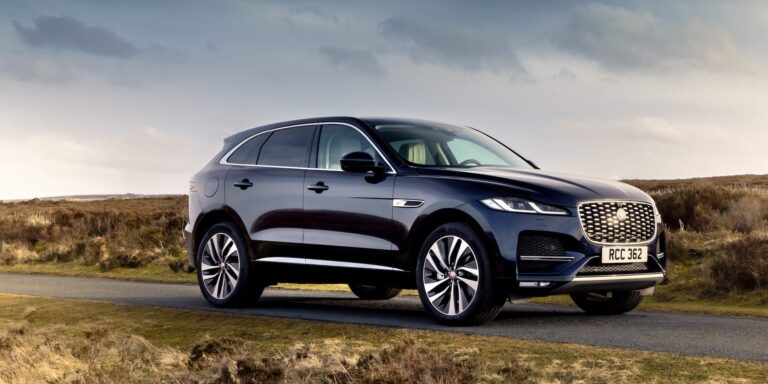
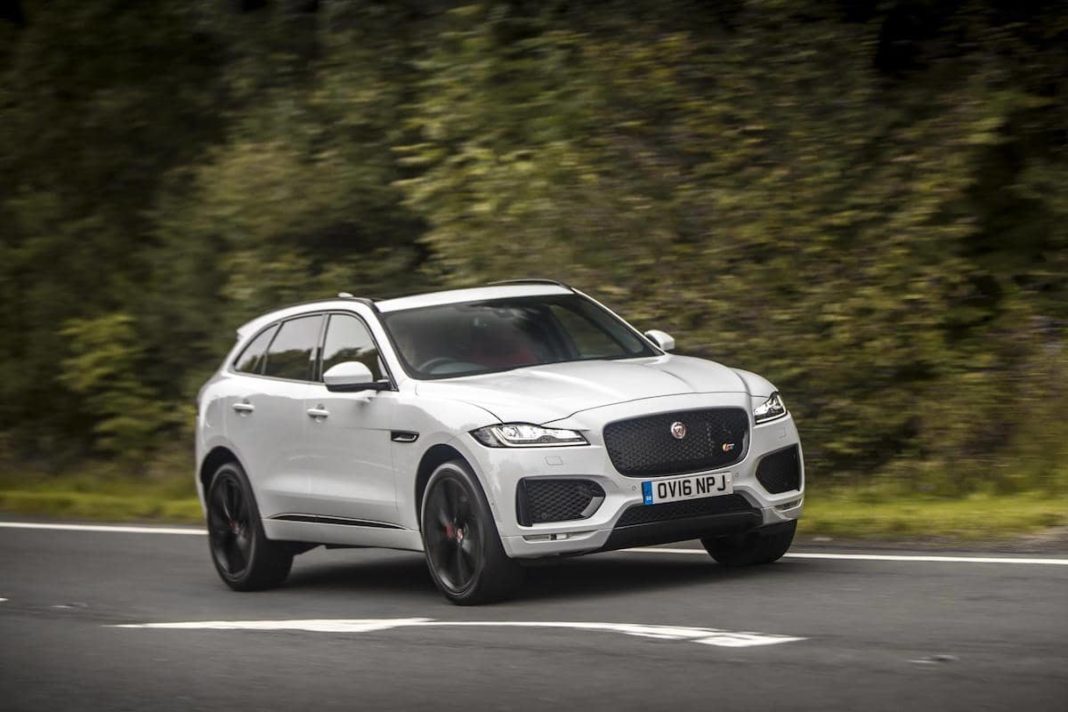
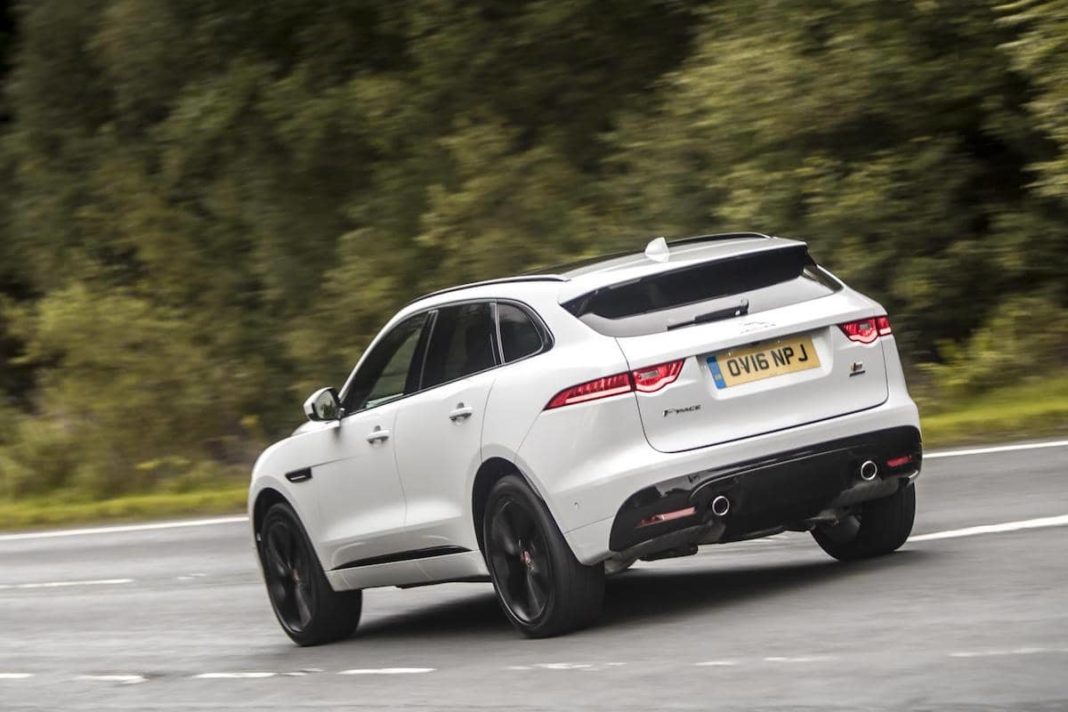
The Jaguar F-Pace is a mid-sized SUV/crossover that sits above the smaller E-Pace in the Jaguar SUV family. It is built at Jaguar Land Rover’s Solihull facility near Birmingham in the West Midlands.

Unlike heavier-duty models from sister brand Land Rover, the F-Pace shares its platform with the Jaguar XE and XF saloons, as well as the Range Rover Velar.

The F-Pace was unveiled at the 2015 Frankfurt motor show before going on sale in the UK in early 2016. A high-performance SVR model, powered by a supercharged 5.0-litre V8 engine, was added to the range in 2018. The whole range was facelifted in Summer 2020.

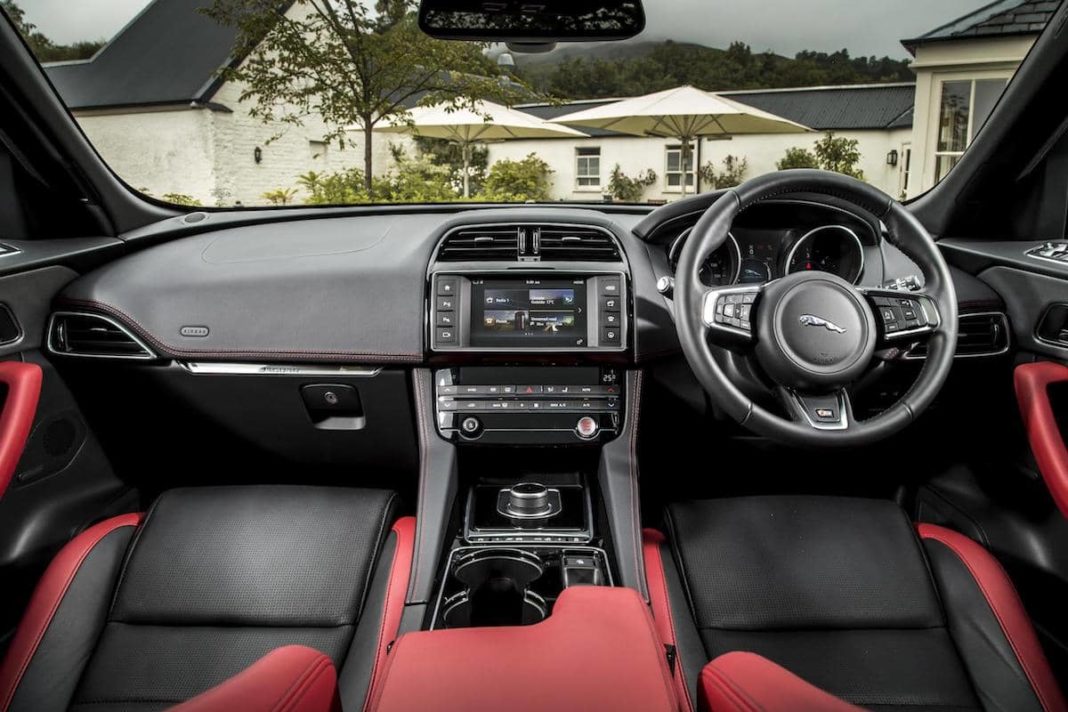
The Jaguar F-Pace currently holds a Used Car Expert Rating of E with a score of 47% as of January 2025. It has been praised for its driving dynamics and styling, although criticised for its interior quality not matching the standards of some of its rivals.

The Car Expert Best of British horizontal banner

Key specifications

Body style: Mid-sized SUV
Engines: petrol, diesel, plug-in hybrid
Price: From £46,250 on-road

Launched: Spring 2016
Last updated: Summer 2021
Replacement due: TBA

Media reviews

Highlighted reviews and road tests from across the UK automotive media. Click any of the boxes to view.

Featured reviews

More reviews

Auto Express

Auto Trader

Car

Carbuyer

Carwow

Company Car Today

Evo

Green Car Guide

Heycar

Honest John

Parkers

The Sunday Times

The Telegraph

Top Gear

Safety rating

Independent crash test and safety ratings from Euro NCAP

Overall score: 5 stars
Date tested: December 2017
Date expired: January 2024
Read the full Euro NCAP review

Adult protection: 93%
Child protection: 85%
Vulnerable road users: 80%
Safety assist: 72%

Eco rating

Independent emissions and efficiency ratings from Green NCAP

No eco rating

The Jaguar F-Pace was not assessed by Green NCAP during its production life.

Reliability rating

Reliability data provided exclusively for The Car Expert by MotorEasy

All data based on MotorEasy average workshop costs for extended car warranty claims

As of April 2025 (our most recent data point), the Jaguar F-Pace has a very poor reliability score of 18%, according to warranty data provided exclusively to The Car Expert by our partner, MotorEasy.

The average repair cost is also very high at more than £1,200 – which is obviously a lot more than the cost of a used car warranty, which is worth bearing in mind if you own a Jaguar F-Pace or are looking at buying a used car.

Of most concern are engine repairs, which appear to be quite common and have had an eye-watering average repair bill of nearly £2,500. The most common faults repaired have been with the F-Pace’s electrical system, which cost about £400 on average.

Running cost rating

Clear Vehicle Data logo close crop

Monthly cost of ownership data provided exclusively for The Car Expert by Clear Vehicle Data

Fuel consumptionAverageScore
Petrol models26 mpgE
Diesel models41 mpgC
Plug-in hybrid models162 mpgA
CO₂ outputAverageScoreVariationScore
Petrol models247 g/kmE
Diesel models180 g/kmD
Plug-in hybrid models40 g/kmA
Battery rangeAverageScoreVariationScore
Plug-in hybrid models39 milesE
Insurance groupAverageScoreVariationScore
All models50F
Service and maintenanceCostScore
Year 1£345D
Year 2£813D
Year 3£1,314D
Year 4£1,641D
Year 5£2,153D
Overall£6,266D

The Jaguar F-Pace is an expensive car to own and run, according to whole-life cost numbers provided exclusively to The Car Expert by our data partner, Clear Vehicle Data.

Fuel economy is disappointing for petrol models and not much better for diesel-engined versions. Insurance premiums are in the most expensive bracket, with maintenance costs are fairly average over five years of ownership.

Awards

Trophies, prizes and awards that the Jaguar F-Pace has received

2017

  • World Car of the Year AwardsWorld Car of the Year + World Car Design of the Year
  • UK Car of the Year Awards – Best Large Crossover
  • Fleet World Honours – Best SUV
  • Tow Car Awards – Best Tow Car (1,700-1,899kg category)

2016

  • Auto Express AwardsCar of the Year + Best Compact SUV

Similar cars

If you’re looking at the Jaguar F-Pace, you might also be interested in these alternatives

Alfa Romeo Stelvio | Audi Q5 | BMW X3 | BMW X4DS 7 Crossback | Lexus NX | Mercedes-Benz GLC | Porsche MacanRange Rover Velar | Volvo XC60

More news, reviews and information about the Jaguar F-Pace at The Car Expert

Jaguar stops new car sales ahead of 2026 re-launch

Jaguar stops new car sales ahead of 2026 re-launch

Everything you need to know about Jaguar

Everything you need to know about Jaguar

Jaguar F-Pace gets engine and tech updates

Jaguar F-Pace gets engine and tech updates

Updated Jaguar F-Pace plugs in

Updated Jaguar F-Pace plugs in

Jaguar Land Rover recalls 44,000 cars for emissions breaches

Jaguar Land Rover recalls 44,000 cars for emissions breaches

New cars to look forward to in 2019

New cars to look forward to in 2019

Most new diesel cars still pollute beyond legal limits

Jaguar Land Rover expands Ingenium engine range

Jaguar Land Rover expands Ingenium engine range

Jaguar F-Pace wins 2017 World Car of the Year

Jaguar F-Pace wins 2017 World Car of the Year

Jaguar adds new engines to core models

Jaguar adds new engines to core models

Jaguar F-Pace review

Jaguar F-Pace review

Buy a Jaguar F-Pace

If you’re looking to buy a used Jaguar F-Pace, The Car Expert’s partners can help you find the right car.

Motors 600x300

Find your next used car with Motors. Find out more

Auto Trader logo 600x300

Find your next new or used car with Auto Trader. Find out more

Carwow logo 600x300

Find your next new or used car with Carwow. Find out more

BMW rolls out mild hybrid 3 Series, X3 and X4 models

BMW is expanding its range of mild hybrid-equipped vehicles to include the 3 Series, X3 and X4 model ranges.

The technology was first introduced to the German firm’s 5 Series range in autumn 2019 and will be rolled out to these new models in spring 2020.

The mild-hybrid powertrain is similar to a traditional hybrid in that it uses an electric motor and combustion engine, but this 48-volt electrical system cannot be used to drive the car, instead taking the load off the engine to improve fuel consumption.

This is achieved through the hybrid system running the car’s ancillaries, such as the air conditioning and stereo, while the car is stopped, coasting or slowing down, so the engine can be turned off. Energy is captured through brake energy regeneration to be deployed by the motor.

In the current 5 Series, it’s paired to a 190hp 2.0-litre turbo-diesel engine with the electric motor adding an additional 11hp under acceleration. While BMW hasn’t confirmed it, it’s likely the new models will use this existing mild-hybrid powertrain.

BMW says its Efficient Dynamics strategy – which sees the company focus on ‘consistently reducing fuel consumption’ through various areas such as reducing weight, improving aerodynamics and adding electrification – CO2 emissions across its fleet have reduced 40% in the past 13 years.

UK demand drives Lexus to 250,000 hybrid SUV sales in Europe

Lexus has now sold more than a quarter of a million hybrid SUVs, and says demand has been driven from the UK, which has been responsible for more than 25% of its sales.

Sales figures ticked over 250,000 at the end of February, representing cumulative sales of its hybrid SUV sales since the RX 400h entered production in 2005. It also includes the NX, on sale since 2014, and UX, which went on sale last year.

UK appetite has been strongest for the large RX SUV, which is now also available as a seven-seat RX L variant, with 35,825 (28%) of Europe’s 127,203 sales across four generations.

However, UK buyer’s have been comparatively less interested in the firm’s current best-selling car, the UX. That model has sold 22,171 units in Europe, with just 4,184 (19%) coming to the UK.

Along with sister company Toyota, Lexus has pushed ahead with petrol-electric hybrid technology, with all of its models available with this powertrain.

Alongside the firm’s SUVs, it also sells the IS, ES and LS saloons, RC and LC coupes, and CT hatchback. Despite Lexus’ focus on offering efficient, low-emissions hybrids, the coupes are both available with high-performance petrol V8 options.

Covid-19 and your car: Your questions answered

As the coronavirus Covid-19 pandemic sweeps through every aspect of our lives, it’s inevitable that it will affect your car. Whether it’s finance, servicing, warranty or even buying and selling a car, thousands of car owners are trying to find out what they need to do.

The Motor Ombudsman, which is the automotive industry’s dispute resolution body, has provided some updated guidance on several car-related topics to address coronavirus questions. It’s an impartial organisation that provides codes of practice for companies to allow the industry to regulate itself, and gives consumers the ability to hold these companies to account when things go wrong.

Covid-19 is providing unprecedented problems for the industry to overcome, and the situation is changing day by day. The advice below is current as of 1 April 2020, but we will keep you updated as anything changes. Got a dispute that might need resolving? These answers might help.

It’s important to remember that The Motor Ombudsman does not make the rules and laws surrounding anything related to your car. It simply offers an interpretation of them to help resolve disputes between customer and companies. If a company is signed up to The Motor Ombudsman programme, that company agrees to honour the Ombudsman’s decision. However, customers are not bound to agree with any decision and can always proceed to court to pursue a matter further.

We’ve also provided useful advice from the editor here at The Car Expert, Stuart Masson.

Car finance and redundancies

Stuart says: “At this point, there has been no directive from government to car finance companies regarding deferring or reducing your car finance payments. So you have to assume that your car payments are still due as normal, regardless of whether or not you’re currently allowed to drive your vehicle.

“Most of the major car finance lenders are members of the Finance and Leasing Association, whose code of conduct obliges the lender to treate customers fairly at all times and especially sensitively in times of hardship. So although there are no standard offers to assist you if you are struggling with your car finance payments, there is every chance that your lender can offer you some sort of assistance. This may be in the form of a payment holiday or accepting reduced payments for a period of time.”

If you have lost your job and you can’t afford your monthly repayments, you should contact your car finance provider immediately (not the dealer where you bought the car, as all they will do is give you the phone number for the finance company). Do this sooner rather than later, so that you can keep your finances under control.

Although The Motor Ombudsman cannot directly help with providing redundancy support, it can point you to organisations that can.

You may also like: Coronavirus – can I cancel my car finance?

Can I test drive a car before I buy it?

It is advised that while dealers will be taking all the necessary precautions to avoid transmission of the virus, consumers are advised to act in accordance with government advice. At the time of writing, that advice is to stay at home unless absolutely necessary. Accordingly, most car dealerships are now closed for car sales, although many are keeping their workshops open for servicing appointments.

Some dealers and manufacturers might offer the ability to buy the car online and have it delivered, rather than going to the dealership to buy the car.

Stuart says that buying online or over the phone is something you should be looking at anyway, not just during the Covid-19 lockdown: “Unlike buying a car in person, buying a car online gives you the right to return it for up to 14 days for a full refund – for any reason. You don’t get that right if you buy a car in person – once you sign the contract, it’s yours and that’s the end of it.”

You may also like: I bought a car but now I’ve changed my mind

My car needs a service but my garage is closed

Although workshops are allowed to stay open under government lockdown rules, many dealer groups have shut their doors and cannot currently accept vehicles for servicing.

The Motor Ombudsman recommends contacting the garage by phone or email to rearrange a date, and advises that while your service plan should not be invalidated if you miss an appointment through closure, you should check with your provider.

Stuart also points out: “Bear in mind that many other people will have similar questions and will be trying to contact their service provider as well, so waiting times may be longer than usual.

“Fortunately, you’re stuck at home and can’t go anywhere anyway, so you can afford to wait a bit longer for your call to be answered…”

Will my warranty be invalidated if I can’t service my car because I’m self-isolating?

Under the New Car Code, your warranty cannot be invalidated because you missed a service – only if your lack of care caused a fault on the car.

Furthermore, most manufacturers have grace periods of around one month or 1,000 miles, so unless you have to self-isolate or remain at home beyond that you should be fine. Either way, if you’re concerned about missing a service you should contact the dealership or the manufacturer to find out if they have a solution.

An important reminder from Stuart: “One thing to bear in mind is that your car finance agreement may have servicing requirements included in the contract, and you can be penalised if you don’t have the car serviced on time.

“Check your paperwork and get in touch with the finance company if you can’t get your car serviced on time. Don’t assume that everything will be OK and that you’ll be exempted in a couple of years’ time when you want to hand the car back.”

My car MOT ran out before the March 30 deadline but I couldn’t get it done in time

The government has announced that MOTs that run out after March 30 are now exempt from requiring a renewal for six months. However, if your MOT ran out before then but you were self-isolating and couldn’t get a new one, unfortunately it is recommended that you declare your car SORN (statutory off road notice), which means you can’t drive it. You can, however, apply for an MOT once your self-isolation period is over.

Is The Motor Ombudsman still accepting cases?

If you have a motor industry issue that you haven’t been able to resolve yourself, you can still submit your case to the ombudsman. Its staff are all working from home but can still be reached on the phone during normal office hours.

For the full list of questions and answers, search for ‘The Motor Ombudsman Knowledge Base’ and select ‘Coronavirus / Covid-19’.

Additional reporting by Stuart Masson

Coronavirus: What precautions should I take if I need to fill up with fuel?

Current rules mean that the UK population is being asked to stay indoors whenever possible, only venturing out of the front door to buy food or medicine, exercise once per day, to receive medical help, or to help someone who is vulnerable.

All businesses that are not deemed essential have also been asked to close down, and employees who do not work in essential sectors should either work from home or not work at all.

However, if you are a key worker or you need to head out for essential items, then you are going to have to fill your car up with fuel at some point. Here’s how to stay safe when filling up.

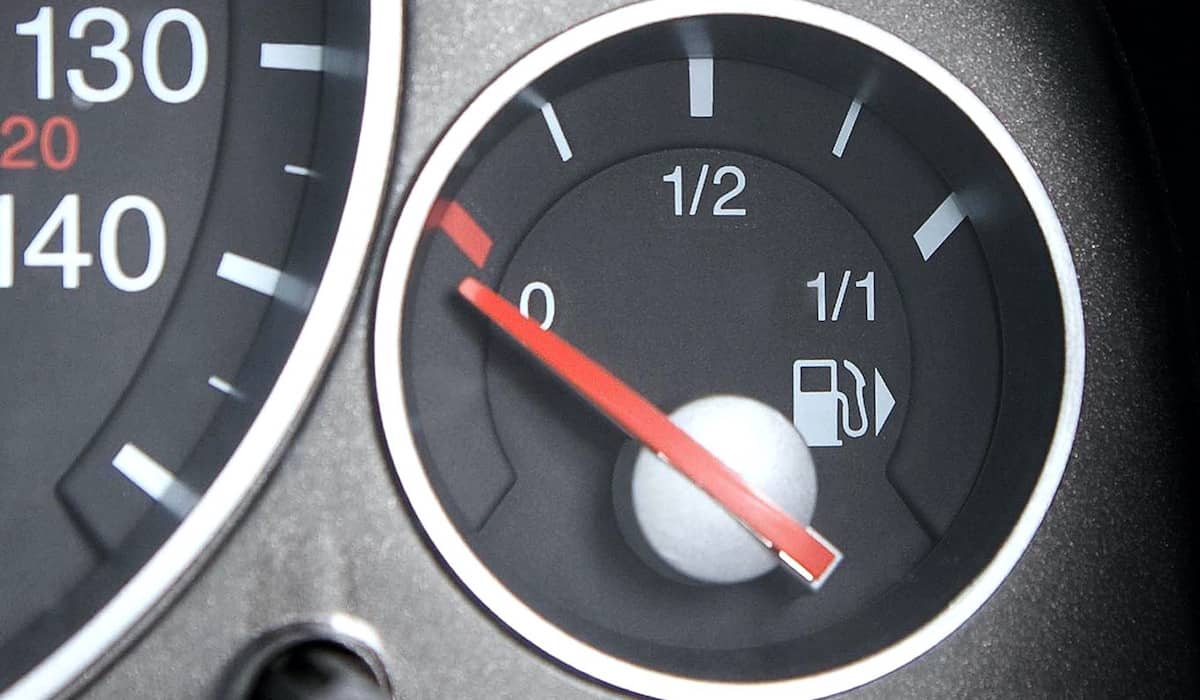
Fuel gauge reading empty

Opt for contactless payment

Contactless payment, by its very nature, reduces the amount of contact you need to make when paying for fuel. Many filling stations now offer it, allowing you to simply tap your card to pay for fuel. Of course, this is limited to £30 in most instances. Using Apple Pay or Google Pay from your smartphone is even better, as you are not usually bound by the £30 limit.

Some fuel suppliers – such as Shell and BP – also have their own smartphone app that allows you to pay for fuel, meaning you can reduce your exposure even further.

Use hand sanitiser or cleaning wipes

Though hand sanitiser is hard to come across at the moment, if you do have some then this is the time to make the most of it. Remember to sanitise your hands prior to leaving the vehicle, and use the wipes to clean down the steering wheel and any other touch points too – such as the central armrest and buttons.

Also, it’s best to use hand sanitiser thoroughly after refuelling to reduce the chances of transferring anything from the pump into your car.

Use gloves or paper towels to use fuel pump

It’s best practice to use gloves if they’re supplied at the filling station when putting fuel into your car. If these aren’t available, then make use of the paper towels which should be there and wrap the pump in these.

Once you’re done, we’d advise putting these gloves or paper towels straight into the bin. It’s also a good idea to use an antibacterial wipe to clean areas such as the pump handle itself, and any other places you’ve come into contact with. Again, when you’re finished with the wipes put them straight into the bin.

Fill your car to the brim

Rather than filling up with a certain amount, it’s best at this time to fill your car to the brim. By doing this, it means you don’t have to visit the petrol station as often, therefore reducing your exposure. It also means that if you do need to make a last-minute emergency trip, then your fuel tank is full and you’re all good to go.

First Morgan Plus 4 70th Anniversary models completed

The first examples of the limited-edition Morgan Plus 4 70th Anniversary model have rolled off the firm’s Malvern production line, with four vehicles completed before Morgan closed its factory for at least the next month in response to the coronavirus outbreak.

The cars, which will be limited to a production run of just 20, are priced at £60,995 each and celebrate seven decades since the car’s 1950 debut. These will be the last Plus 4 vehicles to incorporate a traditional steel ladder chassis before the new Plus Four model switches to a new CX bonded aluminium platform.

Finished in a platinum exterior paint, each car has its chassis painted gold with satin grey wire wheels on all four corners. Inside, you’ll find an individually-numbered dashboard plaque, alongside heated seats and a fascia finished in Ravenwood.

The car’s engine has also been boosted by Morgan’s in-house performance team, Aero Racing, pushing power up to 180hp from 155hp. Morgan believes that this will see the Plus 4 go from 0-62mph in ‘less than seven seconds’.

Morgan Plus 4 70th Anniversary logo

Steve Morris, Morgan chairman and chief executive, said: “It has been fantastic to witness the first Plus 4 70th Anniversary models complete production. They represent the last steel chassis models, and we are delighted to be able to celebrate such a significant milestone in this way.

“It’s a poignant moment as the first CX-Generation Plus Four models are built alongside the final steel chassis Plus 4 models. We feel that both models represent the true qualities of a Morgan sports car.”

Morgan’s announcement of temporary closure is the first time that the company will have locked its doors for an extended period since World War II.

The Car Expert Best of British horizontal banner

Abarth 595 Esseesse test drive

Another day, another Abarth 595 variant. It only takes a quick glance through the firm’s site to see there’s many of them, including the Pista, Turismo, Competizione, 70th Anniversary and now this — the Abarth 595 Esseesse.

Those with some Abarth knowledge will know this trim level is far from new to the firm. Roll back to 1964 and you’ll find the nameplate’s first use on the original Fiat 500 while, more recently in 2009, it saw usage on a special variant of the Abarth 500 which brought some additional performance goodies.

Now it’s back for another run out in a similar fashion to the car that came just over a decade before. How does it affect the formula, though? We get behind the wheel to find out.

What’s new about the Abarth 595 Esseesse?

Think of Esseesse (pronounced more ‘essay essay’ than ‘SS’) like an option pack, and you’re on the right path. Setting it apart is a set of white 17-inch ‘Supersport’ alloy wheels, an Akrapovic exhaust, a new Brembo braking system and a mechanical limited-slip differential to help manage power at the front axle.

Hop inside and Sabelt seats embroidered with ‘Abarth 70’ to mark the firm’s 70th anniversary sit up front, while model-specific badging is dotted around the exterior of the car.

How does it look?

Little has ultimately changed about the Abarth 595’s appearance with the Esseesse package, with the model still retaining a look akin to a sports trainer. It’s one we’re big fans of ultimately, and it perfectly suits the yobbish nature of the hatch.

Throw in the red calipers, 17-inch white alloy wheels and various exterior badging that comes with the Essesse and you have a car that properly looks the part. The addition of Akrapovic carbon-effect exhaust tips is a nice touch, too.

What’s the spec like?

We’re going to start this with the price — a whopping £25,760. That’s already almost £2,000 more than a range-topping Ford Fiesta ST-3, and that’s before we come to the lack of kit on the car.

Though you do get the go-faster Esseesse bits, there’s not really enough equipment to justify the cost. To its credit, there is a seven-inch infotainment system with Android Auto and Apple CarPlay linked up to a Beats audio system, a pretty slick digital instrument cluster and automatic air conditioning, but that’s about all.

You’ll have to make do with halogen headlights, no cruise control, manually adjustable seats and rear parking sensors with no reversing camera in sight. The latter-most we can almost forgive considering how dinky the car is, though.

What’s it like inside?

Such is the nature of its Fiat 500 underpinnings, the Abarth 595 is incredibly cramped and outdated inside.

Its driving position is set awkwardly high for a car that’s designed with performance in mind, its pedals are offset slightly and, though the Sabelt seats are a nice touch visually, it becomes a rather uncomfortable place to sit after a while. Its truck-like, high-set gearstick doesn’t help its case either.

Space up front is miserable for two average-sized adults, and there’s just 185 litres of capacity in the boot. For comparison, a (cheaper) Ford Fiesta ST offers 292 litres. It’s quite frankly embarrassing for the 595 inside, though we will forgive the addition of red seatbelts and a dash-mounted analogue boost gauge.

What’s under the bonnet?

Powering the 595 Esseesse is the most potent version of Abarth’s 1.4-litre turbocharged petrol engine it currently offers. It sends 180hp and 250Nm of torque to the front wheels via a five-speed manual gearbox, with the 0-60mph sprint covered in 6.5 seconds and a 140mph top speed possible.

In terms of efficiency, Abarth claims the Esseesse will return 41.5mpg on the combined cycle while emitting 155g/km of CO2.

In a word, the unit can only be described as peaky. Its low-end grunt feels almost non-existent (despite the raucous exhaust note having you believing otherwise) though once the turbo spools up, all of its 178bhp is delivered in a brutish manner. It’s properly old-school turbo lag, which can be a laugh but does mean it’s a bit of a handful when pushing on.

What’s it like to drive?

Take a ham-fisted approach to driving the 595 Esseesse and it’s not exactly the most engaging or clinical thing to drive, but it does offer a magnitude of character.

It’s playful and joyous in a sort of rubbish way. It doesn’t offer the confidence of a Fiesta ST when flung around tight B road corners, mainly as a result of its slightly vague steering, but levels of grip are impressive and its Koni dampers add an extra element of stability to the package.

Those dampers do make this an incredibly harsh-riding car at lower speeds though, and really takes the 595 away from the Fiat 500 hiding underneath the tracksuit-like bodywork.

Verdict

As something to simply give you a bit of a laugh behind the wheel of, the Abarth 595 Esseesse may be a compelling option.

Its raucous exhaust note and brutal engine are particular highlights, and it has the head-turning looks that makes it so popular with Instagram influencers if that’s your thing.

If we’re honest though, it’s a bit rubbish as a serious hot hatch. We mention the Ford Fiesta ST a lot because that’s simply the benchmark, and this falls a long way from that despite costing more, even with all of the juicy Esseesse bits tacked on.

Similar cars

Ford Fiesta ST | Mini hatch John Cooper Works | Toyota Yaris GR Sport

Key specifications

Model: Abarth 595 Esseesse
Price: £25,760
Engine: 1.4-litre turbocharged four-cylinder
Gearbox: Five-speed manual
Power: 180 hp
Torque: 250 Nm
Top speed: 140 mph
0-60mph: 6.5 seconds
Fuel economy (combined): 41.5 mpg
CO2 emissions: 155 g/km
Euro NCAP safety rating: Three stars (2017) – Fiat 500

Mazda CX-30

Summary

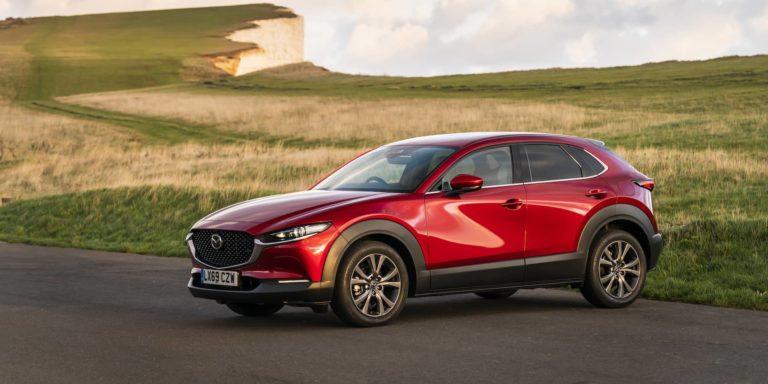
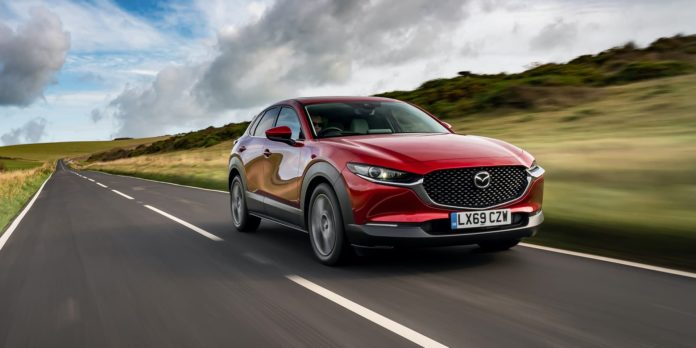
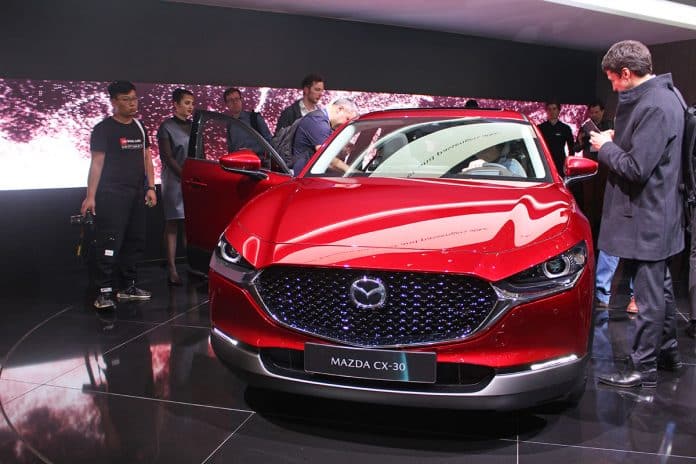
The Mazda CX-30 is an SUV/crossover that sits between the smaller CX-3 and larger CX-5 in the Mazda SUV range. It was launched at the 2019 Geneva motor show before going on sale later in the year.

The CX-30 is based on the Mazda 3 hatchback and is more sleekly-styled, although less practical, than the slightly larger CX-5.

As of March 2026, the Mazda CX-30 has a New Car Expert Rating of B with a score of 68%, and has received generally positive reviews from UK motoring websites. It has been praised for its driving dynamics and interior quality, although it has been criticised for its small boot and poor practicality compared to rivals.

CX-30 highlights

  • High-quality interior
  • Economical engines
  • Well-equipped as standard
  • Stylish looks

CX-30 lowlights

  • Rivals are more spacious and practical
  • No diesel or electrified engine options
  • Boot could be bigger

Key specifications

Body style: Medium SUV/crossover
Engines: petrol
Price: From £22,945 on-road

Launched: Autumn 2019
Last updated: Spring 2021
Replacement due: TBA

Media reviews

Highlighted reviews and road tests from across the UK automotive media. Click any of the boxes to view.

Featured reviews

More reviews

Auto Express

Auto Trader

Car

Car Keys

Carbuyer

Carwow

Company Car Today

Green Car Guide

Honest John

Parkers

The Sun

The Telegraph

Top Gear

Safety rating

Independent crash test and safety ratings from Euro NCAP

Overall score: 5 stars
Date tested: November 2019
Date expired: January 2026
Read the full Euro NCAP review

Adult protection: 99%
Child protection: 86%
Vulnerable road users: 80%
Safety assist: 77%

Eco rating

Independent economy and emissions ratings from Green NCAP

Model tested: SKYACTIV-X 180 PETROL 4X2 MANUAL

Overall score: 2.5 stars
Date tested: February 2021
Read the full Green NCAP review

Clean Air Index: 4.6 / 10
Energy Efficiency Index: 4.7 / 10
Greenhouse Gas Index: 4 / 10

The Mazda CX-30 SkyActiv-X 180 2.0-litre petrol manual received a 2.5 star rating from Green NCAP in February 2021.

Green NCAP said: “The CX-30 180 petrol employs Mazda’s Skyactiv-X technology, with a very high compression ratio and lean fuel mixture to try to reduce emissions. This is combined with a 24-volt mild hybrid system to improve fuel efficiency.

“Together with the exhaust after-treatment – three-way catalyst, exhaust gas recirculation and a gasoline particulate filter – the car shows generally low values of pollutant emissions. The weakness is at high engine loads where values of carbon monoxide and carbon dioxide become elevated. This limits the scores in the Clean Air and Greenhouse Gas indexes.

“Overall, the CX-30 scores similarly across the three areas of assessment and emerges with a solid 2½ star rating.”

This rating only applies to the SkyActiv-X 180 2.0-litre petrol manual version of the Mazda MX-30, and does not imply similar ratings for other engine and gearbox combinations in the range.

Reliability rating

Reliability data provided exclusively for The Car Expert by MotorEasy

No reliability rating

As of March 2026, we don’t have enough reliability data on the Mazda CX-30 to generate a reliability rating.

The Car Expert’s reliability information is provided exclusively to us using extended warranty data from our partner, MotorEasy. As soon as MotorEasy has sufficient data on the CX-30, we’ll publish the score here.

Running cost rating

Clear Vehicle Data logo close crop

Monthly cost of ownership data provided exclusively for The Car Expert by Clear Vehicle Data

Fuel consumptionAverageScore
Petrol models46 mpgC
CO₂ outputAverageScoreVariationScore
Petrol models138 g/kmC
Insurance groupAverageScoreVariationScore
All models18A
Service and maintenanceCostScore
Year 1£192B
Year 2£527B
Year 3£864C
Year 4£1,105C
Year 5£1,517C
Overall£4,205C

The Mazda CX-30 is a relatively affordable car to own and run, according to whole-life cost numbers provided exclusively to The Car Expert by our data partner, Clear Vehicle Data.

While the crossover’s fuel economy is fairly average, its insurance premiums are estimated to be on the cheaper side, and its servicing and maintenance costs should be pretty affordable over the first five years of ownership.

Similar cars

If you’re looking at the Mazda CX-30, you might also be interested in these alternatives

Citroën C4 CactusFord Kuga | Honda CR-V | Hyundai Tucson | Jeep Compass | Kia Sportage | Mazda CX-5 | Nissan Qashqai | Peugeot 3008 | Renault Kadjar | Skoda Karoq | Subaru XV | Toyota C-HR | Vauxhall Mokka | Volkswagen T-Roc

More news, reviews and information about the Mazda CX-30 at The Car Expert

Everything you need to know about Mazda

Everything you need to know about Mazda

Last days of the dinosaurs: the best petrol cars under £25K

Last days of the dinosaurs: the best petrol cars under £25K

Mazda celebrates centenary with special edition models

Mazda celebrates centenary with special edition models

Mazda CX-30 review

Mazda CX-30 review

Mazda CX-30 pricing and specifications announced

Mazda CX-30 pricing and specifications announced

Geneva: Mazda expects big things of CX-30 SUV

Geneva: Mazda expects big things of CX-30 SUV

Buy a Mazda CX-30

If you’re looking to buy a new or used Mazda CX-30, The Car Expert’s partners can help you find the right car.

Motors 600x300

Find your next used car with Motors. Find out more

Auto Trader logo 600x300

Find your next new or used car with Auto Trader. Find out more

Carwow logo 600x300

Find your next new or used car with Carwow. Find out more

Lease a Mazda CX-30

If you’re looking to lease a new Mazda CX-30, The Car Expert’s partners can help you find a competitive deal.

Leasing-com logo

Personal contract hire deals from Leasing.com. Find out more

Carwow logo 600x300

Personal contract hire deals from Carwow. Find out more

Select Car Leasing logo

Personal contract hire deals from Select Car Leasing. Find out more

Subscribe to a Mazda CX-30

If you’re interested in a car subscription, The Car Expert’s partners can help. (PS: What’s a car subscription?)

Cocoon Vehicles logo 600x300

Car subscriptions from Cocoon.
Find out more

Just Vehicle Solutions logo 600x300

Car subscriptions from Just Vehicle Solutions.
Find out more

Flexible Vehicle Contracts logo 600x300px

Car subscriptions from Flexible Vehicle Contracts.
Find out more

Coronavirus: Can I drive during the lockdown?

1

This week the UK has been in lockdown as the Government has moved to try to limit the spread of coronavirus.

It meant that people are only allowed to leave the house to buy food or medicine, exercise once per day, to receive medical help, or to help someone who is vulnerable.

All businesses that are not deemed essential have also been asked to close down, and employees who do not work in essential sectors should either work from home or not work at all.

Residents have also been warned not to visit friends or family with the police given powers to break up groups of more than two people who don’t live together.

When can I drive?

All of this means that there are some reasons to drive. For example, if you work in an essential business and have to get to work, there’s nothing to stop you from driving to do so.

Furthermore, if you’re travelling to a supermarket or pharmacy to stock up on essential provisions then you’re allowed to drive to these locations.

You can also use the car to travel to visit a vulnerable person in need of help, or to get to the hospital to seek medical attention for yourself or someone else.

When can’t I use the car?

Simply put, any other time. If you’re looking to blow off the cobwebs by going for a drive, that’s deemed an unnecessary journey so you shouldn’t be in the car.

And if you’re tempted to drive to the local park or forest to take your allotted form of exercise for the day, this is being discouraged too.

Police in Bristol have been asking dog walkers visiting the Wellington Monument to stay away, handing them leaflets that say: “The government restrictions currently in place do not permit you to use your vehicle to travel to this location to exercise.

“Each and every one of us has been instructed to avoid all unnecessary travel.

“You are entitled to exercise once daily. This should be by walking, running or cycling from your home address.

“You should not be driving to a location away from home to carry this out.”

This interpretation of the rules appears to be being followed by police forces across the country, after Derbyshire Police shared drone footage of hikers in the Peak District who had travelled from as far afield as Sheffield, saying that ‘the message [to exercise close to home] is still not getting through’.

Why can’t I drive if I’m on my own?

Many users on social media hit back at Derbyshire Police, saying there was nothing wrong with travelling to get exercise if they practised social distancing. However, Supt Steve Pont of Derbyshire Police told the BBC’s Today programme the force would continue to “apply the law the government makes… to keep you and others safe and ensure our NHS is able to cope in order to save as many lives as possible”.

It is argued that by limiting the number of unnecessary journeys you take, you minimise the risk of getting into a crash that would put strain on the emergency services and NHS, and minimise the risk of getting a puncture or breaking down that would cause you to risk close contact with recovery personnel.

Coronavirus: How to keep your car in roadworthy condition

This week, the Department for Transport (DfT) announced that it will grant a six-month MOT exemption to all cars from March 30 in response to the ongoing coronavirus pandemic. It means that if your MOT expires after that time, it will automatically be exempt for a period of six months.

However, the DfT has also reminded owners that cars must be kept in a roadworthy condition, with police able to prosecute those who are driving a car which is mechanically unsound. This is no different to laws before the coronavirus lockdown began, but owners need to take extra care since they can’t rely on an MOT inspection to flag up any issues.

Although garages remain open for essential repairs, a few simple checks at home can help ensure that you and your car are safe out on the road. If your vehicle does need to be taken to a garage, you must ensure that you’re not showing any signs of coronavirus – in which instance you shouldn’t visit the garage and should self-isolate instead.

Government advice currently states that you should stay at home and only go outside when absolutely necessary, but if you have to head out on the roads it’s worth making sure your car is all okay. With that in mind, here are some of the key checks to make sure that your car is safe and sound.

Check your tyres to make sure your car is in a roadworthy state

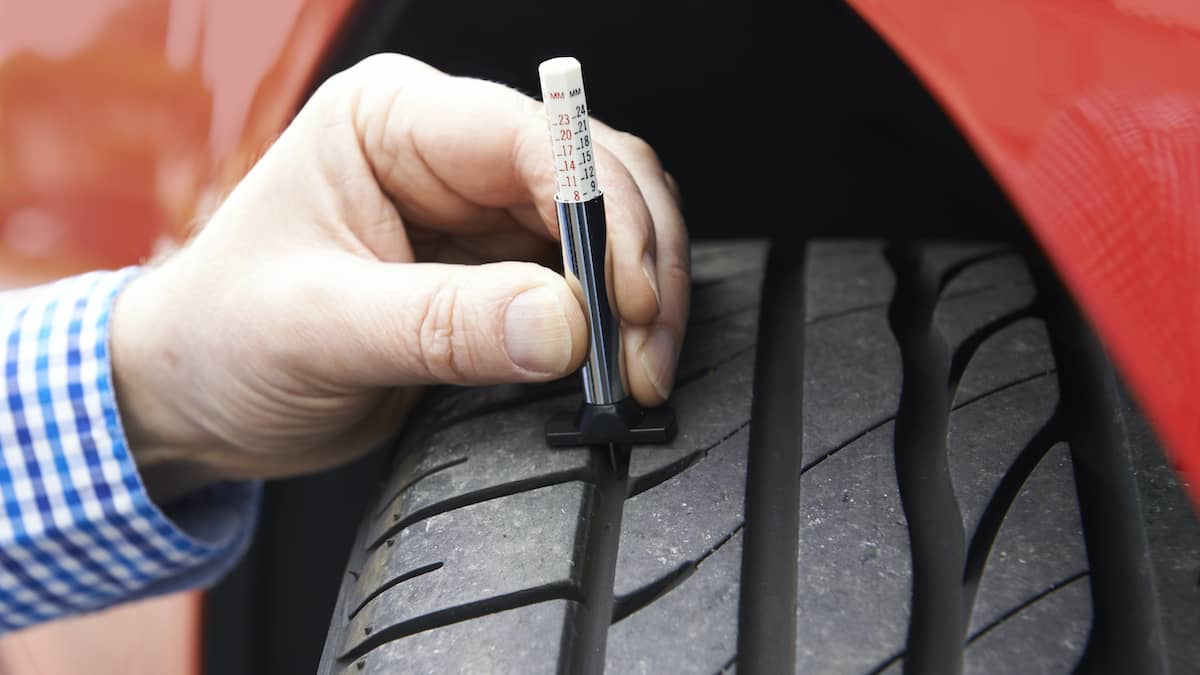
This is a straightforward one. The tyres are the only contact point between the car and the road, and it’s paramount that they’re in good condition. The minimum tread depth in the UK is 1.6mm, so check all of the tyre grooves to ensure they meet this. Either use a tread depth gauge or a 20p coin – if the outer band of the coin is obscured by tyre, then the tread depth is good.

Also, check your pressures – you’ll be able to find your car’s correct tyre pressures either in the handbook or inside the fuel filler cap. Check and fill appropriately.

Check your brakes

Your brakes are one of the most important mechanical parts of your car and without them, it’s likely you’ll be in a whole heap of trouble. So before you head out, it’s worth giving them a test to make sure that they’re working effectively.

When moving at a slow speed and when safe to do so, press down on the brake pedal and ensure that you’re getting a good amount of return pressure. If the pedal feels overly light or doesn’t effectively ‘bite’, it could be worth getting them checked out. Likewise, if the car ‘pulls’ or the brake pedal vibrates when you use it, this could be a sign that they need changing.

Remember, garages are still open for key maintenance.

Check your oil

Check your oil to make sure your car is in a roadworthy state

Oil is a key element to the smooth operation of an engine, so it’s crucial it stays well topped up and in good condition.

Checking the levels of oil in your car is a simple task. In most cases, simply open the bonnet and locate the dipstick — usually with a bright yellow cap. If you have used your car prior to checking levels, allow the engine to cool for 10 minutes.

Use this time to check manufacturer guidelines on how often the oil should be replaced. If it’s been longer than a recommended interval, it’s best to book into a garage to have it drained and replaced as soon as possible.

Before removing the dipstick to check levels, ensure you have a clean piece of tissue to hand. Once you have removed the dipstick, use this to clear oil on it and locate the indicator markings — typically two holes towards the end of the stick.

Place the dipstick back in fully, remove it again and see where the oil level comes up to. It should be between the two indicators. If it’s below the lowest indicator, it’s time to top up. If it’s above, talk to a garage about removing any excess.

Keep washer fluid levels topped up

Check your windscreen washer fluid to make sure your car is in a roadworthy state

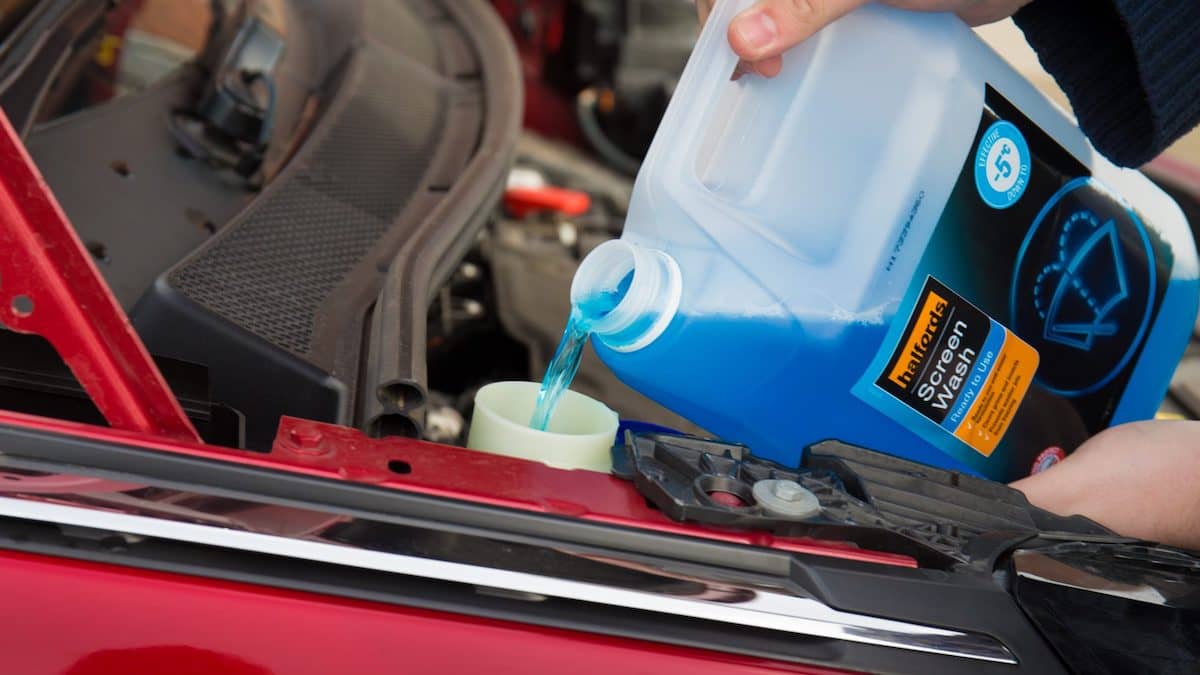
With the weather starting to brighten up, it’s crucial that you ensure that your windscreen washer fluids are kept topped up so you can effectively clear the screen. A smeary windscreen in low sunlight can be a nightmare – and dangerous too.

Use a correct amount of windscreen washer fluid – we wouldn’t advise using just water – and fill it through the correct filler cap. It’s traditionally the blue-capped pipe in the engine bay.

Check wipers are clearing screen correctly

Check your windscreen wipers to make sure your car is in a roadworthy state

Even if you’ve topped up your washer fluid correctly, it won’t make much difference if your wipers aren’t working effectively. If they’re streaky or ‘rub’ when operating, they need changing.

Replacements are simple and easy to fit and you’ll notice a lot of difference. It’s one of the easiest but most crucial pieces of maintenance you can make.

Test all your lights are working

Check your headlights to make sure your car is in a roadworthy state

Maximising road visibility is key to keep yourself and other drivers safe, so you should test your lights before heading off.

Checking the fronts is easy. Hop into your car with the ignition half-turned briefly (if your car is capable of operating the lights without the engine running, at least) and turn on your headlights. Hop out again, and ensure there are no bulbs out. Use this as a chance to test front and rear foglights too.

Brake lights can be trickier to test, though it helps if you have a second person to hand. Ask whoever is helping to stand at the rear of the vehicle as you push down on the brake pedal, though parking up against a wall or utilising a reflective surface such as a large mirror also works.

If you have any lights out, replace them imminently either yourself if you’re capable and have bulbs to hand, or through a local garage.

Get professional help to stay roadworthy

If you’ve been checking over your car as described above and find anything that you’re not sure about, you can always call your local garage and book an appointment to get it checked out. Keeping your car roadworthy also means keeping it safe, and a professional mechanic can always advise you on anything that needs repairing or replacing.

Citroën C1 (2014 to 2022)

Summary

The Citroën C1 was a small city-car class hatchback, produced in either three-door or five-door form. It was also available as a cabriolet version called Airscape, which featured a full-length fabric sunroof in a similar vein to the Fiat 500.

This model was the second generation, which was launched in 2014 and ended production in early 2022. It has not been replaced by a new model.

The C1 was essentially identical to the Peugeot 108 and Toyota Aygo, with the three models developed together and built at the same factory in the Czech Republic. With Citroën’s parent company Stellantis now also owning Fiat, it is likely that any future Citroën city car will be based on the new, all-electric Fiat 500.

The Citroën C1 received generally positive reviews from the UK motoring media throughout its seven-year production cycle. It was praised for its low running costs and overall driving dynamics, but criticised for a lack of refinement compared to newer rivals.

As of February 2026, the Citroën C1 holds a Used Car Expert Rating of A, with a score of 70%. It scores top marks for its very low running costs and reliability record, but its media review scores and safety rating are poor.

Key specifications

Body style: Small three-door and five-door hatch
Engines: petrol
Price: From £12,945 on-road

Launched: Summer 2014
Last updated: Spring 2019
Ended Production: Spring 2022

Media reviews

Highlighted reviews and road tests from across the UK automotive media. Click any of the boxes to view.

The Car Expert

Auto Express

Auto Trader

Car

Car Keys

Carbuyer

Carwow

Evo

Heycar

Honest John

Motors

Parkers

The Telegraph

Top Gear

Safety rating

Independent crash test and safety ratings from Euro NCAP

Overall score: 4 stars
Date tested: September 2015
Date expired: January 2021
Read the full Euro NCAP review

Adult protection: 80%
Child protection: 80%
Vulnerable road users: 62%
Safety assist: 56%

No safety rating

The Citroën C1 was assessed by Euro NCAP back in 2014 and achieved a four-star rating. However, this rating expired in January 2021 and is no longer valid. This is normal practice, as Euro NCAP reviews its ratings on most cars annually with most ratings expiring after about six or seven years.

However, if you are comparing a used C1 to vehicles of similar age, whose ratings will have probably also expired, its safety rating score is still useful.

Eco rating

Independent economy and emissions ratings from Green NCAP

No eco rating

The Citroën C1 was not tested by Green NCAP during its production cycle.

Reliability rating

MotorEasy logo 600x167

Reliability data provided exclusively for The Car Expert by MotorEasy

All data based on MotorEasy average workshop costs for extended car warranty claims

As of April 2025 (our most recent data point), the Citroën C1 has a very good reliability score, according to workshop and warranty data provided by our partner, MotorEasy.

Average repair bills are also very low at less than £300. The main issue to watch out for is the gearbox, with an average repair cost of £1,000 to date. If you’re looking at a used C1, make sure that any extended warranty you buy covers all the potential problem areas above.

Similar cars

If you’re looking at the Citroën C1, you might also be interested in these alternatives

Fiat 500 | Fiat Panda | Hyundai i10Kia Picanto | Peugeot 108 | SEAT Mii | Skoda Citigo | Smart Forfour | Suzuki Ignis | Toyota Aygo | Volkswagen Up!

Buy a used Citroën C1

If you’re looking to buy a Citroën C1, The Car Expert’s partners can help you find the right car

Motors 600x300

Search less, live more. We make finding the right car simple. Find out more

Auto Trader logo 600x300

Find your next new or used car with Auto Trader. Find out more

Carwow logo 600x300

Find your next new or used car with Carwow. Find out more

Car subscriptions

If you’re interested in a car subscription, The Car Expert’s partners can help (PS: What’s a car subscription?)

Cocoon Vehicles logo 600x300

Car subscriptions from Cocoon.
Find out more

Just Vehicle Solutions logo 600x300

Car subscriptions from Just Vehicle Solutions.
Find out more

Flexible Vehicle Contracts logo 600x300px

Car subscriptions from Flexible Vehicle Contracts.
Find out more

Honda Civic Type R (2017 to 2022)

Summary

The Honda Civic Type R is a high-performance version of the regular Honda Civic five-door family hatchback. This tenth-generation model was launched in 2017 and ended production in 2021.

The Civic Type R was given a light update in early 2020, when a new Sport Line model was added to the range. Its performance is same the as the regular Type R, but the bodywork has been toned down somewhat. A Limited Edition model was also released, although it sold out almost immediately.

The Honda Civic Type R received unanimously positive reviews from across the UK motoring media, as well as many awards. It was highly praised for its driving dynamics, both in terms of performance as well as comfort, which are almost universally regarded as best-in-class. The main criticisms related to its extroverted styling and poor-quality infotainment system.

This generation ended production along with the rest of the Civic range in 2021. An all-new Type R was unveiled in 2022 and arrived in the UK in 2023. Unlike this model, which was built in Swindon, England, the new model is built in Japan.

Key specifications

Body style: Mid-size five-door hatchback
Engines: petrol
Price when new: From £31,870 on-road

Launched: Summer 2017
Last updated: Spring 2020
Production ended: Autumn 2021

Media reviews

Highlighted reviews and road tests from across the UK automotive media. Click any of the boxes to view.

Featured reviews

More reviews

Auto Express

Auto Trader

Car

Car Keys

Carbuyer

Carwow

Company Car Today

Daily Mail

Daily Mirror

Heycar

Honest John

The Sun

The Sunday Times

The Telegraph

Top Gear

Safety rating

Independent crash test and safety ratings from Euro NCAP

Overall score: 5 stars
Date tested: November 2017
Date expired: January 2024
Read the full Euro NCAP review

Adult protection: 92%
Child protection: 75%
Vulnerable road users: 75%
Safety assist: 88%

Notes on safety rating

The Honda Civic was originally crash tested by Euro NCAP back in 2017 and awarded a five-star rating. However, this rating expired in January 2024 and is no longer valid as the car no longer meets the standards required for such a rating. This is normal practice, as Euro NCAP reviews its ratings on most cars annually with most ratings expiring after about six or seven years.

However, if you are comparing a used Civic Type R to vehicles of similar age, whose ratings will have probably also expired, its safety rating score is still useful.

Eco rating

Independent economy and emissions ratings from Green NCAP

No eco rating

The Honda Civic Type R was not lab-tested by Green NCAP during its production life.

Reliability rating

MotorEasy logo 600x167

Reliability data provided exclusively for The Car Expert by MotorEasy

All data based on MotorEasy average workshop costs for extended car warranty claims

As of April 2025 (our most recent data point), the Honda Civic range – including the Type R – has an excellent reliability record of 85%, according to workshop and warranty data provided exclusively to The Car Expert by our partner, MotorEasy.

Running cost rating

Clear Vehicle Data logo close crop

Monthly cost of ownership data provided exclusively for The Car Expert by Clear Vehicle Data

Fuel consumptionAverageScore
Petrol models33 mpgD
CO₂ outputAverageScoreVariationScore
Petrol models191 g/kmD
Insurance groupAverageScoreVariationScore
All models39D

The Honda Civic Type R is a reasonably expensive car to own and run – although possibly not as expensive as you might expect, given its performance. That’s according to whole-life cost numbers provided exclusively to The Car Expert by our data partner, Clear Vehicle Data.

We don’t have servicing and maintenance data, as the Civic Type R is now too old, but fuel consumption is not great. Insurance might be better than you’d expect, but it’s likely to still be fairly pricey.

Awards

Trophies, prizes and awards that the Honda Civic Type R has received

2022

  • News UK Motor Awards – The Sunday Times Leged Car of the Year

2020

  • Auto Express Awards – Best Hot Hatch

2019

  • Auto Express Awards – Best Hot Hatch

2018

  • Auto Express Awards – Best Hot Hatch
  • News UK Motor Awards – Best Hot Hatch

2017

  • Top Gear AwardsCar of the Year
  • Auto Express Awards – Best Hot Hatch

Similar cars

If you’re looking at the Honda Civic Type R, you might also be interested in these alternatives

Audi RS 3 | BMW M135i | Cupra Leon | Ford Focus ST | Hyundai i30 N | Mercedes-AMG A 35 | Mini hatch John Cooper Works | Renault Megane RS | Toyota GR Yaris | Volkswagen Golf GTI

Buy a Honda Civic Type R

If you’re looking to buy a used Honda Civic Type R, The Car Expert’s partners can help you find the right car

Motors 600x300

Search less, live more. We make finding the right car simple. Find out more

Auto Trader logo 600x300

Search for your next new or used car with Auto Trader. Find out more

Carwow logo 600x300

Discover great deals available on both new and used cars. Find out more

All cars to get six-month MOT exemption

The government has announced that all light vehicles (cars, motorcycles and vans) will be granted a six-month exemption from MOT testing in response to the coronavirus pandemic.

Revealed by the Department for Transport (DfT) today, all cars, vans and motorcycles will be exempted from needing a test from 30 March. As is always the case, it is your responsibility to keep your vehicle in a roadworthy condition, and you could be prosecuted if you are found to be driving a car that is unsafe.

If a vehicle’s MOT is due after 30 March (ie – from next Monday onwards), it will automatically be granted the six-month extension so you do not need to take any action to receive the MOT exemption. If you have already booked an MOT inspection after that date, the appointment will no longer be valid although you should contact the garage to confirm the cancellation.

If your MOT is due this week (up to Sunday 29 March), you will still need to get it tested as normal. We provided some helpful information about this last week. Likewise, if you are at all unsure about the condition of your car then you can still book an appointment with your garage to have it checked out.

Government guidelines still state that people should avoid travel and stay at home. This is due to be reviewed in three weeks’ time but is expected to be extended for up to several months.

Transport Secretary Grant Shapps said: “We must ensure those on the frontline of helping the nation combat COVID-19 are able to do so.

“Allowing this temporary exemption from vehicle testing will enable vital services such as deliveries to continue, frontline workers to get to work, and people get essential food and medicine. Safety is key, which is why garages will remain open for essential repair work.”

The new MOT exemption legislation will be in effect for 12 months. Garages will also still be allowed to remain open for essential work, although you will need to make sure that your garage is still operating as obviously employees may be self-isolating if they are ill or have COVID-19 symptoms.

Supermarkets cut fuel prices by up to 12p a litre

Supermarkets Asda and Morrisons have reduced their fuel prices by 12p per litre for petrol and 8p per litre for diesel.

The RAC said it is the largest single cut it has seen and predicted it will result in prices sinking to a four-year low.

Oil prices have plunged in the past few weeks since Covid-19 took hold across Europe.

They were also heavily dented when Saudi Arabia, which produces around 10% of the world’s oil, decided to slash prices and ramp up production in a trade war with Russia.

The price of a barrel of Brent crude oil, the most used measure, has fallen by around 60% since the beginning of the year.

It slipped another 5.7% to 25.53 US dollars per barrel on Monday.

Latest Government figures show the average price for a litre of fuel at UK forecourts on March 16 was 120.3p for petrol and 124.4p for diesel.

RAC fuel spokesman Simon Williams said: “These unprecedented times are leading to unprecedented price cuts on fuel – the largest single cut from retailers we’ve ever seen.

“The price of oil has fallen so far – down to an 18-year low – that it was inevitable that pump prices would eventually follow suit.”

He added: “These savings will directly benefit those people who continue to rely on their vehicles for essential journeys.

“It is vital, however, that drivers heed Government advice and only travel if it absolutely needed.

“Drivers need to take sensible precautions when filling up – follow the social distancing guidelines and use disposable gloves when handling pumps or indeed electric car charge point nozzles.”

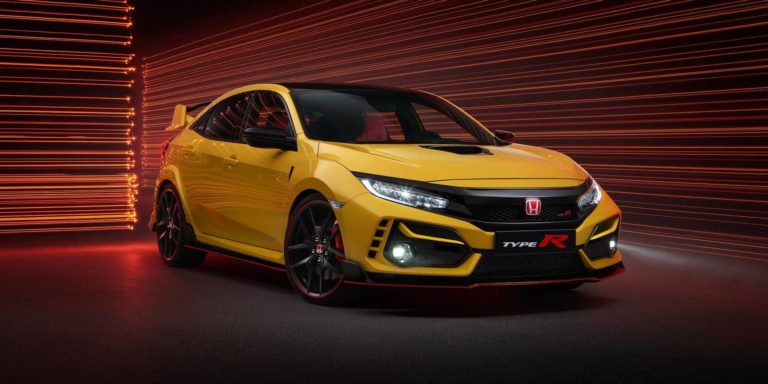
Honda Civic Type R Limited Edition sold out before customers even saw it

1

The low-volume Honda Civic Type R Limited Edition sold out in the UK before buyers even had a chance to see it or find out how much it would cost.

The Japanese car manufacturer has now revealed that pricing for the Limited Edition version of the hot hatch is £39,995, so now you’ll know how much anyone is trying to mark up theirs when it appears for sale about ten minutes after being handed over by the dealership.

Widely regarded as the best hot hatch on the market, just 20 of the 100 Civic Type R Limited Edition models are coming to the UK. They get lightweight 20-inch BBS alloy wheels, a unique yellow paint job, and an overall weight saving of 47kg compared with the standard Type R.

Honda Civic Type R Limited Edition - rear

Inside, there’s a new Alcantara-wrapped steering wheel and a counterweighted teardrop gear knob – though unlike many lightweight rivals, the rear seats remain in place.

Phil Webb, head of cars at Honda UK, said: “As with the previous generation, we were expecting a huge demand for the Civic Type R Limited Edition.

“To have sold all 20 examples so quickly and before anyone has even seen, let alone driven the car, is fantastic and testament to the work done by the multiple-award winning Civic Type R.”

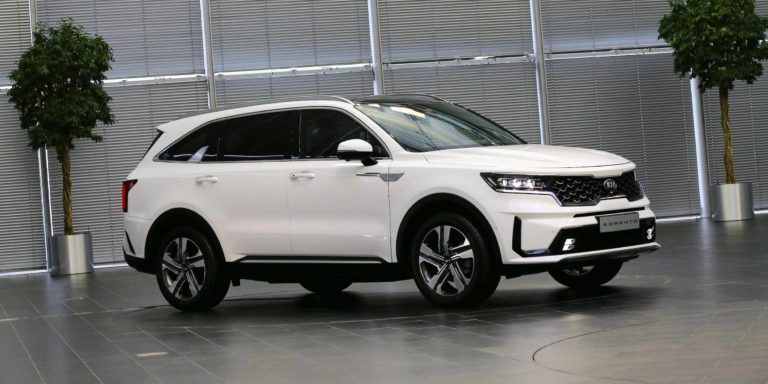
New Kia Sorento steps up its game

0

Details on the latest-generation Kia Sorento have been announced in a virtual launch, breathing new life into one of the firm’s most popular models.

Set to go on sale in Europe in the third quarter of this year, the new Sorento sits above the smaller Xceed, Stonic and Sportage models in Kia’s range of SUVs.

Now a bit wider, with a longer wheelbase yet featuring shorter overhangs than the previous-generation Sorento, the new model incorporates a practical and spacious cabin with seating for seven. With five seats in place, there’s 821 litres of boot space – or 910 litres on five-seat-only models – which drops to 187 litres with all seven seats in place.

A new 12-inch digital driver display kicks off the Sorento’s tech offerings and is bolstered by a ten-inch touchscreen infotainment system in the middle of the dash. A smaller eight-inch system will be fitted on lower specification cars.

Kia is also introducing a new hybrid powertrain with the Sorento, combining a 1.6-litre turbocharged petrol engine with a 44kW electric motor and batteries. While a standard hybrid will be available from launch, a plug-in version will come to market later on in the year.

The only powertrain available alongside the hybrid from launch is a 2.2-litre turbocharged diesel with 200hp and 440Nm of torque, linked to an eight-speed dual-clutch automatic transmission. Emissions and economy figures are set to be announced closer to the car’s arrival. Plug-in hybrid versions are expected to be added to the range at a later date.

A suite of driver assistance systems will be fitted, too, with features such as forward collision-avoidance assist and blind-spot view monitor helping to bolster the car’s safety credentials. The new Sorento also incorporates the firm’s first multi-collision brake system, which can help to reduce the impact of secondary collisions by applying the brakes even after the airbags have been deployed.

Like the rest of the range, the new Kia Sorento will come with a seven-year, 100,000-mile warranty as standard. UK prices and specifications released over the coming months ahead of the car arriving on local roads before the end of the year.

Volvo recalls more than 700,000 cars over emergency braking issue

Volvo has issued a recall of close to 750,000 vehicles worldwide over concerns that autonomous emergency braking (AEB) systems in its cars could be faulty.

The issue, which affects 736,430 cars – 56,368 of which are in the UK – means that the braking system ‘may not function as intended in certain situations and in certain temperatures’.

It could mean that the AEB system might not brake as intended for certain objects, pedestrians and cyclists. However, in this instance, Volvo says, the system will continue to provide visual and audible alerts via the forward-collision warning system.

The recall affects almost every model in the range apart from the V40 hatchback. So, it includes:

The Swedish firm says that the affected cars are still safe to use and that standard braking remains unaffected by the fault. At present, Volvo has had no reports of any incidents or personal injuries as a result of the issue.

Volvo is in the process of contacting the owners of all affected cars and asking them to contact their closest Volvo retailer to have the issue corrected for free. If you are unsure whether your car is affected, simply call your local Volvo dealership with your registration number and they should be able to tell you.

Coronavirus: Can I still hire a car?

The ability to hire a car can be a key way of getting around. It’s a growing business, particularly in busy urban centres like London where many people no longer own their own car and simply hire a vehicle when they need one.

However, with the current spread of coronavirus (Covid-19) being at the forefront of everyone’s minds, it’s a tricky time to think about taking the keys to a hire car. This applies to traditional car hire companies as well as car club, car-sharing, companies.

Of course, government advice states that you should limit travel and stay at home whenever possible, but if you absolutely need to, can you hire a car through a car rental company or car club?

Can I still hire a car?

Yes, you still can at this stage. Companies such as Zipcar and Enterprise have told the PA Media news agency that they are still allowing people to hire a car, and have put more stringent safety and hygiene measures into place.

That means that if you do need to get around and require a hire car, you can. However, other car rental companies may not be operating as normal, so if you have a car booked then make sure you contact the hire company to make sure the car will still be available on your booked date.

What measures are being put into place?

Companies are building on existing levels of car cleaning in an effort to reduce the risk of coronavirus transfer. Enterprise, for example, told us it is including additional measures to clean both vehicles and locations. Key touchpoints in the car – such as the dashboard, instrument panel, steering column and wheel and many others – are all getting a thorough clean with disinfecting products.

Zipcar has changed the type of cleaning products it uses and has further enhanced the hygiene checks it makes on every vehicle.

Europcar says it’s operating a ‘zero contact’ policy, disinfecting car keys before placing them in a sealed envelope. This can then be opened by the driver.

What if I need to cancel my booking?

If you’re experiencing symptoms which could signify the presence of the coronavirus and had planned to hire a car, you need to cancel it.

Zipcar has waived cancellation fees completely, recognising that many people may need to self-isolate with very little warning. The company already allowed users to cancel at no charge with three hours’ notice for bookings under eight hours, or within 24 hours for journeys over eight hours. However, those who need to cancel with less notice need only contact the company and the cancellation fee will be waived.

Enterprise says it has extended its existing no-fee cancellation policy to include those who have pre-paid. Those who booked through a third-party company are requested to get in touch with them in the event of a cancellation.

Europcar has also extended its free-of-charge modification and cancellation policy to any current or future reservation for any pick-up until 31 May 2020.

What should I do to protect myself and others?

It’s all about cleanliness. Zipcar is requesting its members practice good hygiene, and ask that they bring disinfecting wipes to wipe down the car for yourself and others, and also use anti-bacterial hand gel before and after each trip.

If you are going to hire a car, make sure you wash your hands both before and after being in the vehicle, and if you experience any symptoms of coronavirus then you don’t use a hire vehicle.

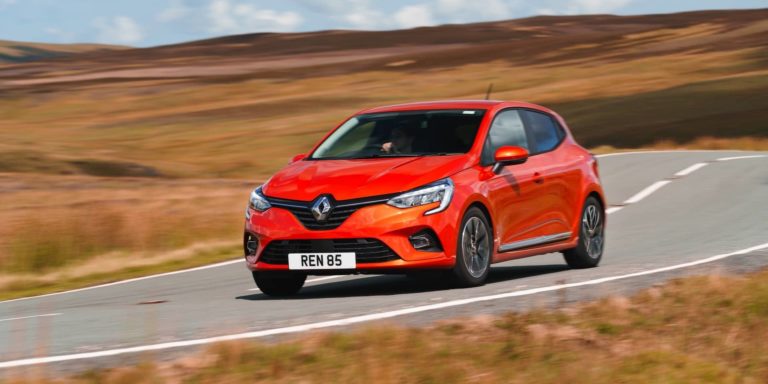
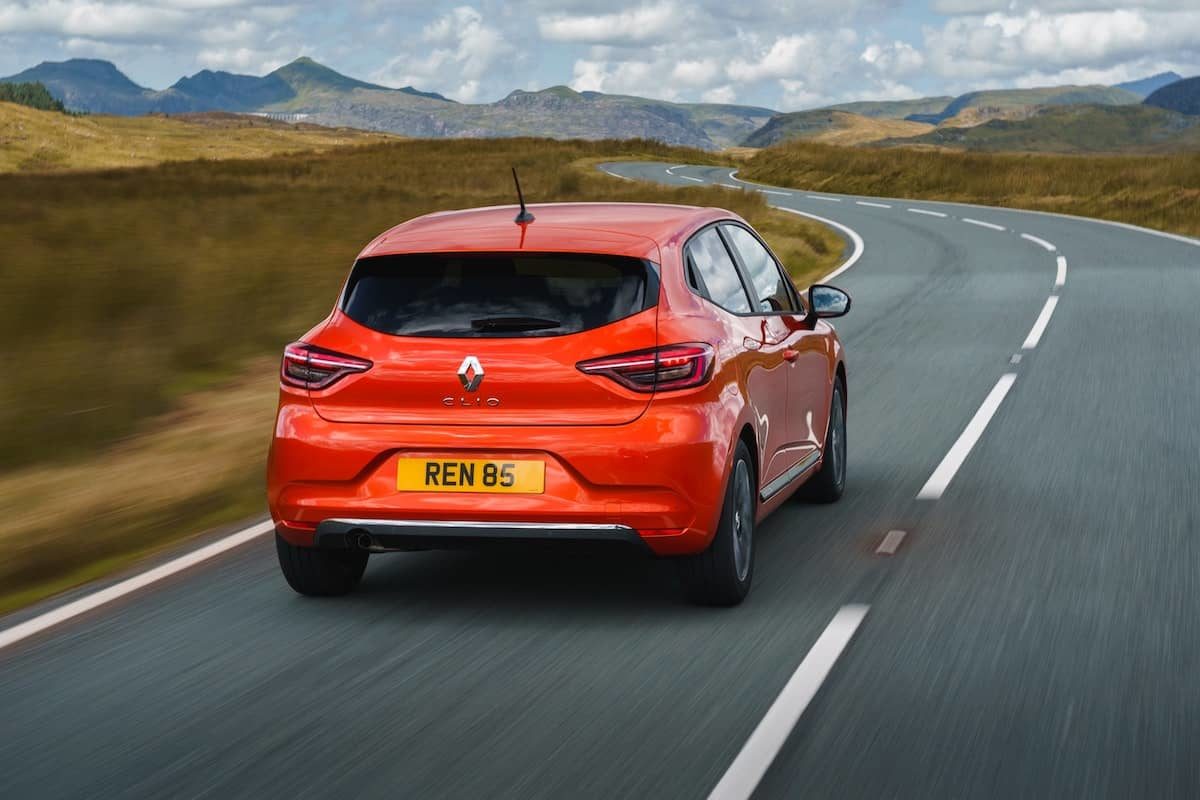
Renault Clio test drive

While the Nissan Jukes and Ford EcoSports of this world might be slicing into the sales of conventional superminis, there is still a big market for these affordable compact models.

The Fiesta remains Ford’s best-seller in the UK; the Corsa as Vauxhall’s, and for Renault it’s the Clio. It’s been a huge success story, and despite the presence of the firm’s similarly-sized Captur crossover, it’s done little to detract sales from this hatch. The opposite, in fact.

With 15 million sold since it was launched 30 years ago, as well as being the European class-leader for sales since 2013, this remains a mightily important car for Renault.

The last model looked the part, but wasn’t especially good to drive and had a sub-par interior come the end of its lifetime, so can this fifth-generation Clio sort that?

What’s new about the Renault Clio?

If you just look at this new Clio, you could be mistaken for thinking it’s little more than a mild facelift. Renault hasn’t changed the styling dramatically, and is happy to admit it. The old one still looked great, and apparently that’s why most buyers choose the Clio anyway.

So, the differences. Well, key to this new model is its new CMF-B platform, which allows it to be more spacious than ever, as well as being available with a hybrid powertrain for the first time – it’s arriving in the summer.

Another big change is on the interior, which feels far more upmarket than before, while top-spec versions feature a large nine-inch touchscreen, as well as the option for a ten-inch digital instrument cluster.

So far, we have assessed 12 supermini-class hatchbacks on The Car Expert’s unique Expert Rating scale, which aggregates reviews from 18 different UK motoring websites. The Renault Clio currently ranks jointly fourth behind the Ford Fiesta, SEAT Ibiza and Mini hatch, and equal with the Volkswagen Polo.

What does it look like?

With styling being something Renault absolutely excels at, it’s not surprising that Renault hasn’t really done anything radical here.

The new Clio is arguably more noticeable than before thanks to its C-shaped LED daytime running lights, while LED headlights are fitted as standard, which is something uncommon at this price point.

Just like before, Renault has tried the ‘make a five-door car look like it has three’ look with the integrated rear door handles, while the same compact profile remains. A sportier-looking R.S. Line grade serves those wanting something a bit more aggressive, too.

What’s the spec like?

Even despite the many improvements to the Clio, it still quite noticeably undercuts rivals, such as the Ford Fiesta, with a list price starting from £14,295.

Standard kit is impressive and includes LED headlights, air-conditioning and plenty of driver assistance tech, though we’d skip the entry-level Play model and head for the Iconic grade instead. This brings rear parking sensors, 16-inch diamond-cut alloy wheels and a seven-inch touchscreen, and pretty much features all the equipment you could ask for from a supermini.

Our test model came in this grade, and cost a very reasonable £16,295, pre-options.

While you can spend more than £20,000 on a top-spec model, this version here offers a great balance of equipment and affordability.

All versions of the new Renault Clio come with a five-star safety rating as assessed by Euro NCAP.

What’s it like inside?

So it’s the interior where Renault has been really making the difference, and it’s significantly better than the cheap plasticky-feeling cabin of the last car. New materials give it a more upmarket feel, while even the regular seven-inch touchscreen on our test model offers all the functions you could wish for (smartphone mirroring, sat nav, etc). More tech is offered with the larger nine-inch unit and the cool digital dials, though we don’t see the need to pay extra for them when the standard setup works perfectly as it is.

2020 Renault Clio interior and dashboard

This new platform also makes the Clio noticeably more spacious, even though it’s actually smaller in dimensions than rear seats. Its 391-litre boot is the largest you’ll find in the supermini class, while rear space is generous enough for adults, too.

Our only real gripe is that on all but top-spec models, the Clio features incredibly obvious blanked-off buttons. It detracts from the more upmarket feel elsewhere in the interior and appears poorly integrated.

What’s under the bonnet?

Buyers have plenty of engine choice with the Clio, with petrol and diesel engine options ranging in power from 75hp to 130hp.

But our test car features the mid-range option – a turbocharged 1.0-litre petrol unit producing 100hp and 160Nm of torque. It’s not what you’d call quick, and it’s a shame that the turbo doesn’t deliver a bit more zing (like it does in Ford’s EcoBoost-powered models, for example), with 0-60mph taking 11.6 seconds, while maxed-out Renault says it would hit 116mph. Power is delivered to the front wheels via a five-speed manual gearbox, which is pleasant enough, but let down by an overly chunky gear knob.

On the plus side, it’s very efficient, claiming to do 54.3mpg, which is easily achievable, along with CO2 emissions of 99g/km.

What’s it like to drive?

A Fiesta or Mini remains a more obvious choice if you’re wanting the best supermini to drive, but whether you’re looking for a town runabout or something for small motorway commutes, the Clio is a great all-rounder.

Our test car’s small 16-inch alloy wheels equate to a comfortable ride, while the Clio is also easy to place through corners with minimal body roll. We might usually complain about the Clio’s rather light steering, but as it will predominantly be a town car, it’s really a good thing as it makes it exceptionally easy to manoeuvre. One of the only things we’d like to see is a six-speed manual, which would just help to drop the revs at motorway speeds and lead to an overall more relaxed drive.

Verdict

This new Renault Clio is a big step forward compared to its predecessor and makes key improvements in all the areas where it needed to – the interior and driving experience, namely.

It might not lead the way for driver enjoyment, but the new Clio is an accomplished all-rounder that offers great value, spaciousness and comfort. This mid-spec Iconic grade and TCe 100 petrol engine tested here is also a winning combination – offering just the right amount of performance for a car of this size, plenty of standard kit and low running costs. With all these attributes up its sleeve, it undoubtedly makes the Clio one of the best superminis on sale today.

Similar cars

Citroën C3 | Ford Fiesta | Honda Jazz | Hyundai i20 | Kia Rio | Mazda 2 | Mini hatch | Nissan Micra | Peugeot 208 | SEAT Ibiza | Skoda Fabia | Suzuki Swift | Toyota Yaris | Vauxhall Corsa | Volkswagen Polo

Key specifications

Model: Renault Clio Iconic TCe 100
Price (as tested): £18,105
Engine: 1.0-litre turbocharged petrol
Gearbox: Five-speed manual
Power: 100 hp
Torque: 160 Nm
Top speed: 116 mph
0-60mph: 11.6 seconds
Fuel economy: 54.3 mpg
CO2 emissions: 99g/km
Euro NCAP safety rating: Five stars (2019)

Coronavirus: My car’s broken down. Can I still get roadside assistance?

With the ongoing coronavirus pandemic, there are a lot of things we’ve taken for granted in our daily routines being upset and a lot of uncertainty comes as a result of that.

One of those could be your car breaking down. With the country effectively on unofficial lockdown, it’s natural to fear you may be stranded without roadside assistance — but will that really be the case? We’ve been speaking to some of the UK’s leading recovery firms to find out.

Will my breakdown cover provider still be able to assist me during the pandemic?

The good news is that, across the board, breakdown services are continuing to operate as normal during this stage of the coronavirus pandemic.

The AA told us it is “working hard to protect our staff and members while doing our part to keep the country moving” while Green Flag confirmed it is “still offering a UK-wide breakdown for our customers and accepting new customers”.

Meanwhile, RAC said its roadside assistance service is “operating as normal” and that it’s doing “everything” to minimise delays.

Many new cars come with roadside assistance cover that is handled by third-party companies. It’s worth checking with your provider beforehand if it’s with another company and you have any concerns.

Roadside assistance services during the coronavirus pandemic are being maintained so far | The Car Expert
Green Flag says it is “still offering a UK-wide breakdown for our customers and accepting new customers”.

Will there be any new restrictions to the breakdown service I will receive?

So far, it appears that breakdown providers will not be applying any particular restrictions to their service, though the AA did state it will “ask that any members who have been diagnosed with or come into contact with coronavirus, or are in self-isolation, call and let us know when reporting their breakdown.”

Green Flag stated it is “constantly reviewing our current ways of serving our customers to ensure we adhere to Government and Public Health England guidelines, paramount is for us to ensure the wellbeing of our people, partners and customers.”

The nature of the pandemic means this could change at any time though, so we’d recommend contacting your provider if you are fearing a breakdown before your journey.

How will roadside assistance staff prevent the spread of Covid-19 when called out?

If you’re concerned that staff members from your breakdown provider may be exposing you to coronavirus, advice given by businesses to its members of staff will likely put you at ease.

Green Flag says its roadside staff are regularly updated with safety advice, while the AA said it is “closely monitoring and following Government advice in relation to the outbreak of Coronavirus” and has “provided employees with guidance and precautions to follow.” It also says regular, deep cleaning has been carried out at its sites.

For your own safety and that of breakdown assistance staff, we’d also recommend taking your own precautions. Maintain distance, avoid contact such as handshaking and also carry antibacterial wipes in your car to clean any interior surfaces recovery staff may need to touch.

The AA is maintaining normal breakdown cover and roadside assistance dueing the Covid-19 pandemic | The Car Expert
The AA says it is “working hard to protect our staff and members while doing our part to keep the country moving”.

I’m self-isolating but need to call for an at-home breakdown recovery. Can I do that?

For those self-isolating, some roadside assistance providers have said that any home breakdown assistance needed would have to be arranged following the isolation period.

The AA says it will not attend any home recoveries if the customer has been exposed to coronavirus or has been asked to self-isolate, questions which will be asked at the time of the call. However, it will arrange an appointment for a future date.

Green Flag mirrored this stance, saying arrangements can be made to attend the vehicle following the isolation period. It did add however that it is “not abandoning and supporting customers who travel outside of self-isolation” though it is adapting its service “to protect our roadside teams from any potential exposure.”

However, it’s a different story for customers with RAC. It said: “We’re asking customers to let us know if they have symptoms or have been diagnosed when they call our breakdown line so we can take the necessary precautions when helping them. If we’re coming to customers at home, we’re asking them to stay inside and put the keys on the doorstep on arrival. We’ll then talk to them on the phone.”

Other roadside assistance providers may take a different stance though, so it’s worth calling to ask.

Coronavirus: I’m self-isolating but my car’s MOT is due. What can I do?

UPDATE: The government has now announced that all cars, vans and motorcycles will be given a six-month exemption from MOT exemption from 30 March 2020. For the latest information, click here.


With the Government issuing advice for those with any symptoms of coronavirus to stay at home, many of us will see otherwise trivial chunks of our life affected unexpectedly.

Of course, it’s advice that should be followed, but it’s natural to be concerned about its effects. One of those we’re looking to answer today is for those whose vehicle MOT certificate may be on the brink of expiring.

The PA news agency has spoken with the Driver and Vehicle Standards Agency (DVSA) to see what options motorists who are self-isolating have if their vehicle’s MOT certificate is expiring soon, and how centre closures could have an impact going forward.

My MOT is due but I’m self-isolating, what are my options?

As it stands, no special provisions are being made by the DVSA to exempt vehicles due MOTs for those self-isolating due to the coronavirus pandemic. This means you will need to make arrangements to have your vehicle tested if you want or need to keep it on the road.

This could mean insuring a driver you trust with the vehicle and asking them to take it to and from the test centre. It may also be possible for the centre to organise delivery and collection, so we’d recommend putting the call in.

If the vehicle is parked off the street and on private property, it’s advised by the DVSA to declare the vehicle off the road (SORN). This means tax will not need to be paid on the vehicle, nor it will it require an MOT. That said, it legally cannot be used on public roads when declared SORN — which you should keep in mind if your vehicle is street parked.

If it’s possible to SORN the vehicle and store it legally, it may be worth taking this option and arranging an MOT for after your coronavirus isolation period.

Declaring your vehicle SORN is advised if you’re able to legally store it off the road. (PA)

Will I be penalised if my vehicle doesn’t have a valid MOT while I’m self-isolating?

As no provisions for MOT exemptions have been made as of yet, failing to MOT a vehicle will leave you at risk of a fine of up to £1,000 if it is not declared off the road, or is caught driving on public roads without. Legally, your car may only be on the road without an MOT certificate if you are driving directly to an MOT test centre to have the test done.

Your car insurance will also probably be void if you don’t have a valid MOT certificate, so you won’t be covered in the event of an accident. This may apply even if the car is parked on private property.

If MOT centres are ordered to shut and my vehicle’s certificate expires, what can I do?

The DVSA currently has “no provisions” for centres that may be advised or forced to close pending further government communications on the coronavirus pandemic, or simply a lack of available staff, but says the situation is “constantly under review”. Given that this is fairly unhelpful advice for anyone who relies on their car, it’s important for you to take action to make sure you stay legal.

If your vehicle is due an MOT soon and you are able to arrange for it to be taken/to from the centre or are still able yourself, we’d recommend doing that as soon as possible. This will help in case MOT centres are advised or ordered to close in the future.

It’s worth noting that your vehicle can be put through an MOT test up to one calendar month prior to its existing certificate expiring. So check your expiry date and book your car in for its MOT inspection as soon as possible.

Coronavirus: Can I still buy a car?

UPDATE, January 2021: Almost every car dealership in the country has now closed for vehicle sales, although many are still open for car servicing. A growing number of manufacturers and dealers are now accepting online purchases with home deliveries, but other deliveries are likely to take place after showrooms have reopened.


Buying a car purely online is a relatively new concept. One of the best parts of it – particularly given the current climate – is that there are thousands of new and used vehicles out there available to browse, all from the comfort of your own home.

But, should you need a new car during the coronavirus pandemic, is it still possible to get one? And what processes are in place to ensure that the whole experience remains safe? We’ve been investigating to find out.

Browse away

Browsing for a new car is one of the best bits of the entire process. As we’ve already mentioned, there are thousands of cars available to view via the internet, allowing you to check them out without having to leave the house.

Of course, going online limits the amount of exposure you get – so make the most of it. Check out car postings, read reviews and research as much as you can. Many dealers will make you a personalised video of the car you’re interested in, so take advantage of technology to go beyond the simple photos posted on classified websites.

Pick a car

It’s come to the crucial point – it’s time to choose a car. Thankfully, the whole process from here – for many outlets – can be managed entirely online. James Hind, CEO of Carwow, told the PA news agency that the firm ‘is this week adding additional functionality to the website so buyers can see which dealers will offer home test drives, to help consumers who may be worried about visiting the showroom’.

Visiting a dealership shouldn’t put you at any more risk than any other public space, but you should still follow NHS safety guidelines. And of course, if you’re experiencing coronavirus symptoms or belong to an at-risk group, then you should stay at home.

However, if you want to visit a dealership to see a car you still can. It’s all about making a sensible decision and limiting your distance from other people.

Is it possible to buy a car without entering a dealership?

Yes, certainly. In fact, it can be to your benefit to buy a car from a dealership online rather than on-premises.

Stuart Masson, editor here at The Car Expert, points out that customers benefit from stronger consumer rights laws that apply to buying a car online or over the phone: “If you buy a new or used car from a dealership at a distance, which means signing the paperwork via email and making any payments via phone or online banking, you automatically have a 14-day cooling-off period for that purchase. That means you can change your mind for whatever reason – even if you simply don’t like the car.

“By comparison, if you physically walk into a dealership and buy that same car, there is no cooling-off period. Once you sign that contract, you don’t have the right to cancel it.”

Online car sales, especially for new cars, were already ramping up prior to the coronavirus outbreak, but this current period of forced isolation is likely to help make it even more popular. Erin Baker, Auto Trader editorial director, told PA: “Increasing numbers of car brands are offering the public an online buying experience, where you can do the entire thing – part-exchange your car, sort finance, purchase the new one and have it delivered to you – without leaving your home.”

Brands already offering an end-to-end online new car buying process include Dacia, Hyundai, Jaguar, Kia, Land Rover, Mercedes-Benz, Peugeot and Volvo.

A spokesperson for online used car retailer Cazoo told PA: “Cazoo is continuing business as normal as our service allows consumers to purchase our cars entirely online in much the same way as buying any other product today.

“We own all our cars and recondition them fully before offering them for sale and delivering them to customers’ doors in a convenient two-hour delivery slot, and our handover process has been adjusted to be done at a safe distance in the current climate. Every car comes with a full seven-day money-back guarantee, destined to replace the seven-minute test drive at a dealer, and includes free comprehensive 90-day warranty and roadside assistance.”

Can I still sell my car?

If you were looking to sell your car privately, then it’s more than likely that you’ll have to wait longer for a sale. With people being asked to distance themselves from one another, there’s a good chance that most people will want to steer clear of an in-depth test drive. Plus, we’ve always promoted that you should stay with the car when it’s being test driven by another person – and this goes against the current government guidelines.

However, if you are part-exchanging your car against another new or used vehicle at a dealership, your should be unaffected. There are also businesses that offer to buy your car, which are currently trading as normal.

If I buy a new car, will it be delayed?

That depends on whether you are buying a car from existing stock or ordering a car from the factory.

If you’re buying a new vehicle that is already on the dealer’s premises or in storage, there shouldn’t be any significant delay. Things may be moving a bit slower, as there are likely to be fewer staff on hand to manage the process, but it probably won’t make much of a difference.

If you are ordering a vehicle that does not yet exist, it’s a different story. With plants shutting down across the UK and around the world, the likelihood is that production of your new car will probably be delayed. With logistics operations being slowed across the board, there’s also a good chance that even if your car has been built, it will probably take a bit more time to reach you.

Is this a good time to buy a new car?

There are positives and negatives to buying a car right now, as our editor Stuart Masson explains:

“With so many people currently confined to their homes, dealers will be very eager to sell whatever they can at the moment. That means there will certainly be deals around for buyers who are in the market and ready to buy now. The flip side of that is that your part-exchange vehicle is going to be worth less money as well, so your overall cost to change may not be as good as you’d hoped.

“In addition, many customers are going to be unsure of their own circumstances and whether they’ll even have a job in a few weeks’ time, let alone a couple of years. For the average family, now is not really the ideal time to be making a large financial commitment that locks them in for the next three or four years.

“Whatever your situation, it’s important to remember that The Car Expert’s Ten Golden Rules for buying a car still apply. Don’t be swayed by what looks to be an amazing deal – take a deep breath and properly scrutinise the numbers to make sure it all works for you. And in uncertain times, don’t overextend yourself with anything you don’t need. A car that’s a bit cheaper to finance and run each month could be critically important in coming months.”

Lexus RX (2015 to 2022)

Summary

The fourth-generation Lexus RX was a large premium SUV, available in regular five-seat and seven-seat (RX L) formats. The RX range launched in the UK in 2015, and was bolstered by the longer RX L two years later. This fourth-generation line-up was removed from sale in 2022, making way for the new fifth-generation range.

Like most Lexus models, the RX and RX L were only available in the UK with a petrol-electric hybrid drivetrain towards the end of their time on sale. No conventional petrol or diesel models were offered.

The Lexus RX and RX L received generally good reviews from UK media sources. They have been rated highly for their build quality, comfort and refinement, although have been criticised for their driving dynamics. The third-row seats in the RX L were also quite small compared to other seven-seat SUV rivals.

No longer on sale, the fourth-generation Lexus RX holds a Used Car Expert Rating of E, with a score of 57%. It gets good grades for reliability, but its CO2 emissions and safety rating (now expired) are only average, and its running costs are high.

Key specifications

Body style: Large SUV
Engines: petrol-electric hybrid
Price when new: From £50,905 on-road

Launched: Winter 2015/16
Last updated: Winter 2019/20
Replaced: Winter 2022/23

Media reviews

Highlighted reviews and road tests from across the UK automotive media. Click any of the boxes to view.

Featured reviews

More reviews

The Car Expert

Auto Express

Car

Carbuyer

Carwow

Company Car Today

Daily Mail

Daily Mirror

Evo

Green Car Guide

Heycar

Honest John

Parkers

The Sun

The Sunday Times

The Telegraph

Top Gear

Safety rating

Independent crash test and safety ratings from Euro NCAP

Overall score: 5 stars
Date tested: December 2015
Date expired: January 2022
Read the full Euro NCAP review

Adult protection: 91%
Child protection: 82%
Vulnerable road users: 79%
Safety assist: 77%

The Fourth-generation Lexus RX was originally crash tested by Euro NCAP back in 2015 and awarded a five-star rating. However, this rating expired in January 2022 and is no longer valid as the car no longer meets the standards required for such a rating.

Eco rating

Independent economy and emissions ratings from Green NCAP

No eco rating

The fourth-generation Lexus RX was not lab tested by Green NCAP during its production life.

Reliability rating

MotorEasy logo 600x167

Reliability data provided exclusively for The Car Expert by MotorEasy

All data based on MotorEasy average workshop costs for extended car warranty claims

The Lexus RX has an above-average reliability score, according to warranty claim data provided by our partner MotorEasy. This data refers to these fourth-generation models, and previous (pre-2015) versions.

While MotorEasy warranty holders haven’t submitted many Lexus RX claims, it is clear to see that suspension and braking system issues are the most common. While braking system faults are likely to cost around £200 to correct, suspension issues are more expensive, costing more than £400 on average.

If you’re looking at a used Lexus RX, make sure any extended warranty cover you purchase covers all of these potential problem areas.

Running cost rating

Clear Vehicle Data logo close crop

Monthly cost of ownership data provided exclusively for The Car Expert by Clear Vehicle Data

Fuel consumptionAverageScore
Hybrid models35 mpgD
CO₂ outputAverageScoreVariationScore
Hybrid models182 g/kmD
Insurance groupAverageScoreVariationScore
All models41D

The Lexus RX is a relatively very expensive car to own and run, according to whole-life cost numbers provided exclusively to The Car Expert by our data partner, Clear Vehicle Data. However, it should be noted that we don’t have a complete set of data for this model due to its age.

Fuel consumption is poor, although you’d expect it to be so on a large five-seat premium SUV. We don’t have servicing cost data, but Lexus servicing tends to be relatively expensive as well – on a par with other premium brands.

Awards

Trophies, prizes and awards that the Lexus RX has received

2020

  • Auto Express Driver Power – Best Non-Plug-In Hybrid Car

2019

  • DrivingElectric Awards – Best Premium Hybrid Car
  • Auto Express Driver Power – Best Large Luxury SUV

2018

  • Auto Express Driver Power – Best Large Luxury SUV

2017

  • Auto Express Driver Power – Best Large Luxury SUV

Similar cars

If you’re looking at the Lexus RX, you might also be interested in these alternatives

Audi Q7BMW X5 | Jeep Grand CherokeeLand Rover Discovery | Maserati Levante | Mercedes-Benz GLE | Porsche Cayenne | Range Rover Sport | Volkswagen Touareg | Volvo XC90

More news, reviews and information about the Lexus RX at The Car Expert

Lexus RX 450h+ test drive

Lexus RX 450h+ test drive

Everything you need to know about Lexus

Everything you need to know about Lexus

Best Large SUV 2024

Best Large SUV 2024

Lexus RX

Lexus RX

MG 4 achieves top marks in crash safety test

MG 4 achieves top marks in crash safety test

Lexus builds new RX from the ground up

Lexus builds new RX from the ground up

UK demand drives Lexus to 250,000 hybrid SUV sales in Europe

UK demand drives Lexus to 250,000 hybrid SUV sales in Europe

Updated Lexus RX breaks cover

Updated Lexus RX breaks cover

More equipment in updated Lexus RX range

More equipment in updated Lexus RX range

Lexus RX L test drive

Lexus RX L test drive

Lexus RX 450h review

Lexus RX 450h review

Lexus announces scrappage scheme

Lexus announces scrappage scheme

Buy a Lexus RX

If you’re looking to buy a used Lexus RX, The Car Expert’s partners can help you find the right car

Motors 600x300

Search less, live more. We make finding the right car simple. Find out more

Auto Trader logo 600x300

Search for your next new or used car with Auto Trader. Find out more

Carwow logo 600x300

Discover great deals available on both new and used cars. Find out more