Find an Expert Rating: 
Home Blog Page 86

Peugeot 2008 test drive

It wasn’t that long ago that the very concept of the latest Peugeot 2008 would raise a few eyebrows. Peugeot no longer accepts its place in the mainstream, instead straddling a position somewhere between its traditional rivals and more premium manufacturers.

If you’ve spent any time around the French manufacturer’s cars recently you’ll know it’s perfectly capable of mixing it with the big names, with stylish cars and high quality interiors mixed with genuine character. This cool-looking small SUV is up against some brilliant rivals, though, so does it have what it takes?

What’s new about the Peugeot 2008?

For Peugeot, the key selling point is the ‘choose your powertrain’ ethos, so there’s the usual petrol and diesel options, but also an electric e-2008 version with an impressive 193-mile range.

It’s built on the firm’s newest vehicle platform called Common Modular Platform, which gives it more space than before, helped by the fact it’s 14cm longer than before. One great aspect for those considering the EV is that the 360-litre boot is the same across all powertrains, meaning the EV doesn’t lose practicality because the batteries don’t eat into the boot space, unlike many rivals.

It also gets the usual funky Peugeot styling, the 3D i-Cockpit, and plenty of driving assistance technology.

How does it look?

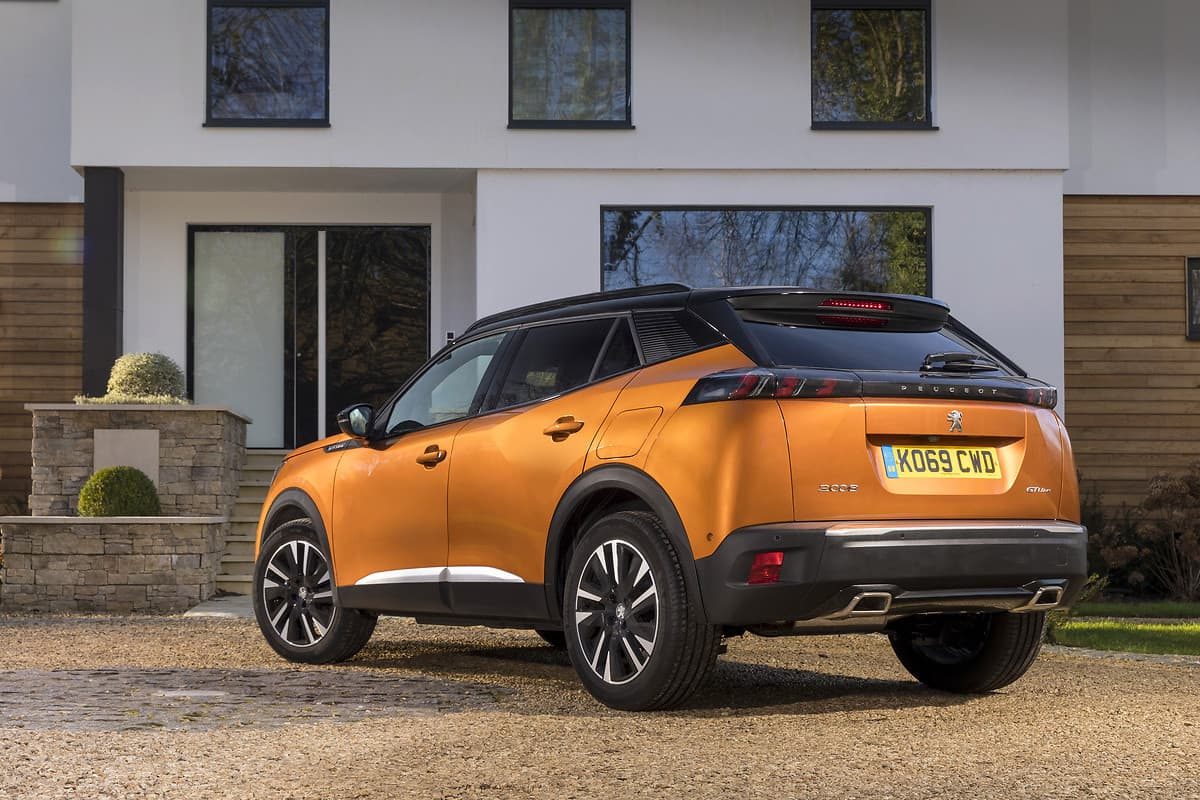
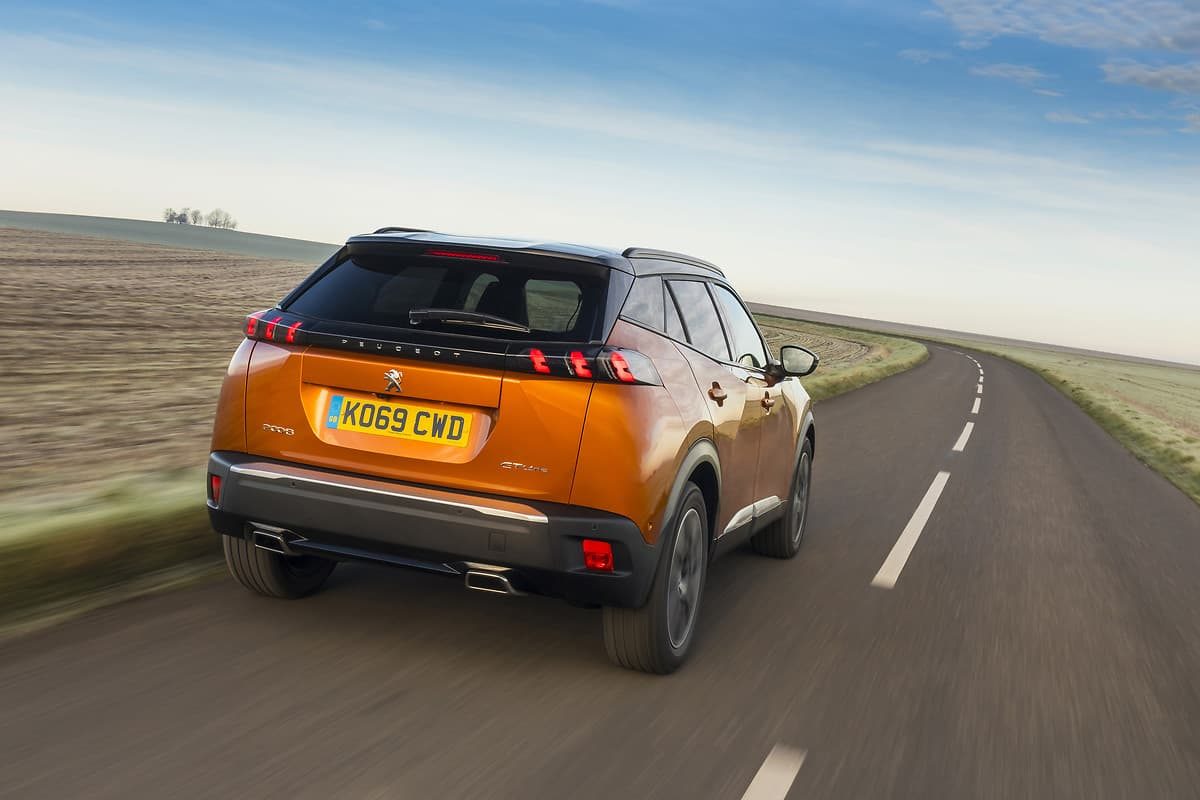
Styling is the 2008’s real draw. While many cars in this segment are guilty of looking like copies of each other, the Peugeot 2008 truly stands out with its combination of muscular fenders, sharp edges and intricate designs.

The front end has a striking headlight design, with the ‘three-claw’ running lights the stand out feature, while the low centre section of bonnet and higher edges give a butch attitude to go with the chic details. Meanwhile, the rear lights follow the claw theme and make the car look extra-wide as part of a full-width bar.

What’s the spec like?

Priced from £26,150, our GT Line model comes very well-equipped, and looks fantastic with its extra styling touches. Standard equipment on this trim includes extensive safety kit, the 3D instrument display, perforated leather steering wheel, DAB radio with Apple CarPlay and Android Auto, and full LED headlights.

Our test car came equipped with some optional extras, with the £300 adaptive cruise control feeling like a good value upgrade, as does the £750 panoramic roof. However, £200 for blind spot monitoring is a little disappointing given the starting price of the car, while £1,500 is a bit steep for full leather upholstery (though this does also add a massage function).

Music fans should opt for the upgraded stereo system, which adds another £590 to the price.

What’s the Peugeot 2008 like inside?

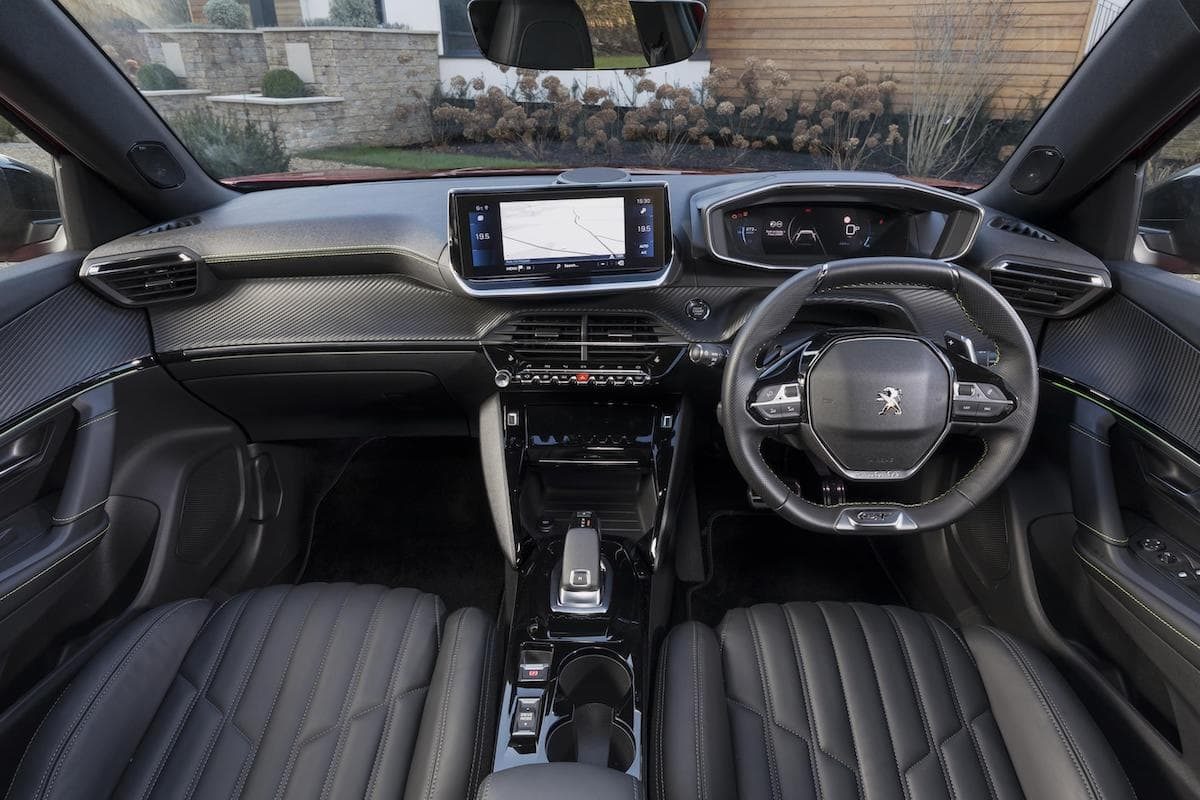
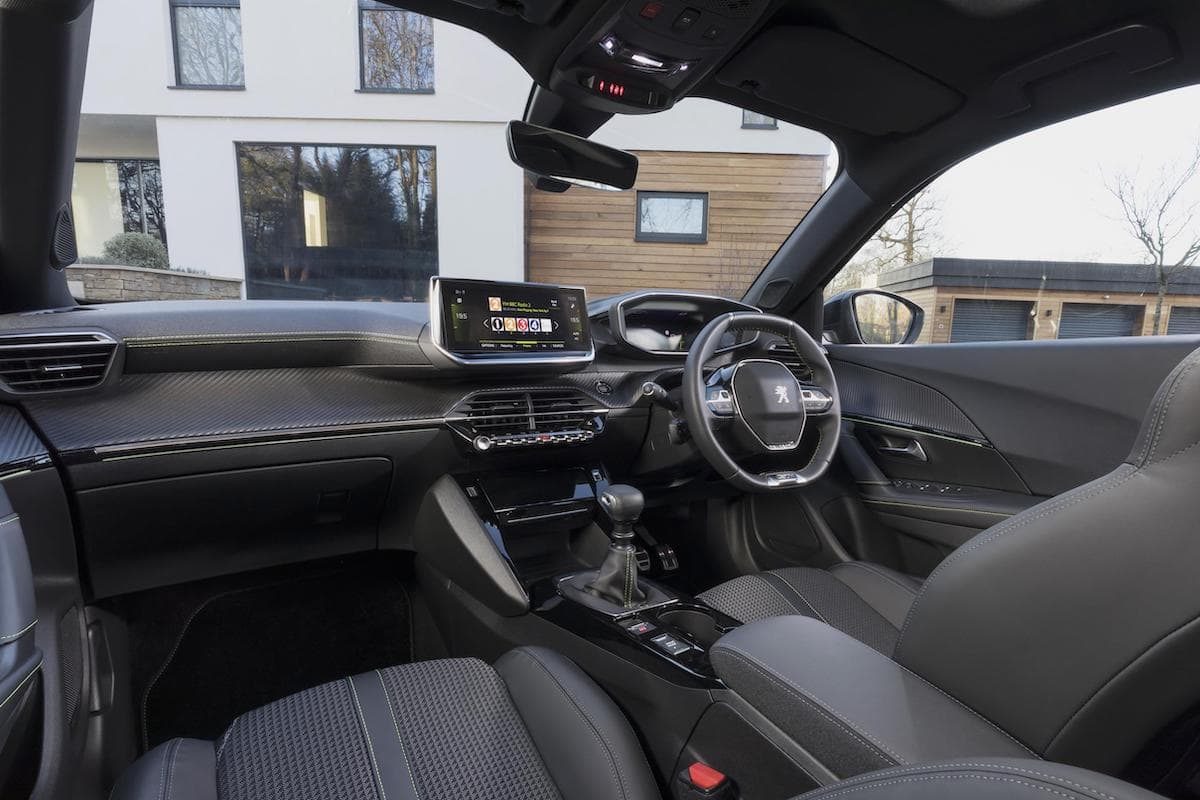
The style continues inside, too. While many manufacturers are going minimalist these days, Peugeot is committed to having something with a bit more character. As such, there are funky lines, wedges and curves that means no surface is boring.

The central toggle switches look and feel great to use too, but style has definitely affected functionality in the cabin. For example, the quick navigation buttons are an odd touch-sensitive symbol above the toggle switches, and they provide no feedback, so they feel odd to touch but don’t let you know that they’ve been activated. Meanwhile, the small wheel still blocks the view of the digital cockpit for most driving positions, which quickly becomes irritating.
What’s under the bonnet?

There are three petrol engines offered, with the entry level option getting a six-speed manual, the top GT version getting an eight-speed automatic, and the middle having a choice of both gearboxes. The sole diesel, meanwhile can only be had with the manual.

Our car had the middle-spec 1.2-litre PureTech petrol making 130hp. It’s not the most inspiring unit, but it feels like the pick of the bunch because the engine is responsive without impacting fuel economy too much.

What’s the Peugeot 2008 like to drive?

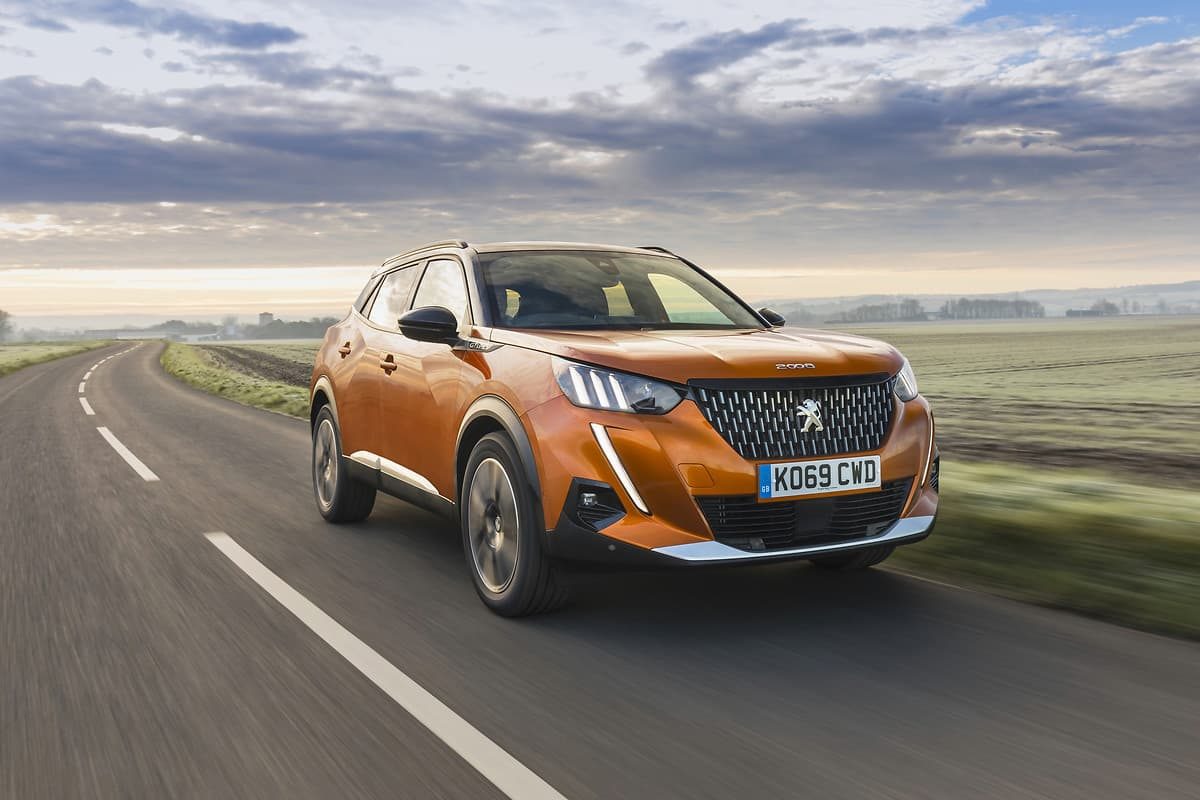
Fortunately, it’s not style over substance, because out on the road the Peugeot 2008 is great to drive. The steering is light around town, meaning that despite the fact it’s an SUV it’s easy to drive in urban areas – ideal for the school run. However, it remains composed on twisty country lanes so it’s good to drive wherever you live.

The gearbox is great, too. While manuals are slowly dying out, it’s good to see that some manufacturers are committed to providing a good system for those who want to shift themselves.
Verdict

If you’re looking for a family SUV that’s a bit more interesting than most of the near-identical models on the market, you’ll no doubt be swayed by the brilliant styling of the 2008 – inside and out.

The fact it backs it up with a great driving experience and decent practicality means the Peugeot 2008 is certainly worthy of your attention. Yes, top-spec models are priced to compete with the likes of the Audi Q2, but it’s much more interesting and bigger, too, so feels like good value.

If you can get past the interior quirks, there’s very little to disappoint.

Similar cars

Audi Q2 | Citroën C3 Aircross | Dacia Duster | Fiat 500LFiat 500X | Ford EcoSport | Ford Puma | Honda HR-V | Hyundai Kona | Jeep Renegade | Kia Stonic | Mazda CX-3 | MG ZS | Mitsubishi ASX | Nissan JukeRenault Captur | SEAT Arona | Skoda Kamiq | SsangYong Tivoli | Suzuki Vitara | Vauxhall Crossland X | Volkswagen T-Cross | Volkswagen T-Roc

Key specifications

Model as tested: Peugeot 2008 GT Line
Price: from £26,580
Engine: 1.2-litre petrol
Gearbox: Six-speed manual

Power: 130 hp
Torque: 230 Nm
Top speed: 122 mph
0-60 mph: 8.9 seconds

Fuel economy (combined): 43.7 – 50.6 mpg
CO2 emissions: 121 – 141 g/km
Euro NCAP safety rating: Four stars (2019)
TCE Expert Rating: 77% (as of December 2020)

How to quickly and effectively demist your car windscreen

It’s that time of year again where we leave for work when it’s dark, head to our cars and realise all of the windows have misted up as a result of the cold nights.

It’s not quite as bad as the windows all freezing over in the winter, but there’s no doubt it’s an annoying part of life. Fortunately, demisting a modern car is a very simple and easy task — but one that’s also quite easy to take longer than necessary if you’re unfamiliar with it.

Want to know how to clear your windows that little bit quicker? We have a few tips…

Stick the heater on cold to start demisting

It may be tempting to jump into your car and whack the heater up on full considering the freezing weather, but doing this will likely fog your windows up even more and delay your morning further.

The first thing you should do when demisting your car is putting the heater on a low temperature, and press the windscreen demisting button should your car have one (most do these days). It doesn’t have to be its lowest setting, but below 20 is usually a good starting point.

Cold air helps demist your car windows | The Car Expert
(PA)
Air vent demisting a car window | The Car Expert
(PA)

Direct at windows, and gradually turn the temperature up

Your windscreen should have a set of vents directly below it, so you can let that do its thing. For the rest though, aim them towards the side windows if these are also fogged up.

Gradually start increasing the temperature to aid in demisting the glass. A degree every ten seconds is a solid starting point — increasing it too soon will slow the process down.

Use the air-con to boost demisting

Got working air-con? Stick it on to keep the atmosphere in the car moisture-free. This will help in preventing condensation reforming on your windows before setting off and hopefully set you on your journey in a timely fashion.

Use air-conditioning to demist your car windscreen | The Car Expert
(PA)

No climate control? Roll the windows down

If you’re running an older car with no air conditioning, or are unfortunate enough to have the feature broken, there’s an alternative to clearing the windows effectively than just sitting and waiting.

Simply rolling the windows down will allow dry and cold air from outside into the car quickly, which should go some way to combating condensation.

Two-year service intervals, but is your car really fit for the road?

0

Greater technology, improved development and better build quality means that cars have become more reliable, economical and built with parts that should last longer. As a result, car manufacturers can now offer longer and more attractive service intervals.

The likelihood of your new car being able to go two years or 20,000 miles between main services is quite high now, and that’s a welcome and attractive proposition for car buyers on a budget.

But even though your pride and joy might not officially need a visit to the main dealer for months or even years – according to its service schedule – that doesn’t mean you should neglect regular safety checks on it. Car technology, while excellent these days, is not magic. Parts and equipment still need regular checks to make sure they are operating correctly and safely.

‘Safe’ in the knowledge that your car won’t need to be professionally inspected for the next 18 to 24 months, it’s easy to forget and neglect vital safety checks of your own on the vehicle. Today’s new cars are well-designed, more economical to run and better built to last. But tyres don’t automatically stay inflated and undamaged between services, bulbs won’t necessarily continue to be illuminated and engine oil can deteriorate, even if you have the luxury of an indicator warning lamp.

The POWDER principle

Safety organisation RoSPA recommends car users adopt the POWDER principle which outlines six simple weekly inspections a responsible driver should carry out.

Rebecca Needham, RoSPA road safety officer for England, says: “We advise all drivers to do a weekly check, and also before driving the vehicle for the first time or for a long journey, following the POWDER procedure.

P for Petrol: Check to see you have enough fuel.

O for Oil: Check your oil levels and top up if needed.

W for Water: Check and top up if necessary.

D for Damage: Have a good look around the car for any damage that you may not already know about, and that could cause an issue with the vehicle’s operation.

E for Electrics: See that everything is in working order.

R for Rubber: Check your tyres for wear and tear, make sure that they have sufficient tread depth and that they are inflated to the pressures recommended by the manufacturer.

Check tyre pressures regularly between service intervals

Additionally there are things to look at on a regular basis, to make sure all is in good running order:

Wheels: It’s easy to damage wheels, especially alloys, in the hustle and bustle of a busy week. Potholes, kerbs and general poor surfaces are all culprits – damage can be inside the wheel as well as the part you can see.

Lights: Walk round your car at dusk or night to see if all bulbs are shining as they should. Replace any that are blown or dim.

Leaks: Look under the car for signs of unusual patches of fluid on the road or driveway. Moisture is OK, but the patches could be fuel, oil or brake fluid, which is not good news.

Glass: Inspect your windscreen for chips or small cracks. Chances are these will grow, so they’re going to need repairing, or the screen replaced, sooner or later.

Your car is an important tool for you and your family, so give it back the great service that it’s been giving you. These checks could help it last longer and continue to look good – and they could even save your life.

Britain’s best-selling cars, November 2020

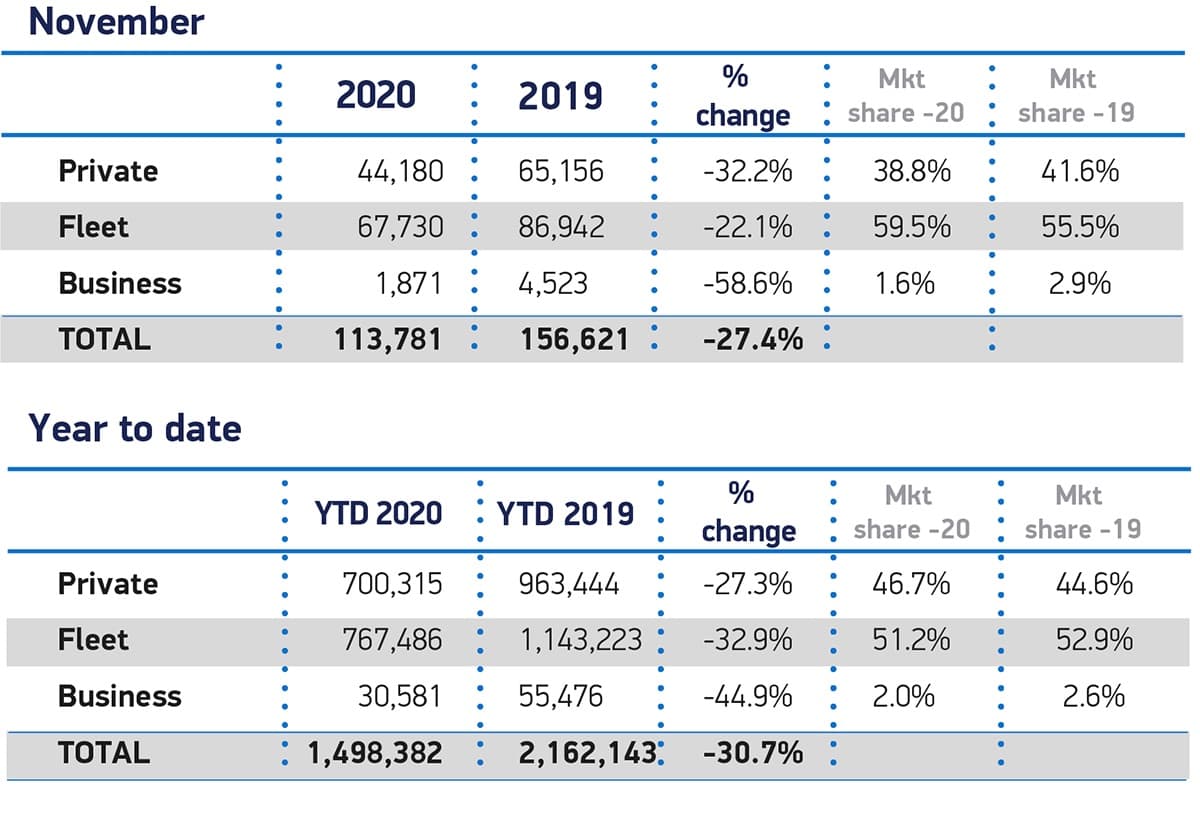
One the face of it, a 32% fall year-on-year in private new car sales for November seems pretty terrible. However, when you consider that showrooms across England were closed for basically the whole month, it’s a lot more positive.

Compared to the lockdown months of April and May, where almost no new cars were sold, the car industry was a lot better prepared in November. Many more manufacturers and dealerships were geared up to deliver cars to customers’ homes, or operate click-and-collect services, meaning that they could keep their businesses moving to a much greater degree.

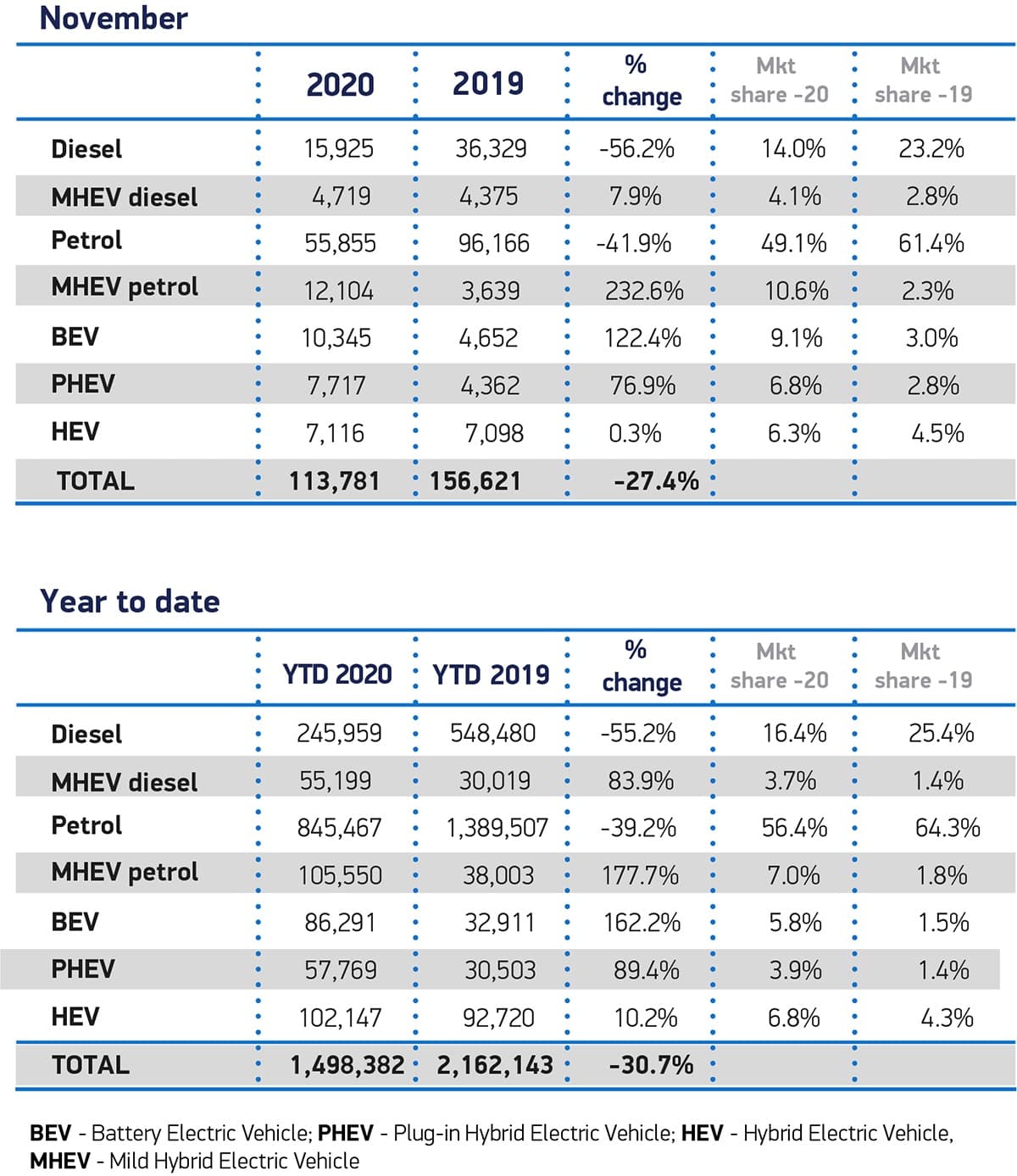
Fleet deliveries did better than private sales for the first time in months, down 22% year-on-year, which meant that the overall market ended up down 27%. We analysed the market results last Friday, but it was more of the usual – diesel down, electrified cars up.

The UK’s best-selling cars, November 2020

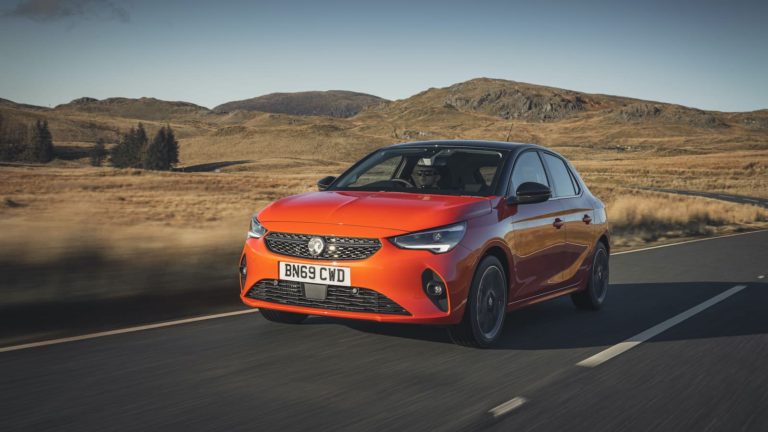
1. Vauxhall Corsa

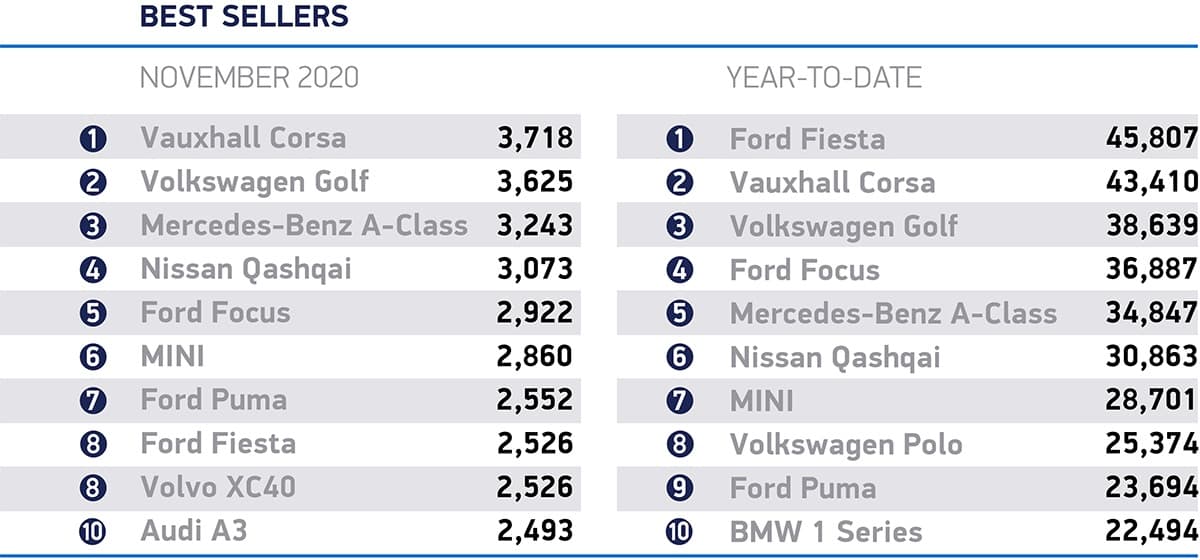
The Vauxhall Corsa returned to the top spot in November, continuing its best-selling run over the last six months. With only one month to go this year, the Corsa is probably too far back to overhaul the Ford Fiesta for full-year honours – it needs to outsell the Fiesta by about 2,500 units in a month, which is highly unlikely – but Vauxhall will be justifiably happy with the first-year performance of its new supermini.

The petrol and diesel versions of the new Corsa currently hold an Expert Rating of 71% on our unique aggregator scale, based on 25 reviews we have gathered so far. That puts it in the bottom half of the supermini class, although the all-electric Corsa-e does score slightly better with an Expert Rating of 74%.

2. Volkswagen Golf

Volkswagen Golf (2020 onwards) Expert Rating

The Volkswagen Golf enjoyed a similarly strong month to the Vauxhall Corsa to take a comfortable second place in the sales charts. It has also solidified third spot in the year-to-date results, sitting almost 2,000 units ahead of the Ford Focus.

More local reviews of different UK-spec Golf models are being published in the media, and the Golf’s formerly stellar Expert Rating is gradually starting to slip. The much-vaunted ‘all-digital’ interior has drawn criticism from several reviewers who have found it inferior to the more conventional cabin of the previous-generation model. It’s not exactly disastrous news for Volkswagen, but it is interesting to see review scores that are consistently below the previous model’s results.

3. Mercedes-Benz A-Class

Mercedes-Benz A-Class hatchback | Expert Ratings

The Mercedes-Benz A-Class was the country’s top-seller last month, and remained highly popular in third place this month. It is the fourth-biggest-selling car in the UK with one month to go, and that’s where it’s likely to end up with decent gaps to the Ford Focus above it and the Nissan Qashqai below it.

The A-Class has an Expert Rating of 77% in The Car Expert’s unique aggregated Expert Rating index, based on 45 UK reviews. It ranks highly for safety, winning awards from Euro NCAP and Thatcham for its protective qualities.

4. Nissan Qashqai

2019 Nissan Qashqai wallpaper | The Car Expert

After falling out of the top ten in October, the Nissan Qashqai bounced back up into fourth place in November. It also retains its title as the best-selling British-built car, and looks set to hold onto that title for another year.

The ageing Qashqai currently holds an Expert Rating of 74% in our New Car Ratings database, which is midfield for the compact crossover segment and in the bottom half of scores for a top ten-selling car. A replacement is due to be revealed early next year, but the new car will have a tough job in living up to the sales success of the current model over its seven-year run.

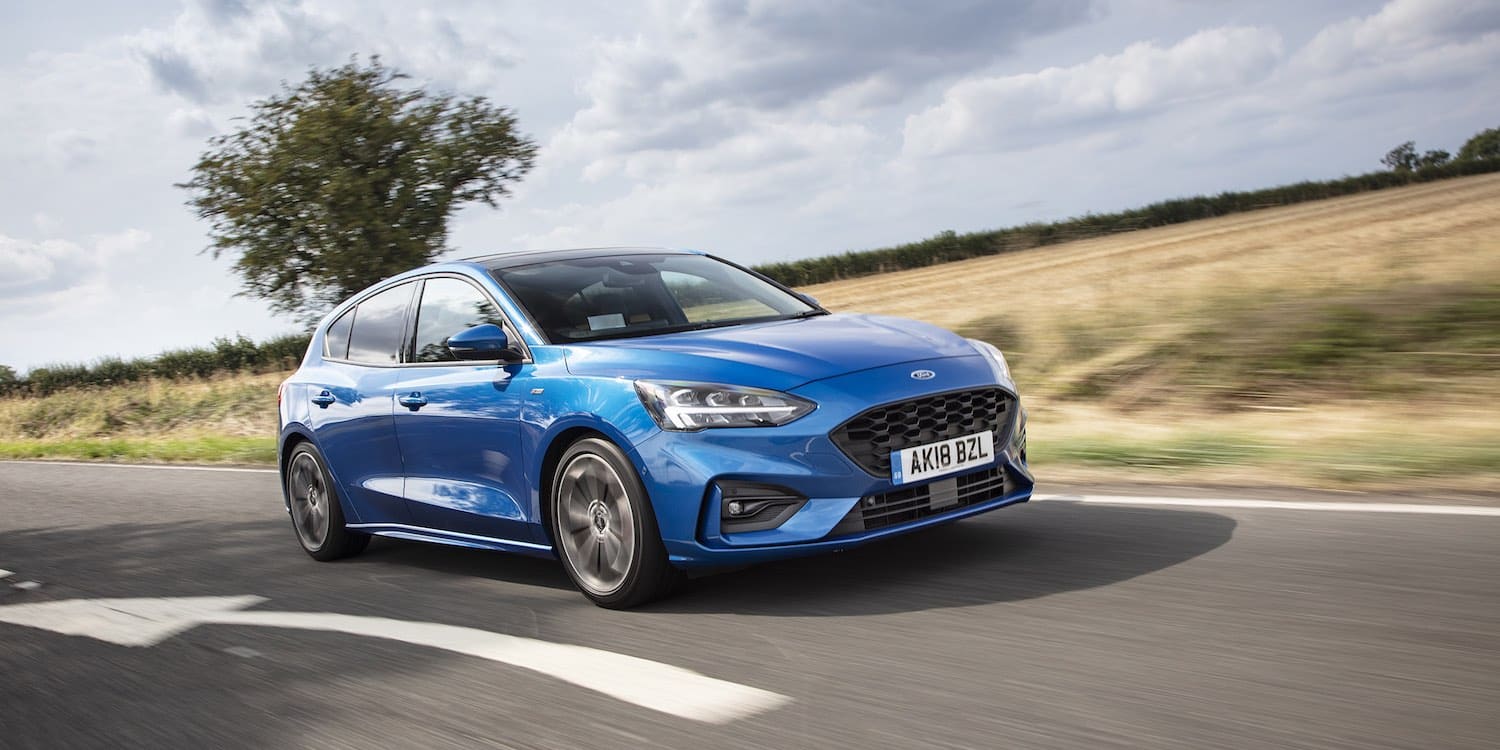
5. Ford Focus

Ford Focus review 2018 | The Car Expert

Surprisingly, the Focus was Ford’s best-selling model in November, outselling its little brother Fiesta by about 400 units. The Blue Oval’s big-hitting family hatchback has been under constant attack from rivals this year, with the Focus surrendering sales honours to its arch-rival, the Volkswagen Golf, and almost being usurped by the Mercedes-Benz A-Class as the year draws to a close.

An improved fleet market helped the Focus improve from eighth place last month to fifth this month, with fleet buyers appearing more loyal to Ford than private customers who seem to be lured away to a German badge. In terms of critical appraisal, the Ford Focus currently holds an Expert Rating of 80% in our Expert Ratings database, which is currently only one point behind the Golf and three points better than the A-Class.

6. Mini hatch

Mini hatch (2014 onwards) Expert Rating

The Mini hatch improved one place from seventh to sixth in November, although it remains in seventh place for year-to-date sales, and likely to remain there with only one month to go. It had been closing the gap to the Nissan Qashqai, but a strong performance from the Qashqai in November put paid to any hopes that the Mini might sneak past it by the end of the year.

The Mini hatch holds a very solid score of 80% in our Expert Ratings aggregator, which is better than most cars in its class despite being much older than many of its rivals. We’ve now indexed the new Mini Electric model as well, and interestingly its score is currently only 73% – although this may change by a few points (either up or down) as more reviews are published.

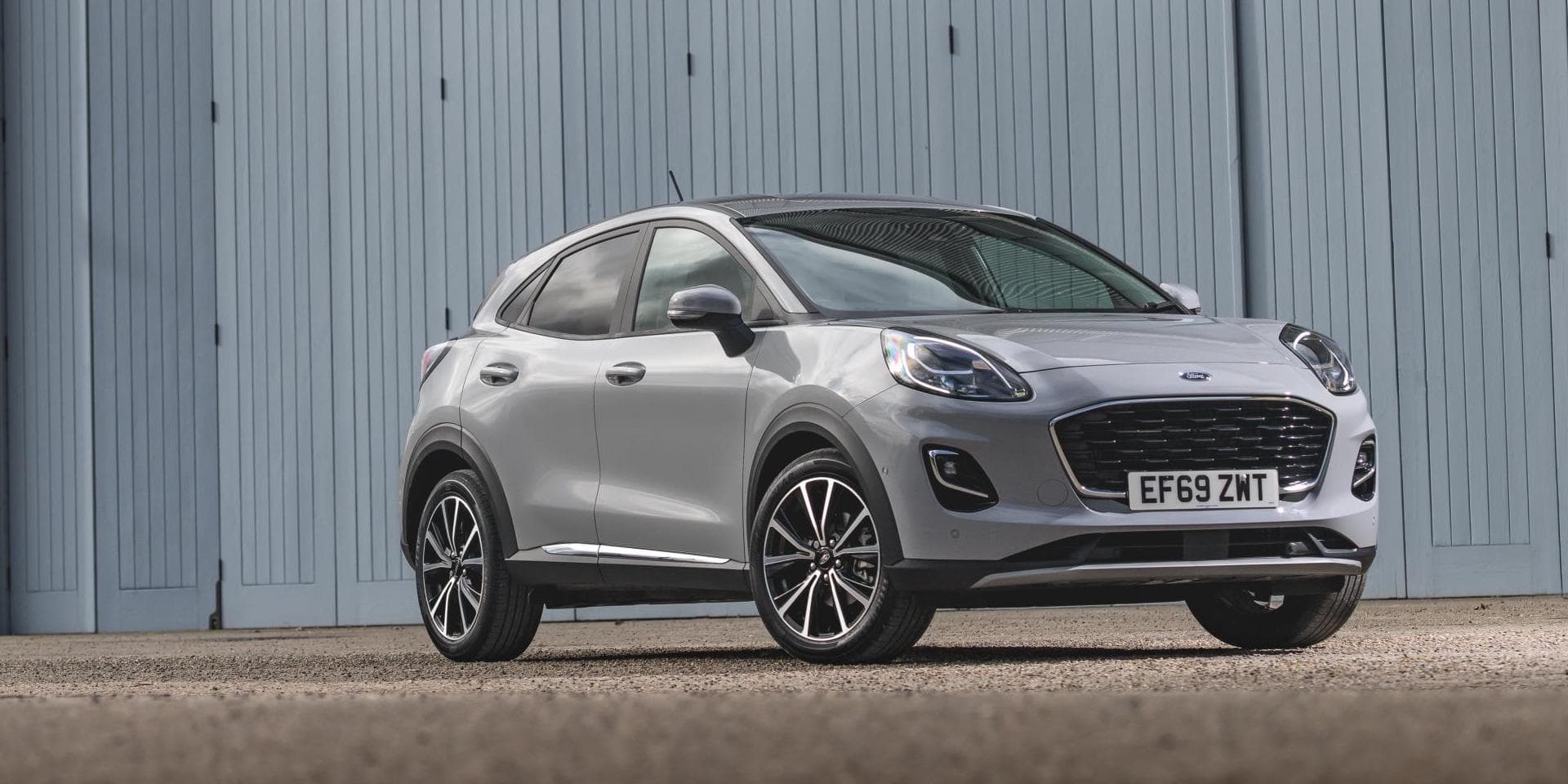
7. Ford Puma

Ford Puma (2020 onwards) Expert Rating

The new Ford Puma makes its fourth appearance in four months. While that may be good news for Ford and its dealers, it appears to have come at a significant price as the Puma looks like it is stealing sales from its hatchback sibling, the Fiesta, as well as other Ford models like the Focus and EcoSport. As long as those customers are staying within the Blue Oval family, however, Ford is probably not too bothered.

The bug-eyed small SUV has been popular with critics, currently holding a rating of 83% on our unique Expert Rating index. This remains a best-in-class result, but it has slipped a couple of points in the last month as we’ve added some new reviews and other sources have revised their initial opinions. A hot new ST version may help swing that score back upwards in coming months, however.

8. Ford Fiesta

Ford Fiesta (2017 onwards) Expert Rating

The Ford Fiesta looks almost certain to retain its crown as the UK’s best-selling car in 2020, but it’s limping heavily towards the finish line. It was another disappointing month for the Fiesta in November, down in eighth place and only the third best-selling model from the Ford family.

Fiesta registrations were down by 36% compared to last November against an overall market that was down by 27%, as the UK’s favourite supermini continues to be assaulted by a combination of the successful Vauxhall Corsa and friendly fire from the Ford Puma – which is basically a Fiesta on stilts.

The Fiesta currently holds an Expert Rating of 82% in The Car Expert’s unique Expert Rating index, which aggregates reviews from 25 of the UK’s top motoring websites. That’s only a point behind behind the SEAT Ibiza as class leader and some 11% better than the Corsa, so hopefully that will cheer up Blue Oval fans.

9. Volvo XC40

Volvo XC40 (2018 onwards) | Expert Rating

The Volvo XC40 seems to be getting comfortable in the top ten, making its third appearance in as many months. This will be cheering news for Volvo dealerships, and helped the brand to another excellent month – Volvo sales were only down about 4% compared to the same month last year in a market that was down 27% overall.

The XC40 is the class leader among small SUV/crossover models, with an Expert Rating of 83%, although that score has fallen a couple of points from a previous high of 85% in recent months. A new plug-in hybrid model has recently joined the range, while a fully electric version is now in production and set to arrive in UK showrooms in early 2021.

10. Audi A3

Audi A3 (2020 onwards)

After making its debut in the UK best-sellers list last month, the new Audi A3 hung onto its tenth place again this month. Available as both a five-door hatchback and a saloon, the new A3 went on sale in summer of this year and supplies now appear to be moving freely.

The Audi A3 has received generally good reviews from the UK media since it was launched, with an Expert Rating of 78% that puts it a few points behind the BMW 1 Series (81%) and just ahead of the Mercedes A-Class (77%). It’s still quite new to the market, so we may see this score fluctuate as more local reviews are added in coming months.

Out on the roads this winter? Don’t leave home without these

0

We have entered the coldest, darkest months of the year. And with those dark days come less light, worsening weather conditions and more stress for driver and car.

The Car Expert has already outlined some of the best advice to take when heading out on to the winter roads, but thought should also be given to what you’re carrying in your car when you set off.

You as the driver might be prepared for the journey, and hopefully your car will be in the correct condition for the trip. But you do need some vital supplies. So to cover off all eventualities, here is a useful check list of essential items you should keep in your car in the colder months, according to road safety group IAM RoadSmart.

Scrape through

Keep an ice scraper in your car throughout winter. It will make fast work of any ice on your windows, to make sure your vision is clear when you head off. Use one with a sturdy handle to prevent frozen fingers. Much better than an old CD case or credit card.

Remember to properly clear all your windows before driving off, not just part of the windscreen directly in front of your steering wheel. While you’re at it, scrape ice off your headlights and tail lights to make sure you can see and be seen. It will only take an extra minute or two.

Fuelled and ready

Start any long journey with a full tank of fuel. Don’t put off filling up – it’s sensible to keep your tank at least half full at all times during the coldest weeks of winter. This will prevent you getting caught short later if you come across heavy traffic, long queues or snow-bound roads.

Dark arts

If you’ve broken down on the side of the road, the last thing you want is to be fumbling around, unable to see your way in the dark. So always keep a torch and set of batteries in your vehicle. Check it every so often to make sure it actually works.

Warming up

Some people still set off with very little clothing, crazily relying solely on the car’s heater. But if you do have to stop and get out of the car in sub-zero temperatures you could end up in serious trouble. And if you’re stuck in a broken-down car, you’ll find it gets very cold very quickly once the engine’s no longer running to drive the heater. So take plenty of warm clothes, a blanket and a high-visibility jacket.

Food and drink

Don’t forget some small items of food and drink to stop your energy levels from dropping. Again, if you’re left stranded by the side of the road, you could be there for quite a while. Bottled water is a must, along with some snacks and sweet treats.

First things first

You never know when you’ll need a first aid kit, so keeping one in the boot of your car is always handy for either yourself or another road user if you’re the first person at the scene of an accident. It’s also a useful thing to have handy if you manage to do yourself an injury while you’re out and about, so make sure you replace any items that you take out of the kit.

Jump to it

The battery on your car can go flat at any time, whether you’re driving around town, your local area, or heading out on your first long motorway journey after several weeks off the road due to the coronavirus lockdown. Make sure you keep a set of jump leads in the car so you can start your engine with help from another driver’s vehicle if you need to.

Reflective glory

A reflective warning triangle gives you extra security for a number of reasons such as breaking down in the dark. Put it out in accordance with the Highway Code which advises to “put a warning triangle on the road at least 45 metres (roughly 50 paces) behind your broken-down vehicle on the same side of the road, or use other permitted warning devices if you have them. Always take great care when placing or retrieving them, but never use them on motorways.”

Right direction?

Most of us use a satnav to travel to unfamiliar places. But what if your battery dies and you can’t find the charger for your windscreen-mounted satnav, or what if the navigation takes you the wrong way? Be ready to refer to a trusty road atlas – and make sure it’s reasonably up to date.

Don’t lose contact

Finally, don’t forget your mobile phone and a charger. Switch it to silent and place it in the glove box to avoid any temptation to touch it, but it will be there ready to use when and if you need it.

“A journey can be a pleasant experience with the right planning,” says Richard Gladman, IAM RoadSmart’s head of driving and riding standards. “But it can turn into a nightmare if circumstances change and you do not have the right tools for the job at hand.

“Getting stranded either in suddenly changing weather conditions or in hours-long traffic will be more bearable if you can let people know where you are and stay in relative comfort until you’re finally able to safely get to your destination and your next cup of tea.”

Corsa tops the charts in subdued November

The month-long lockdown of car showrooms in England rendered the overall new car sales figures for November pretty worthless, although the industry was far better prepared this time around than it was back in the Spring and still managed to deliver a strong number of new cars.

Private new car sales were down 32% on the same month last year, according to data published by the Society of Motor Manufacturers and Traders (SMMT) today, while fleet registrations were down 22%, for an overall drop of 27% on November 2019’s numbers.

Of course, the other way of looking at the data is that the industry still managed to deliver about three-quarters of the total number of cars delivered this time last year, despite showrooms in England being closed all month and enormous economic uncertainty for millions of families across the UK. When viewed from that angle, it looks like a pretty decent result.

Since the first national lockdown, considerable efforts have been made industry-wide to improve click-and-collect and home delivery services for new car buyers. This work looks to have paid off, avoiding a return to the catastrophic business losses of April and May. As showrooms re-open in England this week, dealers will be hoping for a strong month to at least end a tough year on a positive note.

Fleet registrations outperform private sales

For the first time in most of the year, it was fleet buyers leading the way in November. The SMMT press release didn’t speculate on the reasons why fleet registrations suddenly showed significant improvement, but there are several factors that could have contributed.

1) A large percentage of fleet sales bypass dealerships anyway, being handled by large leasing firms or brokers directly with the manufacturer fleet sales departments. With workshops still able to operate during the lockdown, these orders could still be processed.

2) With new car prices expected to increase in 2021, regardless of whether the UK and EU ever manage to sort out a trade deal, some fleets may have decided to bring forward orders from the next few months to beat any price rises. In the same vein, businesses that had been putting off fleet renewals for most of this year may have decided to commit now ahead of those price increases.

3) Some brands did considerably better than the overall market average, suggesting that they may have been pre-registering thousands of unsold cars to help clear out unwanted stock.

Record month for electrified cars

It may have been connected to the government’s announcement that all new petrol and diesel car sales would end by 2030, or it may be too early for that news to have had any effect, but November saw another record month for electric cars.

Full-electric vehicles snared 9% of the new car market, while plug-in hybrids (the only other kind of new car likely to be on sale in 2030) took nearly 7% market share. Regular hybrids were slightly below their 2020 run rate at just over 6%, although that’s still better than the same month last year. Combined, that makes a total of more than 22% market share for electrified cars.

Diesel had yet another worst month ever for market share, at 18% (including mild hybrid diesels), while petrol models slipped to just under 60%, which is the lowest it’s been for a while. Expect this direction of travel to start accelerating in 2021 as the shift away from pure petrol and diesel cars accelerates.

Diesel’s market share will keep slipping, albeit probably more slowly as the only customers still buying diesel cars are the ones who genuinely need them. Petrol’s market share will start falling more dramatically, repeating the fate of diesel over the last three or four years as the move towards electrification gathers pace.

Good month, bad month, worse month

There were very few brands who actually sold more cars in November 2020 than they did in November 2019. In fact, there were two. Porsche sales were surprisingly up 17%, while Smart more than doubled its results from the same point last year (although this was still less than 100 cars, so not exactly an earth-shaking result).

In a market that was down by 27% year-on-year, some brands did better than others. Audi, Bentley, BMW, Maserati, MG, Mini, Nissan, Peugeot and Volvo all finished at least 10% better than the overall market.

Meanwhile, several brands struggled badly, especially those that either don’t have strong fleet sales or don’t have a strong online sales presence. Dacia, DS Automobiles, Fiat, Honda, Hyundai, Jeep, Kia, Mazda, Mitsubishi, SEAT, SsangYong, Subaru and Suzuki all ended up with registration figures that were at least 10% worse than the overall market (and in some cases, a lot worse).

Given that Porsche, Bentley and Maserati all had very good months, it seems that either the rich aren’t struggling too much as a result of coronavirus or there may be some unusual registration activity going on. Conversely, a lot of budget brands performed poorly – even MG was well below its usual record-setting pace. This may be because those brands rely more on private customers than fleet business, and/or they don’t have a strong online sales presence and struggled without showroom traffic.

Corsa on top again, closing gap to Fiesta

Over the last six months of the year, the new Vauxhall Corsa has been the stand-out seller. And November saw it once again hit the top of the charts, edging out the Volkswagen Golf and puling closer to the Ford Fiesta in year-to-date sales. With only one month left in this cursed year, it seems unlikely that the Corsa can overhaul a 2,400-unit deficit unless Ford runs out of Fiestas to sell sometime next week, but it will probably come close.

The Fiesta fell to equal eighth place in November, tied with the Volvo XC40 and just behind the Ford Puma. It’s been a tough year for the perennial champ, and its cause probably hasn’t been helped by the Puma starting to cannibalise a chunk of its sales.

The Nissan Qashqai bounced back into the top ten after disappearing in October, while the BMW 1 Series fell back out after its brief appearance last month, but otherwise it was the same models as last month in a slightly shuffled order. In year-to-date sales, there were no changes in the top ten this month and probably won’t be in the last month of the year – unless the Ford Puma can leapfrog the Volkswagen Polo at the last minute.

We’ll have our usual analysis of the top ten sellers in the next day or so.

Audi A5 Sportback test drive

The A5 Sportback is a slightly more practical, slightly more passenger-friendly version of Audi’s popular A5 coupé. In a never-ending quest to fill in any blanks left between models, the A5 Sportback slots in between the A4 saloon and the A6 saloon, providing drivers with the sleek looks of a coupé but with the spaciousness of a saloon. That’s the idea, anyway.

It’s been updated this year and the car you see here is a 2.0-litre petrol version in the popular S line trim. We’ve been behind the wheel to find out what it’s like.

What’s new?

The 2020 updates are a relatively subtle mid-life refresh by Audi. Exterior changes are minimal, though they do make a difference. The headlights have been given a new design while there’s an additional grille piece at the front – though we’ll get into the way the car looks in more detail below.

Equipment and technology levels have been bolstered too, while a clean petrol engine beats underneath the A5. Given that diesel is the traditional go-to choice in this fleet-dominated segment, the fitment in a non-performance orientated model jars somewhat, but given the sweeping trend towards petrol and hybrid over diesel, it’s a move that can be understood.

How does it look?

The Audi A5 Sportback is a svelte, well-designed looking fastback that does manage to encapsulate some of the charm of its coupé sibling. The rear doors aren’t all that noticeable, while the raked roofline manages to disguise some of the car’s length.

As we alluded to earlier, Audi has given the A5 quite a subtle lift in terms of design. The front bumper has been restyled, for instance, while the three air vents located above the grille mirror those found on the smaller A1 and the range-topping R8 supercar. In addition, LED headlights are now standard across the board, and these give the car a little more visual presence too.

It’s a well-judged and premium-looking car, and one that certainly looks good when out on the road. Is it the most exciting car to look at? Probably not. But for those after a car with some high-end presence then it’ll likely fit the bill.

What’s the spec like?

The level of standard equipment which accompanies the A5 Sportback is generous, to say the least. And while it might not boast the very latest widescreen infotainment setup that you’ll find in the latest A6 and A7, the pop-out-style display is more than adequate. It now measures ten inches and accompanies the 12-inch digital cockpit display ahead of the driver. The infotainment setup is now standard regardless of trim level – it’s not an optional extra for this or any other A5.

Before any extras, an A5 Sportback 40 TFSI S line starts off at £40,575, which means you’re already into the higher road tax bandings. In addition to that, our test car carried optional extras such as a head-up display (£1,025) and a panoramic sunroof (£1,400), as well as a driver assistance package that brings a range of active safety features (£2,700), to bump its price up to £48,275. While you do get a lot of kit for that money, it does also mean that you are starting to rub shoulders with some serious executive cars in the next tier up, like the BMW 5 Series, Mercedes-Benz E-Class and Audi’s own A6.

In terms of safety, the A5 Sportback is well equipped – even without our car’s optional driver assistance package. The A5 Sportback and coupé models share their Euro NCAP safety rating with the A4 family, since they’re all structurally much the same under the sheet metal. The A4 was awarded a five-star rating back in 2015, and this score was confirmed ealier this year for the facelifted model seen here.

What’s it like inside?

In typical Audi fashion, the cabin of the A5 Sportback is an area helped no end by the inclusion of plenty of high-quality materials, which are in turn met by exceptionally strong build quality. Though there are one or two cheaper plastics lower down the cabin, by and large it’s an area which is resoundingly well made and well finished.

There’s plenty of space, too. Those sitting up front have a bright and airy area to enjoy, while those in the back have plenty of room to stretch out. The A5 is technically a five-seater, but three abreast in the rear of the car will likely prove a squeeze for most. Its boot space is also good at 465 litres with the back seats in place, but lower them and – thanks to the hatchback design – there’s an impressive amount of luggage room to play with.

What’s under the bonnet?

This particular A5 has a 2.0-litre turbocharged petrol engine beating away under the bonnet, producing 190hp and 320Nm of torque. Sent to the front wheels, in this instance, via a seven-speed automatic gearbox, it makes for a 0-60mph time of 7.2 seconds, while all in it’ll manage a healthy 150mph.

When it comes to economy, Audi claims 39.8mpg for this S line variant, while emissions stand at 161g/km of CO2. If you’re after the most fuel-sipping petrol A5, then you’ll want the entry-level Sport version, which both cracks the 40mpg barrier while also offering lower emissions thanks, in part, to a smaller wheel size.

What’s it like to drive?

The Audi A5 Sportback is a car that isn’t difficult to quickly and easily become acquainted with. You get behind the well-sized and adjustable wheel, click the gearstick into drive and you’re off, wafting along, savouring the refinement and comfort that the car offers.

Audi’s long-running gearbox niggles remain, however. Request some additional power from the throttle – particularly from a standing start – and it’ll take a few moments longer than you’d expect for it to translate into forward motion.

This isn’t a car which goads you into driving quickly or more spiritedly, but rather invites you to take things at a somewhat more relaxed pace. On the motorway – where we expect the vast majority of Sportbacks to spend much of the time – it feels comfortably at home, with minimal road noise and refined suspension helping to create a car which really does breeze through the miles with minimal fuss.

Verdict

The Audi A5 Sportback is refined, premium-feeling and good to look at, which will no doubt help it to find favour with business users and long-distance drivers. This petrol-powered variant might not be the most obvious choice, but its smoothness and quietness make it a genuinely plausible option without too much of a downturn in efficiency nor economy.

The small updates to the overall package made by Audi have certainly increased its appeal even further, making this A5 Sportback a resoundingly good option in the executive saloon segment.

Similar cars

Alfa Romeo Giulia | Audi A4 | BMW 3 Series | BMW 4 Series Gran Coupé | Jaguar XE | Kia Stinger | Mercedes-Benz C-Class | Peugeot 508 | Skoda Superb | Tesla Model 3 | Vauxhall Insignia | Volkswagen Arteon | Volkswagen Passat | Volvo S60

Key specifications

Model tested: Audi A5 Sportback 40 TFSI S line
Price: £48,275
Engine: 2.0-litre petrol
Gearbox: Seven-speed automatic

Power: 190 hp
Torque: 320 Nm
Top speed: 150 mph
0-60 mph: 7.2 seconds

Fuel economy (combined): 39.8 mpg
CO2 emissions: 161 g/km
Euro NCAP safety rating: Five stars (2015)
TCE Expert Rating: Not yet rated (as of November 2020)

Kia Sorento test drive

Think of Kia and the traditional view is likely that of a budget brand. However, the South Korean car manufacturer has been flying under the radar in recent years, quietly building itself up to offer premium appeal for less cash than rivals in this segment.

That’s most true of the Sorento, which is Kia’s flagship SUV. It’s big, handsome, and hopes to provide an alternative for those who want something like a Volvo XC90 and can’t – or don’t want to – pay its asking price. It’s not cheap, but it’s trying to bridge the gap between the mainstream and premium markets.

What’s new?

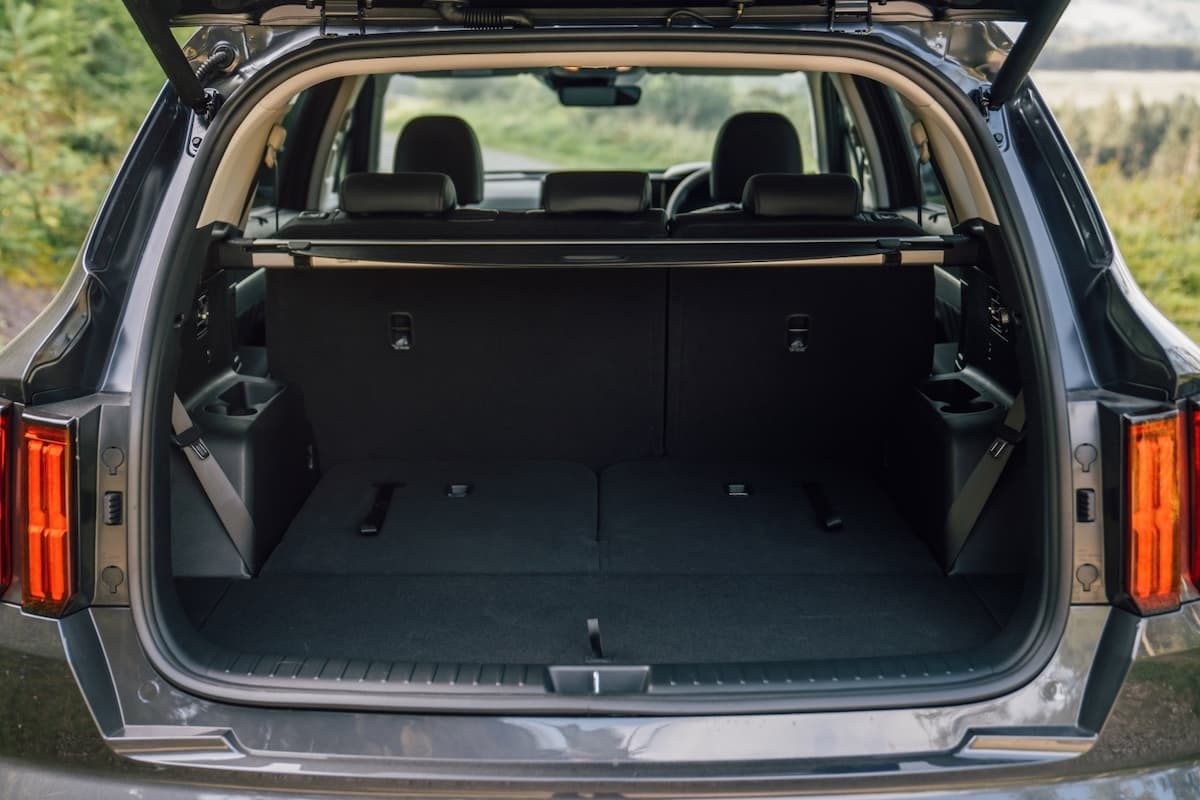
The Kia Sorento sits on a new vehicle platform that allows for electrification, with a standard hybrid available now and a plug-in hybrid coming at a later date. It has a longer wheelbase and is slightly taller and wider than its predecessor, but has the same length overall.

Other improvements include more legroom in the second and third seating rows, seven seats and four-wheel-drive are fitted as standard, while improved technology is also on offer. On the outside, the new Sorento has a chunky, modern look that gives it real road presence.

How does it look?

Kia has done a fantastic job with the Sorento, moving it from its frumpy predecessors to a genuinely handsome SUV with true premium appeal. Remove the badge and, from the front, this could easily be passed off as coming from one of the big German premium brands, with its blocky design and chrome details.

However, it’s the rear where the Sorento’s character lies, thanks to its vertical taillights and sharp angles. It has real presence on the road, not trying to hide its size and instead embracing it successfully.

What’s the spec like?

Kia’s pricing structure is simple, with trim levels called ‘2’, ‘3’ and ‘4’ (there’s no ‘1’). Prices start at £38,845 for the 2, bringing 17-inch alloy wheels, rain sensing front wipers, LED headlights, cloth upholstery, air conditioning, an eight-inch infotainment screen and a heated, leather-trimmed steering wheel.

Upgrade to the 3 and prices start at £41,245 for the diesel – the only trim level it’s available on – or £42,745 for the hybrid. Here, the alloy wheels increase to 19 inches, and you get black leather upholstery, heated front seats, adaptive cruise control, and a ten-inch infotainment system with sat nav.

What’s it like inside?

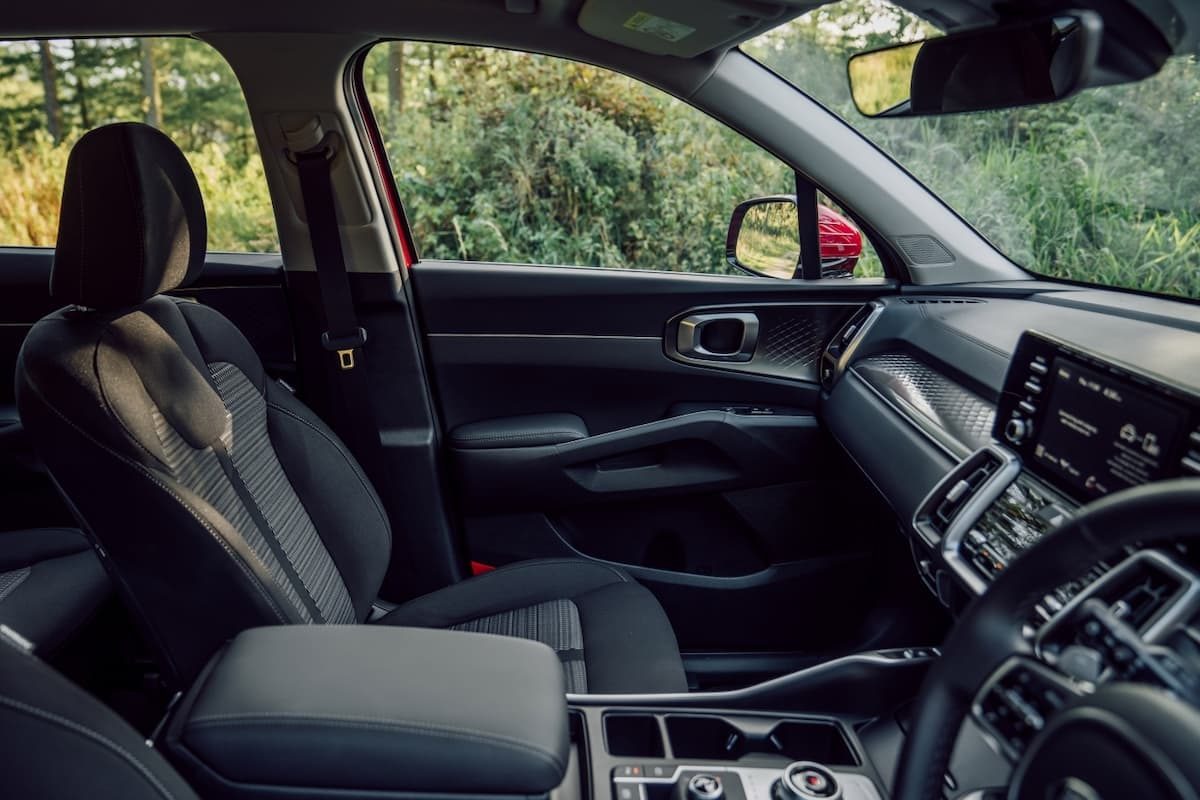
It’s not just the outside where Kia is onto a winner. There are quality materials used throughout and a smart, modern design that feels like it crams a lot in without being too fussy. Although you feel somewhat dwarfed by the cabin, everything feels close to hand and easy to use.

Thanks to its seven seats and massive interior, family buyers will love the space on offer. There’s no need to cram people in because the rear-most seats don’t feel like afterthoughts shoved in the boot, they’re genuine seats. If you’re regularly carrying plenty of passengers there can be few better propositions at this price point.

What’s under the bonnet?

At launch, you get a choice of a 200hp 2.2-litre diesel engine or a 226hp hybrid model that uses a 1.6-litre turbocharged petrol and electric motor combo. We tested both, and found the diesel to be surprisingly quiet and refined, making it ideal for those who regularly take longer journeys.

But it’s the hybrid that will likely appeal to most buyers in this new age of electrification. However, with this being a ‘self-charging hybrid’ the fuel economy isn’t fantastic, ranging between 38.2 and 40.9mpg depending on specification. Meanwhile, its CO2 emissions of 158 to 169g/km aren’t a great deal better than the diesel’s 176.

If true economy and eco credentials are key to your purchase, it might be best to wait for the plug-in hybrid.

What’s it like to drive?

When you head out onto the road the Sorento feels large, so if you’re upsizing to a seven-seat SUV and find the dimensions intimidating it’s worth bearing in mind. Certainly some rivals hide their size better.

That being said, once you’re on the road it’s a comfortable and relaxing drive, with a ride that’s only slightly on the stiff side despite not introducing much roll when turning. Kia has found a good compromise between comfort and handling, then.

For those who spend a lot of time in town, the hybrid’s smooth and quiet powertrain will be appealing, but the petrol engine does rather roar under harder acceleration, so motorway on-ramps could become a chore.

Finally, 4 starts at £46,945 and gets a panoramic sunroof, Nappa leather upholstery, a Bose 12-speaker audio system, wireless mobile phone charging, and a 360-degree camera system.

2021 Kia Sorento road test

Verdict

There’s no getting away from the fact that, at this price, the Sorento is pitching itself as a rival for more traditionally premium models like the Land Rover Discovery Sport. However, what’s most impressive is that it’s not outgunned in this company.

It’s big and practical, while also feeling like it’s made of top quality stuff inside. The equipment levels are decent, too.

Perhaps the only caveat to place on its recommendation is that the best engine isn’t available yet. The self-charging hybrid is decent but it’s not massively economical, and while the diesel will be great for longer drives, it’ll be wasted on short school runs. Once the plug-in hybrid arrives, it’s likely to be the one to have.

Similar cars

Honda CR-V | Hyundai Santa Fe | Land Rover Discovery Sport | Mitsubishi Outlander | Nissan X-Trail | Peugeot 5008 | Renault Koleos | SEAT Tarraco | Skoda Kodiaq | SsangYong Rexton | Subaru Forester | Volkswagen Tiguan Allspace

Key specifications

Model tested: Kia Sorento Hybrid 2
Price: £38,845
Engine: 1.6-litre petrol/electric hybrid
Gearbox: Six-speed automatic

Power: 226 hp
Torque: 350 Nm
Top speed: 119 mph
0-60mph: 8.7 seconds

Fuel economy (combined): 38.7 mpg
CO2 emissions: 158 g/km
Euro NCAP safety rating: Not yet rated (as of November 2020)
TCE Expert Rating: Not yet rated (as of November 2020)

Petrol, hybrid or electric: what gets you motoring?

Just like getting used to being outside the EU, or wearing a mask every time you go shopping, we’re all becoming increasingly familiar with the sights and (lack of) sounds of electric cars. Ten years ago they were rare and little more than a dream of the future for most motorists.

But today they are a reality. There are many to choose from, either with full electric capability, or in a hybrid form that shares the load between petrol and electricity. And they’re not going away: prime minister Boris Johnson has brought forward the planned end of sales of new petrol and diesel models in the UK from 2040 to 2030 – a full ten years. That means drivers really should start to think carefully about their next move when it comes to buying and running a car.

However, nine-and-a-bit years is still a long time in terms of car ownership and you’re not going to be forced to choose an electric vehicle just yet.

“With the prime minister’s decision to bring an end to new petrol and diesel cars even earlier than first thought, there’s no better time to start experimenting with hybrids or mild hybrids currently on offer – if it suits you,” says Steve Fowler, editor-in-chief, Auto Express magazine.

“Not everyone is going to like the change and for many there are still several years of petrol and diesel cars to run. There are plus and minus points for all versions, and for the next ten years or so, we’ll all still be able to choose which one is best for our particular needs.”

In the meantime, as drivers start to get used to the idea of electric power for all – and sooner than we thought – what are the choices currently available in the run up to 2030? And which might be the best bet for you?

Mild hybrid

More of a ‘helper’ than a ‘provider’, the mild hybrid powertrain uses a lithium-ion battery to store energy normally lost during braking or deceleration and sends it to an integrated, beefed-up starter motor and generator that helps the petrol engine to pull away from rest and accelerate (both of which require lots of fuel) with greater speed, smoothness and economy.

Although definitions vary from brand to brand, most mild hybrid cars cannot drive on electricity alone. The electric motor acts to support the petrol or diesel engine, and also powers various ancillaries like the stereo, electric windows, power steering, headlights, heated seats and other creature comforts.

In the short term, we are likely to see mild hybrids replacing straight petrol and diesel engines on most cars. By using the electric motor assistance to reduce fuel consumption and emissions from the combustion engine, car companies are using mild hybrid technology to meet tougher new emissions rules.

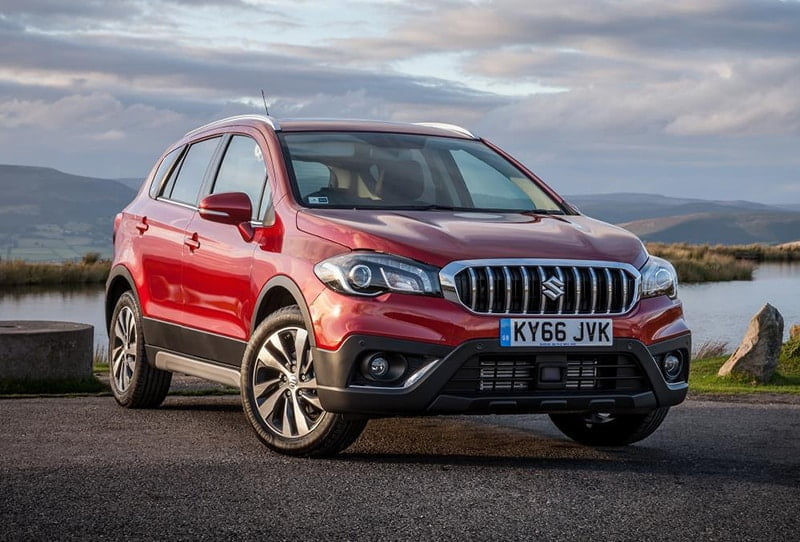
Example: Suzuki S-Cross

Pros: No plugging in at night
Cons: Not a huge saving of fuel, can’t run on electric power

Good for: General driving – anywhere you currently drive a petrol or diesel car
Bad for: Zero-emissions driving

S-Cross

Hybrid

The original hybrid powertrain, often known as a ‘regular hybrid’ or ‘full hybrid’ (and sometimes marketed as a ‘self-charging hybrid’), this is the real starting point for a cars that can be driven on electrical power alone. A hybrid powertrain consists of a petrol (or diesel engine) and an electric motor, often at opposite ends of the car. The car can be powered by either of these units on their own, or by the two working together.

The battery is mainly charged by the petrol engine, as well as by regenerative charging when you are coasting or braking. You won’t have a great deal of range when solely under electric power – just a few miles – but for short town trips they are useful and environmentally friendly.

The regular hybrid may have been the pioneer of automotive electrification, but its days are probably numbered with the new rules that will come into effect from 2030. Based on current performance, they can’t go all that far on purely electrical power, and if you make the battery bigger to allow more range, you may as well plug it into the wall to charge it more efficiently than by using the petrol engine.

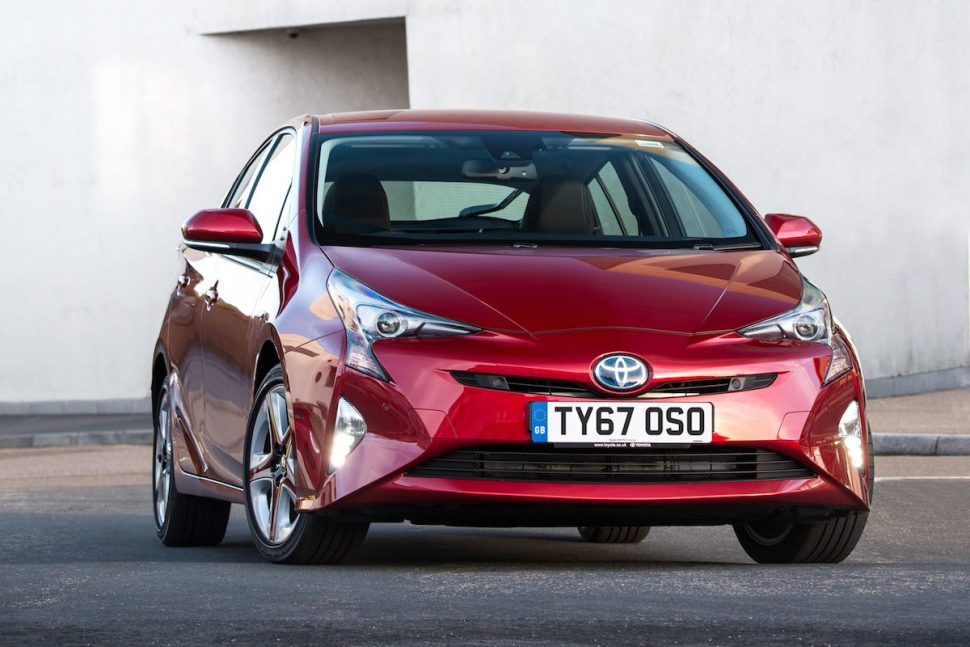
Toyota Prius 67-reg

Example: Toyota Prius

Pros: Genuine fuel savings, especially in stop-start driving
Cons: Higher list price

Good for: Urban driving
Bad for: Motorway driving

Plug-in hybrid

These are closer to full electric vehicles because you can plug them in, for example, overnight at your home, and a much larger on-board battery will store enough electric power to take you up to about 30 miles.

For many drivers this will be enough to take them to work and back (especially if the workplace has charging facilities, as is starting to become more common). A petrol engine is also there to take over if the battery runs out, or if you’re about to embark on a long motorway trek, when you can simply opt to go with fuel power. Unfortunately, this means that plug-in hybrid cars tend to be the heaviest of all powertrain options as they consist of a complete petrol car as well as an electric motor and a big, heavy battery.

Unlike mild hybrids and regular hybrids, the sale of new plug-in hybrid cars will continue past 2030 until 2035, giving buyers who can’t or won’t choose a fully-electric car an extra five years of partial petrol power.

By the end of this decade, however, it’s likely that battery technology will have improved enough that a plug-in hybrid will be able to spend the vast majority of its driving in electric mode. The petrol engine will really be more of a back-up for emergencies, and will rarely be called upon in normal driving.

Example: Mitsubishi Outlander PHEV

Pros: Potentially high economy figures
Cons: Expensive technology, excessive weight

Good for: Driving on electric power for most daily uses
Bad for: Long-distance driving

Mitsubishi Outlander PHEV (2018) front | The Car Expert

Electric

Here we’re into pure electric power so you never have to go near a fuel station, unless you’re looking for a tyre inflator, car wash or a sausage roll. These cars are high end technology and carry a huge battery capable of holding enough charge to give you a decent range of certainly several hundred miles.

You do need that range, however, as charging remains a weakness at present. Even though charging points are springing up rapidly, there are still not enough for electric car owners to simply hit the road without thinking about where their next charge is coming from. Plug them in overnight at home on trickle and you have a full car ready to go.

Some public chargers can replenish at least half the battery in under an hour, so it’s a case of planning your tea or coffee stop to coincide with a visit to the charge point – as long as you can find one.

Development of battery and charging technology is improving rapidly, so in coming years we will definitely see electric cars being able to travel much further between charges. And when you do stop, charging will be faster than it is now.

Example: Tesla Model S

Pros: The most efficient powertrain on the road
Cons: Still a small nationwide charging network

Good for: Those completely committed to electric driving
Bad for: Anyone who doesn’t have reliable access to charging

Petrol/diesel

Still the most popular and natural choice among drivers, petrol- and diesel-engined cars make up about 85% of all new car sales in the UK. That’s despite high pump prices, growing numbers of congestion-style charges, increased pressure from cleaner air lobby groups and general negative press, especially for diesel.

It’s ironic, then, that new diesel-powered cars are the cleanest they have ever been and are certainly way ahead of their pre-Euro 6 cousins currently on the road. However, the expense and complexity required to detox diesel exhaust is making the cars more expensive, and is likely to be costly to repair down the line.

Petrol-powered cars aren’t considered quite so dirty and still make great high performance sports cars. Petrol engines naturally produce more CO2 but fewer other pollutants than diesel, which makes them slightly more eco-friendly for urban use but slightly worse for motorway driving.

Example: Most new cars

Pros: Cheaper cars, easy and reliable refuelling
Cons: Fuel is expensive and environmentally harmful

Good for: Undertaking almost any driving requirement
Bad for: Zero-emissions driving

New car dealership forecourt

Hydrogen Fuel Cell

We left this one until last simply because the number of cars available with this type of powertrain is almost non-existent at the moment, and unlikely to grow rapidly in the next few years.

A hydrogen fuel cell vehicle (FCV) is an electric car that generates electricity on demand from a hydrogen tank on board, rather than a battery. The hydrogen is refilled from a special bowser that looks and works much like a conventional petrol pump, refilling the tank in a few minutes.

A fuel cell vehicle provides all of the benefits of electric power – smooth, quiet, instant performance – in a format that is similar to existing petrol or diesel cars. But there are problems: the infrastructure investment needed to create thousands of hydrogen fuelling stations would be truly massive; hydrogen is not currently produced in the UK in significant volumes, meaning it has to be shipped in; there are almost no FCVs currently available for sale in the UK; and it’s ultimately not as efficient at delivering electricity as a battery charged from the national grid.

However, despite the problems it’s possible that there may well be a bright future for fuel-cell electric cars alongside battery-powered electric cars. Long-distance driving remains a weakness for electric vehicles, and a hydrogen fuel cell can be refilled in minutes rather than hours. So we may end up with enough demand for both types of vehicle, much like we’ve had the choice between petrol and diesel for the last few decades.

Hyundai Nexo Fuel Cell Electric Vehicle (FCV)

Example: Hyundai Nexo

Pros: Electric power without the long charging times
Cons: Expensive, almost no infrastructure

Good for: Long-distance electric driving
Bad for: Anyone who wants to buy one right now

Additional reporting by Stuart Masson

Volvo S60 (2019 to 2023)

Summary

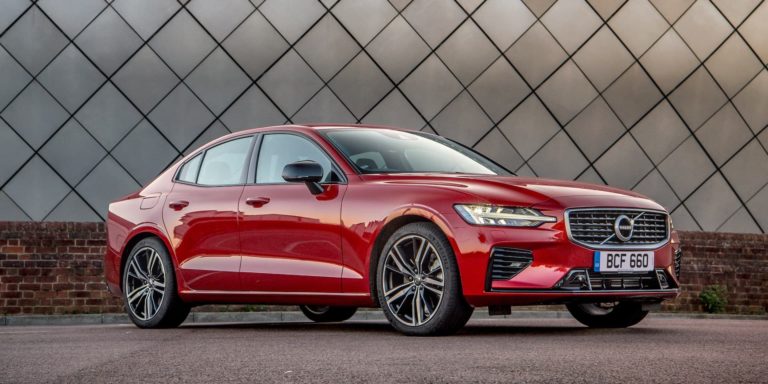
The Volvo S60 was a premium medium-sized saloon, the estate version of which is called the V60. This was the second-generation car to wear this badge, which was unveiled in mid-2018 and arrived in the UK in early 2019. It was discontinued from sale in Autumn 2023, although the V60 is still on sale as of 2026.

The S60 saloon was also the first Volvo to be built in the USA, while the V60 estate is built in Volvo’s home country of Sweden. It was also the first modern Volvo not to be offered anywhere in the world with a diesel engine. Although some fleet-based media sources expressed doubt at this strategy, it quickly proved to be a prescient decision.

The Volvo S60 received generally average to good ratings from the UK motoring media, if not quite as strong as its V60 estate sibling. It widely praised for its design (both exterior and interior) and outstanding safety ratings. However, it was not considered as rewarding to drive as rivals like the BMW 3 Series or Alfa Romeo Giulia.

As of March 2026, the second-generation Volvo S60 holds a Used Car Expert Rating of C, with a score of 61%. It scores top marks for its low CO2 emissions, while its reliability record is also good. However, its media review scores were only average, while its safety rating from Euro NCAP has also expired. Its running costs are also quite high.

Key specifications

Body style: Mid-sized saloon
Engines: petrol, plug-in hybrid
Price when new: From £39,160

Launched: Spring 2019
Last updated: Autumn 2021
Discontinued: Autumn 2023

Media reviews

Highlighted reviews and road tests from across the UK automotive media. Click any of the boxes to view.

Featured reviews

More reviews

The Car Expert

Auto Express

Auto Trader

Business Car

Car

Car Keys

Carbuyer

Carwow

Company Car Today

Daily Mail

Daily Mirror

Eurekar

Fleetworld

Green Car Guide

Heycar

Honest John

Motors

Parkers

The Sun

The Sunday Times

The Telegraph

Top Gear

Safety rating

Independent crash test and safety ratings from Euro NCAP

Overall score: 5 stars
Date tested: December 2018
Date expired: January 2025
Read the full Euro NCAP review

Adult protection: 96%
Child protection: 84%
Vulnerable road users: 74%
Safety assist: 76%

Eco rating

Independent economy and emissions ratings from Green NCAP

No eco rating

The Volvo S60 was not assessed by Green NCAP during its production life.

Reliability rating

MotorEasy logo 600x167

Reliability data provided exclusively for The Car Expert by MotorEasy

All data based on MotorEasy average workshop costs for extended car warranty claims

The Volvo S60 has a reliability score that’s better than average, according to exclusive extended warranty data provided by our partners at MotorEasy. This score covers both the current-generation S60 and the previous (pre-2019) versions.

A third of all reported problems with the S60 relate to its suspension, with an average repair bill of about £600. Braking system repairs account for anoter third of all reported faults, costing around £350 on average.

If you’re looking at a used Volvo S60, make sure any extended warranty cover you purchase covers all of these potential problem areas.

Running cost rating

Clear Vehicle Data logo close crop

Monthly cost of ownership data provided exclusively for The Car Expert by Clear Vehicle Data

CO₂ outputAverageScoreVariationScore
Petrol models155 g/kmC
Plug-in hybrid models24 g/kmA
Battery rangeAverageScoreVariationScore
Plug-in hybrid models50 milesD
Insurance groupAverageScoreVariationScore
All models39D
Service and maintenanceCostScore
Year 1£311D
Year 2£759D
Year 3£1,152D
Year 4£1,390D
Year 5£1,841D
Overall£5,453D

The Volvo S60 saloon is entirely average when it comes to running costs, according to numbers provided exclusively to The Car Expert by our data partner, Clear Vehicle Data.

As you can see from the tables above, the S60 scores a ‘C’ in pretty much every category. We don’t currently have fuel consumption data, but given that the CO2 scores for petrol models are a C, it’s entirely likely that the fuel consumption scores would be similar.

Insurance and servicing costs are also slap-bang in the middle of our A-to-E scale. Although the plug-in hybrid looks to be very efficient on paper, scoring an A for its emissions, that’s simply a function of the rather useless EU/UK government lab tests that produce completely unrealistic results for plug-in hybrids.

On a positive note, an official battery range of nearly 60 miles is very good for a plug-in hybrid, meaning that you can do most of your day-to-day running on electric power – as long as you are able to keep the battery charged on pretty much a daily basis.

Awards

Trophies, prizes and awards that the Volvo S60 has received

2019

  • Scottish Car of the Year Awards – Best Executive Car

Similar cars

If you’re looking at the Volvo S60, you might also be interested in these alternatives

Alfa Romeo Giulia | Audi A4 | Audi A5 Sportback | BMW 3 Series | BMW 4 Series Gran Coupé | Ford Mondeo | Jaguar XE | Kia Stinger | Mazda 6 | Mercedes-Benz C-Class | Peugeot 508 | Polestar 2 | Tesla Model 3 | Volkswagen Arteon | Volkswagen Passat | Volvo V60

More news, reviews and information about the Volvo S60 at The Car Expert

Everything you need to know about Volvo

Everything you need to know about Volvo

Volvo recalls more than 700,000 cars over emergency braking issue

Volvo recalls more than 700,000 cars over emergency braking issue

Volvo S60 range bolstered with plug-in hybrid powertrain

Volvo S60 range bolstered with plug-in hybrid powertrain

Volvo issues vehicle recall over fire risk

Volvo issues vehicle recall over fire risk

Volvo S60 review

Volvo S60 review

The ten safest new cars for 2019

The ten safest new cars for 2019

Volvo recalls 31,000 cars in the UK

Volvo recalls 31,000 cars in the UK

New cars to look forward to in 2019

New cars to look forward to in 2019

Five-star safety ratings for seven new models

Five-star safety ratings for seven new models

Volvo S60 test drive

Volvo S60 test drive

Volvo S60 unveiled – with its new US factory

Volvo S60 unveiled – with its new US factory

Volvo S60 first to dump diesel engines

Volvo S60 first to dump diesel engines

Buy a Volvo S60

If you’re looking to buy a new or used Volvo S60, The Car Expert’s partners can help you find the right car.

Motors 600x300

Find your next used car with Motors. Find out more

Auto Trader logo 600x300

Find your next new or used car with Auto Trader. Find out more

Carwow logo 600x300

Find your next new or used car with Carwow. Find out more

Regulator confims new coronavirus car finance measures

UPDATE, 19 November 2020: The FCA has today confimed the latest support measures outlined below. They will officially come into force on 25 November, but finance companies are encouraged to provide the relevant support as soon as possible rather than waiting until next week.

The Financial Conduct Authority (FCA) has announced new car finance measures this morning to help borrowers affected by the ongoing coronavirus pandemic.

Following on from the measures announced during the UK’s first lockdown back in spring, the new measures again provide for customers to defer their car finance payments for up to six months.

In April, the FCA directed finance companies to offer a three-month payment deferral to any customers struggling to make their payments. This was followed in July by the option to provide another three-month deferral for customers who were unable to resume their normal car finance payments.

These new proposals will mean that:

  • Borrowers who have not yet had a payment deferral will be eligible for two payment deferrals of up to six months in total
  • Borrowers who are currently in the middle of an initial payment deferral will be eligible for a further payment deferral of up to three months
  • Borrowers who have previous had a payment deferral will be eligible for another payment deferral, as long as the total period deferred is no more than six months

Under the FCA’s latest guidance, borrowers have until 31 March 2021 to request an initial payment deferral.

Who is eligible for a payment deferral?

Car finance borrowers who have not previously taken any payment deferral can choose to take up to two ‘payment holidays’ of up to three months each, for a maximum of six months in total.

Borrowers who have taken (or are currently taking) an initial payment deferral may take a second deferral when this one ends, for up to three months.

The FCA is urging consumers not to contact their lenders until the new measures are in place. Lenders are required to provide further information soon.

Who is not eligible for a payment deferral?

Borrowers who have already taken (or are currently taking) their second payment holiday cannot apply for a further deferral, and nor can customers who are in arrears on their car finance payments.

If you are not eligible for a payment deferral but are struggling with your car finance payments, you should contact your lender to discuss your options. There may be alternative arrangements that could help you, such as making reduced payments for a period of time.

Will a payment deferral affect my credit record?

Any payment deferral taken under the FCA’s coronavirus car finance measures should not be listed as missed payments on your credit file. However, any future credit application will take into account your current financial position, so if your income has been reduced then you may find it harder to acces finance.

If you are entering into support measures that do not fall under the FCA’s coronavirus measures, such as reduced payments or waived interest, then this will be noted on your credit file and may affect your ability to borrow money in the future.

Should I take a payment deferral?

Although a three-month payment deferral is the FCA’s preferred method of support for customers struggling with their car finance payments, that doesn’t mean you should automatically take one. A payment deferral is certainly better than defaulting on your agreement, but it’s not ideal for many reasons.

The FCA has stressed that customers who can afford to make their payments should continue to do so. A payment deferral is not a discount, or an interest-free holiday. You will accrue interest on every day that you are deferring your loan, which could add hundreds or even thousands of pounds to your overall borrowing.

In addition to additional interest, extending your car finance agreement by three or six months will probably lead to some potentially substantial extra expenses that could fall due. Road tax, servicing, insurance, breakdown cover, MOT testing and other costs tend to fall annually, so you could end up paying thousands of pounds extra in order to save a few months of finance payments.

For more information about taking a payment referral, have a read of our helpful guide:
Should I take a payment holiday on my car finance?

Can I end my car finance agreement?

It may be that ending your car finance agreement is a viable option for you, depending on how much you still owe the finance company. There are a couple of options here.

One of the most popular but also most misunderstood is voluntary termination. If you have repaid at least 50% of the total amount payable, you can hand the car back to the finance company with nothing further to pay (apart from damage beyond normal wear and tear). If you haven’t reached the 50% threshold, you can still voluntarily terminate the agreement but you will have to pay whatever the shortfall is to get to the 50% point.

For more information about voluntary termination, have a read of our very popular guide:
Car finance: Voluntary termination of a PCP or HP

You may also be able to settle the finance agreement in full. If your car is worth the same or more than what you owe the finance company, you should be able to sell the car to a dealer or buying service like We Buy Any Car (other services are available; we have no specific recommendations). Talk to your finance company as they may have specific requirements for how you go about selling the car and paying off your debt (since it’s legally not your car to sell).

For more information about settling your car finance agreement, we have this helpful guide:
Car finance: How do I settle a PCP early?

What does the industry say about these new car finance measures?

The Finance and Leasing Association (FLA), which represents lenders, has cautioned against payment deferrals of up to six months and has called for the FCA to revert to its initial position of a single three-month deferral option for customers in financial difficulty.

Stephen Haddrill, Director General of the FLA, said: “Lenders are committed to supporting customers in financial difficulty and it is vital that this support is provided in a way that best serves their borrowers’ interests. 

“This is best achieved under existing FCA rules that require lenders to assess their customer’s position carefully. Giving borrowers the impression that a six-month deferral is always the right answer is dangerous.  It could leave people with unsustainable debts that they may struggle to repay.

“The FCA should limit its guidance on payment deferrals to three months at this stage as it did in March, so that there can be a full review of the policy by the FCA, and of individual circumstances by lenders before any extension. Without this, some people will continue deferring payments and accruing debt to their extreme detriment.”

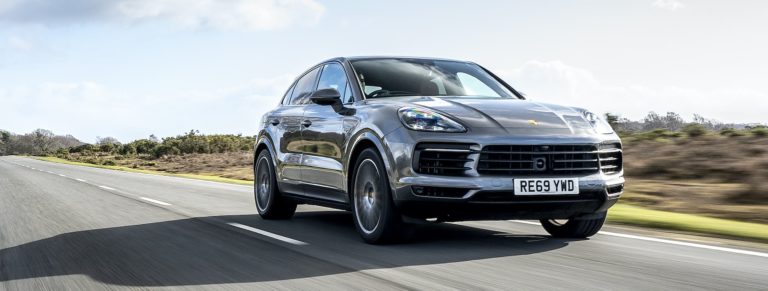
Porsche Cayenne Coupé E-Hybrid test drive

You might still think of Porsche for its 911 and Boxster models, but in production terms the company is now primarily an SUV maker that also makes sports cars. The Cayenne and smaller Macan are now Porsche’s two most popular vehicles, providing a slice of Porsche’s sports car inspiration in a much more practical layout.

It’s perhaps not surprising then that plug-in hybrid versions of models like the Cayenne have proven popular, which give the flexibility to pootle around town under electric power, and then utilise the petrol engine elsewhere. And now there’s a new plug-in hybrid version of the sleek new Cayenne Coupé*.
[* – not an actual coupé, simply a German obsession with plastering the name ‘coupé’ on four-door models that are slightly sleeker than regular models – Ed]

What’s new?

The Cayenne name will have soon been around for nearly 20 years, and for the majority of that time it has been available in just one bodystyle – a big, wagon-shaped, SUV.

But the increasing popularity of swoopier SUVs including the BMW X6 and Mercedes GLE Coupé has seen Porsche introduce a new ‘Coupé’ derivative to its large SUV. It has the same overall footprint as the regular Cayenne but the back end of the roof has been chopped to provide a more raked rear window, trading luggage capacity and rear headroom for style.

Buyers can also choose a new plug-in hybrid option, which is known as the E-Hybrid. It’s not a new powertrain – it’s already available in the regular Cayenne – but it adds a new dimension to this coupé-styled SUV.

How does it look?

Despite ‘coupé’ SUVs usually aiming to be more stylish than the car they’re based on, on many occasions they miss the mark and actually look worse – you only have to see the awkward fiddly styling on the BMW X6 for an example of this.

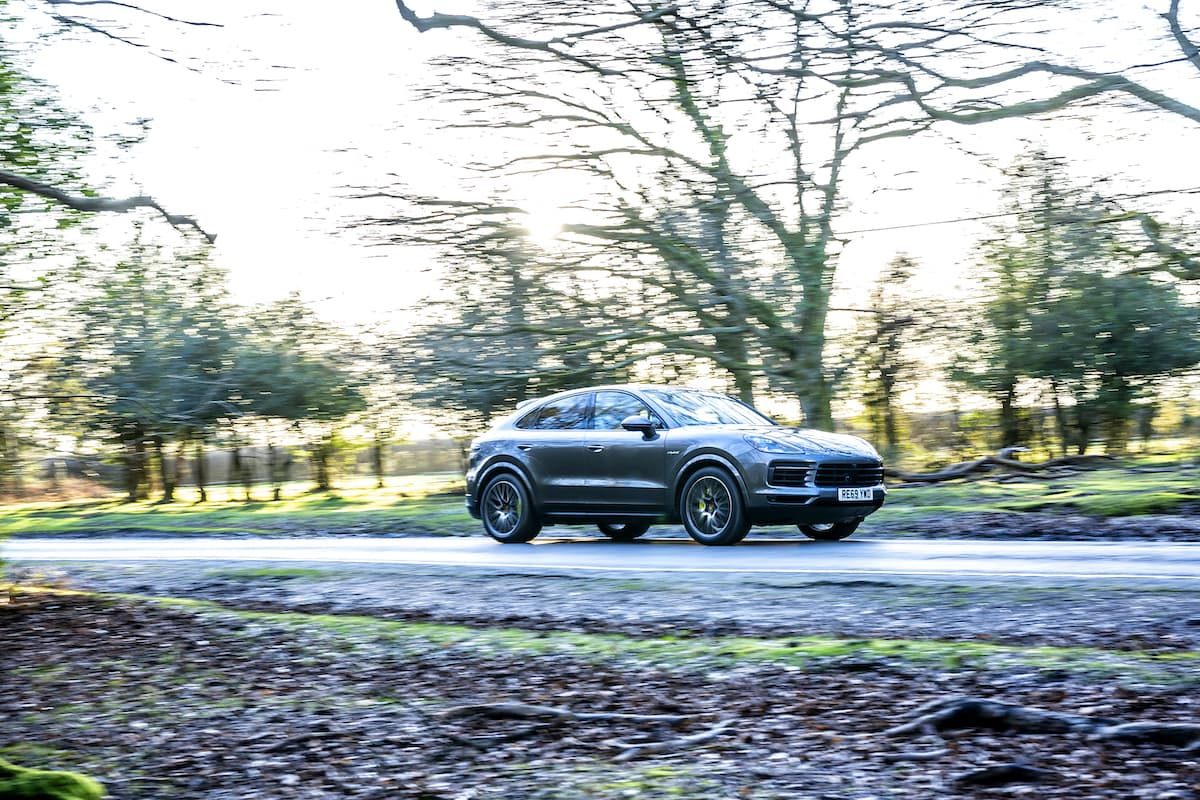
But that’s no such issue on this Porsche, which to these eyes is one of the best-looking SUVs on offer today. While large and imposing, it’s never brash to look at, and a particular highlight is the full-width rear light bar that illuminates the Porsche logo at night. Not that you can see that from the driver’s seat, obviously.

What’s the spec like?

If you’ve ever played with the Porsche online configurator, you’ll know that they don’t usually come especially well-equipped as standard. While you get electric sports seats, the large touchscreen and 20-inch alloy wheels here are just two of the many additional-cost extras on the options list.

But choose carefully, as those extras don’t come cheap. Our test car had more than £20,000-worth of options on top of the £71,424 base price. Like that black and red interior? Us too, but it’ll cost you £2,753. A head-up display? That’s another £1,052. Want an enhanced safety pack, which includes adaptive cruise control? Well that’s a rather steep £2,172 – unbelievable, given you get it as standard on an entry-level Volkswagen Golf.

However, what impresses about the E-Hybrid version is that it’s actually a bit cheaper than the similarly powerful Cayenne S, though that will be more enjoyable to drive.

E-Hybrid models also feature ‘Acid Green’ detailing, including on the logos and brake callipers, and subtly placed around the interior.

What’s it like inside?

Show-stopping is the best way to describe the Cayenne’s cabin. It does away with the gimmicky twin screens that some rivals have and just uses one huge 12-inch touchscreen. It’s slick to use and looks superb as well.

The gearstick is also surrounded by buttons that utilise haptic feedback, with each lighting up whenever they’re in use. It’s a really cool touch, if a bit distracting to use when you’re on the move. High-quality materials are utilised throughout – as you’d expect from a £90,000 car – while subtle sporty features and logos remind you that you’re driving something special.

While the sloping roofline takes a chunk out of the boot space, the Cayenne Coupé’s cargo space is still vast, while there will be no qualms from adults sitting in the rear seats.

What’s under the bonnet?

Porsche has experience with plug-in hybrids, and the firm aims to utilise the electricity as much for performance as efficiency.

With the E-Hybrid, Porsche mates its regular 3.0-litre V6 from the base Cayenne with an electric motor and a 14.1kWh battery to produce a maximum of 462hp and 700Nm of torque. It certainly sounds plenty, and while it’s far from slow, it never feels quite as quick as the figures suggest.

It can hit 0-60mph in 4.9 seconds and would reach a top speed of 157mph given space. All-wheel-drive and an eight-speed automatic gearbox are utilised too.

As for efficiency, Porsche claims you’ll return 60-70mpg, with CO2 emissions of 91g/km. However, you’ll need to be charging all the time and doing small journeys to get figures like that, as the petrol engine is particularly thirsty once it kicks in to life. A 15-20 mile electric range can be expected from a full charge.

What’s it like to drive?

While few large SUVs feel as good behind the wheel as the Cayenne Coupé, the additional weight of the battery pack means that it’s not quite as sharp to drive as other derivatives in the line-up. That said, it’s the best of any plug-in hybrid SUV, as the steering is direct and it handles better than any car of this size should have the right to. At nearly 2m wide, though, you won’t feel quite as willing to launch it down a twisty B-road as you would something a bit smaller.

Bizarrely for a Porsche, though, this is a model that actually lends itself better to more leisurely driving, and has an exceptionally comfortable ride, even on large 21-inch alloys. However, to make the most of the E-Hybrid, you’re best using it around town, where it’s smoother and far more efficient. Longer journeys or those when the batteries aren’t topped up just unearth how inefficient the petrol engine is on its own.

Verdict

The Cayenne Coupé is a stunning car to look at, whether you’re sat in the driver’s seat and admiring the interior or viewing it as a passer-by and taking in its cool swoopy styling. For many, that and the badge will be all the reasons in the world to get one.

The E-Hybrid itself is a mixed bag, though. The increased weight of the batteries numbs the driving experience somewhat, and while still impressing, driven back-to-back with a regular Cayenne Coupé you’ll soon feel the difference. The engine is also too thirsty on its own accord, so unless you just drive small journeys and charge all the time, it’s likely to not be much cheaper to run than a regular model.

However, if you’re in the position where you can run one as a company car, you’ll soon be saving money on tax, while given it’s more or less the same price as the regular petrol ‘S’ model, it should still prove to be an appealing choice for many.

Similar cars

Audi Q8 | BMW X6 | Mercedes-Benz GLE Coupé

Key specifications

Model tested: Porsche Cayenne Coupé E-Hybrid
Price as tested: £92,957
Engine: 3.0-litre petrol plus electric motor
Gearbox: Eight-speed automatic

Power: 462 hp
Torque: 700 Nm
Top speed: 157 mph
0-60mph: 4.9 seconds

Fuel economy (combined): 60.1-70.6 mpg
CO2 emissions: 91-108 g/km
Euro NCAP safety rating: Five stars (2017)
TCE Expert Rating: Not yet rated (November 2020)

Delaying tactics: how long can I put off car repairs?

Wonderful as it is, there’s no doubting motoring is costly business. Nothing is free in this world, including keeping your car on the road and in good condition. However, maintaining your pride and joy and keeping it in good order are necessary – not just for your car’s well-being, but for your safety too.

Certainly a scuffed wheel, small dent or penny-sized windscreen chip might not need immediate attention if you don’t fancy shelling out for the repair yet. But how long can you safely or sensibly wait before you take your car in for a fix? Here are seven of the most common repairs.

Chipped windscreen

There’s nothing worse than that tell-tale ‘bang’ as a stone hits your screen at speed. You look for the chip, praying it’s not in your line of sight and discover that, actually, it’s small and tucked away up in the corner.

OK, so it’s not an urgent job just yet. As long as the weather stays fine and you keep the chip clean, you could get a month out of it. But for most drivers it’s probably a fortnight because, as water and rain gets into the crack, it worsens quickly. Keep a close eye on the damage as the bigger the original chip, the faster it’s likely to deteriorate and spread.

Any chip that you can actually measure – a few millimetres – will require a repair or replacement within a week, although if the chip becomes a crack, get it seen to immediately as it’s not going away.

Scuffed wheel

Almost anyone whose car has alloy wheels will have heard the depressing sound of one or more scuffing against a kerb stone. It’s a horrible noise and an even worse sight, especially if the score is a big one.

For many drivers, just the look of a scuffed alloy is too much to bear. But actually it can mean more than just looks. A kerb scrape probably won’t affect the wheel, but damage from a pothole can actually be a dent in the wheel itself and this can affect its performance. It makes the wheel more susceptible to warping, which can be dangerous especially at speed.

It’s worth checking the tyre of a scuffed wheel too – this can create damage even if you can’t see it.

Blown bulb

It’s illegal to drive your car with a blown headlamp, rear or brake light so it makes sense to get any faulty bulbs replaced as soon as possible.

It’s not only dangerous to drive without the correct lighting, but you are massively increasing your chances of being stopped by the police, and you certainly won’t pass an MOT test without the right level of lighting on show. Most bulbs can be bought and fitted easily, but ask an expert if you have any doubts.

Dents

No matter how carefully you drive, you will probably end up with a dent on your car eventually. It’s not always your fault – other drivers opening their car door on to yours can cause a small blemish for example.

Dents don’t just look unsightly, they can also be quite damaging to your car’s paintwork. If the surface paint has been cracked by the dent, even slightly, water can seep in behind and start to attack the metal. This turns into rust and a discoloured patch of paint which, by the time you really notice it, could have really taken a hold.

Have the dent repaired as soon as you can – certainly before any paint starts to peel off.

Scratched paintwork

Just as with dents, scratches in your paintwork are more than just cosmetic. They can slowly but surely get worse, with dirt and water attacking your car’s ‘skin’ the paint and lacquer, and then the metal underneath.

There are many DIY products to help you cover up small scratches and you should do these each time to see a new one. For larger or deeper gashes, consult an expert and get them seen to as soon as you can.

Torn seat fabric

While there’s little chance of a torn seat affecting the safety of your car, there’s no doubt a rip in the seat, or worse still – though less common – a cigarette burn, looks awful and completely ruins the appearance of any car’s interior.

It’s worth getting repaired quickly because most tears tend to get worse with time and use, and they certainly collect dirt so it’s unhygienic. So put it on your list of repairs to do.

If you ever come to sell your car, you’re not going attract buyers with a torn seat, so get it done sooner rather than later. Anything that is safety related – such as a damaged seat belt, should be seen to by an expert.

Noisy exhaust

A car’s exhaust system is not top of the list when it comes to components that drivers worry about. For a start, they are tucked away out of sight and that usually means out of mind too. As long as there’s no noise or vibrating you leave well alone, right?

Poor old exhausts have a tough time – stuck under the car at the mercy of mud, water and road salt. At least when they start to go, you usually know about it, thanks to a change of tone or sound level.

Blown exhausts can be repaired if you’re quick, so do it immediately. Leave it too long and you face having to buy a whole new system, a failed MOT test or a roadside visit by the traffic police.

Banning petrol and diesel cars: what does it mean?

The government has announced that new cars and vans powered wholly by petrol or diesel will be banned from 2030, while “some” hybrid vehicles will continue to be sold until 2035.

Today’s announcement, which comes after months of speculation, brings the end of new internal combustion cars forward by a decade from what was originally announced three years ago, and five years earlier than what was said back in February this year.

The ban applies only to new car sales. Used cars are not affected, so any existing petrol or diesel cars will still be allowed to remain in use after 2030. The rules will presumably also only apply to vehicles that are registered for use on public roads, so track-only cars should be unaffected.

Currently, about 90% of all new cars sold in the UK are the kind that won’t be sold after 2030, so there is still a long way to go to actually make all of the above happen. The government has announced more than £500 million in incentives to buy electric cars, and about £1.3 billion to support the installation of charging points to plug all these cars into. On top of that, car companies and private industry will end up spending billions to develop new cars and install new charging infrastruture. There’s a lot of work to do.

So here are the key dates for each fuel type:

  • Petrol: no new sales from 2030
  • Diesel: no new sales from 2030
  • Mild hybrid: no new sales from 2030
  • Regular hybrid: Probably no new sales from 2030
  • Plug-in hybrid: no new sales from 2035
  • Electric cars: no change

What’s the deal with hybrids?

The government announcement specifies that new hybrid vehicles “that can drive a significant distance when no carbon is coming out of the tailpipe” can be sold until 2035. However, we don’t as yet know what “a significant distance” actually means.

Mild hybrid cars can’t run on electrical power alone, so the petrol or diesel engine is always running and therefore there will always be carbon coming out of the tailpipe. Therefore, they will be banned from 2030 along with regular petrol and diesel vehicles.

Regular hybrids (sometimes marketed as ‘self-charging’ hybrids) can currently only run for a short distance on electrical power, so are unlikely to be allowed to continue beyond 2030. However, battery technology is continually improving so it’s possible that some car manufacturers may be able to develop hybrid vehicles that can meet the government criteria for running “a significant distance” on electrical power. We’ll have to wait and see.

Plug-in hybrids (PHEVs) can already run for “a significant distance” on electrical power, so they will remain on sale until 2035. At the moment, most PHEVs still rely heavily on the petrol engine, but in 15 years’ time it’s likely that plug-in hybrids will be predominantly electric cars, with the petrol engine only there to provide back-up on longer journeys.

Should I still buy a new petrol car today?

The vast majority (about 90%) of private new car purchases are made with PCP car finance, which means that most people buying a new car in 2020 will be looking to replace that car no later than 2024 – still six years ahead of these new rules coming into force.

For most consumers, petrol is still the default option for a new car. That’s going to change rapidly over the next decade, but if you were planning to buy a new petrol car before today’s announcement then there’s no real reason to change your decision now.

What you will probably find is that the costs of running a petrol car will start to become more expensive in the next few years. As the government moves to encourage people to switch from fossil fuels to electric power, this will almost certainly mean increasing taxes for petrol and diesel cars. So you can look forward to higher road tax, more expensive fuel, additional congestion charges and so on. Resale values will start falling as well, which means PCP prices will start creeping up in coming years.

What about used cars?

Used cars are unaffected by today’s announcement, so you will still be able to buy a second-hand petrol or diesel car after 2030. However, you can still expect to suffer high taxes and charges as mentioned above.

Can I still drive my current petrol car after 2030?

Yes. The ban only applies to the sale of new cars, so any new petrol or diesel cars can only be sold up until 31 December 2029. As long as you buy one before then, you can keep driving it.

A date has not been specified for the eventual banning of all petrol and diesel cars from UK roads, but that’s a bigger step than banning new cars. There are about 32 million cars on UK roads right now, and about 31.8 million of those are powered by petrol or diesel. It has been suggested that 2050 could be the end date for all fossil fuel cars to be removed from roads, but we don’t know.

BMW 2 Series Gran Coupé test drive

In a motoring world seemingly obsessed with niche-busting models, here’s another one – the BMW 2 Series Gran Coupé. Essentially a four-door version of the two-door 2 Series (which in itself is a coupé version of the five-door 1 Series), it takes its place as the smallest Gran Coupé model in BMW’s line-up.

Somewhat sleeker and more dynamic in appearance than the BMW 1 Series hatchback upon which it is based, the 2 Series Gran Coupé is yet another proposition in the smaller end of the new car spectrum.

But what’s it like to drive and are those sweeping looks worth it? We’ve been behind the wheel to find out.

What’s new?

As we’ve already mentioned, the 2 Series Gran Coupé shares its underpinnings with the standard 1 Series and, as a result, retains that car’s list of engines as well as its front-wheel-drive layout. However, it’s ever so slightly longer than the 1 Series, which helps to add to its sleek, stretched-out design. All of this does come at the expense of interior headroom, mind you, but that’s a common trade-off with coupé-style models.

Inside, it benefits from BMW’s latest infotainment system as well as a whole host of connectivity and assistance features – but we’ll dive into those in more detail shortly.

How does it look?

Well it’s different, isn’t it? Certainly against the 1 Series or standard 2 Series, this Gran Coupé looks like a distinctly new proposition. Of course, looks are down to the individual, but the GC’s quirky design took some getting used to. The back of the car is a particular talking point, and whether or not it’s a successfully designed area is down to you.

But there are plenty of nice touches. The bright blue brake calipers on our car helped to brighten up an otherwise quite dark exterior, while the large alloy wheels give it a distinctly premium air.

What’s the spec like?

Our car was finished in tip-top M Sport specification, which brings a full sport styling package, larger alloy wheels and a full sport suspension setup too. Though priced from £33,340 as standard, our test car’s price was bumped up to £37,825 thanks to a few choice options. M Sport Plus (£2,200) adds an upgraded M braking system, an upgraded sound system and various high-gloss exterior trim pieces, among other touches.

The Technology Pack (£1,500) brought features such as adaptive LED headlights and a head-up display, alongside wireless charging. It’s this second pack that we see as the most worthwhile, adding genuinely useful kit for not a whole lot more money.

What’s it like inside?

The interior of the BMW 2 Series Gran Coupé represents an excellent blend of the old and the new. We like the traditional orange backlights for the buttons, for instance, while all of the leather used throughout the cabin has a robust, old-school feel to it. In contrast, the main screen – which now uses BMW’s latest operating software – is simple and easy to use, with the rotary controller to the left of you being tactile and precise.

We’re still not huge fans of BMW’s digital dashboard design – it still seems too cluttered now just as it did when it was first revealed on the new Z4 – but it’s sharp and gives the forward area of the cabin a cutting-edge feel.

As we’ve mentioned, headroom in the back of the car isn’t the best as a result of the sloping roofline. Though there’s plenty of legroom, taller passengers will find their heads competing for space with the roof if they’re sitting in the back. The boot is actually larger than the one you’ll find in the 1 Series too, though because of the narrower opening it’s a good degree harder to access.

What’s under the bonnet?

Though there’s quite the range of engines to choose from with the BMW 2 Series Gean Coupé, today we’ve got the 220d model, which sees a 2.0-litre turbocharged diesel engine under the bonnet sending 190hp and 400Nm of torque to the front wheels via an eight-speed automatic gearbox. It’s a reasonably conventional setup, but it’s likely to be one which will find favour with many.

Not least because of its efficiency, in fact. BMW claims up to 53.4mpg combined and, during our time with the car, we were going above and beyond this on longer journeys. Emissions figures are also reasonable for a car of this size and type at 134g/km of CO2.

There’s no option to have BMW’s all-wheel-drive xDrive system fitted on this engine type, either. For that, you’ll need to bump up to the higher-powered M235i model.

What’s it like to drive?

You expect a car like the 2 Series Gran Coupé to be comfortable, refined and easy to live with over long journeys and, for the most part, it achieves each of these traits well. The ride is a touch too firm for this tester, but it does result in excellent body control when cornering and isn’t too much of a concern when at a cruise on the motorway. Both road and wind noise are contained well too, and though there’s some noise intrusion into the cabin made by the engine when accelerating hard, during regular drives it remains hushed.

The steering is excellent too, and the engine itself is punchy and muscular in the way it puts the power down. It feels brisker than the initial figures suggest, too. The eight-speed gearbox tying it all together is one of the best in the business, responding well to acceleration inputs and leaving little delay when pulling away from a dead stop.

Verdict

The BMW 2 Series Gran Coupe might be another exercise in niche-filling, but you can’t say that it hasn’t been a well-executed one. Those drivers who find the 1 Series too, well, ordinary and the standard 2 Series Coupé too cramped could well find themselves swayed by the in-the-middle Gran Coupé.

With its decent on-road manners, excellent economy and good build quality, we couldn’t fault them for doing so either. It might be there to fill a gap no one might have seen in the first place, but the BMW 2 Series Gran Coupé is well-rounded enough to appeal as a genuine prospect in the company’s current crop of cars.

Similar cars

Audi A3 saloon | Kia Stinger | Mazda 3 saloon | Mercedes-Benz A-Class saloon | Mercedes-Benz CLA | Peugeot 508 | Volvo S60

Key specifications

Model tested: BMW 220d Gran Coupé M Sport
Price as tested: £37,825
Engine: 2.0-litre diesel
Gearbox: Eight-speed automatic

Power: 190 hp
Torque: 400 Nm
Top speed: 146 mph
0-60 mph: 7.3 seconds

Fuel economy (combined): 53.4 mpg
CO2 emissions: 134 g/km
Euro NCAP safety rating: Five stars (2019)
TCE Expert Rating: Not yet rated (November 2020)

Ten top tips for driving this winter

0

Rain, fog, ice, high winds – winter is certainly on its way. And while most parts of the UK haven’t had snow yet, it’s probably only a matter of time before the white stuff appears.

But while that can’t stop the UK’s motorists and driving professionals from continuing to take to the road, it’s more important than ever that drivers do so in safety.

Modern vehicles have never been safer, but that doesn’t mean you can sit back and let technology do all the work for you on an icy road. Drivers have a responsibility too, and that includes making sure your vehicle is in the right condition for winter and that you’re aware of the extra dangers a frosty morning or snowbound evening might hold.

To help you plan ahead, here are ten top tips for winter driving from road safety group IAM RoadSmart. They could not only save your car from extra wear or damage, but they might also save your life.

“Preparation is the key to avoiding a dangerous situation whilst driving in snowy or icy conditions,” says Richard Gladman, IAM RoadSmart’s head of driving and riding standards.

“Don’t rely on the performance of your car systems to get you out of trouble – allow time, make sure you have good visibility all round and carry the right equipment. If conditions are extreme remember the best advice is not to travel.”

Subaru Forester driving in winter snow

Ten Top Tips to avoid slipping up this winter


1. Do you really need to travel?

If the weather conditions are severe in your area, note police advice and avoid travelling if you can. If you must travel, do so with extra caution.

2. Gently does it

Triple your stopping distance and approach every junction expecting to stop well before the give way line. It can take up to ten times as long to stop in icy conditions. Every steering, acceleration or braking input should be as smooth and gentle as possible. Don’t assume that a 4×4 SUV will stop or corner better than a normal car – often it’s quite the opposite. Four-wheel drive will help you maintain traction under acceleration, but it won’t help you during braking or cornering.

3. Can you see the light?

Keep a bottle of water in your boot to give your lights, windows and mirrors a quick clean on longer journeys. Salt quickly makes vehicles dirty, and car headlamps without washer nozzles can lose up to 40% of power and focus in about 20 miles on a gritted motorway. Likewise, your rear lights will get covered in muck very quickly in winter. That means following cars will find it harder to spot your brake lights when they come on, so keep them clean at all times.

4. Don’t ignore the signs

Never ignore any warning light that appears on your dashboard. If one appears, get it checked out as soon as possible. Being stuck on the side of the road is always annoying, but breaking down in freezing conditions is a risk as well as an annoyance.

5. Essential kit

Always carry a winter driving kit including: ice scraper, de-icer, blanket, torch, shovel, food and drink, fully charged mobile phone, reflective triangle and high visibility jacket. Almost every winter, you’ll see or read reports of cars stuck on a motorway overnight somewhere in the UK after a heavy snowfall. Be prepared in case it happens to be you this year.

6. No overtaking

When driving on a busy road, avoid overtaking a gritting lorry as the road ahead might not be treated yet. If you have any doubt, don’t risk it. Drop back a bit, so your car doesn’t get pelted by grit, and follow at a comfortable distance. For the same reason, never overtake a snow plough in heavy snow conditions.

7.  Pass the salt

While roads may be gritted to give you better traction, it’s never uniformly distributed along and across the whole roadway. Some areas may not be completely treated, which can leave icy patches. Also keep an eye out for water running across the carriageway, as this can wash away the gritting salt and create a slippery ice patch across the road.

8. Keep it clean

Keep your car clean throughout the winter as the salt in grit can cause corrosion to any exposed parts. Wash and rinse alloy wheels too; the smallest scratch can quickly cause corrosion. And, obviously, a clean windscreen is much easier to see out of than a dirty one.

9. Go on, my sun

Just because the winter sun is out, don’t assume the roads might not be icy. Micro-climates of icy patches will linger in areas such as bridges and exposed sections, where the sun has not yet reached.

10. Tread carefully

Ensure your tyres have at least 2mm of tread. The more tread tyres have, the more water they can cope with. Don’t let tyres wear down to the legal limit of 1.6mm. Consider winter tyres or all-season tyres if you think they might help.

Renault Zoe test drive

It feels like we’re getting new electric vehicles hitting the market every day, but with the updated Renault Zoe, this is no latecomer jumping on the bandwagon. No, Renault has been doing electric vehicles for a while now, and the fact the latest Zoe packs a hugely impressive range into such a small package shows it has a refined concept on its hands.

It’s the big, expensive electric SUVs that are grabbing headlines right now, but these smaller, more affordable models are more important for grabbing a slice of the mainstream market. We were impressed with the Zoe on its European launch, but now we get a chance to see how it fares on UK shores.

What’s new about the Renault Zoe?

While it might look like not much has changed, that’s because Renault says the styling is one of the aspects of the car that buyers love. However, step inside and you can see that the interior has had a much more impressive update, and it doesn’t stop there.

Under the skin, there’s a choice of new motors to power the Zoe, and the updated battery pack brings much more range. There’s also the option of fast charging – Renault says it could have included it as standard but it would have driven the car’s cost up – while on-board connectivity has also been stepped up.

How does it look?

While it might be slightly disappointing that Renault wasn’t braver with the evolution of the Zoe’s styling, with its buyers loving the way it looks it’s no surprise. However, what it has changed has moved the game on just enough to be interesting, with sleeker, more futuristic details.

The front end has been given a slight makeover with a new front bumper with LED fog lights and C-shaped running lights that surround the LED headlights, while the rear lights are also LED – and that’s all standard equipment. Celadon Blue is one of a selection of new colours, and it looks fantastic.

What’s the spec like?

Prices for the Renault Zoe start at £26,495, which gets the less powerful motor, 15-inch wheels, fabric upholstery and manual air conditioning. The Iconic trim starts at £27,995 with upgrades including 16-inch alloy wheels, rear parking sensors and a seven-inch screen with sat-nav. Upgrade to the R135 motor in this trim and prices start at £28,495.

As mentioned, the GT Line feels like the best value if you can afford the step up in price. It starts at £29,995, just £2,000 more than the base Iconic and £1,500 more than with the R135. Its equipment upgrades include the full nine-inch infotainment screen, part leather and fabric upholstery, front and rear parking sensors and a rear parking camera. Meanwhile, upgrading to fast charging is a £1,000 option.

What’s the Renault Zoe like inside?

The interior is the area that’s most obviously upgraded, now more befitting of its hefty EV price tag and more on-par with the popular Clio. It’s a mostly positive upgrade, with the steering wheel feeling good in your hands with easy-to-use multi-function controls, a clear and responsive nine-inch infotainment screen in the centre of the dash, and a detailed ten-inch digital instrument display.

It’s not all good news, though. It’s easy to find where Renault cut corners, likely in the name of budget, with a few cheap plastics used in obvious places. Meanwhile, rear seat passengers will find there’s not a lot of space at all.

What’s under the bonnet?

There are two motors to choose from, badged R110 and R135, which provide 110hp and 135hp respectively. The more powerful motor has slightly less range at 239 miles, compared with 245 miles for the less powerful motor. With a maximum of about £3,000 between the high-spec R135 and the lower-spec R110, the pricier option feels like the best value despite the minor range reduction.

Our test car was the R135, and for those who come from a low-powered petrol supermini, its performance will be thrilling. It’s at its best in town, where the punchy performance makes it ideal for nipping in and out of traffic. However, if you do venture out onto the motorway, it can more than hold its own.

What’s the Renault Zoe like to drive?

The electric vehicle trump card is how quiet it is inside. The Zoe is no different, making it relaxing to drive even when traffic builds up. Its diminutive proportions make driving around town care-free too, and even potholed roads don’t unsettle the ride too much.

While it’s far from a motorway cruiser or B-road fun car, it handles both admirably. On longer journeys there’s some road noise intrusion, and it can be a little unsettled by a big sidewind, but it’s not a common occurrence. Meanwhile, on a country road, the punchy electric motors make it great fun to drive.

Verdict

The Renault Zoe is a smart, chic supermini, and its electric powertrain and impressive range for such a small car make it hugely appealing. It’s not cheap, but it’s reasonably priced for the electric vehicle segment even if it is one of the smallest options.

While there are a few disappointing cabin materials, and the size of the interior makes it impractical for those who regularly need to carry people or a lot of cargo, it has to be one of the most appealing superminis on the market – electric or otherwise.

Similar cars

BMW i3 | Honda e | Peugeot e-208 | SEAT Mii Electric | Skoda Citigo e iV | Smart EQ Fortwo | Toyota Yaris Hybrid | Vauxhall Corsa-e | Volkswagen e-Up!

Key specifications

Model as tested: Renault Zoe R135 GT Line ZE 50
Price (on-road): £30,495
Powertrain: 135 hp electric motor
Battery: 52 kWh

Power: 135 hp
Torque: 245 Nm
Top speed: 87 mph
0-60mph: 9.3 seconds

Range: 239 miles
CO2 emissions: 0 g/km
Euro NCAP safety rating: Not yet rated (November 2020)
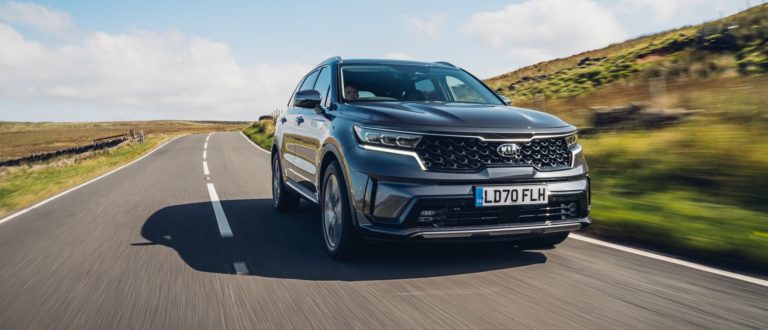
TCE Expert Rating: Not yet rated (November 2020)
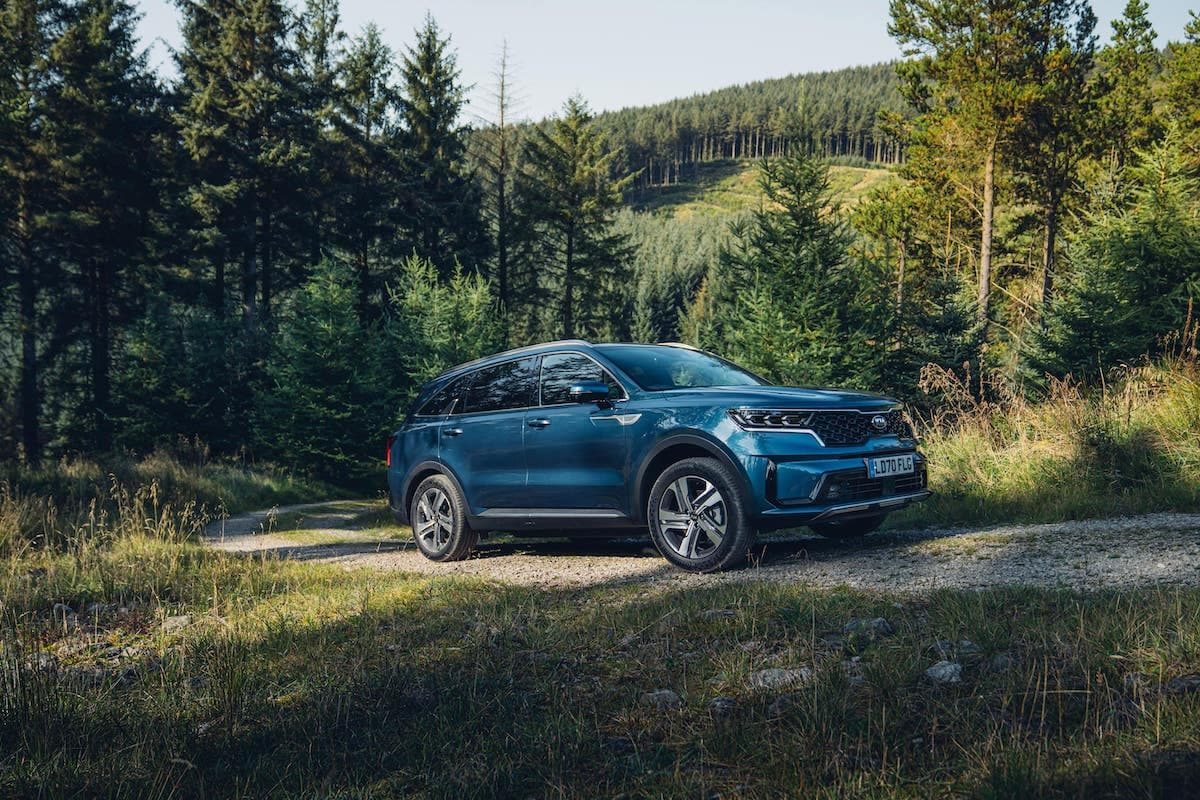
Fiat 500L (2013 to 2021)

Summary

The Fiat 500L was a small MPV/estate car that was on sale in the UK from 2013 until 2021.

Despite the ‘500’ in its name and styling cues borrowed from the smaller Fiat 500, the 500L was actually based on the old Fiat Punto and shares very few components with the 500 – a bit like how the Mini Countryman is an entirely different car to the Mini hatch.

During its production life, the 500L was facelifted in 2017, with engine and trim changes. Diesel engines were dropped along the way as Fiat phased diesel motors out of all its models, with only petrol power available in its later years.

Like most of its rivals in the small MPV market (Ford B-Max, Vauxhall Meriva, etc.), the 500L lost popularity in favour of baby SUVs until eventually being discontinued.

The Fiat 500L received generally average to poor reviews from the UK media over the course of its life. It was rated highly for being distinctively different from anything else remotely close to its price tag, although the styling was quite divisive. It certainly lacked the cuteness of the smaller 500, although it traded that cuteness for much more interior space and practicality.

The Fiat 500L ended production in 2021, and now has a Used Car Expert Rating of C, with a score of 62%. It scores top marks for its low running costs, while it also gets good grades for its reliability record. But its CO2 emissions are only average, which is disappointing for a small car, while its safety rating is long expired and its media review scores were poor.

Key specifications

Body style: Small MPV
Engines: petrol
Price when new: From £18,045 on-road

Launched: Winter 2012/13
Last updated: Autumn 2018
Removed from sale: Autumn 2021

Media reviews

Highlighted reviews and road tests from across the UK automotive media. Click any of the boxes to view.

The Car Expert

Auto Express

Car

Car Keys

Carbuyer

Carwow

Heycar

Honest John

Parkers

The Sun

The Sunday Times

The Telegraph

Top Gear

Safety rating

Independent crash test and safety ratings from Euro NCAP

Overall score: 5 stars
Date tested: November 2012
Date expired: January 2019
Read the full Euro NCAP review

Adult protection: 94%
Child protection: 78%
Vulnerable road users: 65%
Safety assist: 71%

Notes on safety rating

The Fiat 500L was awarded a five-star safety rating from Euro NCAP back when this model was launched in 2012. However, this rating expired in January 2019 as the 500L no longer met the requirements for a five-star car. This is normal practice, as Euro NCAP reviews its ratings on most cars annually with most ratings expiring after about six or seven years.

However, if you are comparing a used Fiat 500L to vehicles of similar age, whose ratings will have probably also expired, its safety rating score is still useful.

Eco rating

Independent economy and emissions ratings from Green NCAP

No eco rating

The Fiat 500L was not assessed by Green NCAP during the course of its production life.

Reliability rating

MotorEasy logo 600x167

Reliability data provided exclusively for The Car Expert by MotorEasy

All data based on MotorEasy average workshop costs for extended car warranty claims

As of April 2025 (our last data point), the Fiat 500L has a very good reliability score of 85%, according to extended warranty data provided exclusively to The Car Expert by our partners at MotorEasy.

The Fiat 500L also appears to be relatively inexpensive to repair when things go wrong, with an average repair cost of less than £300 to date. That’s good news if you already own a 500L or are considering buying a used one.

The most commonly reported problems with the 500L relate to its suspension systems, although the average repair bill is low at little more than £150. However, it’s worth noting that engine repairs are considerably more expensive.

If you’re looking at a used Fiat 500L, make sure any extended warranty cover you purchase covers all of the potential problem areas shown above.

Running cost rating

Clear Vehicle Data logo close crop

Monthly cost of ownership data provided exclusively for The Car Expert by Clear Vehicle Data

Fuel consumptionAverageScore
Petrol models38 mpgD
CO₂ outputAverageScoreVariationScore
Petrol models168 g/kmD
Insurance groupAverageScoreVariationScore
All models11A

The Fiat 500L has a mixed bag of scores, according to whole-life cost numbers provided exclusively to The Car Expert by our data partner, Clear Vehicle Data.

Unfortunately, we don’t have any servicing cost data for the 500L due to its age, but most Fiat models are very good on servicing and maintenance costs.

The petrol engine in the 500L wasn’t very good for fuel consumption, especially for a relatively small car. Other alternatives are likely to cost you less in petrol bills each month.

Similar cars

If you’re looking at the Fiat 500L, you might also be interested in these alternatives

BMW 2 Series Active Tourer | Citroën C3 Aircross | Fiat 500X | Hyundai Bayon | Mercedes-Benz B-Class | Mini Clubman | Mini Countryman | Peugeot 2008 | Suzuki S-Cross | Volkswagen Touran | Vauxhall Crossland X

The Fiat 500L doesn’t have many direct rivals, as most small MPV-style vehicles like the Ford B-Max, Vauxhall Meriva and Citroën C3 Picasso have disappeared from the marketplace in recent years. Most of the above are a similar sort of vehicle, although with quite a wide range of prices and specifications.

More news, reviews and information about the Fiat 500L at The Car Expert

Everything you need to know about Fiat

Everything you need to know about Fiat

The 10 worst new cars on sale in 2021

The 10 worst new cars on sale in 2021

Fiat 500L range receives update

Fiat 500L range receives update

Buy a Fiat 500L

If you’re looking to buy a used Fiat 500L, The Car Expert’s partners can help you find the right car

Motors 600x300

Search less, live more. We make finding the right car simple. Find out more

Auto Trader logo 600x300

Search for your next new or used car with Auto Trader. Find out more

Carwow logo 600x300

Discover great deals available on both new and used cars. Find out more

Dacia Duster Bi-Fuel test drive

Dacia has a problem on its hands. While its models are hugely successful (170,000 have been sold in the seven years the Renault-owned firm has been in the UK), its low prices don’t bode well with the rise of electrification.

The firm has been slow to commit to hybrids and EVs, though the latter is set to be available in 2021, so how do you offer a simple low-cost solution to lowering CO2 emissions and, more importantly, save money for buyers?

Well, Dacia’s got a rather simple solution – liquified petroleum gas, or LPG. Costing half the price of petrol, it’s an appealing fuel that, surprisingly given its cost-saving benefits and cheap implementation, is not one favoured by manufacturers any more.

What’s new about the Dacia Duster Bi-Fuel?

Dacia becomes the only firm in the UK to offer LPG and it calls its system ‘Bi-Fuel’, as you can choose to run it on either petrol or LPG, and it’s available across all Dacias equipped with the 1.0-litre TCe petrol engine. Here, we’re trying the system on the Duster crossover, though you can have it on the Sandero supermini and Logan MCV estate, too.

The only difference next to a standard model is the 34-litre LPG tank, which is placed where you’d find a spare wheel, but actual boot space is entirely unaffected. There’s no clever (and thus expensive) digital displays showing how the system works, but rather a simple switch underneath the electric mirror stalk allowing you to flick between LPG and petrol. In true Dacia fashion, it’s a simple and no-frills way of doing it.

How does it look?

For buyers wanting chunky styling from their crossover, the Duster crossover is a superb fit. With its high ride height, chunky plastic sills and wide wheelarches, it looks like it means business. Even if all Bi-Fuel versions are front-wheel-drive only…

You can also make it look as plush or as basic as you like, with entry-level Access versions looking like they’ve just been dragged out of the desert (in a reassuringly rugged way). Meanwhile, at the other end of the spectrum, top-spec Prestige models with their large diamond-cut 17-inch alloy wheels offer more in the way of style.

What’s the spec like?

The Duster remains the cheapest crossover on sale and one of the UK’s most affordable cars, with prices kickstarting from £11,245, though you’ll need to upgrade to the Essential trim to be able to pick a Bi-Fuel model. Given the LPG models cost a mere £400 more than the petrol model, choosing it seems like a no-brainer.

While your local fuel station might not have LPG, given around 1,200 forecourts do across the UK, you’re unlikely to be far away from one, and the process of filling up is easy (though you might have to use an adaptor that Dacia supplies). And given LPG costs around 60p a litre, it’s nearly half the price of petrol. Dacia says you can expect to save £600 each year by running on LPG, which would soon stack up over a period of years.

In terms of spec, the mid-spec Comfort grade is the one to go for and costs £14,695 here. It comes with everything you need, and nothing you don’t, with highlights including all-round electric windows, the aforementioned touchscreen, a reversing camera, rear parking sensors, cruise control and air conditioning.

What’s it like inside?

Reassuringly basic is the best way to describe the Duster’s cabin. You won’t find a whiff of soft-touch plastics or, ahem, ‘premium feel’ in this Dacia, but rather hard and scratchy plastics that feel like they’ll last the test of time.

In our mid-spec Comfort model, though, it actually features a seven-inch touchscreen with satellite navigation and Apple CarPlay and Android Auto – you don’t even get the latter on a £30,000 Range Rover Evoque. The system is about as no-frills as you can get, but it does the job and on a cheap car like this, it’s all you can ask for.

The Duster’s also impressively roomy. Sure, there’s no room for a spare wheel thanks to the LPG tank, but such few cars come with them these days anyway that it’s not an issue. The boot itself is big for a car of this class – measuring 445 litres – though rear space isn’t quite so generous.

What’s under the bonnet?

You get the same turbocharged 1.0-litre TCe petrol engine found in the regular Duster powering this version – which produces 100hp – though Dacia has managed to find an extra 10Nm of torque when running on LPG – increasing it to 170Nm.

Don’t buy the Duster for its performance though, as this is not a quick car with 0-60mph taking 13.6 seconds. On paper, Dacia claims it’s 0.6 seconds quicker to 60mph on LPG, though you’d be hard-pressed to tell the difference.

With petrol and gas combined, Dacia claims you can travel an impressive 620 miles before needing to fill up.

In terms of running costs, fuel economy dips quite significantly when running on LPG (dropping from 44.1mpg to 35.3mpg), but CO2 emissions are lower on gas – going from 145g/km to 129g/km.

What’s it like to drive?

Nothing has changed with the way the Duster drives, and despite being slow, it’s a model that’s really quite enjoyable behind the wheel.

The small 16-inch alloy wheels with chunky tyre walls on our mid-spec test car mean you could plough through potholes without a second thought, and even on rough roads, it’s impressively comfortable. While you’ll have to rev the not-especially-refined engine to get it to speed, once it’s there it’ll sit happily enough at motorway speeds without too much fuss, even though the five-speed manual transmission could do with a sixth gear.

Our only real gripe is that taller drivers may find it a bit claustrophobic, as the sloping windscreen makes you feel as if you’re sitting overly close to the glass.

Verdict

Given Dacia is all about value and saving people money, the introduction of this factory-fitted LPG offering is a brilliant addition to the firm’s range. Considering the system adds a minimal £400 to the price, the fact it brings no setbacks and the potential to save £600 on petrol costs each year, it’s definitely worth considering.

Adding to that, the Duster is a brilliant no-nonsense crossover. No, it’s not premium, it’s not techy and it’s not particularly refined. But if you’re not fussed about a fancy badge or having all the gadgets, it offers truly terrific value – even more so in this new Bi-Fuel form.

Similar cars

Citroën C3 Aircross | Fiat 500X | Ford EcoSport | Ford Puma | Honda HR-V | Hyundai Kona | Jeep Renegade | Kia Stonic | Mazda CX-3 | MG ZS | Mitsubishi ASX | Nissan Juke | Peugeot 2008 | Renault Captur | SEAT Arona | Skoda Kamiq | SsangYong Tivoli | Suzuki Vitara | Vauxhall Crossland X | Volkswagen T-Cross | Volkswagen T-Roc

Key specifications

Model tested: Dacia Duster Comfort TCe 100 4×2 Bi-Fuel
Price: £14,695 (£15,255 as tested)
Engine: 1.0-litre petrol/LPG
Gearbox: Five-speed manual

Power: 100 hp
Torque: 170 Nm
Top speed: 104 mph
0-60mph: 13.6 seconds

Fuel economy (combined): 35.3 mpg (LPG), 44.1 mpg (petrol)
CO2 emissions: 129 g/km (LPG), 145 g/lm (petrol)
Euro NCAP safety rating: Three stars (2017)
TCE Expert Rating: 73% (as of Noveber 2020)
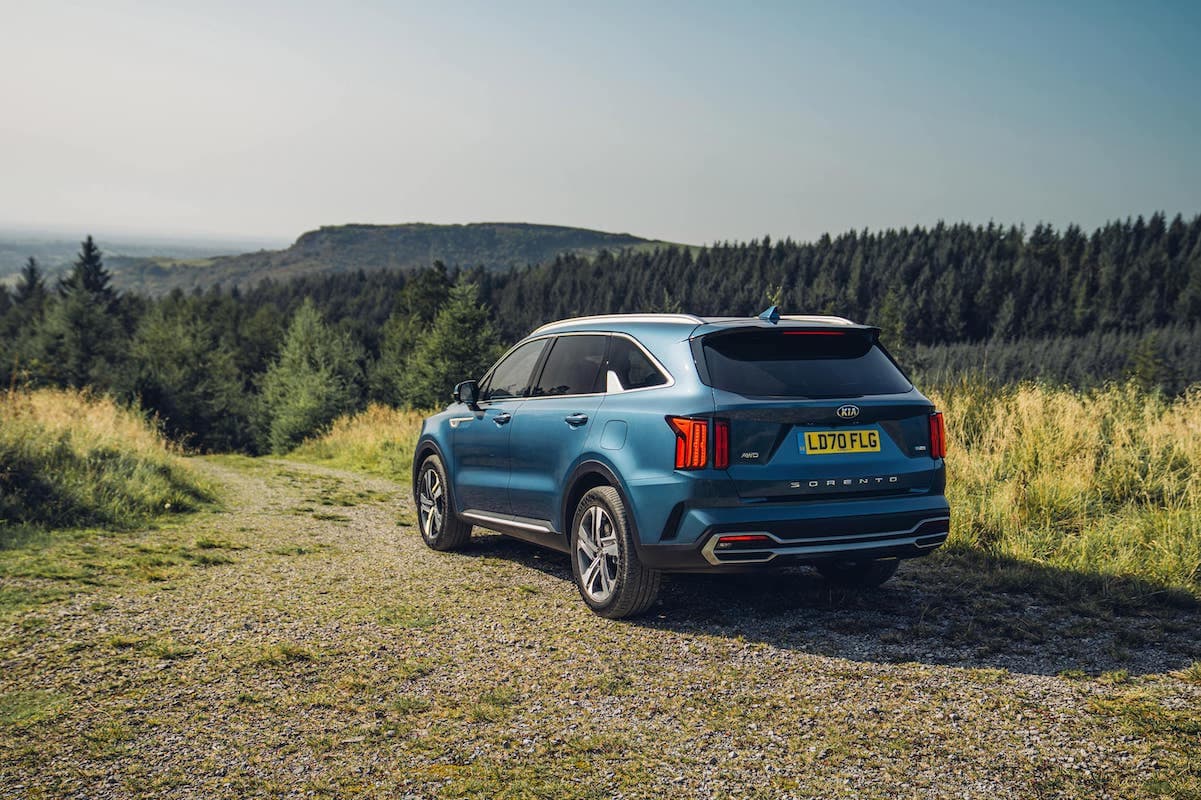
Will my insurance be invalidated if I drive during lockdown?

1

UPDATE, November 2020: There has been a lot of confusion in recent days about whether your car insurance is still valid, fuelled by misinformation from an insurance-switching company.
Please read below for the full story and ignore speculation in social media or tabloid newspapers.

As the UK moves in and out of lockdown restrictions like some really unappealing game of hokey-cokey, there have been plenty of questions arising from motorists about what they can and can’t do with their cars. Unfortunately, this has not been helped by misinformation being spread on certain issues.

In recent days, there has been mounting concern and speculation online that motorists who are not on an essential trip could be invalidating their car insurance. The origin of this appears to be an insurance-switching organisation that published a press release last Friday, saying: “you may find your car insurance policy won’t cover the damage and you could end up paying thousands of pounds for repairs”.

This is not true.

This incorrect information was picked up and used for articles by several newspapers and websites over the weekend and today, including Sky News, the Daily Mirror and several regional news organistions.

There have also been (unverified) claims on social media over the last week or so that drivers are being fined and/or issued with penalty points on their driving licences if they are using their car for commuting to work when their policy doesn’t allow it. This was also picked up by tabloid media and some other news sites.

So here are your definitive answers.

The Association of British Insurers (ABI) has issued a lot of advice in recent months and has set up a specific coronavirus FAQ page for car insurance questions. It’s well worth a read.

When asked directly by The Car Expert today (9 November), a spokesperson for the ABI said: “During lockdown the Government has advised against all but essential travel. Motor insurers continue to cover those using their vehicle for commuting to work and NHS volunteering without you having to first tell them. You should follow Government restrictions, but if you do use your car for non-essential travel, you will not risk invalidating your car insurance.”

“Further information, including the pledges made by motor insurers to support customers, can be found here as well: https://www.abi.org.uk/products-and-issues/topics-and-issues/coronavirus-hub/motor-insurance/

Further guidance from the ABI also indicates that anyone who has signed up for the NHS Volunteer Responders service will not have to update their car insurance for it to be valid. However, if you are a Community First Responder or other ‘Blue Light’ volunteer, you should contact your insurer or broker to inform them.

Keep your insurance details up to date

Even though you don’t have to worry about your car insurance not covering you for non-essential travel, it’s still important that the details you give your insurance provider are 100% accurate. There are many things that can invalidate your car insurance.

While it’s true that you don’t need to update your current policy to add ‘commuting’ if you are now driving to work as a result of Covid-19, you should probably do it anyway. And when your policy is up for renewal (or you choose to switch to another insurer), then you do need to update this information as you will be taking out a new policy.

We’ve put together this helpful guide with ten points to check:

Police cracking down on uninsured drivers

Part of the confusion about whether your car insurance is valid may be coming from police forces across the running a co-ordinated crackdown on uninsured drivers.

‘Operation Drive Insured’ saw all of the UK’s 43 police forces working to detect and seize uninsured cars a couple of weeks ago, so it’s entirely possible that some of the law enforcement activity affected those who didn’t have their insurance details up to date. However, there is a difference between police issuing a penalty for you not having the correct insurance and an insurance company refusing to pay out.

This article replaces a previous version from April 2020, and has been largely re-written to address ongoing speculation about car insurance validity during the latest coronavirus lockdown.

Britain’s best-selling cars, October 2020

October was almost good news for new car registrations because private sales were up by about 0.4% compared to the same month last year. I say ‘almost’ because fleet registrations were down more than 3%, which pulled the overall numbers down slightly.

Still, a modest increase for private sales means showrooms would have been a bit busier, as dealers tried to get as many cars out the door ahead of the November lockdown across England.

We dug into the overall registration numbers yesterday, but it was another good month for electric and hybrid cars, which collectively outsold diesel cars for the second month in a row. However, the forecast for November and December look comparatively bleak, with showrooms closed for the next four weeks.

The UK’s best-selling cars, October 2020

1. Mercedes-Benz A-Class

Mercedes-Benz A-Class hatchback | Expert Ratings

Mercedes-Benz may try to position itself as a premium or luxury brand, but you can’t really get more mainstream or more common than the biggest-selling car in the country. And in October, the top-selling car in the UK was the Mercedes-Benz A-Class.

The A-Class has an Expert Rating of 77% in The Car Expert’s unique aggregated Expert Rating index, based on 44 UK reviews. It ranks highly for safety, winning awards from Euro NCAP and Thatcham for its protective qualities.

2. Vauxhall Corsa

It was another great month for the Corsa, outselling the Ford Fiesta yet again and continuing an impressive run for the new Vauxhall supermini. With only two months to go this year, it seems unlikely that the Corsa can catch the Fiesta for overall full-year sales honours, but it might run it close.

The petrol and diesel versions of the new Corsa currently hold an Expert Rating of 71% on our unique aggregator scale, based on 25 reviews we have gathered so far. That puts it in the bottom half of the supermini class, although the all-electric Corsa-e does score slightly better with an Expert Rating of 74%.

3. Ford Fiesta

Ford Fiesta (2017 onwards) Expert Rating

Once again, the Ford Fiesta has to play second fiddle to the Vauxhall Corsa in the monthly sales race. Fiesta registrations were down nearly 20% compared to last October against an overall market that was down less than 2%. In year-to-date sales, the Fiesta still leads the Corsa by more than 3,500 units, so it’s likely to hold onto its crown as Britain’s best-selling car for another year, but it will probably be a close fight unless Ford can slow the Corsa’s momentum.

The Fiesta currently holds an Expert Rating of 81% in The Car Expert’s unique Expert Rating index, which aggregates reviews from 25 of the UK’s top motoring websites. This is a one-point slip in the last month, which drops the Fiesta further behind the SEAT Ibiza as class leader – although it’s still 10% better than the Corsa, so hopefully that will cheer up Blue Oval fans.

4. Volkswagen Golf

Volkswagen Golf (2020 onwards) Expert Rating

The Volkswagen Golf improved from fifth place last month to fourth this month, which pulled it another 1,000 units closer to the Ford Focus in year-to-date registrations. With two months to go, the Focus is just over 2,000 units ahead of the Golf, so the race between the two family hatchbacks could go down to the wire.

We’re beginning to see more local reviews of UK-spec Golf models being published in the media (as opposed to the initial reviews that took place at the international media launch), and the Golf’s formerly stellar Expert Rating is gradually starting to slip – although it’s still the top-ranked car in its class. The much-vaunted ‘all-digital’ interior has drawn criticism from several reviewers who have found it inferior to the more conventional cabin of the previous-generation model.

5. Ford Puma

Ford Puma (2020 onwards) Expert Rating

The new Ford Puma makes its third appearance in three months, improving from seventh place in September to fifth place in October. Given the drop in sales for both Fiesta and Focus, it may be that there has been some cannibalisation among existing Ford customers going on. As long as those customers are staying within the Blue Oval family, Ford is unlikely to be too bothered.

The bug-eyed small SUV has been popular with critics, currently holding a rating of 83% on our unique Expert Rating index. This remains a best-in-class result, but it has slipped a couple of points in the last month as we’ve added some new reviews and other sources have revised their initial opinions. A hot new ST version may help swing that score back upwards in coming months, however.

6. Volvo XC40

Volvo XC40 (2018 onwards) | Expert Rating

The brilliant little Volvo XC40 makes its third appearance in the top ten list and the second in a row. It may be another quirk of a relatively strong consumer market/weak fleet market, and the addition of a plug-in hybrid version will probably help as well.

The XC40 is the class leader among small SUV/crossover models, with an Expert Rating of 84%. A new plug-in hybrid model has recently joined the range, while a fully-electric version is now in production and set to arrive either later this year or early 2021.

7. Mini hatch

Mini hatch (2014 onwards) Expert Rating

The Mini hatch improved to seventh in October. The new-plate registration months are traditionally good for Mini, so there may be some carryover from September where the Mini was only eighth. It still holds seventh place in year-to-date registrations, inching towards the sixth-placed Nissan Qashqai in what should be another close race to the end of the year. The electric model has now launched as well, which certainly won’t do sales any harm.

The Mini hatch holds a very solid score of 80% in our Expert Ratings aggregator, which is better than most cars in its class despite being much older than many of its rivals. We’ve now indexed the new Mini Electric model as well, and interestingly its score is currently only 73% – although this may change by a few points (either up or down) as more reviews are published.

8. Ford Focus

Ford Focus review 2018 | The Car Expert

It was another below-average month for the Ford Focus, although eighth place in October is better than last month’s tenth place, as the brands family hatch fell from third place last month to tenth this month. It was also nearly 21% behind its registration numbers for last October against an overall market that was down by less than 2%.

The Focus was almost certainly the victim of a weak fleet market as well as the roll-out of its arch-rival, the new Volkswagen Golf, arriving in dealerships in large numbers to tempt away potential Focus customers. Having fallen from second place to fourth in year-to-date registrations last month, the Focus now looks like it may come under pressure from the Mercedes-Benz A-Class with two months left to go this year.

The Ford Focus currently holds an Expert Rating of 80% in our Expert Ratings database, which is better than most rivals but still a couple of points off the new Volkswagen Golf based on its reviews to date.

9. BMW 1 Series

BMW 1 Series (2019 onwards) Expert Rating

Making its second appearance, and the first since May, is the new BMW 1 Series. BMW’s small hatchback breaks with a long-held company tradition by being front-wheel drive instead of rear-wheel drive, a point that has caused consternation among BMW enthusiasts but has been well received by most of the motoring media. However, it definitely follows modern BMW tradition by being really ugly…

The good news is that it drives better than it looks. It has been generally praised for its driving dynamics, despite the switch to front-wheel drive, and currently holds an Expert Rating of 81%.

10. Audi A3

Audi A3 (2020 onwards)

Making its debut in the UK best-sellers list is the new Audi A3, joining its arch-rivals from BMW and Mercedes in the top ten. Available as both a five-door hatchback and a saloon, the new A3 went on sale in summer of this year and supplies now appear to be moving freely.

The Audi A3 has received generally good reviews from the UK media since it was launched, with an Expert Rating of 79% that puts it smack in the middle of the BMW 1 Series (81%) and Mercedes A-Class (77%). It’s still quite new to the market, so we may see this score fluctuate as more local reviews are added in coming months.

Can I get an MOT or service during the second lockdown?

Drivers are being advised to book their next MOT test early, because garages that carry out the safety check are still struggling to cope with the backlog from the UK’s original Covid lockdown in Spring.

It’s one of several pieces of advice to come out as England enters a second coronavirus lockdown, which will affect motorists and motor trade businesses. This time, garages, service centres and MOT test stations have been told they can remain open to continue providing important safety work on customers’ cars and vans.

Can I get an MOT test?

Earlier this year, during the first lockdown, motorists were granted a six-month extension to their MOT test date after thousands of garages closed their doors. But with an easing of restrictions this time around, getting your car MOT tested should be easier – although there is a waiting list.

“We fully support the government’s decision to allow garages to remain open as normal, and not to enforce another MOT extension,” said Stuart James, chief executive of the Independent Garage Association (IGA).

“Garages are still busy catching up with the backlog of MOTs that the extension caused earlier this year. A second extension would only cause confusion among consumers and put law-abiding vehicle owners at risk of significant fines by leaving cars unchecked.”

Can I get my car serviced, tyres fitted or body repairs done?

Other automotive services such as vehicle body repair and tyre fitting centres remain open – with strict Covid-related hygiene measures in place – as they are deemed essential to road safety.

A recent survey by car servicing portal BookMyGarage revealed that thousands of motorists had delayed having their car serviced due to financial concerns or because the vehicle had not been driven as much as usual.

Will car washes remain open?

Car washes that are part of a petrol forecourt have been granted permission to remain open by the government following earlier fears that they would have to close. Independent car washes not connected to a filling station have not yet been allowed to open in England – although the other UK countries do permit them to operate.

Brian Madderson, chairman of the Petrol Retailers Association and Car Wash Association, said: “The CWA will continue with its robust lobbying as automated car washes that are not connected to a petrol station have not yet been granted an exemption to remain open. We are working to ensure that these are not discriminated against in this, and any potential further, lockdown.”

Can I still take driving lessons?

Driving instructors have also been hit by the latest lockdown measures. In England, Wales and Northern Ireland, no driving lessons or tests are currently taking place, while in Scotland some lessons are permitted in areas classed as Tier 1 and 2. The Driving Instructors Association is awaiting further clarification from the government on who they are allowed to teach, amid fears of a growing backlog of people awaiting their driving test.

BMW Z4

Summary

The BMW Z4 is a two-seat roadster, with the current version being the third-generation model. It was revealed in the summer of 2018 before arriving in the UK in early 2019. The Z4 was jointly developed with Toyota, and forms the basis for the now-discontinued Toyota Supra coupé.

The latest Z4 has a soft-top roof instead of a folding hard-top roof like the previous model, with BMW choosing to abandon folding hard tops on all its convertible models.

The BMW Z4 has received generally positive reviews from the UK motoring media, although several outlets have pointed out that it is more of a cruiser than a sports car.

The Z4 has been praised for its comfort, build quality and improved handling compared to its predecessor. However, it’s still not considered as enjoyable to drive as a Porsche Boxster or Audi TT, while the styling – as on most modern BMWs – has been polarising.

As of February 2026, the BMW Z4 has a New Car Expert Rating of C, with a score of 63%. That’s a combination of excellent scores for safety and reliability, middling media reviews and high running costs.

Key specifications

Body style: Two-door convertible
Engine:
petrol
Price:
From £45,135 on-road

Launched: Spring 2019
Last updated: Spring 2024
Replacement due: TBA

Media reviews

Reviews, road tests and comparisons from across the UK automotive media. Click any of the boxes to view.

Featured reviews

More reviews

The Car Expert

Auto Express

Auto Trader

Car

Car Keys

Carbuyer

Company Car Today

Daily Mail

Daily Mirror

Eurekar

Evo

Heycar

Honest John

Motoring Research

Parkers

The Sun

The Telegraph

Top Gear

Safety rating

Independent crash test and safety ratings from Euro NCAP

Overall score: 5 stars
Date tested: September 2019
Date expired: January 2026
Read the full Euro NCAP review

Adult protection: 97%
Child protection: 87%
Vulnerable road users: 91%
Safety assist: 76%

Eco rating

Independent economy and emissions ratings from Green NCAP

No eco rating

As of February 2026, the BMW Z4 has not been tested by Green NCAP.

Reliability rating

Reliability data provided exclusively for The Car Expert by MotorEasy

All data based on MotorEasy average workshop costs for extended car warranty claims

The BMW Z4 has an excellent reliability rating of 86%, according to workshop data provided exclusively to The Car Expert by our partner, MotorEasy. Please note that this data covers all models in BMW’s Z Series, which includes all generations of the Z4, as well as the older Z1 and Z8 models.

Not many MotorEasy warranty holders have reported issues with their Z4, but data suggests that if an issue is to arise, it will relate to the car’s suspension. This is a relatively cheap fix though, costing £250 on average to correct.

Running cost rating

Monthly cost of ownership data provided exclusively for The Car Expert by Clear Vehicle Data

Fuel consumptionAverageScore
Petrol models37 mpgD
CO₂ outputAverageScoreVariationScore
Petrol models171 g/kmD
Insurance groupAverageScoreVariationScore
All models35D
Service and maintenanceCostScore
Year 1£339D
Year 2£742D
Year 3£1,175D
Year 4£1,497D
Year 5£1,949D
Overall£5,702D

The BMW Z4 is not the best choice for those looking for an economical vehicle, data exclusively provided by our partner Clear Vehicle Data suggests.

Petrol models have a fuel economy ranging between 33 and 40 mpg, which falls below the market standard. This is of no surprise though, considering this is a sports car. The car’s insurance premiums will be fairly average by market standard, and the Z4 is estimated to be neither expensive or cheap to service and maintain over five years of ownership.

Similar cars

If you’re looking at the BMW Z4, you might also be interested in these alternatives

Alpine A110 | Audi TT Roadster | Ford Mustang convertible | Jaguar F-Type | Mazda MX-5 | Porsche 718 Boxster

More news, reviews and information about the BMW Z4 at The Car Expert

Everything you need to know about BMW

Everything you need to know about BMW

BMW Z4 now available with manual gearbox

BMW Z4 now available with manual gearbox

BMW Z4 (2009 to 2017)

BMW Z4 (2009 to 2017)

BMW Z4 gets minor model refresh

BMW Z4 gets minor model refresh

Seven stars in latest round of crash tests

Seven stars in latest round of crash tests

BMW Z4 test drive

BMW Z4 test drive

Driving BMW’s greatest roadsters

Driving BMW’s greatest roadsters

Paris show round-up – more of the new cars

Paris show round-up – more of the new cars

‘More agile’ BMW Z4 debuts at Paris show

‘More agile’ BMW Z4 debuts at Paris show

BMW recalls 312,000 cars in UK

BMW recalls 312,000 cars in UK

Buy a BMW Z4

If you’re looking to buy a new or used BMW Z4, The Car Expert’s partners can help you find the right car

Motors 600x300

Find your next used car with Motors. Find out more

Auto Trader logo 600x300

Find your next new or used car with Auto Trader. Find out more

Carwow logo 600x300

Find your next new or used car with Carwow. Find out more

Lease a new BMW Z4

If you’re looking to lease a new BMW Z4, The Car Expert’s partners can help you find a competitive deal

Leasing-com logo

Personal contract hire deals from Leasing.com. Find out more

Carparison 600x300

Personal contract hire deals from Carparison Leasing. Find out more

Select Car Leasing logo

Personal contract hire deals from Select Car Leasing. Find out more

New car sales hold steady in October

Private new car sales held steady in October, although fleet registrations continued to be slightly off the pace in new data published today by the Society of Motor Manufacturers and Traders (SMMT).

With expectations of an upcoming lockdown in England, manufacturers and dealers will have been pushing as many cars out as possible to beat the deadline. Against that, Wales was locked down for the last half of the month, which will have restricted deliveries there.

Private new car registrations actually increased compared to the same month last year, albeit by just 0.4% or 238 cars, so basically nothing. Business registrations, which only account for 2% of the market, were slightly up as well. But, as has been the case all year, fleet registrations remained down on the same month last year – by just over 3% – as companies continue to minimise spending on new vehicles.

The other factor that may have helped October sales was increased media discussion about potential price increases once Brexit comes into full force in January. With the car industry warning that a no-deal Brexit will lead to price hikes on all new cars, it may be that both private and fleet customers have brought forward some new car purchases to avoid paying more next year.

Electrified cars outsell diesels again

For the second month in a row, electrified cars (full-electric vehicles, plug-in hybrids and regular hybrids) outsold diesel cars. With 20% market share, electrified cars can finally claim to be entering the mainstream of new car buying. Diesel sales are undoubtedly hurt by slow fleet sales, but now appear to be in a vicious cycle of falling sales leading to models being cut, which means falling sales, which means more models get cut.

Of course, this means that 60% of new cars are still petrol powered (including those with mild hybrid assistance). As electric and hybrid cars continue to become more popular, this share will start to fall in the next couple of years.

November and December looking bleak

With a four-week lockdown now in place for England until early December, registration numbers for November will inevitably suffer. It won’t be as bad as we saw in April, where overall numbers were down 97%, because dealers will still be able to operate click-and-collect or home delivery options for people to buy new cars. But it will still be a lot worse with showrooms closed for a month, and it will hurt December’s numbers as well.

Expect some desperation and fire sales in December once showrooms in England re-open, as car dealers and car manufacturers look to finish a dreadful year on some kind of positive note. The Brexit price-rise rhetoric will also ramp up to try and entice buyers into showrooms before Christmas.

Good month, bad month

As usual, there was still plenty of variation in the market despite the overall total being down less than 2%.

It was a positive month for Audi, Jeep, MG, Mini, Skoda, Smart, Subaru, Vauxhall and Volvo, who all reported sales at least 10% better than the market fall of 2%

Life wasn’t so rosy for Alfa Romeo, Alpine, DS Automobiles, Ford, Hyundai, Jaguar, Land Rover, Lexus, Maserati, Mazda, Mitsubishi, Nissan, Porsche, SEAT or Volkswagen. All of these brands saw registration numbers down by at least 10% more than the market average. Expect some aggressive offers between now and Christmas…

A for Awesome as Mercedes tops the charts

The most popular new car in October was a Mercedes-Benz, with the A-Class surging to the top of the charts ahead of the Vauxhall Corsa and Ford Fiesta. With only two months to go, it looks like the Fiesta will hang onto its overall “UK’s Best-Selling New Car” crown for another year, although the Corsa will probably run it close. The Fiesta is probably also being hurt by the success of the Ford Puma, which is basically a crossover version of the Fiesta anyway.

Elsewhere, it was another good month for the Volvo XC40, while the BMW 1 Series and Audi A3 both popped up at the bottom of the top ten. It’s the first appearance for the new A3, while the 1 Series returns for the first time since May. We’ll have our usual top ten coverage in the next couple of days.

Land Rover Defender 90 test drive

The reinvention of the Land Rover Defender was a massive moment for the brand. One of its most iconic models has been reborn, but had to appeal to a new urban audience while also staying true to its roots.

Available in two body shapes – the short-wheelbase 90 and long-wheelbase 110 – we’ve already driven the latter, and it’s fair to say the brief has been nailed. It looks great, drives well on the road and can handle any terrain. Now, we’re trying the shorter, smaller version – does it have the same magic?

What’s new?

This is the three-door version of a totally updated model, with Land Rover claiming its platform is 95% new compared with anything else in the range. It’s made from lightweight materials and has been upgraded to make it more capable off road.

With the latest version of Terrain Response, which adapts the car’s settings for the surface that’s being driven on, off-road pros can tweak settings to their own preference, while the new Pivi Pro infotainment system is also present.

How does it look?

While beauty is in the eye of the beholder, we don’t think many will disagree that the Land Rover has got the Defender’s styling spot on. It evokes memories of the old one while looking fresh and new. SUVs generally struggle to stand out from one another but this one has genuine character.

There are also packs available that can alter the exterior to make it better-suited to city life or give you accessories for off-roading. For example, the Explorer Pack adds a roof rack, side panniers and a raised air intake.

And while the five-door 110 might be more practical for family life, the three-door 90 has a real charm that comes from being a tall but short 4×4. In an age of identikit crossovers, it’s certainly welcome.

What’s the spec like?

Prices for the Defender 90 start at £43,625, which gives you coil suspension, Terrain Response, LED headlights and tail lights, and 19-inch wheels. Inside there’s a leather steering wheel, climate control, cruise control, 3D cameras and a ten-inch infotainment system with Apple CarPlay and Android Auto.

Step up to the X-Dynamic from £50,640, and extra equipment includes silver styling parts, 19-inch alloy wheels with a different design, heated front seats and leather upholstery. The First Edition starts at £55,735 and adds air suspension, folding fabric roof, fog lights, 20-inch alloy wheels, and a Meridian Sound System. Finally the X gets more advanced Terrain Response, sliding panoramic roof and an extended leather upgrade.

Finally, four packs add extra equipment that could be useful for how you use the vehicle. These are the Explorer Pack, Adventure Pack, Country Pack and Urban Pack, with extras including cargo panniers, a side ladder, and extra protection.

What’s it like inside?

While the driving experience gives little concession to its off-road prowess, there are some on the inside. For the most part, there are high-quality materials and it feels brilliantly put together, while the newest Pivi Pro infotainment system is great to use.

The overall ambience is one of simplicity, though, because it’s also supposed to appeal to those who’ll get it muddy, meaning it’s not quite on the same level of design as similarly-priced rivals from Audi or BMW.

The Defender 90 specifically is slightly smaller inside on account of that shorter wheelbase. The main concern here is the fact that the 110 has a five-plus-two seating arrangement, while the 90 can seat six.

What’s under the bonnet?

There are currently two diesel and two petrol engines available, with today’s test drive sampling both the petrols. The two diesels are 3.0-litre mild hybrid units that make about 200 and 250hp each. Meanwhile the P300 petrol performed valiantly on the off road courses, with the 2.0-litre unit pulling the Defender up near-impossible terrain.

We only tested the P400 on the road. It’s a 3.0-litre six-cylinder unit making almost 400bhp and 550Nm of torque. With a 0-60mph time of 5.7 seconds it’s clearly no slouch, but it doesn’t feel particularly well-suited to the Defender driving experience. The lazier diesels feel much more appropriate.

What’s it like to drive?

With this being a short-wheelbase, tall-sided 4×4 that’s excellent off-road, it shouldn’t be particularly good on the road, but it is. Whether you’re on city streets or out on the motorway, the Defender is composed and comfortable. With the 90 being quite short, it’s pretty easy to thread through busy traffic, too.

However, it comes alive when you take it off the beaten track. During our test drive, we journeyed through some pretty gnarly off-road tracks that had been made all the more treacherous by a week of rain. The Defender barely hesitated, with the only troubles generally caused by its inept driver.

The fact it was just as happy cruising down the motorway as it was clawing itself out of a muddy plunge pool is mighty impressive.

Verdict

We were big fans of the Defender 110 at launch, and unsurprisingly, the 90 is no different. It’s fantastically comfortable on the road and ridiculously capable off road. It’s a little less practical than the 110, but if you’re not always popping kids in the back seats the extra charm of the three-door’s styling could make it a winner.

The Defender range (both 90 and 110) currently holds a rating of 90% on The Car Expert’s unique Expert Rating index, based on 29 UK reviews at time of writing. This is one of the highest scores around, especially if you exclude exotica costing well over £100K, which shows how highly that the UK motoring media rates the new Defender.

Despite the easy-to-clean mats and surfaces, it feels a little too posh to be a true workhorse, but if you’re in the market for a car that feels like it can do everything while you sit in comfort, the Land Rover Defender 90 is a winner.

Similar cars

Jeep Wrangler | Mercedes-Benz G-Class | Toyota Land Cruiser

Key specifications

Model as tested: Land Rover Defender 90 X P400
Price: £77,400
Engine: 3.0-litre petrol
Gearbox: Eight-speed automatic

Power: 400 hp
Torque: 550 Nm
Top speed: 130 mph
0-60mph: 5.7 seconds

Fuel economy (combined): 25.5 mpg
CO2 emissions: 252 g/km
Euro NCAP safety rating: Not yet tested (as of November 2020)
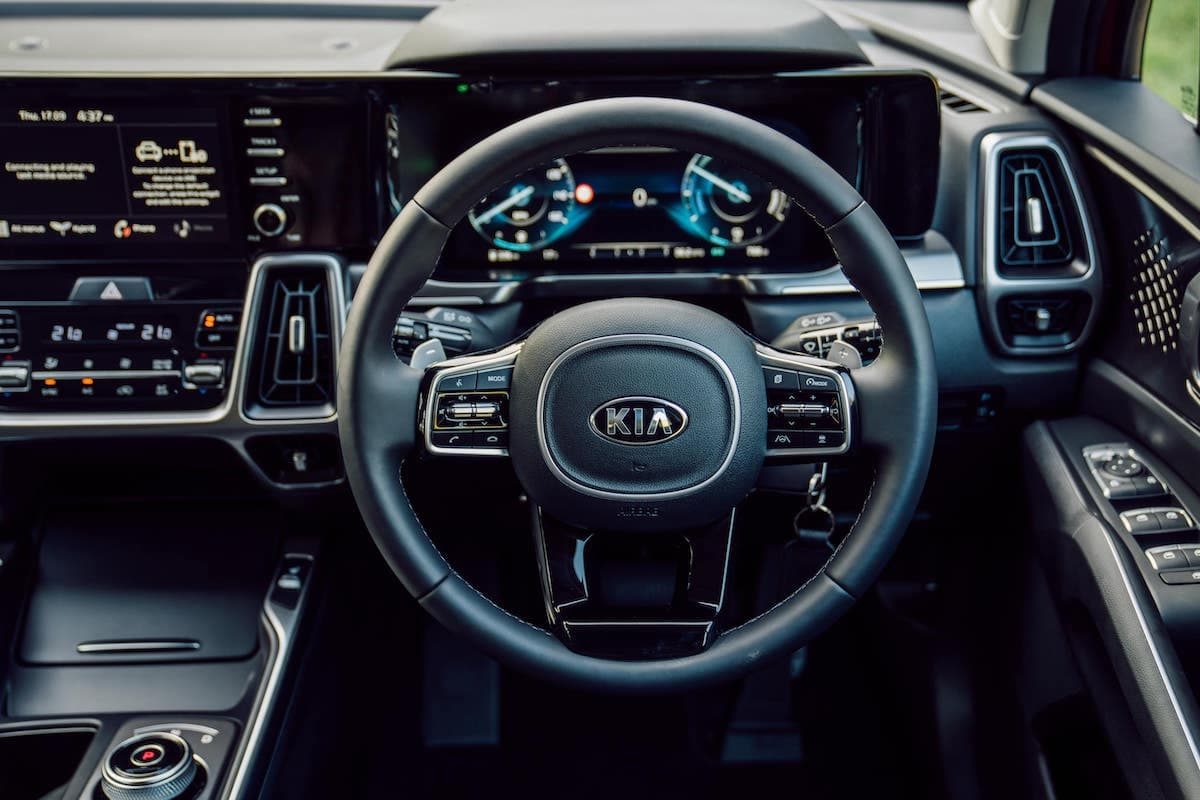
TCE Expert Rating: 90% (as of November 2020)