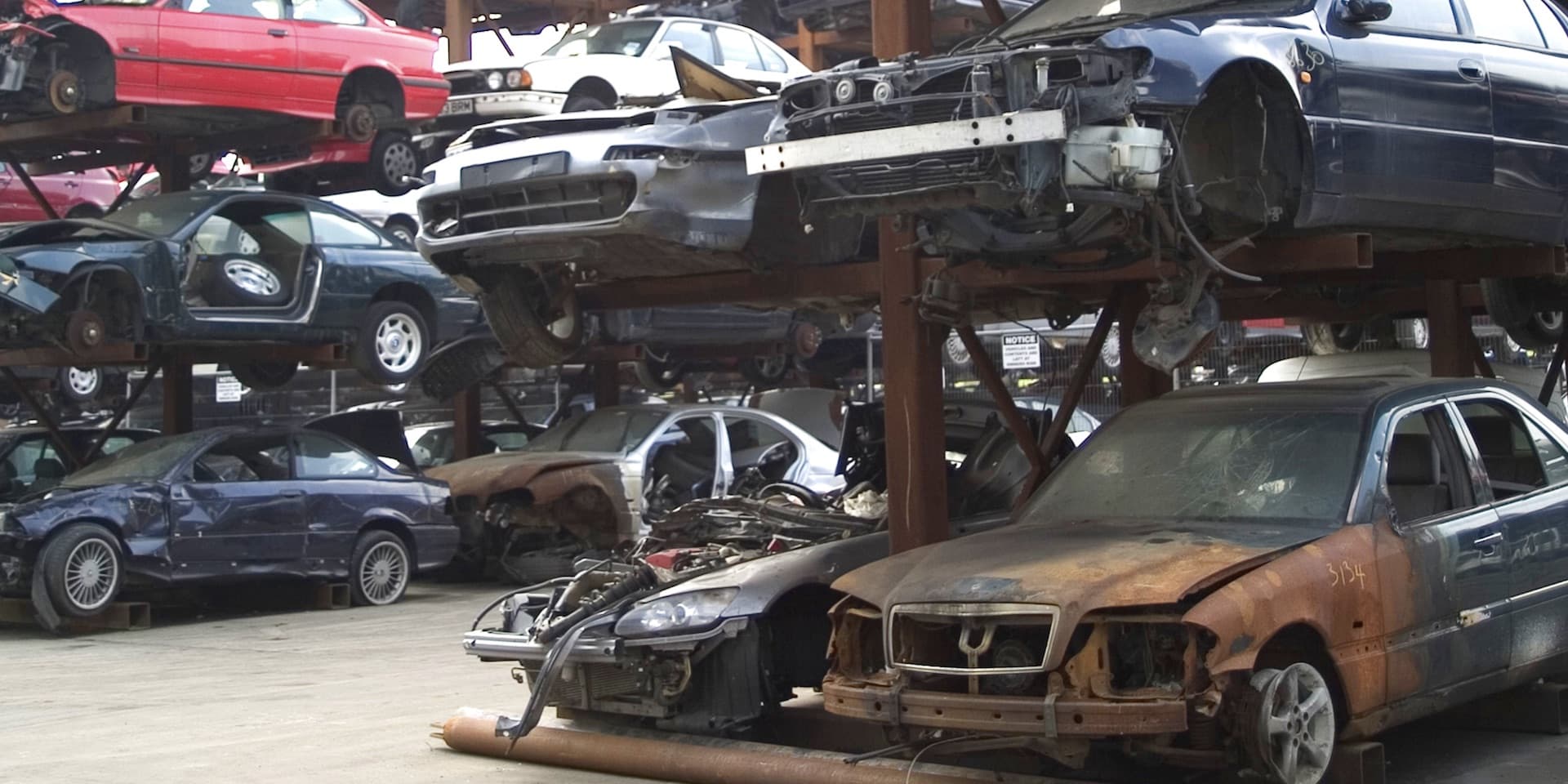
If a car is involved in an accident and sustains enough damage, an insurer may deem it to be a ‘write-off’. However, this term has several different elements to it – and they can be confusing at times.
Depending on the severity of the damage, it may be acceptable and perfectly legal for a car that has been written off by an insurance company to be repaired and returned to the road. Whether or not it’s a wise idea to buy a car that has previously been written off is a different story, however.
In this article, we will look through the ins and outs of a car insurance write-off and explain what it means to you.
What does a ‘write-off’ mean, exactly?
When a car is ‘written off’, it means one of two things. Either the vehicle has been damaged beyond repair and can’t be returned to the road, or it could be repaired to an acceptable standard but it isn’t cost-effective to do so (the cost of the repair is more than the value of the car).
Insurers will likely hand you a cash payout in either situation. In certain cases, you may be offered the chance to buy your car for its scrap value, which may be no more than a few hundred pounds. This may be of interest if the car is rare or unique, or you are interested in repairing it yourself, but won’t be of use to most people.
When will my insurer write a car off?
Most obviously, a car insurance company will declare a car to be written off after an accident resulting in significant damage. The insurance assessors and repair centre will make this decision. Once a car has been declared a write-off, its status cannot be altered.
An insurance company may write off a car if it has been stolen and not recovered after a certain period of time. The insurer pays the owner for the value of the vehicle, which is written off. Even if the car is subsequently recovered, it will still be classed as a write-off regardless of its condition. These cars may often only have light damage, and will usually be declared as a ‘Cat N’ (see below).
You are required to inform the DVLA that your car has been written off. If you don’t, you could face a £1,000 fine.
(PA)
What are the insurance write-off categories?
There are four different levels of write-off, depending on the extent of the car’s damage. They are as follows:
Category A
A car deemed a Category A (known as ‘Cat A’) write-off is one that’s destined for the scrapper and has been deemed completely unsafe to appear on the road, even if it appears to have some salvageable parts. This happens after the most serious of incidents – for example, a serious fire – where the car’s damage is so extensive that the only safe solution is to scrap the whole thing.
The entire car (or what’s left of it) must be destroyed, with no part of the vehicle whatsoever allowed to be used on a public road again.
Category B
When a car is declared ‘Cat B’, this means its body shell must be destroyed, although other parts can be salvaged for reuse on other cars. This generally happens when the car has suffered severe damage to one area but another area of the car is unaffected, such as a head-on collision that destroys the front of the car but leaves the rear untouched.
The core structure of the car (body shell and any structural components) must be scrapped, but non-structural parts like panels and trim pieces can be stripped off and used again if they have not been damaged.
Category S
Formerly dubbed ‘Cat C’, what is now called ‘Cat S’ is a car that has suffered structural damage but is not terminally broken. Though it doesn’t need to be scrapped, it does require specialist professional repair before it can be used on the road again. The repairs will almost certainly be very expensive, so will usually cost more than the car is worth.
Although the car has suffered structural damage (such as damage to a crumple zone), if the vehicle is properly repaired then there is no reason why it won’t be as safe as it was prior to the accident. Cars are built in a very modular way, so even fairly major components can be replaced or repaired without affecting the rest of the vehicle – if the job is done properly.
However, it’s important to be aware that there is no legal requirement for the repairs to be inspected before the car returns to the road, so you have no guarantee that the repairs have been conducted to a suitable standard.
Category N
‘Cat N’ means a vehicle has suffered damage that is non-structural but has been deemed too expensive to repair by the insurer. Cars under this are usually fixable, though non-structural doesn’t necessarily mean driveable — as it could indicate a fault with its electronics, steering, brakes or other mechanical components.
In a Cat S or Cat N write-off situation, the insurance company will usually pay the owner the market value of the vehicle and send the car off to be auctioned. Depending on the nature of the damage, it may be stripped for parts and the remainder scrapped, or it may be bought by a business or individual who will repair it and put it back on the road, which is perfectly legal.
A car does not need to have a lot of visible damage to be declared a write-off. The slightly damaged blue Mini in the image below was actually my car and was declared a Cat N write-off last year, even though the damage looks very light and the car was still driveable. An old lady drove into it while it was parked in a supermarket car park, a collision at probably less than 10mph.
The Mini needed a complete new front bumper assembly (which obviously needed to be painted) and the black plastic wheel arch assembly. Although some minor damage to the bonnet is visible under the left headlight, the real problem was that the whole bonnet had been moved ever so slightly in the impact, which damaged the hinges and mountings. That would mean a new bonnet, which as you can see incorporates the headlights and grille. There was also some scratching to the front left wheel and a cut on the tyre sidewall, which would require a new tyre.
The cost of all those repairs and new parts was easily more than the value of a 14-year-old Mini Cooper, so the insurance company declared it a Cat N write-off. It was bought from a damaged car auction, repaired and sold by a used car dealer a month or so later.
It might look like very minor damage, but it was enough for the insurance company to write this Mini off (Category N).
Should I buy a written-off car?
Buying an insurance write-off can be a risky business. Even though a Cat N or Cat S car is legally allowed to be repaired and continue its life on the roads, there is no formal inspection requirement to ensure that the repairs have been carried out to an acceptable standard. This is particularly important for a Cat S car, which has suffered some level of structural damage.
If you’re buying from a used car dealer, they are obliged to declare that the car is a Cat S or Cat N. It must also be clearly stated in any advertisement. On the hand, if you’re buying privately, there are no such safeguards. It’s always worth the £20 or so to get a vehicle history check, which will tell you if the car has previously been written off.
If you’re considering buying a car insurance write-off, a Cat S or Cat N car should be considerably cheaper than a similar car that hasn’t been written off. To give you an idea, the Category N Mini above was advertised by a dealer (after being repaired) for about 25% less than the payout I got from the insurance company. If you allow for a bit of haggling in the purchase, the buyer probably paid at least 30% less than an equivalent car.
Of course, you might save some money if you buy a Cat S or Cat N car, but you’ll inevitably lose it again when you come to eventually sell the car down the track. Plus, you may well find that your car insurance premium is higher because the car is a former write-off. Overall, you might not end up saving very much at all.
While getting a mechanical inspection is a good idea when buying any used car, it’s especially important for a write-off. These vehicles may have been in relatively serious collisions and suffered unseen damage, so paying the extra for a professional to properly check the chassis and underpinnings is a great idea.
The real risk is buying a car that’s been poorly repaired. Personally, I wouldn’t touch a Cat S car regardless of price, but if you are considering it then at least be very aware of what you’re doing.
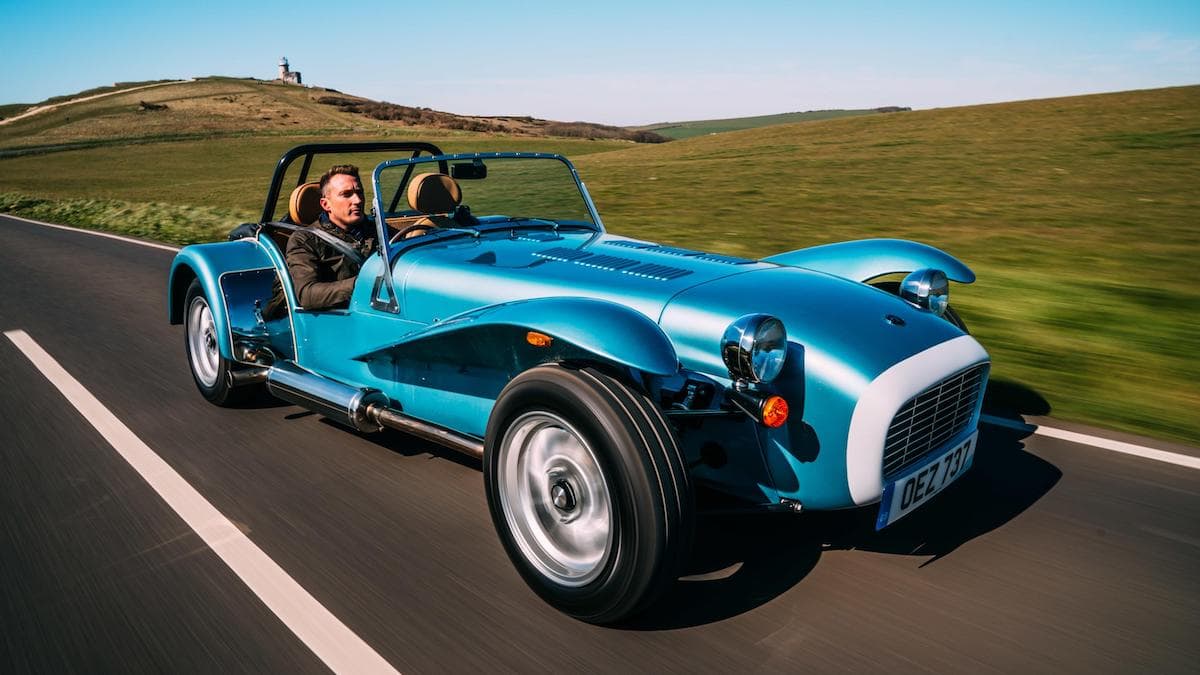
Caterham has launched another retro-inspired version of its famous Seven sports car – the Super Seven 1600.
Drawing looks from classic roadsters of the 1970s, the Super Seven packs several retro styling touches including classic flared wheel arches, 14-inch alloy wheels and a rear carrier akin to that fitted to traditional Caterham models.
Inside, the Super Seven features a wooden-rimmed steering wheel as well as classically tailored leather seats.
It’s also offered in two chassis sizes, with both standard (S3) and wide (SV) incorporating the retro looks. The model uses a 1.6-litre Ford Sigma engine driven through a five-speed manual gearbox to the rear wheels, with 135hp and 165Nm of torque equating to a 0-60mph time of 5.0 seconds and a top speed of 122mph.
It also includes DCOE throttle body injection – the type found on rally cars of the 1970s.
Graham Macdonald, Caterham CEO, said: “Caterham has always been about individuality and the quality engineering that makes the Seven peerless when it comes to the driving experience.
“Ownership of any specification of Caterham Seven is a mark of distinction and a ticket to driving adventure, but our heritage line of models holds a special place in the hearts of the true brand enthusiasts. Both of our most recent retro-inspired Sevens – the Sprint and Super Sprint – sold out in record time so we know the appeal for these cars is strong.
“We’re excited to introduce the most powerful Super Seven ever built, a reimagining of a true modern icon, delivering exactly what the original was designed to offer – a focus on driving feel and race-inspired upgrades but with some touches of luxury to the finishes.”
Prices for the Super Seven start from £33,495. Caterham also offers finance packages in conjunction with Santander Consumer Finance.
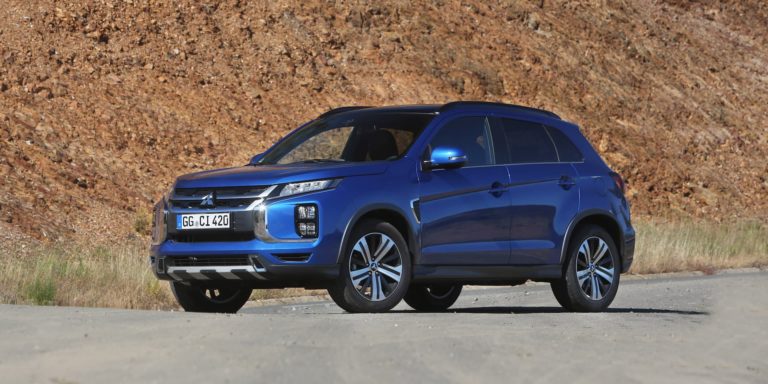
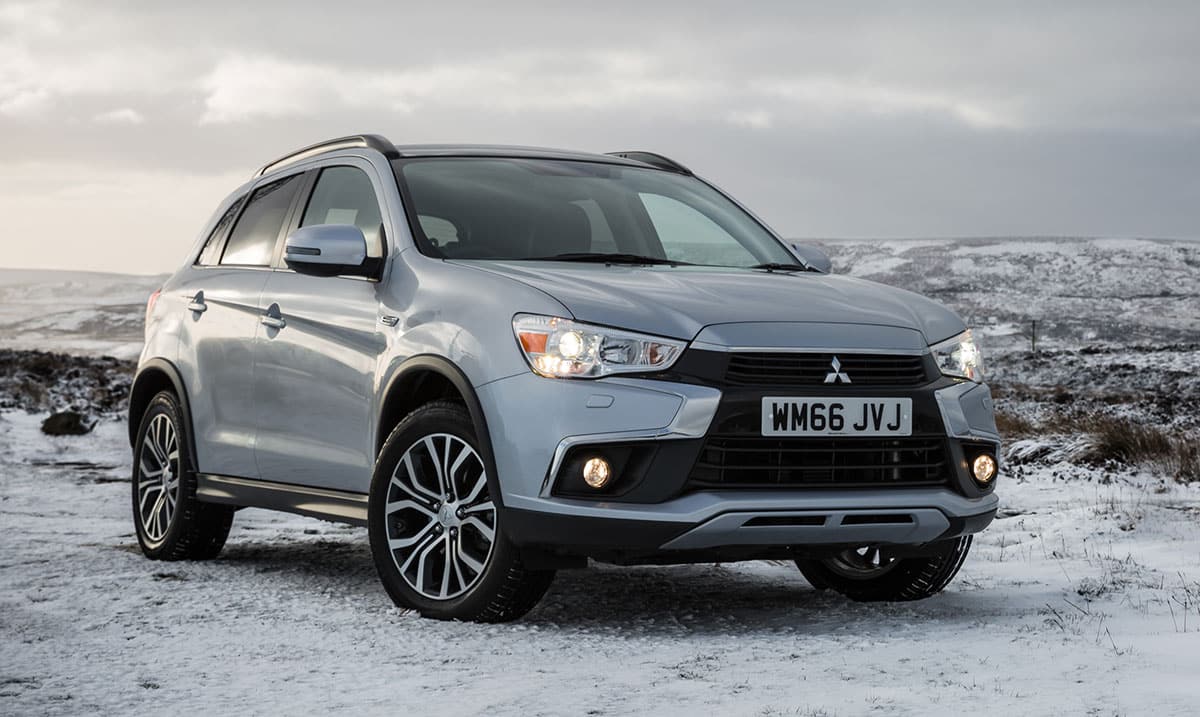
The Mitsubishi ASX is a small SUV that was the smallest model in the Mitsubishi SUV line-up. It was on sale from 2010 until 2021 when Mitsubishi withdrew from the UK market, with at least four facelifts over the decade to try and keep it competitive with newer rivals.
The most recent update to the ASX came in the second half of 2019, which provided a significantly altered look to the front end of the vehicle. The interior has also had incremental updates with every facelift. The ASX was given a five-star safety rating from Euro NCAP when it was launched, but this expired a couple of years ago and is no longer valid.
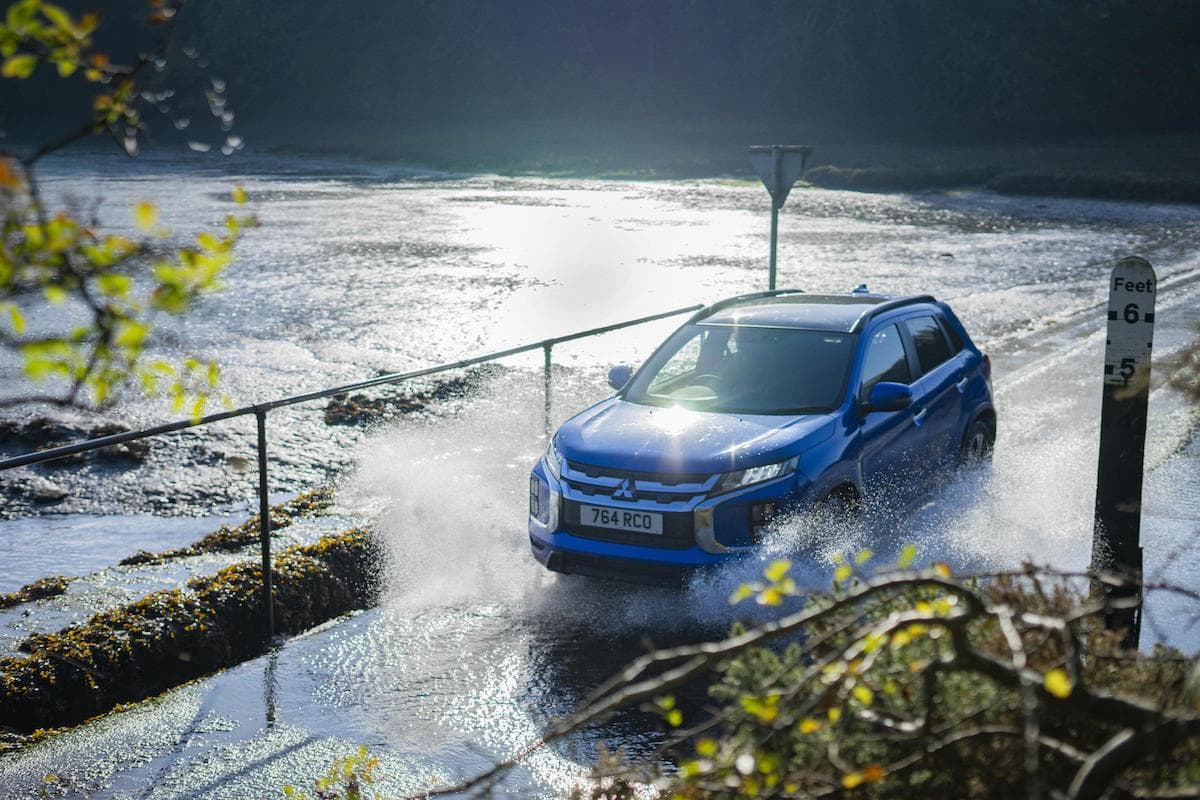
The ASX was praised for its off-road ability compared to most small crossover models, and the infotainment system on the latest models was at least competitive. However, the driving dynamics and engine performance were both rated poorly, and overall the ASX was one of the lowest-ranked new cars in terms of media reviews while it was on sale.
No longer on sale, the Mitsubishi ASX holds a Used Car Expert Rating of E, with a score of 54%. It gets good grades for its low running costs and its reliability record is average, but its safety rating has long expired and its media review scores were dire.
Highlighted reviews and road tests from across the UK automotive media. Click any of the boxes to view.
The Car Expert
Model reviewed: Range overview Score: 6 / 10 The latest updates do not add much but the Mitsubishi ASX is still a good value SUV, particularly if you are looking for all-wheel-drive. Read review
Auto Express
Model reviewed: 2.0-litre petrol automatic AWD Dynamic Score: 4 / 10 “Despite an extensive facelift, a new engine and extra kit, the Mitsubishi ASX is feeling its age. If you’re after a small crossover with good road manners, lots of kit and space for the family, there’s better value to be had elsewhere.” Read review
Model reviewed: Range overview Score: 4 / 10 “The Mitsubishi ASX is a decent-looking and well-equipped crossover that struggles to match newer rivals on the road” Read review
Auto Trader
Model reviewed: Range overview Score: 6 / 10 “The Mitsubishi ASX’s updates certainly bring it up to modern standards when it comes to looks, and it’s well-equipped with features for a very reasonable price. But the modern trappings can’t hide an ageing car that really struggles to match numerous very capable rivals in terms of its driving experience.” Read review
Car
Model reviewed: 2.0-litre petrol automatic Score: 4 / 10 “Build and material quality is typical of Japanese manufacturers – not necessarily the plushest, but it does feel pretty bombproof inside and it’s easy to imagine that ten years on, everything will still be working as well as it did on day one.” Read review
Carbuyer
Model reviewed: (range review) Score: 5.4 / 10 “The Mitsubishi ASX is a tough and practical small SUV but a recent facelift can’t fully disguise its advancing years.” Read review
Carwow
Model reviewed: Range overview Score: 5 / 10 “The Mitsubishi ASX has a decent infotainment system and comes with a long list of standard kit, but it feels too dated in important areas to recommend ahead of newer alternatives.” Read review
Honest John
Model reviewed: Range overview Score: 6 / 10 “The updated model adopts the chunkier design language of the rest of the Mitsubishi range, while the interior has been revised with a new eight-inch touchscreen infotainment system. DAB, Bluetooth, Apple CarPlay and Android Auto are standard across the range.” Read review
Parkers
Model reviewed: Range overview Score: 4.8 / 10 “Compact SUV lags behind main rivals, despite extensive facelift” Read review
The Telegraph
Model reviewed: 2.2-litre diesel automatic 5 Score: 4 / 10 “A reliable and practical car from a well-regarded Japanese manufacturer, but a rattly passenger experience makes this model feel a little long in the tooth. Hard to recommend over more refined – and popular – mainstream rivals.” Read review
Top Gear
Model reviewed: Range overview Score: 5 / 10 “It’s not that the Mitsubishi ASX is truly bad by any stretch of the imagination, it’s just that its competition is newer. And better.” Read review
Safety rating
Independent crash test and safety ratings from Euro NCAP
The Mitsubishi ASX was originally crash tested by Euro NCAP way back in 2011 and awarded a five-star rating. However, this rating expired in January 2018 and is no longer valid as the car no longer meets the standards required for such a rating. This is normal practice, as Euro NCAP reviews its ratings on most cars annually with most ratings expiring after about six or seven years.
Although the rating has now expired, the score is still useful if you are comparing a used ASX to vehicles of similar age – whose ratings will have probably also expired.
Eco rating
Independent economy and emissions ratings from Green NCAP
No eco rating
The Mitsubishi ASX was not lab tested by Green NCAP during its production life.
Reliability rating
Reliability data provided exclusively for The Car Expert by MotorEasy
Total claims: 27 Average repair cost: £491.12 Last updated: April 2025
The Mitsubishi ASX has a better-than-average reliability score, according to warranty data provided by our partner MotorEasy.
The most commonly reported problems for ASX owners to date are related to the engine – and unfortunately these are also some of the most expensive faults with an average repair bill of more than £850. Gearbox repairs have been similarly expensive, although have not been as common to date.
If you’re looking at a used Mitsubishi ASX, make sure any extended warranty cover you purchase covers all of the potential problem areas shown above.
Similar cars
If you’re looking at the Mitsubishi ASX, you might also be interested in these alternatives
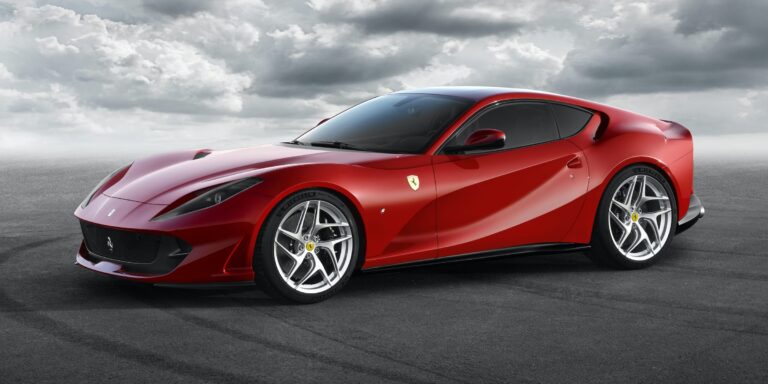
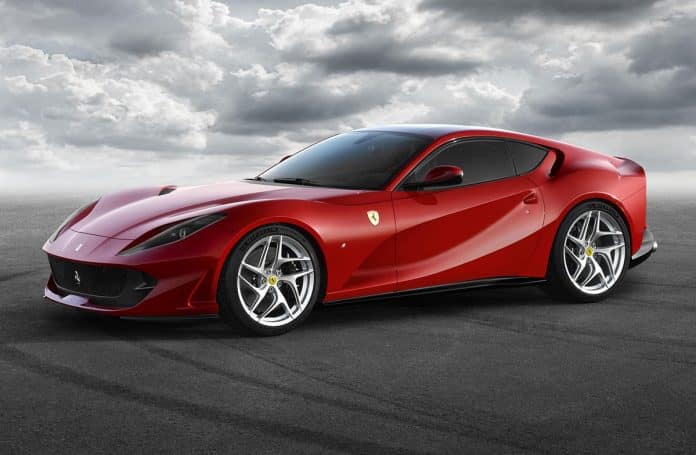
The Ferrari 812 Superfast was a high-performance two-seat sports car and the flagship of the ‘regular’ Ferrari range. it was launched in 2017 as a replacement for the Ferrari F12 Berlinetta, and remained in production until 2023 after which it was itself replaced by the latest Ferrari 12Cilindri.
The coupé 812 Superfast was joined in 2019 by the targa-roofed Ferrari 812 GTS, which hit UK streets in summer 2020. An ever-higher-performance version called the 812 Competizione came along a couple of years after that.
The 812 Superfast received mostly outstanding reviews from the UK motoring media over its life (with the notable exception of Jeremy Clarkson), with particular praise for its performance and comfort. The only criticisms were related to its expense and lack of practicality, neither of which are likely to bother potential customers.
As of January 2025, the Ferrari 812 Superfast and 812 GTS have a Used CarExpert Rating of E, with a score of 53%. Inevitably, the best results are for the car’s media reviews, while the score is dragged down by high running costs. However, anyone who can afford a used 812 Superfast is likely to be fairly comfortable with the required financial obligations.
Body style: Coupé and targa Engine: petrol V12 Price when new: From £263,098 on-road
Launched: Spring 2017 Last updated: Summer 2020 Ended production: Autumn 2023
Image gallery
Media reviews
Highlighted reviews and road tests from across the UK automotive media. Click any of the boxes to view.
Auto Express
+
Model reviewed: 812 GTS Score: 10 / 10 “As a potential farewell to Ferrari’s series production V12 engine in pure petrol form, the 812 GTS is a fitting sign-off that stays true to the brand’s values. The performance is truly astonishing, but it’s how it delivers it and the sensations it conjures as part of the experience that makes this an impossible car not to fall for. Bravo Ferrari.” Read review
Model reviewed: Range review Score: 10 / 10 “A replacement for the Ferrari F12, the 812 Superfast goes straight into the brand’s hall of fame as an all-time great.” Read review
Auto Trader
+
Model reviewed: 812 Superfast coupé Score: 10 / 10 “The Ferrari 812 Superfast is the successor to the F12berlinetta. It is Ferrari’s fastest car built for the road instead of track, with its most powerful V12 engine to date. Yet it has ample boot space for proper luggage and is comfortable enough for long distances. Is this the ultimate Ferrari?” Read review
Car
+
Model reviewed: 812 GTS Score: 10 / 10 “The Ferrari 812 GTS might be a familiar enough kind of concept, but no one else – not Aston, certainly not Bentley – gives an open-topped V12 GT such searing aggression. Think of the 812 GTS more as a supercar that breaks with convention than a sporting GT and you’ll have some idea what to expect when you flatten that throttle on a damp road.” Author: Ben Barry Read review
Model reviewed: 812 Superfast coupé Score: 10 / 10 “The Ferrari 812 fulfils the tough brief in a dazzling fashion. Easier to live with in normal driving than the 488 but utterly absorbing when stretched, it blurs the lines between GT and supercar to the point where it lacks a rival that can match its breadth of ability.” Author: Matt Joy Read review
Carbuyer
+
Model reviewed: 812 Superfast coupé Score: 8 / 10 “The Ferrari 812 Superfast is so astonishingly good it makes one question how supercars can possibly improve” Author: Richard Ingram Read review
Evo
+
Model reviewed: 812 GTS Score: 10 / 10 “The Ferrari 812 GTS offers a wonderful combination of near-hypercar pace and open-air driving.” Author: Adam Towler Read review
Model reviewed: 812 Superfast coupé “The pinnacle of front-engined Ferrari engineering, the 812 melds mind-warping performance with a chassis that draws you into the action” Read review
Model reviewed: 812 Superfast coupé Score: 10 / 10 “Faster, louder, even more exciting than the F12. But not as pretty to look at, which is a shame” Author: Steve Sutcliffe Read review
Parkers
+
Model reviewed: GTS Score: 9.6 / 10 “The Ferrari 812 GTS is a more friendly approach to the exhilarating 812 Superfast” Author: Lawrence Cheung Read review
Model reviewed: 812 Superfast coupé Score: 9.4 / 10 “Expensive to buy and inevitably expensive to run, the Ferrari 812 Superfast is nonetheless a spectacular machine without peer, and is unlikely to leave a lucky buyer anything other than completely thrilled.” Author: Matt Joy Read review
The Sun
+
Model reviewed: 812 Superfast coupé “The Ferrari 812 Superfast may have a daft name… but it is super fast, and super cool” Read review
The Sunday Times
+
Model reviewed: 812 Superfast coupé “As a thing, the Ferrari 812 Superfast is as brilliant as an Astute-class attack sub. Which is to say, very brilliant indeed. But it is too big and too powerful and too flashily expensive for those who simply want a very nice grand tourer.” Author: Jeremy Clarkson Read review
Model reviewed: 812 Superfast coupé Score: 8 / 10 “Equally adept as serene grand tourer or V12-powered track weapon” Read review
The Telegraph
+
Model reviewed: 812 Superfast coupé Score: 10 / 10 “Super. And very, very fast. But, as with all modern Ferraris, the 812 Superfast is as mild-mannered and controllable as you like in day-to-day driving, but when unleashed it is simply astounding.” Author: Paul Hudson Read review
Top Gear
+
Model reviewed: 812 Superfast coupé Score: 9 / 10 “The Ferrari 812 Superfast is a ruddy triumph. You just have to celebrate that someone, somewhere, still thinks it’s worth engineering and developing a car like this. A car unlike any other.” Read review
Safety rating
Independent crash test and safety ratings from Euro NCAP
No safety rating
The Ferrari 812 range was not tested by Euro NCAP during its production life.
Eco rating
Independent economy and emissions ratings from Green NCAP
No eco rating
The Ferrari 812 Superfast and 812 GTS were not lab tested by Green NCAP during their production lives.
Reliability rating
Reliability data provided exclusively for The Car Expert by MotorEasy
No reliability rating
As of January 2025, we don’t have enough reliability data on the Ferrari 812 Superfast and 812 GTS to generate a reliability rating.
The Car Expert’s reliability information is provided exclusively to us using workshop and extended warranty data from our partner, MotorEasy, sourced from both official dealerships and independent workshops.
As soon as MotorEasy has sufficient data on the 812 range, we’ll publish the score here.
Running cost rating
Monthly cost of ownership data provided exclusively for The Car Expert by Clear Vehicle Data
Fuel consumption
Average
Score
Variation
Score
Petrol models
17 mpg
E
17 – 18 mpg
E – E
CO₂ output
Average
Score
Variation
Score
Petrol models
370 g/km
D
366 – 373 g/km
D – D
Insurance group
Average
Score
Variation
Score
All models
50
F
50 – 50
F – F
The Ferrari 812 Superfast is a very expensive car to own and run, according to whole-life cost numbers provided exclusively to The Car Expert by our data partner, Clear Vehicle Data.
The car’s fuel economy of 17 mpg is one of the poorest fuel consumption stats in our Expert Rating Index, and insurance premiums are in the most expensive bracket too.
Awards
Trophies, prizes and awards that the Ferrari 812 Superfast has received
2018
Red Dot Awards – Outstanding design quality
GQ Car Awards – The Most Super Superfast Supercar Award
Similar cars
If you’re looking at the Ferrari 812 Superfast, you might also be interested in these alternatives
A number of car companies are causing ‘unnecessary stress’ for customers who can’t get their vehicles serviced during the coronavirus lockdown.
Car owners are worried that missing a service could invalidate their warranty. In normal circumstances, car manufacturers penalise owners who miss service intervals by revoking their cover.
Some car manufacturers have come out with blanket extensions to calm worried owners, but other brands are refusing to budge.
AA president Edmund King said: “In these uncertain times, everyone should be following government guidance concerning non-essential travel. For the majority of car owners with a vehicle under warranty that is rarely being used, it should not be essential to have a standard service now.
“Expecting drivers to go for a standard maintenance service during lockdown is against the spirit of government advice. We felt that the government took a sensible and pragmatic approach to MOTs and believe that manufacturers should show similar flexibility and common sense.
“Telling drivers to do something seemingly contrary to government advice may also add unnecessary stress to owners.”
Car dealerships were shut by the government on March 23, but their workshops and garages have remained open. This is designed to keep key workers on the move and not for the general public to have their cars serviced.
An MOT extension of six months and lasting for a year came into place on March 30 to stop drivers worrying about getting their annual roadworthiness inspection done, and experts believe this should set a precedent for servicing too.
PA Media contacted every UK car manufacturer and asked what sort of leeway they were offering customers when it came to getting their cars serviced.
The Volkswagen Group – including Volkswagen, Audi, Skoda and SEAT – wouldn’t offer a blanket extension. All the brands said they would deal with issues on a ‘case-by-case basis’. Porsche, part of the same group, said customers who made a request for a service in writing that couldn’t be completed due to the lockdown ‘would not be penalised’.
Alongside the VW Group, Alfa Romeo, Fiat, Honda and Jeep have all refused to issue an automatic extension. Advice from those brands varied, with most asking customers to contact the firm’s respective customer services department.
Kia has put no limit on either time or mileage within which customers need to get their car serviced. A Kia spokesman said: “We don’t know how long it will go on for so we don’t want to put false limits on the length of time, so that people don’t need to worry about getting their car serviced – people can’t have it done right now, we understand that, and they shouldn’t worry.
“People need to look after their car wherever possible if they can by checking the oil and tyres, but car servicing is not important right now – what is important is staying home and protecting the NHS.”
MG and Rolls-Royce both failed to respond to PA Media’s request for comment.
Car manufacturers offering service interval extensions
Volkswagen’s disregard for public health “in pursuit of profit and market dominance” by installing unlawful defeat devices in its diesel vehicles has been exposed in a “damning” High Court ruling, lawyers representing thousands of motorists have said.
Around 90,000 motorists who bought or leased Volkswagen, Audi, SEAT and Skoda diesel vehicles took legal action for compensation following revelations about the “dieselgate” emissions scandal five years ago.
Their lawyers say Volkswagen cheated European emissions standards, which were designed “to save lives”, by installing unlawful “defeat devices” in its diesel vehicles, meaning the vehicles were emitting up to 40 times the legal limit of nitrogen dioxide when out on the road.
In September 2015, Volkswagen Group announced that 11 million vehicles worldwide, including almost 1.2 million in the UK, were affected, prompting a flurry of litigation around the world.
The aftermath of the scandal has seen VW pay out more than 30 billion euros (£26 billion) in fines, recall costs and civil settlements, and has led to criminal charges by German prosecutors against current and former senior employees.
‘Decisive’ High Court ruling
The English litigation was filed back in 2016, but reached what lawyers described as “a decisive court battle” at a preliminary hearing in December when the High Court was asked to decide whether software installed in VW cars was a “defeat device” under EU regulations.
In a judgment delivered remotely on Monday, Mr Justice Waksman ruled that “the software function in issue in this case is indeed a defeat device” under EU regulations.
The judge said he was “far from alone in this conclusion”, referring to “numerous courts and other bodies in various other jurisdictions (which) agree that the software function here is a defeat device”.
The judge also stated that “a software function which enables a vehicle to pass the test because (artificially) it operates the vehicle in a way which is bound to pass the test and in which it does not operate on the road is a fundamental subversion of the test and the objective behind it”.
Gareth Pope, head of group litigation at Slater and Gordon, which represents around 70,000 claimants, welcomed the “damning judgment”, which he said “confirms what our clients have known for a long time, but which VW has refused to accept: Namely that VW fitted defeat devices into millions of vehicles in the UK in order to cheat emissions tests”.
He added: “The case exposed VW’s approach to this litigation and its customers, refusing to admit wrongdoing and compensate its customers in favour of running drawn-out and pointless litigation.
“The court’s conclusion that the existence of software was a ‘fundamental subversion’ of tests designed to limit pollution and make our air safe to breathe exposes VW’s disregard for EU emissions regulations and public health in pursuit of profit and market dominance.
“VW’s utter failure to convince the court of the merits of its case means that now is surely time for it to settle these claims and put this shameful episode behind it.”
Bozena Michalowska Howells, a solicitor from law firm Leigh Day which also represented some of the claimants against VW, said the ruling was “hugely significant for our clients who have been battling for four years to hold Volkswagen to account”.
She called on VW “to now do the right thing and put their customers first by entering into settlement negotiations so that our clients are not forced to drag VW through the courts and be faced with further years of litigation to determine their losses”.
Volkswagen still denies wrongdoing
A VW spokeswoman said the company was “considering carefully the grounds on which it may seek to appeal today’s decision”.
She added: “While Volkswagen is disappointed that the outcome was not in our favour, the judgment relates only to preliminary issues.
“To be clear, today’s decision does not determine liability or any issues of causation or loss for any of the causes of action claimed. These remain to be determined by the court as the case continues.
“Volkswagen remains confident in our case that we are not liable to the claimants as alleged and the claimants did not suffer any loss. We will continue to defend our position robustly.
“Nothing in this decision today changes this. We look forward to making progress with defending the remainder of the case.”
There have been many promises made by the government and by different industries to support consumers and industries that have been hit by the global coronavirus pandemic. But one sector that hasn’t received much of a mention is the car finance sector.
But this enormous sector – now up to £48 billion a year – is under unprecedented pressure as huge numbers of customers face a loss of income due to the nationwide lockdown caused by the spread of the Covid-19 coronavirus.
While the government was quick to ensure that all homeowners were able to take a three-month payment holiday from their mortgages, followed by provisions to protect renters, there has been no announcement whatsoever to protect and manage car finance debt. Yet for millions of households, car payments are the second-largest monthly expense after their mortgage/rent payment.
There are two big problems that customers have been asking us about:
Difficulty in keeping up with car finance payments due to coronavirus-related loss of income
Expiring PCP car finance agreement or PCH lease agreement, and no way to change their car because dealers are all closed
Your car finance agreement has no provision for loss of income
Many people are now finding out for the first time that there is nothing in a car finance agreement to cover you for loss of employment. It doesn’t matter whether it’s an individual job loss or a nationwide layoff, you still have to make your payments every month.
We’ve talked about this a lot for several years now, pretty much whenever we talk about car finance. Across the car industry, the response has always been that people shouldn’t borrow beyond their means, and should always have money saved up to cover themselves in case of sudden financial hardship. It’s not the industry’s fault, they insist.
Well, the industry is about to find that tens of millions of car finance customers are facing some level of financial hardship. There could be a massive problem if millions of customers can’t make their car payments over the next couple of months. Various sources have told The Car Expert that customer enquiries regarding financial hardship have increased 20-30 fold (even more in some cases) in the last couple of weeks. There is concern for the ability of some lenders to survive this pandemic if dealerships remain closed for more than a couple of months.
What if your PCP agreement is expiring and you can’t change your car?
Thousands of car owners will have PCP agreements that expire in April and May. Normally, all they’d need to do is head down to their dealership of choice to part-exchange their car on another one and start a new PCP. But they can’t do that because dealerships are closed.
Once again, many people are about to find out for the first time that a PCP balloon payment is a direct debit like their normal monthly payments. If you don’t take action, the lender will try to take the money from your account. Since you probably don’t have the thousands of pounds in your account to cover it, you will default on the payment. That triggers a default response from the finance company, and probably a penalty fee from your bank as well.
If you have a balloon payment that is due to be paid in the next few weeks, call your finance company ASAP to see if they can make alternative arrangements. If you’re not sure about how many payments you have left before the balloon is due, check it right now so you know where you stand. Come back and read the rest of this later.
The Finance & Leasing Association (FLA) has provided some useful additional information about this, which we’ve posted at the end of the article. If you know who your lender is but you don’t have their contact details to hand, the FLA has a handy contact list for all the major car finance companies.
It’s hard to part-exchange your old car on a new one if the dealers are all closed.
Car companies lack any proactive initiatives
The car manufacturers and their associated finance companies appear to have made no effort to come up with initiatives of their own to support their customers, which is no great surprise. The industry has always been great at taking as much of your money as it can get, but terrible at helping you out when you need it.
I spent several hours trawling through coronavirus/Covid-19 information on dozens of UK car company websites on the weekend to try and find out what policies they all had regarding customers with expiring PCP agreements and customers struggling with payments, and they were almost universally terrible. Despite loudly providing support for servicing, warranties, roadside assistance and other measures, initiatives for car finance were completely non-existent.
Most didn’t have any Covid-19 car finance information on their front page, so when you eventually clicked through to the right section, it basically amounted to “Call us if you are in financial difficulty” rather than providing any across-the-board policies that give customers clear guidance. This is then usually followed by “We’re experiencing high call volumes and reduced staffing, so please don’t call us”. This is not remotely helpful.
We are in the middle of a national economic crisis, with up to half of all employees expected to furloughed or laid off within weeks. The car industry’s “call us to explain why we should help you” approach is not providing sufficient guidance and assurance to millions of consumers with large amounts of car finance debt. For most households, car payments are their second-largest monthly expense and millions of people are very stressed. Having to keep paying a few hundred pounds per month on a car could easily be enough to drive tens of thousands of people into bankruptcy.
Car manufacturers and dealers are currently falling over each other to come up with press releases and social media posts that tell everyone how they are offering all kinds of support key workers. In fact, they have managed to turn laudable initiatives into desperate attempts for publicity and validation (I read a dealer principal describing one of his technicians as a ‘hero’ for literally helping a key worker to change a light bulb…). Yet when it comes to the 90+% of their customers who have a car finance agreement of some kind, there’s been a total lack of interest.
Ford has managed to come up with a cashback/payment deferral scheme to help people buy a new car or van, in addition to 0% finance offers on most cars in the range. But this is only if you order a new car online in April or May (even though you might not actually get it for months because the dealerships are all closed). It’s a good initiative, but does nothing to help customers who have a Ford on a Ford Credit finance agreement right now.
If you go and look at the Ford UK website, there is no visible information about Covid-19 support anywhere at all. If you search for “Covid-19” (and don’t forget the hyphen or it won’t show anything at all), there is a page with some information. But it’s not particularly helpful and there are no offers or initiatives being rolled out across the board. Just more of the same “call us if you’re in financial difficulty” nonsense.
Start presenting some options up front
If car companies can come up with policies and initiatives to help sell more cars while their dealerships are closed, surely it’s not beyond the realms of possiblity that they can come up with policies to help their existing customers. But they haven’t, and they probably won’t.
The car companies that did respond to our questions argued that their hands are tied by the Consumer Credit Act, therefore “there’s nothing we can do”. While it’s certainly true that the Consumer Credit Act was written without consideration for this sort of situation, that doesn’t stop finance companies proactively presenting some options to their customers rather than sitting back and waiting for customers to call and ask for help.
Of the car finance companies that we spoke to, the most helpful and detailed answers came from BMW Financial Services, who pointed out that they have ramped up their customer-facing team numbers by re-training and redeploying a ‘significant number’ of employees to deal with customer enquiries. Even though they are operating at a higher than normal capacity as a result, waiting and response times are still significantly longer than normal due to the sheer volume of enquiries.
The finance companies told us that they have a menu of options to offer customers in financial difficulties. These include voluntary termination, payment holidays, reduced monthly payments, waiving interest charges and so on, although the options depend on the type of agreement and the customer’s particular situation. If your PCP or PCH agreement is ending shortly, they have options for you to avoid balloon payments and advice on holding onto a car until it can be collected. (For example, BMW explained that you’d need to cancel your registration, declare the car SORN and keep it off the road. They will then insure the vehicle until they are able to collect it.)
What the finance companies need to do is start proactively presenting and explaining these options to customers, so customers can understand what options may be available before they pick up the phone. It would provide much clearer guidance and stronger assurance to customers who simply don’t know what options are available – repeated research has shown that customers struggle to understand how car finance agreements work when things are going well, let alone what happens when things go wrong.
Damn, between my car finance, my credit card and my drug dealer all wanting payment, I can’t afford to eat.
The government needs to ride to the rescue
Even if customers are able to avail themselves of some kind of support from their finance companies, the Consumer Credit Act (CCA) is still problematic. Some support mechanisms will trigger legally-required default notices or warning letters to be sent to customers, and most options require the same credit checking and application forms as a new finance agreement (basically because they often require a new finance agreement).
The Finance & Leasing Association told The Car Expert that it is in constant communication with the Financial Conduct Authority (FCA) and the goverment about fast-tracking changes: “We are speaking regularly to the FCA and HM Treasury regarding how the CCA complicates and lengthens the process of providing help, and the impact this is having on already high call volumes.
“We’re also in touch with Government to ask that non-bank lenders have direct access to financial support schemes so that they can readily support the increased demand for forbearance from businesses and households.”
Ultimately, only the government can override or amend its own legislation. So if the Consumer Credit Act is not fit for purpose in the current emergency, only the government can remove that hurdle. And if the finance companies are unwilling or unable to offer across-the-board measures to support millions of customers who are at risk of financial hardship, it will have to be the government that steps up to do it for them.
Unfortunately, it’s not as simple as the three-month payment holiday that the government ordered banks to make available for all house mortgages. But I’m sure that there are a lot of clever people in the Treasury, the FCA and the FLA who can work out something – and they need to, fast, for both consumers and lenders.
Will coronavirus finally burst the PCP car finance bubble?
In many ways, the car industry is now reaping the harvest of throwing enormous amounts of money at anyone that walked through a showroom door for the last decade. We’ve talked about this at length before, but the PCP car finance juggernaut that took the UK new car market to records heights in the first half of this decade was always an unsustainable boom.
New car registrations have been falling for the last four years, and the coronavirus shutdown has now brought the industry to almost a complete halt. Even though we have no idea when life will get back to normal, it seems likely that the car industry is going to be fundamentally changed by what is currently happening.
The car industry loves to blame everybody else when things go wrong (Brexit has been the big baddie for the last few years, along with the media “demonising diesel”), but falling sales over the last four years are a direct reaction to the unsustainable growth of the previous few years.
The PCP boom really kicked off a decade ago with the government scrappage scheme. Basically, anyone could get a couple of thousand pounds for their old banger to use as a deposit, and could get a brand new car (usually a Kia or Hyundai) for £99/month. Car manufacturers rushed to jump on the PCP bandwagon, and customers switched from buying Vauxhalls and Renaults to buying BMWs and Audis because the payments were achievable.
However, steadily increasing new car prices, combined with falling used car values, started making car finance payments more expensive. In response, manufacturers and lenders started advertising longer terms (four years instead of three years). But that was only a temporary solution to keep selling cars – if you switch all your customers from a three-year PCP to a four-year PCP, you won’t have any customers in three years’ time. And that’s exactly what has happened.
There’s no doubt that the coronavirus pandemic will drive a lot of car dealerships into bankruptcy. Possibly some finance companies, and maybe even some car manufacturers. The entire car industry is reliant on people buying cars they don’t need with money they don’t have.
I’ve been banging on about this for years. No-one needs to buy a new car, but people want new cars. You can get away with that sort of selling when times are good and everyone can afford their finance payments. But when the money runs out, you’re in trouble. The car industry, on the other hand, really does need us all to buy millions of new cars each year.
Supply is greater than demand, and that problem is getting worse each year as demand keeps falling. Yet whenever I’ve suggested that the car finance industry is exposed to significant risk if the market takes a turn for the worse, the standard industry response has been to laugh it off and say that it would take a really enormous crisis to derail the industry. Well, guess what…
The car industry has also been slow to embrace online sales, partly because of the long-standing and complex relationship between car manufacturers and the dealer networks who sell their cars. A lot of those complexities may finally be swept away as a result of this crisis, so we could see a smaller but far more modernised automotive retail world emerging once this is all over.
Coronavirus car finance FAQs from the Finance & Leasing Association
The Finance & Leasing Association represents all the major car finance lenders in the UK. These FAQs, and other regularly updated information, is posted on the FLA website.
My motor finance payment is due soon, and I won’t be able to pay. What do I do?
Contact your lender, but as call volumes are very high at the moment, do check if they have online contact forms. If you do call, please be sure to have your motor finance agreement next to you so that the call centre staff can work through your request as quickly as possible and find the best option.
My PCP agreement is due to end in April, but the dealership is closed. Does that mean I have to pay the balloon and keep the car?
No, you should only pay the balloon if that’s what you would have chosen to do before the Coronavirus circumstances. Get in touch with your lender asap to tell them what you would like to do, then see how they can help make that happen.
Will I have to take the final payment option when my car finance agreement ends next month because closures of car dealerships will make it difficult to return a vehicle. Could that happen?
No. The abiding principle in all cases is that customers are able to choose the option that best suits their circumstances at the end of an agreement. Just contact to your lender to see what can be arranged.
What if I can’t meet my monthly payment, or the balloon payment at the end of the agreement, will my car be taken away?
The objective behind forbearance in many circumstances is that the car should stay with the customer. Contact your lender and they’ll recommend a solution.
If a motor finance agreement is due to end quite soon, can buyers ask for extensions on their deals or leases until the crisis is over?
Yes, they can. They should get in touch with their lender as soon as possible and, as this scenario may suit both parties, there may be an option to discuss charges. It’s always worth asking.
How are lenders organising the return of vehicles, or are they asking customers to keep them, without driving them until the crisis is over?
Lenders can still collect cars and move them around, but the practicalities of this process are still being ironed out. Contact your lender to see what can be arranged.
Are your motor finance members generally shutting down during this period, or continuing to allow buyers to take out new leases or finance deals, and if so, what measures they’re taking (e.g. delivery, sanitisation, and so on)?
Our members are still open for business, so if a customer wants a car, they should get in touch as normal and the lender will sort out the logistics – taking all the precautions around delivery that you would expect.
Volvo has introduced a new, more affordable plug-in hybrid powertrain to its line-up as the firm looks to give its customers more electrified derivatives.
Badged as the ‘T6’, the new option sits alongside the more powerful T8 plug-in hybrid on the V60 estate and XC60 SUV models, though is now the only petrol-electric version available with the larger V90 estate. The move widens the Swedish brand’s already compressive line-up of plug-in hybrid models, which have recently been renamed as ‘Recharge’ versions.
This T6 continues to use the 2.0-litre petrol unit found in the T8, but has been detuned by 50hp – reducing the engine’s output to 250bhp. However, the electric motor and 11.6kWh battery tops that figure back up to 340hp.
That reduction in power also means this T6 is more efficient than the T8 powertrain – making it able to return up to a claimed 156.7mpg in its cleanest guise in the V60, along with CO2 emissions of 41g/km. It also increases the zero-emissions range – meaning the V60, XC60 and V90 can now travel for up to 37 miles just on electricity.
The powertrain is also more affordable than the T8, with prices starting from £45,105 for a V60 T6, and £52,445 or £55,180 for the XC60 and V90 respectively. The setup could also be introduced to the S60 and S90 saloons in the future, too. These new T6 plug-in hybrid versions are available to order now, though first deliveries aren’t expected until the summer.
A Volvo spokesperson said the new powertrain has been introduced with the “intention to offer our customers even more choice when it comes to plug-in hybrid options”.
The firm is already the only mainstream manufacturer to have a petrol-electric version of each of its models – this recently being solidified with the introduction of a plug-in hybrid version of the compact XC40 crossover.
Volvo has previously announced that it wants 50% of its new cars to be all-electric by 2025, with the aim of having one million electrified Volvos on the road by that date. Its first EV – the XC40 Recharge P8 was unveiled last year, and will arrive in the UK by the end of the year. From now on, a new all-electric Volvo will debut every 12 months.
Results published today showed that the coronavirus lockdown has hammered new car sales across the UK. A fall of 40% for consumer sales and 47% for fleet registrations was the biggest sales collapse in memory, eclipsing a 30% fall in March 2009 at the height of the global financial crisis more than a decade ago.
As such, the figures for last month represent – at best – what happened in the first two weeks of what was supposed to be the biggest month of the year for new car sales. Across the entire automotive retail sector, there were various challenges associated with production shutdowns and logistics difficulties, while some brands benefitted (relatively speaking) from having an online sales channel to eke out a few more sales compared to those brands that rely purely on showroom traffic.
Still, for some makes and models, two weeks in March netted more new registrations than all of January and February combined. We looked at the overall registration data earlier today, but here are the ten best-selling models that actually escaped from showrooms and onto the streets.
The UK’s ten best-selling cars, March 2020
1. Volkswagen Golf
The outoing Mk7 Volkswagen Golf is certainly going out on a high, having taken the top spot for three of the last four months. It still trails the Ford Fiesta in year-to-date sales after the first quarter of the year, but the old girl is still selling up a storm against much newer rivals. Volkswagen also was the best-performing brand in March, knocking Ford from the top spot overall.
Despite being on sale since 2012, the Mk7 Volkswagen Golf still holds an Expert Rating of 82% in The Car Expert’s New Car Ratings database, which is the best rating of any car in its class. In fact, it’s taken an all-new Golf to knock the old one off our ratings perch.
Could 2020 be the year that the Ford Fiesta is finally dethroned? It seems churlish to suggest it when the little Ford still holds the top spot in year-to-date sales after the first three months of the year and with the next three months seemingly written off in terms of meaningful sales. But the Fiesta is certainly having to work harder to stay on top, having been beaten by the Volkswagen Golf for the last couple of months.
The Fiesta currently holds an Expert Rating of 86% in The Car Expert’s New Car Ratings database, which compares reviews from across the UK motoring media. This is higher than any other car in the supermini class, so it seems that motoring journalists and the buying public are in agreement on the Fiesta’s qualities.
It’s almost become a tradition that the Mini hatch range achieves great things every March and September, when consumer sales are at their peak relative to fleet registrations.
The Mini hatch popped back into the top ten in February, which may or may not have coincided with the first media reviews of the new Mini Electric model being published. The Union Jack-waving supermini edged out the Ford Focus for third place by only 24 units, making it the best British-built car two months in a row (note: not all Minis are built in the UK, so you’ll have to check if this is something you’re particularly interested in).
The Mini hatch holds a very solid score of 80% in our New Car Ratings aggregator, which is better than most cars in its class despite being much older than many of its rivals.
The Ford Focus slipped back another place in March, and also fell behind the Mk7 Golf farewell roadshow in year-to-date registrations. If Ford was hoping that the first half of 2020 would be a tough spell for Volkswagen dealers while the old Golf hung around before being shuffled out the door, it’s been a nasty shock. Dealers must be praying that VW runs out of Mk7 stock before the new one arrives in summer, although the nationwide lockdown makes that less likely now.
The Ford Focus currently holds an Expert Rating of 81% in our New Car Ratings database, which is 1% lower than the outgoing Volkswagen Golf but about 3% off the all-new Golf based on its initial launch reviews.
The Nissan Qashqai recovered from a slow February to end up fifth before dealers closed their doors in March. The top-ten midfield was quite close in March, with the fifth-place Nissan only about 100 units behind the third-placed Mini and less than 100 units ahead of the all-new Vauxhall Corsa. Once again, the Qashqai had to yield the honours for ‘Best-selling British-built car’ to the Mini in March, and as usual it’s propping up the entire Nissan brand, taking almost half of all Nissan sales.
The ageing Nissan Qashqai currently holds an Expert Rating of 74% in our New Car Ratings database, which is midfield for the compact crossover segment and in the bottom half of scores for a top ten-selling car. A replacement is due to be revealed later this year, although the timeframe may be subject to change in light of the chaotic economic conditions currently enveloping the industry.
What a time for the all-new version of your best-selling model to hit the streets. All that promotional budget for the last few months effectively wasted as your dealerships close barely two weeks after the thing finally arrives in showrooms. Such was the fate of the new Vauxhall Corsa, the long-awaited challenger for Team Griffin to take the fight to the Blue Oval and its dominant Fiesta. Still, its sales numbers for March were only 200 units behind the third-placed Mini based on what we did get in the first half of March.
It’s been a trying introduction for the new Corsa, which hasn’t exactly set motoring journalists hearts aflutter based on their first experiences. It currently holds an Expert Rating of 70% on our unique aggregator scale, based on 19 reviews we have gathered so far. That puts it in the bottom half of the supermini class (ninth out of 13 cars we’ve analysed so far). This may change quite dramatically once more reviewers drive the car on local roads, but it’s still a disappointing score for a brand-new model. The Fiesta is our class leader with a score of 86%, while the new Peugeot 208, which is mechanically identical to the Corsa, is currently at 78%.
The darling of the aspirational small car set continues to be the Mercedes-Benz A-Class. It slipped from fifth to seventh place in March, but still holds its sixth place or year-to-date sales. Mercedes-Benz as an overall brand was outsold by BMW in March, which means it has slipped behind its Bavarian rival to hold fourth place in the ‘Biggest brand in the country’ ranking for the year to date.
The Mercedes-Benz A-Class has an Expert Rating of 77% in The Car Expert’s New Car Rating system. It ranks highly for safety, winning awards from Euro NCAP and Thatchamfor its protective qualities.
After falling out of the top ten in February, the Kia Sportage reappeared in March. It also bounces up to eighth place in year-to-date sales, leapfrogging the BMW 3 Series and Volkswagen Polo, which both dropped out of the top ten.
The Sportage currently holds an Expert Rating of 72% in our aggregated New Car Ratings database, which is midfield for medium SUVs but a couple of points behind the best-selling Nissan Qashqai and quite a margin behind the top cars in the mid-size SUV segment.
The last two places on the top ten ladder were rather unexpected, but it’s been a crazy month so maybe let’s not draw too many conclusions. The Tesla Model 3 continues to sell very well, but to crack the top ten in the month of March was certainly a surprise.
Some industry sources have pointed to Tesla’s online-only sales model as giving it an advantage over traditional vehicle sales, as the brand could keep selling and delivering cars for at least a week after many bricks-and-mortar dealerships had closed their doors. Regardless, it’s still an impressive result for the upstart electric car brand, and realistically the current economic chaos may help Tesla hold off the inevitable electric rivals a little longer.
The Tesla Model 3 currently holds an Expert Rating of 82% in our New Car Ratings database, which is certainly very good. However, there have been very few local reviews yet so this may vary by quite a bit (either up or down) in coming months.
Tenth place went to another unexpected returnee, with the Range Rover Evoque making its second appearance in the top ten after popping up in the same place last October. This may have been helped by Jaguar Land Rover managing to keep its factories open a week or two after rivals in Europe had shut down, but nevertheless it was a rare good-news story for the UK car industry in the current economic climate.
The second-generation Evoque currently holds an Expert Rating of 82% in our aggregated Expert Ratings database, which is a very good score and places it a single point behind the Volvo XC40 in class rankings.
As expected, new car registrations have taken a tumble in March, with private new car sales down by 40% and fleet registrations down by 47% as dealerships closed around the country in the face of the coronavirus pandemic.
Just under 255,000 new cars were registered in March according to numbers published this morning by the Society of Motor Manufacturers and Traders (SMMT), down from 458,000 in the same month last year. This represents a steeper fall than took place in the financial crisis more than a decade ago (when numbers fell 30% in March 2009), and was certainly one of the fastest sales collapses in memory. Sales come to almost a complete halt in the second half of the month, as dealerships closed their doors and buyers were stuck at home.
The sales numbers in the UK are similar to those of Germany, which recorded a 38% fall. Across Europe, Italy suffered the hardest as a result of being the first European country to go into lockdown, with registrations down by 85%. France was down by 72% and Spain by 69%, with both countries closing for business ahead of the UK.
Given that March is usually the biggest month of the year for new car sales in the UK, this is a devastating blow for the car industry, which was already struggling to accept slowing new car sales over the last few years.
(SMMT)
Overall economic position clouds any meaningful analysis
Beyond the obvious headline figures, there’s not a huge amount that can really be drawn from the March figures. Diesel sales fell faster than other types of power output, which is not surprising given than fleet and business registrations fell further than private consumer sales – as we predicted on Saturday ahead of today’s numbers being published.
Similarly, the market share of electric cars, plug-in hybrids and regular hybrids was higher than in recent months. This is at least partly because consumers have been faster adopters of this technology than fleets.
In reality, however, global supply situations and logistics for individual manufacturers will have played a big part in the results for March. Some dealer groups will also have managed to get more cars out the door before having to suspend operations.
(SMMT)
With dealerships remaining closed for the foreseeable future, April is likely to be almost a complete write-off. Some brands are working to maintain new vehicle supply for key workers and critical industries, but this will obviously only represent a fraction of normal business activity.
Bad month, worse month
There’s not a lot of point with our usual ‘good month, bad month’ summary for March, as factories and then dealers closing their doors mean that no-one in the industry is currently celebrating their results for the last month.
Some brands fell much further than the overall market while others performed better, but this will be dependent on the above factors as well as any decisions by manfuacturers and dealerships to pre-register unsold cars. However, it’s entirely possible that pre-registration activity may be less than we would normally see when sales take a tumble, as factory shutdowns will mean fewer cars arriving as soon as transportation operations resume in coming months, which will mean reduced pressure of unsold stock mounting up.
Golf to the fore
Of the quarter of a million new cars that did go out the door in March, the Volkswagen Golf proved most popular, ahead of the Ford Fiesta and Mini hatch. In year-to-date sales, the Golf moves up into second place, leapfrogging the Ford Focus and closing in on the best-selling Fiesta.
(SMMT)
The bottom end of the top ten was a bit more interesting, with the Tesla Model 3 (listed as ‘Other’ because Tesla does not disclose its numbers to the SMMT) and Range Rover Evoque both making an appearance in a consumer-oriented month.
As usual, we’ll cover the top ten results in more detail later this week.
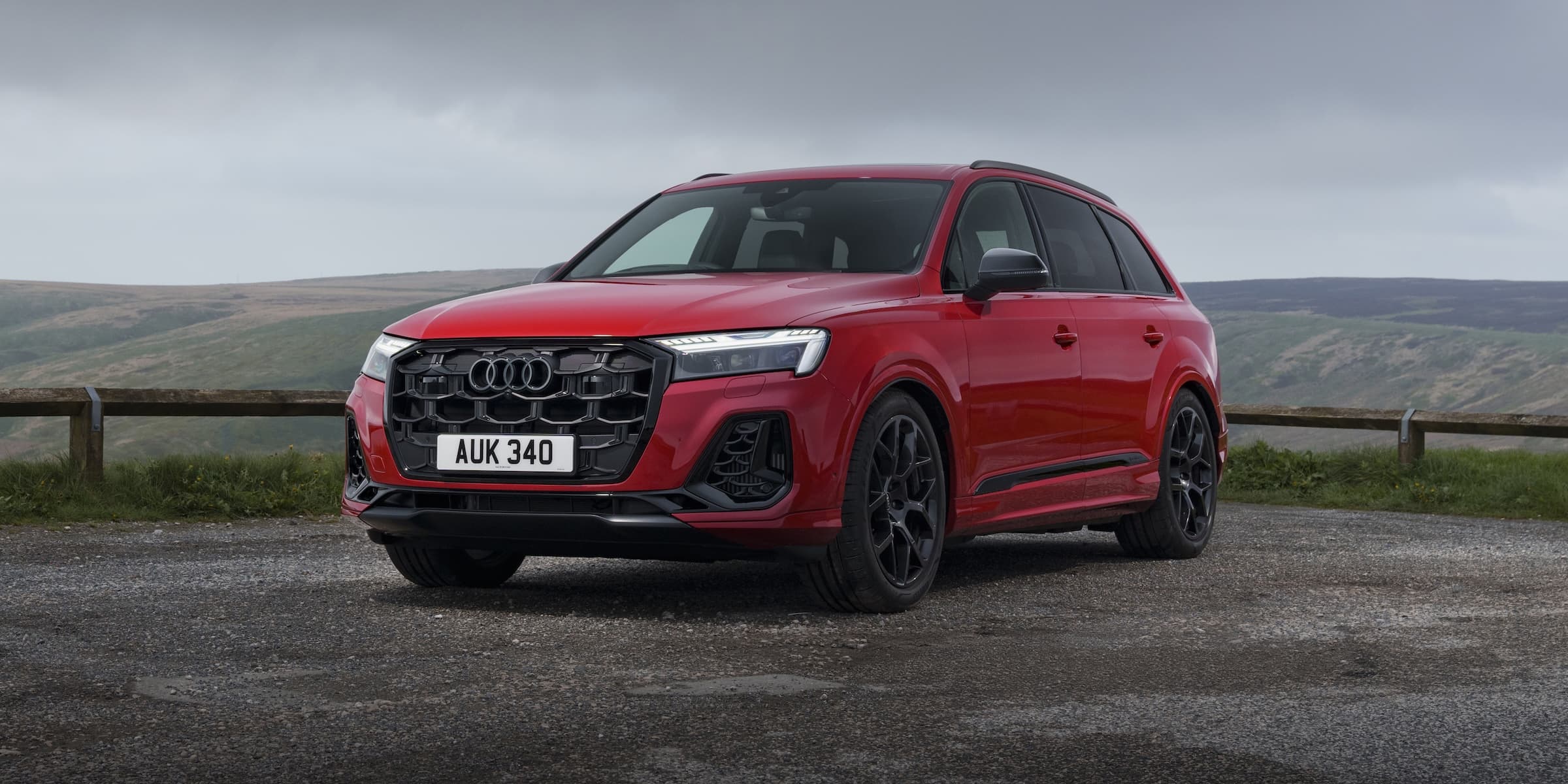
The Audi Q7 is a large SUV/crossover, the largest in Audi’s rapidly expanding model range. The current second-generation model was launched in 2015, with a mid-life update in 2019.
The Q7 range includes the flagship high-performance SQ7 model. There was previously a diesel-electric plug-in hybrid model, however this was dropped in 2019 when the range was updated and is now purely petrol-powered. Regular Q7 models have a choice of petrol or diesel power.
Both the Audi Q7 and SQ7 have received good reviews from the UK media, with the SQ7 averaging very slightly higher scores in most cases. The whole Q7 range has received particular praise for its comfort, refinement and cabin quality, which are all considered to be best in class.
However, the Q7 appears to be better to drive than to live with. According to our reliability data (see ‘Reliability rating’ section below), it has one of the worst reliability records of any car in our database. Running costs are also very high, which is not that surprising for a seven-seat, near-three-tonne, petrol or diesel SUV.
As of February 2026, the Audi Q7 has a New Car Expert Rating of D with a score of 55%, which is better than its Used Car Expert Rating score of E. This is dragged down because reliability and running costs are given more weight in our used car ratings.
“If you’re after a comfortable, practical seven-seat SUV then the Audi Q7 should be right at the top of your list. There are better options if you want a fun drive or a great plug-in hybrid engine, though.”
Model reviewed: 3.0-litre diesel automatic 50 TDI Sport “One of the most comfortable cars on the market, combined with a luxurious interior and some fantastic engines, makes the Audi Q7 is a superb all-rounder.” Read review
Auto Express
Model reviewed: 4.0-litre petrol automatic SQ7 Score: 7 / 10 “The Audi SQ7 makes a case for itself as the performance SUV to buy if you still value comfort alongside pace. It’s not as exciting as rivals from Mercedes or BMW, but its potential as a long-distance cruiser and its comfort around town, on less than ideal tarmac, is impressive.” Read review
Model reviewed: 60 TFSIe 455ps Competition Score: 8 / 10 “The Audi Q7 60 TFSIe Competition is a worthy addition to the large SUV range. It has the same abilities as other Q7s, of course – but it scores heavily on refinement and cabin tech.” Read review
Model reviewed: Range overview Score: 8 / 10 “The facelifted Q7 is still one of the best luxury SUVs in its class – but the 50 TDI will be a better pick for most buyers when it comes to running costs.” Read review
Auto Trader
Model reviewed: 2024 facelift range Score: 8 / 10 “The updated Audi Q7 still has a lot to offer, but it is feeling its age a bit now compared to newer (and cheaper) Audi stuff.” Author: Mark Nichol Read review
Model reviewed: Range overview Score: 9 / 10 “The Audi Q7 has always been an impressive seven-seat premium SUV and a mid-life refresh has done nothing to change that. It’s also one of the most spacious cars of its type, which means it will have plenty of appeal to families.” Read review
Business Car
Model reviewed: 3.0-litre petrol/electric plug-in hybrid 55 TFSI e S line Score: 7 / 10 “The Audi Q7 plug-in hybrid SUV impresses in many ways, but there’s a major flaw, and it comes in the form of Audi’s German arch-rivals. The plug-in hybrid versions of the BMW X5 and Mercedes-Benz GLE both have bigger batteries than the TFSI e.” Read review
Car
Model reviewed: 4.0-litre petrol automatic SQ7 Score: 8 / 10 “A new petrol-powered heart has made the Audi SQ7 a bit more of a lout under its buttoned-up exterior – louder and more aggressive and likes a drink a little more than before. But you’re still impressed by its breadth of talents.” (Ben Barry) Read review
Model reviewed: plug-in hybrid models Score: 8 / 10 “The hybrid to solve all of our problems? Nope. The electric-only range is only just acceptable, and the Q7 also loses one of its USPs – a seven-seat configuration – by translating itself into a PHEV. But it’s tremendously refined, comfortable, practical and, frankly, way faster than a hybrid ought to be.” Read review
Model reviewed: (range review) Score: 8 / 10 “Audi really didn’t need to make huge changes to the Q7. It’s had to move with the times and fall in line with the rest of the range, and the good news is the interior feels like an excellent blend of high-tech and luxurious.” Read review
Model reviewed: SQ7 Score: 8 / 10 “In isolation, the Audi SQ7 is a wonderful thing. It’s a total techfest and certainly houses one of the best (and most interesting) motors you can currently buy.” Read review
Car Keys
Model reviewed: 3.0-litre diesel automatic 50 Score: 9 / 10 “A refresh of the Audi Q7 has built further on a car that was already one of the best luxury SUVs on the new market. It’s fair to call this car one of most comfortable money can buy — while a luxurious cabin and impressive powertrains combine to make this a fantastic machine.” Read review
Carbuyer
Model reviewed: Range overview Score: 8.6 / 10 “The huge Audi Q7 is powerful, has a fantastic interior and can be surprisingly affordable to run for such a large car.” (Andy Goodwin) Read review
Carwow
Model reviewed: SQ7 Score: 7 / 10 “The Audi SQ7 is a seriously fast version of the seven-seat Q7 SUV but, while it has the pace to match some hot-hatches, it doesn’t feel all that dramatic to drive and it is very expensive.” Read review
Company Car Today
Model reviewed: Plug-in hybrid automatic 55 TFSIe S line “Definitely the Q7 of choice for the company market despite being more expensive to buy than the petrol or diesel versions, but rival PHEVs are hugely more tax-efficient as they get below the magic 50g/km marker for BiK.” Read review
Model reviewed: petrol-electric plug-in hybrid 60 TFSIe S line “The most fleet-friendly Audi Q7. It’s also the most appealing to use thanks to great efficiency, impressive performance and total refinement. But only five seats.” Read review
Daily Mail
Model reviewed: 3.0-litre diesel automatic Score: 10 / 10 “I was blown away by the looks, it accelerates and handles well and is big on storage. There is very little not to like.” (Chris Evans) Read review
Evo
Model reviewed: Range overview Score: 7 / 10 “Better to drive and plenty of tech, but still behind rivals” Read review
Green Car Guide
Model reviewed: 3.0-litre diesel-electric plug-in hybrid Score: 9 / 10 “For drivers who cover up to 20 miles or so locally between charges, and then undertake longer journeys, this car will offer better economy than a petrol plug-in hybrid, and if driven on electric power, it can offer zero tailpipe emissions in built-up areas – so much better than a conventional diesel.” Read review
Heycar
Model reviewed: Range overview Score: 9 / 10 “The Audi Q7 is a prime example of what can be achieved through attention to detail. Leave no stone unturned, and great things can happen.” Read review
Honest John
Model reviewed: Range overview Score: 10 / 10 “Comfortable, quiet, practical and more efficient. You could almost say the Audi Q7 has been worth the wait.” Read review
Motoring Research
Model reviewed: Range overview Score: 8 / 10 “Audi’s flagship SUV is suitably big, bold and brash. Launched in 2015, it oozes luxury, with an interior that’s as good as any rival.” Read review
Parkers
Model reviewed: Range review Score: 8.8 / 10 “Modern, imposing, capable and efficient full-sized SUV.” Read review
Model reviewed: 3.0-litre diesel automatic 45 TDI S line “Audi’s facelifted Q7 feels luxurious and is actually quite fun to drive” Read review
The Sunday Times
Model reviewed: 3.0-litre diesel automatic S line Score: 6 / 10 “If Yoda were heading to the Highlands, he’d go in this” (AA Gill) Read review
Model reviewed: 3.0-litre diesel automatic Score: 8 / 10 “It can handle Namibia; the run to Nobu will be a breeze” Read review
The Telegraph
Model reviewed: 3.0-litre diesel automatic 50 TDI Quattro S Line Score: 10 / 10 “Decry big SUVs all you like – if people want them, the manufacturers will build them. And of them all, the Audi Q7 is the best at being a proper seven-seat family wagon with an upmarket bent. This facelift brings standard air suspension, making the Q7 more comfortable, as well as a host of other worthwhile upgrades. It’s worth waiting for.” Read review
Top Gear
Model reviewed: Range overview Score: 6 / 10 “Not exactly revolutionary, but it makes plenty of sense… if you need this sort of thing.” Read review
Model reviewed: 50 TDI “This is an enormous, and quite enormously intimidating, ‘car’. Inverted commas, because it’s actually a tank masquerading as a friendly family-mobile, albeit an incredibly upmarket one.” Read review
Safety rating
Independent crash test and safety ratings from Euro NCAP
The Audi Q7 has a very poor reliability score of just 10%, according to exclusive workshop data provided by our partner MotorEasy. This score covers both the current-generation Q7 and the original (pre-2015) version, and is one of the worst scores of any cars we track.
More than a quarter of warranty repairs relate to the car’s engine, which are unsurprisingly expensive with an average repair cost of more than £1,200. There are also plenty of reported warranty repairs for suspension and fuel systems, and these are unusually expensive as well, costing about £1,000 and £2,000 on average to repair, respectively. Gearbox problems are the fewest according to our data, but also the most expensive with an average repair bill of more than £2,200.
It’s not just our data that finds an issue with the Audi Q7’s reliability record, however. In 2022, warranty provider Warrantywise ranked the Q7 sixth in a table of the least reliable used cars (up to ten years old) on sale in the UK.
Given the below-average reliability score and potentially expensive bills, make sure any extended warranty cover you purchase for an Audi Q7 covers all of these potential problem areas.
Running cost rating
Monthly cost of ownership data provided exclusively for The Car Expert by Clear Vehicle Data
Fuel consumption
Average
Score
Petrol models
26 mpg
E
Diesel models
35 mpg
D
Plug-in hybrid models
214 mpg
A
CO₂ output
Average
Score
Variation
Score
Petrol models
245 g/km
E
Diesel models
210 g/km
D
Plug-in hybrid models
30 g/km
A
Battery range
Average
Score
Variation
Score
Plug-in hybrid models
51 miles
D
Insurance group
Average
Score
Variation
Score
All models
48
E
Service and maintenance
Cost
Score
Year 1
£387
D
Year 2
£950
E
Year 3
£1,579
E
Year 4
£1,927
E
Year 5
£2,443
E
Overall
£7,286
E
Running costs for the Audi Q7 range are very expensive, according to data provided exclusively to The Car Expert by our commercial partner, Clear Vehicle Data.
Fuel economy is disappointing for petrol models and moderately better for diesel-engined versions. The plug-in hybrid models look amazing on paper, but this is largely thanks to ridiculous EU/UK government lab tests that are completely inadequate for plug-in hybrids. There is no way you will ever travel for 112 miles on a single gallon (4.5 litres) of fuel and some electricity…
Compared to the rest of the large SUV sector, the car’s service and maintenance costs are pretty average. Insurance costs likely to be high, though, based on data from the UK’s insurance group assessor, Thatcham Research.
Date: January 2024 Recall number: R/2024/018 Model types: All Build dates: 08/2023 to 10/2023 Number of vehicles affected: 187 Defect: The function of the side airbag may be restricted due to the airbag not being sufficiently secured to the front left seat frame. Remedy: Conduct a check of the airbag to ensure it is secured correctly; if necessary the side airbag is to be correctly hooked in position and resecured.
Date: November 2023 Recall number: R/2023/331 Model types: All Build dates: 06/2023 Number of vehicles affected: 13 Defect: A weld seam on the outer backrest frame of the front seats may not have been made correctly. Remedy: Check the front seats and if required to replace the affected backrest.
Date: February 2022 Recall number: R/2022/036 Model types: All Build dates: 11/2019 to 02/2021 Number of vehicles affected: 5,327 Defect: Following a previous campaign the toe and/or camber values on the rear axle may in certain circumstances incorrectly be changed without this being noticed. Remedy: The wheel alignment must be checked and if necessary the suspension must be serviced on the affected vehicles.
Date: June 2021 Recall number: R/2021/236 Model types: All Build dates: 11/2019 to 02/2021 Number of vehicles affected: 10,089 Defect: One or more nuts which do not meet the specifications may have been fitted on the rear axle suspension links. Remedy: The affected nuts on the rear axle will be replaced on affected vehicles.
Date: December 2020 Recall number: R/2020/372 Model types: All Build dates: 07/2020 to 09/2020 Number of vehicles affected: 31 Defect: Faulty crash sensors for airbag / restraint systems may have been fitted in both of the front doors. Remedy: The crash sensors for the side airbags (front) must be checked on the vehicles affected and replaced if necessary.
Date: May 2020 Recall number: R/2020/135 Model types: All Build dates: 09/2019 to 12/2019 Number of vehicles affected: 1,568 Defect: It is possible that gear oil may escape due to a faulty welded joint on the gearbox oil line. Remedy: The production date of the gear oil line must be checked first on the vehicles affected and the gear oil line must be replaced if necessary.
Date: April 2020 Recall number: R/2020/124 Model types: All Build dates: 07/2019 to 09/2019 Number of vehicles affected: 130 Defect: The function of the locking mechanism on the front head restraints may be impaired. Remedy: The front head restraints must be replaced on the affected vehicles.
Date: March 2020 Recall number: R/2020/075 Model types: All Build dates: 06/2015 to 02/2019 Number of vehicles affected: 114 Defect: The bolted connection between the steering shaft and the steering rack may not have been tightened to the required torque. Remedy: The bolted connection between the steering shaft and the steering rack will be checked and if necessary replaced.
Date: February 2020 Recall number: R/2020/056 Model types: All Build dates: 08/2019 Number of vehicles affected: 2 Defect: The fastener securing an air duct component in the curtain airbag could detach in the event of an accident. Remedy: Replace the igniter on the affected vehicles curtain airbags.
Date: November 2019 Recall number: R/2019/395 Model types: All Build dates: 08/2019 to 11/2019 Number of vehicles affected: 2,390 Defect: Major overheating can occur in the area of the interior mirror on the windscreen due to the heating element of the front camera. Remedy: The backlight masking screen of the front camera must be replaced and a software update carried out.
Date: February 2019 Recall number: R/2019/065 Model types: All Build dates: 11/2018 to 12/2018 Number of vehicles affected: 31 Defect: A casting process error may affect the rigidity of the front shock absorber fork. Remedy: Replace the affected shock absorber forks.
Date: September 2016 Recall number: R/2016/220 Model types: All Build dates: 05/2015 to 09/2016 Number of vehicles affected: 6,775 Defect: On Audi Q7 vehicles with 7 seats manufactured within a specific period the indentations on the cross piece of the third row of seats were not made correctly. As a result the third row seat structure may deform in the event of an accident. Remedy: A support bracket must be retrofitted on the vehicles affected.
As of September 2024 (our most recent data point), there have been 12 DVSA vehicle safety recalls on this generation of the Audi Q7, addressing various different issues.
Not all vehicles are affected by recalls. You can check to see if your car is included in any of the above recalls by visiting the DVLA website or contacting your local Audi dealer.
If your car is affected by a recall, the vehicle must be repaired and you should not be charged for any work required. If you are buying a used Q7, you should insist that any outstanding recall work is completed before you take delivery of the vehicle.
Mazda is marking its centenary with the introduction of a range of special edition models over the course of this year.
The 100th Anniversary Special Edition series applies to all of Mazda’s key passenger cars across the globe, bringing unique styling touches and an overall design inspired by the firm’s first passenger car, the R360 Coupe.
All cars get a ‘Snowflake White’ exterior paint with contrasting burgundy interior carpets and leather seats. A unique 100th Anniversary badge is added to the floormats, key fob and is embossed into the headrests too.
This badge is also mirrored on the wheel centres and on the side of the car. The 100th Anniversary MX-5 benefits from a ‘Dark Cherry’ fabric folding roof as well.
Jeremy Thomson, Mazda UK managing director, said: “Mazda Corporation has created these special models as a token of appreciation for the customers who have supported us through the years. We’ll be proud to have special versions of the MX-5 Convertible, CX-30 and Mazda3 in our UK showrooms later this year.”
Originally slated to be revealed at the Geneva motor show – which was cancelled due to the coronavirus pandemic – the models have instead been announced in Japan, where pre-orders for the cars are open now.
In the UK, the 100th Anniversary treatment will be available on the Mazda MX-5, Mazda CX-30 and Mazda 3 initially, with Mazda 6 and Mazda CX-5 models available at a later date. Just 100 examples of each will be available, with prices announced later in the year.
The Dacia Sandero was a supermini-size small five-door hatchback, best known for being the cheapest new car on sale in the UK for its entire production cycle, from the time it was launched here in 2013 to the time that it was replaced by a new model in 2021.
Size-wize, the Sandero was similar to a Ford Fiesta or Vauxhall Corsa. However, on price it undercut everything else in the supermini category considerably, and was similar to (but still cheaper than) the Hyundai i10 or Kia Picanto.
There was a more rugged version of the Sandero, called the Dacia Sandero Stepway. This is not covered on this page, and we have a separate page for that model, which rates exactly the same as the regular Sandero range.
This generation of the Sandero ended production in 2020. The all-new Sandero went on sale in the UK in February 2021.
The Dacia Sandero received generally positive reviews from the UK motoring media throughout its production life. Objectively, it performed fairly poorly in most areas compared to rivals, which was reflected in an overall Expert Rating that that was the lowest in the supermini class. But when price was taken into account, it generally made a good account of itself given that it was thousands of pounds cheaper than most similarly-sized rivals.
As of February 2026, the Dacia Sandero holds a Used Car Expert Rating of D, with a score of 58%. This is just behind the Sandero Stepway version. It scores top marks for its excellent reliability record and also gets good grades for its low running costs. However, its safety scores are poor compared to newer cars and media review scores were not very flattering.
Body style: Five-door hatchback Engines: petrol, petrol/LPG dual-fuel Price when new: From £6,995 on-road
Launched: Spring 2013 Replaced: Spring 2021
Image gallery
Media reviews
Highlighted reviews and road tests from across the UK automotive media. Click any of the boxes to view.
The Car Expert
Model reviewed: Range overview “The Dacia Sandero is a thoroughly competent supermini that performs way above its price.” Read review
Auto Express
Model reviewed: Range overview Score: 6 / 10 “The Dacia Sandero is the UK’s value king, offering up more space and practicality than anything else in its price range” Read review
Model reviewed: 1.0-litre petrol manual Ambiance Score: 6 / 10 “The headline £5,995 pricetag of the no-frills Access model is tempting, but the £1,000 extra the Ambiance commands adds in essential kit such as air-con, electric front windows and even a DAB radio with Bluetooth. That makes it the real bargain in the range.” Read review
Car
Model reviewed: 1.0-litre petrol manual Laureate Score: 6 / 10 “The appeal of the Dacia Sandero lies in its simplicity and its honesty. It’s not trying to be fashionable, the best to drive or the highest quality, but what it does offer is heaps of space and plenty of equipment for very little money.” Read review
Model reviewed: 0.9-litre petrol manual Score: 6 / 10 “Austerity has never been so endearing. I can’t wait to park one next to the Range Rovers at Waitrose.” Read review
Carbuyer
Model reviewed: Range overview Score: 7 / 10 “The Dacia Sandero is incredibly good value, with low running costs and great practicality – but don’t expect lavish materials or polished fit and finish” Read review
Carwow
Model reviewed: Range overview Score: 6 / 10 “The Dacia Sandero is one of the cheapest cars on sale in the UK. The Ford Ka+, Volkswagen Up and Hyundai i10 rival it on price, but the Sandero is bigger than all of them.” Read review
Daily Mail
Model reviewed: 0.9-litre petrol manual Score: 8 / 10 “If I needed a runabout, I would buy this car above any other on the market today” (Chris Evans) Read review
Heycar
Model reviewed: Range overview Score: 6 / 10 “We always say that any car is a good car if it’s cheap enough, and on that score the Dacia Sandero is an absolutely brilliant car. Yes, it’s flawed in terms of its interior quality, its refinement and its level of luxury and safety equipment, but it’s good at plenty of other stuff, and at these prices, there can be no complaints.” Read review
Honest John
Model reviewed: Range overview Score: 6 / 10 “It’s easy to forgive the Dacia Sandero’s shortcomings. Even if you skip the headline-grabbing model and opt for something pricier it still represents excellent value for money, with all the features most drivers could ask for, plus low running costs and plenty of practical space. It’s a real bargain.” Read review
Model reviewed: 0.9-litre petrol manual “Compared to more well known models, the Dacia Sandero is a passable car. It lacks polish and feels a little old fashioned, but if you add the low prices it offers it’s easy to forgive its flaws. Add to that some inexpensive finance deals and the Sandero makes a compelling case for itself.” Read review
Parkers
Model reviewed: Range overview Score: 6.6 / 10 “Bargain basement prices but rich in roominess” Read review
The Sunday Times
Model reviewed: 1.2-litre petrol manual Ambiance Score: 4 / 10 “Seriously good value, but the budget price shows” Read review
Model reviewed: 1.2-litre petrol manual Access Score: 4 / 10 “Sometimes you get what you pay for” (Jeremy Clarkson) Read review
The Telegraph
Model reviewed: 0.9-litre petrol manual Ambiance Score: 6 / 10 “Yes, it’s a budget car but look beyond the headline low prices and you’ll find the Dacia Sandero comfortable and capable enough. The fact that it now comes with a bit more equipment makes it even more tempting than before.” Read review
Top Gear
Model reviewed: Range overview Score: 7 / 10 “The Dacia Sandero is deservedly doing well: a reasonable car for a frankly astonishing price.” Read review
Safety rating
Independent crash test and safety ratings from Euro NCAP
The Dacia Sandero was awarded a four-star safety rating from Euro NCAP back when this model was launched in 2013. However, this rating expired in January 2020 as the Sandero no longer met the requirements for a four-star car. This is normal practice, as Euro NCAP reviews its ratings on most cars annually with most ratings expiring after about six or seven years.
However, if you are comparing a used Dacia Sandero to vehicles of similar age, whose ratings will have probably also expired, its safety rating score is still useful.
Eco rating
Independent economy and emissions ratings from Green NCAP
No eco rating
The Dacia Sandero was never assessed by Green NCAP during its production life.
Reliability rating
Reliability data provided exclusively for The Car Expert by MotorEasy
Total claims: 14 Average repair cost: £419.72 Last updated: April 2025
As of April 2025 (our most recent data point), the Dacia Sandero range (including the Stepway) has a good reliability score, according to workshop and warranty data provided exclusively to The Car Expert by our partner, MotorEasy.
Although only based on a relatively small number of cars so far, the average repair bill is less than £400. This is reasonable, although it should be noted that engine repairs to date have been more expensive, with an average repair cost of nearly £800.
Awards
Trophies, prizes and awards that the Dacia Sandero has received
2019
Diesel & Eco Car Awards – Best Budget Used Car
2018
Diesel & Eco Car Awards – Best Budget Used Car
Honest John Satisfaction Index – Best Small Hatchback
2017
Car Dealer Used Car Awards – Best Mid-Sized Used Car
The Rolls-Royce Phantom is a large luxury saloon and the flagship of the Rolls-Royce range. It is available in two different lengths, with the longer model providing additional rear legroom. The current model is the eighth generation to carry the Phantom name and went on sale in the UK in late 2017.
The Phantom is comfortably the most expensive saloon car on sale in the UK, starting at about £360,000, and Rolls-Royce claims that most owners will spend substantial money over and above that price to personalise their cars in various ways.
The only engine available is a 6.8-litre petrol V12 unit supplied by Rolls-Royce’s parent company, BMW. All models are built at Rolls-Royce’s factory at Goodwood in West Sussex, England.
The Rolls-Royce Phantom has received universally high praise from the UK motoring media, and has been one of the highest-rated cars we’ve analysed with The Car Expert’s unique Expert Rating Index in recent years.
However, as our Expert Rating scores now account for emissions and running costs as well as reviewer praise, the Rolls-Royce Phantom holds a New Car Rating of D with a score of 58% as of March 2026.
The Phantom has been particularly complimented for its build quality and unparalleled luxury, with the only criticisms being that it is very expensive (obviously) and the running costs are similarly eye-watering.
Body style: large saloon Engine: petrol Price: From £360,000 on-road
Launched: Summer 2017 Last updated: N/A Replacement due: TBA
Image gallery
Media reviews
Highlighted reviews and road tests from across the UK automotive media. Click any of the boxes to view.
Auto Express
Model reviewed: Range overview Score: 10 / 10 “The new Rolls-Royce Phantom offers wealthy owners the ultimate in luxury, comfort and opulence.” Read review
Car
Model reviewed: Series II Score: 10 / 10 “You may encounter some envy in the Rolls-Royce Phantom, and you may find yourself questioning how much sense any of this makes when there’s a cost of living crisis and a climate crisis. But then you settle down in those glorious seats, press the starter button and waft away from such concerns…” (Colin Overland) Read review
Model reviewed: Range overview Score: 10 / 10 “Best luxury saloon car in the world? Yes, and by some margin. The Bentley Mulsanne and top-end Maybach version of the Mercedes S-class don’t even come close to the Rolls-Royce Phantom’s astonishingly blend of comfort, opulence, craftsmanship and sheer presence.” Read review
Carbuyer
Score: 7.2 / 10 “The Rolls-Royce Phantom has evolved into an even more comfortable, elegant and bespoke model than before. You could be looking at the world’s most opulent car.” Read review
Company Car Today
“The Rolls-Royce Phantom is one of the most imposing, iconic and luxurious cars in the world. The view down the long, long bonnet and the light steering, combined with the huge bulk that feels every gramme of its 2.5 tonnes, gives a feel like driving no other car could.” Read review
Daily Mail
Model reviewed: Range overview “For a car so large and expensive and imposing, the Rolls-Royce Phantom is surprisingly easy to drive and nimble” Read review
Motoring Research
Score: 10 / 10 “Frankly, whether you’re asleep on the autobahn or simply chauffeuring your mum to her 70th birthday lunch, the Rolls-Royce Phantom endows every journey with a sense of occasion. I can’t think of a better car for an epic, cross-continental road trip.” Author: Tim Pitt Read review
Parkers
Model reviewed: Range overview Score: 8.8 / 10 “‘Best car in the world’? It’s up there…” Read review
The Telegraph
Score: 10 / 10 “Such is the level of luxury and refinement that it’s almost impossible to make comparisons, but rest assured the world’s super-rich can confidently claim to own the best car in the world – whether they drive their Phantom or let the chauffeur do the work. Peerless.” Read review
Top Gear
Model reviewed: Range overview Score: 9 / 10 “Nothing in life is perfect but the Rolls-Royce Phantom gets close. An imperious, impeccably engineered automotive experience.” Read review
Safety rating
Independent crash test and safety ratings from Euro NCAP
No safety rating
The Rolls-Royce Phantom was not crash tested by Euro NCAP when it was launched in 2017 and we are not expecting it to see a series of £350K+ saloons smashed into walls and poles so that a few plutocrats can feel better about their prospects in an emergency.
If it does, we will update this section accordingly because you’ll probably want to watch the videos.
Eco rating
Independent economy and emissions ratings from Green NCAP
No eco rating
As of March 2026, the Rolls-Royce Phantom has not been tested by Green NCAP. Again, not expecting it to happen anytime soon, so you’ll have to use your imagination to work out how environmentally friendly a three-tonne saloon powered by a 6.8-litre petrol V12 might be.
Reliability rating
Reliability data provided exclusively for The Car Expert by MotorEasy
No reliability rating
As of March 2026, we don’t have enough reliability data on the Rolls-Royce Phantom to generate a reliability rating.
The Car Expert’s reliability information is provided exclusively to us using workshop and extended warranty data from our partner, MotorEasy, sourced from both official dealerships and independent workshops.
As soon as MotorEasy has sufficient data on the Phantom, we’ll publish the results here.
Running cost rating
Monthly cost of ownership data provided exclusively for The Car Expert by Clear Vehicle Data
Fuel consumption
Average
Score
Petrol models
18 mpg
E
CO₂ output
Average
Score
Variation
Score
Petrol models
342 g/km
E
Insurance group
Average
Score
Variation
Score
All models
50
F
The Rolls-Royce Phantom is – unsurprisingly – a very expensive car to own and run, according to whole-life cost data provided exclusively to The Car Expert by our technical partner, Clear Vehicle Data.
For evidence of how costly this saloon is to drive on a daily basis, look no further than the poor CO2 output and similarly poor fuel consumption. Mind you, that’s exactly what you’d expect from a heavy saloon powered by an enormous V12 petrol engine.
We don’t have servicing costs for the Phantom at the moment, but as the saying goes: if you have to ask, you probably can’t afford it…
Awards
Trophies, prizes and awards that the Rolls-Royce Phantom has received
2018
UK Car of the Year Awards – Best Luxury Car
GQ Car Awards – Best Supernatural Driving Experience
2017
Top Gear Awards – Best Luxury Car
Similar cars
If you’re looking at the Rolls-Royce Phantom, you might also be interested in these alternatives
If you’re looking for a new or used Rolls-Royce Phantom, The Car Expert’s partners can help you find the right car or a competitive finance arrangement
New car registrations have collapsed across Europe as a result of coronavirus shutdowns, according to data published in the last day or so. UK registration data for March is dur to be published on Monday morning, and will inevitably show the same devastating results.
European results published so far have shown that new car registrations have collapsed by 85% in Italy, 72% in France, 69% in Spain and 38% in Germany. These are the four biggest car markets in the EU, and Italy in particular was the first country to go into widespread lockdown.
What can we expect in the UK?
March is traditionally the biggest month of the year for new car sales in the UK, as buyers flock to buy or lease a new car with the latest registration plates (in this case, a 20-plate registration). However, with most car dealers now closed and the majority of the population stuck at home, sales numbers look set to tumble. A number of cars would have been registered and delivered in the first few days of the month, but this came to almost a complete halt in the last couple of weeks.
Here in the UK, more than half of all new car sales are fleet registrations. Based on European data, this sector is likely to be hit hard as rental companies stop taking deliveries of new cars and other companies defer replacing company cars as much as possible. Any business that is able to cancel or defer new vehicle purchases is likely to be doing so.
March is always a big month proportionally for private new car sales (comsumers tend to care more about their number plates than businesses), so final numbers are likely to depend on how many new car buyers were able to get into a new car before the lockdowns took hold.
Depending on how long the current shutdown lasts, there may be a boost to new car sales once dealers eventually re-open in May/June/July/whenever, but the likelihood is that any customers who are able to wait are more likely to put off any new car purchase until the next number plate change in September (when 70-plate registrations begin).
There is some good news, albeit with complications, for the industry in that more than 80% of all private new cars are made with PCP car finance, which means that tens of thousands of customers will need to change their car and don’t have the option of waiting. The complicated bit is that thousands of customers have PCP agreements that are expiring now while dealerships are closed and they physically can’t buy a new car. We have reached out to a number of finance companies for comment on how they are managing this, and will update our site with advice as soon as we can.
How bad will the March meltdown be?
We’re expecting March new car registrations to be published on Monday 6 April. Depending on how many cars dealers were able to deliver, and how many self-registrations took place, we could be looking at a fall of anything from 50% to 80% compared to the same month last year. There will also probably be widespread variation across the industry, with some companies coping better than others.
Given that March is the biggest month of the year for new car sales, this is going to be a devastating blow for the industry. April is inevitably going to be more of the same gloom, since the nationwide lockdown is unlikely to be lifted in time to allow any significant sales, and May is very much an unknown at this point.
This is going to have widespread ramifications for dealerships, in particular. Larger PLC dealerships may look at permanently closing some sites and some smaller business may simply not survive. It also comes at a difficult time for the car industry, which is grappling with a move towards online sales. This is very likely to accelerate that shift and similarly hasten the end of many new car showrooms across the country.
Will we see loads of pre-registered cars hitting the market?
Whenever sales take a sharp fall below expectations, car companies and dealerships tend to self-register a lot of cars to prop up their numbers, rather than leaving new cars unsold. This is because of the nature of the entire car industry ecosystem, where there are new cars continuing to arrive from factories every week that need to be sold and long lead times to ramp up or wind down production to match demand levels in any particular market.
This usually means extra service loan cars, demonstrator models, press vehicles, VIP loan vehicles and any other way that the industry can register cars and put them to good use. On top of that, they will simply register thousands of brand new cars in their own name and stick them in a field somewhere for three months to be sold as pre-registered used cars at a later date. That would mean these cars hitting used car forecourts sometime in summer.
In the current climate, many car companies and dealers certainly will have been self-registering thousands and thousands of vehicles in order to salvage their registration numbers, although across the entire industry it’s probably happened to the high degree we usually see when sales numbers take a tumble.
With almost all car factories shut down all around the world, there will be far fewer cars in the production pipeline for the next few months, which will have taken some of the pressure off dealers to clear their existing stocks before having to close their doors.
The Aston Martin Vantage was a luxury two-seater sports car available as both a coupé and a roadster. It was the entry-level sports car in the Aston Martin range, although any car with a six-figure price tag is hardly ‘entry-level’.
This model was launched in 2018, and was comprehensively overhauled in 2024. Although it’s an update to the existing model rather than an all-new car, the changes are so comprehensive that we’re creating a new Expert Rating for the new model, which is coming soon.
The 2018-24 Vantage had a twin-turbocharged V8 petrol engine supplied by Mercedes-AMG, and there was a higher-performance model called the Vantage AMR. All models were built in Gaydon, Warwickshire.
The Aston Martin Vantage received unanimously positive reviews from the UK motoring media, although not to the same rapturous degree as the current 992-generation Porsche 911. It was considered to be a huge step forward dynamically from the previous-generation Vantage, and performance was excellent.
The styling received mixed reviews, especially regarding the enormous grille, while the only real objective criticism was that it wasn’t quite as good as the Porsche 911 in most areas.
As of February 2026, the Aston Martin Vantage holds a Used Car Expert Rating of E, with a score of 52%. Although it received many positive media reviews, its overall score suffered from very high CO2 emissions and running costs.
Body style: coupe / convertible Engine: petrol V8 Price when new: From £123,500 on-road
Launched: Summer 2018 Last updated: Spring 2020 Replaced: Summer 2024
Image gallery
Media reviews
Highlighted reviews and road tests from across the UK automotive media. Click any of the boxes to view.
The Car Expert
“In the latest Vantage, Aston Martin has a sports car to be proud of. It performs as such a beast should, behaves itself when the need arises and oozes quality outside and in.” Read review
Auto Express
Model reviewed: F1 Edition Score: 8 / 10 “The Aston Martin Vantage F1 Edition is an extreme and expensive new version of a car we already know and mostly love, with improved performance, steering and handling, and tweaks to the interior that make it feel more special than before.” Read review
Model reviewed: Roadster Score: 8 / 10 “Qualities that make the fixed-roof Aston Martin Vantage a fine grand tourer are still in abundance in the Roadster – combined with the ability to drop the top in just seven seconds.” Read review
Model reviewed: Roadster Score: 8 / 10 “This highly engaging new Aston Martin Vantage Roadster takes the fight right to the front door of German rivals Porsche, Mercedes-AMG and Audi in the high-end convertible sports car stakes. True, this is an expensive car, but the latest open-top Aston is also quick, capable and extremely desirable.” Read review
Model reviewed: AMR Score: 7 / 10 “There are many things to like about the Aston Martin Vantage AMR, not least the way it looks and sounds.” Read review
Model reviewed: Range overview Score: 8 / 10 “The Aston Martin Vantage is a huge step up from the model that went before it. Its performance and refinement are exceptional, and for those looking for a brilliantly well-rounded sports coupe it has very few peers indeed.” Read review
Auto Trader
Model reviewed: Vantage coupé range Score: 8.4 / 10 “The new Vantage is Aston Martin’s feral sports car. The Vantage has ramped up its assault on rivals from Porsche, Audi and Jaguar and is a true weekend warrior, striking a great balance between scintillating performance and everyday usability.” Read review
Car
Model reviewed: Roadster Score: 8 / 10 “Like the Coupe, the Aston Martin Vantage Roadster is not perfect. It has its flaws and will face the stiffest of competition from the likes of the Porsche 911 Cabriolet. And yet, to this road tester at least, the Aston Martin is one to go for.” Read review
Model reviewed: AMR Score: 8 / 10 The new Aston Martin Vantage AMR is Aston’s first crack at a more serious baby sports car and it’s packing a seven-speed manual. Read review
Model reviewed: Range overview Score: 8 / 10 “The new Aston Martin Vantage is a highly convincing sports car, and a solid improvement over its predecessor. Despite the similarities in hardware, its more aggressive personality also succeeds in clearly differentiating the Vantage from the larger, softer DB11.” Read review
Carbuyer
Model reviewed: Coupé Score: 8.6 / 10 “The stylish Aston Martin Vantage is one of the most enjoyable, capable and characterful cars in its class” Read review
Daily Mail
Model reviewed: Roadster “In an ideal world, I’d pick the Vantage Roadster with a manual ‘box for the best combination of enjoyment and engagement. But even without the stick shift, the convertible still wins me over with the added drama it brings.” Read review
Model reviewed: 4.0-litre petrol manual AMR “The marginal loss of pace in comparison to the automatic is more than made up for by the enhanced feeling of really driving the manual car that creates the added excitement, engagement and exhilaration.” Read review
“In today’s highly competitive world of motoring, a movie link to a legendary spy is not enough. It won’t cut. The car really has to deliver. And it does.” Read review
Daily Mirror
Model reviewed: 4.0-litre petrol automatic coupé Score: 8 / 10 “I’ve driven more expensive vehicles but never have I seen one bring so many smiles to people who stop and point and wave; and other drivers are also noticeably keener than usual to make way for you than when you are at the wheel of other cars.” Read review
Evo
Model reviewed: AMR Score: 9 / 10 “A more involving and agile Vantage with a more clearly defined character.” Read review
Model reviewed: Range overview Score: 8 / 10 “Fast and fun Aston Martin Vantage is very different to its predecessor, but fun, and faster than ever.” Read review
Heycar
Model reviewed: Range overview Score: 8 / 10 “A brilliant, engaging and enjoyable sports car, with huge performance and a distinctive, atelier feel that Aston Martin excels at. The pugnacious styling might be more divisive than the clear beauty of its predecessor, but it’s striking, confident and far less traditional.” Read review
Honest John
Model reviewed: Range overview Score: 10 / 10 “You’re blown away when you see it, but to drive it is to love it. The engine is keen to push forward, the noise addictive, and cornering incredible. It comes with a sweet eight-speed ZF automatic gearbox that’s smooth as silk around town and hugely engaging at speed.” Read review
Motoring Research
Model reviewed: F1 Edition Score: 8 / 10 “Many small changes add up to the best Vantage yet. This is still a flawed car in some respects, particularly its interior and infotainment, but it has so much character – backed up by real dynamic talent – that you probably won’t care.” Read review
Model reviewed: Coupé range Score: 8 / 10 “The Aston Martin Vantage is a sports car, pure and simple. It is a British rival to the Porsche 911, powered by a rip-roaring V8 engine.” Read review
Model reviewed: Roadster range “The Aston Martin Vantage Roadster is an intelligent car, with a cultured depth to the way it flows across-country. It’s a car you drive with your fingertips, in a relaxed and enjoyable way. It is effortless and remains unruffled – a very British type of open-top sports car. And a very fast one, too.” Read review
Parkers
Model reviewed: Volante Score: 8.6 / 10 “Baby Aston roadster takes on Porsche 911 Cabriolet” Read review
Model reviewed: Range overview Score: 8.2 / 10 “Long overdue replacement for Aston’s best-selling sports car.” Read review
The Sun
Model reviewed: Vantage AMR manual “The Aston Martin Vantage’s 4.0-litre V8 engine sounds so epic you’ll be applauded by strangers” Read review
The Sunday Times
Model reviewed: Range overview “A bit on the dim side, but still a total belter” (Jeremy Clarkson) Read review
Model reviewed: Range overview Score: 8 / 10 “A superb blend of British beauty and German engineering” Read review
The Telegraph
Model reviewed: F1 Edition Score: 8 / 10 “You don’t need to be obsessed with Formula 1 to appreciate the fine work that’s been done on the chassis and drivetrain of this already likeable two-seat GT. There was no need to sell it solely in lairy colours, with F1 badging, but if you can put up with that then this is a quite lovely piece of kit.” Read review
“The V8 Vantage is all things to all Englishmen, a sort of automotive panacea for motorists otherwise wary of compromise.” Read review
Score: 8 / 10 “Likeable and fast sports GT, comfortable, with a surprising amount of practicality. It enters a crowded market where some equally charismatic rivals are as quick, much cheaper and a lot more economical, and there were slightly worrying inconsistencies about the test cars provided.” Read review
Top Gear
Model reviewed: Range overview Score: 8 / 10 “Punchy, exciting, yet still big-hearted and amazingly comfortable. The baby Aston is also the best Aston.” Read review
Model reviewed: AMR Score: 8 / 10 “Sat in the middle of all 200 examples is – hurrah! – a manual gearbox. Y’know, like they used in the olden days.” Read review
Safety rating
Independent crash test and safety ratings from Euro NCAP
No safety rating
The Aston Martin Vantage was never tested by Euro NCAP during its production life. This is not unusual, given the car’s price and exclusivity.
Eco rating
Independent economy and emissions ratings from Green NCAP
No eco rating
The Aston Martin Vantage was never tested by Green NCAP during its production life, so you’ll have to guess just how eco-friendly a 500hp twin-turbo V8 supercar might be…
Reliability rating
Reliability data provided exclusively for The Car Expert by MotorEasy
No reliability rating
As of February 2026, we don’t have enough reliability data on the Aston Martin Vantage to generate a reliability rating.
The Car Expert’s reliability information is provided exclusively to us using workshop and extended warranty data from our partner, MotorEasy, sourced from both official dealerships and independent workshops.
As soon as MotorEasy has sufficient data on the Vantage, we’ll publish the results here.
Running cost rating
Monthly cost of ownership data provided exclusively for The Car Expert by Clear Vehicle Data
Fuel consumption
Average
Score
Petrol models
25 mpg
E
CO₂ output
Average
Score
Variation
Score
Petrol models
269 g/km
E
Insurance group
Average
Score
Variation
Score
All models
50
F
According to data exclusively provided by our commercial partner Clear Vehicle Data, the Aston Martin Vantage has a thirsty petrol engine that is very expensive to run day-to-day, and it has some of the most expensive insurance premiums around.
Recalls
Official DVSA safety recalls that have been issued for the Aston Martin Vantage
Date: October 2020 Model types: All Vantage, DB11 and DBS Build dates: 08/2016 to 05/2019 Number of vehicles affected: 20 Defect: Certain fixings on the front seat airbag may not have been tightened to the correct torque. Remedy: Examine the front seat airbag fixings and if necessary secure the fixings.
Date: November 2019 Model types: All Vantage, DB11 and DBS Build dates: 11/2017 to 02/2019 Number of vehicles affected: 15 Defect: Vehicles may not have had their passenger airbag fixings tightened to the correct torque specification. Remedy: Examine the passenger airbag fixings and if necessary secure the fixings.
As of September 2024 (our most recent data point), there have been two DVSA vehicle safety recalls on the Aston Martin Vantage, which also affect the DB11 and DBS models. These cover airbag mountings.
Not all vehicles are affected by recalls. You can check to see if your car is included in any of the above recalls by visiting the DVLA website or contacting your local Aston Martin dealer.
If your car is affected by a recall, the vehicle must be repaired and you should not be charged for any work required. If you are buying a used Vantage, you should insist that any outstanding recall work is completed before you take delivery of the vehicle.
Awards
Trophies, prizes and awards that the Aston Martin Vantage has received
2018
News UK Motoring Awards – Best Sports Car
Similar cars
If you’re looking for a new or used Vantage, The Car Expert’s partners can help you find the right car or a competitive finance arrangement
As the coronavirus lockdown continues, and looks like it may restrict our lives for several months yet, people are looking for any opportunity to cut their monthly spending – especially if they have lost their jobs or are at risk of doing so in the near future.
Car insurance payments can represent a fair chunk of your household expenses and, with the country locked down for potentially the next few months, it might seem like a pointless waste of money to be insuring a car that you can’t actually drive.
Yesterday, we talked about your options when it comes to cancelling your car finance in the current environment. Today we’re looking at whether you should consider cancelling your car insurance, and what the implications might be.
If you still plan on driving your car, then the short answer is no. Even if your car is parked up on a public road and you’re not driving it anywhere, it needs to be taxed at all times and you must have at least basic car insurance. Fail to keep your car taxed and insured and you could be disqualified from driving for up to 12 months, with a massive fine to boot. Remember, if you need to get behind the wheel then you need insurance.
If you’re taking your car off the road, though, it may be a viable idea, but make sure you read the small print. Cancelling your insurance could incur charges, so make sure you know how much they would be to make sure it’s worth it. You might not actually end up saving as much as you thought.
Car insurance and your car finance agreement
Most car finance agreements require you to have the car comprehensively insured at all times. Some finance providers require proof of insurance before you can drive off in your new car, and after that it is your responsibility to ensure that your insurance remains valid. So if you have a PCP (personal contract purchase) or HP (hire purchase), you will almost certainly need to maintain your car insurance even if you’re not driving your car.
Covering your car when it’s off the road
Even if you’re not driving it, your car could still be stolen from your driveway. Or broken into, or damaged in some way. If you cancel your car insurance, you won’t be covered in any of those scenarios. While the risks may be low, that’s the whole point of car insurance.
How do I take my car off the road?
If you don’t need your car, taking it off the road may be a way to reduce your motoring-related costs. You’ll need to apply for a statutory off-road notice (SORN) and make sure the car is stored on a driveway, garage or private land – it can’t be parked on a public road, even if you have no intention of driving it.
For the many who’ve found themselves with a reduced income because of the coronavirus lockdown, cutting costs is becoming a vital move.
Car finance payments can represent a large chunk of your monthly outgoings. For most people, it’s the second-largest monthly cost after the mortgage or rent payment, so it’s a huge concern for millions of car owners with hefty car finance debts right now.
With the government restricting movement for potentially months to come, it might seem like a pointless extravagance to be paying so much for a car you can’t use. But should your car finance payments be cut? Here are answers to some of the questions you might have…
I can’t afford my car finance payments at the moment. What can I do?
The first and most important thing to do is speak to your lender as soon as you feel that you may have difficulties making your monthly payments. Although there are no general provisions in place to help car owners with their finance payments (unlike the mortgage or rental payments on your house), being upfront and honest with the provider will let them help you.
If you try to grin and bear it and start missing payments, things can escalate quickly and you will probably be in a much worse situation very quickly.
In the event your lender is not sympathetic to the situation, The Motor Ombudsman says to contact them and they can put you in touch with people who can help.
Will it make a difference depending on the type of finance I have?
Yes, it will. But unfortunately, the most popular types of car finance are also the most problematic when it comes to resolving financial troubles.
A hire purchase (HP) or personal loan will give you the best chance of being able to sell the car and pay off your finance debt, because your monthly payments have been reducing the debt by a reasonable chunk each month.
However, a personal contract purchase (PCP) – by far the most popular type of car finance agreement in the UK – is likely to be more difficult, especially if you are still early on in your agreement, as you are borrowing a lot of money but making much lower monthly repayments, meaning you have much more debt at every stage of the agreement.
We’ve looked at the most popular ways of funding a car here, along with a breakdown of the key elements of each:
Personal loan
With a personal loan, the finance is not secured against the car so you can sell it to a dealer or to a private buyer and use the money to pay off the loan or to make your payments for the next few months.
You don’t have the right to hand the car back (voluntary termination), but on the other hand, the lender can’t repossess it if you fail to make your monthly payments.
Can I sell my car? Yes Will that cover my debt? Your chances are better than with other types of finance Can I get a payment holiday? Speak to your bank or finance company, but your chances are reasonable if you have a good credit record Am I eligible for voluntary termination? No, because the loan is not secured against the car
Hire purchase
A hire purchase is a form of secured finance, meaning that the car essentially remains the property of the lender until the last penny of your loan has been repaid.
That means you don’t have the legal right to sell the car, although in practice your lender will normally allow you to sell the car to a recognised car dealership or a car buying service (like We Buy Any Car or similar). Instead of paying you for the car, the dealer will pay the finance company whatever is owed. If there is still a shortfall, you have to pay for it.
You may want to consider voluntary termination if you have already repaid 50% of your Total Amount Payable (as set out in your contract), or if you are reasonably close to reaching the 50% mark and are able to pay the difference. For more information about voluntary termination, we have a comprehensive guide here.
Since the finance is secured against the car, the finance company can repossess the car (with or without a court order, depending on how much you have repaid) if you fall behind in your monthly payments.
Can I sell my car? No, unless your finance company agrees to allow it Will that cover my debt? Your chances are better than with other types of finance Can I get a payment holiday? Speak to your finance company, but it is not favourable for them so they may not agree Am I eligible for voluntary termination? Yes, and there’s a good chance that it won’t cost you any money to do so
Personal Contract Purchase
The personal contract purchase is, by a long way, the most popular form of consumer car finance in the UK. A PCP is a form of hire purchase, so most of the same rules and regulations apply. You need to get the finance company’s permission to sell the car and the car can be be repossessed if you fall behind in your payments. However, the nature of how a PCP works makes it harder for you to be able to resolve any financial difficulties.
The main difference between a PCP and an HP in this situation is that your settlement figure (the amount you owe the finance company) is likely to be much higher, and usually much more than the car is worth. This means that even if you can sell the car, if won’t be nearly enough to cover what you owe. This is the inevitable result of a PCP having much lower monthly payments than an HP – you’re simply not clearing as much of your debt each month.
Can I sell my car? No, unless your finance company agrees to allow it Will that cover my debt? Almost certainly not, which means you will have to cover any shortfall Can I get a payment holiday? Speak to your finance company, but it is not favourable for them so they may not agree Am I eligible for voluntary termination? Yes, although it may cost you a lot of money to reach the required 50% point
What about PCH customers?
PCH (personal contract hire), or leasing, works differently to the types of finance listed above. That’s because it’s basically a long-term rental, where you pay £X per month to drive the car for a few years. You’re not borrowing any money like you are with a loan. There are no refund rights or voluntary termination rights because you’re not buying the car, simply renting it.
Contract hire has become increasing popular in recent years because the monthly payments are usually the lowest of any type of finance for a given car. The sting in the tail is that it’s also usually the most expensive type of finance to try and get out of in hard times.
Your contract with the lender is unlikely to contain any provisions to reduce or delay your repayments due to lost income. If you try to cancel the agreement, you will be liable for any fees set out in the contract, which could easily run into many thousands of pounds.
However, from a practical point of view, the leasing companies don’t want all their customers to start cancelling their agreements. Even allowing for the expensive penalty fees, it would be very costly for the lenders, so there’s a fair chance you will be able to come to some arrangement. Get on the phone and speak to your leasing company, because they might have a plan for coronavirus-affected customers.
Can I sell my car? No, not under any circumstances Can I cancel my lease? Yes, but there are eye-watering penalty fees. However, the leasing company may be prepared to negotiate these under the circumstances Can I get a payment holiday? Speak to your leasing company, but it is not favourable for them so they may not agree Am I eligible for voluntary termination? No
What is voluntary termination and does it apply here?
Voluntary termination, which is part of the 1974 Consumer Credit Act, allows you to return the car without charge if you’ve paid off half of what you owe (the Total Amount Payable) in a regulated car finance agreement. That covers PCP and HP car finance, but not a personal loan or a PCH agreement.
Voluntary termination can be a useful option if you’re in a desperate situation and need to cut costs, but it causes considerable confusion, particularly for PCP customers. In a PCP, the Total Amount Payable includes the final balloon payment, so you may not reach your 50% repayment mark until right near the end of your three- or four-year finance agreement.
We have a comprehensive guide to voluntary termination here at The Car Expert, which is by far the most popular article on our entire site. Have a good read to decide whether it’s something that may work for you.
Also, be clear with the lender that you want voluntary termination, because if they start going down the route of ‘voluntary surrender’ you could end up paying a lot more.
Speak to your finance company
The most important thing is to take early action and get in touch with your finance company. Don’t bother calling the dealership where you bought the car – there’s probably no-one there to pick up the phone anyway, and all they will do is refer you to the finance company. The only thing the dealership can do is offer to buy your car and settle your finance, which may be an option but you’ll still need to speak to your finance company first to understand how much you owe.
Speaking to the lender is important if you are in financial difficulties but still want to keep your car, because they might be willing to offer payment holidays or reduced rates to be made up for later. However, there is no guarantee they’ll be willing to agree to this, as it’s potentially quite costly for the finance company to do so – especially if hundreds of thousands of consumers are in the same position.
The Jaguar F-Pace is a mid-sized SUV/crossover that sits above the smaller E-Pace in the Jaguar SUV family. It is built at Jaguar Land Rover’s Solihull facility near Birmingham in the West Midlands.
Unlike heavier-duty models from sister brand Land Rover, the F-Pace shares its platform with the Jaguar XE and XF saloons, as well as the Range Rover Velar.
The F-Pace was unveiled at the 2015 Frankfurt motor show before going on sale in the UK in early 2016. A high-performance SVR model, powered by a supercharged 5.0-litre V8 engine, was added to the range in 2018. The whole range was facelifted in Summer 2020.
The Jaguar F-Pace currently holds a Used CarExpert Rating of E with a score of 47% as of January 2025. It has been praised for its driving dynamics and styling, although criticised for its interior quality not matching the standards of some of its rivals.
Body style: Mid-sized SUV Engines: petrol, diesel, plug-in hybrid Price: From £46,250 on-road
Launched: Spring 2016 Last updated: Summer 2021 Replacement due: TBA
Image gallery
Jaguar F-Pace (2020 facelift)
Jaguar F-Pace (2020 facelift)
Jaguar F-Pace (2016 – 2020)
Jaguar F-Pace (2016 – 2020)
Jaguar F-Pace SVR (2020 facelift)
Jaguar F-Pace SVR (2020 facelift)
Jaguar F-Pace SVR (2016 – 2020)
Jaguar F-Pace (2016 – 2020)
Media reviews
Highlighted reviews and road tests from across the UK automotive media. Click any of the boxes to view.
Featured reviews
“Jaguar has charted a course out of its premium saloon/sports comfort zone towards SUV territory, but not so far that sister brand Range Rover should be worried.”
“Jaguar hit the bullseye in 2016 with its first SUV. The F-Pace has good looks and a classy interior, and it proves that you don’t need to sacrifice driving excitement when choosing a family-friendly crossover. It’s got competition from the Volvo XC60 and BMW X3, but the F-Pace remains one of our favourite all-rounders.”
Model reviewed: 5.0-litre petrol automatic SVR Edition 1988 Score: 8 / 10 “The Jaguar F-Pace SVR Edition 1988 serves as a reminder of just how sorted the standard car is. Its savage powerplant dominates proceedings, but the SVR’s absorbing handling, interior tech and refinement place it among the best performance SUVs you can buy. However, the Edition 1988’s cosmetic tweaks aren’t enough to justify the huge price premium.” Read review
Model reviewed: P400 Score: 8 / 10 “The updates to the F-Pace line-up make it a more appealing prospect than ever before, and it should be on any premium SUV buyer’s shortlist. Sharp handling and strong performance are a given, but it’s now backed up by possibly the best infotainment system in the segment, and a beautifully finished and practical cabin.” Read review
Model reviewed: Chequered Flag Score: 8 / 10 “Every buyer wants maximum bang for their buck, and in the case of the Jaguar F-Pace Chequered Flag, the added kit offered and discounted price means that there’s plenty going for it.” Read review
Model reviewed: SVR Score: 8 / 10 “The Jaguar F-Pace SVR came late to the performance SUV party but was certainly worth the wait.” Read review
Model reviewed: Portfolio range Score: 8 / 10 “If you want a Jaguar F-Pace that prioritises luxury over sportiness, the Portfolio trim level is the one to get.” Read review
Auto Trader
Model reviewed: SVR 2021 Score: 8 / 10 “Noisy, thirsty and extravagant, the Jaguar F-Pace SVR is huge fun and best summed up as a guilty pleasure.” Read review
Model reviewed: Range overview Score: 8 / 10 “The Jaguar F-Pace has a beautiful interior, lots of space, and is fun to drive.” Read review
Model reviewed: 3.0-litre petrol automatic P400 R-Dynamic SE Score: 8 / 10 “Quite pricey, thirsty six-pot F-Pace may not be the most sensible pick of the range, but has refinement and potency to compliment its clear dynamism and enhanced luxury appeal.” Read review
Car
Model reviewed: 2021 Score: 8 / 10 “If you want a sharp-steering SUV, the 2021 Jaguar F-Pace and its updated interior is far more accomplished than before.” Read review
Model reviewed: SVR Score: 8 / 10 “The Jaguar F-Pace SVR sprinkles some of the Special Vehicle Operations skunkworks performance gold dust across Jaguar’s big-selling SUV range.” Read review
Carbuyer
Model reviewed: Range overview Score: 8.6 / 10 “The Jaguar F-Pace looks good and has sharp handling, while also working well as a family car.” (Tom Jervis) Read review
Carwow
Model reviewed: Range overview Score: 7 / 10 “The Jaguar F-Pace is a slick-looking SUV that’s fun to drive and impressively practical but alternatives are more comfortable and have more intuitive infotainment systems.” Read review
Company Car Today
Model reviewed: 2.0-litre petrol/electric plug-in hybrid P400e SE “Nice update of what may be Jaguar’s most competitive model. But the PHEV is priced high against prestige rivals.” Read review
Evo
Model reviewed: P400 HSE 2021 Score: 7 / 10 “The Jaguar F-Pace is an attractive SUV that drives well and now has an ace interior, but suffers from an ill-suited powertrain in P400 form.” Read review
Model reviewed: SVR Score: 8 / 10 “JLR’s Special Vehicle Operations finally gets its hands on the Jaguar F-Pace, and the result really is a bit special.” Read review
Model reviewed: Range overview Score: 8 / 10 “The Jaguar F-Pace’s armoury is well equipped to take on the Porsche Macan.” Read review
Green Car Guide
Model reviewed: P400e plug-in hybrid R-Dynamic SE Score: 8 / 10 “The Jaguar F-Pace P400e is a very luxurious way in which to cover long distances at high speed. It can also drive 20-30 miles on electric power. It can also cope with ice-covered roads thanks to its all-wheel-drive system. It has a comfortable ride and good handling for such a big car.” (Paul Clarke) Read review
Model reviewed: 2.0-litre diesel automatic R-Sport Score: 9 / 10 “The Jaguar F-Pace looks fantastic. It’s also excellent to drive. For motorway miles, the 2.0-litre diesel engine is relatively efficient. However this engine can sound strained when pushed, so if you’re buying an F-Pace with your own money, and if you want to enjoy driving it, you should try the 3.0-litre diesel, which still returns 47mpg.” Read review
Heycar
Model reviewed: Range overview Score: 8 / 10 “The Jaguar F-Pace rocked the SUV market when it arrived in 2016. Here’s a car that’s big enough to carry your family yet still fun to drive, while its head-turning looks are bold enough to make some buyers think twice about a BMW X3 or Audi Q5 – and even the Porsche Macan.” Read review
Honest John
Model reviewed: Range overview Score: 8 / 10 “The Jaguar F-Pace is a posh SUV that not only looks the business, it’s also incredible to drive. The interior is superb, too – especially since the 2021 facelift brought fresh technology.” Read review
Parkers
Model reviewed: Range overview Score: 7.6 / 10 “Jag’s biggest SUV is good to drive and smartly styled” Read review
The Sunday Times
Model reviewed: 3.0-litre petrol automatic P400 R-Dynamic SE Score: 9 / 10 “The Jaguar F-Pace remains a fabulous alternative to the German SUVs that crowd our streets, and the all-new interior really is top notch. It’s a great thing to drive, too, as SUVs go – sporty but comfortable.” Read review
Model reviewed: 2.0-litre diesel automatic R-Sport Score: 6 / 10 “We’re shaken, but not stirred, by a noisy, underpowered SUV” Read review
Model reviewed: 3.0-litre diesel automatic S Score: 8 / 10 “The Porsche Macan S could probably hold its own against the Jaguar F-Pace S, and it’s a tad cheaper, but it’s a Porsche and this is a Jag. Do I need to say more?” Read review
The Telegraph
Model reviewed: SVR Score: 8 / 10 “If you must have a 550bhp SUV, at least Jaguar’s F-Pace SVR is cheaper than most” Read review
Model reviewed: 3.0-litre diesel automatic Portfolio Score: 8 / 10 “The Jaguar F-Pace is a great all-rounder that combines eye-catching looks with plenty of space for five, and entertaining handling.” Read review
Top Gear
Model reviewed: PHEV Score: 7 / 10 “This Jaguar deserves a good look – it carefully undercuts both the Audi Q7 plug-in and the Mercedes GLE PHEV on list price, offering an alternative to the German hegemony.” Read review
Model reviewed: Range overview Score: 8 / 10 “Practical and pretty, Jaguar’s first SUV is arguably the best car it makes” Read review
Model reviewed: SVR Score: 8 / 10 “The sensible 2.0-litres still feel more naturally agile and lighter on their feet – which they are, by a staggering 200kg – but the V6s were never proper performance versions, nor quiet enough to be luxurious. This SVR is the pick of the range, even if it’s lightly mad when really pushed.” Read review
Model reviewed: 2.0-litre diesel automatic “It’s arguably a sweeter car than the V6 diesel. Its peak torque arrives sooner, making the engine keener to respond in slow-moving traffic and on tight urban roads. Plus the 2.0d is more than 100 kilos lighter than the 3.0d V6. Go for a rear-drive manual and you can lop another 100kg off.” Read review
Safety rating
Independent crash test and safety ratings from Euro NCAP
As of April 2025 (our most recent data point), the Jaguar F-Pace has a very poor reliability score of 18%, according to warranty data provided exclusively to The Car Expert by our partner, MotorEasy.
The average repair cost is also very high at more than £1,200 – which is obviously a lot more than the cost of a used car warranty, which is worth bearing in mind if you own a Jaguar F-Pace or are looking at buying a used car.
Of most concern are engine repairs, which appear to be quite common and have had an eye-watering average repair bill of nearly £2,500. The most common faults repaired have been with the F-Pace’s electrical system, which cost about £400 on average.
Running cost rating
Monthly cost of ownership data provided exclusively for The Car Expert by Clear Vehicle Data
Fuel consumption
Average
Score
Petrol models
26 mpg
E
Diesel models
41 mpg
C
Plug-in hybrid models
162 mpg
A
CO₂ output
Average
Score
Variation
Score
Petrol models
247 g/km
E
Diesel models
180 g/km
D
Plug-in hybrid models
40 g/km
A
Battery range
Average
Score
Variation
Score
Plug-in hybrid models
39 miles
E
Insurance group
Average
Score
Variation
Score
All models
50
F
Service and maintenance
Cost
Score
Year 1
£345
D
Year 2
£813
D
Year 3
£1,314
D
Year 4
£1,641
D
Year 5
£2,153
D
Overall
£6,266
D
The Jaguar F-Pace is an expensive car to own and run, according to whole-life cost numbers provided exclusively to The Car Expert by our data partner, Clear Vehicle Data.
Fuel economy is disappointing for petrol models and not much better for diesel-engined versions. Insurance premiums are in the most expensive bracket, with maintenance costs are fairly average over five years of ownership.
Awards
Trophies, prizes and awards that the Jaguar F-Pace has received
2017
World Car of the Year Awards – World Car of the Year + World Car Design of the Year
UK Car of the Year Awards – Best Large Crossover
Fleet World Honours – Best SUV
Tow Car Awards – Best Tow Car (1,700-1,899kg category)
2016
Auto Express Awards – Car of the Year + Best Compact SUV
Similar cars
If you’re looking at the Jaguar F-Pace, you might also be interested in these alternatives
BMW is expanding its range of mild hybrid-equipped vehicles to include the 3 Series, X3 and X4 model ranges.
The technology was first introduced to the German firm’s 5 Series range in autumn 2019 and will be rolled out to these new models in spring 2020.
The mild-hybrid powertrain is similar to a traditional hybrid in that it uses an electric motor and combustion engine, but this 48-volt electrical system cannot be used to drive the car, instead taking the load off the engine to improve fuel consumption.
This is achieved through the hybrid system running the car’s ancillaries, such as the air conditioning and stereo, while the car is stopped, coasting or slowing down, so the engine can be turned off. Energy is captured through brake energy regeneration to be deployed by the motor.
In the current 5 Series, it’s paired to a 190hp 2.0-litre turbo-diesel engine with the electric motor adding an additional 11hp under acceleration. While BMW hasn’t confirmed it, it’s likely the new models will use this existing mild-hybrid powertrain.
BMW says its Efficient Dynamics strategy – which sees the company focus on ‘consistently reducing fuel consumption’ through various areas such as reducing weight, improving aerodynamics and adding electrification – CO2 emissions across its fleet have reduced 40% in the past 13 years.
Lexus has now sold more than a quarter of a million hybrid SUVs, and says demand has been driven from the UK, which has been responsible for more than 25% of its sales.
Sales figures ticked over 250,000 at the end of February, representing cumulative sales of its hybrid SUV sales since the RX 400h entered production in 2005. It also includes the NX, on sale since 2014, and UX, which went on sale last year.
UK appetite has been strongest for the large RX SUV, which is now also available as a seven-seat RX L variant, with 35,825 (28%) of Europe’s 127,203 sales across four generations.
However, UK buyer’s have been comparatively less interested in the firm’s current best-selling car, the UX. That model has sold 22,171 units in Europe, with just 4,184 (19%) coming to the UK.
Along with sister company Toyota, Lexus has pushed ahead with petrol-electric hybrid technology, with all of its models available with this powertrain.
Alongside the firm’s SUVs, it also sells the IS, ES and LS saloons, RC and LC coupes, and CT hatchback. Despite Lexus’ focus on offering efficient, low-emissions hybrids, the coupes are both available with high-performance petrol V8 options.
As the coronavirus Covid-19 pandemic sweeps through every aspect of our lives, it’s inevitable that it will affect your car. Whether it’s finance, servicing, warranty or even buying and selling a car, thousands of car owners are trying to find out what they need to do.
The Motor Ombudsman, which is the automotive industry’s dispute resolution body, has provided some updated guidance on several car-related topics to address coronavirus questions. It’s an impartial organisation that provides codes of practice for companies to allow the industry to regulate itself, and gives consumers the ability to hold these companies to account when things go wrong.
Covid-19 is providing unprecedented problems for the industry to overcome, and the situation is changing day by day. The advice below is current as of 1 April 2020, but we will keep you updated as anything changes. Got a dispute that might need resolving? These answers might help.
It’s important to remember that The Motor Ombudsman does not make the rules and laws surrounding anything related to your car. It simply offers an interpretation of them to help resolve disputes between customer and companies. If a company is signed up to The Motor Ombudsman programme, that company agrees to honour the Ombudsman’s decision. However, customers are not bound to agree with any decision and can always proceed to court to pursue a matter further.
We’ve also provided useful advice from the editor here at The Car Expert, Stuart Masson.
Car finance and redundancies
Stuart says: “At this point, there has been no directive from government to car finance companies regarding deferring or reducing your car finance payments. So you have to assume that your car payments are still due as normal, regardless of whether or not you’re currently allowed to drive your vehicle.
“Most of the major car finance lenders are members of the Finance and Leasing Association, whose code of conduct obliges the lender to treate customers fairly at all times and especially sensitively in times of hardship. So although there are no standard offers to assist you if you are struggling with your car finance payments, there is every chance that your lender can offer you some sort of assistance. This may be in the form of a payment holiday or accepting reduced payments for a period of time.”
If you have lost your job and you can’t afford your monthly repayments, you should contact your car finance provider immediately (not the dealer where you bought the car, as all they will do is give you the phone number for the finance company). Do this sooner rather than later, so that you can keep your finances under control.
Although The Motor Ombudsman cannot directly help with providing redundancy support, it can point you to organisations that can.
It is advised that while dealers will be taking all the necessary precautions to avoid transmission of the virus, consumers are advised to act in accordance with government advice. At the time of writing, that advice is to stay at home unless absolutely necessary. Accordingly, most car dealerships are now closed for car sales, although many are keeping their workshops open for servicing appointments.
Some dealers and manufacturers might offer the ability to buy the car online and have it delivered, rather than going to the dealership to buy the car.
Stuart says that buying online or over the phone is something you should be looking at anyway, not just during the Covid-19 lockdown: “Unlike buying a car in person, buying a car online gives you the right to return it for up to 14 days for a full refund – for any reason. You don’t get that right if you buy a car in person – once you sign the contract, it’s yours and that’s the end of it.”
Although workshops are allowed to stay open under government lockdown rules, many dealer groups have shut their doors and cannot currently accept vehicles for servicing.
The Motor Ombudsman recommends contacting the garage by phone or email to rearrange a date, and advises that while your service plan should not be invalidated if you miss an appointment through closure, you should check with your provider.
Stuart also points out: “Bear in mind that many other people will have similar questions and will be trying to contact their service provider as well, so waiting times may be longer than usual.
“Fortunately, you’re stuck at home and can’t go anywhere anyway, so you can afford to wait a bit longer for your call to be answered…”
Will my warranty be invalidated if I can’t service my car because I’m self-isolating?
Under the New Car Code, your warranty cannot be invalidated because you missed a service – only if your lack of care caused a fault on the car.
Furthermore, most manufacturers have grace periods of around one month or 1,000 miles, so unless you have to self-isolate or remain at home beyond that you should be fine. Either way, if you’re concerned about missing a service you should contact the dealership or the manufacturer to find out if they have a solution.
“Check your paperwork and get in touch with the finance company if you can’t get your car serviced on time. Don’t assume that everything will be OK and that you’ll be exempted in a couple of years’ time when you want to hand the car back.”
My car MOT ran out before the March 30 deadline but I couldn’t get it done in time
The government has announced that MOTs that run out after March 30 are now exempt from requiring a renewal for six months. However, if your MOT ran out before then but you were self-isolating and couldn’t get a new one, unfortunately it is recommended that you declare your car SORN (statutory off road notice), which means you can’t drive it. You can, however, apply for an MOT once your self-isolation period is over.
Is The Motor Ombudsman still accepting cases?
If you have a motor industry issue that you haven’t been able to resolve yourself, you can still submit your case to the ombudsman. Its staff are all working from home but can still be reached on the phone during normal office hours.
For the full list of questions and answers, search for ‘The Motor Ombudsman Knowledge Base’ and select ‘Coronavirus / Covid-19’.
Current rules mean that the UK population is being asked to stay indoors whenever possible, only venturing out of the front door to buy food or medicine, exercise once per day, to receive medical help, or to help someone who is vulnerable.
All businesses that are not deemed essential have also been asked to close down, and employees who do not work in essential sectors should either work from home or not work at all.
However, if you are a key worker or you need to head out for essential items, then you are going to have to fill your car up with fuel at some point. Here’s how to stay safe when filling up.
Opt for contactless payment
Contactless payment, by its very nature, reduces the amount of contact you need to make when paying for fuel. Many filling stations now offer it, allowing you to simply tap your card to pay for fuel. Of course, this is limited to £30 in most instances. Using Apple Pay or Google Pay from your smartphone is even better, as you are not usually bound by the £30 limit.
Some fuel suppliers – such as Shell and BP – also have their own smartphone app that allows you to pay for fuel, meaning you can reduce your exposure even further.
Use hand sanitiser or cleaning wipes
Though hand sanitiser is hard to come across at the moment, if you do have some then this is the time to make the most of it. Remember to sanitise your hands prior to leaving the vehicle, and use the wipes to clean down the steering wheel and any other touch points too – such as the central armrest and buttons.
Also, it’s best to use hand sanitiser thoroughly after refuelling to reduce the chances of transferring anything from the pump into your car.
Use gloves or paper towels to use fuel pump
It’s best practice to use gloves if they’re supplied at the filling station when putting fuel into your car. If these aren’t available, then make use of the paper towels which should be there and wrap the pump in these.
Once you’re done, we’d advise putting these gloves or paper towels straight into the bin. It’s also a good idea to use an antibacterial wipe to clean areas such as the pump handle itself, and any other places you’ve come into contact with. Again, when you’re finished with the wipes put them straight into the bin.
Fill your car to the brim
Rather than filling up with a certain amount, it’s best at this time to fill your car to the brim. By doing this, it means you don’t have to visit the petrol station as often, therefore reducing your exposure. It also means that if you do need to make a last-minute emergency trip, then your fuel tank is full and you’re all good to go.
The first examples of the limited-edition Morgan Plus 4 70th Anniversary model have rolled off the firm’s Malvern production line, with four vehicles completed before Morgan closed its factory for at least the next month in response to the coronavirus outbreak.
The cars, which will be limited to a production run of just 20, are priced at £60,995 each and celebrate seven decades since the car’s 1950 debut. These will be the last Plus 4 vehicles to incorporate a traditional steel ladder chassis before the new Plus Four model switches to a new CX bonded aluminium platform.
Finished in a platinum exterior paint, each car has its chassis painted gold with satin grey wire wheels on all four corners. Inside, you’ll find an individually-numbered dashboard plaque, alongside heated seats and a fascia finished in Ravenwood.
The car’s engine has also been boosted by Morgan’s in-house performance team, Aero Racing, pushing power up to 180hp from 155hp. Morgan believes that this will see the Plus 4 go from 0-62mph in ‘less than seven seconds’.
Steve Morris, Morgan chairman and chief executive, said: “It has been fantastic to witness the first Plus 4 70th Anniversary models complete production. They represent the last steel chassis models, and we are delighted to be able to celebrate such a significant milestone in this way.
“It’s a poignant moment as the first CX-Generation Plus Four models are built alongside the final steel chassis Plus 4 models. We feel that both models represent the true qualities of a Morgan sports car.”
Morgan’s announcement of temporary closure is the first time that the company will have locked its doors for an extended period since World War II.
Another day, another Abarth 595 variant. It only takes a quick glance through the firm’s site to see there’s many of them, including the Pista, Turismo, Competizione, 70th Anniversary and now this — the Abarth 595 Esseesse.
Those with some Abarth knowledge will know this trim level is far from new to the firm. Roll back to 1964 and you’ll find the nameplate’s first use on the original Fiat 500 while, more recently in 2009, it saw usage on a special variant of the Abarth 500 which brought some additional performance goodies.
Now it’s back for another run out in a similar fashion to the car that came just over a decade before. How does it affect the formula, though? We get behind the wheel to find out.
Think of Esseesse (pronounced more ‘essay essay’ than ‘SS’) like an option pack, and you’re on the right path. Setting it apart is a set of white 17-inch ‘Supersport’ alloy wheels, an Akrapovic exhaust, a new Brembo braking system and a mechanical limited-slip differential to help manage power at the front axle.
Hop inside and Sabelt seats embroidered with ‘Abarth 70’ to mark the firm’s 70th anniversary sit up front, while model-specific badging is dotted around the exterior of the car.
How does it look?
Little has ultimately changed about the Abarth 595’s appearance with the Esseesse package, with the model still retaining a look akin to a sports trainer. It’s one we’re big fans of ultimately, and it perfectly suits the yobbish nature of the hatch.
Throw in the red calipers, 17-inch white alloy wheels and various exterior badging that comes with the Essesse and you have a car that properly looks the part. The addition of Akrapovic carbon-effect exhaust tips is a nice touch, too.
What’s the spec like?
We’re going to start this with the price — a whopping £25,760. That’s already almost £2,000 more than a range-topping Ford Fiesta ST-3, and that’s before we come to the lack of kit on the car.
Though you do get the go-faster Esseesse bits, there’s not really enough equipment to justify the cost. To its credit, there is a seven-inch infotainment system with Android Auto and Apple CarPlay linked up to a Beats audio system, a pretty slick digital instrument cluster and automatic air conditioning, but that’s about all.
You’ll have to make do with halogen headlights, no cruise control, manually adjustable seats and rear parking sensors with no reversing camera in sight. The latter-most we can almost forgive considering how dinky the car is, though.
What’s it like inside?
Such is the nature of its Fiat 500 underpinnings, the Abarth 595 is incredibly cramped and outdated inside.
Its driving position is set awkwardly high for a car that’s designed with performance in mind, its pedals are offset slightly and, though the Sabelt seats are a nice touch visually, it becomes a rather uncomfortable place to sit after a while. Its truck-like, high-set gearstick doesn’t help its case either.
Space up front is miserable for two average-sized adults, and there’s just 185 litres of capacity in the boot. For comparison, a (cheaper) Ford Fiesta ST offers 292 litres. It’s quite frankly embarrassing for the 595 inside, though we will forgive the addition of red seatbelts and a dash-mounted analogue boost gauge.
What’s under the bonnet?
Powering the 595 Esseesse is the most potent version of Abarth’s 1.4-litre turbocharged petrol engine it currently offers. It sends 180hp and 250Nm of torque to the front wheels via a five-speed manual gearbox, with the 0-60mph sprint covered in 6.5 seconds and a 140mph top speed possible.
In terms of efficiency, Abarth claims the Esseesse will return 41.5mpg on the combined cycle while emitting 155g/km of CO2.
In a word, the unit can only be described as peaky. Its low-end grunt feels almost non-existent (despite the raucous exhaust note having you believing otherwise) though once the turbo spools up, all of its 178bhp is delivered in a brutish manner. It’s properly old-school turbo lag, which can be a laugh but does mean it’s a bit of a handful when pushing on.
What’s it like to drive?
Take a ham-fisted approach to driving the 595 Esseesse and it’s not exactly the most engaging or clinical thing to drive, but it does offer a magnitude of character.
It’s playful and joyous in a sort of rubbish way. It doesn’t offer the confidence of a Fiesta ST when flung around tight B road corners, mainly as a result of its slightly vague steering, but levels of grip are impressive and its Koni dampers add an extra element of stability to the package.
Those dampers do make this an incredibly harsh-riding car at lower speeds though, and really takes the 595 away from the Fiat 500 hiding underneath the tracksuit-like bodywork.
Verdict
As something to simply give you a bit of a laugh behind the wheel of, the Abarth 595 Esseesse may be a compelling option.
Its raucous exhaust note and brutal engine are particular highlights, and it has the head-turning looks that makes it so popular with Instagram influencers if that’s your thing.
If we’re honest though, it’s a bit rubbish as a serious hot hatch. We mention the Ford Fiesta ST a lot because that’s simply the benchmark, and this falls a long way from that despite costing more, even with all of the juicy Esseesse bits tacked on.