Find an Expert Rating: 
Home Blog Page 61

Volkswagen ID. Buzz now available for order

0

The new Volkswagen ID. Buzz people carrier range is now available to order in the UK, which consists of three trim levels.

The range begins at just over £57k with the entry-level ‘Life’ trim. These standard versions come with the same ten-inch infotainment system that you can find in an ID.3 hatchback, equipped with the brand’s own navigation software and a gesture control feature, which allows you to control a number of the people carrier’s functions by swiping your hand left or right.

The standard spec also includes LED headlights, ambient lighting for the cabin, wireless charging for your smartphone and heated front seats, as well as a removable storage console that Volkswagen is calling the ‘Buzz box’.

Opting for the near £62k ‘Style’ trim means that you gain upgraded Matrix LED headlights and more exterior light fixtures running between the headlights and across the boot lid. This trim also swaps out the standard model’s foot pedals for steel ones that have ‘play’ and ‘pause’ markings on the accelerator and brake – a feature that is included as standard on the ID.3.

Key trim level features

Entry-level ‘Life’ (£57,115)

  • LED Headlights
  • 19-inch alloy wheels
  • Removable storage console
  • Ambient interior lighting
  • Ten-inch infotainment system with navigation and gesture control
  • Wireless charging
  • Heated and height-adjustable front seats
  • Heated windscreen
  • Rear view parking camera

Mid-range ‘Style’ (£61,915)

  • All ‘Life’ features that are not replaced
  • LED matrix headlights
  • 20-inch alloy wheels
  • More exterior lighting on the front and rear fascia
  • Stainless steel foot pedals with ‘play’ and ‘pause’ sign markings

Range-topping ‘1st Edition‘ (£62,995)

  • All ‘Life’ and ‘Style’ features that are not replaced
  • 21-inch alloy wheels
  • Heated and height-adjustable front seats with memory function and electrically-adjustable lumbar support
  • 12-inch infotainment system with upgraded navigation and gesture control

Priced at just under £63k, the top-of-the-line ‘1st Edition’ trim features a bigger 12-inch version of the same infotainment system and adds lumbar support for the front seats.

Regardless of trim choice, every ID. Buzz model uses the same 77kWh battery which works in tandem with a rear-mounted electric motor to produce 201hp and a promised 258-mile range from full charge. The people carrier seats five, with space for 1,121 litres of luggage, increasing to 2,205 litres with the rear seats folded down.

Volkswagen says that customers who placed a pre-booking deposit in June will now be invited to spec their model in the brand’s online configurator, which anyone can now use. While Volkswagen is now taking orders, it has not specified how long wait times currently are, and when the first orders will arrive in the UK.

What sort of tyre sidewall damage is dangerous?

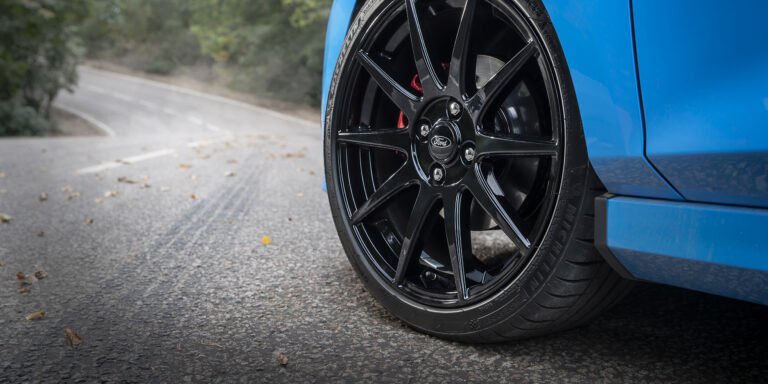
The sides – or sidewalls – of car tyres have a tough job, supporting the weight of the car, flexing against kerbs and speed bumps and absorbing the impact from potholes while keeping the tyre sealed to the wheel rim.

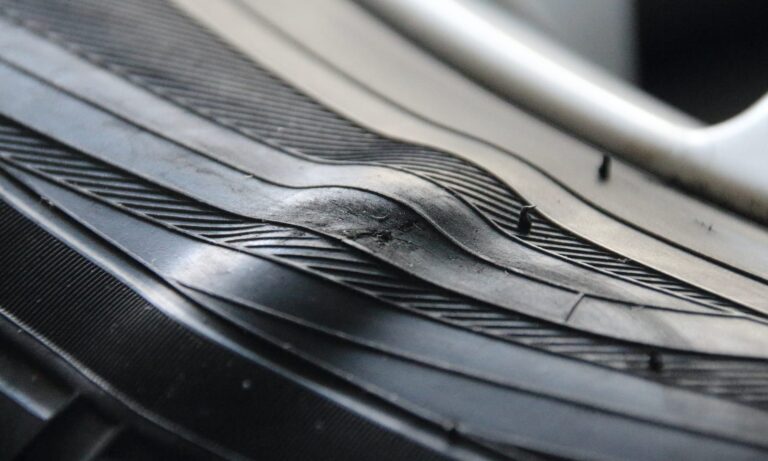
They’re strengthened for these ordeals, but can still pick up cuts, cracks and bulges. Ignoring such damage increases the risk of tyre failure at some point in the future, possibly disintegration of the sidewall and a blowout.

As you’re advised to regularly look over the tyre tread for wear, this is also the time to get a look at the sidewall. Remember to check the inside of the tread/sidewall as well. Where it’s safe to do so, lie on your back and use a torch to help you.

How to check for sidewall damage

A tyre sidewall is not always perfectly even; sometimes there will be dimples and indentations. Indentations are harmless and aren’t detrimental to either driving or safety characteristics. The dimples are superficial. You’re looking for bulges and splits.

At the MOT test, as well as checking for the minimum legal tread depth across at least ¾ of the width of the tyre (1.6mm) tyres are also expected for visible damage.

For cuts, the government’s vehicle inspection manual advises testers to fail if any ply or cord (the inner construction of the tyre) can be seen without touching the tyre or it can be seen by folding back rubber or opening a cut with a blunt instrument.

When assessing lumps or bulges testers are advised to distinguish between normal undulations resulting from manufacturing, and lumps or bulges caused by structural deterioration.

A pronounced external bulge on the sidewall of the tyre indicates that strengthening cords inside have been destroyed within the carcass. This is a fail and will need replacement.

When you’re checking the sidewall, continue over the top to the tread and look for objects such as nails or glass sticking out of the tyre. You can expect some pieces of gravel to lodge between the treads, but sharp stones can also lead to a slow puncture.

Read more:

Ferrari SF90 Stradale (2019 to 2025)

Summary

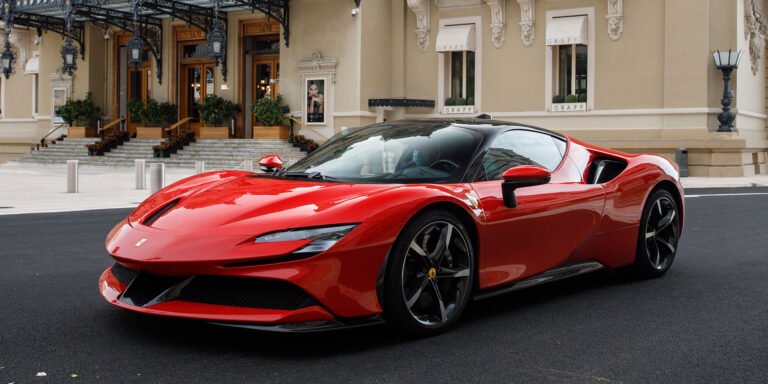
The Ferrari SF90 Stradale was a two-door mid-engined ‘Berlinetta’ coupé and ‘Spider’ convertible, which was the Italian brand’s first plug-in hybrid. It was sold until late 2025, when it was replaced by a substantially updated model called the 849 Testarossa.

Going on sale in 2019 as Ferrari’s flagship production model, the SF90 Stradale shared its name with the F1 race car from the same year – ‘SF90’ standing for the 90th anniversary of the Scuderia Ferrari racing team. The most powerful production model in Ferrari’s modern range, it used a 4.0-litre turbocharged V8 paired with three electric motors for a combined output that was just shy of 1,000hp.

Although it was longer and heavier than the rest of the Ferrari range, the SF90 Stradale could complete a 0-62 sprint in 2.5 seconds, which was four-tenths of a second faster than the F8 Tributo. Using just the electric motors and battery, the SF90 could travel a maximum of 16 miles from full charge, the same as the newer 296 GTB plug-in hybrid.

Both coupé and convertible variants received very favourable review scores from the British media – Auto Express called the SF90 Stradale “intoxicating”, Top Gear simply described it as “stunning”, and Driving Electric argued that it “sets a new benchmark in the high-end supercar market”, displaying what the future of the Ferrari brand should look like.

Despite its power and performance, a number of reviewers took issue with the car’s driving dynamics, and commented that cheaper Ferrari sports cars were arguably more fun to drive. Auto Express argued that alternatives within the Ferrari arsenal were more involving, with more “delicacy” in high-speed corners. That said, anyone searching for ferocious amounts of mid-engined power didn’t need to look elsewhere. “If you want the ultimate Ferrari road car, the SF90 is it. Roof open or closed.”

As of March 2026, the Ferrari SF90 Stradale holds a Used Car Expert Rating of B with a score of 64%. This includes both the coupé and Spider versions. It scores top marks for its strong media review scores and Ferrari’s excellent warranty coverage, while its CO2 emissions are decent on the official government lab tests as it’s a plug-in hybrid. However, overall running costs are predictably expensive.

SF90 Stradale highlights

  • Fastest production Ferrari ever made
  • Ferocious hybrid powertrain
  • Luxurious and high-tech interior
  • Sharp handling

SF90 Stradale lowlights

  • Seriously expensive
  • Not very efficient by plug-in hybrid standards
  • Not particularly practical for day-to-day use
  • Cheaper Ferraris are more involving

Key specifications

Body style: Two-door, mid-engined coupé and convertible
Engines:
petrol/electric plug-in hybrid
Price:
From £374,420 on-road

Launched: Summer 2019
Replaced: Autumn 2026

Media reviews

Highlighted reviews and road tests from across the UK automotive media. Click any of the boxes to view.

Featured reviews

More reviews

Auto Express

Car

Driving Electric

Evo

Top Gear

Safety rating

Independent crash test and safety ratings from Euro NCAP

No safety rating

As with every other Ferrari, the SF90 was not assessed by Euro NCAP during its production life.

Eco rating

Independent economy and emissions ratings from Green NCAP

No eco rating

The Ferrari SF90 was not assessed by Green NCAP during its production life.

Reliability rating

MotorEasy logo 600x167

Reliability data provided exclusively for The Car Expert by MotorEasy

No reliability rating

As of March 2026, we don’t have enough reliability data on the Ferrari SF90 Stradale to generate a reliability rating.

The Car Expert’s reliability information is provided exclusively to us using workshop and extended warranty data from our partner, MotorEasy, sourced from both official dealerships and independent workshops. 

As soon as MotorEasy has sufficient data on the SF90 Stradale, we’ll publish the score here.

Running cost rating

Clear Vehicle Data logo close crop

Monthly cost of ownership data provided exclusively for The Car Expert by Clear Vehicle Data

Fuel consumptionAverageScore
Plug-in hybrid models46 mpgC
CO₂ outputAverageScoreVariationScore
Plug-in hybrid models156 g/kmC
Insurance groupAverageScoreVariationScore
All models50F
Service and maintenanceCostScore
Year 1£1A
Year 2£1A
Year 3£1A
Year 4£1A
Year 5£1A
Overall£5A

There’s good and bad news on running costs for the Ferrari SF90 Stradale and Spider, according to whole-life cost numbers provided exclusively to The Car Expert by our data partner, Clear Vehicle Data.

All new Ferraris include seven years of scheduled servicing and maintenance, which means there’s no excuse for owners not to get their cars serviced on time, every time. We have listed the cost here as £1 each year as our system can’t currently cope with a zero figure for this category.

Being a plug-in hybrid, the official CO2 emissions score is very low. Over time, this may prove to be valuable as governments start to regulate cars more heavily based on their emissions outputs.

Of course, insurance bills are going to be exactly as expensive as you’d expect on a mid-engined Ferrari with a price tag exceeding a quarter of a million pounds. Meanwhile, if you drive the SF90 nicely then fuel economy is likely to be reasonable (again, helped by the plug-in hybrid system as long as you have electricity in the battery). But if you have any plans to unleash its considerable performance, that official fuel economy of 46mpg will deteriorate quickly.

Warranty Rating

New car warranty information for the Ferrari SF90 Stradale and SF90 Spider

Overall ratingA100%
New car warranty duration4 years
New car warranty mileageUnlimited miles
Battery warranty duration16 years
Battery warranty mileageUnlimited miles

For a plug-in hybrid model, Ferrari’s new car warranty is the best in the business. In addition to the usual four-year/unlimited-mileage warranty that is offered on Ferrari’s pure petrol models, the battery component of the Ferrari SF90 gets up to 16 years of coverage from Ferrari, again without any mileage restrictions.

Ferrari will replace the SF90’s battery after eight years with a brand-new battery, and will do the same again after 16 years. No other manufacturer offers this level of support for its batteries.

Awards

Trophies, prizes and awards that the Ferrari SF90 Stradale has received

2020

  • iF Design Awards – Gold Award
  • Red Dot Awards – Best of the Best Design Award
  • Top Gear Awards – Eco-Warrior of the Year

Similar cars

If you’re looking at the Ferrari SF90 Stradale, you might also be interested in these alternatives

Aston Martin DBS | Bentley Continental GT | Ferrari 296 GTB | Lamborghini Aventador Lexus LC | Maserati MC20McLaren 720SMcLaren 765LT Mercedes-AMG GT | Porsche 911 Turbo

Buy a Ferrari SF90 Stradale

If you’re looking to buy a new or used Ferrari SF90 Stradale, The Car Expert’s partners can help you find the right car.

Motors 600x300

Find your next used car with Motors. Find out more

Auto Trader logo 600x300

Find your next new or used car with Auto Trader. Find out more

Carwow logo 600x300

Find your next new or used car with Carwow. Find out more

Alfa Romeo 4C (2013 to 2020)

Summary

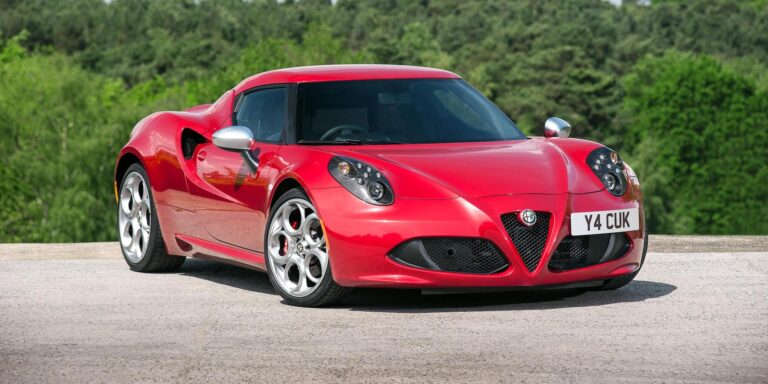
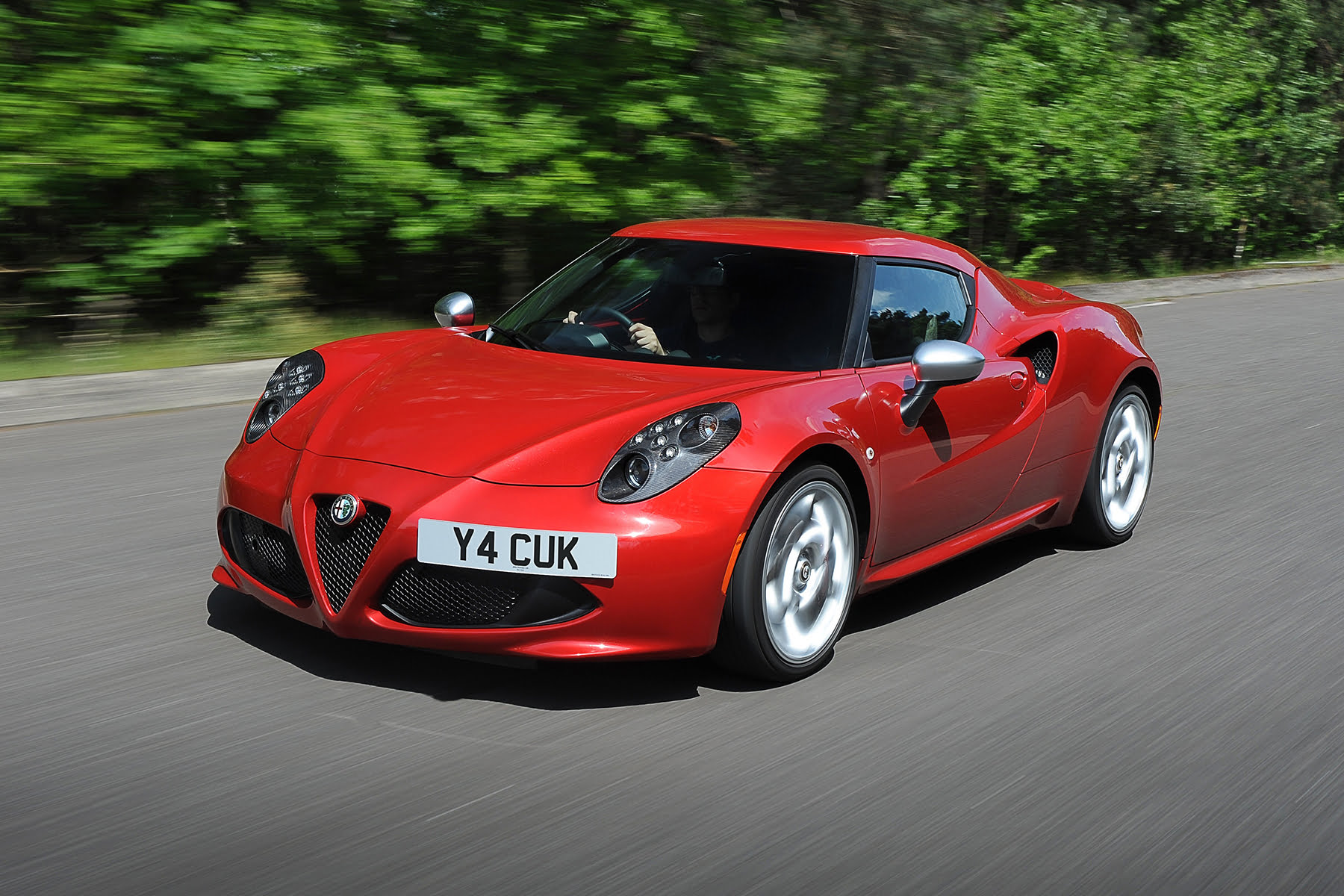
The Alfa Romeo 4C was a mid-engined sports coupé and convertible (Spider) which rivalled the likes of the Lotus Elise and Porsche 718 Cayman before it was discontinued in 2020.

First unveiled at the 2013 Geneva motor show, the sports car’s name, ‘4C’, referred to its turbocharged four-cylinder engine which produced 240hp and a 0-62mph sprint time of 4.5 seconds.

“The looks, engine and badge to make it a superb sports car”, Carwow commented, while praising the 4C for its agile handling that was aided by its lightweight chassis.

That said, Carwow and many other outlets concluded that the 4C was dynamically flawed, with a lethargic throttle response and unruly driving manners that made the car difficult to keep in a straight line. “It’s way too demanding, exhausting and, at times, downright scary”, Auto Express explained.

While some journalists found the 4C’s driving dynamics problematic, almost all reviewers expressed their disappointment with the sports car’s interior, which Top Gear said displayed a “lack of attention to detail”, while pointing to the interior’s “plasticky trim and numerous exposed screw-heads”.

With interior comfort and quality lacking, it’s no great surprise that the motoring media also took issue with the 4C’s price tag.

As of February 2026, the Alfa Romeo 4C holds a Used Car Expert Rating of D, with a score of 59%.

4C highlights

  • Alluring exterior looks
  • Impressive performance and engine soundtrack
  • Sharp handling

4C lowlights

  • Uncomfortable and unruly on the road
  • Underwhelming interior quality
  • Expensive price tag

Key specifications

Body style: Coupé and convertible
Engines:
petrol
Price when new:
From £45,000 on-road

Launched: Autumn 2013
Last updated: Summer 2015
Discontinued: Summer 2020

Media reviews

Highlighted reviews and road tests from across the UK automotive media. Click any of the boxes to view.

Auto Express

Auto Trader

Car

Carbuyer

Carwow

Evo

Honest John

Motors

Parkers

The Sun

The Sunday Times

The Telegraph

Top Gear

Safety rating

Independent crash test and safety ratings from Euro NCAP

No safety rating

Due to its price tag and very small sales volume, the Alfa Romeo 4C was not tested by Euro NCAP during its life cycle.

Eco rating

Independent economy and emissions ratings from Green NCAP

No eco rating

The Alfa Romeo 4C was not tested by Green NCAP during its production life cycle.

Reliability rating

MotorEasy logo 600x167

Reliability data provided exclusively for The Car Expert by MotorEasy

No reliability rating

As of February 2026, we don’t have enough reliability data on the Alfa Romeo 4C to generate a reliability rating.

The Car Expert’s reliability information is provided exclusively to us using workshop and extended warranty data from our partner, MotorEasy, sourced from both official dealerships and independent workshops. 

As soon as MotorEasy has sufficient data on the 4C, we’ll publish the results here.

Running cost rating

Clear Vehicle Data logo close crop

Monthly cost of ownership data provided exclusively for The Car Expert by Clear Vehicle Data

No data yet

As of February 2026, we don’t have independently verified data available for the Alfa Romeo 4C. Check back again soon.

Similar cars

If you’re looking at the Alfa Romeo 4C, you might also be interested in these alternatives

Alpine A110 | Audi TT | BMW Z4 | Jaguar F-Type | Lotus Elise | Porsche 718 Boxster | Porsche 718 CaymanToyota GR Supra

Buy a used Alfa Romeo 4C

If you’re looking to buy a Alfa Romeo 4C, The Car Expert’s partners can help you find the right car

Motors 600x300

Search less, live more. We make finding the right car simple. Find out more

Auto Trader logo 600x300

Find your next new or used car with Auto Trader. Find out more

Carwow logo 600x300

Discover great deals available on both new and used cars. Find out more

New car sales half-year review 2022: the car industry’s Long Covid

As we charge into July, we can look back on the first half of 2022 to review what’s been happening in the new car market and assess the state of play, as well as predict what to expect for the second half of the year.

It’s been another chaotic year for new car sales – the third in a row, all thanks to Covid. The car industry is certainly suffering from its own version of Long Covid as the knock-on effects of the global pandemic continue to wreak havoc on both supply and demand for new cars. Then, of course, just when it looked like things were starting to improve, Vladimir Putin decided to flatten Ukraine with catastrophic results for Ukrainians and broader consequences for the whole world.

How many new cars have been sold?

Just over 800,000 new cars have hit UK streets in the first six months of this year. The first half is usually stronger than the second half, and the Society of Motor Manufacturers and Traders (SMMT) is currently predicting that the full-year total will reach about 1.7 million – although that may be downgraded next month since the market is underperforming against that outlook.

For comparison, last year almost a million cars had been registered by the end of June, however the market collapsed in the second half of the year to a final total of just over 1.6 million by the end of the year.

Year-on-year comparisons are difficult because the last two years have been absolutely chaotic thanks to shutdowns and supply shortages, so there’s little point agonising over the specific percentage increases and decreases each month. But to give you an idea of how much the industry is struggling, the average new car registrations for January to June for the last decade (2010 to 2019) was more than 1.2 million – or about 50% more than this year’s performance.

What does this mean for consumers?

The current problem for car buyers is a serious lack of new car supply. Many of the most popular new models have very long waiting lists – in some cases, more than a year. In some cases, car companies won’t even take orders for certain models because the waiting list is already too long. The most high-profile example of this is Ford, which is currently not accepting orders for either the Fiesta or Focus, two of its best-selling models.

This obviously makes planning your next new car purchase or lease very difficult, as most car buyers have a PCP or PCH agreement with an end date when they will need to change their car. As a result, buyers have been snapping up whichever models are available within the right timeframe, or switching to a used car.

It’s also driving prices up for both new and used cars. With few cars to sell, car companies don’t need to offer any great discounts to lure in customers. They’re also prioritising consumer sales rather than fleet sales, as fleets generally expect discounts of up to 40% in return for ordering hundreds (or even thousands) of cars.

Despite low production numbers, many car companies are actually making more money than they have for years because they’re able to sell their cars at full price. So although it’s making cars more expensive for buyers, it’s creating a more sustainable car industry. This obviously won’t last, and they’ll resume their price wars as soon as production increases again…

Customers are going smaller, greener and cheaper

As we’ve pointed out a few times in recent months, there are some clear trends emerging in the new car marketplace.

Electric cars are continuing to find more and more homes, with the biggest limitation being supply. Despite concerns over public charging infrastructure and the sheer cost of new electric vehicles, the switch to electric power is well and truly underway.

Interestingly, consumer desire seems to be for fully electric cars rather than plug-in hybrids, which are not growing at anywhere near the same rate. There may well be supply issues affecting this, but it’s certainly true that car companies are very much putting most of their efforts into pure EVs rather than part-time EVs.

Budget brands are doing very well, with both Dacia and MG enjoying enormous sales growth against a market that is down 12% year-to-date. This is not just a 2022 story, either, as both brands have seen steady growth for several years.

We’ve discussed this before as well, but cars have been getting ever more expensive for years, while customers’ spending power has been pretty static. As a result, car buyers are tending to trade down to cheaper models when their PCP or PCH contract ends, in order to keep their monthly payments at a manageable level.

We saw a similar thing happen in the financial crisis of more than a decade ago, when then-budget brands Hyundai and Kia started making significant inroads into the UK new car market. If MG and Dacia can replicate the Korean siblings’ success over the next decade, their futures look very bright indeed.

Small cars continue to dominate the UK new car market. The Vauxhall Corsa is gradually extending its lead in the 2022 sales race, looking good to defend its 2021 crown. The Mini hatch also continues to sell strongly despite being near the end of its life, with a new model expected to make its debut next year.

Meanwhile, Ford might be unable to supply new Fiestas but the (Fiesta-based) Puma small SUV is going great guns. The market for mini SUVs is one of the hottest in the new car industry, with pretty much every car manufacturer having something to offer buyers.

Winners and losers in 2022 so far

At the halfway point of the year, the overall market is down about 12% on the same point last year. But within the bigger picture, some car companies are doing better than average while others are struggling.

So far, it’s been good news for Alfa Romeo, Alpine, Bentley, Cupra, Dacia, DS Automobiles, Fiat, Honda, Hyundai, Kia, Maserati, MG, Mini, Polestar, Porsche, Smart and SsangYong. All of these brands have outperformed the market by at least 10% – and in some cases, have done a lot better.

The year hasn’t started so well for Abarth, Jaguar, Jeep, Land Rover, Lexus, Mercedes-Benz, SEAT, Skoda, Subaru, Volkswagen and Volvo. All of these brands have underachieved by at least 10% compared to the overall market.

Overall, Ford is back on top in terms of overall new car registrations for the year to date, after slumping to fourth last year. Kia is second, ahead of Volkswagen, Audi, BMW, Toyota, Vauxhall, Mercedes-Benz, Hyundai and Peugeot.

How is this affecting the used car market?

We’ve now had more than two years of significantly reduced new car production thanks to Covid shutdowns and then supply shortages. With car companies trying to deliver every available set of wheels to paying customers, that’s meant fewer demonstrator vehicles, service loan vehicles, press fleet vehicles, head office management vehicles, and so on. A lot of these cars end up being sold as near-new used cars, so the supply of these vehicles has largely disappeared.

With thousands of customers looking to change their cars at the end of PCP contracts every month, that’s meant that a lot of them have been buying used cars instead of new ones, swallowing up the limited supply of near-new cars and driving prices up significantly.

In turn, that has a knock-on effect for slightly older used cars, when affects even older cars, and so on all the way down the line to decade-old vehicles and even older. And it’s going to keep used car prices high until new car production starts returning to more normal levels.

What can we expect for the rest of this year?

In short, more of the same. Some car companies are reportedly starting to get their supply chains back under control and are hoping to increase production in coming months, but realistically new car waiting lists are not going to magically disappear anytime soon.

The good news is that – unless Putin really loses his marbles and attacks NATO – we’re unlikely to see the sort of acute production shortages we saw at the end of last year, so hopefully we’ll have a less chaotic Christmas sales period in 2022.

For the used car market, we’re going to see high prices for at least another year. The industry can’t suddenly replace two years of new car production, so in 2023 and 2024 there will be far fewer three-year-old cars in the used car marketplace, which will keep prices inflated – not to the extent we’re seeing prices jacked up right now, but still higher than normal.

The bad news is that increasing cost-of-living pressures will put many thousands of households under real financial strain, which could significantly increase car finance defaults. We saw a similar pattern starting during the early days of the Covid pandemic, when millions of workers were suddenly furloughed.

To help prevent widespread defaulting and a potential car finance meltdown during Covid, the Financial Conduct Authority (FCA) set out provisions for customers to take a three-month ‘payment holiday’ in 2020. It’s possible that the FCA may need to keep a similar option in reserve if necessary later this year, but hopefully the situation won’t get that precarious.

Can I call my breakdown provider if I run out of fuel?

Well, you thought you could squeeze a few more miles out of your car to get home or to the next petrol station, and it hasn’t gone to plan. Perhaps you weren’t keeping an eye on the fuel gauge, or your car has conked out earlier than you anticipated. Either way, you’ve run out of fuel at the side of the road.

This scenario is more common than you might expect, particularly in recent months with the surging prices of fuel that have caused lengthy queues and dry pumps to become a common sight at petrol stations across the UK.

So, am I covered by my breakdown provider?

In short, it really depends on your breakdown policy. According to research from financial information company Defaqto, 89% of breakdown policies in the UK do provide cover for motorists who run out of fuel. This does mean that one in ten drivers are not covered by their policies when they run dry on the road however.

If your breakdown policy provider is the AA, RAC or Green Flag – good news! All three providers state online that they regularly assist their policyholders who have run out of fuel, though you should note that Green Flag will expect you to pay for the cost of the additional fuel, and your policy may be the same.

Contacts for breakdown assistance:

AA: 0800 88 77 66 (coverage includes running out of fuel, additional fuel is free)

RAC: 03301 598 751 (coverage includes running out of fuel, does not note whether additional fuel is free)

Green Flag: 0800 400600 (coverage includes running out of fuel, expects policy holder to pay for additional fuel)

Start Rescue: 0333 320 0975 (coverage includes running out of fuel, will tow you to the nearest petrol station)

Rescue My Car: 01423 535 795 (coverage includes running out of fuel, only free if a petrol station is with ten miles)

GEM Motoring Rescue: 01342 825 676 (coverage includes running out of fuel, does not note whether additional fuel is free)

Contact details as of July 2022

If you are reading this article at home, it’s a good idea to skim through your car documents looking for what your breakdown policy actually covers overall. If you are stuck at the side of the road with a dry tank, call your policy provider anyway – they will tell you whether you are covered.

If you are not actually covered for scenarios like this, or you don’t even have a breakdown policy, you can still get urgent assistance but for an upfront fee. They will expect you to pay over the phone for the callout and the additional fuel, which could end up being rather expensive.

The AA has recently recorded that the number of its members running out of fuel has surged in line with rising fuel prices, and although it will assist all of these members on request and top up their tanks for free, the company recommends pre-emptive measures above all.

Carefully plan your route and find the nearest petrol station as soon as your fuel light comes on.

Fuel rescue – other questions to consider

My fuel light has just turned on – how far can I go?

The fuel light turning on usually indicates that your fuel tank is only 10-15% full – how far your car can go once the light is on depends on the car. A survey published by TankOnEmpty.com in 2019 suggests that a Ford Fiesta can travel 37 miles on average when its fuel light is on, while a BMW 3 Series can travel 44 miles.

In actuality, how far you can go also depends on factors like the condition of the road, how accurate your car’s computer is at calculating fuel levels, what gear you are usually in and tyre pressure. So, if you are trying to do the maths in your head and planning on playing petrol station roulette, the odds are probably stacked against you.

I’m on empty and the engine is starting to splutter and bang, what is happening?

The engine is now misfiring, and this means that some of the engine cylinders aren’t getting enough petrol to burn. This won’t continue for too long – if the engine has started misfiring you don’t have long before the car conks out all together. Find the safest place to park on the side of the road at short notice.

Is it illegal to run out of fuel?

Not really – you’re not breaking any UK law by running out of fuel. That said, running out of fuel and obstructing the road for other drivers is indeed illegal, and you may receive a £100 fine and three points on your licence. If you are on the motorway, the law cites running out of fuel as one of the reasons you’re allowed to use the hard shoulder.

Is running out of fuel bad for my car?

If this is your first time running out of fuel in a relatively new car, you likely have nothing to worry about. If this is your four, fifth or sixth time running dry in an older car, you should be a bit more concerned.

Older cars can have debris that’s accumulated over the years at the bottom of the fuel tank. There are filters designed to prevent this debris from making it into the engine. But running out of fuel has the potential to clog these filters and other components, which can eventually impede the flow of fuel. Repeatedly running dry could also cause your fuel pump to overheat, wearing it out prematurely.

That said, the health of your car should not be your first priority – look after yourself! Being stationary on the roadside can be quite dangerous, particularly if you are parked up on the hard shoulder of a busy motorway. Remember to exit your car from the door furthest from traffic, walk away from the hard shoulder and out of the way of other vehicles.

Running out of fuel has caused a road accident, does my insurance cover this?

While most car insurance policies will cover you if you run out of fuel, they won’t cover you for accidents caused by running out of fuel. If you have caused an accident when running out of fuel or obstructing the road, you could be taken to court, or issued with nine points on your licence and an unlimited fine.

Read more:

Top crash test marks for new crossovers

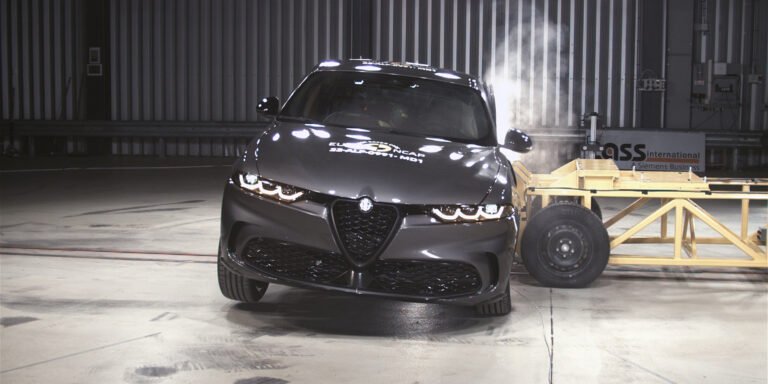
Safety body Euro NCAP has released its fourth batch of crash test ratings this year, with favourable results for the latest models from Alfa Romeo, Cupra, Kia, Mercedes-Benz, and Toyota.

Top marks have been given to the latest iteration of the Kia Sportage and the brand-new Alfa Romeo Tonale, both SUV/crossovers arriving in 2022.

Built on the same foundations as the Hyundai Tucson SUV that was awarded top marks last year, the Kia Sportage achieved the exact same adult and child occupant crash safety scores as its Tucson twin. That said, the Sportage received a slightly better safety assistance technology score, indicating that it is slightly better at preventing an accident in the first place.

Crash tester Euro NCAP is equally impressed by the high-scoring Alfa Romeo Tonale. Testers commented that the SUV performs well in potential car-on-car and vulnerable road user crash avoidance tests, but also said that its crash protection scores are not the highest in its class as the car “lacks centre airbags and proves to be an aggressive collision partner in frontal crashes.”

Crash tests were also conducted on the new Mercedes-Benz T-Class people carrier, which was awarded a full five-star rating and the highest safety assistance technology score in this latest batch of results.

The all-electric Cupra Born is the last of this latest batch to receive top marks, with higher collision protection scores than the Volkswagen ID.3 hatchback it is based on, but inferior vulnerable road user protection results than its Volkswagen stablemate.

This batch of Euro NCAP crash tests also included another electric model – the BMW i4 saloon, which was awarded a four-star safety rating, suggesting that the five-star BMW 3 Series that it is based on is safer to drive overall.

The i4 has lower collision safety scores than the 3 Series that was tested by Euro NCAP in 2019, likely due to the significant structural differences caused by the engine, gearbox and associated mechanicals being swapped out for an electric motor and batteries.

The i4’s safety assistance technology score was also surprisingly short of BMW’s recent standards – substantially lower in fact than the safety assist score given to the new Toyota Aygo X city car, which is a much smaller and cheaper car.

Given a four-star rating, the Aygo X has improved on the three-star rating given by Euro NCAP to the Aygo city car that was discontinued this year. However, it lacks some of the more advanced safety systems fitted to the slightly larger Yaris hatchback, which was awarded a five-star rating in 2020.

Managing tyre wear

In the UK, the minimum legal tread depth (the height of the side of the tread above the base of the tyre) is 1.6mm across the central three quarters of the tyre. When new, a typical tyre has 8mm of tread depth.

However, manufacturers and road safety organisations recommend a minimum tread depth of 3mm. A low tread depth dramatically increases the distance needed to stop in wet weather. With 3mm, from 50mph to rest takes 113m but with 1.6mm this increases to 151m. Also, if below the legal level, you can be fined up to £2,500 per tyre – and receive penalty points on your licence.

The widely accepted way to test your tread depth is to insert a 20p coin at different points across the tread pattern and around the circumference. If any of the coin’s rim is visible, the tyre is likely to have to be changed.

How long should a tyre last?

This depends on how the car is driven, how the tyres are maintained and also the quality of the tyres. According to the AA, under normal driving conditions, you should get a minimum of 20,000 miles out of front tyres on a front-wheel-drive car (common for most cars). For rear tyres, it can be double that – around 40,000 miles.

All of the above applies to petrol and diesel cars. Do heavier, electric cars will wear out their tyres sooner? No. Their tyres are designed specifically for the extra battery weight with a specific rubber compound, greater sidewall, tread and groove strength. Kwik Fit says that according to recent studies, conventional tyres actually wear down 30% quicker than their electric vehicle counterparts.

Under-inflation will damage the structure of a tyre but over-inflated tyres will wear out sooner.  They have a smaller contact area with the road, leading to increased stopping distance and reduced grip and also get a lot more wear across the central part of the tyre, leading to a shorter lifespan.

Assuming they are all set to the same correct pressure and are correctly aligned; tyres will wear out at the same rate according to whether they are the front pair or the rear.

If the engine drives the front wheels, the fronts will wear out sooner as they are both pulling the car along and being turned for steering and parking. Front tyres in general can also wear out more quickly due to wheel alignment problems where the car does not run straight because the steering and suspension has taken a knock.

On rear-drive cars there’s no steering (apart from some cars which have limited rear-steering) so less wear. On four-wheel drive cars the front set can still wear faster than the rears.

If the front wheels are out of alignment, typically having been knocked against a kerb, they will wear more quickly either on the outer or inner edges. This can also happen when cars are customised by their owners to lower the ride height by modifying the suspension. A specialist will need to re-align the tyres.

Should you rotate your car tyres?

In the days when many people did their own car maintenance, it was common to ‘rotate’ the front and back set of wheels to even out tyre wear, but few of us will probably do this now.

Tyre maker Pirelli says that under normal driving conditions, tyres should be rotated every 5,000 to 8,000 miles. If you have experienced alignment issues, balance problems or other tyre damage, it is best to also rotate your tyres when you fix this issue.

The tyres must be rotated in a set combination, not randomly. The best pattern for your vehicle will depend on its drive train. For example, for front-wheel drive vehicles an X-pattern where each tyre moves diagonally across.

This, however, assumes that your tyres are the same size for both front and rear. Your tyres also need to be ‘unidirectional’, meaning they can be fitted to either left or right wheels, if you’re swapping them from one side of the car to the other. ‘Directional’ tyres can be rotated front to rear on the same side of the car, as long as they are the same size for both front and rear.

Most cars run unidrectional tyres that are the same size all round, so any tyre can be mounted to any wheel and go on any corner of the car. However, some performance cars may have rear wheels that are larger and/or wider than the fronts, so you can’t rotate them. Directional tyre treads were popular on high-performance cars in the 1980s and 1990s, but are less common today.

Are your tyres too old?

If your vehicle doesn’t get driven much, it’s possible for the tyres to need replacing due to ageing rather than wearing out. Age-related damage is usually more common on caravan or trailer tyres, especially if left outside in the sun and rain.

The AA advises checking for signs of cracking on the sidewalls of tyres 4 or 5 years old if your car’s parked outside. You can find out how old your tyres are by checking for a code on the side of the tyre.

At the end of the DOT sequence of numbers there will be a 4 digit number code. For example, 1018 means the 10th week of 2018. Tyres over ten years old at the time of an MOT test will be failed if they are on any front steered axle.

Read more:

Toyota Highlander gets tech refresh

0

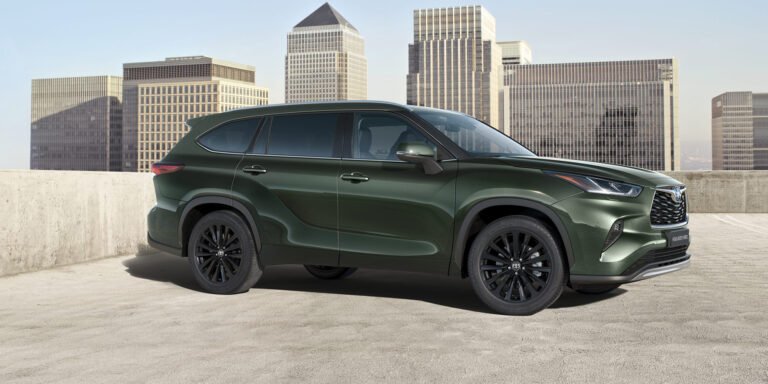
The Toyota Highlander SUV will soon receive a minor update consisting of on-board tech upgrades and additions.

These are the first revisions made to the seven-seat Highlander since it first went on sale in early 2021, as Toyota tries to keep its biggest SUV competitive with the likes of the Hyundai Santa Fe and Kia Sorento.

The most notable change is the revised infotainment system on the centre of the dashboard. The old eight-inch multimedia console, equipped with Toyota’s navigation software and compatible with Apple CarPlay and Android Auto, will be replaced by a newer 12-inch system installed with several upgrades that also featured in the recent Toyota RAV4 update.

This infotainment is equipped with a voice control function, which can respond to a range of spoken requests such as to adjust the climate control, choose or adjust the volume of music tracks and other media, make a phone call, or open and close the windows.

The navigation software uses the brand’s online cloud network to provide live traffic and road incident updates, as well as speed camera locations, and this feature is accessible without the need to pair your smartphone.

On the topic of smartphones, Apple CarPlay will be wireless, but if you use an Android smartphone then you’ll still need to plug it in to use the Android Auto feature. Toyota also says that all Highlander models will come with a wireless smartphone charging tray as standard too.

Toyota can install more features from afar at its discretion, as this infotainment is compatible with over-the-air updates, which allows the car to automatically download updates from the internet while sitting on your driveway.

Other than the infotainment, the digital instrument cluster behind the steering wheel has been revised and widened to 12 inches, and a head-up display which projects driving information onto the windscreen is also shown in the promotional material, but it is not known if this feature is included as standard.

The update does include one additional exterior styling option – 20-inch gloss black alloy wheels will soon be available. Toyota says that it will announce UK pricing for the updated Highlander later in the year.

The Toyota Highlander has already received praise for its impressive standard equipment levels and high-quality fit and finish. That said, this update is rather unlikely to affect its current Expert Rating of 63% by any large margin, as the most common criticisms of the SUV refer to its dull exterior styling and its expensive pricing.

MG and Dacia sales rocket as value brands boost car market

5 July 2022

Sales of MG and Dacia models are rocketing as the cost-of-living crisis continues to fuel demand for small and affordable cars, says The Car Expert.

Despite a year-to-date drop in overall new car sales of 12% compared to the first half of last year, according to the latest figures from the SMMT, sales of cars to consumers are up by over 4%.

While many mainstream and premium manufacturers struggle to sell cars due to faltering demand and supply chain issues, sales of electric vehicles continue to surge, reaching a market share of over 16% in June and over 14% for the year-to-date.

“Although there’s been a lot of disappointment surrounding the government axing the plug-in car grant, the reality is that demand for electric cars is still greater than what the manufacturers can supply. If supply was not such a significant hurdle, we could easily see an EV market share of over 20%” commented Stuart Masson, Editorial Director at The Car Expert.

The rising popularity of smaller, greener and cheaper vehicles has seen UK brand MG increase its sales by over 84% so far this year. Another value brand, Dacia, has experienced a sales boon of nearly 76%, and the compact Vauxhall Corsa city car is the best seller so far this year.

“It is really encouraging to see that the consumer market for new cars is actually doing better than is being reported. It is easy to paint a picture of negativity about the overall reduction in sales, but with more people buying electric cars than ever before and small, affordable vehicles proving popular with consumers, there’s a lot to celebrate as well,” continued Stuart.

“The two ends of the car-buying spectrum are thriving: on the one hand cheaper, smaller cars are doing very well, and on the other, luxury brands like Bentley and Porsche are booming.”

“As we saw during the financial crisis more than 10 years ago, the current squeeze on the cost of living is opening the door to new brands that represent great value. Back then, Hyundai and Kia were the beneficiaries and are now well established, this time around both MG and Dacia may emerge as popular options in the long term.”

Manufacturers are also prioritising their most profitable cars due to parts supply issues, meaning some brands are halting orders on popular vehicles, including Ford which is limiting sales of its popular Fiesta and Focus models among others.

While consumer sales are up, sales to fleets have dropped by over 26% in the year-to-date, which means the overall market is still down. That is likely to mean that used car prices will remain high in the long term as the ongoing shortage of new cars flows into the used car market.   

ENDS

The Car Expert

Founded in 2011, The Car Expert is the UK’s most comprehensive automotive consumer advice site. With an audience of over two million readers a year, The Car Expert provides independent and impartial advice on every aspect of buying, financing, owning, and selling new or used vehicles.

The Rotten Tomatoes equivalent for the automotive world, The Car Expert consolidates reviews from 30 of the UK’s top automotive websites to create the Expert Rating Index. Bringing together science and data analysis, the index calculates a weighted average to give an aggregated score – Expert Rating – that is comparable across different brands and models.

The Expert Rating Index factors in the age of each review, so that newer reviews carry more weight than older reviews. It also breaks down the complex web of different scoring systems that various websites use in their reviews.

The Car Expert has logged over 12,000 reviews covering more than 400 cars and over 50 manufacturers, with its Expert Rating Index now trusted as the gold standard for rating and ranking new cars in the UK.

To find out more, please visit: https://www.thecarexpert.co.uk/

For media enquiries, please contact Performance Communications:

Melissa Lodge: melissa@performancecomms.com
Richard Tanner: richard@performancecomms.com

Supply shortages hamper new car sales in June

It was a familiar story for new car sales today, with June’s results showing that supply chain shortages are continuing to restrict the supply of new vehicles.

According to number published this morning by the Society of Motor Manufacturers and Traders (SMMT), consumer new car sales were down by a substantial 22% compared to the same month last year, while fleet registrations were down 28%, meaning the overall market was down about 24% on last June. It’s the first such fall for consumer new car sales for a few months, which have been propping up the new car market this year.

Of course, the last two years have been anything but normal so it’s probably more relevant to note that the overall market was down about 40% on pre-pandemic levels. It’s also important to note that some of this is decline is due to an ongoing market contraction that has been evident since 2015/16 when the car finance bubble burst, so it’s not all just about a lack of supply right now.

Source: SMMT

EV sales keep on growing despite industry negativity

Electric car registrations increased again in June, despite the government ending the plug-in car grant subsidy in the middle of the month. And – despite all the negative commentary from the car industry about that – EV sales would be even higher if manufacturers could just supply more of them.

Elon Musk recently described his Tesla factories as “gigantic money furnaces” because they can’t build anywhere near enough cars to be profitable. Meanwhile, waiting lists on most EVs are stretching into next year. Uner those circumstances, it’s not surprising that the government doesn’t feel the need to throw millions of pounds subsidising EV uptake.

Source: SMMT

Good month, bad month

Despite an overall market fall of nearly a quarter, some car companies are managing better than others – often depending on how well they can manage their supply chains.

Volkswagen was comfortably the best-selling brand overall, although ironically it was also one of the worst performers compared to the same month last year, being down 40% compared to a market fall of 24%. In fact, all of the Volkswagen Group volume brands (VW, Audi, SEAT and Skoda) underachieved against the market.

Some of the biggest winners continue to be the budget brands, with Dacia and MG reporting massive increases in registrations for both June and for the first six months of the year. As cost-of-living increases continue to hit households hard, this trend is only going to grow.

Overall, it was a good month for Alfa Romeo, Alpine, Bentley, Cupra, Dacia, DS Automobiles, Genesis, Hyundai, Kia, Land Rover, Maserati, MG, Nissan, Peugeot, Polestar, Porsche, Smart and Vauxhall, who all recorded results that were at least 10% better than the overall new car market.

Things weren’t so rosy for Audi, BMW, Honda, Jaguar, Lexus, Mazda, SEAT, Suzuki, Volkswagen and Volvo, who all reported registrations that were more than 10% behind the overall market.

Corsa stretches its lead at the top

As we reach the halfway point of the year, the Vauxhall Corsa is steadily strengthening its chances of retaining the trophy for the UK’s best-seling car. The Corsa topped the charts again in June, while its nearest challenger – the Ford Puma – fell to sixth.

Another boatload from Tesla disrupted the top ten list, although this time it was only the new Model Y crossover and not the Model 3 saloon. It was enough to push the Model Y back into the top ten for year-to-date sales, and we eagerly await the next boatload from the gigantic money furnaces.

Lastly, there was one new face in the top ten as the MG HS made its chart debut, further highlighting the growing popularity of the British(ish) budget brand as living costs skyrocket.

We’ll have our usual comprehensive update of the top ten, as well as an overall half-year analysis of the new car market, in coming days.

Source: SMMT

Kia slims down Sorento range

0

Kia has simplified its Sorento SUV line-up, effectively dropping the entry- and mid-level specifications from the range in favour of a single top-end trim level.

The Sorento, Kia’s flagship large SUV, is now only available in ‘Edition’ guise, which has replaced the previous ‘2’, ‘3’ and ‘4’ trim grades. However, you can still choose between regular hybrid, plug-in hybrid or diesel power as before.

With the cheaper lead-in models no longer available, UK buyers will find the Sorento’s starting price has jumped nearly £10K. Available new for just over £40k last month, Kia’s largest car now costs just shy of £50k cheapest, which is a few thousand pounds less than upmarket alternatives like the Audi Q7 and Land Rover Discovery, but still a higher starting price than you’d typically expect from a Kia.

The new ‘Edition’ trim has the same equipment list as the old range-topping ‘4’ trim, including power-adjustable heated front seats trimmed in nappa leather, a 12-speaker Bose sound system, a customizable head-up display, a panoramic sunroof, wireless phone charging, a electrically powered tailgate and a 360-degree parking camera system.

Available in either black, white or grey, the exterior design of the Sorento ‘Edition’ includes black accents on the front grille, mirror caps, roof rails and window surrounds. Hybrid models get 19-inch alloy wheels, while diesel variants are fitted with bigger 20-inch alloys.

Kia says that the revised Sorento will be available to order from the middle of July, and estimates that prices will start at £49,495, though the company says it hasn’t decided on final UK pricing as of yet.

The winner of several industry awards in recent years, the Kia Sorento currently holds an Expert Rating of 72% – praised for its interior space and quality, but criticised by some for its rather stiff suspension.

Honda e Limited Edition available to order

0

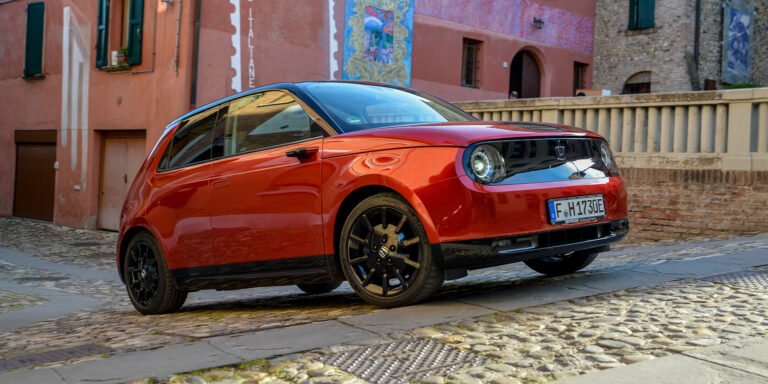
Honda has launched a limited run version of its ‘e’ electric hatchback, featuring a few exterior alterations which change the hatchback’s colour scheme.

Based on the ‘Advance’ trim grade (the most expensive of two trim levels available), the Honda e Limited Edition is available in a ‘crystal red’ exterior colour, not available on standard models.

The Honda branding is finished in black, as well as the 17-inch alloy wheels, to match the jet black colour of the car’s roof and the rounded rectangle fascia that houses the headlights in the front and the tail lights in the rear.

Other than these styling tweaks, the model is identical to the Honda e Advance, which is priced at £36,920. However, Honda has priced this Limited Edition model, with its minor styling revisions, at £38,120. This rather sharp price increase is likely due to the model’s exclusivity – only 50 Honda e Limited Edition cars will be sold across the entirety of Europe.

Earmarked by the motoring media for its retro styling that caught the eye when it first arrived in 2020, the Honda e currently holds an Expert Rating of 67%.  It has received universally high praise for its technology and driving dynamics too, but reviewers have also pointed out that the Honda has a limited battery range of not much more than 100 miles in real-world conditions.

All-new MG 4 EV set for September launch

0

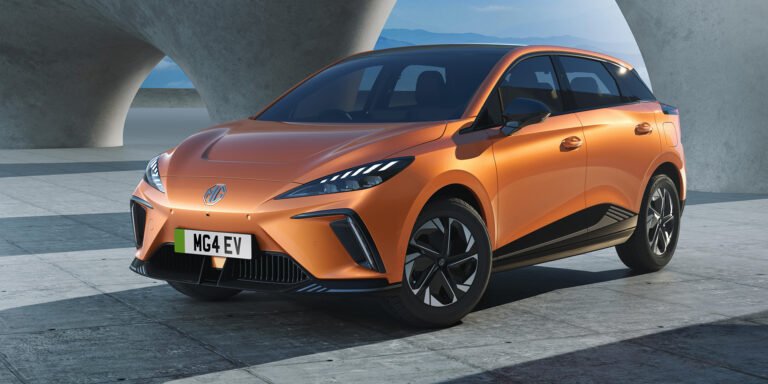
MG Motors has teased its all-new MG 4 electric hatchback which the brand will hold a launch event for in September, reportedly capable of travelling 280 miles on a full battery.

Positioned as a cheaper leftfield alternative to the likes of the Nissan Leaf and Volkswagen ID.3, the new MG 4 will be the third fully-electric model to join the MG Motors line-up, after the MG ZS SUV and MG 5 estate car.

The manufacturer says that there will be two different powertrain options for customers to choose from – an entry-level 51kWh battery pack and a more powerful 64kWh unit, which MG says have a range of 218 and 281 miles respectively. Both models use a single electric motor to power the front wheels, and the car’s top speed is capped at 99mph.

Designed on a new platform, the MG 4 looks like nothing else in MG’s current arsenal, and marks a turning point for the brand’s design ethos. Like the MG 5’s recent exterior refresh, designers have opted to give the MG 4 a pointy grille-less front end, the brand logo flanked by large wing-shaped LED headlights and protruding air intakes on either side of the bumper.

The car’s lower portion has plenty of SUV-style bumper cladding, while the rear features a full-width LED tail light bar sitting below a rear spoiler design that is split in two.

The hatchback’s interior design is a first for the brand, too. With the battery stored under the car’s floor, MG has taken the opportunity to improve cabin space and ergonomics, starting with the floating centre console that juts out below the dashboard but no further.

A frameless infotainment console, which is wider than the centre console below, is joined by a smaller digital instrument cluster screen on the dashboard. The car’s interior also features a new-look steering wheel, which gives the impression of being split in two at the bottom – mirroring the design of the rear spoiler.

That is all that has been released about the MG 4 so far, with more details, including UK specifications and pricing, on the way in the coming months.

New Nissan Ariya makes UK arrival

0

The UK pricing and specifications for the all-electric Nissan Ariya SUV have been confirmed as the new range is set to go on sale in the UK.

As the brand’s new range-topper, the Ariya is the latest electric family-friendly EV to line up against the likes of the Kia EV6Skoda Enyaq and Volkswagen ID.4.

As The Car Expert reported back in December, the Ariya range will include two battery capacities. The entry-level 63kWh version is powered by a 160kW electric motor powering the front wheels, producing a promised battery range of 250 miles. The mid-range 87kWh variant uses a 178kW motor – Nissan claiming that it can travel a maximum of 329 miles from full charge.

While these front-wheel drive models have their top speed capped at 100mph, the top-spec all-wheel drive ‘e-4ORCE’ powertrain can manage 124mph by using two motors, one in the front and another in the rear. With 65kW more power than the lead-in model, this range-topping variant is almost two seconds faster in a 0-62mph sprint than any other Ariya model.

Single-motor models come with 465 litres of boot space, which is not all that impressive when compared to the 585 litres offered by the class-leading Skoda Enyaq. The all-wheel drive version needs a bit more room in the rear to house the second electric motor, and thus boot space is reduced to 408 litres.

Once you have picked your powertrain preference, there are two trim levels to choose from – the standard ‘Advance’ trim or the more expensive ‘Evolve’ trim.

The ‘Advance’ trim offers a generous amount of equipment from the get go, including a 12-inch infotainment console on the dashboard with a voice control function operated through Nissan’s personal assistant, sitting next to a 12-inch digital instrument cluster behind the steering wheel.

The entry-level version also comes with dual climate control and an air purifier in the cabin, as well as a heated front windscreen with rain-sensing wipers and auto-folding wing mirrors. The front seats are heated and electrically-adjustable, and the boot lid in the rear offers hands-free access, as it is powered by a motor.

Key trim level features

Lead-in ‘Advance’ (starting from £43,845)

  • LED headlights, tail lights and daytime running lights
  • Heated front windscreen
  • Heated & auto-folding mirrors
  • Electronically-powered tailgate
  • 19-inch alloy wheels
  • Dual zone climate control
  • Air purification system
  • Electrically-adjustable and heated front seats
  • LED ambient lighting
  • Rain-sensing wipers
  • 12-inch infotainment console with Nissan’s personal assistant and Apple CarPlay/Android Auto
  • 12-inch digital instrument cluster
  • Wireless phone charging
  • Front and rear parking sensors and 360-degree camera
  • ‘ProPilot’ advanced cruise control with lane guidance
  • Blind spot monitoring and intervention
  • Traffic sign recognition

Top-spec ‘Evolve’ (starting from £47,840)

  • All ‘Advance’ features
  • Heads-up display on windscreen
  • Ten-speaker Bose stereo system
  • Ventilated front seats (heating and cooling)
  • Electric panoramic sunroof
  • Adjustable motorised centre console
  • ‘ProPilot’ Parking assistance features
  • ‘Memory functions’ feature that remembers personalised settings when key fob is near

The new Nissan Ariya comes equipped with a number of safety features as standard, including front and rear parking sensors with a 360-degree parking camera, a blind spot monitoring system that can intervene when it predicts an accident may occur, traffic sign recognition and Nissan’s ‘ProPilot’ advanced cruise control package that also includes lane-keeping assistance software for motorway journeys.

To get the brand’s ‘ProPilot’ parking package, which is advanced automated parking system that can perform a variety of parking manoeuvres at a touch of a button, you will have to upgrade to the ‘Evolve’ trim, which also includes a stereo system upgrade, an electric panoramic sunroof, a heads-up display that projects information on to the windscreen, and an adjustable centre console which can move backwards and forwards at the driver’s discretion.

This extensive equipment list means that the Ariya’s pricing is a little steeper than some of its key rivals. The lead-in ‘Advance’ model equipped with the smaller 63kWh powertrain costs just under £44k, which is nearly £3k more expensive than the cheapest Skoda Enyaq configuration.

The top-of-the-range Ariya ‘Evolve’ with all-wheel drive and the larger 87kWh battery is as expensive as the range gets, costing just over £56k, though customers can also spend a extra £2k on an additional ‘Sport’ pack that includes 20-inch alloy wheels and Nappa leather seating upholstery.

UK pricing

Trim and powertrainPrice
‘Advance’ with 63kWh battery£43,845
‘Evolve’ with 63kWh battery£47,840
‘Advance’ with 87kWh battery£49,595
‘Advance’ with 87kWh battery and ‘e-40RCE’ all-wheel drive£52,295
‘Evolve’ with 87kWh battery£53,590
‘Evolve’ with 87kWh battery and ‘e-40RCE’ all-wheel drive£56,290

The Nissan Ariya will be available to order in the UK from the 5th of July. With the new SUV now in the hands of the British motoring media, be on the lookout for the Ariya’s entry in our Expert Rating Index, coming soon.

Mercedes-Benz E-Class Coupé (2017 to 2023)

Summary

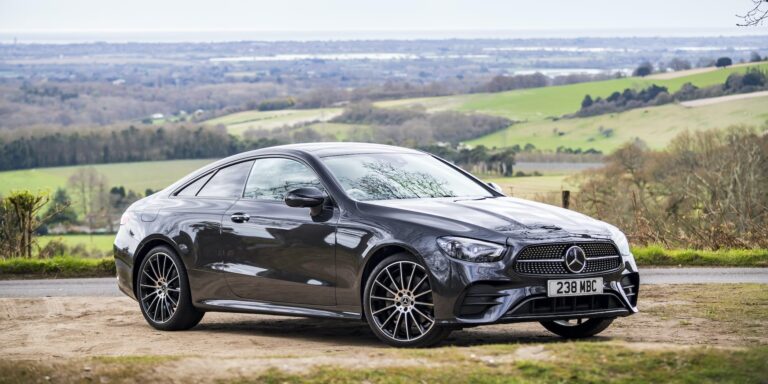
The Mercedes-Benz E-Class Coupé was the two-door version of the E-Class executive saloon of the same era. This model was launched in early 2017 and facelifted in the second half of 2020. It was discontinued in late 2023, replaced by an all-new model called the CLE.

An E-Class Cabriolet was also produced, which has its own page.

Available with either a petrol or diesel engine, the E-Class Coupé was well-received by the British motoring media, praised by Parkers for its “sumptuous yet modern interior”.

Heycar added that the coupé “offers a surprising amount of practicality”, while Top Gear described the car’s engine options as “reasonably cost-effective”.

However, the E-Class Coupé was not as highly-regarded as its saloon sibling in the eyes of reviewers, as it was not as focused on driving enjoyment as some of its rivals. Even so, Carbuyer argued that the E-Class Coupé had the “classy, visual prestige” to attract customers away from rivals like the Audi A5 and BMW 4 Series Coupé.

As of March 2026, the Mercedes-Benz E-Class Coupé holds a Used Car Expert Rating of E, with a score of 54%. It received good review scores from motoring journalists, but its emissions are only average and it’s expensive to run.

E-Class Coupé highlights

  • High-quality interior
  • Comfortable and spacious cabin
  • Elegant exterior styling

E-Class Coupé lowlights

  • Expensive, base price and up
  • Loud wind noise at speed
  • Rivals are more fun to drive

Key specifications

Body style: Coupé
Engines:
petrol, diesel
Price when new:
From £51,370

Launched: Spring 2017
Last updated: Autumn 2020
Removed from sale: Autumn 2023

Media reviews

Highlighted reviews and road tests from across the UK automotive media. Click any of the boxes to view.

Featured reviews

More reviews

Auto Express

Carbuyer

Evo

Heycar

Honest John

Parkers

The Sun

Top Gear

Safety rating

Independent crash test and safety ratings from Euro NCAP

Notes on safety rating

The Mercedes-Benz E-Class Coupé was not crash tested by Euro NCAP during its production life.

Although the E-Class Coupé was based on the saloon of the same name, there were significant structural differences between the two models. As such, the coupé did not inherit the saloon’s safety rating.

The Coupé was well equipped with standard safety technology shared with the E-Class saloon, such as autonomous emergency braking and emergency steering assistance.

Eco rating

Independent economy and emissions ratings from Green NCAP

No eco rating

The Mercedes-Benz E-Class Coupé was not lab tested by Green NCAP during its production life.

Reliability rating

Reliability data provided exclusively for The Car Expert by MotorEasy

All data based on MotorEasy average workshop costs for extended car warranty claims

As of April 2025 (our most recent data point), the Mercedes-Benz E-Class has a below-average reliability rating of 63%, according to warranty data provided exclusively to us by our commercial partner, MotorEasy. This score applies to both this generation of E-Class and also to previous models, which is worth considering if you are considering a used Mercedes-Benz E-Class.

Based on more than 900 warranty claims, the average repair cost is just over £700 so a used car warranty is well worth considering if you own or are considering an E-Class. More than 35% of claims concern the electrical system, with an average bill of more than £500. Engine and gearbox faults are unsurprisingly the most expensive problems, and are not uncommon in the E-Class.

Make sure that any used car warranty you purchase covers all of these problem areas.

Running cost rating

Monthly cost of ownership data provided exclusively for The Car Expert by Clear Vehicle Data

Fuel consumptionAverageScore
Petrol models35 mpgD
Diesel models46 mpgC
CO₂ outputAverageScoreVariationScore
Petrol models182 g/kmD
Diesel models162 g/kmC
Insurance groupAverageScoreVariationScore
All models40D
Service and maintenanceCostScore
Year 1£348D
Year 2£820D
Year 3£1,338D
Year 4£1,595D
Year 5£2,060D
Overall£6,161D

The Mercedes-Benz E-Class Coupé is pretty much middle of the road when it comes to ownership and running costs, according to whole-life numbers provided exclusively to The Car Expert by our data partner, Clear Vehicle Data.

Fuel consumption is relatively poor for the petrol engines, and average for the diesel models. Servicing and insurance costs are very much average as well.

Similar cars

If you’re looking at the Mercedes-Benz E-Class Coupé, you might also be interested in these alternatives

Audi A5 | BMW 4 Series CoupéFord Mustang | Lexus RC | Mercedes-Benz C-Class Coupé

Buy a Mercedes-Benz E-Class Coupé

If you’re looking to buy a used Mercedes-Benz E-Class Coupé, The Car Expert’s partners can help you find the right car

Motors 600x300

Search less, live more. We make finding the right car simple. Find out more

Auto Trader logo 600x300

Search for your next new or used car with Auto Trader. Find out more

Carwow logo 600x300

Discover great deals available on both new and used cars. Find out more

Hyundai reveals first look at all-electric Ioniq 6

0

Hyundai has released the first details and pictures of its upcoming electric Ioniq 6 saloon, which is set to challenge the likes of the BMW i4, Polestar 2 and Tesla Model 3 when it arrives in the UK in 2023.

Following a similar retro-futuristic styling brief, Hyundai will be hoping that it has another all-electric hit on its hands with the Ioniq 6 after the success of the Hyundai Ioniq 5 hatchback, which received an overwhelmingly positive range of reviews from the UK media after its arrival in 2021, and continues to be one of the highest-rated electric models in our unique Expert Rating Index.

Whether the new Ioniq 6 will match its hatchback sibling’s sales figures remains to be seen – it’s unlikely to be a big seller in the UK where large saloons are currently out of fashion. It is likely to be quite an important model for Hyundai in the bigger Chinese market however, and gives us an idea of what the next generation of Hyundai EVs will look like, including the Ioniq 7 SUV that is currently still in development.

The Hyundai Ioniq 6 has a streamlined, aerodynamic silhouette – another indication, like the Mercedes-Benz EQS and Volkswagen ID. models, that car manufacturers are pursuing a sleek and smooth look for their new electric models compared to the chunkier, squared-off styling that we’re used to.

This body shape actually makes the Ioniq 6 the most aerodynamic car in Hyundai’s line-up. The brand has not yet revealed with the new saloon’s specifications, but it’s thought that it will be offered with 58kWh and 77kWh battery pack options like the Ioniq 5, and will likely have a slightly better battery range than the Ioniq 5 (315 miles), as the saloon’s smooth exterior styling is more efficient at cutting through wind resistance on the road.

Displaying that it is part of the Ioniq family, the new saloon features plenty of pixel-style LED lights which feature in the design of the headlights and the tail lights that stretch across the boot lid, sitting below a ducktail spoiler in a rear fascia design that is reminiscent of a 1980s Porsche 911.

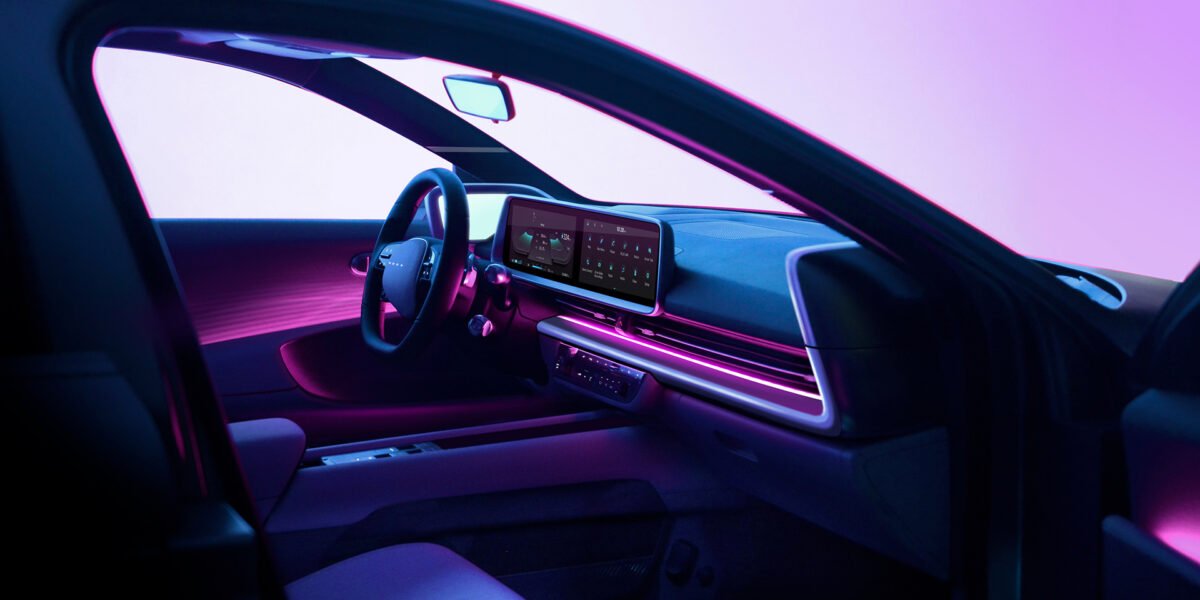
The LED pixels feature in the cabin too – most prominently on the car’s steering wheel. These four lights indicate how much charge is left in the saloon’s battery.

The dashboard is fitted with a pair of 12-inch displays, one for the infotainment console and the other for the driver’s instrument cluster, which feature together on one connected display. Unlike the Ioniq 5, Hyundai has decided to fit a full centre console between the two front seats in this larger model.

As is becoming more common on new models, Hyundai says that the new Ioniq 6’s interior is constructed using more sustainable materials. In this case, we find artificial leather, recycled PET plastics, vegetable oil-based paints and recycled fishing nets.

Beyond this first look, we will get more information about specifications at the car’s proper world premiere in the coming month, while UK pricing is likely to be released closer to the saloon’s arrival on our roads early next year.

Car insurance for teenagers and young adults

It’s great being young, but not if you want to insure a car. All the stats show that as a group, teenagers carry the highest risk for motor insurers. Even though some are good and careful drivers, others are a complete danger.

Drivers aged 17-24 only make up 7% of UK licence holders and drive fewer miles than the average but are involved in 24% of all fatal collisions, according to the Association of British Insurers (ABI).

Even the cost of insuring a modest small car is high. For an example, looking at data provided to us by Compare The Market between June 2021 and May 2022, an 18 year-old who lives in the North West of England and obtained a full UK licence in the last year was looking at an average annual £1,402 for an entry-level Fiat 500.            

The only way to get a good insurance record is to keep driving safely and over time build up a no-claims discount, but while the early years will be the most costly there are ways to lower the bill.

The starting point is choosing a low power, low value, (but still safe) car in a low insurance group. Then apply any of the price-reducing factors for anyone insuring a car: park off street if you can; lower the mileage and specify a higher excess.

Who’s driving?

It can be tempting for a parent or older person to pretend that they are the main user of a teenager’s car to save money on insurance premiums, and then add them as a named driver. But if the younger person is actually driving it on a regular basis this is illegal. Insurers call it ‘fronting’. If an insurer discovers that a person is guilty of fronting, their policy could be declared invalid and they could be forced to pay any costs that arise as a result of an accident. It can also lead to criminal convictions.

Conversely, if the young driver can insure their own car, adding an older, named driver onto the policy can reduce the premium, because the risk is being spread. To return to the example of the 18-year-old in the Fiat 500, the average premium with a parent added as a named driver reduces the average £1,402 to £1,297.

Black boxes

It’s agreed that the best way young drivers can lower their insurance is with telematics motor insurance policies, often known as ‘pay how you drive’ or ‘black box’ insurance. Telematics policies primarily use GPS technology to measure how a vehicle is being driven. Insurers then use this information to make decisions about risk based on driving performance. This information is considered together with other traditional risk factors, such as a driver’s age and where they live, to set premiums. ‘Safe’ drivers will usually benefit from lower premiums than ‘less safe’ drivers.

Many young people aren’t keen, as they feel as if they’re being spied upon, but if they are careful behind the wheel, black box insurance will the best option. According to analysis by compathemarket.com in May 2022, more than three quarters (78%) of drivers aged between 17 and 20 could save an average of £1,137 by choosing a telematics policy instead of a regular car insurance policy.

There are specialist insurers who cater for young drivers. One of the longest-established, Marmalade, offers a specific named-young-driver-insurance. It has a telematics policy for driving a parent’s or grandparents’ car (a tag and an app know who’s driving), it also offers a telematics policy for young drivers in their own car as the main driver.

Temporary insurance

For many young drivers an annual insurance policy may not be needed, and here’s where the growing market for temporary, or pay-by-the mile car insurance comes in. For example, many young people may only want the use of a car when they are home from college or university.

Again, Marmalade uses a black box for its Pay as You Go Insurance policy on a parent’s car. You start with 500 miles and arrange auto top up of 100 to 500 miles when there’s 50 miles left. Unused miles are valid for a year. Prices start from £175 for 500 miles – with top-ups from £18. The driver still earns no claims bonus for a trouble-free year. Another company, go shorty offers time-based car insurance for ages 18-75 from one hour to 28 days to drive cars which don’t belong to you.

For further information, visit the Association of British Insurers website, and check out the section on younger drivers.

Volkswagen Multivan

Summary

The Volkswagen Multivan is an upmarket seven-seat people carrier which arrived in the UK in early 2022 to replace the ageing Volkswagen Caravelle.

Despite the name ‘Multivan’ and the fact that previous generations of Multivan have been based on the Volkswagen Transporter van, the latest Multivan is actually built on the same passenger car platform that underpins the current Volkswagen Golf and many other vehicles in the larger VW/Audi/Skoda/SEAT family.

So, although it looks very similar to the latest Volkswagen Transporter and is designed to rival other van-based people carriers like the Mercedes-Benz V-Class, the Multivan has inherited driving dyamics that are much more car-like, along with the company’s latest plug-in hybrid technology.

“Everything from the way it looks to the way it drives represents a well-conceived upgrade over almost all other vehicles of this type”, Parkers explains, while praising the people carrier for its surprising driver appeal and its flexible and spacious interior.

The most prominent criticism of the Multivan relates to its infotainment, as it uses the same system as the electric ID. range that Business Car calls “confusing” and Top Gear says is “awful”. Auto Trader also gave the Multivan a poor review based on a host of reliability issues with the test car provided.

The price tag is a sticking point for a few reviewers too – with Multivan pricing starting above £50,000, Carbuyer recommends waiting a few years for the Multivan to appear on the used market, or to take a look at the slightly more expensive and distinctive ID. Buzz people carrier.

As of September 2025, the Volkswagen Multivan holds a New Car Expert Rating of B with a score of 65%. Its best mark is a B grade for its safety rating, while its media review scores and CO2 emissions are average. However, its running costs are high and Volkswagen’s new car warranty offering is poor.

Multivan highlights

  • Flexible seven-seater
  • Spacious and tech-laden cabin
  • Diverse engine range includes PHEV
  • Low running costs
  • Great to drive by people carrier standards

Multivan lowlights

  • Expensive, base price and up
  • Light steering
  • Overshadowed by electric ID. Buzz
  • No rear air-con on entry-level model
  • Confusing infotainment

Key specifications

Body style: Van-based people carrier
Engines:
petrol, diesel, plug-in hybrid
Price:
From £43,258 on-road

Launched: Spring 2022
Last updated: N/A
Replacement due: TBA

Media reviews

Highlighted reviews and road tests from across the UK automotive media. Click any of the boxes to view.

Featured reviews

More reviews

Auto Express

Auto Trader

Business Car

Car

Carbuyer

Carwow

Driving Electric

Electrifying.com

Heycar

Honest John

Parkers

The Telegraph

Top Gear

Safety rating

Independent crash test and safety ratings from Euro NCAP

Overall score: 5 stars
Date tested: February 2022
Read the full Euro NCAP review

Adult protection: 90%
Child protection: 89%
Vulnerable road users: 69%
Safety assist: 87%

Tested by safety body Euro NCAP in early 2022, the plug-in hybrid (eHybrid) version of the Volkswagen Multivan was awarded one of the most impressive five-star safety ratings a people carrier has received to date. This rating standard for the entire range of Multivan powertrain options.

The Multivan achieved high adult protection and child protection scores in the event of a crash, and its impressive safety assistance technology score displays that the people carrier is adept at avoiding potential road accidents in the first place.

Eco rating

Independent economy and emissions ratings from Green NCAP

No eco rating

As of September 2025, the Volkswagen Multivan has not been tested by Green NCAP.

Running cost rating

Clear Vehicle Data logo close crop

Monthly cost of ownership data provided exclusively for The Car Expert by Clear Vehicle Data

Fuel consumptionAverageScore
Petrol models32 mpgD
Diesel models43 mpgC
Plug-in hybrid models157 mpgA
CO₂ outputAverageScoreVariationScore
Petrol models202 g/kmD
Diesel models171 g/kmD
Plug-in hybrid models42 g/kmA
Battery rangeAverageScoreVariationScore
Plug-in hybrid models30 milesE
Insurance groupAverageScoreVariationScore
All models33D
Service and maintenanceCostScore
Year 1£180B
Year 2£502B
Year 3£816B
Year 4£1,066B
Year 5£1,437C
Overall£4,001B

The Volkswagen Multivan is an expensive car to own and run, according to whole-life cost numbers provided exclusively to The Car Expert by our data partner, Clear Vehicle Data.

Fuel economy is disappointing for petrol models but good for diesel-engined versions. The plug-in hybrid models look amazing on paper, but this is largely thanks to ridiculous EU/UK government lab tests that are completely inadequate for plug-in hybrids. There is no way you will ever travel for 155 miles on a single gallon (4.5 litres) of fuel and some electricity…

The battery range of the plug-in hybrid model is also poor when compared to other plug-in hybrids, though this is to be expected considering its large size. The car’s service and maintenance costs should be affordable, and insurance costs are around the market average.

Reliability rating

MotorEasy logo 600x167

Reliability data provided exclusively for The Car Expert by MotorEasy

No reliability rating

As of September 2025, we don’t have enough reliability data on the Volkswagen Multivan to generate a reliability rating.

The Car Expert’s reliability information is provided exclusively from workshop and extended warranty data from our partner, MotorEasy. As soon as MotorEasy has sufficient data on the Multivan, we’ll publish the score here.

Warranty rating

New car warranty information for the Volkswagen Multivan

Overall ratingD31%
Petrol or diesel modelsE17%
Electric or hybrid modelsC56%
New car warranty duration3 years
New car warranty mileage60,000 miles
Battery warranty duration8 years
Battery warranty mileage100,000 miles

Volkswagen’s new car warranty is pretty much the bare minimum offered by any car manufacturer in the UK. The duration is three years, with a limit of 60,000 miles. Unfortunately, in this sector none of the major alternatives offer anything much better.

In addition to the standard new car warranty, the Multivan plug-in hybrid version has an eight-year/100,000-mile warranty for the battery components.

Warranty on a used Volkswagen Multivan

  • If you are buying an ‘Approved Used’ Volkswagen Multivan from an official Volkswagen dealership, you will get a minimum 12-month warranty included.
  • If you are buying a used Volkswagen Multivan from an independent dealership, any warranty offered will vary and will probably be managed by a third-party warranty company.
  • If you are buying a used Volkswagen Multivan from a private seller, there are no warranty protections beyond any remaining portion of the original new car warranty.

If you’re looking to buy any used car that is approaching the end of its warranty period, a used car warranty is usually a worthwhile investment. Check out The Car Expert’s guide to the best used car warranty providers, which will probably be cheaper than a warranty sold by a dealer.

Recalls

Official DVSA safety recalls that have been issued for the Volkswagen Multivan

As of September 2025, we are not aware of any DVSA vehicle safety recalls affecting the Volkswagen Multivan. However, recall information is updated very regularly, so this may have changed.

If you own a Volkswagen Multivan or are looking to buy one, you can check to see if your car has any outstanding recalls by visiting the DVLA website or contacting your local Volkswagen dealer.

Awards

Trophies, prizes and awards that the Volkswagen Multivan has received

2025

  • Caravan and Motorhome Club Awards – Best Large Family Towcar

2022

  • Parkers New Car Awards – Best Seven-Seater
  • Red Dot Design Awards – Best of the Best Award
  • Tow Car Awards – Most Practical Tow Car

Similar cars

If you’re looking at the Volkswagen Multivan, you might also be interested in these alternatives

Current models: Citroën ë-SpaceTourer | Ford Tourneo Custom | Lexus LM | Maxus Mifa 9 | Mercedes-Benz V-Class | Peugeot E-Traveller | Toyota Proace Verso EV | Vauxhall Vivaro Life Electric | Volkswagen ID. Buzz

Discontinued models: Citroën Grand C4 SpaceTourer (2013 to 2022) | Citroën SpaceTourer (2017 to 2022)Ford Galaxy (2015 to 2024) | Ford S-Max (2015 to 2024) | Peugeot Traveller (2013 to 2022) | Toyota Proace Verso (2017 to 2022) | Vauxhall Vivaro Life (2017 to 2022) | Volkswagen Sharan (2010 to 2021)

The large van-based people carrier market has fluctuated in recent years. The Stellantis models (Vauxhall, Peugeot and Citroën, plus Toyota) are no longer available with petrol or diesel power, and can only be had as electric models.

Most of the current models, and pretty much all of the new entries, are EV-only. Only Ford and Mercedes-Benz have fossil-fuel-powered alternatives.

Buy a Volkswagen Multivan

If you’re looking to buy a new or used Volkswagen Multivan, The Car Expert’s partners can help you find the right car

Motors 600x300

Find your next used car with Motors. Find out more

Auto Trader logo 600x300

Find your next new or used car with Auto Trader. Find out more

Carwow logo 600x300

Find your next new or used car with Carwow. Find out more

Lease a Volkswagen Multivan

If you’re looking to lease a new Volkswagen Multivan, The Car Expert’s partners can help you find a competitive deal

Carwow logo 600x300

Personal contract hire deals from Carwow. Find out more

Leasing-com logo

Personal contract hire deals from Leasing.com. Find out more

Select Car Leasing logo

Personal contract hire deals from Select Car Leasing. Find out more

Subscribe to a Volkswagen Multivan

If you’re interested in a car subscription, The Car Expert’s partners can help (PS: What’s a car subscription?)

SelfDrive UK logo

Car subscriptions from SelfDrive.
Find out more

Cocoon Vehicles logo 600x300

Car subscriptions from Cocoon.
Find out more

Just Vehicle Solutions logo 600x300

Car subscriptions from Just Vehicle Solutions.
Find out more

Skoda Citigo (2012 to 2019)

Summary

The Skoda Citigo was a compact city car available as a three-door or five-door hatchback. Originally arriving on UK roads in the middle of 2012, the petrol-powered Citigo was replaced in 2019 by the all-electric Citigo-e iV, which we are building a separate page for soon.

Powered by a 1.0-litre petrol engine, with both manual and automatic gearbox options, the Skoda Citigo was essentially identical to the Volkswagen Up and SEAT Mii city cars. The only visual difference was some very light exterior restyling, while the Citigo also carried less kit to justify its slightly lower price tag.

As a result, the Citigo received many of the same plaudits as the Up, including widespread praise of its agile handling, ‘big car’ interior quality and low running costs.

Part of a competitive city car class while on sale, several outlets commented that the Citigo stood out from the crowd thanks to its superior value-for-money – one of the main reasons the compact car received several industry awards during its lifespan, including the title of ‘Best City Car’ at the Auto Express Awards for five years running.

That said, many reviewers concluded that they preferred the Volkswagen Up overall. The Citigo range also did not have as many personalisation options as the Up, and while cheap, the entry-level Citigo trim did not come with much equipment.

No longer on sale, the Skoda Citigo holds a Used Car Expert Rating of D, with a score of 57%. It gets good grades for its media review scores, however its safety rating is relatively poor compared to newer cars.

Citigo highlights

  • Great value-for-money
  • Good interior quality for a budget car
  • Agile driving dynamics
  • Surprisingly practical
  • Low running costs

Citigo lowlights

  • Small range of engine options
  • Rather basic lead-in model
  • Not many personalisation options
  • So-so performance
  • Three-star safety rating

Key specifications

Body style: Small three- and five-door hatch
Engines:
petrol
Price when new:
From £8,285 on-road

Launched: Summer 2012
Last updated: Summer 2017
Discontinued: Autumn 2019

Media reviews

Highlighted reviews and road tests from across the UK automotive media. Click any of the boxes to view.

Auto Express

Auto Trader

Car

Car Keys

Carbuyer

Carwow

Eurekar

Evo

Fleetworld

Honest John

Motoring Research

Motors

Parkers

The Sun

The Sunday Times

The Telegraph

Safety rating

Independent crash test and safety ratings from Euro NCAP

Overall score: 3 stars
Date tested: December 2019
Date expired: January 2026
Read the full Euro NCAP review

Adult protection: 81%
Child protection: 83%
Vulnerable road users: 46%
Safety assist: 55%

The Skoda Citigo’s safety rating is based on the essentially identical Volkswagen Up, which was originally tested back in 2011 and awarded five stars by Euro NCAP. It was highly praised at the time for bringing a high safety standard to the city car class.

However, Euro NCAP safety standards have become significantly tougher over the last decade and the Citigo (along with its Volkswagen and SEAT siblings) did not keep up. In 2019, the Volkswagen Up was re-tested by Euro NCAP and only awarded three stars, and again the same score applies to the Skoda Citigo.

Eco rating

Independent economy and emissions ratings from Green NCAP

No eco rating

The Skoda Citigo was not lab tested by Green NCAP during its production life – and neither was the Volkswagen Up or SEAT Mii.

Reliability rating

MotorEasy logo 600x167

Reliability data provided exclusively for The Car Expert by MotorEasy

No reliability rating

As of April 2025 (our most recent data point), we don’t have enough reliability data on the Skoda Citigo to generate a reliability rating.

The Car Expert’s reliability information is provided exclusively to us using workshop and extended warranty data from our partner, MotorEasy, sourced from both official dealerships and independent workshops. 

As soon as MotorEasy has sufficient data on the Citigo, we’ll publish the results here.

Awards

Trophies, prizes and awards that the Skoda Citigo has received

2018

  • Carbuyer Awards – Best First Car + Best City Car

2016

  • Auto Express Awards – Best City Car

2015

  • Auto Express Awards – Best City Car

2014

  • Auto Express Awards – Best City Car
  • Green Apple Awards – Best Supermini

2013

  • Auto Express Awards – Best City Car
  • Carbuyer Awards – Best City Car
  • The Sunday Times Motoring Awards – Best City Car

2012

  • Auto Express Awards – Car of the Year + Best City Car

Similar cars

If you’re looking at the Skoda Citigo, you might also be interested in these alternatives

Citroën C1 | Fiat 500 | Fiat Panda | Hyundai i10 | Kia Picanto | Peugeot 108 | SEAT Mii | Toyota Aygo | Volkswagen Up

More news, reviews and information about the Skoda Citigo at The Car Expert

The safest used first cars for 2017

The safest used first cars for 2017

Skoda Citigo-e is brand’s electric pioneer

Skoda Citigo-e is brand’s electric pioneer

Skoda’s new year finance, fuel and scrappage offers

Skoda’s new year finance, fuel and scrappage offers

Two new editions for redesigned Skoda Citigo

Two new editions for redesigned Skoda Citigo

Buy a used Skoda Citigo

If you’re looking to buy a Skoda Citigo, The Car Expert’s partners can help you find the right car

Motors 600x300

Search less, live more. We make finding the right car simple. Find out more

Auto Trader logo 600x300

Find your next new or used car with Auto Trader. Find out more

Carwow logo 600x300

Find your next new or used car with Carwow. Find out more

Honda prices up all-new Civic

0

Honda has revealed the first pricing and specification details of its all-new Honda Civic family car, which can be ordered in the UK from this month with prices starting at just under £30K.

As The Car Expert reported in March, the upcoming 11th-generation Honda Civic will only be offered as a petrol-electric hybrid, and will also be the first iteration of the Civic for many years not to be built in Britain, after Honda’s factory at Swindon closed in July 2021.

Badged as the Honda Civic e:HEV, this hybrid range is set to challenge electrified rivals like the Hyundai Ioniq and Toyota Corolla, and is powered by a newly-developed 2.0-litre petrol engine that works in tandem with a lithium-ion battery and two electric motors to produce 183hp.

The new range consists of three grades, starting with the ‘Elegance’ trim, which features 17-inch alloy wheels, front and rear parking sensors, a rear parking camera, and a seven-inch digital instrument cluster behind the steering wheel.

The mid-range ‘Sport’ trim adds synthetic leather to the car’s upholstery, and also features bigger 18-inch alloy wheels, LED fog lights and some extra bodywork detailing in black. The top-spec ‘Advance’ trim upgrades the car’s headlights, infotainment and stereo system, and adds a panoramic roof.

The new Civic comes with several safety features as standard, including lane-keeping assistance and blind spot monitoring systems.

Trim level features

Entry-level ‘Elegance’ (£29,595)

  • 17-inch alloy wheels
  • Fabric seats
  • LED headlights
  • Front and rear parking sensors
  • Rear parking camera
  • Entry-level infotainment screen (size not specified, likely eight- or nine-inch touchscreen)
  • Seven-inch digital instrument cluster
  • Eight-speaker stereo system
  • Lane keeping assistance
  • Blind spot monitoring

Mid-range ‘Sport’ (£30,595)

  • All ‘Elegance’ features that are not replaced
  • 18-inch alloy wheels
  • Fabric and synthetic leather seats
  • LED fog lights
  • ‘Sports’ pedals
  • Wing mirrors and window surrounds finished in black

Range-topping ‘Advance’ (£32,995)

  • All ‘Elegance’ and ‘Sport’ features that are not replaced
  • Adaptive LED headlights
  • Larger ten-inch infotainment screen
  • 12-speaker stereo system
  • Panoramic sunroof

Two-tone 18-inch alloys, full leather seats and a heated steering wheel are optional extras that can be added for an additional fee.

The new Honda Civic e:HEV will be available to order in the UK this month, with Honda expecting the first vehicles to be delivered to customers in October.

The current tenth-generation Honda Civic has been on sale since early 2017 in the UK, and has been praised for its practicality and generous levels of standard equipment. Now at the end of its life, it holds an Expert Rating of 69% in our Expert Rating Index, meaning that it isn’t rated quite as highly as the leading vehicles in its class, but it is still considered a good car.

Citroën unveils all-electric ë-C4 X

0

Using a similar fastback formula as the C5 X that launched earlier this year, the Citroën ë-C4 X will arrive on UK roads in 2023, with a 136hp electric powertrain that can travel over 200 miles from full charge.

Sitting somewhere between a conventional car and a crossover/SUV vehicle, this new model is essentially a fastback saloon version of the Citroën ë-C4 crossover. The ë-C4 and the new ë-C4 X share the same front end styling, and have the same cabin length, but this fastback model has a sloping roofline leading to a larger rear overhang.

More rear overhang means that the ë-C4 X has more boot space – 130 litres more to be exact, 510 litres of boot space in total. There is also an extra 39 litres of storage space in cubbies dotted throughout the cabin.

The car’s rear end features a few design revisions, with arrow-head tail lights sitting below a small ducktail spoiler.

Getting behind the wheel, the car’s interior is the same as the ë-C4 crossover, apart from the slightly lower roofline in the rear. To make up for the reduction in rear headspace, the seats in the back have been reclined by more than 25 degrees.

The dashboard has the same layout and fixtures, including a ten-inch infotainment screen in the centre of the dash, which sits next to a digital instrument cluster positioned behind the steering wheel.

While this infotainment touchscreen is the same, the software it uses is more advanced than what you would find in the regular ë-C4. First unveiled with the launch of the C5 X, this infotainment system has a digital assistant feature that allows you to control some of the car’s functions with voice commands. The cabin is equipped with four USB sockets for device charging, two in the front and two in the rear.

Citroën’s ‘Advanced Comfort’ seats, which are designed with more padding and lumbar support for ‘optimal driving comfort’, come as standard.

Like its crossover sibling, the Citroën ë-C4 X is powered by a 50kWh battery mated to a 136hp electric motor – the promised battery range being 223 miles from full charge. Citroën says that it will also be manufacturing petrol and diesel versions, but only the all-electric version will be heading to the UK.

The fastback can reportedly complete a 0-62mph sprint in just under ten seconds, and its top speed is capped at 93mph. Three driving modes are available – ‘Eco’, ‘Normal’ and ‘Sport’ – activated by a mode selector on the centre console. Eco mode prioritises efficiency, Sport mode increases performance output, and Normal mode balances the two.

Citroën has not released any pricing or detailed specification information as of yet – this will be released closer to the car becoming available to order early next year.

On sale since 2021, the Citroën ë-C4 crossover is currently priced at £29,995, praised by the motoring media for its interior quality and 100kW charging ability. With a current Expert Rating of 71%, it is a long way behind the best medium EVs like the Kia EV6 and Hyundai Ioniq 5.

Lexus ES gets infotainment upgrade

0

Lexus has announced that its ES saloon is set to receive another infotainment upgrade, among other tweaks, as part of a minor model update that will go into production this year.

This will be the second update that the ES has received in the last 12 months, after the car was given a larger mid-life facelift in October last year, consisting of cosmetic changes, interior trim additions, suspension updates and a bigger 12-inch infotainment screen on the dashboard.

This time around, Lexus has upgraded the software that this infotainment system runs on. Described as “confusing” by many motoring outlets around the time of the saloon’s UK launch in 2019, Lexus promises that this revised multimedia console is more responsive and intuitive than before.

A cloud navigation feature now comes as standard, which provides real-time road and traffic information, and displays information on local fuel prices and parking. The manufacturer also says that it has improved the voice recognition of the on-board assistance feature – activated by saying “Hey Lexus”.

Apple CarPlay is wireless, but if you use an Android smartphone then you’ll still need to plug it in to use the Android Auto feature.

The infotainment update allows the vehicle to communicate with mobile networks and the internet, meaning that the car can connect to Lexus’ ‘e-Care’, an online diagnostic service for drivers in the event that something goes wrong.

This also means that Lexus can monitor the condition of your ES from afar, and also means that the driver can use a smartphone app to lock or unlock the doors, operate the hazard lights and set the air conditioning before driving.

This minor refresh comes with revisions to the centre console below the infotainment screen – Lexus has ditched the trackpad multimedia control next to the gearstick in favour of two cup holders and USB ports for device charging.

Other than these revisions and an additional sand-coloured interior colour scheme, the powertrain, specs and styling of the ES remains the same. Lexus has also announced that a new range-topping trim, the ‘F Sport Design’, will be added to the ES range when this update goes into production in August – but there is not much information on this new trim as of yet.

With a current Expert Rating of 66%, consumer titles have rated the Lexus ES highly for its build quality, comfort and refinement, while performance-oriented titles have criticised its driving dynamics.

Driving a lease car abroad: What documents do you need?

This article is brought to you by

Carparison 600x300

Planning for that next family holiday can often be an overlooked aspect of car leasing.

As we prioritise our car search to find a family-friendly school runner or an efficient company car, many questions can get left unanswered when it comes to travelling abroad.

You may be wondering, “Can I take my lease car to another country?”. The answer is, “Yes, you can.”

But there are a few things that you’ll have to do before you set off. You’ll need to prove to the authorities that you have the right to take your car out of the country. Without the correct documents, you could face delays or risk being sent back to the UK.

You need to ensure that you have your full UK photo card driving licence with you when driving abroad. You need to be able to produce one for inspection if you’re stopped and challenged by the police.

If you were taking a car you owned outright abroad, you would need to take your V5C document with you, also known as the vehicle logbook. The V5C contains important details about registration and provides details of the registered keeper.

With a car lease, your finance provider keeps the V5C because they are the registered keeper of the vehicle. Therefore, you would need to contact your finance provider beforehand to get permission from them to take the lease vehicle abroad.

Additionally, if you need help or have any questions, you can ask your lease provider and they’ll guide you into the right direction.

You wouldn’t be given the original V5C document, instead, your finance provider will issue you with the VE103 and VE103B documents.

The VE103 document is a certificate that provides proof that you can take your lease vehicle out of the UK. The VE103B, also known as the Vehicle on Hire certificate, replaces the V5C and will confirm the name and address of the person leasing the vehicle, as well as the length of the lease contract. This verifies that the person driving the vehicle has been given permission from the asset owner to drive the vehicle, therefore it is a very important document.

If you have an electric car lease, you can download useful apps for electric car drivers to find local charging stations to add into your route.

You could also be given a letter of authorisation. While this isn’t a compulsory thing, it might be quite helpful as an extra document for peace of mind. You can request this along with the other documents from your finance provider. Now, all you need to do is hit the road and enjoy the sun!

Carparison’s best car lease deals can suit your every need. Contact their leasing specialists at www.carparisonleasing.co.uk for more information.

More car leasing information

The best websites for leasing a new car

The best websites for leasing a new car

The best websites for leasing a used car

The best websites for leasing a used car

Your 3-minute guide to car leasing

Your 3-minute guide to car leasing

Are you eligible for a Motability car?

Are you eligible for a Motability car?

The best websites for short-term car leasing

The best websites for short-term car leasing

DS 7 Crossback facelift adds new plug-in hybrid model

0

Boutique French brand DS Automobiles has updated its mid-sized SUV range – along with a minor name change. The DS 7 Crossback is now simply the DS 7.

This facelift includes lightly revised styling, an infotainment system update and an additional range-topping plug-in hybrid model with the catchy name of ‘DS 7 E-Tense 4×4 360’.

The changes begin with the DS 7’s revised exterior styling, which are most obvious at the front and include narrower LED headlights, new daytime running lights and a larger grille.

The rear lights have also been slimmed down, while the old ‘Crossback’ lettering actoss the tailate has been replaced by ‘DS Automobiles’ branding instead. New 19-inch wheel designs are said to be more aerodynamic, while the top-spec 4×4 360 plug-in hybrid model gets 21-inch wheels as standard.

Interior updates are mainly limited to a new infotainment system, controlled through an updated 12-inch screen with a higher resolution and voice recognition. This sits next to a larger digital instrument cluster behind the steering wheel. Additionally, there are new leather trims with different stitching and embossing patterns for the various trim levels.

While the pre-facelift DS 7 Crossback range included traditional petrol and diesel powertrains as well as ‘E-Tense’ plug-in hybrid variants, it seems that the pure petrol engines have been removed as part of the update – the range now consisting of three petrol/electric plug-in hybrid choices and a 130hp turbo diesel variant.

The 225hp front-wheel drive ‘E-Tense 225’, and 300hp four-wheel drive ‘E-Tense 4×4 300’ plug-in powertrains were available before the update, but both now feature a larger 14kWh battery to increase the electric range to around 40 miles.

The range-topping model, dubbed the ‘E-Tense 4×4 360’, is a new entrant. This higher-performance model uses the same components as the ‘300’, but has been tweaked to produce an extra 60hp. The package also includes some chassis and suspension changes.

DS will begin taking orders for the updated DS 7 range in August, with the first models arriving in DS showrooms from September. All the UK pricing and specification information will be available in coming weeks.

Praised for its comfort and quality, but criticised for an uninspiring driving experience, the current DS 7 Crossback has been on sale in the UK since 2018. Its current Expert Rating of 58% puts it in the bottom half of the mid-size premium SUV class, with a score that is a long way behind the class-leading Audi Q5 and Volvo XC60.