Find an Expert Rating: 
Home Blog Page 62

Car buyers short-changed when it comes to EV charging cables, according to new research

30 June 2022

  • The long and the short of it – consumers short-changed when it comes to electric car charging cables, says The Car Expert
  • Research of 22 of the UK’s most popular electric cars reveals how the industry needs a minimum standard for car charging cables
  • Analysis shows that cables provided with electric cars are often inadequate, being too short and too slow
  • Some car companies making customers pay upwards of £600 extra for faster charging or longer cables

Consumers are being short-changed by car manufacturers when it comes to the cables supplied as standard with electric cars, according to new research by The Car Expert.

The research puts a spotlight on the need to standardise charging cables to make switching to an electric car as smooth as possible.

The Car Expert’s investigation, which included 22 of the UK’s most popular electric cars, reveals how some car manufacturers provide cables as short as 3.8 metres as standard – shorter than the length of the car in question, rendering them insufficient in many scenarios.

With on-street charging set to grow rapidly in coming years, a large percentage of EV cables currently supplied as standard are impractical for public charging where a tethered cable is not provided.

Additionally, the analysis found that certain manufacturers are effectively forcing customers pay upwards of £600 for higher specification charging cables to replace the inadequate standard cables, a significant extra cost when electric cars are already substantially more expensive than their petrol or diesel counterparts.

“If we want to encourage the switch to electric cars, manufacturers need to provide adequate cables as standard and reduce the cost of expensive cable replacements, particularly as consumers can no longer benefit from the financial advantages of the Government plug-in hybrid grant,” commented Stuart Masson, Editorial Director at The Car Expert.

“It sounds obvious, but your cable needs to be long enough to reach from the charger to the car, however some car companies are still failing to meet this basic requirement.”

Many EV cables were also limited in how rapidly they could transfer electricity from the grid to the car, causing charging times to be longer than outlined by manufacturers.

Most residential and commercial properties can supply electricity to charge an electric car at a rate of 7kW to 22kW. However, the study showed that many cables provided as standard are only rated at between 2.3kW and 11kW.

Manufacturer websites and brochures were found to be unhelpful or even misleading when it came to charging cable information, leaving potential buyers without the knowledge of what cable would be provided and whether it would meet day-to-day requirements.

“What was most striking to us is how difficult it is to get useful information out of car companies about EV charging, with some of the manufacturers we contacted even providing incorrect information. This creates confusion for customers trying to work out whether an EV could be suitable for their needs,” said Stuart Masson.

As a result of the findings, The Car Expert is calling for the industry to adopt a minimum standard for cable length and charging capacity: “We recommend that all new electric cars come with a Mode 3, Type 2 charging cable of at least 6 metres in length and able to charge at a minimum of 22kW.

“It will give customers the best possible outcome as well as making EVs future-proof against improved charging infrastructure. This is an easy win for car buyers that the government can implement immediately.”

The Car Expert was not alone in its call for standardisation across the industry, with subscription provider Mycardirect also frequently disadvantaged by sub-standard cables arriving with new electric cars.

“We are all too aware of the current situation and the confusing information on EVs to the consumer. EV manufacturers and the changes to government grants and taxation policies are certainly not helping consumer confidence, with no agreed standard, even on the simple elements such as a charging cable,” commented Duncan Chumley, CEO at Mycardirect.

“We have seen the EV penetration into the Mycardirect fleet grow to 28% – which is double the UK market EV penetration of 14% – however, my sympathies lie with those drivers trying to navigate the issue on their own. The call for standardisation is definitely timely.”

As sales of electric cars boom, The Car Expert has applied its unique, data-driven Expert Rating Index to all cars currently available in the UK. The top five electric cars on sale according to the unbiased rating system are the Porsche Taycan, Kia EV6, Mercedes-Benz EQS, Hyundai Ioniq 5 and Kia e-Niro.

For more information and the full charging cable dataset, please visit: https://www.thecarexpert.co.uk/customers-short-changed-on-ev-charging-cables/

ENDS

The Car Expert

Founded in 2011, The Car Expert is the UK’s most comprehensive automotive consumer advice site. With an audience of over two million readers a year, The Car Expert provides independent and impartial advice on every aspect of buying, financing, owning, and selling new or used vehicles.

The Rotten Tomatoes equivalent for the automotive world, The Car Expert consolidates reviews from 30 of the UK’s top automotive websites to create the Expert Rating Index. Bringing together science and data analysis, the index calculates a weighted average to give an aggregated score – Expert Rating – that is comparable across different brands and models.

The Expert Rating Index factors in the age of each review, so that newer reviews carry more weight than older reviews. It also breaks down the complex web of different scoring systems that various websites use in their reviews.

The Car Expert has logged over 10,000 reviews covering more than 400 cars and over 50 manufacturers, with its Expert Rating Index now trusted as the gold standard for rating and ranking new cars in the UK.

For media enquiries, please contact Performance Communications:

Melissa Lodge: melissa@performancecomms.com
Richard Tanner: richard@performancecomms.com

Customers short-changed on EV charging cables

The Car Expert is calling for a new standard to be set for EV charging cables, amid concerns that car manufacturers are short-changing customers with cables that are too short and too slow.

As part of the goverment’s announcement earlier this month that it was scrapping the plug-in car grant, it said that it would be diverting funds into improving the counrtry’s public charging infrastructure. With that in mind, it seems timely to introduce a suitable minimum standard for charging cables to make life easier for electric car owners.

As it stands, there is no clear standard as to what charging apparatus is supplied with every new car. The Car Expert is calling for this to be changed. This follows detailed research we have carried out into the wide range of power leads supplied by car makers. Now we’re asking for standardisation across the range to make owning an electric vehicle simpler and more practical.

“What was most striking to us is how difficult it is to get useful information out of car companies about EV charging. This creates confusion for customers trying to work out whether an EV could be suitable for their needs,” said Stuart Masson, editorial director at The Car Expert.

“This situation is bewildering and it can be very difficult to even get the information at all. We tasked two people with finding out what cables come standard with every new EV on sale in the UK and it proved to be a genuinely difficult exercise. We also had press offices and dealership staff giving out different information from their company websites or brochures, suggesting that many people within the car companies don’t even know what they’re selling.”

“What was less surprising is that some car manufacturers are short-changing their customers by providing EV cables that are too short to be practical and, in many cases, the cable provided also isn’t up to the job in terms of kilowatt capacity.”

“It sounds obvious, but your cable needs to be long enough to reach from the charger to the car, and some car companies supply cables that are too short.

“And as on-street charging infrastructure becomes more common, with lamp-post charging and other innovations, we need to make sure that the cables supplied with EVs can take advantage of every last kilowatt so car owners spend less time waiting for their cars to charge up.

The Car Expert recommends that all new electric cars should come with a Mode 3, Type 2 charging cable of at least 6 metres in length and able to charge at a minimum of 22kW.

If additional cables are supplied, it should be made clear exactly what they are in all website and brochure information.

“This is an easy win for car buyers that can be implemented immediately,” said Stuart Masson. “The government has said that it wants to improve charging infrastructure for EVs, and this is a simple way of removing one of the obstacles for prospective EV customers. Make car companies supply the right cables, and make sure they’re long enough to do the job.”

Misleading advertising?

In their advertising and press packs, some manufacturers make big claims of their cars’ ability to charge at superfast charging speeds such as 150kW. But that requires a charger and cable to deliver electricity at that rate, which are only found at selected public charging points.

If you’re charging at home, you’re still only going to get the standard charging rate of somewhere between 7kW and 22kW if you’re using a wallbox, or less than 3kW if you’re connecting to a three-point plug.

Car companies also tend to quote very favourable charging times, which are again based on public charging points that can supply electricity faster than a home setup – and, again, it assumes that the cable can cope with that level of performance.

The Car Expert has found that many electric cars don’t even have cables that allow them to take advantage of a fairly common 22kW charge point, making it impossible to achieve that rate of charge unless the customer buys an additional – and expensive – extra cable. Instead, most cars come with a more basic cable that lacks the ability to charge at anything like the claimed maximum rates.

As we move forward into a brave new EV world, the cable you get with your car should be able to take advantage of more rapid charging speeds that will soon become more widely available from on-street charging points.

Cable length is an unreported hassle

The length of cable offered is rarely mentioned in the motoring media, but many car manufacturers are offering sub-par solutions here as well and it creates annoyance for customers.

Most cables supplied with new EVs are no more than about 5m long, and some less than 4m metres. Given that the average car is about 4.5m long, it requires drivers to be parked right next to a charging point (and with the car facing the right way round) for the cable to reach from the wallbox to the vehicle because it’s not long enough to go around the car.

For households that have more than one car – and that’s millions in the UK – it could reduce home parking flexibility if they are constantly having to move cars around in the driveway to make sure their EV can connect to the charging plug. Similarly, as we start to see households with more than one EV in the driveway, you want the cable to be able to reach either car without having to shuffle them around.

Universally speaking

If we want to help customers adapt to an EV society, it’s essential that any cable can charge any car at a reasonable rate. Given that charging time is a key hurdle in EV adoption, supplying cars with cables that don’t allow faster charging is undermining industry attempts to attract hesitant customers.

Chris Montgomery, director of cable supplier EV Chargers Direct, is also calling for consistency across the board.

“There should be some sort of standardisation,” he says. “I believe if manufacturers are to include only one type of cable it should be a Mode 3 cable. This would allow all drivers access to charging, whether that be at home, from a domestic charge point or in public, for instance a supermarket charge point.

“If only a three-pin charging cable is supplied, often this would not be useful for someone who doesn’t have off-street charging, as they would have nowhere to plug it in. I think it would be best for manufacturers to supply a five or six metre, Mode 3 cable matched to the car’s abilities. So 7kW in most cases, or a 3-phase 22kW cable if the car can charge that fast.”

And, if standardisation was brought in, Mode 3 would be the cable of choice for one of Britain’s biggest motoring organisations, the RAC.

“We would like to see all new EVs supplied with a Mode 3, Type 2 AC cable which would let them use public AC 7-22kW charge points,” said an RAC spokesman. “While we don’t believe the Mode 2, three-pin domestic cable is essential, we would like to see manufacturers provide their customers with one for emergency back-up use.

“We feel drivers would like this for peace of mind reasons. But it’s important to note that these cables tend to be more expensive as they feature a safety control unit which communicates with the car to turn off charging.”

Duncan Chumley, CEO at subscription provider Mycardirect (a commercial partner of The Car Expert), said: “We are all too aware of the current situation and the confusing information on EVs to the consumer. EV manufacturers and the changes to government grants and taxation policies are certainly not helping consumer confidence, with no agreed standard, even on the simple elements such as a charging cable. 

“We have seen the EV penetration into the Mycardirect fleet grow to 28% – which is double the UK market EV penetration of 14% – however, my sympathies lie with those drivers trying to navigate the issue on their own. The call for standardisation is definitely timely.”

The Car Expert believes that a minimum standard now must be considered.

“The car companies are unlikely to agree on this themselves, so the government needs to make it a requirement for the benefit of consumers,” said Stuart Masson.

“If car manufacturers want to supply additional cables for ultrafast charging, then that’s great but there needs to be a consistent minimum standard across the industry. And advertised charging times need to be based on that standard cable, not one that costs hundreds of pounds on top of the car.”

Cables provided as standard with popular new electric cars

We analysed the charging cables supplied as standard for more than 20 of the UK’s most popular new electric cars. The results below are based on information provided on car company websites or brochures, or provided directly by the manufacturers.

In several cases, the information is incomplete because the information was not readily available on any company material and the car company press offices hadn’t responded to our requests for this data.

BrandModelExpert RatingCable(s) typeCable lengthCharging rate
Audie-tron72%Mode 2
Mode 3
6m
4.5m
2.3kW
11kW
AudiQ4 e-tron76%Mode 2
Mode 3
6m
4.5m
2.3kW
11kW
BMWi373%Mode 25m?kW
BMWi484%Mode 2
Mode 3
5m
?m
?kW
11kW
BMWiX375%Mode 2
Mode 3
5m
?m
?kW
11kW
BMWiX78%Mode 2
Mode 3
5m
?m
?kW
11kW
Citroënë-C471%Mode 3?m?kW
DS AutomobilesDS 3 Crossback59%Mode 3?m?kW
Fiat500e70%Mode 2
Mode 3
4.5m
3.8m
2.3kW
11kW
FordMustang Mach-E77%Mode 2
Mode 3
?m
?m
?kW
?kW
Hondae67%Mode 2?m2.3kW
HyundaiIoniq 586%Mode 2
Mode 3
?m
5m
?kW
10.5kW
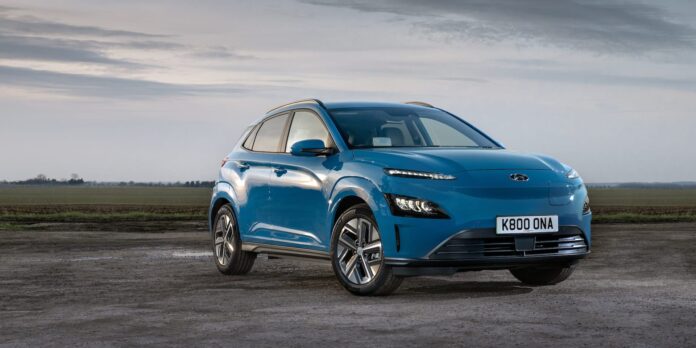
HyundaiKona Electric78%Mode 2
Mode 3
?m
5m
?kw
10.5kW
JaguarI-Pace85%Mode 2
Mode 3
?m
?m
?kw
?11kW
Kiae-Niro85%Mode 35m10.5kW
KiaEV687%Mode 35m10.5kW
Mercedes-BenzEQA60%Mode 35m11kW
Mercedes-BenzEQB67%Mode 35m11kW
Mercedes-BenzEQC71%Mode 34m?kW
Mercedes-BenzEQS86%Mode 35m?kW
MGZS EV62%Mode 3?m7kW
MiniElectric67%Mode 26m2.3kW
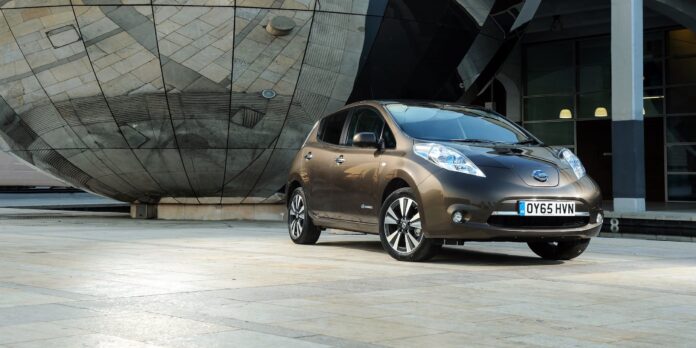
NissanLeaf72%Mode 36m7kW
Peugeote-20876%Mode 36m7kW
Polestar278%Mode 27m2.3kW
RenaultZoe62%Mode 36.5m22kW
SkodaEnyaq iV84%Mode 36m135kW
TeslaModel 385%Mode 2
Mode 3
4m
6m
2.3kW
7.4kW
TeslaModel Y82%Mode 2
Mode 3
4m
6m
2.3kW
7.4kW
VauxhallCorsa-e65%Mode 36m22kW
VauxhallMokka-e72%Mode 3?m?kW
VolkswagenID.377%Mode 36m11kW
VolkswagenID.470%Mode 3?m11kW
All data sourced from manufacturer websites and press offices as of June 2022

More electric car advice and information:

What to look for when buying a used EV

What to look for when buying a used EV

Electric cars – what’s on sale and what’s coming soon?

Electric cars – what’s on sale and what’s coming soon?

Try before you buy? Electric car subscriptions

Try before you buy? Electric car subscriptions

Electric car jargon explained

Electric car jargon explained

The best new electric cars for every budget 2022

The best new electric cars for every budget 2022

Nissan Juke Hybrid review

The Nissan Juke has certainly been a success story. Since the first model was launched in 2010, UK sales of the British-built Juke have topped 340,000 over two generations.

In terms of critical appeal, the results have been more mixed. The current second-generation model holds an Expert Rating of 65%, which is in the top half of its class but a long way behind the class-leading Ford Puma. It is, however, a significant improvement over the original Juke, which finished its production run with a very poor Expert Rating of less than 50%.

Meanwhile Nissan has built a reputation over the last decade for its move into electric vehicles (EVs) with the well-received Leaf. So perhaps it’s a surprise that Juke and some sort of electrification have not previously been combined.

Well now that has been put right – sort of. The vehicle here is not a full-electric Juke, but a hybrid. And perhaps it’s not surprising, given Nissan’s propensity to carve its own path, that this is no typical hybrid. If you are used to the kind of petrol-electric motoring provided by, say, a Toyota Prius or a Honda CR-V, then you will find driving the Juke a whole new experience.

What’s new about the Nissan Juke Hybrid?

The clue is in the title – there are slight visual tweaks, new alloy wheels, new paint shades and a couple of equipment upgrades that extend to keyless entry and a better Bose sound system with an extra pair of speakers. But the whole point of this car is its engine, a petrol-electric hybrid unit promising more pace for less fuel and fewer emissions too.

How does it look?

The Juke Hybrid looks mostly just like any other Juke. When the current second-generation version was launched in 2019 it offered rather smoothed-out styling compared to its predecessor, the visuals of which had divided opinion.

The car gets the latest iteration of the Nissan logo design on its badge, and this sits on a grille mesh that has also been redesigned – subtle ‘Hybrid’ badges are also dotted about the car. The new colour schemes are dubbed ‘Magnetic Blue’ – chosen as the hybrid launch colour – and ‘Ceramic Grey’.

Both the 17-inch and 19-inch alloy wheels get new design options too. The larger wheels fill the arches better from a visual point of view but one would expect a less compliant ride from such big rims – but hold that thought…

What’s the spec like?

The overall Juke range has five trim levels, but hybrid models are only available in the top three. You will need £27,250 for an N-Connecta, which is £1,730 more than a petrol-engined variant with an automatic transmission (nearest equivalent to the hybrid) and £3,230 more than cars with the five-speed manual gearbox.

Equipment at N-Connecta level includes Nissan’s Connect navigation system (offeringTom Tom traffic alerts and a suite of phone app-based services such as finding where you parking it and remotely locking your doors), keyless entry, leather on the steering wheel and gear knob, automatic climate control and auto wipers.

Pay another £1,500 for the Tekna and the alloys grow to 19 inches while additions include LED front lights and a heated screen and front seats, plus that Bose sound system with ten speakers instead of the previous eight. But perhaps the most important Tekna element is the Advanced Safety Shield Pack, a range of active safety measures including intelligent cruise control, blind spot intervention, a rear cross-traffic alert and the clever monitor that gives a view around all sides of the car. The Juke, by the way, was last crash-tested by Euro NCAP in 2019, earning a top five-star rating.

Range-topper is the Tekna+, another £1,400 buying a different design of 19-inch alloys and a suite of personalisation options outside and inside, including two-tone metallic paint.

What’s the Nissan Juke Hybrid like inside?

If you have driven the current Juke in normal petrol form then you won’t notice anything different on stepping into this one, except directly ahead of the driver. A new digital display sees the rev counter make way for a dial showing when the car is at power, in ‘eco’ cruising mode or charging the battery. And pressing a button brings up an ‘energy flow monitor’, giving a visual representation of which way power is flowing between engine, battery and wheels at any one time.

Otherwise, it’s all the same as before. The driver’s controls are reasonably intuitive while the finish and the surfaces are adequate, if not up to the level of rivals from the likes of Volkswagen. It’s relatively roomy for a smaller SUV, if a bit cosy from three adults in the back. And note, too, that the need to accommodate the hybrid battery does cut the boot space, from 422 to 354 litres.

What’s under the bonnet?

This is where the new Juke gets interesting. Its hybrid drivetrain was first seen in the Captur E-Tech from sister brand Renault. A more compact 1.6-litre petrol engine is combined with an electric motor, while there is a second and smaller electric motor that synchronises the gears in the highly clever gearbox.

We are told that the electronics in control of everything were developed using Renault’s experience gained in Formula One racing. These decide when the petrol engine, electric motor or both should either be contributing to the drive or recharging the battery.

If you are interested in the technical stuff, we have a separate deep dive into that, but the effect is to produce a hybrid car that feels much more like a full battery-electric vehicle to drive – the system tries to drive on electric power alone as much as possible and Nissan’s tech types claim to have achieved 80% of a drive on electric around an urban route.

While doing this, the drivetrain offers more power – 154hp compared to the 114hp of a normal petrol Juke, which takes 1.7 seconds off the 0-62mph time – alongside a promise of improved fuel economy and emissions. We don’t have official government figures yet, but compared to the petrol Juke with auto gearbox Nissan predicts around 10mpg in fuel economy improvements and as much as a 25g/km cut in CO2 emissions.

What’s the Nissan Juke Hybrid like to drive?

A normal hybrid starts in silence, moves away on the electric motor and then very quickly the petrol engine audibly cuts in – travel is then typically obviously on the engine with short bursts of electricity, usually at slow speeds.

The Juke Hybrid also starts and moves away in silence on its electric motor, but the only way of telling when the engine joins in is to watch the energy monitor on the dash – it’s really that smooth. Thereafter the three elements, engine, motor and battery, work together, but you can never tell which is doing what, or when.

It’s reasonably potent, more so than the stock petrol model, though there does seem to be a very slight delay when one kicks down for rapid acceleration. But then it gains speed strongly with invisible gear changes.

An interesting addition is the ‘E-Pedal’. Activated by a button between the front seats, it effectively increases the battery regeneration that occurs when decelerating by applying moderate braking as soon as one’s foot is taken off the accelerator – leave it alone and it will bring the car to a halt. If you are a smooth driver and not a power-brake-power merchant, it becomes quite easy to drive the Juke as a one-pedal car, only using the brake if you need to stop suddenly.

The Juke has never been known as a sporty handling car for the open road, with city streets being its more natural environment. The Hybrid does nothing to change that, with handling that’s competent without being involving.

Ride quality with the cars on the launch event proved slightly odd – driving first with 17-inch wheels we found the ride quite stiff with road imperfections felt in the cabin, which had us not looking forward to trying the 19-inch rims as typically the larger diameter means the less compliant the ride. Yet the bigger-wheeled Juke seemed more composed and a preferable option.

Verdict

The Nissan Juke remains a popular contender in an ever-more crowded market and this new hybrid version will presumably help it maintain that place. If you find driving a traditional hybrid slightly odd and unpredictable, this one is less so. Should you be keen to go electric but less keen on the price or having to plug your car in and recharge it, then you may well find this car to your liking.

The price is more than a stock Juke, but not so much, especially compared to the auto variant. Combined with the estimated 10mpg improvement in average fuel consumption – especially with current perol prices – and you could find yourself recouping the extra spend fairly quickly.

Similar cars

If you are looking at the Nissan Juke Hybrid, you might also be interested in these alternatives

Citroën C3 Aircross | Dacia Duster | Fiat 500X | Ford Puma | Honda HR-V | Hyundai Kona | Jeep Renegade | Kia Stonic | MG ZS | Peugeot 2008 | Renault Captur | SEAT Arona | Skoda Kamiq | SsangYong Tivoli | Toyota Yaris Cross | Suzuki Vitara | Vauxhall Crossland | Vauxhall Mokka | Volkswagen T-Cross | Volkswagen T-Roc

Key specifications

Model tested: Nissan Juke Hybrid Tekna
Price (as tested): £29,895
Engine: 1.6-litre petrol plus electric motor
Gearbox:
Six-speed automatic

Power: 143 hp
Torque:
205 Nm
Top speed: 103 mph
0-60 mph: 10.1 seconds

Fuel economy (combined): 56.5mpg
CO2: 114g/km
Euro NCAP safety rating: Five stars (2019)
TCE Expert Rating: 65% (as of June 2022)

Hyundai Kona N (2021 to 2023)

Summary

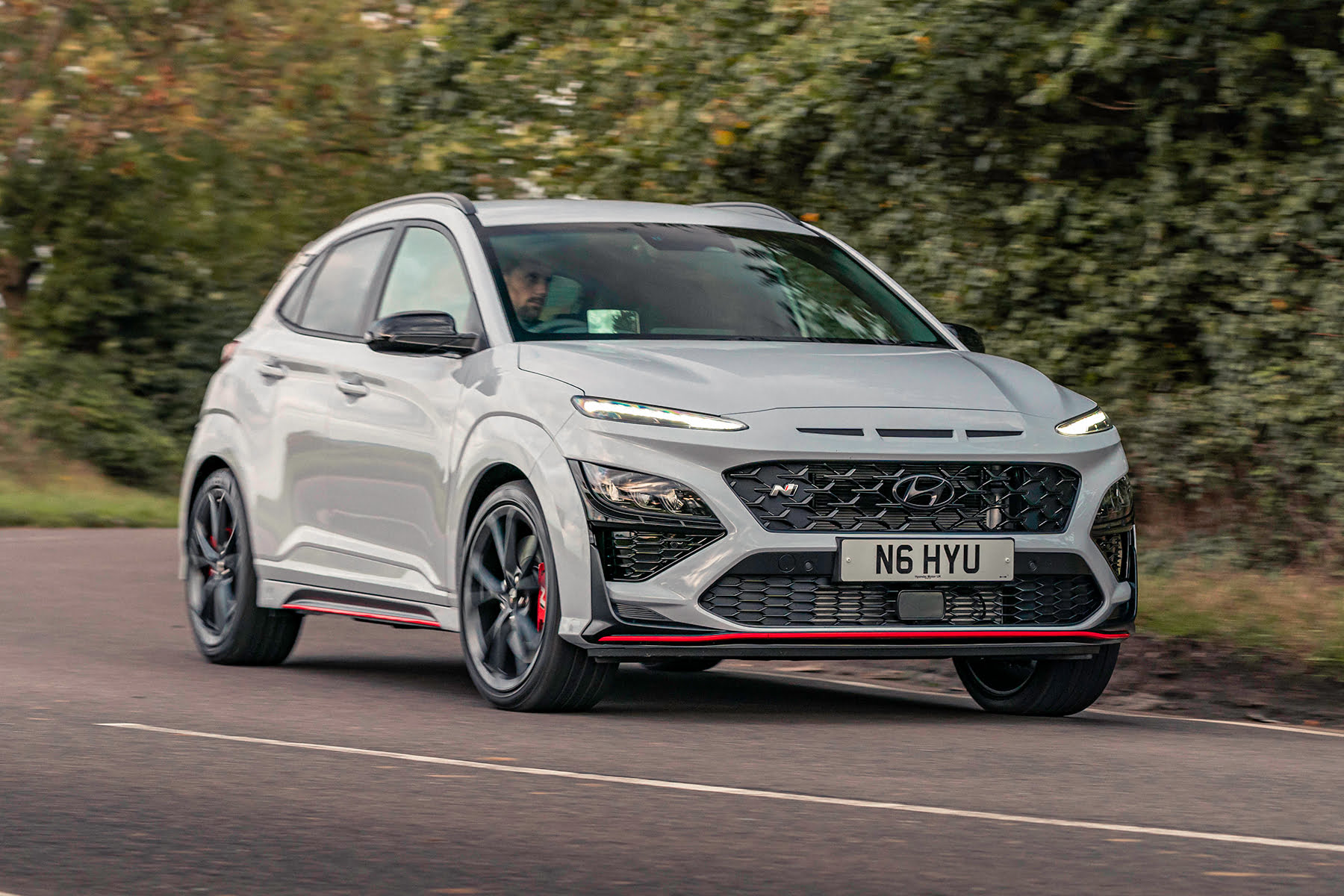
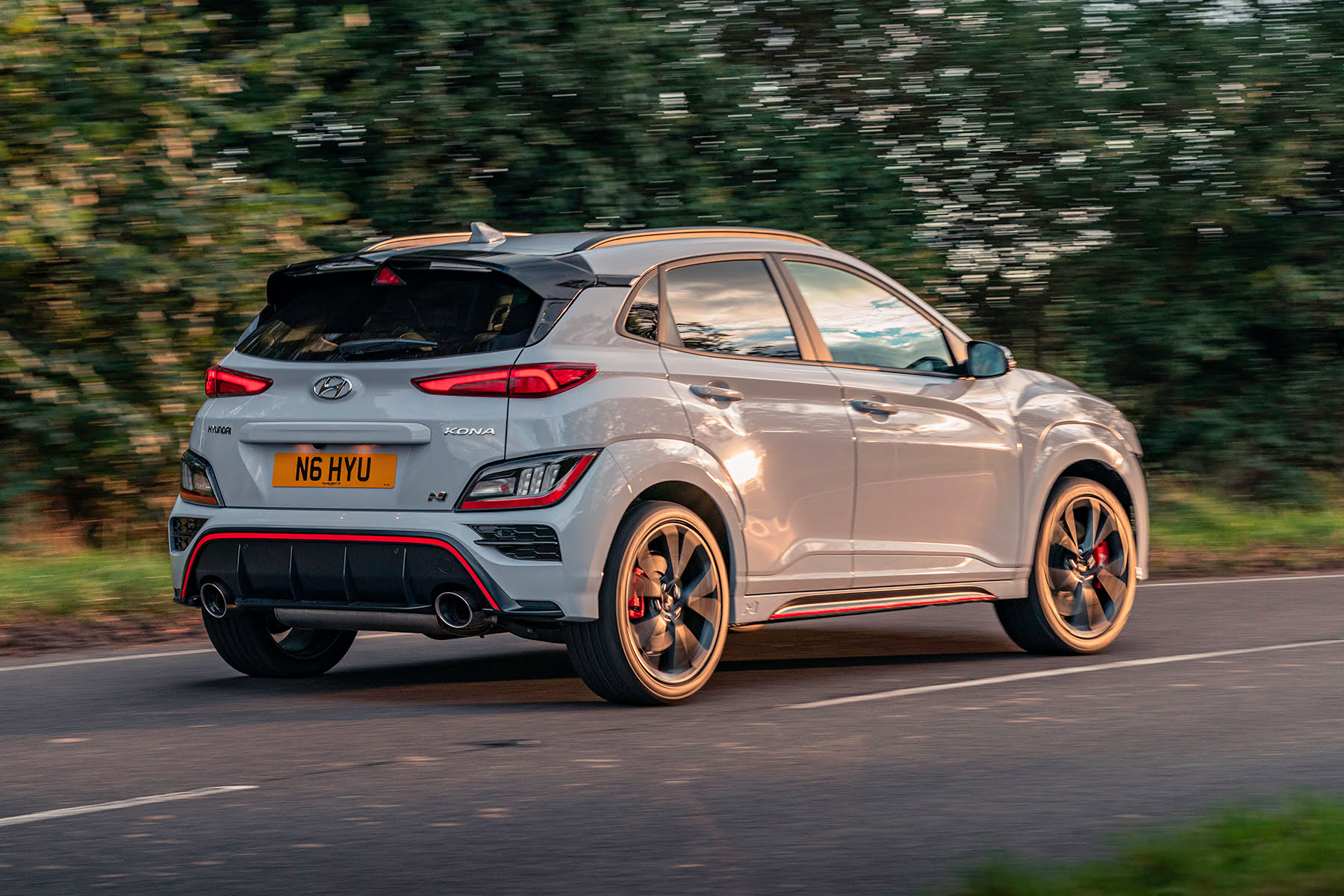
The Hyundai Kona N was a compact five-door SUV/crossover which is the performance-enhanced version of the standard Kona SUV range, and currently the largest model in the Hyundai ‘N’ family.

First arriving on UK roads in Autumn 2021, the Kona N had a fairly short production life as it was discontinued in late 2023 when the overall Kona range was replaced with an all-new model. At this stage, there has been no announcement about an N version of the new Kona.

The Kona N was powered by a 276hp 2.0-litre petrol engine – the same unit found in the Hyundai i30 N hot hatch. Top Gear claimed that the Hyundai was the “most fun small performance crossover on sale”.

This accolade was slightly hollow when you consider that there weren’t many performance crossovers on the market at the time, and many reviewers stated that the class-leading Ford Puma ST was a better option. Parkers added that the Puma ST was also cheaper.

“You do have to accept a few small sacrifices”, Auto Express argued, “but they’re easy to make for the breadth of ability on offer here – the Kona N is more thrilling than many hot hatchbacks on sale.”

No longer on sale, the Hyundai Kona N holds a Used Car Expert Rating of D, with a score of 59%. As a used car, the Kona N is let down heavily by its high running costs. It’s also not helped by fairly poor media reviews and a safety rating that is now out of date.

Kona N highlights

  • One of the most exciting small SUVs to drive
  • Handling that inspires confidence
  • Well-equipped
  • Intuitive infotainment
  • Competitively priced

Kona N lowlights

  • Loud engine at high speeds
  • Rather cramped rear seating
  • Interior design uses cheap plastics
  • Not as practical as the Ford Puma ST
  • Stiff suspension

Key specifications

Body style: Small SUV
Engines:
petrol
Price when new:
From £35,820 on-road

Launched: Autumn 2021
Last updated: N/A
Discontinued: Winter 2023/24

Media reviews

Highlighted reviews and road tests from across the UK automotive media. Click any of the boxes to view.

Auto Express

Auto Trader

Car

Carbuyer

Carwow

Evo

Heycar

Parkers

The Telegraph

Top Gear

Safety rating

Independent crash test and safety ratings from Euro NCAP

Overall score: 5 stars
Date tested: December 2017
Date expired: January 2024
Read the full Euro NCAP review

Adult protection: 87%
Child protection: 85%
Vulnerable road users: 62%
Safety assist: 60%

Notes on safety rating

The Hyundai Kona N shares its safety rating with the regular Kona range, which was crash tested by Euro NCAP back in 2017 and awarded a five-star rating.

However, this rating expired in January 2024 and is no longer valid as the car no longer meets the standards required for such a rating. This is normal practice, as Euro NCAP reviews its ratings on most cars annually with most ratings expiring after about six or seven years.

However, if you are comparing a used Kona N to vehicles of similar age, whose ratings will have probably also expired, its safety rating score is still useful.

Eco rating

Independent economy and emissions ratings from Green NCAP

No eco rating

The Hyundai Kona N was not lab tested by Green NCAP during its production life.

Reliability rating

MotorEasy logo 600x167

Reliability data provided exclusively for The Car Expert by MotorEasy

No reliability rating

As of March 2026, we don’t have enough reliability data on the Hyundai Kona N to generate a reliability rating.

The Car Expert’s reliability information is provided exclusively to us using workshop and extended warranty data from our partner, MotorEasy, sourced from both official dealerships and independent workshops. 

As soon as MotorEasy has sufficient data on the Kona N, we’ll publish the score here.

Running cost rating

Clear Vehicle Data logo close crop

Monthly cost of ownership data provided exclusively for The Car Expert by Clear Vehicle Data

Fuel consumptionAverageScore
Petrol models33 mpgD
CO₂ outputAverageScoreVariationScore
Petrol models194 g/kmD
Insurance groupAverageScoreVariationScore
All models27C
Service and maintenanceCostScore
Year 1£324D
Year 2£762D
Year 3£1,192D
Year 4£1,385D
Year 5£1,775D
Overall£5,438D

The Hyundai Kona N is a relatively expensive car to own and run, according to whole-life cost numbers provided exclusively to The Car Expert by our data partner, Clear Vehicle Data.

The biggest bill for any car owner is usually petrol, and the Kona N is very thirsty. While this is not that surprising, given that it’s a performance model, it still means that you’ll be shelling out regularly to fill up the tank.

Insurance costs shouldn’t be too bad, while servicing costs are fairly average.

Similar cars

If you’re looking at the Hyundai Kona N, you might also be interested in these alternatives

Audi SQ2 | Ford Puma ST | Mini Countryman JCW | Volkswagen T-Roc R

More news, reviews and information about the Hyundai Kona range at The Car Expert

Electric car grant – all the EVs with discounts in 2026

Electric car grant – all the EVs with discounts in 2026

Everything you need to know about Hyundai

Everything you need to know about Hyundai

Eight five-star results in latest Euro NCAP tests

Eight five-star results in latest Euro NCAP tests

Best Small SUV 2024

Best Small SUV 2024

Hyundai Kona

Hyundai Kona

Hyundai Kona Electric

Hyundai Kona Electric

Pricing announced for new Hyundai Kona Electric

Pricing announced for new Hyundai Kona Electric

New Hyundai Kona Electric specs announced

New Hyundai Kona Electric specs announced

The best new electric cars for every budget 2022

The best new electric cars for every budget 2022

The ten best-selling electric cars of 2021

The ten best-selling electric cars of 2021

Britain’s best-selling new cars, July 2021

Britain’s best-selling new cars, July 2021

Hyundai Kona Hybrid test drive

Hyundai Kona Hybrid test drive

Buy a Hyundai Kona N

If you’re looking to buy a used Hyundai Kona N, The Car Expert’s partners can help you find the right car

Motors 600x300

Find your next used car with Motors. Find out more

Auto Trader logo 600x300

Find your next new or used car with Auto Trader. Find out more

Carwow logo 600x300

Find your next new or used car with Carwow. Find out more

What’s different about the Nissan Juke’s hybrid motor?

Nissan has finally electrified its Juke – from the end of July, a hybrid version of the successful small SUV will be on UK roads. “So it will be just like any hybrid?” one of our fellow motoring writers asked at the launch, and the answer is not at all…

The petrol-electric powertrain fitted in the Nissan Juke is quite different to those you might find in other models such as the standard-bearer of hybrid driving, the Toyota Prius. Instead the Nissan uses technology first seen in sister brand Renault’s Captur and dubbed E-Tech, which both brands insist is rather more efficient.

Either, or both…

Hybrids are normally one of two types. In a parallel hybrid (which is most hybrid vehicles on UK roads), both the electric motor and the engine can drive the wheels, usually working together. In a series hybrid, the wheels only receive their propulsion from the electric motor, with the petrol engine merely being there to generate the electricity to power the motor. The Nissan Juke unit, however, can work in series, parallel or both…

We are told the system was developed using technology developed by Renault’s Formula One team and for the first time is based around an internal combustion engine specifically developed with hybrid in mind. It’s a more compact version of a Nissan 1.6-litre unit, combined with a 36kW electric motor also made by Nissan, while Renault’s contribution is the 15kW high voltage starter/generator, the inverter and the 1.2kWh water-cooled battery, which is housed under the boot floor.

All this adds up to rather more potency – 25% up on a typical petrol-powered Juke. We don’t have confirmed fuel economy figures yet, but Nissan reckons that the Juke should return combined fuel consumption improved by up to 20% – 40% if running around town.

Two motors better than one

Where the Juke gets particularly clever compared to a typical hybrid is that it has a second, smaller, electric motor in its gearbox, another Renault item. This gearbox has no conventional synchroniser rings, but dog clutches instead, and no proper clutch as in a conventional car. But these are the elements that enable rather more efficiency.

There are four ‘internal combustion’ (ICE) gears and two ‘electric vehicle’ (EV) gears, and the latter are powered by that second electric motor, sending their propulsion through a different path to the wheels than do the ICE gears – the Juke always starts using electric power only, and the EV gears are used to synchronise the ICE ones.

Clever electronics – the bit supposedly descended from Formula One – control the shift points, regeneration of the battery and which format of hybrid power will deliver the best efficiency for what the driver is demanding through their right foot. And the input between motor, engine or both is so seamless that the driver simply doesn’t notice the changes.

Confused yet? Well you don’t need to understand the tech, just appreciate what it produces. According to Colin Goldsmith, from the Nissan UK technical department, being behind the wheel of the Juke is much closer to driving an electric car than are more typical hybrids. “It’s a much more connected feel. With a standard hybrid you feel like you are driving an ICE car with the hybrid coming in short bursts, with the Juke you get that EV feel all the way through.”

Goldsmith adds that the car always starts in electric mode; “There is then a transition when the system determines that the ICE engine should join in, to give you more power or more drive, while it will also determine if the battery charge is dropping and direct some charge to the battery.

“All this is done by the system and you won’t feel the cutting-in of the engine like you do with a normal hybrid. Effectively it feels like you are driving a normal automatic car – you put your foot down and it drives.”

Extended electric

A key part of designing the Juke Hybrid was maximising the time the car spends in EV mode, and the designers claim to have achieved up to 80% of an around-town drive powered by electricity. Your mileage may vary, but the company is confident that this new hybrid system will provide far more electric (and far less petrol) usage in urban driving.

It can reach speeds up to 34mph in EV mode, and you can push a button to only drive on electric, though you won’t go very far, a mile or two, before the engine needs to cut in and replenish the battery. “You can force the EV mode, perhaps to drive through a city centre or a multi-storey car park, but it won’t go so far as to drain the battery,” Goldsmith says.

Also helping to keep the battery topped up is an ‘e-pedal’, previously seen on the fully-electric Nissan Leaf hatchback. While, like most EVs, when the car slows the electric motor acts as a generator and returns some charge to the battery, using the e-pedal maximises this effect. As soon as one lifts off the accelerator moderate braking is applied, and given enough space the car will slow to a halt – it is very easy to drive the Juke as a one-pedal car, hardly ever needing to use the brake pedal.

The figures? Combined the hybrid power unit produces 143hp, compared to 114 for the petrol-powered Juke. This means it completes a 0-62mph sprint in 10.1 seconds, 1.7 seconds faster than the ICE Juke.

Yet while the latter with an auto transmission returns fuel economy of around 45mpg and produces CO2 emissions of around 137g/km, Nissan expects fuel economy of more than 55mpg and emissions down to around 114g/km from the hybrid. We’re still awaiting the official figures but it’s clear the petrol-electric Juke is the greener and more economic option.

“The engine has been optimised to the hybrid system,” Goldsmith says, “developed to have a lower fuel consumption, with lighter weight because the hybrid is more compact. You’ll see much better performance and fuel consumption compared to a normal ICE engine, and compared to a conventional hybrid you will see improvements but the level will depend on driving conditions and style.”

So does Goldsmith see this as the future of hybrid? “It’s one – there are a range of ways of electrifying cars and we have the Nissan e-Power system in the Qashqai as well as the excellent electric system in the Leaf. But the new hybrid is a very good solution and a definite step forward.”

More electrification information:

How to deter car thieves on a budget

The global supply shortage caused by the Covid-19 pandemic has put a strain on the new car market for almost two years now, but that is not the only knock-on effect. A shortage of car parts has led to a rise in car thefts in the UK – as we recently reported on The Car Expert, vehicle thefts in Britain in the last twelve months have surpassed 90,000.

Your car is likely to be one of the most valuable things you own, so what steps should you take to defend it against criminals? In truth, the most effective ways to deter criminals can be pretty costly, such as storing your car in a locked garage or fitting an expensive security camera to the side of your house, due to the myriad of headaches they cause for thieves.

That said, the large majority of car thefts in the UK are opportunistic in nature – criminals will look for an easy target that they can quickly steal – and if you park on your driveway or on the street, there are plenty of simple steps and relatively inexpensive products you can buy that are likely to convince potential criminals to keep on walking.

The most stolen cars in the UK

Source: Office of National Statistics (ONS), 2022

Unsurprisingly, the most commonly stolen cars in the UK are also some of the biggest-selling new cars, as well as some of the most aspirational. Although all new cars come with a level of anti-theft kit, like immobilisers and deadlocking doors, it’s still not enough to prevent a determined criminal.

Simple steps to deter car thieves

Let’s start with the basics, and some effective tips that you can put into action right now:

Park in a secure and well-lit area if possible
Where you choose to park can really make all the difference. Parking your car in an illuminated area can be a good deterrent, so keep an eye out for parking spaces on your street with an overhead street lamp, or perhaps line your driveway with some low-maintenance solar lights to increase the chance that potential thieves can be spotted.

Turn your car’s front wheels into the kerb
Parking your car in a position where it is not as easy for potential criminals to make a speedy getaway is another simple but effective deterrent. If a thief does manage to gain entry, the extra manoeuvring you have made them do could give you a few crucial seconds to get a good look at them and call the police.

Double-check your car is locked
Whether you use a key fob or a manual key, it is a good idea to make sure your car is locked by trying the door handles each time you park up. Even if your car has given you a headlight flash or an audible click to tell you it’s locked, some thieves use ‘jammers’ to intercept the signal between the fob and the car, leaving the car unlocked and vulnerable.

Take your valuables with you
A thief doesn’t necessarily want to steal your car – they might just be looking for a quick smash-and-grab of whatever you’ve left on the front seat. Even some loose change can give criminals the required motivation to target your car. If you’re particularly worried about car thefts in your area, it’s also a good idea to remove the rear parcel shelf to show that there’s nothing valuable in your boot.

Store your car’s documents at home
The glovebox may seem like a good place to keep your car’s logbook or service records, but storing these documents in your vehicle makes it easier to sell on if it’s stolen. This can also make you a victim of identity fraud, so don’t leave any other identifying documents in your car either, like bank statements or your driver’s licence.

Keep a lookout for suspicious tow trucks
Some professional thieves operate by hooking your car up to a tow truck and driving away, then breaking into the vehicle somewhere more private. Keep an eye out for unbranded tow trucks parked on your street, driven by people in casual dress. If you do spot something like this, report it to your local police ASAP.

Keep your keys in a tin box
If you’ve just finished off a tin of biscuits from the cupboard, you can use the empty tin – or any similar metal box – to protect your car from criminals. It may seem like a simple idea to hide your keys from sneaky thieves, but it’s actually a really useful way of protecting your car from a relay attack. What’s a relay attack, you ask? Read on…

Relay attacks and how to prevent them happening

Many modern ‘keyless’ car keys emit a near-continuous signal to alert the car that it’s nearby, allowing you to open the door and start the engine without pulling the key out of your pocket. That’s quite convenient, but it also presents a problem.

These keyless entry cars are vulnerable to a particular theft tactic called a relay attack, where one thief uses an inexpensive electronic device to capture the signal from a nearby car key (even if it’s inside your house) and relay it to another thief with another relay device who is waiting by your car. This tricks the vehicle into thinking the key is present and allows the thieves to unlock and potentially start it.

Therefore, it’s always a good idea to keep your key fob – and the spare – as centrally as possible inside your house, rather than close to doors or windows, so that relay thieves have difficulty reaching the fob’s signal. Or, as suggested above, you can shield the fob’s outgoing signal when you’re at home by placing the key in a covered tin box or a specially-designed faraday pouch.

You can also turn this keyless entry feature off. If you can’t find instructions for this in your car’s manual then contact your local dealership, who should be able to help.

Other common methods car thieves use include:

Hanoi burglary
Named after a police operation to combat such a burglary, this is where criminals gain access to your home using brute force to steal your car keys and make a quick getaway. It is actually a fairly common tactic in the UK, and can be disrupted by keeping your car keys in an inconspicuous locked drawer.

Turbo decoder theft
Thieves are known to buy turbo decoders traditionally used by blacksmiths to target cars with manual door locks. It is essentially a skeleton key that aligns to the shape of the empty keyhole to unlock the door.

Transponder key cloning
This type of theft can happen if thieves manage to get hold of your keys when it is at the local garage for repairs or at the car wash. The key is cloned, returned to the victim, and the car is stolen later when parked at home.

Handy purchases that improve your car’s security

Motion detector

Where: On your driveway or across the pavement from your car
Average price: £15 – £30

These inexpensive systems which monitor movement can alert you to any suspicious activity around your car in real time. However, they are prone to false alarms, either from passing pedestrians, your pets or strong wind.

Faraday pouch

Where: A key pouch that blocks your car key signals
Average price: £5 – £9

Storing your keys in these pouches at home greatly decreases the chance of your car being stolen in a relay attack by blocking your key fob’s signal. You can store other valuables in the pouch too, and they are easy to carry when you are out and about too. Faraday pouches are only really useful for those with keyless entry cars however.

Steering wheel lock

Where: Across your car’s steering wheel
Average price: £30 – £50

Fitting a steering wheel lock whenever you park will certainly make thieves think twice about targeting your car. They are a visual deterrent for opportunistic criminals, and seriously delay thieves who do manage to gain entry to your car. If a thief gets your car started and attempts to drive off, they won’t be able to manoeuvre the car, making the attempted theft pointless.

Steering wheel brake lock

Where: Hooks behind the car’s brake and the bottom of the steering wheel
Average price: £30 – £50

This device is essentially a metal hooked cane that stops thieves from being able to drive the car if they have gained entry. They are sturdy and very hard to remove at short notice.

Universal wheel lock

Where: To your car’s front wheel
Average price: £30 – £60

While it might make your car look like it’s been impounded and prompt a few surprised looks from your neighbours, a universal wheel lock fitted to one of your car’s front wheels is a great visual deterrent that’s sure to give any would-be thief a headache. It will delay your daily commute, however, so perhaps this device is best for the car on your driveway that you rarely take out for a spin.

GPS tracker

Where: Hidden inside the car, preferably somewhere difficult to get to
Average price: £45 – £150

This device is really for after your car has been stolen and it’s on the move. Most trackers on the market will be able to give you the location of your car accurate to ten metres, which helps you to inform the authorities and hopefully retrieve your car before it’s damaged, stripped or simply vanishes altogether.

Removable security post

Where: At the end of your driveway
Average price: £40 – £80

These installations are a useful deterrent if you park on a narrow driveway. It does take a bit more legwork than other security options however, these need to be bolted securely to the concrete of your driveway. When installed, the post will stop thieves who have gained entry to your vehicle from reversing out of the driveway, and the post can be folded to the floor before you drive away.

Security window etching

Where: On the windows of your car
Average price: £20

This consists of visibly etching all the windows of a vehicle with the logo of the International Security Register (ISR) and a code unique to the vehicle. It’s a good visual deterrent, and also increases the chances of your car being spotted and retrieved should it be stolen.

Anti-theft clutch pedal lock

Where: Underneath the car’s clutch or accelerator
Average price: £12 – £25

This is a small metal stand that sits underneath the car’s clutch or accelerator pedal and locks in place, meaning that the pedals can’t be used. This makes the car useless without removing the pedal lock, which isn’t easy without the keys. Unlike a steering wheel lock, however, it’s not really visible so doesn’t have the same deterrence factor.

Read more:

Insurance claim or not?

At some point most car owners will wonder whether some accidental damage seems so small that they are reluctant to make an insurance claim with the extra cost that may add to their next premium.

We’ve put together some things to consider…

Must I tell my insurer?

If an accident is somebody’s else’s fault your insurer deals with it and recovers the costs from the other person if it can be established who that is. It is recorded as a claim on your record. regardless of blame.

But what some minor damage concerns only you? To take a familiar example, let’s say you’ve biffed the post to your driveway coming home. Does this, in the eyes of an insurer, constitute an accident which you have to declare? Or can it stay between you and the gatepost?

We asked the Association of British Insurers (ABI) if there is an accepted definition of what an accident is (in terms of reporting an accident to an insurer). A spokesman said: “While no industry wide defined definition as such, generally it would be an incident that could give rise to a subsequent claim, either from the policyholder or a third party. It puts your insurer on guard where, for example, what appears to have been a minor bump later results in a claim for damage repair/ personal injury from another person.”

He added: “It is sensible to always notify the insurer if involved in an accident, however minor it may be and regardless of whether there is any damage or intent to file a claim. There could be serious consequences such as invalidating a policy for non-disclosure.”

What’s covered?

The legal minimum cover and the cheapest premium is third party only. This covers you against costs that arise as a result of injuries you cause to other people and damage to their vehicles. They will make a claim against you; you don’t decide. But you can’t claim for damage on your own car not involving anybody else. If it’s third party fire and theft you can claim if your car is damaged, stolen or destroyed in a fire.

Comprehensive is the highest level of cover available. It protects against; injuries to other people and damage to their vehicles your vehicle being damaged, stolen or destroyed in a fire, medical expenses and accidental damage, damage or theft of vehicle’s contents. Windscreen and glass cover is included.

With every type of policy, the longer you go claim-free the bigger your No Claims Discount (NCD) will be. NCDs vary from insurer to insurer, but they can be as much as 30% for one claim-free year and 60% for five claim-free years.

If you pay extra to protect the NCD you can make a number of claims without losing it, but the claims must be declared when it comes to a new quote with a new insurer whether or not they impacted on any protected NCD.

Fix or not?

If you are making any kind of claim (regardless of a third party) you may have agreed to pay a voluntary excess when the policy started. A voluntary excess usually gets you a lower premium. This means you will pay the first, say £150 of a claim. You may also have a compulsory excess depending on your past record, so you must pay a specified amount towards a claim.

If you’ve had a very big argument with your gatepost, smashed a wing and the bumper is hanging off, it may have done structural damage and need a professional repair which will outweigh any excess. You can get a quote from your trusted garage, but insurers have approved repairers which they may insist you use.

If you make a claim for minor damage (not affecting the structure of the car) and your car is old and low value, then the insurer may decide to write it off as economically unrepairable for them. They pay you for the entire value of the car and it is classed as a Category N write-off. However, if you can live with this damage, or have a trusted and cheap repairer and want to keep the car ask at the outset if you can buy it back from your insurer. This can leave you cash-in-hand, but you’ll need to re-register the car and the car will be still recorded as a write-off on the insurance database.

If you’re not making a claim, a paintwork scratch or a small dent can be safely left alone – although if it’s a metal part of the car, not plastic (usually the bumpers) it will start to rust in time. But if you’ve cracked a light, the numberplate or broken a wing mirror the car will be unroadworthy, would fail an MOT and you would be liable to a fine and possibly points on your licence.

Further information on motor insurance visit the Association of British Insurers (ABI) website.

GAP insurance terminology

0

Guaranteed Asset Protection insurance, or GAP for short, has its own little dictionary of terminology that can catch buyers out if they’re not careful.

There are several different types of GAP insurance, and the right type of GAP for your will depend on how you have funded your car, whether it’s new or used and how much you want to spend on a policy.

When looking at your options, there may also be various terms mentioned that you haven’t heard of or don’t fully understand. So in conjunction with our GAP insurance partner, ALA Insurance, we’ve compiled this list of typical terminology you might need to understand when considering what sort of GAP policy is right for you.

Special offer for our readers: Save 10% on GAP insurance from ALA Insurance

Agreed Value GAP

This type of GAP cover may be suitable if you bought your car privately rather than from a dealer. It covers you for the difference between your insurance payout and the value of the car (based on an industry standard like Glass’s) when you took out the policy.

Depending on the GAP insurance provider, you can often take out this type of GAP policy any time after purchasing the vehicle, rather than being limited to within a few weeks or months of purchase. The value used for determining the level of cover is the date you take out the policy rather than the date you bought the car.

Asset

Asset is the ‘A’ in GAP. It simply refers to the product you’re insuring. That can be a car, a van, a motorcycle or other type vehicle.

Contract Hire GAP

This kind of GAP is available for leased or contract hire vehicles, as opposed to a car you own outright or are funding on a purchase-based car finance agreement like a PCP.

If your car is stolen or written off (known as a total loss; see below), this covers you for the difference between your car insurance payout and your remaining rental payments to the leasing company.

Depreciation

Depreciation plays a crucial role in the consideration of GAP insurance. As soon as you drive your vehicle off the dealer’s forecourt, your car suffers a significant drop in value and it will continue to fall each day from then on.

Most car insurance policies only pay out market value (see below). That means that if your car gets written off or stolen, your car insurance provider will be giving you a cheque for an amount that is much less than what you paid for the car – even if it was only a matter of months ago that you boought it. 

FCA

The Financial Conduct Authority (FCA) is the regulatory body in the UK that looks to protect consumers from market sharks.

In 2015, the FCA introduced rules to prevent car dealers pressuring consumers into buying something they don’t understand or have never heard of. As a result, there’s now a mandatory two-day waiting period between a dealership selling the car and being able to sell GAP insurance.

Finance GAP

Finance GAP is equivalent to Contract Hire GAP (see above) but for a car funded via a purchase agreement like a PCP, HP or conditional sale.

This kind of policy pays out the difference between what your car insurance has paid you and the outstanding amount left on your finance agreement. 

This can be critically important if your debt to the finance company is significantly greater than the total loss value of your vehicle, which is very common on PCP car finance agreements.

GAP insurance

GAP stands for Guaranteed Assest Protection. It’s an insurance product that is separate from your regular comprehensive car insuraance. This type of insurance covers your vehicle for a designated level of cover over and above the total loss value (see below) of your vehicle if it is stolen or written off.

As shown on this page, there are several different types of GAP insurance products that offer different levels of cover to suit different circumstances. 

Market value

Market value is the insurance company’s assessment of what your car is worth right now, which is almost certainly a lot less than what you paid for the car in the first place. For example, if you bought a new car two years ago, its market value today is probably only about half of what you paid for it.

Most car insurance policies pay you market value if your car is stolen or written off. That means that getting another new or near-new car becomes very expensive, even if you don’t have additional debt on the vehicle.

PCP

The Personal Contract Purchase (PCP) is the most common way for private customers to finance a new car, and is increasingly popular for used car purchases as well.

Unfortunately, the low payments provided by PCP finance tend to mean that you have far more debt than you’re paying back each month. This is called negative equity and becomes a real problem if your car is stolen or written off.

If your car is declared a total loss (see below) and you have a PCP finance agreement, the money paid out by your regular car insurance usually won’t be enough to cover the outstanding finance. This is where Finance GAP insurance (see above) comes in to save the day.

You may also like: Personal Contract Purchase (PCP) explained

Replacement GAP

This kind of GAP covers the cost to replace your written-off vehicle with a suitable equivalent (make, model and specification, age, mileage, etc) of the same car.

This takes into consideration any change in price of the same car over time. New car prices have been creeping up in recent years, which means the price you paid a couple of years ago may not cover the price for an equivalent car today.

Return to Invoice

This is one of the most popular types of GAP insurance. It means the insurer will cover you for the price between what you paid for the car originally and your market value insurance payout – essentially, the ‘gap’.

Bear in mind that such insurance doesn’t cover on-road costs beyond the price of the car, like registration, fuel or road tax. What’s more, a contribution, albeit small, is made towards the excess on your regular insurance claim.

Top-Up GAP

This kind of GAP insurance is available on cars up to eight years old and can top up a regular insurance payout by another 25%. Similar to Replacement GAP, it can put you in a position to get another set of wheels. 

Total Loss

This is the only status GAP insurance covers. If a car is damaged but repairable, your regular insurance company needs to be contacted. However, if your company decides the damage isn’t worth fixing and the car becomes a write-off, then you can contact your GAP insurer and put in motion the wheels of clawing back some of the cash you owe.

More GAP insurance information

The UK’s best GAP insurance providers

The UK’s best GAP insurance providers

Are you paying too much for GAP insurance?

Car finance jargon confuses UK drivers

Car finance jargon confuses UK drivers

Can you buy GAP insurance in 2024?

Can you buy GAP insurance in 2024?

What is GAP insurance and should you have it?

What is GAP insurance and should you have it?

This article was originally published in March 2021, and was most recently updated in June 2022.

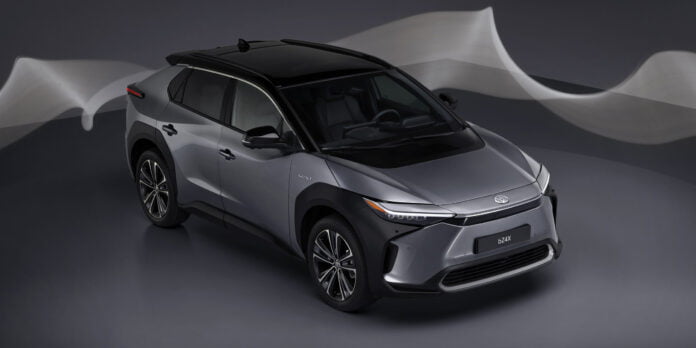
Toyota bZ4X

Summary

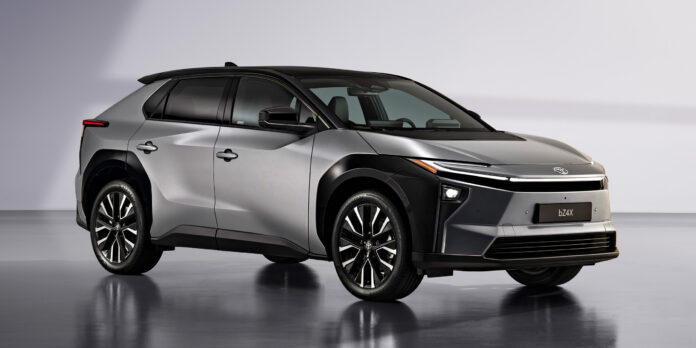
The Toyota bZ4X is a mid-size five-door SUV and the first fully electric model range in the Toyota family, which went on sale in the UK in the summer of 2022.

Designed in collaboration with fellow Japanese marque Subaru, the bZ4X is about the same size as the Toyota RAV4, and structurally identical to the all-electric Subaru Solterra. The entry-level model is powered by a 150kW electric motor paired with a 71 kWh battery pack, producing an output of 201hp and a promised battery range of 311 miles on a full charge.

A more powerful dual-motor powertrain is also available, which ups the power output to 215hp but lowers the official all-electric range to 286 miles. Models are front-wheel drive as standard, but all-wheel drive models are also available.

Parkers says that the bZ4X has plenty of useful on-board tech as standard, and that the car’s infotainment is a big step forward for the Toyota brand, with “slick graphics and a responsive interface.” The SUV also comes with a very long ten-year warranty, which has impressed several reviewers.

While the car is a formidable and sensible entrant to the electric SUV market, a number of reviewers have complained that some awkward design elements make the car less usable on a day-to-day basis, such as the absence of a glovebox and a compartment under the bonnet.

An updated version of the bZ4X was launched in the winter of 2025/26. Visually, there were only minor updates inside and out. Mechanically, there’s a bit more power and significantly improved battery life, which is the most important change for buyers.

As of March 2026, the Toyota bZ4X holds a New Car Expert Rating of A, with a score of 73%. It gets top marks for its excellent safety rating and zero tailpipe emissions, while running costs are also good. However, media review scores and Toyota’s standard new car warranty cover are only average.

bZ4X highlights

  • Comfortable ride
  • Spacious and well-built interior
  • Improved Toyota infotainment
  • Longest warranty around

bZ4X lowlights

  • Rivals are more practical
  • So-so battery range
  • Alternatives offer more boot space
  • Polarising exterior styling

Key specifications

Body style: Medium SUV
Engines:
electric, battery-powered
Price:
From £39,995 on-road

Launched: Summer 2022
Last updated: Winter 2025/26
Replacement due: TBA

Media reviews

Highlighted reviews and road tests from across the UK automotive media. Click any of the boxes to view.

Featured reviews

More reviews

Auto Express

Auto Trader

Business Car

Car

Car Keys

Carbuyer

Driving Electric

Electrifying.com

Parkers

The Telegraph

Top Gear

Safety rating

Independent crash test and safety ratings from Euro NCAP

Overall score: 5 stars
Date tested: November 2022
Read the full Euro NCAP review

Adult protection: 88%
Child protection: 87%
Vulnerable road users: 79%
Safety assist: 91%

Eco rating

Independent economy and emissions ratings from Green NCAP

Model tested: 150kW motor, 64kWh battery, front-wheel drive

Overall score: 5 stars
Date tested: November 2024
Read the full Green NCAP review

Clean Air Index: 10 / 10
Energy Efficiency Index: 9.4 / 10
Greenhouse Gas Index: 9.7 / 10

Reliability rating

MotorEasy logo 600x167

Reliability data provided exclusively for The Car Expert by MotorEasy

No reliability rating

As of March 2026, we don’t have enough reliability data on the Toyota bZ4X to generate a reliability rating.

The Car Expert’s reliability information is provided exclusively to us using workshop and extended warranty data from our partner, MotorEasy, sourced from both official dealerships and independent workshops. 

As soon as MotorEasy has sufficient data on the bZ4X, we’ll publish the results here.

Running cost rating

Clear Vehicle Data logo close crop

Monthly cost of ownership data provided exclusively for The Car Expert by Clear Vehicle Data

Battery rangeAverageScoreVariationScore
EV models286 milesB
Electrical efficiencyAverageScoreVariationScore
EV models4 m/KWhC
Insurance groupAverageScoreVariationScore
All models37D
Service and maintenanceCostScore
Year 1£260C
Year 2£584C
Year 3£940C
Year 4£1,080C
Year 5£1,406B
Overall£4,270C

The Toyota bZ4X is quite an affordable car to own and run, according to whole-life cost numbers provided exclusively to The Car Expert by our data partner, Clear Vehicle Data.

Electrical efficiency (the EV equivalent of miles per gallon for petrol and diesel cars) is only average, but the bZ4X still offers a good average official battery range of nearly 300 miles. Insurance costs are also reasonable for the price of the car, while servicing and maintenance costs are expected to be very good for the first five years of ownership.

Similar cars

If you’re looking at the Toyota bZ4X, you might also be interested in these alternatives

Current models: Audi Q4 e-tron | BMW iX3 | Changan Deepal S07Citroën ë-C5 Aircross | Ford Mustang Mach-E | Geely EX5 | Genesis Electrified GV70Hyundai Ioniq 5 | Kia EV5 | Leapmotor C10 | Lexus RZ | Mazda CX-6e | Mercedes-Benz GLC EQ | MG S6 EV | Mini Countryman Electric | Nissan Ariya | Peugeot E-3008Polestar 2 | Renault Scenic E-TechSkoda Enyaq | Skywell BE11 | Subaru SolterraTesla Model Y | Volkswagen ID.4 | Volvo EX40 | Xpeng G6

Discontinued models: BMW iX3 (2021 to 2025) 

More news, reviews and information about the Toyota bZ4X at The Car Expert

Everything you need to know about Toyota

Everything you need to know about Toyota

Toyota bZ4X review

Toyota bZ4X review

Toyota bZ4X gets battery range upgrade

Toyota bZ4X gets battery range upgrade

New Toyota RAV4 and bZ4X Touring models unveiled

New Toyota RAV4 and bZ4X Touring models unveiled

The safest new cars on sale in the UK

The safest new cars on sale in the UK

Five-star crash test results for 15 new cars

Five-star crash test results for 15 new cars

Pricing and specs set for new Toyota bZ4X EV

Pricing and specs set for new Toyota bZ4X EV

All-electric Toyota bZ4X SUV revealed

All-electric Toyota bZ4X SUV revealed

Toyota bZ4X concept previews new range of EVs

Toyota bZ4X concept previews new range of EVs

Buy a Toyota bZ4X

If you’re looking to buy a Toyota bZ4X, The Car Expert’s partners can help you find the right car

Motors 600x300

Find your next used car with Motors. Find out more

Auto Trader logo 600x300

Find your next new or used car with Auto Trader. Find out more

Carwow logo 600x300

Find your next new or used car with Carwow. Find out more

Lease a Toyota bZ4X

If you’re looking to lease a new Toyota bZ4X, The Car Expert’s partners can help you find a competitive deal

Carparison 600x300

Personal contract hire deals from Carparison Leasing. Find out more

Leasing-com logo

Personal contract hire deals from Leasing.com. Find out more

Carwow logo 600x300

Personal contract hire deals from Carwow. Find out more

Car subscriptions

Subscriptions are becoming a very popular way for consumers to try an electric car for a few weeks or months to help decide whether it’s a suitable alternative to a petrol car. If you’re interested in a car subscription, The Car Expert’s partners can help. (PS: What’s a car subscription?)

Cocoon Vehicles logo 600x300

Car subscriptions from Cocoon.
Find out more

Just Vehicle Solutions logo 600x300

Car subscriptions from Just Vehicle Solutions.
Find out more

Flexible Vehicle Contracts logo 600x300px

Car subscriptions from Flexible Vehicle Contracts.
Find out more

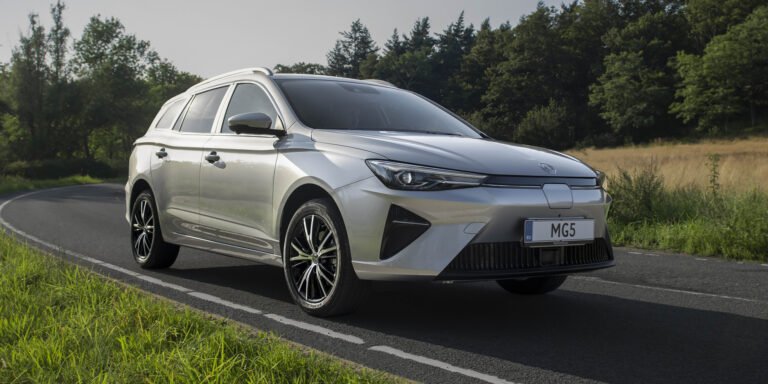
MG 5 estate updated with revised styling and tech

0

MG Motors has updated its electric MG 5 estate with some dramatic styling revisions and a bigger infotainment console on the car’s dashboard.

The MG 5, which remains to be the only all-electric estate car option in the mainstream car market, has been given a exterior facelift for 2022, which MG Motors hopes will make the car an “attractive and compelling” choice for UK buyers moving forward.

The car’s styling has proved to be a sticking point for several reviewers since its launch in 2021, and MG has attempted to address these criticisms with new LED headlights as well as new front and rear bumpers. The alloy wheel design has also been updated.

2021 MG 5 vs. 2022 MG 5

Inside, MG has fitted a larger ten-inch infotainment screen to the centre of the dashboard, replacing the eight-inch console of the original model. The system also now allows you to monitor and control a number of functions in the car from a smartphone app.

Finally, the revised MG 5 comes with the brand’s vehicle-to-load technology also found on the electric version of the ZS SUV, which allows you to take energy out of the car’s battery to charge or power devices like e-bikes, portable heaters or camping equipment.

Currently holding an Expert Rating of 63%, the most prominent criticism of the MG 5 has centred around the car’s driving dynamics, which have not been addressed by this recent update. Therefore, this largely cosmetic range of updates is not likely to alter its review scores by any large margin in the coming months.

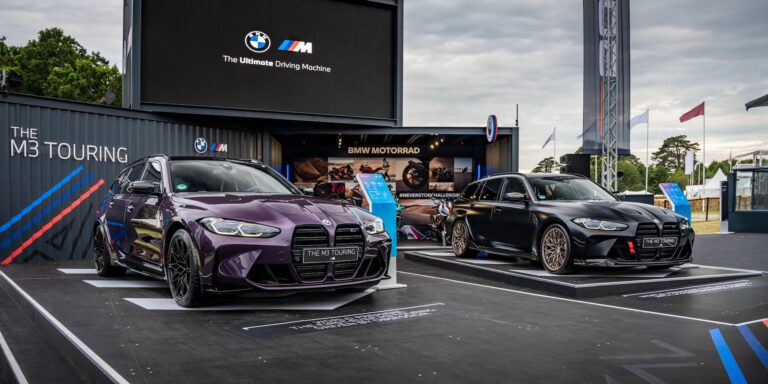
New BMW M3 Touring blends practicality with punch

0

BMW has released the first details about its M3 Touring, with the car making its public debut at this weekend’s Goodwood Festival of Speed before going on sale in September.

The new BMW M3 Touring will be the first ever estate version of the M3 to go into production, powered by the same 3.0-litre straight-six petrol engine as the M3 saloon, driving through an eight-speed automatic gearbox.

Like the saloon range, the M3 Touring will only be available in the UK in its range-topping ‘Competition’ guise. Only the all-wheel drive ‘xDrive’ configuration is available, to ensure that the estate car has sufficient traction on the road, accounting for its heavier rear end. That said, switching off the car’s ‘Dynamic Stability Control’ function essentially makes the M3 Touring rear-wheel drive.

BMW says that this new estate car can complete a 0-62mph sprint in 3.6 seconds, which means that it is faster off the line than its closest market rivals, the Audi RS 4 and the soon-to-be replaced Mercedes-AMG C63, which can complete the same run in 4.1 seconds and 4.0 seconds respectively.

The manufacturer has capped the M3 Touring’s top speed at 155mph, but opting for the optional ‘M Driver’s Package’ will increase this figure to 174mph. Adaptive ‘M’ suspension technology with electronically controlled shock absorbers are available as standard, and the M3 Touring can be specced with carbon ceramic brakes and track tyres for an extra fee.

Apart from its extended estate car rear end, the exterior of the BMW M3 Touring is identical to its saloon twin, with the same enormous kidney grilles that extend from the lower front bumper up to the bonnet, sporty bumpers, side skirts and flared wheel arches, and a large four-pipe exhaust spread across the car’s rear diffuser. 19-inch alloy wheels feature in the front, with 20-inch alloy wheels in the rear.

Like estate versions of the standard BMW 3 Series, the M3 Touring has three full seats in the rear. The electrically-operated tailgate includes a rear window that can be opened independently of the boot lid.

When it comes to storage, the estate car has 500 litres of boot space (five litres more than the Audi RS 4), which becomes 1,510 litres with the rear seats folded. Anti-slip rails that rise up automatically from the boot floor to stop luggage from sliding in tight bends can be ordered as an option. 

The BMW M3 Touring has the same ‘M’-themed interior design trimmed in leather as the M3 saloon, except for the curved digital console that features prominently on the dashboard – connecting a 12-inch digital cluster to a 15-inch infotainment screen – software that also features in the all-electric BMW i4 saloon.

Further carbon fibre elements with carbon bucket front seats can be added to the interior for an additional price.

At around £5,000 more than its saloon sibling, the M3 Touring Competition is priced at £80,550, which is over £14,000 more expensive than the Audi RS 4, and over £40,000 more than an entry-level BMW 3 Series Touring.

BMW says it will start taking orders for its new performance-enhanced estate car in September this year, ahead of the model going into production in November.

The BMW M3 saloon has been on sale for over a year now, praised for its thrilling performance but criticised for its polarising front-end styling. It currently holds an Expert Rating of 85%.

Toyota GT86 (2012 to 2020)

Summary

The Toyota GT86 was a compact sports car, only available as a 2+2 coupé, that first arrived on UK roads in 2012. Discontinued in 2021, it was replaced by the GR86 coupé.

The fruit of a collaboration between Toyota and Subaru, the GT86 is essentially identical to the Subaru BRZ coupé, using the same 200hp 2.0-litre petrol engine from launch, which received further tuning to increase its output to 205hp after the GT86’s mid-life facelift in 2017. Drive went to the rear wheels and produced a 0-60mph sprint time of around six seconds.

Competitively priced at less than £25K when new, the Toyota GT86 was highly regarded by motoring journalists from the get go, winning three separate ‘Car of the Year’ awards during its first year on sale in the UK.

“The GT86 is hugely enjoyable and involving to drive, with great amounts of grip and superb handling”, said Honest John, while Parkers found that the coupé was “surprisingly comfortable” and “generously equipped”. Also impressed, Carwow predicted that the GT86 could be a future classic.

“While it is simply brilliant to drive, but it’s rather low on polish and finesse”, Carbuyer concluded, explaining in its review that while the GT86 was a value-for-money coupé, its interior design and on-board tech were dated, and the rear seating was cramped.

Other titles noted that the GT86 did not have the best fuel economy, and that there was not much opportunity for customers to personalise their cars through options or accessories. But as Car Keys summed up, “What the GT86 lacks in refinement, it makes up for in visceral personality.”

As of March 2026, the Toyota GT86 holds a Used Car Expert Rating of D with a score of 58%. Although it received plenty of positive media reviews, its high running costs and CO2 emissions drag its overall rating down.

GT86 highlights

  • Plenty of driver appeal
  • Strong petrol engine
  • Good levels of standard equipment
  • Competitively priced

GT86 lowlights

  • Not many personalisation options
  • Rather cramped rear seating
  • Dated interior and tech
  • Not an economical choice

Key specifications

Body style: Small coupé
Engines:
petrol
Price when new:
From £22,815

Launched: Summer 2012
Last updated: Spring 2017
Discontinued: Summer 2020

Media reviews

Highlighted reviews and road tests from across the UK automotive media. Click any of the boxes to view.

Featured reviews

More reviews

Auto Express

Auto Trader

Car

Car Keys

Carbuyer

Daily Mirror

Eurekar

Evo

Fleetworld

Green Car Guide

Heycar

Honest John

Motoring Research

Motors

Parkers

The Sun

The Sunday Times

The Telegraph

Top Gear

Safety rating

Independent crash test and safety ratings from Euro NCAP

No safety rating

The Toyota GT86 was not assessed by Euro NCAP during its production life.

Eco rating

Independent economy and emissions ratings from Green NCAP

No eco rating

The Toyota GT86 was not assessed by Green NCAP during its production life.

Reliability rating

MotorEasy logo 600x167

Reliability data provided exclusively for The Car Expert by MotorEasy

No reliability rating

As of March 2026, we don’t have enough reliability data on the Toyota GT86 to generate a reliability rating.

The Car Expert’s reliability information is provided to us exclusively from workshop and extended warranty data from our partner, MotorEasy. As soon as MotorEasy has sufficient data on the GT86, we’ll publish the score here.

Awards

Trophies, prizes and awards that the Toyota GT86 has received

2014

  • Carbuyer Awards – Best Coupé
  • Honest John Awards – Best Performance Car
  • The Telegraph Motoring Awards – Best Sports Car

2013

  • Auto Express Awards – Best Performance Car
  • Carbuyer Awards – Best Coupé
  • Fleet World Awards – Road Test Editor’s Award

2012

  • Auto Express Awards – Best Performance Car
  • Pistonheads AwardsCar of the Year
  • Scottish Car of the Year Awards – Best Coupé
  • Top Gear AwardsCar of the Year + Best Coupé
  • Vehicle Dynamics International Awards – Car of the Year

Similar cars

If you’re looking at the Toyota GT86, you might also be interested in these alternatives

Abarth 124 Spider | Alpine A110 | Audi TT | BMW Z4 | Fiat 124 Spider | Mazda MX-5 | Mercedes-Benz SLC | Subaru BRZ

Buy a Toyota GT86

If you’re looking to buy a used Toyota GT86, The Car Expert’s partners can help you find the right car

Motors 600x300

Find your next used car with Motors. Find out more

Auto Trader logo 600x300

Find your next new or used car with Auto Trader. Find out more

Carwow logo 600x300

Find your next new or used car with Carwow. Find out more

New Peugeot 408 fastback unveiled

0

Peugeot has unveiled a new crossover model called the 408, which fits into the brand’s compact family car range between the 308 hatchback and the 3008 SUV.

Initially available with either petrol or plug-in hybrid power, this new model sits somewhere between a conventional saloon and an urban SUV, with a sloping fastback roofline at the rear and more ground clearance than a conventional car – rather like the Citroën C5 X or Polestar 2.

While the new Peugeot 408 shares its foundations and many components with the new 308 hatch, it is 44cm longer than its hatchback sibling, which allows for more passenger legroom in the rear seats.

The exterior design takes plenty of cues from the 308 too, including its angled LED headlights and narrow daytime running lights that stretch down the car’s front bumper. The grille design also follows the latest Peugeot family look, with diagonal body-coloured dashes framing the updated Peugeot logo.

At the rear, the sloping roofline ends with a subtle spoiler, which sits above teardrop LED tail lights that are connected by black detailing that runs across the length of the boot lid. Six different body colours will be available at launch and there will be a choice of alloy wheels sized from 17 to 20 inches.

Peugeot says the 408’s aerodynamic shape means that it requires less fuel to push through air on the road than the significantly smaller 208 supermini.

Under the bonnet, a 1.2-litre petrol and two different plug-in hybrid (PHEV) powertrains are available. While the petrol engine produces 130hp, the PHEVs can muster 150hp and 180hp respectively. All models are equipped with an eight-speed automatic gearbox.

Peugeot has not yet mentioned how far these plug-in hybrid models can travel on just electric power, but PHEV variants of the 308, which use the same 81kW electric motor, have an all-electric range of around 37 miles.

The manufacturer also plans to swap out the entry-level straight petrol engine for a mild hybrid alternative sometime next year, and an all-electric ‘e-408’ version is also in the works.

Inside the cabin, all models are fitted with Peugeot’s ten-inch ‘i-Cockpit’ infotainment screen with wireless Apple CarPlay and Android Auto, which also comes as standard in the 308. Customisable touchscreen buttons sit below the central screen, which allow the owner to set shortcuts for the car’s controls for ease of use.

The standard spec also includes a ten-speaker stereo, four USB ports and wireless charging, while a ten-inch digital cluster behind the steering wheel will be available on higher-end models. In the rear, the electrically-powered boot lid opens up by use of a foot-activated sensor to reveal 536 litres of boot space with the rear seats up (the raised floor of the PHEV version means that this is reduced to 471 litres).

Finally, the new Peugeot 408 comes with a list of driving assistance and safety tech, including adaptive cruise control, a rear traffic alert system, a lane keeping assistance feature that can correct the path of the car, road sign recognition, blind spot monitoring and a ‘night vision’ feature that can detect animals or pedestrians in the dark that are over 200m in front of the car. How much of this is included as standard remains to be seen.

Peugeot has not announced any UK pricing or gone into depth about the 408’s trim levels just yet. More information will be released before the car starts appearing in showrooms around the beginning of 2023.

Toyota RAV4 gets tech tweaks and more safety kit

0

The Toyota RAV4 SUV is set to receive some tech enhancements, including the brand’s latest infotainment software, a customisable digital instrument display, and some pre-emptive safety features that help avoid a range of common road accident risks.

The ten-inch infotainment console, which is slightly bigger than the consoles that feature in the current range, comes installed with wireless Apple CarPlay/Android Auto integration and Toyota’s navigation software with live traffic and road incident updates, which will also tell you how busy an area is and how likely you are to find a parking space at your destination.

This multimedia system also comes with a voice control function, which can respond to a range of spoken requests such as to adjust the climate control, choose or adjust the volume of music tracks and other media, make a phone call, or open and close the windows.

The system will be able to download new features in the future through over-the-air updates, and can be connected to a smartphone app that tracks your driving stats and has a ‘find my car’ feature that can guide you back to your RAV4 in a crowded car park.

Toyota is also planning to offer the RAV4 with a more advanced version of this infotainment package, with offline navigation and a feature that alerts the driver when the SUV has entered restricted low emission zones.

The updated RAV4 also gets a digital instrument cluster behind the steering wheel, which the driver can customise to show the most relevant information to them while on the road. The entry-level ‘Icon’ trim will receive a seven-inch version of this digital cluster as standard, while higher grades will get a larger 12-inch screen.

The RAV4 already comes with a pre-collision system which uses a front-facing camera and laser to detect objects in your path and alert you when it’s time to brake, but this system will be enhanced by the upcoming update to include ‘intersection support’ technology that helps the driver make safer turns at junctions.

The update adds an emergency steering assistance feature too, which is designed to keep the car stable in its lane when braking to avoid hitting an object on the car’s path.

Lastly, there’s an additional white exterior colour, but other than that there are no visual changes to the RAV4 as part of this update. The powertrain choices will also remain the same, with both regular hybrid and plug-in hybrid models.

Toyota says that the updated RAV4 will enter production in Autumn this year. Details about its UK arrival, as well as pricing and specifications, will be released in coming months.

The Toyota RAV4 has received generally good reviews from the UK automotive media, praised for practicality and comfort. With a current Expert Rating of 66%, it ranks several points behind the best in its class. Although these improvements will be welcomed, they’re unlikely to boost that rating very much.

Bentley refreshes Continental GT Mulliner

0

The Bentley Continental GT Mulliner, which is the fastest and most luxurious trim choice in the two-door Continental range, has received a few minor visual alterations, additional customisation options and an uprated engine.

The updated Mulliner model will only be available with Bentley’s flagship 6.0-litre 12-cylinder petrol engine, which has been tuned to produce an extra 33hp – now almost 660hp in total.

This increase shaves a fraction of a second off the grand tourer’s 0-60mph sprint time, which now stands at 3.5 seconds, and gives it a tiny top speed increase to 208mph.

The most prominent exterior styling tweak is the new-look ‘double diamond’ grille, which is matched by ‘Mulliner’ branded side vents with the same pattern. The ten-spoke design for the trim’s 22-inch alloy wheels remains the same, apart from the fact that these alloys now feature self-levelling Bentley badges in the centre caps, which remain upright when the car is in motion – an idea Rolls-Royce has been using for nearly 20 years on its Phantom saloon.

The previous two-tone interior colour schemes have been replaced by a range of three-colour split choices, with eight options in total. Further interior customisation options include a selection of 88 different wood veneers and a wide array of colour choices for the seat stitching.

The Continental GT Mulliner is set to make its debut alongside the recently revealed ‘S’ trim at this year’s Goodwood Festival of Speed, but no pricing has been announced as of yet for the updated trim.

Sharing its underpinnings with the Porsche Panamera, the Bentley Continental GT arrived in the UK in 2018, and has received unanimously positive reviews since. The luxury saloon variant currently holds an Expert Rating of 84%, while the GTC convertible holds an Expert Rating of 81%.

Audi Q3 (2011 to 2018)

Summary

The Audi Q3 is a mid-sized SUV/crossover, built on the same platform as the Volkswagen Tiguan. This was the first-generation model, first launched in 2011 and replaced by the current Q3 generation in 2018.

Available with either a manual or automatic gearbox, the original Q3 range was praised by reviewers from launch thanks to its wide selection of both petrol and diesel engines, which were said to be quite economical when compared to class rivals like the BMW X2 and Mercedes-Benz GLA.

The Q3 was also commended for its polite road manners and assured handling, but many journalists commented that this made the car rather dull to drive, with Car Keys concluding that it was “too sensible for its own good.”

Auto Express labelled the Audi Q3 “a competent if uninspiring performer”, while Car said its test drive was a “decent, but hardly memorable drive.”

Overall, reviewers generally agreed that the original Q3 was a car that you buy with your head rather than your heart, particularly as it was slightly cheaper than its BMW and Mercedes-Benz competition at the time.

By the end of the Q3’s production life, however, a few motoring outlets were saying that its infotainment system and interior trim were starting to look dated. “The Audi Q3 is a bit of a dinosaur”, Carwow concluded, “but it still looks good and feels well put together.”

As of January 2025, the first-generation Audi Q3 holds a Used Car Expert Rating of D, with a score of 60%. It gets good grades for its excellent reliability record, but its running costs are merely average and contemporary media reviews were poor. Its safety score is also long out of date compared to newer vehicles.

Q3 highlights

  • Assured handling
  • High-quality interior
  • Wide range of engine choices
  • Comfortable ride quality

Q3 lowlights

  • Rather cramped rear seats
  • A bit dull to drive
  • High boot access
  • Dated infotainment and interior

Key specifications

Body style: Medium SUV
Engines:
petrol, diesel
Price when new:
From £23,745 on-road

Launched: Autumn 2011
Last updated: Winter 2014/15
Replaced: Autumn 2018

Media reviews

Highlighted reviews and road tests from across the UK automotive media. Click any of the boxes to view.

Auto Express

+

Auto Trader

+

Business Car

+

Car

+

Car Keys

+

Carbuyer

+

Carwow

+

Evo

+

Green Car Guide

+

Honest John

+

Parkers

+

The Sunday Times

+

The Telegraph

+

Safety rating

Independent crash test and safety ratings from Euro NCAP

Overall score: 5 stars
Date tested: October 2011
Date expired: January 2018
Read the full Euro NCAP review

Adult protection: 94%
Child protection: 85%
Vulnerable road users: 52%
Safety assist: 86%

Notes on safety rating

The first-generation Audi Q3 was originally tested by Euro NCAP back in 2011 and awarded a five-star safety rating. However, this rating expired in January 2018 and is no longer valid as the car no longer meets the standards required for such a rating. This is normal practice, as Euro NCAP reviews its ratings on most cars annually with most ratings expiring after about six or seven years.

However, if you are comparing a used Audi Q3 to vehicles of similar age, whose ratings will have probably also expired, its safety rating score is still useful.

Eco rating

Independent economy and emissions ratings from Green NCAP

No eco rating

The first-generation Audi Q3 was not lab tested by Green NCAP as its production life pre-dated the organisation’s founding in 2019.

Reliability rating

MotorEasy logo 600x167

Reliability data provided exclusively for The Car Expert by MotorEasy

All data based on MotorEasy average workshop costs for extended car warranty claims

As of October 2024, the Audi Q3 has a very good reliability score of 76%, according to exclusive extended warranty data provided by our partners at MotorEasy. This score covers both this version of the Q3 and the newer (2018 onwards) generation.

Average repair bills are very competitive, at about £400. However, that’s still more than the cost of a used car warranty so that’s worth keeping in mind if you’re looking at a used Q3.

Of particular note is the average gearbox repair bill, which is more than £3,300. However, these problems have been rare to date. Other repair bills are far more reasonable when compared with similar cars from other brands.

If you’re looking at a used Audi Q3, make sure any extended warranty cover you purchase covers all of these potential problem areas.

Running cost rating

Clear Vehicle Data logo close crop

Monthly cost of ownership data provided exclusively for The Car Expert by Clear Vehicle Data

No data

Due to its age, we don’t have servicing or other life costs for this generation of Audi Q3.

Recalls

Official DVSA safety recalls that have been issued for the Audi Q3

Date: August 2019
Recall number: R/2019/260
Model types: All
Build dates: 12/2014 to 07/2018
Number of vehicles affected: 45,677
Defect: A failure of the front LED turn signal may not always be detected in certain circumstances.
Remedy: A software update of the on-board supply control unit.

Date: February 2018
Recall number: R/2018/044
Model types: All
Build dates: 09/2016 to 11/2016
Number of vehicles affected: 58
Defect: A connection between the detonator and generator in the front passenger airbag module may not be correctly welded. Therefore the airbag may not be triggered in the event of a collision.
Remedy: Recall the vehicles that are likely to be affected and replace the front passenger airbag module.

Date: July 2017
Recall number: R/2017/218
Model types: All
Build dates: 10/2014 to 09/2016
Number of vehicles affected: 17,074
Defect: Due to a software error the brake lights may not function during an emergency operation of the electronic parking brake. The normal foundation brake lights will still function as intended.
Remedy: On affected vehicles update software to correct this.

As of September 2024, there have been three DVSA vehicle safety recalls on this generation of the Audi Q3, addressing various different issues.

Not all vehicles are affected by recalls. You can check to see if your car is included in any of the above recalls by visiting the DVLA website or contacting your local Audi dealer.

If your car is affected by a recall, the vehicle must be repaired and you should not be charged for any work required. If you are buying a used Q3, you should insist that any outstanding recall work is completed before you take delivery of the vehicle.

Awards

Trophies, prizes and awards that the Audi Q3 has received

2012

  • Off Road Magazine Awards – Best Crossover

Similar cars

If you’re looking at the Audi Q3, you might also be interested in these alternatives

BMW X1 | BMW X2 | Cupra Ateca | Cupra Formentor | DS 3 Crossback | Jaguar E-Pace | Lexus UX | Mercedes-Benz GLA | Range Rover Evoque | Volkswagen TiguanVolvo XC40

Buy an Audi Q3

If you’re looking to buy a used Audi Q3, The Car Expert’s partners can help you find the right car

Motors 600x300

Search less, live more. We make finding the right car simple. Find out more

Auto Trader logo 600x300

Search for your next new or used car with Auto Trader. Find out more

Carwow logo 600x300

Discover great deals available on both new and used cars. Find out more

Vauxhall Corsa-e gets Anniversary Edition trim

0

Featuring a few exterior design tweaks and a tartan upholstery design, the Vauxhall Corsa-e Anniversary Edition trim will soon be available to order online.

Marking 40 years of Vauxhall superminis sold in the UK, the Anniversary Edition takes a number of styling cues from the Corsa’s motoring heritage – particularly the Vauxhall Nova that first arrived on British roads in 1982.

A limited run trim, only 1,000 Corsa-e Anniversary Edition models will be sold in the UK. This trim is electric only – it will not feature in the cheaper combustion-powered Corsa range.

Mirroring the red tones of the old Nova, the Anniversary Edition comes in a metallic exterior colour that the brand is calling ‘record red’. Like the rest of the range, the roof and wing mirrors are finished in black, but this trim extends the black detailing to the grille and 17-inch alloy wheels, as well as the Vauxhall branding.

Stepping inside, the cabin is almost identical to the standard Corsa-e, except for the tartan pattern design on the front seats, which the brand says is a ‘a modern interpretation’ of the Nova’s original tartan seat fabric. A plaque has also been fitted to the passenger side of the dashboard, which displays your model’s number in the limited range of models made.

Vauxhall says that the Anniversary Edition is based on the entry-level GS Line trim, which includes a seven-inch infotainment console, a rear-view camera with rear parking sensors and blind spot monitoring technology. However, the Anniversary spec also includes a few extra features taken from the range-topping Ultimate trim, including heated seats, a heated steering wheel, and electric wing mirrors.

There’s on other unusual extra feature. as well. If you are intrigued by the idea of sporting Vauxhall upholstery on your person, or if your sock drawer is a little light, each Anniversary Edition model comes with four pairs of socks with the same Nova-inspired tartan patterning. Unfortunately, it’s a week too late for Father’s Day…

While prices for the Corsa-e GS Line start at £28,555, Vauxhall will charge £31,000 for the Anniversary Edition, which is only available to order online. Vauxhall has not specified when it will begin taking orders, but the trim will arrive this year.

Sharing many of its components with the Peugeot e-208, the Vauxhall Corsa-e currently holds an Expert Rating of 65% – praised for its overall comfort, but also considered to be an expensive purchase compared to a regular petrol Corsa.

How do insurance ratings for new cars work?

Every car and light commercial vehicle (LCV – such as a small van), new or old, falls into a particular insurance group, which dictates – to an extent – how much it will be to insure. The higher the group number, the higher the cost contribution, before the driver, address and other factors are taken into account.

Insurers use these groups to help quantify the risk associated with that particular vehicle. Until 2006 there were 20, but now there are 50, to deal with the breadth of models offered by some manufacturers, often dozens in the same range.

How are insurance ratings worked out?

Thatcham Research in Berkshire was set up by the insurance industry and tests vehicles and examines data which it then passes to the Group Rating Panel of the Association of British Insurers (ABI). There are just over 110,000 different derivatives on Thatcham’s vehicle database, comprising vehicles from as far back as the early 1930s to the latest Polestars and Teslas of today.

This is used to establish an advisory insurance group score. Thatcham stresses its ratings are only recommendations only. Individual insurers use the recommendations but factor in their own experience of particular cars, based on how many claims they have had. The data is updated every week, as new cars come onto the market.

Group rating scores currently include, but are subject to constant review, the cost and time it would take to return a vehicle to its original condition after an accident, the new price of the vehicle – reflecting variations in trim levels (back to those big ranges), the cost of settlement in the event of a total loss, the vehicle’s performance – including its 0-60mph acceleration time and top speed, and the sophistication of the vehicle’s standard fit security equipment.

Also taken into consideration is parts pricing – Thatcham uses a standard list of 23 parts which are deemed to be the most commonly damaged panels and components in an accident – and the standard fitment and performance of autonomous emergency braking (AEB) systems, sometimes called city braking by some car makers.

But what decides a group is more complicated than just high value and performance. Sometimes manufacturers put a high value component – such as an autonomous safety senor – behind a bumper where it can easily get damaged in even a low speed shunt. While these can be expensive to repair, the safety rating is increased, therefore the insurance group is lowered. When a car is facelifted or updated a whole combination of factors, such as acceleration, weight and repair times affect the group.

David Alder, senior product manager at Thatcham Research says: “A car’s grouping is important but it’s only part of the overall makeup of an insurance quote. What the customer pays for insurance is also influenced by the person driving the car, where they live, their occupation, credit score and many other risk factors.”

Some sample cars and their groups

The current Hyundai i10 is a city car with a small 1.0-litre engine and costs from around £13,000 new. Its various versions are covered in groups 1 to 7. The Nissan Juke small SUV goes from Group 11 to 14.

For the Volkswagen Golf range, it’s 14 to 24. As you’d expect, the high performance versions of family hatchbacks, will be more to ensure because they are the most expensive in the range to buy, and faster. 

The Land Rover Discovery range comes in groups 33 to 45. The Audi Q5 SUV is 23 to 42 and – no surprises here – any Bentley will be rated in the highest level of Group 50.

In addition, Thatcham assigns a letter to each grouping which tells the owner/buyer how it rates the car’s security. An A means it meets security requirement for this group. D means it does not and raises the group by one or two. and E is given where it exceeds the security requirement for a car of this type and the group rating is reduced.

For example, a 2021 Dacia Duster Prestige TCe rates at 22D and has a list price of just over £20,000. Of similar size and power, the comparable E example is the 2021 DS 4 Bastille +PureTech, which has a list price of just over £25, 000 but rates at 19E.

Electric cars introduce different factors into the group rating calculation. They are often heavier, typically accelerate faster and the replacement cost of batteries can be as much as 50% of the car. They are also generally more expensive than their internal combustion engine counterparts, all elements that influence calculation. A 1.2-litre petrol Vauxhall Corsa automatic Ultimate Nav is currently £26,075 and group 17E. An electric Corsa-e Ultimate Nav is £29,660 and group 25E.

How do I check a car’s insurance group?

Many new car buying websites, magazines and the specifications part of new car brochures will show the insurance group, although it is always best to check the official source as the ratings can change. Thatcham has its own group rating search facility which will provide the group number and, where available, Euro NCAP safety ratings for both new and older cars.

For further information on motor insurance, visit the Association of British Insurers (ABI) website.

Maserati Grecale

Summary

The Maserati Grecale is a premium medium SUV, launched in early 2022 and based on the same platform as the Alfa Romeo Stelvio and the latest Jeep Grand Cherokee.

Sitting below the larger Levante in Maserati’s SUV line-up, the Grecale is the Italian brand’s first attempt at producing a rival for the Porsche MacanJaguar F-Pace and BMW X3.

The range includes two petrol engine options at launch. The volume seller will be a 300hp four-cylinder unit, while the top-end choice is a 530hp petrol V6, which is a modified version of the engine found in the Maserati MC20 supercar. An all-electric variant, called the ‘Grecale Folgore’, is expected in 2024.

Carwow praises the SUV’s Android-based infotainment system, while Car Keys says that the Grecale’s interior “feels like a big step forward for Maserati, both in terms of quality and technology.”

That said, while many reviewers agree that the SUV’s interior is on par with its German rivals, a number of journalists comment that Grecale’s driving dynamics are a few steps behind the likes of the Porsche Macan.

Auto Express explains that “it could be more polished”, pointing to the Grecale’s firm suspension, while other outlets expected the car’s exterior styling to be a bit more exciting.

However, The Sunday Times sums up its review by saying that these are only minor issues, and that “if you’re hooked on the Maserati badge, you won’t have too much to complain about.”

As of March 2026, the Maserati Grecale holds a low New Car Expert Rating of E with a score of 49%. Like the other models in the Maserati line-up, the Grecale’s overall rating is hampered by low ownership scores, but unlike the other Maserati models, it doesn’t have strong media review scores to counter that negativity.

Grecale highlights

  • Impressive V6 engine
  • Spacious and refined interior
  • Intuitive infotainment software
  • Plenty of on-board tech

Grecale lowlights

  • Porsche Macan is better to drive
  • Expensive, base price and up
  • Exterior styling is a little plain
  • Electric version not yet available

Key specifications

Body style: Medium SUV/crossover
Engines:
petrol, petrol mild-hybrid
Price:
From £58,500 on-road

Launched: Spring 2022
Last updated: N/A
Replacement due: TBA

Media reviews

Highlighted reviews and road tests from across the UK automotive media. Click any of the boxes to view.

Featured reviews

More reviews

Auto Express

Auto Trader

Business Car

Car

Car Keys

Carbuyer

Carwow

Heycar

Parkers

Regit

The Scotsman

The Sunday Times

The Telegraph

Top Gear

Safety rating

Independent crash test and safety ratings from Euro NCAP

No safety rating

As of March 2026, the Maserati Grecale has not been crash tested by Euro NCAP.

Eco rating

Independent economy and emissions ratings from Green NCAP

No eco rating

As of March 2026, the Maserati Grecale has not been lab tested by Green NCAP.

Reliability rating

Reliability data provided exclusively for The Car Expert by MotorEasy

No reliability rating

We don’t yet have any reliability data on the Maserati Grecale.

The Car Expert’s reliability information is provided from extended warranty data from our partner, MotorEasy. Once we have sufficient data on the Grecale, we’ll publish the score here.

Running cost rating

Monthly cost of ownership data provided exclusively for The Car Expert by Clear Vehicle Data

Fuel consumptionAverageScore
Petrol models25 mpgE
CO₂ outputAverageScoreVariationScore
Petrol models218 g/kmD
Insurance groupAverageScoreVariationScore
All models48E
Service and maintenanceCostScore
Year 1£519E
Year 2£1,316E
Year 3£2,006E
Year 4£2,443E
Year 5£3,289E
Overall£9,573E

The Maserati Grecale is a rather expensive car to own and run, according to whole-life cost numbers provided exclusively to The Car Expert by our data partner, Clear Vehicle Data.

Fuel consumption is poor, falling in the bottom 20% of all cars in our database, while insurance premiums are likely to be very high. Servicing and maintenance costs over the first five years are also higher than most cars, which is not surprising for a vehicle at this price point.

Similar cars

If you’re looking at the Maserati Grecale, you might also be interested in these alternatives

Alfa Romeo Stelvio | Audi Q5 | BMW X3 | DS 7 Crossback | Genesis GV70 | Jaguar F-Pace | Lexus NX | Mercedes-Benz GLC | Porsche MacanVolkswagen Tiguan | Volvo XC60

More news, reviews and information about the Maserati Grecale at The Car Expert

One-off Maserati Grecale ‘Tributo Il Bruciato’ debuts

One-off Maserati Grecale ‘Tributo Il Bruciato’ debuts

Everything you need to know about Maserati

Everything you need to know about Maserati

Electric cars – what’s on sale and what’s coming in 2024?

Electric cars – what’s on sale and what’s coming in 2024?

Maserati Grecale test drive

Maserati Grecale test drive

New Maserati Grecale includes first electric SUV

New Maserati Grecale includes first electric SUV

Buy a Maserati Grecale

If you’re looking to buy a new or used Maserati Grecale, The Car Expert’s partners can help you find the right car.

Motors 600x300

Find your next used car with Motors. Find out more

Auto Trader logo 600x300

Find your next new or used car with Auto Trader. Find out more

Carwow logo 600x300

Find your next new or used car with Carwow. Find out more

Lease a Maserati Grecale

If you’re looking to lease a new Maserati Grecale, The Car Expert’s partners can help you find a competitive deal.

Leasing-com logo
Personal contract hire deals from Leasing.com. Find out more

Carwow logo 600x300

Personal contract hire deals from Carwow. Find out more

Select Car Leasing logo

Personal contract hire deals from Select Car Leasing. Find out more

Subscribe to a Maserati Grecale

If you’re interested in a car subscription, The Car Expert’s partners can help. (PS: What’s a car subscription?)

Cocoon Vehicles logo 600x300

Car subscriptions from Cocoon.
Find out more

Just Vehicle Solutions logo 600x300

Car subscriptions from Just Vehicle Solutions.
Find out more

Flexible Vehicle Contracts logo 600x300px

Car subscriptions from Flexible Vehicle Contracts.
Find out more

Range Rover

Summary

The Range Rover is the flagship model in the Land Rover 4×4 line-up, a position it has held since the first model was launched more than 50 years ago.

The latest version shown here is the fifth-generation model, which reached UK roads in the first half of 2022 and replaced the model that had been on sale since 2013.

Available with a range of petrol, diesel and plug-in hybrid powertrain options, the new Range Rover is more spacious, with a larger cabin and boot. It is also available in a seven-seat configuration for the first time.

The latest Range Rover has received overwhelmingly positive reviews from the British media. Many reviewers claim that it is the new benchmark for luxury SUVs, with overall qualities that exceed even the substantially more expensive Bentley Bentayga and Rolls-Royce Cullinan. Top Gear, for example, says that it is “cleverly conceived, intelligently engineered and breathtakingly well designed”.

Parkers says that the Range Rover “has taken great strides over the outgoing car”, thanks to its “opulent” and tech-laden interior. Carbuyer states that the Range Rover is “uncharacteristically manoeuvrable around urban areas”, while Car adds that the fifth-generation Range Rover is pretty “easy on the eye”, and feels rewarding to drive.

That said, this impressive package comes at a steep price. Prices start at around the six-figure mark, which is significantly higher than the pricing for the old model, and running costs are still quite high overall. In addition, those interested in purchasing an all-electric version of the Range Rover will have to wait until 2024.

As of March 2026, the fifth-generation Range Rover holds a New Car Expert Rating of C, with a score of 63%. It scores highly for its safety rating and has been praised for its comfort and luxury by motoring journalists, and its average CO2 emissions are good (helped by the plug-in hybrid version). But running costs are very expensive, which drag down its used car rating. And we haven’t even discussed the Range Rover’s historically woeful reliability record…

The Car Expert Best of British horizontal banner

Range Rover highlights

  • One of the most luxurious SUVs around
  • Available with up to seven seats
  • More spacious than last generation
  • Alluring exterior styling
  • Capable off-roader

Range Rover lowlights

  • Sharp price increase over old model
  • Optional extras get pricey
  • No electric version yet
  • High running costs
  • Rivals are more engaging on the road

Key specifications

Body style: Large SUV
Engines:
petrol, diesel, plug-in hybrid
Price:
From £99,375 on-road

Launched: Summer 2022
Last updated: N/A
Replacement due: TBA

Media reviews

Highlighted reviews and road tests from across the UK automotive media. Click any of the boxes to view.

Featured reviews

More reviews

Auto Express

Auto Trader

Business Car

Car

Carbuyer

Driving Electric

Evo

Parkers

The Sun

The Sunday Times

The Telegraph

Top Gear

Safety rating

Independent crash test and safety ratings from Euro NCAP

Overall score: 5 stars
Date tested: November 2022
Read the full Euro NCAP review

Adult protection: 84%
Child protection: 87%
Vulnerable road users: 72%
Safety assist: 82%

Eco rating

Independent economy and emissions ratings from Green NCAP

Model tested: D350 Diesel AWD Automatic

Overall score: 1.5 stars
Date tested: December 2022
Read the full Green NCAP review

Clean Air Index: 6.7 / 10
Energy Efficiency Index: 1 / 10

Running cost rating

Monthly cost of ownership data provided exclusively for The Car Expert by Clear Vehicle Data

Fuel consumptionAverageScore
Petrol models24 mpgE
Diesel models38 mpgD
Plug-in hybrid models355 mpgA
CO₂ outputAverageScoreVariationScore
Petrol models264 g/kmE
Diesel models198 g/kmD
Plug-in hybrid models18 g/kmA
Battery rangeAverageScoreVariationScore
Plug-in hybrid models71 milesD
Insurance groupAverageScoreVariationScore
All models50F
Service and maintenanceCostScore
Year 1£618E
Year 2£1,366E
Year 3£2,064E
Year 4£2,390E
Year 5£3,253E
Overall£9,691E

It’s unsurprising that a £100K-plus, almost-three-tonne luxury SUV costs a lot of money to run. Luckily, Range Rover owners tend to have deep pockets.

Fuel consumption is inevitably poor for both the petrol and diesel models. Don’t be fooled by the impressive-looking scores for the plug-in hybrid, as this is simply a result of unrepresentative EU/UK goverment lab testing protocols. There is no way on this planet that a plug-in hybrid Range Rover will do 323 miles on a single gallon of petrol and some electricity…

However, battery range is actually very good for the plug-in hybrid, so you should hopefully be able to do most of your day-to-day running on electric power alone if you drive gently.

Insurance will also be expensive, with every model in the range being hit with a Group 50 insurance rating from Thatcham. And to round out the bills, scheduled servicing over the first five years is likely to be pricey as well.

Reliability rating

Reliability data provided exclusively for The Car Expert by MotorEasy

No reliability rating

As of March 2026, we don’t have enough reliability data on the Range Rover to generate a reliability rating.

The Car Expert’s reliability information is provided exclusively to us using workshop and extended warranty data from our partner, MotorEasy, sourced from both official dealerships and independent workshops. 

As soon as MotorEasy has sufficient data on the Range Rover, we’ll publish the results here.

Recalls

Official DVSA safety recalls that have been issued for the Range Rover

Date: June 2024
Recall number: R/2024/255
Model types: All
Build dates: 11/2023 to 03/2024
Number of vehicles affected: 278
Defect: The incorrect specification of plastic was used to manufacture the oil filter housing. This housing may over time and with vehicle use crack. This could result in oil under pressure leaking and coming into contact with hot components of the engine which may result in a fire. Additionally oil may leak onto the road surface posing a skid hazard.
Remedy: Replace the oil filter housing complete with filter and associated O-rings.

Date: July 2024
Recall number: R/2024/227
Model types: All
Build dates: 09/2023 to 12/2023
Number of vehicles affected: 22
Defect: For affected vehicles the clutch plates within the hybrid transmission may have been manufactured with a flatness out of tolerance to the engineering specification.
Remedy: Diagnostic test to determine whether the clutch packs within the transmission are operating as expected. Any transmissions which fail the test will be replaced.

Date: April 2024
Recall number: R/2024/167
Model types: All
Build dates: 01/2024
Number of vehicles affected: 1
Defect: There is an inadequate depth of weld (penetration) between the busbar and the anode in the module of the plug-in hybrid battery.
Remedy: Replacement of the traction battery.

Date: March 2024
Recall number: R/2024/147
Model types: All
Build dates: 09/2020 to 02/2024
Number of vehicles affected: 14,517
Defect: The manufacturer has developed a software enhancement to further increase vehicle security.
Remedy: The software enhancement will deploy this update and reduce the theft risk.

Date: March 2024
Recall number: R/2024/100
Model types: All
Build dates: 11/2023
Number of vehicles affected: 1
Defect: A concern has been identified where the clamps used to secure the fuel injectors into the cylinder head on certain AJ20-D6 engines may crack allowing the injector to come loose. This loose injector could become unseated allowing fuel to be pushed past the injector seal from the combustion chamber or the fuel feed system.
Remedy: A fuel leak in this area could result in fuel spill onto hot engine components which may result in a fire.

Date: January 2024
Recall number: R/2023/360
Model types: All
Build dates: 10/2023
Number of vehicles affected: 4
Defect: The structural adhesive applied to the bodyshell has been mis-applied.
Remedy: Install two rivets and seal with approved sealant.

Date: December 2023
Recall number: R/2023/338
Model types: All
Build dates: 09/2023 to 10/2023
Number of vehicles affected: 67
Defect: On vehicles fitted with V8 Gasoline NC11 engines, the fixings used to secure the engine mounted oil cooler hoses have been found to have inadequate thread engagement.
Remedy: Vehicles will have the engine oil cooler pipe fixings inspected and replaced if required.

Date: August 2023
Recall number: R/2023/244
Model types: All
Build dates: 01/2023 to 02/2023
Number of vehicles affected: 2
Defect: The bolt connecting the busbar to the traction battery module connector has not achieved the required clamp force. Arcing at the joint and excessive heat generation cannot be ruled out with the consequence that this may lead to a vehicle fire.
Remedy: Replacement of the high-voltage battery.

Date: July 2023
Recall number: R/2023/163
Model types: All
Build dates: 09/2020 to 11/2022
Number of vehicles affected: 5,299
Defect: The external rear lamp mounted in the body could partially or permanently fail to operate resulting in one or more of the light sources not working.
Remedy: Affected vehicles will have the foam block mounted in the bodyshell removed. The rear lamp mounted in the body and rear tail lamp link lead wiring will be checked for their condition. Where the lamp and wiring are qualified OK no further remedy is required. Where the lamp or wiring are qualified Not OK the lamp will be replaced.

Date: June 2023
Recall number: R/2023/097
Model types: All
Build dates: 12/2021 to 07/2022
Number of vehicles affected: 192
Defect: The second row 60% seat frame may have a latch installed with a defective weld. In vehicles that have a defective weld on the second row 60% seat frame latch the seat may not be correctly secured.
Remedy: The rear seat base latch will be inspected. Where the inspection reveals a not OK condition the rear seat 60% frame and associated components will be replaced.

Date: May 2023
Recall number: R/2023/044
Model types: All
Build dates: 08/2022 to 01/2023
Number of vehicles affected: 499
Defect: For certain 3.0L AJ20-P6 vehicles, a small number of engines the cam carrier oil gallery hasn’t been fully drilled. As a result, the oil channel could be blocked, leading to accumulation of oil against the pressure control valve rubber membrane and subsequently an external oil leak or increased oil carryover into the air intake system.
Remedy: The engine cam carrier will be inspected and where an incorrectly machined cam carrier is found replace it with a correctly machined component. Depending on mileage and engine conditions further associated components may require replacement.

As of September 2024 (our most recent data point), there have been 11 DVSA vehicle safety recalls on the current-generation Range Rover addressing various different issues.

Not all vehicles are affected by recalls. You can check to see if your car is included in any of the above recalls by visiting the DVLA website or contacting your local Land Rover dealer.

If your car is affected by a recall, the vehicle must be repaired and you should not be charged for any work required. If you are buying a used Range Rover, you should insist that any outstanding recall work is completed before you take delivery of the vehicle.

Awards

Trophies, prizes and awards that the Range Rover has received

2023

  • UK Car of the Year Awards – Best Large Crossover
  • EcoCar Electrified Top 50 – Best Plug-In Hybrid Super Luxury SUV

2022

  • The Car Expert Awards – Best Large SUV
  • News UK Motor Awards – Best Large SUV
  • Parkers New Car Awards – Best Luxury Car
  • Scottish Car of the Year Awards – Best Luxury SUV
  • Top Gear Awards – Best Luxury Car

Similar cars

If you’re looking at the Range Rover, you might also be interested in these alternatives

Aston Martin DBX | Audi Q8 | Bentley Bentayga | BMW X7 | Lamborghini Urus | Mercedes-Benz GLS | Porsche Cayenne | Rolls-Royce Cullinan

More news, reviews and information about the Range Rover at The Car Expert

Everything you need to know about Land Rover

Everything you need to know about Land Rover

Electric cars – what’s on sale and what’s coming in 2024?

Electric cars – what’s on sale and what’s coming in 2024?

Best large SUVs of 2022

Best large SUVs of 2022

Five-star crash test results for 15 new cars

Five-star crash test results for 15 new cars

Range Rover named the UK’s most unreliable used car

Range Rover named the UK’s most unreliable used car

All-new Range Rover SV and PHEV available to order

All-new Range Rover SV and PHEV available to order

All-new Range Rover unveiled

All-new Range Rover unveiled

Range Rover gets mild hybrid update

Range Rover gets mild hybrid update

Range Rover (2013 to 2021)

Range Rover (2013 to 2021)

Range Rover SDV8 test drive

Range Rover SDV8 test drive

Six SUV pioneers that blazed the trail for today

Range Rover plug-in hybrid test drive

Range Rover plug-in hybrid test drive

Buy a Range Rover

If you’re looking to buy a new or used Range Rover, The Car Expert’s partners can help you find the right car

Motors 600x300

Find your next used car with Motors. Find out more

Auto Trader logo 600x300

Find your next new or used car with Auto Trader. Find out more

Carwow logo 600x300

Find your next new or used car with Carwow. Find out more

Lease a Range Rover

If you’re looking to lease a new Range Rover, The Car Expert’s partners can help you find a competitive deal

Leasing-com logo

Personal contract hire deals from Leasing.com. Find out more

Carparison 600x300

Personal contract hire deals from Carparison Leasing. Find out more

Carwow logo 600x300

Personal contract hire deals from Carwow. Find out more

Subscribe to a Range Rover

If you’re interested in a car subscription, The Car Expert’s partners can help (PS: What’s a car subscription?)

Cocoon Vehicles logo 600x300

Car subscriptions from Cocoon.
Find out more

Just Vehicle Solutions logo 600x300

Car subscriptions from Just Vehicle Solutions.
Find out more

Flexible Vehicle Contracts logo 600x300px

Car subscriptions from Flexible Vehicle Contracts.
Find out more

Volkswagen GTX models get spec upgrade

0

Volkswagen has made some minor alterations to its GTX-spec ID.4 and ID.5 models, with more standard equipment and a few design tweaks inside and out.

The ID.4 GTX SUV and ID.5 GTX coupé-SUV, which sit at the top of the ID.4 and ID.5 model ranges with enhanced performance and sportier exterior styling, now come with Volkswagen’s ‘Design’ and ‘Comfort’ packages as standard – previously optional extras.

This means that Volkswagen GTX variants now come with an intelligent ‘climate comfort’ windscreen for no extra cost, which can de-ice itself by heating up in cold conditions and shield the cabin from heat by cooling itself on hot days.

GTX models also now come with tinted side and rear windows and an automatic climate control system with air purification, which Volkswagen says keeps pollen, fungal spores and other airborne bacteria from entering the car. Drivers can also set the temperature of the front of the cabin to be different to the back, with a two-zone temperature control feature.

The GTX models also now come with heated seats and two USB-C charging ports as standard.

In contrast to the exterior colour of your choosing (six options available), the roof, roof rails, C-pillars and window surrounds are all now finished in black, as are the wing mirrors and the diffuser at the bottom of the rear bumper. Volkswagen says this black theme can be extended to the 21-inch alloy wheels fitted to GTX variants on request.

The dark colour palette continues into the cabin, where the dashboard and door panels are now trimmed in black, replacing the grey tones of the launch spec. The leather steering wheel and upholstery are finished in black too, while optional ‘premium’ sports seats add further red detailing to the interior.

Currently holding an Expert Rating of 70%, the all-electric Volkswagen ID.4 SUV has garnered media praise for its spacious interior and clean exterior styling, but has also received widespread criticism relating to its rather confusing infotainment system.

The ID.5, which is structurally identical to its ID.4 sibling apart from its sloping roofline in the rear, is regarded as overpriced by some in the motoring media – while the car has plenty of on-board tech and a spacious interior, some reviewers have concluded that there is no compelling reason to choose the ID.5 over cheaper alternatives. It holds an Expert Rating of 58%.

Renault announces UK pricing for Mégane E-Tech

0

The first of a new generation of Renault electric vehicles (EVs) built on the same platform, the Renault Mégane E-Tech crossover-style hatchback is now available to order in the UK, with three trims to choose from.

Set to join an increasingly crowded EV market, Renault is hoping that its Mégane E-Tech will be able to challenge the sales of other all-electric hatchbacks, like the Volkswagen ID.3Kia EV6, and Hyundai Ioniq 5.

First unveiled at last year’s Munich motor show, the Renault Mégane E-Tech is a similar size to the combustion-powered Captur crossover, and uses a 60kWh battery to produce 220hp and a promised battery range of 280 miles. Top speed is capped at 99mph.

Renault says that the Mégane E-Tech’s battery can charge at up to 130kW, and that it is the thinnest battery on the market – 40% smaller than what you would find in the Zoe supermini. This means that the Mégane E-Tech has a low centre of gravity, and is therefore agile on the road.

In fact, Renault claims that its new all-electric hatchback is around 100kg lighter than any car in its class. At around 200kg lighter than the Volkswagen ID.3, the Mégane E-Tech is slightly more efficient on the road, and by Renault’s estimates can travel a further 20 miles on one charge.

With three trim to choose from, the range at launch begins with the lead-in ‘Equilibre’ trim, which includes LED headlights, 18-inch alloy wheels, a 12-inch digital cluster behind the steering wheel, a nine-inch portrait-oriented infotainment display, and with heated front seats and a heated steering wheel. Prices start at £35,240.

The Mégane E-Tech also comes with keyless entry as standard, as well as a number of parking and safety tech features, including rear parking sensors, a rear-view parking camera, traffic sign recognition, and a lane keeping assistance feature that can also detect when you are too close to the edge of the road.

The mid-rang ‘Techno’ trim is priced at £37,740, and comes fitted with bigger 20-inch alloy wheels and adaptive LED headlights. This trim also adds a dual-climate control function in the cabin, with electrically-adjustable front seats trimmed in synthetic leather and recycled materials and wireless smartphone charging.

Blind spot monitoring also comes with this package, as well as a rear cross traffic alert feature which is handy for reversing on to busy roads, and parking sensors in the front.

Entry-level ‘Equilibre’ (£35,240)

  • 18-inch alloy wheels
  • LED headlights
  • Ambient lighting in the cabin
  • Heated steering wheel
  • Heated front seats
  • Rear parking sensors
  • Rear-view parking camera
  • 12-inch digital cluster behind the steering wheel
  • Nine-inch infotainment display with Renault’s navigation
  • Wireless smartphone connectivity with both Android Auto and Apple CarPlay
  • Four-speaker audio system
  • Two USB-C ports
  • Keyless entry
  • Traffic sign recognition
  • Cruise control with speed limiter
  • Lane keeping assistance with road-edge detection

Mid-range ‘Techno’ (£37,740)

  • All ‘Equilibre’ features that are not replaced
  • 20-inch alloy wheels
  • Adaptive LED headlights
  • Contrasting door mirrors
  • Shark fin antenna
  • Upholstery made from synthetic leather and recycled materials
  • Tinted rear windows
  • Auto-dimming rear-view mirror
  • 48-colour ambient lighting in the cabin
  • Dual-zone climate control
  • Electrically-adjustable front seats
  • Wireless smartphone charging
  • Six-speaker audio system
  • Adaptive cruise control
  • Blind spot monitoring
  • Rear cross traffic alert with automatic braking
  • Front and rear parking sensors

Range-topping ‘Launch Edition’ (£39,240)

  • All ‘Equilibre’ and ‘Techno’ features that are not replaced
  • Nine-speaker audio system
  • Smart rear-view mirror
  • 360-degree parking camera

At the top of the range sits the ‘Launch Edition’ trim, which adds a smart rear-view mirror that allows the driver to check parking and traffic conditions using a high-resolution 360-degree camera.

Every model comes with a five-year warranty and an eight-year battery warranty, and Renault is offering home charger installation services through its Mobilize charging solution provider. This home charger, which can be controlled through a smartphone app, costs £1,170 with installation included – a charge which can be added to a PCP agreement at the customer’s request.

The Renault Mégane E-Tech is now available to order at UK dealerships or on the brand’s website, with the first deliveries expected to arrive later this year.

Mini JCW GP (2019 to 2020)

Summary

The John Cooper Works GP (JCW GP) was a limited edition hot hatch based on the popular three-door Mini hatch, proclaimed by the company to be its fastest model ever.

Topping Mini’s John Cooper Works (JCW) performance range, the JCW GP was an even faster limited-edition hot hatch with 3,000 vehicles built for sale worldwide, of which only 575 were allocated to the UK.

Described by Auto Express as “a car that delights and frustrates in equal measure”, the JCW GP was powered by a 306hp 2.0-litre petrol engine, paired with an eight-speed automatic gearbox that was frequently labelled as “slow” by British reviewers.

However, the key criticism levelled against the JCW GP was that it had unruly road manners. “Just leaf through the bible of absolute automotive no-gos, and the vices are all there in abundance”, Car explained. “Steering fight, torque steer, waywardness at any speed and marginal ride comfort.”

Carbuyer added that the car’s distinctively sporty bodywork, with carbon fibre inserts over the wheel arches and on the front and rear bumper, looked like “an afterthought rather than an essential addition”. It also criticised the GP for a lack of practicality on a day-to-day basis, as it only offered two seats – the normal Mini rear seats were not installed to save weight.

“Love or hate it, there’s no denying that on the right road it’s a ballistic missile”, The Telegraph concluded, while suggesting that the Mini JCW GP would make a “mighty” track car.

The Sunday Times agreed, adding that the hot hatch had a high-quality interior and that, considering it was an exclusive model, it was “extremely good value” – with new prices starting at just north of £35,000 when it went on sale.

As of March 2026, the Mini John Cooper Works GP holds a Used Car Expert Rating of E, with a score of 50%. Although it has low CO2 emissions, its running costs are high and its media review scores were poor. Its safety rating has also long expired.

The Car Expert Best of British horizontal banner

JCW GP highlights

  • Serious pace
  • High-quality interior
  • Well-equipped
  • Reasonably priced

JCW GP lowlights

  • Unruly driving dynamics
  • Only two seats
  • Slow-shifting automatic gearbox
  • More fun to be had in other hot hatches

Key specifications

Body style: Three-door hatchback
Engines:
petrol
Price when new:
From £35,345 on-road

Launched: Autumn 2019
Last updated: N/A
Discontinued: Spring 2020 (limited run model)

Media reviews

Highlighted reviews and road tests from across the UK automotive media. Click any of the boxes to view.

Auto Express

Car

Car Keys

Carbuyer

Evo

Motoring Research

The Sun

The Sunday Times

The Telegraph

Top Gear

Safety rating

Independent crash test and safety ratings from Euro NCAP

Overall score: 4 stars
Date tested: December 2014
Date expired: January 2021
Read the full Euro NCAP review

Adult protection: 79%
Child protection: 73%
Vulnerable road users: 66%
Safety assist: 56%

No safety rating

The Mini hatch John Cooper Works GP shared its Euro NCAP safety score with the regular Mini hatch, which was assessed in December 2014 and awarded a four-star rating.

However, this rating expired in January 2020 and is no longer valid as the car no longer meets the standards required for such a rating. This is normal practice, as Euro NCAP reviews its ratings on most cars annually with most ratings expiring after about six or seven years.

However, if you are comparing a used Mini hatch of any variety to vehicles of similar age, whose ratings will have probably also expired, its safety rating score is still useful.

Eco rating

Independent economy and emissions ratings from Green NCAP

No eco rating

The Mini JCW GP was not assessed by Green NCAP during its production life.

Reliability rating

Reliability data provided exclusively for The Car Expert by MotorEasy

All data based on MotorEasy average workshop costs for extended car warranty claims

Across all three generations, the Mini hatch has a reliability score that is slightly below average, according to workshop and warranty data from our commercial partner, MotorEasy. 

The biggest concern is that the most common problem is also one of the most expensive – engine issues. The average repair cost is about £700, so it’s worth carefully inspecting a used car or making sure you purchase an extended warranty for your Mini to cover you once the factory new car warranty runs out.

Awards

Trophies, prizes and awards that the Mini John Cooper Works GP has received

2020

  • The Sunday Times Motor Awards – Jeremy Clarkson’s People’s Car of the Year

Similar cars

If you’re looking at the Mini John Cooper Works GP, you might also be interested in these alternatives

Abarth 595 | Ford Fiesta ST | Hyundai i20 N | Mini Cooper S | Suzuki Swift Sport | Toyota GR Yaris | Volkswagen Polo GTI | Volkswagen Up GTI

Buy a used Mini JCW GP

If you’re looking to buy a Mini hatch, The Car Expert’s partners can help you find the right car

Motors 600x300

Find your next used car with Motors. Find out more

Auto Trader logo 600x300

Find your next new or used car with Auto Trader. Find out more

Carwow logo 600x300

Find your next new or used car with Carwow. Find out more

Peugeot updates all-electric e-Rifter

0

Peugeot has given its van-based e-Rifter people carrier a light mid-life update, consisting of a few exterior styling alterations and a new entry-level trim.

The Rifter people carrier range consists of two lengths, a five-seat and a seven-seat configuration as before, but the lead-in trim level has been altered, now coming with independent seats in the second row as standard – previously an optional extra.

This new entry-level ‘Allure’ trim, which replaces the outgoing ‘Allure Premium’, reduces the starting price of the range by £350, and also comes with a key fob that features a new button that only unlocks the boot.

Other than a new white exterior colour option, the equipment list remains the same, with 16-inch alloy wheels, LED daytime running lights, electrically folding door mirrors, black roof bars for extra storage, electrically folding door mirrors, front and rear parking sensors and a lane departure warning system available on the standard model.

Able to tow up to 750kg of weight, the Peugeot e-Rifter also comes with trailer stability technology that reduces the speed of the car when it detects the trailer has started to swerve.

The specifications for the range-topping ‘GT’ trim remains the same, including 17-inch alloy wheels, sportier exterior styling tweaks and automatic dual-zone climate control, though Peugeot has cut its price by £1,060.

The powertrain is also unchanged – all e-Rifter models are powered by a 50kWh battery pack mated to a 100kW electric motor, producing 136hp and a promised all-electric range of 172 miles from full charge. With the battery fitted beneath the cabin floor, the e-Rifter offers 775 litres of boot space, and an extra 186 litres of space in cubbies throughout the cabin.

This range update follows the decision to make the Rifter people carrier range electric-only, like other van-based people carriers built on the same Stellantis platform, such as the Citroën e-Berlingo and Vauxhall Combo-e Life.

Ford stops taking orders for Fiesta and Focus

Ford has announced that it has stopped taking customer orders for its Fiesta supermini, Focus hatchback, and S-Max and Galaxy people carriers until further notice. The brand also says that it can only take a limited amount of orders for the all-electric Mustang Mach-E for the time being.

This news, first reported by Car Dealer magazine, comes as Ford continues to struggle with supply chain issues caused by the global semiconductor shortage and by Russia’s invasion of Ukraine.

Despite these production issues, Ford has been able to sell its Puma and Kuga SUV models in market-leading numbers in May, according to the latest car registration data published by the Society of Motor Manufacturers and Traders (SMMT).

The Fiesta supermini, which was the UK’s best-selling car for 12 years running before the start of the Covid-19 pandemic, was in short supply through 2021 and has been missing from the monthly UK best-sellers list since the year began.

In a statement to the PA news agency, Ford said that existing orders of the Fiesta “now constitute more than six months of production”. Both the Fiesta and Focus model lines have only recently been updated, in an effort to re-ignite market interest.

Ford has not provided a date as to when it will resume taking orders for the Fiesta, Focus, S-Max and Galaxy again, but the company told PA that it anticipates current supply chain issues to “improve throughout the year”.

With a current Expert Rating of 79%, the Ford Fiesta is currently one of the top-rated options in the supermini class, praised for its well-equipped cabin, low running costs and driver appeal. The Focus has also been commended for its driver appeal, as well as its advanced safety features, and holds an Expert Rating of 77%.

I was looking at a new Ford – what are my options now?

If you’re coming to the end of your PCP agreement and had been planning to order a new Fiesta or Focus, there are plenty of alternatives in the market (see below – although some other cars may be in short supply as well, as this is an industry-wide problem). If you’re looking for alternatives to the S-Max or Galaxy, your options are far more limited as the people carrier sector has few players at the moment. Your best bet are van-based people carriers, but these don’t have the same car-like driving experience that the S-Max and Galaxy offer.

Alternatives to the Ford Fiesta

The Ford Fiesta is a great small car, with an Expert Rating of 79% as of June 2022. However, the supermini sector has plenty of good options to consider. We recommend having a look at these, based on their Expert Rating scores and comparable safety ratings (four- or five-star Euro NCAP scores):

Alternatives to the Ford Focus

The Ford Focus has been a mainstay of the family car market over four generations now. As of June 2022, it holds an Expert Rating of 77%, which is excellent for this sector. However, there are still plenty of other choices and the cars below may suit your needs: