Find an Expert Rating: 
Home Blog Page 67

Pricing and specs announced for Ineos Grenadier 4×4

0

Start-up 4×4 manufacturer Ineos Automotive has announced that its upcoming Grenadier 4×4 SUV will be available to order from the next month, this new boxy station wagon set to challenge upmarket rivals like the Land Rover Defender.

With the first customer orders expected to arrive in the UK in late Autumn or Winter 2022, the Grenadier is the brainchild of Ineos head Jim Ratcliffe. He conceived the vehicle as a tough go-anywhere replacement for the original Defender, which was dropped by Land Rover in 2016 ahead of the launch of an all-new design in 2020.

With both petrol and diesel models available, the Grenadier is powered by a 3.0-litre six-cylinder engine supplied BMW that has been tuned to provide ‘optimal’ off-road performance. The petrol version produces up to 286hp for tackling difficult terrain, while the diesel can muster 249hp. Both variants use an eight-speed automatic gearbox.

Available as both a two-seater commercial wagon and a five-seater passenger SUV, the Grenadier can tow up to 3,500kg and winch up to 5,500kg of weight. The passenger version has 1152 litres of rear load space thanks to the 4X4’s boxy silhouette, and Ineos says that its fledgling 4×4 will be customisable, with an “extensive choice of accessories” on offer.

Above the standard model, Ineos has also partnered with outdoor clothing company Belstaff to produce two top-spec special edition variants of the new Grenadier. The Trialmaster Edition comes with a number of mechanical upgrades with extreme off-roading in mind, while the Fieldmaster Edition comes with interior upgrades and additional on-board tech – offering more comfort and convenience in off-road scenarios.

Prices for the standard five-seater Grenadier 4×4 start at £52,000, and can be ordered online from the 18th May 2022. A few months later, Ineos says it will begin selling the Grenadier at a number of dealer locations across the UK.

Ineos says that its UK locations include “established dealer groups, 4×4 specialists and agricultural outlets” – several of the initial 24 are in groups alongside outlets for upmarket brands Audi, BMW and Ferrari, with others being placed with dealer groups holding Ford franchises.

The first dealer will open in June and Ineos intends to add a further ten UK outlets to the initial 24, as part of a network that will initially consist of 160 locations globally.

By the end of 2022, the brand expects to grow its global network to 200 locations and is also setting up a number of aftersales service centres following an agreement with Bosch. In the UK the stated aim is that customers will never be more than 45 minutes from a dealer.

Additional reporting by Andrew Charman

Citroën Grand C4 SpaceTourer ends production

The Citroën Grand C4 SpaceTourer will soon join the ever-growing list of people carrier models that have been discontinued, after nine years on sale.

Originally known as the C4 and Grand C4 Picasso, the range was facelifted and renamed C4 SpaceTourer in 2018. The smaller C4 version was subsequently dropped, leaving only the larger Grand C4 model to soldier on in recent years.

The decision to drop the Grand C4 SpaceTourer leaves Citroën with two van-based electric people carrier models in its line-up – the ë-Berlingo or ë-SpaceTourer.

There is no direct replacemet model lined up from the Grand C4 SpaceTourer, with Citroën unwilling to develop an all-new model for a severely diminished peopler carrier market. Seven-seat SUV models have basically destroyed the people carrier market in recent years, with most car manufacturers having already abandoned it.

Peugeot relaunched its 3008 and 5008 people carriers as SUVs in 2016 to meet rising demand, while Renault gave its Grand Scenic people carrier an SUV makeover to attract punters before ending its lifespan in 2019.

In fact, with the Citroën saying farewell to the Grand C4, there are now very few car-based people carriers left on the market. The Ford S-Max, Ford Galaxy and Volkswagen Touran are still available, although the all-electric retro-styled ID.Buzz will soon replace the Touran, which is likely to end production soon.

The final Grand C4 SpaceTourer is scheduled to roll off the production line at the French brand’s factory in Vigo, Spain, in July. Praised for its value-for-money and its comfortable ride, the Citroën Grand C4 SpaceTourer currently holds an Expert Rating of 71%, this score hindered mainly by its lack of driver appeal.

Car owners losing money to avoid hassle when selling

Two thirds of car owners are willing to accept less money when selling their car if it means saving them time and hassle, new research has revealed.

Motorists admit they are daunted by the thought of selling their car on the second-hand market and are willing to take less for their pride and joy than it’s worth, just to get the deal out of the way and get on with their lives.

Nearly 70% of drivers questioned by online used car marketplace (and our commercial partner) Motorway said they would accept less money for their car if it made the process more straightforward. Of those who have already sold their car, more than half (54%) believe they sold it for an average of almost £1,000 (£977) less than it was probably worth.

At a time when used car prices are at an all-time high, thousands of drivers simply can’t face the prospect of going through the car-selling motions and are looking for easy ways out – which usually means letting their car go for a snip.

Getting the best price is now easy

However, getting the best possible price for your car has never been easier. There are a number of online selling options available, all of which can give you an instant valuation, then arrange collection from your home and full payment within days.

The survey by Motorway found that three quarters (76%) of Brits find the process of selling their car daunting, while seven out of ten (70%) are knowingly compromising on cash for a quick sale.

With a third (32%) saying they don’t have the time to find the best price and one in four (28%) accepting the first offer for their car, the research shows that drivers are not getting the best value when it comes to selling their vehicles.

In fact, nearly nine out of ten (85%) admitted that the priority when selling their car was simply to get rid of it as quickly as possible. As time is of the essence for sellers, almost half (49%) are likely to have lost money when parting with their car because they didn’t do simple things such as buying new floor mats, changing the oil or making small repairs.

Other issues among the 2,000 people polled included: not having an up-to-date service history (14%), not having their car valued before sale (12%), and struggling with paperwork (10%).

Seven out of ten drivers admitted putting off selling their car altogether because of the hassle, while it emerged that over two thirds (69%) have felt out of depth when selling their vehicle. Hundreds have ended up feeling they had been ripped off.

When selling their car, only 14% felt very confident they had achieved a good price, with an acceptance by 69% that they would be willing to take an offer less than market value in order to make the process easier.

More than 60% admitted they regret rushing to sell a car in the past because they received less money as a result.

*The Car Expert has a commercial partnership with Motorway. If you click through to the Motorway website and proceed to sell your car, we may receive a commission. This does not affect the amount you receive.

Electric car myth-busting 

This article is brought to you by

Carparison 600x300

If you’re considering an electric car lease, you’ve probably had to deal with some conflicting theories and myths about how practical they are to live with.

Unsurprisingly, many of those common myths you see bandied around are false and we’re here today to finally bust those myths and put your mind at ease.

‘Electric cars can’t travel far’

As the electric car sector continues to evolve, manufacturers are constantly pushing the boundaries of engineering to create the best possible EV.

From Skoda to Volkswagen and Tesla, there are now several 300+ mile range electric cars readily available on the market. 

The real-world range of these will of course be dictated by conditions and driving habits, but you no longer have to break the bank to find an EV that can go the distance.

‘Electric cars are too expensive’

While the likes of Mercedes, Tesla and Audi may steal the headlines with their top of the range electric cars, there are plenty of more affordable options available.

Top manufacturers like Volkswagen, Smart and Fiat offer cost-effective electric cars for a more affordable electric driving experience.

Nissan Leaf lease is another valuable option for an electric car that doesn’t have to come with a humungous monthly payment and still has a range of up to 239 miles.  

‘Electric cars break down more often’

Despite what many people might think, there’s no evidence to say electric cars break down more frequently than their combustion engine alternatives.

They are built with significantly fewer moving parts than their diesel or petrol alternatives, so in theory, they can result in less maintenance.

Gone are the days of worrying about your engine oil or an expensive clutch replacement, but the car’s battery will need to be maintained in place of the engine.

‘Electric cars take too long to charge’

There isn’t one set way to charge your electric car, giving you the freedom to charge your car at a speed that suits you. 

Depending on the method you choose to charge your EV will determine how long it takes.

The most basic method to charge an EV is with a three-pin plug. This is not often advised as it will be the slowest method.

Wallbox chargers at home can operate at up to 7kW and depending on your battery size, might take anywhere between 6 and 8 hours. 

Many modern electric cars can now rapid charge at up 120kW, which allows a car to charge from 20-80% in as a little as 30 minutes.

Take out a Tesla Model 3 lease and you’ll recoup up to 175 miles in just 15 minutes at your nearest Supercharger. 

‘Electric vehicles can’t be driven or charged in the rain’

Historically, we’re always taught that electricity and water combined is bad news, so we understand why many people might have concerns about driving an EV in wet conditions.

Fear not, though, they’re perfectly safe to drive in the rain. Follow traditional road safety advice when it comes to driving in the wet, as you would with a combustion engine. 

‘You can’t tow with an electric car’

Despite what you might think, many electric cars come with very competitive towing capacities.

Higher torque figures have always made diesel cars the go-to choice when towing something like a caravan. This is where an EV comes in, the combination of instant torque and regenerative braking means there are many advantages that come with towing with an EV.

Carparison’s best car lease deals can suit your every need. Contact their leasing experts at www.carparisonleasing.co.uk for more information.

‘Fan pressure’ sees Toyota Supra go manual

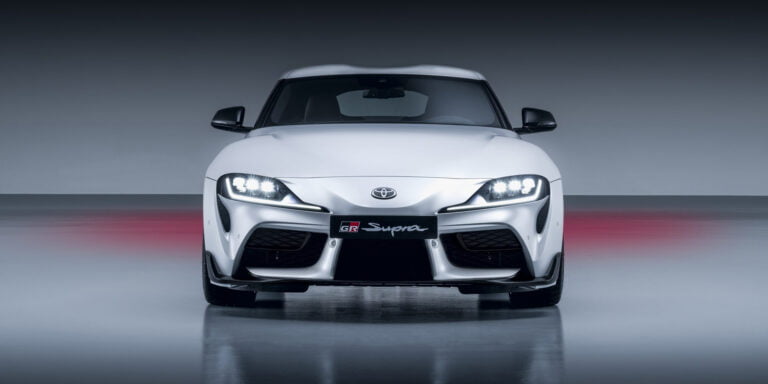
The Toyota GR Supra will now be offered with a manual gearbox, according to the Japanese brand the result of “listening to sports car fans and customers.”

The two-seater sports car launched in 2019 as the first model in the performance-pitched GR range – named after Toyota’s motorsport division, Gazoo Racing.

The Supra was initially offered with a 3.0-litre six-cylinder petrol engine of 340hp, which was joined a yeaar later by a cheaper 2.0-litre unit offering 257hp. But until now, both have only been available with an auto transmission.

Now the 3.0-litre version of the Supra is to be offered with a six-speed ‘intelligent manual’ gearbox, following the example of Toyota’s other two GR models – the Yaris and GR86. According to its makers, the new unit has been specifically developed for the car, with a larger diameter clutch to cope with the engine’s power and software that produces the most performance-friendly shifts.

The traction control system has also been modified – improvements include measures to ensure that there is less chance of wheelspin when pulling away in first gear, more potency when taking uphill hairpin bends and an anti-roll programme.

Toyota has not released performance figures for the manual version of the Supra but it should be slightly quicker than the auto, as it is around 40kg lighter. The new transmission saves around 22kg, while a changed audio system and the removing the leather upholstery and power adjustment from the seats has cut another 16kg.

Further changes to the Supra include returned suspension, with stiffer front and rear anti-roll bars and dampers.

Toyota is yet to release prices and final specifications for the manual GR Supra but does expect it to become the most popular version of the car.

With particular praise for its comfort, performance and overall balance, the Toyota GR Supra has received consistently positive reviews from the British media since its arrival in early 2019, and holds an Expert Rating of 74%.

Jaguar XE and XF gain range-topping 300 Sport models

0

Jaguar has announced that new performance-focused 300 Sport models are available at the top of its XF and XE saloon line-ups, and that every new XF and XE model now comes with Amazon Alexa voice command software installed.

While entry-level XF and XE models are powered by a 204hp 2.0-litre four-cylinder diesel engine with mild hybrid technology, the new range-topping 300 Sport versions use an uprated 300hp petrol version – both capable of a top speed of 155mph.

The Jaguar XF 300 Sport, which is available as either a saloon or estate car, can complete a 0-62mph sprint in 5.8 seconds, while the smaller XE 300 Sport saloon has a slightly quicker sprint time of 5.6 seconds. These top-spec models are all-wheel drive only, and make use of an eight-speed automatic transmission.

As well as enhanced performance, 300 Sport models have been given Jaguar’s ‘Black Pack’ treatment, distinguished from entry-level variants by a gloss black roof, tinted privacy glass and a subtle rear spoiler. While the standard XF and XE models come with a choice of 18 or 19-inch alloy wheels, range-topping 300 Sport versions feature larger 20-inch alloys that can be trimmed in either grey, silver or black.

In the cabin, the XF 300 Sport’s interior is finished in an aluminium colour tone, while the XE 300 Sport is trimmed in an ash-coloured grey. Both new trims include metal shift paddles behind the steering wheel, and foot pedals are finished in a bright metallic colour.

The XF and XE 300 Sport, as well as the rest of the XF and XE model line, also come with Amazon Alexa software installed, allowing the driver and passengers to manage navigation, play music or check the news or weather using voice commands. The software is integrated into the brand’s Pivi Pro infotainment system, which is already compatible with Android Auto and Apple CarPlay.

Prices for the Jaguar XF 300 Sport start at £47,730, while entry-level models can be purchased for £33,985. The smaller XE 300 Sport is more than £5,000 cheaper at £42,345, but this is still over £12,000 more expensive than the standard Jaguar XE.

A capable alternative to the class-leading BMW 3 Series, the Jaguar XE has received particular praise for its driving dynamics and upmarket interior trim, though criticisms have been directed at its cramped rear cabin space. It currently holds an Expert Rating of 74%.

The larger Jaguar XF challenges the likes of the BMW 5 Series, and like the XE, reviewers generally conclude that the saloon is decent, but a long way behind BMW standards. Praised for its generous equipment levels fitted as standard, the XF holds an Expert Rating of 73%.

Renault Clio (2012 to 2019)

Summary

On sale in the UK from the end of 2012 to early 2019, the fourth-generation Renault Clio was a compact five-door hatchback built on the same platform as the smaller Renault Zoe. It was replaced by the current fifth-generation Clio in 2019.

Rivalling other mainstream superminis like the Ford Fiesta, Vauxhall Corsa and Volkswagen Polo, the fourth-generation Clio was available as a petrol, diesel or hybrid model, with both manual and automatic gearboxes available.

This iteration of the Clio had a more spacious cabin than its predecessor thanks to a longer wheelbase. The hatchback was given a mild mid-life facelift in the middle of 2016, consisting of exterior styling tweaks, new interior trim details and functions, infotainment updates and the addition of LED headlights.

There was a performance-tuned version called the Renault Clio R.S., but that’s not covered here. The Renault Clio was also sold as an estate elsewhere in Europe, but this version was not sold in the UK.

Throughout its lifespan, the fourth-generation Clio received average to very good reviews scores from the British media – affordable, well-equipped and comfortable, Parkers concluded that the Clio didn’t have “any particular weaknesses” when it was on sale. However, now off sale, many reviewers comment that the Clio’s interior is now looking dated.

Carwow explained that “newer models have simpler designs, bigger screens and better infotainment systems”, while Carbuyer said that the Clio’s cheap interior plastics meant that the car’s interior build quality was somewhat inferior to the likes of the Volkswagen Polo.

Most reviewers agreed that the Clio was a stylish hatchback and a good value-for-money package – a great all-rounder that proved to be a capable alternative to the supermini class leaders during its tenure.

Now no longer on sale, the fourth-generation Renault Clio holds a Used Car Expert Rating of C, with a score of 62%. It scores top marks for its excellent reliability record and also gets good grades for its low running costs. However, its media review scores were poor and its safety rating has long expired due to age.

Clio highlights

  • Distinctive styling still looks modern
  • Value-for-money package with plenty of tech
  • Efficient engines
  • Wide range of models to choose from
  • Comfortable drive

Clio lowlights

  • Cheap interior plastics and dated tech
  • Newer rivals have more boot space
  • Optional extras can get pricey
  • Slow entry-level models
  • Slightly cramped rear seating

Key specifications

Body style: Five-door hatch
Engines:
petrol, diesel
Price when new:
From £13,870 on-road

Launched: Winter 2012/13
Last updated: Summer 2016
Replaced: Spring 2019

Media reviews

Highlighted reviews and road tests from across the UK automotive media. Click any of the boxes to view.

Auto Express

Auto Trader

Business Car

Car Keys

Carbuyer

Carwow

Daily Mirror

Eurekar

Evo

Fleetworld

Heycar

Honest John

Motoring Research

Parkers

The Sun

The Sunday Times

The Telegraph

Top Gear

Safety rating

Independent crash test and safety ratings from Euro NCAP

Overall score: 5 stars
Date tested: August 2012
Date expired: January 2019
Read the full Euro NCAP review

Adult protection: 88%
Child protection: 89%
Vulnerable road users: 66%
Safety assist: 99%

Note on safety rating

The fourth-generation Renault Clio was originally crash tested by Euro NCAP back in 2012 and awarded a five-star rating. However, this rating expired in January 2018 and is no longer valid. This is normal practice, as Euro NCAP reviews its ratings on most cars annually with most ratings expiring after about six or seven years.

However, if you are comparing a used Clio to vehicles of similar age, whose ratings will have probably also expired, its safety rating score is still useful.

Eco rating

Independent economy and emissions ratings from Green NCAP

No eco rating

The fourth-generation Renault Clio was not lab tested by Green NCAP during its production life.

Reliability rating

MotorEasy logo 600x167

Reliability data provided exclusively for The Car Expert by MotorEasy

All data based on MotorEasy average workshop costs for extended car warranty claims

As of April 2025 (our most recent data point), the Renault Clio has an excellent reliability score of 87%, according to workshop and extended warranty data provided exclusively to The Car Expert by our partner, MotorEasy. This score covers not only this generation of Clio, but also newer (2019 onwards) and older (pre-2012) models.

Average repair costs for the Clio are very reasonable at less than £300. The only thing to really watch out for is gearbox issues, as the average repair bill for these is nearly £1,300 to date.

If you are looking to buy a used Clio, make sure any used car warranty you purchase covers all of the potential problem areas shown above.

Similar cars

If you’re looking at the Renault Clio, you might also be interested in these alternatives

Audi A1 | Citroën C3 | Dacia Sandero | Ford Fiesta | Honda Jazz | Hyundai i20 | Kia Rio | Mazda 2 | MG 3 | Mini hatch | Mitsubishi Mirage | Nissan Micra | Peugeot 208 | SEAT Ibiza | Skoda Fabia | Suzuki Swift | Toyota Yaris | Vauxhall Corsa | Volkswagen Polo

More news, reviews and information about the Renault Clio at The Car Expert

Renault Clio

Renault Clio

New Renault Clio hatchback debuts

New Renault Clio hatchback debuts

Everything you need to know about Renault

Everything you need to know about Renault

Renault Clio TCe 90 review

Renault Clio TCe 90 review

Renault Clio refresh now available

Renault Clio refresh now available

Renault Clio refresh to arrive this summer

Renault Clio refresh to arrive this summer

Clio Renault Sport gets new Black Edition

Clio Renault Sport gets new Black Edition

The UK’s most underappreciated small cars

The UK’s most underappreciated small cars

Renault Arkana gets price hike and trim changes

Renault Arkana gets price hike and trim changes

Renault revamps its big-selling Clio

Renault revamps its big-selling Clio

Refreshed Renault Clio on sale in October

Refreshed Renault Clio on sale in October

Renault releases details of Clio and Captur hybrid models

Renault releases details of Clio and Captur hybrid models

Buy a Renault Clio

If you’re looking to buy a used Renault Clio, The Car Expert’s partners can help you find the right car

Motors 600x300

Search less, live more. We make finding the right car simple. Find out more

Auto Trader logo 600x300

Search for your next new or used car with Auto Trader. Find out more

Carwow logo 600x300

Discover great deals available on both new and used cars. Find out more

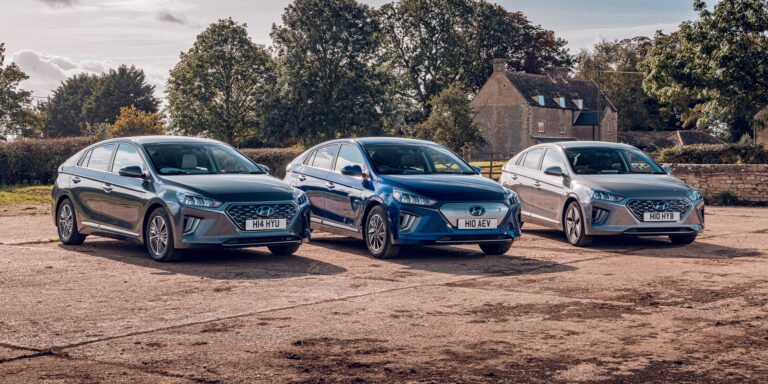
Hyundai Ioniq 5 gets more power and range

Hyundai has updated its Ioniq 5, adding a new battery pack that gives the electric car more range and power.

Installed just over a year after the Ioniq 5 went on sale in the UK, the new 77kWh battery pack will add the equivalent of 11hp when compared to the previous range-topping 73kWh pack, and extend the maximum projected range between charges from 299 to 315 miles.

Cars fitted with the 77kWh battery pack will now form a new range-topping trim level dubbed Namsan Edition, named after a mountain in Seoul, the capital of South Korea.

Equipment in Namsan Edition models also includes a full-length panoramic roof, leather upholstery and for the first time on European Hyundais, digital side mirrors – these reduce air resistance, helping to increase range, and offer a better view than traditional mirrors particularly in poor weather.

Alongside the new battery Hyundai has revamped the entire Ioniq 5 range – the entry-level SE Connect model is now priced from £39,400 with a 58kWh battery giving a range of up to 238 miles.

Premium trim variants of the car start from £41,900 and now come with more standard equipment, including the Vehicle to Load (V2L) system which allows use of the car’s electrics to power AC tools. Premium models also add a camera to the rear spoiler, projecting an image onto the rear-view mirror which compared to a typical reflected view is unobstructed by rear-seat occupants.

Premium versions of the Ioniq 5 can be specified with either the 58kWh or new 77kWh battery pack, while the options list includes a heat pump. This helps maintain battery efficiency in cold conditions by heating the interior rather than employing the car’s main battery to do so.

Ultimate trim level starts from £48,400 and now includes as standard previous safety options of blind and surround-view monitors, while the range-topping Namsan Edition models cost from £52,900.

The Hyundai Ioniq 5 currently holds an Expert Rating of 86%, praised for its battery range and handing but criticised for its ride quality.

Alfa Romeo Mito (2009 to 2018)

Summary

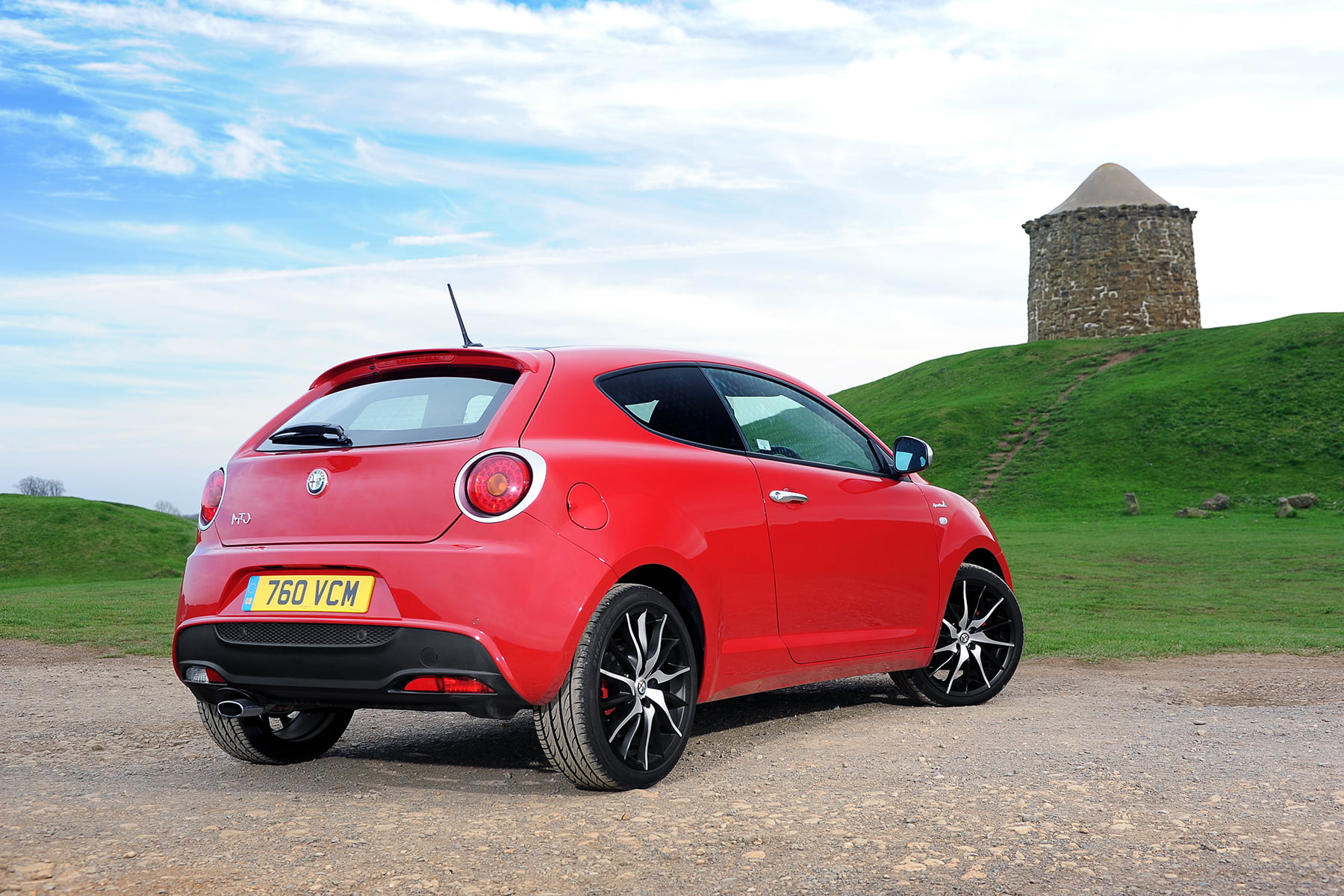
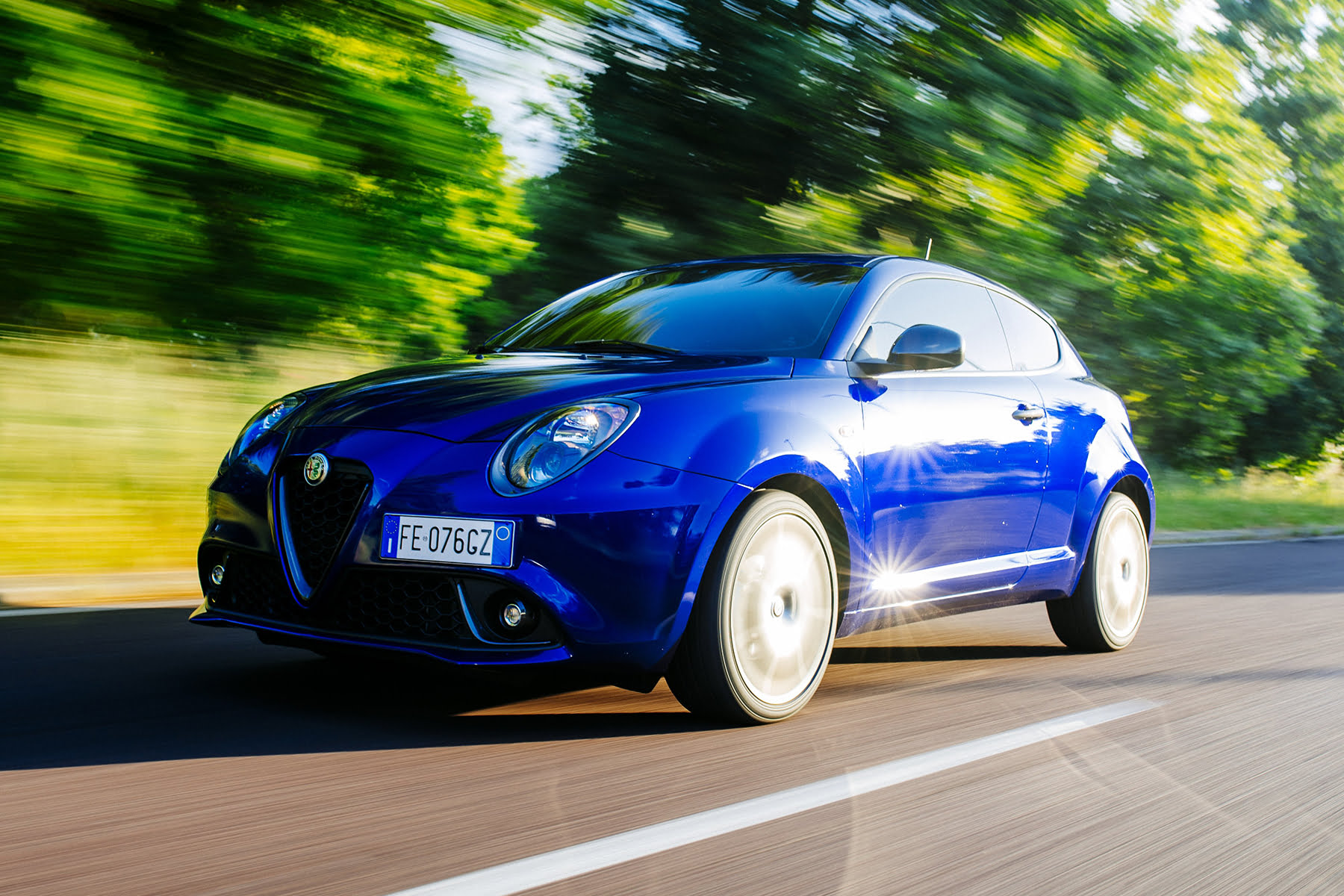
The Alfa Romeo Mito was a compact three-door supermini that arrived in the UK in 2009 as an alternative to premium rivals like the Audi A1 and Mini hatch – built on the same platform as the third-generation Fiat Punto.

Named after the cities of Milan, where the car was designed, and Turin, where the car was manufactured, the Mito range consisted of several petrol engines, the most expensive being turbocharged, and a more economical diesel engine. Both manual and automatic transmission models were sold.

Discontinued in 2018 with no direct replacement, the Alfa Romeo Mito received average to poor review scores over its lifetime. Some reviewers commented that the hatchback aged gracefully, while others asserted that it was a flawed model that never really lived up to the Alfa Romeo badge.

Most media reviewers praised its distinctive styling that stood out in a very crowded supermini class, but tended to conclude that the driving dynamics didn’t live up to the styling’s promises.

Several outlets also added that, while the Mito was well-equipped for a car of its age, the interior build quality was poor and cabin space in the front and back was limited compared to other superminis.

Parkers asserted that the turbocharged petrol engines at the top of the range were a highlight, while the diesel option “saps the fun” out of the driving experience. Lastly, some reviews questioned the reliability of the Mito – citing Alfa Romeo’s patchy history of reliability and a 2012 Mito recall that was triggered by braking system issues.

As of February 2026, the Alfa Romeo Mito holds a Used Car Expert Rating of D, with a score of 59%.

Mito highlights

  • Distinctive exterior styling
  • Lively turbocharged engines
  • Decent fuel economy
  • Well-equipped

Mito lowlights

  • Uncomfortable suspension
  • Cramped rear seating
  • Cheap interior materials
  • Questionable reliability

Key specifications

Body style: Three-door hatchback
Engines:
petrol, diesel
Price when new:
From £12,705 on-road

Launched: Summer 2009
Last updated: Autumn 2016
Replaced: Winter 2018/19

Media reviews

Highlighted reviews and road tests from across the UK automotive media. Click any of the boxes to view.

Auto Express

Business Car

Car

Car Keys

Carwow

Daily Mirror

Eurekar

Evo

Green Car Guide

Heycar

Honest John

Motors

Parkers

The Sun

The Sunday Times

Top Gear

Safety rating

Independent crash test and safety ratings from Euro NCAP

No safety rating

The Alfa Romeo Mito was originally tested by Euro NCAP back in 2008, and was awarded five stars for adult occupant safety. However, this rating expired in January 2014 and is no longer valid as the car no longer meets the standards required for such a rating. This is normal practice, as Euro NCAP reviews its ratings on most cars annually with most ratings expiring after about six or seven years.

However, if you are comparing a used Mito to vehicles of similar age, whose ratings will have probably also expired, its safety rating score is still useful.

Eco rating

Independent economy and emissions ratings from Green NCAP

No eco rating

The Alfa Romeo Mito preceded Green NCAP by about a decade and ended production before Green NCAP commenced, so it was never tested during its production cycle.

Reliability rating

MotorEasy logo 600x167

Reliability data provided exclusively for The Car Expert by MotorEasy

All data based on MotorEasy average workshop costs for extended car warranty claims

As of April 2025, the Alfa Romeo Mito has an average reliability score of 60%. This score applies to all Mito models in MotorEasy’s database, registered from 2008 to 2018.

The average repair cost to date is just over £400, which is more than the cost of a used car warranty, so that’s certainly worth keeping in mind.

The most common problems to data relate to suspension issues, with an average repair bill of only £180. However, gearbox problems are significantly more expensive, with an average repair bill of more than £1,000.

If you’re looking at a used Mito, make sure that any used car warranty covers all of the potential problem areas shown above.

Recalls

Official DVSA safety recalls that have been issued for the Alfa Romeo Mito

Date: November 2017
Model types: All
Build dates: 09/2016 to 03/2017
Number of vehicles affected: 352
Defect: Due to a potential non-conformity in the supplier’s production process the front seat belt pretensioner could malfunction and the front seat belt pretensioner may not function as intended in the event of a deployment. The locking mechanism operates independently from the pretensioner therefore locking mechanism functionality is still guaranteed.
Remedy: Fit new seat belt assembly to either the driver or passenger front seat or both. The seat belt assembly to be replaced will be determined on the vehicle VIN/ chassis number which will be checked against a list to ensure the correct operation carried out.

Date: December 2012
Model types: All
Build dates: 06/2012 to 09/2012
Number of vehicles affected: 268
Defect: A connector on the brake servo pipe may fail and cause a loss of vacuum assistance necessitating the driver to include additional effort when braking.
Remedy: Recall the vehicles that are likely to be affected to fit a new brake servo pipe.

As of August 2024, there have been two DVSA vehicle safety recalls on the Alfa Romeo Mito. These cover seat belts and brakes. These date from 2017 and 2012, respectively, so any required remedial work should have been done long ago.

Not all vehicles are affected by recalls. You can check to see if your car is included in any of the above recalls by visiting the DVLA website or contacting your local Alfa Romeo dealer.

If your car is affected by a recall, the vehicle must be repaired and you should not be charged for any work required. If you are buying a used Mito, you should insist that any outstanding recall work is completed before you take delivery of the vehicle.

Running cost rating

Clear Vehicle Data logo close crop

Monthly cost of ownership data provided exclusively for The Car Expert by Clear Vehicle Data

No data yet

Due to its age, we don’t have whole-life running cost data available for the Alfa Romeo Mito.

Similar cars

If you’re looking at the Alfa Romeo Mito, you might also be interested in these alternatives

Audi A1Citroën C3 | Ford Fiesta | Mazda 2 | Mini hatch | Peugeot 208 | Renault Clio | SEAT Ibiza | Skoda Fabia | Volkswagen Polo

More news, reviews and information about the Alfa Romeo Mito at The Car Expert

Everything you need to know about Alfa Romeo

Everything you need to know about Alfa Romeo

Alfa Romeo offers extra £2,000 deposit contribution on selected models

Alfa Romeo offers extra £2,000 deposit contribution on selected models

£13K buys new-look Alfa Romeo Mito

£13K buys new-look Alfa Romeo Mito

Buy an Alfa Romeo Mito

If you’re looking to buy a used Alfa Romeo Mito, The Car Expert’s partners can help you find the right car.

Motors 600x300

Find your next used car with Motors. Find out more

Auto Trader logo 600x300

Find your next new or used car with Auto Trader. Find out more

Carwow logo 600x300

Find your next new or used car with Carwow. Find out more

Subscriptions for company cars

Car subscriptions offer a new way of providing company cars which can work well for both employers and employees.

A car subscription is halfway between a lease and long-term car rental. You or your employer can pay for a car (or a van) from 28 days to 36 months, with the ability to get exactly the car you want, change it when you like – subject to conditions – and have insurance and maintenance included.

Unlike a lease there is no major upfront charge (such as nine months’ advance payment) but the monthly charges are higher than a fixed-term lease. There are also short-term leases on offer – between three and 12 months – but the choice of car may be limited. In all cases, neither you nor your employer own the car or will have the option to do so.

Vehicle subscriptions for employers

Traditionally employers have run company car schemes which fall into three types; company-owned vehicles, employee car allowances or an employee salary sacrifice scheme. We explain them here.

For business owners and fleet managers, using car subscriptions is suggested as a way to have a flexible fleet of vehicles which can be quickly scaled up or down without being tied into lease cycles of several years. There are no ‘start-up’ costs to buying a fleet of cars, then taxing, insuring and maintaining them. You can also use them to make a job offer more appealing.

“The modern working world has changed immeasurably in the last two years,” says Duncan Chumley, chief executive officer of our partner, Mycardirect. “A car/van subscription gives your company the agility to change with it. Car subscription offers short term contracts that can be cancelled any time, so if your business is disrupted by external forces, you aren’t stuck with a fleet of company vehicles gathering dust, unused and unwanted.”

Subscriptions could be offered to contractors on temporary contracts, or new staff still in their probationary periods. New businesses may not be able to afford large downpayments on the start of a traditional lease and may not yet have a good credit record. This also applies to commercial vehicles.

Now, with the current delays on new cars (2022), a subscription or flexible short term contract can cover shortfalls in a vehicle fleet while drivers are waiting for a particular car to arrive. Subscriptions provide the opportunity to change cars and try out different models, which traditional leasing can’t offer.

Most providers allow you to swap between cars and vans and some may be set up to administer subscriptions for business users with for example one invoice for subscriptions for a number of cars and favourable rates. Dependent on the company’s financial set up they can claim back VAT (in line with HRMC rules), which is why the subscription is in the name of the employer as the agreement is taken out in the company name.

Subscriptions from the employee’s point of view

You may be driving a subscription car – or more likely a van – just for work, but when a company car is made available for the private use of an employee a Benefit in Kind (BiK) value is calculated in relation to the value car (and to the fuel if that is also made available for private use). As subscription cars are subject to change, like any company car it is up to the company/employee to advise the HRMC of the car that the employee is driving.

Under salary sacrifice the cost of the subscription is taken off your pre-tax salary. You don’t pay income tax or national insurance contributions on the portion of your salary you have ‘sacrificed’. You still pay a BiK based on the value of the car and the private fuel it uses

The traditional company car allowance is a cash sum which is added to your salary, to subscribe to a car of your choice. You are charged tax on it as additional salary, not as a BiK, although you need to keep your own records of business mileage versus private mileage. A business mileage allowance may be available in addition or if not offered you can claim business mileage against tax yourself at a flat rate.

Using a company car allowance to buy a subscription could work to your advantage, depending on the terms your employer sets. If you don’t need a car for a prolonged period such as a month or two working abroad, you could hand the subscription car back and start with a new one when your return. You could also save your allowance by changing to a cheaper car if that suits. Remember, though, that as the subscription will be in your name you’ll be subject to the same conditions as other users, such as damage above normal wear and tear or excess mileage.

Electric incentive

Most companies having been looking at subscriptions as a way to introduce electric vehicles (EVs) into their fleet. They may have corporate policies on reducing CO2 emissions and an electric car subscription offers the chance to try out how they match the businesses’ needs and the best vehicles for the job.

There’s a big tax benefit for both sides. Users of zero-emission cars pay only 1% BiK. This means that if you have a car included with your role, both you and your employer can save money on tax. However, the tax benefit may be doubtful if you have no way to charge at home overnight because you live in a flat or have no off-street parking.

Taking advantage of the 1% BiK, some electric car providers are targeting both employers and employees. Octopus Electric Vehicles provides leases to employers – and helps them set up salary sacrifice schemes – and the employee then chooses the car.

As an EV subscription example, electric-only provider Onto has a salary sacrifice calculator. Calculated at the start of April 2022, on a subscription for a Hyundai Ioniq Premium 38kwh (list price £33,895) an employee earning £40,000 had the monthly subscription (paid by the employer) of £499 deduced from their gross pay (salary sacrifice). There is a tax and National Insurance saving of £166, leaving a monthly BiK of £11.

Lexus set to expand its all-electric offering with RZ SUV

0

The brand’s first bespoke electric car, Lexus has revealed the first details about its RZ SUV, which is built on the same platform as the upcoming Subaru Solterra and Toyota bZ4X.

The compact RZ will join the Lexus range as an all-electric alternative to the similarly-sized NX SUV which debuted at the end of 2021, which is available as either a hybrid or plug-in hybrid model. The RZ is set to be the second electric model to join the Lexus line-up in the UK – following the smaller UX Electric SUV – as the Japanese brand aims to be electric-only by 2030.

Embodying what Lexus calls the “next chapter” of the brand’s design ethos, the battery-powered RZ has a similar silhouette to the NX, but with a new minimalist approach to the design of its front end, featuring a lower bonnet and smaller air intakes, sitting below large rectangular headlights.

Most noticable is the absence of a front grille, while the Lexus branding remains front and centre on the SUV’s nose. In the rear, one elongated tail light extends across the width of the tailgate, and the rear window is framed by a lower lip spoiler and a fang-shaped roof spoiler which Lexus says gives the car a “cool, high-tech look”.

In the cabin, The Lexus RZ is very similar to its NX sibling, with a head-up display and 14-inch infotainment screen, though Lexus says that the infotainment sits lower on the dashboard to improve visibility for the driver. The infotainment also includes a new voice-activated on-board assistant, and the brand’s own navigation software.

Like Toyota, Lexus is also looking to introduce its new electric models with a yoke-style steering wheel option. This unusual setup, which will be an optional package for the RZ from 2023 onwards, uses an electrical connection to send steering inputs, with no traditional steering column needed. Lexus says this yoke-style system requires less effort when steering and that its butterfly-like shape improves the driver’s view of the head-up display and the road ahead.

Another first for Lexus, the RZ also features a dimmable panoramic roof which reduces radiant heat on sunny days, and helps to retain heat on colder ones. The RZ is also fitted with what Lexus calls the ‘e-Latch system’, which works with the SUV’s blind spot monitor to cancel the opening of a door when a pedestrian or cyclist is detected.

Like the Solterra and bZ4X, The Lexus RZ is powered by a 71kWh battery. However, while its Subaru and Toyota counterparts are available with a single motor for a cheaper entry-level price, the RZ comes with an electric motor in the front and rear as part of the brand’s new ‘Direct4’ four-wheel drive powertrain.

This dual-motor setup produces 312hp, and Lexus estimates that the SUV has a maximum battery range of over 250 miles – a considerable improvement over the 190 mile range of the Lexus UX Electric.

UK buyers can now reserve a Lexus RZ online, with pricing and further specification details being available later this year. While the SUV is not yet available to pre-order, Lexus expects to deliver its first RZ orders in the UK around the end of 2022.

Mercedes-Benz EQS gets the SUV treatment

0

Mercedes-Benz has revealed the first details about its seven-seat EQS SUV, which will join the Mercedes-EQ range as the upmarket brand’s biggest ever electric model.

This new all-electric SUV is essentially a raised version of the Mercedes-Benz EQS saloon, which was awarded The Car Expert’s Car of the Year for 2021. The EQS SUV is 20cm taller than its saloon counterpart, with a rear-end redesign that extends the cabin to add a third row of seats.

From the first teasers Mercedes-Benz has released, it is clear to see that the EQS SUV takes inspiration from the saloon it is based on and the other SUVs in the all-electric EQ range – it has the same headlights, front panel grille and air intake designs as the EQS saloon, while having a similar silhouette to the smaller EQC SUV.

Stepping inside, the EQS SUV’s luxurious interior is practically identical to that of the EQS saloon, except for some trim pattern and colour scheme tweaks.

Like the saloon, a 1.4 metre wide hyperscreen can be fitted across nearly the entire width of the dashboard, which includes a 12-inch driver display and an 18-inch central display controlling the multimedia system and navigation.

Mercedes-Benz has not released much information about the EQS SUV specifications and trim levels as of yet, but it has said that the car’s ‘Mercedes-Benz User Experience’ operating system can receive voice commands and over-the-air updates, and that an augmented reality feature which projects navigation details onto the windscreen is optional.

The EQS SUV ride height can be raised by an extra 2.5cm by the driver, and will automatically raise or lower depending on your speed and drive mode. These drive modes also include an ‘Off-Road’ setting, which the manufacturer says makes the EQS SUV “capable of tackling light terrain with ease”.

Three different powertrains have been announced for the new EQS SUV range, though it is not yet confirmed which ones are heading to the UK. The entry-level model is the rear-wheel drive EQS 450+, which uses a single electric motor hooked up to a 108kWh battery to produce 355hp and an official battery range of 410 miles.

The all-wheel drive EQS 450 4Matic produces the same power output but with a dual-motor system, for a maximum all-electric range of 380 miles. Last but certainly not least, the range-topping EQS 580 4Matic uses a tuned version of this dual-motor powertrain to produce 536hp, with an identical battery range of 380 miles. All models are capable of 200kW fast charging.

The Mercedes-Benz EQS SUV is expected to arrive later in 2022, and pricing and specification details will be announced closer to this launch.

Electric i7 leads new BMW 7 Series line-up

0

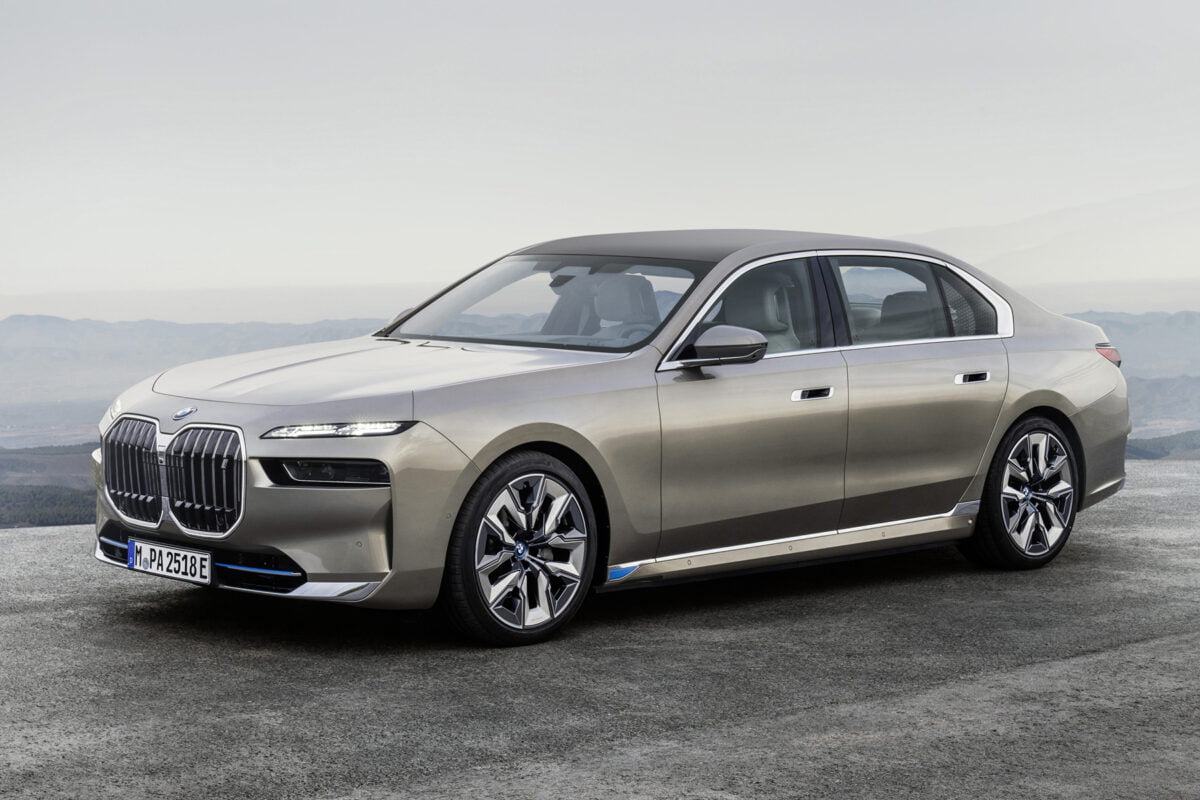
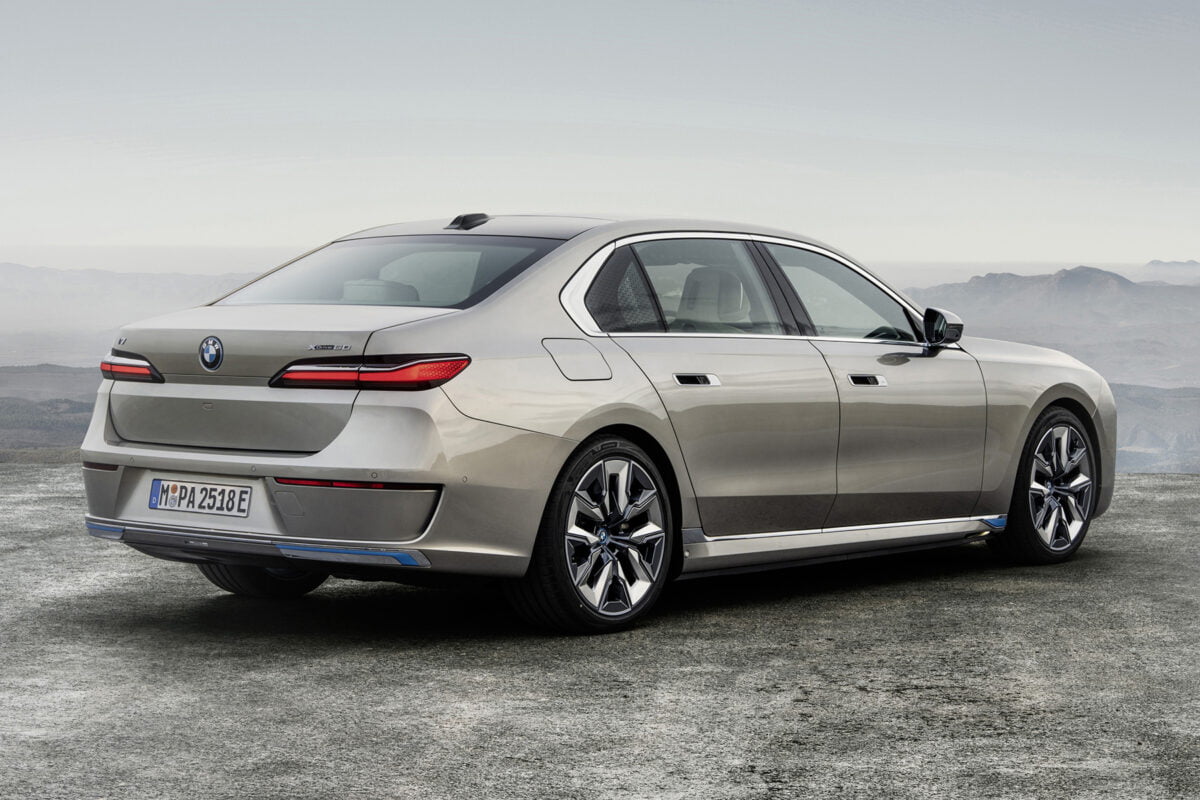
BMW has revealed a totally re-engineered 7 Series range, with the first new version of the German brand’s largest luxury saloon on sale an all-electric model.

The BMW i7 xDrive60 is powered by separate electric motors on the front and rear axles, for a combined output of 544hp with 745Nm of torque. The car will complete the 0-62mph sprint in 4.7 seconds and go onto a top speed of 149mph.

A new and more compact 102kWh battery pack, measuring just 11cm high, is mounted under the car’s floor and provides the car with a official battery range of between 367 to 388 miles from full charge.

BMW says the charging technology, while based on that of the already on sale i4 and iX models, has been further developed with its temperature more precisely controlled to extend battery life and reduce charging times. It also offers the ability to save individual charging profiles.

The car can be replenished through an AC charger at up to 11kW, or via DC power at up to 106kW – at a suitable DC charging station 106 miles of range can be added in only ten minutes.

The i7 will arrive in UK showrooms in December 2022 at prices starting from just over £107,000, and it will be joined in 2023 by two plug-in hybrid 7 Series variants, the 750e xDrive and M760e xDrive.

These two cars will also be all-wheel-drive, pairing a six-cylinder petrol engine with an electric motor and an all-new eight-speed auto transmission. The 750e produces 490hp, the M760e 571hp, with both cars offering an electric-only range of up to 50 miles. CO2 emissions are between 22 and 28g/km and the official if somewhat meaningless official fuel consumption figures start from 235mpg.

BMW says that the new 7 Series is ‘a considerable step up’ from its predecessor. It has a larger body measuring 13cm longer, 5cm wider and 5cm taller with bolder styling. This is particularly evident on the front end which includes a more prominent grille and the same split-headlamp design element as shown on the newly facelift BMW X7 SUV.

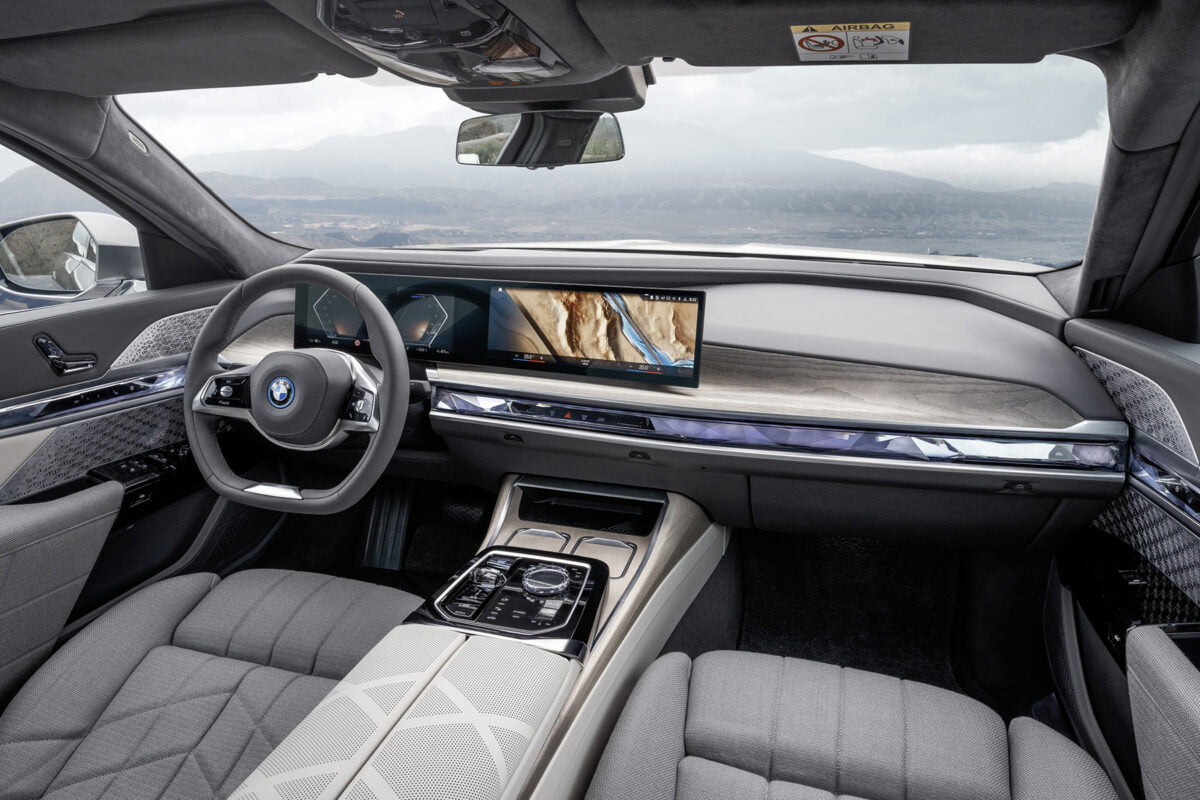
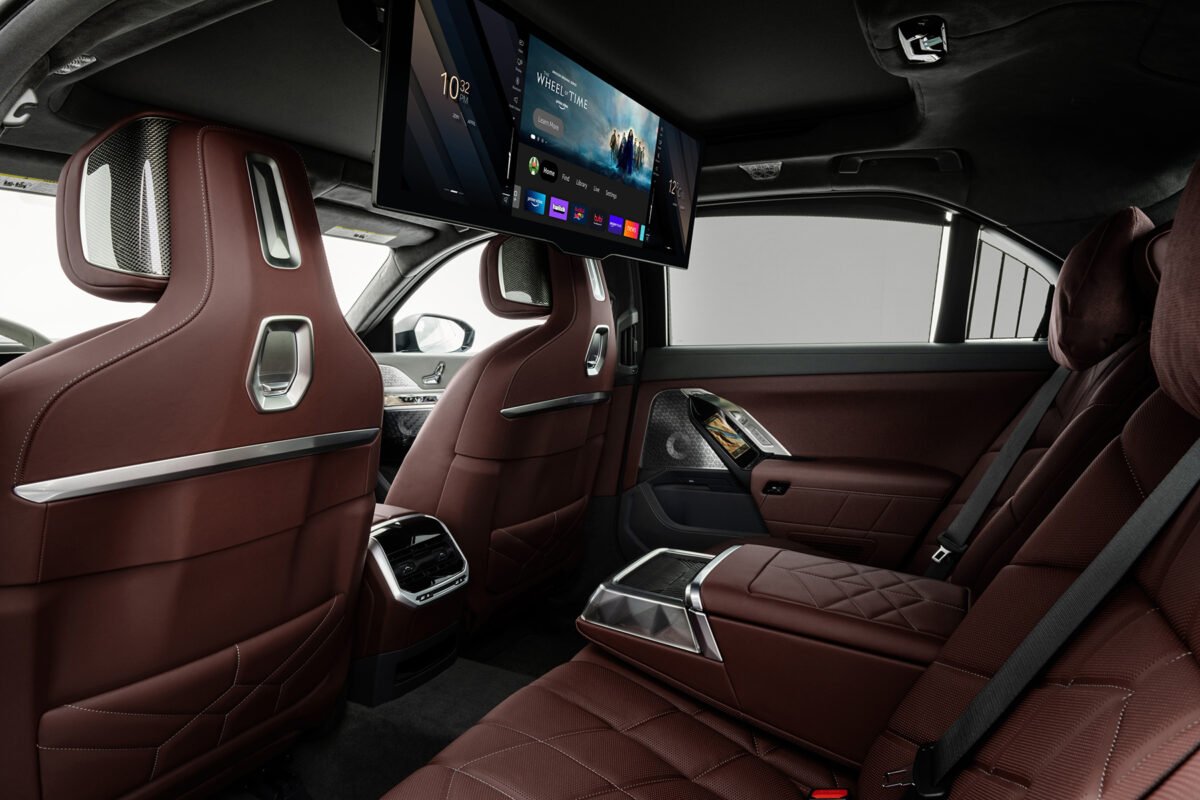
The luxury appeal of the car has been significantly upgraded with new features able to be specified including automatic opening of both the front and rear doors and even a 31-inch cinema screen for rear seat passengers, folding down from within the roof. The front seat occupants also gain the curved digital display panel that has already appeared in other BMW models.

Prices for the two plug-in models are yet to be announced. They are likely to be the only petrol options for the 7 Series in the UK, though industry sources suggest that a single diesel version will be added to the range in 2023.

Volkswagen T-Roc Cabriolet (2019 to 2025)

Summary

The Volkswagen T-Roc Cabriolet was the two-door soft-top version of the regular T-Roc SUV that arrived on UK roads in Summer 2020 – nearly three years after the standard T-Roc model.

As a convertible SUV, the T-Roc Cabriolet was essentially in a market segment of one – it was only really directly comparable to the more upmarket Range Rover Evoque Convertible, which Land Rover ditched in 2018 when the original Evoque ended production.

Its closest competitors were more conventional soft-top models like the Mini Convertible. It was also effectively (but not very effectively) a replacement for the long-dead Golf Cabriolet in the Volkswagen line-up

The Volkswagen T-Roc Cabriolet line-up consisted of two trim levels, with only petrol engines available. Parkers argued that the lack of diesel engine options is a misstep.

The Cabriolet’s boot was markedly smaller than the standard SUV, and Volkswagen had to make this convertible version heavier in an effort to reinforce the body structure with the hard-top roof missing – a body structure that Which? called “somewhat compromised”.

Which? added that the folding fabric roof, which took 11 seconds to raise, “simply doesn’t work very well”, and that the rear seats were more cramped than the regular T-Roc, in order to make room for the roof mechanism.

While some reviewers clearly disliked the T-Roc Cabriolet, many outlets conceded that it would appeal to customers intrigued by the idea of a raised ride height and wind-in-the-hair driving in one reasonably affordable package, regardless of its flaws.

As Top Gear concluded, “It doesn’t create a new must-have niche, or take itself too seriously, and neither should you.”

As of February 2026, the Volkswagen T-Roc Cabriolet holds a Used Car Expert Rating of D with a score of 58%.

T-Roc Cabriolet highlights

  • Peppy but economical engines
  • Plenty of equipment as standard
  • Decent practicality by cabriolet standards
  • Attractive exterior styling
  • Wind-in-the-hair driving

T-Roc Cabriolet lowlights

  • Only seats four
  • Not much boot space
  • Interior is cheap and cramped in places
  • Only petrol-powered models available
  • More conventional convertibles are more fun

Key specifications

Body style: Compact convertible SUV
Engines: petrol
Price: From £31,495 on-road

Launched: Summer 2020
Last updated: Spring 2022
Discontinued: Spring 2025

Media reviews

Reviews, road test and comparisons from across the UK automotive media. Click any of the boxes to view.

Featured reviews

More reviews

Auto Trader

Car

Car Keys

Carbuyer

Heycar

Honest John

Parkers

The Sun

The Telegraph

Top Gear

Safety rating

Independent crash test and safety ratings from Euro NCAP

No safety rating

As of February 2026, the Volkswagen T-Roc Cabriolet has not been assessed by Euro NCAP.

The hard-top Volkswagen T-Roc was awarded a full five-star crash test rating back in 2017, but this rating does not include the T-Roc Cabriolet, as this drop top version has been structurally altered as a result of taking the roof off.

This means that the T-Roc Cabriolet is heavier than the standard model, and while it has the same safety features, we cannot say that it would have the same crash test results.

Eco rating

Independent economy and emissions ratings from Green NCAP

No eco rating

The Volkswagen T-Roc Cabriolet was not assessed by Green NCAP during its production life.

Reliability rating

Reliability data provided exclusively for The Car Expert by MotorEasy

No reliability rating

As of February 2026, we don’t have enough reliability data on the Volkswagen T-Roc Cabriolet to generate a reliability rating.

The Car Expert’s reliability information is provided exclusively from workshop and extended warranty data from our partner, MotorEasy. As soon as we have sufficient data on the T-Roc Cabriolet, we’ll publish the score here.

Running cost rating

Clear Vehicle Data logo close crop

Monthly cost of ownership data provided exclusively for The Car Expert by Clear Vehicle Data

Fuel consumptionAverageScore
Petrol models42 mpgC
CO₂ outputAverageScoreVariationScore
Petrol models143 g/kmC
Insurance groupAverageScoreVariationScore
All models25B
Service and maintenanceCostScore
Year 1£161A
Year 2£467B
Year 3£767B
Year 4£1,018B
Year 5£1,369B
Overall£3,782B

The Volkswagen T-Roc Cabriolet is a relatively affordable car to own and run, according to whole-life cost numbers provided exclusively to The Car Expert by our data partner, Clear Vehicle Data.

While its fuel consumption is higher than the average new petrol car, the Cabriolet has pretty low insurance premiums and its maintenance and servicing costs over the first five years of ownership should be excellent.

Similar cars

If you’re looking at the Volkswagen T-Roc Cabriolet, you might also be interested in these alternatives

Abarth 124 Spider | Audi A3 Cabriolet | BMW 2 Series Convertible | Fiat 500C | Mazda MX-5 | Mini Convertible

Buy a Volkswagen T-Roc

If you’re looking to buy a new or used Volkswagen T-Roc, The Car Expert’s partners can help you find the right car

Motors 600x300

Find your next used car with Motors. Find out more

Auto Trader logo 600x300

Find your next new or used car with Auto Trader. Find out more

Carwow logo 600x300

Find your next new or used car with Carwow. Find out more

Lease a Volkswagen T-Roc

If you’re looking to lease a new Volkswagen T-Roc, The Car Expert’s partners can help you find a competitive deal

Leasing-com logo

Personal contract hire deals from Leasing.com. Find out more

Carwow logo 600x300

Personal contract hire deals from Carwow. Find out more

Select Car Leasing logo

Personal contract hire deals from Select Car Leasing. Find out more

Ccar subscriptions

If you’re interested in a car subscription, The Car Expert’s partners can help (PS: What’s a car subscription?)

Cocoon Vehicles logo 600x300

Car subscriptions from Cocoon.
Find out more

Just Vehicle Solutions logo 600x300

Car subscriptions from Just Vehicle Solutions.
Find out more

Flexible Vehicle Contracts logo 600x300px

Car subscriptions from Flexible Vehicle Contracts.
Find out more

UK pricing announced for new Kia Niro

0

Kia has released the pricing details for its 2022 Kia Niro range, which includes hybrid, plug-in hybrid and electric powertrains available across three trim levels.

As we reported in January, Kia is set to replace its first-generation Niro SUV with a brand-new iteration for 2022, which will rival the likes of the Nissan Qashqai. Kia says that the current Niro, which sits between the Stonic and Sportage in the brand’s SUV range, is its second-most popular model, with over 70,000 UK sales since 2016.

Now available to pre-order online, customers can choose between three trim levels when configuring their 2022 Kia Niro. Highlights on the entry-level ‘2’ trim include LED headlights, an eight-inch infotainment screen, cruise control, a parking camera and rear parking sensors.

The ‘3’ trim adds parking sensors in the front, upgrades the infotainment screen, and adds keyless entry and wireless smartphone charging, while the range-topping ‘4’ trim adds an electric tailgate and sunroof, and a ten-inch digital instrument cluster behind the steering wheel.

Entry-level ‘2’

  • 16-inch alloy wheels (17-inch alloys for EV models)
  • LED headlights
  • A height-adjustable boot floor
  • Cloth upholstery
  • Rear parking sensors
  • A parking camera
  • An eight-inch infotainment screen
  • Smart cruise control
  • Collision avoidance technology

Mid-range ‘3’

  • All ‘2’ trim features that are not replaced
  • 18-inch alloy wheels
  • A ten-inch infotainment screen with navigation
  • Cloth and faux leather upholstery
  • Wireless smartphone charging
  • Front parking sensors
  • Keyless entry
  • Heated seats
  • Heated steering wheel
  • Rear privacy glass
  • Blind spot monitoring

Range-topping ‘4’

  • All ‘2’ and ‘3’ trim features that are not replaced
  • A ten-inch digital instrument cluster
  • An electric tailgate
  • An electric sunroof
  • An upgraded sound system
  • Heated rear seats
  • Parking assistance technology

Hybrid pricing

Combining a 1.6-litre petrol engine with an electric motor for a combined output of 141hp, the Kia Niro hybrid is the cheapest powertrain on offer, with prices starting at £27,745.

All hybrid models are fitted with a six-speed automatic gearbox, and feature a new ‘Green Zone’ drive mode, which automatically switches to electric power to reduce exhaust emissions to zero in designated built-up areas.

Trim LevelUK price
‘2’ Hybrid£27,745
‘3’ Hybrid£30,495
‘4’ Hybrid£33,245

Plug-in hybrid pricing

The plug-in hybrid variant uses the same 1.6-litre petrol engine, but paired with a larger 62kW electric motor for a combined power output of 182hp.

Also fitted with a six-speed automatic transmission and Kia’s ‘Green Zone’ drive mode, the Niro plug-in hybrid has a promised all-electric range of 40 miles from full charge.

Trim LevelUK price
‘2’ Plug-in hybrid£32,775
‘3’ Plug-in hybrid£35,525
‘4’ Plug-in hybrid£38,275

All-electric pricing

The electric version (EV) of the 2022 Kia Niro is powered by a 65kWh battery which works in tandem with an electric motor to produce a power output of 204hp – the most powerful powertrain in the range.

Kia’s engineers say that the all-electric Niro has a maximum battery range of 287 miles, and that the SUV’s battery can charge from 10% to 80% in about 45 minutes – which is around nine minutes quicker than the outgoing model.

Trim LevelUK price
‘2’ EV£34,995
‘3’ EV£37,745
‘4’ EV£40,495

Kia also says that the 2022 Niro SUV will be available with a choice of eight exterior colours, with an extra charge of £595 for premium paints. The Korean brand expects to deliver the first UK customer orders in early Autumn this year.

BMW 2 Series Coupé

Summary

The BMW 2 Series Coupé is a compact 2+2 that’s now in its second generation. Launched in early 2022, the new 2 Series Coupé uses the same engines, transmissions, and suspension as the larger 3 Series and 4 Series models.

The new model is a departure from the original generation, which was based on the BMW 1 Series hatchback. The BMW 2 Series family is a confusing jumble of models – the 2 Series Active Tourer MPV and 2 Series Gran Coupé (which is actually a saloon, not a coupé) are based on the 1 Series hatchback, while this 2 Series Coupé (and any future convertible version) are built on completely separate underpinnings and are far more performance-oriented in their nature.

The BMW 2 Series Coupé engine range comprises three petrol-powered models and one diesel option. There’s a performance-focused BMW M2 coupé that’s covered in a separate rating.

The 2 Series Coupé has received a warm reception from the British media since its arrival, which its driving dynamics earning particular praise. Carbuyer explains that the coupé’s eight-speed automatic gearbox is smooth and responsive, while its lightweight components and responsive handling makes the 2 Series Coupé “incredibly agile”.

The 2 Series Coupé has also been praised by the likes of Auto Trader for its “nice balance of performance and real-world running costs”, with the range-topping M240i highlighted as the most potent model in the range. Stepping inside, the 2 Series Coupé shares the same high-quality interior design and dashboard layout as its bigger siblings, and the coupé comes with a slightly larger boot than its predecessor – 390 litres in total.

That said, many outlets noted that the 2 Series Coupé has cramped rear seating, with rear headroom and legroom that Car says is “predictably dismal”. Like many new BMW models, the exterior styling is also divisive, called “fresh and modern” by Auto Express, but labelled as “really unpretty” by the Sunday Times.

As of February 2026, the BMW 2 Series Coupé holds a New Car Expert Rating of B, with a score of 65%.

2 Series Coupé highlights

  • Punchy performance
  • Intuitive infotainment
  • Responsive handling
  • High-quality interior trim

2 Series Coupé lowlights

  • Small range of models on offer
  • Cramped rear seating
  • Not a practical as 4 Series Coupé
  • Road noise at high speed

Key specifications

Body style: Coupé
Engines: petrol, diesel
Price: From £37,815 on-road

Launched: Spring 2022
Last updated: N/A
Replacement due: TBA

Media reviews

Reviews, road tests and comparisons from across the UK automotive media. Click any of the boxes to view.

Featured reviews

More reviews

Auto Express

Auto Trader

Car

Car Keys

Carbuyer

Carwow

Daily Mirror

Evo

Heycar

Parkers

The Sun

The Sunday Times

The Telegraph

Top Gear

Safety rating

Independent crash test and safety ratings from Euro NCAP

Overall score: 4 stars
Date tested: March 2022
Read the full Euro NCAP review

Adult protection: 82%
Child protection: 81%
Vulnerable road users: 67%
Safety assist: 64%

The four-star score for the 2 Series Coupé is good overall but a point behind the five-star scores for both the 1 Series hatch and the 3 Series saloon. Adult impact protection is almost identical to the 1 Series, but the remainder of the scores are silghtly behind. Overall, however, it’s still a very safe vehicle compared to other new cars on sale.

Eco rating

Independent economy and emissions ratings from Green NCAP

Model tested: 2.0-litre diesel automatic 220d

Overall score: 3 stars
Date tested: June 2023
Read the full Green NCAP review

Clean Air Index: 7.6 / 10
Energy Efficiency Index: 5.2 / 10
Greenhouse Gas Index: 3.5 / 10

The three-star rating above only applies to the 220d diesel model. It does not apply to any petrol models in the range.

Green NCAP concludes that while the powertrain displays “excellent efficiency”, the 220d emits higher amounts of the climate-damaging gas N2O as a diesel, and this hinders its emissions rating.

Reliability rating

MotorEasy logo 600x167

Reliability data provided exclusively for The Car Expert by MotorEasy

All data based on MotorEasy average workshop costs for extended car warranty claims

Reliability data provided exclusively for The Car Expert by MotorEasy

The BMW 2 Series has a middling reliability rating of 66%, according to workshop data provided exclusively to The Car Expert by our partner, MotorEasy. This score covers all current versions of the 2 Series (Coupé, Gran Coupé, Active Tourer) as well as previous models.

The most expensive repair bills tend to be gearbox-related, and those are expensive with an average bill of more than £1,700. Fortunately, they’re not too common. Fuel system faults have an average repair cost of about £1,200, so look out for those as well. The most frequently-seen issues to date relate to the electrical system, with an average repair bill of about £500.

If you own a BMW 2 Series, or are interested in buying a used 2 Series model of any sort, make sure that any used car warranty you buy covers these problem areas.

Running cost rating

Clear Vehicle Data logo close crop

Monthly cost of ownership data provided exclusively for The Car Expert by Clear Vehicle Data

Fuel consumptionAverageScore
Petrol models41 mpgC
Diesel models59 mpgB
CO₂ outputAverageScoreVariationScore
Petrol models161 g/kmC
Diesel models123 g/kmB
Insurance groupAverageScoreVariationScore
All models33D
Service and maintenanceCostScore
Year 1£258C
Year 2£612C
Year 3£1,002C
Year 4£1,319C
Year 5£1,718C
Overall£4,909C

Data from our partner Clear Vehicle Data suggests that the BMW 2 Series Coupé is quite fuel-efficient – if you choose the diesel model. However, the vast majority of customers will prefer the petrol versions, which are relatively poor for fuel economy.

Diesel models are markedly more fuel efficient than petrol versions, offering 17 mpg more on average. Service and maintenance costs over the course of five years of ownership are good to start with before getting more expensive in subsequent years, while insurance costs are average.

Recalls

Official DVSA safety recalls that have been issued for the BMW 2 Series Coupé

Date: March 2023
Model types: All
Build dates: 12/2021 to 06/2022
Number of vehicles affected: 538
Defect: On certain vehicles the Body Domain Controller (BDC) control unit may have an incorrect setting applied to it.
Remedy: Conduct a check of the settings and if necessary perform a reset on the BDC control unit.

As of September 2024 (our most recent data point), there has been one DVSA vehicle safety recall on the BMW 2 Series Coupé.

Not all vehicles are affected by recalls. You can check to see if your car is included in any of the above recalls by visiting the DVLA website or contacting your local Audi dealer.

If your car is affected by a recall, the vehicle must be repaired and you should not be charged for any work required. If you are buying a used 2 Series Coupé, you should insist that any outstanding recall work is completed before you take delivery of the vehicle.

Awards

Trophies, prizes and awards that the BMW 2 Series has received

BMW 2 Series Coupé – Best Performance Car | The Car Expert Awards 2022

2024

  • Carbuyer Awards – Beat Sports Car

2022

Similar cars

If you’re looking at the 2 Series Coupé, you might also be interested in these alternatives

Alpine A110Audi TT | BMW 4 Series CoupéBMW Z4 | Jaguar F-Type Mazda MX-5 | Porsche 718 Boxster | Porsche 718 Cayman | Toyota GR86

Buy a BMW 2 Series

If you’re looking to buy a new or used BMW 2 Series Coupé, The Car Expert’s partners can help you find the right car

Motors 600x300

Find your next used car with Motors. Find out more

Auto Trader logo 600x300

Find your next new or used car with Auto Trader. Find out more

Carwow logo 600x300

Find your next new or used car with Carwow. Find out more

Lease a BMW 2 Series Coupé

If you’re looking to lease a new 2 Series Coupé, The Car Expert’s partners can help you find a competitive deal

Leasing-com logo

Personal contract hire deals from Leasing.com. Find out more

Carparison 600x300

Personal contract hire deals from Carparison Leasing. Find out more

Select Car Leasing logo

Personal contract hire deals from Select Car Leasing. Find out more

Ferrari unveils 296 GTS hybrid drop-top

0

Ferrari has revealed its 296 GTS, a mid-engined convertible with a 830hp plug-in hybrid powertrain.

The new ‘berlinetta spider’ is effectively an open-top version of the 296 GTB that launched earlier in 2022, described as “a supercar that is more eco friendly but no less ferocious.”

The only changes to the GTS over its GTB sister are to enable open-top driving. Its uses the same drivetrain, combining a mid-mounted 663hp V6 petrol engine driving the rear wheels, with an electric motor added behind the engine and capable of contributing a further 167hp.

As a result the 296 GTS will sprint through 62mph from rest in 2.9 seconds, reaching 124mph in 7.6 seconds and going on to a maximum speed of 205mph. These figures match the GTB, very unusual for a convertible version of an existing car particularly as the folding roof adds 70kg of weight to the GTS.

Ferrari is yet to release fuel consumption or emissions figures for the 296 GTS but states that the car’s plug-in hybrid system does give the car a potential electric-only range of around 15 miles.

The 296 GTS looks almost identical to its hard-top sibling from the outside, the only noticeable difference being the shape of the rear deck to accommodate a new storage bay for the roof when it is folded down.

Raising or retracting the top takes 14 seconds and can be carried out at speeds up to 28mph. The roof splits in two as its retracts to fold flush over the front of the engine, which Ferrari says maintains the “thermal dissipation characteristics and the balance of the overall design.”

An adjustable rear screen behind the seats allows cabin occupants to make themselves more comfortable when travelling with the roof down.

Despite the folding roof mechanism the aerodynamics of the car are maintained on a par with the GTB, including an active rear spoiler which deploys at speed to add more rear downforce.

An ‘Assetto Fiorano’ package is also available for the 296 GTS, named after Ferrari’s famous test track across the road from its factory in Maranello, Italy. The pack adds uprated adjustable dampers, some aerodynamic tweaks made in carbon fibre and various minor changes to save weight.

Ferrari is yet to reveal prices for the 296 GTS but they will be higher than the £241,550 starting price of the GTB. The car’s prime rival is expected to be the McLaren 720S Spider.

The Ferrari 296 GTB, which currently holds an impressive Expert Rating of 92%, has had a very warm reception from the British media, praised for its distinctive styling and enormous performance, but criticised for its expensive price tag and very costly optional extras.

Volvo V40 (2012 to 2019)

Summary

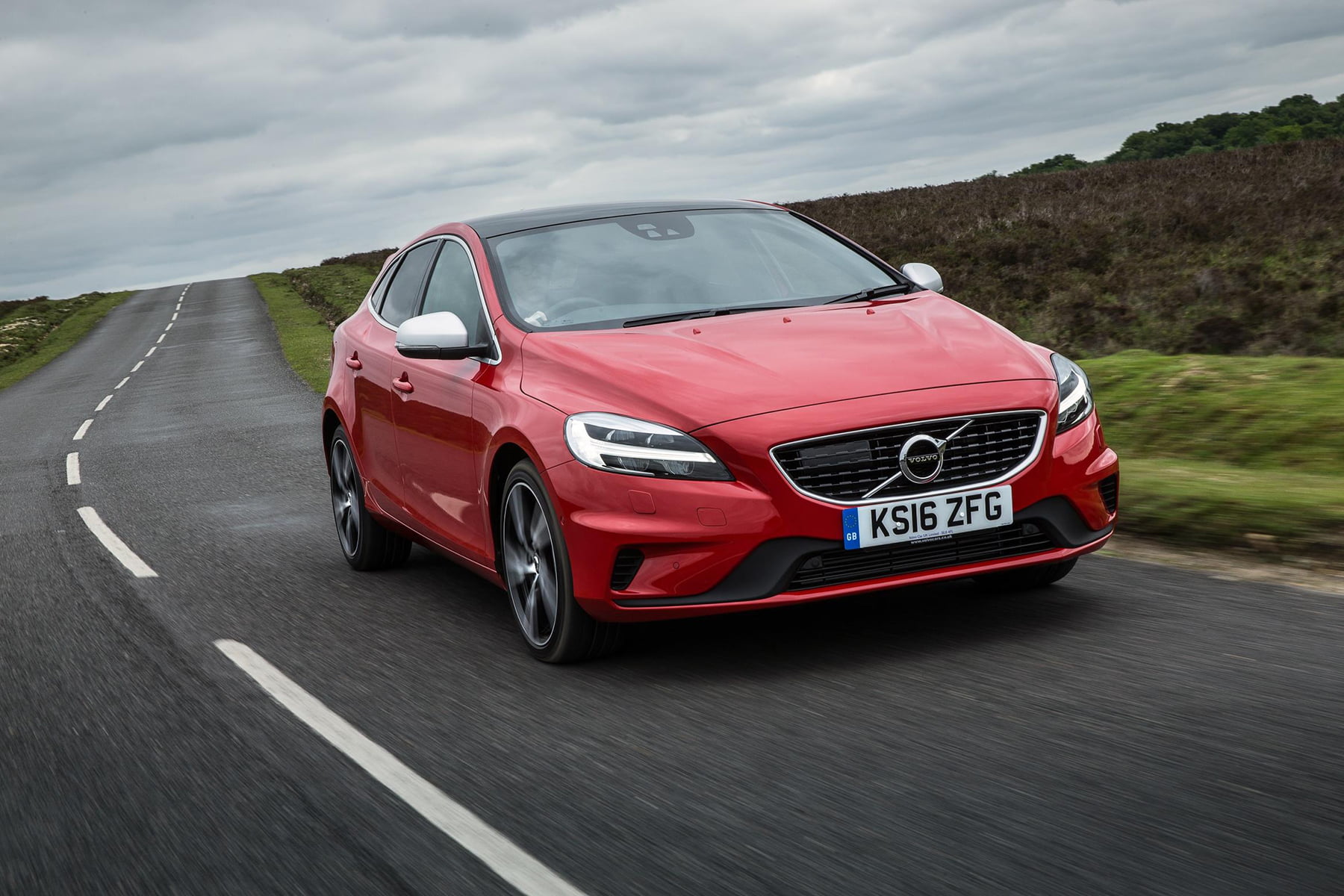
The Volvo V40 was a five-door family-sized hatchback that was a leftfield upmarket alternative to the likes of the Audi A3, BMW 1 Series and Volkswagen Golf. The V40’s production cycle came to an end in 2019, and the Volvo range has not featured a hatchback since.

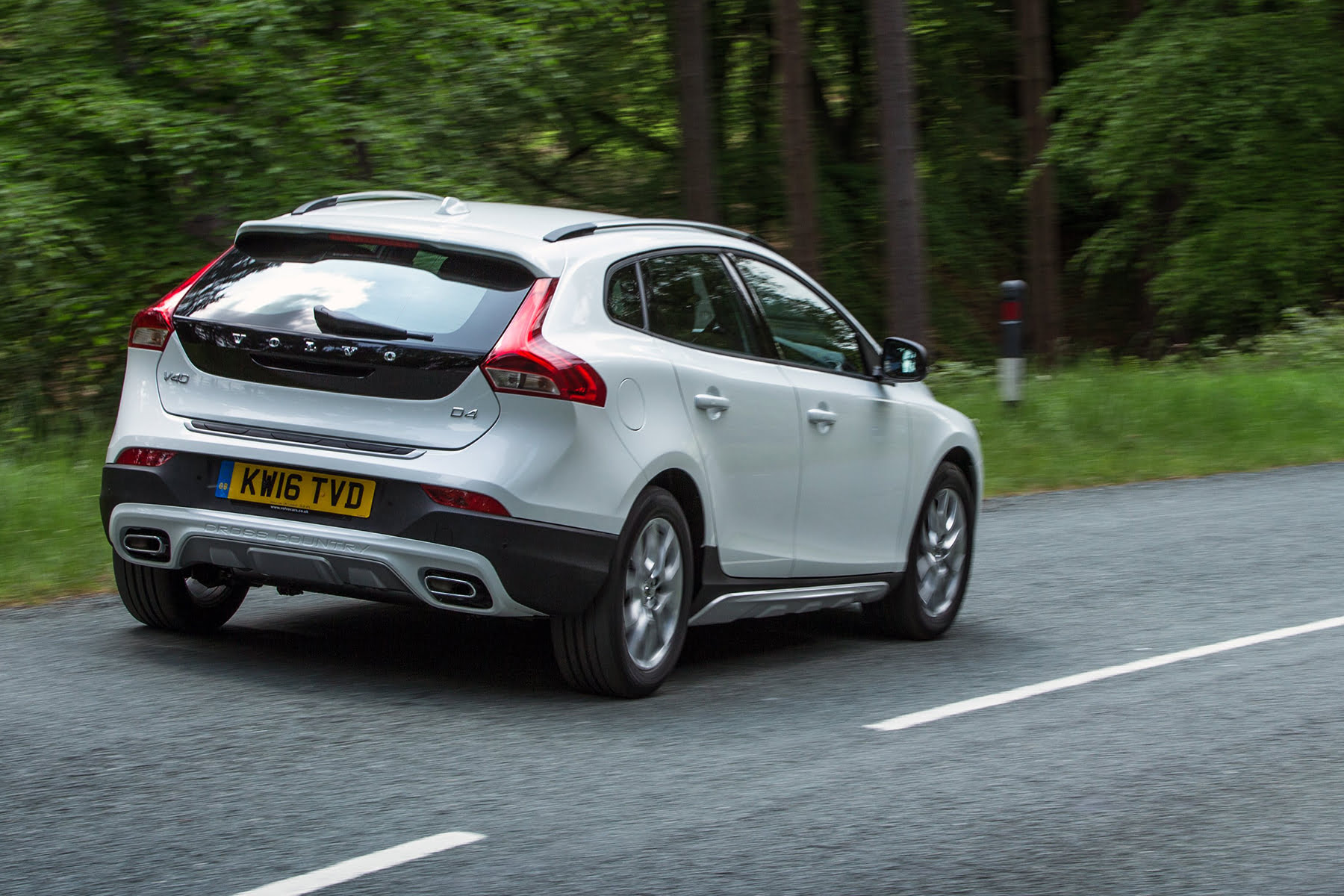
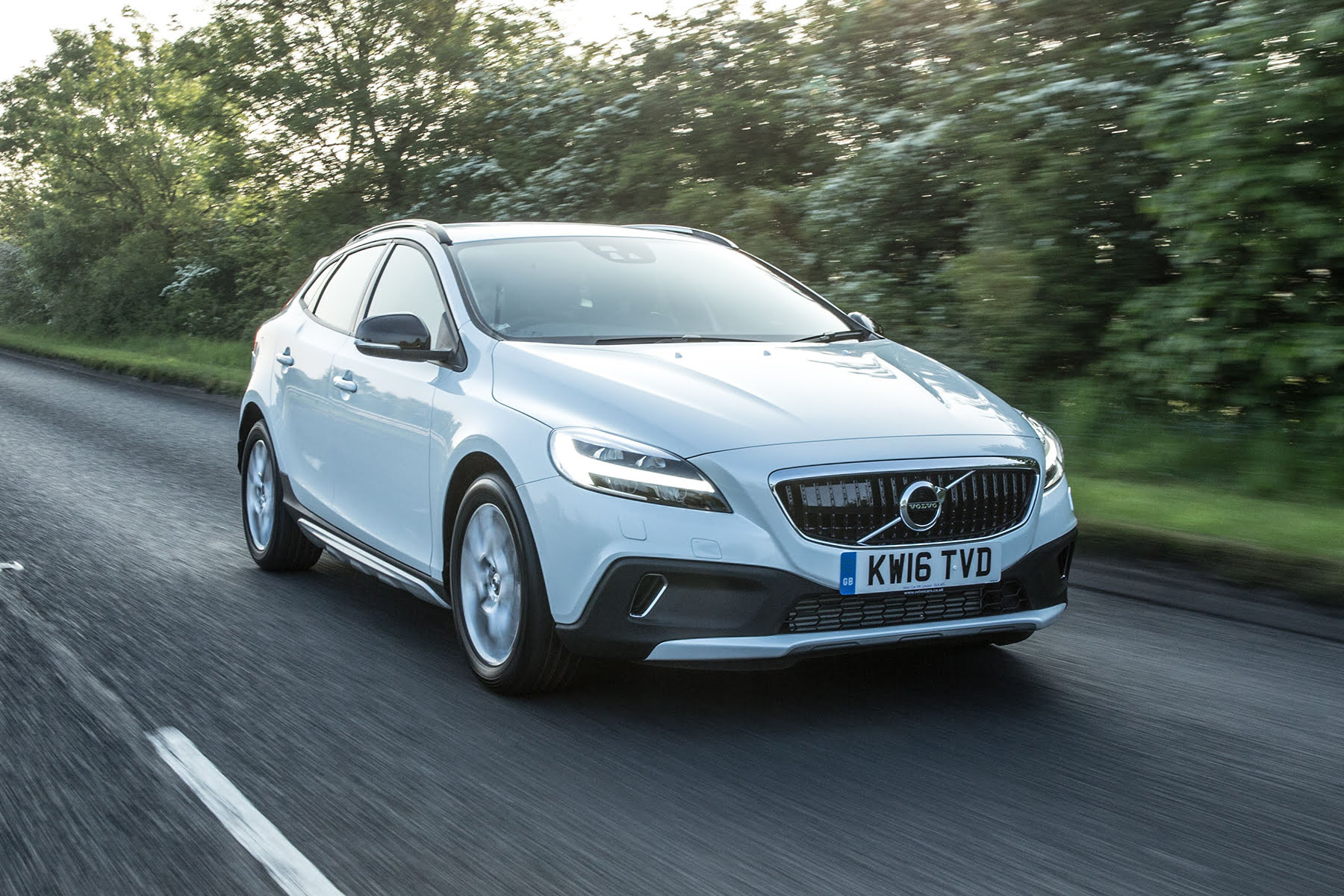
Available as a diesel or a petrol car, and fitted with either a six-speed manual or six-speed automatic gearbox, the Volvo V40 received a mid-life facelift in 2016, which consisted of tech upgrades and interior tweaks. A crossover-style spin-off model called the V40 Cross Country arrived a year after the standard model in 2013, with SUV-style body cladding, bigger wheels and increased ride height.

Throughout its lifespan, the V40 was commended by reviewers for its excellent safety standards and high-quality interior trim, which Auto Express said “lives up to Volvo’s premium brand status”. Although refined, many journalists also labelled the V40’s interior as dated, particularly the car’s ageing infotainment, and many reviews explained that rivals had more passenger space in the rear.

Parkers added that rear visibility was poor, but otherwise stated that the V40 had “nicely weighted steering”, “good body control in the bends”, and a range of very quiet and efficient engines that made the hatchback “an excellent all-rounder”.

As of March 2026, the Volvo V40 holds a Used Car Expert Rating of D, with a score of 57%.

V40 highlights

  • Plenty of safety equipment as standard
  • A refined and comfortable interior
  • Capable long-distance cruiser
  • Upmarket exterior styling

V40 lowlights

  • Rather harsh suspension
  • Cramped rear seating
  • Dated infotainment
  • Top-spec models get pricey

Key specifications

Body style: Medium hatchback
Engines: petrol, diesel
Price when new: From £18,995

Launched: Autumn 2012
Last updated: Summer 2016
Replaced: Summer 2019

Media reviews

Highlighted reviews and road tests from across the UK automotive media. Click any of the boxes to view.

The Car Expert

Auto Express

Auto Trader

Business Car

Car

Car Keys

Carbuyer

Carwow

Eurekar

Evo

Fleetworld

Green Car Guide

Heycar

Honest John

Motoring Research

Motors

Parkers

The Sun

The Sunday Times

The Telegraph

Top Gear

Safety rating

Independent crash test and safety ratings from Euro NCAP

Overall score: 5 stars
Date tested: August 2012
Date expired: January 2019
Read the full Euro NCAP review

Adult protection: 98%
Child protection: 75%
Vulnerable road users: 88%
Safety assist: 100%

Independent crash test and safety ratings from Euro NCAP

Notes on safety rating

The Volvo V40 was originally tested by Euro NCAP back in 2012 and awarded a five-star rating. However, this rating expired in January 2018 and is no longer valid. This is normal practice, as Euro NCAP reviews its ratings on most cars annually, with most ratings expiring after about six or seven years.

The V40 did win many awards throughout its life cycle for safety, and remains an excellent choice for safety as a used car compared to similar vehicles.

Eco rating

Independent economy and emissions ratings from Green NCAP

No eco rating

The Volvo V40 pre-dated Green NCAP by several years, so it was not tested during its life cycle.

Reliability rating

MotorEasy logo 600x167

Reliability data provided exclusively for The Car Expert by MotorEasy

All data based on MotorEasy average workshop costs for extended car warranty claims

The Volvo V40 has a reliability score that’s better than average, according to exclusive extended warranty data provided by our partners at MotorEasy. This score covers both the current-generation V40 and the original (pre-2018) version.

If you’re looking at a used Volvo V40, make sure any extended warranty cover you purchase covers all of the potential problem areas shown above.

Awards

Trophies, prizes and awards that the Volvo V40 has received

2018

  • Safest Used Car AwardsSafest Used Car

2017

  • Safest Used Car Awards – Safest Used Car

2016

  • Safest Used Car Awards – Safest Used Car

2013

  • Auto Express Awards – Safest Car
  • Carsite Awards – Car of the Year + Best Medium Family Car

2012

  • Scottish Car of the Year Awards – Best Executive Hatch

Similar cars

If you’re looking at the Volvo V40, you might also be interested in these alternatives

Alfa Romeo Giulietta | Audi A3 | BMW 1 SeriesInfiniti Q30 | Lexus CT | Mercedes-Benz A-Class | Volkswagen Golf

Buy a Volvo V40

If you’re looking to buy a used V40, The Car Expert’s partners can help you find the right car

Motors 600x300

Find your next used car with Motors. Find out more

Auto Trader logo 600x300

Find your next new or used car with Auto Trader. Find out more

Carwow logo 600x300

Find your next new or used car with Carwow. Find out more

Mercedes-Benz EQV

Summary

The Mercedes-Benz EQV is a seven-seat people carrier which is essentially the electric version of the diesel-powered V-Class, which is in turn closely related to the Mercedes-Benz Vito commercial van.

The EQV has kept much of the exterior styling traits of the V-Class, but uses a 90kWh battery and electric motor instead of a traditional engine. Mercedes-Benz says that it can travel a maximum of 213 miles on a full battery.

Many motoring outlets commend the EQV for its competitive battery range, though Car Keys notes that the electric powertrain makes the EQV over 450kg heavier than its combustion-powered counterpart, and this added weight is noticeable in the corners.

Despite this added weight and some reports of loud wind noise, reviewers generally conclude that the EQV is a very competent cruiser that is a very comfortable way to travel – with a refined and spacious cabin, and one of the best infotainment systems in its class.

Where reviewers often take issue is the car’s price – the entry-level Mercedes-Benz EQV trim costs north of £70,000, which is steep for private buyers. By comparison, the similarly-sized Citroën ë-SpaceTourer is half this price, but opting for the ë-SpaceTourer means losing out on the EQV’s cabin luxuries and battery range.

As of July 2025, the Mercedes-Benz EQV holds a New Car Expert Rating of D, with a score of 58%. Its score is helped by producing no tailpipe emissions, but its running costs are only average, while poor media reviews and a long-expired safety rating drag the overall score down.

EQV highlights

  • Electric sliding doors
  • Competitive battery range
  • Spacious high-quality cabin
  • Easy driving experience
  • Intuitive infotainment

EQV lowlights

  • Noticeably heavier than the V-Class
  • Expensive to buy
  • Cheaper SUVs have more driver’s appeal
  • Van-like lean in fast corners
  • Wind noise at high speeds

Key specifications

Body style: Seven-seat people carrier
Engines: electric, battery-powered
Price: From £87,135 on-road

Launched: Autumn 2021
Last updated: Summer 2024
Replacement due: TBA

Media reviews

Highlighted reviews and road tests from across the UK automotive media. Click any of the boxes to view.

Featured reviews

More reviews

Auto Trader

Car Keys

Company Car Today

Driving Electric

Electrifying.com

Green Car Guide

Honest John

Parkers

The Telegraph

The Van Expert

Top Gear

Safety rating

Independent crash test and safety ratings from Euro NCAP

Overall score: 5 stars
Date tested: October 2014
Read the full Euro NCAP review

Adult protection: 93%
Child protection: 87%
Vulnerable road users: 67%
Safety assist: 85%

No safety rating

The Mercedes-Benz EQV shares its safety rating with the regular V-Class, which was tested by Euro NCAP way back in 2014.

It’s not always the case that an electric version gets the same safety score as the regular petrol/diesel model, but in this case, Mercedes-Benz was able to show that the EQV would perform comparably to the other V-Class models in equivalent circumstances.

Unusually, the EQV/V-Class safety rating has not expired after seven years, which is generally the case for Euro NCAP safety ratings.

Eco rating

Independent economy and emissions ratings from Green NCAP

No eco rating

As of July 2025, the Mercedes-Benz EQV has not been assessed by Green NCAP.

The Green NCAP programme measures exhaust pollution (which is zero for an electric car) and energy efficiency. Electric cars are much more energy-efficient than combustion cars, so the EQV is likely to score very highly in Green NCAP testing whenever it ever takes place. Check back again soon.

Reliability rating

MotorEasy logo 600x167

Reliability data provided exclusively for The Car Expert by MotorEasy

No reliability rating

As of July 2025, we don’t have enough reliability data on the Mercedes-Benz EQV to generate a reliability rating.

The Car Expert’s reliability information is provided exclusively to us using workshop and extended warranty data from our partner, MotorEasy, sourced from both official dealerships and independent workshops. 

As soon as MotorEasy has sufficient data on the EQV, we’ll publish the score here.

Running cost rating

Clear Vehicle Data logo close crop

Monthly cost of ownership data provided exclusively for The Car Expert by Clear Vehicle Data

Battery rangeAverageScoreVariationScore
EV models221 milesB212 – 222 milesB – B
Electrical efficiencyAverageScoreVariationScore
EV models2.4 m/KWhE2.4 – 2.6 m/KWhE – E
Insurance groupAverageScoreVariationScore
All models50F12 – 50A – F
Service and maintenanceCostScore
Year 1£180A
Year 2£441A
Year 3£697A
Year 4£856A
Year 5£1,135A
Overall£3,309A

The Mercedes-Benz EQV is a relatively affordable vehicle to own and run, according to whole-life cost numbers provided exclusively to The Car Expert by our data partner, Clear Vehicle Data.

Insurance costs should be low, while servicing and maintenance are much cheaper than equivalent combustion-engined Mercedes models.

Similar cars

If you’re looking at the Mercedes-Benz EQV, you might also be interested in these alternatives

Citroën ë-SpaceTourer | Peugeot e-Expert | Tesla Model X | Vauxhall Vivaro Life Electric | Volkswagen ID. Buzz 

Buy a Mercedes-Benz EQV

If you’re looking to buy a new or used EQV, The Car Expert’s partners can help you find the right car

Motors 600x300

Find your next used car with Motors. Find out more

Auto Trader logo 600x300

Find your next new or used car with Auto Trader. Find out more

Carwow logo 600x300

Find your next new or used car with Carwow. Find out more

Lease a Mercedes-Benz EQV

If you’re looking to lease a new EQV, The Car Expert’s partners can help you find a competitive deal

Leasing-com logo

Personal contract hire deals from Leasing.com. Find out more

Select Car Leasing logo

Personal contract hire deals from Select Car Leasing. Find out more

DreamLease logo 600x300

Personal contract hire deals from DreamLease. Find out more

Subscribe to a Mercedes-Benz EQV

Subscriptions are becoming a very popular way for consumers to try an electric car for a few weeks or months to help decide whether it’s a suitable alternative to a petrol car. If you’re interested in a car subscription, The Car Expert’s partners can help. (PS: What’s a car subscription?)

SelfDrive UK logo

Car subscriptions from SelfDrive.
Find out more

Drive Fuze logo 600x300

Car subscriptions from DriveFuze.
Find out more

Cocoon Vehicles logo 600x300

Car subscriptions from Cocoon.
Find out more

Range Rover Velar gains new HST trim

Range Rover Velar buyers now have seven different trim levels to choose from following the addition of a new HST grade to the line-up.

HST is a performance-pitched range-topping trim level and is already offered on the Range Rover Evoque and Sport.

On the Velar it will be available with new 300hp diesel and 400hp petrol engines, these new six-cylinder mild-hybrid units from Jaguar Land Rover’s Ingenium range built in the UK in Wolverhampton. Sister brand Jaguar has just added the two engines to its F-Pace range.

The HST grade takes the base R-Dynamic specification and includes electronic air suspension with adaptive dampers as standard, the driver also able to tailor the response of the dampers to personal preference.

Exterior additions to the SUV include a black contrasting roof and a ‘Black Pack’ styling treatment. Privacy glass and bespoke 21-inch five-spoke alloy wheels are also standard, while the body colour choices include a new ‘Arroios Grey’ finish that is only available on the Velar HST.

Inside the steering wheel and headlining are finished in a black suede cloth, while a sliding panoramic roof is fitted as standard.

Land Rover has also reintroduced the Edition trim level to the Velar line-up. Based on the R-Dynamic SE grade and powered by a 250hp petrol engine or a 204hp diesel, the Edition gets the same exterior treatment, panoramic roof and privacy glass of the HST, but sits on 20-inch gloss black alloy wheels.

Velar buyers can now also add the Amazon Alexa voice assistant to their car’s functions, so long as they specify Land Rover’s Pivi Pro infotainment system.

Velar HST prices start from £69,865 for the 300hp diesel version and £73,815 with the 400hp petrol engine. The Velar Edition is priced at £61,005 for the diesel and £62,020 with the petrol unit.

The Range Rover Velar, which currently holds an Expert Rating of 72%, receives consistently good review scores, with particularly praised for its design and comfortable driving experience, however it has been criticised for being overly expensive and not hitting the same quality standards as rivals.

Another safety disaster for Dacia

For the third time in 12 months, Dacia has received unflattering headlines about the safety of its cars.

This week, the new Dacia Jogger was awarded a paltry one-star safety rating by the world’s leading independent safety body, Euro NCAP. Back in December, the Dacia Spring electric small SUV (not yet sold in the UK but apparently on its way soon) also received a one-star score. And last April, the Dacia Sandero and Sandero Stepway range scored two stars and incurred the embarrassment of having its What Car? Car of the Year award revoked as a result.

The best-performing car in the current Dacia range when it comes to safety is the Dacia Duster small SUV, which has a three-star safety rating – although that comes with the caveat that the testing was done back in 2017. Euro NCAP standards have become tougher since then and the Duster, like the other models in the Dacia range, does not have the standard safety equipment required to earn a three-star rating if it was reppraised today.

Dacia is owned by Renault Group, with its current models based on existing Renault vehicles. Four months ago, I wrote a piece entitled “Renault needs to lift its game on safety” after the Renault Zoe scored zero stars from Euro NCAP and the Dacia Spring scored only one star. Sadly, not much has changed and Renault’s attitude seems to be that it doesn’t care about Dacia’s safety scores.

Dacia Jogger Euro NCAP score

Independent crash test and safety ratings from Euro NCAP

Overall score: 1 stars
Date tested: April 2022
Read the full Euro NCAP review

Adult protection: 70%
Child protection: 69%
Vulnerable road users: 41%
Safety assist: 39%

Why did the Dacia Jogger perform so poorly?

The Dacia Jogger is essentially an enlarged version of the Dacia Sandero Stepway, which scored two stars from Euro NCAP last April. So it wasn’t a very good starting point, and the alterations to make the Jogger a compact seven-seat vehicle have detracted from the Sandero’s already sub-par safety rating.

The Sandero performed reasonably well in its impact tests – Euro NCAP suggested that it performed equivalently to a four-star car for both adult and child protection. The big problem was a serious lack of accident avoidance equipment, which meant that the overall score ended up at two stars.

The principal difference between the Jogger and the Sandero is an extra pair of third-row seats*, which is one of the main attractions of the Jogger – it’s the cheapest seven-seat car on sale in the UK. However, those two extra seats are problematic in safety terms.

The two rear seats do not have any seatbelt warnings to alert the driver if a passenger is not wearing their belt. And, more crucially, the head airbags that protect the front- and middle-row occupants do not extend to the rear seats, so the third-row occupants are more vulnerable to head injuries in a collision.

Thatcham Research, which is Euro NCAP’s UK member organisation, had quite a lot to say about the Dacia Jogger’s result yesterday. Here are some key points:

“The Jogger, positioned by Dacia as a value-for-money MPV with seven seats as standard for the UK market, was seen to lack basic safety features which are the norm in most family cars. In addition, some of the ‘active’ safety technology fitted to the vehicle was considered sub-standard, unnecessarily increasing the collision risk for passengers.

“The Dacia Jogger’s results show that protection for the chest on the 10-year-old dummy was ‘weak’ and protection for front seat passengers in a collision was rated as ‘marginal’ or ‘adequate’, due to a sub-optimal seatbelt restraint. The Jogger was also penalised across many of the same categories as the Sandero Stepway, for example its AEB system can only detect other vehicles.”

Matthew Avery, chief research strategy officer at Thatcham Research, had this to say about the Jogger’s results: “For a family car this safety performance is disappointing. The vehicle may be more affordable than others in the same category, but in terms of safety it appears that you do get what you pay for. 

“In this case, not only is the Dacia Jogger lacking the active safety features that buyers expect as standard, but even some of its basic passive safety features are not up to the industry standard set by the vast majority of carmakers.”

* In some countries, the Jogger is also available as a five-seat model. However, this version is not sold in the UK.

What do the stars mean?

Euro NCAP uses a five-star scoring system for rating vehicle safety. Scoring is whole stars only (so no half-star results) and a zero-star score is possible – in fact, Dacia’s parent company Renault had even more embarrassment in December when the Zoe small EV was slapped with a zero-star score and fierce criticism from safety organisations.

The overall score is made up of four separate categories: adult protection, child protection, vulnerable road user protection (pedestrians and cyclists) and safety assistance technology. Each category has a percentage score based on a number of detailed tests of real cars plus analysis of data provided by the car manufacturer.

A one-star result, as scored by the Dacia Jogger, is defined by Euro NCAP as: “Marginal crash protection and little in the way of crash avoidance technology.”

A two-star result, as scored by the Dacia Sandero, is defined as: “Nominal crash protection but lacking crash avoidance technology.”

A three-star result, as scored by the Dacia Duster, is defined as: “At least average occupant protection but not always equipped with the latest crash avoidance features.”

Avoiding an accident is the goal

In recent years, Euro NCAP has been concentrating more efforts on accident avoidance technology, for the simple reason that it’s always better to avoid an accident altogether than to survive one.

Modern technology has made accident avoidance equipment relatively cheap, meaning there’s no excuse to not fit it – even for budget brands like Dacia.

Accident avoidance technology covers features like autonomous emergency braking, blind spot detection, lane-keeping assistance and so on. Some of these systems can be quite sophisticated and quite expensive, and give a car near-autonomous driving capabilities. However, some systems are quite cheap – like autonomous emergency braking, which applies the brakes to avoid running into a car in front of you – and have been credited with saving countless lives.

In Dacia’s case, the emergency braking system is unable to detect pedestrians or cyclists, for which the Jogger and Sandero were both significantly penalised. The system does work adequately for avoiding other vehicles, however.

Yes, the Jogger is legally allowed to be sold in the UK and EU, despite its poor safety rating. Euro NCAP testing goes above and beyond the bare-minimum requirements set by the EU (which also apply in the UK, and will continue to do so despite Brexit), so even a zero-star rated car like the Renault Zoe still complies with minimum legal safety legislation.

What does Dacia have to say about this?

We asked Dacia UK (which is operated by Renault UK) to comment on the Jogger’s Euro NCAP score. This is the response in full:

At Dacia, we take the safety of our customers extremely seriously. As a car maker, Dacia’s objective has always been to produce vehicles that meet the expectations of our customers: modern, affordable, and fully compliant with European regulations. 

Euro NCAP has its own evolutive protocol of tests that have become increasingly stringent every 2 years. Dacia’s objective is not to chase Euro NCAP stars that would imply fitting vehicles with features and technologies, like some ADAS [advanced driving assistance systems], that our customers do not want to use and/or pay for today. We will continue to listen to customer expectations and fit models with more and more safety assists as these changes.

Jogger is a safe new C-segment car that is homologated and compliant with European safety regulations. All-New Jogger is safe and protects occupants to a high standard. It proposes a full list of safety features, providing better protection than most of the cars on the roads of Europe today.

The Dacia Jogger is structurally identical to the Sandero Stepway but has a different roof line towards the rear. Based on the EuroNCAP protocol Jogger 5 seats should have the same rating as Sandero, 4* in occupant protection, and 2* overall. However, there will not be details published about Jogger 5 seats version by Euro NCAP. The final rating of Jogger is linked to 7 seats version only.

There is quite a bit to unpack here.

Firstly, it’s rather unfortunate that this statement starts in almost exactly the same way as the one issued after the Sandero’s two-star rating last year, which said: “At Dacia, the safety of our customers is of the utmost importance. We continue to improve the safety of our cars year on year and, as a result, each generation of vehicle is safer than the previous one…”

Given that Dacia’s scores have only gone backwards in the last 12 months, this is certainly not the case. In fact, Dacia’s safety scores seem to have been in steady decline since 2014, when the previous-generation Sandero achieved a commendable four-star rating.

Secondly, blaming Euro NCAP for making tests tougher every two years is a deflection away from the reality that Dacia is simply falling behind the rest of the new car market. Car companies are happy to trumpet their latest improvements in fuel economy, performance or on-board entertainement systems, so it seems odd that Dacia expects safety technology to stand still.

Thirdly, “fully compliant with European regulations” is a long-winded way of saying that the car is legal. Every single new car is “fully compliant with European regulations”, otherwise they can’t be sold.

Fourthly, “providing better protection than most of the cars on the roads on Europe today” is a very low bar to clear. Most of the cars on the roads – especially in continental Europe – are several years old, so Dacia is basically saying that its brand-new Jogger is safer than a lot of old cars already out there. Unfortunately, it’s demonstrably less safe than almost every new car on sale today, which is a more appropriate benchmark for a new car.

Fifth, the bold section about the five-seat version of the Jogger is irrelevant to the UK, as the five-seat Jogger is not offered here and all models are the seven-seat version. This is simply trying to distract attention.

Finally, Dacia is also flawed in saying that the Jogger and Sandero have a ‘four-star rating for occupant protection’, as that’s not true. Euro NCAP only provides an overall star rating, which for the Sandero is two stars and for the Jogger is one star. What Euro NCAP did say was that the Sandero’s “… crash protection is respectable, with performance that would make the car a four-star performer if it were not for its shortcomings elsewhere.” That’s not the same thing.

Euro NCAP’s secretary general, Michiel van Ratingen, also went on to say about the Sandero: “Clearly, Dacia have found their market and they’re sticking to it, but a two-star rating shows little ambition, even for a low-cost product.”

The motoring media needs to lift its game, too

Last April, What Car? revoked the Sandero’s Car of the Year award after its two-star Euro NCAP result. This came three months after the award was announced in January 2021 (before the car was even available to buy in the UK, which is another issue…), and Dacia spent three months heavily promoting the victory before it was withdrawn.

Along with What Car?, several other motoring titles also immediately began downgrading the Sandero’s review scores once the Euro NCAP results were announced, but it was a textbook example of closing the gate after the horse had bolted.

How many people bought a Sandero on the back of that award win? I know one personally – the sort of person who would have never previously even considered a Dacia – and she was furious to find out that the award had been revoked, especially when it was because of a poor safety result.

Twelve months later, it seems that the motoring media hasn’t learned from What Car?’s gaffe. Auto Express has been lauding the new Jogger in reviews, with a five-star rating and praise heaped high. And, unsurprisingly, Dacia has again been using this in its advertising – as of today, the Dacia UK homepage leads with the Jogger’s five-star Auto Express review. This score will inevitably have to be downgraded in coming days (sister publication Carbuyer has already downgraded its review score by a whole star), but again it will be too late for those who have already bought a Jogger on the strength of such a strong review.

Given that the Jogger’s poor safety score was almost inevitable since its basically an extra-large Sandero, plus Dacia’s mediocre safety record overall, it borders on negligent for motoring titles to gloss over obvious safety issues when reviewing the vehicle.

As of right now, the Jogger holds an Expert Rating of 73% on our industry-leading Expert Rating Index, which gathers reviews from 30 of the UK’s top motoring titles. This is likely to slide below 70% in coming weeks as scores are downgraded in response to the Euro NCAP results.

Can Dacia fix this?

Yes, to a degree, but not completely. Simply adding seatbelt warning alarms to the third-row seats would probably be enough to lift the Jogger’s rating from one star to two.

To achieve a three-star rating, which is realistically what Dacia should be aiming for given its budget-brand status, the company would also need to upgrade the Jogger’s emergency braking system to detect pedestrians and cyclists. Yes, there is some expense involved in this, but it’s not as massive as Dacia is pretending.

The Jogger and Sandero are built on the same platform as the Renault Clio and Captur, which both have outstanding five-star safety ratings. The hardware necessary to improve the braking system is already used by those models and could be fitted to all Dacia models with minimal cost and effort. These upgrades can and should be actioned immediately.

To go beyond a three-star level would, as Dacia suggests, be more expensive. As well as a lack of best-practice avoidance technology, Euro NCAP identified several weaknesses in impact tests, as explained in Thatcham Research’s comments above. Fixing this would involve major changes to dashboard and seat/seatbelt designs.

To properly protect all seven seats and avoid accidents to a five-star standard would involve redesigning airbags and larger elements of the car’s overall design, which is simply not going to happen in this generation of the Jogger. It’s not an unrealistic ambition for future Dacia models, but it would require a significant shift in the company’s position.

Renault Group seems to think that Dacia customers are not interested in protecting themselves or others. Unless this attitude changes, we can expect to see more mediocre safety ratings for future Dacia models.

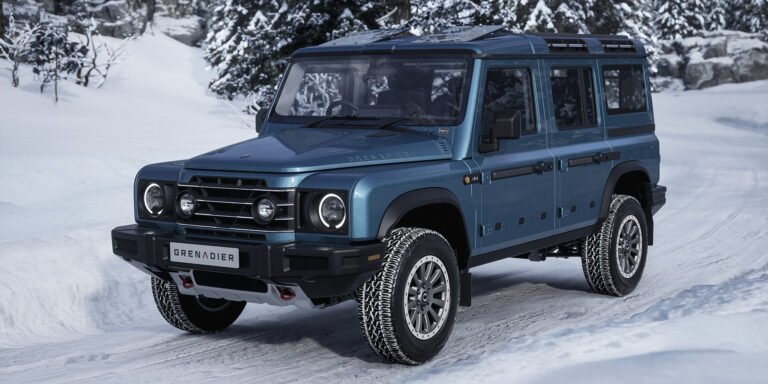
BMW X7 update adds bold style and new engines

BMW has facelifted its X7, three years after the large SUV first went on UK sale.

The updates include the German brand’s latest and much more in-your-face exterior styling, a new range of engines and extra technology.

Split LED headlights dominate the front end of the car, which also includes BMW’s latest and more dominant kidney grille. The upper lights serve as both daytime running lights and indicators while the high and low-beam lights are in more heavily recessed pods underneath.

Both the front and rear ends of the car are more heavily styled, with aluminium-finished elements added.

Three engines are on offer at launch, all of them new turbocharged, mild-hybrid units from BMW’s ‘Efficient Dynamics’ range. They are all allied to all-wheel drive transmissions through an updated version of BMW’s Steptronic eight-speed auto gearbox – this now includes a launch-control function for rapid getaways and a Sprint mode offering a burst of speed.

Entry level X7 models are the 40d and 40i, with either a 3.0-litre diesel of 340hp or a 3-litre petrol with 380hp. The X7 M60i tops the range, its 530hp 4.4-litre petrol V8 unit claiming a 4.7-second 0-62mph time. More engines are expected to be added to the range later.

Inside the car the major update sees the installation of BMW’s ‘Curved Display’ which combines the driver’s 15-inch digital screen with a 12-inch infotainment version – these merge into each other in a panel that curves towards the driver.

Among new standard features on the X7 are a three-section panoramic sunroof, heated ‘comfort’ seats and additional driver-assistance systems including a parking aid. Buyers can also specify such niceties as illumination for the kidney grille and 23-inch alloy wheels, the first offered on a BMW.

Dealers are now taking orders for the revised X7 with first deliveries expected in August. The car can be ordered with six or sevens eats with prices for the 40d diesel starting from £80,980, the 40i petrol from £81,800 and the M60i from £103,600.

Citroën adds new entry-level trim to C3 range

0

Citroën has added a new entry-level trim to its C3 hatchback range, which the brand labels as “the most affordable Citroën passenger car available in the UK“.

Called the ‘YOU!’, this cheaper trim has been introduced in an effort to attract those on a city car budget, following Citroën’s decision to end the production lifespan of its C1 city car.

With prices starting at just under £13k, the Citroën C3 YOU! is over £3,000 cheaper than the Sense trim, which was previously the cheapest trim level in the range. Like the Sense, the YOU! is powered by a 83hp 1.2-litre petrol engine – the top-spec 110hp engine is only available for range-topping C3 models.

The C3 YOU! distinguishes itself from more expensive C3 trims with its white door mirrors and bumper trimming, and smaller 15-inch alloy wheels.

As standard, the C3 YOU! comes with LED headlights, electrically adjustable door mirrors, a five-inch infotainment console with DAB radio, and cruise control with a speed limiter.

A rather generous number of safety assistance features are also available on the entry-level model, including a lane-departure warning with traffic sign recognition.

By comparison, the similarly-priced Dacia Sandero Comfort trim comes with a bigger eight-inch infotainment screen and a number of other features not available as standard on the C3 YOU!, including keyless entry, rear parking sensors and a rear parking camera.

On sale since early 2017, the Citroën C3 has been consistently praised for its distinctive styling and wide range of personalisation options, but criticised for its poor driving dynamics and limited practicality, underscoring its current Expert Rating of 60%.

Dacia flunks another safety test

Renault-owned budget brand Dacia’s poor safety record has again been highlighted in the latest round of crash tests conducted by Euro NCAP.

Dacia’s new seven-seat Jogger was given a paltry one-star rating in the tests, which also saw new cars from Honda and DS Automobiles score four stars.

The Jogger’s result came on top of ratings of just two stars awarded in April 2021 to the Dacia Sandero and Sandero Stepway models (and the Logan, which is basically a saloon version of the Sandero and not sold in the UK). Then the electric Dacia Spring SUV (also not currently sold here) was given one star in December.

As the Jogger is essentially a larger version of the Sandero Stepway, Euro NCAP says it used the Sandero Stepway’s 2021 crash test results to assess the safety of the Jogger.

The lack of a seatbelt reminder light for third-row occupants in seven-seat versions, and the side-curtain airbags not extending back far enough to protect those in the third row, dropped the car’s rating to one star – revealing that the Sandero Stepway had only just scraped a two-star rating in its test.

Matthew Avery, chief research strategy officer at Euro NCAP’s UK testing centre Thatcham Research, described the Dacia Jogger’s results as disappointing for a family car. “The vehicle may be more affordable than others in the same category, but in terms of safety it appears that you do get what you pay for,” he said. 

“In this case, not only is the Dacia Jogger lacking the active safety features that buyers expect as standard, but even some of its basic passive safety features are not up to the industry standard set by the vast majority of carmakers,” Avery added.

The other two latest tests resulted in four-star ratings for the DS 4 hatch and the Honda HR-V crossover. Testers commented that the hybrid-only Honda showed “good all-round performance” in its safety but its restraint scores, particularly for children in the rear seats, were not as robust as rivals, preventing a top five-star rating.

The DS 4 earned praise for its active bonnet to protect pedestrians and centre airbag between the driver and front-seat passenger. But testers were less impressed by the standard-fit autonomous emergency braking, which uses only a camera and not radar. A ‘Safety Pack Plus’ adds the radar sensor and boosts the safety rating to five stars, but this is only available as an extra cost option on entry-level models.

Jaguar F-Pace gets engine and tech updates

Jaguar has updated its F-Pace SUV range, adding two new six-cylinder models and the Alexa voice assistant across the range.

The two additions are called the F300 and F400 Sport. Both employ Jaguar’s six-cylinder mild hybrid engines built in Wolverhampton – the F300 is a diesel engine producing 300hp and the F400 is a petrol unit with, as its name suggests, 400hp.

Jaguar says the the F400 will complete the 0-62mph sprint in just over five seconds and go on to an electrically limited maximum speed of 155mph, with CO2 emissions from 226g/km. The F300 takes six seconds to 62mph and tops out at 143mph, while also returning 38mpg fuel economy and CO2 emissions from 194g/km.

The two engines join an F-Pace range that already includes 163hp and 204hp diesel, 250hp petrol and 404hp plug-in hybrid powertrains, all fitted with eight-speed auto transmissions and all-wheel drive.

Sport becomes the fifth trim level available for the F-Pace. It includes 21-inch alloy wheels as standard with 22-inch versions available as an option, along with bespoke exterior and interior treatments. The outside gains a Black Pack styling package, privacy glass and gloss black roof rails as standard.

The interior gains suede and charcoal headlining and veneers, while standard equipment includes 15-way memory seats, a fixed panoramic roof and premium cabin lighting.

Jaguar has also added the Amazon Alexa voice assistant across the F-Pace range as standard. The system integrates with the car’s built-in navigation, audio and other functions enabling complete voice control from setting a route to finding nearby restaurants or filling stations.

In the UK the Alexa unit also works in conjunction with Jaguar’s ‘Remote Skill’ technology, which can be used to remotely check such functions as whether the car’s doors are locked or the windows open.

Jaguar says the functions will be particularly useful to owners of the plug-in hybrid F-Pace – they will be able to use any Alexa-enabled device for such questions as “ask Jaguar to check my range,” or “ask Jaguar if my car is fully charged”.

Prices for the F300 Sport start from £52,250, while the F400 kicks off at 68,520.

This is the first alteration to the Jaguar F-Pace range since its mid-life facelift in Summer 2020. Since then the F-Pace has been generally viewed by journalists as not quite the best in its class but still very competitive. Praised for its exterior styling and driving dynamics, the F-Pace currently holds an Expert Rating of 72%.