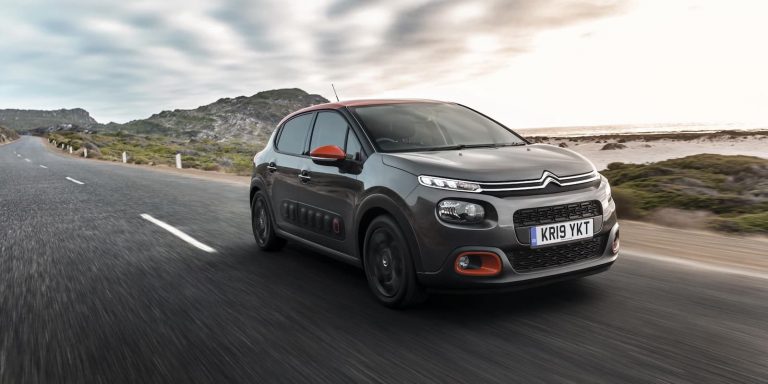
The Citroën C3 supermini is getting a raft of upgrades, aimed at simplifying the range and emphasising its most popular trims.
Since the current-generation C3 went on sale in 2017, it has become Citroën’s best-selling car in the UK with the French firm saying buyers tend to lean towards the higher-specification trim levels.
To reflect this, the entry-level Touch trim will be discontinued, while Flair and Flair Nav Editions have been combined into the top-spec Flair Plus trim. This cuts the number of trim options from six to three.
The new entry point to the range is now Feel, starting at £15,860. This comes with 16-inch alloy wheels, a seven-inch colour touchscreen supporting smartphone connectivity, automatic air conditioning and lane departure warning. There are also four roof colour options.
Buyers can step up to the mid-range Origins trim, available from £17,160, which adds a black bi-tone roof, Airbump panels and an upgraded interior, as well as a suite of driver assistance systems.
The new top-level Flair Plus trim level is expected to be the most popular, as the two trims it replaces accounted for 62% of all Citroën C3 sales. Starting at £17,625, it comes with satellite navigation, integrated dashcam, leather steering wheel, reversing camera, tinted windows and red interior touches.
The engine range has also been updated, including two three-cylinder petrol engines and one four-cylinder diesel. The PureTech 110 petrol engine is available with a six-speed manual or automatic, while the other two have a five-speed manual. Efficiency has been improved through various technical upgrades, including new low-resistance tyres and hidden underbody panels that reduce drag.
Order books for the revised Citroën C3 range are set to open in October.
Another new player has launched a used car classifieds website this month, entering an increasingly crowded marketplace. This one, however, seems to have friends in high places.
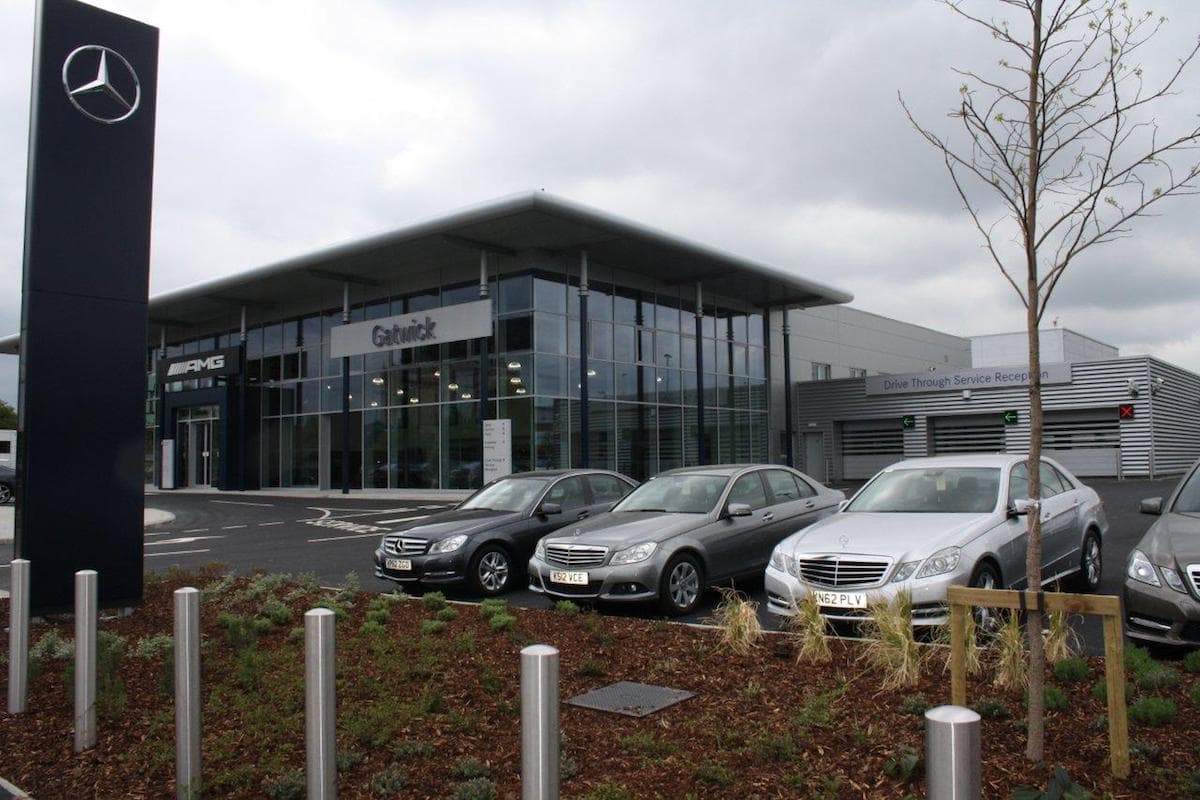
On the surface, Heycar looks very similar to the existing Auto Trader/Buyacar/Motors/everybody else offerings, but the crucial difference is that heycar is jointly owned by Volkswagen Financial Services (which trades as Audi Finance, SEAT Finance, Skoda Finance, Volkswagen Finance and more) and Daimler Mobility (formerly known as Daimler Financial Services, and you may know them better as Mercedes-Benz Finance), as well as a private venture company called BCG Digital Ventures.
Although owned by Volkswagen and Daimler (and the venture company), the platform is open to cars from all brands. However, Heycar is exclusively for dealers rather than private sellers, unlike Auto Trader and other platforms. The company claims to have 1,400 dealerships already on board, representing 50 different brands, which is certainly a good start – although it helps that it’s currently free for approved dealers to advertise their cars on Heycar.
Is Heycar really any better?
The key message heycar representatives were keen to sell at its launch earlier this week was a desire to make used car searching simpler. There are no adverts for car insurance, credit check services or GAP insurance, and results don’t annoyingly prioritise “sponsored adverts” like rival sites.
All of the cars listed on heycar must be less than eight years old and have covered less than 100,000 miles. They will also have a minimum warranty of 30 days, although there is no detail provided as to what level of warranty cover is offered.
Heycar also claims that it won’t allow cars that are repaired insurance write-offs (known as Cat S or Cat N), which is a departure from other sites.
By only working with selected dealerships, there are inevitably fewer cars to choose from. We checked half a dozen popular cars and another half-dozen less popular models on both Heycar and the market leader, Auto Trader. Even applying the same eight-year/100,000-mile limit to Auto Trader, it still offered more than double the number of cars to Heycar in virtually every one of our 12 searches.
If you’re planning to buy a used car from a dealer, the key will be whether the limited number of cars on offer at Heycar are basically the same cars you would consider on Auto Trader anyway (so in effect they’re not offering the cars you wouldn’t buy), or whether the choice really is too limited for most people.
At this stage, the answer to that will vary on a case-by-case basis, but the impression at the launch was very much that this is a significant new project that is setting up for the long haul. So we’ll need to wait a year or so to see how Heycar evolves and whether it becomes the classifieds site of choice for used car buyers.
How many used car sites do we really need?
Heycar was launched in Germany two years ago, and its owners appear to be very happy with progress over there. As the second-largest used car market in Europe, the UK is a logical next step for expanding the Heycar business.
But how many different used car classifieds sites is enough or too many? With Auto Trader, Motors, Buyacar and more, plus the likes of eBay and Gumtree, surely there’s no great need for another player. Which suggests that if Heycar is to succeed, it’s likely to be at the direct expense of at least one or more of its rivals.
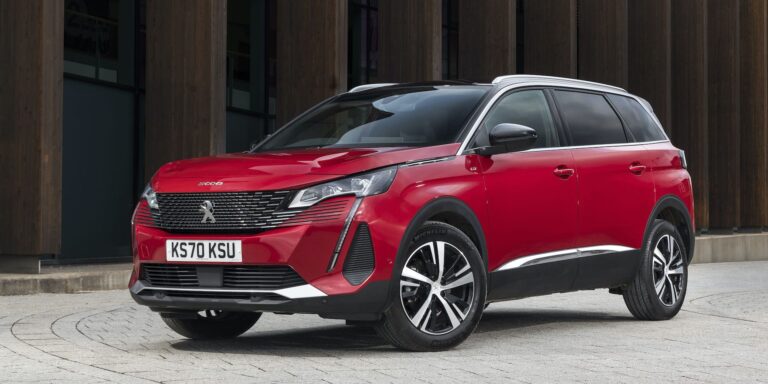
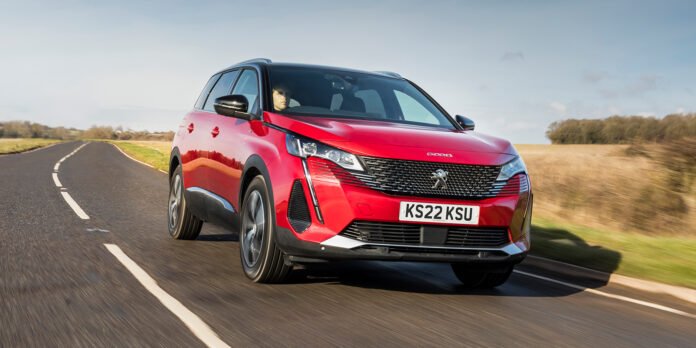
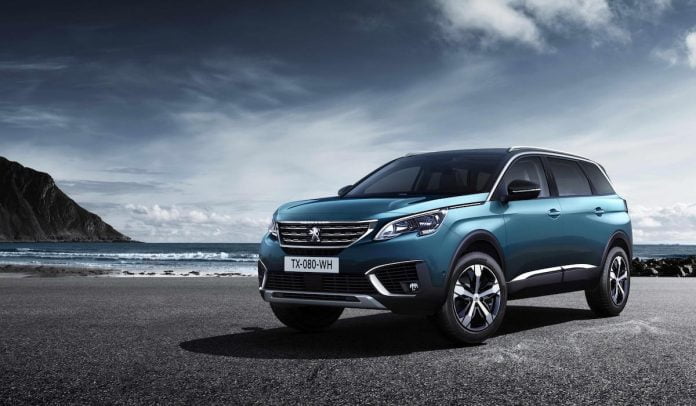
The Peugeot 5008 is a seven-seat SUV/crossover based on the smaller 3008 model. This generation arrived in the UK in 2017 and, like the 3008, replaced a people carrier model with the same name. It remained in production until 2024 when it was replaced by an all-new model.
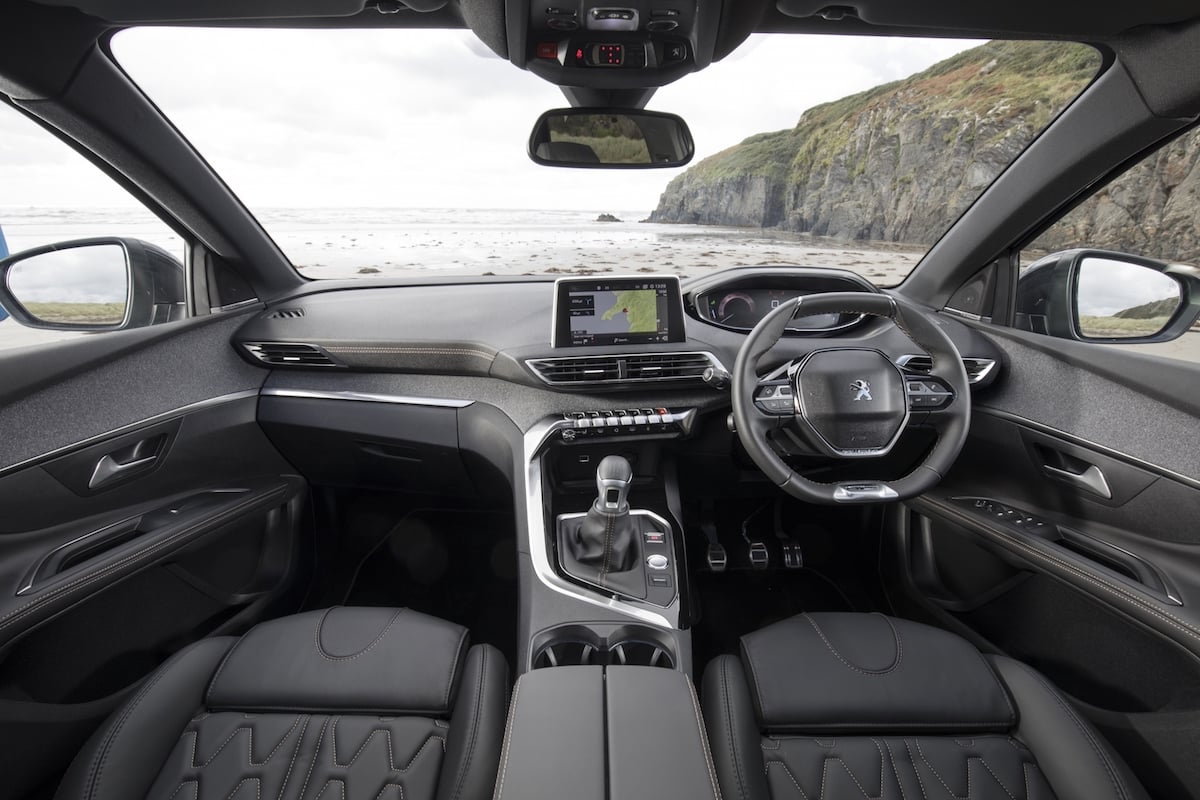
The 5008 was very much based on the smaller 3008 model, and many of the two cars’ characteristics were similar. Comfort and driving dynamics were strengths, while Peugeot’s unique i-Cockpit concept very much split opinion. The main criticisms relate to the 5008’s lack of off-roading ability for a car that looks like an SUV but isn’t really.
A facelifted 5008 arrived in the UK in early 2021, remaining on sale until Autumn 2024 when the current 5008 was launched as its replacement.
As of March 2026, the Peugeot 5008 has a Used Car Expert Rating of C, with a score of 64%. It scores well for having low CO2 emissions (thanks to the plug-in hybrid version bringing down the average) and running costs, while reliability is also a strong point. The only negative point to note is that the safety rating has now expired.
“The 5008 is still a car with huge appeal, offering occasional seven-seat flexibility in a chunky SUV bodystyle. Peugeot’s upgrades to interior tech boost the quality of what was already one of the best-finished cabins in the class.”
Model reviewed: Range review Score: 10 / 10 “The Peugeot 5008 takes the SUV looks of the smaller 3008 and adds more space and a third row of seats.” Read review
Model reviewed: 2.0-litre diesel automatic Score: 8 / 10 “While the new Peugeot 5008 is a likeable car in petrol form, it’s this mid-spec diesel that makes the most sense in the range.” Read review
Auto Trader
Model reviewed: 2020 update Score: 8 / 10 “The seven-seat version of the popular 3008, the Peugeot 5008 is good looking, excellent value for money and has a versatile interior configurable to all manner of family needs.” Read review
Car
Model reviewed: Range review Score: 6 / 10 “The marketing chat may have shifted from MPV to SUV, but the heart of the Peugeot 5008’s appeal remains the neat, adaptable, accommodating, seven-seat interior. Don’t get fooled into thinking that this is some sort of off-roader and just take it for what it is.” Read review
Carbuyer
Model reviewed: Range review Score: 8.2 / 10 “The distinctively-styled Peugeot 5008 SUV offers seven seats in a striking interior and is a very comfortable drive.” (Andy Goodwin) Read review
Carwow
Model reviewed: Range overview Score: 8 / 10 “The new Peugeot 5008 has an SUV look that’s proven so irresistible to buyers, while inside you get the latest incarnation of Peugeot’s i-Cockpit design language.” Read review
Company Car Today
Model reviewed: GT Premium “Smart upgrade enhances looks and tech on an already award-winning seven-seat SUV.” Read review
Model reviewed: Range review Score: 8.2 / 10 “Great equipment levels, good looks, practicality, excellent efficiency and very good running costs all make for a car with plenty of strengths in the company car sector.” Read review
Daily Mail
Model reviewed: 1.2-litre petrol manual Score: 8 / 10 “This car has to be a serious contender for anyone on the hunt for a good-looking, mid-range, seven-seater family SUV.” (Chris Evans) Read review
Green Car Guide
Model reviewed: Range review Score: 8 / 10 “The Peugeot 5008 is a seven-seater that will fit easily into many people’s lives. It looks good on the outside; the interior is modern, high-tech, and well designed; and it drives well, combining a comfortable ride with agile handling. Is it an SUV? Probably not.” Read review
Heycar
Model reviewed: Range overview Score: 8 / 10 “The Peugeot 5008 is undoubtedly one of the best cars of its type. It has the practicality and versatility to match any rival, while it’s also comfortable, entertaining and refined to drive, and comes well-stocked with luxury and safety kit. It’s more stylish than most rivals and has a jaw-droppingly attractive interior.” Read review
Honest John
Model reviewed: Range review Score: 8 / 10 “If you have a bigger family, the Peugeot 5008 is a great car. The Skoda Kodiaq is its closest rival and it’s better-finished – but it doesn’t come with seven seats as standard and doesn’t have quite as much equipment if you go for a lower trim level.” Read review
Model reviewed: 2.0-litre diesel automatic 150hp “It’s a pity that the Peugeot hasn’t addressed the finer details, because the 5008 is a huge improvement over the old MPV. However, unless you value space and tech above all else, we’d struggle to choose the Peugeot 5008 over the Skoda Kodiaq or Ford S-Max.” Read review
Parkers
Model reviewed: Range review Score: 8.2 / 10 “Compact exterior belies impressive interior space” Read review
The Sun
Model reviewed: Range review “The 5008 is a great example of Peugeot’s new direction. It started life as a lardy MPV, bland and uninspiring, but after a complete makeover it’s now a sleek, well-built SUV.” Read review
The Telegraph
Model reviewed: Range review Score: 8 / 10 “Peugeot’s strategy to turn the 5008 from people carrier into SUV is entirely successful. A Skoda Kodiaq remains marginally better to drive, but the Peugeot fights back with more practical seats and a refreshingly different dashboard.” Read review
Top Gear
Model reviewed: Range review Score: 7 / 10 “It could use AWD to legitimise it as an SUV, and parked next to a 3008 it certainly looks like the lardy seven-seater it is, but other than that this is a good effort from Peugeot.” Read review
Safety rating
Independent crash test and safety ratings from Euro NCAP
The Peugeot 5008 was originally tested by Euro NCAP back in 2016 and awarded a five-star rating. However, this rating expired in January 2023 and is no longer valid as the car no longer meets the standards required for such a rating. This is normal practice, as Euro NCAP reviews its ratings on most cars annually with most ratings expiring after about six or seven years.
Although the rating has now expired, the score is still useful if you are comparing a used 5008 to vehicles of similar age – whose ratings will have probably also expired.
Eco rating
Independent economy and emissions ratings from Green NCAP
No eco rating
The Peugeot 5008 was not assessed by Green NCAP during its production life.
Reliability rating
Reliability data provided exclusively for The Car Expert by MotorEasy
Total claims: 94 Average repair cost: £418.84 Last updated: April 2025
As of April 2025 (our most recent data point), the Peugeot 5008 has a reliability score of 65% which is about average, according to workshop and warranty data provided exclusively to The Car Expert by our partners at MotorEasy. This score covers both the current-generation 5008 and the original (pre-2017) version.
Average repair costs overall are just over £400, which is very competitive. The biggest bills to date have been for engine repairs, which have also been the most common problems.
If you’re looking at a used Peugeot 5008, make sure any extended warranty cover you purchase covers all of the potential problem areas shown above.
Running cost rating
Monthly cost of ownership data provided exclusively for The Car Expert by Clear Vehicle Data
Fuel consumption
Average
Score
Petrol models
46 mpg
C
Diesel models
54 mpg
B
Hybrid models
53 mpg
B
CO₂ output
Average
Score
Variation
Score
Petrol models
150 g/km
C
Diesel models
147 g/km
C
Hybrid models
129 g/km
B
Insurance group
Average
Score
Variation
Score
All models
21
B
Service and maintenance
Cost
Score
Year 1
£172
B
Year 2
£488
B
Year 3
£748
B
Year 4
£968
B
Year 5
£1,307
B
Overall
£3,683
B
The Peugeot 5008 should be a very affordable car to own and run, according to whole-life cost data provided exclusively to The Car Expert by our technical partner, Clear Vehicle Data.
Fuel consumption for petrol models is only average, while the hybrid and diesel models are better.
Insurance costs are excellent, as are servicing and maintenance costs over the first five years.
Awards
Trophies, prizes and awards that the Peugeot 5008 has received
2023
Auto Trader Awards – Best Seven-Seater Car
2022
Company Car Today CCT100 Awards – Best SUV
2021
Company Car Today CCT100 Awards – Best SUV
2020
Company Car Today CCT100 Awards – Best SUV
2019
Business Motoring Awards – Best Medium SUV
Company Car Today CCT100 Awards – Best SUV
2018
Company Car Today CCT100 Awards – Best SUV
Scottish Car of the Year Awards – Best Crossover
Tow Car Awards – Best in Class (1550-1699kg category)
Similar cars
If you’re looking at the Peugeot 5008, you might also be interested in these alternatives
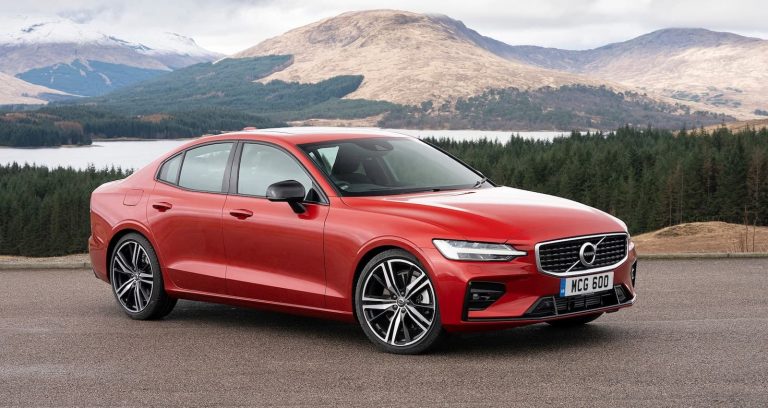
Volvo has broadened the appeal of its S60 range, with a plug-in hybrid powertrain now available alongside a range-topping specification.
Introduced to the saloon is the Swedish firm’s ‘T8 Twin Engine’ power unit, combining a 2.0-litre four-cylinder petrol engine with an electric motor. They combine to produce 390hp, sending the car from a standstill to 60mph in 4.4 seconds.
Volvo claims the car is capable of 176.5mpg on the combined cycle, while emitting 39g/km of CO2. Electric-only driving is also said to be possible for up to 36 miles between charges.
The T8 powertrain is exclusive to the newly-introduced R-Design Plus trim, which currently tops the S60’s range. This high-spec grade brings a head-up display, shift paddles, part-leather sports seats and ‘Metal Mesh’ inserts to the interior of the car, while the exterior benefits from gloss black trim elements and the option of 18-, 19- or 20-inch alloy wheels.
A petrol ‘T5’ powertrain is also available for R-Design Plus, with these models benefitting from chassis enhancements including stiffer springs and thicker anti-roll bars. It also rides a centimetre closer to the ground. Volvo says these changes offer ‘a more focused driving experience’.
Also introduced to the Volvo S60 is the option of adaptive dampers, which can be adjusted on the fly to stiffen the car for a more engaging drive or soften it for the sake of comfort.
Pricing for the Volvo S60 T5 R-Design Plus begins at £37,935, with T8 variants available from £49,805. Order books are now open for both, with deliveries to follow imminently. A T8 Polestar Engineered variant of the S60 will be arriving ‘soon’, according to Volvo, with this version boasting a 405hp powertrain.
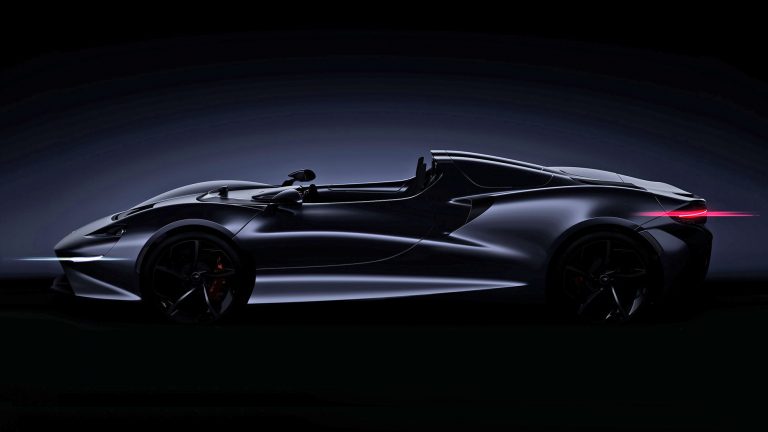
McLaren has confirmed the fourth member of its hypercar ‘Ultimate Series’ line-up — an open-top roadster.
The yet-to-be-named car will arrive in 2020, following on from the P1 of 2013, the 2018 Senna and the upcoming Speedtail.
It will be limited to a production run of 399 examples and according to McLaren will be a road car first and foremost, rather than being aimed at track use.
McLaren has released a single teaser image of the car that shows a silhouette matching the rest of the brand’s current range. The side profile resembles that of the 720S supercar while the thin head and taillights are signature elements.
Currently there are few mechanical details, though McLaren has confirmed that the car will utilise a variant of the brand’s familiar 4.0-litre twin-turbocharged V8 engine. Its specification is said to be similar to that of the Senna, which produces 800hp.
According to McLaren Automotive chief executive Mike Flewitt, the new model demonstrates the brand’s intention to push boundaries.
“Our two current ultimate series cars, the Senna and Speedtail, offer unique and distinct driving experiences – now this new addition to the Ultimate Series, an open-cockpit roadster, will take road-focused driving pleasure to new levels,” Flewitt says.
Pricing for the upcoming open-cockpit McLaren is yet to be revealed though it is expected to be somewhere between the £750,000 Senna and £2.1m Speedtail.
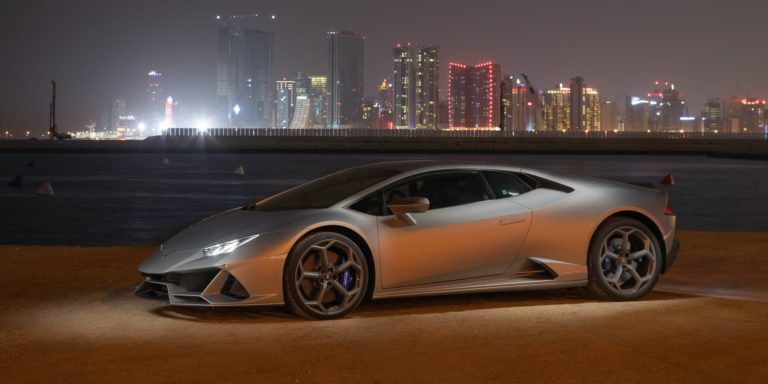
The Lamborghini Huracán was a mid-engined supercar, available in coupe or Sypder (convertible) versions. It was revealed at the 2014 Geneva motor show and arrived in the UK later that year. In early 2019, the updated Lamborghini Huracán Evo was launched.The range was retied in 2024, making way for the launch of its Temerario replacement in 2026.
Like most Lamborghini models, there have been various special editions and performance models, the most important of which is the Lamborghini Huracán Performante.
The Lamborghini Huracán, in all its forms, has received very good reviews in general from the UK motoring media, although its review scores were not quite to the same level as its main rivals, the Ferrari 488 and McLaren 720S. The updated Evo was considered a significant improvement on the original version based on the initial reviews we have analysed – although Ferrari then moved the goalpoasts again with the F8 Tributo.
No longer on sale, the Lamborghini Huracán holds a New CarExpert Rating of E with a score of 50%. While the supercar has an excellent set of review scores from the British motoring media, it is unsurprisingly very expensive to run, and this hinders its score.
Body style: coupe / convertible Engine: petrol Price: From £206,000 on-road
Launched: Spring 2014 Last updated: Spring 2019 Replacement due: TBA
Image gallery
Media reviews
Highlighted reviews and road tests from across the UK automotive media. Click any of the boxes to view.
Auto Express
Model reviewed: Sterrato (2023) Score: 9 / 10 “The Sterrato shouldn’t really make sense. Yet in many ways this is the pick of the Huracán bunch: fantastic on-road ride quality and rugged off-road capability make it riotous fun on a tarmac track, and even more so off it on the dirt.” Read review
Model reviewed: Tecnica (2023) Score: 9 / 10 “The Huracan Tecnica is a supercar celebration of the old school and it might well be the best V10 supercar Lamborghini ever builds.” Read review
Model reviewed: Tecnica Score: 9 / 10 “The new Lamborghini Huracan Tecnica certainly sits closer to the white-knuckle Huracan STO than the Evo model where the firm’s supercar line-up now starts. But as it is, it’s a compelling alternative to Lambo’s hardest Huracan, being very nearly as exciting to drive, better to look at and a little easier to live with.” Read review
Model reviewed: STI Score: 9 / 10 “It costs over quarter of a million pounds and it does less than 17mpg. It can’t even do 200mph. But as a reminder of what we’ll be missing when the petrol-engined supercar is no more, the Lamborghini Huracan STO is, in its way, a masterpiece of timing and design.” Read review
Model reviewed: Evo RWD Score: 9 / 10 “The EVO RWD is the best Lamborghini Huracán yet thanks to a hefty price saving and not much of a performance deficit. It’s the sweetest-driving Huracán there is and the demonic V10 that partly defines the experience should be savoured.” Read review
Model reviewed: Huracán Evo coupe Score: 8 / 10 “Lamborghini has transformed its smallest supercar by fitting extra tech and the screaming V10 from a Huracan Performante. The Evo is perhaps not as clinical, well rounded or ultimately rewarding as a McLaren 570S, but it’s sharper, more accessible and even more exciting than before.” Read review
Model reviewed: Spyder Score: 8 / 10 “Compromised driving position aside, the right-hand drive Lamborghini Huracán Spyder is as sensational to drive as it is to look at. The noise alone is almost worth the £200,000 price tag, and the rest is pretty special too.” Read review
Auto Trader
Model reviewed: Evo RWD Spyder Score: 10 / 10 “If you’ve missed hardcore Lamborghinis dry your eyes: the Huracan Evo RWD Spyder is here, swapping the security of the regular Huracan’s four-wheel drive for more traditional rear-wheel-drive thrills.” Read review
Model reviewed: Huracan coupé Score: 6.4 / 10 “The Huracan is the best car that Lamborghini has made for many, many years. As you’d expect, it’s fast, fun and flashy, but it can also be pretty civilised and it feels well put-together. Ultimately, though, it still trails its main rivals from Ferrari and McLaren for outright thrills.” Read review
Model reviewed: Huracan Spyder “In a supercar landscape that is dizzy with forward motion and mechanical evolution, it’s almost reassuring to see Lamborghini continuing to preach at the altar of natural aspiration. And the world is a much better place for it.” Read review
Car
Model reviewed: Tecnica Score: 10 / 10 “Launched in 2014, the Lamborghini Huracan got its Evo facelift in 2019 and only has a couple of years of production left before retirement. But the new Tecnica is simply the finest Huracan yet, combining the best of the rear-drive Evo with the race-inspired STO to slot into the middle of the range. Redesigned and re-engineered, the result is absolute magic.” (Mark Walton) Read review
Model reviewed: EVO Spyder Score: 10 / 10 “It’s fantastic.” Read review
Model reviewed: Huracán Evo coupe Score: 10 / 10 “To judge the Huracan in dispassionate better-than, worse-than terms is to miss the point. It’s always been an almost unbearably charismatic machine, and it now has the dynamic chops to back up its delectable styling and old-school engine.” Read review
Model reviewed: Performante Spyder Score: 8 / 10 “If you’re after proper drop-top supercar thrills on any given day, and any given speed, you’ll have to dig seriously deep into the trust fund or score a bigtime bumper bonus to find a car as rounded as the Performante Spyder.” Read review
Carbuyer
Model reviewed: Range review Score: 7.8 / 10 “It costs the same as a small house, but the Lamborghini Huracán is everything a supercar ought to be.” Read review
Model reviewed: Spyder range Score: 7.8 / 10 “By removing the coupe’s roof, the engineers behind the Lamborghini Huracan Spyder have created a car that’s even more exciting.” Read review
Daily Mail
Model reviewed: LP610-4 coupe Score: 10 / 10 “Not so much a new dawn for Lamborghini as the first verse in their New Testament.” (Chris Evans) Read review
Evo
Model reviewed: Huracán Evo coupe Score: 9 / 10 “Lamborghini’s new Huracán Evo finally makes the most of its stirring powertrain – it’s finally a real 488 rival” Read review
Model reviewed: Spyder Score: 8 / 10 “Spectacular to look at and enormously quick, but far from the best model in the Huracán range.” Read review
Parkers
Model reviewed: Huracán Evo coupe Score: 9.8 / 10 “Looks like the last one, but way, way better…” Read review
Model reviewed: Spyder Score: 9 / 10 “An open-top supercar is about going fast and looking good, and this simply excels.” Read review
The Sun
Model reviewed: Huracán Evo coupe “This is the first update of the Lamborghini Huracán since its arrival in 2014 and, unusually for a supercar, its awesome power is less noteworthy than its tech.” Read review
The Sunday Times
Model reviewed: LP640-4 Performante coupe Score: 9 / 10 “As bright and delicious as an Italian tomato” (Jeremy Clarkson) Read review
The Telegraph
Model reviewed: 5.2-litre petrol automatic Evo RWD Spyder Score: 8 / 10 “Jaw-dropping looks, a wonderful soundtrack and a nicely balanced chassis make this a supercar to contend with but not to be frightened of. Those taller than six feet should take a test drive first and if you chose the expensive Blu Arione painwork don’t specify a red hood.” Read review
Model reviewed: Huracán Evo coupe Score: 8 / 10 “This mid-life update represents a confident Lamborghini at the top of its game. The Huracan Evo not only looks much better but is also easier to drive at all speeds than its predecessors, yet it can also be as primal as you wish towards the extremes of its potential.” Read review
Model reviewed: Spyder Score: 8 / 10 “Flamboyantly styled and savagely quick, the Huracán Spyder is every bit the modern Lamborghini. But it’s also easy to drive and incredibly accessible – in other words, exactly what its buyers will be looking for.” Read review
Top Gear
Model reviewed: Spyder Score: 8 / 10 “Not one for purists, but the Lamborghini Huracán Spyder is a four-wheeled event alright.” Read review
Model reviewed: Huracán Evo Coupe Score: 7 / 10 “Lambo is stretching it by pricing it against the Ferrari and McLaren. It kind of has to, to avoid the Huracan dropping into the McLaren 570/Audi R8/911 Turbo category, but at £198,307 pre-options it doesn’t quite have the dynamic sophistication of its rivals.” Read review
Safety rating
Independent crash test and safety ratings from Euro NCAP
No safety rating
No longer on sale, the Lamborghini Huracán has not been crash tested by Euro NCAP. If and when it is put through its paces by Euro NCAP, we will publish the results here. Given its price and exclusivity, it’s unlikely to ever happen.
Eco rating
Independent economy and emissions ratings from Green NCAP
No eco rating
No longer on sale, the Lamborghini Huracán has not been lab tested by Green NCAP. Again, we’re not expecting this to ever happen.
Reliability rating
Reliability data provided exclusively for The Car Expert by MotorEasy
No reliability rating
As of March 2026, we don’t have enough reliability data on the Lamborghini Huracán to generate a reliability rating.
The Car Expert’s reliability information is provided exclusively to us using extended warranty data from our partner, MotorEasy. As soon as MotorEasy has sufficient data on the Huracán, we’ll publish the score here.
Running cost rating
Monthly cost of ownership data provided exclusively for The Car Expert by Clear Vehicle Data
Fuel consumption
Average
Score
Petrol models
19 mpg
E
CO₂ output
Average
Score
Variation
Score
Petrol models
329 g/km
E
Insurance group
Average
Score
Variation
Score
All models
50
F
The Lamborghini Huracan is a very expensive car to own and run, according to whole-life cost numbers provided exclusively to The Car Expert by our data partner, Clear Vehicle Data.
The car’s fuel economy of 20 mpg is one of the poorest fuel consumption stats in our Expert Rating Index, and insurance premiums are in the most expensive bracket too.
Warranty rating
New car warranty information for the Lamborghini Huracán
Overall rating
D
37%
New car warranty duration
3 years
New car warranty mileage
Unlimited miles
Battery warranty duration
0 years
Battery warranty mileage
0 miles
Lamborghini’s new car warranty is better than average, and better than rival brands in a similar price bracket as the Huracán. The duration is three years, with no limit on mileage.
Warranty on a used Lamborghini Huracán
If you are buying an ‘Approved Used’ Lamborghini Huracán from an official Lamborghini dealership, you will get a minimum 12-month (24-month available as an option) warranty included.
If you are buying a used Lamborghini Huracán from an independent dealership, any warranty offered will vary and will probably be managed by a third-party warranty company.
If you are buying a used Lamborghini Huracán from a private seller, there are no warranty protections beyond any remaining portion of the original new car warranty.
If you’re looking to buy any used car that is approaching the end of its warranty period, a used car warranty is usually a worthwhile investment. Check out The Car Expert’s guide to the best used car warranty providers, which will probably be cheaper than a warranty sold by a dealer.
Similar cars
If you’re looking at the Lamborghini Huracán, you might also be interested in these alternatives
If you’re looking for a new or used Lamborghini Huracán, The Car Expert’s partners can help you find the right car or a competitive finance arrangement
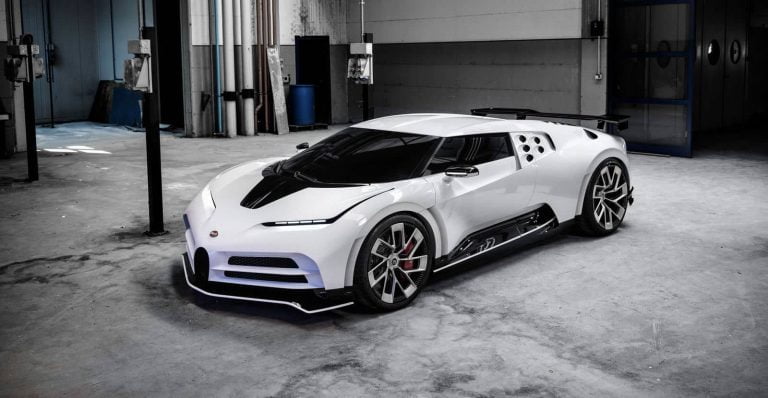
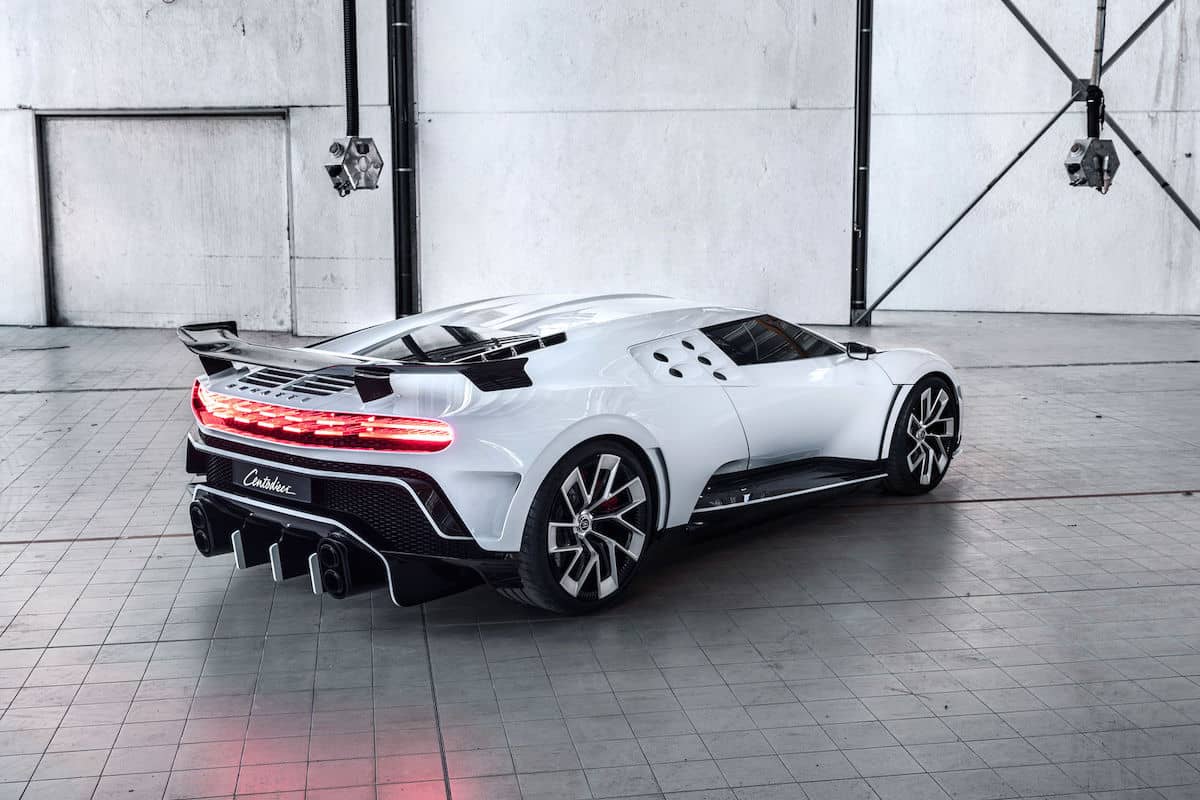
Bugatti has revealed the Centodieci, a modern interpretation of the EB110, one of its most iconic models.
Based on the Chiron, the Bugatti Centodieci – which means 110 in Italian – was designed with the classic car’s wide wedge shape in mind, but with a modern twist that could incorporate the cooling requirements of the 8.0-litre W16 engine.
Those cooling requirements dictated the car’s design, with five round air intakes in the shape of a diamond fitted to the front, while the rear end features a wide air outlet to dispel hot air from the engine bay.
The engine produces 1,600hp and contributes to the hypercar’s 0-60mph time of 2.2 seconds. It can also hit 124mph in 6.1 seconds and 188mph in 13.1 seconds before going on to a top speed of 236mph.
Bugatti claims the Centodieci is 20kg lighter than the Chiron, which has been achieved by using a lightweight windscreen and carbon-fibre stabilisers.
Stephan Winkelmann, president of Bugatti, said: “With the Centodieci, we pay homage to the EB110 super sports car which was built in the 1990s and is very much a part of our tradition-steeped history.
“With the EB110, Bugatti catapulted itself to the top of the automotive world once again after 1956 with a new model.
“We are proud of our long Bugatti history, of which the EB110 is very much a part. That’s why we’re celebrating a reinterpretation of this extraordinary vehicle with the Centodieci – Italian for 110.”
Just 10 Centodieci models will be built and all have already been sold with a starting price of £7.3 million.
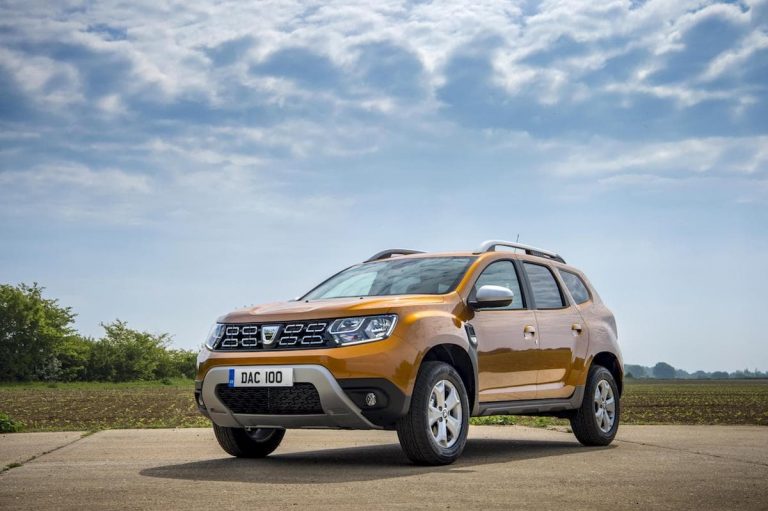
Dacia has bolstered its Duster SUV range with a new entry-level petrol engine, although the good news is tempered by a £1,000 price rise.
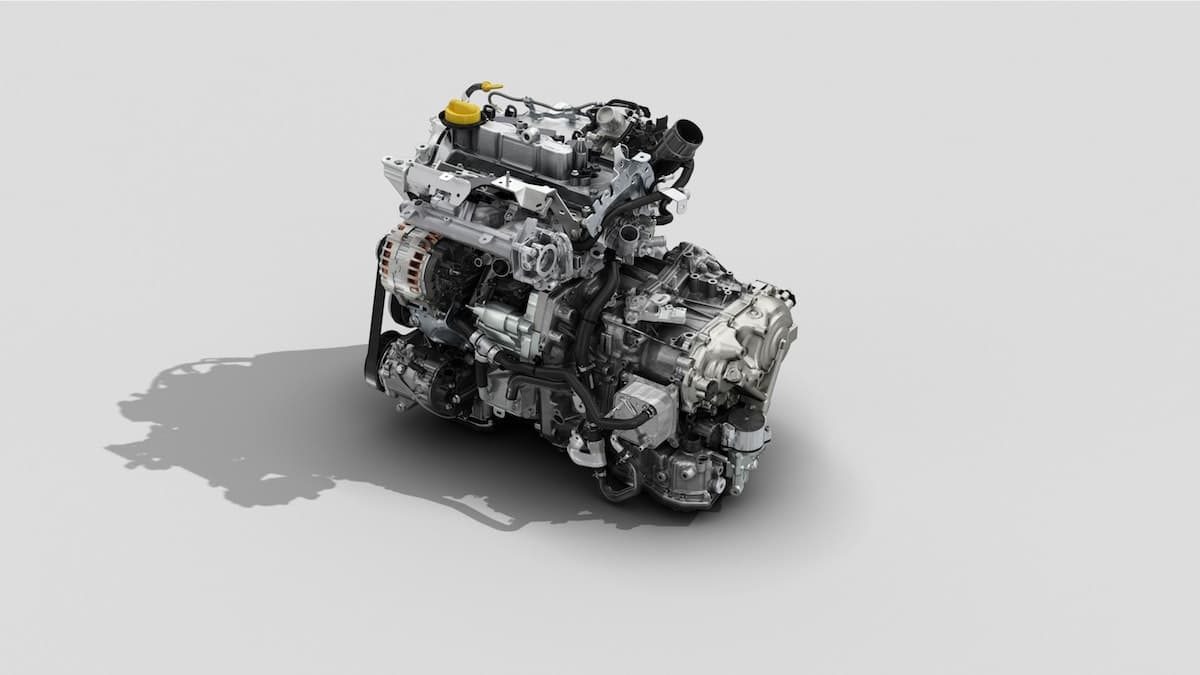
Replacing the previous SCe 115 motor, the new TCe 100 is a turbocharged 1.0-litre three-cylinder engine sending 100hp and 260Nm of torque to the front wheels via a five-speed manual gearbox.
The latest Dacia Duster range has polarised the UK motoring media, with a broad range of opinions varying from outstanding to outright recommendations not to buy one. You can see all the leading reviews for the Duster right here at The Car Expert, thanks to our all-new and unique Expert Rating system.
Dacia Duster TCe 100 1.0-litre petrol engine
Better performance but more money for Dacia Duster
Dacia says the new TCe 100 power unit delivers better performance and improved efficiency, though starting prices have risen from £9,995 to £10,995 as a result of its introduction. The engine is available on Access, Essential and Comfort trim levels, with prices topping out at £13,995.
It’s said to return 48.7-49.5mpg and emit 126g/km of CO2 regardless of its trim level, while sending the car from 0-60mph in 12.3 seconds and on to a 104mph top speed.
The rest of the Duster range is unaffected by the slight change, meaning more powerful TCe 130 and 150 petrol engines are still offered alongside a sole diesel — the Blue dCi 115. Also unimproved is the Duster’s poor three-star safety rating from Euro NCAP.
Owned by Renault, the firm will be expecting the new power unit to continue a successful run of sales for the Duster. It says registrations of the SUV have risen 89% year-to-date in 2019 compared with 2018, though last year did see the second-generation car introduced, with 10,000 new examples apparently sold so far this year.
Order books are now open for the Dacia Duster TCe 100, with deliveries to follow imminently.
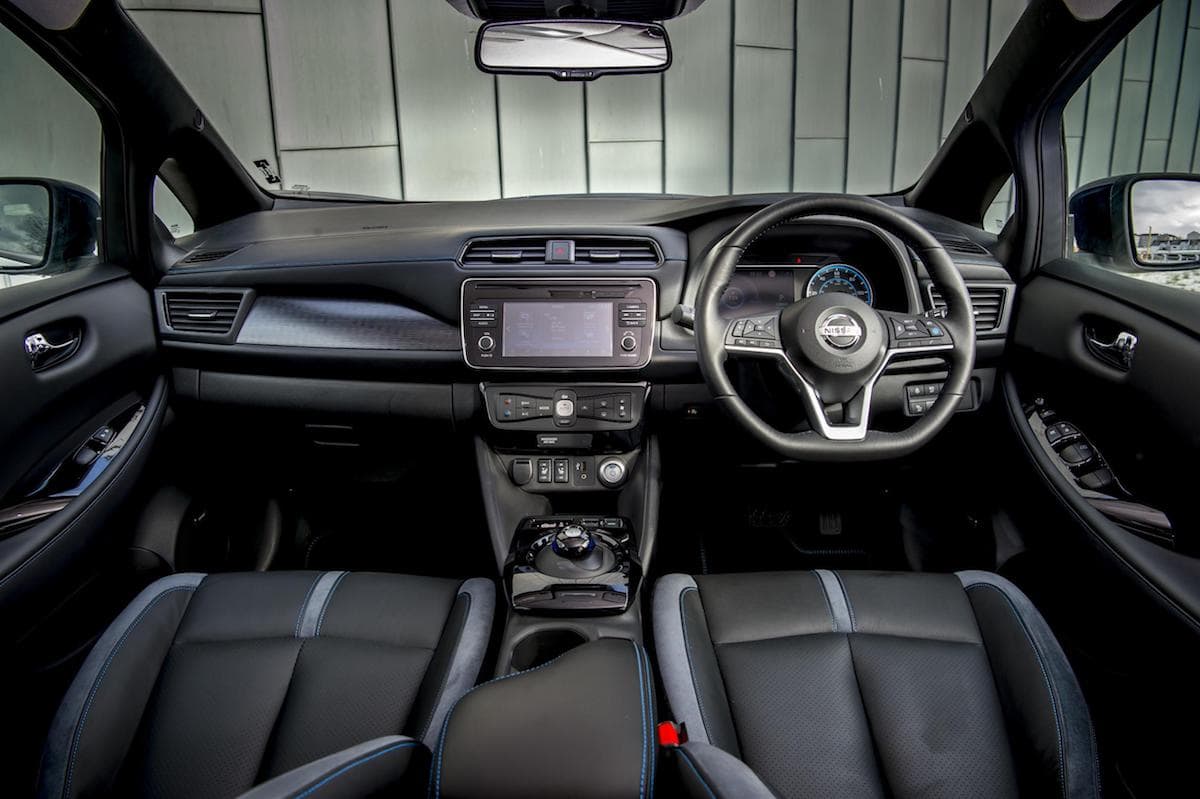
The Nissan Leaf was a medium-sized five-door hatchback, and one of the pioneers of electric driving. This model was the second-generation Leaf and was built here in the UK at Nissan’s Sunderland plant.
The Nissan Leaf received particular praise over the course of its production life for its smooth, quiet operation and generous equipment levels. However, it has been criticised for not matching newer electric cars, like the Hyundai Kona Electric and Kia e-Niro, when it comes to overall range. The higher-spec models were also considered expensive compared to the entry-level models.
A mildly facelifted Leaf arrived in the UK in Spring 2022. This consisted of some minor styling tweaks, along with some fresh colours and alloy wheel designs.
This generation of the Leaf ended production in 2024, ahead of an all-new Leaf that was unveiled in the summer of 2025 and will go on sale in early 2026.
No longer on sale, the Nissan Leaf holds a Used Car Expert Rating of A, with a score of 78%. It scores highly for its exceptional reliability record, zero tailpipe emissions and low running costs. Its safety score is only average, as the testing was done back in 2018.
The e-Niro and Kona Electric have better battery range
Slightly complicated infotainment
Key specifications
Body style: Five-door hatchback Power: electric motor, battery-powered Price when new: From £28,995 on-road
Launched: Spring 2018 Last updated: Summer 20222 Replaced: Autumn 2025
Image gallery
Media reviews
Highlighted reviews and road tests from across the UK automotive media. Click any of the boxes to view.
Featured reviews
“The Nissan Leaf e+ is a worthy range-topper with a bigger battery providing improved performance and better range, but it still can’t keep up with key rivals.”
“The all-electric Nissan Leaf is a practical and efficient family hatch, but it faces a growing number of appealing EV rivals.”
Model reviewed: Range overview
Score: 8 / 10
Auto Express
More reviews
The Car Expert
“The ride is composed, and there’s a real sense of refinement from a decent interior and lack of noise intrusion from outside. It steers well enough and the electric motor provides punchy acceleration.” Read review
Auto Express
Model reviewed: e+ Tekna 62kWh Auto Score: 7 / 10 “The new Nissan Leaf e+ is exactly what it says on the tin: a Leaf, but with a bigger battery and a longer range.” Read review
Model reviewed: Tekna Score: 8 / 10 “The Nissan Leaf’s brilliant blend of abilities has well and truly won me over; I love the economy and just how easy it is to drive.” Read review
Car
Model reviewed: Range overview Score: 8 / 10 “For a mass-market EV, the Nissan Leaf was already a strong car; this second-generation Leaf is a fairly impressive step up, particularly when you consider that many rival manufacturers are still rushing to build their first dedicated electric cars.” Read review
Model reviewed: Range review Score: 8 / 10 “Given driving the Nissan Leaf is a generally relaxing experience, there’s genuinely some satisfaction to be had from figuring out how to make it go further.” Read review
Carbuyer
Model reviewed: Range overview Score: 8.2 / 10 “Now in its second generation, the Nissan Leaf is a clever EV with an impressive driving range, useful technology and plenty of space. It broadens the appeal of electric motoring.” Read review
Carwow
Model reviewed: Range overview Score: 8 / 10 “The Nissan Leaf is a smart-looking electric car with decent range and a big boot but alternatives feel plusher inside and come with easier-to-use infotainment systems.” Read review
Company Car Today
Model reviewed: Leaf e+ Tekna “A good range-topper offering a welcome increase in range as well as a decent performance lift, but it comes at a pretty hefty price.” Read review
Model reviewed: Range review Score: 8.4 / 10 “The range, looks, safety kit and improved residual values all make sure the Nissan Leaf is more appealing than ever. In the right application, it’s a cost-effective fleet vehicle.” Read review
Discover EV
Model reviewed: Range overview Score: 9 / 10 “The world’s first second-generation EV is very likeable indeed and delivers more of everything: power, range, technology, safety, style, space and quality. Nissan has listened to loyal customers and made over 100 changes to the car based on feedback.” Read review
Evo
Model reviewed: Range review Score: 6 / 10 “Nissan’s new electric car doesn’t thrill us just yet, but future iterations may be a different story.” Read review
Green Car Guide
Model reviewed: Leaf e+ Score: 9 / 10 “The Nissan Leaf e+ 3.ZERO is essentially a good car to drive, and with zero tailpipe emissions, it makes much more sense for journeys that are primarily in urban areas than petrol or diesel cars. It also has improved styling compared to the original LEAF model, and is reasonably practical in terms of space.” Read review
Model reviewed: Range review Score: 9 / 10 “The new Nissan Leaf is, without doubt, an important car. With revised styling, a longer range, a practical body style, and a relatively affordable price, it will meet the needs of many people.” Read review
Heycar
Model reviewed: Range overview Score: 7 / 10 “The Nissan Leaf is a great entry to the electric car world. It demands few compromises, has punchy acceleration, comes well equipped, and drives better than many rivals, while undercutting them on price.” Read review
Honest John
Model reviewed: Range review Score: 8 / 10 “Although the latest Nissan Leaf won’t make the headlines in the same way as the original, it’s a perfectly likeable introducing to electric motoring. It’s very useable – with a decent range and a bit boot. We just don’t think it’s quite as polished as it perhaps could be.” Read review
“Price aside, the Nissan Leaf is a very good family car and a viable alternative to petrol and diesel. Nissan has been building electric vehicles for longer than any carmaker and it shows here, with the Leaf feeling far superior in build and technology compared to its rivals. As a long term ownership proposition, it should prove good value for money.” Read review
Parkers
Model reviewed: Range review Score: 7.8 / 10 “A usable electric car that’s starting to fall off the pace” Read review
Regit
Score: 6 / 10 “The Nissan Leaf is comfortable, reasonably quick and relatively pleasing to drive. If comfort and practicality are priorities, then it’s a good choice. But, despite recent upgrades, it’s showing its age as more competition arrives on the scene.” Author: Tim Barnes-Clay Read review
The Sun
Model reviewed: Range review “The Nissan Leaf is fun and speedy — but looks like a cross between a DeLorean and a hearse.” Read review
The Telegraph
Model reviewed: Range review Score: 8 / 10 “A big improvement in range and dynamics for Nissan’s best-selling electric vehicle. It’s a shame all that work couldn’t have included a lower driver’s seat and steering-column adjustment, but in most other aspects this is as competent an EV as you could wish for.” Read review
Model reviewed: e+ Tekna “This new Leaf e+ is good in parts and the extra range is welcome, even if the chassis struggles with this amount of torque and the driving position remains awkward.” Read review
Top Gear
Model reviewed: Range review Score: 8 / 10 “The real joy of the Nissan Leaf isn’t the money, it’s the motor and its charming grace. For the way most people drive, it’s simply a better source of motion.” Read review
Which EV?
Model reviewed: Range overview Score: 8.1 / 10 “The Nissan Leaf has grown and matured into something much more versatile than just a city car. The more powerful e+ version is a great all-rounder EV that can do both metropolitan journeys and longer motorway runs, with a usable range and plenty of space for passengers and luggage going on holiday. The basic model is a great little city car for a more affordable price. The Leaf is quite chunky to look at, but it’s still one of the best everyday EV options around.” (James Morris) Read review
Safety rating
Independent crash test and safety ratings from Euro NCAP
The Nissan Leaf was assessed by Euro NCAP in 2018 and awarded a five-star rating. This rating expired in January 2025, as it no longer met the requirements for a five-star score. This is normal practice, as Euro NCAP reviews its ratings on most cars annually with most ratings expiring after about six or seven years.
However, if you are comparing a used Nissan Leaf to vehicles of similar age, whose ratings will have probably also expired, its safety rating score is still useful.
Eco rating
Independent economy and emissions ratings from Green NCAP
The Nissan Leaf has an excellent reliability score of 95%, according to workshop and warranty data provided exclusively to The Car Expert by our partner, MotorEasy. This score applies to both the first-generation (2011 to 2017) and second-generation (2018 to 2024) models. This score is the top result for all cars in our Expert Rating Index.
As well as having very few problems, repairs have proven to be quite cheap when a Leaf does have an issue, with an average repair bill of less than £300.
Running cost rating
Monthly cost of ownership data provided exclusively for The Car Expert by Clear Vehicle Data
Battery range
Average
Score
Variation
Score
EV models
168 miles
C
Electrical efficiency
Average
Score
Variation
Score
EV models
4.3 m/KWh
B
Insurance group
Average
Score
Variation
Score
All models
24
B
Service and maintenance
Cost
Score
Year 1
£141
A
Year 2
£325
A
Year 3
£534
A
Year 4
£670
A
Year 5
£906
A
Overall
£2,576
A
The Nissan Leaf is a very affordable car to own and run, according to whole-life cost numbers provided exclusively to The Car Expert by our data partner, Clear Vehicle Data.
Servicing and maintenance bills should be very inexpensive, and insurance is generally good as well. The Leaf has good electrical efficiency (the EV equivalent of miles per gallon in a petrol or diesel car), which means it can run for nearly 200 miles despite a modest battery size.
Date: June 2024 Model types: All Build dates: 10/2019 to 06/2023 Number of vehicles affected: 1 Defect: The VIN stored in the vehicle system may not match the actual VIN of the vehicle. This may lead to a situation where a vehicle user can see information related to a different vehicle resulting in a data security breach. Remedy: Replace the navigation display / control unit and the telematics control unit.
Date: July 2023 Model types: All Build dates: 12/2017 to 05/2023 Number of vehicles affected: 37,574 Defect: A potential concern affecting the Vehicle Control Module (VCM) logic of some vehicles has been identified whereby in specific and rare circumstances after switching off the cruise control function there is a possibility of unintended acceleration. Remedy: The software of the VCM will be updated.
Date: July 2017 Model types: All Build dates: 02/2017 to 03/2017 Number of vehicles affected: 65 Defect: Due to a non confromity in production the headlamp auto aim function may not operate. Remedy: Reconfigure and then reinitialise the headlamp leveliser control unit on affected vehicles.
As of September 2024 (our most recent data point), there have been four DVSA vehicle safety recalls on the second-generation Nissan Leaf. These cover software issues, parking brake and hedlights.
Not all vehicles are affected by recalls. You can check to see if your car is included in any of the above recalls by visiting the DVLA website or contacting your local Nissan dealer.
If your car is affected by a recall, the vehicle must be repaired and you should not be charged for any work required. If you are buying a used Leaf, you should insist that any outstanding recall work is completed before you take delivery of the vehicle.
Awards
Trophies, prizes and awards that the Nissan Leaf has received
2023
Auto Trader Awards – Best Car for City Drivers
2022
DrivingElectric Awards – Best Used Small Electric Car
2021
Carbuyer Awards – Best Used Family Electric Car
2019
Company Car Today CCT100 Awards – Best Electric Car
2018
Carwow Awards – Innovation Award
DieselCar and EcoCar Awards – Best Electric Car
World Car Awards – Best Green Car
Similar cars
If you’re looking at the Nissan Leaf, you might also be interested in these alternatives
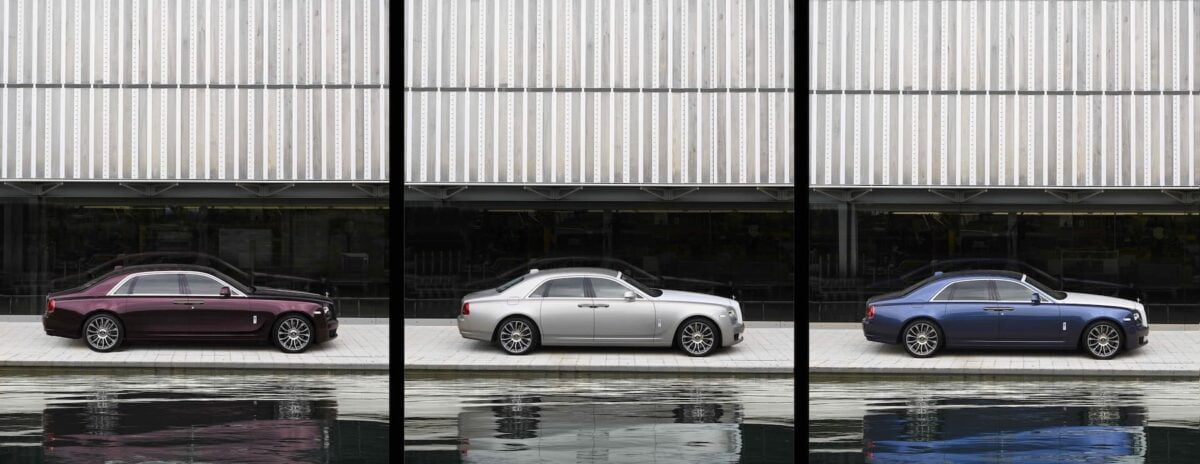
Rolls-Royce has unveiled an incredibly limited-run Zenith collection for the Ghost, with just 50 units slated for production.
Based on the Ghost, the oldest offering in its range, Rolls-Royce says this collection offers the most bespoke options of any car in the model’s line-up yet.
It’s believed this is effectively the swansong for the British firm’s entry model in its current guise before a new generation arrives in 2020. The Ghost has been in production in this form since 2009, albeit with a facelift along the way.
The Zenith takes inspiration from the 200EX concept revealed in 2009, which would go into production as the Ghost later that year. In fact, an ingot features in the centre console from that car’s original Spirit of Ecstasy bonnet ornament.
Engravings of the Ghost Zenith’s name can be found in its own Spirit of Ecstasy, along with its clock, while new illuminated door pockets introduced too. On top of that, its rear seats are embroidered in a fashion that pays homage to the 1907 Silver Ghost.
Both standard and long-wheelbase variants of the Ghost are available in Zenith guise, though Rolls-Royce hasn’t revealed pricing for the car. Order books are open, though will be closed ‘imminently’ — so now might be the time to search for that loose change behind the sofa.
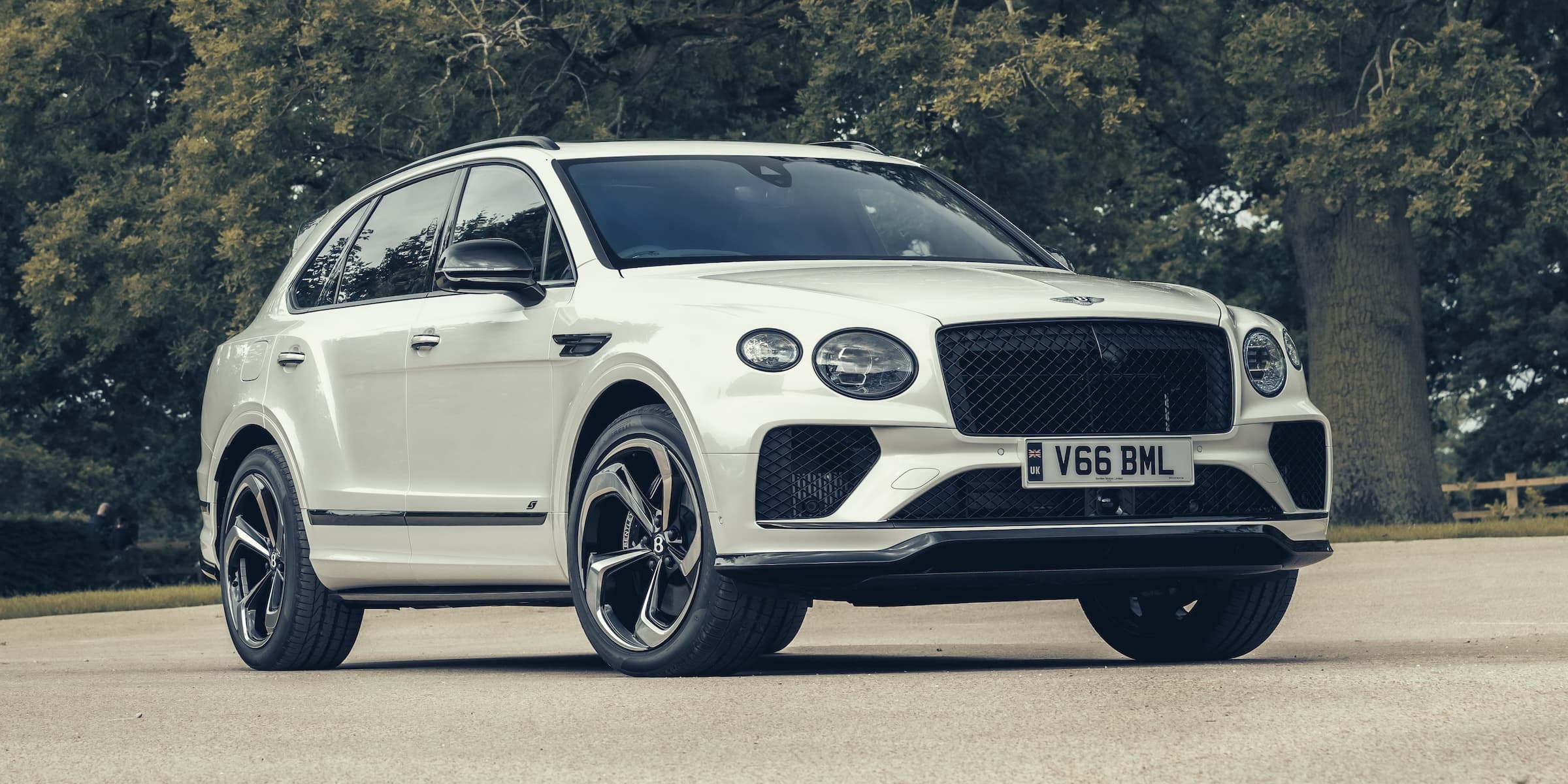
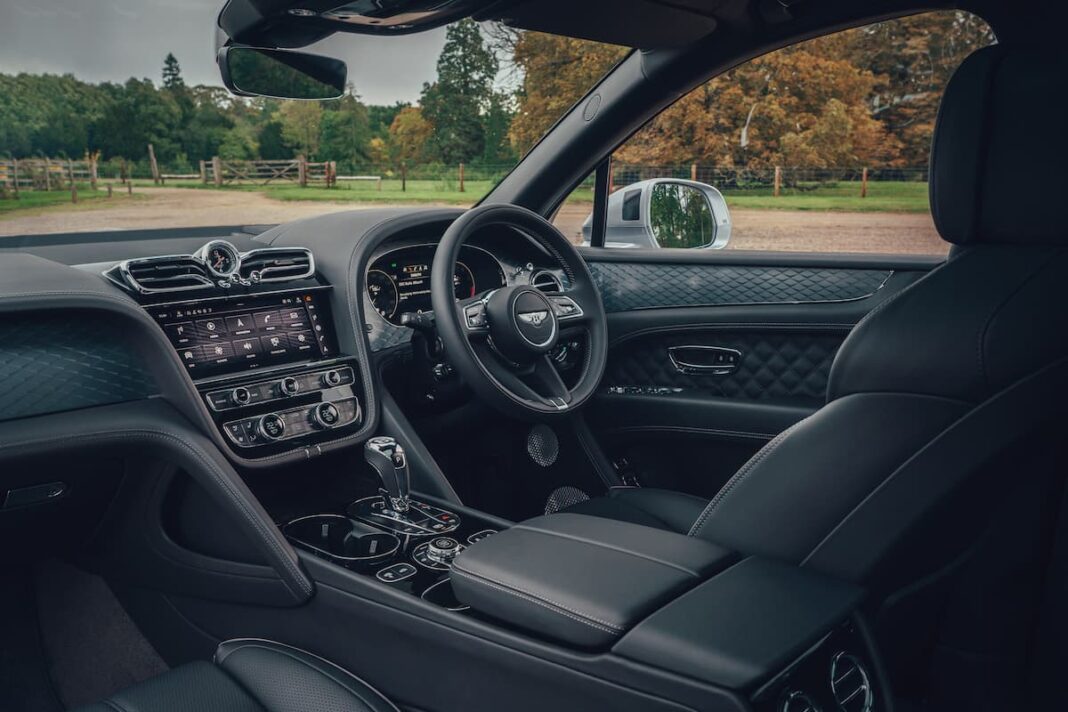
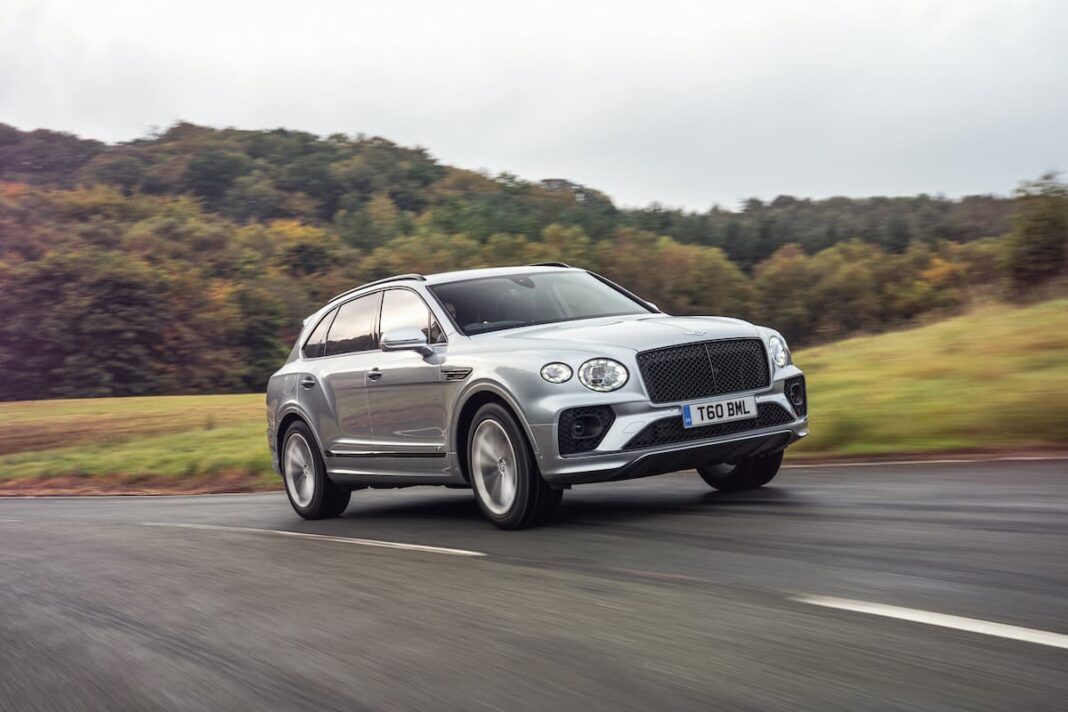
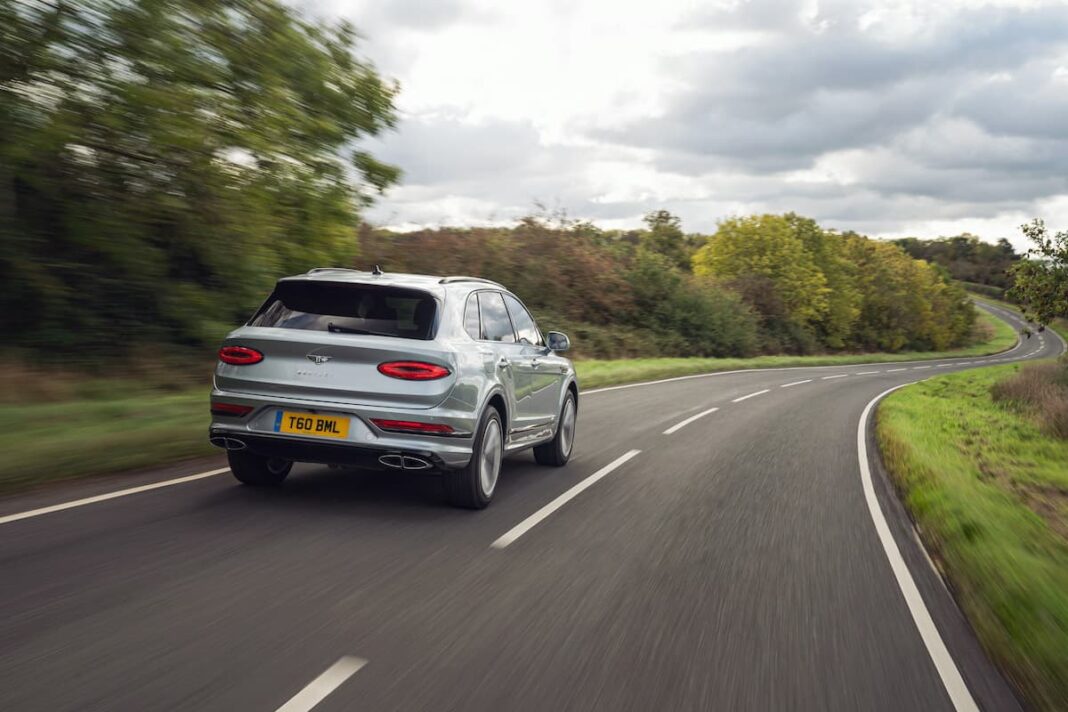
The Bentley Bentayga is a large luxury SUV, launched in 2015 before going on sale in the UK in 2016. It is based on the same platform as the Volkswagen Touareg, Audi Q7, Porsche Cayenne and Lamborghini Urus.
The Bentley Bentayga has received particular praise for its comfort, performance and luxury, but has been criticised for its divisive styling and for not feeling sufficiently better than the Audi Q7 on which it is based. An updated model arrived in the second half of 2020, which went some way to addressing these issues and has seen improved review scores from initial reports.
The Bentaygas has received further upgrades and improvements over the years, with additional higher-performance models and a longer Extended Wheelbase version.
As of February 2026, the Bentley Bentayga holds a New CarExpert Rating of D, with a score of 55%. It gets good grades for its media review scores and Bentley’s new car warranty offering, but its CO2 emissions are unsurprisingly high and running costs even more so. We also don’t have a Euro NCAP safety rating for the Bentayga, which doesn’t help its overall score.
Body style: large SUV Engine: petrol, plug-in hybrid Price: From £185,500 on-road
Launched: Autumn 2015 Last updated: Summer 2025 Replacement due: TBA
Image gallery
Bentley Bentayga (pre-facelift)
Bentley Bentayga (post-facelift)
Bentley Bentayga (pre-facelift)
Bentley Bentayga (post-facelift)
Bentley Bentayga (pre-facelift)
Bentley Bentayga (post-facelift)
Media reviews
Highlighted reviews and road tests from across the UK automotive media. Click any of the boxes to view.
Featured reviews
“For ushering four people across a continent in opulent luxury, the Bentley Bentayga is exceptionally competent. But the lack of standard safety tech is simply unacceptable.”
Model reviewed: 4.0-litre petrol automatic Speed (facelifted model) Score: 8 / 10 “The Bentley Bentayga Speed may have sacrificed a core component of the brand’s performance models over the past two decades by shifting to V8 power, but we’re not mourning the loss too much. The Speed’s brief actually feels better suited to this new powertrain, though we’d like some extra theatre to match the improved dynamics.” Author: Alastair Crooks Read review
Model reviewed: EWB Score: 9 / 10 “The Bentayga EWB is a brilliant Bentley, but maybe not one that will go down in the brand’s back catalogue of best models, regardless of how successful its sales figures might look. We can’t fault the comfort and quality on offer here, though, even if the price tag is sky-high. The market wants SUVs, and the Bentayga EWB is simply one of the best in the business.” (Sean Carson) Read review
Model reviewed: 4.0-litre petrol automatic S Score: 9 / 10 “Long considered one of the best-handling SUVs on sale, the Bentley Bentayga V8 S throws the rules of physics out the window. Taking the standard car’s feeling of poise and precision, it elevates them even further thanks to a sorted chassis and howling sports exhaust.” Read review
Model reviewed: 4.0-litre petrol automatic (facelift model) Score: 8 / 10 “This feels like a very worthy mid-life upgrade for the Bentley Bentayga – even though the unchanged V8 engine remains at the core of the vehicle’s appeal. Where this car really stands out next to its VW Group stablemates, though, is in the personal touches and British craftsmanship in the cabin.” Read review
Model reviewed: Hybrid Score: 7 / 10 “In terms of low speed smoothness and refinement, a hybrid system feels completely appropriate for the Bentayga.” Read review
Auto Trader
Model reviewed: Extended Wheelbase (2020) Score: 10 / 10 “Bentley takes rear-seat luxury to new levels with the EWB (Extended Wheelbase) version of its Bentayga SUV.” (Erin Baker) Read review
Model reviewed: Plug-in Hybrid Score: 9 / 10 “The hybrid system has been very cleverly tuned to deliver that silent, instantly available sense of power Bentley drivers love.” Read review
Model reviewed: Range overview Score: 8.4 / 10 “The new Bentley Bentayga sticks with the winning combo of luxury and performance while sharpening its style and increasing the tech.” Read review
Car
Model reviewed: 3.0-litre petrol/electric Hybrid Score: 6 / 10 “Depending on your intended use, the Bentayga Hybrid will either be the answer to your prayers or something of a disappointment. When pushed, it just doesn’t have the effortless nature you’d expect from the flying B and is far too reminiscent of lesser Volkswagen group products.” Read review
Model reviewed: Speed Score: 8 / 10 “There’s a reason why Bentley is known for luxury, as the Bentayga’s cockpit is a sight to behold and be a part of.” Read review
Model reviewed: Hybrid Score: 6 / 10 “The electrified Bentayga offers three hybrid modes: EV-only, Hybrid and Hold, plus a further three driving modes on top, including Sport, Bentley and Comfort.” Read review
Carbuyer
Model reviewed: Range overview Score: 8 / 10 “If you can afford the price, the Bentley Bentayga is a seriously swift and luxurious SUV, with a driving experience that belies its size.” Author: Richard Ingram, Andy Goodwin Read review
Carwow
Model reviewed: Range overview Score: 8 / 10 “The Bentley Bentayga is an uber-luxurious and exclusive SUV that redefines luxury in this area of the market, but you might spot some Audi switches around the interior.” Read review
Daily Mail
Model reviewed: 4.0-litre petrol V8 First Edition “Bentley’s refreshed luxury SUV faces intense competition on price, spec, performance and illusive star quality from some deadly rivals. Driving in ‘Sport’ mode is particularly invigorating, with Space-X style lift off.” Read review
Model reviewed: Hybrid “If you want a large, luxurious off-roader that doesn’t drink petrol as quickly as the 4.0 litre V8, or the awesome 187mph 6.0 litre W12 Bentayga then the hybrid could be for you.” Read review
Electrifying.com
Model reviewed: 3.0-litre petrol-electric plug-in hybrid Score: 7 / 10 “Bentley’s first trip into the luxury plug-in hybrid sector. Traditional Bentley craftsmanship without typical Bentley mpg… as long as you remember to plug it in.” Read review
Eurekar
Model reviewed: 4.0-litre petrol automatic “A Bentley Bentayga owner might take the practicalities for granted as they drool over the myriad ways their particular car can be made to feel even more special.” Read review
Evo
Model reviewed: Speed Score: 8 / 10 “A little extra pace and handling edge will suit buyers who always want the ultimate.” Read review
Model reviewed: 4.0-litre petrol automatic S (post-facelift) Score: 8 / 10 “Reworked chassis results in the best-driving version of Bentley’s SUV yet.” Author: Stuart Gallagher Read review
Heycar
Model reviewed: Range overview Score: 8 / 10 “Even when considered against other super-luxurious SUVs, the Bentley Bentayga is a very tempting option. Granted, there are far cheaper SUVs that do a fairly similar job, but none of those have the quality, craftsmanship or heritage of a Bentley. Strong in every area, so a great all-rounder.” Read review
Honest John
Model reviewed: Range review Score: 10 / 10 “Only a happenstance of ‘monkey types up a Shakespeare’ proportions would see your Bentley Bentayga duplicated elsewhere. In that context, the price and the running costs won’t matter at all. Nor will the fact that it really is that ugly.” Read review
Motoring Research
Model reviewed: Range overview Score: 8 / 10 “The Bentley Bentayga is a class act. Its styling remains divisive, but it offers luxury, all-weather ability and a real sense of occasion.” Read review
Parkers
Model reviewed: Range review Score: 9.4 / 10 “Bentley’s first SUV impresses with speed and comfort – at a price” Read review
The Sun
Model reviewed: W12 “A limo with no limits. You can travel first-class everywhere.” Read review
The Sunday Times
Model reviewed: Diesel Score: 8 / 10 “Eats motorways and laughs in the face of Alps.” Read review
Model reviewed: W12 Score: 10 / 10 “It’s an open question whether the Bentley Bentayga will spend most of its time gatecrashing sheep conventions in the Cairngorms or gliding darkly through the VIP pick-up areas at airports. But the point is, it can do both.” Read review
The Telegraph
Model reviewed: 4.0-litre petrol automatic EWB Azure Score: 8 / 10 “The Bentley Bentayga EWB is big, thirsty and really very expensive for something which shares its basic platform with a Volkswagen Touareg. It also doesn’t ride quite as unctuously over urban bumps as you might expect a Bentley to. And it feels vast and very heavy on open roads. Despite all this, though, it’s hard not to come away from this car with a sense of having driven (or ridden in) something rather special.” (Alex Robbins) Read review
Model reviewed: 3.0-litre petrol/electric Hybrid Score: 6 / 10 “If you can live with the fuel consumption, the V8 is a much better Bentayga that does without many of the flaws and foibles that afflict the Hybrid. And if you really need a plug-in, there are some much cheaper alternatives that, while admittedly less opulent, are more satisfying to drive.” Read review
Model reviewed: V8 Score: 6 / 10 “The Bentley Bentayga V8 makes a beautiful noise and costs significantly less than the 12-pot with only minor performance sacrifices. It’s naff, but technically competent and volcanic on the autobahn.” Read review
Model reviewed: Diesel Score: 8 / 10 “Bentley has actually managed to make diesel a luxury fuel; amazing. If you’re after a six-figure, ultra-luxury SUV to make a statement, and for the occasional soggy polo field, this is the one to go for.” Read review
Model reviewed: W12 petrol Score: 8 / 10 “Hugely impressive in so many ways, the Bentley Bentayga is sure to be a sales success.” Read review
Top Gear
Model reviewed: Range overview Score: 8 / 10 “The Bentley Bentayga has always been an irresistibly posh take on the SUV. Its update only exaggerates the feeling.” Read review
Model reviewed: Hybrid Score: 6 / 10 “A luxury SUV that can trundle its wealthy occupants around a zero-emissions city centre isn’t to be sniffed at.” Read review
Model reviewed: Speed Score: 6 / 10 “It really is a mighty motor, and you get to experience it properly because Bentley locks the torque converter up at low revs, allowing the engine to drive directly.” Read review
Safety rating
Independent crash test and safety ratings from Euro NCAP
No safety rating
As of September 2025, the Bentley Bentayga has not been tested by Euro NCAP. Based on its price, we’re not expecting it to ever happen – but if it does, we’ll update this section accordingly.
Eco rating
Independent economy and emissions ratings from Green NCAP
No eco rating
As of February 2026, the Bentley Bentayga has not been tested by Green NCAP.
Running cost rating
Monthly cost of ownership data provided exclusively for The Car Expert by Clear Vehicle Data
Fuel consumption
Average
Score
Petrol models
21 mpg
E
Plug-in hybrid models
22 mpg
E
CO₂ output
Average
Score
Variation
Score
Petrol models
298 g/km
E
Plug-in hybrid models
68 g/km
A
Battery range
Average
Score
Variation
Score
Plug-in hybrid models
28 miles
E
Insurance group
Average
Score
Variation
Score
All models
50
F
The Bentley Bentayga is a very expensive car to own and run, according to whole-life cost numbers provided exclusively to The Car Expert by our data partner, Clear Vehicle Data.
The SUV’s fuel economy of 21 mpg is one of the poorest fuel consumption stats in our Expert Rating Index, and insurance premiums are in the most expensive bracket too.
Reliability rating
Reliability data provided exclusively for The Car Expert by MotorEasy
No reliability rating
As of February 2026, we don’t have enough reliability data on the Bentley Bentayga to generate a reliability rating.
The Car Expert’s reliability information is provided exclusive from extended warranty data from our partner, MotorEasy. As soon as MotorEasy has sufficient data on the Bentayga, we’ll publish the score here.
Date: September 2023 Recall number: R/2023/252 Model types: Bentayga 6.0-litre W12 models Build dates: 11/2015 to 04/2022 Number of vehicles affected: 1,036 Defect: On affected vehicles the electrical connectors on the W12 Fuel Supply Module located in the fuel tank can overheat and melt the flange material. Melting of the Fuel Supply Module flange material could result in a small fuel leak towards the top of the fuel tank. Remedy: Replacement of the fuel supply module flange.
Date: May 2022 Recall number: R/2022/094 Model types: All Bentayga models Build dates: 06/2020 to 12/2022 Number of vehicles affected: 977 Defect: The 2nd row seats may not be correctly aligned and locked on all seat rails. Remedy: Check and re-set the relative 2nd row seat rail positions to ensure proper engagement of the seat rail runners.
Date: August 2021 Recall number: R/2021/297 Model types: Bentayga 4.0-litre V8 models Build dates: 06/2021 Number of vehicles affected: 1 Defect: Incorrect software parameters may have been released for the Chassis Control Module of certain vehicles fitted with standard (passive) roll bars. Remedy: The Chassis Control Module will be updated with the correct software parameters.
Date: May 2021 Recall number: R/2021/171 Model types: Bentayga 4.0-litre V8 models Build dates: 12/2020 Number of vehicles affected: 1 Defect: Cracks could be present in the cylinder bore of specific V8 engines. Remedy: Replace the engine of affected vehicles.
Date: May 2021 Recall number: R/2021/153 Model types: Bentayga 4.0-litre V8 models Build dates: 12/2020 Number of vehicles affected: 12 Defect: The nut of the eccentric screw could break on the rear axle lower lever arm which may cause alterations in the wheel alignment of the rear axle. Remedy: Replace with new known correct nuts from outside identified manufacturing batches. If the screw connection is already damaged this will additionally be replaced.
Date: August 2020 Recall number: R/2020/074 Model types: Bentayga 4.0-litre V8 models Build dates: 01/2018 to 12/2019 Number of vehicles affected: 602 Defect: The fuel low pressure hose quick connect in the engine compartment could be subjected to temperatures above the design operating specification. Remedy: Replace the existing fuel quick connect with one made of an improved material. Update engine cooling fan software where required.
Date: March 2020 Recall number: R/2020/074 Model types: Bentayga seven-seat models Build dates: 01/2017 to 01/2020 Number of vehicles affected: 307 Defect: The third row seat belt pillar D-loop upper anchorages may not fulfil the legal load requirements. Remedy: Replace the existing 14×26 mm bolt used to attach the seat belt D-loop with a 14x40mm bolt.
Date: April 2017 Recall number: R/2017/113 Model types: All Bentayga models Build dates: 09/2016 to 03/2017 Number of vehicles affected: 109 Defect: Due to a poor earth connection steering power assistance may by lost. Remedy: On affected vehicles check the earth connection. Where necessary remove clean and reconnect the earth cable.
Date: December 2016 Recall number: R/2016/261 Model types: All Bentayga models Build dates: 11/2015 to 11/2016 Number of vehicles affected: 239 Defect: It has been identified that certain internal body joints or fixing may not have been torqued to the correct specification. If not torqued to the correct specification then the joints/fixings may loosen over time. This could affect the vehicle’s integrity if involved in a collision. Remedy: Recall all the affected vehicle to check and if required torque certain internal body joints and fixings.
As of September 2024 (our most recent data point), there have been ten DVSA vehicle safety recalls on the Bentley Bentayga to address multiple issues.
Not all vehicles are affected by recalls. You can check to see if your car is included in any of the above recalls by visiting the DVLA website or contacting your local Bentley dealer.
If your car is affected by a recall, the vehicle must be repaired and you should not be charged for any work required. If you are buying a used Bentayga, you should insist that any outstanding recall work is completed before you take delivery of the vehicle.
Most cars these days are bought on some sort of finance agreement – more than 90% of all private new car sales, and up to half of all private used car sales. That means millions of people in the UK are taking out some form of car finance every year.
But despite the popularity of financing a new or used car, what is still surprising is the lack of preparation that most people put into their car finance decisions. Given that you are taking on thousands of pounds of debt to purchase that vehicle, it is very important that you understand what you are doing and have some plans in place.
Here are a few simple tips that you should follow before you sign your life away on that new or used car.
Before you apply for car finance, you should… Oh. Too late.
Understand the types of car finance available to you
Most private buyers will purchase a car on a personal contract purchase (PCP). This article specifically explains how a PCP works. If you can claim VAT on your vehicle, then a lease (contract hire or operating lease) may be worth considering. There are also other types of car finance, like hire purchase, conditional sale and lease purchase.
Each type of finance is different – not just in terms of the monthly payments, but your consumer rights and the terms and conditions of what you need to do to fulfil your side of the contract. Make sure you understand the implications of each type of car finance before you commit to anything so you don’t get caught out later on.
Car manufacturers and dealers will usually push the PCP because it works out best for them, but make sure it is the right solution for your needs.
Many people talk about ‘leasing’ when they really mean a PCP because the products appear similar, which creates confusion. Your rights and responsibilities are quite different in a lease (like personal contract hire) and a purchase product (like a personal contract purchase)
Knowledge is power, so make sure you know what you need rather than taking what a dealer wants you to take.
Plan for tomorrow, today
Many people get carried away by headline monthly numbers in new car adverts, but you need to understand the overall cost of borrowing and the cashflow implications of different finance options.
For example, a PCP has low monthly payments but a potentially big sting in its tail, whereas a hire purchase has much higher monthly payments but more flexibility and simplicity, and usually costs less overall.
It also means that if you need to change your car before the end of the agreement, you will usually be in a much stronger position with HP finance than PCP finance. With hire purchase, you pay back more of your debt back every month, so your settlement at any point in the agreement will be less.
Many a young person has signed up for a two-seat sports car on a PCP over five years, with a small deposit, only to find that in 18 months’ time, they suddenly have an urgent need for a family estate… Usually, this means they are in a very poor financial position because they didn’t plan ahead (in more ways than one!).
In times of economic uncertainty, it’s even more important that you are not stretching yourself too far in order to buy the car you really want instead of the car you really need. If your circumstances change at any point over the next three to four years (eg – you may be made redundant or have unexpected medical/legal bills), you will need to find a way to keep making your monthly payments.
If you are stretched to your financial limits when times are good, you will quickly get into trouble if you hit a rough patch.
Check your credit score – even if you have a good credit history
Finance companies will check your credit history using one of a few credit agencies, such as Experian, Equifax or CallCredit. Your credit history is a complete record of the finance agreements you currently have and have had in the past, as well as applications for credit that you have made.
Your credit score is not as important as the credit agencies would have you believe, as it is calculated from incomplete information and several assumptions. The credit agencies don’t have any of your employment or salary records, or information about your personal circumstances and living costs. However, it is a reasonable starting point to understand your overall financial position, and it is important to study the details of your credit history.
Don’t assume that the information that they hold on you is 100% accurate. This is important, because it can get your application declined even if you have an impeccable credit score and credit history. I was declined for a simple credit card application (I was switching my credit card from Bank A to Bank B) because Experian had me listed at an address that didn’t actually exist.
Getting this sorted out was a complete pain in the rear (and for the record, the Experian employees were a bunch of complete muppets, acting with complete arrogance and taking zero accountability for the information they carried on me), but was necessary if I wanted to get credit for anything from a credit card to a mortgage.
Once Experian had sorted itself out, my credit score was suddenly ‘excellent’ and the bank that had originally declined me suddenly wanted to offer me more credit…
Read all the paperwork thoroughly
Now that you have taken the time to understand the type of finance you are applying for, make sure you take the time to read every quote, offer and contract you are given before committing yourself to anything.
Understand any and all fees involved, all the terms and conditions and your obligations. I cannot stress this enough – it is your responsibility to understand your financial obligations.
Make sure you are given finance quotations in writing. It is an FCA requirement that an agent of a finance company (usually the business manager at the dealership) gives you a specific and complete quotation for the exact vehicle you are considering. Simply saying “£X deposit and £Y per month” is not an acceptable form of quotation.
An FCA-compliant quotation will give you a complete breakdown of all fees and charges, interest, and most importantly, the total cost of borrowing.
Likewise, when you are actually being presented with a finance contract to sign, there are many pages of paperwork which you have the right – and the obligation – to read and understand. Again, FCA requirements mean that you have to be given documents called Pre-Contract Information and Adequate Explanations, which summarise exactly what you are agreeing to.
You have the right to take this information away and read it, although the dealer will absolutely hate that and try and “answer any questions to put your mind at ease” or something similar so that you will just sign the contract straight away. Don’t be pressured into making a hasty decision – take your time and read every page of every document.
Ask questions
Don’t feel embarrassed if you don’t understand some aspect of a car finance agreement. Our article at The Car Expert about how a PCP works has racked up nearly a million views in the last five years, and many other finance-related articles get just as many (or more) views each day. Plenty of people struggle to get their heads around the concept of a PCP, so you’re certainly not on your own!
Ask the business manager to explain anything you’re unsure of, as many times as it takes. Even if you do know what you’re talking about, asking questions is a good test of a sales executive or business manager to see how they answer you.
You should expect to be given full answers which precisely address your questions, rather than brushing your concerns aside or giving one-line responses.
Shop around
Many people assume that they can negotiate on the price of a car, but that the finance deal is fixed. However, virtually all car finance agreements have some scope for negotiation. If you know how much deposit you want to put down and how much you want to spend, the dealer can reduce the price of the car and/or the finance to suit your budget.
Being realistic is the key – just as a dealer has a limited margin to play with on a car, they have a limited scope to work with on interest rates. And you should compare the dealer’s finance offer with what you can get elsewhere, as your bank may be able to offer you a better deal to finance the car.
However, getting a quotation is different from getting approved. Don’t submit a formal finance application until you’re ready to buy, as it will affect your credit score and may reduce your ability to get finance approval.
Be honest
Making a false application is fraud, which is a serious criminal offence. Don’t lie on your finance application to try and help get your application approved, as it will probably be noticed and you will be declined and blacklisted by the finance company.
This happens fairly frequently, and both dealers and finance companies have little patience for people who lie about their status to try and get finance. Even if it’s not picked up immediately, it could well come back to bite you eventually.
Similarly, you have the right to see exactly what information the dealership is submitting to the finance company on your behalf. If they try and tweak your information to make it more palatable, they are committing fraud and you don’t want to be associated with that.
This applies to any credit application – I once had a phone shop employee try and massage my residential history not long after I moved to London to try and ensure I would pass the approval process, so I immediately left and went elsewhere.
Taking out car finance doesn’t have to be a scary situation, but you will be better off by doing your homework first and understanding exactly what you are signing up to. Rush into it, and you will usually pay considerably for your haste. Good luck!
Here at The Car Expert, we are building commercial partnerships with companies who can offer you competitive PCP deals on either a new or used car (as well as other types of finance if you prefer). Check these out before signing any finance agreement with a car dealer:
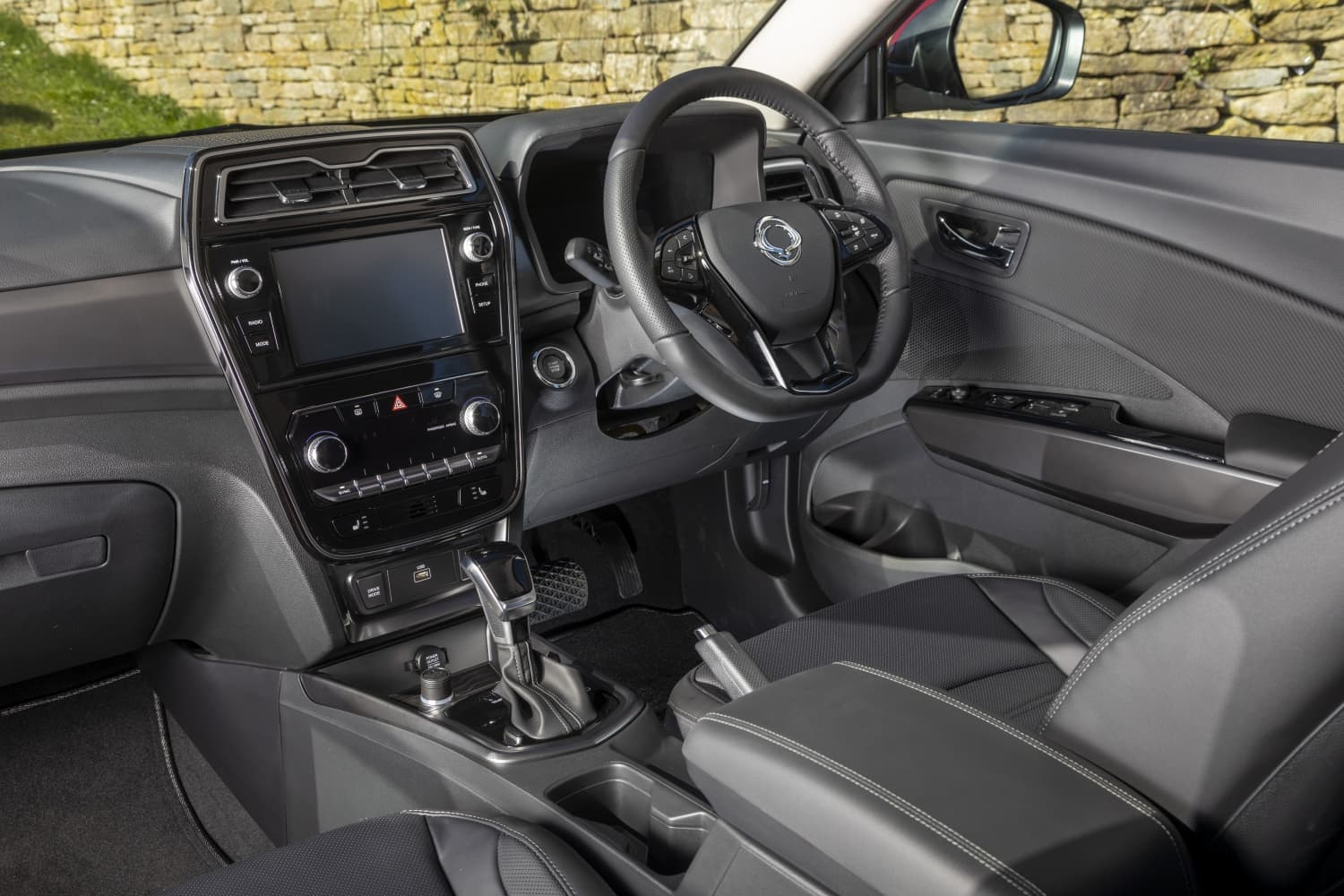
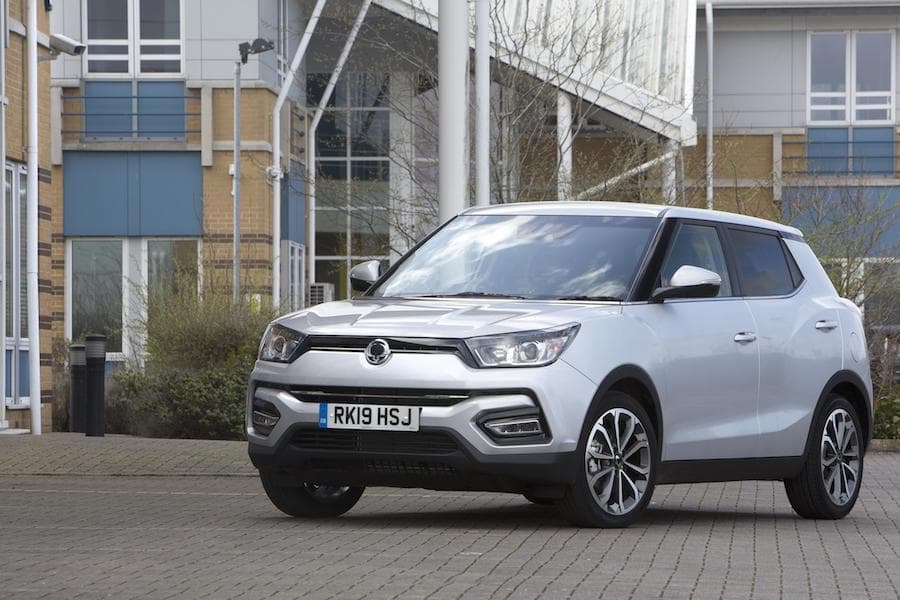
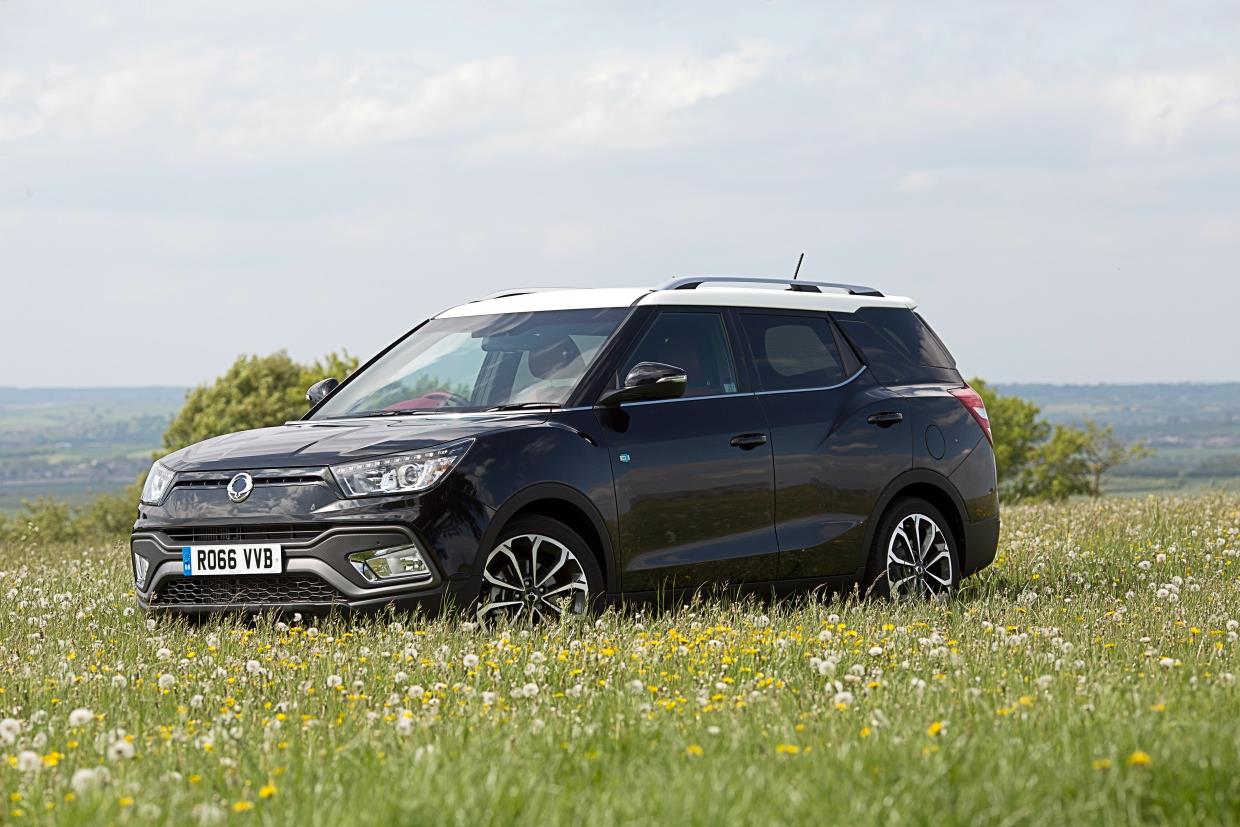
The KGM (formerly SsangYong) Tivoli is a small SUV/crossover, available in two sizes: the regular Tivoli and the longer Tivoli XLV. The shorter model was launched in 2015, with the XLV added a year later.
The Tivoli range has received mixed scores from the UK motoring media, ranging from poor to above average. A general consensus is that the bigger XLV model offers extra practicality but that lengthening the original shape makes it look rather more awkward.
The Tivoli has received particular praise for its low price and generous standard equipment levels, but has been criticised for a lack of refinement, below-average driving experience and relatively poor child safety rating.
An updated Tivoli range arrived in the UK in late 2023. There are some significant visual differences, although it’s an improvement of the current model rather than an all-new generation.
As of March 2026, the KGM Tivoli holds a poor New Car Expert Rating of E with a score of 51%.
Highlighted reviews and road tests from across the UK automotive media. Click any of the boxes to view.
Featured reviews
“The SsangYong Tivoli XLV adds a healthy dose of practicality to a good value budget SUV. While it might not compete with more mainstream rivals in terms of performance and refinement, it scores on space and standard equipment.”
Model reviewed: Range overview Score: 6 / 10 “The KGM Tivoli feels robust and comes with lots of equipment – but it’s thirsty, slow, and not particularly refined.” Author: Alastair Crooks Read review
Model reviewed: Facelift range review Score: 7 / 10 “The facelifted SsangYong Tivoli is definitely an improvement. It’s a competent compact SUV with a much-improved interior, but it needed more to really stand out. The Tivoli’s price is usually its big selling point, but the cost of this top-spec Ultimate model ends up being its biggest downfall.” Read review
Model reviewed: Range review Score: 6 / 10 “If you want something different from your small crossover, the SsangYong Tivoli is close to matching its mainstream rivals in most areas.” Read review
Model reviewed: XLV Score: 8 / 10 “The SsangYong Tivoli XLV makes much more sense in manual form, and the front-wheel drive version will be better than the 4×4 for most buyers.” Read review
Car
Model reviewed: XLV Score: 6 / 10 “If you’re not troubled by the looks of the normal SsangYong Tivoli, but you need something a little more practical, then you’ll like the XLV. It makes great sense if you need lots of space, and lots of equipment, and you don’t want to spend an excessive amount.” Read review
Model reviewed: Range review Score: 6 / 10 “Ssangyong’s rooted-to-the-floor brand cred will be harder to overcome than any other kind of prejudice, but if you’ve got the strength to deal with endless ‘You bought a whaat?’ questions then you won’t be disappointed.” Read review
Carbuyer
Model reviewed: Range overview Score: 7 / 10 “The SsangYong Tivoli is a stylish car with a low price and generous standard equipment, which may tempt some buyers from more established competition.” Read review
Model reviewed: XLV Score: 7 / 10 “The SsangYong Tivoli XLV takes the stylish Tivoli and makes it bigger. It looks a bit more awkward than before, but it’s also more practical.” Read review
Carwow
Model reviewed: XLV range Score: 6 / 10 “The SsangYong Tivoli XLV has lots of interior space, a decent level of standard equipment and a low price – just don’t expect to be excited about driving it.” Read review
Honest John
Model reviewed: Range review Score: 8 / 10 “It might have a few shortcomings, but thanks to a well-made, family-friendly cabin and a very generous level of standard equipment they are easily forgiven.” Read review
Parkers
Model reviewed: XLV range Score: 8.2 / 10 “SsangYong Tivoli gains a bigger boot for added practicality” Read review
Model reviewed: Range review Score: 7 / 10 “No matter which SsangYong Tivoli you choose, all come fitted with plenty of standard kit including alloy wheels, cruise control, keyless entry, seven airbags, Smart steering and Bluetooth connectivity. “ Read review
The Sun
Model reviewed: Range review “Avoid the six-speed auto. There’s no paddles on the steering wheel, just a naff button on the gearstick to change up or down. It’s not intuitive. Save yourself a grand and go for the manual.” Read review
The Sunday Times
Model reviewed: 1.6-litre petrol automatic ELX Score: 8 / 10 “No such thing as a bad SsangYong anymore.” Read review
The Telegraph
Model reviewed: Range review Score: 6 / 10 “The SsangYong Tivoli is spacious, well equipped and reasonably well finished, but compared with most rivals it’s not as good to drive and its child occupant safety rating might be a concern. A Suzuki Vitara still makes for a better budget compact SUV.” Read review
Model reviewed: XLV Score: 6 / 10 “The Tivoli XLV is rather pricey for a Ssangyong, but then it does come fully loaded with toys, replete with enough space for four adults and their luggage, and with the added benefit of a five-year warranty.” Read review
Safety rating
Independent crash test and safety ratings from Euro NCAP
Independent economy and emissions ratings from Green NCAP
No eco rating
As of March 2026, the KGM Tivoli has not been lab tested by Green NCAP.
Reliability rating
Reliability data provided exclusively for The Car Expert by MotorEasy
No reliability rating
As of March 2026, we don’t have enough reliability data on the KGM Tivoli to generate a reliability rating.
The Car Expert’s reliability information is provided exclusively to us using extended warranty data from our partner, MotorEasy. As soon as MotorEasy has sufficient data on the Tivoli, we’ll publish the score here.
Running cost rating
Monthly cost of ownership data provided exclusively for The Car Expert by Clear Vehicle Data
Fuel consumption
Average
Score
Petrol models
39 mpg
D
Diesel models
49 mpg
C
CO₂ output
Average
Score
Variation
Score
Petrol models
168 g/km
D
Diesel models
152 g/km
C
Insurance group
Average
Score
Variation
Score
All models
20
B
The KGM Tivoli is a rather mixed bag when it comes to running costs, according to whole-life cost numbers provided exclusively to The Car Expert by our data partner, Clear Vehicle Data.
The fuel economy of petrol models is poor, which means more frequent visits to the pumps, though diesel models are much more efficient on average. Insurance premiums are predicted to be pretty affordable.
Similar cars
If you’re looking at the KGM Tivoli, you might also be interested in these alternatives
A high-performance plug-in hybrid version of the Porsche Cayenne SUV will expand the German brand’s portfolio of electrified models.
Like the already on-sale Panamerica plug-in variant, the Cayenne Turbo S E-Hybrid is pitched as a flagship model in the SUV range.
Both the traditional SUV and coupe Cayenne body styles are getting the plug-in treatment. The powertrain combines a 4.0-litre petrol V8 engine with a 100kW electric motor to offer a combined output of 680hp and 900Nm of torque. Power is routed to all four wheels through an eight-speed automatic transmission.
The 14.1kWh battery pack is installed beneath the load-space floor and can be recharged within six hours at a conventional 230-volt power output, or 2.4 hours via a 7.2kW AC charger.
Both models have a top speed of 183mph and can sprint from 0-62mph in 3.6 seconds. Porsche claims a range of 25 miles on electric power alone, at speeds of up to 84mph, while fuel economy is measured at between 72 and 76mpg, with CO2 emissions of 85 to 90g/km.
As a range-topping model, the plug-in Cayenne standard specification includes an electric roll stabilisation system, ceramic brakes, 21-inch lightweight alloy wheels and air suspension. Optional extras include 22-inch alloy wheels and rear-wheel steering.
A less performance-focused hybrid has also been added to the Porsche Cayenne Coupe range, alongside the existing Cayenne E-hybrid. Power output is 460hp with 700Nm of torque and a 22-mile electric driving range, and the two versions also now employ a petrol particulate filter to meet latest emissions regulations.
When the Jaguar XE launched the mid-size saloon was welcomed as a well-proportioned, and generally well-built car. Problem was, the XE was up against the very best in the premium market, the ‘big three’ of the BMW 3 Series, Audi A4 and Mercedes-Benz C-Class.
And to be honest, when measured against such gargantuan opposition, the XE just didn’t cut it. It was competent in all areas but just couldn’t outgun its rivals in terms of dynamics and especially the interior. It just wasn’t as desirable.
So now a mid-life revamp gives Jaguar the chance to make some significant changes to the XE. And they are significant – exterior visuals that are more than just mildly massaged new bumpers, plus a completely upgraded interior and lots of lovely new tech.
The improvements wrought by Jaguar certainly seem to have impressed the major media outlets. The Car Expert’s unique new Expert Rating system is currently tracking more than a dozen different UK motoring websites and the Jaguar XE’s overall Expert Rating is comparable to the Mercedes C-Class and Audi A4, albeit still some way behind the class-leading new BMW 3 Series.
What we have here is more than the usual mid-life refresh recipe of minor mods to the exterior looks, different seat fabrics and a bit more equipment. There are several highlights, almost entirely involving the interior – an area that did attract criticism with the previous XE.
The XE can now be supplied with a suite of new technology that has debuted recently on other Jaguar Land Rover models, such as the Touch Pro Duo infotainment system with its two screens, and the 12-inch digital driver display screen, all of which we’ve seen on the Jaguar I-Pace.
More desirable tech includes ‘Smart Settings’ technology, which ‘learns’ the preferences of individual drivers and sets all the adjustable stuff, such as the seat, mirror, audio system and climate control, accordingly. And the huge ‘ClearSight’ digital rear-view mirror, first seen on the Range Rover Evoque, is also available.
How does it look?
The Jaguar XE was an easy-on-the-eye saloon, and now thanks to significant visual updates it’s a more distinctive well-proportioned saloon. According to Jaguar, the aim is to make the visuals a little more sporty, inspired by the F-Type sports car.
So there are new front and rear bumpers with bigger inlets and new LED headlamps with daytime running lights projecting Jaguar’s ‘J-blade’ signature. The complete package does give the car a wider, lower, more planted look and the effect is equally effective at the rear, which also boasts a new bumper and slim LED tail lamps.
Buyers who choose the R-Dynamic trim levels, meanwhile, get some extra visuals, such as dark mesh detailing, bespoke wheels and little winglet designs on the surfaces. It’s quite effective, not too over the top.
What’s the spec like?
Three core trim levels are now available for the XE, following the brand’s typical designations with S, SE and HSE grades. Each can also be specified as an R-Dynamic model with the extra sports-pitched styling mentioned above.
XE prices start from £33,915, which gives you 18-inch wheels, electrically-adjustable leather seats, the new all-LED head and tail lamps, front and rear parking sensors with a rear-facing camera, and a lane-keeping assist driver aid.
As well as the various grades, there are some six option packs, ranging from a Technology Pack that adds such niceties as that ClearSight mirror, a head-up display and wireless phone charging, to a series of interior styling upgrades.
The facelift has not brought any significant new safety updates to the XE, which scored a five-star rating from Euro NCAP back in 2015.
What’s the Jaguar XE like inside?
Rather a lot has been done to the interior, with changes to door trims, the wood veneer and the surfaces which are soft-touch throughout. It certainly feels upmarket the moment one steps into the car.
Again the sister model parts-bin has been raided. The steering wheel comes from the I-Pace and includes rather nice graphics that only become visible when they are lit up. The redesigned centre console includes a gear lever and driving mode switch taken from the F-Type.
But as mentioned the infotainment and connectivity is the highlight. When our reviewer first experienced this system in the new Range Rover Evoque he was confused by it, but the more one uses it the more its versatility and intuitive method of use becomes obvious – it’s a very clever system.
The Clearsight rear-view mirror might not be standard equipment but we like it. Based around a camera it gives a brilliant wide-angle view of what’s behind the car, even if your actual view behind is totally obscured by say a full cabin or even heavy rain on the rear screen.
What’s under the bonnet?
The Jaguar XE engine line-up is simpler to understand these days as now there are just three, all Ingenium units made in JLR’s plant in the West Midlands. There is a 2.0-litre petrol with either 250 or 300hp, and a single diesel delivering 180hp.
An eight-speed automatic transmission is standard, and connects to a rear-wheel-drive powertrain as standard, while also offering all-wheel-drive as an option. The 300hp petrol variant is the fastest XE, in all-wheel-drive form cresting 60mph from rest in 5.7 seconds. For frugality, the diesel scores highest with quoted economy figures of up to 57.6mpg.
What’s the Jaguar XE like to drive?
We tried the full suite of engines during the launch event and it’s clear that Jaguar’s Ingenium range has made significant progress since it was first launched a few years ago.
The 300hp petrol unit is the highlight, giving the car the potency to go with the more sporty visuals. It accelerates impressively while never losing the refinement one expects of a premium saloon.
In fact, all three engines score in this respect, and the best option for the mainly fleet buyers the XE will appeal to will be the diesel – it’s every bit as well-behaved as the petrol units and with better fuel economy. If only we could have a diesel with a bit more go…
Not quite following the programme is the transmission. The eight speeds should make for permanently smooth, unflustered progress and sometimes they do. But at other times, they seem to get confused as to which of the eight cogs they should be selecting.
No complaints about the ride quality. This is a car that glides along, keeping itself poised while also soaking up the bumps of uneven road surfaces. And the steering is a real plus point – beautifully weighted and enabling precision cornering with such ease. In this aspect, the Jaguar really does keep up with the BMW.
Verdict
The Jaguar XE has undergone a mid-life revamp that ticks the boxes on all fronts. Jaguar has clearly listened to complaints, especially of the interior, and set out to answer its critics.
The car looks more distinctive than it did previously, it is a delight to sit in, the new technology is impressive and the on-the-road performance is a major improvement.
Is it as good as the German opposition? Not quite (except in the steering, which is wonderful to use). But it comes closer to them than ever before and certainly shouldn’t be overlooked by anyone choosing an upmarket saloon.
This is the all-new Mercedes-Benz GLE, and it’s the latest incarnation of Merc’s SUV range which started with the old ML-class way back in the late 90s. It’s now longer, wider and lower than the car it replaces, and it’s available with seven seats for the first time too.
Forming up as one of eight SUVs in Merc’s current range, the GLE slides in between the smaller GLC and the larger GLS in the range. And with so many rival offerings currently on the market, the GLE isn’t alone elsewhere, either.
We’ve been out in the four-cylinder powered GLE 300d to see what it’s like.
Being one of the most successful SUVs produced by Mercedes, it’s little wonder why the firm has thrown so many features at the new GLE. It’s packed with tech, including the manufacturer’s latest MBUX infotainment system. Most of the higher-powered models feature air suspension as standard; our test car would usually have ridden on steel springs, but had air suspension fitted as an optional extra instead.
Merc has overhauled the perception of quality inside the GLE too, with plenty of sturdy materials used to help justify the car’s high price – even this relatively low-powered model cost from £55,685.
How does it look?
The GLE is a large car and therefore quite the presence out the on the road. The front grille is uber-wide, with a Mercedes badge so large that it looks as if it’s prepped and ready to draw other cars up and into it. Our car was finished in a silver colour which didn’t do the car any favours, however; in our eyes we’d opt for a darker shade to give the car more impact.
Our car rode on 20-inch wheels, which despite their size only look ‘just’ large enough for the GLE’s wheelarches. The biggest benefit is the tyres that the alloys wear; big and squashy and a welcome break from the painted-on rubber that we’ve become accustomed to on premium vehicles.
What’s the spec like?
The GLE 300d starts at £55,685 which, in anyone’s book, is a fair amount of money. However, you do get plenty of kit for that price, with our AMG Line specification test car including a full sports bodykit, LED performance headlights and even ambient lighting with a heady 64 colours to choose from.
But it’s the new MBUX infotainment system which makes the biggest difference here. It’s arguably one of the best systems around at the moment, and though the new touchpad may not be quite as intuitive as the old rotary dial, it’s still a breeze to use.
What’s The Mercedes-Benz GLE like inside?
Mercedes has cut a fine line between outright luxury and the rugged usability that people want from their large SUV. It means that while there are plenty of widescreen displays and high-quality materials, you also get solid grab handles in the centre and chunky controls for the air suspension height.
And there’s plenty of space too – though you’d expect this given the car’s size. There’s the option of seven seats – which makes it a great option for larger families – and the boot space is impressive too; there are 630 litres of space with just the second row of seats in place, rising to a palatial 2,055 litres with all rows folded flat. Put those sixth and seven seats into place though, and space does take a dive, falling to 130 litres.
What’s under the bonnet?
Under the bonnet of this particular GLE is a 2.0-litre, four-cylinder turbocharged diesel pushing out 242bhp and 500Nm of torque. Sent to all four wheels through a nine-speed automatic gearbox, this unit can power the GLE to a top speed of 140mph – and it’ll dispatch the sprint from 0-60mph in just 6.9 seconds, too. Efficiency is at the forefront, however, with Mercedes claiming up to 39.2mpg combined and CO2 emissions of 169g/km.
Though you’d usually associate a six-cylinder engine with a luxury SUV like the GLE, the four-cylinder unit suits the character of the car well; it’s torquey and surprisingly refined, while the gearbox is well-matched and shifts smoothly.
What’s the Mercedes-Benz GLE like to drive?
The first thing you’re aware of when approaching the Mercedes-Benz GLE is its size. It’s a big car, so you’d expect it to feel pretty unwieldy from behind the wheel. However, thumb the starter button and kick the engine into life (met with a slight four-cylinder grumble), drive away and you’ll quickly find that the GLE is a far more compact car to drive than its outwards appearance would lead to believe.
The ride is excellent on air too, ironing out almost all of the potholes and road imperfections that are such a frequent occurrence on the UK’s roads. The steering is light but not overly so, while the nine-speed automatic gearbox is smooth shifting and doesn’t delay when you need a quick burst of acceleration – when moving away from a roundabout, for instance.
Verdict
The Mercedes-Benz GLE makes an admirable first impression. The biggest feature here is that ride; it’s super-refined and transforms the driving experience. It also means that the GLE will be a great go-to option for those who travel big miles on a regular basis.
The engine, likewise, is refined and economical, while the overall build quality builds on the excellent form being set by Merc’s other cars. It’s a well-rounded package for sure, and one which manages to tick all the boxes that you’d want ticked on a four-wheel-drive. An SUV for every day? The GLE feels like just such a vehicle.
Prices have been revealed for the more powerful, performance-focused version of the Alpine A110, which goes on sale in September.
The higher-performance Alpine A110S was announced earlier in the summer, and UK pricing and specifications have now been confirmed. The regular Alpine A110 model remains one of the highest-rated cars on sale according to The Car Expert’s unique Expert Rating system, which tracks new car reviews from 15 of the top UK motoring sites to provide aggregated rankings.
The A110S will cost from £56,810, which is £9,905 more than the cheapest version of the standard two-seat sports car. The principal difference is a 40hp power boost for the turbocharged 1.8-litre engine, taking it to 292hp.
Torque of the engine remains at 320Nm, but the peak figure is now usable over a wider rev band, and the engine note has been enhanced by the fitting of an active sports exhaust.
Other changes to the Alpine A110S include upgraded brakes. The high-performance braking system, optional on other A110 variants, is standard on this car and uses 320mm bi-material discs and Brembo calipers.
The 18-inch alloy wheels are also now shod in wider 215/40 R18 front and 245/40 R18 rear Michelin Pilot 4 tyres, which Alpine says are specifically matched to the car.
A suspension overhaul includes a 4mm drop in the ride height, springs stiffened by 50%, and new hollow anti-roll bars fitted with a 100% stiffness increase. The electronic stability control has also been adapted to account for the improved grip these upgrades provide.
Alpine A110S buyers will have a range of bespoke options to tempt them, including a £2,208 carbon-fibre roof panel that shaves 1.9kg from the 1,114kg kerb weight, or carbon-fibre-backed versions of the standard Sabelt bucket seats for £1,656.
A Thunder Grey matt paint finish debuts with the A110S at a cost of £4,440 and is also available on A110 Pure and Legende models.
Order books for the Alpine A110S will open on 3rd September.
The Toyota GR Supra was a sports car from Toyota, developed in conjunction with BMW and the fifth model to wear the Supra badge.The ‘GR’ component of the name stood for Gazoo Racing, Toyota’s motorsport division.
The latest Supra was unveiled in early 2019 before going on sale in the UK in the middle of the year. In early 2021, a 2.0-litre four-cylinder engine was added to the range, alongside the existing 3.0-litre six-cylinder model. The car was taken off sale at the end of 2023, with final deliveries in early 2024.
Reviewers tended to prefer the smaller 2.0-litre engine model for its agility, although it lacks the straight-line performance of the original.
The Toyota Supra received consistently positive reviews and was to be the very definition of a ‘solid four-star car’, with almost all of the UK media titles we track awarding it a score of 8/10 or four stars out of five. The Supra received particular praise for its comfort, performance and overall balance.
The only really objective criticism was that it feels more of a GT than a nimble sports car like an Alpine A110 or Porsche Cayman, while there was some subjective disquiet from the Supra enthusiast community at the shared development with BMW.
As of March 2026, the Toyota GR Supra has a Used CarExpert Rating of D with a score of 56%.
Body style: Two-door coupé Engine: petrol Price: From £50,545 on-road
Launched: Winter 2018/19 Last updated: Winter 2020/21 Discontinued: Winter 2023/24
Image gallery
Media reviews
Highlighted reviews and road tests from across the UK automotive media. Click any of the boxes to view.
The Car Expert
“The new Toyota Supra delivers a unique driving experience that’s one of the best of any modern sports car, and co-development with BMW has served the car well.” Read review
Auto Express
Model reviewed: https://www.autoexpress.co.uk/toyota/supra Score: 8 / 10 “The Toyota Supra blends balance, agility, grip and poise with a punchy six-cylinder motor that delivers a hit of performance and (mostly) the stirring engine note we were after.” Read review
Model reviewed: 2.0-litre petrol automatic Score: 8 / 10 “The 2.0-litre Toyota GR Supra has clear benefits, chiefly its price, but it also feels more nimble thanks to its weight loss. Of course, it isn’t as quick, doesn’t sound as good nor has the level of refinement you get from the six-cylinder. But perhaps the biggest problem is that Toyota’s finance deals mean you can get the 3.0-litre model for less per month on a PCP deal.” Read review
Car
Model reviewed: Range review Score: 8 / 10 “Rolling refinement is excellent by sports car standards, with wind and road roar surprisingly well suppressed at a cruise.” Read review
Carbuyer
Model reviewed: Range review Score: 8.2 / 10 “The Toyota Supra is an impressive all-round sports car that’s sure to put a smile on your face.” Read review
Carwow
Model reviewed: Range overview Score: 9 / 10 “The Toyota Supra has a strong heritage and in its latest form is great fun to drive and well equipped. If you want the fastest lap times, though, there are better alternatives.” Read review
Daily Mail
“The Toyota Supra might just be the last of the dying breed of loud and proud sports cars.” Read review
Daily Mirror
Model reviewed: 3.0-litre petrol automatic Pro Score: 6 / 10 “The BMW-ness of the Toyota Supra doesn’t overly bother me. It’s more than made up for by the car’s fantastic styling and that it’s a truly exciting car to drive. A true rival to Porsche’s Cayman and even Alpine’s glorious A110.” Read review
Evo
Score: 8 / 10 “The four-cylinder Toyota Supra 2.0 feels better at low speed, but it too is well balanced and biddable.” Read review
Model reviewed: Range review Score: 8 / 10 “Praise be, it’s good. Not life-changing good, and possibly not even Porsche 718 Cayman good (engine aside), but certainly worth-the-wait good.” Read review
Honest John
Model reviewed: https://www.honestjohn.co.uk/carbycar/toyota/supra-2019/ “Toyota says the boot space is large enough for two people’s luggage for a weekend away and can be extended with a removable panel at the back of the cabin, creating enough room for a golf bag.” Read review
Parkers
Model reviewed: Range review Score: 8.8 / 10 “Usable but fun – an excellent all-round sports car” Read review
The Sun
Model reviewed: Range review “A bit more power, a bit less weight and this could be a truly special car.” Read review
The Sunday Times
Model reviewed: 3.0L Pro Score: 8 / 10 “There’s just one small problem: few will be made and the first 300 have now sold out, so get your name down for the next batch quickly.” Read review
The Telegraph
Model reviewed: 2.0-litre petrol automatic Score: 8 / 10 “Lopping two cylinders from the engine and £10,000 from the price has landed the Supra squarely in the sights of some very talented competition. The trade-off is a car that’s more comfortable and more usable day-to-day – and one that, with its long warranty, satisfies the head as well as the heart.” Read review
Model reviewed: 3.0-litre petrol automatic Score: 8 / 10 “While it’s great to see Toyota back in the game of making big sports coupés, the new Supra falls a bit short of the smaller and more focussed rivals. It rides well, has a lovely engine note and is practical enough to drive every day, but it’s soft, heavy and the brakes need an upgrade.” Read review
Top Gear
Model reviewed: Range overview Score: 7 / 10 “A thoroughly capable all-round coupe. But not a purebred Toyota.” Read review
Model reviewed: Range review Score: 8 / 10 “It’s a handsome, well proportioned thing. It’s fast, sophisticated and well engineered. It’s a good car, it really is.” Read review
Safety rating
Independent crash test and safety ratings from Euro NCAP
No safety rating
The Toyota GR Supra was not assessed by Euro NCAP during its production life.
Eco rating
Independent economy and emissions ratings from Green NCAP
No eco rating
The Toyota GR Supra was not assessed by Green NCAP during its production life.
Reliability rating
Reliability data provided exclusively for The Car Expert by MotorEasy
No reliability rating
As of March 2026, we don’t have enough reliability data on the Toyota GR Supra to generate a reliability rating.
The Car Expert’s reliability information is provided exclusively to us using extended warranty data from our partner, MotorEasy. As soon as MotorEasy has sufficient data on the Supra, we’ll publish the score here.
Running cost rating
Monthly cost of ownership data provided exclusively for The Car Expert by Clear Vehicle Data
Fuel consumption
Average
Score
Petrol models
35 mpg
D
CO₂ output
Average
Score
Variation
Score
Petrol models
183 g/km
D
Insurance group
Average
Score
Variation
Score
All models
36
D
The Toyota GR Supra is a relatively expensive car to own and run, albeit based on incomplete whole-life cost numbers provided exclusively to The Car Expert by our data partner, Clear Vehicle Data.
Fuel consumption isn’t sterling for either engine, although the 2.0-litre four-cylinder engine is better than the 3.0-litre six-cylinder version. Insurance is average, which is reasonable for a £50,000+ sports car.
Unfortunately, we don’t have service and maintenance cost data at present, but Toyota is usually pretty competitive in this area.
Awards
Trophies, prizes and awards that the Toyota GR Supra has received
2019
carwow Awards – Driver’s Award
Similar cars
If you’re looking at the Toyota GR Supra, you might also be interested in these alternatives
The Audi Q5 is a mid-sized SUV, which sits between the smaller Q3 and larger Q7 in the Audi SUV family. This was the second-generation model, which arrived in the UK in early 2017 and remained on sale until late 2024. Size-wise, it was similar to the Audi A4 Avant (estate) of the same generation (2016 to 2024).
In the summer of 2021, the Q5 SUV was joined by the Q5 Sportback, which is a ‘coupé SUV’. The Q5 Sportback offered slightly less rear headroom and boot space in return for a slightly sleeker, liftback-style tailgate.
The Audi Q5 generally received reasonable scores from the UK motoring media throughout its production life, although the regular SUV tended to score better than the Q5 Sportback version. It received particular praise for its engineering, refinement and interior quality. However, it was not considered the best car to drive in this class, and many useful features were only available as expensive options.
An updated model arrived in the UK in the second half of 2020, with minor visual differences and trim updates. This generation was discontinued in late 2024 to make way for the all-new third-generation model.
As of January 2025, the Audi Q5 has a Used Car Expert Rating of E with a score of 53%, which is better than its Used Car Expert Rating score of E (just 50%). It’s let down by a now-expired Euro NCAP safety rating, historically poor reliability data and high running costs.
Highlighted reviews and road tests from across the UK automotive media. Click any of the boxes to view.
The Car Expert
+
Model reviewed: 2.0-litre petrol automatic Q5 Sportback 45 TFSI quattro S line Score: 7.6 / 10 “Compared to other ‘coupé SUVs’, the Audi Q5 Sportback is easy enough to recommend. But the regular Q5 is both cheaper and objectively better.” Read review
Model reviewed: 2.0-litre diesel automatic S line Score: 8.4 / 10 “The new Audi Q5 is an effective evolution in all areas of the SUV and likely to remain a best-seller for the brand.” Read review
Auto Express
+
Model reviewed: Range overview Score: 8 / 10 “The Audi Q5 is refined and comfortable, but other SUV rivals offer a bit more involvement and agility.” Read review
Model reviewed: 40 TDI 2021 Score: 8 / 10 “The revised Audi Q5 offers useful updates when it comes to efficiency, performance and on-board technology. It still looks stylish inside and out, it’s well built and although it’s a bit dull to drive, it’s comfortable, refined and practical.” Read review
Model reviewed: 55 TFSI e Score: 8 / 10 “Fast, practical, quiet, efficient, comfortable, cheap to run, and just as sumptuous as you expect.” Read review
Auto Trader
+
Model reviewed: Range overview Score: 8 / 10 “The Audi Q5 has no shortage of competition, with Mercedes, Jaguar, Porsche and BMW all offering super-talented rivals. However, the Q5 definitely has what it takes to compete doing a great job in most areas, and an exceptional job in some of them. It’s one of the most complete cars on sale.” Read review
Car
+
Model reviewed: 55 TFSIe Hybrid Score: 6 / 10 “There are many pros and many cons to the Audi Q5 hybrid. If your circumstances align neatly with what the hybrid offers, then you’re more likely to focus on the positives. But before long there should be more choice of better hybrids available, with more range and less of a price premium.” Read review
Model reviewed: 3.0-litre petrol automatic SQ5 Score: 8 / 10 “Not a lot to fault in this latest crossover from Audi. Neither the remote-feeling steering nor the £50k+ asking price will stop many from beating a path to their nearest Audi dealer. For many, this will be the new benchmark in the sporty middleweight SUV sector.” Read review
Model reviewed: 2.0-litre petrol automatic S line Score: 8 / 10 “Performances are rarely as polished as the second-gen Audi Q5. It doesn’t significantly move the needle in any one area but matches or exceeds its competitors in almost all of them.” Read review
Car Keys
+
Model reviewed: 2.0-litre petrol automatic 45 TFSI Sportback Score: 8 / 10 “Coupe SUVs often bring with them some major compromises, yet the new Audi Q5 Sportback seems to have got around them. Yes, the boot might be marginally smaller and it’s a bit more expensive, but if you prefer the coupe-like shape, those grievances will be almost immediately forgotten.” Read review
Model reviewed: 2.0-litre petrol-electric plug-in hybrid 55 TFSI e Score: 8 / 10 “To some the introduction of the Audi Q5 TFSI e will be a welcome introduction, bringing plenty of benefits to business users. If you’re able to charge at home and work and don’t regularly cover long journeys, there is the possibility for some exceptionally low running costs, too.” Read review
Carbuyer
+
Model reviewed: Range overview Score: 8.6 / 10 “The Audi Q5 does many things well in its fight against the BMW X3, Mercedes GLC and Jaguar F-Pace.” (Andy Goodwin) Read review
Carwow
+
Model reviewed: SQ5 Score: 7 / 10 “The Audi SQ5 may be a large, family-friendly SUV, but it’s quicker than some hot hatches. However, it’s expensive to buy and not particularly cheap to run.” Read review
Model reviewed: Range overview Score: 9 / 10 “The Audi Q5 is a practical family SUV that’ll eat up the miles quietly and comfortably – just don’t expect it to be all that exciting to drive.” Read review
Company Car Today
+
Model reviewed: 2.0-litre diesel automatic Sport “A minor update gives the Audi Q5 a slightly neater interior and better touchscreen as well as a slight power increase, but it’s basically more of the same for a classy and popular SUV.” Read review
Model reviewed: 2.0-litre petrol/electric plug-in hybrid automatic 55 TFSIe S line Competition “The clever new Audi Q5 plug-in is expensive and rapid, and needs to be run on electric for the majority of its time to make the running costs stack up, but if it is then the savings are there to be had.” Read review
Electrifying.com
+
Model reviewed: 2.0-litre petrol-electric plug-in hybrid 55 TFSI Score: 6.5 / 10 “The Audi Q5 55 TFSI e hybrid is as polished as you’d expect from an Audi, but the electric range isn’t as impressive as rivals.” Read review
Eurekar
+
Model reviewed: “Audi has upped the pressure on competitors in the fiercely competitive mid-sized SUV sector with its latest Q5. It picks up where its predecessor left off and raises the bar with added sophistication, elegance, improved technology, sharper handling, cleaner engines and more distinctive styling.” Read review
Evo
+
Model reviewed: Range review Score: 6 / 10 “Lighter Audi Q5 shrugs off dowdy driving experience of big-selling compact SUV.” Read review
Green Car Guide
+
Model reviewed: petrol plug-in hybrid 55 TFSI e S line Competition Score: 9 / 10 “The Audi Q5 55 TFSI e quattro offers performance, economy, practicality, all-wheel drive and quality – but at a price.” Read review
Model reviewed: 2.0-litre diesel automatic S line Score: 8 / 10 “The Audi Q5 2.0 TDI quattro 190PS S line S tronic is a class act overall. It’s refined and it offers a very high quality interior environment. These are two features that Audi buyers evidently value very highly, and prioritise over sporty handling. However these qualities are also something that you pay for.” Read review
Heycar
+
Model reviewed: SUV range Score: 8 / 10 “The Audi Q5 is not the most strikingly styled off-roader, but a beautifully made interior, powerful engines and a refined driving experience all made it something of a crowd-pleaser. It’s also supremely quiet and comfortable on the motorway; exactly the qualities you want in family transport.” Read review
Model reviewed: Q5 Sportback range Score: 7 / 10 “The Audi Q5 Sportback is a sexier alternative to one of the brand’s most popular SUVs. There’s very little to dislike – provided you can cope with the slight drop in practicality.” Read review
Honest John
+
Model reviewed: Range review Score: 10 / 10 “What Audi has done is improved every aspect of the original Audi Q5. The ride quality is better, there’s less engine and road noise on the move plus the interior is big step up in terms of design with a more upmarket feel.” Read review
Model reviewed: 2.0-litre diesel automatic S line “There is no doubt that the latest Audi Q5 2.0 TDI still endows a driver with the status he requires from a car. After all, Audi is now regarded as the most prestigious car brand in the UK.” Read review
Model reviewed: 3.0-litre petrol automatic SQ5 “The Audi SQ5 is still a very impressive car, with excellent refinement, strong performance and useful practicality. If you want an incredibly accomplished SUV that’s lightning fast – the SQ5 is very appealing.” Read review
Motoring Research
+
Model reviewed: Range overview Score: 8 / 10 “The Audi Q5 is one of the UK’s best-loved SUVs, cementing a reputation for a high-quality interior, the latest tech and a strong image.” Read review
Parkers
+
Model reviewed: Range review Score: 8.6 / 10 “Second-generation Q5 is hard to fault” Read review
The Sun
+
Model reviewed: 2.0-litre petrol automatic “Audi’s latest SUV joins a crowded marketplace but has more than enough to stand out.” Read review
The Sunday Times
+
Model reviewed: 2.0-litre petrol automatic SE Score: 8 / 10 “Audi’s most popular SUV just got better.” Read review
The Telegraph
+
Model reviewed: 3.0-litre diesel automatic SQ5 SportbackVorsprung Score: 8 / 10 “The Audi SQ5 Sportback is a well-judged and rather sensible answer to the conundrums that consumers’ desires for fast SUVs pose – albeit one for which you have to pay, if not with your very soul, then at least with quite a lot of your hard-earned cash.” Read review
Model reviewed: 2.0-litre petrol automatic 45 TFSI S line Sportback Score: 8 / 10 “These tarted-up SUVs are much maligned by greens and car purists, and it’s easy to understand why. But they are spacious, reasonably good looking and practical (if jolly expensive). I can perfectly understand why some folk might choose to buy one and, if I could afford it, might do the same myself.” Read review
Model reviewed: 2.0-litre diesel automatic Sport Score: 8 / 10 “There are more spacious premium SUVs, as well as a couple that offer a sportier drive than the Q5, but Audi fights back by offering an incredibly quiet and refined car in which to travel. Just remember to pick the correct wheel and suspension combination in order to get the best from it.” Read review
Top Gear
+
Model reviewed: Range overview Score: 7 / 10 “Very popular and with good reason – the Audi Q5 is a very well-rounded thing.” Read review
Safety rating
Independent crash test and safety ratings from Euro NCAP
The Audi Q5 was originally crash tested by Euro NCAP back in 2017 and awarded a five-star rating. However, this rating expired in January 2024 and is no longer valid as the car no longer meets the standards required for such a rating. This is normal practice, as Euro NCAP reviews its ratings on most cars annually with most ratings expiring after about six or seven years.
However, if you are comparing a used Q5 to vehicles of similar age, whose ratings will have probably also expired, its safety rating score is still useful.
Eco rating
Independent economy and emissions ratings from Green NCAP
No eco rating
The Audi Q5 was not tested by Green NCAP during its production life.
Reliability rating
Reliability data provided exclusively for The Car Expert by MotorEasy
Total claims: 308 Average repair cost: £1001.00 Last updated: October 2024
The Audi Q5 has a poor reliability score of just 38% as of October 2024, according to workshop data provided exclusively to The Car Expert by our partners at MotorEasy. This score covers both the current-generation Q5 and the original (pre-2017) version.
In addition to a poor reliability score, the average repair bill for the Q5 is about £1,000. That’s obviously a lot more than the cost of a used car warranty, which is well worth keeping in mind if you own an Audi Q5 or are looking for a used one.
Running cost rating
Monthly cost of ownership data provided exclusively for The Car Expert by Clear Vehicle Data
Fuel consumption
Average
Score
Variation
Score
Petrol models
32 mpg
E
31 – 41 mpg
D – E
Diesel models
42 mpg
D
33 – 48 mpg
C – E
Plug-in hybrid models
164 mpg
A
31 – 188 mpg
A – E
CO₂ output
Average
Score
Variation
Score
Petrol models
200 g/km
D
156 – 208 g/km
B – D
Diesel models
177 g/km
C
156 – 224 g/km
B – D
Plug-in hybrid models
39 g/km
A
35 – 61 g/km
A – A
Battery range
Average
Score
Variation
Score
Plug-in hybrid models
37 miles
D
35 – 39 miles
D – E
Insurance group
Average
Score
Variation
Score
All models
42
D
31 – 50
C – F
Service and maintenance
Cost
Score
Year 1
£305
C
Year 2
£818
C
Year 3
£1,359
C
Year 4
£1,687
C
Year 5
£2,198
C
Overall
£6,367
C
Running costs for the Audi Q5 range are a mixed bag, according to data provided exclusively to The Car Expert by our commercial partner, Clear Vehicle Data.
Fuel economy is poor for petrol models but better for diesel-engined versions, though still rather disappointing. The plug-in hybrid models look amazing on paper, but this is largely thanks to ridiculous EU/UK government lab tests that are completely inadequate for plug-in hybrids. There is no way you will ever travel for 167 miles on a single gallon (4.5 litres) of fuel and some electricity…
The battery range of the plug-in hybrid model is a bit weak when compared to class-leading rivals, with around 37 miles of real-world electric-only driving. It means that most households could do some of their weekly driving without using any petrol, but not all without consistently recharging.
Compared to the rest of the mid-sized SUV sector, the car’s service and maintenance costs are pretty average. Insurance costs likely to be a bit higher than the average car, though, based on data from the UK’s insurance group assessor, Thatcham Research.
Date: August 2022 Recall number: R/2022/291 Model types: All Build dates: 10/2021 Number of vehicles affected: 2 Defect: The inner and outer sheet metal components of the rear lid may not have been joined together sufficiently well in the manufacturing process. Remedy: Replace the rear lid of the affected vehicles.
Date: June 2022 Recall number: R/2022/169 Model types: All Build dates: 01/2022 to 02/2022 Number of vehicles affected: 109 Defect: On a small number of vehicles manufactured within a specific period it is possible that the engine control units were fitted with semiconductor components which do not meet the specifications. Remedy: The engine control unit must be replaced on the affected vehicles.
Date: February 2022 Recall number: R/2022/036 Model types: All Build dates: 11/2019 to 02/2021 Number of vehicles affected: 5,327 Defect: Following a previous campaign, the toe and/or camber values on the rear axle may, in certain circumstances, incorrectly be changed without this being noticed. Remedy: The wheel alignment must be checked and, if necessary, the suspension must be serviced on the affected vehicles.
Date: June 2021 Recall number: R/2022/236 Model types: All Build dates: 11/2019 to 02/2021 Number of vehicles affected: 10,089 Defect: One or more nuts which do not meet the specifications may have been fitted on the rear axle suspension links. Remedy: The affected nuts on the rear axle will be replaced on affected vehicles. be checked and, if necessary, the suspension must be serviced on the affected vehicles.
Date: September 2020 Recall number: R/2020/260 Model types: All Build dates: 11/2019 to 02/2021 Number of vehicles affected: 54 Defect: The gap on the adjusting mechanism for the backrest may be faulty on individual front seats. Remedy: On the affected vehicles, the backrests of the front seats are to be checked and replaced, if necessary.
Date: June 2020 Recall number: R/2020/138 Model types: All Build dates: 06/2017 to 03/2020 Number of vehicles affected: 34,982 Defect: It is possible that moisture may enter the belt-driven starter-alternator. Remedy: The starter-alternator must be replaced on the affected vehicles.
Date: March 2020 Recall number: R/2020/115 Model types: All Build dates: 01/2020 Number of vehicles affected: 380 Defect: There may be increased pedal travel as a result of production tolerances. Remedy: The brake calliper housing (with actuator motor) must be replaced on the vehicles affected.
Date: October 2019 Recall number: R/2019/363 Model types: All Build dates: 11/2016 to 10/2019 Number of vehicles affected: 36,971 Defect: The collar of the wheel arch cover could become detached. Remedy: Secure the wheel arch cover with 2 modified clips.
Date: July 2019 Recall number: R/2019/233 Model types: All Build dates: 11/2016 to 12/2018 Number of vehicles affected: 5,605 Defect: It is possible that the latching connection on the wheel housing liner may fail. Remedy: The wheel arch covers on the affected vehicles must be fixed in place.
Date: July 2019 Recall number: R/2019/225 Model types: All Build dates: 11/2016 to 12/2018 Number of vehicles affected: 23,295 Defect: It is possible that the latching connection on the wheel housing liner may fail. Remedy: The wheel arch covers on the affected vehicles must be fixed in place with an additional bolt.
Date: April 2019 Recall number: R/2019/126 Model types: All Build dates: 08/2018 to 11/2018 Number of vehicles affected: 1,059 Defect: It is possible that the brake master cylinder may not meet the specifications. Remedy: The brake master cylinder on the affected vehicles must be checked and replaced if necessary.
Date: June 2018 Recall number: R/2018/161 Model types: All Build dates: 03/2018 to 04/2018 Number of vehicles affected: 606 Defect: The rear brake pistons may have been coated incorrectly, potentially causing the brake pedal travel to increase under braking and the effectiveness of the rear brakes to be reduced. Gas bubbles may form in the hydraulic system on the rear brake circuit under certain conditions as a function of temperature and time. In the event of a fault, only the rear brake circuit will be affected. As a result, the vehicle may take significantly longer to stop. Remedy: The rear brake hydraulic system (rear left and rear right brake calipers) must be bled on the affected vehicles.
Date: February 2018 Recall number: R/2018/043 Model types: All Build dates: 06/2017 to 07/2017 Number of vehicles affected: 60 Defect: The weld joint that joins the central tube for the dash panel to the chute may be defective. The result could be damage to the passenger airbag potentially reducing the airbag’s protective capabilities. Remedy: Recall the vehicles that are likely to be affected and replace the dashboard with a quality assured unit.
As of December 2024, there have been 13 DVSA vehicle safety recalls on this generation of the Audi Q5, addressing various different issues.
Not all vehicles are affected by recalls. You can check to see if your car is included in any of the above recalls by visiting the DVLA website or contacting your local Audi dealer.
If your car is affected by a recall, the vehicle must be repaired and you should not be charged for any work required. If you are buying a used Q5, you should insist that any outstanding recall work is completed before you take delivery of the vehicle.
BMW has introduced an upgraded version of its 2 Series Active Tourer plug-in hybrid, promising more electric-only range and lower rates of CO2 emissions.
As a result of improved battery technology, the 225xe is now said to be capable of up to 35 miles of range on battery power alone — seven miles further than its predecessor. CO2 levels, meanwhile, drop to 42g/km on the latest WLTP measuring cycle.
When connected to a BMW i Wallbox, the Active Tourer’s battery can be charged from empty to full in under three hours and 15 minutes.
The car still uses a 1.5-litre three-cylinder petrol engine linked to an electric motor. Total output from the powertrain is 225hp with 385Nm of torque, sent to all four wheels through an automatic gearbox — resulting in a 6.5-second 0-62mph time and a 126mph top speed.
Full UK specifications for the car are yet to be confirmed, but BMW has confirmed that selectable drive and battery modes will be part of the package. These include Sport, Comfort and Eco Pro settings, along with an eDrive button that allows the battery usage to be configured — Auto eDrive mode has the car decide, Max eDrive allows for totally electric propulsion and Save Battery maintains the electric range for most appropriate use.
BMW is yet to confirm UK on-sale dates for the upgraded 2 Series Active Tourer, but observers suggest early 2020. Prices are likely to be similar to the current car’s £35,300.
In terms of rivalries, we’ve got a pretty big one for you. In the battle of the two-seater sports cars, one pair have been toe-to-toe for a couple of years now — the Porsche Cayman and the Alpine A110. However, we’re throwing a newcomer into the mix, in the shape of the all-new Toyota Supra.
But does the new Supra, packing BMW-sourced power and technology, have what it takes to come out on top against the revered Alpine and Cayman? We’ve headed to the undulating country roads around Goodwood to find out…
What’s new about our three contenders?
As we mentioned, the biggest newcomer to the party here is the Toyota Supra. Sharing much of its underpinnings with the BMW Z4, it has been claimed that this latest Toyota sports car isn’t a ‘proper’ Supra. But with well over 300hp driving through the rear wheels, we’d argue that it’s got more than enough on its side to wear the famous badge.
Then there’s the Porsche 718 Cayman T. The Cayman’s four-cylinder boxer engine has been a source of controversy ever since it was introduced, given the departure from flat-sixes as usually favoured by the Stuttgart-based company and used in the pre-facelift Cayman models. The Cayman T specification adds lightness, with a stripped out feel and – as a bonus for keen drivers – a six-speed manual gearbox.
Finally, we come to the Alpine A110. When the A110 was launched two years ago, there was scepticism surrounding how effective it would be on the UK’s roads, and whether its Renault-sourced powertrain could do the overall package justice. It’s since become clear that the A110 is one of the most accomplished sports cars on sale today — and a real car to beat, with dozens of awards to its name over the last 18 months.
(PA)
How do they look?
A car’s looks are, of course, quite subjective. However, it’s worth highlighting the cars which naturally drew people towards them during our day of testing.
In short, the Alpine was the one that people made a beeline for. Wherever it was parked, passers-by seemed to gravitate towards it. It could be because it remains a rare sight on UK roads, or that you’re unlikely to see anything else quite like it out and about. The striking blue exterior shade helps no end.
After that, most members of the public would be asking questions about the Supra. Overall consenses was that the Toyota’s design is a striking one, with its big haunches and double-bubble roof giving it plenty of presence. Even though there is the beating heart of BMW under the bonnet, the Supra disguises it well.
And the Porsche? Well despite being finished in look-at-me Miami Blue, the 718 Cayman T didn’t get nearly as many glances sent its way as the other two in our trio. That doesn’t stop it from being a beautifully proportioned car, but against the sharp lines of the Supra and the out-there looks of the A110, it’s just not as exciting.
What about specifications?
Each car has been laden with tech, and even the lightweight Cayman T still has its infotainment system intact — it’s usually removed as part of the weight-saving package, but can be optioned back in at no extra cost. Luckily it’s a breeze to use, and the touchscreen itself is responsive and sharp to use.
The Supra’s system is almost as simple to operate, but then we’d expect that given its BMW origins. The graphics are clear, and there’s the option of accessing menus via either the touchscreen or a rotary controller dial. Both are user-friendly, with the dial a handier access point when you’re on the move.
In a similar vein to the cabin in general, the Alpine’s infotainment system is the weakest of the three. It simply can’t offer the same level of usability, and its graphics feel dated too. Even pairing a phone is a chore — something quickly dispatched by the other two here.
What are they like inside?
All three cars here follow a two-seater layout, so you’ll find a snug cabin, relatively limited storage space and a driver-focused dash shared between the three. However, the trio does go about things slightly differently elsewhere.
The Porsche’s cabin is an ergonomic wonder, with plenty of adjustment via both the steering wheel and seats. Though it’s starting to show its age somewhat, you can’t fault the cabin’s overall build quality – while the circular steering wheel (as opposed to the flat-bottomed versions favoured by most new cars today) feels great to use.
Alpine A110 (PA)
Porsche 718 Cayman T (PA)
Toyota GR Supra (PA)
And though the exterior of the Supra may be far away from a BMW, the interior is anything but. The switchgear, heating and ventilation controls and infotainment system are all straight from Munich, while the seating position feels a touch too high for the car. There’s also not that much room to rest your left leg when on the motorway.
The Alpine loses out immediately with its fixed-back seats which, though comfortable, can’t be adjusted for height. Luckily, they’re just low enough – though we’d maybe like them to drop an inch or two lower. Overall cabin quality is the worst of the three here; the Renault-sourced plastics and buttons don’t feel anywhere near the same level as the Porsche or BMW/Toyota equivalents.
What’s under the bonnet?
We’ve got a myriad of powertrains to speak of here, but all share a common trait — turbocharging. The Porsche’s 2.0-litre, four-cylinder turbocharged petrol may be a departure from Porsche engines of old, but 300hp and 380Nm of torque means it’s got enough punch to play with the big boys. Mid-mounted, it sends power to the rear wheels through — in our test car’s case — a six-speed manual.
The Alpine, meanwhile, drops under the Cayman in terms of engine capacity — just 1.8 litres rather than the Porsche’s two — and with 250hp and 320Nm of torque it falls under both cars here in terms of outright punch. But bear in mind that this is a car tipping the scales at just 1,103kg – so the performance figures only tell half the story.
The Supra’s 3.0-litre turbocharged straight-six is a bit of a bruiser in comparison to the other engines here. Its 340hp and 500Nm of torque, driven to the rear wheels through an eight-speed automatic gearbox, demolishes the figures put out by the Cayman and A110 — but it’s a heavier car, remember.
What are they like to drive?
You can throw around numbers from a spec sheet all you like, but the real value of a sports car is the experience behind the wheel. And my, do we have a selection here.
Immediately, the Toyota Supra feels by far the quickest here. Given its claimed 0-60mph time of around four seconds, compared to 4.3 in the A110 and 4.5 in the Cayman, that’s to be expected. Give the throttle pedal a decent prod and the softer suspension of the Supra is immediately noticeable as the whole car rears back before firing forwards. The engine note is smooth and polished, if lacking in drama.
Alpine A110 (PA)
Porsche 718 Cayman T (PA)
Toyota GR Supra (PA)
The steering is quick, but not massively brimmed with feel – it means that even though it’s a sharp car to pilot through the bends, it can’t quite reward the driver in the same way as the other two here. However, that relatively squidgy spring rate does mean it would certainly be the go-to choice for longer journeys.
It’s in sharp contrast to the drive you’ll get out of the Porsche 718 Cayman T. Boy, does Porsche know how to engineer a connection between driver and car, with the Cayman’s spot-on driving position, perfectly weighted steering and mechanically pleasing gearshift combining into a car which gives back as much as you can put in.
There’s balance too, and though the flat-four boxer engine may not have the sweet-sounding exhaust note of the old car, you can’t fault its effectiveness.
But then you get in the Alpine A110 and things go one step further. The steering feedback is the biggest boon here; it feels close to an unassisted rack, and it means that you have the confidence to exploit the chassis when corners come a-knocking. There’s a small degree of turbo lag from the engine, but keep the unit on boost and it’s effective — and you get excellent whistles from the turbocharger as you do, too.
Alpine has also nailed the suspension setup for UK roads; it’s soft enough to take the edge off the surface, but not lazy enough to cause the A110’s body to loll around.
Verdict
It’s a tough call, this one. What needs to be remembered is why you’ll be buying one of the cars on the list. Planning on using your car for long journeys, but want to exploit the twisty roads at either end? For that, we’d argue that the Toyota Supra is the one for you.
Need a car which will deliver day-in, day-out come rain or shine? That’s where the Porsche 718 Cayman T will play to its strengths, thanks to its ease of use and rock-solid build quality, But make no mistake, it’ll happily exploit a technical B-road just as easily as it’ll bowl to the local supermarket.
But want a car that’ll stick an immovable smile on your face each and every time you’re behind the wheel? That’ll be the Alpine A110. Interior foibles aside, the Alpine is the one to go for if you want an out-and-out, maybe-I’ll-stay-out-for-one-more-hour sports car. And as far as sports cars go, that’s what it’s all about.
Lotus has taken its ethos of ‘simplify and add lightness’ to a new level by introducing an overhauled logo.
Changed distinctly for the first time since 1989, the Norfolk-based firm’s new logo takes the iconic 3D roundel that’s been in use for three decades and gives it a more simplified look.
The 3D effect and silver accenting has been removed, with the logo now flat in its design — with a British Racing Green design on top of a yellow background. The ‘Lotus’ text has also seen a change in font while also being spaced out further for a more distinctive look.
One thing that does remain is the ‘ACBC’ symbol up top, a nod to company founder Anthony Colin Bruce Chapman. A simpler font is also used here, however.
The badge is being rolled out instantly across the Lotus range, with the first all-new car to wear the logo likely to be the all-electric Evija hypercar, which is set to enter production next year.
Simon Clare, executive director of global marketing at Lotus, said: “We’ve looked back at the original Lotus roundel and thought about Colin Chapman’s philosophy – to simplify and add lightness.
“We’ve applied that to create a new roundel, taking the weight out of the lettering and adapting the spacing. We’ve also straightened the word ‘Lotus’ so it’s consistent with the Lotus wordmark.”
The reveal of the new logo coincides with the announcement of a new sponsorship deal Lotus has signed with newly-promoted Premier League football club Norwich City. This new agreement sees Norwich City’s training facility and youth academy rebranded as The Lotus Training Centre and The Lotus Academy respectively.
Birthdays are always exciting, aren’t they? The celebration of another year passing may, in isolation, seem a bit strange, but it’s something that people across the world take time to make a fuss of.
Morgan Motor Company is no different. The Malvern-based manufacturer turns 110 this year, having been established all the way back in 1909. To celebrate the milestone, it has created a range of 110 Anniversary models, bringing specially-selected options and styling touches as no-cost extras to a range of its cars. Here, we’re testing out the Plus 4 model.
What’s new about the Morgan Plus 4 110 Works Edition?
The term “What’s new?” is quite a strange one to associate with a Morgan because these cars are built in such traditional ways. But the Plus 4 110 Works Edition does have a range of fitments which differentiate it from the rest of the range. And yes, it still uses ash in its makeup, just like other Morgans.
You get a Sports ECU map for better performance, as well as a motorsport-inspired exhaust with black ceramic tips. In addition, there are motorsport-style wheels finished in satin grey. The car also has ‘110 Anniversary’ logos stitched into the headrests of the sport seats which are – handily for the UK – now heated.
How does it look?
There’s nothing on the road today which comes close to the Plus 4’s styling. It’s why it turns heads wherever it goes and looks just as happy parked up outside the supermarket as it would at the front of the Savoy Hotel. The huge sweeping wheel arches and elongated bonnet look just as good from the inside as they do from the outside – your view out over the front is one you’d struggle to tire of.
The 110 Works treatment only helps the overall effect. Our car came in a grey metallic colour, with contrast satin finish paint used on the bonnet and stone guards. The mesh-covered headlamps finish off the design, as does the new bonnet side vent – a new touch on this celebratory Morgan which you won’t find on other Plus 4 cars.
What’s the spec like?
Keen button-pressers are going to be disappointed in the Plus 4, but a wealth of in-car technology isn’t what the Morgan is about. You get a trip computer – and that’s about it. As we mentioned there’s a 12-volt socket, and heated seats too – the latter of which are surprisingly hot, but ideal for winter-time driving.
However, when it comes to customisation, Morgan has you covered. You can have the Plus 4 finished in pretty much any colour you could think of, with all manner of interior trim finishes available to accompany it.
What’s the Plus 4 Works Edition like inside?
The cabin of the Plus 4 is snug, but not unpleasantly so. Storage isn’t as much of an issue as you’d expect, with the small area behind the seats more than large enough for two soft weekend bags. Door pockets are ideal for smaller items such as keys and wallets, while the glove compartment can take the rest.
The level of finish is exceptional, though. Hand-stitched leather covers the dashboard, while chrome instrument binnacles walk a fine line between retro and modern. There’s no radio, but Morgan has thought to include a 12-volt charger so you can charge your devices via an appropriate adaptor.
Roof-up and the cockpit feels smaller again, but it’s not too bad. The wind does tend to rattle the mohair hood though – in our opinion, you’re always better sticking with the roof down, and to hell with the weather.
What’s under the bonnet?
The Plus 4 utilises a Ford-sourced 2.0-litre petrol engine with 155hp and 201Nm of torque. That may not sound like all that much but, given that the Plus 4 weighs under a ton without fluids, it’s more than enough to get it up to speed quickly enough. In fact, Morgan says it’ll crack 0-60mph in 7.3 seconds, and push on to a top speed of 118mph – figures which feel more than accurate from the cockpit.
Drive is sent to the rear wheels via a Mazda five-speed gearbox. Despite the relatively brisk performance, Morgan claims that the Plus 4 will return an impressive 40mpg while emitting 164g/km of CO2. Couple this with a 55-litre fuel tank, and you’ve got a car with a very decent touring range, giving you even more time to enjoy the car between trips to the pump.
What’s the Morgan Plus 4 Works Edition like to drive?
Get behind the wheel of a Morgan Plus 4 and you’re immediately aware that things aren’t quite as they’d be in a modern roadster. The steering wheel sits right up into your chest while the legs-out driving position feels distinctly different. Turn the key, and you’re met with an old-school exhaust note, with the 2.0-litre engine springing into life with a decent glug of revs to make its presence known.
At slower speeds, the Morgan takes some effort to pilot. The steering is heavy around town, while the ride is easily unsettled. Throw more speed into the mix, however, and the Plus 4 settles down considerably – it’s surprisingly refined on the motorway and will happily barrel along at the legal limit.
Faster corners require plenty of concentration, but there’s loads of grip to be found. The engine loves to rev too, with reasonably long gearing meaning you can exploit the 2.0-litre’s willingness to fire towards the redline whenever you get the chance.
Verdict
As far as birthday presents go, the Morgan Plus 4 110 Works Edition is right up there. The additional extras you get – both visual and mechanical – strengthen it as an overall prospect.
Though the driving experience may be distinctly old-school, it’s an immensely enjoyable one and a welcome splash of water to the face of the tech-heavy encounters you’ll have with the vast majority of cars currently on sale today.
It’s a smile-inducing car, the Morgan Plus 4 – both for the driver and for the people you pass – and it’s tricky to put a price on that, don’t you think?
Model as tested: Morgan Plus 4 110 Works Edition Price (on-road): £64,995 Engine: 2.0-litre petrol Gearbox: Five-speed manual Power: 155 hp Torque: 201 Nm Top speed: 118 mph 0-60mph: 7.3 seconds Fuel economy (combined): 40 mpg CO2 emissions: 164 g/km
Some of Britain’s most popular cars are vulnerable to being driven away by criminals within seconds of a theft attempt beginning.
It has been reported for a while that many cars with keyless entry are vulnerable to what is called a ‘relay attack‘, where one thief uses an inexpensive electronic device to capture the signal from a car key and transfer it to another thief with another relay device near the car. This tricks the vehicle into thinking the key is nearby and allows the thief near the car to unlock and potentially start it.
New DS 3 Crossback can be stolen in just 10 seconds, Discovery Sport in 30 seconds
Earlier this year, consumer group Which? reported on a test from Germany where 237 different cars with keyless entry/keyless start systems were challenged in relay attacks, and found that all but three of them were vulnerable to being unlocked or stolen.
According to the Which? data, four of the five best-selling cars in the UK are vulnerable to relay theft. The Ford Fiesta, Volkswagen Golf, Nissan Qashqai and Ford Focus have been branded the most vulnerable, whereas the Vauxhall Corsa, the country’s third best-seller, was rated low risk due to it still using a physical key to start the car.
How do you combat keyless relay attack thefts?
Some manufacturers have updated their keyless entry systems to deactivate the signal when no motion is detected, such as when a key is put aside indoors.
You can now buy ‘Faraday pouches’ for your car keys, which are supposed to shield any outgoing signals. However, results have been inconclusive – especially on cheap pouches sold on sites like Amazon.
Some manufacturers have even suggested that customers worried about relay attacks should go to their local dealership to have the keyless system deactivated – which must be galling if you’ve paid extra money to have keyless entry as an optional extra…
The number of car thefts in England and Wales is at an eight-year high, with more than 106,000 vehicles stolen in 2018.
The new Peugeot 208 supermini will cost from £16,250 when it arrives in UK showrooms early next year.
An all-electric e-208 version will also be available for the first time, priced from £25,050 after the Government’s £3,500 plug-in car grant has been deducted.
Both powertrains will be available in one of three trims, while the e-208 will also be offered in range-topping GT specification.
Standard equipment on all cars will include a multifunction steering wheel, head-up display and either a seven- or ten-inch colour touchscreen depending on the trim selected.
The e-208 matches a 50kWh battery to a 134hp electric motor. According to Peugeot, it should be able to travel up to 211 miles between charges, based on WLTP testing procedures. It supports 100kWh rapid charging, which can replenish the car’s batteries from 0-80% in 30 minutes. A full charge using a 7kW charger will take 7.5 hours.
A ‘charging pass’ provided with the electric supermini will allow owners to access certain UK public charging points through a free subscription for an introductory period.
Engine options for the regular 208 will be either a 1.2-litre petrol engine with 75, 100 or 130hp power outputs, and a 1.5-litre turbocharged diesel engine of 100hp.
The entry-level petrol will be combined with a five-speed manual transmission, the 100hp units with a six-speed manual while the 100 petrol will also be able to be specified with the eight-speed auto that comes as standard with the 130hp unit.