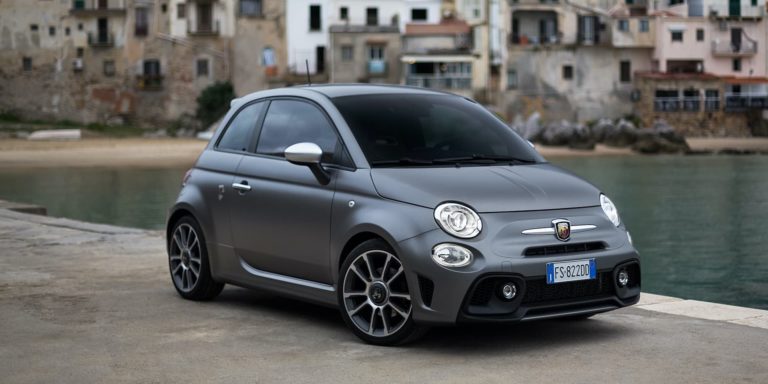
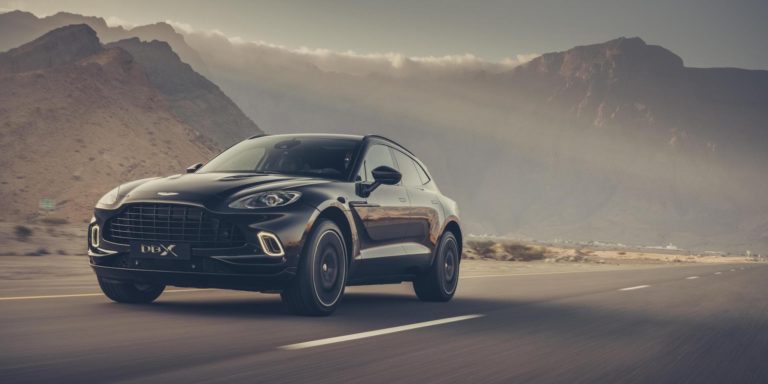
Chief among the changes is a new-look exterior that looks similar to the outgoing model but with sharper, more sporty lines. There’s also full LED headlights, fog lights and rear lights, dark trim pieces and a quad-exit exhaust.
The standard alloy wheels are 19-inch units in black or silver, with a copper choice available at extra cost, wrapped around 17-inch brake callipers. However, you can upgrade your stopping power with 18-inch Brembo performance brakes available at extra cost.
Much like the outgoing car, the new Cupra Ateca gets Alcantara-clad bucket seats, while the steering wheel gets a microsuede trim. The dashboard and door panels are both dark aluminium with copper stitching.
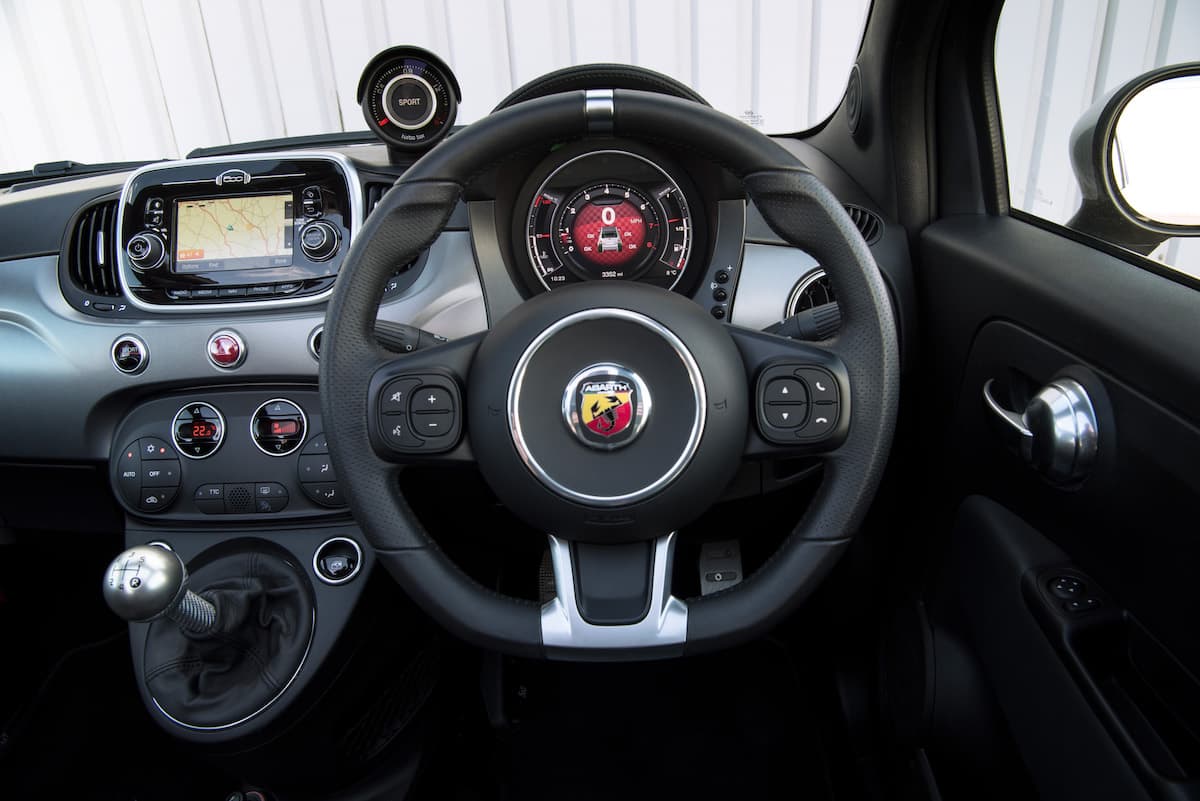
The instrument cluster is a ten-inch all-digital system, while infotainment comes from a nine-inch touchscreen, which includes a new voice recognition technology. There are also four USB-C ports in the cabin for fast smartphone connection.
Performance comes from a 2.0-litre turbocharged petrol engine making 300hp and 400Nm of torque, with all-wheel-drive contributing to a sub-five-second 0-60mph time, about three-tenths quicker than before.
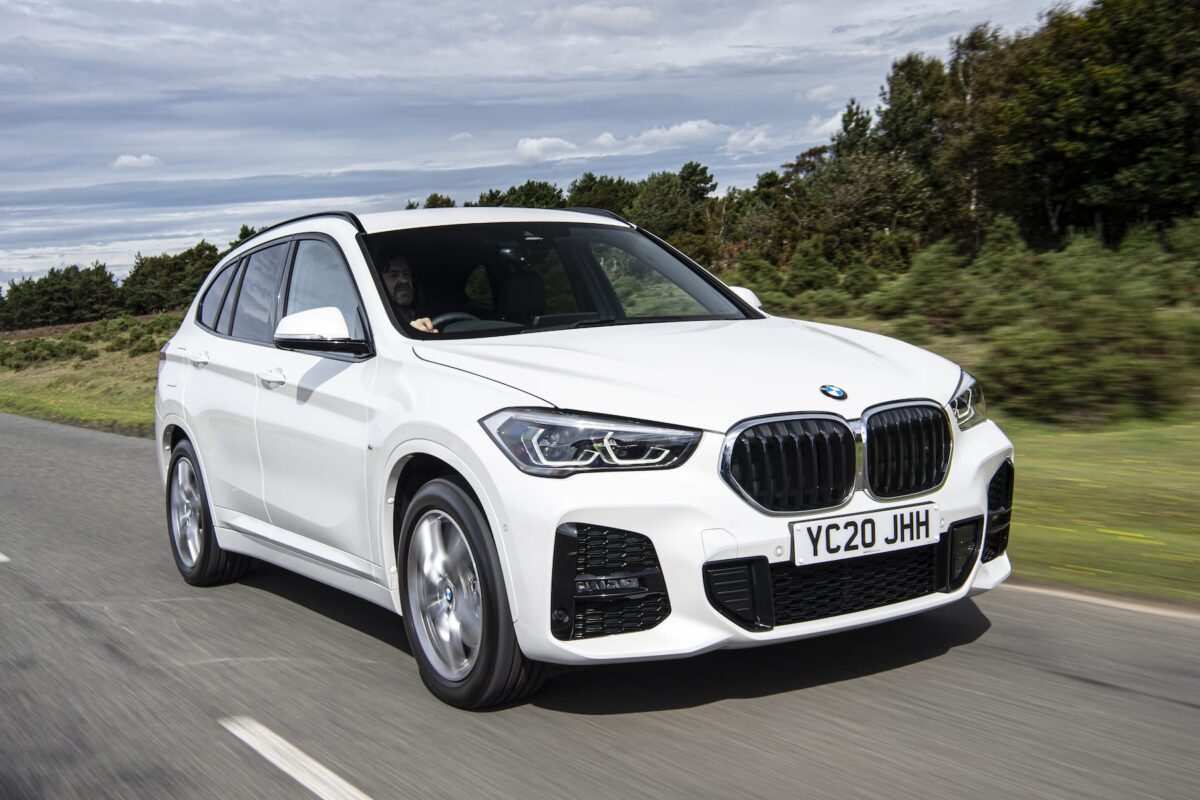
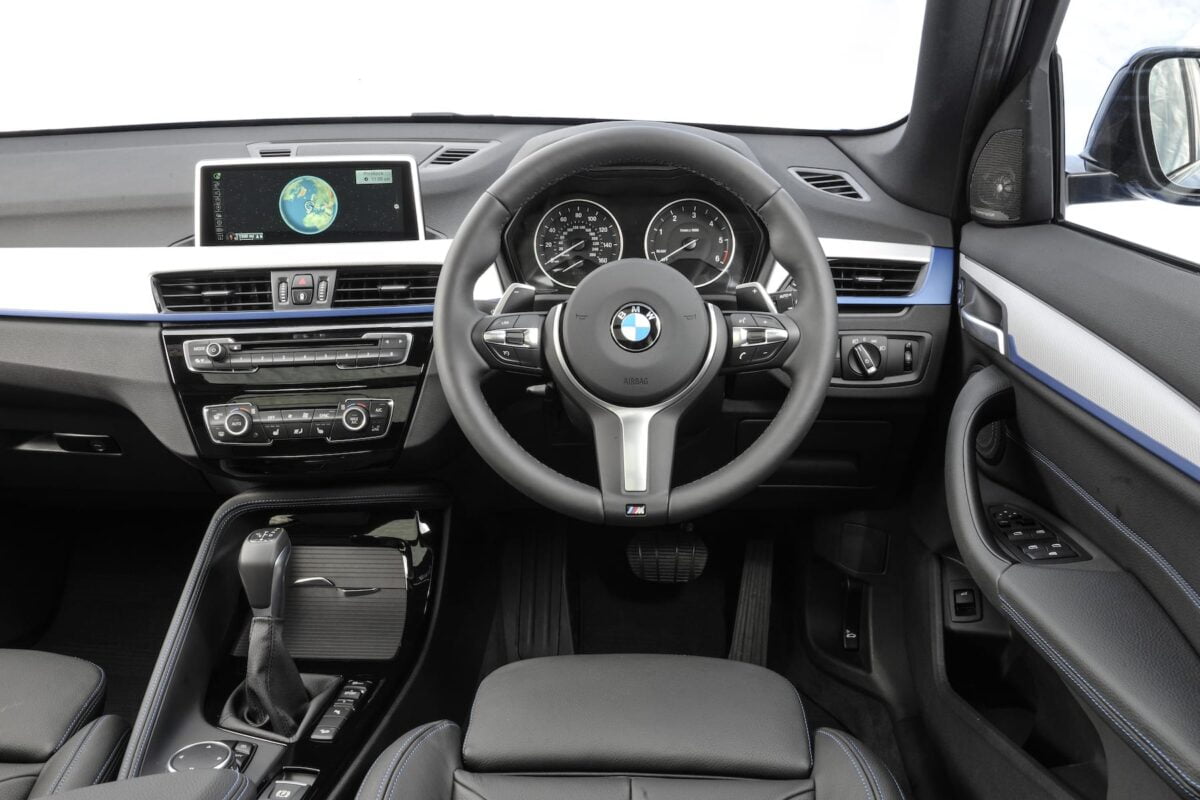
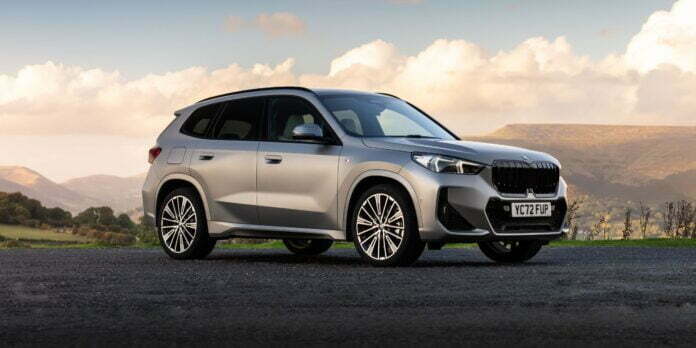
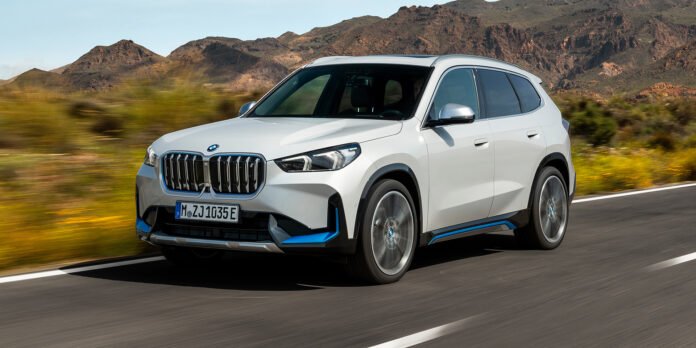
The BMW X1 is a mid-sized SUV/crossover, that sits underneath the larger X3 in the BMW SUV range. This model is the second generation, which arrived in the UK in late 2015 and was replaced by the current generation X1 in Autumn 2022.
Unlike the original X1, which was based on the BMW 3 Series and primarily rear-wheel drive, the second-generation model actually shared its platform with the Mini Countryman and Clubman from the same era, as well as the latest BMW 1 Series, and was therefore a primarily front-wheel drive vehicle.
Originally available with petrol and diesel engines, the X1 was also available with a plug-in hybrid drivetrain. This version launched in the UK just before the nationwide lockdown due to the coronavirus pandemic.
The second-generation BMW X1 received generally good reviews from the UK motoring media, and was considered a substantial improvement over the previous model.
As of February 2026, the second-generation BMW X1 holds a Used Car Expert Rating of C, with a score of 62%. It scores top marks for its low average CO2 emissions (helped by the plug-in hybrid model) and its running costs are generally low, but its media review scores were only average and its reliability record is poor. Its Euro NCAP safety rating has also long since expired due to age.
Body style: Small SUV/crossover Engines: petrol, diesel, plug-in hybrid Price when new: From £30,555 on-road
Launched: Autumn 2015 Last updated: Spring 2020 Replaced: Autumn 2022
Image gallery
Media reviews
Highlighted reviews and road tests from across the UK automotive media. Click any of the boxes to view.
Auto Express
Model reviewed: Range overview Score: 6 / 10 “If you want a small premium SUV that’s practical and fun to drive, the BMW X1 is it” Read review
Model reviewed: 1.5-litre petrol/electric plug-in hybrid xDrive25e M Sport Score: 7 / 10 “The plug-in hybrid system of this xDrive25e not only delivers the strongest performance of the BMW X1 range, but also the best refinement, while maintaining decent ride and handling and (almost) all of the standard car’s practicality.” Read review
Auto Trader
Model reviewed: Range overview Score: 8 / 10 “The second-generation BMW X1 builds on the strengths of its predecessor and reduces the shortfalls to a point where they’re almost negligible. With grown-up driving manners and plenty of practicality, the X1 is worthy of a place on your shopping list.” Read review
Car
Model reviewed: 2.0-litre diesel automatic xDrive 25d Score: 8 / 10 “The original BMW X1 sold like particularly hot cakes, despite not actually being all that brilliant a car in the cold light of day. The all-new successor is actually a very decent vehicle, with fewer compromises on packaging, dynamics or style.” Read review
Car Keys
Model reviewed: Range overview Score: 8 / 10 “The BMW X1 is a really excellent crossover, even against such great competition. It drives well, has a spacious and excellent interior, and proves that premium quality doesn’t have to cost the earth to run.” Read review
Carbuyer
Model reviewed: Range overview Score: 8 / 10 “The BMW X1 is an economical, practical and good-to-drive compact SUV that’s better-looking than the model it replaced” Read review
Carwow
Model reviewed: Range overview Score: 9 / 10 “The BMW X1 is a fun-to-drive and well-built alternative to the likes of the Volvo XC40 and Audi Q3; just be ready to pay extra for plenty of desirable options.” Read review
Evo
Model reviewed: Range overview Score: 7 / 10 “The new BMW X1 is greatly improved over its predecessor and can be considered a serious contender against its rivals. As the premium and small crossover market continues to grow, BMW had to get its new X1 right second time around.” Read review
Heycar
Model reviewed: Range overview Score: 7 / 10 “The BMW X1 is a sporty small SUV that’s fun to drive, has a practical, spacious interior and a high-quality cabin. It’s a shame that some of its options are so expensive, but if you are willing to splash out, then you’ll end up with one of the very best cars in this class.” Author: Andrew Brady Read review
Honest John
Model reviewed: Range overview Score: 8 / 10 “There are dozens of crossovers to choose from these days, whether in the form of popular mainstream models like the Nissan Qashqai or more luxurious alternatives such as the Audi Q3. But even in the face of some very serious competition, the BMW X1 is a very impressive car indeed.” Read review
Model reviewed: 2.0-litre diesel automatic xDrive25d xLine “While the BMW X1 might be showing its age slightly, it’s still an extremely good alternative to the Audi Q3, Volvo XC40 and Range Rover Evoque.” Read review
Motoring Research
Model reviewed: Range overview Score: 8 / 10 “Not to be confused with the original and rather lacklustre BMW X1, the current car is one of the most desirable in its class.” Read review
Motors
Model reviewed: Range overview Score: 8 / 10 “For families, the BMW X1 is an expensive but good option to choose as there is a large amount of space, a good safety rating and ISOFIX points on the rear seats. Although other cheaper crossovers will do a similar job, the X1 can certainly be described as a good family car.” Read review
Parkers
Model reviewed: Range overview Score: 7.8 / 10 “Entry-level BMW SUV is great to drive and looks sharp.” Read review
The Sun
Model reviewed: 2.0-litre diesel automatic xDrive 20d “It’s a Beemer and THAT badge always guarantees a spot in your final five. I’m not sure about those X1 puddle lamps, though. Classy rivals include the Q3, Mercedes GLA and Range Rover Evoque. The Q3 is cheaper, but it has less standard kit. I’d also consider a fully loaded Kia Sportage.” Read review
The Sunday Times
Model reviewed: 2.0-litre diesel xDrive 25d Score: 4 / 10 “The beancounters’ gift to box‑haulers” (Jeremy Clarkson) Read review
Model reviewed: Range overview Score: 8 / 10 “Capable, covetable compact 4×4” Read review
Top Gear
Model reviewed: Range overview Score: 7 / 10 “By going transverse-engined, the BMW X1 has become technically less distinctive, but more useful in the real world.” Read review
Safety rating
Independent crash test and safety ratings from Euro NCAP
The BMW X1 was originally crash tested by Euro NCAP back in 2015 and awarded a five-star rating. However, this rating expired in January 2022 and is no longer valid as the car no longer meets the standards required for such a rating. This is normal practice, as Euro NCAP reviews its ratings on most cars annually with most ratings expiring after about six or seven years.
However, if you are comparing a used X1 to vehicles of similar age, whose ratings will have probably also expired, its safety rating score is still useful.
Eco rating
Independent economy and emissions ratings from Green NCAP
Model tested: 2.0-litre diesel automatic X1 18d 4×4
Clean Air Index: 6.9 / 10 Energy Efficiency Index: 4.7 / 10
The rating above is for the BMW X1 18d diesel automatic four-wheel-drive model. It does not imply similar ratings for other engine and gearbox combinations in the range.
Running cost rating
Monthly cost of ownership data provided exclusively for The Car Expert by Clear Vehicle Data
Fuel consumption
Average
Score
Petrol models
42 mpg
C
Diesel models
52 mpg
B
Plug-in hybrid models
157 mpg
A
CO₂ output
Average
Score
Variation
Score
Petrol models
152 g/km
C
Diesel models
142 g/km
C
Plug-in hybrid models
41 g/km
A
Battery range
Average
Score
Variation
Score
Plug-in hybrid models
31 miles
E
Insurance group
Average
Score
Variation
Score
All models
26
C
The second-generation BMW X1 is a relatively affordable car to own and run, according to whole-life cost numbers provided exclusively to The Car Expert by our data partner, Clear Vehicle Data.
Fuel consumption is poor for the petrol models, but good for the diesels and very good for the plug-in hybrid if you are able to regularly charge the battery. If the battery is flat and you’re relying on the petrol engine, fuel consumption will be worse than the regular petrol model.
Insurance costs should be better than average, which is good for a BMW. We don’t have servicing and maintenance costs due to this vehicle’s age. By now, average servicing costs will vary significantly from car to car depending on age, condition and mileage.
Reliability rating
Reliability data provided exclusively for The Car Expert by MotorEasy
Total claims: 227 Average repair cost: £741.52 Last updated: April 2025
As of April 2025 (our most recent data point), the BMW X1 has a poor reliability record, according to extended warranty data provided to The Car Expert by our commercial partner, MotorEasy.
The most common problems occur in the braking system, electrical system and the engine, although the good news is that these are relatively inexpensive repairs – particularly for the engine, where we would normally expect to see bills significantly higher than the £600 average repair cost shown here.
It’s worth watching out for gearbox issues. These are not uncommon and are eye-wateringly expensive with an average repair cost of close to £4,000.
Awards
Trophies, prizes and awards that the BMW X1 has received
2021
Business Motoring Awards – Best Small SUV
Business Car Awards – Best Premium Medium SUV
2020
Business Car Awards – Best Premium Medium SUV
2018
Company Car Today CCT100 Awards – Best Premium Crossover
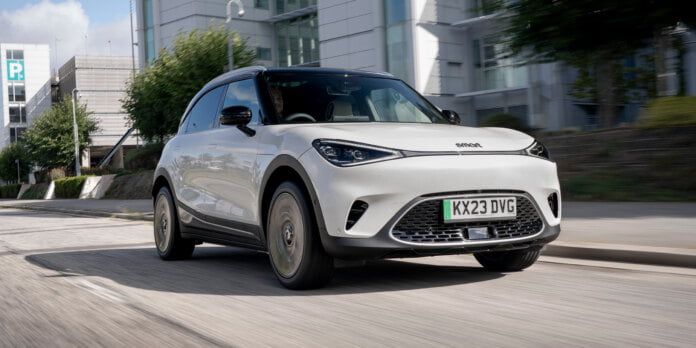
Similar cars
If you’re looking at the BMW X1, you might also be interested in these alternatives
Drivers could be leaving a trove of sensitive data on their old cars by not wiping information held from connecting to a smartphone, according to a survey.
Synchronising a handset to vehicles via Bluetooth or USB allows people to do things such as play their own music, download contacts and messages, retrieve live traffic and navigation information, as well as making hands free calls or send messages.
However, failure to wipe that data from a car before selling it risks inadvertently giving away personal information to any future owners, including contact numbers, private messages, home addresses and even wifi details.
A study by Which? of more than 14,000 motorists who had sold their vehicle in the last two years found that just over half (54%) made use of such features via their phone.
The results suggest that half (51%) of drivers had not tried to unsync their phone before parting with the car, while almost a third (31%) said they took no action at all to remove their personal information.
Four out of five (79%) vehicle owners did not follow instructions in the car manual to remove data and return the car to its factory settings before they sold it, despite this being the best way to make sure no personal details are left on the operating system.
The consumer group is concerned that motorists are not being provided enough information about what is being collected when they sync their phones or download an app, and the importance of eradicating the data.
“If cars are not treated the same as a smartphone, tablet or other connected devices when it comes to data security, motorists risk giving away a treasure trove of information about themselves when they decide to sell their car,” said Harry Rose, editor of Which? magazine.
“Manufacturers must do much more to prioritise customers’ personal privacy so that drivers fully understand how much data their vehicle could be harbouring and how to delete this information in order to eradicate these risks.”
More than a million Nissan and Renault vehicles could be fitted with prohibited ‘defeat devices’, a law firm has claimed.
Lawyers from Harcus Paker allege they have seen independent test data indicating that as many as 1.3 million diesel vehicles manufactured by Nissan and Renault may also be fitted with devices designed to cheat emissions tests.
Unlike previous actions against car manufacturers regarding defeat devices that have concentrated on diesel models, this claim also targets petrol cars. The firm also said it has obtained documents which show the 1.2-litre petrol Nissan Qashqai can breach emissions limits by up to 15 times when driven on the road. It claims that up to 100,000 petrol Qashqais could have been fitted with a defeat device.
The Qashqai is the biggest-selling British-built car in the world. It is built in Nissan’s Sunderland factory.
Damon Parker, senior partner at Harcus Parker, which is launching legal action, said: “For the first time, we have seen evidence that car manufacturers may be cheating emissions tests of petrol, as well as diesel vehicles.
“We have written to Renault and Nissan to seek an explanation for these extraordinary results, but the data suggests to me that these vehicles, much like some Volkswagen and Mercedes cars, know when they are being tested and are on their best behaviour then and only then.
“These are vehicles which could and should meet European air quality limits in normal use, but rather than spend a little more on research and development, Renault and Nissan appear to have gone down the same path as VW and Mercedes and decided to cheat the tests.”
Harcus Parker claimed owners of affected cars are entitled to compensation worth around £5,000 each.
A Nissan spokesman said: “Nissan strongly refutes these claims. Nissan has not and does not employ defeat devices in any of the cars that we make, and all Nissan vehicles fully comply with applicable emissions legislation.
“The initial report from 2017, which looked at the variation between lab and real world conditions, showed variances for most brands involved. It also stated that the Nissan tested complied with all required regulatory limits.
“Emissions standards have evolved since 2017, and we have introduced a new range of powertrains to meet them.”
Renault said in a statement: “All Groupe Renault vehicles are, and always have been, type-approved in accordance with the laws and regulations for all the countries in which they are sold and are not fitted with ‘defeat devices’.”
The so-called ‘dieselgate‘ emissions scandal first surfaced against Volkswagen in September 2015.
The manufacturer admitted that 11 million of its diesel vehicles worldwide were affected, including almost 1.2 million in the UK, prompting a flurry of litigation.
In April, the High Court ruled that software installed by Volkswagen was a ‘defeat device’.
Ford has introduced a new mild hybrid powertrain to the Focus, among other updates, bringing an efficient new engine option to the range.
It makes use of a 1.0-litre turbocharged petrol engine linked with a 48-volt mild-hybrid setup to deliver 155hp with CO2 emissions of just 116g/km. Ford claims that this new setup brings a 17% fuel efficiency improvement over the outgoing equivalent of a 1.5-litre petrol engine linked to a six-speed manual gearbox.
The company also says that the new engine is capable of delivering more than twice the power density of a 2.0-litre powertrain available for the Focus ten years ago but with a 45% hike in fuel efficiency.
The location of the batteries under the front passenger seats has allowed the mild-hybrid model to retain the regular Focus’ boot space, too. The system works by replacing a standard engine’s alternator with a belt-driven integrated starter-generator which can then be used to recover energy lost during braking or coasting. This energy is then stored in the battery pack.
The energy can then be deployed to provide additional torque during normal driving or when accelerating, and it can be used to power functions such as the air conditioning and media functions. An on-board system is capable of monitoring how the vehicle is being used and will then choose how to charge the battery for optimal benefit.
Roelant de Waard, vice president, Marketing, Sales & Service, Ford of Europe, said: “Our electrified powertrains are designed not just to save drivers money on fuel, but also to boost the fun-to-drive character of our vehicles.
“The Focus EcoBoost Hybrid seamlessly integrates electric and petrol power for efficiency and performance that would have seemed the stuff of dreams just a few years ago.”
Ford has also introduced a new 12-inch LCD instrument cluster to the Focus, which enables drivers to tailor readouts to their liking. On hybrid models, the screen can also display information about electrical energy usage, as well as how much energy is being generated by the system.
A new Zetec trim level has also been added to the Focus, with standard equipment such as wireless smartphone charging, front and rear parking sensors and full satellite navigation making the specification a well-finished choice within the range.
2020 is the year of the mild hybrid
This year has seen mild hybrid upgrades to petrol engines from almost every manufacturer, and Ford is rolling them out as fast as anyone. A few weeks after announcing a mild hybrid boost for the Fiesta range comes a similar announcement for the larger Ford Focus.
The extra electrical power boost, along with a digital dashboard and other trim updates, should help freshed up the Focus to keep it competitive with its arch-rival – the all-new Volkswagen Golf has reached UK shores and the marketing onslaught is presumably about to start.
The Ford Focus currently holds an Expert Rating of 80%, based on 32 different UK reviews, according to our unique Expert Rating analyser. The Golf is currently at 85% based on its international launch reviews, although that could change as we get reviews on local roads in UK-spec cars. Stuart Masson, Editor
Welsh car dealerships have been given the green light to reopen this Monday – June 22.
The announcement was made by first minister Mark Drakeford as part of a series of measures which look to slowly unlock the country’s economy following the coronavirus pandemic and the resulting lockdown.
As of Monday, non-essential retail businesses – including car dealerships – will be allowed to trade once more as long as all reasonable measures to follow social distancing laws in Wales are followed, in news confirmed to Car Dealer magazine.
However, a legal requirement to remain local – members of the public are being asked to stay within a five-mile radius of home – has been kept in place.
Northern Ireland’s dealerships also reopened on June 8, meaning the entirety of the UK’s car retail trade will be back up and running by the end of the month.
Classic car owners are being warned about a new eco-friendly petrol that could damage their cars.
Under current regulations, ‘E5’ unleaded petrol can contain up to 5% bioethanol, which is created from crops and is therefore a renewable resource.
From 2021, E10 will become the new standard, which has up to 10% bioethanol in the mix.
Doing this helps to reduce vehicle CO2 emissions – by up to 750,000 tonnes per year, according to government estimates – but classic car insurance company Hagerty is warning that E10 can cause damage to older vehicles.
The RAC estimates up to 600,000 vehicles on UK roads are not compatible with E10. Although classic cars are the most at-risk vehicle type, it is also advised that owners of any vehicles made before 2002 do not use the new E10 fuel.
There are two key issues, with the first being that this fuel mix absorbs more water from the atmosphere, which can cause condensation in fuel tanks, fuel lines and carburettors, and cause corrosion.
The second problem is that ethanol is a solvent that can eat through rubber, plastic and fibreglass, with Department for Transport tests identifying that it can cause issues with fuel hoses and seals, blocked fuel filters and damaged fuel pumps to name a few.
Phil Monger, technical director of the Petrol Retailers Association (PRA) told Hagerty that changes won’t be made overnight, and believes that ‘many owners of old cars may have already made modifications since the introduction of E5 fuel’.
He added: “Vehicles that are very old will have materials that will not be compatible with E5 either. E10 will only hasten the day when it causes you some difficulty with those materials.”
Guy Lachlan, managing director of Classic Oils, has offered advice to prevent problems, saying: “You’ve either got to use fuel with no ethanol or change the materials that don’t like it.
“If you are in any doubt about your rubber fuel lines, change them. Get rid of your fibreglass petrol tank and install an aluminium one. The other thing ethanol really doesn’t like is solder. If you are running a soldered float in your carburettor, then think about carrying a spare – they’re generally quite easy to change.”
If classic car owners fill up with E10 by mistake, it shouldn’t be an issue if it’s a one-off, so just ensure the next top-up is with the correct fuel.
The PRA says there will be a six-month awareness campaign released ahead of the fuel being introduced to prepare drivers, while a new website will allow owners to check if their vehicle is compatible.
Car dealerships in Scotland can reopen on June 29 following the pandemic-enforced shutdown.
First minister Nicola Sturgeon announced today that non-essential retail businesses can reopen if they have outdoor entrances and exits and follow health and safety guidelines.
However, dealers have been disappointed at the delay in reopening, which will be almost a month after English dealers were given the green light.
Speaking to Car Dealer magazine, Scottish Motor Trade Association chairman Sandy Burgess said: “Firstly, it shows an extreme lack of understanding as to how the retail automotive sector operates and the impacts of late-in-the-day policy changes such as this.
“And secondly, it shows a total lack of respect for the industry at all levels, as they have not spoken to or communicated with any business in our sector before reaching this incomprehensible decision!”
The magazine also spoke to former British Touring Car Championship winner John Cleland, who owns the Clelands dealership in Galashiels. He said: “We, and Volvo, were anticipating opening tomorrow – June 19 – but we haven’t even been told that.
“We even have staff unfurloughed in readiness for reopening tomorrow.
“It’s madness that garden centres have already been allowed to reopen and yet car dealerships up to 800 square metres can’t – showrooms are more spacious than garden centres!
“We just need to get on with this. England has a one-month head start on us. I don’t understand the delay.”
Like English dealerships during lockdown, Scottish retailers have been allowed to provide click-and-collect services. Speaking today, Sturgeon said that customers should “exercise patience, stick to the measures that are in place for your safety, and at all times please respect retail staff who will be asking you to shop in a different way”.
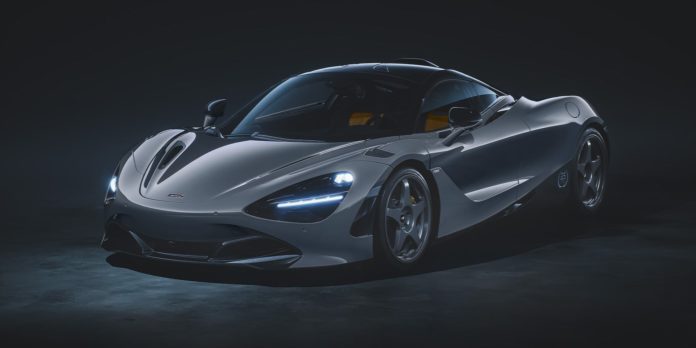
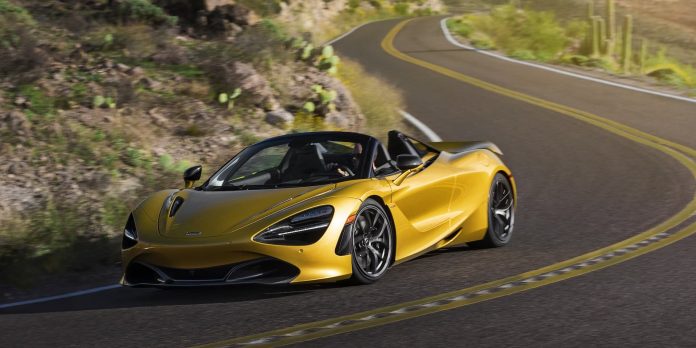
McLaren is celebrating the 25th anniversary of winning the 1995 Le Mans 24-hour race, on its first entry into the famous race, with a new special edition version of its 720S supercar.
Just 50 Le Mans editions will be built with 16 heading for Europe, and all will be coupe versions.
The car has been revealed 25 years to the day that the 1995 race started. McLaren F1 GTR #59, driven by JJ Lehto, Yannick Dalmas and Masanori Sekiya, would go on to win with three McLaren F1 GTRs finishing in the top five.
Each 720S Le Mans edition will get an authenticity plaque and each car’s VIN will begin with 298, marking the number of laps completed by the winning car.
On the outside there’s a choice of McLaren Orange or Sarthe Grey paint, Ueno grey lower body panels, gloss black roof scoop, carbon fibre louvred front fenders and unique five-spoke alloy wheels. Inside, there’s a McLaren Orange or Dove Grey Alcantara theme, carbon-fibre race seats, and ‘25th anniversary’ logos throughout.
Power comes from the standard 720S’s mid-mounted 4.0-litre V8 engine. The twin-turbocharged unit makes 720hp, helping propel the car from 0-60mph in 2.9 seconds and on to a top speed of 212mph.
The McLaren 720S Le Mans is on sale now with prices starting from £254,500 with first deliveries expected in September.
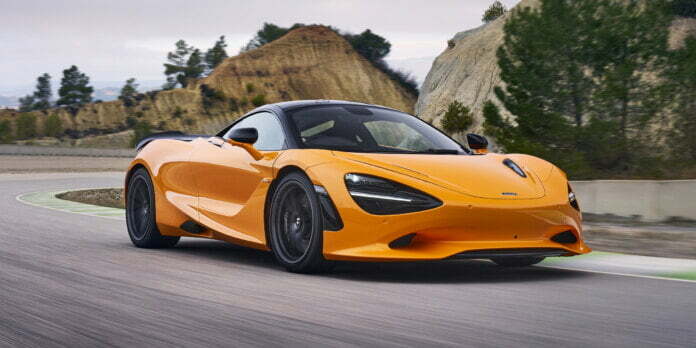
The McLaren 720S was a mid-engined supercar available as both a coupé and convertible (720S Spider). The 720S formed the ‘middle tier’ of the McLaren range, knows as the Super Series. The coupé model was launched at the 2017 Geneva motor show, with the Spider following in late 2018.
The 720S, like all McLaren models, was built at McLaren’s production facility in Woking, Surrey, in a new factory next door to the McLaren Formula One team’s base.
There is a higher-performance model called the 765LT, which is not covered here. We have a separate page for this model.
The McLaren 720S and 720S Spider received unanimously positive reviews from the UK motoring media (which is not all that surprising, really). There was plenty of praise for both its incredible performance and everyday usability.
No longer on sale, the McLaren 720S holds a Used Car Expert Rating of E, with a score of 5e%. Despite excellent review scores from motoring journalists, its overall rating is inevitably dragged down by high running costs and poor emissions levels.
Body style: coupe / convertible Engine: petrol Price when new: From £218,020
Launched: Spring 2017 Last updated: Summer 2020 Discontinued: 2022
Image gallery
Media reviews
Highlighted reviews and road tests from across the UK automotive media. Click any of the boxes to view.
Featured reviews
“The British-built McLaren 720S Spider is an ultra-focused and highly polished supercar that deserves a place among the greats from anywhere in the world.”
Model reviewed: 720S coupé Score: 10 / 10 “The McLaren 720S takes on the Ferrari 488 – with more power, greater performance and a dash of practicality.” Read review
Model reviewed: 720S Spider Score: 9 / 10 “There are few cars on the road that are as savagely quick as a McLaren 720S. The drop-top Spider version ups the excitement levels even further, and we loved it.” Read review
Auto Trader
Model reviewed: 720S coupé Score: 8.6 / 10 “Even when compared with other supercars, the McLaren 720S really is something special. Engaging, absorbing and thrilling, and for our money, it’s the best of the supercar breed.” Read review
Car
Model reviewed: 720S Spider Score: 10 / 10 “The amazing thing about the McLaren 720S Spider is its range of virtues. It goes as hard as any supercar with all the exhilaration and high-speed prowess, and yet it rides with astonishing suppleness.” Read review
Model reviewed: 720S Track Pack Score: 10 / 10 “If you’re all about hot laps, the track-optimised 600LT would be a better bet. And if you’ve decided it has to be the 720S, be clear about what you’ll use the car for. You may be better off going for a few options and put the saved money into financing some unforgettable pan-European road trips.” Read review
Model reviewed: 720S coupé Score: 10 / 10 “If you can get on with those headlights, and are rich enough not to flinch at paying more for the McLaren 720S than its rivals, the only real sticking point is the standard car’s too-quiet exhaust.” Read review
Carbuyer
Model reviewed: 720S coupé Score: 7.8 / 10 “The stunning McLaren 720S offers all you want in a supercar, and more.” Read review
Model reviewed: 720S Spider Score: 8 / 10 “Breathtaking performance combined with unadulterated engine noise makes the McLaren 720S Spider an even more visceral experience than the coupe.” Read review
Daily Mirror
Model reviewed: 720S Spider Score: 10 / 10 “The two-seat mid-engined McLaren 720S supercar is beyond brilliant. It’s incredible.” Read review
Evo
Model reviewed: 720S Spider Score: 9 / 10 “Top-down motoring to the list only increases the McLaren 720S’ appeal, however the compromises felt dynamically still makes the coupe our choice.” Author: Adam Towler Read review
Model reviewed: 720S coupé Score: 10 / 10 “The McLaren 720S is an improvement over its predecessor in every respect.” Read review
Heycar
Model reviewed: Range overview Score: 8 / 10 “McLaren keeps on re-defining what’s possible with its Super Series models, and the 720S does that, and more, making ridiculous performance accessible and useable, assuming, of course, you have the means to pay for it.” Read review
Parkers
Model reviewed: Coupe Score: 9 / 10 “Latest Brit bruiser one of the best yet” Read review
Model reviewed: 720S Spider “Aside from its monstrous capabilities, the McLaren 720S Spider is just as pleasing to the eye. You just want to drive it over the horizon and into the sunset.” Read review
The Sunday Times
Model reviewed: 720S coupé Score: 6 / 10 “It may look brilliant, but you cannot get around the fact that it simply doesn’t have the soul of a Ferrari. It’ll kick a Fezza’s arse in any race, anywhere, anytime, but you can’t help feeling it’s a car built after a meeting in a Travelodge with a flip chart.” (Jeremy Clarkson) Read review
The Telegraph
Model reviewed: 720S Spider Score: 8 / 10 “Better looking than the coupé with none of the drawbacks of a convertible in terms of chassis twisting and/or reduced performance; it also has minimal weight gain for a drophead.” Read review
Model reviewed: 720S Luxury coupé Score: 8 / 10 “Faster and more stable, the new McLaren 720S is a more dynamically competent than its predecessor, although whether it could be genuinely described as “all-new” is debatable.” Read review
Top Gear
Model reviewed: 720S Spider Score: 9 / 10 “All the best bits of the coupe, now with added fresh air.” Read review
Model reviewed: 720S coupé Score: 9 / 10 “Probably the single most accomplished supercar we’ve ever driven.” Read review
Safety rating
Independent crash test and safety ratings from Euro NCAP
No safety rating
The McLaren Super Series (720S and 765LT) was not tested by Euro NCAP during its production life.
Eco rating
Independent economy and emissions ratings from Green NCAP
No eco rating
The McLaren Super Series (720S and 765LT) was not lab tested by Green NCAP during its production life, so you’ll just have to imagine how eco-friendly a twin-turbocharged petrol V8 supercar is likely to be…
Reliability rating
Reliability data provided exclusively for The Car Expert by MotorEasy
No reliability rating
As of March 2026, we don’t have enough reliability data on the McLaren 720S to generate a reliability rating.
The Car Expert’s reliability information is provided exclusively to us using workshop and extended warranty data from our partner, MotorEasy, sourced from both official dealerships and independent workshops.
As soon as MotorEasy has sufficient data on the 720S, we’ll publish the results here.
Running cost rating
Monthly cost of ownership data provided exclusively for The Car Expert by Clear Vehicle Data
Fuel consumption
Average
Score
Petrol models
23 mpg
E
CO₂ output
Average
Score
Variation
Score
Petrol models
276 g/km
E
Insurance group
Average
Score
Variation
Score
All models
50
F
The McLaren 720S is a very expensive car to own and run, according to whole-life cost numbers provided exclusively to The Car Expert by our data partner, Clear Vehicle Data.
We don’t have servicing cost data at this time, but you can be confident that it will also be very expensive…
Awards
Trophies, prizes and awards that the McLaren 720S has received
2019
World Car Awards – World Performance Car
2018
Red Dot Design Awards – Best of the Best
2017
evo Awards – Car of the Year
Scottish Car of the Year Awards – Sportscar of the Year
Similar cars
If you’re looking at the McLaren 720S, you might also be interested in these alternatives
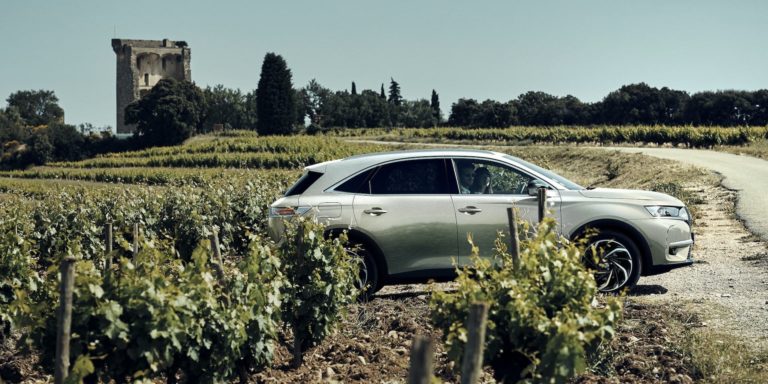
DS 7 Crossback buyers now have more electrification options available thanks to the addition of a second plug-in hybrid variant.
The new E-Tense 225 will sit below the existing E-Tense 4×4 in the DS 7 Crossback range. While both models use a petrol-electric powertrain, the new model is front-wheel drive and makes a combined 225hp, compared with the 300hp all-wheel-drive alternative.
The E-Tense 225 gets an eight-speed automatic gearbox, and can be driven on electric-only power at speeds of up to 84mph. Its 13.2kWh battery provides an electric range of up to 34 miles, or up to 45 miles if speeds are kept low.
Running costs should be low too, with official figures measuring CO2 emissions at 36g/km, while fuel economy is up to 202mpg.
The battery can be charged at wall sockets or public charge points, but also regenerates energy on the move through the engine and deceleration. DS has fitted an engine mode that will ensure a minimum of 12 miles of electric range is stored in the battery to provide zero-emission driving at the end of a journey.
The DS 7 Crossback E-Tense 225 gets the French firm’s active suspension system, which scans the road surface ahead and prepares the suspension for bumps, as well as night vision, parking assistance, advanced cruise control systems and LED lighting.
Equipment-wise, the new E-Tense 225 powertrain is available across all DS trim levels and gets 19-inch alloy wheels as standard.
Two options for plug-in plus petrol power
Not one, but two plug-in hybrid options is unique for pretty much any new car currently on sale in the UK. It could help DS Automobiles position the DS 7 Crossback as the perfect car to take advantage of consumers’ growing desire for electrified transport.
The DS 7 Crossback range has been praised for a comfortable ride by the UK media and the active suspension on the plug-in hybrid models should help keep things smooth. The driving experience hasn’t been rated as highly, however. According to our unique Expert Rating system, which has aggregated 17 UK reviews of the DS 7 Crossback, it has an overall Expert Rating of 66%. That puts it in the bottom half of the premium mid-size SUV field, a long way behind the class-leading Audi Q5 and Volvo XC60. Stuart Masson, Editor
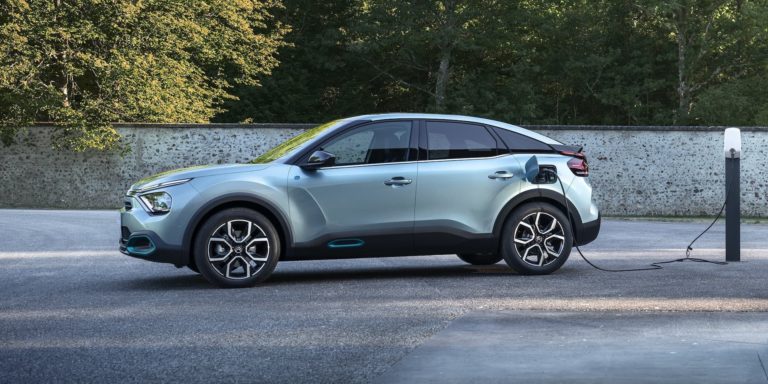
Citroën has previewed an electric version of its all-new C4 hatchback ahead of the car’s full reveal at the end of this month.
The company hasn’t revealed many details about the new car, but says it will offer fully electric, petrol and diesel options – but no hybrids.
Further powertrain information will likely not be confirmed until the car’s full reveal on June 30, but expect the electric version to use a similar powertrain to the Peugeot e-208 supermini, which has a range of more than 200 miles between charges.
Both the new C4 and ë-C4 get chunky body work and a high window line giving the car a crossover-style appearance. The styling is inspired by Citroën’s SUV models (and also bears a resemblance to the incredibly unsuccessful Citroën/DS Automobiles DS 4 Crossback from a few years ago, which wasn’t mentioned in the press release…).
From what little Citroën is giving away, it appears comfort will be high on the agenda, with the firm’s Advanced Comfort seats and Progressive Hydraulic Cushion suspension technology being included.
It also claims to be spacious and practical inside, with ‘an innovation for the front passenger’ to be disclosed later.
The new Citroën C4 is expected to go on sale early in 2021, with prices increasing over the existing C4 Cactus’s £22,190 starting price on account of the technology improvements. The electric Citroën ë-C4 will likely be in the ballpark of £30,000 to compete on price with its rivals.
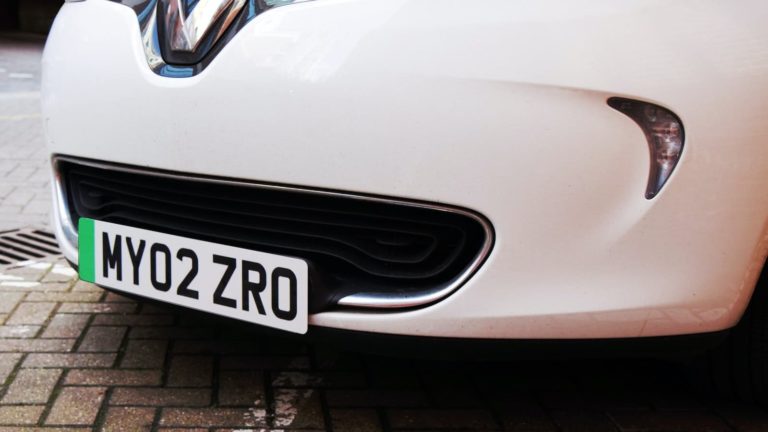
Drivers of zero-emission cars are to be given distinctive green number plates which could make them eligible to by-pass congestion zone charges or secure cheaper parking.
Transport secretary, Grant Shapps, said the decision to print a green ‘flash’ on the left-hand side of number plates on zero-emission cars from the autumn would help “show people that a greener transport future is within our grasp”. This green flash would go where UK number plates previously (optionally) showed a blue EU country identifier.
The move, which could allow motorists to tap into special incentives, is designed to make switching to electric vehicles more appealing, as the government looks to meet its target of achieving net zero emissions by 2050.
Mr Shapps said: “A green recovery is key to helping us achieve our net zero carbon commitments while also promoting economic growth.
“Green number plates could unlock a number of incentives for drivers and increase awareness of cleaner vehicles on our roads, showing people that a greener transport future is within our grasp.
“We’re supporting small businesses to develop the transport tech of the future through a multimillion pound investment, ensuring that UK businesses remain at the forefront of low-carbon innovation and research.”
A better commute for green-plates EVs?
The Department for Transport (DfT) said the green strip on number plates would make electric vehicles more easily identifiable to local authorities who want to offer schemes such as allowing drivers of such vehicles to use bus lanes, charging them less for parking or cost-free entry into zero-emission zones.
The announcement follows a consultation, started in October, with councils, industry and the public.
Special number plates have been trialled in Canada, where drivers of electric vehicles in Ontario were given free access to toll lanes and high-occupancy vehicle lanes. The city subsequently saw an increase in electric vehicle registrations.
Mr Shapps’ announcement follows reports last week claiming the prime minister was said to be considering plans to give drivers up to £6,000 to exchange their petrol or diesel car for an electric model.
The Daily Telegraph reported that, despite the government reducing the maximum grant available for electric car buyers under the Plug-In Car Grant, by £500 to £3,000, in March, Boris Johnson was being urged to help manufacturers hit hard by the coronavirus crisis, with sales of new cars down nearly 90% in May compared with the same month in 2019.
Edmund King, president of AA, said he welcomed the switch to partially green numbers plates and said that 37% of his organisation’s members had voiced support for the change.
“Having a green flash on the number plate may become a badge of honour for some drivers,” said Mr King. “We support this concept, which shows that the electric vehicle revolution is now moving from amber to green.”
But the RAC said it was not convinced the new plates would provide much incentive for motorists to opt for greener cars. Rod Dennis, a spokesman for the organisation, said: “While this is well-intentioned, we don’t believe green number plates on their own will do much to make people switch to an electric car.
“We’d much prefer the government looked at things like bringing in the right financial incentives.”
On top of giving green number plates the go-ahead, the DfT also announced that £12 million was being made available for further zero-emission vehicle research.
The funding, made through the Office for Low Emission Vehicles (OLEV) and delivered through Innovate UK, will see £10 million for a new zero-emission vehicle innovation competition.
The scheme will invite applicants to bid for project funding to support advancements in both battery electric and hydrogen vehicles, as well as charging infrastructure.
A further £2 million will be provided by OLEV to UK small and medium businesses to support their research into zero-emission vehicles in areas such as battery technology, which could be used by major vehicle manufacturers in future electric vehicle production, said DfT.
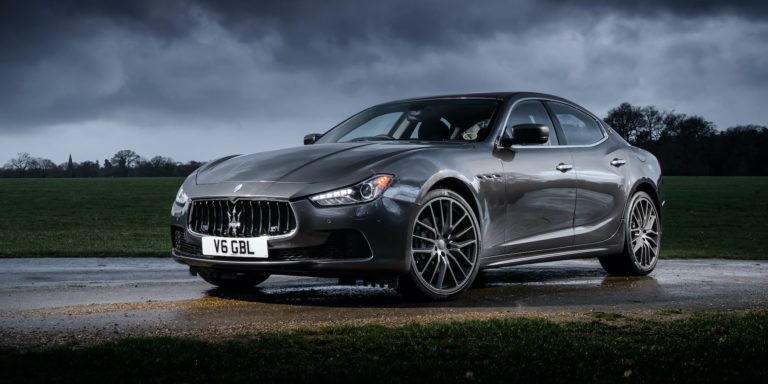
The Maserati Ghibli was a large executive saloon, which launched in 2013 and was substantially updated in late 2017. It finally ended production at the end of 2023, after more than ten years on sale.
Along with engines for other Maserati models, the Ghibli’s twin-turbo petrol V6 motors were built for Maserati by Ferrari in Maranello. This arrangement came to an end when the Ghibli finished production, as Ferrari and Maserati are no longer part of the same overarching Fiat Group. A diesel engine was initially offered but was dropped from the range along the way.
The Maserati Ghibli received fairly average reviews from the UK motoring media, although its worth pointing out that its cause was not helped by its rivals being some of the best cars on the market – the class-leading BMW 5 Series was considered to be the best car that BMW mad, while the Mercedes-Benz E-Class and Audi A6 were similary superior to most cars in their respective families. So the Ghibli was a good car in a field dominated by outstanding cars.
The Ghibli was praised for its style and image, as well as its Ferrari-sourced petrol V6 engine. However, it was criticised for not matching the level of comfort and quality that the best cars in its class displayed.
No longer on sale, the Maserati Ghibli holds a very poor Used Car Expert Rating of E, with a score of 38%.
Highlighted reviews and road tests from across the UK automotive media. Click any of the boxes to view.
Featured reviews
“Maserati is a bit of a hidden gem. The Ghibli serves up every bit as much luxury as perhaps better-known rivals, but with a diesel engine offering fuel consumption figures close to 50mpg it is also a surprisingly sensible purchase, especially in the corporate market.”
Model reviewed: 2.0-litre petrol (mild hybrid) automatic Ghibli Hybrid Gransport Score: 5 / 10 “On paper, the new Ghibli Hybrid seems like a great way to keep Maserati relevant yet desirable. In reality, it’s something of a disappointment, with uncompetitive hybrid technology failing to provide either the economy or the emissions it needs to keep pace, nor the driver appeal of its best rivals.” Read review
Model reviewed: Range overview Score: 6 / 10 “The Maserati Ghibli combines style and quality with sharp handling to rival the BMW 5 Series and Mercedes E-Class” Read review
Model reviewed: 3.0-litre petrol automatic Score: 8 / 10 “It’s not Maserati’s finest hour, but it’s a breath of fresh air in this often straight-laced market.” Read review
Auto Trader
Model reviewed: Range overview Score: 6 / 10 “The Maserati Ghibli offers an Italian alternative to the popular German premium saloons, albeit at a higher price. It struggles to match those rivals for quality and doesn’t drive as well either, but the engines are strong, the badge is a proper luxury draw and its exotic looks really make it pop.” Read review
Business Car
Model reviewed: Trofeo Score: 7 / 10 “Against rivals from BMW, Mercedes and Porsche, the Maserati feels charming but dated – with the powerful V8 engine being the highest point.” (Martyn Collins) Read review
Car
Model reviewed: Range overview Score: 8 / 10 “If you want an upmarket diesel saloon, it’s hard to make a case for the Maserati Ghibli as the competition is so well-rounded, and also much cheaper in some cases, with better interior quality. If you want a nutcase saloon to thrash through the mountains at the weekend and sit on the motorway during the week, it’s an intriguing option that does feel special to look at.” Read review
Model reviewed: 3.0-litre diesel automatic Score: 8 / 10 “The Maserati Ghibli remains pragmatically almost impossible to recommend, but easy to fall for. Buy one and you won’t have the cheapest, comfiest or most tech-laden car in your street, but you will be safe in the knowledge that you’ve got the most stylish and probably the most interesting.” Read review
Carbuyer
Model reviewed: Range overview Score: 6.8 / 10 “The Maserati Ghibli is hugely alluring in many ways, but it comes with a higher price tag and more compromises than other large executive saloons.” Read review
Carwow
Model reviewed: Range overview Score: 6 / 10 “The Maserati Ghibli is a sleek and sporty alternative to more mainstream executive cars from Audi, BMW and Mercedes, but it’s comparatively expensive to run.” Read review
Eurekar
Model reviewed: Ghibli Hybrid “Maserati has little choice but to venture down the hybrid technology route, but whether it will win over the die-hard V6 and V8 fans that have been such loyal followers, remains to be seen.” Read review
Evo
Model reviewed: 3.0-litre diesel automatic Score: 7 / 10 “Stylish and dripping with badge appeal, but off the pace of class best” Read review
Heycar
Model reviewed: Range overview Score: 5 / 10 “Traditionally, Maserati has been a brand associated with style, glamour and exclusivity. With the Ghibli, however, the Italian manufacturer looked to change things up a bit.” Author: Andrew Brady Read review
Parkers
Model reviewed: Range review Score: 7.6 / 10 “Stunning saloon is great to drive, but pricey” Read review
The Sun
Model reviewed: 3.0-litre diesel automatic “I loved driving this saloon. For all its faults, the Maserati Ghibli is a heart-rules-over-the-head buy. It’s the only car in this sector that can give its pin-stripe suitors a bit of passion.” Read review
The Sunday Times
Model reviewed: 3.0-litre petrol automatic Ghibli S Score: 6 / 10 “It’s comfortable and it’s practical and it’s quiet and, I have to say, it’s also a lovely place to sit. Apart from the beeping. And on top of all that, it’s a Maserati. Which means you can say to your husband, ‘Shall we take the Maserati tonight?’, which will make you feel extremely warm and fuzzy.” (Jeremy Clarkson) Read review
The Telegraph
Model reviewed: 2.0-litre petrol (mild hybrid) automatic Score: 4 / 10 “A great-looking car with an evocative name, and a surprisingly adept mild hybrid system, although it doesn’t seem to confer any substantial economy benefits. But the ride quality on UK roads is simply unacceptable and Maserati faces hugely competent rivals with full hybrid drivetrains.” Read review
Model reviewed: Range overview Score: 6 / 10 “The allure of this exotic Italian brand is undoubtedly strong, plus the Maserati Ghibli looks suitably special inside and out. However, its diesel engine and ride comfort are disappointing, while the BMW 5 Series and Jaguar XF are both more enjoyable to drive. As is so often the case with Maserati, it’s a case of whether you let your heart overrule your head.” Read review
Top Gear
Model reviewed: Range overview Score: 5 / 10 “Don’t fancy a German four-door? There’s an updated, eccentric Italian alternative… but you need to really want one.” Read review
Model reviewed: Range overview “If you’re overly familiar with its established foes (most of them German), and the Maserati Ghibli diesel is sitting on the company car list among them, it may prove difficult to resist its more superficial charms. Head further up the range, though, and it’s hard to escape that Alfa Romeo now makes a better fast four-door than Maserati.” Read review
Model reviewed: 3.0-litre diesel automatic Score: 7 / 10 “It boils down to one simple question: should you? In isolation, the Ghibli is convincingly seductive and perfectly credible. As it stands, the diesel emits 158g/km CO2 and sits in the 26 per cent company car tax band, so it’s there or thereabouts. But forget all that, and do me a favour when you get to the end of this paragraph: just say the last word out loud – Maserati.” Read review
Safety rating
Independent crash test and safety ratings from Euro NCAP
The Maserati Ghibli was tested by Euro NCAP in 2013 and was awarded a five-star rating. This rating expired in January 2020 and is no longer valid. This is normal practice, as Euro NCAP reviews its ratings on most cars annually with most ratings expiring after about six or seven years.
However, if you are comparing a used Ghibli to vehicles of similar age, whose ratings will have probably also expired, its safety rating score is still useful.
Eco rating
Independent economy and emissions ratings from Green NCAP
No eco rating
The Maserati Ghibli was not tested by Green NCAP during its production life.
Running cost rating
Monthly cost of ownership data provided exclusively for The Car Expert by Clear Vehicle Data
Fuel consumption
Average
Score
Petrol models
22 mpg
E
CO₂ output
Average
Score
Variation
Score
Petrol models
240 g/km
E
Insurance group
Average
Score
Variation
Score
All models
50
F
Service and maintenance
Cost
Score
Year 1
£596
E
Year 2
£1,472
E
Year 3
£2,192
E
Year 4
£2,625
E
Year 5
£3,495
E
Overall
£10,380
E
The Maserati Ghibli is a rather expensive car to own and run, according to whole-life cost numbers provided exclusively to The Car Expert by our data partner, Clear Vehicle Data.
Fuel economy is very poor, with an average score of E ranking it in the bottom 20% of all cars in our database. CO2 emissions are also poor.
Insurance costs are likely to be high as the Ghibli is categorised in the highest group 50, while servicing and maintenance over the first five years is also expensive.
Reliability rating
Reliability data provided exclusively for The Car Expert by MotorEasy
No reliability rating
As of March 2026, we don’t have enough reliability data on the Maserati Ghibli to generate a reliability rating.
The Car Expert’s reliability information is provided exclusively to us using extended warranty data from our partner, MotorEasy. As soon as we have sufficient data on the Ghibli, we’ll publish the score here.
Date: June 2024 Recall number: R/2024/206 Model types: All Build dates: 04/2021 to 08/2021 Number of vehicles affected: 6 Defect: On affected vehicles, the pressure/temperature sensor within the short fuel line may cause a possible fuel leakage in the engine bay. This may lead to a loss of power and, in the worst case, a potential fire. Remedy: Replacement of the short fuel line containing the pressure sensor.
Date: December 2021 Recall number: R/2021/441 Model types: All Build dates: 09/2021 Number of vehicles affected: 37 Defect: Wrong TVV (Type-Variant-Version) on statutory plate. Remedy: Replace label located on B-pillar
Date: June 2020 Recall number: R/2020/185 Model types: All Build dates: 01/2019 to 02/2019 Number of vehicles affected: 2 Defect: Engine code marked on diesel engine replaced in aftersales is different from the homologated and production code. Remedy: Documentation will be provided to the customer stating the Italian transport authority confirms this marking is an administration error.
Date: July 2019 Recall number: R/2019/239 Model types: All Build dates: 08/2017 to 02/2019 Number of vehicles affected: 320 Defect: Front headlamps full LED version headlamp vertical beam out of compliance. Remedy: Check adjustment of the front headlamp vertical beam.
Date: February 2019 Recall number: R/2019/042 Model types: All Build dates: 08/2017 to 12/2017 Number of vehicles affected: 126 Defect: There is a possibility that a leak may occur in the fuel line. Remedy: Replacement of the fuel delivery line.
Date: January 2018 Recall number: R/2018/022 Model types: All Build dates: 08/2017 to 12/2017 Number of vehicles affected: 53 Defect: Due to material imperfections, the fuel delivery line may leak at line unions. This is more likely after prolonged use. Remedy: On affected vehicles replace the fuel delivery line.
Date: July 2017 Recall number: R/2017/235 Model types: All Build dates: 02/2013 to 11/2016 Number of vehicles affected: 3,844 Defect: An incorrect driver seat wiring harness layout can cause the seat wiring harness to rub against metal points on the seat/seat frame assembly through normal seat adjustment operation. Over time this can lead to an inoperative seat adjustment system and, in rare cases, a potential risk of fire due to an electrical short to ground between the seat wiring harness and the seat adjustment motor assembly. Remedy: Replace 2 seat circuit breakers with 25-amp mini-fuses check harness apply protective barrier and reposition if undamaged. If damaged, replace harness and then ensure repositioned and protective barrier applied.
Date: March 2017 Recall number: R/2017/235 Model types: All Build dates: 07/2013 to 10/2014 Number of vehicles affected: 283 Defect: A leak may occur in the fuel delivery line. Prolonged use of the car could result in the possibility of a fuel leak at the engine end of the pipe where the quick-release connector is fitted. Remedy: Replace the complete fuel delivery line.
Date: February 2017 Recall number: R/2017/051 Model types: All Build dates: 11/2013 to 07/2014 Number of vehicles affected: 1,039 Defect: The gearshift lever resting position may mislead drivers into believing the vehicle’s transmission is in the park position when actually it is still in a drive gear. This could result in the vehicle moving off without the driver being in the vehicle. Remedy: Replace the driver’s door lock and update the software to introduce a drive-away inhibition strategy.
Date: December 2016 Recall number: R/2016/278 Model types: All Build dates: 09/2016 Number of vehicles affected: 30 Defect: The locking nut of the differential pinion may not have been tightened to the correct specification. This will be identified to the driver by noise generated from the differential and also possible vibration. Prolonged use in this condition could result in failure/locking of the differential and the subsequent loss of control of the vehicle. Remedy: Check the tightness of the locking nut on the differential pinion. If found to be incorrect, the differential will be replaced and possibly the driveshaft if projections or metal contaminates are found in the differential rear cover.
Date: October 2016 Recall number: R/2016/226 Model types: All Build dates: 04/2015 Number of vehicles affected: 5 Defect: Due to a manufacturing issue, the front wheel bearing can become noisy and vibrate. If the driver does not take notice of these warnings, the bearing could fail and cause loss of control of the vehicle. Remedy: Check and, if required, replace the front wheel bearing.
Date: June 2016 Recall number: R/2016/122 Model types: All Build dates: 12/2013 to 09/2015 Number of vehicles affected: 2,453 Defect: In extreme and hard driving conditions it is possible for the rear tie rod fixing bolt to become loose which can ultimately result in loss of vehicle control. Remedy: Replace both rear toe-in tie rod bolts and washers. Fixing points will be inspected and rear hub assembly replaced if unserviceable.
Date: March 2016 Recall number: R/2016/046 Model types: All Build dates: 04/2013 to 12/2015 Number of vehicles affected: 2,773 Defect: Throttle pedal may jam in any position. This can lead to a heightened risk of a collision. Remedy: Replace the throttle pedal cover carpet mats carpet mat fixings modify floor covering depending on VIN list and inspection.
As of September 2024 (our most recent data point), there have been 13 DVSA vehicle safety recalls on the Maserati Ghibli to address various issues.
Not all vehicles are affected by recalls. You can check to see if your car is included in any of the above recalls by visiting the DVLA website or contacting your local Maserati dealer.
If your car is affected by a recall, the vehicle must be repaired and you should not be charged for any work required. If you are buying a used Ghibli, you should insist that any outstanding recall work is completed before you take delivery of the vehicle.
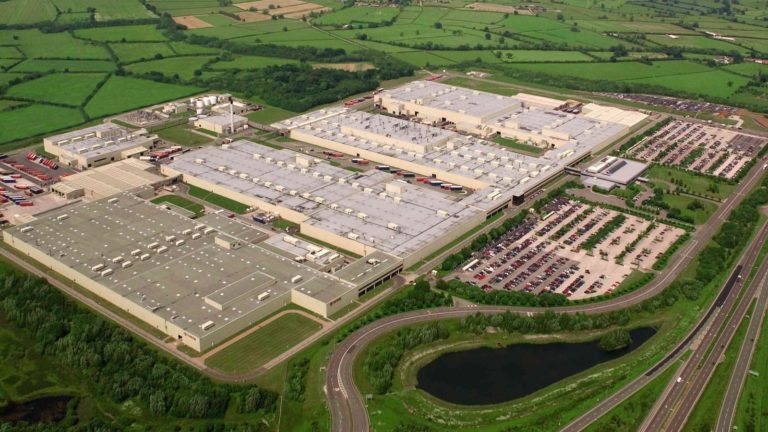
Toyota built its 4.5 millionth car in Britain last week, with the landmark model (a 1.8-litre Corolla) rolling off the production line at its Derbyshire plant on Friday.
Production resumed at the factory on May 26 following Covid-19-related shutdowns, with Toyota implementing revised health and safety procedures at its locations.
At its full capacity, the facility in Burnaston – south-west of Derby – produces a car every 89 seconds. That equates to an average of 3,000 cars per week and 150,000 cars per year.
Toyota says about 90% of the cars produced in Burnaston are exported to overseas markets, particularly Europe. To highlight the point, the landmark Corolla was a left-hand-drive model destined for Poland.
Jim Crosbie, Toyota Manufacturing UK (TMUK) managing director, said: “Seeing our 4.5 millionth car come off the line gives everyone at TMUK a sense of pride in what we have achieved in almost 30 years of high-quality manufacturing.
“It also symbolises the great commitment and team spirit of all our members to overcome the challenges we have faced and secure our future as a competitive and highly efficient business.”
Burnaston was the first Toyota manufacturing centre in Europe when it opened in 1992. Today, it is the European production centre for the Toyota Corolla Hatchback and Touring Sports models, and employs more than 3,100 people.
A timely reminder for British politicians
Despite the current preoccupation with the coronavirus pandemic, the issue of Britain’s future relationship with the EU remains a big headache for the British car industry.
While some car manufacturers and industry lobbyists have been very keen to tell the media that a no-deal trading relationship would be catastrophic, Toyota has publicly remained very low-key. It prefers to talk up the great job that its workers in Burnaston do rather than threatening to leave every couple of months. But this week’s announcement carried a pointed message for our politicians: 90% of all Corollas that roll off the Burnaston production line – including car number 4,500,000 – are built for export.
With the government still threatening to walk away from any potential agreement with the EU, and also considering a scrappage allowance for electric vehicles (despite most electric vehicles being imported rather than built locally), Toyota is making the point that the local car industry plays a key role in the overall British economy. Is anyone in Westminster listening? Stuart Masson, Editor
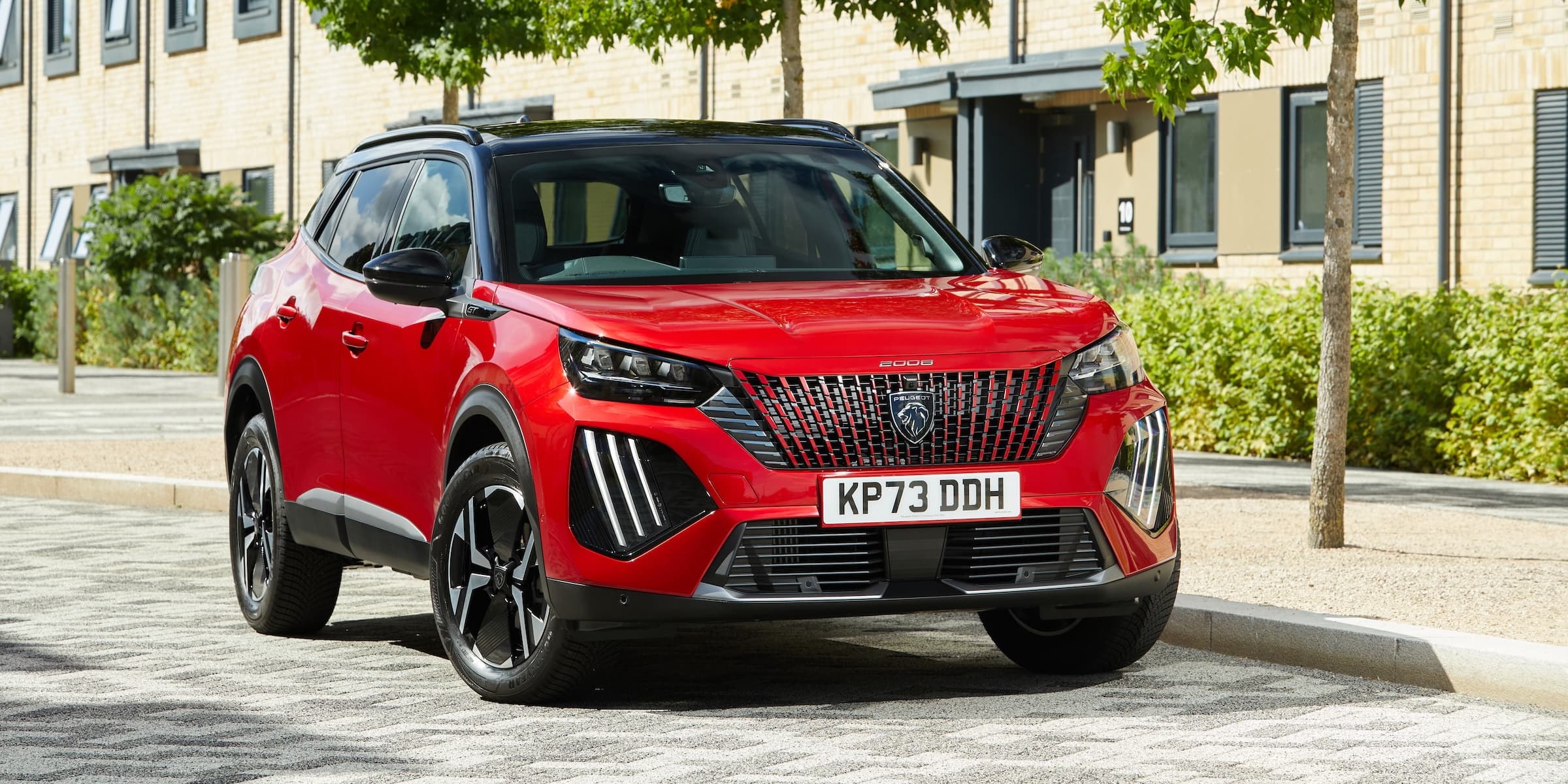
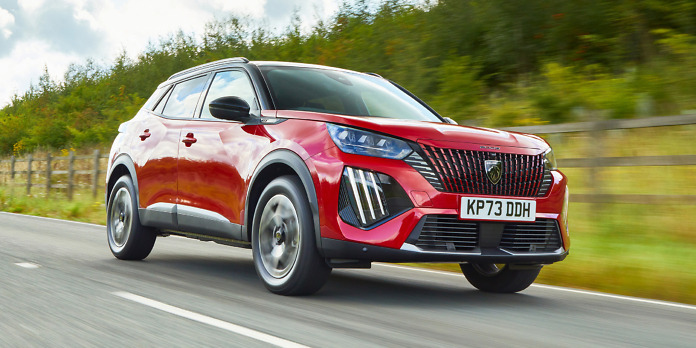
The Peugeot 2008 is a small SUV/crossover, based on the new Peugeot 208 supermini hatchback. The current model was launched in late 2019 and arrived in UK showrooms in February 2020.
The new 2008 is also available with an electric motor in a model called the E-2008, which is rated separately to the regular 2008 models.
Media review scores for the 2008 so far have been generally average, with praise for its design and overall quality. However, some titles have criticised its price as too expensive compared to rivals, while low-spec models miss out on some safety kit and therefore only get a four-star safety rating.
As of September 2025, the Peugeot 2008 has a New Car Expert Rating of B, with a score of 64%. It gets good grades for its low running costs and CO2 emissions, and good reliability record. However, safety and media review scores are only average, while Peugeot’s new car warranty offering is pretty much the bare minimum you’ll get from any manufacturer.
Entry-level models miss out on the best safety kit
Distinctive dashboard design not universally popular
More expensive than many rivals
Key specifications
Body style: Small SUV/crossover Engines: petrol, diesel Price: From £28,790 on-road
Launched: Winter 2019/20 Last updated: Summer 2023 Replacement due: TBA
Image gallery
Media reviews
Highlighted reviews and road tests from across the UK automotive media. Click any of the boxes to view.
Featured reviews
“If you’re looking for a small SUV that’s a bit more interesting than most of the near-identical models on the market, you’ll no doubt be swayed by the brilliant styling of the Peugeot 2008 – inside and out. The fact it backs it up with a great driving experience and decent practicality means it’s certainly worthy of your attention.”
Model reviewed: 1.2-litre petrol manual 130hp GT Line
Model reviewed: Range overview Score: 8 / 10 “Building on a recent run of form from Peugeot, the new 2008 inherits the sharp design language that’s made such a success of its 3008 big brother. The 2008’s combination of style and the choice of powertrains is impressive, likewise its user-friendly controls, practicality and excellent ride.” Read review
Car
Model reviewed: Range review Score: 8 / 10 “With an appealing engine range and decent dynamics, the polished 2008 is among the best B-SUVs.” Read review
Car Keys
Model reviewed: 1.3-litre petrol manual GT Line Score: 8 / 10 “Most will be drawn to the Peugeot 2008 for its stunning looks and impressive interior, but this is more than a one-trick pony, being good to drive and brimmed with technology. It’s not the most comfortable or spacious option, but the 2008 is still a great choice and a worthy crossover that should be on your shopping list. Read review
Carbuyer
Model reviewed: Range overview Score: 8.2 / 10 “The Peugeot 2008 is a striking crossover with a great interior that offers more space than the equivalent supermini.” (Richard Ingram) Read review
Carwow
Model reviewed: Range overview Score: 9 / 10 “The Peugeot 2008 is an SUV you can buy with your heart and your head. It looks cool, is cheap to run, easy to drive and has a big boot. But it’s a shame the back seats aren’t roomier.” Read review
Company Car Today
Model reviewed: 1.2-litre petrol automatic GT “The 2008 is a very credible next step for Peugeot in a rapidly growing segment, bringing the small crossover in line with the improvements seen on the 3008, 5008 and 508 models in particular.” Read review
Daily Mirror
Model reviewed: 1.5-litre diesel manual GT Line Score: 8 / 10 “The quiet and refined Peugeot 2008 is very good looking and quiet on the motorway with little wind or engine noise – and can give you up to 62mpg.” Read review
Fleetworld
Model reviewed: Range overview Score: 8 / 10 “The previous Peugeot 2008 did well in fleet and the new car deserves to do even better. Great to drive and look at, practical and the e-2008 will be an asset moving forward.” Read review
Heycar
Model reviewed: Range overview Score: 8 / 10 “The Peugeot 2008 will be right up your street if you find the SUVs from Skoda, SEAT and Volkswagen about as exciting as a weekend away at an accountancy convention. The Peugeot oozes with brio from its striking exterior to its high-tech interior.” Read review
Honest John
Model reviewed: 1.2 Puretech 130 “We really like the new Peugeot 2008. It’s a massive improvement on the outgoing model, and now up there with the best in the segment. Its interior is superb, it’s very practical and there’s an engine for everyone. The catch? That’ll be the price, with entry-level cars starting £20,150 at higher-spec models reaching more than £30,000.” Read review
Model reviewed: Range overview “Peugeot’s answer to the SEAT Arona and Nissan Juke, the 2008 looks like a smaller version of the 3008 and, along with petrol, diesel and electric power.” Read review
Motoring Research
Model reviewed: Range overview Score: 8 / 10 “One of the best compact crossovers.” Read review
Parkers
Model reviewed: Range overview Score: 8.8 / 10 “Second-gen 2008 turns on the style and tech” Read review
The Sun
Model reviewed: 1.2-litre petrol manual GT Line “Peugeot is back on form with new 2008 GT-Line – it’s sharp, spacious and refined.” Read review
The Sunday Times
Model reviewed: Range overview Score: 8 / 10 “Not like the other small SUVs, and all the better for it” Read review
The Telegraph
Model reviewed: 1.2-litre petrol manual GT Line Score: 6 / 10 “The real issue with the Peugeot 2008 is how much it costs, either to buy or to finance. Which is a shame, because in this form, the 2008 is a great car to drive, buoyed up by a terrific engine, enjoyable handling, and a comfortable, composed way of dealing with lumps and bumps in the road.” Read review
Top Gear
Model reviewed: Range overview Score: 7 / 10 “Small SUVs launch in abundance but thanks to electric power and great interior tech, this is among the most interesting.” Read review
Model reviewed: 1.2-litre petrol automatic GT Score: 6 / 10 “The GT is the best Peugeot 2008 on paper, but you’ll save some money and get a better ride if you venture back down the price list. If you really must have family practicality mixed with a hint of sportiness, you could always get yourself a nice estate. Y’know, one of those cars that people used to buy.” Read review
Safety rating
Independent crash test and safety ratings from Euro NCAP
Note on safety rating The entry-level ‘Active’ and ‘Active Premium’ Peugeot 2008 models miss out on some of the more advanced collision-avoidance technology that is included on more expensive models, which means they only get a four-star rating from Euro NCAP. This particularly affects the Vulnerable Road Users and Safety Assist ratings above, rather than the Adult Occupant and Child Occupant scores.
The ‘Allure’ and ‘GT-Line’ models get a five-star rating, although some advanced safety equipment is still optional. Only the top-spec ‘GT’ model gets the car’s full complement of safety equipment as standard.
Eco rating
Independent economy and emissions ratings from Green NCAP
No eco rating
As of September 2025, the Peugeot 2008 has not been lab tested by Green NCAP. If and when the Peugeot 2008 is tested, we’ll publish the results here.
Running cost rating
Monthly cost of ownership data provided exclusively for The Car Expert by Clear Vehicle Data
Fuel consumption
Average
Score
Petrol models
49 mpg
C
Diesel models
62 mpg
A
Hybrid models
56 mpg
B
CO₂ output
Average
Score
Variation
Score
Petrol models
118 g/km
B
Diesel models
118 g/km
B
Hybrid models
114 g/km
B
Insurance group
Average
Score
Variation
Score
All models
15
A
Service and maintenance
Cost
Score
Year 1
£176
B
Year 2
£523
B
Year 3
£782
B
Year 4
£1,023
B
Year 5
£1,407
B
Overall
£3,911
B
The Peugeot 2008 should be a relatively affordable car to own and run, according to whole-life cost data provided exclusively to The Car Expert by our technical partner, Clear Vehicle Data.
The petrol models are only average for fuel consumption, which is not as good as some small SUV rivals. The hybrid and (now discontinued) diesel versions are better.
Insurance ratings are in some of the lowest groups, so your annual car insurance premium should be low, while servicing and maintenance costs over the first five years are decent for this category of car.
Reliability rating
Reliability data provided exclusively for The Car Expert by MotorEasy
Total claims: 141 Average repair cost: £410.75 Last updated: April 2025
As of April 2025 (our most recent data point), the Peugeot 2008 is above-average when it comes to reliability with a score of 76%, according to extended warranty data provided by our commercial partner, MotorEasy. This covers both the current (2019 onwards) model and earlier generations.
The average repair cost is also about average at about £400.
The most common problems reported for the Peugeot 2008 refer to the car’s suspension. While the average repair costs for these are reasonable, it’s worth noting that the average repair bill for engine problems is much more expensive £1,200.
Make sure that any used car warranty you are purchasing covers all of these potential problem areas.
Warranty rating
New car warranty information for the Peugeot 2008
Overall rating
E
17%
New car warranty duration
3 years
New car warranty mileage
60,000 miles
Peugeot’s new car warranty is pretty much the bare minimum offered in the UK, with a duration of three years and a limit of 60,000 miles. Other rivals in the price bracket do better (and in some cases, much better).
In addition to the standard new car warranty, hybrid versions of the 2008 have an eight-year/100,000-mile warranty for the battery components.
Warranty on a used Peugeot 2008
If you are purchasing an ‘Approved Used’ 2008 from an official Peugeot dealership, you will get a minimum six-month warranty included.
If you are buying a used 2008 from an independent dealership, any warranty offered will vary and will probably be managed by a third-party warranty company.
If you are buying a used 2008 from a private seller, there are no warranty protections beyond any remaining portion of the original new car warranty.
If you’re looking to buy a used car that is approaching the end of its warranty period, a used car warranty is usually a worthwhile investment. Check out The Car Expert’s guide to the best used car warranty providers, which will probably be cheaper than a warranty sold by a dealer.
Date: March 2024 Recall number: R/2024/135 Model types: All Build dates: 01/2022 to 10/2022 Number of vehicles affected: 377 Defect: Below 12,500 miles, under certain conditions, engine emissions may lead to non-compliance with regulatory requirements. Remedy: Check the mileage of the vehicle and update the ECU (engine control unit) calibration on vehicles below 12,500 miles.
Date: May 2023 Recall number: R/2023/140 Model types: All Build dates: 11/2019 to 10/2022 Number of vehicles affected: 29,537 Defect: The AC compressor stator wiring could develop a fault, leading to current loss inside the AC compressor that could result in a vehicle powertrain shutdown when driving. Remedy: Reprogram the Powertrain Diagnosis ECU with updated software.
Date: December 2020 Recall number: R/2020/356 Model types: All Build dates: 10/2019 to 09/2020 Number of vehicles affected: 773 Defect: There may be a defect in the operation of the urea injector, which may become blocked, leading to NOX emissions exceeding regulatory limits. Remedy: Update the ECU software to avoid the blockage of the urea injector.
As of September 2024 (our most recent data point), there have been three DVSA vehicle safety recalls on the current-generation Peugeot 2008 to address different issues.
Not all vehicles are affected by recalls. You can check to see if your car is included in any of the above recalls by visiting the DVLA website or contacting your local Peugeot dealer.
If your car is affected by a recall, the vehicle must be repaired and you should not be charged for any work required. If you are buying a used 2008, you should insist that any outstanding recall work is completed before you take delivery of the vehicle.
SEAT has given its Ateca SUV a mid-life refresh, bolstering its appeal with an updated look and more technology than before.
First released in 2016, the Ateca was one of the firm’s first SUV models and has now been joined by Tarraco and Arona models. Popular from the off, more than 300,000 units have been sold since it first launched – with 35,000 in the UK alone.
Now, it’s been updated for 2020. Redesigned front and rear bumpers add an extra 2cm of length, but width and all interior dimensions are unchanged. A new front grille has been added, while the full-LED headlamps have been refreshed in terms of design too.
Around the back, the Ateca gets dynamic ‘sweeping’ indicators and new exhaust pipe covers. One of the most notable touches is the inclusion of the Ateca nameplate in a handwriting-style font, similar to that seen on the new Leon.
A new trim level has been added too. Xperience – which replaces the previously top-spec Xcellence specification – brings black front and rear bumpers along with body-coloured wheel arch surrounds and aluminium effect side mouldings.
Inside, the infotainment system – available with either eight-inch or nine-inch screens – has been upgraded and repositioned for easier use. The steering wheel has also been given a new look. A new voice recognition has been fitted, which can be woken by the driver saying ‘hola hola’ to it. Apple CarPlay and Android Auto are both included as standard too.
A new cold-weather windscreen heating system has been incorporated too. It sees the screen coated in an invisible layer which allows it to be defrosted almost immediately.
The Ateca’s safety levels have been bolstered too thanks to the inclusion of a range of new driver assistance systems such as predictive adaptive cruise control, pre-crash assist and an updated emergency assist which can bring the car to a complete stop if it deems the driver unresponsive.
Five petrol engines will be available with the Ateca, starting off with a turbocharged 1.0-litre unit, through a 1.5-litre powerplant and ending with a 2.0-litre engine with all-wheel-drive.
There’s just one diesel available – a 2.0-litre unit – though it’s available in two states of tune, and can be linked to either a six-speed manual or DSG dual-clutch automatic gearbox.
Nip and tuck for popular SEAT Ateca
The SEAT Ateca has been popular with both customers and critics over the last four years. It currently holds an Expert Rating of 78% based on 18 UK reviews that we’ve analysed, which isn’t quite best-in-class but is still one of the better mid-size crossover models available.
We’ll have to wait and see exactly what UK pricing and specification look like closer to the updated Ateca’s arrival, but hopefully the upgraded safety kit finds its way into the base models as standard rather than being reserved for higher-spec cars or only available for extra cost. Presumably, there’ll be an updated Cupra Ateca performance version appearing shortly as well. Stuart Masson, Editor
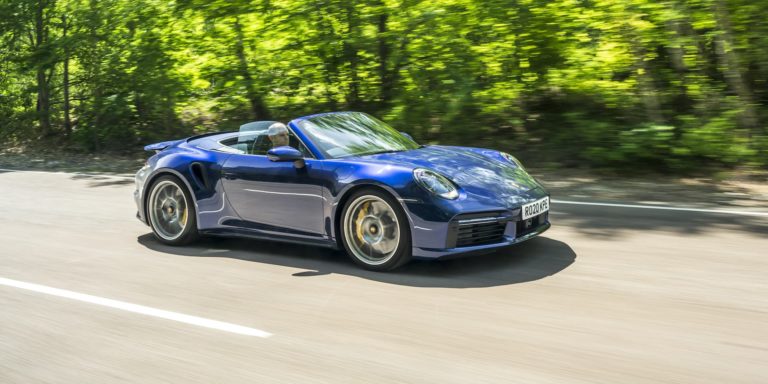
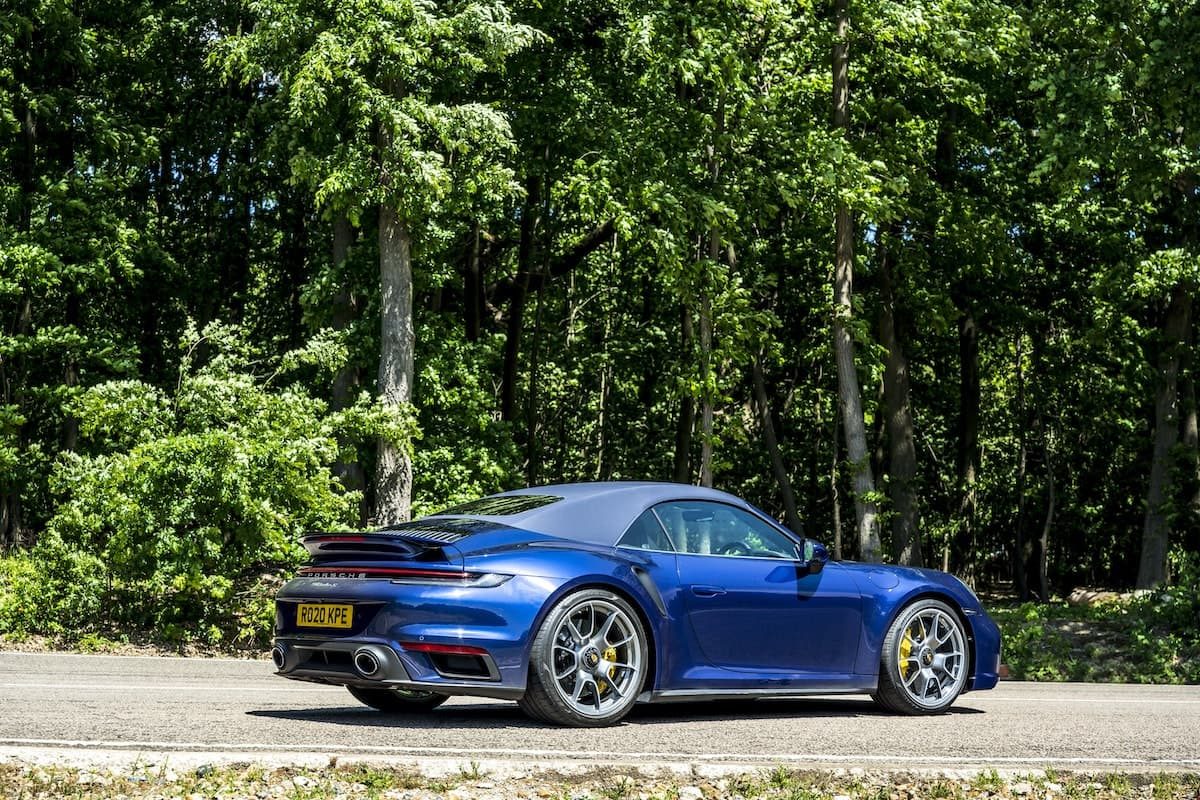
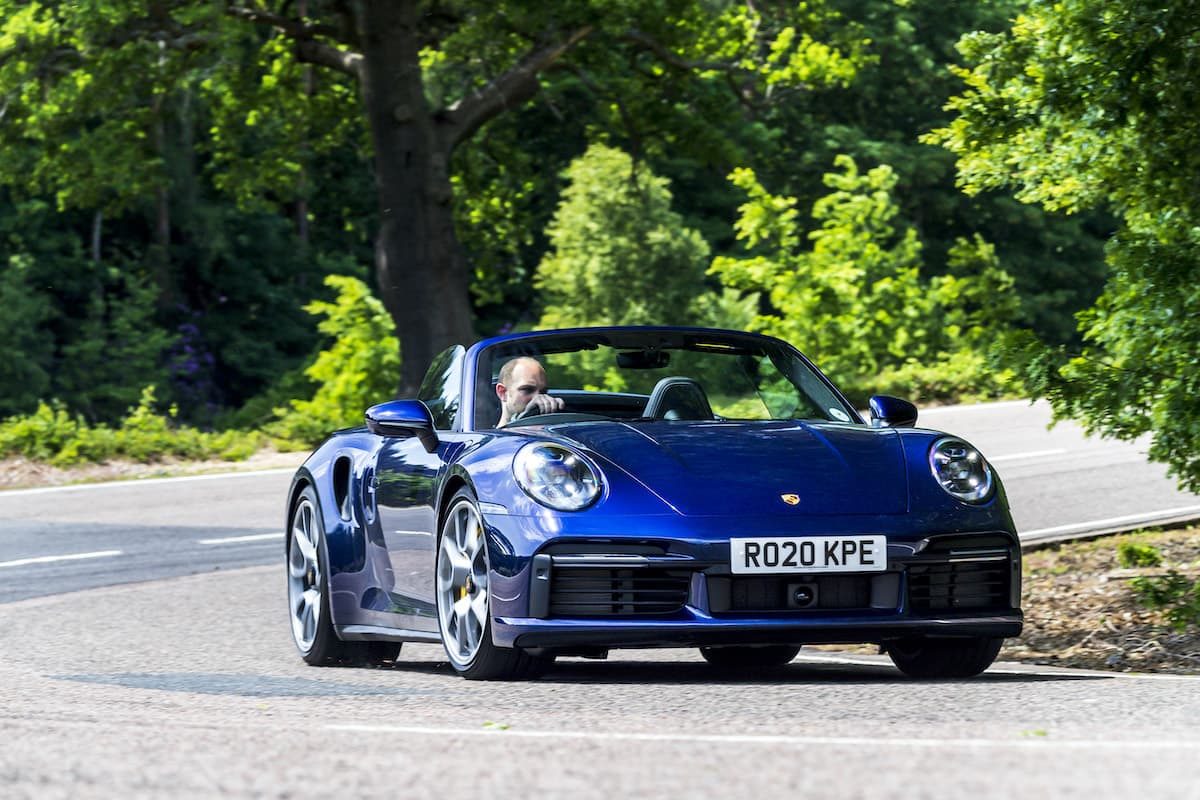
This is the Porsche 911 Turbo S – the biggest, baddest 911 you can buy right now. The Turbo name has long been synonymous with being the ultimate incarnation of this famous sports car outside of the more racey GT models, but with this generation, Porsche has ramped the lunacy up to 11. Its performance figures are frankly astonishing.
The question it has to answer is this: What’s the point of the Turbo S? Now that all Porsche models have turbocharged engines the name merely denotes a model variant rather than a stand out mechanical feature, and at well north of £150k it’s competing with arguably more exotic machinery in the form of the Audi R8 and McLaren 570S.
Also, do you really need 650hp? The appeal of non-GT 911s is their ability to be fast but also commutable. You could buy a still-fast 911 Carrera 4S and get a Porsche Cayman for the weekends for the price of one 911 Turbo S.
And that’s all before we mention the electric Taycan, which is slightly less expensive but even more violent in its acceleration, but with none of the environmental guilt. There’s a lot to unpack here, so let’s dive in.
Aside from the engine, which we’ll go into detail on below, the most significant change is perhaps the size. Even Porsche says it’s ‘significantly’ larger than before, being almost 5cm wider above the front axle and 2cm wider at the rear to allow for a wider track to improve handling.
Other changes designed to improve the way the car drives include improved aerodynamics, mixed-size tyres for the first time, the option of Porsche Active Suspension Management that improves handling and lowers the car by a centimetre, and a sports exhaust system with adjustable flaps to control the sound.
How does it look?
There’s been a long-standing joke that the Porsche 911 looks the same every time it gets updated, but with its position as one of the most popular sports car ever made, if it ain’t broke, don’t fix it. Taken at face value the idea that this car is understated is hilarious, with its massive rear arches and prominent brake calipers making it clear there’s performance on tap. But compared with exotic rivals in this price and performance point it definitely flies under the radar, giving it a different appeal to the likes of the Audi R8 and McLaren 570S.
Drink in the details though, and the relative subtlety has to be admired. Up front there are wider intakes that contribute to a more purposeful look, while prominent intakes in the rear wheel arches that are visible in the wing mirrors are a nicely aggressive touch to set the 911 Turbo S out from the rest of the range. And while the front end might be subtle there’s no denying the rear is more aggressive, with a prominent spoiler, chunky vents and a quad-exit exhaust.
What’s the spec like?
Prices for the 911 Turbo S start at £155,970 or £165,127 for this Cabriolet we’re driving. Standard equipment includes 20-inch alloy wheels up front and 21-inch at the rear, Porsche’s various stability and chassis control systems, ceramic composite brakes, active aerodynamics, a Bose surround sound system, a subscription-based tracking system, LED headlights, cruise control, adaptive sports seats and two-zone climate control.
Our test car came with a long list of optional extras that took the price up to £178,414 and included highlights such as sport suspension (£1,052) that lowers the ride by 10mm, sports exhaust (£2,180), ‘Exclusive Design’ wheels (£1,608), adaptive cruise control (£1,203) and the Burmester surround sound system (£2,256).
What’s it like inside?
It’s exquisitely Porsche inside, feeling enclosed without being claustrophobic. It’s ergonomically brilliant, with everything falling to hand as it should and there’s just the right combination of physical buttons and touchscreen controls too.
The materials are excellent as well, and the infotainment screen is clear and easy to use. Once you get used to seeing it, even the odd stubby gear lever becomes normal. Naturally, being a 2+2 rather than a strict four-seater means those in the back will struggle for leg room, but this being a serious sports car it’s difficult to mark it down for that.
What’s under the bonnet?
Performance comes from a rear-mounted 3.8-litre petrol engine, which is based on the existing 911 unit but with an extensive performance-focused overhaul. It gets a new charge air cooling system, new larger turbochargers and new injectors, as well as an updated intake system that improves airflow to the engine while creating less resistance.
The result is astonishing. Pin the throttle and there’s a momentary lag in response before the engine comes alive and catapults you forward. The engine note isn’t the sweetest but it’s all-encompassing and really adds to the attack on the senses this car provides.
With 650hp and 800Nm of torque going to all four wheels, Porsche quotes a 0-124mph time of just 8.9 seconds – and that’s entirely believable. The surge in speed is incredible and it accelerates harder as the speed increases. Honestly? It’s too much for the road, but it’s an engineering marvel and the kind of performance you just have to keep tapping into again and again.
What’s it like to drive?
The unique selling point of the Porsche 911 has always been its ability to soak up daily duties with ease while also being great fun to point down a twisty road, and that’s still true here despite its ludicrous performance.
Drop into the familiar surroundings and the engine feels perfectly happy to pootle around town at 30mph, with no juddering or a sense it would prefer to be at higher revs. There are some concessions to performance though, with the ride becoming quite jiggly on rougher roads, while the fact it’s so wide can make it a little intimidating on narrow streets or country lanes.
When you’re making the most of the performance, though, it comes alive. If you want a car that’s light and agile down a British B road then the 911 Turbo S is not the right car, especially in Cabriolet form as we’re testing here. It feels heavy and the front end isn’t as eager to turn in as you’d hope. But take it easy in the corners and unleash that six-cylinder engine when the road opens up and you’ll get a grin from ear to ear.
Verdict
There’s no denying that the Porsche 911 Turbo S Cabriolet is a highly desirable sports car. It treads a fine line between being understated compared to its rivals while also making it clear it’s a serious performance car… while also combining everyday practicalities with the kind of pace you couldn’t buy for any money a few decades ago.
It’s ridiculously capable in corners, but it’s so big, heavy and insanely fast that for most mere mortals extracting that performance will require an overdose of brave pills. For those looking for the ultimate ‘driver’s car’, a GT3 RS would be a better option – though we’re yet to see the latest 992-generation version of this. But for those who will happily sacrifice a little agility and focus of purpose in favour of warp-speed performance then look no further.
Peugeot has refreshed its popular 308 hatchback for 2020, offering a new colour, exterior design options, an updated interior and the latest generation of engines.
Also available in ‘SW’ estate form, the updated 308 gets some new exterior design choices such as a Vertigo Blue paint job, while the Allure trim gets a new 16-inch alloy wheel option. Top trim levels get a new 18-inch alloy wheel design and a black pack, which changes most of the chrome trim to gloss black.
Peugeot’s i-Cockpit digital instrument cluster will be fitted as standard. It also gets a ten-inch infotainment screen with updated graphics and a capacitive touch screen that ‘follows the example of the latest generation of smartphones’.
There are three engine options available with a combination of power outputs and gearboxes. The 1.2-litre petrol is available with 110hp and a six-speed manual transmission, or 130hp with the choice of manual or an eight-speed automatic.
A 1.5-litre diesel can be had with 100hp and the manual, or 130hp and a choice between manual and automatic.
The 308 GTI completes the engine and trim line-ups, using a 1.6-litre petrol engine that makes 260hp and 340Nm of torque.
Peugeot says it has sold over 1.5 million units of the latest 308 generation, and will be hoping these updates continue its success. It will be available through showrooms and Peugeot’s Buy Online service.
The Volkswagen Touareg is a large SUV, which is the largest model in the VW family. It sits above the Tayron, which is a seven-seat SUV compare3d to the Touareg’s five seats, but the Touareg is a heavier-duty model with better off-roading capability.
The current model is the third generation, which was launched in 2018. Like previous Touaregs, it shares much of its componentry with the Audi Q7 and Porsche Cayenne – and all are built on the same production line in Slovakia.
A higher-performance plug-in hybrid model called the Touareg R was launched in early 2020, which is not covered here.
The Volkswagen Touareg has received mixed reviews from the UK media, varying from average to very good and with contrasting opinions regarding the car’s comfort and value for money.
Volkswagen has announced that the current Touareg will be the last one, and that it will end production for UK sales in 2027. It intends to leave the Tayron as its largest SUV model from this point onwards.
As of October 2025, the Volkswagen Touareg holds a New Car Expert Rating of E, with a score of 52%. Its best scores are only average, with C grades for its safety rating and media reviews. However, its CO2 emissions and reliability record are poor, while its running costs are very high and Volkswagen’s new car warranty offering is one of the worst in the UK new car market.
“The Volkswagen Touareg is a large premium SUV with a spacious cabin, a practical boot and a bang-up-to-date infotainment system, but it still doesn’t feel as posh inside as some alternatives.”
Model reviewed: 3.0-litre diesel automatic SEL Tech “The Volkswagen Touareg might represent somewhat of an old guard of SUVs, but it’s still a wonderfully well-rounded choice in the segment. It’s comfortable, practical and well-styled while also being exceptionally well-appointed inside.” Author: Jack Evans Read review
Auto Trader
Model reviewed: Range overview Score: 8 / 10 “The third-generation Volkswagen Touareg is quiet and smooth on the road, and comes with an impressively powerful engine and lots of advanced technology. A modern look and roomy cabin should make it popular with business and family buyers alike, even if it lacks the option of seven seats.” Read review
Car
Model reviewed: Range review Score: 6 / 10 “Minor changes from the 2023 facelift kept the Volkswagen Touareg in the game, but it’s struggling to keep pace with newer plug-in rivals. The cabin remains spacious and well built, and it’s still a superb long-distance cruiser with a healthy towing capacity. However, the base model’s ride can feel brittle on steel springs, and the plug-in hybrid versions now look dated compared to rivals boasting much longer EV ranges and lower tax bills.” Author: Alan Taylor-Jones, Keith Adams Read review
Car Keys
Model reviewed: 3.0-litre diesel automatic R-Line Tech Score: 9 / 10 “This third generation of the Volkswagen Touareg is a very capable car and despite its chassis siblings being particularly excellent, the Volkswagen holds its own – even if the Audi Q7 is only marginally more expensive.” Read review
Carbuyer
Model reviewed: Range overview Score: 8 / 10 “The Volkswagen Touareg has a superb interior and lots of convenience and safety-boosting technology, but it’s not a thrilling drivers’ car.” (Ben Custard) Read review
Company Car Today
Model reviewed: 3.0-litre diesel automatic R-Line Tech “The new Volkswagen Touareg is rightly described as the pinnacle by VW, and it drives nicely, looks great and is packed with technology at the higher trim levels. But it’s also not cheap, and efficiency is an issue as it sits in the maximum BIK band.” Read review
Evo
Model reviewed: 3.0-litre petrol automatic R-Line Score: 6 / 10 “The Volkswagen Touareg isn’t for the fashion-conscious SUV buyer, and what its new V6 petrol engine offers in refinement and pace, it loses in thirst.” Read review
Honest John
Model reviewed: Range overview Score: 8 / 10 “Despite its gargantuan size, the Volkswagen Touareg feels surprisingly light-footed at slow speeds – the optional four-wheel steering giving it the same turning circle as a VW Golf. This means it’s easy to guide this large SUV into a parking bay or driveway.” Read review
Model reviewed: 3.0-litre diesel automatic “The Volkswagen Touareg comes with all-wheel steering to make it feel more agile around town, while trick active roll compensation means it remains remarkably composed in bends. It’s not as fun to drive as the Porsche Cayenne, obviously, but you could easily forget you’re driving a two-tonne SUV.” Read review
Motoring Research
Model reviewed: Range overview Score: 8 / 10 “When you consider the company it keeps, the Volkswagen Touareg is a bit of a bargain.” Read review
Parkers
Model reviewed: Range overview Score: 8.4 / 10 “Impressively luxurious full-size SUV majors on comfort and tech” Read review
The Sun
Model reviewed: 3.0-litre diesel automatic R-Line “Dashing new VW Touareg finally catches the eye after 16 years of ‘ordinary’” Read review
Model reviewed: 3.0-litre diesel automatic “In the company of the Porsche Cayenne, Bentley Bentayga and Audi Q7, you might think the Volkswagen Touareg would wilt — but instead it pretty much rules the roost.” Read review
The Sunday Times
Model reviewed: 3.0-litre diesel automatic R-Line Tech Score: 8 / 10 “If you’re not too picky about the badge on the front, the Volkswagen will do very nicely. It may have triggered a fit of boredom in Jeremy Clarkson, but it’s still a very nice car.” Read review
The Telegraph
Model reviewed: 3.0-litre petrol automatic SEL Score: 6 / 10 “The Volkswagen Touareg was already immensely spacious and decent value; with this new engine, it’s genuinely fast, and sounds rather pleasing into the bargain. But that isn’t quite enough to make it feel special enough to tempt you away from its more expensive rivals.” Read review
Model reviewed: 3.0-litre diesel automatic R-Line Tech Score: 8 / 10 “Volkswagen set out to make the Touareg its most sophisticated and technically advanced car yet, and has delivered. Smooth and powerful to drive, luxuriously refined and with a standout interior, the Touareg has a wow factor that could see it stealing sales from more upmarket rivals.” Read review
Top Gear
Model reviewed: Range overview Score: 8 / 10 ““VW’s flagship SUV is a strong all-rounder and hugely capable both on- and off-road, but it’s no cheaper than its premium badged rivals.” Read review
Model reviewed: Range review Score: 6 / 10 “Definitely worth considering though, if you want a big, high-quality SUV and want to slip past largely unnoticed.” Read review
Safety rating
Independent crash test and safety ratings from Euro NCAP
The Volkswagen Touareg was tested by Euro NCAP back in 2018 and awarded a five-star rating. However, this rating expired in January 2025 and is no longer valid as the car no longer meets the standards required for such a rating. This is normal practice, as Euro NCAP reviews its ratings on most cars annually with most ratings expiring after about six or seven years.
Although the rating has now expired, the score is still useful if you are comparing a used Touareg to vehicles of similar age – whose ratings will have probably also expired.
Eco rating
Independent economy and emissions ratings from Green NCAP
No eco rating
As of October 2025, the Volkswagen Touareg has not been lab tested by Green NCAP.
If and when the Touareg is tested by Green NCAP, we’ll publish the results here.
Running cost rating
Monthly cost of ownership data provided exclusively for The Car Expert by Clear Vehicle Data
Fuel consumption
Average
Score
Petrol models
26 mpg
E
Diesel models
34 mpg
D
CO₂ output
Average
Score
Variation
Score
Petrol models
251 g/km
E
Diesel models
215 g/km
D
Plug-in hybrid models
51 g/km
A
Battery range
Average
Score
Variation
Score
Plug-in hybrid models
32 miles
E
Insurance group
Average
Score
Variation
Score
All models
44
E
Service and maintenance
Cost
Score
Year 1
£342
D
Year 2
£846
D
Year 3
£1,397
D
Year 4
£1,721
E
Year 5
£2,243
D
Overall
£6,549
D
The Volkswagen Touareg is a relatively expensive car to own and run, according to whole-life cost numbers provided exclusively to The Car Expert by our data partner, Clear Vehicle Data.
Fuel economy is disappointing for both petrol (now discontinued) and diesel models, though the latter will carry you a few extra miles per gallon. We don’t yet have independently verified fuel consumption for the plug-in hybrid models.
Insurance premiums are around the market average, while servicing and maintenance costs should be relatively affordable, though slightly on the expensive side.
Reliability rating
Reliability data provided exclusively for The Car Expert by MotorEasy
Total claims: 197 Average repair cost: £808.72 Last updated: April 2025
The Volkswagen Touareg has a poor reliability score of 36%, according to exclusive extended warranty data provided to The Car Expert by our partner MotorEasy. This score covers both the current-generation model and previous (pre-2018) models).
The most commonly reported problems to date have been engine-related, which are also the most expensive with an average repair bill of more than £1,400. Also common are electrical system problems, although these are much cheaper to fix with an average bill of just £300.
Given the below-average reliability score and potentially expensive bills, make sure any extended warranty cover you purchase for a Volkswagen Touareg covers all of these potential problem areas.
Warranty rating
New car warranty information for the Volkswagen Touareg
Overall rating
E
15%
New car warranty duration
3 years
New car warranty mileage
60,000 miles
Battery warranty duration
0 years
Battery warranty mileage
0 miles
Volkswagen’s new car warranty is pretty much the bare minimum offered by car manufacturers in the UK, and worse than some rival brands in a similar price bracket as the Touareg. The duration is three years, with a limit of 60,000 miles, which is pretty basic. Some rivals offer up to seven years of cover.
In addition to the standard new car warranty, the Touareg plug-in hybrid version has an eight-year/100,000-mile warranty for the battery components.
Warranty on a used Volkswagen Touareg
If you are buying an ‘Approved Used’ Volkswagen Touareg from an official Volkswagen dealership, you will get a minimum 12-month warranty included.
If you are buying a used Volkswagen Touareg from an independent dealership, any warranty offered will vary and will probably be managed by a third-party warranty company.
If you are buying a used Volkswagen Touareg from a private seller, there are no warranty protections beyond any remaining portion of the original new car warranty.
If you’re looking to buy any used car that is approaching the end of its warranty period, a used car warranty is usually a worthwhile investment. Check out The Car Expert’s guide to the best used car warranty providers, which will probably be cheaper than a warranty sold by a dealer.
Recalls
Official DVSA safety recalls that have been issued for the Volkswagen Touareg
2023
2021
2020
2019
2018
Date: December 2023 Recall number: R/2023/356 Model types: All Build dates: 08/2023 to 10/2023 Number of vehicles affected: 89 Defect: The side airbag fitted in the seat (front left) may not have been correctly secured onto the seat frame. Remedy: Inspect the side airbag unit and, where necessary, remove and correctly reinstall the side airbag.
Date: October 2021 Recall number: R/2021/391 Model types: All Build dates: 01/2019 Number of vehicles affected: 209 Defect: If the rear lid is opened and manually pushed up too far, the electric spindle drive can suddenly separate and expand. Remedy: The drive unit(s) for the rear lid are to be checked and, if within the affected range, replaced.
Date: June 2021 Recall number: R/2021/391 Model types: All Build dates: 09/2020 to 11/2020 Number of vehicles affected: 87 Defect: Nuts of deviating material quality were fitted in the bolted connection of the right and left transverse link on the bottom of the multi-link rear axle. Remedy: The nuts of the right and left transverse link on the bottom of the multi-link rear axle will be replaced.
Date: May 2020 Recall number: R/2020/132 Model types: All Build dates: 09/2019 to 11/2019 Number of vehicles affected: 255 Defect: A welded connection of the gearbox oil pipe can cause a leak of gear oil. Remedy: Check whether the gearbox oil pipe is within the affected production period. If this is the case the pipe is replaced.
Date: March 2020 Recall number: R/2020/079 Model types: All Build dates: 04/2018 to 01/2019 Number of vehicles affected: 22 Defect: The bolted connection between the steering shaft and the steering rack may not have been tightened to the correct torque. Remedy: The bolted connection of the intermediate steering shaft has to be replaced.
Date: February 2019 Recall number: R/2019/064 Model types: All Build dates: 12/2018 Number of vehicles affected: 10 Defect: A casting process error may affect the rigidity of the front shock absorber fork. Remedy: Replace the affected shock absorber forks.
Date: November 2018 Recall number: R/2018/334 Model types: All Build dates: 08/2018 to 10/2018 Number of vehicles affected: 110 Defect: The seat belt buckle holder of the right rear seat may not meet specification. Remedy: Check and replace seat belt buckle assembly.
As of September 2024 (our most recent data point), there have been seven DVSA vehicle safety recalls on the Volkswagen Touareg to address different issues.
Not all vehicles are affected by recalls. You can check to see if your car is included in any of the above recalls by visiting the DVLA website or contacting your local Volkswagen dealer.
If your car is affected by a recall, the vehicle must be repaired and you should not be charged for any work required. If you are buying a used Touareg, you should insist that any outstanding recall work is completed before you take delivery of the vehicle.
The Abarth 595 was a performance model based on the Fiat 500 city car. It was available in either hatchback or cabriolet (Abarth 595C) body styles.
First launched way back in 2007, it was given a substantial update in 2015 and continued on sale through until 2024 before finally ending production.
The petrol versions of the Abarth 500 (the 595 and 695) were very different to the much newer Abarth 500e electric model. The 500e is a completely different vehicle, meaning the Abarth 595 (and 695) were the last of their kind.
There were various versions of the Abarth 595, as well as many limited-edition models over its lifetime. These include the Abarth 595 Turismo, 595 Pista, 595 Competizione and 595 Esseesse. The higher-performance Abarth 695 sat above it in the Abarth range, which is covered on its own page.
Even as a used car, the Abarth 595 is very much a car that you buy with your heart rather than your head. As of February 2026, its poor overall Used Car Expert Rating of E, with a score of just 46%, reflects its obvious shortcomings as a practical vehicle and relatively high price tag. Despite that, the 595 received much praise for being great fun to drive.
Body style: Small three-door hatch Engines: petrol Price: From £21,325 on-road
Launched: Autumn 2015 Last updated: Spring 2022 End of production: Late 2024
Image gallery
Media reviews
Highlighted reviews and road tests from across the UK automotive media. Click any of the boxes to view.
Featured reviews
“As something to simply give you a bit of a laugh behind the wheel of, the Abarth 595 Esseesse is a compelling option. Its raucous exhaust note and brutal engine are particular highlights, and it has the head-turning looks that makes it so popular with Instagram influencers if that’s your thing.”
“There’s nothing shy or retiring about the way the Abarth 595 looks and drives, but other small hot hatches are roomier inside and easier to live with.”
Model reviewed: Range overview (595 and 695) Score: 6 / 10 “The Abarth 595 is a racy hot hatchback with the sweet looks of the iconic city car – but a firm ride lets it down” Read review
Model reviewed: Hatchback Score: 5.5 / 10 “Great little car!” Read review
Model reviewed: Esseesse Score: 6 / 10 “Climb aboard the 595 Esseesse and the first thing you’ll notice are those new leather trimmed Sabelt bucket seats.” Read review
Auto Trader
Model reviewed: Range overview Score: 6 / 10 “The Abarth 595 is definitely not without its flaws – pricey, short on safety kit, hard ride – but it delivers a raucously fun driving experience. While most city cars opt for comfort and economy, the Abarth 595 is a very nippy car which keeps its retro, stylish looks, but adds a big dose of aggression.” Read review
Car
Model reviewed: Range overview Score: 8 / 10 “Whether or not you should buy an Abarth 595 depends an awful lot on your willingness to make sacrifices. If you can live without the latest technology and don’t regularly need to transport household appliances, I’d say it’s well worth a look. You’ll struggle to find anything else in its class that’s as entertaining to drive.” (Luke Wilkinson) Read review
Model reviewed: 595C Competizione Cabriolet Score: 8 / 10 “The Abarth 595C Competizione is one of those cars that makes little logical sense, but nevertheless brightens the automotive landscape – the kind of car that inspires a nod of respect whenever you pass someone enamoured enough to have put down the funds.” Read review
Car Keys
Model reviewed: 595 esseesse Score: 8 / 10 “If you want a characterful and fun hot hatch, the Abarth brand more than delivers.” Read review
Model reviewed: 595C Turismo Cabriolet Score: 8 / 10 “While it mightn’t be the fastest or the best-driving small hot hatch out there, the Abarth 595 Turismo more than makes up for it with its big personality, the fact that it makes a big noise and the fact that it feels like a genuine sports car in a dinky Matchbox-style package.” Read review
Carbuyer
Model reviewed: Range overview Score: 6 / 10 “The Abarth 595 is a sporty hatchback based on the Fiat 500 that is characterful and fun to drive.” Author: Andy Goodwin Read review
Model reviewed: 595C Cabriolet Score: 6.4 / 10 “The Abarth 595C isn’t the best car in its class, but it can claim to be the one with the most character” Read review
Carwow
Model reviewed: 595C Cabriolet Score: 6 / 10 “The Abarth 595C is one of the only small hot hatches on sale which comes with a folding fabric roof. It’s great fun to drive, but its cramped cabin means it isn’t all that easy to live with.” Read review
Company Car Today
Model reviewed: 595 Competizione “This is a baby car with a menacing growl. The very head-turning bark on start-up is completely out of kilter with the cute Fiat 500 on which it’s based. In this spec you have a small car with a 180hp 1.4-litre engine, which is plenty. Especially when it sounds like a touring car.” Read review
Evo
Model reviewed: Esseesse Score: 7 / 10 “Objectively compromised, but subjectively a hugely likeable hot hatchback.” Read review
Model reviewed: Range overview Score: 7 / 10 “Low on sophistication, high on fun – Abarth’s hatch isn’t for everyone, but some will love it.” Read review
Heycar
Model reviewed: Range overview Score: 6 / 10 “The Abarth 595 is a raw little car that delivers a big hit of fun and driving thrills. You only need to hear the noise it makes when you turn the key to start the engine to know it’s a little bit special. After all, why have a pint-sized hot hatch if it’s not going to make you smile every time you get in it?” Read review
Honest John
Model reviewed: 595 hatchback range Score: 6 / 10 “The Abarth 595, created by Fiat’s in house tuning arm, turned the cute and fashionable Fiat 500 into a storming little hot hatch with the requisite sporty looks as well as more power.” Read review
Model reviewed: 595C Cabriolet Score: 6 / 10 “It’s certainly quick enough on the move and has a real buzzy feel about it. Thanks to the sports exhaust pipes, there’s also suitably raspy exhaust note when you accelerate, something which can be even more appreciated with the roof down.” Read review
Motoring Research
Model reviewed: 595 and 695 Score: 6 / 10 “In isolation, there’s much to like about the Abarth 595. It looks great and is fun to chuck about… but is also pricey and old.” Read review
Parkers
Model reviewed: Range overview Score: 6.4 / 10 “Stylish and exciting, but not for everyone” Read review
Model reviewed: Range overview Score: 7 / 10 “An addictive little begger that is much better than its list of failings would have you believe.” Read review
Safety rating
Independent crash test and safety ratings from Euro NCAP
Note on safety rating The Abarth 595’s safety rating is assessed on the regular Fiat 500 model range, upon which the Abarth 595 is based.
The Fiat 500 was crash tested by Euro NCAP back in 2017 and awarded a sub-par three-star rating. However, this rating expired in January 2024 and is no longer valid as the car no longer meets the standards required for such a rating. This is normal practice, as Euro NCAP reviews its ratings on most cars annually with most ratings expiring after about six or seven years.
Although the rating has now expired, the score is still useful if you are comparing a used Abarth 595 to vehicles of similar age – whose ratings will have probably also expired.
Eco rating
Independent economy and emissions ratings from Green NCAP
No eco rating
The Abarth 595 was not assessed by Green NCAP during its production life.
Reliability rating
Reliability data provided exclusively for The Car Expert by MotorEasy
Total claims: 22 Average repair cost: £860.08 Last updated: April 2025
As of April 2025, the Abarth 500 family (including both the 595 and 695) has a poor reliability score of 32%, according to reliability data provided exclusively to us using workshop and extended warranty data from our partner, MotorEasy, sourced from both official dealerships and independent workshops.
It should be noted that the scores above are based on a relatively small number of vehicles to date, however the overall data is quite similar to the regular Fiat 500 range so it can be taken with a reasonable degree of confidence.
Engine repairs have been notably more expensive than other areas for the 595 to date, with an eye-watering average repair bill of about £2,200, so make sure any used car warranty you purchase covers that.
Running cost rating
Monthly cost of ownership data provided exclusively for The Car Expert by Clear Vehicle Data
Fuel consumption
Average
Score
Petrol models
40 mpg
D
CO₂ output
Average
Score
Variation
Score
Petrol models
158 g/km
C
Insurance group
Average
Score
Variation
Score
All models
27
C
Service and maintenance
Cost
Score
Year 1
£200
B
Year 2
£534
C
Year 3
£871
C
Year 4
£1,088
C
Year 5
£1,473
C
Overall
£4,166
C
The Abarth 595 has a mixed bag when it comes to running costs, according to whole-life cost numbers provided exclusively to The Car Expert by our data partner, Clear Vehicle Data.
The hatchback’s insurance premiums are about average when compared to the rest of the market, while servicing and maintenance costs are excellent over the course of five years of ownership.
Fuel consumption, however, isn’t great, which drags down the 595’s running cost score as it’s the biggest recurring cost item of most cars.
Date: September 2022 Model types: All Build dates: 03/202 Number of vehicles affected: 1 Defect: Vehicles may have been produced with ineffective/incorrect tightening of a lock nut on the steering gear rod. Remedy: Check for the correct tightening of the lock nut and check/adjust wheel alignment if tightening was required.
Date: February 2021 Model types: All Build dates: 03/2020 to 07/2020 Number of vehicles affected: 30 Defect: The “Sport” mode system may not be set correctly and therefore may not comply with type approval requirements. Remedy: The proxi file must be updated to solve the non conformity.
Date: September 2016 Model types: All Build dates: 12/2015 to 06/2016 Number of vehicles affected: 1,045 Defect: The seat may not remain in position when subjected to greater than normal driving forces such as those involved in an impact. This may possibly cause injury to the driver/passenger seated in the right hand front seat. The right hand front seat guides may not conform to design specification and installation specifications. Remedy: Recall the vehicles that are likely to be affected and check the installation of the original seat guide. If it does not conform replace the seat cushion structure (guide).
As of September 2024 (our most recent data point), there have been three DVSA vehicle safety recalls on the current Abarth 500 range (including both the 595 and 695). These cover steering, seat belt and software issues.
Not all vehicles are affected by recalls. You can check to see if your car is included in any of the above recalls by visiting the DVLA website or contacting your local Abarth dealer.
If your car is affected by a recall, the vehicle must be repaired and you should not be charged for any work required. If you are buying a used 595, you should insist that any outstanding recall work is completed before you take delivery of the vehicle.
Similar cars
If you’re looking at the Abarth 595, you might also be interested in these alternatives
Mercedes-Benz has revealed pricing and specifications for its new B-Class B250e plug-in hybrid.
Priced from £35,280, the B250e utilises a 1.3-litre petrol engine linked to a 75kW electric motor and a 15.6kWh lithium-ion battery pack. When combined, the setup develops 215hp and 450Nm overall, which helps with a 0-60mph time of 6.6 seconds. Power is sent through an eight-speed automatic transmission.
Mercedes claims that the B250e can travel up to 42 miles on electric power alone, while fuel consumption sits at a claimed 235.4mpg, with CO2 emissions of just 27g/km. In terms of charging, it should take just one hour and 45 minutes to get the B250e from 10% to 100%, though getting from 10% to 80% can take as little as 25 minutes when using a DC fast charger.
Three specifications will be available from launch – AMG Line Executive, AMG Line Premium and AMG Line Premium Plus. The entry price point of £35,280 nets an AMG Line Executive, rising to £36,780 for the AMG Line Premium and £38,280 for AMG Line Premium Plus cars.
Even entry-level cars benefit from Mercedes’ full MBUX multimedia system, heated front seats, climate control and 18-inch alloy wheels. All B250e models also have Android Auto and Apple CarPlay fitted as standard, as well as a ten-inch infotainment screen.
AMG Line Premium cars benefit from an additional ten-inch digital cockpit – which replaces the traditional dials – while AMG Line Premium Plus vehicles boast features such as a panoramic sunroof, LED headlights and memory seats for both driver and passenger.
First deliveries of the B250e are expected to start this summer.
Motoring and environmental groups have welcomed the prospect of a new car scrappage bonus scheme encouraging motorists to switch to electric vehicles.
The AA described it as “fantastic” while Greenpeace said it would be “moving in the right direction”.
Boris Johnson is considering launching plans to give drivers up to £6,000 to exchange their petrol or diesel car for an electric model, the Daily Telegraph reported.
In March, the government reduced the maximum grant available for electric car buyers under the Plug-In Car Grant by £500, from £3,500 to £3,000.
But it has been urged to help manufacturers hit hard by the coronavirus crisis, with sales of new cars down nearly 90% in May compared with the same month in 2019.
The Daily Telegraph reported that the prime minister may use a speech on the economy on July 6 to set out his plans for a scrappage scheme.
A spokeswoman for the government confirmed it is “considering the long-term future of incentives for zero-emission vehicles”.
AA president, Edmund King, called on drivers to “take up the deal” if it goes ahead, as it would “help both car manufacturers and air quality”.
He called for more charging points to “convince drivers that they can always get home” and for the UK to build gigafactories to develop the batteries fitted in electric cars.
RAC head of roads policy, Nicholas Lyes, predicted that a scrappage bonus “might be the game-changing boost the automotive sector needs”.
He went on: “Drivers’ concerns about emissions are becoming ever stronger and interest in zero-emission vehicles is increasing.
“But many continue to say that the upfront cost of electric vehicles compared to those of similarly sized conventional vehicles is a barrier to them switching so any sort of scheme which tackles this would be very welcome.”
Rosie Rogers, of Greenpeace UK, said: “The government would be moving in the right direction by favouring electric vehicles over polluting diesel and petrol. But they need to go further to really see clean transport drive the green recovery.
“Any scrappage scheme should also give people the option to use public transport instead of a new vehicle, or to purchase the likes of e-bikes as an alternative to their car.”
A previous initiative launched in 2009 saw motorists get £2,000 for trading in old cars for new models.
Half the money came from the government, with the other half from manufacturers.
Figures published by the Society of Motor Manufacturers and Traders (SMMT) show that pure battery-electric new cars held just a 1.6% share of the new car market last year.
Transport Secretary, Grant Shapps, has said the ban on sales of new petrol, diesel and hybrid cars and vans could be brought forward from 2040 to as early as 2032 in a bid to meet carbon reduction targets.
This sparked criticism from the automotive industry, which claimed it would take more than industry investment to achieve such a timetable.
Car safety has improved continuously throughout the history of the motor vehicle, and that pace is only accelerating. No longer is having a ‘big’ car the sole way of adding protection for occupants, while advanced technology has helped to fill in the gaps between driver and machine.
Over the years, there have been numerous key developments among thousands of smaller improvements. All car manufacturers have enormous R&D budgets devoted to improving the safety of their vehicles, although brands like Mercedes-Benz and Volvo have taken that even further over the years, with thousands and thousands of patents for life-saving safety systems – most of which have been freely shared with other car companies to improve safety for all road users.
Let’s take a look at how things have changed and the direction car safety is taking.
The early years of motoring
It will come as no surprise that the early years of motoring weren’t the most safety-conscious. In the rush to make cars go, little thought was given to stopping them again or how they would behave in an accident.
Windscreen wipers were first introduced in 1903, while it wasn’t until 1914 that indicators – or turn signals – were brought in.
When it came to crash testing, it took until 1934 for General Motors to undertake the first test, while the first crash test dummy – called Sierra Sam – was put to work in the early 1950s.
Interestingly, early research on airbags began prior to 1920, although it would take decades before this progressed to the point where it was suitable for use in a car.
Early Chevrolet involved in a car accident
In the 1930s, the idea of the crumple zone was developed, with the idea that the front of the car should deform progressively to absorb and deflect energy away from the occupants in a collision. This was followed in the 1940s and 50s by ideas like the deformable steering column, which was designed to be telescope and collapse on impact instead of being a rigid pole pointed directly at the driver’s heart…
1950s – We start buckling up with seatbelts
The single most important safety technology ever invented – the simple three-point seatbelt
It was after the second world war that car safety development really began to ramp up. GM led the charge in America, while Mercedes-Benz did likewise in Europe.
Béla Barényi was head of the pre-development department for Mercedes-Benz from 1939 to 1972, and it is claimed that he filed more than 2,000 patents for car safety inventions before his retirement.
Undoubtedly, the single greatest car safety development was born in the 1950s, although it didn’t come from Mercedes-Benz. In 1959, Volvo launched the three-point seatbelt, which set the benchmark for safety technology for years to come.
Like many other safety patents, Volvo felt the technology was so important that it gave away the idea for free – a move that has been claimed to have directly saved more than a million lives over the last 60 years.
In 1963, inertia reels were added to the seatbelt system, and the overall design was so effective that it’s remained largely unchanged ever since.
In the UK, it became compulsory for all new cars to be fitted with front seatbelts in 1968. However, it wasn’t until 1983 that it became compulsory to actually wear them. It wasn’t until 1986 that it became compulsory for manufacturers to fit rear seat belts, and it was only in 1991 that it became law that they had to be worn. Many people still don’t bother to wear a seatbelt when riding in a taxi.
Unbelievably, wearing a seatbelt is still not enforced in 2020 in some parts of America. In several states (about 15 out of 50), it is considered a secondary offence, which means that you can’t be pulled over for not wearing a seatbelt. However, if you are pulled over for another reason (say, running a red light), you can be fined for not wearing a seatbelt.
1970s – Advanced safety technology
Safety technology took a huge leap forward in the 1970s and 80s. Anti-lock brakes (ABS) were first introduced on the Mercedes-Benz S-Class in 1978. They help drivers to maintain control and steer during emergency braking, rather than locking the wheels and sliding straight to the scene of the accident.
Airbags finally started appearing in the 1970s after years of development. There was considerable difference in how airbags were designed between America and Europe – in America, airbags were used as a substitute for seatbelts, whereas in Europe they were designed to work with seatbelts, which was much safer.
It took another couple of decades for America to figure that out.
Anti-lock brakes (ABS) allow a driver to steer a car while braking heavily
In Europe, airbags were always intended to work in conjunction with seatbelts. This meant that airbags could be smaller and could deploy more slowly, as the seatbelt holds the driver or passenger in place during an accident. In America, airbags were designed to be a substitute for seatbelts. That means they had to be much larger and had to deploy much faster, as there was nothing to restrain an occupant in a crash.
The physics required to inflate a large airbag incredibly rapidly meant that airbags actually injured and even killed many Americans over the years. Not really what you want from a device that’s intended to save your life.
1990s – Independent crash tests and safety ratings
Early Euro NCAP crash testing, late 1990s
The 1990s were dominated by several safety innovations that helped to make cars even safer. Mercedes-Benz introduced its game-changing electronic stability control in 1995, which took anti-lock braking a step further to help prevent a car from sliding during cornering. Within a decade, it would become standard on almost all new cars in the western world.
Volvo developed a side-impact protection system in 1991, which – as the name suggests – aimed to better protect occupants in a side collision by absorbing and distributing energy across the whole length of the car instead of relying on the central B-pillar to absorb the impact.
In 1997, Euro NCAP was established, helping to improve European car safety through independent crash tests and ratings. The Renault Laguna became the first car to achieve a five-star rating in 2001.
Here in the UK, Euro NCAP testing is undertaken by Thatcham Research, an independent research body that conducts crash testing, lab testing and track testing on dozens of new cars each year. Thatcham also sets insurance ratings for new cars, as well as providing anti-theft ratings for new cars and vehicle repair data.
Today, we pretty much take a Euro NCAP five-star rating on a new car for granted, and only really notice when a new car doesn’t score five stars. Euro NCAP has continually beefed up its safety standards over the last 20 years, and recently announced even tougher new requirements for new cars to attain a five-star rating.
Car safety in the 21st century
The 21st century has seen rapid development in the field of autonomous assistance, with modern cars able to brake and steer on their own to help avoid an accident or – if an accident is unavoidable – to reduce its severity.
Once again, Volvo has been a pioneer of new safety technology, and was the first to develop autonomous emergency braking. Like anti-lock brakes and stability control, this technology has quickly filtered through to even the cheapest cars on sale in the UK
Autonomous emergency braking (AEB) helps avoid or reduce front-to-rear collisions.
Volvo’s most recent safety announcement has been somewhat more controversial than most in its history. It has introduced a 112mph speed limit for all of its new cars, arguing that there is no need for any car to ever go faster than that. This has inevitably provoked much discussion and debate, but as of 2020 all new Volvos are limited to a top speed of 112mph (180km/h in the metric world).
What does the future hold?
The future – being able to review profitability charts from the comfort of your car.
The pace of car safety development has not slowed down, and it will continue to advance in coming years.
While we might have to wait a bit longer for our cars to drive themselves everywhere, certain levels of autonomous assistance are now becoming available on many new cars. Systems like lane-keeping assist and adaptive cruise control can accelerate, brake and steer a car within certain limitations and still require a human driver in control of the vehicle.
Driver monitoring technology can also assess a driver to see if they’re concentrating enough, and it’s likely that it won’t be too long before your car will be able to detect whether you’ve had too much to drink (or taken any other mind-altering substances) and prevent you from starting the car.
Autonomous technology may be a hot topic at the moment, and these systems are being intensively tested all around the world. However, we’re still some way from privately-owned driverless cars roaming the streets. Getting the basics of self-driving technology is one thing, but developing a car that can handle the complex requirements for driving on public roads among other cars/pedestrians/cyclists/animals is significantly more difficult.
However, the push towards autonomous vehicles is relentless. Most safety experts agree that about 90% of all car accidents are caused by a driver, so taking the driver out of the equation is ultimately the long-term plan to reduce fatalities and injuries on our roads. That’s the inevitable direction of travel – driving will become a leisure activity or a sport, much like horse riding and horse racing. Driving for commuting or business purposes will eventually become a thing of the past.
Aston Martin says it plans to offer more variations of its DBX SUV because the existing model has proved hugely popular already.
The news came from new executive chairman Lawrence Stroll during the British firm’s first-quarter financial report, with the Canadian billionaire stating that the order book was looking good into the future.
Stroll said: “With St Athan reopened safely last week, I’m extremely pleased that the DBX remains on track for deliveries in the summer and has a strong order book behind it extending into 2021.
“Based on these successful initial orders for the DBX, we plan to unveil future derivatives starting from 2021.”
Aston Martin has revealed it has considered the potential of different body styles for the DBX in the past. The SUV sits on a new platform developed specifically for the vehicle, with Autocar reporting that the company wants to expand the number of models that use it to maximise its cost effectiveness.
Marek Reichman, executive vice-president and chief creative officer at Aston Martin, recently told Australian motoring site GoAuto that the company would not make a small version of the platform. However, it could make a smaller body but keep the wheelbase the same, while making a larger version of the DBX is ‘relatively simple’.
Later, the DBX could get a hybrid powertrain. The Aston Martin Valhalla, the firm’s mid-engined hypercar, uses a V6 hybrid powertrain that is expected to eventually replace the current Mercedes-AMG-sourced V8 currently found in Aston’s sports cars and SUV.