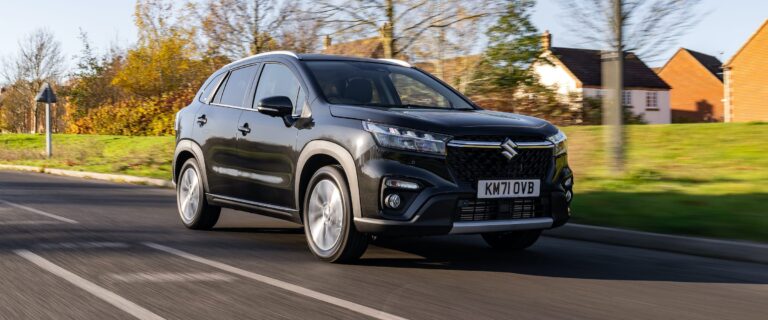
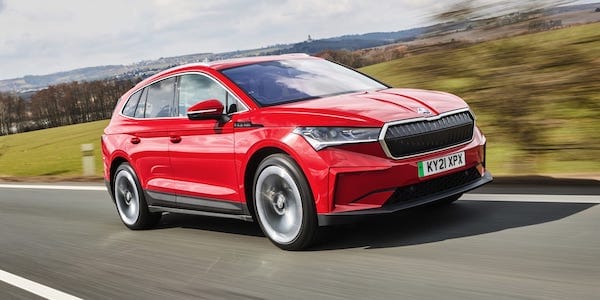
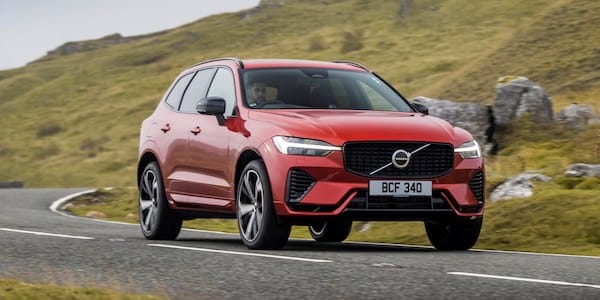
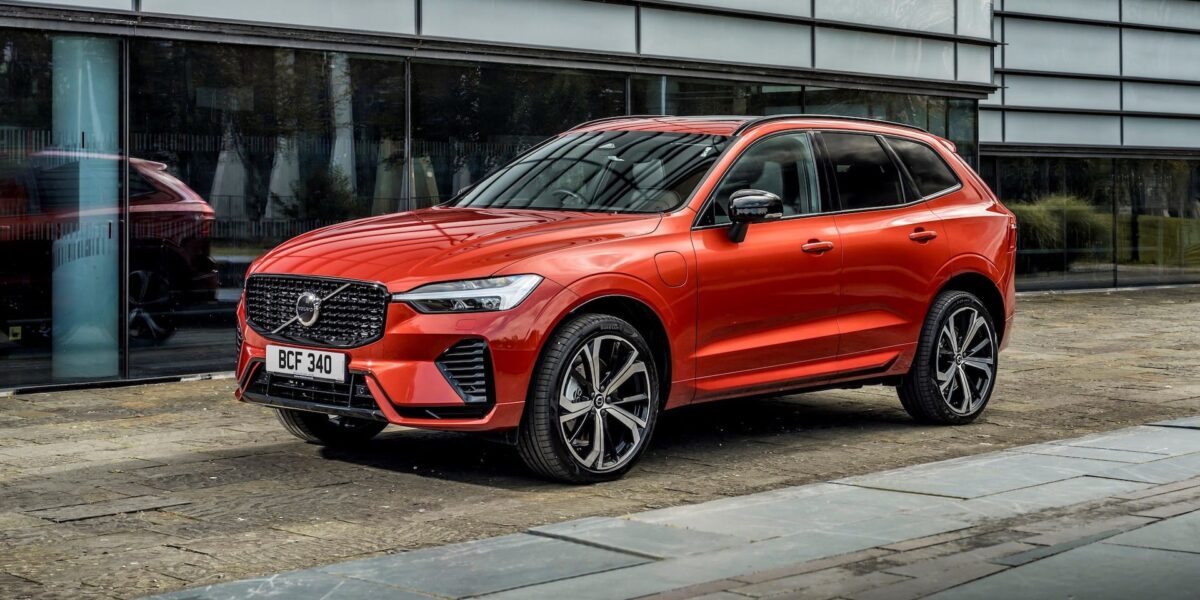
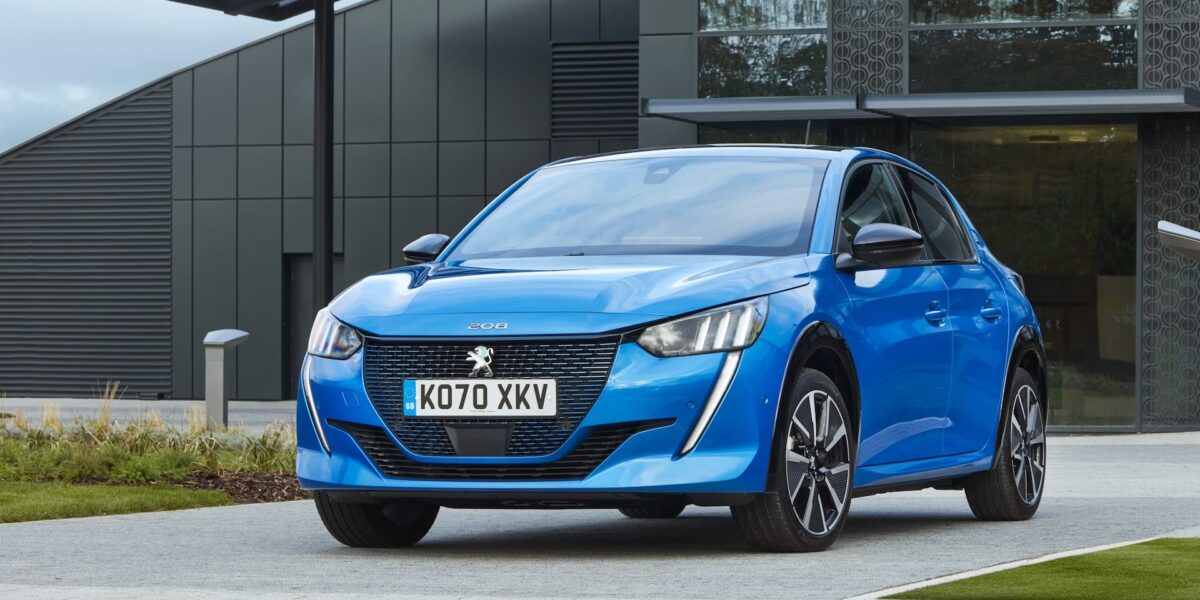
Citroën UK has revised its ë-C4 Electric line-up, dropping prices and tweaking specifications to ensure that two of the three models in the range still qualify for the government’s Plug-in Car Grant.
The latest changes to the government grant announced in December cut the maximum price for qualifying cars from £35,000 to £32,000, which placed all three previous versions of the ë-C4 above the threshold.
But now the ‘Sense Plus’ entry-level model has been dropped and replaced by a new version simply called ‘Sense’ and already available with combustion-engined C4s. This is priced almost £2,600 cheaper than its predecessor at £29,995, which reduces to £28,495 after the government grant is applied.
The new model does without some of the equipment formerly offered on the Sense Plus, including the head-up display, rear parking camera and satellite navigation.
However the specification does include LED headlights, alloy wheels, power folding mirrors, keyless entry & start and a ten-inch touchscreen infotainment system with DAB digital radio, Apple CarPlay and Android Auto. Autonomous braking, speed limit information, lane-keeping assistance and a forward collision warning are among the safety aids.
Meanwhile the mid-range ë-C4 ‘Shine’ model has been renamed ‘Shine Edition’ and its price dropped by £1,540 to bring it jut under the grant threshold – with the grant applied it costs £30,495. There are no specification changes, additions over the Shine including a head-up display, sat nav, reversing camera and significant extra safety features including active cruise control, active blind spot detection and a pack that adds night-time and cyclist detection features to the autonomous braking.
The top ‘Shine Plus’ model, which has previously been the most popular trim choice, remains in the new range but at £34,995 (an increase of £715) does not qualify for the Plug-in Car Grant. Additions include wireless smartphone charging, an upgraded speaker system with subwoofer, heated front seats and a bespoke black-themed interior.
The changes to the ë-C4 specification go some way to addressing one of the criticisms of the model when it was launched a year ago – namely that it was expensive compared to alternative EVs. Citroën has also managed to squeeze a bit more battery range out of ë-C4s built since October 2021 thanks to alterations to the heat pump and transmission.
As of January 2022, the Citroën ë-C4 holds an Expert Rating of 68% according to our industry-leading Expert Rating Index. That’s a fair way off the (slightly more expensive) Volkswagen ID.3, which currently holds a rating of 76%.
Sister brands Vauxhall, Peugeot and Citroën are dropping the combustion-engined versions of their van-based people-carriers with immediate effect, making them only available as electric vehicles (EVs).
The three brands are removing petrol and diesel-engined versions of the Vauxhall Combo Life and Vivaro Life, Peugeot Rifter and Traveller, and Citroën Berlingo and SpaceTourer from UK sale – all of which are near-identical vehicles built as joint projects across the the three brands and based on their delivery van equivalents.
Existing orders will be fulfilled and there will presumably be some vehicles in stock to clear, but customers will no longer be able to order non-electric versions from now on.
Vauxhall and Citroën have also announced price cuts to the electric models to ensure that all Combo-e Life and ë-Berlingo versions qualify for the government’s plug-in grant – this was reduced to £1,500 in December and the upper price limit for qualifying vehicles also cut from £35,000 to £32,000.
Vauxhall Combo-e Life
Vauxhall Vivaro-e Life
Peugeot e-Rifter
Peugeot e-Traveller
Citroën ë-Berlingo
Citroën ë-SpaceTourer
The price reductions range up to £3,000 with the cheapest of the line-up now being the Citroën ë-Berlingo, which starts at £29,495, and the Vauxhall Combo-e Life starting at £29,610. Both prices include the revised government plug-in car grant.
Similar price cuts also ensure that certain versions of the Vauxhall Vivaro-e Life and Citroën ë-SpaceTourer will also qualify for the grant.
Light-commercial versions of the vehicles – the Vauxhall Combo and Vivaro, Peugeot Partner and Expert and Citroën Berlingo and Dispatch, will continue to be available with internal-combustion engines alongside the electric versions.
Buy a new car and you not only have a fresh set of wheels to show your neighbours, but you have the peace of mind that if there’s a major mechanical failure on the car, its repairs and spare parts will be covered by the manufacturer or dealer warranty. This is usually at least three years, but in some cases it can be more.
That’s a good feeling to have! So, as your own car gets older, or if you have bought a vehicle that has no warranty, you might well want that sentiment to continue. The irony is that as vehicles age, they become more likely to fail, not less. And it’s just as your manufacturer warranty is coming to an end that problems can start to loom.
So can you buy a used car warranty to cover you for your car’s later years, whenever you like?
Yes you can, and there are many specialist companies around to help you make that decision. Modern cars are better built and more reliable than ever, but their enhanced features are also more expensive to repair when compared with older vehicles, so a warranty is certainly worth considering.
Timing is key here and waiting too long can affect the premium you’ll pay. Like any insurance, the cost of cover depends on several factors: the make and model of the car, its age, how many miles it has covered, and what it has been used for.
Age is a big factor because it’s assumed that the older a car gets, the more likely it is that something is going to go wrong. Indeed, most warranty providers won’t cover cars over a certain age – usually 10 to 12 years – or if it has done high mileage.
But assuming your car is newer than that, it’s worth getting cover in place before it comes out of its manufacturer warranty. If you wish you can leave a gap of ‘no cover’ and wait until your car starts showing signs of failing, but that’s a gamble. And warranty providers won’t pay for pre-existing issues – problems that are already there when you buy a policy.
Take time to look around
Give yourself some time to research what is available in used car warranties before your existing cover ends. It will give you a chance you study various providers’ small print and descriptions of what they will and won’t pay for, and you’ll also get a good idea of what level of cover you want and how much you’re likely to pay for it.
Most warranty providers will offer different levels of cover. These will include lists of parts insured, the top amount of labour charge they will pay out for, whether electrical parts as well as mechanical are covered, and whether it includes items such as infotainment, satnav and air conditioning.
Some policies also include cover to get your vehicle through an MOT test and even roadside recovery and home start services, so there is a lot to consider here as you might not need everything that’s on the table.
Seamless transition
If you have made the decision to go with a warranty policy, it’s worth making sure there is a seamless transition of coverage – one policy ends and another one starts. Certainly most providers will default to ‘automatic renewal’ once you have signed up with them for this very reason – although you can opt out of this at any time.
When approaching the end of your new car warranty, it is possible to buy a new policy and defer the start date, but providers will have their own timelines on how early you can do that. At least though, everything will be in place when the time comes to change over, and the peace of mind that comes with having warranty cover on your pride and joy can continue.
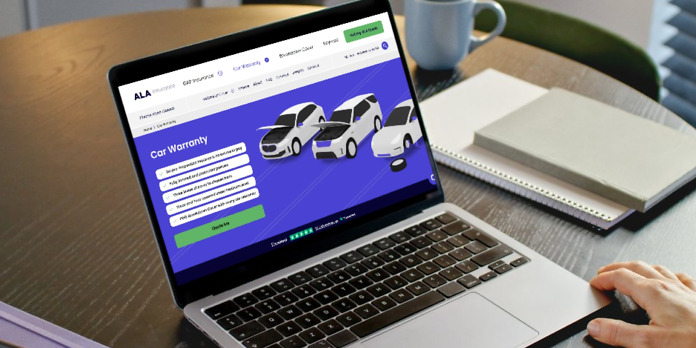
Here at The Car Expert, we have some fantastic warranty offers for our readers provided by our commercial partners. If you’re interested in a used car warranty, you should check these out:
ALA Insurance provides used car warranties in conjunction with the RAC
MotorEasy offers warranties and many other types of cover for car owners
Warrantywise is a long-established and multi-award-winning warranty provider
Fiat has announced that a new trim will be added to the Tipo and Panda hatchback ranges, as part of the brand’s ongoing partnership with global charitable foundation (RED).
The (RED) trim was first added to the all-new electric Fiat 500 range in October 2021, fitted with a unique design consisting of black fabric seats with red stitching made from recycled polyester, painted door mirrors and the (RED) branding on the front doors.
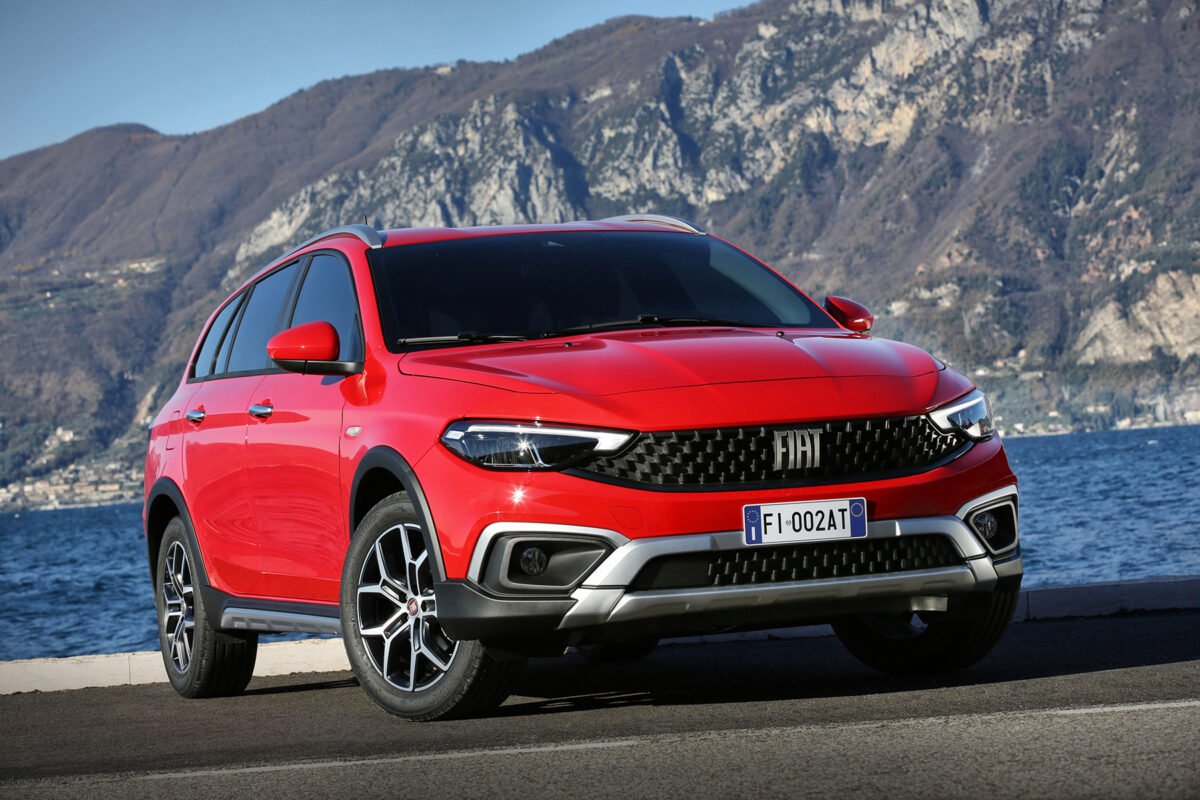
As we venture into 2022, Fiat has decided to make these features available for the other hatchbacks in its range, meaning the (RED) trim is now available for the Panda Cross and Tipo Cross models.
Fiat (Panda)RED
Fiat (Tipo)RED
There is only one engine setup available for the Fiat (Panda)RED, which is based on the Panda City Cross and powered by a 70hp petrol 1.0-litre mild-hybrid unit. Likewise the Fiat (Tipo)RED is based on the top-spec Tipo Cross, and only available with a 100hp petrol 1.0-litre engine. Both models are fitted with a six-speed manual gearbox.
Available to order now in the UK, prices for the Fiat (Panda)RED start at £15,755, costing £700 more than the regular Panda City Cross model. The more expensive Fiat (Tipo)RED is priced at £23,595; which is £1,000 more than the standard Tipo Cross.
Proceeds from this raised pricing will go towards funding (RED)’s aim of strengthening healthcare systems and supporting life-saving programs in the communities hit hardest by pandemics, particularly the ongoing Covid-19 pandemic.
Raising over $700 million for charitable causes to date, (RED) also has a partnership with Fiat’s American sister brand, Jeep.
So you’re looking to get yourself an SUV for 2025 then? An SUV? What’s that?
Good question. The term SUV is widely used and encompasses so many different types of car that nobody really knows precisely how to describe one. So before The Car Expert recommends some websites to help you find an SUV, it’s important to understand exactly what it is you want to buy.
An SUV is a traditional family car or estate model but with more of a leaning towards lifestyle. Most look like they could be a 4×4 off-roader, but they don’t actually have to offer 4WD capability to be an SUV. Indeed many are two wheel drive only.
They come in all sizes today, and the smaller ones are even referred to as crossovers, but whatever size you choose, the car will always have a sense of utility, adventure and versatility about it. A ‘belt up the kids, throw the dog on the boot, fill the roof box with anoraks and walking gear and head for the hills’ kind of feeling.
So whether you’re looking for a Ford Puma, Nissan Qashqai, Skoda Kodiaq or Range Rover, you will find it in the ‘SUV’ category. It’s a big arena to search in so you’ll need some help choosing the right websites.
Here at The Car Expert, we’re building and updating guides to the top sites to buy used vehicles of all categories. So here is our pick of some of the best for buying a used SUV.
URL:saxton4x4.co.uk They say: “Europe’s largest 4×4 dealership”
We like: Good photography brings out the best in cars We don’t like: Big blocks of text with features
Claiming to be the UK’s leading independent 4×4 dealer and the largest in Europe, Saxton 4×4 has been trading in top 4WD marques for more than 50 years. Its 100,000 square foot Essex site is an official distributor for brands such as Overfinch, Kahn and Onyx and it sells standard and modified 4x4s.
They check their prices against the market every day to stay competitive and each used car gets a 300-point vehicle inspection and provenance check. Four wheel drive cars can be pricey but if you don’t fancy shelling out in one go, a range of finance offers are available.
Aim high and you’ll find enchanting machinery such as a Rolls-Royce Cullinan, Bentley Bentayga, Lamborghini Urus and Mercedes-Benz GLS Maybach listed in there but for the majority of us, there is a good selection of 4WD favourites from Jeep and Land Rover along with MINI, Audi, BMW and other brands that offer all-wheel drive.
These can be found through the usual drop down menu of make, model, fuel type, body style, mileage and more. Click on a car you like and you’ll get a list with good photo, brief details and a click through to ‘View’ for more details. Here you get more details and pictures, a block of description and key facts such as mileage, mpg and CO2.
It’s a fairly attractive site to navigate around and there’s a good selection of photography including a panoramic 360 degree feature.
Motors*
URL:motors.co.uk They say: “We make finding the right car simple”
We like: Lots to read and enjoy We don’t like: Some pictures are low quality
The landing page tells you immediately that there are more than 300,000 used cars on Motors’ books, so you know you’re looking at a big operation. You’re initially asked for your postcode, make and model (if you know what you want) and minimum and maximum price you’re happy to pay.
There is, however, a ‘More Options’ tab at the bottom which we used to find body styles including ‘SUV’. Doing that pared the search down to a ‘mere’ 43,000 cars. The large numbers are because Motors doesn’t own all the cars in its records; it acts as an agent for dealers across the UK, although there are some private sellers in there too.
You can continue refining through age, mileage, transmission, colour and more, to get the number of available cars down to a more manageable level. Even then there’s still a lot to go through. But it’s an easy site to navigate around, and there’s a section highlighting all the cars that have been reduced in price – you’ll find thousands here but some have only been cut by a few hundred pounds.
There’s news and feature articles plus car evaluations and a suite of video reviews. The helpful advice section includes news and features, an ‘ask the experts’ section and more. There’s also a fuel calculator, car finance guide and a ‘smart search’ to find the best car match for you.
A car price guide shows how much used models similar to what you’re looking at, are selling for, so you can compare, which is useful if budgeting. Car details are full, with lists of features and equipment but some of the pictures are a bit unpolished.
URL: easternwestern.co.uk They say: “Scotland’s premier privately owned dealer group”
We like: Busy, useable site We don’t like: Search engine didn’t return what we needed
Eastern Western was formed in 1927 as a family owned and run business and it’s still that today. They’re involved in many aspects of the automotive business – new cars, used cars, rental, servicing – so there’s lots going on. Based in West Lothian, they serve the whole of Scotland.
For used cars, a drop down menu offers several choices. There are brand suggestions such as ‘Used BMW’ or Used Fiat’, or you can try regions like ‘Used Cars in Edinburgh’. There’s also an option to just click on ‘All Used Cars’ – more than 1,500 were listed when we looked.
For our purposes we went for all used cars and then chose to use the ‘Search keywords’ option and typed in ‘SUV’. Only two cars came back: a Lexus UX and a BMW X1, so it was time to be a bit more specific. We used the drop down option to find ‘Hyundai’ and ‘ix35’.
An initial description of the available cars gives a picture, a price (outright and monthly hp), and basic details including year, mileage, fuel type and transmission. Clicking for more details gives you a greater breakdown of the car you’re interested in, plus more pictures.
You can reserve a car immediately for £99 and request further information from the dealership where the car is being held. Eastern Western are clearly keen to do a finance deal with you and there are lots of reminders throughout the site about this although you can, of course, buy outright.
It’s a busy site with lots of products on offer and a good news section. If you live in Scotland it’s certainly worth a look.
We like: Simple, no-frills approach We don’t like: Big block of car detail text
This Hockley-based used car dealer is situated 20 minutes from the M25 motorway and so services a wide South-East band of customers.
Specialising in 4×4 vehicles, it’s a good place to look if you’re after an SUV – especially a more rugged one that will actually go off-road without difficulty. The drop down menu immediately shows up a number of car brands that the dealer has in stock at any one time.
When we looked there were Ford, Nissan, Fiat, Skoda, Suzuki and Toyota cars available among others. There was even a Bentley and a Porsche on the list, although the latter was an all-wheel drive 911, so not ticking the SUV box on this occasion.
You can otherwise ‘View all used cars’ or choose to look according to your finances – £150, £250 or over-£250 per month. Indeed, like most dealers, Essex 4×4 are happy to discuss finance packages and make a big point of that.
Once you have some cars to view – you get an initial picture and brief details – click on a chosen model and you’re given further photos, a more detailed ‘at a glance’ section and a big block of text listing every feature and option of the car, with more reminders that you can discuss finance with them.
Essex 4×4 also offers servicing, repairs, vehicle valuations and purchases and even a vehicle sourcing service using a network of other dealers.
Shere 4×4
URL:shere4x4.co.uk They say: “Four wheel drive specialists since 1987”
We like: Compact but useful site We don’t like: It’s cheaper looking compared with rivals
Shere 4×4 is a relatively small player when you compare it with some of the big rivals. But that doesn’t mean it’s not worth a look if you’re in the market for a four wheel drive vehicle.
Established in 1987 and based in Shere village in Surrey, the company’s showroom holds a varied stock of vehicles. In 2001 a second showroom was opened, in the village of Northchapel in West Sussex, specialising in 4×4 pickup trucks while it also houses a service department. All the cars in stock can be found on their website.
Go to ‘Stock’ and you then have the chance to cut your search down to 4x4s, pickups, cars or ‘VW Transporters’. There’s a small selection of 4WD vehicles – when we looked it was mainly Mitsubishi and Suzuki – while in the pickups section you can find some double-cab vehicles which, while not true SUVs, can still do a good job for an active family.
This is a much smaller set-up than many of the other websites listed, so choice is greatly reduced, but there’s a friendly feel about the site, which also contains information on finance, servicing and extended warranties.
Stoneacre
URL:stoneacre.co.uk They say: “Find your next vehicle with Stoneacre”
We like: Simple to use drop down menus We don’t like: Photography not as sharp as some
Its head office is in Doncaster, but Stoneacre has 60 dealerships across the UK representing a Who’s Who of motor manufacturers: Suzuki, Fiat, Seat, Renault, Peugeot, Mazda and lots more, most of whom, of course, build SUVs.
To find your dream SUV there are two ways in: click on ‘Find a Car’ and choose from the many car brands that crop down. Alternatively, from the home page you can go straight to a make and then model if you know exactly what you’re looking for.
We entered ‘Kia’ and ‘Sportage’ and were given 57 examples to look at from branches across the country. Whittling this down to dealers within 100 miles of our location brought the selection down to 25 vehicles.
Each is similarly pictured with brief details including mileage, fuel type and transmission and with a monthly cost in bold or an outright purchase cost as a secondary measure. As with most dealer groups, finance is clearly what many of their customers look for first.
Click through for more pictures and a series of information boxes appear starting with a finance calculator, then vehicle description, specification, technical details and safety information. Data is supplied by third parties such as manufacturer information so it’s worth checking with the specific dealer if you’re interested in a particular car.
The site also offers car valuation and GAP insurance while a blog section contains interesting news and advice.
Vertu
URL: vertumotors.com They say: “We live and breathe all things automotive”
We like: Cars well pictured and described We don’t like: Some vehicle details repeated
Established in 2006, Vertu Motors Group also uses the names Bristol Street Motors and Macklin Motors so the chances are you will have come across at least one of their dealerships, which are located nationwide.
With its HQ in Gateshead, Vertu has amassed a wide-ranging portfolio of manufacturer partners under its belt including Audi, BMW, Honda, Jaguar, Volkswagen and many more, which allows them to offer a big list of SUV models.
As well as new cars, Vertu’s dealerships also stock a wide range of used vehicles, most of which can be found on its website.
Go to the ‘Used Cars’ drop down from the main menu and from here you can select from the list of manufacturers. There are sections on manufacturer ‘approved’ cars too plus a list of ex-demonstrator cars from the company’s branches. If you don’t want to travel the length of the country for your car it’s worth adding in your postcode and the miles you are prepared to go, or you can simply choose from a list of dealers and find the ones nearest to you.
Choose a car and you get an initial picture with brief details such as mileage, age and colour. There’s the full asking price plus an example of monthly finance payments. There are many other pictures available plus video and a list of the car’s key features. A ‘Manager’s comment’ gives an overview although it’s basically another list describing the same features. If you’re still interested you’ll find a further detailed specification sheet.
Like what you see? You can reserve the car online for £99, buy it online, make an inquiry or book an appointment to view it.
Walton Motors
URL: walton-motors.co.uk They say: “We specialise in selling used 4×4 vehicles”
We like: Friendly, family-style site We don’t like: Limited stock
Another smaller, family owned and run business, Surrey-based Walton Motors started in 1955 and are still going strong with the fourth-generation family members now in charge.
With a leaning towards Land Rover vehicles, Walton Motors offers a range of 4x4s, each one fully serviced, MOT’d and 20-point checked before being offered for sale. With a mix of newer and older (we found one from 1961) vehicles, it’s simple to obtain details if you see something you like. Some of the cars have been modified or are presented in unique colours.
The initial brief description gives a good picture, the price, and details such as mileage, age, body type, transmission, colour and fuel. There’s a block of other details and you can click on ‘More’ if something catches your eye.
The page opens to similar details done in a different way but with a lot more pictures and from there you can fill in an email form or phone the showroom to take the inquiry further.
Walton Motors also offers services such as part exchange, export to the US, warranty, servicing, repairs and even a hand car wash.
This article was originally published in January 2022. Last updated May 2024.
*The Car Expert has a commercial partnership with Motors. If you click through to their websites and view any of their vehicles, we may receive a small commission. We do not receive any payment or commission if you proceed to buy a car or sign an agreement via any of these sites.
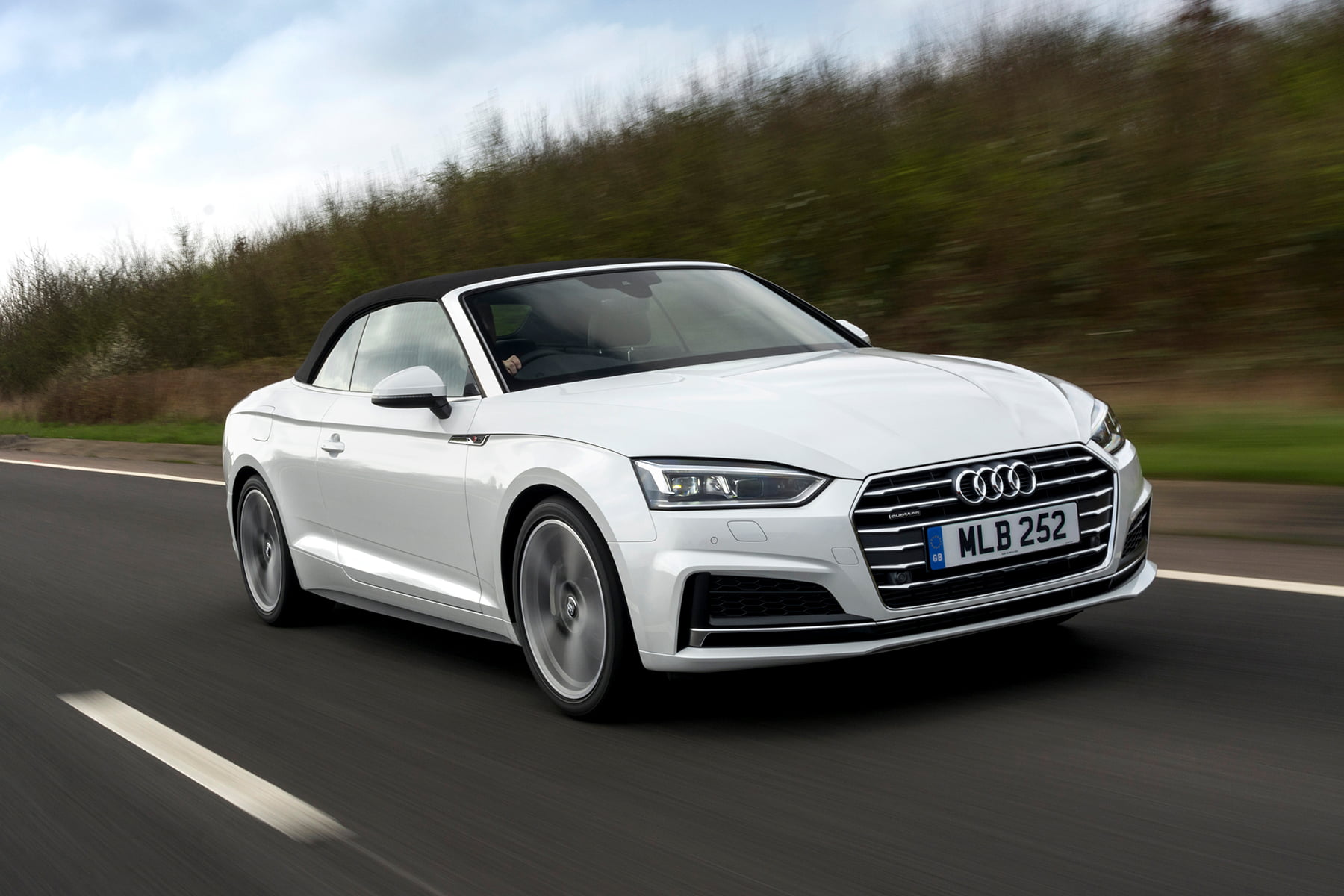
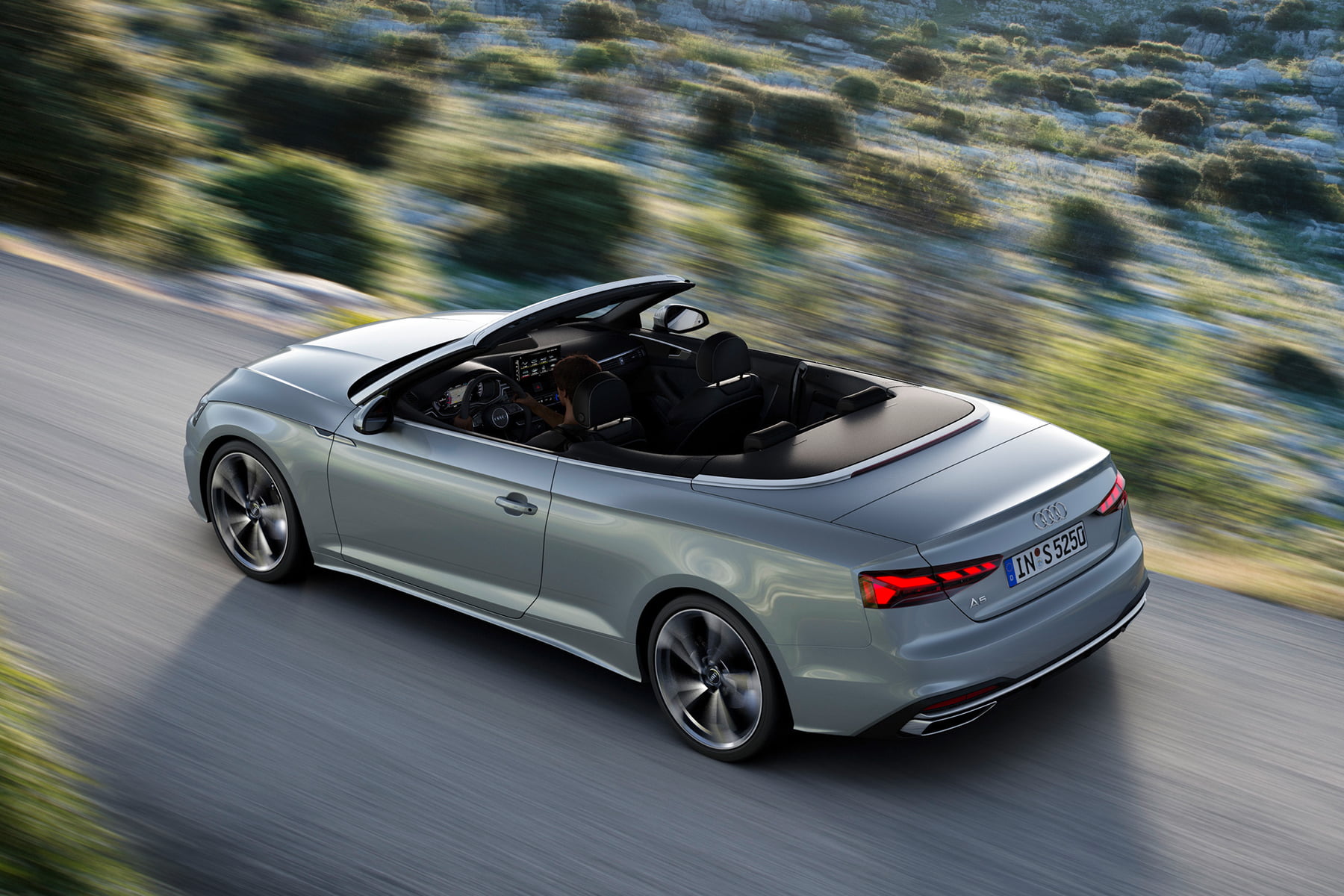
The second-generation Audi A5 Cabriolet was a premium four-seat soft-top convertible that competed against its long-time rivals from BMW and Mercedes-Benz, the 4 Series Convertible and C-Class Cabriolet.
This model was launched in 2017, with a mid-life update in 2020. However, it was removed from sale in the UK at the end of 2022 due to poor sales.
The A5 Cabriolet range consisted of four engine options (three petrol and one diesel), all of which featured mild hybrid assistance. While the range included both front-wheel drive and four-wheel drive choices, the Audi A5 Cabriolet was only available with an automatic gearbox.
The facelift in Autumn 2020 included full LED exterior lights and a digital instrument panel as standard on entry-level models, as well as an updated infotainment system and other minor changes.
“You only need to drive the A5 Cabriolet 100 metres to realise Audi has thrown everything it knows at this four-seat convertible”, Auto Trader explained. “It boasts a range of powerful, efficient and remarkably refined engines and the cabin is a near-perfect execution of precision and quality.”
However, most reviewers found that the BMW 4 Series Convertible offered tough competition, being similarly comfortable and better to drive, and was marginally the superior vehicle.
Top Gear concluded, “The A5 Cabriolet is more of a grand touring boulevardier rather than a B-road hustler. The much newer BMW 4 Series has it well and truly licked in that regard and, erm, most other regards to be honest.”
As of January 2025, the Audi A5 Cabriolet holds a Used Car Expert Rating of E, with a score of just 54%. Its positive media reviews contrast with poor reliability data for the overall Audi A5 family. The A5 Cabriolet also never earned a Euro NCAP safety rating, as it was not tested during its production life.
Highlighted reviews and road tests from across the UK automotive media. Click any of the boxes to view.
The Car Expert
+
Score: 8.2 / 10 “The new A5 Cabriolet is a complete package and a compelling proposition for those seeking an upmarket drop-top.” Read review
Auto Express
+
Score: 8 / 10 “The A5 Cabriolet is well worth a look thanks to its combination of desirability and practicality.” Read review
Auto Trader
+
Model reviewed: Cabriolet range Score: 8 / 10 “You only need to drive the A5 Cabriolet 100 metres to realise Audi has thrown everything it knows at its this four-seat convertible. It boasts a range of powerful, efficient and remarkably refined engines and the cabin is a near-perfect execution of precision and quality.” Read review
Car
+
Model reviewed: 2.0-litre diesel automatic Cabriolet Score: 8 / 10 “This is the best A5 Cabriolet yet, and actually among the most impressive four-seater convertibles around for everyday use. We’d prefer the considerably more exciting S5, but even with a diesel motor there’s a lot to like.” Read review
Carbuyer
+
Score: 8 / 10 “It’s no sports car, but the comfortable Audi A5 Cabriolet blends classy top-down looks and quality with surprising practicality.” Read review
Carwow
+
Model reviewed: Range overview Score: 7 / 10 “The Audi A5 Cabriolet is a classy-looking open-top which a decent infotainment system. You’ll have more fun driving BMW’s open-top 4 Series, though.” Read review
Heycar
+
Model reviewed: Cabriolet range Score: 8 / 10 “The A5 Cabriolet offers unrivalled refinement, ride comfort and interior quality in a car that is well suited to the type of low-speed cruising you’ll want to do with the roof down and three close friends in tow.”
Read review
Honest John
+
Model reviewed: Cabriolet range Score: 8 / 10 “Acoustically-insulated roof as standard, and lighter yet stiffer than the previous model. Beautiful build quality and great all-round ability, but some rivals are more fun to drive.” Read review
Motoring Research
+
Model reviewed: Range overview (coupé, cabriolet, Sportback) Score: 8 / 10 “If you’re prepared to sacrifice a little practicality in return for improved styling – and a higher price – the Audi A5 is one of the best looking cars in its class.” Read review
Parkers
+
Model reviewed: Cabriolet range Score: 9.2 / 10 “Smart four-seater soft-top shines – roof up or down.” Read review
The Telegraph
+
Model reviewed: Cabriolet range Score: 8 / 10 “The issue with cabriolet cars is that they tend to offer limited space, but Audi says its A5 Cabriolet is different, being a full four-seater with a boot to match that of a family hatchback.” Read review
Top Gear
+
Model reviewed: Range overview Score: 7 / 10 “It’s a seductive car, the new Audi A5 Cabriolet, and while more dynamically accomplished than its predecessor, still more of a grand touring boulevardier rather than a B-road hustler. But what an ownership proposition.” Read review
Safety rating
Independent crash test and safety ratings from Euro NCAP
No safety rating
The Audi A5 Cabriolet was not tested by Euro NCAP during its production life. It does not share the same Euro NCAP rating as the A5 Coupe and A5 Sportback due to the significant structural alterations required by not having a fixed roof.
Eco rating
Independent economy and emissions ratings from Green NCAP
No eco rating
The Audi A5 Cabriolet was not tested by Green NCAP during its production life.
Reliability rating
Reliability data provided exclusively for The Car Expert by MotorEasy
Total claims: 555 Average repair cost: £950.84 Last updated: October 2024
The Audi A5 has a poor reliability score of 30%, according to workshop data provided by our commercial partner, MotorEasy. This applies to all versions of the Audi A5 (cabriolet, coupé, Sportback) and to both generations (2007–2016 and 2017 onwards).
The big thing to look for is suspension trouble. As the MotorEasy data above shows, this is the most common issue found on Audi A5 models, costing around £440 to correct on average. Engine issues are almost as common and a lot more expensive, with the average repair cost clocking in at more than £1,200.
Gearbox problems have also been known to crop up and are by far the most expensive faults, costing around the £3,000 mark. Bear all of this in mind if you’re looking at a used Audi A5.
Running cost rating
Monthly cost of ownership data provided exclusively for The Car Expert by Clear Vehicle Data
Fuel consumption
Average
Score
Variation
Score
Petrol models
38 mpg
D
33 – 40 mpg
D – E
Diesel models
46 mpg
C
44 – 49 mpg
C – C
CO₂ output
Average
Score
Variation
Score
Petrol models
171 g/km
C
159 – 196 g/km
C – D
Diesel models
163 g/km
C
152 – 171 g/km
B – C
Insurance group
Average
Score
Variation
Score
All models
38
C
33 – 46
C – D
Running costs for the Audi A5 Cabriolet are more expensive than the market average, according to data provided by our commercial partner Clear Vehicle Data.
Insurance premiums are, according to the UK’s insurance group assessor Thatcham Research, not cheap, but not very expensive either.
Date: February 2022 Recall number: R/2022/036 Model types: All Build dates: 11/2019 to 02/2021 Number of vehicles affected: 5,327 Defect: Following a previous campaign, the toe and/or camber values on the rear axle may, in certain circumstances, incorrectly be changed without this being noticed. Remedy: The wheel alignment must be checked and, if necessary, the suspension must be serviced on the affected vehicles.
Date: June 2021 Recall number: R/2021/236 Model types: All Build dates: 11/2019 to 02/2021 Number of vehicles affected: 10,089 Defect: One or more nuts which do not meet the specifications may have been fitted on the rear axle suspension links. Remedy: The affected nuts on the rear axle will be replaced on affected vehicles.
Date: June 2021 Recall number: R/2021/204 Model types: All Build dates: 12/2015 to 12/2018 Number of vehicles affected: 263 Defect: Vehicles may have been fitted with a hinged towing bracket on which the locking mechanism in the hinge module could be faulty. Remedy: The hinge module for the towing bracket must be checked and, where necessary, replaced on the vehicles affected.
Date: October 2020 Recall number: R/2020/302 Model types: All Build dates: 07/2020 Number of vehicles affected: 8 Defect: The seat frame may not have been bolted correctly to the seat rail on the driver and/or front passenger side. Remedy: Check the affected seat frame connection and replace the frame if required.
Date: June 2020 Recall number: R/2020/138 Model types: All Build dates: 06/2017 to 03/2020 Number of vehicles affected: 34,982 Defect: It is possible that moisture may enter the belt-driven starter-alternator. Remedy: The starter-alternator must be replaced on the affected vehicles.
Date: June 2019 Recall number: R/2019/175 Model types: All Build dates: 12/2015 to 12/2018 Number of vehicles affected: 135 Defect: Hinged towing bracket on which the locking mechanism in the hinge module could be faulty. Remedy: The hinge module for the towing bracket must be checked and replaced if required.
Date: May 2019 Recall number: R/2019/149 Model types: All Build dates: 02/2019 to 03/2019 Number of vehicles affected: 85 Defect: An error in the casting process may affect the rigidity of the shock absorber fork. Remedy: The corresponding shock absorber forks must be replaced on the affected vehicles.
Date: December 2018 Recall number: R/2018/365 Model types: All Build dates: 02/2017 to 07/2017 Number of vehicles affected: 8 Defect: Airbag securing bolts may not be to the correct torque. Remedy: Check and replace bolts as required.
Date: February 2017 Recall number: R/2017/078 Model types: All Build dates: 05/2016 to 10/2016 Number of vehicles affected: 2,622 Defect: Due to an error in the manufacturing process, the airbag and/or seat belt pretensioner may not trigger in the event of a collision. Remedy: On affected vehicles, replace airbag assembly and seat belt pretensioner where necessary.
As of September 2024, there have been nine DVSA vehicle safety recalls on the Audi A5 range covering various different issues.
Not all vehicles are affected by recalls. You can check to see if your car is included in any of the above recalls by visiting the DVLA website or contacting your local Audi dealer.
If your car is affected by a recall, the vehicle must be repaired and you should not be charged for any work required. If you are buying a used A5, you should insist that any outstanding recall work is completed before you take delivery of the vehicle.
Awards
Trophies, prizes and awards that the Audi A5 Cabriolet has received
2018
Parkers Car Awards – Best Car of Sun Seekers
Similar cars
If you’re looking at the Audi A5 Cabriolet, you might also be interested in these alternatives
Remember the end of 2020 and New Year 2021, when we all thought that the world would return to normal? Turns out that was a bit far-fetched… 2021 turned out to be every bit as challenging for the car industry.
The circumstances were quite different, however, as the year progressed. Instead of car dealers being all locked up with unsold cars all over the place, we had the exact opposite situation. Demand was high as customers returned to forecourts with money to burn, but car manufacturers couldn’t build enough cars thanks to a global shortage of tiny semiconductor computer chips.
By the end of the year, several of the country’s most popular vehicles were simply not available to purchase and had waiting lists stretching for many months. This was good news, however, for manufacturers who did have production lines rolling and were able to supply vehicles. That threw up some interesting sales results over the last six months, and the chaos is set to continue into the first half of 2022.
The headline news, of course, was that the UK has a new sales champion. After 12 years on top of the charts, the Ford Fiesta was dethroned thanks to a combination of declining popularity, supply difficulties, internal competition from the Ford Puma small SUV, and an updated model in the offing for 2022. So far did the Fiesta fall at the end of the year that it didn’t even end up in the top ten for 2021.
So without further ado, here are the ten best-selling cars of 2021.
The king is dead, long live the king! The Vauxhall Corsa has been a mainstay of the UK new car market for decades, so it’s something of a surprise that it’s taken so long to reach the top spot in the sales charts.
The current model Corsa, launched in 2020, has been a sales success ever since it was launched. The first Corsa developed under Vauxhall’s new Stellantis (nee PSA Group) ownership, it is available with either petrol or diesel engines, or as a fully electric Corsa-e version. It shares most of its underpinnings with the current Peugeot 208, but in the UK it’s the Vauxhall that’s far more popular.
It’s an indication of the topsy-turvy nature of new car sales in 2021 that Vauxhall sold about 6,000 fewer Corsas than it did in 2020 – and 9,000 fewer cars than Ford Fiestas – yet jumped from second to first place.
Despite its popularity, the petrol and diesel versions of the new Corsa hold a rather poor Expert Rating of 64% on our industry-leading Expert Rating Index, although the all-electric Corsa-e manages a few points better at 67%. Those scores put the Corsa in the bottom half of the supermini class, suggesting that journalists are not as excited about the Corsa as customers seem to be.
With one month to go in 2021, the Tesla Model 3 wasn’t even in the top ten best-sellers list. Then came December, when almost 10,000 new Model 3s were registered – the single best monthly performance of any car all year.
As a result, the Model 3 leapt from outside the top ten to second place right at the end of the year. It was a tremendous result for Tesla, and was a massive contributor to another record month for EV sales.
The American company continues to dominate the electric car scene, which will have other manufacturers scratching their heads as to why their own EVs are not selling up a storm in the same way. It should be noted that Tesla operates in a very different way to other car manufacturers as it doesn’t run conventional dealerships, so its results tend to be up and down to a far greater degree than other brands.
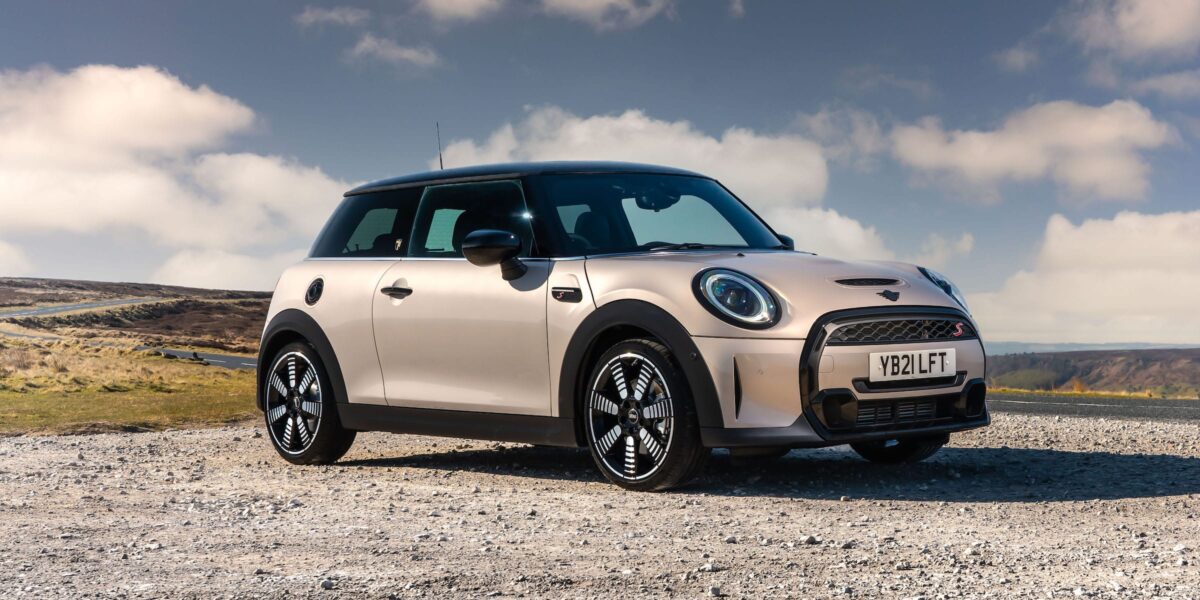
Despite being the oldest car in the top ten, the twice-facelifted Mini hatch enjoyed one of most successful years for a long time (in terms of market share, if not outright sales). Being built in Britain, that’s also a great result for the UK economy and the local car industry.
The Mini had very strong end to the year, finishing second in October, top in November and second again in December. In a similar result to the Tesla Model 3, the Mini was out of the top ten altogether with two months to go, jumped to seventh in November and then up to third at the end of the year.
The Mini’s success was certainly helped by struggles for many other popular models, as the Ford Fiesta crashed out of the top ten while the Volkswagen Golf and Polo both struggled in recent months as well, as did the Mercedes A-Class.
The Mini hatch still holds a very solid score of 76% in our Expert Ratings index, which is one of the top scores in its class. The electric version doesn’t score so well, with an Expert Rating of only 63% that puts it close to the bottom of its class.
The Mercedes-Benz A-Class slipped from second in year-to-date registrations in November to fourth at the close of play thanks to another poor month in December. Like many others, it was a victim of a lack of semiconductor chips, with Mercedes simply unable to supply cars to waiting customers.
Fourth place was actually one place up for the A-Class compared to 2020, despite Mercedes shifting 7,000 fewer units in 2021. In other words, it benefitted from even bigger supply problems for the Ford Fiesta and Volkswagen Golf.
The A-Class currently has an Expert Rating of 69% in The Car Expert’s unique aggregated Expert Rating index. It ranks highly for safety, winning awards from Euro NCAP and Thatcham over the years for its protective qualities.
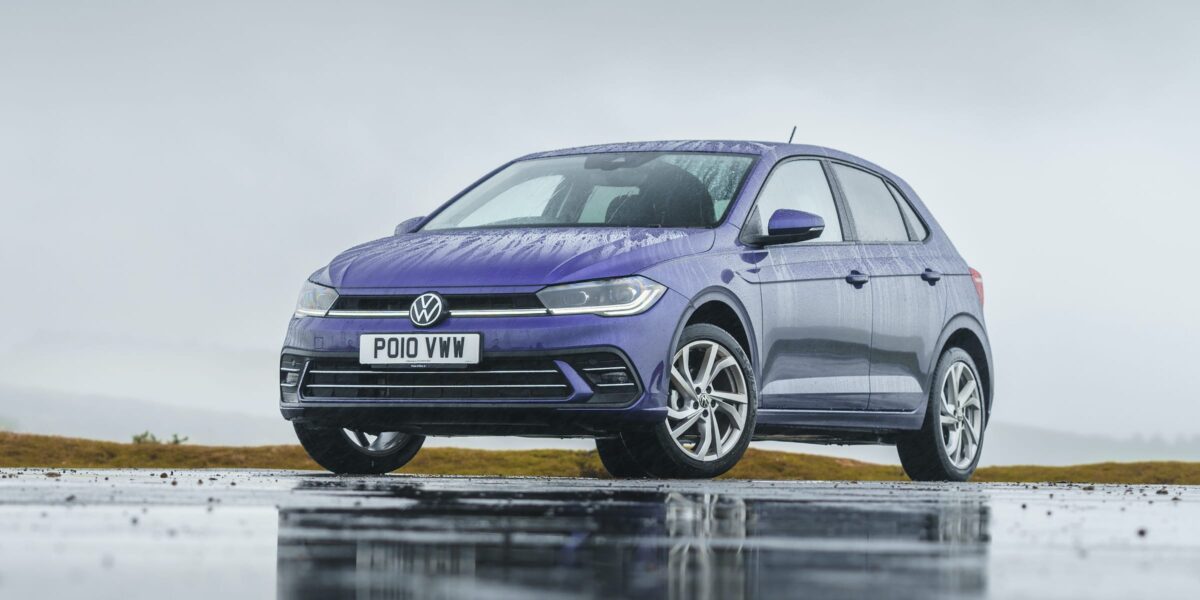
A poor December result took the shine off the Volkswagen Polo’s 2021 sales results after a strong few months in the second half of the year. The Polo slipped from third to fifth in the last month, falling out of the top ten altogether in December sales. It’s still an improvement on the previous year, where it had finished eighth.
A facelifted Polo started arriving in dealerships at the very end of the year, but it looks like dealers simply couldn’t get enough of them to maintain sales.
The Volkswagen Polo currently holds an Expert Rating of 75%, which makes it one of the top-rated small cars according to our industry-leading Expert Rating index. Whether this will improve further once the facelifted model gathers more media reviews remains to be seen.
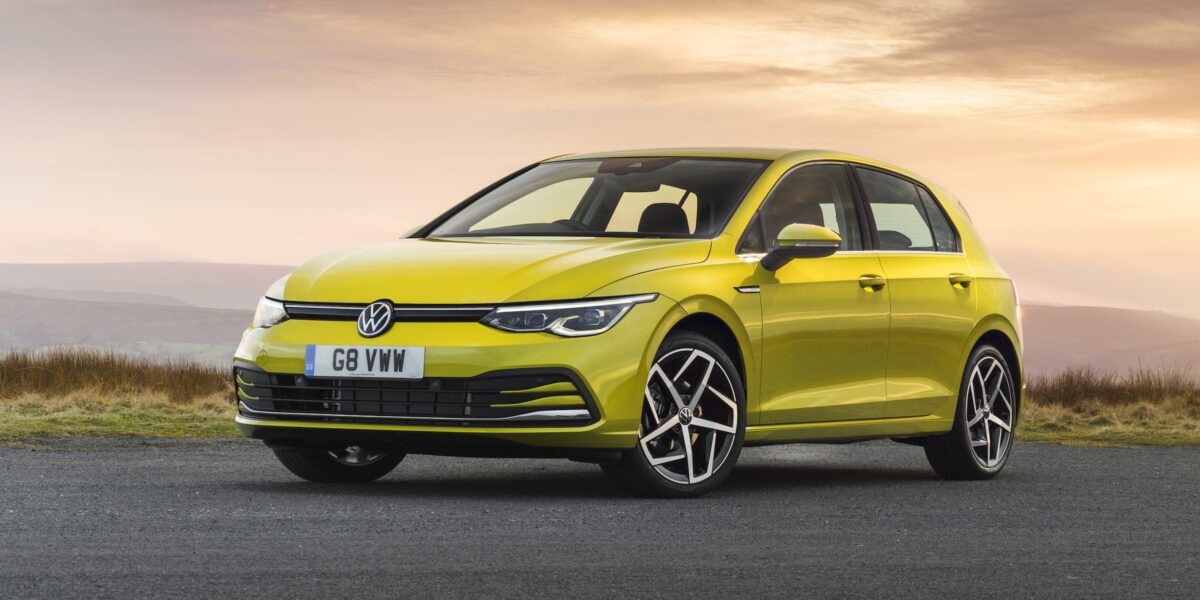
Another car that limped to the end of the 2021 sales race, the Volkswagen Golf slipped from second place to sixth over the last two months as supply dried up.
Volkswagen sold 13,000 fewer Golfs in 2021 than it did in 2020, when it finished third in the sales charts, which equates to a drop of about 30%. Interestingly, however, it did sell 11,000 ID.3 electric hatchbacks, which is effectively VW’s EV equivalent of the Golf.
The new Nissan Qashqai has had a strong start to its production life. While it has dropped a place compared to 2020 and sold fewer vehicles overall, that’s largely due to the all-new model replacing the old one. That often causes a few low-selling months for manufacturers, as the factory shuts down to re-tool for the new model then builds a run of pre-production vehicles to make sure everything works, then gradually ramps up production of the new model.
The new Qashqai takes over its predecessor’s mantle as the country’s most popular SUV/crossover model, a title it looks set to keep holding into 2022.
Our Expert Rating report for the new Qashqai puts it right in the midfield of the medium SUV segment with a score of 71%. It’s still early days and there’ll be more reviews published in coming months, so this could change – either up or down – in coming weeks.
After a very strong first half of the year, the Puma faded in recent months due to the same story of supply problems. Ford did manage to get it back into the top ten in December, which helped it to limp to eighth place at the end of the year after tracking as high as fourth at the end of September.
This may well have come at the expensive of its hatchback sibling, the Fiesta, which bombed out of the top ten altogether after 12 years on top of the charts.
Ford’s junior crossover has been popular with critics, currently holding a rating of 77% on our unique Expert Rating Index. That remains the highest-rated mainstream petrol small SUV, with only a couple of electric models and the more expensive Volvo XC40 ranked higher.
The Kia Sportage was another car that sat solidly in the top ten for most of the year before fading in recent months, ending up ninth overall.
The strong sales results were the last hurrah for the popular fourth-generation Sportage, and it bows out of production with another successful year as an all-new model takes the baton for 2022.
As it comes to the end of its life, the outgoing Sportage holds an Expert Rating of 64% in our industry-leading Expert Ratings Index, which puts it firmly in the bottom half of the medium SUV sector. Kia will hoping that its boldly styled replacement can improve on this score.
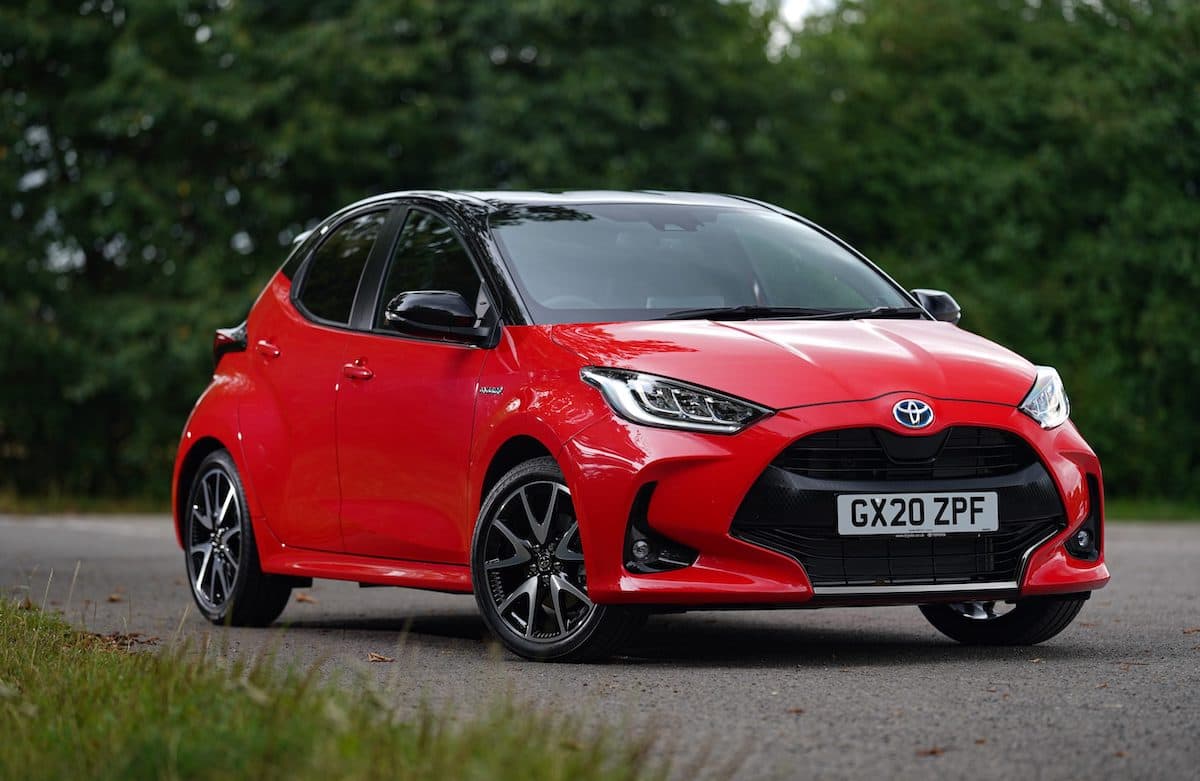
The last entry in the 2021 top ten is the Toyota Yaris, which has appeared quite regularly in the monthly best-sellers list throughout the year.
Toyota has generally coped much better with semiconductor supply than most manufacturers, largely because Toyota owns its own semiconductor factory rather than relying on outside suppliers.
The Yaris currently holds an overall score of 70% on our Expert Rating Index, and has been quietly improving in popularity with both critics and customers over the last year.
There’s been an explosion in services which offer to buy your car (they often even claim “we buy any car”) without you having to sell it privately or part exchange it for another car.
They claim to offer a fair fixed price and a transaction which can be done from the comfort of the sofa. Here we look at the pros and cons of selling a car yourself in comparison to car buying services.
Before you choose any of these methods, get an idea of what your car is worth by looking at the asking prices of other similar cars and getting an independent valuation supplied by such as Parkers or Auto Trader.
Whichever way you sell you need to get all the relevant paperwork ready and to get the best price, fix any major imperfections.
The pros and cons of private sale, part exchange and car buying services
Most of us are quite happy to sell some used furniture from home with a web listing, but whether you are willing to sell your car that way probably comes down to your own personality.
They are still called classified advertisements from the days when you put a small entry in a newspaper or magazine paid for by the word. The process has largely moved online now, adding pictures and video walk-rounds of cars.
The Auto Trader Group claims to be UK and Ireland’s largest automotive marketplace, offering new and used vehicles both from dealers and private sellers. As of early 2022, a basic two-week advertisement on Auto Trader ranged between £36.95 to £74.95.
Owned by the eBay auction site, Gumtree claims to be one of the largest private motors markets in the UK, and its ads are free to private sellers unless you pay extra for features to boost its visibility.
Both Auto Trader and Gumtree help you putting together an advertisement and provide tips on how to deal with callers and what to do if the car isn’t selling
You can set your asking price based on the online valuation the site gives you, compared to what you may know from your own homework. Knowing the lowest price you’d accept, set a price which will attract interest but can be negotiated down. Get together a very full description and take good photos.
However, don’t take the advertised prices of similar cars to be definitive; many people over-value their cars and the end price paid after some haggling won’t be the same.
As a private seller, you have a legal responsibility to make sure the car is roadworthy with a current MOT. It is also illegal to sell a car that still has outstanding finance.
Online auction
If you’re very keen to sell your car, you can place it on an online auction site, the best-known of which is eBay Motors (which also offers fixed price listings called ‘buy it now’).
The process for composing the listing is the same as an ad. You can start the first bid at either an eye-catching low point (and set a reserve) or you make the first bid the very lowest amount you’d be prepared to accept.
Pros of private sale
By selling privately, you can achieve a higher price than part exchange from a dealer or possibly a car buying service. If you have a modified, rare or classic car, a private sale may be the only way you will find the right buyer. Ebay Motors will handle the payment from your buyer whether you are selling for a fixed price or by auction.
Cons of private sale
It can be time consuming and you can’t vet who is going to turn up to view your car. There are several scams and security issues to be aware of. Autotrader produces a free safety checklist which is available to all visitors to its site.Also, in the recent times of Covid, you may not be comfortable having strangers in your house or sitting close to you in a car.
There are some disadvantages to online auctions. Youcan only make limited revisions once the auction has started (hard to correct any errors) and it’s best you are at home on the day the auction ends to answer last minute questions. If somebody wins the auction and pays before collection, you have to sell to them.
As with a with a private online sale, even though the car is sold unseen, a winning bidder can visit and try to chip away at the price they bid for the car before finally settling (I’ve had this happen to me), so you may need to stand your ground.
Part exchange
This is an old and familiar concept. You trade in your old car against the price of the new or used car you are buying from a new car dealership or a used car dealer.
Pros of part exchange
You don’t have to advertise or try to sell your car. The act of getting rid of your old car and replacing it is combined, so you make the transaction all in one place at a time to suit you.
The dealer wants to sell you a car, so will work to make the process happen. If you’ve already sold your car by other means, you may not have transport to go looking for the next one.
Crucially, you can also part exchange your car if there is outstanding finance on it. As part of the process, the dealer will clear your finance and deduct that amount from the price paid for your vehicle.
Cons of part exchange
To get the best price you need to put in almost as much preparation time as if you were selling privately or to a car buying service.
The value of your part exchange can be affected by some quite random factors such as the time of the month or the stock levels of that dealer. With a new car, unless you go from dealer to dealer, you won’t know that you have absolutely the best deal.
Traditionally, a part exchange price is often lower than what you’d get selling your car privately or to a car buying service. With the convenience of online selling, car owners can now compare offers from different services to find the best price.
Car buying services
A car buying service will give you a price for your car, after you have described it online. It will either take it from you, or you take it to a location, and it transfers the money to your account.
If you search for ‘sell your car online’ top results are likely to be Auto Trader, Carwow, Motorway and Cazoo (all commercial partners of The Car Expert) or the original car buying service, We Buy Any Car. While the principle is the same, there are differences.
Motorway
Motorway has become on of the best-known names in online car selling, thanks to heavy promotions across TV and other media over recent months. You head to the website, enter your registration number and a few specific details about the car. Motorway does not buy cars itself but finds the highest offer from a nationwide network of car dealers through a daily auction where the dealers compete to buy your car for the best price.
The winning dealer will pay you via bank transfer, and will either collect the car from your home, or you may be asked you to drop it off at a local dealership.
Carwow is best known as a broker for new cars, helping you save money by finding dealers willing to sell you a new car at a discount. But it has broadened its offering in recent years to encompass buying your existing car, working in a similar fashion to Motorway by getting its dealer network to bid on your vehicle.
Best known as an online marketplace for selling your car, Auto Trader now offers an ‘instant offer’ car buying service as well, perfect if you don’t want to go through the hassle of selling your car via a traditional classified advert.
The company claims to offer you a value within minutes and to be able to have the car collected from your house in as little as 48 hours.
WBAC doesn’t sell cars to the public; instead it buys your car and then sells it at a trade auction to a car dealer (the same company that owns WBAC also owns the auction company). It claims that: ‘You can sell your car to us regardless of its make, model, colour, age, mileage or condition.’
After entering the registration number and specific details it gives you a value. You then book an appointment at one of its branches where it is inspected before the transfer is made. Be aware that the inspection often results in a reduction from the originally indicated value.
Pros of car buying services
Speed and convenience, without having to arrange a private sale or a part exchange. Some firms will settle any outstanding finance.
Cons of car buying services
You still need to gather all the paperwork and present the car in the best way you can.
The convenience will be outweighed by it probably not being the best price you could have achieved for your car.
If you describe the condition as fully as possible you will likely get what you were offered when you come to hand it over. However, if the representative considers that it does not match your description this could trigger an attempt to knock down the price.
* The Car Expert has commercial partnerships with Auto Trader, Carwow and Motorway. If you sell your car to any of these companies, we may receive a small commission.
We round out the year with another month of topsy-turvy car sales figures, still significantly hampered by the semi-conductor chip shortage.
Ongoing supply problems continue to plague almost every car brand, with individual results up or down depending on whether manufacturers can get enough computer chips to be able to build cars.
Because of this, only five of December’s top ten appeared the yearly best-seller list, with Volkswagen missing out entirely this month, and two newcomers making their top ten debuts.
Ford completed its anticlimactic end to the year, with only one model in the top ten best sellers for the third month running. Continuing to struggle stocking its popular Fiesta supermini, Ford couldn’t manage to sell even half the cars it sold in December last year.
In contrast, Nissan had a fantastic December with three models appearing in the top ten. Vauxhall also sealed a strong end to the year with two of its cars appearing in the best-sellers list this month, including the sought-after Vauxhall Corsa, which started the month already the unchallenged champion of new car sales in 2021.
Also worthy of note is three of the top five cars in December are built here in Britain, which is good news for the UK economy.
We’ve published our normal reporton the monthly new car registration figures, with plenty of detail that you won’t find elsewhere. So let’s now look at the mixed-up top ten results for November 2021.
After topping the sales charts in September, the Tesla returns to take the top spot once again. The American company continues to dominate the electric car scene, which will have other manufacturers scratching their heads as to why their own EVs are not selling up a storm in the same way.
The Model 3 recorded very impressive sales figures totalling nearly 10,000 new cars in the last month, more than double the numbers that December’s runner-up could muster. It should be noted that Tesla operates in a very different way to other car manufacturers as it doesn’t run conventional dealerships, so its results tend to be up and down to a far greater degree than other brands.
Tesla will be hoping it can continue this fine sales form into the new year, as the Model 3 surged past the likes of the Mercedes-Benz A-Class and Mini hatch to settle in second spot in the annual best sellers list, just as the year came to a close.
After taking top spot in October, the Mini continues its excellent end to the year by finishing in second place in the sales rankings for December. Despite being the oldest car in the top ten, the twice-facelifted Mini continues to sell strongly some seven years after the current model was launched, and its sales performance in the latter half of this year means that it has surged up the 2021 best-sellers list to finish third.
Mini and BMW UK employees should also be enthused by the sales figures of specifically the all-electric version of the Mini hatchback, which finished in seventh place in the annual battery electric vehicle rankings with over 6,000 sales, though that is some way short of the nearly 35,000 Tesla Model 3 EVs sold in 2021.
The Mini hatch still holds a very solid score of 76% in our Expert Ratings index, which is one of the top scores in its class. The electric version doesn’t score so well, with an Expert Rating of only 63% that puts it close to the bottom of its class.
Although it was not the best-selling car in the last month, Vauxhall has plenty to celebrate as the year comes to an end. The Corsa’s sales dominance from January to December means that it is the unrivalled sales champion of 2021, with over 6,000 more registrations than any other car.
Despite its popularity, the petrol and diesel versions of the new Corsa hold a rather poor Expert Rating of 64% on our industry-leading Expert Rating Index, with the all-electric Corsa-e holding the same score. Those scores put the Corsa in the bottom half of the supermini class, suggesting that journalists are not as excited about the Corsa as customers seem to be.
The biggest surprise December has to offer, the Nissan Juke makes its debut in the monthly top-sellers list in the final month of 2021, grabbing an impressive fourth place. The first-generation Juke did make several appearances in the top ten during its production life, but this is the first time that the second-generation model has cracked the list since it was launched in 2019.
The British-built Juke was certainly helped by production shortages that have seen the Ford Fiesta, Volkswagen Golf and Polo, Mercedes-Benz A-Class and Kia Sportage all disappear from the best-sellers list. Nevertheless, Nissan will be very pleased by the Juke’s performance, capitalising on the UK’s rising demand for small SUV/crossovers.
The Nissan Juke currently has an Expert Rating of 65%, which places it well in the top half of all of the medium SUV marketplace according to our industry-leading Expert Rating index.
Right behind its little brother, the new Nissan Qashqai continued its strong debut by placing in the top ten best-sellers list for the fourth month running, rising to place in the top five in December after ranking seventh in November.
Rolling off the production line at the Nissan plant in Sunderland, the Nissan Qashqai is the third british-built model to finish in the top five best sellers this month, an accolade that British manufacturing should be proud of.
Nissan will be more pleased by the fact that the Qashqai’s continued strong sales numbers means that the SUV has placed seventh overall in the 2021 best-sellers list, outselling rivals like the Ford Puma and Kia Sportage.
Our Expert Rating Index ranks the latest iteration of the Nissan Qashqai right in the midfield with a score of 71%. It’s still early days and there’ll be more reviews to be published, so this could change – either up or down – in coming months.
Usually a rather dominant force in the car sales charts, Ford finished its rather flat end to the year with only one of its models placing in the top ten, the Ford Puma.
This is actually the Puma’s first appearance in the top ten sales rankings since finishing top of the pile in August 2021, suggesting that the small SUV would have been a top sales contender if Ford had not been hampered by the semi-conductor chip shortage.
In terms of critical appraisal, the Ford Puma currently holds an Expert Rating of 76%; the second best combustion-powered small SUV ranked in our Expert Rating Index.
The second car to make its debut in December’s best-sellers list is the Mokka SUV, much to Vauxhall’s delight. It has been quite some time since Vauxhall had two entrants in the top ten, underlining the British manufacturer’s impressive finish to 2021.
Vauxhall will be hoping that the Mokka, including the well-regarded all-electric Mokka-e model, will be able to continue its sales upswing into the new year, as its annual sales numbers for 2021 fall behind its key rivals, including the Ford Puma and Nissan Qashqai.
Much like the Corsa hatchback, the Vauxhall Mokka appears to be much more popular with the British public than media critics, its Expert Rating of 68% not correlating with its high sales figures. The Mokka-e is more popular with UK reviewers, with an Expert Rating of 73% that earned it the crown of Best New Small SUV at The Car Expert’s 2021 Car of the Year awards.
Rising from tenth to eighth place in December, this is the third month in a row where the Volvo XC40 has appeared in the top ten sales rankings. Despite being on sale for nearly four years, the XC40 continues to sell well and remains highly rated by critics.
Although the XC40’s consistent sales figures were not enough to place in the annual best seller’s list, Volvo can take pride from the XC40’s fourth place finish in the 2021’s plug-in hybrid sales charts.
The XC40 has been a class leader among premium small SUV/crossover models ever since it was launched, with an Expert Rating of 79% for the petrol/diesel/plug-in hybrid version that ranked it as the Small SUV Class Champion in The Car Expert’s 2021 Car of the Year Awards. The electric XC40 Recharge doesn’t fare quite so well, with an Expert Rating of 68%.
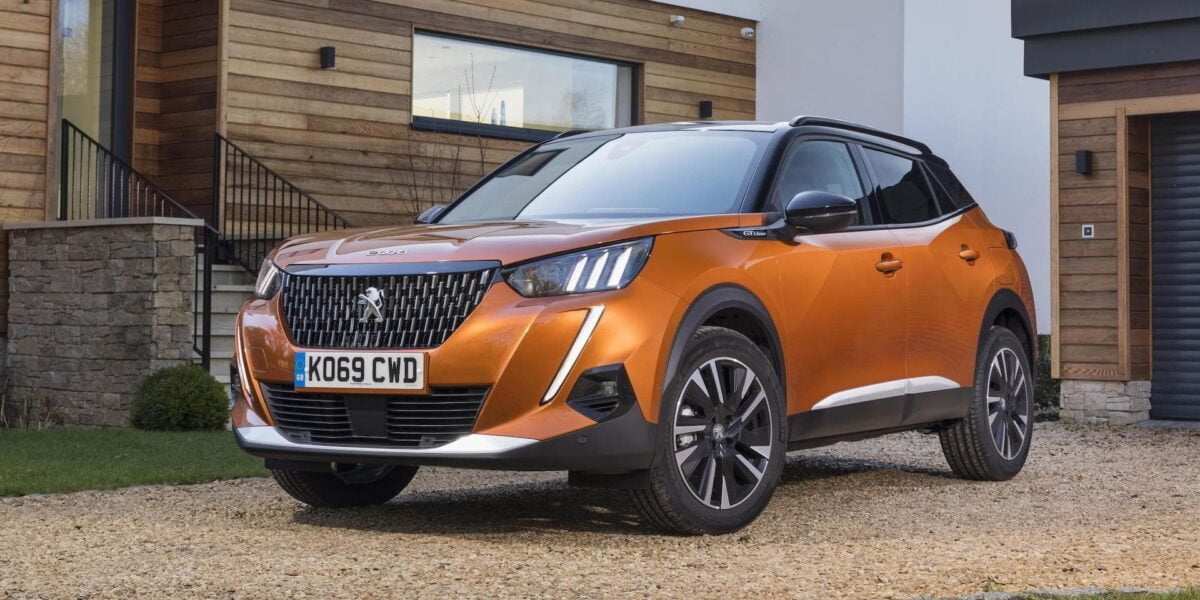
After making its top-ten debut in October, the Peugeot 2008 popped up again in ninth place in December. Registration numbers will also include the electric e-2008. It’s likely to be a short-lived in the best-sellers list, its top ten ranking inevitably assisted by several of the usual suspects underachieving, but it’s always good to see brands with a smaller share of the market doing well.
Based on the 208/e-208 small car, the latest 2008 is rated as one of the better contenders in the small SUV segment. Our industry-leading Expert Rating Index scores the petrol/diesel 2008 at 70% and the electric e-2008 at 72%, both of which are scores that put the car in the top tier of the class – although still a few points behind the very best.
Completing the top ten best-sellers for December is the third and final Nissan Model, the all-electric Leaf hatchback. The Nissan Leaf has made an appearance in these rankings before, but that was in April 2020 – the worst month in new car sales history, all thanks to the original Covid lockdown beginning. This time around, the Leaf has more respectable sales numbers.
Providing a cheaper EV alternative to the premium Tesla Model 3, the Nissan Leaf leaves 2021 with rather admirable annual sales numbers, recording a fourth-place finish in 2021’s sales rankings for battery electric vehicles.
One of the most popular electric cars the world over, the Nissan Leaf has had a positive reception from members of the media since its UK arrival in 2018. It currently holds an Expert Rating of 71% which, while being a decent score, falls somewhat short of the all-electric class-leader, the Hyundai Ioniq 5.
Unsurprisingly, a topsy-turvy year of new car sales finished in topsy-turvy style, with December’s results throwing up yet another month of unexpected results.
According to data published by the Society of Motor Manufacturers and Traders (SMMT), it was a strong month for private new car sales, which were up by 20% on the same month last year – although it’s not a directly fair comparison as much of the UK was heading back into lockdown 12 months ago.
Fleet registrations, on the other hand, were a colossal 40% down on the same month last year, which is largely a reflection of the ongoing semiconductor shortage that is plaguing the car industry. As a result, the overall market was down 13% on last December, which in turn was well down on 2019 and the rest of the last decade.
In full-year results, the overall market was flat, just 1% up on Covid-ravaged 2020. Again, private sales were relatively stronger than fleet registrations, up 7% and down 4% respectively. And again, this was well down on pre-Covid years.
Source: SMMT
Plug-in cars take a third of new car market
Fully electric (25%) and plug-in hybrid (8%) cars took a third of the new car market in December, which bodes well (despite the usual SMMT moan-fest about government grants and charging points) for the industry hitting its 2030 zero-emissions target. It’s been another year of rapid growth for both part-time and full-time EVs, and the pace of adoption shows no signs of slowing.
This record-breaking month was helped in no small terms by a stunning sales month for the Tesla Model 3, which accounted for 9% of all new car registrations on its own. That in itself is enough to skew the numbers for the overall new car market.
Again, the familiar story of “worst-ever month for diesel’s market share” was repeated for approximately the 12th time in 12 months, while petrol’s share of the market is also starting to slide under the pressure of increasing EV demand. However, both petrol and diesel cars have tended to be more affected by supply shortages than EVs, which is effectively helping to drive the switch over to electric motoring.
Source: SMMT
Good month, bad month
Volkswagen topped the sales charts in December, while also ending the year as comfortably the best-selling brand in the UK. Audi was second, which also helped it secure second place in full-year sales. Once again, eternal market leader Ford had another terrible month to end up ninth, closing out 2021 in fourth place overall after an awful second half of the year.
Meanwhile, the year didn’t finish too well for Abarth, Alfa Romeo, BMW, Ford, Jaguar, Jeep, Land Rover, SEAT, Suzuki and Volkswagen (despite VW taking top spot for the month), who all had sales results that were at least 10% below the overall market shift.
Corsa finally gets its coronation
It’s looked like an increasingly likely proposition since before summer, and a nailed-on certainty for the last few months, but it’s now official – the Vauxhall Corsa is the UK’s top-selling car of 2021. But while that was the headline story for the year in total, it wasn’t the big news of December.
The Tesla Model 3 was the star performer in December, topping the sales charts with more than double the registrations of the second-placed Mini hatch. As mentioned above, 9% of all new cars (or 1 in 11) registered in December were Tesla Model 3s.
Source: SMMT
After 12 years on top of the charts, the Ford Fiesta lost its crown in comprehensive fashion, ending the year out of the top ten altogether. We’ll explore the reasons for this in a separate article, but it’s a seismic shift for the UK new car market.
We’ll also have our usual analysis of the month’s top ten in coming days, along with a detailed look at the overall year of 2021 for new car registrations.
Skoda has replaced the two trims in the Kodiaq SUV range and one trim in the Kamiq SUV line-up, their replacements featuring additional on-board tech that was previously reserved for more expensive models.
The entry-level Kodiaq ‘SE’ trim has been replaced by the ‘SE Drive’, which adds new 18-inch alloy wheels, adjustable heated door mirrors with integrated indicators, a Wi-Fi hub and built-in navigation, along with front parking sensors and a rear-view parking camera.
The next step up in the Kodiaq range has been updated too, the previous ‘SE L’ trim being replaced by the ‘SE L Executive’. This new trim level includes all of the features of the ‘SE Drive’, adding new 19-inch alloy wheels, leather upholstery, and an electrically adjustable driver’s seat.
Skoda Kodiaq SE L Executive
Skoda Kamiq SE L Executive
The choice of petrol and diesel engine options remains the same for the Kodiaq range, and Skoda’s virtual cockpit feature remains exclusively available on the range-topping Kodiaq L&K and vRS models.
While the new equipment update for the entry-level Kodiaq is a welcome addition, it is by no means free. The new Skoda Kodiaq SE Drive is now available for £30,415 here in the UK, costing almost £3,000 more than the outgoing SE trim.
Trim level
Summer 2021 price
Current price
Kodiaq SE Drive (5 seats)
£27,650
£30,415
Kodiaq SE L Executive (7 seats)
£31,895
£34,275
Kodiaq SportLine (7 seats)
£35,805
£37,205
Kodiaq L&K (7 seats)
£41,720
£43,145
Kodiaq vRS (7 seats)
£44,635 (released in Autumn 2021)
£46,035
Likewise, prices for the Skoda Kodiaq SE L Executive trim start at £34,275, which is nearly £3,000 more than the replaced SE L variant. The Kodiaq SportLine, L&K and vRS models have also seen their prices increase since the Kodiaq range was facelifted in Summer 2021, although the equipment lists for those variants have not changed.
The Kamiq line-up has also seen price hikes across the board, and the addition of its own £24,465 ‘SE L Executive’ trim. Compared to the old Kamiq SE L that has been replaced, this new trim adds new 19-inch alloy wheels, heated front seats, front parking sensors, and a rear-view parking camera, all previously available on the range-topping Kamiq Monte Carlo.
With an Expert Rating of 70% in our industry-leading Expert Rating Index, the Skoda Kodiaq currently holds a respectable score in a very competitive SUV/crossover market, praised for its value for money and its spacious cabin. The Skoda Kamiq is faring slightly better, with an Expert Rating of 72%, but both SUVs fall short of their newer all-electric sibling, the Skoda Enyaq, which won The Car Expert’s Best New Medium SUV of 2021.
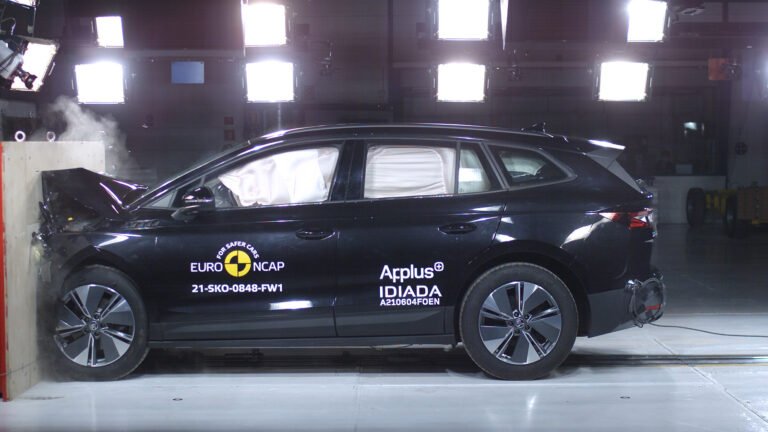
Safety body Euro NCAP has named its safest cars of 2021, and two of the five are made by Skoda.
A total of 33 cars were put through the stringent crash-test programme throughout the year, and 22 of them achieved a top five-star safety rating. Now the five best-in-class awards have been handed out, presented to those cars which performed best overall in categories with at least three entrants that year.
As well as achieving a five-star rating, to qualify for the best-in-class prize the tested cars must have had have no critical body region coloured red during the test programme.
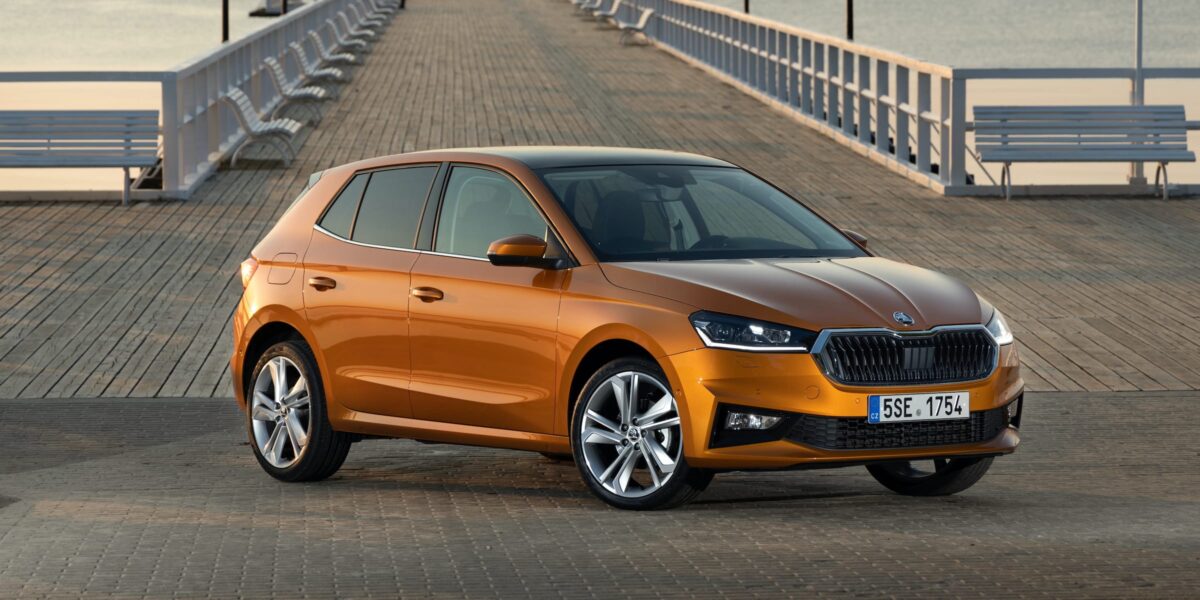
The Skoda Enyaq iV took the large off-roader award with the BMW iX named runner-up, while the Skoda Fabia was named the top small family car, with no runner-up declared.
Electric cars featured heavily in the final line-up with the Mercedes-Benz EQS taking the best executive car award ahead of the Polestar 2, and both cars also wrapping up the pure electric car category.
Other winners included the Nissan Qashqai, which took the small off-roader award ahead of the Volkswagen ID.4, and the Toyota Yaris Cross which was named best small MPV ahead of the Volkswagen Caddy.
Announcing the awards, Euro NCAP Secretary General Michiel van Ratingen described 2021 as a tough year for the car industry, due to a shortage of parts, semiconductors in particular, which followed the Covid crisis and affected development timelines, production and sales.
“Still, we saw quite a number of new car models coming to the market, many of them electric or hybrid, and many of them achieving five-star ratings despite the demanding requirements,” van Ratingen added. “Well done to the winners as well as to the runners-up, some of which were very close contenders for the top slot in their respective categories.”
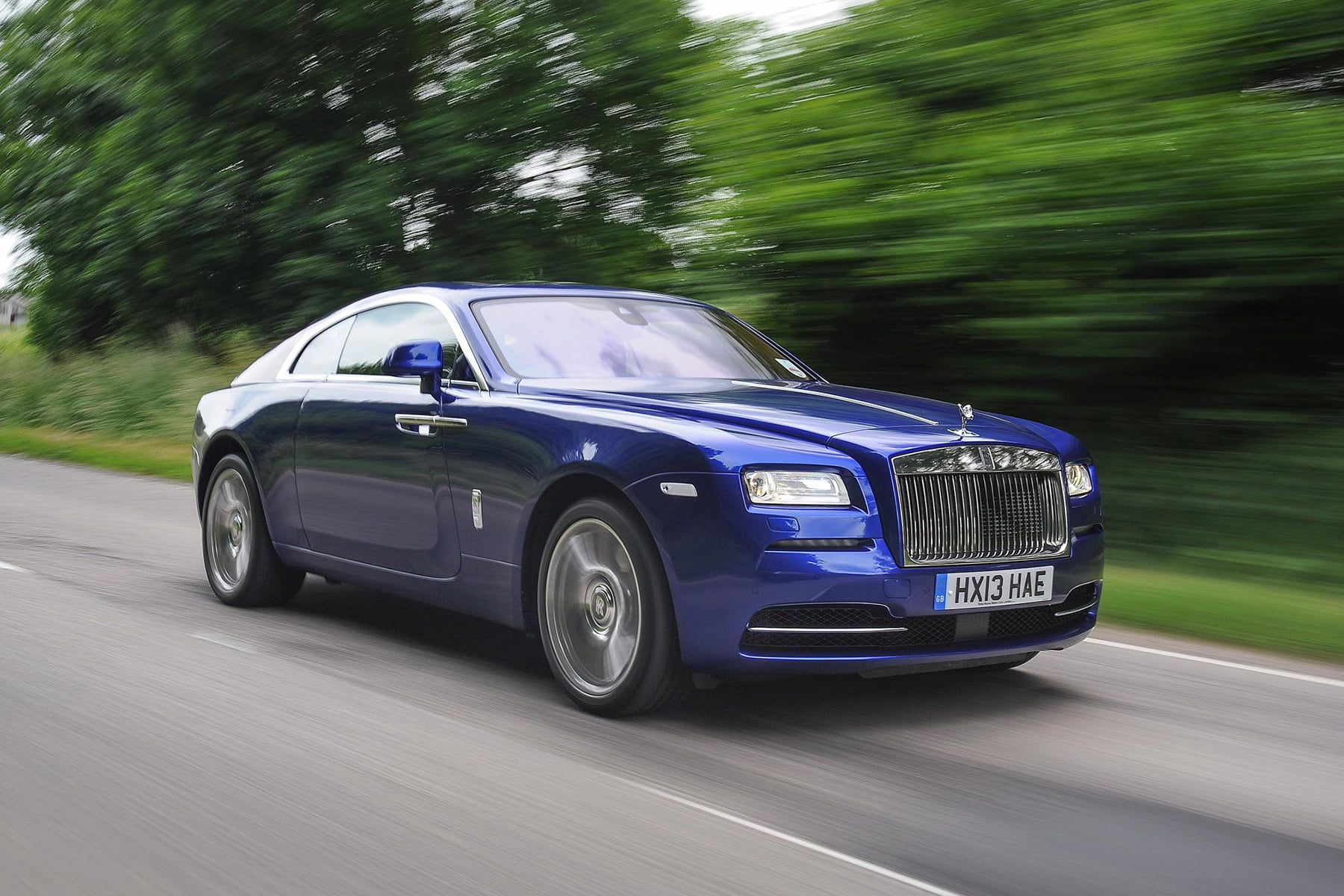
The Rolls-Royce Wraith was a large luxury two-door coupe that was a long-standing flagship model in the Rolls-Royce range, that was on sale in the UK from 2014 to 2023.
Like the previous generation of the Rolls-Royce Ghost saloon, the Wraith was built on the same platform as the BMW 7 Series, and assembled at the Rolls-Royce production plant in Goodwood, UK.
Taking its name from a Rolls-Royce model from 1938, the Wraith was powered by a turbocharged 6.6-litre V12 engine, paired with an eight-speed automatic gearbox.
A number of variants were launched across the Wraith’s lifespan, usually limited edition or bespoke models that generally consist of tweaks to the interior and exterior design.
With a number of newer luxury rivals launching throughout the Wraith’s tenure, Top Gear admitted that the ageing Wraith looked rather dated towards the end of its lifespan. “It has fallen a bit behind on tech, and is tangibly a generation behind the new Phantom and Cullinan, not to mention other luxury car rivals.”
Like the smaller Bentley Continental GT coupe, the Wraith had a price tag that surpassed a quarter of a million pounds, though that is considerably cheaper than Rolls-Royce’s current flagship model, the £360,000 Phantom.
British reviewers warmly regarded the Wraith for almost a decade, praising the high-end coupe for its luxurious cabin trim and its refined engine, although consumer-centric publications consistently mentioned that the Wraith was very expensive to run day-to-day.
No longer on sale, the Rolls-Royce Wraith holds a Used Car Expert Rating of E, with a score of 51%. Although it received excellent media review scores, the Wraith’s overall rating is inevitably dragged down by very poor running costs and CO2 emissions. Potential Rolls-Royce customers are not likely to be unduly concerned, however.
Body style: Large coupe Engines: petrol Price when new: From £258,000 on-road
Launched: Spring 2014 Last updated: Summer 2019 Replaced: 2023
Image gallery
Media reviews
Highlighted reviews and road tests from across the UK automotive media. Click any of the boxes to view.
Auto Express
+
Model reviewed: Score: 8 / 10 “The Rolls Royce Wraith retains all the traditional luxury trappings, but more power and style than ever before to help attract a completely new – and younger – breed of customer.” Read review
Auto Trader
+
Model reviewed: Score: 8 / 10 “The Wraith is the most sporty Rolls-Royce ever made, a large and powerful luxury coupe that remains a luxurious, wafting experience, but with a bit of extra oomph.” Read review
Car
+
Model reviewed: Black Badge Score: 10 / 10 “Much like Las Vegas, the Wraith Black Badge is overblown and unashamedly egocentric – but to some it’ll be irresistible.” Read review
Car Keys
+
Model reviewed: Score: 10 / 10 “I started my test drive feeling somewhat ambivalent toward the Rolls-Royce Wraith but, by the end of the day, I was pretty much smitten. Assuming such heady sums are comfortably within your means, then I confidently predict you’ll consider it money well spent.” Read review
Carbuyer
+
Model reviewed: Score: 7.6 / 10 “The Rolls-Royce Wraith is the fastest and sportiest model in the iconic brand’s line-up, but this four-seat coupe is still hugely comfortable and cosseting.” Read review
Carwow
+
Model reviewed: Score: 9 / 10 “You buy a coupé to turn heads, and few coupes will get passers-by rubbernecking like the Rolls-Royce Wraith. It’s beautiful inside, too, although pretty cramped in the back.” Read review
Daily Mail
+
Model reviewed: “Best described as a GT car, as Rolls-Royce has marketed it, the Wraith is something you’ll still find rewarding to drive rather than be driven in despite it not being a fast-turning sports car. Essentially, if you want to ‘drive’ a car that makes you feel special, there isn’t much else you can buy that rivals it.” Read review
Model reviewed: Score: 10 / 10 “Put your foot down and prepare to be amazed – shocked even. It’s outrageously quick.” (Chris Evans) Read review
Daily Mirror
+
Model reviewed: “You could imagine a Hollywood starlet from the 1920s stepping out of this car because it’s got the presence of a pre-war Roller. It doesn’t exactly blend into the traffic. The back looks fabulous and the way the doors open the wrong way (they’re hinged at the rear) is amazing. Rolls-Royce calls them coach doors, but suicide doors is a more common description.” Read review
Eurekar
+
Model reviewed: “The Wraith is the fastest and most powerful car that Rolls-Royce has ever produced. But the beauty of it is how it delivers that power, in a serene, unhurried way pushing you firmly, almost apologetically into your seatback. Keep your foot firmly on the accelerator and the power from the giant 6.6-litre, twin-turbo V12 engine just keeps on coming.” Read review
Evo
+
Model reviewed: Score: 9 / 10 “There’s very little indeed to find fault with the Rolls Royce Wraith.” Read review
Parkers
+
Score: 9.2 / 10 “Glorious to behold, to be in and to drive” Read review
The Sun
+
Model reviewed: “Driving the Wraith is an effortless affair. And unlike so many coupes, this sumptuous four-seater has acres of room in the back. The Rolls-Royce Wraith is a contemporary, modern car with an impeccable, classic pedigree.” Read review
The Sunday Times
+
Model reviewed: Score: 8 / 10 “The Rolls Royce Wraith does not disappoint.” Read review
The Telegraph
+
Model reviewed: Score: 8 / 10 gorgeously appointed and flamboyantly styled Read review
Top Gear
+
Score: 8 / 10 “A rapid coupe that’s unlike any other car on the planet. Uniquely weird, easy to fall in love with.” Read review
Safety rating
Independent crash test and safety ratings from Euro NCAP
No safety rating
The Rolls-Royce was not crash tested by Euro NCAP during its production life. This is not exactly surprising, as no Rolls-Royce has ever been tested by Euro NCAP and probably never will be.
Eco rating
Independent economy and emissions ratings from Green NCAP
No eco rating
The Rolls-Royce Wraith was not lab tested by Green NCAP during its production life. Given that it’s a three-tonne coupé powered by an enormous V12 petrol engine, we’ll just assume that testing probably wouldn’t have gone well.
Awards
Trophies, prizes and awards that the Roll-Royce Wraith has received
2014
Top Gear Awards – Rather Splendid Motor Car of the Year
Popular Science Magazine – Best of What’s New Award
Similar cars
If you’re looking at the Rolls-Royce Wraith, you might also be interested in these alternatives
Suzuki first launched the S-Cross in 2013, as what was then the brand’s largest SUV/crossover, slightly overshadowing the long-established Vitara. Now we have an all-new version, arriving in showrooms at the start of 2022.
The new car is described as following Suzuki’s ‘all-hybrid’ mantra though it’s only a mild hybrid, the full petrol-electric version not coming until later. It replaces a car that could only manage 57% in our Expert Rating Index, which is quite a way behind the leaders of a crowded sector – so has the new model addressed any perceived failings?
Suzuki is selling the all-new S-Cross on its new and bolder styling, a spacious interior, simplified grade structure and the addition of hybrid technology to its powertrains.
We are also told that the safety specification has been upgraded. There is plenty of passive and active technology, no matter which version you buy. Autonomous braking, blind spot monitors, a rear cross traffic alert, traffic sign recognition and adaptive cruise control come fitted to all versions, along with plenty of airbags.
However, the S-Cross has not yet been independently tested by Euro NCAP so we’ll reserve final judgment until the definitive safety verdict is published.
How does it look?
The new S-Cross comes with a completely revised exterior and this is one of the definite improvements. Certainly the new look, with distinct body creases and angles and a strong v-grille, is far more modern than the overly curvy and definitely over-chromed visuals of the outgoing model.
The wheel arches are bigger and again distinctly more angular, while the slimline headlamps, each with three LEDs, help present a much more up-to-date appearance which compares well with rivals. The strong horizontal line formed by the rear lighting merging into the styling bar also adds to the assertive look.
What’s the spec like?
With the launch of the new S-Cross, Suzuki has taken the opportunity to significantly simplify its grade structure. There is just one engine with either six-speed manual or six-speed auto transmission, and two trim levels now dubbed Motion and Ultra. The main difference between the two is that Motion versions are front-wheel drive, Ultra variants all-wheel drive.
Suzuki is making much of the value proposition for the new S-Cross and certainly it comes well equipped. All versions include smartphone capability through Apple CarPlay or Android Auto, keyless entry and starting, dual-zone automatic air conditioning, heated front seats and parking sensors front and rear.
Pay the extra £4,800 for the Ultra and along with the extra propelled axle you also get leather upholstery, a sliding panoramic sunroof, 360-degree view camera and navigation. It’s interesting that Suzuki isn’t following the industry trend with standard nav across its range but in truth this matters little these days as most people simply use Google Maps through their phone.
What’s the Suzuki S-Cross like inside?
There are no major changes to the interior space of the S-Cross which is adequate for the class, though if you are tall and travelling in the back you might feel a little lacking in headroom, especially close to that big sunroof in Ultra versions. No complaints about the boot, though, 430 litres is not bad when compared to rivals.
What Suzuki can’t match its rivals in, however is interior quality. It doesn’t feel horrendously cheap, but it’s not that plush either, certainly suggesting that you are driving something in the lower half of the market.
The dash equipment doesn’t help – yes we have nice digital controls (though not a complete digital driver’s panel) but the nine-inch touchscreen centre console system in our Ultra-spec test car (Motion versions, which don’t have satnav, only get seven-inch screens ) was not exactly user-friendly and slow to react to commands.
What’s under the bonnet?
Simplicity rules again with just one engine available, at least at present, this being Suzuki’s familiar 1.4-litre turbo petrol unit with the brand’s Boosterjet technology that improves both flexibility and fuel efficiency.
Suzuki now has a ‘Hybrids for all’ strategy across its range and its marketing makes much of the fact that this is a petrol-electric car. But, in reality, it’s only a mild hybrid, which is fast becoming the default for all new petrol and diesel cars.
The 48-volt unit basically helps with the torque while the electric motor replaces the engine when idling, with some minor fuel consumption savings. Combined cycle fuel economy is still under 50mpg, however. Suzuki is still waiting for its proper petrol-electric technology – so far the brand’s only full hybrids have been rebadged Toyotas. A Suzuki system should arrive in 2022 but will be offered on the Vitara before the S-Cross gets it at around the end of the year.
What’s the Suzuki S-Cross like to drive?
On the launch event the only models available were to Ultra specification, so all-wheel drive, though we did get to drive with both manual and auto gearboxes.
First impressions on the road is that there is no shortage of get up and go – boosted by its mild hybrid assistance, the petrol engine pulls enthusiastically from around 2,000rpm but still feels refined. Officially, the AWD car claims 0-62mph time of just over ten seconds, whether in manual or auto form, which is highly competitive with equivalent rivals. The FWD Motion variants cut seven tenths off that sprint too.
In terms of transmission, the manual scores over the auto – shifts are easy but distinct, whereas the auto seems to sometimes wait a little too long before shifting up. This becomes all the more noticeable because the engine feels at its most refined in the lower half of the rev range.
Ride comfort is generally good, with bumps smoothed out adequately right up to motorway speeds. But, this car’s driving experience is so innocuous as to be dull – the combination of soft suspension and over-light steering makes for a lack of feedback when cornering.
Verdict
There’s a lot to like about the new Suzuki S-Cross. Certainly for the price you pay its specification, with lots of equipment and a very strong safety package, will make it very tempting for many buyers – few rivals can match it for value.
You will then have to ask yourself if you are happy with it doing the other stuff only adequately, such as its amount of space and its performance on the road. Certainly there are rivals, such as the SEAT Ateca and even the car that started the SUV craze, the Nissan Qashqai, that are more involving and enjoyable to drive.
In probably the most competitive market, the S-Cross is a big step up from its predecessor, competent and excellent value. But it’s by no means a stand-out contender.
The Lexus LS was a large executive saloon of a similar size, luxury and price to the Mercedes-Benz S-Class, BMW 7 Series and Audi A8. This model was the fifth-generation LS, which arrived in the UK in early 2018 and was on sale until early 2025.
Lexus only offered the LS with one powertrain option in the UK, the automatic petrol-hybrid LS 500h. Customers could, however, choose between front-wheel drive and all-wheel drive models.
The Lexus LS received rather mixed reviews from the UK motoring media, with verdicts ranging from below average to good. Review scores improved markedly after the model’s 2021 facelift, which brought a number of improvements to ride quality and interior refinement, but journalists still generally concluded that there were more capable luxury saloons available for such a high-end price tag.
The Telegraph found this powertrain issue to be the Lexus LS’s downfall. “The strained hybrid driveline adds so much weight that the air suspension struggles to maintain a decent ride quality and the vaunted economy isn’t desperately good.”
Putting aside its performance inconsistencies, it was inside the cabin where the LS excelled. Auto Express affirmed, “The Lexus LS is oozing with technology and driver assistance features, there are some stunning intricate design touches, and on the strength of this drive, the cabin feels even more beautifully screwed together than ever.”
Fleet World agreed, and added that the LS was “a desirable blend of reliability, safety and economy”, but conceded that its European rivals still had an edge, particularly those with plug-in hybrid variants.
As of June 2025, the Lexus LS holds a poor Used CarExpert Rating of E with a score of 46%. Its CO2 emissions are average, but its media review scores and running costs are poor.
Highlighted reviews and road tests from across the UK automotive media. Click any of the boxes to view.
Featured reviews
“The Lexus LS is oozing with technology and driver assistance features, there are some stunning intricate design touches, and on the strength of this drive, the cabin feels even more beautifully screwed together than ever.”
Model reviewed: Score: 7.6 / 10 “The Lexus LS 500h is a hybrid-powered luxury flagship offering a distinctively Japanese alternative to German giants like the Mercedes S-Class, BMW 7 Series and Audi A8.” Read review
Car
Model reviewed: LS 500h Score: 6 / 10 “With great visual design and an original and beautifully made cabin this is a proper Lexus, but a hybrid drivetrain no longer counts for much when the main rivals will all soon offer plug-ins which will get you from your office in W1 to Heathrow on electric power.” Read review
Carbuyer
Model reviewed: Score: 6.8 / 10 “The Lexus LS 500h luxury saloon can’t compete with the refinement, technology and performance offered by its rivals.” (Andy Goodwin) Read review
Driving Electric
Model reviewed: LS 500h Score: 5 / 10 “The Lexus LS 500h makes for an interesting alternative to the big German luxury saloons, but falls short on fuel-efficiency and can’t match rivals for driver appeal.” Author: Stephen Errity Read review
Eurekar
Model reviewed: LS 500h “From the outside it’s a sleek executive saloon ideally suited to the company chairman or high flying executive. Open the doors and, in contrast, there’s an interior of style and glamour with a touch of show business. The Lexus LS 500h has design features which set it well apart from any other car.” Read review
Evo
Model reviewed: LS 500h Score: 5 / 10 “While it delights in some areas, the Lexus LS is too inconsistent to trouble German rivals overall.” Read review
Fleetworld
Model reviewed: LS 500h “There’s certainly much to commend in the LS 500h, as it provides a comfortable and luxurious travelling experience, and is a desirable blend of reliability, safety and economy. But this is a tough segment of the market and its European rivals have an edge, particularly those with plug-in hybrid variants.” Read review
Honest John
Model reviewed: Score: 8 / 10 “The Lexus LS is longer and lower than the previous generation, with a striking new exterior incorporating the unmistakable corporate Lexus grille. The car is built on an extended version of the rear-wheel drive GA-L platform that also underpins the Lexus LC coupe.” Read review
Motoring Research
Model reviewed: Range overview Score: 7 / 10 “The LS represents the pinnacle of Lexus engineering and technical might, it’s just a shame the hesitant powertrain remains the weak link in an otherwise impressive package.” Read review
Parkers
Model reviewed: Range overview Score: 7.6 / 10 “Flagship Lexus LS does grand luxury in a different way” Read review
The Telegraph
Model reviewed: LS 500h Premier AWD Score: 6 / 10 “Lexus has chosen its own idiosyncratic path in the sleek but space-hungry interior design, poor connectivity and a strained hybrid driveline, which adds so much weight that the air suspension struggles to maintain a decent ride quality and the vaunted economy isn’t desperately good.” Read review
Top Gear
Model reviewed: Score: 6 / 10 “22nd Century limo looks, stunted by 1980s powertrain response. The BMW Lexus LS is the ultimate left-field choice.” Read review
Safety rating
Independent crash test and safety ratings from Euro NCAP
No safety rating
The Lexus LS was not assessed by Euro NCAP during its production life.
Eco rating
Independent economy and emissions ratings from Green NCAP
No eco rating
The Lexus LS was not lab tested by Green NCAP during its production life.
Eco rating
Reliability data provided exclusively for The Car Expert by MotorEasy
No reliability rating
As of June 2025, we don’t have enough reliability data on the Lexus LS to generate a reliability rating.
The Car Expert’s reliability information is provided exclusively to us using extended warranty data from our partner, MotorEasy. As soon as MotorEasy has sufficient data on the LS, we’ll publish the score here.
Running cost rating
Monthly cost of ownership data provided exclusively for The Car Expert by Clear Vehicle Data
Fuel consumption
Average
Score
Variation
Score
Hybrid models
32 mpg
E
30 – 35 mpg
D – E
CO₂ output
Average
Score
Variation
Score
Hybrid models
208 g/km
D
182 – 217 g/km
C – D
Insurance group
Average
Score
Variation
Score
All models
50
F
49 – 50
E – F
Service and maintenance
Cost
Score
Year 1
£430
D
Year 2
£1,101
D
Year 3
£1,716
D
Year 4
£2,122
D
Year 5
£2,587
D
Overall
£7,956
D
It’s probably not surprising that a £100K luxury saloon like the Lexus LS will also be expensive to own and run, which is shown above in whole-life costs provided exclusively to The Car Expert by our data partner, Clear Vehicle Data.
Despite hybrid assistance, the fuel economy is very poor, while road tax and insurance are also at the expensive end of town. Servicing is average for the first year, but gets more expensive very quickly after that.
Similar cars
If you’re looking at the Lexus LS, you might also be interested in these alternatives
Once you get beyond the obvious global pandemic thing, one of the key stories of 2021 has been the giant leap forward taken in electric motoring. We’re now well beyond the point of no return as the UK and Europe ramp up to a fully-electric future.
For the last decade, electric cars have been evangelised by a few early adopters, but largely resisted by the majority of households who have seen little point in switching away from a familiar petrol car. All of a sudden, the world has changed.
New EVs are joining the market almost every week, with every car company getting in on the action. And they’re no longer simply engineering curiosities that struggle with simple real-world driving tasks.
Our Expert Rating Index shows that EVs are consistently getting better review scores than their petrol and diesel equivalents. Therefore, it’s no great surprise that our first Car of the Year should be an electric vehicle.
Based on all of the car reviews published by the UK motoring media over the last year, the highest-rated new car of 2021 is the Mercedes-Benz EQS.
The Car Expert’s Car of the Year 2021: Mercedes-Benz EQS
Up until now, Mercedes has offered up electric versions of existing models – the EQA, EQB, EQC and EQV all started life as petrol or diesel vehicles that had their internal combustion innards removed and replaced with electric motors and batteries. The EQS is different.
A dedicated EV rather than a converted petrol car, the EQS sets the scene for the next generation of the Mercedes EQ family. It’s an electric S-Class, but it’s not an electric version of a petrol S-Class.
One of the criticisms of electric cars over the last decade is that they are little more than ‘whitegoods on wheels’. Take away the noise, heat and vibration of an internal-combustion engine and you’re left with a soulless appliance that loses its magic.
Led by Tesla, the car industry answered those criticisms with stunning performance numbers – even humble family saloons can accelerate faster than a supercar thanks to the instantaneous torque of an electric motor. That certainly got attention, but it isn’t the whole answer.
The Mercedes-Benz EQS leans into the other characteristics of an electric car. It’s smooth, thanks to a lack of vibration from a traditional engine, gearbox and driveshaft. It’s also eerily quiet. Both are excellent characteristics for a luxury saloon, and critics have highlighted how the EQS uses them to very good effect.
Both the exterior and interior design have a slightly futuristic style, like you’d expect a car of the 2030s to look, rather than the 2020s. It’s familiar yet different. The exterior is smooth from nose to tail, and less boxy than a traditional Mercedes saloon. It is distinctive yet still functional, with none of the attention-seeking controversy of a BMW iX or Tesla Cybertruck.
Inside, the company has made a big noise about screens, especially the optional £8K ‘hyperscreen’ that essentially turns the entire dashboard into an almost full-width touchscreen. Without the hyperscreen it looks similar to the new S-Class but with slightly sleeker touches throughout. As you’d hope for a £100K saloon.
The EQS is the new starting point for Mercedes-Benz in electric motoring. Its influence will be directly visible in next year’s EQE saloon – the electric equivalent of the E-Class – and then onwards throughout the rest of the Mercedes range in coming years. And, like the S-Class has shown for generations, setting the bar high has benefits that flow across the entire car industry.
It’s one of the great motoring ironies that the UK has such rubbish weather, yet more convertibles are sold here per capita than anywhere else in the world.
Open-top motoring is available right throughout the new car market, from canvas roll-tops on city cars like the Fiat 500 or Citroën C1, through to the most expensive supercar or luxury car models like the Ferrari SF90 Stradale or Rolls-Royce Dawn.
Engineering a great convertible is difficult. Removing the roof from an existing car automatically makes a car less rigid, which affects performance, comfort and potentially safety. The best convertibles have clever ways to address all of these points, delivering a fantastic top-down driving experience without compromise.
The best convertibles of 2021
Best new model : BMW 4 Series
Class champion: Mazda MX-5
Our two winners reflect two different approaches to open-top driving enjoyment. The best new model is the BMW 4 Series Convertible, a four-seater model based on the 3 Series saloon. Meanwhile, the Mazda MX-5 is our class champion, a focused roadster that dispenses with most practicalities in favour of driving purity.
Best new model: BMW 4 Series (80%)
TCE Expert Rating: 80%
Euro NCAP safety rating: 5 stars
BMW has built convertible versions of its 3 Series for generations and, although the name changed to 4 Series in the last decade, the formula has remained the same. The 4 Series convertible and coupé give up some of their rear seat and boot space in exchange for sleeker styling and – in the case of the convertible – the ability to drop the top whenever the mood or the weather suit.
Critics have praised the all-round performance of the new 4 Series Convertible, in particular the way that it blends driving enjoyment with relaxed comfort that perfectly suits this type of vehicle. As usual, the styling is bizarrely challenging but that’s to be expected from BMW these days. The interior is well built and appointed, with user-friendly controls, and is a highly comfortable place with the roof either up or down.
We don’t have an Expert Rating page on the 4 Series Convertible yet, but it will be published shortly so check back soon.
The current Maxda MX-5 has been around since 2015, yet it still earns top marks every year for its minimalist approach to driving purity.
Over the last 30 years, four generations of MX-5 have seen off pretty much every challenge from other car companies. The latest model is possibly the best of all, and has been showered with awards from all around the world.
The MX-5 has never been about horsepower or luxuries, and on paper it looks to be comprehensively outgunned by almost any hot hatch in a similar price bracket. But no front-wheel-drive hatchback can match the perfectly balanced driving experience of a small, rear-wheel-drive roadster. It’s about as much fun as you can have within the national speed limit.
To be eligible for our Best New Model or Class Champion titles, there are a couple of requirements in addition to having a top Expert Rating score.
Firstly, the Best New Model must have been launched in the UK between 1 December 2020 and 1 December 2021. That means cars registered and on the road, not just available to order for deliveries starting sometime in 2022.
Secondly, a car must have a current Euro NCAP safety rating of either four or five stars. If a car scores three stars or less, we can’t in good conscience give it an award for being best in class. If a new model has not been tested by Euro NCAP by December 2021, it will not be eligible but we will consider it next year if it has been tested.
This is a specialist niche in the new car market, with driving experience taking priority over pretty much everything else.
We’re looking at high-performance versions of ordinary cars, rather than dedicated sports cars that are almost never put through Euro NCAP safety testing.
This is a category that looks set to be transformed in coming years, from today’s petrol-dominated market to a new generation of electric performance cars. We see the first signs of this in our award winners below, with a lot more to come for 2022 and beyond.
Our awards recognise both the best new models to have been launched over the last 12 months, but also the best overall cars in each category – because newer doesn’t always mean better, as you can see below.
The best performance cars of 2021
Best new model: BMW M3
Class champion, overall: Alfa Romeo Giulia Quadrifoglio
Class champion, electric: Porsche Taycan
High-performance vehicles tend to score highly with motoring journalists, but all three of these cars are outstanding.
The BMW M3 saloon edges its coupé M4 sibling as the best new entry this year, although both offer titanic performance and a very similar driving experience. However, the critics’ favourite fast four-door is the Alfa Romeo Giulia Quadrifoglio, which ends the year with an outstanding Expert Rating score of 89%.
Our large car class champion is also represented here as the best electric performance car on offer. The Porsche Taycan, especially in Turbo S guise, highlights all the performance characteristics of electric motors, yet retains great driving appeal.
Best new model: BMW M3 (87%)
TCE Expert Rating: 87%
Euro NCAP safety rating: 5 stars
Any car carrying an M3 badge has an enormous level of expectation, built over generations of scintillating compact performance cars. Although the latest generation model has evolved further than ever from the original racing homologation special of the 1980s, the new M3 more than lives up to the name.
Here in the UK, we only get the top-spec M3 Competition model, which is powered by a 3.0-litre, twin-turbo, six-cylinder petrol engine that produces 510hp. It is available with either rear- or all-wheel drive.
Critics have lavished praise on the driving characteristics of both the M3 and M4, although – as with pretty much any new BMW – the styling is a divisive point.
We haven’t built an Expert Rating page for the new M3 yet, although we do have all of the data. Keep checking back for the latest updates.
Class champion, overall: Alfa Romeo Giulia Quadrifoglio (89%)
TCE Expert Rating: 89%
Euro NCAP safety rating: 5 stars
Critics have almost run out of superlatives to describe the Alfa Romeo Giulia Quadrifoglio over the last five years. Launched back in 2016 and still a firm favourite, the Quadrifoglio – along with its even higher-performance versions, the GTA and GTAm – represents the last of its kind for one of the world’s oldest car companies.
Under its new owner, Stellantis, Alfa Romeo will become an electric-only brand in a few years, although the company has pledged a new performance EV as a spiritual successor to the Giulia. So if you want an Alfa super saloon with a petrol V6 twin-turbo engine developed by Ferrari, this is your last chance.
Even in its most basic form, the Porsche Taycan qualifies as a performance car. But in top-spec Turbo S it offers 760hp – a number that puts it into genuine supercar territory.
Car enthusiasts have long feared that EVs will mean the death of sports cars, super saloons and hot hatches. But the Taycan, along with its closely related cousin, the Audi e-tron GT, have shown that this doesn’t have to be the case. Sure, things will certainly be different. But the future is much brighter than the doomsdayers would have you believe.
The Taycan offers superb driving dynamics for enthusiasts, combined with comfort and practicality for more mundane tasks like urban commuting. Obviously this is a £100K+ machine, but the lessons Porsche has been learning with the Taycan will benefit the next generation of Volkswagen Golf GTIs and similar vehicles.
To be eligible for our Best New Model or Class Champion titles, there are a couple of requirements in addition to having a top Expert Rating score.
Firstly, the Best New Model must have been launched in the UK between 1 December 2020 and 1 December 2021. That means cars registered and on the road, not just available to order for deliveries starting sometime in 2022.
Secondly, a car must have a current Euro NCAP safety rating of either four or five stars. If a car scores three stars or less, we can’t in good conscience give it an award for being best in class. If a new model has not been tested by Euro NCAP by December 2021, it will not be eligible but we will consider it next year if it has been tested.
Our Euro NCAP requirement did not affect the performance car awards, as all of the top-scoring models have a full five-star safety rating.
The hot hatch is a UK and European institution, with generations of pocket rockets that cram genuine sports car performance into a shopping trolley hatchback body.
But the segment has shifted over time, with fewer budget hotches providing cheap thrills and minimal frills. Instead, we have a growing number of more expensive, more outlandish, more *everything* models.
We are in the final years of the high performance petrol hot hatch, with electrification yet to really make an impact here. It is inevitably coming as we edge closer to the 2030 cut-off for petrol power, but this will be one of the last categories to fall.
Our awards recognise both the best new models to have been launched over the last 12 months, but also the best overall cars in each category – because newer doesn’t always mean better.
This is the only category in our 2021 awards where neither of the winning cars was the top scorer according to our Expert Rating Index.
The top-rated new hot hatch was the impressive Hyundai i20 N, but none of the new i20 range has yet been put through the Euro NCAP safety testing programme so it is ineligible.
The same applies to the overall Class Champion results. The Toyota GR Yaris has had critics in raptures ever since it arrived, but it has been modified dramatically from the original Yaris Hybrid and does not share that model’s safety rating.
Best new model: Audi RS 3 (74%)
TCE Expert Rating: 74%
Euro NCAP safety rating: 5 stars
The Audi RS 3 isn’t so much a hot hatch as a rather practical junior supercar. With 400hp driving through all four wheels, there are not many faster ways to get from point A to point B in any conditions.
Despite its weapons-grade performance, the RS 3 can be as perfectly docile and comfortable as any regular A3 when you’re not trying to set lap records on a track day.
The RS 3 wasn’t the highest-scoring new entry on the hot hatch section of our Expert Rating Index, however. That honour fell to the new Hyundai i20 N, which currently holds an impressive score of 85%. Unfortunately, the i20 range has not been assessed by Euro NCAP as yet, so the i20 N is not eligible.
The Honda Civic Type R has been a legendary hot hatch for generations, and the current model is probably one of the best cars to wear Honda’s famed ‘Red H’ badge. It has been highly praised for its driving dynamics, both in terms of performance as well as comfort, which are almost universally regarded as best-in-class.
This generation of the Civic Type R ended production in 2021, with an all-new Civic due to be released in 2022. An all-new Type R is expected, so we may see vying for contention here next year.
There was another hot hatch that scored even higher on our Expert Rating Index, however, which was the Toyota GR Yaris. Originally intended as a rally homologation special, the limited production Toyota has won almost every award on offer over the last year. However, it doesn’t have a Euro NCAP safety rating so it’s not eligible for ours.
To be eligible for our Best New Model or Class Champion titles, there are a couple of requirements in addition to having a top Expert Rating score.
Firstly, the Best New Model must have been launched in the UK between 1 December 2020 and 1 December 2021. That means cars registered and on the road, not just available to order for deliveries starting sometime in 2022.
Secondly, a car must have a current Euro NCAP safety rating of either four or five stars. If a car scores three stars or less, we can’t in good conscience give it an award for being best in class. If a new model has not been tested by Euro NCAP by December 2021, it will not be eligible but we will consider it next year if it has been tested.
The Euro NCAP requirement affected both awards in the hot hatch section as both the highest-scoring contenders were ineligible, although for different reasons. The Hyundai i20 N is a new model and will probably receive a safety rating in coming months, while the Toyota GR Yaris is a low-volume model that is unlikely to ever be tested.
While the unstoppable rise in SUV sales has extended to large SUVs, this is one sector that has grown in a rather different way to its smaller siblings. In addition to budget and mainstream models, there has been a huge rush from luxury car manufacturers to push out large and expensive SUVs to cash in on the craze.
In many ways these cars are the last of the dinosaurs, oblivious to the meteor that will obliterate them from the planet. Hulking great 4x4s powered by enormous petrol or diesel engines will soon be extinct, and the first examples of the next generation show that the future will be quite different. Our two award winners for 2021 reflect this changing of the guard.
The BMW iX arrived late in 2021, but went straight to the top of the list for best large SUVs launched this year. It also ends the year as Class Champion for large electric SUVs, comfortably eclipsing the Audi e-tron and Tesla Model X.
The top-ranked large SUV overall, however, is the Land Rover Defender, which has received plenty of praise since it was first launched in 2019.
Best new model + Class champion, electric: BMW iX (77%)
TCE Expert Rating: 77%
Euro NCAP safety rating: 5 stars
OK, let’s get the obvious out of the way first. The BMW iX is not a pretty car. In fact, it’s hard to work out which exact part of the overall design is the worst bit, but it’s probably either the enormous fake grille or the bizarre wheel arches.
Fortunately, the iX is a lot better when you don’t actually have to stand looking at it. Critics have praised the quality of engineering beneath that curiously shaped bodywork, awarding it high marks for the way it drives and the quality of its interior.
Battery range is good, especially in the (expensive) top-spec xDrive50 version, and performance is strong. The in-car tech all works well and is generally user-friendly. And as the old saying goes, when you’re sitting inside it, you can’t see the outside…
Class champion, overall: Land Rover Defender (83%)
TCE Expert Rating: 83%
Euro NCAP safety rating: 5 stars
The all-new, all-electric BMW iX is not, however, the highest-ranked large SUV on the market. From the slightly futuristic BMW, we jump back to a model that trades on the past. The Land Rover Defender may be trying to channel Britain’s love for the clunky old Land Rovers of yore, but this is a thoroughly modern large 4×4.
Available in two lengths (although the longer 100 model is far more sensible and practical) and a range of engines that cover petrol, diesel and plug-in hybrid choices, the Defender has been widely praised ever since it was launched back in 2019.
The Defender is a polished all-rounder that combines outstanding off-road ability with smooth on-road performance and understated luxury. It may be one of the last of the dinosaurs – especially if you pick the petrol V8 version – but it’s certainly an enjoyable way to drive into extinction.
To be eligible for our Best New Model or Class Champion titles, there are a couple of requirements in addition to having a top Expert Rating score.
Firstly, the Best New Model must have been launched in the UK between 1 December 2020 and 1 December 2021. That means cars registered and on the road, not just available to order for deliveries starting sometime in 2022.
Secondly, a car must have a current Euro NCAP safety rating of either four or five stars. If a car scores three stars or less, we can’t in good conscience give it an award for being best in class. If a new model has not been tested by Euro NCAP by December 2021, it will not be eligible but we will consider it next year if it has been tested.
Our Euro NCAP requirement did not affect the large SUV awards, as both of the top-scoring models have a full five-star safety rating.
The Medium SUVs segment is essentially the new family car category, with the “Mondeo Man” of yesteryear having morphed into “Medium SUV man” today.
It’s comfortably the largest of the categories we currently track in our industry-leading Expert Rating Index, with the highest number of car manufacturers represented and price points that stretch from budget to luxury.
Our awards recognise both the best new models to have been launched over the last 12 months, but also the best overall cars in each category – because newer doesn’t always mean better.
Best new model + Class champion, overall: Skoda Enyaq
Class champion, petrol/diesel: Volvo XC60
The Skoda Enyaq was the stand-out new model in the medium SUV category for 2021, ending the year as not only the best new model to arrive in the last 12 months but also the best medium SUV of all 50-odd cars in our database of more than 9,000 car reviews.
If you’re not ready to make the jump to an EV just yet, the Volvo XC60 is a fine petrol or diesel or plug-in hybrid alternative. It’s not the newest car in this class, but remains highly rated by critics. The Porsche Macan actually scores higher in our Expert Rating Index but it doesn’t have a current Euro NCAP safety rating (it expired last year), so it’s ineligible for an award.
Best new model + Class champion, overall: Skoda Enyaq (85%)
TCE Expert Rating: 85%
Euro NCAP safety rating: 5 stars
The Skoda Enyaq arrived in the UK over the summer of 2021 and immediately created a good impression on critics. It might not be the prettiest thing on four wheels – that enormous black plastic fake grille is particularly obnoxious – so it’s fortunate that the substance makes up for any lack of style.
Like most Skodas, the Enyaq excels when it comes to both practicality and value for money. You get loads of space inside and the pricing is comparable to smaller electric SUVs from other brands. Yet you don’t have to sacrifice when it comes to quality or standard kit.
As well as being the top-ranked new model launched in 2021, the Skoda Enyaq also ends the year as the medium SUV Class Champion, edging out the previously class-leading Jaguar I-Pace by about half a percentage point.
The Volvo XC60 is certainly not the newest kid on the mid-size SUV block, but it was good to start with when it was launched back in 2017 and has been steadily tweaked over time to remain highly competitive in 2021.
As an all-round package, the XC60 is tough to beat. Whether you’re looking for petrol, diesel or plug-in hybrid power, it provides a comfortable driving experience and a genuinely lovely cabin.
Like the smaller XC40, the XC60 is almost certainly the last of its kind for petrol-powered Volvos, as the company shifts towards purely electric models in coming years. But if you’re not ready to make that jump just yet, the Volvo XC60 is everything a family-friendly medium SUV should be.
To be eligible for our Best New Model or Class Champion titles, there are a couple of requirements in addition to having a top Expert Rating score.
Firstly, the Best New Model must have been launched in the UK between 1 December 2020 and 1 December 2021. That means cars registered and on the road, not just available to order for deliveries starting sometime in 2022.
Secondly, a car must have a current Euro NCAP safety rating of either four or five stars. If a car scores three stars or less, we can’t in good conscience give it an award for being best in class. If a new model has not been tested by Euro NCAP by December 2021, it will not be eligible but we will consider it next year if it has been tested.
The Euro NCAP requirement did have an impact on our Class Champion results for petrol and diesel models. The Porsche Macan outscored the Volvo XC60 by two points, but its Euro NCAP safety rating expired almost two years ago and is no longer valid, which rules it out of contention for our awards.
The small SUV sector is where the hottest action in the new car market is – a market that just a few years ago didn’t exist now sees a new model added to its ranks almost weekly.
The small SUV/crossover segment is one of the fastest-growing areas of the new car market, and is taking sales from both small and medium cars. Like the Small Cars segment, we are seeing rapid electrification in this segment, with a number of all-electric models on offer.
There were a number of new and updated models reaching UK roads in 2021, with models ranging from budget to premium.
Our awards recognise both the best new models to have been launched over the last 12 months, but also the best overall cars in each category – because newer doesn’t always mean better, as you can see below.
Best new model + Class champion, electric: Vauxhall Mokka-e
Class champion, overall: Volvo XC40
The Vauxhall Mokka-e was the leading new model launched in 2021, and it’s specifically the electric model that is recognised here – its Expert Rating of 73% is five points better than the conventional petrol/diesel Mokka models. It also snares the title of Class Champion for small electric SUVs.
The Volvo XC40 is quite the opposite. The petrol and plug-in hybrid version is highly regarded by motoring journalists and holds the rank of overall Class Champion for small SUVs. But the electric XC40 Recharge doesn’t rate as highly, with an Expert Rating that’s a full 11 points behind the class-leading combustion versions.
Best new model + Class champion, electric: Vauxhall Mokka-e (73%)
TCE Expert Rating: 73%
Euro NCAP safety rating: 4 stars
The new Vauxhall Mokka range debuted the company’s sharp new family face, which it calls ‘Vizor’. That style is gradually being rolled out across the rest of the range as models are facelifted and replaced. The Mokka doesn’t have quite as much space as some of its small SUV rivals, but it certainly looks sharp and modern.
The all-electric Mokka-e is the pick of the range, according to the critics. Its Expert Rating score of 73%, based on 19 different reviews, puts it five points clear of the regular Mokka models. With a smooth electric motor and great driving dynamics, it’s a great example of how an electric family car can be better to drive and live with than a petrol one.
When it comes to the Class Champion rankings, the Mokka-e is actually outscored by two other small electric SUVs, the Kia e-Niro (84%) and Hyundai Kona Electric (79%), but those cars do not have Euro NCAP safety ratings so they are ineligible according to our criteria. It’s important to note that electric versions of petrol cars do not automatically carry the same safety rating, as they can perform quite differently in a collision. As a result, separate tests are undertaken to provide dedicated ratings.
The Volvo XC40 has been highly praised by motoring journalists since it arrived on the scene in 2018, with that praise extending to the plug-in hybrid model that joined the range a year or two later. The all-electric version hasn’t generated quite the same love from critics, so it doesn’t get to share in the title of Class Champion. Its scores may improve, however, as lower-priced models join the range in 2022.
The XC40 condenses all of the interior style and practicality from larger Volvos into a more compact package, with plenty of clever design flourishes inside and out. It will almost certainly be Volvo’s last-ever petrol SUV (diesel has already been dropped), but it’s a very good one.
To be eligible for our Best New Model or Class Champion titles, there are a couple of requirements in addition to having a top Expert Rating score.
Firstly, the Best New Model must have been launched in the UK between 1 December 2020 and 1 December 2021. That means cars registered and on the road, not just available to order for deliveries starting sometime in 2022.
Secondly, a car must have a current Euro NCAP safety rating of either four or five stars. If a car scores three stars or less, we can’t in good conscience give it an award for being best in class. If a new model has not been tested by Euro NCAP by December 2021, it will not be eligible but we will consider it next year if it has been tested.
The Euro NCAP requirement tripped up a couple of otherwise excellent small electric SUVs. The Kia e-Niro and Hyundai Kona both carry higher Expert Ratings than the Vauxhall Mokka-e, but don’t have valid Euro NCAP safety ratings. Like the Mokka-e, the Kia and Hyundai are based on existing petrol SUVs, which both have valid Euro NCAP ratings, but the EV versions have not been tested to verify their safety scores.
The large car sector covers an enormous range of price tags – you’ll see a £30K Skoda Superb mixing with a £300K Rolls-Royce Phantom.
Alongside traditional saloons and estates, there are also sleeker liftbacks and ‘four-door coupé’ models trying to grab buyers’ interests as well.
Over the years, the sector has shifted more and more towards luxury car territory, as the famed ‘Mondeo Man’ of the 1990s has largely shifted to an SUV or a smaller but more premium saloon.
Electrification is working its way into the market, with a couple of key new EV contenders entering the market in 2021. Plug-in hybrids tend to be more popular for manufacturers in this segment at the moment – although this will shift in the next couple of years.
Our awards recognise both the best new models to have been launched over the last 12 months, but also the best overall cars in each category – because newer doesn’t always mean better, as you can see below.
The Mercedes-Benz EQS is the company’s electric alternative to the traditional S-Class saloon, and has an identical Expert Rating score. However, it still falls a couple of points short of the critics’ favourite large car, the performance-oriented Porsche Taycan.
If you’re looking for a more traditional petrol, diesel or plug-in hybrid option, the BMW 5 Series is an outstanding car that continues to show the way to its executive saloon rivals.
Best new model: Mercedes-Benz EQS (86%)
TCE Expert Rating: 86%
Euro NCAP safety rating: 5 stars
The all-new Mercedes-Benz EQS arrived in the UK in late 2021 and is a technological tour de force. Similar in size and price to the traditional S-Class flagship, the EQS shows just how suited an EV can be to luxury motoring.
Its smooth, slightly futuristic styling is a contrast to the more conventional, boxy shapes of Mercedes saloons. Combined with its high-tech interior, including an optional £8K ‘hyperscreen’ dashboard that fills the entire dashboard width with touchscreens, the EQS sets the stage for the next generation of Mercedes-Benz electric models.
The EQS prioritises comfort over performance, unlike other large electric saloons from Porsche, Audi and Tesla, and is a fine benchmark for the rest of the car industry to chase over the next few years.
Although the Mercedes EQS is an impressive machine, it hasn’t quite managed to overtake the Porsche Taycan as the critics’ favourite electric saloon. An Expert Rating of 88% is an impressive result, which earns the Taycan the title of Class Champion for large cars in 2021.
On paper, you might struggle to rate the Taycan over the Tesla Model S, which is significantly cheaper, slightly quicker and has a better battery range. But the Porsche is universally admired for offering better build quality and a far superior driving experience. An estate version, called Sport Turismo, will join the range in 2022.
Incidentally, the Porsche Taycan isn’t the highest-rated large car in our Expert Rating Index – that falls to the Rolls-Royce Phantom with an incredible score of 92%. However, the Phantom (unsurprisingly) doesn’t have a Euro NCAP safety rating, so it’s not eligible.
The BMW 5 Series has been the benchmark for executive saloons for generations, and the current model is as good as any throughout the model’s storied history. For a conventional petrol/diesel/plug-in hybrid saloon with a relatively normal price tag, its Expert Rating score of 87% is outstanding.
Regarded as an accomplished all-rounder, the 5 Series is enjoyable to drive when you’re in the mood and comfortable when you’re merely commuting. The saloon is spacious for passengers, while the Touring estate version adds a large boot for practicality that is leagues ahead of most SUVs.
To be eligible for our Best New Model or Class Champion titles, there are a couple of requirements in addition to having a top Expert Rating score.
Firstly, the Best New Model must have been launched in the UK between 1 December 2020 and 1 December 2021. That means cars registered and on the road, not just available to order for deliveries starting sometime in 2022.
Secondly, a car must have a current Euro NCAP safety rating of either four or five stars. If a car scores three stars or less, we can’t in good conscience give it an award for being best in class. If a new model has not been tested by Euro NCAP by December 2021, it will not be eligible but we will consider it next year if it has been tested.
A lack of Euro NCAP rating has affected our Class Champion results for large cars. The highest-ranked car is the Rolls-Royce Phantom, which scores an incredible 92% on our Expert Rating Index. But, unsurprisingly, the Phantom has not been subjected to Euro NCAP crash testing and is therefore ineligible.
The variety of medium-sized cars remains huge and, despite the growing popularity of SUVs, this class is more complex than ever.
Several brands have more than one vehicle in this segment, with a variety of body styles like saloons, hatchbacks, estates and liftbacks. There is also plenty of choice when it comes to power, with petrol, diesel, hybrid and electric vehicles all available.
Electric power is starting to take over in terms of our Expert Rating Index rankings for this segment, with four of the top five cars being EVs. BMW is the leading light for combustion engines, with both the 3 Series and 1 Series achieving competitive scores against the latest generation of electric cars.
Our awards recognise both the best new models to have been launched over the last 12 months, but also the best overall cars in each category – because newer doesn’t always mean better, as you can see below.
Best new model + Class champion, overall: Hyundai Ioniq 5
Class champion, petrol/diesel: BMW 3 Series
This was a close fight. For a very long time, the BMW 3 Series has been the benchmark for medium-sized cars. But, according to our industry-leading Expert Rating Index, the all-new Hyundai Ioniq has pipped it to the post by 0.25%.
Both of these are excellent cars, with high praise from critics.
Best new model + Class champion: Hyundai Ioniq 5 (85%)
TCE Expert Rating: 85%
Euro NCAP safety rating: 5 stars
The new Hyundai Ioniq 5 has been a bit of a sensation since even before it arrived in the UK over summer. With its retro-futuristic design, it has brought a welcome breath of fresh air into car styling and helped to recast opinions on electric cars being boring whitegoods on wheels.
The refreshing style extends inside the cabin, which is also spacious and practical. Further bolstering the practicality angle are the Ioniq 5’s competitive battery range and compatibility with ultra-fast charging points. There are not too many of these around the UK as of yet, but there will be in coming years and that will improve both convenience and resale value for existing owners.
Ride quality isn’t a high point on large wheels, and some critics have noted a lack of refinement compared to some premium-badged rivals, but overall the Hyundai Ioniq 5 is exactly what we need from new electric cars. An Expert Rating score of 85% is exceptionally good, and we can’t wait to see the next new EVs from Hyundai.
It’s a testament to how good the Hyundai is that it managed to outscore one of the critics’ favourite models for generations. The BMW 3 Series has long been the dynamic benchmark for small-to-medium saloons, and the latest edition adds additional refinement to match.
The 3 Series holds an Expert Rating of just under 85% as of December 2021, and is only a quarter of a point behind the Ioniq 5. Its score covers petrol, diesel and plug-in hybrid versions in both saloon and Touring (estate) body styles, but doesn’t include the M3 super saloon.
If you’re looking for petrol or diesel alternatives to the BMW 3 Series, the new Mercedes-Benz C-Class is several points behind, while the rest of the field is even further back.
To be eligible for our Best New Model or Class Champion titles, there are a couple of requirements in addition to having a top Expert Rating score.
Firstly, the Best New Model must have been launched in the UK between 1 December 2020 and 1 December 2021. That means cars registered and on the road, not just available to order for deliveries starting sometime in 2022.
Secondly, a car must have a current Euro NCAP safety rating of either four or five stars. If a car scores three stars or less, we can’t in good conscience give it an award for being best in class. If a new model has not been tested by Euro NCAP by December 2021, it will not be eligible but we will consider it next year if it has been tested.
Neither of these conditions ended up affecting the results for medium cars, but there are a couple of highly rated cars that are awaiting Euro NCAP testing – namely, the Kia EV6 and Mercedes-Benz C-Class – and therefore would not have been eligible if they’d outscored our winners.
Despite the growing popularity of SUVs and crossovers, UK car buyers still choose more small hatchbacks than any other type of car.
Small cars can be divided into two categories, known as city cars and superminis. City cars are smaller and (usually) cheaper, and will often be three-door hatchbacks. Superminis are larger and are usually five-door hatchbacks.
This year saw some key new arrivals, such as the Dacia Sandero, Fiat 500e and Skoda Fabia, plus facelifts and updates for several other models.
Electrification is starting to really take off in this sector, with several EV choices now available. However, you will only find a few hybrid models and no plug-in hybrids at all. The majority are still powered by familiar petrol engines, although some have mild hybrid assistance. Diesels have almost completely vanished and only make up a fraction of sales.
Our awards recognise both the best new models to have been launched over the last 12 months, but also the best overall cars in each category – because newest doesn’t always mean best, as you can see below.
The Skoda Fabia made a splash when it arrived in late 2021, and is the top-ranked new model to join the small car ranks this year with an Expert Rating of 76%. It wasn’t, however, enough to topple the best in class. The Ford Fiesta may have been around since 2017, but it still ended the year as top dog in the small car class. It has an Expert Rating of just over 78% based on 46 reviews in our database.
If you are looking to make the switch to electric power, the leading light is the Peugeot e-208, which critics rate as better than its petrol equivalent. It’s into its third year on sale now, and has an Expert Rating of 86% from 20 reviews.
Best new model: Skoda Fabia (76%)
TCE Expert Rating: 76%
Euro NCAP safety rating: 5 stars
The all-new Skoda Fabia arrived in the UK in late 2021 and has already been warmly received by critics. It’s a more sophisticated, more spacious, more technologically advanced Fabia than previous models but still retains traditional Skoda traits of clever practical touches and strong value for money. It also has an outstanding safety score for a small car.
There’s currently no hybrid or electric option, but if you’re looking for a conventional petrol-powered supermini, the new Fabia ticks a lot of boxes.
As good as the new Fabia is, it’s not quite the best small car on sale. That honour falls to the Ford Fiesta, which just edged out the Volkswagen Up (by a margin of just 0.2%) to take top spot in our Expert Rating Index for 2021.
The Fiesta has been on sale since 2017 and has been highly regarded by critics since day one. There’s no better supermini to drive, which is the key characteristic that separates it from the rest of the small car herd. It also performs all the regular family runabout tasks faultlessly, although maybe not with the same flourish as newer rivals.
A facelifted model is set to arrive in the UK in early 2022, which should only enhance the Fiesta’s reputation. It may have lost the 2021 sales race to the Vauxhall Corsa, but it’s still the top-rated small car on sale today.
The Peugeot 208 range was designed from the start to include petrol, diesel and electric power. Although all versions have received praise – as well as winning the 2020 European Car of the Year award – it’s the EV version that UK critics regard more highly.
The e-208 offers a combination of sleek styling (both inside and out), zippy performance around town and a decent battery range. While other small EVs may be better in individual areas, none can match the Peugeot e-208 as a great all-round choice. If you’re looking to make the switch to an electric car, this is the place to start.
To be eligible for our Best New Model or Class Champion titles, there are a couple of requirements in addition to having a top Expert Rating score.
Firstly, the Best New Model must have been launched in the UK between 1 December 2020 and 1 December 2021. That means cars registered and on the road, not just available to order for deliveries starting sometime in 2022.
Secondly, a car must have a current Euro NCAP safety rating of either four or five stars. If a car scores three stars or less, we can’t in good conscience give it an award for being best in class. If a new model has not been tested by Euro NCAP by December 2021, it will not be eligible but we will consider it next year if it has been tested.
Neither of these conditions affected the results for small cars, although it was a close-run thing. The Volkswagen Up finished the year rated only 0.2% less than the Ford Fiesta but would not have been eligible as it only has a three-star Euro NCAP safety rating.