Dacia has completed its range refresh with the launch of a new Sandero and Sandero Stepway.
The models have become popular as the least expensive new cars on sale in the UK, something that is unlikely to change despite an expected price increase when the pair go on sale in February 2021.
Both cars now sit on a new platform, which brings with it advancements in technology such as increased active and passive safety features, new engines and new transmissions.
The cars’ dimensions are the same as before, but the exterior styling is slightly different, with smoother lines and a more sloped windscreen. Both front and rear lights now get Dacia’s new Y-shaped light signature, while LED headlights are standard across the range.
The higher-riding Stepway version gets a ribbed and domed bonnet, chrome Stepway logo under the front grille and a metal skid plate front and rear to protect the car when taken off the beaten track.
It also gets modular roof bars that look like regular items, but they’re adjustable using a provided key. They can be dismantled to create a roof rack that can carry up to 80kg.
Convenience features vary depending on model and trim, but standard equipment includes a smartphone holder, on-board computer screen and speed limiter. Other equipment such as automatic air conditioning, keyless entry, reversing camera and automatic windscreen wipers come as standard too.
Both models get a turbocharged 1.0-litre engine, which is available with a six-speed manual or CVT automatic transmissions, as well as an LPG bi-fuel option, which is another 1.0-litre unit that’s only available with a manual.
The Sandero is also available with an entry-level naturally aspirated 1.0-litre engine, which can only be had with a five-speed manual.
The new Dacia Sandero and Sandero Stepway both go on sale in February 2021, with deliveries expected to begin in the Spring.
The Toyota Yaris is a five-door supermini-class hatchback. This model is the all-new fourth generation, which was launched in the UK in summer 2020. While the previous model included a hybrid model, the new version is hybrid-only.
Unusually for a new model, the new Yaris is actually shorter than the old model, although better packaging means it’s roomier inside. There is also a high-performance model on the way called the GR Yaris, however this is an almost completely different car and won’t be included here.
The Toyota Yaris has been praised for its packaging and refined hybrid powertrain, which makes good use of its electric power in urban driving. It also scored very highly in the latest Euro NCAP crash testing programme. However, the starting price is quite high and the interior lacks the flair of some rivals.
As of January 2026, the Toyota Yaris has a New Car Expert Rating of A, with a score of 74%. It scores top marks for its low running costs and CO2 emissions, while its safety rating and reliability record are also good. However, its media review scores are only average, while Toyota’s new car warranty is also off the pace compared to some rivals.
Model reviewed: 1.5-litre petrol-electric hybrid Dynamic “Practicality levels may be down ever so slightly, but the new Toyota Yaris remains a truly attractive proposition in the small car segment.” Author: Jack Evans Read review
Auto Express
Model reviewed: GR Sport (2023) Score: 6 / 10 “It’s a shame Toyota hasn’t pushed the Yaris GR Sport further towards the performance realm, because it’s a long way from encroaching on GR Yaris territory. For £25,000, there are also plenty of compelling superminis with more dynamic flair.” Read review
Model reviewed: 1.5-litre petrol/electric hybrid automatic Dynamic Score: 8 / 10 “The latest Toyota Yaris is right in the mix, and should be on the shortlist of any supermini buyer – especially those who do most of their driving around town. We’d suggest steering clear of high-end editions, though – on grounds of both value and ride quality.” Read review
Auto Trader
Model reviewed: Range overview Score: 7.8 / 10 “Packing a hybrid powertrain into a supermini-sized car is no mean feat, Toyota’s electrified expertise very much in evidence in this all-new Yaris. A new platform, a greater emphasis on handling and bold styling add up to an appealing package which is expensive but should be fuss-free to own and drive.” Read review
Business Car
Model reviewed: 1.5-litre petrol-electric hybrid automatic Icon Score: 8 / 10 “The new Toyota Yaris isn’t class-leading when it comes to its interior, but it is good enough. It is also competitively priced and tax-friendly, it drives well and should provide excellent real-world economy, with 60mpg easily achievable.” Read review
Car
Model reviewed: Range overview Score: 8 / 10 “Toyota’s Fiesta-rival is newer, more economical, and just possibly a little bit smarter than the Blue Oval’s iconic supermini.” Read review
Car Keys
Model reviewed: Range overview Score: 8 / 10 “Toyota has taken the efficiency and generous standard kit levels of the previous Yaris and made it a lot more desirable thanks to its stunning looks and enjoyable driving experience. “ Read review
Carbuyer
Model reviewed: Range overview Score: 8 / 10 “The Toyota Yaris Hybrid is the ideal supermini for navigating towns and suburbs.” (Andy Goodwin) Read review
Company Car Today
Model reviewed: 1.5-litre petrol-electric hybrid Design Score: 8.2 / 10 “Good looks, great emissions figures and a decent level of standard specification are all major plus points, although it doesn’t always feel the most premium of superminis.” Read review
Model reviewed: 1.5-litre petrol/electric hybrid Dynamic “Other superminis may beat the Yaris in specific areas, but overall the newest Toyota is a bit of a winner.” Read review
Daily Mail
Model reviewed: Range overview “Striking new Toyota Yaris has dramatic styling and bold looks, and better fuel economy.” Read review
Driving Electric
Model reviewed: Range overview Score: 8 / 10 “The latest Yaris Hybrid is a major step forward from its predecessor and should be more of a worry for its rivals.” Read review
Eurekar
Model reviewed: Range overview “All in all, the new Yaris has moved on to take Toyota into fresh territory in the small car market and it is genuinely a little model with big car features.” Read review
Fleetworld
Model reviewed: 1.5-litre petrol-electric hybrid automatic Design Score: 6 / 10 “More of the refinement, practicality and efficiency that the Toyota Yaris is known for, with a welcome dollop of neat design and driver appeal. If you can live with the limitations of the hybrid drivetrain.” Read review
Honest John
Model reviewed: Range overview “The Toyota Yaris promises sharp styling, great manoeuvrability, excellent cost-of-ownership, comfort, quality and the clever application of new technologies, including multimedia functions and a new hybrid engine.” Read review
Motoring Research
Model reviewed: Range overview Score: 9 / 10 “The Toyota Yaris has been transformed from dull to dynamic. Bold styling is combined with a quality interior and efficient hybrid tech.” Read review
Parkers
Model reviewed: Range overview Score: 8 / 10 “Toyota’s self-charging hybrid Yaris makes more sense than ever” Read review
The Sun
Model reviewed: Range overview “All in all, the Toyota Yaris is miles better than before. Younger, fresher, nicer to drive, full of kit, and decent value. Definitely worth a look.” Read review
The Telegraph
Model reviewed: 1.5-litre petrol/electric hybrid Dynamic Score: 8 / 10 “This new Toyota Yaris is better to drive than any that has gone before and is probably better than a cooking Yaris needs to be. If you drive in urban conditions you should see the sort of mid-sixties miles per gallon as claimed and the interior is of high quality and pleasing to live with.” Read review
Top Gear
Model reviewed: Range overview Score: 6 / 10 “Efficient, interesting looking and updated inside, but the Toyota Yaris remains forgettable to drive.” Read review
Safety rating
Independent crash test and safety ratings from Euro NCAP
The Toyota Yaris was initially assessed by Euro NCAP back in 2020, where it scored a five-star rating. It was reassessed in December 2025 under the latest, tougher, protocols, where it was downgraded to a four-star rating. It’s not that the car has got any less safe after five years, simply that the standard for a five-star ranking is raised every three years or so.
This is still a good result for a supermini-class small car, and compares well against most of the Yaris’ rivals.
Eco rating
Independent economy and emissions ratings from Green NCAP
Clean Air Index: 6.3 / 10 Energy Efficiency Index: 7.4 / 10 Greenhouse Gas Index: 5.9 / 10
The Toyota Yaris received a 3.5-star rating from Green NCAP in February 2021. Green NCAP said: “The new Yaris comes in hybrid form, a 1.5-litre petrol engine being supplemented by an electric motor. Together, they deliver some impressive results. On-road emissions of NOx and CO are very low, and the particulate number is well controlled.
“The car scores well in energy efficiency and its emissions of greenhouse gases are, in the case of CH4 and N2O, vanishingly small. All in all, the Yaris achieves a well-deserved 3½ star rating.”
Reliability rating
Reliability data provided exclusively for The Car Expert by MotorEasy
Total claims: 86 Average repair cost: £293.93 Last updated: April 2025
The Toyota Yaris has a good reliability rating of 92%, according to warranty data provided exclusively to us by our commercial partner, MotorEasy. This score applies to both this generation Yaris and previous (pre-2020) generations, which is good news if you are considering a used Toyota Yaris.
Across all categories, the repair bills claimed under warranty to date have been very inexpensive. All in all, the Yaris looks like being a reliable choice as a used car.
Running cost rating
Monthly cost of ownership data provided exclusively for The Car Expert by Clear Vehicle Data
Fuel consumption
Average
Score
Hybrid models
66 mpg
A
CO₂ output
Average
Score
Variation
Score
Hybrid models
95 g/km
A
Insurance group
Average
Score
Variation
Score
All models
14
A
Service and maintenance
Cost
Score
Year 1
£148
A
Year 2
£413
A
Year 3
£669
A
Year 4
£845
A
Year 5
£1,113
A
Overall
£3,188
A
If you’re looking for a new car that’s cheap to run, the Toyota Yaris is a very good place to start. In fact, it scores an ‘A’ in every category of our running costs data, provided exclusively to The Car Expert by Clear Vehicle Data.
On top of the perfect set of scores you see above, which are based on the average results for the whole Yaris range, the fuller range of data shows that every single version of the Yaris scores an ‘A’ in every category – an extraordinarily good result.
If you’re looking at a used Yaris, it’s also pleasing to see that servicing costs remain low for five years from new (which is as far out as our data goes) and probably forever after that.
Awards
Trophies, prizes and awards that the Toyota Yaris has received
2023
EcoCar Electrified Top 50 – Best Hybrid Small Car
2021
European Car of the Year
UK Car of the Year Awards – Best Supermini
Auto Express Awards – Best Affordable Hybrid Car
Carwow Awards – Best Small Hybrid
Business Car Awards – Best Small Car
2020
Auto Express Awards – Best Affordable Hybrid Car
Similar cars
If you’re looking at the Toyota Yaris, you might also be interested in these alternatives
James, from north London, has asked a very good question about used car pricing practices at dealerships. So good, in fact, that it has become the topic of our latest car buying advice article.
James was looking at a used car advertised online for £12,995 and decided to visit the dealership to look at the car. But when he arrived… “I discovered that the car was priced at £14,995. When I questioned the salesman, I was told that the higher price was correct and I must have been mistaken. Upon further questioning, the sales executive went off into the manager’s office, and when he came back he said that it had been a mistake and had now been corrected. Am I entitled to try and hold them to the lower price?”
It is not unusual for used car dealers to advertise the same car at different prices on different websites, or to have a higher price on the car window and a lower price advertised on the web. There are usually two reasons for this:
If a customer hasn’t seen the lower price advertised elsewhere, the dealer can try and sell the car at the higher price; or
The dealer can claim that the car has ‘already been reduced’ to the lower price, to try make the car look like a better deal. This strategy is used to stop a customer haggling for a lower price.
I have dealt with many dubious used car pricing practices, and plenty of used car dealers are very slippery at handling the question of “Isn’t this car advertised for less on the internet?”
Usually, the dealer will ‘suddenly remember’ that it has ‘only just been reduced this morning’ or make up some nonsense about ‘web-only offers’, or mutter something about how they ‘haven’t had enough time to update the price in the car window’.
It doesn’t really matter what the excuse is; they are simply trying it on – and then trying to cover it up when they realise you actually know what you’re talking about.
Used car pricing – anything goes
The reality is that there is no recommended retail price for a used car – a seller, whether private or dealer, is entitled to ask whatever price they like for their car. It’s simple capitalism, with supply and demand determining the price.
Although it’s not illegal for a dealer to advertise the same car at two (or more) different prices, it’s not exactly an example of outstanding business ethics if their used car pricing is handled like this as a matter of course.
James’ situation is a step more serious, as he claims that the dealer refused to sell him the car at the advertised price. We are no longer talking about a dealer omitting to mention that a car is advertised and available for a cheaper price, but actually refusing to honour their own advertised pricing.
These days, this sort of behaviour is thankfully becoming rare. Most dealers advertise their cars on several different websites, and can easily alter their used car pricing in seconds. In the past, an error in an old-style newspaper or magazine ad couldn’t be changed once it had been printed (assuming that it is a genuine error, rather than simply a dubious selling technique).
In this sort of situation, you need to have proof of the lower advertised price. With online ads, it is easy for you to look up the advertised price on your smartphone in seconds, but a dealer can also change their advertised price just as quickly, so always print out the advertisement before you visit the dealership.
If you hold your ground, and if you start mentioning phrases like ‘false advertising’ and ‘breach of trading standards’, dealers will generally concede fairly quickly. But is this the sort of dealer you want to be buying your car from?
Used car pricing – are you getting the best deal?
In the world of used car pricing, a dealer sets a car’s price based on what they hope to get and by what similar cars are being advertised for.
A salesman is not obliged to offer you a lower price, just as a customer is not obliged to pay a higher asking price. It comes down to who wants the deal more and is prepared to concede more ground, or who is better at negotiating a deal.
Audi has given the coupé treatment to its mid-sized Q5 as the firm expands its range of SUV into ever-narrowing niches.
The Audi Q5 Sportback joins the Q3 and e-tron Sportback models, with a liftback rear end design compared to the more upright styling of the standard SUV.
It will launch with a choice of two diesel and one petrol engine. The entry level options are both 2.0-litre units making 204hp, badged as 40 TDI and 40 TFSI. A high-performance SQ5 Sportback will also be available, with a 347hp diesel engine, while a petrol-electric plug-in hybrid unit will be available at a later date.
The styling is largely similar to the existing Audi Q5, but the Sportback version’s roofline begins to taper down from the middle of the roof to give that liftback-style appearance. In top-spec Vorsprung models, the rear lights have OLED technology that splits the light into six segments that can be controlled differently. Customers can choose from three different rear light signatures when they order the car.
Inside, all UK cars are fitted with Audi Virtual Cockpit with its 12-inch panoramic display, as well as satellite navigation and internet connectivity. The Vorsprung trim adds a 19-speaker Bang & Olufsen audio system, head-up display, wireless charging and more.
The redesigned rear end means that the Q5 Sportback loses some boot space compared to its regular Q5 sibling, down 40 litres from 550 to 510 litres. Folding the rear seats flat increases this to 1,480 litres, and Vorsprung models get a sliding rear bench that can add up to 60 litres when pushed forward as far as possible. The difference will be more noticeable when you’re loading up to maximum levels to go away on holiday, but Audi conveniently doesn’t provide load volumes for luggage loaded above the window line.
The Audi Q5 Sportback is due to go on sale in the first half of 2021, with Sport, S line, Vorsprung and Edition One specifications available at launch.
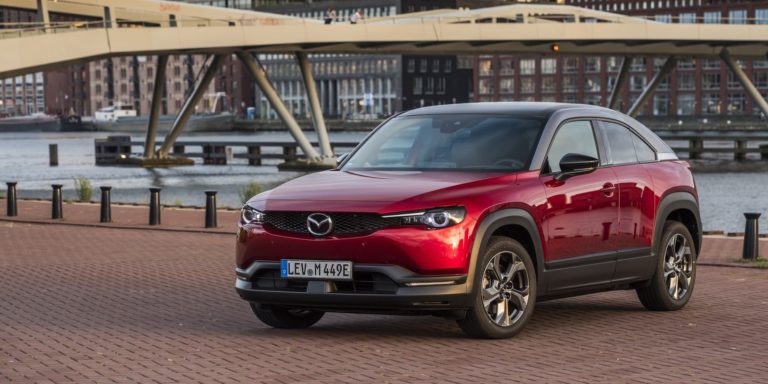
Mazda has confirmed that the MX-30 will go on sale in the UK from March 2021 with prices starting at £25,545 after the plug-in car grant is applied.
The electric crossover will be available with three trim levels called SE-L Lux, Sport Lux and GT Sport Tech, as well as a high-spec First Edition that will be limited to just 500 examples.
Standard equipment includes LED headlights, a reversing camera, adaptive cruise control, satellite navigation and a head-up display. All cars are equipped with a Type 2 AC charging cable and 50kW charging capabilities.
The first cars to go on sale in March are the First Edition models, with orders open now and prices starting at £27,495. Upgraded equipment includes adaptive LED headlights, satin D-pillar trim and LED rear lights, while inside it gets a grey cloth and leatherette upholstery.
It will be joined later by the other models, with the entry SE-L Lux getting 18-inch alloy wheels, black door mirrors and grille, and a choice of five colours.
Upgrade to the £27,545 Sport Lux and there’s a different set of 18-inch alloy wheels, power adjustable seats with lumbar support and keyless entry.
The range-topping GT Sport Tech starts at £29,845 with a light grey cloth interior or £30,045 with a dark grey cabin with brown artificial leather upholstery. Extra equipment includes front wiper de-icer, an electric sunroof, heated steering wheel and 12-speaker Bose sound system.
Jeremy Thomson, managing director of Mazda Motors UK, said: “Our first all-electric Mazda heralds an exciting start to Mazda’s second century in business. With the First Edition MX-30 order book now open, customers in the UK can reserve a car for just £800 for delivery early in 2021.
“Part of Mazda’s multi-solution approach to efficient vehicles, the launch of our first pure electric car is a milestone moment for the brand and a landmark moment for our dealers and customers here in the UK.”
The Mazda MX-30 comes equipped with a 35.5kWh lithium-ion battery that provides up to 124 miles of range. First Edition orders can be made online now, and Mazda is planning opportunities for prospective customers to view and test drive models soon.
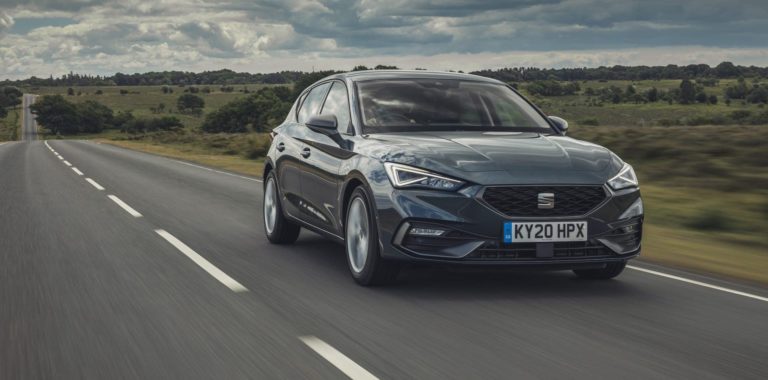
If you’re looking for a sensible family car, two models have long stood out – the Ford Focus and the Volkswagen Golf. However, the SEAT Leon has long been an appealing alternative, sharing much of its underpinnings with the Golf but with more interesting styling and a more playful driving experience.
That’s still true of the latest model, which is a similar size to its German cousin but with sharper looks and the same excellent build quality – yet like for like it costs less. It all seems a bit too good to be true, so let’s delve a little deeper.
SEAT has given the Leon a pretty comprehensive makeover for the fourth generation, as part of a 1.1 billion euro investment in its model range. It gets that smart new exterior look, updated interior design and technology, and the latest generation of Volkswagen Group engines – with a plug-in hybrid on the way.
Being based on the latest MQB Evo platform has allowed SEAT to add more connected services, advanced driving assistance systems and more safety technology, while also being bigger and more practical than before.
How does it look?
Although we were testing an FR model – meaning it had sporty-looking bumpers and smart 17-inch alloy wheels – the dull grey paint made it more subdued than we would have liked. You don’t need to go mad, but a bolder colour such as the metallic red (a no-cost extra) would be preferable.
A particular highlight of the new Leon is the full-width rear light, which gives off a futuristic look when driving at night while adding a splash of colour to the rear during the day. SEAT’s penchant for sharp creases in its cars’ styling continues to serve it well, taking a similar silhouette to the Golf but injecting a little more character.
What’s the spec like?
Prices for the SE Dynamic start at £20,995, with equipment including 17-inch alloy wheels, rear privacy glass, LED headlights and tail lights, front and rear fog lights, digital cockpit, ten-inch infotainment screen with sat nav, cloth upholstery, air conditioning and cruise control.
However, upgrade to the FR, and prices start from £23,185. For the extra cash, you get a different 17-inch alloy wheel design with an optional upgrade to 18-inch wheels, dynamic indicators, rain-sensing wipers and a wireless phone charger. On top of that, there’s the lower, stiffer suspension and sporty body kit.
As yet, the SEAT Leon has not been put through its crash-testing paces by Euro NCAP, thanks to our old friend Covid-19. Euro NCAP has now resumed testing, but there will be a bit of a backlog of cars to work through so we may not have results for the Leon for some months.
What’s the SEAT Leon like inside?
Sorry to keep going on about the Golf, but with the new one recently released and the Leon sharing so much with it, it’s tough to not make comparisons. Again, inside, the Leon borrows heavily from the new Volkswagen, having the same minimalist interior.
The dashboard has a large central screen for the infotainment and a digital instrument binnacle ahead of the driver, with minimal physical buttons. It looks fantastic, with SEAT doing a great job of elevating the premium feel of the cabin while keeping it cool and modern with lots of sharp angles in the design.
However, the downside is that navigating menus while on the move to change simple settings like the climate controls becomes annoying quickly. The sooner manufacturers move away from fitting everything behind a screen the better.
What’s under the bonnet?
There are currently three petrol engines and one diesel available, with the trim level dictating which are available. Opt for the standard SE Dynamic trim, and the petrols are a 110hp 1.0-litre and 130hp 1.5-litre, while the diesel is a 115hp 2.0-litre unit, each with a six-speed manual gearbox.
However, upgrade to the sporty-looking FR trim and you have the choice of the two petrols, as well as a 1.5-litre unit making 150hp, which is available with both the manual or a seven-speed automatic.
For everyday driving the 130hp unit is more than enough, but if you’re looking for something with a bit more pizazz for family duties, an FR model with 150hp could be your best bet. Should you do many motorway miles the diesel will be ideal, though it does limit you to the SE Dynamic trim.
What’s the SEAT Leon like to drive?
We got behind the wheel of the FR trim, which has traditionally been the sportier of SEAT’s specifications. However, the latest generation does appear to have lost some of that light-footed sparkle that was evident in its predecessor – it’s closer to a Golf in mannerisms than ever before.
However, that’s not necessarily a criticism, because it’s immediately obvious that this is one of the most pleasant, fuss-free driving experiences in the segment. The ride is comfortable despite the FR’s slightly stiffer suspension, and the steering light enough that city driving is a breeze while still being stable at motorway speeds. A great all-rounder, then.
Verdict
There’s no two ways about it – the new SEAT Leon is a brilliant car. It looks great, it’s practical, it’s quiet and comfortable to drive, and comes packed full of kit. The down side? The Golf does all of those things, and the extra cash won’t be too offensive when divided across the monthly payments of a finance deal.
The thing is, its greatest negative is the existence of the Golf, but it’s also a positive. It has all the great things the VW does but without forcing you to accept the dull, predictable choice – and if you can get dependability and character in one hit, why wouldn’t you? That minor saving could allow you to tick a couple of option boxes to make it even better value for money, too.
Rolls-Royce has introduced a new Extended version of its new Ghost luxury saloon.
Some 17cm longer than the standard car, the change brings – according to Rolls-Royce – ‘greater space and legroom for rear-seat occupants’.
Inside, an optional reclining ‘serenity seat’ can be selected, bringing a level of comfort which the Goodwood-based company likens to a business jet cabin. A champagne fridge has been installed between the two rear chairs, which features two different cooling modes.
A new micro-environment purification system (MEPS) system enhances the existing air filtration technology to further improve the cabin air quality in the car and is capable of detecting if the level of airborne contaminants is too high. If so, the air is then passed through a nanofleece filter which can remove all of the ultra-fine particles.
Torsten Müller-Ötvös, chief executive of Rolls-Royce Motor Cars, said: “New Ghost is the result of in-depth dialogue with Rolls-Royce’s diverse and global customer base. Many of them asked the marque to create a motor car that provides the indulgence of enhanced rear space within the interior suite with no compromise to driving dynamics.
“Ghost Extended answers this customer demand by creating a product that augments both their business and lifestyle requirements.”
New laser headlights are already included, while a range of assistance systems ensure that the safety levels in the Ghost match the level of luxury it offers.
The Ghost Extended retains the same 6.75-litre V12 engine as the standard Ghost, while 100kg of acoustic sound deadening ensures that the cabin remains as hushed as possible.
BMW has finally revealed its new M3 and M4 sports cars after several weeks of teasers.
Set to arrive in the UK next March, the new models boast up to 510hp from a new six-cylinder engine. The cars – which will only be available in high-performance Competition form – will also be available with optional xDrive four-wheel-drive for the first time. They’ll follow from the initially rear-wheel-drive cars which will hit showrooms first.
An increase in performance over the cars they replace means that acceleration times have sharpened; both cars will go from 0-60mph in just 3.7 seconds and hit a top speed of 155mph, though an optional drivers package can lift that to 180mph. All cars use an eight-speed torque converter automatic gearbox as standard.
The styling of the cars is radically different from the preceding models, showcasing a huge front set of grilles. They also debut a strikingly different look to the regular BMW 3 Series, but feature a similar grille to that used on the new 4 Series. It sits in the middle of full LED headlights, while flared arches and wide front air intakes give both cars an aggressive appearance.
Around the back, you’ll find sharp LED tail lights, while quad exhaust pipes – which have become such a recognisable feature of M3 and M4 cars – are fitted as standard.
The M3 is 10cm longer than its predecessor and almost 3cm wider too, while both M3 and M4 cars have a ride height which is ever so slightly lifted over the older cars. Inside, you’ll find newly developed sports seats which can be fitted with ventilation, while an M Sport steering wheel incorporates M mode buttons to help the driver easily switch between car settings. Apple CarPlay and Android Auto are both included as standard, too.
The M3 and M4 can both be fitted with an optional M Drive Professional system which allows for greater adjustability of the traction control and also brings a Drift Analyser which can record and rate driving statistics.
The new BMW M3 and BMW M4 models are, as mentioned, estimated to arrive in the UK next March, and prices are expected to sit around £65,000 for the M3 and £70,000 for the M4.
Loyal home and car insurance customers could find themselves paying significantly more than new customers, the City regulator has found.
Ten million policies across home and car insurance are held by people who have been with their provider for at least five years, according to the Financial Conduct Authority (FCA), which is proposing a radical shake-up of firms’ pricing.
It analysed the prices paid by new customers and those who have been with the same provider for more than five years.
As shown in the graphic above, the differences in car insurance prices paid for a typical risk was £85. New customers pay an average of £285 for their car insurance, while customers who have been with their insurance provider for more than five years pay an average of £370.
Similar patterns are found in building insurance, contents insurance, and combined building and contents insurance.
The FCA said that firms use complex techniques to identify customers who are more likely to renew with them. They then increase prices to these customers at renewal each year, resulting in some consumers paying very high prices.
The regulator said many of these consumers are unaware of this, mistakenly believing that their provider is offering them a competitive price at renewal.
In addition, some firms use practices that can discourage consumers from shopping around, including by making it more difficult to cancel automatic renewal.
And just because consumers often switch, it does not mean they will always get the best price.
Even people who switch regularly are not always offered firms’ lowest prices, the FCA said.
Kia has freshened up its distinctive Stinger saloon, bringing a range of updates to the company’s flagship model.
New LED headlights have been included with matching LED daytime running lights, while the lights at the rear of the car have been updated too. New turn signals which each contain ten individual LED units, have been arranged to resemble the appearance of a chequered flag.
In addition, a new 19-inch aluminium wheel design has been included on the Stinger. An additional colour – ‘Ascot Green’ – has been added to the list of Kia’s exterior shades too.
Inside the overall look of the cabin remains unchanged, though the materials have been lifted slightly to improve the perception of quality. A new metallic finish has been added to sections of the steering wheel, while the rear-view mirror has been given a clean, frameless design.
A new upgraded ten-inch infotainment and navigation system has been fitted to the middle of the dash, and it incorporates both Apple CarPlay and Android Auto. A seven-inch digital display has also been included in the instrument cluster which displays key information such as speed and revs.
2021 Kia Stinger | The ar Expert
Kia has also removed the less powerful engines from the line-up – leaving just the 3.3-litre twin-turbocharged petrol V6 powertrain as the only option. It delivers 370hp and 510Nm of torque, resulting in a 0-60mph time of 4.6 seconds. In fact, the new engine makes the Stinger the fastest-accelerating Kia ever sold in Europe.
A new range of assistance systems have been included too, while existing ones have been upgraded in order to make the Stinger even safer.
Prices and full specifications for the Stinger have yet to be announced.
Vauxhall has confirmed pricing and specifications for its new Mokka and electric Mokka-e.
Priced from £20,735 – and £30,840 for the Mokka-e after the Government’s plug-in grant – the Mokka is available to order now and first deliveries are expected to begin in April 2021.
Based on a new platform, the Mokka is now 120kg lighter than the outgoing model, yet still provides up to 350 litres of boot space with the rear seats in place – regardless of which powertrain is selected.
Inside, there’s a two-screen setup with a pair of displays measuring up to 12 inches in size, with Apple CarPlay and Android Auto included as standard.
The new Mokka-e joins the Corsa-e in Vauxhall’s range of electric vehicles and is powered by a 50kWh battery and 100kW electric motor as standard. It arrives with a claimed range of up to 201 miles from a single charge and supports 100kW rapid DC charging too, with an 80% charge taking just 30 minutes via this outlet.
A series of conventional petrol and diesel engines will also be available, with a single 1.2-litre turbocharged petrol sitting alongside a 1.5-litre diesel in the range.
Entry-level SE models benefit from 16-inch alloy wheels as standard, which also brings a seven-inch colour touchscreen and automatic emergency braking included in the entry price – among other features.
Next up is SRi trim which adds 18-inch wheels, black contrast details and cruise control, while SRi Nav Premium brings satellite navigation and a ten-inch touchscreen. Elite Nav models gain rear parking sensors and a 180-degree parking camera, and moving up Elite Nav Premium brings a 12-inch driver instrument cluster.
Finally, Ultimate Nav adds keyless entry, wireless mobile phone charging, 18-inch alloy wheels and LED matrix headlights – among other features.
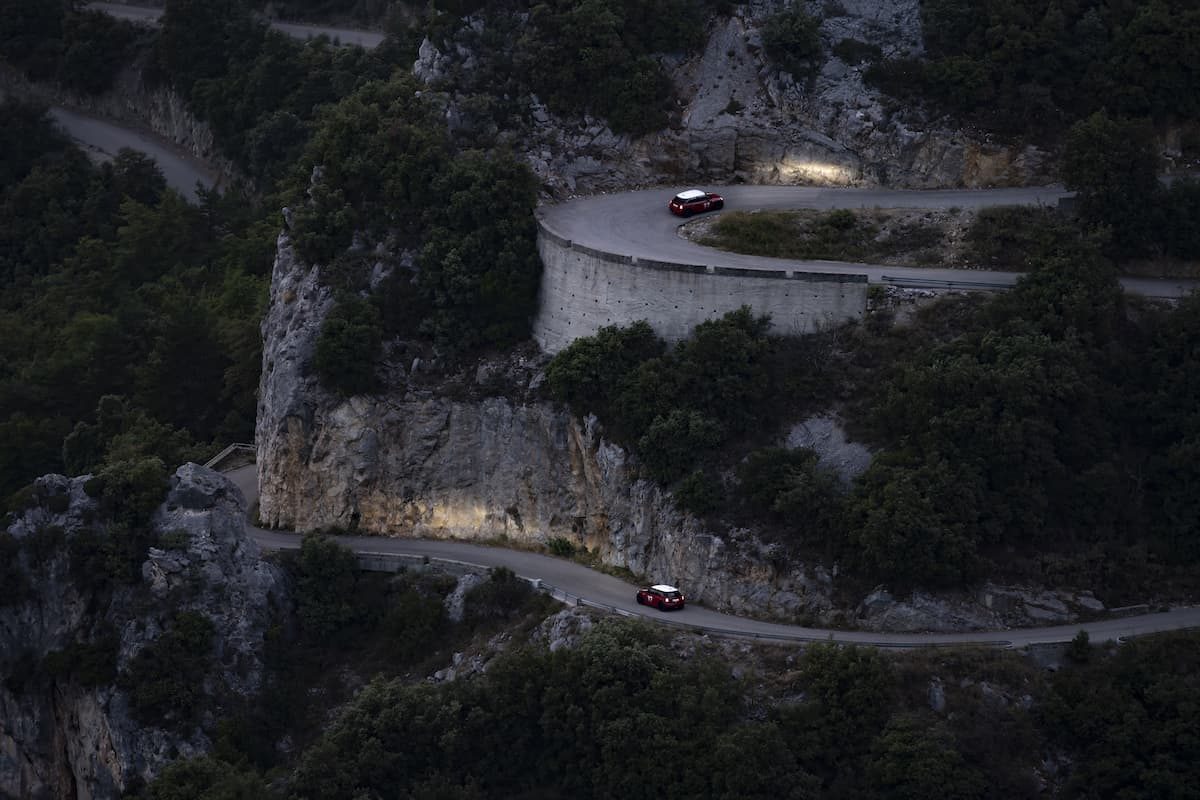
Mini has launched a limited edition version of its three-door Cooper S hatch to commemorate its 1964 Monte Carlo Rally win.
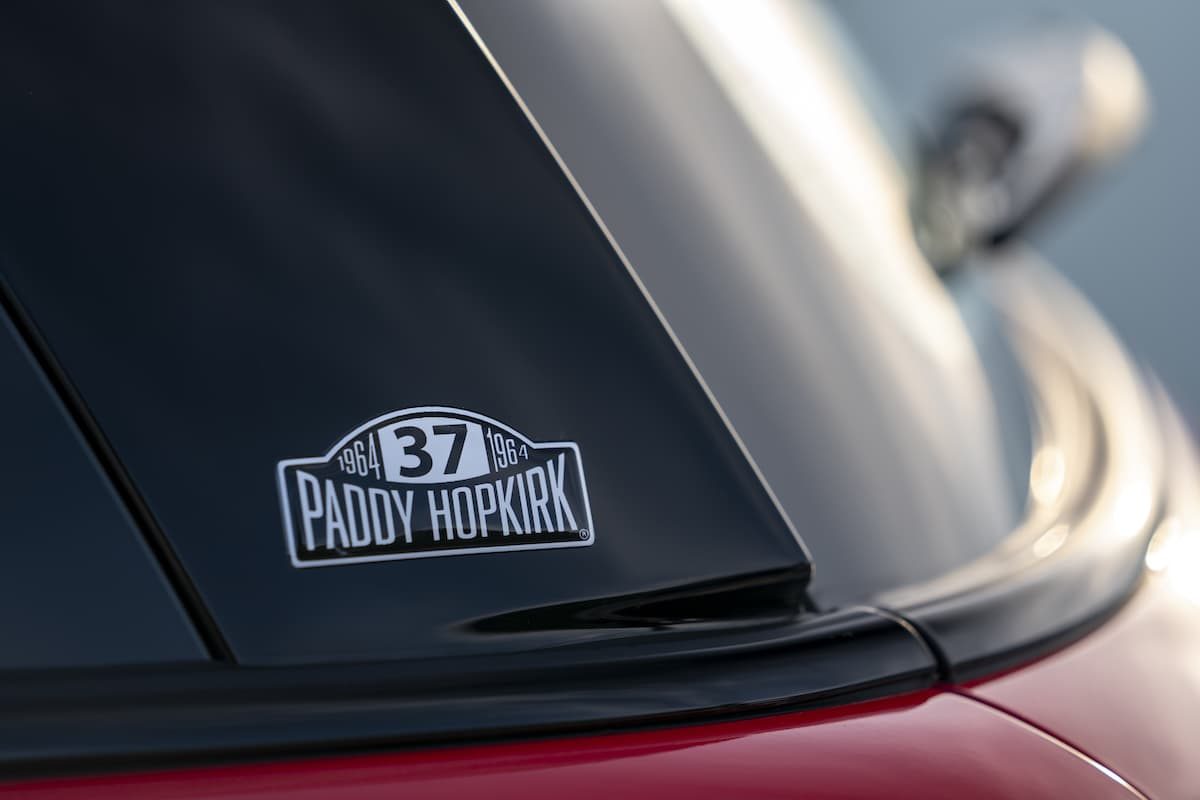
Called the Paddy Hopkirk Edition, it’s named after the Northern Irish rally driver who took his classic Mini Cooper S to victory. It’s also limited to just 100 units.
Along with English co-pilot Henry Liddon, Hopkirk became one of the biggest names in British motorsport. His victory was made all the more impressive because of the fact the pair beat rivals with much more powerful cars, beginning Mini’s legacy as a giant killer in motorsport.
The new edition remembers that win with a large number 37 on the doors – the number Hopkirk raced to victory in. It also gets lightweight 17-inch alloy wheels, high-gloss black finishes to various exterior parts, and an Alcantara steering wheel inside.
Other features include a ‘Paddy Hopkirk Monte Carlo’ sticker set and a single white bonnet stripe that has ‘33 EJB’ etched into it – the number plate of the winning car. This model also gets some optional equipment included as standard, such as the Navigation and Comfort Packs, as well as various parts finished in piano black.
Performance is unchanged from the regular Mini Cooper S hatch, which means a 2.0-litre petrol engine generating 192hp and a 0-60mph time of less than seven seconds.
The Mini Paddy Hopkirk Edition can be ordered now, with prices starting at £27,045 and deliveries commencing in November 2020.
Gone are the days when small electric cars came with tiny electric ranges. It used to be accepted that you should buy a small EV for urban life, with a petrol or diesel model for those longer journeys.
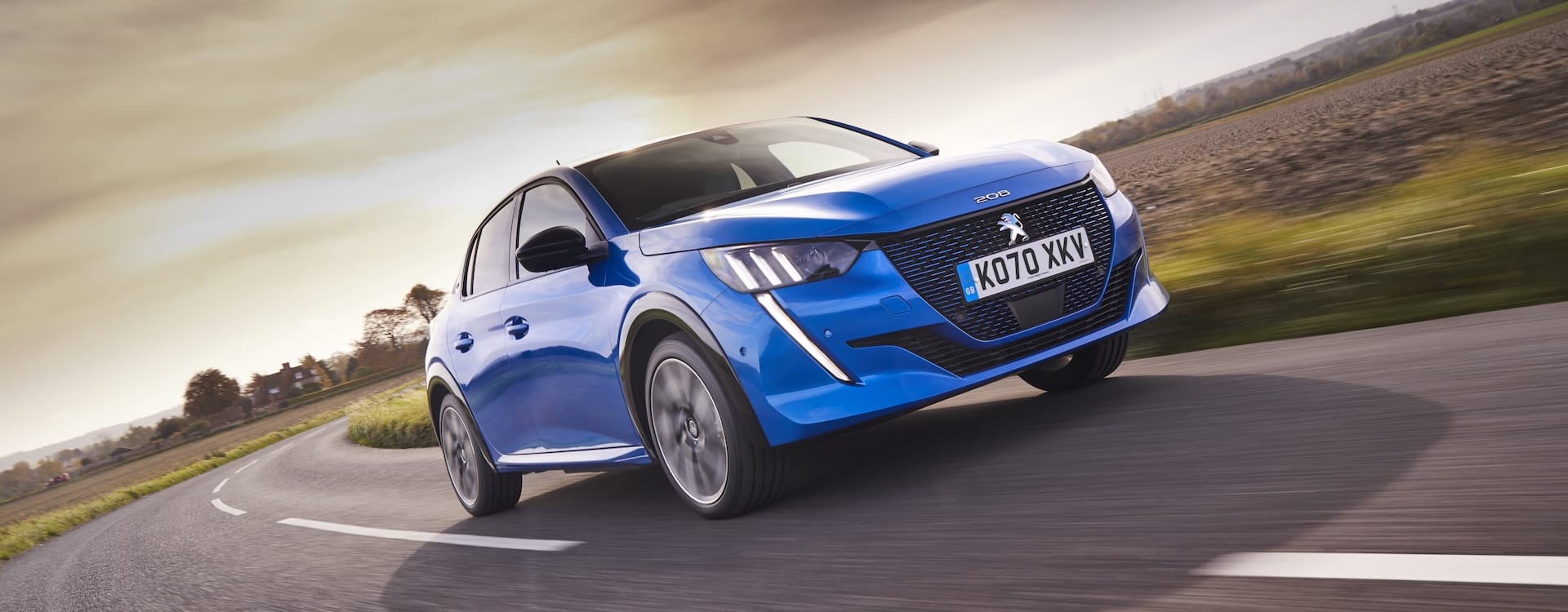
However, battery technology has advanced to the point where we have this Peugeot e-208 – a supermini with a 217-mile range. In theory, then, it would take a pretty serious road trip to drain the battery, so let’s get behind the wheel to see if this compact car is all you could ever need.
Peugeot works on the theory that buyers don’t want separate electric models, so instead it builds its existing models with the ability to fit a battery pack and electric motor. That means there’s nothing truly bespoke here, getting the same cool styling inside and out as petrol and diesel models.
However, because of the weight of the batteries, the e-208 does have some suspension tweaks to improve handling, because the standard kit wouldn’t be up to the job.
How does it look?
There’s no denying Peugeot’s styling is fantastic at the moment. Everything the firm makes has chic character that its rivals can only dream of, even when it comes to traditionally dull segments like MPVs.
This is especially true of the 208, which has a premium look that stands out from the crowd, particularly thanks to the ‘three-claw’ headlight design up front, LED lights all around, and that sleek black bar across the rear. It also does little to shout about being an EV, with a small, simple ‘e’ logo beside the badging at the back.
What’s the spec like?
The e-208 is available with six different trim levels, which means there’s plenty of variety depending on your budget – though with the entry level Active trim starting at £29,025 and the top-spec GT model starting at £33,275, the high-spec models feel like better value, especially when the difference is only about £20 per month on finance. (All prices here are before the government’s plug-in car grant.)
Standard equipment includes 16-inch alloy wheels, a seven-inch touchscreen, LED daytime running lights and air conditioning, while the top-spec GT trim gets 17-inch wheels, a 10-inch touchscreen, satellite navigation, and adaptive cruise control.
Our test car had the mid-spec Allure trim, which felt well-equipped and left us wanting for nothing. Prices start at £30,225 and include 17-inch wheels in a different design to the GT, the cool 3D i-Cockpit, wireless phone charging and automatic air conditioning.
What’s the Peugeot e-208 like inside?
Again, the design and execution is largely fantastic. The interior is full of funky angles that make it a genuinely interesting place to be, but this isn’t at the sacrifice of high quality materials.
It does suffer from the usual Peugeot driving position problem, where the wheel has been designed to look over at the instrument binnacle, but for many people the top of the rim blocks your view, so it’s tough to even know how fast you’re going. It’s a shame, because the 3D i-Cockpit is a brilliant bit of design that’s fun yet informative to look at.
What’s under the bonnet?
The e-208 gets a 136bhp electric motor, which is fed by a 50kWh battery that’s responsible for that impressive 217-mile range. Many buyers are concerned about how their battery degrades over time, so Peugeot offers an eight-year or 100,000-mile guarantee on its batteries, and will test it at every service to see how much capacity has reduced.
Acceleration is unsurprisingly brisk – those are impressive performance figures for what is a small (though admittedly quite heavy) car. With a 0-60mph time of about eight seconds, it’s in the ballpark of small hot hatches, and it certainly feels that way. Around town that responsiveness is welcome too, making urban driving a breeze.
What’s the Peugeot e-208 like to drive?
Those short, sharp bursts of acceleration are great fun, but there’s a lot more to this supermini than that. In built up areas where that performance is irrelevant, it presents itself as a delightful way to dart through traffic, while the silent motors mean it’s always relaxing.
It’s surprisingly good on the motorway, too, with the extra weight of the batteries likely contributing to it being more composed at high speed. However, that does also mean that on a twisty road, you feel the extra weight, making it slightly less agile than its internal combustion engine-powered equivalents.
Verdict
The Peugeot e-208 is a fantastic supermini, offering style and a fun driving experience in equal measure. With its 217-mile range and well-mannered motorway character, it’s genuinely capable of being used on longer journeys.
Its size means it’s not the most practical car in the world, but if you’re looking for a car in this segment – even if you hadn’t originally been considering an electric vehicle – the e-208 should be high on your shopping list.
Model as tested: Peugeot e-208 Allure Price: £27,225* Motor unit: 100kW electric motor Gearbox: Single-speed automatic *includes £3,000 plug-in car grant
Power: 140 hp Torque: 300 Nm Top speed: 93 mph 0-60mph: 7.9 seconds
Battery size: 50 kWh Battery range: 217 miles Euro NCAP safety rating:Four stars (2019) TCE Expert Rating:76% (as of September 2020)
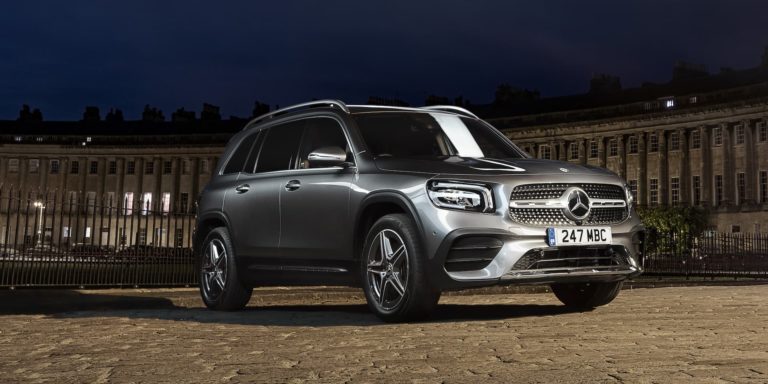
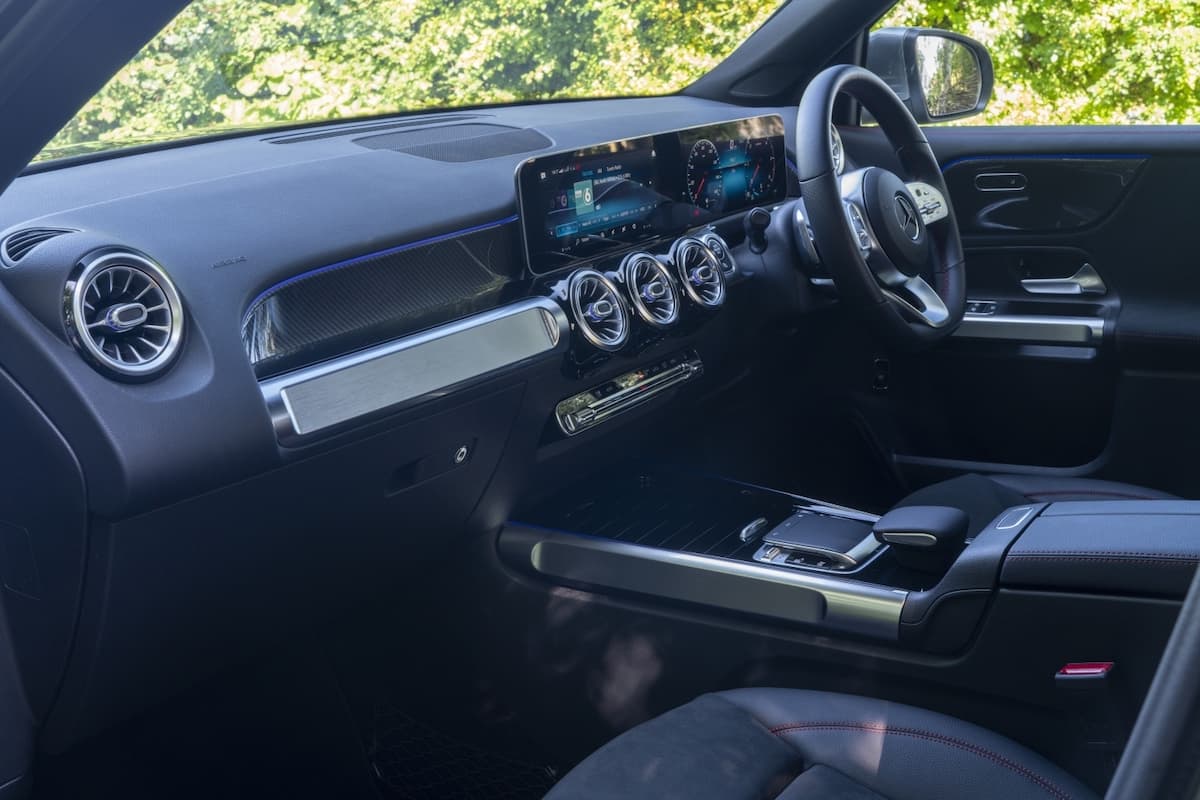
The Mercedes-Benz GLB is a mid-sized SUV available with either five or seven seats. It is based on the smaller GLA model, although it is closer in size to the larger GLC. The GLB arrived in the UK in late 2019.
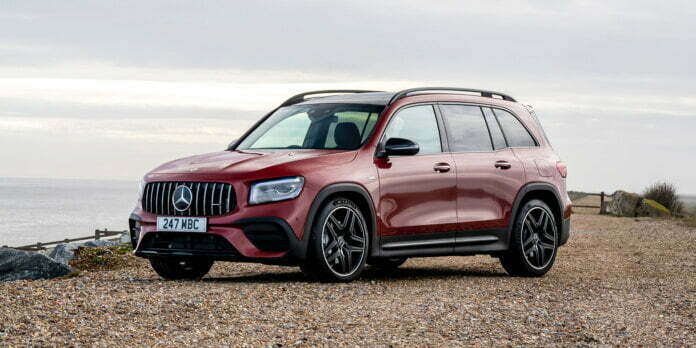
The GLB is available with either a petrol or diesel engine – unlike the smaller GLA, which is also offered as a plug-in hybrid. There is also a high-performance model called the Mercedes-AMG GLB 35 – we have a separate page for this model.
It has received praise from reviewers for its comfort, safety and advanced technology; however, it has been criticised for limited practicality compared to similarly-priced rivals and for only offering a limited choice of engines.
As of July 2025, the Mercedes-Benz GLB holds a New Car Expert Rating of B, with a score of 66% on our unique Expert Rating Index. It gets good grades for its low CO2 emissions, but its safety rating and media review scores are only average and its running costs are high.
Body style: Mid-sized SUV/crossover Engines: petrol, diesel Price: From £39,825 on-road
Launched: Autumn 2019 Last updated: Spring 2023 Replacement due: TBA
Image gallery
Media reviews
Highlighted reviews and road tests from across the UK automotive media. Click any of the boxes to view.
Featured reviews
“The Mercedes GLB is a small, stylish SUV with a posh cabin and seven seats, but alternatives are more practical, cheaper and come with a greater choice of engines.”
Score: 8 / 10 “The Mercedes-Benz GLB is a stylish family SUV with an upmarket interior and seating for seven.” Read review
Model reviewed: 2.0-litre diesel automatic 220 d Score: 8 / 10 “The Mercedes-Benz GLB 220 d is certainly the most competent rival yet for the Land Rover’s baby seven-seater Discovery Sport. It offers strong performance and refinement, along with a better-finished cabin and more coherent in-car tech, but you will have to forego some boot space to get it.” Read review
Model reviewed: Range overview Score: 8 / 10 “The Mercedes-Benz GLB puts practicality above all else, and looks all the better for it. It’s not, by any stretch of the imagination, exciting to drive but it is comfortable and refined, and has one of the finest interiors in its class. A truly worthy contender for your next family car.” Read review
Auto Trader
Model reviewed: Range overview Score: 8.4 / 10 “A further spin-off from the A-Class hatchback family, the Mercedes-Benz GLB is both a compact SUV and a seven-seat family car in one. Where its GLA brother aims for the younger, crossover crowd the more upright GLB goes out and out for practicality and usability.” Read review
Business Car
Model reviewed: 2.0-litre diesel automatic 220d 4Matic AMG Line Premium Score: 8 / 10 “Up to now, there was a clear gap in the Mercedes-Benz range. We can imagine many drivers with Mercedes-Benz on their choice lists -particularly if they have a family – feeling the GLB is the model best suited to their needs.” Read review
Car
Model reviewed: Range review Score: 8 / 10 “If you opt for a seven-seat GLB (a five-seat version is available), you might be pleasantly surprised with how much room there is, not just in the third row, but all-round.” Read review
Company Car Today
Model reviewed: 220d AMG Line “New GLB crowns Mercedes’ broad small car range and offers seven-seat practicality (just about), or plenty of passenger and luggage space for five, in a nice-driving package that looks the part as a mini off-roader.” Read review
Daily Mirror
Model reviewed: 2.0-litre diesel automatic 220d 4Matic Score: 6 / 10 “The Mercedes-Benz GLB is ideal for when Postman Pat goes first class – and is fine if you don’t have an issue with how it looks.” Read review
Heycar
Model reviewed: Range overview Score: 8 / 10 “Unless you’re willing to spend mega money on a larger model, we don’t think there’s a more desirable seven-seat SUV on the market. The Mercedes-Benz GLB has got a superb interior and – provided you avoid the AMG model – shouldn’t cost a fortune to run.” Read review
Honest John
Model reviewed: Range overview “Four ISOFIX child seat points will appeal to families, as will its various driver assistance systems that have trickled down the range from the S-Class.” Read review
Model reviewed: Mercedes-AMG GLB 35 “The Mercedes-AMG GLB 35 is an entertaining SUV oddity. In fact there’s nothing else quite like it, and it’s executed in the usual Mercedes-Benz way – with a quality interior and entertaining driving experience. Its biggest catch, however, is going to be the price which is expected to be in the region of £50,000.” Read review
Parkers
Model reviewed: Range overview Score: 8 / 10 “The Mercedes-Benz GLB is a convincing, if pricey, option. Space in the third row of seats isn’t far off the Skoda Kodiaq and Kia Sorento, yet in return you get a car that’s nicer to drive, has a better interior and features the all-important Mercedes-Benz badge.” Read review
The Sun
Model reviewed: Range overview “Mercedes-Benz bills its new GLB as the ultimate all rounder — and it might be just that” Read review
The Telegraph
Model reviewed: 2.0-litre diesel automatic 220d AMG Line Premium Plus Score: 8 / 10 “Surprisingly better than it has a right to be, this B-class on stilts has a great ride quality and decent body control (at least it does on air suspension, although that isn’t available in the UK) and the interior of the top models is gorgeous. You will look like Postman Pat, though.” Read review
Top Gear
Model reviewed: Range overview Score: 7 / 10 “Not a bad effort from Mercedes. Will do very well, even if the Disco Sport is more likeable and Kodiaq more practical” Read review
Safety rating
Independent crash test and safety ratings from Euro NCAP
Independent economy and emissions ratings from Green NCAP
No eco rating
As of July 2025, the Mercedes-Benz GLB has not been assessed by Green NCAP.
Reliability rating
Reliability data provided exclusively for The Car Expert by MotorEasy
No reliability rating
As of July 2025, we don’t have enough reliability data on the Mercedes-Benz GLB to generate a reliability rating.
The Car Expert’s reliability information is provided exclusively to us using extended warranty data from our partner, MotorEasy. As soon as MotorEasy has sufficient data on the GLB, we’ll publish the score here.
Running cost rating
Monthly cost of ownership data provided exclusively for The Car Expert by Clear Vehicle Data
Fuel consumption
Average
Score
Variation
Score
Petrol models
39 mpg
D
37 – 50 mpg
B – D
Diesel models
48 mpg
C
45 – 50 mpg
B – C
CO₂ output
Average
Score
Variation
Score
Petrol models
164 g/km
C
159 – 172 g/km
C – C
Diesel models
156 g/km
B
148 – 166 g/km
B – C
Insurance group
Average
Score
Variation
Score
All models
30
C
27 – 50
B – F
Service and maintenance
Cost
Score
Year 1
£275
C
Year 2
£669
C
Year 3
£1,208
C
Year 4
£1,383
C
Year 5
£1,853
C
Overall
£5,388
C
Running costs for the Mercedes-Benz GLB range are a mixed bag, according to data provided exclusively to The Car Expert by our commercial partner, Clear Vehicle Data.
Fuel economy is disappointing for petrol models and around the market average for diesel-engined versions. Compared to the rest of the mid-sized SUV sector, the car’s service and maintenance costs are pretty average. Based on data from the UK’s insurance group assessor, Thatcham Research, insurance costs are also likely to be around the market average.
Awards
Significant UK trophies and awards that the Mercedes-Benz GLB has received
2021
Carwow Awards – Best Family SUV
2020
Parkers New Car Awards – Best Medium Family Car
Business Car Awards – Best Premium Large SUV
Similar cars
If you’re looking at the Mercedes-Benz GLB, you might also be interested in these alternatives
When the first Volkswagen Touareg arrived all the way back in 2003, it was one of a relatively new breed of SUVs. Prior to that, MPVs had reigned supreme, but it was soon clear that high-riding, luxurious models like the Touareg would soon become the go-to option for those who wanted a more commanding view of the road ahead as well as the space and practicality desired by families.
Fast forward to the present day and it’s clear that the SUV segment is more popular than ever. The Touareg isn’t one of a few in this segment anymore, either, with plenty of rivals now here to contend with. Let’s find out how it compares.
Placed as Volkswagen’s flagship SUV, the Touareg has been blessed with all of the bells and whistles you could possibly want. Though launched back in 2018, it’s been kept up to date thanks to a sharp digital cockpit, a large central screen and an emphasis on driver comfort. Whereas other models try and put a focus on performance, the Touareg is an SUV that has been designed to be capable, cosseting and practical.
It’s also packed with driver assistance systems to ensure that both occupants and pedestrians are kept as safe as possible, while new lightweight materials aim to improve efficiency too.
The SEL Tech trim tested here was added to the range last winter, along with an entry-level SE specification and a Black Edition trim for the R-Line model. Overall, the Volkswagen Touareg holds a current Expert Rating of 73% on The Car Expert’s unique Expert Rating index, based on 22 different UK reviews. That puts it well behind slightly more expensive cars like the Audi Q7 and BMW X5, but ahead of the Lexus RX and Maserati Levante.
How does it look?
Against the current crop of SUVs, the Touareg’s refined, rather understated design is actually quite refreshing. It doesn’t shout about its own existence, but merely gets the process of design done in rather classy fashion.
We’ll admit that the huge chrome grille up front is hard to miss, but the whole look of the car is executed without too much flamboyance. If you want an SUV which doesn’t shout too hard about being an SUV, then the Touareg is the car for you.
What’s the spec like?
‘Our’ test car came in SEL Tech specification which brings a whole host of standard equipment for its £52,055 entry price. For that, you get a 15-inch central infotainment display bolstered by a 12-inch customisable driver display in the space you’d expect to find the conventional dials. Apple CarPay and Android Auto are both included too, so you can make the most of that huge display by connecting your smartphone and mirroring its functions there.
Our test car also came with a smattering of options that helped to bump its price up to £59,010. These included the aforementioned air suspension as well as a power folding tow bar (£1,130), a full driver assistance package with features such as emergency assist, front cross traffic assistant and traffic jam assist (£1,000) and aquamarine blue ultra metallic paint (£1,215).
Though the options do help to bolster the overall package, the level of standard equipment offered with the Touareg is so comprehensive that there’s really little need to go near the options list unless you absolutely need to.
Safety-wise, the Volkswagen Touareg was awarded a five-star safety rating from Euro NCAP in 2018, with a very solid set of scores in all four categories (adult protection, child protection, veulnerable road user protection and crash avoidance).
What’s the Volkswagen Touareg like inside?
The Touareg has been designed with practicality in mind, which is why its cabin is large and spacious with plenty of space for five to sit comfortably. The front seats are well supported without being overly firm while there’s a good degree of space for those sitting in the back, too. Of course, given the car’s large proportions there’s plenty of headroom, so even taller drivers and passengers will be able to get comfortable.
The seats-up boot space is huge at 810 litres, while this can be extended up to 1,800 litres by folding the seats down. In short, if you need more space you’re probably better off opting for a van. It’s square and easy to access too and despite a relatively high load height, there’s no lip so placing larger items into the back shouldn’t prove too taxing.
What’s under the bonnet?
The Touareg uses a turbocharged 3.0-litre V6 engine which brings robust and torquey performance befitting a car of this type. There’s 231hp on tap, while a healthy 500Nm will be a welcome figure to those who plan on using their Touareg for towing. Power is sent to all four wheels through an eight-speed automatic gearbox, and Volkswagen says it’ll take just over seven seconds for the Touareg to hit 60mph from a dead stop. All in, it’ll do 135mph.
When it comes to efficiency, the Touareg is pretty much on par for the segment. Combined it should return 34.6mpg, while CO2 emissions sit at 214g/km. It’s also packed with off-road tech, with permanent four-wheel-drive bolstered by a self-locking central differential with switchable off-road driving programmes designed to ensure that very little stops the Touareg from going forwards.
What’s the Volkswagen Touareg like to drive?
It’s easy to get set up in the driving seat of the Touareg. There’s plenty of adjustability with the seat and wheel and once you’re comfy, there’s a great view out of the road ahead thanks to that raised ride height. The immediate SUV box is ticked, then.
Out on the road, it’s quiet and comfortable while the optional air suspension on our test car (an extra £1,705) brings a sumptuous level of ride quality that is hard to achieve with standard steel springs. It also means that, should you want to, you can firm the ride up for when more corners come into sight.
But though the engine is punchy and gives the Touareg a lot more performance than the figures might suggest, this isn’t a car you’ll be wanting to take through the bends. In fairness, this isn’t a car pitched as a lap-time breaker, so we can cut it a fair amount of slack for not tracking through corners with racecar precision.
Verdict
The Volkswagen Touareg might represent somewhat of an old guard of SUVs, but it’s still a wonderfully well-rounded choice in the segment. It’s comfortable, practical and well-styled while also being exceptionally well-appointed inside.
It might not feel like the cutting-edge of SUVs, but if you’re after a large car with space for every eventuality and a torquey diesel engine capable of pulling you out of all situations, then the Touareg remains an admirable choice.
Lexus has unveiled its flagship LS model, bringing a host of new features to the firm’s range-topping luxury saloon.
Set to go on sale in the UK towards the end of the year, the hybrid powertrain underpinning the LS has been refined over the previous generation car. Lexus has increased the level of assistance given to the electric motor by the batteries, which helps to smooth out acceleration. It also allows the engine to operate at a lower rpm, resulting in a quieter and more refined in-car experience.
Lexus has also tweaked the adaptive variable suspension, anti-roll bars and even the seat construction in order to achieve the best possible ride comfort.
A new Advanced Park system has been incorporated too, which has the ability to remember and store details of parking spaces that the driver uses regularly. Then, when it’s time to park, the car can control the steering, throttle, brakes and transmission to complete the manoeuvre.
Upgraded adaptive LED headlights have been fitted as well, alongside a new digital rear-view mirror which relays an image captured by the rear parking camera.
Inside, there’s a new 12-inch touchscreen which has been positioned closer to the driver. As well as featuring all of the usual media and satellite navigation functions, it features both Apple CarPlay and Android Auto smartphone connectivity systems.
The exterior of the car has been lifted thanks to a reshaped front grille, while the headlights have been slimmed down to give a more dynamic look.
Prices for the new Lexus LS have yet to be announced, but expect them to be revealed closer to the car’s on-sale date later this year.
The humble estate car has seen its popularity waning over the years, replaced by large SUVs that give similar cargo capacities with the added benefit of a raised driving position.
However, estate cars are still a fantastic proposition for many buyers, particularly those who are willing to sacrifice a little visibility in favour of decent driving dynamics and lower running costs. That’s why we’ve brought together this list of the best estate cars for sale right now, with every budget considered.
Dacia continues to be the best option for budget-conscious buyers looking to the new car market. The Romanian firm offers cars at bargain prices, but they remain pretty well-equipped and good to drive. Logan MCV pricing starts at just over £10K, which is scarecely believable. Even the faux-SUV-style Logan Stepway (pictured above) is priced at just over £12K.
The Dacia Logan may be based on the Sandero supermini, but it still offers a genuinely enormous load space – which, let’s face it, is why you’re buying an estate car in the first place. According to The Car Expert’s unique Expert Rating index, the Logan MCV currently holds a rating of 64% based on 15 UK reviews. It may not be the most comfortable or refined new car on the market, but it is a lot of car for the money.
What’s more, Dacia just revealed its updated Logan range, meaning the new Logan MCV will be much improved for only a fraction more cash, while there will be great deals on the outgoing model making it even less expensive. Why buy used when you could get new for this price?
The Skoda Fabia Estate gets an honourable mention here as well. Like the Logan, it’s a supermini-based estate with a huge load bay, but prices officially start just over the £15K mark so you’ll need to seek out a deal to get the cost down to anywhere near the Dacia’s level.
The Ford Focus has long been one of Britain’s best-selling cars, thanks to being great to drive, good-looking and practical. It’s also great value for money, which makes it perfect for this list.
Prices start at about £23K (although it escalates quickly, so only the entry-level models will slide under our £25K limit), and for that you get more than 600 litres of boot space even with the rear seats in place. That’s simply cavernous. It has a pleasant, well-equipped cabin, too, which makes it a compelling alternative to pricier rivals.
The Ford Focus range currently holds a score of 80% on The Car Expert’s unique Expert Rating index, based on 37 different UK reviews, which is among the best-in-class for estates in this price bracket. However, if the Focus doesn’t float your boat, there are plenty of alternatives. Flying the flag for local production are the Toyota Corolla and Vauxhall Astra, both of which are very good cars, while there is an all-new Skoda Octavia arriving shortly and a new Volkswagen Golf estate set to land in early 2021.
There’s a lot of competition around this price point, which means cars really have to stand out to make for consideration. For less than £35K, the Volkswagen Passat Estate feels like the best value, having a large boot coupled with great build quality and equipment levels in the cabin. Bear in mind that only the SE and SEL trim levels are available at this price point, so if you want a higher-spec R-Line or GTE model, the price jumps into the next segment.
The Passat range currently holds a rating of 79% on The Car Expert’s unique Expert Rating index, based on 48 different UK reviews. That puts it well clear of rivals like the Ford Mondeo or Vauxhall Insignia, and compares favourably with premium offerings from Audi and Mercedes-Benz.
If you’re not sold on the Passat then the lower-spec Audi A4 Avant models are similarly priced, while offering a fancier interior and more badge appeal – but with less boot capacity.
Again, there are a couple of decent estate car options here, depending on your preference. In the value for money stakes it has to be the Skoda Superb Estate, which has a simply cavernous boot, a wonderfully wafty ride and a high-quality cabin.
The Superb has received plenty of glowing reviews from the UK motoring media. In fact, they describe the big Skoda as, oooh, what’s a word that means ‘really really good’? Anyway, it currently holds an Expert Rating of 85% based on 39 UK reviews, which is… er… exceptional? No. Sumptuous? Majestic? Grand? No, but something like that. I’m sure there’s a good word for it…
However, if the Skoda’s not your bag then the Volvo V60 makes for a compelling alternative. It’s on another level in terms of style both inside and out, and feels truly premium. It’s not quite as practical, but it makes up for it in the want factor.
If you’re in a position to spend a bit more, the BMW 5 Series Touring is one of the best estate cars on the market. In fact, it currently holds a rating of 88% on The Car Expert’s unique Expert Rating index, which is outstanding.
The 5 Series has a decent-sized boot, plenty of badge appeal and one of the most comfortable and well-equipped interiors in the business. It’s also great to drive, so you can fit loads in the back when you need to and enjoy the twisties when you don’t. There’s a facelifted model on its way before the end of the year as well, so you can either wait for that or snap up a good deal on a current car from your friendly neighbourhood BMW dealership.
If you’re not feeling the love for the BMW, you could always look at its arch-enemy, the Mercedes-Benz E-Class. It’s similarly spacious and luxurious, but is tuned more for ride comfort than handling prowess.
If you don’t have any budget concerns and simply want the coolest estate money can buy, you can’t beat the Audi RS 6 Avant. We haven’t put the RS 6 under our Expert Rating microscope yet, but it’s certainly a car that motoring journalists love (and it helps that they don’t have to pay for one!).
With 565 litres of boot space it’s practical, but under the bonnet is a 4.0-litre engine with 600hp that catapults the hulking estate to 60mph in 3.4 seconds. If you make the most of that performance, it’s probably best not to look at the fuel economy figures, though.
If you prefer a three-pointed star on your bonnet, the Mercedes-AMG E 63 estate is another large estate with similarly stupendous perdormance. If the RS 6 is a bit big for your needs, Audi Sport can happily help you out with the slightly smaller RS 4 Avant. Or there’s always BMW’s upcoming M3 Touring to look forward to…
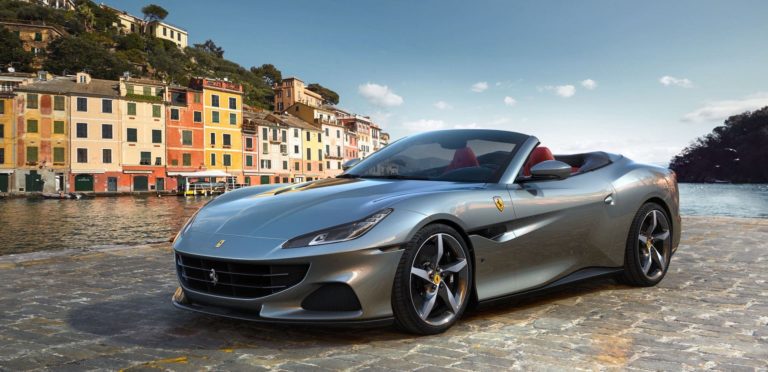
Ferrari has introduced a new, more powerful version of its Portofino convertible, called the Portofino M.
The new model was revealed today in a completely online-based presentation – the first Ferrari to ever be showcased this way as yet another inevitable result of the global coronavirus pandemic.
The Ferrari Portofino M (which stands for Modificata, a moniker historically used by the firm to showcase models with upgraded performance) receives light exterior upgrades, with a new bumper design being one of the largest changes.
However, the Portofino M’s 3.9-litre twin-turbocharged V8 has been raised to 620hp from the standard car’s 600hp. Driving it to the rear wheels is an eight-speed dual-clutch automatic gearbox, which replaces the older seven-speed component. The new gearbox incorporates a clutch module which is 20% smaller than before, yet can help deliver 35% more torque.
A new Manettino switch has also been fitted to the Portofino M, bringing five individual driver modes instead of the previous car’s three. A new Race mode is included which allows the car to adjust the brake pressure on all four wheels, allowing slides to be kept under control without forsaking driver involvement. Drivers have Wet, Comfort, Sport, Race and ESC-Off selections to choose from.
Though Ferrari has yet to disclose any performance figures, expect these changes to help reduce acceleration times. Prices for the new Ferrari Portofino M are due to be released shortly but expect them to be higher than the regular car’s £166,180 starting price.
Suzuki has revealed the Swace, a hybrid estate that is the second vehicle to come from the firm’s partnership with Toyota.
The model is essentially a restyled and rebadged Toyota Corolla Touring Sports (estate), with a similar silhouette and the same hybrid powertrain.
It uses a 1.8-litre petrol engine and electric motor that feeds power to the front wheels, and is capable of running short distances on electric power alone.
On the outside, the Swace has smart styling, with a sloping roofline that results in a sporty profile. Up front, there are slim headlights that feature LED technology, and a wide grille that gives the car a muscular appearance.
Inside, it is equipped with an eight-inch infotainment system with Apple CarPlay and Android Auto connectivity. Other features include a wireless charging pad, two USB terminals, heating for the front seats and steering wheel and air conditioning.
It gets decent boot capacity at 596 litres with the seats up, while the rear floor can be lowered to help fit taller objects. Meanwhile, folding the second row of seats creates a fully flat loading space.
Safety technology includes parking assist, pre-collision warnings, lane-keep assist, and adaptive cruise control.
The Swace follows on from the Suzuki Across unveiled a few weeks ago, which is a similarly re-wrapped version of the Toyota RAV4 plug-in hybrid SUV.
Sales are scheduled to begin in Europe this winter, with UK pricing and specifications confirmed nearer that time.
Jaguar has given the F-Pace a fresh makeover, with a new plug-in hybrid powertrain the major talking point.
The stylish SUV has only seen a few minor revisions to its exterior design, but boasts improved on-board technology.
Under the bonnet, the flagship engine is the plug-in unit, making 404hp and 640Nm of torque. It combines a 2.0-litre petrol engine with an electric motor, which is powered by a 17.1kWh battery that gives up to 33 miles of electric-only range.
Fuel economy for this powertrain is measured at 130mpg, CO2 emissions are 49g/km and the 0-60mph time is five seconds flat.
All three diesel engines and the 3.0-litre petrol also get electrification in the form of a mild-hybrid system, which uses a small electric motor to support the engine and improve economy. A 250hp petrol is the only option with no electric motor.
Although exterior changes are subtle, there have been many updates, including a revised bonnet with a bigger ‘power bulge’, slimmer LED headlights and rear lights, and a new bumper.
The interior has seen a more extensive update, with the focus being the new 11-inch curved-glass infotainment screen that uses Jaguar Land Rover’s new Pivi Pro system, which has a cleaner design and faster response than before.
Other changes include a new drive selector, new door casings, seats with wider cushions, and wellness technologies, such as a cabin air ionisation system that improves air quality.
Order books are open now with prices starting at £40,860 for the D165 model, which uses the 163hp diesel engine, or £56,060 for the plug-in hybrid.
Hyundai has lifted the lid on its latest Tucson, bringing more technological advances and edgy new styling to the firm’s popular SUV.
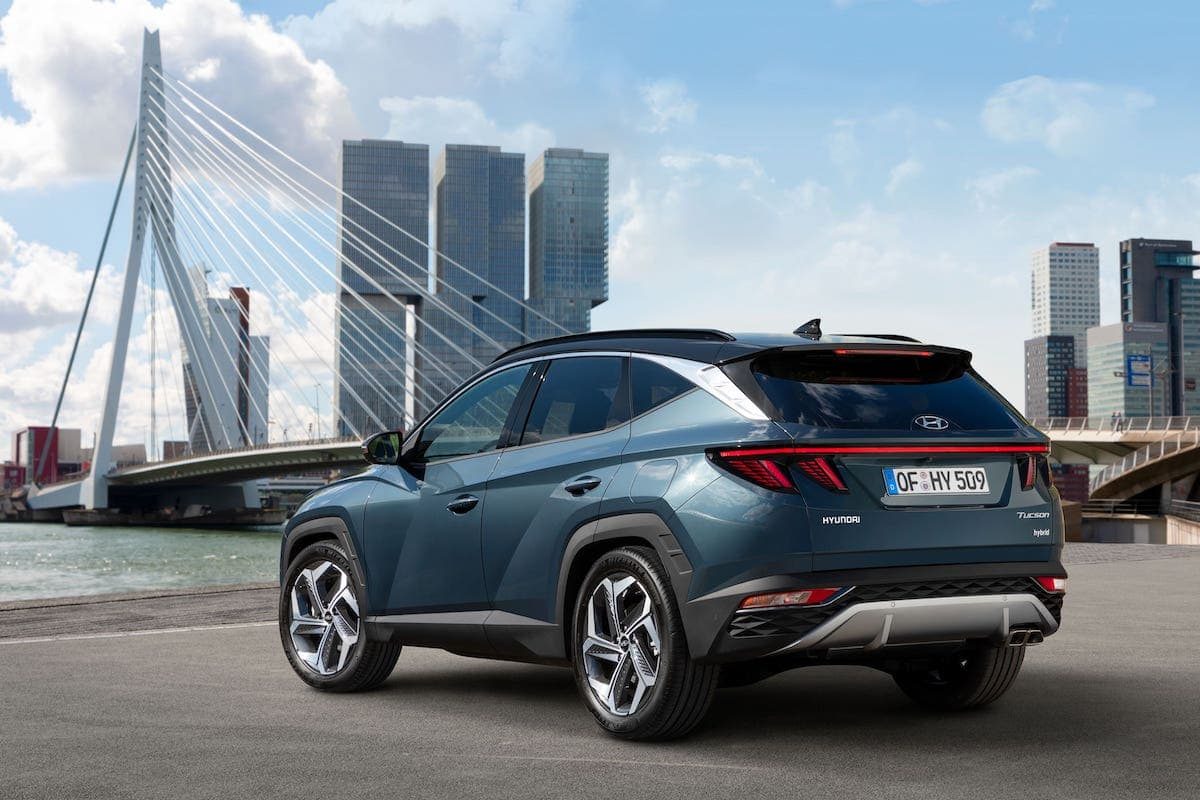
The new car manages to utilise many of the styling touches incorporated into 2019’s Vision T Concept PHEV, chief among them are new ‘Parametric Hidden Lights’ which appear to blend into the car’s bodywork during the day, but are visible through the grille at night.
The same feature is used at the rear of the car, while the bumper has been designed to include parametric patterns with a three-dimensional effect.
Bigger and wider than the car it replaces, the new Tucson is able to deliver more in the way of space and practicality than before Three-zone climate control allows passengers in the rear seats to adjust their own cabin temperature independently of those sat ahead of them, while ‘Rear Sleeping Mode’ means that those sat at the front of the cabin can listen to their selected audio without it being transmitted to the rear.
Boot space has also increased, rising by up to 107 litres depending on the engine chosen and offering up to 620 litres with the seats in place or 1,799 with them folded flat.
A range of new electrified powertrains are making an appearance on the new Tucson too, with petrol and diesel mild-hybrids sitting alongside a regular hybrid and a plug-in hybrid. With power outputs of up to 265hp, it’s the latter two which take position as the most powerful engines in the car’s line-up.
Hyundai has also incorporated a sweeping series of assistance systems to ensure that the Tucson remains as safe as possible. A new airbag system helps to prevent front passengers from colliding with one another, while an adaptive cruise control system can adjust the speed not only for traffic, but also corners too.
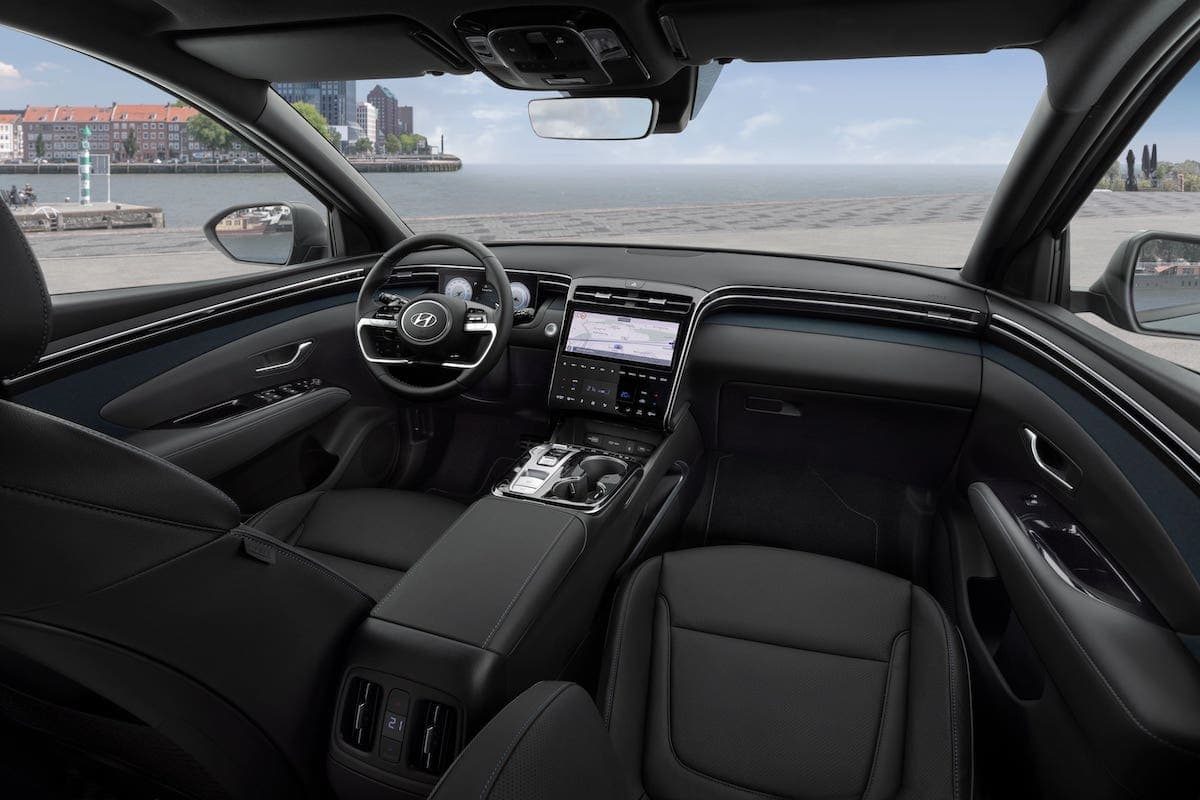
Inside, you’ll find a new ten-inch infotainment screen housed within a gloss black section to give a glass-like appearance. Traditional buttons have been removed and replaced for touch sensitive versions, while a new Bluelink service allows users to take advantage of additional connected services.
First deliveries are expected to commence before the end of the year, while plug-in hybrid variants will arrive in 2021.
The Car Expert is pleased to announce the appointment of Lee Williams from Digital Warrior as Board Advisor.
Lee will work with Stuart Masson, Director, to scale The Car Expert’s aggregated ratings consumer information.
Lee has an extensive and successful digital platform growth history. He has founded, fast-tracked and worked on M&A in marketplaces around the world with brands including Auto Trader and PistonHeads.
Award-winning thecarexpert.co.uk has seen a surge of in-market car buyers visiting the site, achieving record-breaking numbers up by 25% year-on-year in the past 90 days.
Over 1.5 million people visited The Car Expert in the past 12 months to get independent, impartial advice on buying, financing, insuring and maintaining a new or used car, all underpinned by our innovative and constantly growing Expert Rating aggregator.
Lee said: “The team at The Car Expert has done an amazing job to attract such a large quality in-market audience, all of which is natural brand and search traffic. The commercial engagement rates and page session times are remarkable. The Expert Rating’s current algorithmic model and future plans deliver a truly brilliant consumer proposition, both for the website and as a licensed product for the automotive digital ecosystem.
“It will improve conversion funnels and brand propositions like no other content. I am very excited to be working with the team to fast-track the proposition and scale the business.”
Stuart said : “We’ve spent the past nine years developing and refining The Car Expert to provide the UK’s best source of independent, impartial car buying and ownership advice. Our unique Expert Rating aggregator, which we have built over the past two years, brings a fresh new approach to new car reviews that is really resonating with UK car buyers.
“We now have the opportunity to take the site to the next level, and are delighted that Lee is joining us to help make that happen.”
The Audi A3 is a mid-size hatchback (called Sportback) and saloon model, that sits above the A1 hatchback and below the A4 saloon in the Audi range. The current model is the fourth-generation A3, with the Sportback models arriving in the UK in the middle of 2020. The saloon models followed later in the year.
Like previous models, the A3 is based on the Volkswagen Golf and shares many of its components with other models in the Audi, VW, Skoda and SEAT families. The top-spec model in the A3 range is the Audi S3, which is arrived on UK roads in Autumn 2020. Audi added to its petrol and diesel A3 line-up in Autumn 2021, unveiling a plug-in hybrid version.
A high-performance RS 3 model launched in Winter 2021. Available as both a Sportback and Saloon, the RS 3 cost more than double the price of an entry-level model in the standard A3 range.
The A3 has received praise for overall refinement and driving dynamics that are significantly better than the previous-generation model, but its interior has been criticised for a very user-unfriendly touchscreen infotainment system.
A mid-life update for the A3 and S3 was revealed in Spring 2024, and the first updated cars arrived in the UK in early Summer. Most of the changes are cosmetic, with a few performance updates for the S3 models.
As of January 2026, the Audi A3 family holds a New Car Expert Rating of A, with a score of 71%. It scores top marks for its low CO2 emissions and safety rating, while its running costs are generally low and its media reviews are good. However, its reliability and new car warranty scores are poor.
Model reviewed: S3 range (2024 facelift) Score: 8 / 10 “If you’re after a performance car with all-weather capability and relatively subtle looks, then the Audi S3 could be for you. It’s not the most engaging hot hatchback on the market, but it delivers strong, fuss-free performance in a package with a premium edge and practicality that makes it a good all-rounder.” Author: Dean Gibson Read review
Model reviewed: 40 TFSI e 2021 Score: 7 / 10 “This Audi A3 PHEV should appeal to company-car choosers, but everyone else may be put off by the higher list price and still-modest electric-only range. It’s beautifully finished inside and has lots of appealing tech, but its performance is compromised.” Read review
Model reviewed: S3 saloon Score: 7 / 10 “As an all-rounder, the new Audi S3 Saloon holds plenty of appeal, and the reduction in price between it and the cheaper Sportback hatchback makes it more tempting than ever. In pure performance terms it’s hard to fault, though buyers looking for more involvement should look elsewhere.” Read review
Model reviewed: S3 Score: 7 / 10 “It’s hard to fault the new Audi S3 for the way it makes its performance oh-so accessible. However, the way it drives is only a mild evolution, so those expecting a new experience will need to look elsewhere. Instead, the big changes are technological, and in the cabin.” Read review
Model reviewed: 1.5-litre petrol manual 35 TFSI S line hatchback Score: 8 / 10 “It’s business as usual for the Audi A3 Sportback, which slots neatly into the premium hatchback market with high quality, good refinement and a price that makes it a very competitive offering for anyone after this sort of car.” Read review
Model reviewed: A3 saloon range Score: 8 / 10 “Audi has carefully improved its A3 Saloon package holding true to the successful formula while adding lots of new technology.” Read review
Auto Trader
Model reviewed: 2024 facelift hatchback range Score: 10 / 10 “A light refresh for the big-selling Audi A3 Sportback range sees updated looks and a very impressive plug-in hybrid model.” Author: Mark Nichol Read review
Model reviewed: Pre-facelift (2020 – 2023) hatchback range Score: 8.2 / 10 “A masterclass in how to put premium gloss on a humble hatchback, the latest Audi A3 Sportback combines angular and aggressive new styling with a swanky cabin bristling with the latest technology.” Read review
Model reviewed: Saloon range Score: 8 / 10 “If you’re considering a mid-size executive saloon like the Audi A4 or BMW 3 Series, then perhaps give the Audi A3 Saloon a look first. It’s smaller, but it’s also cheaper and it delivers the quality and driving manners to compete.” Read review
Business Car
Model reviewed: 1.5-litre petrol/electric plug-in hybrid, hatchback, S line Score: 8 / 10 “Because the hybrid battery is located under the boot floor, shopping bag potential is reduced to just 280 litres. Consequently, before placing your order, you may want to carry out a physical inspection at your local Audi dealership to figure out if this will prove to be too much of a stumbling block.” Author: Pete Tullin Read review
Car
Model reviewed: S3 Sportback Score: 8 / 10 “The new 2020 Audi S3 continues its positioning at the posher end of the hot hatch scale. The sheer pace and grip available from the engine and drivetrain are more than enough to be worth your time, in that very polished, all-round package kind of way.” Read review
Model reviewed: 1.5-litre petrol manual 35 S line Score: 8 / 10 “The Audi A3 saloon is not tremendously exciting – you’d have to look at a Mercedes A-Class saloon for more visual drama and clever tech, or perhaps Audi’s own S3 saloon if you want performance thrills – but it’s an impressive small saloon that’ll look good on your driveway.” Read review
Model reviewed: Sportback hatchback range Score: 8 / 10 “Although the new Audi A3 Sportback technically owes a lot to the Volkswagen Golf 8, it has its own character, and comes across as a far more complete, sharp-looking and frankly desirable hatchback.” Read review
Car Keys
Model reviewed: Hatchback range Score: 9 / 10 “Audi might not have thrown out the rule book with the new A3, but it didn’t really need to. That said, big improvements have been made to the on-board technology, while it’s better to drive than ever. When new engines and powertrains join the range, it’ll offer plenty of choice to buyers.” Read review
Carbuyer
Model reviewed: Hatchback range Score: 8.4 / 10 “The striking Audi A3 Sportback now has the technology it needs to compete with rivals.” (Charlie Harvey) Read review
Model reviewed: S3 hatchback Score: 7.4 / 10 “The Audi S3 is a refined and quick hot hatchback with lots of tech” Read review
Model reviewed: Saloon range Score: 7.8 / 10 “The Audi A3 Saloon now has the latest in engine and interior technology.” Read review
Carwow
Model reviewed: Saloon range Score: 8 / 10 “The Audi A3 Saloon is a classy, high tech four-door that is also great to drive. Audi’s A3 Sportback is the more practical choice, though.” Read review
Company Car Today
Model reviewed: PHEV “If you’re a company car driver, no other A3 makes more sense than the PHEV.” Read review
Model reviewed: 1.5-litre petrol manual S line Score: 7.8 / 10 “Not the most dramatic of replacement models, but the high-quality new Audi A3 does things a little better than its predecessor while looking sharper inside and out.” Read review
Fleetworld
Model reviewed: Sportback 40 TFSI e Score: 8 / 10 “The best version of the latest A3 Sportback yet – still as stylish and well-made as ever. Yet, the 40 TFSI e offers an enviable mix of performance and economy that are sure to bring real-world cost savings.” Read review
Heycar
Model reviewed: S3 range Score: 8 / 10 “The Audi S3 is an extremely popular premium hot hatch, and with good reason. It might not excite hardcore car enthusiasts as much as a Honda Civic Type R, but it’s much classier to look at, has a nicer interior and is easier to live with. Our Audi S3 review will show why it’s a great all-rounder, but not a thrill-a-minute driver’s car.” Author: Lawrence Allan Read review
Model reviewed: Saloon range Score: 8 / 10 “The Audi A3 Saloon proves that small saloons don’t have to be dull. With a sharpish design, it stands out more than its hatchback counterpart plus the interior has the same quality appeal as larger Audi saloons. Classy and upmarket, it majors on refinement and comfort.” Read review
Model reviewed: Hatchback range Score: 8 / 10 “The Audi A3 has a very modern interior and comes well-equipped for the money. It’s good to drive, too – with high refinement and economical engines. Our biggest gripe is whether it’s worth the extra cash over the Volkswagen Golf.” Read review
Honest John
Model reviewed: Saloon range “Although marginally bigger than its predecessor, the Audi A3 Saloon isn’t noticeably different in terms of dimensions.” Read review
Model reviewed: Sportback hatchback range Score: 8 / 10 “While the Audi A3 does represent good value for money, you do pay more for the higher quality finish compared to the Volkswagen Golf.” Read review
Motors
Model reviewed: Range overview Score: 9 / 10 “The Audi A3’s cabin isn’t class-leading when it comes to spaciousness, but if you’re after a compact car and don’t require seven-seater levels of room, it’s a worthy choice.” Read review
The Sun
Model reviewed: Quattro All-wheel-drive “This Quattro’s advanced new Haldex clutch system enables the S3 for the first time ever to drive with 100 per cent power sent direct to the rear wheels for those blissful moments that magnetic tarmac traction is not the priority.” Read review
Model reviewed: 1.5-litre petrol automatic S line Sportback “Audi A3 Sportback S line’s advanced tech and design trump BMW and Mercedes – it’s a pleasure to drive” Read review
The Telegraph
Score: 8 / 10 “The Audi A3 is the poshest Golf and has the edge on comfort.” Read review
Top Gear
Model reviewed: Saloon range Score: 7 / 10 “Everything good about the Audi A3 Sportback, just a little less practical. A complete car that won’t get on your nerves.” Read review
Model reviewed: Sportback hatchback range Score: 8 / 10 “Fussy design inside and out doesn’t spoil a really rather good family hatchback.” Read review
Safety rating
Independent crash test and safety ratings from Euro NCAP
The Audi A3 was initially assessed by Euro NCAP when it was launched in late 2020, scoring a top five-star rating. Euro NCAP reassessed the A3 in November 2025, confirming its five-star score for another six years.
Eco rating
Independent economy and emissions ratings from Green NCAP
Model tested: A3 Sportback 1.5-litre petrol automatic
Clean Air Index: 6.4 / 10 Energy Efficiency Index: 5.5 / 10 Greenhouse Gas Index: 4.8 / 10
The Audi A3 Sportback 1.5-litre petrol automatic received a three-star rating from Green NCAP in February 2021. Green NCAP said: “This fourth generation A3 shares the ubiquitous MQB platform with many of its VW-group stablemates and is tested here with the 1.5 litre petrol engine producing 110 kW and a hefty 250 Nm of torque.
“The car’s exhaust after-treatment – a three-way catalyst and a gasoline particulate filter – does a good job of controlling pollutant emissions and the car achieves an impressive index of 6.4 for Clean Air. Efficiency is also good considering engine output, with an average consumption of 6.3 l/100 km. CO2 emissions are moderate while control of other important, albeit unregulated greenhouse gases, is very good.
“The car performs well overall and fully deserves its three-star rating.”
This rating only applies to the 1.5-litre petrol (TSI) automatic version of the Audi A3 Sportback, and does not imply similar ratings for other engine and gearbox combinations in the range (although there will be no significant difference between saloon and hatchback body styles).
Reliability rating
Reliability data provided exclusively for The Car Expert by MotorEasy
Total claims: 695 Average repair cost: £639.62 Last updated: April 2025
The Audi A3 family has a below-average reliability score of 56%, according to workshop data provided exclusively to The Car Expert by our partner, MotorEasy. This covers both the current model (2020 onwards) and previous generations.
Based on extensive data, the A3 has had issues across all the major mechanical systems (engine, gearbox, fuel system, suspension, brakes and electrics) with an average repair bill of about £650. Unsurprisingly, gearbox repairs tend to be the most expensive, with an average bill of £1,400.
If you own an Audi A3 or are looking at buying a used A3, it’s worth considering a used car warranty that covers all these major areas.
Running cost rating
Monthly cost of ownership data provided exclusively for The Car Expert by Clear Vehicle Data
Fuel consumption
Average
Score
Petrol models
49 mpg
C
Diesel models
56 mpg
B
Plug-in hybrid models
232 mpg
A
CO₂ output
Average
Score
Variation
Score
Petrol models
134 g/km
C
Diesel models
132 g/km
B
Plug-in hybrid models
28 g/km
A
Battery range
Average
Score
Variation
Score
Plug-in hybrid models
38 miles
E
Insurance group
Average
Score
Variation
Score
All models
22
B
Service and maintenance
Cost
Score
Year 1
£201
B
Year 2
£553
C
Year 3
£899
C
Year 4
£1,145
C
Year 5
£1,567
C
Overall
£4,365
C
The running costs for the Audi A3 are generally pretty reasonable. Fuel consumption is pretty average for the petrol cars and better-than-average for the diesel models. On paper, the plug-in hybrid models look fantastic, but those numbers are nonsense due to the limitations of the EU/UK lab testing process – it’s not Audi’s fault that the plug-in hybrid numbers are meaningless.
Insurance costs should be very reasonable based on the A3’s insurance group – although some of the top models have much higher insurance group ratings. Finally, scheduled servicing and maintenance costs over the first five years are also good.
Warranty rating
New car warranty information for the Audi A3
Overall rating
D
28%
Petrol or diesel models
E
15%
Electric or hybrid models
C
50%
New car warranty duration
3 years
New car warranty mileage
60,000 miles
Battery warranty duration
8 years
Battery warranty mileage
100,000 miles
Audi’s new car warranty is pretty much the bare minimum offered in the UK, with a duration of three years and a limit of 60,000 miles. Other rivals in the price bracket do better (and in some cases, much better).
In addition to the standard new car warranty, the A3 plug-in hybrid version has an eight-year/100,000-mile warranty for the battery components, which is why it gets a better score than the standard petrol and diesel models.
Warranty on a used Audi A3
If you are buying an ‘Approved Used’ Audi A3 from an official Audi dealership, you will get a minimum 12-month warranty included.
If you are buying a used Audi A3 from an independent dealership, any warranty offered will vary and will probably be managed by a third-party warranty company.
If you are buying a used Audi A3 from a private seller, there are no warranty protections beyond any remaining portion of the original new car warranty.
If you’re looking to buy any used car that is approaching the end of its warranty period, a used car warranty is usually a worthwhile investment. Check out The Car Expert’s guide to the best used car warranty providers, which will probably be cheaper than a warranty sold by a dealer.
Date: August 2023 Model types: All Build dates: 03/2020 to 05/2023 Number of vehicles affected: 104,162 Defect: On affected vehicles an electrical connector for the power supply for the fuse carrier in the interior of the vehicle may have not been installed correctly. Remedy: Check the electrical connection and secure if necessary.
Date: October 2022 Model types: All Build dates: 09/2021 to 11/2021 Number of vehicles affected: 174 Defect: The restraining capability of the belt system for the front seats may be lower than intended in the event of an accident. Remedy: As a precautionary safety measure it is necessary to replace both front seat belts. Advice is given “against transporting children on the front passenger seat until the seat belts have been replaced”.
Date: April 2022 Model types: A3 e-tron models Build dates: 10/2020 to 02/2022 Number of vehicles affected: 3,656 Defect: The fuse in the high-voltage system (HV system) in vehicles built within a limited period may have been manufactured with an insufficient quantity of extinguishing sand. Remedy: Insulation must be fitted above the switching unit for the high-voltage battery.
Date: September 2021 Model types: All Build dates: 08/2020 to 05/2021 Number of vehicles affected: 11 Defect: The bolted connection of the pull rod between the electromechanical brake servo and brake pedal may come loose resulting in a loss of all service braking ability. Remedy: Vehicles are not to be driven and the bolted connection of the input rod between the electromechanical brake servo and brake pedal must be checked and if necessary retightened.
As of September 2024 (our most recent data point), there have been four DVSA vehicle safety recalls on the Audi A3, one of which is specifically for e-tron plug-in hybrid models. The recalls cover electrics, seat belts and brakes on all models, and the high-voltage battery for the plug-in hybrid.
Not all vehicles are affected by recalls. You can check to see if your car is included in any of the above recalls by visiting the DVLA website or contacting your local Audi dealer.
If your car is affected by a recall, the vehicle must be repaired and you should not be charged for any work required. If you are buying a used A3, you should insist that any outstanding recall work is completed before you take delivery of the vehicle.
Awards
Trophies, prizes and awards that the Audi A3 has received
2023
EcoCar Electrified Top 50 – Best Plug-In Hybrid Medium Car
2021
Carwow Awards – Best Family Car
Company Car Today Awards – Best Premium Lower Medium Car
Fleet News Awards – Best Compact Premium Car
Similar cars
If you’re looking at the Audi A3, you might also be interested in these alternatives
The first-generation BMW X2 was a small SUV/crossover that sat alongside the mechanically-identical BMW X1. It was launched in early 2018, with a plug-in hybrid powertrain joining the range in early 2020. Production of this model ended in 2023 ahead of an all-new X2 arriving in the UK in early 2024.
The X2 was lower and sportier than the more practical X1, aiming at a narrow niche for those who wanted a sportier vehicle than an X1 but a higher-riding vehicle than the 1 Series hatchback. As such, it had relatively few direct rivals but a wide range of indirect competitors. However, this segment grew in popularity throughout the X2’s short life as more car manufacturers jumped on the coupé-SUV bandwagon.
The X2 was praised for being better to drive than the sister X1, but was criticised for its compromised practicality, firm ride and high price tag.
As of February 2026, the BMW X2 holds a Used Car Expert Ratingof D, with a score of 54%. It scores top marks for its low average CO2 emissions (largely thanks to the plug-in hybrid versions), but its running costs are only average and its scores for safety and reliability are poor.
Body style: Small SUV/crossover Engines: petrol, diesel, plug-in hybrid Price when new: From £36,000 on-road
Launched: Spring 2018 Last updated: Summer 2020 Replacement due: Spring 2024
Image gallery
Media reviews
Highlighted reviews and road tests from across the UK automotive media. Click any of the boxes to view.
Auto Express
Model reviewed: Range overview Score: 7 / 10 “The X2 prioritises style over practicality and while it’s fun to drive with its low-slung driving position, it lacks the commanding view that many buyers like in this kind of car.” Read review
Model reviewed: 1.5-litre petrol/electric plug-in hybrid xDrive25e M Sport Score: 5 / 10 “The BMW X2 xDrive25e feels instantly dated in an age of cutting-edge, pure electric SUVs – but not because of its powertrain. It’s too impractical, too uncomfortable and, ultimately, too expensive. Its cabin and technology can’t match offerings from rival German brands, either; the Mercedes GLA 250 e is a superior plug-in family SUV.” Read review
Model reviewed: M35i Score: 6 / 10 “Price aside, the M35i headlines with a plethora of upgrades over the standard X2, including specifically tuned M Sport suspension and mechanical limited-slip diff, as well as a tweaked eight-speed gearbox with launch control.” Read review
Auto Trader
Model reviewed: xDrive 25e hybrid Score: 7 / 10 “With its low, wide stance and sporty design, the BMW X2 is for those who want a compact SUV-style drive but with more flair than the boxier X1. There’s a variety of engines and a plug-in hybrid on offer in this niche, but likeable, model. Note, however, that it’s closer in size to a hatchback than any SUV.” (Erin Baker) Read review
Model reviewed: Range overview Score: 7.4 / 10 “The BMW X2 is a lower-slung and sportier partner to the more conventionally upright X1. If you’re willing to trade a little of the X1’s practicality for a tad more sportiness and style, this is the premium crossover you’re looking for.” Read review
Car
Model reviewed: 2.0-litre petrol automatic M35i Score: 6 / 10 “It’d be easy to be cynical about the BMW X2 M35i but that would be doing a hugely competent car a sizeable disservice.” Read review
Car Keys
Model reviewed: 2.0-litre diesel automatic xDrive 20d Score: 9 / 10 “The BMW X2 comes with loads of space, stand-out looks and plenty of equipment. Even with the slightly higher starting price than its rivals, the X2 is a worthy competitor in the segment and should grab your attention if you’re after a new crossover.” Read review
Carbuyer
Model reviewed: Range overview Score: 8 / 10 “The surprisingly practical BMW X2 fuses eye-catching SUV looks with hot-hatch road manners.” Read review
Carwow
Model reviewed: Range overview Score: 6 / 10 “The BMW X2 is a compact SUV with a stylish body and a well-made interior but many alternatives are more comfortable and better at carrying lots of tall passengers.” Read review
Company Car Today
Model reviewed: 2.0-litre diesel automatic xDrive 20d M Sport Score: 8 / 10 “Another niche successfully filled by BMW. The X2 brings practicality and sporty SUV styling, along with BMW’s regular handling prowess and fun driving experience.” Read review
Daily Mail
Model reviewed: 2.0-litre diesel automatic xDrive M Sport “BMW really is going for gold with its new X2 sports utility vehicle that has younger drivers firmly in its sights by adding a fair bit of bling to its low-slung sporty looks and sizzling performance.” Read review
Evo
Model reviewed: Range overview Score: 7 / 10 “It wouldn’t be the first BMW you’d choose if you were looking for thrills, but the X2’s more enjoyable than you might expect.” Read review
Green Car Guide
Model reviewed: 2.0-litre diesel automatic xDrive 20d M Sport Score: 8 / 10 “Other than the distinctive body style, the X2 is a fairly traditional BMW. The all-wheel drive system provides excellent grip, the engine delivers good efficiency, and the overall driving experience has the normal BMW genes, if not the agility that might be expected based on the appearance of the X2.” Read review
Heycar
Model reviewed: Range overview Score: 6 / 10 “The BMW X2 is quite a flawed car. It’s uncomfortably firm, not as practical as the cheaper X1 and doesn’t really offer much over the 1 Series hatchback. But the BMW X2 does offer stylish looks, a superb interior (if you don’t need to carry rear-seat passengers) and it’s fun to drive.” Read review
Honest John
Model reviewed: Range overview Score: 8 / 10 “The BMW X2 handles much better than the X1 on which it is based, with less body roll in corners, sharper steering and better throttle response. The result is a crossover which is actually quite enjoyable to drive. Yes, you read that right.” Read review
Model reviewed: 2.0-litre diesel automatic xDrive 20d “Sporty, swoopy and luxurious, the BMW X2 adds some fun and opulence into the otherwise monotone world of compact crossovers. Family buyers might take issue with the high price tag and lack of interior space, but the X2 makes a strong case for itself in an ever overcrowded SUV market.” Read review
Motoring Research
Model reviewed: Range overview Score: 6 / 10 “The BMW X2 is the SUV for those who fancy paying more for a BMW X1 in fancier clothes, in exchange for less practicality.” Read review
Motors
Model reviewed: Range overview Score: 8 / 10 “Out on the open road, the BMW X2 proves to be a better driving car than the X1. It’s sharper and feels noticeably more agile. This is helped by a lower-mounted body, which allows the car to be more manoeuvrable, and, in M Sport form, it has a lowered ride height, too.” Read review
Parkers
Model reviewed: Range overview Score: 8.6 / 10 “Stylish, jacked-up family car is good to drive, but expensive.” Read review
The Sun
Model reviewed: Range overview “BMW have oversold it as being ‘young and edgy’, but there was really no need — the X2 is a very good car.” Read review
The Telegraph
Model reviewed: 2.0-litre diesel automatic xDrive 20d Score: 8 / 10 “Segment-buster it might be, but this new BMW feels surprisingly familiar and natural. Dynamically sound, it also benefits from BMW’s range of highly fuel-efficient and powerful engines. At heart this is a likeable car, though we’re at a loss to explain exactly why it’s an SUV.” Read review
Top Gear
Model reviewed: Range overview Score: 8 / 10 “The BMW X2 is refined, as good to drive as any small SUV, and decently made and equipped.” Read review
Safety rating
Independent crash test and safety ratings from Euro NCAP
The BMW X2 shares its safety rating with the mechanically identical X1 SUV, which was originally assessed by Euro NCAP back in 2015 and awarded a five-star rating. However, this rating expired in January 2022 and is no longer valid as the car no longer meets the standards required for such a rating. This is normal practice, as Euro NCAP reviews its ratings on most cars annually, with most ratings expiring after about six or seven years.
However, if you are comparing a used X2 to vehicles of similar age, whose ratings will have probably also expired, its safety rating score is still useful.
Eco rating
Independent economy and emissions ratings from Green NCAP
No eco rating
The BMW X2 was not tested by Green NCAP during its production life.
Reliability rating
Reliability data provided exclusively for The Car Expert by MotorEasy
Total claims: 13 Average repair cost: £2321.49 Last updated: April 2025
As of April 2025 (our most recent data point), the BMW X2 holds a poor reliability score of 25% – however, it should be noted that we only have a small number of data points at this time so this score may change either up or down in months and years to come. The Car Expert’s reliability information is provided exclusively to us using workshop and extended warranty data from our partner, MotorEasy.
The X2’s poor reliability score and very high average repair cost (£2,400, compared to about £500 for the X3) reflects a small number of gearbox problems with an eye-watering average repair bill of nearly £7,000. Other repair bills for suspension and fuel system problems have been quite reasonable.
If you’re looking at purchasing a used BMW X2, or you currently own an X2 that’s approaching the end of its new car warranty, it is certainly worth looking at a used car warranty – just make sure it covers gearbox issues.
Running cost rating
Monthly cost of ownership data provided exclusively for The Car Expert by Clear Vehicle Data
Fuel consumption
Average
Score
Petrol models
42 mpg
C
Diesel models
52 mpg
B
Plug-in hybrid models
160 mpg
A
CO₂ output
Average
Score
Variation
Score
Petrol models
155 g/km
C
Diesel models
142 g/km
C
Plug-in hybrid models
39 g/km
A
Battery range
Average
Score
Variation
Score
Plug-in hybrid models
31 miles
E
Insurance group
Average
Score
Variation
Score
All models
29
C
Service and maintenance
Cost
Score
Year 1
£256
C
Year 2
£572
C
Year 3
£966
C
Year 4
£1,243
C
Year 5
£1,670
C
Overall
£4,707
C
Running costs for the BMW X2 range are a mixed bag, according to data provided exclusively to The Car Expert by our commercial partner, Clear Vehicle Data.
Fuel economy is disappointing for petrol models but good for diesel-engined versions. The plug-in hybrid models look amazing on paper, but this is largely thanks to ridiculous EU/UK government lab tests that are completely inadequate for plug-in hybrids. There is no way you will ever travel for 162 miles on a single gallon (4.5 litres) of fuel and some electricity…
The battery range of the plug-in hybrid model is pretty low compared to most rivals and, compared to the rest of the compact SUV sector, the car’s service and maintenance costs are pretty average. Insurance costs are fairly average too, based on data from the UK’s insurance group assessor, Thatcham Research.
Similar cars
If you’re looking at the BMW X2, you might also be interested in these alternatives
As a sign of the times, the latest version now comes with an electric option, bringing the powertrain choices bang up to date along with the smart styling and decent equipment levels.
While many of its rivals attempt to stand out with unique styling or bespoke models, the Corsa comes along as a more subtle option, for those who want an EV but don’t want to shout about it.
Now Vauxhall is under the ownership of Groupe PSA, it falls under the same umbrella as the likes of Peugeot and Citroën. That means the company gets access to the group’s powertrains, including this electric vehicle platform.
That means it gets the same single-motor setup and battery pack as the Peugeot e-208, as well as retuned suspension and steering to deal with the fact that this Corsa is considerably heavier than non-electric versions.
How does it look?
The Corsa’s trump card is actually that it looks quite unremarkable. That’s not to say it isn’t attractive, rather it goes for a subtle chic approach. The narrow headlights and grille work to make the car look a bit more imposing than others in the small car segment, in particular.
It also refuses to shout about its electric underpinnings. You get a small ‘Corsa-e’ badge on the boot lid in the usual place, but that’s about it. There are no colour coded highlights or garish graphics, just continued subtlety – and it’s all the better for it.
What’s the spec like?
The Vauxhall Corsa-e is available in two trims: SE Nav and Elite Nav. Both these can be optioned with a 7.4kW charger and 7.4kW cable, or 11kW charger with a 22kW cable. Prices start at £28,315 for the SE Nav and £30,960 for the Elite Nav, with the faster charger commanding an £850 premium.
Standard equipment on SE Nav includes a seven-inch infotainment screen with satellite navigation, automatic headlights, LED headlights, and 16-inch alloy wheels. Upgrade to Elite Nav, and you get a ten-inch infotainment screen, heated front seats, front and rear parking sensors, and LED Matrix headlights.
What’s the Vauxhall Corsa-e like inside?
Inside, it’s everything you’d expect from a modern Vauxhall. It’s quite dull, frankly, but there’s no denying it feels well screwed together with some good quality materials used throughout. The dashboard has a smart swoosh from the passenger side, while the gear shifter has a solid and satisfying action.
The driving position isn’t great, particularly if you’ve got long legs – something else that’s come from PSA – while visibility is quite poor on account of the thick A-pillars and small rear windows. This being a small car, rear passenger space isn’t fantastic, but it’s not unreasonably cramped for the segment.
What’s under the bonnet?
That electric motor is a 134bhp unit that powers the front wheels. It makes 260Nm of torque, and contributes to an impressive 0-60mph time of 8.1 seconds and a top speed of 93mph. The 50kWh battery supports up to 100kW fast charging, so 80 per cent of charge can be achieved in 30 minutes, with a full battery providing a 209-mile range.
The motor suits the car perfectly. It has all the best characteristics of electric motors, with punchy acceleration that makes darting around town a breeze – if you see a gap, you can quickly nip in without a second thought. It manages motorway speeds well, too – despite the low top speed, it doesn’t start to run out of puff even at higher speeds.
What’s the Vauxhall Corsa-e like to drive?
For the most part, the Corsa-e is great to drive. In casual, everyday motoring, it’s quiet, responsive to inputs and handles motorways well despite its diminutive stature. Meanwhile, it comes with a ‘B’ mode that increases regen, so if you’re in town you can effectively do ‘one pedal driving’.
However, the suspension knocks a few points off the overall package. That stiffer suspension means it jiggles quite a bit over rough surfaces, yet it still leans a bit in corners. And if you hit some crumbled Tarmac while cornering, the car can get quite unsettled, even at normal speeds. It’s definitely not as composed as its sibling, the Peugeot e-208.
Verdict
The Vauxhall Corsa-e is a great all-rounder. It’s not the cheapest small electric car, but it has an impressive range and great on-board equipment. Its interior is quite dull, but it can charge very quickly and gets a home charger included in the price.
Perhaps its biggest rival is the Renault Zoe, which is similarly priced, but can go further between charges and is more interesting to look at. But for those who’ve owned conventionally powered Corsas before and want to make the EV switch, it’s the perfect way to transition.
Model tested: Vauxhall Corsa-e Price (on-road): £24,140* Engine: Single electric motor, battery-powered Gearbox: Single-speed automatic * price includes £2,500 plug-in car grant
Power: 135 hp Torque: 260 Nm Top speed: 93 mph 0-60 mph: 8.1 seconds
Battery range: 209 miles CO2 emissions: 0 g/km Euro NCAP safety rating:Four stars (2019) TCE Expert Rating:63% (as of September 2021)