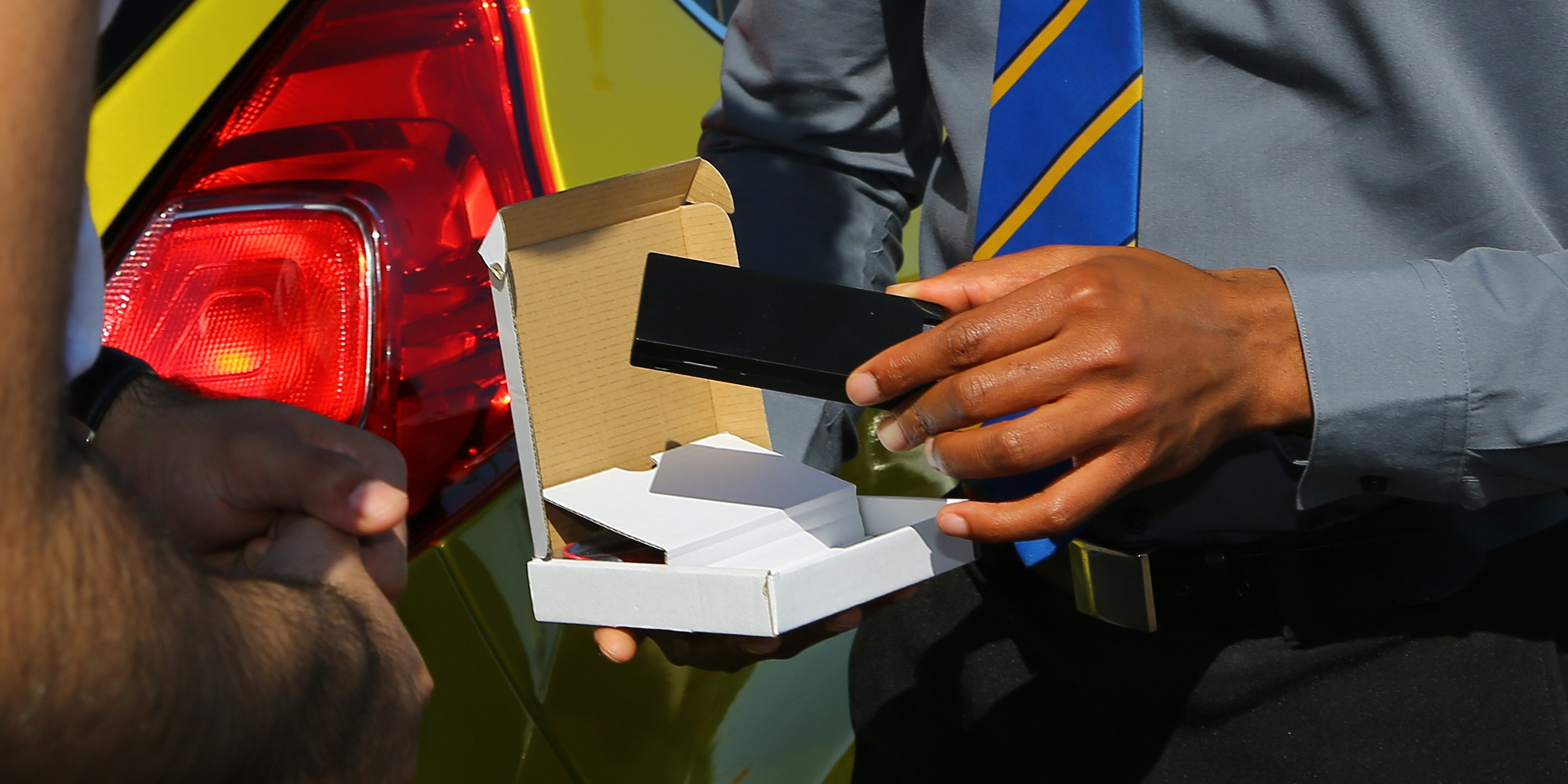
A telematics tracking system, also known as a black box, is a device installed in a car as part of a chosen insurance policy that records and transmits data about the vehicle’s location, speed, and driving behaviour.
This tracking device is usually installed under the bonnet on your car battery, but some insurers now ask that you install a plug-in on your dashboard or download a smartphone app instead (or a combination of these). Some particularly cautious insurers may also ask you to install a dashcam on your windscreen as part of your black box policy.
So, are you considering a black box policy? Here’s a simple breakdown of how a telematics box works:
Installation – The telematics box is installed in the vehicle. The insurer or manufacturer sometimes installs the black box, but policy holders are now often asked to do the installation themselves following sent instructions.
Sensors – The box includes sensors that can detect the vehicle’s location, speed, acceleration, braking, and other driving behaviors.
Data recording – The box records the data from the sensors, usually on a continuous basis.
Data transmission – The box transmits the recorded data to a server or database via a cellular network or satellite link.
Data analysis – The recorded data is analyzed to assess the driver’s behavior, such as how often they brake hard or how frequently they exceed the speed limit.
Feedback – The driver may receive feedback on their driving behavior, such as through an app or dashboard display. This feedback can help them to improve their driving and potentially lower (or raise) their insurance premiums.
A black box insurance policy can be a good option if you’re a safe and responsible driver who is looking for a way to lower your insurance premiums.
However, it’s still important to shop around and compare policies from different insurance providers to find the best option for your needs and budget.
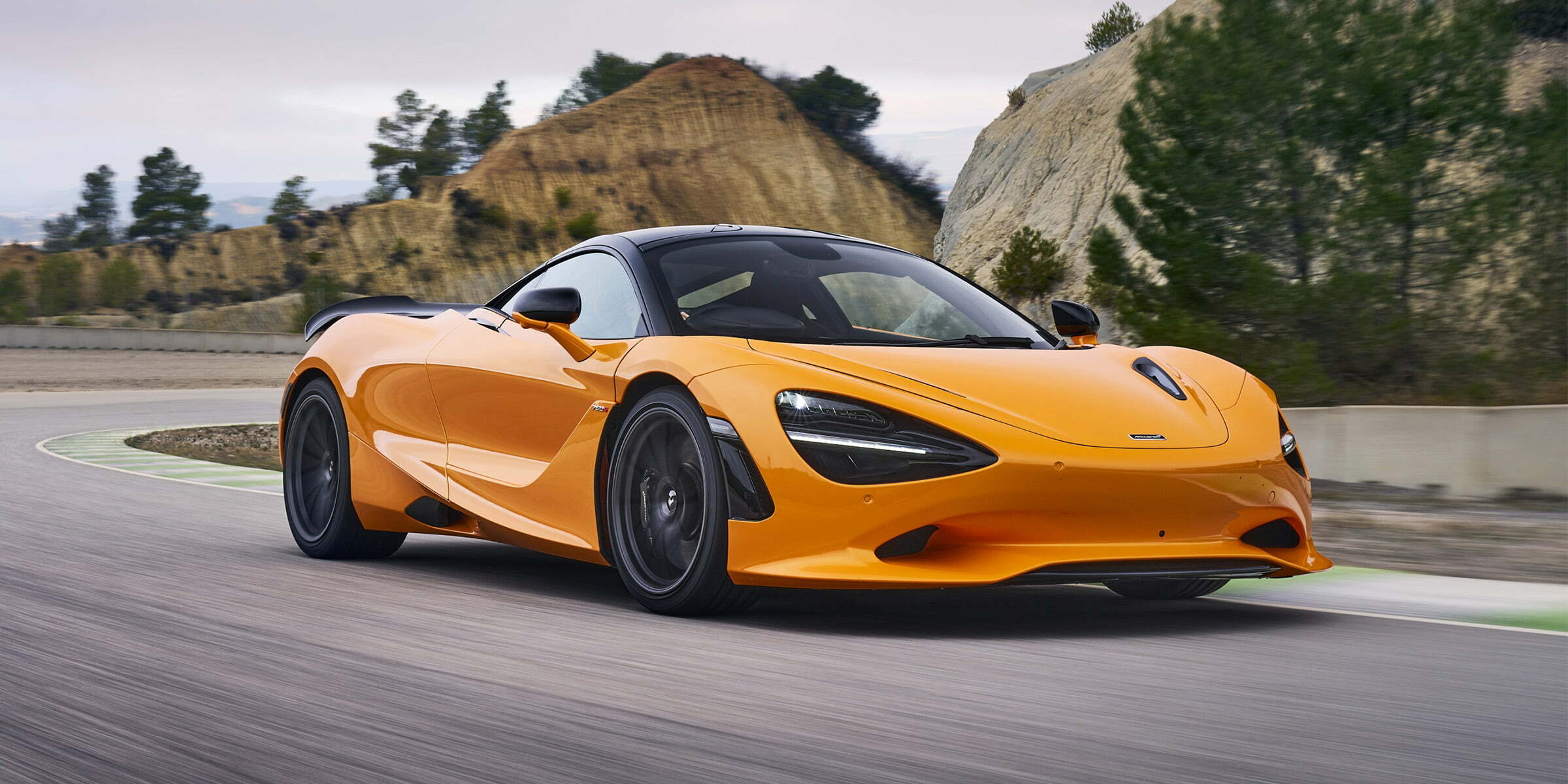
McLaren has debuted its new 750S coupé and ‘Spider’ convertible – a lightweight 750hp supercar that its manufacturer describes as a “new benchmark for supercar performance and driver exhilaration.”
Powered by a twin-turbocharged 4.0-litre V8 petrol engine paired with a seven-speed automatic transmission, the new 750S is essentially an evolution of the 720S coupé and convertible that was removed from sale last year. Built on a carbon fibre monocoque chassis, the 750S has very similar exterior looks to its predecessor, carrying forward the smooth silhouette, low nose and large triangular LED headlight design of the 720S.
The 750S features a body-coloured front splitter, a slightly altered rear bumper design including a centrally-mounted exhaust outlet, and a more prominent active rear wing than the 720S. This active wing automatically deploys in less than half a second in high-speed braking scenarios, to significantly increase the car’s downforce and grip on the road.
Under the bodywork, McLaren has made a few technical alterations to the supercar in order to keep it competitive with newer rivals like the Maserati MC20. Weight reduction has been a key focus for the brand’s engineers, installing lighter carbon fibre-shelled racing seats and lighter chassis and suspension components which, when combined with other weight saving measures, make the 750S 30kg lighter than the 720S.
The engine has also undergone a range of modifications in order to improve the supercar’s performance stats, including increased boost pressures for its twin-scroll turbochargers, lightweight forged pistons, and a new exhaust system that is 2kg lighter than the 720S’s. McLaren adds that it has also adjusted the car’s gear ratios, to “optimise acceleration”.
The 750S’s aerodynamics tweaks, weight reduction and engine modifications result in a supercar that can complete a 0-62mph sprint in a reported 2.8 seconds – making it just as fast in a straight line as the slightly more powerful 765LT coupé and convertible that currently tops the McLaren model range. Top speed is limited to 206mph.
The car sits on 19-inch alloy wheels in the front and slightly larger 20-inch alloy wheels in the rear, which will be wrapped in the customer’s choice of three Pirelli tyre options, and house carbon-ceramic brakes. Opting for the optional brakes upgrade package installs carbon-ceramic discs that are reportedly 60% stronger, inspired by the powerful track-focused McLaren Senna.
The McLaren 750S is now available to order in the UK, though McLaren is set to announce any pricing details. By comparison, the entry-level price for 720S around the time of its removal was just shy of £220,000.
Ask anyone who’s searching for a new job what their wish list is and chances are that, salary aside, they’ll be hoping for a host of other benefits – which almost certainly includes a company car.
Who doesn’t want one of those? A car is still high up on the list of many employees’ goals, and for good reason: there’s a great benefit to having a new, maintained, insured and serviced vehicle for work and leisure use. And because it’s a ‘must-have’ for so many people, it’s also a wonderful incentive for employers to attract the high quality staff they are looking for.
One of the most popular ways of running a company car tends to be through a salary sacrifice scheme. So today we’re looking at how these progammes work, and how they compare to other ways of funding your company car.
Before we get into the details of how salary sacrifice and other programmes work, let’s go over the taxation situation. This is a key issue for any company car driver and will have a big impact on whether a company car is right for you and what sort of car you should be choosing.
Benefits mean tax
If you are going to use your company car for private use (as most people do), you have to pay a benefit-in-kind (BiK) contribution, which is a company car tax. This applies to either a company car provided by your employer or a salary sacrifice scheme. If you are taking a car allowance, you dont have to pay BiK.
The level of tax is based on the value of the vehicle and the type of fuel that it uses. The more emissions (CO2) the car produces according to its official government figures, the greater the banding figure. Diesel cars also carry an extra 4% on top of their banding rates.
The BiK figure is then taxed according to your current income tax rate (25%, 40% or 45%). It sounds complicated but there are simple tables available showing CO2 emissions for any chosen car and its relevant banding figure.
So, a £30,000 car with emissions that put it in the 25% BiK banding will give the user a rateable figure of £7,500. That figure is then multiplied by your level of income tax, giving £1,500, £3,000 or £3,375, depending on what you earn.
Salary sacrifice vs other company car programmes
So that’s your tax liability to think about, but which company car scheme is right for you – assuming you have a choice in the matter? There are a few options, each with different implications for employees.
Conventional company car scheme
The traditional model for company cars is that the employer owns or leases a car for its employee to drive. This means that you don’t have to sort out your own finance or generally put very much effort at all into the whole process. Maintenance, insurance and repairs are also usually covered by the employer and you get to drive a new car every two to three years. Simple.
On the downside, you often can’t choose your car, you never own it and, if it’s an expensive model, you could pay a lot in BiK tax. You will also be taxed on your private fuel use.
Car allowance
The car allowance is basically extra cash on top of your salary to help you buy a car and pay for its running costs each month. Normally, the amount of your allowance is broadly similar to what it would cost your employer to provide you with a company car, but this may vary significantly depending on employer policy or whatever you negotiate as part of your job contract.
On the plus side, you get to choose pretty much whatever car you like as it will be your car. You don’t have to spend your entire allowance on the vehicle, so you can choose a cheaper car and save the extra cash. You also don’t have to pay BiK, although you will be taxed at the usual rate on your allowance. You can also keep the car if you leave your job.
On the negative side, it means you probably won’t get a nice new car every two or three years as you would with a company car. Your allowance might also not be enough to cover all your monthly motoring bills, especially if there’s an expensive repair to fork out for.
Salary sacrifice
Under a salary sacrifice scheme, money for your chosen employee benefit (in this case, your car) is taken from your gross salary before any income tax or national insurance contribution is applied. This means your taxable salary is reduced, which in turn means you pay less income tax and national insurance.
When salary sacrifice car schemes were introduced, the savings often outweighed the company car tax incurred, making it a very cheap way for employees to drive a new car. However, tax laws were changed in 2017 to close this loophole and, for cars at least, BiK tax was introduced on the amount of money you were sacrificing.
A salary sacrifice car can still be a good idea, but you have to consider your own personal circumstances. It may well still be cheaper than financing your car on a PCP or PCH from your after-tax salary. Also, many schemes cover road tax, insurance, roadside assistance and maintenance too, all included in your monthly contribution (payment), so that can be tempting.
And – unlike other personal finance products – there’s no credit check, no deposit to pay and you should get protection if you leave your job or get made redundant (although you’ll have to give the car back).
However, there are negatives to consider as well. Your actual salary will be lower as a result of your salary sacrifice, which this could affect the amount of money you can borrow when you apply for a mortgage or other loan. It could also affect your amount of sick pay and even your pension plan, as the percentage amount of your now-lower salary will be less.
Choosing a sports car or gas-guzzler with high CO2 emissions might cost you more in tax than the income tax saved on the amount you have sacrificed too, so it’s always going to be wise to look at lower CO2 emitting vehicles.
Enter the electric vehicle
Rapidly growing demand from both drivers and employers for electric cars, helped by a looming ban on new petrol and diesel cars by the end of this decade, have driven EVs to the top of the motoring agenda. So as the number of electric cars on our streets increases, there are a lot of people thinking about driving an EV as a company car.
Crucially, zero emissions vehicles – which basically means electric cars – pay much less Benefit-in-Kind (BiK) taxing than a petrol or diesel car. The government has confirmed that this tax advantage will run through until at least 2028, which has seen an increasing number of EV customers switching from traditional car finance to salary sacrifice.
So which company car scheme is going to work for you? Depending on your employer’s policies, you may not get a choice in the matter. For example, for you to benefit from a salary sacrifice programme then your employer obviously has to be offering such a programme. (In our next piece on company car financing, we will look at what involvement in a salary sacrifice programme means for employers.)
As with any means of funding a new car, there’s no one-size-fits-all answer. The right choice for you will depend on your personal financial situation and your own driving requirements.
As with all financial considerations, you should think about your personal situation and, if in doubt, consult a financial adviser to explore all your options before making a decision.
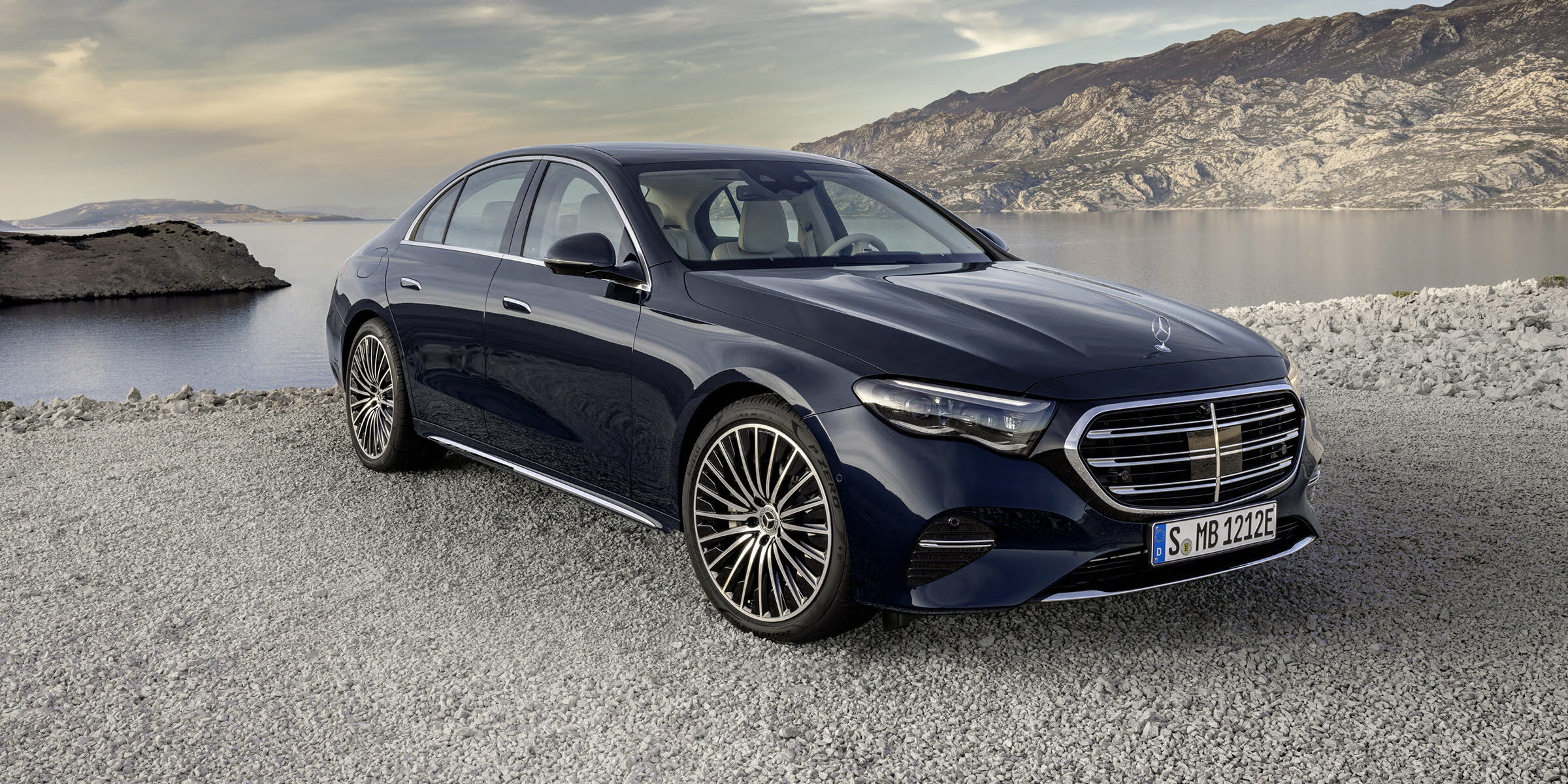
Mercedes-Benz has given us a first look at the new sixth-generation E-Class saloon, which comes with new-look exterior styling, a longer wheelbase, an on-board tech upgrade, and a new engine line-up that only includes mild-hybrid and plug-in hybrid models.
This new model launch comes as Mercedes-Benz tries to keep its combustion-powered range up to date with the technology and design ethos rolled out across its newer all-electric EQ range. At first glance, it is clear to see that Mercedes-Benz has taken inspiration from the larger S-Class when designing the new E-Class.
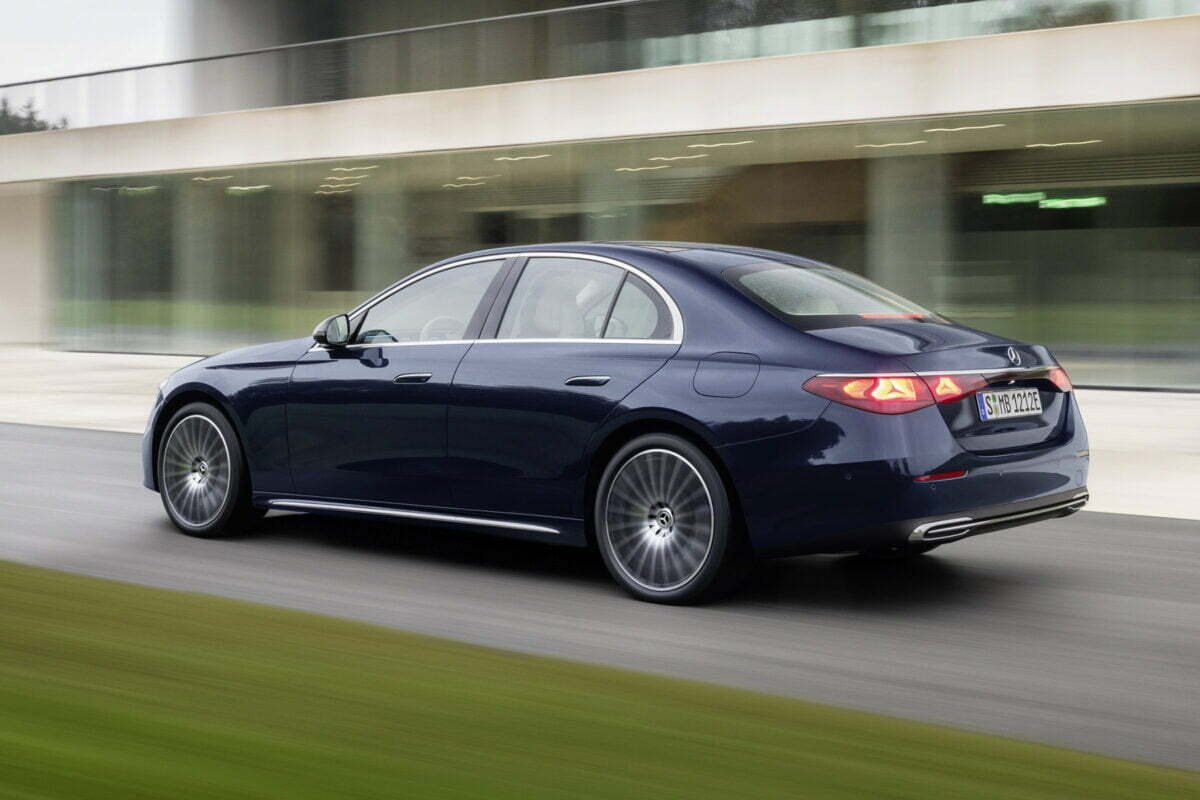
Slim headlights flank a large grille with distinct horizontal bars that stretch across the car’s front fascia. This grille can be illuminated for an additional fee. In the rear, the new E-Class also has longer tail lights than its predecessor, which display a new three-pointed star light signature. Alloy wheel sizes range from 17- to 21-inches.
What might not be immediately apparent is that the E-Class has slightly grown in size – the manufacturer says that the latest iteration of the saloon is two centimetres longer from front wheel to back wheel than the previous model, meaning that the new saloon’s interior will be slightly more spacious.
Despite the longer chassis, Mercedes-Benz claims that the new saloon has a tighter 12-metre turning circle than the outgoing model. Opting for the optional ‘Technology’ package adds rear-wheel steering which reduces the turning circle to 11 metres.
This chassis modification has not added any extra boot space though. Mercedes-Benz still quotes that the E-Class can hold up to 540 litres of boot luggage. This drops to 370 litres if you opt for the plug-in hybrid version.
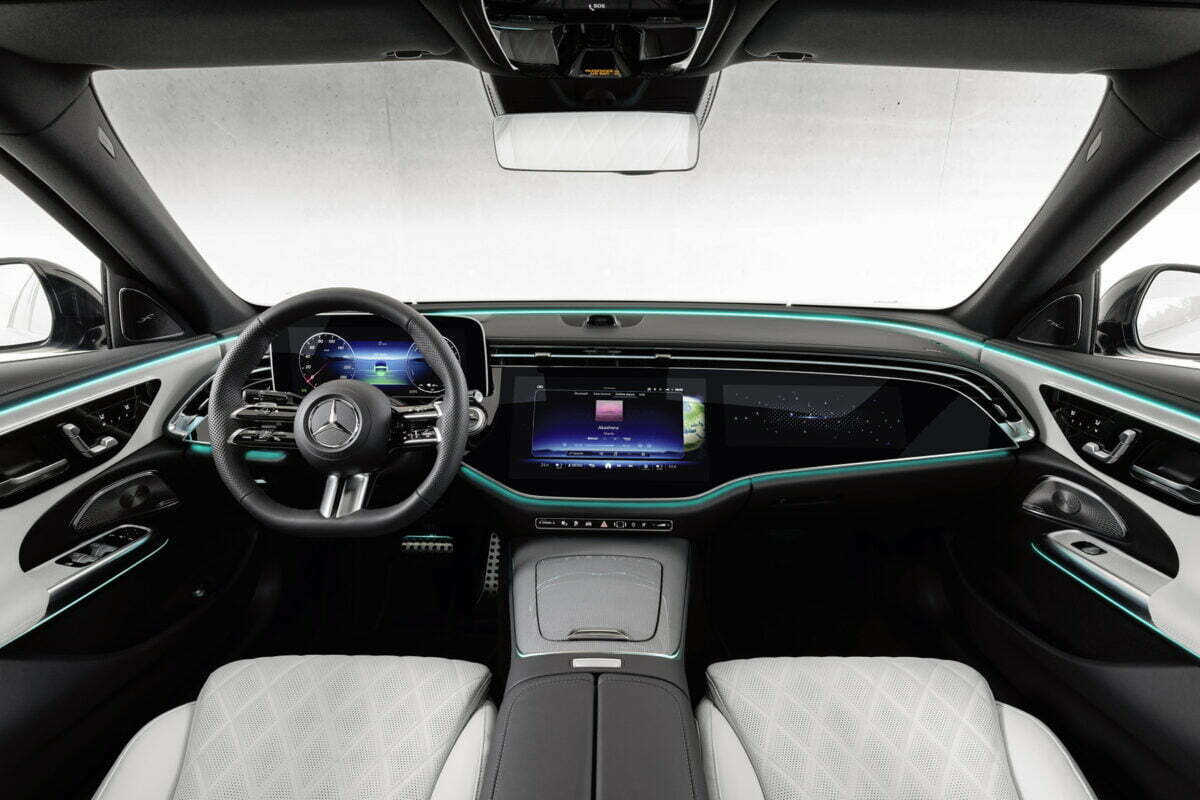
Inside, the most notable addition is actually an optional extra – the E-Class ‘Superscreen’ dashboard. This is essentially a smaller version of the ‘Hyperscreen’ currently available in the more expensive S-Class and electric EQS model lines, combining a digital instrument cluster, a central infotainment console and a passenger side multimedia display into one continuous screen.
Running the brand’s latest ‘MBUX’ software, Mercedes-Benz adds that the central infotainment screen will be compatible with several third party apps (as well as Android Auto and Apple CarPlay) at launch, including TikTok, Zoom video calls, and even the Angry Birds game. A selfie camera is also located on the top of the dashboard.
The options list also includes ambient cabin lighting with a ‘sound visualisation’ – a lighting system that responds to the media you are playing – and an automatic climate control feature that automatically regulates temperature, air flow and air distribution for the front and back of the cabin separately.
Mercedes-Benz adds that it has plans to add a driverless parking feature in the near future, pending government approval of such technology, which has been designed specifically with automated valet parking scenarios in mind.
Moving on from on-board tech to engine tech, the new E-Class saloon will only be available with a mild-hybrid or plug-in hybrid powertrain. All models will be fitted with a nine-speed automatic gearbox. Those looking for an all-electric model should check out its battery-powered counterpart, the Mercedes-Benz EQE.
Two mild-hybrids will be available at launch – the petrol ‘E 200’ and diesel ‘E 220 d’. Both primarily rely on traditional combustion-powered engines, but with a small electrified boost that improves the engine’s fuel economy. While the petrol variant is only available with rear-wheel drive, the diesel version can be specced with all-wheel drive for a higher price tag.
Plug-in hybrid models will consist of the petrol ‘E 300 e’ and ‘E 400 e’ at launch, and a diesel ‘E 300 de’ will reportedly arrive at a later date. These plug-in hybrids can reportedly travel up to 73 miles on just electric power, thanks to its 25kWh battery and electric motor pairing. The ‘E 300 e’ will be available with either rear-wheel or all-wheel drive, while the more powerful ‘E 400 e’ will only be available with all-wheel drive.
That sums up what we know about the next-generation Mercedes-Benz E-Class so far. UK specifications and pricing are currently unknown – these details are sure to follow in the coming months.
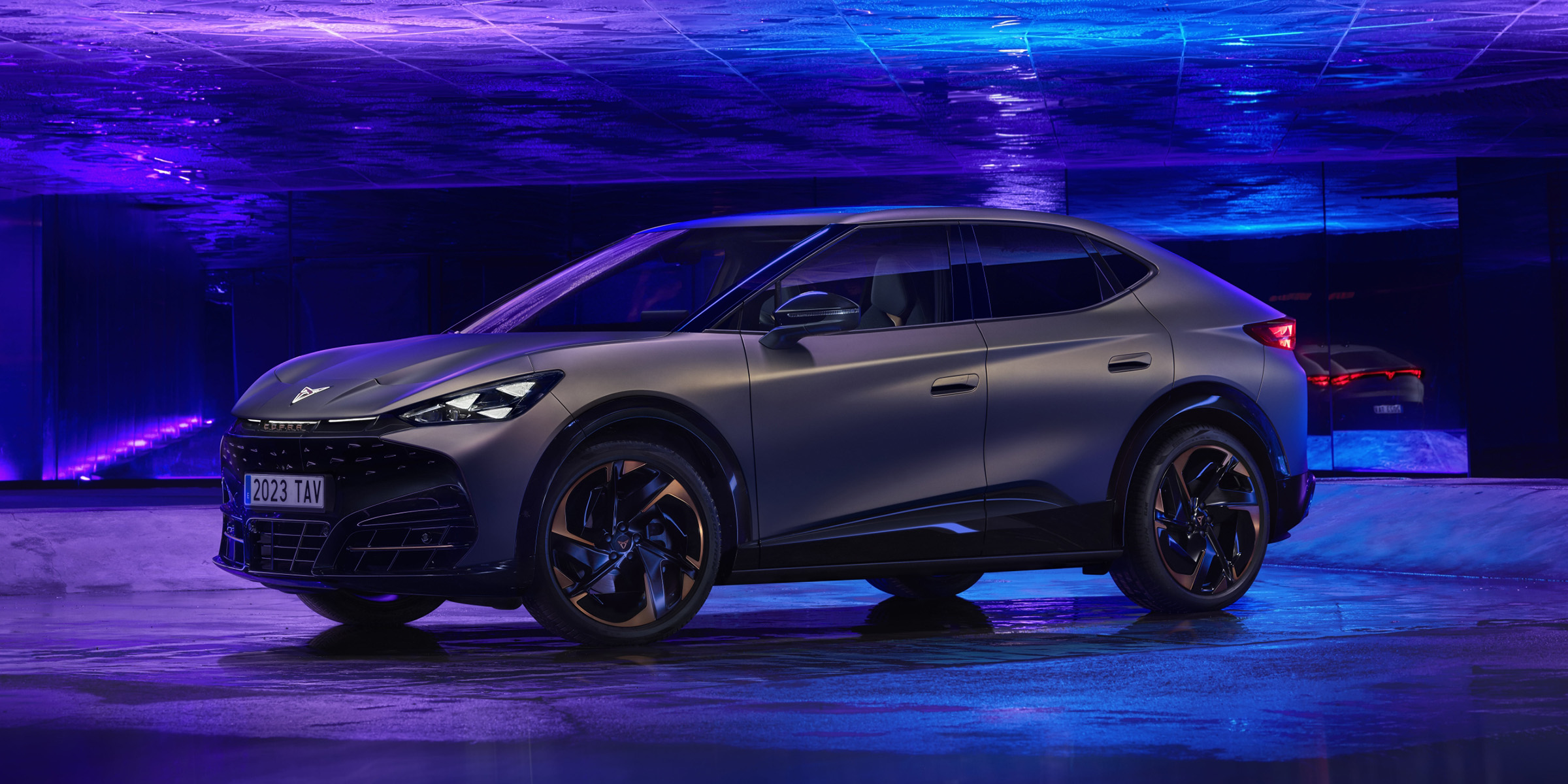
The third model that Cupra has built from the ground up, the electric Tavascan SUV will become available to order next year, offering a longer battery range than range-topping versions of the popular Tesla Model Y.
Marketed as Cupra’s “dream come true”, the Tavascan’s exterior looks give us a glimpse of what the brand’s future electric models will look like, with a design that “remains faithful” to Cupra’s 2019 concept car of the same name.
The car’s angular front end features triangular Matrix LED headlights either side of a large grille and pronounced bonnet indents. The Tavascan’s sloping roof line and sharp door panel contours lead to a full-width rear tail light that features an illuminated Cupra badge in the centre.
The SUV sits on 21-inch alloy wheels finished in black and bronze, which are wrapped in performance tyres as standard.
Cupra will be hoping that the SUV’s sporty styling will entice UK buyers away from the likes of the Audi Q4 E-tron, the Genesis GV60 and, in particular, the Tesla Model Y – Britain’s most popular electric car choice so far this year. When it comes to battery range, it seems that the Tavascan has improved on this competition.
Making use of its 82kWh battery pack, the Tavascan can reportedly muster up to 341 miles on a single charge – around 10 miles more than the top-spec Tesla Model Y Long Range. The battery can be charged from 10% to 80% in just under half an hour using a 135kW charging point.
Both single-motor and dual-motor versions will be available, offering 286hp and 340hp respectively. Cupra claims that the more powerful variant can complete a 0-62mph sprint in 5.6 seconds.
Inside, Cupra has decided to give the Tavascan a more lavish interior than the compact Born hatchback. The cockpit’s curved dashboard is connected to the door panels and centre console by metallic inserts, and the dashboard is outlined by bronze accents that mirror the Cupra branding on the steering wheel.
Front and centre on the dashboard is a large 15-inch infotainment screen – the largest display Cupra has installed on any of its models to date – which makes use of a 12-speaker Sennheiser audio sound system.
Designed in Barcelona, Spain, the Tavascan will share a production line with the similar Volkswagen ID.5 at Volkswagen Group’s factory in China. An exact arrival date has not yet been announced, all we know so far is that the SUV will go on sale in Europe in 2024, with Cupra targeting around 70,000 worldwide sales in the next calendar year. UK specifications and pricing will be revealed in the coming months.
The Smart #1 line-up will go on sale this Summer, including two standard trims, a special launch edition version and a performance-enhanced Brabus model.
Manufactured in China, the electric #1 hatchback is Smart’s first all-new model in eight years, and marks a pivot in the brand’s product strategy – moving away from the production of city cars to sell larger all-electric family car solutions. Smart also announced the larger #3 crossover last week, which offers a more spacious interior.
Four different #1 trims will be available at launch, starting with the entry-level ‘Pro+’. LED lights in the front and back come as standard, as does a panoramic sunroof, heated seats and an electric tailgate. On the tech front, the ‘Pro+’ grade includes a 360-degree parking camera and a 13-inch infotainment screen front and centre on the dashboard, which can be controlled using a voice assistant feature.
The middling ‘Premium’ trim builds on the ‘Pro+’ by upgrading the car’s LED headlights and speaker system, and by adding head-up display tech that projects driving information onto the windscreen. This trim also comes with a parking assistance tech pack, and a battery range boost. While the ‘Pro+’ can reportedly muster up to 260 miles on a single charge, the ‘Premium’ ups this to 273 miles.
Key trim level features
Lead-in ‘Pro+’ (£35,950)
LED lights
Panoramic sunroof
Heated seats
360-degree surround camera
Electronically-operated tailgate
Adaptive Cruise Control
13-inch infotainment screen with voice assistant
Mid-range ‘Premium’ (£38,950)
All features of the ‘Pro+’ that are not replaced
Matrix LED headlights
Beats sound system
Head-up display
Semi-autonomous parking assistance
Range-boosting heat pump
Higher capacity charging cable
Limited-run ‘Launch Edition’ (£39,450)
All features of the ‘Premium’
Unique design touches
Top-spec ‘Brabus’ (£43,450)
Sportier Brabus styling
19-inch alloy wheels
Alcantara leather steering wheel
Suede seats and headrests
The ‘Launch Edition’ is essentially identical to the ‘Premium’ grade, apart from several unique design touches inside and out that Smart says highlights the model’s exclusivity. Only 100 of these will be sold in the UK.
Finally, the top-spec ‘Brabus’ edition offers a sportier styling package that includes larger 19-inch alloy wheels, bonnet vents and a two-tone paint finish. Inside, the steering wheel is wrapped in Alcantara leather, while the seats and headrests are trimmed in suede.
The biggest draw of this Brabus model is its dual-motor performance, however. While the standard single-motor #1 can complete a 0-62mph sprint in 6.7 seconds, this range-topper takes a reported 3.9 seconds to get to 62mph – straight-line pace that would rival some supercars.
Prices for the Smart #1 range start at just under £36k for the ‘Pro+’, rising to over £43k for the ‘Brabus’. The hatchback comes with 421 litres of luggage space (‘Premium’ and ‘Brabus’ reduced to 411 litres), and all models can tow up to 1600kg of trailer weight.
Smart has not yet announced exactly when the new range will become available to order, only that its #1 hatchback will arrive in the Summer. All models will come with a three-year/unlimited mileage warranty.
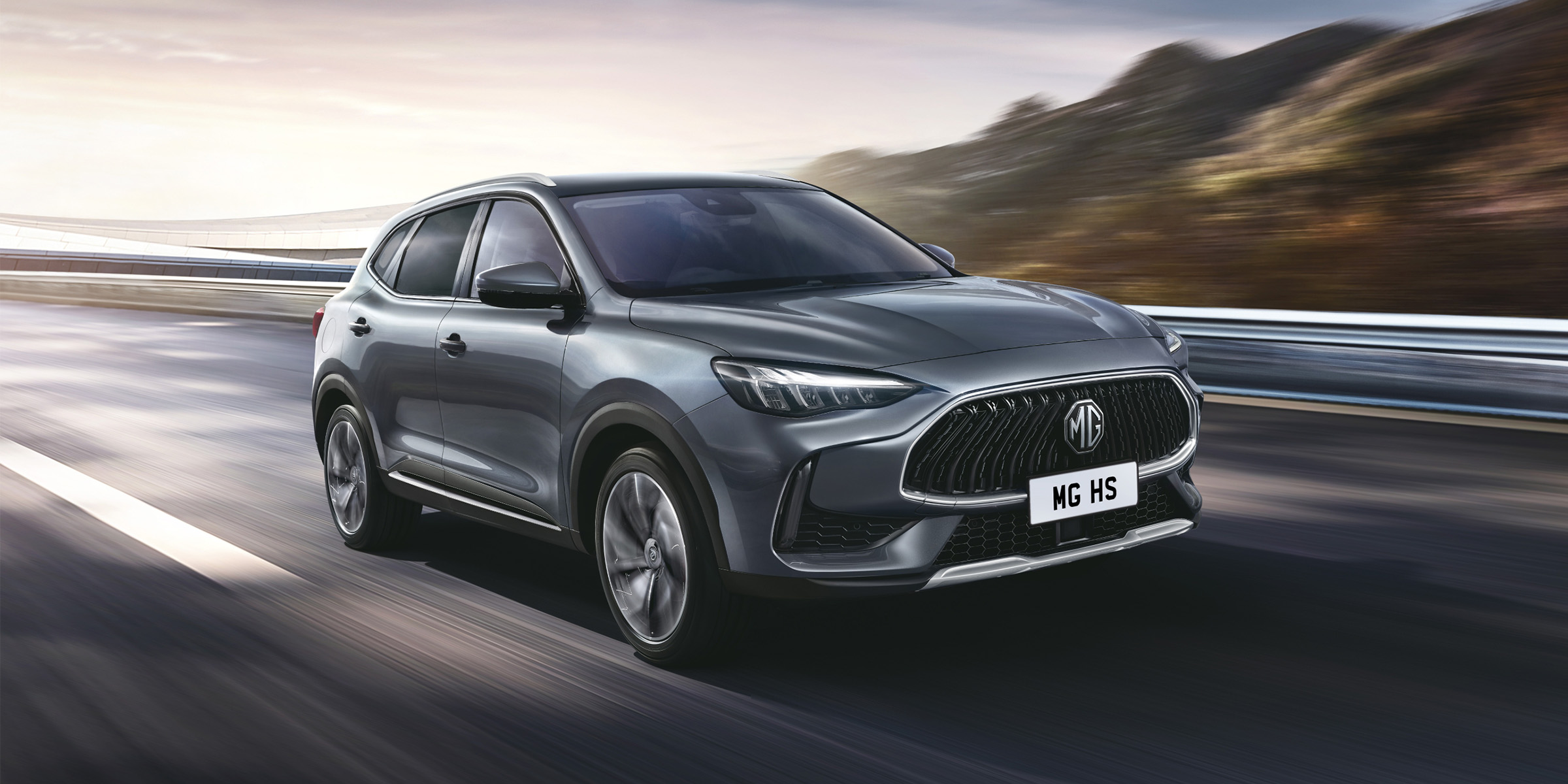
An updated version of the MG HS SUV is now available to order, featuring exterior styling changes and a few tech upgrades.
The HS is the largest model in the MG line-up, and this is its first notable update since its launch back in 2019. Starting with its exterior looks, MG has decided to revise the SUV’s front grille and bumper design, as well as installing slimmer LED headlights.
The rear bumper has also been re-shaped, below a new set of LED taillights. The SUV comes with larger 18-inch alloy wheels as standard, with a revised diamond-cut pattern design.
On the on-board tech front, keyless entry, a rear-view parking camera and rain sensing wipers now come as standard. The update also includes an infotainment upgrade – all models come with the same 10-inch multimedia display, but with “enhanced hardware” that reportedly improves loading times.
Above the standard ‘SE’ trim, the ‘Trophy’ specification adds leather upholstery, heated front seats, ambient interior lighting, rear privacy glass and an upgraded 6-speaker audio system.
The same powertrain options are available – a 162hp 1.5-litre turbocharged petrol engine or a 284hp 1.5-litre plug-in hybrid. Both manual and automatic transmissions are available.
MG assures customers that the SUVs pricing has not changed after the update, with pricing starting at under £24k.
Despite its affordable pricing, the MG HS is currently one of the lowest-ranked SUVs in our Expert Rating Index. Its Expert Rating of 47% is hindered by its low-quality interior and bland driving experience.
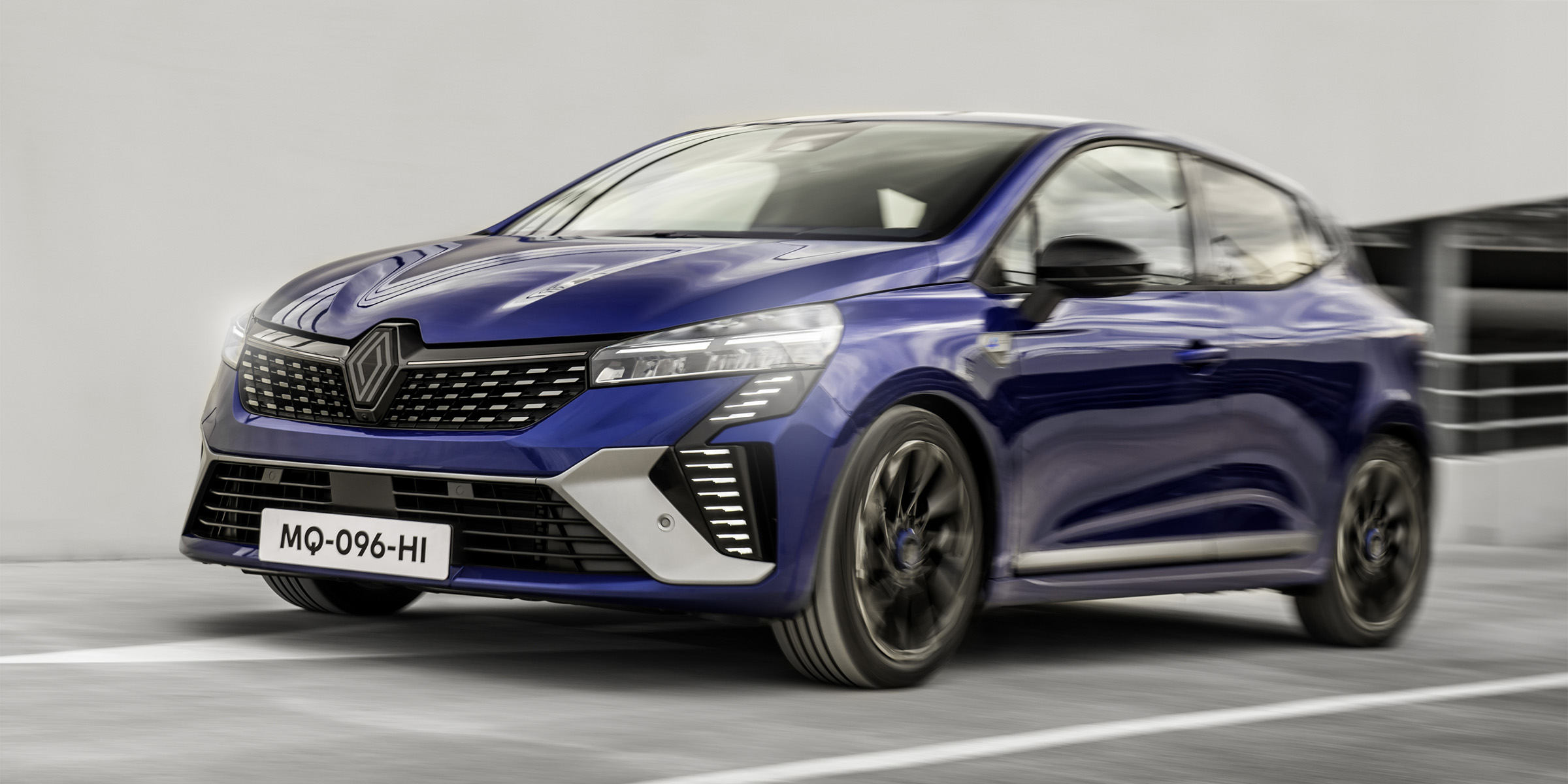
Renault will scrap petrol-only Clio models in the summer, as part of a mid-life facelift that features cosmetic tweaks, tech upgrades and a new range-topping Alpine-inspired trim.
The fifth-generation Clio has been on sale in the petrol ‘TCe 90’ guise since 2019, with a petrol-electric hybrid Clio E-Tech model joining the range in 2020.
From this Summer onwards, Renault says that it is dropping the combustion-only models from the Clio range – the Clio E-Hybrid powertrain being the only option available in the UK when this facelift arrives in a few months. This also means that the new model will not be available with a manual gearbox.
Reportedly around 40% more fuel efficient than the petrol-only Clio models currently available, Renault is yet to announce if the E-Tech’s post-facelift performance figures, but the hybrid version currently on sale can complete a 0-62mph sprint in just under ten seconds, with its top speed limited at 112mph.
Taking design cues from the new electric Mégane E-Tech, the updated Clio features slimmer LED headlights, a wider front grille and a new-look front bumper design, as well as chevron-shaped light signatures and 17-inch diamond-cut alloy wheels.
Renault adds that it has also refreshed the range of exterior colours available. In terms of size, the brand says that the facelifted car’s dimensions are practically identical to the outgoing range.
Inside, the manufacturer says that the car’s cabin “is more welcoming and cosier” than before, thanks to the introduction of more sustainable materials that have been used to trim the seats, door panels and dashboard.
Depending on the trim chosen, the refreshed Clio comes with either a seven- or ten-inch digital instrument cluster behind the steering wheel, and a nine-inch portrait-oriented infotainment display that juts out of the dashboard. Android Auto and Apple CarPlay will also be wireless as standard too.
Finally, top-spec ‘R-Line’ models will be replaced by a ‘esprit Alpine trim’ which will also feature in the hybridised Renault Austral SUV range that arrives later this year. The trim features a few cosmetic touches inspired by Renault’s performance spin-off Alpine, including exterior chrome accents, sportier 17-inch alloy wheels and Renault branding finished in black.
That’s all we know about the facelifted Clio so far. More details, including UK pricing, will be announced in the coming months.
The Renault Clio currently holds an Expert Rating of 69% – a score aided by the car’s fun driving experience and smooth hybrid engine, and hindered by its compact cabin that is not quite as spacious as its rivals.
Smart has given us a first look at its electric #3 crossover, which will launch as the largest offering in the brand’s line-up in early 2024.
Called a “sports utility coupé” by its manufacturer, the Smart #3 crossover will launch as a direct rival of the electric Volkswagen ID.5 coupé-SUV, and sports a similar exterior design to the smaller #1 hatchback that is set to go on sale this year, with slim LED headlights connected by a LED light bar that stretches across the car’s front fascia.
The car features flush door handles and a sloping roof line in the rear, above another LED light bar that connects the car’s taillights in a similar fashion to the EQA and EQB SUVs from parent brand Mercedes-Benz.
We don’t know much about the car’s performance stats at present – the Smart #1 has an output of 272hp and a maximum range of 273 miles between charges, and the #3 is expected to match or improve on these figures.
In the cabin, a 13-inch infotainment screen juts out of the centre of the dashboard, and the car’s longer wheelbase ensures that there is more space in the back for rear occupants when compared to the Smart #1. The crossover comes with a 13-speaker sound system, with further speakers integrated into the seat headrests.
Ambient lighting and a panoramic sunroof will be available for an additional fee.
The Smart #3 is currently on display at the Shanghai motor show, with its first European showcase planned for September. UK pricing and specifications are currently unknown – these will be announced closer to the model’s launch in the new year.
Following the launch of the all-electric Polestar 3 SUV, the Polestar 4 coupé-SUV has now been unveiled – its UK arrival planned for early next year.
Like the Polestar 3, this is a bespoke model designed by Polestar which is not based on models from parent company Volvo. In terms of size, it will sit between the Polestar 2 saloon and Polestar 3 SUV, offering a sloping rear roofline with the notable absence of a rear window.
Instead, the rearview mirror in the cabin has a high-definition screen that displays the live feed of a roof-mounted rear camera, which the manufacturer says gives a much wider field of view. This screen can also be disabled, allowing the driver to view passengers in the rear seats when needed.
On the performance front, Polestar remarks that this new model is the fastest car it has ever produced – capable of completing a 0-62mph spirit in 3.8 seconds. Powered by a 102kWh battery and with single- and dual-motor drivetrain options available, the Polestar 4 can reportedly muster 544hp (dual-motor version) – around 25hp more than the range-topping Polestar 3 variant.
Polestar is yet to confirm the car’s maximum battery range figures – the brand has published a preliminary figure of 372 miles. A disconnect clutch allows the car to disengage the front electric motor when not needed, to maximise range and efficiency.
The brand is confident that the model will produce impressive battery range results, thanks to its aerodynamic design that features a low bonnet nose, flush door handles, frameless windows and other air flow optimisation tweaks in the front and rear. The car comes with 20-inch alloy wheels as standard, with 22-inch alloys also available for an additional cost.
All versions are compatible with up to 200kW DC and 22kW AC charging stations, and the car also features Vehicle-to-Load (V2L) charging, meaning that the car’s battery can be used to charge other electric appliances like laptops and e-bikes, and even other electric cars.
Stepping inside, the Polestar 4 “celebrates rear occupant comfort and experience”, says Polestar CEO Thomas Ingenlath. A full-length glass roof comes as standard, which is also available with an electrochromic functionality which controls the flow of light into the cabin.
A 15-inch portrait-oriented infotainment screen juts out of the dashboard which runs the brand’s Snapdragon software, which features Google Maps, Google Assistant and Google Play as standard. A secondary media and climate control screen is mounted between the front seats to enable rear occupant control.
A ten-inch digital instrument cluster sits behind the steering wheel, and a heads-up display projects driving information on to the windscreen. This heads-up display software also comes with a ‘snow mode’, that changes the colour of projected driving information from white to yellow.
UK specifications and pricing are yet to be announced – this information will be announced closer to the model’s arrival early next year.
One of the questions we are often asked is from people who have encountered unexpected medical issues and want to offload their car, either because they’re not able to drive or they need to save some money.
It’s usually quite a stressful situation and, understandably, people get frustrated if they are not getting clear answers from their car finance company or other sources. Then, of course, there are privacy issues that prevent family members or loved ones gaining information about a car finance account on your behalf if you’re not able to sort it out yourself.
But what are your rights and what can you realistically expect? There’s a lot of misunderstanding about this, and a myth still exists that claiming ‘medical grounds’ allows you to simply give back your car and walk away from your contract. This is simply not true, as I’ll explain below.
In very nearly every case, there will be nothing in your car finance agreement that allows you to cancel your contract on medical grounds, regardless of how serious the situation is. Even in the event of your death, the finance company still expects to get its money back from your estate.
There are also no real provisions in law that you can fall back on to avoid your debt obligations.
Usually, protecting your financial situation against medical problems is something covered by either loan protection insurance (LPI) or payment protection insurance (PPI). After the PPI scandals from early in the last decade, it’s now a far less popular product than it used to be, although it was never particularly popular with car finance agreements anyway.
So, on the surface of it, the answer is no, you can’t cancel your car finance agreement on medical grounds. You still owe the finance company money and they still expect you to pay it back.
The longer answer
Unfortunately, the answer here is still no. But there are steps you can take that may reduce your costs or at least make them manageable, which may be enough to help you get through a difficult financial period.
Although the finance or leasing company has the law on its side with regard to your contract, it still has an obligation to help a customer in difficulty. Financial difficulties arising from medical grounds certainly fall under this obligation, although the finance company’s definition of ‘help’ is probably quite different from yours.
Car finance and car leasing are regulated in the UK by the Financial Conduct Authority (FCA), a government-appointed body whose job it is to ensure that financial matters are being conducted fairly and responsibly.
In summary, your debt is unlikely to simply go away but the finance company is obliged to offer you some solutions to help reduce your burden. You are also able to propose solutions to the lender.
The type of assistance that the finance or leasing company is likely to offer or accept may include:
a payment holiday to temporarily pause your loan, usually for a period of three months
reducing or waiving interest and fees on the loan to reduce your monthly payments
restructuring the loan to help reduce payments (usually by extending the loan period by several months)
accepting a reduced settlement figure to repay the loan early
allowing you to sell the car to pay off your loan (if the car’s value is likely to cover the debt)
As you can see, none of the above suggestions allow you to simply exit the contract and walk away with nothing more to pay.
Relief now may cost you later
It’s important to note that although some of the above offers may sound helpful, they may also be adding cost to your loan in the longer term.
For example, if you take a three-month payment holiday on your finance agreement, you will accrue interest on those three months where you’re not making any repayments. This can add hundreds of pounds to your overall debt by the end of your agreement. Similarly, if your finance company offers to reduce your monthly payments but extend your term length, chances are you will be paying more interest overall.
One more important point is that accepting any changes to your loan may be noted on your credit record, which may affect your ability to borrow money in the future. The fact that the help was requested on medical grounds won’t protect you from that, although your credit record won’t show the reason for the contract alteration.
If you’re in financial hardship and unable to meet your payments, getting your finances under control now is probably a far more pressing concern. But it’s still something you should be aware of if you think that it’s only likely to be a temporary problem.
What about voluntary termination or voluntary surrender?
These two things sound very similar but are actually very different. They also only apply to secured car finance agreements, like a PCP or hire purchase. They do not apply to leasing (contract hire), car subscriptions or unsecured loans like a personal loan from your bank. Again, ‘medical grounds’ won’t change your rights when it comes to minimising your financial obligations.
Voluntary termination
We have a comprehensive guide to voluntary termination here at The Car Expert (it’s been our most popular article for the last eight years!), so I won’t repeat it here in detail. Its benefit to you will depend on the sort of car finance agreement you have. If you have a PCP, you can usually only hand your car back with nothing further to pay in the last few months of your contract. If you’re close to your VT point, it may still be a fairly low-cost way of settling your finance agreement.
If you have a traditional hire purchase (no balloon payment at the end), your voluntary termination ‘walk away’ point will be somewhere closer to halfway through your contract, depending on how much deposit you put in at the start and whether you had a part-exchange.
If you are calling your finance company to being the voluntary termination process, make sure you are very clear that you want to execute a voluntary termination as set out in your contract and the Consumer Credit Act 1974 (Section 99). That way they can’t ‘accidentally’ misinterpret you and assume you meant voluntary surrender, which you definitely don’t want…
Voluntary surrender may sound quite similar to voluntary termination but it’s a very different thing. It’s really a last resort option if you have absolutely no other way of managing your way through your difficulties.
Basically, you surrender the car to the finance company and default on your agreement. They will collect the car and sell it at a trade auction. The sale price of the vehicle will clear a chunk of your outstanding debt but it almost certainly won’t cover all of it, so the finance company will come after you for whatever is still owing. Plus they will add on admin fees, the cost of collecting the car, any damage beyond normal wear and tear, auction costs and anything else they can think of.
The net result of all this is that, even though you’ve handed back the car, you may still owe thousands of pounds to the finance company and your debt may not have reduced by very much at all. Plus you’ll have a big black mark on your credit record for defaulting on the loan. In addition, by the time most customers get to the point of voluntary surrendering their cars, they’ve already missed some payments and are having to face collection agents as well as negotiating with the finance company.
It’s all deeply unpleasant in every way so, as I said, it’s definitely a last resort option and claiming medical grounds won’t help you. Really, the only scenario that’s worse is doing absolutely nothing and waiting for the finance company to send in collection agents to repossess the car and bully you for money you don’t have.
Act early to minimise the pain
As upsetting as it may be to try and choose the least worst option for sorting out your car finance when you’re already dealing with medical issues, one of the most important things you can do is act early – preferably before you start missing payments and your account falls into bad standing.
The finance company is far more likely to be responsive to the medical problems causing you if your account is still paid up to date with no missed payments. They’re obliged to present options for settling your debt or managing your payments, but if you’ve already defaulted and it’s been handed over to a collections agency to recover the money then sorting it all out will be much harder.
Falling behind on your payments may also affect your ability to voluntarily terminate the agreement, so you may be cutting off another potential solution to your problem.
Finally, given that we’re talking about this in the first place because significant medical issues have affected your household finances, reaching a solution early will help to keep your stress levels under control and prevent further damage to your health. Having certainty, even if it’s not the solution you want, can also help your family manage whatever’s to come rather than waiting until debt collectors are banging on your door to confront it.
The 660hp BMW i7 M70 xDrive is set to join the all-electric i7 range in the second half of this year, featuring the brand’s most powerful electric motor, a longer battery range and subtle exterior styling changes.
The all-wheel drive i7 M70 can complete a 0-62mph sprint in 3.7 seconds, while its top speed is electronically limited at 155mph. This drivetrain is reportedly 25% more powerful than the only engine option currently available, the i7 xDrive60, and BMW adds that this new addition has a 15% to 25% longer battery range too.
This longer battery range can be achieved thanks to the addition of a ‘max range’ driving mode, which limits the car’s top speed to 56mph and deactivating the saloon’s climate control, seat and steering wheel heating and seat ventilation functions, allowing the M70 to muster a maximum of 348 miles of travel on a single charge.
The saloon is compatible with DC charging stations with speeds of up to 195kW, which means that ten minutes at the charging station can reportedly result in 106 miles of charge for the battery.
The i7 M70 also comes with a few sporty BMW M-specific technical additions as standard, including air suspension, body rigidity and roll stabilisation upgrades that the brand says “hones” the car’s handling dynamics, providing “sharp and precise turn-in characteristics.” The M70 is also the first 7 Series model to be offered with sport tyres as an optional extra.
The car’s exterior styling is largely untouched, except for ‘M Sport’ badging on the illuminated kidney grilles, wider side skirts and a chunkier rear diffuser. This model is also available with a choice of eight two-tone colour schemes that split the upper and lower portion of the exterior design.
That sums up what we know about the BMW i7 M70 so far. The model is currently on display at the Shanghai motor show, ahead of its full launch later this year. BMW is yet to announce the UK specifications or pricing – these details are sure to follow in the coming months.
Offering interior comfort that has been frequently compared to a Rolls-Royce, the BMW i7 has been widely praised by the British motoring media, offering a spacious cabin with plenty of on-board tech. It currently holds an Expert Rating of 82%.
It’s not just because they are the only part of your car that connects you to the road that tyres play such a big part of your motoring journey. Nor that they have such a huge impact on your car’s safety and performance.
They keep you, your passengers and your car safe and comfortable in all sorts of weathers and, as such, they need looking after.
We have featured the importance of looking after your tyres before in The Car Expert. It’s not just about keeping them inflated to their correct pressures – maintaining them and checking for signs of damage or wear are also vital during a tyre’s lifetime to ensure they give you maximum service for as long as possible.
But no matter how much care and attention your give your tyres, it’s a fact of motoring life that they will age. And that means not just tread wear but other degradation too, such as cracking, drying and slowly breaking down. Water, chemicals and even sunlight can have a drastic effect on a tyre’s well-being.
As the years go by, your tyres are continually subjected to these factors so it’s important to know how old your rubber is – especially if you have bought a used car. If a car is old but very low mileage, it’s quite possible for it to have the legal tread depth – even though the rest of the tyre has become dangerously worn.
Checking the age
It’s simple to find out the date of manufacture of your tyres by looking on the sidewall. That’s where you will also find information on the make, size and type of tyre.
Look for the letters ‘DOT’ which stand for ‘Department of Transportation’. Next to those letters will be a series of numbers, such as ‘37 22’. In this case the tyre was made in the 37th week of 2022 – September of that year. If it reads ’07 20’ it’s February (7th week) of 2020, and so on.
If you see only a three digit number, this means that the tyre was made before 2000 so it should be changed immediately. Tyres are generally considered to be at their best between five and eight years of age, so as soon as they have reached half a decade it’s especially important to keep an eye on them and replace them if necessary.
Looking after your tyres
Look after your tyres and they will look after you, giving you years of good service. Even though you can’t stop them eventually wearing out there are some simple ways to prolong their life.
These include:
Keep them clean
Ensure the treads are free of stones or other debris
Check the air pressure every two weeks
Park away from direct sunlight
Avoid potholes and damaged road
Drive safely, avoiding wheel-spins and fast cornering
What do the different levels of car insurance mean and is the most basic always the cheapest? We explain the differences and help you understand what you need to know.
The legal minimum car insurance cover is third party only. This covers you against costs as a result of damage you cause to another person’s vehicle, property or injuries to them (they are the third party). They will make a claim against you, but you can’t claim for damage on your own car if the accident was your fault. There will be no cover for medical costs if you’re injured, such as physiotherapy.
Third-party, fire and theft insurance offers the same cover as third-party but can also cover you if your car is stolen and can’t be recovered or damaged by fire (accident or arson). It gives you more cover than a basic third-party policy, but not as much as comprehensive insurance. Some third-party, fire and theft policies also cover car audio, sat nav and entertainment systems if they’re stolen or damaged because of fire.
Comprehensive is the highest level of cover available. It protects against; injuries to other people and damage to their vehicles, your vehicle being damaged, stolen or destroyed in a fire, medical expenses and damage to or theft of a vehicle’s contents. You’ll also normally be covered for damage to your vehicle even if you don’t know – or can’t prove – who caused it. It used to be the case that comprehensive cover allowed you to drive any car not owned by you on a third-party only basis, but policies that allow you to do this are increasingly rare.
Basic cover isn’t always cheaper
Comparethemarket.com provides car insurance quotes from 150 provider products. “Most drivers typically choose a comprehensive car insurance policy,” says Julie Daniels, Comparethemarket motor insurance expert.
“It offers the highest level of protection for your car and can even be cheaper for some drivers. Demand for third-party fire and theft policies has remained fairly consistent in recent years, though there are more comprehensive car insurance policies available in the UK compared to third-party, fire and theft.”
As an example, in the year between February 2022 and February 2023, 51% of Comparethemarket customers aged 35 who drive a Ford (no model specified) were quoted up to £515 for their comprehensive car insurance, up to £936 for their third party fire and theft car insurance, up to £1,004 for their third party car insurance.
Why would this be? “Drivers with third-party cover tend to pay more as they are more likely to be younger or high-risk drivers, but it’s worth noting a comprehensive policy for these same drivers could lead to greater costs,” says Julie. “Third-party policies provide less cover for claims but can cost more as insurers’ risk modelling anticipates that drivers with third-party cover are more likely to make a claim and could claim for larger amounts. There can also be less competition for drivers in the third-party market. When you come to renew your car insurance, it is always worth shopping around and comparing different types of policy to ensure you’re getting a great deal with the right amount of protection.”
There will be some situations where third party may work, she adds. “Third-party insurance could be more economical if the cost of getting your car repaired is more than its actual value. However, the cost of insurance depends on lots of other factors, such as the area you live in or whether you have any no claims bonus.”
Adjusting your cover
Like all costs, insurance is going up. The Association of British Insurers’ Motor Insurance Premium Tracker shows the average premium paid for private motor insurance (a fully comprehensive policy) was £470; up 8% in the fourth quarter of last year. Insurance companies say factors such as energy inflation, increasing paint and material costs and parts delays all had an impact.
You can make savings on any level of motor insurance policy by increasing the excess you would pay (the amount of any claim you cover yourself), reducing mileage, reducing the number of drivers and their age and building up a good no claims discount. Young people and students are advised to go for telematics or ‘black box’ policies which monitor how the car is being driven. The majority of telematics policies are comprehensive, though there are a number that fall under third-party, fire and theft. The idea is to encourage safe driving.
Not all comprehensive cover need be the same. Many car insurers now offer different levels of comprehensive cover, some of which provide a lower level of protection for a cheaper price. For example, ‘essential’ policies may not offer windscreen cover, personal belongings cover, or car key cover.
“We understand that the lower price of ‘essential’ policies may be attractive to motorists, but it’s also important to understand that this type of policy may offer less protection,” says Julie. “What might seem a cheaper option could end up costing you more in the long run, if you need to claim. For example, replacing a windscreen can cost anything between £130 and £600, depending on where you live and what car you drive. Ultimately, it’s up to the driver to weigh up the cost versus the level of cover based on their needs. It’s worth checking with your provider if you need any information about what cover you may need.”
The Mercedes-Benz EQS SUV is a large crossover model in the all-electric Mercedes-EQ catalogue, based on the luxury EQS saloon (The Car Expert’sCar of the Year for 2021).
Now available to order, the EQS SUV is considered by UK motoring outlets to be one of the most luxurious and practical cars on the market. “It’s imposing, quiet, refined, and full of clever tech and premium features, says Richard Ingram of Auto Express, adding that “it’s a great cruiser and offers a truly cavernous interior.”
The EQS SUV has been widely criticised for its pricing, which Parkers calls “eye-watering” and Carwow “extremely expensive”.
The SUV’s impressive driving comfort also forms an issue for some reviewers. The Top Gear team says that the EQS SUV is “so smooth it’s almost not a car at all”, concluding that “it lacks the character and supreme authority that makes the Range Rover such a lodestar.”
As of July 2025, the Mercedes-Benz EQS SUV holds a New Car Expert Rating of C, with a score of 63%. It scores top marks for its zero tailpipe emissions, but its media review scores and running costs are poor. We also don’t have a safety rating as the EQS SUV has not been assessed by Euro NCAP.
Body style: Large SUV Engines:electric, battery-powered Price:From £129,470 on-road
Launched: Spring 2023 Last updated: N/A Replacement due: TBA
Image gallery
Media reviews
Highlighted reviews and road tests from across the UK automotive media. Click any of the boxes to view.
Featured reviews
“The Mercedes-Benz EQS SUV is a premium electric SUV that is wonderfully comfortable and well-equipped, but it’s not the most exciting car to look at.”
Model reviewed: EQS 450 Score: 7 / 10 “The new Mercedes EQS SUV struggles to impress on UK roads with obvious flaws when it comes to the ride.” Author: Sean Carson Read review
Model reviewed: EQS 450 Score: 7 / 10 “The new Mercedes EQS SUV is an extraordinary luxury car. It’s imposing, quiet, refined, and full of clever tech and premium features. It’s a great cruiser and offers a truly cavernous interior. But at this price, you want a car that can do it all, and at times the EQS off-roader feels like it lacks the talent in some areas that a car like this needs to be impenetrable. We’d wait for the forthcoming all-electric Range Rover.” (Richard Ingram) Read review
Auto Trader
Score: 6 / 10 “This electric mega-SUV sits at the top of Mercedes’ EV tree as the largest, most luxurious of its type, with an eye-watering price tag to match. Its sloping, bubble shape means it’s not immediately recognisable as an SUV, but it sits high off the ground with the space inside you’d hope for.” Author: Erin Baker Read review
Business Car
Model reviewed: EQS 450 SUV AMG Line Premium Plys Score: 8 / 10 “Like the hatch, we wish the Mercedes-Benz EQS SUV had more in the way of character, but it impresses with its high levels of refinement, ride, and performance.” Author: Martyn Collins Read review
Car
Model reviewed: Range overview Score: 8 / 10 “There’s lots going for the 2023 Mercedes-Benz EQS SUV: we love the plush ride, the oodles of torque and the all-pervading quality and overall class. Yes, it’s expensive – and we suspect many CAR readers will loathe the over-complex interior. But unlike the EQS saloon, the SUV has all the space you will ever need, and drives in a most agreeable way.” Read review
Driving Electric
Model reviewed: Range overview Score: 7 / 10 “Mercedes’ flagship electric car gets the SUV treatment – boasting seating for seven and a 365-mile range.” Author: Richard Ingram Read review
Electrifying.com
Model reviewed: Score: 7 / 10 “This SUV version of the EQS, has all the luxury of the saloon in an SUV package. It sits firmly at the top of the range of electric vehicles produced by Mercedes, but is less efficient than the saloon.” Read review
Parkers
Model reviewed: Range overview “Eye-wateringly expensive, and options will further jack up the price.” Read review
The Telegraph
Model reviewed: EQS 450 SUV AMG Line Premium Plus Score: 8 / 10 “Beneath its slightly underwhelming skin, the Mercedes-Benz EQS SUV is a plutocratic and cosseting luxury SUV that does what it sets out to do very well. It feels, in other words, exactly as you’d hope an electric S-Class SUV would. If you can get past the generic looks, then, you’ll probably like what you’ll find.” (Alex Robbins) Read review
Top Gear
Model reviewed: Range overview Score: 7 / 10 “The EQS SUV does it all but it lacks the character and supreme authority that makes the Range Rover such a lodestar.” Read review
Safety rating
Independent crash test and safety ratings from Euro NCAP
No safety rating
As of July 2025, the Mercedes-Benz EQS SUV has not been assessed by Euro NCAP.
Eco rating
Independent economy and emissions ratings from Green NCAP
No eco rating
As of July 2025, the Mercedes-Benz EQS SUV has not been assessed by Green NCAP.
The Green NCAP programme measures exhaust pollution (which is zero for an electric car) and energy efficiency. Electric cars are much more energy-efficient than combustion cars, so the EQS SUV is likely to score very highly in Green NCAP testing whenever it ever takes place. Check back again soon.
Reliability rating
Reliability data provided exclusively for The Car Expert by MotorEasy
No reliability rating
As of July 2025, we don’t have enough reliability data on the Mercedes-Benz EQS SUV to generate a reliability rating.
The Car Expert’s reliability information is provided exclusively to us using workshop and extended warranty data from our partner, MotorEasy, sourced from both official dealerships and independent workshops.
As soon as MotorEasy has sufficient data on the EQS SUV, we’ll publish the score here.
Running cost rating
Monthly cost of ownership data provided exclusively for The Car Expert by Clear Vehicle Data
Battery range
Average
Score
Variation
Score
EV models
394 miles
A
369 – 453 miles
A – A
Electrical efficiency
Average
Score
Variation
Score
EV models
3.3 m/KWh
E
3.1 – 4.2 m/KWh
B – E
Insurance group
Average
Score
Variation
Score
All models
50
F
49 – 50
E – F
Service and maintenance
Cost
Score
Year 1
£408
C
Year 2
£868
C
Year 3
£1,365
C
Year 4
£1,597
C
Year 5
£2,127
C
Overall
£6,365
C
Running costs for the Mercedes-Benz EQS SUV are quite high for an EV, according to numbers provided exclusively to The Car Expert by our data partner, Clear Vehicle Data. This is hardly surprising for a car of such size and sophistication.
Electrical efficiency (the EV equivalent of miles per gallon for a petrol or diesel car) is poor, although a large battery means that the EQS SUV still offers an excellent driving range. Depending on which model you choose, maximum driving range is more than 450 miles according to official EU/UK government lab tests. In real-world driving, you’d still expect to get about 400 miles.
Although there’s currently no road tax for electric vehicles, you will still pay a high premium for insurance and servicing, although that’s going to be much the same for any car with a £100K-plus price tag.
Similar cars
If you’re looking at the Mercedes-Benz EQS SUV, you might also be interested in these alternatives.
Find your next new or used car with Auto Trader. Find out more
Find your next new or used car with Carwow. Find out more
Lease a Mercedes-Benz EQS SUV
If you’re looking to lease a new Mercedes-Benz EQS SUV, The Car Expert’s partners can help you find a competitive deal.
Personal contract hire deals from Leasing.com. Find out more
Personal contract hire deals from Carparison Leasing. Find out more
Personal contract hire deals from Select Car Leasing. Find out more
Subscribe to a Mercedes-Benz EQS SUV
Subscriptions are becoming a very popular way for consumers to try an electric car for a few weeks or months to help decide whether it’s a suitable alternative to a petrol car. If you’re interested in a car subscription, The Car Expert’s partners can help. (PS: What’s a car subscription?)
If you drive with an expired driver’s licence in the UK, you could face penalties such as a fine, points on your licence, and even a driving ban.
In general, it’s illegal to drive without a valid licence in the UK, and doing so can have serious legal and financial consequences. It’s important to make sure that your driver’s licence is always up to date and renewed in a timely manner to avoid any potential penalties.
Mine has expired, what could happen?
If your licence has expired, meaning that the ‘4b’ date on the card has been and gone, hitting the road is a bad idea. If you are caught driving with an expired licence, the penalties you may face will depend on two factors:
The length of time your licence has been expired
If your licence has only recently expired, you may receive a warning or a small fine. However, if your licence has expired for a longer period of time, you could face a larger fine, points on your licence, or even a driving ban.
Any previous driving offences you may have committed
If you have a history of driving offences or have previously been banned from driving, you may face more severe penalties.
In general, if you are caught driving with an expired licence, you could face a fine of up to £1,000, and you could receive up to six penalty points on your licence. Remember, if you accumulate 12 or more penalty points within a three-year period, you could be disqualified from driving for a period of time.
In addition to the legal and financial consequences, driving with an expired licence can also affect your car insurance. Most insurance policies require that you have a valid driver’s licence, so if you are caught driving with an expired licence, your insurance could be invalidated.
How do I renew my licence?
You are required to renew your photocard driver’s licence every ten years. When those ten years are nearly up, you will be sent a renewal reminder letter in the post. If you are unsure whether your licence is still valid, it’s best to check with the DVLA (Driver and Vehicle Licensing Agency) to avoid any potential penalties.
Visit the DVLA website here, but keep in mind that you will need a valid British passport and your current licence on hand to renew online, as well as a debit or credit card to pay the £14 fee required.
You will also be asked to provide the addresses of where you’ve lived over the last three years and your national insurance number, but you can still proceed with the renewal if you don’t know the latter. When you complete the application, the DVLA will ask you to send your current licence to them by post.
You can also apply at your local Post Office or by post. For the former, you will need to pay a £21.50 fee and have your current licence on hand. For the latter, you will need to submit a passport type photo, your current licence and a cheque or postal order for £17 payable to the DVLA.
If you live in Northern Ireland, there is a slightly different application process that can be found here. You will not be able to apply if you are currently disqualified from driving, and in some cases you can still apply if you have lost your current licence, though you will be asked why you don’t have it.
The DVLA says that you will receive your new licence within a week of your online application. If you apply by post, it’s likely to take around three weeks. If the renewal comes delayed, there is no need to panic! You can continue to drive in the UK (including Northern Ireland) when you have an active renewal application being processed.
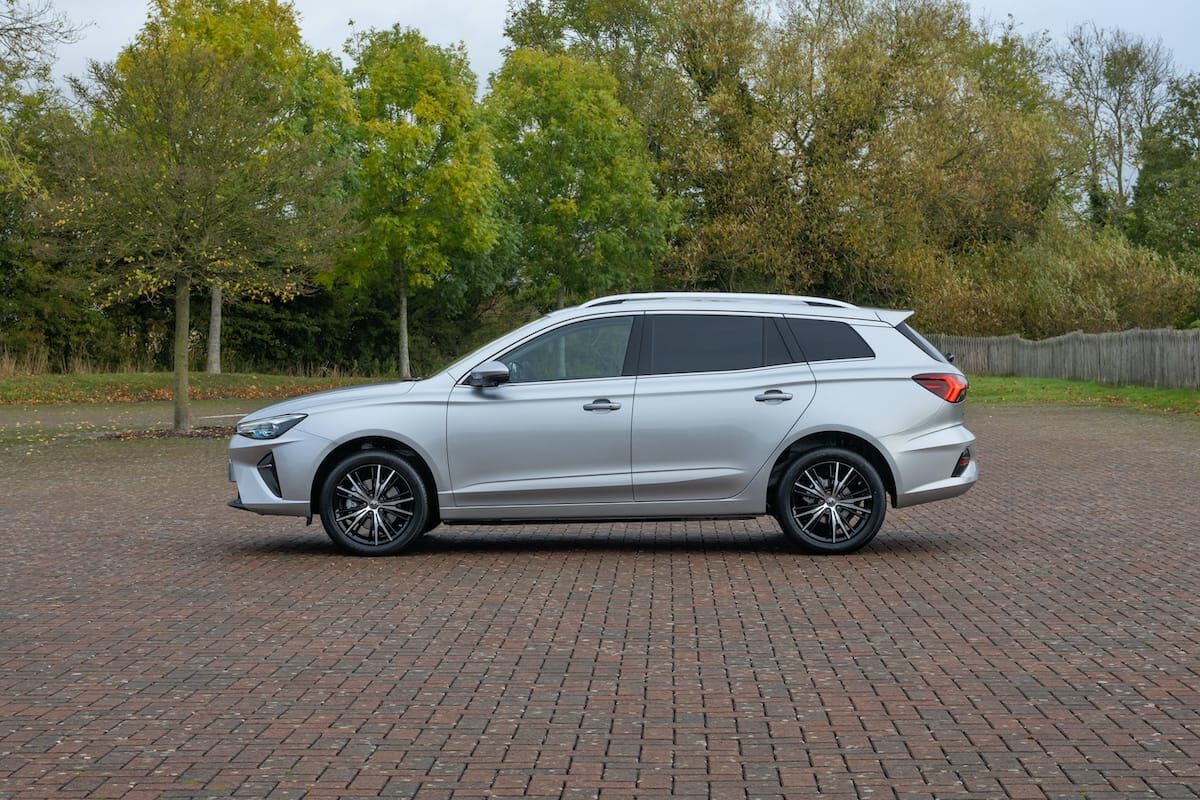
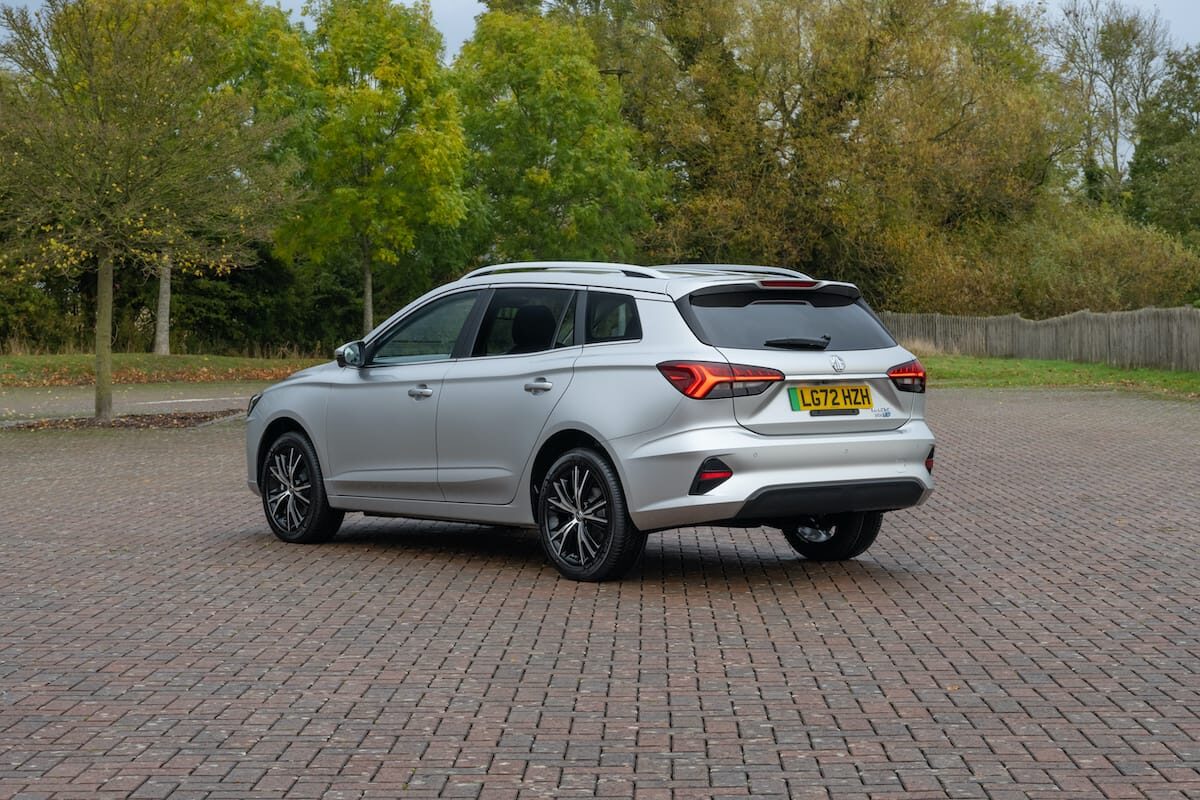
This is the facelifted MG 5 (styled as MG5 by its maker), updated in 2022 with a dramatic new look over familiar underpinnings.
As of April 2023, it’s still the only electric estate model on sale in the UK (apart from the Porsche Taycan Sport Turismo, which is about £100K dearer) – and the second-best-selling estate in the country (behind the Toyota Corolla, which is very similar in size).
It’s officially called ‘the MG5 EV Long Range’, but currently all versions of the MG 5 are Long Range, so that’s a fairly pointless name tag unless the company decides to bring out a ‘Short Range’ version. Incidentally, MG defines ‘long range’ as 250 miles, according to official lab tests, which is not really that long by 2023 standards.
It’s unusual for a car to get a major visual facelift so soon into its production life – the MG 5 was only launched in 2020, so a major update after only two years is unexpected.
What is it?
The MG 5 is a mid-sized estate, similar in size to a Toyota Corolla Touring Sports or Volkswagen Golf estate. However, unlike those two – or anything else of a similar size and shape – the MG is purely electric.
The MG 5 is powered by a single electric motor, rated at 115kW (156hp). Like all EVs, it’s only available as an automatic. The motor and battery are carried over from the previous model, so performance and range are unchanged as result of the facelift.
There are two trim levels available – SE and Trophy – with prices starting at £31k on-road. That’s a bit dearer than the old model, but it’s still it one of the cheapest new electric vehicles on sale.
Who is this car aimed at?
The MG 5 appeals to both consumer and fleet buyers, and for very similar reasons – it’s roomy, practical and (relatively) cheap.
On the fleet side, the 5 is fast becoming a replacement for the Toyota Prius. You may have already seen plenty of them popping up in London and other city centres, serving as minicabs and delivery vehicles.
For retail customers, it’s one of the cheapest possible ways to get into a brand new, family-sized electric car. That alone makes it attractive to plenty of people.
Who won’t like it?
The reality is that the MG badge will be looked down on by many buyers, who won’t even consider it because of its ‘budget’ connotations.
To be fair, if you’re expecting fit and finish to rival an Audi interior then you’re going to be disappointed. But then you’re not paying anywhere near Audi prices…
First impressions
Although a relatively simple facelift, the effect of the restyling work done on the MG 5 is dramatic. The original version was quite conservative in appearance, while the facelift applied to the front end of the 5 has imbued it with a far more radical look.
Whether you like its new style is up to you, but it’s not exactly elegant. However, it certainly makes the MG 5 look about a decade newer than its rather dowdy-looking predecessor, rather than just the two years.
Step inside and initial impressions of the dashboard layout are very positive. The digital displays are clear and easy to read, without the over-designed graphics of many cars.
There are a few physical buttons, but most functions are controlled through the high-mounted touchscreen. The steering wheel has loads of buttons, but they’re laid out in a logical way. It looks and feels quite like a last-generation Volkswagen (which is actually a compliment, as the new Volkswagen steering wheels are much worse!).
The dashboard is covered in a cloth material, which certainly looks better than bare plastic although you do wonder how well it will last over time.
We like: Most dashboard controls and functions are well laid out We don’t like: Styling is more radical than original version, but very much an acquired taste
What do you get for your money?
Once we’ve got the first impressions out of the way, it’s time to look a bit harder at exactly what you’re getting for your money with the MG 5 EV Long Range (to give it its full and glorious title).
This is an area where MG always excels, because the company keeps things simple while giving you plenty of kit for your cash. The MG 5 is no different.
There’s only one powertrain option – the 115kW (156hp) electric motor with a 61kWh battery that’s officially good for 250 miles – your results will certainly vary, but it should easily be 200+ miles for most drivers.
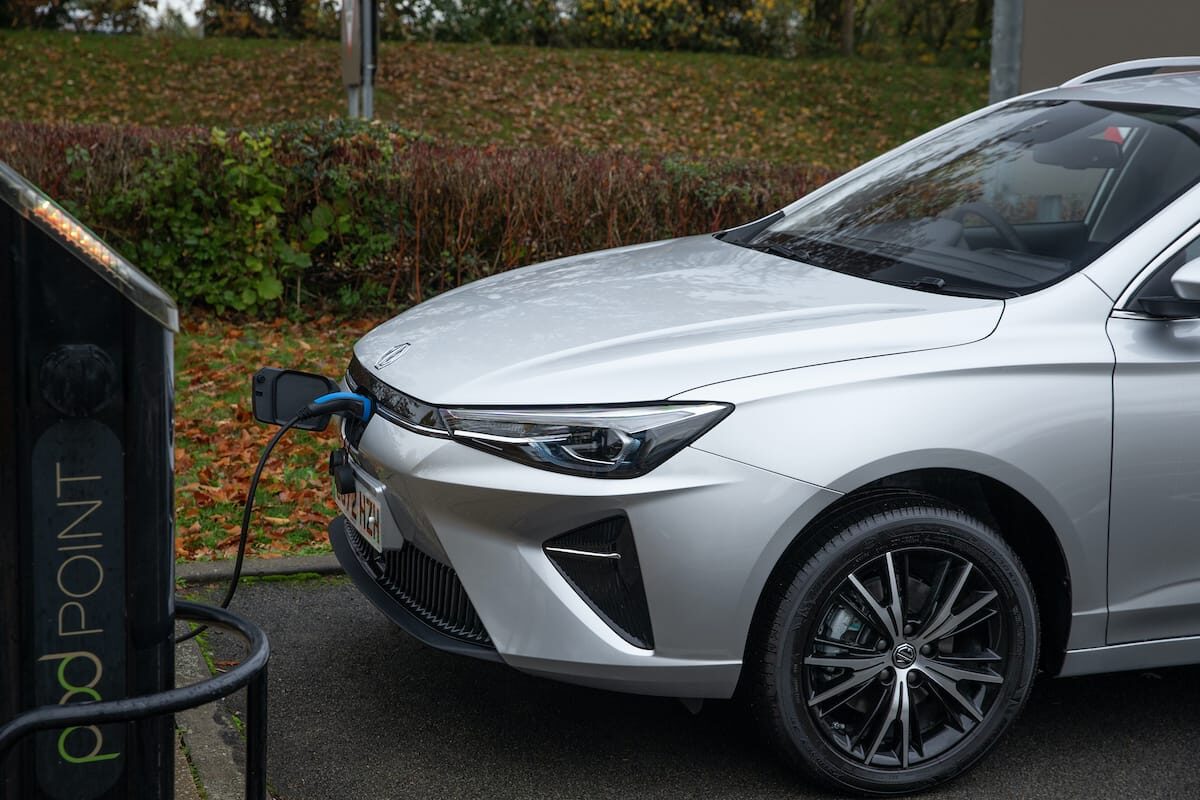
Charging time is about ten hours (from 10% to 100%) on a 7kW home wallbox, while if you have access to a 150kW public rapid charger, you can go from 10% to 80% charge in as little as 35 minutes. At a 50kW public fast charger (which is more common), this would take just over an hour.
There are only two trim levels, SE and Trophy. SE starts at £31K and Trophy at £33.5K. The only additional cost options are colour and… that’s it. Black, blue, silver or grey paint costs £545, while red costs £695. White is the only no-cost colour.
These prices are about the same as the Toyota Corolla estate, which is similar in size but powered by petrol with a bit of electricity, so the running costs of the fully electric MG 5 should be far less. Alternatively, you can get a Ford Focus estate or Volkswagen Golf estate for a bit less money (starting a bit under £30K), but they’re petrol only with no electric contribution at all.
Both models come standard with a full suite of active safety systems, like adaptive cruise control, lane-keeping assist and auto high-beam headlights. They also both get the ten-inch touchscreen and Apple CarPlay/Android Auto functionality. Trophy adds niceties such as heated seats, 360-degree parking cameras, automatic wipers and climate control.
With the original model, MG claims that about 75% of customers picked the Trophy version. Accordingly, it expects similar results with this updated version.
Naturally, your local dealer will still try to up-sell you all sorts of add-ons like floor mats, tow bars and other stuff, but actually choosing which model you want is pretty simple compared to most car manufacturers.
We like: Simple trim levels with plenty of standard kit We don’t like: ‘Long Range’ isn’t really that long, with no genuinely long-range model available
What’s the MG 5 like inside?
The press cars were all Trophy spec, but really there’s not a massive difference in how the base SE model looks or feels inside. So the following applies to whichever version of the MG 5 you choose.
The front seats are comfortable enough, being fairly flat but supportive enough for longer-legged drivers. The seating position also offers plenty of adjustment for both the seat and steering wheel, so drivers of any size and shape should be able to get comfy. Visibility is pretty much average for this size of car – not great but no worse than most others.
The centre console between the front seats is quite high, which makes things feel quite snug. EVs don’t really need this, as there’s no gearbox underneath the console that forces it to sit so high, but it does offer an open tray underneath which is quite handy.
As with almost every new car on sale today, most functions are controlled by the central touchscreen. Car manufacturers keep trying to tell us that this is because it’s what the people want, but it’s also true that a touchscreen is a lot cheaper to design and build than a load of buttons…
The touchscreen graphics are clear and easy to read, but there is a terrible lag between pressing the screen and getting a response. Inevitably, you’ll think nothing has happened and keep stabbing at the screen, while it finally reacts to your first press and then your second, then third… Volume is at least an up/down button, which is better than a touchscreen but not as good as a simple knob for adjustment on the move.
The stereo is perfectly functional, although the sound is pretty tinny. Obviously, there’s no option to upgrade to a more powerful sound system like you’d get in many other brands so if that’s a priority then you might want to look elsewhere. However, the integration with Apple CarPlay and Android Auto is seamless – at least as far as we could tell – so everything works well enough.
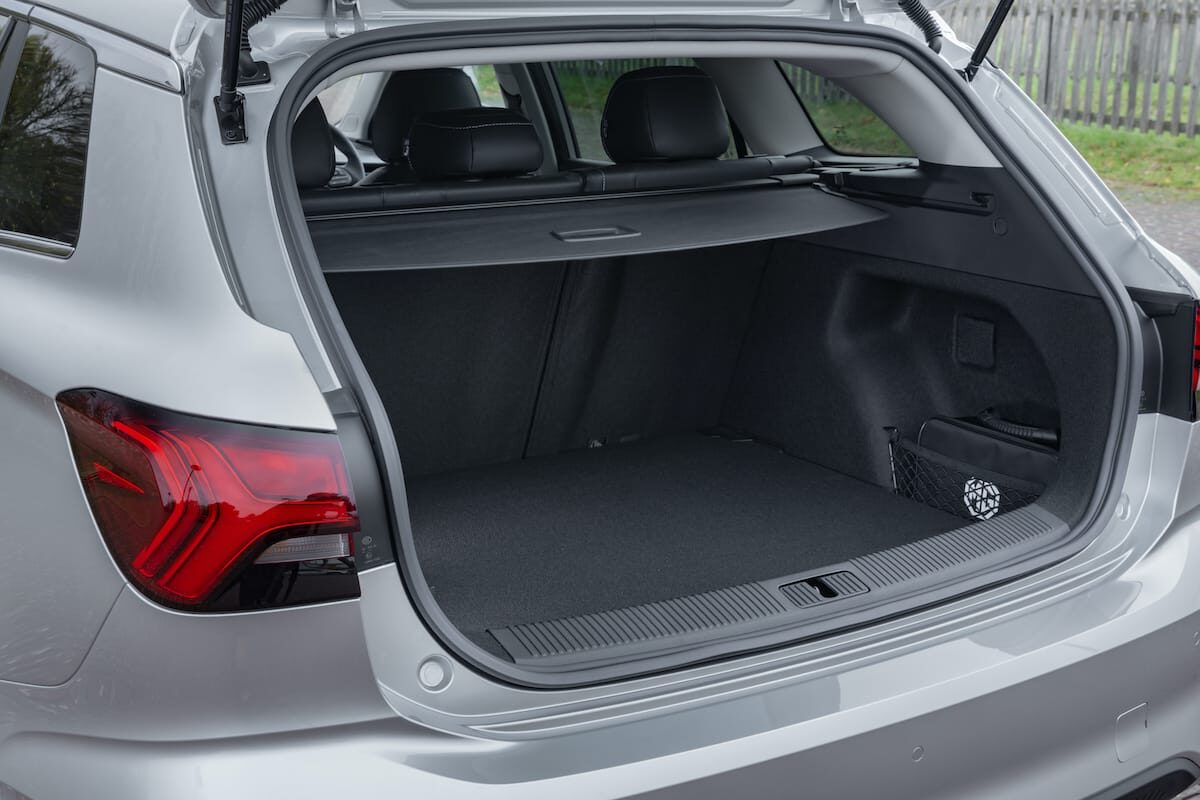
The back seat is decent enough, and comparable with other mid-sized cars. Likewise, the boot space is pretty good for most family needs and pretty much in line with what you’d get in a non-electric rival.
The standard factory navigation system seemed to be quite decent on our drive, although most owners will probably prefer to use Apple Maps or Google Maps instead. The reversing and 360-degree camera systems are pretty basic, with no guide lines to help you estimate how close you are to obstacles.
We like: Everything works pretty much exactly as expected We don’t like: Tinny stereo, basic reversing camera
What’s under the bonnet?
This is pretty straightforward. The MG 5 has a single electric motor, which produces 115kW (156hp) and drives the front wheels through a single-speed automatic transmission. In other words, put your foot down and go.
The battery is a 61kWh unit, which equates to an official driving range of 250 miles. Take this as a best-case scenario, as in cold weather or under heavy load this will reduce towards 200 miles.
Given that MG refers to this as the ‘Long Range’ model, it’s possible that it will (re)introduce a ‘short range’ model at some point in the future at a cheaper price point. 250 miles isn’t exactly ‘long range’ these days, so bear that in mind.
What’s the MG 5 like to drive?
If you’re looking for tyre-smoking excitement, you’re looking at the wrong car (and probably the wrong website). However, if you’re looking for perfectly competent A-to-B transport, then the MG 5 delivers comfortably.
Being an electric car, there’s not a lot of fuss or bother. Electric motors are inherently quiet and smooth compared to petrol or diesel engines, so at low speeds it’s all quite serene. However, once you pick up the pace to 50+ mph, you’ll hear quite a lot of tyre noise.
Acceleration is quite punchy, which is again a highlight of EV driving. This is all delivered in a smooth and fuss-free fashion.
Like most EVs, there are options for braking and coasting so you can choose to recover some wasted electricity to recharge the battery every time you slow down. The MG 5 offers three settings for this: normal coasting (as you’d get on any normal petrol car), which doesn’t recover much energy; mid-level braking, so when you lift off the accelerator, the car starts to slow down quite noticeably; and high-level braking, so when you lift off the accelerator it’s like applying the brake pedal.
Level 1 is most familiar if you’re new to an EV, particularly if you regularly lift off and coast in urban driving. Level 2 is a pretty good compromise for most people, while Level 3 feels pretty severe (although better than some other car brands – the Nissan one is pretty awful, for example).
We like: Smooth and quiet for urban driving We don’t like: Road noise is pretty loud at higher speeds
How safe is it?
In short, we don’t know. As of April 2023, the MG 5 has not been assessed by Euro NCAP, the world’s premier road safety testing organisation.
The level of standard equipment for accident avoidance is quite good, including adaptive cruise control, lane-keeping assistance and so on. But until these systems, plus the airbags and crash structures have been properly tested, we can’t give you any definitive guidance.
[Plenty of car magazines and websites will look at a spec sheet and tell you that this car is great for safety, but there have been plenty of situations in the past where cars with good on-paper performance have performed poorly when actually put through rigorous testing.]
MG’s current safety record, according to Euro NCAP, is mixed. The MG 4 EV hatchback and MG HS SUV both have five-star scores, but the MG 3 supermini (an older car) only scored three stars. Bizarrely, the MG ZS small petrol SUV only gets three stars, but the electric ZS gets five stars. As such, we really don’t want to give you any guidance one way or the other.
If/when Euro NCAP assesses the MG 5, we’ll update our Expert Rating report accordingly.
Summary
In these financially straitened times, is the MG 5 all the EV you need?
It certainly makes a good case for itself. With a starting price of £31K, this mid-size estate is about the same price as an electric Vauxhall Corsa supermini (or a highly-specced Fiat 500e… city car).
That pricing is also about the same as the Toyota Corolla estate (petrol-electric hybrid) and not a lot more than the Ford Focus or Volkswagen Golf estates (petrol only), so a fully electric estate for £31K is significant.
And for run-of-the-mill family driving, there’s plenty to like about the MG 5. It’s quiet and smooth, with plenty of standard kit. Urban driving will be this car’s forte, which is the same for most EVs, as you can recover wasted energy to the battery every time you slow down.
On a motorway, the battery will drain much faster and the road noise is annoyingly high, so it’s not as good for long journeys (and that’s without considering the joys of public while-you-wait charging in the UK).
The only caveat at this point in time is that the MG 5 doesn’t have a safety rating from Euro NCAP. It has all the usual kit you’d want to see in a new car, but can’t verify how it all works in an emergency situation.
Model tested: MG 5 EV Long Range Trophy Price (as tested): £34,040 (including metallic paint) Engine: single electric motor Gearbox: Single-speed automatic, front-wheel drive
Power: 115 kW (156 hp) Torque: 280 Nm front Top speed: 115 mph 0-62 mph: 7.3 seconds
Battery range: 250 miles CO2 emissions: 0 g/km Euro NCAP safety rating:Not yet rated (as of April 2023) TCE Expert Rating:63% (as of January 2023)
Many of us find parking a bit tricky, especially parallel parking, and with today’s cars getting bigger and bulkier a bit of help to slot the car into the right space can be welcome.
According to Thatcham Research, in the UK nearly a quarter of all insurance claims are related to parking or low speed manoeuvres.
How park assist works
It’s 20 years since Toyota introduced the first mass-market parking assistance. All current systems enable you to set the car up to reverse park into a parallel space or back into a marked bay at a right angle, with varying amounts of input from the driver.
They use much of the technology which comes with standard-fit advanced driver assistance systems, namely the bumper ultrasonic sensors (which emit sound waves which bounce off of objects around the car), front and rear view cameras and the radar sensors also used for adaptive cruise control and blind spot assist. Some systems also have ultrasonic sensors on the sides of the vehicle.
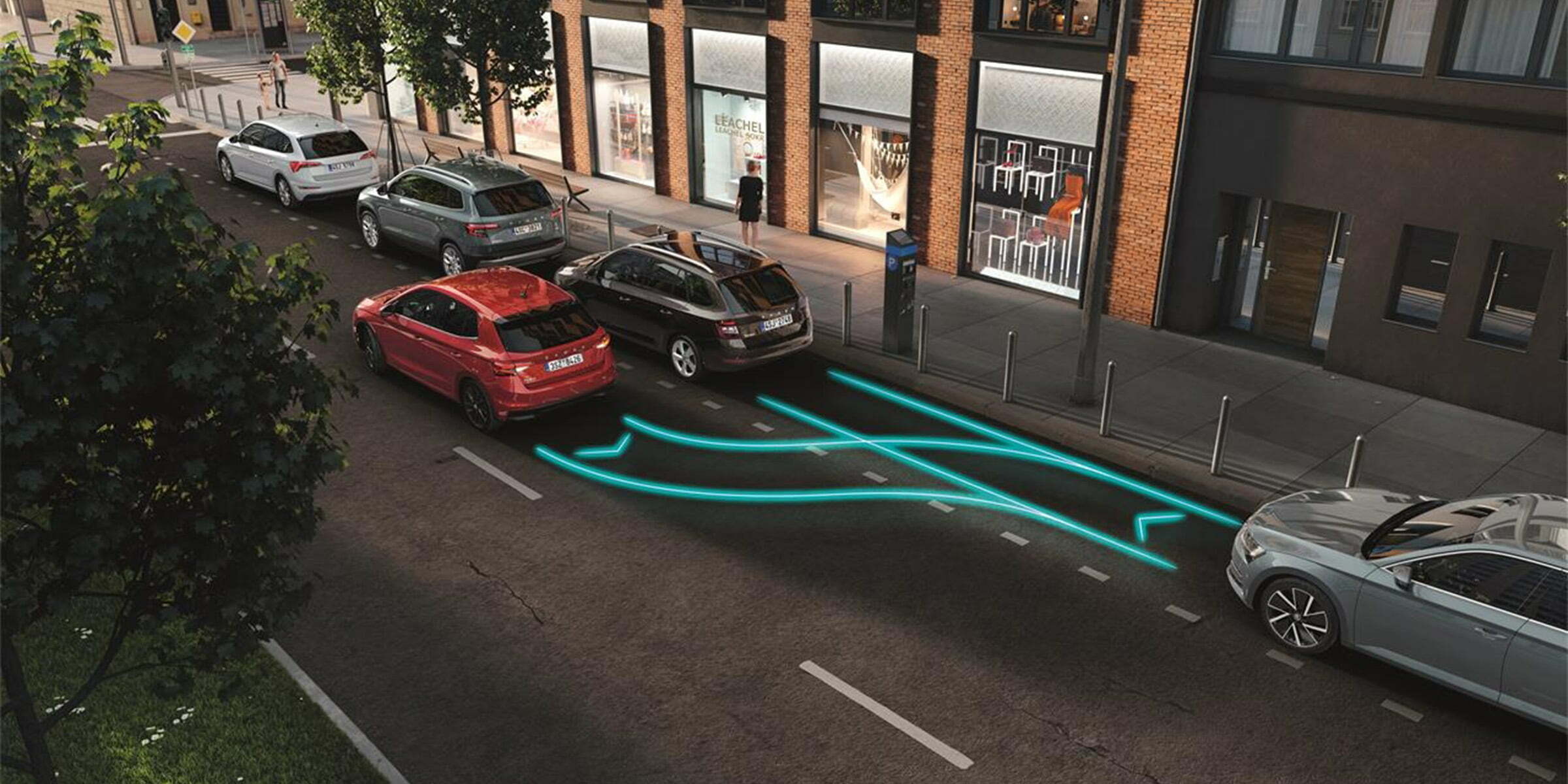
To take parallel parking in a street; the driver presses a button while the car is moving along a line of parked cars at low speed (typically less than 25mph) the ultrasonic sensors at the corners of the car scan any gaps either side of the road and identify which would be the right size to back into.
The system know the length of the vehicle so, for example with the current Volkswagen Polo the space must be at least as long as the car plus 80cm with at least 25cm in front and behind the vehicle for driving out of the space. Parking bays must have at least 35cm clearance on both sides.
The allowance is generous, so it won’t try and squeeze you into spaces you might previously have unwisely tried. If you tell the system to go ahead (by putting the indicator on), depending on the car will engage reverse or tell you to do so (manual or automatic gearboxes).
The system then takes over the steering and may tell you to accelerate, brake or change between reverse and forward (or reverse and drive in an automatic/EV). Some systems are fully automated to complete the manoeuvre and it can be quite a weird feeling talking your feet and hands off the controls. Some will help you exit a tricky parking space.
How clever does park assist get?
Carmakers all use different names but all have the word park in them. For example Nissan has ‘Intelligent Park Assist’, Tesla chooses AutoPark and Renault goes for ‘EasyPark Assist’. Like all car technologies, park assist is evolving all the time and some cars will remember how to get into particular parking spots or park themselves without you in them.
Volkswagen’s Park Assist Plus with memory function is optional on all of the electric ID models. It can ‘learn’ up to five parking manoeuvres. As soon as the ID drives slower than 25mph the memory function recalls all driving manoeuvres over the last 50 metres.
The driver completes the manoeuvre, saves it (up to five can be stored) and when the vehicle returns to the same spot it suggests a parking manoeuvre and the driver can let it take over going into reverse, steering, braking and accelerating.
Kia’s advanced Remote Smart Park Assist (RSPA) can move the car out of a tight space or park it without you in it. RSPA is fitted as standard on the (very large) Kia Sorrento SUV and the top electric EV6 GT-Line S. All occupants, including the driver, can get out of the vehicle and instruct it to complete the final stage of the parking manoeuvre itself.
Alternatively, it can be used to move the car out of a space if it’s impossible to open the doors conveniently or safely. If the vehicle detects a potential collision or hazard, such as a moving vehicle, cyclist or pedestrian, it automatically applies the brakes until its path is clear.
You’d expect the high-tech Tesla to have something more than parking assistance and incredibly, Smart Summon allows you to stand away from your parked Tesla and have it move out of a parking space up to 12 metres away. On the internet you’ll find several videos of very excited people being followed around empty American car parks by their Teslas like a puppy (sometimes a naughty puppy when they miss the mark).
However, in the UK the system is limited so – according to owner forums – the owner needs to be standing less than six metres from the car. Some owners use it to move the car when washing it.
The future could see cars in car parks driving themselves away to park. Late last year Bosch and Mercedes-Benz had government approval for entirely driverless parking, where the driver leaves the car at the entrance to a parking garage and the car finds its pre-booked space and parks itself – working with sensors in the garage – while they walk away.
This makes it the world’s first highly automated driverless parking function and available soon for certain S-Class and EQS variants equipped with Intelligent Park Pilot, initially at Stuttgart Airport. When the driver returns, the car can be summoned to a pick-up area. This year, as prelude to a worldwide launch, Bosch and parking firm APCOA are installing the technology in 15 further parking garages in Germany.
How much does park assist cost to add?
If you’re buying a new car, you usually have to specify park assist systems as an option with your order (it can’t be added later) although BMW allows owners to ‘rent’ extra features after the car has been ordered by over-the-air software updates called BMW Connected Drive Upgrades. Parking Assistant professional can be rented for a year for £250 or £450 for an unlimited time.
Looking at the campervan-style (and £60,000-plus) electric Volkswagen ID Buzz, as of April 2023 the standard Park Assist Plus function (without memory) is an option included in part of the Assistance Plus which includes front and rear cameras and adaptive cruise control for £1,425 added to the ID Buzz Life. On the Tesla Model 3 Autopark and Summon comes within the £3,400 Enhanced Autopilot package
On relatively cheaper cars park assist systems are less than £1,000 ordered as an option from new. The Ford Puma Titanium (from £24,950) provides Active Park Assist with the £500 Parking Pack, which includes Active Park Assist, front parking sensors a rear view camera. On Volkswagen’s smallest car to have park assist, the Polo, Park Assist (the basic system) is £525 as part of the Drivers assistance pack.
Which used cars have park assist?
Park assist systems can be found on used cars, but it takes a bit of digging. When using search engines on the approved used car websites tick ‘parking aids’ if it’s available, or park assist as a keyword in search engines such as Autotrader’s.
Volkswagen’s Park Assist has been available on the Golf since the sixth generation introduced in 2008, but it’s not a common option. The latest model of BMW 3-Series (from 2019) had parking assist fitted as standard from launch, but for a time during the semiconductor shortage this was dropped, as many other car makers did, to speed up delivery. It’s not a searchable option in the BMW used approved sub-menu, you have to look car-by-car.
Slightly smaller, if you’re looking for a used Mercedes-Benz A-Class (from 2018) the Executive equipment package added Active Parking Assist with Parktronic, as did the Premium and Premium Plus packs. It’s a bit fiddly to confirm though as you have to select ‘package’ in a drop down and then on the car listing ‘safety features’.
Are there any downsides to park assist?
As with all driver assistance systems, you have to be ready to step in. No park assist system will be able to allow for every eventuality so you need to be watching the rear view camera/wing mirrors to be ready to brake if a person, animal or object suddenly comes into the path the car is following.
By design, these systems work quite slowly to allow time to deal with any problems which arise. Some can seem agonisingly slow compared with how fast you could do it yourself, even with several attempts. This is not what you want if you are trying to parallel park in a city street without causing a queue of grumpy drivers.
They do have limitations. Some won’t work on a slope and parallel parking needs a vehicle in front to get its bearings from. A distinct kerb or edge must be visible – some systems may not correctly identify the parking space if the kerb is not distinct, such as the edge of a lawn or a dirt path.
Depending on the angle at which you’ve arrived to back into a perpendicular (right-angle) parking bay the car may need several moves to align itself and the front of the car might swing out in the direction of oncoming traffic so the driver should be prepared to apply the brake.
Dirty cameras and sensors, as well as faded lane markings, can affect performance. If a sensor is damaged or covered in mud the system should flash up a warning message. They can also need re-calibrating during the life of the car, which is done at the dealership.
There’s plenty of confusing acronyms when it comes to car ownership, so let’s take a look at what SORN means.
All cars in the UK have to be registered with the DVLA (Driver Vehicle and Licencing Agency) throughout their entire lives. This means you have to pay vehicle excise duty (VED, but almost always referred to as road tax) on your car each year, even if you don’t plan to drive the car on public roads. If you don’t pay, you can be fined for having an untaxed car.
However, if you’re not going to be driving your car, the DVLA has a specific declaration called SORN that you can use to avoid having pay road tax. In this article, we’ll explore what it all means and how it all works.
SORN is short for Statutory Off Road Notification. This is a way of formally telling the Driver and Vehicle Licensing Agency (DVLA) that the vehicle is off the road. Once a vehicle has been declared as SORN, it can no longer be driven on public roads – or even be parked on a public road. It must be kept completely off any public roads at all times.
What does it mean to SORN my car?
SORNing a vehicle is the only way to stop paying road tax if it’s not being driven. Simply not driving the car isn’t an excuse to avoid road tax and you can be fined for having an untaxed vehicle. The only way to avoid paying road tax is to declare the vehicle as SORN.
How do I SORN my car?
If you are the registered keeper or owner of a vehicle you can apply for a SORN via the DVLA website, over the phone or in the post. A V890 form is required to apply by post and if you are not the registered keeper yet, you also have to apply by post.
The vehicle’s V5C log book will have the relevant section to apply for a SORN, if you do not have this, a new registration certificate needs to be obtained first by filling out a V62. A replacement V5C costs £25, however applying for a SORN is free.
How long does SORN last for?
A SORN lasts indefinitely until the vehicle is subsequently re-registered, or sold, scrapped or exported to another country. In the process of applying for a SORN you can decide when it is effective from. To start a SORN on the first day of the next month you need the 16-digit number on the vehicle tax reminder letter, a V11 document.
This means any remaining full months of road tax that have been paid will be refunded. The V11 also allows you to apply for a SORN up to two months in advance. Alternatively, if the vehicle is unroadworthy it can be SORN with immediate effect using the 11-digit number on the V5C.
There’s no need to reapply for a SORN once the DVLA has been informed, as long as you remain the registered keeper.
Is my car eligible to be SORN?
Vehicles kept in a garage, on a driveway or on private property can be SORN. A car is not eligible to be SORN if it will be parked on a public road, it must be on private land. When a vehicle is uninsured for any period of time and cannot be driven, it can be SORN to recoup road tax fees.
Before a vehicle is scrapped, if you plan to salvage parts from the car it must be SORN. Any vehicles purchased to be kept off the road can be SORN as long as they will not be driven on public roads at any time.
Even vehicles that are exempt from road tax must be declared SORN. This includes electric vehicles and cars in the historic tax band the DVLA still needs to be notified.
Does a SORN cancel my insurance?
After you have applied for a SORN the vehicle does not need to be insured when the SORN comes into effect. But this does not mean your insurance will be automatically cancelled. You need to contact your insurer to inform them the car no longer needs insurance. There may be cancellation fees for terminating an insurance policy early.
Is it okay to buy a SORN car?
Keep in mind that SORN vehicles cannot be driven on public roads for a test drive or to move them to a new location. The only circumstances under which it’s acceptable to drive a SORN vehicle on the road is to a pre-booked MOT test. Otherwise, drivers could face a fine of up to £2500.
Just like road tax, SORNs are non-transferable. So if you buy a vehicle that was SORN, as the new owner you have to register the vehicle as SORN or re-tax and re-insure it to drive it on the road.
How do I get my car back on the road after SORN?
Getting a SORN vehicle back on the road is a fairly simple process. The vehicle must be taxed again using the 11-digit number on the V5C. It also has to be insured and have a valid MOT. Check the MOT to see if it expired while the vehicle was off the road. If so, it can only be driven to an MOT test centre and pass its MOT before it’s eligible to be put back on the road.
Following the arrival of the high-performance XM SUV this year, BMW’s M division has given us a first look at the range-topping XM ‘Label Red’ trim, which offers even more power and red accents inside and out.
This heavy-set SUV offers 94hp more than the standard XM, making use of the same twin-turbocharged V8 petrol engine with an electric boost to offer a total output of 748hp, making it more powerful than rivals like the new Ferrari Purosangue and Aston Martin DBX 707. This means that the ‘Label Red’ can complete a 0-62mph sprint in a reported 3.8 seconds.
Like the standard model, the ‘Label Red’ has a speed limit of 155mph, but customers who opt for the additional ‘M Driver’s Package’ will see the top speed limit increased to 168mph.
The SUV’s exterior is essentially the same as the cheaper XM, featuring two large kidney grills flanked by the same narrow headlight and foglight designs as seen on the new 7 Series saloon. However, these grills are outlined by metallic red accents on the ‘Label Red’, as are the window surrounds, 22-inch alloy wheels and rear diffuser.
As for the body colour, 50 different exterior colour finishes will be available at launch. Inside, the ‘Label Red’ gets a two-tone interior colour scheme with red featuring on the upper portion of the upholstery and the leather stitching, as well as the dashboard air vents and steering wheel.
‘Label Red’ production begins in August this year – BMW has not yet announced exactly when the model will become available to purchase. Only 500 will be manufactured for sale worldwide, with prices beginning at just under £171k – around £23k more than the entry-level XM.
Despite its seriously powerful engine, the XM has been poorly received by the British motoring media, described as the weakest driving experience of the current M range. Reviewers conclude that the SUV is not as practical, comfortable or as quick as its rivals, leading to a dismal Expert Rating of 47%.
Several Audi models are now available with a revised three trim line-up that consists of the entry-level ‘Sport’, mid-range ‘S Line’ and top-spec ‘Black Edition’ grades.
This trim restructure comes as Audi aims to reduce the model derivatives across its range by 45%, simplifying model names to make the buying process less confusing for customers. This change currently only affects combustion-powered Audi models, with no change to the brand’s electric line-up.
The German manufacturer has essentially decided to focus on its most popular trims, dropping ‘SE’, ‘Technik’ and ‘First Edition’ versions previously on sale.
The three trim designations listed above now apply to all ‘A’ models, excluding the A6 and A7 saloons, and also apply to the ‘Q’ SUV range, excluding the large Q7 and Q8 SUVs that now come with a choice of ‘S line’, ‘Black Edition’ and ‘Vorsprung’ variants.
Sportier ‘S’ models are now available with two different trim specs, either the entry-level ‘Black Edition’ or range-topping ‘Vorsprung’ guise.
Regardless of the trim chosen, the updated Audi range is now available with a ‘Technology Pack’ for an additional fee that includes an upgraded sound system, wireless smartphone charging, heated front seats and Audi’s parking assistance system. The price for this pack ranges from just over £1k for the A1, to £3k for the Q7, Q8 and A8.
Audi also now offers ‘Technology Pack Pro’ for prices between £3k to just under £9k, which adds a panoramic sunroof, a head-up display, electronically-adjusted seats and more driver assistance software.
The small SUV and crossover segment is full of cars that are hatchbacks trying to be SUVs and SUVs trying to be hatchbacks. But the Puma breaks the mould.
It feels like the modern solution to the small family car, it’s got all the best bits of a hatchback with the practicality of a much bigger car.
Entry level prices are pretty reasonable starting from £25,000 and there’s plenty of trim options to choose from. For those looking for a sportier option there’s the Puma ST if a souped-up hot hatch is more appealing.
Unfortunately, the Puma missed out on the top five star rating when Euro NCAP crash tested the car in 2022, but it was still awarded a respectable four stars.
It’s part of a relatively new vehicle type that sits higher on the road than a standard hatchback and works well as a family car. The Puma name might sound familiar as it belonged to a Ford coupé model in the late ‘90s, but the name has been revived with a completely different look.
Given Fiesta production will cease this year, the Puma has taken the lead as Ford’s best-selling vehicle. All trim levels come well equipped and it’s surprisingly fun to drive. Whether it’s a family runaround, or a daily commuter, it’ll fit nicely into most people’s lives.
How does it look?
The Puma is essentially a jacked-up hatchback based on the Fiesta. The ride height is higher than its hatchback siblings but not quite high enough to qualify for SUV status. Different trim levels add some more aggressive exterior styling like a large rear spoiler, chrome exhaust and privacy glass.
There’s also a number of different alloy wheel choices that look quite smart, especially with a bright paint choice. The grille fits with the new era of Ford design and gives it a modern feel alongside large front headlights.
What’s the spec like?
There’s four trim options to choose from: Titanium, ST-Line, ST-Line X and ST-Line Vignale. Entry-level Titanium comes with plenty of equipment, including: automatic headlights and wipers, rear parking sensors, lane keep assist, power-folded heated door mirrors and an eight-inch touchscreen.
ST-Line adds body coloured bumpers, rear spoiler, air conditioning, leather steering wheel and sports suspension. ST-Line X gets privacy glass, an upgraded audio system and a wireless charging pad. Top of the range ST-Line Vignale comes with front parking sensors, heated seats and steering wheel and keyless entry.
There’s also a good selection of optional extras that can be added to lower trim models. The ‘winter pack’ has front heated seats and a heated steering wheel. A ‘driver assistance pack with parking’ has a host of additional safety features such as blind spot monitoring, front parking sensors and rear view camera. For ease of access, a powered tailgate can be specified, which is especially handy in the rain.
What’s it like inside?
Inside, the Puma feels very familiar. Its hatchback roots make it easy to get acquainted with and the dash isn’t crowded with any unnecessary buttons. The touchscreen is simple to use and the internal navigation system integrates well with the driver display to show directions even when the main screen is showing something else.
Tall passengers in the back may find rear headroom a bit restrictive – especially if the optional panoramic sunroof is fitted – but for short journeys, three adults should be fine. The rear doors allow good access to the back seats, and they fold flat to carry larger items.
Boot space is the Puma’s biggest surprise. The parcel shelf is attached to the boot lid so it moves up to give easy access to the boot opening. The main boot compartment is a decent size but, for even more space, the boot floor lifts to reveal additional storage. It can be used as a separate compartment or clipped open to expand the boot fully. There’s also a drainage plug at the bottom, so if muddy boots are thrown in the back, it can be cleaned out easily.
What’s under the bonnet?
There are just two petrol engines available in the Puma, a 1.0-litre EcoBoost with 125hp or a 1.0-litre EcoBoost with 155hp. Both have mild hybrid assistance, are available with either a six-speed manual or seven-speed automatic gearbox.
As mild hybrids they offer good fuel economy (at least in the lab), with combined efficiency being around 50mpg. For motorway driving with the 125hp engine, we consistently achieved 59mpg.
What’s it like to drive?
It’s a delight to drive a vehicle that doesn’t feel like driving dynamics have been sacrificed for practicality. In the example we drove, the sports suspension meant there was minimal body roll despite the higher ride height. It feels upright around corners and doesn’t throw you from side to side.
The six-speed manual gearbox is smooth and easy to get used to. There’s a start-stop engine function that cuts the engine when the vehicle stops for any length of time. In other vehicles, these systems can sometimes have a delay when it’s time to move away again but the Puma’s transition is pleasingly unintrusive.
Visibility is a little restricted, as the front pillars are quite large and the swooping roofline means the back window is relatively small. Large mirrors give a good view over the back of the car and there’s no obstruction to check blind spots through the rear side windows.
For those who enjoy driving, the Puma is the perfect compromise between a practical family car that’s still engaging to drive. At motorway speeds road noise is louder than desired, so if this type of driving is a priority, there are quieter options, but it’s very stable at speed and the brakes feel strong.
Verdict
The Puma is an impressive crossover and it’s clear to see why it’s already been extremely successful in the UK. From the outside, the body style might not make sense for those unfamiliar with the crossover style, but in the driving seat it makes perfect sense.
It’s a modern, high-riding hatchback that’s practical but still good fun to drive. All trim levels are well equipped and starting prices are very reasonable. The four-star safety rating is the only aspect holding this model back. It scored lowest on safety assist features, but there are optional safety packages that can be added.
The Audi Q8 e-tron was a large electric SUV/crossover vehicle and Audi’s first production electric car. Originally named the ‘Audi e-tron’ when launched in early 2019, the SUV picked up the ‘Q8’ moniker after its 2022 facelift, despite not being related to the combustion-powered Audi Q8 range.
The original Audi e-tron arrived in the UK in early 2019, and the Q8 e-tron model was discontinued in the middle of 2024 – effectively replaced by the newer Q6 e-tron.
The Q8 e-tron was available in two similar body styles; a conventional SUV with a fairly vertical tailgate, and a slightly sleeker ‘coupé-SUV’ liftback version called the Q8 e-tron Sportback. The front half of the two cars is the same.
The Audi e-tron received mixed review scores from the UK automotive media. The lowest scores have tended to be from performance-oriented titles like Top Gear and Evo, while the highest scores have come from consumer titles like Honest John and Auto Express.
The e-tron and Q8 e-tron received particular praise for a smooth and quiet drivetrain, practicality and overall refinement. The main criticisms levelled at it argued that it was not as exciting to drive as a Jaguar I-Pace and the optional rear-view wing cameras were a bit gimmicky.
Facelifted in the late months of 2022, the updated model features several cosmetic tweaks and an improved battery range.
As of February 2026, the Audi e-tron holds a Used Car Expert Rating of C, with a score ot 60%.
More expensive than Jaguar I-Pace and Mercedes EQC
Battery range not as good as rivals
Expensive camera option to replace mirrors not worth it
Not as dramatic as a Tesla Model X
Key specifications
Body style: Large SUV and coupé-SUV Powertrain: electric motor, battery-powered Price: From £70,910 on-road
Launched: Winter 2018/19 Last updated: Winter 2022/23 Replaced: Autumn 2024
Image gallery
e-tron (2019 – 2022)
e-tron (2019 – 2022)
e-tron Sportback (2020 – 2022)
e-tron (2019 – 2022)
Q8 e-tron (2022 onwards)
Q8 e-tron (2022 onwards)
Q8 e-tron Sportback (2022 onwards)
Q8 e-tron (2022 onwards)
Q8 e-tron (2022 onwards)
Media reviews
Highlighted reviews and road tests from across the UK automotive media. Click any of the boxes to view.
The Car Expert
Model reviewed: Range overview (before Q8 facelift) “The Audi e-tron has completely wowed simply because it is so normal. For years, we’ve been testing electric cars with spaceship-like qualities, but Audi has taken the features of its fantastic SUV range and seamlessly added all-electric power.” Read review
Auto Express
Model reviewed: SQ8 e-tron Score: 8 / 10 “The revised Audi SQ8 e-tron – like its predecessor – can sometimes feel every bit of its chunky kerb weight. Yet the blend of power, performance, luxury and refinement it delivers remains hard to beat, especially now that the updated car gets the standard Q8 e-tron’s bigger battery and faster charging. It’s expensive, but as an effective all-rounder, there’s an awful lot to like.” Author: Richard Ingram Read review
Model reviewed: Range overview (before Q8 facelift) Score: 8 / 10 “The e-tron is Audi’s first all-electric production car, but it excels with a fantastic blend of performance, comfort and refinement.” Read review
Model reviewed: Sportback overview (before Q8 facelift) Score: 7 / 10 “Whether you opt for this sleeker Sportback over the already quiet and comfortable e-tron SUV will come down to personal taste. You will need to step up to the more expensive specs, but like-for-like, the premium this car commands isn’t as sizeable as you might imagine.” Read review
Model reviewed: e-tron S Sportback 2020 Score: 8 / 10 “This Audi e-tron S feels a cut above its main rivals when it comes to performance. The changes to the chassis, the integration of the triple-motor set-up and the way it handles for such a heavy car are all mighty impressive.” Read review
Model reviewed: e-tron 55 quattro 2019 Score: 9 / 10 “Audi has already established itself in the SUV market, but the e-tron moves the game on and is a convincing step into the next-generation.” Read review
Auto Trader
Model reviewed: Q8 e-tron range Score: 8 / 10 “Sharper looks, fresher tech and more range help the all-electric Audi Q8 e-tron push the brand’s electric ambitions.” Author: Dan Trent Read review
Model reviewed: Range overview (before Q8 facelift) Score: 7 / 10 “The e-tron is a well-made, comfortable SUV that offers a more premium experience than its rivals with a great interior and plenty of features available. If you want a really nicely made electric family car, the Audi e-tron is well worth checking out.” Read review
Business Car
Model reviewed: 55 quattro S Line Score: 8 / 10 “Audi’s e-tron gets an injection of style with a morsel of extra range. However, the Mercedes-Benz EQC and Jaguar I-Pace are both cheaper than the Audi, and they and the Tesla Model X all offer greater driving ranges.” Read review
Car
Model reviewed: Range overview (after Q8 facelift) Score: 8 / 10 “It now offers a competitive claimed range from its enormous battery packs, and the comfort and tech are up there with the best. It’s a lovely place to sit and drive around in, and now handles more sharply – something we’d welcome.” (Keith Adams) Read review
Model reviewed: SQ8 e-tron Score: 8 / 10 “The name change of Audi’s flagship electric SUV is a little confusing, but the car underneath is definitely worth it. We’d still question the wisdom behind those virtual mirrors and at 2.6 tonnes it is extremely heavy, but if you liked the Audi e-tron you’ll love the Audi Q8 e-tron.” (James Dennison) Read review
Model reviewed: Range overview (before Q8 facelift) Score: 8 / 10 “As you’d expect, the Audi e-tron’s engineering is polished. What you might not expect is how well it handles given its vast size and weight. The e-tron is also comfortable and spacious, and will hit the spot for wealthy Audi fans keen to embrace zero emissions. However, you’ll find that many rivals will go further between plugs while delivering a similarly seamless driving experience. “ Read review
Model reviewed: Sportback overview (before Q8 facelift) Score: 8 / 10 “While it’s not the most exciting option the Sportback does turn the heat up a little when compared to the e-tron SUV and at its heart remains a good car – with a class-leading interior and buttoned-down driving experience.” (Adam Binnie) Read review
Car Keys
Model reviewed: Sportback overview (before Q8 facelift) Score: 8 / 10 “The Audi e-tron Sportback remains hugely spacious but also impressively luxurious and brimmed with technology.” Read review
Model reviewed: Range overview (before Q8 facelift) Score: 9 / 10 “The amazing thing about the Audi e-tron is that it’s so normal, which is a surprisingly strange thing to be happy about. Audi has ensured that the e-tron feels as like its regular Q SUVs as possible, so the transition for drivers won’t be as difficult.” Read review
Carbuyer
Model reviewed: e-tron Sportback range (after Q8 facelift) Score: 8.2 / 10 “The striking Audi Q8 e-tron Sportback is an upmarket electric SUV, with a huge battery to match its prodigious long-distance refinement.” (Richard Ingram) Read review
Model reviewed: Range overview (after Q8 facelift) Score: 8 / 10 “Audi’s first production electric has been updated, with a new name, plus bigger batteries for more range.” Read review
Carwow
Model reviewed: Range overview (after Q8 facelift) “The Audi Q8 e-tron builds on the success of the e-tron, with the updated styling and battery options a huge bonus.” (Mat Watson) Read review
Model reviewed: Range overview (before Q8 facelift) Score: 8 / 10 “The Audi e-tron is a posh, practical, electric large SUV. It has an impressive turn of speed but not the range you’d expect from a traditional petrol or diesel SUV.” Read review
Company Car Today
Model reviewed: e-tron S (before Q8 facelift) “Incredibly rapid and more engaging and driveable than might be expected from a high-powered electric SUV.” Read review
Model reviewed: Sportback overview (before Q8 facelift) “The looks of the Audi e-tron Sportback may sway it over the regular e-tron, and a good range, pleasant driving experience and high-quality interior are strong draws for what is still an expensive up-front cost that will of course benefit from low BiK payments for the next few years.”
Model reviewed: 55 quattro 95 kWh 2019 Score: 8.5 / 10 “Another step for electric vehicle technology, the Audi e-tron takes what Audi is good at and turns it into an electric vehicle with decent range and performance.” Read review
Daily Mail
Model reviewed: Range overview (before Q8 facelift) “It really is a prime example of the sort of ‘Vorsprung durch Technik’ – or leap ahead through technology – for which the German car firm has become rightly renowned over many decades.” Read review
Daily Mirror
Model reviewed: 55 quattro SUV 2019 Score: 6 / 10 “Audi has achieved what it has set out to do with the e-tron and that’s to guide its customers into the world of electric motoring with a car that will be familiar to them – just as Mercedes has done with its conventional EQC electric SUV. Just leave those wacky camera ‘mirrors’ off.” Read review
Discover EV
Model reviewed: Sportback 55 S line Score: 7 / 10 “Unless you’re an ardent Audi fan, we’d go for the Tesla Model X, because what it lacks in eye-catching design and build quality it makes up for in range and an easy-to-use, quick and widespread charging network, otherwise we’d save over £12k and go for the Mercedes EQC.” Read review
Driving Electric
Model reviewed: Range overview (after Q8 facelift) Score: 8 / 10 “Audi’s flagship electric SUV has been updated with bigger batteries and more range, but it still puts comfort first.” (Richard Ingram) Read review
Electrifying.com
Model reviewed: Range overview (after Q8 facelift) Score: 7 / 10 “Audi’s revamp of its big electric SUV has given it the range it needs to stay competitive and it is a thoroughly nice car to drive. Just don’t expect great efficiency.” Read review
Model reviewed: Range overview (before Q8 facelift) Score: 6 / 10 “Audi played it safe with its first electric car. It’s simply another of its high quality, signature SUVs that happens to be powered by electricity. But its looking old and inefficient these days.” Read review
Evo
Model reviewed: Sportback overview (before Q8 facelift) Score: 7 / 10 “The Audi e-tron is the most convincing example yet of an electric SUV, undone by the usual range compromise.” Read review
Model reviewed: Range overview (before Q8 facelift) Score: 6 / 10 “It’s smooth and refined, but the Audi e-tron is very heavy and can’t match a Jaguar i-Pace for entertainment.” Read review
Fleetworld
Model reviewed: Sportback S line Score: 7 / 10 “Lower boot line doesn’t hinder practicality much, but elevates the e-tron into an expensive but smart electric cruiser.” Read review
Green Car Guide
Model reviewed: Sportback overview (before Q8 facelift) Score: 9 / 10 “The Audi e-tron Sportback 55 quattro is a capable and desirable premium product.” Read review
Model reviewed: Range overview (before Q8 facelift) Score: 10 / 10 “The Audi e-tron does lots of things very well. It delivers a very polished and enjoyable driving experience, with strong performance. The interior is bristling with all the very latest Audi technology. And all this comes in a spacious and practical SUV body style.” Read review
Heycar
Model reviewed: Range overview (after Q8 facelift) Score: 8 / 10 “Thanks to an impressive electric range, sharper looks and a mix of trim levels and power outputs to suit a wide audience, the new Audi Q8 e-tron is finally the competitive premium SUV its predecessor ought to have been.” Read review
Model reviewed: Range overview (before Q8 facelift) Score: 7 / 10 “The Audi e-tron might not be one of the best electric cars out there, but it is a very good choice for those looking for a big dose of luxury in their electric SUV, and is well worthy of your consideration.” Read review
Honest John
Model reviewed: Range overview (after Q8 facelift) Score: 8 / 10 “In many ways, the Audi Q8 e-tron is simply an Audi e-tron with a few minor tweaks. A longer electric range makes it a much more desirable choice, though, while the interior is one of the most impressive in its class.” Read review
Model reviewed: Range overview (before Q8 facelift) Score: 8 / 10 “The new Audi e-tron offers the space and comfort of one of the brand’s typical full-size models.” Read review
Model reviewed: e-tron 55 quattro 2019 “Putting concerns about cost and range aside, the e-tron is a no-less-than-brilliant entry into the electric vehicle market for Audi. It’s great to drive, if not quite as impressive as the Jaguar I-Pace, and it’s up to the firm’s usual high standards in every way. As a car to live with every day, there probably isn’t a better electric car on the market.” Read review
Motoring Research
Model reviewed: Q8 e-tron range Score: 7 / 10 “The Audi Q8 e-tron goes further between charges than it did, and that’s what matters most. It is also satisfying to drive, a refined thing to ride in, and looks good in a sector of decidedly mixed rivals. Among these, the Jaguar I-Pace is super but getting old, the Mercedes-Benz EQC is also aged and feels it, the Genesis Electrified GV70 awaits a dealer network, and the BMW iX’s superb cabin and drive are ruined by *that* exterior.” Author: Richard Aucock Read review
Model reviewed: Range overview (before Q8 facelift) Score: 8 / 10 “Audi’s first all-electric car is a classy SUV. It’s everything you’d expect from an Audi SUV, but without a traditional engine. It’s also rather heavy and expensive. Early adopters will love it.” Read review
Parkers
Model reviewed: Range overview (after Q8 facelift) Score: 7.8 / 10 “With this mid-life update and shift to the Q8 E-Tron name, Audi’s flagship electric car is far more competitive than it once was. We’ve always rated the E-Tron for its refinement and usability, but the rate of change is rapid in the electric car market.” (Keith Adams) Read review
Model reviewed: Sportback overview (before Q8 facelift) Score: 5.8 / 10 “Audi’s first electric model sets an interesting benchmark” Read review
The Sun
Model reviewed: Range overview “The Audi e-tron is another fast and planet-friendly family wagon but lack of wing mirrors let it down.” Read review
The Sunday Times
Model reviewed: Range overview (before Q8 facelift) Score: 8 / 10 “Very, very good… but not for everyone.” Read review
The Telegraph
Model reviewed: Q8 e-tron 55 S-Line Score: 8 / 10 “The myriad changes haven’t really effected much of a difference in the way the Audi Q8 e-tron feels; consequently, it can’t quite match the interior panache of the BMW iX or the handling of the Jaguar I-Pace. But they have done just enough to keep this car toward the top of its class, which it sits astride as a good all-rounder; not perfect, but still rather likeable nonetheless.” (Alex Robbins) Read review
Model reviewed: Sportback 55 quattro 2020 Score: 8 / 10 “While dynamically the Audi e-tron Sportback is no rival for the Jaguar i-Pace, it is in refinement and luxurious appointment. It’s expensive, but this is a lovely relaxing car in which to do long distances, although you’ll need to drink a lot of coffee while waiting for it to charge.” Read review
Model reviewed: e-tron 55 Quattro 2019 Score: 8 / 10 “Effortless cruising ability, quality feel and, yes, even its studied normality will make the Audi e-tron the ideal electric car for some. But it doesn’t come cheap, falls short on range – and you do wonder whether it couldn’t be just a little bit more exciting.” Read review
Top Gear
Model reviewed: Range overview (after Q8 facelift) Score: 8 / 10 “A very conventional Audi, built to persuade regular SUV buyers to make the EV jump.” Read review
Model reviewed: e-tron 55 quattro 2019 Score: 8 / 10 “A car designed to make precisely no statement about electrification at all.” Read review
Which EV?
Model reviewed: e-tron 50 quattro Score: 6.6 / 10 “Audi appears to have started with a Q series body, dropped in an early electric motor and hoped for the best. Great driver comfort features go some way to off-setting the lack of performance, range and fun factor, but when you’re shelling out upward of £60,000, you don’t want to spend all your time worrying about range and whether you’ll make it through the next high-speed corner comfortably.” (James Morris) Read review
Safety rating
Independent crash test and safety ratings from Euro NCAP
Independent economy and emissions ratings from Green NCAP
No eco rating
The Audi e-tron and Q8 e-tron were not assessed by Green NCAP.
The Green NCAP programme measures exhaust pollution (which is zero for an electric car) and energy efficiency. Electric cars are much more energy-efficient than combustion cars, so the Q8 e-tron would probably have scored very highly in Green NCAP testing if it had taken place.
Running cost rating
Monthly cost of ownership data provided exclusively for The Car Expert by Clear Vehicle Data
Battery range
Average
Score
Variation
Score
EV models
301 miles
B
Electrical efficiency
Average
Score
Variation
Score
EV models
2.9 m/KWh
E
Insurance group
Average
Score
Variation
Score
All models
50
F
Service and maintenance
Cost
Score
Year 1
£436
E
Year 2
£833
D
Year 3
£1,272
D
Year 4
£1,525
D
Year 5
£2,014
D
Overall
£6,080
D
Despite being an EV, the Audi Q8 e-tron isn’t a cheap car in the world to own and run. That’s according to whole-life cost data provided exclusively to The Car Expert by our technical partner, Clear Vehicle Data.
Electrical efficiency (the EV equivalent of miles per gallon for a petrol or diesel car) is poor, so you don’t get as much range out of the battery as you would in another car with a similarly sized battery.
Insurance is also likely to be pricey as the Q8 e-tron models all sit in the higher groups, with most in the very top Group 50.
Servicing and maintenance costs are reasonable for a premium car in this price range – more expensive than average for an electric vehicle but cheaper than an equivalent petrol or diesel Audi SUV.
Recalls
Official DVSA safety recalls that have been issued for the Audi e-tron and Q8 e-tron
Jun 2024
Feb 2024
Feb 2022
Oct 2021
Aug 2021
Aug 2021
Jun 2021
Jun 2019
Date: June 2024 Recall number: R/2024/259 Model types: All Build dates: 05/2023 to 03/2024 Number of vehicles affected: 37 Defect: On affected vehicles the bolts for the brake pressure lines may have been tightened too far. In such cases the bolted connection may fail resulting in brake fluid escaping. Remedy: Check the bolted connection and replace the brake pressure lines if required.
Date: February 2024 Recall number: R/2024/041 Model types: All Build dates: 01/2019 to 11/2021 Number of vehicles affected: 737 Defect: Certain vehicles with a specific type of high-voltage battery may have cell modules with technical irregularities regarding their charging and discharging characteristics. This may lead to the high-voltage battery overheating potentially creating a risk of fire. Remedy: To minimise this risk temporarily do not charge the high-voltage battery above 80% capacity. The vehicle will be inspected and where necessary the individual cells within the high voltage battery will be replaced.
Date: February 2022 Recall number: R/2022/036 Model types: All Build dates: 11/2019 to 02/2021 Number of vehicles affected: 5,327 Defect: Following a previous campaign the toe and/or camber values on the rear axle may in certain circumstances incorrectly be changed without this being noticed. Remedy: The wheel alignment must be checked and if necessary the suspension must be serviced on the affected vehicles.
Date: October 2021 Recall number: R/2021/398 Model types: All Build dates: 05/2020 to 06/2021 Number of vehicles affected: 119 Defect: Components of the brake pressure unit may corrode during the vehicle’s service life. Remedy: The electromechanical brake servo must be replaced on the affected vehicles.
Date: August 2021 Recall number: R/2021/306 Model types: All Build dates: 02/2020 to 11/2020 Number of vehicles affected: 292 Defect: On vehicles manufactured within a specific period a brake servo which has a manufacturing discrepancy may have been fitted. Remedy: The electromechanical brake servo must be replaced on the affected vehicles.
Date: August 2021 Recall number: R/2021/305 Model types: All Build dates: 02/2021 to 03/2021 Number of vehicles affected: 58 Defect: There may be a loss of power and the message “Safely stop vehicle” may appear. Remedy: Conduct a software update of the electric drive on the vehicles affected.
Date: June 2021 Recall number: R/2021/236 Model types: All Build dates: 11/2019 to 02/2021 Number of vehicles affected: 10,089 Defect: One or more nuts which do not meet the specifications may have been fitted on the rear axle suspension links. Remedy: The affected nuts on the rear axle will be replaced on affected vehicles.
Date: June 2019 Recall number: R/2019/182 Model types: All Build dates: 02/2019 to 04/2019 Number of vehicles affected: 238 Defect: Water ingress into the high- voltage battery potentially causing a short circuit and risk of fire. Remedy: Permanent solution being developed. Owners offered an alternative vehicle until solution availible if required.
As of September 2024 (our most recent data point), there have been eight DVSA vehicle safety recalls on the Audi e-tron and Q8 e-tron models. These cover sunroof motors, tyre size data, software and different battery issues.
Not all vehicles are affected by recalls. You can check to see if your car is included in any of the above recalls by visiting the DVLA website or contacting your local Audi dealer.
If your car is affected by a recall, the vehicle must be repaired and you should not be charged for any work required. If you are buying a used e-tron or Q8 e-tron, you should insist that any outstanding recall work is completed before you take delivery of the vehicle.
The Lexus RZ is a mid-size five-door SUV, and the second all-electric model (EV) to join the Lexus line-up, following the smaller UX Electric SUV.
Sharing its foundations with the Toyota bZ4X and Subaru Solterra, the RZ arrived in Europe in early 2023, with currently only one drivetrain – the 450e – available to order. The SUV has received a fairly consistent set of review scores from the British motoring media so far, with scores ranging from above average to very good.
An issue that reviewers consistently raise is the EV’s price tag. While the Lexus offers more luxurious styling inside and out when compared to its Toyota and Subaru stablemates, it also comes with considerably steeper pricing.
Battery range is perhaps the most contentious problem frequently cited. As the Parkers team poses, “If you regularly travel further than 200 miles regularly, you might want to look elsewhere.” Rivals like the Ford Mustang Mach-E, Tesla Model Y and Skoda Enyaq all offer more range on a single charge, and for a cheaper upfront cost.
“You’d have to really like the yoke to pick it over rivals”, explains Top Gear’s Greg Potts. The RZ is available with an unusual ‘yoke’ steer-by-wire handling system also seen on Tesla models that allows you to turn with smaller steering motions.
As of March 2026, the Lexus RZ holds a New Car Expert Rating of A with a score of 70%. This is still a new model, however, so this score may shift up or down by a few points over time.
Highlighted reviews and road tests from across the UK automotive media. Click any of the boxes to view.
Featured reviews
“Lexus’s second electric model is another well-executed example of its luxury lineup. The model feels distinct from its Toyota sibling and offers plenty of desirable equipment from the entry-level trim. When compared to rivals on price and range, the RZ falls short of delivering a 300+ mile range for under £60K, something all three versions of the Tesla Model Y offer.”
Model reviewed: RZ 300e Score: 8 / 10 “The Lexus RZ 300e makes much more sense with the added efficiency that comes from the loss of a motor, even if its range still isn’t up there with its rivals’. Interior quality and design are still excellent, and for some the RZ will be worth a look based on the cabin alone. Combine that with a driving experience that sensibly targets comfort, plus loads of rear passenger and boot space, and the RZ looks like an appealing package.” Author: Alastair Crooks Read review
Model reviewed: RZ 450e Score: 7 / 10 “In some ways the Lexus RZ is a fairly conventional EV whose range is disappointing, especially given the price. However, in others – including the up-to-date tech, superb refinement and excellent comfort – the RZ is every inch the premium EV rival to cars in this class. It’s also beautifully built. But overall, it’s that lack of flexibility from the battery that ultimately counts against it.” Author: Sean Carson Read review
Auto Trader
Model reviewed: 2025 facelift range Score: 8 / 10 “With a larger battery, increased power, better efficiency and the introduction of novel ‘steer-by-wire’ tech, the Lexus RZ distinguishes itself with its unique mix of style, comfort and effortless driving experience.” Author: Catherine King Read review
Model reviewed: RZ 450e Score: 8 / 10 “Performance is strong and quality typically high, which it needs to be to stand apart the Polestar 2, Kia EV6, Tesla Model Y and Hyundai Ioniq 5. The RZ 450e feels suitably premium in this company, though that comes at a cost while range and performance are both somewhat underwhelming.” Author: Dan Trent Read review
Business Car
Model reviewed: RZ 350e Exclusive Score: 8 / 10 “Alternatives such as the Skoda Enyaq and Hyundai Ioniq 5 are cheaper, but the Lexus RZ still impresses with its quality interior and ICE-like feel to the ride and refinement.” Author: Martyn Collins Read review
Model reviewed: Score: 8 / 10 “Alternatives such as the Skoda Enyaq and Hyundai Ioniq 5 are cheaper, but the Lexus RZ impresses with its quality interior and ICE-like feel to the ride and refinement.” Author: Martyn Collins Read review
Car
Model reviewed: Range overview Score: 6 / 10 “The Lexus RZ450e feels like a more premium version of the Toyota bz4X, for better or worse. It drives nicely, features a clean interior and also has more upmarket styling compared to its e-TNGA sibling. But like the Toyota, the Lexus suffers from a conservative spec sheet.” Author: Murray Scullion Read review
Carbuyer
Model reviewed: Range overview Score: 7.8 / 10 “The Lexus RZ is the first electric mid-sized SUV from the brand as it ushers in new technology and aims to take on the Tesla Model Y.” Author: John McIlroy, Andy Goodwin Read review
Carwow
Model reviewed: Range overview Score: 8 / 10 “The Lexus RZ is a sharp-looking SUV with a high quality cabin, but the seats don’t offer lots of thigh support and visibility can be an issue.” Read review
Driving Electric
Model reviewed: RZ 450e Score: 8 / 10 “The Lexus RZ 450e is a plush and practical electric SUV, although we wish it offered a bit more range.” Author: Tom Jervis, John McIlroy Read review
Electrifying.com
Model reviewed: RZ 450e Score: 8 / 10 “The Lexus RZ has some really interesting technology, is very relaxing to drive and is beautifully built. But the price and real-world range might raise an eyebrow.” Author: Tom Barnard Read review
Green Car Guide
Model reviewed: RZ 450e Score: 8 / 10 “The Lexus RZ 450e is good to drive, featuring some of the fun of the Toyota bZ4X, but adding refinement, and the dashboard has a more premium feel.” Author: Paul Clarke Read review
Honest John
Model reviewed: Score: 8 / 10 “We really like the Lexus RZ. It’s one of the most refined electric SUVs on the market, while its interior is superb. Many buyers want their electric car to have a long range, though, and that’s where the RZ fails to deliver.” Read review
Motoring Research
Score: 7 / 10 “Overall, the RZ feels like the most ‘Lexus’ car the company has ever produced. Beautifully refined and notably luxurious in feel, even alongside its premium rivals, it offered a relaxed and cosseting experience. It deserves for this haven of serenity not to be shattered by unnecessary range anxiety.” Author: Richard Aucock Read review
Parkers
Model reviewed: Range overview Score: 7 / 10 “Whether you should opt for one or not is largely dependent on how far you drive. If you really don’t need a range of more than 200 miles, it could be worth it. But if you regularly travel further than that, you might want to look elsewhere.” Read review
The Scotsman
Model reviewed: RZ 300e Score: 6 / 10 “With a lower barrier to entry in terms of cost and an improved range figure, the Lexus RZ300e starts to make sense as a premium alternative to the various all-electric models around the £50K mark. Those enticed by the Lexus badge over European or South Korean alternatives will find the great looks, impressive levels of comfort, space and refinement are all there in the RZ300e and, in terms of cost and range, less is more.” Author: Steven Chisholm Read review
The Telegraph
Model reviewed: Range overview Score: 6 / 10 “For all its faults, the Toyota bZ4x feels like a better vehicle (and much cheaper), even if it lacks the luxurious appointments of the Lexus RZ. And if four-wheel drive isn’t important to you, then the BMW iX3 or rear-drive Tesla Model Y or Jaguar I-Pace would be better propositions.” Author: Andrew English Read review
Top Gear
Model reviewed: Range overview Score: 5 / 10 “A decent first attempt at a purpose-built EV from Lexus. Expensive though and you’d have to really like the yoke to pick it over rivals.” Author: Greg Potts Read review
Safety rating
Independent crash test and safety ratings from Euro NCAP
Independent crash test and safety ratings from Euro NCAP
Eco rating
Independent economy and emissions ratings from Green NCAP
No eco rating
As of March 2026, the Lexus RZ has not been lab tested by Green NCAP.
Reliability rating
Reliability data provided exclusively for The Car Expert by MotorEasy
No reliability rating
As of March 2026, we don’t have enough reliability data on the Lexus RZ to generate a reliability rating.
The Car Expert’s reliability information is provided exclusively to us using extended warranty data from our partner, MotorEasy. As soon as MotorEasy has sufficient data on the RZ, we’ll publish the score here.
Running cost rating
Monthly cost of ownership data provided exclusively for The Car Expert by Clear Vehicle Data
Battery range
Average
Score
Variation
Score
EV models
260 miles
B
Electrical efficiency
Average
Score
Variation
Score
EV models
3.4 m/KWh
E
Insurance group
Average
Score
Variation
Score
All models
44
E
Service and maintenance
Cost
Score
Year 1
£294
D
Year 2
£684
D
Year 3
£1,086
D
Year 4
£1,348
D
Year 5
£1,667
C
Overall
£5,079
D
The Lexus RZ is brand new model, and therefore we have little running cost data to display at the moment. However, we do know that its official battery range of 245 miles is competitive with rivals in the medium SUV class, and its insurance costs are a little higher than the market average.
Awards
Trophies, prizes and awards that the Lexus RZ has received.
2022
Business Car Awards – One To Watch Award
Similar cars
If you’re looking at the Lexus RZ, you might also be interested in these alternatives.
Find your next new or used car with Auto Trader. Find out more
Find your next new or used car with Carwow. Find out more
Lease a Lexus RZ
If you’re looking to lease a new Lexus RZ, The Car Expert’s partners can help you find a competitive deal.
Personal contract hire deals from Leasing.com. Find out more
Personal contract hire deals from Carwow. Find out more
Personal contract hire deals from Select Car Leasing. Find out more
Subscribe to a Lexus RZ
Subscriptions are becoming a very popular way for consumers to try an electric car for a few weeks or months to help decide whether it’s a suitable alternative to a petrol car. If you’re interested in a car subscription, The Car Expert’s partners can help. (PS: What’s a car subscription?)
The Ineos Grenadier is a five-door 4×4 SUV from fledgling automotive brand (and global chemical company) Ineos, which is designed to be a modern replacement of the original Land Rover Defender.
Named after the company owner’s favourite pub, British reviewers agree that the Grenadier is both an impressive design feat and a fantastic proposition for buyers looking for a rugged off-roader.
The Grenadier range includes both passenger and commercial use models. When it comes to more conventional urban and motorway driving, UK outlets argue that the 4×4 is too rough around the edges to be a serious contender to its more luxurious rivals.
In early 2026, the Grenadier range was given a mid-life update that improved the steering system and upgraded the 4×4’s safety assistance tech suite.
Keith Adams of Parkers asserts that the Ineos “is deeply compromised on the tarmac, arguably more so in some regards than even a classic Defender”, and the Top Gear team marks the car down for its “thirsty” engines, “awkward” steering and “worryingly expensive” price list, adding however that the durable Grenadier is “exceptionally well-engineered.”
While reviewers criticised the Grenadier for its safety credentials at launch, new models now come with automatic emergency braking and driver drowsiness detection safety tech, as part of the 4×4’s 2024 model update.
Despite its flaws, the majority of motoring journalists conclude that the Grenadier is a charming 4×4 and a very capable off-road performer that can handle terrain most of its rivals would struggle to conquer. As Car‘s Colin Overland sums up his review, “it’s a car that can really take you to some incredible places.”
As of January 2026, the Ineos Grenadier holds a New CarExpert Rating of E with a score of 48%. This score reflects its specialist off-road nature, which works against its suitability for regular family duties compared to many alternative vehicles. With the 4×4 getting refreshed reviewer interest after its 2026 update, this score could change in the coming months.
Grenadier highlights
Class-leading off-road performance
Attractive old-school looks
Smooth engines
Commanding driving position
Grenadier lowlights
Rather rough ride comfort
Rivals offer more interior luxury
Light steering
Not very fuel efficient
Key specifications
Body style: Large SUV Engines:petrol, diesel Price:From £58,030 on-road (Station wagon)
Launched: Autumn 2022 Last updated: N/A Replacement due: TBA
Image gallery
Media reviews
Highlighted reviews and road tests from across the UK automotive media. Click any of the boxes to view.
Featured reviews
“As a purely utilitarian vehicle, the Ineos Grenadier ticks all the boxes but if the majority of your time is spent on-road, there’s plenty of rivals that will offer a better experience for the same money or less.”
“The Ineos Grenadier was designed to be a modern-day interpretation of the classic Land Rover, and overall it fits the brief perfectly. It’s bigger in every dimension, which makes it more practical and easier to drive than its inspiration, but prices are higher than first anticipated, so this big 4×4 has some tough rivals to go up against.”
Model reviewed: Range overview Score: 6 / 10 “The Ineos Grenadier is a tough 4×4 with real off-road pedigree but it’s far from cheap.” (Steve Walker) Author: Steve Walker, Shane Wilkinson Read review
Model reviewed: 3.0-litre diesel automatic Fieldmaster Score: 7 / 10 “The on-road manners and lack of creature comforts bring compromises that the Ineos Grenadier’s coolness may not be enough to overcome.” Author: Steve Fowler Read review
Auto Trader
Model reviewed: Range overview Score: 8 / 10 “Rivals are few, the Grenadier built tough like the Mercedes-Benz G-Class but more affordable, all things relative. It’s also way cooler looking than the iconic Toyota Land Cruiser, whose class-leading reputation for off-road indestructability Ineos would love to claim for itself.” Author: Dan Trent Read review
Business Car
Model reviewed: 3.0-litre petrol automatic Fieldmaster Edition Score: 7 / 10 “It’s hard not to warm to the Ineos Grenadier. It really is unique in its class and fills the utilitarian off-roader role that the original has vacated perfectly. Steering aside, the Grenadier is much nicer to drive than the original Land Rover Defender, with decent interior space.” Author: Martyn Collins Read review
Car
Model reviewed: Range overview Score: 8 / 10 “The Grenadier makes sense if you have a clear idea of what it is and what it isn’t. It’s up against the more rugged SUVs – Toyota Land Cruiser, the non-AMG Mercedes G-Class – and pick-ups like the Ford Ranger and Toyota Hilux. In that context, where ruggedness and usability matter more than razor-sharp cornering and head-up displays, it’s a brilliantly executed version of a well-established idea.” Read review
Carbuyer
Model reviewed: Range overview Score: 7 / 10 “With thirsty, yet powerful engines, the Grenadier is able to surmount any obstacle, while the cabin is filled with utilitarian switches and retro charm. The problem is, it’s nowhere near as affordable as the car it’s trying to imitate, with the new and more luxurious Land Rover Defender costing just as much.” Author: Charlie Harvey Read review
Carwow
Model reviewed: Range overview Score: 5 / 10 “British-designed off-roader is like a reborn Land Rover Defender – but you’ll pay a steep price for it.” Author: Darren Cassey Read review
Evo
Model reviewed: Range overview Score: 4 / 10 “ome might argue that the Grenadier’s dynamic quirks are part of its charm, and that it’s no different in this regard to a Jeep Wrangler or indeed an old Defender. But it is different: it’s a brand new, clean-sheet vehicle that costs £76,000, and it already feels well out of date.” Author: Yousuf Ashraf Read review
Motoring Research
Model reviewed: 3.0-litre petrol automatic Score: 8 / 10 “The Ineos Grenadier makes off-roading feel effortless. With hill-descent control, optional locking front and rear diffs and rugged BF Goodrich tyres, it ploughed along muddy ruts, clambered over tree stumps and clawed through deep ditches. Granted, the upmarket new Defender could do this, but would you really want to? The Grenadier may be more reliable than a Land Rover, too, backed up by its five-year, unlimited-mileage warranty. Still, let’s not get carried away. This is a niche vehicle with a particular set of priorities.” Author: Tim Pitt Read review
Parkers
Model reviewed: Range overview Score: 7 / 10 “The Ineos Grenadier offers serious utility and toughness built-in, but it’s not without a few issues. It’s expensive, and if you want home comforts, you’ll need to climb up the range, where the prices become ever loftier. And regardless of what you spend, the Grenadier is deeply compromised on the tarmac, arguably more so in some regards than even a classic Defender. At that point, the idea of a new Land Rover Defender – modern styling or not – becomes rather appealing.” Author: Keith Adams Read review
The Sunday Times
Model reviewed: 3.0-litre petrol automatic “It’s sad. I really wanted the Ineos Grenadier to be brilliant. I even sort of wanted one. It’s sad. I really wanted it to be brilliant. I even sort of wanted one. But I have a feeling that building a new car from scratch has been a lot more complicated than Ineos imagined. Plus, when I see those cramped-up pedals and note that the back seats won’t fold flat because of the battery’s location, I sense that this is a car that could have done with a bit more time on the drawing board.” Author: Jeremy Clarkson Read review
The Telegraph
Model reviewed: 3.0-litre diesel automatic Fieldmaster Score: 6 / 10 “What the Ineos Grenadier does well it does really well, but you simply can’t sell a new car from a new company with this many niggles and design howlers to a discerning public, farmers, utility companies, experienced adventurers and off-roaders; they won’t come back and they’ll tell all their friends why.” (Andrew English) Read review
Top Gear
Model reviewed: Range overview Score: 7 / 10 “he Grenadier is exceptionally well-engineered and does exactly what it sets out to do: go places most cars can’t without falling apart, and do it with some imagination and a dose of British idiosyncrasy. It’s also far more accomplished on-road than the old Land Rover Defender that inspired it.” Read review
Safety rating
Independent crash test and safety ratings from Euro NCAP
No safety rating
As of October 2025, the Ineos Grenadier has not been crash tested by Euro NCAP.
Eco rating
Independent economy and emissions ratings from Green NCAP
No eco rating
As of October 2025, the Ineos Grenadier has not been lab tested by Green NCAP.
Reliability rating
Reliability data provided exclusively for The Car Expert by MotorEasy
No reliability rating
As of October 2025, we don’t have enough reliability data on the Ineos Grenadier to generate a reliability rating.
The Car Expert’s reliability information is provided exclusively to us using extended warranty data from our partner, MotorEasy. As soon as MotorEasy has sufficient data on the Grenadier, we’ll publish the score here.
Running cost rating
Monthly cost of ownership data provided exclusively for The Car Expert by Clear Vehicle Data
Fuel consumption
Average
Score
Variation
Score
Petrol models
20 mpg
E
20 – 20 mpg
E – E
Diesel models
27 mpg
E
27 – 27 mpg
E – E
CO₂ output
Average
Score
Variation
Score
Petrol models
325 g/km
D
325 – 325 g/km
D – D
Diesel models
279 g/km
D
276 – 286 g/km
D – D
Insurance group
Average
Score
Variation
Score
All models
50
F
50 – 50
F – F
The Ineos Grenadier is a very expensive car to own and run, according to whole-life cost numbers provided exclusively to The Car Expert by our data partner, Clear Vehicle Data.
The petrol 4×4’s fuel economy of 20 mpg is one of the poorest fuel consumption stats in our Expert Rating Index, and the diesel version isn’t a big improvement. Meanwhile, insurance premiums are in the most expensive bracket.
Awards
Trophies, prizes and awards that the Ineos Grenadier has received.
2022
Scottish Car of the Year Awards – Best Design and Innovation Award
Similar cars
If you’re looking at the Ineos Grenadier, you might also be interested in these alternatives.