Slightly larger than the outgoing model, the latest generation of the highly regarded BMW 5 Series executive saloon range is set to arrive in October. As expected, there’s also an electric model called the i5.
Unveiled ahead of the new Audi A6 range that’s expected to debut later this year, the exterior design of the new 5 Series follows the squared-off and sharp-edged styling of the new 7 Series saloon and iX SUV models, although without quite such a ridiculous oversized grille.
The engine range for the new BMW 5 Series will consist of mild hybrid and (eventually) plug-in hybrid petrol units, as well as the electric BMW i5 versions. Diesel engines have been banished, which is no great surprise anymore.
Standard specification for the UK includes BMW’s ‘M Sport’ package, which includes 19-inch alloy wheels. 20-inch alloy wheels are part of the optional ‘M Sport Pro’ bundle, which also adds an illuminated front grille, red brake callipers and a rear spoiler.
The saloon is ten centimetres longer and three centimetres wider than the current model. Most of this added length can be attributed to the longer bonnet, but there is also two centimetres of extra legroom in the cabin too.
The new BMW 5 Series range will begin with the entry-level 208hp ‘520i’ petrol mild hybrid model – the diesel models have all been discontinued. The most notable change to the 5 Series line-up is the introduction of the all-electric i5 saloon, of which there are two different versions.
Offering a reported battery range of 361 miles, the ‘i5 eDrive40’ model can muster 340hp and a 0-62mph sprint time of six seconds flat. The more powerful (and more expensive) 601hp ‘i5 M60 xDrive’ comes with all-wheel drive, and can complete the same sprint in under four seconds – the trade-off being that it has a shorter maximum battery range of 320 miles.
This three-model range will be the initial offering when orders start in October, but more variants are on the way. Plug-in hybrid models are scheduled to arrive next year, as well as an estate car ‘5 Series Touring’ range.
The ‘520i’ has a storage capacity of 520 litres in the boot. This has reduced slightly in size compared with the current car. Boot space for the i5 models is reduced further to 490 litres. For caravan and trailer owners, the 5 Series options list includes a tow bar that can pull up to up to 2,000kg of weight.
In the cabin, a curved dual-screen display sits on the dashboard, pairing a 12-inch digital instrument cluster behind the steering wheel with a larger 15-inch infotainment display. Below that sits what BMW is calling an ‘Interaction Bar’. Also available in the 7 Series range, this is an ambient light strip that features touch-sensitive control panels for controlling ventilation and air conditioning.
Moving to the controls on the centre console, the more traditional stick shifter has been replaced by a smaller toggle gear selector, and a wireless smartphone charging tray is included as standard on all models.
The centre console, and the rest of the interior upholstery, is trimmed in the brand’s ‘Veganza’ vegan leather-free material as standard, but a ‘Merino’ leather trim is also available for an extra fee.
A rear parking camera comes as standard, as well as a ‘Reversing Assistant’ function that can park the car for you in narrow environments such as multi-storey car parks by memorising previous parking manoeuvres. Sports seats, powered folding mirrors and automatic air-conditioning also feature on the entry-level model.
Finally, BMW says that the new 5 Series can offer a ‘in-car gaming’ experience when the car is stationary. Thanks to a partnership with gaming platform AirConsole, the driver and passengers can play casual games by using the curved display as a monitor and their smartphones as controllers.
Prices for the new range will begin at £51k for the ‘520i’ saloon, rising to almost £98k for the range-topping ‘i5 M60 xDrive’. You can now configure and reserve a model from this new range on the BMW website.
When electric car batteries are either not holding enough charge or have been damaged in an accident, they’re not done with by any means.
Currently, only a small number of electric and hybrid vehicles are old enough for to become End of Life Vehicles (ELVs), but the amount of accident-damaged EVs has been growing. Hybrid cars, with their smaller batteries, have also been around much longer.
Firstly, let’s deal with the traditional battery which every car uses to start and which powers its accessories. Usually, the vehicle recycler removes it and passes it to a battery recycler where it’s dismantled into its various parts, such as lead, silver, plastic and acid. The valuable parts can be extracted for re-use, while the lead is melted down, very easily recycled and acid neutralised.
The EV battery is another matter. Each car uses a pack consisting of 2,000-plus individual lithium-ion cells working together in modules. Other valuable elements are nickel, manganese and cobalt. They reach the end of their vehicle life when there is no longer an acceptable charging capacity.
This can be after well over 100,000 miles and eight to ten years, which is usually the warranty period. Volkswagen, for example, guarantees a minimum battery capacity of 70% – regardless of charging behaviour for eight years or 100,000 miles.
Car manufacturers are legally obliged to keep control of how their EV batteries are treated at the end of their life in a car. Under current EU rules, all waste from all types of battery should be collected free of charge for end-users, regardless of their nature, chemical composition, condition, brand or origin. In the UK battery producers must also pay for waste battery collection, treatment, recycling and disposal.
Ecobat is the world’s largest recycler of batteries with facilities in the UK, mainland Europe and North America. It built its business on recycling the traditional lead-acid batteries and now works with many major manufacturers on processing end of life and second-life EV batteries. It also collects those tubes of tiny used batteries you see in supermarkets.
The volumes of EV batteries are still relatively small. Since opening in 2021, Ecobat’s UK diagnostic and disassembly centre in Darlaston has processed over 5,000 Batteries and performance graded more than 10,000 Modules, but it expects this to steadily grow.
The battery takeaway
Where an EV battery is not re-sold by a dismantler, or if a dealership needs to have one taken away, Ecobat Solutions collects the battery from the vehicle dismantler using specialist boxes loaded onto trucks which protect against ‘thermal runaway’ where a damaged battery can catch fire. They are treated with the same care – if not more – as a tank of petrol. Normally, batteries must be transported at a maximum 30% charge except when they are waste.
Ecobat has dedicated units on-site where high-voltage critical batteries can be stored then examined safely and remotely – called quarantining. Battery modules are examined for faults or damage and can be discharged to safe levels for storage or further transportation. Neatly, this excess energy helps part -power car charging points in front of the building. Each battery is graded for future re-use.
The metal casing, connectors, cables and raw material like steel, aluminium and plastics are taken away for recycling. The cooling system is removed and this leaves the many individual lithium-ion cells which are either cylindrical or multiple flat plates in individual modules. These can be re-built into modules or batteries and re-certified for a new use.
The second life of EV batteries
The most common form of second use is repurposing for an energy storage system in a domestic or industrial setting or a solar farm. A battery that’s done, say 10 years in an EV and is at 70 or 80% state of health can go into an energy storage system as it will no longer being subject to being charged up multiple times and ask to perform under sudden heavy loads. A kind of being put out to pasture.
Many carmakers have set up specific uses for the old batteries from their EVs. In 2011, Nissan’s Leaf was one of the very first mass-produced EVs. In Namie, Japan, a dedicated factory (4R Energy) takes back batteries and grades them.
Sometimes, the battery components are as good as new; they get an ‘A’ grade and can be reused in new high-performance battery units for a new EV. With a ‘B’ grade, the batteries are powerful enough for industrial machinery like forklifts and large stationary energy storage. In a home or commercial building, for example, they can capture surplus electricity generated during the daytime by solar panels and then power the building during the night.
The ‘C’ grade batteries can be used in units that supply backup power when the electric grid fails, say at grocery stores that must have their refrigerators and lights running even during a power outage. The 4R Energy engineers estimate the recovered batteries have a life span of about 10 to 15 years.
In 2022 Jaguar Land Rover partnered with Pramac to develop a portable zero-emission energy storage unit powered by second-life Jaguar I-Pace batteries from prototype and engineering test vehicles. Charged from solar panels, the unit is a self-contained solution that consists of a battery system linked to a bi-directional converter and the associated control management systems.
The top system has a capacity of up to 125kWh – more than enough, JLR claims, to fully charge an EV, or to power a regular family home for a week. The units are available for commercial hire and fitted with Type 2 charging connections.
On a larger scale former EV batteries could be used to power manufacturing plants and streets. Eventually the factories that produce the batteries could be powered using the repurposed batteries.
When an EV battery isn’t viable for being re-used, there is little chance it will be sent to landfill. The cells are put through a first stage recycling process, essentially crushing, sifting and filtration. Once any non-metal material is extracted the remains are called ‘black mass’ but contain lithium, nickel, manganese, cobalt, all valuable metals.
Until now, black mass, in simple terms, ended up in a blast furnace but should be able to be separated in future. For example, in Germany Volkswagen opened its first plant for recycling used electric car batteries in 2021 and it aims to create a closed material cycle that will not only reduce the Volkswagen Group’s primary demand for raw materials in the long term but can also significantly reduce the carbon footprint of the batteries.
At the plant in Saltzgitter, a partner company from the chemical industry then separates the black mass into its individual components and these can be used as secondary raw material for the construction of cathodes of new batteries – without any loss of quality compared to new, primary material.
With summer heatwaves becoming more frequent here in the UK, we are all looking for the best ways to keep cool in the heat, especially on long car journeys.
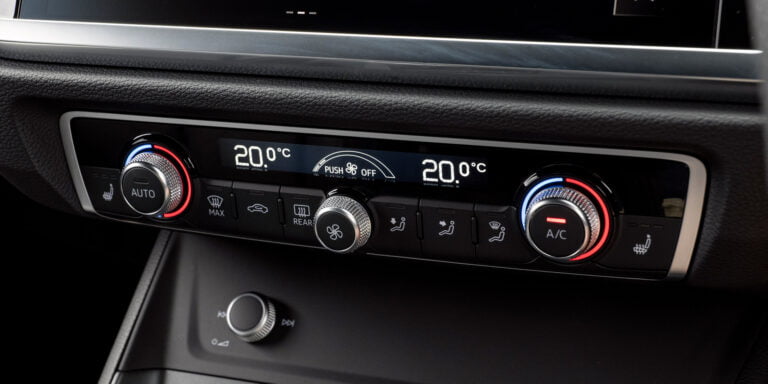
The good news is that all new cars now come with an air conditioning system (AC) that can tackle the heat. If you are looking to change your car, a salesman might offer an upgrade called climate control, but what is the difference?
In this article we will explain how both work to keep your car’s interior temperate, and which option is best for your vehicle.
What is air conditioning (AC)?
In essence, your car’s AC works like a rudimentary version of your fridge, the physics of which does get a little complicated.
In a nutshell, the AC uses a fan to suck in warm air from outside or the car’s interior. Once inside the AC, the air comes into contact with a coolant, or ‘refrigerant’, that lowers its temperature before it is blown into the cabin.
The AC uses this coolant to heat the car when prompted too. In this case, the coolant runs through a type of radiator connected to the AC which transfers heat from the running engine to increase the temperature of the cabin air.
AC is entirely manual, meaning that you have to set it yourself when the inside of the car is too hot or cold. There is usually three dials you need to set on the dashboard:
The temperature dial – some cars allow you to set the exact temperature you are looking for by turning this dial, but most have red (hot) and blue (cold) zones.
The fan speed dial – this controls how fast the AC blows hot or cold air into the cabin, though the fastest setting can get noisy depending on the car. If you want a drastic temperature change, use the top setting, but if you want to maintain a temperature, use the lowest setting.
The air placement dial – this controls where the AC concentrates its flow of air – you can usually choose to focus airflow on your feet in the footwells, at your chest and face using the air vents on the dashboard, or on the windscreen to to de-mist it.
What is climate control?
Climate control is a more advanced version of AC that actively monitors the temperature of the inside of your car using sensors, and works to reach and maintain your desired temperature without any prompting.
While AC on its own needs to be set manually, climate control is an automatic ‘set and forget’ feature, which is more convenient for the driver.
Some modern cars are fitted with dual-zone, tri-zone and even quad-zone climate control, so you can set the desired temperatures of different areas of the cabin, independent of one another.
Dual-zone usually lets you differ the temperatures in the front and back, tri-zone lets you set temperatures for each front seat as well as the rear, and quad-zone systems let you set the temperature for each corner of the car’s interior.
So, what is the best choice for you?
Some upmarket new cars already come with climate control installed as standard, but in most cases this feature will be only included in higher trim grade models or as an optional extra.
Climate control is the better system, but is it worth paying extra for? If you live in a rather hot climate, or you drive long distances on a daily basis, it is definitely worth considering.
If you plan on taking the occasional family road trip, climate control is also the best way to keep passengers in the rear from overheating, and the added convenience of not having to adjust the AC yourself can make long journeys less stressful.
While you are likely to have to spend more for this AC upgrade, remember that climate control will raise the value for your car when you come to sell it too.
That said, particularly for those of us that just use our cars to get from A to B across town, standard AC can be just as effective at keeping you cool in the summer and warm in the winter, you will just have to set it yourself.
The Subaru Solterra is a mid-size five-door SUV, and the first fully electric model to join the Subaru family, which went on sale in the UK in spring 2023.
The Solterra is essentially the same vehicle as the all-electric Toyota bZ4X SUV, which went on sale more than a year earlier than Subaru’s verision. However, unlike the Toyota, the Subaru is only available in the more expensive all-wheel drive format, which has led to some criticism from the motoring media.
Parker‘s Tom Wiltshire argues that neither the Solterra or bZ4X “is among the best electric cars on sale at their price point”. The Subaru’s battery range and charging speeds are nothing to shout about when compared to the rest of the increasingly crowded electric SUV market, and rivals offer more room in the boot too.
That said, AutoTrader‘s Dan Trent concludes that the SUV is still a “large and spacious car perfectly suited to its family SUV role”, while Top Gear‘s Paul Horrell adds that, should you be looking for off-road ability and long-term reliability, the Solterra is certainly worth considering.
As of March 2026, the Subaru Solterra holds a New CarExpert Rating of A, with a score of 69%. It scores top marks for its zero tailpipe emissions and five-star Euro NCAP safety score, but its media review scores and overall running costs are poor.
Body style: Medium SUV Engines:electric, battery-powered Price:From £49,995 on-road
Launched: Spring 2023 Last updated: N/A Replacement due: TBA
Image gallery
Media reviews
Highlighted reviews and road tests from across the UK automotive media. Click any of the boxes to view.
The Car Expert
Model reviewed: 72kWh Touring Score: 7.4 / 10 “Although the Solterra is a little pricey, it’s a great futuristic addition to the Subaru lineup offering customers an all-electric option.” Author: Trinity Francis Read review
Auto Express
Model reviewed: Range overview Score: 8 / 10 “The Subaru Solterra is an impressive, well rounded electric family SUV, but keys rivals offer substantially more range and boot space.” Author: Ellis Hyde, John McIlroy Read review
Auto Trader
Model reviewed: Score: 9 / 10 “The angular looks are certainly distinctive, and the Solterra is a large and spacious car perfectly suited to its family SUV role. Limited range may count against it.” Read review
Carbuyer
Score: 7.8 / 10 “The Subaru Solterra is a four-wheel drive electric SUV that’s practical but rather expensive to buy.” Author: Sam Naylor Read review
Carwow
Model reviewed: Range overview “If you are looking for an electric car with four-wheel drive, or you want something a bit different, the Subaru Solterra is worth a place on your shortlist. However, you can buy cheaper or quicker alternatives.” Read review
Driving Electric
Model reviewed: Range overview Score: 8 / 10 “Subaru’s first electric car is a well-rounded family SUV that’s surprisingly good to drive, but doesn’t match the practicality or range of the best in this class.” Author: Alex Ingram Read review
Electrifying.com
Model reviewed: Range overview Score: 6 / 10 “We think we might prefer the Solterra to the bZ4X. The all-wheel-drive version of the Toyota is the best version, and that’s the default in the Subaru – and for less money, too. Granted, it’s not an affordable electric SUV, and nor is Subaru’s warranty quite as generous.” Author: Tom Ford Read review
Green Car Guide
Model reviewed: Range overview Score: 9 / 10 “The Solterra also lacks the premium interior of many rivals, and the real-world electric range seems to fall quite a way short of the official figure. However the Solterra has lots of plus points, the main one being the rewarding, agile driving experience, which is missing in many EVs.” Author: Paul Clarke Read review
Heycar
Model reviewed: Range overview Score: 6 / 10 “Subaru is no stranger to building SUVs, but when it comes to building all-electric ones, the Japanese firm is a bona fide first-timer. And as a maiden effort, there’s plenty to like about the Subaru Solterra.” Author: Ivan Aistrop Read review
Parkers
Model reviewed: Range overview Score: 5.8 / 10 “The Solterra is in many ways a good choice. But we can’t see any reason to choose it over its Toyota bZ4X sibling – and neither model is among the best electric cars on sale at their price point.” Author: Tom Wiltshire Read review
The Telegraph
Model reviewed: Range overview Score: 8 / 10 “In a world dominated by tacky SUVs, you won’t be embarrassed to be seen driving this Japanese design in town or country.” Author: Ed Wiseman Read review
Top Gear
Model reviewed: Range overview Score: 7 / 10 “The Solterra plays to Subaru’s strengths, and while it’s not the best all-round EV out there, it’s more engaging than you might expect.” Read review
Safety rating
Independent crash test and safety ratings from Euro NCAP
The Subaru Solterra has not been specifically tested by Euro NCAP. Instead, it shares the five-star safety rating awarded to the structurally identical Toyota bZ4X SUV.
Eco rating
Independent economy and emissions ratings from Green NCAP
No eco rating
As of March 2026, the Subaru Solterra has not been lab tested by Green NCAP.
Reliability rating
Reliability data provided exclusively for The Car Expert by MotorEasy
No reliability rating
As of March 2026, we don’t have enough reliability data on the Subaru Solterra to generate a reliability rating.
The Car Expert’s reliability information is provided exclusively to us using extended warranty data from our partner, MotorEasy. As soon as MotorEasy has sufficient data on the Solterra, we’ll publish the score here.
Running cost rating
Monthly cost of ownership data provided exclusively for The Car Expert by Clear Vehicle Data
Battery range
Average
Score
Variation
Score
EV models
273 miles
B
Electrical efficiency
Average
Score
Variation
Score
EV models
3.9 m/KWh
C
Insurance group
Average
Score
Variation
Score
All models
46
E
The Subaru Solterra is more expensive than you might think to own and run, according to whole-life cost numbers provided exclusively to The Car Expert by our data partner, Clear Vehicle Data.
The car’s battery range is competitive, but not as impressive as the 286-mile average that its sister model, the Toyota bZ4X offers. Like the Toyota, electrical efficiency (the EV equivalent of miles per gallon for petrol and diesel cars) is only average. The Solterra’s insurance premiums are surprisingly high, with expected costs being higher than many rivals of this size.
Similar cars
If you’re looking at the Subaru Solterra, you might also be interested in these alternatives.
Search for your next new or used car with Auto Trader. Find out more
Discover great deals available on both new and used cars. Find out more
Lease a Subaru Solterra
If you’re looking to lease a new Subaru Solterra, The Car Expert’s partners can help you find a competitive deal.
Personal contract hire deals from Carparison Leasing. Find out more
Personal contract hire deals from Leasing.com. Find out more
Personal contract hire deals from Carwow. Find out more
Subscribe to a Subaru Solterra
Subscriptions are becoming a very popular way for consumers to try an electric car for a few weeks or months to help decide whether it’s a suitable alternative to a petrol car. If you’re interested in a car subscription, The Car Expert’s partners can help. (PS: What’s a car subscription?)
We all need wheels on our cars. Without them, we’re going nowhere. And for decades car manufacturers have taken these essential car components and turned them into highly coveted must-haves, giving them sporty designs, dual colours and a smart alloy finish.
Unfortunately, anything that’s desirable on a car usually attracts the unwanted attention of crooks – and alloy wheels are no exception.
Recent research by price comparison website Compare The Market showed that alloys were the second most stolen car part in the UK, after wing mirrors (which in modern cars, house valuable and expensive sensory equipment).
Car badges, number plates and catalytic converters were the other parts most likely to be taken, according to the ‘UK Vehicle Theft Report’ research.
With the average cost of a car part theft standing at £750 – and with one in five motorists being the victim of a robbery worth more than £1,200 – it’s a frustrating and expensive matter if you find yourself at the wrong end of a component crime.
And if a theft happens to be of your wheels it’s doubly disastrous, as there will be no way of moving your car with one or more wheel missing.
Top ten tips
So what can you do to protect yourself against wheel theft? Here are our top 10 tips to reduce the chances of losing them:
1. Be seen. When you park on a public street, make sure it’s well-lit and in a busy area. If there are people milling around, it’s less likely you’ll lose your wheels.
2. Use the kerbs. Make your wheels harder to steal by parking close to the kerb, or leave the car next to a wall – that’s two wheels safe at least.
3. Turn the steering wheel. As you park up, turn the front wheels towards full lock. They are much harder to remove like that and you’ll be slowing the thieves up.
4. Wheel locks. Most modern cars come with locking wheel nuts as standard but if you haven’t got them, invest in a set. Upgrade if you are unhappy with what you have, but keep the keys safe – you’ll need them if you get a puncture!
5. Wheel clamps. A full clamp, similar to the type used by local authorities to punish illegal parkers, can also protect your wheels. Although they are primarily used to stop a car being towed or driven, they also prevent wheel theft.
6. Tilt sensors. These protect the entire vehicle from theft by detecting when it has been raised – and that could be to put it onto a tow truck or have wheels removed. It’s a possible good investment for your car and expensive alloys.
7. Lock the car away. If you have a garage at home, use it. An extra barrier for thieves to tackle will increase the likelihood of them looking elsewhere.
8. Invest in CCTV. If you leave your car on a driveway overnight, have a camera pointing at it so you can monitor what’s going on outside. Simply having a camera on show will deter many gangs.
9. Improve your lighting. If you don’t want to go as far as CCTV, fit some motion sensor lighting outside your house, especially above the space where you park your car. Any kind of deterrent will work in your favour.
10. Look out for others. Contact your neighbours and develop a ‘Neighbourhood Watch’ group to keep an eye on everyone’s home, driveway and cars.
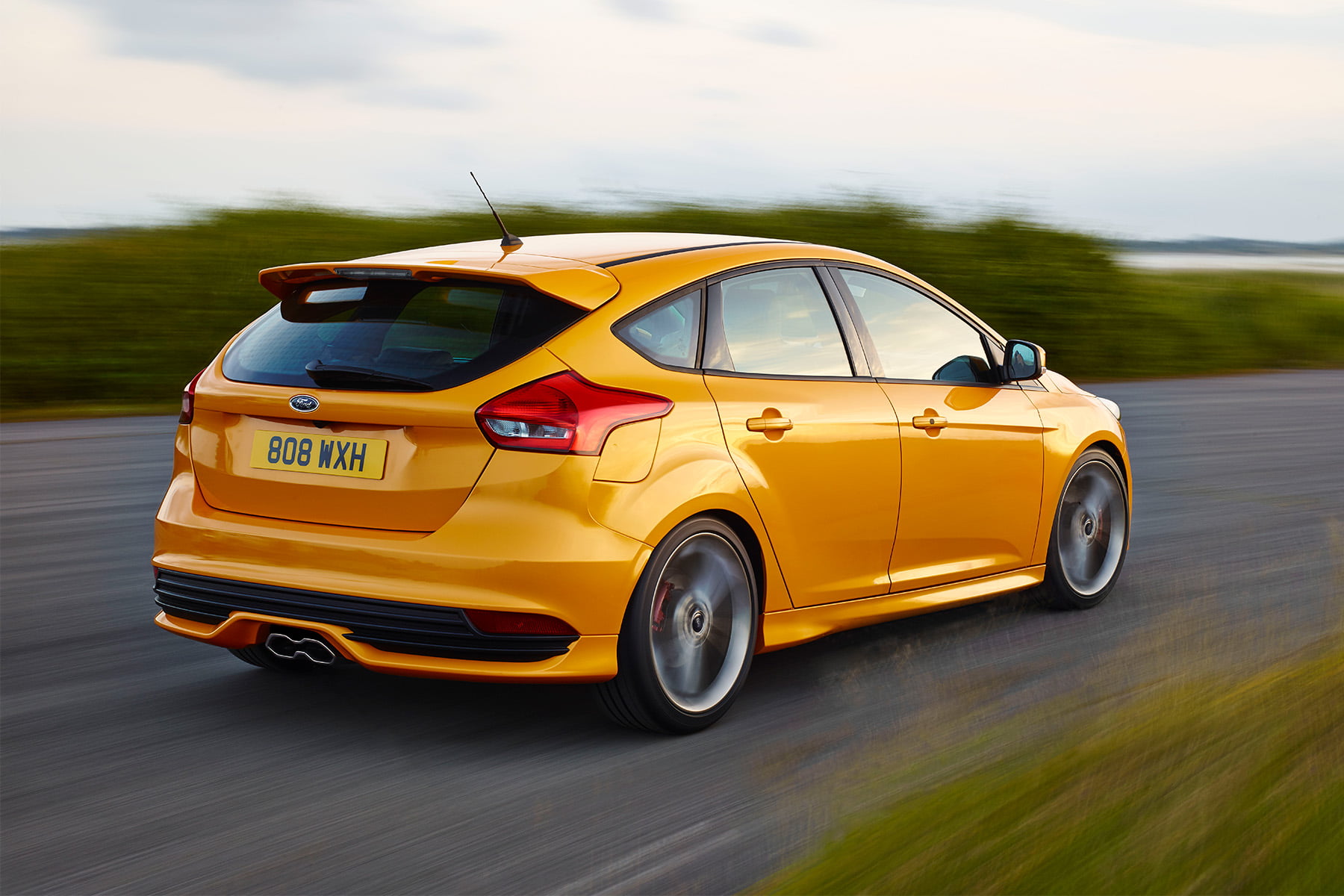
The Ford Focus ST has long been the ‘sensible’ performance version of the mass-selling hatchback range, a true ‘hot hatch’ with extra potency but not quite to the outlandish standards of the Focus RS.This is the third-generation version which was available as a hatchback or estate from 2012 until its removal from sale in 2018.
A hot hatch that Car Key‘s Richard Bush said “will happily put a smile on your face just as quick as it will save you money at the pumps”, the Focus ST received positive reviews from the British motoring media during its time on sale, praised for its raw performance and value-for-money, as well as its practicality. The diesel versions were also particularly highlighted for their fuel economy.
“The Ford Focus ST is not the fastest, sharpest-handling, or best-looking hot hatch”, explained Mat Watson when he wrote for Auto Express. “None of that matters, though. For most people, most of the time, it’s the most fun hot hatch currently on sale.”
As of February 2026, the third-generation Ford Focus ST holds a Used Car Expert Rating of D, with a score of 59%. It gets good grades for its media reviews and low running costs, but reliability is only average and its safety rating has long since expired.
Highlighted reviews and road tests from across the UK automotive media. Click any of the boxes to view.
Featured reviews
“The Ford Focus ST hits the spot for many reasons. Not only is there a choice of body styles, but you can also choose your fuel. In fact, it’s so talented that it scooped our 2012 Best Hot Hatchback award. And what was true then is just as true now; the Focus ST’s talents, affordability and wide-ranging appeal make it easy to recommend. What are you waiting for?”
Model reviewed: Estate range overview Score: 8 / 10 “It seems strange that hot wagons aren’t more popular, because this 2015 Ford Focus ST Estate delivers all the handling, speed and excitement of the hatch, with genuine family-friendly practicality.” (Jack Rix) Read review
Model reviewed: ST3 “The Ford Focus ST is not the fastest, sharpest-handling, or best-looking hot hatch. None of that matters, though. For most people, most of the time, it’s the most fun hot hatch currently on sale.” (Mat Watson) Read review
Business Car
Model reviewed: 2.0-litre diesel manual estate Score: 8 / 10 “The Ford Focus ST Estate is very appealing in terms of power versus practicality and cost-effectiveness.” Read review
Car Keys
Model reviewed: 2.0-litre diesel manual ST3 hatchback Score: 8 / 10 “Going fast and harnessing speed on a country lane is not a problem for the Ford Focus ST diesel. It will happily put a smile on your face just as quick as it will save you money at the pumps.” (Richard Bush) Read review
Carbuyer
Model reviewed: Facelift ST hatchback Score: 6.2 / 10 “The Ford Focus ST offers great value and proper performance in a practical hatchback body. It’s a bit raw, but it’s very exciting to drive.” Read review
Carwow
Model reviewed: Range overview Score: 7 / 10 “The Ford Focus ST isn’t as classy as the Golf GTI but it’ll put a bigger smile on your face.” (Mat Watson) Read review
Honest John
Model reviewed: Range overview Score: 8 / 10 “The Ford Focus ST delivers fast and affordable for daily use.” Read review
Motoring Research
Model reviewed: 2.0-litre diesel manual estate “The Ford Focus ST diesel estate is genuinely fun to drive and impressively good on fuel. Rivals are, at a push, more practical – and their interiors feel a little more robust.” Read review
Parkers
Model reviewed: Range overview Score: 9 / 10 “The Ford Focus ST has something unique, it is the only mid-sized performance hatchback that also comes in estate form. That will be welcome news for families who enjoy the pleasure of driving but also need that extra space to transport their kids and all the paraphernalia associated with them.” Read review
The Sunday Times
Model reviewed: 2.0-litre petrol manual estate Score: 6 / 10 “The Ford Focus ST Estate needs to be more than fast in the age of the jackbooted Tory Stasi with their surveillance cameras.” (Jeremy Clarkson) Read review
Model reviewed: 2.0-litre petrol manual hatchback Score: 8 / 10 “The question is whether the Ford Focus ST can plausibly take on the Golf GTI. The answer is yes — but only in petrol guise; the diesel version, which we tested recently against its VW rival, fell a little short.” (Giles Smith) Read review
The Telegraph
Model reviewed: 2.0-litre petrol manual hatchback Score: 8 / 10 “Chassis modifications make this a real hot hatch contender, but with a price that borders on making it a bargain. Not a car for lots of motorway miles, but in a Ford Focus ST you’d be hunting out the back roads anyway.” (Chris Knapman) Read review
Safety rating
Independent crash test and safety ratings from Euro NCAP
The third-generation Ford Focus was originally tested by Euro NCAP back in 2011 and awarded a five-star rating. This rating also stood for the performance-enhanced Focus ST.
However, this rating expired in January 2019 and is no longer valid as the car no longer meets the standards required for such a rating. This is normal practice, as Euro NCAP reviews its ratings on most cars annually with most ratings expiring after about six or seven years.
However, if you are comparing a used Ford Focus to vehicles of similar age, whose ratings will have probably also expired, its safety rating score is still useful.
Eco rating
Independent economy and emissions ratings from Green NCAP
No eco rating
The Ford Focus ST was not assessed by Green NCAP during its production cycle as it pre-dated Green NCAP’s formation.
Reliability rating
Reliability data provided exclusively for The Car Expert by MotorEasy
Total claims: 991 Average repair cost: £651.22 Last updated: April 2025
As of April 2025 (our most recent data point), the Ford Focus is about average for reliability with a score of 62%, according to exclusive data provided by our commercial partner, MotorEasy. This covers all Focus models, rather than just this particular Focus ST, which is worth bearing in mind if you’re looking at a used car.
The average repair bill for Ford Focus problems is a bit less than £700, which is fairly high for this class of car. Unfortunately, the most common problem on the Focus is also one of the most expensive – the engine, with an average repair bill of more than £1,100. Gearbox repairs are even more expensive, at an average of just under £1,200.
If you’re looking at a used Ford Focus, make sure any extended warranty cover you purchase covers all the potential problem areas shown above.
Awards
Significant UK trophies and awards that the Ford Focus ST has received.
2015
Carbuyer Awards – Best Hot Hatch
2012
Auto Express Awards – Best Hot Hatch
Top Gear Awards – Best Hot Hatch (estate)
Similar cars
If you’re looking at the Ford Focus ST, you might also be interested in these alternatives.
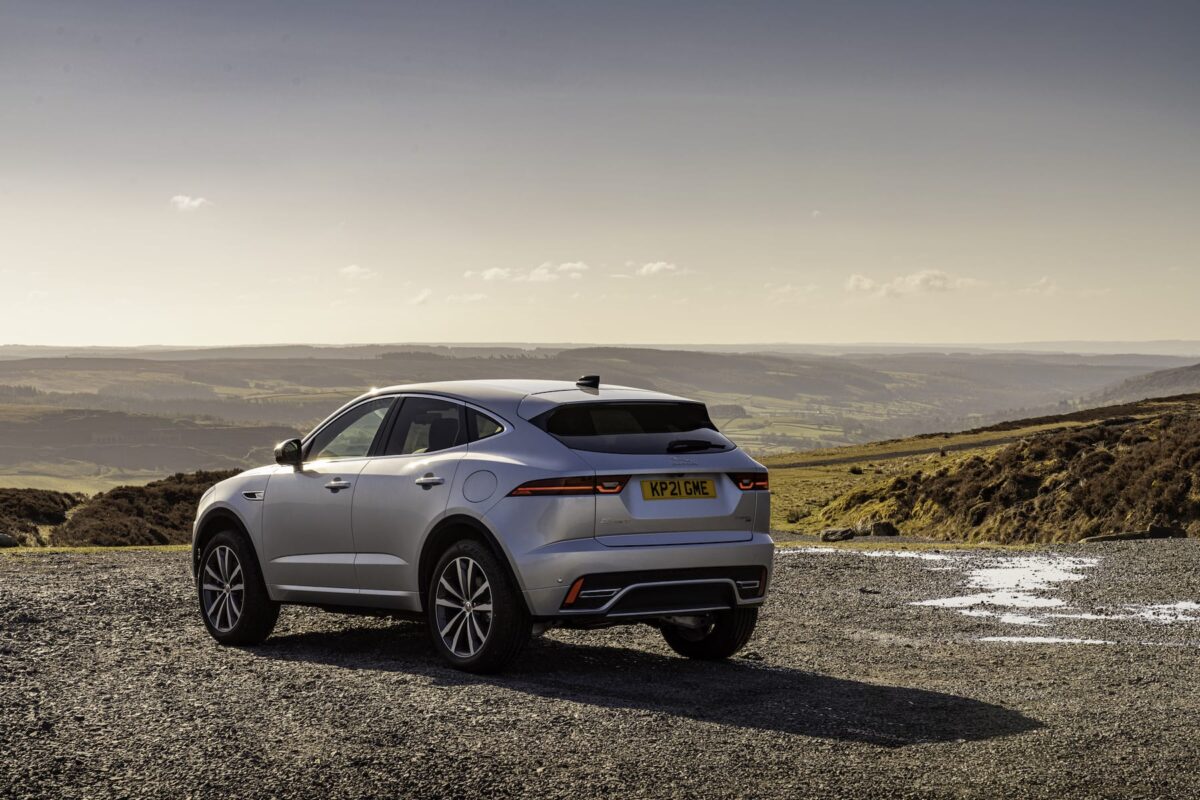
This is the updated Jaguar E-Pace, which was given a major mid-life facelift in late 2020 after its original launch in 2017. We’re driving the plug-in hybrid version, which pairs a 1.5-litre petrol engine with an electric motor and battery.
The E-Pace is the smallest model in the Jaguar family and its styling, both in side and out, is inspired by the original version of the Jaguar F-Type sports car. It’s a cousin to the Range Rover Evoque, although it looks and feels a generation behind the smallest Range Rover.
What is it?
The Jaguar E-Pace is a premium-price small SUV, in the same sort of ballpark as the Audi Q2, BMW X2, Mercedes-Benz GLA, Range Rover Evoque and Volvo XC40. You can have your choice of diesel, petrol or – as we’re driving here – plug-in hybrid power.
As the E-Pace approaches its twilight years, the model range has been slimmed down somewhat, with all models now produced in variations of Jaguar’s sporty-ish R-Dynamic specification.
The plug-in hybrid has a form of all-wheel drive, with the petrol engine driving the front wheels and the electric motor (assuming you have charge in the battery) driving the rear wheels.
Who is this car aimed at?
The small SUV segment is one of the most fiercely contested sectors of the new car market, with pretty much every major manufacturer getting involved.
The Jaguar E-Pace leans towards style rather than practicality in pretty much every way, so it’s going to suit singles or couples with either no kids or smaller kids who can fit comfortably in the fairly cramped rear seats. It would also be best if you don’t want to carry too much luggage.
Price-wise, the E-Pace is higher-end than most cars as well, so you’ll need to be happy shelling out a premium to put one of these cars in your driveway. The Jaguar is very much pitched against brands like Mercedes-Benz, Audi and BMW, so its price tag and monthly finance instalments fall very much into this region.
Who won’t like it?
If you’re looking for practicality, or value for money, you’re probably looking in the wrong place here. If you want to regularly carry adults in the back seats over longer distances, you’ll want something a bit larger. And the boot has less space than some superminis, so you couldn’t fit much luggage for four people in there anyway.
First impressions
It’s been around for about six years, so the Jaguar E-Pace is certainly a familar sight these days. It’s still a good-looking car – particularly when wearing diamond-turned 20-inch alloy wheels, like our test car – but there’s no denying that it’s starting to look a bit last-generation compared to some of its rivals. The good news, though, is that the styling isn’t going to put anyone off (have you seen any new BMW model lately?).
Step inside and the feeling continues. Everything looks elegant enough, including more styling details borrowed from the F-Type sports car, but it’s no longer state-of-the-art. The other thing that was immediately noticeable was that it was smaller inside than I remember, a feeling not helped by an all-black leather interior.
As part of the E-Pace’s mid-life update, the car’s infotainment system got a complete overhaul. The old system was replaced with JLR’s latest Pivi Pro system, which provides a bigger touchscreen and slicker programming. However, it’s still mounted lower down in the dashboard than newer cars, which tend to have the screen mounted up at the very top of the dashboard so you don’t have to take your eyes off the road for as long.
We like: Styling is clean and neat, although starting to look dated We don’t like: Cabin is tight and layout not as convenient as newer rivals
What do you get for your money?
Once we’ve got the first impressions out of the way, it’s time to look a bit harder at exactly what you’re getting for your money with the Jaguar E-Pace.
In 2023, the range is more limited than it has been in previous years. All E-Pace models are provided in various levels of Jaguar’s R-Dynamic trim, which means big wheels and sporty styling touches like chunky bumpers and sports seats.
In terms of equipment, the levels are S, SE Black and HSE Black as of May 2023. The ‘Black’ bit signifies replacing most of the usual chrome with black trim. Pricing currently starts at just under £43K for a 160hp petrol automatic R-Dynamic S, rising to more than £54K for the 309hp plug-in hybrid R-Dynamic HSE that we’re testing here.
Standard and optional features change regularly on most models, as manufacturers balance costs and supply issues. This is normal, but means you need to check any specific vehicle you’re looking at to make sure all the features you’re expecting to be getting are still included. Our test car was only a few months old, yet specifications were already different to brand new vehicles available to order at time of writing.
As the top-spec model in the E-Pace range, the HSE/HSE Black comes loaded up with most of the available kit as standard. Seats are full leather (actual cow hide, not ‘artificial leater’ or ‘vegan leather’), and our car had an £800 seat upgrade that provided heated and cooled front seats that adjusted electrically with memory functionality. The same pack also offers heated rear seats.
Our car also had an excellent Meridian sound system, which may or may not be standard (it’s one of those features that seems to move between standard and optional equipment). It’s one of the better brand-name stereo upgrades in the market, and well worth the extra £350 – assuming it’s not standard on the car you happen to be looking at.
What’s the Jaguar E-Pace like inside?
There’s a lot to both like and dislike inside the E-Pace’s cabin – which is also affected by the standard and optional features on the car you’re looking at.
Our test car, for example, had a (standard) all-black leather interior and (optional) privacy glass, which made the interior feel very dark and cave-like. This is also not helped by the usual new car problem of quite shallow windows, especially in the rear seats, and thick pillars all round. However, opening the blind on the (optional) panoramic roof to let more light in made a huge difference. Choosing a lighter colour leather – grey and red (as shown in the photos below) are also available – would also help.
Up front, things are generally pretty good. The seats are well bolstered but still comfortable on longer journeys and the driving position is good. You have to stretch a bit to reach the far side of the touchscreen, which is a fairly common problem with most cars these days, but most controls are close at hand.
In the back, it’s a bit squeezy. Headroom is OK but there’s not a lot of kneeroom or legroom for adults. The rear door shape and height off the ground can also make getting in and out a bit tricky, both for adults and especially for kids in car seats. Our six-year-old son found it awkward compared to our usual family estate.
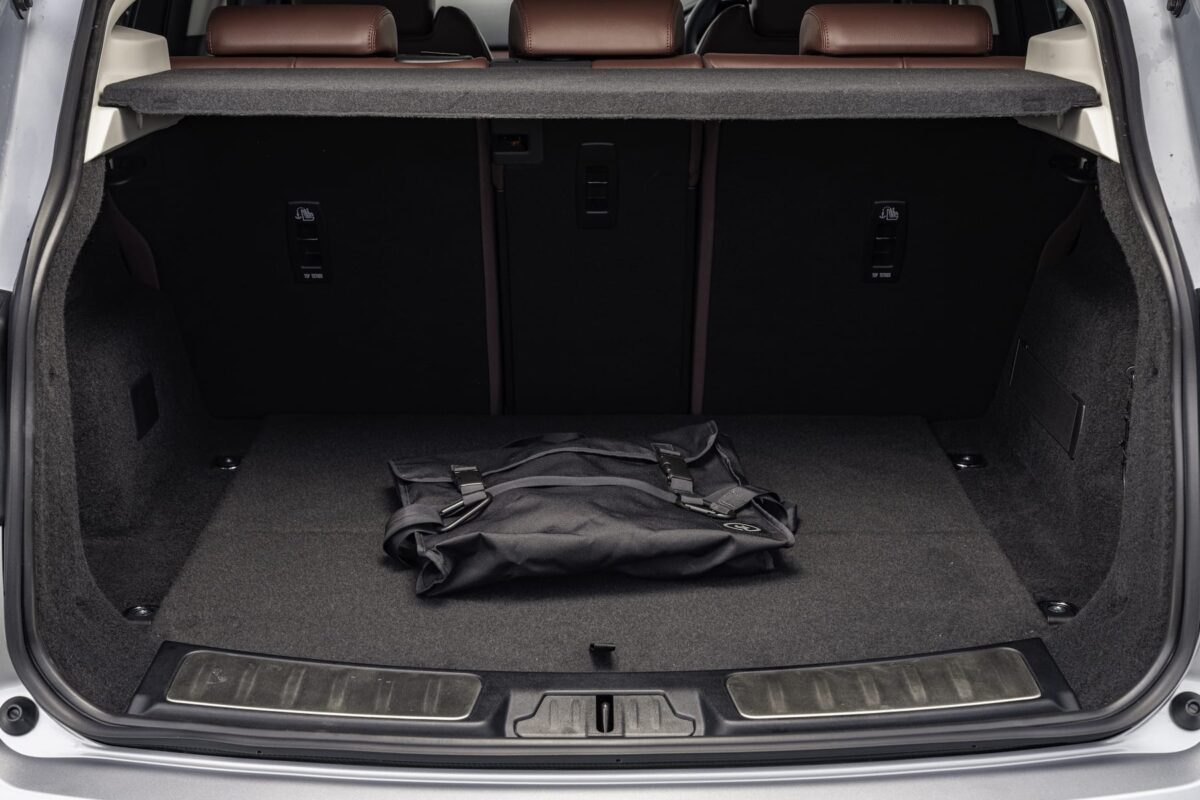
The boot is very much on the small size – in fact, it has less load space than you get in a Skoda Fabia supermini hatchback. On a weekend away with three people, we pretty much filled it up despite only having small bags and the usual family paraphenalia.
On the plus side, the rear seats fold down in a 40:20:40 format rather than the usual 60:40 split, which gives extra flexibility for carrying longer loads. There’s also a separate section under the floor where you can keep you charging cables on the plug-in hybrid version.
Jaguar’s latest Pivi Pro infotainment system is a massive improvement over its previous effort, but it’s still easier and more convenient to use either Apple CarPlay or Android Auto. These functions are also wireless, which is great, but the wireless charging plate isn’t designed brilliantly. My phone would slide off it the very first time the car went over a bump on each journey, so when I did need the phone to charge on a longer trip, I ended up plugging it in to make sure it actually worked.
The touchscreen is a good size at 11 inches, but unfortunately the software designers seem to have spent too much time trying to make the display look pretty rather than make it easy to use. The icons and text are too small and the colour choices don’t offer enough contrast to easily recognise what you’re looking for while driving. This makes the system harder to use than it should be, and gets annoying – especially if you like jumping between radio stations while you’re driving. I got fed up with it so we ended up on Absolute 80s radio for a whole weekend road trip, which wasn’t universally popular among all passengers…
Because the screen sits relatively low in the dashboard, it’s also angled upwards. However, that means it suffers from reflections on a sunny day, again making the screen hard to read.
Jaguar does get plus points for keeping the air-conditioning controls as physical knobs rather than integrating them into the touchscreen. That mens adjusting the temperature or fan or seat heating on the fly is quick and easy, rather than hunting through touchscreen menus.
We like: Quality materials, comfortable front seats, standard 40:20:40 split rear seat We don’t like: Low-mounted touchscreen with poorly designed graphics, small boot, awkward rear door shape
What’s under the bonnet?
The P300e plug-in hybrid version of the E-Pace that we’re driving here consists of a petrol engine and an electric motor. The engine is a 1.5-litre, three-cylinder unit that produces 200hp and drives the front wheels. The electric motor produces 109hp and drives the rear wheels. When the two power units work together, you have an all-wheel-drive car.
Officially, the P300e powertrain produces 309hp (which you’ll have noticed is the combined total of 200hp from the petrol engine and 109hp from the electric motor) and can go from 0-60mph in 6.6 seconds. It has an official fuel consumption of 182mpg and an electric-only range of 37 miles. However, as is always the case with plug-in hybrids, most of these figures are absolutely useless.
For a start, you only get the full 309hp – and therefore the quoted acceleration figures – if you have enough electricity in the battery to run the electric motor. Once that runs out, which it does quite easily, you basically have a 200hp petrol engine hauling around a few hundred kilos of ballast.
The fuel consumption figure of 182mpg is also complete nonsense, although that’s not Jaguar’s fault. The problem lies with the official EU/UK test methods that every car manufacturer is required to use. There is no possible way you can drive this car for 182 miles using only the electricity from the battery and a gallon (4.5 litres) of petrol.
Officially, the battery will give you enough charge for 37 miles of driving. In the real world, expect 20-25 miles. Once that runs out, fuel economy isn’t too flash. Over a week of mixed driving, including a 170-mile road trip with no opportunity to charge on the way, we averaged about 28mpg when the E-Pace was running as a purely petrol car. Once batttery contributions were included, the overall week’s average was about 31mpg. That’s not great, and you’d expect a regular petrol model to do better (as well as being thousands of pounds chceaper to buy in the first place).
To get the best value from this or any other plug-in hybrid, you need to be charging up the battery pretty much every time you stop. So if you don’t have a charging point at home, or you do lots of longer trips, it’s a tough ask to make this version of the E-Pace work for you.
While on the subject of charging, the E-Pace comes with two cables as standard – a Mode 3, Type 2 cable for charging at a wallbox or public charger, and a three-point plug cable if you don’t have access to a proper charging point. Both cables are 5m long, which is longer than some vehicles get (although we’d prefer it to be a bit longer to give owners more flexibility when parking near charging points).
One other point of credit for Jaguar is that the E-Pace has an above-average reliability record, according to data provided exclusively to The Car Expert by our commercial partner, MotorEasy. We have often criticised Jaguar Land Rover for the poor reliability records of its other models, so it’s very pleasing to see that the E-Pace has seemed to avoid any major issues to date. It’s also a good sign if you’re considering a used E-Pace.
What’s the Jaguar E-Pace like to drive?
Being a plug-in hybrid, the E-Pace P300e driving experience is like reviewing three cars in one.
The E-Pace feels nicest running as a pure EV, when everything is quiet and smooth. Like any EV, it’s responsive so you can nip around town or into gaps in traffic very easily.
The electric motor isn’t as powerful as you’d get on a full EV, but it’s more than enough for boring urban driving. Although it is only a 109hp motor, performance is better than it suggests on paper. Electric motors generate all their torque immediately without needing to rev up, so you get very good response as soon as you touch the throttle. Once your speed builds up past about 30mph, the petrol motor needs to join in the action to maintain your acceleration.
When it’s running purely as a petrol car, things aren’t as serene. The engine sounds gruff and is fairly noisy, even at half-throttle. You certainly hear about it when you put your foot down to overtake another car, or enter a motorway off the slip road. Everything is also quite sluggish – which is not surprising, given that your 309hp car is now only a 200hp car.
Working as a hybrid with both power units operating together, performance is obviously a lot sharper, as you’d expect when the full 309hp is at your disposal. It’s still noisy but at least you get acceleration to match. To be honest, it still doesn’t feel like there’s 300-odd horsepower on tap, but at least you can pull out into traffic with confidence.
In terms of ride, the big 20-inch wheels look good but they don’t make for smooth going over the UK’s potholed roads. The combination of a short car with big wheels makes for a bumpy journey on anything but the smoothest surfaces. Also, as an aside, you don’t get a spare wheel for when one of those low-profile 20-inch tyres pop…
The driving dynamics are are pretty good, which is usually a strong point for most Jaguar cars. Steering is pretty good, with more feel than you usually get on modern cars. The handling is responsive and predictable, which inspires confidence within a very short distance. It’s certainly an easy car to jump in and drive without having to worry too much about what’s going on underneath you.
The brakes are similarly predictable, rather than being over-assisted like some rivals (for example, most Volkswagen/Audi/SEAT/Skoda models). On the other hand, the turning circle isn’t great, and we ended up doing more three-point turns and fewer U-turns than we would in some other cars.
Overall, it reflects on a high standard of engineering from Jaguar, provided you can live with the bumpy ride. Given the popularity of big wheels and sports suspension on most premium European cars, presumably most buyers in this market are happy with that trade-off. If you enjoy driving your car rather than just steering it from A to B, the Jaguar E-Pace is better than most small SUVs.
We like: Steering, handling and braking are all top notch, which puts the driver at ease very quickly We don’t like: Average performace and fuel economy once the battery runs out, ride quality not the smoothest
How safe is it?
The Jaguar E-Pace was tested by safety body Euro NCAP back in 2017 when it was first launched, earning a five-star rating and good scores in every category. Although Euro NCAP’s safety standards have been raised in recent years, you can still be confident that the E-Pace will be good at both avoiding an accident and helping protect you if an impact can’t be avoided.
Jaguar certainly deserves credit for including almost all of the safety kit as standard equipment, rather than palming off features to the options list. The only exception is that entry-level R-Dynamic S models don’t get blind spot assist and the rear collision warning systems as standard.
The lane-keeping assist system feels bit weak compared to many other cars. Although a lot of drivers don’t like a car that tries to override you if you change lanes without overtaking, it does tend to defeat the purpose of the system if it makes no real effort to help keep you in your lane.
Summary
The Jaguar E-Pace is a bit of a mixed bag. It’s definitely more enjoyable to drive than most small SUVs, and its compact size makes it easy to live with on UK streets and in UK parking spaces. But the relatively poor turning circle is annoying if you regularly need to manouevre in tight spaces.
The level of standard kit is good, particularly the safety equipment, compared to its rivals. Of course, it will never win a value-for-money contest against a Skoda or MG, but the little Jaguar is not really competing in that segment of the marketplace.
For most customers, the extra cost for the plug-in hybrid version is probably not worth the money and you’d be better off with a conventional petrol model (or even a diesel, if you must). If you have the ability to charge the car at home or work every day, so that you’re maximising the EV side of the equation, it may work out economically. But you still have do a lot of short trips between regular charging to make the numbers add up.
If you’re looking at a used E-Pace, it’s definitely worth trying to fit a post-2020 model into your budget. The E-Pace range overall certainly benefitted from its mid-life update, with meaningful improvements throughout the car even if the styling didn’t change much along the way.
Should you buy a Jaguar E-Pace? According to our awrd-winning Expert Rating Index, the overall E-Pace range has a score of 56% based on 24 UK reviews, which is low compared to rivals (the related Range Rover Evoque has a score of 74%, for example). In blunt, objective comparison terms, Jaguar’s prioritising of form over function throughout the E-Pace carries a penalty.
That doesn’t make it a bad car as such, but it does mean that the target market for people who are really going to like it is narrower than for most rivals. If you’re coming out of a 2+2 coupé, like an Audi A5 or BMW 4 Series, then a small boot and lack of rear seat space won’t be too much of a concern.
We think the Jaguar E-Pace is better than it’s generally given credit for, but would suggest a regular petrol model over the pricier plug-in hybrid. Even if you charge it regularly, it’s still tough to see how the plug-in version stacks up for most people.
Model tested: Jaguar E-Pace P300e R-Dynamic HSE Price as tested: £58,620 (including £6,085 of options) Engine: 1.5-litre petrol plus electric motor Gearbox: Eight-speed automatic
Power: 309 hp Torque: 540 Nm Top speed: 134 mph 0-62 mph: 6.6 seconds
Battery range: 35 miles Fuel consumption (combined): 182 mpg CO2 emissions: 35 g/km Euro NCAP safety rating:Five stars (2017) TCE Expert Rating:56% (as of May 2023)
Buy a Jaguar E-Pace
If you’re looking to buy a new or used Jaguar E-Pace, The Car Expert’s partners can help you find the right car.
Discover great deals available on both new and used cars. Find out more
Search for your next new or used car with Auto Trader. Find out more
Buy a car online from your sofa. We’ll deliver it. Find out more
Search less, live more. We make finding the right car simple. Find out more
Lease a Jaguar E-Pace
If you’re looking to lease a new Jaguar E-Pace, The Car Expert’s partners can help you find a competitive deal.
Personal contract hire deals from Carparison Leasing. Find out more
Personal contract hire deals from Rivervale Leasing. Find out more
Personal contract hire deals from Moneyshake. Find out more
Personal contract hire deals from LeaseLoco. Find out more
Subscribe to a Jaguar E-Pace
If you’re interested in a car subscription, The Car Expert’s partners can help. (PS: What’s a car subscription?)
Car subscriptions from Pivotal, Jaguar’s official subscription service. Find out more
Ford has given us a first look at its new electric E-Tourneo Courier model at a launch event in Copenhagen – a people carrier based on the compact E-Transit Courier van that was unveiled earlier this year.
One of ten full-electric vehicles Ford is planning on launching in Europe by 2024, the E-Tourneo Courier will challenge the likes of the Citroën ë-Berlingo and Peugeot e-Rifter when it arrives next year.
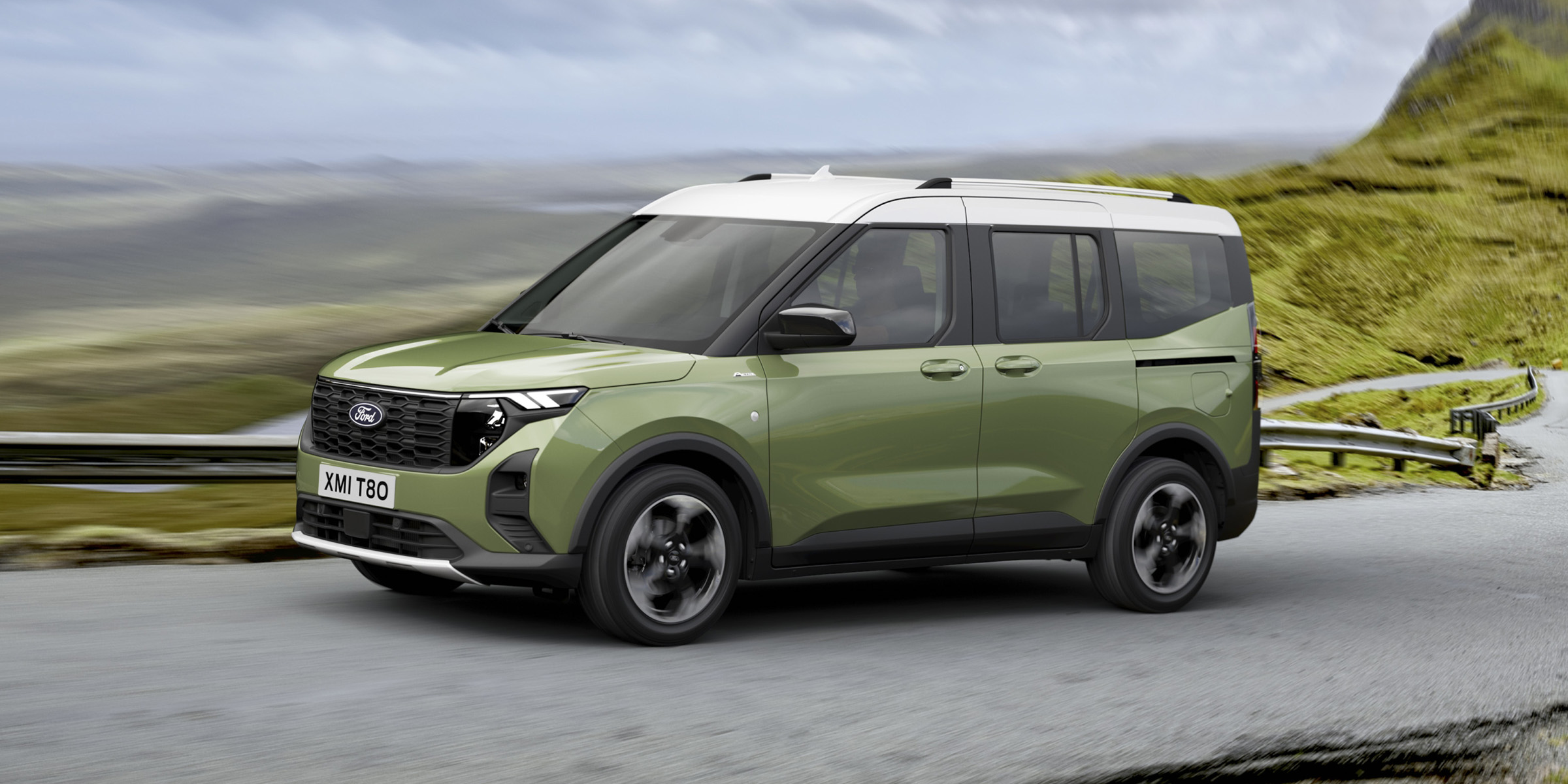
Like its van counterpart, this new Tourneo Courier range is built on a modified version of the platform that underpins the Fiesta hatchback and Puma crossover, with “rugged SUV-inspired looks” and a “roomy inside”, with space for five occupants.
Ford adds that the electric model has a “compact city-friendly footprint”, powered by 136hp battery and electric motor pairing. The people carrier’s battery size and range is yet to be confirmed, but it has the same charging speeds as the E-Transit Courier. Using a 100kW DC charger, the E-Tourneo Courier’s battery can charge from 10% to 80% in under 35 minutes.
The ‘Active’ trim shown above gives the E-Tourneo Courier a contrasting roof colour with roof bars, and thick wheel arch cladding. Titanium and Trend trims will also be available at launch, but the specifications for those grades are not yet known.
Stepping inside, the people carrier features a 12-inch infotainment screen in the centre of the dashboard. The system has wireless Android Auto and Apple CarPlay connectivity, and a smartphone charging pad also features. Ford adds that the infotainment is also compatible with over-the-air updates, meaning that the manufacturer can continually update the system remotely while the people carrier is sitting on the owner’s driveway.
That sums up what we know about the Ford E-Tourneo Courier so far. More details, such as UK pricing and performance stats, are sure to arrive in the coming months.
In the meantime, a cheaper petrol-powered version, the Tourneo Courier will be available to order this Summer. This model will be powered by a 125hp 1.0-litre engine paired with either a six-speed manual transmission or a seven-speed automatic gearbox.
If your car ever fails an MOT and costs too much to fix, or is just broken and isn’t worth repairing, here’s what can happen next.
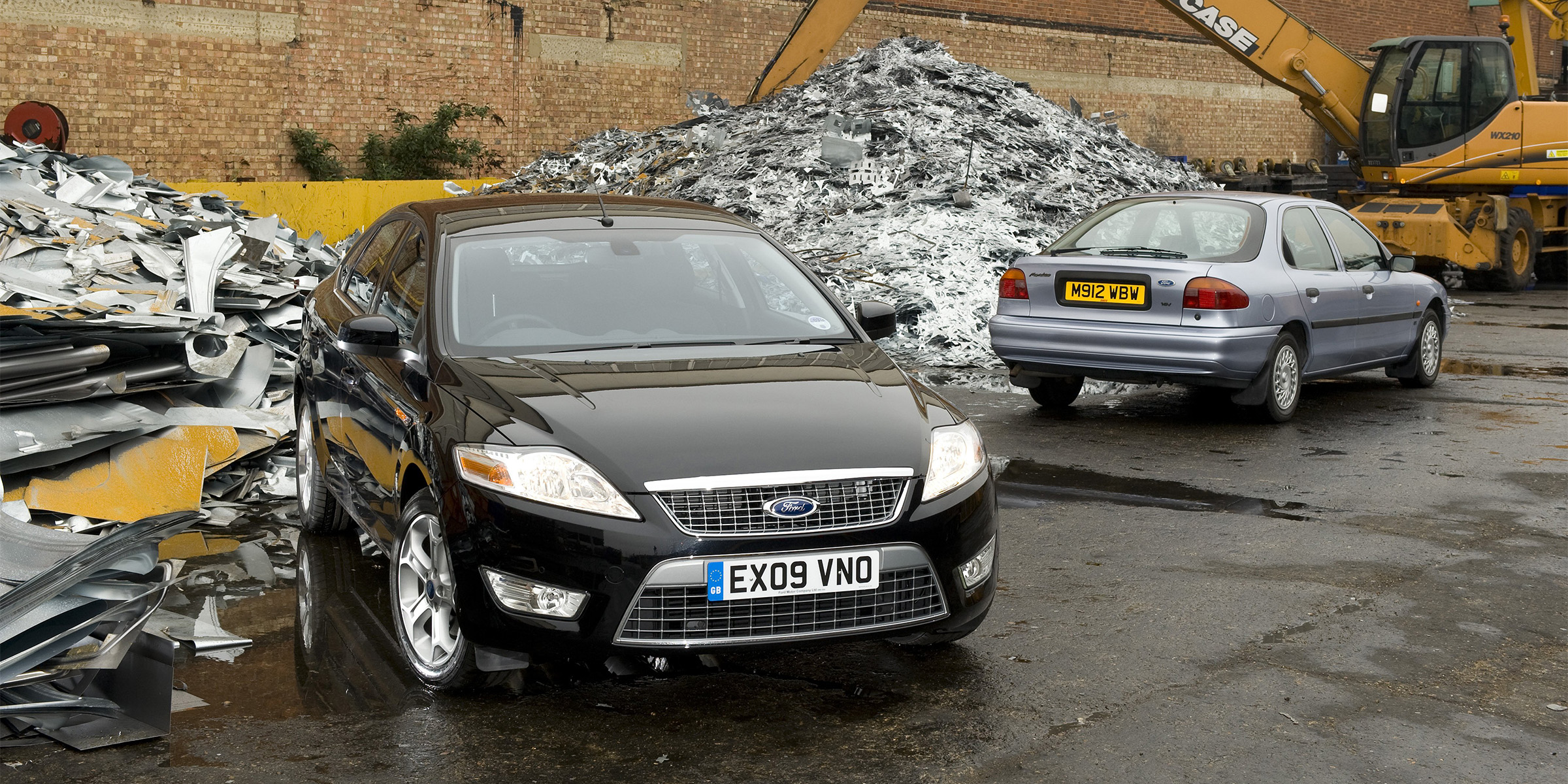
The official name for a scrap car is End of Life Vehicle (ELV). To avoid the potential environmental disaster which these millions of ELVs pose across Europe, the 2004 directive on end-of-life vehicles (ELV Directive) is set into EU law (so is followed by all carmakers who place cars on the market in the EU and UK).
From 2015, the directive said that the industry must ensure that 95% of each vehicle by weight is re-used, recovered or recycled. Despite the UK no longer being part of the EU, the directive continues to apply here.
These days the value of the raw materials, and spare parts they might yield, means they are in big demand. Rising used car prices and fewer cars being driven (and therefore crashed) during the pandemic has meant many cars which may have been due for dismantling are being repaired and kept on the road, hence the value of the ‘scrappers’ goes up. There a number of different firms competing to provide the best valuation to buy your scrap car.
The right way to dispose of a scrap car
The Vehicle Recycler’s Association (VRA) is the UK trade association for vehicle recyclers (vehicle dismantlers, salvage agents, scrap metal processors and associated companies). Members must comply with its requirements including a code of practice and have all legal requirements in place.
It warns people to be very wary of ‘any car for cash’ mobile phone numbers which come through the door or you find in your local paper. Many of them will be illegal operators, it says. Your car could be sold onto somebody else without the DVLA being told it is scrapped so it could be used to commit crimes or be sold overseas. You would still be liable for speeding fines, parking tickets or worse.
All members are authorised by the Environment Agency (SEPA in Scotland) as an End of Life Vehicle Authorised Treatment Facility (ATF) as is required by law. The ATF receiving your vehicle will issue you with a ‘Certificate of Destruction’ which ends your responsibility for the vehicle from its date of issue.
Always insist on a receipt and (unless you have agreed to the vehicle being sold on for re-use) a Certificate of Destruction. You’ll also need to notify DVLA that you’ve sold your car (or a dismantler may do this for you). If you have any road tax remaining, you’ll get an automatic road tax refund from DVLA.
CarTakeBack is the UK’s largest scrap car recycling network, acting for and advising over 300 scrap car recycling centres in the UK. This ranges from companies who remove every part of a car to those who remove the bare minimum and depollute the car as legally required to send on for recycling, plus metal recyclers.
The company offers an instant quote facility based on what its network is prepared to pay for vehicles. “The competition comes from the amount of money that the dismantlers can get from selling the shell and the scrap vehicle, and often – but not always – the parts,” says senior manager Ken Byng.
“Scrap prices have been really, really strong in the last few years for the most part, although it can be quite a volatile market because it’s dependent on world markets for raw materials.”
For now, it’s steel and aluminium but with Electric Vehicles (EVs) all that will change, he says. “At one time the engine transmission and catalytic converter were the big value items on a vehicle. But a lot of the operators are now realising the values of the lithium-ion batteries, the electric motors, the motor control units, and all of those sort of new components. There’s quite a thriving market for those at the moment.”
The second life of cars
Once a car is brought into a vehicle recycler, all fluids must be drained before any dismantling starts so they don’t seep into the soil. Engine and gearbox oil, brake fluid, coolants and windscreen washer fluid are drained and disposed of in environmentally appropriate ways – the washer fluid blend of water and chemicals can be purified using a process called reverse osmosis.
The traditional car battery (rather than an electric vehicle battery), is dissected into its various parts, such as lead, silver, plastic and acid. The valuable parts can be extracted for re-use, while the lead is melted down and acid neutralised.
Many parts are suitable for re-selling; for example lights, wheels, wing mirrors, interior parts and switches, headlamps and taillights, undamaged side windows and front and rear screens, plastic bumpers and even carpet mouldings. These are removed, cleaned, tested where needed and stored.
Currently it is legal for anyone to re-sell an EV battery, and a number of vehicle dismantlers and individuals do advertise them on sites such as eBay. How useable the batteries will be is another matter.
Generally, there’s a growing demand for so-called ‘green’ spare parts because they typically cost less than half the price of equivalent new parts. It also saves enormous amounts of energy in the manufacture and transport around the world of new replacement parts. For example, ASM Auto Recycling based in in Thame, Oxfordshire, handles around 30,0000 vehicles a year.
All re-sale parts are bar-coded and imaged for traceability and sold online or at an over-the counter shop. The company video shows hundreds of taillight units stored on racks. ASM says that it re-sells or re-cycles over 50,000 tyres a year – although you should always be very cautious about buying used tyres.
What can be recycled
ELVs are as much part of the ‘circular economy’ as recycled plastics, glass bottles and tin cans. Here’s how they can be broken down:
Catalytic converters contain a range of highly-prized precious metals – including platinum, rhodium, and palladium – and are removed and recycled by a specialist.
Traditional car batteries are easily recycled – lead can be infinitely smelted down and re-used – often as flat sheets for buildings.
Relatively few electric vehicle batteries are reaching the end of their life but car makers are obliged to ensure those batteries are properly recycled. Most can have a second life as power storage but they need specialised handling.
Electrical components and wiring contain copper, so this too can be separated and re-used.
Most recent cars use major amounts of plastics for the dashboard, trim, bumpers and sometimes body panels. These are all marked by their plastic type at the manufacturing stage. Some can be melted down and reshaped into low-grade plastics such as pipes or garden furniture. Once shredded, washed and sorted, higher quality plastics can become laptop covers, mobile phone chargers and printers.
Glass can be ground back down into sand but this depends where it comes from. Windscreens are formed of a plastic and glass sandwich so need careful separation.
The fabric from seats can be recycled to be used for sound insulation for new cars or for some household fabrics and mattresses for example.
Tyres are often used as the basis of a soft floor area in a children’s playground.
If they can’t be broken down for parts, engines can be melted down and used to make new products. Most modern engines are aluminium, which recycles well as it does not deteriorate significantly when melted.
Stripped bodyshells are crushed and cubed before being sent to metal recyclers. After being shredded, metals are magnetically separated from any remaining recyclable materials – such as leftover plastic.
This can leave steel, iron, and aluminium shreds. Aluminium takes readily to being recycled, being converted back into flat sheets.
However, currently very little recycled steel is used to make new car bodyshells because it’s not considered of suitable quality, so more often used in the construction industry. This is called downcycling.
One carmaker looking to tackle this is Audi. Its MaterialLoop project is researching how to recover as much high quality material for use in new cars. As part of the project, 100 vehicles were disassembled last year for their larger quality plastic pieces.
The remaining car bodies were shredded and sorted into material groups comprising steel, aluminium, plastic, and glass. In an initial trial, six steel coils, made from about 12% secondary materials, were used to make up to 15,000 inner door parts for the Audi A4.
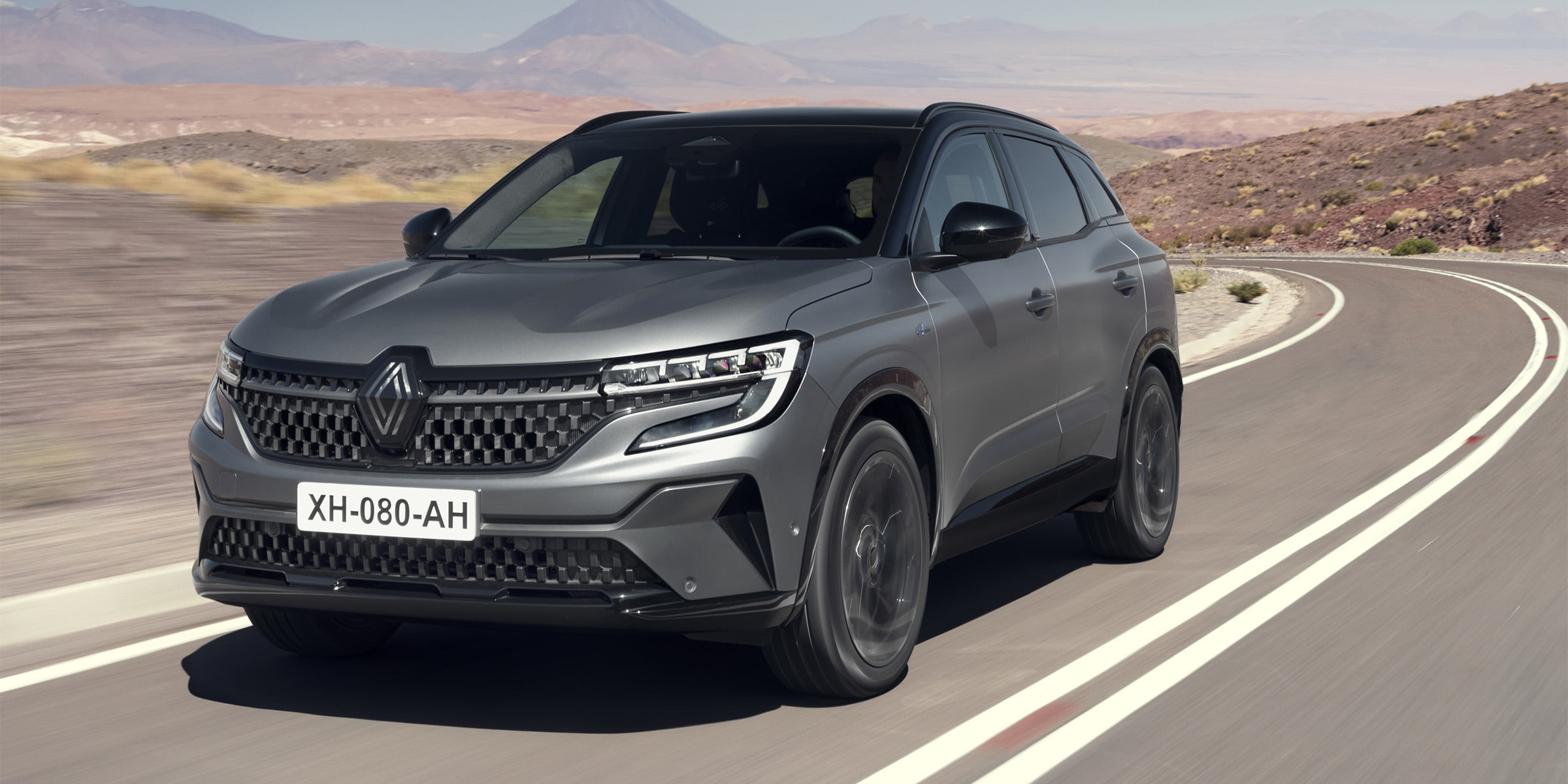
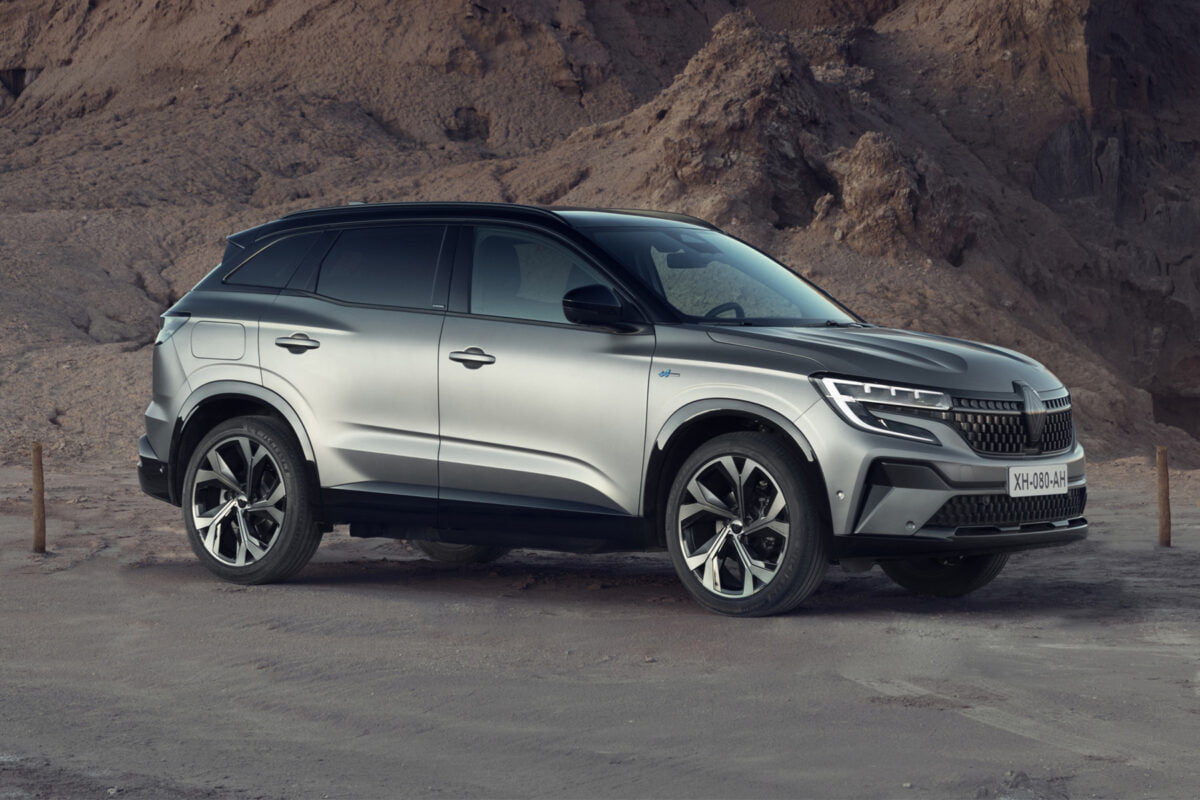
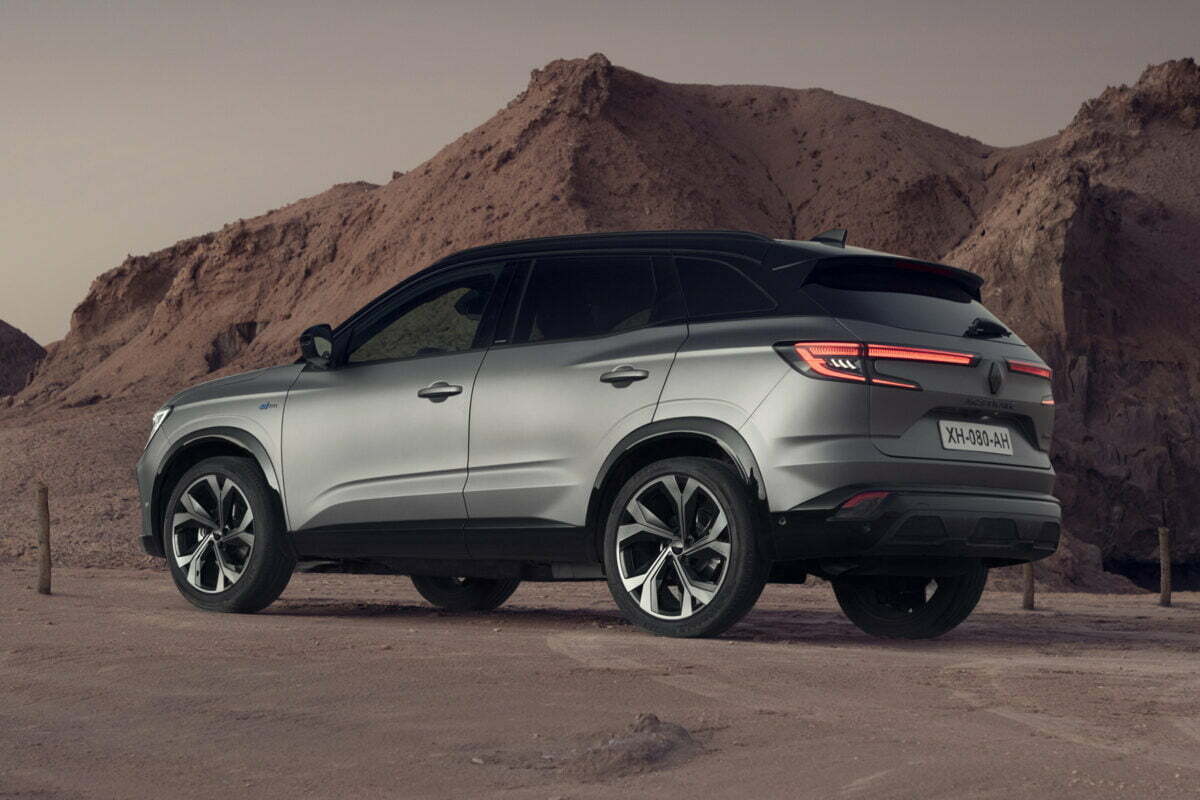
Renault has announced the price list for its new Austral petrol-electric hybrid SUV, which the brand has launched with the aim of “conquering the mid-sized family SUV market.”
The long-awaited replacement for the Kadjar SUV that was removed from sale last year, the Austral E-Tech is now available to order in the UK, posing a direct challenge to consistent best-sellers like the Nissan Qashqai, Kia Sportage and Hyundai Tucson.
While these established rivals are available with cheaper combustion-powered and mild hybrid powertrains, Renault is only offering the Austral with its ‘E-Tech’ hybrid engine, which the manufacturer says sets a new “benchmark” for hybrid power in its class, thanks to its low CO2 emissions and high fuel efficiency.
This ‘E-Tech’ powertrain makes use of 1.2-litre petrol engine and 2kWh battery pairing to provide 200hp and a reported fuel economy of 60mpg. By comparison, the Nissan Qashqai e-Power hybrid has an output of 190hp, and offers a fuel economy of around 53mpg.
The new Austral is a similar size to the retired Kadjar – it sits slightly taller and is six centimetres longer. While the Kadjar offered 527 litres of boot space, its successor has 35 litres of internal storage space and up to 555 litres of boot capacity.
On the tech front, the Austral features a 12-inch infotainment console and a 12-inch digital instrument cluster behind the steering wheel, as well as a nine-inch head-up display that projects driving information onto the windscreen.
The infotainment runs “up to 35 apps”, including a range of Google services including Google Maps, Google Assistant, and access to Google Play. Other Renault apps can plot navigation routes and reportedly operate home devices with voice control.
Key trim level features
Entry-level ‘techno’ (from £34,695)
Matrix LED headlights
19-inch alloy wheels
Roof bars
Front and rear parking sensors
Rear-view parking camera
Keyless entry
12-inch infotainment console
12-inch digital instrument cluster
Head-up display
Frameless rear-view mirror
Sliding centre console armrest
Dual-zone air conditioning
Mid-range ‘techno esprit Alpine’ (from £36,695)
All ‘techno’ features that are not replaced
20-inch alloy wheels
Alpine-inspired interior detailing
Alcantara leather upholstery with blue stitching
Heated front seats
Heated steering wheel
Electric power tailgate
Massage function for front seats
Traffic sign recognition
Adaptive cruise control
Lane keeping assistance
Top-spec ‘iconic esprit Alpine’ (from £39,495)
All ‘techno’ and ‘techno esprit Alpine’ features that are not replaced
Four-wheel steering
12-speaker audio system upgrade
360-degree parking camera
Panoramic sunroof
Wireless smartphone charging
The Austral range begins with the ‘techno’ trim grade, which includes matrix LED headlights, surround parking sensors and a parking camera, as well as keyless entry. A frameless rear-view mirror and automatic dual-zone air conditioning also come as standard.
Opting for the ‘techno esprit Alpine’ adds more upmarket interior detailing inspired by Renault’s performance-focused spin-off marque Alpine, Alcantara leather upholstery, heated front seats with a massage function, and an electronically-controlled boot lid. This grade also adds a few bits of safety tech, including traffic sign recognition, adaptive cruise control and lane keeping assistance.
Finally, the range-topping ‘iconic esprit Alpine’ trim features a speaker system upgrade, a surround-view parking camera, wireless smartphone charging and a panoramic sunroof. The model also comes with ‘four-wheel steering’, which tightens the car’s turning circle.
On sale now, the prices for the Renault Austral start at just south of £35k – around £1k more than the cheapest iteration of the Nissan Qashqai e-Power.
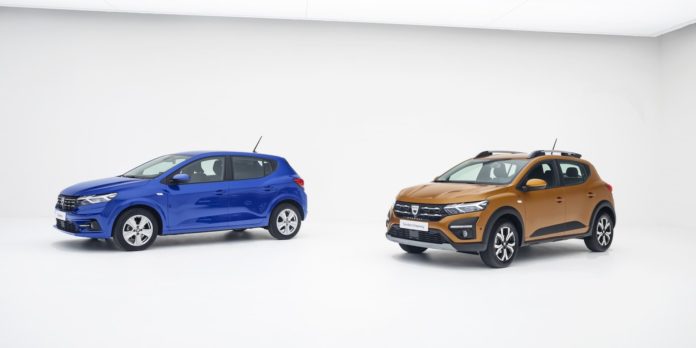
The Dacia Sandero is a supermini-class small five-door hatchback. This version is the all-new model that arrived in the UK in early 2021, replacing the original model that was launched back in 2013.
The new model follows Dacia’s traditional practice of offering plenty of value for money – the entry-level Sandero starts at just over £14k, meaning it is still easily the cheapest new car on sale in the UK. However, unlike the previous model, the new Dacia Sandero is a genuinely competitive car even without taking price into account.
Launching during 2020’s year of coronavirus lockdowns, Dacia has since updated its branding, and this now features on the Sandero. It has been praised for its comfort and practicality, and for continuing to offer a unique petrol/LPG dual-fuel engine option that helps to keep running costs down.
The main criticisms when it was launched concerned a lack of refinement compared to more expensive rivals, although a more serious issue has been Euro NCAP giving the Sandero a poor two-star rating (more safety information below).
As of February 2026, the Sandero holds a New CarExpert Rating of D, with a score of 58%. It scores top marks for its low running costs and CO2 emissions, and excellent reliability record. However, its media review scores are only average and its safety score is poor.
“The no-frills Dacia Sandero has been updated, and builds on its core values of practicality and outstanding value for money – just don’t expect much in the way of equipment.”
Model reviewed: Range overview Score: 8 / 10 “The new Dacia Sandero feels like a very well targeted update to its predecessor. It drives better than ever and introduces more big-car features and technology – but not at the expense of the value proposition, which remains pretty much unrivalled.” Read review
Auto Trader
Model reviewed: (2023) Score: 8 / 10 “Freshened up looks and new colours add a welcome garnish to Dacia’s already appealingly affordable Sandero.” (Dan Trent) Read review
Model reviewed: Range overview Score: 8 / 10 “Cheap and cheerful in an entirely good way, the new Dacia Sandero builds on the previous version’s affordability with more tech, better looks and improved refinement.” Read review
Car
Model reviewed: 1.0-litre petrol/LPG manual 100 TCe Bi-Fuel Comfort Score: 8 / 10 “No bones about it – the new Dacia Sandero is an unqualified success as a small, lively and economical family car, and in a rational world you wouldn’t be able to move for them instead of aspirational, oversized SUVs and premium hatchbacks.” Read review
Car Keys
Model reviewed: 1.0-litre petrol/LPG manual Bi-Fuel Score: 9 / 10 “The Dacia Sandero has been improved in virtually every area. Add in its astonishingly low list price and roomy interior, and it’s especially attractive. You’ll want to skip the entry-level models for their sparse kit list, and the safety rating is questionable, but the Sandero is more appealing than ever.” Read review
Carbuyer
Model reviewed: Range overview Score: 8 / 10 “The Dacia Sandero is a practical and clever supermini that may beg the question, why spend more?” Read review
Company Car Today
Model reviewed: 1.0-litre petrol manual TCe 90 Comfort “The Dacia Sandero is still a very cheap new car despite the price increase, but that rise comes hand-in-hand with big upgrades that make it feel less like such a bargain-basement car.” Read review
Daily Mirror
Model reviewed: 1.0-litre petrol manual Comfort Score: 10 / 10 “A lot of car for the price of a motorbike.” Read review
Eurekar
Model reviewed: Range overview “With its sharp new looks, added technology and huge value for money, the Dacia Sandero is a splendid supermini at a city car price – and that adds up to make it Britain’s most affordable new car by some margin.” Read review
Heycar
Model reviewed: Range overview Score: 7 / 10 “Much like supermarket corn flakes, the Dacia Sandero gives you more car for less money than its big-name rivals making it easy to forget that it doesn’t taste quite so good as the better-known brands.” (Phil Hall) Read review
Honest John
Model reviewed: Range overview Score: 6 / 10 “Starting from £7995, the Dacia Sandero is the cheapest new car on sale in the UK. It means you can have reliable motoring for the price of a second-hand alternative. The space inside is great for the price and so long as you avoid the basic model you get all the equipment you need.” Read review
The Sun
“The Dacia Sandero is modern, spacious and comfy, with decent body control and mega front-end grip.” Read review
The Telegraph
Model reviewed: 1.0-litre petrol manual Score: 6 / 10 “A style and dynamic transformation for this great-value car, which makes it much nicer to drive, to travel in and to live with. For less than £10,000 you can have a modern, comfortable and economical car, but you might find that two-star NCAP result a stretch too far.” Read review
Top Gear
Model reviewed: Range overview Score: 8 / 10 “Makes no promises it cannot keep, and absolutely nails the brief Renault/Dacia set for it: simple, spacious motoring for pennies on the pound. Now with added refinement.” Read review
Safety rating
Independent crash test and safety ratings from Euro NCAP
The Dacia Sandero scored a very poor two-star rating from Euro NCAP, which generated headlines in the motoring media and was a very disappointing result. However, a better understanding of why the Sandero was only rated two stars is important.
The Sandero scored reasonably well in terms of occupant protection for both adults and children in crash tests. It’s still short of the best small cars, but certainly adequate. If the overall rating was just based on crash performance, it would probably have been awarded four stars rather than two.
Where the Sandero really fell down was in its crash avoidance technology, which has become increasingly important in determining overall ratings – after all, it’s far better to avoid an accident altogether than to survive one. Compared to other small cars, the Dacia’s autonomous emergency braking system is more basic and unable to properly detect pedestrians or cyclists. It does better at avoiding other vehicles, but is still not as good as other small cars.
Given that many of the Sandero’s rivals are actually used cars from other brands based on older technology and older Euro NCAP standards, the overall two-star rating is not as bad as it sounds – although it’s still not good enough for a brand new car in 2021. In summary, the Sandero does an adequate job of protecting you in a crash but doesn’t do enough to to actually avoid one in the first place.
Eco rating
Independent economy and emissions ratings from Green NCAP
No eco rating
As of February 2026, the Dacia Sandero has not been assessed by Green NCAP.
Reliability rating
Reliability data provided exclusively for The Car Expert by MotorEasy
Total claims: 14 Average repair cost: £419.72 Last updated: April 2025
The Dacia Sandero has a very high reliability rating of 94%, according to warranty data provided exclusively to us by our commercial partner, MotorEasy. This score applies to both the current Sandero and also to previous generations, which is worth considering if you are considering a used Dacia Sandero.
With only 14 claims currently on file, we don’t yet have a full picture of the Sandero’s reliability, but engine faults already stand out with an average repair fee of almost £800. Fortunately, they are rare. The most common area of complaint is the braking system, but these faults are generally much cheaper to correct, with an average fix price of £200.
Make sure that any used car warranty you purchase covers all of these problem areas.
Awards
Trophies, prizes and awards that the Dacia Sandero has won (and then lost again)
2023
Auto Express Awards – Best Supermini
2021
What Car? Awards – Car of the Year* + Best Small Car* * Awards withdrawn after Euro NCAP safety rating was published.
DieselCar and EcoCar Top 50 – Best Small Car
Scottish Car of the Year Awards – Best Small Car
Similar cars
If you’re looking at the Dacia Sandero, you might also be interested in these alternatives
With their raised driving positions and rugged looks, if you are looking at buying a compact crossover or SUV, it is likely that safety is one of your top priorities.
And with safety laws tightening in the UK, the highly competitive small SUV market provides a wide array of crash tested models that offer plenty of protection in the case of a collision, and are fitted with driver assistance technology that can prevent the accident in the first place.
We have picked five of the safest small SUVs currently on sale using the ratings given out by independent crash tester Euro NCAP, which regularly tests new cars in every aspect of vehicle safety. Using the same ratings, we have also highlighted some compact crossovers that you should probably avoid if safety is your top priority.
Testing all body sizes from pint-sized city cars to chunky people carriers, Euro NCAP rates each car in four areas: adult occupant protection, child occupant protection, vulnerable road user protection (mainly cyclists and pedestrians) and safety assistance technology (accident avoidance and mitigation). The car is then given an overall star rating out of five.
Here at The Car Expert, we firmly believe that safety is a core component of any new car. Unlike most new car reviews that only report the headline score and don’t bother updating it over time, our unique Expert Rating Index includes the full Euro NCAP results for all cars tested and is kept up to date as ratings change or expire.
Five of the safest new small SUVs
Some of our top picks have particular stand-out strengths, while others are simply great all-rounders. Our SUV picks include traditional combustion-powered cars, plug-in hybrids and electric cars, and all have been awarded a five-star crash test rating from Euro NCAP.
On the other hand, our picks don’t include any SUV that hasn’t been put through its paces by Euro NCAP, and thus some newer crossover choices like the Jeep Avenger unfortunately have to sit this one out.
Small car
Year tested
Adult occupant protection
Child occupant protection
Vulnerable road user protection
Safety assistance technology
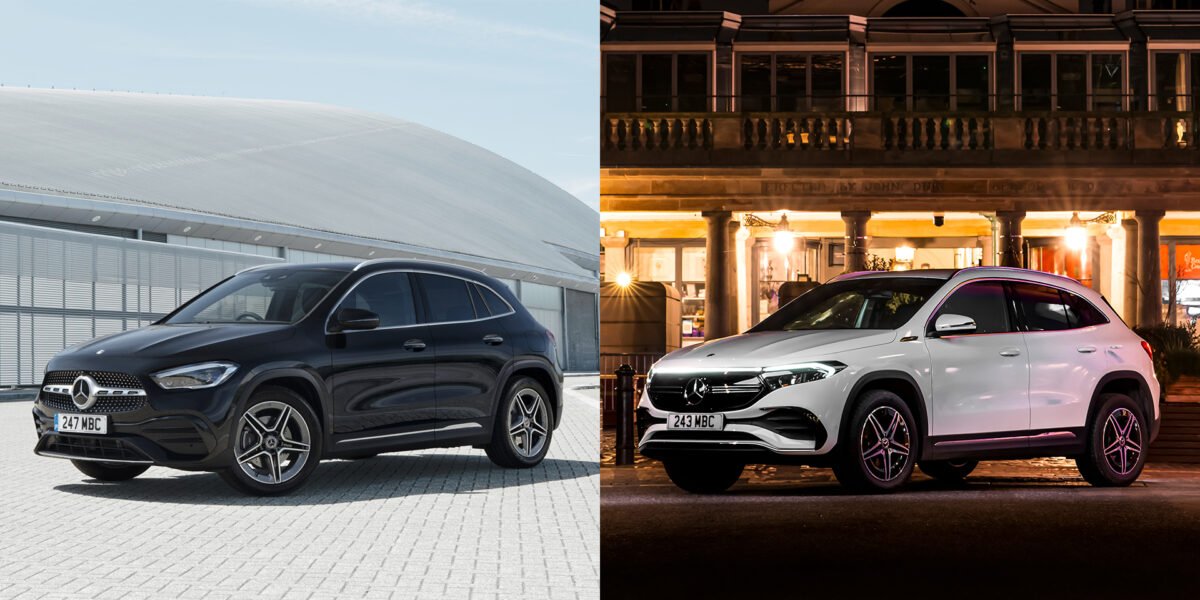
Mercedes-Benz EQA(and GLA)
2021
97% (96%)
90% (90%)
81% (79%)
75% (75%)
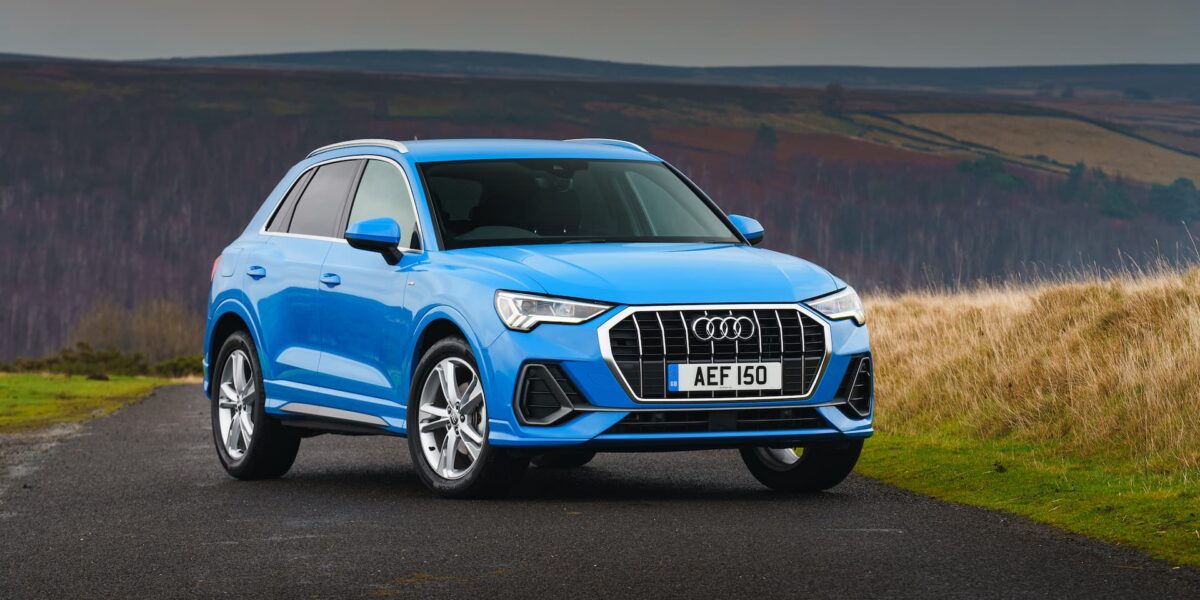
Audi Q3
2018
95%
86%
76%
85%
Volkswagen T-Cross
2019
97%
86%
81%
80%
BMW X1
2022
86%
89%
76%
92%
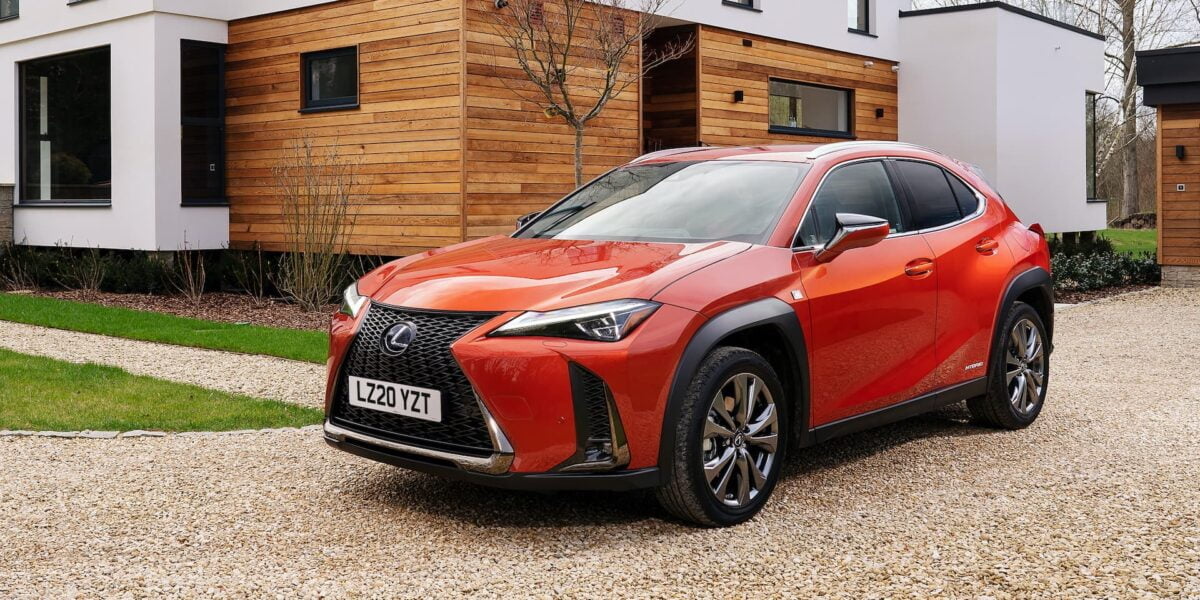
Lexus UX
2019
96%
85%
82%
77%
Source: Euro NCAP
Mercedes-Benz GLA & EQA
The two smallest SUVs in the Mercedes-Benz range, the combustion-powered GLA and its all-electric equivalent, the EQA, have some of the most impressive Euro NCAP scores around. The EQA has been given an occupant safety rating of 97%, the joint-best score in the small SUV class, and the GLA and EQA have the highest score on this list for child protection, which should be of considerable interest to parents when choosing a new car.
The Mercedes-Benz GLA currently holds an Expert Rating of 64%, while the EQA holds an Expert Rating of 58% – making it one of the lowest-scoring small SUVs on this list. Mostly that stems from the EQAs’s high price tag and rather rigid ride comfort.
The Audi Q3 was put through its paces by Euro NCAP at the end of 2018, and achieved high scores in every category. The Q3 particularly stands out for its safety assistance rating of 85%, making it the best small SUV on this list when it comes to preventing an accident in the first place. This is crucial as – obviously – avoiding an accident altogether is better than surviving one.
The Audi Q3 currently holds an Expert Rating of 66% according to our Expert Rating Index. Whether you do most of your driving in busy urban streets or congested motorways, the excellent safety systems provided as standard in the Q3 will help reduce your chances of getting into an accident.
Another fantastic all-rounder, the Volkswagen T-Cross was crash tested by Euro NCAP in 2019, achieving above 80% in every category. It was given an adult occupant safety rating of 97%, making the T-Cross just as safe for adults as the Mercedes-Benz EQA if a collision were to occur. This is made more impressive when you consider that a new T-Cross is available for just over £22,000.
The Volkswagen T-Cross currently holds an Expert Rating of 69% in our Expert Rating Index, praised by reviewers for its comfort, practicality and driving dynamics.
The newest entrant on our list, the third-generation BMW X1 passed its Euro NCAP examinations with flying colours in 2022, with a particularly impressive safety assistance technology score of 92%. This rating stands for petrol, diesel and plug-in hybrid versions of the X1, as well as the all-electric iX1.
The BMW X1 and iX1 both currently hold an Expert Rating of 70%, generally praised by reviewers for their spacious and well-equipped cabin, as well as their attractive exterior styling and large boot.
Available as either a hybrid or full-electric model, the Lexus UX was awarded a full five-star safety rating from Euro NCAP in 2019, and stood out thanks to its outstanding scores for the protection of vulnerable road users like pedestrians and cyclists. The UX is also highlighted by Euro NCAP for its impressive driver and passenger protection in the event of a collision, with an adult occupant safety score of 96%.
The UX has received mostly average to good scores from the UK motoring media – the hybrid version currently holds an Expert Rating of 60%, while its all-electric counterpart holds an Expert Rating of 54%. Despite its excellent safety ratings, reviewers have criticised the UX’s poor infotainment system and cramped interior, and the electric version has a rather unimpressive battery range.
The vast majority of compact crossovers and SUVs achieve a four- or five-star safety rating after their Euro NCAP testing, but there are a few small SUVs that miss the mark somewhat.
While it is probably best to avoid them if safety is a top priority on your search for your next car, these are still reasonably safe models by modern safety standards.
In some cases, a poor Euro NCAP rating will reflect how old the model is, or the sub-par levels of equipment on the standard model, while mid-range of top-spec models with additional safety features will be more than worthy of a five-star rating.
Small car
Year tested
Adult occupant score
Child occupant score
Vulnerable road user protection
Safety assistance technology
Dacia Duster
2017
71%
66%
56%
37%
Kia Stonic
2017
85%
84%
62%
25%
Jeep Renegade
2019
84%
82%
55%
58%
Source: Euro NCAP
Dacia Duster
It is fair to say that the Dacia Duster has received a very mixed pot of reviews since its 2017 arrival – achieving outstanding scores from some outlets due to its value-for-money, while also receiving a few poor reviews thanks to its three-star Euro NCAP safety rating.
While its adult and child occupant safety scores are decent considering its budget price tag, the Duster is not fitted with many safety assistance features, and thus received a low safety assistance score of 37%.
Another small SUV that was awarded a three-star rating from Euro NCAP in 2017, the Kia Stonic actually has some impressive driver and passenger protection in the event of a collision. What lets the side down is its lack of safety assistance features on the entry-level model, meaning that the standard SUV does not provide much help when it comes to avoiding a crash.
While praised for its off-road ability, the Jeep Renegade is not so praiseworthy when it comes to road safety. The small SUV was awarded a three-star rating from Euro NCAP in 2019, and while it proved to be quite safe in collision scenarios, it has the lowest vulnerable road user protection score in the whole of the small SUV sector.
This is because the Renegade has no emergency braking detection for pedestrians or cyclists – a feature that is readily available on a large majority of modern cars.
MG motors has given us first look at its Cyberster sports car – a two-seat convertible that is expected to arrive in Summer 2024.
Unveiled at the brand’s headquarters in London, this is a pre-production version of the roadster that MG has put on display to show the design direction the manufacturer is taking for this high-performance model. The design of the production model that is expected to arrive next year may look a little different – time will tell…
The Cyberster is essentially a venture into the unknown for MG Motors – a brand most recently known for its affordable family cars, including the highly-regarded electric MG 4. The convertible will also be a large milestone for the British automotive industry. With no direct competitors yet announced, it is set to be the first all-electric roadster on the UK market.
MG is yet to announce what the car’s performance stats might look like, but brand design director Carl Gotham comments that the Cyberster “will be as exciting as MG sports cars of the past.”
The convertible’s design reportedly draws inspiration from MGs heritage, featuring a long bonnet, low nose and smooth contours from front to back. It is around the same size and shape as the BMW Z4, and will have an electric-powered folding roof as standard. The exterior was designed in the UK, while the car’s insides were designed in China.
The car’s interior has a cockpit layout with a centre console that splits the driver and passenger sections of the cabin, and features three driver displays that curve around the yoke-shaped steering wheel on the driver’s side. The Cyberster is also fitted with scissor doors that open upwards.
As you would expect, MG doesn’t expect this roadster to be one of its best-sellers, stating its purpose is to lead the design style of future MG models.
No UK pricing and specifications has been announced so far – that will follow next year – but MG says that offering value-for-money is still one of its key objectives, and that the Cyberster will be “the world’s first affordable EV roadster”, undercutting the battery-powered performance cars currently on sale.
That sums up what we know about the MG Cyberster so far. More details are sure to follow in the coming months.
Honda has unveiled a new line-up of electrified SUVs at a launch event in Germany, including the next iteration of the large HR-V, the all-new mid-size ZR-V hybrid, and the all-electric e:Ny1 crossover.
Honda’s best-selling SUV, the CR-V has been unveiled in its sixth-generation guise, which offers more cabin and boot space than the model currently on sale.
The new version will arrive later this year to challenge the sales of increasingly popular Nissan Qashqai, and will be available as either a petrol-electric hybrid, which uses the same ‘e:HEV’ technology that underpins the latest Civic liftback, or as a plug-in hybrid (PHEV).
The SUV’s exterior design is an evolution of the current model, with the same bulky silhouette and side profile. The front and rear end have had a design overhaul that follows the design ethos of the compact HR-V crossover that arrived in 2021, with narrow LED headlights, and L-shaped tail lights that frame the rear window.
The new model has a sharper front end with a honeycomb grille design which sits above a new-look front bumper. It is slightly larger than its predecessor, Honda adding four centimetres to the wheelbase length, which the brand says provides around two centimetres of extra legroom for rear passengers. Boot space stands at 587 litres for the standard hybrid version, and 617 litres for the PHEV model.
The SUV will come with the same nine-inch infotainment console as the Civic, and leather upholstery will be included as standard. The PHEV version will also come with self-parking technology.
Honda has also given us a first look at its new ZR-V hybrid model that will soon sit between the compact HR-V and large CR-V in its SUV range when it arrives this Autumn.
The new ZR-V is essentially a high-riding version of the latest Honda Civic. Powered by a re-tuned version of the Civic’s 2.0-litre four-cylinder petrol engine with a pair of electric motors and an automatic gearbox, Honda says that the ZR-V has an average fuel economy of 49mpg. The boot has space for 380 litres of luggage – 20 litres more than the HR-V.
Like the new CR-V, the ZR-V comes with a nine-inch infotainment screen. The options list will include a panoramic sunroof, heated front and rear seats and Honda’s ‘Sensing’ range of safety and driver-assistance features.
Last but not least, Honda has also revealed its new e:Ny1 crossover, which will be the second all-electric (EV) Honda model to arrive in the UK after the Honda e hatchback. The model will pose a direct sales challenge to the new Smart #1 and Kia Niro EV crossover models.
The manufacturer says that the EV debuts a “all-new electric identity for Honda”, with short front overhang, large wheels and a wide stance, creating a low centre of gravity that “delivers a fun and confidence-inspiring drive.”
The e:Ny1 is powered by a 69kWh battery and electric motor pairing that generates a maximum output of around 200hp and a maximum battery range of 256 miles. The battery can be reportedly charged from 10% to 80% in 45 minutes.
On-board tech will include a 15-inch infotainment display that provides access to “a comprehensive suite of infotainment and driving options”, and wireless smartphone charging.
That sums up what we know about these new electrified additions to the Honda range. More details, including UK specifications, performance stats and pricing, will follow in the coming months.
Following the pint-sized i10’s facelift a few months ago, Hyundai announced that its larger i20 hatchback is also set for a minor mid-life refresh, including updated exterior looks and added on-board tech.
Giving the compact hatchback a sportier design, Hyundai will be hoping that this updated i20 will pose a better challenge to the popular Vauxhall Corsa and Ford Fiesta, particularly as the latter is set for retirement this Summer.
This update announcement only refers to the standard i20 range – Hyundai has not yet confirmed whether the performance-packed i20 N will be getting a similar treatment.
Hyundai has redesigned the car’s front end, with a lower nose that moves the brand’s logo from the front grille to the bonnet. Alongside a new-look rear bumper, the refreshed i20 also features thicker LED lights in the front and rear and new-look 16- or 17-inch alloy wheels.
The hatchback’s options list will also include three new paint colours – a metallic lime green, a metallic blue and a grey.
Inside, Hyundai has given the i20 more on-board tech as standard, including a four-inch LCD instrument display behind the steering wheel, 4G data connectivity and over-the-air map updates for the infotainment system.
Matching one of the new exterior colours, the options list will also include a new ‘Lucid Lime’ interior package, which includes alternate upholstery patterns and lime stitching, as well as various lime accents across the dashboard and door panels.
To meet the UK’s most recent safety regulation changes, the car now comes with lane-keeping assistance as standard too. That sums up what we know about the upcoming i20 facelift – all else remains the same, including the current powertrain options and other optional extras.
Hyundai is set to announce the updated i20’s pricing and detailed specifications list, but has said that the refreshed model will become available to order in the second half of 2023. More details are sure to follow in the coming months.
The Hyundai i20 has received praise for being a significant improvement over the previous model. Reviewers have particularly noted its styling and interior quality, although it’s still not considered to be on a par with rivals like the SEAT Ibiza and Ford Fiesta. It currently holds an Expert Rating of 62%.
The Kia Soul is a car that has ‘grown up’. When the first one launched in 2008 it was presented as a somewhat quirky fashionable model, for those who wanted SUV space in a small car that didn’t quite look like an SUV, or much else. The ‘lifestyle’ touches even included door speakers that pulsated in a choice of colours.
The colours are long gone, the car evolving from fashion item to a pioneer of Kia’s electric strategy which has rapidly gathered pace. The second-generation Soul launched in 2013 and the Soul EV followed two years later as the Korean brand’s first dedicated electric vehicle.
By the time of the third generation, which first appeared in 2019, Kia had decided to offer the Soul in Europe only as an EV, initially with just one battery option and an impressive range. The new model now reaching showrooms is designed to widen the Soul’s appeal by offering a cheaper, lower-powered version with a smaller battery – therefore it won’t go as far before you need to plug it in, though possibly far enough for many potential buyers.
As of May 2023, media reviews of the Soul EV have earned the car an overall Expert Rating of 74% on The Car Expert’s award-winning Expert Rating Index. The launch of a new power option will likely produce more reviews so this rating could well move up or down a few points.
It’s fair to say that what the Kia Soul is has been the subject of some debate in the past, arguments raging as to whether it is a boxy small hatch or a small SUV.
In the new version, Kia plays up to this controversy. The longer-range ‘Explore’ model comes with body panel add-ons and roof rails to give it more typical beefed up SUV looks, whereas the newcomer, dubbed ‘Urban’, does without these panels as with its shorter range it’s pitched as a more around town runabout.
What you basically get is a car with a small footprint but a lot of space – at least for four occupants, though less so for their luggage. Perhaps this is the car that most suits that much-overused phrase, ‘crossover’…
First impressions
There aren’t that many Kia Souls on UK roads and so there is little chance of losing your pride and joy in a car park, because this is an instantly recognisable model. It’s quite square, but square in an oddly attractive way. Its strong wedge front and bluff rear are easier on the eye compared to that other, less successful, box-like small car – the short-lived Nissan Cube.
Visually, the Soul actually appears less box-like than its predecessor. It’s 6cm longer than the version it’s replaced, as well as a little bit wider. This helps with the visuals, giving it a more planted presence.
It’s very easy to get into, to get comfortable in and to drive. Whichever of the two versions you go, for the Kia Soul offers quite a lot of instant appeal.
We like: A car that doesn’t look like every other small car out there We don’t like: The visuals will divide onlookers
What do you get for your money?
Prices for the new Soul EV start at £32,845 for the Urban, and £39,045 for the Explore – so like many EVs they are a major investment. You do get a lot of equipment for your money – the Urban includes such niceties as adaptive cruise control, keyless entry and starting, auto headlamps and an eight-inch central touchscreen which is fully Apple and Android smartphone compatible and also displays the imagery from a reversing camera.
As well as the extra potency and greater range, and the muscle-look body add-ons, Explore customers also get more electric bits, such as on the seat and mirror adjustment, rain-sensing wipers, heated front seats and parking sensors alongside the reversing camera. There’s also black leather upholstery among the extra details while the central touchscreen grows to just over ten inches.
Explore owners are also given seven free years of Kia Connect, a telematics service which works with the touchscreen and a smartphone to download lots of useful information such as traffic and weather updates, even finding parking places ahead of your arrival. And you can keep track of such essentials as charging status and pre-heat or cool the cabin before you get in the car.
Both models score well on safety. A whole lot of active safety features come as standard, extending to the likes of lane-keeping and intelligent speed limit assistance, while the Explore adds blind-spot collision avoidance, safe exit and rear cross-traffic alerts and highway-driving assistance.
All that lot would likely be enough to earn the Soul a five-star safety rating but at the time of writing the current model has not been tested by Euro NCAP – its predecessor model earned four stars in 2014.
We like: Strong equipment levels especially safety kit We don’t like: It’s pricey even by mainstream EV standards
What’s the Kia Soul EV like inside?
It’s very easy to slip inside and get comfortable in the Kia Soul, basically because the space is adequate, whether in front or back and especially above one’s head. You are reminded, however that this is actually a small car, the rear seats being quite cosy – you could fit two adults of reasonable height in there but not three. The one let-down is the boot – it’s officially quoted as having 315 litres of space, but it’s a split-level layout with the lower section a handy place to stow the charging leads. As a result what’s left for luggage is somewhat modest.
Some might expect a radical cabin design to go with the car’s image of being a little bit different, but in fact it’s all quite conventional but well-crafted. The controls are easy to get used to and provide clear information – while many commands are carried out through the touchscreen, there are also some proper buttons round it and everything combines very well.
We like: Intuitive layout of controls We don’t like: Too small a boot space
What’s under the bonnet?
Of course ‘under the bonnet’ is a bit of a misnomer with electric cars as the battery pack sits between the front and rear axle line under the floor of the passenger cabin, keeping the centre of gravity low, while the motor is placed between the wheels, both versions being front-wheel-drive.
The Explore, which replaces a version called the Max, comes with a 64kWh battery powering a 204hp motor. This gives it an official range between charges of 280 miles, which in the real world means it should typically crest 250 miles in normal use. It’s also reasonably perky, passing 62mph from rest in under eight seconds.
The new Urban drops the purchase price by just over £6,000 by means of a smaller (but also lighter) battery pack of 39.2kWh and a motor of 136hp. This means that 0-62mph sprint extends to just under 10 seconds and it won’t go as far, the official range being 171 miles combined and around 250 miles in ‘city driving’ (low speeds and lots of stop-start which means lots of battery regeneration). With the average motorist doing less than 120 miles a day, the Soul Urban will suit many buyers who by plugging it in at home each night won’t need to worry about public charging networks.
Both cars offer DC charging on a 50kW charger for the Urban, and up to 80kW for the Explore. Using one of these both versions’ batteries will go from 10 to 80% in 47 minutes. On a typical 7kW AC home charger you need to plug the Urban in for six hours, the Explore for a bit over nine hours.
What’s the Kia Soul EV like to drive?
Any EV aimed at constantly taking on a typically traffic-choked urban road network has to be easy to drive and the Soul EV certainly ticks this box. Press the button on the centre console, select D on the big rotary knob next to the on button, and off you glide, smoothly and virtually silently.
On the road the car simply lacks in fuss – even the lower-powered Urban does not feel sluggish under acceleration, eagerly gaining speed but without any undue aggression. Ride comfort is excellent, the chassis soaking up any nasties in the road surface.
It may seem a big square thing but it’s easy to manoeuvre in a typical urban environment – the high driving position gives good all-round vision and the car’s exterior dimensions are actually quite compact. Admittedly this ease transmits to a lack of feel through the steering wheel when cornering at pace out on the road, but the car remains competent through the twisty bits.
One aspect we like is the regenerative braking – there are paddles on either side of the steering wheel selecting increasing levels of retardation, but we found it more than adequate to leave the system in the auto setting that judges the regen based on driving environment, actually analysing the traffic ahead and setting the retardation to suit.
The car does follow the increasing trend towards nanny-state driving – we are used to searching in menus for ways to silence lane-departure warnings and such, but as well as issuing audio alerts if one is even a little over the speed limit, the Soul lets out a ‘bing’ each time said speed limit changes. This can become wearing but thankfully can be silenced in the settings. One Kia we drove even felt it necessary to tell us the car ahead in a queue had moved off – putting a message at the top of the dash display, just below the windscreen so in reading the message one would see that said car had moved away anyway…
We like: Relaxed driving experience – very easy car to drive We don’t like: Too many bings and bongs from dash
Verdict
There’s a lot to like about the Kia Soul – the once peripheral car for those who wanted to be different has grown up into a very effective EV with a sensible real-world range that outdoes many rivals. And it has done this while retaining an air of exclusivity which marks it apart from the majority.
It’s still a small car, sensible enough for four without too much luggage and not five, and it is not cheap. But you do get what you pay for and the Soul is a lot of practical EV for the money.
Similar cars
If you’re looking at the Kia Soul EV, you might also be interested in these alternatives.
Model tested: Kia Soul EV Urban Price as tested: £32,845 Engine: 100kW single electric motor Gearbox: Single-speed automatic
Power: 136 hp Torque: 395 Nm Top speed: 97 mph 0-62 mph: 9.9 seconds
Electric range: 171 miles CO2 emissions: 0 g/km Euro NCAP safety rating: Not yet tested TCE Expert Rating:75% (as of May 2023)
Buy a Kia Soul EV
If you’re looking to buy a new or used Kia Soul EV, The Car Expert’s partners can help you find the right car
Buy a car online from your sofa. We’ll deliver it. Find out more
Search less, live more. We make finding the right car simple. Find out more
Search for your next new or used car with Auto Trader. Find out more
Discover great deals available on both new and used cars. Find out more
Lease a Kia Soul EV
If you’re looking to lease a new Kia Soul EV, The Car Expert’s partners can help you find a competitive deal
Personal contract hire deals from Carparison Leasing. Find out more
Personal contract hire deals from Moneyshake. Find out more
Personal contract hire deals from Rivervale Leasing. Find out more
Personal contract hire deals from LeaseLoco. Find out more
Subscribe to a Kia Soul EV
Subscriptions are becoming a very popular way for consumers to try an electric car for a few weeks or months to help decide whether it’s a suitable alternative to a petrol car. If you’re interested in a car subscription, The Car Expert’s partners can help. (PS: What’s a car subscription?)
The Ford Fiesta ST is the performance version of the regular Fiesta hatchback. This iteration of the ST was based on the sixth-generation Fiesta, first arriving in the UK in 2013 and produced until the overall Fiesta range was replaced in 2017.
The Fiesta ST was only available in a three-door body style at launch, but a five-door version joined the range in 2016, alongside a more powerful ST200 model. After five years on sale, this ST iteration was removed from sale in 2017, before being replaced by the next (and final) version of the Fiesta ST in 2018.
Carbuyer said it was “as practical and affordable as it is fast and fun to drive”, while Parker‘s Richard Aucock commented that the hot hatch was “superb to drive, with brilliant handling and a fantastic 182hp 1.6-litre turbo engine delivering exceptional performance.”
“The cabin might be a little too fussy in its details for some”, noted Evo, “but the aggressive exterior styling hits all the right notes for a small hot hatch.”
As of February 2026, the sixth-generation Ford Fiesta ST holds a Used Car Expert Rating of B, with a score of 67%. It scores top marks for its media review scores, while its reliability score is good. However, due to its age, the safety score is very poor.
Body style: Three- and five-door hatch Engines:petrol Price when new:From £18,015 on-road
Launched: Summer 2013 Last updated: Autumn 2016 Replaced: Summer 2018
Image gallery
Media reviews
Highlighted reviews and road tests from across the UK automotive media. Click any of the boxes to view.
Auto Trader
Model reviewed: Range overview Score: 8.8 / 10 “The Ford Fiesta ST looks the part, it’s fantastic fun to drive and it’s available for a bargain pricetag. That’s pretty much everything you could ask from a good hot hatch. Simply brilliant.” (Ivan Aistrop) Read review
Car Keys
Model reviewed: ST2 Score: 8 / 10 “The latest Ford Fiesta ST is built for speed, not comfort, and its suspension is stiff enough to purse the lips of a disapproving aunt, which may be exactly what you want.” Read review
Carbuyer
Model reviewed: Range overview Score: 10 / 10 “The Ford Fiesta ST has become renowned as one the best hot hatchbacks ever. It ticks all the boxes, being as practical and affordable as it is fast and fun to drive.” Read review
Evo
Model reviewed: Score: 9 / 10 “The Ford Fiesta ST wasn’t just the best car in its class when new, it also ranks among the very best small hot hatches of all time in our book. Combining the standard Fiesta’s sparkling chassis with a lively, brawny turbocharged EcoBoost engine and slick manual gearshift. The cabin might be a little too fussy in its details for some, but the aggressive exterior styling hits all the right notes for a small hot hatch.” Read review
Honest John
Model reviewed: Range overview Score: 10 / 10 “The Ford Fiesta ST is the class leader in the small hot hatch market, due to its impressive performance and unparalleled flexibility. It’s cheaper, more useable and better rounded than all of its rivals, while its improved economy means it isn’t too expensive to run on a daily basis.” Read review
Motoring Research
Model reviewed: 1.6-litre petrol manual ST3 “It’s a sign of how good the Ford Fiesta ST is that, as the model evolves, Ford is having to make it more expensive, not cheaper. That’s how superb it is to drive; how strong its engine is, how sublime its handling is.” (Richard Aucock) Read review
Parkers
Model reviewed: Range overview Score: 9 / 10 “The Ford Fiesta ST Mk7 is a hot hatch great. It’s superb to drive, with brilliant handling and a fantastic 182hp 1.6-litre turbo engine delivering exceptional performance – 0-62mph takes just 6.9 seconds. You even get 15 seconds of ‘overboost’, which takes power up to almost 200hp, to help with overtaking. Be in no doubt, it’s a potent hot hatch indeed.” (Richard Aucock) Read review
The Sunday Times
Model reviewed: Score: 10 / 10 “The best way I can define it is to say that the Ford Fiesta ST feels like a throwback to another, simpler and more entertaining age. Of course, back then the price paid for such amusement was that cars tended to fold up around you like Swiss Army knives when it went wrong, while the Fiesta is safe, strong and, unless you deliberately remove its safety nets, about as likely to spin as a Jimmy Anderson yorker.” (Andrew Frankel) Read review
Model reviewed: Score: 8 / 10 “The Ford Fiesta is full of juicy speed and joie de vivre.” (Jeremy Clarkson) Read review
Top Gear
Model reviewed: ST200 “The Ford Fiesta ST is simply one of the best cars on sale right now, and has been for three years. And hey, plenty of people will want to celebrate that fact by having the most powerful, most rare, most grey version to truly advertise their Fiesta ST evangelism. So Ford still deserves to sell all 200 it is making.” (Ollie Kew) Read review
Model reviewed: 1.6-litre petrol manual three-door ST “You can go nuts in the Ford Fiesta ST and it just… clings. Way past the point where other hot hatches have fallen off a metaphorical cliff.” Read review
Safety rating
Independent crash test and safety ratings from Euro NCAP
The sixth-generation Ford Fiesta was crash tested by safety body Euro NCAP back in 2012 – a rating that also stood for the performance-enhanced ST model. However, this rating expired in January 2019 as the Fiesta no longer met the requirements for a five-star car. This is normal practice, as Euro NCAP reviews its ratings on most cars annually with most ratings expiring after about six or seven years.
However, if you are comparing a used Ford Fiesta ST to other vehicles of similar age, whose ratings will have probably also expired, its safety rating score is still useful.
Eco rating
Independent economy and emissions ratings from Green NCAP
No eco rating
The sixth-generation Ford Fiesta was not tested by Green NCAP during its production life. The emissions testing programme began in 2018, after this iteration of the Fiesta was removed from production.
Reliability rating
Reliability data provided exclusively for The Car Expert by MotorEasy
Total claims: 655 Average repair cost: £441.31 Last updated: April 2025
The overall Ford Fiesta family has a reliability score of 80% as of April 2025 (our most recent data point), which is better than average. This applies to all Fiesta models in MotorEasy’s database, including older model generations and all powertrain versions from entry-level diesels to the top-spec ST.
The most common Fiesta warranty claims relate to suspension issues, but these are relatively inexpensive to fix on average, costing about £200. Engine and gearbox repairs are the most expensive claims, with an average repair bill of around £1,000 each.
The average repair cost for Ford Fiesta warranty claims is just over £400, which is not bad but still more than the cost of a used car warranty, so it’s certainly worth considering. If you’re looking at a used Fiesta, make sure any extended warranty cover you purchase covers all of the potential problem areas shown above.
Awards
Significant UK trophies and awards that the Ford Fiesta has received.
2022
Parkers Awards – Used Car of the Year
2016
BusinessCar Awards – Best Mainstream Supermini
2015
AM Awards – Used Car of the Year
BusinessCar Awards – Best Mainstream Supermini
2014
Auto Express Awards – Best Supermini
The Telegraph Motoring Awards – Car of the Year
2013
Auto Express Awards – Best Supermini
Women’s Car of the Year
2009
Auto Express Awards – Car of the Year
Red Dot Design Award
Similar cars
If you’re looking at the Ford Fiesta, you might also be interested in these alternatives.
Alloy wheels are a big part of a car’s looks and image. Along with a great paintjob and other cosmetic touches such as a black roof or body-coloured door mirrors, a set of alloys can really finish a car off beautifully.
Vehicle manufacturers and new and used car showrooms still include ‘alloy wheels’ as a major part of their advertising and selling talk, and for good reason: they’re a must-have part of the deal as far as thousands of car buyers are concerned.
So it’s ironic then, that wheels are among the hardest components on any vehicle to keep clean, tidy and in good condition. Road dirt and bad weather aside, car wheels have a really hard life and are at the mercy of everyday motoring mistakes, incidents and accidents, every mile of the journey.
Potholes, uneven road surfaces, kerbs, multi-storey car parks – the list is endless, and these are all waiting to do some damage to your lovely alloys. For most drivers, it’s only a matter of time before you hear the tell-tale and heart-sinking sound of a wheel making contact with a paving stone, kerb or pothole.
Scuffed and scraped alloy wheels not only look unsightly, they will reduce the value of your vehicle as well. When you either come to sell your car or hand it back to the finance company, you’ll get hit for hundreds of pounds if your wheels are all scratched up.
So how can you soften that blow and find some sort of cover?
What is alloy wheel cover?
Alloy wheel cover is a specific type of insurance product that covers you if you damage your wheels and require a repair. Drivers will appreciate how easy it is to scuff a wheel against a kerb or crash through a pothole and come out the other side worse for wear.
This kind of insurance brings the peace of mind of knowing that the cost – or at least the bulk of it – will be provided in the event of repairs being needed. There is often an excess amount that needs to be found by the car owner, but this is a small price to pay when you consider the full cost of repair to a wheel, or wheels.
Does it come with my car insurance?
You can claim for damage to your alloy wheels against your normal car insurance policy, but the excess amount on your policy is probably more than the cost of the repair, so it’s not likely to be worth it. Plus, making a claim on your car insurance policy will probably affect your no-claim discount, which will increase the cost of your insurance for the next several years.
Having separate alloy wheel cover means you never have to claim for damage on your usual policy. It’s one of many similar types of policies available, like scratch and dent cover, tyre insurance, key insurance and so on.
Is it worth having?
Alloys can be expensive to put right so this is a popular option for anyone driving around on expensive wheels –some higher-end examples including dual-tone, diamond cut or split-rim wheels can be difficult, time-consuming and therefore expensive to repair.
Specialist insurers offer specific alloy wheel cover which you pay for separately from your legally-required car insurance. With it you won’t need to claim on your car insurance and risk higher premiums, and you won’t lose that no-claims bonus.
It is also worth thinking about if you have a car on a PCP or other kind of lease arrangement where you are responsible for returning the vehicle at the end of the term, in the condition it arrived. If your wheels are scratched ‘beyond normal wear and tear’, you’ll either have to get them fixed at your expense or be billed for whatever the finance company thinks it should cost (which will certainly be a lot more!).
What do I get?
Alloy wheel policies vary but most will cover:
Refurbishment of a damaged wheel
Replacement of a wheel if it’s deemed too badly damaged to repair – you will normally get a set amount paid towards any new wheel
You can make numerous claims up to a maximum number for the year or term, depending on insurer
What they won’t cover:
Repairs to wheels that have already been scratched or damaged
Alloy wheels that didn’t come with the car when it was manufactured. Some insurers will consider this but make sure you tell them upfront
Unusual or very expensive wheels with complicated designs
What’s the cost?
It varies greatly between suppliers and on the type of wheel being insured, but most alloy cover policies will cost around £65-£90 a year. With the average alloy wheel repair standing at £90, it’s certainly something worth considering.
Your car’s exhaust system is one of the hardest-working components on the vehicle so it needs to be working properly. If your car seems to be struggling for performance, or is making some unusual noises, it’s possible that your exhaust could be broken.
A modern car exhaust system is much more than a simply chimney that takes gases from the engine to the outside world. It’s a crucial component for cleaning up harmful emissions coming out of the engine to reduce pollution. It can also help drive a turbocharger, by using the exhaust gases to spin a turbine that pushes more air into the engine to generate more power.
The exhaust on a passenger car will always exit right at the back of the vehicle to make sure that the fumes and gases are kept well away from the car’s cabin. This also keeps noise down inside the car.
However, the exhaust system quite vulnerable to damage. Being located on the underside of the car, a few centimetres from the road surface, means that it’s at the mercy of the elements and easily damaged by impact. That may be a direct damage from crunching over a speed hump, for example, or gradual corrosion from water and muck being splashed up from the road over a number of years.
As your car gets older, the chance of something failing within the exhaust system increases. If that happens, it will need fixing as soon as possible. You want a good system in working order to get the performance and fuel economy from your car, and the annual MOT test checks for noise readings and emissions levels. An exhaust system fault could end up returning you an expensive ‘fail’.
Ten signs that your exhaust could be broken
How do you know if your car has a problem with it’s exhaust? Here’s what to look and listen out for:
1. Rattle or vibration
If the exhaust pipe has come loose and is touching another part of the car’s underside, the chances are you’ll feel a vibration going through the vehicle.
This is often accompanied by an obvious rattling or buzzing noise, as metallic bits move around and hit other metallic bits at a high frequency.
2. Visible discolouring or damage
Older cars often have blackened exhaust tips, which is not necessarily a sign of a problem as it can be caused by years of hot exhaust gases exiting the system. Newer cars shouldn’t show this, however, so any visible discolouring at the tips or along the main exhaust pipe could indicate a problem.
Many modern cars actually have fake exhaust tips – either additional tips that are not conected to the rest of the exhaust system, or oversized and stylised holes that aren’t even exhaust tips at all – to make them look visually impressive. That means it can be harder to see the actual tip of the exhaust pipe where gases leave the vehicle.
3. Rumbling sound
One of the first signs that there could be something wrong somewhere along the exhaust pipe is a deep, low-down rumble – or maybe it sounds a bit like your car is blowing a raspberry to the rest of the world. That could signify a hole is developing, so some of exhaust gases are escaping through that hole rather than passing all the way to the end of the system.
4. Loud engine noise from the front of the car
If you’re getting a lot of noise from under the bonnet somewhere, it could mean a cracked manifold (the part where the gases come out of the engine and are collected into one pipe).
Alternatively, it coule be a worn gasket (a seal between different parts, usually between the engine block and the manifold).
If you’ve ever heard a car engine with no exhaust system attached to it, it’s unbelievably noisy as there’s nothing to direct and muffle the noise of hundreds of explosions going on inside the engine every second.
5. Loud engine noise from the rear of the car
Towards the rear of the car, just before the exhaust tip, is a box-shaped section called the silencer. As its name suggests, its job is to help muffle the noise of the engine.
Since it’s located right near the back of the underside of the car, it tends to be hit by dirt, water and debris flicked up from the road. That can easily lead to the silencer being damaged, which can result in a very noisy car.
6. Hissing noise
A hissing noise from underneath the car probable means there’s a leak somewhere, possibly through a crack in the exhaust manifold or in the pipework itself.
Unlike a hole, a crack may be very difficult to spot, especially if you’re looking at the car while it’s cold. As the metallic exhaust system heats up, it expands. This means that a crack may not appear until the engine is properly warmed up.
7. Muffled burbling
This could be cause by something that has broken off or come loose and that is now blocking the exhaust system. This can be quite dangerous as it can increase the gas pressure in the exhaust and lead to expensive (and explosive) breakages.
8. Catalytic converter
This is an important part of the exhaust system as it converts harmful gases associated with exhaust into more acceptable fumes. A catalytic converter (or ‘cat’) is usually a boxy section of the exhaust system located towards the middle of the exhaust pipe snaking its way under the car. They can be noisy when broken.
They’re also a target for thieves because they contain a lot of precious metals – and because the exhaust system hangs underneath the car, they’re easily accessible and quickly removable. If your car suddenly sounds louder and the noise is coming from around the middle of the car, check to see if there’s a big section of the exhaust missing.
9. Poor performance
An exhaust system is a part of the car’s entire engine make-up that you just can’t do without. If it’s worn out, loose or leaking, you will probably notice a difference in your car’s performance.
If your car seems to be struggling more than normal in everyday driving, it could be a problem in the exhaust system.
10. Decreased fuel economy
Fuel consumption tends to go hand-in-hand with performance. If your car is having to work harder than normal, it will also be using more fuel. If your exhaust is faulty, it can affect the fuel efficiency of your engine, which could mean greater use of petrol or diesel just to run it.
If your car seems to be using more fuel than normal, it could be a problem in the exhaust.
Consumer new car sales had a tough month in April, with registrations down more than 5% on the same month last year. It was also another middling month for new EV registrations as the electric revolution continues to struggle for momentum.
According to data published by the Society of Motor Manufacturers and Traders (SMMT) this morning, the overall market was up nearly 12%. However, this was again thanks to growth in fleet purchasing as the sector’s rebound from pandemic delays continues.
Depressed new car market for consumers
Overall new car sales were slightly stronger than expected thanks to improved fleet registrations, although the longer-term decline evident since the middle of the last decade continues.
For private new car sales, a poor April follows a flat March and means that year-to-date sales are now down on last year. About 3,600 fewer new cars were registered to private buyers in April compared to the same month last year. And it’s about 23% – or 18,000 cars – fewer than seen in April 2019, the last year before the Covid-19 pandemic.
For fleets, the superficial improvement over last year is still a minor victory in comparison to the significant drop from pre-pandemic sales. Using the same comparison, this month’s data was down 32% – or 32,000 fewer cars – than April 2019.
April
Buyer
April 2023
April 2022
% change
Market share 2023
Market share 2022
Private
61,342
64,916
-5.5%
46.1%
54.5%
Fleet
68,537
51,505
33.1%
51.5%
43.2%
Business
3,111
2,746
13.3%
2.3%
2.3%
Total
132,990
119,167
11.6%
Source: SMMT
Year to date
Buyer
YTD 2023
YTD 2022
% change
Market share 2023
Market share 2022
Private
289,595
292,339
-0.9%
46.2%
54.5%
Fleet
321,817
231,580
39.0%
51.3%
43.1%
Business
15,838
12,808
23.7%
2.5%
2.4%
Total
627,250
536,727
16.9%
Source: SMMT
Welcome improvement for EVs, but more needed
On the surface of it, April was a good month for new electric car registrations, with sales up 59% and market share showing significant growth over the same month last year. While that’s true, it’s still less than overall EV market share for 2022 (15.4% vs. 16.6%).
As the deadline for the end of petrol and diesel new car sales looms larger each month, what is needed is growth each month and the market is underachieving on this. The only good news worth mentioning here is that this month’s EV improvements were achieved without significant input from Tesla, which tends to dominate the EV market but registers large numbers of cars in some months while very few in other months.
The government wants to introduce mandates for minimum numbers of EV sales from as soon as next year, but based on current performance, all that’s going to do is limit petrol car sales and reduce overall new car sales even further than we have already.
Plug-in hybrids outperformed the overall market for the first time in several months, but remain the least popular type of powertrain for new cars. Regular hybrids underachieved against the overall market, which reverses a trend from recent months.
New car registrations by fuel type – April
Fuel
April 2023
April 2022
% change
Market share 2023
Market share 2022
Petrol*
77,275
73,223
5.5%
58.1%
61.4%
Electric
20,522
12,899
59.1%
15.4%
10.8%
Hybrid
15,026
13,951
7.7%
11.3%
11.7%
Diesel*
11,572
12,645
-8.5%
8.7%
10.6%
Plug-in hybrid
8,595
6,449
33.3%
6.5%
5.4%
Total
132,990
119,167
11.6%
*includes mild hybrids Source: SMMT
New car registrations by fuel type – Year to date
Fuel
YTD 2023
YTD 2022
% change
Market share 2023
Market share 2022
Petrol*
357,912
305,876
17.0%
57.0%
57.0%
Electric
96,755
77,064
25.6%
15.4%
14.4%
Hybrid
80,887
62,063
30.3%
12.9%
11.6%
Diesel*
51,336
55,514
-7.5%
8.2%
10.4%
Plug-in hybrid
40,360
36,210
11.5%
6.4%
6.7%
Total
627,250
536,727
16.9%
*includes mild hybrids Source: SMMT
Good month, bad month
Within the overall market, there are always some brands that are performing well while others lag behind. April was no different, with some brands showing large swings compared to last year.
Volkswagen continued to be the UK’s top-selling car brand in April, ahead of Audi (helped by a very strong month for the Audi A3), Ford, Kia and Vauxhall (boosted by a return to form for the Vauxhall Corsa).
The Ford Puma small SUV was the UK’s best-selling new car in April, taking top spot for the first time since August 2021 and becoming the fourth different car to top the list in the four months of the year so far. The Vauxhall Corsa finished second, which was enough to push it back to the top in year-to-date sales after a relatively quiet month for the Nissan Qashqai.
The Kia Sportage and Hyundai Tucson continued their strong performances, while the Audi A3 made a surprise appearance in fifth position. The MG ZS small SUV was another unexpected name in the top ten list, while last month’s sales superstar, the Tesla Model Y, unsurprisingly disappeared again. Don’t worry, Tesla fans, you’ll probably see it at or near the top of the charts again in September.
We’ll have our full analysis of the best-sellers in the next day or so as usual.
Rolls-Royce has announced that the sun has finally set on its Dawn cabriolet, as production of this convertible model is now at an end.
Like the Wraith coupé it is based on, the Dawn is built on ageing BMW foundations, and its imminent demise has been predicted for a while now, particularly after the debut of its successor back in October – the all-electric Rolls-Royce Spectre.
Powered by a twin-turbocharged 6.6-litre V12 petrol engine, the Dawn is the last combustion-powered open-top that Rolls-Royce will ever make, as the brand shifts towards its future in luxury electric car production.
A spacious four-seater with a smooth and powerful engine that delivers drop-top driving thrills, the Rolls-Royce Dawn was highly regarded by the British motoring media. As it is removed from sale, the convertible holds an Expert Rating of 85% – a score hindered by its huge price tag and size, as well as its relatively small boot.
If the Volkswagen Polo or Audi A1 are on your radar for your next new car, the Skoda Fabia should be considered too. Skoda has done a great job of packaging a stylish supermini with a punchy engine, plenty of comfort and competitive affordability, especially when it comes to a car in the VW Group family.
First impressions of the Fabia are unassuming. It’s an understated car design with nothing to really jar the eye. The typical Skoda grille is probably too large, but that’s pretty normal for car design these days and it fits the brand’s family look. Although the Fabia is available in bolder colours, choosing a more muted, neutral tone gives the Fabia an executive, premium feel.
What’s new about the Skoda Fabia?
The latest iteration of the Skoda Fabia was launched in 2021, replacing the previous generation that had been on sale since 2015. And with the demise of the Skoda Citigo city car, it’s currently the smallest model in the Skoda family.
As before, the Fabia is based on the underpinnings of the Volkswagen Polo – as are the SEAT Ibiza and Audi A1. This time it’s the current Polo, which was launched in 2017. It’s petrol only, with no diesel, hybrid or electric models available. As of May 2023, there are four trim levels available: SE Comfort, SE L, Colour Edition and Monte Carlo.
Unlike the previous model, there’s no estate version this time around, so the only bodystyle is a five-door hatchback.
How does it look?
As mentioned, the Skoda Fabia is entirely conventional and conservative in appearance, so you won’t find any wacky design ideas here. Depending on your point of view, it’s either bland or sleek – especially in silver, grey or black.
Entry-level SE Comfort models get silver 15-inch alloy wheels as standard, while the SE L and Colour Edition models get silver 16-inch alloy wheels and the top-spec Monte Carlo gets larger 17-inch wheels that look a bit bolder. Each model can be optioned up one inch in wheel size at extra cost, so you can take a Monte Carlo out to 18-inch wheels if you’d like.
The clean lines are echoed inside the cabin, which we’ll explore in more detail below. Skoda design has traditionally been more function than form, but the Fabia certainly gives the impression of being a more expensive car than it really is.
Not as good as: Hyundai i20, Peugeot 208, Renault Clio, Volkswagen Polo Better than: Citroën C3, Ford Fiesta, Kia Rio, Mini hatch, SEAT Ibiza, Vauxall Corsa
What are the specs like?
Pring for the entry-level SE Comfort starts at £18,600 (on-road). This is a pretty basic spec by modern standards, so you miss out on any sort of luxuries. The stereo is a simple unit, with old-school bluetooth connection for your phone to play tunes or make calls. You do get full LED headlights, however, which provide lots of light and are very energy-efficient. Rear parking sensors are also standard, but not fronts.
The Colour Edition adds £700 to the price and offers decent value for the extra cash. You get a digital driver’s display, replacing the standard analogue gauges, along with larger alloy wheels, a start/stop button (so you don’t need to stick the key into the ignition) and a selection of two-tone paint combinations.
The next step up is SE L, which is £1,635 over an equivalent SE Comfort but not available in the cheaper engine versions. Key points for the extra spend include a higher-spec infotainment system with larger screen and satnav, cruise control, dual-zone climate control, larger 16-inch alloy wheels, electric windows all round and a centre armrest. You also get more chrome and nicer trim, which combine with the larger screen to give a more premium feel to the cabin.
Top spec is Monte Carlo, which adds more kit and a sportier flair. Visually, this means revised bumpers and larger 17-inch alloy wheels on the outside, with metallic red and faux carbon fibre highlights throughout the cabin, along with partial faux leather on the seats.
Monte Carlo pricing is £700 over an equivalent SE L, but there’s also a more powerful 150hp engine available as well (only with automatic transmision).
For all models, there are a few option packages that bundle up certain extras to suit your needs.
In terms of safety, things are pretty good. Tested in 2021, Euro NCAP awarded the Skoda Fabia a top rating of five stars, with good scores in all categories. In short, that means that the Fabia does well at avoiding an accident and also protects you well if a crash can’t be avoided.
Not as good as: Hyundai i20, Mini hatch, Renault Clio, Volkswagen Polo Better than: Citroën C3, Dacia Sandero, SEAT Ibiza, Vauxhall Corsa
What’s the Skoda Fabia like inside?
The interior impression will depend on the spec chosen. Base models are pretty grey and plain, while higher-end models look more impressive and the Monte Carlo is certainly more colourful.
There’s no lumbar support making longer journeys a bit uncomfortable towards the end, while the fabric seats —while comfy on short journeys—aren’t the most practical surface to keep clean for pet- or child-based families. Mind you, that’s pretty much the same for most cars in this price range.
There’s a surprising amount of space in the Fabia, in both the front and rear seats. Boot space is also strong for this class of car, with 380 litre on offer – that’s more than many cars in the next category up.
There are impressive levels of standard kit, too, particularly at SE L and Monte Carlo levels. On these models, the nine-inch centre display features Bluetooth connectivity and integration with Apple CarPlay and Android Auto. On Monte Carlo, it also includes navigation (optional on SE L and Colour Edition). However, you might find yourself relying on Apple or Goodle for directions as, in our experience, the Skoda nav system can be frustrating.
Other options include two USB-C ports and wireless charging, among a swathe of other features that bolster Skoda’s reputation for great value-for-money. Some options are only available as part of packages, so you’ll need to spend some time with the brochure and price list to work it all out.
Not as good as: Mini hatch, Renault Clio, Volkswagen Polo Better than: Dacia Sandero, Hyundai i20, SEAT Ibiza, Vauxhall Corsa
Under the bonnet
Under the bonnet, you have a choice of 1.0-litre petrol engines for most Fabias. Lower-level SE Comfort and Colour Edition models have an 80hp or 95hp unit hooked up to a five-speed manual, while on any model you can also have a 110hp engine with a choice of six-speed manual or six-speed automatic.
Finally, the Monte Carlo also has the exclusive choice of a 1.5-litre petrol engine with a six-speed automatic.
We drove the 110hp unit with six-speed manual, which delivers peppy power. Not only is there a nicely measured delivery of torque at roundabouts and traffic lights, but the six-speed gear box shifts smoothly and quietly. The official fuel consumption for this combo is 50-55mpg depending on conditions, but 60mpg isn’t out of the question if driven gently. This is above average for a car without any hybrid assistance.
Not as good as: Hyundai i20, Renault Clio, Toyota Yaris (hybrid), Volkswagen Polo Better than: Citroën C3, Dacia Sandero, Peugeot 208, Vauxhall Corsa
What’s the Skoda Fabia like to drive?
As mentioned, the Fabia responds like a nippy city car half its size. The turbo of that tiny 1.0-litre engine works efficiently and the good fuel economy only adds more gold stars to the ‘plus’ column.
The steering is light, cornering is an easy affair and the car feels very reliable at higher speeds on country roads. The driving position is comfortable and the reversing camera, which comes as standard, makes simple work of parking.
The Fabia’s turning circle is a tick over 10m, which is less than for a Mini hatch. So it’s very capable as an urban runabout.
Not as good as: Volkswagen Polo Better than: Citroën C3, Dacia Sandero, Mini hatch, Vauxhall Corsa
Verdict
With so many superminis in the market, the Skoda Fabia faces some stiff competition, not least from its Volkswagen Group stablemates at SEAT, VW and Audi. However, the Fabia has much to offer someone looking for a sensibly priced, sensible-looking car, with sensible running costs.
Don’t mistake sensible for dull. That panoramic room doesn’t necessarily improve visibility – which is good with or without the sunroof – but with it, the car seems lighter and looks great. What’s more, Skoda is one of the few manufacturers providing helpful accessories to drivers as standard. Thoughtful equipment, such as an ice scraper that sits in the fuel port and the umbrella in the driver’s door, are – provided they always find their way home after use – some smart features that don’t involve ‘tech’ but can still get you on your way quicker.
The Skoda Fabia has broad appeal, though solos and couples will find it easier to live with than small families – unless it’s just you and the dog. In that case, it’s perfect.
Mazda has announced that its MX-5 convertible is now available in a limited edition ‘Kizuna’ trim, which distinguishes itself from the standard range thanks to a navy blue soft top and bright nappa leather upholstery.
The ‘Kizuna’ is Mazda’s first special edition MX-5 model since the launch of the limited-run ‘Sport Venture’ trim back in 2021. Only 250 ‘Kizuna’ models will be sold in the UK, and the trim is now available to configure and order on the brand’s online store. Please note that the ‘Kizuna’ trim is only available with the convertible body style, not the retractable hardtop MX-5 RF.
This trim grade is based on the mid-range ‘Exclusive-Line’ trim, which includes adaptive LED headlights, body-coloured electrically-adjustable door mirrors and rear parking sensors, the ‘Kizuna’ features a ‘light stone’ nappa leather interior trim covered by a blue fabric roof.
The model will only be available with the lead-in 132hp 1.5-litre ‘Skyactiv-G’ petrol engine. Two exterior colours are available – 170 cars will be in ‘Machine Grey’ with the remaining 80 cars in ‘Deep Crystal Blue’.
With a name that translates to ‘enduring bond’ in English, the ‘Kizuna’ is now on sale with prices starting at just over £30k – £2k more than the middling ‘Exclusive-Line’ trim and around £2k less than the range-topping ‘Homura’ spec.
The Mazda MX-5 has received widespread praise for its driving dynamics, light weight and uncompromised sports car experience. The only real criticisms relate to its lack of space and inevitably poor practicality. It currently holds an Expert Rating of 85%.
The Nissan Ariya is a mid-sized five-door SUV, and the Japanese manufacturer’s first attempt at a large all-electric (EV) family car. After a year of delays due to supply shortages, the Ariya arrived in the UK in the middle of 2022.
There’s also a go-faster version called the Nissan Ariya Nismo, but that’s not covered here. We’re currently building a separate page for that model, so check back again very soon.
Customers can choose from two battery grades for their Ariya – the standard 63kWh unit or the ‘extended range’ 87kWh battery, which Nissan promises can travel 250 miles and 329 miles respectively from full charge. While entry-level models use a single 160kW electric motor to power the front wheels, higher-spec variants are all-wheel drive, with a motor in the front and the back. The top-spec model is the Ariya Nismo, which pushes out 430hp.
Nissan’s first big EV launch since the introduction of the current-generation Nissan Leaf in 2018, the Ariya has been well-received by the British motoring media so far – Auto Express describes the SUV as “a great leap in the right direction for Nissan” that Car says “looks set for a battle royal at the top-end of the class.” Our own editor at The Car Expert, Stuart Masson, says that “if you’re making the switch from a petrol or diesel car to an EV, the Nissan Ariya would be a great choice.”
“The Ariya is a great-looking and well-equipped electric family SUV”, Carwow explains, “but its boot is a bit on the small side and other EVs have better charging capabilities.”
Reviewers agree that the Nissan is well-equipped and refined inside, but a few comment that the Ariya might struggle to stand out from a very competitive all-electric SUV class, as it doesn’t bring anything new to the table. “It’s no better than anything that’s already been out there for a while”, The Sun comments, adding that the Hyundai Ioniq 5 and Kia EV6 are better choices.
That said, Driving Electric argues that the Ariya is still a great all-electric option worthy of consideration. “This is by no means the cheapest zero-emissions family car around, but it’s a premium-feeling product that gets loads of kit for the money.”
As of October 2025, the Nissan Ariya holds a New Car Expert Rating of A, with a score of 76%. It earns top marks for its excellent safety rating, zero tailpipe emissions and low running costs, while its media reviews are also good. However, Nissan’s new car warranty cover is only average.
Body style: Mid-size SUV Engines:electric, battery-powered Price:From £35,000 on-road
Launched: Summer 2022 Last updated: Summer 2025 Replacement due: TBA
Image gallery
Media reviews
Highlighted reviews and road tests from across the UK automotive media. Click any of the boxes to view.
Featured reviews
“There are more choices than ever for a family EV, and that number is increasing rapidly. But you’re making the switch from a petrol or diesel car to an EV, the Nissan Ariya would be a great choice.”
“The Nissan Ariya is a great-looking and well-equipped electric family SUV, but its boot is a bit on the small side and other EVs have better charging capabilities.”
Model reviewed: Evolve 160kW 63kWh Score: 8.2 / 10 “The Nissan Ariya is a fine family car. If you’re making the switch from a petrol or diesel car to an EV, it’s a very enjoyable experience that is unlikely to cause you any regret. It’s stylish and comfortable, and although it’s not cheap, it’s certainly competitive with other electric SUVs.” Author: Stuart Masson Read review
Auto Express
Model reviewed: Range overview Score: 9 / 10 “The Ariya is great to drive for a mid-size SUV, while decent practicality, refinement and a premium cabin add further appeal. Pricing is competitive compared to its close EV rivals, although its overall efficiency lags behind the best in class – which is a shame considering the healthy battery capacity the Ariya has. That aside, the Nissan Ariya is a fantastic choice that we can wholeheartedly recommend.” Author: Steve Walker Read review
Model reviewed: 91kWh dual motor e-4orce Evolve Score: 8 / 10 “The Nissan Ariya e-4orce, as the name suggests, adds four-wheel-drive grip (and a fair few quid) to one of our favourite electric cars. As well as even better straight line performance, it actually rides slightly better than two-wheel-drive Ariyas, but that wouldn’t be enough to make us switch our allegiance from the brilliant and cheaper models in the line-up.” Author: Steve Fowler Read review
Model reviewed: 87kWh single motor Evolve Score: 9 / 10 “If you regularly need to tackle longer journeys, this is the Nissan Ariya for you. It should offer a good 50 miles more per charge than the 63kWh edition, and it has all of the same strengths and appeal that brought that version our top car award. But the price is hard to overlook; many buyers could be better off saving the £6,000 and resorting to the occasional extra public charge.” Author: John McIlroy Read review
Model reviewed: 63kWh single motor Advance Score: 10 / 10 “The Nissan Ariya is a shining example of an EV done right. Predictable and usable range, plenty of kit on even the entry-level model, quality, space and style combine to make this a desirable car that’s backed up by solid performance and superb refinement. It also acquits itself well dynamically.” Author: Alex Ingram Read review
Auto Trader
Model reviewed: Range overview Score: 9 / 10 “The Nissan Ariya has its work cut out against strong rivals like the ID.4 (plus its Skoda and Audi relatives), the Volvo XC40 Recharge, Kia EV6 and Ford Mustang Mach-E but impresses with its style, performance and range. Nissan’s long experience with big-selling EVs like the Leaf should also give you confidence it knows what it’s about here.” Author: Dan Trent Read review
Business Car
Model reviewed: Score: 8 / 10 “The Ariya impresses with its exterior and interior style, how refined and efficient it is to drive and as such it is worthy of serious consideration.” (Martyn Collins) Read review
Car
Model reviewed: Range overview Score: 6 / 10 “The Nissan Ariya is certainly a massive step on from the second generation Leaf. With its concept car looks inside and out, decent rear space and efficiency, it’s a perfectly sensible SUV with a useful dose of desirability. However, the boot isn’t particularly impressive for. a family SUV, while the ride and handling disappoints.” Author: Alan Taylor-Jones Read review
Car Keys
Model reviewed: Range overview Score: 8 / 10 “All signs point towards this EV being a big step up from Nissan. The design, battery technology and interior are all big advancements.” Author: Ted Welford Read review
Carbuyer
Model reviewed: Range overview Score: 8.4 / 10 “The Ariya may only be Nissan’s first attempt at an electric SUV, but it manages to be one of the most well-rounded models on the market.” Author: Richard Ingram, Andy Goodwin Read review
Driving Electric
Model reviewed: Range overview Score: 8 / 10 “Comfortable, refined and striking, Nissan’s follow-up to the pioneering Leaf is a strong contender in the electric family-car class.” Author: Ellis Hyde Read review
Electrifying.com
Model reviewed: Range overview Score: 7 / 10 “Nissan’s electric family SUV isn’t the most practical, but it’s admirably different from other electric SUVs.” Author: Mike Askew Read review
Green Car Guide
Model reviewed: 87kWh e-4orce Evolve Score: 9 / 10 “The front-wheel drive Nissan Ariya is a good all-round car, but having spent a week with the e-4ORCE all-wheel drive model, that would be our preferred option, as, in our view, an SUV, or a ‘coupe crossover’, should have capable grip levels. You also get more performance, and with the 87 kWh battery, a longer range.” Author: Paul Clarke Read review
Model reviewed: 63kWh Advance Score: 8 / 10 “The Ariya offers the space and the comfortable driving experience that should come as standard with an SUV or a crossover, but what it doesn’t offer in front-wheel drive form is the grip that should be offered by an SUV.” (Paul Clarke) Read review
Heycar
Model reviewed: Range overview Score: 8 / 10 “The Nissan Ariya is a late arrival from a brand that helped kickstart the EV revolution. It’s an electric SUV with plenty of rivals, then, but by taking its time Nissan has made the Ariya competitive and moved the game on a long way from the Leaf. It’s a strong all-rounder, but some key alternatives beat it in some areas.” Author: Lawrence Allan Read review
Honest John
Model reviewed: Range overview Score: 8 / 10 “The Nissan Ariya is a case of better late than never, proving a worthy competitor to the best electric SUVs around right now. We love the cabin design and the space, and it seems to drive well on first impressions. Boot space and peak charging speeds aren’t class-leading, however.” Read review
Parkers
Model reviewed: Range overview Score: 8.2 / 10 “The interior is a huge step up from other Nissan cars, the tech is spot on and on paper at least, the charging and range specs look good enough.” Read review
The Sun
Model reviewed: Range overview “The market is already loaded with electric SUVs, and Ariya doesn’t move the game on. Not even a little bit. It’s no better than anything that’s already been out there for a while, like a Ford Mustang Mach-E or a Tesla Model Y or a Volvo XC40. And the Korean EVs trump it in every single way.” Author: Rob Gill Read review
The Sunday Times
Model reviewed: Range overview Score: 9 / 10 “On the face of it, the Ariya looks a little costly when compared with other similar mass-market electric SUVs, and that may limit its appeal. However, its civility, quality and driving performance mean it compares favourably with any rival, while looking modern inside and out without resorting to gimmickry.” Read review
The Telegraph
Model reviewed: 87kWh Evolve Score: 6 / 10 “The Nissan Ariya’s biggest problem is that it doesn’t really bring anything new to the game. In an increasingly crowded part of the market, it tries to carve out a niche for itself only to find others have already been there and done that – and more convincingly.” (Alex Robbins) Read review
Model reviewed: 63kWh Advance Score: 8 / 10 “At first sight and on jumping inside, the Nissan Ariya feels like a much more expensive car than it is. But when you’ve lived with it for a few days, the faults start to appear and become slightly annoying; the ride in particular, but also the less-than-intuitive infotainment. Make up your own mind about the styling, but while Nissan’s second battery passenger car has been a long time coming, it’s actually quite an accomplished machine.” (Andrew English) Read review
Top Gear
Model reviewed: Range overview Score: 7 / 10 “Not all that novel, but at least the Nissan Ariya is well equipped and the interior will win over many.” Read review
Which EV?
Model reviewed: Range overview Score: 7.5 / 10 “The Nissan Ariya takes quality up a notch for Nissan vehicles and delivers a very competitive electric crossover SUV. It is expensive, putting it directly against the likes of the Kia EV6 and Hyundai IONIQ 5, and a price bracket above these brands’ cheaper EVs. But the interior is luxurious, the boot capacious with the rear seats down, and the driving comfortable. Well worth considering.” (James Morris) Read review
Safety rating
Independent crash test and safety ratings from Euro NCAP
Clean Air Index: 10 / 10 Energy Efficiency Index: 9.3 / 10 Greenhouse Gas Index: 9.5 / 10
Running cost rating
Monthly cost of ownership data provided exclusively for The Car Expert by Clear Vehicle Data
Battery range
Average
Score
Variation
Score
EV models
283 miles
B
Electrical efficiency
Average
Score
Variation
Score
EV models
3.8 m/KWh
D
Insurance group
Average
Score
Variation
Score
All models
35
D
Service and maintenance
Cost
Score
Year 1
£209
B
Year 2
£446
A
Year 3
£778
B
Year 4
£878
A
Year 5
£1,169
A
Overall
£3,480
A
According to numbers provided exclusively to The Car Expert by our data partner, Clear Vehicle Data, the Nissan Ariya is very cheap to run.
It’s electrical efficiency (the EV equivalent of miles per gallon for a petrol or diesel car) is good, and while insurance premiums might cost more than you might expect, the SUV’s scheduled servicing costs are excellent.
In addition, an official battery range of 285 miles (which varies from 247 miles to 330 miles, depending on which model you choose) is well above average. So you shouldn’t need to worry about running out of charge in normal day-to-day driving.
Reliability rating
Reliability data provided exclusively for The Car Expert by MotorEasy
No reliability rating
As of October 2025, we don’t have enough reliability data on the Nissan Ariya to generate a reliability rating.
The Car Expert’s reliability information is provided exclusively to us using workshop and extended warranty data from our partner, MotorEasy, sourced from both official dealerships and independent workshops.
As soon as MotorEasy has sufficient data on the Ariya, we’ll publish the results here.
Warranty rating
New car warranty information for the Nissan Ariya
Overall rating
C
50%
New car warranty duration
3 years
New car warranty mileage
60,000 miles
Battery warranty duration
8 years
Battery warranty mileage
100,000 miles
Nissan’s new car warranty is pretty much the bare minimum offered in the UK, with a duration of three years and a limit of 60,000 miles. Other rivals in the price bracket do better (and in some cases, much better).
In addition to the standard new car warranty, there is an eight-year/100,000-mile warranty for the battery components.
Warranty on a used Nissan Ariya
As of October 2025, all Nissan Ariyas should still be covered by their new car warranty. The first Ariyas hit UK roads in late 2022, meaning the first cars will shortly reach the end of their new car warranty (unless they have already hit the 60,000-mile limit).
If you are buying an ‘Approved Used’ Ariya from an official Nissan dealership, you will get a minimum 12-month warranty included.
If you are buying a used Ariya from an independent dealership, any warranty offered will vary and will probably be managed by a third-party warranty company.
If you are buying a used Ariya from a private seller, there are no warranty protections beyond any remaining portion of the original new car warranty.
If you’re looking to buy a used car that is approaching the end of its warranty period, a used car warranty is usually a worthwhile investment. Check out The Car Expert’s guide to the best used car warranty providers, which will probably be cheaper than a warranty sold by a dealer.
Date: October 2023 Recall number: R/2023/281 Model types: All Build dates: 03/2022 to 04/2023 Number of vehicles affected: 3,538 Defect: On affected vehicles there is a potential for conductive fibrous shavings from the drive motors’ slip ring assembly to momentarily cause a short circuit between the two slip rings. Remedy: Update the software of the Inverter ECM with software that has been modified to reset instantly in the event of a short circuit detection.
Date: May 2023 Recall number: R/2023/118 Model types: All Build dates: 04/2022 to 08/2022 Number of vehicles affected: 770 Defect: On affected vehicles, a potential software concern may result in the combination meter screen intermittently switching OFF for 5 seconds and then switching back ON. Remedy: Over-the-air (OTA) software update sent to customers vehicle updating the combination meter software only.
As of September 2024 (our most recent data point), there have been two DVSA vehicle safety recalls on the Nissan Ariya. These cover two different software issues.
Not all vehicles are affected by recalls. You can check to see if your car is included in any of the above recalls by visiting the DVLA website or contacting your local Nissan dealer.
If your car is affected by a recall, the vehicle must be repaired and you should not be charged for any work required. If you are buying a used Ariya, you should insist that any outstanding recall work is completed before you take delivery of the vehicle.
Awards
Trophies, prizes and awards that the Nissan Ariya has received
2025
Caravan and Motorhome Club Awards – Best Towcar (1,500kg – 1,600kg caravan)
If you’re looking to buy a new or used Nissan Ariya, The Car Expert’s partners can help you find the right car
Find your next used car with Motors.co.uk. Find out more
Search for your next new or used car with Auto Trader. Find out more
Discover great deals available on both new and used cars. Find out more
Lease a Nissan Ariya
If you’re looking to lease a new Nissan Ariya, The Car Expert’s partners can help you find a competitive deal
Personal contract hire deals from Carwow. Find out more
Personal contract hire deals from Leasing.com. Find out more
Personal contract hire deals from Select Car Leasing. Find out more
Subscribe to a Nissan Ariya
Subscriptions are becoming a very popular way for consumers to try an electric car for a few weeks or months to help decide whether it’s a suitable alternative to a petrol car. If you’re interested in a car subscription, The Car Expert’s partners can help. (PS: What’s a car subscription?)
An extinction-level event is on the horizon – one that will, in less than seven years’ time, wipe out all new petrol-powered cars in the UK. For internal combustion engines, these really are the last days of the dinosaurs.
This extinction-level event for fossil fuels has already begun. Most new diesel cars are already gone, and the number of purely petrol-powered cars is starting to dwindle as car companies switch their investments to new electrified vehicles. In fact, there are unlikely to be any major new purely petrol cars released in the UK ever again, as the car industry shifts to hybrid and fully electric models.
But the ultimate drop-dead date for new petrol cars is still seven years away, so there’s still time to enjoy a new petrol car. If you’re looking for a new or near-new vehicle today and you’re not ready to switch to an electric or plug-in hybrid model, there are still a number of excellent petrol-powered cars available to buy.
In the third of a four-part series celebrating the finest of petrol power, we’re looking at the best new and near-new petrol cars on the market that you can buy for £75K.
Whether you’re in the market for a lavish and comfortable saloon or SUV, or something a bit more thrilling in the bends, this list has you covered. All of our recommendations are backed by our award-winning Expert Rating Index, which tracks and ranks more than 480 different cars from 54 manufacturers, based on more than 14,500 reviews from 30 of the UK’s top motoring titles.
All fuel consumption and gearbox information relate to the cheapest trim and petrol engine combination on offer. All Expert Rating scores are correct as of April 2023.
Luxury saloons
Mercedes-Benz S-Class
Available near-new for less than £75K
If you are looking for petrol-powered automotive opulence, look no further than the lavish Mercedes-Benz S-Class. The executive saloon currently holds an Expert Rating of 85%, and has been widely praised for its refined and tech-laden interior.
At the time of writing, this Mercedes-Benz is available near-new on the used market for just under £75k. Picking up a brand-new model is considerably more expensive, and the options list gets really pricey.
Audi’s flagship saloon, the A8 has received almost unanimously positive reviews from the UK media, again commended for its luxurious and tech-filled interior. That said, it isn’t as spacious in the rear as its key rival, the S-Class.
Currently holding an Expert Rating of 75%, the Audi A8 is also available near-new for under £75k, but usually a few thousand cheaper than its Mercedes-Benz counterpart.
The Land Rover Defender is one of the longest standing nameplates in British motoring. The upmarket SUV is a polished all-rounder that combines outstanding off-road ability with smooth on-road performance from a V8 petrol engine (or a diesel, or a plug-in hybrid, but we’re not talking about those today).
Despite its manufacturer’s poor reliability track record, the Defender currently holds an Expert Rating of 80%. A new model can be purchased for under the £75k threshold, with enough room to comfortably explore the options list.
The last-generation Honda Civic Type R was a pretty tough act to follow, and its successor is another corker. Currently holding an Expert Rating of 89%, the hot hatch offers a thrilling and engaging driving experience with a more subdued but still sporty exterior.
Pricing for the latest iteration of the Civic Type R currently starts at around £50k, meaning that you can explore the optional accessories to your heart’s content should you have £75k to spend.
Perhaps the last in a long line of loud and proud coupés, the Toyota GR Supra is an impressive all-round sports car known for its punchy performance and well-balanced handling that is sure to get you grinning in tight bends.
Currently holding an Expert Rating of 73%, the Supra is also pretty comfortable and well-equipped by sports car standards. But if you are looking to set the fastest lap times, you should probably consider its lightweight rivals.
The entry-level model in the BMW ‘M’ division range, the second-generation M2 is the new kid on the block, becoming available to order in Spring 2023. The coupé offers rapid cross-country performance and responsive handling, though reviewers note that it isn’t as charming as its predecessor.
Currently holding an Expert Rating of 73%, the BMW M2 is available new for less than £75k, but it is more expensive than its key competitors.
The Alfa Romeo Giulia Quadrifoglio is a super saloon that offers a sophisticated interior, poised handling and class-leading straight-line pace thanks to its Ferrari-developed engine. Reviewers unanimously agree that it is a very compelling package – have I mentioned its handsome looks?
The Italian saloon currently sits in top spot in the medium car class, with an impressive Expert Rating of 89%. At the time of writing, this performance-packed Giulia is priced just north of the £75k mark – it’s best to check the used market first.
Let’s move on to the Giulia Quadrifoglio’s key challenger. The BMW M3 has been widely praised for its thrilling performance and its agile handling, as well as its interior quality, which reviewers agree is an improvement over the Alfa. Many reviewers aren’t too impressed by the car’s large kidney grilles though, and the BMW is more expensive than its Italian counterpart.
The BMW M3 holds an Expert Rating of 84%, and is available near-new on the used market for under £75k.
A performance saloon is a very compelling proposition for those looking for high-octane driving fun. But if you need to fit the family pet or golf clubs in the rear, things can get tedious real fast – this is where the Audi RS 4 comes in.
Currently holding an Expert Rating of 70%, the RS 4 is an energetic estate car with a well-built upmarket interior and class-leading infotainment, available for under £75k new.
Looking for a performance-focused family car with a bit more headroom and ground clearance? Alfa Romeo says that its Stelvio Quadrifoglio is the answer. Besides its powerful performance, the Stelvio has been widely praised for its body control and cornering balance, as well as its sporty styling.
That said, some reviewers conclude that the SUV’s ride quality isn’t great at low speeds, and it has the thirstiest engine of any car on this list. It currently holds an Expert Rating of 77%.
Reviewers agree that the Macan GTS is one of the most impressive performance-SUV packages on the market. Currently holding an Expert Rating of 76%, the Macan offers impressive pace and a refined and comfortable cabin, all wrapped in a sleek, sporty exterior.
However, its heavy weight hinders its agility – some reviewers concluding that the Stelvio Quadrifoglio is more fun to drive as a consequence. It is certainly not cheap to buy or run either, but if you have £75k to spend, the Macan GTS does give you some financial wiggle room.
For the definitive rankings of the best new cars, check out The Car Expert’s industry-leading Expert Rating Index. The index analyses new car reviews from 30 of the top UK motoring websites, using an advanced algorithm that we have developed specifically to compare review scores.